Serious Violence Duty evaluation
Published 30 January 2026
Applies to England and Wales

© Crown copyright 2026
This publication is licensed under the terms of the Open Government Licence v3.0 except where otherwise stated. To view this licence, visit nationalarchives.gov.uk/doc/open-government-licence/version/3 or write to the Information Policy Team, The National Archives, Kew, London TW9 4DU, or email: psi@nationalarchives.gov.uk.
Where we have identified any third party copyright information you will need to obtain permission from the copyright holders concerned.
This publication is available at https://www.gov.uk/government/publications/serious-violence-duty-evaluation/serious-violence-duty-evaluation
Acknowledgements
The authors would like to thank all those who have contributed to and supported the evaluation, particularly representatives from the Home Office, the National Oversight Group, and all those partnership representatives who have generously given their time to participate in our qualitative interviews. Thanks also to the anonymous peer reviewers who appraised this report.
Thanks go to the research team: Zayyan Ali, Tave Browett, Shikha Chopra, Matthew Cutmore, Georgie Day, Gabriela Freitas, Sarah Hanka, Sophie Hayes, Lilli Loveday, Jude Maher, Martin Manuch, George Medcroft, Lucy Newman, Brendan Parker, Pijus Petniunas and Robert Spence. Thanks also to our academic advisors: Prof. Fiona Brookman, Prof. Iain Brennan and Prof. Roger Smith. The evaluation was managed by Kate Smith and directed by Claire Davey.
This report was authored by Sarah Corrigan, Claire Davey, George Horton and Kate Smith.
Executive summary
In 2022, the Serious Violence Duty (SVD), ‘the Duty’, was introduced as part of the Police, Crime, Sentencing and Courts Act. Adopting a whole-systems approach (that is, a collaborative and multi-agency approach to addressing the root causes of violence), the Duty provided a legal requirement for ‘specified authorities’ to work in partnership to prevent and reduce serious violence (SV). While the Duty guidance recognised the need to define violence according to local need and profiles, the Home Office Serious Violence Strategy defines SV as specific types of crime such as homicide, knife and gun crime, and areas of criminality where SV (or its threat) is inherent.
The specified authorities subject to the Duty included police, local authorities (LAs), health (including Integrated Care Boards (ICBs) and local health boards), the Fire and Rescue Service (FRS), probation services and youth offending teams. Alongside these specified authorities, the Duty placed a requirement for ‘relevant authorities’ to be consulted in the process of implementation; this included education and the secure estate (prisons and youth offending institutions). The Duty built on the approach taken by the (non-statutory) Violence Reduction Units (VRUs). It expanded the multi-agency, whole-system approach from the 20 Local Policing Body (LPB) areas with VRUs to all 43 LPBs across England and Wales. LPBs include Offices for the Police and Crime Commissioner (OPCCs), Deputy Mayors for Policing and Crime in devolved authorities, the Mayor’s Office for Policing and Crime in the Metropolitan Police District, and the Common Council in the City of London police area.
In 2022, Ecorys was commissioned to undertake a process evaluation of the SVD. The scope of the evaluation was to understand how the Duty was implemented, and its implications for how local areas tackled SV, and to explore whether the Duty enabled areas to adopt a whole-system approach to preventing SV.
Primary data was collected at 3 points:
- baseline (June to August 2023): interviews with a representative from each of the 43 LPBs
- midpoint (October to December 2023): case study research with up to 10 representatives from each of 12 areas, including 6 areas with a VRU and 6 without)
- endpoint (October to December 2024): repeat interviews across the 12 case study areas, and with a single representative from each of the remaining LPBs
Alongside the primary data collection, key programme documentation was reviewed, such as delivery plans and partnership monitoring returns, along with an assessment of Strategic Needs Assessments (SNA) and Response Strategies (RS) for all 43 partnership areas. Data collection and analysis were aligned to the key inputs, activities and outputs identified in a Theory of Change (ToC) for the Duty (see the Annex of the report). Key findings for each of these factors are outlined below.
Partnership working
Prior to the Duty’s launch, a range of partnership models existed. In areas with a VRU, SV-focused partnership structures were often well-established. However, some of these VRU areas had historically focused their efforts on specific crime hotspots, leading to more limited engagement with partners operating in non-hotspot localities. In areas without a VRU, tackling SV often fell within the remit of various regional strategic and operational boards, including those focused on crime, high harms, violence against women and girls (VAWG), and health and wellbeing.
To respond to the Duty’s legislative requirements, pre-existing partnership arrangements were variously formalised, developed and expanded. Interviewees reflected that the Duty accelerated the pace of work, making tackling SV a higher priority for many partners. Partnerships often included consulted authorities (education and secure estates) as core members, along with representatives from voluntary, community or social enterprise (VCSE) organisations, and wider organisations such as the Department for Work and Pensions (DWP) and housing providers.
The Duty legislation did not specify which agency or authority should adopt a convening role. However, the Home Office placed responsibility on LPBs for allocating funding and reporting progress. As such, LPBs and VRUs often undertook the role of convenor, providing support for partnership members to execute their responsibilities.
The evaluation found that facilitators for effective partnership working included:
- strong and clear governance
- dedicated resources for co-ordination of partnership activities
- early engagement activities and capacity building support
- the legislative nature of the Duty
However, barriers and challenges also existed and included:
- organisational capacity
- engagement at relevant and appropriate levels (such as the need for senior level buy-in)
- staff turnover, which affected consistency of engagement
- fragmentation of governance in health and education, which contributed to difficulties identifying appropriate representatives
- engaging partners that were traditionally less involved in violence reduction/prevention, such as the FRS
Defining serious violence
As part of the Duty, partnerships had to agree a local definition of SV. To do this, partnerships incorporated existing knowledge with local data to create a definition, and commonly considered factors including prevalence and impact. In many areas, the Duty gave a renewed motivation for reviewing and/or defining SV. While some areas already had a definition in place, these sometimes differed across partners or needed reviewing. The process of developing definitions often brought partnerships together in mutual agreement and focus, with some stakeholders appreciating the ability to mould the definition to their local needs. That said, many reported confusion and challenges when trying to achieve a common understanding within and across complex, large partnerships.
Data sharing
While some areas had data sharing principles and practices in place before the Duty launched, it was common for interviewees to report that the Duty provided a useful lever to establish and formalise data sharing processes between partners. This was particularly important in areas where partners had previously predominantly worked in siloes. The evaluation found that, over time, most areas continued to develop and enhance their data sharing practices at both a strategic and operational level. Some areas expanded the number of partners sharing data on a regular basis, and interviewees felt that some partners had become more attuned to data requirements. Shared data enabled most areas to identify local hotspots, at-risk cohorts and individuals, and risk factors and trends in violence. This was particularly important for developing the SNAs and RSs.
The evaluation also explored partnerships’ approach to data analysis. Overall, the evaluation found that areas ranged in their ability, systems and capacity to analyse the data they received from partners. However, having dedicated analytical support was considered vital in helping to provide a contextual understanding of local violence, predict future risks and trends, and inform decision-making.
The evaluation identified the following key facilitators for effective data sharing practices to support the Duty:
- pre-existing arrangements co-ordinated through existing governance arrangements (for example, the Community Safety Partnership (CSP) or VRU)
- the development of working/sub-groups to focus on data sharing practices
- partners’ understanding and buy-in to the benefits of shared data
- the Duty’s legislative requirement for partners to share data
Barriers to data sharing included difficulties in integrating data from different partners, with data being collected, categorised and stored in different ways. Furthermore, a lack of uniform systems existed with different partners using different databases and software. In some partner organisations, there was a reluctance to share data, sometimes related to GDPR or data protection concerns. Finally, there was data granularity was a challenge, with some data only available at regional level rather than local.
Strategic Needs Assessments and Response Strategies
The Duty legislation required partnerships to produce a SNA to establish the local violence context, which interviewees generally saw as beneficial. Partnerships were also required to produce a Response Strategy (RS) outlining plans to respond to issues identified in SNAs. The evaluation found that LPBs or VRUs primarily led the development of SNAs and RSs, using a combination of existing local and national data sets, primary data collection, and consultations with partners and communities. Alongside an LPB-wide, overarching SNA, most areas also produced locality-based outputs. While all interviewees valued the need for local nuance, they also noted the importance for an area-wide strategy to help unify the partnership at LPB level.
For the most part, interviewees reported the process brought partners together in collaboration and focus, “galvanising” efforts and motivating shared responsibility for violence prevention and reduction. Despite some limitations on the availability of data to support SNA development, interviewees largely believed that the SNAs and RSs were fit for purpose and reflected local needs. However, interviewees in some areas noted some blind spots in their SNAs related to local drivers of violence and associated risk and protective factors. This finding was supported by the evaluation team’s analysis of the SNAs and RSs which highlighted an inconsistency and varying detail across all SNAs about framing risk factors and structural drivers to SV. The evaluation team’s analysis of the SNAs and RSs also found that just under a third of SNAs and RSs were poorly aligned to one another, and in many cases, RSs lacked detail as to how interventions would address specific violence-related needs or risk factors.
Some interviewees noted a tension between ensuring that partners understood RSs and reported experiencing challenges translating the SNA into an operational response. That said, interviewees were unanimous that SNAs and RSs were closely aligned to the interventions commissioned using the Duty’s funding, with the documents directly influencing commissioning decisions.
Resources and guidance
The Home Office allocated approximately £30 million in funding for the Duty between 2022 to 2025. Allocations to the 43 LPB areas were calculated based on factors such as the number of violence-related hospital admissions in the area. The total allocation per area ranged from approximately £94,000 to £933,000, and annual allocations were divided into funding for staff costs/labour and commissioning interventions. Some interviewees argued the funding was insufficient and did not reflect the extent of the activity required to address SV. As a result, funding was often used to top up existing services or was absorbed into other existing budgets. The short-term nature of the funding was cited as a challenge for managing both labour and interventions. The lack of continuity for commissioned services was also a concern.
The evaluation explored views relating to the SVD guidance issued by the Home Office. Interviewees often found the guidance to be ambiguous and challenging to interpret; with many noting they would have welcomed more prescriptive detail about key aspects of the Duty including definitions of violence and the roles and responsibilities of partners, particularly in relation to co-ordination and convening roles.
SVD outcomes
Throughout the evaluation, many interviewees argued it was too early to see the impact of the Duty on preventing or reducing SV. Furthermore, any reductions in violence would not be solely attributable to the Duty. That said, areas highlighted several outcomes that had progressed since the Duty was introduced. These included:
Improved partnership working: The most prominent outcome from the Duty for almost all areas was the strong partnership framework it helped to develop. The legislative nature of the Duty helped raise awareness, accountability, and responsibility among partners at both strategic and operational levels. The collective discussion around SV helped partners recognise and prioritise their role in the response to SV. This collaboration helped to streamline efforts in the prevention of and response to SV, minimising duplication and maximising impact across areas, where there was previously siloed working.
Early signs of reduced violence: Most areas reported that they had seen a year-on-year downward trajectory in SV since the Duty launched. Interviewees noted that data showed reduced incidents of violent crime at locality and hotspot levels. Specific interventions such as diversionary activities, seasonal violence prevention activities, and hotspot patrols were highlighted as positively contributing to reduced violence.
Improved behaviours of young people: A few areas had seen a change in risk factors, particularly in relation to education, including reduced school suspensions, increased attendance and improved peer-to-peer relationships. The risk of exploitation and vulnerability to becoming a victim of crime were reported to have de-escalated due to preventative and early intervention initiatives.
Areas were better equipped to deal with violence: The resources and partnerships created through the Duty were reported to have enabled some areas to deliver better-targeted interventions and to train and develop partner capacity. Expanded and new community-based interventions helped areas target individuals most at risk and most in need. Interviewees noted that professionals had become more specialised and aware of SV because of training provided via the Duty at the local level. This included training in the whole-system approach, safeguarding, ACEs (adverse childhood experiences) and trauma-informed practice.
Interviewees believed that longer-term outcomes would be achieved through the whole-system approach to early intervention and prevention work. Thanks to activities in schools, youth group prevention work and diversionary activities, areas hoped to see lower numbers of young people coming through the criminal justice system in the future. Importantly, they perceived it would take around 10 years for any change to be reflected in data.
Some challenges to achieving outcomes were noted by interviewees: for example, the early stages of implementation had been focused on administration activities and developing SNAs and RSs, which delayed partners’ focus on interventions.
Sustainability
Interviewees in a few areas explained that they had built sustainability into their model so that preventing SV became business as usual. To ensure sustainability, interviewees explained that the Duty needed to be fully embedded within the partnership structures and not seen as an add-on. However, there were some concerns about the sustainability of the Duty without continued funding. While interviewees hoped the Duty would lead to some sustainable structures and practices, they noted that funding would be vital to sustain engagement and momentum amongst partners, some job roles (such as co-ordinators and analysts), and interventions.
Conclusions and recommendations
The evaluation found that the Duty’s planned activities and outputs (as outlined in its ToC) have been realised, with signs of progress that the Duty is meeting its intended outcomes, at least in part. The legislative nature of the Duty was universally welcomed by stakeholders involved in the evaluation, with interviewees noting that it had aided and encouraged partner engagement in all aspects of the Duty’s implementation. However, in a few areas, implementing the Duty had caused local issues associated with the roles of different partners and how funding was allocated. There is inevitably learning to take from its implementation to date that could be factored into future, similar programmes and delivery models. The evaluation of the Duty has highlighted some recommendations to support further development of multi-agency approaches. These include:
- the provision of clear and more specific guidance from the Home Office on key aspects of partnership working, data sharing and cooperation
- reviewing programme funding durations; longer-term funding arrangements would better support sustainability and facilitate a whole-system approach to violence reduction
- strengthening the engagement and involvement of partners that were less active or represented in the Duty (health, education, fire and rescue services, and the secure estate)
- encouraging the sharing of good practice and learning between areas, especially on data sharing, analysis and commissioning effective interventions, and the sharing of tools/templates to reduce duplication of effort
- careful consideration of how to provide areas with support to collect, collate, analyse and present data to support needs assessments and responses will be essential in supporting areas to fully assess, understand and respond to their crime profile
- ensure cross-government support and collaboration in developing and delivering similar initiatives; the evaluation highlighted that centralised co-ordination could support senior buy-in and leadership across sectors with a role in reducing violence, thus encouraging local system change within wider operational constraints
1. Introduction
1.1 About the Serious Violence Duty
The Serious Violence Duty (SVD), ‘the Duty’, was introduced in 2022 as part of the Police, Crime, Sentencing and Courts Act. Using a whole-system approach (that is, a collaborative and multi-agency approach to addressing the root causes of violence), the Duty provided a legal requirement for ‘specified authorities’ to work in partnership to prevent and reduce serious violence (SV). While the Duty guidance recognised the need to define violence according to local need and profiles, the Home Office Serious Violence Strategy defines SV as specific types of crime such as homicide, knife and gun crime, and areas of criminality where SV (or its threat) is inherent.
The specified authorities subject to the Duty included police, local authorities, health (including Integrated Care Boards (ICBs) and local health boards), the Fire and Rescue Service (FRS), probation services and youth offending teams. Alongside these specified authorities, the Duty placed a requirement for ‘relevant authorities’ to be consulted in the process of implementation. This included education and the secure estate (prisons and youth offending institutions) – these organisations are also referred to as consulted authorities.
The Duty built on the approach taken by the (non-statutory) Violence Reduction Units (VRUs), expanding the multi-agency, whole-system approach from the 20 Local Policing Body (LPB) areas with VRUs to all 43 LPBs across England and Wales. LPBs include Offices for the Police and Crime Commissioner (OPCCs), Deputy Mayors for Policing and Crime in devolved authorities, the Mayor’s Office for Policing and Crime (MOPAC) in the Metropolitan Police District, and the Common Council in the City of London police area.
The requirements of SVD were largely similar to the activities and approaches undertaken by VRUs, which arguably may have influenced VRU areas’ readiness to implement the Duty; these existing structures are explored further in section 2.1 of this report. Specifically, the Duty required that areas:
- formalise partnerships comprising specified authorities (and any other relevant partners) through partnership agreements (by March 2023)
- create a shared definition of SV, reflecting the local landscape (to be included in final delivery plans by September 2023)
- develop Strategic Needs Assessments (SNAs) based on data and evidence, outlining the needs and risks relating to SV locally (by January 2024)
- create Response Strategies (RS) outlining the local approach to addressing the identified SV issues (by January 2024)
- commission interventions to address SV in line with the SNA and RS (throughout the lifetime of the funding period)
The Duty guidance also recommends that strategies are reviewed periodically (ideally, annually) to ensure relevance, and be updated as required. Other areas of administration of the Duty were left to LPB areas to determine. For example, the Duty guidance did not specify which agency/agencies should take responsibility for co-ordinating or convening the partnership. Nor did it specify at what geographic footprint the partnerships should function. For instance, the Duty could be delivered jointly across an LPB area or more locally at a local government area footprint. However, it was expected that existing partnership forums should be used (for example, VRUs, Community Safety Partnerships (CSPs) or other local partnership boards).
“The Duty is an opportunity to simplify and add focus to existing partnership arrangements rather than add additional complexity to the current multi-agency landscape.”
Serious Violence Duty Guidance, Home Office
To enact the Duty requirements, funding provision of approximately £30 million was made available by the Home Office until March 2025. Allocations to the 43 LPB areas were calculated taking various factors into account such as the number of violence-related hospital admissions in the area, and the total allocation per area ranged from approximately £94,000 to £933,000. Funding was allocated for staff and non-staff costs, the latter of which was intended to cover intervention commissioning. On behalf of the Home Office, funding was administered to specified authorities by LPBs. The Duty’s policy and administration were overseen at a national level by the National Oversight Group (NOG), comprising cross-departmental representatives, and representatives from umbrella organisations relating to the specified authorities.
To support partnerships in their implementation of the Duty, the Home Office commissioned Crest Advisory to enable and assess readiness for the programme and to support areas. This support offer included a series of information workshops with partners at a local level, consultations to assess readiness leading to a Joint Readiness Assessment (JRA) report, and bespoke support to address needs identified in the JRA process. The support offer began in late 2022 as the Duty guidance was launched and ended a year later.
Key programme milestones were established, which included:
- the Duty’s statutory guidance launched in December 2022
- funding applications were submitted by partnerships in January 2023
- responsible authorities were required to sign up to formal partnership agreements by March 2023
- quarterly reporting to the Home Office commenced in early 2023
- SNAs and RSs were finalised and submitted to the Home Office by 31 January 2024
A Theory of Change (ToC) for the Duty was developed as part of the evaluation and agreed with the Home Office and the NOG; this is presented at the Annex of this report. While the ToC covers wider elements of the whole-system approach that were encouraged as part of the Duty (for example, engagement with communities and young people), the primary focus was on the required multi-agency working and data sharing/analysis to adhere to the Duty legislation.
1.2 About the evaluation
In December 2022, the Home Office commissioned Ecorys and academic partners (Professor Iain Brennan, University of Hull; Professor Fiona Brookman, University of South Wales; and Professor Roger Smith, University of Durham) to conduct a process evaluation of the Duty. The scope of the evaluation was to:
- understand how the SV Duty was implemented and its implications for how local areas tackled SV
- explore whether the Duty enabled areas to adopt a whole-system approach to SV
The design of the evaluation recognised the complexities of the Duty, and the wider context in which it was implemented. Figure 1 sets out the primary approaches used in the evaluation.
Figure 1: Overview of the evaluation
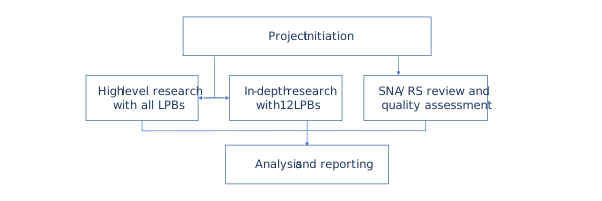
During the project initiation phase, Ecorys worked with the Home Office to develop the ToC (Annex) and an evaluation framework to define the research questions. The research questions aligned to the ToC to test its underlying assumptions.
Primary data was collected at 3 points: baseline (April to June 2023); midpoint (October to December 2023); and endpoint (October to December 2024). Baseline data collection was used to understand the starting point and implementation plans for the Duty for each LPB area. This involved a desk review of key documentation, including delivery plans and partnership agreements, and interviews with at least one representative from each area. In some cases, representatives from CSPs and other partners were also included, depending on implementation responsibilities in each area. A representative from each LPB area was interviewed again at the endpoint to explore progress in each area.
Data for the in-depth research was collected at the midpoint and again at the endpoint, focusing on the Duty’s implementation and progress against planned activity, regarding each LPB’s starting point. Both data collection points comprised in-depth research with a sample of 12 LPBs. The sampling approach was agreed with the Home Office and was designed to achieve representation from a balance of VRU and non-VRU areas, as well as a range of geographical characteristics, funding amounts and local levels of violence.
Case studies were spread across England and Wales, to include all English government regions. In each of the 12 selected areas, we conducted up to 12 interviews with strategic and operational representatives across a range of specified authorities, including multiple CSP representatives where relevant. Interviews were conducted in the same areas during our endpoint data collection in 2024; where possible, this included the same interviewees and/or organisations, again intending to explore distance travelled from the baseline.
In total, 321 interviews took place across the 3 rounds of fieldwork, with 222 interviewees participating. Where possible, interviewees were engaged at multiple time points to provide views on implementation progress.
In January to March 2024, the Home Office asked the evaluation team to undertake an extensive desk review to assess the SNAs and RSs submitted to the Home Office by each LPB area. The primary aim of the review was to identify and understand:
- the needs identified in the SNAs, including risk/protective factors, drivers of violence, violence patterns or system/provision gaps
- to what extent responses set out in RSs relate to the identified needs
- which partners were identified as having a role in delivering responses
The evaluation team created an analysis framework, which was agreed with the Home Office. This enabled the research team to systematically review each document against set criteria. This was used to generate an understanding of the links between the SNAs and RSs and whether a collective, multi-agency approach is planned for the response in each LPB. The overall approach was designed to provide insight into whether SVD partnerships were working effectively against 4 key facets of the whole-system approach to violence reduction and prevention, which included:
- multi-agency working
- data sharing
- community engagement
- commissioning of interventions
The review also included an assessment of the quality of the documents, which involved scoring the documents against criteria designed to explore:
- methodologies for developing the SNAs and RSs
- whether identified needs had been contextualised with local and/or national data
- the number and range of data sources used to assess and identify needs
- whether primary data had been collected (for example, through consultation with communities or professionals)
- whether limitations of the data were identified
- the extent to which there was alignment between the identified needs and responses
Each area was awarded a total quality score following this assessment.
In total, the evaluation team reviewed 94 SNAs, including SNAs and RSs produced across the footprint of the LPB, and others produced across the footprint of individual CSPs. The evaluation project manager and director reviewed and quality assured the assessments and scoring to ensure consistency of approach, and to reduce any researcher subjectivity.
1.2.1 About this report
This report draws on findings from all strands of the evaluation, including the desk research, 3 rounds of qualitative fieldwork, and our review and analysis of the SNAs and RSs. Each chapter considers key facets of the Duty’s ToC, including key activities (partnership working, data sharing and commissioning interventions), the inputs required to support those activities (funding, guidance and support), outputs (SNAs and RSs) and intended outcomes.
2. Partnership working
This section explores the partnership structures put in place in response to the Duty. It outlines interviewees’ views on what worked well and what inhibited successful and effective partnerships.
2.1 Partnership structures prior to the Duty
The evaluation explored the partnership models that were in place to address SV prior to the Duty’s launch. The evaluation team found a range of models existed.
Of the 43 LPBs involved in the evaluation, 20 had VRUs (18 of which were first funded in 2019, with a further 2 areas funded in 2022). In these areas, interviewees suggested the VRUs had extensively supported partnership working. This reflected the findings in the 2023 VRU evaluation report, which noted that multi-agency working had led to partners being better able to respond to violence with reduced duplication of activity. Despite this progress, a few VRU areas had focused their efforts on specific crime hotspots within their LPB. As such, CSPs within these VRU areas had not necessarily fully engaged in activities relating to SV. One area (without a VRU) had developed a VRU-style model using other sources of funding, while a few other areas were developing partnerships and/or had established working groups focusing on addressing SV. Interviewees from these areas felt they were well positioned to deliver the Duty when it launched.
In areas without a VRU or other pre-existing SV partnerships, tackling SV tended to fall within the remit of a range of regional strategic and operational boards. At LPB level, this included boards more generally focused on addressing crime, High Harms boards (covering issues such as drugs), violence against women and girls (VAWG), organised crime, child exploitation, domestic abuse, and health and wellbeing boards.
“We have a VAWG partnership and steering group, which is county level and county council as well. We have strong safeguarding partnerships, domestic abuse partnerships, another SV partnership. There are already groups in existence that cover these areas, even down to a rape scrutiny panel, not just a police panel. There are lots of things happening in this space, which means that we attend loads of different meetings to give the same updates, but there’s just a different heading on the meeting.”
Strategic stakeholder (VRU)
In every area, CSP boards were in place with CSP leaders represented on LPB-level groups. There was considerable overlap between the responsible authorities for CSPs and those required to participate in the Duty; police, fire and rescue, LAs, health partners and probation services were all named in the Crime and Disorder Act 1998, which first introduced CSPs. The Duty was designed with this overlap in mind, allowing areas to utilise existing partnership arrangements should they wish to. As a result, most CSPs had representation from all the Duty’s specified authorities prior to the Duty’s launch. However, interviewees explained that some partners had not been particularly active or engaged at the point that the Duty was introduced.
2.2 Development of partnerships to address the Duty
Most interviewees believed that the Duty had provided a forum for partners to come together and take a unified approach in reducing and preventing SV. While an understanding of the work that needed to be done to tackle SV existed prior to the Duty, interviewees explained that the Duty had accelerated the pace of work locally. Tackling SV had become a higher priority for some partners to engage with and align it with existing workstreams. Partnerships generally included all specified authorities, and often also routinely included relevant authorities as core members of the partnership (that is, education and the secure estate). Commonly, representatives from the voluntary, community or social enterprise (VCSE) organisations were included as delivery partners and as core members of the strategic partnership, while the youth sector, housing services and the Department for Work and Pensions (DWP) were also partnership members.
“Now conversations are taking place with partners around this agenda that probably weren’t as joined up before [the Duty]. So, we’ve got a series of operational strategic recommendations. We’ve come a very long way and there are groups working together and looking at pieces of work that didn’t happen before”.
LPB Lead
Interviewees reported that the legislative nature of the Duty acted as an effective mechanism to engage partners not previously involved in discussing SV. It had also given them a voice and role. Partnership membership had remained stable across the lifetime of the evaluation with interviewees reflecting that little had changed, although interviewees presented a range of views about the extent of partner engagement. In many areas, all relevant authorities were actively engaged and expressed a genuine desire to get involved and drive forward the Duty’s work. Furthermore, many interviewees believed there was suitable representation and associated decision-making powers; however, this view was not universal (see sections 2.3 and 2.4 on facilitators and barriers for partnership working). Some interviewees felt that engagement from some partners had tapered off somewhat in year 2, either due to milestones, such as SNA development being completed, or resourcing challenges as the funding drew to a close.
It was common for interviewees to refer to the complexity of the partnership landscape in their areas. As noted above, most areas had multiple boards focusing on issues associated with SV. This was complicated by the geographical footprint of LPBs, which often covered many LAs (and thus CSPs). This included county councils and unitary authorities, and different health boards – many of which had differing geographical footprints. It was common for interviewees to express the needs and risks related to violence were variable across a single LPB; even areas with VRUs had some localities with very little crime sitting alongside large urban centres where homicides and SV were an issue.
The complexities of partnership working, existing boards/structures and the geographical footprint influenced how partnership models emerged. The evaluation team identified 2 different partnership models, which adopted different approaches to addressing local need while accommodating local organisational structures:
1. Duty delivered through partnerships at LPB level
This approach utilised existing regional partnerships or boards (such as a VRU or other pre-existing partnerships) to be both the delivery and oversight mechanisms for the Duty. In these areas, the Duty had not had such a significant impact on partner engagement – partners were already around the table and focused on SV. This meant that, in some areas, work continued in much the same way as before; however, as noted, many interviewees expressed that even in areas where partnerships were strong, the Duty had encouraged better engagement of a wider group of partners.
“Our ways of working around the Duty have very much been sort of born through what we were already doing around the VRU. It’s the same partners, it’s the same agenda and we’re just kind of, I suppose, merely utilising it and this is probably its function – to give a better steer, better clarity and really pull on our partners more.”
LPB lead
To account for the varying needs of different localities, these LPB-level groups had representation from CSP leaders and, in some cases, VCSEs that were delivering at a local level. In a few non-VRU areas, there were some examples of new SV partnerships having been created at a regional level. In one case, the Duty was currently delivered through a separate partnership board; interviewees noted that this decision was made to support the sustainability of Duty activity in the longer term in the face of uncertainty about VRU funding.
2. Duty delivered at locality level
In this model, delivery of the Duty primarily sat within existing CSP arrangements and partnerships, with individual partnerships reporting into a regional strategic group. This approach had been adopted both in a few areas where VRUs or other regional violence partnerships already existed, and more commonly in those that were newer to multi-agency working. In part, this reflected the CSP’s role as a responsible authority, but it was also a mechanism to address the varying localised needs found across an LPB footprint. It was most commonly the case that where the Duty was delivered at the local level in VRU areas, the geographic footprint was large with a high number of CSPs; delivery at locality level eased the burden of oversight and co-ordination for numerous partners. Generally, interviewees reflected that devolving SVD funding to CSPs, and allowing CSPs to make decisions on spending that funding, encouraged effective delivery and motivated partner engagement at the local level.
Some areas had unified approaches to the delivery of Duty activities across all localities in one LPB footprint, while others did not.
Case study examples: Partnership models
Building on LPB-level partnerships: In one non-VRU area, the pre-existing County Community Safety Unit (CCSU) took responsibility for the Duty at an LPB area level, forming a Serious Violence Action Group to take forward Duty delivery. The CCSU worked closely with the OPCC and the police, developing a strategy for SV and leveraging data sharing agreements with partners such as local hospitals. In this area, interviewees highlighted that the Duty had significantly impacted partnership working by establishing a solid framework for collaboration, mandating a collective response among agencies, and expanding and reinforcing existing partnerships. For example, the FRS and ICB joined the SV Action Group, which also engaged more widely with other local partnerships such as the safeguarding children and adults’ boards. The SV Action Group’s work was supported by the local Crime Reduction Sports Board, the Youth Justice Management Board, the Criminal Justice Intervention/Prevention Board, and the Migration Board.
Delivering the Duty at the local level: In one large VRU area, a regional partnership sat at the LPB footprint but day-to-day implementation of the Duty had been devolved to CSP level, with partners such as health and education feeding into the core CSP membership. Duty funding was used to create a Local Violence Prevention Co-ordinator role in each CSP to support Duty delivery and partnership working. One interviewee saw this role as vital, noting that the co-ordinator had encouraged active participation of partner authorities and had prevented silo working while avoiding duplication. Interviewees in this area also reported that the Duty had a positive impact on regional partnership working, encouraging greater collaboration between the VRU and the CSPs.
2.2.1 Convening and co-ordinating roles
As noted, the Duty’s legislative guidance did not specify whether any particular agency or authority should adopt a convening role for the Duty. However, the grant agreement from the Home Office does place responsibility on LPBs for allocating funding across the partnership and reporting progress, while the legislation affords LPBs the powers to do so. While LPBs and VRUs were commonly engaged in Duty partnerships, they were not listed as a specified authority in the legislation. Despite this, the responsibilities for oversight placed on LPBs (and the convening powers given by the legislation) meant they often undertook the role of convenor, providing support for partnership members to execute their own responsibilities under the Duty. In many cases the LPB or VRU also provided additional support for partners – for example, helping them to contribute to the SNA or facilitating data sharing. Furthermore, they provided additional resources, such as analytical capacity.
In some cases, LPBs and VRUs had allocated dedicated staff to Duty activities (paid for utilising Duty funds). In other areas, these tasks had been absorbed into existing budgets and roles (see section 6.1 for more detail on funding SVD activity). Interviewees from LPBs and VRUs highlighted that the convening role had the scope to be resource intensive and that this could limit the engagement that could be done with organisations that were not currently specified authorities.
Where LPBs and VRUs were convening Duty activities, partners generally considered this to be sensible and valued. One interviewee noted that the involvement of the OPCC in the Duty delivery had leveraged local knowledge and made partners accountable. In one case, the interviewee suspected that consensus on the role of the VRU in co-ordinating the Duty had been easier to reach because the VRU had offered to lead on the development of the SNA and response strategy, thus reducing partners’ involvement. That said, many interviewees expressed a keen desire for the Duty to be the responsibility of all partners and not just the LPB or VRU.
“We’re quite keen that not all the delivery is on the OPCC, and this has also been made clear by the Home Office – we want to see other partners take responsibility. For the OPCC, it’s very much a project overview and convening, doing the paperwork, and making sure the partners are delivering and getting that feedback, and then challenging when it’s not going well. So, holding partners to account and then supporting the delivery where it needs that input.”
LPB lead
However, several interviewees highlighted that the decision to allocate the convening role to the LPB or VRU had not been easy. Some felt that the involvement of the OPCC introduced a political element to the delivery of the Duty, and that those politics could influence decision-making on issues such as allocation of funds to localities/CSPs. In other areas, the LPB/OPCC convenor role had been rejected completely. In one example, local partners had pushed back against an existing and effective LPB-led partnership continuing to take the lead on the Duty’s implementation.
“I hadn’t foreseen that we’d have an issue with transitioning from being a leadership team, leading from the police, the joint policing family, on the programme. I assumed we would be fine to also lead on the Duty and see them as one and the same.”
Strategic stakeholder (police)
In this case, local partners (namely, CSPs) had rejected input and support from the LPB-level partnership. Interviewees attributed this pushback to historical issues between the CSPs and LPB due to feelings of lost autonomy and reduced resources when LPBs were introduced. The challenging dynamic between LPBs and CSPs was also referenced by interviewees in other areas:
“CSPs see themselves as an equal partner in the Duty and want to be on a level playing field with the OPCC … they have been ‘done to’ over the last 10 years but now have the scope to grab some power, so they’re doing that.”
LPB lead
While many believed that the convening role logically lay with the LPB, interviewees also commonly expressed that the Duty had put LPBs in a challenging position. They noted that the legislation gave the LPB responsibility for allocating funding and reporting to the Home Office, but without providing a mandated convening role in the legislation. One interviewee noted:
“The guidance doesn’t really give them any power – what will they do if partners are not doing as they should?”
Strategic stakeholder (VRU)
This was echoed by another interviewee, who felt the guidance should have better specified the LPB or VRU role.
“We’re a convener but we’ve got no powers. We’ve got to be able to hold people to account and the Duty needs to reflect that.”
LPB lead
Some interviewees reflected on a need for an independent authority to be responsible for the administration of the funding and monitoring and, as such, preferred that the LPBs were not designated as specified authorities. Despite this, the prevailing view from the evidence was that LPBs were best placed to hold the convening role, but with a desire for greater clarity from the Duty legislation as to the mechanics and practicalities of that role.
2.2.2 Engagement with consulted authorities, the VCSE and communities
The evaluation explored the role of consulted authorities in the SVD partnerships; that is, organisations which are not mandated to participate in the delivery of the Duty but are encouraged to be consulted in the Duty guidance. This includes education and the secure estate, representatives of which were commonly members of the core partnership, participating in Duty delivery at the same level as specified authorities.
Education was viewed as an essential focus for delivery of the Duty, and several interviewees expressed that education should be a specified authority (rather than a consulted authority) due to their importance in a whole-system approach. However, the fragmentation of education governance had proved to be problematic in relation to engagement; many interviewees noted that academisation has left few schools in the control of LAs, meaning access to education representatives was challenging, but also that there was little unification in policy and practice (for example, in regard to behaviour management). In some cases, LA officers represented education in Duty partnerships, though one strategic stakeholder expressed that engagement with representatives of schools (such as head teachers, leaders) would be more meaningful and lead to more applied violence reduction activity in schools. Some interviewees felt there was a reluctance from schools to engage with violent activities taking place outside of the school.
“The government missed an opportunity by not including education as one of the designated authorities. It’s kind of there loosely on the periphery, but much of what we’re trying to do hinges so much on education and schools. And whilst you might think that engaging with the 4 directors of education in each of the 4 local authority areas is sufficient, in reality it isn’t. Each of those schools is a fiefdom with a head teacher, and engagement on that basis is very difficult. So, I actually think there was a missed opportunity by not including education and forcing them to the table.”
LPB lead
Notably, to facilitate better engagement with schools, one VRU has launched an online education hub, supporting resource sharing with and amongst schools. This VRU has also appointed an education lead with a background in school inspections. However, this has been funded through the VRU and as such, similar approaches may be out of reach for areas with more limited resources.
There were mixed experiences in relation to engagement with the secure estate. In many areas, prison representatives were core partnership members, and interviewees reported having good relationships with these stakeholders. In one area, prisons had played a significant role in delivering the Duty:
“Prisons are quite key for us … We’ve got 2 prisons so it’s probably a lot more relevant here than it may be in other areas … prisons are sat on our strategic groups and our boards and are quite engaged in what we’re doing. We know that we have a significant number of people in prison that will be due for release and that will be released into the whole area so the work we do with partners is to look at risk management … Prisons have been really instrumental in quite a bit of work.”
Operational stakeholder (CSP)
In this case, risk management included placement of those due for release into perpetrator programmes where relevant, with a focus on breaking the cycle of offending, and intelligence sharing, particularly in relation to organised crime.
However, in other areas, engagement with prisons was more limited. One interviewee reflected it is rare for prison inmates to be released into the local area due to the diversity of inmates’ geographic backgrounds. As such, prison leaders may find it more difficult to understand their role in the partnership. Some areas did not have a local prison; in such cases, offenders were placed out of area, so there was some uncertainty about how the secure estate could meaningfully participate in partnerships.
The evaluation explored engagement with the VCSE, noting numerous examples of VCSE participation in partnerships as both core members and commissioned delivery partners. Often, the VCSE was represented at partnership level by local VCSE umbrella bodies or infrastructure organisations, and occasionally by larger VCSE organisations themselves. There were also examples of wider VCSE involvement in Duty planning workshops or development days.
In several areas, interviewees from the VCSE reported that the Duty had enabled them to build a much more effective partnership with local statutory agencies. For example, one interviewee representing a sports-related intervention provider noted that:
“The Duty has put us in the conversation with partners who previously might not have seen sport as part of the solution … We now have a much closer relationship with community safety teams and local authorities, which helps us target our work more effectively … We work much more closely with youth services now to make sure young people are getting the right support beyond just sport. Before, a lot of this work was happening informally, but now there’s a clearer structure and accountability.”
Operational stakeholder (VCSE)
Meanwhile, another VCSE representative noted that the Duty has transformed the relationship between their organisation and statutory agencies from one of information exchange to a more “activity-focused”, joint working arrangement. From a strategic perspective, some interviewees in leadership roles noted that VCSE involvement in the Duty at core partnership level is vital to access local knowledge and understanding of community needs.
“They are very important, very important people in terms of understanding what’s actually going on out there.”
LPB lead
Engagement with communities themselves tended to be driven by specific tasks, such as part of the SNA/RS process, or in one case, to consult on the area’s definition of SV. Accessing the views of young people was often done through existing panels such as the Youth Parliament, though there were some examples of wider consultation with young people. One case study area conducted a survey with 1,500 young people and triangulated the findings with parent and carer consultations. In this case, the survey was led by the VCSE, which the interviewee believed facilitated better response rates.
One strategic interviewee from a VRU area noted that having consultation as a specified action in the Duty guidance had been particularly valuable. Before the Duty launched, the VRU had undertaken a survey which generated 600 responses. Later, as part of their Duty activity, the partners co-produced a questionnaire and all played a role in distribution and engagement; on this occasion, the partnership approach resulted in 5,000 responses being achieved.
“Having it [consultation] in the Duty made that happen, otherwise they’d [partners] have just said we’re busy.”
LPB lead
2.3 Facilitators for effective partnership working
The evaluation team identified a range of factors that contributed to effective partnership working as part of the Duty.
The legislative nature of the Duty was significant in bringing partners together and driving activity forward. Interviewees operating at regional and local levels and within established or new partnerships agreed that the accountability placed on partners had helped to engage organisations that had previously been on the periphery of an area’s response to violence. In many cases, the Duty had pushed existing partnerships to be more active and engaged.
“Having it as a legal duty supported us in getting everybody around the table. So that was really, you know, that was absolutely, absolutely useful.”
LPB lead
“It’s not like we weren’t working in partnership before, but it has helped reinforce those relationships.”
Strategic stakeholder (CSP)
Echoing this, one interviewee from a VRU area believed that the Duty validated their partnership approach to violence reduction and prevention. In their experience, the Duty has given the partners a focus and a framework to build on existing partnership approaches, equipping them to mobilise more quickly. Additionally, because the Duty included a legal responsibility on specified authorities to produce SNAs and RSs, partnerships had a shared focus and goal, which had supported engagement and collaboration.
While some interviewees noted that the Duty overlapped with other local activities (for example, safeguarding or domestic abuse), others believed this alignment was beneficial in terms of encouraging participation in Duty partnership activity, namely because it supported partner organisations to meet their own strategic aims. For example, one interviewee noted that the local ICB has SV in their own strategic priorities; participating in the Duty partnership supports the ICB in addressing that priority. Relatedly, some interviewees felt the partnerships were commonly proactively looking for ways to reduce duplication between different boards and partnership groups in the area. One noted:
“I think it’s a really strong group and it’s a really strong area and has been for years. They’re constantly sense checking as well so that they are not duplicating. So from that perspective, I think it works well.”
Operational stakeholder (CSP)
Although establishing convening roles had not always been straightforward (see above), interviewees identified the importance of strong and clear governance in supporting partners’ engagement. The research team found examples of effective approaches to strategic and operational groups operating. Interviewees often referred to the efficacy of Task and Finish groups, and wider working groups that had been set up to support the implementation and delivery of the Duty. In one example, the partnership had developed an “implementation tracker”, accessible to all partners, to facilitate greater task ownership across the partnership. Many also reported increasing buy-in from senior strategic representatives attending and engaging with boards, including LA chief executives, directors of children’s services, and/or public health.
As highlighted earlier in this report, there were examples of partnerships and convening bodies providing dedicated resources to support co-ordination. For example, in one area, having a named co-ordinator in post was felt to have strengthened the engagement from partners. In another example, a co-ordinator had identified gaps in partnership membership and had worked to bring them on board. In another area, an interviewee noted that:
“The co-ordinator role is key to [the partnership] being a central point and bringing everyone together.”
LPB lead
Several areas with VRUs had conducted early engagement activity and capacity building with local partners (before the Duty was formally launched). This resulted in learning and expertise being shared to help prepare partners who might not have been actively involved in VRU activities previously but would have responsibilities and a role once the Duty launched. In one case, these engagement activities included a series of webinars across different LA areas, focused on raising awareness of the Duty. This event focused on “doing the same work differently”. An interviewee in this area noted that this had strengthened partner interest in collaboration and the role that they could play in preventing and reducing violence.
In another area, the VRU committed significant resources to preparing local partners before the Duty launched. The work included sharing the terms of reference for local partnerships, assessing which stakeholders should be involved, and relationship building. Since the Duty launched, an operational group met every 3 to 4 weeks to explore SNAs and responses. At the strategic level, the group ensured each LA had a senior responsible officer (SRO) in place, shared briefing papers, and raised awareness through presentations. Some interviewees felt that “spoon-feeding” information was essential; however, they were also cautious that partners did not come to rely on the VRU for support.
“If it wasn’t for that central co-ordination, the partners wouldn’t be where they are now.”
Strategic stakeholder (VRU)
Importantly, where VRUs or other existing structures could provide support to new partners or partnerships, interviewees believed that trust had developed, and the vertical relationships between the regional and local footprints had improved.
“It’s good to have that collaborative learning - that probably became like a bit of a journey that each of those local authorities went on with the VRU.”
Operational stakeholder (CSP)
Interestingly, one interviewee from a VRU area flagged that the Duty had also improved collaboration between the CSPs in the area, with them proactively sharing resources and supporting each other. This had been a shift from their historic working practices.
“They’ve always kind of pitched against each other, but actually what we found this time round is that they have been very much sharing resources and support, co-producing a lot more work within and between organisations - so that has worked really well.”
LPB lead
Interviewees also highlighted a few examples of Duty partnerships collaborating with partnerships in other LPB areas to share learning and experiences. During the early implementation phase, it tended to be the case that non-VRU areas had reached out to neighbouring VRU areas for advice and support, which interviewees believed had been successful. As Duty implementation has become established, however, some examples were noted of neighbouring partnerships collaborating on joint commissioning of interventions and sharing of good practice and learning.
Finally, during the baseline and midpoint phases of the research, many interviewees noted that Crest Advisory had been instrumental in helping to iron out issues related to partnership working. This was the case both in areas where existing partnerships were in place and in areas that were newer to tackling SV in a multi-agency framework. For example, Crest Advisory had supported partners to create a consensus around governance or by helping to develop partnership terms of reference around the Duty, or both. Further, they had worked with partners to jointly develop ways of working, of which everyone had ownership. Interviewees noted that Crest Advisory’s independence was valued in some of the more challenging partnership situations, allowing them to act as a neutral third party.
2.4 Barriers to effective partnership working
Interviewees cited several challenges they had faced in implementing the Duty around partnership working.
A key challenge in the early implementation phase related to organisational capacity among partners. Where difficulties had been encountered bringing partners on board, this was often not due to resistance to taking a role in the Duty but rather a lack of resource or time to be involved. This was a particular challenge at the operational level and in smaller areas with lower levels of crime (thus smaller teams with less resource generally, and in terms of Home Office funding for the Duty).
“I think the problem goes back to [the fact that] this is none of our day jobs. We’ve all come together, everybody understands the Duty on them, but it’s about flexing the time within the resources we have.”
Strategic stakeholder (LA)
A further challenge related to getting senior colleagues and those with decision-making powers to attend meetings. As one strategic stakeholder described, “the partnership landscape is full – it’s another thing for partners to attend, another strategy.” – Strategic stakeholder (OPCC). Interviewees felt that there were so many related meetings taking place, both for the Duty and for other strategies/boards, that colleagues were dealing with conflicting priorities. Where senior representatives sent deputies to meetings, this could act as a barrier to making progress on delivery, with messages not being shared within partner organisations.
“The partnership working does rely on goodwill and having the right people in the right roles.”
LPB lead
Other similar challenges related to having good strategic and senior buy-in at a regional level but struggling to replicate those structures at a local level due to different localised structures or a lack of operational capacity. Some interviewees reflected that this was especially challenging for probation services, where capacity is limited. Particularly at the baseline and midpoint stages of the research, some interviewees expressed frustration that the introduction of the Duty meant more meetings and additional workload to carry out what they perceived to be the same work.
During the final phase of fieldwork for the evaluation, this message was less strong, likely reflecting the previously highlighted learning that partnerships were proactively working to reduce duplication of activities. However, some interviewees noted that participation from some partner organisations had dropped off during year 2, and this was particularly the case for those partners who were sometimes perceived to have a less central role in violence reduction and prevention (such as the FRS and the secure estate). One interviewee reflected that this scaling back of participation was potentially because the funding for the Duty was due to end in March 2025.
Interviewees cited staff turnover in partner organisations as a further challenge. It was clear there had been a reliance on existing relationships when it came to establishing new and effective partnerships. Several interviewees explained that maintaining relationships in a landscape where there was high staff churn, forced some partnerships to essentially start from scratch. During the midpoint research, in one area, a senior police stakeholder was the third person in post since the Duty launched. Similarly, in another area:
“Since 2019, we’ve had like 5 CSP leads and 5 chairs of the board and so it’s like you start something and it’s going really, really well. Your strategic relationships are excellent. And then the merry-go-round goes round again, and everybody leaves … so you’re just sort of back to the beginning again.”
Strategic Stakeholder (VRU)
Some partners noted that it could be challenging to obtain consensus in decision-making in such large partnerships, particularly at the LPB footprint where there could be 10+ CSPs involved.
Although many areas had success in engaging partners that had been traditionally less actively involved in preventing SV, there were some sectors that interviewees repeatedly identified as being more challenging to engage. Of the specified authorities, this included health and the FRS (It is important to note however that some areas had built successful partnerships with health providers and ICBs; the challenges reflected here were not universal and there were good examples of health agencies having established roles in the delivery of the Duty). As noted earlier in this report, there were also difficulties in securing participation from education and the secure estate as consulted authorities.
In relation to health, interviewees identified several challenges:
- when the Duty launched, ICBs were relatively new structures, having replaced Clinical Commissioning Groups in July 2022; this meant that relationships with ICB staff were not necessarily pre-existing
- it was difficult to identify who should be involved in partnerships; this was particularly challenging when the footprint of ICBs did not align with that of LAs or LPBs – some interviewees noted that, like education, health governance could be fragmented which caused some challenges for access
- in the early implementation phase, some felt there was a lack of clarity about the role of NHS and health trusts in the Duty; for others, there was confusion between the role of strategic health organisations and LA public health representatives
“Health is also a challenge, not because they’re not prepared to play ball, but because it’s the most confusing. You’ve got the ICB, you’ve got the NHS, so navigating your way through health and making sure you’ve got representation at the right levels is a challenge.”
Strategic stakeholder (VRU)
“There has been an understanding that health is part of this relationship, but it seems that it’s just been public health up until very recently and less about the health role in the commissioning services and how they can have an effect on the Serious Violence Duty.”
LPB lead
The FRS are a responsible authority for CSPs, as well as a specified authority for the Duty. However, several interviewees felt that historically, the fire and rescue services’ role in the CSPs had not been particularly active. In relation to the Duty, in several areas interviewees felt that the FRSs were not clear on what their role was in the Duty’s delivery or how they could usefully contribute. However, as with health, there were also examples of well-established partnerships with the FRS; for example, interviewees in one case study area saw the role of the FRS evolving over time.
At first, the service had:
“… struggled to align their existing activities with the Duty.”
LPB lead
However, the partnership has since strengthened, and partners are clearer on what the FRS’s relevance is to violence prevention. In this example, the FRS fulfilled all the requirements of a specified authority (for example, in relation to data sharing) and was engaged in the delivery of several interventions across the partnership footprint. In another area, the FRS was an active partner with clear steer from the FRS at a national level as to the role of the service in the Duty’s delivery. In another area, the FRS representative acted as chair of the SV partnership board.
Some interviewees noted that there was some general instability in 2024 related to the general election and police and crime commissioner (PCC) elections, which placed some operational burden on partners and could have been destabilising. However, in such cases, interviewees noted that partners had “pulled together” and worked collaboratively to avoid disruption.
Overall, the evaluation found that the Duty legislation had helped to expand and strengthen existing partnership structures in relation to SV, across both VRU and non-VRU areas. However, these partnership structures have taken time to embed. Interviewees in some areas noted that this was due to a lack of clarity around partner roles and responsibilities, particularly in relation to the convening and co-ordinating role. Effective partnership working has relied on good governance structures, co-ordination and partner buy-in. Conversely, challenges have included organisational capacity, staff turnover and complex governance arrangements in sectors including health and education.
3. Defining serious violence
This chapter provides an assessment of how partnerships worked towards a definition of SV in their respective areas, including their rationale. It also explores the extent to which, and how, the SVD influenced these definitions.
3.1 How did partnerships define serious violence?
Partnerships incorporated existing knowledge with local data to define SV in their respective areas. As was encouraged by the Home Office’s statutory guidance for the Duty, partnerships commonly built upon the World Health Organisation’s (WHO) definition of violence – “the intentional use of physical force or power, threatened or actual, against oneself, another person, or against a group or community, that either results in or has a high likelihood of resulting in injury, death, psychological harm, maldevelopment, or deprivation”.
Partnerships’ definitions aligned closely with those already established in VRU areas, and those laid out in national guidance (such as the Police, Crime, Sentencing and Courts (PCSC) Act and the Serious Violence Strategy). The PCSC Act (2022) provides that, for the purposes of the Duty, violence includes domestic abuse, sexual offences, violence against property and threats of violence, but does not include terrorism. Many partnerships adapted the definition laid out in the 2018 Home Office Serious Violence Strategy, which focused on specific types of crimes such as homicide, knife crime and gun crime, and areas of criminality where SV or its threat is inherent (such as county lines). Related to this, definitions cohered around the success measures and associated crime types described in the Duty guidance.
As laid out in the Duty guidance, partnerships considered factors including prevalence and impact when stating which forms of violence amounted to SV in their area. This often required a strong reliance on police-recorded crime data, with data from other specified and relevant authorities, local insights and knowledge. Most interviewees decided upon a broad definition of SV, guided by data on the most prevalent types of crime, which were supplemented by contextual factors and drivers (including education and socio-economic data). The range of offences included:
- homicide and attempted murder
- knife, weapon, and sharp object enabled violence and possession (including firearms or corrosive substances)
- rape and serious sexual offences
- domestic abuse
- violence with injury (grievous bodily harm (GBH), actual bodily harm (ABH)) or with intent to endanger life (including arson)
- organised crime (sometimes conceptualised as gang-related activity)
Many also defined that SV in their areas included offences where physical threat was not inherent, such as modern slavery, exploitation and county lines, robbery, stalking and harassment, or hate crimes. Others chose to entirely exclude violence without injury or physical threat. This was decided based on local problem profiles.
Of those interviewed, the majority agreed that the Duty gave a renewed motivation to defining SV in their areas. While all VRU areas and some non-VRU areas already had a definition in place, these sometimes differed across partners or needed reviewing. With the Duty (and the associated requirement to develop an SNA) came a drive to test assumptions and previous definitions against recent local data and realign partners’ understandings of what amounted to SV locally and why.
However, the impact of the Duty on defining SV varied across areas. For some, it signalled the first mutually agreed definition within the partnership. For others, it led to a slight refresh with minimal tweaks. The latter was especially true for VRU areas, where the Duty tended to have less impact on ways of working more broadly. That said, most interviewees reported that the Duty impacted SV definitions by expanding its scope (what to include) and who was involved in setting the definition (partners). The consideration of prevention in most areas meant that the definition was not only focused on crime types, but also wider contextual factors aligning to the whole-system approach and requiring input from a broader range of partners (for example, FRS).
The level of collaboration between partners in working towards a definition of SV varied. In most cases, during the Duty’s inception, convening bodies such as the VRU or OPCC brought partners together in monthly meetings or working groups to discuss and agree which types of violence amounted to SV in their area. Often, pre-existing definitions and data from VRUs, police and CSPs provided a baseline for expansion and additional interpretation from multiple agencies.
In other cases, lead agencies (for example, police or VRUs) formulated working definitions and then presented them to the wider partnership for feedback and agreement. For the latter approach, some strategic and operational interviewees suggested that the decision-making process was top-down and therefore not well understood “on the ground”. During the process of developing definitions, consultations beyond the specified and relevant authorities were uncommon. However, one area sought feedback from 5,000 members of the community (with an interviewee noting that around three-quarters of respondents reported that they were happy with the given definition).
SV definitions were often used to inform strategic decisions about where to target resources, and were not necessarily filtered down to, for example, schools or police officers. Some case study stakeholders reported they felt distant from developing local definitions of SV and consequently the SNA. Interviewees sometimes argued that the Duty’s guidance lacked clarity around partners’ roles, which led to some local definitions and strategies not always feeling useful or applicable to all partners’ work. Exemplified below, the interviewee felt that the definition of SV was vague, listing crime types without explicit recognition for how different partners’ roles linked, thus lacking actionable, practical value:
“I don’t think it [the Duty] added anything to my work in that it made things harder because it didn’t define violence in a useful way.”
Strategic stakeholder (health)
Across areas, the development of SNAs directly informed the local definition of SV, often prompted by an increased understanding of local issues. Interviewees were generally aware of their areas’ definitions and the rationale behind them (underpinned by the trends and factors emergent in the SNAs). Mostly, developing definitions brought partnerships together in mutual agreement and focus.
“It certainly focused our minds around trying to be really explicit around what serious violence was, and we came up with several crime types.”
Strategic stakeholder (police)
Interviewees were unanimous that defining SV would be an iterative process (for example, including back-and-forth conversations amongst partners and making multiple adaptations based on different perspectives). Since the baseline interviews in 2023, definitions of SV had remained broadly the same, with some areas planning to review and update their definitions at pre-agreed points, to reflect new violence trends and emergent issues. For example, during the endpoint interviews, stakeholders in one area explained that spiking and stalking would be added to their definition.
3.1.1 Factors influencing local definitions
When defining SV, the evaluation found several factors that influenced how areas developed their definition.
Several areas laid out a priority list of crime types to set the parameters around what would be deemed ‘serious violence’. They then added strategic pillars or thematic strands to further contextualise their local profile and focus activity, such as violence against girls and women (VAWG), substance and alcohol misuse and violence in the night-time economy (NTE), mental health, employment and deprivation, attainment and exclusion from education, and young people. Partnerships used local and national data sets to pinpoint the ‘what’ and ‘where’ of SV, and also added contextual (for example, education or deprivation data) to conceptualise the ‘why’. They commonly attributed the seriousness of violence not only to offences but also the underlying drivers.
“The definition wasn’t just about crime types, this is about root causes and the upstream work that could impact a child’s journey.”
LPB lead
In this way, partnerships ensured a focus on early intervention and prevention within their definitions, which often outlined the connections between forms of violence and risk factors (for example, alcohol-related offences and domestic abuse not only as forms of violence in themselves, but drivers of further SV within families and communities).
“It was the interconnectedness between the different types of crime and how those behaviours in individuals manifest at the earliest stage [which] really interested us.”
LPB lead
Partnerships also set out the age ranges on which their definitions would focus (whole population, aged 24 and under or aged 17 and under). This decision was usually determined by local crime profiles. A few LPBs encouraged localities to deviate slightly from area-wide definitions to focus on the issues most impacting their communities (noting, for example, the difference in drivers of crime between rural and urban areas).
Interviewees reported having extensive conversations within partnerships about which categories to include/exclude in their definition. Most commonly, interviewees referred to domestic abuse, modern slavery, and violence without injury as being discussed as in/out of scope. The decision to exclude some crime types was most commonly because these were part of other policy development, workstreams and/or partnerships. Interviewees argued this was to mitigate duplication and ensure focused allocation of resources.
“There is some really good work in the VAWG space, and we didn’t want to duplicate that work… we felt it was an important aspect of serious violence generally, but we wouldn’t change the governance processes that were in place already.”
LPB lead
Another interviewee said:
“We’re doing what we can whilst also being part of a bigger system.”
LPB lead
Others were concerned about the lack of requirement to report some forms of violence under the Duty (such as domestic abuse) or inadvertently labelling some forms of violence as more ‘serious’ than others through their definitions.
Interview data highlighted that the Duty influenced the inclusion of domestic abuse and sexual offences in definitions of SV. While the Duty guidance encouraged partnerships to consider domestic abuse, sexual offences and VAWG more broadly, these crimes were more commonly included in definitions of SV when VAWG was the predominant crime type locally (for example, in some rural areas with lower levels of public-space violence). While interviewees reported the guidance was unclear about whether to include these offences, many reported that the Duty had encouraged them to keep VAWG on their radar and:
“to not forget sexual harm”
Strategic stakeholder (Probation)
As mentioned above, this sometimes led to partnerships focusing on domestic abuse where a weapon was a contributing factor, enabling partnerships to pinpoint what constituted SV locally while avoiding duplication with other domestic abuse-focused activity locally. Importantly, the Duty reportedly contributed towards the national conversation on the ‘seriousness’ and prevalence of offences against women and girls.
“The Duty has made us think about our role in violence against women and girls.”
Operational stakeholder (Youth Justice Service)
“We had a definition [prior to the Duty] but we wanted it to be more succinct, so we did look at it again and made sure that it included sexual and domestic abuse where the weapon was a contributing factor.”
Operational stakeholder (Fire and rescue services)
The evaluation found that many partnerships had previously assumed that SV predominantly related to public-place youth violence such as knife crime. However, partnerships’ data consistently showed that VAWG, including domestic abuse and sexual offences, was predominant across areas.
“For us, it’s [serious violence] not gangs with knives and guns, it’s more domestic abuse, violence against women and girls, rape, and serious sexual offences. We did a bit of a deep dive [into local data], and it’s actually in households, so that helped us to inform the strategy.”
LPB lead
This broader understanding of SV appeared to have evolved since the definition of SV in the 2018 Serious Violence Reduction Strategy and the inception of VRUs. At the time, the focus had been more on public-space violence particularly that experienced and perpetrated by young people. Some interviewees continued to grapple with the distinction between domestic (hidden) and public-place (visible) violence when defining SV. Some described competing views among partners about whether to include domestic abuse, sexual offences and VAWG, while some partnerships opted to include these issues due to having lower levels of public-space SV in the area. Other partnerships, however, did not seem to fully realise the scale of VAWG until they started developing their definitions of SV as part of the Duty.
Overall, the qualitative data suggested that, while some stakeholders appreciated the ability to mould the definition of SV to their local needs, many reported confusion and challenges when trying to achieve a common understanding within and across complex, large partnerships. Interviewees sometimes expressed concern that SV was poorly defined in the national guidance and by some partnerships, and needed simplification.
“To have that broad flexibility around the definition wasn’t entirely helpful to begin with.”
LPB lead
4. Sharing data
This chapter explores how data was shared and analysed by partnerships to respond to the Duty. It summarises facilitators and barriers that influenced practice around data sharing.
4.1 Access to partner data
Prior to the Duty, a few areas had already established data sharing principles and practices among partners. However, it was more common for interviewees to report that introducing the Duty had been a useful lever to get data sharing agreements and principles set up. This was particularly important in areas where partners had previously predominantly worked in siloes. In response to the Duty, it was common for multi-agency groups to be set up, where partners discussed data needs and emerging trends. This helped partners develop relationships and consequently was reported to reduce siloed working. Furthermore, data sharing provided meaningful local context from which partnerships developed their SNAs and RSs, thus ensuring these represented the area.
The evaluation showed that over time, most areas continued to develop and enhance their data sharing practices at both a strategic and operational level from baseline to end line. This included data sharing between OPCCs, CSPs, public health, youth services and LA teams. Some areas got more partners on board with data sharing as the Duty continued to be implemented. Interviewees felt that partners had generally become more attuned to data requirements and their contribution, and had adapted their practices to improve data collection and sharing processes. Data sharing practices among partners enabled most areas to identify local hotspots, at-risk cohorts and individuals, and risk factors trends.
“We’ve used the data to build a really good understanding of what’s going on across the county.”
Strategic stakeholder (CSP)
Data sharing arrangements were reported to be particularly successful when data sharing groups, teams and systems (for example, dashboards and hubs) were established. This helped support multi-agency access to data.
Some partnerships reported continued issues with data sharing, most of which interviewed reported partners were often aware of the need to share data and were willing to but were often prohibited by a lack of data sharing agreements. Typically, health and education partners could not share data about hospital admissions and exclusion data, which was important for assessing risk factors associated with SV.
4.1.1 Analytical capacity
Besides exploring the data sharing arrangements, the evaluation explored partnerships’ capacity for data analysis. Overall, the evaluation found that areas varied in their ability to analyse the data they receive from their partners. The availability of systems and capacity to support data analysis varied across areas.
A few areas created a dedicated data analyst post either within the Duty-holding team (for example, the VRU, OPCC or CSP) or sitting across the partnership and localities (such as a partnership liaison analyst). A few areas brought in an analyst from public health with a focus on prevention and early intervention. Having dedicated analytical support to work across the data from the specified authorities helped to provide a contextual understanding around the data, to predict future risks and trends, and to inform decision-making, that partners would not have otherwise had capacity for.
Analysts tended to focus on using the data to identify key trends and underlying risk factors to improve partners’ understanding of violence and its drivers. This was intended to enable partners to address emerging or new trends/concerns quickly and identify hotspots. Analysts could highlight emerging issues evident in the data, such as increases in antisocial behaviour, youth offending and/or substance misuse. In some areas, analysts could identify specific premises that were causing the issues. While it was common for police to identify hotspots, the Duty enabled analysis to go further and to be combined with other data to create a fuller picture. In some instances, partners could filter data to better understand their local profile. Other areas had conducted ‘deep dives’ into particular themes, such as the night-time economy, to better understand their data. In a few areas, the police had created place-based problem profiles from the data accessed with the Duty, which they utilised for hotspot policing work, such as extra patrols.
Most areas analysed their data from the specified authorities to help identify the key cohorts at risk, and a few areas achieved individual-level data. Analytical work was carried out to better understand key cohorts identified by the data, including, for example, those aged 30 to 34 years, young females entering the criminal justice system, or those in probation services. On an individual level, analysis of hospital admissions and assaults on emergency workers helped identify perpetrators. The police shared intelligence and data around habitual knife carriers and first-time entrants at risk of further escalation as well as repeat SV offenders, which could be used to track individuals. There were also examples of more in-depth analytical work. This included using a Family Information Sharing Hub whereby the police could see the other agencies that supported a family. This helped the police to fully understand the context around some individuals.
Some interviewees, however, expressed concern around the lack of health and education data that were needed to feed into the partnership. This made it difficult for the partnership to have a complete picture of risk factors and patterns of violence within their local context.
In some areas, analysts had a specific focus on ensuring the data was understandable and usable. In these instances, data analysts skilfully communicated findings to partners in a way that could be easily understood and translated into practice.
“It highlights to each of the CSPs and districts what is the threat in their area, what is going up and what is going down in terms of criminality and the strategic priorities that we’ve got and what they’ve been.”
Strategic stakeholder (OPCC)
Some of those interviewed felt their area would have benefitted from having more analytical capacity. They noted that having the funding split between labour and interventions, as well as the short-term nature of the funding, made it difficult to recruit and retain analyst posts who were seen as fundamental to supporting the Duty and ensuring interventions were evidence-led.
4.2 Facilitators to data sharing
This section summarises the facilitators of data sharing, as outlined by evaluation participants.
4.2.1 Role of the Duty
For some areas, data sharing agreements were already in place through existing governance arrangements (for example, via the CSP and the VRUs). In these cases, the Duty further supported existing practices and helped improved collaboration among partners by helping to form networks and groups that operated within the framework of the Duty.
“The data was already being shared through different mechanisms before, but what the Duty has done is just given us a structure to bring it together … I don’t think it’s revolutionised the way we share data, but it’s helped to put it all in one place and make sure we’re looking at the same picture.”
Strategic stakeholder (Local authority)
In some areas, there was a consensus among interviewees that the legislative nature of the Duty helped to co-ordinate partners. This had created a clearer local focus on SV and an awareness of the role each partner can play in its prevention, specifically through data sharing.
“I think we had good data sharing anyway, but I think the fact that organisations realise they have to be around the table and they have to be involved does improve it.”
Strategic stakeholder (CSP)
Across the areas, the Duty helped fund analyst roles and systems which benefitted partners. Partners could better understand the context around their data and others, which helped partnerships to shape the local picture, and improve their practice and targeting of resource, including incentivising local data sharing arrangements.
The development of the SNAs required areas to share data across their partnership. Many areas felt they had strong communication and collaboration across the partnership to ensure that their SNA was informed by comprehensive and up-to-date data. In contrast, a few areas noted how their SNAs had been reliant on police data due to its accessibility compared to other data sources (for example, health and education data). For some areas, the process involved developing data dashboards so that partners could feed their data into a collective system. New data and insights were continuously reviewed and added so that the SNA was up to date. In this way, the development and maintenance of SNA documents helped create a better understanding of the local context and landscape.
“The SNA has been really good. I mean, really good in as far as how in depth it went. The encouragement of partners to feed into it and then how that’s shaped our priorities.”
Strategic stakeholder (Local authority)
4.2.2 Effective data sharing
As noted in section 4.1.1, while several areas recruited a specific data and analysis posts, some areas developed specific data teams and groups focused on compiling and analysing data sets to understand the local context and address any data sharing barriers. Specific examples of these groups included an Emerging Issues Group and a Data and Insights Group, exploring partners’ data to identify risk and protective factors, as well as address new concerns and ensure interventions are evidence based.
A few areas took a mandatory approach towards partners and data sharing, either via payment contributions for a dedicated analytics lead, or analytical system, or to sign up to an area-wide information sharing agreement or protocol. This often helped reduce the barrier of regularly requesting information, as well as helping culturally with partners recognising the mutual benefits of utilising each other’s data to inform decisions.
Some areas had established data sharing systems as portals, dashboards, and information sharing and data hubs, such as a Blue Light Data Hub (with data from police, fire and ambulance services). This enabled partners to log in and access data from across the partnership, making data sharing a much more streamlined process. From this, partners could identify hotspots, crime trends and key cohorts. Some systems could be filtered for partners to look at specific wards, or to look at particular crime types. A few areas had taken learning from the Thames Valley Together model, which provides a centralised data sharing environment for partners to overlay different data sets (including social care, police and probation), on a common platform. As one interviewee noted, having detailed, collated data available in an accessible format has facilitated more focused, effective responses.
“[the data dashboard] highlights to each of the CSPs and districts what is the threat in their area, what is going up and what is going down in terms of criminality and the strategic priorities that we’ve got…I call it like a singular version of the truth. So instead of having all of your statutory partners with their own different databases, you get one document that’s got everything in there from all the partnerships … So, if you’re wanting a reduction in something or if you’re wanting an increase in something, they can actually see what they’re doing month on month, what is actually going on. And that is pretty incredible.”
LPB lead
4.3 Barriers to data sharing
As partners collected data for their own purposes and used their own data recording systems, it was often challenging to collect, categorise and share data between partners to support the Duty. Furthermore, partners were not always collecting data with the direct goal of addressing violence. Where there was a mismatch in the purposes for which data was collected, it was often difficult for it to be fully utilised in the context of the Duty. This made it difficult to make comparisons within the violence framework, thus limiting the use of the data. This was particularly relevant for health and education partners as they rarely collected data specifically around violence.
“Health itself doesn’t always know how to actually then collate the data in a way that’s helpful to partnerships, because that’s not what its primary function is. Its primary function is about improving people’s health.”
Strategic stakeholder (ICB)
A further challenge was noted around integrating data from different partners. As partners tended to collate data for their own purposes, partners collected and/or categorised data in different ways.
“The data is coming from lots of different sources. Not everyone collects data using the same way and using the same definitions … So what you’re interpreting in one area might not be the same, so there’s always an anxiety [that 2 different things are being compared].”
Strategic stakeholder (ICB)
Another barrier for some areas was the lack of detail in some data sets. While partners tended to share numerical data, which gave an understanding of broader trends, the deeper contextual information was often missing. This could make it challenging to understand the underlying root causes of SV. Furthermore, some data sets were held at a regional level rather than at a more granular localised level and thus lacked detail. Similarly, for most areas, it was also difficult to get individual-level data from partners to be able to target interventions. Where data hubs and dashboards had not been set up to provide live data, the data quickly became out of date, making the tracking of emerging issues difficult.
Certain areas lacked the required data sharing mechanisms, or those methods proved less sophisticated than preferred, so partners often worked in siloes on their own systems. While partners were mostly willing to share data, often their systems were not agile enough to change and align with other data sets. For example, in cases of car fires linked to organised crime, police intelligence often remained isolated, preventing co-ordinated efforts. In some areas, data sharing seemed ‘one way’ with police data embedded within the CSP; however, the police were unable to gain LA data.
Interviewees expressed concern over some partners’ reluctance to share data due to issues of data protection and local reputation. Some partners, including health and voluntary sector organisations, were hesitant to share data about individuals, nervous about how this would be used and whether it would compromise GDPR or jeopardise service users’ relationships and trust. Some schools were reluctant to share any statistics on violence of pupils for fear of damaging the school’s reputation. This was similar for some LAs, who were politically sensitive when sharing data and did not want to portray their area as having high levels of violence.
“People need to be told exactly what day-to-day sharing should be because they are all petrified to do it because of GDPR. Even though there is legislation there, it just needs to be echoed again.”
Strategic stakeholder (VRU)
While data sharing among partners had generally improved as the Duty continued to be implemented, health partners in most areas were consistently difficult to engage and obtain useful data from. Health data systems did not primarily record violence, making it difficult to capture detailed information and understand the full picture around incidents (for example, location and demographics). Inconsistencies in data recording also existed within the health system itself (for example, between GPs and A&E departments) making it challenging to collate and compare relevant information. The NHS’s commitment to patient confidentiality was also reported as being difficult to overcome.
Another data sharing barrier related to partners’ capacity. Some partners struggled to manage Duty requirements on top of their day-to-day responsibilities coupled with different duties and requirements from central government. Interviewees suggested more work could be done to raise awareness among partners of the mutual benefits of data sharing in the partnership to make them prioritise the Duty.
As with partnership working, the legislative nature of the Duty had been a key factor in improving and expanding data sharing arrangements amongst partners. Where partnerships had dedicated analytical resource, or data-focused working groups, the efficacy of data sharing was improved. Interviewees also highlighted that committing resources to the creation of data dashboards or hubs meant that partners could be more focused and responsive in their work. However, several barriers to data sharing were experienced, including the quality and granularity of available data, the range of different data systems and processes used by different partners, and concerns related to data protection. Some interviewees noted that having access to template data sharing agreements could support the process, particularly where data sharing processes were not already in place.
5. Strategic Needs Assessments and Response Strategies
This chapter summarises findings relating to the Strategic Needs Assessments (SNAs) and Response Strategies (RSs). It explains how partnerships compiled their SNAs and how far they aligned to RSs. In turn, it also explores the extent to which there was alignment between commissioned interventions with SNAs and RSs. This chapter draws upon analysis of the 96 SNAs and their associated RSs alongside interview data.
5.1 Compiling Strategic Needs Assessments
Most commonly, the LPB or, where relevant, the VRU, led on SNA development. This was because, of all involved partners, the police tended to have more readily available and relevant data to understand local violence trends. VRU areas utilised existing data and evaluation teams to lead on the collection and analysis of data. Less commonly, research teams within LAs led on the development of the SNAs. A few areas outsourced SNA development to alleviate capacity constraints or to add external credibility. These areas commissioned a range of suppliers, including Crest Advisory, universities or local data analysis companies. Where existing SNAs were in place, areas tended to update them to meet the Duty rather than create a wholly new SNA. Many interviewees noted the iterative nature of developing an SNA, with plans in place to refresh and update documents periodically to reflect ever-changing violence trends and drivers.
Our analysis of the SNAs revealed that partnerships utilised a variety of methods and sources of information to develop their SNAs, including local and national datasets and primary data collection. In the vast majority of SNAs, partnerships utilised local data to contextualise local violence trends and influencing factors. This included local police, health (for example, A&E data, Information Sharing to Tackle Violence (ISTV) data), education (for example, exclusions or free school meals data), local authorities (such as children’s services), lower layer super output areas (LSOA) and deprivation data. In most cases, local data was disaggregated by local authority or region and compared to LPB and/or national averages.
In addition, almost all SNAs linked their findings to national data (for example, data from the police, Home Office, Public Health England, Index of Multiple Deprivation (IMD) or census). Some also provided extensive academic evidence to support their analyses of drivers of SV nationally and situate this within their local context. Most areas ranked themselves against national statistics (that is, deprivation or certain types of crime, such as domestic abuse) and also compared trends within and across local authorities.
Most SNAs included examples of primary data collection, such as focus groups and interviews with victims and perpetrators of SV, and surveys with communities and young people. Some areas adopted more innovative data collection approaches depending on the target groups (for example, via a local festival to support young people’s mental health). Many also consulted partners beyond specified and relevant authorities, including VCSE organisations (for example, those involved in youth work or preventing VAWG). It was not always clear whether primary data was collected specifically for the development of the SVD SNA or whether it had been collected for other purposes. Many interviewees recognised primary data collection as an area for improvement; some expressed concern that consultation for SNAs did not always engage those most affected by violence, and risked being “tokenistic” for the SNA only (rather than establishing a feedback loop). Many had plans in place to continue building upon community engagement going forward.
Alongside an LPB-wide, overarching SNA, most areas produced locality-based outputs. These included local SNAs, bespoke problem profiles, or regular data bulletins specific to each locality. The approach to this varied nationally. Some developed overarching area-wide SNAs which could then be split by LA (where data was disaggregated between districts) to produce tailored SNAs or RSs. Others took the approach of each district developing their own SNA in isolation with central support where needed; for example, the VRU providing central analytical support and area-wide police or health data, but partners within respective localities co-ordinating their own SNA.
In the final round of interviews, some partnerships reported changing their approach for 2025. Some developed locality-based SNAs first, then pulled them together to formulate an area-wide SNA. They felt this approach was more fruitful for local partner engagement and for responding to CSP-level issues. For example, many localities had particular issues with the night-time economy or hate crime, which were not reflected across the LPB as a whole. Where work under the Duty was devolved to CSP level, some localities’ focus on SNA and RSs varied substantially (sometimes with different definitions of SV). While all interviewees valued recognition for local nuance, they also noted the need for an overarching area-wide strategy and direction to unify the partnership at LPB level.
The requirement to develop an SNA under the Duty was generally well received. Mostly, interviewees reported the process brought partners together in collaboration and focus, “galvanising” efforts and motivating shared responsibility for violence prevention and reduction.
“The SNA helped us to understand the bigger picture and bring together different perspectives, it’s made sure we’re working towards the same objectives rather than operating in siloes.”
Operational stakeholder (Local authority)
During interviews, stakeholders reported that in-person events, workshops and conferences worked particularly well for compiling SNAs (as opposed to online engagement). In addition, regular multi-agency meetings and co-location of different teams’ workspaces often enabled intelligence sharing and engagement for the purpose of the strategy. However, in a few areas, the development of an SNA did not ‘revolutionise’ their ways of working, but reiterated what they already knew.
The extent of partner involvement in the process varied, with challenges arising mainly in relation to analytical capacity and accountability. Around half of the areas had dedicated analysts to support SNA development. In these areas, analysts tended to be employed by the VRU, were a locally funded existing post, or a dedicated resource from a partner organisation (such as police or LAs). Interviewees were unanimous in the view that dedicated analytical resource was invaluable to the SNA and RS. This was particularly highlighted by areas without dedicated analysts (which was reportedly an increasing issue amidst uncertain funding and staffing changes).
Notably, a lack of analytical capacity within partnerships led to some having no choice but to commission consultants for SNA development, which was reportedly costly. Leads and wider partners reported that the partnership would have struggled to compile an SNA without the co-ordination and capacity of a convening body. While it was the consensus that all partners were receptive and willing to work together under the Duty, leads reported that the development of the SNA hinged upon them approaching partners with requests for data and input, rather than partners proactively taking accountability. This was attributed to capacity constraints across statutory bodies, and a lack of clarity on partner roles in the Duty guidance.
“I think that was always the concern, that it [Duty and SNA] would be seen as something the police and CSPs did and not some of the other partners.”
LPB lead
Challenges and limitations also emerged in relation to data sharing and access to support SNA development. Analysis showed that there was variation in the extent to which areas had access to the data they wanted or needed to meet the needs of their SNA. As noted in section 4, partnerships were generally making progress with data sharing since the Duty’s inception, but many still faced persistent challenges around health and education data. This was reflected in our analysis of SNAs, which rarely linked the relevance of health or education data to SV explicitly. Interviewees reported that meaningful data sharing required sharing raw data supported by a narrative and interpretation from partners (which, reportedly, many health and education organisations lacked the capacity to do).
Many interviewees suggested that support from the Home Office as analytical capacity, information-sharing agreement templates, or baseline guidance for what and how partners should contribute to an SNA, would have been helpful.
5.2 Responding to local needs
Most interviewees agreed that the SNAs and RSs were fit for purpose and reflected local needs. Many emphasised the importance of a locality-based approach, which included producing local, tailored outputs supported by an overarching SNA. In most cases, localised analysis supported the development of action plans at a local level (such as by CSPs), which aimed to lay out exactly how local partners should deliver against identified needs.
There was some discrepancy between LAs’ analytical capacity, data access and partner input, meaning that all locality-based outputs were not created equal. Moreover, many partnerships’ leads acknowledged that understandings of local needs were partial due to the reliance on reported crime. Consequently, there was less clarity on under-reported crimes (including but not limited to exploitation, sexual violence and domestic abuse). That said, interview data showed some evidence of learning from SNA and RS development about the prevalence of certain crime types locally, leading to increased awareness about, for example, the prevalence of sexual violence amongst children and young people or the role of social media on SV. Consultation with children and young people, the community and VCSE organisations was particularly important for these insights.
Related to this, some areas noted that their approach to SNAs (whether already refreshed or planning to do so) had evolved since the Duty’s inception. This provided a better understanding of local need supported by better data sharing between a broader range of partners (for example, probation or youth justice boards) to inform SNAs, having achieved more community engagement, and working towards better understanding the links between local needs and partners’ roles.
In some areas, interviewees felt their SNAs had blind spots specifically related to local drivers of violence and associated risk and protective factors. In these cases, LA interviewees reported the SNA garnered a good understanding of violence trends locally, but less information on underlying causes and, in turn, appropriate responses.
“It [SNA] was more of a description of the situation, rather than the drivers, underlying factors, and so on. That’s because of the lack of data … it was adequate in terms of describing the issue, but not in terms of any insight around why that might be or what could be done to intervene.”
Operational stakeholder (Local authority)
This view corroborates the research team’s analysis of the SNAs and RSs. This highlighted an inconsistency and varying detail across all SNAs about the framing of risk factors and structural drivers to SV. Where a violence statistic was presented, there was often variation in the extent to which these were explained by risk and protective factors or structural drivers (for example, stating exactly how school exclusion or poverty might lead to SV involvement), and how partners could respond.
5.2.1 Alignment between SNAs and RSs
Based on the analysis of SNAs and RSs, the research team concluded that, in most cases, there was some alignment between the SNAs and RSs. Specifically, the team deduced that over two-thirds of SNAs and RSs were at least partially aligned, although just under a third had little alignment between the 2 documents. Where SNAs and RSs were more aligned, this was rarely explicitly and clearly laid out, and there was not a clear thread between the 2 documents. While it was evident most needs identified in SNAs were responded to in some way through the RSs, RSs often lacked detail (such as exactly how interventions would address specific needs). For example, several RSs included a commitment to trauma-informed approaches to violence reduction or early intervention but did not explicitly connect these commitments with underlying risk factors (such as around adverse childhood experiences (ACEs), educational attainment or school exclusion).
During interviews, divergent views emerged on the extent to which RSs aligned to SNAs. Most interviewees argued that both documents aligned well, describing the SNA as the basis and ‘golden thread’ for all work and commissioning decisions under the Duty.
“The process that we’d go through is essentially taking those findings and recommendations from the SNA then sitting down with all strategic leads from various agencies to say – what do we do as a result? It [RS] is directly informed by the SNA.”
LPB lead
However, others noted the tension between SNAs and RSs. This related mostly to concerns around integrating SNA findings into daily practice and the difficulty in ensuring that partners, at operational and frontline levels, understood the strategy. This was made more difficult where different agendas and governance arrangements were in place. Some interviewees reported that the SNAs and RSs needed a refresh with clear “next steps” for partners. Interviewees cited barriers to translating the SNA into operational response, including tight timescales between submission of the SNA and delivery; the need to filter information down across large, complex partnerships within these timescales; and, amidst capacity and funding constraints, the need for frontline staff to understand and action strategies which may differ across governance arrangements.
“The challenge is making sure the findings actually translate into changes on the ground.”
Operational stakeholder (Local authority)
5.2.2 Commissioned interventions
Interviewees unanimously reported that SNAs and RSs were closely aligned to commissioned interventions, directly influencing funding decisions across LPB or LA footprints. Interviewees reported that intervention commissioning decisions were made in collaboration with multiple agencies during strategic meetings.
“Decisions weren’t made in isolation, it was about working together to see where interventions could have the most impact.”
Operational stakeholder (Voluntary and Community Sector representative)
Decisions were informed by SNAs and associated recommendations within the RSs. In addition, decisions were informed by mapping exercises that identified gaps in provision, the Youth Endowment Fund (YEF) toolkit, and consultation with communities. Often, decisions on commissioned interventions sat with CSPs or LAs in collaboration with the VRU (if applicable) or regional partnership, therefore enabling a close alignment between local crime profiles, risks and needs with the response.
“The whole idea is that it [SNA] informs people where they need to concentrate activity.”
LPB lead
During the document review, researchers assessed planned responses to violence as set out in both the RSs and SNAs. In many cases, responses to identified needs (and particularly those outlined in SNAs) were often already in place, rather than focusing on actions for the future. The Duty funding was mostly used to bolster or upscale existing interventions, with few new projects or pilots being commissioned by the Duty funding alone. That said, planned responses could generally be broken down into 3 overarching categories:
- responses focusing on addressing/preventing specific risks and building protective factors
- responses focusing on preventing/tackling specific crimes
- responses focusing on system-level change
Preventative and early interventions were mostly commissioned as educational and diversionary activities. This included universal activities focused on identified local needs (including risks and protective factors and gaps in provision); for example, community cohesion projects or the provision of positive activities for young people (night-time safe spaces for children with special educational needs, sports projects or after-school clubs). Recognising the prevalence of domestic abuse, sexual violence and VAWG within the SNAs, many areas also funded universal initiatives to raise awareness amongst young people and professionals about misogyny, healthy relationships and gender norms. Partnerships also employed findings from SNAs to target interventions within areas with a high prevalence of violence and known risk factors (for example, commissioning detached youth work or workshops focused on mental health, wellbeing, and violence and exploitation in schools within deprived areas).
“We’ve used the data to focus on areas where young people might be more vulnerable to exploitation or violence.”
Operational stakeholder (Voluntary and Community Sector representative)
Interventions to prevent and respond to specific crime types were guided by the incidents, geographies and demographics identified in local crime profiles. Partnerships often made commissioning decisions based on known violence trends, patterns and drivers. This included awareness and bystander campaigns aimed at broad populations intending to reduce, for example, VAWG and sexual violence committed (most commonly) by men or knife crime amongst young people, to more narrowly targeted initiatives. The latter included interventions within the night-time economy of city centres (for example, hotspot policing or initiatives to mitigate VAWG), knife bins and emergency bleed kits within known hotspots, or funded independent domestic violence advisors (IDVAs). Others directed Duty funding at tertiary prevention through, for example, engagement with young people who were habitual knife carriers to prevent revictimisation or perpetration.
A focus on children and young people was common, led by local crime profiles. Some noted that emerging data suggested a need for more commissioned interventions that targeted other cohorts (for example, males aged 25 to 45).
Some interviewees noted that the timescales of submitting the SNA and beginning delivery left little time to make decisions. For example, one area chose not to commission any new projects under the Duty because the timeframe between submitting the SNA and completing delivery was too short to sustain them. Instead, this area chose to fund projects that monitoring and evaluation suggested were working well locally.
“There’s a delay in those priorities translating to interventions and a lot of that is down to staff, workloads, and everything else. The very early stages [of the SVD] were focused on developing the SNA, then you had to discuss interventions, then actually deliver interventions. The timescale was challenging.”
LPB lead
6. Resources and guidance
This chapter summarises interviewees’ experiences of the funding and guidance provided as part of the SVD. It explores how it has facilitated or impeded supporting the Duty.
6.1 SVD funding
The Home Office allocated approximately £30 million in funding for SVD between 2022 and 2025. Allocations to the 43 LPB areas were calculated taking various factors into account, such as the number of violence-related hospital admissions in the area. The total allocation per area ranged from approximately £94,000 to £933,000. Annual allocations were divided into funding for staff labour and other staff costs, and funding for the commissioning of interventions.
Interviewees argued the SVD funding was insufficient for some areas, describing it as “a drop in the ocean” and not reflecting the extent of support needed to address SV. Funding was seen as a minimal amount to recruit and retain full-time posts (such as analyst positions) or to directly fund interventions. In most cases, this meant SVD funding was used to top up existing services or resources had to be absorbed within existing budgets. Some areas noted that while the Duty had provided partners with additional responsibilities to identify needs and actions, the level of funding did not match time spent with partners to explain, discuss and seek their involvement in the Duty or to cover salaries.
“There’s not a significant amount of resource in to almost encourage that participation because what we can provide back to them in terms of sort of commissioning or funding is very limited because we don’t have a lot of funding to kind of go with it.”
Strategic stakeholder (OPCC)
“We’re trying to use it as best as possible, but realistically it isn’t sufficient and we do need significantly more to be able to have a real impact on serious violence across our borough.”
Analyst (VRU)
In contrast, a few of the interviewees felt that the funding sufficed to develop fine-tuned interventions that could make a significant difference, and to provide partners with additional resource for data and analysis.
Interviewees in most areas felt the short-term nature of the funding posed a significant challenge for managing both labour and interventions, and reduced the real impact that could be made within the violence prevention framework. The time taken to attract suitable talent into posts, combined with the struggle to retain staff who wanted more permanent positions, caused difficulty in long-term planning. The lack of continuity for commissioned services had an adverse effect on the community; interventions had begun building trust and engaged potentially vulnerable people for a while, but when funding disappeared, communities were left with nothing to replace it. Furthermore, many interviewees expressed concern that the short-term and perceived low amount of SVD funding did not lend itself to addressing the factors that influenced violence as identified in the SNAs. These included ACEs and trauma, embedded misogyny and gender norms, and deprivation. Rather, to tackle these issues, a longer-term, sustainable approach was required. Some areas struggled with balancing funding longer-term prevention activities with addressing immediate needs through commissioned interventions. One area noted they had spent a lot of resource planning for the Fund to end, which could be a wasted effort if the funding was then extended. Furthermore, under short-term funding cycles, valuable staff can be lost, causing risk for the continuation of programmes.
“There’s no money for these projects beyond the Duty period … and we don’t have the capacity to keep bidding for short-term grants.”
Operational stakeholder (Youth Justice Service)
“Can end up having an adverse effect because you go somewhere, build up trust of potentially vulnerable people, particularly young children involved in something and then the funding disappears, there is no longevity to it. They disappear and the children disengage.”
Operational stakeholder (police)
In most areas, interviewees argued that the split between labour and non-labour costs created an inflexibility in the funding. This felt counterproductive in delivering an effective response to violence; areas felt limited in their ability to repurpose funds into more innovative interventions, which may have been split across funding years, or to put more funding towards an analyst post which would recruit the required talent. A few interviewees argued the funding parameters made it difficult to fund a full-time analyst and meet their staffing needs.
“There is a reliance on analytical capability, but I can’t recruit because I haven’t got the budget.”
Strategic stakeholder (VRU)
It should be noted that the Home Office was receptive to requests to move money between budget lines where partnerships felt this would be beneficial and agreed to do so when cases were made to the funding team. However, only a few partnerships put forward a request to adjust their budgets.
A few VRU areas felt they could have benefitted from funding being weighted towards larger intervention spend and lower labour costs as the infrastructure was already in place. One area noted a preference for less funding, provided it remained fixed over the bi-annual period. This would offer sustainability for salary costs. Many areas chose to prioritise Duty funding for labour costs, new posts or staff training, or for the development of data dashboards and improved analytical capacity with the Duty funding. This was especially common in VRU areas, many of which held the view that the Duty funding was too little to fund and sustain interventions (particularly when devolved to LA or CSP level). Interviewees framed this use of funding as being aimed at sustaining systems-level change. Others reported that the short-term, perceived small amount of SVD funding was more suited to universal rather than targeted interventions, or to top up existing interventions.
“It doesn’t just focus on the more immediate criminal justice-type responses, it’s a whole-system strategy.”
LPB lead
Areas tended to use the SVD funding to complement existing initiatives, either through pooling funding streams (for example, OPCC match funding, VRU or Safer Streets funding) or by allocating resource from different funding streams to fund specific activities (for example, SVD focused wholly on the night-time economy while VRU work focused on education and young people). Some areas used the Duty funding to expand schools-based programmes with longer and more frequent sessions for groups of identified at-risk children (on topics including VAWG, knife crime, grooming and exploitation). Another area combined VRU and SVD funding to roll out a Serious Violence Fund in each of the LAs to enable locally determined interventions (for example, detached youth work, additional patrols or safe spaces for women within the night-time economy) during violence peaks and hotspots identified in the SNAs. In this way, most interviewees reported that SVD funding was beneficial for maximising the impact of other funding streams and would be less impactful alone.
Some areas drew on the budget of the convening body (for example, the OPCC or the VRU) or from partners (for example, Youth Justice Service, Integrated Care Board, or Children and Family Services) to support delivery of Duty activities. A few areas gave examples of securing matched funding in kind from a range of sources, such as accommodation costs for interventions or time and support from a police force. Other funding streams included the Turnaround funding or Hotspot funding.
6.2 Home Office guidance
Interviewees across most areas described the SVD guidance as ambiguous and difficult to interpret. They would have welcomed further information about what needed to be delivered within the Duty, including the definition of SV and the roles and responsibilities of partners. Interviewees felt the guidance had lacked governance and was not prescriptive in its definitions or roles. Interviewees recognised that this resulted from the guidance applying to all Duty-holding areas and not acknowledging regional nuances. One area noted how the guidance was useful for professionals already working in the violence framework, as it helped justify their practice, but was not as useful for those starting from the beginning as it did not communicate the Duty requirements effectively or concisely.
“It meant that it built in a bit of ambiguity and a bit of confusion into the guidance, which I don’t think is a criticism of the person writing it. I think it’s just what the guidance is then [is] trying to be too many things to too many people.”
Strategic stakeholder (Local authority)
In contrast, a few areas described the guidance as straightforward, clear and comprehensive, which was easy to follow when developing the SNA and had helped shape delivery of the Duty.
For some areas, the guidance had supported them to develop partnership working. The guidance provided a mechanism to engage partners and reinforce accountability across agencies. A few areas felt that without the guidance clearly stating the role of partners, it would have just been left to certain agencies and boards typically involved in the SV agenda to implement. In this way, it offered a useful reference point to ensure partners took a collaborative approach, and to recognise and prioritise their responsibility in the response to SV.
“[The guidance] provides you with the armour to bring all appropriate agencies on board.”
Strategic stakeholder (Local authority)
Interviewees in most areas, however, felt the guidance took quite a light-touch approach and instead needed to establish more accountability of partners’ roles and responsibilities within the Duty. This was particularly relevant to education (especially academies) and health. Most areas struggled to get strategic representation from these partners throughout the implementation of the Duty, in both interventions and data sharing.
Similarly, interviewees in some areas felt that the guidance could have included clearer expectations around data sharing arrangements for partners, to clarify their roles in data sharing, including the types of data they should collect. This would have made the data sharing process more straightforward and efficient and would have improved collaboration within the partnership.
6.3 Other support mechanisms
The Duty’s support programme, delivered by Crest Advisory, comprised 3 main components:
- the JRA process: workshops and consultations with partners in each LPB area to identify a baseline of readiness for the Duty – the process identified gaps and each area was provided with a report
- information workshops: helped local areas understand their obligations under the Duty, including evidence and data, developing a strategic response, and sharing good practice
- tailored local support: helped local areas on key themes identified through the JRA process, such as SNAs, RSs, governance and commissioning
Experiences around working with Crest appeared to move in a positive direction between the baseline (summer 2023) to the midpoint interviews (late 2023). These timelines followed Crest’s work moving from the JRA process into the tailored local support. Comments about Crest were limited at the endpoint interviews, suggesting areas were less dependent on Crest support as they had further progressed with implementing the Duty.
At the baseline, interviewees expressed some frustration around the simultaneous launch of the Duty with the Crest workshops and JRA consultations as this had been challenging for interviewees to juggle. Furthermore, a couple areas noted the JRA process had felt rushed, and because it had been conducted so early in the process, before partnerships were fully established, it felt generic. For areas, primarily those with VRUs, the JRA reports did not tell them anything they did not already know. Other, primarily non-VRU areas, believed that the assessment reports were useful.
There were mixed views in the interviews around the information workshops that Crest Advisory delivered, based on the area’s level of existing knowledge. For those who were new to the whole-system approach to reducing and preventing SV, the workshops were perceived as being helpful in bringing awareness of good practice. For example, an interviewee from a CSP in a new VRU area said they regularly referred to the workshop slides. Conversely, areas with VRUs tended to find the workshops less beneficial and too time consuming for conveying information that they already knew.
Regarding Crest Advisory’s support offer, there were also mixed views. Some interviewees criticised the short and inflexible timelines, feeling the time offered was not enough to provide a meaningful amount of support. A handful of interviewees felt the support Crest Advisory offered did not match the issues that were identified in the JRA, or that the support was not provided on the theme requested. One interviewee felt it would have been beneficial for relationship building if some meetings had taken place face-to-face rather than online.
Conversely, other interviewees (mainly from areas without a VRU) found the tailored support offer to be beneficial. One noted that Crest Advisory’s work on mapping their interventions had been helpful in focusing minds across the partnership. Other areas explained that Crest Advisory had played an important role in supporting the development of their SNA, governance structures and developing partnerships’ terms of reference. Furthermore, most interviewees held Crest Advisory staff in high regard, describing them as responsive, professional and knowledgeable.
A few areas had commissioned other suppliers to support development of the documents and to monitor the impact of their interventions, including universities and local research companies. These were reviewed to ensure practice continued to be evidence-led.
7. Outcomes and sustainability
This chapter summarises interviewees’ views on the Duty’s intended impact on preventing and reducing SV. It explores the perceived challenges to achieving impact and the interviewees’ views on the future sustainability of the Duty.
7.1 Outcomes arising from the Duty
Throughout the evaluation, many interviewees argued it was too early to see the impact of the Duty on violence. Furthermore, any reductions in violence would not be solely attributable to the Duty. That said, areas highlighted several outcomes that had progressed since the introduction of the Duty. These included:
- early signs of reduced violence
- improved behaviours of young people
- areas better equipped to deal with violence
- improved partnership working
7.1.1 Perceived outcomes
In a few areas, interviewees argued the Duty had helped to reduce risk factors and improve protective factors for some cohorts or communities. For young people, diversionary activities such as hospital navigators, custody navigators and sports activities had positive outcomes in diverting children and young people from youth violence, the criminal justice system and from reoffending. These interventions achieved positive results by engaging individuals at critical moments to talk about their experiences and what they could do differently.
A few areas had seen a change in risk factors, particularly in relation to education, including reduced school suspensions, increased attendance and improved peer-to-peer relationships. The chances of exploitation and vulnerability to becoming victims of crime had also de-escalated due to preventative and early intervention initiatives. One interviewee also noted greater awareness of knife crime among young people. A few interviewees spoke of improved feelings of safety within the community and particularly among women, resulting from some initiatives focusing on creating safer spaces in the night-time economy.
“Some of the case studies are amazing of how someone has changed their life, turned their life around, but more than that, how then the numbers of actual incidents reported associated with them have come down by the police. Now they’re no longer even on their radar.”
Strategic stakeholder (VRU)
“I’m very confident this is of a result of where we’ve targeted our efforts through the Serious Violence Duty, particularly in the night-time economy … and the reduction in domestic abuse we had our vulnerability board yesterday and the reduction in domestic abuse is phenomenal in terms of repeat victimisation.”
Operational stakeholder (police)
Some areas reported they felt better equipped to deal with SV. The resources and partnerships created through the SVD had enabled areas to deliver a range of better-targeted interventions, and to train and develop partners. Innovative and more community-based interventions not previously available had helped areas to target individuals most at risk and most in need. This had been supported by data from police, LAs and youth services shared between the partnership, helping them to better understand these cohorts. Partners’ increased awareness of local interventions and services, interviewees argued, created a more strategic joined-up response to SV.
“[The Duty] definitely helps us better understand and better prescribe the most appropriate solutions.”
Operational stakeholder (VRU)
Professionals had become more specialised and aware of SV due to, for example, various trainings provided via the Duty at the local area. This included training in the whole-system approach, safeguarding, ACEs and trauma-informed practice which had been particularly beneficial for school staff.
“[School staff] feel more equipped to deal with this issue and talk about and the kids feel more able to engage in a safe space to talk about what’s happening to them.”
Strategic stakeholder (OPCC)
The most prominent outcome from the Duty for almost all areas, was the strong partnership framework it had helped to develop. This was encouraging, as an improved multi-agency approach to violence was a core outcome identified in the Duty’s ToC. The legislative nature of the Duty helped to raise awareness, accountability and responsibility among partners at both a strategic and operational level. The collective discussion around SV helped partners recognise and prioritise their role in the response to SV. Interviewees noted that partners had been given ownership in violence prevention, rather than feeling like the work is being done to them.
The Duty created a multi-agency culture, with partners working around the same narrative on SV and understanding what their local picture looks like. This collaboration helped to streamline efforts in the prevention of and response to SV, minimising duplication and maximising impact across areas, where there was previously siloed working. Many areas noted that partners’ communication and data sharing processes had improved since the Duty was launched. This made it easier for issues to be addressed through targeted, local responses and evidence-based initiatives.
“So there’s quite, there’s quite a lot of that kind of cultural shift that we’re seeing. Locally and I think to be fair, I think the Duty has been an enabler for that.”
Strategic stakeholder (VRU)
“Having it as a legal duty supported us in getting everybody around the table. So that was really, you know, that was absolutely, absolutely useful.”
Strategic stakeholder (Local authority)
Since the Duty was introduced in January 2023, most areas have seen a year-on-year downward trajectory in SV for youth violence, knife crime, antisocial behaviour, robberies and homicides. Reportedly, data gathered by partners in some areas showed reductions between 8% and 22%, and data also showed reduced incidents of violent crime at locality, hotspot and/or school level. Specific interventions such as diversionary activities, seasonal violence work and hotspot patrols were highlighted by interviewees as positively contributing to reduced violence.
However, the outcomes identified were also caveated by interviewees, noting that they could not be solely attributed to the Duty and that other factors also had an influence – namely, VRUs, other funded projects such as hotspot policing, and the partnerships developed through the CSPs. Interviewees in most areas with a VRU reflected that the reduction in violence was most likely attributable to the VRU (given its maturity) rather than being due to the Duty. Interviewees noted it was difficult to separate the work of the Duty from the multi-agency working and other initiatives that were already in place in some areas. For example, several interviewees argued they were already developing a whole-system approach to reducing and preventing SV. As such, the Duty had limited impact on their work as they felt they would have achieved the intended impacts without it.
The interviews explored some of the perceived barriers to the Duty achieving the intended outcomes and impacts. In the initial stages of the Duty, some areas noted how its implementation had focused on administrative activities and documentation development, which had delayed their ability to focus on interventions. Similarly, some interviewees explained they had to dedicate more time and resources to activities such as completing monitoring returns, and was described by one interviewee as “an admin burden to existing structures.” They felt the focus of the Duty’s activities could have been better aligned to crime prevention and early intervention.
7.1.2 Scope for future change
At the endpoint interviews, many areas still noted it was too early to measure concrete outcomes, explaining the Duty had not been in place long enough to see its effect on reducing SV. Areas were still understanding which interventions were or were not successful. Interviewees noted it was difficult to measure outcomes of preventative work as an end product cannot be shown, and avoiding negative outcomes cannot be proved.
“We’re still in the process of understanding what the outcomes are. It’s a bit early to say definitively what’s worked and what hasn’t.”
Strategic stakeholder (Local authority)
Some areas noted that longer-term outcomes would continue to build upon reduced violence through the whole-system approach to early intervention and prevention work. As a result of school education, youth group prevention work and diversionary activities, areas hoped to see lower numbers of young people coming through the criminal justice system in the future. Importantly, they explained it would take around 10 years for any change to be reflected in data.
More specifically, a few areas hoped that early intervention initiatives in schools and youth clubs, such as the bystander intervention programme and anti-misogyny training, would prevent risk factors for boys and young men. It was hoped this would subsequently have positive outcomes in the long term by reducing the levels of VAWG. Similarly, it was hoped that working with schools to raise awareness of the consequences of knife carrying would prevent young people from carrying weapons in the future and reduce the likelihood of violence with a weapon.
“I would hope that the 12/13/14 year old kids that the commissioned providers are working with now, fewer of them will come into the system 2 and 3 years down the line. So that, I hope, is where the impact would start to be seen.”
Operational stakeholder (Youth Justice Service)
7.2 Sustainability
Interviewees in a few areas explained they had built sustainability into their model so that SV became business as usual. The networks and boards that brought partners together had helped integrate SVD activity within partners’ existing practice and agendas, shifting the culture to violence as being everyone’s business. A few interviewees felt their data sharing practices set up through the Duty would be sustained.
“It’s become much more ‘business as usual’ to what it was when the VRU started.”
Strategic staff (Youth Justice Services)
To ensure sustainability, interviewees explained that the Duty needed to be fully embedded within the partnership structures and not seen as an add-on. They argued a central convening and co-ordinating role was vital for the long-term success and upkeep of the Duty, ensuring partners continued to prioritise their collective role in the response to SV. Having dedicated operational staff to work in data analysis and intervention delivery was also essential for many of the areas to continue the work of reducing SV. For most of the areas, these factors relied on continued funding.
While interviewees hoped the Duty would lead to some sustainable structures and practices, they also acknowledged several barriers to sustainability. One commonly mentioned barrier across the areas related to funding, which was needed to sustain:
Partners: interviewees generally agreed that funding was essential to keep up momentum and ensure SV continued to be a priority among partners and not a box-ticking exercise. Throughout the Duty’s implementation, funding was used as leverage to keep partners on board and continue to meet around a shared agenda, supporting a joined-up approach, so if removed, partners could return to siloed working. While data sharing toolkits should remain, interviewees expressed the need for investment to maintain the platforms to support partners to share and access data with ease.
Job roles: since the Duty’s introduction, areas had introduced certain roles for intervention delivery and data analysis, which also relied on funding. Without this, interviewees said areas would likely struggle to financially maintain these posts, without which, areas would lose the talent required to effectively respond to violence.
Interventions: several interviewees highlighted the need for earmarked resource from government to invest in and maintain the evidence-based interventions so they could achieve their long-term intended impact. Without the funding structure, the work achieved by interventions to date could be undone and local areas would feel the loss of reduced resources.
“We can’t keep taking new burdens on with no resource, we just can’t.”
Strategic stakeholder (OPCC)
In addition to funding, interviewees noted the short timescales as a barrier to sustainability.
“We need funding that supports a public health [whole-system] approach and that isn’t 6 months, a year, 2 years funding - that’s 5 to 10 years funding at the least.”
Strategic stakeholder (OPCC)
A further challenge associated with the Duty’s funding was the need to spend the money in a certain way and by certain times. Interviewees argued this limited their ability to do robust commissioning of evidence-based interventions. Some areas noted that the short funding cycles conflicted with the goals of a whole-system approach and that it would instead take a minimum of 5 to 10 years to achieve a more effective and sustained response to SV. One interviewee suggested funding would be more useful if it aligned to government cycles, expressing nervousness with the changes in government and the level of priority they placed on violence reduction work.
Overall, there was concern around the Duty’s sustainability without the resource to support ongoing work.
8. Conclusions and recommendations
The evaluation of the Serious Violence Duty (SVD) shows that the Duty has, overall, been well received and well implemented (according to participating stakeholders). As outlined in the ToC, the activities and outputs have been realised with signs of progress that the Duty is meeting its intended outcomes, at least in part. It is too early to discuss its impact on reducing SV – it is one factor among many that is supporting work in this area. However, the evaluation shows that the Duty has made progress towards meeting its aims and, as such, no revisions are required to the programme’s ToC.
The legislative nature of the Duty was universally welcomed by stakeholders involved in the evaluation, with area leads in particular expressing that the legislation had aided and encouraged partner engagement in all aspects of the Duty’s implementation. Despite this, in a few areas, the implementation of the Duty had caused local issues associated with the roles of different partners and how funding was allocated. Some felt the Duty’s guidance could have prevented some of these challenges. Areas met the requirements of the Duty in a range of ways – either through the LPB or via more localised structures to support delivery.
Areas had developed partnerships with specified and relevant authorities; while there were different levels of engagement with some sectors, good progress was generally being made. However, more work is needed to further enhance and develop partnerships (namely with health and education) to ensure there is a collective whole-system approach to preventing and reducing SV. To an extent, this will rely on adequate resourcing within partner organisations to facilitate a level of engagement beyond the statutory Duty activities.
All areas successfully developed a definition of SV, generally building on the WHO definition. Definitions drew on partner insights of local needs and relevant data, and in some cases, wider consultation with the community. However, data sharing presented challenges in many partnerships. A few non-VRU partnerships had data sharing arrangements in place prior to the Duty’s introduction, but many did not. Partnerships widely experienced several challenges to data sharing, including misalignment between partner systems, and limited resources within home agencies to conduct analysis, develop sharing agreements and find workarounds to system challenges. That said, approaches to data sharing appeared to improve over time as partners developed processes and new data sharing agreements, and an improved understanding of what data was needed. There were examples of facilitators to effective data sharing, such as the development of data sharing groups and dashboard analysis hubs. Where areas could build on existing data sharing arrangements, the greatest progress was made.
All areas developed SNAs, RSs and delivery plans, ensuring local trends in violence and responses to these were incorporated. The quality and detail in the SNAs and RSs, and the breadth and granularity of the data they drew upon, varied between areas. Interviewees noted that the production of the assessments and strategies was an iterative process that needed to develop and respond to changing needs. While they largely believed there was good alignment between local needs and planned responses, the research team’s assessment of the documents themselves suggested there was more work to be done to address the drivers and risk factors for SV.
The resources the Home Office provided to support areas in implementing the Duty comprised funding and support from a dedicated support consultancy, Crest Advisory. There were mixed views about both. It was common for interviewees to state that the Duty’s funding amount and its duration (to March 2025) needed to be extended. Regarding Crest Advisory, non-VRU areas appeared to value this support more than VRU areas, reflecting that VRUs had been working similarly for several years before the Duty launched.
As expected, interviewees felt the Duty had not yet, and is not expected to, impact on reducing SV for some time (up to 10 years). That said, there were early signs of change taking place in some areas, particularly in relation to systems change. Areas almost universally had enhanced partnerships, new insights into local SV trends, and improved practices being developed – addressing, at least in part, the anticipated outcomes of the Duty’s implementation. It was noted that data shows a reduction in violence since the launch of the Duty, and interviewees noted the positive contribution from commissioned interventions, such as diversionary activities, seasonal violence work and hotspot patrols. Direct attribution of violence reduction outcomes to the Duty is not possible and will be challenging in a busy landscape of aligned policies.
While experiences differed between areas with VRUs (or other similar and established practices) and those newer to adopting a whole-system approach to tackling SV, mostly there was no definitive difference between VRU and non-VRU areas.
Overall, based on the data collected to date, it is fair to conclude that implementing the Duty has generally started well. Interviewees were concerned that more needed to be done to support the sustainability of the Duty beyond 2025, particularly without funding. There is inevitably more work to do and learning to take from its implementation to date that could be factored into future, similar programmes and delivery models.
Recent policy developments related to early intervention and the prevention of violence and crime have highlighted the value and importance of effective multi-agency cooperation. The evaluation of the Duty has highlighted some recommendations to support further development of multi-agency approaches, including:
- the provision of clearer and more specific guidance from the Home Office on key aspects of partnership working and cooperation, such as data sharing and the roles of different partners, particularly in relation to co-ordinating and convening partnerships
- reviewing programme funding durations; longer-term funding arrangements would better support sustainability and facilitate a whole-system approach to violence reduction
- strengthening the engagement and involvement of partners that were less active or represented in the Duty, such as health, education, fire and rescue services, and the secure estate
- encouraging the sharing of good practice and learning between areas, especially on data sharing, analysis and commissioning effective interventions, and the sharing of tools and templates to reduce duplication of effort
- careful consideration of how to provide areas with support to collect, collate, analyse and present data to support needs assessments and responses will be essential in supporting areas to fully assess, understand and respond to their crime profile
- ensure cross-government support and collaboration in the development and delivery of similar initiatives; the research highlighted that centralised co-ordination could support senior buy-in and leadership across sectors with a role in reducing violence, thus encouraging local system change within wider operational constraints
Annex: Theory of Change

For an accessible version see ‘Serious Violence Duty evaluation: Theory of Change (accessible version)’.