School and college voice: March 2026
Updated 24 September 2026
Applies to England

© Crown copyright 2026
This publication is licensed under the terms of the Open Government Licence v3.0 except where otherwise stated. To view this licence, visit nationalarchives.gov.uk/doc/open-government-licence/version/3 or write to the Information Policy Team, The National Archives, Kew, London TW9 4DU, or email: psi@nationalarchives.gov.uk.
Where we have identified any third party copyright information you will need to obtain permission from the copyright holders concerned.
This publication is available at https://www.gov.uk/government/publications/school-and-college-voice-omnibus-surveys-for-2025-to-2026/school-and-college-voice-march-2026
Introduction
The Department for Education (DfE) commissioned Verian to recruit and maintain a panel of school and college leaders and teachers in England, known as the school and college voice (SCV). The SCV is designed to collect robust evidence to help DfE understand the perspectives of teachers and leaders. This allows the department to make more effective policy.
The SCV works as a series of short surveys across the academic year, covering a range of new and longstanding policy issues. This report is about the findings from the March 2026 survey wave of the SCV.
Methodology
The SCV survey is answered by teachers and leaders who have agreed to participate in short, regular research surveys on topical education issues.
We select teachers and leaders randomly using records from the school workforce census and invite them to take part in an online survey. For the first survey of the academic year, we send invitation letters and emails to teachers and leaders. For other surveys in that same academic year, we send the invitation by email and text message to the teachers and leaders who agreed to join the panel in the first survey.
We ran the March 2026 survey between 11 and 22 March 2026. The respondents were:
| Audience | Responses |
|---|---|
| Primary school leaders | 481 |
| Secondary school leaders | 571 |
| Special school leaders | 138 |
| Primary school teachers | 497 |
| Secondary school teachers | 489 |
| Special school teachers | 315 |
Questions with fewer than 30 responses (before weighting) are not included in this report, and base sizes of below 100 should be treated with caution. Complete findings can be found in the published data tables, which include more detail on how different groups answered each question.
The report makes some comparisons to previous surveys conducted in previous academic years, for example school and college panel omnibus surveys for 2024 to 2025. These comparisons are helpful to understand how trends may be changing. However, the survey methodology changes over time and so comparisons to previous years are not as reliable as survey findings within each academic year.
In this report, we round figures to the nearest whole number.
We use consistent terminology to describe percentages that fall within specific bands, as follows:
- very few – 0% to 10%
- a small minority – 11% to 32%
- a minority – 33% to 47%
- about half – 48% to 52%
- the majority – 53% to 66%
- a large majority – 67% to 89%
- almost all – 90% to 100%
We do not describe 0% and 100% as ‘none’ and ‘all’ because figure rounding may mean this is not accurate. For instance, 100% may be 99.6% of respondents, rounded to the nearest whole number. Data are rounded to the nearest percentage point. This means that when categories are combined, the rounded total figure may differ slightly from the sum of the rounded constituent figures.
Unless otherwise stated, when we refer to the ‘average’, we are reporting the arithmetic mean. Non-response categories such as ‘don’t know’, ‘prefer not to say’ and ‘refused’ are not typically presented in our tabulations and charts when their value rounds to zero.
Wherever data have been ranked in descending order, the data are ordered according to the ‘Total’ column in the accompanying published data tables. As such, the order for individual sub-groups within a table or chart may not appear in strict descending order. Small sub-groups will have less influence on the overall ranking than larger sub-groups.
Further information on the survey methodology is available in the accompanying technical report.
Topics covered in this survey
The survey included questions about:
- assessment at key stage 3 (KS3)
- screen time and social media
- writing framework implementation
- school measurement of extra-curricular activities
- continuing professional development (CPD)
- teaching assistants and education, health and care (EHC) plans
- schools’ ability to meet demand for wraparound childcare
- uptake of the school fruit and vegetable scheme
- ventilation and use of carbon dioxide (CO2) monitors in school
- school experience of facilitating vaccination sessions
- Holocaust Memorial Day
- knife crime as a safeguarding issue
- behaviour
Assessment at key stage 3
Some schools request additional data when pupils move from primary to secondary school, beyond the data commonly shared (for example attendance, attainment and contact details).
We asked secondary school leaders what additional information their school requested when pupils moved from primary school (key stage 2) to secondary school (KS3). They were shown a list of information types and asked to select all that applied.
Figure 1: Additional information the school requests when pupils move from primary school to secondary school
| Response | Leaders |
|---|---|
| Detailed information on learning or special educational needs or disabilities (SEND) | 95% |
| Medical or health needs | 92% |
| Pastoral or behavioural information | 90% |
| Information on pupil interests or strengths relating to the curriculum | 47% |
| Information on pupil interests or strengths outside of the curriculum | 40% |
| Don’t know | 3% |
| We do not request any additional information | 1% |
Base: Secondary leaders (n = 571). Data table reference = “ks3assessment_datarequest”.
We also asked secondary school leaders in which subjects, if any, their school carried out formal or summative assessment at KS3. Formal or summative assessment was defined as any assessment at the end of a topic, unit of learning, or year, to understand pupils’ progress. They were shown a list of subjects and asked to select all that applied.
Figure 2: Subjects in which the school carried out formal or summative assessment at KS3
| Response | Leaders |
|---|---|
| Maths | 98% |
| English | 97% |
| Science | 96% |
| Humanities (including history, geography, philosophy and religious studies) | 92% |
| Modern languages | 91% |
| Arts subjects (including music) | 81% |
| Design and technology subjects | 80% |
| Computing | 79% |
| Other | 18% |
| Don’t know | 1% |
| School does not carry out any formal or summative assessment of pupils during KS3 | 1% |
Base: Secondary leaders (n = 571). Data table reference = “ks3assessment_assessmentsubj”.
We then asked secondary school leaders for which subjects, if any, the school taught key stage 4 (KS4) content before year 10. They were shown a list of subjects and asked to select all that applied.
Figure 3: Subjects for which the school taught KS4 content before year 10
| Response | Leaders |
|---|---|
| Science | 51% |
| Maths | 36% |
| English | 31% |
| Humanities (including history, geography, philosophy and religious studies) | 29% |
| Modern languages | 21% |
| Arts subjects (including music) | 18% |
| Computing | 17% |
| Design and technology subjects | 17% |
| Other | 6% |
| Don’t know | 7% |
| No subjects teach KS4 content prior to year 10 | 32% |
Base: Secondary leaders (n = 571). Data table reference = “ks3assessment_ks4content”.
We asked teachers how frequently, if at all, they carried out any formal or summative assessment for the pupils they taught during KS3.
Figure 4: Frequency with which teachers carried out any formal or summative assessment for the pupils they taught during KS3
| Response | Teachers |
|---|---|
| Once each year of KS3 | 4% |
| Twice each year of KS3 | 13% |
| Three times each year of KS3 | 22% |
| More often than three times each year | 58% |
| At the start of KS3 only | 0% |
| At the end of KS3 only | 0% |
| Both at the start and end of KS3 | 0% |
| I do not assess any pupils at KS3 in my subject | 3% |
Base: Secondary teachers who taught KS3 pupils (n = 462). Data have been rebased to exclude secondary teachers who do not teach KS3 pupils. Data table reference = “ks3assessment_frequency”.
Among secondary school teachers who taught KS3 pupils, the majority (58%) used formal or summative assessments more than 3 times each year.
We also asked secondary school teachers whether they taught any KS4 content before year 10. The majority of teachers who taught KS3 pupils reported that they taught KS4 content before year 10 (65%).
Screen time and social media
We asked teachers to what extent they agreed or disagreed that the pupils they taught could distinguish trustworthy sources from misleading or incorrect content when they were online.
Figure 5: Extent to which teachers agreed that pupils could distinguish trustworthy sources from misleading or incorrect content when they were online
| Phase | Strongly agree | Agree | Neither agree nor disagree | Disagree | Strongly disagree | Don’t know | Total |
|---|---|---|---|---|---|---|---|
| Primary | 2% | 26% | 26% | 28% | 11% | 7% | 100% |
| Secondary | 1% | 14% | 28% | 40% | 12% | 4% | 100% |
Base: Primary teachers (n = 497) and secondary teachers (n = 489). Data table reference = “screenuse_trustworthy”.
A small minority of primary teachers (28%) and secondary teachers (16%) agreed or strongly agreed that pupils could identify trustworthy sources.
We also asked teachers to what extent they agreed or disagreed that, for the pupils they taught, screen use for leisure outside of school had a negative impact on their ability to engage in learning in school. Screen use was defined as meaning how long they used screens for, regardless of the type of device, the content they viewed and whether or not they were interacting with others.
Figure 6: Extent to which teachers agreed that screen use for leisure outside of school had a negative impact on pupils’ ability to engage in learning in school
| Phase | Strongly agree | Agree | Neither agree nor disagree | Disagree | Strongly disagree | Don’t know | Total |
|---|---|---|---|---|---|---|---|
| Primary | 35% | 42% | 14% | 5% | 1% | 3% | 100% |
| Secondary | 38% | 42% | 13% | 3% | 1% | 4% | 100% |
Base: Primary teachers (n = 497) and secondary teachers (n = 489). Data table reference = “screenuse_leisure”.
A large majority of primary teachers (78%) and secondary teachers (80%) agreed that screen use for leisure outside of school had a negative impact on pupils’ ability to engage in learning in school.
We then asked primary and secondary teachers how confident they felt in supporting the pupils they taught with decisions about their screen use.
Figure 7: Teacher confidence in supporting pupils with decisions about their screen use
| Phase | Very confident | Fairly confident | Not very confident | Not at all confident | Don’t know | Total |
|---|---|---|---|---|---|---|
| Primary | 22% | 62% | 11% | 3% | 2% | 100% |
| Secondary | 14% | 54% | 26% | 5% | 2% | 100% |
Base: Primary teachers (n = 497) and secondary teachers (n = 489). Data table reference = “screenuse_pupils”.
Overall, 84% of primary teachers and 68% of secondary teachers were very confident or fairly confident that they could support pupils with decisions about screen use.
We also asked primary and secondary teachers how confident they were in supporting parents with decisions about their child’s screen use.
Figure 8: Teacher confidence in supporting parents with decisions about their child’s screen use
| Phase | Very confident | Fairly confident | Not very confident | Not at all confident | Don’t know | Total |
|---|---|---|---|---|---|---|
| Primary | 11% | 54% | 25% | 8% | 2% | 100% |
| Secondary | 7% | 40% | 38% | 12% | 3% | 100% |
Base: Primary teachers (n = 497) and secondary teachers (n = 489). Data table reference = “screenuse_parents”.
Overall, 64% of primary teachers and 47% of secondary teachers were very confident or fairly confident in supporting parents with decisions about their child’s screen use.
We asked teachers what, if anything, they would like more information on to help them support pupils and their parents. They were shown a list of potential options and asked to select all that applied.
Figure 9: What, if anything, teachers would like more information on to help them support pupils and their parents
| Response | Primary | Secondary |
|---|---|---|
| Tools available to parents to control children’s screen time | 79% | 63% |
| How to achieve a better balance of online and offline activities | 58% | 64% |
| External support to talk to children about staying safe online | 41% | 40% |
| How to talk to children about concerning content they may see online | 33% | 43% |
| Tools to help children stay safe online | 35% | 37% |
| None of the above | 6% | 10% |
| Don’t know | 1% | 4% |
Base: Primary teachers (n = 497) and secondary teachers (n = 489). Data table reference = “screenuse_information”.
Writing framework implementation
The writing framework is non-statutory guidance designed to support schools in developing a clear, consistent, and evidence-informed approach to teaching writing. It brings together expectations, principles, and practical advice to help teachers and leaders plan for strong progression, effective teaching, and coherent whole school practice.
We asked primary and secondary school teachers and leaders whether they were aware of the writing framework published by DfE in July 2025.
Figure 10: Whether teachers and leaders were aware of the writing framework published by DfE in July 2025
| Phase | Know a lot about it | Know a little about it | Only heard the name | Not aware | Don’t know | Total |
|---|---|---|---|---|---|---|
| Primary leaders | 62% | 32% | 3% | 2% | 0% | 100% |
| Secondary leaders | 6% | 38% | 23% | 32% | 0% | 100% |
| Primary teachers | 30% | 47% | 13% | 10% | 0% | 100% |
| Secondary teachers | 3% | 21% | 24% | 50% | 1% | 100% |
Base: Primary leaders (n = 481), secondary leaders (n = 571), primary teachers (n = 497) and secondary teachers (n = 489). Data table reference = “writingframework_aware”.
Almost all primary leaders (98%) and primary teachers (90%) had at least heard of the writing framework. A large majority of secondary leaders (67%) and about half of secondary teachers (48%) had at least heard of the writing framework.
We asked primary leaders who knew a lot or a little about the writing framework what would be beneficial to help them implement the writing framework more effectively. We showed a list of potential options and asked them to select all that applied.
Figure 11: What would be beneficial to help leaders implement the writing framework more effectively
| Response | Leaders |
|---|---|
| Online and on demand training materials | 63% |
| Opportunities to observe best practice | 57% |
| In person CPD training modules | 46% |
| Formal support through English Hubs | 43% |
| Support from other schools via a school-to-school network | 34% |
| Support from other schools via writing showcase visits | 22% |
| Other | 4% |
| Not applicable – I do not need help to implement the writing framework | 10% |
Base: Primary leaders who knew a lot or a little about the writing framework (n = 451). Data table reference = “writingframework_ben”.
We asked primary teachers, who knew a lot or a little about the writing framework, which areas of the school’s writing curriculum they were currently focussing on as a result of the guidance. They were shown a list of potential focus areas and asked to select all that applied.
Figure 12: Areas of the school’s writing curriculum teachers were focussing on as a result of the writing framework
| Response | Teachers |
|---|---|
| Handwriting | 76% |
| Spelling | 50% |
| Composition | 38% |
| Pupils who need more support | 36% |
| Writing across the curriculum | 36% |
| Vocabulary | 36% |
| Grammar and punctuation | 35% |
| The reception year | 35% |
| Sentence instruction | 31% |
| Leadership of writing | 12% |
| None of these | 2% |
Base: Primary teachers who knew a lot or a little about the writing framework (n = 383). Data table reference = “ writingframework_focus”.
We also asked primary teachers who knew a lot or a little about the writing framework which areas of it, if any, they would like more support with. Teachers were shown a list of potential areas of support and asked to select all that applied.
Figure 13: Areas of the writing framework teachers would like more support with
| Response | Teachers |
|---|---|
| Pupils who need more support | 46% |
| Spelling | 25% |
| Writing across the curriculum | 24% |
| Composition | 21% |
| Handwriting | 19% |
| Sentence instruction | 19% |
| Grammar and punctuation | 17% |
| Leadership of writing | 14% |
| Vocabulary | 12% |
| The reception year | 12% |
| None of these | 18% |
Base: Primary teachers who knew a lot or a little about the writing framework (n = 383). Data table reference = “ writingframework_support”.
School measurement of extra-curricular activities
We asked leaders what data the school routinely collected on extra-curricular activities offered by the school, whether delivered by school staff or external providers. They were shown a list of different types of data and asked to select all that applied.
Figure 14: Data routinely collected by schools on the extra-curricular activities they offered
| Response | Primary | Secondary | Special |
|---|---|---|---|
| Number of different activities offered to pupils | 80% | 91% | 39% |
| Total number of pupils taking part in each activity | 81% | 85% | 38% |
| Type of different activities offered to pupils | 73% | 84% | 34% |
| Characteristics of pupils taking part, such as sex, pupil premium, free school meals (FSM), SEND or ethnicity | 68% | 77% | 24% |
| Individual pupils who take part in each activity | 63% | 76% | 32% |
| Times the activities are offered to pupils | 49% | 69% | 26% |
| Cost of each activity to pupils and parents | 45% | 34% | 13% |
| Other | 0% | 2% | 2% |
| Don’t know | 1% | 2% | 5% |
| Not applicable – our school does not offer extra-curricular activities as a regular activity | 1% | 0% | 30% |
| Not applicable – our school does not collect data on extra-curricular activities as a regular activity | 6% | 3% | 17% |
Base: All primary leaders (n = 481), secondary leaders (n = 571) and special school leaders (n = 138). Data table reference = “enrichment_data”.
We asked leaders, whose school routinely collected data on extra-curricular activities, to consider all the ways they used the data. They were shown a list of options and asked to select all that applied.
Figure 15: How schools used the data collected on extra-curricular activities
| Response | Primary | Secondary | Special |
|---|---|---|---|
| Look at participation differences by pupil characteristics, such as sex, pupil premium, FSM, SEND or ethnicity | 71% | 81% | 48% |
| Review the activities to identify any changes needed to the offer | 69% | 60% | 67% |
| Identify trends and patterns in participation rates by activity | 57% | 72% | 48% |
| Target interventions for pupils who are not participating | 51% | 51% | 42% |
| Link participation to wider outcomes, such as attendance and attainment | 33% | 38% | 33% |
| Other | 2% | 2% | 7% |
| Don’t know | 1% | 5% | 3% |
| Not applicable – we do not currently use the data | 3% | 5% | 4% |
Base: Primary leaders (n = 436), secondary leaders (n = 545) and special school leaders (n = 68) whose school routinely collected data on extra-curricular activities. The base for special school leaders is lower than 100 and the data should therefore be treated with caution. Data table reference = “enrichment_datause”.
We also asked leaders, whose school routinely collected data on extra-curricular activities, to whom the data was communicated. They were asked to select all that applied from a list of different groups of people.
Figure 16: Who the school communicated the data collected on extra-curricular activities to
| Response | Primary | Secondary | Special |
|---|---|---|---|
| Senior leadership teams | 78% | 87% | 79% |
| Governors | 70% | 71% | 69% |
| Stakeholders | 16% | 24% | 20% |
| Parents | 17% | 20% | 20% |
| Pupils | 6% | 23% | 15% |
| External providers | 10% | 5% | 13% |
| Other | 6% | 4% | 4% |
| Don’t know | 1% | 4% | 0% |
| Not applicable – we do not communicate the data | 4% | 3% | 9% |
Base: Primary leaders (n = 436), secondary leaders (n = 545) and special school leaders (n = 68) whose school routinely collected data on extra-curricular activities. The base for special school leaders is lower than 100 and the data should therefore be treated with caution. Data table reference = “enrichment_datacommunicate”.
Continuing professional development
In September 2022 the National Institute of Teaching (NIoT) was established as one of the lead providers of professional development for teachers and trainee teachers, with a specific function to research and disseminate ‘what works’ in teacher and leader development.
We asked primary and secondary leaders and teachers whether they were aware of NIoT.
Figure 17: Whether leaders and teachers were aware of NIoT
| Phase | Know a lot about it | Know a little about it | Only heard the name | I have never heard of it | Don’t know | Total |
|---|---|---|---|---|---|---|
| Leaders | 13% | 43% | 22% | 22% | 0% | 100% |
| Teachers | 6% | 26% | 30% | 36% | 1% | 100% |
Base: Primary and secondary leaders (n = 1052) and teachers (n = 986). Data table reference = “niot_aware”.
A large majority of leaders (78%) and the majority of teachers (63%) had at least heard of NIoT. Conversely, 22% of leaders and 36% of teachers had not heard of NIoT.
Among leaders, the proportion who said that they had at least heard of NIoT was higher in March 2026 (78%) than in March 2025 (73%). Among teachers, the proportion who said that they had at least heard of NIoT was also higher in March 2026 (63%) than in March 2025 (55%).
We asked leaders and teachers who knew a lot or a little about NIoT what they thought were the main roles of the institute. They were shown a list of potential roles and asked to select all that applied.
Figure 18: Perceived roles of NIoT, as reported by leaders and teachers
| Response | Leaders | Teachers |
|---|---|---|
| Deliver national professional qualifications (NPQs) | 52% | 47% |
| Deliver initial teacher training (ITT) | 50% | 46% |
| Conduct research around professional development | 47% | 43% |
| Deliver the early career teacher entitlement (ECTE) | 45% | 38% |
| Communicate new research | 35% | 35% |
| Deliver the School Trust CEO programme | 10% | 8% |
| Lobbying | 4% | 6% |
| Other | 0% | 1% |
| Don’t know | 24% | 27% |
Base: Primary and secondary leaders (n = 838) and teachers (n = 613) who knew a lot or a little about NIoT. Data table reference = “ niot_roles”.
Among leaders, the proportion who said that the roles of NIoT included delivering NPQs was higher in March 2026 (52%) than in March 2025 (44%). The proportion of leaders who said they did not know the role of NIoT was lower in March 2026 (24%) than in March 2025 (30%). The data relating to other potential roles of NIoT remained broadly stable over the same period. It should be noted that there were some changes to the list of options presented to leaders in March 2025 and March 2026.
Among teachers, the data relating to NIoT’s potential roles remained broadly stable between March 2025 and March 2026. Again, it should be noted that there were some changes to the list of options presented to teachers in each of these surveys.
Teaching school hubs (TSHs) are school-led centres of excellence for teacher and leadership training and development. These hubs became fully operational in September 2021.
We asked primary and secondary leaders and teachers how much they knew about TSHs and the programmes they deliver.
Figure 19: How much leaders and teachers knew about TSHs and the programmes they deliver
| Phase | A lot | A little | I’ve only heard of the name | Not heard of them | Total |
|---|---|---|---|---|---|
| Leaders | 22% | 55% | 16% | 8% | 100% |
| Teachers | 9% | 35% | 26% | 30% | 100% |
Base: Primary and secondary leaders (n = 1052) and teachers (n = 986). Data table reference = “tsh_aware”.
Almost all leaders (92%) and a large majority of teachers (70%) had at least heard of TSHs and the programmes they deliver. Conversely, 8% of leaders and 30% of teachers had not heard of TSHs.
Among leaders, there was no change in the proportion who had at least heard of TSHs between March 2025 and March 2026.
Among teachers, the proportion who had at least heard of TSHs was higher in March 2026 (70%) than in March 2025 (61%).
NPQs are professional development courses for teachers and leaders to develop their knowledge and skills in school leadership and specialist areas of teaching practice.
We asked all teachers and leaders which NPQs they had heard of. They were shown a list of NPQs and asked to select all that applied.
Figure 20: Which NPQs leaders and teachers had heard of
| Response | Leaders | Teachers |
|---|---|---|
| Senior leadership (NPQSL) | 97% | 75% |
| Headship (NPQH) | 97% | 67% |
| Special educational needs co-ordinators (NPQSENCO) | 84% | 49% |
| Executive leadership (NPQEL) | 68% | 16% |
| Leading behaviour and culture (NPQLBC) | 64% | 32% |
| Leading teaching (NPQLT) | 63% | 36% |
| Leading literacy (NPQLL) | 59% | 29% |
| Early years leadership (NPQEYL) | 55% | 24% |
| Leading teacher development (NPQLTD) | 45% | 25% |
| Leading primary mathematics (NPQLPM) | 38% | 19% |
| Early headship coaching offer (EHCO) | 23% | 7% |
| None of the above | 0% | 10% |
Base: All leaders (n = 1190) and teachers (n = 1301). Data table reference = “npq_aware”.
Among teachers, the proportion who were aware of the NPQ for senior leadership (NPQSL) was higher in March 2026 (75%) than in February 2024 (69%) when the question was last asked. The proportion of teachers aware of the NPQ for headship (NPQH) was also higher in March 2026 (67%) than in February 2024 (59%). The proportion aware of the NPQ for special educational needs co-ordinators (NPQSENCO) was also higher in March 2026 (49%) than in February 2024 (29%).
The proportion aware of the NPQ for leading teacher development (NPQLTD) was lower in March 2026 (25%) than in February 2024 (30%). The proportion of teachers who were aware of none of the NPQs was also lower in March 2026 (10%) than in February 2024 (17%). Awareness of the other NPQs among teachers remained broadly stable over the same period.
The government amended the SEND Regulations 2014, introducing the NPQ as the mandatory SENCO qualification from 1 September 2024. The 3-year window to complete the mandatory qualification after taking up a SENCO post remained.
We asked primary and secondary school leaders whether they were aware that the NPQ for SENCOs has been the mandatory qualification for new SENCOs since 1 September 2024.
Figure 21: Leaders’ awareness that the NPQ for SENCOs has been the mandatory qualification for new SENCOs since 1 September 2024
| Phase | I know a lot about it | I know a little about it | I know nothing about it | I had not heard of it | Total |
|---|---|---|---|---|---|
| Primary leaders | 49% | 36% | 10% | 5% | 100% |
| Secondary leaders | 29% | 40% | 12% | 18% | 100% |
Base: Primary leaders (n = 481) and secondary leaders (n = 571). Data table reference = “cpd_npqaware”.
Overall, 95% of primary leaders and 82% of secondary leaders had at least heard that the NPQ for SENCOs was mandatory for new SENCOs since 1 September 2024. Conversely, 5% of primary leaders and 18% of secondary leaders had not heard this.
Teaching assistants and education, health and care plans
We asked primary and secondary teachers how many teaching assistants (TAs), if any, they had in the classroom during the most recent class they taught.
Figure 22: How many TAs were in the classroom during the most recent class taught
| Phase | 0 | 1 | 2 | 3 or more | Total |
|---|---|---|---|---|---|
| Primary | 32% | 53% | 13% | 2% | 100% |
| Secondary | 79% | 19% | 2% | 0% | 100% |
Base: Primary teachers (n = 497) and secondary teachers (n = 489). Data table reference = “tas_number”.
We asked teachers who had a TA present in the classroom during their most recent class, how many TAs were there to support a specific pupil or group of pupils with a documented EHC plan. They were not able to select a ‘don’t know’ option at this question.
Figure 23: Number of TAs who were there to support a specific pupil or group of pupils with an EHC plan, in classrooms where a TA was present
| Phase | 0 | 1 | 2 | 3 or more | Total |
|---|---|---|---|---|---|
| Primary | 41% | 51% | 6% | 2% | 100% |
| Secondary | 8% | 83% | 7% | 1% | 100% |
Base: Primary teachers (n = 334) and secondary teachers (n = 103) who had a teaching assistant in the most recent class that they taught. Data table reference = “tas_ehcp”.
We asked primary and secondary leaders what proportion of TAs in their school were employed for at least some of their time to meet requirements in pupils’ EHC plans. They were asked only to include TAs who are directly employed by the school rather than those employed by a multi academy trust or local authority.
Figure 24: Proportion of TAs in the school employed to meet requirements in pupils’ EHC plans
| Proportion | Primary | Secondary |
|---|---|---|
| 100% | 20% | 30% |
| 75 to 99% | 28% | 23% |
| 50 to 74% | 22% | 12% |
| 25 to 49% | 15% | 3% |
| Less than 25% | 8% | 3% |
| No TAs | 1% | 2% |
| Not sure | 5% | 27% |
Base: Primary leaders (n = 481) and secondary leaders (n = 571). Data table reference = “tas_proportion”.
Schools’ ability to meet demand for wraparound childcare
We asked primary and special school leaders how often, since the start of the academic year in September 2025, the school had been able to fully meet the demand from parents for wraparound childcare. We defined ‘fully meet’ as being able to meet the number of places or hours requested by parents.
Figure 25: How often school had been able to fully meet the demand from parents for wraparound childcare since September 2025
| Phase | All of the time | Most of the time | Some of the time | None of the time | Don’t know | Total |
|---|---|---|---|---|---|---|
| Leaders | 51% | 32% | 11% | 3% | 3% | 100% |
Base: Primary and special school leaders whose school offered wraparound childcare (n = 619). Data have been rebased to exclude schools which did not offer wraparound childcare. Data table reference = “wraparound_meetdemand”.
The frequency with which schools that offered wraparound childcare were able to fully meet the demand from parents remained broadly stable compared with January 2025.
We asked primary and special school leaders, who reported that their school was not able to fully meet the demand for wraparound childcare, why their school was unable to fully meet demand all of the time. They were shown a list of potential reasons and asked to select all that applied.
Figure 26: Reasons why the school was unable to fully meet the demand for wraparound childcare all of the time
| Response | Leaders |
|---|---|
| We are unable to recruit enough staff | 42% |
| We do not have enough space on the school premises | 42% |
| We cannot meet the needs of low-income parents (for example, subsidised costs) | 24% |
| We cannot meet the needs of pupils with SEND | 23% |
| Don’t know | 14% |
Base: Primary and special school leaders who reported that their school was not able to fully meet the demand for wraparound childcare (n = 222). Data table reference = “wraparound_whynotmeetdemand”.
Uptake of the school fruit and vegetable scheme
The non-statutory school fruit and vegetable scheme provides a free piece of fruit or vegetable every school day to children who are between 4 and 6 years old and attend a fully state funded primary school. Products are delivered to schools, which then decide how they are distributed.
The questions on this topic were asked of all primary leaders and any special school leaders with 4- to 6-year-olds in their school. We asked how often in the current academic term, if at all, their school had leftover produce from the scheme after distributing to the 4- to 6-year-olds each week.
Figure 27: How often leaders’ schools had leftover produce after distributing to 4- to 6-year-olds each week
| Phase | Every day | Most days | Some days | Rarely | Never | Don’t know | We do not participate in the scheme |
|---|---|---|---|---|---|---|---|
| Primary | 10% | 16% | 35% | 25% | 3% | 4% | 7% |
| Special | 6% | 12% | 21% | 26% | 12% | 10% | 14% |
Base: Primary leaders (n = 481) and special school leaders (n = 99) with 4- to 6-year-olds in the school. The base for special school leaders is lower than 100 and the data should therefore be treated with caution. Data table reference = “fruitveg_frequency”.
We asked leaders who reported that they had leftover produce from the school fruit and vegetable scheme what the school did with the leftover fruit and vegetables. They were shown a list of potential actions and asked to select all that applied.
Figure 28: What schools did with the leftover fruit and vegetables
| Response | Primary | Special |
|---|---|---|
| Distribute to pupils in other year groups | 79% | 75% |
| Give to pupils to take home | 53% | 20% |
| Re-offer on subsequent days | 51% | 30% |
| Offer to staff | 20% | 19% |
| Dispose of (waste or compost) | 13% | 10% |
| Add to the catering service | 6% | 6% |
| Other | 3% | 2% |
Base: Primary leaders (n = 410), and special school leaders (n = 66) with 4- to 6-year-olds in their school who reported ever having leftover fruit and vegetables. The base for special school leaders is lower than 100 and the data should therefore be treated with caution. Data table reference = “fruitveg_use”.
Ventilation and use of CO2 monitors in school
Between 2021 to 2023, DfE provided all state-funded education and childcare settings with CO2 monitors to help them monitor ventilation.
We asked teachers how often, on average, they had checked the readings of a CO2 monitor in their teaching space this academic year, if at all.
Figure 29: How often teachers checked the readings of a CO2 monitor in their teaching space this academic year
| Frequency | Primary | Secondary | Special |
|---|---|---|---|
| At least once per lesson | 2% | 4% | 2% |
| At least once in the morning and once in the afternoon | 3% | 2% | 3% |
| Daily | 5% | 4% | 8% |
| Weekly | 3% | 2% | 5% |
| Less than weekly | 13% | 7% | 10% |
| Never | 40% | 39% | 37% |
| Do not have a CO2 monitor in my teaching space | 26% | 38% | 27% |
| Don’t know | 9% | 4% | 9% |
Base: All primary teachers (n = 497), secondary teachers (n = 489) and special school teachers (n = 315). Data table reference = “co2monitors_check”.
Overall, 12% of primary teachers, 12% of secondary teachers and 17% of special school teachers said that they checked the readings of a CO2 monitor in their teaching space at least weekly.
We asked teachers who reported having a CO2 monitor in their teaching space whether this was the CO2 monitor that DfE provided between 2021 and 2023. A minority of primary teachers (38%) and a small minority of secondary teachers (18%) and special school teachers (24%) said that it was the monitor provided by DfE. There was a high level of uncertainty in responses to this question, with 58% of primary teachers and 72% of secondary teachers saying that they did not know whether it was the CO2 monitor provided by DfE.
We then asked teachers whether they knew how to use a CO2 monitor to manage ventilation in their teaching space, for example knowing what actions to take when CO2 levels change. This question was asked of those teachers who reported having a CO2 monitor in their teaching space and knew how frequently they used it.
Overall, 41% of primary teachers, 31% of secondary teachers and 40% of special school teachers said that they knew how to use a CO2 monitor to manage ventilation. A further 12% of primary teachers, 16% of secondary teachers and 20% of special school teachers said that they were not responsible for reading the CO2 monitor in their teaching space.
We asked all teachers to what extent, if at all, they were aware of the impact of good ventilation and air quality on the learning environment.
Figure 30: Extent to which teachers were aware of the impact of good ventilation and air quality on the learning environment
| Phase | To a great extent | To some extent | To a small extent | Not at all | Total |
|---|---|---|---|---|---|
| Primary | 26% | 49% | 17% | 8% | 100% |
| Secondary | 25% | 43% | 18% | 13% | 100% |
| Special | 33% | 47% | 12% | 8% | 100% |
Base: All primary teachers (n = 497), secondary teachers (n = 489) and special teachers (n = 315). Data table reference = “co2monitors_healthy”.
Overall, 92% of primary teachers, 87% of secondary teachers and 92% of special school teachers agreed, to at least a small extent, that they were aware of the impact of good ventilation and air quality on the learning environment.
We asked teachers who had a CO2 monitor in their teaching space, to what extent they agreed or disagreed that a CO2 monitor helped them to improve ventilation.
Figure 31: Extent to which teachers agreed or disagreed that a CO2 monitor helped them to improve ventilation
| Phase | Strongly agree | Agree | Neither agree nor disagree | Disagree | Strongly disagree | Don’t know | Total |
|---|---|---|---|---|---|---|---|
| Primary | 5% | 19% | 29% | 17% | 10% | 20% | 100% |
| Secondary | 6% | 19% | 31% | 12% | 8% | 24% | 100% |
| Special | 10% | 18% | 31% | 9% | 3% | 30% | 100% |
Base: Primary teachers (n = 368), secondary teachers (n = 302) and special school teachers (n = 235) who had a CO2 monitor in their teaching space. Data table reference = “co2monitor_ventilation”.
Overall, 24% of primary teachers, 25% of secondary teachers and 27% of special school teachers agreed or strongly agreed that a CO2 monitor helped them to improve ventilation.
We asked all teachers what, if anything, had prevented them from using a CO2 monitor in their teaching space to date. They were shown a list of potential reasons and asked to select all that applied.
Figure 32: What, if anything, had prevented teachers from using a CO2 monitor in the teaching space
| Response | Primary | Secondary | Special |
|---|---|---|---|
| Too many other priorities in the classroom | 36% | 21% | 25% |
| There are not enough CO2 monitors | 15% | 24% | 15% |
| Opening windows to lower CO2 levels makes the classroom too cold | 11% | 12% | 11% |
| Issues with charging or replacing batteries | 7% | 3% | 3% |
| I don’t see the value in using the monitors | 6% | 3% | 2% |
| Faulty monitors or parts missing | 6% | 3% | 4% |
| Other | 22% | 31% | 30% |
| Don’t know | 27% | 26% | 32% |
Base: All primary teachers (n = 497), secondary teachers (n = 489) and special school teachers (n = 315). Data table reference = “co2monitor_prevent”.
We asked all teachers what, if anything, had prevented them from improving ventilation. They were shown a list of potential barriers and asked to select all that applied.
Figure 33: What prevented teachers from improving ventilation
| Response | Teachers |
|---|---|
| Cold temperature | 47% |
| Noise | 34% |
| Other weather conditions (for example, strong winds or heavy rain) | 30% |
| Windows that do not open enough or are difficult to open | 21% |
| No CO2 monitor | 21% |
| Windows that do not open | 14% |
| Not enough windows | 11% |
| Lack of awareness | 9% |
| Concerns about the safety of children | 5% |
| Other | 5% |
| No particular reason | 4% |
| Nothing has prevented me | 18% |
Base: All teachers (n = 1301). Data table reference = “co2monitors_improve”.
School experience of facilitating vaccination sessions
School Age Immunisation Services (SAIS) providers deliver several vaccines in schools. These programmes depend on close working relationships between schools, school nurses, and SAIS providers. Questions on the topic of vaccination were asked to better understand schools’ experiences of helping to facilitate vaccination sessions, to identify improvements that could make this easier, and improve vaccination uptake.
In March 2025, the government updated its guidance on supporting immunisation programmes. Since the March 2026 survey was conducted, the guidance was further updated in April 2026.
We asked leaders whether they were aware of the supporting immunisation programmes guidance.
Figure 34: Awareness of the supporting immunisation programmes guidance among leaders
| Phase | Know a lot about it | Know a little about it | Only heard the name | No | Don’t know | Total |
|---|---|---|---|---|---|---|
| Primary leaders | 10% | 38% | 18% | 32% | 2% | 100% |
| Secondary leaders | 8% | 33% | 17% | 41% | 2% | 100% |
| Special school leaders | 14% | 41% | 14% | 30% | 1% | 100% |
Base: All primary leaders (n = 481), secondary leaders (n = 571) and special school leaders (n = 138). Data table reference = “vaccinations_guidanceaware”.
Overall, 66% of primary leaders, 57% of secondary leaders and 70% of special school leaders had at least heard of the supporting immunisation programmes guidance.
We also asked teachers whether they were aware of the supporting immunisation programmes guidance.
Figure 35: Awareness of the supporting immunisation programmes guidance among teachers
| Phase | Know a lot about it | Know a little about it | Only heard the name | No | Don’t know | Total |
|---|---|---|---|---|---|---|
| Primary teachers | 3% | 23% | 18% | 54% | 2% | 100% |
| Secondary teachers | 4% | 23% | 15% | 57% | 0% | 100% |
| Special teachers | 4% | 26% | 19% | 47% | 4% | 100% |
Base: All primary teachers (n = 497), secondary teachers (n = 489) and special school teachers (n = 315). Data table reference = “vaccinations_view”.
A minority of primary teachers (44%) and secondary teachers (42%) and about half of special school teachers (49%) had heard of the supporting immunisation programmes guidance.
We asked leaders what, if any, were the most important challenges or barriers that the school had experienced in supporting the delivery of vaccinations in school. They were shown a list of potential challenges or barriers and asked to select up to 5 answers.
Figure 36: The most important challenges or barriers in supporting the delivery of vaccinations in school, as reported by leaders
| Response | Primary | Secondary | Special |
|---|---|---|---|
| Gathering consent from parents or carers | 51% | 54% | 54% |
| Parental attitudes towards vaccination | 49% | 39% | 35% |
| Flexibility in the date, time or number of vaccination visits | 26% | 40% | 23% |
| Having the right space to support vaccination sessions | 29% | 30% | 28% |
| Having enough staff to support vaccination sessions | 17% | 36% | 26% |
| Communication and information exchange with immunisation teams | 22% | 29% | 23% |
| Pupils not wanting to have the vaccines despite parental consent | 21% | 22% | 57% |
| The impact of vaccination sessions on teaching | 19% | 31% | 6% |
| Pupil absence | 17% | 26% | 27% |
| The availability and quality of vaccination information for parents and pupils | 6% | 4% | 3% |
| The availability and quality of government guidance on the role of schools | 2% | 1% | 3% |
| No challenges | 12% | 5% | 14% |
| Don’t know | 6% | 11% | 3% |
Base: All primary leaders (n = 481), secondary leaders (n = 571) and special school leaders (n = 138). Data table reference = “vaccinations_challenges”.
We also asked teachers what, if any, were the most important challenges or barriers that the school had experienced in supporting the delivery of vaccinations in school. They were shown a list of potential challenges or barriers and asked to select up to 5 answers.
Figure 37: The most important challenges or barriers in supporting the delivery of vaccinations in school, as reported by teachers
| Response | Primary | Secondary | Special |
|---|---|---|---|
| Parental attitudes towards vaccination | 54% | 39% | 36% |
| Gathering consent from parents or carers | 46% | 37% | 42% |
| Pupils not wanting to have the vaccines despite parental consent | 24% | 28% | 56% |
| Pupil absence | 23% | 31% | 22% |
| Having enough staff to support vaccination sessions | 16% | 14% | 22% |
| The impact of vaccination sessions on teaching | 11% | 19% | 10% |
| Flexibility in the date, time or number of vaccination visits | 10% | 16% | 17% |
| Having the right space to support vaccination sessions | 11% | 11% | 23% |
| Communication and information exchange with the immunisation team | 9% | 7% | 14% |
| The availability and quality of vaccination information for parents and pupils | 8% | 6% | 5% |
| The availability and quality of government guidance on the role of schools | 3% | 2% | 1% |
| No challenges | 9% | 6% | 7% |
| Don’t know | 19% | 34% | 13% |
Base: All primary teachers (n = 497), secondary teachers (n = 489) and special teachers (n = 315). Data table reference = “vaccinations_challenges”.
Holocaust Memorial Day
We asked leaders whether their school had marked, in any way, the most recent Holocaust Memorial Day. Overall, 81% of secondary schools, 30% of primary schools and 30% of special schools reported having done so.
We asked leaders whose school had marked Holocaust Memorial Day which organisations, if any, the school worked with to support the event. Leaders were shown a list of potential organisations and asked to select all that applied.
Figure 38: Organisations that leaders’ schools worked with to support marking Holocaust Memorial Day
| Response | Leaders |
|---|---|
| Holocaust Memorial Day Trust | 31% |
| Holocaust Educational Trust | 24% |
| A local organisation | 11% |
| The National Holocaust Centre and Museum | 9% |
| University College London’s Centre for Holocaust Education | 3% |
| Other | 11% |
| My school does not work with any organisations to mark Holocaust Memorial Day | 22% |
| Don’t know | 20% |
Base: All leaders whose school marked the most recent Holocaust Memorial Day (n = 635). Data table reference = “holocaustmemorial_orgs”.
We asked leaders whose school had not marked the most recent Holocaust Memorial Day what, if any, would be the main barriers to doing so in the future. Leaders were shown a list of potential barriers and asked to select all that applied.
Figure 39: Barriers, if any, leaders reported to marking Holocaust Memorial Day in the future
| Response | Leaders |
|---|---|
| Timetabling constraints | 27% |
| Competing events or operational pressures | 23% |
| Staff availability, capacity or specialism | 18% |
| Financial pressures | 6% |
| Other | 21% |
| No barriers | 24% |
| Don’t know | 11% |
Base: All leaders whose school did not mark the most recent Holocaust Memorial Day (n = 504). Data table reference = “holocaustmemorial_notmarked”.
We asked leaders whose school had marked the most recent Holocaust Memorial Day how their school chose to observe it. Leaders were shown a list of potential options and asked to select all that applied.
Figure 40: How leaders’ schools chose to observe Holocaust Memorial Day
| Response | Leaders |
|---|---|
| Assembly (either whole school or smaller cohort) | 82% |
| Curriculum-linked lessons | 43% |
| Tutor-time | 31% |
| An event facilitated by an external organisation or speaker | 19% |
| A whole-school moment of reflection | 15% |
| Other | 5% |
Base: All leaders whose school had marked the most recent Holocaust Memorial Day (635). Data table reference = “holocaustmemorial_observe”.
Knife crime as a safeguarding issue
We asked primary and secondary school leaders whether their school was currently actively dealing with knife crime as a safeguarding issue. We defined this as a leader at the school having taken action, however small, as a result of recognising a safeguarding risk to a pupil in relation to knife crime.
Figure 41: Proportion of leaders who said their school was currently dealing with knife crime as a safeguarding issue
| Survey date | Primary | Secondary |
|---|---|---|
| March 2026 | 17% | 50% |
| December 2025 | 17% | 45% |
| June 2025 | 18% | 49% |
| December 2024 | 8% | 42% |
| May 2024 | 16% | 53% |
| March 2024 | 11% | 47% |
| December 2023 | 9% | 42% |
| April 2023 | 9% | 43% |
| January 2023 | 7% | 47% |
| September 2022 | 11% | 41% |
| May 2022 | 10% | 51% |
| February 2022 | 8% | 48% |
Base: Primary leaders (n = 481) and secondary leaders (n = 571). Bases refer to most recent data: refer to previous reports for base sizes at each data point. Data table reference = “knife_action”.
Figure 42: Proportion of leaders who said their school was currently dealing with knife crime as a safeguarding issue
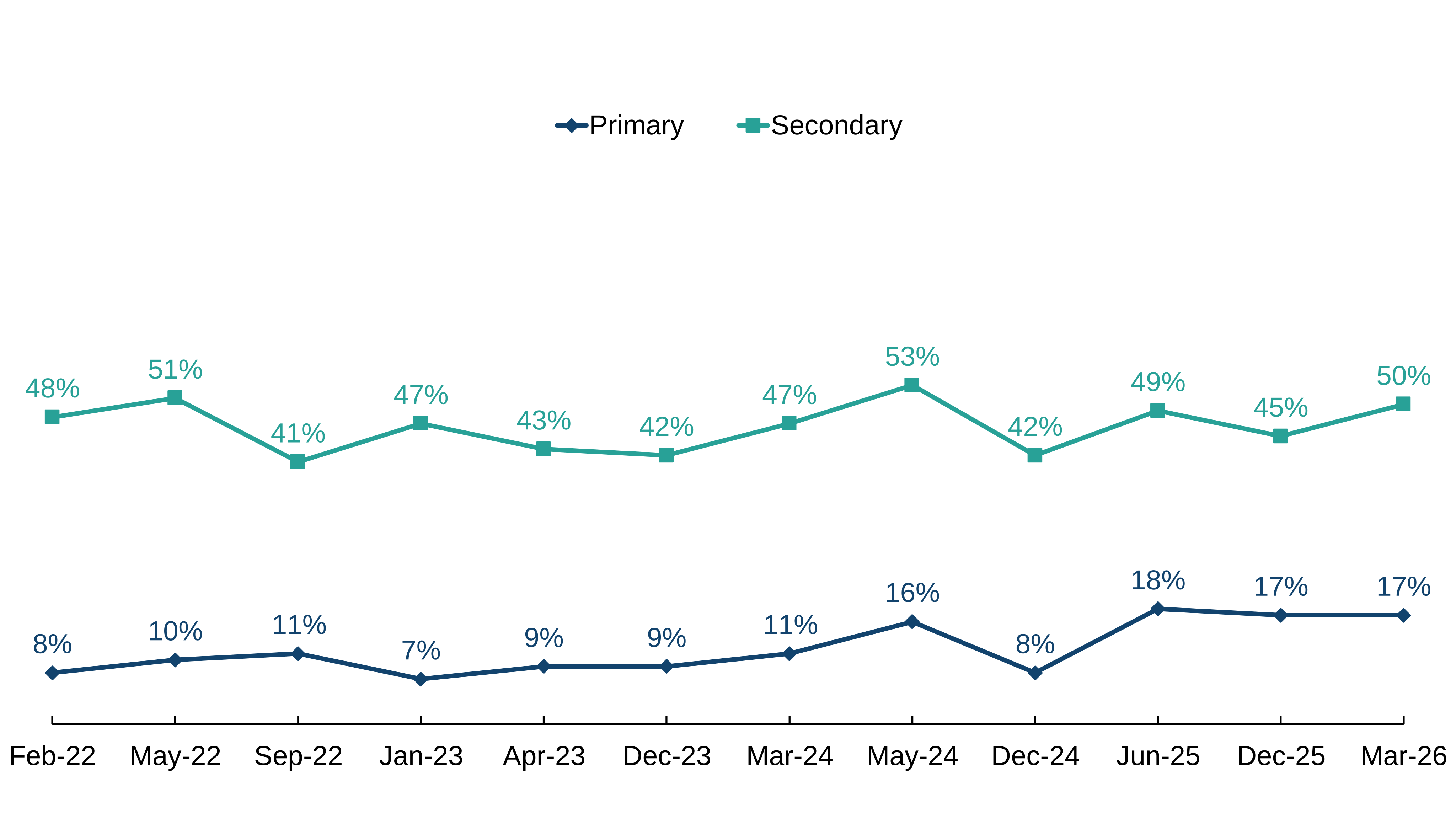
Base: Primary leaders (n = 481) and secondary leaders (n = 571). Bases refer to most recent data: refer to previous reports for base sizes at each data point. Data table reference = “knife_action”.
The proportion of secondary school leaders who reported that their school was currently actively dealing with knife crime as a safeguarding issue was higher in March 2026 (50%) than in December 2025 (45%) when the question was previously asked. Over the same period, there was no change in the proportion of primary school leaders who reported such issues (17% in both December 2025 and March 2026).
We asked leaders who said they were actively dealing with knife crime as a safeguarding issue how many individual safeguarding incidents involving knife crime their school was actively dealing with at that moment in time. By combining the data from this question with administrative data about the number of pupils in each school, it is possible to calculate the number of individual knife crime safeguarding incidents per thousand pupils.
Among leaders who reported that their schools were actively dealing with knife crime as a safeguarding issue, 25% of primary school leaders and 47% of secondary school leaders preferred not to say how many incidents they were actively dealing with at that moment in time. Any schools with missing data, relating either to their number of pupils or their current number of knife crime safeguarding incidents, were excluded from the following calculation of the number of safeguarding incidents per thousand pupils.
In those schools that were actively dealing with knife crime as a safeguarding issue, an average of 1.2 safeguarding incidents per thousand pupils were actively being dealt with at the time of the survey.
Behaviour
We asked teachers how good or poor the behaviour of pupils at their school had been over the previous week of term.
Figure 43: Teachers’ ratings of pupil behaviour over the previous week of term
| Phase | Very good | Good | Neither good nor poor | Poor | Very poor | Don’t know | Total |
|---|---|---|---|---|---|---|---|
| Primary | 6% | 44% | 21% | 18% | 11% | 1% | 100% |
| Secondary | 7% | 45% | 21% | 20% | 6% | 1% | 100% |
| Special | 11% | 40% | 28% | 15% | 5% | 1% | 100% |
Base: All primary teachers (n = 497), secondary teachers (n = 489) and special school teachers (315). Data table reference = “behaviour_rating”.
Overall, 49% of primary school teachers, 52% of secondary school teachers and 51% of special school teachers said that the behaviour of pupils at their school over the previous week had been good or very good.
The proportion of primary school teachers that rated behaviour as good or very good was lower in March 2026 (49%) than in December 2025 (58%) when the question was last asked. Opinions of behaviour among secondary school teachers remained broadly stable over the same period. Behaviour ratings among special school teachers remained broadly stable between March 2026 and May 2024, when the question was last asked of special schools.
We also asked school leaders how good or poor pupil behaviour was over the previous week of term.
Figure 44: Leaders’ ratings of pupil behaviour over the previous week of term
| Phase | Very good | Good | Neither good nor poor | Poor | Very poor | Don’t know | Total |
|---|---|---|---|---|---|---|---|
| Primary | 25% | 58% | 10% | 6% | 1% | 1% | 100% |
| Secondary | 21% | 54% | 13% | 9% | 2% | 1% | 100% |
| Special | 31% | 48% | 17% | 4% | 0% | 1% | 100% |
Base: All primary leaders (n = 481), secondary leaders (n = 571) and special school leaders (n = 138). Data table reference = “behaviour_rating”.
A large majority of primary school leaders (83%), secondary school leaders (75%) and special school leaders (78%) rated pupil behaviour over the previous week of term as good or very good.
The proportion of primary and secondary school leaders that rated behaviour as good or very good was broadly stable between December 2025 and March 2026. The proportion of special school leaders rating behaviour as good or very good was also broadly stable when comparing March 2026 with May 2024, when this question was previously asked of special schools.
We asked teachers how often their school had been calm and orderly over the previous week of term.
Figure 45: How often teachers felt their school had been calm and orderly over the previous week of term
| Phase | Every day | Most days | Some days | Never | Don’t know | Total |
|---|---|---|---|---|---|---|
| Primary | 11% | 41% | 39% | 8% | 1% | 100% |
| Secondary | 12% | 43% | 35% | 9% | 1% | 100% |
| Special | 10% | 42% | 40% | 7% | 1% | 100% |
Base: All primary teachers (n = 497), secondary teachers (n = 489) and special school teachers (n = 315). Data table reference = “behaviour_calm”.
Overall, 51% of primary school teachers, 55% of secondary school teachers and 52% of special school teachers said their school had been calm and orderly on every day or most days in the past week of term.
In December 2025, the proportion of primary school teachers (56%) and secondary school teachers (64%) that said their school had been calm and orderly was higher than in March 2026. The proportion of special school teachers reporting that their school was calm and orderly was lower in May 2024 (47%) than in March 2026.
We also asked school leaders how often their school had been calm and orderly over the previous week of term.
Figure 46: How often leaders felt their school had been calm and orderly over the previous week of term
| Phase | Every day | Most days | Some days | Never | Don’t know | Total |
|---|---|---|---|---|---|---|
| Primary | 30% | 56% | 13% | 1% | 0% | 100% |
| Secondary | 35% | 47% | 16% | 3% | 0% | 100% |
| Special | 31% | 46% | 19% | 3% | 1% | 100% |
Base: All primary leaders (n = 481), secondary leaders (n = 571) and special school leaders (n = 138). Data table reference = “behaviour_calm”.
A large majority of primary school leaders (85%), secondary school leaders (81%) and special school leaders (77%) said their school had been calm and orderly on every day or most days over the past week of term.
The proportion of primary and secondary leaders that said their school had been calm and orderly was broadly the same in March 2026 as it was in December 2025. The proportion of special school leaders reporting that their school had been calm and orderly was also broadly stable between March 2026 and May 2024.
We also asked teachers in how many lessons they taught during the past week of term pupil misbehaviour had stopped or interrupted teaching or learning.
Figure 47: Proportion of teachers’ lessons interrupted by pupil misbehaviour over the previous week of term
| Phase | All lessons | Most lessons | Some lessons | Rarely | Never | Haven’t taught any lessons | Total |
|---|---|---|---|---|---|---|---|
| Primary | 22% | 28% | 33% | 14% | 1% | 1% | 100% |
| Secondary | 10% | 23% | 44% | 20% | 3% | 0% | 100% |
| Special | 12% | 21% | 43% | 19% | 2% | 3% | 100% |
Base: All primary teachers (n = 497), secondary teachers (n = 489) and special school teachers (n = 315). Data table reference = “behaviour_interrupt”.
A large majority of primary school teachers (83%), secondary school teachers (77%) and special school teachers (76%) said that at least some lessons over the past week of term had been stopped or interrupted due to pupil misbehaviour.
The proportion of primary school teachers that said lessons had been interrupted was broadly stable between March 2026 and December 2025. The proportion of secondary school teachers that said lessons had been stopped or interrupted was higher in March 2026 (77%) than in December 2025 (72%).
We also asked school leaders in how many lessons they taught during the past week of term had pupil misbehaviour stopped or interrupted teaching or learning.
Figure 48: Proportion of leaders’ lessons interrupted by pupil misbehaviour over the previous week of term
| Phase | All lessons | Most lessons | Some lessons | Rarely | Never | Haven’t taught any lessons | Total |
|---|---|---|---|---|---|---|---|
| Primary | 3% | 13% | 29% | 28% | 5% | 21% | 100% |
| Secondary | 3% | 8% | 33% | 36% | 15% | 6% | 100% |
| Special | 3% | 10% | 29% | 24% | 5% | 30% | 100% |
Base: All primary leaders (n = 481), secondary leaders (n = 571) and special school leaders (n = 138). Data table reference = “behaviour_interrupt”.
A minority of primary school leaders (45%), secondary school leaders (43%) and special school leaders (41%) said that pupil misbehaviour had stopped or interrupted at least some lessons they had taught in the past week.
The proportion of secondary school leaders that said pupil misbehaviour had stopped or interrupted lessons was higher in March 2026 (43%) than in December 2025 (39%).
Glossary of terms
Special educational needs and disabilities (SEND)
A child or young person has SEND if they have a learning difficulty or disability which calls for special educational provision to be made for them. A child of compulsory school age or a young person has a learning difficulty or disability if they:
- have a significantly greater difficulty in learning than the majority of others of the same age
- have a disability which prevents or hinders them from making use of facilities of a kind generally provided for others of the same age in mainstream schools or mainstream post-16 institutions.
Some children and young people who have SEND may also have a disability under the Equality Act 2010 – that is ‘…a physical or mental impairment which has a long-term and substantial adverse effect on their ability to carry out normal day-to-day activities’. Where a disabled child or young person requires special educational provision, they will also be covered by the SEND definition.
Special schools
Schools which provide an education for children with SEND. Almost all pupils in special schools have an EHC plan.