Rough Sleeping Initiative process evaluation
Published 11 December 2025
Applies to England

© Crown copyright 2025
This publication is licensed under the terms of the Open Government Licence v3.0 except where otherwise stated. To view this licence, visit nationalarchives.gov.uk/doc/open-government-licence/version/3 or write to the Information Policy Team, The National Archives, Kew, London TW9 4DU, or email: psi@nationalarchives.gov.uk.
Where we have identified any third party copyright information you will need to obtain permission from the copyright holders concerned.
This publication is available at https://www.gov.uk/government/publications/rough-sleeping-initiative-process-evaluation/rough-sleeping-initiative-process-evaluation
Foreword
This process research builds upon the recently published impact evaluation of the Rough Sleeping Initiative. The impact evaluation estimated that the RSI reduced the number of people sleeping rough by 32% in the areas funded, compared to the number it would have been had the initiative not been in place.
This qualitative report seeks to understand how the RSI was set up, how it operated at a local level, recognise good practice and identify areas for improvement. This will inform the implementation of future funding to reduce rough sleeping. Accompanying the main report are 2 short summaries, designed for use at the local level, which highlight the key learning from the research and provide good practice examples.
To inform this report, Ipsos MORI reviewed the bids made for funding by areas and conducted a survey of all 83 RSI-funded areas, followed by in-depth telephone interviews with 12 areas, sampled to provide a spread of geography and size of rough sleeping population. They then undertook 8 in-depth case studies, likewise sampled, which involved interviews with key stakeholders across roles and responsibilities, and observation of service delivery.
I would like to thank Ipsos MORI for their hard work gathering information from RSI areas across the country, the RSI Delivery Team and Advisers, whose support was critical to the research, and the analysts in MHCLG who provided input to the research materials and reviewed the outputs.
We continue to develop our evidence base on the causes of and solutions to homelessness and rough sleeping.
Further details about our evaluations and new research are available in our Homelessness and Rough Sleeping research programme.
Stephen Aldridge
Director for Analysis and Data
Ministry of Housing, Communities and Local Government
Authors and acknowledgements
The authors of this report are Isabella Pereira, Claudia Mollidor, Andrew McKeown and Toby Piachaud. All are researchers in Ipsos MORI’s Social Research Institute. Independent researcher Colin Wilby also contributed substantially to the draft, for which the writing team are very grateful.
Holly Day, David Candy, Chris Perry and Naomi Day conducted fieldwork for the study alongside the main team and were supported by Noori Piperdy and Charlie Daniels. We are grateful to colleagues at Ipsos MORI who supported with the research, notably Stephen Finlay, and not least, to all the research participants and the local authorities who collaborated with us on this study.
The authors also acknowledge the invaluable support and advice of our research partner Michelle Cornes of King’s College London, and the Ministry of Housing, Communities and Local Government Rough Sleeping Initiative team.
Glossary of terms
Entrenched: Those sleeping rough who have been doing so for a lengthy period of time and have become harder for services to reach and support.
No recourse to public funds: Those who due to a particular immigration status are unable to claim most benefits, tax credits or housing assistance paid for by the state.
Complex support needs: Persistent, problematic and interrelated health and social care needs which impact an individual’s life and ability to function in society. They are often likely to include a combination of mental and physical health problems, substance abuse issues, homelessness and offending behaviours.
Outreach provision: An intervention which involves street outreach individuals or teams engaging with people sleeping rough, collecting basic information, facilitating access to emergency accommodation, arranging more detailed assessments and directing them to day services.
In reach support: Support services and advice provided to those sleeping rough within existing services for example hubs and day provision centres.
Floating support: Flexible support services usually provided once a person has moved into temporary or emergency accommodation aimed at encouraging independence whilst still offering the support required.
Move on accommodation: Longer-term housing, providing more independent living for those who have transitioned from temporary or emergency accommodation such as shelters or hostels.
Executive summary
Background
What is the Rough Sleeping Initiative (RSI)?
The Rough Sleeping Initiative (RSI) is delivered by the Ministry of Housing, Communities and Local Government (MHCLG) as part of the Government’s manifesto commitment to tackling rough sleeping. In 2018/19 the Initiative targeted 83 local authorities with the highest level of rough sleeping in the UK (as of the 2017 annual statistics[footnote 1] with a package of bespoke measures co-produced by the local authorities and their respective RSI advisers, who are long-term experts on rough sleeping seconded to MHCLG from previous roles in the homelessness sector.
The Initiative seeks to support people sleeping rough off the streets and develop their wellbeing and stability, consequently reducing the number of people sleeping rough in England in both the immediate and longer-term future.
Context to this report
Ipsos MORI was commissioned by MHCLG to undertake qualitative research to contribute to the evaluation of the Rough Sleeping Initiative (RSI)’s first year of implementation in 2018/19.
In September 2019, the impact evaluation of the first year of the RSI was published.[footnote 2] This was carried out by Ministry of Housing, Communities and Local Government analysts and independently peer reviewed by Bryson Purdon Social Research, who are specialists in impact evaluation.
The evaluation uses the official annual rough sleeping statistics to estimate the impact of the RSI by comparing the average change in rough sleeping between 2017 and 2018 in the 83 RSI areas, with the next 83 areas that had the highest number of people sleeping rough in 2017 but did not receive RSI funding. This allowed analysts to estimate a counterfactual, or what we predict would have happened to the levels of rough sleeping had the RSI not been running.
The evaluation estimated that the RSI reduced the number of people sleeping rough by 32%, compared to the number it would have been had the initiative not been in place. This impact remained even after controlling for a range of other factors, including whether councils submitted estimates or counts, local weather patterns on the night of the data collection, local housing and labour market conditions, and previous levels of homelessness and rough sleeping.
Research aims and methodology
This report presents findings from the first year of the process research, which was designed with the following objectives:
- To identify the reasons behind the increases in rough sleeping in different areas, from the perspective of local authority stakeholders, and understand the relationship between this and gaps in service provision, the resulting proposals for RSI funding, and the interventions being delivered.
- To understand the mobilisation process following the receipt of RSI funding, and the successes and challenges faced relative to pre-existing levels of service provision, joint working, other relevant factors in different areas, and the implications of these.
- To understand whether, and how, RSI-supported services are reducing rough sleeping from the perspective of stakeholders, identifying key learning around approaches to working with people sleeping rough, including, but not restricted to, any innovative working, use of data, partnership working and combinations of available services.
- To understand the strategic approach taken to addressing rough sleeping in RSI areas and the contribution of RSI support.
- To disseminate learning to key stakeholders across local authority areas and partners in the public sector and homelessness sector.
The research was conducted in 2019 and included the following methods:
-
A review of proposals for RSI funding made by individual local authorities in 2018. These documents were co-produced by local authorities and an RSI adviser. They outline and evidence the need for a set of interventions to tackle rough sleeping in each local authority area.
- An online survey of RSI leads in the 83 participating authorities, many of whom were Rough Sleeping Co-ordinators.[footnote 3] The survey combined factual questions with qualitative information via open-ended questions on, for example, approaches which have been adopted, priorities set, and challenges encountered (and how these have been overcome).
- Follow-up telephone interviews with 12 of the RSI leads who participated in the survey to gather additional detail on key issues such as the reasons behind increases in rough sleeping and exploring the challenges in mobilisation.
- Eight qualitative case studies of local authorities, consisting of at least 6 face-to-face interviews with key stakeholders in each area, as well as observations of RSI-funded services in a number of these areas.
Key findings
The introduction and implementation of the RSI
The RSI was introduced in the context of consistently rising numbers of people sleeping rough nationwide. A number of reasons were identified by areas in this research as being particularly important in causing this rise: a lack of affordable accommodation and housing options (including emergency accommodation and social housing), welfare reform, and a rise in the number of people with complex support needs (believed to be a direct result of reductions in funding for specialist drug, alcohol and mental health services[footnote 4].
In the face of these rising numbers and challenges, services were overstretched and increasingly struggling to address rough sleeping adequately and sustainably. There was a lack of both infrastructure and staff, leaving services unable to invest the necessary time in clients (particularly those requiring more intensive intervention) and limited to supporting people only at the point of crisis.
Local authorities were also limited in their capacity to address the rising numbers. Almost half of RSI areas did not have a rough sleeping strategy in place prior to the introduction of the RSI. In these areas, the RSI initiated and enabled the development of such strategies. It also provided an additional focus and drive across areas that facilitated partner engagement, and the opportunity to think creatively and optimistically about potential solutions.
Strategy development was driven primarily by Rough Sleeping co-ordinators within local authorities, who played a critical role throughout planning, mobilisation and delivery of the RSI. In order to develop strategy and target funding effectively, LAs drew upon a range of information, including existing knowledge and experience of staff within the LA and sector, extant data collection, and the knowledge and advice of their MHCLG RSI adviser.
Across authorities, there were 2 main approaches proposed to use the funding. The first of these was filling gaps in the existing offer by both increasing the resources and capacity of existing effective services and by commissioning new services to meet currently unmet needs. The second was changing and improving ways of working. Two-thirds of surveyed authorities reported that their interventions were predominantly or completely focused on relief.
The proposed provision spanned Rough Sleeping Co-ordinators, outreach and in-reach support[footnote 5], hub or day provision, specialist non-housing roles, and associated good administration and monitoring, in an integrated approach to address the identified complexity and heterogeneity of rough sleeping populations.
Summary of progress and learning
As referenced above, the impact evaluation found that the RSI had a significant positive impact on the levels of rough sleeping in funded areas. This process study provides insight into the processes of mobilisation and delivery practices that have enabled this positive impact, as well as the difficulties faced in implementing the funding and lessons for the future.
Overall, stakeholders perceived the RSI to be having a positive impact on reducing numbers of people sleeping rough, reflecting the findings of the impact evaluation. It was seen to have provided local authorities greater flexibility in commissioning, financial autonomy and the opportunity to trial new approaches to addressing rough sleeping as well as expanding and improving existing work. Stakeholders also felt that the RSI funding has facilitated the development of joined-up, holistic and person-centred service delivery.
However, some stakeholders raised concerns around the sufficiency of RSI funding due to some gaps in services still apparent and the short-term nature of the funding. In some cases, it was felt that funding has not enabled areas to address rough sleeping holistically as it had to be used to fill existing gaps in basic services.
a. Lessons learned: Mobilising the RSI funding
A number of lessons regarding mobilisation of the RSI-funded interventions have been identified. Overall, speed of mobilisation was mixed; half of the areas felt that most or all their interventions were quick to mobilise, but almost all areas reported that at least some of their interventions had been slow to mobilise. Speed of mobilisation was affected by a number of identified enablers and barriers.
Mobilisation was easiest when RSI funding was being used to fund existing services. In these cases, the infrastructure, facilities, contracts, and working relationships were already in place and it was therefore easier to make small modifications to these arrangements, as opposed to establishing entirely new interventions.
Where new staff posts or infrastructure was required, mobilisation was faster when these could be put in place in advance, rather than waiting for final funding allocations to be announced. This necessitated strong working relationships and a great degree of trust, particularly where interventions were launched before funding arrived. This forward planning was made easier by the close co-production work and ongoing contact with MHCLG RSI advisers.
Quick mobilisation was also enabled when posts could be filled through non-traditional routes such as secondment or agency recruitment, rather than full recruitment processes. This allowed staff to start sooner, and in many cases meant that they were experienced and knowledgeable in the sector, allowing them to make an immediate impact without needing to train and upskill.
Conversely, recruitment of staff proved to be a substantial barrier to fast mobilisation. In some cases, there simply were not enough suitable people to fill the required posts, and seconding or recruiting from within the sector left gaps and the need to backfill elsewhere. Where traditional recruitment processes could not be circumvented through processes such as secondment, getting staff into post was slow. Specifying roles, advertising, interviewing, and general staff administration such as contracts, insurance and reference/safeguarding checks were time-consuming.
Whilst an enabler in some cases, partnership working proved to be a barrier in others, where these relationships were not already in place or functional. Due to the timeframes of mobilisation, some RSI leads felt that they did not have enough time to build relationships before funding was released.
b. Lessons learned: Delivery of RSI-funded services
RSI funding has facilitated several improvements in service delivery practices. The funding brought about a new flexibility in commissioning services due to greater financial autonomy, the ability to trial new approaches and greater political buy-in. This enabled creative and innovative thinking which previously had been harder to put into practice.
RSI funding also furthered the development of joined-up service delivery and multi-agency partnerships. The funding improved partnership working and relationships as it enabled partners’ aspirations for providing support and accommodation to be realised. Greater engagement and collaboration across agencies helped to ensure that people sleeping rough received the right services at the right time. For example, multi-agency meetings focussed on individual people sleeping rough and their situation and needs enabled responsibility and accountability to be assigned appropriately and improved outcomes for those people. The role of the RSI-funded Rough Sleeping co-ordinators was again important here in organising and managing such meetings.
In addition to partnership working with commissioned services, it was important for areas to manage relationships and work collaboratively with voluntary sector organisations and statutory organisations such as the Jobcentre Plus, with whom relationships might not have been in place before.
Partnership working was also improved by the co-location of staff, which both facilitated closer working and better communication between partners. Co-location also provided a better and more accessible service for people sleeping rough, allowing them to access multiple services in one place.
In some local authorities, the RSI funding provided a platform for a more holistic approach to rough sleeping, with the different needs of each individual person being addressed in a personalised approach. With additional funding it became easier to tailor interventions to individuals, rather than expecting a broad range of people with widely varying needs to fit the services available. In some cases, this meant providing entirely bespoke interventions. Personal budgets[footnote 6] were seen to empower frontline staff to respond to individuals’ needs in a timely and personalised way.
Working with the private rented sector (PRS) was also important in order to ensure successful move-on outcomes. The RSI enabled this in a number of ways: funding a PRS worker who worked closely with landlords to educate and reassure them about taking tenants who had previously slept rough; freeing up time for support works to accompany clients to house viewings and thus improving the likelihood of a positive outcome; providing financial incentive schemes; and in one case funding a telephone helpline for landlords to minimise problems arising early in the tenancy.
Across areas, the importance of using data in efforts to tackle rough sleeping was recognised. Some areas were previously collecting data to inform their rough sleeping work, whilst others took the opportunity of the RSI to improve their use of data. The coordinator posts funded by the RSI were seen to be critical to collecting and analysing data. Better data collection and management provided areas with a better understanding of their cohort and the ability to effectively target services and adapt them appropriately in response to change.
All RSI areas collected and submitted monitoring data to MHCLG. This process was seen to be helpful in measuring change and evidencing outcomes. This in turn helped to motivate teams and demonstrate to a wider audience the positive effects of the RSI-funded work. However, there were ways in which areas felt that the MHCLG data requirements could be improved and that there were other important data that should be collected. As such areas collected varying additional data for their own purposes including on reconnections, wellbeing, and individual case-level data including support needs and intervention history.
1. Introduction
1.1 Overview of the Rough Sleeping Initiative
The Rough Sleeping Initiative (RSI) is delivered by the Ministry of Housing, Communities and Local Government (MHCLG) as part of the Government’s manifesto commitment to tackling rough sleeping. In 2018/19 the Initiative targeted 83 local authorities with the highest level of rough sleeping in the UK (as of the 2017 annual statistics[footnote 7]) with a package of bespoke measures co-produced by the local authorities and their respective RSI advisers, who are long-term experts on rough sleeping seconded to MHCLG from previous roles in the homelessness sector. The Initiative seeks to support people sleeping rough off the streets and develop their wellbeing and stability, consequently reducing the number of people sleeping rough in England.
The first year of RSI funding for the 83 authorities comprised £30m spanning from July 2018 to March 2019, to make an immediate impact in providing and boosting the support available to individuals sleeping rough. The £46m fund for Year 2 (2019/20), (£12m of which is reserved for authorities not funded in the first year), aims to build upon these provisions, giving further help to support people sleeping rough.
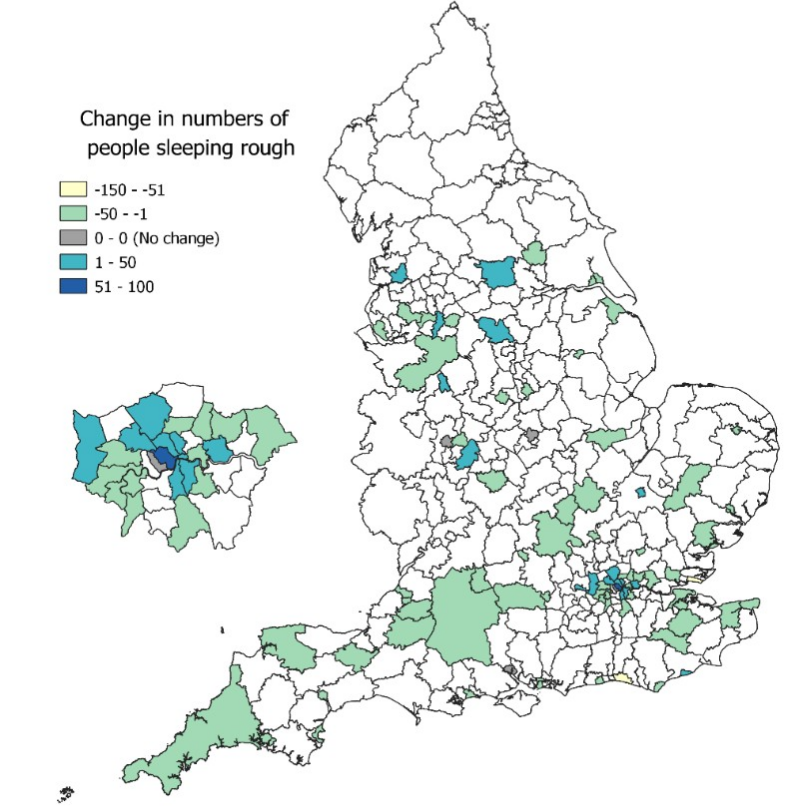
Figure 1: The 83 local authorities supported through the Rough Sleeping Initiative in 2018-19 (showing the change in numbers sleeping rough between 2017 and 2018)
1.2 Research objectives
Year 1 of this process study is focused on what can be learned from the particular approaches taken by the 83 participating authorities to the mobilisation and delivery of the Initiative. This encompasses stakeholders’ perceptions of both process and early impact evaluation elements, to provide a robust evidence base on the Initiative’s activities and consider how, and to what extent, the intended impacts are being realised. Given that the Initiative is ongoing, the study will also deliver good practice evidence from primary research in order to contribute to the development and improvement of the Initiative and its delivery, and provide some insight as to its effectiveness, for example through illustrative case studies. The findings from this study should be built upon in subsequent research.
MHCLG’s stated objectives for this process study are:
- To identify the reasons behind the increases in rough sleeping in different areas, from the perspective of local authority stakeholders, and understand the relationship between this and gaps in service provision, the resulting proposals for RSI funding, and the interventions being delivered.
- To understand the mobilisation process following the receipt of RSI funding, and the successes and challenges faced relative to pre-existing levels of service provision, joint working, and other relevant factors in different areas, and the implications of these.
- To understand whether, and how, RSI-supported services are reducing rough sleeping from the perspective of stakeholders, identifying key learning around approaches to working with people sleeping rough, including, but not restricted to, any innovative working, use of data, partnership working and combinations of available services.
- To understand the strategic approach taken to addressing rough sleeping in RSI areas and the contribution of the RSI.
The research programme also aims to disseminate learning to key stakeholders across local authority areas and partners in the public sector and homelessness sector.
To support a rigorous and systematic evaluation, elements of these objectives can be reframed in terms of the RSI’s processes and anticipated impact. These are described in the Theory of Change and Evaluation Frameworks for the RSI (section 1.3 below). Separate to this, a dedicated evaluation of the impact of RSI funding on reducing the numbers of people sleeping rough has recently been published by MHCLG[footnote 8].
1.3 RSI Theory of Change and its role in the process study
Theory of Change development is a common approach used to understand and formalise the set of planned activities and intended results of an intervention.[footnote 9] It identifies the specific issues being addressed and the causal processes through which it is anticipated that the inputs and activities of a programme will lead to the desired outputs, outcomes and subsequent impacts. It also considers the context in which a programme is operating, and the key assumptions and risks that influence these expected causal processes.
The RSI Theory of Change has been developed drawing on evidence generated in our key stakeholder interviews, literature review, local authority RSI proposals, MHCLG monitoring data indicators and a workshop with key policy staff (conducted in June 2019). It is encapsulated in a ‘logic model’ diagram included in the appendix of this report.
The Theory of Change has informed the analysis of the data generated in the research and is referenced in Chapter 6, which includes a discussion of the outcomes and perceived impacts of the RSI programme in Year 1. It is important to note that when looking at the impact that RSI funding has had on the ability of local authorities to address rough sleeping, there is also an effect of other services and initiatives which are not directly funded by the RSI, as it naturally operates within a wider system. Often RSI-funded interventions will include work funded by other streams or by local authorities themselves. However, the research questions and questions asked to participants focussed specifically on the RSI funding and their perceptions of the impact the initiative itself had made. It is also important to take local context into account when understanding the implementation of the RSI. We present some of this context (for the case study research) in Annex 4 of this report, but note that the implications of local context require further exploration to fully address questions of “what works, for whom, in what respects, to what extent, in what contexts, and how?”[footnote 10] in the implementation of RSI-funded services.
1.4 The report
This report is drawn from evidence from 4 elements of the overall research programme:
- A review of proposals for RSI funding made by individual local authorities in 2018. These documents were co-produced by local authorities and their RSI adviser. They outline and evidence the need for a set of interventions to tackle rough sleeping in each local authority area.
- An online survey of RSI leads in the 83 participating authorities.[footnote 11] The survey combined factual questions with qualitative information via open-ended questions on, for example, approaches which have been adopted, priorities set, and challenges encountered (and how these have been overcome).
- Follow-up telephone interviews with 12 of the RSI leads who participated in the survey to gather additional detail on key issues such as the reasons behind increases in rough sleeping (Objective 1) and exploring the challenges in mobilisation (Objective 2).
- Eight qualitative case studies of local authorities, consisting of 6 face-to-face interviews with key stakeholders in each area, as well as observations of RSI-funded services in a number of these areas.
The design of the primary research elements (2 -4) was underpinned by the key research questions (see section 1.2) and by the RSI Theory of Change (see section 1.3 and Annex 3).
The findings from the research are presented in 5 chapters, which cover:
- The context of the RSI in participating areas.
- Targeting the RSI funding, including the development of RSI strategy and application proposals.
- Using data to monitor progress.
- Mobilising RSI-funded services, including how the funding was mobilised, the barriers and enablers to making use of RSI funds to meet MHCLG requirements and deadlines.
- The delivery of the RSI services which covers how RSI services were delivered, and the types of interventions which RSI funds were used to support.
Concluding remarks are made in relation to the research objectives set out in section 1.2, alongside a short discussion of the implications of the findings from this first year of the evaluation for the research design in consequent years.
1.5 Research methodology
Survey of local authorities
The online survey of the 83 RSI leads was conducted between 24 April and 10 June 2019. A response rate of 77% was achieved, with 64 participants completing the survey across a diverse range of urban and rural areas in all regions of England.[footnote 12]
Building on the work of the inception phase through discussions with MHCLG, an online survey was designed to capture factual, perception-based and qualitative responses. It took participants an average of 20 minutes to complete. It was piloted by 2 RSI leads to ensure questions were fit for purpose and that survey participants would be able to understand the questions being asked. The final version of the survey was then sent out to RSI leads in all 83 local authority areas that had received RSI funding.
Follow-up telephone interviews with RSI leads
Twelve RSI leads took part in follow-up telephone interviews. Interviews took place by telephone to enable a good geographic spread within the available timeframe and each lasted around an hour. They were conducted by researchers from the core research team and structured by a detailed discussion guide.
RSI leads were selected to represent a broad cross-section of authorities, based on the evidence of the inception report. They were selected to capture a diverse spread across numbers of people sleeping rough and types of local authority. Recruitment was constrained by timeframes and the availability of participants, and follow-up interviews were skewed towards urban local authorities.
Table 1: Participants in the follow-up interviews by type and location of local authority
| Urban | Significant rural element | At least partly coastal | |
|---|---|---|---|
| North | 2 | 0 | 0 |
| South | 4 | 3 | 0 |
| Midlands | 3 | 0 | 0 |
Table 2: Participants in the follow-up interviews by numbers of people sleeping rough in their local authority
| People sleeping rough | Number of participants |
|---|---|
| Fewer than 20 | 4 |
| 20-39 | 6 |
| 40 or more | 2 |
Eight qualitative case studies of local authorities
Eight case study areas were selected to cover the diversity of the RSI areas using the key sampling criteria based on the annual Rough Sleeping Statistics publication:[footnote 13]
Table 3: Characteristics of local authority case study areas, at November 2018 count
| Case study area | Region | Geography | Number of people sleeping rough | Fluctuations in numbers of people sleeping rough (2017-2018) | Nationality of people sleeping rough |
|---|---|---|---|---|---|
| 1 | North | Urban | Fewer than 20 | Decrease of 20 or greater | UK: Fewer than 10 Non-UK EU national: Fewer than 10 Non-EU national: Fewer than 10 |
| 2 | North | Urban | 60 or more | Increase of 20 or greater | UK: Greater than 10 Non-UK EU national: Fewer than 10 Non-EU national: Fewer than 10 Unknown: Greater than 10 |
| 3 | South | Significant rural element; at least partly coastal | 40-59 | Decrease of less than 20 | UK: Greater than 10 Non-UK EU national: Fewer than 10 Non-EU national: Fewer than 10 Unknown: Fewer than 10 |
| 4 | North | Rural | Fewer than 20 | Decrease of less than 20 | UK: Greater than 10 Non-UK EU national: Zero Non-EU national: Zero |
| 5 | South | Significant rural element | 20-39 | Decrease of less than 20 | UK: Greater than 10 Non-UK EU national: Zero Non-EU national: Zero |
| 6 | South | At least partly coastal | 60 or more | Decrease of 20 or greater | UK: Greater than 10 Non-UK EU national: Fewer than 10 Non-EU national: Fewer than 10 Unknown: greater than 10 |
| 7 | South | Urban | 60 or more | Increase of less than 20 | UK: Greater than 10 Non-UK EU national: Greater than 10 Non-EU national: Zero |
| 8 | South | Urban | 20-39 | Decrease of less than 20 | UK: Fewer than 10 Non-UK EU national: Greater than 10 Non-EU national: Fewer than 10 Unknown: Fewer than 10 |
Fieldwork took place across the 8 case study areas from 9 to 24 July 2019. Six in-depth face-to-face interviews and an observation of RSI-funded services were conducted with key stakeholders in each of the local authority areas. Interviews were conducted in each local authority area with stakeholders in a range of frontline and strategic roles, and a variety of responsibilities such as delivering services, commissioning interventions, co-ordinating the rough sleeping approach and setting the strategic direction.
Further details on each of the case study areas can be found in Annex 4.
2. Context of RSI in participating areas
This chapter sets out the broader context of the RSI in participating areas, describing the characteristics of those leading the programme locally, the reasons for the authorities’ involvement in the programme and the wider local policy context of the RSI.
Key findings
-
In areas that are part of the RSI, as in other areas across England, numbers of people sleeping rough have generally been rising over the last few years. Authorities’ original RSI funding applications to MHCLG overwhelmingly reported an increasing trend of rough sleeping in their area. This was reflected in the survey when the majority of RSI areas surveyed reported an increase in the number of people sleeping rough over both the year before (2017-18) and the 3 years before (2015-18) the introduction of the RSI.
-
Recent causes of rough sleeping, which were identified by stakeholders in this study as particularly important, were a lack of affordable accommodation and housing options, welfare reform, and a rise in the numbers of people presenting with complex support needs. The last issue was believed to be a direct result of reductions in funding for specialist drug, alcohol and mental health services[footnote 14].
-
Prior to the RSI funding, local authorities had a range of different services in place to address rough sleeping. Overall there was a lack of capacity of frontline delivery staff and a lack of short-term accommodation options, which meant that rough sleeping services were often limited to supporting people when they were at a point of crisis. There was a general sense among those interviewed in the telephone and case study interviews that prior to RSI funding, it was getting increasingly difficult to address rough sleeping. Resources were seen to be stretched, and services being delivered were no longer sustainable and not adequate.
2.1 Trends in rough sleeping
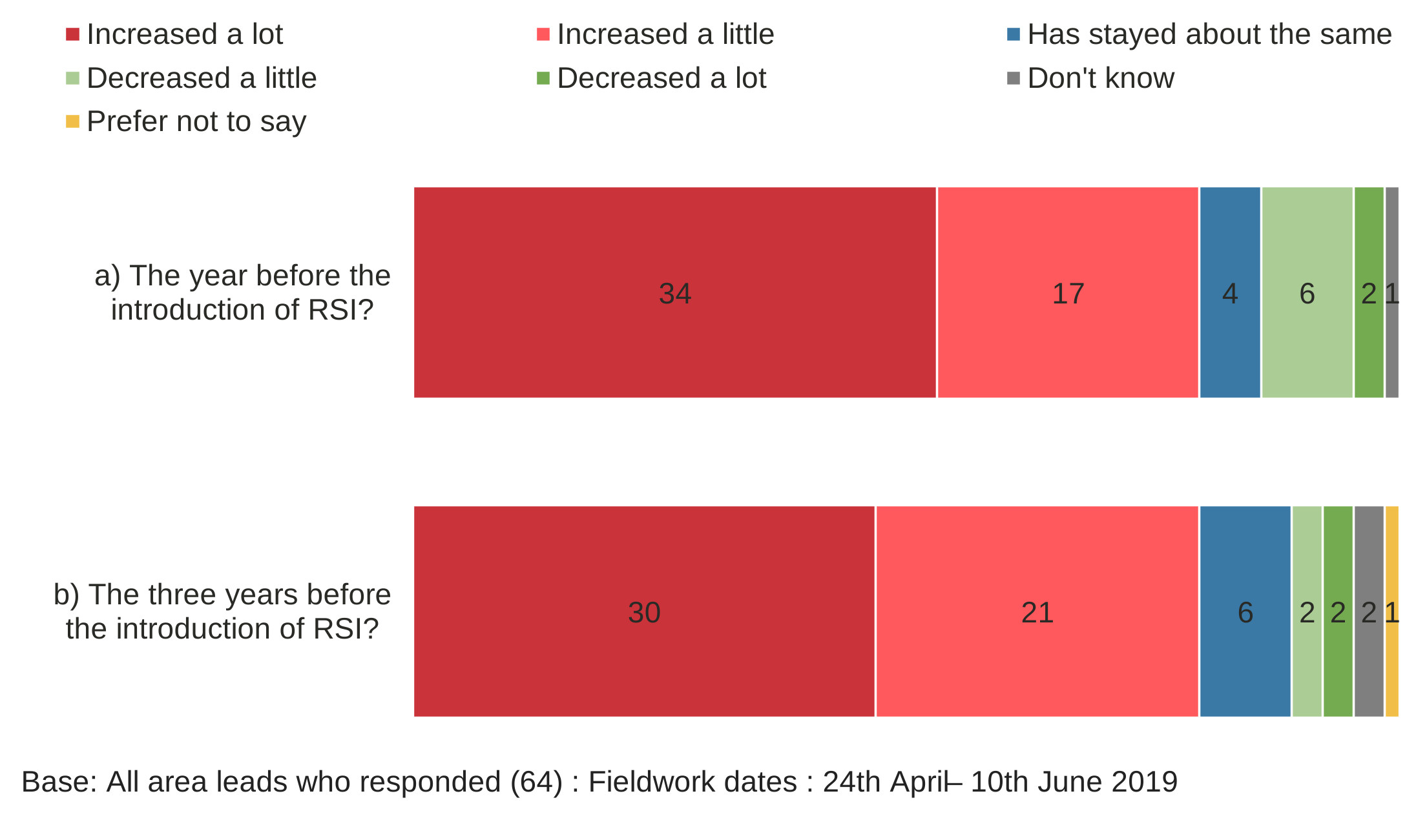
Over three-quarters of the 64 RSI leads taking part in the online survey stated that sleeping rough had increased in their area both in the year before the introduction of the RSI and in the 3 years before its introduction (51 in each case) (Figure 2). Only 9 reported that the number of people sleeping rough had declined in the year prior to the introduction of the RSI and only 4 reported a reduction in the 3 years before its introduction. Authorities’ original RSI applications to MHCLG also overwhelmingly reported an increasing trend of rough sleeping in their area – sharply in some cases (the application form did not require specifics). However, in their applications, a number of authorities had been cautious about their estimates of rough sleeping. Some were concerned that they may not account for all new flow, for example people who sleep rough intermittently or those sleeping in cars[footnote 15]. Some felt that increased outreach work facilitated by the Initiative could lead to the identification of more people sleeping rough than they had previously estimated.
Figure 2: To what extent would you say that numbers of people sleeping rough in your authority increased, decreased or stayed about the same within…
2.2 Reasons cited for rough sleeping and why it is increasing
In the online survey, RSI leads cited a range of reasons for rough sleeping in their area. As shown in Figure 4 they particularly related to:
- A lack of appropriate accommodation, notably affordable accommodation (identified by 52 of the 64 respondents), social housing (47), a limited range of housing options (40), and emergency accommodation (30).
- A lack of access to health and social care services, notably mental health provision (47) and drug and alcohol provision (35).
- Reductions in housing-related support funding (39).
- Changes in benefits, notably for under 35s (34) and the introduction of Universal Credit (32).
A broadly similar pattern emerged from the online survey of RSI leads’ perceptions of why the number of people sleeping rough had increased in their authority in the last 3 years (which applied to 59 leads out of the 64 participants). The top 8 issues were the same in both cases. But 2 issues were identified by a significantly higher proportion of RSI leads as explanations for the increase than as causes of rough sleeping overall:
- A lack of outreach services was identified by 24 of the 59 RSI leads who had seen an increase in rough sleeping in their authority, compared with 5 out of 64 RSI leads who identified it as an overall cause of rough sleeping.
- A lack of leadership on rough sleeping within the authority was identified by 15 out of 59 RSI leads as a reason for the increase, compared with 3 out of 64 leads who identified it as a cause of rough sleeping overall.
Both of these issues emerged as key to the mobilisation of RSI funding, as discussed in chapter 4. On the other hand, while accommodation issues were identified as key causes both of rough sleeping overall and the recent increase, some aspects (the shortage of social housing and the lack of affordable housing) were mentioned by fewer RSI leads as reasons for the increase compared with those identifying it as an overall cause of rough sleeping. In other words, these were both longer-term issues.
In the telephone interviews, the reasons for increased rough sleeping again reflected declining accommodation options; the increasing effect of benefit changes; declining resources; and the range of needs of people sleeping rough, notably relating to mental health, drug and alcohol dependency, and women fleeing violence. A non-metropolitan urban RSI lead referred to the long-term impact of the 2011 Localism Act which reduced ring fencing and facilitated resources being moved away from services which could prevent rough sleeping. The RSI lead cited, as an example, people who had been previously supported to sustain their tenancies by setting up utility payments:
“[Councils] underestimated the importance of this [kind of facility] until it was gone.” RSI lead, East Midlands, telephone interview
Figure 3: Why do you think the numbers of people sleeping rough have increased in your authority within the last 3 years?
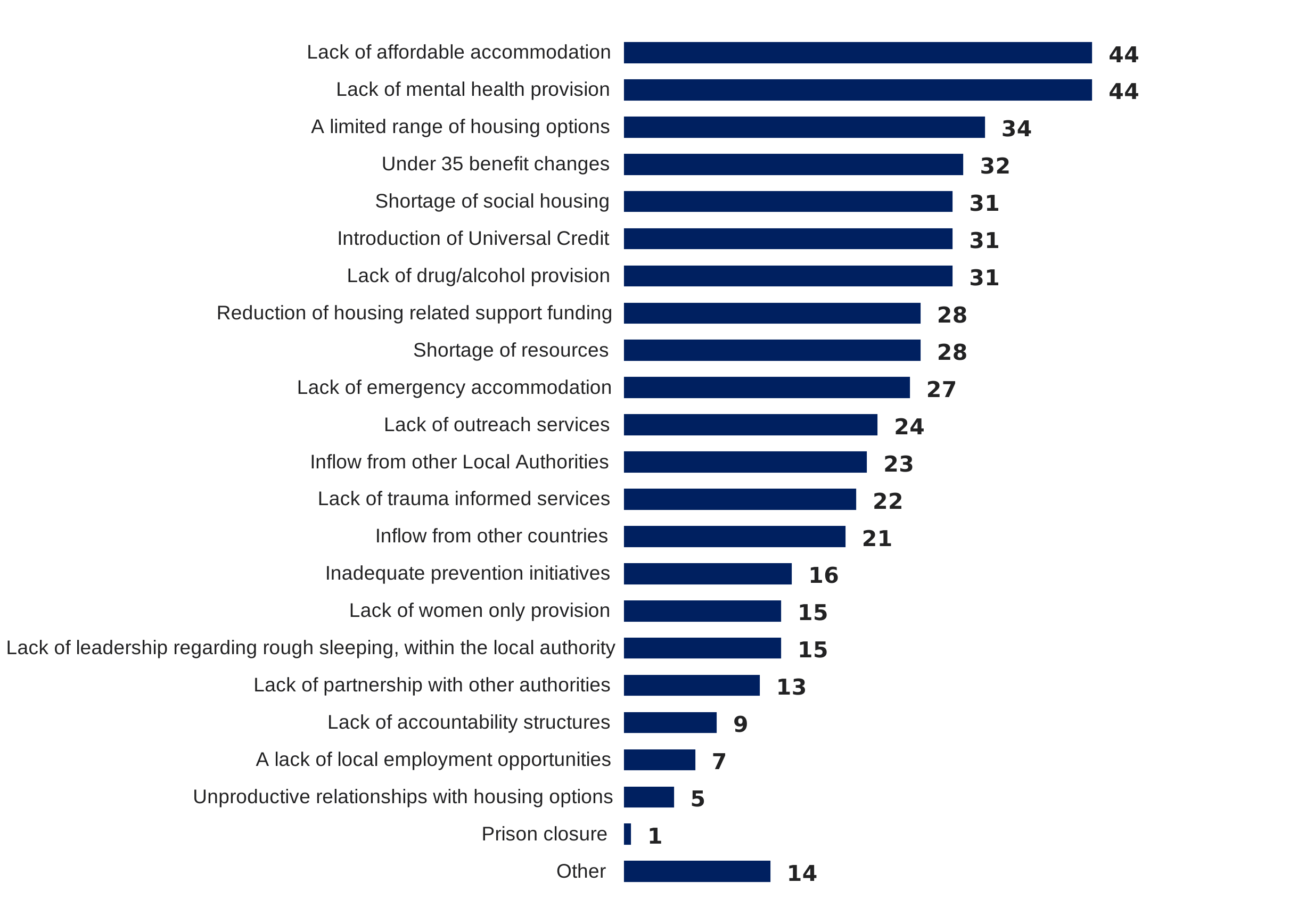
Base: All area leads who thought that the number of people sleeping rough in the past 3 years had increased (59)
Fieldwork dates: 24 April to 10 June 2019
RSI leads in the online survey generally expected rough sleeping to decline in their areas as a result of RSI funding, although those who expanded on this in their telephone interviews, were circumspect in their expectations. Partly this reflected the realities of entrenched rough sleeping and the lack of control over inflows from other areas. But it also reflected the fact that, as had been suggested in some RSI applications, authorities became aware of more people sleeping rough following receipt of RSI funding. Previously hidden people sleeping rough ‘came out of the woodwork’ as the funding enabled the authority to engage with people through extended outreach activities and improved counts. Indeed, as mentioned previously, some areas predicted in their funding proposals that due to increased outreach work hidden people sleeping rough would engage more with services, and rough sleeping numbers would therefore increase.
“It was the success of the [RSI] interventions initially that created the increase … We know the rough sleeping people that we are working with better now through the Initiative.” RSI lead, telephone interview
A few key themes emerged from the 8 case study areas. Firstly, in larger urban areas, the affordability of accommodation was a particular issue. Case study participants attributed increased rough sleeping to cuts in support due to welfare reform as well as support such as Local Housing Allowance (LHA) no longer being enough to cover increasingly expensive private sector rents. For some non-UK nationals sleeping rough access to housing support is precluded by their lack of recourse to public funds. While some non-UK nationals have complex needs and vulnerabilities sometimes arising from abuse, exploitation or modern slavery, others, such as those with jobs, have less complex support needs and their main problem is accessing affordable accommodation.
“A lot of the guys in that situation are actually working, they’re employed, but they’re not properly employed, so they’ve not got payslips, NI numbers. A lot of the guys we’re finding on the street-counts now are actually EU citizens come over here to work, but can’t get housing.” Frontline stakeholder, case study interview
Secondly, while a wider range of people have been rough sleeping in recent years, case study participants also reported that more people had spent a longer period of time at risk of sleeping rough. This partly reflected an increased difficulty in accessing appropriate accommodation and partly that there had been a rise in the number of people with complex support needs (arising for example from reductions in funding for specialist drug and alcohol services and mental health services) who can be harder to support off the streets.
“When I started 11 years ago people either drank, did drugs or had mental health problems and now people’s lives are so chaotic… to get a complicated client then was quite unusual and now getting a complicated client is the norm.” Frontline stakeholder, case study interview
Case study interview participants also reported an increase in the numbers of people sleeping rough with complex support needs, such as mental health conditions. However, at the same time there is a perception among participants that mental health services are becoming harder to access without a formal diagnosis. Consequently, more people are sleeping rough with mental health conditions rather than accessing support through a specialist pathway.
“If someone’s diagnosed, we can often get them accommodation, even if it’s just for 56 days, but they need to see the diagnosis and the medication. And depression, anxiety, suicidal thoughts… that’s not enough. So, there’s a really high threshold.” Strategic stakeholder, case study interview
Even where support is available to people sleeping rough, there is a risk that a person will disengage from this support if it is not sustained. If people receive ineffective support or have a negative experience finding accommodation, they can become disillusioned with accessing that support in future. This may apply, for example, to some people who have no recourse to public funds and may be unwilling to engage with, or will not consider, reconnection to their home authority – or may have recently left institutions such as prison and residential health settings, leaving them at risk of rough sleeping.
Furthermore, some of those sleeping rough are entirely disengaged from statutory support services, requiring intensive outreach work in engagement. One large urban authority, for example, estimated in its RSI application that half of the local rough sleeping population in any month were ‘entrenched’, did not engage in support offered, or moved in and out of temporary accommodation. Such entrenchment in rough sleeping can be exacerbated by a lack of public sympathy for people, particularly if they have just come out of prison.
“People come out [of prison] thinking they’ve got somewhere, and then they haven’t, so they just think ‘Well, whatever.’” Strategic stakeholder, case study interview
Third, inward migrations were evident across the case study areas. In urban areas, some case study participants believed that people sleeping rough were attracted by the relative affluence of the area, particularly where those areas also had large numbers of tourists. In parts of London, there had been a significant inflow of Roma people sleeping rough. Participants in other local authorities, particularly more rural areas, reported that people sleeping rough may congregate in urban centres, such as a market town, because there are more support options available than in the surrounding countryside. In coastal areas, case study participants reported that many people sleeping rough had arrived because they had positive, nostalgic memories of the area from their childhood or holidays or believed it would provide a good quality of life. In some tourist areas, visitors may be more likely to respond generously to begging by people sleeping rough. Regardless of what generates inward migrations of people sleeping rough, interview participants reported that this causes increases in rough sleeping because it is difficult for local authorities to provide support to an ever-changing population of people sleeping rough.
“Most places have a reasonably stable rough sleeping population of fifty with manageable needs whereas [this area] has constant inflow and churn with higher numbers and a limited number of rough sleepers with low needs…” Strategic stakeholder, case study interview
In areas where there had been a rise in the number of non-UK nationals who are sleeping rough, interview participants reported that a new burden on outreach workers was created in April 2014 by tightening eligibility criteria for accessing support such as Housing Benefit. Supporting non-UK nationals became increasingly more complex and time consuming for outreach workers, resulting in a need for increased capacity in existing outreach services.
“EU nationals used to get same rights as UK nationals. We could house them much quicker in projects like supported accommodation. That policy change was extremely detrimental.” Frontline stakeholder, case study interview
RSI funding applications from local authorities reflected the most prevalent reasons for rough sleeping captured in the survey of RSI leads. Local authorities also framed their proposals to mitigate the impact of more specific causes of rough sleeping in their area. Some rural local authorities wished to use the funding to overcome the challenge of delivering services across a dispersed population, while some large urban authorities proposed using RSI funding to address challenges presented by inward flows of people sleeping rough.
2.3 Approach to tackling rough sleeping before the RSI
Prior to the RSI, local authorities had a range of different services in place to help address rough sleeping. These included multi-purpose services not specific to people sleeping rough, for example drug and alcohol services, as well as services targeted solely to address rough sleeping (such as targeted outreach, day provision or housing options).
Figure 4, based on the online survey, illustrates the range of services offered or commissioned by authorities prior to RSI and whether they were specifically for people sleeping rough or were provided to people sleeping rough alongside other clients. Outreach support was the only service which was entirely provided for people sleeping rough (identified by 46 of the 64 authorities surveyed). All other services identified were targeted both at people sleeping rough and more generally.
Figure 4: Which, if any, of the following services which can be used to help address rough sleeping did your authority commission in the year preceding RSI funding? a) Specifically targeted to rough sleeping (b) Multi-purpose services
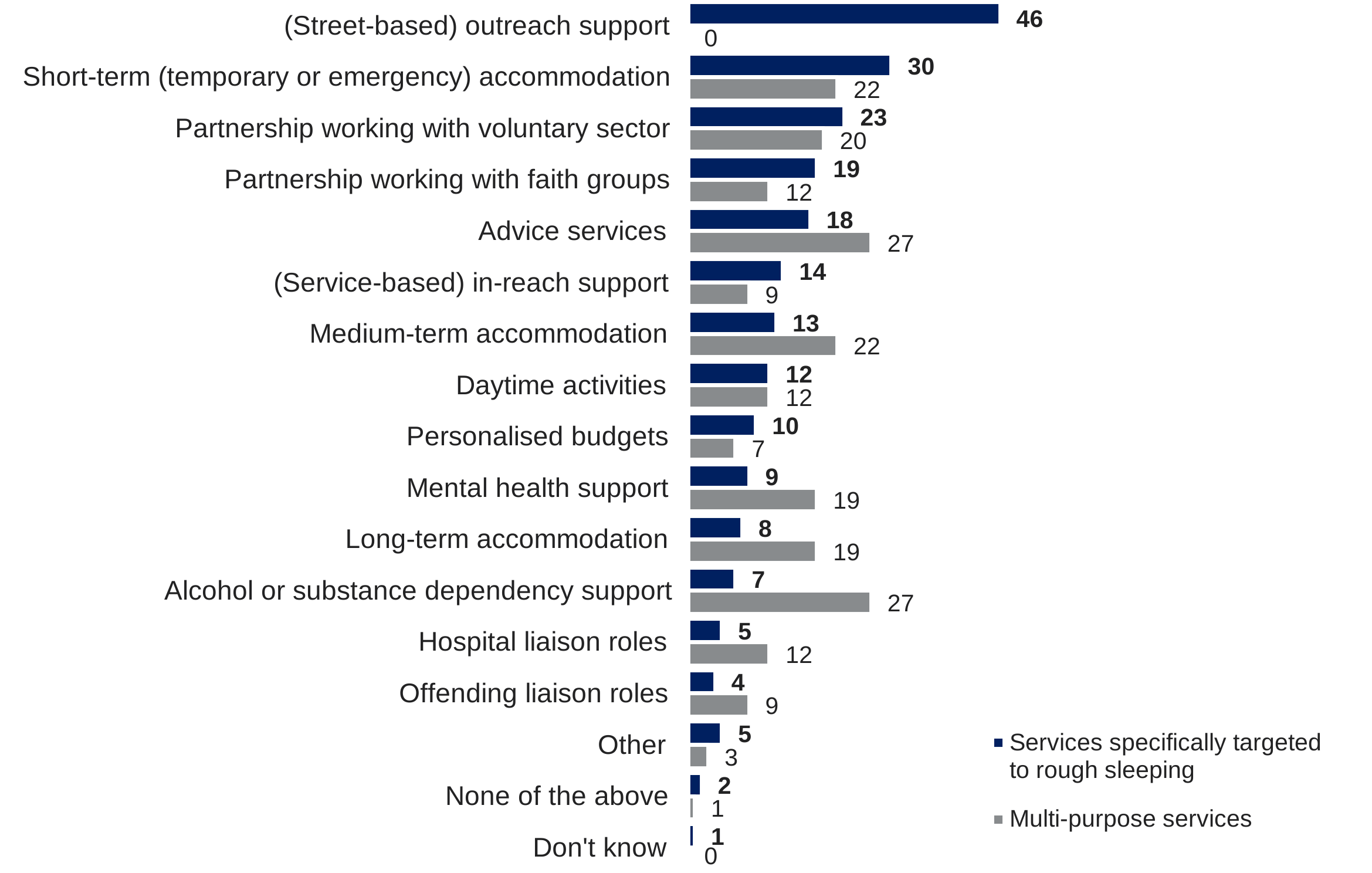
Base: All area leads who responded (64); Fieldwork dates: 24 April to 10 June 2019
The prevalence of outreach support and short-term accommodation as services offered by local authorities was illustrated in the case study areas by interview participants. However, some reported that they were limited in what such services could actually offer. Where local authorities had street-based outreach teams, they could be understaffed and working beyond their capacity. Additionally, local authorities can only work with people sleeping rough of whom they are aware. Some could offer only basic, sporadic support such as encouraging people to have breakfast and a shower. A lack of capacity was also evident in short-term accommodation options. Some case study participants described how rooms could be overcrowded and accommodation options were limited to pathways such as statutory placements in temporary accommodation.
“We had 2 full-time posts… covering all of the borough, so they were able to address or support a small cohort of people, but the workload was quite unsustainable, and also they had very, very limited options as to where people could be placed when they were working with them.” Strategic stakeholder, case study interview
This lack of capacity for frontline service staff meant that support could be inflexible and limited to getting people off the street and into short-term accommodation. Some case study participants felt that rough sleeping services had been focusing on supporting people who were most at risk of rough sleeping, without following through with more sustained long-term support. There was little dedicated provision to prevent specific groups of people from sleeping rough at their point of crisis such as prison leavers. This was in part due to a lack of capacity among existing outreach teams to work with people at their point of discharge from institutions. It was also due to a lack of specialist staff who work in a targeted way with people according to their support needs.
“When it was just the 3 of us… a lot of the work was just to get them into a hostel and move on to the next person…” Frontline stakeholder, case study interview
Prior to the RSI, all case study areas had fewer services available for addressing rough sleeping. However, the case study interviews indicated that even urban areas which had invested in specialised outreach and accommodation services were coming under increasing strain. As new challenges to addressing rough sleeping emerged, such as increasingly complex support needs and restricted access to affordable housing, it was clear that rough sleeping services could not operate as they had before without seeing increased numbers of people sleeping rough. Indeed, in many of the case study areas, prior to the RSI rough sleeping services were focused on relieving rough sleeping, and there was a sense among stakeholders that rough sleeping was not being addressed in a sustainable and meaningful way.
“When I came into the role, the thing that I was most shocked about… was that there was no real offer” Frontline stakeholder, case study interview
In some more rural or smaller urban areas, case study participants reported that, before RSI funding became available, they were starting from a position of having few dedicated services for people sleeping rough. Where services were in place, they tended to be commissioned to local third-sector organisations, with fewer resources than may have been available in some larger or urban authorities. This meant that, without additional funding, there was only so much that could be done for people sleeping rough.
“If someone needed somewhere to stay, we would have to send them out of the borough to YMCAs etc. It was difficult getting people in anywhere.” Strategic stakeholder, case study interview
3. Targeting the RSI funding
This chapter sets out a picture of how RSI funding has been targeted, covering the development of RSI plans, local strategies and the role and perceptions of RSI advisers.
Key findings
- In line with expectations, the RSI funding is contributing to, and in some cases initiating the development of comprehensive rough sleeping strategies in local authorities receiving RSI funding.
- For areas which did not have a specific rough sleeping strategy prior to the RSI (just under half of RSI funded areas) the RSI has been used as an opportunity to develop a strategy, as reported in the telephone and case study interviews. Conversely, for those areas where service gaps were obvious, and where rough sleeping was already considered a priority, the RSI funding has had less of an influence on strategy development.
- The Rough Sleeping Co-ordinators within the local authority appear to be particularly important in driving strategic direction, as reported by area leads in the survey. In order to target the funding proposals effectively, RSI local authority leads primarily relied on existing knowledge within the local authority and third sector, and their MHCLG RSI adviser, as resources in order to develop their funding proposals.
- Almost all local authorities surveyed reported gaps in rough sleeping services, which they are using RSI funding to fill. RSI funding is also being used by most local authorities to improve or expand existing services and improve ways of working.
- Local authorities reported in the RSI funding applications that people sleeping rough do not generally fit into traditional pathways and that an integrated approach is required to address rough sleeping, with an emphasis on partnership working and co-ordination. With this in mind, applications for funding generally included provision for Rough Sleeping Co-ordinators, outreach and in-reach support, hub or day provision, specialist non-housing roles, and associated good administration and monitoring.
- Approaches to rough sleeping are predominantly focused on relief[footnote 16] with only a third of local authorities surveyed reporting that they are implementing prevention services[footnote 17] with the RSI funding.
- In practice the RSI funding has generally been used as expected, with almost all RSI leads surveyed reporting that they had been using RSI funding ‘mostly’ or ‘entirely’ as expected.
- RSI advisers largely played a positive role in supporting local authorities in developing their approaches to tackle rough sleeping by providing leadership and experience, as well as acting as a sounding board for ideas in the design stage.
3.1 The development of rough sleeping strategies
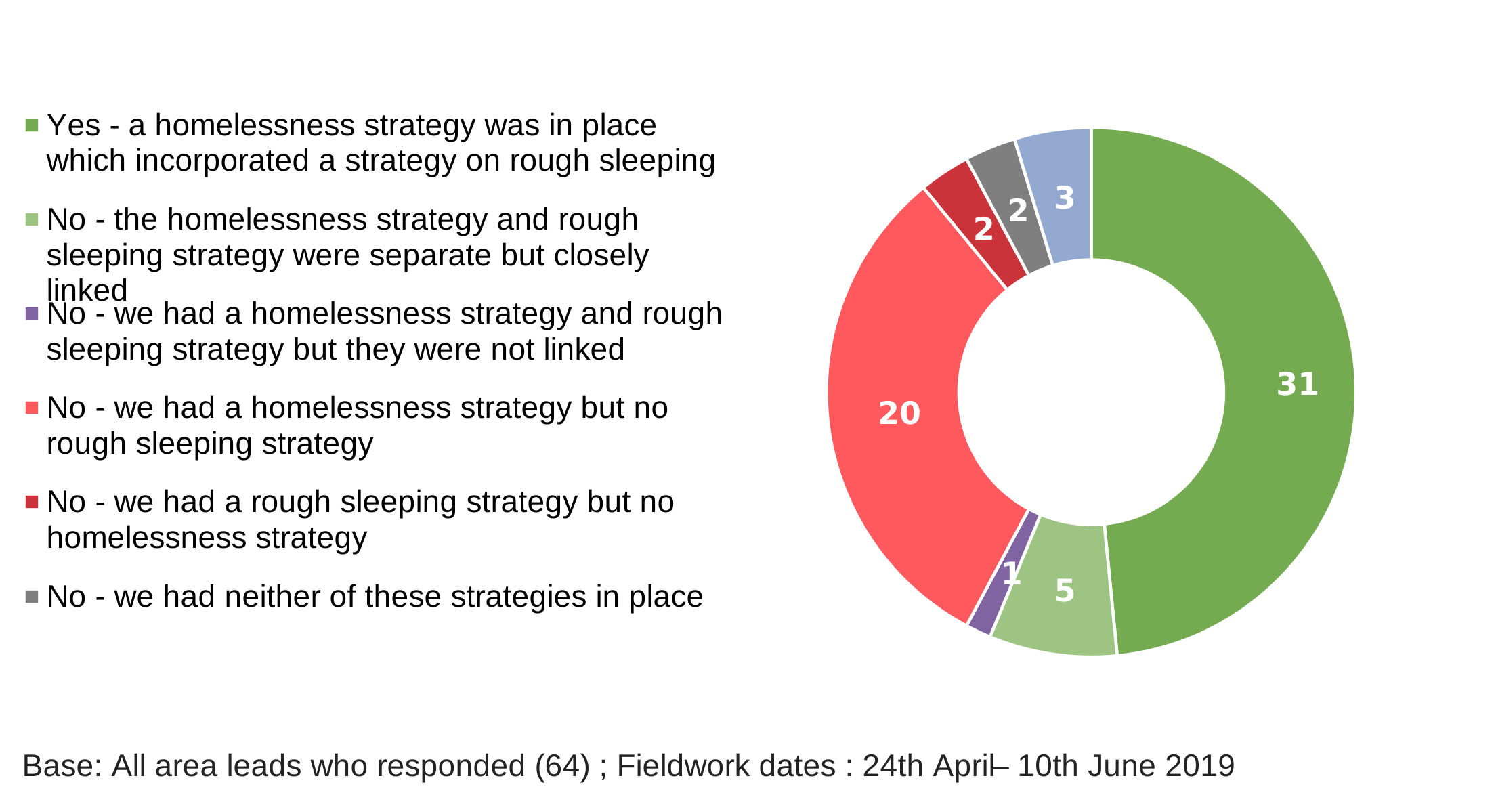
RSI funding was provided to local authorities on the condition that they develop a specific rough sleeping strategy, if one was not already in place. For many local authorities, RSI funding has therefore initiated the development of a rough sleeping strategy; over a third of local authorities surveyed (24 of 64) did not have a rough sleeping strategy at all prior to RSI funding. This is compared to over half of local authorities surveyed (36 of 64) who did have rough sleeping strategies prior to RSI funding. Where local authorities did not have an existing rough sleeping strategy, the Initiative has been used as an opportunity to develop a strategy based on new interventions or expanding existing provision, developing a more targeted approach for specific cohorts of people sleeping rough, and securing greater engagement from senior staff. However, for some local authorities with no existing rough sleeping strategy, there were issues with receiving a large amount of funding with no prior plan in place as to how to spend it:
“Rough sleeping services have been in famine for years and then suddenly MHCLG offer loads of money pots and the danger is to grab what you can and not think about what it should look like … like a sweetie shop with pick and mix … it’s not a sweetie shop any more but it felt like this when the money was first rolled out by MHCLG” Strategic stakeholder, case study interview.
Where service gaps were obvious, and rough sleeping was already considered a priority, RSI had less influence on strategy development. Indeed, some local authorities described how they felt that they already had comprehensive strategies which included how they would spend any additional funding if they received it. This was linked to mobilisation; where case study areas had a good idea of where they wanted to spend any additional funding when they received it, it was seen to be easier to mobilise this funding.
However, even for local authorities which already had a rough sleeping strategy in place prior to receiving the RSI funding, the funding has led to strategy developments. For example, one participant interviewed in the telephone interviews felt that RSI funding had enabled them to expand on their existing strategy and be more ‘dynamic, innovative and pioneering’. Additionally, a number of local authorities in the case study areas reported that the RSI has encouraged them to join up their rough sleeping and homelessness strategies. Case study stakeholders were generally highly supportive of bringing the homelessness and rough sleeping strategies together. Some senior staff felt that the statutory approach to homelessness, before the 2017 Homelessness Reduction Act, had sat separately from what was going on with respect to people sleeping rough which historically had often been more about voluntary activity. This has been changed significantly by the Homelessness Reduction Act and there was now a wider appreciation that rough sleeping was one aspect of homelessness:
“The issues which lead to rough sleeping are common to much wider issues of homelessness intervention, prevention and provision. So, it was never right to treat the 2 separately. Having a single strategy, focused on prevention, and intervention when necessary, to address homelessness, is absolutely right. We will not get to where we want to get to with rough sleeping unless we deal with the fundamental issues around homelessness prevention, not least affordability.” Strategic stakeholder, case study interview
The RSI was seen to have improved strategy development in a number of ways. The increased local focus, from the public and the council on rough sleeping as a result of RSI funding, was seen by stakeholders in the case study interviews to have made it easier to involve partners in strategy development, as there was increased engagement from them. Other impacts of the RSI funding on strategy development include the introduction of strategic ‘task and targeting’ meetings. For example, in one case study area, these meetings are held fortnightly with the council, outreach service providers, accommodation providers, doctors and nurses, drug team, mental health services, probation officers and Shelter.
“I think it’s given us more flexibility. I think we can think bigger. It feels less like we’re firefighting, or less like we’re against a brick wall. We’ve got some options now, we can cut our cloth accordingly.” Case study interview, strategic stakeholder.
Figure 5: Before it began to receive RSI funding, did your local authority have a homelessness strategy which incorporated a strategy on rough sleeping?
3.2 Developing RSI funding proposals
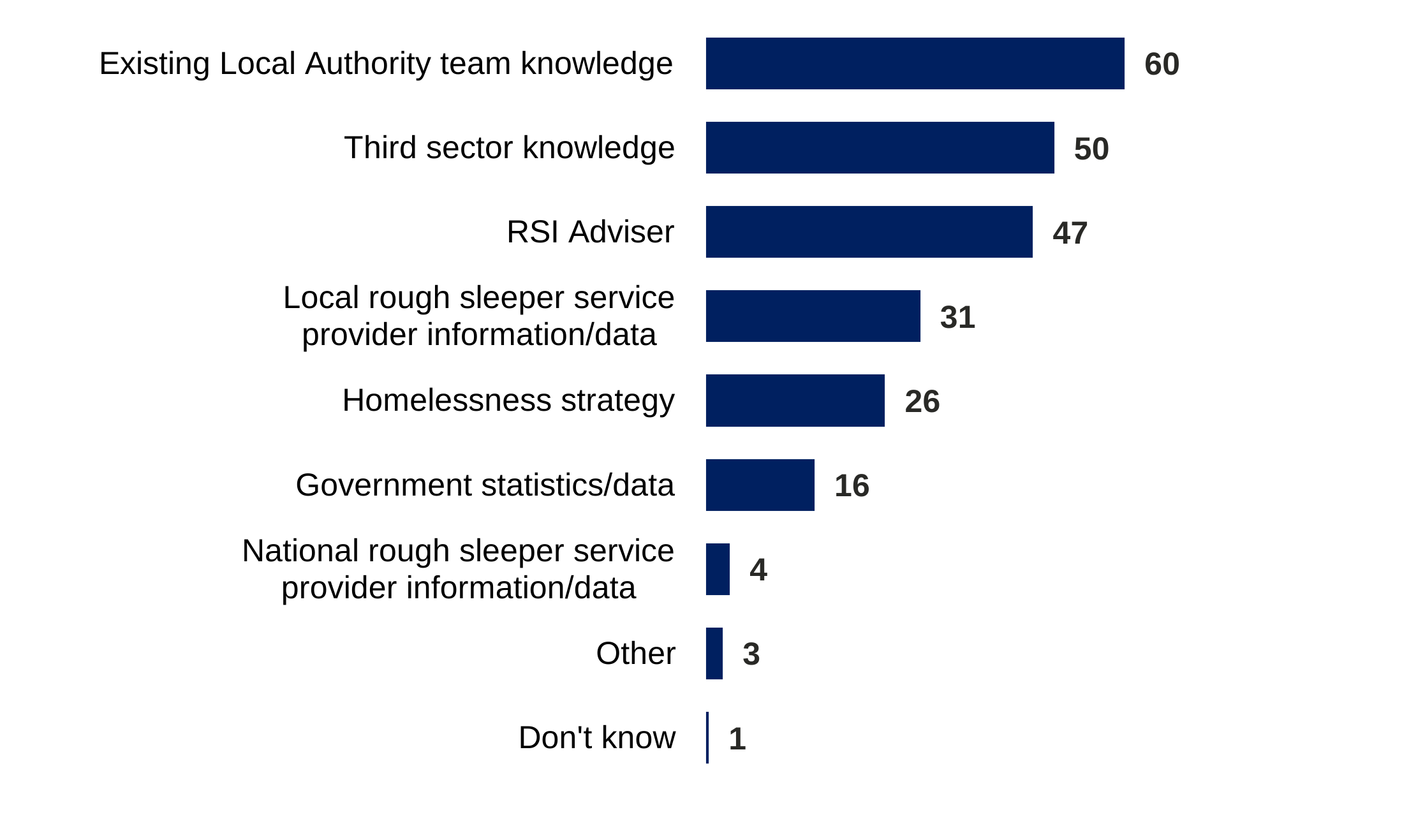
RSI leads, in their strategic roles, identified various ways in which they developed their areas approach to rough sleeping. Almost all survey participants (60) reported that they used existing knowledge within the local authority. Telephone interview participants reported that the knowledge of outreach teams (either employed by the local authority or a charity) and those who had been working in the area for some time was critical. This knowledge was used to identify gaps in service provision, inform how interventions should be developed and to consider which issues to prioritise.
Additionally, RSI leads reported that third sector knowledge also played a part in developing their funding proposal. This was prevalent among survey participants (50) and, in the telephone interviews, the RSI leads described how they had brought together faith groups and other organisations in harnessing everyone in the area to pool their understanding. They spoke to relevant community figures, such as charities and outreach providers, to understand what best practice looked like, as well as how ways of working could be improved.
Another common source of information for developing the local authority funding proposals was the RSI adviser (47), whose role was regarded very positively by telephone interview participants. Advisers were generally seen as proactive, able to bring information and experience from other authorities, and interested in putting the most effective application to government:
‘‘The adviser came to the area for initial discussions about the sort of proposals we could put forward – and what could be suitable and not be suitable.’’ RSI lead, East of England, telephone interview
As will be discussed further in chapter 5, using monitoring data was also seen to be particularly important when planning how to target the RSI funding and developing rough sleeping strategies.
Figure 6: What sources of information did you use to identify where funding would be best placed?
Base: All area leads who responded (64); Fieldwork dates: 24 April to 10 June 2019
Literature on ‘what works’ in addressing rough sleeping has identified a number of different effective practices[footnote 18]. These include providing support to people sleeping rough in a personalised and joined-up way, encouraging rapid implementation of support and introducing housing-led programmes. These examples of good practice have clearly influenced local authorities’ strategy development and targeting of the RSI funding. Examples will be discussed further in Chapter 6.
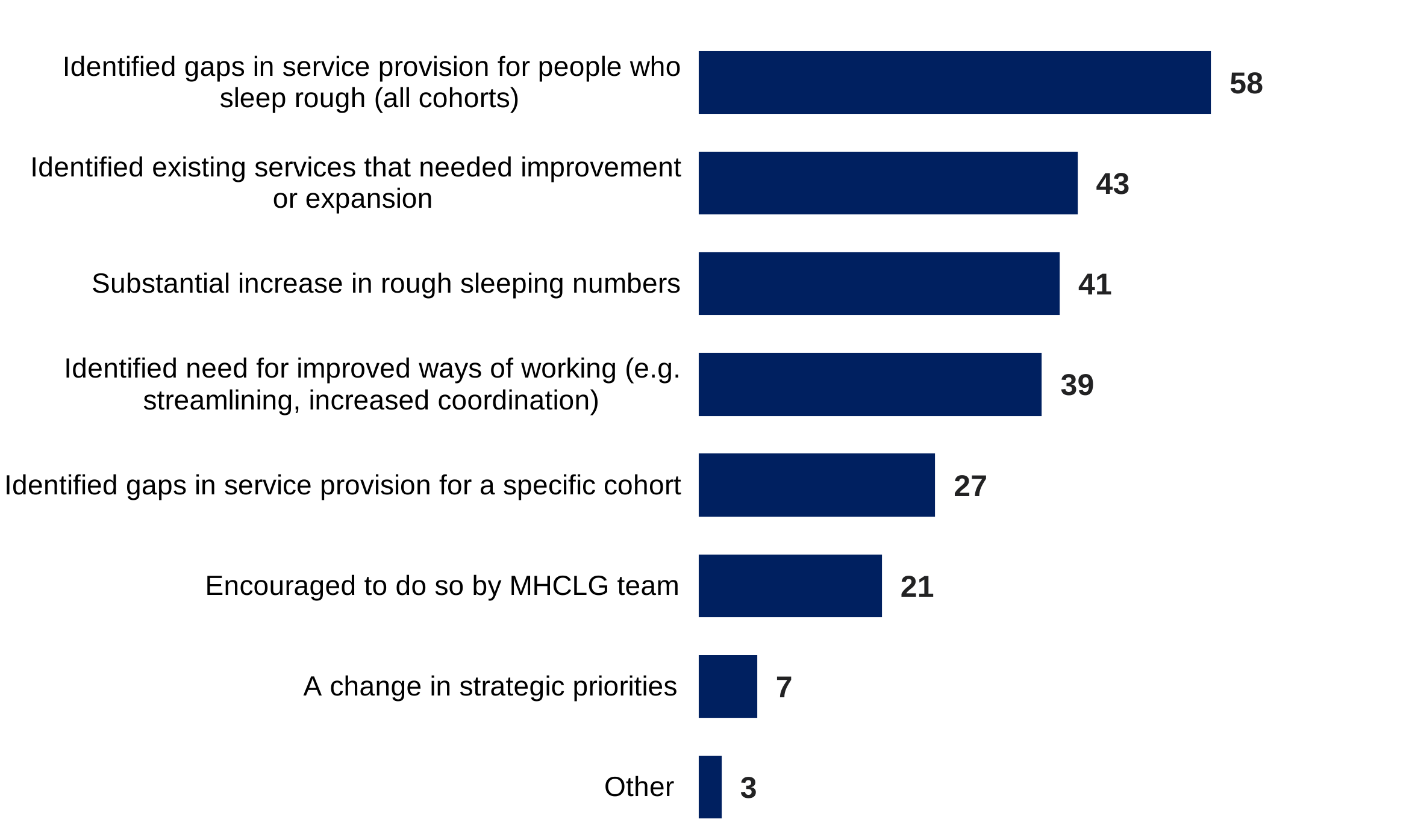
As shown in Figure 6 almost all participants in the survey said that the main reason for developing the plans outlined in their RSI bid was to address gaps in service provision for people who sleep rough. In the case study interviews, stakeholders felt that the gaps were due to a lack of capacity in existing services, a limited range of services and a lack of eligibility to access services.
“What was lacking was actually going out and finding a specific rough sleeper and… even if it’s just buying them a coffee, just getting that relationship, whereas before… customers would be asked to go to drop in and they never went.” Strategic stakeholder, case study interview
When thinking about strategy development and targeting RSI funding, some local authorities were faced with a difficult decision between focusing on new and innovative ways to address rough sleeping or relying on tried and tested methods.
“Solely encouraging creative thinking means you’re not looking at what works, and what needs are – sometimes what is needed is just putting more money into what has worked” Strategic stakeholder, case study interview
The need to mobilise quickly was also seen to influence this decision. For example, one case study area described how their RSI adviser stressed that it was more important to mobilise quickly than be innovative.
“It wasn’t, like ‘what can you come up with?’ It was like, ‘No, we need something that you can get off the ground pretty much straight away.’ So, they weren’t necessarily looking for innovation” Strategic stakeholder, case study interview
Figure 7: What were the main reasons for developing the plans outlined in your RSI funding proposal?
Base: All area leads who responded (64); Fieldwork dates: 24 April to 10 June 2019
Other reasons that survey participants mentioned for developing the plans in the funding proposals were to improve or expand existing services, to address increases in numbers of people sleeping rough and to improve ways of working.
Interview participants described how it was necessary to increase resources for existing services so that they could move towards focusing on a wider range of people, who they may not necessarily have been focusing on previously. Where people had lost their job or experienced a relationship breakdown, participants believed that rough sleeping had occurred due to a decrease in affordable housing and difficulties navigating the benefits system (as discussed in Chapter 2.2). Consequently, participants felt that support targeted at these cohorts of people would help tackle rough sleeping.
“The people that are coming now… may have been working and then lost accommodation, they may have had a relationship breakdown, they may have come out of prison, for example. It’s a different clientele that come in now than the one I have been historically used to” Frontline stakeholder, case study interview
The overarching message from local authorities in their RSI applications was that people sleeping rough do not generally fit into traditional pathways and that an integrated approach to get to the core of the problem was required. An emphasis on partnership working and co-ordination characterised applications. Applications generally included provision for Rough Sleeping Co-ordinators, along with outreach and in-reach support, hub or day provision, additional housing roles, specialist non-housing roles, and associated good administration and monitoring.
Given this, according to interview participants, the overall plan for using RSI funding to tackle rough sleeping was to work towards providing a comprehensive, personalised and universally accessible service that would support people off the street quickly. Interview participants were aware that without this in place, rough sleeping services would fail to sufficiently engage with people sleeping rough and support them to come off the street.
3.3 Using data to develop strategic plans
Stakeholders interviewed as part of the case studies, and in particular stakeholders in strategic positions, stressed how important data is for developing strategies and targeting interventions effectively. This included the MHCLG required monitoring data collected on DELTA (see Section 4), and LA’s own data collection.
“The data is one of the most important parts, it’s informed our rough sleeping strategy, and our mini-responses to local issues as well. I think the RSI has enabled us to have a much better picture of rough sleeping in [the area], and then we’ve been able to use that to inform all other elements of our work around homelessness.” Strategic stakeholder, case study interview
Stakeholders described in the telephone interviews and case studies how data gave them a clearer picture of the cohort of people sleeping rough in their area. This in turn meant that they could target and design RSI interventions to suit the needs of specific groups which had been identified as prevalent. Local authorities which had comprehensive monitoring data systems prior to the RSI funding, such as CHAIN[footnote 19], reported that they used data from these to inform their funding proposals, and effectively target funding.
For example, prior to receiving the RSI funding, one case study area identified an increase in ‘invisible’ female homelessness (those not sleeping rough but living precariously). This information, gathered prior to the RSI, fed into the design of the interventions in Year 1, as the idea of a Women’s Safe Space project was developed, which enabled a part-time project co-ordinator and full-time project worker to be employed.
“Top of the line for me, as the person who has to write the strategy, is better data.” Strategic stakeholder, case study interview
In another case study area, data collected on the health of people sleeping rough was used to determine where to target RSI funding:
“The proposal for a health lead worker was very much shaped by evidence about what people we were seeing on the streets” Strategic stakeholder, case study interview
Case illustration – Using data to inform strategy
In one case study area, a Rough Sleeping Reduction Strategy was introduced in the year prior to RSI Year 1 funding. A partnership between the Council and service providers has led them to draw up a ‘Homelessness Charter’ which is committed to achieving the objectives of the Strategy. It is the responsibility of officers to monitor and report on the Strategy, share lessons learned to inform future service design and commissioning, and drive the delivery of the Strategy.
The Rough Sleeping Reduction Strategy made the specific point that good quality monitoring is essential in ensuring that the Strategy actions deliver what they should. A new bi-annual Key Performance Indicator was introduced for the numbers of people sleeping rough in the area and this has become more focused with the bi-monthly count required by MHCLG. Monitoring and evaluation data has also been developed for each of the new activities contained within the action plan and an evaluation report on the overall effectiveness of the Strategy is produced annually.
Learnings from the Rough Sleeping Reduction Strategy, which runs until 2019-20, will inform the design of services, including monitoring and evaluation, from 2020-21.
Aside from using data to develop strategies and target interventions effectively, monitoring data was also seen to help shape and deliver interventions which were up and running. Indeed, in the survey, 50 of the 64 RSI leads stated that they were using the DELTA monitoring data at least to some extent to do this. Even more stated that they will use the monitoring data in the future for this purpose (55). For example, one case study area described moving one intervention to focus more on women sleeping rough, as the bi-monthly snapshots made it apparent that their needs were not being addressed.
“We were finding from the DELTA returns each month that the proportion [of women] was getting smaller and smaller each month, so we were looking at just a couple of per cent. So, what we wanted to do was … move our hidden homeless worker into working more with women because their needs obviously weren’t being addressed by our street-based services.’ Strategic stakeholder, case study interview
Through increasing local authorities’ knowledge and understanding of the effectiveness of RSI interventions, the DELTA data requirements[footnote 20] appear to have enabled local authorities to tailor interventions to make them more effective. For example, one case study area felt that the DELTA data has helped to tell them specifically how long people were staying at their short-term accommodation, and whether it was cost effective or not, data which they did not previously have. The monitoring data requirements will be discussed in more detail in Chapter 4.
3.4 How RSI funding was deployed
Almost all RSI leads who participated in the online survey reported that they had been using the RSI funding either ‘mostly’ or ‘entirely’ as they expected to. This indicates that their expectations for how the funding would support services were generally accurate.
Two-thirds of RSI lead who participated in the online survey reported that they had been using their RSI funding for services that relieved instances of rough sleeping. The remaining third of participants reported they used the funding for a combination of relief and prevention services. In the telephone interviews, some participants described how services in their area were previously focused on relieving rough sleeping, but they were moving towards a more preventative approach.
‘‘Our current focus is on prevention. In the early months we focused mainly on relief. But presently we are supporting clients who are likely to hit the streets.’’ RSI lead, London, online survey
Nevertheless, RSI leads also reported that it was necessary to maintain at least some element of a relief approach in their rough sleeping services. Rough sleeping services need to strike a balance between relief and prevention to ensure that support is available for everyone at risk of rough sleeping.
‘‘At present we still have people who are rough sleeping… we will continue to work with these individuals and look to identify solutions that will assist them into accommodation and keep them from rough sleeping.’’ RSI lead, East Midlands, online survey
Monitoring data from local authorities shows that as of November 2018 RSI funding had been used to fund over 90 full time equivalent Rough Sleeping Coordinator positions[footnote 21]. Rough Sleeping Coordinators are responsible for co-ordinating resources and partnership relationships in local RSI programmes. Their role is to build capacity in the local authority to reduce rough sleeping in line with the RSI objectives. Telephone interview participants in these areas reported that Rough Sleeping Coordinators also played an important role in identifying gaps in existing rough sleeping services and using their input to design RSI funding proposals to address them.
‘’We were able to be a lot more responsive to gaps we had identified.’’ RSI lead, East of England, telephone interview
The RSI adviser team were aware that they could draw criticism for recommending local authorities fund a Rough Sleeping Co-ordinator role rather than direct services. However, they also felt that the role was essential to ensuring direct services were available in the first place. Stakeholders stressed the importance of having a dedicated role responsible for overseeing the rough sleeping reduction plan at the local level to ensure that services were being commissioned and partners linking up with each other in a short period of time.
“You’re funding a post within a local authority … Why aren’t you funding more hostel beds? Well, the reality is if we hadn’t funded the Co-ordinator, some of the hostel beds, some of the outreach, some of the in-reach work just wouldn’t have happened.” Senior stakeholder, telephone interview
In addition to Rough Sleeping Co-ordinators, RSI funding, as of November 2018, had been used to fund further full time equivalent support staff roles such as floating support and outreach workers[footnote 22]. Across England, outreach workers are the most prevalent type of role funded through RSI, accounting for around 6 in 10 of the roles created[footnote 23]. This reflects the reported focus on relief rather than prevention in the first year of the RSI funding, as discussed earlier in this Chapter. Floating support workers make up around a quarter of the RSI-funded workforce. Nevertheless, how RSI funding has been used to recruit support staff in specific local authorities ultimately depends on the issues relating to rough sleeping in their local areas.
In response to a rise in the number of non-UK nationals sleeping rough, some local authorities proposed funding specialist outreach roles such as staff proficient in languages spoken by specific groups of people sleeping rough, particularly those from Eastern Europe. Other local authorities included outreach workers trained to provide advice to people with issues relating to their immigration status. Specialist health roles were also included in local authorities’ funding proposals, such as a physical health care nurse to partner with outreach teams.
“[We will provide] specialist immigration assistance to support rough sleepers with immigration issues including those with no recourse to public funds… extend migration service provision that includes translation, re-connection and outreach support.” Urban local authority, RSI funding proposal
Some proposals focused on in-reach or floating support within their accommodation settings. This was identified as a way to ensure that people temporarily accommodated after sleeping rough are linked into services, and that they sustain their accommodation. Other proposals took a similar approach by including hub or day provision to provide a location for outreach services to work with people sleeping rough to ensure they are properly assessed while accommodation options are explored.
“[We will] increase ‘in-reach’ capacity for rough sleepers placed… in emergency accommodation to ensure their needs are met, they are linked into services and that they sustain their accommodation.” Urban, coastal authority, RSI funding proposal
Survey and case study participants reported that their areas saw fluctuations in instances of rough sleeping as people regularly moved across local authority areas. This presents a challenge when planning rough sleeping services which some local authorities sought to address in their RSI funding proposals. This included funding rapid assessment and re-engagement outreach teams that took advantage of good working relationships with neighbouring local authorities. This aim was to implement a joint working approach that would address rough sleeping among individuals moving between areas.
“Our neighbouring authority is one of the main areas rough sleepers come from… The provider will devise, agree and implement a Service Level Agreement which builds on existing relationships and processes between [the 2 authorities].” Rural authority, RSI funding proposal
As well as staff, RSI funding was used to increase the infrastructure available to rough sleeping services. In their RSI funding proposals, local authorities expressed their aim to not only increase accommodation options in general, but also increase those aimed at specific groups such as women experiencing violence or at risk of exploitation. These options included making hostel-based services more inclusive of women, and increasing provision of temporary accommodation and self-contained accommodation within a ‘psychologically informed environment’[footnote 24].
“We have designed a multi-agency, ‘psychologically informed environment’ approach to safely accommodate [specific group of prison leavers] and help them move on with their lives.” Urban local authority, RSI funding proposal
In addition to increasing accommodation options[footnote 25], the funding proposals indicated that local authorities wanted to use RSI money to increase engagement with people sleeping rough in their areas. Interventions were included in proposals on the basis that they were flexible, targeted and responsive to the specific support needs of people in the local areas. Although not exclusively focused on relieving instances of rough sleeping, this review of the proposed interventions suggests that they were in line with the aim of the Rough Sleeping Initiative; to support people off the streets and ultimately bring the numbers of people sleeping rough down quickly.
3.5 Role and perceptions of RSI advisers
A key component of the 2018 Rough Sleeping Strategy is a team of experienced and specialised RSI advisers in the MHCLG core delivery team. They worked in partnership with local authorities to design their proposals for RSI funding, drawing on their experience from working in the sector. The RSI advisers continue to work closely with local authorities after they have been allocated RSI funding, offering advice on mobilisation and delivery, as well as monitoring and supporting progress.
“These are all people seconded in from local authorities, or from the homelessness sector … They’ve made the decision to take a secondment, because they are also very much focused on ending rough sleeping.” Senior stakeholder, familiarisation interview
The funding approach is based on the assumption that local authorities know best the specific support needs of people sleeping rough in their area, along with the existing support services that are available. RSI advisers play a crucial role in supporting local authorities with how best to use the RSI funding to enhance these services according to the aims of the Rough Sleeping Strategy.
“The local authority takes the lead in setting out what they want to deliver, and then there’s a bit of reshaping through conversations with the expert advisers.” Senior stakeholder, familiarisation interview
The rationale for this partnership approach was to ensure that local authorities who did not have expertise or experience in writing funding proposals for rough sleeping services would not lose out on necessary funding. It also ensured that the final proposal was based on the specific needs of each local authority area as well as being feasible from a funding perspective. Some of the local authorities were supported substantially in the development of their proposals by RSI advisers.
“There are a few of the authorities who just would not have got any money in a competitive bidding process, because they just did not have the resource, the interest, or the knowledge and sophistication for putting in a bid which would have secured them any money in an open bidding process.” Senior stakeholder, depth interview
Furthermore, as RSI advisers work with a number of local authorities, they were in a position to share good practice and innovative solutions between authorities. Any relevant good practice and innovative solutions from other authorities could then feed into the funding proposals.
“It really was about trying to share ideas between authorities whilst maintaining a level of confidentiality between what separate bits might look like, but sharing elements of innovation or excellence that we came across.” Senior stakeholder, depth interview
In terms of perceptions of the RSI advisers’ support, the majority of online survey participants reported that the national RSI team, which includes the RSI advisers was at least ‘fairly successful’ at providing expertise and advice on tackling rough sleeping as well as offering clear vision and leadership. Moreover, almost half (29 of 54) thought that the national RSI team and their RSI adviser had been ‘very successful’ at doing this. Participants’ positive perceptions of their advisers in these areas suggests that they made a positive contribution to the development of local authorities’ funding proposals.
This positive perception of advisers was also evident in the case study interviews. Among strategic stakeholder participants there was a sense that advisers supported the development of their plans to tackle rough sleeping by working collaboratively rather than telling them what to do. Advisers were valued by strategic stakeholders for their expertise and overview of rough sleeping at the national level, which helped them shape their strategic direction and funding proposals.
“[Meeting with the RSI adviser] was really, really useful. They were able to guide us. With their national knowledge they knew what had worked in other areas, and what hadn’t worked” Strategic stakeholder, case study interview
However, among some frontline interview participants there was a perception that their relationship with their adviser was less balanced. Some stakeholders reported they had little contact with their advisers, while others felt they were not being listened to when they disagreed on what approach they should take to tackling rough sleeping and decisions had already been made at a higher level.
“[The RSI adviser] was nice enough although he didn’t really seem to agree with some of the things we said. He was adamant about police involvement and closed off a lot of the conversations about funding additional things.” Frontline stakeholder, case study interview
Overall, perceptions of RSI advisers were broadly positive among interview participants, particularly those who were strategic stakeholders. Advisers played a key role in supporting local authorities in developing their approaches to tackle rough sleeping by providing leadership and experience, as well as acting as a sounding board for ideas in the design stage. There was some evidence of dissatisfaction among frontline staff that their own ideas for service design were not being acknowledged by advisers and therefore not being reflected in the overall approach to rough sleeping in their areas. This may indicate a lack of communication between stakeholders within local areas rather than specifically between advisers and frontline stakeholders.
4. Using data to monitor progress
Data monitoring is a key element of the RSI. As part of the RSI funding, local authorities are required to collect monitoring data[footnote 26] and conduct bi-monthly rough sleeping snapshots[footnote 27], which are then inputted on the DELTA system to MHCLG. The internal monitoring requirements for MHCLG (henceforth referred to as DELTA monitoring data) ask local authorities to collect data, aid performance management, and provide another means to raise concerns and positive outcomes. DELTA monitoring data is shared with MHCLG once a month. The DELTA monitoring data is used for 3 general purposes: monitoring the progress of interventions, informing rough sleeping strategy, and adjusting services to make them more effective. These 3 uses of the data are broken down in the following chapter.
Key findings
-
RSI-funded local authorities are required by MHCLG to collect data on people sleeping rough in their areas and submit it through DELTA (MHCLG’s data reporting system). Collecting the DELTA monitoring data was seen to be useful by almost all the authorities surveyed. The DELTA data was seen to help local authorities measure change as a result of the interventions in place, while knowledge of the positive impact of interventions was thought to help motivate teams and demonstrate to politicians and the public the positive effect of the work they were doing.
-
DELTA data has also been used to adjust services and inform strategy. By giving authorities a clearer picture of the cohort of people sleeping rough, they have been able to focus interventions on the needs of people sleeping rough in the area.
-
In addition to the MHCLG DELTA data requirements, case study areas reported that they are also collecting additional data on rough sleeping in their areas. This includes timescales of interventions, detailed records on individuals, including support needs and previous history, data on reconnections and holistic data on wellbeing. Indeed, there was sentiment among stakeholders that the monitoring data requirements do not adequately capture the complexity of each individual person sleeping rough and their needs.
(i) Additional data currently collected by local authorities and service providers
Whilst local authorities are collecting the MHCLG monitoring requirements, they are also collecting additional data which are not required by MHCLG. Other data being collected by local authorities were described by stakeholders in the case study interviews and is outlined below.
Data regarding time-scales of interventions, and the amount of time spent working with clients, such as how long the process of providing accommodation takes, were being collected by some local authorities and service providers, who felt that these were helpful to determine whether systems were working.
Many stakeholders also reported that they were keeping substantive, detailed records on each individual person sleeping rough, with details such as previous accommodation, previous referrals, age, gender and health history, as well as a personal action plan. In addition, the support needs of individual people sleeping rough are frequently being recorded. These are primarily drug and alcohol needs, physical/mental health needs and specific cohort needs, such as whether they have access to public funds. Previous history of individual clients was seen to be important to monitor as it could help in assessing whether interventions were working. For example, an entrenched person sleeping rough might be expected to have a different response to an intervention than a person who has only recently started sleeping rough. This type of personal data was seen by stakeholders in the case study interviews to be useful at a local level. Additionally, it was also felt by some stakeholders that this type of personal data could be helpful in providing context for MHCLG when they review the monitoring data from each authority, if the necessary data protection arrangements were in place.
“[The monitoring requirements] don’t showcase the work and we are not able to show the successes and challenges well enough. You wonder if it looks as if we are doing enough. The numbers of people assisted look really low. But individuals are really complex and chaotic and that is not shown in the numbers.” Strategic stakeholder, case study interview
Holistic data on well-being is also being collected by some local authorities. This was seen by stakeholders in the case study interviews to be important in painting a clearer picture of the situation of each person sleeping rough and adding a human element to their monitoring data.
Other figures, not directly connected to RSI funding, at which local authorities are looking are: numbers of beggars recorded on streets, and where they are located; local reconnections to measure against reconnection targets; and number of deaths of people sleeping rough.
Case illustration – Collecting holistic data on wellbeing
In one case study area they are about to start using a measure called a ‘Wellogram’. They will be working with a psychologist (who is RSI-funded) to do this. The ‘Wellogram’ is made up of 5 simple self-rated questions. These relate to friendship networks, links to employment and housing situation. The idea is to get the person sleeping rough to complete the self-rated questions as soon as they encounter frontline rough sleeping workers.
Their scores over time can then be compared against each other to track progress. From the perspective of the psychologist the measures in the ‘Wellogram’ are more meaningful than traditional indicators of depression and anxiety. The ‘Wellogram’ is easy to administer and responds to and offers a way to further disaggregate the rough sleeping population which, as the psychologist put it “looks homogenous but they’re not”. They are keen to share the data from the ‘Wellogram’ with MHCLG.
“The best sort of data collection is around individual cases, because [they are] so diverse” Strategic stakeholder, case study interview
(ii) Data systems in use by local authorities and service providers
A number of data collection systems are in use by local authorities (in addition to the DELTA system), which were described by strategic and front-line stakeholders in the telephone interviews and case study interviews. These systems included H-CLIC and CHAIN[footnote 28]. Data collected on these systems is shared with the Rough Sleeping Co-ordinator who then feeds it onto the DELTA data system.
Case illustration – a comprehensive data monitoring system
In one urban coastal case study area a variety of different data collection platforms are being used. Many have moved to or intend to move to a software-based tool which avoids duplicating assessment of individual people sleeping rough. This facilitates joint-working and the handover of an individual person sleeping rough from one frontline worker or service to another - including avoiding having to work on, and pass over, paper records. This supports the development of plans for individual people sleeping rough, and makes it easier to engage, assess and move people sleeping rough on, especially from the hub.
Prior to employing this tool, it was difficult to follow individuals who interacted with different services. The tool has also made it easier to identify hidden populations in the local authority such as non-UK nationals sleeping rough.
“Non-UK rough sleepers have been hidden from us by community and voluntary organisations, so we didn’t think we had much of a problem until our rough sleeping database was rolled out across partners in the city. I also think some non-EU nationals hide themselves well from outreach teams. It only became clear once day centres were [using the software].” Strategic stakeholder, case study interview
(iii) DELTA data requirements
Stakeholders had varying attitudes towards MHCLG DELTA monitoring data requirements. For local authorities which were not already collecting data regularly and assessing it, the monthly requirements were seen to be useful.
‘Now we have to send monthly reports [this is] useful to us because it gives us a chance to look at the month, reflect and try and change things if they’re working or not working.” Frontline stakeholder, case study interview
Although stakeholders overall were content with monitoring data requirements, some stakeholders felt that the requirements were not capturing enough data. These stakeholders felt that the DELTA monitoring data should include some of the additional data outlined above, which many local authorities and service providers are collecting to use internally, and which they would be happy to share anonymously with MHCLG. Data related to each individual person sleeping rough, including their previous history with services and timeframes, was seen to help paint a more nuanced and rounded picture of each person sleeping rough, and in so doing help to explain the successes and failures of each intervention. For example, in one case study area, a case was described in which a person sleeping rough had had a significant amount of resources invested in them. However, it was felt that the case would take a significant amount of time before a quantifiable outcome could be recorded on the DELTA system and showcased to MHCLG.
“You wonder if it looks as if we are doing enough. The numbers of people assisted look really low. But individuals are really complex and chaotic and that is not shown in the numbers” Strategic stakeholder, case study interview
On the other hand, some stakeholders felt that there are too many DELTA monitoring requirements, many of which are not useful or relevant to the local authorities, and which are out of line with the data they are collecting using their own systems. For example, it was mentioned by one case study stakeholder that in their authority they only have one initiative focused on prevention, and therefore they do not think there is any worth in being asked about this as part of the DELTA monitoring requirements.
“[The DELTA system] talks about homeless prevention and relief. When we’re filling it in, it feels like we’re having to look for that data, it’s not data we necessarily would have in our head.” Strategic stakeholder, case study interview
Some stakeholders also wanted more information back from MHCLG on what they are using the DELTA data for.
“It would have been helpful to have a consultation regarding what they collect … nothing comes back from them so I’m not sure what to think about it” Strategic stakeholder, case study interview
“There’s not much communication between what DELTA wants and our own systems” Frontline and strategic stakeholder, case study interview
(iv) Issues of inaccuracy and inconsistencies due to workload burden
The DELTA monitoring requirements were described by some participants as onerous and causing significant work-load burdens. There was also a risk of double counting and manual errors. Difficulty in verifying responses from various providers and service managers was also seen to lead to inaccuracies.
“I know sometimes my data is not accurate…I wouldn’t trust it.” Strategic stakeholder, case study interview
To help overcome some of the time-consuming aspects of collecting the DELTA data, one Rough Sleeping Co-ordinator described developing templates for monthly DELTA returns for all RSI-funded intervention partners, reminders for recipients to complete their returns and a spreadsheet to help aggregate the data collected.
(v) Recent changes to the DELTA data
The DELTA monitoring system was reviewed during the first year of the RSI and was updated based on feedback from local authorities and internal use. The changes to the DELTA data requirements were not often mentioned by stakeholders in the case study interviews, indicating that they haven’t caused problems for most areas. However, among those who did mention the changes, there were conflicting opinions. Some participants were positive about the changes, feeling that they helped to make the process of compiling the DELTA data less onerous. They also felt that the DELTA data changes made the system more precise by including definitions of terms and more clarity on how to input data.
Despite this, in one case study area the changes to the DELTA data were not well received. Participants in this area felt the changes had made the data less useful, with what was perceived to be important and relevant information being removed from the requirements. In particular, the breakdown of data by specific services was seen to be important data to collect for measuring outcomes. Indeed, this area has continued collecting the previous DELTA monitoring requirements, which they found more useful because they included data looking at specific services and how they are working. Although there was disappointment in this area at the changes, this is also potentially a sign that local authorities are using and engaging with the data themselves for monitoring purposes, and not just passing it on to MHCLG as a requirement.
“It’s changed very recently, in the last few weeks. Now it’s just how many people, en masse…have you worked with? [It] doesn’t question how well specific services are doing. [It] seems like a really backwards step to me” Strategic stakeholder, case study interview
Another case study area had different issues with the changes to the DELTA monitoring requirements. They felt that the changes made it difficult to monitor changes over time, as changes to what data is monitored meant that there could be a lack of comparable data over time to use.
“There were some changes to way that the data [on offending] is collected and monitored halfway through, and it then meant that we didn’t have any comparable data before that around offending … The DELTA system is actually quite self-explanatory, I find it quite easy to navigate and it does make sense. It’s just the changing.’” Strategic stakeholder, case study interview
In addition, services are commissioned and set up on the basis of providing certain data. The services have therefore set up their systems to collect certain data within the framework period, which they are not expecting to change.
“It’s been quite difficult because when services are commissioned, you are commissioning these services for 12 months … so they’ve then set up their systems to collect that data.” Strategic stakeholder, case study interview
(vi) Variance in how bi-monthly snapshots are conducted
It was also mentioned by one stakeholder that they believe that local authorities are carrying out the bi-monthly snapshots[footnote 29] in different ways, which therefore cannot be compared accurately.
(vii) Importance of monitoring data
As discussed above, stakeholders in the case studies stressed the importance of monitoring data, including the data required by MHCLG and the additional data collected by the local authority. Collecting monitoring data was seen to help area leads measure the impact of the interventions in place. Knowledge of the success of interventions was described as helping to motivate teams.
“We know where we are week-to-week, month-to-month, with clarity and a helpful sense of accountability. It enables us to see where we are going, encourages us, and provides information which suggests how we need to refine the direction we are taking.” Strategic stakeholder, case study interview
Data showing the positive outcomes of interventions was also seen to help demonstrate to local politicians and the general public the positive impact their work was having. This in turn encouraged increased political buy-in, and greater involvement from the public in rough sleeping interventions.
“It’s useful to have the processes monitored. It focuses people around the fact that we’re not delivering for no reason, we actually want to achieve things. It’s not service provision with no end.” Strategic and frontline stakeholder, case study interview
(viii) Role of Rough Sleeping Co-ordinator in data collection
Stakeholders in the case studies described how crucial the Rough Sleeping Co-ordinator is to collecting and analysing the monitoring data. Without the Rough Sleeping Co-ordinator in post, stakeholders stressed that data monitoring would not happen to the same extent, and funding would not be targeted effectively based on the data.
“Having [the Rough Sleeping Co-ordinator] has enabled us to navigate, given us the ability to take all this information and profile individuals; it’s also up to date and timely info to target the interventions” Strategic and frontline stakeholder, case study interview
5. Mobilising RSI-funded services
This chapter discusses the issues affecting how quickly RSI funds were used by local authorities to deliver interventions, addressing the key enablers of successful and timely mobilisation (section 5.1) and the barriers to mobilisation (section 5.2).
Key findings
-
The speed at which RSI-funded interventions have been mobilised has been mixed. Encouragingly, almost half of area leads surveyed felt that most of the RSI-funded interventions in their area were quick to mobilise. However, almost all RSI leads felt that at least some of the interventions in their area had been slow to mobilise.
-
A number of key enablers of mobilisation were identified by stakeholders:
- Having a close relationship with MHCLG and RSI advisers, leading to a clear idea in advance of what may emerge in funding terms from the assessment process.
- Planning ahead and ensuring that the necessary infrastructure is in place.
- Utilising existing contractual arrangements.
- Making use of the RSI grant to replace previous funding streams and enhancing existing services.
- Getting the right staff in place as speedily as possible.
- Building on existing relationships with partners in order to expedite mobilisation.
- Increasing local political focus on rough sleeping issues.
-
There were also a number of barriers to effective mobilisation which were identified by stakeholders:
- Shortage of relevant staff and slow internal recruitment processes.
- Lack of existing relationships with key partners.
5.1 Enablers of successful mobilisation
Almost all RSI leads in the online survey felt that at least some of the RSI-funded interventions in their area had been quick to mobilise. Indeed, half felt that most or all had been quick to bring into operation (32 out of 64)[footnote 30], while only 3 judged that most had been slow to come into operation. For some authorities, speedy mobilisation had been a considerable challenge but, for the most part, authorities had recognised when drafting their RSI applications that they would have to act quickly after grant approval to put their proposals in place. Applications had identified a range of factors which would determine whether their proposals would both be effective and capable of quick mobilisation: building, where appropriate, on existing work; securing effective co-ordination within councils and partnership with other agencies; and ensuring the necessary data flows for planning and monitoring. These had all been identified in the literature as drivers to effective responses to rough sleeping.[footnote 31]
RSI leads were very positive about how their authorities had used their RSI grants to enhance existing services. In the online survey, all applicable RSI leads said that their authority had been successful in using RSI funding to enhance existing services (63), two-thirds of them feeling that they had been ‘very’ successful (41).[footnote 32]
The 8 qualitative case studies confirmed RSI applications’ identification of ‘what worked’ in terms of speedy mobilisation of funding, as outlined below. Across these, upscaling or maintaining existing provision and extending existing relationships was a common theme. Others, as listed, will be explored in more detail in the sections below.
- 5.1.1 Clarity from MHCLG and RSI advisers about the need for expedition.
- 5.1.2 Planning ahead and ensuring that the necessary infrastructure was in place.
- 5.1.3 Making use of the RSI grant to replace previous funding streams and enhancing existing services.
- 5.1.4 Utilising existing contractual arrangements.
- 5.1.5 Getting the right staff in place as speedily as possible.
- 5.1.6 Building on existing relationships with partners in order to expedite mobilisation.
- 5.1.7 Utilising facilities ready to mobilise.
- 5.1.8 Increasing local political focus on rough sleeping.
5.1.1 Clarity from MHCLC and RSI advisers about the need for expedition
Authorities were made aware of the need to mobilise their 2018-19 RSI grant very speedily so that it would not be unspent at the end of the financial year. This was facilitated in many cases by authorities’ close and productive discussions with MHCLG and the RSI advisers about what authorities needed. This enabled officers, in advance of grant approval, to initiate discussions with members, relevant departments and partners, and to begin preliminary planning.
“There was pressure [on us] to mobilise quickly, which was ultimately worthwhile and productive. That pressure was the best thing because [otherwise] we wouldn’t have delivered. We didn’t want to risk not having projects on track, so we had to beg, borrow and steal from everywhere. We seconded the housing options team into move-on support, and commissioned [the drug and alcohol misuse agency] to fit day services.” Strategic stakeholder, case study interview
5.1.2 Planning ahead and ensuring that the necessary infrastructure was in place
Case study stakeholders reported that, during the application process, much liaison and joint planning between partners took place. This ensured that staff from each of the agencies involved in the interventions would be aware of what they needed to do, and its overall purpose, in advance of formal approval. One telephone interview participant illustrated this with an example of a psychotherapist from a day centre who was able to go out with the outreach team, before the project actually started, to get to know people sleeping rough in the area.
The role of Rough Sleeping Co-ordinators was often key at the stage of drawing up and implementing joined plans once funding was available. Their early appointment enabled them to set up the necessary systems to ensure that the applications were expedited and, in some cases, to recruit and appoint teams which were to be directly responsible to them. It also meant they could undertake their core facilitating and co-ordinating functions, bringing together commissioners and providers.
“When it comes to actually doing things, instead of deciding things, everything worked well. Everyone understood what we were trying to achieve.” Strategic lead, telephone interview
5.1.3 Making use of RSI grant to replace previous funding streams and enhancing existing services
A number of RSI applications sought to secure the future of and, if possible, build on existing successful initiatives or to use current partnerships to extend provision into new areas. This would clearly be more likely to secure quick take-up of their RSI grant than completely new initiatives. Some applications simply proposed replacing previous funding streams with their RSI grant. This secured the future of successful initiatives which in turn would ensure that other, newer proposals – which would depend on the retention of existing initiatives – would be viable.
Case illustration – Securing the future of pre-existing outreach teams
RSI funding took over part-funding of 2 key outreach projects in this authority to secure their future:
- One was the only outreach team working with people sleeping rough in the authority, managed by a specialist independent rough sleeping agency which provides accommodation, support, advice, training and resettlement services to single homeless people.
- The other was an award-winning ‘up-reach’ team working to prevent people at risk of sleeping rough from ever reaching the streets, managed by a consortium of 3 independent housing or homelessness agencies. The team had been a significant success in preventing many people from becoming homeless, some of whom would have ended up on the streets.
Both teams had made a significant contribution to the decline in rough sleeping numbers in the authority since the launch of its rough sleeping reduction strategy in 2017. Stakeholders agreed that their future was critical not only for the maintenance of their own outreach and up-reach roles within existing accommodation, advice and specialist services, but also for their contribution to the whole set of inter-dependent RSI proposals put forward by the authority. The effectiveness of the outreach and up-reach teams was enhanced through the new RSI-funded projects: emergency accommodation, short-term supported accommodation and resettlement beds, a new mental health worker piloted as part of a Health for Homeless project, hospital discharge beds and support, and new incentives for private landlords.
Authorities also enhanced existing services in other ways and RSI leads were very positive about their authorities’ success in doing this – such as providing longer hours of outreach support over a larger area which could enable them to be more flexible in their approach and to step up the quality of their contribution.
“[It was] enlightening to see how services have changed the way they work [following RSI]. Now [we are] all working to support people off the street rather than just helping them while on it.” RSI lead, telephone interview
5.1.4 Utilising existing contractual arrangements
Commissioners and providers were in many cases able to modify existing service-level agreements in order to assimilate new services under RSI, obviating the time-consuming need for new service agreements and contracts. This reflected strong working relationships and, often, a considerable degree of mutual trust which meant that providers were prepared to launch a service before funding had been formally confirmed.
This was helpful in facilitating both smaller- and larger-scale RSI-funded projects. For example, no new contract was required for one authority’s new RSI-funded Women’s Safe Space Co-ordinator. She was employed by a large national independent agency, based within an existing pathway service, to co-ordinate work with female people sleeping rough, especially those with chaotic lifestyles who are street active, or those who are accommodated but are at risk of returning to the streets. The role of the national agency, and of other agencies had been instrumental in helping the authority prepare for RSI funding and mobilising on a national level. Allowing commissioners to modify existing service-level agreements, rather than having to start afresh with a new contract, brought important administrative efficiencies.
Even so, this sometimes required trust and effective working to make it work. For example, agencies sometimes had to advertise and recruit posts in advance of formal agreement to the funding. As one independent provider said:
“There was always the sense that [the Council] would benefit from RSI funding but what it would look like no one knew. We took a risk really, proceeding with recruitment even though the money wasn’t confirmed.” Provider stakeholder, case study interview
5.1.5 Getting the right staff in place as speedily as possible
This was a feature of many RSI applications in a range of staffing roles. The first role which authorities often wished to fill was that of Rough Sleeping Co-ordinator – a key role with a strategic overview of rough sleeping in the area, ensuring support and enforcement interventions are well co-ordinated, evidenced and monitored. This role was generally filled from within the service, seconding on a short-term basis for the duration of RSI funding, rather than being subject to the usual recruitment procedures. Postholders had usually been working in housing, often in rough sleeping. They had the relevant experience which enabled them to make an immediate impact in the role. This was sometimes critical to the success of the roll-out of RSI-funded projects because the resources may not otherwise have been harnessed in time. Recruiting from scratch would in any case have been very difficult as the best people may not have been attracted by the short-term funding for the role.
Other roles were also filled speedily, without the need for full recruitment processes, so that the RSI grant could be utilised in what was left of the 2018-19 financial year. Outreach workers were often seconded from other outreach roles within local authorities. In one case study authority, contracts were waived on legal advice and money set aside for salaries issued as grants instead. Another case study authority recruited a mental health worker initially via a not-for-profit agency used by the authority for engaging casual staff.
Such flexibility reflected the creativity which characterised many of the RSI authorities, encouraged and guided by the RSI advisers. Forward planning and nifty footwork on the part of agencies, facilitated by the partnership work in place and by their common values, meant that they could move quickly at short notice once funding had been approved.
“I hit the floor running. Because I’ve been doing this work for so long, it was just a matter of building relationships with key partner agencies, maintaining them and building on them.” Front line stakeholder (hidden homeless outreach worker), case study area
5.1.6 Building on existing relationships with partners in order to expedite mobilisation
In their telephone interviews, RSI leads confirmed that mobilisation had been quicker where effective partnerships to deliver services were already in place, so that less planning was required, and an intervention could be mobilised as soon as the funding came in.
“[We had] already done work on No First Night Out and could quite easily turn this into a No First Night Out project.” RSI lead, telephone interview
Authorities’ relationships with partners was critical in all case study areas. This worked best where partnership working was already established, with an embedded pathway on rough sleeping and homelessness, a shared vision of an approach to rough sleeping, ambition for innovation, and buy-in at all levels for new approaches.
Typically, most (or, in some cases, all) RSI-funded activities within an authority were commissioned from partners, rather than undertaken by the authority itself, sometimes even including the employment of the Rough Sleeping Co-ordinator. In one case study area, the member of the authority’s cabinet responsible for rough sleeping policy explained that it was central to the Council’s success in considerably reducing rough sleeping numbers that it should not be ‘precious’ about who delivers what. Rather, the authority should be (and was) concerned not with delivery, but with securing the necessary strategic environment, impetus and vision.
Partly, shared delivery was about shared objectives: voluntary organisations were as much driven by the need to meet the requirements of the RSI as authorities themselves. This was also because such organisations were contributing to strategy – in the drawing up of homelessness and rough sleeping strategies and in on-going liaison at senior level to ensure that objectives remained in line.
“There were no challenges. It was really easy to mobilise, and I think that’s down to the positive partnerships we’ve got with probation and the [drug treatment service]. They just developed over time and with quite a lot of effort from both sides to work well together.” Strategic stakeholder, case study interview
5.1.7 Facilities ready to mobilise
In some areas, there were facilities which were available and ready to be mobilised and the areas just needed the resources to make use of them. For example, in some case study areas, there had been a shortage of emergency accommodation but properties, sometimes previously used for a similar purpose, were either immediately available or could be made available at short notice, subject to some speedily-arranged preparation.
In one case study authority, the great majority of people sleeping rough came from the local area and declined to travel far from their home town in order to access emergency accommodation, even in winter. They were very visible in tents and there was consequent local pressure from the media and others for the authority to act. One of the authority’s key homelessness partners in the area was able to access accommodation above its day centre for use as a winter shelter, which had in fact been used previously for a similar purpose. The partner was ready to mobilise RSI funding by opening the accommodation as an emergency winter shelter for November 2018. This resulted in an immediate reduction in the number of people sleeping rough.
Similarly, another case study authority was able to set up its No Second Night Out hub quickly in a building it already owned in a location which was established and known to the rough sleeping community.
5.1.8 Increasing local political focus on rough sleeping issues
The 2017 Homelessness Reduction Act and the Government’s 2018 Rough Sleeping Strategy have, between them, improved the profile of rough sleeping in local areas in a number of ways:
- Through their consideration of the RSI’s significant additional funding.
- The opportunity to establish initiatives which deal with local members’ concerns.
- The consideration of strategic issues as a result of the new requirement for authorities to have single strategies in place for dealing with homelessness and rough sleeping.
This increased political focus on rough sleeping has facilitated mobilisation of the RSI funding, as increased political focus has typically strengthened encouragement for action at the most senior level in authorities, including their support for taking full advantage of the opportunities provided by RSI:
“We were held to account and, when things were not happening as quickly as we wanted them to, the Chief Executive and [the Cabinet lead] asked why things were not happening. This culture of ambition from Cabinet and chief management countered the opposition [to our work] from some local members.” Strategic stakeholder, case study interview.
5.2 Barriers to successful and timely mobilisation
Authorities did not always appreciate at the start of the bidding process for RSI funds quite what the timely mobilisation of RSI funds in 2018-19 would involve. For many authorities, MHCLG played an important role in explaining this to applicants, as described in Chapter 3.5.
“Timescales are crazy. You get the opportunity to bid, then before you know it the deadline’s here, then you wait and all of a sudden you’ve got to do it now.” Strategic stakeholder, case study interview
“We didn’t initially realise how important speedy mobilisation was, but the RSI adviser made us mobilise faster … His attitude has got us to where we are. He told us we need someone in post now, so you need to do X, Y and Z. [We] knew what was needed after meeting him and knowing what progress he wanted.” Strategic stakeholder, case study interview
Although almost all RSI leads in the online survey felt that at least some of the RSI-funded interventions in their area had been quick to mobilise, there were inevitably some barriers to achieving this. At first, these stemmed from generic challenges evidenced by the literature review:[footnote 33]
- Lack of suitable settled accommodation within existing housing stock.
- Inadequate funding for the longer-term, sustainable interventions.
- Lack of collaboration.
- Lack of understanding about the effectiveness of interventions with different subgroups (for example, that a housing first approach may not be the most suitable strategy for those with low level support needs).
- Ineligibility of some people sleeping rough to access publicly funded services.
- Overly bureaucratic and burdensome processes preventing personal approaches.
- Gaps in the legislation.
RSI funding was able to help the process of addressing many of these issues, although in most areas some structural barriers remained, notably the low supply of suitable and affordable permanent accommodation; the lack of suitable accommodation for prisoners on short-term sentences; and inadequate gender-specific accommodation for women who had been sleeping rough.
Case illustration – Shortage of emergency or supported accommodation for single women
In one case study area, this issue came up recurrently from stakeholders, not least because a higher proportion of people sleeping rough in that area were women, compared with the national average (around 25% compared with 14%). The reason for this was unclear. Stakeholders speculated that perhaps women felt safer sleeping out in that area than they would elsewhere (where they may have to hide or enter potentially dangerous or exploitative relationships to get a roof over their head). Stakeholders felt that women sleeping rough were often fleeing from domestic abuse but, although there was some funding for women who had suffered from violence, this could not deal with the complex needs of some women on the streets. Such a shortage of women’s places within projects was also evident in other case study areas:
“At one point they weren’t going to take any females so there was a hold up. Everyone underestimated the number of female clients. We had to develop a female-only separated room. We were slow to get that off the ground, but it was probably a useful learning curve.” Strategic stakeholder, case study interview
5.2.1 Staffing-related barriers
A shortage of relevant staff was a fundamental challenge. As noted earlier, in order to mobilise quickly, authorities generally had to second certain staff in because there were simply not the staff available to fill the roles. This was particularly applicable to outreach roles where some important issues emerged. In many cases, authorities simply found that there were no outreach staff available to be recruited. New staff were not attracted by short-term funding and the consequent insecurity. Many authorities therefore ‘cannibalised’ existing staff teams for RSI-funded projects which essentially moved the problem elsewhere:
“Everybody got RSI funding at the same time, and that meant there was a huge number of jobs available, so there really wasn’t the people with the kind of experience that we’d normally ask for.” Strategic stakeholder, case study interview
“There is a lead-in time to building this capacity. If we had clarity of the projects which we will be delivering over say a 3 or 4-year term, that is a very different position to be in when thinking about how we start to develop a cohort where workers can develop their skills … At the moment, we are cannibalising our own capacity to manage these initiatives.” Strategic stakeholder, case study interview
A similar issue applied to specialist staff, particularly in the health field. One authority was ‘very slow’ to recruit a mental health outreach worker because they had to backfill the seconded person’s post, and their provider was understaffed:
“The mental health outreach was a real problem because of recruitment delays. We needed a community psychiatric nurse from the NHS provider … We had someone in mind for it, they wanted to do it and they wanted him to do it. It was backfilling him that was the problem … They’re understaffed, so releasing someone was a real issue.” Strategic stakeholder, case study interview
Regarding recruitment, many RSI leads in the telephone interviews felt that, where it had not been possible or appropriate to circumvent recruitment procedures (for example by seconding staff), internal processes had significantly slowed down recruitment and procurement. Deciding gradings, preparing job descriptions (particularly for new roles like the Rough Sleeping Co-ordinator), advertising, interviewing and general administration had all been time consuming.
Telephone interview participants also described how processes such as Disclosure and Barring Service checks, reference checks and arranging insurance (for outreach workers) could slow down recruitment, both within local authorities themselves as well as partner organisations. Routine but essential steps necessary for appointment to a role had not always been built into the timescales for the recruitment of staff under RSI.
“There were internal processes we couldn’t get around.” RSI lead, telephone interview
The consequences of not having sufficient staff in place to mobilise other RSI-funded interventions were illustrated by one telephone interview participant who described how an incentive scheme, to encourage landlords to provide tenancies to people who have been sleeping rough, failed to take hold. This was because, while the money for the scheme was available, there was no one in the team who was available to administer it.
“[It would] have taken so much work… and the team didn’t have someone with capacity.” RSI lead, telephone interview
The lack of sufficient time for new staff to embed themselves in their roles also presented a challenge. Many front-line staff were seconded from elsewhere in organisations, or switched between funding streams, as discussed above. But, when people who were recruited formally because there was no one available to be moved in the role, they not only took longer to recruit but also took longer to bed into their new role.
5.2.2 Partnership working barriers
A lack of existing relationships with key partners slowed mobilisation. Telephone interview participants reported a number of challenges to mobilising RSI-funded interventions because good working relationships had not yet been established with certain partners, for example mental health services or drug/alcohol services. Although such services were integral to RSI proposals, some RSI leads felt that they did not have enough time to develop relationships with such external partners, or key personnel, in advance of the funding being made available.
“We have never had a solid relationship with [drug and alcohol service providers] so it was never going to be quick and simple.” RSI lead, telephone interview
The understanding of helpful or hindering interventions across organisations (see section 6.3.1 for more detail) also played into the barriers of partnership working.
“Getting some of the agencies involved was a problem in the first place. A bit of education was needed for some people. It can come down to personality rather than commitment of organisations.” Strategic stakeholder, case study interview
6. Delivering of RSI-funded services and progress on outcomes
In this chapter, we present early evidence of how RSI-funded services were delivered against the intermediate outcomes outlined in the fund-level Theory of Change.[footnote 34] The chapter also includes key findings on the perceived impact of RSI funding. As mentioned in Chapter 1, it should be noted that the RSI funding operates within a wider system of other funding and interventions. However, the research questions asked to participants when gathering evidence on perceived impact were focused on the RSI funding within this wider context.
Key findings
- The RSI funding has facilitated several improvements in delivery practices:
- RSI funding has brought about a new flexibility in commissioning services. This was due to greater financial autonomy, trialling new approaches to address rough sleeping and greater political buy-in.
- RSI funding has also facilitated the development of joined-up service delivery, and multi-agency and partnership working through an increase in the number and range of services available, and an increase in the capacity of service providers and local authorities to deliver and work together. These factors were helping to ensure that people sleeping rough receive the right services at the right time.
- For some local authorities the RSI funding has provided a platform for a more holistic approach to rough sleeping, where all the different needs of each individual person sleeping rough are addressed. However other local authorities expressed concern that the funding has not enabled them to address rough sleeping holistically, as they needed the funding to fill gaps in basic services.
- Working effectively with the private rental sector was seen to be important in ensuring move-on support would be successful in the long term. Several innovative approaches were introduced in this area.
- There were concerns among stakeholders around the sufficiency of RSI funding, with gaps in services still apparent, even with RSI funding, and with the funding being short-term.
- Overall, stakeholders perceived the RSI to be having a positive impact on reducing numbers of people sleeping rough, with almost all stakeholders surveyed (59 of 64) rating the impact of the RSI funding so far as very good (37) or good (22).
6.1 Increased capacity and flexibility in commissioning
In line with the intermediate outcome of ‘increased capacity, capability and scope of local authorities to think and act creatively about service commissioning and strategy development’, there are several signs of perceived early impact which we highlight in this section. The RSI funding both required and enabled local authority stakeholders to think and act creatively about service commissioning. This creativity was seen in how certain services were procured, and in the personalised options offered to people sleeping rough, as will be explored later in this chapter.
In the online survey, respondents generally reported that RSI funding had meant they had been able to work in new and innovative ways (54 out of 64 respondents), mostly ‘strongly agreeing’ that that was the case (35).[footnote 35] Survey and telephone interview participants reported that RSI funding also gave them more flexibility over the range and degree of support they could offer people sleeping rough in their area. They attributed this to increased partnership working with services such as drug and alcohol teams, as well as between organisations responsible for services such as outreach and in-reach teams.
“Because there are more services available, it has created bigger capacity to deal with individuals – more staff, more time. People can be supported around individual needs.” RSI lead, telephone interview
Many telephone interview participants reported that RSI funding had increased their resources beyond the amount of the grant itself. As well as being used to fund new roles, participants reported that existing staff in their areas now had more time to focus on delivering services that address more complex issues, moving beyond their existing service remit. They felt that they were moving towards a more preventative approach by funding services that focused on supporting people to sustain tenancies.
The case study research showed that staff felt empowered by the trust of senior local authority stakeholders which enabled them to try new things. This trust from senior leaders was possible because, with RSI funding, there were options to test new, previously unavailable, approaches through trial and error. In addition, senior leaders, especially councillors, were reported to take a greater interest in people sleeping rough and the services available to them. This was evident in examples of local councillors joining outreach teams or street counts to get a first-hand impression of the problems at hand. Through this combination of trust conferred by senior stakeholders and greater financial autonomy through RSI funding, staff in local authorities had more freedom to act quickly, bypassing administrative obstacles.
“We have a good relationship with the procurement manager, a relationship of trust. [We] can procure things first, and ask questions, sort out details later.” Senior stakeholder, case study interview
Where agencies were not fully engaged with multi-agency working, local authorities used RSI funding to buy in services which the authority (and by extension people sleeping rough) otherwise would struggle to access, such as mental health services. This enabled local authorities to provide the services they had identified as necessary to support people sleeping rough, while foregoing the bureaucratic burden of trying to engage agencies which would be difficult to engage on a voluntary basis.
Case illustration – Tailoring commissioning and support to individuals
One local authority was able to offer a highly personalised housing solution in “an end of the road situation; [where] there were no other options for the client, they would’ve spent the rest of their life homeless.” The person was well-known to services, including the police and health, and was seen to be manipulative towards other people sleeping rough and disruptive in the community.
Through RSI, outreach workers were able to take a person-centred approach, asking: “what do you need, we’ll go and buy it for you.” The cost of the housing solution provided was a fraction of “the hundreds of thousands of pounds per year” the person was said to cost services otherwise – it was an obvious and simple solution.
“[The initiative] helped reduce the person’s contact with other people sleeping rough, and also showed the rough sleeping community that the people providing rough sleeper services do care.” Strategic stakeholder, case study interview
Although this solution was successful in one area, it may not be a viable approach to deliver at scale or in other areas due to local circumstances.
The RSI also played a supporting role in securing additional funding for local authorities. Half of online survey respondents agreed that the provision of RSI funding had helped to secure additional funding to tackle rough sleeping in their authority (34), while a fifth disagreed (12) and a quarter thought that it made no difference either way (16).[footnote 36] Among RSI leads who agreed that the RSI had helped secure additional funding, telephone interview participants reported that rough sleeping co-ordinators were pivotal in this. They were considered to be responsible for ensuring that funding applications were co-ordinated internally and with partners, and identifying gaps in existing services that could be addressed by additional funding.
‘’RSI has given us the intelligence to look at where we still have gaps – useful for the [county] wide dual diagnosis bid we are putting in.’’ RSI lead, telephone interview
However, among telephone interview participants, there was also some sense that RSI funding did not address the short-term nature of funding for rough sleeping services. One participant felt that their area missed out on funding for a private rent scheme because they could not show how they would sustain it beyond the initial timescales.
6.2 Multi-agency and partnership working
In line with the intermediate outcome of ‘Multi-agency working established and functioning well’, there is clear evidence of this happening, as outlined in this section.
Underpinning the enhancement of existing services and the development of new ones was the type of partnership working which had strongly characterised all RSI grant applications. All councils set out in their RSI applications the specialist statutory and non-statutory agencies with which they work. These typically included:
- housing organisations: outreach, emergency and supported accommodation providers, and permanent accommodation providers;
- co-ordinated council services (parks and leisure, safer neighbourhood team, enforcement, domestic violence services);
- voluntary sector services providing support to people sleeping rough;
- health-related services (clinical commissioning groups, working in partnership via joint commissioning to provide hospital link workers);
- public health services (including substance and alcohol misuse services); and
- the police (to assist in locating, identifying and reporting people sleeping rough).
Stakeholders in case study authorities said that, in most cases, they had already had reasonably effective engagement with partners. However, they felt that the advent of the RSI made a distinct difference to these relationships. The Initiative provided the funding which allowed partners’ aspirations to be turned into support, services and accommodation for people sleeping rough, which had not previously been possible.
Two key components to multi-agency and partnership working are engagement and collaboration with partners and co-location of services.
6.2.1 Engagement and collaboration with partners
Stakeholders reported on the importance of engagement at all levels - from politicians and chief officers to front-line staff.
- Engagement with partners at a strategic level took place in pre-existing meetings concerned with, for example, safer neighbourhoods, adult safeguarding, homeless and health networks, or forums with neighbouring authorities.
- The most important meetings at front-line level were the regular rough sleeping progress meetings of providers, usually chaired by the Rough Sleeping Co-ordinator.
Case illustration – multi-agency progress meetings
All case study authorities hold a key meeting of all providers, sometimes called an ‘operational group’ or a ‘task and targeting’ meeting, usually monthly but more frequently in some authorities. Typically, each meeting will run through each of the people sleeping rough who are on a pathway off the street on a case-by-case basis. Multi-agency action plans will be drawn up for housing and support pathways. Tasks are set for each relevant service and actions are reported on at the next meeting. A progress note, typically prepared after each meeting by the RSI lead, indicates the situation of each such person sleeping rough, the action which is required, and who is responsible. This provides a detailed understanding of what lay behind the top-line rough sleeping figures.
In many cases, the RSI had made a tangible difference to how effectively these forums operate. Before additional RSI funding had become available, providers’ morale in some of authorities had been low as they did not have the resources, nor the accommodation options, to take forward the agreed action.
Stakeholders also acknowledged that integration and partnership working could only operate effectively if there were shared values across the service. These forums promoted such values, engendered trust and facilitated more effective wider working relationships. The RSI had made a substantial difference on these issues: attendance had improved and promised actions had been delivered.
Any problems with integration or partnership working tended to emerge at these meetings and, where possible, barriers were removed. If that were not possible then the information would be fed upwards both within the authority, at senior officer and member levels, and to decision-makers at each provider.
The effectiveness of the forums has also been facilitated by the appointment of the RSI-funded co-ordinators who had the time to chair the groups and undertake the associated management. Previously this role had often had to be squeezed into officers’ broader responsibilities.
“People are making actual decisions about resources. The police said it does not feel like we are in a meeting – it feels like we are in a team.” Strategic stakeholder, case study interview
Multi-agency meetings, where individual people sleeping rough were discussed and actions clearly allocated, meant that the needs of each person sleeping rough could be addressed. In turn, this meant that there was ownership, responsibility and accountability of tasks with various multi-agency partners to improve outcomes for people sleeping rough. Case study area stakeholders described how greater buy-in from partners had improved partnership working and in so doing improved the joining up of services.
“Partner agencies can see that the joined-up approach is helping them, so there aren’t any real issues with [partners]” Strategic stakeholder, case study interview
Other co-ordinator roles, apart from the RSI lead, have also been established with RSI funding, for example to support women or particular groups on the streets. These have also enhanced multi-agency working, including through their steering groups. But this multiplicity of partnership and co-ordination meetings brings the challenge of co-ordinating the co-ordination. Where possible, authorities have integrated the various partnerships so that if, for example, a rough sleeping case is discussed at one partnership meeting (such as a local safer neighbourhood meeting), other forums will simply log what has happened rather than discuss it further.
Case illustration – Integrated response to encampment in multi-story car park
People sleeping rough have periodically encamped in a car park in a case study authority, causing complaints from businesses and the community. When a group of people set up a rough sleeping camp in October 2018, partners (police, substance misuse agencies, outreach workers and housing teams) worked together to identify their needs. A number of those people sleeping rough in the car park had previously been unable to get the support which they needed, but the availability of the RSI-funded accommodation and resettlement beds from January 2019 resolved the issue by dispersing the group into appropriate supported accommodation.
“It was fantastic. Its impact was almost instant. They were able to house up to ten individuals.” Strategic stakeholder, case study interview
A key issue in prevention was the need to keep those with specific issues (e.g. mental health, prison discharge) from falling into rough sleeping. A central London homeless prevention initiative, for example, proposed a team to work out of its existing mental health provision to interact with homeless people, or people at risk of homelessness, at the point of admission into psychiatric hospital. A rural authority’s preventative team sought to identify those at risk of rough sleeping and engage them in the necessary support activities. Various authorities applied for specific support for mental health, prison discharge, hospital discharge, or alcohol/drug misuse support to help navigate people sleeping rough through treatment pathways, emergency appointments, motivational interviews, obtaining prescriptions and getting to the chemist.
Engaging statutory partners was also key. Although Jobcentres were not generally part of rough sleeping partnerships, liaison with them was important well beyond simply the question of benefit entitlements. A central London authority, for example, when discussing in-reach provision in its RSI application, referred to identifying key partners to provide support at its pop-up centre, including Jobcentres as well as employers and training providers. And, in a rural authority, a council’s preventative services tried to ensure that Jobcentre staff were familiar with the implications of people sofa surfing, for example, or the need for outreach staff to re-engage people with benefits where necessary.
Case illustration – Partnership work with Jobcentre Plus
An outreach worker in one case study authority spoke in their interview of a non-English speaking person sleeping rough who would not engage with the outreach team, even with the support of interpreters, although the team knew he was working with his Jobcentre Plus work coach. As a result of the outreach team’s strong working relationship with Jobcentre Plus, they were able to have a conversation with the work coach, who then encouraged the person sleeping rough to include ‘engaging with the outreach team’ in his work plan. This facilitated the outreach team working with the person sleeping rough and getting him into accommodation:
“We’re linked in with the community adviser and the facility adviser for the Jobcentre, who’ve been really, really great. And they in turn have got a whole wealth of knowledge about housing now, and what can be found, so it’s been a really good co-production.” Strategic stakeholder, case study interview
The relationship between the outreach team and Jobcentre Plus team also effectively broke down day-to-day bureaucratic barriers which can arise between different organisations:
“If we need a document quickly, instead of being stuck on the phone for 40 minutes, we’re able to phone someone up at the Jobcentre and say: ‘Are you able to help?’ and normally it’s: ‘Yes, we can’.” Front-line stakeholder, case study interview
Collaboration with the voluntary sector was an essential component of RSI-funded activities in all case study areas. However, stakeholders reported that not all voluntary organisations are part of this joint work and shared objectives. Indeed, some faith and other organisations may not be aligned with partners’ shared objectives. Although much progress had been made in most case study local authorities in improving collaboration with the voluntary sector towards a shared goal, from the perspective of local authorities, there were persistent difficulties with the voluntary sector, especially in terms of communicating good practice activities and avoiding well-meant but unhelpful activities by the voluntary sector.[footnote 37] One Rough Sleeping Co-ordinator referred to organisations which hand out hot food twice a day and tents to people sleeping rough. This practice was said to free-up people sleeping rough’s money to feed any potential addiction. However, the authority was conscious not be seen as those voluntary groups to stop giving homeless people food:
“It is a different value set – statutory providers are about finding accommodation and helping people to thrive in the future. Those voluntary and faith groups are not worried about that – their priority is to keep people alive.” Strategic stakeholder, case study interview
Finally, case study stakeholders held different views on the impact of MHCLG DELTA monitoring requirements (see Chapter 4). But stakeholders felt that the transfer of information and intelligence between providers was an important facilitator of effective partnership working. The RSI-funded co-ordinator role had greatly facilitated this: in some authorities, staff had previously found it difficult to fit this work into their working days. Data-sharing also presented challenges though. Some participants in the telephone interviews felt that new requirements under the 2018 General Data Protection Regulation had made it difficult to share data between agencies – particularly between outreach teams and service providers. This has hindered design and delivery of services tailored to the specific support needs of people sleeping rough.
6.2.2 Co-location of services
In the online survey, around 1 in 5 RSI leads said that RSI funding had been used to support delivery through moving staff so that they would be co-located (13 out of 64 respondents). While this did not always feature in their RSI applications, authorities and partners located staff and services where they made most sense logistically and had the greatest impact on outcomes. Case study stakeholders felt a joined-up approach (between organisations) was important in helping to ensure people sleeping rough, especially those entrenched, were helped off the street and adequately supported when in accommodation. The provision of adequate wrap-around services (by several organisations), which address all the complex needs of people sleeping rough, was seen to help prevent people slipping through the system.
As a consequence of RSI funding, GPs, housing, employment, money and other advice services would all be available to clients at the same day centre. This kind of local co-location was evident in all case study authorities, regardless of their size, although this was more complicated for geographically large authorities in relation to the most specialist services such as mental health.
Generally, co-location was used in RSI applications in the geographic sense (although it was also used sometimes in an organisational sense, as in the case study below). Geographical co-location was proposed, for example, where:
- a strategic issue required a common approach across a wider area than a single authority, such as a cross-London approach to working with people sleeping rough from the Roma community;
- it would enable services to operate where clients would feel most comfortable and therefore most likely to engage;
- it would facilitate closer working relationships in multi-agency teams;
- it made logistical sense such as locating housing discharge staff in hospitals or prisons;
- it would reduce friction and bureaucracy, thus saving money;
- it would facilitate good personal relationships; or
- it would establish effecting working relationships with, and a sense of equality between, partners (rather than, for example, focusing on a commission-provider relationship).
“[We] don’t see our partners as either a provider or a charity. They are an equal. We work so well together, and it needs to be explicit that this is so important … We’re now all in one team basically. We don’t really view the council and the provider as separate organisations anymore.” Strategic stakeholder, case study interview
Case illustration – Co-location of staff
In line with its RSI application, this authority appointed 2 additional housing needs officers, both employed by the arm’s-length housing management organisation (ALMO), but each focusing on particular sources of referrals for services related to rough sleeping. One officer was based at the probation service and one at a service for substance misuse. But they also had a base at the ALMO’s office so that they could undertake casework away from the front line.
Stakeholders reported that the new system had worked well for all parties. Clients had felt more comfortable and willing to engage with the new staff when they operated in the probation or substance misuse settings with which they had become familiar:
“We’ve gone out into the community, so arguably we’ve seen more people. Anecdotally, the officers are saying people appear keener to engage when it’s away from a council office, so actually being in a drug and alcohol agency, they’re finding that the clients engage more… I think there is something in moving away from a statutory building – it’s feeling less formal.” Strategic stakeholder, case study interview
The same authority reported that it was about to open a new single person’s hub which would bring together all of its work around single homelessness into a new psychologically-informed environment. This hub was designed to take the psychological and emotional needs of people into account:
[The new hub] will deal with housing, employment advice, medical issues, everything in one building, which is partly funded by RSI money, so we’re all really excited about that and the opportunities that will bring for doing even more work. It will significantly change how we deal with all single homelessness, particularly rough sleeping, with that holistic, wrap-around service.” Strategic stakeholder, case study interview
The authority referred to the opportunities for increasing co-location, arising from the Homelessness Reduction Act as well as RSI, at the same time as restructuring, increasingly pushing services out to organisations in the community. This, it has found, has been good for clients and for effective working relationships:
“We’ve got 2 probation officers, we’ve got the National Probation Service and Community Rehabilitation Centre, and we’ve got an officer who works across those offices. We’ve always had a fairly good relationship because we previously were co-located there one day a week, now it’s 5 days a week, so the relationship with probation is really good.” Strategic stakeholder, case study interview
Building on the principle of co-location, several interventions were introduced with the explicit purpose of improving joined-up delivery, bringing together different services into one place where people sleeping rough could access them easily. For example, one case study area described a wrap-around service which will be carried out in the future via a Single Persons’ Hub.
“[The hub will] bring together all of our work around homelessness [through a] psychologically-informed environment where we will deal with housing, employment advice, medical issues, everything in one building, which is partly-funded by RSI money.” Strategic stakeholder, case study interview
6.3 Joined-up delivery and ‘wrap-around’ services
‘Multi-agency working established and functioning well’ is one of the intermediate outcomes for the RSI proposed in the RSI Theory of Change (see Annex 3). Developing effective partnership working proved to be a key feature of delivery of RSI-funded initiatives, through an increase in joined-up delivery and ‘wrap-around’ services. Most RSI applications focused on an integrated intervention solution which sought to address the core problem of entrenched rough sleeping in the area. Indeed, RSI leads overwhelmingly reported in the online survey that RSI-funded services had been integrated at least ‘fairly’ successfully with existing services (61 out of 64 respondents), with half saying that they had been ‘very’ successful in doing this (32). One RSI application, for example, sought:
“… to build a holistic understanding of the factors that cause entrenched lifestyles as well as providing a way out for individuals who do aspire to live independently.” RSI lead, RSI funding application
It is evident from the case study interviews that participants had identified RSI funding as a way to increase the options for move-on support according to a personalised support offer that matches each person to a solution that works for them. In case study areas that took this approach, interview participants felt these were good opportunities to bring delivery partners together and discuss accommodation options on a case by case basis. Crucially, RSI funding has ensured that these meetings are backed up with a sufficient range of options to draw on when planning move on support that fits the person. This included, in one area, dividing the bedding options in a hostel into smaller blocks of 2-3 beds to better support couples.
“Everyone used to say that the meeting was useless – there was nothing that could ever be done… there was nothing to refer them to. The RSI has created options for people and we can now do something about it.” Strategic stakeholder, case study interview
Case illustration – Holistic working and integrated RSI-funded services
Councils had generally asked, in their RSI applications, that their proposals should be considered holistically, because any one component would be dependent on another for its success.
In one case study authority, all RSI-funded services were interlinked:
- The Rough Sleeping Co-ordinator was responsible for maintaining the holistic system, dealing with data monitoring and, via a monthly multi-agency progress monitoring meeting (discussed further below), overseeing the impact of this for individual people sleeping rough.
- The outreach team, supplemented through the RSI grant, had assisted with rapid intervention when a person sleeping rough was reported and directly linked into the Council’s No Second Night Out approach via the preventative ‘up-reach’ team with a focus on moving new people sleeping rough off the street while continuing to provide support to settle them.
- This directly linked to 2 other RSI-funded projects – new supported accommodation and resettlement beds and new incentives for private landlords.
- A new, temporary, winter emergency shelter identified people sleeping rough’s support needs so that they could become candidates for, among other things, assertive outreach, supported accommodation and resettlement beds, or long-term permanent accommodation as move on.
Additionally, in Year 2 of funding:
- A mental health worker would make a key difference to the barrier caused by shortages of mental health support in the authority, which has been the one partnership which has not been working as well as the others.
- Two additional hospital discharge beds for single people who are medically fit for discharge but have no suitable accommodation to go to, would also be linked with the rest of the provision. The discharge team would assist with accommodation needs and take advantage of support from the up-reach team, along with drug and alcohol and other services and engaging with other partners.
Stakeholders in the authority generally felt that this integration was working very well and had overcome the potential frictions which could have arisen from the multiplicity of agencies involved.
A telephone interview participant from another authority described how integration had worked following the mobilisation of RSI funding in their area. They now have an outreach team that works in co-ordination with a day centre service. The outreach team support clients to go to the day centre and, while being supported there, clients provide information about other people sleeping rough. This information is passed from the day centre to the outreach team who can then go out and engage with those people sleeping rough. This example illustrates how increased resources have facilitated greater service integration, resulting in more engagement with, and support for, people sleeping rough.
“Any intelligence that the day centre gets about other people sleeping rough… will get passed on to the outreach team and they can go out and get them back in … [to] start looking at the needs of the individuals.” RSI lead, telephone interview
Other examples of effective delivery practices in multi-agency, wrap-around support included:
- Housing First[footnote 38] - influenced interventions;
- hotspot multi-agency teams; and
- reconnection services.
Housing First-influenced interventions were described as providing wrap-around support to former people sleeping rough who had entered accommodation but needed additional support to maintain this. The Housing First model is designed to provide permanent housing to people sleeping rough without preconditions regarding recovery from (or participation in treatment for) substance misuse or mental health problems. Personal support is provided around substance misuse and mental health problems on a flexible basis for as long as individuals need it. Academic literature has shown Housing First to be an effective approach to rough sleeping.[footnote 39] Indeed, stakeholders delivering Housing First-influenced interventions felt that wrap-around support around substance misuse or mental health was extremely important to ensuring successful outcomes.
“[T]he only reason [Housing First] works is because of the wrap-around…once that wrap-around falls away it will be very unlikely to succeed… it’s the continuity of support that they need and that’s what Housing First gives them.” Frontline delivery stakeholder, case study interview
In addition to more common services such as outreach and health services, the wrap-around support in Housing First-influenced interventions included such activities as looking after people’s gardens and making sure repairs are done, which were all seen to improve outcomes:
“All these things which we take for granted because we live in a different way, actually for homeless people you have to make sure are in place.” Frontline delivery stakeholder, case study interview
Case illustration - A Housing First-influenced intervention
In one case study the local authority used RSI funding to run a Housing First style intervention, which is run by a local housing association. Prior to RSI funding the housing association had a well-established Housing First-influenced model. This meant they were able to mobilise the intervention quickly. In their Housing First-influenced model the 7 principles for Housing First that the UK have adopted were incorporated. They also had a clear idea of what would help the intervention work: “We were very specific about what we think locally would make it work, which is landlord engagement.” Frontline delivery stakeholder, case study interview
The Housing First-influenced intervention was mobilised around a Partnership Agreement, which was signed between the local council and all the rough sleeping partners within the authority: “We were very clear that if we were going to be doing this we would want a very clear Partnership Agreement, because we have done other projects with partner providers and we know that to make those partnerships work best with us, [we have] to have clarity from the start.” Frontline delivery stakeholder, case study interview
The partnership working involved “huge amounts of communication and specific details, case-working with each person, because these people are entrenched rough sleepers for a reason…we discuss each case”. Frontline delivery stakeholder, case study interview. Stakeholders involved in delivering this intervention identified various different elements which made their approach effective. Firstly, people are placed on a starter tenancy rather than given a ‘house for life’. This gave assurances to landlords, and gave the person something to aim towards: “we know that customers will think in the moment… if you say you are going to lose your tenancy in 3 months they don’t care, they just accrue the debt and that’s it. Our licences work much better as you can be more dynamic… and say you need to have done this right now to get that.” Frontline delivery stakeholder, case study interview
The intervention also keeps the focus on people sleeping rough: “To help it work we have to look after the garden, make sure the repairs are done, haven’t got leaks…all these things which we take for granted because we live in a different way, actually for homeless people you have to make sure are in place.” Frontline delivery stakeholder, case study interview
Finally, providing wrap-around support was seen as a key to the success of the intervention:
“The only reason this works is because of the wrap-around… once that wrap-around falls away it will be very unlikely to succeed… it’s the continuity of support that they need and that’s what Housing First gives them.” Frontline delivery stakeholder, case study interview
There were a number of challenges in delivering the intervention. For example, one couple who were given housing did not maintain their tenancy. This was because the housing they were given was too far away from their drug dealer, and so they started sleeping rough in the town to be closer to where they got the drug supply.
Wrap-around support in the context of reconnections was seen to be especially important to ensure that people sleeping rough took up the new service offers in their new local authorities. Some stakeholders criticised the (previous) practice of giving a person sleeping rough a train ticket and hoping everything would work out in the new area. For example, successful reconnection was described (and applied) in a case study interview as only reconnecting someone when there was a bed available. Only then would staff make the person sleeping rough aware that a bed was available in the new local authority, giving them reassurance it would work out:
“Reconnecting them to a housing options appointment where the … adviser is going to say, ‘you’re non-priority, look in the private rented sector’ is not going to entice somebody back to the area. You have to give them the assurance that you’re not reconnecting them back to rough sleeping.” Frontline delivery stakeholder, case study interview
Case illustration – Reconnection service
In one case study area, RSI funding has allowed the team to develop a reconnection service comprised of 3 outreach workers who provide intensive case-work to see through successful reconnection.
The outreach workers are managed by the Rough Sleeping Co-ordinator and offer specialist advice, advocacy and escort to the home area, seeing through each re-connection to a successful outcome and liaising with agencies and housing providers to that effect in the home area or last settled base.
The idea is to form part of a holistic service that quickly meets the needs of each individual person sleeping rough. This includes accompanying the person sleeping rough back to their home area, booking them hotel accommodation and crucially working with them until the host authority provides the right service. The project works closely with existing street-based teams. It also aligns with the Council’s hotspot approach and provides an additional case-work resource for complex individuals.
“Reconnections staff pay rough sleepers their fare home domestically or internationally… It seemed to me that we needed to stay by people’s sides a lot longer to help them navigate that really difficult journey. They will have left their area for a reason and a few phone calls is not going to work.” Strategic stakeholder, case study interview
Participants identified multi-agency working to be an important mechanism for increasing the options for move-on support according to a personalised support offer that matches each person to a solution that works for them. As noted in Chapter 3, participants in the online survey and case study interviews reported that before RSI funding the capacity and range of rough sleeping services was limited, including accommodation options once someone had come off the street. In small urban, rural and coastal areas, case study participants reported insufficient range of move-on accommodation options. In large urban areas, participants reported that while there was a range of move-on accommodation options, they could not meet the increased demand as a result of increases in the numbers of people sleeping rough locally.
Case illustration – Increased meeting effectiveness due to increased options
In a rural local authority, at each monthly meeting, the team runs through a list of people sleeping rough who are on the pathway plan on a case-by case basis and multi-agency actions plans are put in place for housing and support pathways. Tasks are set for every service and these are monitored and reported back at the next meeting. RSI was reported to have made a real difference to how effectively this key forum operates:
- It is now chaired by the RSI-funded Rough Sleeping Co-ordinator, and practitioners generally welcomed this more effective focus leadership by a single responsible person.
- It is easier to do this because there are now projects such as the RSI-funded emergency accommodation and longer-term beds which people sleeping rough can be referred into.
- Meetings are now much more solution-focused. Previously meetings could not be solution-focused because of a lack of support and housing options.
“It’s very different now: we’ve actually got a range of services which meet some of the needs of those who require it.” Rough Sleeping Strategic Lead, case study interview
- This in turn has resulted in attendance at the meeting being higher now (perceived as a good thing) because people feel things are getting done, and so have more enthusiasm to attend.
- With the introduction of RSI funding, the Operational Team has been able to add a Housing First-influenced approach (not RSI-funded), a short term accommodation offer and the private rented incentive team to the meeting.
“We have just had a [separate] meeting about [someone sleeping rough} … the client was the centre of everything – all the decisions which were made were made with that specific client in mind.” Strategic stakeholder, case study interview
As highlighted in Chapter 3, the role of the Rough Sleeping Co-ordinator was also seen as particularly important in helping to join up services, through their ability to co-ordinate and facilitate joined up working among partners and multi-agency teams.
“[The Rough Sleeping Co-ordinator] role is to talk about rough sleeping at every opportunity, and to join people up and coordinate the services. The RSI has made a huge impact on the joined-upness of the services we’re providing.” Strategic stakeholder, case study interview
In respect of entrenched rough sleeping, the role of the police was also considered by telephone interview participants to be important in addressing long term rough sleeping. One participant believed the introduction of an ‘enforcement-led’ approach was effective in reducing the numbers of people sleeping rough in the local area because it encouraged people with a history of sleeping rough to accept offers of accommodation.
Case illustration – Hotspot multi-agency teams
In one case study authority, assertive on-street multi-agency teams operate at street activity hotspots, intervening with people sleeping rough and other street activity, offering support and granting access to service pathways.
Each patrol comprises a community presence officer, an outreach worker from a homelessness charity and a Met police officer. In addition, a reconnection team member may join for contacting people they are trying to reconnect, and a British Transport Police officer may join around rail termini.
The objective is to improve the take-up of service offers and improve outcomes for entrenched and complex individuals involved in street activity. The approach has modelled new ways of working including rapid sharing of intelligence and a systems thinking approach to problem solving by the teams and partners involved.
When approaching a new person sleeping rough, first the outreach worker will seek to engage them with accommodation and treatment options. If the person sleeping rough does not engage in any of those options, the police officer may give an anti-social behaviour warning.
The constituent staff are all still line-managed by their respective employers. But an RSI-funded Hotspot Co-ordinator manages the team, line-manages the community presence officers, organises rotas, and provides data and reports to the Rough Sleeping Co-ordinator.
6.4 Tailoring responses to individuals’ needs
In line with the intermediate outcome ‘Appropriate response to individuals’ needs’, RSI funding appears to be enabling local authorities to increasingly tailor responses to individuals’ needs. Engaging with people sleeping rough with services has been a significant challenge for local authorities in their ambitions to tackle rough sleeping. RSI funding allowed a shift in perspective; it enabled some local authorities to approach rough sleeping holistically, and not just focus on getting people sleeping rough off the street (although this was a welcome by-product of the additional focus on holistic working). Holistic services mentioned by stakeholders in the case study interviews included a peripatetic nurse, counselling services and acupuncture. More generally there was a perceived need to introduce ‘psychologically informed’ services.[footnote 40] The ability to work holistically with people sleeping rough was underpinned by staff capacity to have adequate time to spend with people individually to get to know them and their personal interests and needs.
“It was [previously] all about getting people off the streets and meeting their basic … needs … whereas what about all the other things that are going on for that person, and making sure there weren’t any missed opportunities in that time” Frontline and strategic stakeholder, case study interview
This approach was underpinned by a change in thinking that recognised that rough sleeping services must fit to the person rather than the person fitting to a ‘one size fits all’ service. Some case study participants noted that this change in approach was a work in progress, but nevertheless necessary to ensure they could offer personalised and effective support.
“We recognised the ability to tailor to individuals [rather] than just having a general offer and expecting them to fit in with that.” Strategic stakeholder, case study interview
In addition to adopting this way of thinking, it was acknowledged by case study participants that personalised support would require greater investment in services in the long term to become embedded. Greater investment in outreach teams as a result of RSI funding has facilitated more regular and sustained outreach activity. This has allowed outreach to invest more time in individuals sleeping rough and better understand their specific needs. Investment from RSI funding has also enabled outreach workers to spend more time working with specific groups of people sleeping rough, such as individuals who have been sleeping rough for a long time.
“The contract for [outreach providers] has always been underfunded so RSI allowed us to double in size which is really important… up to that point we were drowning.” Strategic stakeholder, case study interview
This increase in the capacity of outreach services has also been very important for local authorities when thinking about how to address the specific challenges of engaging with particular cohorts of people sleeping rough in their areas. One case study area had a significant proportion of people from Eastern Europe sleeping rough and outreach workers had not previously been able to meaningfully engage with them. However, RSI funding had allowed them to recruit specialised outreach workers, start engaging with people in their own language and communicate what support they were entitled to.
“[The Polish speaking outreach worker’s] role is to have conversation with people… say ‘you can register with a GP, you can access this drug/alcohol support, you can have employment support.’ Giving people options.” Strategic stakeholder, case study interview
An increase in engagement with people sleeping rough as a result of RSI funding has allowed support staff to get a better understanding of what their support needs were and develop support options that worked for them. In case study areas where personal budgets had been introduced, participants described how they were vital for securing short term accommodation such as a hostel place quickly and easily. They had allowed workers to increase the accommodation options for people sleeping rough in time to respond to problems as they arose.
“We can make a referral to [a partner organisation], they will come out straight away and, with the personal budget fund, get them into a B&B that night.” Frontline stakeholder, case study interview
An increase in services as a result of RSI funding meant greater coverage of the various needs of people sleeping rough, and the ability to start filling gaps in previous provision. Filling gaps in specialised services, such as lack of mental health and hospital discharge services, were considered especially important in order to stop people slipping through the net once outside the bounds of these services.
Personal budgets have also been used for non-accommodation-based support for people with more complex support needs. Personal budgets could be used for activities such as going for a coffee, buying clothes and funding sports activities and recreation. The purpose of using funding in this way was to encourage people to engage in positive activities and prevent anti-social behaviour and offending. It also was also designed to encourage people to feel valued, raise their self-esteem and ultimately engage with services and offers of accommodation.
“It’s not just focused on housing. We recently bought someone a fishing permit so they had something to occupy their time… if people feel better about themselves, they engage better.” Frontline stakeholder, case study interview
Case illustration – Personal budgets
One local authority created a fund to facilitate the work of outreach staff to meet the individual needs of people sleeping rough. This is particularly valuable for supporting the reconnection team, but also other outreach teams, notably the Hotspots teams and the Women’s Safe Spaces Project.
Personal budgets can be used to:
- fund support and incentivise safe reconnection to home areas;
- resource meaningful activity away from the street, based on positive lifestyle choices and service engagement; and
- assist with unique cases where, for example, a B&B could be used to facilitate a positive outcome.
The fund is intended to empower staff, encourage creative thinking on their part, and address needs that would not be met elsewhere, as well as to operate as a short term ‘spot fund’. There is a minimum of bureaucracy involved. The reconnection workers can use it when necessary without getting permission – though the Rough Sleeping Co-ordinator subsequently sees where the money has been spent.
“We took a brave leap to enable them to make decisions. At-risk people, particularly women, may be at risk of losing a hostel place and this money can ensure that they are able to retain the tenancy and avoid problems arising later. If they are back on the streets, we have to start from scratch and the women are at risk …” Strategic stakeholder, case study interview
6.5 Increasing public awareness of issues relating to people sleeping rough
In line with the intermediate outcome ‘More public awareness of rough sleeping and help for people sleeping rough’, there are signs of perceived early impact of the RSI funding in this area. Case study stakeholders felt that RSI funding, through the publicity that projects had had in the media, had heightened the public’s awareness of what is being done locally to deal with rough sleeping. Keeping the public abreast of developments was regarded as very important by stakeholders – to tell them that action is taken on the issue, to inform them about the needs of people sleeping rough, and to educate them on how they should respond to people sleeping rough when they see them on the street.
Some telephone interview participants felt that the increase in resources through RSI funding, and general publicity around rough sleeping as an issue nationally, had been helpful to mobilising rough sleeping interventions. One RSI lead spoke of how this had reinforced discussions they had been having with local partners about their purchase of properties so that they could continue their Housing First scheme. Another reported that it had helped to secure support from senior political figures and other strategic partners at the local level. Participants felt that this in turn had made it easier to negotiate contracts with service providers.
Furthermore, an increased public awareness of rough sleeping had supported local authorities’ capacity to deliver services. One telephone interview participant described how a heightened awareness of rough sleeping had led to an increase in the number of referrals to the outreach team from the public about people sleeping rough. Another participant felt that it had reinforced the work of Rough Sleeping Co-ordinators in engaging with external organisations about delivering services together.
“Outreach partners see more referrals than they have had before because of increased public engagement.” RSI lead, telephone interview
Local communities also presented challenges in their attitudes to people sleeping rough. In some areas, particularly those with new provision for people sleeping rough, an immediate challenge for providers was dealing with local communities who can be highly sceptical of such services. This could be a time-consuming and challenging barrier to overcome. Staff needed to help local people understand the quality of the work which is taking place. Once that had been achieved, however, stakeholders reported cases where initial scepticism has been turned into a positive relationship between providers and local people. In one authority, for example, case study participants described an app which local residents can download onto their mobile device and enables them to report instances of rough sleeping or street activities so that the outreach team can follow them up.
6.6 Improving private rental options
In line with the intermediate outcome ‘Sufficient and appropriate private-sector housing options’, a number of RSI-funded interventions appear to be improving access to private-sector housing options. Working effectively with the private rental sector (PRS) was one of the largest challenges for RSI areas, before as well as once RSI funding was received. Securing PRS accommodation was a key aspect in assuring move-on support would be successful in the long term.
“The government needs to understand… for us, the private rental sector was always, and still is, a problem.” RSI lead, South East of England, telephone interview
Some case study areas had innovative examples in overcoming some of the most common problems (apart from housing stock itself), especially in offering reassurance to landlords with regard to offering accommodation to people sleeping rough.
One case study area employed a dedicated private rental sector worker. Their role was to work closely with landlords around addressing tenant support needs to help maintain tenancies and reduce landlord concerns. The role helped people sleeping rough with less complex needs through pathways to private rented accommodation. At the time of the case study fieldwork (July 2019), 20 people sleeping rough had been housed who had come through emergency accommodation without having to get an appointment at the council, therefore being able to work with a single known contact person instead. This meant that additional paperwork and waiting times could be avoided.
Furthermore, the private rental sector (PRS) worker was able to address misinformation about people sleeping rough among private landlords. The PRS worker encouraged landlords who had been concerned about providing a tenancy to people sleeping rough to volunteer with a local homelessness charity. This generated a greater understanding of the complexity of needs and circumstances of people sleeping rough and that housing and the ability to pay rent was not always the main issue. Stakeholders reported positive feedback from private landlords who were seeing a positive impact of the private rental support worker’s work in their tenant’s behaviour.
In another local authority, RSI funding gave staff enough time to make visits to private rented accommodation with people sleeping rough (as highlighted above in section 6.4 Tailoring responses to individuals’ needs). This included travelling together by train to areas outside the local authority, when the client may have struggled to undertake the journey by themselves. The time spent together at the appointment also helped staff to understand what housing options were viable (or not) for the client. In addition, this had the benefit that staff were able to meet landlords alongside the person seeking accommodation, improving the likelihood of a positive outcome.
Case illustration – Short Term Accommodation and Resettlement
This local authority offers RSI-funded short-term accommodation with a total of 26 beds for up to 30 residents, across 2 locations in different parts of the authority, for people at risk of becoming entrenched sleeping rough (normally defined as having been on the streets for at least 4 weeks).
The objective is to encourage tenancy sustainment and resettlement. Residents’ needs vary from low to complex and appropriate levels of support are provided while in the accommodation. They normally stay for up to 6 months unless they require continuing support. After they have moved on to longer-term accommodation, further support is provided to help them to settle in, typically for 12 weeks.
“We have had some great successes. Just last week, a really entrenched rough sleeper (really notorious - everyone knows him) signed a tenancy with a social housing provider, who had evicted him 5 years before for serious drug dealing for which he went to prison. The combination of the short-term accommodation and resettlement support, with the reassurance of the PRS has been a very powerful combination.” Frontline stakeholder, case study area
Local authorities also appreciated the ability to use RSI funding flexibly to work directly with landlords (e.g. though financial incentives), in agreement with MHCLG. One authority had originally intended to use funding to provide advance financial support to landlords, helping with deposits and rent guarantees, it was agreed that funding would be better invested in a 24/7 telephone helpline for private landlords, dealing immediately with any problems which may emerge from a new tenancy. This initiative was highly praised by stakeholders at all levels at the case study visit.
“The helpline had made a fantastic difference to the flow of people from supported housing into permanent private-rented accommodation. The landlords really appreciate it. It gives them great confidence.’ Senior stakeholder, supported housing, case study interview
Elsewhere, stakeholders started looking into private-rented incentives schemes, including offering estate agents a £2,000 payment-by-results incentive for finding clients sustained accommodation. The success of this scheme is yet to be determined.
However, among telephone interview participants there was some sense that RSI funding did not address the challenge of the short-term nature of funding for rough sleeping services. One participant felt that their area missed out on funding for a private rent scheme because they could not show how they would sustain it beyond the initial timescales.
6.7 Sufficiency of RSI funding
A main barrier to targeting resources more effectively in case study areas was an underlying need to fill remaining funding gaps, despite the perceived positive impact of the RSI funding among stakeholders. These gaps have meant the funds could not be focused on other areas such as accommodation-based services, which would improve the overall approach to tackling rough sleeping. Nevertheless, an overwhelming majority of RSI leads reported in the online survey that the RSI funding had filled existing service gaps either a great deal or a fair amount (58 out of 64 participants), with just 2 authorities reporting that the funding had not filled the gaps very much.[footnote 41]
‘’We should be providing accommodation and all of that kind of thing, but we end up watering that down because we’re plugging gaps in mental health and primary care provision.’’ RSI lead, East of England, telephone interview
In addition, some local authorities felt that the RSI funding has not enabled them to approach rough sleeping more holistically, as they are still filling gaps in basic services such as outreach and emergency accommodation. These local authorities were, however, hopeful that they will be able to focus more on holistic services in the future.
“If more funding is put in then we can extend it … more beds, … more staff, we can look at things more holistically as well, in a more psychologically informed environmental way.” Front-line and strategic stakeholder, case study interview
Evidence from the case studies identified further gaps relating to accommodation:
- Accommodation for people sleeping rough who are not priority clients, for example those who do not have complex needs, yet it remains very hard to find a letting for.
- Access to private housing stock.
- Provision for couples.
- Women’s only accommodation, ideally with trauma support.
There were also gaps in provision of services:
- Services for people without settled immigration status and those with no recourse to public funds.
- Day-time provision; including training in life skills, budgeting and housing.
- Harder to reach services for rural areas outside main towns. RSI funding had improved access to these areas through increased outreach, but did not go far enough in improving services and outreach in those areas.
Some participants believed that resources were still insufficient. One participant also mentioned that in the wider context of their funding for rough sleeping services, the RSI funding is not a significant amount:
‘’There are bigger factors at stake: our RSI funding for 2018/19 is a relatively small amount compared with the total spend on rough sleeping in the local authority.’’ RSI lead, South East, telephone interview
Telephone interview participants claimed that short-term solutions, such as assessments for emergency accommodation, are not solving the underlying causes of rough sleeping. There are cohorts of people who have complex needs and a history of sleeping rough, and although RSI funding can help initially, it may not provide a long-term solution.
There was a perception among some participants that short-term funding streams make it hard to encourage investment in long term solutions and recruit staff.
“Outreach can only do so much. We need someone to provide additional support to sustain a tenancy.’’ RSI lead, South East of England, telephone interview
Where local authorities had used RSI funding to augment their existing ‘housing-led’ approach, telephone interview participants believed that RSI funding was important for further tackling rough sleeping. One telephone interview participant reported they have successfully supported people with complex needs to sustain a tenancy by using RSI funding to hire support workers and focus on supported housing options and personalised support plans. Nevertheless, they felt this approach will ultimately be limited unless longer-term funding is introduced that would allow for greater investment and working relationships to develop. Also, stakeholder thought about what they could and could not do once funding ended and which services they would be able to continue, and which would need to be cut.
“Longer term funding would allow us to plan better, especially given government targets. If longer term funding were provided it would set things up, learn lessons and come up with an exit strategy.’’ RSI lead, North West England, telephone interview
6.8 Long-term outcomes: Perceived impact of the RSI on the reduction of people sleeping rough
There are several long-term outcomes identified in the Theory of Change (see Annex 3). Given the focus on process rather than impact evaluation of this study, we only comment briefly on the perceived impact of RSI funding helping to reduce the number of people sleeping rough (which is addressed further in the MHCLG impact report).[footnote 42]
Some survey participants perceived the number of people sleeping rough in their area to have increased since the introduction of RSI funding. They attributed this to increased awareness through outreach services which are in more regular contact with people sleeping rough than would have previously been included in estimates. They expect this to continue as they believe that more people with no recourse to public funds are beginning to sleep rough.
Survey participants were positive about the overall impact of the RSI funding in their local authority, with almost all (59) rating the impact as very good (37) or good (22).[footnote 43] Similarly, around 8 in 10 survey participants believed that RSI funding had helped reduce rough sleeping numbers in their authority, while almost three-quarters of RSI leads felt that the RSI funding had an impact in preventing rough sleeping numbers increasing in their authority, with a substantial number (10) believing that it is too early to say whether the funding is having any impact.[footnote 44]
This positivity among RSI leads regarding the impact of the RSI funding is also reflected in their perceptions about the numbers of people sleeping rough in the future. Survey participants were twice as likely to think that rough sleeping would decrease in their area rather than increase by the next publication of the annual Rough Sleeping Statistics. Some telephone interview participants attributed this expected decrease to the perceived positive impact RSI-funded interventions were already having, and the continued impact that they expected them to have alongside Rapid Rehousing Pathway-funded interventions (which some local authorities had been awarded).
In September 2019, the impact evaluation of the first year of the RSI was published.[footnote 45] This was carried out by Ministry of Housing, Communities and Local Government analysts and independently peer reviewed by Bryson Purdon Social Research, who are specialists in impact evaluation. The evaluation uses the official annual rough sleeping statistics to estimate the impact of the RSI by comparing the average change in rough sleeping between 2017 and 2018 in the 83 RSI areas, with the next 83 areas that had the highest number of people sleeping rough in 2017 but did not receive RSI funding. This allowed analysts to estimate a counterfactual, or what we predict would have happened to the levels of rough sleeping had the RSI not been running. The evaluation estimated that the RSI reduced the number of people sleeping rough by 32%, compared to the number it would have been had the initiative not been in place. This impact remained even after controlling for a range of other factors, including whether councils submitted estimates or counts, local weather patterns on the night of the data collection, local housing and labour market conditions, and previous levels of homelessness and rough sleeping.
7. Conclusion
At the beginning of this report we set out 4 main research objectives for this study:
- To identify the reasons behind the increases in rough sleeping.
- To understand the mobilisation process following the receipt of RSI funding.
- To understand whether, and how, RSI-supported services are reducing rough sleeping.
- To understand the strategic approach taken to addressing rough sleeping in RSI areas.
Regarding the reasons behind the increases in rough sleeping, most RSI areas saw an increase in rough sleeping numbers in the years prior to the introduction of RSI funding. The most common reasons identified by stakeholders were lack of affordable accommodation and housing options, welfare reform, and a rise in numbers of people with complex needs. The latter was seen to have increased in recent years due to a reduction in substance misuse and mental health services.
With regard to mobilisation in the 83 areas, RSI funding contributed to or initiated development of a comprehensive and strategic approach to tackling rough sleeping in local authorities. Both the RSI advisers and the Rough Sleeping Co-ordinators were credited with providing invaluable strategic direction to local authorities’ rough sleeping approaches. Although stakeholders saw a focus on prevention as desirable, RSI funding did not appear to have widely enabled local authorities to have such a focus. Only a third surveyed reported to be delivering prevention services with the RSI funding. Differences in levels of service provision prior to RSI funding went some way to explain why so few authorities looked at preventative services; almost all survey respondents stated they needed RSI funding to fill service gaps.
Overall, local authorities’ experiences of mobilising RSI funding were mixed. Although almost half of local authorities surveyed felt that most of the RSI-funded interventions were quick to mobilise, almost all local authorities felt that at least some of the interventions in their area had been slow to mobilise. Aside from local contextual factors, barriers to mobilisation centred around the pressures of the short-term nature of the funding. Timely mobilisation was described in case study interviews as difficult where strong existing partnerships were not in place, and where it was not possible to by-pass internal processes which could slow down recruitment and procurement. Examples of enablers to effective mobilisation identified were having a close relationship with MHCLG and RSI advisers, planning ahead, effective partnership working and related communications, and building effectively on existing services/interventions and relationships.
In addition to monitoring changes in the number of people sleeping rough, stakeholders in telephone and case study interviews saw data to be hugely important to both strategy development and service delivery. For many local authorities DELTA data requirements by MHCLG have improved their intelligence on the rough sleeping cohort in their area. This in turn has allowed them to tailor interventions and strategies to best suit the needs of this cohort. Local authorities were also collecting additional data, outside of the DELTA requirements, using various different data collection systems to do so. Bi-monthly snapshots have also increased local authorities’ intelligence on the cohort of people sleeping rough in their areas. With improved counting, however, came the potential for recorded numbers of people sleeping rough to increase, an issue which was felt by many local authorities.
Overall the RSI funding was perceived to be having a very positive impact on the ability of local authorities to address rough sleeping. As reported in findings from the case study interviews, the RSI funding appears to have brought about a new flexibility in commissioning services, facilitated the development of joined-up service delivery and increased the capacity of service providers and local authorities to deliver and work together. Structural factors such as the lack of affordable accommodation, and other local contextual factors, such as differences in capacity and resources between local authorities, appear to place some limits on these successes.
As reported in findings from the case study interviews, the RSI funding appears to have brought about a new flexibility in commissioning services, facilitated the development of joined-up service delivery and increased the capacity of service providers and local authorities to deliver and work together.
While it is too early to say which interventions and delivery practices are particularly effective, various approaches to rough sleeping were described as working well in their local contexts. A holistic approach, in which the diverse needs of each individual person sleeping rough are addressed was generally seen as an effective way to address rough sleeping. Personal budgets, mental health support and drug and alcohol support were seen as useful elements of a holistic service offer. Meanwhile, certain interventions, such as reconnection services, Housing First-influenced services and multi-agency teams were described as facilitating joined-up delivery to ensure that people sleeping rough received the right services at the right times.
Future research should seek further evidence in order to determine effective delivery practices and to address the larger question of ‘what works’ in tackling rough sleeping.
Pertinent to the limited time-scale of the funding (at the time of reporting in October 2019), an evaluation of the sustainability of local strategies, including moving from a reactive to a preventative approach may also be highly valuable.
-
Official Statistics: Rough sleeping in England: autumn 2017. ↩
-
‘Rough Sleeping Initiative 2018: impact evaluation’, Ministry of Housing, Communities and Local Government. ↩
-
A response rate of 77% was achieved, with 64 participants completing the survey across a diverse range of urban and rural areas in all regions of England. It should be noted that the data presented in this report has not been weighted to reflect the overall profile of RSI-funded areas, and it was not possible to conduct statistical testing on it due to the small base size. Responses were not weighted because the response rate was high (64 of 83 local authorities) and the focus of this study is qualitative. ↩
-
These broadly reflect the causes of rough sleeping identified in a recent report by ALMA Economics on the causes of homelessness and rough sleeping. ↩
-
Support services and advice provided to those sleeping rough within existing services for example hubs and day provision centres. ↩
-
Agreed amounts of money allocated to individual people sleeping rough, to be used as seen fit by outreach workers. The decision is generally made following an assessment of the person’s housing requirements and support needs and is designed to allow the individual to move into accommodation and off the street. ↩
-
Official Statistics: Rough sleeping in England: autumn 2017. ↩
-
‘Rough Sleeping Initiative 2018: impact evaluation’, Ministry of Housing, Communities and Local Government. ↩
-
HM Treasury (2011). The Magenta Book[Accessed date: 10 March 2019]. ↩
-
HM Treasury (2011). The Magenta Book[Accessed date: 10 March 2019]. ↩
-
RSI leads were those who the local authority selected as best placed to complete the survey. These were generally Rough Sleeping Co-ordinators, but also included people working in the local authorities with strategic housing or rough sleeping roles. ↩
-
It should be noted that the data presented in this report has not been weighted to reflect the overall profile of RSI-funded areas, and it was not possible to conduct statistical testing on it due to the small base size. Responses were not weighted because the response rate was high (64 of 83 local authorities) and the focus of this study is qualitative. ↩
-
Official Statistics: Rough sleeping in England: autumn 2017. ↩
-
These broadly reflect the causes of rough sleeping identified in a recent report by ALMA Economics on the causes of homelessness and rough sleeping. ↩
-
While people sleeping rough in cars are included in local authority estimates, they can be difficult to identify. The government’s guidance to local authorities for evaluating the extent of rough sleeping in their area is contained in ‘Evaluating the Extent of Rough Sleeping’, Department for Communities and Local Government, 2010. It states that the estimate or count should include: ‘People sleeping, about to bed down (sitting on/in or standing next to their bedding) or actually bedded down in the open air (such as on the streets, in tents, doorways, parks, bus shelters or encampments) [and] people in buildings or other places not designed for habitation (such as stairwells, barns, sheds, car parks, cars, derelict boats, stations, or “bashes”).’ ↩
-
Working to help people sleeping rough off the streets. ↩
-
Working to prevent at risk people from sleeping rough. ↩
-
‘Ending Rough Sleeping: What Works’, Crisis, December 2017. This international evidence review was prepared for Crisis by Dr Peter Mackie (Senior Lecturer at the School of Geography and Planning, Cardiff University) and Professor Sarah Johnsen and Dr Jenny Wood (of the Institute for Social Policy, Housing and Equalities Research (I-SPHERE), Heriot-Watt University). ↩
-
CHAIN is the Combined Homelessness and Information Network, a multi-agency database recording information about people sleeping rough and the wider street population in London. ↩
-
As part of the RSI funding local authorities are required to collect monitoring data and conduct bi-monthly rough sleeping snapshots, which are then inputted on the DELTA system to MHCLG. ↩
-
DELTA MHCLG internal monitoring data, July to November 2018; These figures are subject to error such as double counting where employees have left posts, and figures may not be an accurate representation due to various issues which faced local authorities when they were originally inputting data into the DELTA system. Issues which local authorities faced with the monitoring system are addressed in more detail in Chapter 4. ↩
-
MHCLG internal monitoring data, July top November 2018. ↩
-
MHCLG internal monitoring data, July to November 2018; This is a percentage of Rough Sleeping co-ordinators, floating support, and outreach workers. ↩
-
This was described by stakeholders in the case study interviews as an environment in which services have been designed to promote well-being using psychological theories and frameworks. ↩
-
For 2018-19, the RSI enabled local authorities to deliver an additional 1750 bed spaces for rough sleepers. ↩
-
Authorities complete monitoring forms on mobilisation and outcomes. During the period from November 2018 to July 2019 (from which data has been used for this report) the requirements were as follows. For mobilisation: whether each intervention was on schedule or behind schedule (and barriers if behind schedule); and numbers of services mobilised in the categories of emergency, temporary and long-term accommodation, coordinators and floating support workers, and outreach support workers. For outcomes: relief interventions (numbers into each type of accommodation, non-housing interventions, refused/non-sustained attempted relief interventions and total number relieved); prevention interventions (numbers into each type of accommodation, non-housing interventions, unsuccessful prevention interventions and total number prevented); number of successful and unsuccessful reconnections; and data on the rough sleeping population (estimated total, genders, number without local connection, and flow/stock/returner). ↩
-
In 2018/19, most RSI-funded areas conducted counts of rough sleepers to arrive at their bi-monthly snapshot figure. A few local authorities that cover very large rural areas estimated their figure, based on hotspot counts and local information. ↩
-
H-CLIC is the Homelessness Case Level Information Collection (H-CLIC) Specification which is used for monitoring the Homelessness Reduction Act (2017); CHAIN is the Combined Homelessness and Information Network, a multi-agency database recording information about people sleeping rough and the wider street population in London. ↩
-
RSI-funded areas are required to carry out bi-monthly snapshots of their rough sleeping numbers in order to track their progress and identify problems. These snapshots constitute internal management information, are not independently verified and are not the same as the annual statistical return that all local authorities are required to submit in autumn each year. ↩
-
Question wording: Which of the following statements best describes how quick or slow it has been for your authority to bring RSI-funded interventions into operation? ↩
-
‘Ending Rough Sleeping: What Works’, Crisis, December 2017. This international evidence review was prepared for Crisis by Dr Peter Mackie (Senior Lecturer at the School of Geography and Planning, Cardiff University) and Professor Sarah Johnsen and Dr Jenny Wood (of the Institute for Social Policy, Housing and Equalities Research (I-SPHERE), Heriot-Watt University). ↩
-
Question wording: How successful or not would you say your authority has been at using RSI funding to enhance existing services? ↩
-
Ibid. ↩
-
Annex 3. This research had a limited focus on the intermediate outcome of ‘More public awareness of rough sleeping / help for people sleeping rough’ and we will not report on this outcome explicitly. ↩
-
Question wording: To what extent do you agree or disagree that the provision of RSI funding has helped the authority develop new and innovative ways of working to tackle rough sleeping? ↩
-
Question wording: To what extent do you agree or disagree that the provision of RSI funding has helped to secure additional funding to tackle rough sleeping in your authority? ↩
-
An MHCLG specialist faith and community adviser, funded through RSI, works with organisations nationally to encourage productive engagement with local voluntary services. ↩
-
Here we do not refer to the Housing First pilot which is currently underway in Greater Manchester, West Midlands and Liverpool City Region Combined Authorities, rather Housing First-inspired interventions. ↩
-
‘Ending Rough Sleeping: What Works’, Crisis, December 2017. This international evidence review was prepared for Crisis by Dr Peter Mackie (Senior Lecturer at the School of Geography and Planning, Cardiff University) and Professor Sarah Johnsen and Dr Jenny Wood (of the Institute for Social Policy, Housing and Equalities Research (I-SPHERE), Heriot-Watt University). ↩
-
These referred especially to ‘trauma-informed’ practices, taking into account the wider current and historic circumstances and experiences of people sleeping rough where relevant. ↩
-
Question wording: To what extent, if at all, do you think the RSI funding has filled those gaps? ↩
-
Rough Sleeping Initiative 2018: impact evaluation, Ministry of Housing, Communities and Local Government. ↩
-
Survey question: At the point of completing this survey, on balance, how would you rate the impact of the RSI funding within your authority? ↩
-
Survey question: To what extent, if at all, do you think RSI funding has helped to reduce rough sleeping numbers (and their increases) in your authority? ↩
-
Rough Sleeping Initiative 2018: impact evaluation, Ministry of Housing, Communities and Local Government. ↩