Quarterly survey for Q3 (October to December 2025)
Published 26 February 2026
Applies to England

© Crown copyright 2026
This publication is licensed under the terms of the Open Government Licence v3.0 except where otherwise stated. To view this licence, visit nationalarchives.gov.uk/doc/open-government-licence/version/3 or write to the Information Policy Team, The National Archives, Kew, London TW9 4DU, or email: psi@nationalarchives.gov.uk.
Where we have identified any third party copyright information you will need to obtain permission from the copyright holders concerned.
This publication is available at https://www.gov.uk/government/publications/quarterly-survey-for-q3-october-to-december-2025/quarterly-survey-for-q3-october-to-december-2025
Introduction
1 - This quarterly survey report is based on regulatory returns from 199 private registered providers (PRPs) and PRP groups who own or manage more than 1,000 homes.
2 - The survey provides a regular source of information regarding the financial health of PRPs, in particular with regard to their liquidity position. The quarterly survey returns summarised in this report cover the period from 1 October 2025 to 31 December 2025.
3 - The regulator reviews each PRP’s quarterly survey. It considers a range of indicators and follows up with the PRP where a risk to 12-month liquidity is identified, or where there is a risk to loan covenant compliance. Further assurance is sought where there is increasing exposure to risks from activities carried out within non-registered entities. Findings will be reflected in regulatory judgements where appropriate.
4 - PRPs have a responsibility to both their current tenants, in ensuring that their homes are safe and decent, and to the many individuals in housing need. PRPs need to be able to manage the risks and opportunities that are evolving around them and continue to drive efficiencies if they are to be able to fulfil their ambitions without compromising financial viability.
5 - Figures have been rounded to the nearest £billion to one decimal place. This can result in rounding differences in totals and percentages as the individual returns are denominated in £000s.
Summary
Liquidity
Cash balances increased by 17% during the quarter to £4.2bn, boosted by a net increase in drawn debt of £2.7bn.
Investment in the sector remains robust, with PRPs able to access the funding needed to support investment in new and existing stock - over £4 billion worth of facilities were agreed in the quarter.
-
Cash balances are expected to reduce to £2.9 billion by December 2026, with 70% of PRPs forecasting a net cash outflow during this period.
-
Including both cash and undrawn agreed facilities, total available liquidity (£34.5 billion) remains sufficient to cover forecast expenditure on net interest costs (£5.0 billion), loan repayments (£3.9 billion) and net development (£12.3 billion) for the next year.
-
39 PRPs arranged new finance totalling £4.2 billion during the quarter, compared to an average of £3.1 billion per quarter over the last three years.
-
Loan repayments of £1.1 billion were made during the quarter, and a further £3.9 billion worth of loan repayments are forecast to be made over the next 12 months.
-
Loan drawdowns of £3.7 billion were made during the quarter - a further £8.2 billion is forecast over the next 12 months, of which £3.1 billion is from facilities not yet agreed.
-
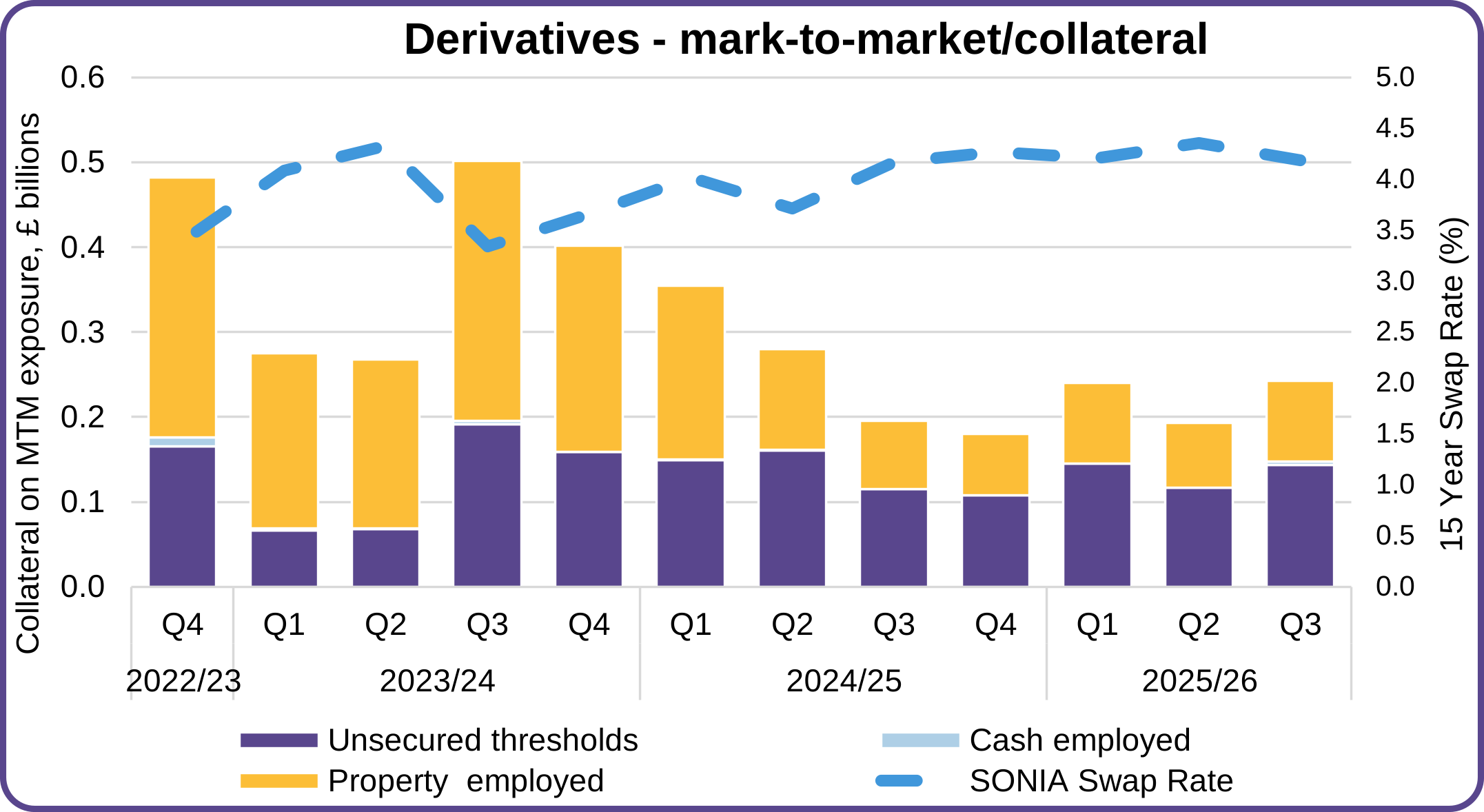
Gross mark-to-market (MTM) exposure on derivatives increased to £235 million at the end of the quarter (September: £186 million).
Performance in the quarter
12-month outturn cash interest cover (excluding sales) in the year to December remained at 78%. Aggregate sector figures cover a range of levels of performance – median 12-month interest cover was 93%.
-
Forecast interest cover over the next 12 months remains low, with a projected sector total of 67% - this is consistent with forecasts from the two previous quarters.
-
Quarterly cash interest cover (excluding sales) reduced to 68% (September: 99%), due to reduced net cashflows from operating activities linked to working capital movements, and increases in repairs and maintenance and interest costs.
-
Total spend on repairs and maintenance was £2.4 billion - although slightly below forecast this was an increase on the previous quarter (£2.2 billion) and greater than the corresponding quarter from the previous year (£2.3 billion).
-
Higher repairs and maintenance costs have resulted in net operating cashflows alone being insufficient to fund net interest payments, with an average cash shortfall of £246 million per quarter experienced in the year to December 2025.
Investment in new and existing stock
Outturn and forecast spend on repairs and maintenance continues to increase.
-
12-month spend on repairs and maintenance totalled £9.4 billion, 7% higher than the £8.7 billion incurred in the previous year.
-
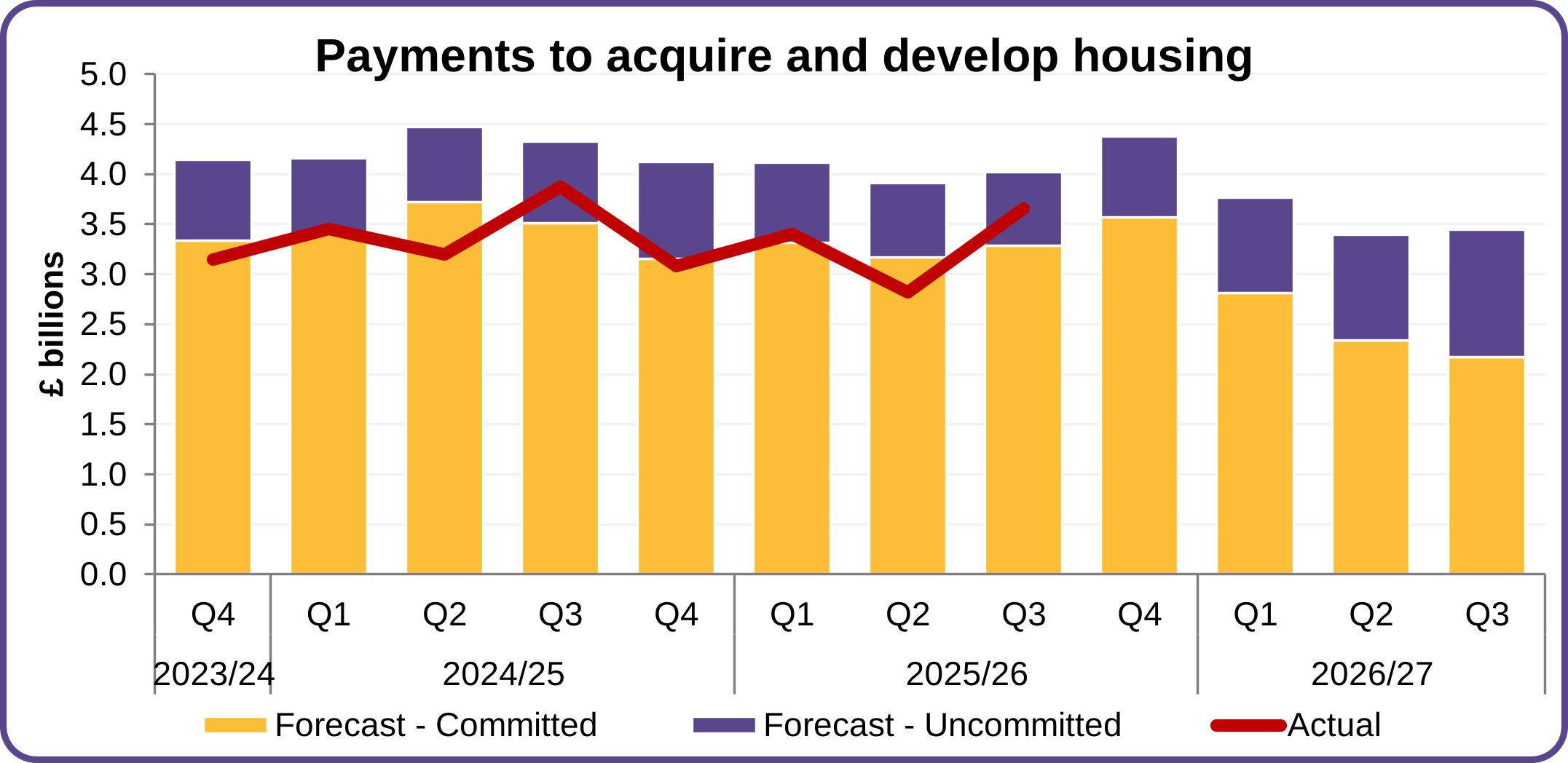
Forecast 12-month spend has increased from £10.4 billion to £10.6 billion; £5.6 billion of which relates to revenue expenditure, and £5.0 billion relating to capitalised works.
In contrast, both 12-month actual and 12-month forecast development spend remains supressed; spend to December 2025 totalled £13.0 billion, compared to £13.7 billion in the year to December 2024.
-
Development spend in the quarter amounted to £3.7 billion, compared to a total of £3.9 billion in both the quarter to December 2024 and to December 2023.
-
12-month forecast development has increased slightly to £15.0 billion (September: £14.9 billion). Over the last three years development forecasts have averaged £15.6 billion.
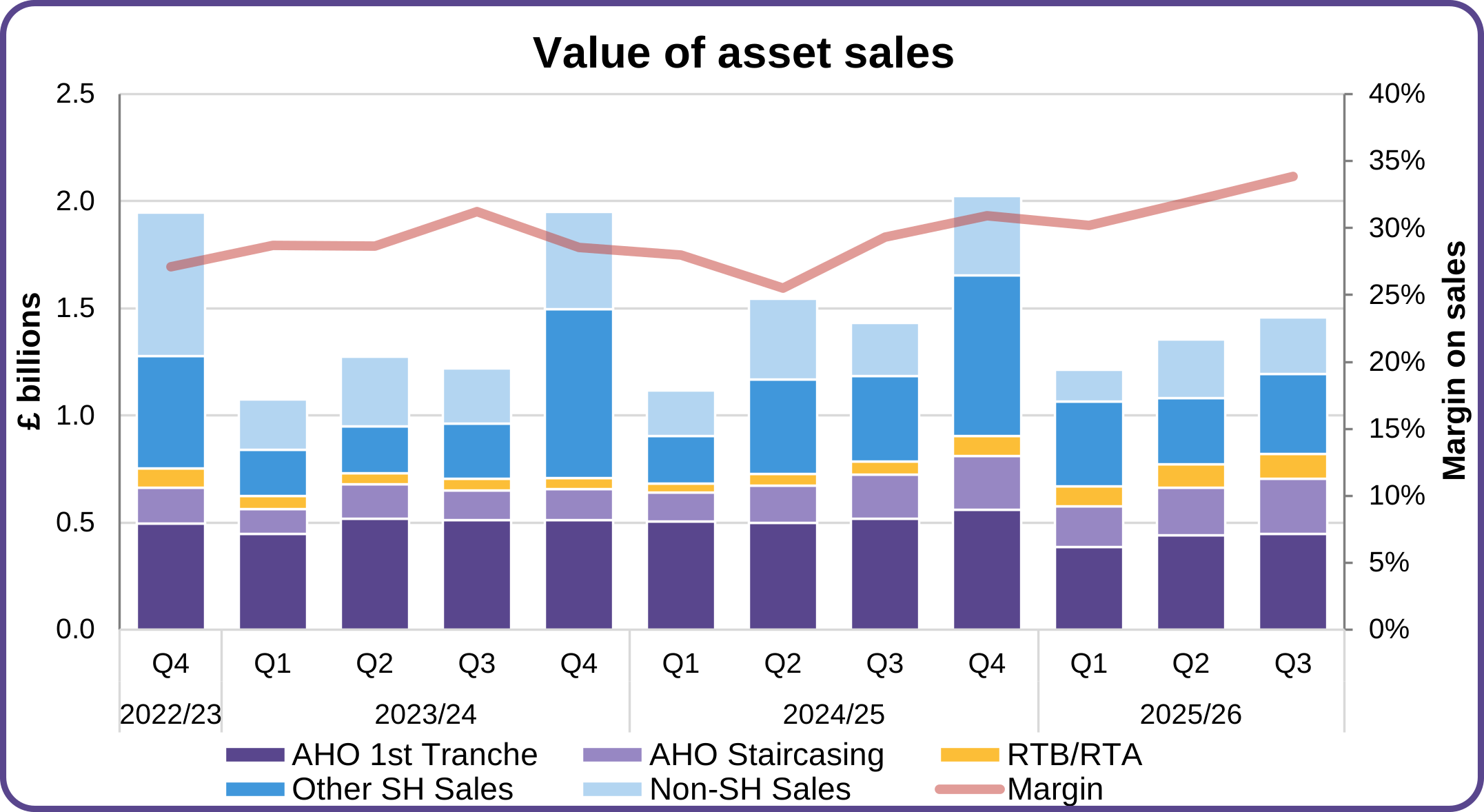
-
12-month development projections will not include development under the new Social and Affordable Homes Programme (SAHP). The programme opens for bids in February 2026.
Sales
Both AHO first tranche and market (current asset) sales have risen in the quarter, with the AHO 18 month pipeline also increasing for the first time in a year, market sale pipeline figures increased but remain at historically low levels.
-
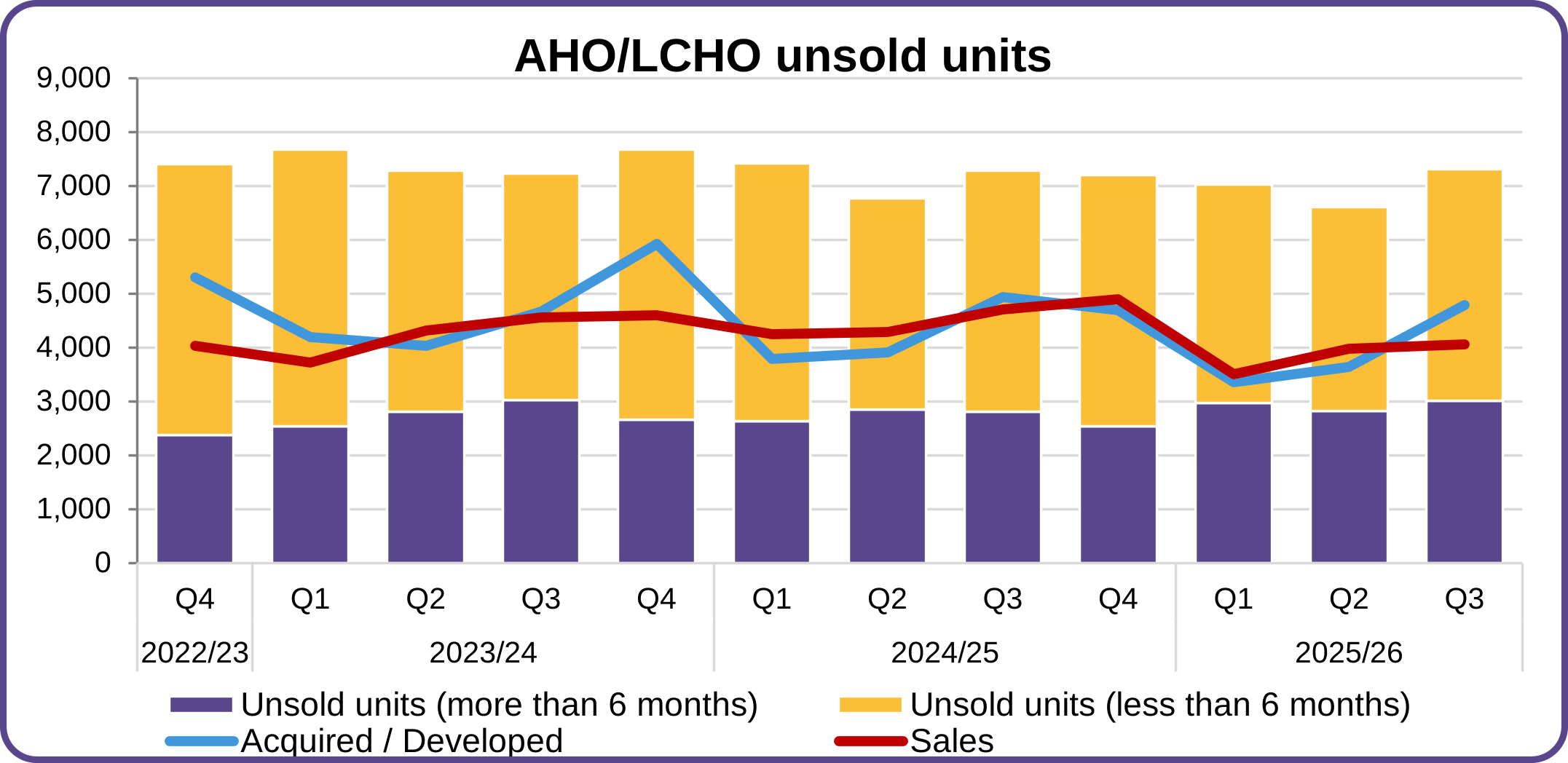
AHO sales were 2% higher than in the previous quarter but 4% below the three-year average. The margin on AHO sales improved in the quarter to 14.7% but remains amongst historically low levels.
-
Market sale completions fell in the quarter, remaining substantially below the three-year average.
-
Total current asset sales were £0.7bn in the quarter. In the year to December sales of £2.7 billion were achieved, compared to £3.1 billion in the year to December 2024.
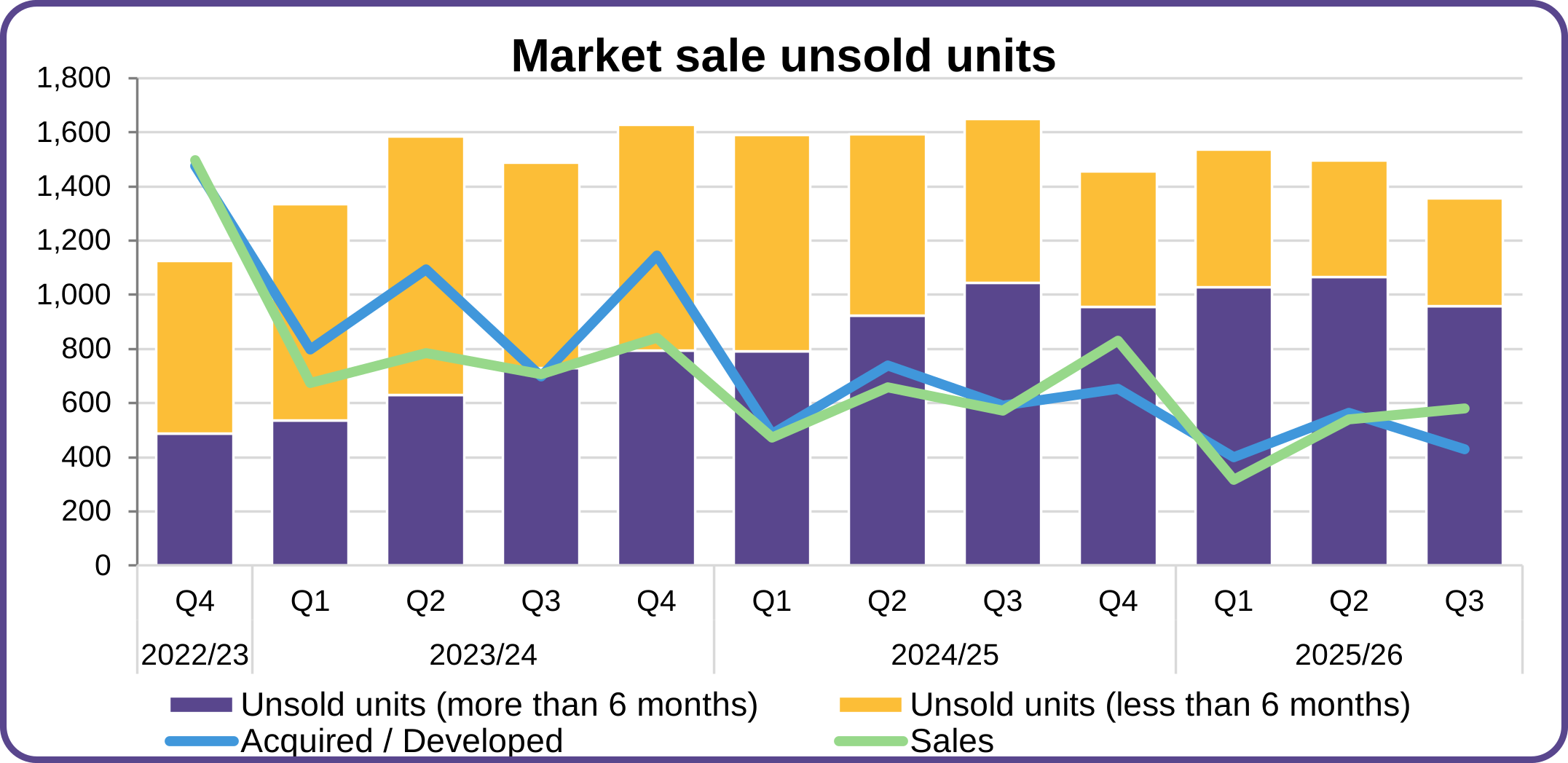
In contrast, total fixed asset sales amounted to £3.4 billion in the year to December; 11% higher than the £3.0 billion recorded in the previous year.
-
For the next 12 months £4.9 billion worth of fixed asset sales have been forecast.
-
Of the £4.9 billion fixed asset sales forecast, £2.2 billion relates to sales of housing properties to tenants or other individuals, and £2.7 billion relates mainly to bulk sales of both social housing and non-social housing assets.
-
We will continue to engage with PRPs where they are reliant on sales to maintain cashflows or covenant compliance.
Operating environment
Economic environment
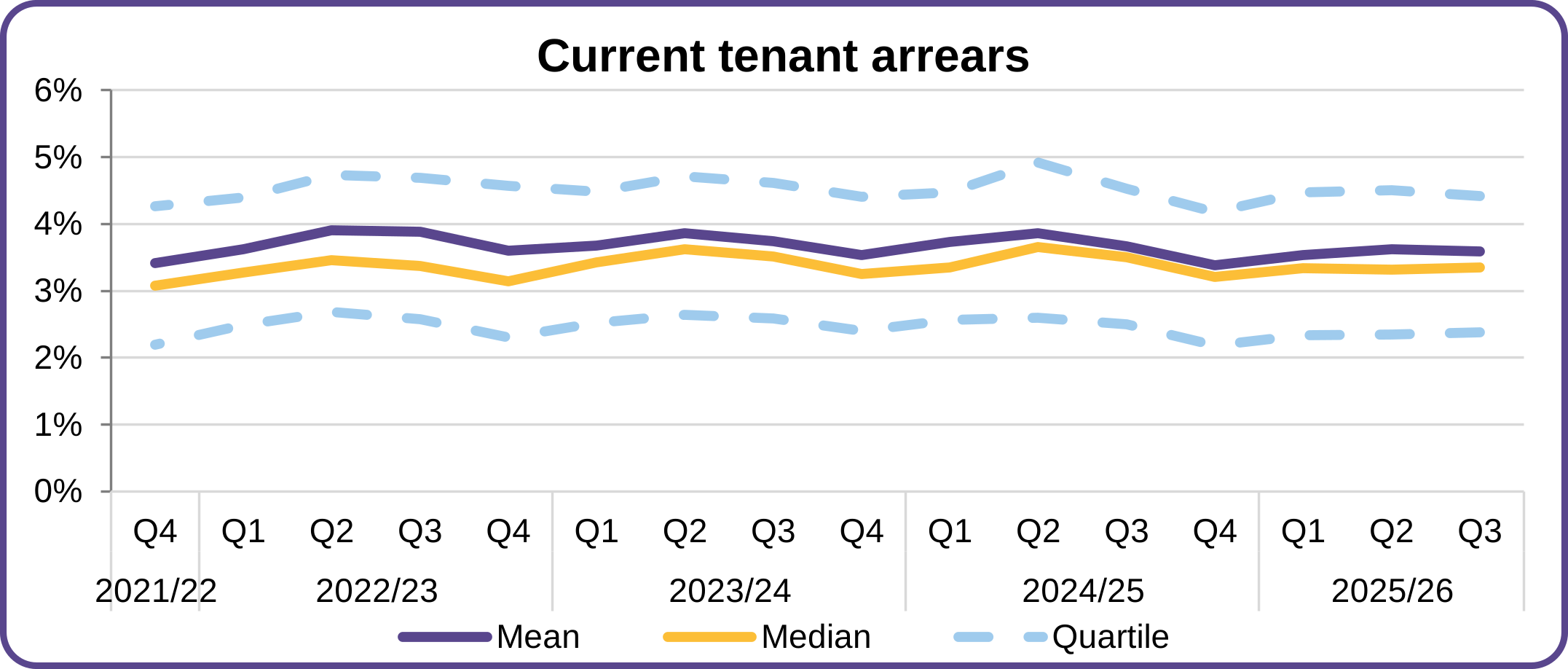
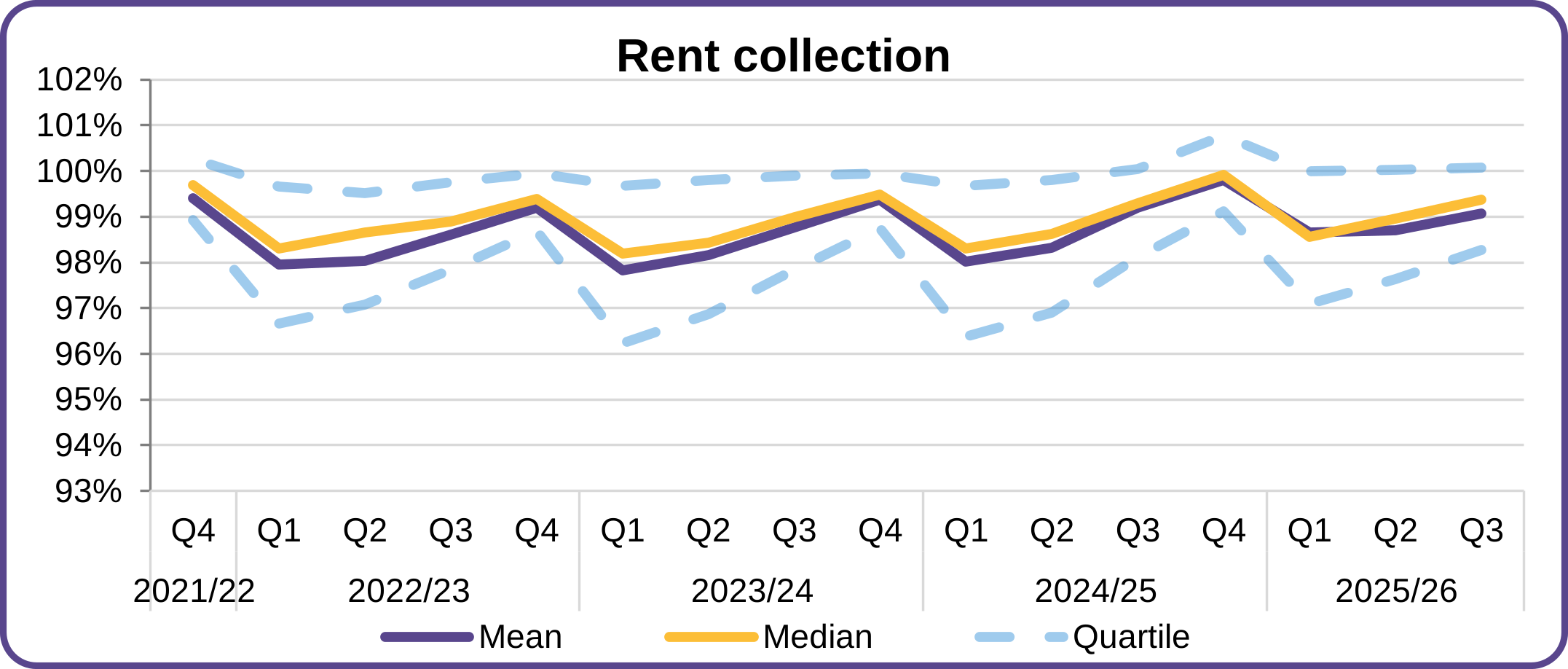
6 - Consumer Price Index (CPI) inflation in the UK rose by 3.4% in the 12 months to December 2025, a reduction on the 3.8% recorded in the year to September. The Bank of England judges inflation to have peaked and CPI is projected to return to around the 2% target in 2026 Q2 and remain close to that level in the medium term.
7 - The Bank of England (BoE) base rate reduced by 25 basis points to 3.75% on 17 December 2025, its sixth cut since August 2024, bringing the rate to its lowest level since February 2023. Post quarter-end the Bank Rate was maintained at 3.75%.
8 - The average interest rate for a typical 5-year mortgage stood at 4.0% at the end of December, down from 4.2% at the end of September. Net mortgage approvals for house purchases rose quarter‑on‑quarter to 61,000 in December, but remained below the 66,600 recorded in December 2024.
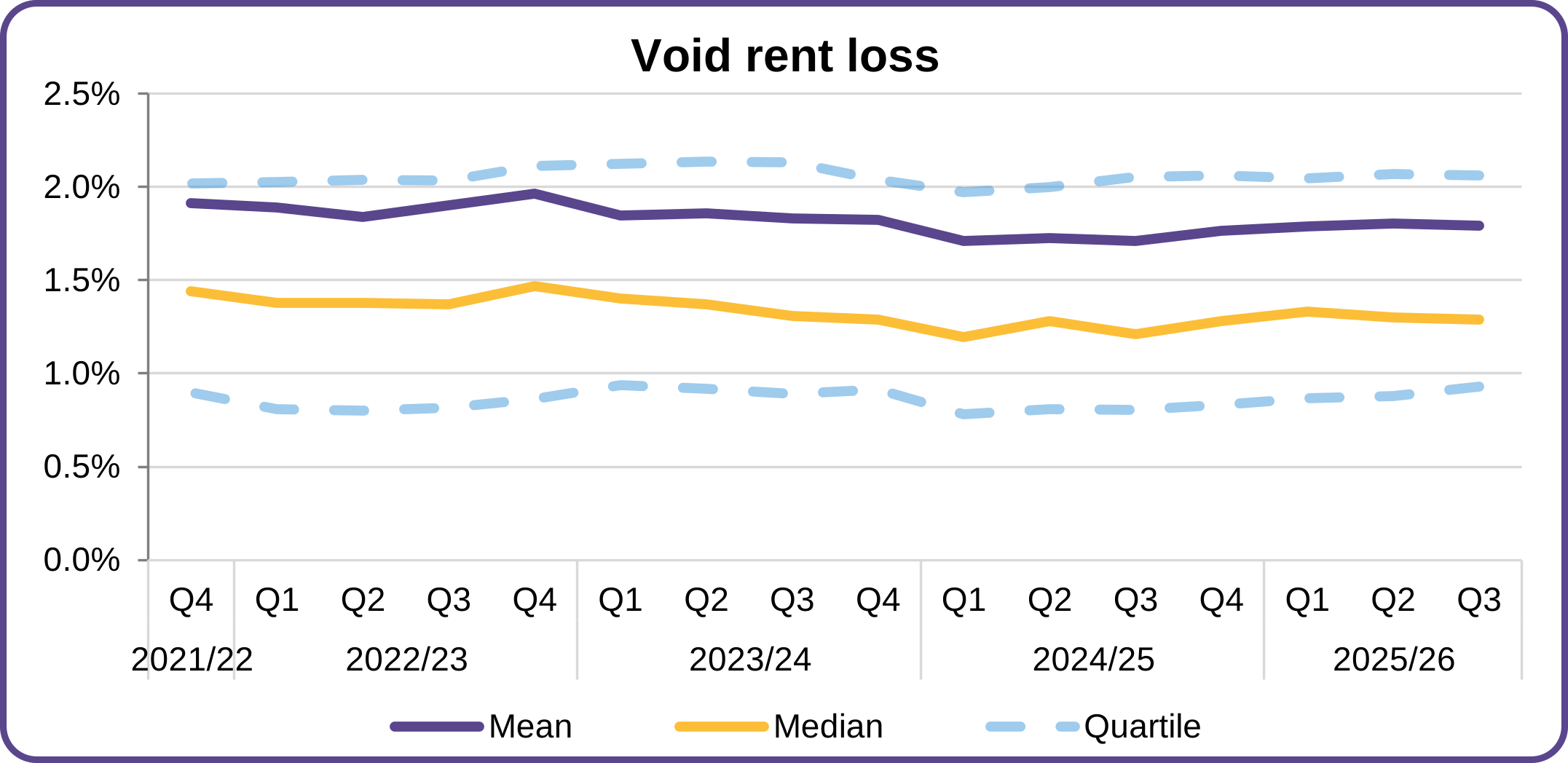
9 - House prices in England increased by 1.7% in the year to December 2025. The largest annual growth was experienced in the North East, where prices increased by 4.6% over the year. The lowest growth was in London, where prices reduced by 1.0%.
10 - The UK unemployment rate increased from 5.0% to 5.2% in the quarter to September. The number of job vacancies in the quarter increased by 2,000 to reach 726,000, but were down 73,000 from the level a year ago. The total number of people claiming Universal Credit in England was around 7.3 million in December 2025 compared to 6.4 million a year earlier, as the managed migration from legacy benefits continues.
Social housing landscape
11 - The 2026 rent policy for social housing in England permits an annual rent increase of the Consumer Price Index (CPI) plus 1% for a period of ten years, starting in April 2026. This links rent increases for the 2026/27 financial year to the 3.8% CPI rate as at September 2025, resulting in a maximum increase of 4.8%. This applies to general needs Social Rent, Affordable Rent and supported housing, with the exception of certain specialised supported housing categories.
12 - On the 28 January, the Government confirmed rent convergence will commence 1 April 2027 with a £1 per week permitted increase above the standard CPI + 1% social rent cap, for properties currently below formula rent. From 1 April 2028, this rises to £2 per week above CPI + 1% until properties reach their formula rent.
13 - The Ministry of Housing, Communities and Local Government on the 26 January published reforms to the Decent Homes Standard (DHS) and Minimum Energy Efficiency Standards (MEES) for the social housing sector.
14 - Awaab’s Law came into force for the social rented sector from 27 October 2025, outlining requirements to address all emergency hazards and all damp and mould hazards that present a significant risk of harm to tenants to fixed timeframes.
15 - The Social and Affordable Homes Programme 2026 to 2036 opens for bidding in February 2026, offering funding for new affordable homes through Continuous Market Engagement (CME) and Strategic Partnership routes, with a target to deliver at least 60% of the homes under the programme as Social Rent.
16 - The consultation seeking views on how to reform Right to Buy concluded 15 January 2025. The reforms proposed include changes to eligibility requirements, further amends to the discounts available under the scheme, an exemption for newly built social housing for 35 years and expanding flexibilities for councils to spend their Right to Buy capital receipts. The government intends to bring forward legislation to implement the reforms when Parliamentary time allows.
Rent convergence along with the Social and Affordable Homes Programme (SAHP) are intended to support long term investment in the sector and provide PRPs with greater certainty in the regulatory environment whilst new requirements such as the Decent Homes Standard (DHS), Minimum Energy Efficiency Standards (MEES), and Awaab’s Law set the framework within which providers must operate.
17 - PRPs should ensure their plans evolve in line with emerging opportunities and regulatory changes. It is essential that providers understand and manage any additional risks, identify potential liquidity and covenant constraints, and maintain robust contingency strategies.
Private finance
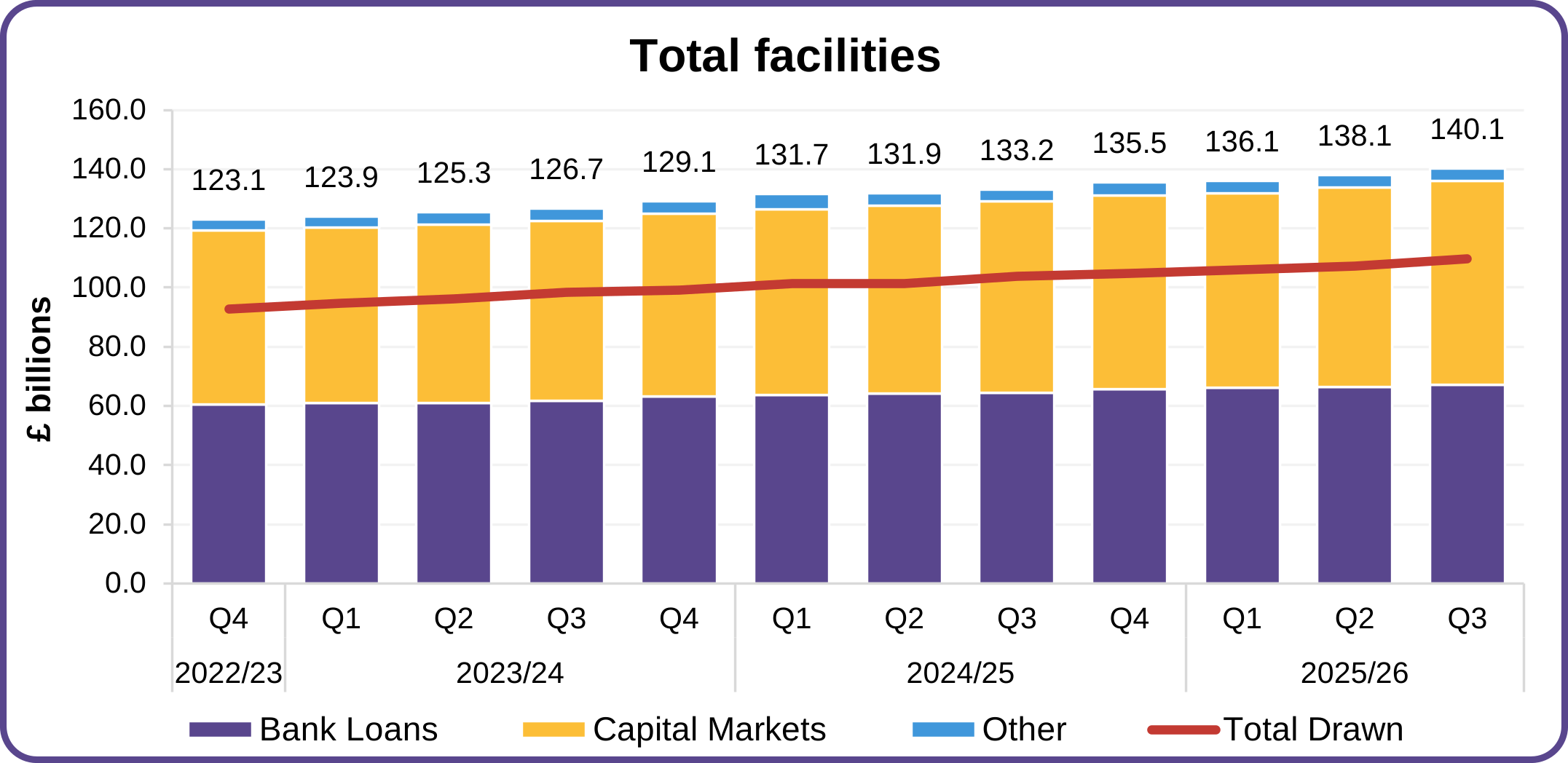
18 - The sector’s total agreed borrowing facilities increased by £2.1 billion over the quarter, to reach £140.1 billion at the end of December (September: £138.1 billion).
Figure 1: Total facilities (£ billions)
£bn
| Qtrs | Bank Loans | Capital Markets | Other | Total Facilities | Drawn Facilities |
|---|---|---|---|---|---|
| 2025/26 - Q3 | 67.2 | 68.7 | 4.2 | 140.1 | 109.8 |
| 2025/26 - Q2 | 66.4 | 67.5 | 4.2 | 138.1 | 107.1 |
| 2025/26 - Q1 | 66.0 | 65.8 | 4.2 | 136.1 | 105.9 |
| 2024/25 - Q4 | 65.6 | 65.4 | 4.5 | 135.5 | 104.9 |
| 2024/25 - Q3 | 64.5 | 64.6 | 4.1 | 133.2 | 103.7 |
| 2024/25 - Q2 | 64.1 | 63.7 | 4.2 | 131.9 | 101.4 |
| 2024/25 - Q1 | 63.7 | 62.8 | 5.1 | 131.7 | 101.2 |
| 2023/24 - Q4 | 63.2 | 61.7 | 4.1 | 129.1 | 99.2 |
| 2023/24 - Q3 | 61.7 | 60.9 | 4.1 | 126.7 | 98.3 |
| 2023/24 - Q2 | 61.0 | 60.1 | 4.2 | 125.3 | 96.1 |
| 2023/24 - Q1 | 61.0 | 59.3 | 3.7 | 123.9 | 94.7 |
| 2022/23 - Q4 | 60.5 | 58.8 | 3.7 | 123.1 | 92.8 |
Table 1: Total facilities – drawn and secured
| £billions | Previous quarter | Current quarter | % change |
|---|---|---|---|
| Drawn | 107.1 | 109.8 | 2.5% |
| Undrawn | 31.0 | 30.4 | (2.0%) |
| Secured | 124.1 | 126.6 | 2.0% |
| Security required | 3.0 | 2.6 | (11.9%) |
| Security not required | 11.0 | 10.9 | (0.7%) |
19 - At the end of December, 98% of PRPs (September: 97%) were forecasting that debt facilities would be sufficient for 12 months or more.
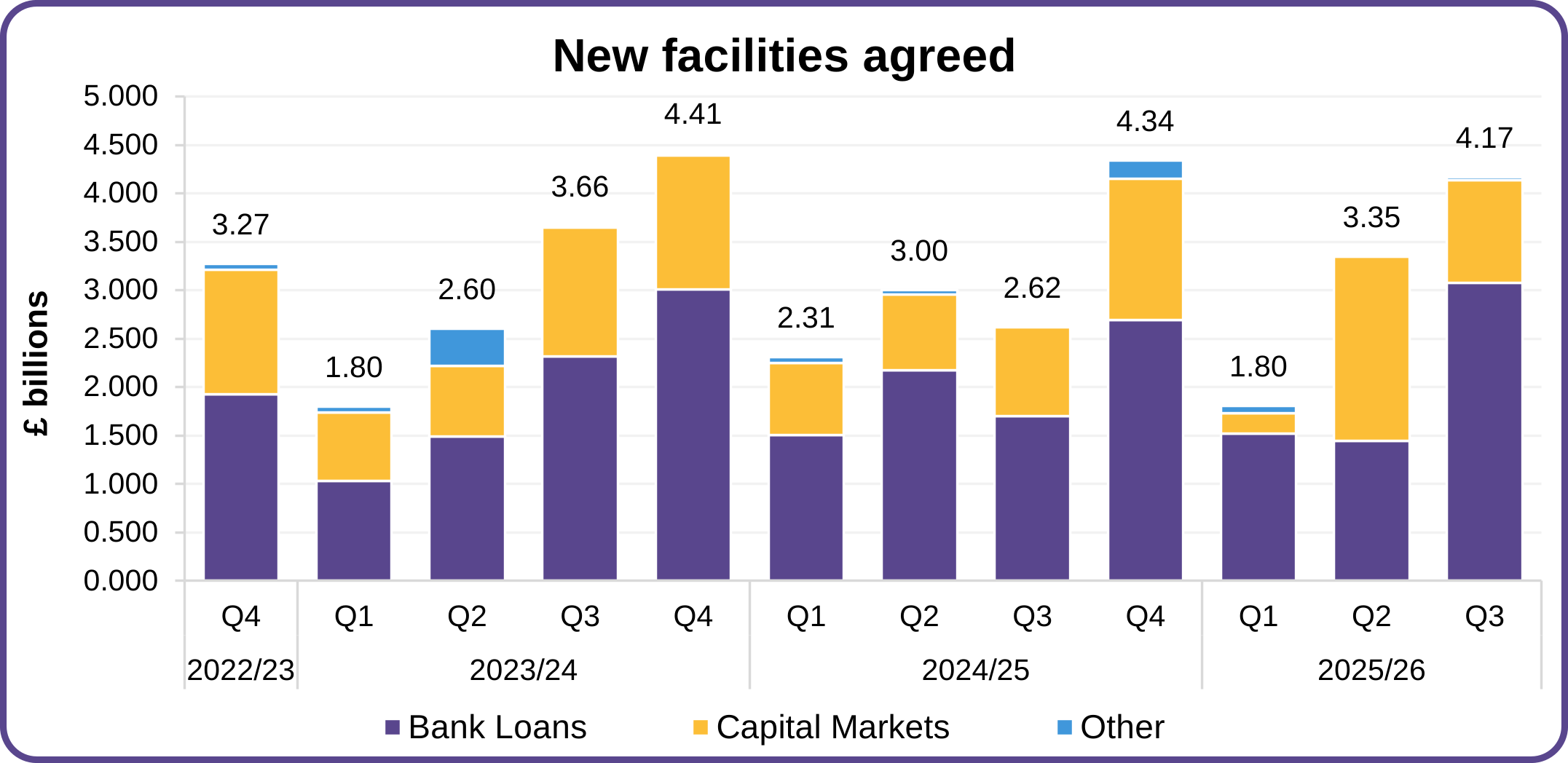
20 - A total of 39 PRPs arranged new finance during the quarter (September: 27), with 18 of these arranging facilities worth £100 million or more, and one provider arranging facilities of £0.5 billion. The total agreed, including refinancing, amounted to £4.2 billion in the quarter; compared to an average of £3.1 billion per quarter over the last three years.
21 - Bank lending accounted for 74% (£3.1 billion) of new funding in the quarter. Capital market funding, including private placements and aggregated bond finance, accounted for 26% (£1.1 billion) of the total.
Figure 2: New facilities agreed (£ billion)
£bn
| Qtrs | Bank Loans | Capital Markets | Other | Total Facilities |
|---|---|---|---|---|
| 2025/26 - Q3 | 3.07 | 1.06 | 0.03 | 4.17 |
| 2025/26 - Q2 | 1.45 | 1.90 | 0.01 | 3.35 |
| 2025/26 - Q1 | 1.52 | 0.21 | 0.07 | 1.80 |
| 2024/25 - Q4 | 2.70 | 1.46 | 0.19 | 4.34 |
| 2024/25 - Q3 | 1.70 | 0.92 | 0.00 | 2.62 |
| 2024/25 - Q2 | 2.18 | 0.78 | 0.05 | 3.00 |
| 2024/25 - Q1 | 1.51 | 0.75 | 0.06 | 2.31 |
| 2023/24 - Q4 | 3.01 | 1.39 | 0.02 | 4.41 |
| 2023/24 - Q3 | 2.31 | 1.34 | 0.01 | 3.66 |
| 2023/24 - Q2 | 1.49 | 0.73 | 0.38 | 2.60 |
| 2023/24 - Q1 | 1.03 | 0.71 | 0.06 | 1.80 |
| 2022/23 - Q4 | 1.93 | 1.28 | 0.06 | 3.27 |
22 - Aggregate undrawn facilities and cash remained the same as the previous quarter, with a total of £34.5 billion available as at the end of December. This amount would be sufficient to cover the sector’s forecast expenditure on net interest costs (£5.0 billion), loan repayments (£3.9 billion) and net development for the next year (£12.3 billion), even if no new debt facilities were arranged and no sales income were to be received.
23 - Loan drawdowns of £3.7 billion were made during the quarter, which after repayments, resulted in a £2.7 billion net increase in the value of drawn facilities. This is the largest increase in a single quarter in 14 years, with 56% of PRPs reporting an increase in drawn debt. On average, drawn debt has increased by £1.5 billion per quarter over the last three years. Over the next 12 months drawn debt is forecast to increase by a net total of £4.3 billion.
Table 2: 12-month forecasts
| £billions | Previous quarter | Current quarter | % change |
|---|---|---|---|
| Drawdown from facilities agreed | 6.2 | 5.1 | (17.6%) |
| Drawdown from facilities not yet agreed | 1.9 | 3.1 | 64.2% |
| Loan repayments | 3.3 | 3.9 | 16.5% |
| Net movement in drawn debt | 4.8 | 4.3 | (9.1%) |
24 - Forecast drawdowns from facilities not yet agreed have increased by 64%, with eight PRPs expecting to withdraw £100 million or more. The drawdowns are forecast by 23 PRPs that are either increasing borrowing capacity, typically to fund uncommitted development programmes, or are refinancing existing facilities. The latter can be either to replace expiring facilities, or to secure more favourable terms.
25 - Loan repayments of £1.1 billion were made during the quarter, above the quarterly average recorded over the last three years of £0.9 billion. For the next twelve months, a further £3.9 billion worth of loan repayments are forecast to be made. Eight PRPs have each forecast over £100 million worth of loan repayments, together accounting for 65% of the sector total.
Cashflows
26 - It is essential that PRPs have access to sufficient funds at all times. The regulator engages with PRPs that have low liquidity indicators. Table 3 below shows the actual performance for the quarter compared to forecast, and the 12-month performance for the year to December 2025.
Table 3: Summary cashflow performance[footnote 1]
| £billions[footnote 2] | 3 months to 31 Dec 2025 (forecast) | 3 months to 31 Dec 2025 (actual) | 12 months to 31 Dec 2025 (actual) |
|---|---|---|---|
| Operating cashflows excluding sales | 3.3 | 3.2 | 12.8 |
| Repairs & maintenance (capital & revenue) | (2.6) | (2.4) | (9.4) |
| Net operating cashflows excluding sales | 0.7 | 0.8 | 3.4 |
| Interest cashflows | (1.2) | (1.2) | (4.4) |
| Payments to acquire and develop housing | (4.0) | (3.7) | (13.0) |
| Current assets sales receipts | 0.8 | 0.7 | 2.7 |
| Disposals of housing fixed assets | 2.1 | 0.8 | 3.4 |
| Other cashflows | (0.1) | (0.0) | (0.3) |
| Cashflows before resources and funding | (1.7) | (2.6) | (8.2) |
| Financed by: | |||
| Net grants received | 0.5 | 0.6 | 2.5 |
| Net increase in debt | 0.8 | 2.7 | 6.0 |
| Use of cash reserves[footnote 3] | 0.4 | (0.7) | (0.4) |
| Total funding cashflows | 1.7 | 2.6 | 8.2 |
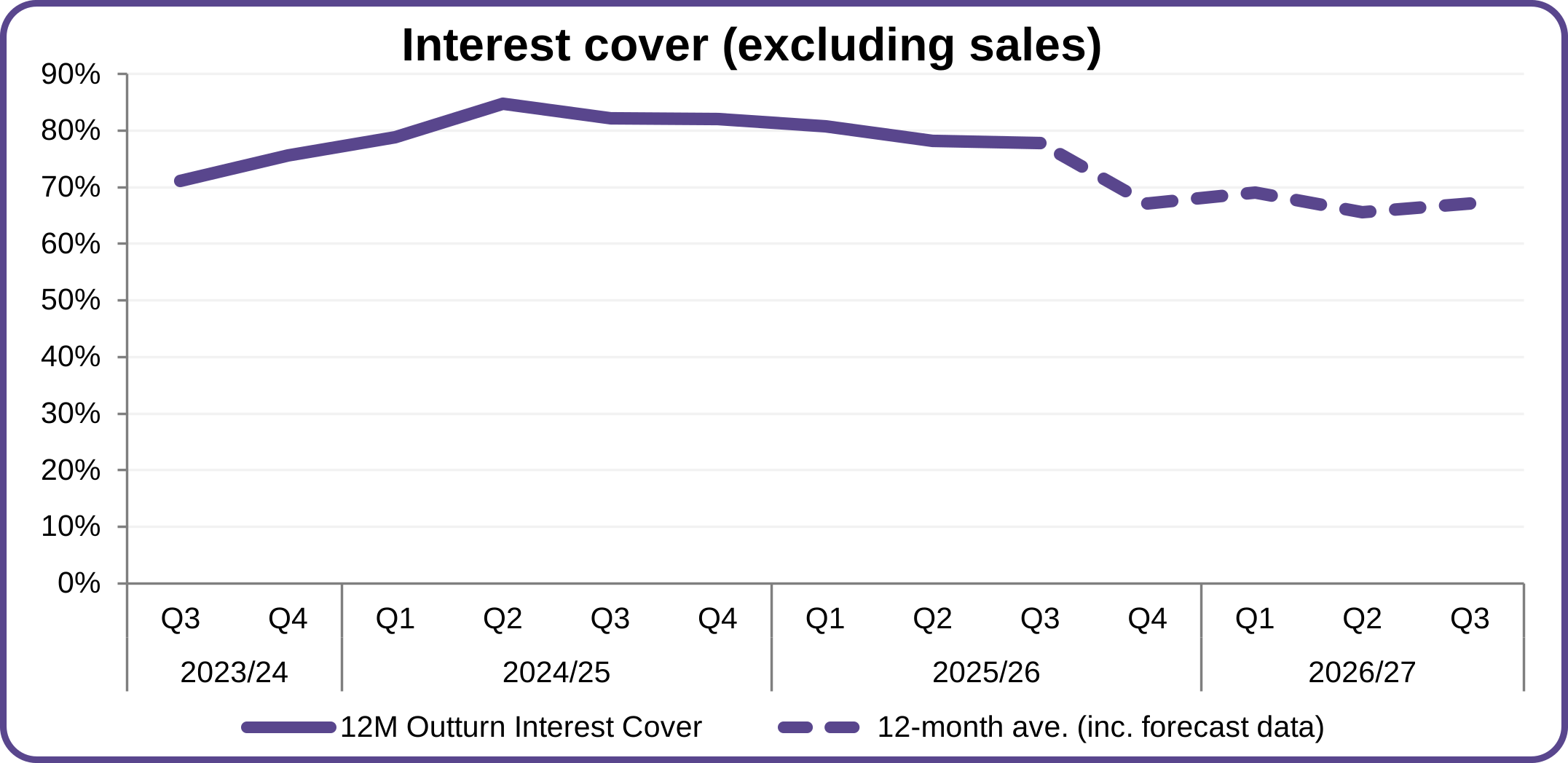
27 - Cash interest cover[footnote 4], based on net operating cashflows excluding all current asset and fixed asset sales, stood at 68% in the quarter to December 2025, compared to 99% in the quarter to September (December 2024: 70%). The reduction in interest cover since the previous quarter results from a £0.1 billion reduction in net operating cashflows, combined with a £0.2 billion increase in repairs and maintenance costs, and a £0.1 billion increase in interest payments.
28 - Net operating cashflows are subject to a degree of volatility due to the timing of creditor payments and rent receipts, and a number of PRPs have attributed reductions in operating cash to the payment of large annual invoices such as insurance, and additional payment runs at the end of the quarter in advance of the Christmas break. Although interest cover reduced in the quarter, it was higher than the forecast of 60% due to an underspend of £0.2 billion on capitalised repair and maintenance costs.
Figure 3: Interest cover from operating cashflows (excluding sales)
IC 12M Aggregate
| Qtrs | 12M Outturn Interest Cover | 12-month ave. (inc. forecast data) |
|---|---|---|
| 2026/27 - Q3 | 0.0% | 67.2% |
| 2026/27 - Q2 | 0.0% | 65.7% |
| 2026/27 - Q1 | 0.0% | 69.1% |
| 2025/26 - Q4 | 0.0% | 67.1% |
| 2025/26 - Q3 | 77.8% | |
| 2025/26 - Q2 | 78.3% | |
| 2025/26 - Q1 | 80.7% | |
| 2024/25 - Q4 | 82.1% | |
| 2024/25 - Q3 | 82.2% | |
| 2024/25 - Q2 | 84.8% | |
| 2024/25 - Q1 | 78.9% | |
| 2023/24 - Q4 | 75.7% | |
| 2023/24 - Q3 | 71.1% |
29 - Rolling interest cover in the 12 months to December stood at 78%; consistent with the level recorded in the previous quarter. Interest cover varies between different types of PRPs.
- Median 12-month outturn interest cover excluding sales was 93% (September: 92%)
- Lower quartile performance was 44% (September: 42%) and upper quartile performance was 140% (September: 142%).
- The eleven PRPs that comprise the G15 group of London-based providers reported aggregate 12-month outturn cash interest cover of 61%.
30 - Whilst interest cover remains below 100%, operating cashflows, net of both capital and revenue repair costs, are insufficient to fund net interest payments. On average, a cash shortfall of £246 million per quarter was experienced in the year to December 2025, compared to an average deficit of £191 million per quarter in the previous year. The restriction in operating cash is reflected by increasing fixed assets sale receipts across the sector, and a greater reliance on debt and cash reserves. In the quarter to December, although available cash balances have increased by £0.6 billion, drawn debt has increased by £2.7 billion.
31 - Cash interest cover is expected to remain restricted. Forecasts for the year to December 2026 give an estimate of 67%; consistent with the forecasts from the previous two quarters. In the forecast period, 60% of PRPs are forecasting interest cover to be below 100%.
32 - A total of 29 PRPs have reported having one or more loan covenant carve-outs or waivers in place at the end of December (September: 30). The agreements in place at the end of the quarter include carve-outs to exclude fire or building safety works from loan covenant calculations, reported by 13 PRPs, and carve-outs of energy efficiency works, reported by 12 PRPs. Other agreements allow the exclusion of certain pension or loan breakage costs, and one-off impairment or demolition costs.
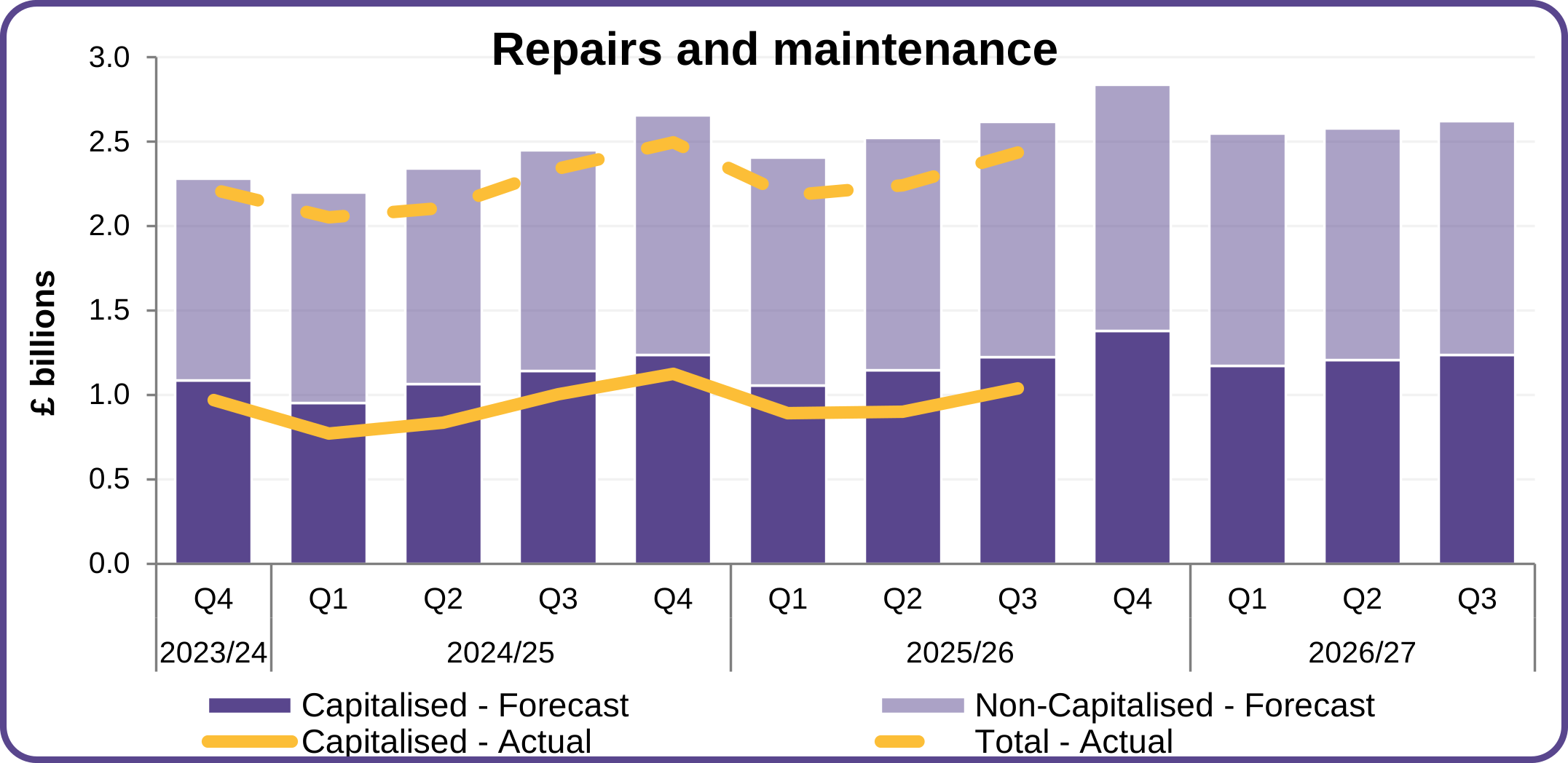
33 - Including both capital and revenue expenditure, total repairs and maintenance spend in the quarter amounted to £2.4 billion; the second highest amount recorded since comparable data was first collected in 2022. This was 9% higher than the total from the previous quarter (£2.2 billion), and 4% higher than in the same quarter of the previous year (£2.3 billion). The total was comprised of £1.4 billion worth of revenue works, and £1.0 billion worth of capital works.
34 - Revenue repairs increased by 4% in comparison to the previous quarter, and were in line with the amount previously forecast. Capitalised expenditure was 15% higher than in quarter two, however also 15% below the forecast amount. In addition to procurement and contractor delays, a small number of PRPs have attributed underspends to property access issues and tenant refusals, and to delays in gaining approval from the Building Safety Regulator or Distribution Network Operator, the latter of which affects the installation of solar panels and air source heat pumps.
35 - In the 12 months to December 2025 total repairs and maintenance spend was £9.4 billion; 7% higher than the £8.7 billion recorded in the year to December 2024. Of this, £5.4 billion related to revenue works and £4.0 billion related to capitalised works. For the 12 months to December 2026 the sector has forecast expenditure to increase to £10.6 billion (September 12-month forecast: £10.4 billion).
Figure 4: Total repairs and maintenance expenditure (£ billions)
| £bn | Capitalised Repairs | Non-Capitalised Repairs | Total Repairs & Maint. Spend | |||
|---|---|---|---|---|---|---|
| Qtrs | Actual | Forecast | Actual | Forecast | Actual | Forecast |
| 2026/27 - Q3 | 1.2 | 1.4 | 2.6 | |||
| 2026/27 - Q2 | 1.2 | 1.4 | 2.6 | |||
| 2026/27 - Q1 | 1.2 | 1.4 | 2.5 | |||
| 2025/26 - Q4 | 1.4 | 1.5 | 2.8 | |||
| 2025/26 - Q3 | 1.0 | 1.2 | 1.4 | 1.4 | 2.4 | 2.6 |
| 2025/26 - Q2 | 0.9 | 1.1 | 1.3 | 1.4 | 2.2 | 2.5 |
| 2025/26 - Q1 | 0.9 | 1.1 | 1.3 | 1.4 | 2.2 | 2.4 |
| 2024/25 - Q4 | 1.1 | 1.2 | 1.4 | 1.4 | 2.5 | 2.7 |
| 2024/25 - Q3 | 1.0 | 1.1 | 1.3 | 1.3 | 2.3 | 2.5 |
| 2024/25 - Q2 | 0.8 | 1.1 | 1.3 | 1.3 | 2.1 | 2.3 |
| 2024/25 - Q1 | 0.8 | 1.0 | 1.3 | 1.2 | 2.1 | 2.2 |
| 2023/24 - Q4 | 1.0 | 1.1 | 1.2 | 1.2 | 2.2 | 2.3 |
36 - Of the £10.6 billion total repairs and maintenance forecast for the next 12 months, £5.6 billion relates to revenue expenditure and £5.0 billion relates to capitalised works (September forecast: £5.6 billion revenue, £4.8 billion capital). Ten large PRPs have each forecast capitalised expenditure of £100 million or more over the next 12 months, together accounting for one-third of the sector total. Seven of these ten providers are in the G15 group of London-based providers.
37 - Current asset sales of £2.7 billion were achieved in the 12 months to December 2025; compared to £3.1 billion in the year to December 2024 and £3.3 billion in the year to December 2023. For the 12 months to December 2026 the sector has forecast a further £3.2 billion worth of current asset sales (September forecast: £3.5 billion), of which £3.0 billion relates to properties for which development is contractually committed (September: £3.2 billion). Six PRPs have each forecast current asset sales of £100 million or more over the next 12 months, together accounting for 37% of the sector total.
38 - In the 12 months to December 2025 fixed asset sales totalled £3.4 billion; 11% higher than the £3.0 billion recorded in the year to December 2024. For the 12 months to December 2026 the sector has forecast a further £4.9 billion worth of fixed asset sales (September 12-month forecast: £5.0 billion).
39 - Of the total forecast fixed asset sales, £2.7 billion has been forecast in relation to ‘other’ fixed asset sales, including bulk sales to other organisations. This is an increase of 9% compared to the £2.5 billion forecast from September. Over half of this total is attributable to just one PRP, whose forecasts include a significant bulk sale of a portfolio of properties. Other bulk disposals include the sale of student accommodation and key worker schemes.
40 - A further £2.2 billion relates to sales to tenants or other open market sales (including mainly staircasing, RTB/RTA and sale of void properties). Forecasts have reduced by 11% since September, however PRPs are continuing to report strong demand for both staircasing and RTB/RTA sales, which is in contrast to the market for first tranche shared ownership and outright sales which is reported to be challenging. Six PRPs have each forecast tenant or open market sales of over £100m, and together account for 39% of the sector total.
41 - Available cash, excluding amounts held in secured accounts, increased by 17% during the quarter to £4.2 billion (September: £3.6 billion). This is consistent with the average cash balance reported over the last three years, over which period cash balances have reduced in comparison to longer-term averages. Available cash is forecast to reduce and reach £2.9 billion by the end of December 2026, with 70% of PRPs forecasting cash levels to reduce over this period.
42 - In addition to the £4.2 billion worth of available cash, cash held in secured accounts or otherwise unavailable for use by PRPs also increased over the quarter, reaching £1.1 billion (September: £1.0 billion). These amounts relate mainly to loan or bond proceeds held in escrow, leaseholder sinking funds, and debt servicing reserve accounts.
43 - The regulator will continue to monitor the financial viability of PRPs that are forecasting low liquidity levels or restricted interest cover and will engage with PRPs as necessary, especially if there is reliance on fixed asset sales to support operating cashflows or to meet loan covenants. Findings will be reflected in regulatory judgements where appropriate.
Development
44 - In the 12 months to December 2025, £13.0 billion was invested in the acquisition and development of housing properties. This compares to £13.7 billion in the year to December 2024, and £14.6 billion in the year to December 2023. Total expenditure for the year was 13% below the total forecast reported at the start of the period, but 24% above the forecast for contractually committed schemes.
45 - Although development activity is widespread across the sector, expenditure is concentrated in a small number of PRPs. A total of five PRPs each reported development expenditure of over £400 million in the year to December, together accounting for 20% of the sector total, and over half of the sector spend in this period is attributable to just 19 PRPs.
46 - Actual expenditure in the three months to December 2025 was £3.7 billion; this compares to a total of £3.9 billion in both the quarter to December 2024 and to December 2023. However, spend was 30% higher than the £2.8 billion recorded in the previous quarter. Expenditure was 11% above the forecast for contractually committed development, but 9% below the total forecast including uncommitted expenditure. PRPs have mainly attributed underspends to delays with planning applications and legal works, in addition to general delays and timing differences with schemes that are on site.
Figure 5: Payments to acquire and develop housing
| £bn | Committed | Uncommitted | Total | |
|---|---|---|---|---|
| Qtrs | Actual | Forecast | Forecast | Forecast |
| 2026/27 - Q3 | 2.2 | 1.3 | 3.4 | |
| 2026/27 - Q2 | 2.3 | 1.1 | 3.4 | |
| 2026/27 - Q1 | 2.8 | 1.0 | 3.8 | |
| 2025/26 - Q4 | 3.6 | 0.8 | 4.4 | |
| 2025/26 - Q3 | 3.7 | 3.3 | 0.7 | 4.0 |
| 2025/26 - Q2 | 2.8 | 3.2 | 0.7 | 3.9 |
| 2025/26 - Q1 | 3.4 | 3.3 | 0.8 | 4.1 |
| 2024/25 - Q4 | 3.1 | 3.2 | 1.0 | 4.1 |
| 2024/25 - Q3 | 3.9 | 3.5 | 0.8 | 4.3 |
| 2024/25 - Q2 | 3.2 | 3.7 | 0.7 | 4.5 |
| 2024/25 - Q1 | 3.5 | 3.4 | 0.8 | 4.2 |
| 2023/24 - Q4 | 3.1 | 3.3 | 0.8 | 4.1 |
47 - For the next 12 months a further £15.0 billion worth of investment has been forecast; a 1% increase on the £14.9 billion forecast from December. The small increase relates to committed development, forecasts for which have increased to £10.9 billion (September forecast: £10.6 billion). Forecasts for uncommitted development have reduced from £4.2 billion to £4.1 billion. Development forecasts follow the expected trajectory that typically occurs in the transition period between one Affordable Homes Programme (AHP) ending and the next beginning. Over the last three years total development forecasts have averaged £15.6 billion.
48 - Five large PRPs have each forecast over £500m of development expenditure over the next 12 months, together accounting for 20% of the sector total, and half of the sector’s total forecast expenditure is accounted for by 20 PRPs. For-profit PRPs account for £0.4 billion of the overall forecast; equivalent to 3% of the total.
49 - Forecasts for development grant have increased by a further 2% to £2.7 billion (September forecast: £2.6 billion). This is the third consecutive quarter where forecasts have increased, with the increase relating solely to grant for development that is not yet contractually committed – forecasts for development that is already in contract have reduced over the same period. Grant forecasts include the remaining additional bridge funding from the Affordable Homes Programme 21-26, and funding from local authorities.
Housing market
50 - Total asset sales, including staircasing, RTB/RTA and voluntary sales, as well as Affordable Home Ownership (AHO) first tranche sales and market sales, amounted to £1.5 billion in the quarter to December (September: £1.4 billion).
Figure 6: Value of asset sales
| £m | Sales Value | Margin | |||||
|---|---|---|---|---|---|---|---|
| Qtrs | AHO 1st Tranche | AHO Staircasing | RTB/RTA | Other SH Sales | Non-SH Sales | Total | Total |
| 2025/26 - Q3 | 446.1 | 257.8 | 117.2 | 374.1 | 263.3 | 1,458.5 | 33.9% |
| 2025/26 - Q2 | 442.7 | 219.7 | 109.5 | 309.5 | 274.0 | 1,355.5 | 32.0% |
| 2025/26 - Q1 | 385.5 | 191.9 | 91.1 | 396.8 | 149.4 | 1,214.7 | 30.2% |
| 2024/25 - Q4 | 560.6 | 251.5 | 90.9 | 752.4 | 369.3 | 2,024.7 | 30.9% |
| 2024/25 - Q3 | 517.5 | 205.5 | 61.3 | 400.1 | 246.2 | 1,430.7 | 29.3% |
| 2024/25 - Q2 | 499.5 | 174.5 | 52.6 | 442.8 | 373.7 | 1,543.0 | 25.5% |
| 2024/25 - Q1 | 506.8 | 134.7 | 41.3 | 220.3 | 213.3 | 1,116.5 | 28.0% |
| 2023/24 - Q4 | 510.7 | 145.2 | 52.9 | 788.7 | 453.2 | 1,950.7 | 28.5% |
| 2023/24 - Q3 | 511.6 | 139.6 | 53.3 | 258.1 | 257.5 | 1,220.1 | 31.2% |
| 2023/24 - Q2 | 519.8 | 159.6 | 50.9 | 220.5 | 323.8 | 1,274.5 | 28.6% |
| 2023/24 - Q1 | 447.8 | 115.2 | 61.1 | 217.4 | 232.6 | 1,074.3 | 28.7% |
| 2022/23 - Q4 | 496.8 | 167.2 | 90.8 | 521.8 | 670.2 | 1,946.9 | 27.1% |
51 - Affordable home ownership 1st tranche sales increased by £3 million to £446 million. Other social housing sales generated proceeds of £374 million in the quarter to December, compared to £310 million in the previous quarter. This category of sales includes strategic disposals of void social housing properties on the open market, as well as other bulk disposals of existing social housing units. Sales receipts can fluctuate between quarters due to the low number and potentially high value of bulk sale transactions.
52 - The overall surplus from asset sales stood at £494 million for the quarter (September: £433 million), resulting in a combined margin of 34% (September: 32%); above the average margin achieved over the last three years (29%).
53 - Total cash fixed asset sales amounted to £0.8 billion (September: £0.7 billion), against a forecast of £2.1 billion. Fixed asset sales are categorised as either sales to tenants/open market sales, or other sales (bulk disposals to other organisations, including stock transfers and rationalisation).
-
Sales to tenants and other open market sales (including staircasing, RTB/RTA and voluntary sales) amounted to £685 million (September: £615 million), 5% above the amount previously forecast. Fifteen PRPs recorded sales of over £10 million each, together accounting for 58% of the sector total.
-
Bulk fixed asset sales to other organisations amounted to £122 million (September: £120 million), over 90% lower than the £1.5 billion previously forecast. The negative variance compared to the previous forecast is driven by one PRP whose disposal of a subsidiary has been reforecast to the next quarter. In the current quarter a total of 32 PRPs reported sales of this type, with three PRPs accounting for 53% of the sector total.
54 - Total cash receipts in respect of current asset sales (market sales and first tranche AHO sales) amounted to £0.7 billion in the quarter; a 1% increase compared to the previous quarter, with the top 10 PRPs accounting for 46% of the total. Current asset sales were 16% below the amount previously forecast, with adverse variances being attributed to delays in sales and development handovers. Forecasts for current asset sales have been gradually decreasing over the last three years, consistent with a reduction in development forecasts over the same period.
Table 4: AHO units
| AHO units | Previous quarter | Current quarter | % change |
|---|---|---|---|
| Completed | 3,644 | 4,793 | 31.5% |
| Sold | 3,986 | 4,066 | 2.0% |
| Margin on first tranche sales | 14.4% | 14.7% | 2.0% |
| Unsold | 6,609 | 7,313 | 10.7% |
| Unsold for more than 6 months | 2,825 | 3,016 | 6.8% |
| 18-month pipeline | 28,067 | 28,505 | 1.6% |
55 - AHO completions have increased by 31.5% in comparison to the previous quarter, at 4,793 units (September: 3,644). However, the last 12 months have seen a reduction in units developed, with a total of 16,492 units completed, compared to 18,572 in the year to December 2024.
56 - AHO sales increased by 2% in the quarter but were 4% under the three-year average of 4,246, at 4,066 units. Ten PRPs each reported sales of more than 100 AHO units in the quarter, together accounting for 37% of the sector total. A total of 16,463 AHO sales were recorded in the year to December, compared to 17,857 in the year to December 2024.
57 - The overall number of unsold units increased by 11% to 7,313, with the number of units unsold for over six months also increasing slightly to 3,016 units, the highest number since December 2023. Eight PRPs each held more than 100 units that were unsold for over six months, together accounting for 51% of the sector total.
Figure 7: AHO/LCHO units
| Units | Development and Sales | Unsold Units | |||
|---|---|---|---|---|---|
| Qtrs | Acq/Dev | Sales | Total | <6 Months | >6 Months |
| 2025/26 - Q3 | 4,793 | 4,066 | 7,313 | 4,297 | 3,016 |
| 2025/26 - Q2 | 3,644 | 3,986 | 6,609 | 3,784 | 2,825 |
| 2025/26 - Q1 | 3,355 | 3,507 | 7,033 | 4,065 | 2,968 |
| 2024/25 - Q4 | 4,700 | 4,904 | 7,196 | 4,657 | 2,539 |
| 2024/25 - Q3 | 4,942 | 4,714 | 7,288 | 4,476 | 2,812 |
| 2024/25 - Q2 | 3,917 | 4,285 | 6,769 | 3,915 | 2,854 |
| 2024/25 - Q1 | 3,790 | 4,252 | 7,424 | 4,792 | 2,632 |
| 2023/24 - Q4 | 5,923 | 4,606 | 7,680 | 5,013 | 2,667 |
| 2023/24 - Q3 | 4,671 | 4,559 | 7,230 | 4,206 | 3,024 |
| 2023/24 - Q2 | 4,032 | 4,319 | 7,288 | 4,480 | 2,808 |
| 2023/24 - Q1 | 4,193 | 3,720 | 7,670 | 5,121 | 2,549 |
| 2022/23 - Q4 | 5,305 | 4,033 | 7,407 | 5,033 | 2,374 |
58 - Sales proceeds from 1st tranche AHO sales amounted to £446 million during the quarter (September: £443 million), with an overall surplus of £65 million being reported (September: £64 million). This resulted in an average margin of 14.7% (September: 14.4%), the third lowest level recorded in the last 13 years, and compares to an average margin of 17.3% over the last three years.
59 - The pipeline of AHO completions expected in the next 18 months has increased slightly by 2% to 28,505 units (September: 28,067), the first increase in 12 months, of which 25,723 units are contractually committed (September: 25,474). The committed pipeline remains below the average quarterly committed pipeline over the last three years of 28,464 units, with the pipeline of uncommitted units (2,782) being 5% above the average of the last year (2,642).
Table 5: Market sale units
| Market sale units | Previous quarter | Current quarter | % change |
|---|---|---|---|
| Completed | 563 | 430 | (23.6%) |
| Sold | 540 | 581 | 7.6% |
| Unsold | 1,497 | 1,357 | (9.4%) |
| Unsold for more than 6 months | 1,067 | 958 | (10.2%) |
| 18-month pipeline | 5,850 | 6,195 | 5.9% |
60 - The number of market sale completed units (430) reduced by 24% compared to the previous quarter and remains substantially below the average of 756 units per quarter over the last three years. A total of 2,046 units were completed in the year to December 2025, compared to 2,962 units in the year to December 2024, and 4,067 units in the year to December 2023.
61 - Market sale activity continues to be concentrated in a small number of PRPs, with only 18% of PRPs recording market sale handovers over the last 12 months. Seven PRPs each developed over 100 market sale units in this period, together accounting for 63% of the sector total. The three PRPs with the highest sales in this period accounted for 37% of the total.
Figure 8: Market sale units
| Units | Development and Sales | Unsold Units | |||
|---|---|---|---|---|---|
| Qtrs | Acq/Dev | Sales | Total | <6 Months | >6 Months |
| 2025/26 - Q3 | 430 | 581 | 1,357 | 399 | 958 |
| 2025/26 - Q2 | 563 | 540 | 1,497 | 430 | 1,067 |
| 2025/26 - Q1 | 399 | 317 | 1,537 | 508 | 1,029 |
| 2024/25 - Q4 | 654 | 830 | 1,456 | 501 | 955 |
| 2024/25 - Q3 | 591 | 573 | 1,648 | 604 | 1,044 |
| 2024/25 - Q2 | 738 | 658 | 1,592 | 668 | 924 |
| 2024/25 - Q1 | 487 | 472 | 1,590 | 799 | 791 |
| 2023/24 - Q4 | 1,146 | 841 | 1,627 | 834 | 793 |
| 2023/24 - Q3 | 698 | 708 | 1,489 | 760 | 729 |
| 2023/24 - Q2 | 1,095 | 785 | 1,584 | 953 | 631 |
| 2023/24 - Q1 | 798 | 675 | 1,334 | 799 | 535 |
| 2022/23 - Q4 | 1,476 | 1,496 | 1,124 | 637 | 487 |
62 - The total number of unsold market sale units decreased again to 1,357, 9% below the previous quarter. Six PRPs each held over 100 unsold market sale units at the end of the quarter and together accounted for 66% of the sector total. The number of units unsold for over six months also decreased, to 958 (September: 1,067).
63 - The pipeline of market sale completions expected over the next 18 months has increased by 6%, to 6,195 units (September: 5,850), of which 6,076 units are contractually committed (September: 5,613). Pipeline figures remain at historically low levels. Although 37 PRPs have reported an active pipeline for market sale units, just three PRPs with pipelines over 500 units make up nearly a half of the sector total.
Derivatives
64 - At the end of December, 54 PRPs (September: 50) reported making use of free-standing derivatives. The notional value of standalone derivatives increased from £10.9 billion to £11.7 billion over the quarter, mainly driven by one PRP arranging new derivatives of £0.4 billion.
65 - The majority of derivative instruments utilised by the sector are floating-to-fixed interest rate swaps, whereby MTM exposure will decrease as swap rates rise. Over the quarter the 15-year swap rate decreased from 4.36% at the end of September to 4.19% at the end of December resulting in a net increase in MTM exposure to £235 million at the end of the quarter (September: £186 million).
Figure 9: Derivatives – Mark-to-market/collateral
£bn
| Qtrs | Unsecured thresholds | Cash employed | Property employed | SONIA Swap Rate |
|---|---|---|---|---|
| 2025/26 - Q3 | 0.1 | 0.0 | 0.1 | 4.19 |
| 2025/26 - Q2 | 0.1 | 0.0 | 0.1 | 4.36 |
| 2025/26 - Q1 | 0.1 | 0.0 | 0.1 | 4.20 |
| 2024/25 - Q4 | 0.1 | 0.0 | 0.1 | 4.26 |
| 2024/25 - Q3 | 0.1 | 0.0 | 0.1 | 4.17 |
| 2024/25 - Q2 | 0.2 | 0.0 | 0.1 | 3.71 |
| 2024/25 - Q1 | 0.1 | 0.0 | 0.2 | 4.02 |
| 2023/24 - Q4 | 0.2 | 0.0 | 0.2 | 3.66 |
| 2023/24 - Q3 | 0.2 | 0.0 | 0.3 | 3.34 |
| 2023/24 - Q2 | 0.1 | 0.0 | 0.2 | 4.33 |
| 2023/24 - Q1 | 0.1 | 0.0 | 0.2 | 4.09 |
| 2022/23 - Q4 | 0.2 | 0.0 | 0.3 | 3.39 |
66 - The above graph shows MTM exposure excluding excess collateral. Collateral pledged continues to be well above the sector’s exposure levels, and at the end of December, the total headroom of collateral and unsecured thresholds available over gross MTM exposure was £2.4 billion (September: £2.4 billion).
67 - Of the 54 PRPs that were making use of free-standing derivatives, 46 had collateral pledged that exceeded or equalled their level of gross exposure, and the remaining eight PRPs were not required to provide security to cover their position. At sector level, unsecured thresholds and available security pledged to swap counterparties increased slightly from quarter two, with £2.6 billion available at the end of December (September: £2.5 billion).
68 - With swap rates continuing to fluctuate, PRPs must ensure they have sufficient collateral available to cover potential increases in exposure and that they understand the sensitivity to changes in underlying rates.
Income collection
69 - At the end of December, 63% of PRPs reported that their levels of arrears, rent collection and voids were all within, or outperforming, their business plan assumptions (September: 64%).
Figure 10: Current tenant arrears
| Qtrs | Mean | Lower Quartile | Median | Upper Quartile |
|---|---|---|---|---|
| 2025/26 - Q3 | 3.6% | 2.4% | 3.4% | 4.4% |
| 2025/26 - Q2 | 3.6% | 2.3% | 3.3% | 4.5% |
| 2025/26 - Q1 | 3.5% | 2.3% | 3.3% | 4.5% |
| 2024/25 - Q4 | 3.4% | 2.2% | 3.2% | 4.2% |
| 2024/25 - Q3 | 3.7% | 2.5% | 3.5% | 4.5% |
| 2024/25 - Q2 | 3.9% | 2.6% | 3.7% | 4.9% |
| 2024/25 - Q1 | 3.7% | 2.6% | 3.3% | 4.5% |
| 2023/24 - Q4 | 3.5% | 2.4% | 3.3% | 4.4% |
| 2023/24 - Q3 | 3.7% | 2.6% | 3.5% | 4.6% |
| 2023/24 - Q2 | 3.9% | 2.6% | 3.6% | 4.7% |
| 2023/24 - Q1 | 3.7% | 2.5% | 3.4% | 4.5% |
| 2022/23 - Q4 | 3.6% | 2.3% | 3.1% | 4.6% |
| 2022/23 - Q3 | 3.9% | 2.6% | 3.4% | 4.7% |
| 2022/23 - Q2 | 3.9% | 2.7% | 3.5% | 4.7% |
| 2022/23 - Q1 | 3.6% | 2.5% | 3.3% | 4.4% |
| 2021/22 - Q4 | 3.4% | 2.2% | 3.1% | 4.3% |
70 - Mean current tenant arrears remained unchanged and stood at 3.6% in the quarter, however the median increased to 3.4% (September: 3.3%). Both figures were slightly lower than the amounts reported in the corresponding quarter of the previous year which stood at 3.7% and 3.5% respectively.
71 - For the 59% of PRPs reporting non-social housing arrears, such as those relating to student accommodation and market rent tenures, the average stood at 6.4%, a reduction on the 6.7% reported at the end of September. Non-social housing arrears can also include leaseholder charges or commercial rents, which are often applied as an annual charge and then paid monthly over the course of the year.
72 - At the end of December, median and mean void losses remained unchanged and consistent with the last two quarters, standing at 1.3% and 1.8% respectively.
73 - PRPs with a large proportion of supported housing units, care home units or Housing for Older People will typically experience the highest levels of void losses. A total of ten PRPs reported void losses of 5% or more (September:11), and of these, nine hold over 50% of their stock within these specialist categories.
Figure 11: Void losses
| Qtrs | Mean | Lower Quartile | Median | Upper Quartile |
|---|---|---|---|---|
| 2025/26 - Q3 | 1.8% | 0.9% | 1.3% | 2.1% |
| 2025/26 - Q2 | 1.8% | 0.9% | 1.3% | 2.1% |
| 2025/26 - Q1 | 1.8% | 0.9% | 1.3% | 2.0% |
| 2024/25 - Q4 | 1.8% | 0.8% | 1.3% | 2.1% |
| 2024/25 - Q3 | 1.7% | 0.8% | 1.2% | 2.1% |
| 2024/25 - Q2 | 1.7% | 0.8% | 1.3% | 2.0% |
| 2024/25 - Q1 | 1.7% | 0.8% | 1.2% | 2.0% |
| 2023/24 - Q4 | 1.8% | 0.9% | 1.3% | 2.0% |
| 2023/24 - Q3 | 1.8% | 0.9% | 1.3% | 2.1% |
| 2023/24 - Q2 | 1.9% | 0.9% | 1.4% | 2.1% |
| 2023/24 - Q1 | 1.8% | 0.9% | 1.4% | 2.1% |
| 2022/23 - Q4 | 2.0% | 0.9% | 1.5% | 2.1% |
| 2022/23 - Q3 | 1.9% | 0.8% | 1.4% | 2.0% |
| 2022/23 - Q2 | 1.8% | 0.8% | 1.4% | 2.0% |
| 2022/23 - Q1 | 1.9% | 0.8% | 1.4% | 2.0% |
| 2021/22 - Q4 | 1.9% | 0.9% | 1.4% | 2.0% |
74 - Around a quarter of PRPs have reported being outside their business plan assumptions for void rent loss. They cite a combination of factors affecting void re-let times, including properties requiring major works after being vacated, prioritisation of damp and mould remediation, properties held as strategic voids, delays in opening new supported units, and contractor-related delays.
Figure 12: Rent collection
| Qtrs | Mean | Lower Quartile | Median | Upper Quartile |
|---|---|---|---|---|
| 2025/26 - Q3 | 99.1% | 98.3% | 99.4% | 100.1% |
| 2025/26 - Q2 | 98.7% | 97.6% | 99.0% | 100.0% |
| 2025/26 - Q1 | 98.7% | 97.1% | 98.6% | 100.0% |
| 2024/25 - Q4 | 99.8% | 99.1% | 99.9% | 100.8% |
| 2024/25 - Q3 | 99.2% | 98.1% | 99.3% | 100.0% |
| 2024/25 - Q2 | 98.3% | 96.9% | 98.6% | 99.8% |
| 2024/25 - Q1 | 98.0% | 96.4% | 98.3% | 99.7% |
| 2023/24 - Q4 | 99.4% | 98.8% | 99.5% | 100.0% |
| 2023/24 - Q3 | 98.8% | 97.8% | 99.0% | 99.9% |
| 2023/24 - Q2 | 98.2% | 96.9% | 98.4% | 99.8% |
| 2023/24 - Q1 | 97.8% | 96.2% | 98.2% | 99.7% |
| 2022/23 - Q4 | 99.2% | 98.7% | 99.4% | 99.9% |
| 2022/23 - Q3 | 98.6% | 97.8% | 98.9% | 99.8% |
| 2022/23 - Q2 | 98.0% | 97.1% | 98.7% | 99.5% |
| 2022/23 - Q1 | 98.0% | 96.7% | 98.3% | 99.7% |
| 2021/22 - Q4 | 99.4% | 98.9% | 99.7% | 100.3% |
25 - Rent collection rates have increased since the end of September, in line with seasonal trends. The median rent collection rate stood at 99.4%, compared to 99.3% in the quarter to December 2024. The number of PRPs reporting rent collection rates of less than 95% stood at 6 at the end of December (September 2025: 15, December 2024:5). Income collection rates typically increase over the course of a financial year as Housing Benefit and Universal Credit receipts fall in line with rent charges, and for some PRPs, as rent-free weeks are applied.
-
Operating cashflow excludes current asset sales receipts and costs of sales. ‘Payments to acquire and develop housing’ include payments in respect of both current and fixed assets. ↩
-
There are rounding differences in the calculated totals; figures are reported by PRPs in £000. ↩
-
Includes the movement in both available cash, and cash that is unavailable for use. ↩
-
The calculation of cash interest cover prudently excludes operating surpluses from properties developed for sale (either 1st tranche shared ownership sales or outright market sales). Calculations include all interest and repairs costs, without the deduction of capitalised interest or grant funding. ↩