Post-legislative scrutiny of the Public Order Act 2023 (accessible)
Published 18 June 2026

© Crown copyright 2026
This publication is licensed under the terms of the Open Government Licence v3.0 except where otherwise stated. To view this licence, visit nationalarchives.gov.uk/doc/open-government-licence/version/3 or write to the Information Policy Team, The National Archives, Kew, London TW9 4DU, or email: psi@nationalarchives.gov.uk.
Where we have identified any third party copyright information you will need to obtain permission from the copyright holders concerned.
This publication is available at https://www.gov.uk/government/publications/public-order-act-2023-post-legislative-scrutiny/post-legislative-scrutiny-of-the-public-order-act-2023-accessible
Memorandum to the Home Affairs Committee
Post-legislative scrutiny of the Public Order Act 2023
June 2026
CP 1597
Introduction
1. The memorandum provides a preliminary assessment of the Public Order Act 2023 (the Act) and has been prepared by the Home Office for submission to the Home Affairs Select Committee. It is published as part of the process set out in the document Post Legislative Scrutiny – The Government’s Approach (CM 7320).
Objectives of the Public Order Act 2023
2. Before the introduction of the Act, the tactics employed by certain protesters highlighted gaps in the existing legislative framework which could not be adequately addressed using powers in the Public Order Act 1986 and Police, Crime, Sentencing and Courts Act 2022.
The Act contains the following provisions:
1. Locking-on (Sections 1 and 2)
- Section 1: Offence of intentionally attaching oneself, another person, or an object to another person, an object, or land, where this causes or is capable of causing serious disruption.
- Section 2: Offence of going equipped for locking-on. Carrying equipment with the intention that it may be used in the course of or in connection with locking-on.
2. Tunnelling offences (Sections 3, 4 and 5)
- Section 3: Offence of causing serious disruption by creating or participating in the creation of a tunnel.
- Section 4: Offence of being present in a tunnel with the intention of causing serious disruption.
- Section 5: Offence of being equipped for tunnelling.
3. Obstruction of major transport works (Section 6)
- Offence of obstructing or interfering with the construction or maintenance of major transport works, such as roads or railways.
4. Interference with use or operation of key national infrastructure (Section 7)
- Offence of interfering with the operation or use of key national infrastructure (e.g. airports, railways, roads, printing presses) where such interference is capable of causing serious disruption.
5. Interference with access to or provision of abortion services (Section 9)
- Introduced safe access zones around all abortion clinics in England and Wales. This makes it an offence for anyone within 150 metres of an abortion service provider to do anything that intentionally or recklessly influences someone’s decision to use abortion services, obstructs them, or causes harassment or distress to someone using or working at these premises.
6. Police powers on stop and search (Sections 10 to 14)
- Amended section 1 of the Police and Criminal Evidence Act 1984 (PACE) to extend stop and search powers to search for and seize articles related to protest-related offences and introduced a new suspicion-less stop and search power applying to a specific locality permitting police to search for and seize articles related to protest-related offences.
7. Serious Disruption Prevention Orders (Sections 20 to 29)
- Introduced the Serious Disruption Prevention Order (SDPO), to prevent a person from committing a protest-related offence or carrying out activities related to protests that result, or are likely to result in, serious disruption to individuals or organisations.
Methodology
1. Multiple channels of relevant data from the Home Office, Ministry of Justice (MoJ) and HM Courts and Tribunals Service were collected, to build a comprehensive view from across the Criminal Justice System of the use of provisions in the Act. Each data holder was asked to provide all relevant data. Each potential data source, along with its relevance and availability, is discussed below.
Data collected from police forces
2. Annual summarised arrest and charge data for new or amended offences under the Act were requested directly from the 43 territorial police forces in England and Wales and the British Transport Police (BTP) covering the period May 2023 to the end of December 2025. The National Police Chiefs’ Council (NPCC) coordinated the request for police data to minimise the burden to forces and ensure consistency and compliance with national standards. In total, 39 returns were received[footnote 1], including a return from the BTP.
3. A standardised data template was provided to all 43 forces and the BTP to ensure uniformity in reporting. It separated arrests and charges for each section of the Act and included the relevant Criminal Justice System offence codes. This enabled accurate categorisation and extraction of the data from police forces’ systems.
Data analysis
4. All the returned force data was combined into one dataset and examined to ensure it was complete and accurate. Once the data had been checked and assured, summary statistics and charts were generated to illustrate the result. Quality assurance was embedded throughout the process to ensure accuracy of the data provided and in the analysis conducted.
5. Arrest and charge data was analysed across the period 2023 to 2025 and on the basis of geographic area. Analysis was undertaken to explore whether the use of new offences varied across different types of police force area. Police forces in England were classified as urban, rural or mixed urban/rural using Rural-Urban classification from the 2011 census[footnote 2]. Urban/rural classifications exclude Welsh forces due to a lack of available data to allow them to be classified in this way. Geographical analysis excludes BTP as they operate across England and Wales rather than in one geographic location.
6. Time‑series analysis by year (2023–2025) was used to examine changes in the use of these powers since the Act came into force in May 2023.
7. Analysis focused on summarising the data rather than applying complex methods. This reflects the nature of the data available and the purpose of post legislative scrutiny, which is to provide an overview of how the legislation has been applied rather than to assess effectiveness or impact at force level.
Home Office internal data
8. The Home Office Notifiable Offence Data system was used to extract Police Recorded Crime data. A notifiable offence is one that police forces are required to report to the Home Office for inclusion in national crime statistics. Police Recorded Crime data is offence based and records crimes reported to and recorded by the police in accordance with the Home Office Counting Rules. This provides insight into levels and trends in recorded crime regardless of whether an arrest or charge follows. In contrast, arrest and charge data relates to police enforcement against individuals, typically drawn from custody or force level operational systems.
9. There are two offences under the Public Order Act 2023 that are notifiable:
- Interfere with use/operation of key national infrastructure (Section 7 (1) and (3))
- Causing serious disruption by tunnelling/presence in a tunnel (Section 3 (1) (4) (1))
10. Summarised Police Recorded Crime data for these two offences was extracted from the start of the 2023/24 financial year (April 2023) to December of the 2025/26 financial year.
Data analysis
11. This data was analysed to determine how frequently these offences were reported across the 43 forces. The available data for these offences were limited, as only a small number of these crimes were reported and from a small number of forces. This data is included within this report, but charts were not produced given the small number of instances.
Ministry of Justice (MOJ) data
12. Outcomes data such as prosecutions and convictions relating to the Act were requested from the MoJ. However, this data was not available during the period in which data was collected for this report and is therefore not included.
HM Courts & Tribunals Service (HMCTS) data
13. Annual summarised data was sought on applications and adjournments[footnote 3] relating to Serious Disruption Prevention Orders from HMCTS.
14. Serious Disruption Prevention Orders were introduced under sections 20–30 of the Public Order Act 2023. Related applications and adjournments include:
- Application for Serious Disruption Prevention Orders made on application by complaint
- Application to vary a Serious Disruption Prevention Orders
- Application to renew a Serious Disruption Prevention Orders
- Application to discharge a Serious Disruption Prevention Orders
- Adjournment of proceedings on an application for a Serious Disruption Prevention Orders
15. HMCTS advised that volumes were extremely low and fell below disclosure thresholds, which meant that sharing even summarised figures risked identifying individuals. Data was therefore not provided and is not included in the analysis.
Data limitations
16. Some limitations of the data collection and analysis have been identified. These should be considered when interpreting the findings.
- Data is dependent on timely and accurate input by police forces into their recording systems. Minor inconsistencies may therefore exist due to reporting delays or human error.
- Data was collected from two different sources (police forces and Home Office internal systems). As each source uses different systems and definitions, datasets cannot be directly compared.
- Only two offences under the Act are notifiable to the Home Office. This limits the scope of analysis for the remaining offences under the Act when using Police Recorded Crime data.
- Cases that are still progressing through the justice system are not included, so the data may change after the cut‑off date (year end 2025).
- The analysis relies on summary statistics and charts, which are suitable for summarising trends but may not capture more complex relationships or causal effects.
- There may be other variations and factors that could provide further context and insight into the findings, but this analysis only explored geographical and time-based variations.
- Arrest and charge data was provided by police forces in a summarised form which does not indicate how many public order incidents these outcomes have arisen from.
- In some cases, the underlying reported numbers are small. Percentages may be based on activity in only one or two forces and should therefore be interpreted with caution.
- 4 of the 43 territorial police forces in England and Wales did not return data. These forces may hold arrest and charge data for these offences, but analysis is based only on data received.
Part 1 – public order offences
Introduction
1. Chapter 1 of Part 1 of the Public Order Act 2023 introduced a series of provisions to respond to evolving protest tactics. While the Public Order Act 1986 and the Police, Crime, Sentencing and Courts Act 2022 provided powers to manage protests involving obstruction and public nuisance, they did not cover behaviours such as locking-on, tunnelling, and interference with key national infrastructure. These tactics were deliberately designed to cause serious disruption to the public and to essential services. The intended purpose of these provisions was to strengthen police powers to prevent and respond to highly disruptive protest tactics, while maintaining the right to peaceful protest. The Act introduced targeted offences and enforcement powers to protect essential services and infrastructure from deliberate obstruction.
Locking-on (Section 1)
2. Section 1 provides an offence where a person, in a place other than a dwelling, attaches themselves, another person, or an object to another person, object, or to land. The act must cause, or be capable of causing, serious disruption to two or more individuals or to an organisation. The offence requires that the person intends that outcome or is reckless as to whether it will occur. A defence of reasonable excuse is available. The maximum penalty for this offence is six months’ imprisonment, an unlimited fine, or both.
Going Equipped for Locking-on (Section 2)
3. Section 2 provides an offence where a person has an object with them in a place other than a dwelling with the intention that it may be used in the course of or in connection with the commission of a locking-on offence. This offence is summary only and attracts an unlimited fine.
Tunnelling Offences (Sections 3, 4 and 5)
4. Section 3 provides an offence of causing serious disruption by creating or participating in the creation of a tunnel. Section 4 makes it an offence to be present in a tunnel with the intention of causing serious disruption. Both offences require that the person intends that outcome or is reckless as to whether it will occur. A defence of reasonable excuse is available, including where the act was authorised by someone with a legal interest in the land. The maximum penalty on indictment for either offence is three years’ imprisonment, an unlimited fine, or both. On summary conviction, the penalty is up to six months’ imprisonment, an unlimited fine, or both. Section 5 is an offence of being equipped for tunnelling, with a maximum penalty on summary conviction of six months imprisonment, an unlimited fine, or both.
Obstruction of Major Transport Works (Section 6)
5. Section 6 creates an offence of obstructing or interfering with the construction or maintenance of major transport works, such as roads or railways, or moving or removing related apparatus. The offence requires that the person intends that outcome or is reckless as to whether it will occur. A defence of reasonable excuse is available, as is a defence where the act was done wholly or mainly in contemplation or furtherance of a trade dispute. The maximum penalty for this offence is six months’ imprisonment, an unlimited fine, or both.
Interference with Key National Infrastructure (Section 7)
6. Section 7 creates an offence where a person does an act which interferes with the use or operation of key national infrastructure and the act is capable of causing serious disruption. The person must intend the act to have that effect or be reckless as to whether it will do so. Key national infrastructure includes airports, railways, roads, printing presses, oil and gas infrastructure. The life sciences infrastructure was added to this section via a Statutory Instrument in February 2026. A defence of reasonable excuse is available, as is a defence where the act was done wholly or mainly in contemplation or furtherance of a trade dispute. The offence is triable either way. On summary conviction, the penalty is up to the general limit in a magistrates’ court, an unlimited fine, or both. On indictment, the maximum penalty is 12 months’ imprisonment, an unlimited fine, or both.
Interference with access to or provision of abortion services (Section 9)
7. Section 9 introduced safe access zones around all abortion clinics in England and Wales. This makes it an offence for anyone within 150 metres of an abortion service provider to do anything that intentionally or recklessly influences someone’s decision to use abortion services, obstructs them, or causes harassment or distress to someone using or working at these premises. Abortion clinics are defined as clinics and hospitals that are approved under the Abortion Act 1967, and any hospital that has given notification to the Chief Medical Officer under the 1967 Act in the current or previous calendar year that it has carried out abortions.
8. A defence of reasonable excuse is available for the offence under Section 9. The offence does not reference specific behaviours or actions, and it is for the police and courts, who are operationally independent, to determine whether conduct meets the threshold in the circumstances of a particular case. The offence is triable summarily, and the maximum penalty is an unlimited fine.
Powers to stop and search (Sections 10 to 14)
9. Section 10 amended section 1 of the Police and Criminal Evidence Act 1984 (PACE) to extend stop and search powers for police to search for and seize articles related to protest-related offences and sections 11 to 14 introduced a new suspicion-less stop and search power applying to a specific locality permitting a constable to search for and seize articles related to protest-related offences.
10. This allows a constable to stop and search a person or vehicle if they have reasonable grounds for suspecting (in the case of section 10) or if they are in a designated locality (for the purposes of section 11) that they will find an article made, or adapted or intended, for use in the course of or in connection with the following offences:
-
an offence under section 137 of the Highways Act 1980 (wilful obstruction of a highway) involving activity which is capable of causing serious disruption;
-
an offence under section 78 of the Police, Crime, Sentencing and Courts Act 2022 (intentionally or recklessly causing public nuisance);
-
an offence under section 1 of this Act (offence of locking on);
-
an offence under section 3 of this Act (offence of causing serious disruption by tunnelling);
-
an offence under section 4 of this Act (offence of causing serious disruption by being present in a tunnel);
-
an offence under section 6 of this Act (obstruction etc. of major transport works) and
-
an offence under section 7 of this Act (interference with use or operation of key national infrastructure).
11. Under section 14 it is an offence for a person to intentionally obstruct a constable in the exercise of their powers under section 11. The maximum penalty on summary conviction is imprisonment for one month, a fine up to £1000 or both.
Implementation of Part 1
12. The Act gained Royal Assent on 2 May 2023. Sections 7, 13 and 35 came into force in part on the day of Royal Assent, but regarding only the regulation making powers of sections 7 and 13 (as per section 35(3)). Sections 1, 2, 7, 8, 15 and 34 were brought into force by regulations on 3 May 2023.[footnote 4] Sections 3, 4, 5, 6 and 17 were brought into force by regulations on 2 July 2023.[footnote 5] Sections 10 to 14 were brought into force by regulations on 20 December 2023.[footnote 6] Section 9 was brought into force by regulations on 31 October 2024.[footnote 7] Sections 18 and 19 are not yet in force.
Secondary legislation
13. Public Order Act 2023 (Interference With Use or Operation of Key National Infrastructure) Regulations 2026, which came into force on 12 February 2026.
Guidance and codes of practice
14. The exercise of stop and search powers under section 1 of PACE is subject to PACE code of practice A, which was updated to take account of the change brought in by sections 10 to 14.
Preliminary assessment of the act
15. This post legislative review provides an objective overview of the use of the provisions in the 2023 Act. The Home Secretary launched an independent review of public order and hate crime legislation on 5 October 2025, which includes more detailed consideration of the 2023 Act alongside other public order legislation.
16. The independent review, led by Lord Ken Macdonald of River Glaven KC, will ensure police powers remain fit for purpose, are used consistently, and strike the right balance between protecting the public and upholding the right to lawful protest. It will address whether the existing legislation is effective and proportionate, whether it adequately protects communities from intimidation and hate and whether it strikes a fair and sustainable balance between the right to freedom of expression and peaceful protest, and the need to prevent disorder and keep communities safe.
17. The Government will respond separately to the findings of the independent review.
Executive summary
- Summarised arrest and charge data from May 2023 to December 2025 for new or amended offences under the Public Order Act 2023 were requested directly from the 43 territorial police forces across England and Wales, as well as the British Transport Police (BTP). Data was received from 39 out of the 43 forces, and the BTP.
- Of the 13 Public Order Act 2023 offences, arrest and charge data was reported for four of the offences (as seen in figure 1). Less than half of arrests in most cases (as seen in figure 1) led to a charge. The offence to ‘interfere with use/operation of key national infrastructure’ had the highest number of arrests and charges reported.
- No data was reported for the other nine offences under the Public Order Act 2023. These nine other offences related to tunnelling, obstructing those undertaking major transport works or interfere/move/remove apparatus of major transport works, interfering with access to/provision of abortion services and other Serious Disruption Prevention Orders offences.
Data
Figure 1. Total number of arrests and charges reported from 2023-2025 by offence across police forces in England and Wales under the Public Order Act 2023
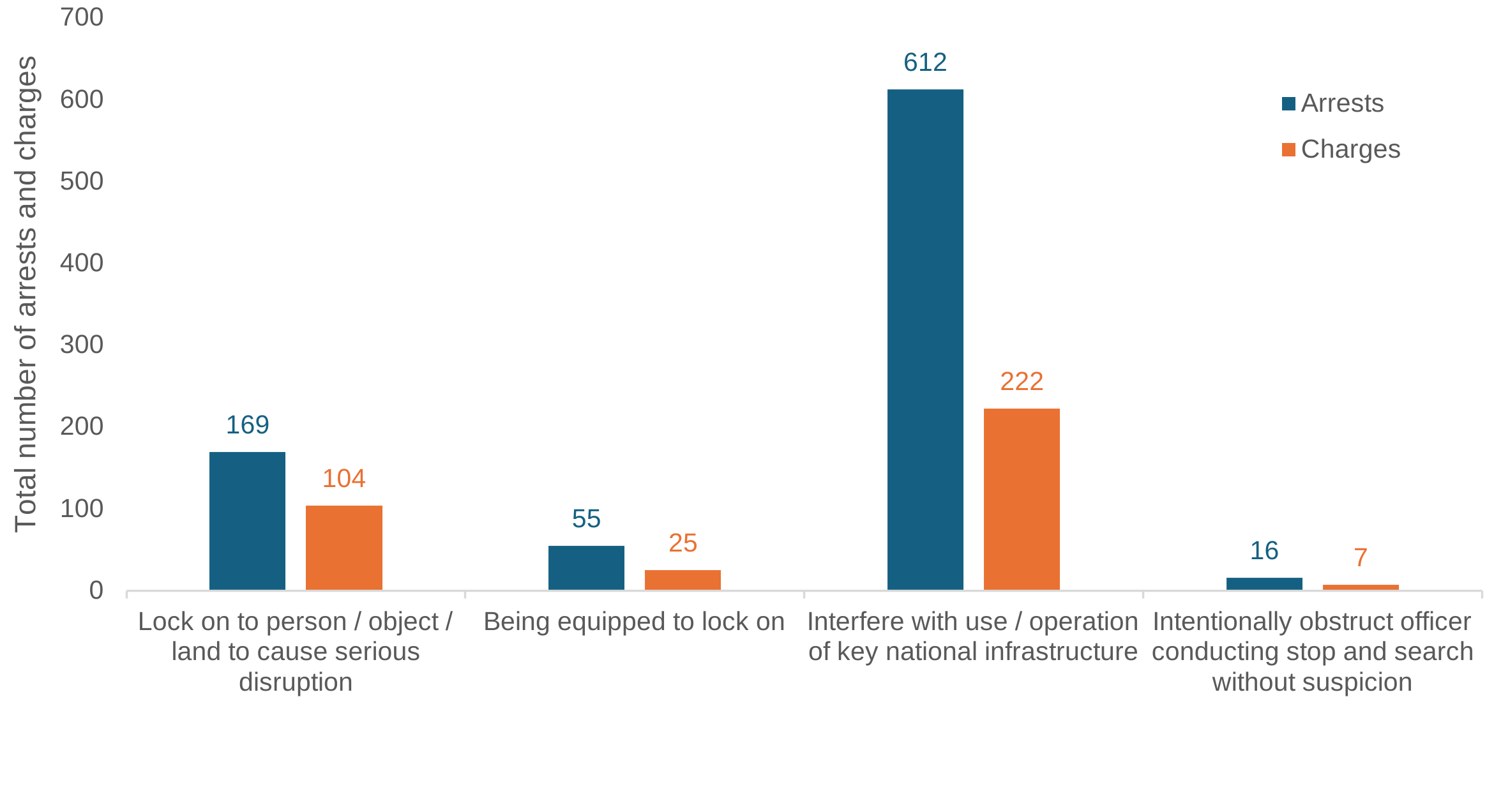
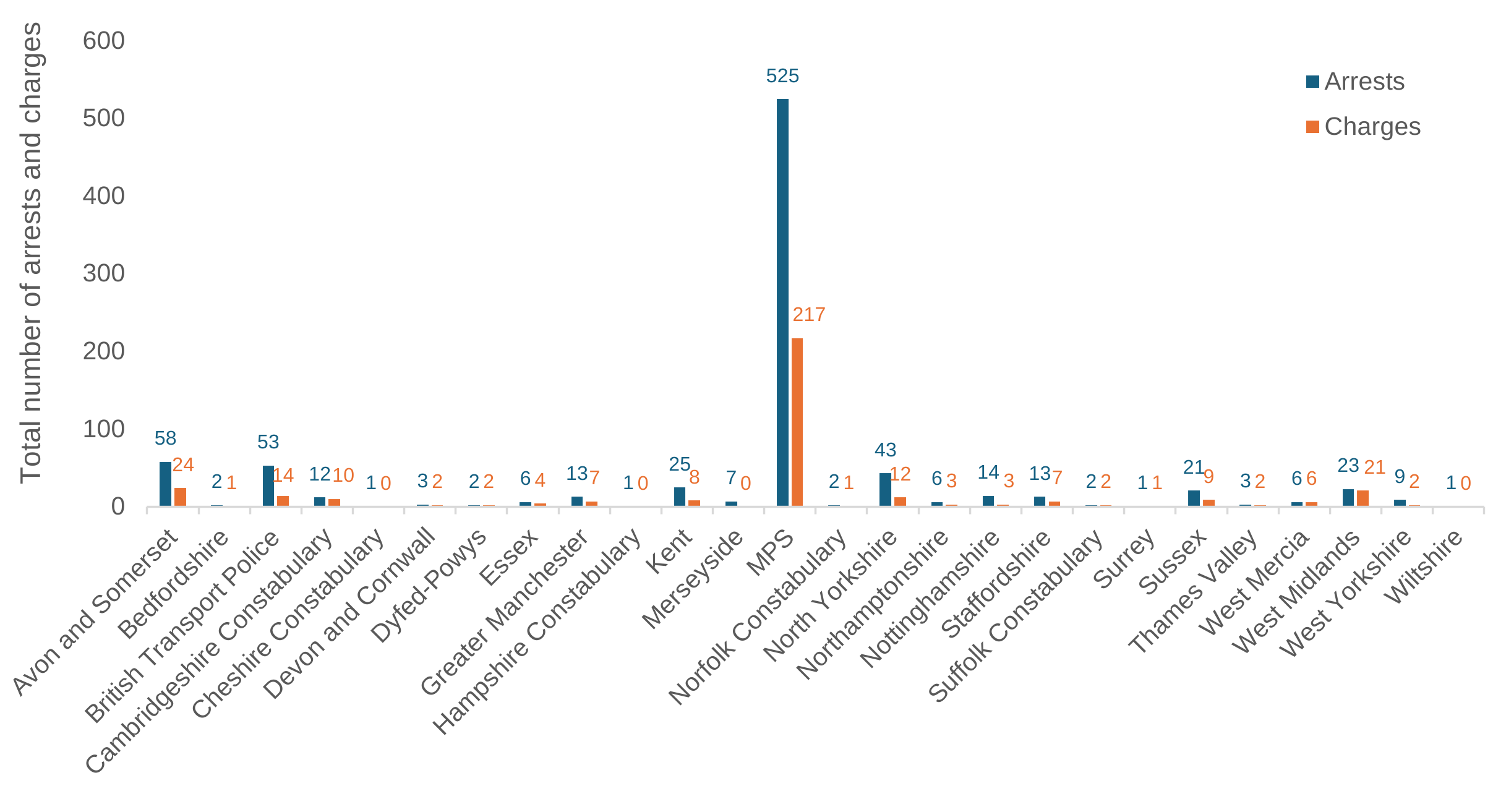
- Data returns varied by force, with low numbers of arrests and charges overall. The Metropolitan Police Service (MPS) reported the highest number of arrests and charges and used the widest range of Public Order Act 2023 offences, reporting arrests and charges under all four of the offences outlined in figure 1.
- Of all forces that returned data, 77% of mixed urban/rural[footnote 8] (10 out of 13), 67% of rural forces (6 out of 9), and 57% of urban forces (8 out of 14) reported arrests or charges[footnote 9].
Figure 2. Police forces in England and Wales that reported arrests and charges from 2023-2025 under the Public Order Act 2023
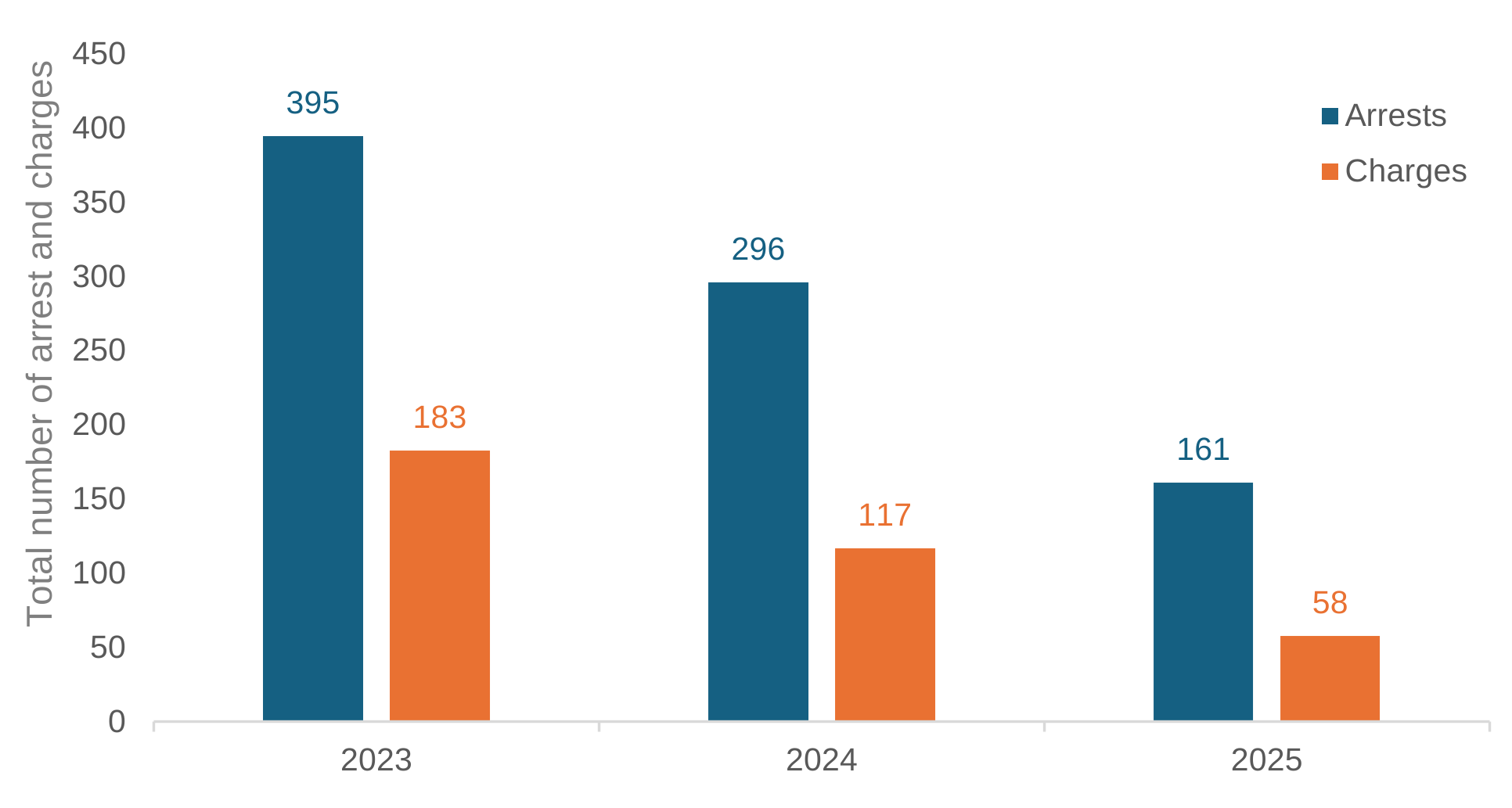
- The highest number of arrests and charges were reported in 2023[footnote 10], with 395 arrests and 183 charges. These have declined each year, with 296 arrests and 117 charges in 2024, and 161 arrests and 58 charges in 2025.
Figure 3. Total number of arrests and charges reported by year in England and Wales under the Public Order Act 2023
Offences in sections 1-6
Section 1: lock on to person/object/land to cause serious disruption
Arrests and charges
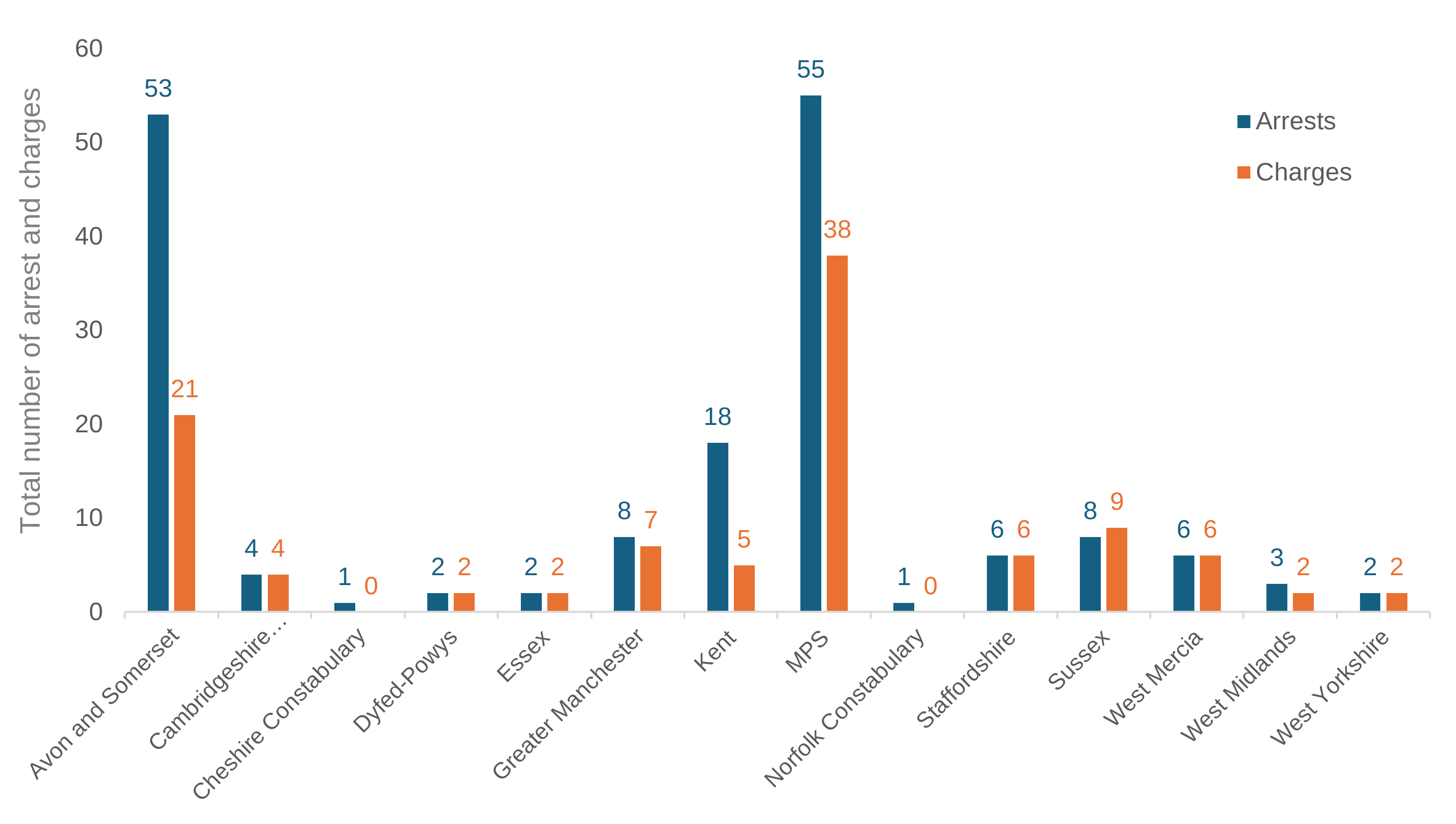
1. For the offence to lock on to person/object/land to cause serious disruption (CJS code PU23001), 14 of the 40 forces that returned data (including the BTP) reported arrests and charges for this offence. These 14 forces were Avon and Somerset, Cambridgeshire, Cheshire, Dyfed-Powys, Essex, Greater Manchester Police (GMP), Kent, MPS, Norfolk, Staffordshire, Sussex, West Merica, West Midlands, West Yorkshire.
2. The MPS reported the highest number of arrests (55) and charges (38) across 2023-2025 for this offence, closely followed by Avon and Somerset with 53 arrests and 21 charges.
3. Of all the forces that returned data, 46% of mixed urban/rural[footnote 11] forces (6 out of 13), 36% of urban forces (5 out of 14) and 22% of rural forces (2 out of 9) reported using this offence[footnote 12].
Figure 4. Police forces in England and Wales reporting arrests or charges for the offence to lock on to person/object/land to cause serious disruption from 2023-2025
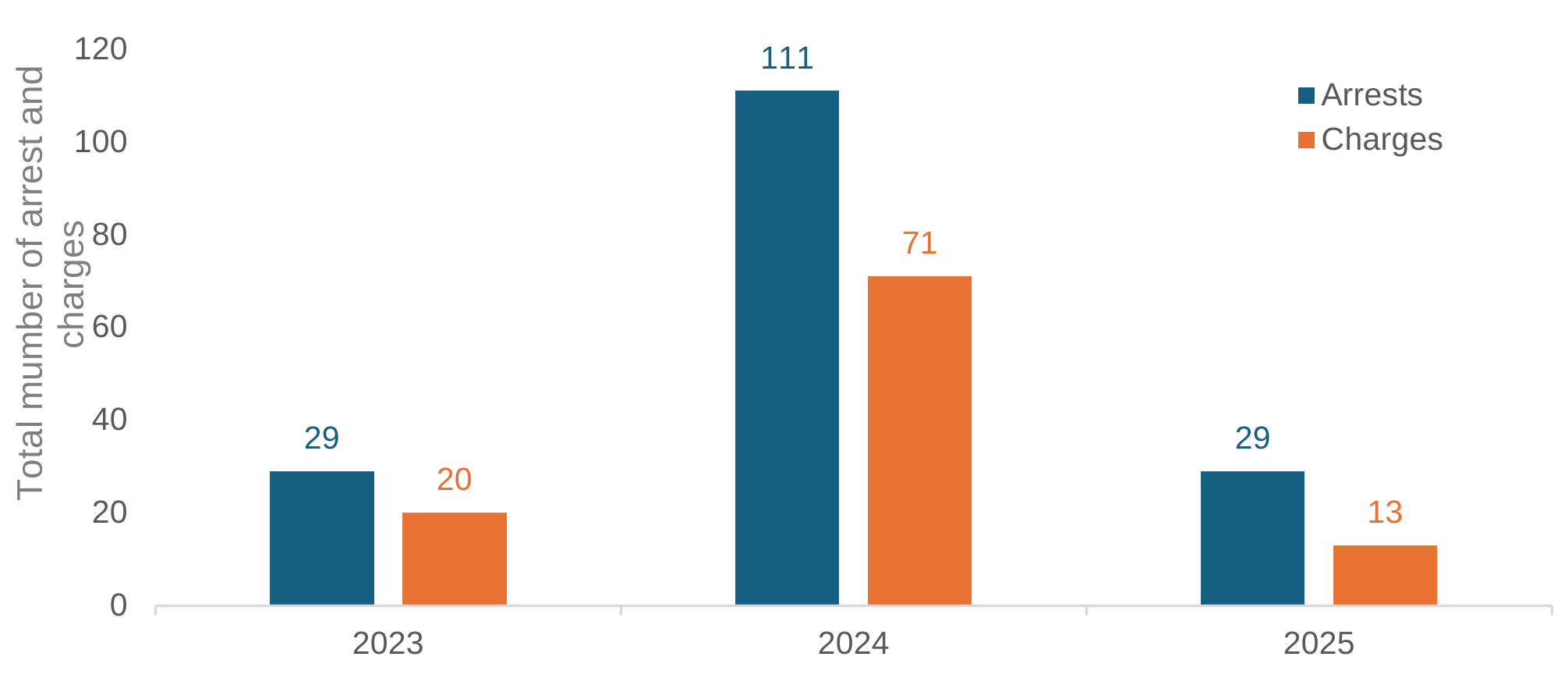
- The highest number of arrests and charges for this offence were reported in 2024 with 111 arrests and 71 charges. There were 29 arrests and 13 charges in 2025 and 29 arrests and 20 charges in 2023[footnote 13].
Figure 5. Total number of arrests and charges for the offence to lock on to person/object/land to cause serious disruption by year (2023-2025)
Section 2: being equipped to lock on
Arrests and charges
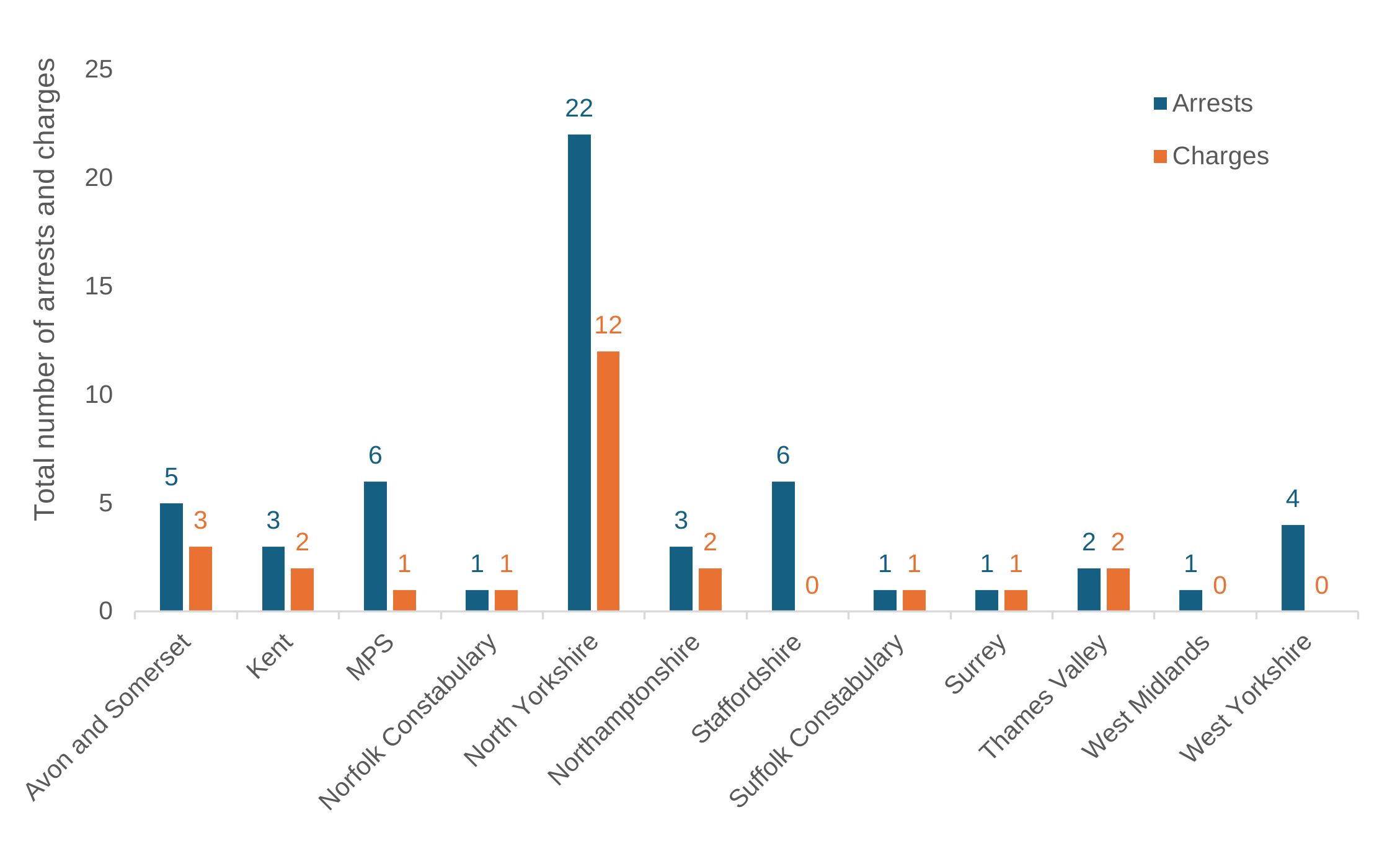
4. For the offence of being equipped to lock on , 12 of the 40 forces that returned data (including BTP) reported arrests or charges for this offence. These 12 forces were Avon and Somerset, Kent, MPS, Norfolk, North Yorkshire, Northamptonshire, Staffordshire, Suffolk, Surrey, Thames Valley, West Midlands, West Yorkshire.
5. North Yorkshire reported the highest number of arrests (22) and charges (12) across 2023-2025 for this offence.
6. Of all the forces that returned data, 38% of mixed urban/rural forces[footnote 14] (5 out of 13), 29% of urban forces (4 out of 14) and 33% of rural forces (3 out of 9) reported using the offence of being equipped to lock on[footnote 15].
Figure 6. Police forces in England and Wales reporting arrests or charges for the offence being equipped to lock on 2023-2025
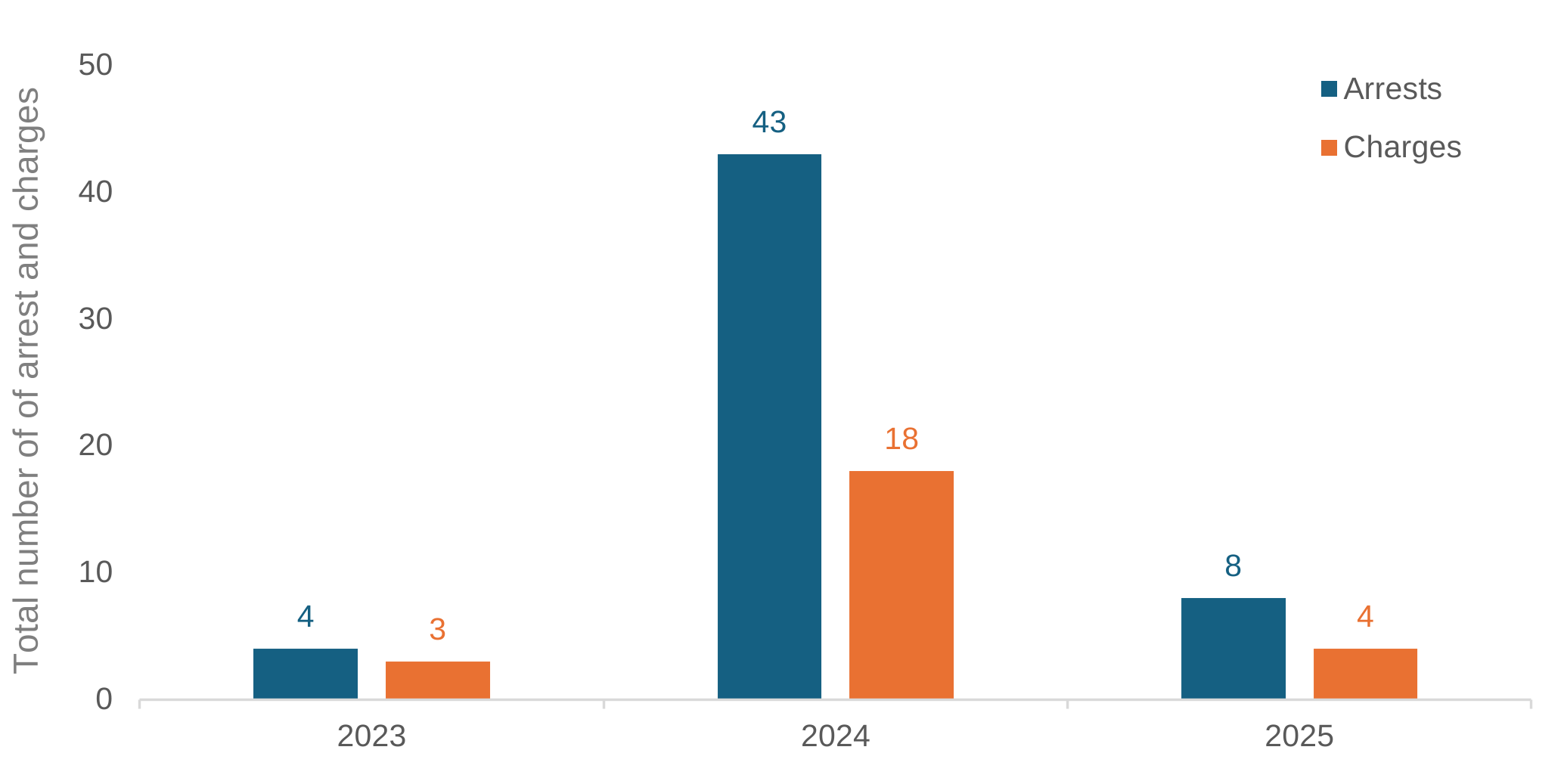
- The highest number of arrests and charges for this offence was reported in 2024 with 43 arrests and 18 charges, with lower numbers reported for 2023[footnote 16] and 2025.
Figure 7. Total number of arrests and charges for the offence being equipped to lock on by year (2023-2025)
Sections 3-6
Police Recorded Crime
7. The Home Office collects crime data from police forces on notifiable offences[footnote 17]. This data includes incidents that were reported to, or recorded by, the police but may not have resulted in an arrest or charge. Two of the relevant offences relate to sections 3-5 of the Public Order Act 2023 on tunnelling. These include causing serious disruption by tunnelling and being present in a tunnel.
8. Two forces in England reported data to the Home Office for the notifiable offence causing serious disruption by tunnelling. There were two records of this notifiable offence across 2023-2025, one in 2023/24 and one in 2024/25. One was a medium sized urban force in the North of England and the other a large urban force in the South of England.
Arrests and charges
9. Section 3-5 of the Public Order Act 2023 includes tunnelling offences of serious disruption by tunnelling to cause serious disruption by presence in a tunnel and being equipped for tunnelling There were no reported arrests or charges from the 40 forces that returned data (including the BTP).
10. Section 6 includes major transport work offences to obstruct an undertaker of major transport works and interfere/move/remove apparatus of major transport works There were no reported arrests or charges from the 40 forces who returned data (including the BTP).
Section 7 key national infrastructure
Police Recorded Crime
11. Section 7 of the Public Order Act 2023, which covers interference with key national infrastructure, is also a notifiable offence that police forces are required to report to the Home Office[footnote 18].
12. Five forces in England and Wales reported data to the Home Office for this offence across 2023-2025. A total of 22 records were submitted, seven in 2023/24, six in 2024/25 and nine in 2025/26. One was a medium sized urban police force in the North of England, one a large sized urban force in the Midlands, one large urban force and medium rural force in the South of England forces and one Welsh force.
Arrests and charges
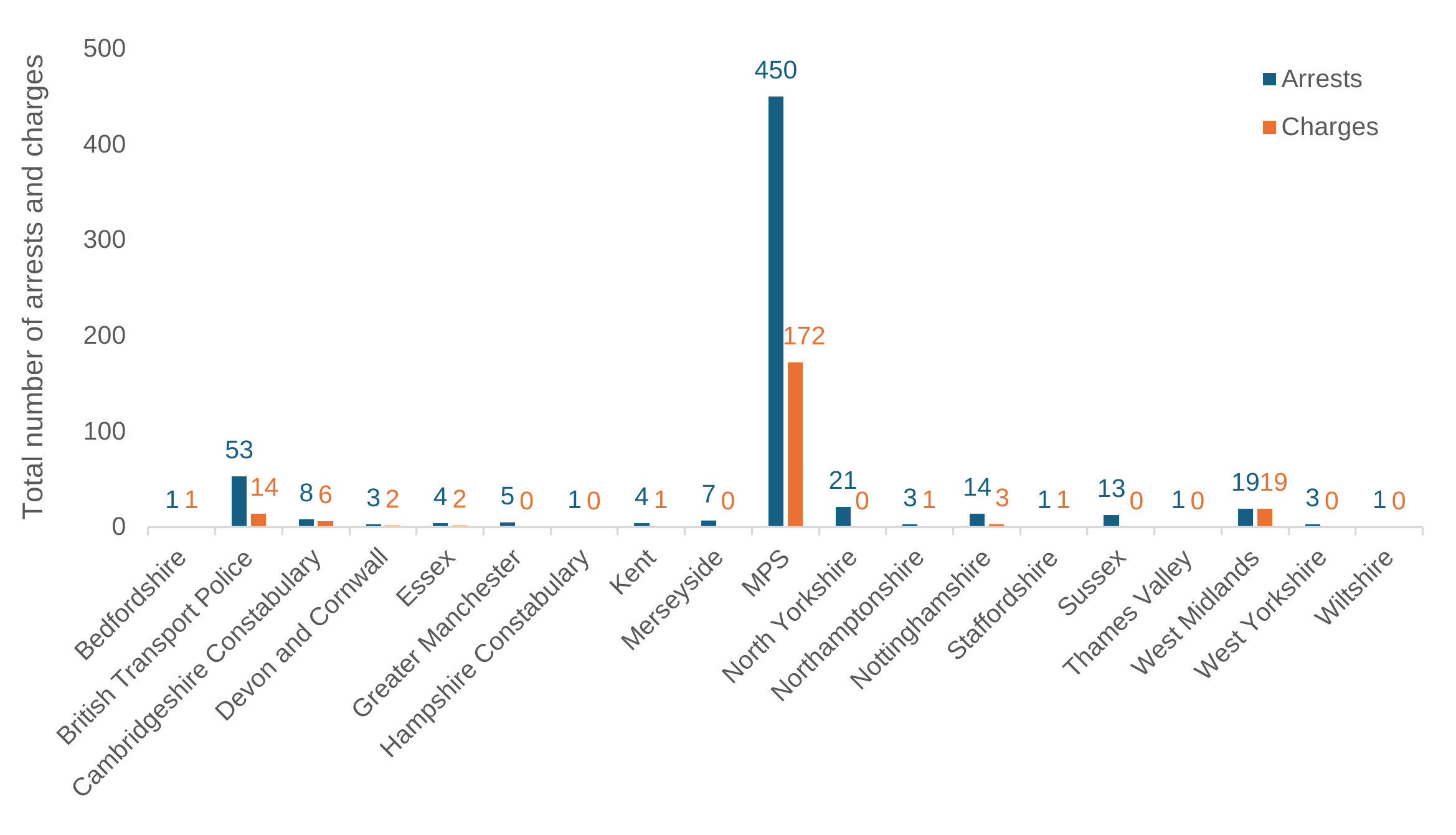
13. For the offence to interfere with use/operation of key national infrastructure, 19 of the 40 forces that returned data (including the BTP) reported arrests or charges for this offence. These 19 forces were Bedfordshire, BTP, Cambridgeshire, Devon and Cornwall, Essex, GMP, Hampshire, Kent, Merseyside, MPS, North Yorkshire, Northamptonshire, Nottinghamshire, Staffordshire, Sussex, Thames Valley, West Midlands, West Yorkshire, Wiltshire. This was the offence with the highest number of police forces reporting arrests or charges out of all offences in the Public Order Act 2023.
14. The Metropolitan Police Service reported the highest number of arrests (450) and charges (172) for this offence across 2023-2025.
15. Of all the police forces that returned data, 62% of mixed urban/rural forces[footnote 19] (8 out of 13), 44% of rural forces (4 out of 9) and 43% of urban forces (6 out of 14) reported using the offence to interfere with use/operation of key national infrastructure[footnote 20].
Figure 8. Police forces in England and Wales reporting arrests or charges for the offence to interfere with use or operation of key national infrastructure 2023-2025
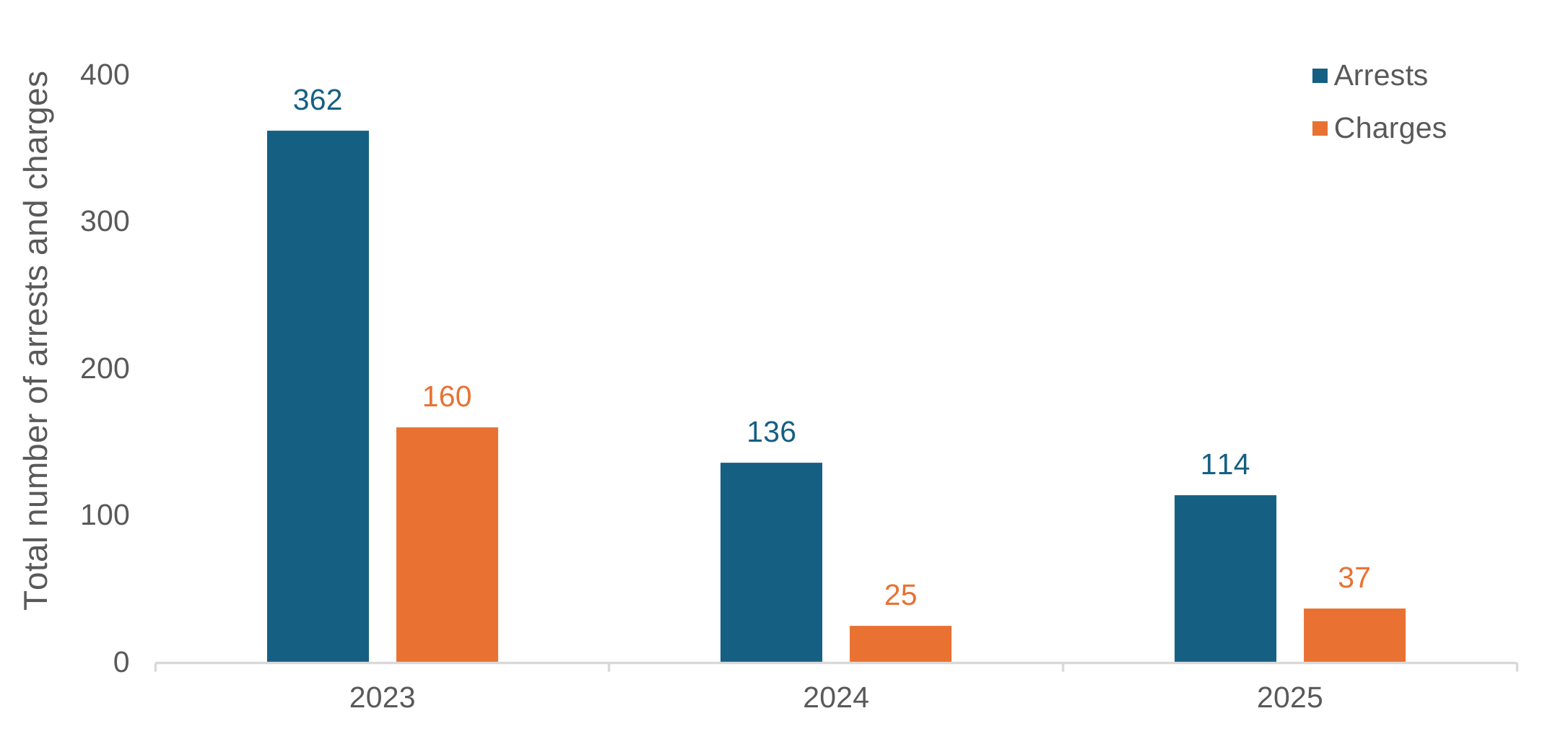
- The highest number of arrests and charges for this offence were reported in 2023 with 362 arrests and 160 charges[footnote 21]. This was largely driven by the MPS, which reported 355 arrests and 160 charges in 2023.
Figure 9. Total number of arrests and charges for the offence to interfere with use or operation of key national infrastructure by year (2023-2025)
16. In February 2026, the Government amended sections 7 and 8 to include the life sciences sector in the list of key national infrastructure covered by the Act. This was done via an affirmative statutory instrument, debated in both Houses of Parliament.
17. The Public Order Act 2023 (Interference With Use or Operation of Key National Infrastructure) Regulations 2026 amended the definition of “key national infrastructure” at section 7(6) to include “life sciences infrastructure” and amended section 8 to include a definition of “life sciences infrastructure”. This extended the offence of deliberate or reckless disruption or interference with the use or operation of key national infrastructure in England and Wales to the life sciences sector. The regulations came into force on 12 February 2026.
18. This change was made in response to protest activity deliberately targeting the life sciences sector, threatening the UK’s sovereign capability to produce vaccines, medicines and therapies, and disrupting supply chains that are indispensable to research and national health protection.
19. As these regulations were not in place for the period covered by this analysis (May 20 23 to end of 2025, no further detail is included.
Section 9 safe access zones
Arrests and charges
20. Section 9 of the Public Order Act 2023 , the offence to interfere with access to or provision of abortions services, had no reported arrests or charges from the 40 forces who returned data (including the BTP).
21. Before the introduction of safe access zones, anti‑social behaviour and nuisance around abortion clinics were dealt with through Public Spaces Protection Orders made by local authorities. Public Spaces Protection Orders specify the actions or behaviour prohibited in a particular location, and are subject to statutory tests that the behaviour has had, or is likely to have, a detrimental effect on the quality of life of those in the locality; be persistent or continuing and unreasonable.
22. The advantage of safe access zones is that they automatically apply to all abortion clinics in England and Wales, without the need for local authorities to consider the risk to individual clinics, assess proportionate restrictions and consult on putting a Public Spaces Protection Orders in place.
23. The offence does not reference specific behaviours or actions. It is for the police and courts to decide whether a specific act is an offence based on the particular circumstances of the case. Safe access zones have attracted some controversy since their introduction, particularly in relation to silent prayer and concerns about freedom of thought and expression. Guidance from the Crown Prosecution Service (CPS) confirms that decisions must be lawful, necessary and proportionate and that silent prayer can be caught by the offence.
Section 14 powers to stop and search
Arrests and charges
24. For the offence to intentionally obstruct an officer conducting stop and search without suspicion, three of the 40 forces that returned data (including the BTP) reported arrests or charges for this offence. These forces were Bedfordshire, Metropolitan Police Service and Suffolk.
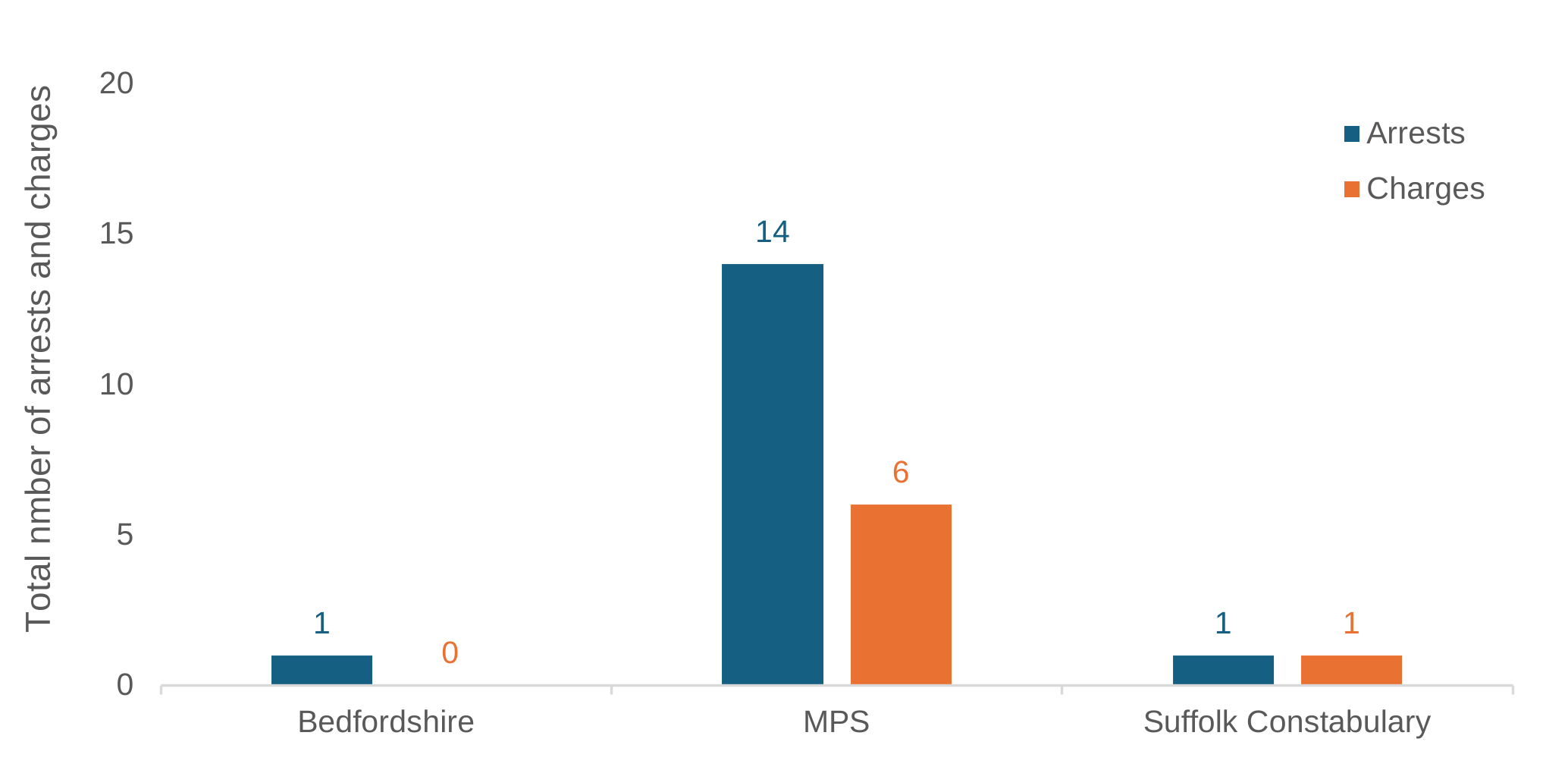
25. The Metropolitan Police Service reported the highest number of arrests (14) and charges (6) for this offence across 2023-2025, with lower numbers reported by Bedfordshire and Suffolk.
26. Of all the forces that returned data, 11% of rural forces[footnote 22] (1 out of 9; Suffolk), 8% of mixed urban/rural forces (1 out of 13; Bedfordshire) and 7% of urban forces (1 out of 14; MPS) reported using this offence[footnote 23].
Figure 10. Police forces in England and Wales reporting arrests or charges for the offence to intentionally obstruct an officer conducting stop and search without suspicion 2024-2025
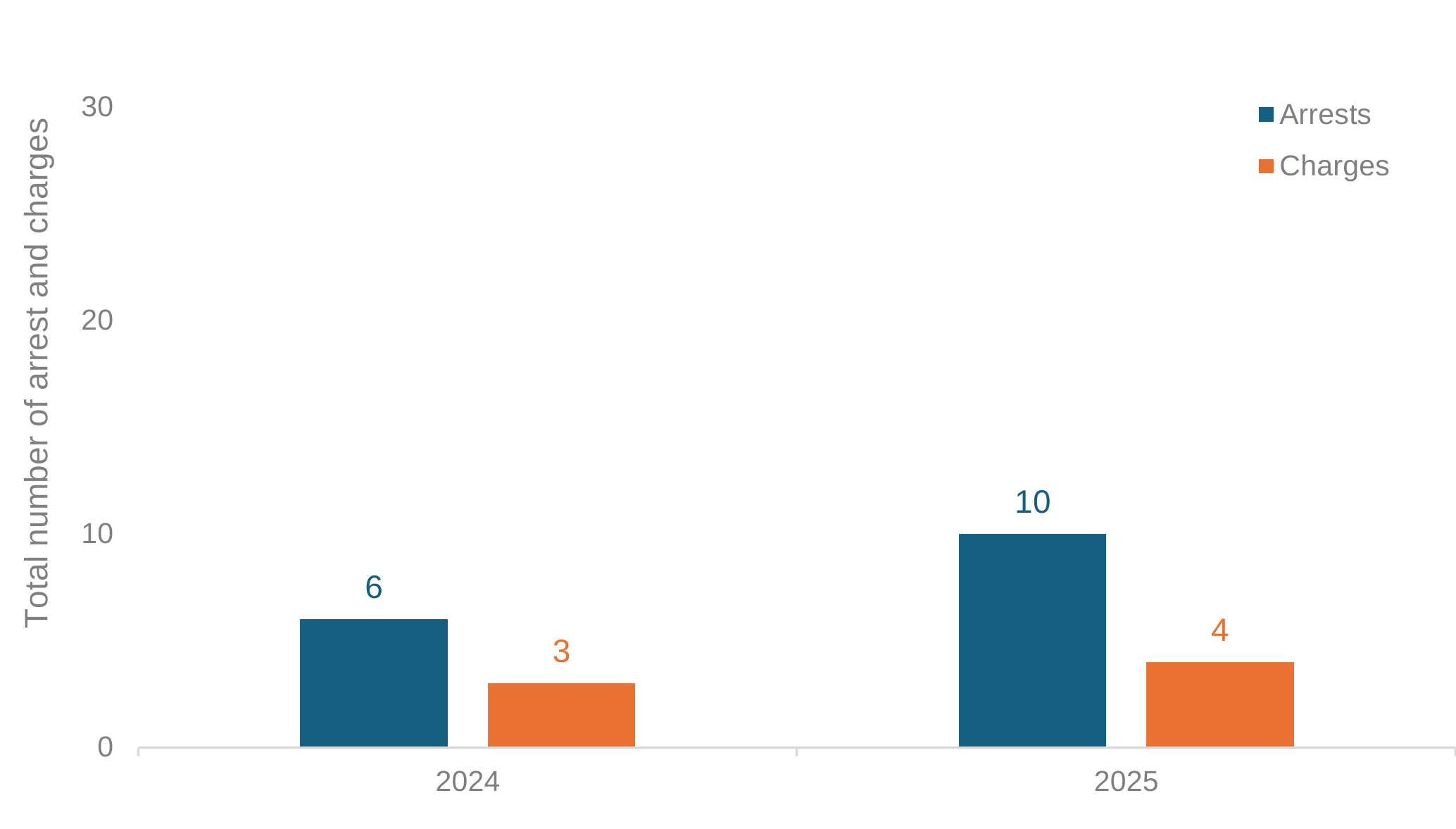
- The highest number of arrests and charges for this offence were reported in 2025, with ten arrests and four charges. This was closely followed by 2024, which reported six arrests and three charges. There was no data reported for 2023 as this offence did not commence until December 2023[footnote 24].
Figure 11. Total number of arrests and charge for the offence to intentionally obstruct an officer conducting stop and search without suspicion by year (2024-2025)
Home Office Statistics
27. The Home Office publishes statistics on the use of stop and search powers here: Stop and search, arrests, and mental health detentions, March 2025 - GOV.UK
28. The latest figures, published on 6 November 2025, are the second publication on use of stop and search powers under the 2023 Act, covering the first full year of data (year to March 2025)
29. Figures for suspicion-led and suspicion-less searches for protest-related items under sections 10 and 11 of the Public Order Act 2023 (respectively) should be interpreted with caution. These powers were brought into force on 20 December 2023, partway through the reporting year ending March 2024. Use of the suspicion-led power under section 10 may currently be recorded with ‘other’ search reasons in some instances. Records where section 11 has been provided as a reason for search may also include searches that were in fact suspicion-led.
30. As this is a relatively new data collection, forces continue to make ongoing data quality improvements, which may result in future data revisions.
The most recent relevant figures for 2024/25 are as follows:
2024/25
| Police Force Area | Items in connection with protest related offences: suspicion-led | Items in connection with protest related offences: suspicion-less | Total |
|---|---|---|---|
| Bedfordshire | 2 | - | 2 |
| Cambridgeshire | 1 | - | 1 |
| Cheshire | 1 | - | 1 |
| Cumbria | 9 | - | 9 |
| Hertfordshire | 4 | - | 4 |
| Metropolitan Police | 9 | 46 | 55 |
| North Wales | 1 | - | 1 |
| Surrey | 95 | - | 95 |
| Sussex | 102 | - | 102 |
| Total | 224 | 46 | 270 |
Part 2 – serious disruption prevention orders
Introduction
31. Part 2 of the Act introduced a new civil order, the Serious Disruption Prevention Order . Serious Disruption Prevention Orders were introduced to prevent individuals from repeatedly causing serious disruption through protest activity. They provide the police with additional powers to respond effectively to disruptive protests and take a proactive approach to prevent such disruption. There are two avenues to securing a Serious Disruption Prevention Order: orders made on conviction and those made on application.
32. Section 20 provides for a Serious Disruption Prevention Order to be made on conviction. The prosecution may apply for an order to be made, where a person aged over 18 has been convicted of a protest-related offence and has on another occasion (at a different protest or on a different day) been convicted of another protest-related offence, or been found in contempt of court for a protest-related breach of an injunction. The previous occasion must have occurred no earlier than five years before the order is made, and the person must have been over the age of 16 at the time.
33. The court must consider whether to make an order, with the purpose of one or more of the following:
a) preventing the person from committing a protest-related offence or a protest-related breach of an injunction,
b) preventing the person from carrying out activities related to protests that result, or are likely to result in, serious disruption to two or more individuals or an organisation,
c) preventing the person from causing or contributing to the commission by another person of the acts set out at (a) or (b) above (for example, where the person was responsible for organising protests),
d) protecting two or more individuals or an organisation from the risk of serious disruption caused by a protest-related offence, a protest-related breach of an injunction or activities related to a protest.
34. Section 21 enables the magistrates’ court to make a Serious Disruption Prevention Order on application by police. The conditions for making the order are the same as for the order on conviction.
35. The Serious Disruption Prevention Order may impose any requirement or prohibition necessary to achieve its purpose, and section 22 provides an non-exhaustive list of potential requirements and prohibitions. A Serious Disruption Prevention Order must specify the period that it has effect. This is a fixed period of a minimum of one week, up to a maximum of two years.
36. A person subject to a Serious Disruption Prevention Order commits an offence if they fail to do anything required of them by the order, do anything prohibited by the order, or provide false information in relation to the order. The maximum penalty for these offences is six months’ imprisonment, an unlimited fine, or both.
Implementation of part 2
37. Sections 20 to 29, as well as sections 32 and 33, were brought into force on 5 April 2024.[footnote 25]
38. Statutory guidance on Serious Disruption Prevention Orders, issued under section 30 of the Act, was published by the Home Office in April 2024.[footnote 26] The guidance aims to assist the police at an operational level in taking a proactive approach to preventing protest related serious disruption from taking place.
Arrests and charges
39. Serious Disruption Prevention Order -related offences include breach of a requirement in a Serious Disruption Prevention Order , to commit a prohibited act under an Order and to notify false information to police in a purported compliance with a Serious Disruption Prevention Order. There were no reported arrests or charges from the 40 forces who returned data (including the BTP).
Serious Disruption Prevention Order applications and adjournments
40. Data was also requested from forces on applications and adjournments related to Serious Disruption Prevention Orders. This included any applications for Serious Disruption Prevention Orders made on application by complaint, adjournments of proceedings on an application for Serious Disruption Prevention Order, applications to vary an Order, application to renew an Order and application to discharge a Serious Disruption Prevention Order.
41. Of the 40 forces who returned data (including the BTP), 33 forces reported that they had no applications or adjournments for these offences. The remaining 7 forces reported that they did not have access to data on applications and adjournments and therefore could not provide this information.
-
The 4 police forces who did not return data were City of London, Leicestershire, South Wales and Warwickshire. ↩
-
2011 Rural Urban Classification lookup tables for all geographies - GOV.UK ↩
-
In this context, an application refers to a formal request made to the court to impose an order (usually from the police via Crown Prosecution Service). An adjournment occurs when the court postpones the hearing to a later date. ↩
-
Public Order Act 2023 (Commencement No. 1) Regulations 2023. ↩
-
Public Order Act 2023 (Commencement No. 1) (England and Wales) Regulations 2023. ↩
-
Public Order Act 2023 (Commencement No. 3) (England and Wales) Regulations 2023. ↩
-
Public Order Act 2023 (Commencement No. 5) (England and Wales) Regulations 2024. ↩
-
This classification was created using Rural-Urban classification of 2011 (2011 Rural Urban Classification lookup tables for all geographies - GOV.UK). ↩
-
To note, urban/rural classifications exclude Welsh forces as we do not have access to the data to classify these forces and excludes BTP as they operate across England and Wales rather than one geographic location. ↩
-
Data for 2023 was collected from May to December, due to the Public Order Act 2023 being introduced in May 2023. Data for 2024 and 2025 was collected for January to December. ↩
-
This classification was created using Rural-Urban classification of 2011 (2011 Rural Urban Classification lookup tables for all geographies - GOV.UK). ↩
-
To note, urban/rural classifications exclude Welsh forces as we do not have access to the data to classify these forces. ↩
-
Data for 2023 was collected from May to December, due to the Public Order Act 2023 being introduced in May 2023. Data for 2024 and 2025 was collected for January to December. ↩
-
This classification was created using Rural-Urban classification of 2011 (2011 Rural Urban Classification lookup tables for all geographies - GOV.UK). ↩
-
To note, urban/rural classifications exclude Welsh forces as we do not have access to data to classify these forces. ↩
-
Data for 2023 was collected from May to December, due to the Public Order Act 2023 being introduced in May 2023. Data for 2024 and 2025 was collected for January to December. ↩
-
This data is typically reported at a national level and not scrutinised to the same extent at individual force level. For the purposes of this report, the findings are presented with forces anonymised. This data should not be compared to the force level arrest and charge data presented elsewhere in the report. ↩
-
This data is typically reported at a national level and not scrutinised to the same extent at individual force level. For the purposes of this report, the findings are presented with forces anonymised. This data should not be compared to the force level arrest and charge data presented elsewhere in the report. ↩
-
This classification was created using Rural-Urban classification of 2011 (2011 Rural Urban Classification lookup tables for all geographies - GOV.UK). ↩
-
To note, this excludes BTP as they operate across England and Wales rather than one geographic location. Urban/rural classifications exclude Welsh forces as we do not have access to data to classify these forces. ↩
-
Data for 2023 was collected from May to December, due to the Public Order Act 2023 being introduced in May 2023. Data for 2024 and 2025 was collected for January to December. ↩
-
This classification was created using Rural-Urban classification of 2011 (2011 Rural Urban Classification lookup tables for all geographies - GOV.UK). ↩
-
To note, urban/rural classifications exclude Welsh forces as we do not have access to data to classify these forces. ↩
-
The Public Order Act 2023 (Commencement No. 3) (England and Wales) Regulations 2023 ↩
-
Public Order Act 2023 (Commencement No. 4) (England and Wales) Regulations 2024. ↩