Process evaluation of Operation Encompass
Published 7 November 2025
Applies to England and Wales

© Crown copyright 2025
This publication is licensed under the terms of the Open Government Licence v3.0 except where otherwise stated. To view this licence, visit nationalarchives.gov.uk/doc/open-government-licence/version/3 or write to the Information Policy Team, The National Archives, Kew, London TW9 4DU, or email: psi@nationalarchives.gov.uk.
Where we have identified any third party copyright information you will need to obtain permission from the copyright holders concerned.
This publication is available at https://www.gov.uk/government/publications/process-evaluation-of-operation-encompass/process-evaluation-of-operation-encompass
Authors and acknowledgments
Report authors:
- Ipsos UK: Nadia Badaoui, Stella Capuano, Peter Sakis, Ellis Akhurst, Zoe Williams and Caroline Paskell
- The Connect Centre for International Research on Interpersonal Violence and Harm, University of Lancashire: Phillippa Olive, Helen Richardson Foster, Sophie Hallett, and Christine Barter
With thanks to Charlotte Goujon, Hannah Richardson, Ilya Cereso, Irene Soriano-Redondo, Catherine Fenton, Sarah Shorrock, Neil Wilson, and Clare Scollay for their work on this study.
The authors are grateful to the founders of Operation Encompass, David Carney-Haworth OBE and Elisabeth Carney-Haworth OBE, for their support with the evaluation. We would also like to thank the Research Advisory Group members who contributed their time and expert insight. Our thanks also go to the anonymous peer reviewers who provided us with comments during the reporting stage and, finally, to all the OE project stakeholders and service users who gave their time generously to the evaluation process.
Finally, we would like to thank the Home Office for their input throughout the lifetime of the project.
Executive summary
Introduction
Operation Encompass (OE) is a police and education information-sharing safeguarding scheme. The OE charity was founded and launched in 2011 by Elisabeth and David Carney-Haworth OBEs. It aims to enable school staff to offer immediate support to children affected by domestic abuse. The OE scheme provides a route for police forces to notify school staff and, where relevant, local authorities (LAs) about police-attended incidents of domestic abuse. Incidents are subject to an OE notification where (a) child/children aged 17 and under were present or are part of the household. This is done so that information can be shared in a timely manner and support for those children can be put in place.
The Home Office commissioned Ipsos UK and the Connect Centre at the University of Lancashire to undertake a process evaluation of the standard scheme. Another process evaluation was undertaken for Early Years (EY) OE, which focuses on children aged 4 and under. The research also examined the feasibility of extending the OE scheme to additional harms, including exploitation, knife crime, and missing children incidents. The work was conducted from late 2022 and mid-2023.
The aims of the evaluations were to explore:
- how and to what extent the OE and EY OE schemes have been implemented in each police force
- how implementation varied between settings
- what influence variation between settings had on implementation
- the feasibility of expanding the OE scheme to other forms of harm
Methodology
Process evaluation of standard OE scheme
The evaluation was carried out in 8 police forces in England and Wales. It included desk-based research and 111 qualitative interviews with stakeholders in police, LA services and schools. Descriptive analysis was conducted on OE notification data from 6 forces, and publicly accessible administrative social care and education data from all areas.
Process evaluation of the expansion of the standard OE scheme to EY settings
Four police forces were purposively sampled to take part in the evaluation. It included 36 qualitative interviews with senior and frontline police officers, LA EY leads, health visitors and EY nursery managers. Descriptive analysis was conducted on EY OE administrative data, which included records relating to OE reports. Anonymised child health records from health visitors were obtained via an online survey and analysed.
Feasibility of expanding the OE scheme to additional harms
The work assessed the feasibility of expanding OE to additional harms, including sexual or criminal exploitation, knife crime and incidents of children going missing. This was addressed by specific questions during the stakeholder interviews, as well as a further 3 interviews with key additional stakeholders.
Key findings
Standard OE scheme
Generally, OE was seen as making a positive contribution to the safeguarding of children, with police, schools, and local authority services being highly supportive. Other key findings were:
- where OE was delivered as intended, safeguarding staff and teachers saw OE notifications as improving their awareness of children affected by domestic abuse
- the notifications were seen as particularly important where they helped identify recurrent incidents and informed the schools’ engagement with children’s social care services
- the OE guidance on how the standard OE scheme should be operating was not always followed in practice; there was variation between police force areas including how notifications were sent, the information they included, how schools shared information internally, and the notification response
- there was a consensus amongst police and school staff that OE facilitated faster information-sharing compared with previous arrangements
- school staff said specific details in the notifications enabled them to provide an appropriate and timely response
- matched notification and social care data suggested that children affected by domestic abuse were more vulnerable and disadvantaged than their peers; in addition, a substantial proportion (50% to 70% in 6 areas) may not otherwise have been identified by children’s social care services; this is indicative of the value of the scheme
Expansion of OE to EY settings
All stakeholders interviewed supported wider adoption of EY OE:
- EY OE was thought to increase awareness of children aged 4 and under affected by domestic abuse and enable timelier information-sharing and earlier intervention
- health visitors, nursery managers, and LA EY practitioners reported that EY OE increased their awareness of children affected by domestic abuse; this was supported by the health visitor child health records analysis; the analysis found that in 62% of the EY OE notifications examined in 3 areas, there was no prior record of domestic abuse
- senior police officers, health visitor service leads and LA EY leads reported new and effective working relationships; these included new multi-agency EY OE partnerships that had not previously existed
- wider adoption of EY OE was considered feasible; however, stakeholders stressed the importance of ensuring that services, including those receiving referrals, have the resources to support families identified in notifications
Expansion of OE to additional harm types
Views on the possible expansion of OE to include other forms of harms were mixed, with most not being supportive of expansion:
- all groups thought that more information shared about individual children and young people could only be beneficial; however, notable concerns were raised about conflict with current safeguarding processes, duplication of information, and violation of privacy rights
- safeguarding leads and school respondents also referred to potential unintended consequences of sharing information about children and families due to risks around rights infringements
- there was a consistent view that existing or alternative initiatives may be more effective to support child wellbeing; these included strengthening existing safeguarding processes and reviewing school exclusion policies; other measures involved introducing reporting from central structures such as the Multi-Agency Safeguarding Hub (MASH) and local police; additional actions included improving existing communication between health services and EY settings
Conclusion
The way in which the OE schemes were being delivered varied across different local areas and police forces. Nevertheless, the general consensus across stakeholder groups was that they could be valuable safeguarding tools. Stakeholders mostly did not support expanding OE to other types of harm. They felt that existing or alternative approaches for these issues may be more effective.
1. Introduction
Ipsos and the Connect Centre for International Research on Interpersonal Violence and Harm, University of Lancashire were commissioned by the Home Office to undertake a process evaluation of the Operation Encompass (OE) scheme. The study evaluated both the standard OE model and the development and piloting of the Early Years (EY) scheme, sharing police information with health visitors and EY settings. The study also examined the views of police, local authorities (LAs), and school stakeholders on expanding the OE scheme to additional harm types.
1.1 Background on Operation Encompass
OE was founded in 2011 by Elisabeth and David Carney-Haworth OBEs who run a charity by the same name. The OE notification scheme works by directly connecting police with schools (and where relevant LAs). After police attend a domestic abuse incident involving children, they share information with any relevant school’s trained designated safeguarding lead (DSL) before the start of the next school day. This is so that appropriate support can be given at the earliest opportunity.
The Domestic Abuse Act (UK Public General Acts, 2021) outlines that children are recognised as victims of domestic abuse in their own right when they see, hear or experience the effects of the abuse. The OE scheme covers all children affected by domestic abuse; those present at an incident as well as those who did not witness or were not involved in it. The OE scheme recognises domestic abuse as an adverse childhood experience (ACE) (Early Intervention Foundation, 2020), which has long-lasting negative impacts on wellbeing and educational outcomes. In 2016, OE received national coverage in Her Majesty’s Inspectorate of Constabulary and Fire & Rescue Services (HMICFRS) police effectiveness, efficiency and legitimacy (PEEL) report. It was identified as an example of best practice for responding to domestic abuse (HMICFRS, 2017).
In 2021, the Home Office funded the OE charity to lead pilots expanding OE to EY settings, connecting police with health visitors, nursery staff and childminders.
Similarly to the standard scheme, the aim of EY OE is to ensure that children aged 4 and under are safeguarded from domestic abuse. This should happen by providing rapid notifications to EY services, enabling timely and appropriate support (Operation Encompass, 2021). EY OE focuses on sending notifications to health visitor services. Health visitors have contact with parents from 28 weeks of pregnancy into early infancy and can retain contact until the child enters primary school at 4 years old. In some locations, the design of the EY OE model includes sending notifications to EY nurseries and childminders as well as health visitors. This is due to them having regular contact with children and families using their service.
1.2 Aims and objectives
The aims of the evaluation were to examine the implementation of the schemes, how this varied between settings, and how these variations influenced how OE was delivered. In addition, the research aimed to assess the feasibility and perceived value of expanding the schemes to cover other forms of harm. Specifically, the following research questions were developed:
- How and to what extent have the OE and EY OE schemes been implemented in each police force or LA in practice?
- How has this varied between settings?
- What influence have these variations had on delivery?
- What are the potential benefits (if any) that could be achieved for children and young people through the expansion of OE to include wider forms of harm?
- Were there any conflicts or best practice in terms of children’s rights and safeguarding for information sharing about children and young people regarding the expansion?
- What would the resource implications for schools and EY settings be as a result of expansion?
The potential for quasi-experimental impact evaluation to be carried out for both the standard OE scheme and EY OE pilot scheme was also explored. However, because of several challenges explained in the ‘Quasi-experimental impact evaluation’ section, the full research design is provided in Annex 1.
1.3 Methodology
A process evaluation was undertaken for both the standard OE and EY OE schemes. The Theory of Changes (ToCs) underpinning the evaluation of both the OE standard scheme and the EY pilot are introduced in Chapter 2. ToCs were developed during the scoping stage of the project using existing evidence and then refined using insights that emerged from the evaluations.
This section outlines the design of the evaluations and their components.
1.3.1 Sampling and recruitment of police force areas
As OE was implemented within police force areas, initial sampling was undertaken at this level. Eight police forces were purposefully selected to participate. Table 1 gives the sample of police forces, showing diversity and variation in OE implementation. Within each force, contact details for police, LAs, and school stakeholders were obtained from OE leads or publicly available contact information. Participants were selected based on their relevance and involvement in OE processes. Annex 2 provides a full break down of the sample within police force areas.
Across the 8 police force areas, stakeholder interviewees included:
- police staff (n=23) which included police supervisory staff (chief constable or other senior management, and the domestic abuse specialist or supervisor) and OE Leads
- LA children’s and safeguarding service leads involved in the set up and daily operationalisation of OE (n=26)
- DSLs, key adults and class teachers in each school involved in supporting children who were the subject of OE notifications (n=62); note that ‘key adults’ is the term used by OE to refer to the educational settings’ safeguarding lead which will include the school’s DSL. It may also include a deputy DSL or other safeguarding officers in the school.
Table 1: Details of achieved police force sample: OE standard scheme evaluation
| Police force 1 | Police force 2 | Police force 3 | Police force 4 | Police force 5 | Police force 6 | Police force 7 | Police force 8 | |
|---|---|---|---|---|---|---|---|---|
| OE started | 2021 | 2011 | 2017 | 2017 | 2015 | 2014 | 2017 | 2017 |
| Geography (Department for Environment, Food & Rural Affairs, 2011) | Predominantly rural | Predominantly rural | Predominantly rural | Predominantly rural | Predominantly rural | Predominantly urban | Predominantly urban | Predominantly rural |
| Size of force (by workforce headcount at 30 September 2022) | Small | Medium/ large | Small | Medium | Medium | Medium/ large | Medium | Large |
| Types of schools signed up or receiving notifications | All | All | All except private | All | All | All | All | All but less uptake in private |
| Phone or email-based notifications | Phone | Phone/ email | ||||||
| Notification pathway | Via LA | Direct to school | Via LA | Via LA | Via LA | Direct to school | Via LA | Direct to school |
| Monthly OE notifications | 100< | 400 to 600 | 400 to 600 | 400 to 600 | 601+ | 400 to 600 | 601+ | 400 to 600 |
For the EY OE evaluation, 4 police forces took part, all of which had implemented or were about to implement EY OE. The EY OE pilot in 2 police forces covered the whole police force area whereas the other 2 covered a single division of the force. There was variation across EY sites, as set out in Table 2.
Table 2: Sample of police forces and implementation variables for EY OE pilot evaluation
| Police force 1* | Police force 2 | Police force 3 | Police force 4 | |
|---|---|---|---|---|
| Year EY OE introduced | 2019 | 2021 | 2023 | 2017 |
| Geography (Department for Environment, Food & Rural Affairs, 2011) | Predominantly rural | Predominantly urban | Predominantly rural | Predominantly urban |
| Service leading EY OE implementation | Police | LA | Police | Police |
| MASH involved | Yes | Yes | No | Yes |
| Average number of notifications per month | 114 | 60 | 236 | 118 |
| Types of services signed up or receiving notifications | Health visitors, registered and private nurseries | Health visitors, registered nurseries, childminders (rarely) | Health visitors, registered nurseries, registered childminders | Health visitors, only registered nurseries attached to school in OE scheme |
Notes:
- * This area was an extension of an OE (schools) scheme developed locally and prior to the EY OE pilot scheme.
The sampling approach was consistent with the standard OE scheme, in that participants were selected purposively based on their experience and involvement in the scheme across all areas. A breakdown of the interviewees sampled is provided in the section below. Not all roles were covered within each site, as detailed in Table A3.1, Annex 3.
1.3.2 Data sources
All data sources drawn on to inform the overall evaluations are summarised in Table 3, split by standard OE and EY OE schemes.
Table 3: Data sources by stakeholder for standard OE scheme and OE EY scheme evaluations
| Standard OE scheme (8 police forces) |
EY OE pilot (4 local areas) |
|
|---|---|---|
| Police force | Police supervisory staff (n=23) | Police supervisory staff (n=6) Frontline police officers (n=5) |
| Local authority | LA service leads (n=26) | EY nursery managers (n=7) |
| Health visitors | Health visitor service leads (n=4) Frontline health visitors (n=9) |
|
| Data | OE notifications and publicly available administrative social care and education data (6 forces) | Publicly available administrative data and health visitor child health records (4 areas) |
The OE standard scheme evaluation comprised a total of 111 60-minute online in-depth stakeholder interviews across 8 police force areas. It also included data provided by 6 police forces on OE notifications, and administrative social care and education data (for example, children in need records and National Pupil Database). The aim was to conduct 15 interviews per police force area; however, this ranged from 10 to 15.
Part of the interviews covered the first 3 research questions outlined above and aimed to establish a rich understanding of how OE was adopted and implemented in practice. Where possible, notification data collated by forces and/or LAs was gathered to provide force-wide aggregate information on the scale of the scheme. More details on the sampling and methodology underlying the OE standard scheme evaluation are provided in Annex 2. The discussion guides are summarised in Annex 4.
The EY OE pilot evaluation comprised a total of 36 online in-depth interviews across 4 local pilot areas. The EY OE evaluation was also informed by police, LA, health visitor and nursery routine administrative data and analysis of health visitor child health records in each local area (see Annex 3). The purpose of the health visitor child health record survey was to gather data about the implementation of EY OE schemes and courses of action taken. Administrative data gathered from EY services provided aggregate information about numbers of notifications, children’s ages, and any actions taken. More details on the sampling and methodology underlying the EY evaluation are provided in Annex 3.
As part of the project, participants were asked for their views on expanding OE notifications to include wider forms of harm affecting children and young people, in line with the final 3 research questions listed above. These included sexual or criminal exploitation, knife crime and incidents of children going missing. In addition, 3 bespoke interviews were conducted with a government safeguarding lead, education safeguarding team lead and a school DSL, identified through the research teams networks. These were undertaken to explore in greater depth the issues raised in the earlier local area interviews. This is because in the earlier interviews, due to interview time constraints, only a small number of questions could be included.
1.3.3 Analysis
With participants’ permission, interviews were recorded and transcribed. Interview data were extracted into pre-designed data management templates. Thematic analysis of data was undertaken to identify recurring themes both within police force areas and across stakeholder groups. For both the standard OE scheme and the EY OE pilot, analysis templates were structured to systematically analyse interviews with stakeholders from each police force area, based on key evaluation questions and the ToCs. All analytical templates were coded in NVivo12.
Police forces’ and EY services’ administrative records relating to OE and EY OE notifications were collated and analysed using descriptive statistics. This was to assess implementation and service-level record keeping for both OE standard scheme and EY OE notifications.
For the health visitor child health records, data from the online survey platform was exported into Excel and SPSS files. Analysis involved descriptively summarising data.
1.3.4 Quasi-experimental impact evaluation
The project aimed to include a quasi-experimental impact evaluation (QED), to quantitatively explore the extent to which OE improved children’s outcomes. A QED assesses impact by identifying a comparison group of individuals who are similar to those receiving the intervention, except for their exposure to the intervention. However, due to several limitations this was ultimately not feasible. The feasibility of conducting a QED for the OE EY pilot scheme was also explored, and this was deemed unfeasible due to many of the same issues described. Full details are provided in Annex 1.
1.3.5 Limitations
Firstly, because both the police forces and the participants within them opted in to the evaluation, they may not be representative of all police forces or reflect the views of all staff working within each locality. Staff turnover since the scheme’s set-up and during the study also affected the depth of insight captured on the set-up and early implementation of OE. Furthermore, the quality and completeness of administrative data varied, as police forces had different approaches and protocols for collecting and storing data.
A specific limitation of the EY evaluation was the relatively small number of forces, and in turn, fewer interviewees in comparison to the standard OE scheme.
1.3.5 Ethics approvals
The standard scheme evaluation was reviewed and received approval from the Ipsos’ Public Affairs Ethics Group. The EY evaluation was reviewed and received ethical approval from the University of Lancashire Ethics Committee and from the Health Research Authority for health visitor service participation. Local police force area governance review and access permissions were received from relevant police forces, NHS and LAs where required.
Participation in the study was voluntary, and informed consent was provided by all participants. For the secondary data analysis, the administrative data was shared on the basis of legitimate public interest and was part of official duties.
1.3.6 Report structure
The report is structured as follows as follows:
- Chapter 2 details separate theories of change for the standard OE scheme and EY pilot
- Chapter 3 discusses the schemes’ implementation, including variation between settings, and factors influencing delivery
- Chapter 4 details findings from a small-scale exploratory study on the potential for the OE scheme to be expanded to encompass other forms of harm
- Chapter 5 summarises considerations that arose from the evaluations and overall conclusions
2. Theories of Change
This chapter details the Theory of Change (ToC) developed for the standard OE scheme, and the 2 separate ToCs devised for the evaluation of the EY OE pilot scheme. These ToCs underpin the process evaluations.
2.1 Theory of Change: Standard Operation Encompass scheme
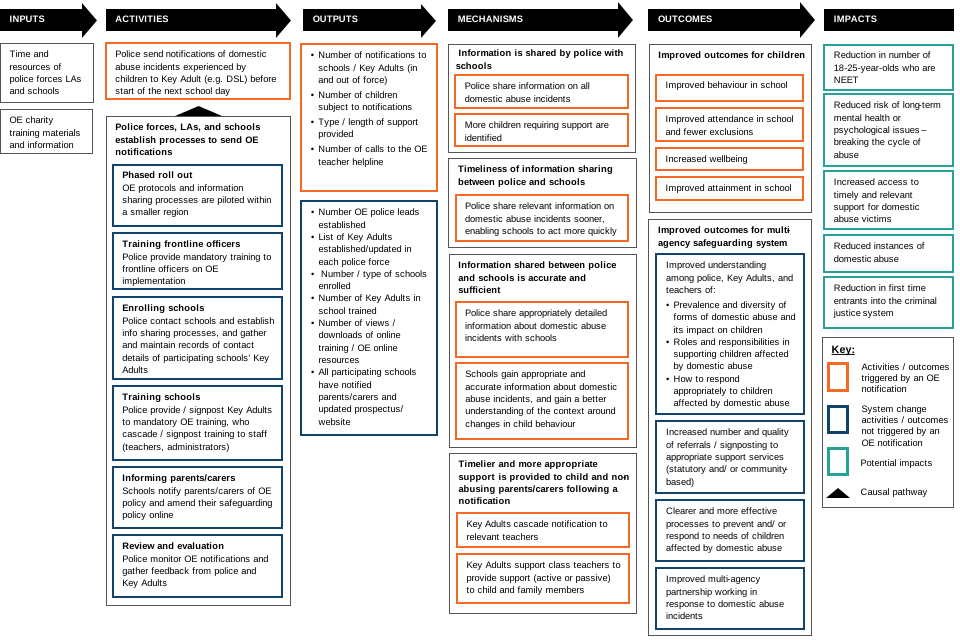
The OE standard scheme ToC (Figure 1) outlines how and why OE activities are expected to lead to intended outcomes. Further detail of the components within the ToC can be found in Annex 5.
Inputs include time and resources invested by key stakeholders to establish and deliver OE, alongside the OE charity’s training materials and information leaflets. Subsequent sections of the ToC are structured into 2 overarching strands.
- The OE systems strand (in blue) describes the systems activities, outputs and outcomes expected to occur as a result of OE, beyond the sending of notifications, and includes:
- activities: establishing key OE processes, including training, enrolling schools, and informing parents
- outputs: numbers of police leads established, schools enrolled, and OE resources accessed
- outcomes: improved multi-agency working
- The OE incident strand (in red) describes the activities, outputs, mechanisms and outcomes expected to occur relating to an OE notification specifically, and includes:
- activities: sending notifications to schools following domestic abuse incidents experienced by children
- outputs: numbers of OE notifications delivered
- mechanisms: information sharing via sending notifications (and improved quality of information sharing), timeliness, and appropriate support
- outcomes: improved outcomes for children, relating to behaviour, attendance, educational attainment, and wellbeing
Expected longer term impacts include improved life outcomes, reduced risk of long-term mental health or psychological issues, increased access to timely and appropriate support for domestic abuse victims, and reduced levels of abuse.
Figure 1: Operation Encompass Theory of Change – Standard Scheme
For an accessible version see Operation Encompass: Theories of Change (accessible version)
2.2 Theory of Change: Early Years Operation Encompass pilot
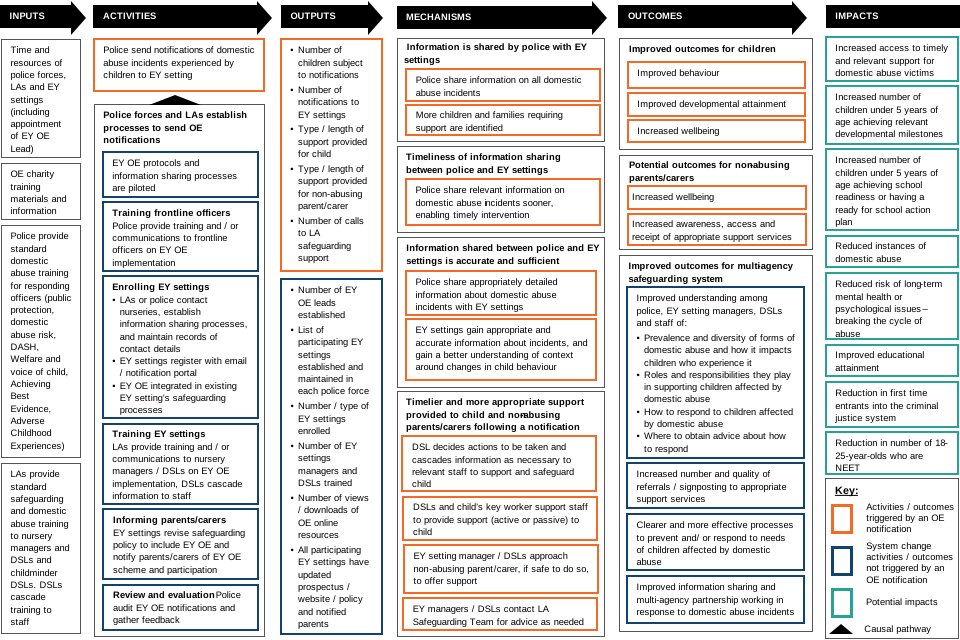
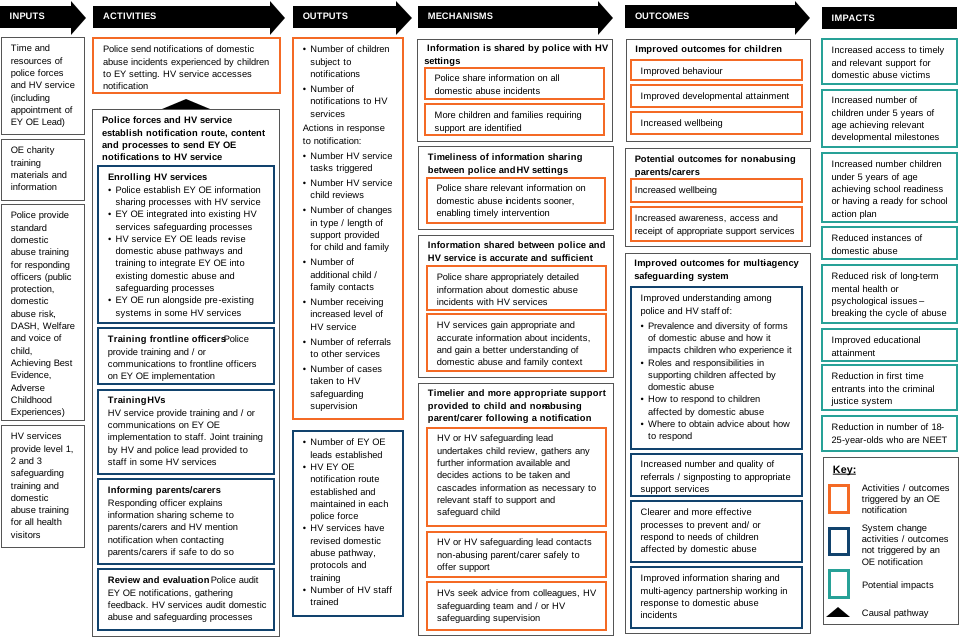
Two ToCs were developed for the EY OE scheme to reflect variance between how it operated in nursery/childminder settings (Figure 2) and health visitor services (Figure 3). The EY ToCs were adapted from the standard scheme ToC.
There is overall alignment with the standard OE ToC. Specifically, there is comparability across the key mechanisms of change – by which the inputs and activities of each scheme are expected to produce the outcomes identified in the ToC. Outcomes for non-abusive parents or carers were included in the EY ToCs but not in standard OE ToC. The evaluation indicated that EY OE placed more emphasis on supporting adult victims, likely due to the age of children, the nature of the settings, and closer relationships with families.
The nursery/childminder setting ToC (Figure 2) is most like the standard OE ToC because of the frequent or daily contact these settings have with children and families via drop offs and pickups.
The health visitor OE ToC (Figure 3) differs in 3 respects. Firstly, health visitors have a pre-existing safeguarding role (Shimwell and others, 2023), and an established role in responding to domestic abuse. Secondly, there is a greater likelihood that police-to-health visitor information sharing schemes for medium and high-risk incidents of domestic abuse were already active, before implementation of EY OE. Thirdly, because health visitor services are not usually in contact with children and families as frequently as nurseries, childminders and schools, they are not able to provide the same level of day-to-day emotional support for children.
Figure 2: Operation Encompass Theory of Change – Early Year (EY) settings (nurseries and childminders)
For an accessible version see Operation Encompass: Theories of Change (accessible version)
Figure 3: Operation Encompass Theory of Change – Early Year (EY) settings (health visitor services) (HV)
For an accessible version see Operation Encompass: Theories of Change (accessible version)
3. Process evaluation findings
This chapter summarises the findings from the interviews, health visitor survey and administrative education, social care and OE notification data for both the standard and Early Years (EY) process evaluations.
3.1 Implementation, enrolment and rollout
3.1.1 Standard Operation Encompass scheme
In line with OE guidance, senior supervisory police officers were appointed to oversee implementation. Considerable time and resources were put into to setting up OE. The main activities were:
- appointing a dedicated OE Lead, who were typically supervisory officers responsible for multi-agency safeguarding, with some forces appointing 2 OE Leads for strategic or operational concerns respectively
- establishing data sharing arrangements and ways of working with LAs and schools
- engaging stakeholders such as senior members of a force’s leadership team, Head of Public Protection, Multi-Agency Safeguarding Hub (MASH), education leads in the LA, data protection and IT staff (for logistics of information sharing)
Most police forces piloted the scheme by adopting a phased roll-out and found this helped with day-to-day practicalities, resolving initial problems, and raising awareness of OE among schools. Police force, school, and LA staff interviewed felt that successful roll-out of OE was aided by schools being enthusiastic about it and eager to work with police forces to receive notifications. Schools generally thought the information provided through OE would be beneficial in safeguarding children experiencing domestic abuse. As a result, they followed police guidance on joining the scheme.
A challenge for forces working across many LAs was how different priorities and ways of working, as well as different computer systems, made it more difficult and resource-intensive to implement a unified strategy.
Police forces took inconsistent approaches to data protection, with some stating that there was a need for clearer OE guidance for this element of the scheme. Some police forces were uncertain about their legal obligations on information sharing or whether data sharing agreements were required, particularly as OE data is safeguarding information, which can be exempt from data protection law. Findings from interviews suggested that consistent guidance for recommended data sharing approaches would be beneficial.
The OE charity developed materials for schools to make families aware of the scheme. This included template letters for parents and carers, pamphlets, posters and links to online training and guidance. Some police forces did give (or asked LAs to give) schools these materials but this was inconsistent across forces.
3.1.2 Early Years Operation Encompass pilot
Police forces led implementation in 3 EY OE pilot areas and the LA led in the remaining EY site. Police in this fourth area were unable to lead due to limited technical capacity, as they did not have an automated notification system at the time.
Several implementation challenges were identified across the EY pilot areas. In one local area, the waiting time for an IT system change delayed implementation by approximately 6 months. As in the standard scheme, differences in the geographical coverage between police forces and LAs could present challenges for implementation, notably where there were multiple LAs in a police force area.
“We just weren’t able to get that [whole force rollout] off the ground because there are so many different local authorities here. To try and get everybody to agree to it, it just didn’t work.”
Supervisory officer
The one area with LA-led implementation reported greater levels of adaptation required, which was more resource intensive than the others. This was because the scheme implemented a new multi-agency LA-led EY OE panel, which met multiple times per week. In addition, nurseries were sent a proforma with each EY OE notification for the DSL to record any actions taken and to return to the force’s EY OE team within 5 days.
The types of EY settings included in each scheme varied. Health visitor services were part of the scheme in all 4 pilot areas. Nurseries were included in 3 areas and LA registered childminders were included in one area. Health visitor services were recruited to the pilot through their service lead’s membership of a multi-agency EY OE steering group. Nurseries and childminders were recruited by invitation from police forces and/or their LA’s EY leads.
Information-sharing systems for children affected by domestic abuse were already in place between police and health visitor services in 3 of the 4 local areas, but these schemes were only for domestic abuse incidents graded by the responding officer as medium- or high-risk. Health visitor service leads reported minimal change was needed for implementation.
There were no pre-existing information-sharing schemes with nurseries or childminders, with the exception of nurseries that were part of a school where the standard OE scheme was already in place (prior to EY OE). However, nursery managers also reported that implementation required little change as EY OE integrated well into existing safeguarding structures and procedures.
The arrival of the OE EY scheme was viewed positively by EY leads and nursery managers across all local areas. Health visitor services had some initial reservations about staff capacity, response expectations and the duplication of information that was already being received in the 3 local areas as outlined above. A lead health visitor highlighted capacity challenges in responding to standard risk notifications, stating:
“What should we be doing with all these standard [notifications] that come in? … you don’t quite know what to do with them. Are we having time and capacity to read those flags even for the standard ones? Not sure if we do.”
Lead health visitor
As EY OE was not joined up with standard OE schemes, one EY lead voiced concern that a parent or carer with children in both EY and school settings could be approached multiple times by different professionals. The EY lead’s concern was about a lack of a coordinated response across OE and EY OE, with the potential for a parent or carer to undergo multiple questioning about a potentially traumatic incident, which could inadvertently cause them additional harm.
One health visitor voiced concern that a parent or carer might be less willing to contact police if they knew information about domestic abuse incidents would be shared with schools, due to concerns about their children being removed from them:
“Do people phone the police if they think it’s going to get shared, if they’ve phoned the police before and it’s been shared, do they have that fear of their children being taken off them because of it?”
Health visitor
3.2 Training
3.2.1 Standard Operation Encompass scheme
Police forces reported that they provided OE training to frontline officers as part of routine training, with some use of the OE charity’s free online police training video and guidance, combined with existing training on domestic abuse and safeguarding.
It is unclear how comprehensively or frequently training was delivered, or how OE was prioritised in training materials. There was also some uncertainty amongst police stakeholders around how OE sat within broader mandatory domestic abuse and safeguarding training. Generally, there was a clear view among some school staff, LA staff, and supervisory police officers that more training or guidance was required to continue to improve the timely recording of sufficient and accurate information, embedding the voice of the child[footnote 1] and prioritising trauma-informed responses to incidents.
In terms of training in schools, OE guidance requires that police provide or signpost DSLs to mandatory OE training and in turn DSLs are expected to cascade to wider school staff. Many – but not all – schools integrated OE and domestic abuse training into their annual general safeguarding training (led by DSLs or occasionally by external providers). For most schools, training on OE mainly informed teachers about what OE is and what it means if a child is subject to an OE notification.
Some police forces noted that the level of training in schools could affect how effectively schools respond to OE notifications. For example, there were instances of school staff contacting parents or carers after receiving a notification to inform them that the school knew about the incident, without proper risk assessment, which goes against OE training and guidance.
3.2.2 Early Years Operation Encompass pilot
Unlike the standard OE scheme, multi-agency steering groups comprising police, health visitors and LA EY service leads were set up to implement EY OE. These groups were responsible for developing local notification processes and training for frontline response staff. Training related to EY OE was delivered alongside standard domestic abuse and safeguarding training across stakeholder groups in all local areas. The most common components of training were information about EY OE process and role expectations. Suggestions for future training from interviews included role-specific responses, information on other agencies involved and their role, feedback on notification outcomes and multi-agency training for frontline roles.
Overall views were mixed on whether specific EY OE training was necessary given the domestic abuse and safeguarding training already in place. Regardless, when EY OE training was delivered it was valued, well received, and addressed practitioner information needs.
3.3 Process of notifications
3.3.1 Standard Operation Encompass scheme
Introducing OE helped police forces create more systematic ways to share information (through notifications) with schools. The processes varied by area, depending on local systems.
Police officers created OE notifications for all domestic abuse incidents involving children, regardless of risk level. In most areas, the police did not previously have processes for sharing information directly with schools after domestic abuse incidents. Police reported only sharing information with children’s social care about high-risk incidents.
Frontline officers completed their force’s domestic abuse incident report form and uploaded it to their IT system. Interviewees mentioned forms like the Domestic Abuse, Stalking, Harassment and Honour-based Violence Assessment (DASH), or the Domestic Abuse Public Protection Notification (PPN). An OE notification was created as a copy or summary of the form and sent to the school or LA, depending on the local model.
According to the OE guidance, notifications should be sent via telephone or email (Operation Encompass, 2025). At the time of the evaluation, 6 police forces notified schools via email and 2 used phone calls and/or emails. The forces using phone calls had planned to move to email notifications. Police force, LA, and school stakeholders said emails were quicker to send and allowed notifications to be sent on weekends and bank holidays. This helped reduce backlogs that happened when relying on phone call notifications. However, some school staff preferred phone calls as they could gather more information about the case. This indicates a need for schools to get information quickly but also to have a way to follow-up about the incident or child.
The OE guidance specifies that police forces should send notifications directly to schools (Operation Encompass, 2025). There are only 2 sets of exceptions: if the child is educated in another LA, the report is sent to that force’s OE lead to send to the school; and if a child is educated at home, missing or not in education, the report is sent to the LA. In the pilot areas, 5 police forces sent notifications via LAs, and found this helpful. In most cases, police supervisory officers said LA staff were needed to check school details. This helped avoid data breaches, such as sending a notification to the wrong school due to out-of-date school records. Issues still arose with making sure notifications were correctly sent and delivered, for example when a child attended a private school, a school in another LA, or one outside the police force area (which required contacting the OE team in another force). Some LAs also helped by creating notifications for schools by summarising incident reports shared by the force. Police sent OE notifications directly to schools in the 3 remaining areas, as recommended, to reduce delays. Nearly all stakeholders viewed their own model as better than the alternative. It is difficult to determine exactly how much value LA involvement added, but tailoring OE to fit local partnerships and capacity was considered helpful as where this happened, stakeholders reported better uptake, and faster delivery of notifications.
Some police forces considered several circumstances when notifications should not be sent. These included:
- when the child was demonstrating harmful behaviours towards a family member (including verbally and physically harmful behaviour); in these cases, forces followed their own support processes
- when a child attended a non-LA school such as a private school, due to uncertainty about whether OE data sharing agreements applied
- when a child was home-schooled (although the OE guidance is for LAs to be informed)
In these cases, school welfare teams could be notified via OE, other information sharing pathways, or not at all. This shows a need to review how well OE covers all school-age children and how to improve its reach.
The OE notification pathway ends once notifications are delivered to schools or to LAs, in line with statutory guidance (Department for Education, 2023), and local processes. However, police involvement may continue. Depending on the risk level of the incident or case, forces might share information or refer cases to other services, such as children’s social care and domestic abuse specialist support.
No police force had a set process for following up with schools after sending notifications. Schools typically followed up with the police using their usual safeguarding procedures if they had further concerns. OE guidance does not include follow-up processes, however several school stakeholders said they would welcome a formal mechanism to update the force or LA with new information that may help investigations or improve the support provided by partners. One idea, suggested by an interviewee was for an automated email reminder to be sent to schools a set number of days after the notification is delivered. This could prompt feedback, extra details, or a call with the officer handling the case. In general, school staff typically did not contact parents or carers following a notification. However, safeguarding staff within some schools always called or conducted home visits to check in with parents or carers. Whether parents or carers were contacted depended on factors like their relationship with the family, the amount of information provided in the notification, or if parents or carers voluntarily got in touch themselves. School staff gave reasons for not contacting parents or carers, including concerns about confidentiality, risk to relationships, or being advised not to by the police or school leaders. All schools noted they must contact parents or carers to get consent before referring children or families to children’s social care or support services, if they decided that a referral was necessary. This follows OE guidance, which says parents or carers and children may be consulted after a notification if appropriate, and if measures are taken to ensure their safety. In one area, schools reported contacting parents or carers about OE notifications without knowing their role in the incident which goes against OE guidelines. Police responded to this by reminding schools of the guidelines and the DSL training packages available from the OE charity.
School staff said parents or carers were often unaware that schools would be informed about domestic abuse incidents. This suggests that schools were not making full use of the awareness raising materials developed by the OE charity. Many only found out if the school contacted them after receiving a notification, which sometimes led to negative reactions from both themselves and children. In these situations, some school staff used more personalised approaches, like building rapport over time, and arranging in-person home visits instead of calling. Still, schools said that most children and parents or carers were open to support, and that children responded best when staff had already built trust with them.
Police forces and LAs monitored OE notifications using recorded data or by gathering feedback from key stakeholders. Multiple police forces changed their processes in response. Examples of changes included: (i) changing IT systems, (ii) using OE templates to standardise notifications, (iii) switching to the email-based system and (iv) expanding OE coverage to all incident levels.
3.3.2 Early Years Operation Encompass pilot
As in the standard OE scheme, officers responding to domestic abuse incidents involving children aged 4 and under who are not in school completed a domestic abuse incident report form. An EY OE notification was then created, regardless of risk level. This differs from other notification schemes in EY settings, which only create notifications for medium and high-risk cases.
The notification process varied by area to fit local systems. In 3 areas, EY OE notifications were sent to EY services via a specific team, 2 based in MASHs and one in the LA. These teams created a summary of the incident to send to the child’s nursery DSL, and in 2 areas, also to health visitor services.
In 3 areas, EY OE notifications sent to health visitor services were first reviewed by the duty health visitor service safeguarding team. They decided what actions to take based on the local domestic abuse pathway. The duty worker handled any immediate actions before forwarding to the child’s allocated health visitor team, letting them know about any further actions.
In one area, automatically generated police notifications were introduced for the pilot. The health visitor service received limited information in notifications (see Section 3.6 ‘Sending notifications’) which was added to the child’s health record by the duty health visitor safeguarding team but did not always lead to action. If a child received 3 notifications within 9 months, the duty health visitor safeguarding team sent a task notification to the child’s health visitor for review and follow-up. Nurseries had not previously received notifications for domestic abuse before. All health visitor services previously only received medium and high-risk notifications; OE EY included lower-risk cases.
All participants reported that EY OE increased the awareness of domestic abuse affecting children in their care and helped identify patterns, such as repeat incidents or rising risk. Even in health visitor services with existing schemes, 62% of EY OE notifications were the first record of domestic abuse received by health visitors.
“Op Encompass is really good for picking up those sorts of cases and those children that wouldn’t normally be picked up as part of the normal process. It’s the ones that might slip through the net. It’s picking up children and identifying families where they need early intervention, where it doesn’t maybe meet the threshold for children’s services, but there’s still a pattern of behaviour and there’s an issue with whatever’s going on in the house.”
Supervisory officer
EY leads identified potential gaps in scheme coverage: i) children not attending a nursery that was part of the scheme and ii) children in mobile families (for example, military, traveller, migrant, refugee) who may move more frequently between LAs.
Two police forces carried out local audits of EY OE. In one area, the audit data showed that officers completed welfare checks in 86% (467 out of 541) of cases. In another, they documented the voice of the child in 93% (1315 of 1413) of cases. These data were used to help police and health visitor frontline staff improve their respective responses. In another area, the police did not collate notifications data as this was done by the LA. Monitoring was undertaken by a multi-agency EY OE panel that met 3 times a week. The panel tracked key data for each case to make sure the right actions were taken across agencies, to prompt follow-up, and reduce the risk of missed notifications.
The fourth local area had only just implemented a monitoring scheme at the time of fieldwork.
3.4 Timeliness of notifications
3.4.1 Standard Operation Encompass scheme
There was broad agreement that OE helped police and schools share information more quickly about children not considered as high-risk or requiring escalation. Although OE records did not show how long it took for notifications to be received, schools reported that information sharing had become more streamlined.
“[Prior to OE] we would refer all our concerns to children’s social care, children’s social care would then be responsible for engaging with the schools. This is a kind of speeding up of the process really, and it’s done in a very timely way, it’s a matter of days at most between the incident happening and the schools being told about it. It’s far quicker.”
Police supervisory officer
However, there were challenges with ensuring that notifications were made to schools before the start of the next school day, as specified in OE guidance. Staff in most police force areas reported that notifications often arrived 2 to 3 days late, and some said delays could exceed 5 days, especially around school holidays. Police staff attributed this to delays in finalising incident response forms, incorrect school details, difficulty contacting schools by telephone and limited capacity at LA level. Sharing notifications across force areas could cause even longer delays – sometimes weeks – risking missed opportunities to best support the child.
3.4.2 Early Years Operation Encompass pilot
As with the standard scheme, EY staff said that when EY OE worked well, it allowed them to offer more timely and appropriate support. Health visitors spoke about the value of early awareness, and how it could lead to earlier intervention with the child.
“The earlier we know about things, the earlier we can put preventative measures in place and reduce the risk. For me as a public health nurse, it’s thinking about early intervention, prevention, and support, if we can get those 3 right, hopefully we can reduce all that other stuff that goes with it. If you’re getting your standard ones, the chances are you’re probably able to do that early intervention and prevention work.”
Lead health visitor
Nursery managers and EY leads also highlighted the potential benefits of earlier awareness, which helped staff provide timely support and intervention.
“We have had some cases where the nursery has had that conversation and, you know, that parent has then agreed to some early help support or specialist domestic abuse support.”
EY lead
As with the standard OE, the evaluation found that the speed of EY OE notifications varied based on local information-sharing arrangements with EY settings. In one area, notifications were sent automatically to health visitors or nursery safeguarding leads. However, in 3 of the 4 areas, they were made manually via a MASH or EY OE team. In these areas, health visitors and nursery managers said notifications usually arrived in 1 to 3 days but sometimes took longer. For example, in one area, a delay of 3 to 4 weeks for one notification was attributed by health visitors to police backlogs. Health visitors and nursery managers across all local areas said that delays in notifications risked them speaking to parents or carers before being aware of the notification.
In the one area using automatic notifications – entered by officers at the scene – information was shared in real time, making it the quickest notification route.
“What this allows us to do is to share information at the time it happens, and it’s the only time we do that, so at 2:00am we can go to the scene, by 8:00am when the DSL logs onto their emails they can see the notification. That wrap around care for the child is better through Op Encompass than it is through any other scheme that we have because of its timeliness.”
Supervisory officer
However, in this area, the ability for notifications to be sent automatically to nurseries depended on responding officers entering correct information about the nursery. While all incidents triggered automatic notifications, those without nursery details were attached to the child’s record rather than actively reviewed. This meant that health visitors might not have seen them straight away, potentially delaying support. During a 3-month early implementation audit at this site, this information was only entered for 7% (52 out of 709) of cases. In most cases, officers selected ‘child not with a nursery or childminder’ (77%, 546 out of 709) and ‘refused information’ (15%, 104 of 709). Low recording may reflect limited awareness of the scheme at the time.
3.5 Support provided after a notification
3.5.1 Standard Operation Encompass scheme
School safeguarding staff said timely OE notifications were key to providing immediate and appropriate support, allowing them to act as soon as a child arrived at school. When notifications were received the next morning, staff in several schools said they carried out check-ins or home visits if the child was absent. Delayed notifications made it harder to support children when they were most vulnerable and open to support.
Several schools across police forces said, that before OE, they struggled to identify why children presented as upset or withdrawn. School staff said OE added a piece to the ‘jigsaw puzzle’ of their safeguarding processes, helping build a fuller picture of a child’s situation. By providing key context alongside existing concerns like poor attendance or behaviour, OE helped ‘open the door’ to further support for children and parents or carers.
Schools spoke about offering part-time timetables or quiet study spaces after an incident, where this would better support the child outside of usual school and classroom arrangements.
“Quite often we have behaviours which might be new to us and we’re thinking, what is this child trying to communicate through their behaviour, and obviously, with that vital information we get, that’s really helped us to support the children who’ve been victims of that”
DSL
However, in some cases, schools said it was difficult to provide support when DSLs didn’t have enough time to engage with children. This was particularly noted as an issue during holidays or where parents or carers did not speak English.
Schools used different approaches to support children and families after a notification, depending on how much information was provided. A lack of detail sometimes left staff feeling unprepared or that they needed more information before engaging a child. Support was generally child-centred and tailored to their needs and behaviours. Forms of support were:
- ‘passive support’: all schools monitored children for signs of concern, such as changes in mood, behaviour, tiredness or forgetting homework; this was common when notifications had limited detail or in some secondary schools where it was reported that older children were less open to ‘direct support’; if concerns grew, teachers or DSLs developed more active support plans that aligned with their safeguarding processes
- ‘active support’ most commonly through ‘check-ins’: most schools also would informally check in with the child; check-ins were led by a DSL, teacher, or a ‘safe adult’ specific to the child and were designed to feel routine and safe; if a child disclosed more during a check-in, schools followed their standard safeguarding procedures; depending on the child’s response, DSLs may recommend further active support
- other active support included emotional well-being support, counselling, mentoring, regular one-to-ones with a teacher or teaching assistant, walk-and-talk conversations, ELSA (Emotional Literacy Support Assistant) referrals, art therapy and quiet spaces; with parental consent, schools offered external services like play therapy, mental health services, specialist domestic abuse services, the Early Help Hub, or referrals to children’s social care
- for children with complex or special educational needs and disabilities, the same support was adapted using tools like picture exchange communication system (PECS), symbol or communication boards and Makaton; for nonverbal children, teachers monitored their behaviour and used alternative check-in methods including pictures, listening to music, or drawing
Although not OE’s main aim, and depending on the context, schools sometimes supported non-abusive parents or carers after receiving OE notifications. They generally felt confident doing this, based on existing practices rather than OE itself. Some schools found it difficult to identify the victim and/or perpetrator when not clearly stated, relying instead on their judgement and previous knowledge of the family. This could be challenging and increase exposure to potential risk. Types of support offered to adults included:
- non-abusive parent or carer support: this included check-ins via calls or home visits; some schools reassured non-abusive parents or carers by adjusting collection arrangements to avoid contact with the abusive adult, such as early pickups or using breakfast clubs; in some cases, dedicated staff, who often knew the family well, offered advice, signposting, referrals to support agencies and charities, or family mediation
- family support: some schools provided whole-family support through family liaison, ELSA, or other wellbeing support; safeguarding or ELSA staff worked with children and parents or carers to develop strategies for managing household changes and supporting children through difficult experiences
The variation in practice shows that schools need flexibility to make decisions based on their relationships with children and families. It also highlights the importance of training and support to help teachers make informed choices in line with safeguarding guidance.
3.5.2 Early Years Operation Encompass pilot
Similar to the standard OE scheme, nursery managers or DSLs accessed notifications on the day or next working day, with key adults and nursery staff providing passive support and observation. Their role focused on supporting the child and non-abusive parent or carer and taking any necessary safeguarding actions. Sharing information provided in notifications with nursery staff was on a need-to-know basis, most often with the child’s key adults to help manage care or offer extra support. Key details, like changes to pick-up arrangements, were shared where necessary. Interviews with nursery managers and health visitors suggested that the EY OE scheme placed more emphasis on supporting adult victims than in the OE standard scheme, likely due to the age of children, the nature of the settings, and closer relationships with families. Nursery managers across all local areas, along with EY OE administrative data in one area, indicated that when an action was taken after a notification, this was most likely to be speaking to the non-abusive parent or carer and offering support. Nursery managers described the strong relationships they had with families and said they would discuss the notification and available services privately and sensitively, if safe to do so.
“I’d just have a quiet word with them and just say, ‘Is everything okay? We’ve been notified that this happened on whichever day. Is there anything else we can do to help or support?’”
Nursery Manager
Nursery managers said their main aim in speaking with the non-abusive parent or carer was to offer support, such as with early help referrals or signposting to domestic abuse and community services. Even if support was not accepted right away, nursery managers said these conversations helped to keep the door open for future assistance. Health visitors said they often raised domestic abuse more generally during reviews, rather than mentioning the notification directly. In contrast to the standard scheme, participants reported that parents or carers usually expected contact, as the police had told them a referral would be made. Health visitors said that parents or carers responded in mixed ways. Some were positive, while others felt than the contact was intrusive. Nursery managers also reported a range of reactions, from parents or carers expecting the information to be shared, being generally receptive to feeling upset or embarrassed. Health visitors were less frequently in contact with children and families than nurseries and schools. Therefore, they did not report providing the same day-to-day emotional support as the nursery and school staff did.
The analysis of 86 health visitor child health records (see Annex 3 for methodology) showed that the most common action following a notification was triage by the duty health visitor safeguarding team. This was completed within 24 hours of notification receipt in 57% of records (41 out of 72), and within 72 hours in another 35% (25 out of 72). The duty safeguarding team recorded actions taken in 85% of records (61 out of 72), and included discussions with the child’s health visitor, referrals, sharing information with other health or social professionals and involvement in MARAC or strategy meetings. After triage, the child’s allocated health visiting team reviewed the notification and took further action. Table 4 summarises the types of responses recorded in health visitor records following an EY OE notification.
Table 4: Actions taken and recorded by health visitors (Health visitor records)
| Actions taken and recorded | Number and percentage of records |
|---|---|
| Triage by duty health visitor service safeguarding team | 84% (72 out of 86) |
| Additional unscheduled health visitor contact | 36% (31 of 86) |
| Change in the level of health visiting service | 23% (20 of 86) |
| Scheduled health visitor contact | 16% (14 of 86) |
| Initiation of domestic abuse escalation pathway | 9% (8 of 86) |
| Additional referrals to other services | 9% (8 of 86) |
| Change in the role of the person undertaking a contact | 7% (6 of 86) |
| Case taken to health visitor safeguarding supervision | 4% (3 of 86) |
| Change in location of a contact | 2% (2 of 86) |
In 86% (74 out of 86) of records, the child’s health visiting team made an entry after receiving an EY OE notification, with 81% (60 out of 74) of those directly mentioning the notification. Records also noted existing support such as domestic abuse services (25 out of 86, 29%), early help (6 out of 86, 7%) and children’s social care (3 out of 86, 3%). In 23% (20 out of 86) of cases, the level of health visit support changed after a notification, usually increasing. In 2 cases, support was reduced, which the local health visitor service lead said was due to a service level readjustment following health visitor review at that time.
The health visitor records collected data on how many notifications each child was subject to. A data collection window was selected for notifications that occurred between June 2021 and February 2023 in one local area and between June 2021 and April 2023 in 2 local areas, to allow analysis of repeat notifications (see Annex 3). Over these periods, around half the children (44 out of 86, 51%) were subject to more than one notification.
3.6 Content of notifications
3.6.1 Standard Operation Encompass scheme
The OE guidance advises police forces to include the following in notifications:
- contextual details about the domestic abuse incident
- whether the child was present
- the time of the incident
- information about other individuals involved
- the ‘voice of the child’
However, interviews with police, LA, and school staff revealed that the content of notifications varied significantly. There was no consensus across police forces on what information was most useful, with each police and LA stakeholder believing their own approach was appropriate.
Six out of 8 police force areas included some form of context, ranging from a few words to full incident excerpts. Some also added risk ratings, though schools found these less useful without further context. Schools considered contextual information essential for supporting children. In contrast, some police forces felt schools did not need detailed incident information, assuming it would be shared through other channels if necessary.
Notifications from 6 out of 8 police force areas stated whether the child was present. Schools valued this detail, as it helped determine the child’s awareness of the incident. Police views were mixed; some felt presence did not necessarily indicate the level of impact on the child. Police forces saw OE’s main benefit as enabling faster or increased information sharing with schools, rather than the depth of information provided.
Six out of 8 police forces and LAs included details about other individuals, such as names, birth dates, and addresses. However, identification of victims and perpetrators was inconsistent and sometimes unclear. Some notifications included more than what the OE guidance required, such as the incident location, referral details, and excerpts from police reports. This was more common where LAs were responsible for creating the notifications. A Special Educational Needs (SEND) school highlighted that insufficient information often forced staff to investigate further, causing stress. Schools generally viewed the quality and consistency of notifications as crucial to the effectiveness of OE. Many felt that notifications lacked sufficient detail about the incident’s nature, severity, and the child’s exposure, which limited their ability to provide appropriate support.
3.6.2 Early Years Operation Encompass pilot
The guidance for EY OE from the OE charity recommends that information sharing via notification should follow the same principles as the standard OE scheme. However, as with the standard OE scheme, the content of notifications varied across different services and local areas.
Health visitors generally felt the amount of information provided in notifications was sufficient, but they found that the format and length of the forms made it difficult to locate specific details. One nursery manager expressed a need for more information about the police response to better prepare for discussions with parents or carers and to support safeguarding efforts.
In all local areas, health visitors and nursery managers or DSLs noted that notifications involving blended families were harder to interpret, particularly in understanding who was involved and where the incident took place. Although nursery managers reported often speaking to non-abusive parents or carers and offering support, nursery managers and DSLs also reported instances when they lacked information about the identity of the perpetrator(s). Not having this information made them hesitant to engage with families for fear of unintentionally putting someone at risk.
3.7 Profile of children identified
3.7.1 Standard Operation Encompass scheme
Stakeholders said there isn’t a “typical” child who gets flagged by OE, but schools noticed that children already on safeguarding lists or with support plans were more likely to be included in OE notifications. Notification data from 6 police forces linked to the National Pupil Database showed:
- around 30 to 50% of children who received OE notifications had previously been assessed as needing children’s social care services
- children eligible for free school meals (FSM) and children with SEND were overrepresented in the OE data; 47% of children in the OE notification data were FSM eligible and 25% had SEND support, compared to 17% and 16% of other children in the same areas
- the average age of children receiving OE notifications was 10, though this varied between 8 and 13 depending on the area
This suggests that children identified through OE are generally more vulnerable and disadvantaged than their peers. Interestingly, 50 to 70% of these children were not known to social care services, providing further evidence that OE may help to identify children who need support but were not previously identified.
School staff stated that they often received OE notifications about children who they were not aware were affected by domestic abuse. These notifications were especially valuable because they helped schools recognise children who might need support when they otherwise would not know.
3.7.2 Early Years Operation Encompass pilot
Findings on the profile of children included in OE notifications were largely similar to the EY OE pilot. Analysis of the health visitor child health records conducted in 3 local areas found that 62% (53 out of 86) of EY OE notifications were for children not previously known by health visitors as victims of domestic abuse. Of the 38% (33 out of 86) of children already known by health visitors to be affected by domestic abuse, 42% (14 out of 33) had 3 or more previous notifications.
3.8 Multi-agency arrangements
3.8.1 Standard Operation Encompass scheme
Police forces had embedded OE into their existing multi-agency arrangements to differing extents. Some embedded it into their usual response to an incident, and tended to include more information and send this via the LA. Others viewed OE notification processes as separate to their core information-sharing and referral processes. These forces tended to include less information and did not intend for it to be shared with other services.
Police forces took different approaches to which services they involved and when. For example, some forces held daily multi-agency meetings (attended by policing, health, education, and social care) to discuss all incidents involving children. In other forces, only the highest risk incidents would be discussed in formal MARAC or MASH meetings.
Schools could also contact the force or LA to request more information on the incident or to make a referral (such as through a Multi-Agency Referral Form or MARF). LAs were typically a school’s main point of contact and, if appropriate and available, provided the information requested or contacted the police on schools’ behalf. Direct engagement between schools and police was limited, with only one force providing a dedicated OE email address for schools. The LA approach had been widely adopted due to fitting with safeguarding procedures, force capacity, and existing relationships between schools and LAs.
In some police force areas, OE introduced a route for schools to contribute to multi-agency forums that did not previously exist in standard safeguarding procedures. However, this was not consistently applied across police force areas.
Even where school staff contributed to multi-agency forums more regularly, interviewees noted that this did not routinely clarify what support was provided to children or non-abusive parents or carers by police or local services following a notification. Furthermore, staff noted that having an OE notification did not always prompt action by other organisations, although this was not its intended aim.
“We get the Encompass message, and it may well have been reported to social care, I think it’s supposed to be as a result of an Encompass alert. But then they decide not to do anything with it. So, there is no one to follow that through. We can’t follow it through because we’re told not to say anything to anyone.”
Headteacher
3.8.2 Early Years Operation Encompass pilot
Stakeholders stated that EY OE helped improve how police and health visitors shared information. This meant that even lower-risk cases (standard risk) could now be supported, which was not possible before. In one area, EY OE was especially helpful because they did not have any previous system in place. However, in areas where systems existed to notify health visitors about domestic abuse cases, there was a risk of duplicate notifications being sent, which could lead to unnecessary work.
EY OE was also thought to improve information sharing between police and nursery/childminder safeguarding leads (DSLs). Before EY OE, these groups did not receive any notifications, except in one area where school-linked nurseries received some updates.
However, there was little direct contact between police and EY staff. Nursery managers said they already worked well with health visitors and other services, but health visitors felt they did not have strong links with the police. One health visitor suggested that working together in shared spaces or having joint training could help.
Finally, many interviewees did not know which other services were getting notifications, and they thought communication between different agencies could be better.
4. Feasibility of expanding Operation Encompass
This chapter summarises stakeholder views on the feasibility and value of expanding OE and OE-EY to other harm types, such as sexual or criminal exploitation, knife crime and incidents of going missing.
Views on possible expansion in schools and EY settings were mixed. While some interviewees found value in an expansion of OE, various concerns and reservations were shared across all participant groups.
4.1 Potential benefits of expansion
Positive views across all groups centred on a general belief that more information shared via notifications about individual children and young people could only be beneficial. However, stakeholders were often unable to provide specific details or examples of how expanding OE to wider forms of harm would influence school or EY responses.
Some participants said expansion to include wider forms of harm could lead to schools and EY settings being better equipped to work more therapeutically with children and families. School staff provided examples of anticipated outcomes. These included not sending warnings about attendance, allocating students to a mentor, escalating pupils to the top of counselling or pupil support lists, and managing the introduction of school materials for relevant pupils - such as novels where ‘live’ issues are covered.
“a lot of pastoral work doesn’t tend to be concrete … if there has been an issue of, let’s say, a sexual assault for a young person, and their attendance declines, [this information would mean] we would not be sending that family … notices to fine them for poor attendance.”
DSL
One safeguarding stakeholder regarded the initiative overall as being valuable, as without additional information on children and young people to give context to the behaviours, schools are more likely to exclude them. Therefore, increased information may support ‘trauma-informed’ practice.
Increased professional awareness of risks in family homes were seen to potentially aide assessments or conversations with parents around safety.
“Obviously crime, any drugs, antisocial behaviour [and]… drink driving … because that would be a big conversation about safety… I think, is always worth knowing because our job is to ensure all children are safe and they’re thriving.”
EY practitioner
Schools also felt that strategically, expansion could lead to increased professional trust between agencies. For example, expansion could provide an additional mechanism to ensure that education providers are seen as essential partners and included in ongoing information sharing. For EY settings, the potential to provide helpful contextual information was raised. This could include the mental health of parents or carers, parental self-harm, parent death and absences.
4.2 Reservations or concerns about expansion
Concerns about expansion were more specific and detailed than the potential benefits discussed. Stakeholders raised questions about the purpose of expansion, potential conflicts with existing safeguarding processes, and potential (unintended) harmful outcomes for children and young people.
According to statutory guidance, decisions to share information and how to address safeguarding concerns should be a multi-agency decision led at a local level in England (Department for Education, 2023) and Wales (Wales Safeguarding Procedures, 2023). There was a view that expansion would conflict with existing processes or duplicate current arrangements between agencies that could instead be improved to function better. In addition, EY stakeholders stressed they already receive information about other harm types through MASH reports or other multi-agency processes.
One safeguarding stakeholder expressed feeling uncomfortable about the extended OE notification arrangements, primarily because the information was not necessarily shared with the family and the family were not asked to give permission for information on their child to be shared. More generally, stakeholders raised concerns regarding information sharing in relation to children’s rights, including their right to education, privacy, and non-discrimination, with one stakeholder calling for a children’s rights impact assessment on any expansion. Stakeholders stressed that consideration needed to be given to what specific positive outcomes would arise for children and families due to information sharing, and whether these would outweigh the potential risks.
Many police staff felt that if the purpose of expansion was about intervention and prevention of additional harms, greater strategic attention (and investment) should be put on earlier prevention instead. They felt that this was needed rather than reactively sharing information about individual children, after events had occurred. For example, police staff noted that prevention could focus on addressing what is already known, to help tackle complex issues such as sexual and criminal exploitation and other ongoing harms like drug and gang crime.
4.3 Specific reservations or concerns for schools
School exclusion, behaviour and school culture policies are the responsibility of headteachers. Stakeholders felt that there was a risk that information shared as part of notifications could lead to disciplinary action toward individual pupils, as illustrated in the quote below.
“So the exclusion policy for schools, it lies directly with the head teacher, it’s not a local authority policy, so, if the head teacher was very anti re-integration of young people, let’s say, and was much more eager to just exclude, then I’d be really worried that that information could be further weaponised against that young person … Especially if that young person is problematic in the curriculum, and they’re looking for a reason to remove.”
DSL
A broad point was raised that any expansion of OE might unintentionally disengage young people from the support available to them within schools, as they may not want to report issues. This could be due to, for example, fearing that they may lose control over who has access to this shared information, potentially putting them at additional risk (also see Hallett, 2016). Instead, schools could focus on a whole school approach including targeted positive school environments which proactively support children to come forward and having open conversations with pupils (Evans and others, 2016).
“[expanded OE] would be much more likely to foster silence in young people, which we know puts them at additional risk…[instead] open the conversation with [all] pupils saying, ‘If you’re worried about this, come and speak to-,’ whoever it is, you know? So, you’re inviting children to come forward and you’re having sensible conversations with them about it.”
Safeguarding lead
Stakeholders interviewed, including the police, related that thematic reports from the MASH or police could be used to notify schools of increased local incidents relate to specific harm types, without identifying individual children. This information could be used by schools to guide year assemblies or target social and wellbeing sessions, for example, around drug use. Alternatively, vulnerability notifications to schools from children’s services could notify schools about wellbeing concerns for specific children and generate an individualised care and support response. Both mechanisms would provide important information to schools without revealing detailed information about specific incidents connected to individuals, and would not compromise rights, General Data Protection Regulation (GDPR) concerns or existing processes.
EY staff suggested that existing mechanisms should be used to develop stronger relationships with local health visitors, accident and emergency, and GPs, which they felt would be a more effective direction for resource than OE expansion.
4.4 Resource implications
Participants raised a number of potential resource issues:
- capacity and the time-consuming nature of processing the volume of notifications across LAs, schools and EY settings
- the need for clear guidance, legislation, and training for LAs, police and schools on what information can be shared, to reduce the resource needed to make data sharing decisions
- availability of support for pupils to achieve positive outcomes, such as counselling or one-to-one support
- availability of support for key adults and DSLs, such as supervisory and wellbeing support for those who read and process notifications
- resource for those leading design and implementation of information sharing agreements and systems for notification
- a need for improved/automated systems for timely and consistent notifications, to reduce the resource burden
5. Considerations and conclusions
In this section, the authors have used the evaluation findings to offer policy and practice considerations for different stakeholders involved in implementing Operation Encompass (OE) and Early Years (EY) OE. It then provides concluding remarks.
5.1 Policy considerations
To strengthen delivery of OE and EY OE, OE Leads and police supervisors could develop clear process maps outlining local notification routes and partner responsibilities. This should involve a review of whether notifications are best routed via Multi-Agency Safeguarding Hubs (MASH), local authorities (LAs), or direct police channels to optimise timeliness and information quality. Accurate and consistent recording of child information is essential; improvements could be made through enhanced officer training, performance feedback and quality assurance teams. Establishing shared access to LA-maintained databases of family, designated safeguarding lead (DSL) and EY provider contact details could reduce the need for LA input and improve timeliness. Storing OE Lead contacts centrally could further support efficient cross-force communication.
National bodies like the Home Office and National Police Chiefs’ Council (NPCC) should assess the legal and safeguarding implications of maintaining national datasets for OE implementation. These would include necessary school and child information, ensuring secure, direct contact between police and education providers. Updated guidance should clarify notification content, sharing protocols, and storage within schools, and ensure the child’s perspective is included. Safeguarding protocols and data sharing must extend to all affected children, including those aged 4 and under, homeschooled, or exhibiting harmful behaviours.
All relevant education staff—including DSLs, class teachers, and support staff—should receive domestic abuse safeguarding training, with regular stakeholder communication to follow up on any notification actions. Integrated information-sharing or notification platforms, multi-agency training, and regular reviews using standardised data categories and demographic analysis are recommended to improve collaboration, monitor delivery, and identify gaps in provision. Strengthened governance, such as oversight groups, would further support ongoing effectiveness and accountability.
5.2 Evaluation concluding remarks
OE and EY OE were reported to improve stakeholders’ early identification of children affected by domestic abuse. This was thought to enable timely support across cases of varying levels of risk, particularly where there was pre-existing multi-agency collaboration. However, implementation was found to vary considerably between police forces and local areas. Despite inconsistencies in notification speed and content, stakeholders viewed OE and EY OE as an improvement compared to previous information-sharing models. While there was broad support for the schemes, concerns around resourcing, rights infringements, and the potential effectiveness of alternative initiatives meant that stakeholders showed minimal support for expanding them to other types of harm.
Annex 1: Feasibility of Quasi-experimental Impact evaluation
Standard Operation Encompass scheme
The intended outcomes of the quasi-experimental impact evaluation (QED) were improved school attendance and improved school attainment, for the ‘treatment’ group of children who had been subject to an OE notification. Proxy outcome metrics for attendance and attainment were selected and sourced from the National Pupil Database (NPD) (2017 to 2023). Six forces agreed to share notification data for the evaluation, which was matched with administrative education records in the NPD and Children in Need (CiN) Census 2010-2022[footnote 2]. While the data linkage was overall satisfactory (it was possible to link between 80% and 94% of the records provided by the police forces to the NPD data), some records could not be matched with the NPD. Therefore, it is not possible to exclude the possibility that non-linked children were included in the comparison group by mistake, potentially biasing results of the QED analysis.
There were no data on police attended incidents involving children where an OE notification was not created (that is, there was no clear comparator group). Two approaches were used to create a comparison group, using information from the NPD and the CiN Census. The first was an Intention to Treat (ITT) whereby all school-aged children in a local area with OE were considered as ‘receiving’ the OE scheme. This meant they could be compared with all school-aged children within LAs that had not yet adopted OE. The second was an individual-level analysis, comparing outcomes for a group of children who had at least one episode of need – as a proxy comparator group - with children who received an OE notification.
For the first ITT analysis, a Difference-in-Differences (DiD) design was explored using NPD data to measure changes in outcomes across time. The individual-level analysis could not use the same longitudinal approach as in the ITT because educational data are repeated cross-sections. Each year, different cohorts of children take key stage examinations[footnote 3]. Hence, a Propensity Score Matching (PSM) approach was used which pairs individuals who were part of an intervention with similar individuals who did not, based on shared characteristics. Through the course of the attempted analyses, neither approach was able to demonstrate reliable comparisons with the treatment group, as a result of dissimilar matches and the inability to account for confounding variables.
Early Years Operation Encompass pilot
The challenges of conducting a quantitative impact evaluation on the standard OE scheme provided highly relevant insights to the feasibility of a quantitative impact evaluation of EY OE. Limitations on data availability and data matching would make such a research design unlikely to be possible. In addition, issues arose regarding relevant proxy metrics, consistent data collection, and a wider range of confounding factors that would need to be accounted for. As a result, no QED could be attempted for the EY OE pilot.
Annex 2: Standard Operation Encompass scheme: Methodology
A process evaluation was used to assess the effectiveness of the ‘standard’ OE model. To do this, 8 police force areas were sampled to explore perceptions of OE’s delivery and potential impacts in different contexts.
Sampling and fieldwork
For each police force area, a purposive sampling approach was used with the aim of conducting 60-minute online depth interviews with police force staff (n=3) and local multi-agency teams (n=3) involved in the set up and daily operationalisation of OE, and 3 school stakeholders in 3 schools (n=9) involved in supporting children who were the subject of OE notifications. The actual number varied between police force areas (see Table A2). The following roles were included within each stakeholder group.
- police force staff: OE Lead, chief constable/senior management, domestic abuse specialist/ supervisor for the police force
- local multi-agency teams: relevant local safeguarding teams, children’s services and/or education welfare teams for local system actors
- schools: DSLs, head teachers and/or classroom teachers
Police force and local multi-agency team stakeholders were identified based on their relevance and involvement in OE processes, following discussion with OE Leads. A broadly representative sub-sample of schools were identified based on aggregate notification data from the past 12 months provided by forces and publicly available data covering school characteristics in police force areas (Department for Education, nd). A breakdown of participating schools by key characteristics are below:
- staff were interviewed in 46 schools: 26 were LA maintained schools (57%), 2 free schools (4%), 12 academies (26%), 5 special schools (11%); one college (2%). The sample distribution of educational settings was broadly in line with the national distribution.
- interviewee role in school: 17 DSLs, 19 headteachers (/DSLs), 9 deputy heads (/DSL), 2 SENDCo and inclusion lead/pastoral lead, 6 deputy DSLs, 5 family workers/parent support officer, 3 class teachers, one ELSA
- stage: 28 schools were primary, 11 were secondary, one was college only and 6 were all-through
- Ofsted inspection results (English schools only as Welsh schools are not subject to Ofsted ratings): 32 had been given ‘Good’ at last inspection, 5 ‘Outstanding’, 4 ‘Required improvement’ and 1 ‘Serious Weakness’
- percentage of pupils eligible for FSM: 7 schools <10%; 12 schools 10 to 20%; 11 schools 20 to 30%; 7 schools 30 to 40%; 5 schools 40 to 50%; 3 schools >50%.
Interviews covered the process questions (See Section 1.2). Process questions aimed to establish verifiable accounts of how OE was adopted and implemented in practice, gathered from, and triangulated across the participants. The summarised discussion guides (Annex 4) show how the semi-structured interviews were set out.
All interviews were transcribed, coded, and synthesised into templates for each police force area. The templates were structured to facilitate the systematic analysis of each interview based on key evaluation questions. All analytical templates were coded in NVivo12 using both deductive (for example, reflecting elements of the evaluation questions and hypotheses in the ToC) and inductive coding, including unexpected issues emerging in the data. This analysis enabled us to examine trends in the findings both between and across cases.
Table A2: Number of interviewees
| Force 1 | Force 2 | Force 3 | Force 4 | Force 5 | Force 6 | Force 7 | Force 8 | |
|---|---|---|---|---|---|---|---|---|
| Police force | 3 | 3 | 3 | 3 | 3 | 3 | 3 | 2 |
| Local authority | 3 | 3 | 3 | 4 | 4 | 3 | 3 | 3 |
| Schools | 10* | 6* | 5* | 7* | 9 | 8 | 7 | 10 |
| Total | 16 | 12 | 11 | 14 | 16 | 14 | 13 | 15 |
Notes:
- *Includes one joint interview with 2 members of staff.
Annex 3: Early Years Operation Encompass pilot: Methodology
The Early Years Operation Encompass (EY OE) pilot had a mixed-methods design that involved:
- EY OE Interviews with senior police officers, health visitor service leads, and LA EY leads responsible for EY OE implementation. Interviews were also undertaken with frontline police officers, health visitors and nursery managers who were involved with EY OE delivery. As with the OE evaluation, police force, health visitor, and LA EY OE leads were purposefully sampled to participate in interviews. A snowball sample approach was then used, as leads were asked to distribute a recruitment email to frontline staff to encourage their participation. Participation was based on participants’ opt-in email to the research team and informed consent. Online in-depth interviews were undertaken with 36 participants (Table A3.1) between October 2022 and April 2023.
Table A3.1: Sample for EY evaluation interviews
| Role | Site 1 | Site 2 | Site 3 | Site 4 | Total |
|---|---|---|---|---|---|
| Supervisory officer or police safeguarding lead | 1 | 1 | 1 | 3* | 6 |
| Frontline officer | 2 | 2 | 1 | 0 | 5 |
| LA EY (Education) lead | 0 | 1 | 2** | 0 | 3 |
| LA EY (Early Intervention) lead | 0 | 2 | 0 | 0 | 2 |
| Lead health visitor | 1 | 1 | 1 | 1 | 4 |
| Frontline health visitor | 3 | 2 | 2 | 2 | 9 |
| Nursery manager / DSL | 2 | 3 | 2 | 0 | 7 |
| Total | 9 | 12 | 9 | 6 | 36 |
Notes:
- *Includes joint interview with 2 civilian (non-officer) safeguarding leads.
- **Joint interview with 2 education leads.
- Collection and analysis of police force and EY services’ EY OE administrative data. The purpose of data collection was to obtain aggregated data about numbers of notifications, the child’s age and any actions taken. This dataset corresponds to the EY OE scheme’s suggested data collection categories, provided to participating forces at the time of piloting. Police and EY service leads were asked to securely submit, either by email in a password protected document or by upload to a site-specific MS Teams area, anonymous EY OE administrative data.
- Health visitor child health record analysis. The purpose of the analysis of child health records was to generate quantitative information about the implementation of EY OE schemes and courses of action taken. A sample of health visitors from which records would be collated were selected from June to July 2021. Data on repeat notifications were collected to enable analysis of whether repeat and high frequency domestic abuse affected health visitor responses. As health visitor child health records are not anonymous, the selection of records was undertaken by members of the direct healthcare team. To limit bias, records for inclusion were identified using a stratified random sample of the dates of notification and then criterion sampled by age and domestic abuse incident risk level. This yielded anonymous data on 86 cases which was entered into a site-specific, password protected online survey. Service leads were provided with guidance on selecting records for the sample and the online survey link. The survey collected anonymous data based on available information about child’s age, record of receipt of EY OE notification, record of police-assigned domestic abuse risk level, entries made in the child’s record about the notification, changes to health visitor service provision, any actions taken in response to the notification, whether domestic abuse was known about prior to the notification and further domestic abuse notifications.
Three police forces, 3 health visitor services and one LA submitted administrative data for the evaluation. The health visitor child health records was inputted by 3 health visitor services (Table A3.2)
Table A3.2: EY OE administrative data and health visitor child health record sample
| Source | Site 1 | Site 2 | Site 3 | Site 4 | Total |
|---|---|---|---|---|---|
| Police administrative data | Yes | No | Yes | Yes | 3 |
| LA administrative data | n/a | Yes | n/a | n/a | 1 |
| Health visitor administrative data | Yes | No | Yes* | No | 2 |
| Health visitor child health record data | Yes | Yes | No* | Yes | 3 |
| Nursery administrative data | No | No | No | No | 0 |
Notes:
- *In this site, administrative data was an extended audit that included some of the health visitor child health record data categories as well as the data categories suggested for health visitors by OE.
Finally, Table A3.3 shows the key features of the EY OE notification schemes, and the ways in which they differed between local areas.
Table A3.3: Key features of Early Years (EY) Operation Encompass (OE) domestic abuse notification schemes across local areas*
| Features | Local area 1 | Local area 2 | Local area 3 | Local area 4 |
|---|---|---|---|---|
| Lead service | Police | Local Authority (LA) | Police | Police |
| MASH | Yes | Yes | No | Yes |
| Pre-existing notification system | Health visitor service: medium and high-risk incidents via Multi-Agency Safeguarding Hubs (MASH) | Health visitor service: medium and high-risk incidents via MASH | Health visitor service: notified by children’s services when a child on health visitor caseload had been referred to and was being supported by children’s services | Health visitor service: medium and high-risk incidents via MASH. |
| EY OE notification route(s) | Into MASH and then onto Named Nurse for health service safeguarding team and then to health visitor service Into MASH and then onto MASH OE Team and then to LA registered Nurseries Into MASH and NHS safeguarding team and then onto health visitor service Into MASH and EY OE Team inbox and then onto LA registered Nurseries and health visitor service |
Automatically generated from attending officer’s data entry to health visitor safeguarding team and nursery designated safeguarding lead | Into MASH and then onto health service safeguarding team and then to health visitor service Into EY OE inbox and then onto health service safeguarding team and then to health visitor service |
|
| Health visitors involved in EY OE scheme? | Yes | Yes | Yes | Yes |
| Health visitor notification content | Full incident Public Protection Notification and Domestic Abuse, Stalking, Harassment and Honour-based Violence Assessment (DASH) | Full incident Public Protection Notification and DASH and a modified summary | Limited dataset - does not use Public Protection Notification system | Full incident Public Protection Notification and DASH and a modified summary |
| Nurseries involved in EY OE scheme? | Yes - LA Registered and Private Nurseries | Yes - LA Registered Nurseries | Yes - LA Registered Nurseries | Not in EY scheme. Nurseries may receive notification if the nursery is part of a school in the standard OE school’s scheme |
| Nurseries notification content | Modified summary | Modified summary | Limited dataset | Modified summary |
| Childminders involved in EY OE scheme? | No | No - on rare occasion a telephone call may be made to the child’s childminder | Yes - LA registered childminders with designated safeguarding lead. They receive a limited dataset | No |
| Timeframe of receipt of notification | Variable - notifications usually received within 1-3 days of incident but occasionally longer | Variable - Notifications received within 1-3 days of incident | Immediate (automatic referrals) | Variable: Notifications usually received within 1-3 days of incident but occasionally longer |
| Follow up on actions taken by EY OE lead/team | No | Yes - notifications sent to EY services and actions taken are followed up and recorded by the LA led EY OE panel | No | Yes |
Annex 4. Discussion guides
Discussion guides covering the standard OE scheme are included here for illustrative purposes. EY OE discussion guides followed a similar format with minor differences.
Evaluation of Operation Encompass – Outline of discussion guide for supervisory Officers
| Section | Details |
|---|---|
| Introduction | An introduction to the research, the purpose of the interview and provide an explanation of anonymity, confidentiality, the disclosure policy and how the data will be used. Researchers will also ask for consent to carry on with the interviews and consent to record. |
| Warm-up | Discuss the individual’s role to provide a useful background and establish rapport, this includes: - their role/responsibilities - their background - familiarity with OE |
| Setting up OE | Discuss their experiences of setting up the OE programme in their police force, including: - when the force started implementing OE and the rationale to adopt it and what was in place prior to adopting OE - who was involved in setting up OE - what training was provided for frontline officers and police staff to start implementing OE - what was the process in enrolling schools in OE - what were the key challenges and enablers in setting up OE |
| Implementing OE | Discuss their experience of how OE was implemented in their force, including: - the process for making OE notifications - who are they sent to and how - if this differed depending on the type of school - the timeline of the notification being sent - the circumstances in which a notification was made - the information included in the notifications and how this differed from the incident report - where notifications were recorded and stored and the number of notifications and notifications per child in a month - how they work with other services/organisations when it comes to children subject to an OE notification/involved in a domestic abuse incident - the monitoring and reviewing of the implementation of OE - the barriers and enablers to implementing OE effectively - ongoing training for officers/police staff on responding to domestic abuse incidents experienced by children and/or implementing OE |
| Impacts of OE | Discuss their experience of changes or impacts that OE has had on their force including: - positive/negative or unintended changes or outcomes as a result of OE - any changes or outcomes for information sharing and referrals as a result of OE - impact of implementing OE on awareness of domestic abuse among police force personnel - impact of implementing OE on the police forces’ multi-agency responses to domestic abuse incidents |
| Recommendations for improving OE implementation | Discuss any recommendations to improve the implementation of OE or information sharing and joint working on relevant domestic abuse incidents: - their opinions on using OE for other harms experienced by children or in EY settings |
| Wrap-up | Thank participants for their time and perspective and provide them the opportunity to share any further thoughts on anything they feel they have not shared |
Evaluation of Operation Encompass - Outline of discussion guide for local service leads and multi-agency board members
| Section | Details |
|---|---|
| Introduction | An introduction to the research, the purpose of the interview and provide an explanation of anonymity, confidentiality, the disclosure policy and how the data will be used. Researchers will also ask for consent to carry on with the interviews and consent to record. |
| Warm-up | Discuss the individual’s role to provide a useful background and establish rapport, this includes: - their role/responsibilities and how much they work with the police force - professional experience - the contact they have with the police force regarding children who experience domestic abuse incidents and familiarity with OE |
| OE set up and implementation | Discuss their experiences of how the OE scheme was set up and implemented in their area, including: - their/their organisation’s role in setting up the scheme and who was involved - were there any similar pre-existing initiatives prior to implementing OE - was there any training or guidance on implementing OE and was it rolled out across the entire area at the same time - what were the key challenges and enablers in setting up OE - the steps of the notification process and who is involved and the circumstances in which a notification was made, if this differed depending on the type of school and the timeline of the notification being sent - the information included in the notifications and how this differed from the incident report - where notifications were recorded and stored and the number of notifications and notifications per child in a month - the barriers and enablers to implementing OE effectively |
| Referrals and information sharing | Discuss their experience of police referrals into their services or other services and the information shared by the police about domestic abuse incidents with a child/children present. This includes: - their understanding of the referral process from police to statutory services - how the police do a referral into their own organisation - the process once when have received a referral, initial and subsequent actions and how this has changed with the implementation of OE - the monitoring and reviewing of a referral - their experience of working with the police once a referral has been made, any follow up actions and sharing information back with the police - the consistency and level of detail/quality of the referral they receive from police |
| Impacts of OE | Discuss their experience of changes or impacts that OE has had on their LA including: - positive/negative or unintended changes or outcomes as a result of OE - any changes or outcomes to information sharing and referrals as a result of OE - impact of implementing OE on awareness of domestic abuse among team personnel - impact of implementing OE on their and their team’s multi-agency responses to domestic abuse incidents |
| Recommendations for improving OE implementation | Discuss any recommendations to improve the implementation of OE or information sharing and joint working on domestic abuse incidents experienced by children, including: - their opinions on using OE for other harms experienced by children or in EY settings |
| Wrap-up | Thank participants for their time and perspective and provide them the opportunity to share any further thoughts on anything they feel they have not shared. |
Evaluation of Operation Encompass - Outline of discussion guide for DSLs and class teachers
| Section | Details |
|---|---|
| Introduction | An introduction to the research, the purpose of the interview and provide an explanation of anonymity, confidentiality, the disclosure policy and how the data will be used. Researchers will also ask for consent to carry on with the interviews and consent to record. |
| Warm-up | Discuss individual’s role to gain useful background and establish rapport: - their role/responsibilities and how much they work with the police; confirmation if they were the school DSL or Deputy - professional experience - their contact with the police regarding children who experience domestic abuse incidents and familiarity with OE |
| OE set up and implementation | Discuss their experiences of how the OE scheme was set up and implemented in their area, including: - the process of setting up OE in their school and their role in implementation - when and why did their school adopt OE and who was involved - were there any similar pre-existing initiatives prior to implementing OE and how was OE received by staff and parents - was there any training or guidance on implementing OE and/or responding to domestic abuse incidents experienced by children - that were the key challenges and enablers in setting up OE - the steps and timeline of the notification process and who is involved and circumstances in which a notification was made - the information included in the notifications and if it was consistent and of sufficient quality/detail - whether notifications were recorded and stored and the number of notifications and notifications per child in a month - their experience of working with the police once a notification has been sent, any follow up actions and sharing information back with the police |
| OE and information sharing processes in their school | Discuss with participants their experiences of information sharing processes in their school and how OE notifications are acted upon, including: - who they receive a notification from, how, and their perception of how effective this process is - the process once when have received a notification, including initial and subsequent actions and who is notified - their knowledge of support provided to class teachers - any changes to the implementation of OE - the barriers and enablers to implementing OE effectively |
| Impacts of OE | Discuss their experience of changes or impacts that OE has had on their school including: - positive/negative or unintended changes or outcomes as a result of OE including on the number of children supported, the support they are able to provide and difference to pupil and parent wellbeing and behaviour - changes or outcomes for information sharing as a result of OE - impact of implementing OE on awareness of domestic abuse among school staff - an example of how they have used an OE notification to provide tailored support to a child |
| Recommendations for improving OE implementation | Discuss any recommendations to improve the implementation of OE or information sharing and joint working on domestic abuse incidents experienced by children, including: - their opinions on using OE for other harms experienced by children or in EY settings |
| Wrap-up | Thank participants for their time and perspective and give chance to share further thoughts on anything they feel they have not shared. |
Annex 5. Standard scheme: Theory of change
This annex sets out the detailed description of the ToC. The ToC is structured into 2 overarching strands:
- The OE incident strand describes the activities, outputs, and outcomes which are expected as a result of an OE notification.
- The OE systems strand describes systems-level activities not triggered by an OE notification, but by wider OE systems.
Inputs
Key inputs to OE activities include:
- police time and resources for rolling out OE procedures, police training, recruiting schools, and maintaining contact details of relevant DSLs
- OE training materials provided during training sessions and on the OE website for police forces and school staff, detailing guidance on implementing OE most effectively, detailed handbooks to support children experiencing domestic abuse, best practice reports, key protocols, and practical templates
Activities
Incident strand
The OE incident strand is triggered when a domestic abuse incident related to children occurs. After the incident, police are expected to send an OE notification to the school’s DSL prior to the start of the next school day. There are multiple routes through which this information can be transmitted, either directly to/from frontline police officers and key adults (such as the DSL) or collated and relayed through police OE leads and school administrative staff (who should not have access to the contents of the notification). Different information sharing or notification systems (including via phone, email, or other platforms) may also be used.
The OE notification is expected to include the context of the incident, information about whether or not the child was at the premises/area where the incident occurred and if so, where the child was; the time of the incident; the adults involved; and the voice of the child, including their demeanour.
Once the notification is received, DSLs are then expected to cascade the notification to relevant class teachers who may interact with the children throughout the school day. Together, they co-develop plans to provide active or passive support to the child.
Systems strand
Adopting and embedding OE involves 7 key implementation components that underpin and enable effective communication of OE notifications, and which can be developed and strengthened over time.
The core components were initially identified in an independent qualitative scoping study of OE shared with the evaluators by the OE founders (Morgan and Greville-Harris, 2020). The specific components were reviewed for this evaluation to reflect the broader evidence base on OE available when this study was undertaken.
Investment and priority: Firstly, organisational investment in OE and commitment to the scheme by police senior management is essential to ensure it is prioritised and adequately resourced. Police are expected to appoint a designated OE Lead in the force to manage the scheme.
Phased roll out: It is recommended that OE protocols and information sharing or notification systems are phased into the force in a sub-region of the locality to ensure that potential implementation hurdles are worked through, and awareness of the scheme is increased.
Training frontline officers: Police provide a mandatory briefing on OE to frontline officers with specific guidelines on why the scheme is in place and how to implement it.
Enrolling schools: Following the initial phase of roll out, police are then expected to recruit all schools in the area, gathering and maintaining records of relevant contact details and establishing adequate information sharing protocols.
Training schools: As part of recruitment, police are expected to provide or signpost DSLs to DSL training on the OE scheme (through the OE charity, via their website). The training provides DSLs with information on the scheme’s purpose and requirements. DSLs are then expected to cascade or signpost this training to other teachers and staff within the school, which ensures that all staff understand the notification process and the confidential nature of any information passed to them.
Informing parents: DSLs are then required to notify parents about the adoption of OE, include information about OE in the school’s prospectus, and via the school’s website. OE have provided templates for communications to parents and in the schools on their website.
Review and evaluation; Police monitor OE notifications, and periodically gather feedback from police, schools, and other key stakeholders (timeframes to be set locally, where they may align with other activities to reduce burden/aid efficiency).
These components are used to assess to whether OE is implemented and delivered as intended and the extent to which there are areas of variation across police forces.
Outputs
Outputs of the OE incident pathway relate to the transfer of OE notifications (number of notifications sent to schools and DSLs, number of children subject to notifications), and support offered to children and families (number of children receiving tailored support in school, number of children referred to follow up support in/outside of the school, type and length of support provided, and number of referrals to other services).
Outputs of the OE systems pathway relate to the fulfilment of core requirements of the OE scheme by police forces (including number of OE police leads established, list of key DSLs maintained in each police force, number of schools recruited) as well as the reach of OE training (number of DSLs in schools trained, number of views or downloads of online training resources). Finally, whether all participating schools have amended their safeguarding polices and notified parents of the OE scheme.
Mechanisms
Based on interviews with the OE charity and consultations with police, LAs and schools, key mechanisms through which the OE programme aims to affect change are:
- Information is shared by police with schools via notifications: Schools that took part in a previous national qualitative study on OE flagged that, prior to OE, information was not shared on domestic abuse cases except in for the most severe cases, or they would only receive information days or weeks after an incident (Morgan and Greville-Harris, 2020). Particularly in areas where education is not a key player in existing information sharing forums such as MASH, OE offers a direct route for information to reach schools without being filtered through other agencies or triage schemes.
- More timely information sharing between police and schools: By sharing relevant information on domestic abuse incidents with schools immediately after an incident, police provide schools with a better understanding of the context around changes in a child’s behaviour.
- Information between police and schools is accurate and sufficient: Authorised professional practice at the time of the evaluation, requires police to consider referring the domestic abuse case to social services if children are present or often residing at the address. By sharing more detailed information, police provide schools with a more accurate understanding of what has taken place with relevant contextual detail, in order to more effectively and appropriately support the child.
More timely and appropriate support is provided to the child/children and non-abusing parent or carer following a notification – having received a notification immediately after an incident, DSLs in schools can cascade notifications to class teachers as they provide support, whether it be active or passive to the child and family members.
Outcomes
Outcomes are set out into 2 groups in line with the OE incident and OE systems pathways. Outcomes defined in the ToC were developed in collaboration with the OE charity, and further refined following further insights captured through interim reporting of this research.
- Improved outcomes for children: More children and families requiring support being identified is expected to lead to improved behaviour in school in the short term, as well as improved attendance in school and fewer exclusions. In the long-term, this is expected to lead to increased resilience and wellbeing, preventing the emergence of developmental and behavioural issues, and improved educational attainment.
- Strengthened local systems and multi-agency responses to domestic abuse incidents: In the short-term, by attending OE training and through implementing the scheme, police, DSLs, and teachers are expected to gain increased awareness and understanding of the prevalence of domestic abuse, its impact on children, and their roles and responsibilities in supporting children and responding appropriately. By providing a better understanding of the nature of domestic abuse and their obligations in the whole-system response to it, OE enables the strengthening local system capability to respond effectively to domestic abuse incidents experienced by children. This is expected to lead to increased numbers and quality of referrals and signposting to appropriate support services (both statutory and community based). In combination with clearer, more effective processes for responding to the needs of children affected by domestic abuse, in the long-term OE is expected to support improved information sharing and multi-agency partnership working.
Impacts
OE is expected to contribute to several positive impacts for children who have experienced domestic abuse and other victims. These include improved life outcomes (reduced number of 18 to 25-year-olds who are ‘Not in Education, Employment or Training’ (NEET), reduced risk of long-term mental health or psychological issues), increased access to timely and relevant support for domestic abuse victims, and finally, breaking the cycle of abuse, reduced instances of domestic abuse, and reduced first-time entrants into the criminal justice system.
Assumptions
OE’s effectiveness is premised on multiple actors responding in a timely manner, using bespoke information sharing or notification systems with DSLs and teachers applying their knowledge in providing support on a case-by-case assessment of child needs. A key set of assumptions are embedded in these connections. They are set out below:
Understanding of roles and requirements: the ToC assumes that through training, police and DSLs in schools understand the requirements of their roles in the OE scheme, and that they have effectively cascaded this training to wider staff. In addition, appropriate information sharing protocols and systems to record, share, and manage information in a timely manner must be in place in police and schools.
Extent of post-notification support: the ToC assumes that schools can provide sufficient support to children after receiving an OE notification, based on the information that has been provided by police; it also assumed that there is sufficient provision of support services locally that schools can refer children to. For children who are referred on to children’s social care, it assumes that referrals are reviewed at the appropriate level in a timely manner, and that there is sufficient capacity in the system to support them.
Motivation and understanding of the positive impacts of OE: the ToC assumes that police are motivated to conduct OE to the right standard. This also assumes that teachers will be equipped to support children affected by domestic abuse and that a school would act appropriately following an OE notification. Police, DSLs, and teachers must believe that OE and greater inter-agency information sharing leads to better outcomes for children in order for multi-agency responses to domestic abuse incidents to be strengthened.
Children affected by domestic abuse are willing to engage with / receive support from their school: the ToC assumes that children are willing to receive support from DSLs in their schools, and that they are comfortable with DSLs and other specialists invited to support them knowing about their personal circumstances.
Influencing factors
There are a wide range of factors which can enable and inhibit the implementation of OE, as well as contextual factors which can influence the form that OE takes in each area. These factors influence readiness and capacity for change as well as the strategies and practices that are used in implementation.
Enabling factors
Police investing significant time and resources into school recruitment and actively promoting OE to frontline police, schools, parents, and governors are seen to be important enabling factors for the uptake.
The existence of an embedded culture of safeguarding – for example, high levels of existing domestic abuse and safeguarding capability and ongoing training – enables effective support provided by police and schools through OE.
Pre-existing working relationships and practices between statutory partners and externally with specialist domestic abuse services are important enablers for implementing OE information sharing systems. In addition, a shared commitment and belief in the need for a multi-agency response to domestic abuse can help strengthen buy-in and motivation to implement OE.
Inhibiting factors
Potential limited police resource to enrol schools or frontline staff onto OE could influence capacity among police and schools to attend OE, domestic abuse, or safeguarding training.
High staff turnover could disrupt OE implementation where responsibilities or knowledge are not effectively handed over to new staff.
Resistance to cultural or organisational change among police and schools could be a barrier to adopting OE.
Poor communications systems within schools or between schools (where children have moved school during the period when they may be expected to provide support), could act to obstruct the provision of support to children.
Lack of links to specialist domestic abuse services or support could inhibit the ability of schools to provide necessary support to children and families requiring more complex or specialist support.
Lack of trust in school staff or willingness to receive support by children subject to an OE notification could inhibit the effectiveness of OE.
Lack of a feedback loop between police and schools demonstrating to police that notifications are leading to sufficient support to children, could inhibit motivation levels among police and result in less consistent implementation of OE.
Contextual factors
Contextual factors relevant to the OE programme relate to the geographic and demographic makeup of the area, the protocols established in each police force and the wider multi-agency response structures to respond to domestic abuse incidents experienced by children. These factors could influence both OE operational processes and outcomes.
References
Department for Education (2023) ‘Working together to safeguard children’ (viewed on 5 September 2025)
Department for Education (nd) ‘Get Information about Schools’ (viewed on 5 September 2025)
Department for Environment, Food & Rural Affairs (2011) ‘Official Statistics: 2011 Rural Urban Classification lookup tables for all geographies’ (viewed on 5 September 2025)
UK Public General Acts (2021) ‘Domestic Abuse Act’, C.17, Part 1, Section 3 (viewed on 5 September 2025)
Early Intervention Foundation (2020) ‘Adverse childhood experiences: What we know, what we don’t know, and what should happen next’ (viewed on 5 September 2025)
HMICFRS (2017) ‘A progress report on the police response to domestic abuse’
Greville-Harris M and Morgan S (2020) ‘Evaluating the Operation Encompass scheme: A Qualitative Scoping Study’ (provided to the evaluators by the OE founders)
Operation Encompass (2021) ‘Operation Encompass and Early Years Information Sharing: A vital step in supporting children experiencing domestic abuse.’ (viewed 15 September 2025)
Operation Encompass (2025) ‘Guidance and Arrangements for the Implementation of Operation Encompass’ (viewed on 5 September 2025)
Shimwell DL, White DT and Green J (2023) ‘The role of the health visitor’. InnovAiT, vol. 17(2)
Wales Safeguarding Procedures (2023) ‘Children and young people at risk of harm’ (viewed on 5 September 2025)
-
‘Voice of the child’ refers to the understanding of the incident from the perspective of the child, including their demeanour. ↩
-
The Children in Need (CIN) census compiled information at child level on any child referred to children’s social care services within the year. Data is collected by local authorities on an annual basis. ↩
-
The cross-sectional nature of the data is a limitation also for the ITT analysis, as different cohorts and generations of children may be affected by specific shocks that are reflected in the outcomes of interest and cannot be accounted for in the DiD analysis. ↩