Crime and Policing Act 2026 Guidance: Offences relating to the possession and supply of SIM farms and legitimate uses of multiple SIM devices (accessible)
Published 27 July 2026

© Crown copyright 2026
This publication is licensed under the terms of the Open Government Licence v3.0 except where otherwise stated. To view this licence, visit nationalarchives.gov.uk/doc/open-government-licence/version/3 or write to the Information Policy Team, The National Archives, Kew, London TW9 4DU, or email: psi@nationalarchives.gov.uk.
Where we have identified any third party copyright information you will need to obtain permission from the copyright holders concerned.
This publication is available at https://www.gov.uk/government/publications/possession-and-supply-of-sim-farms/crime-and-policing-act-2026-guidance-offences-relating-to-the-possession-and-supply-of-sim-farms-and-legitimate-uses-of-multiple-sim-devices-accessi
A guide on the legitimate uses of multiple SIM devices in sectors such as broadcasting, transport and communications providers.
July 2026
Purpose of this document
This document is intended to clarify when a multi-SIM device is being used lawfully, under the Crime and Policing Act 2026.
This document explains:
-
the definition of a SIM farm under the Crime and Policing Act 2026.
-
The purpose of the offences created in the Act.
-
legitimate uses of multiple SIM devices in the broadcasting, transport and communications sector and how they differ from SIM farms.
-
typical legitimate use cases that help identify these devices in practice.
Definition of a SIM farm
SIM farms are devices that are capable of using five or more physical SIM cards simultaneously or interchangeably, for the purpose of:
(a) making telephone calls to persons at telephone numbers allocated in accordance with national or international numbering plans, or
(b) sending messages to or receiving messages from such telephone numbers.
In practice, SIM farms are commonly used by criminals to carry out fraud, including scam calls and scam text messages. These devices are designed to contact large numbers of people automatically and at scale.
Scam texts are frequently traced back to SIM farms, electronic devices which can hold sometimes hundreds of physical SIM cards that can then be used to send out thousands of scam texts and calls in seconds.
Sending scam emails, texts or phone calls is illegal under the Fraud Act 2006 or the common law in Scotland. However, this does not prevent criminals acquiring equipment such as SIM farms where it cannot be established that they are doing so with the aim of carrying out fraud.
Why are SIM farms now subject to criminal offences?
In May 2023, the Government consulted on proposals to create an offence to possess or supply SIM farms in the UK. Responses to the consultation support the government’s approach and agreed that offences for possession and supply of SIM farms would raise the barrier to entry for those engaging in illegal activities, making it more difficult for them to obtain and exploit SIM farms for fraud.
The Government’s response to the consultation is available at www.gov.uk/government/consultations/preventing-the-use-of-sim-farms-for-fraud
New criminal offence: possession and supply of SIM farms
The Crime and Policing Act 2026 creates new offences relating to the possession and supply of SIM farms.
Possession of a SIM farm
It is an offence to possess a SIM farm without a good reason or lawful authority.
Whether an offence has been committed will depend on:
-
Whether the device meets the statutory definition of a SIM farm.
-
Whether the person in possession can demonstrate a legitimate purpose (a “good reason”) for holding it.
The Act makes clear that there are legitimate circumstances in which SIM farms may be used. These can include, for example, activities in broadcasting, transport, and electronic communications. These examples are not exhaustive, and other lawful uses may also constitute a good reason.
Supply of a SIM farm
It is also an offence to supply a SIM farm unless certain conditions are met.
A person supplying a SIM farm must:
-
Have a good reason or lawful authority for supplying the device.
-
Take reasonable and proportionate steps to satisfy themselves that the recipient will have a good reason or lawful authority to possess it.
Suppliers are also required to keep records of each supply. This must include specified information, such as:
-
The date of supply.
-
A description of the SIM farm.
-
Details of the recipient.
-
A description of the steps taken to verify the recipient’s intended use.
These requirements are intended to reduce the risk of SIM farms being supplied for unlawful purposes.
The Act received Royal Assent on 29 April 2026. A six-month transition period will apply before the offences come into effect. These offences are not intended to prevent legitimate business or public interest activities, such as broadcasting.
From 29 October 2026, a person convicted of an offence may be liable, on summary conviction, to a financial penalty.
Section 151(2) and 152(2) of the Crime and Policing Act 2026: the good reason defence
The Act provides a statutory defence where a person can show they had a good reason or lawful authority.
Where a person can demonstrate a good reason or lawful authority, possession or supply will not constitute an offence.
In practice, the context of use must be taken into account when determining whether an offence has occurred.
The good reason defence is particularly relevant where:
-
It is unclear at first glance whether the device is designed for fraud or for legitimate activity.
-
The device is being used in a professional or operational context rather than hidden or covertly deployed.
This applies both in the field and at points of supply, inspection, or referral.
Steps law enforcement should follow
To determine whether there may be the unlawful possession or supply of a SIM farm, officers should consider:
-
Does the device meet the definition of a SIM farm?
-
If so, is there evidence of a good reason or lawful authority?
As the Police and Criminal Evidence Act (PACE) Code A applies, police and other law enforcement agencies must give due consideration to the likely efficacy of such a defence before taking any action.
There are a broad range of good reasons to possess or supply SIM farms, for example for live broadcasting and programme making or to track and monitor the location of freight in remote locations.
Below are some industry-specific scenarios where there would be good reasons to possess or supply a SIM farm. The list is not exhaustive and there will be other good reasons for using SIM farms.
Scenario 1: Broadcasting services
‘Broadcasting services’ is a general term relating to a wide range of activities, including (but not limited to) the sending out of live TV programmes and radio. Even where content is transmitted in a way that would not be considered a traditional broadcast, such as ‘in real-life streaming’ (IRL), programme data transfer or non-live TV, the provision of that service could still be a ‘good reason’ under the Act for possessing the equipment used.
For example, contribution links for microphones or cameras using devices that split video and audio across multiple public/private networks for live and non-live (pre-recorded) transmission. As well as broadcasters and content streamers, these devices may be used by events teams, press agencies, public safety agencies and other teams with a requirement to deliver video and audio via a mobile network.
The devices are also used for the transmission of non-live content or data files back to a central hub where the content may be edited for inclusion in later programmes.
In many cases, commercially available devices commonly used in the manner described above are not classified as SIM farms as they are not capable of making telephone calls or sending SMS to telephone numbers.
Examples of relevant services include services allowing the transmission of audio, video, or data (other than for the purpose of making calls to telephone numbers or sending SMS). Examples include:
-
The transmission of an audio-video stream from an outside event to a TV production control room.
-
The transmission of data or files from a filming location to other production facilities that are remote to the location.
-
The sharing of a video feed from an Unmanned Aerial System (drone) to an operations control room.
-
The distribution of a live video feed of an event to viewers from a distance.
-
The streaming of an entertainment event to viewers on social media platforms.
Bonded-IP Video Encoders
What are they?
Bonded-IP Video Encoders are devices used by broadcasters, journalists, production teams, sports and public safety organisations to transmit live video and audio from the field to a studio, control room, or cloud production system.
They work by combining multiple data connections such as cellular, WiFi, and Ethernet to create a stable and reliable video link.
Key characteristics include:
-
Designed to transmit video, audio, and data.
-
Accept a video input from a camera or similar device.
-
Send content to a known destination such as a broadcast centre.
These devices are not:
-
Designed to make telephone calls.
-
Designed to send SMS text messages.
Although these devices may contain more than five SIM cards, they will not meet the statutory definition of a SIM farm where they are not capable of mass calling or SMS activity.
What do they look like?
-
May have a small built-in screen that shows the video feed and settings – can be connected to a single camera, 2 or 4 cameras.
-
Wire-free connections to send video over mobile networks.
-
May be battery-powered, so it works without being plugged in.
-
Protective, durable case to keep the device safe while in use.
-
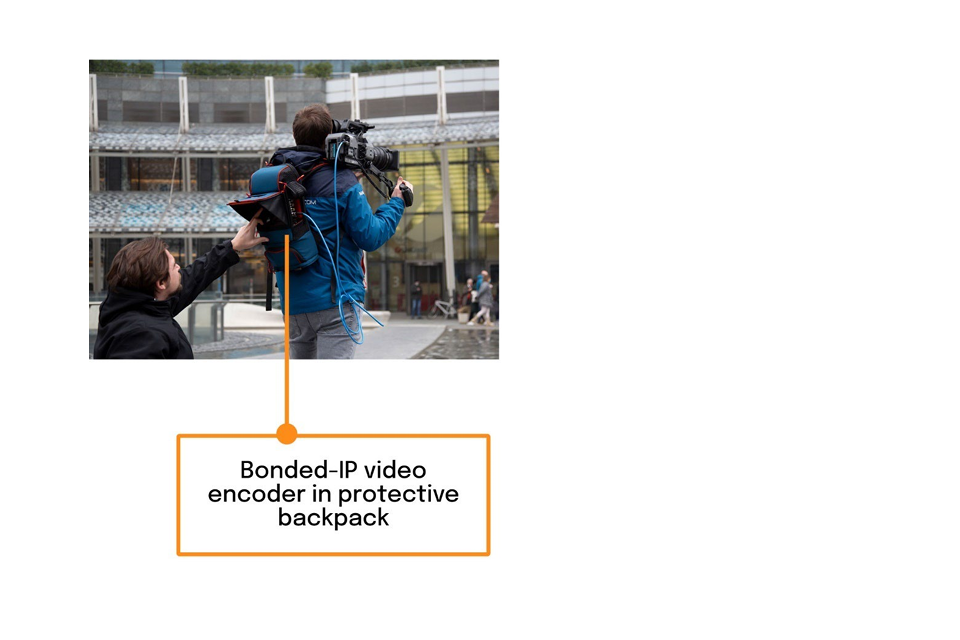
Worn in a backpack or pouch, allowing hands-free operation, or can be rack mounted in a vehicle or server room.
Examples of legitimate use cases using Bonded-IP Video Encoders can be found in Annex A.
Image 1: Broadcast devices (Portable and rackmount)
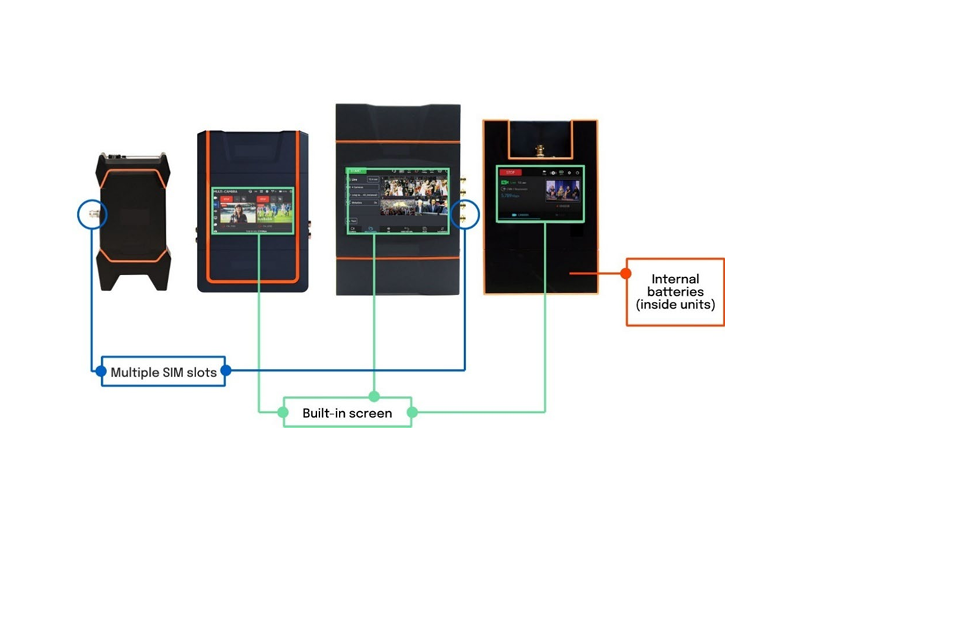
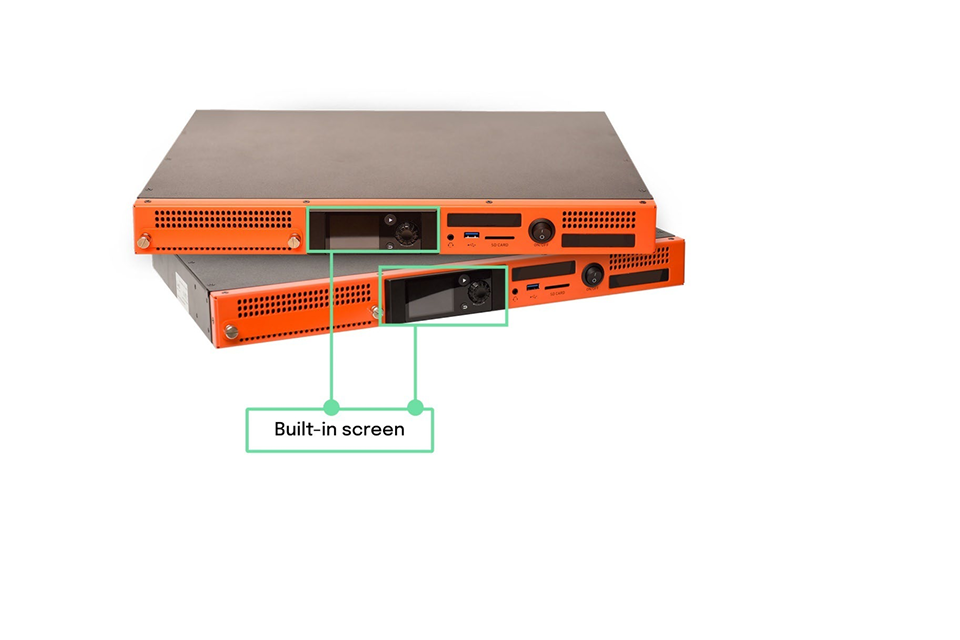
Image 2: Broadcast device in action for live news and sports coverage
Why Bonded-IP Video Encoders do not classify as SIM farms
Bonded-IP Video Encoders are not classified as SIM farms where they do not meet the statutory definition, because they do not:
-
Send or receive SMS messages.
-
Make telephone calls.
-
Are used to transmit video, audio and programme data, not messages.
Applying the good reason defence in practice
For law enforcement
If there is doubt about a device:
- Consider the context of use:
- Is the device connected to cameras, microphones, or broadcast equipment?
- Is it being used at a news event, public gathering, sports venue, or incident scene?
- Consider the apparent purpose:
- Is the device sending video or data to a known destination such as a newsroom or control room?
- Is there any indication it is being used to make calls or send SMS messages?
- Is their use of multiple SIM cards for reliability and coverage and not communication with people?
- Consider supporting indicators
- Presence of media credentials, event accreditation, or production equipment.
- Clear association with broadcast, journalism, corporate or public safety activity.
If these indicators are present, the good reason defence is likely to apply, and enforcement action should take this into account before any seizure or referral.
Powers of police to seize SIM farms and material
Where SIM farms or Bonded-IP Video Encoders are used for broadcasting, any audiovisual material held in memory storage on the devices may constitute journalistic material that is special procedure material (and maybe even excluded material) for the purposes of the Police and Criminal Evidence (PACE) Act 1984, and therefore subject to the protections afforded by that Act. As such, police officers investigating a suspected offence of possession or supply will need to comply with the PACE requirements regarding access to special procedure and excluded material.
For members of the public and legitimate users
If you are lawfully using a Bonded-IP Video Encoder:
-
You are allowed to possess and use the device for legitimate purposes such as broadcasting or live streaming.
-
You should be able to explain, in simple terms, what the device is used for.
-
Supporting information such as work assignments, credentials, or evidence of filming or streaming activity may help quickly resolve any uncertainty.
The law does not require technical explanations or credentials to be produced. It relies on reasonable assessment of purpose and use.
Why this safeguard matters
The good reason defence is essential to ensure:
-
Journalists can report freely from the field.
-
Broadcasters can cover live events and emergencies.
-
Sports organisations can cover live sports events.
-
Public safety organisations can use modern video tools.
-
Lawful activity is not disrupted by misunderstanding or misidentification.
It reflects the intention of the Act to prevent fraud, not to interfere with legitimate broadcasting, production, or public interest work.
Key point to remember
If a device appears to be used for sending live video or data, and not for making calls or sending SMS messages, then even where there is initial uncertainty, the good reason defence should be considered before concluding that an offence has occurred.
Summary
Bonded-IP Video Encoders are essential tools used daily for news reporting, sports broadcasting, public safety, and live event coverage.
Some examples of where they are used:
-
Daily news gathering, including AP, BBC, ITN, ITV, and Sky News.
-
Elections e.g. UK General Election, US Presidential Election.
-
Sporting events e.g. Olympics, World Cup, London Marathon, R&A Golf Championships, football league games, motorsport, yacht races etc.
-
Major public events e.g. HM King Charles III’s Coronation coverage.
-
Emergency and public safety operations e.g. for safety at live concerts using drones.
Although they may contain multiple SIM cards, their use is clearly distinct from SIM farms used to commit fraud.
Their purpose is to transmit live video and audio to a known destination, not to contact members of the public. Recognising these common use cases helps ensure legitimate devices are not misidentified and that lawful activity can continue without disruption.
Scenario 2: Transport
Transport providers often use multi-SIM devices that could fall within the scope of the SIM farm legislation to offer Wi-Fi on trains, trams, buses, coaches or ferries as the users will be moving between different Mobile Network Operators (MNOs) according to which network has best reception.
Transport and logistics businesses also use SIM farms in order to track and monitor the location of freight in remote locations where it is difficult to obtain a wired internet connection – including in junction boxes beside railway lines; in freight yards; and at airports, and either in fixed installations or attached to mobile vehicles (such as those used to move shipping containers). Multiple SIMs are used here either for resilience to ensure reliable transmission of data, or for aggregation so that more data can be sent at the same time. These devices are not used to send texts but are usually capable of it in principle.
To provide the on-train Wi-Fi on passenger trains in Great Britain, train operators use Mobile Communication Gateways.
The gateways allow passengers connecting to the in-carriage Wi-Fi access points to connect to the internet. These gateways often have between 4 and 8 mobile network operators’ plastic Subscriber Identity Modules (SIM) cards or electronic SIMs (eSIM) providing 4G and 5G data connectivity between the train and the internet.
Multiple SIMs are used since:
-
Every mobile network operator has a different level of coverage along rail corridors such that when one mobile network operator’s signal is not available, often a competing mobile operator’s signal is.
-
By aggregating multiple 4G and 5G connections a higher average data speed between the train and internet can be achieved.
-
For cross-border train services (e.g. Eurostar) there is a need to connect to UK, French, Belgian or Dutch mobile network operators, which requires a mix of UK, French, Belgian or Dutch SIM cards.
Scenario 3: Communications providers
Communications providers who operate under Ofcom’s General Conditions regime often use devices that contain more than 5 SIMs to assess and maintain network security and network resilience. Non-UK mobile networks and specialists may also use the technology to test roaming and billing accuracy. These processes do not involve making/receiving calls and text messages to or from members of the public.
Communications providers include fixed-line owners and operators, Mobile Network Operators (MNOs), telecoms resellers providing bespoke services, even though they do not own a network themselves, mobile virtual network operators (MVNOs) who do not own their own network but use networks belonging to MNOs; and Internet service providers (ISPs), regardless of the technology they use.
Legitimately supplying a SIM farm
Is a licence required to lawfully possess or supply a SIM farm?
Licences to possess or supply SIM farms will not be required. It is important to note that many commercially available devices supplied and used for broadcasting and streaming, and transport and communications do not meet the definition of a SIM Farm and are therefore not covered by the Act.
Steps suppliers can take to ensure they are complying with the law
Suppliers must take reasonable steps to verify that the recipient will have a good reason or lawful authority to possess the SIM farm. It should be noted that Bonded-IP Video Encoders are not defined as SIM farms, however suppliers of these may wish to meet the requirements outlined for the supply of SIM farms to be able to apply the ‘good reason’ defence if needed.
When supplying a SIM farm, suppliers must also make a record of the specified information set out in section 152(4) of the Act. This specified information is as follows:
-
The date of the supply.
-
A description of the SIM farm.
-
The name of the recipient and, where the recipient is not an individual, any company number or other registered number.
-
The address of the recipient and, where the recipient is not an individual, the address of any registered office.
-
A description of the steps taken by the supplier to satisfy themselves that the recipient would have a good reason or lawful authority for possessing the SIM farm.
Suppliers should determine how best to collect this information – for example, by using information found on invoices and customer records. Where a record is kept, that retention must be in accordance with data protection law.
Suppliers must put in place appropriate and proportionate steps to satisfy themselves that the recipient would have a good reason or lawful authority under point 5 above. These steps should be reasonable and appropriate to the customer in question, and suppliers should consider what steps are appropriate given the circumstances. Appropriate steps may include requiring recipients to confirm that they have a good reason or lawful authority to possess a SIM farm or including terms or disclaimers with recipients of SIM farms requiring that the devices will be used in accordance with the Act.
Example disclaimer language could include: ‘This device is supplied to be used with good reason or lawful authority under the Crime and Policing Act 2026 and not for the purposes of making calls or sending SMS to telephone numbers.’
There is no expectation on a supplier to go above and beyond what is reasonable.
Annex A: Typical legitimate use cases of Bonded-IP Video Encoders
The following five use cases are commonly seen worldwide and are drawn from real deployments.
These examples help distinguish lawful broadcast equipment from SIM farms.
1. Live news reporting from the field
Who uses it:
Journalists, producers and news broadcasters/engineers.
What the device does:
A reporter connects a camera to a Bonded-IP Video Encoder and transmits live video and audio from a street location, disaster scene, or public event back to a newsroom.
Why multiple SIMs are used:
To maintain a stable live picture when mobile networks are congested or coverage is uneven.
Why this is not a SIM farm:
The device sends one live video feed to a newsroom, studio or cloud service. It does not send texts or make calls.
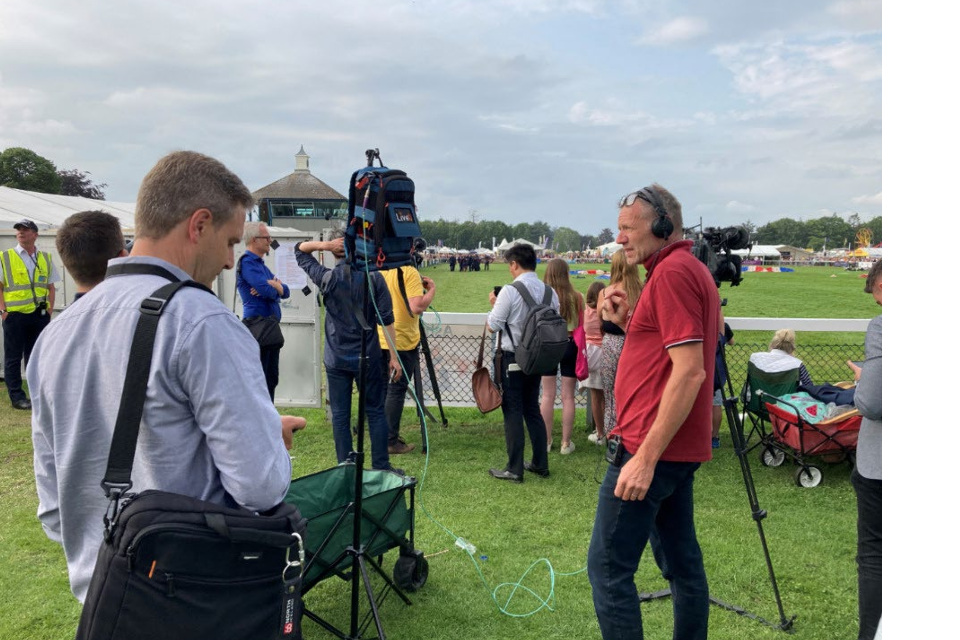
Image 3: Broadcast device in the field
2. Live sports and major event coverage
Who uses it:
Sports broadcasters, organisations and production companies.
What the device does:
Cameras at stadiums, racecourses, or outdoor events use Bonded-IP Video Encoders to send live video to a central production location.
Why multiple SIMs are used:
Large crowds often overload individual mobile networks. Multiple SIMs ensure continuity of coverage.
Why this is not a SIM farm:
The device sends one live video feed to a newsroom, studio or cloud service. It does not send texts or make calls.
Image 4: Broadcast device in use at Paris 2024

3. Remote and cloud-based production
Who uses it:
Broadcast networks, sports organisations and production teams.
What the device does:
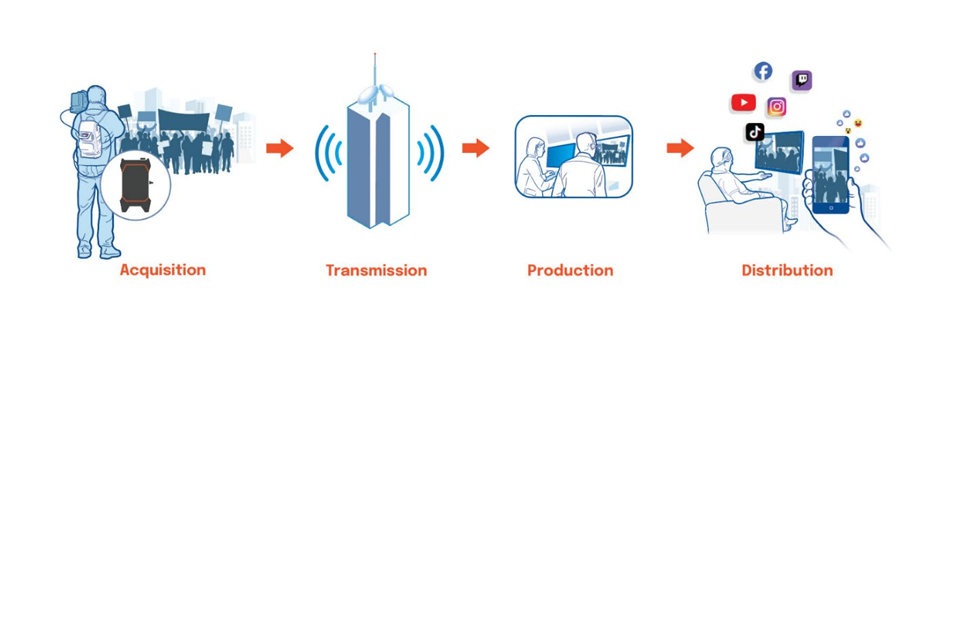
Multiple cameras at a location send video back to a remote production hub where the program is directed and mixed.
Why multiple SIMs are used:
To aggregate bandwidth and maintain reliability without installing fixed lines.
Why this is not a SIM farm:
The device sends one live video feed to a newsroom, studio or cloud service. It does not send texts or make calls.
Image 5: Simple production workflow
4. Emergency and public safety operations
Who uses it:
Emergency services and public safety agencies.
What the device does:
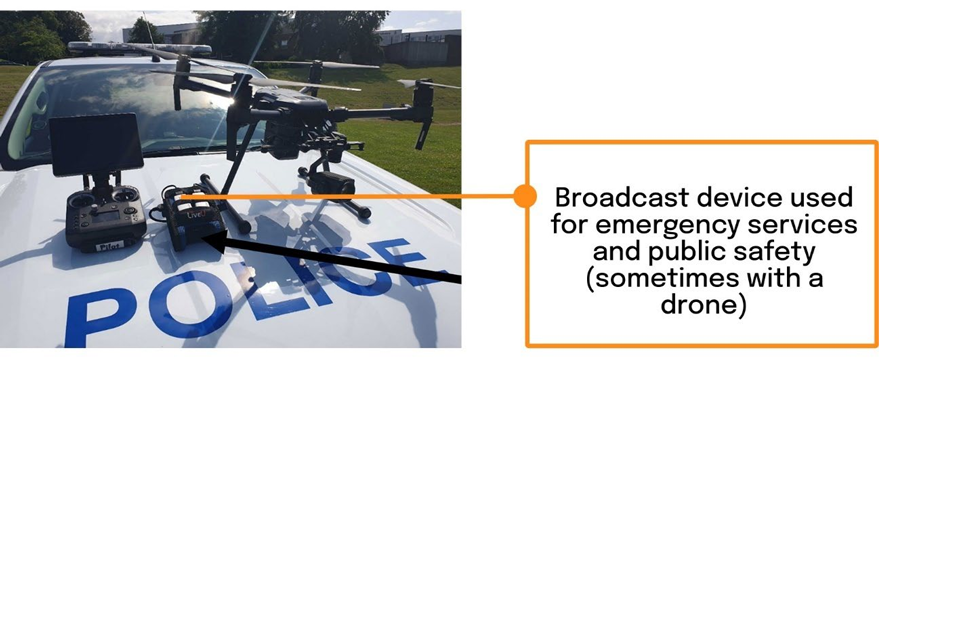
Live video from body-worn cameras, vehicles, or drones is transmitted to a control room to support situational awareness.
Why multiple SIMs are used:
Incidents often occur in areas with variable coverage. Multiple SIMs improve reliability.
Why this is not a SIM farm:
The device supports real-time video for operational decision-making. It does not send texts or make calls.
Image 6: Broadcast device used by police forces
5. Live streaming for public information and events
Who uses it:
Public bodies, event organisers, and content producers.
What the device does:
Streams live video of press conferences, public announcements, cultural events, or religious services to online platforms.
Why multiple SIMs are used:
To ensure uninterrupted streaming when network conditions change.
Why this is not a SIM farm:
The device sends one live video feed to a newsroom, studio or cloud service. It does not send texts or make calls.
Quick recognition guide
Indicators of a legitimate device:
-
It is connected to a camera or audio equipment.
-
It displays or processes a live video feed.
-
It is worn in a backpack or mounted in an outside broadcast vehicle, or broadcast rack.
-
It sends content to a studio, control room, or cloud service.
-
It is operated by media, broadcast, or public safety personnel.
A device is likely a SIM farm if:
-
It is designed to send or receive large numbers of SMS messages.
-
It is designed to make automated telephone calls.
-
It is not connected to any video or audio equipment.