Police Activity Survey (second edition)
Updated 15 April 2026
Applies to England and Wales

© Crown copyright 2026
This publication is licensed under the terms of the Open Government Licence v3.0 except where otherwise stated. To view this licence, visit nationalarchives.gov.uk/doc/open-government-licence/version/3 or write to the Information Policy Team, The National Archives, Kew, London TW9 4DU, or email: psi@nationalarchives.gov.uk.
Where we have identified any third party copyright information you will need to obtain permission from the copyright holders concerned.
This publication is available at https://www.gov.uk/government/publications/police-activity-survey-second-edition/police-activity-survey
Executive Summary
Estimating how police use their time helps the public, the policing sector and the Home Office to understand demand, priorities, and productivity. The last time there was a national survey of police time was in financial year 2006 to 2007. To produce updated estimates which reflect the changes in police demands and operational choices, the Home Office conducted a new Police Activity Survey over a 7-day period in February 2023. Operational officers and staff recorded how they spent their shifts across various policing activities. Thirty five of the 43 police forces in England and Wales chose to participate - a force participation rate of 81%. Over the course of the survey period 160,000 responses were collected with over 6.1 million hours of activities recorded.
This publication presents the results of the Police Activity Survey (PAS) and an analysis of police time based on the results; it focuses on 4 key areas:
- The allocation of how police spend their time across specific crime incident activities, specific public safety and welfare (PSW) incident activities, and general crime/PSW activities not related to a specific crime or PSW incident.
- The impact of ‘complexities’ such as drugs, alcohol, and mental health on how much time is spent on incidents.
- The estimated cost of responding to an incident.
- Breakdowns specific to neighbourhood police departments.
This is the first time the Home Office has published analysis of this type; it is a significant addition to the evidence base and has the potential to be widely used to support productivity improvements in policing.
The survey was split into 4 main elements:
- Personnel Information – Force, department, and rank of the survey respondent.
-
Time-use Information – Split into 3 activity types:
- specific crime incident activity
- specific public safety and welfare (PSW) incident activity (non-crime police actions focused on protecting the public and maintaining safety)
- general crime/PSW activity not related to a specific crime or PSW incident
- Pathways – The steps involved in responding to a specific crime or PSW incident, for example, initial response.
- Complexities – Contributing factors that may impact the resource required to respond to a specific incident, for example, drugs.
The survey activity data, combined with supplementary wage data supplied by forces, can be used to estimate police costs associated with responding to specific incidents.
Key Findings
The results reflect only those forces involved during the specific week of participation and are not representative of all police forces in England and Wales.
Time taken to respond to incidents will vary across type of incident and forces.
Users should consider the context and limitations when using the findings. A full list of assumptions and caveats, as well as the list of the 35 forces who participated in PAS, is provided in the Annex.
Summary analysis of police time
Overall time: The largest share of overall time is allocated to general crime/PSW activities not related to a specific crime or PSW incident (for example, visible patrol and supervisory activity) at 53.1%, followed by specific crime incident activities at 34.9%, and specific PSW incident activities at 12.0%.
Specific crime incident activities: Within the time spent on specific crime incident activities, the largest portion (38.2%) is dedicated to responding to violence with and without injury, rape, and other sexual offences.
Specific public safety and welfare (PSW) incident activities: Within the time spent on specific PSW incident activities, missing person incidents took up the most time (16.0%), followed by concern for safety (14.2%), and police-generated resource activities (12.2%).
General crime/PSW activities not related to a specific crime or PSW incident: Within the time sent on General crime/PSW activities not related to a specific crime or PSW incident, visible patrol and non-incident related paperwork were allocated the most time at 12.7% and 11.7%, respectively.
Costs of police responding to specific crime incident activities
Activities recorded through PAS, in conjunction with non-workforce police costs, were allocated into 4 cost categories that were developed for the purposes of this analysis. Total police budget is split as follows:
- crime response workforce (29.9%): time spent handling specific crime incidents
- PSW response workforce (9.0%): time spent handling specific PSW incidents
- crime anticipation (46.0%): costs incurred to support police preparedness to respond to crime, including infrastructure, equipment (for example, police vehicles, buildings), and officer time spent on activities - such as training and briefings - that enhance readiness to respond effectively
- PSW anticipation (15.2%): costs incurred to support police preparedness to respond to PSW incidents
Crime response workforce unit costs reflect the cost of the police responding to a crime, based on the time officers spend handling the incident. These costs represent an average estimate for the individual crime incident type. Bicycle theft has the lowest workforce unit cost, of £140 per incident. Homicide has by far the highest cost, of £575,000 per incident. The homicide cost has a particularly high level of uncertainty, and this is reflected in it having a wide quartile around its unit cost, as described in section 4.
Complexities
On average, activities with at least one complexity flag take approximately 55.6% longer than those with no associated complexity. The complexities that took up the largest proportion of police time were drugs and domestic abuse, followed closely by mental health, alcohol, and safeguarding.
Neighbourhood Policing
Departments which were explicitly listed as neighbourhood departments in the survey dedicated more of their general crime/PSW time to visible patrols (18.1%) compared to all departments (6.7%). They also spent more time on other crime prevention activities and four times as much on community involvement.
1. Introduction
The Police Activity Survey (PAS) was developed by the Home Office, in partnership with police forces and with support from PwC during an initial pilot phase, to improve the evidence base around how resource is used in policing. It had the objective of generating results that could be used to improve productivity, better understand the costs of responding to crime incidents and produce better outcomes for the public.
The survey was completed by police officers and staff in operational roles (excluding those in corporate functions) in each participating force over a 7-day survey period. Respondents detailed how they spent their time on shift each day across a range of police activities. A full list of these activities can be found in the Annex.
There were 2 developmental pilot phases of the survey: Phase 1 in April 2021 with 5 participating forces, and Phase 2 in February 2022 with 9 participating forces, The results from these phases are not included in this publication as they are not as robust. This publication provides an overview of the results from Phase 3, which took place in February 2023. The methodology for Phase 3 was informed by the learnings from the earlier phases.
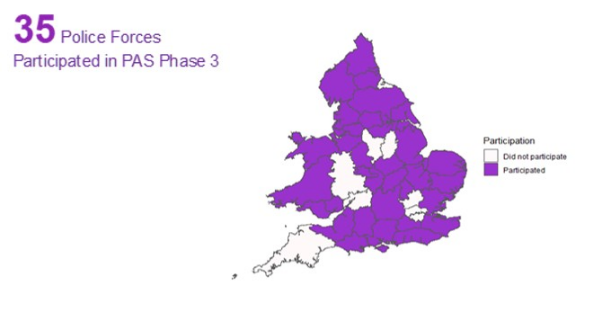
Out of the 43 forces invited to participate in PAS Phase 3, 35 chose to participate - a force participation rate of 81%. The names of all participating forces are listed in the Annex. Over the course of the survey period, the Home Office collected over 160,000 responses with over 6.1 million hours of activities recorded.
Figure 1: Map of participating forces
2. Survey process and methodology
The online survey captured how police officers and staff (excluding corporate functions) allocated their time over a 7-day period (1 February to 8 February 2023). Participants completed an online survey after their shift. For each activity recorded, participants selected the time taken from a predefined set of intervals (2, 5, 10, 15, 20, 30, and 45 minutes, as well as 1, 1.5, and 2 hours. From 2 hours onward, the available options increased in hourly intervals, up to a maximum of 18 hours).
The survey was split into the following 4 main elements:
- personnel information
- time-use information
- pathways
- complexities
More detail on these elements is provided below.
Personnel information
Force
Department
Rank
Time-use Information
The time component was based on different question sets for each of the 3 types of activity: those directly related to specific crime incidents, those related to specific public safety and welfare (PSW) incidents, and general crime/PSW activities not related to a specific crime or PSW incident[footnote 1].
These are explained below, and a full list of these incidents is available in the Annex.
Specific crime incident activity: The activity was in response to a specific crime incident. Examples include homicide and shoplifting.
Specific public safety and welfare (PSW) incident activity: The activity was in response to a specific PSW incident. Examples include activities relating to missing persons and protests.
General crime/PSW activity: An activity associated with a specific crime or PSW incident. Examples include patrols and training.
At the start of each shift, respondents were asked to choose which category best described the first task they worked on. Their choice determined which set of follow-up questions they would receive next. Each of the 3 categories above had its own set of questions that focused on the specific activities involved. For example, what crime type was it? (for example, homicide), which part of the crime pathway was it? (for example, initial response), were there any complexities present? (for example, mental health). Respondents continued answering these questions until they had fully accounted for all the tasks in their shift.
Pathways
Pathways outline the steps involved in responding to a crime or PSW incident from start to finish. Each pathway can be divided into specific categories, such as ‘dealing with incident,’ which falls under the initial response stage, or ‘paperwork/case file preparation,’ which falls under the pre-court activities. Pathway information was not collected for general crime/PSW activities because these activities are more specific, and each one would need its own unique pathway structure to be properly represented.
Specific crime incident pathway
Initial response:
- dealing with incident
- driving
- paperwork/other activities, post initial response at the scene
- officially recording crime
- waiting for other services
Investigations:
- enquiries
- intelligence/proactive/covert enquiries
- searches
- paperwork/case file prep
- safeguarding
- victim contact/updates
- witness enquiries
- exhibits/forensics/digital procedures
- ID procedures
- dealing with detainees
- suspect interviews
- waiting for other services
Disposals
- dealing with detainees (for example, custody)
- paperwork/case file prep
- victim contact/updates
- safeguarding
- prevention orders
Pre-court activities
- paperwork/case file prep
- victim contact/updates
- dealing with detainees
- waiting for other services
Court
- waiting or giving evidence at court
- paperwork/case file prep
- victim contact/updates
- deal with detainees
- waiting for other services
Specific PSW incident pathway
Initial response
- dealing with incident
- driving
- paperwork/other activities, post initial response at the scene
- officially recording the incident
- community reassurance
- waiting for other services
Activity relating to the incident
- enquiries
- observations
- searches
- paperwork/case file prep
- safeguarding
- public contact/updates
- ID parades
- dealing with those associated with the incident
- prevention orders
- community reassurance
- waiting for other services
Outcome/resolution
- paperwork/case file prep
- dealing with those associated with the incident
- issue advice/warnings
- safeguarding
- public contact/updates
Complexities
Participants could assign a ‘complexity flag’ to certain incidents to account for contributing factors that may impact the resource required to resolve an incident. These flags were designed to help capture the broader context and challenges involved in managing incidents. An incident can have zero, one, or multiple complexity flags associated with it. It was down to the officers and staff to record these correctly.
The complexity flag options were:
- safeguarding
- cyber
- alcohol
- hate
- COVID-19
- domestic abuse
- mental health
- drugs
- child sexual exploitation (CSE)
2.1 Interpreting the results
Except for the police costs, all results in this publication are presented as a percentage.
The proportions of time reported for the different activity types reflect the activities recorded within PAS, not the number of incidents for the different activity/incident types, as each incident can generate multiple activities.
This publication does not include comparisons between forces, as the primary aim of this work was to develop robust national time-use estimates. Force level breakdowns are beyond the scope of this publication as they are less reliable and operational differences between forces also introduce variability that makes inter-force comparison less meaningful.
3. Summary analysis of police time
3.1 Summary results
In the survey, activities are separate tasks, such as responding to a homicide incident. Time refers to the total amount of time spent on these activities, for example, how much time was spent responding to homicide incidents. By comparing these 2, it is possible to understand the relative time each activity takes. For example, if a category shows fewer activities but more time spent, it means each activity takes longer to complete. Therefore, PAS can show not only how often tasks occur but also how much time they require.
Figure 2: Proportion of total police time and activities by activity grouping
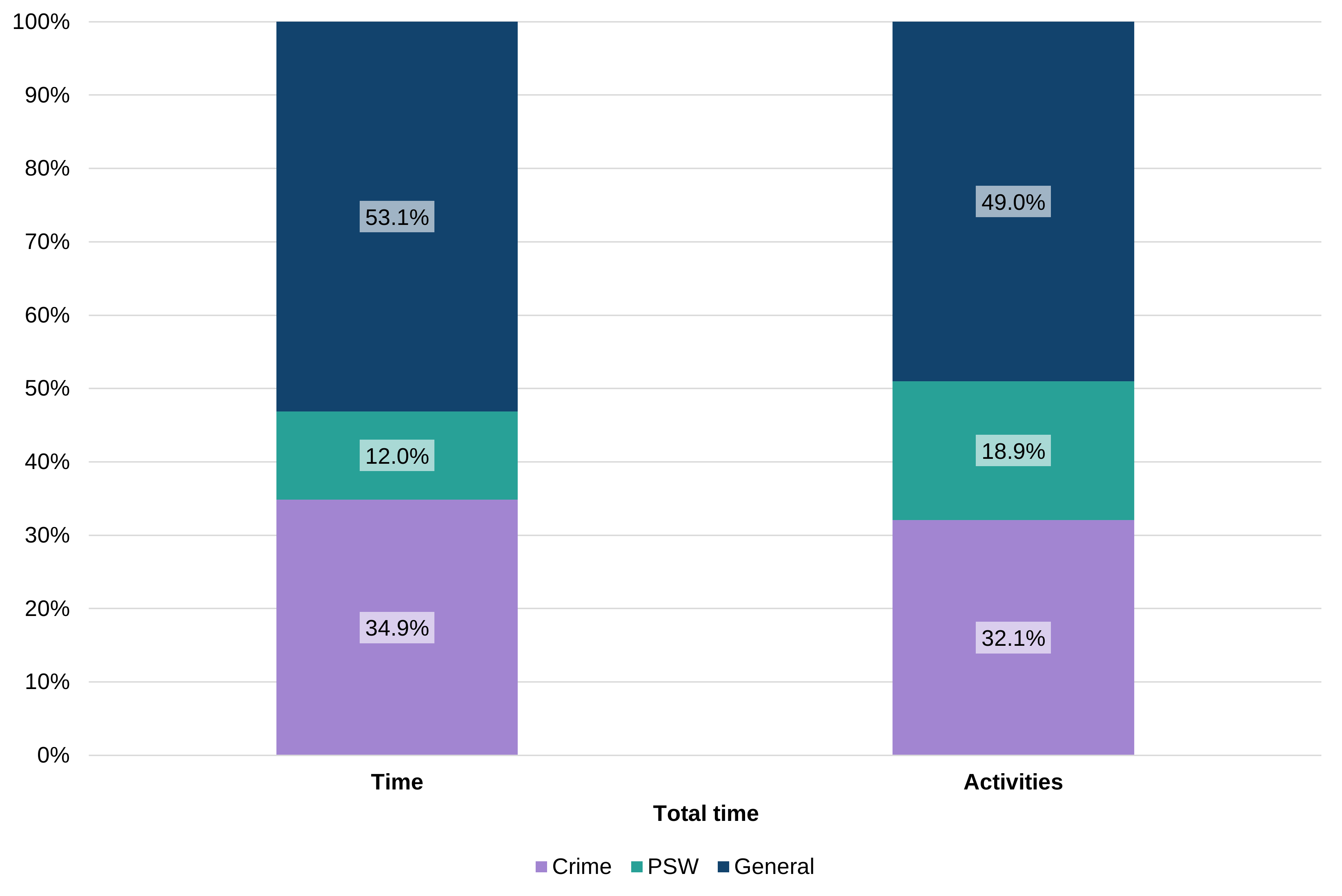
General crime/PSW activity accounted for the largest percentage of national police time and activities, at 53.1% and 49.0%, respectively. These activities help to enable crime prevention and allow the police to react effectively when crimes occur. The largest percentage of time within general crime/PSW activity was taken up by visible patrols - which accounted for 6.7% of overall police time.
3.2 Specific crime incident activity
Responding to specific crime incident activity accounts for 34.9% of all recorded police time. Figure 3 below shows the breakdown of time spent on each crime incident type, as a proportion of total time spent on specific crime incident activities.
Figure 3: Proportion of specific crime incident activities time by crime incident type
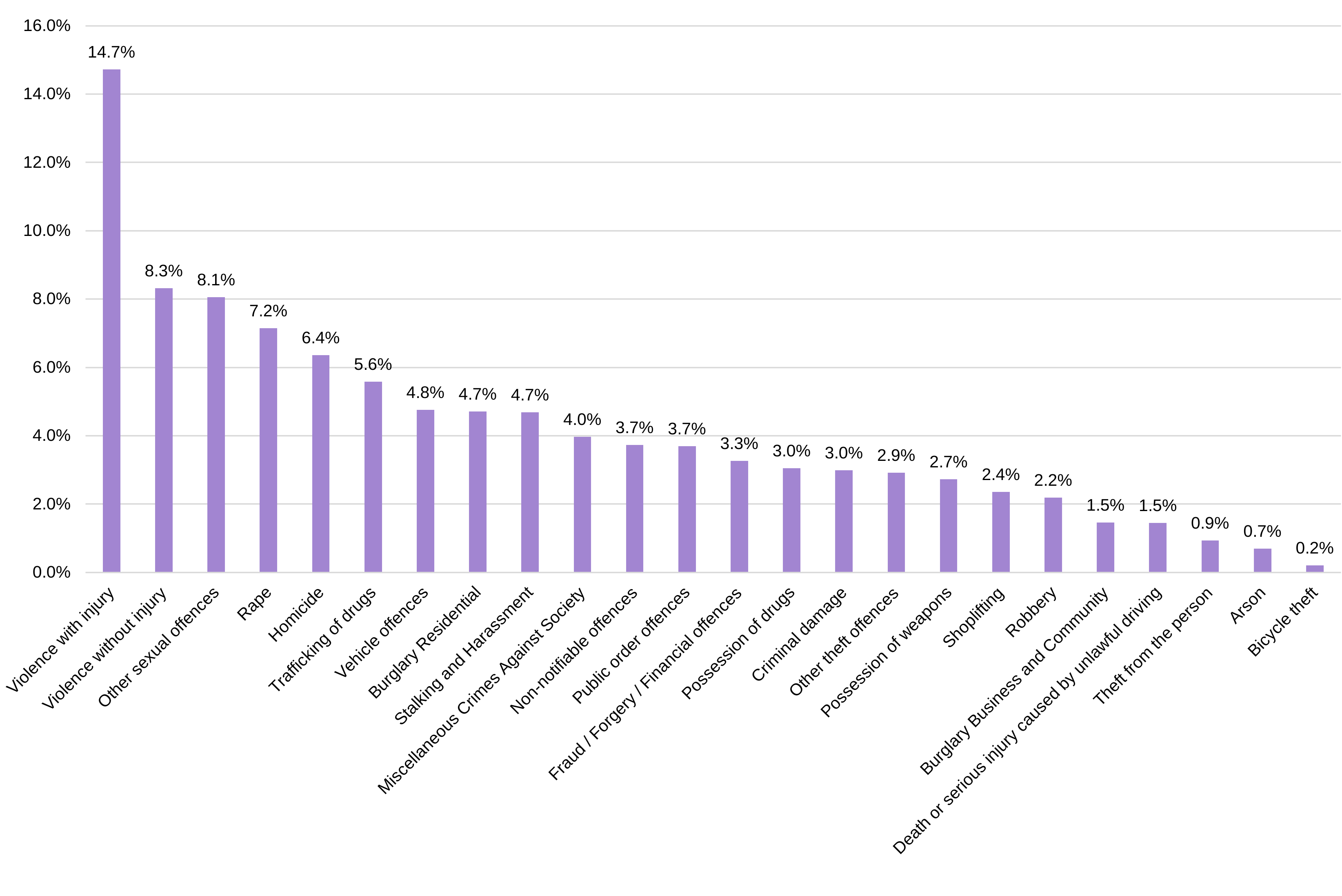
Violence with injury occupied the largest percentage of time spent on specific crime incidents (14.7%) followed by violence without injury (8.3%), other sexual offences (8.1%), and rape (7.2%)[footnote 2]. This is consistent with their status as higher harm crimes - offences that cause significant physical and/or psychological harm. The time spent is also driven by the frequency of the incident type. For example, violence without injury takes up more time than homicide not because it is more harmful, but because it occurs more frequently.
Overall, higher-harm crimes account for 46.1% of the police time spent on specific crime incidents, which equates to 16.1% of total police recorded time. Higher-harm crimes are defined as violence with and without injury, Rape and other sexual offences, homicide and death or serious injury caused by unlawful driving.
Specific crime incident pathways
Pathways outline the steps involved in responding to a specific crime or PSW incident from start to finish. Figure 4 below shows the proportion of time spent on each crime pathway by crime type.
Figure 4: Proportion of specific crime incident time dedicated to each crime pathway
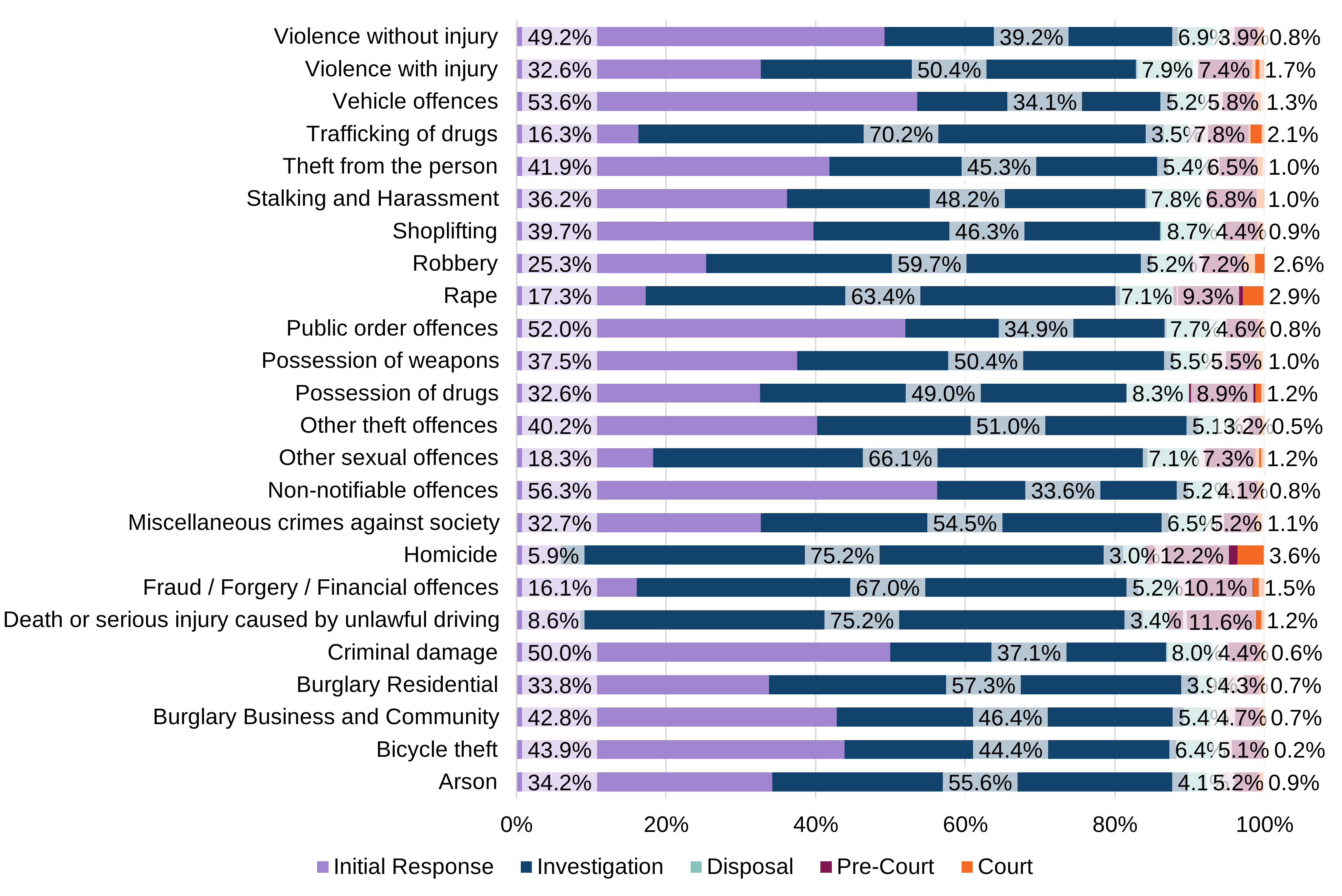
There is a general pattern of initial response and investigation being the most time-intensive parts of the crime pathways, whilst disposal, pre-court and court take up less time.
A large majority of incident time is spent on investigation for certain crime types:
- homicide (75.2%)
- death or serious injury caused by unlawful driving (75.2%)
- trafficking of drugs (70.2%)
The incident types with the highest proportion of time spent on pre-court activities were:
- homicide (12.2%)
- death or serious injury caused by unlawful driving (11.6%)
- fraud/forgery/financial offences (10.1%)
3.3 Specific public safety and welfare incident activity
Figure 5 below shows a breakdown of time spent on specific public safety and welfare incidents by incident type.
Figure 5: Proportion of specific PSW incident activities time by PSW incident type
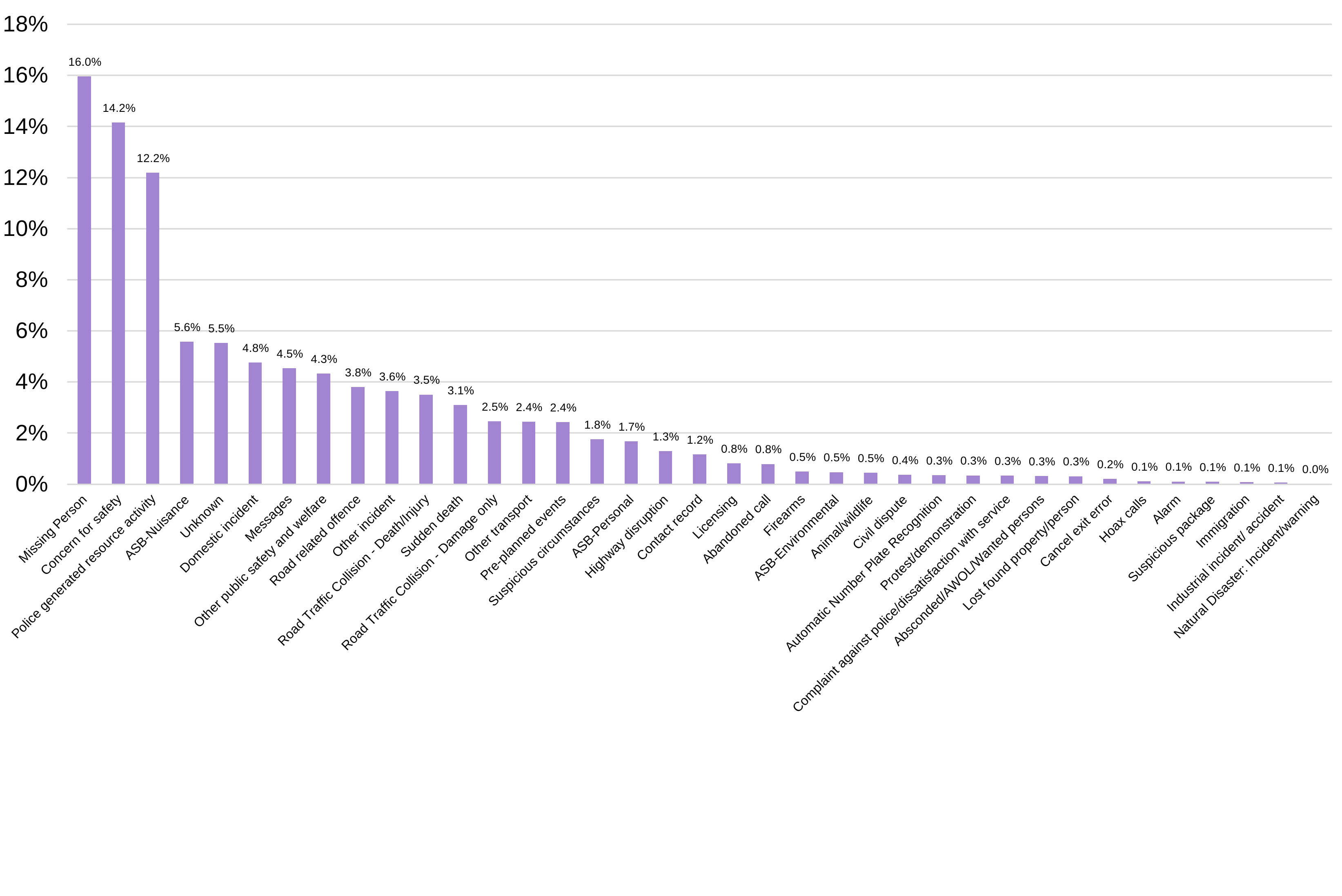
Missing person incidents took up the largest proportion of PSW time (16.0%) followed by concern for safety (14.2%) and police generated resource activity[footnote 3](12.2%).
Specific PSW incident pathways
Figure 6 below shows the proportion of incident time spent on each pathway stage within the PSW category.
Figure 6: Proportion of specific PSW incident time dedicated to each PSW pathway
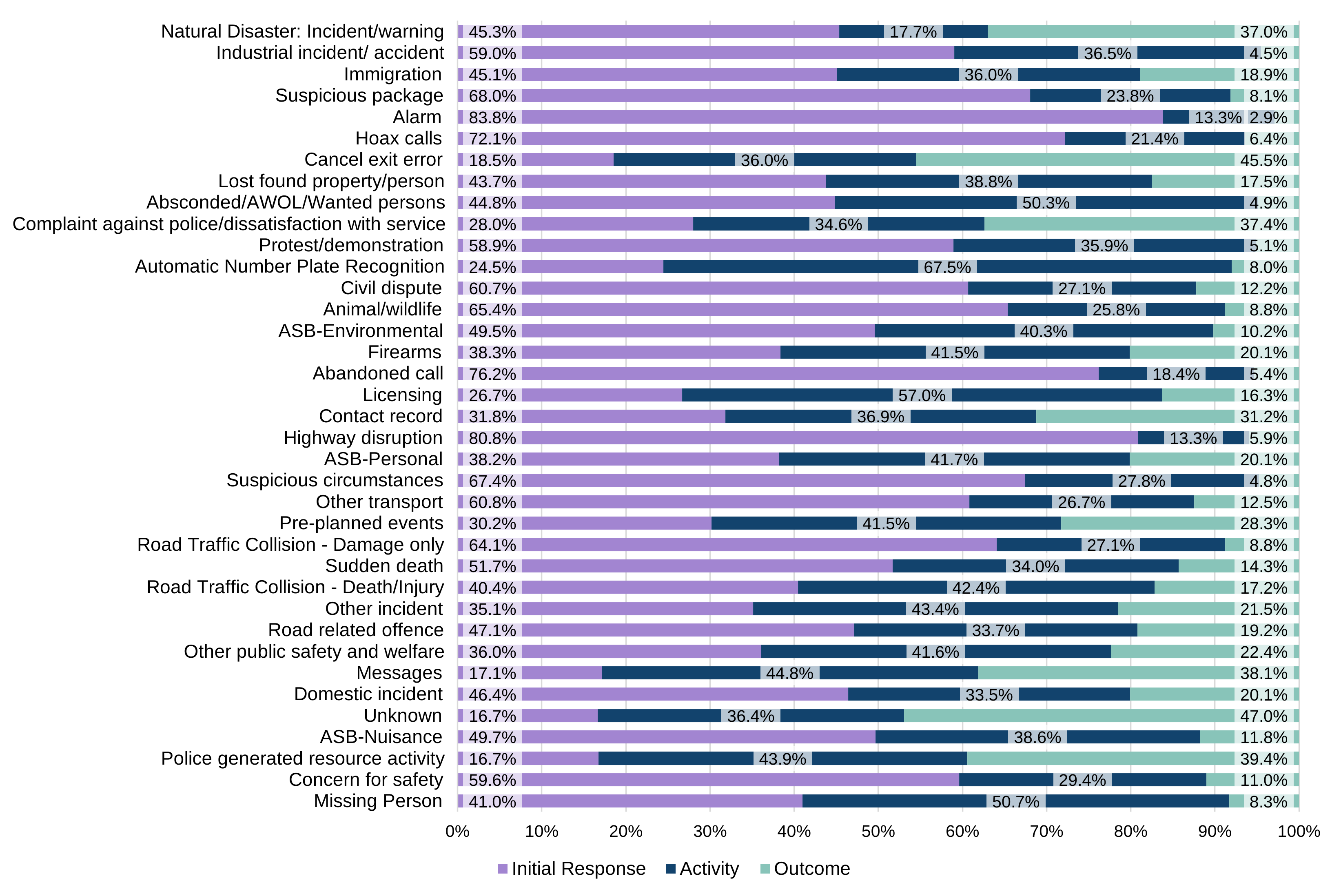
Initial response was particularly time-consuming for certain incidents such as responding to the activation of an automatic alarm system (83.8%), highway disruption (80.8%), abandoned calls (76.2%), and hoax calls (72.1%). Time-intensive PSW types, such as missing person incidents, had a more even distribution of time, with over half spent on the ‘activities related to incident’ pathway – this includes operational actions like searches, safeguarding, and victim contact. A full breakdown of these activities is available in the pathways section of the survey process and methodology.
3.4 General crime/PSW activity
Finally, Figure 7 below shows the breakdown for general crime/PSW activities, by time and activity.
Figure 7: Proportion of general crime/PSW activities time by general crime/PSW activity type
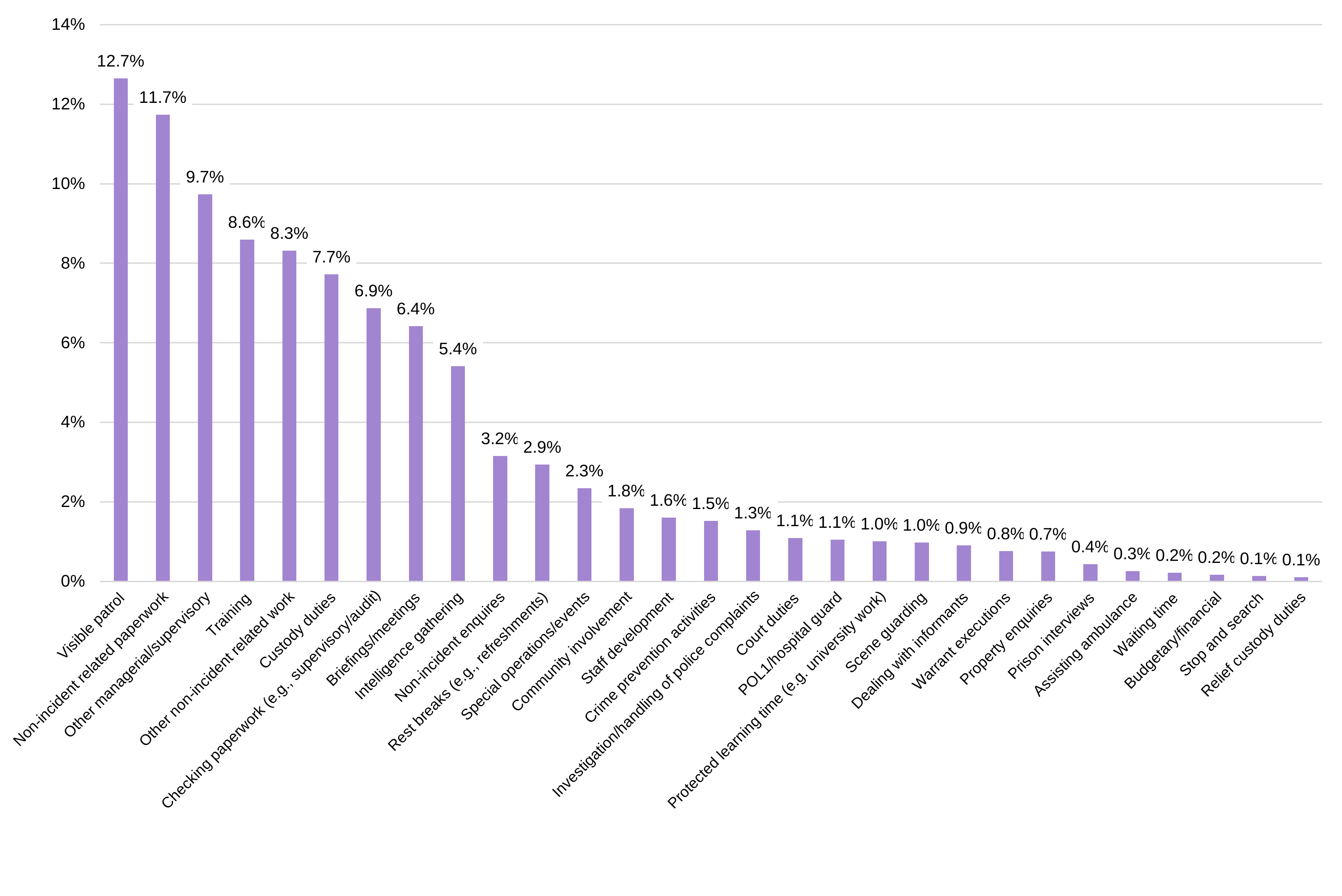
Visible patrol and non-incident related paperwork took up most of the police time within this category, at 12.7% and 11.7% respectively.
4. Police costs
This chapter sets out a new approach to police costs and creates police response workforce unit costs per recorded incident. These should not be directly compared to the ESCC or ABC costs due to changes in methodology and monetisation approach. Please see the police costs methodology for further information.
The survey activity data can be combined with the wage data collected in the survey to generate indicative estimates of police expenditure associated with responding to specific incidents. More accurate and up-to-date cost estimates enhance the precision of cost-benefit analysis, strengthen policy analysis, and ultimately support better-informed decision-making.
Before PAS, the most recent police response costs data was from financial year 2006 to 2007, through the Activity Based Costings (ABC) exercise. Since then, these ABC cost estimates have been uprated as part of the Economic and Social Cost of Crime publication.
A technical explanation of how these PAS cost estimates were obtained can be found in the Police Cost of Crime methodology note.
4.1 Methodology
To calculate these costs, total police budget is split into four separate categories:
- Crime response workforce costs: These reflect the average cost of police responding to a crime based on the time officers spend handling the incident.
- Crime anticipation costs: These refer to the wider costs involved in maintaining the infrastructure that enable the police to effectively respond to criminal activity including police stations, vehicles, technology, and training programmes.
- Public safety and welfare response workforce costs: These reflect the average cost of police responding to a PSW incident based on the time officers spend handling the incident.
- Public safety and welfare anticipation costs: These refer to the wider costs involved in maintaining the infrastructure that enable the police to effectively respond to PSW incidents.
This publication focuses on the police costs of crime - specifically, the workforce[footnote 4] cost of responding to crime incidents (1). Consequently, crime anticipation costs (2) and PSW costs (3 and 4) are outside the scope of this publication, and cost estimates for these are not provided.
4.2 Police budget cost breakdown
Figure 8: Total police budget split by cost category
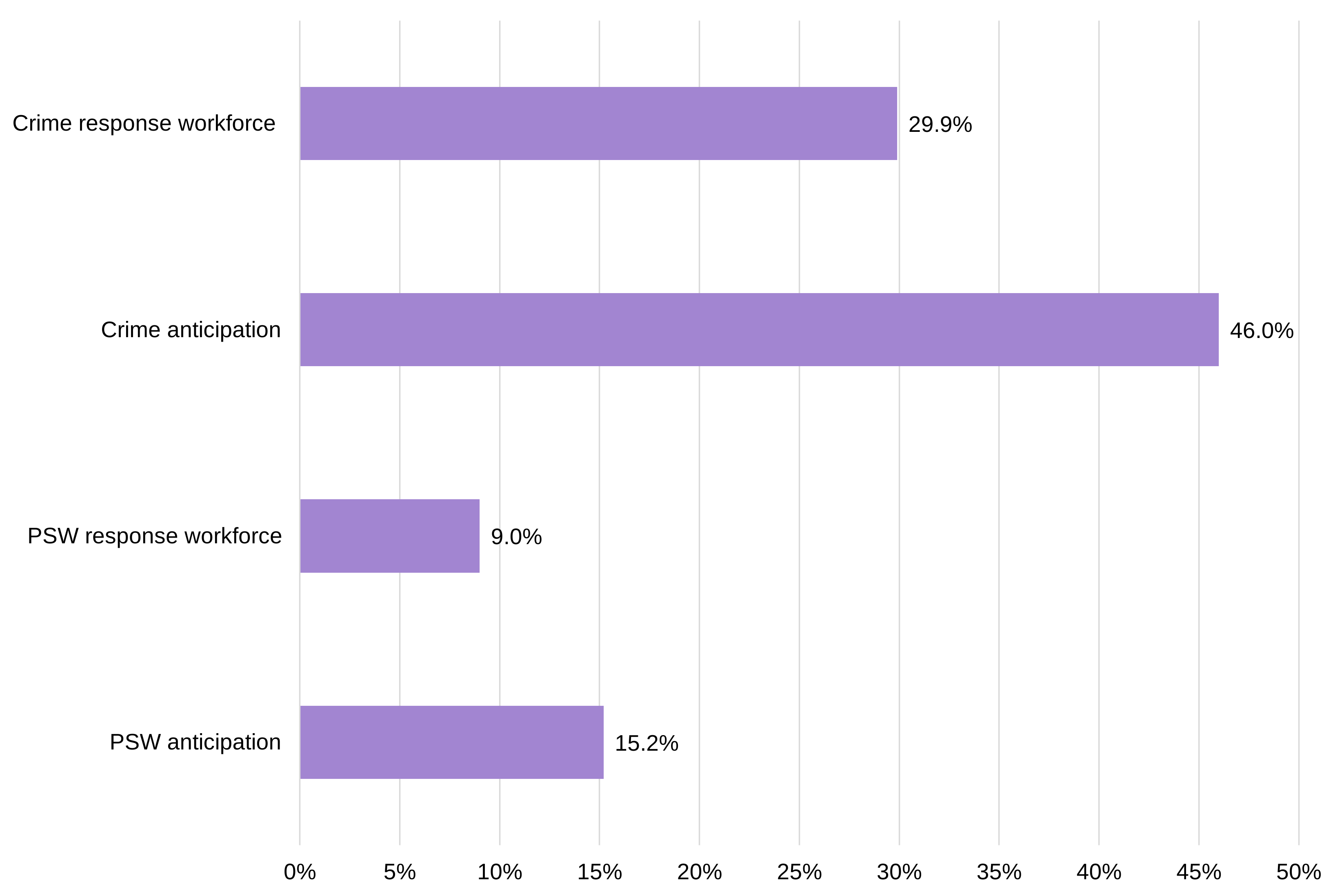
Figure 8 illustrates how the total police budget is allocated across the 4 cost categories. The majority - 75.9% - is dedicated to crime-related costs, split between crime anticipation (46.0%) and crime response workforce (29.9%).
4.3 Results
Table 1 shows the updated estimates of the crime response workforce unit costs. It should be noted, however, that there is uncertainty in these figures. The estimates are based on survey data and modelling, which means they are sensitive to the assumptions made during analysis. These assumptions are discussed further in the ‘Police costs methodology’ note.
To reflect the uncertainty in these estimates, lower and upper quartiles for the unit costs of the 35 forces have been included. Differences in unit costs between forces reflects both genuine regional variation (operational differences between forces) as well as random variation.
Homicide and death or serious injury caused by unlawful driving have the greatest degree of uncertainty and are reflected by having the widest interquartile ranges (as a percentage of its unit cost). This increased uncertainty is due to the low volume nature of the crimes, as well as how different each case can be in terms of complexity.
Table 1: Crime response workforce costs by crime type
| Crime incident type | Crime response workforce unit cost (2022 to 2023, on police recorded crime (PRC) basis) | Lower quartile | Upper quartile |
|---|---|---|---|
| Homicide | £575,000 | £232,270 | £782,050 |
| Death or serious injury caused by unlawful driving | £60,040 | £33,380 | £75,730 |
| Trafficking of drugs | £6,610 | £4,880 | £10,590 |
| Rape | £5,040 | £3,380 | £6,690 |
| Other sexual offences | £3,050 | £2,480 | £3,920 |
| Possession of weapons offences | £2,280 | £1,400 | £2,900 |
| Robbery | £2,070 | £1,670 | £3,610 |
| Miscellaneous crimes | £1,520 | £1,090 | £1,870 |
| Possession of drugs | £1,260 | £1,080 | £1,770 |
| Violence with injury | £1,250 | £1,080 | £1,550 |
| Domestic burglary | £1,240 | £860 | £1,750 |
| Arson | £1,090 | £520 | £1,670 |
| Non-domestic burglary | £870 | £750 | £1,200 |
| Theft from the person | £860 | £770 | £1,740 |
| Vehicle offences | £620 | £510 | £970 |
| Violence without injury | £470 | £410 | £570 |
| Shoplifting | £320 | £250 | £400 |
| Other theft offences | £320 | £220 | £420 |
| Stalking and harassment | £290 | £220 | £390 |
| Public order offences | £280 | £250 | £340 |
| Criminal damage | £270 | £220 | £320 |
| Bicycle theft | £140 | £80 | £180 |
Summarising the range of crime response workforce unit costs, bicycle theft incidents have the lowest workforce unit cost, of £140 per incident. This reflects the lower workforce requirements in responding to such incidents, typically requiring less documentation and fewer resources.
Conversely, homicide incidents have by far the highest cost, of £575,000 per incident. This reflects that some homicide investigations can take months or even years to complete due to their considerable complexity which requires a large, specialised workforce. However, it is worth emphasising that specific incidents will have vastly different costs - some may be resolved quickly if the suspect is found at the scene, whilst others may require months of investigation involving a large team of officers and specialists.
5. Complexities analysis
Complexities are where an officer marked that there was a complexity involved in responding to an incident, such as drugs or domestic abuse. This relied on self-reporting by the officer, who would have had to identify and report it in the survey. The flag highlights where complexity is a relevant factor. While some cases may be more appropriately handled by other emergency services - such as mental health teams - the police are often required to ensure a safe, appropriate response and effective resolution.
Figure 9 below compares incidents with at least one marked complexity against those with none.
Figure 9: Proportion of specific crime and PSW incident time and activities flagged with at least one complexity
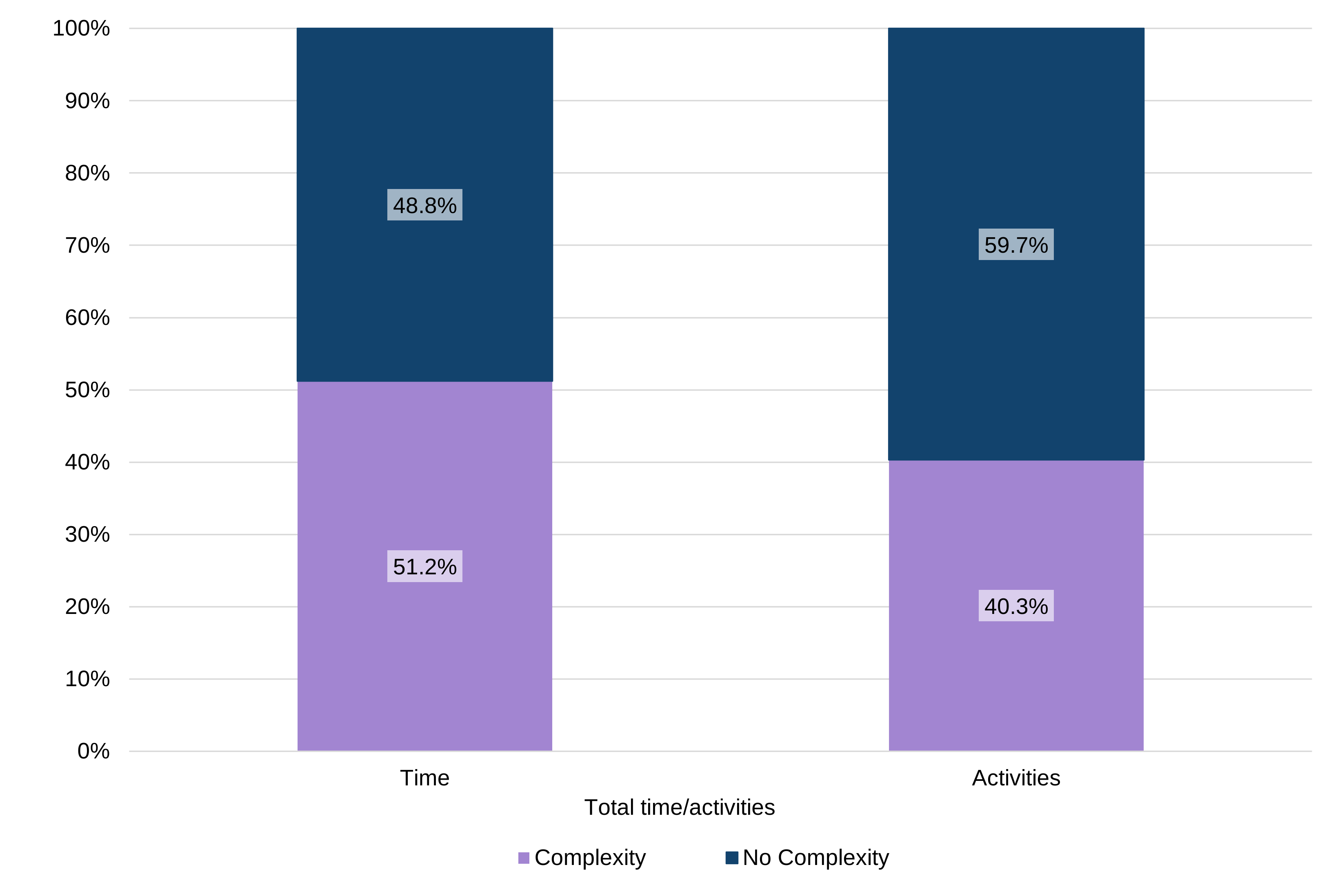
Of total activities, 40.3% were flagged with a complexity, whilst 51.2% of police time was spent on these activities. This is because these complexities generally make incidents more complicated and therefore more time-consuming. On average, activities with at least one complexity flag take approximately 55.6% longer than those with no associated complexity.
Figure 10: Proportion of all specific crime and PSW incident time where there was a complexity attached, by complexity type
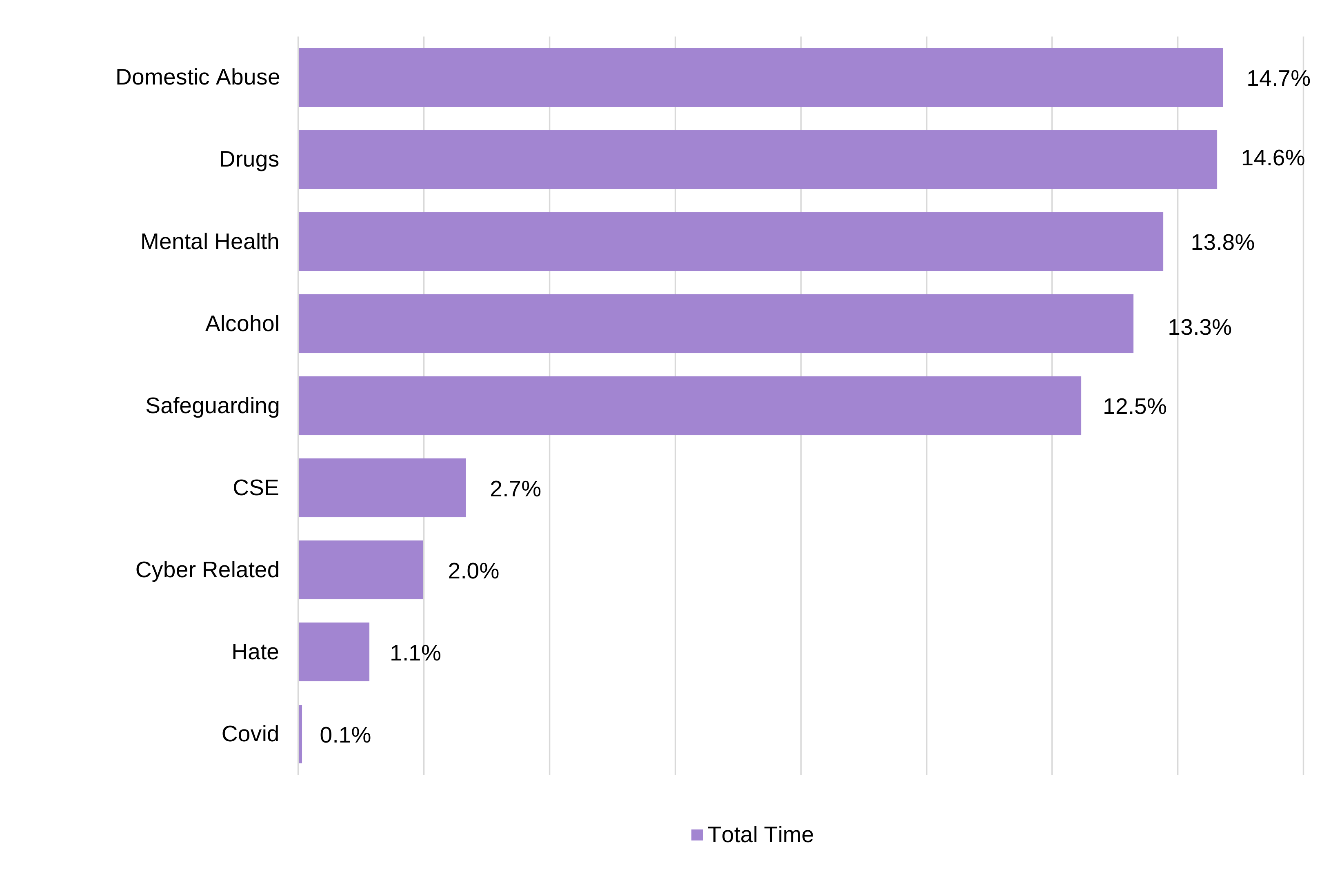
Figure 10 shows the proportion of total specific crime and PSW incident time marked with each complexity type. For example, out of all the time logged against a specific crime or PSW incident type, 14.7% of this time had a domestic abuse complexity flag attached to it. Domestic abuse and drugs were the complexities which took up the largest proportion of police time, closely followed by mental health, alcohol, and safeguarding.
Of specific crime incident activities, 52.1% had at least one complexity marked against them, compared to 48.6% for specific PSW incident activities.
Figure 11 shows for each crime type, what proportion were marked with at least one complexity.
Figure 11: Proportion of specific crime incident time flagged with at least one complexity, by crime incident type
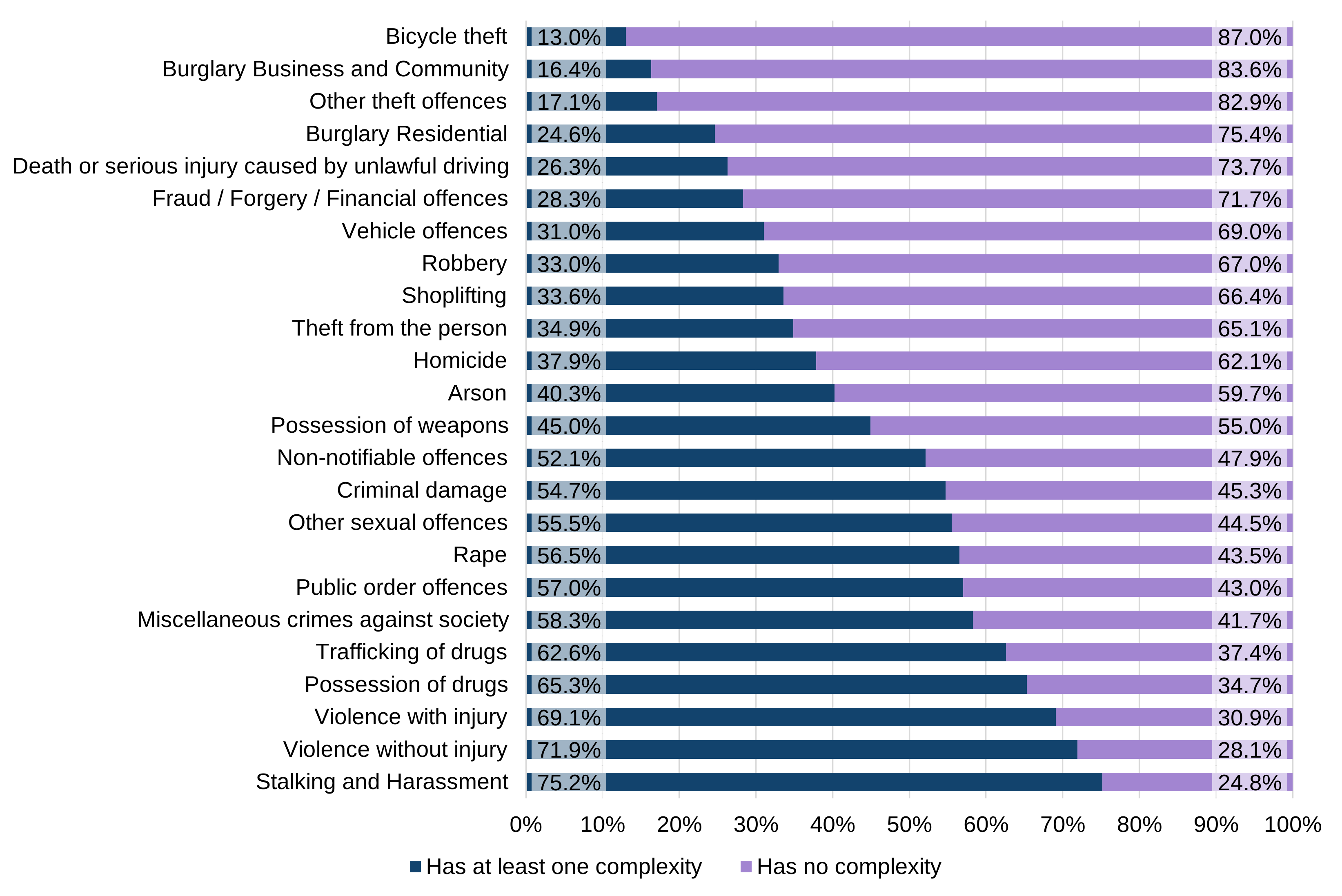
The crime types with the highest proportion of time marked with at least one complexity against it are stalking and harassment (75.2%), violence without injury (71.9%), and violence with injury (69.1%).
Figure 12: Proportion of specific PSW incident time flagged with at least one complexity, by PSW incident type
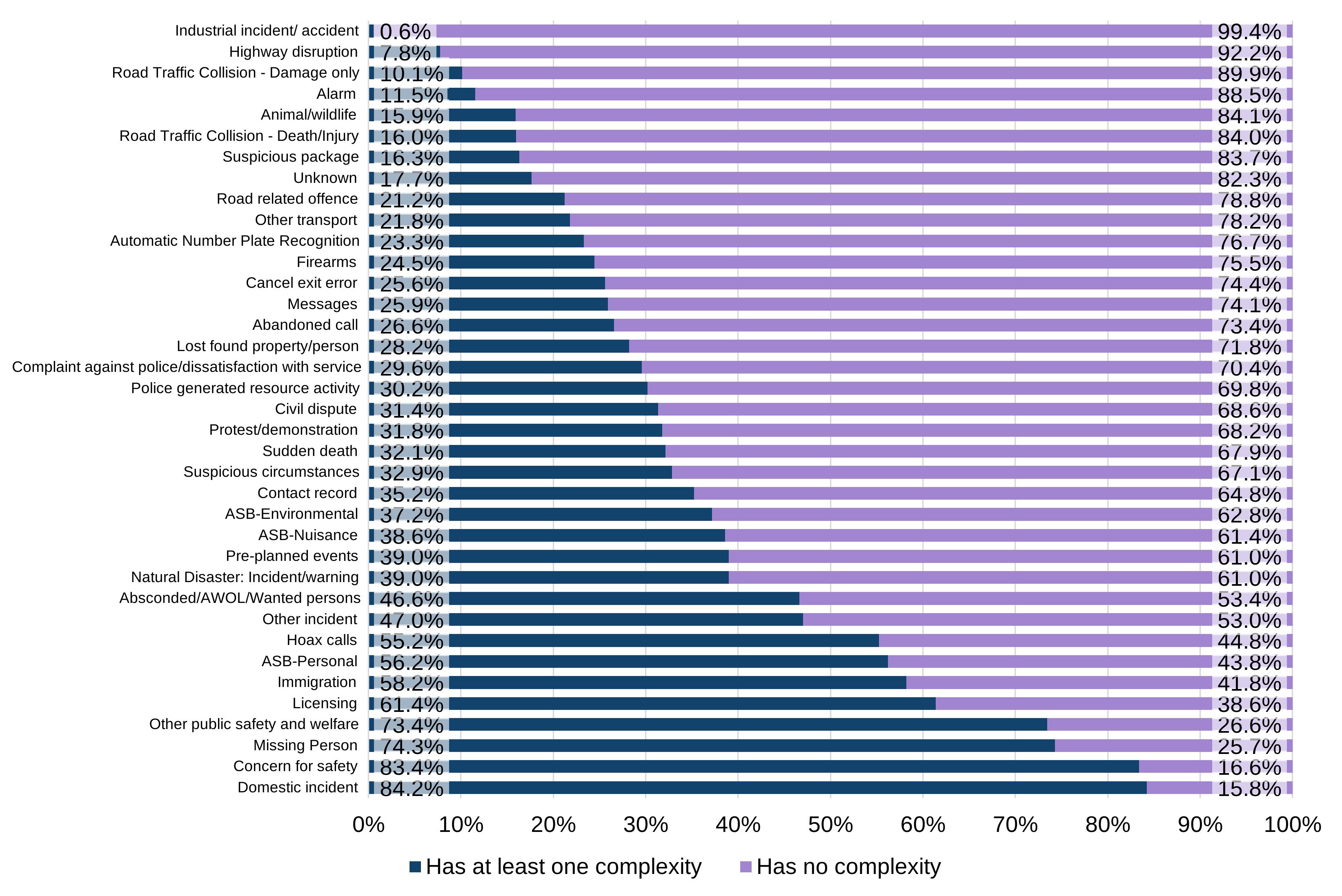
Within the specific PSW incident category, certain incident types - such as concern for safety, domestic incidents, missing person, and other public safety and welfare - have a higher proportion marked with at least one complexity compared to other incident types.
6. Neighbourhood Policing Analysis
Section 6 covers analysis of officers and staff working in neighbourhood policing within the Police Activity Survey.
Operational officers and staff conducting neighbourhood policing will be in different departments depending on the force, and different forces will refer to these departments in different ways. To analyse neighbourhood policing in the survey, departments with “Neighbourhood” in their name are included. This inevitably will not include all neighbourhood policing activity done by policing but represents a proxy.
Figure 13 shows the proportion of time and activities – broken down by specific crime incident, specific PSW incident, and general crime/PSW activity - for neighbourhood policing in comparison to all departments.
Figure 13: Proportion of total time and activities by activity grouping: neighbourhood departments versus all departments
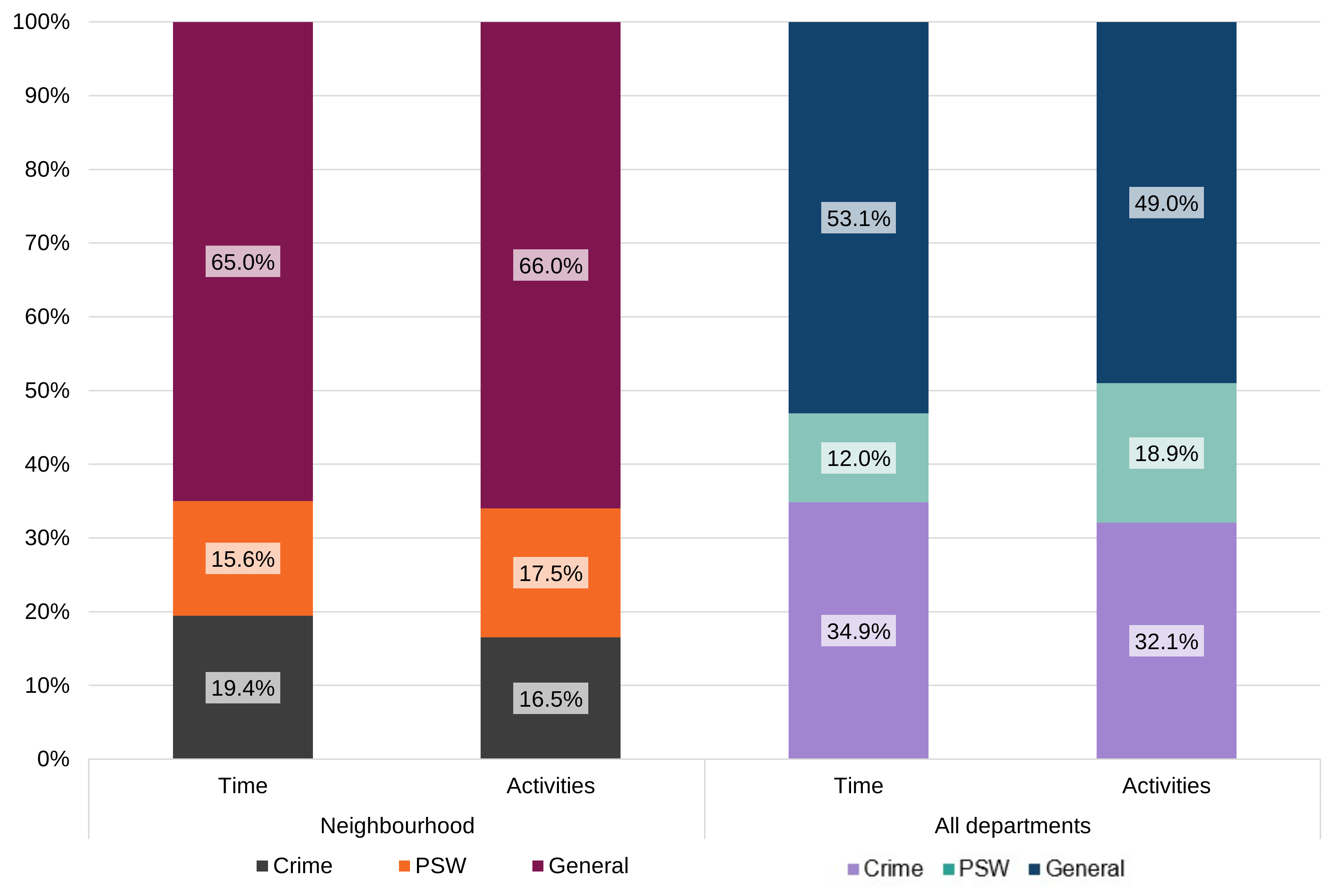
Neighbourhood departments were found to spend more time on general crime/PSW activity than the specific crime incident category. This is partly driven by visible patrol, and neighbourhood police departments dedicate a substantial portion of their total time to these patrols (18.1%) compared to officers from all departments (6.7%). Table 2 below shows a comparison of the breakdowns of time spent on activities in the general crime/PSW activity category between neighbourhood departments and all departments.
Table 2: Proportion of total time dedicated to general crime/PSW activities: neighbourhood departments versus all departments
| Other activity subtype | Neighbourhood departments | All departments |
|---|---|---|
| Visible patrol | 18.1% | 6.7% |
| Non-incident related paperwork | 7.6% | 6.2% |
| Briefings/meetings | 5.4% | 3.4% |
| Community involvement | 4.4% | 1.0% |
| Other managerial/supervisory | 3.8% | 5.2% |
| Training | 3.7% | 4.6% |
| Other non-incident related work | 3.7% | 4.4% |
| Checking paperwork (for example, supervisory/audit) | 3.3% | 3.7% |
| Non-incident related enquiries | 2.4% | 1.7% |
| Rest breaks (for example, refreshments) | 2.1% | 1.6% |
| Crime prevention activities | 1.6% | 0.8% |
| Intelligence gathering | 1.6% | 2.9% |
| Special operations/events | 1.5% | 1.2% |
| Scene guarding | 0.9% | 0.5% |
| Protected learning time (for example, university work) | 0.8% | 0.5% |
| Staff development | 0.8% | 0.9% |
| Warrant executions | 0.6% | 0.4% |
| Custody duties | 0.6% | 4.1% |
| POL1/hospital guard | 0.4% | 0.6% |
| Property enquiries | 0.3% | 0.4% |
| Investigation/handling of police complaints | 0.3% | 0.7% |
| Dealing with informants | 0.3% | 0.5% |
| Court duties | 0.2% | 0.6% |
| Assisting ambulance | 0.1% | 0.1% |
| Waiting time | 0.1% | 0.1% |
| Stop and search | 0.1% | 0.1% |
| Budgetary/financial | 0.1% | 0.1% |
| Prison interviews | 0.0% | 0.2% |
| Relief custody duties | 0.0% | 0.1% |
| Total | 65.0% | 53.1% |
Neighbourhood policing dedicated over 4 times the national average to community involvement activities, spending 4.4% of their time compared to 1.0% nationally. Neighbourhood policing spent 1.6% of total time on crime prevention activities compared to only 0.8% of time at the national level. This, along with visible patrol, reinforces that these departments are dedicating more time to crime prevention activities.
More time was also spent by neighbourhood departments on briefings/meetings, non-incident enquiries, special operations/events, protected learning time, and scene guarding.
7. Annex: Further details on the Police Activity Survey
PAS activity categories
Specific crime incident categories
- homicide
- violence with injury
- violence without injury
- death or serious injury caused by unlawful driving
- stalking and harassment
- rape
- other sexual offences
- criminal damage
- public order offences
- robbery
- burglary residential
- burglary business and community
- vehicle offences
- theft from the person
- bicycle theft
- shoplifting
- other theft offences
- arson
- trafficking of drugs
- possession of drugs
- possession of weapons
- miscellaneous crimes against society
- fraud/ forgery/ financial offences
Specific public safety and welfare incident activities
- ASB-nuisance
- ASB-personal
- ASB-environmental
- concern for safety
- suspicious circumstances
- abandoned call
- domestic incident
- other incident
- missing person
- other public safety and welfare
- hoax calls
- alarm
- civil dispute
- animal/wildlife
- sudden death
- firearms
- suspicious package
- immigration
- industrial incident/accident
- natural disaster: Incident/warning
- protest/demonstration
- licensing
- abandoned/AWOL/wanted persons
- highway disruption
- road related offence
- road traffic collision – damage only
- road traffic collision – death/injury
- other transport
- police generated resource activity
- messages
- contact record
- lost found property/person
- cancel exit error
- automatic number plate recognition
- complaint against police/dissatisfaction with service
- unknown
- pre-planned events
General crime/public safety and welfare incident activities
- visible patrol
- community involvement
- property enquiries
- non-incident enquiries
- crime prevention activities
- stop and search
- waiting time
- POL 1/hospital guarding
- scene guarding
- assisting ambulance
- warrant executions
- special operations/events
- dealing with informants
- intelligence gathering
- custody duties
- relief custody duties
- court duties
- prison interviews
- training
- protected learning time (for example, university work)
- staff development
- briefings/meetings
- non-incident related paperwork
- checking paperwork
- other non-incidental related work
- budgetary/financial
- other managerial/supervisory
- investigation/handling of police complaints
- rest breaks
Assumptions, caveats and limitations of PAS outputs
- Due to the survey tool used there was a limit of 15 activities for each survey entry.
- Entries are subject to human error.
- Where there are small sample sizes, interpretation should be treated with caution.
- The survey period lasted one week to balance administrative burden on forces; therefore, it will not capture the end-to-end process of all incidents. It is therefore assumed that across the entries this is balanced out, for example, activities linked to incidents which took place before the survey began (capturing activities at the end of the process) balance out those which took place during the survey period but do not reach an end point. Whilst this assumption should not impact high-volume incident types to a great extent, there will be more uncertainty for lower volume incident types.
- The survey was conducted in February to minimise seasonal bias, as this avoids crime peaks seen in summer and during holidays, offering a more stable baseline for crime levels and perceptions.
- Although weightings were applied to produce estimates at the 35-force level, the absence of some police forces, including the Metropolitan Police Service (MPS), limits the overall representativeness of the data. Given MPS’ scale, operational complexity, and diverse demographic coverage, the results could differ with its inclusion.
Data processing and weighting
Data cleaning: Responses with inconsistent data (for example, shifts over 18 hours, or activity durations exceeding shift lengths) were removed. Rank/department combinations that didn’t exist in payroll data were also corrected or excluded. Checks performed on removals indicated that only a small proportion (no more than 3%) of a force’s data was affected.
Weighting overview: Some groups of police officers and staff - such as those in particular ranks or departments - were more likely to complete the survey than others. To make sure the results are representative of the full workforce in each of the 35 police forces that took part, the Home Office applied weightings to the data. These weightings were based on department and rank information provided by each force about their personnel.
As a result, the findings give a more accurate picture of how time was spent across the participating forces. However, it is important to note that the results reflect only those forces that took part - they are not designed to represent all police forces in England and Wales.
The 35 participating forces in PAS
- Avon and Somerset
- Bedfordshire
- Cambridgeshire
- Cheshire
- City of London
- Cumbria
- Dorset
- Durham
- Dyfed-Powys
- Essex
- Greater Manchester
- Gwent
- Hampshire
- Humberside
- Kent
- Lancashire
- Leicestershire
- Lincolnshire
- Merseyside
- Norfolk
- North Wales
- North Yorkshire
- Northamptonshire
- Northumbria
- South Wales
- South Yorkshire
- Staffordshire
- Suffolk
- Surrey
- Sussex
- Thames Valley
- Warwickshire
- West Midlands
- West Yorkshire
- Wiltshire
-
In the survey, this was referred to as ‘Activities not related to a specific crime or non-crime incident’. For ease, it will be referred to henceforth in the rest of report as ‘General crime/PSW activities’. ↩
-
As a proportion of total police time, this was 5.1% for violence with injury, 2.9% for violence without injury, 2.8% for other sexual offences and 2.5% for rape. ↩
-
‘Police-generated resource activity’ refers to actions initiated by the police themselves, rather than those prompted by public reports or external incidents. These activities are typically proactive in nature and may include measures such as targeted patrols, traffic stops, community engagement operations, or intelligence-led interventions. ↩
-
Within PAS, ‘workforce’ is used to refer to officers and staff (excluding corporate functions). ↩