Plan-making regulations explainer
Published 27 November 2025
Applies to England

© Crown copyright 2025
This publication is licensed under the terms of the Open Government Licence v3.0 except where otherwise stated. To view this licence, visit nationalarchives.gov.uk/doc/open-government-licence/version/3 or write to the Information Policy Team, The National Archives, Kew, London TW9 4DU, or email: psi@nationalarchives.gov.uk.
Where we have identified any third party copyright information you will need to obtain permission from the copyright holders concerned.
This publication is available at https://www.gov.uk/government/publications/plan-making-regulations-explainer/plan-making-regulations-explainer
We have published this guidance now so that LPAs can see the direction of travel for the new plan making system. We will review the guidance and make any necessary revisions and updates as the new system is implemented, and related regulations and policy are confirmed.
In February 2025, the government published the response to the consultation on implementation of plan-making reforms set out in the Levelling-up and Regeneration Act 2023 (“The Act”). In line with our commitment to provide a reasonable familiarisation period ahead of the commencement of the new plan-making system early next year, we have prepared this explainer document which describes what we intend to set out in regulations.
The proposals set out in this explainer may be subject to change prior to the regulations being introduced. When published, the regulations and their associated Explanatory Memorandum will supersede this document. Further guidance about the new plan-making system is also available on Create or update a local plan.
Context
The English planning system is plan-led and the government is committed to achieving universal local plan coverage. Reform of the plan-making system is necessary to introduce a faster, clearer and more accessible process for preparing plans.
Regulations to commence the new English plan-making system, as set out in The Act, will be laid in Parliament shortly. Regulations setting out the detailed process for the preparation of new-style plans will also be laid. They will supersede the Town and Country Planning (Local Planning) (England) Regulations 2012, make consequential amendments to other regulations, set out transitional arrangements, and set out saving provisions to enable plan-makers to finalise emerging plans under the existing legal framework.
Local plan-making process
This diagram illustrates the sequence of key local plan-making steps which will be required under Part 2 of the Planning and Compulsory Purchase Act 2004 (“PCPA 2004”) (once amended by Schedule 7 to The Act) and the new regulations:
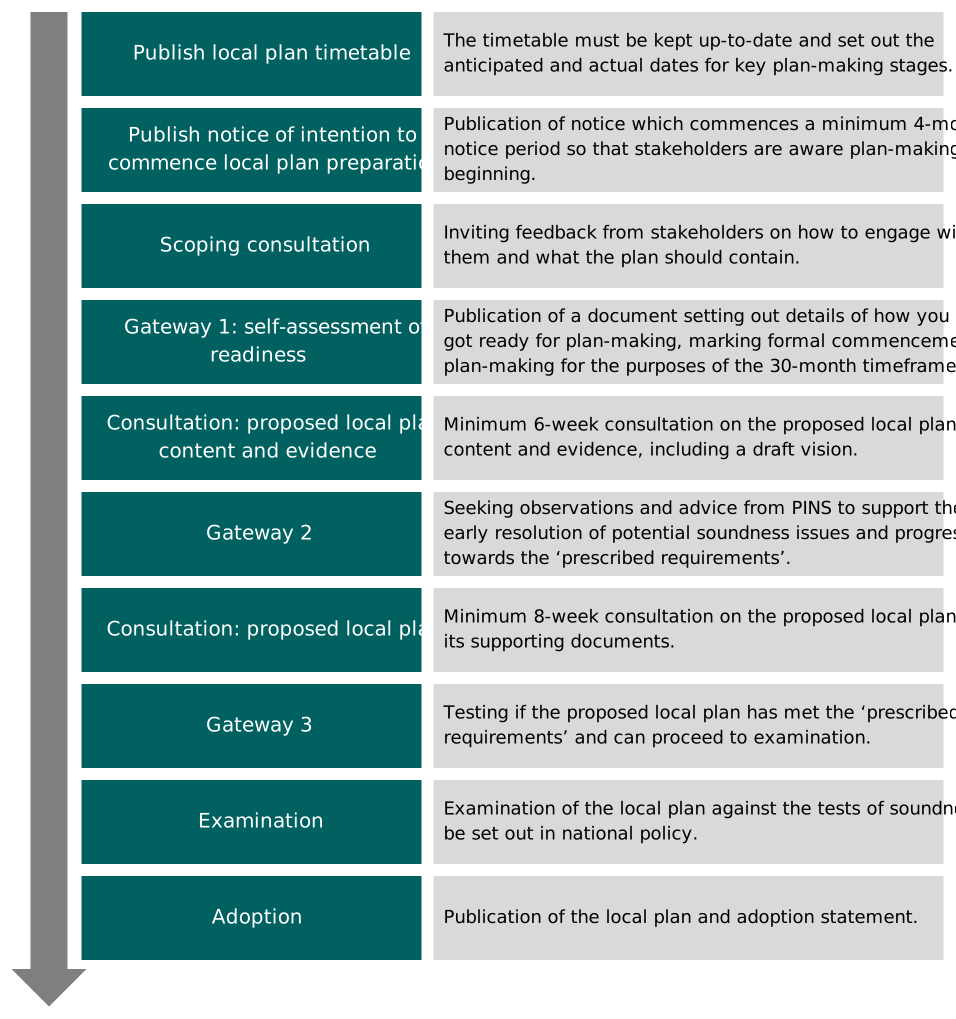
Preparation, form and content of local plans
Under the current system, it is common for there to be a gap of over ten years between the adoption of local plans. In the new system, regulations will require that local planning authorities begin formal preparation of a new local plan within 5 years of adopting their previous local plan. Publication of the gateway 1 self-assessment summary is the formal start of the plan-making process.
The regulations will require that, in addition to the requirements of Part 2 of the PCPA 2004 (to be amended by Schedule 7 to The Act), a local plan must contain a vision for the future of the local planning authority’s area; no more than ten measurable outcomes to support that vision; and the date on which the plan is adopted. It may also contain aims and objectives of the local planning authority, including how the authority proposes to achieve the vision for the area.
If a local plan contains a policy that the local planning authority consider (in substance) supersedes another policy in the development plan for the authority’s area which has effect, then the local plan will be required to state this and identify the superseded policy.
The local plan will be required to be published on the local planning authority’s website in a searchable electronic format.
Local plan timetable
In the current system, it can be challenging for communities and other stakeholders to understand when a local plan will come forward and when they can get involved. The Act replaces the existing requirement to adopt a Local Development Scheme with a new requirement to prepare and maintain a local plan timetable. The regulations will require local planning authorities to prepare their local plan timetable consistently, so that they all report against the same, defined plan-making milestones. These milestones will include when plan-making steps are undertaken; when consultation periods begin and end; and when outputs following gateways or examination are published.
Local planning authorities will be required to maintain their timetable. The regulations will also specify when they must revise their timetable, including (but not limited to):
-
when the Gateway 1 self-assessment summary is published
-
when observations and advice by a gateway assessor, or the examiner’s report, is published
-
if the local planning authority have to repeat Gateway 3, as soon as is reasonably practicable after seeking further observations and advice (to set out the date on which the authority did this)
Local planning authorities must also revise their timetable to bring it up to date, where necessary, at least every 1 month.
The timetable must be made available before or alongside the publication of the notice of intention to commence local plan preparation. It must be made available in a plain English format and in line with supporting planning data regulations and technical specifications.
Notice of intention to commence local plan preparation
Local planning authorities must publish a document to be known as their notice of intention to commence local plan preparation at least four months before publishing their gateway 1 self-assessment summary. This will give communities and other stakeholders advanced notice of plan-making, so that they can understand when and how they can get involved in the process.
The notice must include:
-
details of the local planning authority which has prepared the notice, including the area to which their local plan will apply
-
where the local plan timetable is published
-
if the local plan is to be a joint plan, which other authorities are participating in its preparation
Notifications and Consultation Summaries
Local planning authorities will be required to notify specific persons of key events in the plan-making process, such as the publication of documents or information in relation to consultations and the publication of observations or advice following Gateway 2 and Gateway 3.
Local planning authorities will also be required to notify bodies and persons that have opted-in to be notified at one of the mandatory consultation stages or subsequent stages in the plan-making process. These stages include :
-
mandatory consultations
-
the publication of gateway observations and advice
-
the submission of the local plan for independent examination
-
the publication of the recommendations and reasons of the examiner
-
the adoption of the local plan
Consultation summaries must be published following each consultation period which will be required under the regulations. Each summary must include:
-
details of the bodies that were invited to make representations
-
how they were invited to make representations
-
a summary of the main issues raised in the representations received
-
how the local planning authority have, to date, had regard to the representations received
A summary of scoping consultation must be published prior to the consultation on proposed local plan content and evidence.
A summary of consultation on proposed local plan content and evidence must be published prior to the seeking of observations and advice at gateway 2.
A summary of consultation on the proposed local plan must be published prior to the seeking of observations and advice at gateway 3.
Scoping Consultation
To provide meaningful early engagement in the plan-making process, local planning authorities must invite representations on matters including what the plan should contain and how future engagement on the plan should be carried out. This must take place after or alongside publishing the notice of intention to commence local plan preparation. Representations must be invited from defined general and specific consultation bodies and can be made by any persons, including local residents.
The regulations will not specify a minimum consultation period for this stage, but it must conclude prior to the publication of the Gateway 1 self-assessment summary.
Gateway 1: self-assessment of readiness for local plan preparation
Local planning authorities will be required to prepare and publish a self-assessment summary which sets out details of their readiness for local plan preparation. This form must provide details of the local planning authority’s readiness in relation to:
-
project management and governance arrangements
-
the timetable for the preparation of the plan
-
consultation and engagement
-
anticipated local plan content
-
environmental assessments
The self-assessment summary must be published no earlier than 4 months after the publication of the notice of intention to commence local plan preparation and, in any event, must be after the conclusion of the scoping consultation. It must be made available on the local planning authority’s website in plain English. A template and guidance for the self-assessment form will be available on Create or Update a Local Plan.
Consultation on proposed local plan content and evidence
Between publication of the scoping consultation summary and beginning Gateway 2, the local planning authority must consult on their proposed local plan content and evidence.
The proposed local plan content and evidence relevant to this consultation will include:
-
a proposed vision for the local planning authority’s area and proposed measurable outcomes
-
any proposed aims and objectives of the local planning authority, including how they propose to achieve the vision
-
a summary of the local planning authority’s proposed approach in relation to planning policies (which could include proposed site allocation policies)
-
a summary of the evidence intended to support the local plan
-
any further supporting information the local planning authority considers appropriate
Map of proposed local plan policies
The regulations will require local planning authorities to prepare a map of proposed local plan policies. The map will be required to:
- visually illustrate the geographical application of the policies in their proposed local plan in relation to authority-wide policies, the map must include a description for each proposed policy and, if it has them, their title and reference number
The map of proposed local plan policies must be made available for the consultation on the proposed local plan. It must also be submitted for Gateway 3 and examination of the plan.
Gateway 2: observations or advice from an appointed person
The regulations will require that, between the publication of the summary of consultation on proposed local plan content and evidence and the consultation on the proposed local plan, local planning authorities must seek observations and advice from the Gateway 2 assessor.
They must seek observations and advice in relation to progress towards preparing a sound plan, in line with the tests of soundness set out in the National Planning Policy Framework ; meeting some of the Gateway 3 prescribed requirements; and what further work could be carried out by the local planning authority.
The local planning authority must submit to the Gateway 2 assessor the documents and information that it considers necessary to seek this feedback.
As soon as is reasonably practicable after receiving the observations and advice, the local planning authority must publish them; notify any person who requested to be notified; and send a copy of the observations and advice to any body or person identified or referred to in them.
Consultation on the proposed local plan
Between gateways 2 and 3, local planning authorities must consult on their proposed local plan submission documents, including (but not limited to):
-
the proposed local plan
-
the map of proposed local plan policies
-
details of the evidence gathered to support the proposed local plan
-
details relating to the scoping consultation and consultation on proposed local plan content and evidence, including a summary of the main issues raised by respondents and how those main issues have been addressed in the proposed local plan
Conformity with operative spatial development strategy
Where a local plan is being prepared within an area with an operative spatial development strategy (SDS), the local planning authority will be required to consult the relevant spatial development strategy authority to seek their views about whether the proposed local plan is in general conformity with the strategy.
This consultation must be undertaken at the same time as the consultation on the proposed local plan and the same local plan submission documents will be relevant here. The local planning authority must submit copies of any representations received during this consultation at both gateway 3 and examination.
Gateway 3: prescribed requirements assessment by an appointed person
The regulations will require local planning authorities to seek observations and advice from the Gateway 3 assessor on whether the prescribed requirements are met in relation to their proposed local plan.
To pass Gateway 3, the proposed local plan must meet the prescribed requirements which will be set out in the regulations.
To help the assessor carry out the Gateway 3 assessment, the local planning authority must submit a statement of compliance. This statement will require the local planning authority to set out matters including how the proposed local plan complies with prescribed requirements.
A statement of soundness must also be submitted, detailing how the local planning authority considers that its evidence demonstrates that the plan is sound. Soundness will be tested at the examination. The local planning authority must also submit further documents, including:
-
a statement setting out a summary of the consultation and engagement activities
-
their summary of consultation on the proposed local plan
-
an environmental report, where one has been prepared
-
a statement setting out their practical arrangements demonstrating readiness for examination.
The Gateway 3 assessor must provide their conclusion on whether each prescribed requirement is met in writing, together with an explanation for each conclusion.
Following confirmation from the Gateway 3 assessor that the prescribed requirements have been met, the local planning authority must make available both a statement confirming that Gateway 3 has been completed and the Gateway 3 submission documents as they were submitted to the Gateway 3 assessor.
Where a Gateway 3 assessor concludes that the proposed local plan does not meet one or more of the prescribed requirements, the local planning authority will be required to repeat gateway 3 as soon as is reasonably practicable after the matters identified by the gateway 3 assessor have been addressed.
Examination
When the Gateway 3 assessor concludes that the proposed local plan meets the prescribed requirements, then the local planning authority must submit it for independent examination.
The regulations will set out the documents that must be submitted to accompany the local plan, including:
-
the map of proposed local plan policies
-
a Gateway 3 completion statement
-
a summary of the consultation and engagement activities carried out
-
the local planning authority’s summary of consultation on the proposed local plan
-
where applicable, copies of any representations from an SDS authority
-
a statement of compliance
-
a statement of soundness
-
an environmental report, where one has been prepared
Prior to the opening of an examination hearing, the local planning authority must make available the date, time and place of where the hearing is to be held and notify any person who requested to be notified of this.
The purpose of the examination, as set out in new section 15D(5) (to be inserted into the PCPA 2004 by Schedule 7 to The Act), is to determine whether it is reasonable to conclude that the local plan is sound, in line with the tests of soundness set out in the National Planning Policy Framework.
Where the appointed examiner identifies that further work is required for the plan to be sound, and decides that the examination is to be paused under new section 15DA (to be inserted into the PCPA 2004 by Schedule 7 to The Act), the regulations will set out that the maximum length of the pause is 6 months.
The local planning authority must publish the recommendations and reasons received from the examiner as soon as is reasonably practicable after receipt and notify any person who requested to be notified of this.
Adoption, withdrawal or revocation of a local plan
When adopting a local plan, as soon as reasonably practicable after adoption, the local planning authority must make available:
-
the local plan
-
an adoption statement
They must also send a copy of the adoption statement to any person who requested to be notified of adoption of the plan.
The regulations will set out the steps that a local planning authority must take on withdrawal or revocation of a local plan. These steps include actions such as making certain information available and ceasing to make certain documents available.
As set out in new section 15E(2) (to be inserted into the PCPA 2004 by Schedule 7 to the Act), after a local plan has been submitted for examination, the local planning authority may only withdraw the plan if the examiner recommends that they do so or if the Secretary of State directs that the plan is to be withdrawn.
Minerals and Waste Plans
New section 15CB (to be inserted into the PCPA 2004 by Schedule 7 to the Act) requires that each minerals and waste planning authority must prepare one or more documents, to be known collectively as their “minerals and waste plan”.
The regulations will require that the same substantive steps for the preparation of a local plan must be taken when preparing a document which is to be or form part of a minerals and waste plan.
Supplementary Plans
Supplementary plans will form part of the development plan and have the same weight as a local plan for the purposes of decision-making. The regulations will set out the process through which relevant plan-making authorities can prepare supplementary plans, pursuant to new section 15CC (to be inserted into the PCPA 2004 by Schedule 7 to the Act).
We do not intend to broaden the scope of multi-site allocation supplementary plans. In February, we committed to consider this and, although this could have allowed more land to be allocated for development through supplementary plans, on balance we have decided that such a broadening would deviate too far from our ambition of bringing together planning policies, as far as possible, in a single local plan.
Regulations will require that details relating to a supplementary plan, including anticipated dates for its preparation, consultation and adoption must be included in the local plan timetable (or minerals and waste plan timetable). The timetable must also be prepared and published if the supplementary plan preparation precedes preparation of a local plan (or minerals and waste plan).
The relevant plan-making authority must publish a notice of intention to commence supplementary plan preparation, specifying information including the subject matter of the supplementary plan and the area, site or sites to which it will apply. If it is a joint supplementary plan, the notice must identify the other authorities who are to prepare the joint supplementary plan.
The preparation of a supplementary plan must include a minimum of one consultation for a period of no less than six weeks. Details relating to the consultation and the process of providing representations must be set out in a notice of proposed supplementary plan consultation.
The relevant plan-making authority must consider the interested parties that should be consulted on the supplementary plan, based on its proposed subject matter and geographical extent.
The relevant plan-making authority must consult on the proposed supplementary plan submission documents, which include:
-
the proposed supplementary plan
-
a map of proposed supplementary plan policies
-
the evidence gathered to support the proposed supplementary plan
-
any other supporting documents the relevant plan-making authority considers relevant
In preparing a supplementary plan, a relevant plan-making authority must have regard to the same matters as for local plans, which include national policies and advice contained in guidance issued by the Secretary of State.
The following documents must be submitted to the person appointed to carry out the examination of a supplementary plan:
-
the proposed supplementary plan
-
the map or proposed supplementary plan policies
-
a supplementary plan compliance statement
-
a supplementary plan consultation statement
-
any other supporting documents that the relevant plan-making authority consider relevant.
The procedure for the examination of supplementary plans is set out in new section 15DB (to be inserted into the PCPA 2004 by Schedule 7 to the Act).
As soon as is reasonably practicable after adopting a supplementary plan, the relevant plan-making authority must make the adopted plan and an adoption statement available. The adoption statement must specify matters including the date on which the plan was adopted and details of where it is available for inspection.
The relevant plan-making authority must send a copy of the adoption statement to any person who has asked to be notified of the adoption of the plan.
A supplementary plan must be published on the relevant plan-making authority’s website in a searchable electronic format. It must include the date on which it is adopted.
The regulations will set out the process for revocation, as well as circumstances in which supplementary plans can be revoked by a relevant plan-making authority themselves.
Where a supplementary plan contains a policy that the relevant plan-making authority consider (in substance) supersedes another policy in the development plan which has effect for the area or a site to which the supplementary plan relates, it must state that fact and identify the superseded policy.
Policies map
The regulations implement new section 15LD (to be inserted into the PCPA 2004 by Schedule 7 to the Act), requiring each local planning authority to prepare and keep up to date a policies map.
Local planning authorities must ensure that a policies map is prepared by no later than one month after adopting a new style local plan. They must make their policies map available as soon as is reasonably practicable after it has been prepared.
The policies map must visually illustrate the geographical application of any policies which relate to part of the local planning authority’s area within the development plan for their area. Where a policy relates to the whole of the local planning authority area, then it must include a description of the policy, and if it has them, its title and reference number.
The regulations will require local planning authorities to bring their policies map up to date as soon as is reasonably practicable after an identified event occurs. These events will include the adoption of a new document within the development plan, which results in a change to the geographical application of the development plan.
When the local planning authority update the policies map, they must publicise this fact on their website.
Commencement, saving and transitional arrangements
Plans being prepared under the existing system must be submitted for examination by 31 December 2026. Saving provisions will be made for much of the existing Part 2 of the PCPA 2004 for those plans to proceed to adoption under the existing system.
All existing adopted Development Plan Documents and saved policies will remain in force until the local planning authority bring into force a corresponding new-style local plan (ie. local or minerals and waste plan).
The new local plan-making system will come into force early 2026.
In terms of rolling out the new system, the regulations will set out dates by which local planning authorities must start plan preparation, although authorities are encouraged to start plan-making in the new system as soon as possible.
In general, the regulations will require that local planning authorities publish their Notice to Commence Plan-Making within 4 years and 8 months of adopting their existing local plan, or by 31 December 2026, whichever is the latest. They must then begin preparation of a new local plan (publish their gateway 1 self-assessment form) within 5 years of adopting their existing local plan, or by 30 April 2027, whichever is the later.
However local planning authorities who submitted a plan for examination on or before 12 March 2025 with an emerging housing requirement that was meeting less than 80% of local housing need will be required by regulations to publish their Notice to Commence Plan-Making by 30 June 2026 and their Gateway 1 self-assessment by 31 October 2026. This will not apply to areas where there is an operative Spatial Development Strategy which provides the housing requirement for the relevant areas.
If an existing system plan is withdrawn from examination prior to adoption, regulations will require local planning authorities to publish their Notice to Commence Plan-Making in the new system at the same time as the plan is withdrawn, and to publish their Gateway 1 self-assessment 4 months later.
Further details on the initial rollout of the new plan-making system will be set out on Create or Update a Local Plan.
Supplementary Planning Documents (SPDs) will remain in force until planning authorities adopt a new style local plan or minerals and waste plan. The final adoption date for new SPDs will be 30 June 2026, to ensure any advanced emerging SPD can be adopted.
These Regulations will also have the effect of abolishing the Duty to Co-operate for the existing plan-making system, by not saving this provision for plans progressing to examination in the existing system by 31 December 2026.
Consequential Amendments
Consequential amendments make necessary changes to other legislation when the regulations come into force, to enable the legislation to function as intended. These amendments include a combination of changing definitions set out in various pieces of legislation and amending references to the PCPA 2004 that have been superseded by the amendments made by the Act.
Joint Plans (including joint Minerals and Waste Plans and joint supplementary plans)
Local Planning Authorities will continue to be able to prepare joint plans under the new plan-making system. The regulations will implement various sections of the Act that apply to joint plan-making and address procedural matters relating to the preparation of joint local plans, joint supplementary plans and joint minerals and waste plan documents.
Requirement to Assist
The Requirement to Assist, as set out in Section 100 of the Act (to be inserted into the PCPA 2004 as a new section 39A), is designed to support the timely flow of relevant information during plan-making. It is a new obligation for prescribed bodies of a public nature to assist with plan-making where notified by a plan-making authority that assistance is required.
Requests made under the Requirement to Assist must be reasonable and should only be made as a last resort, where routine requests for relevant information have not been answered.
The prescribed public bodies that can be required to assist with plan-making will be set out in regulations. Guidance will set out government expectations on the procedure for considering and making requests under these provisions.