Parent, pupil and learner voice: October 2025
Updated 24 September 2026
Applies to England

© Crown copyright 2026
This publication is licensed under the terms of the Open Government Licence v3.0 except where otherwise stated. To view this licence, visit nationalarchives.gov.uk/doc/open-government-licence/version/3 or write to the Information Policy Team, The National Archives, Kew, London TW9 4DU, or email: psi@nationalarchives.gov.uk.
Where we have identified any third party copyright information you will need to obtain permission from the copyright holders concerned.
This publication is available at https://www.gov.uk/government/publications/parent-pupil-and-learner-voice-omnibus-surveys-for-2025-to-2026/parent-pupil-and-learner-voice-october-2025
Introduction
The Department for Education (DfE) commissioned Verian to recruit and maintain a panel of Parents, Pupils and Learners in England, known as the Parent, Pupil and Learner Voice (PPLV). The PPLV is designed to collect robust evidence to help DfE understand the perspectives of parents, carers, pupils and learners. This allows the department to make more effective policy.
The PPLV works as a series of short surveys across the academic year, covering a range of new and longstanding policy issues. This report is about the findings from the October 2025 survey wave of the PPLV.
Methodology
The October 2025 PPLV survey included secondary school pupils in years 7 to 11 and parents of primary, secondary and special school pupils (years 1 to 11) who have agreed to participate in short, regular research surveys on topical education issues.
We select parents and pupils randomly using records from the National Pupil Database (NPD) and invite them to take part in an online survey. For the first survey of the academic year, we send invitation letters to households. For other surveys in that same academic year, we send the invitation by email and text message to the parents and pupils who agreed to join the panel in the first survey.
Midway through the academic year, we randomly select pupils and learners in years 12 and 13 and invite them to join the panel in the same way. We select learners (those studying in a college setting) from the Individualised Learner Record (ILR) and we select pupils (those studying in a school setting) from the NPD.
We ran the survey which is the main focus of this report between 4 October and 10 November 2025. The respondents were:
| Audience | Responses |
|---|---|
| Primary school parents | 1505 |
| Secondary school parents | 1791 |
| Special school parents | 857 |
| Secondary school pupils | 3531 |
Questions with fewer than 30 responses (before weighting) are not included in this report, and questions with fewer than 100 responses should be treated with caution. Complete findings can be found in the published data tables, which include more detail on how different groups answered each question.
The report makes some comparisons to previous surveys conducted in previous academic years, for example the Parent, pupil and learner panel omnibus surveys for 2024 to 2025. These comparisons are helpful to understand how trends may be changing. However, the survey methodology changes over time and so comparisons to previous years are not as reliable as survey findings within each academic year. We introduced parents of pupils attending special schools in the 2023 to 2024 academic year, so any comparisons from earlier academic years do not include these audiences.
In this report, we round figures to the nearest whole number.
We use consistent terminology to describe percentages that fall within specific bands, as follows:
- very few - 0% to 10%
- a small minority - 11% to 32%
- a minority - 33% to 47%
- about half - 48% to 52%
- the majority - 53% to 66%
- a large majority - 67% to 89%
- almost all - 90% to 100%
We do not describe 0% and 100% as ‘none’ and ‘all’ because figure rounding may mean this is not accurate. For instance, 100% may be 99.6% of respondents, rounded to the nearest whole number. Unless otherwise stated, when we refer to the ‘average’, we are reporting the arithmetic mean.
Further information on the survey methodology is available in the accompanying technical report.
Topics covered in this survey
The survey included questions about:
- awareness of post-16 options
- holiday activities and childcare
- school uniform policies and costs
- parental engagement and home learning environment
- Parent Carer Forums
- exclusions from school
- school age vaccination
- wellbeing
- bullying
Awareness of post-16 options
We also asked questions on awareness of post-16 options in June but the findings were not reliable, please refer to the technical report annex for more information.
We asked secondary parents with a child in years 9 to 11, and pupils in years 9 to 11, whether they had heard of different post-16 options.
Figure 1: Parent and pupil awareness of post-16 options
| Response | Pupils | Parents |
|---|---|---|
| A levels | 99% | 99% |
| Apprenticeships | 97% | 99% |
| BTECs | 76% | 92% |
| T levels | 55% | 56% |
| T Level Foundation Years | 14% | 21% |
Base: A randomly selected 50% of pupils in year 9-11. (n = 1143). A randomly selected 50% of secondary parents with children in school years 9-11. (n = 536). Data table references = “tlevelawareness_tlevels”; “tlevelawareness_tlevelfy”; “tlevelawareness_apprenticeship”; “tlevelawareness_alevels”; “tlevelawareness_btecs”.
Almost all pupils in years 9 to 11 had heard of A levels (99%) and apprenticeships (97%). A lower proportion of pupils were aware of BTECs (76%), T levels (55%) and T Level Foundation Years (previously known as the Transition Programme) (14%).
Almost all parents were aware of A levels (99%), apprenticeships (99%) and BTECs (92%). As was the case for pupils, a lower proportion of parents were aware of T levels (56%) and T Level Foundation Years (21%).
When questions about post-16 awareness were previously asked of parents and pupils, in June 2023, awareness of T levels was lower than in October 2025 for both pupils (50%) and parents (47%).
As decisions relating to post-16 choices are typically made in year 11, it is particularly important that parents and pupils are aware of the options at that point in the education cycle. Data focusing specifically on pupils in Year 11 and parents of pupils in Year 11 are therefore shown in Figure 2.
Figure 2: Parent and pupil awareness of post-16 options, relating to year 11 pupils
| Response | Pupils | Parents |
|---|---|---|
| A levels | 100% | 99% |
| Apprenticeships | 100% | 100% |
| BTECs | 90% | 93% |
| T levels | 81% | 59% |
| T Level Foundation Years | 20% | 21% |
Base: A randomly selected 50% of pupils in year 11. (n = 404). A randomly selected 50% of secondary parents with children in school year 11. (n = 421). Data table references = “tlevelawareness_tlevels”; “tlevelawareness_tlevelfy”; “tlevelawareness_apprenticeship”; “tlevelawareness_alevels”; “tlevelawareness_btecs”.
Almost all pupils in year 11 had heard of A levels (100%), apprenticeships (100%) and BTECs (90%). A large minority were aware of T levels (81%) but only a small minority were aware of T Level Foundation Years (previously known as the Transition Programme) (20%).
Almost all parents of pupils in year 11 were aware of A levels (99%), apprenticeships (100%) and BTECs (93%). The majority were aware of T levels (59%) but only a small minority were aware of T Level Foundation Years (21%).
When questions about post-16 awareness were previously asked of parents and pupils, in June 2023, a lower proportion of pupils in year 11 were aware of T levels (67%). The proportion of parents of pupils in year 11 who were aware of T levels in June 2023 (55%) was similar to the current proportion.
Holiday activities and childcare
We asked primary and secondary parents whether their child had attended a range of formal activities or childcare during the 2025 school summer holidays. Formal activities were defined as those that were not provided by family, friends, etc.
Figure 3: Activities and childcare that pupils attended during the 2025 school summer holidays, as reported by parents
| Response | Primary | Secondary |
|---|---|---|
| Holiday, sports or activity club | 42% | 30% |
| Residential trips that include overnight stays | 4% | 9% |
| Educational activities | 5% | 7% |
| Childcare | 8% | 2% |
| Volunteering or citizenship activities | 2% | 7% |
| Other | 4% | 6% |
| No formal activities or childcare attended | 50% | 57% |
Base: All primary parents (n = 1505) and secondary parents (n = 1791). Data table reference = “holidaychildcare_activity”.
We asked primary and secondary parents, who said their child took part in formal activities or childcare in the 2025 school summer holidays, why they had chosen to use them.
Figure 4: Reasons for using formal activities or childcare during the 2025 school summer holidays
| Response | Primary | Secondary |
|---|---|---|
| My child enjoys it | 74% | 76% |
| For my child’s development and enrichment | 59% | 58% |
| So I or others in my household could go to work or look for work | 49% | 21% |
| To provide my child with a routine in the summer holidays | 37% | 28% |
| So I had time for my own activities or errands | 10% | 7% |
| So I or others in my household could attend education or training | 3% | 3% |
| Other | 5% | 8% |
| Don’t know | 0% | 1% |
Base: Primary parents (n = 748) and secondary parents (n = 712) who said their child took part in formal activities or childcare in the summer holidays in 2025. Data table reference = “holidaychildcare_areason”.
We asked primary and secondary parents whose child had not attended any formal activities or childcare why they had chosen not to use them.
Figure 5: Reasons for not using formal activities or childcare during the 2025 school summer holidays
| Response | Primary | Secondary |
|---|---|---|
| I was (in full or in part) able to look after my child instead | 66% | 57% |
| Family and friends (in full or in part) were able to look after my child | 35% | 30% |
| My child didn’t want to go | 23% | 37% |
| The cost was too high | 30% | 19% |
| Difficult to find a place at a provider | 7% | 5% |
| Didn’t fit with my working hours | 6% | 5% |
| Concerned about quality of providers | 7% | 2% |
| Concerned about safety of providers | 6% | 2% |
| Other | 10% | 10% |
| Don’t know | 2% | 2% |
Base: Primary parents (n = 757) and secondary parents (n = 1079) who said their child did not take part in formal activities or childcare in the summer holidays in 2025. Data table reference = “holidaychildcare_noactive”.
School uniform policies and costs
We asked all parents if, during the last 12 months, their child’s school had notified them that it had revised or was revising its school uniform policy. This question was included to act as a filter for following questions. Schools are not required to revise their uniform policy every year.
Overall, 15% of primary, 30% of secondary and 14% of special school parents said that they had been notified that their child’s school had revised its school uniform policy. In addition, 2% of primary, 4% of secondary and 2% of special school parents said they had been notified that their child’s school was in the process of revising its school uniform policy.
Among parents whose child’s school had revised or was in the process of revising its school uniform policy in the past year, we asked what changes had been or were being made. Where we refer to compulsory branded items, these were defined as those with school specific branding, for example school logos or items which can only be bought from the school’s suppliers.
Figure 6: Changes to school uniform policy in schools where changes have either been made or were in the process of being made
| Response | Primary | Secondary | Special |
|---|---|---|---|
| Reduced the number of compulsory branded uniform items | 26% | 26% | 26% |
| The school offers its own or promotes another second-hand uniform scheme | 27% | 16% | 13% |
| Increased the number of compulsory branded uniform items | 13% | 21% | 19% |
| The school now allows more uniform items to be bought from cheaper shops | 25% | 13% | 18% |
| Other | 27% | 29% | 17% |
| Don’t know | 8% | 13% | 23% |
Base: Primary parents (n = 270), secondary parents (n = 601) and special school parents (n = 128) who said their child’s school has revised or is in the process of revising its school uniform policy in the past 12 months. Data table reference = “schooluniform_policychanges”.
We asked parents who said that there had been a reduction in the number of compulsory branded items of uniform, for example those with a specific school logo or which could only be bought from the school’s suppliers, how this had impacted on the cost of their child’s uniform.
Figure 7: Impact of any reduction in the number of branded uniform items or items which can only be bought from the schools’ suppliers
| Audience | Made uniform more expensive | Made no difference | Made uniform cheaper | Don’t know | Total |
|---|---|---|---|---|---|
| Parents | 7% | 33% | 53% | 7% | 100% |
Base: Parents who said their child’s school has reduced the number of compulsory uniform items with specific branding or items which can only be bought from the school’s suppliers. (n = 231). Data table reference = “schooluniform_costchange1”.
We asked parents who said that there had been an increase in the number of compulsory branded items of uniform, for example those with a specific school logo or which could only be bought from the school’s suppliers, how this had impacted on the cost of their child’s uniform.
Figure 8: Impact of any increase in the number of branded uniform items or items which can only be bought from the schools’ suppliers
| Audience | Made uniform more expensive | Made no difference | Made uniform cheaper | Don’t know | Total |
|---|---|---|---|---|---|
| Parents | 79% | 13% | 4% | 3% | 100% |
Base: Parents who said their child’s school has increased the number of compulsory uniform items with specific branding or items which can only be bought from the school’s suppliers. (n = 200). Data table reference = “schooluniform_costchange2”.
Amongst parents who reported a decrease in the number of compulsory branded items, the majority (53%) said this made the cost of uniform cheaper, a minority (33%) said it made no difference to cost and very few (7%) said it made uniform more expensive. Conversely, where parents reported an increase in the number of compulsory branded items, the large majority (79%) said this made uniform more expensive, 13% reported it made no difference to costs and just 4% said it made it cheaper.
We also asked parents how worried they were about being able to afford school uniform and school sports or PE kit for this academic year.
Figure 9: Parents’ degree of worry about affording school uniform, sports or PE kit this academic year
| Phase | Very worried | Quite worried | Not very worried | Not at all worried | Not applicable | Prefer not to say | Total |
|---|---|---|---|---|---|---|---|
| Primary | 6% | 20% | 40% | 31% | 1% | 2% | 100% |
| Secondary | 10% | 26% | 33% | 25% | 2% | 3% | 100% |
| Special | 7% | 19% | 37% | 27% | 7% | 3% | 100% |
| Eligible for FSM / FME | 17% | 33% | 29% | 15% | 2% | 4% | 100% |
| Not eligible for FSM / FME | 4% | 18% | 40% | 34% | 2% | 2% | 100% |
Base: All primary parents (n = 1505), secondary parents (n = 1791), special school parents (n = 857), parents whose child is eligible for FSM / FME (n = 1989) and parents whose child is not eligible for FSM / FME (n = 2164). Data table reference = “schooluniform_worry”.
Half (50%) of those whose child was eligible for free school meals or the free meal entitlement said that they were either ‘very worried’ or ‘quite worried’ about being able to afford school uniform and school sports or PE kit for their child. Among parents whose child was not eligible for FSM or FME, 23% reported that they were either very or quite worried about affordability.
These results are similar to when we asked the same question in September 2024, when 52% of those whose child was eligible for free school meals or the free meal entitlement said that they were either ‘very worried’ or ‘quite worried’ about affordability.
We asked all pupils in years 7 to 11 whether they felt their school uniform policy was flexible enough to let them dress comfortably and safely during extreme hot or cold weather.
The majority of pupils (61%) said that their school’s uniform policy was flexible enough for comfort and safety, 34% said that the uniform policy was not flexible enough, 1% did not have a uniform and 4% did not know about this.
Parental engagement and home learning environment
We asked all parents whether they had participated in a range of school-related activities, either online or in person, in the last 12 months.
Figure 10: Parents’ participation in school-related activities in the last 12 months
| Response | Primary | Secondary | Special |
|---|---|---|---|
| Attended parents evening | 92% | 86% | 77% |
| Attended a school event that my child participated in | 81% | 40% | 54% |
| Attended an ad-hoc meeting about my child’s learning or behaviour | 21% | 17% | 38% |
| Volunteered at my child’s school | 21% | 6% | 4% |
| Attended a parenting support group | 13% | 8% | 20% |
| Participated in a group to represent parents’ views | 9% | 3% | 7% |
| Another school-related activity | 23% | 16% | 26% |
| None of the above | 3% | 8% | 9% |
Base: All primary parents (n = 1505), secondary parents (n = 1791) and special school parents (n = 857). Data table reference = “homelearning_activities”.
We asked parents how often they, or another adult at home, were available to help their child with their homework when needed.
Figure 11: How often an adult at home is available to help with homework, as reported by parents
| Phase | All of the time | Most of the time | Some of the time | Rarely | Never | N/A – doesn’t need help | Prefer not to say | Total |
|---|---|---|---|---|---|---|---|---|
| Primary | 64% | 24% | 7% | 2% | 0% | 2% | 0% | 100% |
| Secondary | 43% | 33% | 11% | 5% | 0% | 7% | 1% | 100% |
| Special | 47% | 15% | 7% | 2% | 2% | 25% | 3% | 100% |
Base: All primary parents (n = 1505), secondary parents (n = 1791) and special school parents (n = 857). Data table reference = “homelearning_help”.
The majority of primary parents (64%) and a minority of secondary parents (43%) and special school parents (47%) said that they or another adult were available to help with homework all the time.
The proportion of parents who said that their child did not need help with homework was 25% for special school parents, 2% for primary parents and 7% for secondary parents.
We also asked pupils in years 7 to 11 how often an adult at home was available to help them if they needed help with homework.
Figure 12: How often an adult at home is available to help with homework, as reported by pupils
| Key Stage | All of the time | Most of the time | Some of the time | Rarely | Never | N/A – doesn’t need help | Prefer not to say | Total |
|---|---|---|---|---|---|---|---|---|
| Key stage 3 | 51% | 34% | 8% | 2% | 0% | 5% | 0% | 100% |
| Key stage 4 | 32% | 39% | 11% | 4% | 2% | 12% | 0% | 100% |
Base: All key stage 3 pupils (n = 1980) and key stage 4 pupils (n = 1551). Data table reference = “homelearning_help”.
About half of key stage 3 pupils (51%) and a small minority of key stage 4 pupils (32%) said that an adult at home was available to help with homework all of the time when needed.
We asked parents in households where an adult was available to help with homework (at least rarely) how confident they felt about supporting their child with their homework.
Figure 13: Parents’ level of confidence about supporting their child with homework
| Phase | Very confident | Fairly confident | Not very confident | Not at all confident | Don’t know | Total |
|---|---|---|---|---|---|---|
| Primary | 50% | 41% | 7% | 1% | 0% | 100% |
| Secondary | 27% | 53% | 17% | 3% | 1% | 100% |
| Special | 46% | 37% | 10% | 3% | 3% | 100% |
Base: Primary parents (n = 1455), secondary parents (n = 1609) and special school parents (n = 585) who said they or another adult are available at home to help their child with their homework at least rarely. The data have been rebased to exclude those who said they did not personally help their child with homework. Data table reference = “homelearning_confident”.
Almost all primary parents (91%) and a large majority of secondary parents (80%) and special school parents (83%) were ‘very’ or ‘fairly’ confident about supporting their child with homework.
We also asked pupils who received help with homework (at least rarely) how confident they were that an adult at home was able to support them effectively with it.
Figure 14: Pupils’ level of confidence that an adult at home is able to effectively support them with homework
| Phase | Very confident | Fairly confident | Not very confident | Not at all confident | Prefer not to say | Total |
|---|---|---|---|---|---|---|
| Key stage 3 | 53% | 41% | 5% | 1% | 1% | 100% |
| Key stage 4 | 37% | 49% | 12% | 1% | 2% | 100% |
Base: Key stage 3 pupils (n = 1823) and key stage 4 pupils (n = 1299) who receive help with homework from an adult at home. Data table reference = “homelearning_confident”.
Almost all key stage 3 pupils (94%) and a large majority of key stage 4 pupils (86%) who received help were either ‘very’ or ‘fairly’ confident that an adult at home was able to effectively support them with homework.
Conversely, 5% of key stage 3 pupils and 13% of key stage 4 pupils said that they were ‘not very’ or ‘not at all’ confident that an adult at home was able to effectively support them with homework.
We asked all parents in which ways, if at all, they supported their child’s learning outside of school. Learning outside of school was defined as any support that parents provide that helps their child learn or develop that doesn’t include activities organised by the school.
Figure 15: Ways in which parents support their child’s learning outside of school, as reported by parents
| Response | Primary | Secondary | Special |
|---|---|---|---|
| Buy equipment or resources for my child to use | 75% | 80% | 60% |
| Discussing schoolwork | 75% | 79% | 41% |
| Helping with homework | 84% | 65% | 33% |
| Reading with my child | 90% | 30% | 67% |
| Going on educational trips | 58% | 44% | 48% |
| Discussing learning goals | 37% | 52% | 31% |
| Use of digital learning platforms for example, BBC Bitesize, Quizlet, Kahoot | 37% | 28% | 21% |
| Another way | 9% | 12% | 27% |
| I do not support my child’s learning at home | 0% | 2% | 3% |
Base: All primary parents (n = 1505), secondary parents (n = 1791) and special school parents (n = 857). Data table reference = “homelearning_support”.
We also asked all pupils in years 7 to 11 in what ways, if at all, adults at home supported them with their learning outside of school.
Figure 16: Ways in which adults at home support pupils’ learning outside of school, as reported by pupils
| Response | Key stage 3 | Key stage 4 |
|---|---|---|
| Buy equipment or resources for my child to use | 78% | 77% |
| Helping with homework | 76% | 56% |
| Discussing schoolwork | 67% | 63% |
| Discussing learning goals | 43% | 51% |
| Going on educational trips | 42% | 26% |
| Reading together | 34% | 13% |
| Use of digital learning platforms for example, BBC Bitesize, Quizlet, Kahoot | 23% | 28% |
| Another way | 16% | 10% |
| No one supports my learning outside of school | 1% | 3% |
Base: All key stage 3 pupils (n = 1980) and key stage 4 pupils (n = 1551). Data table reference = “homelearning_learningsupport”.
We asked parents who said they supported their child’s learning outside of school what barriers, if any, they found most challenging when offering this support.
Figure 17: Barriers that parents find most challenging when supporting their child’s learning outside school
| Response | Primary | Secondary | Special |
|---|---|---|---|
| My child lacks motivation | 24% | 32% | 37% |
| There are distractions from others in the house | 30% | 21% | 24% |
| My child doesn’t have access to a printer | 23% | 21% | 16% |
| Not enough time because of my responsibilities | 23% | 16% | 18% |
| Not enough time because of my child’s activities | 17% | 13% | 2% |
| There isn’t a quiet space for my child to work | 11% | 8% | 12% |
| I find it difficult to understand homework assignments | 5% | 14% | 3% |
| The cost of resources is too high | 7% | 7% | 11% |
| My child lacks appropriate subject resources for example, text books, work books, or special equipment | 4% | 4% | 8% |
| My child has poor access to the internet or digital devices | 4% | 3% | 3% |
| Other barriers | 10% | 9% | 27% |
| Don’t know | 2% | 2% | 4% |
| No barriers | 23% | 24% | 18% |
Base: Primary parents (n = 1500), secondary parents (n = 1759) and special school parents (n = 837) who said they support their child’s learning outside of school. Data table reference = “homelearning_barriers”.
Similarly, we asked all pupils in years 7 to 11 what barriers, if any, they found most difficult when learning outside of school.
Figure 18: Barriers that pupils find most difficult when learning outside of school
| Response | Key stage 3 | Key stage 4 |
|---|---|---|
| I lack motivation | 33% | 52% |
| I find it difficult to understand homework assignments | 22% | 21% |
| There are distractions from others in the house | 21% | 21% |
| I don’t have enough time because of my other activities | 17% | 22% |
| I do not have access to a printer | 19% | 17% |
| There isn’t a quiet space for me to work | 8% | 9% |
| Adults at home do not have enough time to help me because of work or caring | 5% | 3% |
| I lack appropriate subject resources | 3% | 6% |
| I have poor access to the internet or digital devices | 3% | 3% |
| Other barriers | 7% | 6% |
| Don’t know | 5% | 6% |
| No barriers | 25% | 15% |
Base: All key stage 3 pupils (n = 1980) and key stage 4 pupils (n = 1551). Data table reference = “homelearning_barriers”.
Parent Carer Forums
A Parent Carer Forum is a representative local group of parents and carers of children and young people with special educational needs and disabilities. They aim to make sure the services in their local area meet the needs of disabled children and their families.
We asked all parents whether, prior to answering the survey, they had ever heard of Parent Carer Forums.
Figure 19: Whether parents had ever heard of Parent Carer Forums
| Phase | Yes and I know a lot about them | Yes and I know a little about them | Yes – but I had only heard the name | No – I had not heard of them | Don’t know | Total |
|---|---|---|---|---|---|---|
| Primary | 4% | 12% | 15% | 64% | 5% | 100% |
| Secondary | 4% | 15% | 17% | 59% | 4% | 100% |
| Special | 12% | 24% | 18% | 41% | 4% | 100% |
Base: All primary parents (n = 1505), secondary parents (n = 1791) and special school parents (n = 857). Data table reference = “parentcarerforums_aware”.
The majority (55%) of special school parents, 31% of primary parents and 37% of secondary parents said that they knew a lot, a little, or had at least heard the name ‘Parent Carer Forums’.
Those parents who knew ‘a lot’ or ‘a little’ about them, were then asked whether they had contacted their local Parent Carer Forum in the last 12 months.
Figure 20: Whether parents had contacted their local Parent Carer Forum in the past 12 months
| Phase | Yes – I have contacted them already | No – but I plan to contact them | No – I have not and do not plan on contacting them | Don’t know | Total |
|---|---|---|---|---|---|
| Primary | 15% | 14% | 67% | 4% | 100% |
| Secondary | 12% | 16% | 66% | 7% | 100% |
| Special | 27% | 23% | 44% | 6% | 100% |
Base: Primary parents (n = 284), secondary parents (n = 400) and special school parents (n = 326) who had heard of Parent Carer Forums before and knew at least a little about them. Data table reference = “parentcarerforums_used”.
A small minority of special school parents (27%), primary parents (15%) and secondary parents (12%) said that they had already contacted their local Parent Carer Forum in the past 12 months.
A further 23% of special school parents, 14% of primary parents and 16% of secondary parents said that, although they had not made contact in the past 12 months, they planned to contact their local Parent Carer Forum in the future.
We asked parents who had already been in contact with their local Parent Carer Forum how useful they had found the advice or support they received. This was asked in relation to the most recent time they had contacted their local Parent Carer Forum.
Figure 21: Extent to which parents had found advice or support from Parent Carer Forums useful
| Audience | Very useful | Fairly useful | Not very useful | Not at all useful | Don’t know | Total |
|---|---|---|---|---|---|---|
| Parents | 43% | 42% | 9% | 5% | 1% | 100% |
Base: Parents who said they had already contacted their local Parent Carer Forum (n = 200). Data table reference = “parentcarerforums_useful”.
Overall, 85% of parents who had contacted their local Parent Carer Forum said that the advice or support that they received had been either ‘very useful’ or ‘fairly useful’.
Exclusions from school
We asked parents whether their child had been permanently excluded or suspended from school, for any reason, between September 2024 and July 2025. A permanent exclusion is when a child is permanently removed from the school for disciplinary reasons. A suspension is when a child is not allowed in school for a set number of days for disciplinary reasons.
Figure 22: Whether child was permanently excluded or suspended from school between September 2024 and July 2025, as reported by parents
| Phase | Yes – permanently excluded | Yes – suspended | No | Don’t know | Prefer not to say | Total |
|---|---|---|---|---|---|---|
| Primary | 0% | 1% | 98% | 1% | 0% | 100% |
| Secondary | 0% | 6% | 93% | 0% | 1% | 100% |
| Special | 1% | 7% | 91% | 1% | 1% | 100% |
Base: All primary parents (n = 1505), secondary parents (n = 1791) and special school parents (n = 857). Data table reference = “exclusion_year”.
We also asked pupils in years 7 to 11 whether they had been suspended from school for any reason between September 2024 and July 2025.
Figure 23: Whether pupil was suspended from school between September 2024 and July 2025, as reported by pupils
| Phase | Yes | No | Don’t know | Prefer not to say | Total |
|---|---|---|---|---|---|
| Key stage 3 | 4% | 95% | 1% | 0% | 100% |
| Key stage 4 | 9% | 89% | 1% | 0% | 100% |
Base: All key stage 3 pupils (n = 1980) and key stage 4 pupils (n = 1551). Data table reference = “exclusion_year”.
Pupils who had been suspended from school between September 2024 and July 2025 were asked whether their school had set them work to do at home during their most recent suspension. A minority (33%) said that they had been set work to do at home, 61% said that they had not been set work to do at home and 6% said they did not know.
We asked pupils who had been suspended from school between September 2024 and July 2025, and who had been set work to do at home, how they did or accessed the work the school had set them.
Figure 24: How suspended pupils did or accessed the work they were set
| Response | Percentage |
|---|---|
| Google classroom | 22% |
| Physical resources, for example printed worksheets | 17% |
| Bedrock Learning | 9% |
| Virtually attending lessons for example, on Microsoft Teams or Zoom | 4% |
| Oak National Academy learning | 2% |
| Other online learning platforms | 44% |
| Something else | 19% |
| Don’t know | 10% |
Base: Pupils in years 7 to 11 who were suspended from school between September 2024 and July 2025 and were set work to do at home during the suspension (n = 139). Data table reference = “exclusion_access”.
We asked all parents to what extent they agreed that suspension is an effective punishment for misbehaviour. In this context, an ‘effective punishment’ was defined as being a disciplinary measure that causes a person to reflect on their behaviour and encourages a positive change.
Figure 25: Extent to which parents agree that suspension is an effective punishment for misbehaviour
| Phase | Strongly agree | Agree | Neither agree nor disagree | Disagree | Strongly disagree | Don’t know | Total |
|---|---|---|---|---|---|---|---|
| Primary | 11% | 25% | 22% | 20% | 13% | 10% | 100% |
| Secondary | 14% | 29% | 20% | 18% | 14% | 6% | 100% |
| Special | 7% | 17% | 24% | 22% | 22% | 8% | 100% |
Base: All primary parents (n = 1505), secondary parents (n = 1791), special school parents (n = 857). Data table reference = “exclusion_effective”.
A small minority (24%) of special school parents, and a minority of primary parents (36%) and secondary parents (43%), either agreed or strongly agreed that suspension was an effective punishment for misbehaviour.
Pupils in years 7 to 11 were also asked to what extent they agreed that suspension was an effective punishment for misbehaviour.
Figure 26: Extent to which pupils agree that suspension is an effective punishment for misbehaviour
| Phase | Strongly agree | Agree | Neither agree nor disagree | Disagree | Strongly disagree | Don’t know | Total |
|---|---|---|---|---|---|---|---|
| Key stage 3 | 12% | 30% | 25% | 16% | 11% | 6% | 100% |
| Key stage 4 | 8% | 22% | 26% | 26% | 14% | 4% | 100% |
Base: All key stage 3 pupils (n = 1980) and key stage 4 pupils (n = 1551). Data table reference = “exclusion_effective”.
A minority of key stage 3 pupils (42%) and a small minority of key stage 4 pupils (30%) agreed or strongly agreed that suspension was an effective punishment.
We asked pupils in years 7 to 11 what types of behaviour could cause a pupil to be sent out of or removed from a lesson. Pupils were asked to only think about times when that behaviour was not supposed to happen.
Figure 27: Types of behaviour that could cause a pupil to be sent out of a lesson, as reported by pupils
| Response | Key stage 3 | Key stage 4 |
|---|---|---|
| Swearing and verbal abuse including threatening behaviour | 86% | 87% |
| Physical violence | 81% | 87% |
| Throwing things | 81% | 81% |
| The threat or use of an offensive weapon or prohibited item | 76% | 77% |
| Answering back or challenging instructions | 64% | 59% |
| Using mobile phones | 60% | 46% |
| Shouting out | 54% | 48% |
| Talking | 47% | 49% |
| Not completing the work set during the lesson | 45% | 45% |
| Wearing the wrong uniform | 34% | 29% |
| Arriving to lessons late | 30% | 26% |
| Not having the right equipment | 20% | 15% |
| Something else | 12% | 13% |
| Don’t know | 2% | 1% |
School age vaccination
Pupils were asked what, if anything, their school does to help them understand about vaccinations at school.
Figure 28: What schools do to help pupils understand about vaccinations at school
| Response | Key stage 3 | Key stage 4 |
|---|---|---|
| My school sends information to my parents | 80% | 84% |
| My school gives me information to read for myself | 16% | 20% |
| I learn about vaccinations in lessons | 10% | 18% |
| I learn about vaccinations in assemblies | 13% | 10% |
| Other | 4% | 1% |
| My school doesn’t do anything | 6% | 5% |
| Don’t know | 10% | 7% |
| Prefer not to say | 0% | 0% |
Parents were asked whether they had ever provided consent for their child to be vaccinated at school.
Figure 29: Whether parents have ever provided consent for their child to be vaccinated at school
| Phase | I have provided consent for every vaccination offered | I have provided consent for some, but not all, vaccinations offered | I have never provided consent | My child has not been offered any vaccinations at school | Don’t know | Prefer not to say | Total |
|---|---|---|---|---|---|---|---|
| Primary | 72% | 10% | 12% | 2% | 2% | 2% | 100% |
| Secondary | 68% | 18% | 10% | 1% | 1% | 2% | 100% |
| Special | 66% | 16% | 12% | 2% | 1% | 3% | 100% |
Base: All primary parents (n = 1505), secondary parents (n = 1791), special school parents (n = 857). Data table reference = “vaccinations_consent”.
A large majority of primary parents (72%) and secondary parents (68%), and the majority of special school parents (66%), had provided consent for every vaccination offered.
Overall, 12% of primary parents, 10% of secondary parents and 12% of special parents had never provided consent for any vaccination.
We asked parents who had not provided consent for every vaccination offered to their child at school why that was.
Figure 30: Reasons why parents did not consent for their child to receive all offered vaccinations at school
| Response | Primary | Secondary | Special |
|---|---|---|---|
| I did not think my child needed the vaccine | 46% | 45% | 31% |
| I was worried about the safety of the vaccine | 21% | 23% | 30% |
| I wanted my child to receive the vaccine in a health setting | 19% | 13% | 16% |
| I was worried about my child getting anxious or distressed | 17% | 12% | 34% |
| Vaccination goes against my cultural or religious beliefs | 10% | 12% | 6% |
| I didn’t have enough information about the vaccine, or the information was unclear | 6% | 9% | 7% |
| I was unable to access the consent form or had difficulty returning it | 3% | 5% | 1% |
| I couldn’t understand the form | 2% | 2% | 0% |
| Other | 10% | 14% | 15% |
| Don’t know | 3% | 2% | 1% |
| Prefer not to say | 4% | 4% | 7% |
Base: Primary parents (n = 351), secondary parents (n = 549) and special school parents (n = 237) who had not provided consent for every vaccination offered to their child at school. Data table reference = “vaccinations_noconsentwhy”.
We asked parents who had not provided consent for every vaccination offered to their child at school what, if anything, would have made them more likely to consent to their child being offered vaccinations at school.
Figure 31: What would have made parents more likely to consent to their child being offered vaccinations at school
| Response | Primary | Secondary | Special |
|---|---|---|---|
| More information about the specific vaccine | 14% | 23% | 12% |
| Knowing what school does to make vaccination as calm and comfortable as possible | 12% | 13% | 14% |
| The chance to speak to a health professional about my concerns | 9% | 13% | 8% |
| Knowing that there was a vaccine option to suit my cultural or religious needs | 4% | 11% | 3% |
| Simple information that was easier to understand | 6% | 10% | 4% |
| Having the consent form in a non-electronic format | 4% | 6% | 4% |
| Knowing that other parents were getting their children vaccinated too | 3% | 3% | 2% |
| Other | 7% | 9% | 12% |
| Nothing would have helped | 46% | 35% | 44% |
| Don’t know | 10% | 6% | 5% |
| Prefer not to say | 5% | 4% | 8% |
Base: Primary parents (n = 351), secondary parents (n = 549) and special school parents (n = 237) who had not provided consent for every vaccination offered to their child at school. Data table reference = “vaccinations_information”.
Wellbeing
We asked pupils a series of questions about personal wellbeing validated by the Office for National Statistics (ONS). These questions are known as the ‘ONS4’ personal wellbeing measures and are answered using a scale from 0 to 10. For happiness, life satisfaction and the sense of things you do in life being worthwhile, a higher score is indicative of better personal wellbeing. For anxiety, a lower score is indicative of better personal wellbeing.
In surveys conducted across this academic year and the previous academic year, the average scores for year 7 to 11 pupils’ wellbeing measures were:
Figure 32: Pupils’ average wellbeing scores over time, as reported by pupils
| Wave | Happiness | Worthwhile | Life satisfaction | Anxiety |
|---|---|---|---|---|
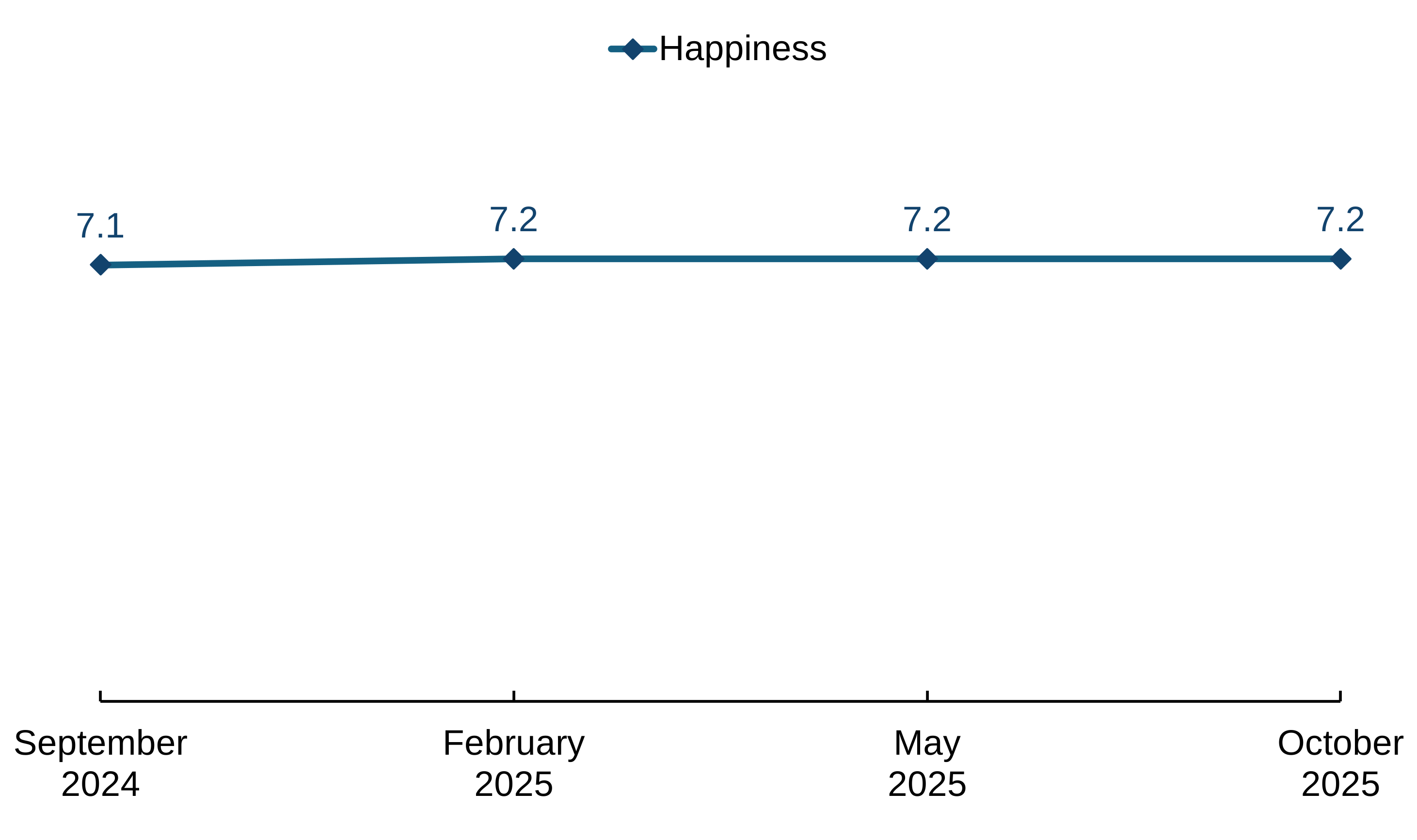
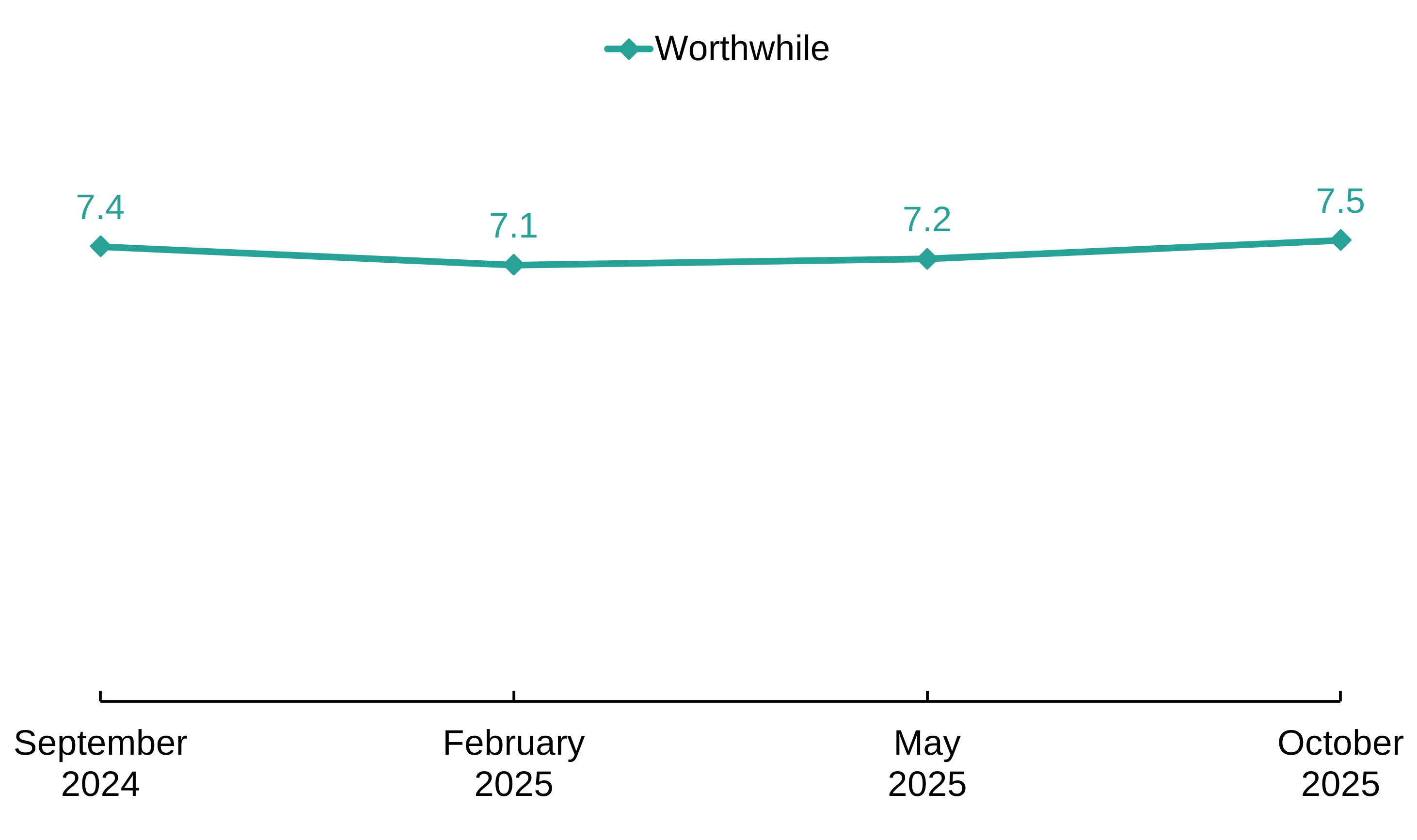
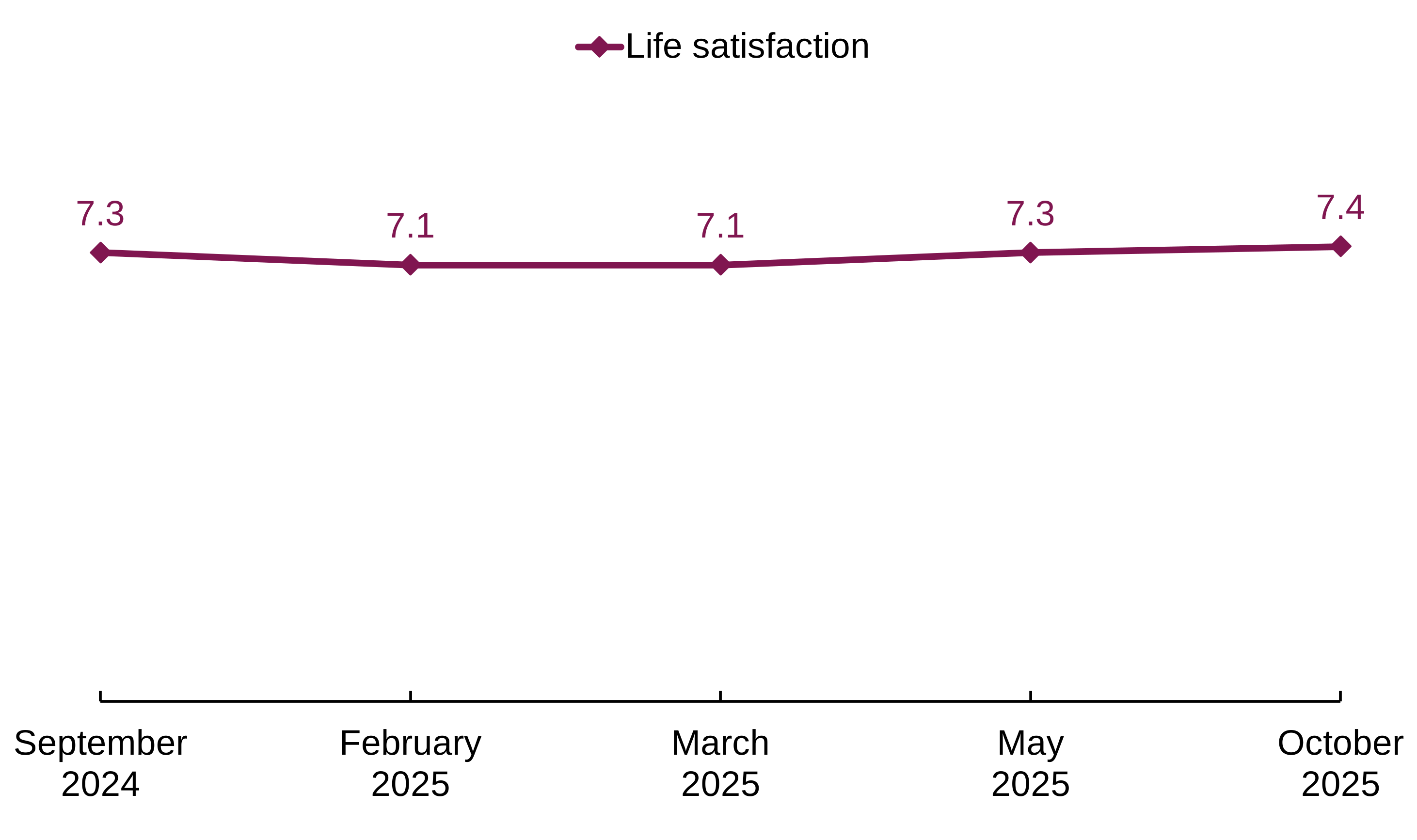
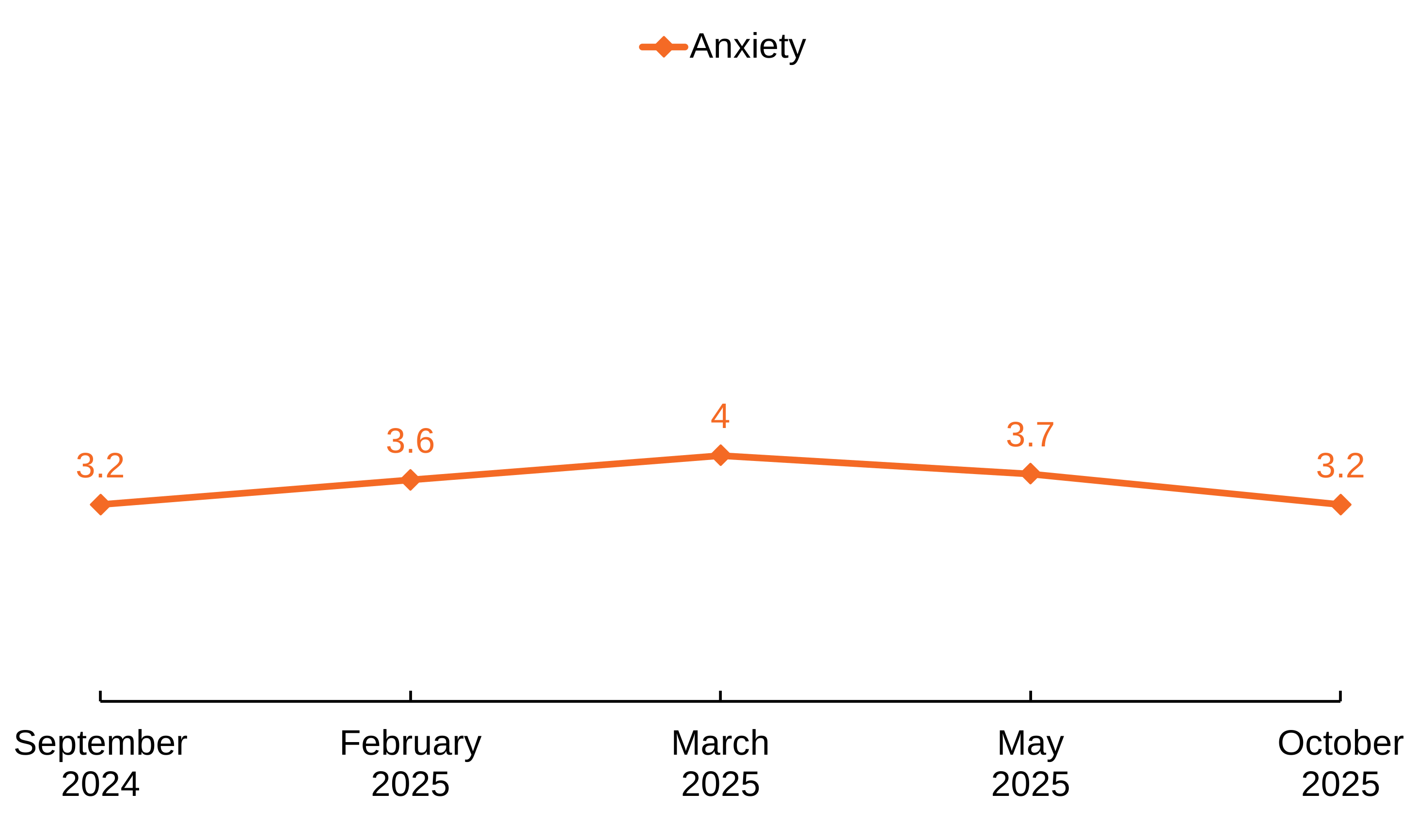
| October 2025 | 7.2 | 7.5 | 7.4 | 3.2 |
| May 2025 | 7.2 | 7.2 | 7.3 | 3.7 |
| March 2025 | 7.1 | 4.0 | ||
| February 2025 | 7.2 | 7.1 | 7.1 | 3.6 |
| September 2024 | 7.1 | 7.4 | 7.3 | 3.2 |
Base: All pupils in years 7 to 11 in October 2025 (n = 3531), May 2025 (n = 2592), March 2025 (n = 1493), February 2025 (n = 906) and September 2024 (n = 3402). Data table reference = “wellbeing_happy”, “wellbeing_worthwhile”, “wellbeing_satisfied” and “wellbeing_anxious”.
The questions relating to ‘happiness’ and ‘things they do in life being worthwhile’ were only asked of those in years 12 and 13 in March 2025 and would not therefore be comparable to the other reported data. The data from these questions have therefore been excluded here.
Figure 33: Pupils’ average happiness scores over time, as reported by pupils
Base: All pupils in years 7 to 11 in October 2025 (n = 3531), May 2025 (n = 2592), February 2025 (n = 906) and September 2024 (n = 3402). Data table reference = “wellbeing_happy”.
Figure 33 shows pupils’ average happiness scores over time, as reported by pupils, the data can be found in figure 32.
Figure 34: Pupils’ average ‘worthwhile’ scores over time, as reported by pupils
Base: All pupils in years 7 to 11 in October 2025 (n = 3531), May 2025 (n = 2592), February 2025 (n = 906) and September 2024 (n = 3402). Data table reference = “wellbeing_worthwhile”.
Figure 34 shows pupils’ average worthwhile scores over time, as reported by pupils, the data can be found in figure 32.
Figure 35: Pupils’ average life satisfaction scores over time, as reported by pupils
Base: All pupils in years 7 to 11 in October 2025 (n = 3531), May 2025 (n = 2592), March 2025 (n = 1493), February 2025 (n = 906) and September 2024 (n = 3402). Data table reference = “wellbeing_satisfied”.
Figure 35 shows pupils’ average life satisfaction scores over time, as reported by pupils, the data can be found in figure 32.
Figure 36: Pupils’ average anxiety scores over time, as reported by pupils
Base: All pupils in years 7 to 11 in October 2025 (n = 3531), May 2025 (n = 2592), March 2025 (n = 1493), February 2025 (n = 906) and September 2024 (n = 3402). Data table reference = “wellbeing_anxious”.
Figure 36 shows pupils’ average anxiety scores over time, as reported by pupils, the data can be found in figure 32.
The average happiness score in October 2025 was 7.4 for key stage 3 pupils and 6.9 for key stage 4 pupils.
The average score for things they do in life being worthwhile was 7.8 for key stage 3 pupils and 7.0 for key stage 4 pupils.
The average score for life satisfaction was 7.7 for key stage 3 pupils and 7.0 for key stage 4 pupils.
The average score for anxiety was 2.8 for key stage 3 pupils and 3.7 for key stage 4 pupils.
There was little change in any of the pupils’ wellbeing measures when comparing the October 2025 wave with the equivalent wave from the start of the previous academic year (in September 2024).
We also asked parents a subset of the ‘ONS4’ personal wellbeing measures, in relation to their child’s personal wellbeing. In surveys conducted across this academic year and the previous academic year, the average scores for parents’ views on their child’s personal wellbeing were:
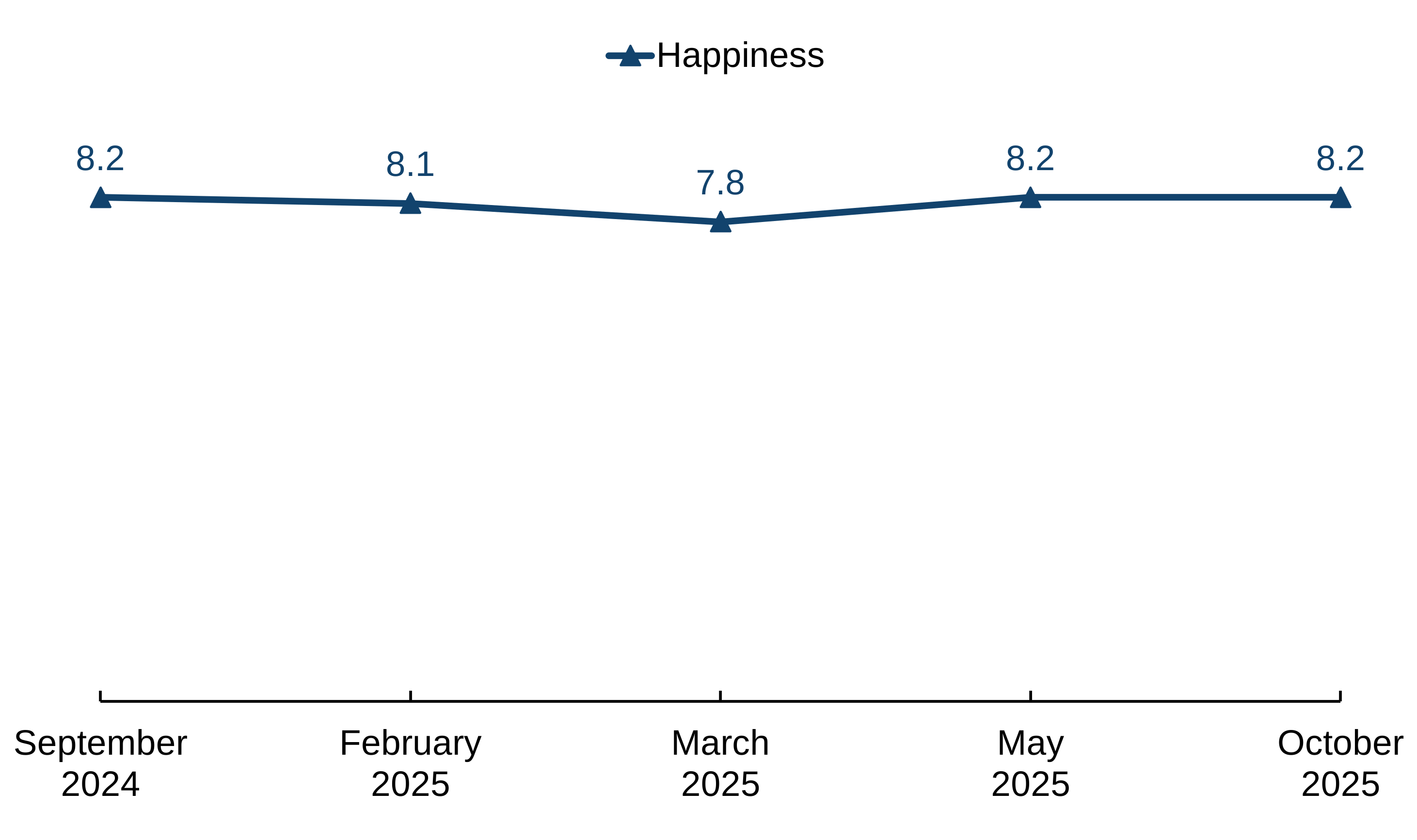
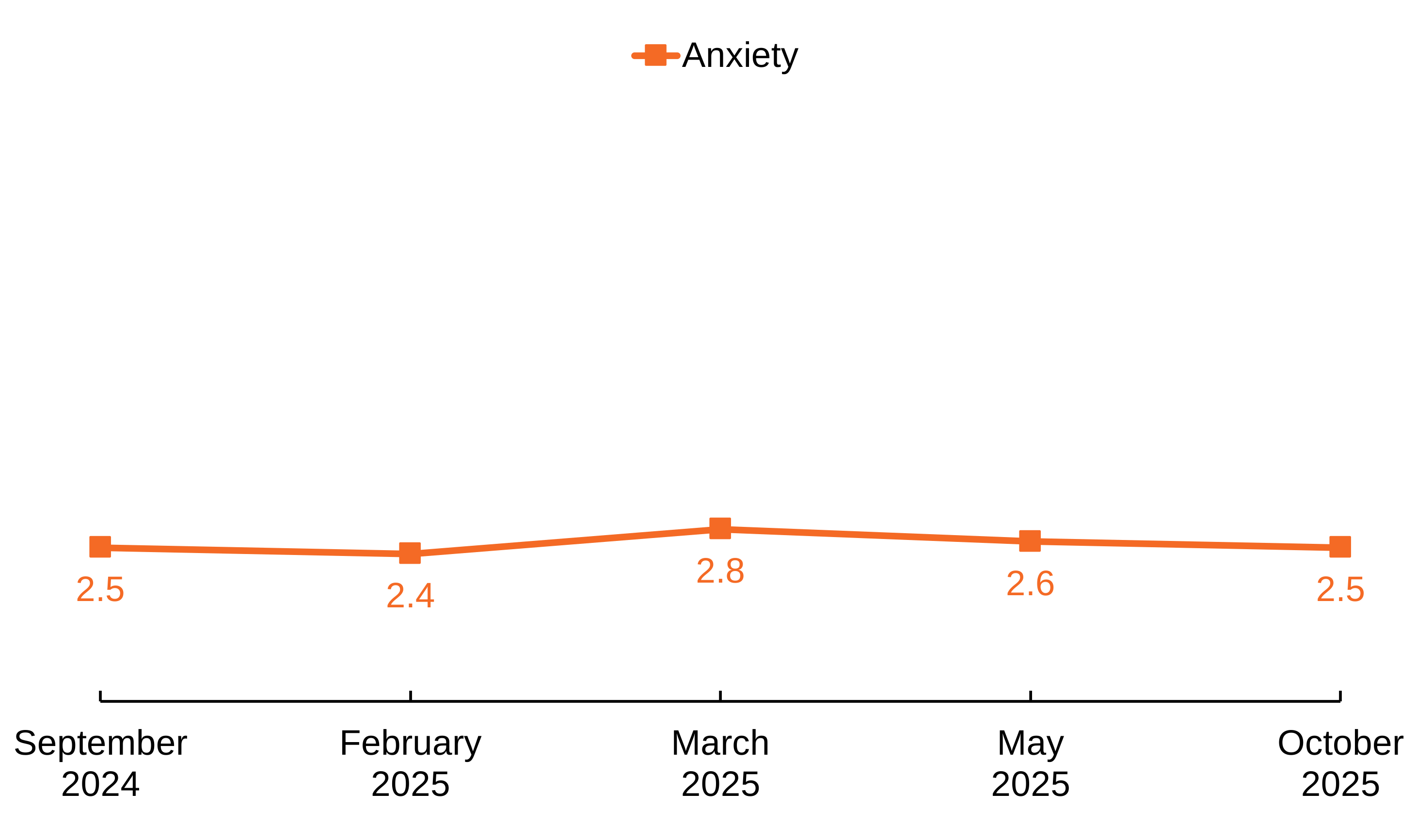
Figure 37: Pupils’ average wellbeing scores over time, as reported by parents
| Wave | Happiness | Anxiety |
|---|---|---|
| October 2025 | 8.2 | 2.5 |
| May 2025 | 8.2 | 2.6 |
| March 2025 | 7.8 | 2.8 |
| February 2025 | 8.1 | 2.4 |
| September 2024 | 8.2 | 2.5 |
Base: All parents in October 2025 (n = 4153), May 2025 (n = 3423), March 2025 (n = 2347), February 2025 (n = 808) and September 2024 (n = 4167). Data table reference = “wellbeing_happy” and “wellbeing_anxious”.
Figure 38: Pupils’ average happiness scores over time, as reported by parents
Base: All parents in October 2025 (n = 4153), May 2025 (n = 3423), March 2025 (n = 2347), February 2025 (n = 808) and September 2024 (n = 4167). Data table reference = “wellbeing_happy”.
Figure 38 shows pupils’ average happiness scores over time, as reported by parents, the data can be found in figure 37.
Figure 39: Pupils’ average anxiety scores over time, as reported by parents
Base: All parents in October 2025 (n = 4153), May 2025 (n = 3423), March 2025 (n = 2347), February 2025 (n = 808) and September 2024 (n = 4167). Data table reference = “wellbeing_anxious”.
Figure 39 shows pupils’ average anxiety scores over time, as reported by parents, the data can be found in figure 37.
In the October 2025 survey, the average reported score for the happiness of their child was 8.5 for primary parents, 7.8 for secondary parents and 7.5 for special school parents.
In the October 2025 survey, the average reported score relating to the anxiety of their child was 2.4 for primary parents, 2.5 for secondary parents and 3.9 for special school parents.
There was no change in the pupils’ wellbeing measures, as reported by parents, when comparing the October 2025 wave with the equivalent wave from the start of the previous academic year (in September 2024).
We also asked pupils in years 7 to 11 how often they felt lonely. Data for key stage 3 pupils and key stage 4 pupils are shown in separate figures.
Levels of loneliness among key stage 3 pupils in surveys conducted across this academic year and the previous academic year were:
Figure 40: How often key stage 3 pupils feel lonely
| Wave | Hardly ever or never | Some of the time | Often | Prefer not to say | Total |
|---|---|---|---|---|---|
| October 2025 | 54% | 33% | 9% | 3% | 100% |
| May 2025 | 49% | 36% | 12% | 3% | 100% |
| September 2024 | 50% | 37% | 10% | 3% | 100% |
Base: All key stage 3 pupils in October 2025 (n = 1980), May 2025 (n = 1481), February 2025 (n = 524) and September 2024 (n = 1989). Data table reference = “wellbeing_lonely”.
Levels of loneliness among key stage 4 pupils in surveys conducted across this academic year and the previous academic year were:
Figure 41: How often key stage 4 pupils feel lonely
| Wave | Hardly ever or never | Some of the time | Often | Prefer not to say | Total |
|---|---|---|---|---|---|
| October 2025 | 40% | 44% | 13% | 3% | 100% |
| May 2025 | 38% | 38% | 19% | 4% | 100% |
| September 2024 | 39% | 43% | 15% | 4% | 100% |
Base: All key stage 4 pupils in October 2025 (n = 1551), May 2025 (n = 1111), February 2025 (n = 382) and September 2024 (n = 1413). Data table reference = “wellbeing_lonely”.
Bullying
We asked pupils in years 7 to 11 whether they had been bullied for any reason in the past 12 months. Bullying was defined as including any online bullying (cyber-bullying) or bullying in person. Data for key stage 3 pupils and key stage 4 pupils are shown in separate figures.
The proportions of key stage 3 pupils experiencing bullying were:
Figure 42: Whether key stage 3 pupils have been bullied in the past 12 months
| Response | October 2025 | May 2025 | September 2024 |
|---|---|---|---|
| Yes – by pupils at my school | 22% | 24% | 24% |
| Yes – by someone else | 4% | 4% | 4% |
| No | 68% | 67% | 67% |
| Don’t know | 7% | 8% | 7% |
| Net: Any kind of bullying | 24% | 25% | 26% |
Base: All key stage 3 pupils in October 2025 (n = 1980), May 2025 (n = 1397) and September 2024 (n = 1989). Data table reference = “demogs_bullying”.
Levels of reported bullying among key stage 3 pupils were similar to those in the previous academic year.
The proportions of key stage 4 pupils experiencing bullying were:
Figure 43: Whether key stage 4 pupils have been bullied in the past 12 months
| Response | October 2025 | May 2025 | September 2024 |
|---|---|---|---|
| Yes – by pupils at my school | 17% | 16% | 14% |
| Yes – by someone else | 4% | 4% | 3% |
| No | 76% | 77% | 77% |
| Don’t know | 7% | 5% | 7% |
| Net: Any kind of bullying | 17% | 19% | 15% |
Base: All key stage 4 pupils in October 2025 (n = 1551), May 2025 (n = 1036) and September 2024 (n = 1413). Data table reference = “demogs_bullying”.
Levels of reported bullying among key stage 4 pupils were similar to those in the previous academic year.
Glossary of terms
Individualised Learner Record (ILR): The primary data collection about further education and work-based learning in England. It is requested from learning providers in England’s further education system.
National Pupil Database (NPD): A register data set of all pupils in state schools in England, compiled by DfE. It contains attainment data as children progress through school, as well as information on pupil background, absences and exclusions from school.
Special Educational Needs and Disability (SEND): A child or young person has SEND if they have a learning difficulty or disability which calls for special educational provision to be made for them. A child of compulsory school age or a young person has a learning difficulty or disability if they have a:
- significantly greater difficulty in learning than the majority of others of the same age
- disability that prevents or hinders them from making use of facilities of a kind generally provided for others of the same age in mainstream schools or mainstream post-16 institutions
Some children and young people who have SEND may also have a disability under the Equality Act 2010 – that is ‘… a physical or mental impairment which has a long-term and substantial adverse effect on their ability to carry out normal day-to-day activities’. Where a disabled child or young person requires special educational provision, they will also be covered by the SEND definition.
Special schools: Schools that provide an education for children with a special educational need or disability. Almost all pupils in special schools have an education, health and care plan (EHCP), which are plans for children and young people aged up to 25 who need more support than is available through special educational needs support. EHC plans identify educational, health and social needs and set out the additional support to meet those needs.