Parent, pupil and learner voice: March 2026
Updated 24 September 2026
Applies to England

© Crown copyright 2026
This publication is licensed under the terms of the Open Government Licence v3.0 except where otherwise stated. To view this licence, visit nationalarchives.gov.uk/doc/open-government-licence/version/3 or write to the Information Policy Team, The National Archives, Kew, London TW9 4DU, or email: psi@nationalarchives.gov.uk.
Where we have identified any third party copyright information you will need to obtain permission from the copyright holders concerned.
This publication is available at https://www.gov.uk/government/publications/parent-pupil-and-learner-voice-omnibus-surveys-for-2025-to-2026/parent-pupil-and-learner-voice-march-2026
Introduction
The Department for Education (DfE) commissioned Verian to recruit and maintain a panel of parents, pupils and learners in England known as the Parent, Pupil and Learner Voice (PPLV). The PPLV is designed to collect robust evidence to help DfE understand the perspectives of parents, carers, pupils and learners. This allows DfE to make more effective policy.
The PPLV works as a series of short surveys across the academic year, covering a range of new and long-standing policy issues. This report is about the findings from the March 2026 survey wave of the PPLV.
Methodology
The March 2026 PPLV survey included secondary school pupils in years 7 to 13, learners in further education (years 12 and 13) and parents of primary, secondary and special school pupils (years 1 to 11) who have agreed to participate in short, regular research surveys on topical education issues.
We select parents and pupils randomly using records from the National Pupil Database (NPD) and invite them to take part in an online survey. For the first survey of the academic year, we send invitation letters to households. For other surveys in that same academic year, we send the invitation by email and text message to the parents and pupils who agreed to join the panel in the first survey.
Midway through the academic year, we randomly select pupils and learners in years 12 and 13 and invite them to join the panel in the same way. We select learners (those studying in a college setting) from the individualised learner record (ILR) and we select pupils (those studying in a school setting) from the NPD. In this report, pupils and learners in years 12 and 13 are referred to as ‘16 to 19 pupils and learners’.
We ran the survey that is the main focus of this report between 11 March and 07 April 2026. The respondents were:
| Audience | Responses |
|---|---|
| Primary school parents | 1096 |
| Secondary school parents | 1511 |
| Special school parents | 601 |
| Secondary school pupils | 2323 |
| 16 to 19 pupils and learners | 3575 |
Questions with fewer than 30 responses (before weighting) are not included in this report, and base sizes of below 100 should be treated with caution. Complete findings can be found in the published data tables, which include more detail on how different groups answered each question.
The report makes some comparisons to previous surveys conducted in previous academic years – for example, the Parent, pupil and learner panel omnibus surveys for 2024 to 2025. These comparisons are helpful to understand how trends may be changing. However, the survey methodology changes over time, so comparisons to previous years are not as reliable as survey findings within each academic year. We introduced parents of pupils attending special schools in the 2023 to 2024 academic year, so any comparisons from earlier academic years do not include these audiences.
In this report, we round figures to the nearest whole number.
We use consistent terminology to describe percentages that fall within specific bands as follows:
- very few – 0% to 10%
- a small minority – 11% to 32%
- a minority – 33% to 47%
- about half – 48% to 52%
- the majority – 53% to 66%
- a large majority – 67% to 89%
- almost all – 90% to 100%
We do not describe 0% and 100% as ‘none’ and ‘all’ because figure rounding may mean this is not accurate. For example, 100% may be 99.6% of respondents, rounded to the nearest whole number. Data is rounded to the nearest percentage point. This means that when categories are combined, the rounded total figure may differ slightly from the sum of the rounded constituent figures.
Unless otherwise stated, when we refer to the ‘average’, we are reporting the arithmetic mean. Non-response categories such as don’t know and ‘prefer not to say’ are not typically presented in our tables and charts when their value rounds to zero.
Wherever data has been ranked in descending order, the data is ordered according to the ‘Total’ column in the accompanying published data tables. As such, the order for individual sub-groups within a table or chart may not appear in strict descending order. Small sub-groups will have less influence on the overall ranking than larger sub-groups.
Further information on the survey methodology is available in the accompanying technical report.
Topics covered in this survey
The survey included questions about:
- higher education plans
- online activity including screen and social media use
- school uniform
- experiences in key stage 3
- modern foreign languages
- extra-curricular activities
- access to special educational needs and disability (SEND) support
- family hubs
- wraparound childcare
- school attendance
- school belonging
- behaviour
- wellbeing
- bullying
Higher education plans
We asked pupils and learners in year 13 what they were planning to do from September 2026. Pupils and learners were shown a list of options and asked to select the one that would be their main focus.
Figure 1: What pupils and learners in year 13 were planning to do from September 2026
| Response | Pupils and learners |
|---|---|
| Go to university or study for a higher education qualification | 47% |
| Begin an apprenticeship | 17% |
| Paid work | 11% |
| Any other learning at a college or other training provider | 6% |
| Take a gap year | 6% |
| Continue at school | 3% |
| Volunteering | 0% |
| Begin a traineeship | 0% |
| Begin an internship | 0% |
| Other | 2% |
| Don’t know or haven’t decided yet | 7% |
Base: All pupils and learners in year 13 (n = 1522). Data table reference = “he_plan”.
When previously asked about their future plans, in March 2025, year 13 pupils and learners gave broadly similar responses.
We also asked pupils and learners in year 13, who were planning to go to university or study for a higher education qualification from September 2026, what were the most important considerations when choosing what higher education course to study. They were shown a list of potential considerations and asked to select up to 3.
Figure 2: Most important considerations when choosing what higher education course to study
| Response | Pupils and learners |
|---|---|
| Interest in subject | 83% |
| The career that it could lead to | 74% |
| How much money could I earn after the course | 39% |
| The skills I would develop by taking the course | 26% |
| The reputation of the university or college offering the course | 23% |
| The location of the provider | 10% |
| Statistics about the course – for example, employment and earnings of past students | 9% |
| The reputation of the subject | 5% |
| If I could afford to study the course now | 4% |
| That I can earn money whilst taking the course | 3% |
| What my parents want me to study | 1% |
| The short time length allows me to study for a bit, with the option to study again later | 0% |
| Other | 0% |
| Don’t know | 0% |
Base: All pupils and learners in year 13 who were planning to go to university or study for a higher education qualification from September 2026 (n = 768). Data table reference = “futurestudy_considerations”.
We also asked pupils and learners in year 13 who were planning to go to university or study for a higher education qualification from September 2026 where the course they planned to start was located.
Figure 3: Where the university or higher education course planned for September 2026 was located
| Phase | Fully on campus | Mix of on-campus and online | Fully online | Don’t know | Total |
|---|---|---|---|---|---|
| Pupils and learners | 89% | 4% | 1% | 6% | 100% |
Base: All pupils and learners in year 13 who were planning to go to university or study for a higher education qualification from September 2026 (n = 768). Data table reference = “he_location”.
The responses are broadly similar to those given by year 13 pupils and learners when the question about course location was previously asked in May 2024.
Pupils and learners in year 13 who were planning to go to university or study for a higher education qualification from September 2026 were also asked what type of accommodation they planned to live in when starting the course.
Figure 4: What type of accommodation pupils and learners planned to live in when starting university or higher education courses in September 2026
| Response | Pupils and learners |
|---|---|
| University property (for example, university-owned hall of residence) | 55% |
| Parental or guardian home | 29% |
| Private-sector halls (for example, halls of residence owned and run by a company, rather than the university) | 5% |
| Other rented accommodation | 3% |
| Own residence | 0% |
| Not sure | 8% |
Base: All pupils and learners in year 13 who were planning to go to university or study for a higher education qualification from September 2026 (n = 768). Data table reference = “he_accommodation”.
In March 2026, when the question was last asked, the types of accommodation pupils and learners planned to live in when starting university were broadly similar to May 2024.
Pupils and learners in year 13 who were not planning to go to university or study for a higher education qualification from September 2026 were asked why they did not plan to do so. They were shown a list of possible reasons and asked to select all that applied.
Figure 5: Reasons why pupils or learners were not planning to attend higher education or study a higher education qualification in 2026
| Response | Pupils and learners |
|---|---|
| I wanted to start earning money sooner rather than later | 34% |
| The cost of university or higher education is too expensive | 23% |
| I am planning on attending university or studying a higher education qualification later in life | 23% |
| I do not think higher education is right for me | 21% |
| My intended career path does not require a university or higher education qualification | 20% |
| I do not think university or higher education is good value for money | 18% |
| I have had enough of formal learning | 15% |
| I do not feel ready to study at a higher level | 10% |
| Other | 8% |
| Don’t know | 3% |
Base: All pupils and learners in year 13 who were not planning to go to university or study for a higher education qualification from September 2026 (n = 648). Data table reference = “he_whynotattend”.
The proportion of pupils or learners who said that they didn’t feel ready to study at a higher level was lower in March 2026 (10%) than in May 2024 (17%) when the question was last asked. Responses relating to the other reasons for not planning to attend university or study a higher education qualification remained broadly similar over the same period.
Online activity including screen and social media use
We asked parents and pupils a series of questions about young people’s online activity, including screen and social media use. They were asked to think about all the things they might use the internet for, such as watching videos on sites or apps like YouTube or TikTok, playing games online, using social media, or to do schoolwork or homework.
We asked parents, and pupils in years 7 to 11, which devices, if any, pupils used to go online. They were shown a list of devices and asked to select all that applied.
Figure 6: Devices used by pupils in years 7 to 11 to go online, as reported by parents and pupils
| Response | Primary parents | Secondary parents | Special school parents | Key stage 3 pupils | Key stage 4 pupils |
|---|---|---|---|---|---|
| Mobile phone | 42% | 95% | 57% | 93% | 98% |
| Tablet | 73% | 47% | 65% | 46% | 37% |
| A TV that can access the internet | 43% | 47% | 35% | 46% | 52% |
| Laptop | 27% | 59% | 18% | 51% | 60% |
| Games console or handheld games player | 30% | 45% | 34% | 45% | 47% |
| Desktop computer | 10% | 19% | 11% | 17% | 28% |
| Other | 1% | 0% | 1% | 3% | 2% |
| Not applicable – pupil does not go online | 5% | 0% | 8% | 0% | 0% |
Base: All primary parents (n = 1096), secondary parents (n = 1511), special school parents (n = 601), key stage 3 pupils (n = 1319) and key stage 4 pupils (n = 1004). Data table reference = “screentime_device”, “screentime_devices”.
We asked parents whose child used a device to go online, either at home or elsewhere, to what extent the parent managed the child’s online activity.
Figure 7: Extent to which parents said they managed their child’s online activity
| Phase | To a great extent | To some extent | To a small extent | Not at all | Total |
|---|---|---|---|---|---|
| Primary | 63% | 28% | 7% | 1% | 100% |
| Secondary | 22% | 51% | 20% | 5% | 100% |
| Special | 56% | 31% | 7% | 3% | 100% |
Base: Primary parents (n = 1050), secondary parents (n = 1503) and special school parents (n = 552) who said their child used a device to go online. Data relating to ‘dont know’, ‘prefer not to say’ and ‘not applicable’ responses are not shown in this figure. These responses came to a combined total of less than 5%. Data table reference = “screentime_manage”.
Overall, 98% of primary parents, 93% of secondary parents and 93% of special school parents said that they managed their child’s online activity to at least a small extent.
We also asked parents who said that they managed their child’s online activity which ways they did this. They were asked to include family rule setting (for example, no phones at the table) and technological parental controls (for example, limits set in phone settings). Parents were shown a list of possible options and asked to select all that applied.
Figure 8: Ways in which parents said they managed their child’s online activity
| Response | Primary | Secondary | Special |
|---|---|---|---|
| Use parental control settings to limit access to certain websites or apps | 81% | 63% | 77% |
| Limit the amount of time they can spend online | 72% | 60% | 47% |
| Check the type of video content they watch | 71% | 48% | 68% |
| Limit the times at which they can go online | 63% | 54% | 43% |
| Approve who they can contact online | 59% | 43% | 44% |
| Limit how they spend money online | 45% | 60% | 42% |
| Manually check the websites they visit | 56% | 41% | 55% |
| Check the messages they send or receive | 51% | 41% | 43% |
| Supervise them when they are online | 51% | 13% | 39% |
| Approve the content they can share, for example, photographs or comments | 39% | 23% | 33% |
| Other | 7% | 8% | 8% |
| Don’t know | 0% | 1% | 1% |
| Prefer not to say | 0% | 1% | 1% |
Base: Primary parents (n = 1028), secondary parents (n = 1400) and special school parents (n = 523) who said they manage their child’s online activity. Data table reference = “screentime_manage_type”.
We asked pupils in years 7 to 11 who went online using at least one device which activities they took part in online. They were shown a list of potential options and asked to select all that applied.
Figure 9: Activities pupils in years 7 to 11 took part in online
| Response | Key stage 3 | Key stage 4 |
|---|---|---|
| Send messages and make calls | 86% | 92% |
| Watch short-form videos (for example, TikTok videos, YouTube Shorts, Instagram reels) | 83% | 91% |
| Do homework or other educational activities | 84% | 87% |
| Play games online | 83% | 78% |
| Watch long-form videos, TV programmes or live-streams | 66% | 76% |
| Share social media content privately | 40% | 58% |
| Shop online | 36% | 63% |
| Use artificial intelligence (AI) tools or apps | 33% | 48% |
| Comment on social media content | 24% | 39% |
| Post content, photos or videos publicly on social media | 19% | 31% |
| Other | 6% | 4% |
Base: Key stage 3 pupils (n = 1315) and key stage 4 pupils (n = 1003) who went online using at least one device. Data table reference = “screentime_activities”.
We also asked those pupils in years 7 to 11 who went online in which ways, if any, their parents managed their online activity. They were shown a list of approaches to managing online activity and asked to select all that applied.
Figure 10: Ways in which parents managed their child’s online activity, as reported by pupils
| Response | Key stage 3 | Key stage 4 |
|---|---|---|
| Limit the types of websites or apps I can use | 54% | 28% |
| Limit how I spend money online | 46% | 36% |
| Limit the amount of time I can spend online | 46% | 29% |
| Limit the times at which I can go online | 39% | 25% |
| Approve who I can contact online | 38% | 17% |
| Limit the video content I watch online | 37% | 17% |
| Check the websites I have visited | 34% | 19% |
| Check the messages I send or receive | 32% | 14% |
| Approve the content I can share online | 19% | 8% |
| Supervise me when I am online | 15% | 7% |
| Other | 4% | 7% |
| Don’t know | 8% | 5% |
| I do not think they manage my online activity | 8% | 26% |
Base: Key stage 3 pupils (n = 1315) and key stage 4 pupils (n = 1003) who went online using at least one device. Data table reference = “screentime_rules”.
We asked pupils in years 7 to 11 who went online whether they knew how to take a variety of actions on at least one platform, app or site. They were shown a list of actions and asked to select all that they knew how to do.
Figure 11: Actions that pupils said they knew how to do on at least one platform, app or site
| Response | Key stage 3 | Key stage 4 |
|---|---|---|
| Block people on social media | 82% | 91% |
| Block people when you play online games | 80% | 79% |
| Use a reporting or flagging function to report inappropriate content | 76% | 84% |
| Change the settings so fewer people can view your profile | 71% | 83% |
| Use other safety features | 64% | 77% |
| I do not know how to do any of the above | 3% | 1% |
| Prefer not to say | 2% | 2% |
Base: Key stage 3 pupils (n = 1315) and key stage 4 pupils (n = 1003) who went online using at least one device. Data table reference = “screentime_functions”.
We asked all parents whether they had used any types of tools to restrict their child’s access to online content. They were shown a list of possible options and asked to select all they had used.
Figure 12: Tools that parents said they had used, if any, to restrict their child’s access to online content
| Response | Primary | Secondary | Special |
|---|---|---|---|
| Parental controls built into the device by the manufacturer | 67% | 53% | 59% |
| Settings on your child’s device to block apps downloads and or in-app purchases | 57% | 43% | 53% |
| Tools that restrict access to inappropriate online content | 48% | 35% | 44% |
| Apps to monitor your child’s app usage and screen time | 37% | 35% | 28% |
| Content filters provided by your broadband internet service provider | 32% | 33% | 31% |
| Parental control software | 17% | 18% | 17% |
| Other | 5% | 4% | 4% |
| None of these | 11% | 15% | 15% |
| Don’t know | 3% | 3% | 4% |
Base: All primary parents (n = 1096), secondary parents (n = 1511) and special school parents (n = 601). Data table reference = “screentime_tools”.
We asked all parents to think about their child’s online activity and indicate which topics they would like more information on. They were shown a list of options and asked to select all that applied.
Figure 13: Topics on which parents said they would like more information when considering their child’s online activity
| Response | Primary | Secondary | Special |
|---|---|---|---|
| The tools available to help them stay safe online | 49% | 46% | 33% |
| How to achieve a better balance of online and offline activities | 31% | 34% | 24% |
| How to talk to them about concerning content they may see online | 31% | 31% | 20% |
| The tools available to control screen time | 32% | 28% | 21% |
| How to talk to them about staying safe online | 32% | 26% | 20% |
| The risks associated with going online | 25% | 25% | 17% |
| The benefits associated with going online | 17% | 19% | 15% |
| Other ways to manage online safety | 15% | 15% | 14% |
| I do not need any more information | 28% | 25% | 40% |
| Don’t know | 4% | 4% | 7% |
Base: All primary parents (n = 1096), secondary parents (n = 1511) and special school parents (n = 601). Data table reference = “screentime_information”.
We asked all parents where, if at all, they would go to look for advice about their child’s screen and social media use and online safety. They were shown a list of potential sources of advice and asked to select all that applied.
Figure 14: Where parents would go to look for advice about their child’s screen and social media use and online safety
| Response | Primary | Secondary | Special |
|---|---|---|---|
| Family and friends | 46% | 46% | 36% |
| Their school | 50% | 40% | 53% |
| Government sites (for example, The Education Hub, NHS website) | 45% | 41% | 32% |
| AI tools or apps | 20% | 22% | 14% |
| Children’s charities | 21% | 20% | 17% |
| Academics or subject matter experts through media channels | 20% | 21% | 11% |
| Social media | 16% | 20% | 14% |
| Healthcare professionals, for example, GP or health visitors | 13% | 13% | 17% |
| Other public figure or a media personality through their media channels | 8% | 7% | 5% |
| Other | 5% | 5% | 6% |
| None of these | 8% | 11% | 18% |
Base: All primary parents (n = 1096), secondary parents (n = 1511) and special school parents (n = 601). Data table reference = “screentime_advice”.
School uniform
We asked parents how many compulsory branded items the school’s uniform policy for the 2025 to 2026 academic year required. We asked parents to count the different types of branded items not the number of each item they had purchased.
Branded items were defined as including those with a logo and also clothing or bags with distinctive characteristics that made them unique to a school or trust. If an item could not be purchased at a range of retailers, it was considered a branded item.
Figure 15: Number of compulsory branded items the school’s uniform policy for the 2025 to 2026 academic year required
| Phase | 0 | 1 to 3 | 4 to 6 | 7 or more | Don’t know | Total |
|---|---|---|---|---|---|---|
| Primary | 38% | 39% | 10% | 2% | 11% | 100% |
| Secondary | 7% | 29% | 42% | 8% | 13% | 100% |
| Special | 50% | 28% | 5% | 2% | 14% | 100% |
Base: All primary parents (n = 1096), secondary parents (n = 1511) and special school parents (n = 601). Data table reference = “schooluniform_branded”.
Overall, 38% of primary parents, 7% of secondary parents and 50% of special school parents said the school’s uniform policy did not require any compulsory branded uniform items.
Experiences in key stage 3
We asked parents of pupils in years 7 to 9 whether the school had any activities or events to recognise the achievements of key stage 3 pupils. Pupils in years 7 to 9 were asked the same question. Examples of such events include achievement certificates, awards, awards ceremonies, celebrations, presentations and graduation type events. They were asked to include any achievement events, whether they occurred weekly, termly, annually or at the end of year 9.
A large majority of parents (73%) and pupils in years 7 to 9 (85%) said that their school had such activities or events.
We also asked parents of pupils in years 10 and 11 whether the school had held any activities or events to recognise the achievements of pupils when they were in key stage 3. Pupils in years 10 and 11 were asked a similar question about activities or events to recognise achievement during their time in key stage 3.
A large majority of parents (78%) and pupils in years 10 and 11 (87%) said that their school had held such activities or events.
Finally, we asked parents of pupils in year 7 which activities helped their child’s transition into secondary school. Parents were shown a list of options and asked to select all that applied.
Figure 16: Activities which helped children’s transition into secondary school, as reported by parents
| Response | Parents |
|---|---|
| Taster days at the secondary school before joining | 83% |
| Feeling welcomed by the new school | 62% |
| Parental support at home | 61% |
| Having friends in the secondary school | 53% |
| Support from new teachers after joining | 39% |
| Secondary teachers visiting pupil’s primary school before joining | 36% |
| Contact with staff at the secondary school before joining | 33% |
| Invitation to attend events at the secondary school – for example, plays or sports days | 31% |
| Continued learning from key stage 2 | 17% |
| Other | 3% |
| Don’t know | 1% |
| Nothing helped pupil’s transition into secondary school | 4% |
Base: Parents (n = 386) of pupils in year 7. Data table reference = “ks3_transition”.
Modern foreign languages
DfE sought views on a potential new language qualification, which would be separate to GCSEs. It would give pupils recognition for their language skills as they progress and could be taken when they are ready, rather than at a fixed time. It could include languages already taught in schools, as well as additional ones. Teaching could be offered within lessons or as an extra-curricular option, using digital technology to support learning and assessment.
We asked primary and secondary school parents how interested they thought their child would be in taking this new language qualification. We also asked pupils and learners in years 7 to 13 how interested they would be in taking the qualification.
Figure 17: How interested pupils and learners would be in taking a new language qualification, as reported by pupils, learners and parents
| Phase | Very interested | Fairly interested | Not very interested | Not at all interested | Don’t know | Total |
|---|---|---|---|---|---|---|
| Key stage 3 pupils | 15% | 34% | 27% | 16% | 8% | 100% |
| Key stage 4 pupils | 15% | 33% | 27% | 20% | 5% | 100% |
| 16 to 19 pupils and learners | 15% | 36% | 30% | 15% | 4% | 100% |
| Primary parents | 37% | 34% | 13% | 8% | 8% | 100% |
| Secondary parents | 20% | 36% | 23% | 17% | 5% | 100% |
Base: Key stage 3 pupils (n = 1319), key stage 4 pupils (n = 1004), 16 to 19 pupils and learners (n = 3575), primary parents (n = 1096) and secondary parents (n = 1511). Data table reference = “mfl_interested”, “mfl_interest”.
Overall, 71% of primary parents and 56% of secondary parents thought their child would be very or fairly interested in the new language qualification. About half of key stage 3 pupils (49%), key stage 4 pupils (48%) and 16 to 19 pupils and learners (51%) said they would be very or fairly interested.
We then asked primary and secondary school parents the reasons, if any, why they thought it would be useful for their child to take this new language qualification. They were shown a list of potential reasons and asked to select all that applied.
Figure 18: Reasons, if any, why parents thought taking the new language qualification would be useful for their child
| Response | Primary parents | Secondary parents |
|---|---|---|
| Help understand another language when travelling abroad | 55% | 43% |
| Have a qualification for future employers or further education | 42% | 42% |
| Help them work in another country in the future | 43% | 37% |
| Because they enjoy learning languages | 39% | 28% |
| Have a qualification in a language that is not offered at school | 36% | 31% |
| Show progress made in their language learning at school | 25% | 25% |
| Show how well they can speak a language they use at home or in the community | 23% | 22% |
| Have a language qualification if they don’t or didn’t take one at school | 23% | 21% |
| Other | 3% | 2% |
| I don’t think it would be useful for my child | 11% | 17% |
| Don’t know | 5% | 5% |
Base: All primary parents (n = 1096) and secondary parents (n = 1511). Data table reference = “mfl_reason”.
We also asked pupils and learners who said they were very or fairly interested in taking the new language qualification why that was. They were shown a list of potential reasons and asked to select all that applied.
Figure 19: Reasons why pupils and learners were interested in taking the new language qualification
| Response | Key stage 3 pupils | Key stage 4 pupils | 16 to 19 pupils and learners |
|---|---|---|---|
| Help understand another language when travelling abroad | 54% | 53% | 50% |
| Have a qualification for future employers or further education | 46% | 54% | 46% |
| Because I enjoy learning languages | 47% | 38% | 38% |
| Help me work in another country in the future | 44% | 38% | 42% |
| Show how well I can speak a language I use at home or in the community | 45% | 37% | 28% |
| Take a qualification in a language that isn’t offered at school or college | 36% | 42% | 29% |
| Show progress made in my language learning at school or college | 36% | 30% | 14% |
| Have a language qualification if none taken at school or college | 22% | 23% | 18% |
| Other | 5% | 3% | 3% |
| Don’t know | 3% | 3% | 2% |
Base: Key stage 3 pupils (n = 620), key stage 4 pupils (n = 463) and 16 to 19 pupils and learners (n = 1878) who were very or fairly interested in the new language qualification. Data table reference = “mfl_reasons”.
Extra-curricular activities
We asked all pupils and learners how they had found out information about the extra-curricular activities on offer at their school or college. Extra-curricular activities were defined as being supervised and structured activities that are hosted by the school or college and take place outside of usual classes, such as during breaktimes or after school. They were shown a list of potential information sources and asked to select all that applied.
Figure 20: Sources used by pupils and learners to find out about the extra-curricular activities on offer at schools and colleges
| Response | Pupils and learners |
|---|---|
| Assemblies or tutor time | 65% |
| Posters within the school or college | 59% |
| Through school or college staff | 50% |
| School or college emails | 48% |
| School or college website | 46% |
| Through a friend | 38% |
| Messages or posts on online systems used by your school or college | 29% |
| Through my family | 17% |
| Flyers or leaflets handed out at school or college | 15% |
| Social media | 13% |
| Other | 3% |
| I don’t know what activities are on offer at my school or college | 6% |
Base: All pupils and learners (n = 5898). Data table reference = “enrichment_information”.
We also asked parents how they had found out information about the extra-curricular activities on offer at their child’s school. Again, they were shown a list of potential options and asked to select all that applied.
Figure 21: Sources used by parents to find out about the extra-curricular activities on offer at their child’s school
| Response | Parents |
|---|---|
| School emails | 63% |
| Through my child | 53% |
| School newsletters | 52% |
| School website | 39% |
| Other parent communication systems (for example, Parent Mail) | 26% |
| Through school staff | 20% |
| Posters within school | 15% |
| Through other parents at school | 12% |
| Social media | 11% |
| Through a friend | 7% |
| Other | 2% |
| I don’t know what activities are on offer at my child’s school | 5% |
Base: All parents (n = 3208). Data table reference = “enrichment_information”.
We then asked parents, pupils and learners how easy it would be to find out what extra-curricular activities were currently available using the information provided by the school or college. Examples of potential information sources included websites, emails, assemblies or posters.
Figure 22: How easy it would be for parents, pupils and learners to find out what extra-curricular activities were available
| Phase | Very easy | Fairly easy | Not very easy | Not easy at all | Don’t know | Total |
|---|---|---|---|---|---|---|
| Pupils | 32% | 52% | 8% | 2% | 6% | 100% |
| Parents | 38% | 46% | 8% | 4% | 4% | 100% |
Base: All pupils and learners (n = 5898) and parents (n = 3208). Data table reference = “enrichment_available”, “enrichment_ease”.
A large majority of parents (84%) and pupils and learners (84%) said it would be very easy or fairly easy to find out what extra-curricular activities were currently available.
We also asked parents how important the extra-curricular offer was when applying for a school place for their child.
Figure 23: How important the extra-curricular offer was to parents when applying for a school place for their child
| Phase | Very important | Fairly important | Not very important | Not at all important | Don’t know | Total |
|---|---|---|---|---|---|---|
| Parents | 23% | 34% | 27% | 12% | 5% | 100% |
Base: All parents (n = 3208). Data table reference = “enrichment_important”.
The majority of parents (57%) said the extra-curricular offer was very or fairly important to them when applying for a school place for their child.
DfE is developing a new digital service, school profiles, to give parents clear, rounded, and up-to-date information to help them make informed decisions about their children’s education. We asked parents how useful it would be to include the school’s extra-curricular activities offer on this website.
Figure 24: How useful parents thought it would be to include a school’s extra-curricular activities offer on the DfE website
| Phase | Very useful | Fairly useful | Not very useful | Not at all useful | Don’t know | Total |
|---|---|---|---|---|---|---|
| Parents | 45% | 44% | 6% | 1% | 4% | 100% |
Base: All parents (n = 3208). Data table reference = “enrichment_website”.
Almost all parents (90%) said that including a school’s extra-curricular activity offer on the DfE website would be either very useful or fairly useful.
Access to specialist SEND support
We asked parents whose child has SEND whether their child had needed different types of specialist support since the start of the school year in September 2025. They were provided with a list of options and asked to select all that apply.
Figure 25: Types of specialist support needed by pupils since the start of the school year, as reported by parents
| Response | Primary | Secondary | Special |
|---|---|---|---|
| Mental health support | 21% | 33% | 25% |
| A speech and language therapist | 25% | 8% | 51% |
| Medical support | 17% | 21% | 28% |
| An educational psychologist | 18% | 12% | 18% |
| An occupational therapist | 9% | 7% | 35% |
| A physiotherapist | 4% | 7% | 18% |
| Social services | 4% | 5% | 19% |
| Another type of support | 40% | 37% | 25% |
| They do not need any of these types of support | 17% | 24% | 8% |
| Don’t know | 7% | 5% | 9% |
Base: All primary parents (n = 451), secondary parents (n = 727) and special school parents (n = 601) whose child has SEND. Data has been rebased to focus only on parents of pupils with SEND. Data table reference = “sendsupport_require”.
Among those parents whose child has SEND, 17% of primary school parents, 24% of secondary school parents and 8% of special school parents said their child did not need any of these types of specialist support.
We asked parents who said their child required each specific type of support whether their child had received that type of support since the start of the school year in September 2025. If parents said their child needed 4 or more types of support, they were asked about a random selection of 3 of those support types.
Figure 26: Whether pupils had received the types of support they needed since the start of the school year, as reported by parents
| Response | Receiving support | Need support but not receiving it | Don’t know | Total |
|---|---|---|---|---|
| Social services | 89% | 5% | 6% | 100% |
| A physiotherapist | 80% | 16% | 4% | 100% |
| Medical support | 86% | 9% | 5% | 100% |
| A speech and language therapist | 72% | 20% | 8% | 100% |
| Mental health support | 68% | 27% | 5% | 100% |
| An occupational therapist | 59% | 35% | 7% | 100% |
| An educational psychologist | 59% | 33% | 9% | 100% |
| Another type of support | 77% | 18% | 5% | 100% |
Base: All parents whose child has SEND and whose child required: mental health support (n = 405), medical support (n = 328), a speech and language therapist (n = 409), an educational psychologist (n = 298), an occupational therapist (n = 328), a physiotherapist (n = 176), support from social services (n = 226) and another type of support (n = 495). Data has been rebased to focus only on parents of pupils with SEND. Data table reference = “sendsupport_access”.
We asked parents whose child has SEND, who said their child needed a specific type of specialist support but had not been able to access it, why that was. Due to the low base sizes for most individual types of specialist support, the data is presented at an overall level.
Figure 27: Most common reasons why specialist support could not be accessed
| Response | Parents |
|---|---|
| My child is currently on the waiting list | 44% |
| There are no support staff (for example, therapists) available at my child’s school | 22% |
| The school can’t or won’t pay for the support | 14% |
| My child doesn’t meet the criteria | 13% |
| The support offered is not suitable for my child | 9% |
| Travelling to where support is delivered is too difficult | 1% |
| Other | 16% |
| Don’t know | 8% |
Base: Types of support that were reported by parents as being needed by their children but which were not accessible (n = 460). Data has been rebased to focus only on parents of pupils with SEND. Data table reference = “sendsupport_whynot”.
Family hubs
Family hubs are places within the local community that offer integrated support to families with children aged 0 to 19 years old, or up to 25 for those with SEND. They have a strong Start for Life offer (conception to 2 years) at their core. They may also offer digital or outreach services. Family hubs within an area may have a different name such as ‘family centre’ or ‘family and children’s centre’.
We asked parents whether, before taking part in the survey, they had heard of a family hub.
Figure 28: Whether parents had heard of a family hub
| Phase | I knew a lot about it | I knew a little about it | I have only heard of the name | I have never heard of it | Don’t know | Total |
|---|---|---|---|---|---|---|
| Primary parents | 12% | 29% | 19% | 36% | 4% | 100% |
| Secondary parents | 11% | 21% | 18% | 46% | 4% | 100% |
| Special school parents | 18% | 28% | 19% | 32% | 3% | 100% |
Base: All primary parents (n = 1096), secondary parents (n = 1511) and special school parents (n = 601). Data table reference = “familysupporthubs_aware”.
Overall, 60% of primary parents, 50% of secondary parents and 65% of special school parents had at least heard of a family hub.
The proportion of special school parents who had at least heard of a family hub was higher in March 2026 (65%) than when last asked in December 2024 (58%). The proportion of secondary school parents aware of a family hub was lower in March 2026 (50%) than in December 2024 (56%). The proportion of primary parents aware of a family hub remained broadly similar over the same period.
We asked parents who had heard of a family hub which, if any, services they had accessed through a family hub over the last 12 months. They were shown a list of services and asked to select all that applied.
Figure 29: Services that parents had accessed through a family hub over the last 12 months
| Response | Percentage |
|---|---|
| SEND support | 14% |
| Early years education and health services | 11% |
| Parenting or relationship support (for example, parenting skills) | 7% |
| Healthcare services including mental health and wellbeing support | 6% |
| Practical support (for example, financial or housing support) | 2% |
| Other | 3% |
| I have not accessed any of these services | 69% |
| Don’t know | 2% |
Base: Parents who had at least heard of a family hub (n = 1904). Data table reference = “familysupporthubs_access”.
The proportion of parents aware of a family hub who had accessed each specific family hub service were broadly similar in December 2024 and March 2026.
We asked parents who had heard of a family hub, but had not accessed any services, why that was.
Figure 30: Reasons why parents had not accessed any family hub services
| Response | Percentage |
|---|---|
| I or my family do not need to access the services | 73% |
| I or my family access these services elsewhere | 5% |
| I or my family are unable to access the services | 3% |
| Other | 8% |
| Don’t know | 11% |
Base: All parents who had at least heard of family hubs but had not accessed services (n = 1144). Data table reference = “familysupporthubs_notaccess”.
Of those who were aware of a family hub, but had not accessed any services, a large majority said that this was because they or their family did not need to access the services (73%). Very few said that they did not access family hub services because they access those services elsewhere (5%) or because they are unable to access the services (3%).
The reasons for not accessing family hub services were broadly similar in December 2024 and March 2026.
Wraparound childcare
We asked a series of questions about wraparound childcare provision. Childcare provision was defined as guaranteed, regular childcare provided on days when the school is open, directly before and after school. The service could be run by the school or by another provider. It could take place on the school site or at premises nearby. Children would be escorted between the childcare and their classes by staff. This differs from enrichment activities such as art or football clubs.
We asked primary and special school parents, whose child’s school offered before-school or after-school childcare provision, which of the school’s childcare offers they had used since September 2025.
Figure 31: Which of the school’s childcare offers parents had used since September 2025
| Audience | Both before-school and after-school childcare | After-school childcare | Before-school childcare | None | Total |
|---|---|---|---|---|---|
| All parents | 23% | 20% | 11% | 46% | 100% |
Base: Parents who said their school offers before-school or after-school childcare provision (n= 848). Data table reference = “wraparound_attend”.
We asked all primary and special school parents to what extent they agreed or disagreed that their need for before-school and after-school childcare was currently being fully met. ‘Fully met’ was defined as being able to access the number of days and hours of before-school or after-school childcare requested.
Figure 32: Extent to which parents agreed or disagreed that their need for before or after school childcare was being fully met
| Audience | Strongly agree | Agree | Neither agree nor disagree | Disagree | Strongly disagree | Don’t know | Total |
|---|---|---|---|---|---|---|---|
| Before school childcare | 40% | 30% | 8% | 6% | 4% | 12% | 100% |
| After school childcare | 36% | 31% | 10% | 5% | 6% | 13% | 100% |
Base: Parents who did not say that they didn’t have a need for before-school childcare (n = 958) or after-school childcare (n = 968). Data has been rebased to exclude those parents who did not have a need for each type of childcare. Data table reference = “wraparound_satisfaction_before”, “wraparound_satisfaction_after”.
Among those parents with a need for each type of childcare, the proportion of parents who agreed or agreed strongly that their before-school childcare needs were being fully met was higher in March 2026 (70%) than when last asked in February 2025 (64%). The proportion of parents who agreed that their after-school childcare needs were being met was broadly similar in March 2026 (67%) and February 2025 (65%).
We asked parents who disagreed or disagreed strongly that their needs for before-school or after-school childcare were being fully met why this was.
Figure 33: Reasons why parents’ needs for before-school or after-school childcare were not being fully met
| Response | Before-school childcare | After-school childcare |
|---|---|---|
| It is too expensive | 37% | 32% |
| The hours are unsuitable | 26% | 19% |
| It is not available during school holidays | 20% | 22% |
| It does not meet my child’s needs | 20% | 18% |
| I am not able to get a place at my preferred provider | 13% | 18% |
| I have been refused a childcare place due to my child’s needs | 9% | 10% |
| I am not happy with the quality | 5% | 4% |
| Other | 19% | 29% |
| Don’t know | 4% | 3% |
Base: Parents who said their need for before-school childcare was not being met (n = 192), parents who said their need for after-school childcare was not being met (n = 204). Data table reference = “wraparound_whydissat_before”, “wraparound_whydissat_after”.
School attendance
Pupils and learners were asked how often, if at all, they had physically attended school or college in the past 2 weeks of term time.
Figure 34: How often pupils and learners said they had attended school or college in the past 2 weeks of term
| Phase | Every weekday | Most weekdays | Some weekdays | Not at all | Total |
|---|---|---|---|---|---|
| Key stage 3 pupils | 81% | 14% | 3% | 1% | 100% |
| Key stage 4 pupils | 80% | 16% | 3% | 2% | 100% |
| 16 to 19 pupils and learners | 58% | 33% | 6% | 3% | 100% |
Base: All key stage 3 pupils (n = 1319), key stage 4 pupils (n = 1004) and 16 to 19 pupils and learners (n = 3575). Data table reference = “attendance_pupils”.
Overall, 95% of key stage 3 pupils, 95% of key stage 4 pupils and 91% of 16 to 19 pupils and learners said that they had physically attended school or college on every weekday or most weekdays over the past 2 weeks.
We have asked the same question in previous surveys. Data since December 2023 is shown in the following table.
Figure 35: Proportion of pupils and learners who reported attending school every day or on most days over the past 2 weeks, surveys since December 2023
| Wave | Key stage 3 pupils | Key stage 4 pupils | 16 to 19 pupils and learners |
|---|---|---|---|
| March 2026 | 95% | 95% | 91% |
| December 2025 | 95% | 94% | |
| May 2025 | 96% | 95% | 84% |
| March 2025 | 95% | 93% | 92% |
| September 2024 | 97% | 96% | |
| March 2024 | 95% | 95% | |
| December 2023 | 96% | 94% |
Base: All key stage 3 pupils, key stage 4 pupils and 16 to 19 pupils and learners. The number of responses for each group varied in each survey wave and can be found in the accompanying data tables. 16 to 19 pupils and learners were not asked about attendance in any waves where a value is not shown. Data table reference = “attendance_pupils”.
School belonging
We asked pupils and parents a series of questions about how they, or their child, felt about school over the previous week of term. Firstly, we asked about how often they, or their child, had enjoyed going to school over the previous week of term.
Figure 36: How often pupils enjoyed going to school during the past week, as reported by pupils and parents
| Phase | Every day | Most days | Some days | Never | Don’t know | Total |
|---|---|---|---|---|---|---|
| Key stage 3 pupils | 20% | 37% | 30% | 12% | 1% | 100% |
| Key stage 4 pupils | 15% | 41% | 30% | 13% | 1% | 100% |
| Primary parents | 42% | 40% | 15% | 3% | 0% | 100% |
| Secondary parents | 25% | 43% | 22% | 9% | 1% | 100% |
| Special school parents | 46% | 29% | 17% | 7% | 1% | 100% |
Base: Key stage 3 pupils (n = 1319), key stage 4 pupils (n = 1004), primary parents (n = 1096), secondary parents (n = 1511) and special school parents (n = 601). Data table reference = “belongingtracker_enjoy” (pupils), “belonging_enjoy” (parents).
The proportion of key stage 3 pupils who said they had enjoyed going to school was similar in both March 2026 (57%) and March 2025 (56%). The proportion of key stage 4 pupils who said they had enjoyed going to school every day or on most days in the past week was higher in March 2026 (56%) than in March 2025 (38%).
A large majority of primary parents (82%), secondary parents (68%) and special school parents (75%) said their child had enjoyed going to school every day or on most days in the past week. The proportion of parents who said their child had enjoyed going to school was broadly similar to when the question was previously asked in March 2025.
We also asked pupils in years 7 to 11 and parents how often their child had felt safe at school during the past week of term.
Figure 37: How often pupils felt safe at school during the past week, as reported by pupils and parents
| Phase | Every day | Most days | Some days | Never | Don’t know | Total |
|---|---|---|---|---|---|---|
| Key stage 3 pupils | 53% | 32% | 11% | 2% | 1% | 100% |
| Key stage 4 pupils | 52% | 37% | 8% | 1% | 2% | 100% |
| Primary parents | 64% | 25% | 8% | 1% | 1% | 100% |
| Secondary parents | 51% | 33% | 10% | 3% | 3% | 100% |
| Special school parents | 57% | 24% | 10% | 4% | 5% | 100% |
Base: Key stage 3 pupils (n = 1319), key stage 4 pupils (n = 1004), primary parents (n = 1096), secondary parents (n = 1511) and special school parents (n = 601). Data table reference = “belongingtracker_safe”, “belonging_safe”.
Overall, 85% of key stage 3 pupils and 88% of key stage 4 pupils said they had felt safe every day or on most days at school in the past week of term. A large majority of primary school parents (89%), secondary school parents (84%) and special school parents (81%) said their child felt safe every day or most days at school. The proportion of key stage 4 pupils who had felt safe at school was higher in March 2026 (88%) than in March 2025 (80%) when the question was previously asked. The proportion of parents reporting that their child had felt safe at school was broadly similar in March 2026 and March 2025.
We also asked pupils in years 7 to 11 how often they had felt they belonged at their school during the past week of term.
Figure 38: How often pupils felt they belonged at their school during the past week
| Phase | Every day | Most days | Some days | Never | Don’t know | Total |
|---|---|---|---|---|---|---|
| Key stage 3 | 42% | 36% | 15% | 5% | 2% | 100% |
| Key stage 4 | 41% | 38% | 14% | 4% | 3% | 100% |
Base: Key stage 3 pupils (n = 1319) and key stage 4 pupils (n = 1004). Data table reference = “belongingtracker_belong”.
The proportion of key stage 3 pupils who said they felt they had belonged at their school, every day or on most days of the past week, was higher in March 2026 (79%) than in March 2025 (71%). The proportion of key stage 4 pupils who felt they had belonged at school was also higher in March 2026 (79%) than in March 2025 (64%).
Behaviour
We asked pupils in years 7 to 11 to rate the behaviour of pupils at their school over the past week of term.
Figure 39: Pupils’ ratings of pupil behaviour over the past week of term
| Phase | Very good | Good | Neither good nor poor | Poor | Very poor | Don’t know | Prefer not to say | Total |
|---|---|---|---|---|---|---|---|---|
| Key stage 3 | 13% | 37% | 30% | 12% | 4% | 2% | 2% | 100% |
| Key stage 4 | 13% | 45% | 27% | 9% | 3% | 2% | 1% | 100% |
Base: Key stage 3 pupils (n = 1319) and key stage 4 pupils (n = 1004). Data table reference = “behaviour_rating”.
The proportion of key stage 3 pupils who rated behaviour at their school as good or very good was higher in March 2026 (49%) than in March 2025 (41%). The proportion of key stage 4 pupils who said that behaviour had been good was also higher in March 2026 (58%) than in March 2025 (39%).
We also asked pupils how often their school had been calm and orderly over the past week of term.
Figure 40: How often pupils felt their school had been calm and orderly over the past week of term
| Phase | Every day | Most days | Some days | Never | Don’t know | Total |
|---|---|---|---|---|---|---|
| Key stage 3 | 14% | 43% | 32% | 8% | 2% | 100% |
| Key stage 4 | 14% | 52% | 22% | 9% | 2% | 100% |
Base: Key stage 3 pupils (n = 1319) and key stage 4 pupils (n = 1004). Data table reference = “behaviour_calm”.
The proportion of key stage 3 pupils who said their school had been calm and orderly every day or on most days of the past week, was higher in March 2026 (58%) than in March 2025 (44%). The proportion of key stage 4 pupils who said their school had been calm and orderly was also higher in March 2026 (67%) than in March 2025 (48%).
We also asked pupils how often, if at all, the misbehaviour of other pupils had stopped or interrupted the lesson or their work in the past week of term.
Figure 41: Proportion of lessons interrupted by pupil misbehaviour over the past week of term
| Phase | All lessons | Most lessons | Some lessons | Rarely | Never | Don’t know | Total |
|---|---|---|---|---|---|---|---|
| Key stage 3 | 6% | 24% | 41% | 20% | 5% | 2% | 100% |
| Key stage 4 | 4% | 20% | 34% | 36% | 5% | 2% | 100% |
Base: Key stage 3 pupils (n = 1319) and key stage 4 pupils (n = 1004). Data table reference = “behaviour_misbehaviour”.
The proportion of key stage 3 pupils who said all or most lessons had been interrupted was broadly similar in both March 2026 (72%) and March 2025 (69%). The proportion of key stage 4 pupils who said all or most of their lessons in the past week had been interrupted by misbehaviour was lower in March 2026 (57%) than in March 2025 (65%).
Wellbeing
We asked pupils a series of questions about personal wellbeing validated by the Office for National Statistics (ONS). These questions are known as the ‘ONS4’ personal wellbeing measures and are answered using a scale from 0 to 10. For happiness, life satisfaction and the sense of things you do in life being worthwhile, a higher score is indicative of better personal wellbeing. For anxiety, a lower score is indicative of better personal wellbeing.
In surveys conducted across this academic year and the previous academic year, the average scores for year 7 to 11 pupils’ wellbeing measures were:
Figure 42: Pupils’ average wellbeing scores over time, as reported by pupils in Years 7 to 11
| Wave | Happiness | Worthwhile | Life satisfaction | Anxiety |
|---|---|---|---|---|
| March 2026 | 7.3 | 7.3 | 7.4 | 3.5 |
| October 2025 | 7.2 | 7.5 | 7.4 | 3.2 |
| May 2025 | 7.2 | 7.2 | 7.3 | 3.7 |
| March 2025 | 7.1 | 4.0 | ||
| February 2025 | 7.2 | 7.1 | 7.1 | 3.6 |
| September 2024 | 7.1 | 7.4 | 7.3 | 3.2 |
Base: Pupils in years 7 to 11 in March 2026 (n = 2323), October 2025 (n = 3531), May 2025 (n = 2592), March 2025 (n = 1493), February 2025 (n = 906) and September 2024 (n = 3402). Data has been rebased on pupils in years 7 to 11. Specific wellbeing measures were not asked of year 7 to 11 pupils in any waves where a value is not shown. Data table reference = “wellbeing_happy”, “wellbeing_worthwhile”, “wellbeing_satisfied” and “wellbeing_anxious”.
Figure 43: Pupils’ average happiness scores over time, as reported by pupils in years 7 to 11
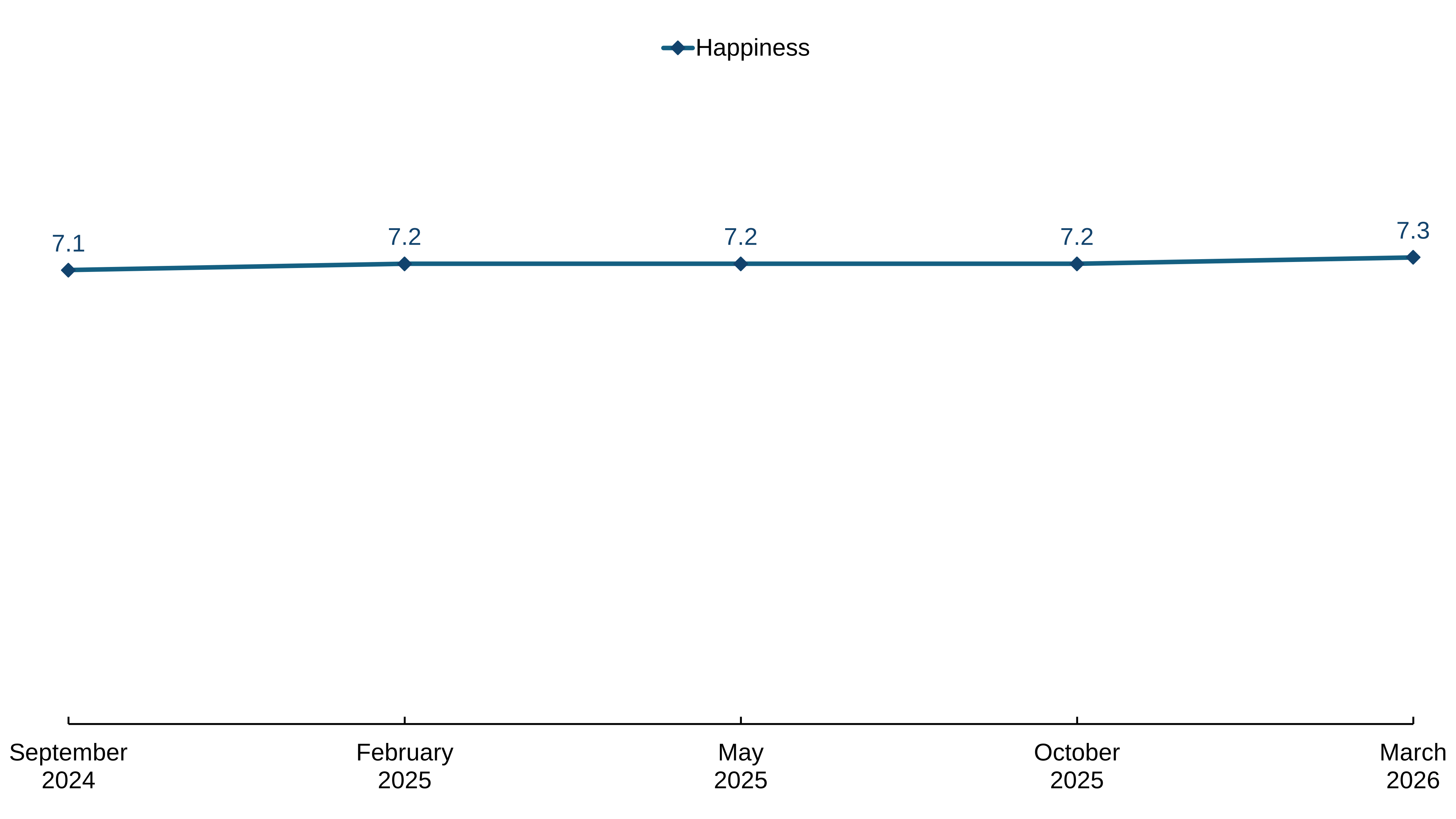
Base: Pupils in years 7 to 11 in March 2026 (n = 2323), October 2025 (n = 3531), May 2025 (n = 2592), February 2025 (n = 906) and September 2024 (n = 3402). Data table reference = “wellbeing_happy”.
The line chart shows pupils’ average happiness scores from September 2024 to March 2026, as reported by pupils in years 7 to 11. Over this period, the mean happiness scores ranged from a minimum of 7.1 in September 2024 and a maximum of 7.3 in March 2026. The underlying data can be found in figure 42.
Figure 44: Pupils’ average ‘worthwhile’ scores over time, as reported by pupils in years 7 to 11
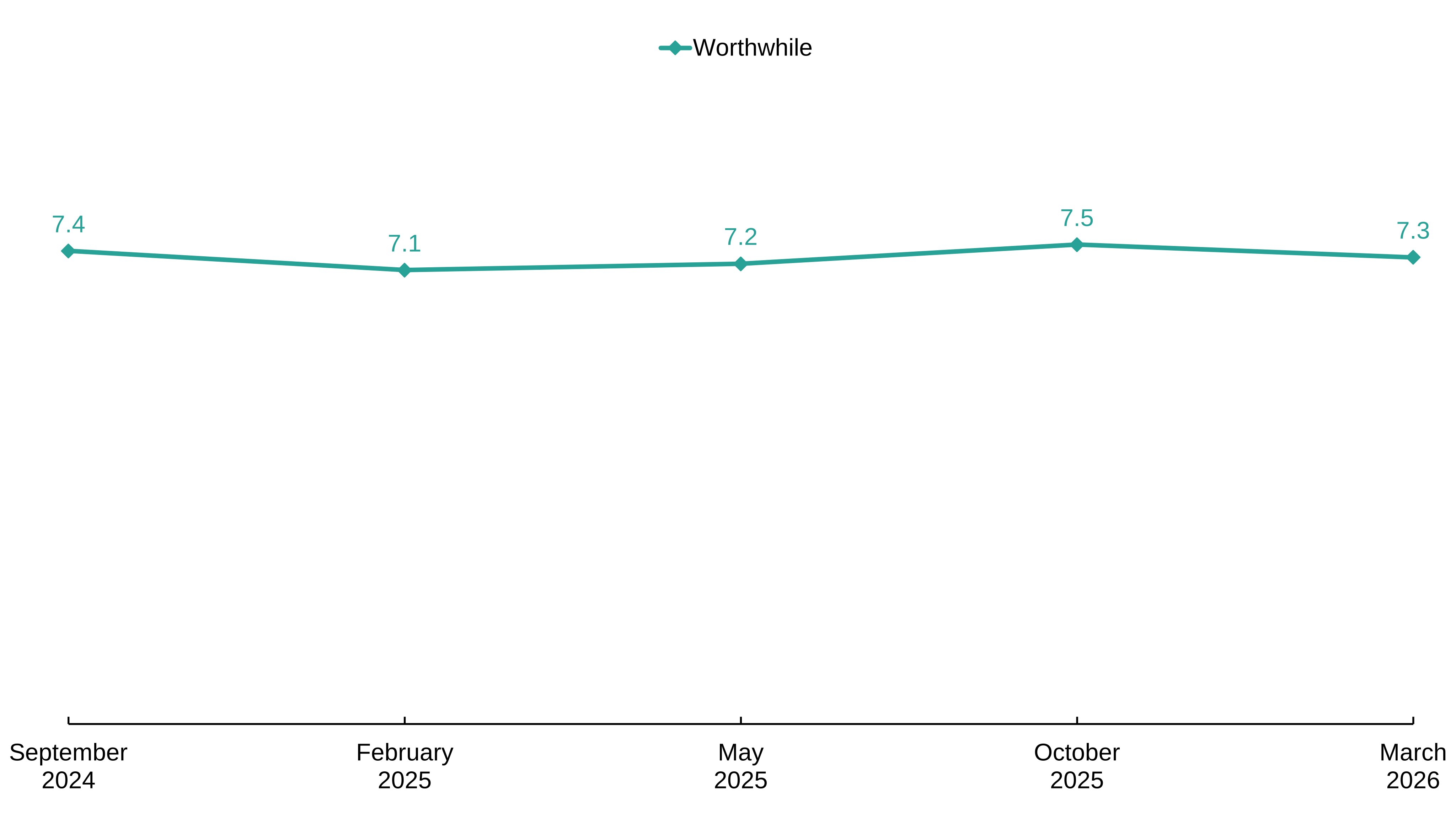
Base: Pupils in years 7 to 11 in March 2026 (n = 2323), October 2025 (n = 3531), May 2025 (n = 2592), February 2025 (n = 906) and September 2024 (n = 3402). Data table reference = “wellbeing_worthwhile”.
The line chart shows pupils’ average worthwhile scores from September 2024 to March 2026, as reported by pupils in years 7 to 11. Over this period, the mean worthwhile scores ranged from a minimum of 7.1 in February 2025 to a maximum of 7.5 in October 2025. The underlying data can be found in figure 42.
Figure 45: Pupils’ average life satisfaction scores over time, as reported by pupils in years 7 to 11
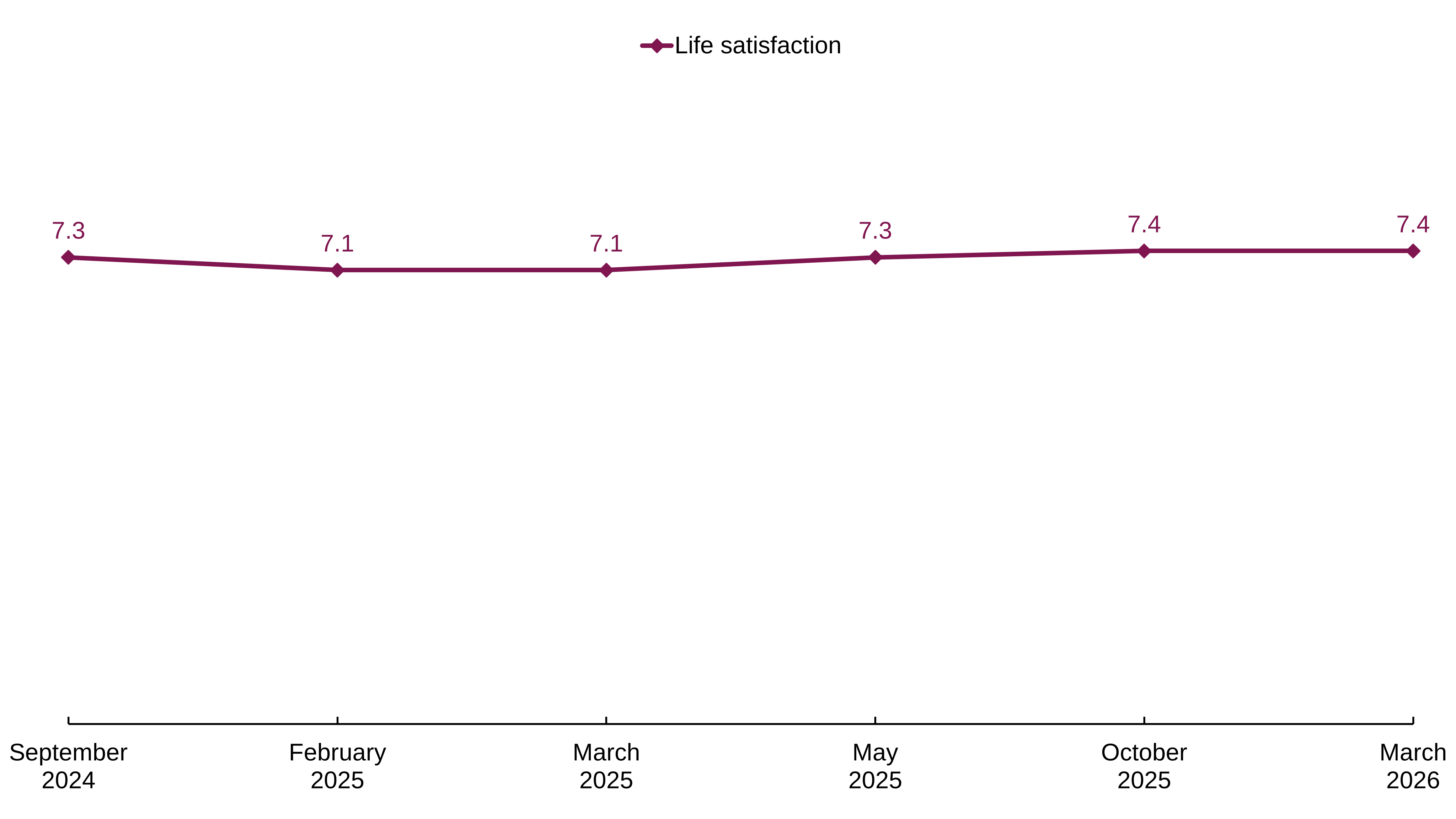
Base: Pupils in years 7 to 11 in March 2026 (n = 2323), October 2025 (n = 3531), May 2025 (n = 2592), March 2025 (n = 1493), February 2025 (n = 906) and September 2024 (n = 3402). Data table reference = “wellbeing_satisfied”.
The line chart shows pupils’ average life satisfaction scores from September 2024 to March 2026, as reported by pupils in years 7 to 11. Over this period, the mean life satisfaction scores ranged from a minimum of 7.1 in February 2025 and March 2025 to a maximum of 7.4 in October 2025 and March 2026.The underlying data can be found in figure 42.
Figure 46: Pupils’ average anxiety scores over time, as reported by pupils in years 7 to 11
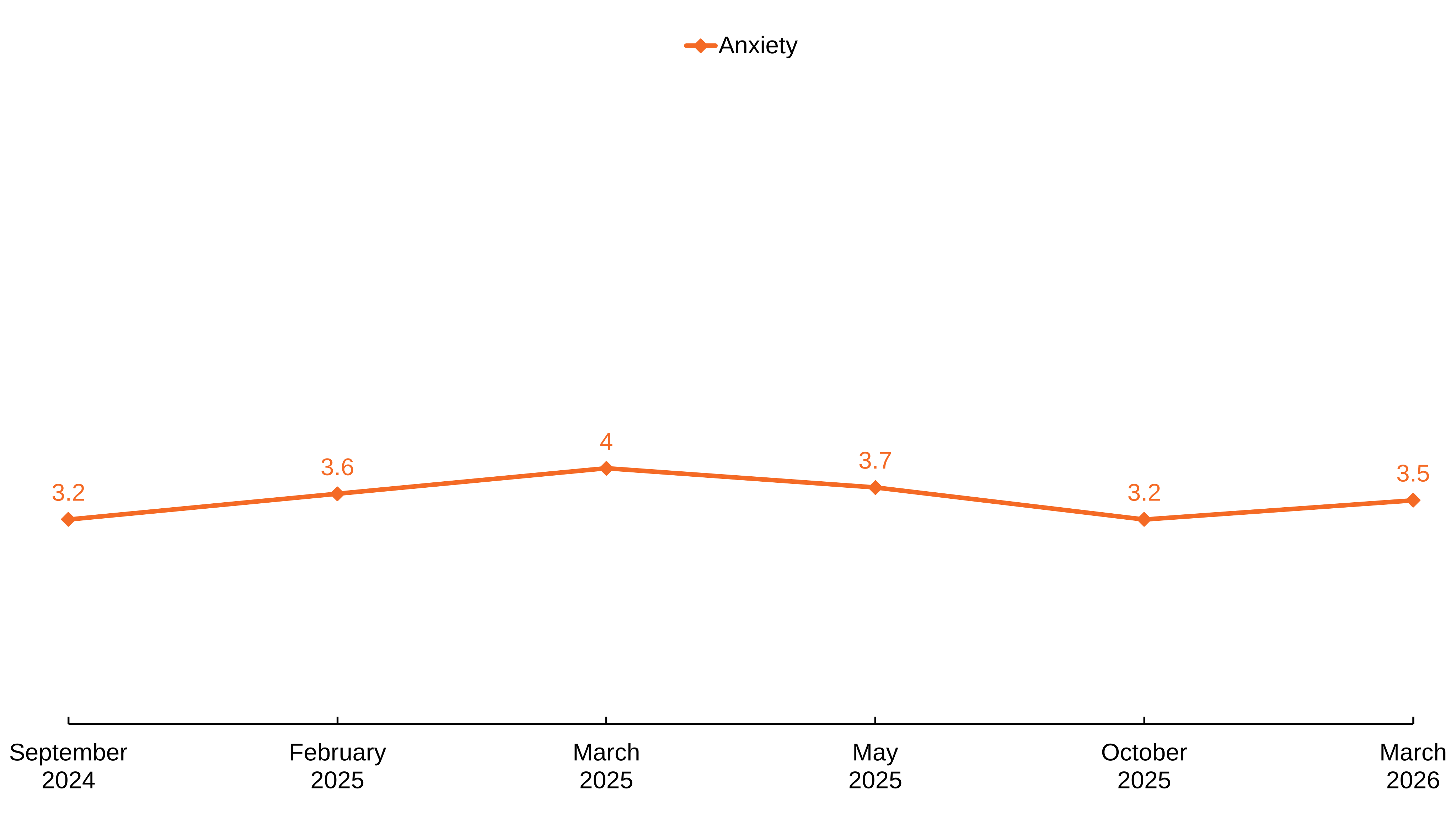
Base: Pupils in years 7 to 11 in March 2026 (n = 2323), October 2025 (n = 3531), May 2025 (n = 2592), March 2025 (n = 1493), February 2025 (n = 906) and September 2024 (n = 3402). Data table reference = “wellbeing_anxious”.
The line chart shows pupils’ average anxiety scores from September 2024 to March 2026, as reported by pupils in years 7 to 11. Over this period, the mean anxiety scores ranged from a minimum of 3.2 in September 2024 and October 2025 to a maximum of 4.0 in March 2025. The underlying data can be found in figure 42.
In the March 2026 survey, ONS wellbeing measures were asked of 16 to 19 pupils and learners in addition to pupils in years 7 to 11.
Figure 47: Pupils’ and learners’ average wellbeing scores in March 2026, as reported by pupils and learners
| Wave | Happiness | Worthwhile | Life satisfaction | Anxiety |
|---|---|---|---|---|
| Key stage 3 pupils | 7.4 | 7.6 | 7.6 | 3.3 |
| Key stage 4 pupils | 7.1 | 6.9 | 7.0 | 3.8 |
| 16 to 19 pupils and learners | 6.9 | 6.7 | 6.5 | 4.0 |
Base: All key stage 3 pupils (n = 1319), key stage 4 pupils (n = 1004) and 16 to 19 pupils and learners (n = 3575). Data has been rebased on pupils in years 12 to 13. Data table reference = “wellbeing_happy”, “wellbeing_worthwhile”, “wellbeing_satisfied” and “wellbeing_anxious”.
We also asked parents a subset of the ‘ONS4’ personal wellbeing measures, in relation to their child’s personal wellbeing. In surveys conducted across this academic year and the previous academic year, the average scores for parents’ views on their child’s personal wellbeing were:
Figure 48: Pupils’ average wellbeing scores over time, as reported by parents
| Wave | Happiness | Anxiety |
|---|---|---|
| March 2026 | 7.9 | 2.8 |
| October 2025 | 8.2 | 2.5 |
| May 2025 | 8.2 | 2.6 |
| March 2025 | 7.8 | 2.8 |
| February 2025 | 8.1 | 2.4 |
| September 2024 | 8.2 | 2.5 |
Base: All parents in March 2026 (n = 3208), October 2025 (n = 4153), May 2025 (n = 3423), March 2025 (n = 2347), February 2025 (n = 808) and September 2024 (n = 4167). Data table reference = “wellbeing_happy” and “wellbeing_anxious”.
Figure 49: Pupils’ average happiness scores over time, as reported by parents
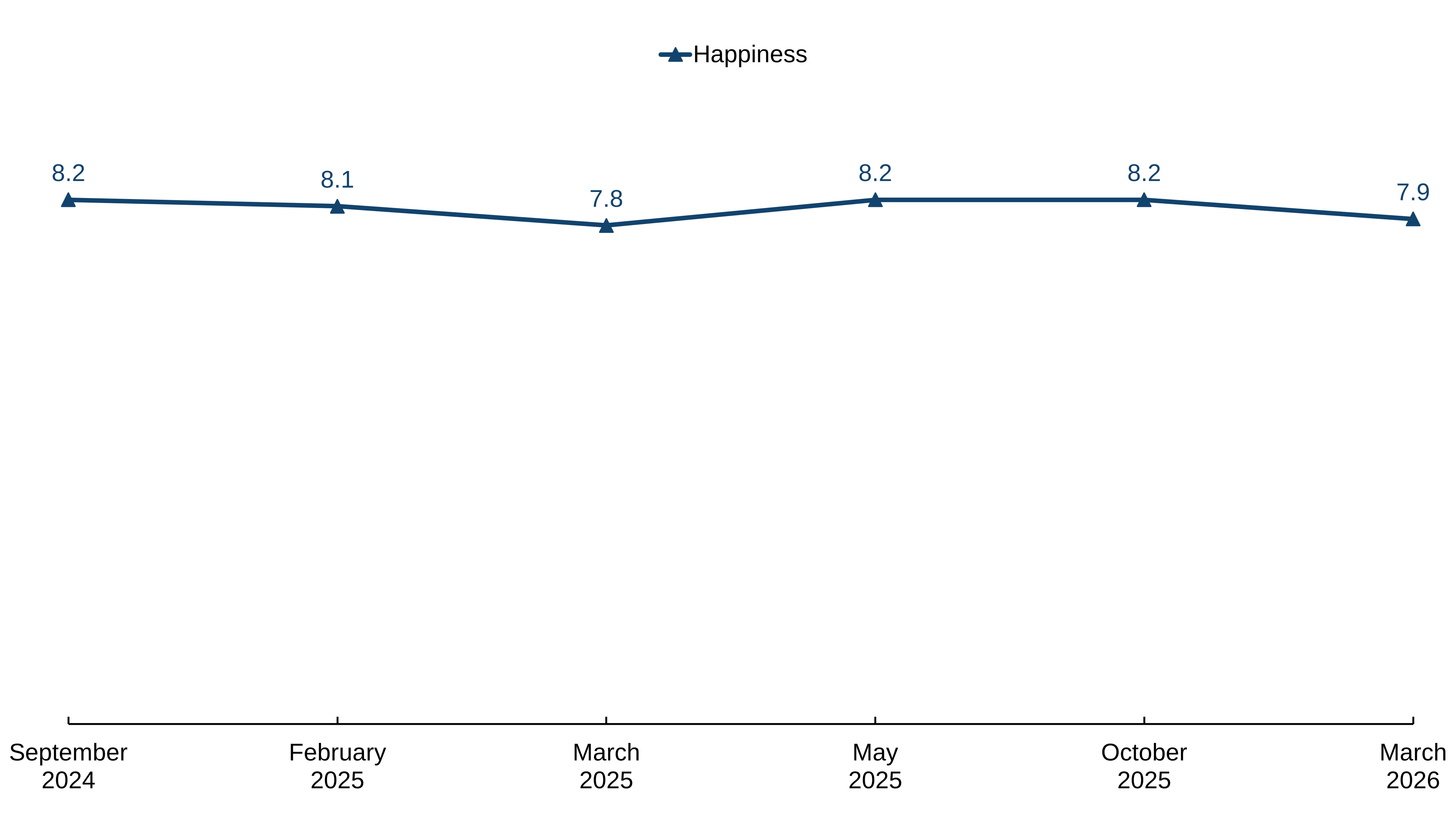
Base: All parents in March 2026 (n = 3208), October 2025 (n = 4153), May 2025 (n = 3423), March 2025 (n = 2347), February 2025 (n = 808) and September 2024 (n = 4167). Data table reference = “wellbeing_happy”.
The line chart shows pupils’ average happiness scores from September 2024 to March 2026, as reported by parents. Over this period, the mean happiness scores ranged from a minimum of 7.8 in March 2025 to a maximum of 8.2 in September 2024, May 2025 and October 2025. The underlying data can be found in figure 48.
Figure 50: Pupils’ average anxiety scores over time, as reported by parents
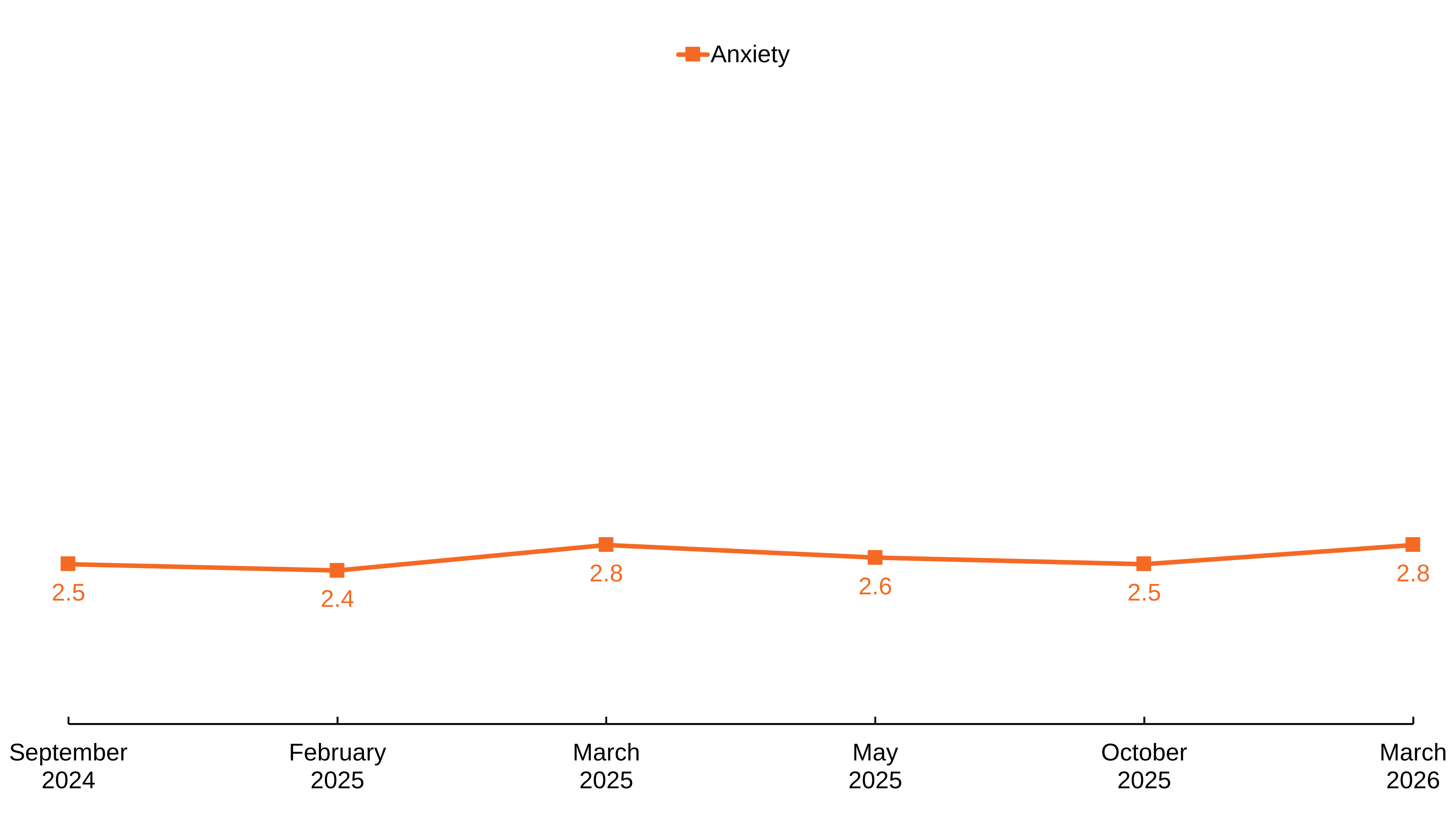
Base: All parents in March 2026 (n = 3208), October 2025 (n = 4153), May 2025 (n = 3423), March 2025 (n = 2347), February 2025 (n = 808) and September 2024 (n = 4167). Data table reference = “wellbeing_anxious”.
The line chart shows pupils’ average anxiety scores from September 2024 to March 2026, as reported by parents. Over this period, the mean anxiety scores ranged from a minimum of 2.4 in February 2025 to a maximum of 2.8 in March 2025 and March 2026. The underlying data can be found in figure 48.
Figure 51: Pupils’ average wellbeing scores, as reported by parents
| Wave | Happiness | Anxiety |
|---|---|---|
| Primary parents | 8.2 | 2.6 |
| Secondary parents | 7.6 | 2.9 |
| Special school | 7.6 | 3.7 |
Base: All primary parents (n = 1096), secondary parents (n = 1511) and special school parents (n = 601). Data table reference = “wellbeing_happy” and “wellbeing_anxious”.
We also asked pupils how often they felt lonely. Data for key stage 3 pupils, key stage 4 pupils, and 16 to 19 pupils and learners are shown in separate figures.
Levels of loneliness among key stage 3 pupils in surveys conducted across this academic year and the previous academic year were:
Figure 52: How often key stage 3 pupils felt lonely
| Wave | Hardly ever or never | Some of the time | Often | Prefer not to say | Total |
|---|---|---|---|---|---|
| March 2026 | 51% | 35% | 9% | 5% | 100% |
| October 2025 | 54% | 33% | 9% | 3% | 100% |
| May 2025 | 49% | 36% | 12% | 3% | 100% |
| September 2024 | 50% | 37% | 10% | 3% | 100% |
Base: Key stage 3 pupils in March 2026 (n = 1319), October 2025 (n = 1980), May 2025 (n = 1481), February 2025 (n = 524) and September 2024 (n = 1989). Data table reference = “wellbeing_lonely”.
Levels of loneliness among key stage 4 pupils in surveys conducted across this academic year and the previous academic year were:
Figure 53: How often key stage 4 pupils felt lonely
| Wave | Hardly ever or never | Some of the time | Often | Prefer not to say | Total |
|---|---|---|---|---|---|
| March 2026 | 39% | 45% | 14% | 3% | 100% |
| October 2025 | 40% | 44% | 13% | 3% | 100% |
| May 2025 | 38% | 38% | 19% | 4% | 100% |
| September 2024 | 39% | 43% | 15% | 4% | 100% |
Base: Key stage 4 pupils in March 2026 (n = 1004), October 2025 (n = 1551), May 2025 (n = 1111), February 2025 (n = 382) and September 2024 (n = 1413). Data table reference = “wellbeing_lonely”.
Levels of loneliness among pupils aged 16 to 19 in surveys conducted across this academic year and the previous academic year were:
Figure 54: How often 16 to 19 pupils and learners felt lonely
| Wave | Hardly ever or never | Some of the time | Often | Prefer not to say | Total |
|---|---|---|---|---|---|
| March 2026 | 31% | 47% | 17% | 5% | 100% |
| May 2025 | 28% | 46% | 22% | 4% | 100% |
| March 2025 | 29% | 45% | 21% | 5% | 100% |
Base: 16 to 19 pupils and learners in March 2026 (n = 3575), May 2025 (n = 1015) and March 2025 (n = 2497). Data table reference = “wellbeing_lonely”.
The proportion of 16 to 19 pupils and learners who said that they often felt lonely was lower in March 2026 (17%) than in May 2025 (22%).
Bullying
We asked 16 to 19 pupils and learners whether they had been bullied for any reason in the past 12 months. Bullying was defined as including any online bullying (cyber bullying) or bullying in person.
Figure 55: Whether pupils had been bullied in the past 12 months
| Phase | By pupils at my school or college | By someone else | No | Don’t know | Total |
|---|---|---|---|---|---|
| 16 to 19 pupils and learners | 7% | 4% | 84% | 6% | 100% |
Base: 16 to 19 pupils and learners (n = 3575). Data table reference = “demogs_bullying”.
Overall, 10% of 16 to 19 pupils and learners said they had been bullied, whether by pupils at their school or college or by someone else, in the last 12 months.
Glossary of terms
Individualised learner record (ILR)
The primary data collection about further education and work-based learning in England. It is requested from learning providers in England’s further education system.
National Pupil Database (NPD)
A register data set of all pupils in state schools in England, compiled by DfE. It contains attainment data as children progress through school, as well as information on pupil background, absences and exclusions from school.
Special educational needs and disability (SEND)
A child or young person has SEND if they have a learning difficulty or disability which calls for special educational provision to be made for them. A child of compulsory school age or a young person has a learning difficulty or disability if they have a:
- significantly greater difficulty in learning than the majority of others of the same age
- disability that prevents or hinders them from making use of facilities of a kind generally provided for others of the same age in mainstream schools or mainstream post-16 institutions
Some children and young people who have SEND may also have a disability under the Equality Act 2010 – that is ‘… a physical or mental impairment which has a long-term and substantial adverse effect on their ability to carry out normal day-to-day activities’. Where a disabled child or young person requires special educational provision, they will also be covered by the SEND definition.
Special schools
Schools that provide an education for children with a special educational need or disability. Almost all pupils in special schools have an education, health and care plan (EHCP), which are plans for children and young people aged up to 25 who need more support than is available through special educational needs support. EHCPs identify educational, health and social needs and set out the additional support to meet those needs.