Product Safety Testing Sampling Protocol Programme: April 2024 – March 2025
Updated 18 February 2026

© Crown copyright 2026
This publication is licensed under the terms of the Open Government Licence v3.0 except where otherwise stated. To view this licence, visit nationalarchives.gov.uk/doc/open-government-licence/version/3 or write to the Information Policy Team, The National Archives, Kew, London TW9 4DU, or email: psi@nationalarchives.gov.uk.
Where we have identified any third party copyright information you will need to obtain permission from the copyright holders concerned.
This publication is available at https://www.gov.uk/government/publications/opss-product-safety-testing-sampling-protocol-programme/product-safety-testing-sampling-protocol-programme-april-2024-march-2025
1) Summary
Under the 2024 to 2025 programme:
- 583 products were tested, of which 464 (80%) products were found to be non-compliant against the legislation that they were tested against.
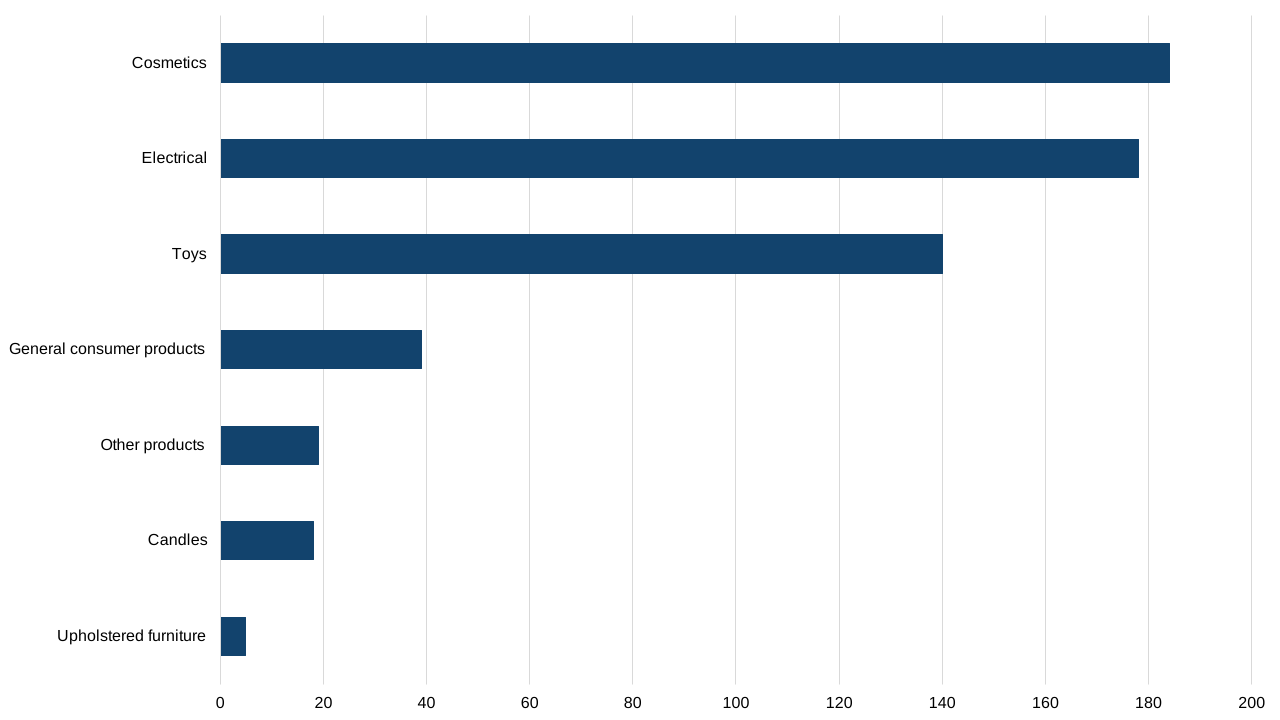
- The most tested categories were cosmetics, electrical, and toys.
2) Introduction and methodology
This report is based on data collected by the Office for Product Safety and Standards (OPSS) through the Product Testing Sampling Protocol for the 2024 to 2025 programme. These programmes have run annually since 2018, with consistent data collection in place since 2020.
OPSS provides grant funding to local authority operated test houses, enabling UK local authorities to access funded product assessment and testing for compliance with product safety legislation within OPSS’s remit. The scope of the programme and details of its operation are set out in the Sampling Protocol, which is published each year on the Regulators’ Companion Website. [footnote 1]
The Sampling Protocol enables local authorities to test purchase products and assess their compliance with product safety legislation for items placed on the market by businesses within their area. The programme gives local authorities cost-free access to scientific and technical expertise for product assessment and testing, supporting their regulatory activities.
For products costing £75 or more, local authorities can apply to OPSS for funding to cover purchase costs. For products under £75, the cost of test purchasing is met by the local authority.
Trading Standards Officers (TSOs) in Great Britain and Environmental Health Officers in Northern Ireland are advised to adopt a risk-based approach, using their professional judgment to decide which products to test purchase and which legislation to assess compliance against.
Samples were submitted to one of seven laboratories for testing, as shown in Table 1.
Table 1: Laboratories testing samples, 2024 to 2025
| Laboratory | Number |
|---|---|
| Aberdeen Scientific Services | 1 |
| Edinburgh Scientific Services | 17 |
| Gateshead Metrology Laboratory | 33 |
| Glasgow Scientific Services | 16 |
| Hampshire Scientific Services | 152 |
| Kent Scientific Services | 191 |
| Lancashire Scientific Services | 173 |
| Total | 583 |
Source: OPSS data collection
After each product is tested, the local authority laboratory must send the test certificate to the local authority TSO who submitted the sample. This enables the TSO to take appropriate follow-up action in line with their enforcement policy and the Regulators’ Code.
Under the Sampling Protocol, OPSS requires that any non-compliant test results, along with details of follow-up enforcement actions, be recorded in the OPSS Product Safety Database (PSD), [footnote 2] together with any additional intelligence about the product.
Local authority TSOs can use these test certificates to engage with businesses about any non-compliance issues identified. This helps businesses take corrective action to bring their products into compliance. It also enables local authorities to assess whether enforcement action is necessary and proportionate. Where required, authorities can mandate the removal of unsafe products from the market to protect consumers. This approach helps create a level playing field in which compliant businesses can compete and grow on fair terms.
How the data can be used:
- Product compliance can be shown by individual product category.
- The compliance rate reflects only the products assessed under this specific programme and should not be interpreted as the overall compliance level of all products on the market.
How the data cannot be used:
- Product compliance rates cannot be used to estimate national compliance levels due to the sampling methodology. Local authorities typically select products based on local knowledge and intelligence, focusing on items that have raised safety concerns. As a result, the products tested do not represent a random sample.
- Total testing volumes cannot be used to compare local authority performance, as the number of tests varies by authority and depends on factors such as available grant funding and demand for testing.
The Department for Business and Trade (DBT) complies with the United Kingdom Statistics Authority (UKSA) Code of Practice for Official Statistics. This code outlines the revision policy for this release, and DBT will notify users of any revisions to the statistics through announcements on gov.uk.
3) Products tested
A wide range of products were tested, with cosmetics, electrical, and toys being the most common categories. These were followed by other consumer products, including nursery items and household goods such as furniture.
Figure 1: Types of products tested, 2024 to 2025
Source: OPSS data collection
Table 2: Types of products [footnote 3] tested under OPSS Sampling Protocol, 2024 to 2025
| Product type | Number |
|---|---|
| Cosmetics | 184 |
| Electrical | 178 |
| Toys | 140 |
| General consumer products | 39 |
| Other products | 19 |
| Candles | 18 |
| Upholstered furniture | 5 |
| Total | 583 |
Source: OPSS data collection
Table 3 shows the legislation under which products in the 2024 to 2025 programme were tested for compliance. Most products were assessed under cosmetic or toy safety regulations, with some tested against multiple pieces of legislation.
Table 3: Legislation applied, 2024 to 2025
| Legislation | Products | Percentage |
|---|---|---|
| Cosmetic Products Enforcement Regulations 2013 | 143 | 25 |
| Toys Safety Regulations 2011 | 123 | 21 |
| Multiple Legislations Apply | 120 | 21 |
| Electrical Equipment (Safety) Regulations 2016 / Plugs and Sockets (Safety) Regulations 1994 | 78 | 13 |
| General Product Safety Regulations 2005 (GPSR) | 75 | 13 |
| Food Imitations (Safety) Regulations 1989 | 6 | 1 |
| Furniture and Furnishings (Fire) (Safety) Regulations 1988 | 5 | 1 |
| Personal Protective Equipment (Enforcement) Regulations 2018 | 5 | 1 |
| N-nitrosamines and N-nitrosatable Substances in Elastomer or Rubber Teats and Dummies (Safety) Regulations 1995 | 2 | 0 |
| Electromagnetic Compatibility Regulations 2016 | 1 | 0 |
| Supply of Machinery (Safety) Regulations 2008 | 1 | 0 |
| Unknown | 24 | 4 |
| Total | 583 | 100 |
Source: OPSS data collection
4) Test results
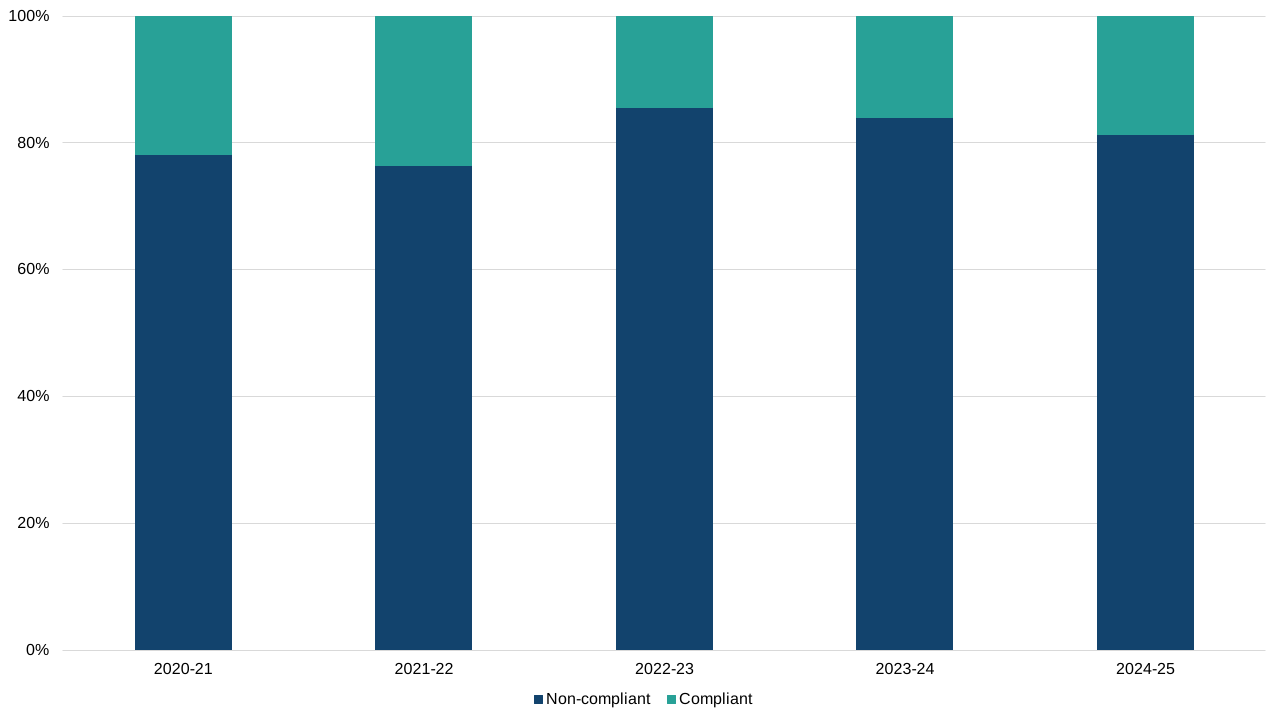
During 2024 to 2025, 583 [footnote 4] products were tested, of which 464 (80%) products were found to be non-compliant with relevant legislation and standards. [footnote 5] This is broadly similar to the level of non-compliance found for other years of the programme since 2020. The lowest non-compliance rate was 76% in 2021 to 2022 and the highest was 86% in 2022 to 2023.
Figure 2: Overall compliance results, 2024 to 2025
Source: OPSS data collection
Table 4: Overall compliance results of products tested under OPSS Sampling Protocol, 2024 to 2025
| Compliance | 2020-21 | 2021-22 | 2022-23 | 2023-24 | 2024-25 |
|---|---|---|---|---|---|
| Compliant | 73 | 141 | 69 | 111 | 107 |
| Non-compliant | 261 | 457 | 408 | 580 | 464 |
Source: OPSS data collection
The types of products selected for assessment are likely to have influenced compliance rates, as local authorities use risk-based approaches in their regulatory work.
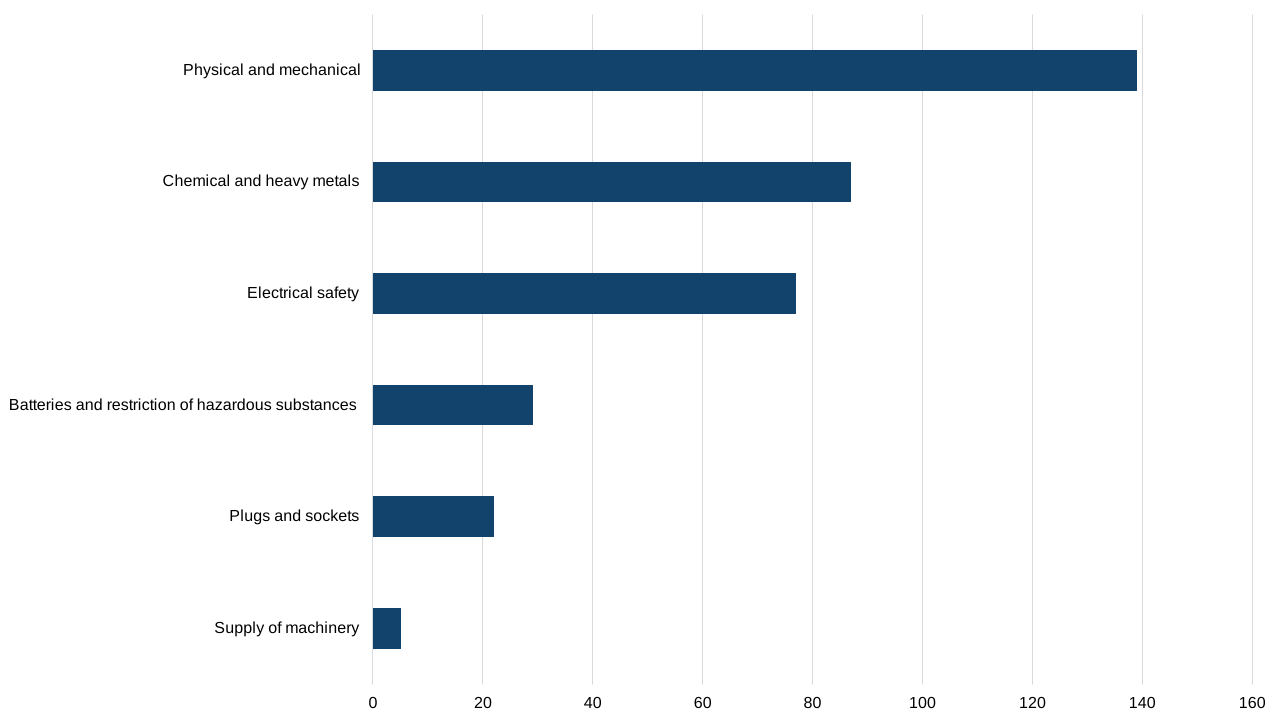
A product can fail in multiple physical safety categories, such as physical and mechanical, electrical safety, batteries and restriction of hazardous substances, chemical and heavy metal, pyrotechnics, and microbiology. The total number of failures across these categories was 359. [footnote 6]
Figure 3: Nature of physical safety non-compliance, 2024 to 2025
Source: OPSS data collection
Table 5: Nature of physical safety non-compliance of products tested under OPSS Sampling Protocol, 2024 to 2025
| Nature | Number |
|---|---|
| Physical and mechanical | 139 |
| Chemical and heavy metals | 87 |
| Electrical safety | 77 |
| Batteries and restriction of hazardous substances | 29 |
| Plugs and sockets | 22 |
| Supply of machinery | 5 |
| Total | 359 |
Source: OPSS data collection
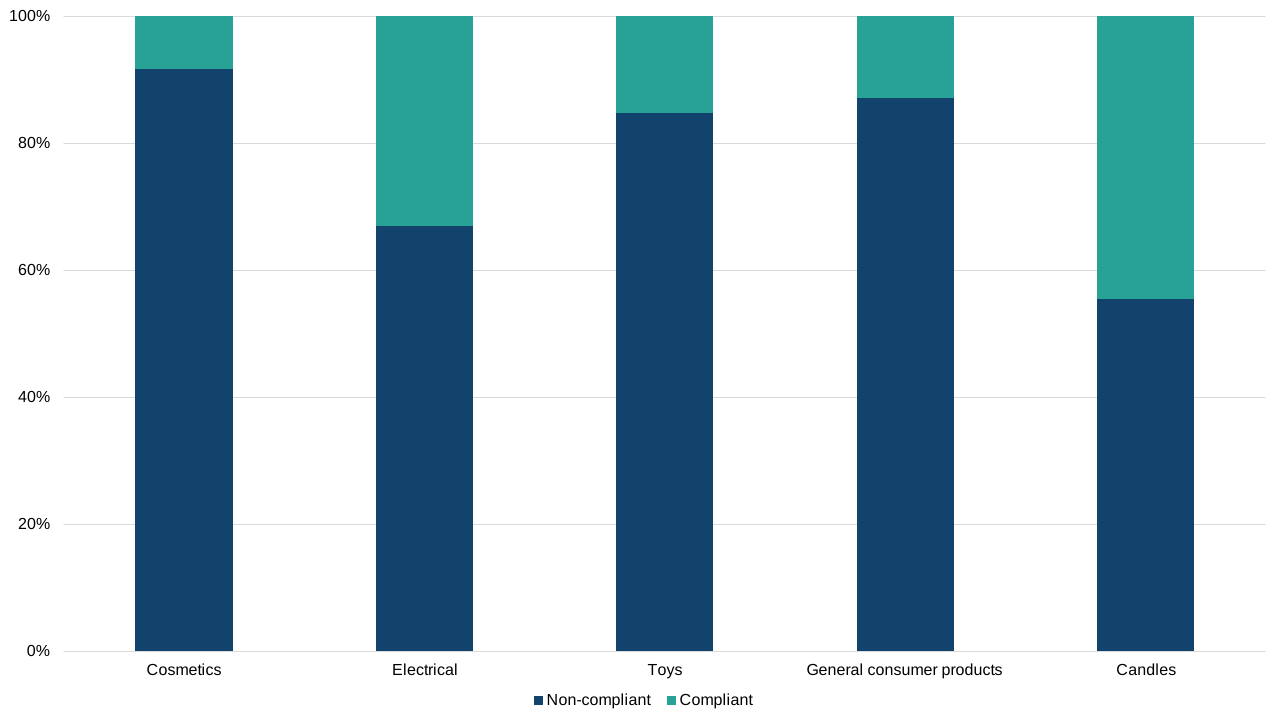
Figure 4: Overall compliance results of the top five types of products tested, 2024 to 2025
Source: OPSS data collection
Table 6: Overall compliance results of the top five types of products tested under OPSS Sampling Protocol, 2024 to 2025
| Product type | Compliant | Non-compliant | Total |
|---|---|---|---|
| Cosmetics | 15 | 168 | 183 |
| Electrical | 56 | 114 | 170 |
| Toys | 21 | 117 | 138 |
| General consumer products | 5 | 34 | 39 |
| Candles | 8 | 10 | 18 |
Source: OPSS data collection
5) Corrective actions
Under the 2024 to 2025 Sampling Protocol, data was required to be entered into the PSD whenever products posed a risk to consumer health and safety due to unsatisfactory test results or were found to be non-compliant.
Of the 464 products with test certificates identifying non-compliance with relevant regulatory requirement, 213 records were accurately matched in the PSD against a test laboratory report. This represents approximately 46% of the products expected to be recorded under the programme.
Among these 213 matched records, 198 (93%) had at least one corrective action recorded. This proportion may increase over time due to reporting and recording delays by local authorities. To further support accurate and timely reporting, steps are being taken to encourage consistent data entry by local authorities.
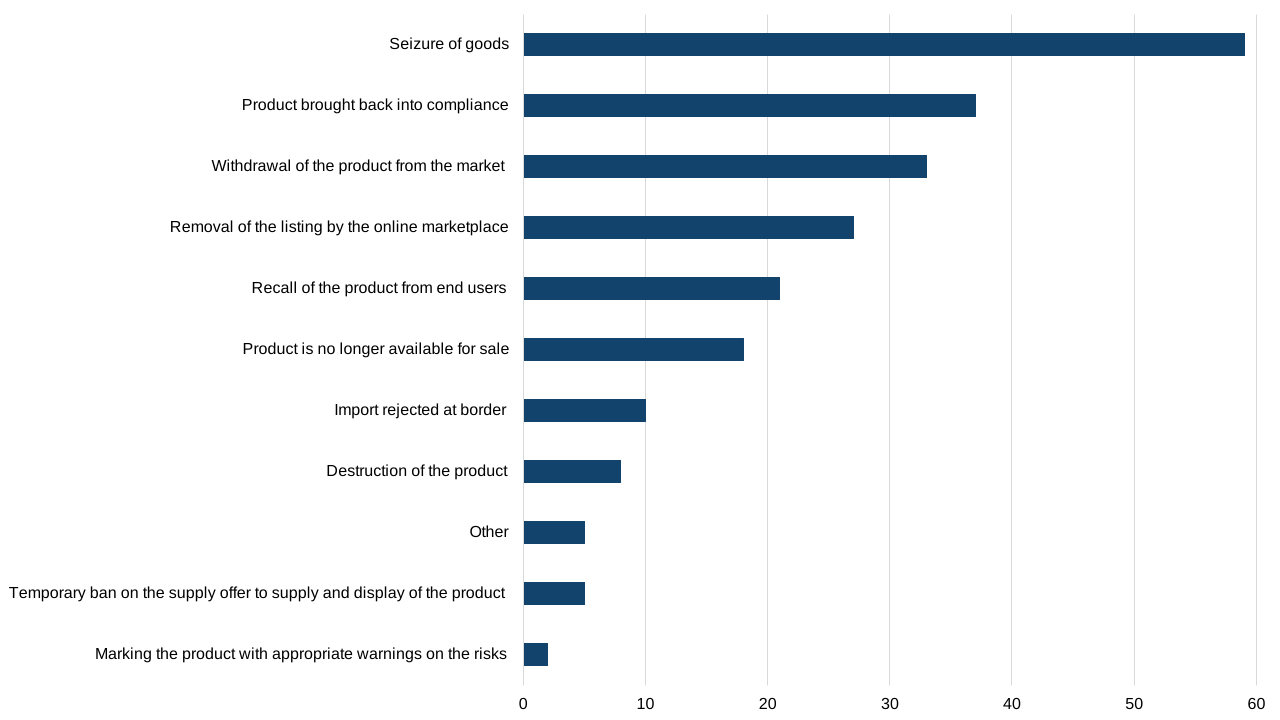
A wide range of corrective actions were recorded by local authorities in the PSD, including product recalls and removal of listings from online marketplaces.
Figure 5: Corrective actions recorded on PSD, 2024 to 2025
Source: OPSS data collection
Table 7: Corrective actions recorded on PSD, 2024 to 2025
| Corrective action | Number |
|---|---|
| Seizure of goods | 59 |
| Product brought back into compliance | 37 |
| Withdrawal of the product from the market | 33 |
| Removal of the listing by the online marketplace | 27 |
| Recall of the product from end users | 21 |
| Product is no longer available for sale | 18 |
| Import rejected at border | 10 |
| Destruction of the product | 8 |
| Other | 5 |
| Temporary ban on the supply offer to supply and display of the product | 5 |
| Marking the product with appropriate warnings on the risks | 2 |
| Total | 225 |
Source: OPSS data collection
The figures presented throughout this report are based on data analysed in January 2026 from the test laboratory reports and searches of the PSD for corrective actions. Any subsequent changes will not be reflected in this report.
More information on the PSD, and key findings, can be accessed at Product Safety Database annual reports.
6) Annex A – Legislation / products for testing
| Products | Legislation tested for compliance with / associated Northern Ireland legislation where appropriate |
|---|---|
| Aerosols | Aerosol Dispensers Regulations 2009 |
| Baby products | N-nitrosamines and N-nitrosatable Substances in Elastomer or Rubber Teats and Dummies (Safety) Regulations 1995 |
| Consumer products | General Product Safety Regulations 2005 |
| Cosmetic products | Cosmetic Products Enforcement Regulations 2013 |
| Electrical Equipment | Electrical Equipment (Safety) Regulations 2016 Plugs and Sockets (Safety) Regulations 1994 |
| EMC | Electromagnetic Compatibility Regulations 2016 |
| Fireworks and explosives | Pyrotechnic Articles (Safety) Regulations 2015 |
| Food imitations | Food Imitations (Safety) Regulations 1989 |
| Gas appliances | Gas Appliances (Enforcement) and Miscellaneous Amendments Regulations 2018 |
| Machinery | Supply of Machinery (Safety) Regulations 2008 |
| Nightwear | The Nightwear (Safety) Regulations 1985 |
| Oil heaters | Oil Heaters (Safety) Regulations 1977 |
| PPE | Personal Protective Equipment (Enforcement) Regulations 2018 |
| Pressure equipment | The Pressure Equipment (Safety) Regulations 2016 |
| Radio equipment | Radio Equipment Regulations 2017 |
| Recreational craft | Recreational Craft Regulations 2017 |
| Simple pressure vessels | Simple Pressure Vessels (Safety) Regulations 2016 |
| Toys | Toys Safety Regulations 2011 |
| Upholstered furniture | Furniture and Furnishings (Fire) (Safety) Regulations 1988 |
Footnotes
-
The website requires a login to access. ↩
-
The PSD is the notification system used by local authority trading standards (environmental health in Northern Ireland), certain national regulators and OPSS enforcement teams to notify unsafe and non-compliant products to the Secretary of State, as required in product safety legislation. ↩
-
Other products include nursery products, food imitation, unlicensed drugs and personal protective equipment. ↩
-
There were 12 products with unknown test results, which are excluded from figures discussing compliance outcomes. ↩
-
The legislation under which products were tested for compliance is listed in the Annex. ↩
-
This value represents all unsatisfactory test results from tests conducted under the physical safety categories: physical and mechanical, chemical and heavy metals, electrical safety, batteries and restriction of hazardous substances, plugs and sockets, supply of machinery, and microbiology. Labelling failures are excluded, and a single product may generate multiple unsatisfactory results. ↩