4th annual report: developments in the UK internal market 2025 to 2026
Published 25 March 2026

© Crown copyright 2026
This publication is licensed under the terms of the Open Government Licence v3.0 except where otherwise stated. To view this licence, visit nationalarchives.gov.uk/doc/open-government-licence/version/3 or write to the Information Policy Team, The National Archives, Kew, London TW9 4DU, or email: psi@nationalarchives.gov.uk.
Where we have identified any third party copyright information you will need to obtain permission from the copyright holders concerned.
This publication is available at https://www.gov.uk/government/publications/oim-annual-report-2025-to-2026/4th-annual-report-developments-in-the-uk-internal-market-2025-to-2026
OIM panel chair’s foreword
I am pleased to present the OIM’s fourth Annual Report, covering developments in the UK internal market from April 2025 to March 2026.
As the OIM prepares to mark its fifth anniversary on 1 September 2026 and following the publication of the conclusion to the UK Government’s Review of the UK Internal Market regime in July 2025, I would like to reflect on the OIM’s role and its achievements, as well as our plans and priorities for the coming year.
As I noted in my foreword last year, the OIM is now well established to advise on the robustness of trade between the 4 nations of the UK and the overall effectiveness of the UK internal market. This was supported by the response of the UK Government to the Review of the UK Internal Market regime, which stated that there are to be no changes to the statutory functions of the OIM and that the OIM is ‘delivering fully [and] effectively’ all the tasks required of it. The response concluded that the OIM is ‘providing the independent expertise and insight needed to inform the effective management and operation of the UK internal market.’
Throughout the past year, the OIM Panel has met regularly to discuss regulatory developments to support the operation of the UK internal market, including meetings hosted from Belfast and Cardiff. Panel members have worked seamlessly with the staff team of the OIM, and I am grateful to all colleagues for their support and hard work.
At the forefront of our work is the need to act even-handedly and transparently, which helps us to inform the conversation about economic relationships within the UK, including through our publications. In the period covered by this report, we have periodically updated our interactive regulatory developments dashboard, which details the policy development areas currently being tracked by the OIM. We’ve also updated our Data Strategy Roadmap, outlining our key data priorities which are underpinned by our continued work with the Office for National Statistics (ONS) and the devolved governments. Additionally, we published our first Short-Form Review (SFR), analysing potential effects on UK internal market trade from proposed legislation relating to electronic identification (EID) for cows and other bovine animals. This review was completed in just over 3 months, and shows how, where there are engaged stakeholders and good quality data, the OIM can produce a targeted and timely analysis of potential regulatory differences to support effective policy making across the 4 nations.
Stakeholder engagement is key to understanding where we can have the greatest impact in our work. Our engagement involves both policymakers and businesses amongst other important stakeholders such as the legislatures of the United Kingdom. This year we met with over 100 businesses and trade groups as part of our research into a wide range of issues and developments, alongside our ongoing engagement with officials from all 4 governments. Since publication of the last Annual Report, we have received more than 25 webform submissions from external stakeholders drawing issues to our attention.
Looking ahead, we will continue to prioritise engagement with and collaboration across the 4 governments, particularly in supporting joint referrals to the OIM to further the work of Common Frameworks. This may result in further publications along the lines of our bovine EID review, to support informed decision-making across the 4 nations. We will focus on making effective use of existing data products in our reporting, as well as exploring options that expand our analysis and extend the community of interest around intra-UK data. As ever, we are keen to hear from businesses about any internal market challenges they may face.
In conclusion, I am confident that, in continuing to effectively fulfil its functions, the OIM will support the Competition and Markets Authority (CMA) in its priorities as set out in the CMA’s 2026 to 2029 Strategy, to drive growth and to improve household prosperity.

Murdoch MacLennan
Chair of the Office for the Internal Market Panel
Executive summary
This is the fourth Annual Report of the Office for the Internal Market (OIM) on the operation of the UK internal market. It covers the period from April 2025 to March 2026. The OIM’s role is to assist the 4 governments across the UK by applying economic and other technical expertise to support the effective operation of the UK internal market.
Key findings
In this year’s report, we continue to build our evidence base on the operation of the UK internal market. On this basis, including considering the evidence in our previous reports, the latest available intra-UK trade data (some of which is subject to a lag), more recent survey data, and close monitoring of regulatory developments, our overall assessment is as follows:
The operation of the UK internal market is stable and the internal market, taken as a whole, continues to function effectively overall. However, there remains a need for close collaboration between governments in relation to specific sectors where we have observed the potential for regulatory differences to emerge that could impact on the UK internal market.
This overall assessment, that the UK internal market is ‘stable’, takes into consideration a number of factors indicating that the internal market continues to function effectively and that the internal market regime is reaching a greater degree of maturity. First, when looking at the internal market regime as a whole, the UK Government’s review of the UK Internal Market Act provided an opportunity to evaluate and make refinements to the regime (review chapter 3). Secondly, the available trade data does not indicate a trend moving away from the effective operation of the internal market albeit that some data is subject to lags (review chapter 4). Third, when examining regulatory differences, we did not identify a divergence from the macro-economic picture in terms of stability. However, we identified areas where there could be improvements in the way regulatory differences are managed, for example, through the greater use of Common Frameworks (review chapter 5).
Developments in the UK internal market regime
The Department for Business and Trade published the UK government’s response to its public consultation and statutory review of the UK Internal Market Act (UKIMA) on 15 July 2025 taking into consideration case studies from the OIM’s previous work on horticultural peat and single-use plastics amongst other sources of evidence and consultation responses. The UK government concluded that the OIM is ‘delivering fully [and] effectively’ all the tasks required of it and that the OIM is ‘providing the independent expertise and insight needed to inform the effective management and operation of the UK internal market.’ The UK government agreed with consultation respondents that wanted to see a larger role for the OIM within Common Framework discussions and made a commitment to work with the devolved governments to agree a process for the governments to make joint referrals to the OIM for advice. Subsequently, the OIM has worked with the 4 governments to develop this joint referral process, to occur early in the policy development process, in order to deliver impactful advice to policymakers consistent with the OIM’s duty of even-handedness.
As part of its response, the UK government also committed to implement changes to the process for exclusions from the UKIMA Market Access Principles (MAPs) so that, where possible, exclusions will be agreed by all governments via a Common Framework and consideration will be given to environmental and public health impacts, alongside economic impacts. In addition, a streamlined process will be implemented where the economic impact of a new regulation is less than £10 million per year.
During the period covered by this Annual Report, an exclusion from the MAPs has been granted relating to rodent glue trap regulations. In addition, the OIM notes the Welsh Government’s plans to introduce a Deposit Return Scheme for drinks containers to recycle containers from a range of materials including glass. The Welsh Government formally proposed an exclusion from the MAPs. In response, the UK government has offered a conditional exclusion to cover single-use glass drinks containers.
Measuring the effective operation of the UK Internal Market
As with last year, our assessment of how the UK internal market is operating benefits from the ONS interregional trade dataset, covering trade between the 4 nations (intra-UK trade) for 2021. Based on this dataset, we estimate that the total value of intra-UK trade was at least £128 billion in 2021, equivalent to 5.6% of UK GDP for context.
The ONS data shows that intra-UK trade is particularly important to Scotland, Wales and Northern Ireland. In 2021, intra-UK sales as an equivalent percentage of GDP was more than 20% for Scotland, Northern Ireland and Wales, while the equivalent figure for England was around 3%.
Devolved nation trade surveys show that intra-UK trade accounts for a large proportion of all external trade for Scotland, Wales and Northern Ireland. External trade refers to all trade outside of a respective nation. This includes trade to other UK nations, or intra-UK trade, and international trade.
-
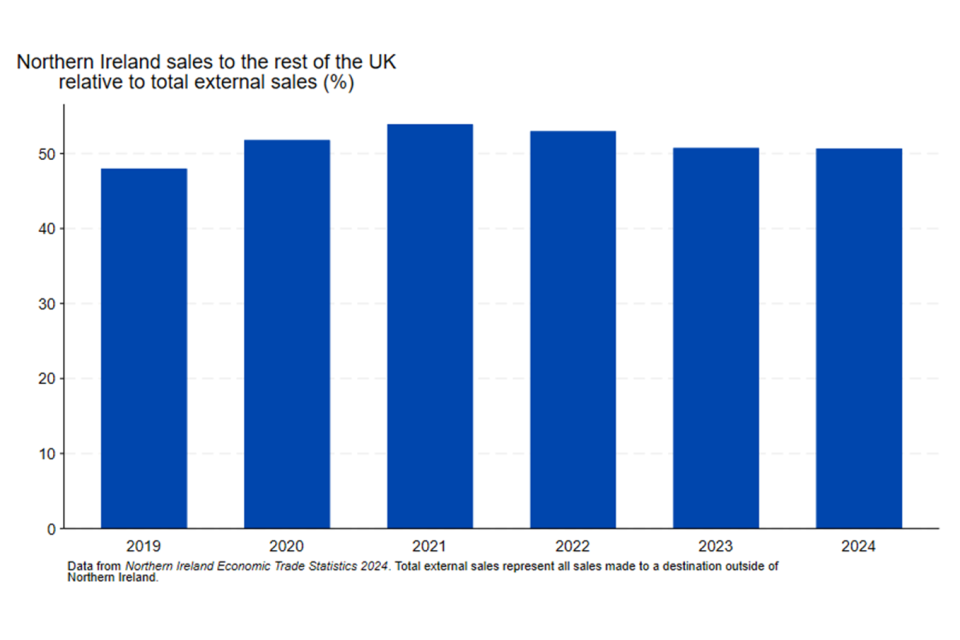
estimates of intra-UK sales of goods and services as a proportion of total external sales for the years between 2019 and 2022 ranged in value from 43% to 63% for Wales. Scotland data shows that the same metric over the period 2019 to 2023 ranged from 58% to 62%. For Northern Ireland, it ranged between 48% and 54% from 2019 to 2024
-
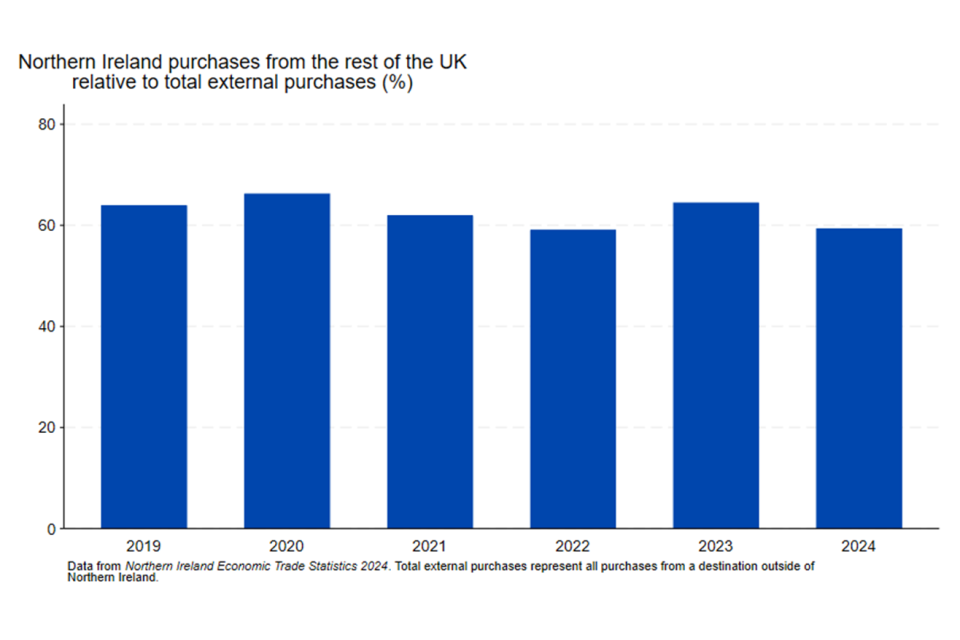
estimates of intra-UK purchases of goods and services as a proportion of total external purchases for the years between 2019 and 2022 ranged in value from 45% to 62% for Wales. For Scotland, between 2019 and 2023, this ranged between 65% and 68%. This same metric for Northern Ireland in the years 2019 to 2024 ranged between 59% and 66%
A significant proportion of UK businesses engage in intra-UK trade. Survey data between August 2022 and October 2025 shows that around 15% of businesses and 43% of large businesses report making intra-UK sales during the 12-month period prior to being surveyed. As noted in previous OIM annual reports, firms in the manufacturing and the wholesale and retail sectors are the most likely to engage in intra-UK trade.
Consistent with previous years, survey data between August 2022 and October 2025 shows most UK businesses that sell to other UK nations do not report facing any challenges in doing so, with around 5% reporting that they face challenges relating to differences in regulation between the UK nations.
Regulatory developments
During this reporting period, the OIM has been approached by, and has engaged with, businesses in relation to 6 of the 33 policy areas that we are currently tracking on the OIM’s regulatory developments dashboard. In this year’s report, we highlight issues arising from our consideration of potential internal market effects regarding the following:
-
bovine electronic identification (EID) Tags, the subject of the OIM’s first Short Form Review
-
extended Producer Responsibility for packaging (pEPR), where businesses expressed concern that the interaction between the pEPR regime and proposed deposit return schemes will affect trade in glass bottles
-
deposit return schemes, where businesses raised concerns about the potential impact on trade of the differences between the proposed scheme for England, Scotland and Northern Ireland, and the proposed scheme for Wales
-
non-surgical cosmetic procedures, where industry practitioners raised concerns about the potential effects on trade and ability to practise as a result of regulatory differences arising from the proposed new regulations for Scotland and the regulatory landscape in the rest of the UK
-
solid fuels, where businesses expressed concerns that the legislation governing sales in England was interacting with the MAPs in a way that was undermining sales and investment
-
energy efficiency requirements for electrical appliances, where businesses raised concerns that regulatory differences that required different labelling and product standards as between Great Britain and Northern Ireland were hampering sales from Great Britain to Northern Ireland
Bovine EID
Industry stakeholders raised concerns that regulatory differences would lead to 2 different technical standards for bovine electronic identification operating within the UK and that the technologies are not interoperable with each other. This could increase costs of moving cattle across the English/Scottish border - and potentially impact on trade within the UK.
We conducted our first short form review to examine the matter, concluding that, if managed carefully, there would be limited impacts on the overall volume and pattern of internal market trade, but with material effects on the businesses most directly affected. We also found that there would be increased costs and trade frictions associated with cross-border trade, with the effects concentrated in England/Scotland border regions. We made 2 recommendations, aimed at supporting cross-border trade flows under conditions of regulatory difference.
First, we recommended that the governments set up a cross-border trade working group involving representatives from the farming, livestock auction and abattoir/meat processing sectors to discuss how cross-border trade can be maintained and what investments would best support it.
Second, we recommended that the governments work together to produce a clear, joint statement on the management of cross-border movements that use EID that take place within Great Britain (GB) and, separately, between GB and NI. As part of this, we recommended that the governments set out for industry participants the basis on which it will be acceptable to use an EID read for submitting information to the relevant national database.
Alongside our engagement with business, we have tracked a diverse range of policy initiatives and examined themes and trends relating to regulatory differences. We have observed from our Dashboard, and the matters that we have been approached about by industry, that no single theme or sector predominates in terms of actual or potential regulatory differences between the 4 nations and that regulatory differences have the potential to emerge across a variety of sectors. Sectors where there are current or prospective regulatory differences include: the environment and animal welfare, food and drink, energy and net zero, public safety, health and safety, healthcare, housing, transport, waste and recycling, and other services.
We also observe that while regulations affecting goods are still more common than regulations affecting services or professional qualifications, in terms of the potential to create regulatory differences, regulations affecting services and/or professional qualifications are an important source of potential regulatory difference within the UK internal market.
Given the breadth of potential regulatory differences, this highlights the importance of close cooperation between governments, and the scope for the OIM to add value in appropriate cases, including through Common Frameworks.
Summary of content
The rest of this report is structured into 3 chapters. It outlines ongoing changes relevant to the UK internal market regime, presents analysis of data on the operation of the UK internal market, and sets out the regulatory developments that are currently being monitored by the OIM.
Chapter 3 outlines recent and ongoing developments relevant to the operation of the UK internal market. It summarises the conclusions of the UK government’s statutory review of the UK Internal Market Act 2020, published in July 2025, and sets out updates relating to exclusions from the MAPs, including changes to the process and criteria for granting exclusions, and recent exclusion proposals and decisions. The chapter also provides an overview of ongoing engagement through the Common Frameworks programme. It concludes by describing wider developments relevant to the UK’s trading relationship with the European Union and Northern Ireland’s place in the UK internal market.
Chapter 4 focuses on measuring the operation of the UK internal market using trade data. It presents analysis on the importance of intra‑UK trade using inter-regional trade data from the ONS, followed by country‑specific analysis for Scotland, Wales and Northern Ireland. It also draws on HMRC customs data and the Business Insights and Conditions Survey to provide additional perspectives on trade between Great Britain and Northern Ireland and on business behaviour and attitudes, broken down by sector and business size.
Chapter 5 describes the regulatory developments currently being monitored by the OIM, and our engagement with industry. It provides an explanation of how our regulatory developments dashboard is used to present information relating to regulatory differences across policy areas, sectors and nations. The chapter then describes the areas in which the OIM has engaged directly with industry stakeholders, namely regulation affecting, among other areas, bovine electronic identification, packaging and deposit return schemes, non‑surgical cosmetic procedures, manufactured solid fuels, and energy efficiency requirements for electrical appliances. It concludes by drawing together observations on the sectoral and policy themes of the regulatory developments currently being monitored.
Developments in the uk internal market regime
In this chapter we note recent and ongoing developments regarding the UK internal market regime.
Statutory review of the UK Internal Market Act 2020
The UK government published its response to its public consultation and statutory review of the UK Internal Market Act 2020 (UKIMA) on 15 July 2025.[footnote 1] The UK government engaged with the OIM and the devolved governments as part of the review. Following its review, the UK government has committed to implement changes to the way certain provisions of the UKIMA regime operate.
The UK government agreed with consultation respondents wishing ‘to see a more involved role for the OIM within Common Framework discussions’ and committed to ‘work with the devolved governments to agree a process for all governments to make a joint referral for advice to the OIM where potential UKIM impacts are identified in Common Framework discussions.’ The OIM has worked with the 4 governments to develop a joint referral process and to explore how, in practice, this process would function to ensure our input comes at the right time in the policy-making cycle and is consistent with our statutory duty of even-handedness.
Exclusions
The MAPs of mutual recognition and non-discrimination mean that a product which can be legally sold in one part of the UK can be sold in any other part of the UK without further requirements; and in relation to services, that a service that can be legally provided in one part of the UK can be provided in any other part of the UK.
The UKIMA contains provisions that allow the application of the MAPs to be excluded for particular regulations or policy areas. If an exclusion applies, then businesses will not be able to rely on the MAPs to avoid complying with any further requirements when selling goods or providing services in the relevant part of the UK. Any of the governments can propose a new exclusion from the MAPs.[footnote 2]
The conclusion to the UKIMA review contained a number of commitments in relation to the process and criteria for agreeing exclusions:
-
the UK government committed to implement changes to the process for exclusions from the MAPs so that, where an exclusion proposal is agreed by all governments in a Common Framework, the UK government will implement it
-
the UK government committed to consider environmental protection and public health alongside economic impacts when considering exclusions within Common Frameworks
-
the UK government committed to implement a streamlined process to evaluate proposed exclusions where the government proposing the exclusion assesses the total economic impact would be no greater than £10 million per year in terms of ‘Equivalent Annual Net Direct Costs to Business’[footnote 3]
-
the UKgGovernment committed to implement a “reserve” exclusions process where it has not been possible for all 4 governments to reach agreement on an exclusion.
In relation to the period covered by this Annual Report:
-
the UK government, at the request of the Scottish government, granted an exclusion in relation to the sale of rodent glue traps.[footnote 4] The UK government stated that the exclusion would result in ‘minimal economic impact’[footnote 5]
-
the Welsh government announced plans to implement a Deposit Return Scheme (DRS) for drinks containers which aims to support recycling and reuse and covers a range of materials, including glass. As these regulations differ from the DRSs to be introduced in the rest of the UK, on 27 November 2025 the Welsh government announced that it had formally proposed an exclusion of the DRS in Wales from the MAPs.[footnote 6] On 12 February 2026, in response, the UK government offered a conditional exclusion to cover single-use glass drinks containers
-
the Welsh government announced that it has begun work with other UK governments in the Common Frameworks on a proposal for a UKIMA exclusion to enact the remaining ‘Phase 2 bans’ of the Environmental Protection (Single-use Plastic Products) (Wales) Act 2023.[footnote 7] This proposed exclusion would disapply the MAPs in relation to the following items in Wales: polystyrene lids for cups or takeaway food containers; plastic single-use carrier bags; and products made of oxo-degradable plastic
Common frameworks
Common frameworks are non-statutory agreements between the 4 governments to establish how devolved or transferred matters previously governed by EU law are to be regulated going forward. Common Frameworks provide ways of working in policy areas where a high level of coordination is desirable, to ensure that changes are effectively managed across the 4 nations.
As at the date of this Annual Report, one common framework has been finalised (Hazardous Substances: Planning), 27 are operating on a provisional basis, and 2 are ready to be published as provisional Common Frameworks for scrutiny by the 4 legislatures.
The UK government published an evaluation of the common frameworks programme on 17 July 2025.[footnote 8] The report suggested there could be opportunities to share good practice across Frameworks and proposed consideration of whether specific processes could help to manage policy areas interacting with several Frameworks. The evaluation mentioned that greater awareness of common frameworks could increase intergovernmental engagement and this awareness may be achieved through greater collaboration between governments. The evaluation encouraged the governments to share examples of where stakeholder engagement had been helpful.
In its response to the UKIMA review, the UK government reaffirmed its commitment to the Common Frameworks programme and committed to work with the devolved governments to improve transparency and communication around the programme to achieve improved engagement with business and other stakeholders.
Wider developments relevant to the UK’s trading relationship with the EU and to Northern Ireland’s place in the UK internal market
Legislative provisions which are necessary to give effect to the Windsor Framework fall outside the OIM’s statutory remit. Whilst this report does not review the Windsor Framework, we note the following developments in the period covered by this Annual Report relevant to Northern Ireland’s place in the UK internal market:
-
on 19 May 2025, the UK government and the EU held a joint summit with the aim to work towards greater cooperation across a range of policy areas.[footnote 9] On 13 November 2025, the EU Council formally authorised the European Commission to open negotiations with the UK on an agreement for common sanitary and phytosanitary (SPS) issues. The aim of any SPS agreement would be to reduce the burden of trading agricultural products between the EU and the UK by aligning SPS rules[footnote 10] by removing the need for most certificates and checks on animals, plants, and related products moving between the UK and the EU[footnote 11]
-
on 4 September 2025, the Independent Review of the Windsor Framework by the Rt Hon Lord Murphy of Torfaen was published (the Murphy Review). The Murphy Review found that ‘[t]he new (SPS) agreement between the UK and EU represents a significant advancement, promising practical improvements for Northern Ireland’ and recommended a number of ways to simplify administrative processes for businesses and improve regulatory clarity.[footnote 12]
-
on 5 November 2025, the Windsor Framework Independent Monitoring Panel released a report on the period 1 January 2025 to 30 June 2025. The report concluded that the UK Internal Market Scheme under the Windsor Framework was functioning effectively, and that 96% of the value of freight moving from Great Britain to Northern Ireland was ‘not at risk’ of entering the EU[footnote 13]
-
on 26 November 2025, the Chancellor of the Exchequer announced a £16.6 million package to help businesses in Northern Ireland navigate post-Brexit trade rules with the aim of creating ‘a one stop shop’ support service to enable ‘businesses based in Northern Ireland to take advantage of their access to the UK and EU markets’[footnote 14]
-
on 16 December 2025, the UK government published its formal response to the Murphy Review. The response broadly accepted all recommendations of the review and committed to implement the recommendations ‘to enhance democratic scrutiny, business support and the facilitation of trade flows between Northern Ireland and the rest of the UK’[footnote 15]
Measuring the effective operation of the UK internal market
In this chapter, we present analysis of trade and other data relevant to understanding the operation of the UK internal market. We first set out our analysis of data on trade between UK nations (intra-UK trade). We then review evidence providing insights into the extent to which different types of business trade with other parts of the UK and the potential barriers they face, before providing a concluding section drawing together the evidence reviewed in this chapter.
In performing its functions, the OIM makes use of a wide range of data and information such as quantitative data on trade between UK nations and qualitative information about business attitudes to intra-UK trade. Since the OIM began operating in 2021, we have highlighted the importance of consistent, regular and comprehensive data relating to the operation of the UK internal market.
In March 2023, we published our data strategy roadmap, with the aim of seeking to promote the collection and publication of consistent macro data on trade within the UK and, more generally, to be a catalyst for an improvement in the evidence base on the UK internal market. We published updates to this roadmap in 2024 and 2025. In our 2025 update, published in June, we set out our priorities for 2025 to 2026, including projects we are taking forward and those where we are keen to work with partners across the wider research community. There have been positive updates in relation to these priorities, one of which is the publication of Industry-to-industry payment flows in the UK from 2019 to 2025, released by the ONS in January this year. We intend to provide an update on this and our other projects later this year.
In this year’s Annual Report, we include new data from the Office for National Statistics (ONS), Scottish Government, and Northern Ireland Statistics and Research Agency (NISRA). In addition to this, we include HMRC Customs Data for trade between Northern Ireland and Great Britain, as well as responses to the latest Business Insights and Conditions Survey (BICS) [footnote 16] published by the ONS, to provide further information on the behaviour of different sectors trading within the United Kingdom. Updated trade data for Wales has not been published by the Trade Survey for Wales (TSW) in this reporting year. As a result, and to provide a complete picture across the 4 nations, we report the latest available figures from TSW, which were also reported in our 2024 to 2025 Annual Report.
The data we present are the most up‑to‑date government sources available to us from ONS, HMT, HMRC and the devolved administrations. They include accredited official statistics, official statistics in development (such as ONS BICS and ONS Interregional Trade data), and administrative/customs series; taken together, they provide coverage of UK interregional trade and related trends. This data does not all relate to the same time period, so the evidence we present should be interpreted as illustrating the overall picture and broader trends, rather than a ‘snapshot’ of the UK internal market at a single point in time.
Intra-UK trade data
In this section of the report, we begin by exploring the total value of intra-UK trade and its relative importance to each of the 4 UK nations using the ONS Interregional Trade data set. We then explore country-specific evidence for Scotland, Wales and Northern Ireland.
When exploring trends in the nominal values of intra-UK trade over time, some of the variation observed is likely to be caused by inflation rather than by changes in the real terms value of trade.[footnote 17] During the period over which we have data, varying levels of inflation were observed. This is particularly relevant for years 2022 and 2023, which saw historically high rates of inflation.[footnote 18] Therefore, when we report absolute values of intra-UK trade over time, we deflate nominal values using the GDP deflator. It should be noted that this adjustment does not perfectly remove the effect of inflation on intra-UK trade values, and there does not currently exist a set of deflators which does this.
The most recent estimates of the value of intra-UK trade including England are provided by the ONS Interregional Trade data set.[footnote 19] The value of intra-UK trade reported in these data sets excludes the finance and insurance sector.[footnote 20] Consequently, the value (both as an absolute amount and as a share of GDP) of intra-UK trade reported is as a lower bound estimate.
Intra-UK trade was equivalent to at least 5.8% of gross domestic product (GDP) in 2019, which was £129 billion. In 2021, this figure was at least 5.6% of GDP, which, after an adjustment for inflation, equates to approximately £122 billion in 2019 prices.
Figure 1 shows that intra-UK trade makes up a larger percentage of GDP for Scotland, Wales and Northern Ireland than England. In 2021, intra-UK sales were equivalent to at least: 3.1% of GDP for England, 21.9% for Scotland, 20.6% for Wales and 24.1% for Northern Ireland. Similarly, intra-UK purchases in 2021 represented: 3.1% of GDP for England, 23.2% for Scotland, 17.2% for Wales and 24.4% for Northern Ireland. These figures are similar to what was observed for 2019.
Figure 1: Intra-UK trade is more important to Scotland, Wales and Northern Ireland than England
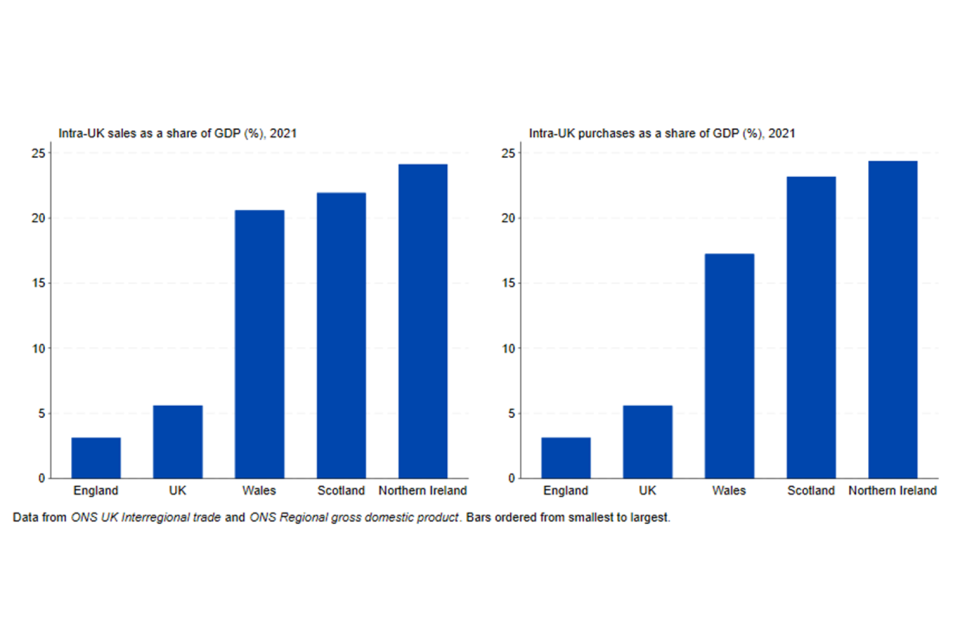
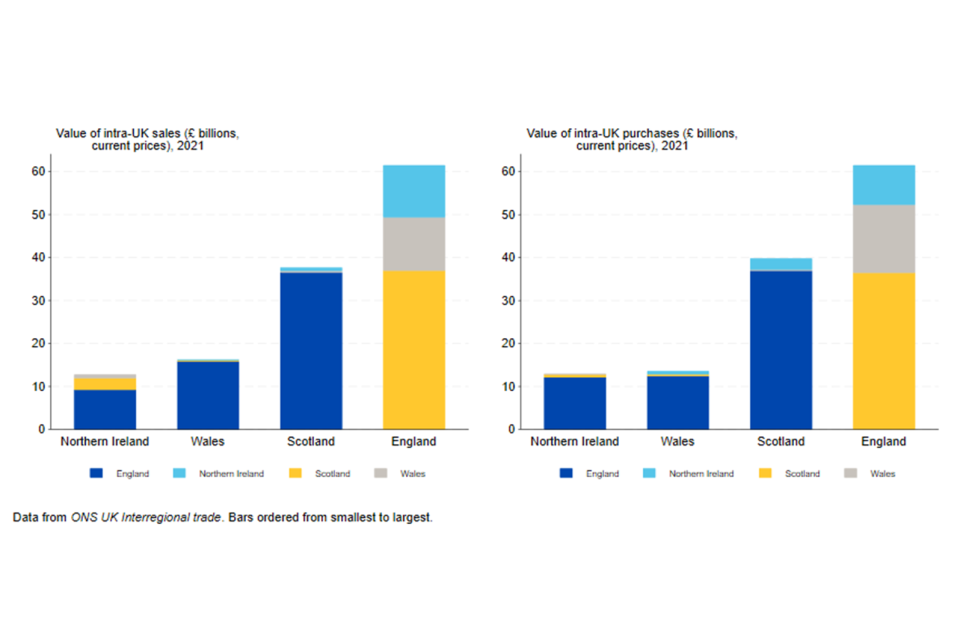
Figure 2 shows that values of intra-UK trade broadly reflect the size of the national economies, and that England is the largest trade partner for each devolved nation. In 2021, intra-UK sales to England made up over 92% of total sales for Scotland, Wales and Northern Ireland, and over 92% of total intra-UK purchases. In comparison, over half of England’s intra-UK sales and purchases were to/from Scotland.
Figure 2: Intra-UK trade values are broadly reflective of the size of national economies
Scotland data
We look next at data on sales from Scotland to the rest of the UK. The primary data source for Scotland’s sales is the Export Statistics Scotland (ESS) publication.[footnote 21] Purchases statistics are sourced from the Quarterly National Accounts.[footnote 22] ESS published estimates of intra-UK sales for 2022 and 2023 in 2025.
Scotland intra-UK sales
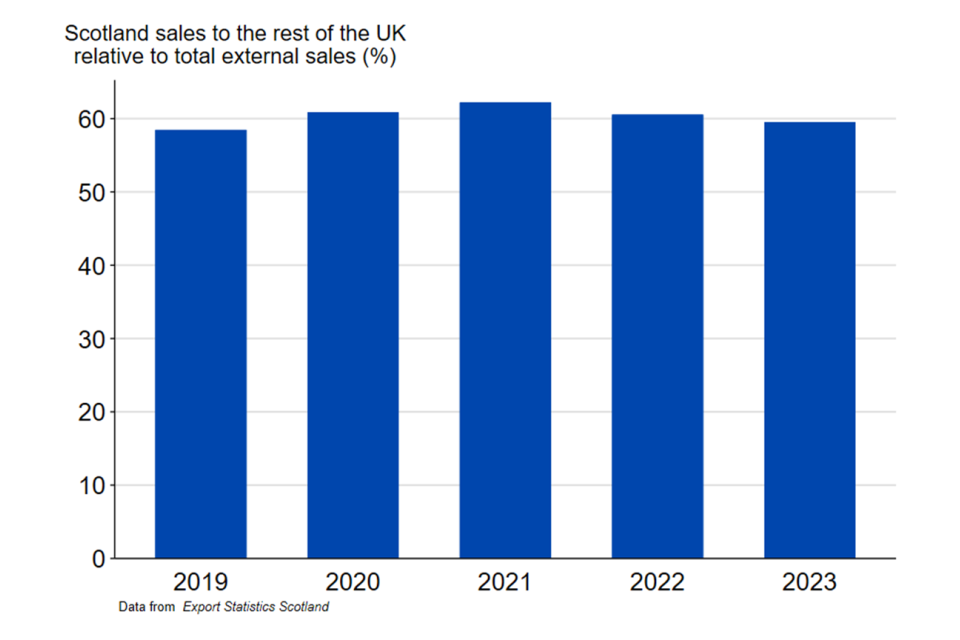
Figure 3 shows that Scotland’s sales to the rest of the UK relative to total external sales remained broadly constant between 2019 and 2023 at around 60%. The value of Scotland’s intra-UK sales in 2023 was £55.4 billion.[footnote 23]
Figure 3: Scottish intra-UK sales remained broadly constant relative to total external sales between 2019 and 2023
Scotland intra-UK purchases
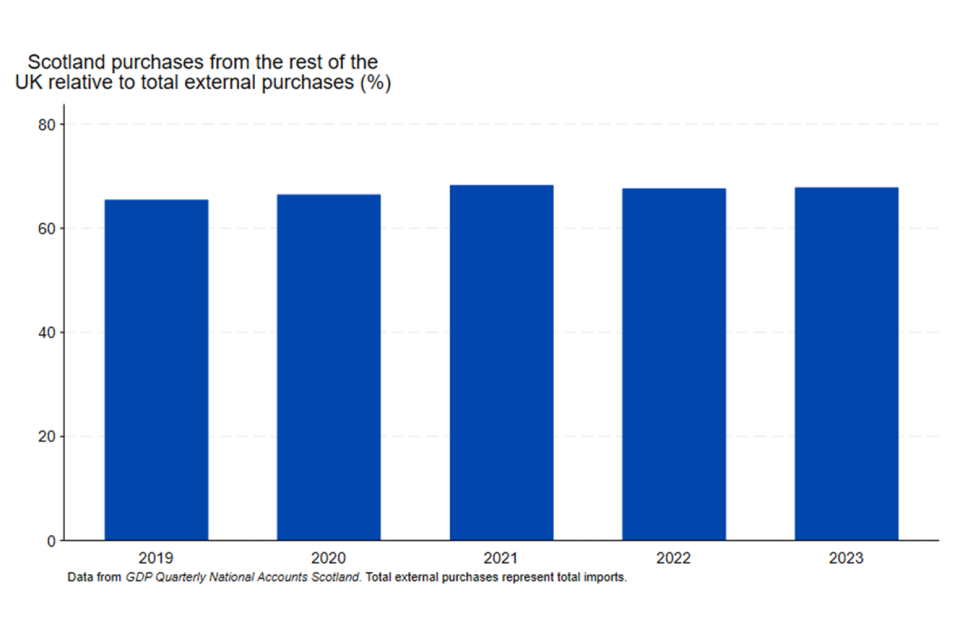
Figure 4 shows that the value of Scotland’s purchases from the rest of the UK as a share of total external purchases remained broadly constant between 2019 and 2023 at between 65% and 68%. In 2023, the value of Scotland’s intra-UK purchases was £87.8 billion.[footnote 24]
Figure 4: Scotland’s intra-UK purchases as a share of total external purchases has remained broadly constant between 2019 and 2023
Wales data
The Trade Survey for Wales (TSW) provides estimates for values of intra-UK trade conducted by businesses based in Wales.[footnote 25] Updated trade data for Wales has not been published by the Trade Survey for Wales (TSW) in this reporting year. As a result, we report the latest available figures which were also reported in our 2024 to 2025 Annual Report.[footnote 26]
Wales intra-UK sales
Figure 5 shows that the estimated value of goods and services sold by Welsh businesses to the rest of the UK as a share of total external sales[footnote 27] increased from 2021 to 2022. The estimated value of Welsh intra-UK sales was £48 billion in 2022.[footnote 28] This represented 63% of total external sales, an increase from 43% in 2021.
Figure 5: The value of Welsh intra-UK sales increased relative to total external sales from 2021 to 2022
Bar chart showing Wales sales to the rest of the UK as a percentage of total external sales. Data from Trade Survey for Wales.
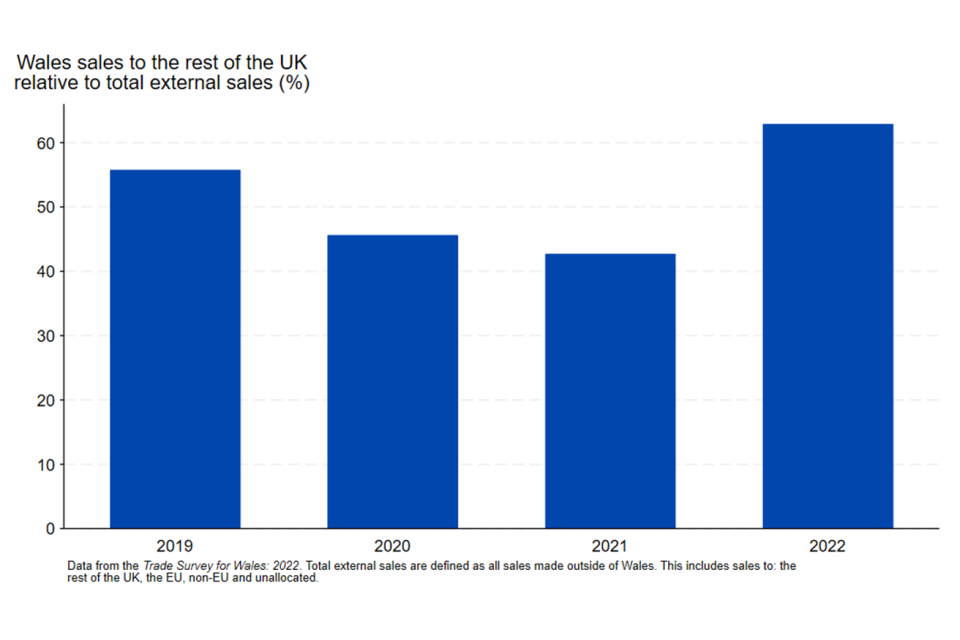
The significant increase in estimates of the relative values of sales to the rest of the UK between 2021 and 2022 is, at least partially, explained by unallocated sales from Wales falling from £22 billion in 2021 to £4 billion in 2022.[footnote 29] That is, some of the increase in the relative value of sales to the rest of the UK seen from 2021 to 2022 may have arisen from more sales being allocated to a destination within the TSW rather than a real world increase. The same can also be said for the decrease in the relative value of sales from 2019 to 2020, during which there is an increase in the value of unallocated sales.
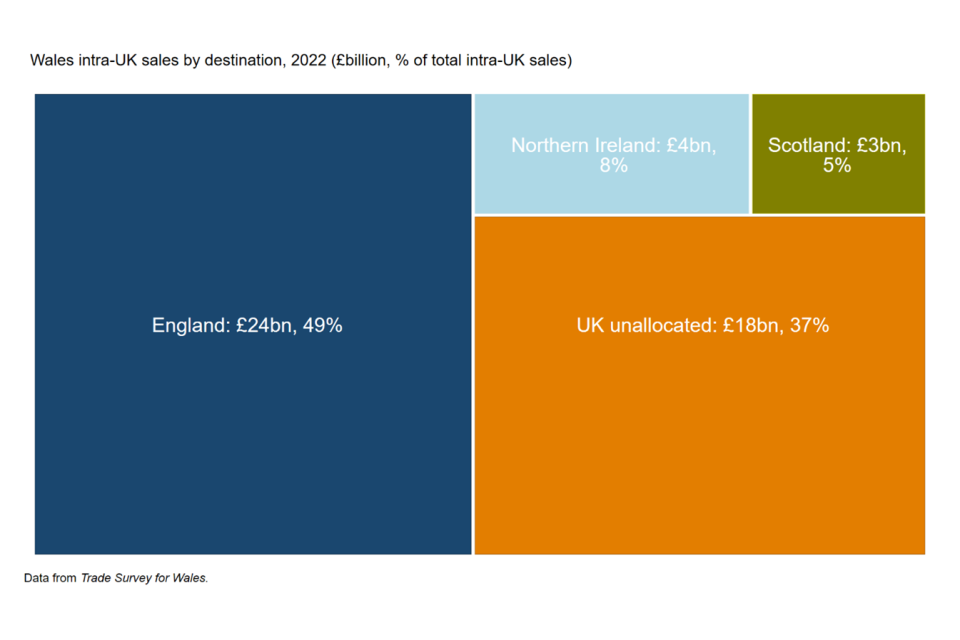
Figure 6 breaks down Welsh intra-UK sales by destination country in 2022. Sales to England accounted for 49% of intra-UK sales in 2022, Scotland for 5%, Northern Ireland for 8% and sales to other UK nations that could not be allocated a destination country for 37%.[footnote 30]
Figure 6: England was the biggest destination for Welsh intra-UK sales in 2022
Tree map of Wales intra-UK sales by destination in 2022. Values presented in £billion (current prices) and as a share of total intra-UK sales. Data from Trade Survey for Wales.
Wales intra-UK purchases
Figure 7 shows that the estimated value of purchases by businesses in Wales from the rest of the UK as a share of total external purchases[footnote 31] increased from 2021 to 2022.[footnote 32] The value of intra-UK purchases was £26 billion in 2022.[footnote 33] This represented 56% of total external purchases, an increase from 45% in 2021. This reverses the trend observed between 2019 and 2021 of intra-UK purchases as a share of total external purchases falling.
Figure 7: The value of purchases from the rest of the UK relative to total external purchases increased from 2021 to 2022
Bar chart showing Wales purchases from the rest of the UK as a percentage of total external purchases. Data from Trade Survey for Wales.
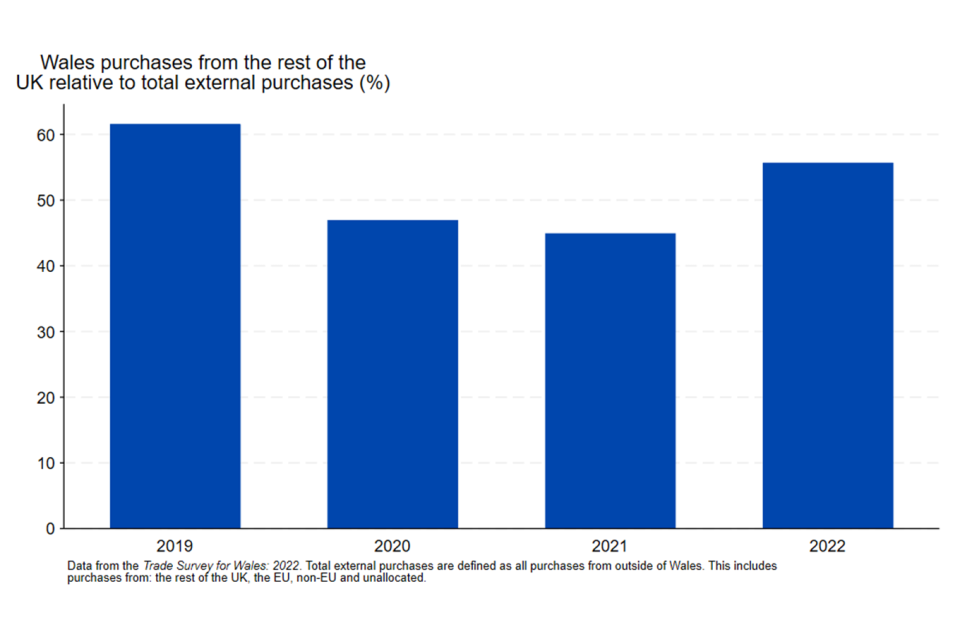
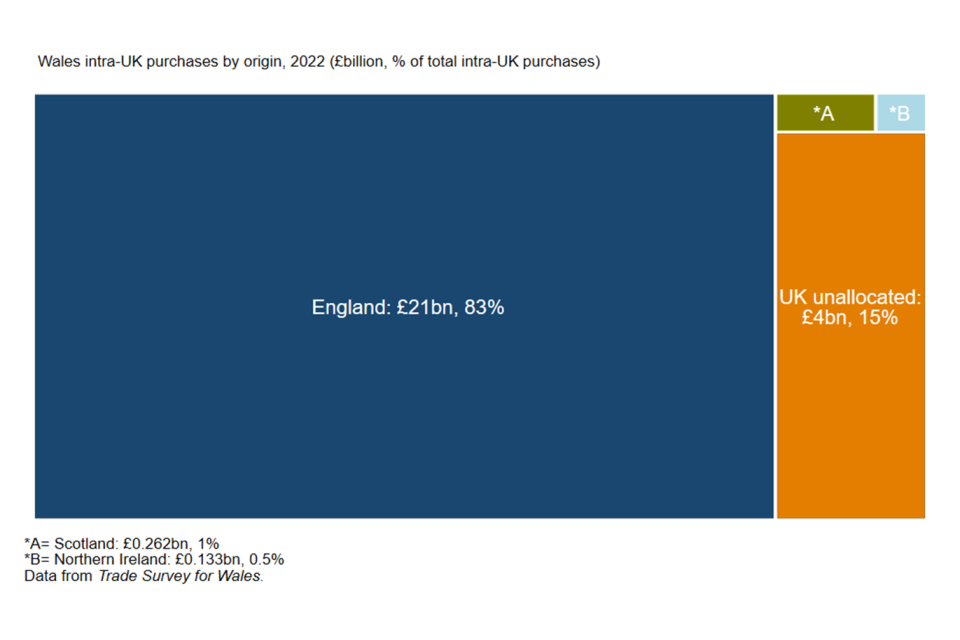
Figure 8 breaks down Welsh intra-UK purchases by country in 2022. Purchases from England accounted for 83% of total purchases from the rest of the UK in 2022, Scotland for 1%, Northern Ireland for 0.5% and purchases from the rest of the UK that could not be allocated to a specific nation for 15%.[footnote 34]
Figure 8: England was the biggest destination for Welsh intra-UK purchases in 2022
Tree map of Wales intra-UK purchases by destination in 2022. Values presented in £billion (current prices) and as a share of total intra-UK purchases. Data from Trade Survey for Wales.
Northern Ireland data
We draw upon 3 data sources which provide information on Northern Ireland’s trade with the rest of the UK. Northern Ireland Economic Trade Statistics provide information of trade values, while HMRC Customs Data and the Business Insights and Conditions Survey provide additional information on trade in goods. Although these sources are not directly comparable, they can be used in combination to provide a more comprehensive picture of Northern Ireland’s intra-UK trade.
The Northern Ireland Economic Trade Statistics[footnote 35] publication provides estimates of values of Northern Irish businesses trade with the rest of the UK.
Northern Ireland intra-UK sales
Figure 9 shows that the estimated value of Northern Ireland’s sales to the rest of the UK relative to total external sales remained broadly constant between 2019 and 2024. The value of Northern Ireland’s intra-UK sales was £20 billion in 2024,[footnote 36] which represented 51% of total external sales. Over the period 2019 to 2024 this figure has ranged between 48% and 54%.
Figure 9: The value of Northern Ireland’s intra-UK sales relative to total external sales between 2019 and 2024
Northern Ireland intra-UK purchases
Figure 10 shows that the estimated value of purchases made by businesses in Northern Ireland from other UK nations remained broadly constant relative to total external purchases between 2019 and 2024. The value of intra-UK purchases was £16 billion in 2024,[footnote 37] which represented 59% of total external purchases. Between 2019 and 2024 this figure has ranged between 59% and 66%.
Figure 10: The value of Northern Ireland’s intra-UK purchases relative to total external purchases between 2019 and 2024
Business Insights and Conditions Survey
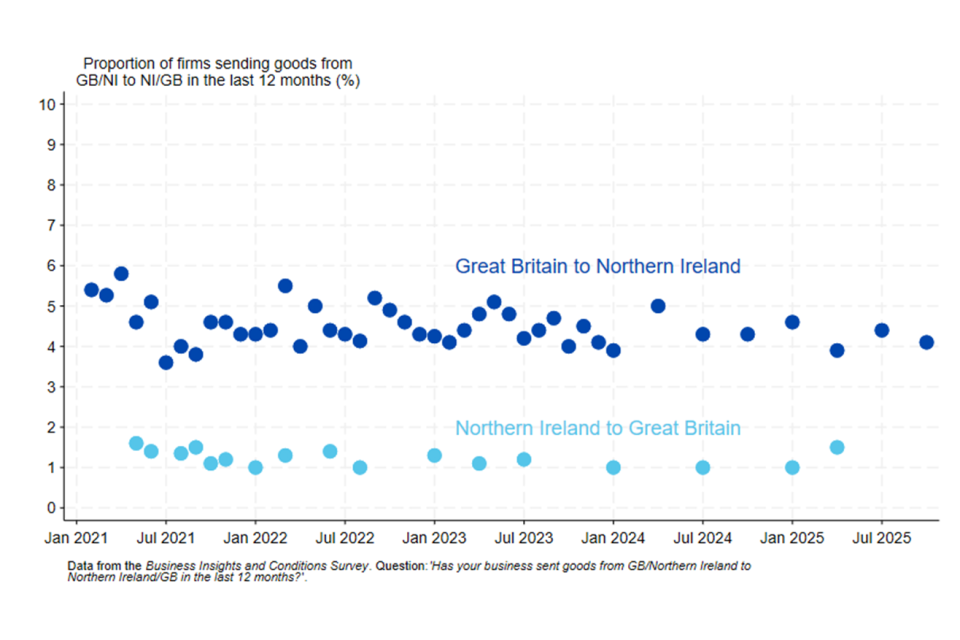
The BICS asks businesses[footnote 38] whether they have sent goods from Great Britain to Northern Ireland, and vice-versa, in the last 12 months and how the volume of goods sent compared with the previous calendar month. This source is a useful cross-check for understanding any changes in business behaviour over time.
Figure 11 shows that, over the period January 2021 to November 2025, the proportion of businesses that reported sending goods from Great Britain to Northern Ireland over 12-month periods was around 4.5%, although there is some variation between survey waves.[footnote 39] Between March 2022 and September 2025, an average of 48% of businesses reported that volumes of goods sent from Great Britain to Northern Ireland stayed the same compared with the previous month, 23% reported that volumes decreased, and 5% reported that volumes increased.[footnote 40] These findings are consistent with those in last year’s Annual Report.
Figure 11 also shows that over the period May 2021 to May 2025, the proportion of businesses that reported sending goods from Northern Ireland to Great Britain over 12-month periods ranged between 1% and 1.6%.[footnote 41] In terms of volumes, between November 2021 and June 2024, an average of 50% of businesses reported the volumes of goods sent from Northern Ireland to Great Britain remained the same compared with the previous month, 3.5% reported volumes increased, and 25% reported volumes decreased.[footnote 42]
Figure 11: On average, 4.5% of firms send goods from Great Britain (GB) to Northern Ireland (NI), while less than 2% send goods from NI to GB
HMRC Great Britain to Northern Ireland customer data
HM Revenues & Customs (HMRC) report on the movements of goods into Northern Ireland from Great Britain based on customs data.[footnote 43]
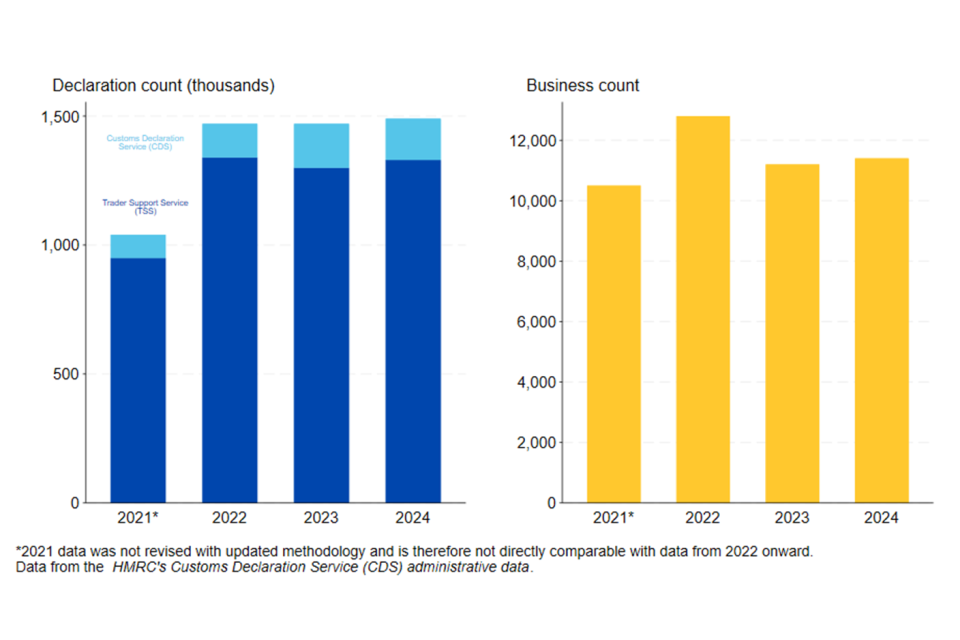
The value of goods associated with full declarations[footnote 44] cleared by HMRC moving from Great Britain into Northern Ireland in 2024 was £17.2 billion. Figure 12 shows that the count of full declarations cleared by HMRC into Northern Ireland from Great Britain has remained constant at around 1.5 million between 2023 and 2024, while 11,200 businesses were associated with such declarations in 2023 and 11,400 in 2024.
Figure 12: The count of declarations for goods moving from Great Britain into Northern Ireland remained constant between 2023 and 2024
Left panel: The count of full declarations cleared by HMRC into Northern Ireland from Great Britain, split by declaration system. Data from HMRC Customs Declaration Service (CDS), 2021, 2022, 2023 and 2024 releases.
Right panel: The count of businesses associated with full declarations cleared by HMRC into Northern Ireland from Great Britain. Data from HMRC Customs Declaration Service (CDS), 2021, 2022, 2023 and 2024 releases.
Insights on who trades within the UK
In this section, we review the best available evidence to provide insights into the extent to which different types of business trade with other parts of the UK and the potential barriers they face, noting whether there has been a change since the 2024 to 2025 Annual Report. We rely on the BICS[footnote 45], which includes questions about the proportion of businesses that trade with other UK nations and the challenges faced when doing so.[footnote 46]
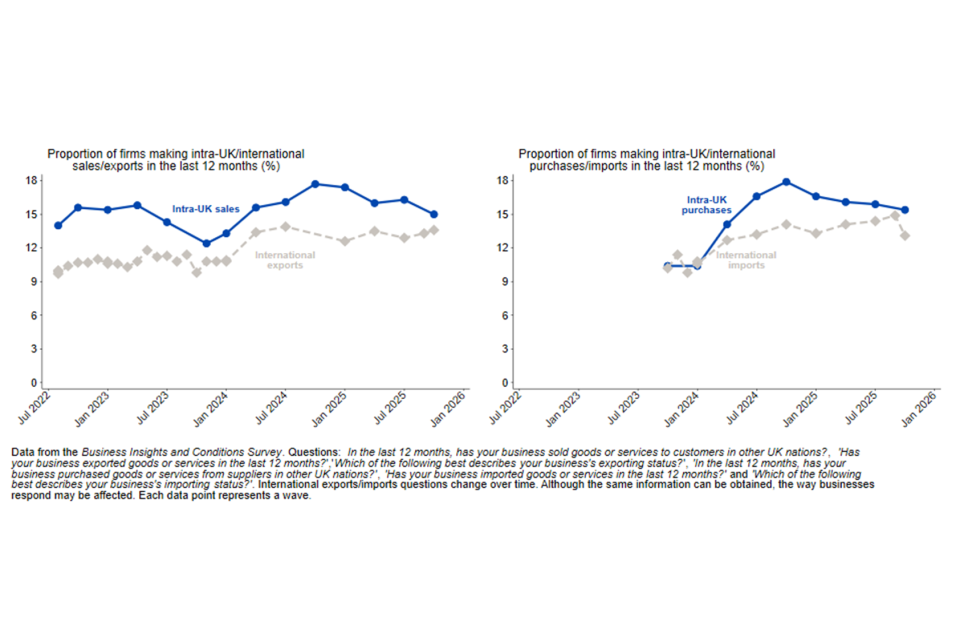
A slightly larger proportion of firms report engaging in intra-UK trade than international trade and the proportion of firms engaging in intra-UK trade has remained relatively constant over time.
The left panel of Figure 13 shows that, in BICS waves between August 2022 and October 2025, around 15% of businesses reported selling to other UK nations over 12-month periods, although there was some variation between waves. For comparison, around 12% of businesses reported exporting internationally in the last 12 months over the same period.[footnote 47] These results are consistent with the findings in last year’s Annual Report
The right panel of Figure 13 shows that, in waves between October 2023 and October 2025, around 15% of businesses reported purchasing from other UK nations over 12-month periods. For comparison, around 13% of businesses reported importing internationally in the last 12 months over the same period.[footnote 48] These results are consistent with the findings in last year’s Annual Report
Figure 13: A larger proportion of firms report engaging in intra-UK trade than international trade and the proportion of firms engaging in intra-UK trade has remained relatively constant over time
Left panel: Line graph showing the proportion of firms reporting making sales to other UK nations (blue line) and internationally (grey line) in the last 12 months (%). Data from the Business Insights and Conditions Survey.
Right panel: Line graph showing the proportion of firms reporting making purchases from other UK nations (blue line) and internationally (grey line) in the last 12 months (%). Data from the Business Insights and Conditions Survey.
Trade by industry sector
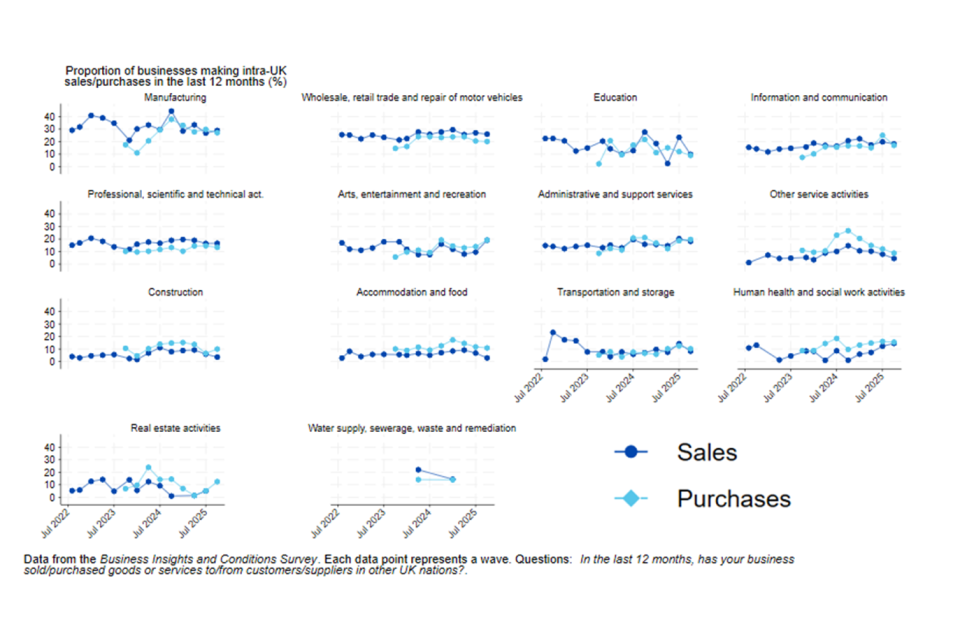
BICS evidence suggests that businesses in the manufacturing and wholesale and retail trade sectors are generally more likely to trade with other UK nations, as seen in Figure 14.
-
in waves between August 2022 and October 2025, on average, 32% of businesses in the manufacturing industry reported selling to other UK nations over 12-month periods. This figure was around 25% for the wholesale and retail trade sector, and 15% for all businesses. These findings are consistent with those in last year’s Annual Report
-
in waves between October 2023 and October 2025, on average, 26% of businesses in the manufacturing industry reported purchasing from other UK nations over 12-month periods. This figure was around 21% for the wholesale and retail trade sector, and 15% for all businesses. These findings are consistent with those in last year’s Annual Report
Figure 14: Firms in the manufacturing and wholesale and retail trade sectors are most likely to conduct intra-UK trade
Line graph showing the proportion of firms reporting making intra-UK sales (dark blue) and purchases (light blue) by industry. Data from the Business Insights and Conditions Survey.
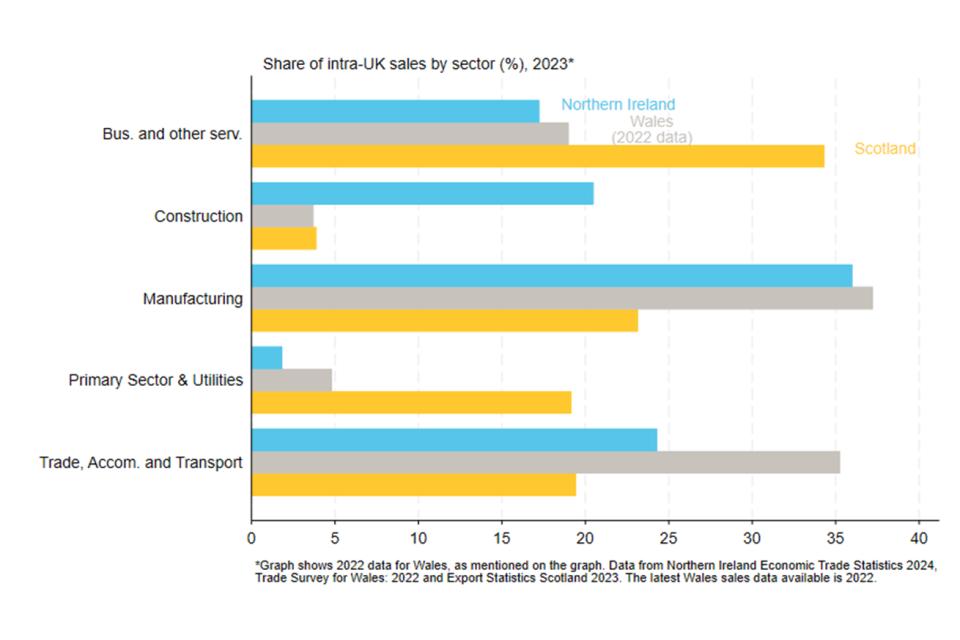
Devolved nation trade data shows that the sectors[footnote 49] most involved in intra-UK trade varies by UK nation, as seen in Figure 15. Each nation’s intra-UK trade by industry sector is analysed below:
-
for Scotland, the business and other services sector consistently made up the largest share of sales to the rest of the UK between 2019 and 2023. Figure 15 shows that, in 2023, the sector accounted for 34.3% of total intra-UK sales. Scotland does not release sectoral purchases data
-
for Wales, between 2019 and 2022, the manufacturing sector was particularly important for intra-UK sales and purchases, while the trade, accommodation and transport sector was also important for intra-UK purchases. Figure 15 shows that in 2022, the manufacturing sector made up the largest proportion of intra-UK sales at 37%, while the same figure for the trade, accommodation and transport sector was 35%. The trade, accommodation and transport sector accounted for the largest share of intra-UK purchases in 2022 at 42%, with manufacturing accounting for the second largest share at 36%
-
for Northern Ireland, between 2019 and 2023, manufacturing made up the largest proportion of intra-UK sales, while the trade, accommodation and transport sector made up the largest proportion of intra-UK purchases. Figure 15 shows that, in 2023, the manufacturing sector made up the largest proportion of intra-UK sales (36.0%). This figure was broadly stable between 2019 and 2023. The trade, accommodation and transport sector made up the largest proportion of total intra-UK purchases in 2023 at 58.8%
Figure 15: The share of intra-UK trade by industry sector varied by nation in 2023
Bar chart showing the share of intra-UK sales by industry sector (%) in 2023 for Northern Ireland and Scotland, and in 2022 for Wales. Data from Export Statistics Scotland, Northern Ireland Economic Trade Statistics and Trade Survey for Wales.
Trade by business size
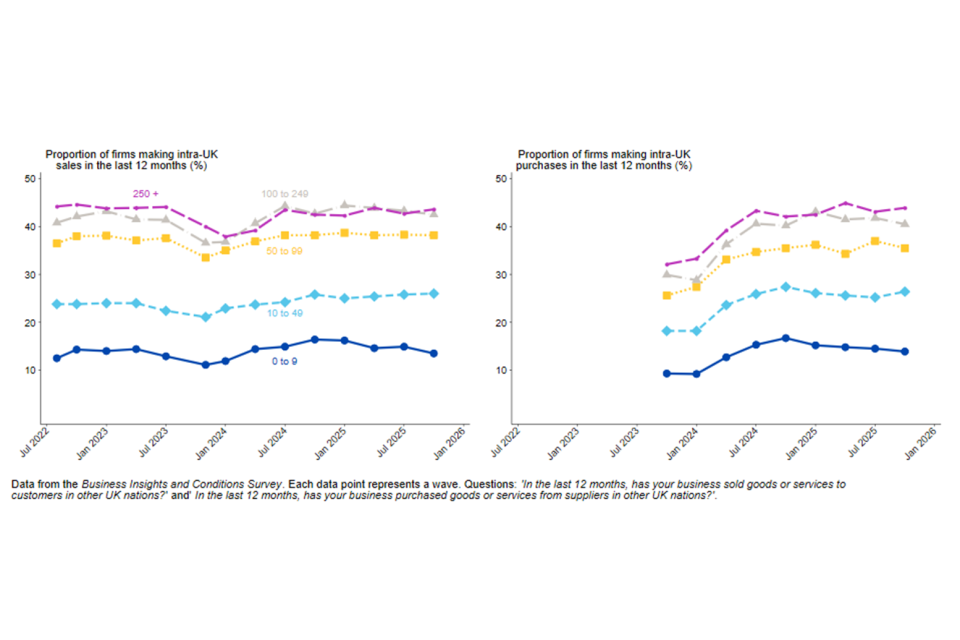
Evidence from the BICS suggests that larger businesses are more likely to make both sales and purchases across the UK than smaller ones, as shown in Figure 16.
-
in waves between August 2022 and October 2025, on average, 14% of micro businesses (0 to 9 employees) made sales to other UK nations over 12- month periods, compared to 43% of large businesses (250+ employees)
-
for purchases, on average, 14% of micro businesses made purchases from other UK nations over 12-month periods in waves between October 2023 and October 2025, while this figure was 40% for large businesses
Figure 16: Larger firms are most likely to engage in intra-UK trade
Left panel: Line graph showing the proportion of firms that reported making intra-UK sales in the last 12 months by employment size band. Data from the Business Insights and Conditions Survey.
Right panel: Line graph showing the proportion of firms that reported making intra-UK purchases in the last 12 months by employment size band. Data from the Business Insights and Conditions Survey.
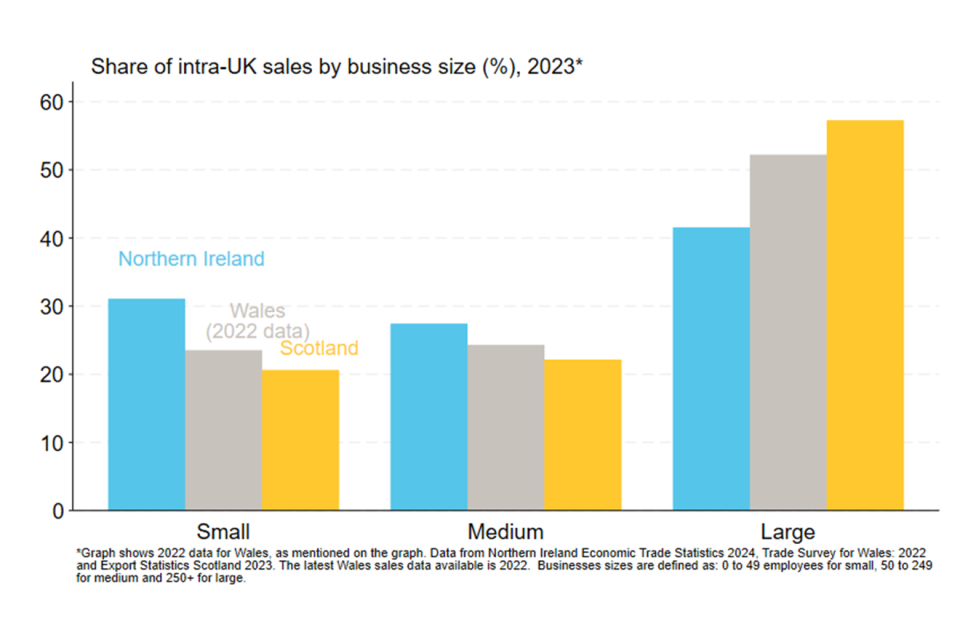
Trade data from Scotland, Wales and Northern Ireland shows that the share of intra-UK trade conducted by business size[footnote 50] varies by nation, as seen in Figure 17.
-
for Scotland, large businesses (250+ employees) make up the majority of intra-UK sales. In 2023, 57.2% of total intra-UK sales were made by large businesses. This has been consistent over the period 2019 to 2023. There is no available data on intra-UK purchases by size band for Scotland
-
for Wales, Figure 17 shows that, in 2022, large businesses accounted for over half of the value of all intra-UK sales
-
for Northern Ireland, Figure 17 shows that, in 2023, large businesses held the largest share of intra-UK sales at 41.5%, compared to 31.1% for small businesses. Between 2019 and 2023, large businesses accounted for the greatest share of intra-UK sales
Figure 17: The share of intra-UK trade by business size varied by nation in 2023
The share of total intra-UK sales made by business size (%), 2023 for Northern Ireland and Scotland, 2022 for Wales. Data from Export Statistics Scotland, Northern Ireland Economic Trade Statistics and Trade Survey for Wales.
Experiences of intra-UK trade
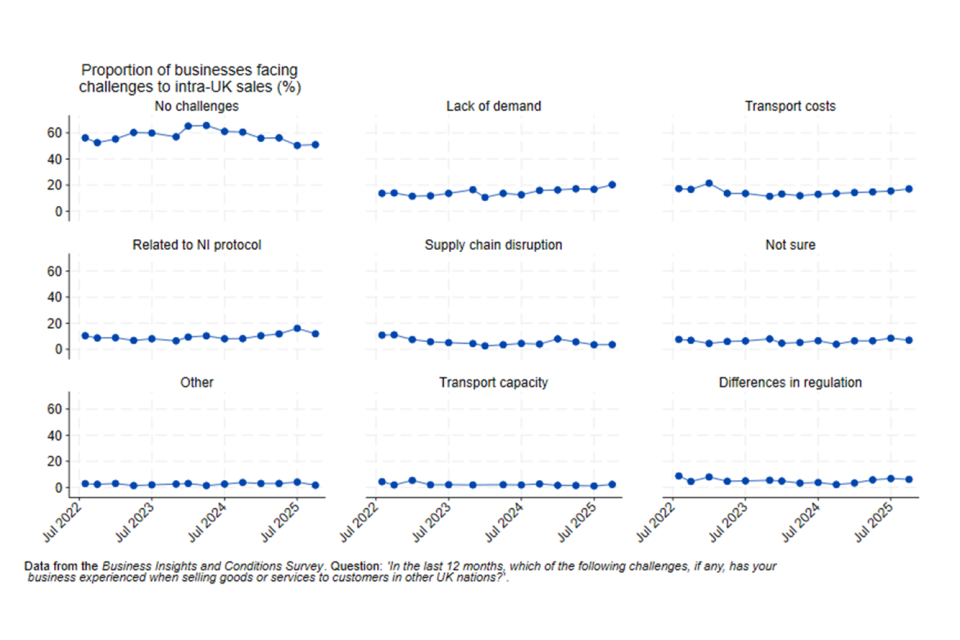
BICS evidence shows that most firms did not report facing any challenges when selling to other UK nations in waves between August 2022 and October 2025, while a small proportion faced challenges relating to differences in rules or regulations, as seen in Figure 18.
Of businesses that sold to other UK nations, over half reported not facing any challenges in waves between August 2022 and October 2025 (58% of firms on average), while only 5% of firms on average reported facing challenges relating to differences in rules or regulations. When averaging across all waves, both (i) transport costs and (ii) a lack of demand were cited as the most common problems (15% of firms). An average of 10% of businesses reported facing challenges relating to the Northern Ireland Protocol / Windsor Framework when selling to customers in other UK nations.
Figure 18: Over half of firms selling to other UK nations reported facing no challenges when doing so
Line graph showing the proportion of firms which sell to customers in other UK nations facing various challenges. Data from the Business Insight and Conditions Survey.
Conclusions
Taken as a whole, data provided by the ONS and national statistical agencies indicate that intra-UK trade has remained broadly constant in the years considered during this reporting period. The key conclusions of this chapter are:
-
intra-UK trade was equivalent to at least 5.8% of UK gross domestic product (GDP) in 2019, which was £129 billion. In 2021, this figure was 5.6% of UK GDP, which was £122 billion in 2019 prices
-
intra-UK trade is relatively more important to Scotland, Northern Ireland, and Wales than England. In 2021, intra-UK sales as an equivalent percentage of GDP was over 20% for Scotland, Northern Ireland and Wales, while the same figure for England was around 3%
-
intra-UK trade accounts for a high proportion of all external trade for Scotland, Wales and Northern Ireland:
-
intra-UK sales as a proportion of total external sales for the years between 2019 and 2022 ranged in value from 43% to 63% for Wales.[footnote 51] Scotland data shows that the same metric over the period 2019 to 2023 ranged from 58% to 62%. For Northern Ireland, this ranged between 48% and 54% from 2019 to 2024
-
intra-UK purchases as a proportion of total external purchases for the years between 2019 and 2022 ranged in value from 45% to 62% for Wales.[footnote 52] For Scotland, between 2019 and 2023, this ranged between 65% and 68%. This same metric for Northern Ireland in the years 2019 to 2024 ranged between 59% and 66%
-
-
the BICS survey indicates that around 15% of businesses engage in intra-UK trade.[footnote 53] Larger businesses are more likely to engage in intra-UK trade.[footnote 54] Businesses in some industries are more likely to engage in intra-UK trade than others.[footnote 55] Most businesses that engage in intra-UK trade do not report facing challenges when doing so[footnote 56]
Regulatory developments
This chapter sets out the regulatory developments that the OIM currently tracks and details the engagement that we have had with industry in relation to those regulations.
Since March 2025, the OIM has published its regulatory developments dashboard (the ‘dashboard’) which lists all regulatory differences (both proposed and finalised) that the OIM is tracking. The dashboard improves transparency for governments and business stakeholders of the breadth and depth of regulatory developments that the OIM is monitoring. The OIM tracks most of the regulatory differences on the dashboard without detailed engagement with stakeholders in the affected industry. We engage with industry stakeholders when they approach us directly with concerns about a specific regulatory difference. This allows us to reduce the burden on business and focus our work where it will have the greatest impact.
Regulatory developments dashboard
The dashboard provides a graphical presentation of the regulatory differences the OIM tracks. The interactive nature of the dashboard allows for the data to be viewed in different ways, depending on whether the user’s focus is on industry sectors, individual nations, or policy areas.
The dashboard is updated every 3 to 4 months. It includes information[footnote 57] relating to 71 pieces of legislation, covering 33 policy areas. The territorial application of these policies varies such that 30 relate to England, 25 to Wales, 22 to Scotland and 11 to Northern Ireland. Of these regulations, 21 only have application in England, 16 only apply in Wales, 16 only apply in Scotland and 9 only apply in Northern Ireland (review Figure 19).[footnote 58]
Figure 19: Territorial application of regulatory developments (regulations per nation)
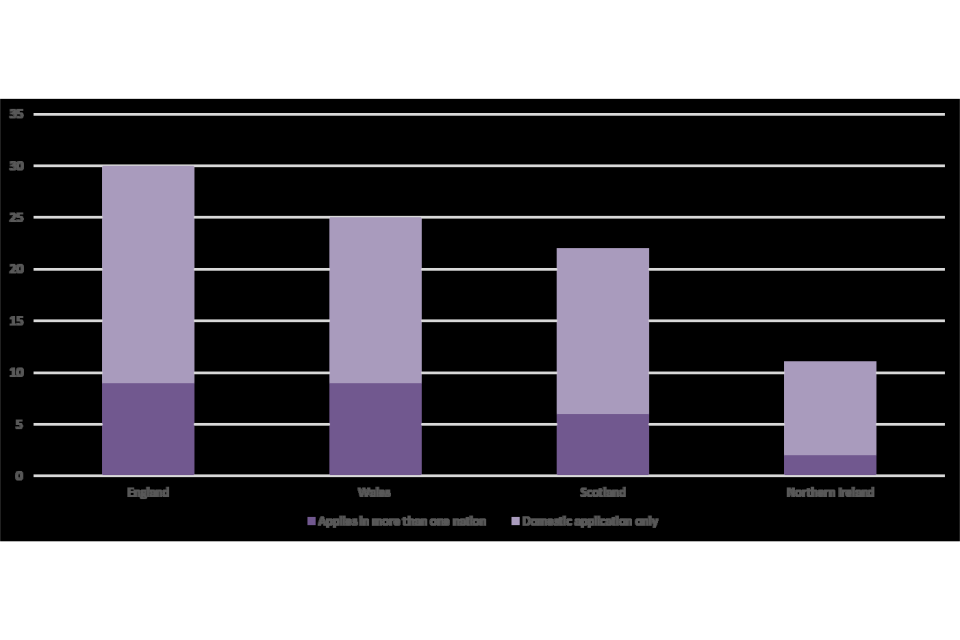
Source: OIM regulatory developments dashboard
Of these 33 policy areas, 7 relate thematically to the environment and animal welfare, 6 to food and drink, 4 to energy and net zero, 3 to each of housing and waste and recycling; 2 to each of healthcare, public safety and transport; and 1 each to health and safety and other services. A miscellaneous category accounts for 2 further policy areas. Looking at the same 33 policy areas, 20 relate to goods, 5 to professions, 5 to services, 2 to both services and professions and 1 to both goods and services (review Figure 20).
Figure 20: Regulatory policy areas broken down by goods, services and professions
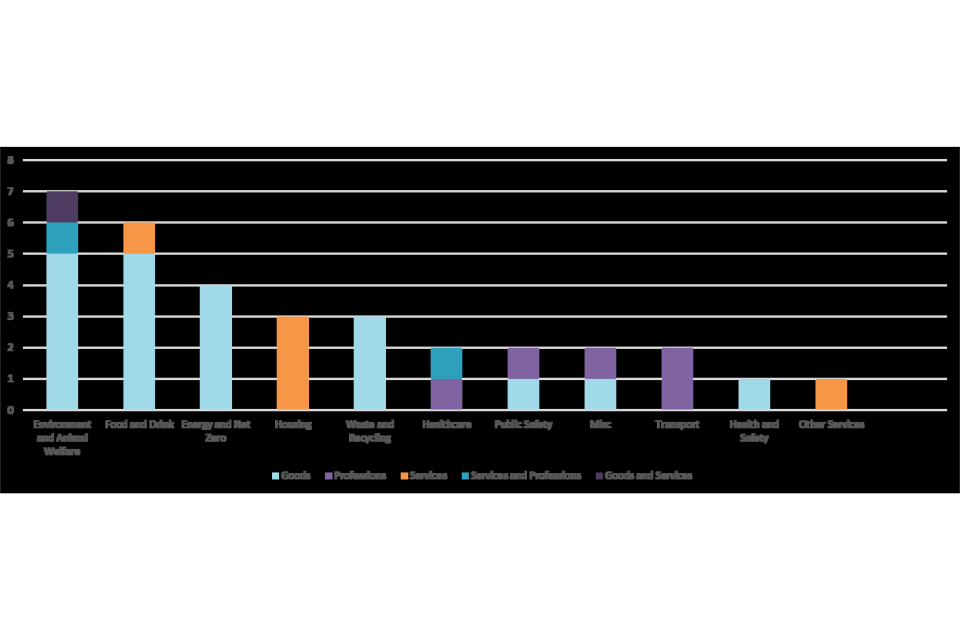
Source: OIM regulatory developments dashboard
Engagement with industry about regulatory differences
In the period covered by this report, we have been approached by industry stakeholders in relation to 6 of the 33 policy areas listed on the dashboard, mostly via the OIM’s webform. In each case, we have engaged with industry representatives and market participants to explore the issues further. We set out details on these regulatory differences and our engagement below.
Bovine electronic identification
In March 2025, representatives of the beef and dairy industries drew our attention to upcoming regulatory changes relating to bovine electronic identification (EID). We launched a 3-month short-form review on 19 July 2025 to examine potential effects on the internal market. We published our report on 29 October 2025.
Regulatory differences in bovine EID
The UK government and the 3 devolved governments are at different stages of the policy development cycle for bovine EID policies, and compulsory bovine EID has not yet been rolled out in any part of the UK. It is expected that Scotland will introduce compulsory bovine EID tags that use ultra-high frequency (UHF) technology, while England and Wales will introduce compulsory tags based on low frequency (LF) technology. Northern Ireland, if it introduces a system, is expected to align with practice in the European Union, where currently EID tags must use LF technology.
This means that 2 different technical standards for bovine EID will operate within the UK. The technologies are not interoperable with each other, in the sense that a LF reader cannot read an UHF tag and vice versa. This raises the prospect that some cattle keepers will be dealing with cattle that have both LF and UHF tags. If they wish to read these tags electronically, they will therefore need both LF and UHF tag readers. This could increase costs of moving cattle across national borders – particularly across the English/Scottish border – and potentially impact on trade within the UK.
As part of our review, we engaged widely with industry and governmental stakeholders, speaking with over 50 businesses, trade bodies and government agencies. We also collected data that allowed us to build a picture of where cattle were moving from and to.
Most stakeholders told us that that they would prefer to have a single approach to bovine EID tagging across the UK. However, there was no consensus among market participants as to whether LF or UHF EID technology was preferred. We recognised that this is a devolved matter and that the UK, Scottish and Welsh governments each has a domestic policy rationale for their proposed approach. Given this, we focused our review on the likely impact of having 2 standards operating within the UK and the extent to which any adverse trade effects could be mitigated.
Taking the evidence in the round, we reached the view that the adoption of 2 technical standards for EID within the UK, if managed carefully, would have a limited impact on the overall pattern and total volume of internal market trade in cattle, albeit the impact is likely to be material for the businesses most directly affected.
We found that, even if well managed, 2 technical standards would introduce additional investment costs and trade friction, relative to a situation in which a single standard was adopted. Based on a range of scenarios, we estimated the additional investment costs of operating 2 technical standards to be between 4% and 23% higher than having a single standard across the UK, with the additional costs of the most likely approach being at the lower end of this range. These additional investment costs will most acutely affect larger livestock auction markets and abattoirs and have the greatest impact in regions neighbouring the English/Scottish border but will not be confined to those businesses or regions. We concluded that, absent a clear and coordinated approach to the management of cross-border trade, there is an increased risk that industry may make unnecessary investments or investments that prove redundant.
We also found that operating 2 technical standards for EID within the UK is likely to introduce trade frictions that go beyond investment costs, including greater complexity and potential difficulties in identifying whether an animal is tagged with an LF or UHF tag. Unless carefully designed, any regulatory developments that mandate a particular type of bovine EID read whenever an EID read is used (even if voluntarily) may create greater difficulties for internal market trade, especially once bovine paper passports are phased out. We further concluded that the overall approach to supporting 2 technical standards will need to be coordinated and sufficiently robust to meet the standards necessary to retain access to international markets.
We made 2 recommendations to the UK and devolved governments. First, we recommended that the governments set up a cross-border trade working group involving representatives from the farming, livestock auction and abattoir/meat processing sectors to discuss how cross-border trade can be maintained and what investments would best support it.
Second, we recommended that the governments work together to produce a clear, joint statement on the management of cross-border movements that use EID that take place within Great Britain (GB) and, separately, between GB and Northern Ireland. As part of this, we recommended that the governments set out for industry participants the basis on which it will be acceptable to use an EID read for submitting information to the relevant national database.
The Scottish Government has responded to the recommendations, welcoming the findings and noting it had begun conversations to address the recommendations of the report. The Welsh Government welcomed the recommendations, noting that it would continue to collaborate closely with Defra and the Scottish Government to ensure, where practicable, risks to the internal market will be minimised.
Glass beverage bottles
In the period covered by this report, industry stakeholders raised with us 2 connected issues in relation to glass beverage bottles – firstly, relating to Extended Producer Responsibility for packaging (pEPR); and secondly, relating to deposit return schemes for drinks containers (DRS) and re-use schemes.
Interaction between pEPR and DRS
In December 2024 and subsequently in March 2025 we were approached by an industry stakeholder who raised a concern that producers of drinks packaged in metal and plastic in Wales may be exempt from both pEPR disposal fees and DRS set-up costs, whilst producers using glass packaging in Wales still had to pay pEPR fees. The stakeholder had concerns that this could disadvantage producers using glass and incentivise switching away from glass packaging to metal and plastic packaging.
The pEPR regulations exempt from pEPR fees drinks containers made from metal or plastic if they are included in a DRS in the UK and so are subject to DRS set-up costs.
We engaged with the UK government’s Department for Environment, Food and Rural Affairs (Defra), the Welsh Government, and some industry stakeholders to establish whether producers considered that the different interplay between DRS and pEPR regulations in Wales, as compared to the rest of the UK, would result in internal market impacts on drinks producers, disadvantaging products in glass packaging.
A range of views were expressed on the potential impacts of these differences and whether these disadvantaged glass packaging. Some producers told us that the largest disadvantages of using glass packaging were a combination of higher material costs, and the relatively high costs of pEPR disposal fees, in part due to pEPR fees being calculated using weight (rather than on a per item basis), given glass is considerably heavier than other materials.
Producers also told us the policy difference in Wales would not cause them to consider switching glass for other packaging materials. Large producers told us they make longer-term decisions on a UK-wide basis, and as they anticipated there would likely be a Welsh DRS in the future, any advantage to using plastic and metal would be temporary. Generally, producers considered glass the best material for certain products, particularly premium brands.
We met with the relevant policy teams at Defra and the Welsh Government to discuss these matters and wrote to the industry stakeholder who had contacted us about this matter to share our findings.
Deposit return schemes for drinks containers
We were approached by 3 trade bodies and a number of individual businesses representing different sectors of the beverage industry. They raised concerns regarding the potential regulatory difference emerging between plans for DRSs in England, Scotland and Northern Ireland and the Welsh Government’s plans for a DRS which in addition would include single-use glass bottles and, ultimately, a re-use scheme for all materials.
We met with each of these representative bodies to better understand their concerns between November 2025 and February 2026.
On 12 February 2026, the UK government offered an exclusion from the MAPs for single-use glass bottles in the Welsh DRS, which would be implemented in legislation at the earliest opportunity. This exclusion is subject to the Welsh Government committing to certain criteria:
-
commencing its DRS for plastic and metal drinks containers as planned on 1 October 2027
-
ensuring that its DRS for plastic and metal drinks containers meets key criteria for integrating with a UK-wide scheme (this includes ensuring that schemes have a single registration and reporting system, processes for reciprocal takeback of material – for example, material can be returned in any nation, consistent logos, and the same deposit level)
-
extending its proposed transitional period for single-use glass (where a 0p deposit applies and no labelling requirements or targets apply) to October 2031 – this with the aim to provide industry with additional lead-in time to prepare for the introduction of glass in the Welsh DRS
The UK government did not offer an exclusion for the re-use elements of the Welsh Government’s DRS, on the grounds it was still under development, stating that any future exclusion request for reuse will be considered by the UK government and devolved governments in the relevant Common Framework following the process set out in the conclusion to the UK government’s review of the UK internal market regime (review chapter 3). We will continue to monitor developments within this sector closely.
Non-surgical cosmetic procedures
In June and July 2025 2 providers of non-surgical cosmetic procedures[footnote 59] (NSCPs) approached the OIM regarding potential effects on their businesses of the Scottish Government’s proposed legislation to create a tiered system outlining qualification and certification requirements with respect to a range of procedures. We met with both of the NSCP providers who contacted us (each of whom had operations in Scotland) and explored with them the potential consequences for a range of economic outcomes connected to internal market cross-border trade, including:
-
the potential impact on the relative prices of NSCPs in Scotland compared to other parts of the UK
-
current premises and the expected effects of the proposed legislation as related to premises
-
the current levels and types of qualifications in the industry and the likely effects of proposed legislation on the availability of qualified staff
-
the procedures they would likely offer once the proposed legislation took effect
-
any likely changes to the geographic scope and focus of their operations
On 8 October 2025, the Scottish Government introduced to the Scottish Parliament the Non-surgical Procedures and Functions of Medical Reviewers (Scotland) Bill. The proposed bill restricts the premises from which NSCPs can be offered and prohibits certain procedures from being provided to people under 18 years of age. The bill also allows the Scottish Government to introduce more restrictions and requirements for these types of procedure in the future. This could include:
-
saying who can provide them
-
what sort of training or qualifications are needed to provide them
-
how the rules around them are enforced
We will continue to monitor developments given the potential for effects of regulatory differences on cross-border trade, such as:
-
Scottish customers seeking treatments in the rest of the UK
-
customers based in the rest of the UK seeking treatments in Scotland
-
some Scottish providers relocating to (or offering services in) the rest of the UK where they did not previously
We also continue to monitor developments in relation to NSCPs across the other legislatures in the UK.
Manufactured solid fuels
In March 2025 we were approached by representatives of the manufactured smokeless fuel (MSF) industry. They wanted to discuss the market for smokeless fuel in England. We explored with them the extent to which imports of ‘smoky’ bituminous coal (often referred to as ‘house coal’) were being brought into England from other parts of the UK, and the effect of those imports on the operation of the market, including on sales of smokeless fuels.
We engaged with Defra, with respect to existing legislation governing the sale of solid fuels in England, and similarly engaged with the Department of Agriculture, Environment and Rural Affairs in Northern Ireland in relation to air quality policy and the availability of house coal on the Northern Irish market. In addition, we examined available national statistics on the production, importation and consumption of solid fuels of various types, including smokeless fuels.
In light of this initial work, we have engaged with Defra in relation to the impact of the MAPs on internal market trade in MSFs. We continue to monitor developments in this sector closely.
Energy efficiency for electrical appliances
In August 2025, the OIM received a webform submission from a representative of the electrical appliances sector with respect to differences between the regulations in GB and the EU in relation to energy efficiency ratings and labels following changes to EU regulation. We have engaged with industry and government officials to understand the regulatory differences, including the impact of an easement introduced by the UK government relating to enforcement of the ecodesign standards, and any internal market impacts that may arise.
We met with an industry representative group, and 4 businesses separately, to discuss their concerns regarding (in their view) the lack of clarity for consumers arising from the different energy efficiency grading scales used in Northern Ireland and GB. They also raised concerns about a regulatory easement which allowed appliances with low energy ratings to be sold in GB but not in Northern Ireland. They were concerned that the easement, which resulted in different product offerings as between GB and Northern Ireland, combined with the differing labelling requirements, meant that they had to separate their Northern Ireland and GB supply chains. They were concerned that this added costs and, ultimately, reduced consumer choice.
The UK government introduced a further regulatory easement in December 2025, permitting the energy efficiency labels used in GB to mirror those used in Northern Ireland and the EU. We sought further views from the industry on the impact on this additional easement on trade. They explained that the further easement did not compel companies to use the Northern Ireland/EU scale, which raised the possibility of differential energy efficiency labels being used as between Northern Ireland and GB but also within GB itself. As a result, the industry continues to have concerns about the impact on trade, and we will continue to monitor developments.
Conclusions
Taken together, the regulatory developments that we are currently tracking cover a diverse range of policy initiatives. As part of our remit, we examine this data for themes and trends related to regulatory differences. We have observed from our Dashboard, and the matters that we have been approached about by industry, that no single theme or sector predominates in terms of actual or potential regulatory differences between the 4 nations and that regulatory differences have the potential to emerge across a variety of sectors.
We also observe that while regulations affecting goods are still more common than regulations affecting services or professional qualifications, in terms of the potential to create regulatory differences, regulations affecting services and/or professional qualifications are an important source of potential regulatory difference within the UK internal market.
Given the breadth of potential regulatory differences, this highlights the importance of close cooperation between governments, and the scope for the OIM to add value in appropriate cases, including through Common Frameworks.
-
UK Internal Market Act 2020: review and consultation - GOV.UK. ↩
-
Process for considering UK Internal Market Act exclusions in Common Framework areas - GOV.UK. ↩
-
See paragraphs 38 to 43, UK government response to the Review of the United Kingdom Internal Market Act 2020 and Public Consultation. ↩
-
The United Kingdom Internal Market Act 2020 (Exclusions from Market Access Principles: Glue Trap Regulations 2025. ↩
-
Welsh Government Written Statement: Deposit Return Scheme – Application for DMO, 27 November 2025. ↩
-
Written Statement: Update on implementing the Environmental Protection (Single-use Plastic Products) (Wales) Act 2023 - Phase 2 bans (11 February 2026). ↩
-
EU-UK announcement on opening of negotiations regarding SPS and ETS, 13 November 2025. ↩
-
The Product Regulation and Metrology Act 2025 will allow the UK to align with the EU on product regulations. ↩
-
The Independent Review of the Windsor Framework – Rt Hon Lord Murphy of Toraefen (4 September 2025). ↩
-
Windsor Framework Independent Monitoring Report (HTML) (5 November 2025). ↩
-
Reeves backs Northern Ireland business and public services at Budget - GOV.UK (26 November 2025). ↩
-
Smoothing trade flows and ensuring the success of the UK Internal Market - UK government Response to the Independent Review of the Windsor Framework (16 December 2025). ↩
-
The BICS is sent to businesses twice a month, with each set of questions being referred to as a ’wave’, and responses to the survey are voluntary. The BICS has a large number of questions, not all of which are asked in every wave. The OIM’s intra-UK sales and purchases questions are currently asked every 6 waves, although this has varied over time. The BICS questions we use in this report are included between waves 63 and 143, which correspond to the period between August 2022 and October 2025. It should be noted that sometimes a wave’s results are suppressed by the ONS due to low observation counts. The BICS is a voluntary, fast turnaround survey published as an official statistic in development. National results are weighted, while question routing, coverage and response patterns vary between waves. Estimates reflect the businesses to which each question applies and should be interpreted with these features in mind. ↩
-
It is also worth noting that the COVID-19 pandemic caused significant disruption to trade and business activity, with data from 2020 and 2021 being the most significantly impacted by this. ↩
-
Consumer Price Index percentage change over 12 months: 1.8% in 2019, 0.9% in 2020, 2.6% in 2021, 9.1% in 2022, 7.3% in 2023 and 2.5% in 2024. See Consumer price inflation tables - Office for National Statistics. ↩
-
See Interregional trade in goods and services, UK, 2021 Edition - Office for National Statistics. The estimates seek to enhance the quality and coherence of existing survey data by the devolved governments of Scotland, Wales and Northern Ireland. Other survey and administrative data are leveraged to fill known data gaps and estimate trade with and between the English ITL1 regions. For more information, see Interregional trade in goods and services UK QMI - Office for National Statistics. The ONS interregional trade estimates are not directly comparable to the devolved nation trade surveys or the 2015 estimates of intra-UK trade values from ESCoE due to methodological differences, including different industry coverage. ↩
-
In 2019, the finance and insurance sector accounted for 8% of Gross Value added. The same figure in 2020 was 9% and 9% in 2021. Data from regional gross value added - Office for National Statistics. ↩
-
See Exports Statistics Scotland 2023. Export Statistics Scotland (ESS) estimates the value of Scotland’s international exports and exports to the rest of the UK. The Global Connections Survey (GCS) is one of the main data sources informing the estimates of Scotland’s exports in Export Statistics Scotland. The Scottish Government sends the GCS to a sample of 6,000-10,000 companies with operations in Scotland to collect data on the value of sales and exports both internationally and to the rest of the UK. It is the primary source of information for estimates of the value of exports from Scotland to the rest of the UK. Where export information from the GCS is not available, Exports Statistics Scotland uses alternative sources of export information, or estimates the value of exports as a percentage of business turnover. ESS note the statistics do not cover offshore oil and gas extraction. For all excluded SIC codes, see Global Connections Survey: excluded industries table - Export Statistics Scotland. ESS note future revisions are likely as new information comes available. ↩
-
See GDP quarterly national accounts supplementary tables, table C1. ↩
-
This figure is approximately £46.8 billion in 2019 prices. ↩
-
This figure is approximately £74.2 billion in 2019 prices. ↩
-
Data from Trade Survey for Wales (TSW): 2022. TSW is classified as “official statistics in development” since work to improve the methodology is ongoing. This means future revisions are likely and results should be treated as provisional (TSW 2022 release) (see Trade Survey for Wales (TSW): 2022 (official statistics in development)). TSW acknowledges relatively low response rates whilst noting the across-year imputation methodology employed should allow for robust high-level comparisons over time (see Trade Survey for Wales (TSW) 2022: quality and methodology information). TSW acknowledge the existence of varying levels of unallocated trade values across years. Unallocated values exist where businesses made sales or purchases but were not able to allocate it to a destination or source location. Unallocated trade values for years 2020 and 2021 were significantly higher than in other years. See Trade Survey for Wales (TSW): 2022 (official statistics in development). This should be considered when making comparisons over time, since changes in sales or purchase values across years may be due to changes in how effectively trade is allocated destinations or origins, rather than real world changes. ↩
-
See OIM Annual Report 2024 to 2025, paragraphs 2.14 to 2.19. ↩
-
Total external sales are defined as all sales made outside of Wales. This includes sales to: the rest of the UK, the EU, non-EU and unallocated. ↩
-
This figure is approximately £43.3 billion in 2019 prices. ↩
-
The value of unallocated sales was £4 billion in 2019, £20 billion in 2020, £22 billion in 2021 and £4 billion in 2022. ↩
-
Sales to other UK nations which could not be allocated a destination country, or “UK unallocated”, represent sales where the destination is known to be another UK country, but the specific UK country could not be identified. This differs from unallocated sales, which refer to sales where the destination is completely unknown. ↩
-
Total external purchases are defined as all purchases from outside of Wales. This includes purchases from: the rest of the UK, the EU, non-EU and unallocated. ↩
-
When interpreting Wales intra-UK purchases figures, it is important to consider the impact of varying levels of purchases that have unallocated as origin. This could result in some changes in both the absolute and relative value of intra-UK purchases over time being driven by more/less purchases being allocated an origin, rather than a real-world change. The value of purchases unallocated an origin was £8 billion in 2019, £23 billion in 2020, £27 billion in 2021 and £10 billion in 2022. ↩
-
This figure is approximately £23.5 billion in 2019 prices. ↩
-
Purchases from other UK nations which could not be allocated an origin country, or “UK unallocated”, represent purchases where the origin is known to be another UK country, but the specific UK country could not be identified. This differs to unallocated purchases, which refer to purchases where the origin is completely unknown. ↩
-
See Northern Ireland Economic Trade Statistics (NIETS) - Northern Ireland Statistics and Research Agency. The NIETS is a survey-based measure of businesses’ trade with markets outside Northern Ireland. Data is gathered through the Northern Ireland Annual Business Inquiry. The most recent data published are provisional and subject to revision in the next reporting period. ↩
-
This figure is approximately £16.4 billion in 2019 Prices. ↩
-
This figure is approximately £13.3 billion in 2019 Prices. ↩
-
The cohort of businesses that participates in the BICS are firms that are registered for VAT and/or PAYE in the UK. They are, therefore, firms with operations in the UK. ↩
-
Question: “Has your business sent goods from GB to Northern Ireland in the last 12 months?”. 4.5% is the average proportion of “currently trading” businesses responding “yes” covering waves between wave 23 and wave 143. Proportions in each wave ranged from 3.6% to 5.8%. ↩
-
Question: “In month year, how did the volume of goods your business sent from GB to Northern Ireland compare with the previous calendar month?”. Average responses from “currently trading” businesses of waves including the question and where values were not suppressed over waves 44 to 143 (corresponding to reference months November 2021 and September 2025, respectively). We do not report responses “Not sure” and “Not applicable”, and therefore figures will not add to 100%. ↩
-
Question: Has your business sent goods from Northern Ireland to GB in the last 12 months?”. Proportions of “currently trading” businesses responding “yes” over waves 30 to 131. Although the question has been included over waves 137 to 143 (corresponding to reference months July to November 2025), all values have been suppressed. ↩
-
Question: “In month year, how did the volume of goods your business sent from Northern Ireland to GB compare with the previous calendar month?”. Average responses from businesses in waves including the question and where values were not suppressed over waves 42 to 137 (corresponding to reference months November 2021 and June 2025, respectively). We do not report responses “Not sure” and “Not applicable”, and therefore figures will not add to 100%. ↩
-
See links to HMRC data. For 2021: Summary of movements of goods into Northern Ireland from Great Britain 2021. For 2022: Summary of movements of goods into Northern Ireland from Great Britain 2022. For 2023: Summary of movements of goods into Northern Ireland from Great Britain 2023. For 2024: Summary of movements of goods into Northern Ireland from Great Britain 2024. HM Revenues & Customs (HMRC) publishes administrative data on customs declarations for goods moving into Northern Ireland from Great Britain, which are required under the Northern Ireland Protocol following the UK’s exit from the European Union. HMRC states this data is not directly comparable to the Northern Ireland Economic Trade Statistics publication due to methodological differences, including collection methodology, timeliness, and coverage differences (see Summary of movements of good into Northern Ireland from Great Britain 2024: methodology notes). HMRC note the UK and EU have agreed the Windsor Framework, which established a new UK internal trade scheme based on commercial data-sharing for the movement of goods. All data in this release applies to periods before the Windsor Framework was implemented, and therefore should not be used to draw conclusions about future trading arrangements (see Summary of movements of good into Northern Ireland from Great Britain 2024: methodology notes). HMRC note that caution should be taken when comparing across years due to clearance dates being used to define calendar years rather than movement dates. ↩
-
A declaration is an electronic submission of data which provides the legally required information about the goods being imported. A full declaration has been defined as one of the following declaration types: standard customs declaration; supplementary declaration; or a supplementary declaration for Entry in Declarants Records (EIDR). Customs declarations are generally not required for postal and parcel movements sent from GB to consumers in NI, but businesses may choose to voluntarily submit declarations which would appear in data. Items on a declaration with a value greater than £100 million are excluded as outliers (see Summary of movements of good into Northern Ireland from Great Britain 2024: methodology notes). ↩
-
The BICS has a large number of questions, not all of which are asked in every wave. The BICS questions we use in this report are included frequently between waves 63 and 143, which correspond to the periods of August 2022 and October 2025. It should be noted that sometimes a wave’s results are suppressed by the ONS due to low observation counts. ↩
-
Questions of interest: “In the last 12 months, has your business sold goods or services to customers in other UK nations?”, “In the last 12 months, has your business purchased goods or services from suppliers in other UK nations?” and “In the last 12 months, which of the following challenges, if any, has your business experienced when selling goods or services to customers in other UK nations?”. The questions are currently asked every 6 waves, although this has varied over time. ↩
-
Information obtained from questions: “Which of the following best describes your business’s exporting status?” and “Has your business exported goods or services in the last 12 months?”. It should be noted that the question on international exports between waves 63 to 101 (former) is different from the question between waves 107 and 143 (latter). Although the same information can be obtained from both, the change may affect the way in which businesses interpret and therefore respond to these questions. ↩
-
Information obtained from questions: “Which of the following best describes your business’s importing status?” and “Has your business imported goods or services in the last 12 months?”. It should be noted that the question on international imports between waves 92 to 101 (former) is different from the question between waves 107 and 143 (latter). Although the same information can be obtained, the change may affect the way in which businesses interpret and therefore respond to these questions. ↩
-
Industries are grouped into broad industry sectors following the approach taken by Trade Survey for Wales. For detailed breakdown, see Trade Survey for Wales, 2022: quality and methodology information under ‘Sector groupings’. ↩
-
Note, business sizes used in the analysis of trade data differ from those used in the BICS analysis. Trade data size bands: 0 to 49 employees for small, 50 to 249 employees for medium and 250+ for large. Note that Trade Survey for Wales does not sample businesses with 0-2 employees. ↩
-
It should be noted the variation over time seen in the Wales figures is likely to be at least partially explained by varying levels of trade that is unallocated to a destination or source country, rather than solely to changes in the relative importance of intra-UK trade to Wales. Unallocated values exist where businesses made sales or purchases but were not able to allocate it to a destination or source location. Unallocated trade values for years 2020 and 2021 were significantly higher than in other years. The value of unallocated sales was £4 billion in 2019, £20 billion in 2020, £22 billion in 2021 and £4 billion in 2022. The value of unallocated purchases was £8 billion in 2019, £23 billion in 2020, £27 billion in 2021 and £10 billion in 2022. ↩
-
Review footnote 32. ↩
-
BICS survey waves between August 2022 and October 2025 show around 15% of businesses report making intra-UK sales over 12-month periods, while waves between October 2023 and October 2025 show around 15% of firms report making intra-UK purchases over 12-month periods. ↩
-
BICS waves between August 2022 and October 2025 show around 43% of large businesses report making intra-UK sales over 12-month periods, compared to 14% of micro-businesses. ↩
-
BICS waves between August 2022 and October 2025 show that firms in the manufacturing and the wholesale and retail sectors are the most likely to engage in intra-UK trade on average. ↩
-
BICS waves between August 2022 to October 2025 show more than half of businesses (58%) do not face any challenges when selling to customers in other UK nations, while an average of 5% face challenges arising from regulatory differences between nations. ↩
-
All figures are correct as of 1 March 2026. ↩
-
Some regulations introduced by the UK government apply in more than one nation of the UK. ↩
-
We use the term ‘NSCPs’ to refer to a variety of cosmetic treatments including, but not limited to, fillers (including Botox), skin peels, and plasma treatments. ↩