Natural England gender pay gap report 2025
Published 27 March 2026
Applies to England

© Crown copyright 2026
This publication is licensed under the terms of the Open Government Licence v3.0 except where otherwise stated. To view this licence, visit nationalarchives.gov.uk/doc/open-government-licence/version/3 or write to the Information Policy Team, The National Archives, Kew, London TW9 4DU, or email: psi@nationalarchives.gov.uk.
Where we have identified any third party copyright information you will need to obtain permission from the copyright holders concerned.
This publication is available at https://www.gov.uk/government/publications/natural-england-gender-pay-gap-report-2025/natural-england-gender-pay-gap-report-2025
Foreword
Natural England is the government’s adviser for the natural environment and the nature regulator with a wide range of statutory duties and powers. We provide the evidence, expertise and advice to recover nature and shape better places for people to live. Our vision is of Thriving nature for people and planet, and our mission is building partnerships for nature’s recovery. Recovering Nature for Growth, Health and Security was published in November 2025. It contains our strategic outcomes for nature which include recovering nature, building better places, improving health and wellbeing and delivering security through nature.
Natural England are committed to being an equitable, diverse and inclusive organisation where every individual has equality of opportunity to progress and is able to thrive. The NE Equality, Diversity and Inclusion Action Plan 2024- 27 and Defra group Equality, Diversity and Inclusion Roadmap 2024-26 affirms this commitment and builds on a strong foundation for both individual and organisational growth.
Gender pay gap reporting helps us to understand how well we achieve gender equality in our pay structures. This report provides gender pay gap information for the year ending 31 March 2025, with comparable statistical information since 2017. We are pleased to report that our mean (0.6%) gender pay gap reduced in 2024-25 by 0.4 percentage points (pp) supporting a continuous downward trend since 2017. Our median gender pay gap has decreased by 1pp from -1.0% (favouring women) in 2024 to 0% in 2025.
Our policies and initiatives promote equal opportunities for all our workforce, and it is encouraging to see this reflected in our narrowing gender pay gaps. However, there remains more work to do and it’s important that we continue to pay particular attention to how we are recruiting, developing and retaining staff and creating clear pathways for people to progress in their career.
Natural England work collaboratively across Defra group and is fully committed to creating an inclusive workplace for our people. We will continue to work towards making further improvements to maintain gender parity at all levels.
Kirsty Carter-Brown, Chief Officer, Business Management
Introduction
Gender pay gap legislation introduced in April 2017, requires all employers of 250 or more employees to publish their gender pay gap for workers in scope as of 31 March annually. This includes the mean and median gender pay gaps; the mean and median gender bonus gaps; the proportion of men and women who received bonuses; and the proportions of male and female employees in each pay quartile.
The gender pay gap is the difference in the average pay between all men and women in the organisation. It is different to equal pay, which is about the difference in the actual earnings of men and women doing equal work (or work of equal value).
The mean gender pay gap is the difference between the mean hourly rate of male full-pay relevant employees and that of female full pay relevant employees.
The median gender pay gap is the difference between the median hourly rate of pay of male full-pay relevant employees and that of female full-pay relevant employees.[footnote 1]
Natural England’s pay approach supports the fair treatment and reward of all staff irrespective of gender.
The bonus pay gap measures the number of bonuses paid (both cash in-year awards and vouchers) to reward performance throughout the year. The mean bonus value is found by adding all bonus values together and dividing the total by how many people were paid bonuses. The median is the middle value if all bonuses were stacked from lowest to highest.
Gender pay gap summary
This includes the mean and median pay figures, proportions of men and women receiving bonuses, proportions of men and women in each pay quartile and the overall make up of women in Natural England.
Gender pay gap reporting is a statutory requirement and government guidance indicates that employers should take information as to gender from payroll or HR records. The Natural England gender pay gap report is therefore based on the information we hold on our payroll records.
| Mean gender pay gap | Median gender pay gap | Mean gender bonus gap | Median gender bonus gap |
|---|---|---|---|
| 0.6% | 0% | -11.9% | 0% |
| Proportion of women receiving bonuses | Proportion of men receiving bonuses |
|---|---|
| 62.8% | 58.8% |
| Quartile | Female % | Male % |
|---|---|---|
| Lower quartile | 59.2 | 40.8 |
| Lower middle quartile | 60.5 | 36.9 |
| Upper middle quartile | 63.1 | 36.9 |
| Upper quartile | 57.6 | 42.4 |
| Natural England group | Female % |
|---|---|
| Total workforce | 60.0 |
| Senior levels (levels 5 and 6) | 60.5 |
| Director / Chief Officer and Chief Executive group | 56.3 |
Organisational context
Natural England have their own staff framework terminology, and have pay groups ranging from Level 1 to Chief Executive as follows:
Table 1: Natural England and Civil Service grade comparisons
| Natural England pay group (increasing in seniority) | Equivalent Civil Service grades used for Cabinet Office reporting |
|---|---|
| Level 1 | AO |
| Level 2 | EO |
| Level 3 | HEO |
| Level 4 | SEO |
| Level 5 | Grade 7 |
| Level 6 | Grade 6 |
| Director | SCS1 |
| Chief Officer | SCS2 |
| Chief Executive (CEO) | SCS3 |
| Board Member | n/a |
Grades vary according to the level of responsibility and each pay group has a set pay range.
Distribution of male and female staff in NE
As of 31 March 2025, 60.0% of Natural England’s workforce are women, which is a decrease of 0.1 percentage points (pp) from 60.1% in 2024. Table 2 shows the distribution of female and male staff by grade from junior to senior roles in Natural England on 31 March 2025.
Representation of women at senior levels of the organisation (Level 5 and 6) has increased by 2.6pp from 57.9% in 2024 to 60.5% in 2025. The percentage of women in the Director, Chief Officer and Chief Executive Group has increased by 11.5pp from 44.8% in 2024 to 56.3% in 2025.
Table 2: Distributions of male and female staff by grade 31 March 2025
| Pay group (Increasing in seniority) | Number of men | Men as % of workforce in this group | Number of women | Women as % of workforce in this group |
|---|---|---|---|---|
| Level 1 | 23 | 1.9% | 24 | 1.3% |
| Level 2 | 133 | 11.0% | 172 | 9.4% |
| Level 3 | 381 | 31.4% | 615 | 33.6% |
| Level 4 | 493 | 40.6% | 738 | 40.3% |
| Level 5 | 142 | 11.7% | 224 | 12.2% |
| Level 6 | 26 | 2.1% | 35 | 1.9% |
| Directors / Chief Officer / CEO | 14 | 1.2% | 18 | 1.0% |
| Board Member | 2 | 0.2% | 3 | 0.2% |
| Total workforce: (3047 people)[footnote 2] | 1,214 | 100% | 1,829 | 100% |
Mean and median hourly pay gaps
The mean gender pay gap is 0.6% which is a decrease of 0.4 percentage points (pp) from 1% in 2024. The mean gender pay gap is now the lowest since reporting began in 2017, when the mean gender pay gap was 10.9%. The 2025 median gender pay gap is 0%, which is a decrease of 1pp since 2024, when the median pay gap was -1.0% (favouring women).
Table 3: Mean and median hourly pay gaps over time (2017 to 2025)
| 2017 | 2018 | 2019 | 2020 | 2021 | 2022 | 2023 | 2024 | 2025 | (pp) change from 2024 | |
|---|---|---|---|---|---|---|---|---|---|---|
| Mean gender pay gap - ordinary pay | 10.9% | 9.4% | 8.4% | 7.0% | 5.0% | 3.8% | 3.0% | 1.0% | 0.6% | -0.4pp |
| Median gender pay gap - ordinary pay | 13.2% | 12.4% | 6.1% | 2.7% | 1.0% | 0.3% | 0% | -1.0% | 0.0% | +1.0pp |
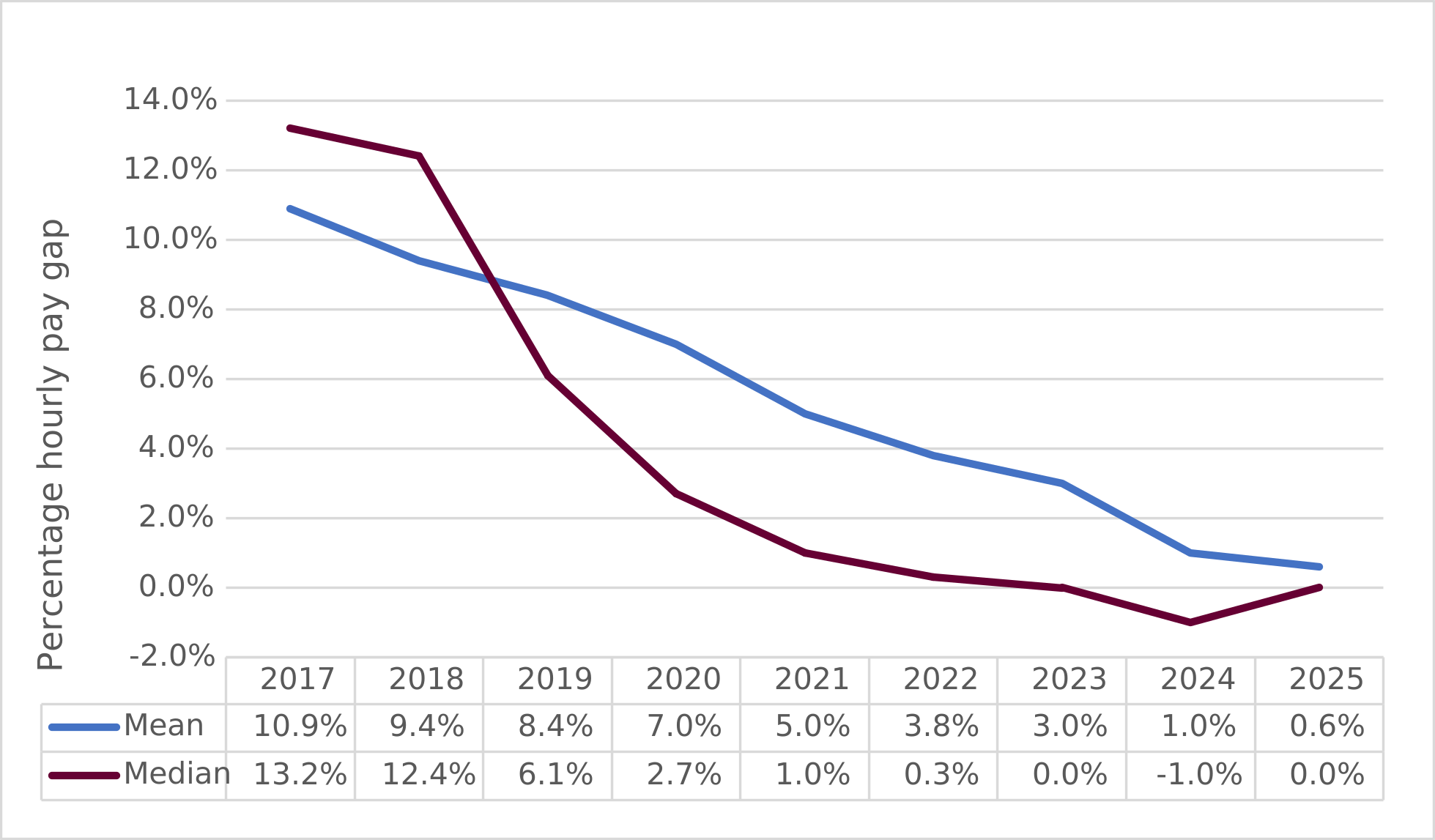
Graph 1: Mean and median hourly pay gaps over time (2017-2025)
Mean and median bonus pay gaps
The mean bonus pay gap has increased by 8.7pp from -3.2% (favouring women) in 2024 to -11.9% (favouring women) in 2025. The median bonus pay gap, has remained at 0%.
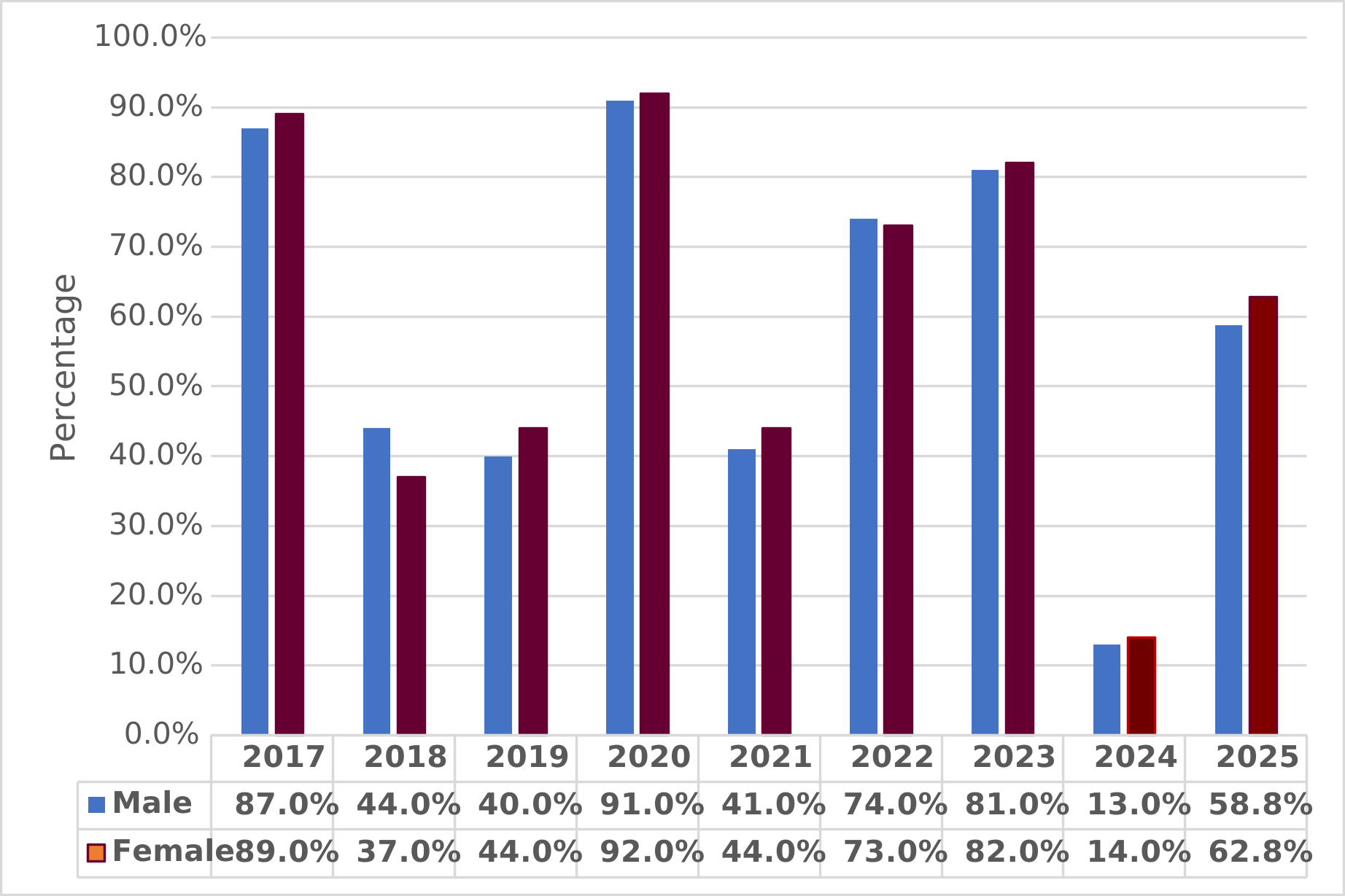
Graph 2: Percentage of men and women paid bonuses over time (2017-2025)
In 2025 there has been an increase in bonus payments for both men and women with 58.8% of men receiving bonus payments and 62.8% of women receiving bonus payments.
For 2025, the increase in the reported percentage of male and female staff receiving bonuses compared to 2024 may be linked to a change in how Natural England reports its gender bonus pay gaps.
From mid financial year 2023/24, staff in Natural England can receive goal‑based performance recognition bonuses either as cash awards or as vouchers. This change brings Natural England into alignment with the approach used across Defra Civil Service organisations. Including both in‑year cash and voucher awards in the gender bonus pay gap calculations has resulted in a marked increase in the number of bonus payments reported for both men and women in Natural England between 2024 and 2025.
Table 4: Bonus pay gap figures 2017 to 2025
| Bonus pay gap | 2017 | 2018 | 2019 | 2020 | 2021 | 2022 | 2023 | 2024 | 2025 | (pp) percentage point change from 2023 |
|---|---|---|---|---|---|---|---|---|---|---|
| Mean gender pay gap - bonus pay in 12 months ending 31 March | 20% | 21.9% | 0.5% | 0.9% | 0.6% | 10% | 10.8 | -3.2% | -11.9% | -8.7pp |
| Median gender pay gap - bonus pay in 12 months ending 31 March | 0% | 0% | 0% | -160% | 0% | 0% | 0% | 0% | 0% | 0pp |
| Proportion of male employees paid a bonus in 12 months ending 31 March | 87% | 44% | 40% | 91% | 41% | 74% | 81% | 13% | 58.8% | 45.8pp |
| Proportion of female employees paid a bonus in 12 months ending 31 March | 89% | 37% | 44% | 92% | 44% | 73% | 82% | 14% | 62.8% | 48.8pp |
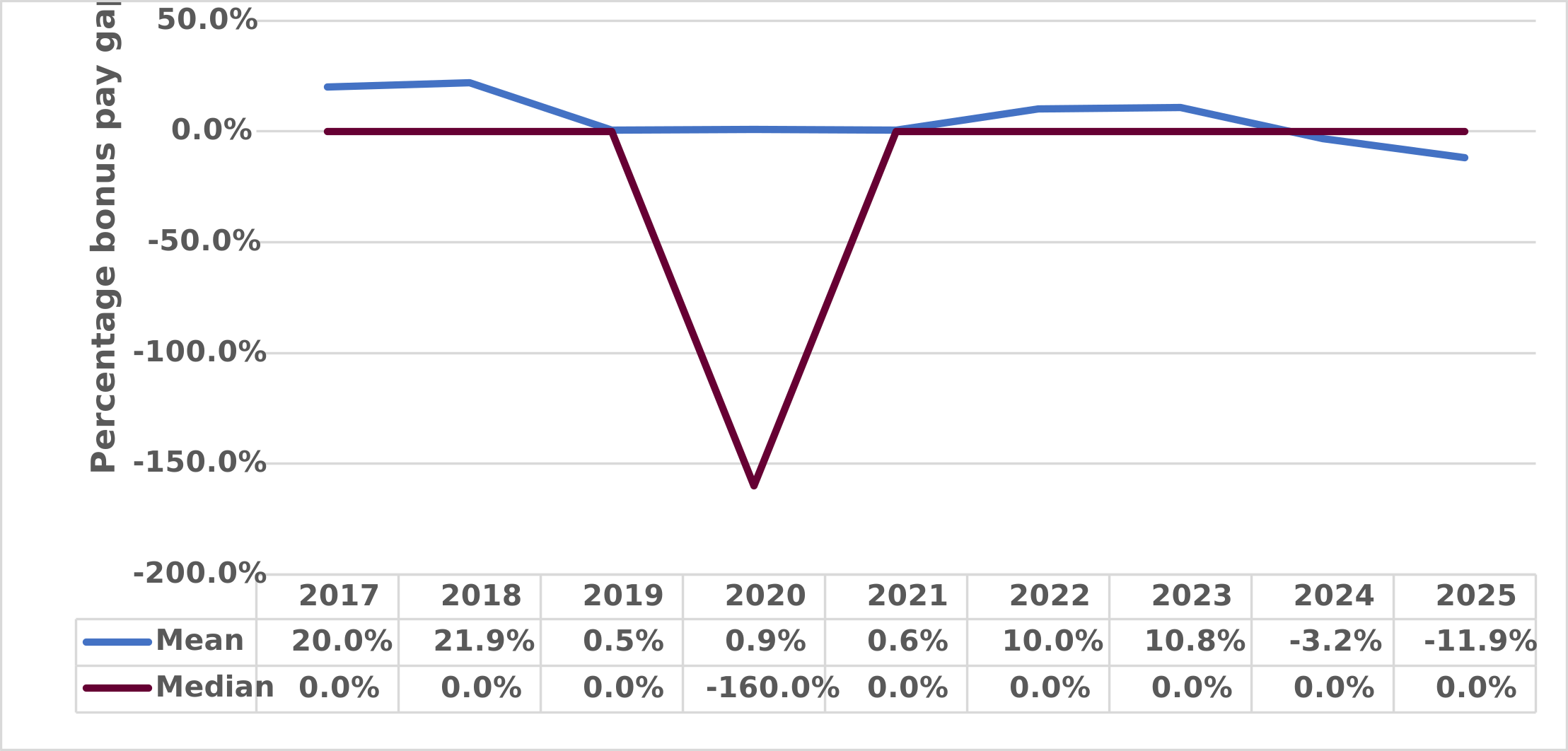
Graph 3: Mean and median bonus pay gaps over time (2017-2025)
Pay by quartiles
The percentage of women in the highest quartile has increased by 0.8pp from 56.8% in 2024 to 57.6% in 2025. The percentage of women has slightly decreased in the upper middle quartile from 64.7% in 2024 to 63.1% in 2025. Women represented in the lowest quartile has increased by 1.3pp from 57.9% in 2024 to 59.2% in 2025.
Table 5: Pay quartiles 2017 to 2025
| Pay quartiles | 2017 | 2018 | 2019 | 2020 | 2021 | 2022 | 2023 | 2024 | 2025 |
|---|---|---|---|---|---|---|---|---|---|
| Lower quartile - men (%) | 44 | 44 | 41 | 44 | 42 | 42 | 42 | 42 | 41 |
| Lower quartile - women (%) | 56 | 56 | 59 | 56 | 58 | 58 | 58 | 58 | 59 |
| Lower middle - men (%) | 34 | 36 | 38 | 38 | 41 | 38 | 38 | 39 | 40 |
| Lower middle - women (%) | 66 | 64 | 62 | 62 | 59 | 62 | 62 | 61 | 61 |
| Upper middle - men (%) | 42 | 42 | 46 | 41 | 39 | 40 | 36 | 35 | 37 |
| Upper middle - women (%) | 58 | 58 | 54 | 59 | 61 | 60 | 64 | 65 | 63 |
| Upper quartile - men (%) | 61 | 57 | 56 | 56 | 53 | 49 | 47 | 43 | 42 |
| Upper quartile - women (%) | 39 | 43 | 44 | 44 | 47 | 51 | 53 | 57 | 58 |
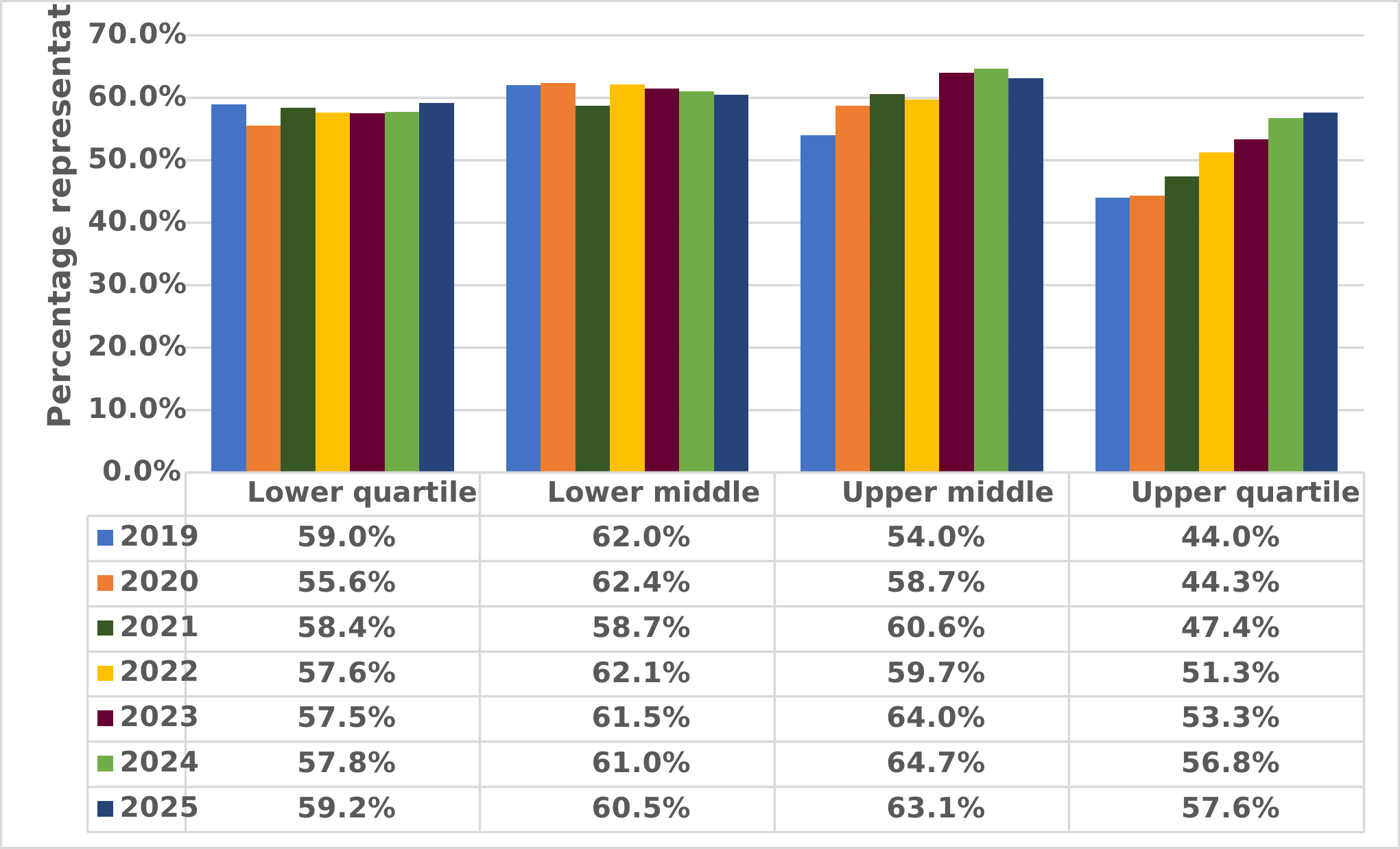
Graph 4: Representation of women by quartile over time (2019-2025)
Taking action to close the gender pay gap
Natural England is committed to creating a diverse and inclusive workplace where individual differences are championed and everyone feels welcomed and valued. The Natural England People Committee provides executive leadership for this work and oversees delivery of actions to address the gender pay gap through the Natural England Equality, Diversity and Inclusion Approach and Action plan and the Defra group Equality, Diversity and Inclusion Roadmap 2024-26.
Although our gender pay gap continues to decrease, Natural England recognise that we must continue to take action to achieve equitable gender representation at all grades.
To reduce barriers to career development and for a good work-life balance, we have clear and visible policies on flexible working arrangements for all employees including job sharing, part time and hybrid working.
We are committed to fostering an inclusive organisational culture and have achieved accreditations including Disability Confident, Carer Confident and Age Friendly Employer status.
We continue to build capability and awareness of workplace equality, diversity and inclusion through a comprehensive EDI learning offer. This includes menopause awareness sessions and the mandatory Civil Service Expectations course, which provides an overview of equality legislation, explores bias, and promotes inclusive behaviours with colleagues and customers.
Natural England have reviewed our inclusive recruitment processes; we have introduced interview questions in advance for all, anonymised application processes and promote the use of diverse interview panels. Recruitment outcomes data is reviewed throughout the attraction, recruitment, and selection processes to evaluate effectiveness and identify areas for improvement to achieve greater workforce diversity.
Our EDI staff networks, championed by senior leaders, play a vital role in creating an inclusive environment. These networks provide peer support; share lived experiences and raise awareness of equality issues through activities such as intranet articles and events. This includes initiatives to increase awareness of menopause and to support men’s health and wellbeing.
Workplace policies and guidance further support equality. These include maternity, adoption and shared parental leave, parental bereavement leave, breastfeeding and parents’ guidance, fertility and pregnancy loss policies, and the introduction of paid carers’ leave.
We also offer comprehensive wellbeing support, including access to occupational health, a health and wellbeing app, counselling services and online support programmes.
Our revised workplace adjustments policy and central hub provide guidance on holding effective conversations about adjustments and promote the use of employee passports. This helps ensure reasonable adjustments are consistently in place to remove barriers within the working environment.
To support career development and encourage a more equitable representation throughout organisational grades, Natural England offer learning, mentoring, talent programmes and coaching, have a range of apprenticeships and have developed a career conversation guide to facilitate discussions on career aspirations.
Natural England has continued to build on our targeted pay strategies. This includes the continuation of work to shorten pay ranges, by applying larger pay awards to those lower in their pay range, whilst keeping the maximum pay in that range relatively static. Natural England ensure that pay scales are transparent and easy for staff to understand. Our pay strategies have positively impacted on the gender pay outcomes.
Declaration
We confirm that data reported by Natural England is accurate and has been calculated according to the requirements and methodology set out in the Equality Act 2010 (Specific Duties and Public Authorities) Regulations 2017.
Marian Spain
Natural England Chief Executive
-
‘Full-pay relevant employee’ means a relevant employee who is not, during the relevant pay period, being paid at a reduced rate or nil as a result of the employee being on leave. The Equality Act 2010 (Gender Pay Gap Information) Regulations 2017. Throughout this report, references to employees, workforce or gender profile includes full-pay relevant employees only. As of 31 March 2024, Natural England employed 3,273 people. Of these 3,172 were full pay relevant employees who are included in the gender pay gap reporting.
The ‘relevant pay period’, in relation to the relevant employee, means (a) the period in respect of which the relevant employer pays the employee basic pay, whether weekly, fortnightly, or monthly or any other period, or (b) if the relevant employer does not pay the employee basic pay, the period in respect of which the employer most frequently pays the employee one of the elements of ordinary pay mentioned in regulation 3(1) (b) to (e), The Equality Act 2010 (Gender Pay Gap Information) Regulations 2017. ↩
-
The table shows the grade breakdown of relevant full pay employees who were included in the Natural England ordinary gender pay gap calculations. This differs to the headcount and payroll data in the Defra workforce management information (March 2025) report, which includes all Natural England employees. ↩