National Youth Strategy Research Project
Published 10 December 2025
Applies to England

© Crown copyright 2025
This publication is licensed under the terms of the Open Government Licence v3.0 except where otherwise stated. To view this licence, visit nationalarchives.gov.uk/doc/open-government-licence/version/3 or write to the Information Policy Team, The National Archives, Kew, London TW9 4DU, or email: psi@nationalarchives.gov.uk.
Where we have identified any third party copyright information you will need to obtain permission from the copyright holders concerned.
This publication is available at https://www.gov.uk/government/publications/national-youth-strategy-research-project/national-youth-strategy-research-project
This report makes a vital contribution to Youth Matters: Your National Youth Strategy, providing clear insights into the priorities and aspirations of young people across England. It builds on Phase One of this research engagement, which mapped the most pressing challenges facing young people in England. Phase Two of this research, which is the focus of this report, explored the solutions young people propose and their vision for a better future. The methodology section of the introduction contains further detail on the scope of each phase.
This report is structured according to the Department for Culture, Media and Sport’s (DCMS) outcome areas of interest for young people. DCMS developed the first four outcomes on the back of the Youth Matters: State of the Nation previous research and through further discussions between DCMS, other government departments, young people and sector experts. The outcome areas aim to capture young people’s main priorities as well as key areas of policy making. An outcome on ‘youth voice’ has been added to reflect the importance, discussed with DCMS, of continued youth engagement and solutions to embed youth voices in local and national policies. The outcome areas are structured in order of prominence from the hack events, with youth voice coming last as it pertains to outcomes 1 to 4:
-
Physical, mental and digital wellbeing
-
Community connection, cohesion and belonging
-
Skills and opportunities for life and work
-
Safety and security
-
Youth voice
Key findings
The key themes throughout this research are deeply interconnected, with young people acknowledging that themes overlap and inform each other, rather than existing in a vacuum. Priorities for young people span but are not limited to:
Financial security
Young people identify financial security as foundational to wellbeing and future prospects. Rising living costs and limited access to high quality employment fuels anxiety about financial independence and future living standards. In the survey, financial (in)security consistently emerged as a top priority for young people, particularly those aged 16 to 21.
Equipping young people with the confidence and literacy to discuss such topics is vital to help them develop their own solutions to what they see as an increasingly difficult financial situation for young people.
Accessible community facilities
The decline in accessible, affordable community spaces, like youth clubs and sport facilities, is felt widely. This sentiment was most strongly expressed in Hack events but was also evident in the survey data. Accessible community facilities are crucial for socialising, building skills and fostering a sense of belonging and safety. Facilitating access to well-funded youth services should lie at the heart of efforts to strengthen local communities.
Mental health
This emerged as a standout priority, particularly in Hack events. While it was also prominent in survey data, it was below financial (in)security for the day-to-day challenges facing young people. Young people cite daily pressures and highlight gaps in mental health support, emphasising the need for better funded, more accessible services.
Skills and opportunities for life and work
Young people want practical, future-proof skills and better guidance to navigate education and employment in the context of an uncertain labour market. This sentiment was widely expressed in Hack events and also emerged as a priority in the survey data, but to a lesser extent than financial and housing insecurity, and mental health. Across all ages there is a call for education that goes beyond the purely academic. Y; young people want the education system to equip them with essential life skills and the vocabulary to talk about issues like managing money, preparing for employment and maintaining their mental health.
Safety and security
Concerns about safety and security span the physical environment and digital spaces, with calls for stronger support networks and protective measures. Broad concerns about safety and security were mentioned in Hack events but less prominently than broader concepts of housing and financial security.
Youth voice
In discussion of all of the above, young people stress the importance of meaningful participation in decisions that affect their lives at both local and national levels. For too many young people, political expression is a foreign concept, as they have never accessed spaces that provide such engagement. Offering these spaces through access to youth provision, which encourages civic participation, is therefore pivotal.
These priorities should be seen as fundamentally connected to local context and community: for young people, challenges are rarely abstract, but rooted in the places where they live, learn, and connect with others. While these concerns and aspirations are felt nationwide, local solutions and community-centred action are essential.
Introduction
Young people in England
Adolescence represents a critical developmental phase, characterised by significant psychological, physical, and social changes. These formative years are essential, with positive experiences during this period having lasting impacts on an individual’s wellbeing and development. In today’s landscape, marked by the COVID-19 pandemic, technological advancements, and shifting social dynamics, young people face multiple challenges.
By embedding positive experiences throughout the developmental stages of adolescence, we can support young people in navigating today’s complexities and ensure they are well-prepared for future challenges. Creating supportive environments that promote positive outcomes is crucial to nurturing a resilient, competent, and successful youth.
Through systemic reforms in education and youth services, community engagement, and targeted support for mental health and social inclusion, we can ensure young people navigate this critical period with confidence, that young people are set up for life, and the burden on services across sectors is reduced.
Aims of the research
The overall aim for this research project is for young people to get involved, help shape, and provide rich insights that will inform the co-production of Youth Matters: Your National Youth Strategy.
The research set out to answer the following questions:
-
What challenges do young people in England face, and how do these challenges differ by demographic group?
-
Why do young people face these challenges, and what works in terms of mitigating them?
-
What are the potential solutions to the challenges identified?
Methodology
There were two phases to this research engagement. Phase One – which fed into the Youth Matters: State of the Nation report – drew on existing literature, qualitative fieldwork conducted in February and March 2025, and policy engagement conducted by DCMS to shed light on the most pertinent challenges young people face across England. The following outputs from Phase One are referred to throughout this report:
- Nine in-person ‘Democracy Cafés’ focus groups held across the country.
- Six online focus groups with demographics that were less represented in the Democracy Cafés.
This report mainly draws on data from the following Phase Two research outputs, which engaged young people England aged 10 to 21 (up to 25 with SEN/D):
- An online survey of 14,134 young people aged 10 to 21 (up to 25 for those with SEN/D), run between 3 March and 23 April 2025. A combination of internal research panels and a separate open link to the general public were used to maximise the breadth of the research, with the survey designed and routed for two separate age groups; 10-15-year-olds and 16 to 21-year-olds (up to age 25 for SEN/D participants). The survey was disseminated using partner networks and their social media channels, through schools and using corporate partners to further amplify the survey. The survey itself covered topics including services and belonging in the local area, current life and immediate needs, and career aspirations and shaping future change.
- ‘Express Orders’, an open-text survey link asking the question of ‘what is the one thing you think the government should spend money on for young people’, completed by 956 young people.
-
A series of 7 qualitative ‘Hack’ events which engaged a total of 478 young people for in-depth, solutions-focused discussions. The Hack events lasted around 3 hours and gave young people the opportunity to identify challenges they face, create solutions, and feed those solutions back to the group[footnote 1]. Hack locations were:
- Blackpool
- Bristol
- Birmingham
- Gateshead
- Manchester
- Ipswich
- Sheffield[footnote 2]
Savanta conducted a Key Drivers Analysis (KDA) of the survey data using a logistic regression analysis technique to understand the key drivers of community engagement and mental wellbeing. Variables were selected as the outcomes (dependent variables) for analysis based on their relevance to the research objectives and their centrality to young people’s experiences of community engagement and mental wellbeing. In total, 8 KDA models were conducted, four for community engagement and four for mental wellbeing. A model was produced for each of the unique audiences with those being:
- 10 to 15 SEN/D
- 10 to 15 non-SEN/D
- 16 to 21 SEN/D
- 16 to 21 non-SEN/D
- 22 to 25 SEN/D
Full details of the quantitative methodology can be found in the Appendix 1. Full details of the qualitative methodology can be found in Appendix 2.
The qualitative and quantitative research was co-designed, co-delivered and co-interpreted with 10 Youth Collaborators (aged 16 to 25), who ensured all stages of the research were grounded in the lived experiences of young people. Youth Collaborators came from different regions across England, with a diversity of backgrounds to ensure demographic representativeness. All Youth Collaborators were trained in research analysis and supported throughout the process.
Outcome 1: Physical, mental and digital health and wellbeing
Mental health[footnote 3] is a prominent priority for young people in the data from the Hacks, Express Orders, and the survey. Hack participants presented tangible solutions to what they deem inadequate mental health support for young people. Physical health is a clear priority among ‘younger’ Hack participants and survey respondents (aged 10 to 15), despite being less prominent than mental wellbeing overall. Digital health[footnote 4] emerges as a lower priority in Phase Two than Phase One; it was not widely discussed in the Hacks, and the survey data shows that young people feel broadly confident in their ability to stay safe online (though less confident in their ability to manage how much time they spend online).[footnote 5]
Phase One revealed that young people are aware of how mental, physical, and digital health overlap and inform one another. Participants in the Democracy Cafés and online focus groups acknowledged that mental health, as an example, does not exist in isolation and is influenced by various factors such as the increased cost of living and physical health.
In Phase Two, Hack participants also displayed awareness of this relationship. They understand how mental, physical, and – to a lesser extent – digital health inform one another, and are influenced by other external factors. The reader should bear this nuance in mind throughout this chapter. Physical, mental, and digital health are split into sub-sections in order of prominence, but there is overlap and interplay between them.
Mental health
Phase One established that mental health is a significant concern for young people, consistently ranked as a top three priority in the Democracy Cafés and online focus groups. We learned that young people possess a high level of awareness of their mental health and, looking to the future, express a desire to achieve (or maintain) mental wellbeing, perceiving success in other areas of their lives, such as educational and career achievements, as pivotal to this goal.
Moreover, participants in Phase One showed a high level of mental health ‘literacy’, demonstrating high awareness of the support they either possess or lack. This is also evident among Hack participants in Phase Two; as will be discussed later in this section, participants suggest tangible solutions to improve mental health provision, the implication of which is an understanding of what is currently lacking.
The survey reinforces that mental health support is a priority for young people. More than a third of respondents (36%) say they worry about mental health and wellbeing in their day-to-day lives. While mental health is the fifth highest concern (of 19 options), this still represents a notable proportion.[footnote 6] Concern about mental health increases markedly with age; 16 to 21-year-old respondents and 22 to 25-year-olds with SEN/D are significantly more likely to worry about mental health than those aged 10 to 15 (42% vs. 55% vs. 27%).
Other demographic groups also report higher levels of concern about mental health and wellbeing. Women (43%) are more likely than men (28%) to say they worry about mental health. This does not necessarily mean that young men are ‘less worried’ about their mental health than young women. Rather, it may reflect a reluctance on the part of young men to acknowledge or admit that they experience or worry about poor mental health. In addition, young people with SEN/D (53%) are more likely than those without SEN/D (29%) to say they worry about mental health. This difference makes sense in the context of the additional challenges that SEN/D participants discussed in Phases One and Two (in the Hacks), for example long waiting times for diagnosis, and inadequate provision at schools.
When asked what would most improve their day-to-day lives, almost two in five (37%) young people cite better mental health and wellbeing, scoring third highest out of all options presented. Interestingly, this score was consistent across 10 to 15-year-old respondents (37%) and their 16 to 21-year-old peers (37%). This finding chimes with an observation from Phase One, that even the youngest participants were literate and capable of engaging in conversations about mental health.
Implicit within Hack participants’ prioritisation of solutions relating to mental health support is a perception that current provision is insufficient. Yet the survey data suggests respondents are broadly happy with their access to support. Seven in ten (70%) agree that they could access support for their mental health if they wanted or needed it. It is important to note, however, that 10 to 15-year-old respondents are significantly more likely than 16 to 21-year-olds or 22 to 25-year-olds with SEN/D to agree that they could access support (82% vs. 61% vs. 57%). Respondents to this question may not have tried to access mental health support, so responses may be based on perception and expectation rather than lived experience.
Savanta researchers discussed this discrepancy between quantitative and qualitative insights, and the age differences in the survey data, with the Youth Collaborators, who applied the following context:
- Participants may have changing conceptions of what ‘mental health support’ means in practice. The younger cohort may think it revolves around simply being happy, while their older peers may have a greater understanding of the complex and deep mental health needs that some people have and realise that support is not always accessible.
- Older participants are more likely to have experience of accessing (or trying to access) mental health support. They may have realised that support is not as accessible as they previously thought.
- With age, young people move away from educational structures like schools – which tend to have in-built mental health support – and either leave education or proceed to college/university, where students often need to re-apply for the same mental health support they received at school.
- The stigma around accessing mental health support can increase with age. Whilst 70% of respondents say they could access support; they may not access the support in practice due to external peer or societal pressure.
Mental health solutions
Moving toward solutions, better mental health support is a clear priority for Hack and Express Order participants. This applies to all Hack locations but is especially clear in Blackpool. Participants propose the following changes to address what they perceive as a mental health crisis:
-
More trained mental health professionals to work with young people
Specific suggestions include: upskilling teachers to equip them with skills and resources to support students with mental health struggles, mental health professionals that can visit young people experiencing a crisis at their current location, and greater consistency of existing mental health professionals to allow young people to build trust. There is a related emphasis on allowing young people to make contact with mental health professionals in a range of ways; as a participant in Sheffield puts it: “Able to communicate through a range of methods depending on my mood (phone, text, in-person)”.
-
Facilitation of mental health support groups
This stems from a perception among young people that they would benefit from sharing and discussing their own mental health with others who are in a similar situation.
Mental health and wellbeing was less prominent in the Express Orders than in the Hacks or quantitative survey, but Express Order respondents also prioritised/mentioned improved mental health support, with a focus on provision in schools.
One powerful thing the government could do to improve things for young people is invest heavily in mental health services in schools and communities.
[Express Orders]
More support in schools, so every student should have someone to talk to and not be shy if they need that support.
[Express Orders]
As an additional goal – rather than a suggested intervention – young people emphasised the need to reduce waiting times for diagnosis and services. This emerged as a clear priority in Phase One and is also front-of-mind among Hack participants. As one participant in Blackpool recommends: “Shorter wait times for mental health services such as CAMHS/YouTherapy are needed.”
Many participants in the Hacks appreciate that these solutions and ideal outcomes are interlinked, insofar as an increase in trained professionals will contribute to a reduction in waiting times. They are also acutely aware of increased funding as the underlying requirement. Their experiences and perceptions of mental health support services – or a lack thereof – are closely tied to a belief that these services are underfunded, and that policymakers must rectify this. Indeed, a perception of historic underfunding runs through the solutions proposed in the Hacks as a common thread.
The proposed solutions from the Hacks are corroborated by findings from the Key Drivers Analysis (KDA) conducted using quantitative data to identify the main factors explaining outcomes of interest. This highlights how trained professionals and trusted adults are key drivers of mental wellbeing among young people. For example, each of the following emerge from the analysis as key drivers of young people wanting more mental health support:
- Wanting an adult to talk to who is not their parent or guardian.
- Wanting support to help them feel happy/confident.
- Wanting help with friendships and family.
- Wanting improved guidance on building and maintaining relationships.
Key drivers of wanting better mental health and wellbeing support (16 to 21 non-SEN/D)
Use zoom on your browser to view.
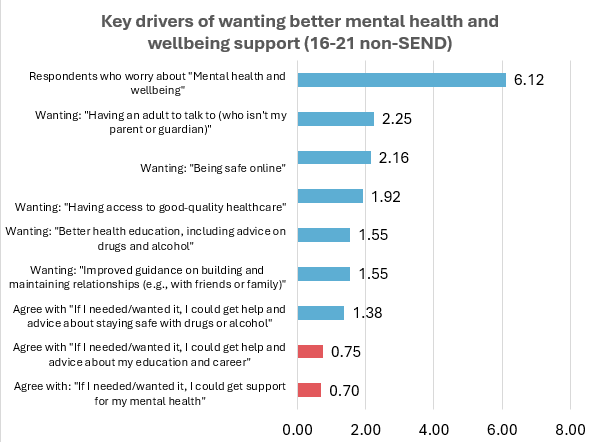
Understandably, both negative drivers shown on the graph below relate to feeling like they have support available. Those who think that they could get help about their education or career, or those who think that they could get support for their mental health, are much less likely than those who do not think this support is available to want more of it.[footnote 7]
Similarly, around a quarter of survey respondents say having improved guidance on relationships with friends and family (27%) and having an adult to talk to who is not their parent or guardian (25%) would most improve their day-to-day life
Physical health and wellbeing
When considering health and wellbeing more broadly across all phases of this research, young people do not explicitly prioritise physical health to the same degree as mental health. This does not mean, however, that young people do not want increased and improved access to physical activity. Data from the survey and Hacks shows a perception of limited access to participation in physical activity. Phase One of the research – Democracy Cafés and online focus groups – revealed that when asked what brings them happiness or what activities they enjoy, many participants highlighted physical activities, especially 10-15-year-olds. This suggests that the availability and accessibility of organised physical activities are important drivers of young people’s overall wellbeing.
Physical health and wellbeing solutions
The desire for more activities came across in the survey with almost half (46%) saying access to recreational and leisure activities would improve their day-to-day life. As in Phase One, this sentiment was strongest among the younger 10 to 15-year-old cohort (64% vs. 32% of 16 to 21-year-olds vs. 30% of 22 to 25-year-olds with SEN/D).
When presented with a list of options and asked what they would most like to have more access to in their local area, a quarter (25%) select sport and exercise facilities (e.g., sports clubs) in their top three. A further 29% choose green spaces (e.g., parks and sports fields) and 22% choose wellness facilities including gyms. Taken at an overall level, these choices reveal the importance to young people of access to participation in physical activity.
Hack participants also express a desire for more accessible and, crucially, affordable activities. A large proportion of their suggestions for additional activities fall under the bracket of ‘physical health’, for example:
- More accessible football pitches (i.e., that are free, or at least not prohibitively expensive to book).
- Youth-only gyms, or more access for young people in mainstream gyms.
- Free weightlifting ‘to get a group of friends’, referring to a belief that physical activity is a good way to meet new people (but it has to be accessible). -Youth-focused ‘fun runs’ or walks in public parks.
Alongside this, there is appetite for more ‘creative’ activities that blur the line between physical and mental health, for example:
- Creative clubs that offer drawing, knitting, crochet, embroidery, etc.
- Baking and cookery sessions.
- Yoga and meditation.
While these activities are not strictly physical, participants tended to suggest them as part of wider discussions around physical activity and saw them as, in a broad sense, meditative or mindful.
Digital health solutions
Phase One revealed that young people tend to frame the challenge of digital health in terms of online bullying. In Phase One of the research young people expressed apprehension that bullying can be all-consuming due to its online nature. They were keenly aware of social media algorithms and anxious about potentially harmful content they may encounter. In addition, young people – of all ages – saw social media as setting unrealistic expectations for young people. This, along with other safety concerns such as cyberbullying, is seen as having a detrimental impact on youth mental health, especially around self-image.
Digital health is not as prominent as a concern in Phase Two. While social media and online presence is a concern for young people – with one in five (21%) saying they worry about this in their day-to-day lives – it is less pressing than other issues, such as friendships and social life (42%), education (42%), money (41%), and mental health (36%).
Respondents aged 16 and above were asked questions about their online safety and wellbeing in the survey. This reveals a perception gap between ‘safety’ and ‘wellbeing’. Respondents are generally confident in their ability to stay safe online, with most 16-21-year-olds saying they feel confident using privacy settings and controls (74%), recognising and avoiding online scams (74%), and spotting and reporting online bullying (69%).
Respondents’ confidence in their online wellbeing – understood as being able to manage how much time they spend online – is lower. Only half (51%) of 16 to 21-year-old respondents say they are comfortable in managing their time online (e.g., how much they use social media). SEN/D respondents (46%) are significantly less likely to say they feel confident managing their time online compared to non-SEN/D respondents (55%), suggesting a need for targeted support among this group.
While digital health was not a prominent theme at the Hacks, it was the subject of conversation at the Ipswich event. Interestingly, some participants in Ipswich discussed their anxieties about using social media – and the content they would be exposed to – despite not currently having social media accounts. This corroborates a finding from the first phase of qualitative research, in which younger participants in online focus groups worried about being exposed to online bullying and/or harmful content once they had social media, something they viewed as inevitable. Social media is a source of worry for young people, even if they do not use it yet.
Participants at the Birmingham Hack refer to digital wellbeing in the context of online misogyny in their presentation at the end of the event:
How we propose we tackle this issue [perceived rise in misogyny] is to have active assemblies and to talk to young people about problems within our society. We need to take control of social media and remove people like Andrew Tate, and silence them spreading and contaminating our young people with their wrong and disgusting views.
[F, Birmingham]
Safety online and the challenges of social media for young people was also raised in Express Orders in response to the question: ‘what is the one thing the government should spend money on for young people?’. The following respondent appears to call for the introduction of laws or policy to ensure young people do not have access to social media.
Social media needs to go for under 16 year olds. As someone who feels like I need to have it as others have it. Please make this happen as social media is destroying lives and we will all learn that there is life outside of social media. Phones can be kept for contact (messages and WhatsApp kept).
[Express Order]
Discussion of digital health may have been more limited at the Hacks due to how the events were structured. Each table of young people at the Hacks was given a ‘discussion area’ to consider with their group. While ‘day-to-day wellbeing’ (or similar) was a discussion area at multiple Hacks, there was no explicit facilitation of discussion around digital ‘health’. The relative lack of Hack data on digital health may reflect that, while despite a broad understanding of intersectionality was evident across both Phases of this research, not all young people consciously see their online interactions and activities as informing their overall wellbeing in the same way as mental and physical health (though this is researchers’ interpretation rather than something explicitly mentioned by young people).
Savanta discussed with Youth Collaborators the lack of prominence of digital wellbeing in the Hack data. The Youth Collaborators suggested that digital ‘health’ is not currently at the forefront of young people’s minds in the same way as, for example, mental health. Yet they believe that young people are becoming increasingly aware of digital wellbeing, and that if we were to repeat this research in five years, digital health would be a more prominent theme, and young people would feel more equipped to speak about the topic.
Outcome 2: Community connection, cohesion and belonging
Phase One revealed a perception among young people that there has been an erosion of place-based communities, often inadequately compensated for by the emergence of digital spaces. Young people express that the increasing prevalence of digital spaces as a means for interaction is fuelled largely by the absence of accessible in-person spaces. Such online spaces fail to bring communities together and do not facilitate the intimate social interaction that young people desire. For many young people, this leads to feelings of social isolation, a lack of belonging, and a perception that youth services are in decline. Moreover, young people struggle to access those services that are available, both due to a lack of knowledge of their existence, and practical challenges with accessing them through public transport that is deemed to be unaffordable and lacking in connectivity and frequency.
Survey findings reinforce the desire for spaces facilitating in-person interaction. When asked what young people would like more access to (at a top 3 rank level), the most selected responses are safe and accessible public spaces (29%), green spaces (29%), community events (26%), and affordable public transport (25%).
Taken together, the findings from the first stage of qualitative research and survey data highlight two overarching challenges that young people face in relation to feeling connected and belonging to their community:
-
Funding. Specifically, funding of youth services like youth clubs.
-
Access via affordable public transport.
Funding
When thinking of ways to make them feel more connected to their communities, Hack participants present well-funded youth services as the solution to wide ranging challenges. These include poor mental health among young people, a lack of involvement in their community and feelings of social isolation and boredom, highlighting the breadth of improvements that enhanced funding and access to such services would make to the lives of young people. Young people also reference the need for specialist provision for groups such as people with SEN/D who may have specific needs.
For the mental health side of things, it’s a known fact that kids’ stress levels are slowly increasing across the country, which, obviously, isn’t good. A way that the government can help to sort this issue is to fund towards youth clubs for children, so they can socialise.
[M, Ipswich]
It is striking that this presentation from Ipswich, where all Hack participants were primary school children, identified youth clubs as a solution to poor mental health, and government funding as the requirement for this to happen, demonstrating that even young children understand the interconnections of youth services, mental health, and funding.
Solutions
Hack and express order participants express a belief in youth services and youth clubs specifically as a key solution through three interlinked strands:
-
1. An increase in the number of youth clubs
Young people across the Hacks state that there is a lack of in-person third spaces they can access. While this is generally expressed in local terms with young people mentioning specific areas for improvement (e.g., ‘More Boathouse centres in Fleetwood’), it is replicated across Hack locations to potentially suggest a national youth consensus on this matter. The in-person aspect is important here; young people want to feel connected to their peers outside of school, and online interactions are not adequately facilitating such connections.
-
2. Investment in current youth clubs.
Several participants who attend youth clubs note that they require investment to refurbish facilities, either to allow more young people to attend, or to improve the experience for current attendees. In particular, the need for trusted adults in these settings is a desire young people have, but they recognise that employing and training personnel requires funding.
-
3. Awareness campaigns for existing youth clubs
Young people are not always aware that a youth club is available to them, or the details of what services it provides. For example, during the Sheffield Hack, participants had a map of Sheffield and could place ‘luggage tags’ on the map to denote where they participate in activities. The activity map revealed that there are youth clubs located around the city, but either they were not widely known or if they were, it was for the individual activities (such as sports classes) they offer, and not the full service. There just needs to be more awareness that they exist, and of what they offer young people.
Young people often refer to activities they enjoy or would like to have in their local area, such as organised sports and art activities, but there is a lack of awareness that these can be offered as part of a youth club. Often, young people in the Hacks describe youth clubs without being cognisant of the concept itself, reinforcing a key finding in the Youth Matters: State of the Nation report that young people cannot benefit from these third spaces if they do not know what they are or that they exist. Furthermore, there was a sentiment across Hacks that events such as those they were attending were reminiscent of the type of third space they would want more of to feel this connection to other young people and their local community. This reinforces a key finding from the Express Orders that affordable, in-person third spaces are something that young people are lacking and would value.
More things to do in the community so they are not hanging round in the parks. Youth clubs with video games for groups to play.
[Express Order]
Create Youth hubs, same as they created children’s centres. Five aside football pitch, skateboard track, gym, coffee café.
[Express Order]
Build more free recreational space for young people so they can do stuff for free because not everyone could afford to do stuff that they would want to do, and will likely lower crime rates because more recreation space would possibly make young people less bored so they would commit crimes.
[Express Order]
Hack participants understand that there is no one-size-fits-all template for a youth club/group, and there should be special provision for SEN/D and neurodivergent young people.
More youth centres can benefit a lot of youth today. Different youth centres for different needs, for different specialities, for different likes and dislikes. That’s what we need. Who remembers being young, going outside after school and there being a big youth bus? Because I do, it was very fun, and you went inside. For those few hours, you forget all your problems, you forget everything bad in life and you enjoy yourself with some random kids your age, but you have fun. Who wants that back? Who wants that brief moment when you can feel safe, supported and happy? That’s what we want. We want the government to bring more youth buses, bring more youth centres. Who’s with me?
[M, Birmingham]
Young people across the Hacks expressed that youth clubs and the services they provide should be tailored to and run in collaboration with the young people attending them, so they feel part of and heard by the community. As will be discussed in ‘youth voice’, making young people feel like their voice is listened to when developing youth-based services is vital to help young people feel part of their community.
Access to affordable and high-quality transport
Hack participants often discuss community connection in a logistical context, relating to public transport. While transport is usually referred to in the broad sense of not having enough of it, current provisions being in poor condition, or it being unaffordable, deeper interrogation reveals the true desire of this improvement, which is to increase their access to the in-person third spaces and activities they enjoy but feel are lacking.
A desire for cheaper and/or subsidised bus fares for young people is the most widely posited solution in this outcome area. Quantitative findings referenced earlier reinforce this, with affordable public transport (25%) being a high priority for what young people want more access to in their local area, especially for those in rural areas (32% vs. 24% in urban areas) and those aged 16 to 21 (30% vs. 19% for 10-15).
The desire for more frequent, safer and affordable public transport is apparent across all Hack locations but, in line with survey findings, is more pronounced in Hack locations with a high representation of young people from rural areas, such as those attending the Ipswich Hack (many of whom travelled from surrounding rural areas). A lot of young people are reliant on buses to access education, as well as work and leisure activities, but often view it as prohibitively expensive.
From my village to the nearest town, Ipswich, there are only about 4 buses per day and the prices of them are ridiculous. They cost £3, which is too expensive, and that’s only one way.
[F, attending the Ipswich hack from surrounding, rural area]
We also talked about public transport because it’s very expensive for those who have to commute to college every day, so we were saying that we think that it should be free for those who are, like, commuting to education. Like how the elderly people get it for free when they’re older, we say that it should be free for us as well.
[F, Birmingham]
Respondents to the Express Orders also echo this sentiment, expressing the desire for subsidised transport for young people.
The government should provide much cheaper and more affordable public transport for under 21’s and students
[Express Order]
Some participants also raise the quality of public transport, the frequency and reliability of services. The price of fares is more prominent, but this is linked to a perception of low-quality services and an associated perception of poor value. Furthermore, public transport offers young people an independence which is important to them, especially as they get older, and the feeling that these services are prohibitive can lead to them feeling stuck in the confines of their immediate area without being able to access the wider community, whether this be in an educational way or for leisure and connection.
Outcome 3: Skills and opportunities for life and work
As Phase One highlighted, skills and opportunities for life and work most often emerges as a challenge through the lens of job security and employment, with uncertainty about careers and a lack of access to job opportunities creating anxiety and stress among young people. This is exacerbated by the fact that, while education is seen as key to unlocking future employment opportunities, the current curriculum does not provide them with the broader work and life skills that they need as they progress into adulthood.
In this chapter, we will explore the challenges and proposed solutions to this perceived ‘experience gap’ that prevents young people from accessing fulfilling, equitable work opportunities, as well as the lack of access to wider life skills they need to acquire at school.
The ‘experience gap’
The ‘experience gap’ identified in the Hack events manifests as a vicious cycle of young people struggling to get work opportunities. This is largely due to a lack of sufficient experience, as young people are unable to get the experience they need due to a lack of entry-level jobs, while entry level jobs themselves require experience that young people do not have. This creates a sense of frustration and disillusionment, particularly in the 16 to 21 age group, who are trying to take their first steps on the career ladder towards fulfilling, equitable work.
Findings from the survey reinforce the continued importance of access for young people – in this case specifically to work – through early-career opportunities such as internships or work experience that enable them to get the experience they need. This is particularly vital for young people in the 16 to 21 age bracket, with access to internships and work experience opportunities scoring as one of this group’s top priorities (ranked 1 to 3) for what they would most like to have more access to in their local area (26%). This group also say such opportunities would be the most important factor in helping them to plan and achieve their future career goals (26%).
The challenge of this “experience gap” is exacerbated by the fact that current placement schemes focus on specific, limited areas such as trades like building and plumbing, or other manual work opportunities that can be particularly inaccessible for young people with SEN/D. These concerns are reflected in the quantitative survey, as young people with SEN/D are significantly more likely than those without to say they worry about both what they want to do in the future (e.g., getting a job) (44% vs. 38%) and work (for those in work) (14% vs. 7%) on a day-to-day basis.
Experience gap solutions
Discussions in the Hack events focused on how to bridge this ‘experience gap’. This was particularly the case in the Manchester event, where young people identified three separate solutions.
The first of these proposed solutions is for ‘starter jobs’. These jobs would give 16 to 18-year-olds access to work on an apprenticeship salary with the added benefit of mentorship, all whilst they remain in formal education. The idea is that work would supplement rather than replace formal education, meaning when they leave education, they will already have the work experience necessary to close the “experience gap” and access the job market more easily.
More vocational opportunities and starter jobs. So, basically, with young people, when they’re looking for jobs… these jobs require experience. Even if they’re normal waitressing jobs, it says it requires 1 years’ experience, but where you can get that 1 year if you can’t get a job in the first place, do you know what I mean? So, if you get, like, starter jobs and stuff which are targeted towards young people from 16 to 18, so they can have, like, a side job while they’re in education with a mentor. […] If they have that little bit of experience, even if it’s for a few months… you have that experience and you’re more likely to be chosen to get on an actual job.
(F, Manchester)
The second proposed solution, set out by a group of young people with SEN/D, suggested that the government should look to bring back Kickstart[footnote 8] or set up a similar scheme in its place. This scheme would provide six-month job placement opportunities for young people, with an emphasis on catering for a wide range of skills and interests to promote engagement (e.g., coding and software development). This would also in part address the challenge for young people with SEN/D discussed above, who feel that current placement schemes focus too much on skills or trades that are inaccessible to them.
By providing a wider range of opportunities for young people that are both interesting and accessible, young people would be given the opportunity to bridge the “experience gap” which many feel is preventing them from entering the workforce.
The final proposed solution is to provide young people with training in core skills such as CV writing, completing job applications and job interviews, all of which would help them to find either permanent or temporary work experience more easily. This sentiment was expressed prominently in Express Order findings, with ‘jobs, money and opportunities’ the third most mentioned area where young people want the government to invest more (after education and spaces, activities and youth voice). Specifically, more paid jobs/work experience was widely desired. This sentiment was also shared as a solution in response to the Express Orders.
A subject that teaches you life skills from a young age like how to do taxes or how the government works etc.
(Express Order)
One gap here was who would be best placed to provide such workshops. As discussed in Chapter 2, we know that some youth clubs already offer similar services and would be well-placed to continue doing so, and young people feel that such settings are an ideal setting for provision of a wide range of activities, services and a sense of community in general. With additional funding and awareness of the services they provide, youth clubs would represent an ideal third space, outside of traditional education for young people, to acquire the skills they need for work and life.
It is worth noting that the young people who propose the solutions above were also not allocated ‘access to jobs’ or similar as a discussion area. They propose these solutions unprompted from discussions around ‘day-to-day wellbeing’ and ‘community building’, demonstrating the role that early access to meaningful work has not only for their future career, but also in young people’s wider wellbeing and participation in healthy communities in the short-term.
This is reinforced by the findings from the quantitative survey, with almost half of young people aged 16 to 21 (45%) saying that a secure job would improve their day-to-day lives, demonstrating how access to work opportunities also presents a solution to some aspects of the broader wellbeing and community cohesion challenges discussed in Chapters 2 and 3.
Education and relationships with educators
The second challenge is a perceived skills gap not only in terms of work, but also in terms of the current education system. As highlighted in Phase One, young people feel that education is not only underfunded in general but also fails to provide enough access to education on skills for life, which help young people transition from youth into adulthood. Currently, young people feel that the curriculum is not practical enough and needs to be “tailored to reality”.
The Hack findings and consultation with Youth Collaborators demonstrate how young people feel that the current curriculum emphasises traditional academic studies at the expense of broader life and work skills, including financial literacy, cooking and practical workplace competencies. If young people do not possess these skills, they feel unable to make the transition into adult life once they leave school.
As also highlighted in Phase One, these practical curriculum issues are compounded by the fact that many young people feel they do not see eye-to-eye with their teachers, or at worst feel “dismissed” by adults in school. In Sheffield for example, young people extensively discuss the difference between youth workers and teachers. In this context, young people say they feel disconnected from adults other than youth workers (e.g., from teachers, GPs, or school nurses), who they say can be dismissive and struggle to empathise with them.
Teachers create an image of you in their head, but they don’t actually know you, they just teach you a few hours every week.
(Sheffield Post-it notes)
Teachers see conversations as arguments. They shut you down and just don’t talk to you like people. They don’t actually want to figure stuff out with you, they just want to get it over with.
(Sheffield Post-it notes)
The need for greater investment in education came through as a prominent theme in the Express Orders. In particular, young people expressed a desire for greater support in schools, specifically someone to talk to about their challenges and specifically someone to talk to – also came through in the Express Orders:
More support in schools, so every student should have someone to talk to and not be shy if they need that support.
(Express Order)
Whilst there is acknowledgement that teachers are ultimately subject specialists who impart knowledge, young people feel that this should be matched by an ability to connect and empathise with them. In contrast, it is clear across all Hack events that young people feel a strong connection to youth workers and attach immense value to this relationship, with high levels of trust.
Youth workers are some of the only adults in our life who listen to us.
(Sheffield Post-it notes)
Findings from the quantitative survey demonstrate the importance of relationships like this to young people, with a quarter (25%) saying that having an adult to talk to (who is not their parent or guardian) would improve their day-to-day life. Trust and understanding is also key to building these relationships, which is reflected in the fact that when asked which three qualities and skills are most important to them in a trusted adult, young people are most likely to select that they are someone they can trust (30%), while the ability to communicate well (28%) and be empathetic (26%) also score highly.
Education solutions
In order to bridge the gap between teachers and students, particularly in terms of trust, young people would like to see both school staff in general (e.g., safeguarding officers, mental health leads and specialist support staff) and teachers improve the pastoral element of their remit.
Young people appreciate that teachers are already busy with their main responsibility to deliver classes but feel that educational settings could do more to build a relationship of trust. Proposed solutions centre around an optional youth work qualification – or at least dedicated training – to help teachers and other school staff to connect with students. If staff can better connect with and understand their students, they will undoubtedly be better positioned to teach them the skills that they need to transition into life and work.
Similarly, young people feel that the ‘core skills’ training set out earlier in this chapter would help to address the perceived skills gap, and pivot away from the current curriculum that focuses too much on traditional education. Through a combination of better funded and more practical skills training via both formal educational settings and the community more widely (e.g., through youth clubs), young people feel that they would be better prepared for adult life.
Outcome 4: Safety and security
This is a wide-ranging outcome area that spans security in a more abstract sense – such as financial and housing security – as well as a more literal interpretation of young people feeling safe in their local areas. It is clear from both phases of this research that safety and security is a concern for young people. Yet it is an area in which they find it hard to conceive of tangible solutions.
Financial security
Phase One showed that economic and financial wellbeing are top concerns for young people, across a range of ages and locations. The cost-of-living crisis was a front-of-mind priority and source of anxiety for participants, even among younger children who would not yet have the financial independence of their older peers. Phase One research revealed a troubling contradiction at the heart of this priority. Young people simultaneously view financial security as crucial yet elusive. They have limited hope of attaining it in the short-to-medium-term future.
Data from the survey reinforces the importance of financial security. ‘Money’ (41%) is a top three day-to-day worry for respondents, with what they want to do in the future (e.g., getting a job) also scoring highly (40%). Both concerns increase with age, with 16 to 21-year-old respondents significantly more likely than 10 to 15-year-olds to select ‘money’ (55% vs. 25%) and what they want to do in the future (48% vs. 30%).
Financial security solutions
When presented with a list of options and asked what would most improve their day-to-day lives, respondents are most likely to select ‘lower living costs’ (61%). Notably, this is the same for 10 to 15-year-old respondents (61%) and 16 to 21-year-olds (61%). This corroborates a finding from Phase One; even younger participants, who are not yet financially independent, perceive the rising cost of living and associated financial insecurity as a priority. Implicit in this finding is a belief among respondents that living costs are currently high, and that this will impact their day-to-day lives in the future (if it is not doing so already).
Continuing the focus on younger respondents, more than half (53%) of 10-15-year-olds choose ‘learning how to look after your money’ in their top five options that would help them the most when thinking about their future. This reflects a desire among younger participants to improve their own financial literacy. Data from the Democracy Cafés and online focus groups – and, to a lesser extent, the Hacks – suggests that this could be achieved through changes to the school curriculum, with greater emphasis on ‘practical’ life skills and knowledge, linked to the findings in Outcome 3.
Hack participants do not explicitly discuss financial security to the same extent as Phase One participants. This may owe to the Hacks being more solution-focused, while the Democracy Cafés and online focus groups were about identifying challenges. It is easier to identify financial (in)security as a challenge than it is to propose a solution to a macroeconomic issue. Nevertheless, Savanta researchers discussed this discrepancy further with Youth Collaborators. The Youth Collaborators thought the reason it is hard for young people to imagine solutions to financial insecurity (as well as housing insecurity and youth voice in the next section) links back to education. It is not surprising that young people, who may not have been taught practical things about housing or financial management, find it difficult to propose solutions. They may not have the ‘vocabulary’ to do so. Participants in the Democracy Cafés and online focus groups – and, to a lesser extent, in the Hacks – suggested that the Personal, Social, Health and Economic Education (PSHE) curriculum should be adapted to include more of this kind of ‘practical’ education, to equip young people with the vocabulary and context to develop their own solutions.
That said, a lot of the solutions that young people propose at the Hacks reveal – albeit indirectly – that financial security is a priority. Many of their solutions focus on reducing costs for young people. For example, one participant in Manchester wants access to “more activities” that are “not too expensive”’, while another in Bristol wants schemes where events are “pay what you can”. There are many more requests and/or solutions that participants frame in the context of affordability. This supports the insight from the quantitative data that young people understand both the prevalence of financial insecurity, and its impact on their day-to-day lives.
Access to secure housing
Phase One revealed that housing inaccessibility and unaffordability is a significant aspect of young people’s financial concerns, even for the youngest participants. There were two strands to housing as a priority in the Phase One data. First, young people wanted improved social housing provision. Participants who had experienced homelessness spoke about the difficulties they faced in accessing support, and there is a perception that young people are at the back of the (long) queue for limited social housing. Second, young people worried about being able to afford rent and, looking further ahead, access the property ladder.
Access to secure housing solutions
The survey data reinforces the importance of housing security to young people. 16 to 21-year-olds respondents (and 22 to 25-year-old respondents with SEN/D) were asked what one thing the government could improve to make their lives better. The most selected option is ‘provide more affordable housing’ (19%). Older participants aged 20 to 21 (24%) are significantly more likely than 18 to 19-year-olds (18%) and 16 to 17-year-olds (14%) to select this option. This reflects how housing security becomes more of a priority as young people gain lived experience of seeking their own accommodation, and the challenges this presents.
Housing security is less prominent in the Hack data. Youth Collaborators offer a similar explanation to a lack of solutions to financial insecurity; it is straightforward to identify housing access as a challenge and a priority, but hard to propose solutions, especially for young people who may not have received education to equip them with relevant vocabulary and awareness of concepts such as rent caps and mortgage payments.
That said, a few participants in the Blackpool Hack cite ‘more affordable housing’ as a change they would like to see in their area in the next five years. This is pertinent to Blackpool, where a theme among older participants is a desire for more reasons to stay in the town, amid a perceived lack of opportunities.
As stated in Chapter 1, young people are able to articulate solutions to a perceived mental health challenge because they have the awareness and vocabulary to discuss it. This contrasts with how participants struggle to suggest solutions to financial and housing insecurity and reveals a crucial finding of this research. When young people are not equipped with the literacy and vocabulary to talk about issues – as with financial and housing security – they struggle to conceptualise solutions. However, on topics such as mental health, where young people feel educated, they can develop clear solutions to address the challenges they face, pointing to the central role of education in empowering young people.
Responses to Express Orders also reveal concerns that the education system does not equip young people with the knowledge needed to tackle challenges of financial or housing insecurity and a desire for greater education on such topics.
The National Curriculum has left us, and many more students, unprepared for life beyond school. Whilst, poetry quotations, trigonometry and cell components are engrained in the minds of young people, we are still helpless when it comes to everyday skills, such as mortgages and taxes.
(Express Order)
Other safety and security priorities
Beyond financial and housing security, Hack participants interpret ‘safety’ in a range of ways. Participants in the Ipswich Hack – all of whom were primary school students – tend to conceive of safety in terms of road safety, calling for measures like cycle lanes, more school crossing guards around their schools, and more speed cameras.
We would love it if we could get a lollipop man or lady [school crossing guard] and we could get some bright, bold signs telling you where you can and cannot park. That would make a huge difference. There’s a lot of bikers around town and we think that it would be more safe because most people cycle on the road, so it would be more safe to have more cycle lanes for the bikers.
[F, Ipswich]
We decided to choose speeding and we came up with our own slogan, ‘Slow the speed, it’s a need,’ because speeding has become a problem.
[F, Ipswich]
In Phase One, some young people flagged physical safety concerns related to congregating in public spaces such as local parks, especially at night. The congregation of groups of other young people was perceived as intimidating to some. Data from the survey also shows that physical safety in shared spaces is important to younger respondents. When asked to design their perfect neighbourhood/town, ‘safe parks and playgrounds’ (40%) is the most common top three choice among 10 to 15-year-old respondents. It should be noted that some respondents may select this option with ‘safe’ as the operative word, while others may see ‘parks and playgrounds’ as a means to express a desire for more activities and facilities, with safety a secondary consideration.
Other safety and security solutions
There are other, isolated mentions of safety and security in the Hack data. Participants in Bristol discuss the consequence of knife crime and propose banning the sale of zombie knives as a solution.
Participants in Birmingham interpret safety in the context of safety from domestic abuse:
In order to prevent and support others who may be trapped within abusive relationships, there needs to be more education, dedicated classes to teach young people the first signs of what to look for if someone is trapped in an abusive relationship.
[F, Birmingham]
Meanwhile, several participants – mainly in Blackpool – call for an increased police presence in their local areas but add that this should not just consist of more patrols. It should be accompanied by school visits and relationships with the community to ensure policing is collaborative, and that the police are not viewed as the enemy or a threat.
The solutions proposed in this sub-section are context-specific examples that would likely arise in other localities across England. That is, while participants express them in local terms, they are national issues. Finally, as a reflection by Savanta, the breadth of interpretations of ‘safety and security’ reveals a wider point for the government to consider around how it uses terminology that can be understood in various ways. It is important to be precise in definitions of terminology and provide clear examples to allow young people to create focused solutions.
Outcome 5: Youth voice
The Democracy Cafés and focus groups from Phase One of the research revealed that young people feel excluded from decision-making at a local and national level. This was characterised by two key challenges; young people feeling like their voice is not heard, and issues raised by young people not being addressed by successive governments, leading to a perception that major changes are happening that are out of their control. In turn, a vicious cycle begins; young people do not feel like their voices are being heard, so they participate less in politics and civic engagement. Breaking this cycle is important.
Quantitative findings add further insights to this sense of disempowerment. Across a range of statements, young people are more likely to disagree than agree that their voice matters and that they know how to influence decisions at a local and national level. Just 31% of young people agree that their voice matters for decisions made in their local area compared to 38% who disagree. At a national level, this sense of powerlessness is more pronounced; 26% agree their voice matters for decisions on a national level, while 49% disagree.
Youth voice challenges
In-depth qualitative discussions in the Hack Events, as well as insights from the express orders, revealed three key challenges:
1. A lack of spaces for meaningful expression
Participants in the Hack events were eager to ‘have their say’, particularly on local issues that impact their day-to-day lives, but many were unsure of how to do this in practice, or how to access the venues where they could express their views.
2. A cycle of exclusion
In the Hacks, having one’s say was particularly challenging for participants who have had limited meaningful engagement in the past and struggled to conceptualise what it looks like. The situation of “you don’t know what you don’t know” discussed in Outcomes 2, 3 and 4 was prominent here too, with young people not having the vocabulary to talk about civic engagement, as is the case with housing or financial insecurity.
-
As an example of this dynamic, it is revealing that only a handful of Hack participants suggested lowering the voting age (to 16 or 14) as a means to make their voices heard. This may reflect how distant the world of civic or political engagement feels to many young people, with participants having widely reported a lack of political or civic education in school. For many participants, the Hack events were perceived as the first time they had been given an opportunity to express their voice civically.
-
Access is also perceived as a key barrier in the context of access to physical spaces where having their say is encouraged, as well as the knowledge of how and where to participate in civic engagement.
3. Demographic vulnerabilities
The challenge of a perceived lack of voice impacts some groups more acutely. Survey findings show that young people in the C2DE socioeconomic group (i.e., chief household earner is a skilled, semi-skilled/unskilled manual worker or state-dependent) are less likely than those in the ABC1 group (i.e., chief household earner has a professional, managerial, or office-based job) to agree that they know how to influence decisions made in their local area (31% vs. 37%).
A similar trend can be observed when comparing women with men (32% vs. 36%), non-SEN/D vs. SEN/D (32% vs. 35%), and rural vs. urban areas (29% vs. 35%). White respondents (31%) are also less likely than all other ethnicities (ranging between 37%-49%) to say they know how to influence decisions in their local area.
- Intersectional vulnerabilities also play a role, leading to groups feeling particularly marginalised. Specifically, white C2DE respondents (28%), C2DE women (30%) and women with SEN/D (31%) face specific challenges with having their voice heard, pointing to the need for specific programmes for these groups.
Youth voice solutions
Moving towards solutions, young people in the Hack events posit several solutions that they think will help ensure their voices are heard, and that their views are acted on.
Responsiveness and accountability
In the Hack events, several solutions are raised relating to building more responsive lines of communication between young people and those in positions of authority, including:
- Introducing anonymous feedback boxes directed to elected officials such as local councillors, to allow young people to comfortably share their perspectives on local issues.
- Community consultations that explicitly include young people in decisions before they are taken.
- The underlying sentiment connecting these demands is a desire for clear lines of accountability, providing evidence to young people that their input is tracked, responded to and acted upon by those in authority.
Within these discussions, young people emphasise the need for youth perspectives to not just be heard, but for these messages to remain as undiluted as possible. This sentiment was also reflected in Express Order responses, with many young people emphasising the importance of capturing both the breadth and depth of youth perspectives.
The first thing that we came up with was mixed messages, so, basically, that means that say someone said something good from this meeting that we’ve had today. It would go through tons and tons of layers, and by the time it got to the Prime Minister, even if it did, it would be a complete different thing. So, we need, you know, that our messages, when it goes through that, it stays the same.
[M, Ipswich]
Start listening. Young people consistently try to advocate for universal issues, but we are always ignored simply because of our age. Everyone always assumes we know nothing or we are immature, but if you take one look at the Youth Parliament and they have more meaningful discussions than Parliament.
[Express Order]
Speak to as many young people as possible and gain a genuine and comprehensive insight into what it’s like to be a young person today.
[Express Order]
Confidence-building and encouragement
Some Hack event participants raise the importance of confidence-building and emphasising to young people the inherent value of their voice, especially among those that do have clear ideas about how to use their voice but may be hesitant to express it:
My key idea is trying to get children more involved in sharing their voice, because children do have voices and they do know what they want.
[F, Ipswich]
Further discussion with Youth Collaborators highlights the role that schools should play in confidence-building and encouragement. There is a need for young people to be taught about good models of participation and ways to express their views to encourage more active engagement.
Respect for youth contributions
Beyond involvement in decision-making, there is also a strong emphasis on the need for authority figures to have greater recognition of and respect for the contributions of young people. This is exemplified by Manchester Hack attendees who travelled from Barnsley:
They don’t realise that I, myself, presented at a conference in Sheffield to 200 people, but they wouldn’t know that just by looking at me, because they don’t come and speak to us. They just see a group of young people, and that’s it. Yes, we have fun and are a bit silly while we’re doing it, but we do a lot of work. We get a lot of stuff done, and I think that isn’t given as much attention on a wider scale as it should.
[M, Manchester]
I feel like we should be given more credit, because we are coming up with these things, we are doing work, we are coming up with projects that do go national, like the waiting games that we did, and other projects that we worked on.
[F, Manchester]
The Key Drivers Analysis (KDA), run using the data produced by the quantitative survey, looks at the drivers of being engaged in the local community. Two key factors stand out as the most prominent drivers of community engagement, both of which relate to youth voice:
- Feeling like your voice matters for decisions made in the country.
- Knowledge of how to influence decisions made in the country.
In addition to those two most prominent drivers, several other factors showed strong links to being more engaged in the local community. These often related to participation in community-based events, or knowing where or how to access support, such as youth clubs and include:
- feeling like you can get the support you need to join activities in your local area
- taking part in youth clubs or uniformed youth groups (e.g., Scouts, Girl Guides)
- feeling like you can get advice about relationships
- knowing where to go if you need extra help and support
These insights from the KDA emphasise wider findings that central to community engagement and feeling like young people have a voice is the presence of shared community spaces where young people can interact with each other, or with trusted adults.
Key drivers of being engaged in your local community (16 to 21 non-SEN/D)[footnote 9]
Use zoom on your browser to view.
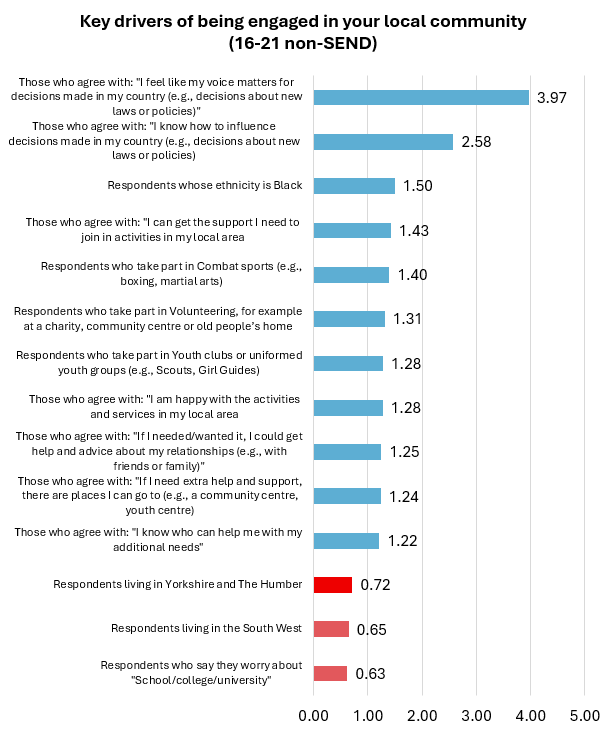
Taken together, the findings from the Hack events, express orders and survey data show that empowering youth voice is not simply a matter of providing occasional opportunities for young people to speak, but building the knowledge, skills and confidence necessary for ongoing, meaningful participation. The more that young people believe their voices can make a difference, the more likely they are to involve themselves in their local communities and contribute to civic life. Empowering young people to use their voice to shape the issues impacting them will require sustained investment in education on civic participation, clear feedback mechanisms that track how youth input influences decisions, and a culture of respect for youth-led initiatives. The National Youth Strategy should ensure that opportunities for participation are accessible, visible, and tailored to marginalised groups to enable all young people to build the literacy, confidence, and pathways needed to shape decisions that affect their lives.
Conclusions
This study has offered a snapshot into the lives of young people in England today, revealing their challenges, needs and ambitions. It is important to note that rather than focusing on the finer details of policy or service delivery, this research intentionally adopts a broader lens, seeking to understand what young people themselves identify as challenges, priorities and aspirations. In the process, this report has aimed to elevate young people’s voices and place their overarching needs and ambitions at the heart of strategy development. This study should act as the starting point for a national consultation with young people, ensuring their voices are at the forefront of future policy.
The findings reveal a generation that is both ambitious and clear-sighted, who are facing significant challenges yet hold strong aspirations for themselves and their communities. Across the research, it is evident that young people care deeply about opportunities – including educational, social, and economic – and desire a society where their opinions are truly valued, and their needs are met with genuine understanding and respect.
Young people consistently rank mental health and wellbeing as a key priority, frequently raising concerns about timely access to support and the importance of trustworthy adults in their lives. They emphasise that mental health is closely connected to school pressures, job stability, family finances, and the lasting effects of the pandemic. There is a clear call for supportive environments with early intervention and a greater investment in youth-friendly, accessible mental health services both in and outside the education system.
The cost of living and financial insecurity also emerge as deep-rooted concerns. When young people think about their futures, worries about housing, transport, and meaningful, secure work often come to the fore. They express a desire for policymakers to address not just headline stats like youth employment, but also the practical realities that shape opportunity. This includes affordable public transport and sufficient financial support to achieve their life goals. Underpinning these themes is a strong desire for fairer access and efforts to reduce structural inequality, particularly across different regions, social classes, and ethnic backgrounds.
Yet, while this report offers a meaningful foundation, it is important to acknowledge certain gaps. Some groups, such as those not in education, employment or training (NEET), those who have been in care, or those with complex needs (e.g., young people with SEN/D, neurodiverse young people or those suffering with mental health conditions), are less visible in this research report. The subtleties of how different aspects of identity or circumstance combine to shape experience also merit further exploration.
Looking to the future, young people themselves argue for a strategy underpinned by ongoing, inclusive engagement in decision-making – not a one-off event, but a continuous process. This means involving young people not only at the level of broad priorities, but also in the specific details of policy design and implementation. To facilitate this, young people must be involved in every stage of the design and implementation of the policy through a range of accessible and flexible engagement mechanisms. Suggestions for future research to ensure this include:
- further quantitative analysis of survey data of NEETs, young carers, those who have been in care, and groups with complex needs. This should also be supplemented by further qualitative research with these audiences to understand their specific challenges and aspirations.
- qualitative engagement on policy implementation: This research has revealed the overarching challenges facing young people but has not delved into the specific policy and practical changes they want to see. As policy develops, young people should be engaged at each stage of the research, with specific mechanisms including:
- regular workshops, focus groups and engagement in schools, colleges, and youth clubs to gather detailed views on new or changing policies. Online sessions should also be facilitated for harder to reach groups. A research agenda should be designed with regular check-ins with representative groups of young people.
- ongoing collaboration with Youth Collaborators and the Youth Advisory Group on new or changing policies.
- youth advisory panels attached specifically to policy teams, with rotating and diverse membership to ensure fresh perspectives.
- digital engagement platforms offering surveys, discussion forums and live Q&A sessions, enabling young people from all backgrounds and regions to contribute in real time. Online communities in particular could be a valuable vehicle for regular feedback mechanisms with young people.
- peer research and peer-led consultations, so that young people are not just participants, but also active leaders and analysts in the process.
- ongoing quantitative engagement: this research has provided a highly valuable snapshot of young people’s views at a specific point in time. As policy develops and begins to be implemented, ongoing engagement is needed to understand its impact.
These approaches would help fill knowledge gaps and ensure that policy development keeps pace with changing needs and aspirations, not just in principle but also in practice.
Ultimately, this research underscores two key messages. The first is that young people’s priorities are deeply rooted in practical concerns and a vision for greater fairness, and the second is that they are eager to be true collaborators in shaping both overarching strategy and finer policy details. The next phase of strategy development should place young people at the heart of policy, and focus on building a country where young people feel their voices are truly heard and they are able to thrive.
-
In Hack events, young people presented their findings to the group. Findings were recorded and transcribed, with quotes included in this report. In some instances, young people used terms like ‘children’ and ‘kids’. In all instances, these quotes are young people talking about other young people. ↩
-
The Sheffield Hack was not organised by the Consortium. While the Youth Work Unit shared data after the event, neither Savanta researchers nor Youth Collaborators attended. ↩
-
This report refers to mental health and mental wellbeing at different points. Mental health refers to a person’s psychological and emotional state, including the presence or absence of mental disorders or conditions (like depression or anxiety). Mental wellbeing is a broader concept that refers to how young people feel, cope with daily life, manage emotions, build relationships, and enjoy life. It goes beyond the absence of illness, covering positive feelings (like happiness, contentment, purpose, and belonging) and the ability to function well socially and emotionally. ↩
-
Digital health refers to the ability to use digital technologies – such as smartphones, social media, and the internet – in a way that promotes positive wellbeing. It includes the ability to stay safe online, manage time spent online, and navigate digital environments responsibly. ↩
-
The survey did not ask about online mis/disinformation. Confidence in staying safe online refers to online privacy, bullying, and recognising scams. ↩
-
Mental health and wellbeing ranks behind: ‘Friendships and social life’ (42%), ‘School, college, university’ (42%), ‘Money’ (41%), and ‘What you want to do in the future’ (40%). ↩
-
Interpreting the KDA: Odds ratios (figures shown on the graph) show how much more or less likely someone selecting that independent variable (statements on the Y axis of the graph) is to select the independent variable (wanting help and advice about mental health). Any score more than 1 is a positive driver and any score less than 1 is a negative driver. An attribute with an odds ratio of 2 means someone selecting that independent variable is 2 times more likely to want better mental health and wellbeing support than someone who did not select it. An attribute with an odds ratio of 0.5 is half as likely to want better mental health and wellbeing support than someone who did not select it. The full KDA with a detailed explanation can be found in the appendix. ↩
-
The Kickstart scheme was started by the UK government to help young people in the wake of the economic downturn caused by the Coronavirus (COVID-19) pandemic. It provided funding to employers to create jobs for 16 to 24-year-olds on Universal Credit who were at risk of long-term unemployment. ↩
-
A short explanation of how to interpret the KDA can be found in Chapter 1. A full explanation of the KDA, and the full KDA output can be found in the appendix. ↩