
Migration and housing costs: what does international evidence imply for the UK? (accessible)
Published 19 June 2026

© Crown copyright 2026
This publication is licensed under the terms of the Open Government Licence v3.0 except where otherwise stated. To view this licence, visit nationalarchives.gov.uk/doc/open-government-licence/version/3 or write to the Information Policy Team, The National Archives, Kew, London TW9 4DU, or email: psi@nationalarchives.gov.uk.
Where we have identified any third party copyright information you will need to obtain permission from the copyright holders concerned.
This publication is available at https://www.gov.uk/government/publications/migration-and-housing-costs-what-does-international-evidence-imply-for-the-uk/migration-and-housing-costs-what-does-international-evidence-imply-for-the-uk-accessible
April 2026
Thomas Rabensteiner[footnote 1] (University of Greenwich)
Navjot Sangwan (University of Greenwich)
Luca Tasciotti (University of Greenwich)
We are grateful to the Members of the Migration Advisory Committee and Hannah Hasenberger for their insightful comments.
Summary
This report provides a systematic review of the international evidence on the relationship between immigration and housing, with the aim of informing the Migration Advisory Committee (MAC) about the impact of immigration on housing costs in the UK. It addresses three questions: (i) how large the effects of immigration on housing costs (house prices and rents) are; (ii) under what conditions these effects arise; and (iii) how relevant international evidence is for the UK context.
Our contributions are threefold. First, we show that most international studies find a modest positive effect of immigration on housing costs. Most estimates suggest that a one-percentage-point increase in the immigrant share of the population results in house price increases of roughly 0–3%, with mean and median estimates below 1%. Rent effects are similar.
Second, we highlight that estimated effects vary across contexts and methodologies. Housing supply responsiveness plays a key role: in dense areas or where planning constraints limit construction, immigration-driven demand shocks are more likely to raise prices. Immigrant composition also matters, with higher-income immigrants exerting stronger demand pressures than lower-income immigrants. Methodologically, studies using credible causal identification strategies tend to find positive but small effects, whereas less rigorous approaches produce more dispersed estimates. Studies using smaller geographic units (such as neighbourhoods or districts rather than larger regions) often find weaker or even negative effects, partly reflecting out-migration of native residents and the spatial redistribution of housing demand.
Third, we present a comparative analysis of housing market institutions across countries to identify contexts most comparable to the UK. We show that in countries institutionally similar to the UK, such as Anglo-Saxon and Northern European countries, the estimated effects of immigration tend to be smaller. The median and mean estimates suggest that a one-percentage-point increase in the immigrant share raises house prices by 0.65% and 1%, respectively. Taken at face value, this implies that immigration can explain approximately 4-6% of the total increase in UK house prices over the last three decades.
Overall, the evidence does not point to a single precise estimate of the impact of immigration on housing costs. However, the literature generally suggests positive but relatively small effects. Immigration, therefore, appears unlikely to be a dominant driver of rising housing costs in the UK. Instead, the policy focus should be on how immigration and other demand factors interact with the structural features of the UK housing system.
1. Introduction
Net migration in the UK has risen sharply since Brexit, peaking in 2023 at around 800,000 persons per year (Sturge, 2025), equivalent to more than 1% of the overall population. At the same time, housing affordability has deteriorated, with house prices and rents rising faster than incomes (Meen and Whitehead, 2020). The coincidence of record migration and high housing costs has renewed public and policy debate about whether immigration is a key driver of housing costs. However, several commentators have argued that this relationship is frequently oversimplified, cautioning against overly direct causal interpretations (Evershed and Nicholas, 2024; The Economist, 2025).
Previous UK policy assessments have emphasised that the economic impacts of immigration are strongly mediated by local housing market conditions, including pre-existing demand pressures and the responsiveness of supply. Planning restrictions, construction lags, and land scarcity can limit supply responses (House of Lords, 2008). As a result, immigration-induced population growth may raise housing costs, particularly in areas where housing supply does not adjust.
Empirical evidence on the effect of immigration on UK housing costs, however, is mixed. Sá (2015) finds that areas with rising immigrant shares tend to experience relative declines in house prices. One explanation is that some native residents respond by moving out of these areas, which reduces local housing demand and puts downward pressure on prices. Similar findings are documented in more recent analyses (Zhu et al., 2019; Zhu and Pryce, 2025). By contrast, the Migration Advisory Committee (2018) reports positive effects of immigration on house prices when extending the analysis of Sá (2015) over a longer time period. Braakmann (2019) finds that house price declines associated with immigration only occur at the bottom of the house price distribution.
Debates about whether immigration is a major driver of housing costs are not unique to the UK. Similar discussions have gained ground across many high-income countries, where periods of rising immigration have coincided with rising rents and house prices (The Economist, 2025). However, the extent to which immigration explains changes in housing costs remains unclear. Understanding this relationship is important not only for economic analysis but also for informed public and policy debates.
This report provides a systematic review of the international evidence on the relationship between immigration and housing, in order to inform the Migration Advisory Committee (MAC) about the impact of migration on housing costs in the UK. We address three central questions: (i) how large the effects of immigration on housing markets are; (ii) under what conditions these effects arise; and (iii) how relevant international findings are for the UK context.
We begin by reviewing the international literature, where empirical research has expanded rapidly since the early 2000s. We then discuss key determinants of estimated effects in leading studies, focusing on differences in country context and methodology. We examine the mechanisms through which immigration may affect housing markets and highlight features of the empirical literature, including identification strategies, underlying mechanisms, and heterogeneous effects. Finally, we present a comparative analysis of housing market institutions across countries to assess which international evidence on the impact of immigration on housing costs is most relevant for the UK.
2. Theoretical framework: the impact of migration on housing costs
2.1 Demand and supply
Theoretically, the effect of immigration on housing costs is ambiguous. Standard microeconomic theory suggests that an increase in population, such as through immigration, raises demand for housing services. With an upward-sloping housing supply, this is expected to lead to higher house prices and rents. The magnitude of the price response depends inversely on the elasticity of housing supply: where supply is elastic, quantities adjust, and prices respond little; where supply is inelastic, prices respond strongly (Sá, 2015; Saiz, 2003).
This relationship can be illustrated as:
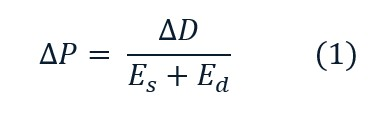
where Es and Ed denote the elasticities of supply and demand, respectively. Population growth increases housing demand (> 0); the resulting price change depends inversely on supply elasticity (Hilber and Vermeulen, 2016).
This logic underpins much of the empirical literature that interprets positive correlations between immigration and housing costs as evidence of demand-driven pressure in supply-constrained markets or in markets where supply constraints only ease slowly (Malpezzi and Maclennan, 2001).
However, this simple demand-shock prediction may be mediated by additional mechanisms through which immigration affects an area, making the net effect of immigration on housing costs context-dependent. We briefly discuss some of these mechanisms.
2.2 Additional mechanisms
Native out-migration and spatial sorting
Immigrant inflows into an area may induce some native residents to move elsewhere. This process can offset local population growth and dampen or even reverse price effects in small geographic areas, even if aggregate housing demand across areas increases and the supply of houses is inelastic in the short term (Sá, 2015). Moreover, if those who move out have relatively higher income or wealth levels, such out-migration may result in lower local housing demand and prices.[footnote 2]
Income and composition changes
In practice, immigrants often differ from natives not only in income but also in other determinants of housing demand, such as household size and tenure preferences, with immigrants more likely to rent rather than to buy (Saiz and Wachter, 2011). Moreover, immigrants themselves can be a heterogeneous group and may differ in income, household size and tenure preferences. Higher-income immigrants may raise housing demand more strongly because they demand more housing space and have greater purchasing power. Different groups may also affect different segments of the housing market: lower-income migrants may increase demand for lower-tier rental housing, while higher-income immigrants may bid up prices in areas with good living conditions, such as low crime rates or desirable amenities (Beracha et al., 2025).
Amenities and preferences
Immigration may also affect local amenities – such as schools, public services, retail options – and the perceived desirability of an area (Accetturo et al., 2014). The direction of this effect can depend on social attitudes towards immigrants. In areas where diversity is valued, immigration may increase attractiveness and raise housing demand. By contrast, hostility toward migrants or preferences for segregation may reduce local desirability and weaken housing demand (Larkin et al., 2019).
Labour supply responses
Immigration can stimulate housing construction through labour supply effects. An increased supply of construction and crafts workers can reduce building costs and facilitate new housing supply (Monras, 2020). This expansion of supply may attenuate price pressures.
3. Empirical challenges: causal estimates and identification strategies
Estimating the impact of immigration on housing costs is not straightforward. A central challenge is that immigrants are not randomly allocated across areas. Instead, they choose destinations that offer the best prospects available to them (Terry et al., 2026). Simple correlations between immigration and housing costs may therefore produce misleading conclusions.
3.1 Endogeneity concerns: why simple correlations are misleading
First, immigration and housing costs may be correlated due to common underlying factors. For example, areas with desirable amenities, main entry ports, universities or existing immigrant communities and networks may both attract immigrants and have higher housing costs. In such cases, the correlation reflects these underlying features rather than the causal effect of immigration.
Second, the direction of causality between immigration and housing costs is ambiguous. Because immigrants self-select into locations, they may choose areas with particular housing market conditions. Some immigrants may prefer more affordable locations, which would bias estimated effects downward. Others may move to economically promising areas where house prices are rising, perhaps in anticipation of capital gains, which would bias estimates upward. Since these motives vary, the direction of the bias is uncertain.
The key empirical challenge is therefore to construct a credible counterfactual: how would housing costs have evolved in the absence of immigration inflows? Since the early 2000s, improved data infrastructure and advances in causal inference methods have spurred a wave of new immigration research. Much of this work leverages spatial variation in immigrant inflows and relies on shift-share instruments (Bartik, 1991; Card, 2001) to address endogeneity concerns, although such approaches are not without limitations (Jaeger et al., 2018).
3.2 Strategies to identify causal effects
Historical settlement (shift-share) instruments. The most widely used approach in the empirical literature is the historical-settlement instrument (Bartik, 1991; Card, 2001), which we refer to as the canonical shift-share approach. This method relies on the tendency of new migrants to settle in areas where earlier migrants from the same origin already reside (Bartel, 1989).
Researchers predict immigrant inflows into an area using (i) the historical distribution of migrants by country of origin, and (ii) national-level changes in inflows (Card, 2001).
In stylised form, predicted inflows to area i at time t are constructed as:
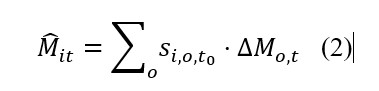
where Si, o, to is the share of migrants from the country of origin living in area in a base period, capturing existing migrant networks. Mo,t is the national inflow from origin at time. The key feature of this approach is that it uses variation driven by origin-specific shocks, such as changes in global conditions or UK immigration policy affecting migrants from specific origin countries, rather than local housing market conditions. This helps isolate immigration-driven variation from other determinants of housing costs.
Empirically, the canonical shift-share approach is implemented using panel data and instrumental variable two-stage least squares (IV-2SLS) estimation. In the first stage, the inflow instrument is used to predict actual immigration inflows, which typically yields strong relationships because immigrant settlement patterns are persistent over time. In the second stage, predicted (instrumented) immigrant inflows are used to estimate the effects on housing costs. These models usually include location and time fixed effects, alongside other controls, to approximate the counterfactual change in housing costs that would have occurred without immigration.
Limitations of the shift-share approach
The canonical shift-share instrument has been shown to correct biases in basic ordinary least squares (OLS) estimates of immigration effects (Aubry et al., 2026). However, more recent methodological work emphasises that shift-share instruments are not automatically exogenous (Adão et al., 2019; Borusyak et al., 2022; Goldsmith-Pinkham et al., 2020; Jaeger et al., 2018), and estimates on the economic effects of immigration may still be biased (Jaeger et al., 2018). We discuss key concerns and proposed refinements in more detail in Section 5.3.
Natural experiments and difference-in-differences
Another strategy exploits quasi-exogenous immigration shocks using difference-in-differences designs, following the leading approach by Card (1990). This approach focuses on events that lead to sudden and largely unexpected inflows of immigrants into specific areas. A well-known example is the Mariel boatlift, a mass migration from Cuba to the United States between April and October 1980. (Saiz, 2003).
More recently, this strategy has been applied to refugee allocation policies, disaster-induced displacement, or sudden immigration policy changes (Alhawarin et al., 2021; Glitz et al., 2023; Rauck and Kvasnicka, 2025). These designs often provide strong internal validity for short-run effects. However, they may capture responses that are specific to particular events and therefore are less easily generalisable. Moreover, because such studies sometimes do not rely on an explicit immigration measure, their estimates are not readily comparable with those obtained from shift-share approaches.[footnote 3]
4. Methodology: literature search and comparative housing market analysis
We proceed in two steps to answer our main research questions. First, to assess how large the effects of immigration on housing costs (house prices and rents) are, and under what conditions these effects arise, we analyse findings from quantitative studies. Second, we develop a framework to identify which housing markets or study contexts are most comparable to the UK.
4.1 Empirical literature search
Our search strategy is based on a concept matrix combining immigration terms (e.g., immigration, migration, emigration, net migration, population flows, population growth) with housing market outcomes (e.g., house prices, rents, rental price growth, house price growth, housing costs, housing supply, housing affordability, property values). We combine these terms using Boolean operators and controlled vocabulary to ensure comprehensive coverage.
We search academic databases (Web of Science, Scopus, EconLit, JSTOR, ScienceDirect) and manually screen leading peer-reviewed journals in economics, economic geography, housing economics, urban economics, regional studies, and real estate research (e.g., Regional Science and Urban Economics, Journal of Urban Economics, Economic Journal, Journal of Regional Science, Housing Studies, Journal of Real Estate Research), as well as established working-paper series (NBER, IZA) and central bank paper series. Our review follows the PRISMA (Preferred Reporting Items for Systematic Reviews and Meta-Analyses) framework (Moher et al., 2009) to ensure transparency, replicability, and comprehensive identification of relevant studies.
For our effect size analysis, we establish clear inclusion criteria. To be eligible, a study must report quantitative estimates from a reduced form equation of:

where P-it denotes a housing price indicator (house price or rent), in area i at time t, M-it measures immigration, typically expressed as immigrant inflows as a share of the local population; and X-it is a vector of control variables. These commonly include local economic conditions (such as average income, unemployment rates or value added), demographic structure, housing supply characteristics (e.g. dwelling density), and area fixed effects to control for time-invariant local characteristics, and time fixed effects to capture common shocks. This specification captures the (conditional) correlation between immigration and housing costs.
Effects are most commonly reported as semi-elasticities – that is, the percentage change in housing costs associated with a one-percentage-point increase in the immigrant share of the local population, which has been referred to as the effect size in the literature (Aubry et al., 2026). Where studies report elasticities or difference-in-differences estimates, we record them and convert them into semi-elasticities whenever the size of the immigration shock is available.[footnote 4]
We restrict our sample to baseline estimates from each study. These are estimates identified by authors as baseline or preferred specifications. If not explicitly labelled as such, we identify them ourselves based on the authors’ discussion and empirical strategy. Importantly, baseline estimates are assumed by the authors to be preferred specifications, typically because they reflect the strongest causal identification available in the study. Our approach, therefore, prioritises credible causal identification and internal validity over breadth of coverage. Accordingly, an additional screening criterion is that studies reflect on or address the endogeneity concerns discussed in Section 3.
Unlike meta-analyses, we pay less attention to studies in which immigration inflows only appear as a control variable in specifications designed to identify other housing price determinants, as such approaches do not constitute efforts at causal identification of immigration effects.[footnote 5]
Instead, we focus on studies employing modern causal identification strategies, including canonical shift-share instruments, difference-in-differences, and alternative instrumental-variable designs (e.g., instruments based on immigration policies). Additional screening criteria include publication quality (peer-reviewed articles and high-quality working papers) and transparency of empirical reporting, and the availability of key statistics required for comparability (e.g., standard errors).
Data extraction and harmonisation
For each included study, we extract information on estimation methods and econometric specifications, identification strategy, baseline estimates and corresponding standard errors, control variables, country coverage, time period, geographic level of analysis (e.g., neighbourhood, district, region), sample size, immigration measures and housing outcome measures (house prices, rents).
Where feasible, we harmonise estimates into a common metric: the percentage change in house prices or rents associated with a one-percentage-point increase in the immigrant share of the local population. We refer to this metric as the effect size.
All searches were limited to English-language studies. As of March 2026, our search process identified 94 relevant studies. Following full-text assessment under the criteria above, we retained 31 studies for effect size comparisons. We call this set of studies our core sample and analyse results in Section 5.
We will discuss a wider range of studies when contextualising our results. In addition, we document the mechanisms highlighted by each study, such as native out-migration, as well as contextual and methodological factors relevant for interpretation. These include heterogeneity analysis related to immigrant composition, housing supply responsiveness, and differences across spatial scales. These mechanisms are discussed in more detail in Section 6.
4.2 Comparative analysis of housing markets
To assess how relevant international findings are for the UK, we develop a comparative framework to measure similarities across national housing market settings.
Data collection
We compile housing market and immigration indicators across OECD countries since 1995 from harmonised international sources, including the World Bank, the OECD, and the World Values Survey (WVS). Appendix Table A1 summarises our core variables and data sources.
Housing cost indicators include real house price indices, rent price indices and price-to-income ratios, a common measure of housing affordability. The main immigration indicator is the share of immigrants in the total population. Using population measures, we also calculate the share of the population growth accounted for by migrants.
Variables on housing market structure and institutional indicators include tenure composition (homeownership shares, rental market shares, social housing shares), anti-immigrant sentiment, measured as the share of respondents reporting that they would not like immigrants as neighbours, housing stock per capita, capturing housing supply, and the number of days it takes to obtain planning permissions, a proxy for regulatory constraints.
Empirical strategy
Our objective is to understand which countries’ housing market conditions are most similar to those of the UK. To measure similarity in a multi-dimensional variable space, we follow established approaches in cross-country empirical research (e.g., Shulgin et al., 2017).
Specifically, we construct a housing market similarity index by combining housing market indicators and calculating the Euclidean distance between the UK and each country. For each indicator, we use the most recent data available. Because our variables are measured on different scales, we first standardise them by transforming each variable into a z-score using the cross-country mean and standard deviation.
We then compute the square root of the average squared difference between each country and the UK across the standardised indicators, which yields the Euclidean distance measure, where smaller values indicate greater similarity to the UK. Each variable is given equal weight.
Formally, Z-ij denotes the standardised value of indicator j for country i and the value for the indicator j for the UK. The (Euclidean) distance between country i and the UK is defined as:
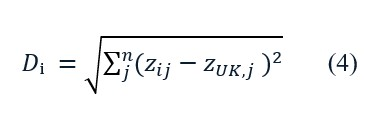
where lower values of the difference D-i indicate greater similarity to the UK.
5. Main results: the effect of immigration on housing costs
This section reviews empirical evidence on the effect of immigration on housing costs. In total, our search strategy identified 94 studies, which we narrowed down to our core sample comprising 33 studies, that allow us to extract comparable effect size estimates—specifically, semi-elasticities—of the impact of immigration on house prices and rents.
We later broaden the discussion to include additional relevant studies that report elasticities or alternative types of estimates that cannot be directly harmonised with the core sample. This helps provide a more complete picture of the empirical evidence.
Our core sample comprises studies with comparable effect sizes and credible identification strategies. This sample includes studies published from 2003 onwards, following the leading contribution by Saiz (2003), and covers 14 countries, with analysis periods extending back to the 1970s for US studies and the 1980s for other countries.
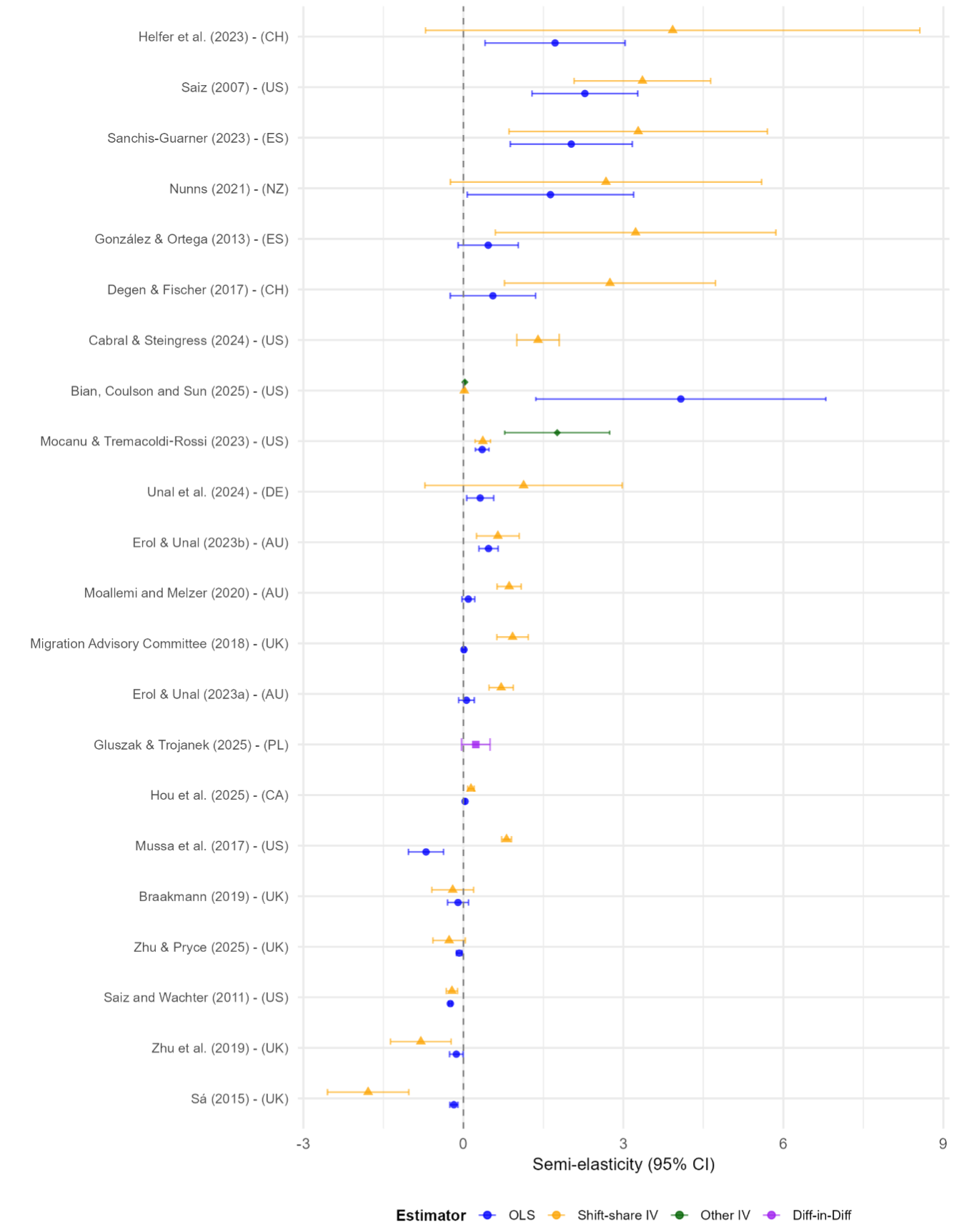
Figures 1 and 2 present comparable effect size estimates: the effect of a one-percentage-point increase in the immigrant share of the population on house prices and rents, respectively. This semi‑elasticity provides the most interpretable common scale across studies. For each study, we report baseline or preferred coefficients and their 95% confidence intervals, distinguishing estimates by method (e.g., OLS, canonical shift-share instruments, alternative instruments, and difference-in-differences designs).
5.1 House price effects
Figure 1 summarises 45 comparable baseline semi-elasticity estimates from 22 studies that use modern causal inference techniques to estimate house price effects. Most estimates fall within a positive range, with the median effect at 0.36% and the mean at 0.8%.
International evidence suggests that while immigration raises house prices, the effect sizes are small. The US provides the broadest evidence base. Saiz (2007) employs the canonical shift-share approach in his analysis of US metropolitan areas and reports that a one percentage point increase in the immigrant share is associated with 3% higher house prices. However, subsequent work at finer spatial scales complicates this picture. Using neighbourhood-level data, Saiz and Wachter (2011) find no significant price effects, consistent with stronger native out-migration. More recent studies also tend to report smaller effects. Bian et al. (2025) report no statistically significant effect under instrumental-variable estimation despite sizeable OLS coefficients; Ottaviano and Peri (2012) estimate effects around 1%, though these are not statistically significant at the 5% level. Cabral and Steingress (2024) estimate effects close to 1%, while Mocanu and Tremacoldi-Rossi (2023) report increases below 1%. Mussa et al. (2017) find a 0.7% decline using OLS, compared with a 0.8% increase under IV estimation.
Evidence from other countries generally lies within a similar range. In Spain, González and Ortega (2013) estimate house-price increases of roughly 3%, a result echoed by Sanchis-Guarner (2023), who reports estimates between 2 and 3%. For New Zealand, Nunns (2021) finds increases of around 2–3%. In Switzerland, Degen and Fischer (2017) report effects close to 3%, while Helfer et al. (2023) find somewhat smaller effects. For Germany, Unal et al. (2024) report statistically insignificant effects. In Australia, Moallemi and Melser (2020) find a 0.9% increase at the postcode level. Similarly, Erol and Unal (2023a, 2023b) report increases below 1%, focusing on both internal (within-country) and international immigration. For Canada, Hou et al. (2025) report statistically significant but economically small effects.
The UK stands out for the direction of its results. Sá (2015) finds that immigration reduces local house prices, consistent with native relocation responses that attenuate or reverse local demand pressures. This pattern is echoed in newer small-area analyses (Zhu et al., 2019; Zhu and Pryce, 2025).
In addition to studies included in Figure 1, a range of studies provide relevant evidence, but their estimates cannot be readily converted into the semi-elasticity (effect size) used in our core sample. Nevertheless, they contribute to the broader evidence base. For Italy, Accetturo et al. (2014) estimate the impact of a 1% increase in the number of immigrants (rather than a 1-percentage-point increase in the migrant share). Their results imply a 0.5% increase in house prices (an elasticity of 0.5). In Denmark, Damm et al. (2025) report positive effects using instrumental variable estimators.[footnote 6]
Additional US studies use experimental or quasi-experimental designs. Beracha et al. (2019), using a lottery-based visa allocation design, find increases in house prices. Chan et al. (2025), employing a regulatory-freedom-based instrument, report no significant effects from increases in unauthorised immigrants on house prices. For Canada, Akbari and Aydede (2012) find that immigration raised house prices slightly, but the overall effect is close to zero, and is driven only by immigrants who had lived in Canada for more than 10 years. Cross-country studies are rare. An exception is Bardu et al. (2017), who analyse 21 countries between 2007 and 2014 and find no statistically significant relationship between immigration and house prices.
Figure 1: The effect of immigration on house prices, effect size overview
The effect of a 1%-point increase in immigrants as a share of the population on house prices, in %
Source: Author's computation.
Evidence from developing and emerging economies is relatively scarce, largely due to data constraints. Some studies rely on short time series and lack efforts to address endogeneity. Nurkhayati and Fitrady (2024) analyse 14 Indonesian cities from 2012 to 2020 and find no statistically significant effect of immigration on house prices. Wong and Soon (2022), studying 14 Malaysian states between 2007 and 2018, report very large estimates of house price increases of around 13%, but provide limited information on standard errors.
Moreover, some studies employ time-series regression methods, with mixed and widely varying results.[footnote 7] For France, d’Albis et al. (2019) use a panel vector autoregression (VAR) applied to regional data from 1990 to 2013. They find no significant effect of immigration on property prices, while higher prices appear to reduce immigration inflows. In Norway, Furlanetto and Robstad (2016), using a VAR model on Norwegian quarterly data for the period 1990–2014, find that international migration has no significant effect on housing prices. For Australia, Gopy-Ramdhany and Seetanah (2022) find positive short-run but no long-run relationships between immigration and house prices across eight states. In contrast, some national time-series studies report much larger estimates. For Iceland, Elíasson (2017) finds that 1% net immigration increases house prices by roughly 4–6%. For New Zealand, Coleman and Landon-Lane (2007), using a structural VAR with data from 1962 to 2006, estimate effects between 8% and 12%, while McDonald (2013) reports effects around 8%.
Meta-analysis and surveys. The most comprehensive meta-analysis of immigration and house prices was conducted by Larkin et al. (2019), who compiled 474 estimates from more than 40 studies across 14 countries. Their findings further highlight that immigration tends to raise housing costs on average. However, these estimates are reported as unit-free partial correlations, which do not indicate by how much housing costs change (unlike the effect sizes discussed above). While the meta-analysis confirms a statistically significant relationship between immigration and house prices, it does not provide a directly interpretable estimate of the economic magnitude of this relationship.[footnote 8]
A complementary survey is provided by Cochrane and Poot (2021), who review evidence from eight countries (Canada, France, Italy, New Zealand, Spain, Switzerland, the United Kingdom and the United States). They conclude that a 1-percentage-point increase in immigration raises house prices by roughly 1-2% and argue that the impact will depend on the demographic and economic composition of immigration flows and housing supply responses, issues we return to in Section 6.
5.2 Rent effects
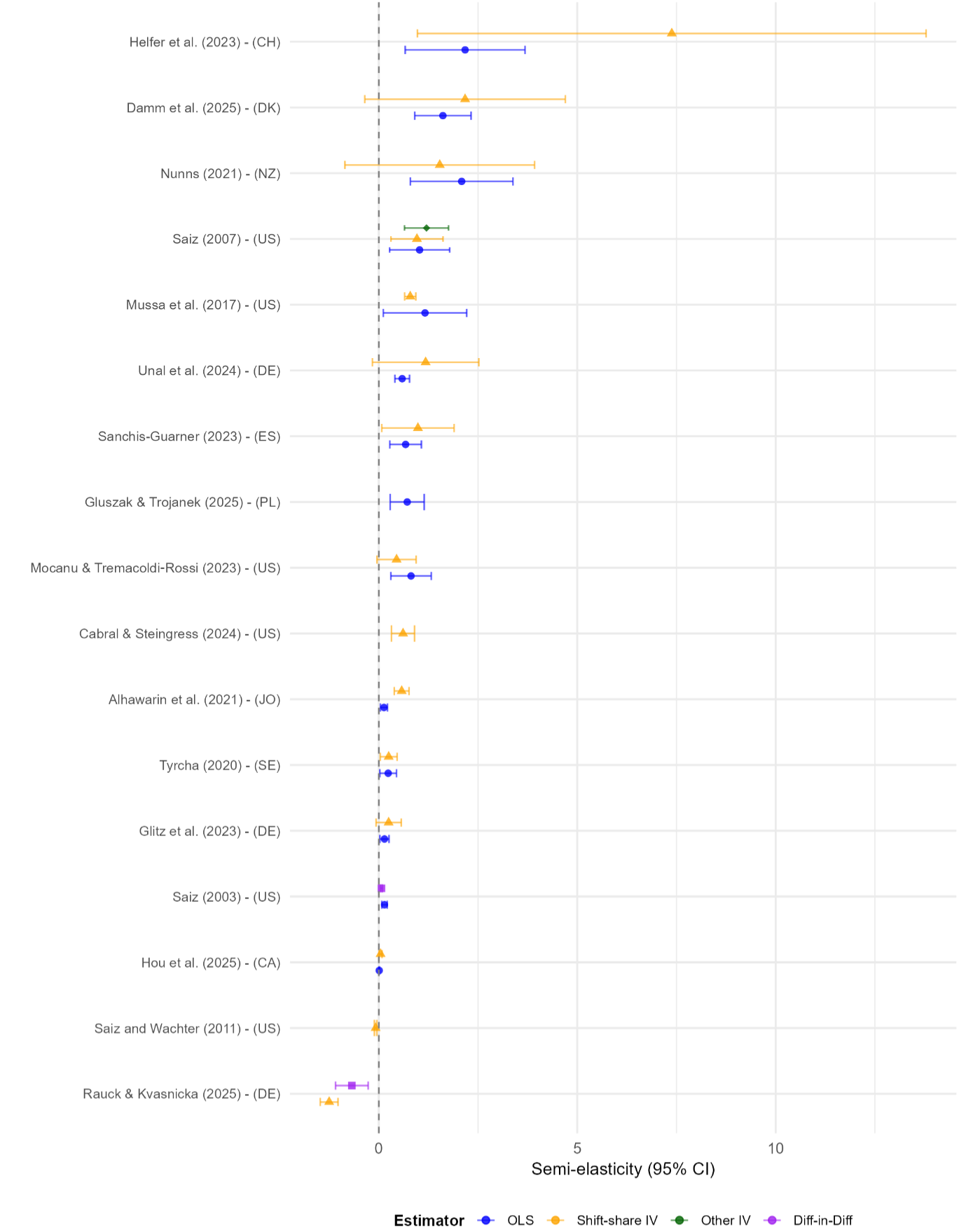
Figure 2 summarises 33 semi-elasticity estimates on the effect of immigration on rents from 17 studies. As with house prices, estimated rent effects are generally positive but modest, with a mean estimate of 0.87% and the median estimate at 0.64%.
In principle, rents may respond more rapidly to immigrant inflows than house prices. Newly arrived immigrants tend to enter the rental sector, vacancy rates in high-demand urban areas are often tight, and rental supply, particularly in regulated or capacity-constrained markets, cannot expand quickly. As a result, immigration inflows may translate more immediately into rent effects. In the UK, immigrants are overrepresented in the private rental sector (Migration Observatory, 2024), partly due to lower access to mortgage credit, shorter credit histories and lower initial wealth.
Across the core sample presented in Figure 2, most estimates are positive and relatively small in magnitude. The majority fall between a 1% decline and a 2% increase in rents following a one-percentage-point increase in the immigrant share of the local population.
In the US, Saiz (2003) finds a 1% increase, exploiting variation from the Mariel boatlift, a sudden immigration shock to Miami in 1980. Saiz (2007), using metropolitan-level data, reports rent increases alongside house price effects, but rent effects are relatively smaller (1%, compared with 3% for house prices). Mussa et al. (2017) also estimate a roughly 1% rent increase. More recent county-level evidence by Cabral and Steingress (2024) also identifies positive rent impacts.
Figure 2: The effect of immigration on rents, effect size overview
The effect of a 1 %-point increase in immigrants as a share of the population on rents, in %
Source: Author's computation.
For Germany, Unal et al. (2024) find positive effects on rents (despite reporting no significant effect on house prices in the same study; only flat prices increase). For Switzerland, Helfer et al. (2023) document positive rent effects, particularly in areas more exposed to post-2002 labour market liberalisation and under alternative instrumental-variable specifications. However, their alternative instrumental-variable specification yields considerably larger estimates than most other studies, making the results somewhat of an outlier. In Canada, Hou et al. (2025) find positive rental effects at the municipal level. Danish municipal evidence by Damm et al. (2025) also reports large positive rent effects. In Sweden, Tyrcha (2020) finds a very small effect of around 0.2%. Importantly, this effect is concentrated in large cities, but insignificant outside of those – suggesting a role for supply constraints. For the UK, no analyses of the effects of immigration on rents appear to exist to date.
Earlier survey evidence is consistent with relatively smaller effects on rents. Cochrane and Poot (2020) conclude that across countries, rent effects tend to be smaller than house price effects, typically in the range of around 0.5-1% for a one-percentage increase in the immigrant share, although estimates vary across contexts.
A recent strand of research uses refugee allocation policies and small spatial data, such as grid cells, to capture highly localised effects. These estimates are not included in Figure 2 because they are not directly comparable with those from our core sample. Using refugee allocation data for Germany, Glitz et al. (2023) find positive effects of refugee inflows on rents, but only in densely populated areas. Rauck and Kvasnicka (2025), applying a similar design, instead find declines in rents. Evidence from time series analyses is limited. For New Zealand, Nguyen et al. (2022) find that rent effects are more positive than house price effects, but effect sizes cannot be ascertained from their study.
5.3 Casual identification
As discussed in Section 3, a central challenge in estimating the effects of immigration on housing costs is that migrants do not choose their locations randomly, and simple regressions of housing costs on immigrant inflows will generally yield biased estimates, with the direction of the bias uncertain.
The results shown in Figures 1 and 2 are consistent with these theoretical concerns. Instrumental-variable (IV) estimates do not systematically shift results in a single direction relative to OLS estimates.[footnote 9] While OLS estimates often lie close to IV estimates within the same study, IV estimates can be either more positive or less positive. The fact that OLS estimates are not consistently larger than IV estimates supports the view that selection bias can affect estimates in both directions.
Recent research has raised some methodological concerns about the canonical shift-share instrument. Jaeger et al. (2018) show that this instrument may fail to identify the true causal effect when there is limited variation in the composition of immigrant inflows by country of origin, in which case the instrument reflects persistent settlement patterns rather than exogenous immigration waves. The instrument may therefore conflate short- and long-run responses to immigration shocks. If the spatial distribution of immigrant inflows remains stable over time, so that the same areas repeatedly attract large inflows, the instrument may be correlated with the ongoing effects of previous immigrant waves. In this sense, the predictive strength of the instrument can also be a major weakness.[footnote 10] Persistent inflows may violate the necessary exclusion restriction for a valid instrument, making it difficult to isolate the short-run impact of immigration.[footnote 11]
The recent literature also proposes strategies to tackle these concerns. One approach focuses on periods with substantial changes in the country-of-origin composition of immigration, which provide variation that can be exploited with a variant of the shift-share approach, allowing to distinguish between short- and long-run effects (Jaeger et al., 2018). In addition, Terry et al. (2026) propose a novel identification strategy to isolate exogenous immigration shocks across US counties by interacting quasi-random variations in the composition of ancestry across counties with the contemporaneous inflow of migrants from different countries. They show that this approach can identify the positive causal impact of immigration on local innovation and wages at the 5-year horizon. However, these designs have not yet been applied in migration-housing cost analyses.
Other approaches rely on quasi-natural experiments, in which exogenous shocks are expected to strengthen causal inference. The drawback is that estimated effects are often not directly comparable and may not translate into policy-relevant parameters with strong external validity. For example, in refugee allocation contexts (e.g., Glitz et al., 2023), administrative placement rules can generate credible exogenous variation, but the resulting estimates may not generalise to labour migration because refugee inflows differ in tenure choice, income, and location assignment.
6. Mechanisms
Immigration can affect housing costs through several distinct channels, summarised in Table 2. We review empirical evidence of these channels and discuss their estimated effects.
Table 2: Summary of channels
| Channel | Expected housing cost effect | Key references |
|---|---|---|
| Population effect (direct demand) | ↑ | Saiz (2007); Larkin et al. (2019) |
| Native outmigration/sorting | ↓ | Sá (2015); Accetturo et al. (2014) |
| Income/wage composition | ↑ or ↓ | Monras (2020), Sá (2015) |
| Amenity/preference effect | ↑ or ↓ | Larkin et al. (2019), Accetturo et al. (2014) |
| Housing supply (construction) | ↓ | González and Ortega (2013), |
| Labour-supply (cost) effect | ↓ | Monras (2020) |
Source: Authors’ synthesis.
6.1 Population effect
The population effect captures the most direct impact of immigration on housing costs: immigration increases the number of households requiring accommodation, raising housing demand. When housing supply is relatively inelastic, this results in higher housing costs.
One way to benchmark the effects of immigration is to place them within the broader literature on population growth and housing costs. Population growth equals births minus deaths plus net migration. Several studies suggest that overall population dynamics can have sizeable effects on housing markets (Day, 2018), sometimes larger than effect sizes typically estimated for immigration alone.[footnote 12]
6.2 Mobility responses of natives
However, whether immigration results in higher local population levels depends on the mobility response of natives. Native out-migration can attenuate population demand pressure generated by immigration. In such cases, net local population growth is smaller than gross immigrant inflows. For example, in the UK, Sá (2015) finds that a 1-percentage-point increase in the immigrant share of the local population is associated with a 0.05 percentage-point increase in out-migration from the area (and a 1.7% decline in house prices).
In spatial analyses linking housing costs to immigration inflows, results are therefore sensitive to the mobility responses of native residents. Importantly, native out-migration from immigrant destinations does not necessarily reduce aggregate national housing demand; rather, it redistributes population across space. Immigration may therefore reduce prices locally and raise housing demand elsewhere. This distinction is particularly relevant because most empirical studies estimate effects using subnational variation. However, we know much less about the overall effects or about what happens in nearby areas or in the places where local residents move to. Recovering the aggregate national equilibrium effect remains challenging and is often overlooked in the literature.
Results in spatial analyses may also depend on the spatial scale of analysis. Studies using larger geographic units—such as regions, metropolitan areas, or states—tend to find more positive price effects, reflecting aggregate demand pressures. At finer spatial scales, such as neighbourhoods or districts, estimated effects are often smaller or negative. For example, in the US, Saiz (2007) finds positive effects across 384 metropolitan areas, but Saiz and Wachter (2011) find negative effects across more than 30,000 neighbourhoods. Similarly, Accetturo et al. (2014) also find more negative effects when analysing smaller spatial units. Strong out-migration responses may also raise housing costs in neighbouring areas. Mussa et al. (2017) find that immigration inflows in the United States between 2002 and 2012 increased rents and house prices in surrounding areas.
Some studies also examine internal (within-country) migration rather than international. This is informative because it isolates pure population reallocation effects. For Australia, Erol and Unal (2023) find that an internal migration inflow of 1% of the local population is associated with a 0.5-0.7% increase in house prices, with weaker effects in non-metropolitan areas. This reinforces the broader conclusion that immigration-induced price effects are strongest in supply-constrained urban markets.
While native out-migration is one possible response, migration flows can also induce inward native mobility. Sanchis-Guarner (2023) finds that natives move toward regions experiencing immigration inflows. After accounting for native mobility responses, the estimated net effect of immigration is smaller—around 0.8% for rents and 3% for house prices, roughly two-thirds of the baseline estimates.
Yet, while out-migration responses may reflect preferences or sorting behaviour, but not necessarily reflect hostility toward immigrants. Andersson et al. (2021) show that ethnic distance is not the dominant mechanism driving native mobility response, but refugee inflows appear to increase socio-economic segregation across neighbourhoods through clustering in specific areas. Considering these findings, we note that some questions regarding the specific outmigration mechanisms are unresolved in the literature.
6.3 Income and composition effect
Even if the total population remains constant, immigration may affect housing demand if immigrants differ from the existing population in income, household characteristics, or housing consumption patterns.
Empirically, immigrants often differ from natives in earnings, age structure, household size, and tenure preferences. Lower-income migrants tend to increase demand in lower-cost rental segments, whereas higher-income or highly skilled migrants can raise demand for owner-occupied housing in high-amenity areas. Wealthy migrants in particular can exert strong upward pressure on property prices (Pavlov and Somerville, 2020). In addition, immigration can affect housing demand indirectly through labour-market effects; Monras (2020) shows that immigration can shift local wage distributions, implying indirect effects on housing demand via income channels.
On average, immigrants consume less housing per capita and are less likely to own homes, partly due to credit constraints and language barriers (Finney, 2024; Luik et al., 2025). Moreover, if migrants intend to stay in the destination country temporarily, they would also be more likely to rent. These factors suggest that immigration results in stronger short-run pressure in rental markets than in owner-occupied markets, yet this prediction is not confirmed in the effect-size analysis in Section 5.
The skill composition of immigration also matters. Beracha et al. (2019) find that high-skill migration raises house prices but not rents in the U.S., consistent with the hypothesis that high-skill immigrants are less likely to affect rental demand because they can afford to purchase homes rather than rely on rental accommodation. In the UK, Zhu et al. (2019) find more negative price effects in areas exposed to lower-skilled and lower-income immigrants, consistent with their lower purchasing power. Sa (2015) also shows that migrants with different skill levels tend to cluster in different locations.
Country-of-origin differences may reflect variation in income and purchasing power. For example, Adams and Blickle (2018) find in Switzerland that a one-percentage-point increase in immigration from Western Europe or other OECD countries increases house prices by about 1.15%, whereas immigration from the rest of the world increases prices by only 0.37%.
Policy-driven migration programmes can also reveal composition effects. Moallemi and Melser (2020) exploit the sudden suspension of an investor-immigration programme in Canada and use a difference-in-differences design comparing neighbourhoods favoured by wealthy migrants with other areas. They find that the suspension reduced house prices by 1.7–2.6% in affected market segments.
Language proximity may also play a role. Immigrants from non-common-language countries may place a higher value on local amenities and established communities, making them less responsive to price differences (Saiz, 2007).[footnote 13] Fischer (2012) finds that in Switzerland, a 1% immigration inflow from non-common-language countries raises single-family house prices by about 5%, whereas immigration from countries sharing a common language has no statistically significant effect.
6.4 Preferences and amenities
Immigration may also influence housing costs through its effects on local amenities and perceived neighbourhood desirability. In spatial equilibrium models (Roback, 1982), housing costs adjust to equalise real utility across locations. If immigration affects local amenities, housing costs will adjust accordingly.
This mechanism depends on social attitudes toward migrants or racial preferences. Where diversity is valued, inflows can enhance amenities and stimulate regeneration (Ottaviano and Peri, 2012). In Italian cities, immigration raised prices at the city level but reduced prices in neighbourhoods experiencing high inflows, which can be interpreted as evidence of localised disamenity or sorting effects (Accetturo et al., 2014). Where the existing population is less welcoming to migrants, house prices may fall because hostility toward migrants makes such areas less attractive, reducing housing demand (Larkin et al., 2019). Survey evidence suggests that such amenity effects may be relatively limited in the UK. Data from the World Values Survey indicate that only about 5% of UK respondents in 2022 report that they would not want immigrants as neighbours (see also Section 7.1), one of the lowest shares in high-income countries. However, country-level attitude indicators may mask large regional differences (Cohen and Pardos-Prado, 2025).
6.5 Construction and land-use response
A key determinant of the housing price impact of immigration is the elasticity of housing supply. As discussed in Section 2.1, immigration-induced demand shocks will translate into larger price increases when supply is constrained.
In the short run, housing supply is largely fixed. Unal et al. (2024) show that immigration therefore raises house prices and rents in the short term. Over longer horizons, however, housing supply can expand. If supply responds sufficiently and is not constrained by regulation, price and rent pressures should attenuate over time.
Supply constraints are closely linked to density and land scarcity. Helfer et al. (2023) show that even after housing adjusts, immigration can sustain higher rents where land is scarce or subject to tight land-use regulation. Similarly, Glaeser et al. (2008) demonstrate that demand shocks produce larger and more persistent price increases in areas with inelastic housing supply. Where planning systems are restrictive, as in the UK (Hilber and Vermeulen 2016), new construction lags demand; any demand shocks may raise prices. For the UK, the impact of immigrants on house prices is larger in local authorities with a higher refusal rate on major developments (Migration Advisory Committee, 2018). For Australia, Erol and Unal (2023) find stronger migration-induced price effects in metropolitan Sydney and Melbourne than in non-metropolitan areas. Similarly, Glitz et al. (2023) show that refugee inflows in Germany do not affect rents on average but do raise rents in denser local areas.
Immigration can also stimulate housebuilding. González and Ortega (2013) show that from 1998 to 2008, immigrant inflows accounted for a substantial share of Spain’s housing-construction boom, although house prices still increased during that period.
Overall, housing supply responsiveness is a key moderator of immigration’s impact on housing costs. Where supply is constrained, immigration-induced demand shocks are more likely to translate into higher prices and rents.
6.6 Labour-supply mechanism
Immigration may also affect housing costs through the construction labour market. By expanding the supply of construction workers, migrant inflows can reduce building costs and facilitate housing supply expansion.
Monras (2020) shows that in the US, inflows of low-skilled immigrants into construction mitigated house price increases by lowering marginal construction costs. This mechanism works in the opposite direction to the pure demand effect and can dampen price pressures where construction labour is an important bottleneck.
Whether this channel operates in the UK depends on immigrants’ occupational composition, particularly their presence in construction. According to the Construction Industry Training Board (CITB, 2023), migrants account for around 14% of employment in construction, a slight underrepresentation compared with their 19% share of total UK employment (Fernández-Reino and Brindle, 2025). However, there is substantial regional variation. Migrants make up around 46% of construction employment in London (compared with 42% of total employment), followed by 16% in the East of England and 12% in the South East. This suggests that immigration trends may be an important determinant of housing supply in the capital compared to other regions.
7. Comparative housing-market context and relevance for the UK
A central finding from Sections 5 and 6 is that the migration-housing cost relationship is fundamentally context-dependent. The next step of our analysis is therefore to assess how relevant the international evidence is for the UK. To do so, we develop a comparative framework that identifies housing markets and institutional settings most similar to those in the UK.
7.1 Country comparisons
We compile country-level data across a set of high-income OECD countries on institutional and market characteristics from harmonised international sources, introduced in Section 4.2.
Housing costs.
Figure 3 reports three indicators of housing costs: real house prices, rents, and the house-price-to-income ratio. In real terms, UK house prices have risen by roughly 150% over the past three decades, while rents have increased by around 120%. Within our country sample, this places the UK in the upper middle part of the distribution. However, the UK stands out in terms of the increase in the house-price-to-income ratio, which has grown by approximately 85% over the same period, second only to Canada. This indicates that income growth has persistently lagged housing cost growth, resulting in a marked deterioration in affordability (Meen and Whitehead, 2020).
Migration patterns.
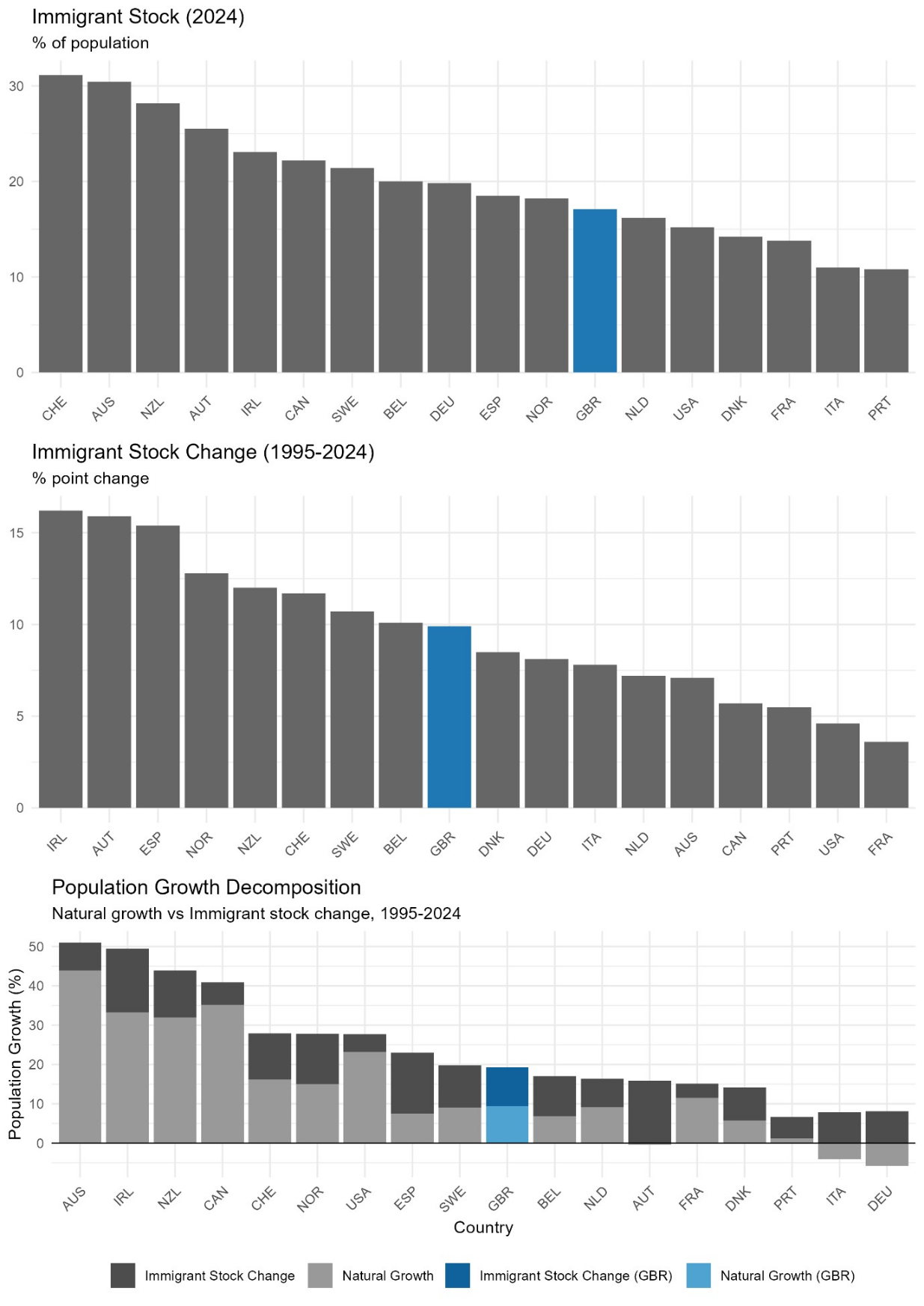
Figure 4 shows that the foreign-born share of the total population in the UK increased by almost 10 percentage points over the last three decades (from 7% to 17%). This places the UK towards the middle in international comparison. Over the same period, total population growth in the UK has been approximately 20%, again close to the cross-country average in our sample. Immigration, therefore, accounts for roughly half of the UK’s population growth over the last three decades.
This suggests that while immigration has played a central role in shaping demographic dynamics in the UK, neither the scale of immigration nor overall population growth is exceptional in international comparison.
Housing market context.
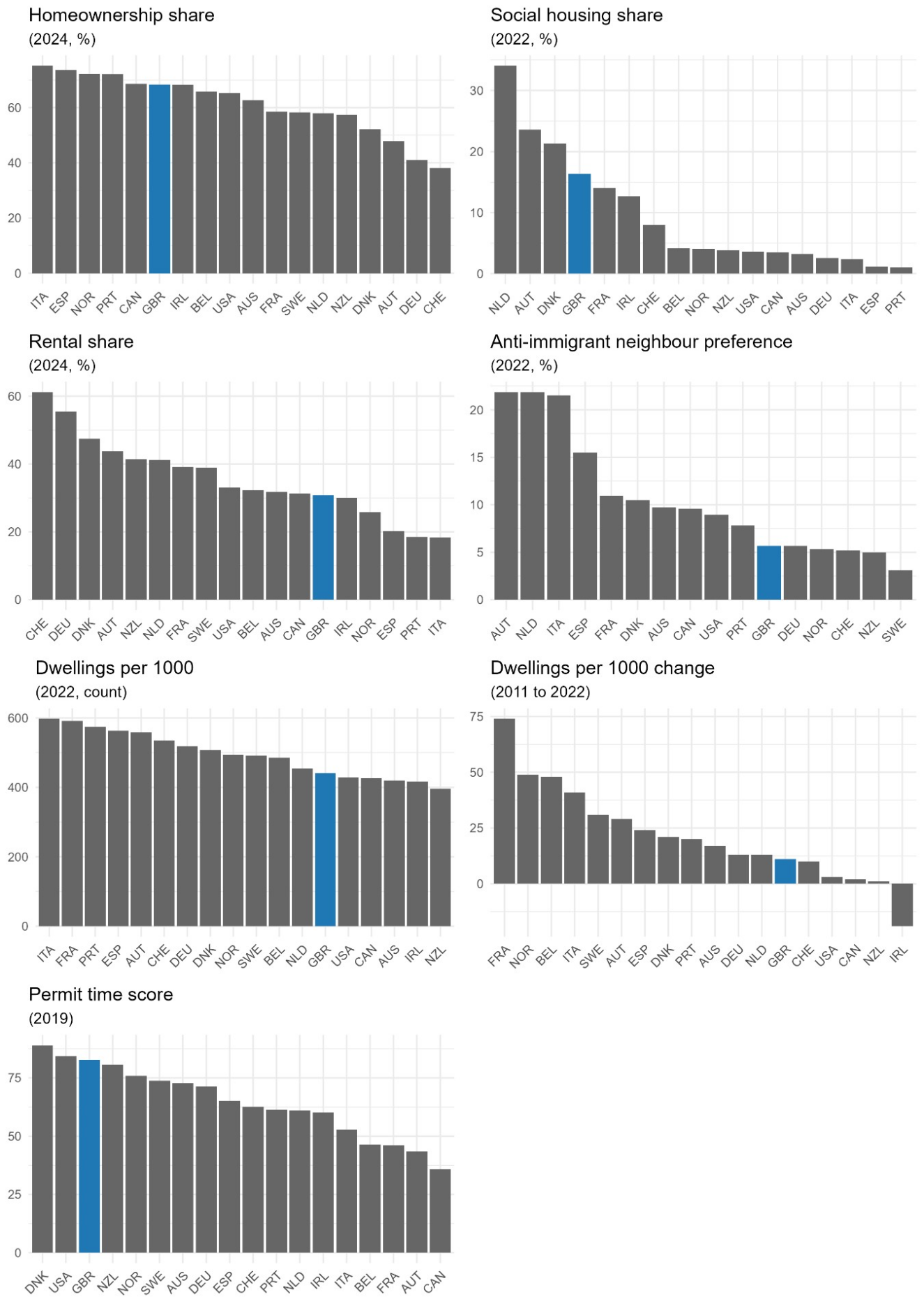
Next, we turn to analyse key institutional housing market indicators (Figure 5). In terms of housing tenure, the UK exhibits a homeownership rate of approximately 65% in 2024[footnote 14], placing it in the middle of the distribution, below ownership-dominated countries such as Spain and Portugal, above rental-oriented systems such as Germany and Switzerland, and similar to other Anglo-Saxon countries. The UK private rental sector accounts for just under 30% of households. While relatively low in the cross-sectional comparison, this share has risen markedly over the past two decades, indicating a structural shift towards rental tenure. The UK’s social housing share, at around 15%, is comparatively high among high-income countries. This reflects the legacy of post-war public housing provision and places the UK closer to Nordic housing systems than to minimal-welfare housing regimes.
A potential mediating factor in the migration–housing relationship is public attitudes toward immigrants. As noted by Larkin et al. (2019), lower levels of anti-immigrant sentiment could imply weaker native out-migration responses to immigration. Using data from the World Values Survey, which asks respondents whether they would prefer not to have immigrants as neighbours, the UK records a relatively low share of explicit anti-immigrant sentiment – around 5% in 2022. This places the UK at the bottom of our sample in terms of expressed attitudes.[footnote 15]
We next examine the stock of available dwellings as an indicator of housing supply capacity. With roughly 430 dwellings per 1,000 inhabitants in 2022, the UK sits in the lower-middle range of our sample. More importantly, changes in dwelling density between 2011 and 2021 suggest that housing supply has broadly tracked demographic expansion in the UK.[footnote 16]
Comparable cross-country measures of housing supply elasticity are unfortunately not available. As a proxy for planning conditions, we use the World Bank Doing Business indicator on construction permits, which captures administrative procedures and approval times. The UK’s construction permit score suggests a relatively fast planning permission process in the international comparison. Importantly, this indicator reflects administrative planning conditions rather than physical conditions, such as land scarcity or urban density.
Figure 3: House prices, rents and house-price-to-income ratios over time

Source: Author's computation.
Figure 4: Immigrants and population growth
Source: Author's computation.
Figure 5: Housing market indicators
Source: Author’s computation. Data sources are shown in Appendix Table A1.
7.2 Housing market similarity
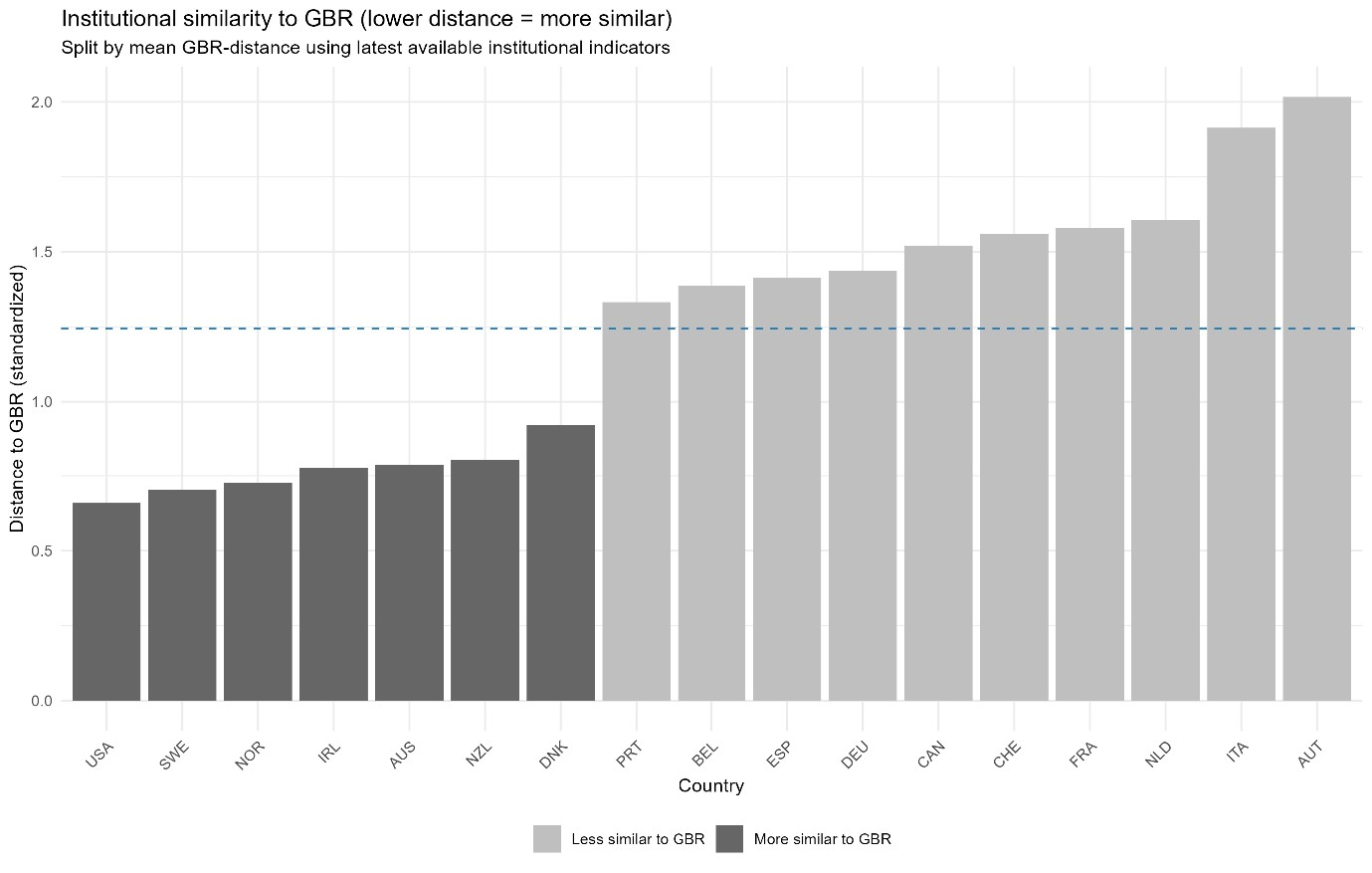
To formalise our country comparison, we construct an institutional similarity index using the latest available country-level values for the housing market indicators introduced above: tenure profiles, recent changes in dwelling stock, anti-immigration sentiment and permit time scores. To combine those indicators into a unified index, each variable is standardised (Z-scores across countries), and Euclidean distance to the UK is computed using overlapping non-missing observations (details in Section 4.2). The resulting distances are presented in Figure 6 and show that Anglo-Saxon and Northern European systems emerge as closest to the UK, with a substantive distance to Southern and some Continental European regimes. We define similar countries as those with below-average distance to the UK.
Figure 6: Institutional similarity to the UK housing market.
Source: Author's computation.
7.3 Linking similarity to estimated housing cost effects
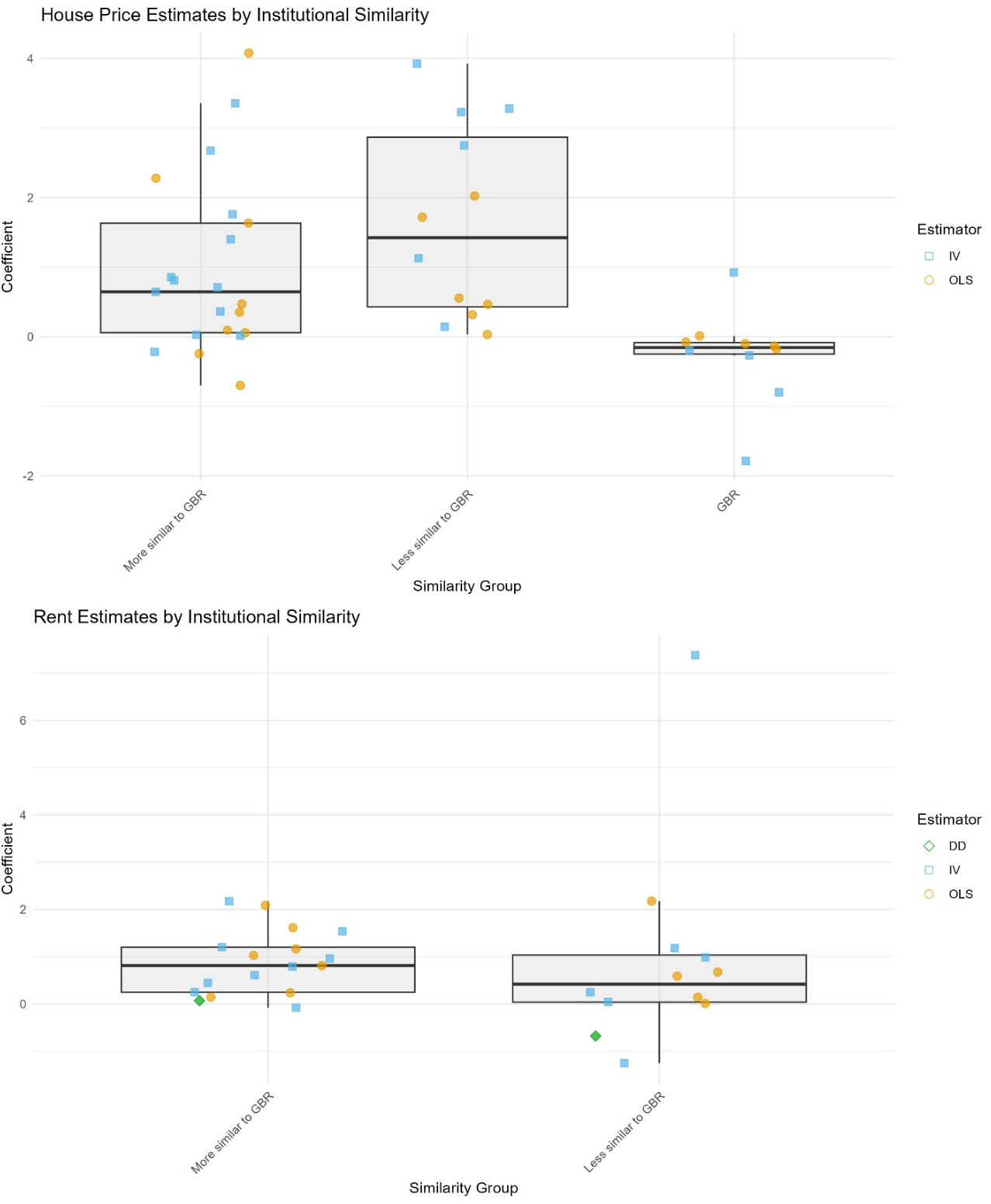
We then categorise the estimates from Section 5 according to these similarity groups (Figure 7). UK-based estimates of the impact of migration on house prices tend to be negative. When we look at countries most similar to the UK in terms of housing market indicators, the estimated effects show a modest increase, with a median house-price effect of 0.65% (mean: 0.97%). By contrast, estimates in less comparable countries are slightly more positive, with a median estimate at 1.42% (mean: 1.63%). This pattern suggests that less positive house price effects are plausible in the UK.
For rents, effect sizes are similar across both country groups. In UK-like countries, the median estimate is 0.81% (mean: 0.89%), whereas in less similar countries, the median estimate is lower at 0.42%, although the mean is comparable at 0.96%.
Figure 7: House price estimates by institutional similarity
Source: Author's computation.
An important qualification is that substantial heterogeneity likely exists within the UK. As the evidence on local supply elasticity suggests, immigration effects are expected to be more positive in inelastic, high-demand areas than in lower-demand regions.
A back‑of‑the‑envelope calculation.
Taking the reported semi-elasticities in Figure 7 at face value, what do they imply for the UK? Among the group of countries most institutionally similar to the UK, the median semi-elasticity across estimation methods at 0.65%. The economic interpretation of this is that a one-percentage-point increase in the migrant share of the population is associated with roughly a 0.65% increase in house prices.
We have shown that over the past three decades, the UK’s foreign-born share has risen by around 10 percentage points. Applying a semi-elasticity of 0.65 mechanically would therefore imply house prices approximately 6.5% higher than they would otherwise have been, holding all else equal. A semi-elasticity of 1, the mean house price effect in countries similar to the UK, would imply house prices approximately 10% higher.
Considering that real UK house prices have increased by roughly 150% (with rents rising by somewhat less), our calculations suggest that migration would account for approximately 4-6% of the total house price increase since the mid-1990s. Under this highly simplified back-of-the-envelope calculation, immigration appears to explain only a modest share of the long-run increase in UK house prices relative to other structural drivers.
6. Conclusion
Several findings emerge from our systematic review of the international evidence. First, immigration tends to raise house prices and rents, but only modestly: most credible estimates suggest that a one-percentage-point increase in the immigrant share of the population increases house prices by between 0 and 3%. Rent effects are typically slightly smaller.
Second, estimated effects vary across contexts and methodologies. Housing supply responsiveness plays a key role: in dense areas or where planning constraints limit construction, (immigration-driven) demand shocks are more likely to raise prices. Immigrant composition also matters, with higher-income immigrants exerting stronger demand pressures than lower-income immigrants. Methodologically, studies using credible causal identification strategies tend to find positive but relatively small effects, whereas less rigorous approaches produce more dispersed estimates. Studies using smaller geographic units (such as neighbourhoods or districts) often find weaker or even negative effects, partly reflecting out-migration of native residents and the spatial redistribution of housing demand.
We show that countries institutionally similar to the UK generally report positive but small effect sizes, with median estimates below 1%. The UK experience of immigration and real house price trends is similar to that in other high-income countries. The increase in the immigrant shares since the mid-1990s (around 10 percentage points) and overall population growth are close to OECD averages. Likewise, long-run real house prices and rent increases place the UK in the middle of the high-income distribution countries. Where the UK stands out more clearly is in the decline of housing affordability.
Over the past three decades, the UK’s immigrant share has risen by around 10 percentage points. Applying the median and mean effect sizes from institutionally comparable countries suggests that the rise in immigration would be associated with approximately 6-10% house price growth. By comparison, real UK house prices have increased by roughly 150% over the same period, while rents have increased by somewhat less. On this simplified back-of-the-envelope calculation, immigration would therefore account for around 4-6% of the total increase in house prices since the mid-1990s, appearing to explain only a modest share of the long-run rise in UK house prices compared with other structural drivers.
Overall, our review echoes the conclusion of Cochrane and Poot (2021) that immigration has been only a relatively minor contributor to sharply rising house prices across high-income countries in recent decades. Recent research highlights several structural drivers of rising housing costs and deteriorating affordability in the UK beyond migration, including credit conditions, macroeconomic cycles, housing-market liberalisation, policy failures in planning and social housing provision and the financialisation of housing (Blakeley, 2020; Meen and Whitehead, 2020; Pagani et al., 2025; Ryan-Collins, 2017; Stockhammer et al., 2025). An emerging literature also examines foreign ownership, particularly in the UK context. In high-demand urban areas, purchases by non-resident foreign buyers may exert additional pressure on prices (Badarinza and Ramadorai, 2025, 2018; Sá, 2025), raising separate but related questions about the interaction between international capital flows and housing costs, an increasing concern also on other countries (Cochrane and Poot, 2021), with policies aimed at restricting foreign housing investment (Ahir, 2024).
References
Accetturo, A., Manaresi, F., Mocetti, S., Olivieri, E., 2014. Don’t stand so close to me: The urban impact of immigration. Regional Science and Urban Economics 45, 45–56. https://doi.org/10.1016/j.regsciurbeco.2014.01.001
Adams, Z., Blickle, K., 2018. Immigration and the Displacement of Incumbent Households. Working Papers on Finance.
Adão, R., Kolesár, M., Morales, E., 2019. Shift-Share Designs: Theory and Inference. The Quarterly Journal of Economics 134, 1949–2010. https://doi.org/10.1093/qje/qjz025
Ahir, H., 2024. Are Housing Markets Broken? Finance & Development 61.
Akbari, A.H., Aydede, Y., 2012. Effects of immigration on house prices in Canada. Applied Economics 44, 1645–1658. https://doi.org/10.1080/00036846.2010.548788
Alhawarin, I., Assaad, R., Elsayed, A., 2021. Migration shocks and housing: Short-run impact of the Syrian refugee crisis in Jordan. Journal of Housing Economics 53, 101761. https://doi.org/10.1016/j.jhe.2021.101761
Andersson, H., Berg, H., Dahlberg, M., 2021. Migrating natives and foreign immigration: Is there a preference for ethnic residential homogeneity? Journal of Urban Economics 121, 103296. https://doi.org/10.1016/j.jue.2020.103296
Aubry, A., Héricourt, J., Marchal, L., Nedoncelle, C., 2026. Does immigration affect native wages? A meta-analysis. Labour Economics 98, 102815. https://doi.org/10.1016/j.labeco.2025.102815
Badarinza, C., Ramadorai, T., 2025. International Dimensions of Housing Markets. Journal of Economic Perspectives 39, 87–106. https://doi.org/10.1257/jep.20241429
Badarinza, C., Ramadorai, T., 2018. Home away from home? Foreign demand and London house prices. Journal of Financial Economics 130, 532–555. https://doi.org/10.1016/j.jfineco.2018.07.010
Bartel, A.P., 1989. Where Do the New U.S. Immigrants Live? Journal of Labor Economics 7, 371–391. https://doi.org/10.1086/298213
Bartik, T.J., 1991. Who Benefits from State and Local Economic Development Policies? W.E. Upjohn Institute. https://doi.org/10.17848/9780585223940
Beracha, E., Kim, E., Wintoki, M.B., Xi, Y., 2025. Highly Skilled Immigrants and Local Housing Prices: Evidence from the H-1B Visa Lottery. Journal of Real Estate Research 1–26. https://doi.org/10.1080/08965803.2025.2536358
Bian, X., Coulson, N.E., Sun, X., 2025. Warmth of the welcome: Immigration and local housing price dynamics. Real Estate Economics 53, 648–675. https://doi.org/10.1111/1540-6229.70000
Blakeley, G., 2020. Financialization, real estate and COVID-19 in the UK. Community Dev J bsaa056. https://doi.org/10.1093/cdj/bsaa056
Borusyak, K., Hull, P., Jaravel, X., 2022. Quasi-Experimental Shift-Share Research Designs. The Review of Economic Studies 89, 181–213. https://doi.org/10.1093/restud/rdab030
Cabral, J., Steingress, W., 2024. Immigration and US Shelter Prices: The Role of Geographical and Immigrant Heterogeneity. https://doi.org/10.34989/SWP-2024-40
Card, D., 2001. Immigrant Inflows, Native Outflows, and the Local Labor Market Impacts of Higher Immigration. Journal of Labor Economics 19. https://doi.org/10.1086/209979
Chen, S.S.-H., Huang, X., Li, W., 2025. Beyond the hype: Unauthorized immigrants and the myth of rising house prices. Finance Research Letters 75, 106885. https://doi.org/10.1016/j.frl.2025.106885
CITB, 2023. Migration and Construction: The Construction Workforce and the Role of Migration. London.
Cochrane, W., Poot, J., 2021. Effects of Immigration on Local Housing Markets, in: Kourtit, K., Newbold, B., Nijkamp, P., Partridge, M. (Eds.), The Economic Geography of Cross-Border Migration, Footprints of Regional Science. Springer International Publishing, Cham, pp. 269–292. https://doi.org/10.1007/978-3-030-48291-6_12
Cohen, D., Pardos-Prado, S., 2025. Regional Labor Markets, Residential Mobility, and Anti-Immigration Sentiment. British Journal of Political Science 55, e157. https://doi.org/10.1017/S0007123425101038
Coleman, A., Landon-Lane, J., 2007. Housing Markets and Migration in New Zealand, 1962-2006. Reserve Bank of New Zealand Discussion Paper Series.
d’Albis, H., Boubtane, E., Coulibaly, D., 2019. International Migration and Regional Housing Markets: Evidence from France. International Regional Science Review 42, 147–180. https://doi.org/10.1177/0160017617749283
Damm, A.P., Hassani, A., Kumar, A., Parra-Alvarez, J.C., 2025. Medium-Run Impacts of Immigration on the Housing Market: Evidence from a Quasi-Experimental Shift-Share Instrument. RF Berlin Discussion Paper Series.
Day, C., 2018. Population and house prices in the United Kingdom. Scottish J Political Eco 65, 127–141. https://doi.org/10.1111/sjpe.12166
Degen, K., Fischer, A.M., 2017. Immigration and Swiss House Prices. Swiss J Economics Statistics 153, 15–36. https://doi.org/10.1007/BF03399433
Elíasson, L., 2017. Icelandic boom and bust: immigration and the housing market. Housing Studies 32, 35–59. https://doi.org/10.1080/02673037.2016.1171826
Erol, I., Unal, U., 2023a. Internal migration and house prices in Australia. Regional Studies 57, 1207–1222. https://doi.org/10.1080/00343404.2022.2106363
Erol, I., Unal, U., 2023b. Local House Price Effects of Internal Migration in Queensland: Australia’s Interstate Migration Capital. Australian Economic Review 56, 308–327. https://doi.org/10.1111/1467-8462.12512
Evershed, N., Nicholas, J., 2024. Migration has been blamed for the housing crisis, but it’s not that simple. The Guardian.
Fernández-Reino, M., Brindle, B., 2025. Migrants in the UK labour market: an overview. Migration Observatory. URL https://migrationobservatory.ox.ac.uk/resources/briefings/migrants-in-the-uk-labour-market-an-overview/ (accessed 4.15.26).
Finney, M.M., 2024. Immigration and the demand for urban housing. Ann Reg Sci 72, 601–616. https://doi.org/10.1007/s00168-023-01213-6
Fischer, A.M., 2012. Immigrant language barriers and house prices. Regional Science and Urban Economics, Special Section on Asian Real Estate Market 42, 389–395. https://doi.org/10.1016/j.regsciurbeco.2011.11.003
Furlanetto, F., Robstad, Ø., 2016. Immigration and the macroeconomy: some new empirical evidence. Norges Bank Working Paper.
Glaeser, E.L., Gyourko, J., Saiz, A., 2008. Housing supply and housing bubbles. Journal of Urban Economics 64, 198–217. https://doi.org/10.1016/j.jue.2008.07.007
Glitz, A., Hörnig, L., Körner, K., 2023. The Geography of Refugee Shocks. RWI, DE.
Goldsmith-Pinkham, P., Sorkin, I., Swift, H., 2020. Bartik Instruments: What, When, Why, and How. American Economic Review 110, 2586–2624. https://doi.org/10.1257/aer.20181047
Gonzalez, L., Ortega, F., 2013. Immigration and Housing Booms: Evidence from Spain. Journal of Regional Science 53, 37–59. https://doi.org/10.1111/jors.12010
Gopy-Ramdhany, N., Seetanah, B., 2022. Does immigration affect residential real estate prices? Evidence from Australia. IJHMA 15, 290–314. https://doi.org/10.1108/IJHMA-10-2020-0128
Helfer, F., Grossmann, V., Osikominu, A., 2023. How does immigration affect housing costs in Switzerland? Swiss J Economics Statistics 159, 5. https://doi.org/10.1186/s41937-023-00110-1
Hilber, C.A.L., Vermeulen, W., 2016. The Impact of Supply Constraints on House Prices in England. Econ J 126, 358–405. https://doi.org/10.1111/ecoj.12213
Hou, F., Koumaglo, É., Zhang, H., 2025. Immigration and housing prices across municipalities in Canada. Refugees and Citizenship Canada (IRCC).
House of Lords, 2008. The economic impact of immigration: Volume II: Evidence (HL Paper No. 82– II). The Stationery Office / House of Lords, London.
Jaeger, D.A., Ruist, J., Stuhler, J., 2018. Shift-Share Instruments and the Impact of Immigration. NBER Working Paper.
Larkin, M.P., Askarov, Z., Doucouliagos, H., Dubelaar, C., Klona, M., Newton, J., Stanley, T.D., Vocino, A., 2019. Do house prices ride the wave of immigration? Journal of Housing Economics 46, 101630. https://doi.org/10.1016/j.jhe.2019.04.002
Luik, M.-A., Steinhardt, M.F., Voss, S., 2025. Language proficiency and homeownership: Evidence from U.S. immigrants. Journal of Housing Economics 102067. https://doi.org/10.1016/j.jhe.2025.102067
Malpezzi, S., Maclennan, D., 2001. The Long-Run Price Elasticity of Supply of New Residential Construction in the United States and the United Kingdom. Journal of Housing Economics 10, 278–306. https://doi.org/10.1006/jhec.2001.0288
Meen, G., Whitehead, C., 2020. Understanding Affordability [WWW Document]. Bristol University Press. URL https://bristoluniversitypress.co.uk/understanding-affordability (accessed 5.7.25).
Migration Advisory Committee, 2018. EEA migration in the UK: Final report. Migration Advisory Committee, London.
Migration Observatory, 2024. Migrants and Housing in the UK. Migration Observatory. URL https://migrationobservatory.ox.ac.uk/resources/briefings/migrants-and-housing-in-the-uk/ (accessed 3.6.26).
Moallemi, M., Melser, D., 2020. The impact of immigration on housing prices in Australia. Papers in Regional Science 99, 773–786. https://doi.org/10.1111/pirs.12497
Mocanu, T., Tremacoldi-Rossi, P., 2023. The impact of international students on housing markets. Canadian Journal of Economics/Revue canadienne d’économique 56, 647–675. https://doi.org/10.1111/caje.12651
Monras, J., 2020. Immigration and Wage Dynamics: Evidence from the Mexican Peso Crisis. Journal of Political Economy 128, 3017–3089. https://doi.org/10.1086/707764
Mussa, A., Nwaogu, U.G., Pozo, S., 2017. Immigration and housing: A spatial econometric analysis. Journal of Housing Economics 35, 13–25. https://doi.org/10.1016/j.jhe.2017.01.002
Nguyen, T.T.H., Balli, H.O., Balli, F., Syed, I.A., 2022. Immigration and regional housing markets: prices, rents, price-to-rent ratios and disequilibrium. Regional Studies 56, 420–432. https://doi.org/10.1080/00343404.2021.1955097
Nunns, P., 2021. The causes and economic consequences of rising regional housing prices in New Zealand. New Zealand Economic Papers 55, 66–104. https://doi.org/10.1080/00779954.2020.1791939
Nurkhayati, F., Fitrady, A., 2024. The impact of immigration on urban housing prices in Indonesia. IJHMA 17, 964–977. https://doi.org/10.1108/IJHMA-08-2022-0114
Ottaviano, G.I.P., Peri, G., 2012. The effects of immigration on US wages and rents: a general equilibrium approach*, in: Nijkamp, P., Poot, J., Sahin, M. (Eds.), Migration Impact Assessment. Edward Elgar Publishing. https://doi.org/10.4337/9780857934581.00010
Pagani, A., Zimmermann, N., Macmillan, A., Zhou, K., Davies, M., 2025. Systemic issues in the English social housing sector: mapping interconnected challenges faced by London-based housing associations. Housing Studies 1–26. https://doi.org/10.1080/02673037.2025.2467093
Pavlov, A., Somerville, T., 2020. Immigration, Capital Flows and Housing Prices. Real Estate Economics 48, 915–949. https://doi.org/10.1111/1540-6229.12267
Rauck, K.K., Kvasnicka, M., 2025. Immigration and Housing Rents: Short-Run Effects of the 2015 Refugee Crisis in Germany. Journal of Regional Science. https://doi.org/10.1111/jors.70002
Roback, J., 1982. Wages, Rents, and the Quality of Life. Journal of Political Economy 90, 1257–1278. https://doi.org/10.1086/261120
Ryan-Collins, J., 2017. Rethinking the Economics of Land and Housing, 1st ed. ed. Zed Books, London.
Sá, F., 2025. The effect of foreign investors on local housing markets: evidence from the UK.
Sá, F., 2015. Immigration and House Prices in the UK. Econ J 125, 1393–1424. https://doi.org/10.1111/ecoj.12158
Saiz, A., 2007. Immigration and housing rents in American cities. Journal of Urban Economics 61, 345–371. https://doi.org/10.1016/j.jue.2006.07.004
Saiz, A., 2003. Room in the Kitchen for the Melting Pot: Immigration and Rental Prices. The Review of Economics and Statistics 85, 502–521.
Sanchis-Guarner, R., 2023. Decomposing the impact of immigration on house prices. Regional Science and Urban Economics 100, 103893. https://doi.org/10.1016/j.regsciurbeco.2023.103893
Shulgin, S., Zinkina, J., Korotayev, A., Andreev, A., 2017. “Neighbors in values”: A new dataset of cultural distances between countries based on individuals’ values, and its application to the study of global trade. Research in International Business and Finance 42, 966–985. https://doi.org/10.1016/j.ribaf.2017.07.031
Stockhammer, E., Tippet, B., Kohler, K., 2025. What goes up, must come down. Speculation-encouraging institutions and house price cycles across countries. Socio-Economic Review.
Sturge, G., 2025. Migration statistics. House of Commons Library.
Terry, S.J., Chaney, T., Burchardi, K.B., Tarquinio, L., Hassan, T.A., 2026. Immigration, Innovation, and Growth. American Economic Review. https://doi.org/10.1257/aer.20211601
The Economist, 2025. The new economics of immigration. The Economist.
Tyrcha, A.A., 2020. The Impact of Migration on a Regulated Rental Market. REGION 7, 35–48. https://doi.org/10.18335/region.v7i1.268
Unal, U., Hayo, B., Erol, I., 2024. The Effect of Immigration on Housing Prices: Evidence from 382 German Districts. J Real Estate Finan Econ. https://doi.org/10.1007/s11146-024-09988-x
Wong, W.C., Soon, J.-J., 2022. Causal effects of immigration inflows on house prices in a traditionally non-destination country. IJHMA 15, 800–817. https://doi.org/10.1108/IJHMA-05-2021-0051
Zhu, J., Pryce, G., 2025. Measuring the impact of immigration on neighbourhood house prices: evidence from England and Wales. J Hous and the Built Environ 40, 441–460. https://doi.org/10.1007/s10901-025-10180-7
Zhu, J., Pryce, G., Brown, S., 2019. Immigration and house prices under various labour market structures in England and Wales. Urban Studies 56, 1801–1817.
Appendix
Appendix Table A1: Housing market and migration indicators
| Variable | Source | |
|---|---|---|
| Housing costs | ||
| Real House Price Index | OECD Analytical House Price Indicators | |
| Price-to-Income Ratio | OECD Analytical House Price Indicators | |
| Rent Price Index | OECD Analytical House Price Indicators | |
| Migration and Demographic Measures | ||
| Immigration Stock (% of pop) | World Bank | |
| Net Migration | World Bank | |
| Annual Population Growth (%) | World Bank | |
| Housing Market Structure and Institutions | ||
| Homeownership Rate (%) | OECD Affordable Housing Database | |
| Private Rental Share (%) | OECD Affordable Housing Database | |
| Social Housing Share (%) | OECD Affordable Housing Database | |
| Dwellings per capita | OECD Affordable Housing Database | |
| Planning Permit Scores | World Bank Doing Business |
-
Corresponding author: t.rabensteiner@gre.ac.uk ↩
-
We discuss empirical evidence on this channel in detail in Section 6.2. Although outmigration is often highlighted as a key mechanism, direct evidence on the composition of those who relocate remain limited. ↩
-
Converting difference-in-differences estimates into housing cost semi-elasticities requires information on the size of the underlying immigrant inflow, which is not always reported (Aubry et al. 2026). Section 5 reviews estimates from different econometric approaches in detail. ↩
-
Elasticities – the % increase in housing prices following a 1% rise in immigrant numbers - overweight areas with small immigrant levels. For example, from a starting point of low migrant numbers, moving from 1-2 of population is a 1%-point increase, but would be 100% increase in immigrants. That’s why the semi-elasticity discussed in the main body is typically a more relevant unit. ↩
-
While some meta-analyses such as Larkin et al. (2019) survey a broader set of studies (e.g. 46 papers), many do not aim to identify the causal impact of migration on prices. Including these would increase the number of reported coefficients but dilute the evidentiary standard. ↩
-
However, their estimates, suggesting roughly a 10% increase in house prices for a one-percentage-point increase in the immigrant share, are far larger than those reported elsewhere. Given the magnitude and the unpublished status of the study, these findings should be interpreted with caution. ↩
-
Many of these analyses do not rely on modern causal inference techniques or are only published as working papers. For reference, please see the bibliography. In time-series analyses, immigration and the housing market are often strongly correlated over the business cycle, making it difficult to control for the endogeneity of immigration purely from time-series variation. There can be omitted aggregate time series factors in macro level studies that impact on both immigration and house prices (Hodgson and Poot 2010, Cochrane and Poot 2021), also more weight to short term fluctuations, rather than micro level studies that often lie years or census waves apart. ↩
-
One limitation of meta-analyses is that the results can be sensitive to weighting schemes and to the treatment of multiple estimates per study. If individual papers report numerous specifications, a meta-analysis may overweight contexts or research designs unless explicit corrections are implemented. This limitation motivates our strategy, extracting one main preferred estimate per study and presenting it on a common semi-elasticity scale. This approach makes transparent which countries, spatial scales and identification strategies drive the evidence base, and foregrounds the most credible causal estimates. One disadvantage of our approach is that choosing “preferred” specifications may introduce selection concerns if authors label as preferred the model that best matches priors or expectations. We mitigate this by following each study’s stated headline specification wherever possible and by reporting confidence intervals, thereby emphasising uncertainty rather than ranking point estimates. ↩
-
Unlike to labour market effects where the bias is typically in one direction (Aubry et al. 2026). E.g., in studies on the effect of immigration on (native) wages, OLS estimates are often upward biased because ↩
-
Regarding the predictive strength of the instrument, Jaeger et al. (2019) points out that this issue arises mostly in the US, with European countries where immigrant inflows are relatively less stable over time, making it less vulnerable for the issue of a too strong first stage. ↩
-
This persistence may arise, for example, because an important entry port has attracted immigrants both historically and in the present due to its enduring attractiveness, thereby violating the exclusion restriction on house prices through long-run path dependence. Another potential concern in the canonical shift-share literature is that aggregate (national) trends may not be exogenous to trends in specific local areas. This becomes relevant if migration is highly concentrated in a single area (e.g., London). However, this concern is typically addressed by using smaller spatial scales, as these are typically more heterogeneous and less likely to influence national patterns. Employing smaller spatial units, such as local authorities in the UK case, helps because individual areas are unlikely to affect aggregate national inflows. Another way to mediate such concerns is to test for the robustness of the analysis by reweighting or excluding dominant regions. ↩
-
For example, Francke and Korevaar (2022) find that a 1% increase in births 25–29 years earlier is associated with a roughly 4% increase in house prices, while a rise in births 60–64 years earlier is associated with a 3% decline, reflecting lifecycle demand effects. Research also emphasises the strength of the location-demand channel for housing costs (Howard and Liebersohn, 2025), suggesting demand shifts linked to population reallocation can explain approximately 54–58% of the national rent increase over the period studied. Leishman et al. (2023) find that a 1% increase in city population is associated with a 1.1–1.6% increase in house prices and a 1.8–2% increase in rents. ↩
-
However, an alternative interpretation of this pattern may be that language acts as a barrier, with immigrants having less knowledge of the housing market and facing higher search and information costs (Luik et al., 2025). ↩
-
High levels of homeownership are typically associated with lower mobility because homeowners face higher transaction costs and are less likely to move in response to local economic changes. The UK’s relatively high homeownership rate may therefore reduce internal mobility compared with more rental-oriented housing systems. Lower mobility can amplify local housing price responses if households are less able to relocate in response to local demand shocks. As such, high homeownership rates may also dampen native out-migration from immigrant areas. ↩
-
Spatial analyses for the UK have nonetheless found negative local house price effects associated with immigration, often interpreted as reflecting out-migration dynamics (Sá, 2015). This suggests that even relatively low levels of explicit migrant hostility do not preclude spatial reallocation responses. However, a single indicator on preferences for neighbours might not capture broader views on immigration, such as perceived economic impacts or attitudes toward border control versus migrants’ rights. In addition, country averages may mask important regional differences (Cohen and Pardos-Prado, 2025). ↩
-
The aggregate perspective may mask important local supply constraints. Hilber and Vermeulen (2016) highlight substantial variation in housing supply elasticity across UK regions, with particularly inelastic supply responses in high-demand areas due to planning restrictions and land-use regulation. ↩