MHRA Strategy 2030
Published 14 October 2026

© Crown copyright 2026
This publication is licensed under the terms of the Open Government Licence v3.0 except where otherwise stated. To view this licence, visit nationalarchives.gov.uk/doc/open-government-licence/version/3 or write to the Information Policy Team, The National Archives, Kew, London TW9 4DU, or email: psi@nationalarchives.gov.uk.
Where we have identified any third party copyright information you will need to obtain permission from the copyright holders concerned.
This publication is available at https://www.gov.uk/government/publications/mhra-strategy-2030/mhra-strategy-2030
Foreword
Britain’s life sciences sector is one of our greatest national strengths. It develops the medicines, technologies and discoveries that improve lives, it supports high-quality jobs across the country and it helps drive long-term economic growth. At the centre of that success sits a strong, trusted and independent regulator.
The Medicines and Healthcare products Regulatory Agency (MHRA) plays an essential role. By ensuring medicines and medical devices are safe and work as intended, it protects patients and public health. By providing clear, proportionate and science-led regulation, it also helps create the conditions for innovation to flourish. This strategy sets out an ambitious vision for the MHRA’s future and reflects the scale of change taking place across healthcare, science and technology. Advances in artificial intelligence, genomics, precision medicine and cell and gene therapies are creating new opportunities to prevent illness, improve outcomes and transform lives. Realising those opportunities requires a regulator that can adapt, anticipate the next innovation and which has the confidence and ambition to lead.
The Government has set out a clear commitment to economic growth, a stronger NHS and making the UK one of the best places in the world to develop and adopt life-saving innovation. The MHRA has a critical role to play in delivering those ambitions. Through faster and more predictable regulatory pathways, world-class scientific expertise, stronger use of data and closer collaboration across the health and life sciences ecosystem, the Agency can help bring safe innovations to patients, sooner while maintaining the high standards that the public rightly expect.
What particularly stands out in this strategy is its recognition that public confidence is earned, not assumed. In a rapidly changing world, trust in institutions depends on transparency, integrity and a relentless focus on the people they serve. The MHRA’s commitment to patient-centred regulation, stronger safety surveillance and greater openness about its decisions are intended to help ensure confidence keeps pace with innovation.
This is also a strategy that recognises the UK’s place in an increasingly connected world. From shaping international standards to strengthening partnerships with regulators, researchers and innovators across the globe, the MHRA will continue to advance both patient safety and the UK’s reputation as a leading destination for life sciences.
Above all, this strategy reflects a shared ambition that people across the UK should benefit from the very best advances in science and healthcare, as quickly and as safely as possible. We welcome the direction it sets and look forward to working with the team at the MHRA, patients, clinicians, researchers, industry and partners across government to deliver it.
Together, we can ensure the UK remains a world leader in health innovation, scientific excellence and patient safety for the years ahead.
James Frith, Minister for Health Innovation
Chris McDonald, Minister for Science, Innovation and Investment
When I took on the role of Chair of the MHRA, I set out clear priorities: strengthening patient safety, supporting responsible innovation, building public trust, and ensuring the MHRA remains a world-leading, science-led regulator. This strategy sets out how we will deliver on those priorities over the coming years.
Protecting patients remains our core purpose. In a rapidly evolving landscape shaped by new therapies, AI-enabled technologies and complex global supply chains, we must strengthen how we monitor safety and respond to risk. This includes moving towards more real-time pharmacovigilance and surveillance, making better use of data and new technologies, and ensuring the resilience of the systems and information on which we rely.
We will continue to take rigorous, independent and evidence-based decisions, while enabling safe innovation to benefit patients more quickly. Working with partners across the health system, we will provide the regulatory clarity, evidence and assurance needed to support readiness and adoption, helping safe innovation move more smoothly from approval into clinical pathways and towards wider use. Maintaining trust will be central to our work. We will be more transparent about the evidence that informs our decisions, clearer about how we assess benefits and risks, and open about our performance.
This strategy reflects our ambition to lead globally in next-generation regulation, combining scientific excellence and modern tools with strong national and international partnerships and a clear focus on patient outcomes. Our people are central to achieving this. We will prioritise making the MHRA a great place to work for everyone, where colleagues are valued, supported to use their expertise and able to develop rewarding careers.
This strategy sets the direction for how we will work and the standards we expect of ourselves. By staying focused on safety, acting on evidence and continuing to adapt as the environment changes, we will ensure the MHRA remains a trusted regulator, delivering for patients and the public both now and in the years ahead.
Professor Anthony Harnden, MHRA Chair
We are living through a period of extraordinary scientific and technological discovery. Treatments and therapies that would have seemed like science fiction a generation ago are delivering new hope and possibilities to patients for longer, healthier lives.
When I joined the MHRA in 2025, after many years in the hospital sector, it was because I had come to see regulation as a vital part of the puzzle to translating scientific possibility into meaningful patient impact, whilst protecting safety and maintaining public confidence.
As a hospital leader, I remember well the transformational impact of a new gene therapy delivered to children with a degenerative, fatal condition, transforming their lives and the lives of their families. I remember too the sense of hope and possibility across the whole hospital.
Experiences like this are a reminder that innovative medicines and therapies are not abstract. At their best, they change the course of lives and bring hope where previously there had been only despair.
We have an opportunity to reshape regulation for a new era. Advances in genomics, cell and gene therapies, medical technologies and artificial intelligence are challenging established approaches to evidence, approval and oversight. We must anticipate and lead these changes and help safe and responsible innovation succeed.
This strategy sets out how we will do that, working with patients, clinicians, researchers, industry and partners across the UK and internationally. We will strengthen our scientific capabilities, use data and technology more effectively, and provide continuous assurance of the safety of medicines and medical devices.
By working with trusted regulators to align approaches, share intelligence and recognise robust assessments, we can reduce duplication and help safe innovations reach patients sooner, while remaining accountable for decisions taken on behalf of patients and the public in the UK.
What gives me greatest confidence for the years ahead is our brilliant people in this Agency. Their expertise, commitment and public service ethos are at the heart of the MHRA’s work. As we look to 2030, I know we can build on those strong foundations, continuing to strengthen both the quality of our decisions and the difference they make to patients, public health and national prosperity.
Lawrence Tallon, MHRA Chief Executive
Introduction
The Medicines and Healthcare products Regulatory Agency (MHRA) operates at the intersection of science, regulation and patient impact. We enable the health system across all four UK nations to translate innovation into better outcomes.
Our role is to protect and improve public health by ensuring that people across the UK can rely on and trust in the safety, quality and effectiveness of the medicines and healthcare products they use. The MHRA has long been recognised internationally for its scientific excellence, pragmatism and leadership of global regulatory policy.
We are in the midst of extraordinary change. Scientific and technological advances are reshaping how disease is prevented, diagnosed and treated. Artificial intelligence (AI) is transforming both regulated products and how organisations are run. Cell and gene therapies are offering the possibility of long-lasting or curative treatments. Precision and personalised medicines are changing how benefit and risk must be assessed. Advanced diagnostics are driving earlier intervention and better outcomes for patients.
These ground-breaking developments challenge traditional regulatory models and require innovative approaches to evidence generation, clinical research design, manufacturing oversight, and postmarket safety and surveillance.
At the same time, we are in a rapidly evolving global landscape, with regulators worldwide playing a greater role in global supply chains and market access. The choices we make now will define the MHRA’s future role and promote the UK’s position as a life sciences powerhouse.
Our strategy sets out how we will meet this moment and plan for the future.
Our mission is bold: health and prosperity for all, through scientific excellence.
Delivering our mission
To bring this mission to life, we have identified six defining characteristics that will guide how we work, how we engage externally and how we assess our impact.
Patient-centred
Patients and the public are at the heart of everything we do. Protecting public health means ensuring timely access to safe and effective medicines and medical devices and making sure these products continue to meet expected standards of safety in everyday use. Regulatory decision making must also achieve the right balance between benefit and risk. We will continue to apply rigorous, proportionate judgement across the entire product lifecycle to protect patients and the public while ensuring they benefit from innovation. Hosting England’s Patient Safety Commissioner is a critical part of our commitment to involving patients and their advocates, and we will uphold their Patient Safety Principles across our work.
High performing
Delivering consistently high standards of performance will be essential to delivering our mission. The gains the MHRA has delivered in recent years have helped boost the confidence of the life sciences sector and the health system in timeliness of regulatory decisions and activity, as well as ensuring supply chain security. Sustaining and improving on these gains and delivering ‘business as usual’ to a high standard will be one of our highest priorities. This matters because delays in regulatory decisions directly affect patients, particularly for those with rare, progressive or lifethreatening-limiting conditions. We will accelerate approvals where evidence allows, act swiftly when new risks emerge and ensure regulatory pathways keep pace with scientific advances.
Trusted
Trust is fundamental to effective regulation. In an era of mis- and dis-information and declining confidence in institutions we must be transparent, evidence-based, objective and clear to maintain trust. We will translate our scientific and regulatory expertise into accessible information for patients and clinicians, enabling them to make informed choices and reinforcing public confidence in our decisions.
Scientifically excellent
Scientific excellence underpins all our work. The MHRA’s global reputation is built on rigorous science, expert judgement and integrity. Independent advice from external voices and experts, such as the Commission on Human Medicines, is central to our decision making. We play a leading national and international role in assuring the quality of biological medicines and diagnostics. Assets such as the British Pharmacopoeia, the Clinical Practice Research Datalink (CPRD) and the Yellow Card scheme strengthen our use of evidence and our ability to protect patients. Together, these capabilities connect us to the UK’s wider scientific ecosystem and reinforce the UK’s standing as a trusted scientific leader.
Collaborative
The MHRA is a key part of the UK health system. Patient safety increasingly depends not only on the performance of regulated products, but also on how they are deployed, integrated and monitored within complex health and care systems. We will work closely with partners across the UK to support joinedup approaches to safety, oversight and access, ensuring our regulation works effectively for patients in all four UK nations.
Our influence also extends beyond the UK. We actively shape global regulatory practice, working with trusted partners to align where it benefits patients and diverging only where there is a clear purpose. As a global leader in biological measurement and a World Health Organization (WHO) Collaborating Centre, we play a vital role in assuring the safety and quality of medicines worldwide. Working closely with government partners, we will continue to ensure the security of the UK’s medical products supply chain in the face of global disruption and future emergencies.
Pro-innovation
Supporting UK innovation and prosperity is integral to our mission. As outlined in the Government’s Life Sciences sector plan and Industrial Strategy, life sciences are a major driver of growth, direct investment and highvalue jobs, as well as a source of transformative health benefits for patients. Regulation is a critical enabler. When UK regulation is fast, predictable, proportionate and scientifically robust, organisations can invest and grow, health systems can adopt with confidence, and patients access treatments more quickly. The regulatory decisions we make on licensing, approvals and safety will always be taken independently and objectively, guided by our statutory duties and our overriding priority of patient safety. By combining scientific excellence with pace, openness and collaboration, we will support innovation while ensuring that its benefits are realised for patients across the UK.
Our organisational values
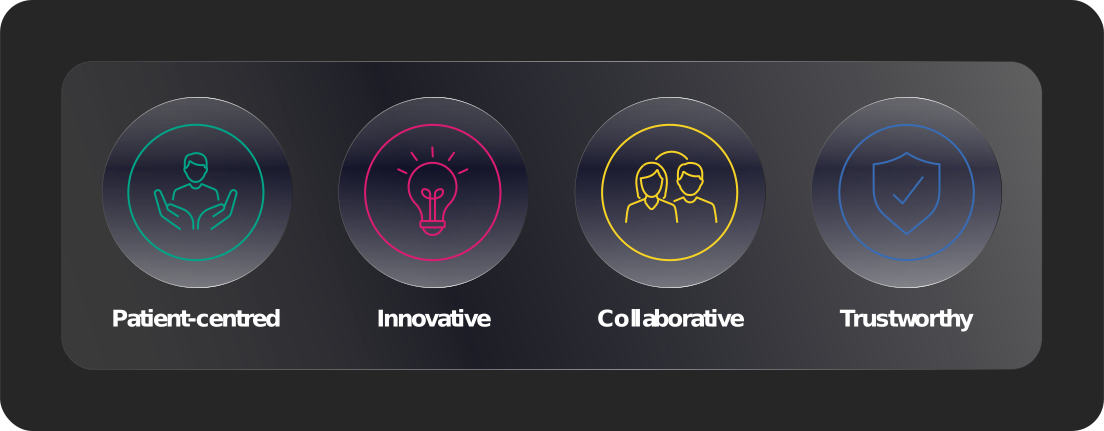
We have refreshed our MHRA values following input from our staff during the strategy development process. Our new MHRA values of being patient centred, innovative, trustworthy and collaborative are the essence of our organisation, and underpin the way we will deliver our new strategy.
Our values
Our approach
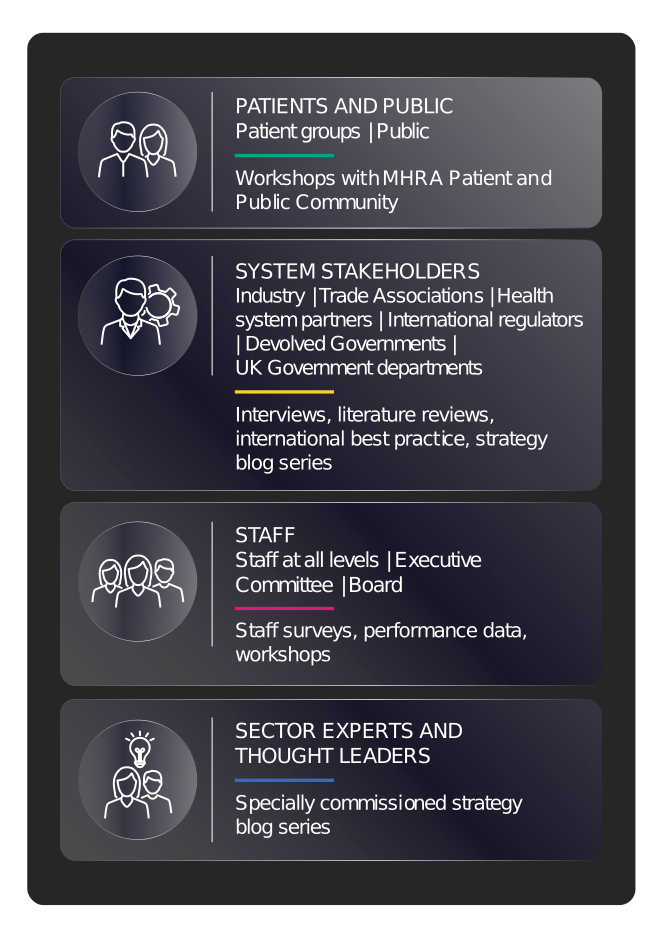
We operate within a complex, interconnected healthcare and life sciences system. We have consulted widely in developing our strategy. It reflects the perspectives of patients, our staff, industry, trade associations, health system partners, devolved governments, other UK Government departments, and international regulators. We have worked with the MHRA Patient and Public Community and a series of experts from whom we commissioned a strategy blog series. We ran workshops at all levels of our organisation, with MHRA staff, executives and our board and utilised staff surveys, performance data and other sources of evidence. Continued collaboration with these groups, internally and externally, will be essential to translate the strategy into action.
Our collaborative approach to developing this strategy
Patient-centred regulation
Putting patients at the heart of everything we do means making our decisions and the evidence behind them clearer, more accessible and easier to understand in practice. This is particularly important where more than one treatment option exists. In these situations, the best choice may depend on a person’s circumstances, health needs and preferences, and how they weigh benefits and risks – what Professor Sir David Spiegelhalter has termed a “preference zone.” Our aim is to better support patients and clinicians to make healthcare decisions together with greater clarity and confidence.
Strategic priority deliverables
A clear and transparent benefit and risk framework
Benefit and risk decision making is the foundation of our regulatory work. Our experts make careful, evidence-based judgements every day. To make these decisions clearer and more transparent, we will develop and publish a methodological framework by 2027, in consultation with patients and clinicians, which describes our regulatory decision-making process. This will initially focus on medicines, both innovative and established, before being expanded to include medical devices.
This framework will set out how evidence is assessed at each stage of a product’s lifecycle and will shape the information we provide about our decisions. The aim is to support patients and clinicians in making informed choices about the right medicines and medical devices for them, underpinned by clear and reliable evidence. It will also help product developers understand how their applications will be assessed according to a transparent and peer reviewed methodology.
Proactive regulation to address evidence gaps and reduce inequalities
Good regulatory decisions rely on high-quality evidence. However, research has not always reflected the diversity of people who use medicines and devices. This needs to change. We will address this by identifying evidence gaps and by publishing priority areas for further research supporting regulatory science. We will begin by strengthening our focus on women’s health through a new programme designed to improve outcomes for women.
As later outlined in our chapter on Scientific Excellence, we will enhance our real-world data capabilities to improve understanding of safety and effectiveness, particularly where traditional evidence is limited.
We will also support wider efforts to improve the diversity of participants in clinical studies, working with partners across the system, including the National Institute for Health and Care Research (NIHR), the Health Research Authority (HRA), the NHS Race and Health Observatory and others.
More accessible information for patients and clinicians
Information about medicines and devices needs to keep pace with how people access and use health information today and in the future. Patient information leaflets for medicines remain largely paper-based, while Public Assessment Reports are written mainly for clinicians and specialist audiences.
We will modernise patient and product information, so it is clearer, more accessible and easier to understand. This will enable more tailored communication of benefit and risk, reflecting individual patient characteristics, clinical context and emerging safety evidence.
By 2030, we aim for all product information to be available as structured digital content, making it easier to access through digital tools and services, while still ensuring alternative formats like paper and braille remain available for those who need them.
Stronger patient involvement
We will strengthen and formalise how patients contribute to regulatory decisions. We will continue to host England’s Patient Safety Commissioner, ensuring their independent voice informs our approach at every level and stage.
We will use a range of public involvement and engagement methods, including deliberative sessions and citizens’ assemblies, to inform complex decisions, including our benefit–risk framework. We will publish a refreshed Patient and Public Involvement and Engagement Plan in 2026.
Reclassification to support patient access
Where supported by robust evidence, we will increasingly enable the reclassification of medicines to better reflect their benefit–risk profile, helping patients access appropriate treatments more quickly and conveniently, while supporting the effective use of NHS resources.
We will prioritise applications using clear, risk-based criteria, including patient safety, unmet clinical need, and the potential to improve outcomes for patients and the wider healthcare system. We will also strengthen the support available to help patients make informed decisions about self-care, through clearer information and appropriate safeguards, so that both existing and newly reclassified medicines can be used safely and confidently when purchased over the counter.
Supporting health equity
Equitable health outcomes depend on a regulatory system that reflects the diversity of the people it serves. Evidence used in regulatory decisions must work for everyone, recognising that medicines and medical devices can affect people differently depending on factors such as sex, ethnicity, genetics and lived experience. Where evidence does not adequately represent this diversity, confidence in safety, effectiveness and fairness can be weakened.
A particular challenge lies in clinical research. Clinical studies underpin safe and effective medicines and medical devices, yet many continue to underrepresent certain groups. The MHRA is part of wider system action to address these gaps. We work with the HRA, NIHR and other members of the UK Clinical Research Delivery Group (UKCRD) to improve inclusion in UK clinical research. We will specify Areas of Regulatory Interest, including a new focus on women’s health, to signal where better evidence is needed and to support more inclusive research from the outset.
Operational excellence
The MHRA protects patients, improves public health and supports prosperity through high-quality regulation. We operate in a global environment where competition for life sciences investment is intense.
Regulators that can combine rigorous standards with an efficient, reliable service give their patients and industry a clear advantage. Our firm intention is to be recognised as a regulator that delivers both. We will continue to engage closely with our stakeholders, using their insight to improve how we work and to drive continuous learning and improvement.
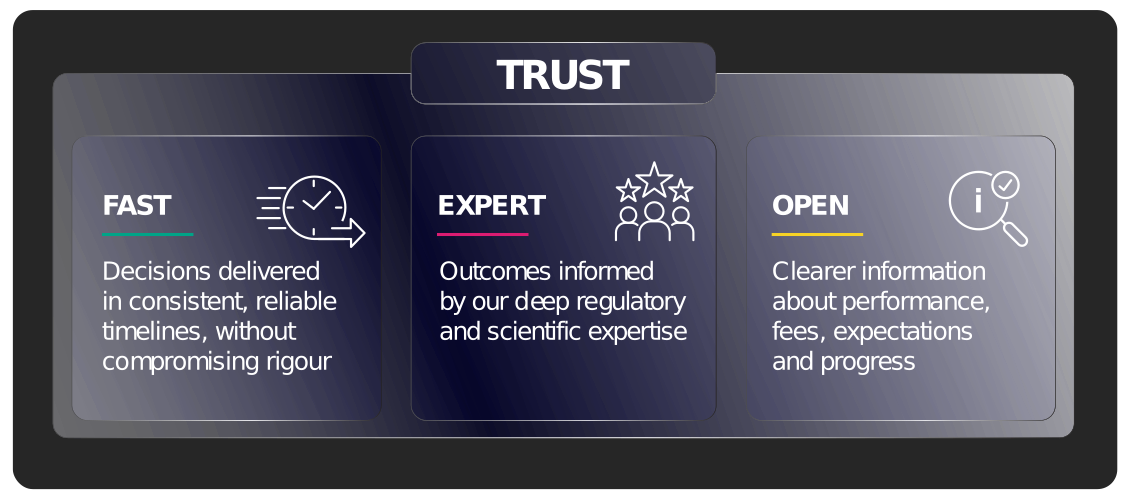
We will be known for being fast, expert and open, and trusted for the quality, rigour and integrity of our decisions.
Fast, expert, open
Strategic priority deliverables
Excellent performance and a new era of transparency
We will continue to improve our performance and deliver against statutory targets, to give industry confidence. In the next five years, we will meet, and exceed where possible, our statutory targets, providing the speed and reliability expected by industry and patients. This will be complemented by a comprehensive performance framework and more transparent reporting against the measures that matter most to stakeholders.
New performance and service guarantees
We will offer a more predictable and responsive service, underpinned by clear timelines and a simpler, fairer funding model.
We will expand our successful Customer Experience Centre, with dedicated teams handling all queries and defined response times to ensure a consistent service.
A new Customer Relationship Unit will offer optional ‘concierge’ support for industry applicants. Companies will be able to book licence application slots in advance, improving planning and reducing uncertainty. Scientific advice services will be broadened and made more flexible, including lighter-touch options for smaller queries. Closer coordination with the National Institute for Health and Care Excellence (NICE) will make the pathway from scientific advice to approval to patient access faster and more predictable.
Fees will change to support higher value services, with raised fees against performance guarantees relating to New Active Substances and Clinical Trial applications, and rebates in the rare cases where these standards are not met.
Service guarantees will include:
- initial assessment of first-in-human trials within 14 days
- first assessment of licensing applications within 90 days
- scientific opinions within 90 days
Fee income will be reinvested to strengthen expertise, capacity and resilience. We will introduce a targeted voucher scheme for small and early-stage companies which have committed to the UK.
Strengthened medicines supply and system sustainability
Established and generic medicines account for the majority of medicinal products on the UK market. We will take timely and proportionate regulatory decisions on generic and biosimilar products so that savings in the wider healthcare system can be realised at the earliest opportunity.
The MHRA will continue to play its role as a critical system partner in enabling the continuity of supply. Working closely with Government partners and other relevant stakeholders, we will continue to support initiatives that tackle vulnerabilities in the supply of medicines, with attention given to the risks associated with reliance on single suppliers. We will seek to proactively manage and expedite regulatory activity that will strengthen the supply of innovative and generic medicines.
Digital transformation of our systems
We will develop a roadmap for updating our data, case management and regulatory systems. These new and upgraded platforms, complemented by enhanced strategic data and intelligence capability, will underpin a more predictable and transparent regulatory experience, improve communication and provide clearer insight into our regulatory activity. Companies will have real-time visibility of marketing authorisation application progress, with data available in machine-readable formats.
AI embedded into regulatory processes
We will routinely use AI to reduce administrative burden, improve consistency and enhance the quality of decision-making, without adding unnecessary complexity or risk.
Through our AI for Regulatory Insight, Safety and Efficiency (ARISE) programme we are optimising where AI can safely automate processes such as application triage, evidence pre-screening, identifying missing information and highlighting potential grounds for non-acceptance. These tools, funded by the Office for Life Sciences (OLS) and the Department of Business, Innovation, Science and Technology’s (DBIST) Regulators’ Pioneer Fund, will support and enhance, not replace, human expertise – enabling our world-leading regulatory experts to focus on work where their judgement is most critical. As part of the ARISE programme, the MHRA is developing an AI-enabled Clinical Trial Protocol Checker that will allow sponsors to assess their protocols against common Grounds for Non-Acceptance prior to submission, reducing regulatory uncertainty and supporting faster, higher-quality clinical trial applications.
AI will also support more risk-proportionate regulation by helping us identify and assess safety signals from large volumes of NHS data. This will enable the earlier evaluation of emerging risks and more targeted regulatory interventions.
Sustainability in our operations and the life sciences sector
We recognise our role in minimising environmental harm, both through our own operations and regulatory influence. We will work with partners to promote clear guidance, encourage sustainable practice and publish our performance.
We will explore how environmental risk assessments, scientific advice meetings and engagement can be used to encourage more sustainable practices and support the adoption of best practice. Recognising the global nature of this challenge, we will work with both the UK and international regulatory community to converge on best practices.
Devolved Government partnerships
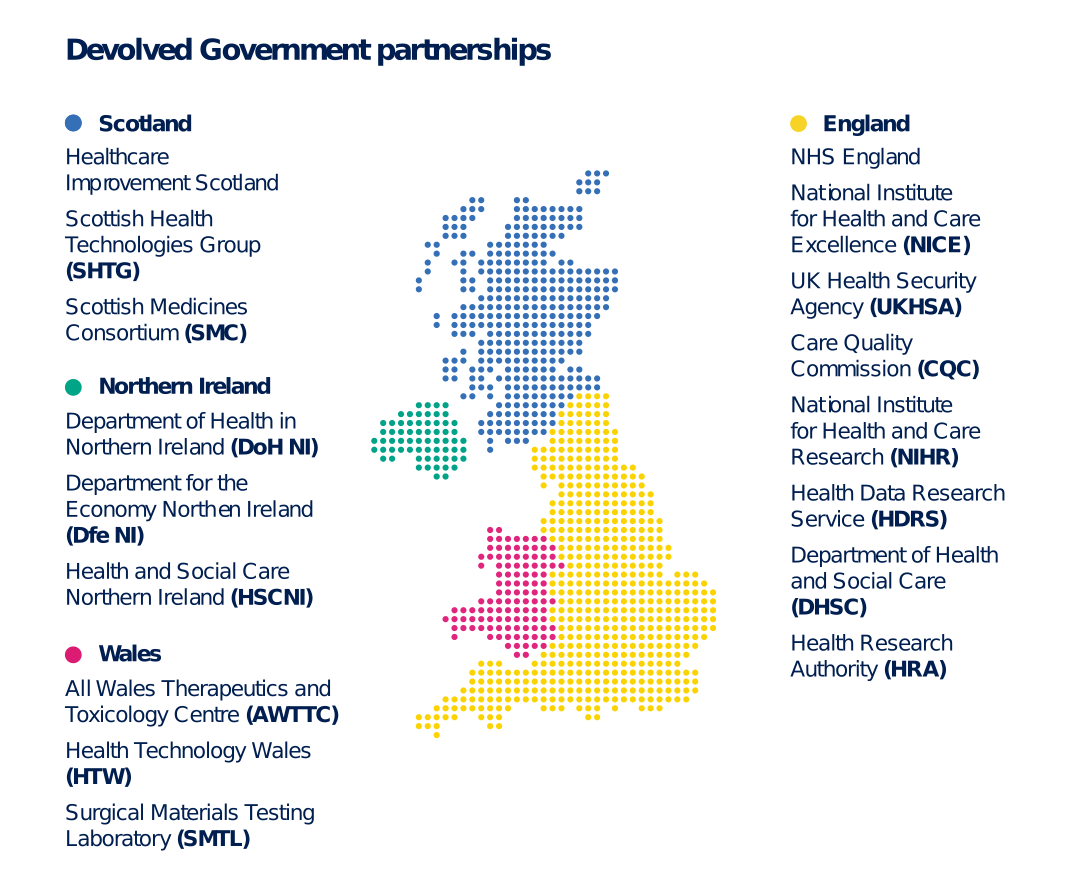
Devolved Government partnerships
The MHRA is proud of its role as a UK-wide regulator, committed to strengthening relationships with devolved governments and supporting life sciences and health systems across all parts of the UK. We listen, learn and build partnerships rooted in shared ambition.
We will continue to support the strengths and priorities of each nation. Through close partnership, we will help Northern Ireland take advantage of its unique regulatory position, and in all four nations we will support life sciences clusters and expand activity in safety and surveillance and data-sharing initiatives.
Strong engagement across nations, including through forums such as the Medicines and Medical Devices Access Initiative, will ensure our work to protect public health, support innovation and enable growth benefits the whole of the UK.
We work closely with the Scottish Government, the Welsh Government and the Department of Health in Northern Ireland (DoH NI) through dedicated liaison leads, ensuring clear points of contact and regular bilateral and Cross-UK Committee engagement aligned to national priorities. We will have a sustained physical presence, tailored to the needs of each nation, and will continue to hold rotating regular Board meetings in Scotland, Northern Ireland and Wales to reinforce these relationships.
World-class safety
Regulation is evolving from periodic assessment towards more continuous assurance of safety. We will strengthen our safety monitoring systems by building the data, tools and expertise needed to lead this new regulatory paradigm.
We will be a world leader in next generation pharmacovigilance and market surveillance. We will strengthen our use of health data, scientific expertise and new technologies to protect patients, support safe innovation and maintain public trust.
We will address risks to public safety from criminal activity, counterfeit and illegally supplied products, and robustly tackle false or misleading information about medicines, vaccines and medical devices.
Strategic priority deliverables
A real-time, world class safety and surveillance system, using the UK’s unique health system data and AI
Once medicines and medical devices are used in the wider population, we continue to gather evidence to understand their safety in real-world use. This is increasingly important as products become more complex, including advanced therapies and AI-enabled technologies.
We have good access to primary care data, but linked hospital data and patient genomics have not routinely been available for regulatory purposes. Enhanced access to these data will improve our ability to deliver real-time surveillance, particularly for the innovative treatments that are delivered in hospitals, including high-cost medicines and cancer treatments. We will continue to work to close this gap with partners across the devolved nations, NHS, industry, academia and government, including particularly the Health Data Research Service (HDRS).
We will continue a programme to explore how real-world data generated in other countries can help strengthen our understanding of medicines and medical products used in the UK. Where supported by trusted international partnerships and robust standards, this approach will help us make better use of relevant evidence generated globally to inform decisions for UK patients.
We will also work with Government and NHS partners to respond to the COVID-19 Inquiry’s recommendation that the MHRA be granted specific and proportionate access to comprehensive and comparable health data from across all four nations of the UK, including linked primary and secondary care data, with strong safeguards to protect patient confidentiality and maintain public trust.
Greater access to data must be matched by the capability to analyse it effectively. We will expand our analytical capacity through specialist recruitment, investment in digital infrastructure, the use of AI-enabled tools and collaboration with external partners. We will strengthen our ability to identify potential safety issues earlier by using advanced statistical, computational and AI-based approaches to detect emerging signals and help predict risks before they affect patients.
Together, these improvements will support more informed and timely regulatory decision-making, including marketing authorisations, enabling patients to benefit from earlier access to innovative products while ensuring that we can act quickly and effectively when safety concerns arise.
Working with HDRS
In the coming years, the MHRA will work closely with HDRS to support a shift towards more active, sensitive and real-time surveillance. Together we will build on the strengths of the MHRA’s CPRD, a significant source of primary care data for safety and surveillance and for health research around the UK. We will help to build the foundations for more systematic use of linked health data across care settings for safety monitoring, enabling regulators to identify emerging safety signals sooner and more precisely and to monitor products continuously throughout their lifecycle.
We anticipate this will be an important source of data for the MHRA. It will support pharmacovigilance and market surveillance, giving the MHRA a more comprehensive view of product safety in real-world use.
This approach will also support linked data collection for investigational medicinal products, including those being assessed under our new Rare Disease Therapies Regulatory Framework.
Enhanced safety and surveillance for medical devices
Faster access to innovative medical technologies must be supported by strong assurance of safety throughout their life cycle. For medical devices, this means placing greater emphasis on monitoring performance and managing risk once products are in use.
To support the post-market surveillance regulations introduced by the MHRA, we will improve the collection and use of medical device data. We will upgrade or replace key systems for registration, reporting and public access, improving transparency for the health system. Subject to parliamentary process, new pre-market regulations will make unique device identifiers (UDIs) – or an equivalent – compulsory for all devices except non-implantable custom-made devices or non-implantable investigational devices. This will enable precise identification and traceability of devices throughout their lifecycle. These changes will improve data quality, reduce unnecessary burden and ensure reliable information is available when needed for the healthcare system.
A more accessible Yellow Card scheme
The Yellow Card scheme is a vital part of the UK’s safety system, admired around the world, but there is significant scope to increase its reach and impact. We will improve the usability and accessibility of the service so that patients and healthcare professionals can report concerns more easily, with the aim of increasing the safety signals we receive and improving intelligence on product safety and performance.
In 2027, the MHRA will begin to introduce a more conversational interface for Yellow Card reporting, making it simpler and quicker for users to submit information on medicines and medical devices. We will make Yellow Card reporting available through the digital tools most commonly used across the health service. We will explore integrating it into the NHS App and into major secondary care electronic health record systems, complementing existing functionality in primary care. We will also work with devolved nations to facilitate Yellow Card integration into their apps and IT systems.
Excellence in compliance
The work of the MHRA Compliance Teams is essential in providing independent assurance that medicines are developed, manufactured and supplied to the highest regulatory standards. Similarly, the MHRA Devices Compliance and Audit teams, working alongside partner organisations and through independent surveillance and investigation, contribute to ensuring that medical devices on the UK market are safe and compliant. Together, these teams enable timely action on risks, protect public health, and maintain confidence in the healthcare products that patients rely on every day.
Technology and new regulatory approaches will help us target compliance activity more effectively. In 2026, we will assess how risk-proportionate Outcomes Based Cooperative Regulation (OBCR) and behavioural insights can strengthen compliance and inspection activities, enabling us to focus our resources where they can have the greatest impact on patient safety. OBCR seeks to incentivise organisations that demonstrate proactive compliance by reducing the regulatory burden associated with inspections. We will also work closely with national and international partners to minimise unnecessary duplication and reduce regulatory burden while maintaining robust oversight and prioritising patient safety.
We will run targeted proactive market surveillance campaigns for medical devices, using a proportionate and risk-based approach. The first campaign will focus on device manufacturers’ compliance with post-market surveillance requirements. We will develop routes to share compliance information and intelligence with our trusted regulatory partners to reduce duplication and coordinate efforts to protect global health.
By 2030, we will routinely use technology to support our compliance and inspection activities, including greater use of data insights and analysis. As part of wider digital transformation, we will update our platforms to make it easier for manufacturers to submit high-quality information for medical devices, with the aim of using this data to reduce unnecessary burden for compliant businesses.
Bolstered enforcement capability to tackle illegally supplied products
Trafficking in counterfeit, falsified and unauthorised medicines and devices poses a substantial and growing risk to patient safety and public confidence. Trafficked medicines are reaching people through social media, unregulated websites and cross-border e-commerce, making enforcement more complex and more global than ever before.
We will substantially increase our criminal enforcement capacity, giving us more specialist resources to investigate, disrupt and, where appropriate, prosecute those involved in illegal medicines and medical devices activity, putting patients and the public at risk. We will continue to work closely with international partners, including Interpol, to coordinate our response to cross-border activity and protect the security of the medicines supply chain.
We will collaborate with social media platforms and online marketplaces, so we can prevent harmful products from reaching the public and take more action against illegal sales and advertising.
Action on misinformation and disinformation
False and misleading information about medicines, vaccines and medical devices can undermine trust and cause real harm. As more people rely on social media, online content and AI tools for health information, the need for clear, trusted and authoritative communication increases.
We will continue to work extensively with partners to address mis- and dis- information about regulated products on social media and AI platforms and look to improve the quality of information on them overall through our own proactive and evidence-based communications.
Regulatory innovation
Innovation in science and technology is evolving rapidly. The UK’s regulatory system must keep pace, give innovators clarity and help patients benefit from new products which are safe and effective more quickly.
The Life Sciences Sector Plan aims for the UK to be a launchpad for safe and effective innovation. We will support this by reducing regulatory uncertainty by providing clearer guidance, engaging earlier with industry and system partners, and applying our scientific, regulatory and data expertise across the product lifecycle. This will support faster translation from research into patient care and help ensure innovative medicines and medical devices are adopted safely, expediently and with confidence.
Strategic priority deliverables
A world-class innovation ecosystem
The MHRA will be a regulator that attracts and supports innovation in the UK, helping patients across all four nations benefit more quickly from advances in science and healthcare.
We will strengthen our horizon scanning and business intelligence function, supported by data science, AI and dedicated analytical expertise, to identify emerging innovations earlier. This will enable earlier engagement with innovators, more timely regulatory guidance and closer coordination with health system partners.
To build understanding of these innovations, the expertise of the MHRA Science Campus will be integrated into horizon scanning and scientific advice through dedicated expert groups. Regulatory challenges identified through scientific advice, including manufacturing and safety issues, will help shape our scientific research priorities.
As innovative technologies increasingly blur traditional product boundaries, we will work with Centres of Excellence for Regulatory Science and Innovation (CERSIs) to develop effective and novel regulatory approaches. Building on the UK’s strengths in academic and clinical research, we will establish a CERSI model linked to priority areas outlined in our chapter on Scientific Excellence.
Where new products or regulatory approaches need to be tested, we will support proposed legislative reforms to create statutory mechanisms for regulatory sandboxes. These controlled, time-limited environments will enable innovators and regulators to generate evidence, test novel approaches safely and inform future regulation. Initial areas of focus will be AI as a Medical Device, and AI in pre-clinical testing (ADMET).
Once innovations are ready to progress, streamlined routes will help bring them closer to patients. Regulatory Innovation Corridors will support coordinated engagement with international regulators, industry and health system partners, reducing duplication, jointly exploring novel assets and products and accelerating progress towards clinical studies.
The Innovative Licensing and Access Pathway (ILAP) will continue to provide an end-to-end route for transformative medicines and drug-device combinations, supporting earlier alignment with health technology assessment bodies and the NHS to enable timely and cost-effective patient access. For innovative medical technologies that address unmet clinical needs, the Early Access Service for Devices will provide time-limited, conditional approval ahead of full regulatory assessment.
The MHRA Innovation Accelerator will help innovators navigate the system, working with partners to create a more joined-up pathway from development to patient access for innovative medicines and medical devices.
Joined-up support for innovators with UK system partners
Innovation delivers greatest value when the health system works together efficiently to turn promising ideas into benefits for patients.
The MHRA will play a central role as both regulator and convenor across all four UK nations, helping to align insight, evidence and expertise so that innovative medicines and medical technologies can move more smoothly from development into patient care.
We will continue support shared horizon scanning through the Medicines and Medical Devices Access Initiative, working with other regulators, healthcare systems and health technology assessment (HTA) agencies including Healthcare Improvement Scotland (Scottish Medicines Consortium, Scottish Health Technologies Group), All Wales Therapeutics and Toxicology Centre and DoH NI. This will support better information sharing and clearer routes for evaluating innovative health technologies across the UK.
We will continue our joint work on the MHRA-NICE aligned pathway, bringing MHRA licensing and NICE value assessment closer together, so that decisions can be made in parallel and patients can access some new medicines three to six months earlier than with previous sequential pathways.
Our improved MHRA-NICE integrated scientific advice service will offer companies a single-entry point, a single meeting and one payment, while providing coordinated early advice on issues such as evidence generation, endpoints and patient populations.
The MHRA will work with the OLS and other partners to support innovative and advanced manufacturing approaches. Through early, expert technical engagement, innovators will have the regulatory clarity and confidence needed to adopt, implement and scale new technologies.
This includes ongoing work with the UK Space Agency, the Regulatory Innovation Office (RIO) and the Civil Aviation Authority to advance medicines manufacturing in space. We will also collaborate with the Advanced Research and Invention Agency (ARIA) on ambitious long-term research in emerging fields such as neurotechnology.
This coordinated approach will help us engage earlier in clinical development and provide more integrated support when innovators need clarity on regulatory, HTA and NHS requirements. It will also reduce friction between regulation and adoption, improve national readiness and support faster, cost-effective patient access.
Better support for UK innovators and growth
More support will be provided for start-ups, Small and Medium sized Enterprises (SMEs) and other innovators developing and bringing products to the UK. The MHRA’s Innovation Accelerator will help companies navigate the regulatory system and access the right support. We will also introduce a targeted voucher scheme help UK start-ups access premium regulatory services at lower cost, reducing regulatory barriers for smaller companies that are committed to the UK.
Turning innovation into impact
To support the ambitions of the Government’s Industrial Strategy, the MHRA, RIO and OLS are working together to strengthen and modernise the UK’s regulatory landscape. This collaboration is helping to give innovators greater confidence to develop and adopt new technologies, while enabling patients to benefit from them sooner.
The MHRA and RIO are partnering on the “Beyond ADMET: AI for Medicines Safety” regulatory sandbox, which is exploring how AI-generated evidence can be used responsibly to support medicines development and regulation.
Working with OLS, the MHRA is developing the AdvanceGxP guidance service, providing early and practical regulatory advice across the full range of Good Practice (GxP) requirements for novel and advanced technologies. We are also collaborating on the transition to Novel Approach Methodologies (NAMs), supporting the adoption of scientifically valid alternatives to animal testing where appropriate.
These initiatives complement our ongoing joint support for the Centres of Excellence in Regulatory Science and Innovation (CERSIs) and collaboration on the ARISE programme, which contributes to the Life Sciences Sector Plan commitment to deliver the MHRA’s digital transformation at pace.
The MHRA will continue to work closely with RIO and OLS to build the scientific, regulatory and policy foundations needed to realise the Government’s ambition for the UK to become a global leader in life sciences regulation by 2035.
The MHRA is developing additional services for innovators such as Scientific Opinions, which will be formal opinions that can be acknowledged in future market authorisation applications.
We will also explore additional ways that the regulatory expertise and knowledge generated in the agency can be utilised on a more commercial basis to support innovation in the life sciences sector and generate value for the UK economy.
A coordinated action plan for AI in medicines development
AI has the potential to transform medicines development across the full lifecycle, from discovery and preclinical modelling through to clinical trial design, manufacturing and post-market safety monitoring. We will work with partners to support the safe and effective use of AI, enabling innovation while maintaining public trust, transparency and high standards of safety.
We have already taken practical steps in this area, including embedding AI considerations into Chemistry, Manufacturing and Controls (CMC) regulatory frameworks, piloting synthetic data use in clinical research through CPRD, and exploring the application of AI in ADMET prediction.
Building on this progress and supporting the Government’s AI for Science strategy, the MHRA will publish an AI Medicines Development Action Plan in 2027. This will set out a coordinated UK-wide approach, developed with partners including the RIO. Through continued collaboration with the Medicines Manufacturing Industry Partnership and wider regulatory innovation initiatives, we will provide early engagement, clarity and support for innovators, while maintaining public confidence.
Regulation that drives prosperity The MHRA plays an active role in supporting economic growth across the UK by shaping a regulatory system that enables innovation, investment and faster patient access to safe new healthcare products. We ensure regulatory decisions are timely, predictable and proportionate, giving developers confidence to plan, invest and launch products in the UK.
To drive growth, the MHRA is modernising regulatory pathways and improving performance, including faster assessments for clinical trials and medicines, clearer guidance for innovators, and closer alignment with partners such as NICE to shorten the time between approval and patient access.
We are also reforming regulation to support emerging technologies, including AI and advanced therapies, and expanding international collaboration to reduce duplication and support global market access.
We are strengthening early engagement with developers through more flexible and integrated scientific advice, national and regional sandboxes, and the early access service for devices, helping products move more smoothly from development into use.
Scientific excellence
Scientific excellence is the fundamental underpinning of the MHRA’s authority, credibility and impact. Our decisions rely on strong laboratory science, expert regulatory judgement and the effective use of evidence and data. As medicines and medical devices become more complex, we must continue to strengthen these foundations to stay at the leading edge of regulatory science.
Over the coming years, we will build the capabilities needed to support emerging technologies, better respond to health opportunities and threats and help patients benefit from safe and effective innovation more quickly. This means maintaining leadership in biological standards and testing, strengthening our use of real-world data and advanced analytics, and investing in the people, partnerships and infrastructure that support world-class regulatory science.
Strategic priority deliverables
Enhanced scientific excellence
The MHRA will continue to develop and distribute National Institute for Biological Standards and Control (NIBSC) and WHO International Standards reference materials and harmonised methods that support the safety, efficacy and consistency of biological medicines and diagnostics worldwide.
We will strengthen our capacity to test vaccines and blood products by expanding scientific capability and modernising laboratory infrastructure, so that we can validate performance, detect issues earlier and provide timely assurance to the public and the health system. Alongside this, we will raise the global profile of our scientific excellence and further strengthen national collaboration with organisations like UKHSA and the NHS Blood and Transplant service as well as international engagement.
Stronger scientific and regulatory capability
The MHRA is a trusted, evidence-based regulator, known for its scientific integrity and pragmatic approach to innovation. We have identified our core scientific and regulatory capabilities and will continue to strengthen them, allowing the MHRA to provide more precise, responsive and supportive regulatory engagement to developers and system partners.
Real-world data, AI and computational modelling
We will position the MHRA at the forefront of realworld evidence generation and regulation, enabling faster and more informed decision making across the product lifecycle by:
- securing access to linked health data to support pharmacovigilance, pharmacogenomics and clinical research, building on CPRD and in collaboration with HDRS, as outlined in our chapter on Safety
- expanding our capability to assess in-silico evidence
- publishing new guidance on use of digital twins
- developing new regulatory frameworks through the in-silico CERSI programme
- enabling hybrid trials using digital twins and synthetic data
Innovative biomarkers and diagnostics
We will support diagnosis, treatment selection and disease monitoring where traditional endpoints may be less relevant by:
- developing guidance and standards for surrogate endpoints and innovative statistical approaches
- supporting new diagnostic technologies through a coordinated approach for rapid regulatory assessment
Prior knowledge
We will address the scientific and regulatory challenges raised by advances in genomics, transcriptomics and multi-omics approaches by:
- publishing guidance on adapting core platform requirements for different diseases, products and indications for appropriate consideration in new product licences, rather than starting from scratch each time
- we will focus on new innovations such as anti-sense oligonucleotides (ASOs), AAVs, CAR-T, mRNA and cancer immunotherapies
System alignment
The MHRA sits within a complex health ecosystem. We draw strength from and support our national partners to address challenges of approval, availability, safe use and resilience. We will continue to support medicines and medical devices through from development to adoption by:
- aligning with and utilising the capabilities of our key partners, including HRA, NICE, NHS, OLS, NIHR, HDRS and the devolved governments
- conducting an ongoing review of ILAP and developing a coordinated approach with partners to foster a viable pipeline for priority areas, such as disease-modifying treatments for dementia
- working alongside partners to support faster, fairer access to HealthTech through the National HealthTech Access Programme (NHAP)
Early-phase research and clinical trials
The UK government has set out its ambitions to make the country a more attractive place to conduct research by simplifying processes, improving predictability and reducing clinical trial setup times.
We will support the UK government’s ambition to rise from 5th to 3rd globally for Phase 1 clinical trials by 2030 by:
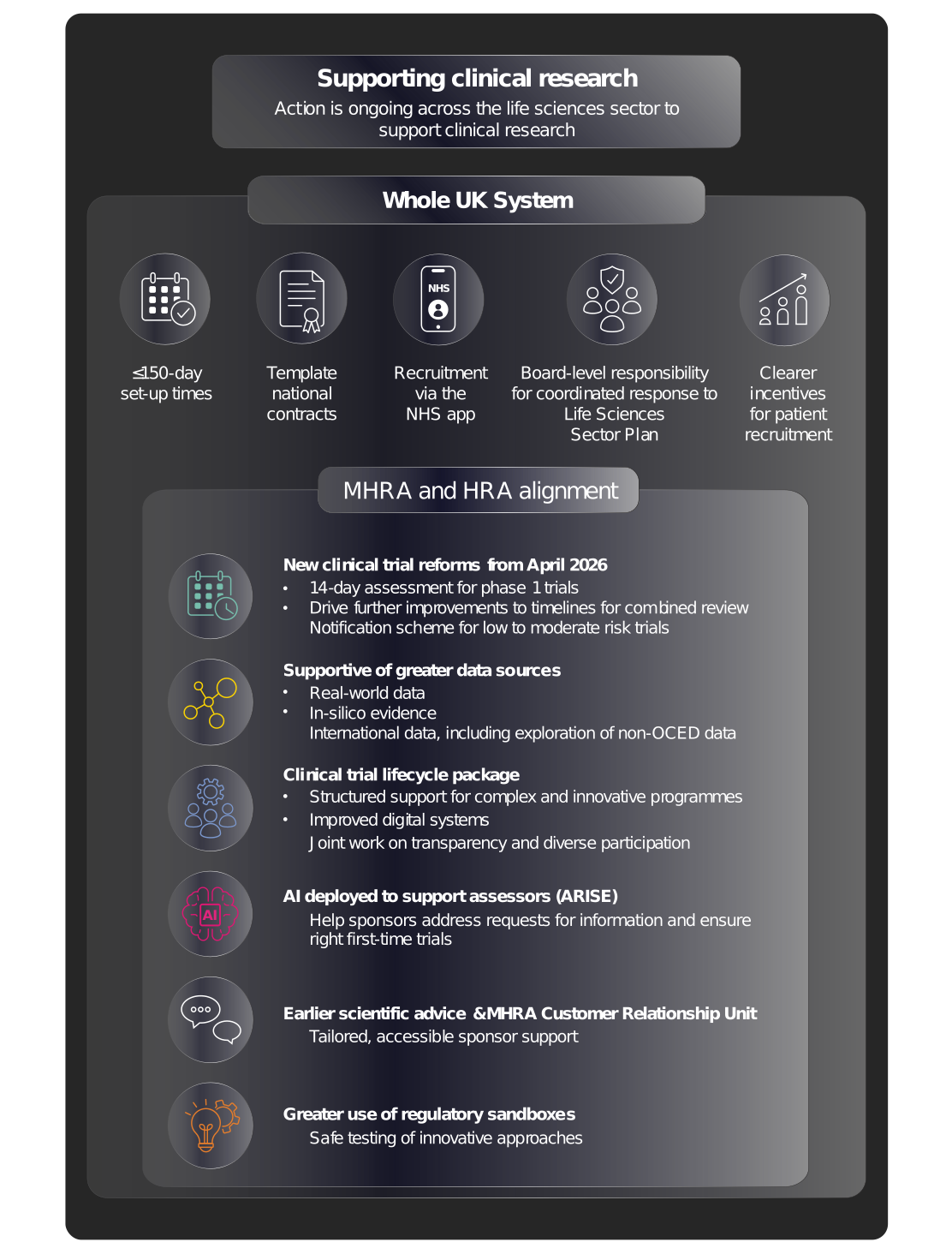
- introducing a stepwise 14-day first review assessment for Phase 1 clinical trials and drive further improvements to timelines for combined review with HRA
- using AI to support the review of documentation and help sponsors address requests for information and ensure right first-time trials
- enabling a shift away from the use of animal models towards human-relevant NAMs, such as organoids and organ-on-a-chip technologies that have the potential to offer better insight, prediction and protection for patients
Supporting clinical research
Build specialist expertise in priority technology areas
The MHRA will continue to regulate all products that come to us, but we will invest in building the expertise needed to be world leading in areas where unmet patient need, UK system readiness and national scientific and industrial strengths align. This will help deliver greater patient benefit, attract inward investment and strengthen the UK life sciences sector.
We will work closely with international partners in our priority technology areas. Enhanced horizon scanning and closer alignment with the health system will help us remain agile, adapt over time, and continue responding to the needs of patients. Together, this will help improve patient outcomes, attract investment to the UK, and support the growth of the life sciences sector.
Rare disease – Leading the way in system change
More than 3.5 million people in the UK live with a rare disease, yet only 5% of rare diseases have approved treatments. Patients often face long diagnostic journeys and limited options, while developing therapies is challenging due to small patient populations and difficulties generating traditional evidence and commercial viability.
We are working to address these challenges through the MHRA-established Rare Disease Consortium, bringing together patients, carers, academics, regulators and industry. Together, we are developing a more flexible and riskproportionate regulatory framework for rare disease therapies. This approach, along with tailored scientific advice, is designed to make it easier to test and approve treatments where standard pathways are not feasible, while maintaining strong safety oversight.
By better connecting the UK’s genomics capability, the NHS and regulation, the MHRA aims to improve access to treatments and help establish the UK as a global leader in rare disease innovation.
Better preparedness for health crises through biological evaluation, analytics and surveillance
The MHRA must always be ready to respond to future health threats, including pandemics, bioterrorism and antimicrobial resistance (AMR). Building on our partnerships such as with UKHSA, we will support the timely development, validation and quality control of countermeasures and diagnostics, while continuing to strengthen and update our pandemic response plan.
In an increasingly insecure world, we will support our Armed Forces by working closely with the Ministry of Defence to ensure the regulatory framework for medicines and medical devices supports timely access to safe and effective therapeutics and medical equipment to address unique risks to the health of our service men and women on military operations.
To support the UK National Action Plan on AMR, we will explore new regulatory processes, support reference reagents for vaccines against priority AMR pathogens, and expand wastewater surveillance beyond polio to other pathogens and AMR-relevant targets. This will help to improve outbreak prediction and response.
We will continue the provision of independently quality-assessed pre-qualified vaccines through our WHO National Control Laboratory, ensuring global access to life-saving products.
Improved workplaces and laboratories that support excellence for the long term
The MHRA Science Campus in Hertfordshire is a specialist laboratory facility dedicated to regulatory science and health security, where we also develop, manufacture and distribute NIBSC standards globally, and offer NIBSC contract and control testing services. We will develop a clear long-term plan for the agency’s laboratory space and infrastructure, working closely with UKHSA and the Government. This will build on shorter-term improvements to modernise specialist facilities, ensuring we maintain the global supply of biological reference materials and support the campus’s core activities.
Prioritising specialist capabilities and technologies

MedTech and Artificial Intelligence
Delivery of health plans across the UK, including the NHS 10 Year Health Plan, depends on faster access to safe, effective medical technologies. From earlier diagnosis and prevention to more community-based and digital care, MedTech will play a central role in transforming healthcare quality and value.
The MHRA has begun a major programme of MedTech regulatory reform to improve access to innovative devices, strengthen patient safety and support the UK as a leading place to develop and scale new technologies.
AI is expected to be one of defining medical technologies of our time, with the NHS aiming to become the world’s most AI-enabled health system. Through initiatives including the National Commission into the Regulation of AI in Healthcare, Health AI, the Global Health Network, our AI Airlock and new regulatory guidance, the MHRA is helping shape proportionate, evidence-based regulation for AI in healthcare.
By 2030, the MHRA aims to deliver the global standard for safe and agile regulation of MedTech and AI in healthcare.
Strategic deliverables
A comprehensive programme of MedTech regulatory reform
The programme of MedTech reform already underway includes updates to post-market surveillance requirements as well as proposed reforms to pre-market legislation and to international reliance routes.
Alongside these measures, the MHRA will continue to strengthen the UK regulatory route to market for medical devices. Subject to Parliamentary process, new powers to undertake regulatory assessments directly[footnote 1]will provide greater flexibility and capacity within the regulatory system, helping to enhance the UK’s global competitiveness while maintaining high standards of patient safety.
These powers will support a more responsive approach to innovative technologies, with a particular focus on areas where the UK has the potential to lead internationally, including AI-enabled devices, advanced diagnostics, robotics and novel implantable technologies.
We will support manufacturers to navigate regulatory pathways for novel technologies through our regulatory advice service that provides earlier clarity and enables faster, more agile routes to market.
Internationally, we will expand reliance and recognition routes with trusted regulators, including collaboration with the US FDA and continued recognition of CE-marked devices will help reduce regulatory burden, strengthen supply resilience and support timely patient access. Subject to approval, limited fee vouchers will also be introduced where appropriate to support UK SMEs.
A modern, adaptive framework for AI as a medical device
AI as a medical device presents distinct regulatory challenges, including changing performance across time, settings and populations. The growing use of foundation models, which are trained on large, broad datasets and are adaptable across a huge range of use cases, further amplifies the variability and complexity. These characteristics require new approaches alongside established regulatory principles.
Effective oversight therefore depends on continuous monitoring of real-world performance, supported by clearly defined accountability across developers, deployers and health system partners. In response to the National Commission into the Regulation of AI in Healthcare, we will work with partners to deliver a whole-system approach to safe deployment, combining developer responsibility, provider governance and professional oversight.
To support safer and more timely innovation, we will introduce expanded Predetermined Change Control Plans, enabling pre-agreed model updates to be implemented without unnecessary delay. We will also explore the use of Master Files for foundation models to allow manufacturers and developers to share essential safety and performance information about the underlying systems used in AI-enabled medical devices.
Deeper Med Tech and AI expertise
As part of a sustainable and future-ready approach to AI-enabled healthcare, we will establish an MHRA Centre for AI and Digital Health. This will bring together specialist leadership and expertise within the MHRA to support the regulation of digital and AI-driven products, including medical devices and medicines.
The centre will strengthen regulatory capability across the full product lifecycle, ensuring clearer and more consistent expectations for developers and healthcare partners. It will make regulatory requirements easier to navigate, while supporting safe innovation and the effective adoption of new technologies in the health system.
Global collaboration on MedTech and AI
We will strengthen the UK’s role in international regulatory fora, including the International Medical Device Regulators Forum (IMDRF) and other global groups, enabling the UK to help shape international standards and promote proportionate, innovative regulation for medical devices. We will also join the Medical Device Single Audit Programme (MDSAP).
As a founding ‘pioneer’ country in the Health AI Global Regulatory Network, the MHRA will collaborate with global partners to share safety signals, monitor real world performance and shape international standards. This will strengthen the UK’s position as a global leader in digital and AI enabled healthcare, ultimately supporting safer and more effective care for patients.
International partnerships
Global collaboration helps protect patients. When regulators work together, safe and effective medicines and medical devices reach people more quickly and health systems are better prepared for emergencies. Greater international interoperability and regulatory alignment reduce unnecessary burdens for industry by supporting convergence, recognition and reliance approaches.
Our ambition is for high-quality regulatory submissions to be prepared once and used across multiple trusted jurisdictions, making it easier and faster for companies to bring innovative products to UK patients and those in partners countries.
The MHRA will continue to be an outward-facing and internationally collaborative regulator. We will aim for convergence with our main partners wherever possible and divergence only where there is a clear purpose. We will work with trusted global partners to harmonise standards, share safety information and strengthen decision-making. We will work alongside government departments and agencies, such as OLS, and develop international partnerships that support the priority technology areas outlined in our chapter on Scientific Excellence, including ATMPs, AI as a Medical Device and Neurotechnology.
Together, this will support patient safety, improve resilience and help make the UK an attractive place to innovate, generate evidence and launch new products.
Strategic priority deliverables
Global leadership in regulatory science and standards
The MHRA will continue to shape global regulatory policy and standards through its scientific and regulatory expertise, while helping to position the UK as a leading destination for innovation, evidence generation and the launch of new medical products. This supports the ambitions of the UK Government’s 10 Year Health Plan, the Life Sciences Sector Plan and the Growth Mission, and strengthens the pipeline of innovation into the NHS.
Our designation as a WHO Listed Authority strengthens international confidence in MHRA decisions and supports responsible reliance, including in countries where regulatory capacity is still developing.
As a WHO Collaborating Centre for the Standardization and Evaluation of Biologicals, the MHRA develops more than 90% of WHO international standards for biological medicines. We will continue to support WHO programmes on polio and influenza, helping to ensure global access to safe and effective products. Through the British Pharmacopoeia, we will continue to influence global standards for medicines quality, supporting the detection of substandard products and promoting consistent assurance for patients worldwide.
We will strengthen our role in key international forums, including the IMDRF, which we will chair in 2029, the International Council for Harmonisation of Technical Requirements for Pharmaceuticals for Human Use (ICH), the International Coalition of Medicines Regulatory Authorities (ICMRA) and the Pharmaceutical Inspection Cooperation Scheme (PIC/S).
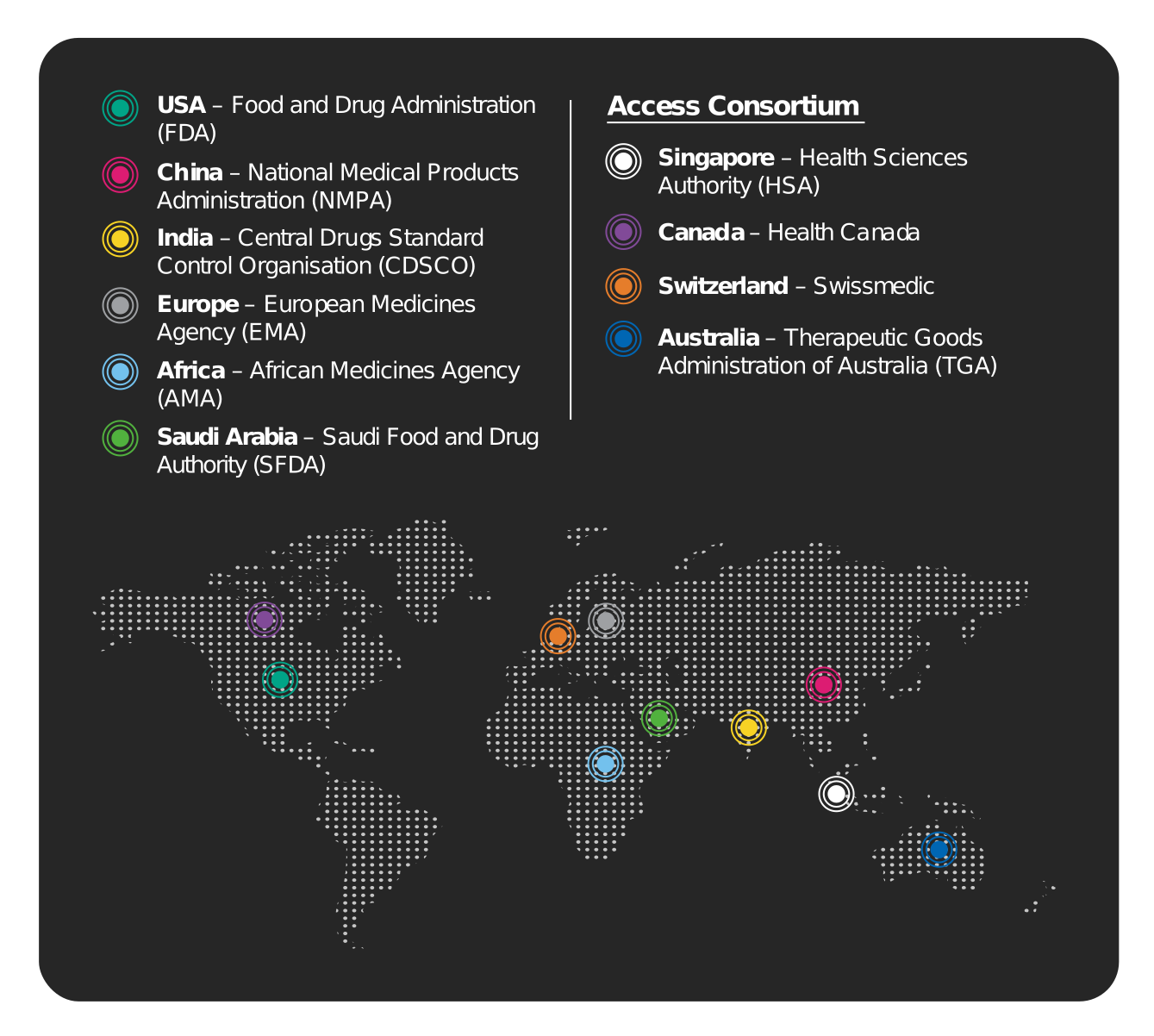
In 2026, the MHRA chairs the Access Consortium, bringing together the peer regulators of Australia, Canada, Switzerland, Singapore and the UK. We will use this opportunity to strengthen Access as a platform for regulatory convergence, aligned assessments and practical reliance pathways that support faster access to medicines across member countries.
We will establish an annual regulatory science conference to bring together regulators, researchers and industry and reinforce the MHRA’s global thought leadership.
Stronger partnerships with international regulators
We will maintain strong and mutually beneficial relationships with comparable regulators, sharing expertise, data and practical learning and exploring opportunities to expand our physical presence where appropriate to enable closer direct working. These partnerships will help us respond to shared challenges, such as supply chain resilience, safety monitoring and the regulation of emerging technologies.
We will deepen collaboration with the US Food and Drug Administration (FDA) building on the UK–US Economic Prosperity Deal and the US–UK pharmaceutical partnership. Through the MHRA-FDA Pioneer Programme, which places liaison staff within each other’s organisation, we will strengthen regulatory alignment, scientific exchange and joint leadership on emerging technologies, while supporting progress towards greater mutual recognition of medical device approvals.
We will continue to work closely with the European Medicines Agency (EMA) and other European partners to support regulatory convergence, information sharing and coordinated safety activities, including the effective implementation of the Windsor Framework. As regulatory frameworks evolve, we will explore opportunities for greater EU equivalence where this can support timely patient access and reduce unnecessary duplication. We will also pursue recognition, reliance and other practical agreements with trusted international partners where these can improve availability, reduce barriers to UK market entry and maintain robust standards.
Deepened engagement with diverse international markets
To encourage investment and accelerate access to innovation, we will deepen engagement with priority international markets to support UK patients. Working across government and with industry, we will strengthen relationships with national regulators in major markets, including India, China, and the Middle East and North Africa (MENA) region to improve cooperation, build mutual understanding and support more efficient routes for innovation.
India is a key strategic partner for the UK – it supplies 25% of all medicines in the UK, including a third of all generic medicines and is a growing hub for life sciences and medtech innovation including AI. The MHRA will continue to invest in and develop this strong relationship, ensuring that patients in both countries benefit from enhanced access to innovation and secure supply chains.
The global landscape for clinical trials and drug development is changing at pace. China now produces a significant volume of world class biomedical research, cementing itself as an important centre for clinical research alongside the US, the UK and Europe.
The MHRA will engage more closely with regulatory counterparts, researchers, and drug developers in both India and China. This will include strengthening collaboration with India on areas such as manufacturing standards, clinical trials and innovation pathways. We will also consider where non-OECD research data can be used in a proportionate and risk-assessed way, while maintaining appropriate regulatory oversight. This will support access to high-quality science and help ensure clinical research benefits patients in both countries.
The MENA region is becoming an increasingly important partner for the UK in health innovation and life sciences. The MHRA will deepen engagement across the region, strengthening regulatory cooperation and collaboration on emerging technologies, including AI-enabled healthcare. Through these partnerships, we will share regulatory expertise, support innovation and create opportunities for investment and improved patient outcomes.
Alongside this, we will expand relationships with global biotech and MedTech companies, as well as with industry and academic partners worldwide. This will help support innovation, attract investment and contribute to better health outcomes, while ensuring the UK remains well positioned in an increasingly competitive global market.
Strengthened international regulatory capacity
The MHRA will continue to support stronger regulatory systems globally. We will help partners build key regulatory functions, strengthen quality oversight and apply good manufacturing practice. This will support more resilient manufacturing and supply systems.
We will also continue to build our international role in this area, including through our membership of the WHO Coalition of Interested Parties.
We will scale up delivery of our grant-funded activity and will continue to work with priority international partners, including the Gates Foundation, the Coalition for Epidemic Preparedness Innovations and the African Medicines Agency vigilance programme.
International Activity and Access Consortium
Expert people
Trust in the MHRA depends on the expertise, judgement and integrity of our mission-oriented people. We have a highly skilled workforce, with deep scientific experience and a strong commitment to public service. We will build on this foundation by continuing to attract, develop and retain talented people, and by strengthening leadership, workforce planning and the internal services to support them. We will invest in the skills, data, tools and support our colleagues need so they can continue to respond to scientific advances and deliver for patients and the public.
Strategic priority deliverables
A culture of trust, openness and empowerment
A strong regulatory culture depends on people feeling trusted to use their expertise and judgement, confident to speak up and clear about where decisions should be taken. We will review our decision-making structures and management committees to encourage colleagues to take ownership in their roles and ensure action is being taken at the right level.
We will empower people to direct their own development, career progression and performance through a new Learning Management System. This will provide tailored and flexible career pathways aligned to individual roles, aspirations and development needs.
We will equip leaders to create this supportive environment by complementing the wider Civil Service leadership offer with targeted internal development. We will build a strong leadership pipeline through improved access to coaching, mentoring and development opportunities.
Enhanced people services
Strong and streamlined people services are essential to supporting our staff. They help create the conditions for colleagues to learn, develop and thrive at work.
We will modernise our HR systems and explore where AI-enabled automation can reduce administrative burden and improve user experience. We will introduce clear people service standards to help provide a responsive and predictable service across key activities such as recruitment, onboarding and learning and development.
We will ensure that Health and Safety arrangements are accessible and consistently applied across the organisation to support staff wellbeing.
Improved workforce data to support performance and wellbeing
Workforce data is essential to understanding performance, risk and staff wellbeing. We will improve the quality and accessibility of data on sickness absence, turnover and workforce demographics, and align it more closely with operational performance measures. This will help leaders identify pressures earlier and address root causes so they can implement tailored interventions. These could be redistributing resources, addressing capacity constraints, or introducing wellbeing initiatives. Over time, we will build predictive capability to anticipate and mitigate workforce retention and capacity risks.
Improved data quality and integration will support a more consistent source of people-related information for decision-making, reporting and transparency.
Strategic workforce planning for the next decade
Workforce planning will be aligned with this strategy to identify future knowledge and skills needs, address gaps and focus resources where they are needed most.
A more proactive approach to resourcing will help build capability in priority areas. This will include industry and academic secondments (inward and outward), professional partnerships and closer working with health system partners.
The MHRA Academy will continue to provide high-quality regulatory training for staff. Clearer career pathways and succession planning will strengthen organisational resilience and support retention of critical skills.
Future capability will be built through apprenticeships, graduate schemes, PhD opportunities and a working environment that attracts and develops talented people.
The MHRA will continue to expand its Digital Hub in Leeds, building on the city’s strong technology and health innovation ecosystem and strengthening collaboration with partners across the North of England. The hub will enhance our ability to attract and retain digital talent by accessing a thriving technology workforce, while creating opportunities for local students pursuing technology-related careers. Through the hub, we will advance our digital, data and AI ambitions by optimising our technology infrastructure, strengthening digital capabilities, and enabling the secure and effective use of data to support our regulatory mission. It brings regulatory expertise closer to the people, organisations and innovations we serve.
We will also broaden our secondment activity across Scotland, Wales and Northern Ireland, strengthening the agency’s role across all four nations.
We remain committed to building an inclusive and diverse workforce that brings a broader range of perspectives to our work and strengthens our ability to understand and serve the public. We will embed diversity considerations more consistently in decision-making through the systematic use of impact assessments, while using workforce data and targeted recruitment strategies to better understand our diversity profile and improve representation across the organisation. We will also continue to prioritise employee wellbeing through regular conversations, monitoring, and targeted interventions that support an inclusive and positive working environment, which supports a culture of trust, openness and empowerment.
A great place to work
The MHRA is committed to being a great place to work. We want colleagues to feel valued, connected to our mission and proud of the contribution they make.
Staff feedback is central to this goal. Our employee engagement plan and Civil Service People Survey will provide regular insight into staff experience, engagement and wellbeing. We will act on feedback throughout the year and be clear about how it is shaping decisions, with the ambition of reaching the top quartile of Civil Service organisations for engagement.
Organisation-wide actions will focus on the issues that matter most to colleagues. Teams will be supported to have open conversations about what can change locally and to share good practice across the agency.
Continuous investment in leadership and management training will help line managers to create inclusive team environments and support effective professional development conversations and career progression.
We will set out a clear Employee Value Proposition that showcases the benefits and experiences that make the agency a great place to work. This will include how we maximise the impact of financial and non-financial rewards. We will continue to recognise the talent and skills of MHRA colleagues through this refreshed reward and recognition framework, consistently celebrating strong contributions at every level.
What success means
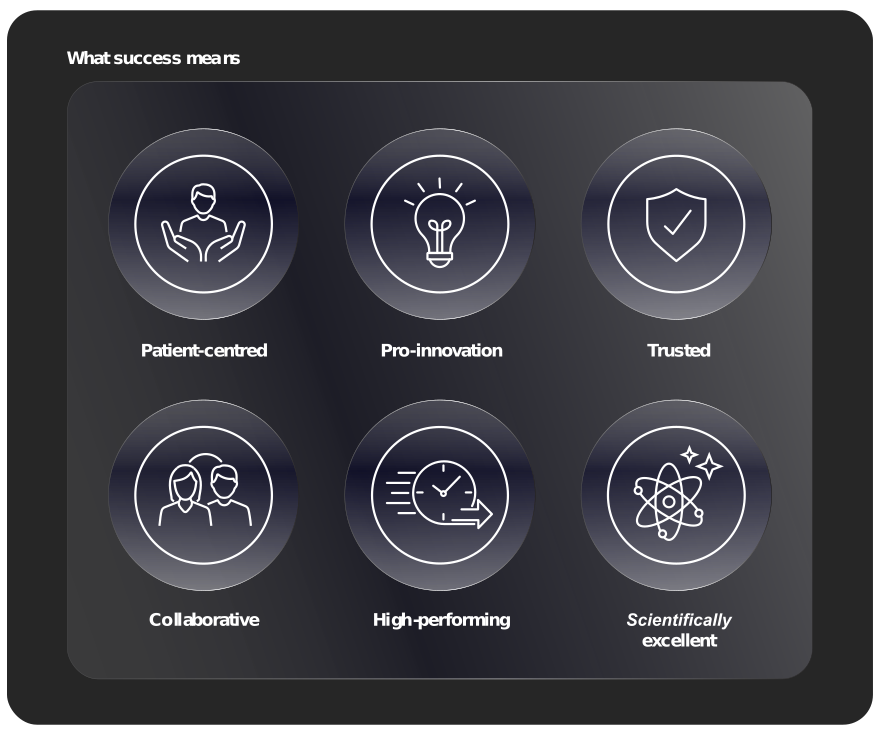
Delivering our ambitions
This strategy sets out at a high level how the MHRA will respond to significant scientific, technological and global change with clarity, rigour and a continued focus on patient safety and public benefit. As medicines, medical devices and digital technologies evolve, our role remains constant: protecting patients, supporting access to safe and effective products, and enabling responsible innovation that benefits the health system, the economy and society.
By strengthening our scientific foundations, modernising regulatory pathways and making greater use of data, digital tools and international collaboration, we will continue to take timely and proportionate decisions that people can trust.
Delivering this ambition depends on strong collaboration across the system. We thank patients and the public, healthcare professionals and system partners, industry and innovators, and international counterparts for their continued engagement and shared commitment. By working together with openness, integrity and shared purpose, we will ensure the MHRA remains a trusted regulator, grounded in scientific excellence, which protects public health while supporting longterm innovation and prosperity.
-
Under current legislation, these can only be undertaken by Approved Bodies. ↩