Low Pay Commission Report 2025 (HTML)
Updated 18 March 2026

© Crown copyright 2026
This publication is licensed under the terms of the Open Government Licence v3.0 except where otherwise stated. To view this licence, visit nationalarchives.gov.uk/doc/open-government-licence/version/3 or write to the Information Policy Team, The National Archives, Kew, London TW9 4DU, or email: psi@nationalarchives.gov.uk.
Where we have identified any third party copyright information you will need to obtain permission from the copyright holders concerned.
This publication is available at https://www.gov.uk/government/publications/low-pay-commission-report-2025/low-pay-commission-report-2025-html
Introduction
We, the Low Pay Commission (LPC), are the independent body that advises the Government on the levels of the National Minimum Wage (NMW), including the National Living Wage (NLW). This report – our 27th – provides the evidence and rationale behind our recommendations that apply from 1 April 2026. We submitted our recommendations to the Government on Monday 27 October 2025. Our recommendations were informed by evidence available up to Friday 24 October, so this report does not include any data or forecasts available after this point. The Government announced its acceptance of our recommendations on Tuesday 25 November, the day before the Autumn Budget.
Our recommendations reflect a consensus between all members of the Commission, including representatives of workers, employers, and labour market experts, reached through careful consideration and discussion of the available evidence. For the first time since 2022, we have made our recommendations with a full complement of worker Commissioners.
Our remit was published by the Government on 5 August 2025 (Department for Business and Trade, 2025a). For the NLW, there were three parts to our remit. We were asked to ensure that the NLW did not drop below two-thirds of median hourly earnings for workers in the NLW population. We were also asked to take account of the cost of living, inflation forecasts between April 2026 and April 2027 and impacts on the labour market, business and competitiveness. We explore the relationship between the minimum wage and living costs in Chapter 4, describe how we accounted for future inflation in Chapter 10, and explain the impact this had on our recommendations in Chapter 11.
The remit reiterated that the Government is “committed to removing the discriminatory age bands for adults” but stressed that our recommended rates should consider the risks of youth unemployment in light of emerging and concerning trends for this cohort. This would mean the removal of the 18-20 Year Old Rate. The remit asked us to consult on how this should be achieved. In “seeking to narrow the gap” between the NLW and the 18-20 Year Old Rate for 2025, we were asked to take into account of the effects on employment of younger workers, incentives for them to remain in training or education and the wider economy. For the 16-17 Year Old Rate and Apprentice Rate, we were asked to lift the rates as high as possible without damaging employment.
In our remit, the Government also asked us to gather evidence and publish our findings on what criteria would need to be met for the baseline target of the NLW rate to increase beyond the current two-thirds of UK median earnings level within this Parliament. We will be submitting and publishing our response to this request as a separate report.
As we have noted in recent years, issues with the evidence base continued to make our job more difficult in 2025. In recent years we have highlighted the issues with the Labour Force Survey (LFS) While the LFS sample has improved considerably over the past year, there remains some way to go. In addition, the improvements to the LFS mean that it is difficult to make strong conclusions about labour market movements over the past 12-18 months, as it is not clear whether these changes reflect actual changes in the labour market or measurement changes. We urge the Government to continue to support the Office for National Statistics’ (ONS) ongoing efforts to improve the LFS. We again extend our thanks to HM Revenue and Customs (HMRC) for providing additional data to assist our understanding of the current state of the labour market. Going forward, we will continue to work with HMRC for better and more timely access to its Real Time Information (RTI) data.
We received 95 written consultation responses and met with more than 100 businesses, unions, workers and other bodies across the UK. As ever, we are grateful to all those groups and individuals who contributed to this year’s evidence-gathering process. Appendix 1 lists those stakeholders who responded to our consultation and whom we met over the year, and who agreed to be listed. Alongside this report, and where respondents have consented to this, we will publish written submissions to our consultation.
This report is structured as follows:
- Chapter 1 sets out the state of the UK economy based on the data available at the time we made our recommendations.
- Chapter 2 considers recent developments in the labour market.
- Chapter 3 looks in more detail at who minimum wage workers are and their experiences in and out of the workplace.
- Chapter 4 explores various measures of living standards, particularly those for low-income households, and their relationship to the minimum wage.
- Chapter 5 looks at the strength of the labour market for workers eligible for the NLW.
- Chapters 6 and 7 do the same as Chapter 5, but for younger workers affected by the age rates of the NMW and apprentices respectively.
- Chapter 8 then looks at other ways employers have responded to the rising minimum wage, including through raising prices and improving productivity.
- Chapter 9 considers the workings of the minimum wage, including the Accommodation Offset and certain aspects of compliance and enforcement.
- Chapter 10 discusses the path of the NLW to 2025, how we have taken account of future inflation, stakeholder views on the prospective NLW rate, and potential approaches to reducing the NLW age to 18.
- Chapter 11 sets out our recommendations and their rationale.
Data, sources and notes for all charts can be found in the data tables published alongside this report.
The Government’s Remit to the Low Pay Commission
Executive Summary
This report sets out the Low Pay Commission’s (LPC) advice to Government on the National Minimum Wage (NMW) and National Living Wage (NLW) rates that should apply from April 2026. It brings together the evidence we reviewed, the challenges we faced, and the judgements we made when agreeing our recommendations in October 2025. All analysis in the report reflects the evidence available up to 24 October 2025, when we submitted our recommendations to the Government.
To reach our recommendations, we look at the wider economy, labour market trends, living costs and how the NLW compares with two-thirds of median hourly pay. This latter benchmark is the international threshold for low pay and our remit from the Government asks us to ensure the NLW does not fall below it.
Two issues made our task harder this year. First, the rise in employer National Insurance contributions (NICs) happened at the same time as the NLW increase in April 2025, making it difficult to separate the impact of each. Second, although the Labour Force Survey (LFS) response rate has improved, comparisons over time remain unreliable.
The economy and labour market
Economic growth has been uneven since the downturn at the end of 2023. Forecasts for 2025 and 2026 suggest modest improvement (growth of around 1.4 and 1.2 per cent), but still well below the rates seen in earlier decades. Productivity growth remains weak.
Stakeholders told us that general economic uncertainty, policy related costs (including employer NICs), high interest rates, and weak consumer demand continue to constrain activity. Even though real household incomes have risen recently, people are still choosing to save more, and this is holding back spending in consumer-facing sectors where many low-paid workers are employed.
Inflation has come down from its 2022 peak, but remains above the Bank of England’s 2 per cent target and higher than in many European countries. While price rises have slowed, overall prices are still high, and workers and unions told us that they continue to feel intense cost of living pressures.
Signs of labour market weakening have become clearer. Payroll employment fell from late 2024 to mid-2025 before stabilising. Unemployment has risen, and vacancies have dropped below pre-pandemic levels. We agree with the view that the labour market is currently “low hire, low fire”: there is weaker recruitment, but only slight increases in redundancies.
Despite the softening in the labour market, wage growth over the past year has proven robust and exceeded forecasts. Nevertheless, the increase in labour market slack over the past year is expected to slow pay growth going forward.
The low-paid labour market
Some lower-paying sectors have been hit harder than the labour market overall. Retail and hospitality vacancies are well below pre-pandemic levels, and hospitality employment has fallen sharply: payroll data suggest over 70,000 jobs have disappeared since a peak of 3.5m in June 2023, and sector output remains below pre-pandemic levels.
At first glance, this might indicate a minimum wage effect, but other factors are also important. Firms in these sectors told us that weak consumer spending and uncertainty about future economic conditions are notable among these. Employers also told us the changes to NICs were significant and unexpected. These changes raised labour costs, particularly in low-paying sectors, and hit part-time workers, who are prevalent in these sectors. Many employers told us it compounded the impact of the NLW increase. Evidence from the Chartered Institute of Personnel and Development (CIPD) suggests that even among firms most affected by the NLW, more viewed NICs as the bigger cost pressure.
The National Living Wage
We expected NLW coverage – the number of jobs paid at the wage floor – to rise this year. Instead, despite the NLW reaching its highest “bite” (its value as a share of median pay) on record, coverage has fallen. It remains below both its pre-pandemic level and its level when the NLW was first introduced in April 2016. This is despite the eligible population rising over this time as the NLW’s age threshold has fallen from 25 to 21.
NLW increases continue to narrow pay differentials between jobs paid at the wage floor and those paid slightly above it. Many employers worry about this, saying it limits progression opportunities and affects morale. Several told us they have reached the limits of how far differentials can be squeezed.
Considering all the evidence, our judgement is that recent NLW increases have not had a significant negative impact on employment. Areas with higher NLW coverage have generally seen smaller falls in employment than other parts of the country. We also saw a rise in the number of workers moving off the wage floor into better-paid roles, suggesting some continued demand for labour.
However, employers continue to report difficulties in meeting NLW costs, especially when combined with the NICs increase. While more employers told us they had reduced employment through recruitment or redundancies than in previous years, this remains a less common response. The most common responses remain absorbing costs or raising prices, though the latter is becoming more prevalent. However, while the NLW is a major cost driver in some sectors, our latest analysis reaffirms that the NLW has only a minimal impact on headline inflation.
Youth and apprentice labour markets
The remit sets out the Government’s desire to balance its ambition to lower the NLW age of entitlement to 18 with its concern about youth unemployment. The youth labour market is of concern to us. A “low hire, low fire” labour market is a challenge for young people as they are more dependent on vacancies. Older workers are more likely to already be in work and so are more protected in a “low fire” labour market. There has also been a continuing rise in the rate of young people not in education, employment or training (NEET).
Young people are also more likely to work in hospitality and retail, which have seen significant falls in vacancies and employee numbers. As we discuss in Chapter 5, it is difficult to separate out the NMW effects from other pressures on these sectors, such as consumer spending, NICs changes and monetary policy.
The last two increases in the 18-20 Year Old Rate were relatively large in both cash and percentage terms. And while coverage has increased, our assessment is that the evidence is not sufficient to say that these increases have affected young people’s employment overall. Instead, a number of factors are at work both on the supply side, such as ill health, and the demand side, such as falling vacancies. Young people are more likely to work in the low-paying consumer-facing services hit by weak consumer spending. These industries were also hit by the NICs increase, even though younger workers themselves do not attract employer NICs. This is discussed in detail in Chapter 6.
Commissioners are mindful though that meeting the Government’s ambition to lower the NLW age threshold to 18 within this parliament necessitates large increases in the wage floor for 18-20 year olds. In our consultation this year, we asked for stakeholders’ views on ways of doing this, including moving 20 year olds onto the NLW in 2026, which would have meant an increase of over 25 per cent in their wage floor. Given the state of the youth labour market and stakeholder feedback, we think this is too risky and have decided against making this change this year. Instead, we recommend keeping 18-20 year olds together for another year. Our full recommendation is set out below.
Across the UK, the labour market data points to weakening demand for apprenticeships, particularly at the levels and age profiles most likely to be paid at or near the Apprentice Rate. Unlike in previous years, this picture holds across Scotland and Wales as well as in England. This is in line with the long-term picture. Although we are confident the minimum wage has not been a significant driver of this over the long term, we cannot rule out that the Apprentice Rate (and other rates) have an effect on employers’ willingness to offer apprenticeships and other forms of training. Forthcoming reforms to apprenticeships are likely to affect employers’ decisions, but the details of these reforms were still limited at the time of our recommendations.
Living standards
Despite recent falls, inflation is above target and price levels remain very high. However, the NLW has more than kept pace with price rises and rose to its highest ever level in real terms with the April 2025 uprating.
These hourly pay rises have also translated into weekly pay rises that outstrip price growth. Since the NLW’s introduction in 2016, the median weekly wage has only risen by 4 per cent in real terms. By contrast, the weekly pay of NLW earners has increased by 20 per cent in real terms, slightly less than the NLW ‘s 23 per cent.
However, for a variety of reasons, these weekly pay rises don’t translate directly into improvements in household income or lower poverty. One reason is that many NLW jobs are part-time. Even with substantially higher hourly pay rates, these jobs’ low hours will never be enough to have a significant impact on household income. Another reason is that NLW households tend to be larger, often including other workless adults, and so any earnings gain is spread thinner. Finally, while earnings for NLW workers have risen faster than for other workers on average, this can be offset by a reduction in benefits income.
These issues help explain why workers and unions feel that NLW increases have been insufficient to mitigate higher living costs. Some workers said they didn’t feel the impact of the NLW increase because ”everything else went up, too”, and another told us that they still have to “pick between food, energy bills and paying rent.” Usdaw’s Cost of Living Survey in June 2025 found that 67 per cent of respondents felt worse off compared with five years ago.
In addition to issues around pay, unions highlighted continued insecurity over hours and limited progression opportunities. Some workers are experiencing work intensification while many are not able to secure the additional hours they want. Others are working very long hours just to make ends meet.
Our recommendations
National Living Wage
Our remit from the Government asks us to do the following when recommending the NLW rate for 2026:
- Ensure that the rate does not drop below two-thirds of median earnings for workers in the NLW population.
- Take account of the cost of living, including inflation forecasts between April 2026 and April 2027.
- Take account of the impact on business, competitiveness, the labour market and the wider economy.
Determining a recommended rate that meets the remit’s target of “not below” two-thirds of median earnings involves a series of judgements. It requires us to estimate what median hourly pay will be in a year’s time (October 2026). For this, we rely on data on earnings that involve estimates and forecasts. Navigating the uncertainty around these estimates and forecasts requires judgement. There are also ongoing problems with a wide range of official data sources that inform our decisions. In addition, Commissioners need to make wider judgements about the impact of their decisions on workers, the economy and the labour market.
Balancing all of these factors, we recommend an NLW increase of 4.1 per cent to £12.71 (a 50 pence per hour increase). This increase meets the Government’s target of two-thirds of median earnings for those aged 21 and over in 2026, reflects prevailing economic and business conditions, and exceeds expected inflation between April 2026 and April 2027, giving workers a real-terms pay rise.
Youth rates of the minimum wage
We have debated how to balance the Government’s ambition to lower the NLW age to 18 with its desire to avoid causing youth unemployment. In light of youth labour market conditions, we judge it better to take a cautious approach and backload the increases needed to reach alignment. We therefore recommend a rate of £10.85 per hour for the 18-20 Year Old Rate, a rise of 8.5 per cent (85 pence). This is lower than the double digit increases we have recommended in recent years and the increase of over 25 per cent that 20 year olds would have needed if they were to become eligible for the NLW in 2026.
Our proposed pathway to meeting the Government’s ambition is to reduce the NLW eligibility age to 20 in 2027. The evidence, including our consultation, suggests that the labour market treats 20 year olds differently to 18 and 19 year olds, and that around 70 per cent of 20 year olds are already paid at or above the NLW. Thereafter we also propose that 18 and 19 year olds will move together so that the NLW age will be lowered to 18 in 2028 or 2029. However, all of this will be subject to economic conditions and Government policy towards young people at the time. We will consult further with stakeholders on this approach.
For 16-17 year olds we recommend an increase of 6 per cent (45 pence) to £8.00 per hour. This recommendation balances the weaker labour market for this age group with the need to ensure their rate does not become unmoored from the adult rate, particularly as government policy is to remove the 18-20 Year Old Rate entirely, thus potentially creating a larger gap with this rate.
Accommodation Offset
We recommend increasing the Accommodation Offset in line with the NLW to £11.10 (an increase of 44 pence or 4.1 per cent). This is in line with the conclusion of our review of the offset in 2022, where we stated that: “The value of the offset as a proportion of the NLW will not increase significantly until we have some assurance that there are robust minimum standards in place for accommodation quality and that these are enforced.” We note that stakeholders, including UKHospitality, have offered their assistance in establishing a solution to the question of how quality is assured in accommodation.
Recommendations
Rate recommendations
We recommend that the following rates apply from 1 April 2026:
| 2026 rate | Annual increase (£) | Annual increase (per cent) | |
|---|---|---|---|
| National Living Wage | £12.71 | 50p | 4.1 |
| 18-20 Year Old Rate | £10.85 | 85p | 8.5 |
| 16-17 Year Old Rate | £8.00 | 45p | 6.0 |
| Apprentice Rate | £8.00 | 45p | 6.0 |
| Accommodation Offset | £11.10 | 44p | 4.1 |
Policy recommendations
It remains our recommendation that the Government ensures the question of sleep-in shifts’ entitlement to the minimum wage is addressed in the planned Fair Pay Agreement for the social care sector. We discuss this issue in Chapter 9.
Chapter 1: Economic Context
Key findings:
- This chapter focuses on inflation and the macroeconomic context. Like all the chapters in this report, it is based on evidence available to us up to 24 October 2025 – This was when we agreed our recommendations that were set out in a letter sent to the Secretary of State for Business and Trade and the Prime Minister on 27 October.
- Inflation has come down from its peaks in 2022 and 2023 but has picked up slightly since the end of 2024 – This has been driven by groceries and utility bills. It was expected to peak in Q3 2025.
- Inflation is expected to slow back towards target by April 2027 – However, food prices, energy bills and rents remain elevated, limiting consumers’ ability to spend on non-essential goods and services.
- The economy has recovered from the downturn in 2023 and met expectations of modest growth in 2024 and so far in 2025 – As in 2024, the economy grew strongly in the first half of 2025 but has weakened going into the third and fourth quarters.
- Real GDP per head has grown for six consecutive quarters and is now above its pre-pandemic level – This follows six consecutive quarters of decline.
- Unlike recoveries from earlier recessions, consumer spending has been weak – Despite real household disposable incomes rising since the end of the pandemic, consumer spending remains flat. Instead, consumers are saving more and this has been reflected in the economic performance of consumer-facing (low-paying) services.
- The outlook for the economy is that modest growth is set to continue over the next two years – Inflation is likely to have peaked in the third quarter of 2025 and slow towards target by 2027. As inflation wanes, interest rates are expected to fall, boosting the economy. However, economic uncertainty about trade and future tax policy also weigh heavily on the economy.
The Government asked us to recommend a National Living Wage (NLW) that takes account of the impact on business, competitiveness, the labour market, the wider economy and the cost of living, including inflation between April 2026 and April 2027. This chapter discusses evidence on the wider economy and inflation that was available up to 24 October 2025.
Inflation
Last autumn, inflation was expected to peak by the start of 2025, with economic growth forecast to remain modest
When we made our recommendations in the autumn of 2024 for minimum wage rates in April 2025, we noted that Consumer Price Index (CPI) inflation had slowed to 1.7 per cent in September 2024. Core and services inflation, along with pay growth, remained elevated but were on a downward trajectory. Despite forthcoming increases in utility bills, CPI inflation was expected to peak at below 3 per cent by the end of 2024 and then slow to around 2.1 per cent by the end of 2025 and remain at this level in March 2026.
However, inflation has proved more persistent than expected, with CPI inflation rising above 3 per cent for much of 2025. It was 3.8 per cent in September 2025 – the latest data available to us when making our recommendations in this report.
Increases in interest rates intended to help tackle the recent high inflation have affected the economy. GDP growth in 2023 was just 0.3 per cent. However, as interest rates have fallen, growth has been stronger. We noted that the robust recovery in the first half of 2024 had raised GDP to 2.9 per cent above its pre-pandemic level in the second quarter of 2024. Despite that, growth in GDP per head was much weaker and remained below its pre-pandemic level.
In the autumn of 2024, with inflation slowing and interest rates expected to fall further, expectations of GDP growth were revised up for 2024 and 2025 but, at around 1.0-1.5 per cent, were still weak by historical standards. These expectations have been realised with growth of 1.1 per cent in 2024 and around 1.3 per cent in the twelve months up to August 2025.
Inflation has proven more persistent than expected
As we noted in our 2024 Report, inflation had been on a downward trajectory since the end of 2022. It was expected to rise to nearly 3 per cent in the near term – partly as a result of pre-announced increases in utility bills to be implemented in the autumn of 2024. Price inflation slowed in the year to September 2024 but has since picked up again, going above the expected peak of 3 per cent.
Since April 2025, the rate of inflation has been much higher than in comparable countries. In September 2025, the harmonised index of consumer prices (HICP is the same as CPI in the UK) was 3.8 per cent in the UK, but only 2.2 per cent in the euro area (2.4 per cent in Germany, 1.8 per cent in Italy and 1.1 per cent in France).
Core inflation provides a better guide to the underlying price pressures in the economy by removing the more erratic components of the CPI – energy and food. While it fell back to around 3.5 per cent in May 2024, it has stayed at this level for over a year, suggesting some persistence.
To try to return inflation to its 2 per cent target, the Bank of England (the Bank) increased interest rates gradually from 0.1 per cent at the start of December 2021 to 5.25 per cent in August 2023. The sharp slowing of inflation that followed allowed the Bank to begin lowering interest rates in August 2024 and they have now fallen to 4.0 per cent. The Bank had expected to lower interest rates further but has been reluctant to do so while inflation has been more persistent than anticipated.
As shown in Figure 1.1, CPI inflation has picked up from 1.7 to 3.8 per cent over the year to September 2025. Inflation measures that include housing costs and mortgage payments have been higher, with the consumer price index including housing costs (CPIH) rising from 2.6 to 4.1 per cent over the same period. The Housing Cost Index for all households (HCI all) reached 3.9 per cent in June 2025 (the latest available data).
Figure 1.1: Measures of consumer price inflation, UK, 2017-2025
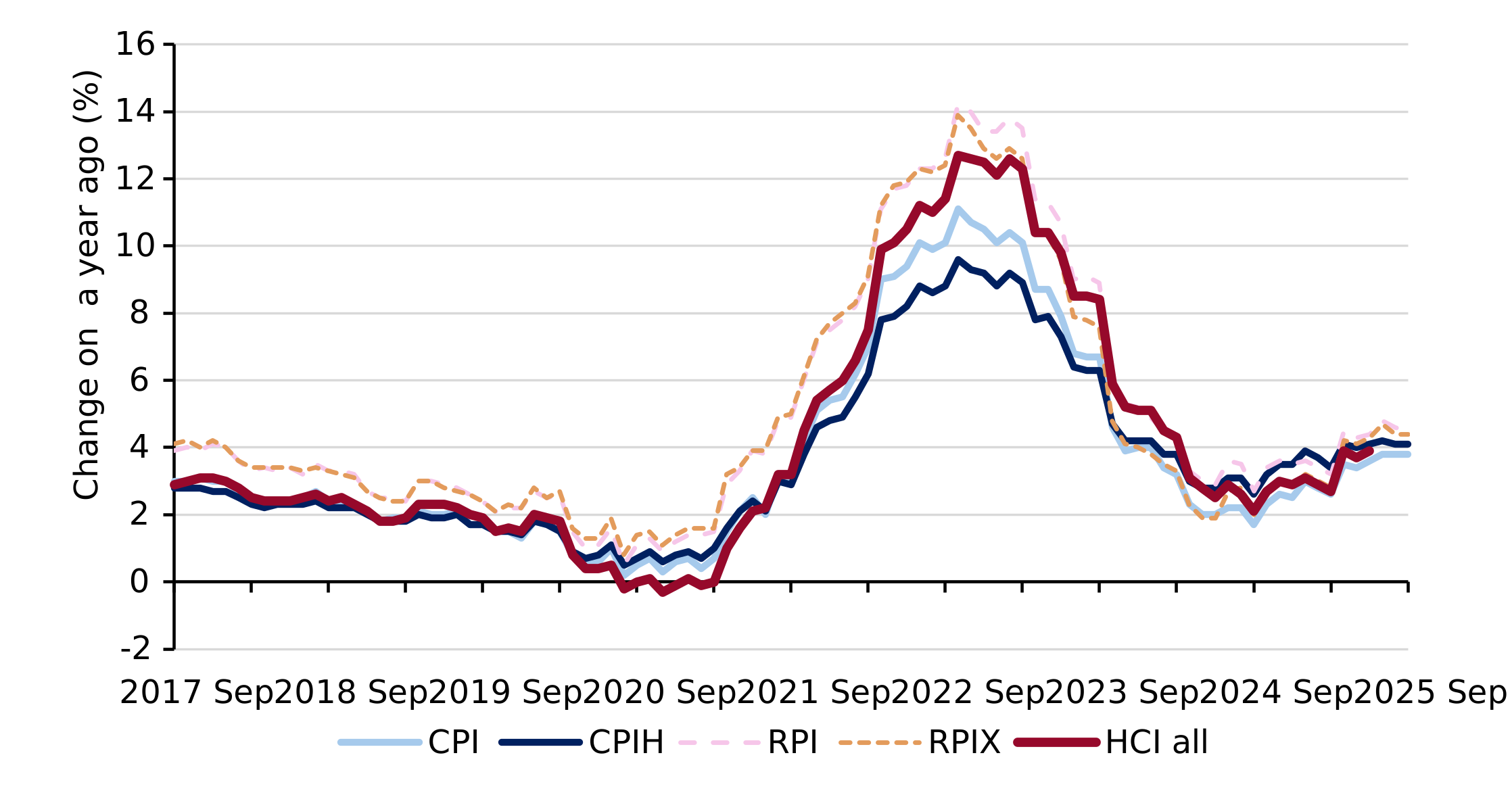
Figure 1.1 also shows that while inflation has increased across all measures, they have converged recently. CPIH is now only 0.3 percentage points ahead of CPI compared with 0.9 percentage points a year ago. The Retail Price Index (RPI) and Retail Price Index excluding mortgage payments (RPIX) have also shown similar trends. Despite having a number of methodological issues, no longer having ‘national statistic’ status[footnote 1] and a skew towards higher spending households, some parts of the Government and some sectors still use RPI and it can feature in pay bargaining as some unions believe that it better represents inflation for workers.[footnote 2] Also, RPI and RPIX are still used to uprate some prices, such as rail fares and some mobile phone contracts. RPI was 4.5 per cent and RPIX 4.4 per cent in September 2025.
Inflation has been driven by increases in food prices, utility bill increases and other administered prices
In his 18 September 2025 letter to the Chancellor (Bank of England, 2025g), the Governor of the Bank of England explained that increases in food prices and administered prices (set by the Government or by independent regulators) were the main factors for inflation being more than 1 percentage point away from the 2 per cent target. He specifically mentioned water bills and Vehicle Excise Duty. However, he could also have included other prices, such as energy bills, train fares, bus fares, postal charges, Council Tax, VAT on private school tuition fees, and duties on alcohol and tobacco. Those linked to RPI have increased faster.
Some firms sought to pass these costs on to consumers through prices. The Institute for Fiscal Studies (IFS, 2025) estimated in its Green Budget that increases in indirect taxation and administered prices have added 0.7 percentage points to the current level of inflation. In addition, changes to employer National Insurance contributions (NICs) that were implemented in April are estimated to have added 0.2 percentage points to the annual inflation rate. The Bank of England (2025i) reported in September 2025 that 38 per cent of firms in the Decision Maker Panel had responded to the NICs changes by raising prices, although that was lower than the 61 per cent that had expected to do so in January 2025. (In Chapter 5, we discuss in more detail how employers have responded to NICs changes.) Taken all together, tax and administered prices have accounted for just under 1 percentage point in CPI inflation since April 2025. Inflation would have been about 2.9 per cent in August 2025 without these.
Prices of essential goods and services are substantially higher than they were four years ago.
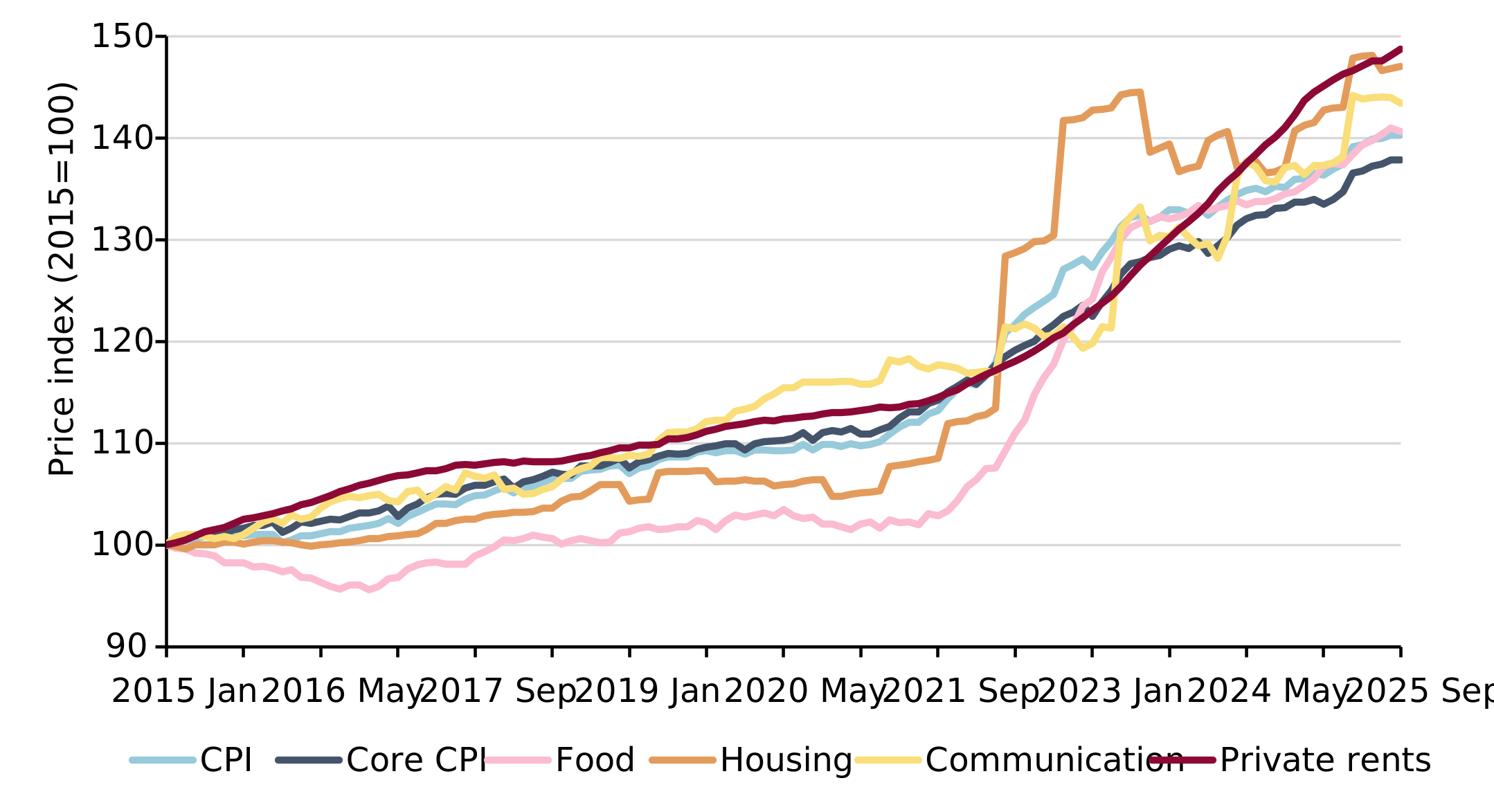
While inflation has eased recently, prices are still much higher (in September 2025) than they were in March 2022. This is particularly true for essential items such as food, rents, and housing and household services. While CPI has increased by 19.0 per cent since March 2022 (and core CPI by 17.1 per cent), food has increased 30.7 per cent, housing and household services (mainly utility bills) by 29.7 per cent, rents by 27.0 per cent and communications (including mobile phones and the internet) by 22.6 per cent. This increase in essential items is why the cost of living continues to be a major concern for all households, but particularly those with the lowest incomes, a theme we will look at in greater detail in Chapter 4.
Figure 1.2: Selected CPI component price indices, UK, 2015-2025
Producer input prices and business-to-business prices have moderated over the last year
The prices discussed so far have been those faced by consumers. A key driver of the prices businesses charge to consumers is the cost of their inputs. The prices of these inputs are measured by producer price indexes. Figure 1.3 shows that producer input price inflation accelerated as the UK emerged from the pandemic and that these spikes tend to show up in consumer inflation shortly afterwards. Producer input inflation slowed quickly thereafter with inflation close to zero since the third quarter of 2023. That slowdown was reflected in producer output prices (and to a lesser extent in CPI and services producer prices).
However, producer output price inflation has increased in 2025, rising to 3.1 per cent in the third quarter. The main contributors to this increase were food products, and motor vehicles and other transport equipment. Mrabet and Page (2023) estimated the inflation effects of the energy and food cost shocks in 2022. They found that, if the pass-through in prices was gradual, incomplete and asymmetric, these effects would persist as firms tried to rebuild margins. They estimated that it would on average take about 15 quarters for 80 per cent of the pass-through in prices in services industries, but only 8 quarters for manufacturing. That might help explain some of the persistence in inflation recently observed.
Figure 1.3: Producer price and consumer price inflation, UK, 2005-2025
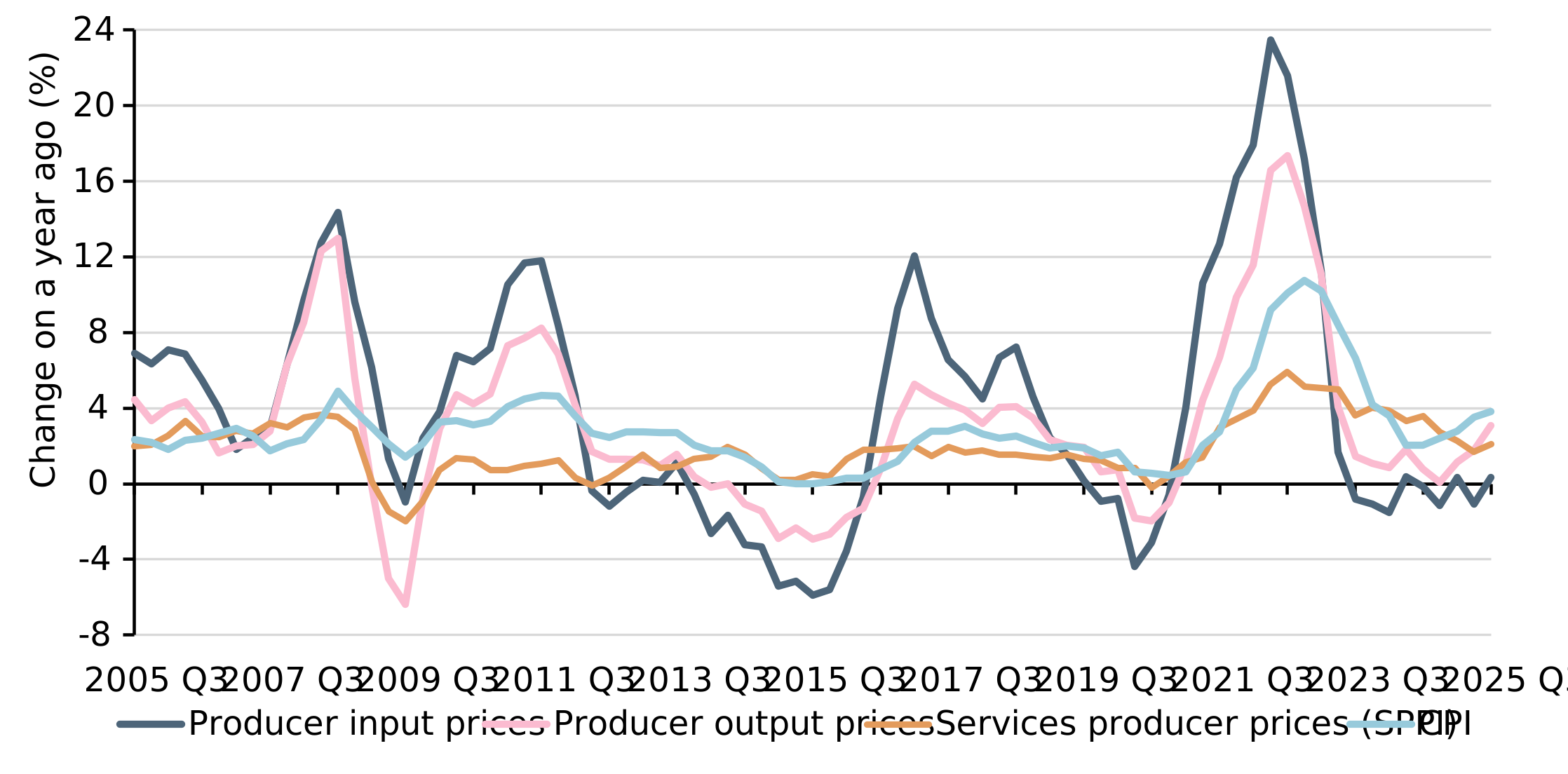
As with consumer prices, the levels of producer input, producer output and services producer prices are much higher in the third quarter of 2025 than they were in the first quarter of 2021.
Labour costs are the main factor driving price rises as energy and raw material price increases have slowed
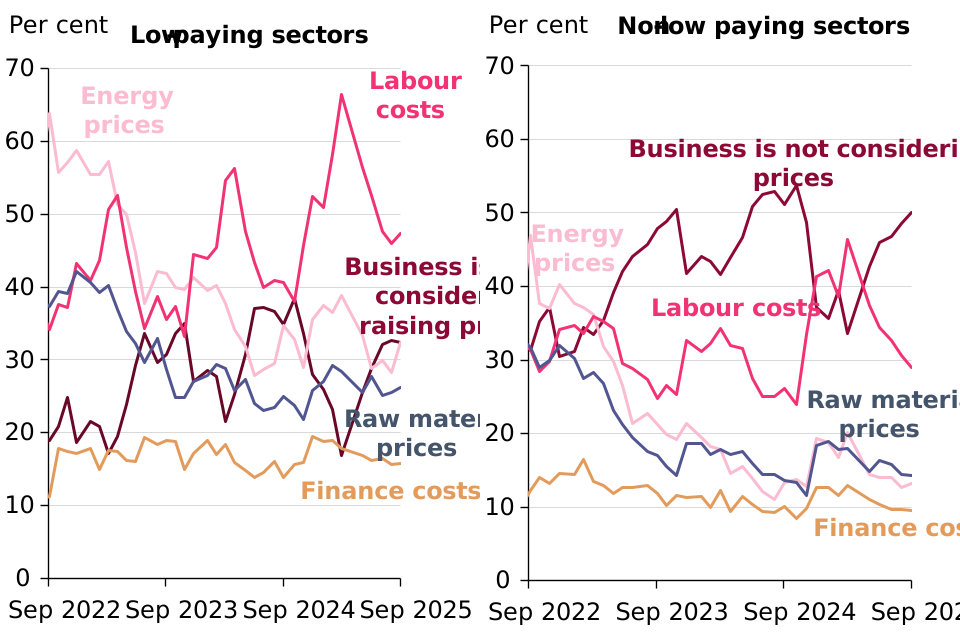
Changes in employer NICs and the recent increases to minimum wage rates have put some upward pressure on labour costs. According to the ONS Business Insights and Conditions Survey (BICS), as shown in Figure 1.4, the share of firms considering price increases is much higher in the low-paying sectors (around two-thirds) than in the rest of the economy (around a half). Low-paying sector firms are much more likely than non low-paying firms to cite all the cost factors, particularly labour costs, when considering price increases.
Across all firms, cost pressures from energy, raw materials, and finance increased between September 2024 and April 2025 but have since returned to the levels reported a year ago. The pressure from labour costs on prices has softened since April but follows a clear seasonal pattern, particularly among low-paying sector firms, with peaks in April of each year (2023, 2024 and 2025). This April peak coincides with NMW upratings and is in line with evidence from our stakeholders that prices are one of the main ways they respond to rate increases. However, there are other drivers of employer costs that occur in April. The April peak on the left hand panel of Figure 1.4 coincides with changes to employer NICs which significantly increased labour costs. We investigate the relationship between minimum wage increases and prices in Chapter 8, and the impact of the National Insurance changes in Chapter 5. Our analysis continues to find that while the minimum wage is an important cost driver in some industries, its impact on headline measures of inflation is negligible.
Figure 1.4: Factors firms in low-paying (LHS) and non-low paying sectors (RHS) say are causing them to consider price rises, UK, 2022-2025
The Bank of England has a network of regional agents that continually survey business conditions and produce scores that show economic trends. The Bank of England (2025e) reported in September that margins were under pressure from higher costs and weak demand. Consumer goods inflation was generally low in categories other than food, and was expected to remain so. However, commodity and labour cost pressures were expected to lead to food price inflation rising to 5.0 to 5.5 per cent by the end of the year before easing back in 2026. Consumer services inflation had stabilised but, with businesses passing on higher labour and food costs, it was likely to remain elevated this year. Regional agents’ contacts did highlight concerns about increases in business rates and other potential tax changes. Nevertheless, price increases were likely to be limited by weak demand.
Inflation is expected to have peaked in the third quarter of 2025 and then slow, reaching two per cent by the second quarter of 2027
Figure 1.5 shows that CPI inflation was expected to peak in the third quarter of 2025 and then fall back towards target in 2026. By April 2027, the Bank of England (2025c), the Office for Budget Responsibility (2025) and the median of the HM Treasury panel of independent forecasters (2025a) all expect CPI to be around 2 per cent. Food and energy price inflation remain elevated but are expected to ease over the coming months. The impact of increases to ‘administered’ prices (prices directly set or influenced by decisions from the Government or regulators) and the changes in employer NICs are likely to moderate (and will fall out of the 12-month comparison). Wage growth and services inflation continue to be elevated but show signs of slowing. Monetary policy continues to be tight although there were some market expectations of a reduction in interest rates before the end of 2025.
Figure 1.5: Actual and forecast inflation, UK, 2020-2028
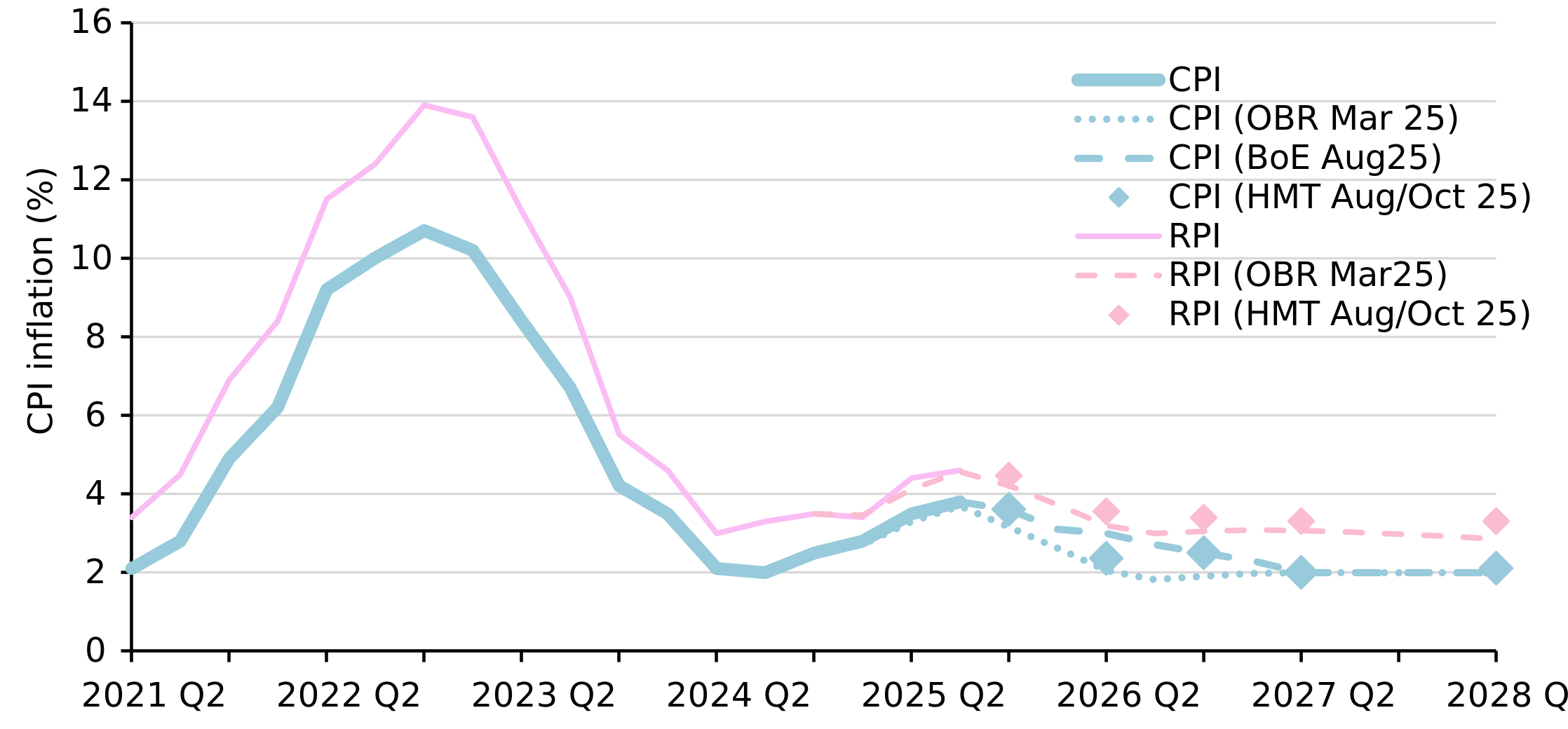
We also wrote to 35 organisations in the HM Treasury panel of independent forecasters requesting quarterly information on price and wage inflation. Only eleven responded and of those only nine gave forecasts for CPI beyond 2026. The median forecast among our respondents has inflation slowing from 3.6 per cent in the fourth quarter of 2025 to 2.4 per cent in the fourth quarter of 2026 and 2.1 per cent in the second quarter of 2027. This is similar to the HM Treasury panel. There was a strong consensus around 1.9-2.3 per cent, but two were outside this range and both forecast over 3 per cent. For completeness, we should note that the median for RPI in the second quarter of 2027 among our panel was 3.2 per cent.
In summary, inflation had increased over the year to September 2025 but looked to have peaked in the third quarter of 2025. Forecasters expected it to fall in 2026 as food and energy prices eased. The consensus of the forecasts was that CPI would be around 2.0 per cent in April 2027.
Growth
GDP growth rebounded in 2024 with a strong first half of the year followed by a weaker second half. That looks set to be repeated in 2025
When we made our recommendations for 2025 in the autumn of 2024, real gross domestic product (GDP) growth was forecast to be around 1.1 per cent in 2024 and slightly higher in 2025. Those modest forecasts look likely to come to pass. GDP did grow by 1.1 per cent in 2024 and is heading for growth of around 1.3-1.5 per cent in 2025. That improves on 2023, when we had a technical recession and growth of only 0.3 per cent over the year.
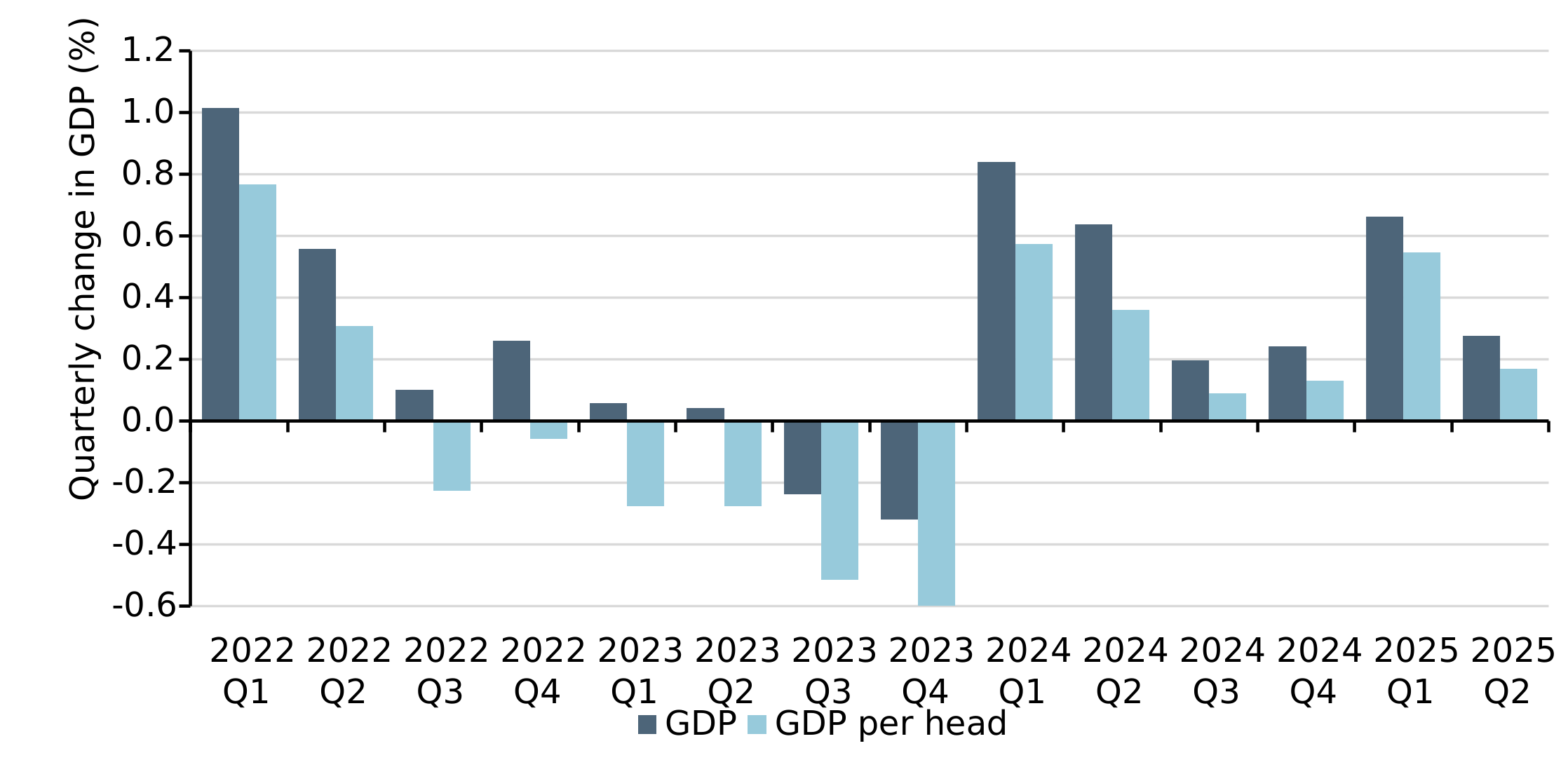
Figure 1.6 shows that 2025 started in a similar vein to the previous three years – stronger growth in the first half of the year followed by weaker growth in the second half. Growth of 0.7 and 0.3 per cent in the first and second quarters was stronger than generally forecast, but an expected weaker second half is likely to bring growth back to last autumn’s forecasts for the year.
Figure 1.6: Real gross domestic product (GDP) and GDP per head, UK, 2022-2025
Real GDP per head has barely grown since the pandemic but it has now increased for six consecutive quarters
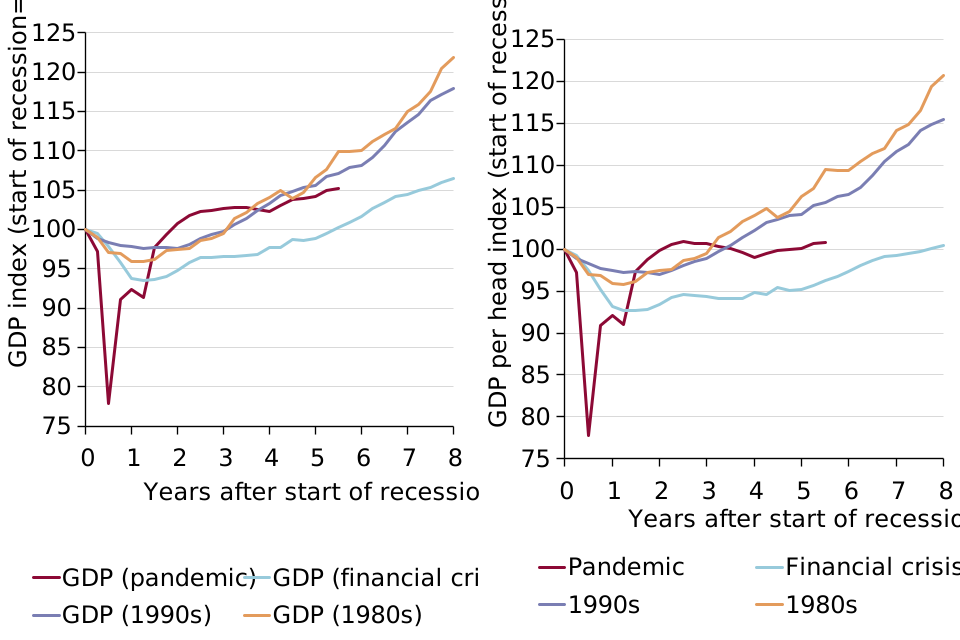
Figure 1.6 also shows that real GDP per head, which takes account of population changes, has increased for six consecutive quarters following six consecutive quarters of falls. However, as shown in Figure 1.7, in the second quarter of 2025 this measure was still only 0.8 per cent higher than in the fourth quarter of 2019, just prior to the onset of the pandemic. Although that is a better performance than after the financial crisis, it lags well behind the recoveries after the 1980s and 1990s recessions.
In contrast, the post-pandemic recovery in real GDP is more in line with those earlier recessions. Real GDP has grown by 5.2 per cent since the onset of the pandemic. After the financial crisis, with the economy still affected by measures to deal with the fall-out, real GDP was still below its pre-recession level after 22 quarters.
Figure 1.7: GDP (LHS) and GDP per head (RHS) compared across recessions, 1979-2025
Productivity growth remains subdued
The weakness in GDP per head is also reflected in the productivity measures. Productivity growth on all three official measures (output per hour worked, output per worker, and output per job) has been weak since the financial crisis and particularly so in the aftermath of the pandemic, as shown in Figure 1.8. Output per hour increased on average by around 2.2 per cent a year between 1971 and the onset of the financial crisis in 2008. Since the start of 2010, it has averaged just 0.5 per cent. The picture is similar for output per worker and output per job.
Figure 1.8: Productivity, 1991-2025
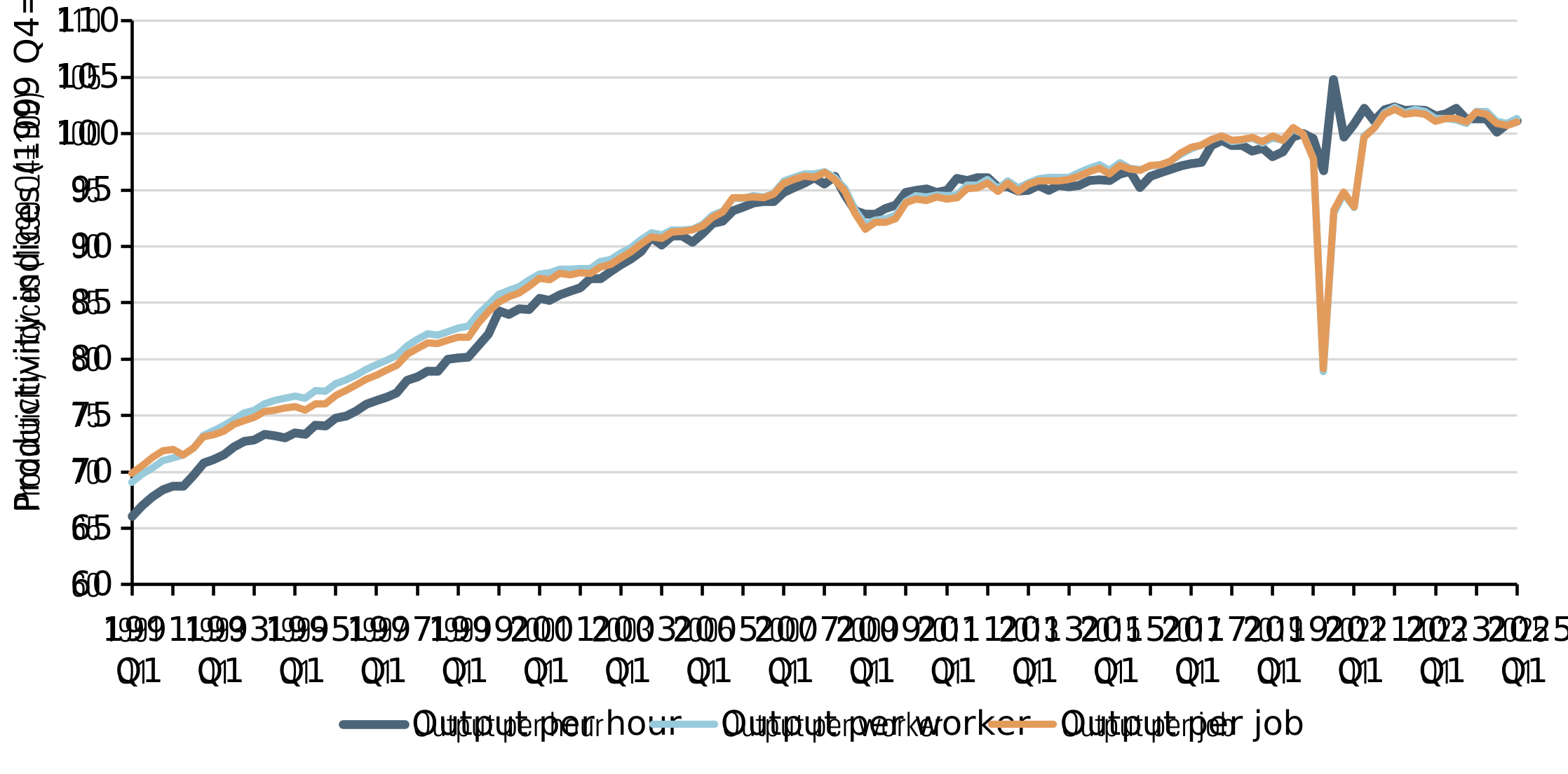
The most recent picture is even weaker. Between the second quarter of 2023 and the first quarter of 2025, productivity has not increased – output per hour fell by 0.6 per cent, output per job fell by 0.3 per cent while output per worker remained unchanged.
Growth in real disposable household income and GDP per head has been weak since the onset of the pandemic
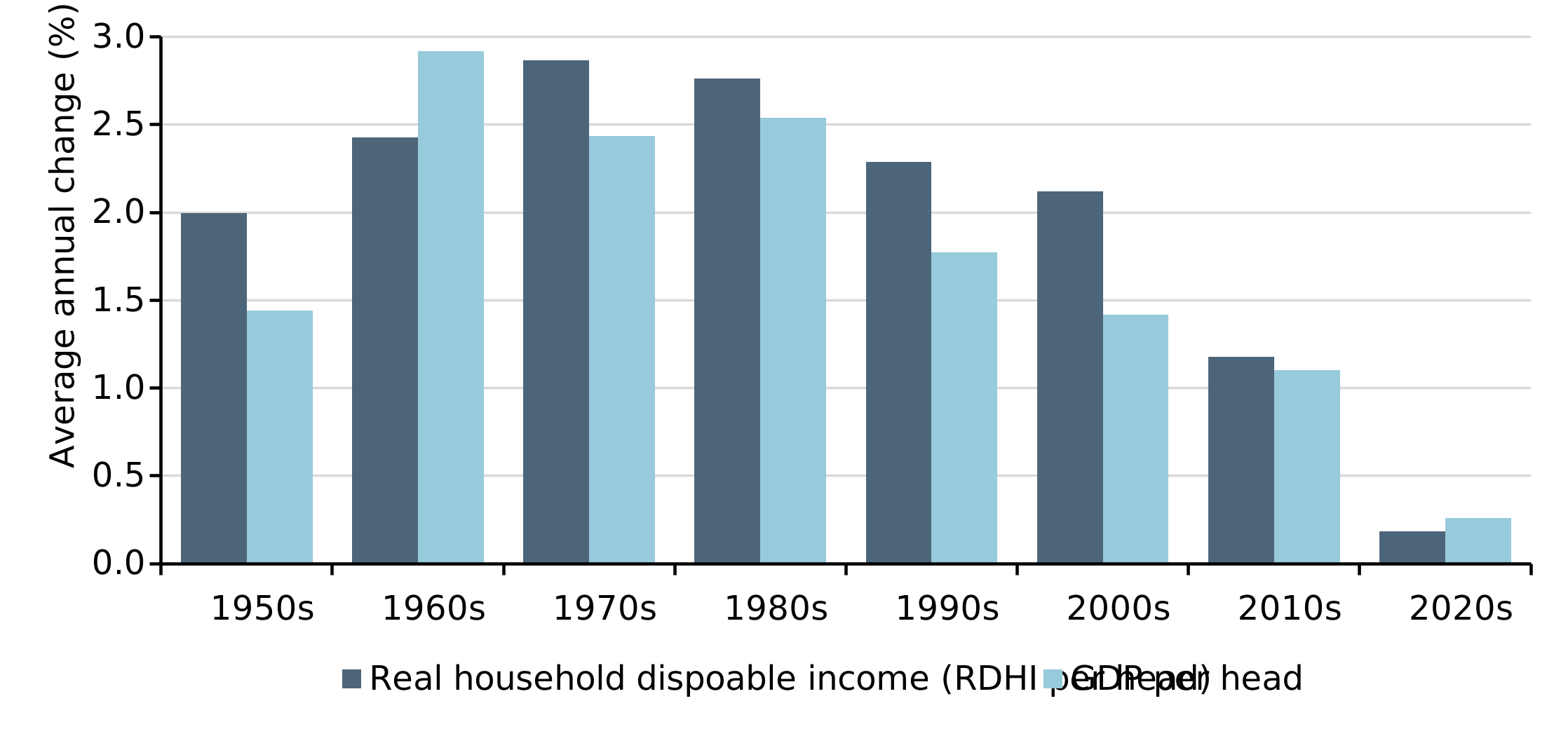
As part of its Plan for Change, the Government published Kickstarting Economic Growth, its plan for rebuilding Britain and raising living standards in every part of the United Kingdom (HM Government, 2024a and 2024b). In measuring progress towards delivering its “milestone of higher living standards in every part of the United Kingdom by the end of the Parliament”, it chose Real Household Disposable Income (RHDI) per person and GDP per capita as the key metrics.
Figure 1.9 shows that the UK has performed particularly poorly on these measures in recent years. RHDI rose by at least 2 per cent a year on average throughout the 1950s to the 2000s, but growth slowed to 1.2 per cent a year in the 2010s and just 0.2 per cent a year in the 2020s so far.
GDP per head has generally been weaker than RHDI across the decades, slowing from average annual growth of 2.9 per cent in the 1960s to 1.8 per cent in the 1990s, 1.1 per cent in the 2010s and just 0.3 per cent since the start of 2020.
The sluggish growth in both living standard measures helps explain why consumer spending has been so weak. As a contribution to GDP, consumer spending has fallen from 61.5 per cent of GDP to 58.9 per cent.
Figure 1.9: Real household disposable income per head and real GDP per head, 1955-2025
Consumer spending has also been weak
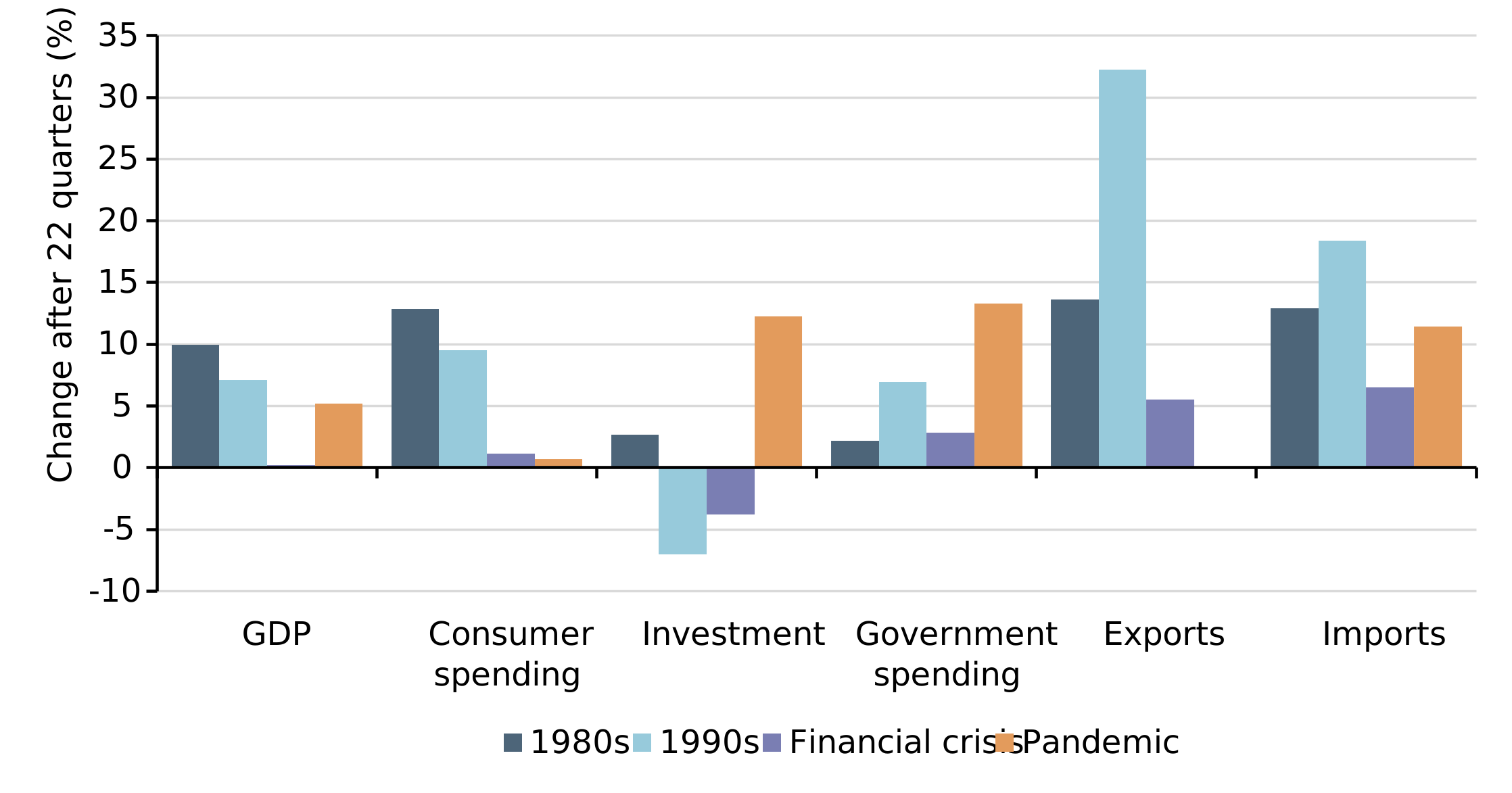
Consumer spending is the largest part of GDP and is key for consumer-facing services like retail and hospitality where many minimum wage workers work. However, consumer spending has increased by only 0.7 per cent in the five and a half years since the pandemic (Figure 1.10). This is a fraction of the growth seen during the equivalent periods after the 1980s (12.9 per cent) and 1990s (9.5 per cent) recessions. Both of these recessions resulted in part from contractionary monetary policy attempting to combat high inflation, which restricted consumer spending and business investment. Despite that, the recoveries after those recessions were mainly driven by consumer spending – as interest rates eased – with trade also playing a role, particularly in the 1990s.
The post-pandemic period has also coincided with the UK changing its trading relationships, particularly with the EU. Recent UK trade agreements have helped to create more certainty but the uncertainty around global tariffs has affected trade. While imports have increased since the end of 2019 by around 11 per cent (not too different from the experiences of previous recoveries), exports have not increased at all. That is in stark contrast to previous recoveries and has acted as a drag on the economy as it recovers from the pandemic.
Figure 1.10: Changes in real GDP expenditure components in the 5.5 years after each recession since 1980, UK
With growth in consumer spending even weaker than the growth in real income, savings have increased
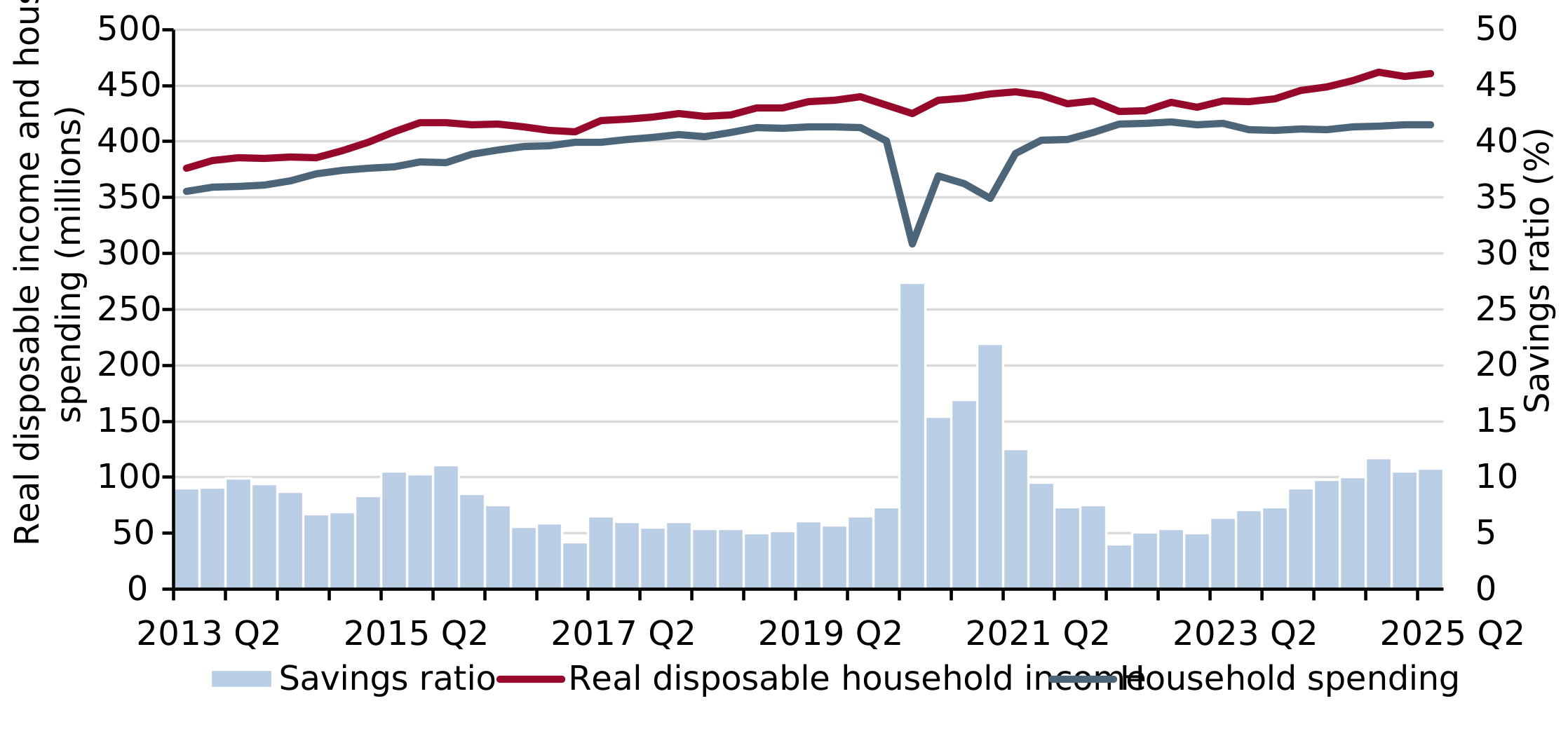
Figure 1.11 shows that while RHDI has increased by 5.9 per cent since the fourth quarter of 2022, real household spending has fallen by 0.6 per cent. As a consequence, savings have increased. The savings ratio has increased from 4 per cent of GDP in the second quarter of 2022 to 10.8 per cent in the second quarter of 2025, much higher than pre-pandemic. It averaged 8.1 per cent between 1997 and 2019.
Figure 1.11: Real household disposable income, consumer spending and savings, UK, 2013-2025
As a result of subdued consumer spending, demand for consumer-facing services, including many low-paying sectors, have been weak
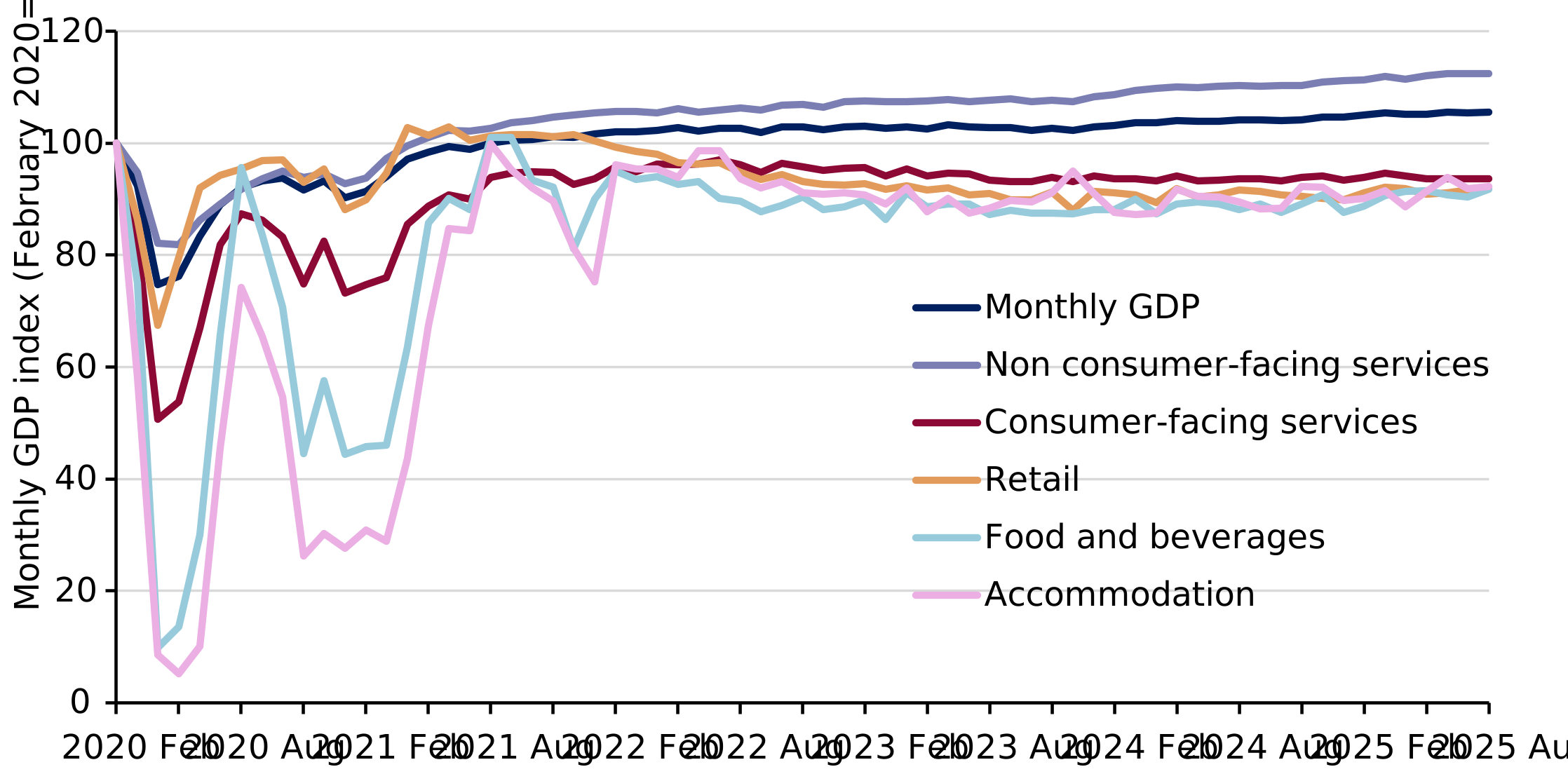
Another consequence of the weakness in consumer spending has been the impact on consumer-facing services, many of which are low-paying sectors that employ workers affected by changes in the minimum wage. While real GDP in August 2025 was 5.5 per cent above its level in February 2020, as shown in Figure 1.12, the real gross value added (a proxy for GDP) of consumer-facing services was 6.3 per cent below its pre-pandemic level. In contrast, real gross value added of non consumer-facing services was 12.5 per cent higher.
Those consumer-facing services with more workers paid at or near the minimum wage – retail, accommodation and food – have performed even worse. Over the same period since the onset of the pandemic, real gross value added has fallen by 7.7 per cent in accommodation services, 7.9 per cent in retail and 8.2 per cent in food and beverages.
An alternative indicator of the health of the retail sector is retail sales. Official data suggest that the volume of retail sales excluding automative fuel fell by 0.4 per cent between February 2020 and September 2025 (with a fall of 1.6 per cent including automative fuel). However, retail sales were boosted during the pandemic as lockdowns prevented people from eating and drinking out. Retail sales volumes excluding fuel in September 2025 were 9.9 per cent below those in April 2021 (9.4 per cent down if including fuel).
Figure 1.12: Gross value added by selected service sector, UK, 2020-2025
Consumer confidence remains subdued with persistent inflation and fears about the economy not offset by recent reductions in interest rates
As shown in Figure 1.13, consumer confidence tends to increase as real household disposable income (RHDI) increases. Increases in real incomes have slowed going into 2025, and this has been reflected in consumer confidence. GfK (2025) reported that consumers’ perceptions of recent economic performance had weakened, and that sentiment about the future economic situation had worsened considerably (down from -15 in August 2024 to -32 in September 2025). It also reported a sharp fall in savings intentions. However, respondents were much less negative about their personal financial situation, with GfK recording a net balance of positive 4 for next year.
Deloitte (2025) also noted that perceptions about the state of the economy had worsened to a two-year low in the third quarter of 2025. Despite that, there have been improvements in its sentiment measures of job security and debt levels, albeit with sentiment lower than at the end of 2024. Increases in inflation were affecting consumers’ ability to spend with confidence, with consumers perceiving that real disposable incomes were falling. Consumers remained cautious about spending, particularly on non-essential items. There was also evidence from both Deloitte and GfK surveys that consumers were price sensitive and were timing major purchases to coincide with special promotions and offers.
Figure 1.13: Consumer confidence and real disposable income, UK, 2005-2025
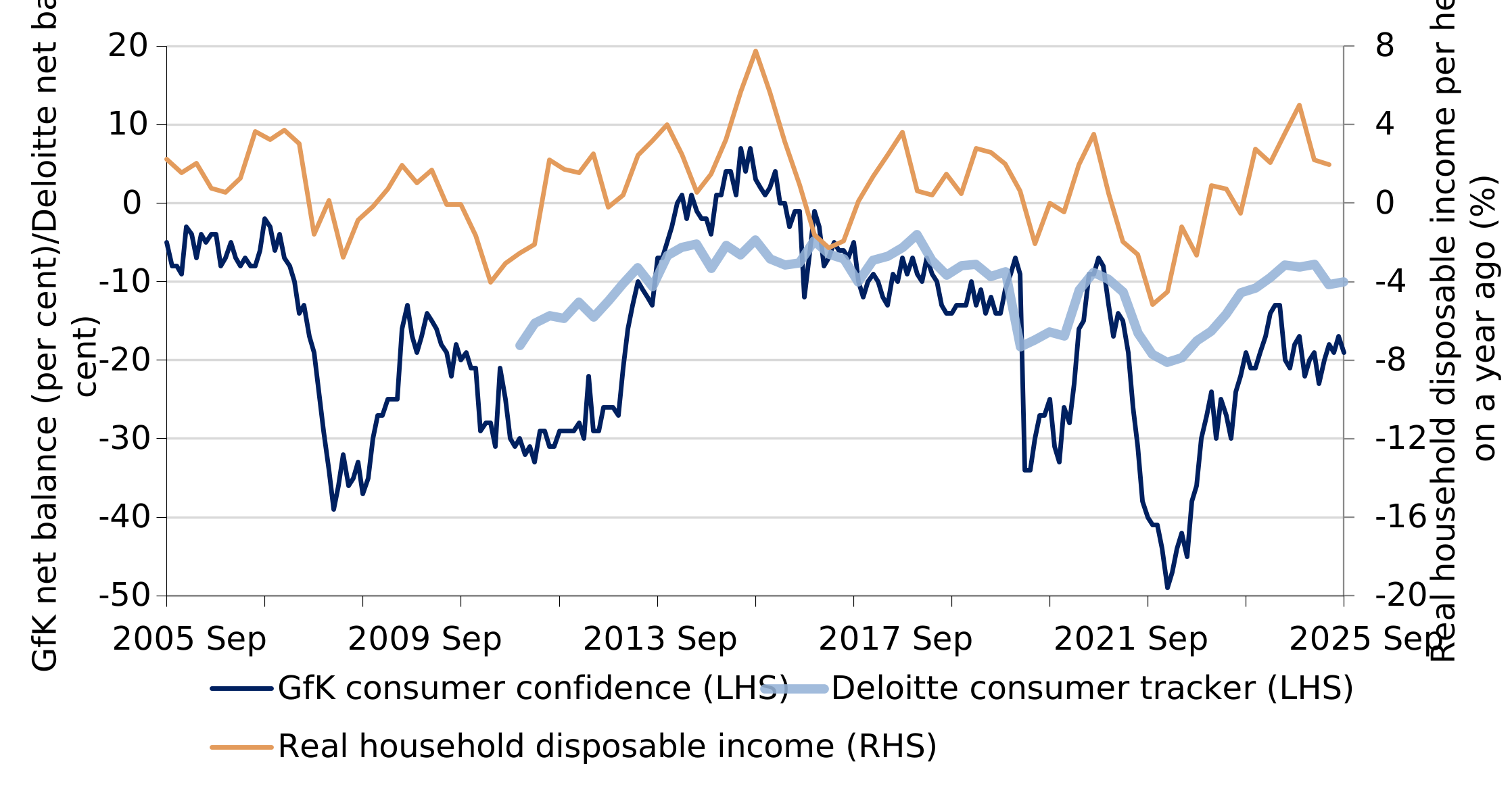
Although consumer confidence remains below what it was pre-pandemic, it is above its levels during the financial crisis, the period of austerity that followed (2013-2020) and the pandemic. Deloitte (2025) concluded that increases in grocery and utility bills alongside concerns about persistent inflation were delaying any sustained recovery in consumer confidence.
Business profit and confidence
Profit margins, investment intentions, and credit availability
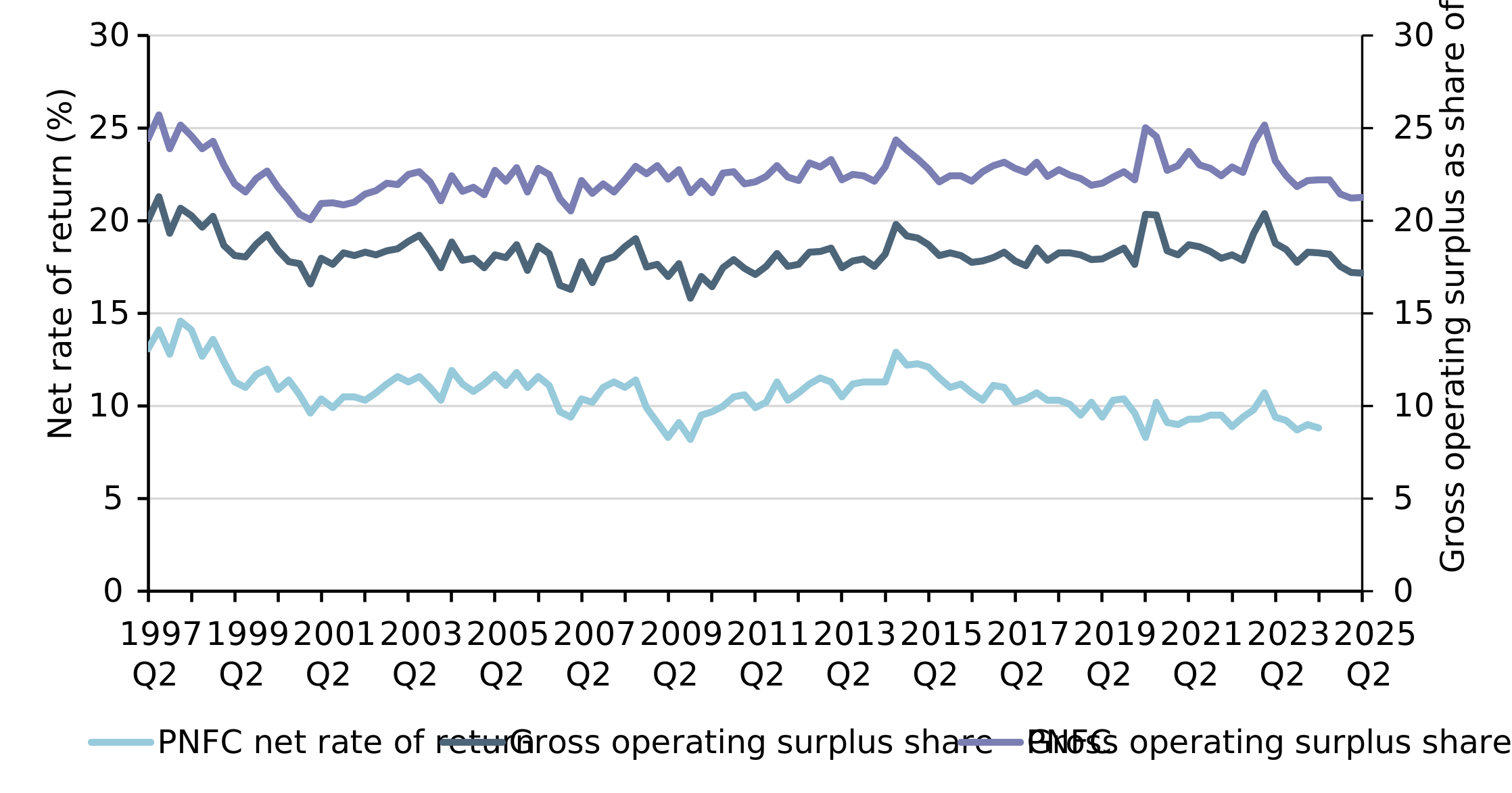
The ONS updates its assessment of corporate profitability (using rates of return on capital employed) each November, covering the period up to the second quarter of the previous year. Thus, we do not have timely access to this ONS measure of profitability when recommending our rates. However, there is information from ONS about gross operating surpluses in the National Accounts data that are published quarterly – the latest being for the second quarter of 2025. Figure 1.14 suggests that the profit share of GDP and the net rate of return may have fallen in recent quarters. On these measures, profitability is below what it was before the pandemic.
Figure 1.14: Profit share and rates of return, 1997-2025
The Sage Small Business Tracker uses data from Sage’s accounting and payroll software to assess the profitability of small firms. A filter is applied to limit the sample to a maximum monthly revenue figure of £1 million and a maximum annual payroll figure of £1.1 million. In contrast to the official measures of profitability, the Sage UK Small Business Tracker (2025) found that profits (earnings before interest, taxes, depreciation and amortisation, or EBITDA) in small firms grew by 3.9 per cent in the year to the second quarter of 2025. This was lower than in the first quarter (6 per cent) as labour costs increased from tax and regulation changes in April, but higher than in the period immediately after the pandemic (mid-2022 to mid-2024).
An alternative source on profitability comes from the Bank of England’s regional agents (2025e), who consult with local businesses and give scores from -5 to +5 on a number of business outcomes and concerns. Figure 1.15 shows these scores for profit margins and investment intentions for each quarter since the middle of 2015. We can see that profit margins are currently below their pre-pandemic average with investment intentions also muted.
Figure 1.15: Profit margins and investment intentions, 2015-2025
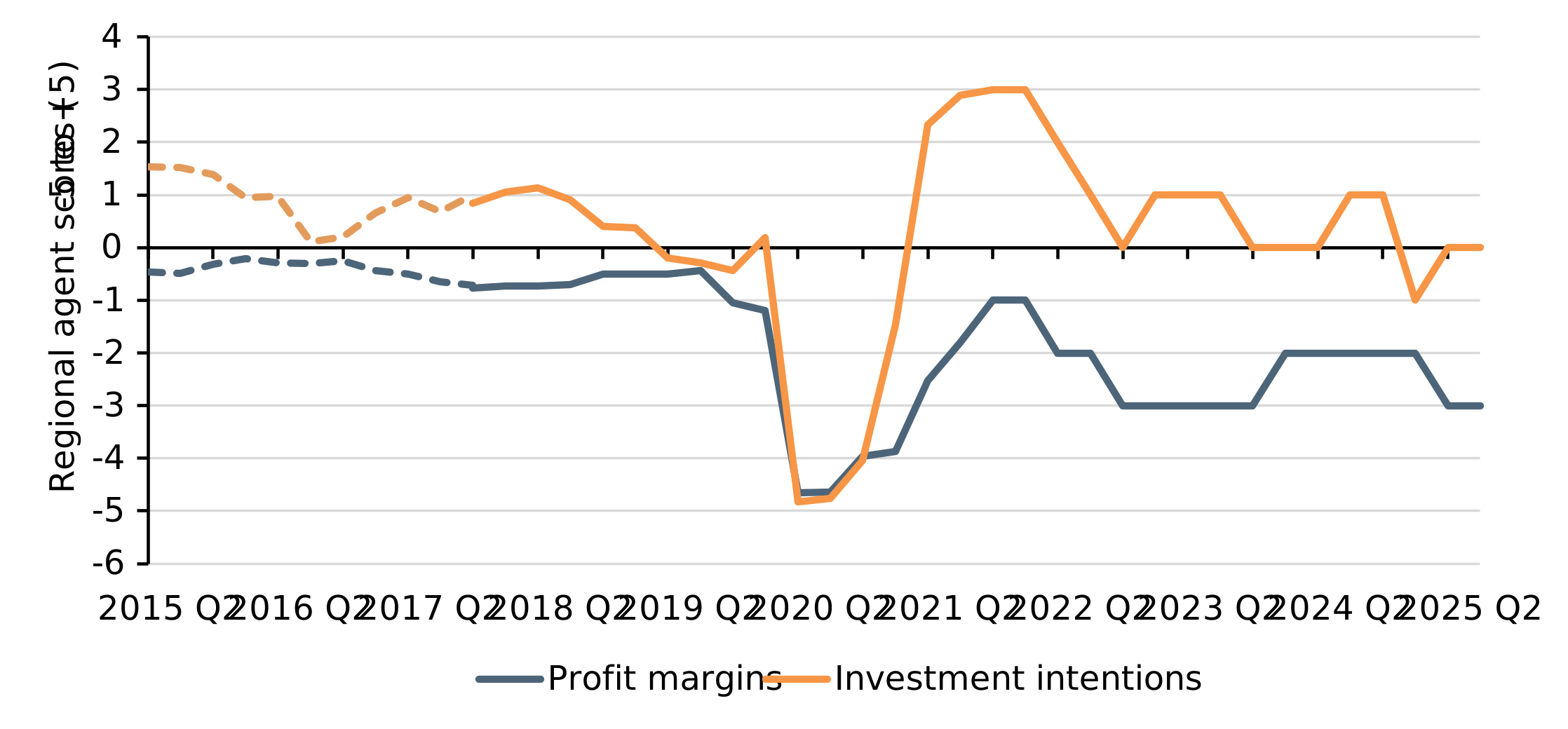
Figure 1.16: Credit availability, 2015-2025
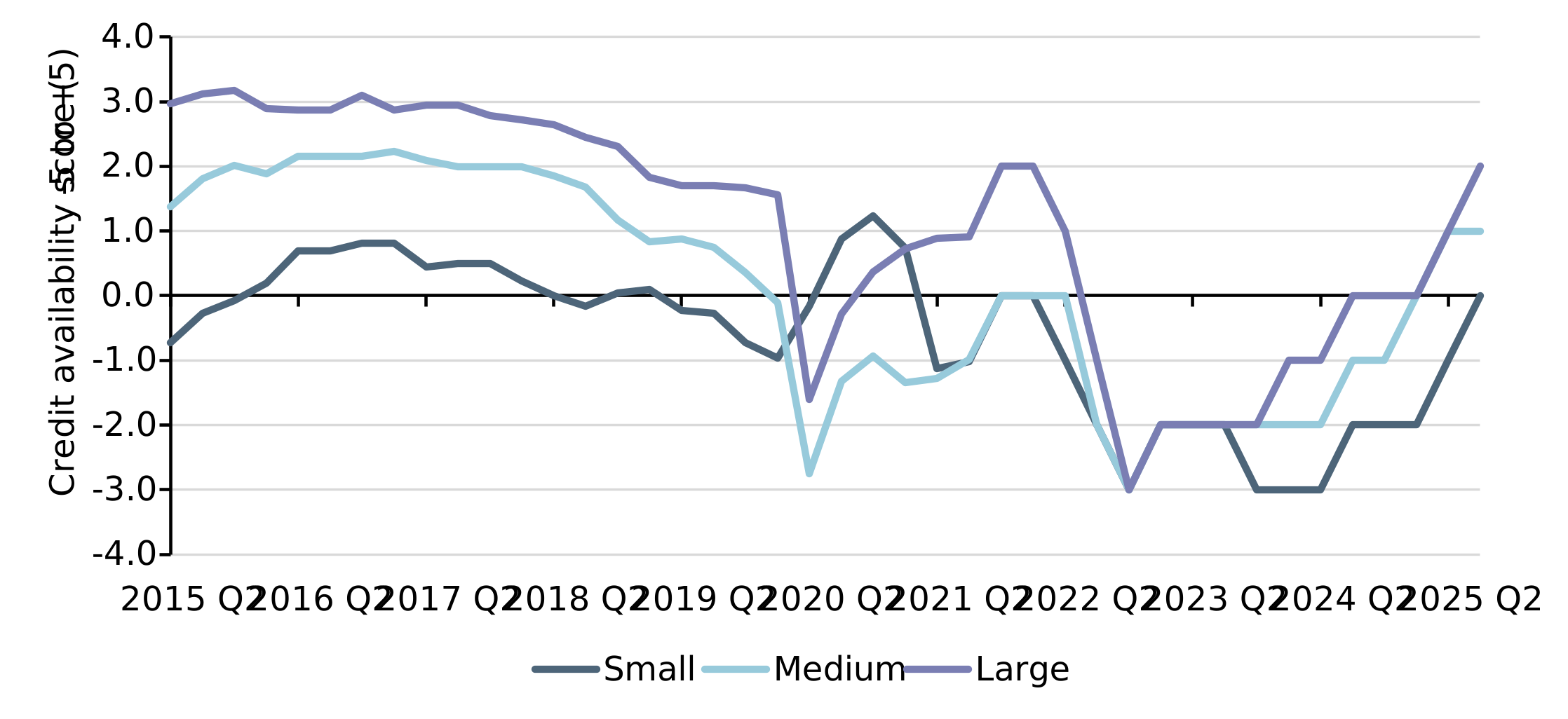
Investment intentions are also boosted when credit availability eases. Figure 1.16 shows that when interest rates were low in the pre-pandemic period, credit was readily available for medium-sized and large firms. It was less available for small firms. With interest rates increasing between 2022 and 2024, credit became restricted for all sizes of firm. As interest rates have eased, those restrictions have eased, although small firms are still finding it harder to access finance than larger firms.
The smallest firms are less confident about their debt resilience but concerns have eased compared with recent years
The ability to meet debt obligations is a measure of business health. Figure 1.17 shows that firms have become more confident about meeting their debt obligations. That in part is due to falling interest rates. However, micro firms are much less confident in meeting their debts than other sizes of firm.
Figure 1.17: Share of firms with moderate or high confidence in meeting current debt obligations by firm size, UK, 2022-2025
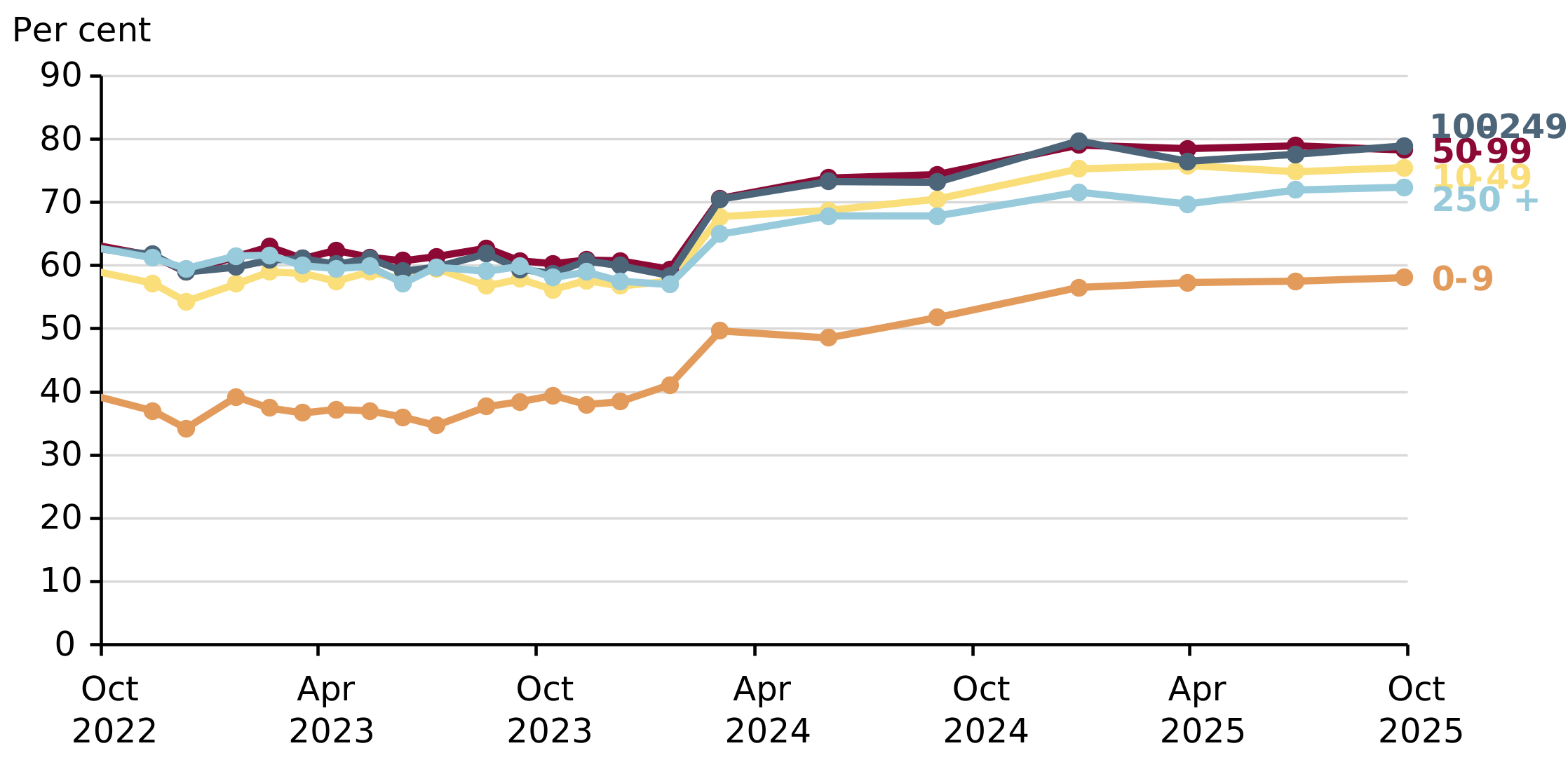
The Sage UK Small Business Tracker (2025) found that the average debt position of small businesses has fallen continuously over the last three years. Real debt balances were down 10.8 per cent on a year ago in the second quarter of 2025. The Tracker commentary noted that firms were likely to have prioritised reducing debt levels over taking on new credit for investment.
Insolvency levels remain high but insolvency rates have fallen back towards pre-pandemic rates and are well below those in the period before the financial crisis
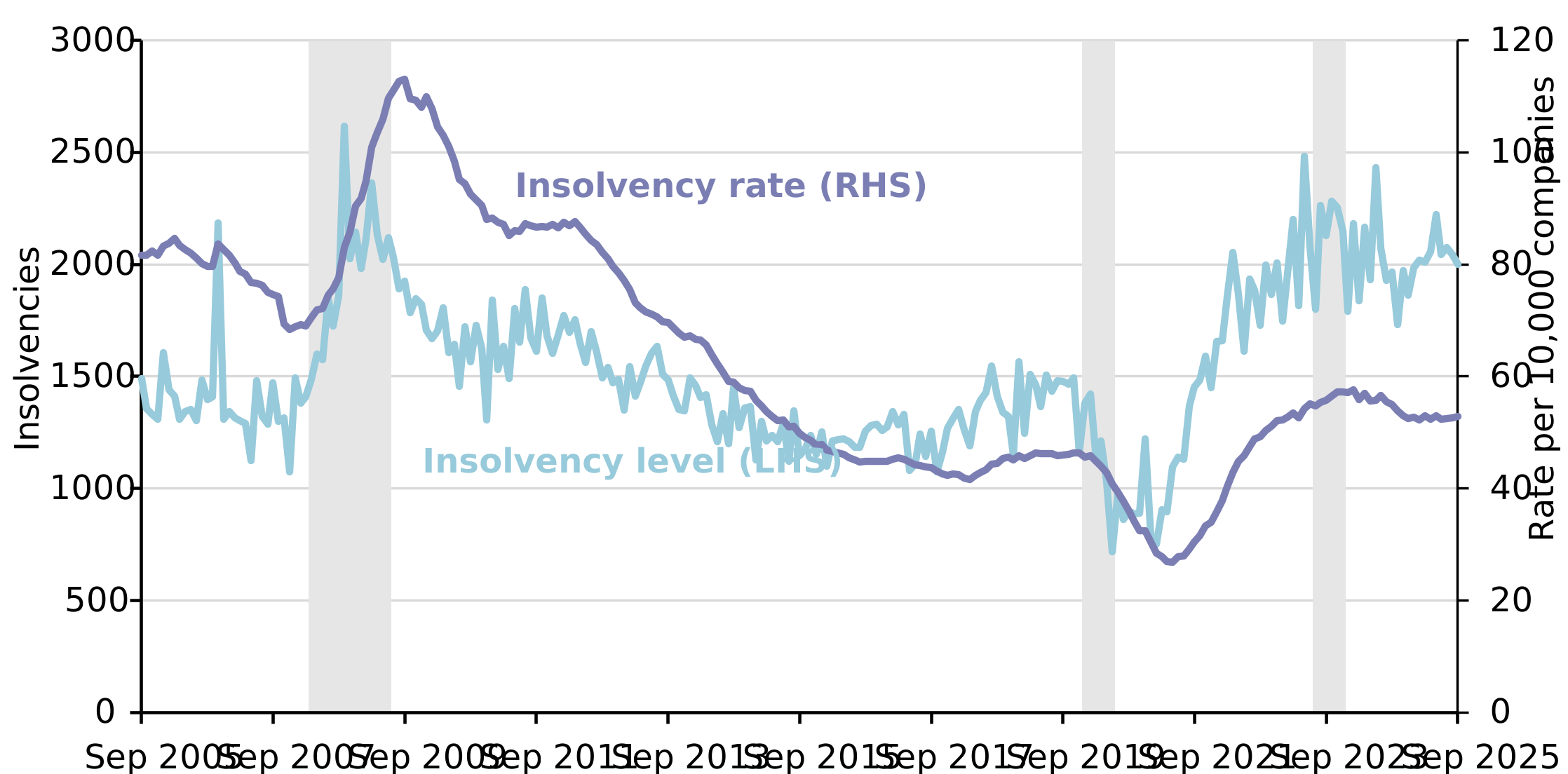
Insolvencies are another indicator of business health. Figure 1.18 shows that the level and rate of insolvencies peaked during the financial crisis, then fell over the rest of the 2010s. They fell further during the pandemic as the Government intervened to provide finance and other support measures. However, as that support was withdrawn, the level and rate of insolvencies rose. The level of insolvencies is currently close to its financial crisis peak. However, with a much larger stock of firms now, insolvency rates are much lower than during the financial crisis and are only slightly higher than in the pre-pandemic period (2015-2019).
Figure 1.18: Insolvencies, 2005-2025
Business confidence has picked up in 2025 but remains below its long-term average
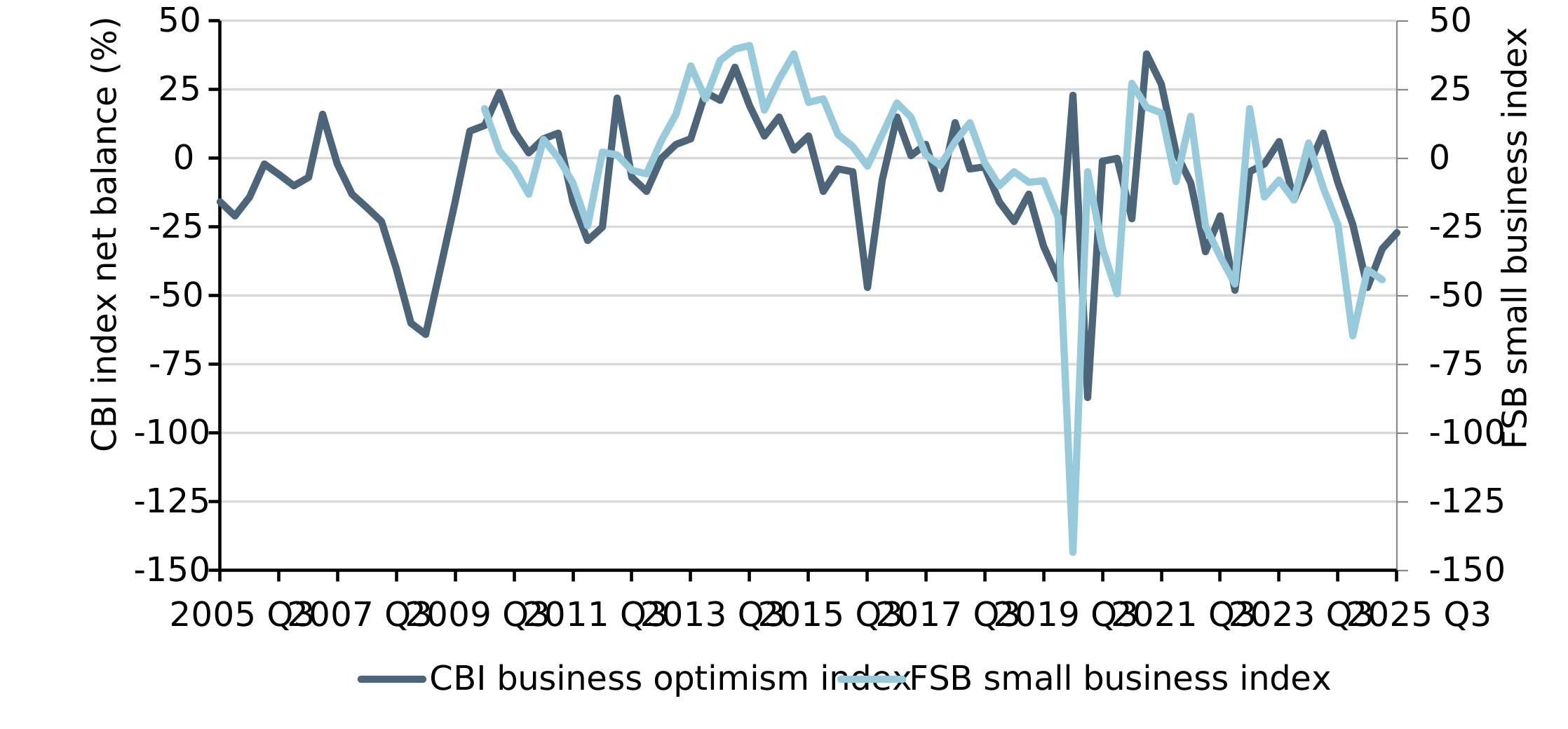
As shown in Figure 1.19, the Confederation of British Industry (CBI) and the Federation of Small Businesses (FSB) measures of business confidence both show similar trends, with business confidence falling sharply during the pandemic in 2020, again in 2022 as energy costs rose sharply and interest rates increased, and again in the autumn of 2024 with uncertainty around the Budget. Despite the unexpected changes to employer NICs and other tax increases, business confidence has since picked up. However, the FSB small business index for the second quarter of 2025 is well below that recorded between 2010 and the onset of the pandemic, while the CBI business optimism index, over the same period, only dipped below its current level (in the third quarter of 2025) in the immediate aftermath of the EU Referendum and during the financial crisis.
Figure 1.19: Business confidence, UK, 2005-2025
GDP outlook looks modest but the UK is set to grow more strongly than the EU
Forecasts for world economic growth has recently been revised upwards as increased tariffs have had less impact than expected so far. However, inflation concerns persist and environmental and geopolitical concerns may yet drag on global growth and affect trade. As a result, the IMF (2025a) sees global economic risks from rising trade tensions, restrictive immigration policies, growing debt vulnerabilities and political pressure on economic institutions. Those factors will also affect the UK economy.
The Bank of England has focused on the upside risks to inflation. Monetary policy has been tighter, with interest rates higher than in recent years, and not easing as fast as interest rates in the EU. This has acted as a drag on both households and businesses. It has also affected government finances with the high debt payment levels caused by rising nominal interest rates. At the time of our recommendations, the 2025 Budget was expected to tighten the fiscal picture.
Real incomes have increased and household finances have improved. However, that has not fed through to consumption. Although wage growth is expected to be more subdued, inflation should slow and real incomes continue to rise.
Putting these factors together, as shown in Figure 1.20, the consensus of the forecasts is for the UK to grow slightly faster in the next two years than in 2024 at around 1.2-1.4 per cent. Although that is quadruple the growth in 2023, it is much slower growth than observed in the period leading up to the financial crisis or the period prior to the pandemic.
Figure 1.20: Actual and expected GDP growth, UK, 1997-2026
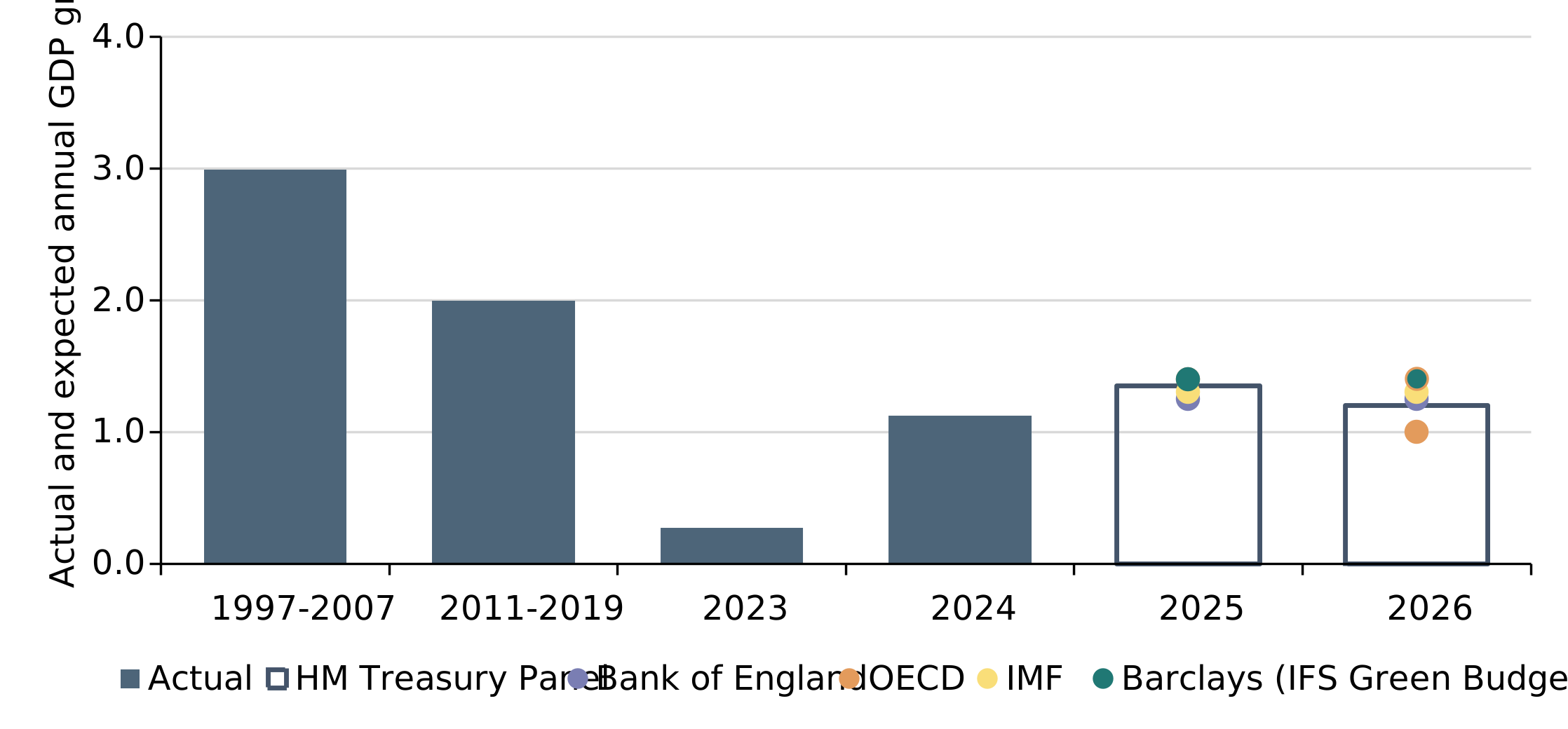
The IMF (2025a) and the OECD (2025a) recently published forecasts that expect the UK economy to grow around 2.4-2.6 per cent cumulatively over this year and next. This is in line with expected growth in Canada but faster than in the euro area (around 2.2-2.3 per cent), with Germany, France and Italy lagging that. Only the United States of the G7 countries is forecast to grow faster (3.3-4.1 per cent).
Conclusions
Inflation has increased over the last year, driven by increases in food prices, utility bills and other ‘administered’ prices, but the consensus from forecasts is that it has now peaked and will slow over the next twelve months or so. Core and services inflation remain elevated but are on a downward trajectory. Indeed, CPI inflation is forecast to be around 2.0-2.1 per cent by April 2027. However, it should again be noted that prices (especially for food and energy) are considerably above what they were in 2021.
After flatlining in 2023, the UK economy has picked up but growth remains weak by historic standards. Consumer spending has been sluggish in the aftermath of the pandemic and that has affected consumer-facing industries. However, annual growth in real household disposable incomes has picked up since the start of 2024. Concerns about inflation, its implications for interest rates and the general international trading environment mean that expectations of growth over 2025 and 2026 remain modest (at around 1.2-1.4 per cent per year).
Chapter 2: Labour Market
Key findings:
- Aggregate payrolled employment has fallen in the twelve months to August 2025 - Measured using HM Revenue and Customs payroll data, there were over 90,000 fewer employees across the UK, an annual fall of 0.3 per cent. Employment fell most for younger workers and those in hospitality. It fell across all nations and regions excluding Northern Ireland.
- Demand for labour has continued to fall, making hiring easier for firms - Vacancy levels and rates have dropped month on month for the last three years. Aside from the pandemic, they are at their lowest levels for around 10 years. Firms reported that weaker demand had eased recruitment difficulties, with more applicants per vacancy.
- Net migration fell as the demand for workers reduced - Immigration numbers surged in the aftermath of the pandemic as firms struggled to recruit but subsequently fell quickly. Government policy is to reduce net migration further which may place additional strains on those low-paying sectors that rely more heavily on overseas workers.
- Inactivity dropped close to record low rates in 2025 as unemployment edged up - Overall inactivity rates dropped but the numbers of long-term sick among both men and women have continued to rise. Unemployment approached 5 per cent but this was not a result of large-scale redundancies of workers, instead it was partly due to movements from inactivity.
- While falling, average wage growth continues to outpace forecasts - Despite a loosening labour market and moderating pay settlements, wage growth continues to outstrip forecasts and price growth, giving a real-terms boost to incomes. However, annual wage growth is falling across a range of measures and is expected to continue doing so into 2026.
Chapter 1 laid out the economic context that firms and workers have been experiencing. This has been characterised by weak growth, persistent inflation and subdued business and consumer confidence. The outlook is for modest growth, but continued uncertainty over key areas such as trade and tax policy continues to weigh on the economy.
Our 2024 Report (LPC 2025a) discussed the continued softening of the labour market. The demand for labour had fallen, with employment growth slowing further and fewer job vacancies. But falling inflation and strong nominal wage growth meant real terms wage increases for workers. In this chapter we outline the state of the labour market at the time of our recommendations in October 2025, much of which echoes the remarks we made twelve months ago.
Employment has fallen in the last twelve months
Labour Force Survey data issues continue
In our 2024 Report (LPC 2025a) we outlined our concerns with the Labour Force Survey (LFS), our main data source on employment, unemployment and inactivity. Falling sample sizes in 2023 and 2024 meant greater volatility and greater risk of non-response bias, reducing its reliability. We are pleased to see the Office for National Statistics (ONS) has continued to introduce improvement measures over the last year, including reinstating the sample boost and recruiting additional interviewers. As a result, response rates and the representativeness of the survey have improved.
A December 2024 interim re-weighting of LFS data back to early 2019 took account of the latest sub-national population projections – which are themselves subject to frequent revision. This allowed comparisons of the latest data to the immediate pre-pandemic period. However, it has introduced a break in the time series, so comparisons with data before 2019 are less reliable. We expect ONS to conduct a full re-weighting of the LFS back to 2011 in 2026.
Despite these improvements, the ONS continues to urge caution when using the LFS – especially when comparing the latest data to that of previous periods. It recommends using LFS estimates alongside the suite of other labour market indicators including the ONS’s Workforce Jobs (WFJ) and the Pay As You Earn (PAYE) Real Time Information (RTI) data produced by HM Revenue and Customs (HMRC).
Employment comparisons across data sources
Comparing recent changes across these different sources of employment data highlights the difficulties in accurately estimating what’s happening in the UK labour market. PAYE RTI data shows the number of individuals in payrolled employment fell slightly across 2025 to 30.3 million in August 2025. This was 93,000 or 0.3 per cent lower than 12 months earlier.
LFS employee and Employee jobs (taken from WFJ) data paint a slightly different picture – one of growing employment. The growth in Employee jobs was slowing in line with PAYE RTI data post-pandemic but the sources have diverged somewhat in the year to August 2025 with Employee jobs data still showing annual growth of around 0.6 per cent in the latest data. LFS employee data also continued to report growth of between 1 and 2 per cent across 2025 although these estimates are more likely to be caused by improving survey response rates. When the LFS sample size fell, it did so particularly for those in work, meaning it undercounted employment. Now that response rates have improved, it better represents those in work. So, while the accuracy of the data has improved, recent comparisons over time are likely to flatter employment growth.
Figure 2.1: Indexed level (LHS) and annual change (RHS) of LFS employees, Employee jobs and PAYE RTI employees, UK, 2019-2025
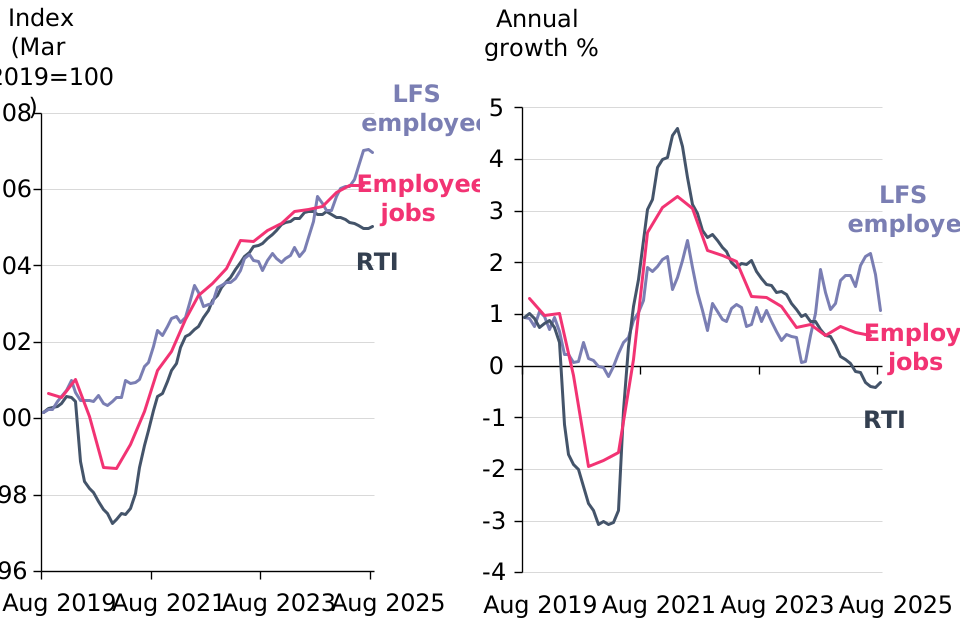
As a result, ONS advise against using LFS data to assess recent changes in employment. PAYE RTI is thought to more accurately reflect changes to employee numbers, although the data are subject to frequent monthly revisions as additional RTI submissions are incorporated. In addition, PAYE RTI only provides levels of payrolled employment; it doesn’t allow us to calculate an employment rate. Ideally when assessing labour market performance we would take into account inactivity (including students), unemployment and changes in population.
While the total number of PAYE RTI employees was falling in 2025 this was not consistent across all groups. In this next section we look at the variation in what is happening to employment across different age breakdowns, across sectors and across geographies.
PAYE RTI employment falling for most age groups
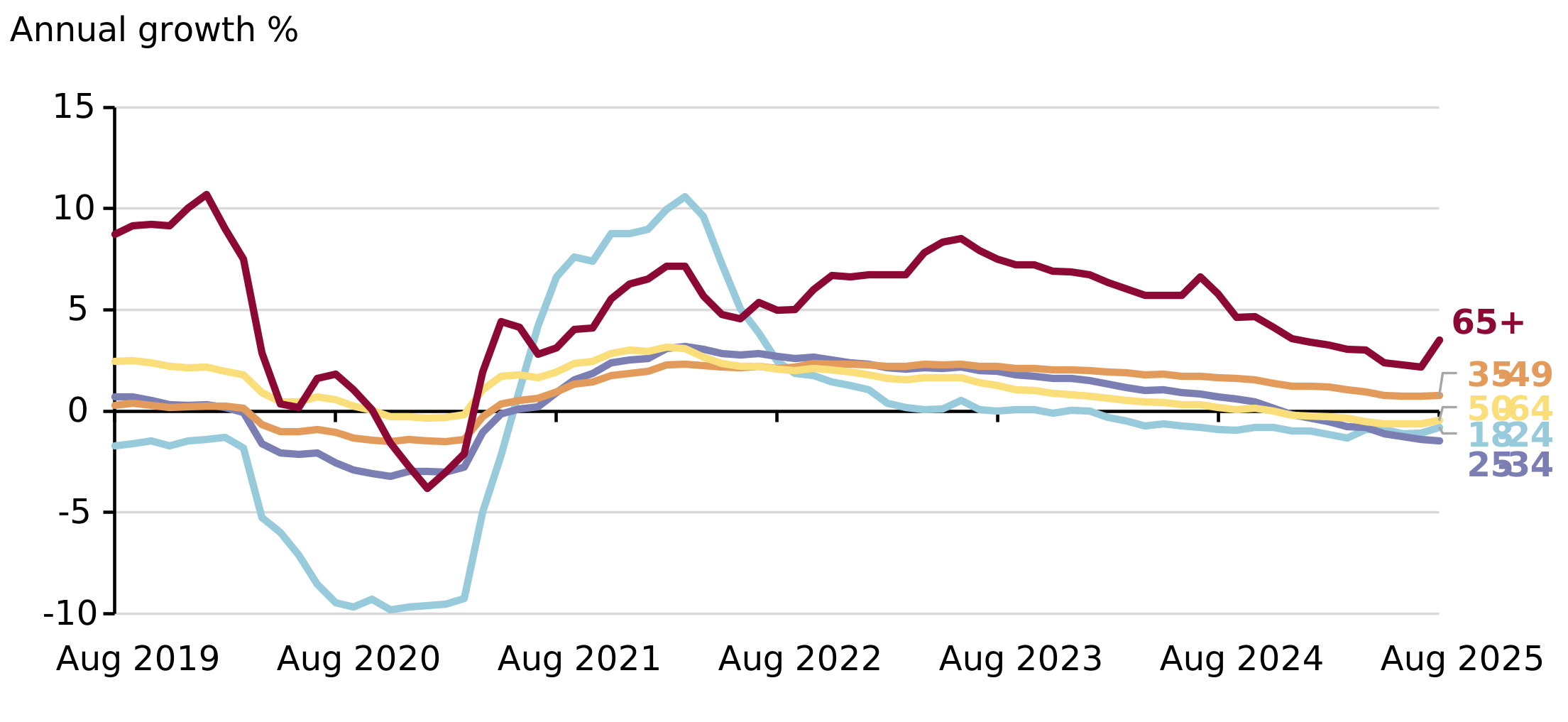
The biggest fall in PAYE RTI employment (in both levels and percentage change) was for those aged 25-34. There were over 100,000 fewer employees aged 25-34 in August 2025, a fall of 1.5 per cent from August 2024. 50-64 year olds saw a fall of 38,000 or 0.5 per cent over the same period. Younger workers aged 18-24, who had seen the strongest recovery in PAYE RTI employment in the post-pandemic period (after the largest fall during the pandemic), were the first group to experience a slowdown in employment. Levels have been falling for the last two years – in August 2025 they were more than 70,000 lower than the peak of 3.5 million in June 2023. In the year to August 2025 payrolled employment of 18-24 year olds was down by 0.8 per cent. We discuss the employment of younger workers aged 16-20 in more detail in Chapter 6.
Some of these falls were offset by increases in employee numbers for older workers (65+) and 35-49 year olds. There were 42,000 or 3.5 per cent more 65+ employees in the year to August 2025 while the number of 35-49 year old employees rose by 76,000 or 0.8 per cent.
Figure 2.2: Annual growth in PAYE RTI by age, UK, 2019-2025
Variation in PAYE RTI sectoral changes as hospitality sees the largest falls
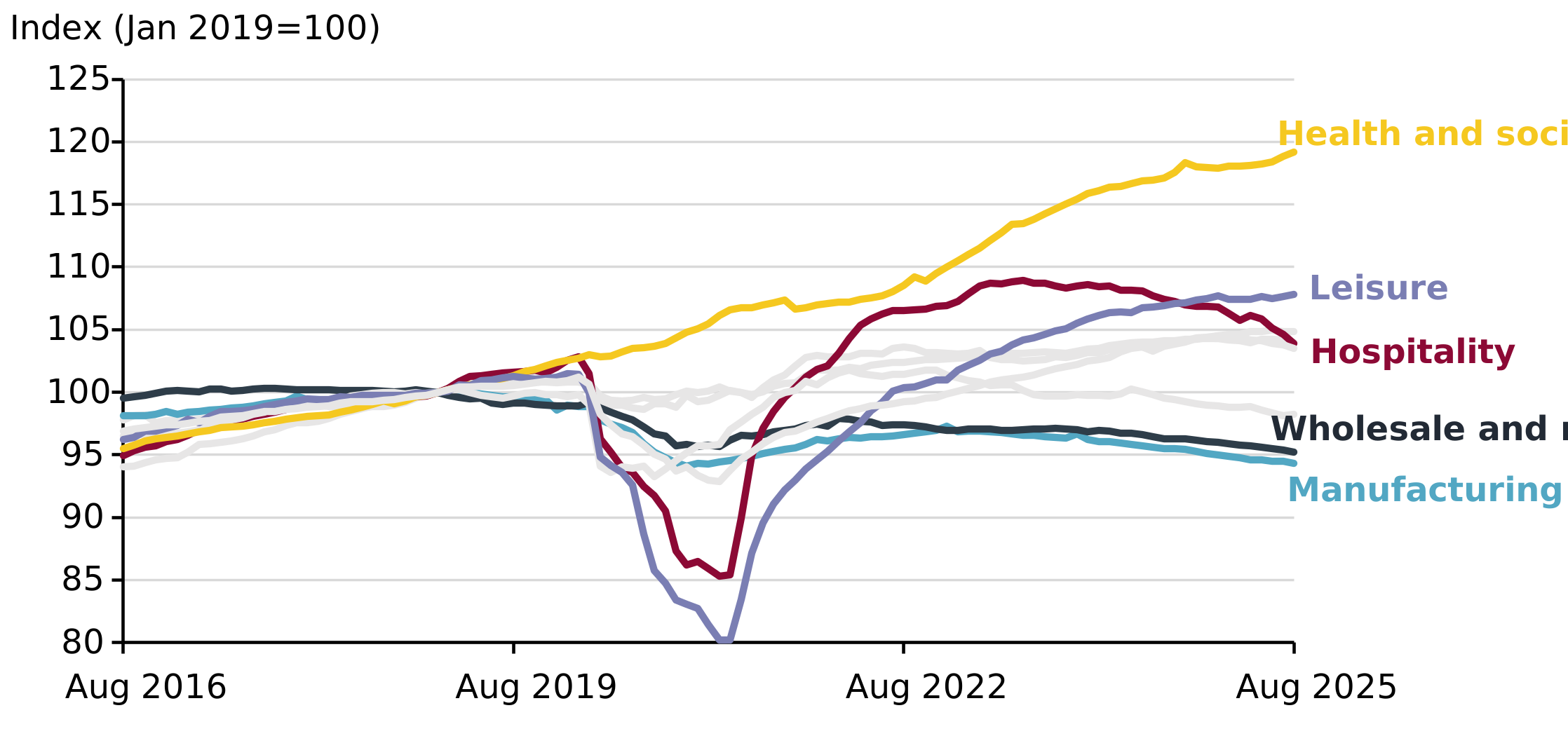
Employment trajectories across sectors have varied considerably in recent years. Figure 2.3 shows how PAYE RTI employment was growing for most sectors, albeit at different rates, in the years preceding the pandemic. But during and after the pandemic sectors have taken very different paths.
Hospitality, a large employer of minimum wage workers, particularly young people, has seen the sharpest recent drop in employment. In the twelve months to August 2025, PAYE RTI employment fell by 72,000 or 3.3 per cent. However, the sector is still slightly larger than it was at the onset of the pandemic, with 2.1 million employees.
Wholesale and retail, another sector that employs large numbers of minimum wage workers, has seen overall employment levels falling at a steady rate since 2019. This continued into 2025 with 48,000 or 1.1 per cent fewer workers in paid employment in the year to August. Manufacturing has followed a similar pattern in recent years to wholesale and retail.
Employment in health and social work has consistently grown across the whole period. The sector experienced no employment effects during the pandemic and has continued to increase during 2025, with employment almost 20 per cent higher than in 2019.
Leisure, severely affected by the pandemic, saw a strong recovery in employee numbers and while this employment growth has slowed into 2025 it is the only other low-paying sector increasing in size.
Figure 2.3: Indexed level in PAYE RTI by sector, UK, 2016-2025
Northern Ireland is outperforming the rest of the UK
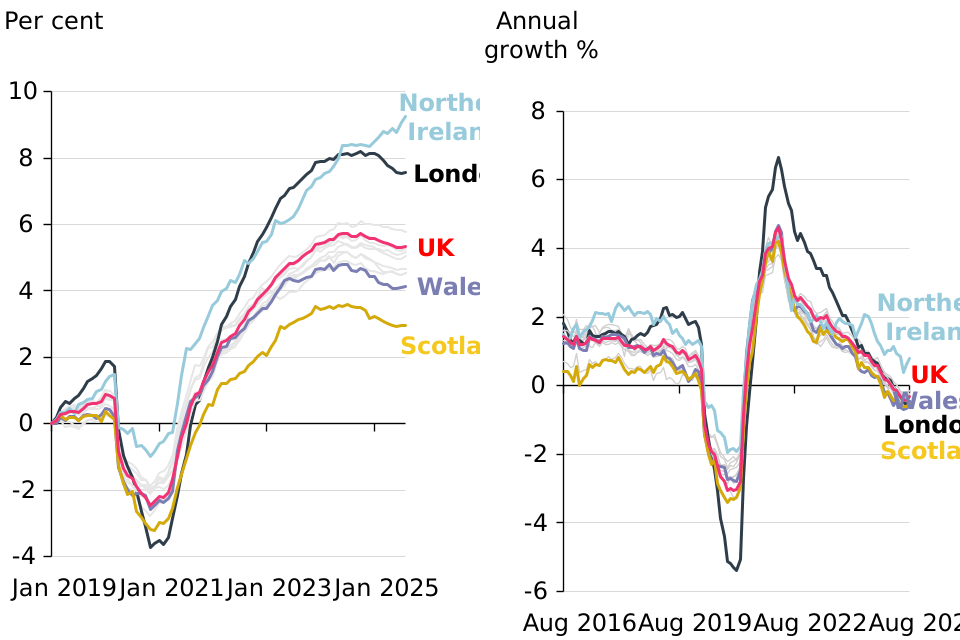
The left-hand chart of Figure 2.4 shows the percentage change in PAYE RTI employment since 2019 for each region and nation in the UK. It shows a picture of slowing employment with one exception. Northern Ireland has seen employment continue to rise into 2025, albeit at a slower rate and is 9 per cent higher than in January 2019. London has seen the next highest cumulative growth over the period since 2019, over 7 per cent, but saw RTI employment levels fall by 0.5 per cent in the year to August 2025. Scotland saw the slowest growth, with employee numbers only 3 per cent higher in 2025 than in 2019 and a full percentage point lower than the next lowest region or nation, Wales, which had employment growth of 4 per cent over the six-year period.
All regions and nations other than Northern Ireland saw falls in payrolled employment clustered around the aggregate drop of 0.3 per cent in the year to August 2025. These ranged from a 0.1 per cent fall in the East to 0.6 per cent lower in Scotland.
Figure 2.4: Percentage change since January 2019 (LHS) and annual change (RHS) in PAYE RTI employees by region/nation, UK, 2016-2025
Labour demand is weaker than any time since the pandemic
Job vacancies have fallen below pre-pandemic levels
Job vacancies have fallen to their lowest levels for over three years. This slowdown began in 2022 and followed the post-pandemic surge, where they peaked at 1.3 million in May 2022. Figure 2.5 shows that both vacancy levels and rates are below pre-pandemic levels and, excluding the pandemic period, are at their lowest levels in over a decade.
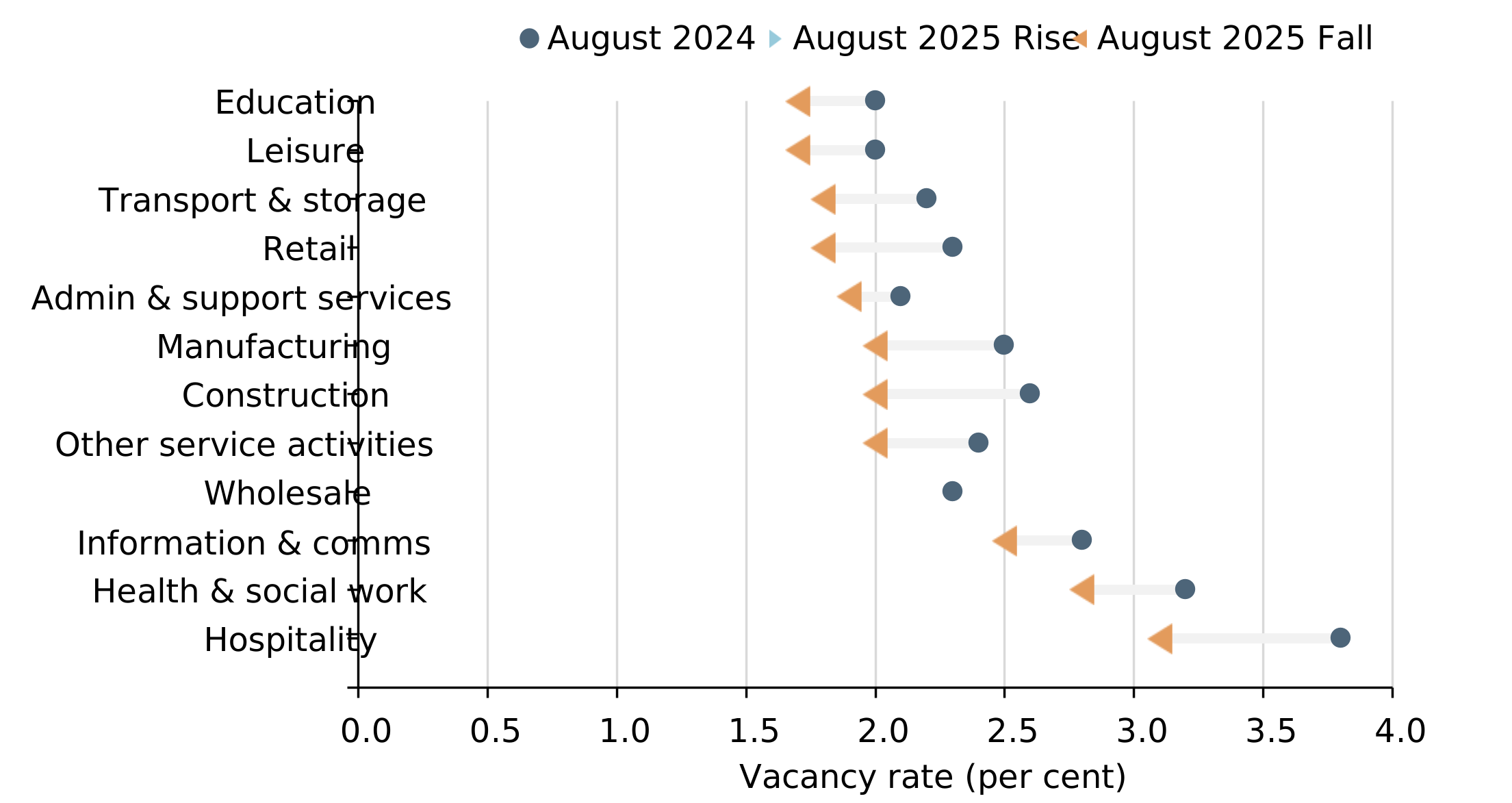
Vacancy rates have dropped in every sector but one (wholesale) in the last year (Figure 2.6). Hospitality, a sector that traditionally runs with high rates of staff turnover, continues to have the largest vacancy rate at 3.1 per cent. However, its rate dropped from 3.8 per cent in the previous year, the lowest rate since 2013 outside the pandemic. Consumer spending, essential to hospitality and many other low-paying sectors has been weak while household savings have increased. Despite continuing to grow health and social work maintains relatively high vacancy rates. Its rate fell from 3.2 per cent to 2.8 per cent. Wholesale was the sole sector not to see its rate drop, remaining at 2.3 per cent.
Figure 2.5: ONS vacancies, UK, 2005-2025
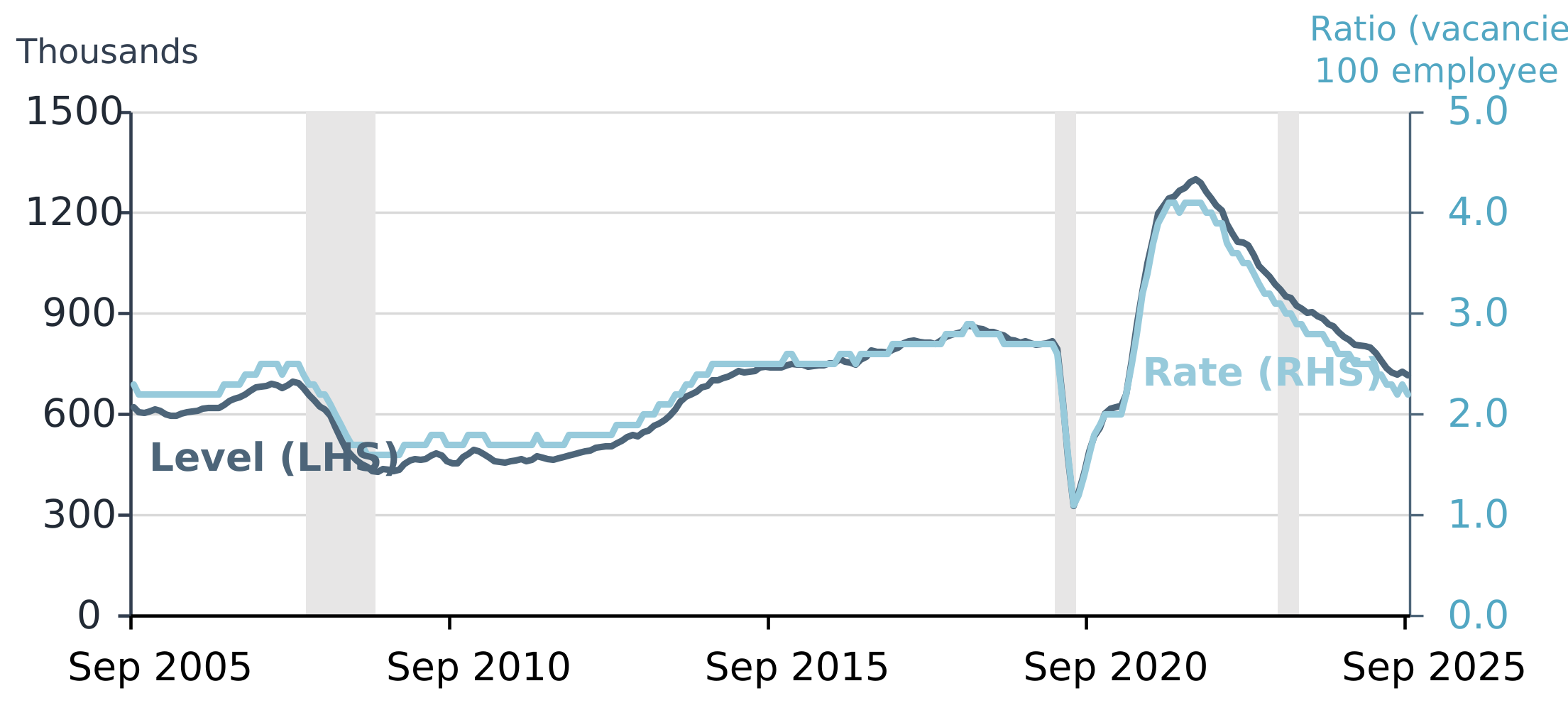
Figure 2.6: Vacancy rates by sector, 2024-2025
Employer hiring confidence is low, driven by weak economic conditions and costs
The Chartered Institute of Personnel and Development’s (CIPD) net employment balance (the difference between employers expecting an increase in staff levels and those expecting a decrease in the next three months) in the summer of 2025 was at its lowest levels outside of the pandemic period (CIPD, 2025). For the public sector it was in negative territory; for the private sector it remained positive, but at a record low.
According to the KPMG / Recruitment and Employment Confederation (REC) UK Report on Jobs (KPMG and REC, 2025) employers were hesitant to take on new workers due to weaker economic conditions and cost concerns.
Reduced labour demand has eased firms’ recruitment difficulties
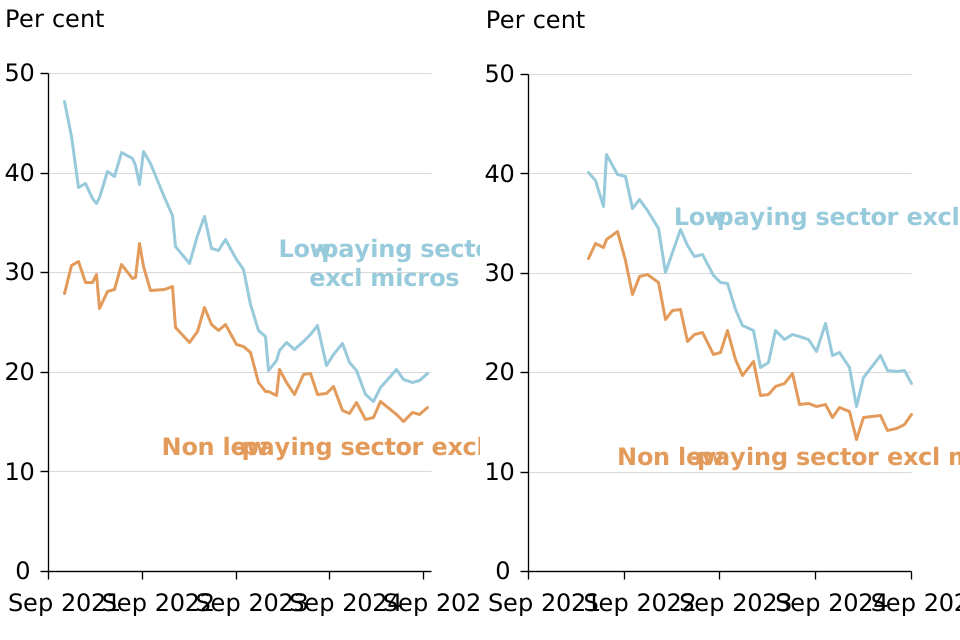
Fewer job vacancies and greater availability as more individuals looked for work have led to the share of firms reporting worker shortages and recruitment difficulties continuing to decline (Figure 2.7). Analysis of ONS’s Business Insights and Conditions Survey (BICS)[footnote 3] show that while more low-paying firms continue to face this constraint than non-low paying firms, the gap has narrowed over time. As of September 2025, fewer than one in five firms (excluding micros) cited worker shortages.
Figure 2.7: Share of firms with worker shortages (LHS) and recruitment difficulties (RHS), BICS, UK, 2021-2025
Many employers we met thought it had become easier to recruit workers. One restaurant chain told us there had been a shift from an employees’ labour market to one more driven by businesses; previously the business had had to grant extra benefits or concessions to recruit and retain workers, but that had now changed. UKHospitality members in London remarked on this change: “you’re back to 200 people applying for a role and you’re really getting the pick of the bunch again now.” For one hotelier based in Wales, “anything at low level we’ll get quite a lot of applications and good flow.”
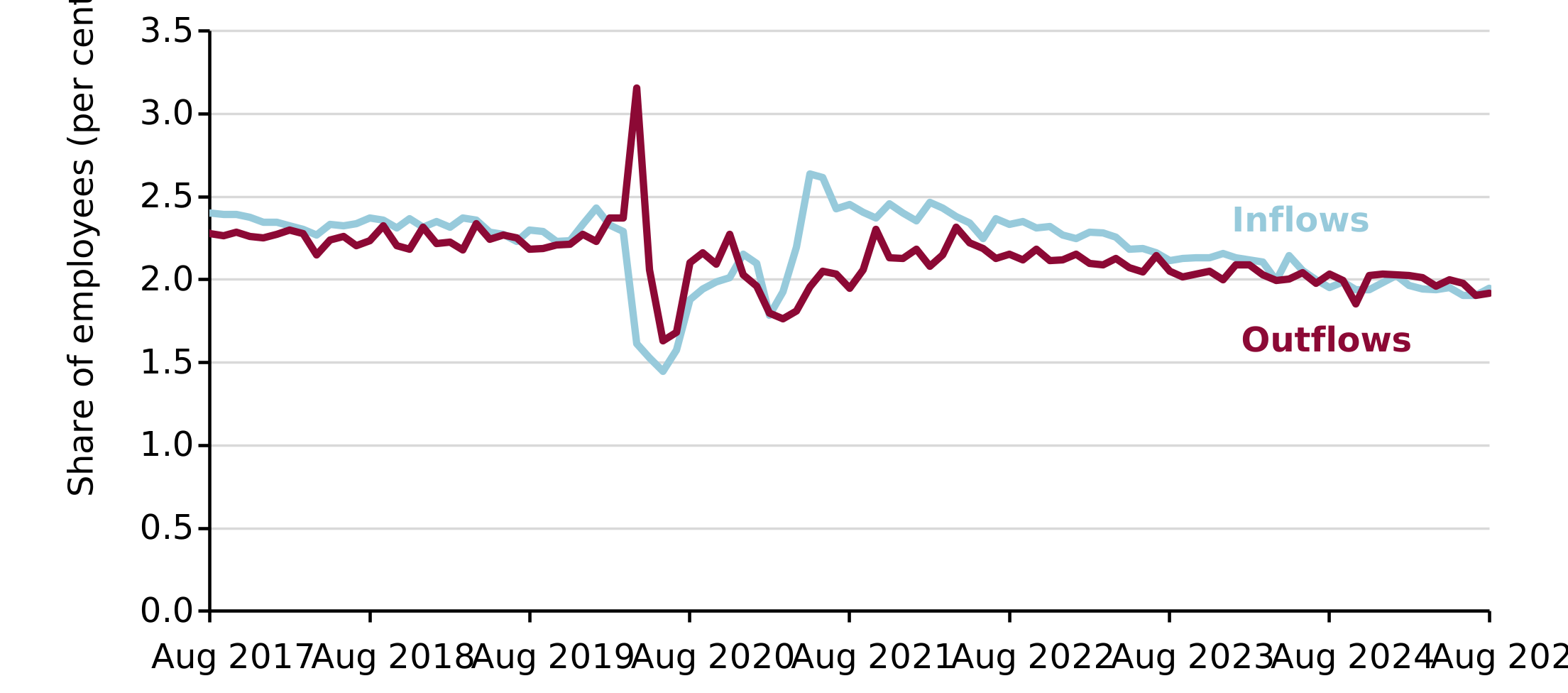
As the labour market has softened it has also become less dynamic. While firms have adjusted their behaviour and are now less likely to take on new staff, they are also less likely to lose existing staff. Figure 2.8 shows how flow rates both into and out of payrolled employment have fallen since late 2022 and are lower than they were pre-pandemic. In August 2025 they both stood at 1.9 per cent of employment, less than the 2.2-2.3 per cent norm in the pre-pandemic years. This “low hire, low fire” dynamic characterises the current state of the labour market.
Figure 2.8: PAYE employment flows, UK, 2017-2025
The use of artificial intelligence and automation
Artificial intelligence, or AI, refers to the use of computers or machines to perform tasks that, up to now, typically required human input. These tasks include reasoning, learning, problem solving and decision-making. AI enables machines to learn and adapt to new situations without constant human input. Automation is the use of technology to perform tasks with minimal human intervention.
Employers could benefit from the use of AI and automation through increased productivity, freeing staff from more mundane activities and repetitive tasks to undertake higher-value, more strategic work. Streamlining operations could help firms reduce costs but requires investment in skills. We have already seen the use of automation in the retail and hospitality sectors with self-checkout machines and self-service hotel check-in systems.
For some workers the removal of more routine tasks could make time to undertake more creative, stimulating work. It will also lead to the creation of AI-specific jobs for those with the required skills. However, for some roles and in certain sectors AI introduction is likely to result in job losses. To protect workers and ensure that everyone benefits from the opportunities associated with AI at work, the Trades Union Congress (TUC) proposed an AI (Regulation and Employment Rights) Bill in April 2024 (TUC, 2024a).
April 2025 data from the Bank of England’s Decision Maker Panel showed around 40 per cent of firms said they believed AI adoption would have a positive influence on capital investment over the next three years while around one third expected it would reduce the number of employees in their business.
But the uptake of AI is uneven across sectors, with low-paying industries slower to adopt or find a use for the technology. Data from BICS show that while use had increased in the last twelve months, only around 30 per cent of firms in low-paying industries (excluding micros) were using AI in June 2025 compared with 40 per cent of firms in non-low paying industries (excluding micros).
The proportion of respondents to the CIPD’s summer Labour Market Outlook survey (CIPD, 2025) attempting to improve productivity through generative AI in response to higher wage bills increased from 14 per cent in 2024 to 20 per cent in 2025. A similar share reported that NLW increases would lead to automation (including AI). However only 4 per cent of Federation of Small Businesses (FSB) members surveyed in 2025 believed they would respond to NLW increases through automation, unchanged from 2024.
Labour supply from abroad has moved with demand, but policy is changing
Supply of foreign workers has moved in line with job vacancies
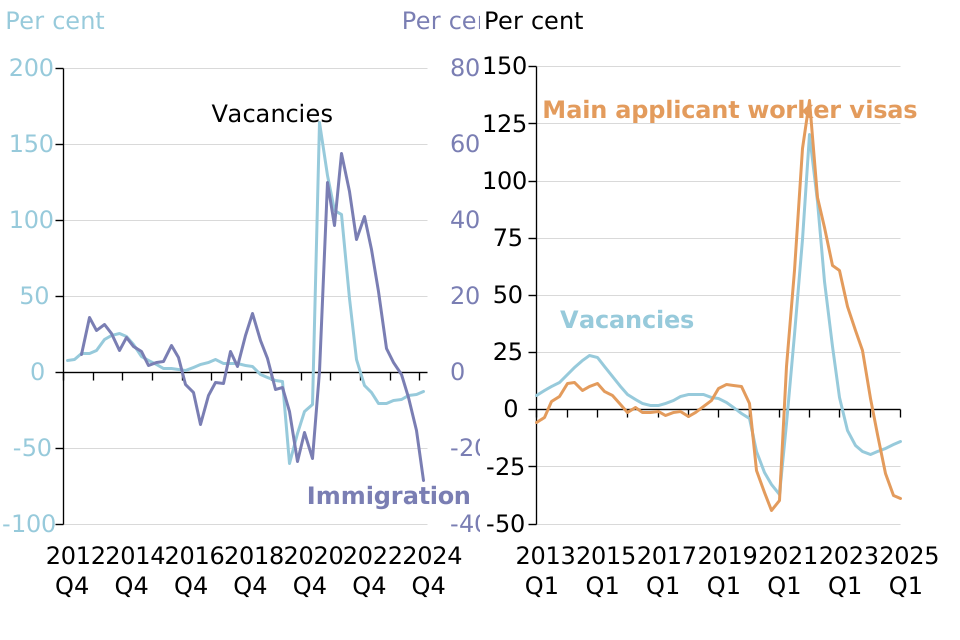
Overseas workers have helped fill shortages in the UK labour market for a number of years. There is a strong link between employer demand for labour and changes in levels of immigration and Home Office visa applications. Figure 2.9 illustrates this: when vacancies increased as firms struggled to recruit in the post-pandemic recovery we saw a sharp pick-up in immigration, increasing to 1.3 million in the last quarter of 2023. When vacancy levels subsequently dropped sharply both visa applications and numbers coming to the UK followed suit, albeit with a slight lag. This boost to labour supply in recent years likely contributed to the falls in recruitment difficulties we showed in the previous section.
Figure 2.9: Annual change in vacancies and immigration (LHS) and vacancies and main applicant work visas (RHS), 2012-2025
Immigration policy is changing
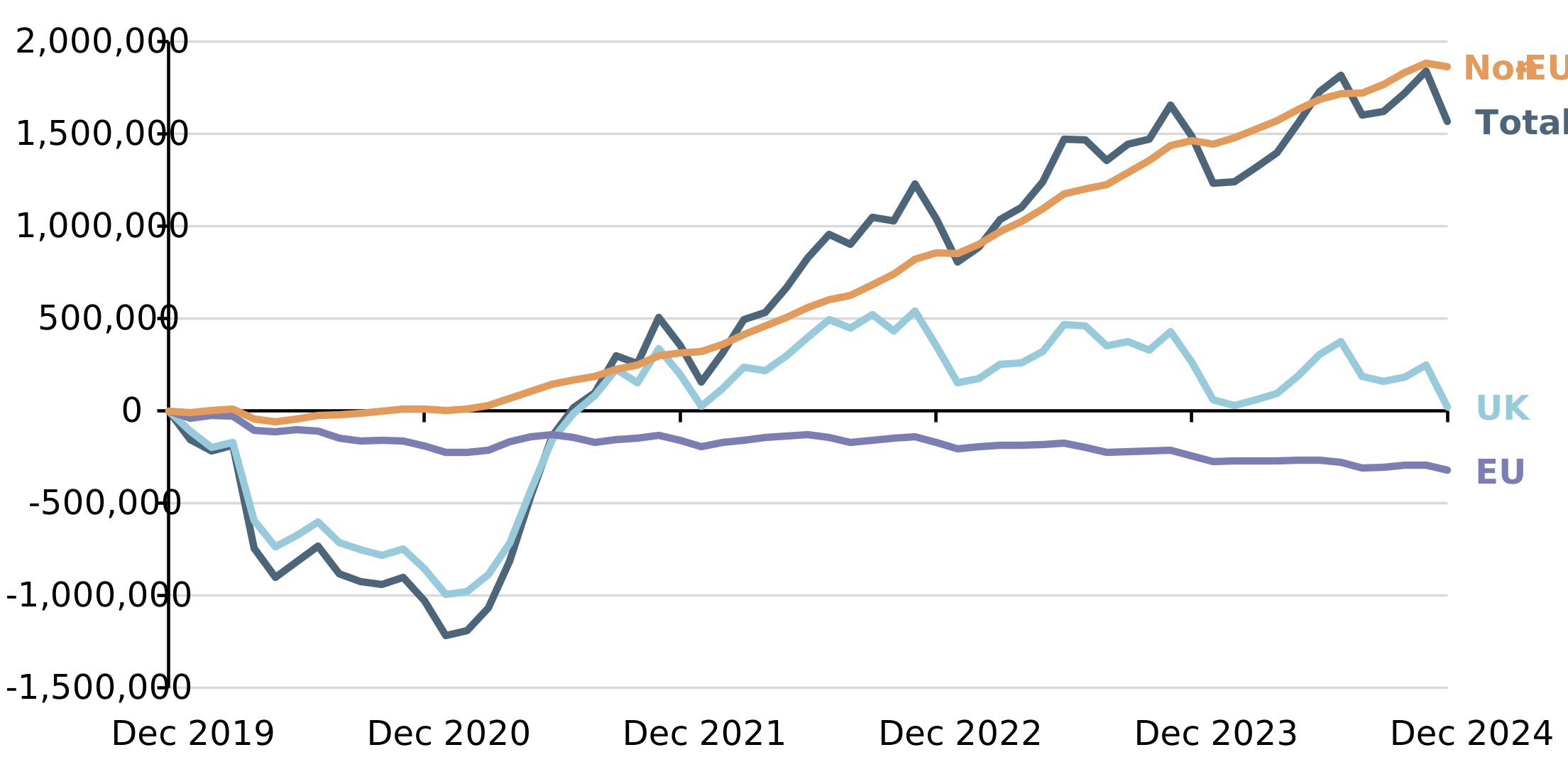
Figure 2.10 shows the net effect of the recent increase in labour supply from abroad. It shows that the number of non-EU national[footnote 4] employees increased by 1.8 million between December 2019 and December 2024. There was a small cumulative increase of under 100,000 from the UK while the number of payrolled EU nationals fell by over 300,000 over the five-year period.
The current government has also announced reforms to the immigration system. In May 2025 it published a white paper (Home Office, 2025a) outlining several high-level principles and policies to make it harder to move to and settle in the UK. These include removal of the Health and Care Worker visa, increasing the requirements for settlement and reducing the ability for graduates to remain after their studies. It also encouraged employers to invest in skills and training of UK workers to grow the domestic workforce. In July 2025 the government also increased the minimum salary requirement for Skilled Worker visas from £38,700 to £41,700.
Figure 2.10: Net change in PAYE RTI employments since December 2019 by nationality
Inactivity has fallen close to historical lows but long-term sickness remains a concern
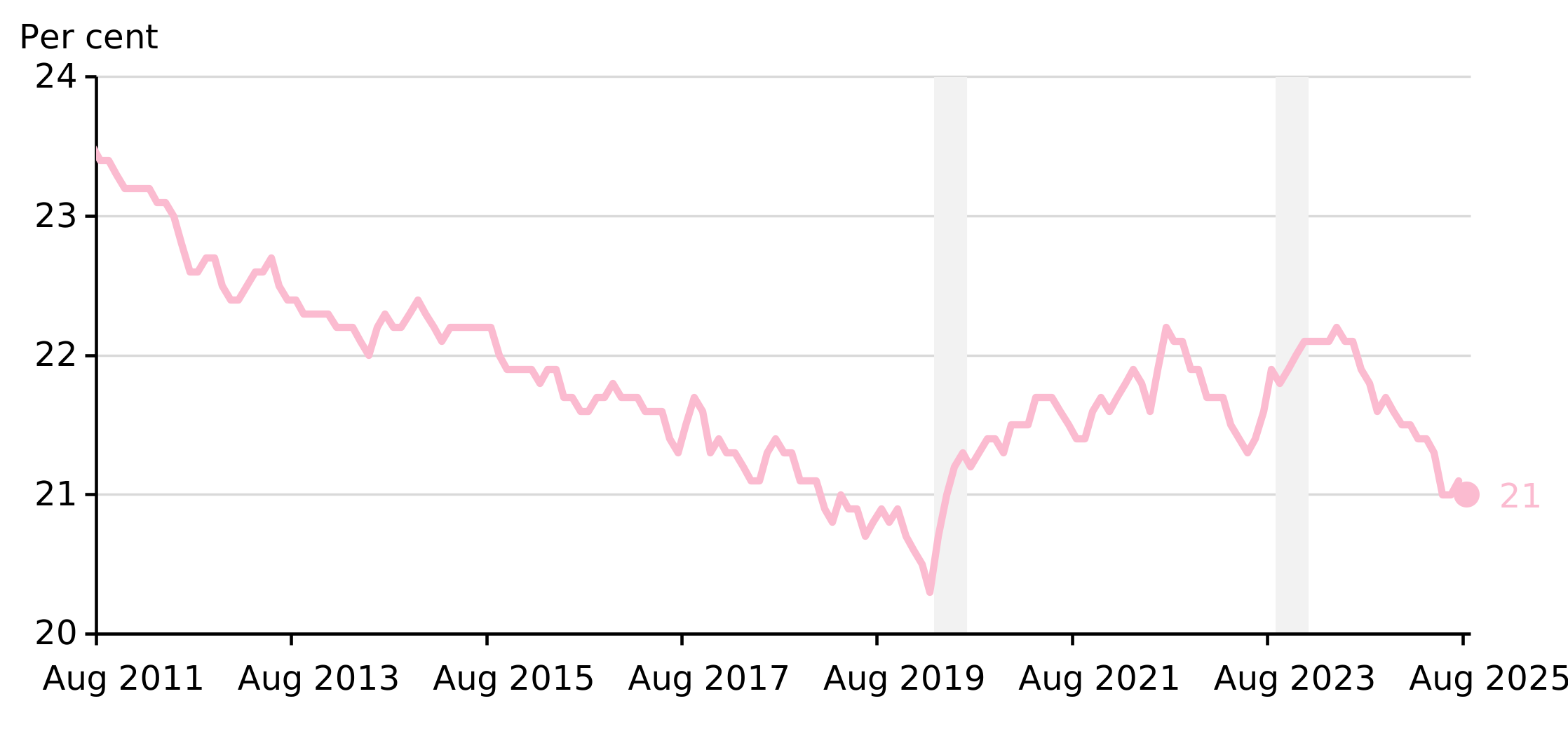
People who are neither in work nor seeking work are termed economically inactive. High levels of inactivity restrict the supply of potential workers, making it more difficult for employers to recruit. Unfortunately, the sampling issues with the LFS in 2023 and 2024 make understanding levels of inactivity more challenging. It’s likely that the low response rates artificially raised measured inactivity, but with recent improvements to the LFS, we can have greater confidence in more recent data. In August 2025, the LFS estimate of the inactivity rate for 16-64 year olds was 21 per cent. This is the lowest rate since the onset of the pandemic, much lower than the decade following the financial crisis and only marginally higher than the all-time low rates observed in 2019.
Figure 2.11: Inactivity rate (16-64), UK, 2011-2025
Long-term sickness continues to be the main driver of inactivity for both men and women. Levels have risen sharply since 2019 – for men they increased by 369,000 from August 2019 to 1.3 million and for women, inactivity rose by 385,000 to 1.5 million. Combined, this is nearly an additional 800,000 people recorded as inactive due to long-term sickness since 2019. However, as discussed earlier in this chapter, it is difficult to make comparisons with earlier data as the LFS re-weighting exercise only went back to 2019 Q1, creating a discontinuity. We look forward to ONS conducting a full re-weighting exercise of the LFS back to 2011, which is planned for some time in 2026.
A loosening labour market has seen unemployment tick up
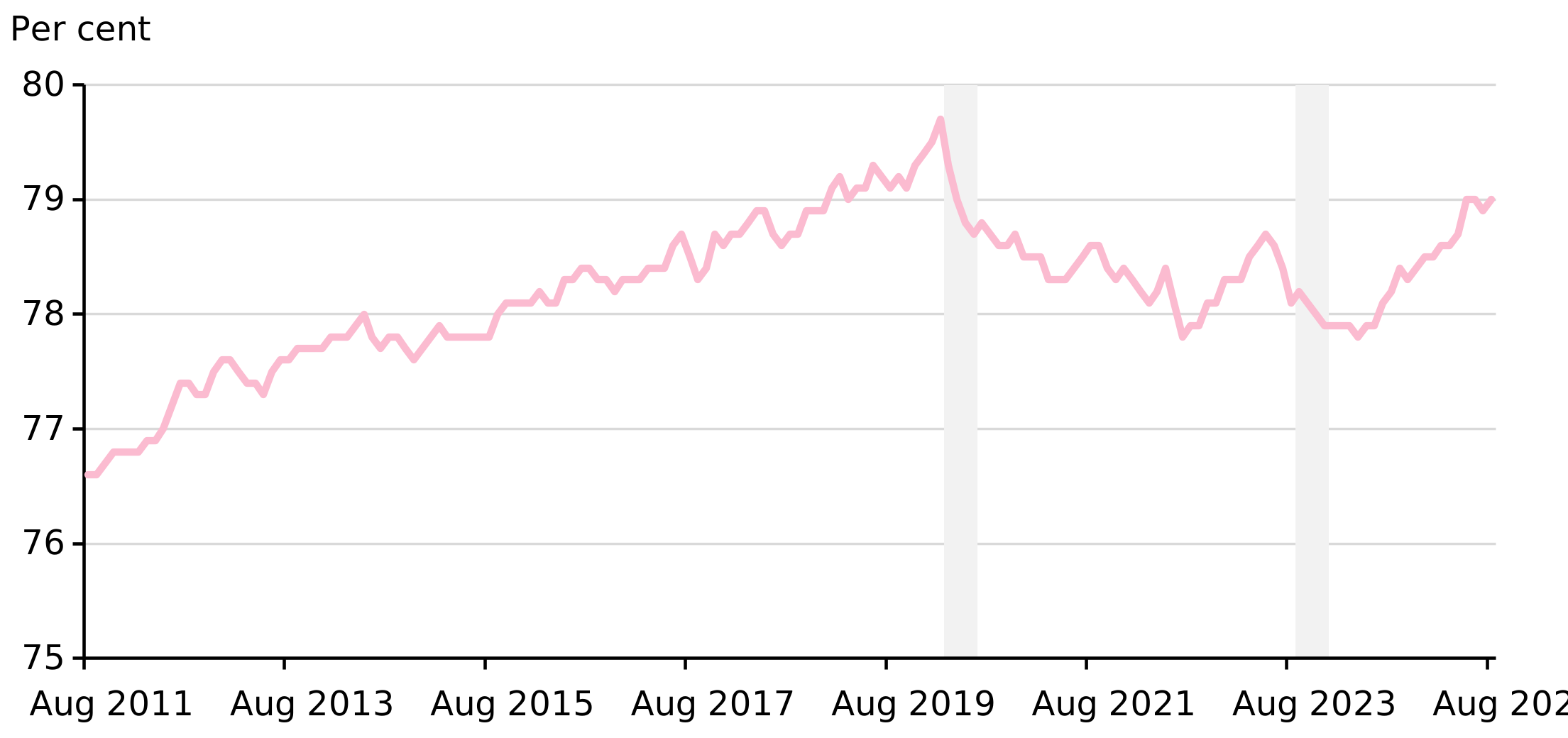
With falling levels of inactivity, the number of economically active individuals – that is, people either in work or looking for work – has increased. Figure 2.12 shows economic activity has increased to 79 per cent, its highest rate since prior to the pandemic and generally deemed positive for the economy. The downside to a higher economically active population is that not everyone will be in employment. Those seeking work are recorded as unemployed which is often viewed negatively, despite the fact that many have taken a positive step in becoming economically active by moving from inactivity into unemployment.
Figure 2.12: Economic activity (16-64), UK, 2011-2025
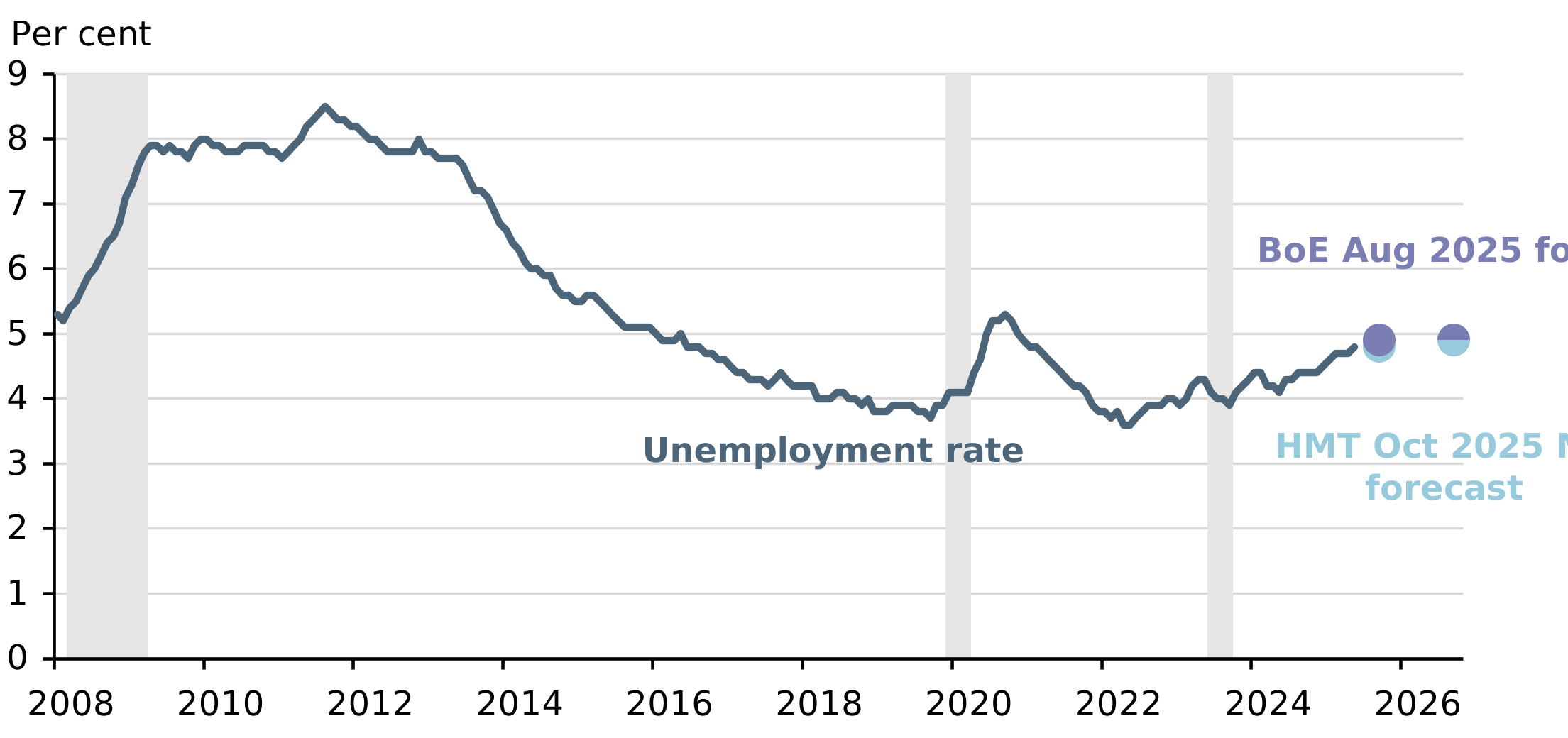
Consistent with employment levels stagnating while job vacancies and inactivity fall (as economic activity rises) is an increase in unemployment. This is what we have observed in 2025, with the unemployment rate rising to 4.8 per cent in August, its highest level since 2016 (excluding the pandemic period). As the labour market continues to loosen, unemployment is expected to tick up further in the next year towards 5 per cent.
Figure 2.13: Unemployment rate and Q4 2025 and 2026 forecasts, UK, 2008-2026
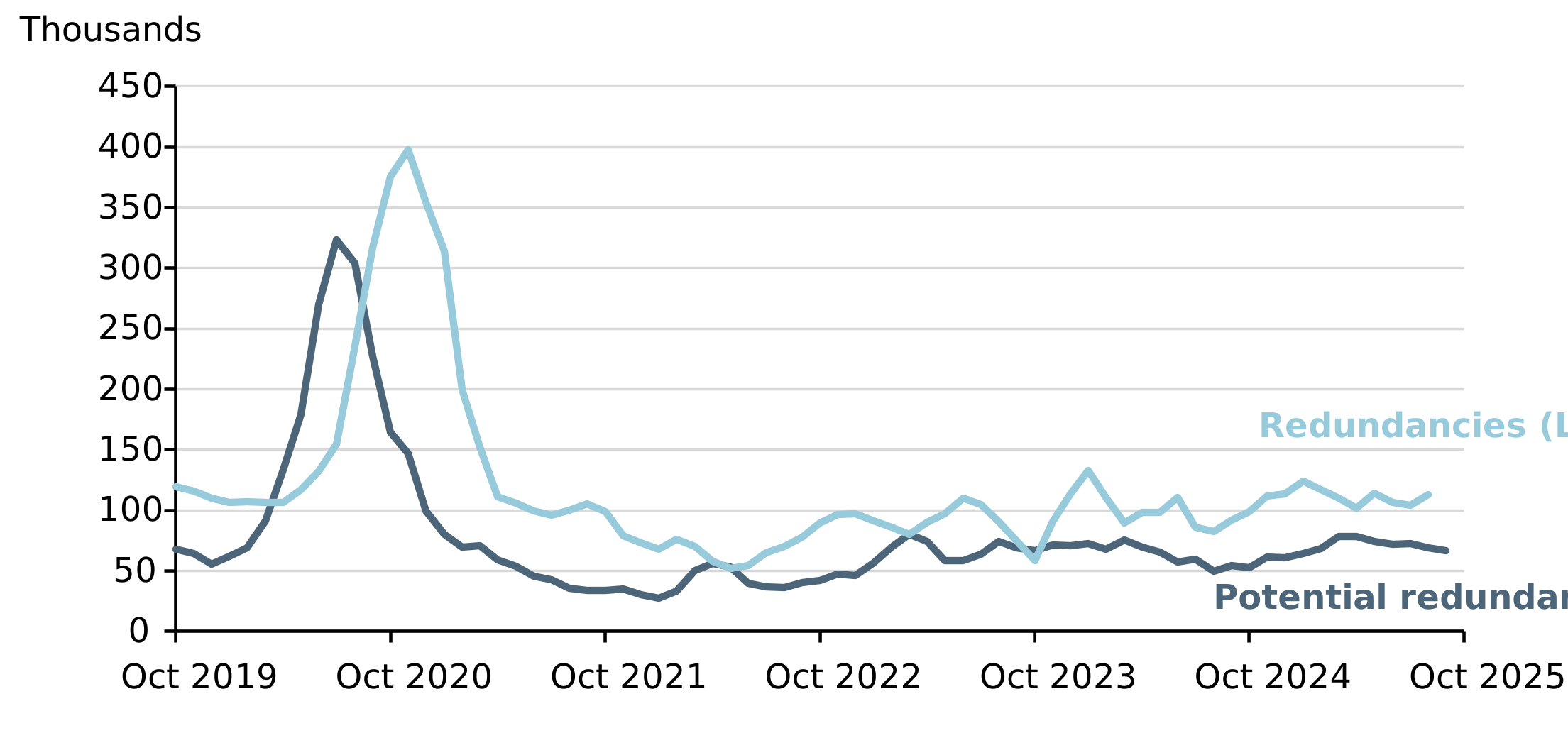
The increase in unemployment is not a result of large scale redundancies – either planned or realised
Redundancy data show that firms have not reacted to weakening labour demand by making wholesale redundancies. Advanced notifications from firms planning to make 20 or more redundancies, known as HR1s, are relatively stable, while ONS levels of actual redundancies have only increased marginally. Both are no higher than levels in 2019 prior to the onset of the pandemic.
Figure 2.14: Potential HR1 redundancies, GB vs LFS actual redundancies, UK, 2019-2025
Wage growth remains elevated even though the labour market has loosened
We would expect the combination of falling vacancies and greater availability of workers to place downward pressure on pay. Monetary policy has been restrictive, contributing to weaker consumer and business demand. In addition, changes to employer National Insurance contributions (NICs) and the increase in the minimum wage are expected to put further downward pressure on non-statutory wage growth.
Average nominal wage growth, as shown in Figure 2.15, slowed in the three months to August 2024. But wage growth remained stronger than expected throughout late 2024 and into 2025, consistently exceeding forecasts. This has implications for our projections of two-thirds of nominal median earnings, which are discussed in more detail in Chapter 10.
Figure 2.15: Average wage growth out-turns compared with forecasts made in October 2024, 2021-2026
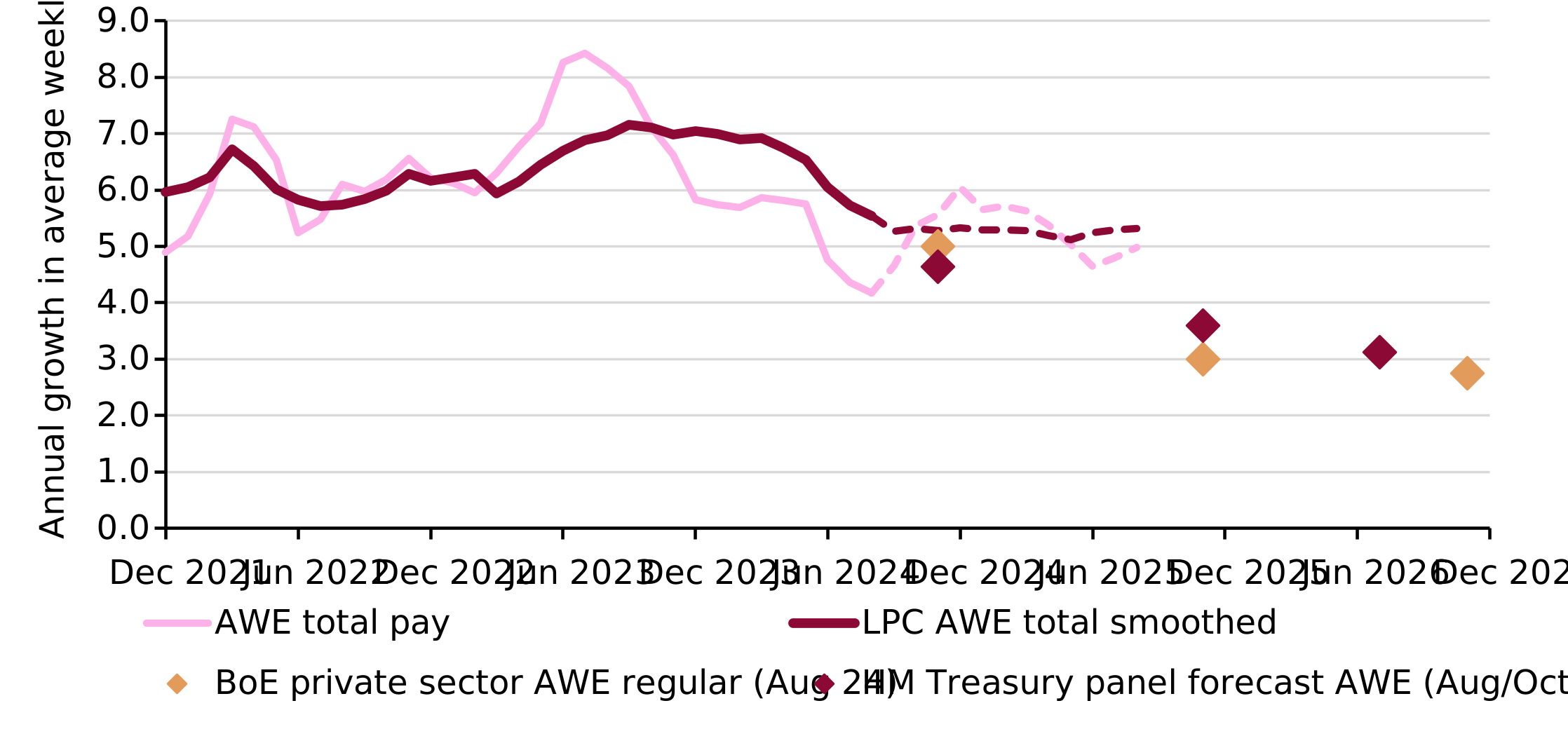
The strength in wages has been evident across various measures of nominal and real wage growth. Figure 2.16 shows that nominal wage growth has slowed from a peak in 2023 but remains more elevated (at around 5 per cent in September 2025) than it was pre-pandemic (around 3-4 per cent). Despite the pick-up in inflation since September 2024, real wages have also increased, as shown in Figure 2.19.
According to the Annual Survey of Hours and Earnings (ASHE), hourly wages excluding overtime for those aged 21 and over rose by 5.2 per cent in the year to April 2025. Figure 2.16 shows that was similar to the growth recorded using the Average Weekly Earnings series (both total pay and basic pay) and the monthly measures derived from the HMRC payroll tax data.
Despite slowing since 2023, wage growth is still higher than expected – raising the question as to why. One explanation is that persistent inflation (especially regarding food, energy and other regulated prices) has made workers more reluctant to accept lower pay deals. Another is that part of the wage growth is compositional. Falls in the share of employment in lower-paying sectors, like hospitality and retail, increase the average wage and therefore raise reported wage growth. Further, falling migration (as evidenced by sharp falls in visa numbers even before the latest more restrictive migration policies have been enacted) may mean that labour supply may be less than anticipated.
Figure 2.16: Annual pay growth, 2015-2025
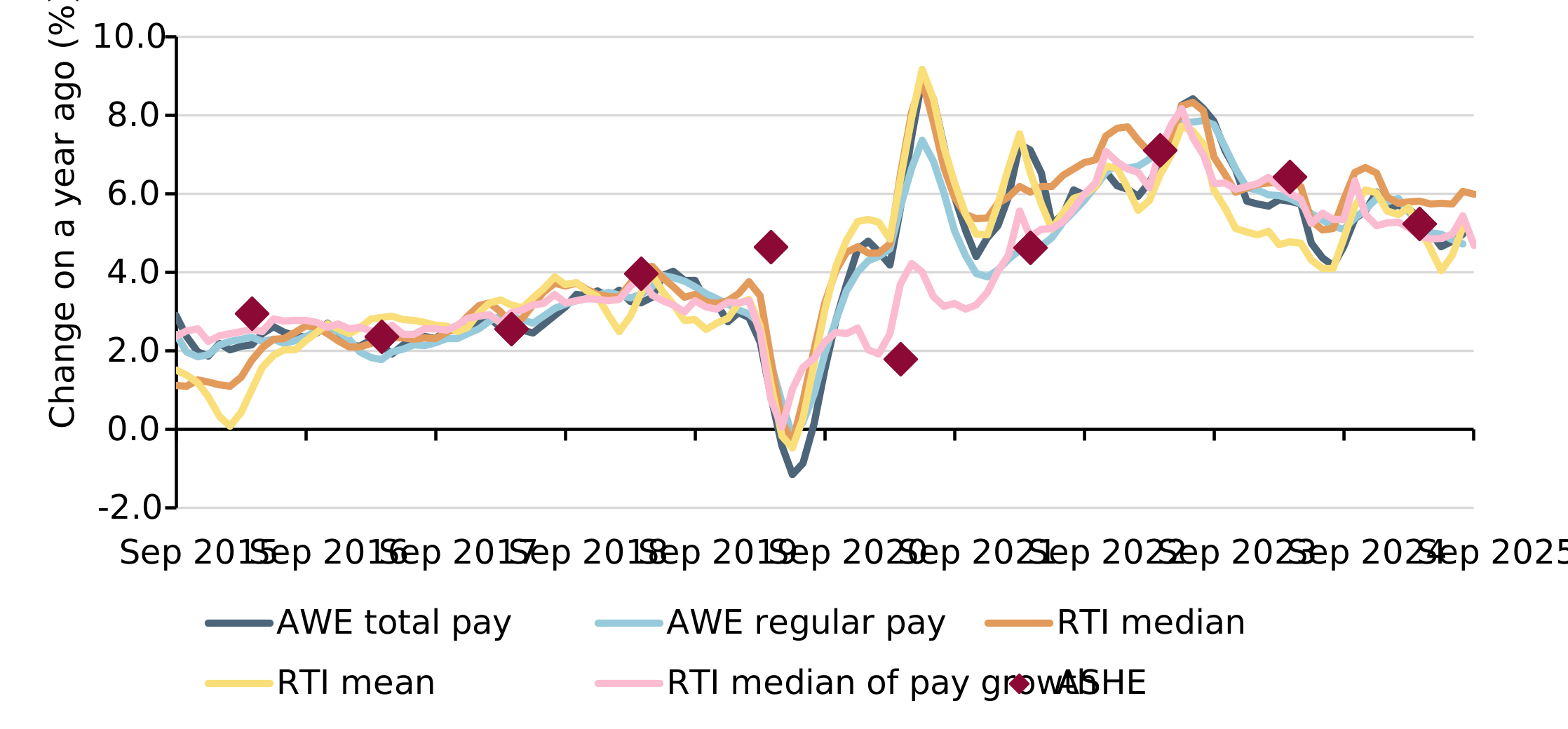
While pay growth remains elevated, pay settlements have moderated. As shown in Figure 2.17, the median pay settlement has come down from over 4 per cent for much of 2024 to around 3 per cent in 2025. Further, pay settlements do not appear to have responded to the rise in inflation since September of 2024. With the third quarter of 2025 expected to be the inflation peak, pay settlements are not expected to rise in response to the recent rise in inflation.
Since the pandemic, pay drift has returned. This means average pay is rising faster than basic pay awards. Pay awards can be seen as the pay rise workers get if they don’t move job or receive other types of extra pay such as overtime pay, bonuses, performance-related pay, and informal allowances. All other things being equal, an increase in job-to-job moves is associated with a larger gap between average pay growth and pay settlements.
Figure 2.17: Pay awards and CPI inflation, 2004-2025
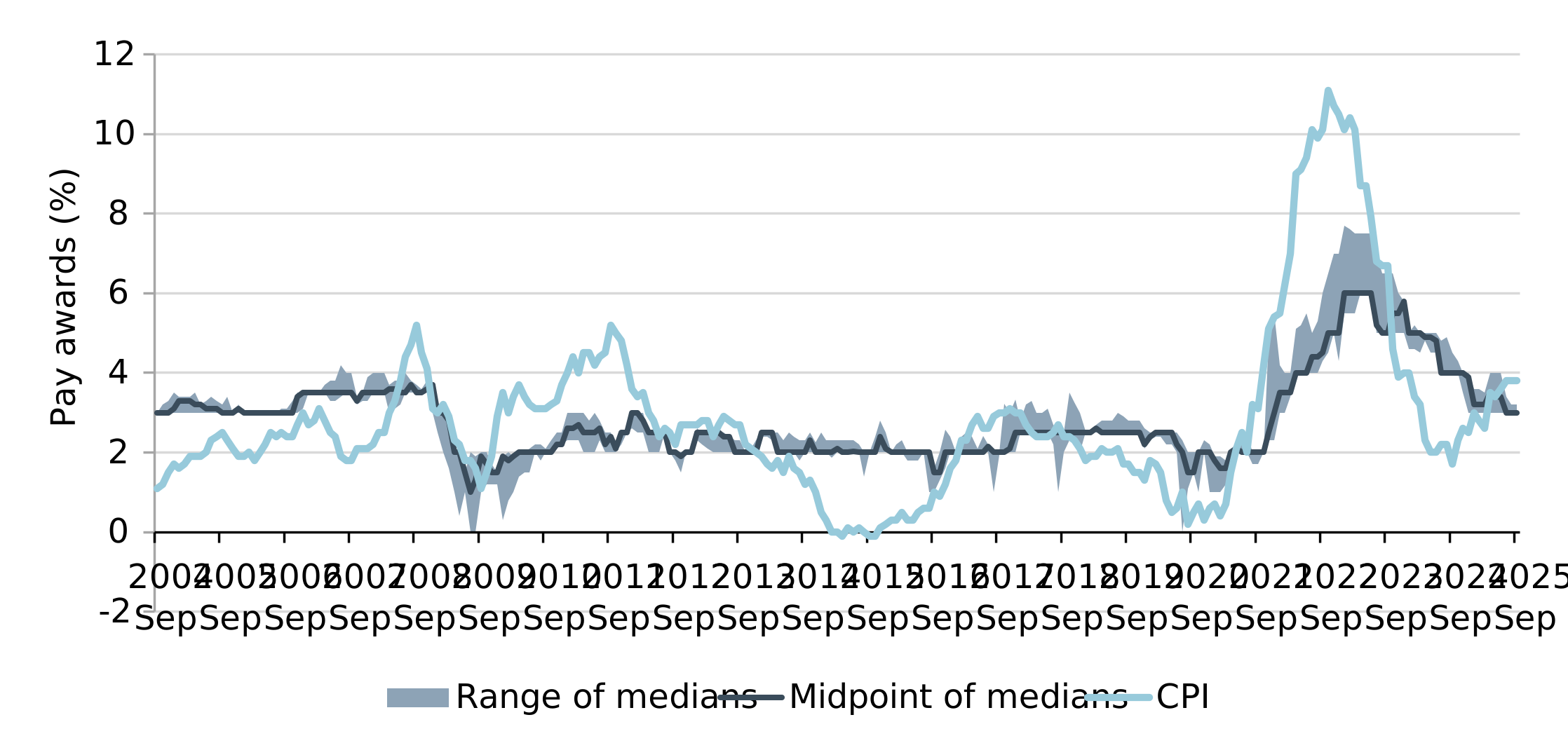
Figure 2.18 shows that before the financial crisis, average pay growth was around 1 percentage point higher than the median of basic pay awards. From the financial crisis to the onset of the pandemic, wage drift disappeared and may even have been negative between 2010 and 2015. However, post-pandemic, this seems to have re-appeared, with average wage growth close to two percentage points higher than basic pay awards. With falling job vacancies and fewer job-to-job moves, the gap between average pay growth and pay awards may be expected to shrink but remain positive.
While average wage growth continues to be above what it was pre-pandemic, Figure 2.18 also shows that the median of pay awards has returned to its pre-pandemic level – around 3 per cent.
Figure 2.18: Pay awards and pay drift, 2004-2025
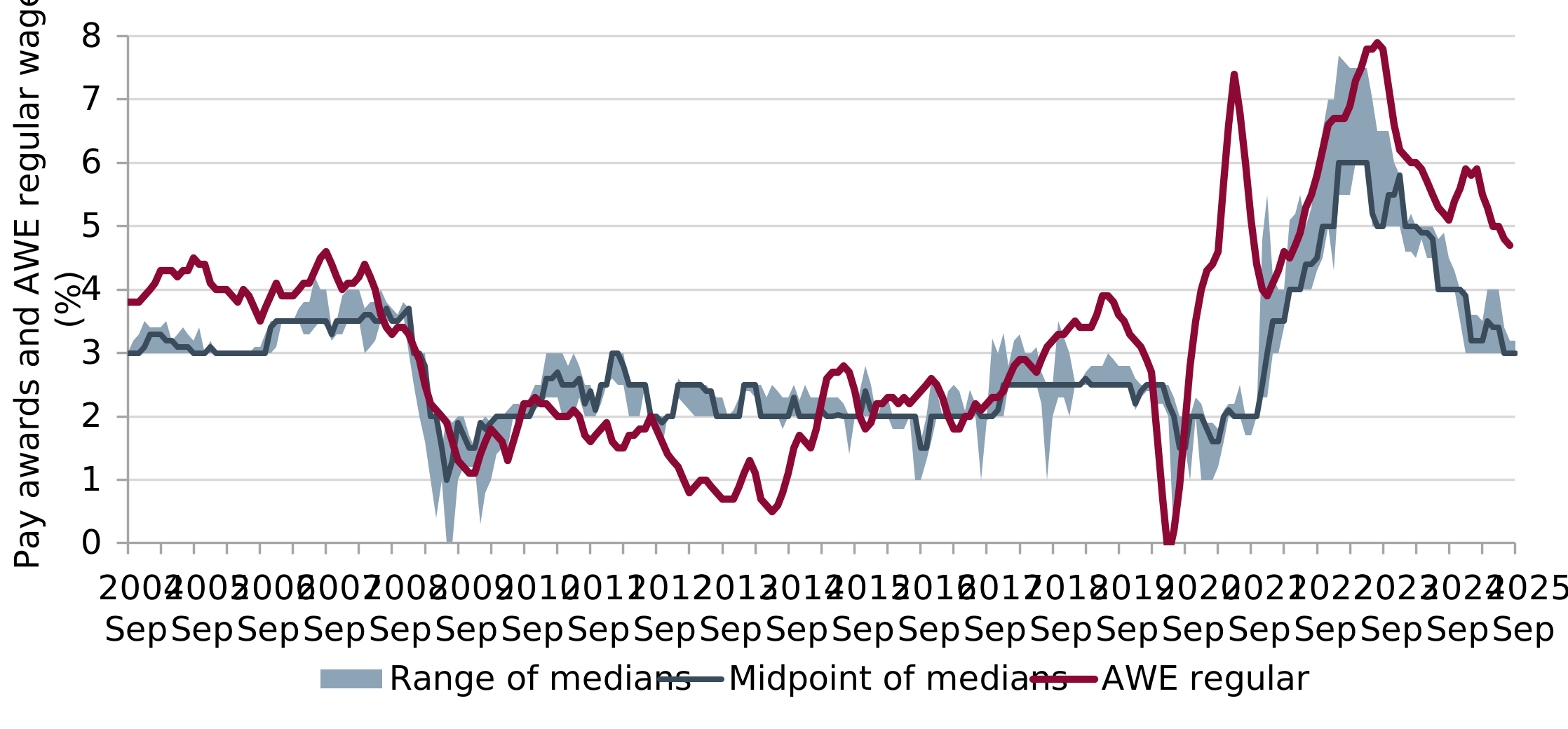
The distribution of pay awards recorded by Incomes Data Research (IDR) and Brightmine across the years from 2023 to 2025 are similar. Pay awards of 6 per cent or more accounted for around half of all pay awards in 2023, but fewer than one in twelve in 2025. In the nine months to September 2025, the most common pay award (around 40 per cent in both sources) was in the range of 3.0-3.99 per cent. Looking forwards to 2026, around half of the employers responding to Brightmine (2025) were expecting pay awards to continue to converge to around 3 per cent, with far fewer awards than in recent years of 4 per cent or more. IDR (2025) reports that over 60 per cent of its employer survey respondents were expecting future pay awards between 2.5 and 3.49 per cent.
The slowdown in pay awards is expected to feed into lower average pay growth. As shown in Table 2.1, forecasters are expecting average wage growth to slow as we move into 2025 and 2026. The median of the HM Treasury panel of independent forecasts has wage growth slowing to 3.2 per cent by the fourth quarter of 2026 and 2.8 per cent for the whole of 2027. The Bank of England has projected slightly stronger wage growth in the private sector – at around 3.3 per cent in the fourth quarter of 2026 and 3.0 per cent for the fourth quarter of 2027.
Table 2.1: Actual wage growth and forecast wage growth, 2023-2027
| Average wage forecasts | Actual | Forecast | |||
|---|---|---|---|---|---|
| 2024 Q4 | August 2025 | 2025 Q4 | 2026 Q4 | 2027* | |
| Bank of England (private sector) | 6.1 | 4.3 | 3.75 | 3.25 | 3.0 |
| HM Treasury panel (AWE whole economy) | 6.0 | 5.2 | |||
| Median | 3.9 | 3.2 | 2.8 | ||
| Average (mean) | 3.8 | 3.2 | 3.0 | ||
| Lower quartile | 3.6 | 2.9 | 2.4 | ||
| Upper quartile | 4.1 | 3.6 | 3.6 | ||
| Lowest | 3.1 | 2.4 | 2.3 | ||
| Highest | 4.4 | 4.1 | 4.1 |
Despite the increase in inflation over the year to September 2025, average wage growth has remained above CPI and CPIH inflation, leading to real gains in earnings on average. The increase in real wages since mid-2023 can clearly be seen in Figure 2.19. This contrasts sharply with the period in the aftermath of the financial crisis when real wages fell. Indeed, real wages using CPIH were only 2.5 per higher in August 2025 than in March 2008 (using CPI they were only 0.4 per cent higher). That lack of real wage growth is unprecedented in recent economic history.
Figure 2.19: Real wage growth, 2009-2025
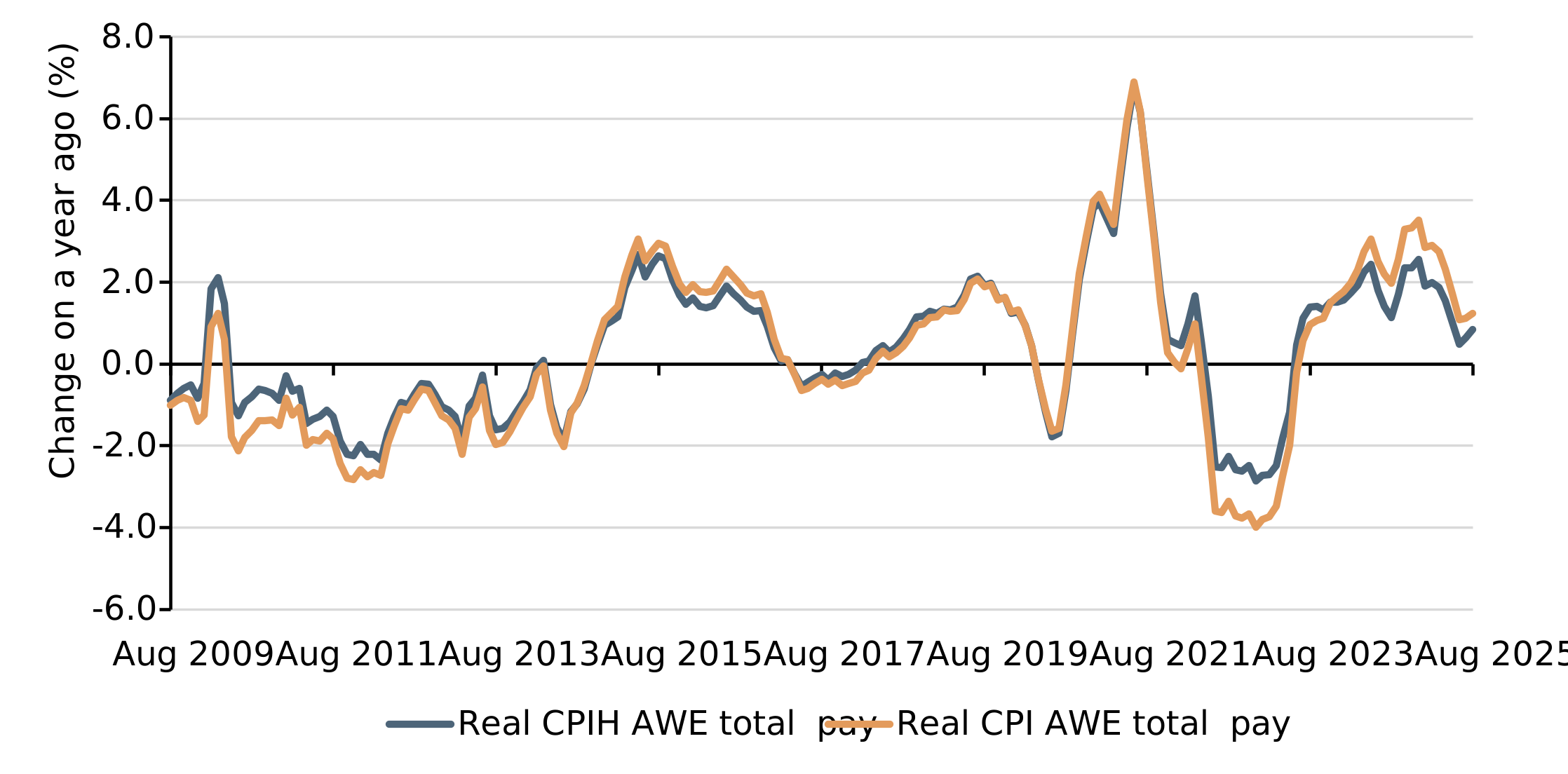
Conclusions
The labour market loosened further across 2025. Aggregate payrolled employment, after several years of deceleration, has now started to decline. But there are variations across ages, sectors and geographies. Consistent with this loosening, falling employer confidence in the UK economy has resulted in reduced hiring intentions. Unemployment has increased, partly in response to falls in inactivity and not as a result of wholesale redundancies.
Pay growth has slowed but not by as much as had been forecast. Although the median of pay awards has returned to its pre-pandemic level, average wage growth remains elevated. While average wage growth is expected to slow as we head into 2026 and 2027, it is still expected to be above CPI inflation, continuing to give workers real terms increases in pay. Despite this recent real wage growth, measures of productivity have shown no improvement.
Chapter 3: Minimum wage workers
Key findings:
- Minimum wage coverage (the share of workers paid within 5p of the minimum wage) increased this year to 6.6 per cent of all employees, a total of 2 million jobs - This increase is smaller than anticipated at the time of last year’s report, and the coverage rate remains below pre-pandemic levels.
- The increase in total coverage is driven solely by people aged under 21, coverage for the National Living Wage population fell - Coverage increased for men in most age groups and fell for women aged 21 and over, particularly those aged 50 or over.
- Mostly, the occupations with the highest coverage rates saw the biggest increases in coverage - Transport, hair and beauty and hospitality occupations saw increases in coverage rates. However, some high-coverage occupation groups like cleaning and maintenance saw a decrease in coverage.
- Coverage increased in small and medium firms and fell in very large firms - Micro firms have the highest coverage rates, with an increase from 15.6 per cent in 2024 to 17.9 per cent in 2025. The largest firms also saw a large drop in coverage from 4.5 per cent to 3.4 per cent.
- Coverage rates increased in parts of the UK with low coverage in 2024 - Coverage in London increased from 3.3 per cent in 2024 to 3.7 per cent in 2025, an increase of 25,000 jobs, while coverage in Scotland increased by 12,000 from 4.9 to 5.4 per cent and coverage in the South East increased by 12,000 from 5.3 to 5.7 per cent.
- Many workers reported difficulty securing sufficient hours, with minimum wage jobs typically involving fewer hours than other roles - Retail workers we met with frequently faced reduced hours or caps on overtime, leaving them struggling to make ends meet.
- Minimum wage workers often described their work as insecure - Short shifts and unpredictable scheduling were common in retail and hospitality, creating insecurity and stress. Workers complained about one-sided flexibility, where employers could change shifts at short notice or cut hours without consultation. While some younger workers valued flexibility, most workers with financial commitments wanted guaranteed hours. Employers defended zero-hours arrangements as offering two-way flexibility, but many workers described them as limiting income stability and making it hard to plan their lives.
- Workers face multiple barriers to employment and job mobility - Health, childcare and transport are consistent challenges. Workers also face financial hurdles such as training costs and interview-related expenses. The lack of employer responses to job applications further discouraged job seekers we spoke to.
In this chapter we examine who minimum wage workers are and their experiences of work. We look at how many workers are paid the minimum wage, their characteristics and changes that have occurred over the past year and since 2019. Further detail for each rate population is set out in Chapters 5, 6 and 7. In the latter half of this chapter, we examine low-paid workers’ experiences, drawing on their direct accounts from our visits and other stakeholder evidence.
Coverage
Minimum wage coverage increased in 2025
We use the term coverage to refer to the number of jobs paid up to 5 pence above a worker’s relevant minimum wage rate. Coverage is the net result of new jobs created at the minimum wage and those previously paid above the minimum wage being swept up, minus those jobs previously at the minima being lost (either because they no longer exist or because they move above the statutory minimum).
While the National Living Wage (NLW) applies to workers aged 21 and over, separate minimum wage rates apply to younger workers and apprentices. Coverage includes only jobs done by employees, as the self-employed are not eligible for the minimum wage. We measure coverage in terms of jobs rather than workers, as a worker could be employed in multiple jobs at different wage rates.
In April 2025 we estimate that total minimum wage coverage increased by 87,000 to 2.02 million jobs. This increase is smaller than in 2024 and less than we anticipated at the time of last year’s report (which was around 2.16m jobs). At 6.6 per cent, the coverage rate (coverage as a proportion of all employees) remains below the 2019 rate (7 per cent).
The increase in estimated coverage is entirely driven by youth rates. The coverage of the NLW among people aged 21 and over fell slightly by 8,000 jobs (from 6.2 per cent in 2024 to 6.1 per cent in 2025). In contrast, an additional 72,000 jobs came into minimum wage coverage for 18-20 year olds (9.4 per cent in 2024 to 15.1 per cent in 2025). Coverage for 16-17 year olds rose by 17,000, from 15.5 per cent in 2024 to 21.8 per cent in 2025. (We cover this in more detail in Chapter 6.) The increase in coverage for 18-20 year olds is greater than we forecast in our 2024 Report, while the increase for 16-17 year olds is lower. Overall, these increases in coverage for younger workers are not surprising, given the significant increases to their minimum wages over the last couple of years.
Figure 3.1: Minimum wage coverage, UK, 2016-2025
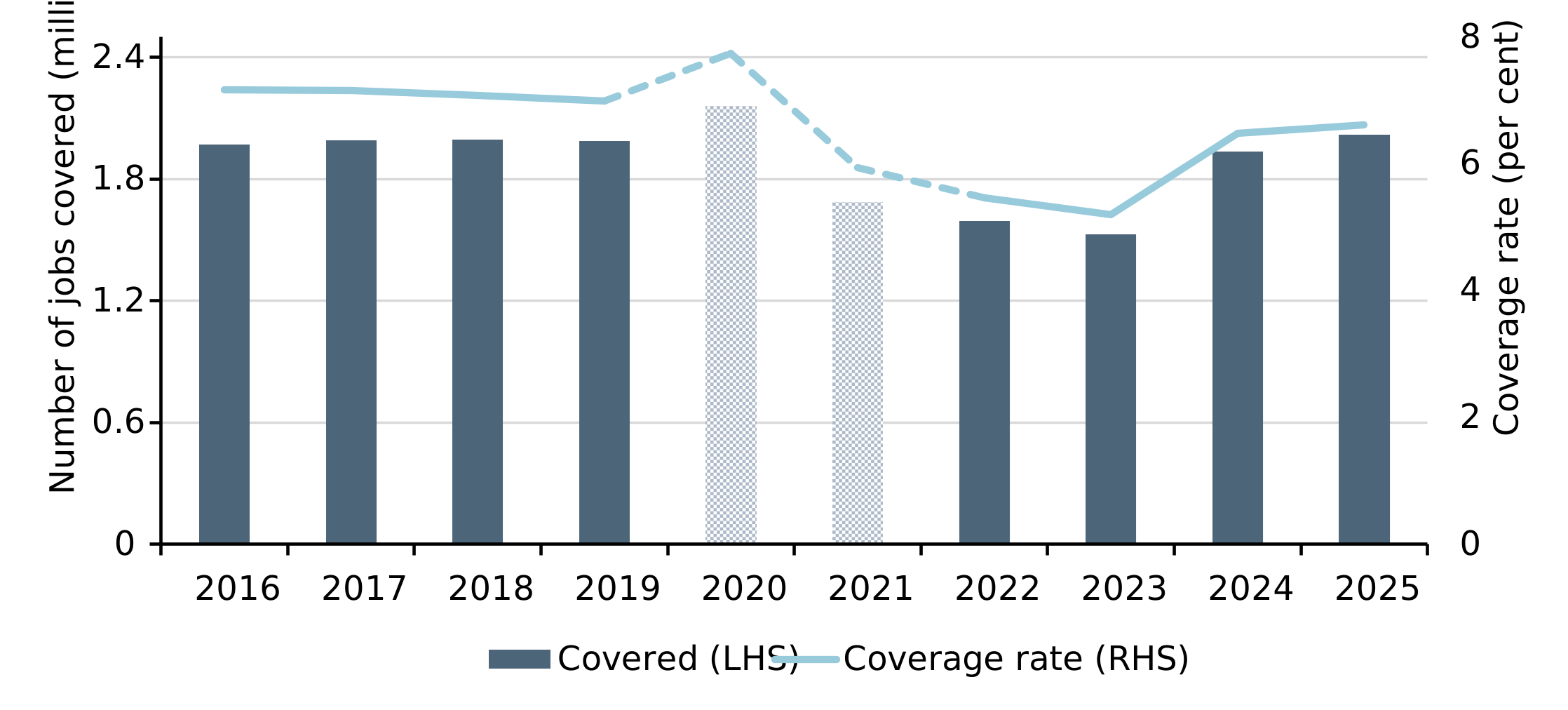
Figure 3.2 outlines the composition of the 2 million jobs estimated to be covered by the minimum wage, to give a better idea of who minimum wage workers are and where they are employed. It shows that the vast majority (87 per cent) of all minimum wage workers are those aged 21 and over receiving the NLW. In 2025 the share of all minimum wage jobs that are undertaken by 18-20 year olds increased from less than 5 per cent to 8 per cent.
The number of men in minimum wage jobs in 2025 increased by over 100,000, while the number of women fell by 16,000. Despite this, women continue to make up around three in five of those employed in minimum wage jobs. In 2025 we also saw a larger share of total coverage coming from non-low paying occupations and salaried workers, where an additional 62,000 (380,000 in total) and 49,000 jobs (556,000 in total) respectively were covered by the minimum wage.
Minimum wage workers continue to be employed across firms of all sizes. The share of minimum wage jobs in micro, small and medium-sized firms increased in 2025. This largely results from a compositional shift following a large fall in coverage among very large firms. Employers are not required to pay the new minimum wage rates until the start of the first pay period following the start of the new financial year. This means that increases in the NLW can take place until the end of April for those paid on a monthly basis. Last year, the date of uprating by one major employer fell after the Annual Survey of Hours and Earnings (ASHE) reference date, leading to higher estimates of coverage for very large firms. The increase in coverage this year for younger workers has also likely had some effect across firm sizes, as we know smaller firms are more likely to make use of minimum wage rates and to employ younger workers. We discuss this in more detail in Chapter 6.
Figure 3.2: Share of total coverage by employment and personal characteristics, UK, 2024-2025
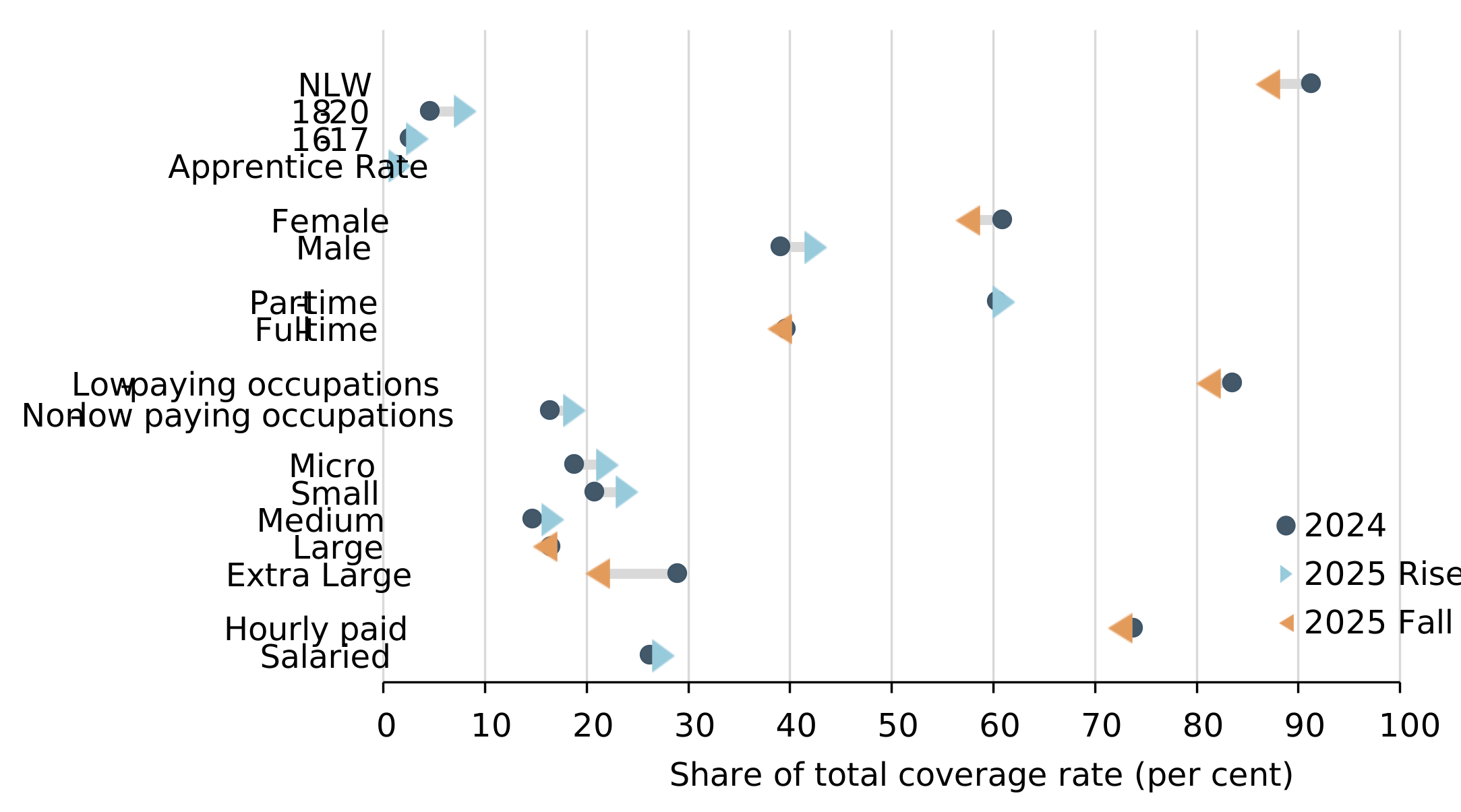
Coverage rates by personal and job characteristics
Some high-coverage groups saw a decrease in their coverage rates of minimum wage jobs in 2025. Figure 3.3 looks at the coverage rates of all minimum wage jobs by age and gender. It shows the overall coverage rate for women fell slightly from 7.7 per cent to 7.5 per cent, a decrease of around 16,000 minimum wage jobs undertaken by women. The largest decreases were among women aged 50 and over, a group with high coverage rates. The coverage rate for men increased sharply from 5.2 per cent to 5.7 per cent, an additional 102,000 minimum wage jobs.
The largest increases in the coverage rate were for young people aged below 21, where an additional 95,000 jobs became covered by the minimum wage: the rate increased from 12.2 per cent to 16.8 per cent for young men and from 11.5 to 17.8 per cent for young women.
Figure 3.3: Coverage rates of all minimum wage jobs by age and gender, UK, 2024-2025
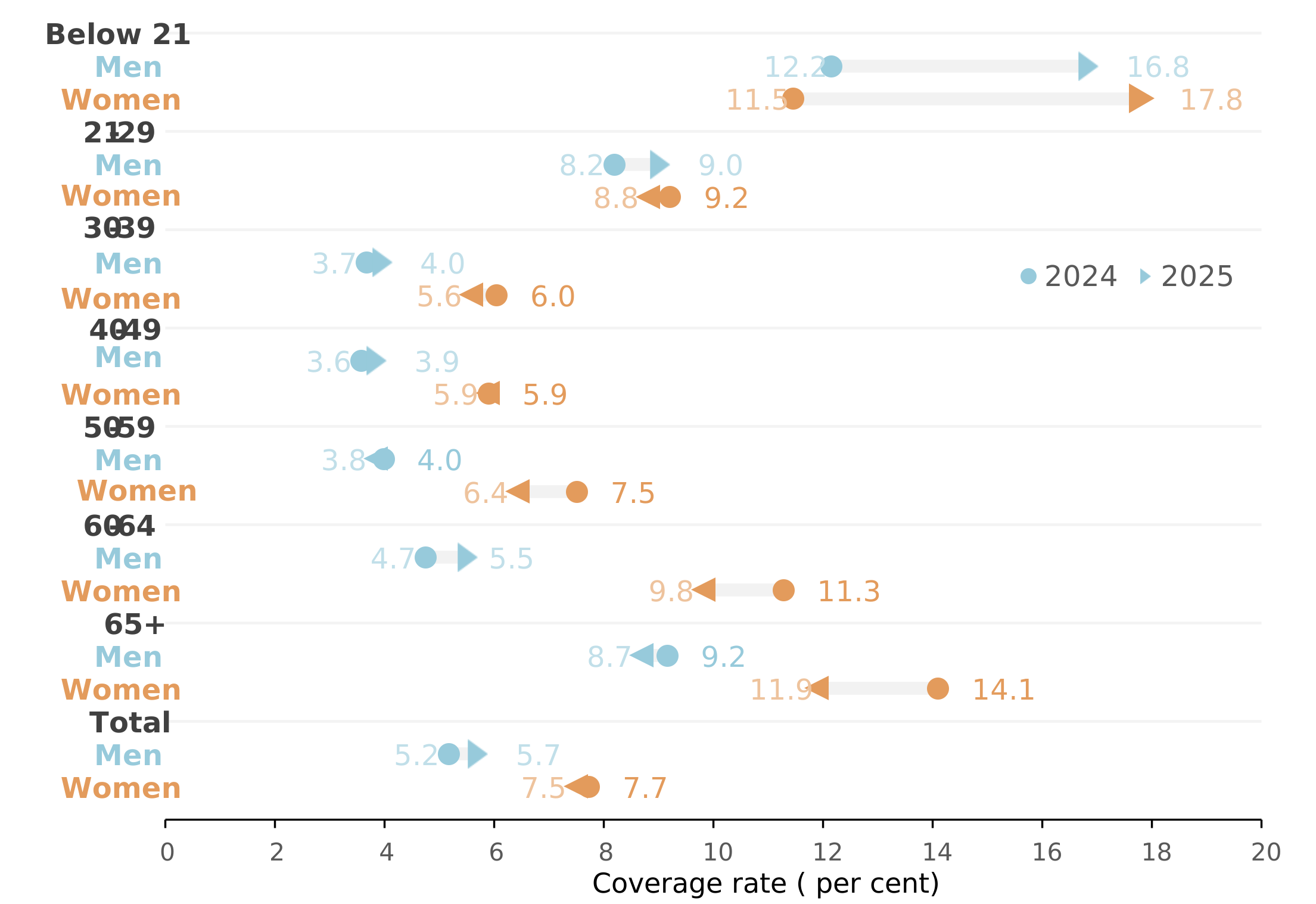
Table 3.1: Number of employee jobs covered, by sex and age, UK, 2019, 2024, 2025
| Number of jobs covered (thousands) | Change (thousands) | |||||||||
|---|---|---|---|---|---|---|---|---|---|---|
| 2019 | 2024 | 2025 | 2019-2025 | 2024-2025 | ||||||
| Female | Male | Female | Male | Female | Male | Female | Male | Female | Male | |
| Under 21 | 94 | 86 | 83 | 81 | 136 | 124 | 42 | 38 | 53 | 42 |
| 21-29 | 225 | 176 | 256 | 214 | 237 | 236 | 12 | 61 | -19 | 22 |
| 30-39 | 258 | 157 | 222 | 135 | 208 | 150 | -50 | -7 | -14 | 15 |
| 40-49 | 254 | 129 | 205 | 114 | 213 | 131 | -40 | 2 | 8 | 17 |
| 50-59 | 267 | 117 | 236 | 116 | 201 | 111 | -66 | -6 | -35 | -5 |
| 60-64 | 92 | 48 | 111 | 49 | 105 | 57 | 13 | 9 | -6 | 9 |
| 65+ | 46 | 38 | 65 | 47 | 60 | 48 | 13 | 10 | -5 | 1 |
| Total | 1,236 | 751 | 1,177 | 756 | 1,161 | 858 | -76 | 107 | -16 | 102 |
The set of personal characteristics reported in ASHE is limited. To understand minimum wage workers’ broader characteristics including qualifications levels, disability status, migration status etc, we need to use the Labour Force Survey (LFS). However, the LFS sample size is smaller than ASHE and there is much greater measurement and reporting error around the pay of individuals within the LFS.
As discussed in Chapter 2, re-weighting of the LFS in December 2024 (incorporating recent population information) revised data from March 2019 onwards but created a discontinuity with earlier data. This makes comparisons over time unreliable. Furthermore, although now improving, the sample’s size and representativeness dropped following the pandemic, creating greater uncertainty around estimates. We discuss this further in Chapter 2 and Appendix 3. As a result of these concerns, we advise caution when drawing conclusions about particular demographic groups using LFS data.
The LFS’s issues with responses on pay questions result in higher levels of coverage than in ASHE, as shown in Figure 3.4. Estimated coverage was around 3.5 million in 2025 Q2 in the LFS, far higher than the ASHE figure of 2 million. This is also significantly higher than the LFS estimate for 2019 (around 2.5 million), while ASHE estimates for the two years are very similar. LFS data show coverage levels rise in the quarter when the minimum wage is uprated (in each Q2 on Figure 3.4) but fall in subsequent quarters as individuals’ earnings increase.
Figure 3.4: Coverage comparing ASHE and LFS, UK, 2019-2025
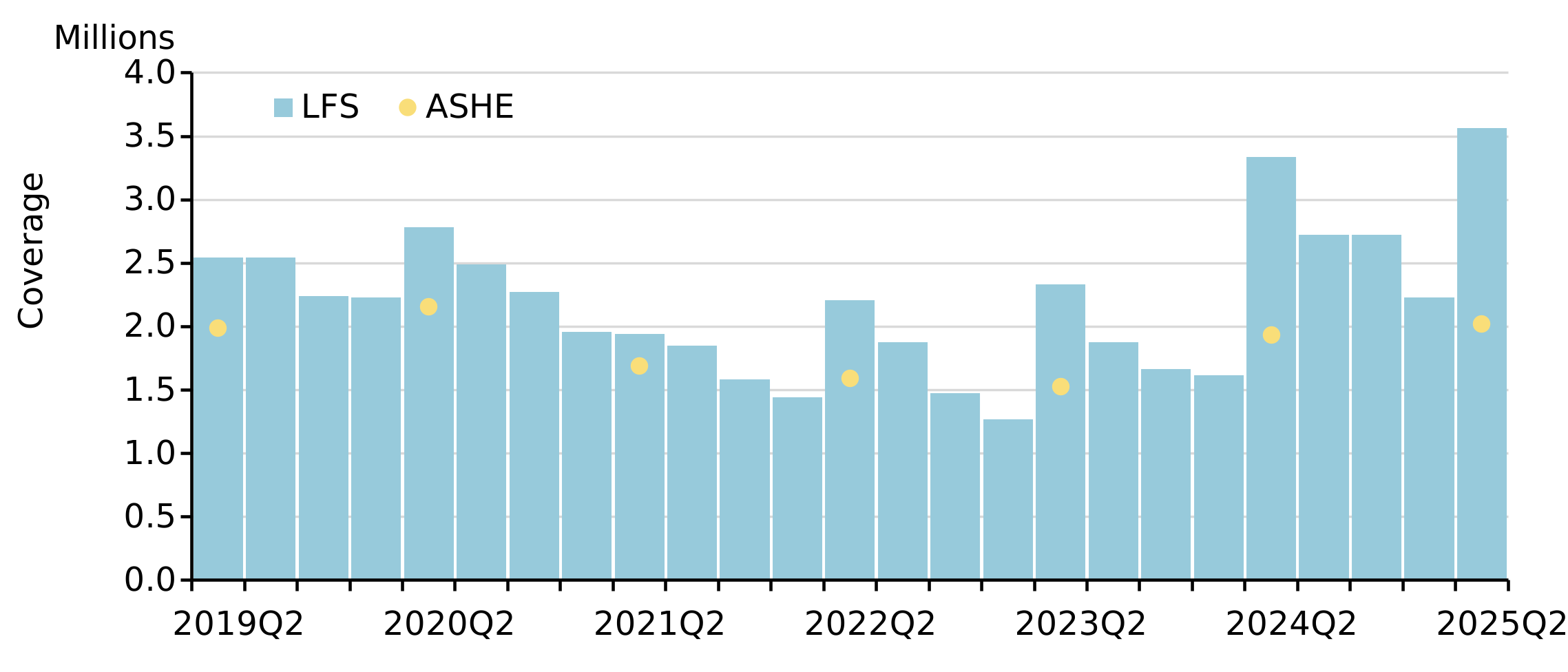
While coverage has increased for workers both with and without qualifications, the gap in coverage rates between the two groups increased from 2024 to 2025. Coverage of workers without a qualification increased by almost 5 percentage points in 2025, compared with a 2.5 percentage point increase for workers with qualifications. However, over time the share of workers without qualifications has fallen, making comparisons harder.
Figure 3.5: Coverage rates by qualification, UK, 2019-2025
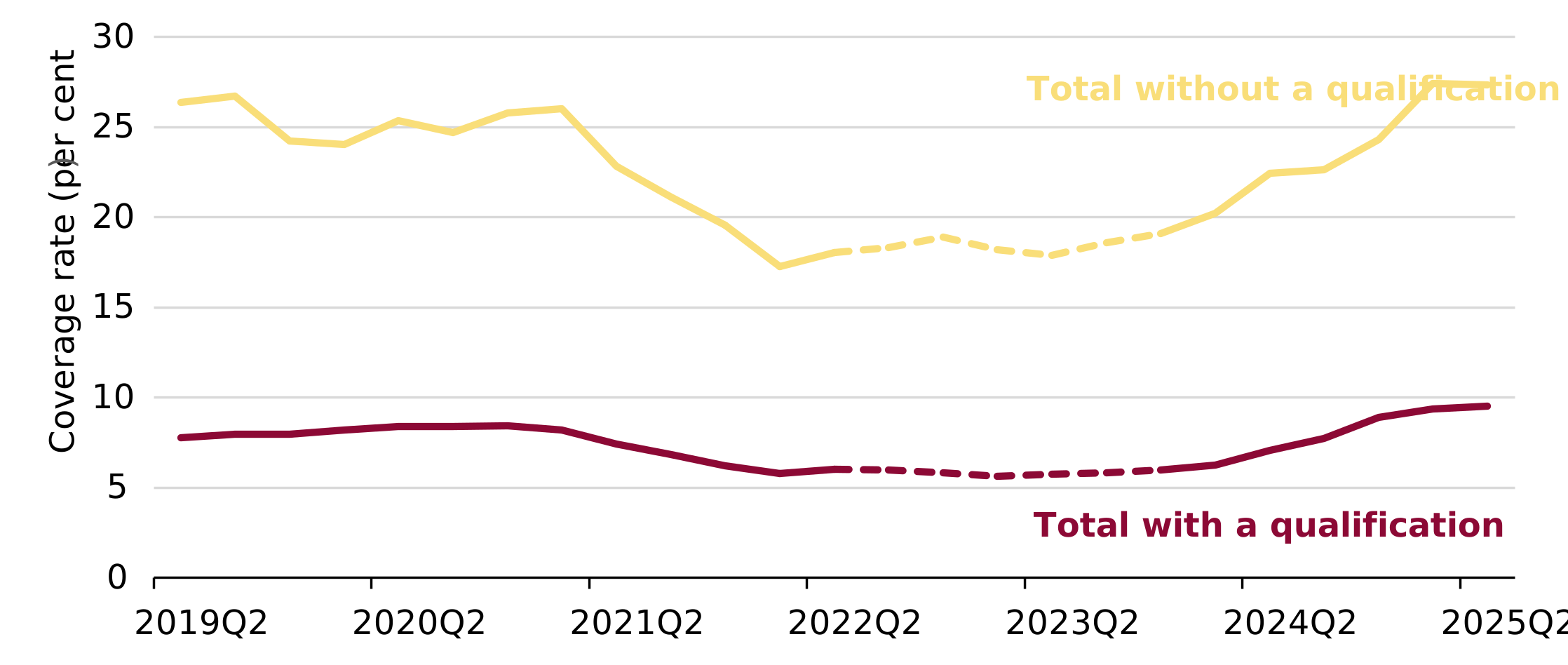
Workers with a disability are more likely to work in a minimum wage job than workers without a disability (left panel of Figure 3.6). Coverage rates for both groups increased this year, to around 14 per cent for those with a disability and 9 per cent for those with no disability. In recent years, changes in coverage rates for disabled workers have mostly tracked changes for the rest of the population.
Figure 3.6: Coverage rates by disability status and country of birth, UK, 2019-2025
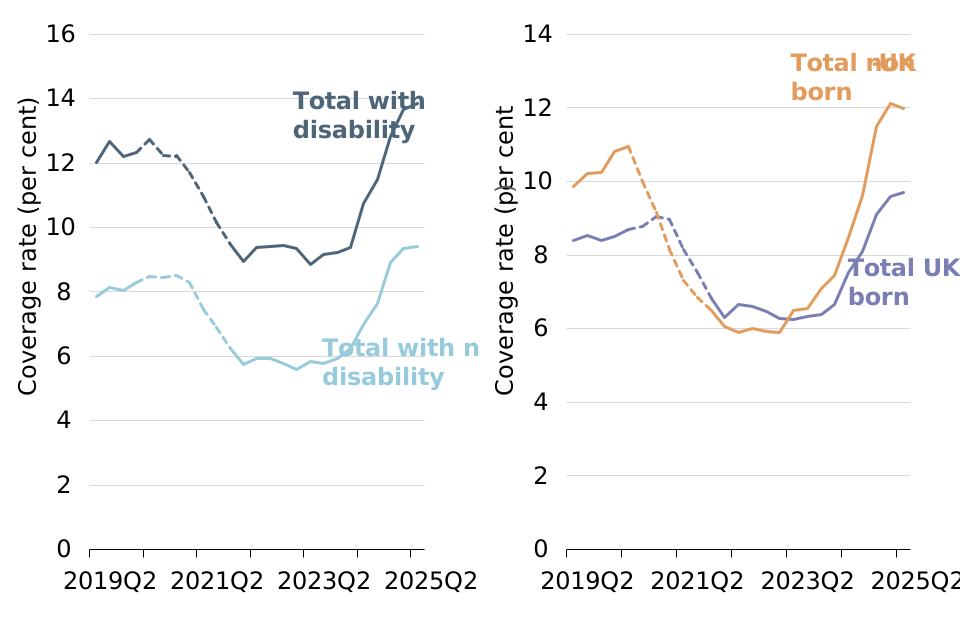
Coverage rates for both UK born and non-UK born workers increased from mid-2023, with steeper increases for non-UK born workers. Coverage rates for both groups increased in the year to the second quarter of 2025, with a slightly larger increase for non-UK born workers to 12 per cent compared with almost 10 per cent for UK born.
Ethnicity data for non-white groups within the LFS has smaller samples and can be extremely volatile. Comparing coverage rates in 2019 with 2025 shows workers from the Pakistani ethnic group had the highest rate of coverage in 2025, with rates lowest for white workers. We saw large increases in rates of coverage for most ethnic groups between 2019 and 2025. Bangladeshi workers showed a large fall in coverage but are subject to large quarter-on-quarter variations within the data.
Figure 3.7: Coverage rates by ethnicity, UK, Q2 2019- Q2 2025
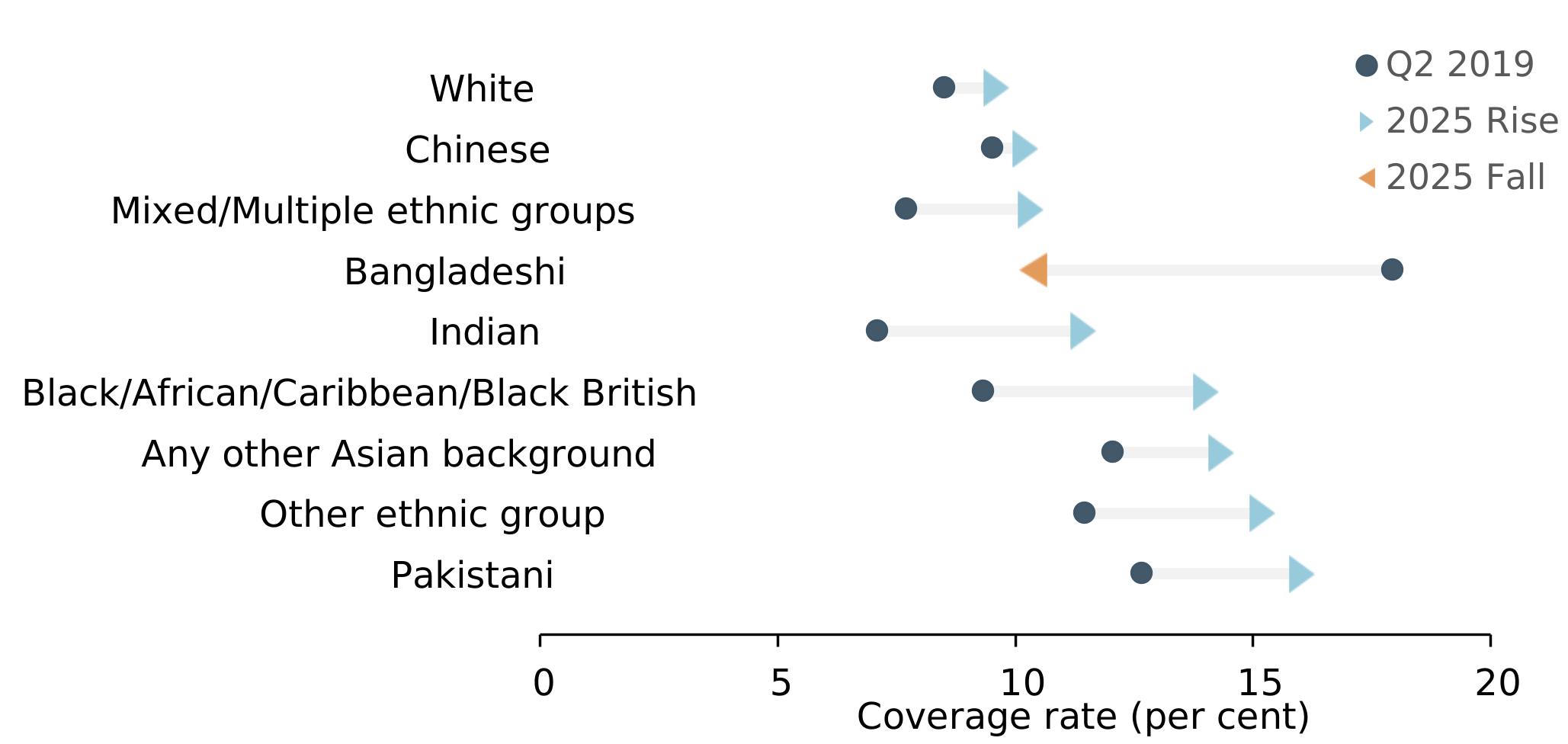
Occupation
For the most part, occupations that were already more exposed to the minimum wage saw the biggest increases in coverage rates in 2025. Figure 3.8 shows rates increased the most in transport occupations, from 16.5 per cent to 21.3 per cent, but remain highest for hair and beauty occupations at 43.3 per cent, up from 39.9 per cent. In hospitality, where, as discussed in Chapter 2, overall employment levels have fallen, we saw an increase in the coverage rate from 21.9 per cent in 2024 to 24.6 per cent in 2025.
Figure 3.8: Coverage rates by occupation, UK, 2024-2025
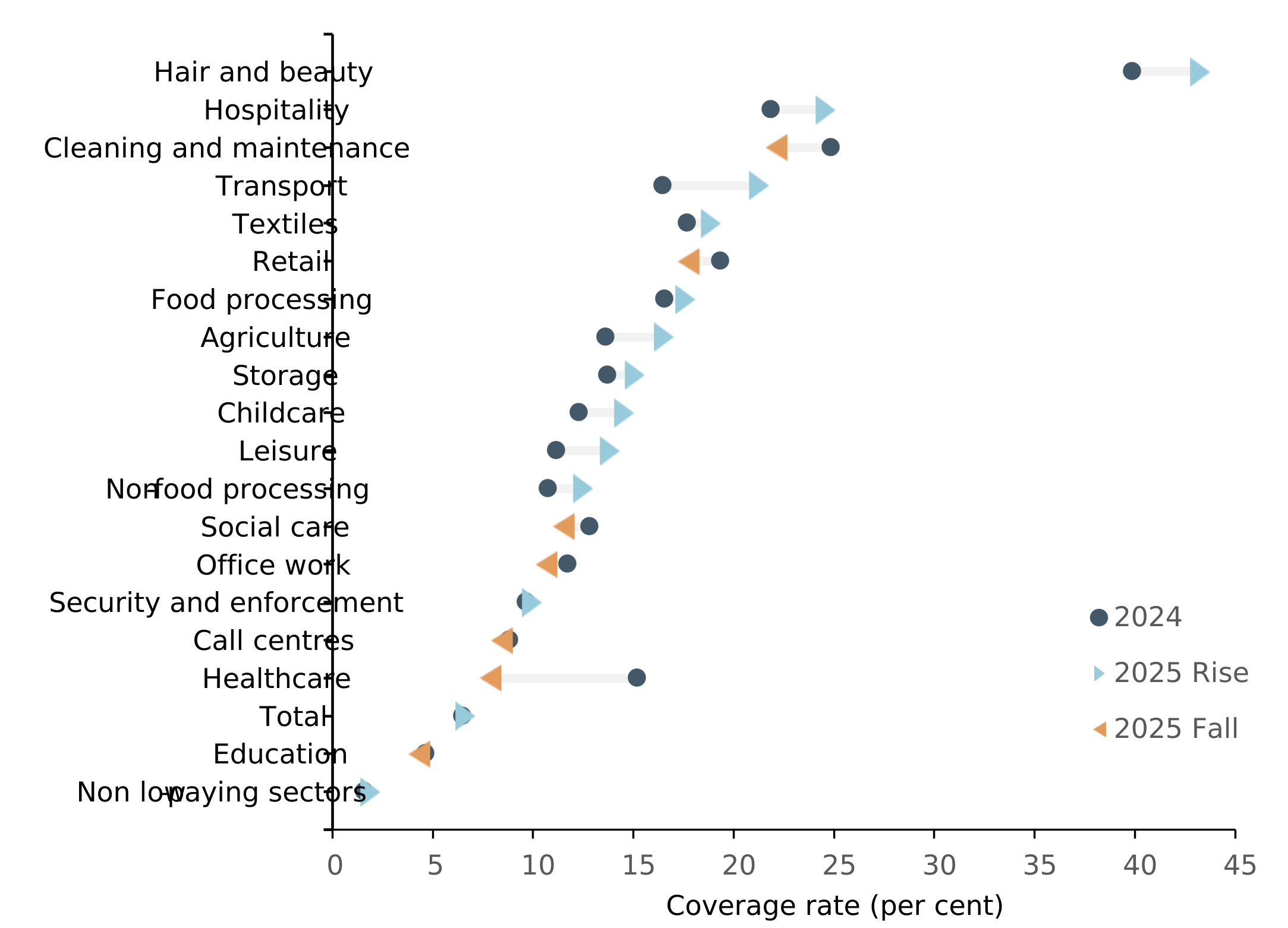
Coverage rates decreased in some high-coverage occupations, like cleaning and maintenance and retail. The coverage rate in retail occupations had increased sharply between 2023 and 2024, from 14.3 per cent to 19.3 per cent, but fell back slightly to 17.8 per cent in 2025, likely a result of the fall in coverage we have seen in very large employers, as discussed above.
The increase in hospitality coverage is mostly driven by young people, where the coverage rate for 16-20 year olds working in hospitality jobs increased from 15.9 per cent in 2024 to 23.3 per cent in 2025. Coverage rates for young people within retail occupations also increased, from 9.9 per cent to 13.7 per cent.
We saw coverage rates fall significantly in healthcare occupations between 2024 and 2025. However, as discussed in our 2024 report, much of this decrease is a reversal of an artificial increase in the rate in 2024 due to delays in the awarding of NHS pay increases.
Table 3.2 shows the number of jobs covered in each occupation group in 2019, 2024 and 2025. Non-low paying sectors saw the biggest increase in the number of jobs covered between 2024 and 2025, with an extra 62,000 covered jobs, although the 380,000 jobs now covered in this group still represents a small proportion (1.9 per cent) of its total. There was also an increase of 45,000 covered jobs in hospitality between 2024 and 2025 taking the total numbered jobs covered to 334,000, almost one quarter of hospitality jobs.
Table 3.2: Number of employee jobs covered, by low-paying occupation, UK, 2019, 2024 and 2025
| Number of jobs covered (thousands) | Change (thousands) | Coverage rates (per cent) | ||||||
|---|---|---|---|---|---|---|---|---|
| 2019 | 2024 | 2025 | 2019-2025 | 2024-2025 | 2019 | 2024 | 2025 | |
| Non low-paying sectors | 287 | 317 | 380 | 93 | 62 | 1.6 | 1.6 | 1.9 |
| Retail | 352 | 366 | 344 | -8 | -23 | 16.7 | 19.3 | 17.8 |
| Hospitality | 338 | 289 | 334 | -4 | 45 | 23.8 | 21.8 | 24.6 |
| Cleaning and maintenance | 266 | 202 | 185 | -82 | -17 | 29.3 | 24.9 | 22.1 |
| Office work | 122 | 153 | 148 | 26 | -5 | 7.3 | 11.7 | 10.7 |
| Social care | 104 | 99 | 100 | -4 | 1 | 13.1 | 12.8 | 11.6 |
| Storage | 75 | 76 | 93 | 18 | 18 | 13.6 | 13.7 | 15.1 |
| Transport | 63 | 50 | 69 | 6 | 19 | 16.2 | 16.5 | 21.3 |
| Food processing | 63 | 54 | 54 | -10 | 0 | 20.6 | 16.6 | 17.6 |
| Childcare | 76 | 43 | 52 | -24 | 9 | 18.6 | 12.3 | 14.5 |
| Leisure | 39 | 40 | 51 | 12 | 11 | 12.1 | 11.2 | 13.8 |
| Healthcare | 26 | 104 | 50 | 24 | -54 | 5.6 | 15.1 | 7.9 |
| Hair and beauty | 38 | 33 | 39 | 1 | 6 | 34.6 | 39.9 | 43.3 |
| Non-food processing | 54 | 33 | 38 | -17 | 5 | 13.1 | 10.8 | 12.5 |
| Education | 26 | 28 | 27 | 1 | -1 | 5 | 4.7 | 4.3 |
| Agriculture | 19 | 19 | 26 | 7 | 7 | 12.5 | 13.6 | 16.5 |
| Security and enforcement | 21 | 14 | 15 | -5 | 2 | 13.5 | 9.7 | 9.9 |
| Textiles | 11 | 9 | 9 | -3 | 0 | 21.1 | 17.7 | 18.8 |
| Call centres | 7 | 5 | 5 | -2 | 0 | 11.3 | 8.8 | 8.5 |
| Total | 1988 | 1934 | 2019 | 30 | 85 | 7 | 6.5 | 6.6 |
Coverage by firm size
As mentioned above coverage in 2025 increased most in micro (with fewer than 10 employees), small (10-49 employees) and medium (50-249) firms. Coverage rates in these firm types are now similar to pre-pandemic rates. Figure 3.9 shows that the largest increase in private sector firms was in micro employers, which have the highest coverage rates: coverage in micro firms increased from 15.6 per cent in 2024 to 17.9 per cent in 2025.
Very large firms (those with 2500 or more employees) tend to have a relatively low coverage rate, but because they employ so many people, the total number of covered jobs is around the same as micro firms and small firms.
Coverage by firm size differs by age. When we look at workers aged 21 and over, very large firms have the highest coverage levels in 2025. Young workers are more likely than older workers to work in micro and small firms.
Figure 3.9: Coverage and coverage rates by firm size, private sector, UK, 2012-2025
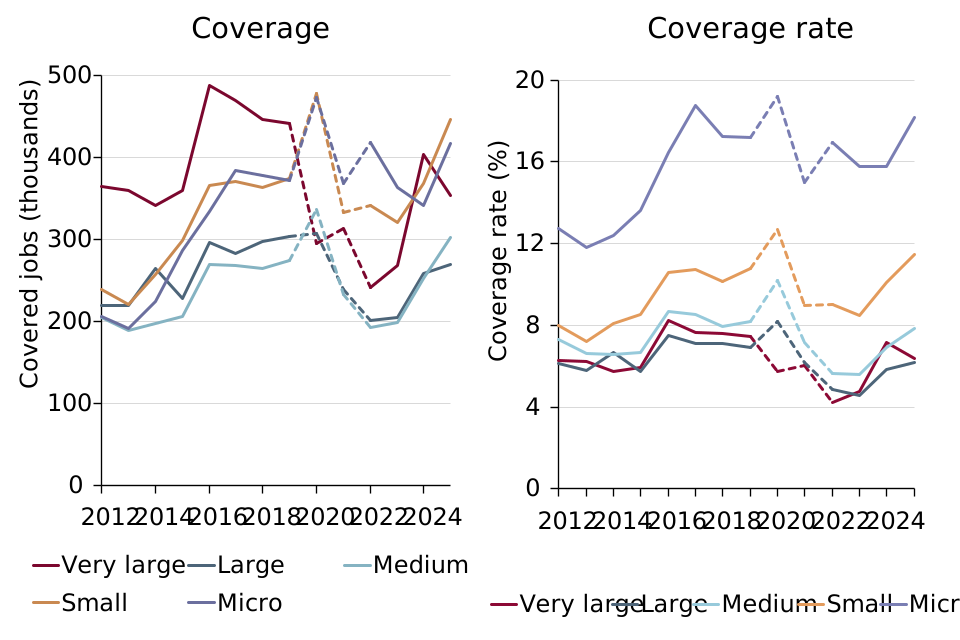
Coverage by region and country
Figure 3.10 looks at coverage rates where jobs are located. In 2025, rates increased primarily in the UK regions and countries which had the lowest coverage. London continued to have the lowest coverage rate in the UK, but this rose from 3.3 per cent in 2024 to 3.7 per cent in 2025, an increase of 25,000 covered jobs. Scotland and the South East also have low coverage rates and also saw increases in 2025, from 4.9 per cent to 5.4 per cent and 5.3 per cent to 5.7 per cent respectively.
The regions and countries with the highest coverage of minimum wage jobs saw this decrease in 2025: the North East and Northern Ireland both dropped to 9.0 per cent in 2025 from 9.1 per cent and 9.4 per cent respectively in 2024. The coverage rate in Wales rose from 6.4 per cent to 7.7 per cent in 2025, an additional 21,000 covered jobs.
The regions with the highest number of minimum wage jobs in 2025 were the North West, with 244,000 covered jobs, the South East with 233,000 and the West Midlands with 213,000.
Figure 3.10: Coverage rate by region and country, UK, 2024-2025
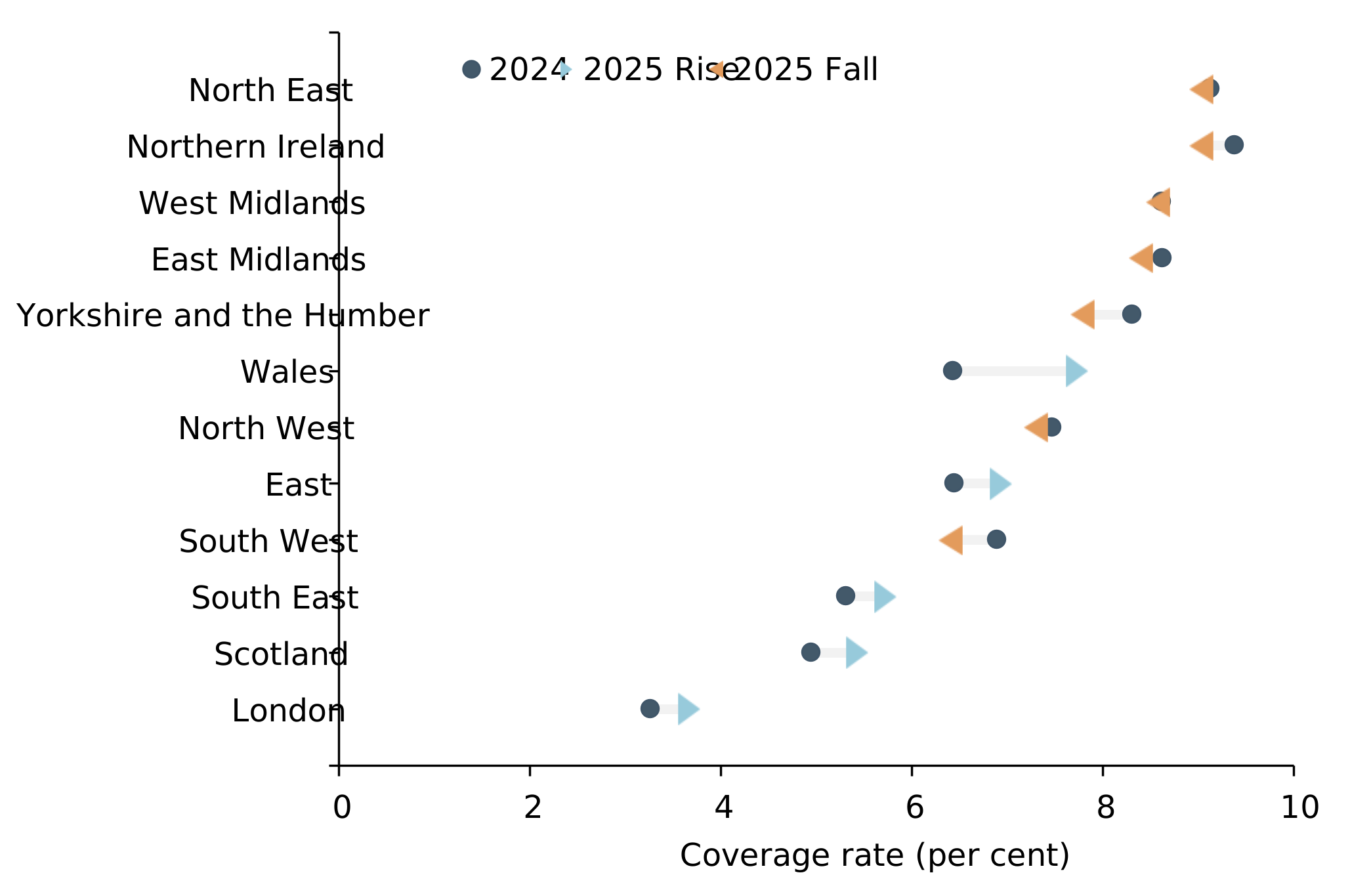
Coverage rates of jobs located in rural areas are generally higher than in urban areas. In 2025, coverage rates were highest for jobs in small towns, and villages and small communities, at 8.5 per cent. Coverage in villages and small communities saw the largest increase in coverage between 2024 and 2025. Coverage rates continued to be lowest for jobs in London at less than four per cent while they were six per cent in other core cities.
We can also group areas based on levels of deprivation and access to opportunities. The Indices of Multiple Deprivation (IMD) take into account a range of factors, including income, health and education to measure relative deprivation of small local areas. NLW coverage is higher in more deprived areas: jobs undertaken by those living in the most deprived areas are more than twice as likely to pay the minimum wage than jobs done by those living in the least deprived areas[footnote 5]. This coverage measure is based on where people reside, unlike the previous ASHE analysis which looked at job location.
Figure 3.11: Coverage rate by city-town classification, job location, UK, 2017-2025
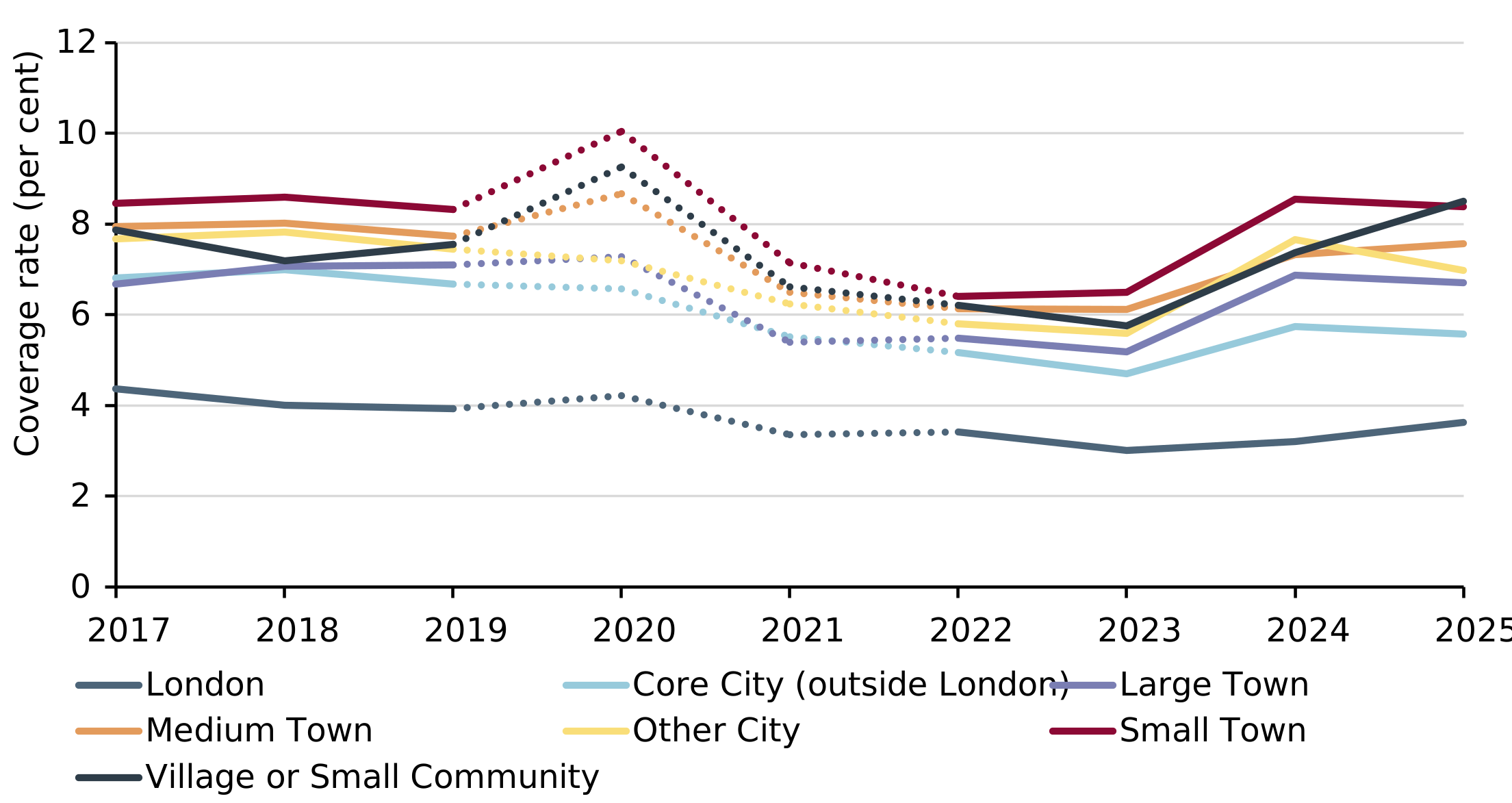
Figure 3.12: Minimum wage coverage (LHS) and share of minimum wage jobs (RHS) by IMD decile, 2023-24
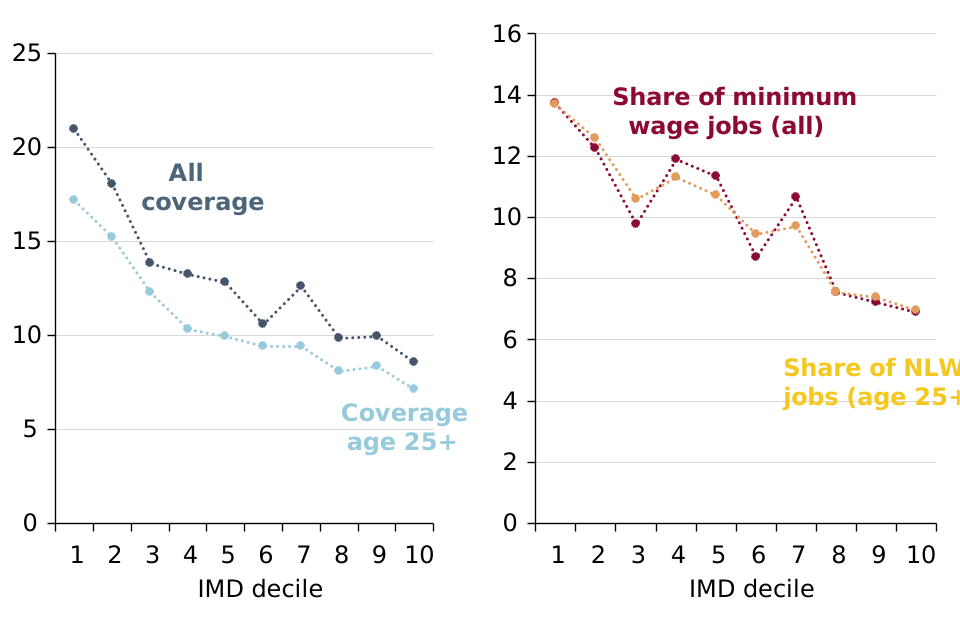
Employees paid just above the minimum wage
To avoid being seen as a minimum wage employer many firms will pay close to, but above, the statutory minimum. Others will choose to pay above the statutory minimum in order to attract and retain staff or to reduce the risk of non-compliance. The Chartered Institute of Personnel and Development’s (CIPD) summer 2025 Labour Market Outlook survey (CIPD 2025) reported that 48 per cent of surveyed employers said they paid above the minimum wage to avoid compliance problems.
In 2025, the number of jobs paying up to £1 above the minimum wage increased by over 450,000 to 6.07 million. This represents 19.9 per cent of jobs, up from 18.8 per cent in 2024. This increase is mostly driven by a rise in the number of jobs paid between 6 pence and 50 pence above the NLW, from 1.73 million in 2024 to 2.30 million in 2025.
It is important to recognise that inflation means £1 this year is worth less than £1 last year. Adjusting for this, the share of jobs paid up to £1 (in constant 2025 prices) above the minimum wage reached a record high in 2025 (see the light blue dotted line in Figure 3.13). Similarly, the share of jobs paid up to 50 pence above the minimum wage also increased, from 12.1 per cent to 14.1 per cent.
Figure 3.13: Share of jobs paid just above the adult NMW/NLW, UK, 2012-2025
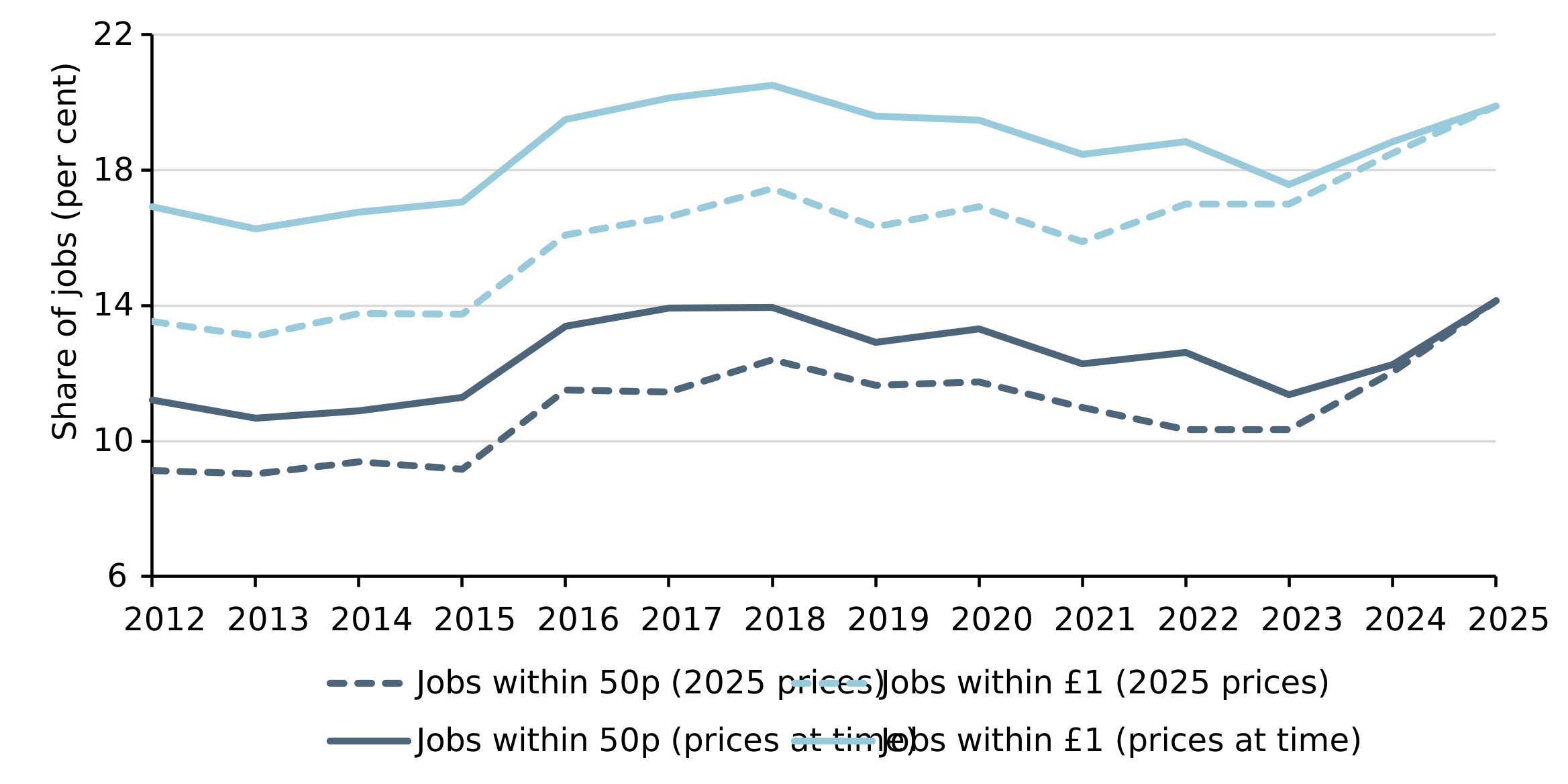
NLW workers are increasingly likely to be the main earner in their household
Since 2016 we have seen a rise in the share of NLW workers who are the main earner in their household (defined as the individual with the highest income from work). Our analysis of the Family Resources Survey[footnote 6] (FRS), shown in Figure 3.14, finds that almost two in five minimum wage workers were the main earner in 2023, up from one third in 2016. NLW workers are often secondary earners within their household, living with a spouse, parent or other household member who earns a higher wage. This is the case for around three in five NLW workers.
Figure 3.14: Role of workers in their household, NLW and other workers, 2023 and 2016
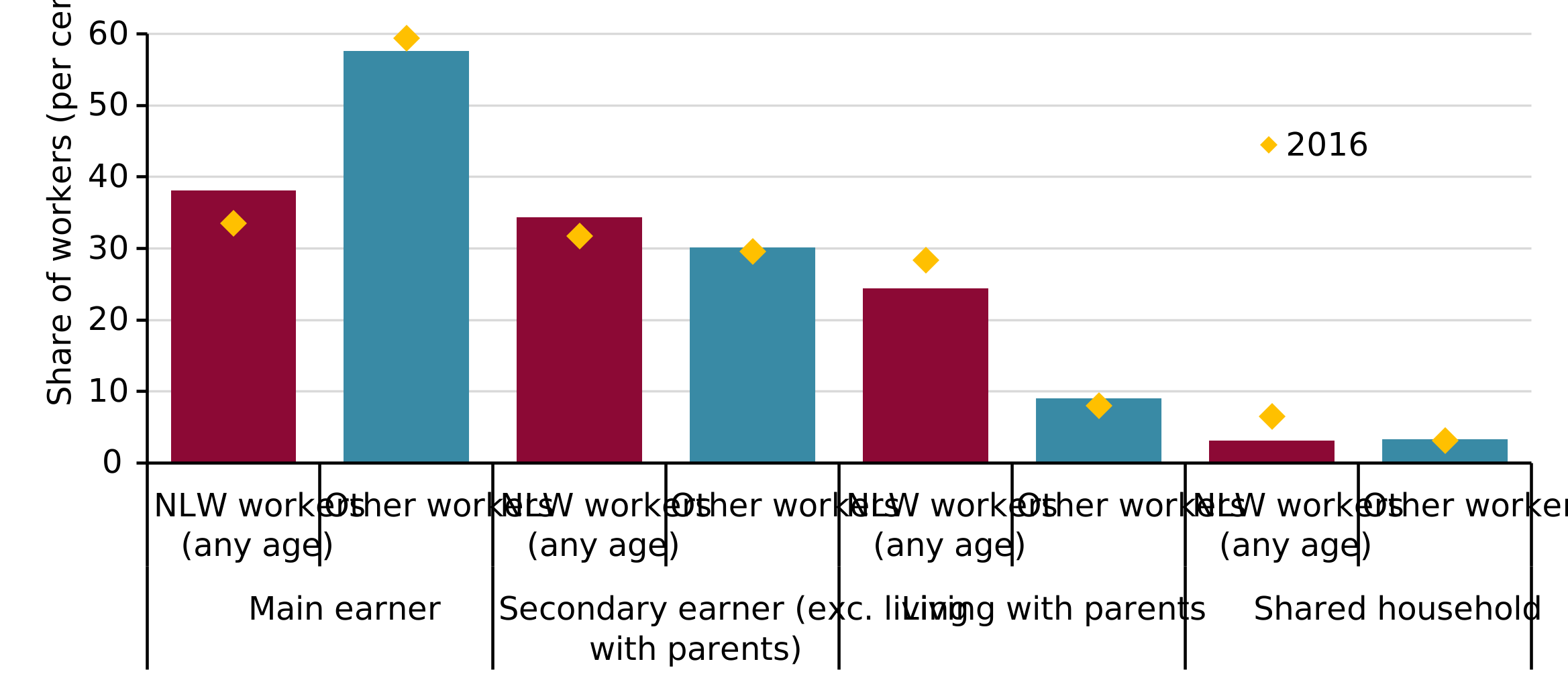
Worker experiences of job security, working conditions and mobility
As well as looking at data, we build our understanding of low-paid workers by talking to them directly, on regional visits up and down the UK and in separate meetings throughout the year. Written submissions from and evidence sessions with trade unions and other bodies also help deepen our understanding of what it’s like in low-paid work. The following section discusses what we heard from low-paid workers and their representatives about their experience of work, their concerns and the main challenges they face in their working lives. Workers’ views on their living standards and how these are affected by minimum wage increases and the benefits system are discussed in Chapter 4.
Low-paid workers often describe their jobs as insecure, although this insecurity can take varied forms. Most commonly, low-paid workers may struggle to find a position with sufficient, reliable hours. Others may find they have to work very long hours to make ends meet. Some will find their employer sets expectations of flexibility that are one-sided and unreasonable. Across many different sectors, low-paid workers feel their day-to-day work is growing more intense and challenging. Low-paid workers who wish to change jobs face a number of practical and financial barriers to doing so.
Worker representatives continued to argue that much low-paid work was characterised by insecurity. Unison noted that “insecure forms of employment have become a significant part of the workforce and the low-paid are the most exposed to its damaging impact” and called for the LPC to consider broader employment conditions, not just hourly pay rates, in our remit.
Workers highlighted the difficulty of getting sufficient and predictable hours
NLW jobs involve significantly fewer work hours than other jobs on average. In this section, we set out what workers themselves told us about their working hours. In Chapter 4, we look at the interaction between hours worked and living standards. In Chapter 5, we set out the evidence showing that low-paid workers are significantly more likely to be on zero-hours contracts or to be underemployed.
Workers wanted more hours to make ends meet
Retail workers we spoke to were frequently working fewer hours than they wished. One worker in London had seen their weekly hours reduced from 25 to 20: “I have asked for more hours, but they’re cutting back and they need to save money.” Another worker in Exeter talked about their hours being capped. They had a 30 hour contract (which they said was rare for someone in their position) but to live more comfortably wanted around 38 hours a week. The worker told us their new store manager was looking to cut hours so they had found their working time capped at contract hours, resulting in their earnings falling by around £200 per month.
“everyone’s finding lately that the hours have been reduced solely to just what we’re contracted for. When you’re used to doing over your contracted hours, it can be quite hard to readjust to a smaller pay cheque… No, we haven’t had a say… it’s just been cut back.” (Retail worker)
One consideration driving workers’ preferences over hours of work was Universal Credit. A retail worker in Newcastle told us “[workers] are asking for just four more hours because that’s all they need to balance their benefits … A lot of people are leaving their companies because companies can’t offer them just four more hours.” In the same meeting, another worker described a colleague “being pressurised that for Universal Credit, she needed 30 hours, when she was on a 15 hour contract. She was fairly regularly getting overtime, but the thing is overtime is never guaranteed. So she ended up trying to work two jobs.”
Some workers told us they had to work long hours to make ends meet. Retail workers in Northern Ireland told us that because of their low wages they relied on overtime and working multiple jobs to maintain their living standards. We spoke with two workers contracted for 36 hours a week who said they needed to work 50-52 hours a week (with overtime) to “live a life rather than bare existence”. They believed “the need to supplement work with 20 hours overtime was wrong”. They told us this had been exacerbated by the replacement of Sunday premium pay by a flat rate for overtime.
Workers complained about how their work was organised
As well as low hours, retail work was often characterised by short shifts. One worker told us they were “only given four-hour shifts … I think partly they do it so that they don’t have to pay breaks [and] they want you to be on full throttle that whole time … I would rather stay eight hours or nine hours, but they don’t allow you to do that.”
Concerns over hours were not confined to retail. For hospitality workers too, unpredictable hours and a lack of control over the shifts they worked were a source of frustration and insecurity. A fast food worker in Dundee complained about the lack of guaranteed hours: “They tell you one thing and then, oh, next week all your [hours] have been cut.” One manager in a hospitality business in Dundee told us they found that “staff are getting more stressed. They are like ‘where’s my hours? Where’s my shift? I want more’ … it’s hard to explain to everyone that management have told you that we’ve already spent the budget for wages this month.”
Workers’ contracts do not always reflect their actual hours
A childcare worker in London told us they were consistently working over their contracted hours, but their employer would not amend their contract. They told us “I’ve got a fixed contract for 15 hours … I’ve been there three years, I don’t think I’ve done 15 hours more than about three or four times … but they won’t increase it because I could do a bit more and have that as a fixed amount.”
Hospitality workers
“They said to me it’ll be no less than 16 hours a week and then as time’s gone on, sometimes I’ll get a 15 hour shift a week, sometimes a 32 hour week.”
“It’s up to my managers who does the shifts. I do notice that often if I ask for a day off, the next week in spite, I’ll get less shifts than before.”
“Before Christmas, I was working four times a week, I couldn’t get a day off. But then after Christmas, I didn’t get a shift in two months and because I’m on a zero [hours] contract, there’s nothing really I can do about that.”
Some workers face unreasonable expectations of flexibility
In addition to the amount of hours, predictability and flexibility were again key issues for workers. We heard examples throughout the year of workers facing unreasonable expectations of flexibility from their employers. One retail worker in London gave an example of this: “You are at the job, and they say to you: ‘Yeah, we need you [to stay on longer] now, can you do it?’” and “once or twice” they were told they were not needed for shifts they had already been scheduled for. Others also talked about one-sided flexibility in relation to their zero-hour contracts.
“There are days where I can work longer hours shifts but I’m not offered the longer hours shifts because they don’t need me for that whole period of time, which can have a negative effect on my income.”
“A lot of jobs are now offering zero-hours contracts rather than offering full time contracts. It becomes a bit harder because then due to the flexibility and their requirements… you’re not able to plan certain things as well as you’d want to if you had to fix some of hours in a week.”
In other sectors and in certain circumstances, workers were more welcoming of flexibility, when it meant they could exercise more control over the hours they worked. This was a particular attraction for young workers combining work with study. A focus group with young workers in the leisure sector revealed a higher level of satisfaction. Employers in the leisure sector, too, defended their use of zero-hours contracts. One leisure centre operator defended zero-hours contracts on the grounds they provided two-way flexibility for both the organization and its staff, particularly students and older workers seeking part-time roles. Shift rotas were set a month in advance; zero-hours staff had the same benefits as other staff, but would be taken “off the books” if they did not work for a nine-week period.
Leisure workers
“I choose my hours a lot, I do a lot of covering shifts, so I would choose when I work.”
“It’s more in my control, I go back and forth from uni, so it works better for me.”
“The flexibility kind of brings a value in itself.”
Unions responding to our consultation argued strongly against the use of zero-hours contracts. Unison argued that insecure forms of employment such as zero-hours contracts were one of the main reasons that many workers remain in low pay on a weekly basis, despite meeting the two-thirds NLW target for hourly pay. A Unite member in Newcastle was sceptical over claims that workers wanted the flexibility of zero-hours contracts: “very few employees don’t want guaranteed hours … anyone with any type of obligations or commitments to rent or bills, you need some form of guarantee as to how much you’re going to have each month.”
Low-paid workers tell us their jobs are becoming more intense
This year we heard evidence of work intensification from both workers and employers. This can have different causes and take a number of different forms. A survey of 40 Unite reps across the service industries found that following the most recent NLW uprating, 42 per cent said they had seen increases in workloads, 33 per cent described deliberate short staffing and 25 per cent said leavers were not being replaced. Unite picked out one respondent’s description of a workplace that is “understaffed and overworked”.
Retail workers we met in Exeter told us they were expected to take on ever more responsibilities without reward: “it’s just got progressively worse as you’ve been given more and more tasks to do.” Another described how this meant employers could employ fewer people; in three years there had been a 30-40 per cent reduction in the number of people being hired per store.
“It’s like I’m running around like a headless chicken because I’m doing four different things at once. Customers can see that I’m stressed and they’re even saying that ‘I think you should take a break’ and it’s like when, when do you think I’m going to be able to take a break!” (Retail worker, Exeter)
A Dundee-based social care worker stated employers wanted more from carers but weren’t willing to give them any extra money for that. She cited an increased number of residents to look after through the day (currently eight). She told us she had around 15 minutes per resident to wash them and see to their other needs. There was also increased paperwork and deadlines. This all meant she couldn’t give the quality of care she used to. “You don’t get the chance to sit with residents and have a conversation … You’re wanting more out of us, but you’re not willing to put the pay up or employ more staff. I feel to myself that we’re just a number.”
A London-based retail worker said “over the course of how long I’ve worked there, I’ve gone from a till operator to restocking products and merchandise, as well as managing customers and directing customers … or providing them the information they require. So essentially my responsibilities have increased, but it’s not reflected in the pay. I’m still paid the same regardless of the role I’m doing.”
GMB’s submission argued that this dynamic could not hold in sectors which were already overstretched: “Although business groups are calling for more ‘productivity’ from workers, it falls apart on contact with reality as low-paying sectors like social care workers are already working beyond what they are contracted, trained or expected to do without damage to their own health.”
Various employers and employer groups we met over the year agreed that work intensification was happening to some extent.
“Workplaces are now less inclined to hire new staff when needed and this can increase the workload of the existing staff. This potentially means that staff are feeling overworked” - FCSA, written evidence
“We are now needing more productivity from our workers and we are pressing to improve processes. Everyone is finding they have to fit in more in a day.” - manufacturer, Exeter visit
“Unfortunately, staff who are on shift will have to work harder to absorb any additional work as we can no longer afford to pay additional hours for this.” - FSB Member, Accommodation and food services, quoted in written evidence
Barriers to job mobility
Because they aren’t able to get the volume or predictability of hours they need, many workers are looking for another job or additional job. However, they face many barriers in doing so: common themes in this year’s evidence were health, childcare, transport.
A London-based retail worker was looking for a second job to increase their income. They told us that the Job Centre would not help them to apply for jobs because they already had one. “It’s a catch-22 situation where you are working the minimum [contracted] hours that they’re giving you and then you’re going out looking for job and you don’t have anyone there to help you. It’s quite hard. And then Universal [Credit] will say, well, you’re not doing what you’re supposed to do and then trying to take away your benefits from that.”
Christians against Poverty (CAP) surveyed their clients about barriers to job mobility. They found 52 per cent of clients cited mental health as a barrier, and 44 per cent cited physical health. Their submission also included polling of the general population from December 2024; these proportions were lower (10 and 11 per cent), but they remained leading causes, alongside a lack of confidence (10 per cent). CAP highlighted the ‘mental load’ faced by individuals applying for jobs, which “can affect their ability to think, search, and apply for other jobs and promotions”.
CAP also stated that individuals face other practical and financial barriers when it comes to finding work. CAP cited costs such as training, accreditation, entry exams, security clearances and uniform purchases – some of which can be reimbursed if a person secures a role, but the upfront cost of which nevertheless serves as a barrier. In addition to this, the application and interview process had associated costs – whether in terms of time, transport or suitable clothing.
For some applicants, the lack of responses from employers could be demotivating. In Dundee, we talked to two young workers supported by a youth employment charity. One of them told us: “I’ve applied for loads, but nobody gets back to you. You send them a CV and then get nothing back … You end up just waiting and waiting.” One member of Dundee Living Rent thought that “employers need to be given some kind of responsibility that [they] need to reply. They need to engage with the people who are applying to their jobs, even if they refuse them because it’s really discouraging not getting anything back when you’ve applied dozens of times a week.”
A London-based worker told us about their search for a new job: “Just last month I applied for eight or nine jobs, [and] I only heard back from three.” They felt that “there’s a lack of education and awareness in terms of how and where to apply for jobs, because you do have things like Indeed or Gumtree or other websites, but those are the websites that you get the least responses from the person that’s hiring.” Another London-based worker had stopped applying for jobs entirely. “I applied for so many jobs…nobody ever got back to me.”
Childcare and transport came up frequently as barriers to changing jobs The Scottish Women’s Convention argued that childcare access and affordability were major barriers to entering, moving or staying in employment. While Scotland offers 1,140 hours per year of free childcare for eligible children, they argued that many women could not access this due to inflexible nursery hours. They said since most nurseries operated during working hours, women in part-time, shift work struggled to access their full entitlement. They stated rural areas faced severe shortages, with some areas like the Isle of Skye having no childminders as of June 2024.
Their evidence cited National Day Nurseries Association (NDNA) estimates that the average weekly cost of full-time nursery care for a 3–4 year old is £105.88, amounting to 15 per cent of average weekly earnings for full-time workers (or around nine hours of work at the NLW). “The rate of pay that many of the parents accessing our childcare are earning is too low. Even if people are on the living wage, if you’ve got two children that need childcare, you’re not going to do it – an hour of your time working isn’t going to cover the cost of your childcare and that’s before your transport, trips, outings and outfits.” They quoted one member in their submission: “I have my granddaughter three days a week – I also work. I need to work more hours to increase my income, but if I do that my daughter would have to give up work as she cannot afford… to pay for childcare. It just doesn’t stack up.”
A CAP survey stated that “for the 35% of new CAP clients who have children, improved access to affordable childcare is something that would open up more opportunities to raise the household’s income.” The British Chambers of Commerce said 14 per cent of firms could not recruit or retain staff due to childcare. The British Beauty Council’s submission stated that: “Women may struggle to access better-paid jobs when juggling childcare, which for a sector which has an 80% female workforce, is a particular issue.”
The Scottish Women’s Convention also mentioned transport as a barrier, citing RAC estimates that it costs on average £2,187 to learn to drive in the UK. They argued that these costs forced many to rely on poor quality public transport options and in consequence, women had to remain within their local communities. This limited job opportunities, particularly for women who reside outside Scotland’s Central Belt. “I’ve never been able to learn to drive because I can’t afford lessons… Public transport is very expensive in my local area.”
A young worker in Dundee told us: “Before I was driving, it was an hour on the bus, an hour bus to get to work… and it ended being three extra hours on the day.” Another worker who travelled to work in central London noted their travel card cost £5,800 per year and they paid another £8.80 a day in parking. Therefore, “you need to be earning a great deal of money, or you need to be working local, or London is out of the question”.
In Swansea we heard public transport was dire, affecting workers’ ability to work and foot fall in high streets. A member of the local business improvement district told us “After 7 p.m., you might as well forget trying to get the bus, there isn’t any. … We’ve got a big industrial estate, one of the first enterprise zones in the country. There isn’t a bus that runs there to get me there for 9 a.m. in the morning, so everybody has to drive.”
Conclusions
Against our expectations, the number of jobs covered by the NLW rate actually fell slightly in 2025. However, numbers rose significantly for younger workers and we discuss this in more detail in Chapter 6. While there were slight changes in coverage rates, those most affected by the minimum wage remain women, young people, older workers, part-time workers, those with disabilities and with limited qualifications, as well as those working in micro and small firms, those working in low-paying geographic regions, and those working in certain occupations and industries, such as retail, hospitality, social care and cleaning.
NLW workers are the main earner in their household in about 40 per cent of cases. The others are secondary earners, with a partner, parent of other family member earning more than them in the household.
Workers and their representatives continue to paint a picture of difficult working lives for minimum wage workers. In some cases, jobs are becoming more intensive. In many cases, they do not provide the hours that workers would like and do not cover the rising cost of living. As we go on to explore in the following chapter, workers often tell us they are not feeling the benefit of real terms increases in their hourly pay.
Chapter 4: Earnings, household income and living standards
Key findings:
- 2025 is the second year where the cost of living has featured formally in the LPC’s remit - We continue to develop our thinking on how this should inform our recommendations and consider a range of measures.
- Recent inflation has been more broad-based than the inflation spike in 2022-23 - Households across the income distribution face similar price increases (both recent and cumulative). However, lower-income households are typically less able to adapt to higher prices as more of their spending goes on essentials.
- The National Living Wage (NLW) has risen faster than inflation since its introduction - The real value of the NLW reached its highest ever level in April 2025. Chapters 10 and 11 explain how we expect our recommendations for April 2026 to increase the real value even further.
- Hourly NLW increases translate into higher real weekly pay for NLW workers - Average weekly pay in NLW jobs has increased by around 20 per cent in real (CPI) terms since its introduction in 2016. This is far higher than the 4 per cent for the median UK weekly wage.
- Yet workers tell us they are still struggling to make ends meet - Workers tell us about having to “pick between food, energy bills and paying rent.” They also tell us the costs of working – such as transport or childcare – can stop them taking on more hours or moving jobs.
- NLW workers in lower-income households rely heavily on their NLW income - However, there are many NLW workers in higher-income households, too. As a percentage of income, gains from minimum wage increases are highest at the bottom of the income distribution, while cash gains are highest in the middle of the income distribution.
- Households where the main earner is an NLW worker are more likely to be in poverty or deprivation than other working households (including other NLW households) - This is partly because NLW main earners are more likely to be the only earner and to work part-time, but poverty rates are higher even after controlling for these factors. Nevertheless, they remain better off than workless households.
- The minimum wage alone is not the most effective lever for tackling poverty - Most of those in poverty are not NLW workers, and many NLW workers are in higher-income households. While the NLW raises household incomes, its impacts on NLW households in poverty are mediated by taxes and benefits, the prevalence of part-time working and the size of the household.
- Working more hours can help to improve living standards, where they are available - However, higher taxes and reduced benefit entitlements can discourage workers from working longer hours, particularly when combined with high costs of working.
Since 2024, the Low Pay Commission’s (LPC) remit has included explicit references to the cost of living. Our remit for this year noted that “the government is determined to deliver a genuine living wage” and affirmed the government’s commitment to “raising the living standards of working people”. It asked us to take account of the cost of living and inflation forecasts between April 2026 and April 2027 in recommending minimum wage rates for 2026.
This chapter explores how minimum wage workers have experienced changes in the cost of living. Our recommendations affect hourly pay, but it is weekly or monthly pay together with other income sources that determine a worker’s standard of living. We analyse weekly pay, household income for National Living Wage (NLW) workers, measures of poverty and deprivation, as well as the interaction between wages, taxes and benefits. This has been supplemented by our programme of commissioned research, with Landman Economics (Reed, 2026) exploring the impact of minimum wage changes on household income and poverty.
This chapter complements analysis of inflation in Chapter 1 and work on the characteristics of minimum wage workers and their households in Chapter 3. In Chapter 10, we explain how we have accounted for future inflation, with Chapter 11 showing how this and our other living standards analysis feed into our recommendations.
Although we had considered and received evidence relating to the cost of living in the past, 2024 was the first time it appeared formally in our remit. As such, we noted our approach was likely to evolve over time. We continue to develop our thinking on living standards and this chapter seeks to build on the discussions and analysis we presented in 2024 rather than cover the same ground again.
Increases in the NLW and income after accounting for changes in the cost of living
There are many ways to measure the cost of living
The go-to tool for assessing changes in the cost of living is the inflation rate – that is, the overall change in the prices of a set of goods and services over time. Headline inflation measures include the Consumer Price Index (CPI) and Consumer Price Index including owner-occupiers housing costs (CPIH). These are helpful for understanding broad cost pressures that affect all households and businesses.
Another inflation measure is the Retail Price Index (RPI). This was originally intended to be a better measure of inflation at the household level and excludes pensioners and the wealthiest households. Despite it having a number of methodological issues, no longer having ‘national statistic’ status[footnote 7] and still being skewed towards higher spending households, some parts of the Government and some sectors still use the RPI and it can feature in pay bargaining as some unions believe that it better represents inflation for workers.[footnote 8]
CPI is designed to understand patterns in the economy as a whole and compare the UK to other countries, rather than the experiences of individual households or workers. The ONS now regularly updates the ‘household cost indices’ (HCI), which are measures of inflation weighted to reflect the different spending patterns of households by income and other characteristics. They also include types of spending that are excluded from CPI and CPIH but are important outgoings for some families, such as mortgage interest payments. These statistics were reinvigorated in response to criticisms that headline inflation failed to capture the true impact of price rises in 2022-23 on worse-off consumers. We look at recent trends in HCI and compare NLW rises to various inflation measures.
However it is measured, inflation only tells us about a change in prices. If a family buys exactly the same goods and services every week, an inflation index can tell us how their cost changes over time. But it can’t tell us if those good and services are sufficient to meet their needs.
There are a range of approaches to addressing this problem and defining a ‘decent standard of living’. Poverty lines are thresholds below which a family is deemed not to have sufficient resources to achieve a reasonable standard of living. Poverty lines are typically defined in income terms, and often relative to other households. We look at household income for NLW households and present new, detailed analysis of poverty rates.
Household income standards, such as the Minimum Income Standard (MIS) developed by the Joseph Rowntree Foundation and Loughborough University, seek to be more specific. They take a bottom-up approach to defining what goods and services a family needs to achieve a “minimum socially-accepted standard of living” (Joseph Rowntree Foundation, 2025), and set the cost of this standard as a required income. We looked at this in detail in our 2024 Report and noted some of the difficulties translating the minimum income standard into a meaningful and consistent benchmark for an hourly wage.
Material deprivation measures fall somewhere between poverty lines and income standards. They focus on a small subset of material needs that can be considered bellwethers for whether a family is struggling to meet a basic standard of living. A household’s or individual’s deprivation score is typically considered in combination with some threshold of low income. We look at material deprivation alongside measures of poverty below.
For more detail on the different living standards measures discussed here and the data we use to analyse them, please refer to Appendix 3.
Inflation has been creeping up, but is well below peak
Chapter 1 showed how headline inflation increased between late 2024 and September 2025 after falling from its peak in 2022-23. Recent inflation has not only remained much lower than the previous peak but has been more evenly felt across the household income distribution. Figure 4.1 shows that HCI inflation has roughly equalised for higher-income households (deciles 8-10) and lower-income household (deciles 1-3). This is also the case if you look at cumulative price changes – either since 2020 or over a longer period.
Figure 4.1 also shows an estimate of HCI inflation specific to NLW households and households where an NLW worker is the main earner.[footnote 9] These measures use NLW households’ position in the income distribution to estimate how their spending may differ from other households. NLW households are found across the whole of the income distribution (see Figure 4.6) and as such their experience of inflation – on average – is likely to be similar to other households. However, households with an NLW main earner tend to be found towards the bottom of the household income distribution (Figure 4.7). As such, we expect the inflation faced by these households to fall somewhere between that of all households and those in deciles 1-3.
Figure 4.1: Annual inflation in the Household Cost Indices, 2020-2025
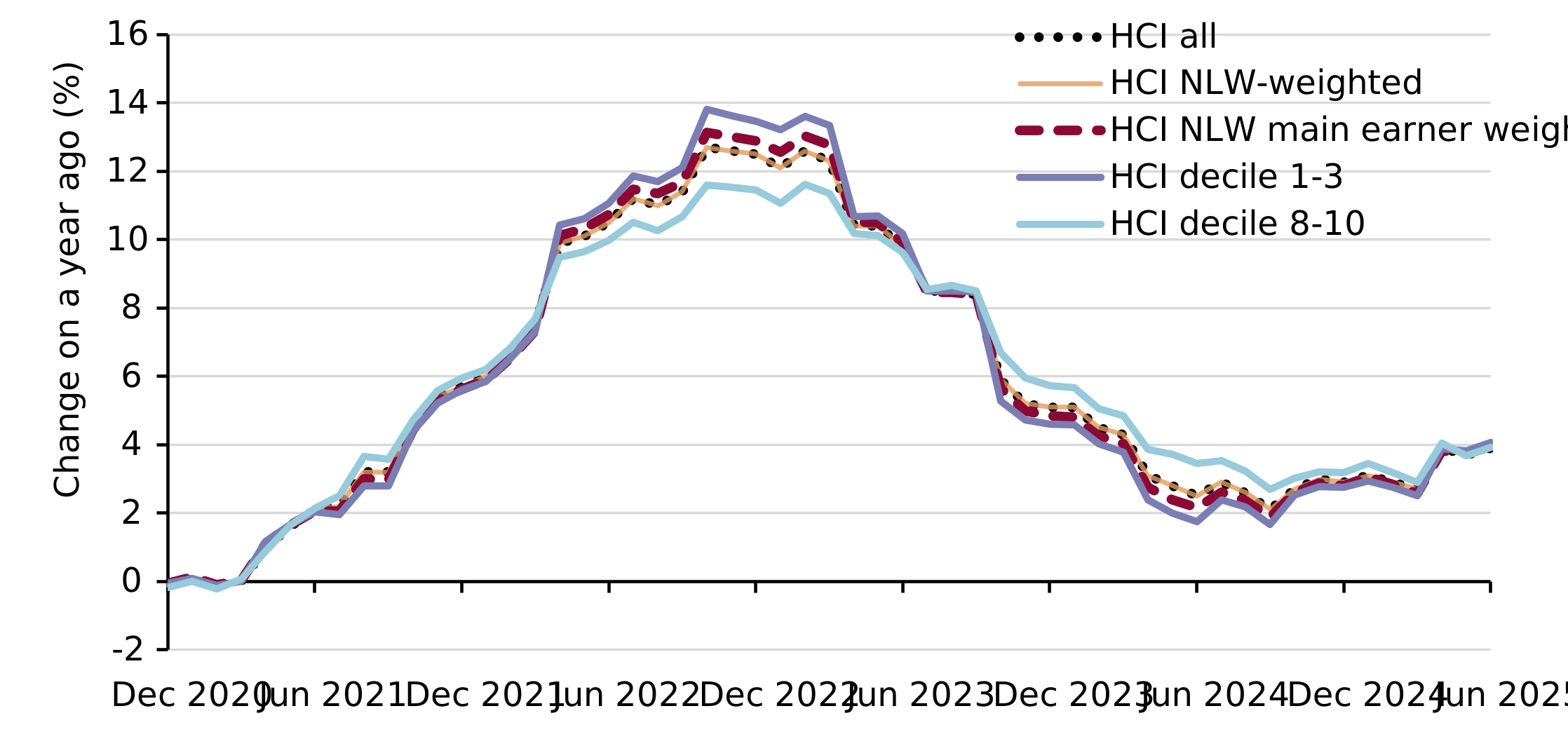
Underlying these differences in inflation are different spending patterns. Essentials such as housing and food make up a greater share of spending in lower income households. This means that even when inflation rates are similar across income deciles, lower income households may have less scope to accommodate price increases without cutting back on the basics .
Using data from the Living Costs and Food survey (LCF) – which is used in the calculation of the HCI – we can estimate how the expenditure patterns of NLW households differ from the average household. Figure 4.2 compares weighted estimates of expenditure shares for different categories of spending in NLW households to the all-household average. We see that differences between the all-household average and the all-NLW household measure are very small. But our weighted estimate of NLW main earner households’ spending shows greater divergence, with higher spending on housing, fuel, power and food, but lower spending on transport, hospitality and recreation.
Figure 4.2: Difference in composition of NLW household weighted expenditure shares from all-household average, 2022-23
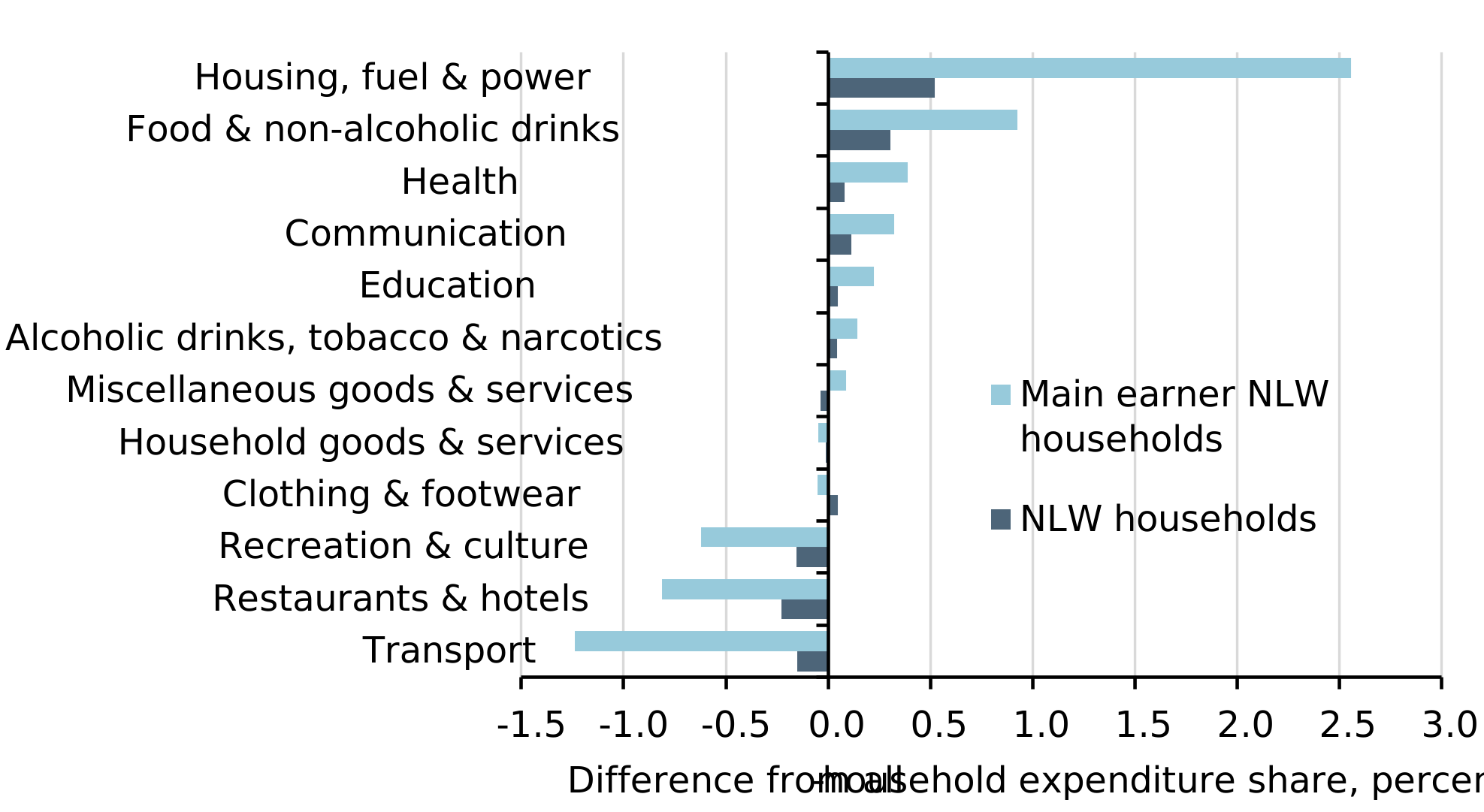
The NLW has risen faster than inflation
Despite rising prices, the April 2025 uprating took the real (i.e. inflation-adjusted) value of the minimum wage to its highest ever level. As highlighted in our 2024 Report (Low Pay Commission, 2025a), the minimum wage has always played an important role in protecting the real incomes of the lowest paid, including when average wages were falling behind inflation. Growth in the real value of the minimum wage was particularly strong in its early years and since the 2016 introduction of NLW and targets to increase its bite (Figure 4.3). While some ground was lost during the post-pandemic inflation spike, its real value was more than restored by April 2024.
Figure 4.3: Real value of the NLW in April 2025 prices, April 1999-September 2025
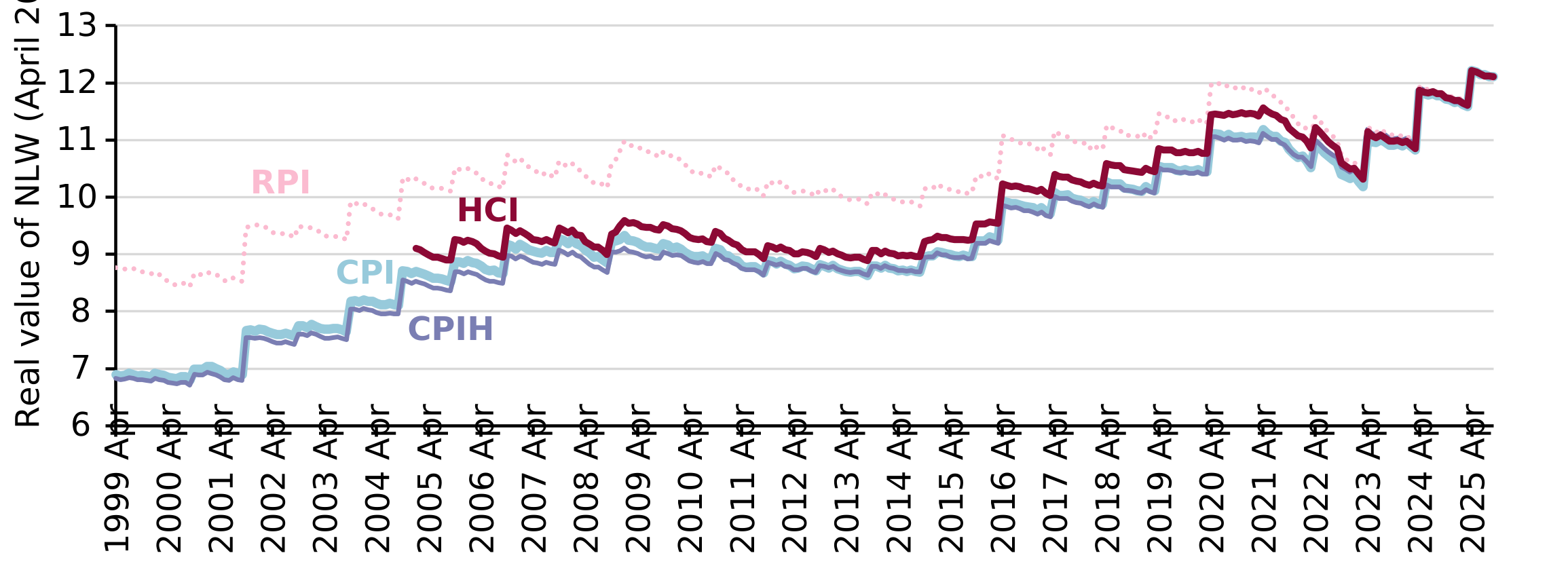
Weekly pay and household incomes also grew for NLW workers
Weekly pay is important as it is one step closer to total net income, which ultimately determines a worker and their family’s standard of living. Figure 4.4 shows that average gross (before tax) weekly pay for NLW workers is less than half that of other workers. This gap is large (and greater than for hourly wages) because NLW workers are more likely to work part-time, as well as having lower hourly wages. However, there is also wide variation between NLW workers. In April 2025, the top 10 per cent of NLW jobs had weekly pay of over £500 per week (equivalent to working around 42 hours on the NLW), compared to a median of just under £300 (around 24 hours). Meanwhile, the bottom 10 per cent had pay of £110 or less per week (equivalent to less than 10 hours).
Median weekly pay for NLW jobs done by workers aged 25 and over increased by 6.4 per cent between April 2024 and April 2025. This is higher than inflation but slightly less than the hourly rate (6.7 per cent). Differences in growth between weekly and hourly pay are due to changes in hours worked and compositional shifts in jobs covered. These are discussed in Chapters 5 and 3 respectively. The interactions between hours worked and living standards are discussed further below.
Figure 4.4: Median gross weekly pay by NLW coverage (LHS) and points in the gross weekly pay distribution of NLW jobs (RHS), 2025
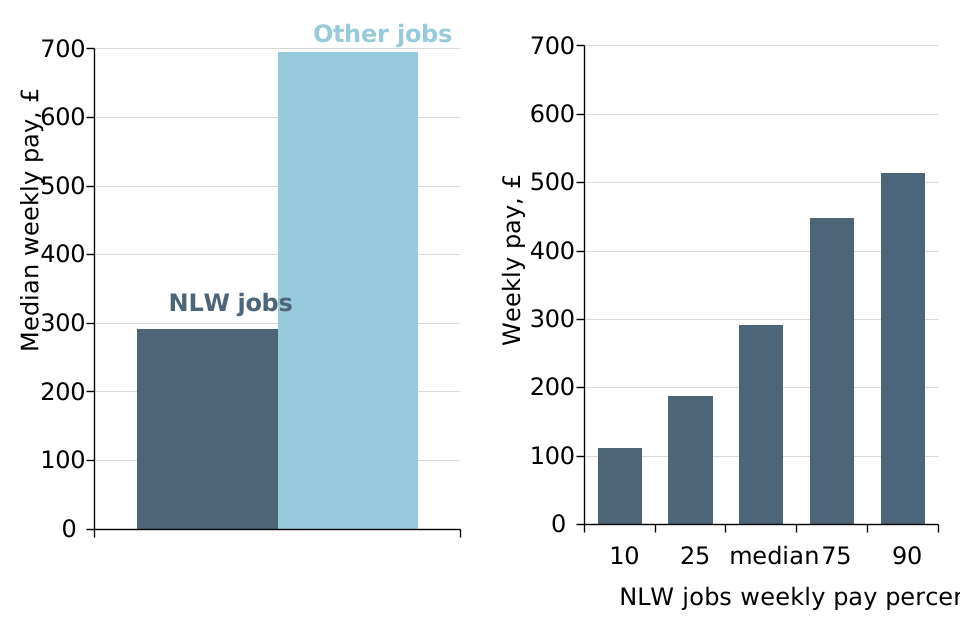
Since the introduction of the NLW, average weekly pay for NLW workers has grown faster than for other workers. The left-hand panel of Figure 4.5 shows that median gross weekly pay for NLW jobs grew by more than 65 per cent between 2016 and 2025, around 20 percentage points more than in other jobs. After adjusting for inflation, median weekly pay in NLW jobs grew by 20 per cent between 2016 and 2025 (a little under the real NLW growth of 23 per cent). This growth has been particularly strong since 2023 and far higher than the 4 per cent real terms growth in median weekly wages for other jobs.
While the impact of gross weekly pay on living standards is mediated by other factors, including tax and benefits (discussed further below), these increases have left NLW families better off. The right-hand panel of Figure 4.5 shows that median net weekly income (after tax and benefits), adjusted for household size, has also grown faster for NLW households than other households. Household incomes kept up with the growth in job-level weekly pay up to the 2023/24 financial year (the latest data we have on incomes).
Both weekly pay for NLW jobs and household incomes for households with an NLW worker were just under 5 per cent higher in real terms in 2023-24 compared to 2016. This is higher than for other employee households (whose real terms income fell over the same period), but is lower than the real NLW increase between 2016 and 2023 of 11 per cent, reflecting the importance of hours of work and other factors in determining total income.
Figure 4.5: Cumulative growth in gross median weekly pay per job, 2016-2025 (LHS) and median net equivalised household income, 2016/17-2023/24 (RHS), by NLW coverage
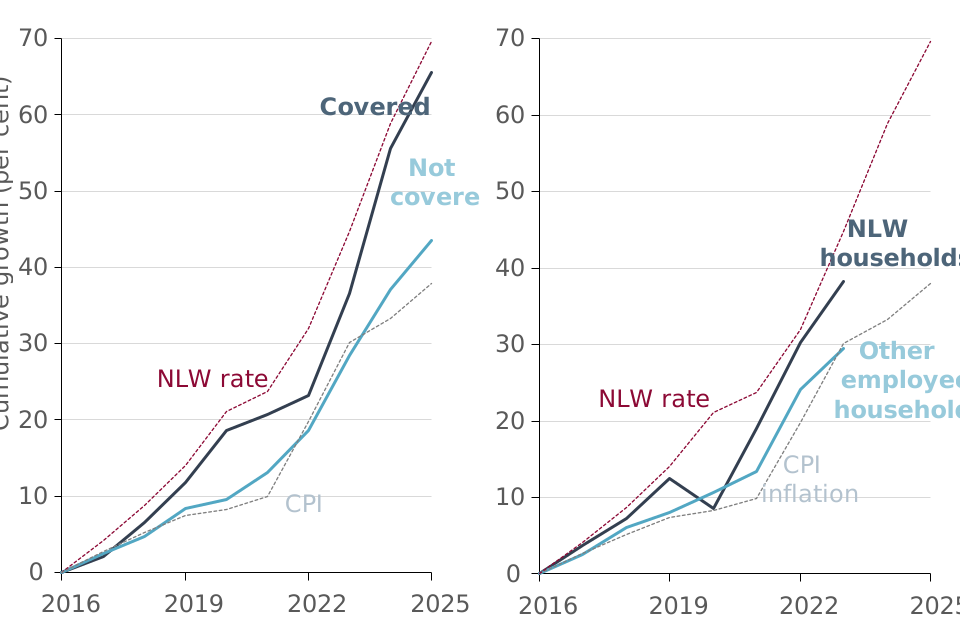
The NLW’s impact on living standards
Stakeholders continued to tell us it was difficult to make ends meet
Despite the positive story on NLW real pay increases, cost increases remain a pressing issue for many. Some workers said they didn’t feel the impact of the NLW increase because “everything else went up, too”, and another told us that they still have to “pick between food, energy bills and paying rent.” Usdaw’s Cost of Living Survey in June 2025 found that 67 per cent of respondents felt worse off compared with five years ago.
Low-paid workers we spoke to in 2025 consistently told us they did not feel their wages were keeping pace with the rising cost of living. Over the year, workers lamented increases in a range of essential costs, from rent to utilities to food. One worker in Newry summed up what many told us: “[the] NLW doesn’t feel like a pay rise—it feels like a cost of living adjustment.”
Some employers told us they knew their workers were struggling. A food processing company in Exeter told us that it was receiving a higher volume of requests for payday loans and other forms of support: “we pay the highest we’ve ever paid [but] for our employees, clearly it isn’t enough.” Employers in the childcare sector in Swansea told us they were seeing employees decrease their pension contributions. This was echoed by NLW workers in Newry, who said they were not contributing extra money to their pensions because they “need it now”.
As discussed in Chapter 3, workers talked about facing trade-offs in their decisions about work. Some workers told us they were working very long hours just to make ends meet. For others, transport and childcare costs were barriers to working more hours.
Care England told us that carers looking for work “increasingly restrict job searches to roles they can walk to or reach with a minimal bus fare”. One NLW worker highlighted the difficult dilemmas this can entail – potentially leaving workers and their employers worse off: “There have been times where I have genuinely had to call in sick to work because I couldn’t afford to get the bus… I’m missing out on a day’s wages because I couldn’t afford £2.50 to get the bus to work.”
The Scottish Women’s Convention told us that “childcare access and affordability are major barriers to entering, moving or staying in employment” and the British Beauty Council told us that “women may struggle to access better-paid jobs when juggling childcare”. A British Chambers of Commerce survey found that 14 per cent of responding businesses could not recruit or retain staff due to childcare obligations.
As well as the cost of work, some stakeholders said Universal Credit rules mean workers are reluctant to work more hours or accept bonus payments or backpay because it affects their Universal Credit payment. Others told us that workers limit their hours to avoid facing high marginal deduction rates on Universal Credit – explained further later in this chapter.
The NLW’s impact on living standards is mediated by household circumstances and composition
Increases in the NLW benefit workers on the lowest hourly pay, but these workers are not necessarily from low-income households. As we saw in Chapter 3, a majority of NLW workers are secondary earners, with a spouse, parent or other household member/s on a higher wage. In other cases, households may have other sources of income, such as retirement pensions, which supplement earned income.
This explains why NLW households are found across the income distribution. While there is a slight skew towards lower-income households, NLW households are concentrated in the middle of the income distribution and found even in the richest tenth of households (Figure 4.6). If we compare only to other working households, the skew towards the lower end of the distribution is clearer: seven in ten NLW households have below-average income compared to other working households while around three in ten NLW households have above-average income.
One consequence of this is that increases in the minimum wage benefit those across the whole income distribution, not just lower-income households. Modelling by Landman Economics (Reed, 2026) suggests that those in the middle of the household income distribution benefit the most from minimum wage increases in cash terms – although the lowest-income households see the largest percentage increase in their incomes as a result. This helps explain the limited impact of NLW increases on poverty, as we discuss below.
Figure 4.6: Distribution of NLW households across the all-household and working-household income distributions, 2023-24
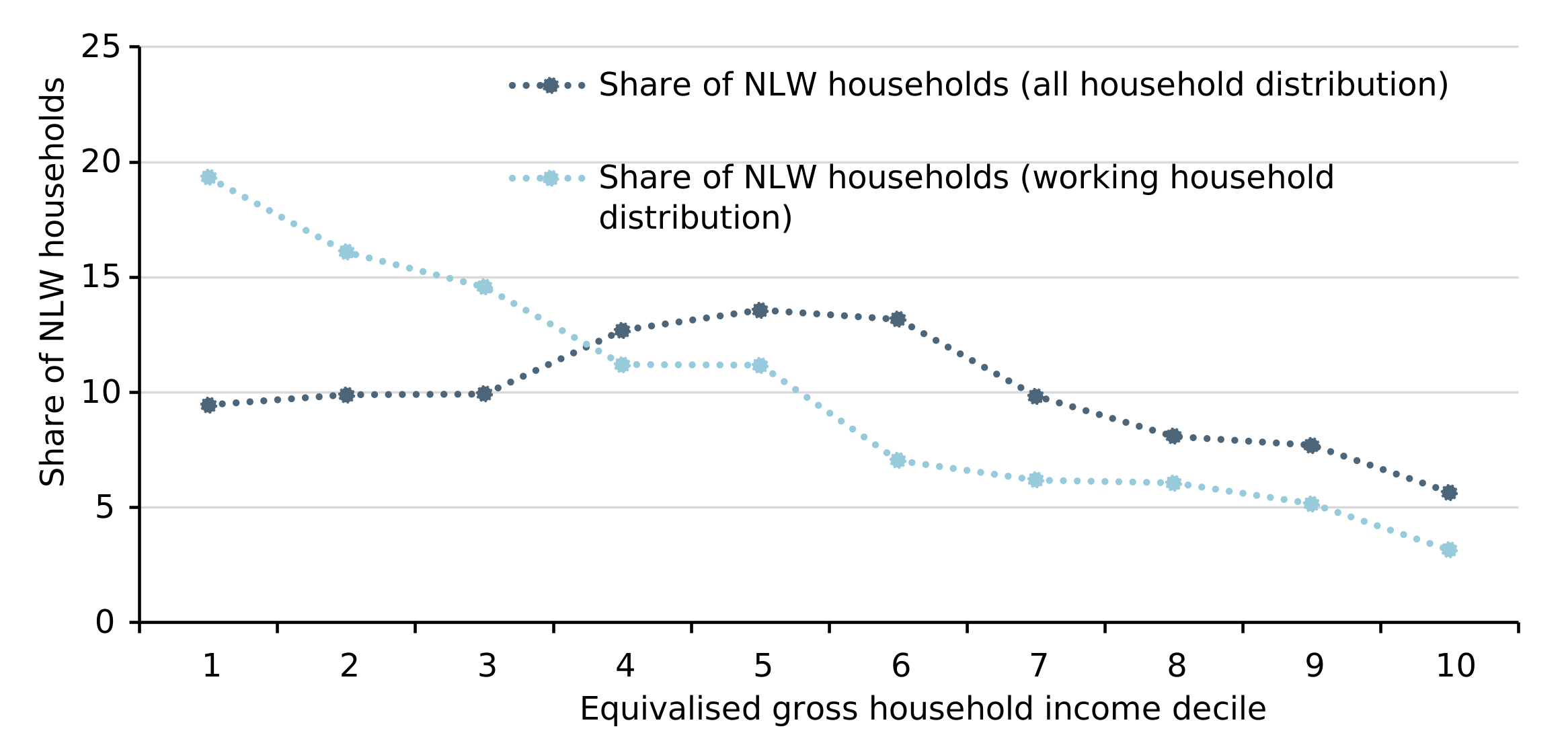
The picture is very different for households where the main earner is an NLW worker (Figure 4.7). While these households still appear across the income distribution, they are much more likely to be at the lower end than other NLW households.
The NLW is an important source of income to these main earner households, contributing around half of their total household income on average (at the median) – and 75 per cent of household income for those in the lowest income decile. That is not to say that secondary earners are irrelevant to household income and living standards. On average, the NLW wages of secondary earners contribute over a fifth of their total household income – increasing to over a quarter for the lowest-income households.
NLW main earners are also more likely than higher-earning main earners to be the only earner in their household (72 per cent compared to 49 per cent). Sole earners may be the only adult in their household, or there may be other adults who are unemployed or inactive (for example, due to disability, study or caring responsibilities). NLW main earner households are also more likely to receive income-related benefits than other NLW – and other working – households. Over a third of NLW main earner households receive some kind of income-related benefit, compared to just under one in five other NLW households.
This analysis highlights that while NLW wages are an important contributor to household living standards, they only affect part of a household’s income. Changes to other sources of income, particularly other wages and benefits, can affect their impact. This – alongside the fact that the benefits of NLW increases are spread across the income distribution – helps to explain the limited impact of the NLW on poverty that we see in the following section.
Figure 4.7: Distribution of NLW households across the all-household and working-household income distributions, by whether the main earner is an NLW worker, 2023-24
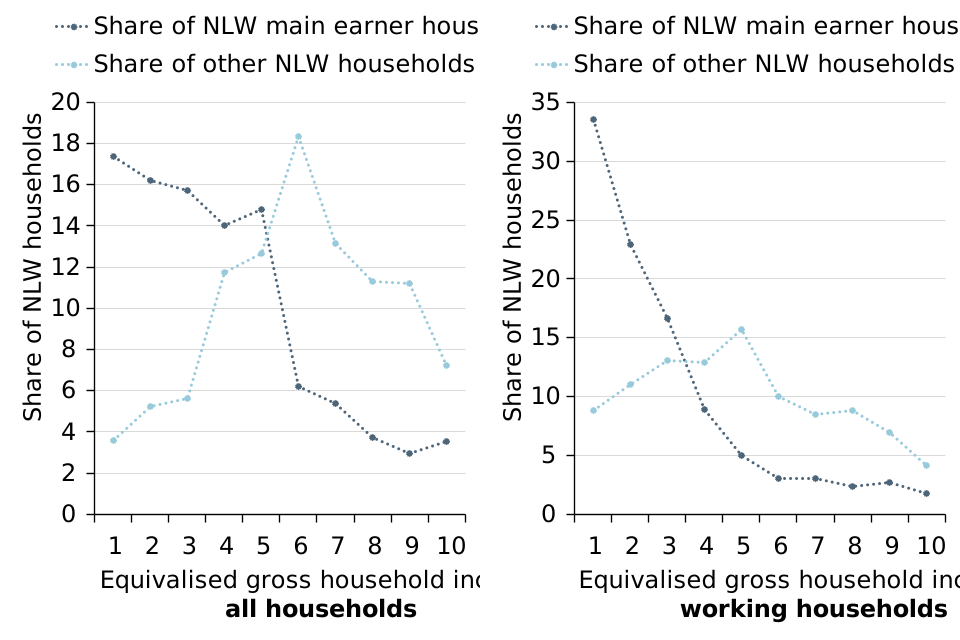
NLW main earner households are more likely to be in poverty or deprivation
Turning our focus to households with the lowest incomes, we find a striking pattern: while most NLW households face poverty rates in line with other working households, rates for NLW main earner households are three to four times as high, regardless of the poverty threshold used (Figure 4.8).[footnote 10] However, these households are still significantly better off than workless households. While there have been two further increases in the NLW (leading to additional real-terms gains) since the latest available data was collected, this pattern has been remarkably consistent over time, even as the NLW has been increasing in real terms.
Figure 4.8 also shows measures of material deprivation and food insecurity, where we see the same pattern. Poverty rates are based solely on a family’s income, while material deprivation indicators measure whether families have access to certain basic goods, services and activities.[footnote 11] Along with food insecurity, they typically point to more persistent living standards challenges: income can be volatile, especially for those on low hourly wages (Brewer, Cominetti & Jenkins, 2025). Chapter 5 also shows that there is considerable churn in who is an NLW worker: around half of NLW workers move off the wage floor each year, increasing their hourly earnings. Many families move in and out of income-based poverty (Department for Work and Pensions, 2025a) and can temporarily maintain their material standard of living in lower-income periods through using savings, going into debt or seeking help from friends and family. Material deprivation and food insecurity are indicators that these coping strategies have been exhausted.
Figure 4.8: Poverty and deprivation rates, by work and NLW status, 2023-24
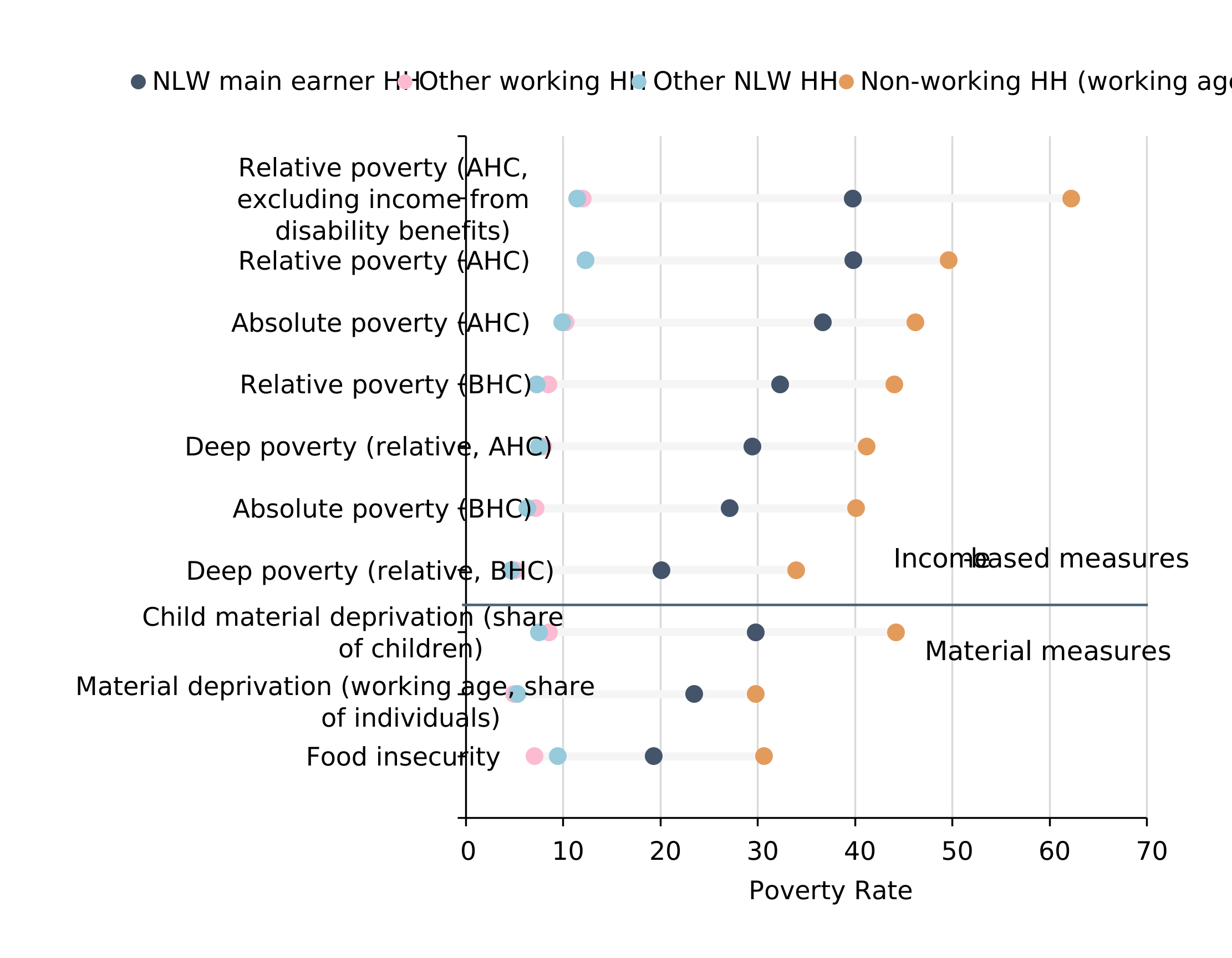
A range of factors help explain high poverty rates among certain NLW households
There are a range of characteristics that NLW households in poverty hold in common with other households in poverty. Households in poverty (whether NLW households or otherwise) tend to be larger than those who are not in poverty. They are more likely to have children and – on average – have fewer adults in work. They are also more likely to have an unemployed household member and to live in more-deprived areas (measured using indices of multiple deprivation).
High poverty rates for NLW main earners are partly explained by the fact that they are more likely to be the only earner in their household and work part-time. But even controlling for these factors, we find that they have higher poverty rates than other working households. We talk about the gains from working extra hours later in this chapter.
For example, where an NLW worker is working few hours, the increase in their total income from an NLW increase is much less than a full-time NLW worker. Other NLW households are large so the per-person (equivalised) impact of the NLW increase is lower. The following sections consider how hours worked and family type can interact with benefits and taxes to affect poverty, living standards and work incentives.
Although the NLW has little effect on total poverty, families of NLW workers are still better off with an NLW increase than without one, as shown in our analysis of weekly pay above (Figure 4.5). Our analysis of marginal deduction rates below confirms that – in the absence of any reduction in hours or employment loss – an increase in NLW earnings will increase net income even at the highest deduction rates. Given the range of household circumstances of NLW workers, a single threshold or metric cannot fairly reflect the NLW’s impact on living standards.
Workers and employers felt that the Universal Credit taper rate disincentivised working more hours
As set out in Chapter 3, many NLW workers work part-time and so could potentially increase their overall income by working more hours. Whether they try to do this may be influenced by the benefits a household receives. Just under a quarter of NLW households received some kind of income-related benefit in 2023-24, with at least 15 per cent receiving Universal Credit.[footnote 13] NLW main earner households are more likely than other NLW households to receive benefits (a third received some income-related benefit, while just over a fifth received Universal Credit).
We consistently hear from workers and employers that the Universal Credit taper rate and frozen tax thresholds act as a disincentive to work longer hours. Unison members in London commented that even though the minimum wage had gone up, they hadn’t seen much of the increase in their take-home income because of income tax and National Insurance deductions and reductions to benefits.
Several employers noted that staff receiving benefits were hesitant to work additional hours. Without knowing the exact details of workers’ personal circumstances, it can be difficult to evaluate employers’ accounts of their staff’s incentives and motivations. Some of the accounts we hear are likely to reflect real effects of existing policies; others may be based on misunderstandings or on legacy policies. It is clear, though, that the tax and benefits system has some influence over the hours individuals choose to work.
One large retailer told us the Universal Credit taper rate was a barrier to staff taking on additional responsibility. Staff who move up to be store managers are required to work 38 hours per week (against an average of 17 for customer team members); but the employer estimated that those on benefits will only keep 40p of every £1 extra they earn, because of benefits withdrawal and taxes. In Swansea a Federation of Small Businesses member told us “I’ve got constant requests to work part-time. I just had one now that somebody wants to drop off half an hour a week because that half an hour a week changes their Universal Credit.” The British Chambers of Commerce’s submission also stated that workers were reducing hours to avoid losing Universal Credit. One hospitality firm quoted in the submission said “in many cases, employees are forced to limit their hours deliberately to avoid losing crucial benefits.”
While extra hours do mean more income, marginal gains can be low for some
Even for households on Universal Credit, working extra hours will increase their total net income. That is, unlike with some legacy benefits, there is no amount of earnings or number of hours where if you were to work an extra hour, your take home pay (after deductions) would go down. However decisions about taking on extra hours are influenced by the marginal gain of working the extra time versus the costs (financial or otherwise) of doing so, not just the total income a household will have at the end.
The marginal gain of an extra hour of work will depend on household circumstances. Workers below the tax threshold and who do not claim Universal Credit (or are within their Universal Credit work allowance) will keep all of their additional earnings. Workers earning enough to pay (basic rate) tax and National Insurance and who don’t receive any Universal Credit will keep 72 pence of each additional £1 they earn (a 28 per cent marginal deduction rate).
For workers on Universal Credit who do not have a work allowance or are already working their full work allowance, the Universal Credit taper rate reduces their benefit payments by 55p for every additional £1 they earn in wages (after tax, National Insurance and any pension contributions have been deducted). If a worker’s Universal Credit award has not tapered away by the time they earn enough to pay Income Tax, National Insurance contributions and auto-enrolment pension payments, their marginal deduction rate is 69 per cent; they keep 31p of every £1 they earn. NLW workers (earning £12.21 per hour) in this position take home £3.74 per additional hour.
As discussed above, stakeholders tell us that high marginal deduction rates mean extra hours of work may not be worthwhile for minimum wage workers, particularly if they have high work-related costs like transport and childcare costs.
Benefit entitlement and household composition also impact how many hours a week a minimum wage worker needs to work to exit poverty. Household income is adjusted for household size, since larger households need more income, so larger households effectively have a higher poverty line.[footnote 14] However, larger households may also receive more Universal Credit.
The combination of household size and benefit entitlement mean some workers need to work relatively few hours to exit relative poverty while some need many more. To demonstrate the impact of varying circumstances we can illustrate this with examples from either extreme: we estimate that a single adult with two children receiving child benefit and the child and housing elements of Universal Credit would have to work around nine hours per week on the NLW to exit relative poverty before housing costs in 2025/26. In contrast, a single adult with three children who had a mortgage and so did not receive the housing element of Universal Credit would have to work around 64 hours per week on the minimum wage to exit poverty.[footnote 15] (This latter example would change in the absence of the two-child limit on benefit entitlements).
These complexities of household circumstances partly explain why – although we see that poverty rates decline as hours worked increase – some households where all adults work full time are still in poverty. In some cases this may also be due to households not claiming all the benefits to which they are entitled or underreporting the benefits they receive. The Department for Work and Pensions (DWP) estimated that benefit claimants (including Universal Credit claimants) could have claimed an extra £3.7 billion in 2024/25 if they had told the DWP the correct information about their circumstances. This figure does not include people who are entitled to benefits but not claiming any benefits (DWP, 2025b).
Workers are wary about having benefits withdrawn
The complexity of the Universal Credit system means there is confusion among some workers, who are wary of varying their working hours too much in case it affects their net income. The Swansea Citizens Advice office told us that in practice Universal Credit is not very responsive to changes in individuals’ circumstances, so “it’s difficult to get people to take the risk of getting more hours or taking another job.”
Bonuses or backpay can also affect Universal Credit payments. The Homecare Association told us their members staggered their bonus payments to not cause sanctions: “Benefits thresholds have proved a particular challenge for payment of bonus or retention lump-sum payments or back-pay. In some cases, guidance has been issued to pay these in instalments to careworkers who might be affected.” A Community Leisure UK member was quoted on bonuses saying “Our main experience of this is colleagues on [Universal Credit] being unable to receive one-off “bonus” payments that are given to all staff as the amount we given them (for example £100) will then be deducted from future payments. Given the cap on use of vouchers, the system makes it difficult to financially reward lower paid colleagues.”
The Local Government Association highlighted that backdated pay can also cause sanctions. ”This can cause notable stress for individuals who find it takes several months for their Universal Credit to readjust to the correct level.” One Unison member in London agreed saying backdated pay was more of a detriment than a benefit due to Universal Credit. “The timeliness of it really matters. Yeah, basically backdating for me, there is no point. I will urge, if possible, they should … pay immediately because if they pay us backdated it will be a disadvantage rather than being useful.”
Each year we also hear about the interaction between monthly Universal Credit payments and the four-weekly payment periods used by some major retailers. At some point in any given year, workers on Universal Credit who are paid on a four-weekly basis will have two pay cheques within a single reference period. This disrupts their payments for the following month, significantly reducing them or stopping them altogether. Usdaw’s submission argued that this “causes havoc with [the] finances” of low-paid workers and reflects a system “based on limited experience of the real lives of working people”.
Conclusions
The NLW has risen faster than inflation in the last two years (and over its lifetime), delivering real wage increases to workers. Weekly pay and household incomes have also increased more for NLW workers than others. Despite these real gains, workers continue to struggle with a high cost of living. While recent inflation has seen similar price increases for those across the income distribution, those in lower-income households are likely to struggle more to accommodate increased prices.
NLW increases are particularly important for NLW workers who are the main earner in their household. These workers and their households rely the most on their NLW income. They are more likely to be in lower-income households and face higher poverty rates than other working households.
Nevertheless, while it can play a role, the minimum wage alone is not the most effective lever for tackling overall poverty. This is primarily because it is not well-targeted to do so. Most of those in poverty are not NLW workers, and many NLW workers are in higher-income households. The NLW’s impacts on the living standards of those who are in poverty are mediated by taxes and benefits, the prevalence of part-time working and the size of the household.
In Chapter 10 we explain how we take expectations of future inflation into account while Chapter 11 summarises our recommendations. We continue to develop our thinking on how we can incorporate the cost of living and living standards into our recommended rates.
Chapter 5: The National Living Wage
Key findings:
- The National Living Wage (NLW) increased to 65.9 per cent of median pay for those aged 21 and over in October 2025 - Because wage growth over 2025 was stronger than forecast at the time of our recommendation, we estimate that the NLW fell short of the Government’s target to reach two-thirds of median hourly earnings.
- The coverage rate of the NLW (the share of jobs paid at or below the rate) fell a little this year and remains below pre-pandemic levels (around 1.76 million jobs) – Coverage is lower than pre-pandemic levels despite the age of eligibility for the NLW falling from 25 to 21 since then.
- While jobs growth in low-pay industries has slowed overall, multiple factors are at work and trajectories differ across industries - Consumer-facing services, such as hospitality and retail, continue to struggle but separating minimum wage impacts from other sectoral challenges is difficult. For example, changes to employers’ National Insurance contributions compounded the NLW’s impact, with some employers noting these were more disruptive as, unlike NLW increases, they were not expected. Despite the slowdown in some low-paying sectors, employment outcomes have generally been better in places where low-paid jobs are more common.
- Relative pay differentials continued to compress in both low-paid and non-low-paid industries - Employers worry that pay compression reduces incentives for workers to take on roles with greater responsibility. In some industries businesses say they have little scope to compress wages further.
- Fewer NLW and other low-paid workers changed employers this year, but an increasing share of NLW workers moved off the minimum wage - The pay premium for minimum wage workers switching employers increased after falling last year.
- The variable quality of the Labour Force Survey (LFS) in recent years complicates our assessment of the employment outcomes of workers affected by the minimum wage, including econometric assessments - Nevertheless, despite the softening in the labour market, our view is that the NLW has not materially added to the weakening employment outcomes in low-paid industries.
- Average hours worked by NLW workers have changed little from last year but remain below pre-pandemic levels - More low-paid workers state they are underemployed, and we have seen an increase in the share of workers in low-paying occupations on zero-hours contracts.
This chapter summarises the evidence on the impacts of the 2025 increase in the National Living Wage (NLW) on pay and employment of workers aged 21 and over. We evaluate how the increase in the NLW affected the pay distribution, and explore how pay, hours and employment changed across different industries, firms, regions and personal characteristics. To understand how the NLW affects low-paid workers, we compare outcomes for jobs and workers where minimum wage work is more common with those for better-paid jobs and workers. We also summarise the internal and external research on the pay and employment impacts of the NLW. As well as pay and employment, there are other channels by which employers may respond to NLW increases, such as profits, prices and productivity. We set out the evidence on these in Chapter 8.
Coverage and bite of the National Living Wage
The National Living Wage continues to increase relative to median wages
The bite of the NLW is its share of median hourly earnings of employees aged 21 and over. Our remit from the Government asks us to ensure the bite does not fall below two-thirds of median earnings. This year, following the 6.7 per cent increase in the NLW, the bite of the NLW reached 67.5 per cent of median earnings in April, an increase of 1 percentage point from April last year and its highest ever level.
However, when we recommended the 2025 rate in October 2024, pay growth was forecast to decline over 2025 (for more detail on our method see Chapter 10). In the event, pay growth has proved to be more resilient than expected. Consequently, while the NLW surpassed the Government’s target in April, faster than expected wage growth over 2025 means we estimate that the bite was only 65.9 per cent in October 2025. We target the bite in October as this is the midpoint of the minimum wage year. Based on the latest information available, an NLW of £12.35 would have been needed to reach the Government’s target in October 2025.
Against expectation, the coverage rate fell
The coverage rate is the share of jobs paid up to 5 pence above the NLW. In 2025 the coverage rate fell marginally from 6.22 per cent to 6.06 per cent, although the number of jobs paying the NLW remained roughly constant at around 1.76 million (Figure 5.1).
Figure 5.1: NLW coverage and coverage rate, NLW eligible population, UK, 2016-2025
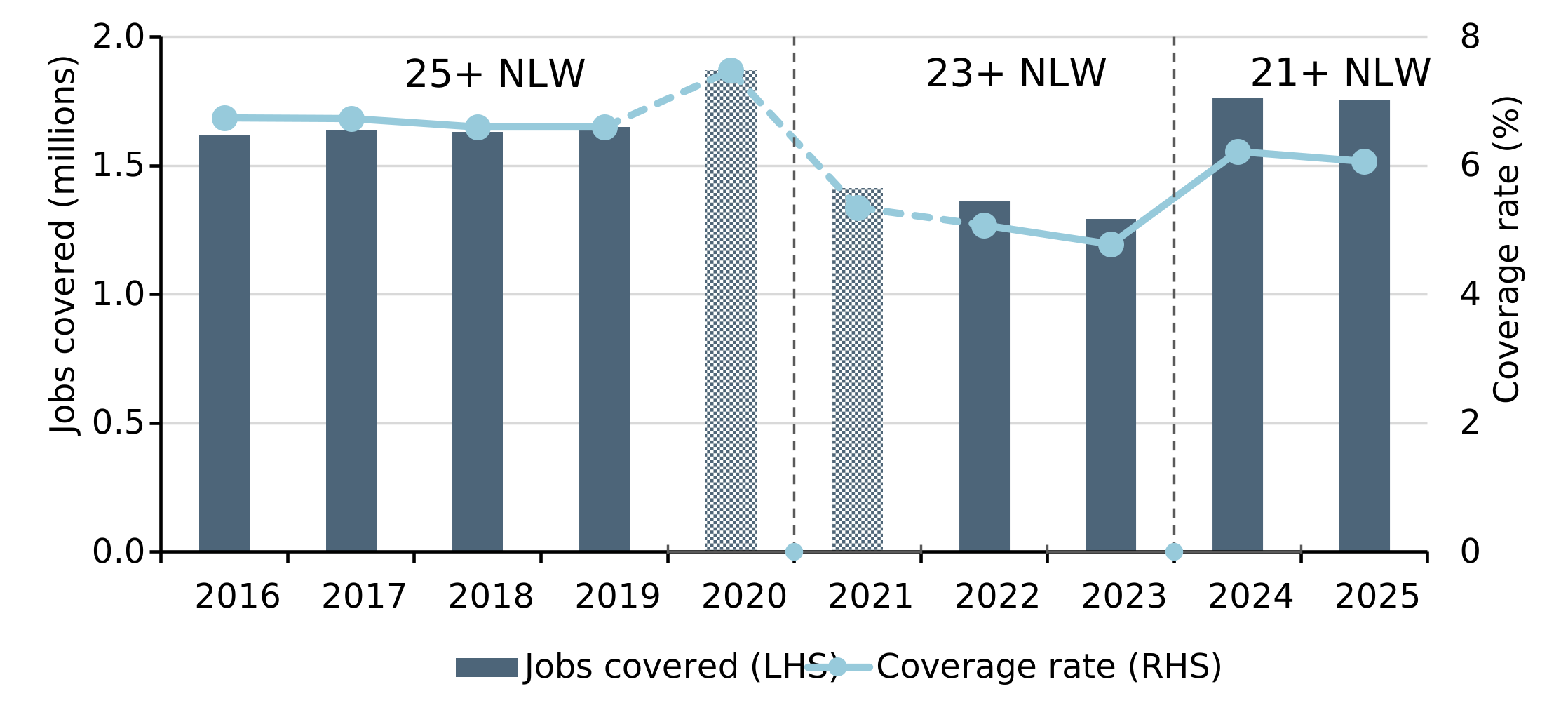
Despite the bite of the NLW being at its highest ever level, the coverage rate remains below its pre-pandemic level and that seen when the NLW was first introduced. Coverage is also lower than in 2019 despite the eligible population rising since then. The NLW’s age threshold fell from 25 to 23 and then to 21 in 2021 and 2024 respectively. In last year’s report we estimated that our recommended rate would increase coverage to 6.9 per cent as bite and coverage tend to move together (Figure 5.2). However, this relationship has not always held – following the introduction of the NLW, coverage remained relatively stable, and it even fell after the pandemic despite ongoing increases in the bite. Although coverage increased noticeably in 2024, this year’s more modest increase in the NLW (in both real and nominal terms) did not bring about any further increases in coverage.
Figure 5.2: Bite and coverage rate of the adult minimum wage, 25 and over, UK, 1999-2025
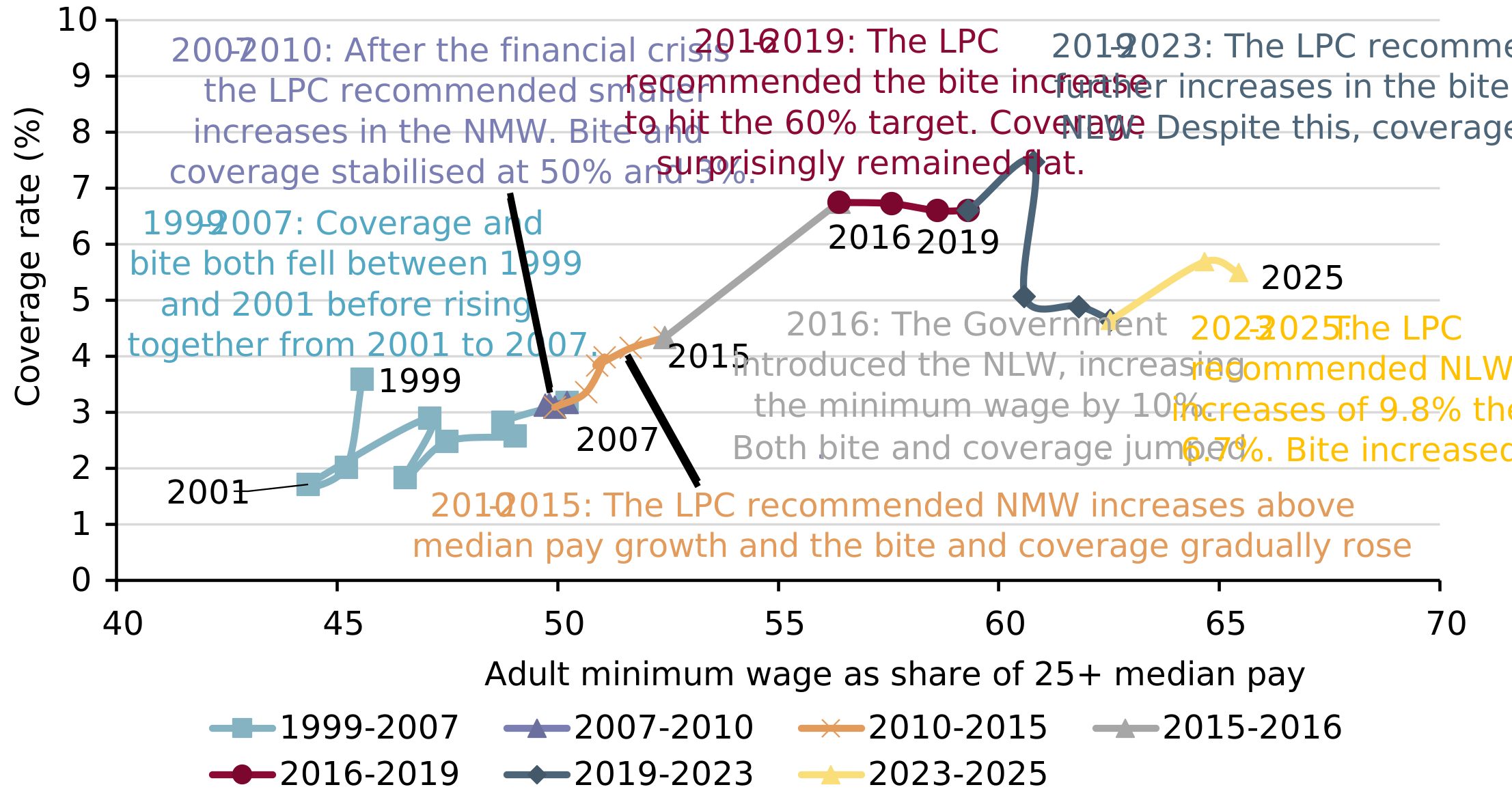
Pay growth
Pay growth slowed in 2025 but was more resilient than expected
Median pay for NLW-eligible workers increased by 5.2 per cent in 2025. While this is smaller than the 8.3 and 6.4 per cent increases seen in 2023 and 2024, it is much stronger than had been anticipated. As has been the case in recent years, pay growth was stronger at the lower end of the distribution than at the median (Figure 5.3). However, this year we also saw significant pay growth at the top of the distribution, with workers at the 86th percentile and above receiving even larger pay increases than minimum wage workers.
With inflation of 3.5 per cent between April 2024 and April 2025, these nominal pay increases translated to real pay growth of over 3 per cent for minimum wage workers. Workers in the rest of the pay distribution also saw increases in their real hourly pay. Since 2019, real pay has increased by around 16 per cent for minimum wage workers. In contrast, real pay for the better-paid workers has increased more modestly (for example, by 5.2 per cent at the median) and, for the highest-paid workers, real pay has fallen.
Figure 5.3: Nominal and real hourly pay growth by pay percentile, 21 and over population, UK, 2025
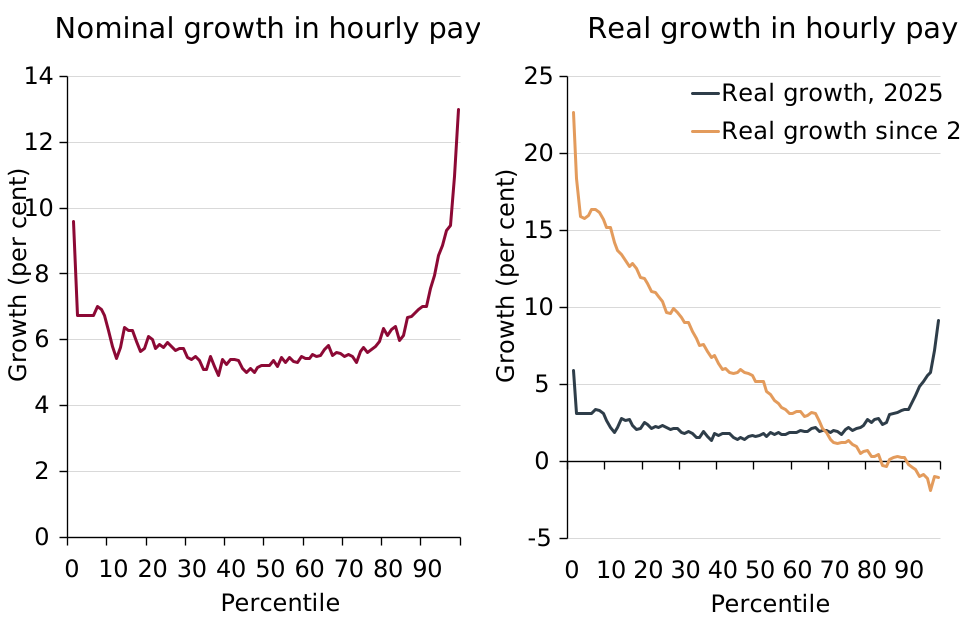
Employers regularly comment that increases to the NLW require them to increase pay for other workers to maintain pay differentials for levels of seniority, skill or experience. We refer to these pay increases as the spillover effects of the NLW.
We estimate that spillover effects this year were smaller than last year. The left panel of Figure 5.3 shows pay growth is generally higher in the bottom third of the distribution than in the middle. For our purposes we consider the middle of the pay distribution as the 36th-80th percentiles. The extra wage increases for workers at the lower end of the pay scale — over and above the increases seen by those in the middle of the distribution — offer a rough idea of the NLW’s spillover effects. Because pay growth in the middle of the pay distribution this year was relatively strong, these extra wage increases were smaller than they were last year.
For example, pay for workers at the 10th percentile increased from £12.76 to £13.50 (or 6.3 per cent) in 2025. In contrast, average pay growth for workers in the 36th-80th percentiles was 5.4 per cent. If we assume that without the increase to the NLW, 10th percentile workers would have also received a pay increase of 5.4 per cent, then we can attribute the additional 0.9 percentage points of pay growth they received to NLW spillovers. This equates to 10p of their 74p pay increase. These spillover effects become smaller the further you move along the distribution. But roughly the bottom third of all jobs receive a higher pay increase than they otherwise would have following an NLW increase.
Businesses continue to express concerns about pay compression
The policy of increasing the NLW towards a target of two-thirds median earnings unavoidably compresses the lower half of the aggregate pay distribution in relative terms. Last year we saw relative pay compress noticeably in low-pay industries after being stable for a number of years. This year, the difference between the NLW and the median wage in low-pay industries narrowed a little further in percentage terms, from 15 per cent to 14 per cent, but remained at £1.71 in cash terms. Pay compressed further in non-low-pay industries this year, although by less than last year.
Figure 5.4: Premium of median wage above NLW by industry type, UK, 2019-2025
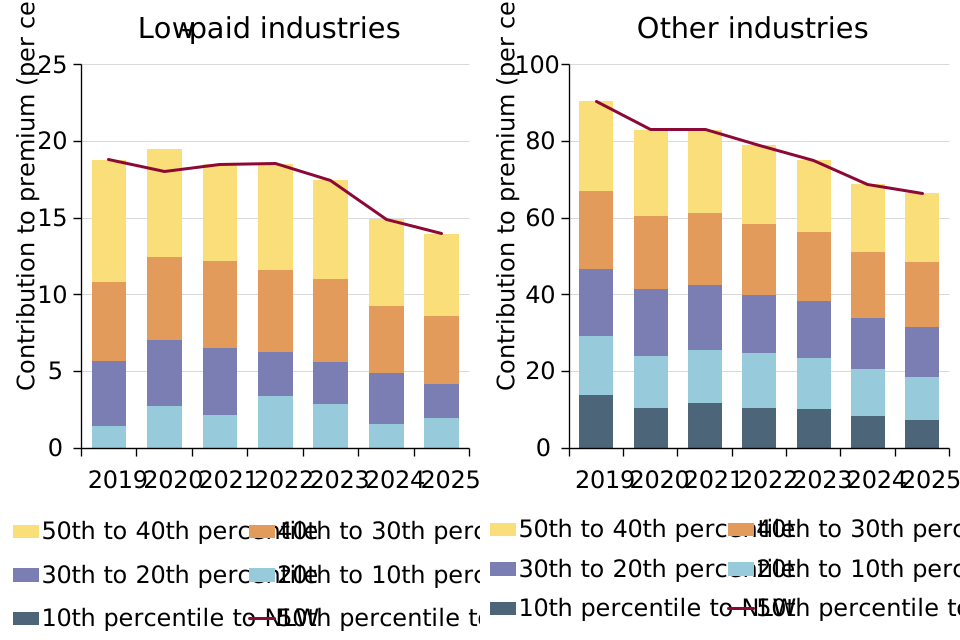
Many businesses we speak to see narrowing pay differentials as one of the major impacts of the NLW. We continued to hear this year that employers in a range of sectors struggled to maintain differentials; and that where differentials have narrowed, they lead to a range of workforce issues (less progression into more senior roles, demotivation for more senior employees, recruitment challenges). The Confederation of British Industry’s (CBI) submission argued that employers’ capacity to squeeze differentials had ended: “Firms are increasingly reporting that their capacity to raise pay for NLW staff, but not for those in higher pay grades, is ending, meaning it may be less of an option for them both this year and next.” The majority of employers we spoke to this year had narrowed differentials to some extent, but within this there are a wide range of experiences, including substantial differences in workforces and pay structures.
Most employers agreed that narrower differentials are bad for career progression. A large retailer told us in their submission that eroding pay differentials “is causing us challenges in encouraging colleagues in entry level positions to apply for these more senior positions”. The Association of Convenience Stores (ACS) told us that differentials had narrowed and quoted one member: “our biggest turnover and recruitment challenge is at the shift leader level.” In their submission, the CBI quoted a large tech firm affected by pay compression: “Supervisors are questioning why their pay isn’t rising in line with those they manage… We have also seen more employees declining promotions or not participating in progression windows.” In care, Association of Directors of Adult Social Services (ADASS) told us that “NLW uplifts to the wages of the least well-paid social care workers have flattened incentives and progression opportunities”.
On our Exeter visit, one manufacturer complained about no longer being able to recognise their semi-skilled workforce with a pay differential above the NLW. In Newcastle, manufacturers were concerned about their ability to reward and retain skilled workers: “you’re having to take from the top… and give to the bottom.” This led to ”a bitterness in that kind of middle level that they just feel like it’s not fair that they have to take on quite a lot of responsibility, yet they don’t feel like they’re being recognised.”
Often the central point employers make in discussions about differentials is that they would like to see lower NLW increases which allow them to target resources at pay and recruitment pressures higher up the chain. Make UK told us that manufacturers “would like to see more explicit evidence of the LPC considering other cost pressures…beyond the immediate effects [on] those at the wage floor.”
Concerns around compression are commonly heard from hospitality and hair and beauty businesses. As seen in Figure 5.5, these industries have high levels of coverage and more compressed pay structures than other industries. In industries with high coverage, the NLW has a large direct impact on their labour costs because it applies to a large share of the industry’s workforce. In industries with more compressed pay structures, spillover effects mean the NLW also has a large indirect effect on labour costs as businesses feel the pressure to give similar pay rises to workers paid just above the NLW.
Figure 5.5: Premium of median wage above NLW by low-pay industry, UK, 2025
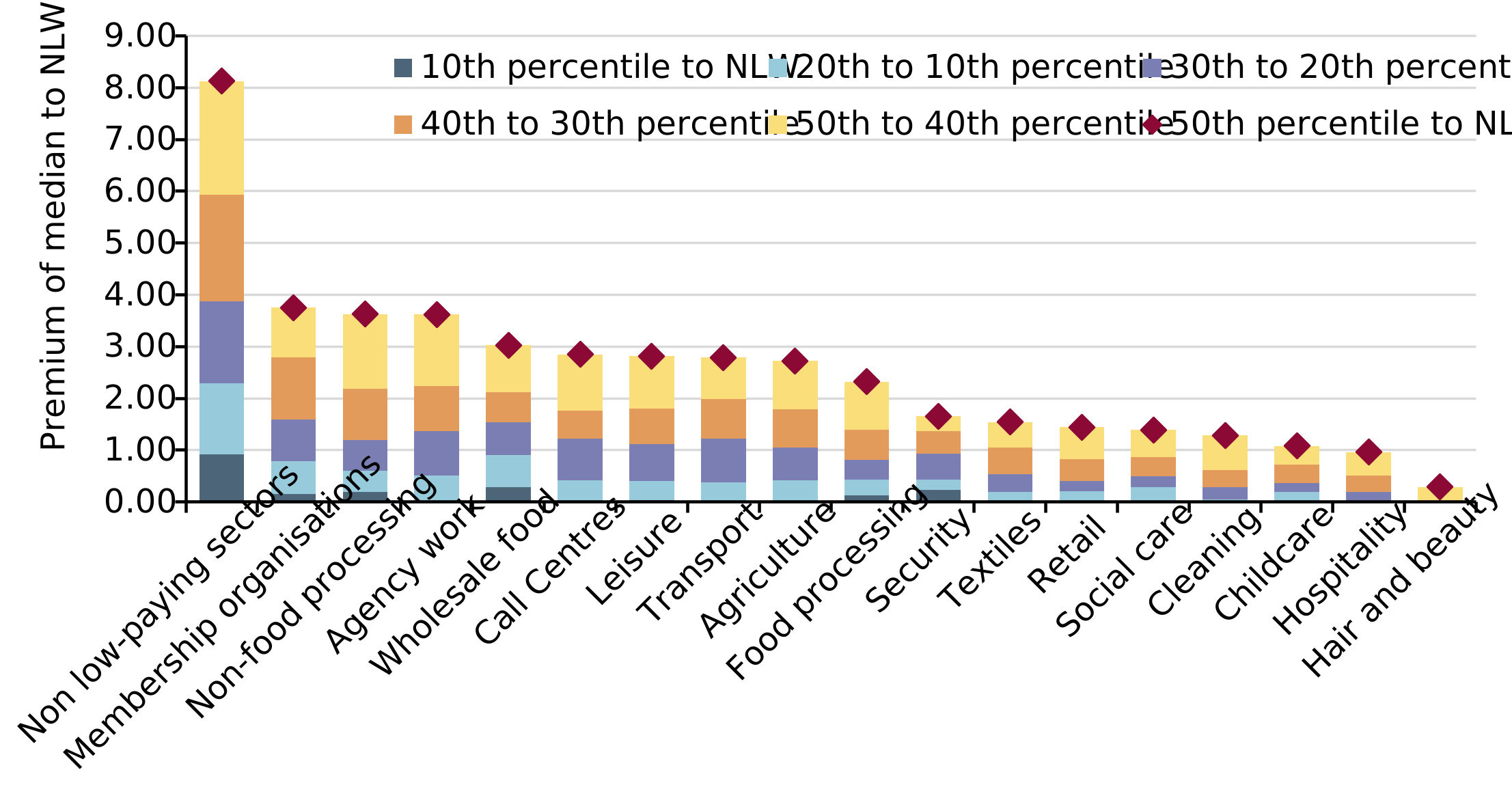
Employers in hospitality are particularly likely to identify compression as a key sectoral issue. The British Beer & Pub Association (BBPA) stated that pubs had suppressed pay increases for higher-paid staff, resulting in discontent: “members stressed the need to maintain meaningful differentials between job roles within their teams, yet it is becoming increasingly difficult to do this.” Their members were concerned this “becomes demotivating for people wanting to progress” and required restructuring of teams and stripping out roles which “will affect both headcount and undermine the provision of great customer service”.
Workers tell us they have fewer chances and fewer incentives to progress
Workers and unions we speak to often recognise that pay differentials have narrowed, and that this affects progression. Unions tend to argue that the answer to this is broad-based pay growth, rather than restraint in the NLW. GMB, for example, told us in their experience significant pay differential issues arise more often in the public sector, but the main cause of this was austerity-driven pay restraint rather than NLW rises.
Usdaw stated that “the compression of differentials in low-paying industries has become an increasing problem in recent years.” They cited testimony from workers who had told them that the reduction in differentials had reduced their incentive to progress. Usdaw also argued that “progression opportunities and pathways in retail had been significantly depleted, with a scarcity of management level roles following the continual hollowing out of middle management roles to save on costs”.
In Dundee, we heard from a care worker who had turned down a promotion offer because the extra 50p an hour she would earn would not be worth the extra responsibility: “At weekends, the whole care home would be your responsibility; it’s not worth it.” Others in the meeting echoed this, particularly for care homes: one told us seniors got limited recognition – they “just get the blame if anything goes wrong.” She contrasted this to the NHS, where progression “took time” but was worthwhile.
For some workers, changes to management structures at their employers had reduced the opportunities to progress. A hospitality worker we met in Swansea talked about his employer’s reluctance to give workers promotions due to increased wage costs. “Career progression is quite difficult … now. And the company have internally admitted that, because they don’t really want to rock the boat in terms of promoting people and having to pay higher wages because of that. I feel like I’m stuck in a rut at the moment.” A local authority worker represented by Unison said “In terms of development … what we’ve been told is that operational managers are not going to be replaced when they leave for whatever reason, which means obviously somebody takes up that role, but at lower pay.”
A Newry-based healthcare worker represented by Unison talked about a lack of differentials between two of the lowest grades hampering progression. There are only Band 2 (£23,615pa), Band 3 (£24,071 – 25,674) and Band 5 (£31,892) roles. In her nine years working there, she had only seen one person move from Band 3 to Band 5. Given the lack of pay differential between Bands 2 and 3, in her view it was not worth taking on the Band 3 role, when that was unlikely to lead to any further progression.
In beauty, the British Beauty Council argued that the move to self-employment models was leading to less training and therefore less progression: “Salon employees report that under traditional employment models, pay does not increase far beyond minimum wages.” Because of this, workers’ perceptions are often that “self-employment is the primary means by which employees can increase their pay and progress to senior levels in the industry …and self-employed workers don’t have an incentive to train others.” The National Hair & Beauty Federation (NHBF) supported this point in the context of apprenticeships: “[The move to a self-employed model] also affects how many people are coming into the sector as the self-employed model is not set up for apprenticeships. When the workforce is predominantly self-employed rather than employed, there’s no employer able to take on apprentices and provide the necessary supervision and progression pathways.”
The tight labour market that followed the pandemic provided more opportunities for workers to move off the NLW than previously. As the labour market began to loosen last year, progression opportunities fell. Despite this continued loosening, in 2025 over half of last year’s NLW workers (who were in the ASHE sample in both 2024 and 2025) moved off the minimum wage, including almost three-quarters of those NLW workers who changed employers (Figure 5.6 left panel).
However, we also saw fewer NLW and other low-paid workers change employers this year (Figure 5.6 right panel). This is consistent with other data, particularly the decline in job vacancies (discussed in Chapter 2), showing that as the labour market has loosened, it has also become less dynamic. In contrast, there was little change in the rate at which higher-paid workers moved jobs.
Figure 5.6: NLW workers progressing off the NLW and changing employers, UK, 2015-2025
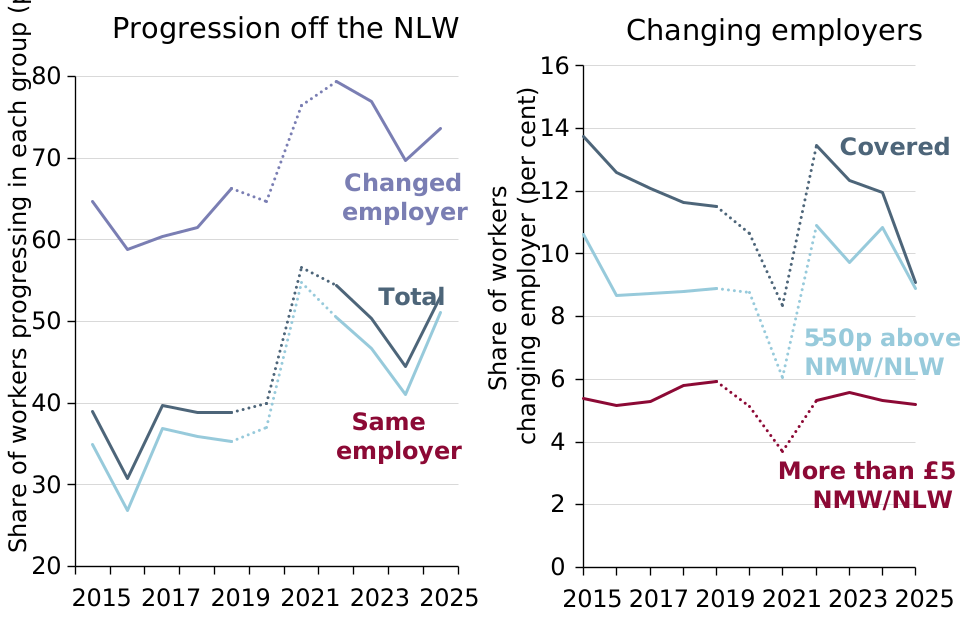
Employment
As shown in Chapter 2, the labour market has weakened over the past year – employment growth has slowed, unemployment has increased and vacancies are down. It has also become less dynamic, with less hiring, firing, and switching between jobs. In assessing the NLW, we are interested in determining the degree to which the NLW has contributed to weaker employment conditions. However, this is difficult because other factors are also weighing on low-paying sectors, including the changes to employer National Insurance contributions (NICs) and, as described in Chapter 1, weak consumer spending, which particularly affects consumer-facing industries such as hospitality and retail.
Some industries are struggling more than others
Over the past year we have seen employment, as measured by HM Revenue and Customs’ Pay As You Earn (PAYE) Real Time Information (RTI), fall noticeably in retail and hospitality. This is concerning as these sectors employ large numbers of NLW and other low-paid workers. In contrast, employment in health and social work continues to grow rapidly (Figure 5.7).
The PAYE and Labour Force Survey (LFS) data suggest different trajectories for overall employment in low-paying industries over the past year. We consider the PAYE data to be a better indicator of employment trends at the present time, notwithstanding the emergent tendency for the most recent months of data to be revised upwards. While LFS data quality has improved (as discussed in Chapter 2, 2.3-2.5), we believe the increase in employment in low-paying jobs shown in the LFS data is reflective of these improvements in data collection rather than of an actual increase in low-paid employment. The PAYE data show that, for those aged 21 and over, employment in low-paying industries has fallen slightly over the past year, in contrast to an increase in other industries (Figure 5.8).
Figure 5.7: PAYE employment by industry, UK, 2016-2025
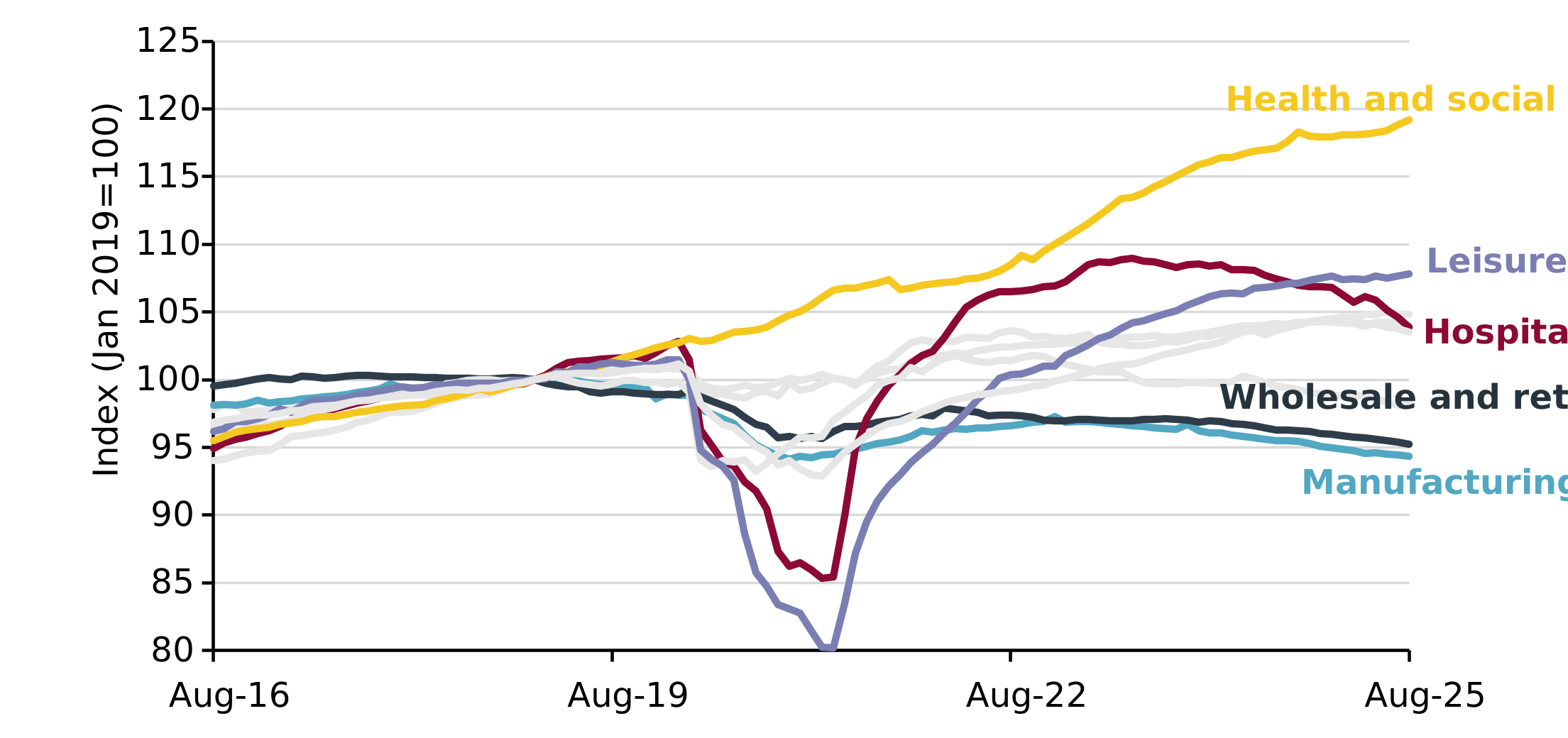
Figure 5.8: Employees by industry, 21 and over population, LFS vs PAYE, UK, 2020-25
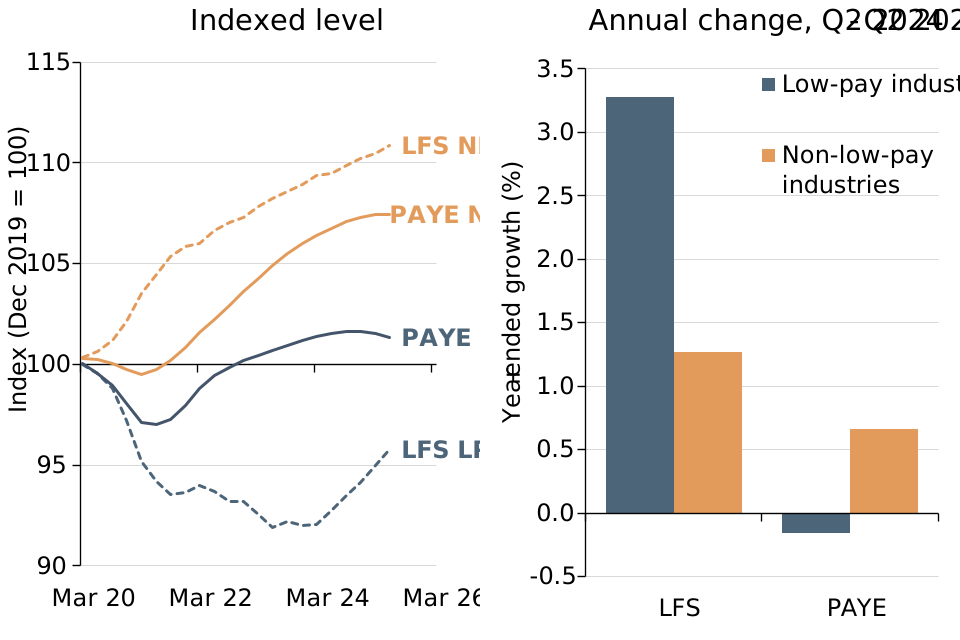
Our discussions with the hospitality and retail sectors supported the picture of declining employment seen in the PAYE data. In retail, ACS’s survey found that 46 per cent of their members said they had reduced employee numbers due to rising wage costs. The British Retail Consortium (BRC) found that more than half of retailers indicated they would reduce their head-office headcount in response to the NICs cost increases. In response to a separate question on the NLW, 38 per cent said they expected to reduce the number of shop floor jobs or hours (down from 42 per cent last year). In the BBPA survey, nearly three-quarters of respondents said wage costs had significantly increased. Employment costs were the most commonly cited challenge for respondents, with 82 per cent citing them as a concern. One large hospitality operator told us “pubs are being left with no choice but to employ fewer people to remain financially viable.” They continued “A significant proportion of this challenge has fallen on the staffing levels in our pubs.” UKHospitality’s submission noted that hospitality employment had fallen by 69,000 between October 2024 and May 2025, reversing previous growth and outpacing job losses in other sectors. They attributed this to rising employment costs.
The Scottish Grocers’ Federation also stated that hours were declining due to increased employment costs. Their “true cost of employment” measure rose by 8.6 per cent, from £15.39 to £16.72 per hour with “NICs changes playing a major role in this increase”. They told us that in a survey of their members 94 per cent said wage increases would have a significant or great deal of impact on the viability of their business; and 96 per cent said they were reducing hours.
In the next section we look at the changes to NICs in more detail and assess the NLW’s impacts by looking at the employment outcomes for the groups of workers and parts of the country that are most exposed to the NLW. However, we also need to be cognisant of broader structural and cyclical changes that affect low-paying sectors. Employment in retail has now declined for a number of years due to several factors, including competition from online retailers. And while, hospitality employment has fallen over the past 18 months, this comes after a large expansion in hospitality employment in the immediate aftermath of the pandemic. Our view is that while some key low-paying industries are struggling, we have not seen a broad-based hit to employment across all low-paying industries.
Changes to National Insurance contributions have also pushed up employment costs
This year the task of evaluating the impact of the NLW increase has been made more difficult by the changes to employer NICs, which further increased labour costs for most businesses. These changes were announced after the Commission had made its recommendation on the NLW rate. Because the NICs changes came into effect at the same time as the NLW increase, separating out the impacts of the two policies is difficult.
The NICs changes particularly affected employers with low-paid employees. Because of the reduction in the salary threshold from £9,100 to £5,000 a year, employers are now required to pay NICs on low-paid employees they didn’t have to before. In 2024, a worker could be employed on the £11.44 NLW for 15 hours without attracting employer NICs. In 2025, this fell to 8 hours at £12.21. This is particularly consequential for minimum wage workers as many of them work part-time around these hours thresholds. This also has a large effect on industries such as hospitality and retail which, as well as having high minimum wage coverage, also have high shares of low paid part-time employees.
Although the 6.7 per cent increase in the NLW this year was significantly lower than the almost 10 per cent increases in 2023 and 2024, NLW jobs involving 16 hours a week saw a much larger increase in employment costs this year (Figure 5.9). Jobs at these hours are particularly affected by the reduction in the salary threshold. Before 2023 these jobs did not attract employer NICs. In 2025, minimum wage workers working 16 hours per week also met the earnings trigger for pension auto-enrolment for the first time. Even for full-time workers, the additional costs associated with the NICs changes mean that the costs of employing an NLW worker increased by around 10 per cent – a similar amount to 2023 and 2024.
However, for the smallest employers, the rise in the Employment Allowance from £5,000 to £10,500 mitigates some of these NICs increases. Figure 5.10 shows how a firm’s employment costs change with their number of employees (assumed to all be paid at the NLW), conditional on hours worked per week. The employment cost increase exceeds the NLW increase of 6.7 percent around the point where the Employment Allowance is used up. Depending on hours worked, this is around the ten employee mark, suggesting that the smallest employers saw relatively lower cost increases. Around a fifth of NLW jobs were in micro firms (firms with fewer than ten employees) in 2025.
Figure 5.9: Annual increase in employer costs for NLW workers, 2011-2025
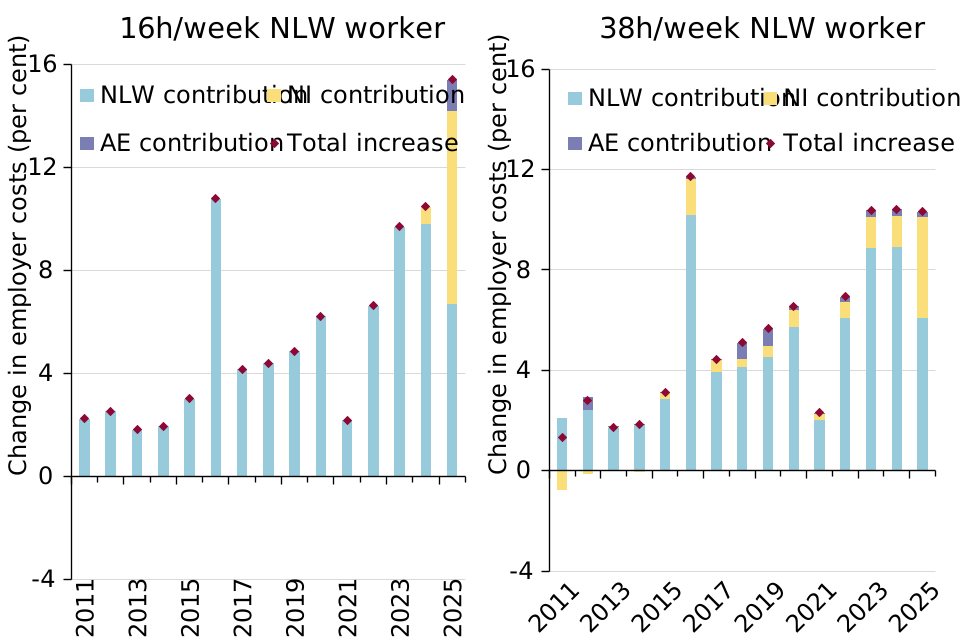
Figure 5.10: Increase in total employment costs by size of employer and working hours, 2025
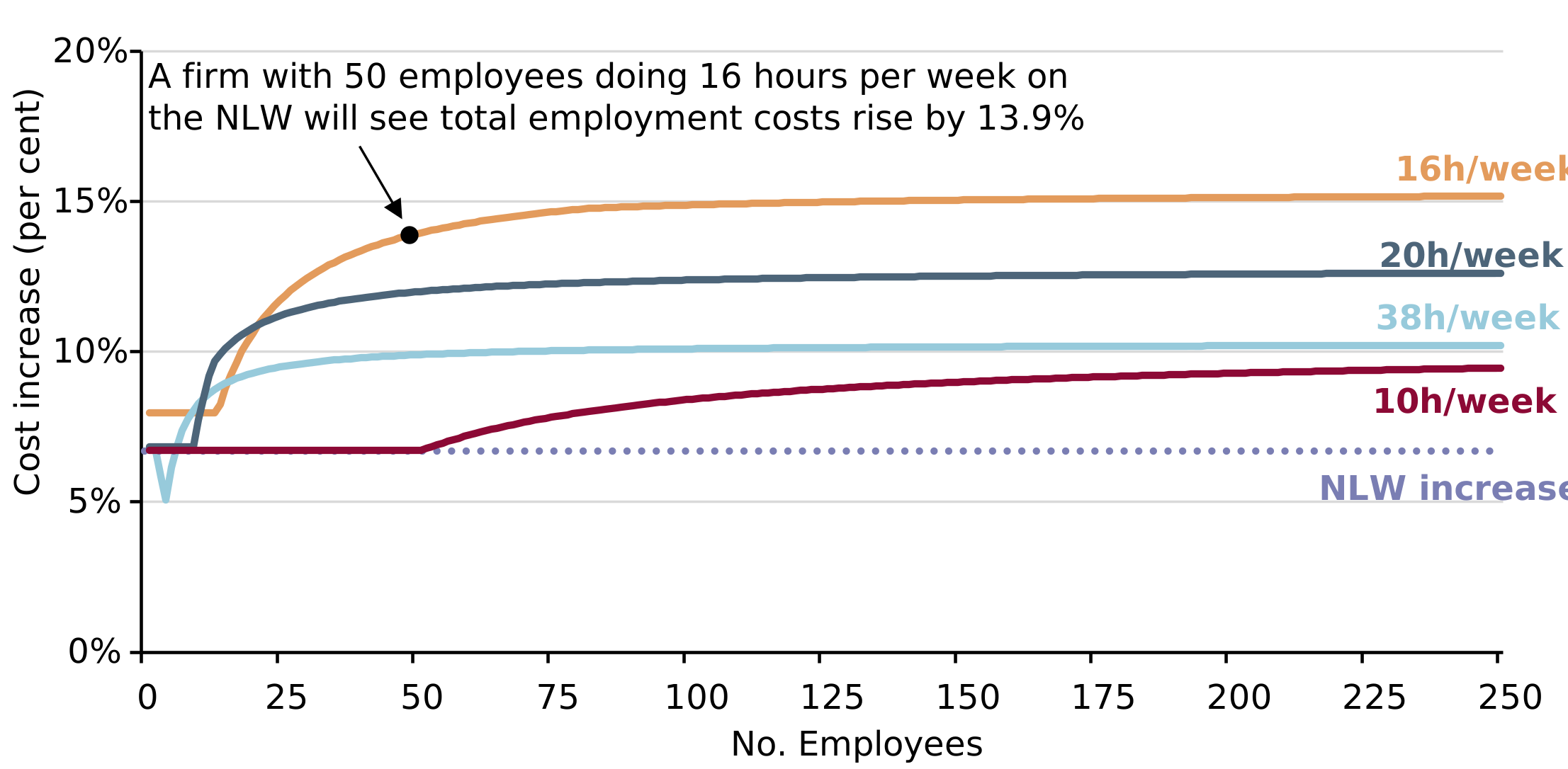
Businesses have repeatedly told us this year that the NICs changes have had a big impact on costs, particularly in combination with the rise in the NLW. Some firms noted that while the NLW increase was a planned cost (even if higher than expected), the NICs changes were unforeseen and therefore had a greater impact. The Chartered Institute of Personnel and Development (CIPD) asked employers which cost had the biggest impact in the last year. This survey evidence shows that among all employers, more said NICs and energy costs had the biggest financial impact. Even among employers who say the NLW affects their wage bill to a large extent, more said NICs had the biggest financial impact (Figure 5.11). There was little indication that employers responded to NICs differently than to NLW increases.
Figure 5.11: Cost increases with the biggest financial impact in the past 12 months, CIPD survey 2025
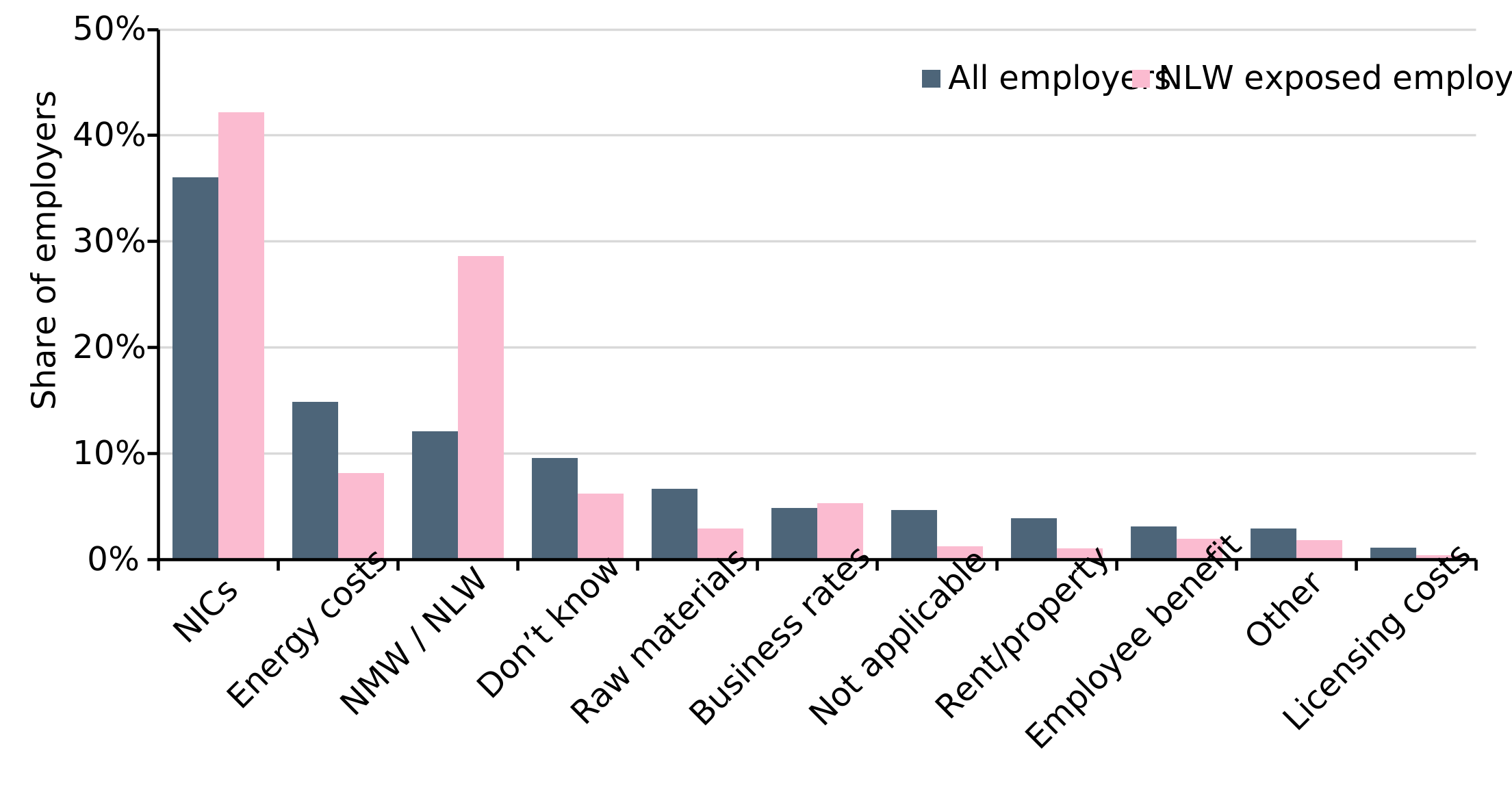
UKHospitality described the NICs changes as “devastating” for the hospitality sector because so many employees were brought into NICs for the first time. The CIPD found that hospitality was the sector where the largest share of respondents (50 per cent) were affected to a large extent by the change. Christians Against Poverty (CAP) reported that charities “have had to increase their reliance on the already stretched voluntary workforce, reduce hiring new staff, and/or make redundancies.” The Institute of Directors (IoD) thought NICs “has been the bigger of the two impacts”, because it affects a greater proportion of salaries.
On our London visit, a hotelier told us they planned to reduce the number of part-time roles because of costs associated with NICs. A Unite member on the Swansea visit thought the changes had led to a cut in their hours: “I used to work five days a week. But I now work about three or four.”
Employment outcomes have improved for more NLW-exposed groups
One of the most important ways we assess the NLW’s impact is by looking at the employment outcomes for groups of workers and parts of the country most exposed to it – that is, the demographic groups who are more likely to be paid the NLW, and the parts of the country where NLW jobs are more common. We explained in Chapter 2 that, despite the improvements in LFS quality over the past year, we still regard the PAYE data as being a more reliable indicator of employment at the moment. The improvements to the LFS make it particularly difficult to discern actual changes in employment outcomes from improvements in measurement of employment outcomes. This is true at the subgroup level as well as at the population level. Unfortunately, the PAYE data do not allow demographic breakdowns in the same detail as the LFS data. This makes it more difficult to assess changes in employment for more NLW-exposed subgroups. However, the recent improvements in LFS quality do mean that comparisons between 2025 and 2019 are more reliable than comparisons between 2019 and intermediate years.
If a higher NLW reduces demand for low-paid workers, we would expect it to reduce employment more for those most likely to work in low-paid jobs. Table 5.1 shows employment rates for various demographic groups between 2019 and 2025. As explained above, we place less reliance on the change between 2024 and 2025. However, looking at changes between 2019 and 2025 we see that employment outcomes have generally been stronger for higher-coverage subgroups than lower-coverage subgroups – for example, women, ethnic minorities and foreign-born workers. The exceptions are that outcomes for people without a degree have worsened by more than for those with one, and employment for younger NLW-eligible workers remains below pre-pandemic levels. Young people are more likely to work in hospitality and retail, two industries (as discussed above) that have struggled in the face of weak consumer demand and other challenges.
Table 5.1 : Employment and coverage rates by personal characteristics, 21 and over population, UK, 2019-2025
| Coverage rate (%)a | Employment rate (%)b | Change in employment rate (ppt) | |||||
|---|---|---|---|---|---|---|---|
| 2019 (ASHE) | 2019 Q2 (LFS) | 2019 Q2 | 2024 Q2 | 2025 Q2 | 2019 Q2-2025 Q2 | 2024 Q2-2025 Q2 | |
| Men | 5.3 | 68.2 | 66.0 | 66.7 | -1.5 | 0.7 | |
| Women | 8.6 | 58.7 | 58.4 | 58.9 | 0.2 | 0.5 | |
| No disability | 8.6 | 73.5 | 73.6 | 74.3 | 0.8 | 0.7 | |
| Disabilityc | 11.9 | 34.2 | 36.8 | 36.6 | 2.4 | -0.1 | |
| White | 9.0 | 62.9 | 60.7 | 61.1 | -1.8 | 0.4 | |
| Ethnic minority | 10.7 | 65.9 | 69.9 | 71.1 | 5.2 | 1.2 | |
| UK-born | 9.0 | 62.0 | 60.1 | 60.5 | -1.5 | 0.5 | |
| Non-UK born | 10.2 | 69.7 | 70.8 | 71.9 | 2.2 | 1.1 | |
| Degree | 3.8 | 82.4 | 83.3 | 83.9 | 1.5 | 0.6 | |
| No degree | 14.0 | 69.9 | 66.7 | 66.9 | -3.0 | 0.2 | |
| 21-22d | 10.9 | 64.9 | 61.1 | 62.3 | -2.6 | 1.3 | |
| 23-24d | 5.2 | 76.0 | 75.1 | 74.1 | -1.9 | -1.0 | |
| 25-29 | 7.4 | 83.7 | 82.4 | 82.9 | -0.9 | 0.5 | |
| 30-64 | 6.3 | 60.6 | 59.6 | 60.2 | -0.4 | 0.7 | |
| 65 and over | 11.2 | 11.4 | 11.8 | 12.8 | 1.4 | 1.0 | |
| Total | 6.7 | 63.3 | 62.1 | 62.7 | -0.6 | 0.6 |
Employment outcomes have also been better in higher-coverage areas
Another way of assessing the NLW’s impact, is to examine how outcomes differ in parts of the country with more minimum wage jobs. We would expect any negative job effects to be more apparent in higher-coverage areas of the country. Simple correlations between employment growth and coverage across local authority areas show that employment has increased by slightly more (when using LFS data) or fallen by slightly less (when using PAYE data) in local authority areas with higher coverage rates (Figure 5.12).
Figure 5.12: Employment growth vs coverage rates, PAYE and LFS, UK, 2024-2025
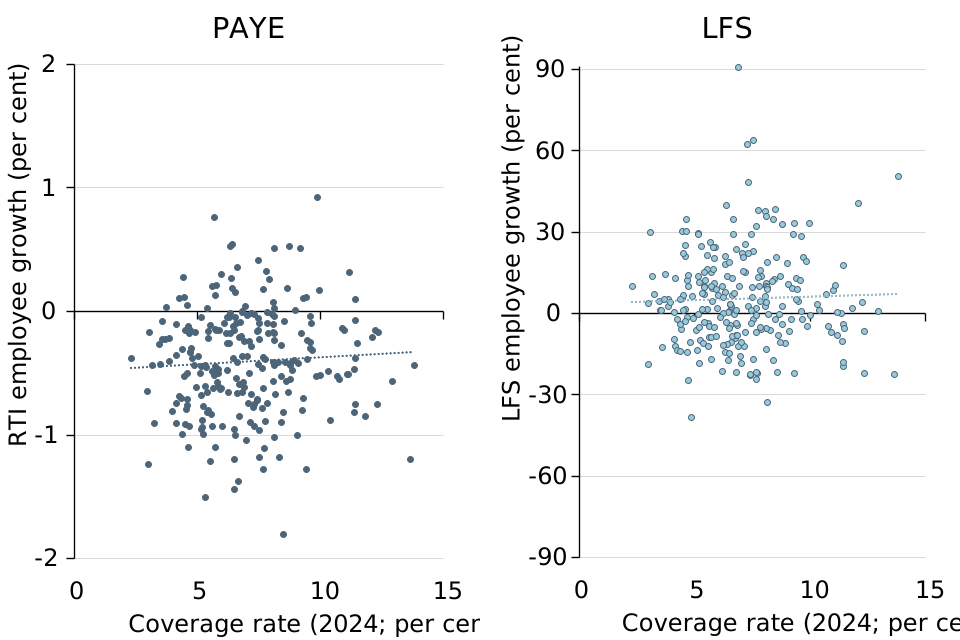
In addition, since the beginning of the pandemic, employment has increased the most in the local authority areas that were in the top coverage quintile in 2019 (Figure 5.13). Over the past year, local authority areas in the top two coverage quintiles have experienced smaller employment losses than local authority areas with lower NLW coverage. In fact, we see that over the past twelve months, employment has fallen the most in the local authority areas with the lowest coverage.
Figure 5.13: PAYE employment by local authority coverage quintile, UK, 2019-2025
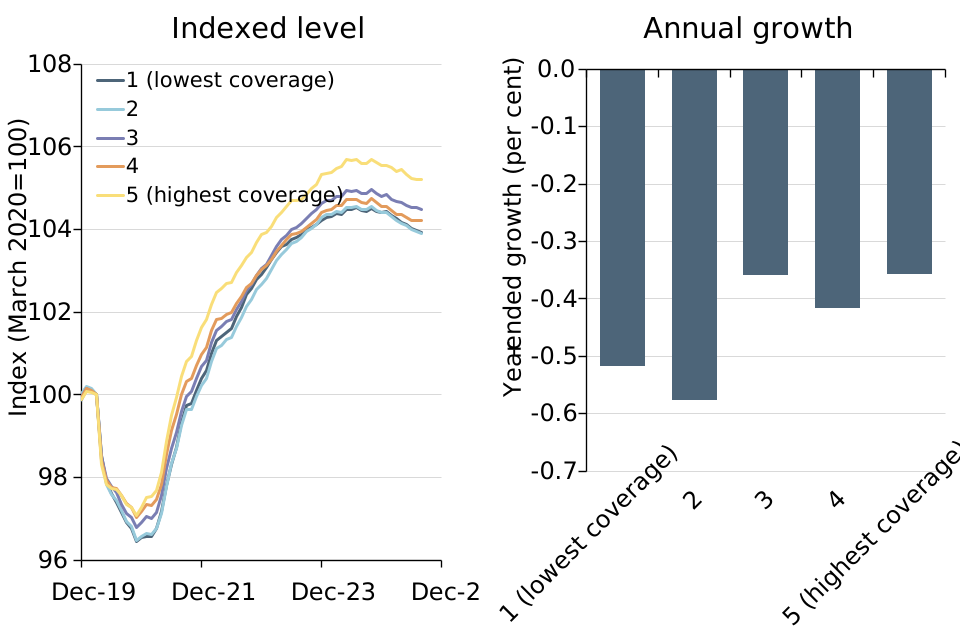
Smaller firms have struggled more than larger firms
Micro and small businesses (those with fewer than 50 employees) are more likely to employ people at the NLW. As was the case last year, in 2025 employment fell in micro businesses but increased in medium and large businesses (Figure 5.14). Employment in micro businesses is now below its 2019 level but is at least 5 per cent higher in small and medium businesses. It is important to remember that measuring employment growth by size band is not straightforward. If a business grows and crosses a size threshold it will show up as a fall in employment in its previous size band.
The CIPD’s Summer 2025 Labour Market Outlook survey shows some of the ways in which small employers’ responses to NLW increases differ from those of larger businesses. The survey reports small and medium-sized enterprises (SMEs) are notably more likely to have taken lower profits than employers with 250 or more workers (36 versus 22 per cent). They are significantly less likely to have improved efficiency or productivity (17 versus 38 per cent) and more likely to have cancelled investment (24 versus 16 per cent). This suggests SMEs have fewer channels to deal with rising costs, and some small businesses we meet argue they should be treated differently and not subject to the same requirements as larger employers. As one café owner we met argued: “If you want cafés in rural areas, you cannot treat us the same as you treat Tesco… Small businesses don’t lose their profits for shareholders, they lose their homes.”
The Federation of Small Businesses (FSB) argued that recruitment patterns were changing for small firms as a result of NLW increases, making small businesses more risk-averse about hiring. In their survey, they found that 57 per cent of respondents were more wary about recruiting in general (up from 47 per cent last year) and 29 per cent (up from 22 per cent) were more cautious about hiring those with poor work history. Only 27 per cent said they approached recruitment the same way as before.
Figure 5.14: Employment by firm size, UK, 2014-2025
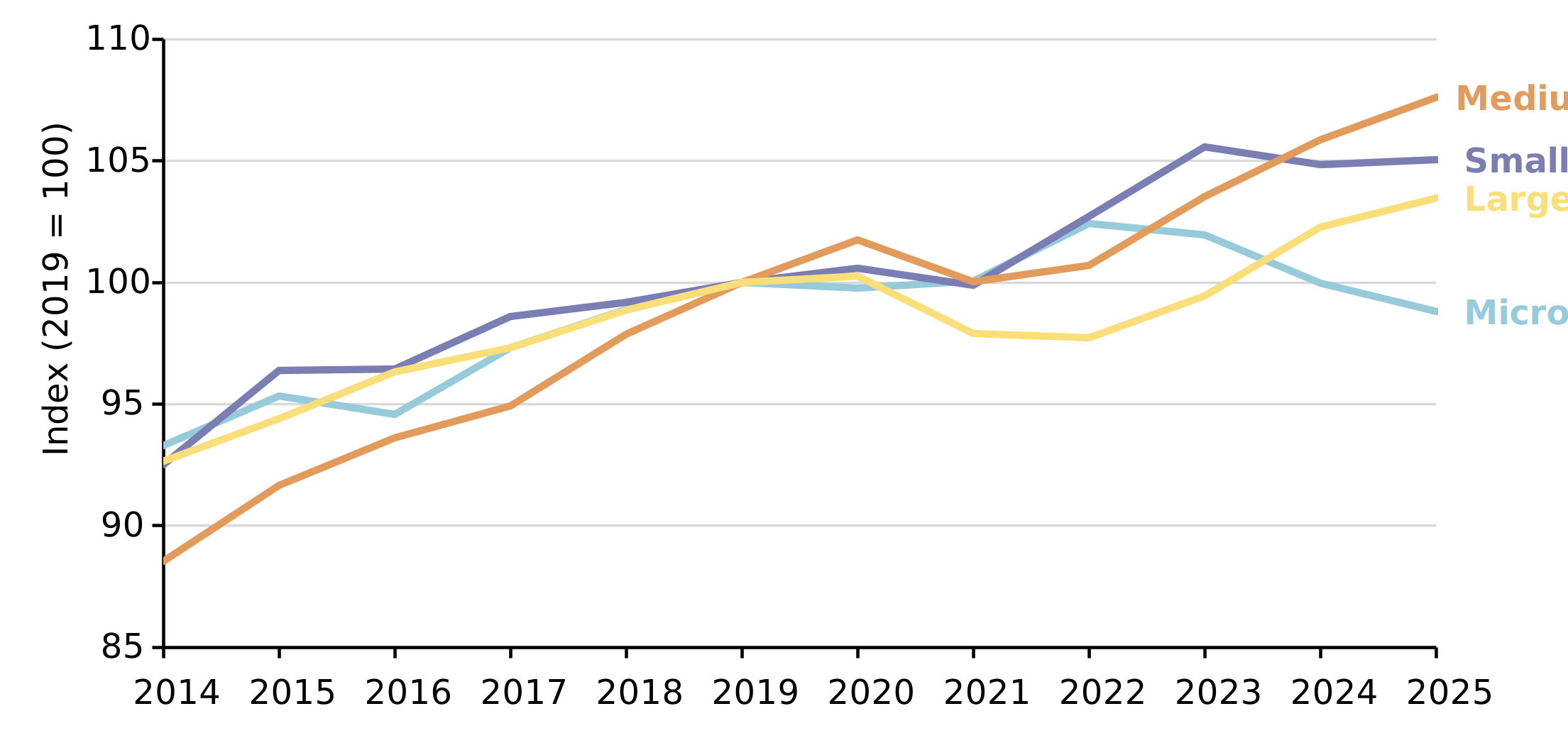
Econometric evidence on employment effects is hindered by data quality
Ideally, we would be able to use econometric evidence to cut through the sometime conflicting stories told by our various breakdowns of the employment data. When evaluating the employment impacts of the NLW, econometric analysis allows us to make more rigorous comparisons and to control for potentially confounding factors, as well as measure the uncertainty around our estimates. In our 2022 NLW Review (Low Pay Commission, 2022), we provided a detailed summary of the evidence up until 2020. We found little evidence to suggest the NLW was reducing employment for all affected workers, although there was some evidence it reduced employment for some subgroups of workers, such as women working part-time.
However, good econometric evidence relies on good underlying data. The poor quality of the LFS data in recent years has therefore hindered our ability to obtain reliable econometric results on the employment effects of NLW increases in recent years. Shocks, such as the pandemic, and policy changes, such as the pandemic response and, more recently, the NICs increase, have also complicated our econometric work. While we note the results of our econometric work here, we place less reliance on them than we have in the past due to ongoing concerns of data quality.
This year we updated previous econometric work that we had either commissioned or done internally. We updated our ‘grouping analysis’ (Butcher and Dickens, 2023) with data up to the second quarter of 2025. This divides the country into 320 different age-gender-region cells. For each cell we measure its exposure to the NLW using either the bite or the coverage rate, and compare how outcomes (such as employment) change over time across the different cells. Our outcome measures are from the LFS. If the NLW reduced employment, we would expect employment to grow more slowly in cells more exposed to the minimum wage (e.g. women aged 60-64 in the West Midlands) relative to cells less exposed to the minimum wage (e.g. men aged 30-34 in London).
This grouping analysis showed mildly negative employment effects between 2015 and 2025, with the effects being larger over the 2019-2025 period. These results are statistically significant when using bite as the exposure measure, but not when we use coverage as the exposure measure. The negative effects appear to be concentrated in the pandemic period, making it difficult to interpret the results as causal.
We also replicated and updated what we refer to as the ‘bunching analysis’ (Giupponi et al, 2024) with data from 2019 to 2025. This analysis attempts to isolate the effect of the minimum wage by comparing how the pay distribution changes in low-paying areas relative to better-paying areas. Workers in low-paying areas are more likely to be affected by the minimum wage than similar workers in better-paying areas. If the NLW reduced employment, we would expect to see lower employment at wage levels close to the minimum wage in low-paying areas, but not to see similar falls in employment for comparable workers in better-paying areas.
As discussed in our 2023 report (Low Pay Commission, 2024a), the bunching analysis shows negative and statistically significant employment effects for the period between 2019 and 2023. However, we were reluctant to draw strong conclusions from these results given the concerns over data quality and confounding effect of the pandemic, which did have a differential effect on low-paid workers (thereby invalidating some of the underlying assumptions of the analytical technique used). Other contextual evidence from that period suggest the labour market, and the low-paid labour market in particular, was exceptionally tight over 2022 and 2023.
The updated bunching analysis continues to show negative employment effects for the whole period between 2019 and 2025, but slightly positive (although not statistically significant) employment effects between 2023 and 2025. However, we still have concerns over data quality and do not consider the results reliable enough to draw causal conclusions.
This year we also commissioned research using the Bank of England’s Decision Maker Panel, to identify differential responses from firms more exposed to the NLW. The Decision Maker Panel is a high-frequency economy-wide business survey (of firms with ten or more employees) which collects backward and forward-looking information directly from senior business decision-makers on a wide range of core topics including sales, employment, wages, investment, prices and uncertainty.
Interim results from this work suggest that firms more exposed to the NLW have experienced weaker employment growth (Bunn, Mizen and Yotzov, 2025). A range of exposure measures found a contribution to aggregate employment growth of -0.3 percentage points to -0.8 percentage points in 2025. These estimates were not statistically significant across all specifications and smaller than the positive wage effects found. The researchers also caution that these results should not be considered causal – there may be other factors that differentially affect more exposed firms. For example, it may be that some of the weaker employment growth of more exposed NLW firms is due to the increase in employer NICs – if firms are unable to respond to rising NICs by paying lower wages they may need to respond in other ways including employing fewer staff.
Hours and insecure work
Reducing employment is not the only way for firms to respond to increases in their labour costs. We also hear from employers that higher costs will lead them to reduce the hours of their workers. Alternatively, employers could move their workers onto contracts that are more flexible for employers (but more precarious for employees), such as zero-hours contracts and temporary contracts. As set out in Chapter 3, low-paid workers frequently tell us that securing sufficient, reliable working hours is one of the main challenges they face.
This year average hours worked by NLW workers changed little from last year, while average hours of non-NLW workers fell slightly (Figure 5.15). However, average hours of NLW workers remain below their pre-pandemic levels.
Figure 5.15: Average hours worked by covered status, UK, 2011-2025
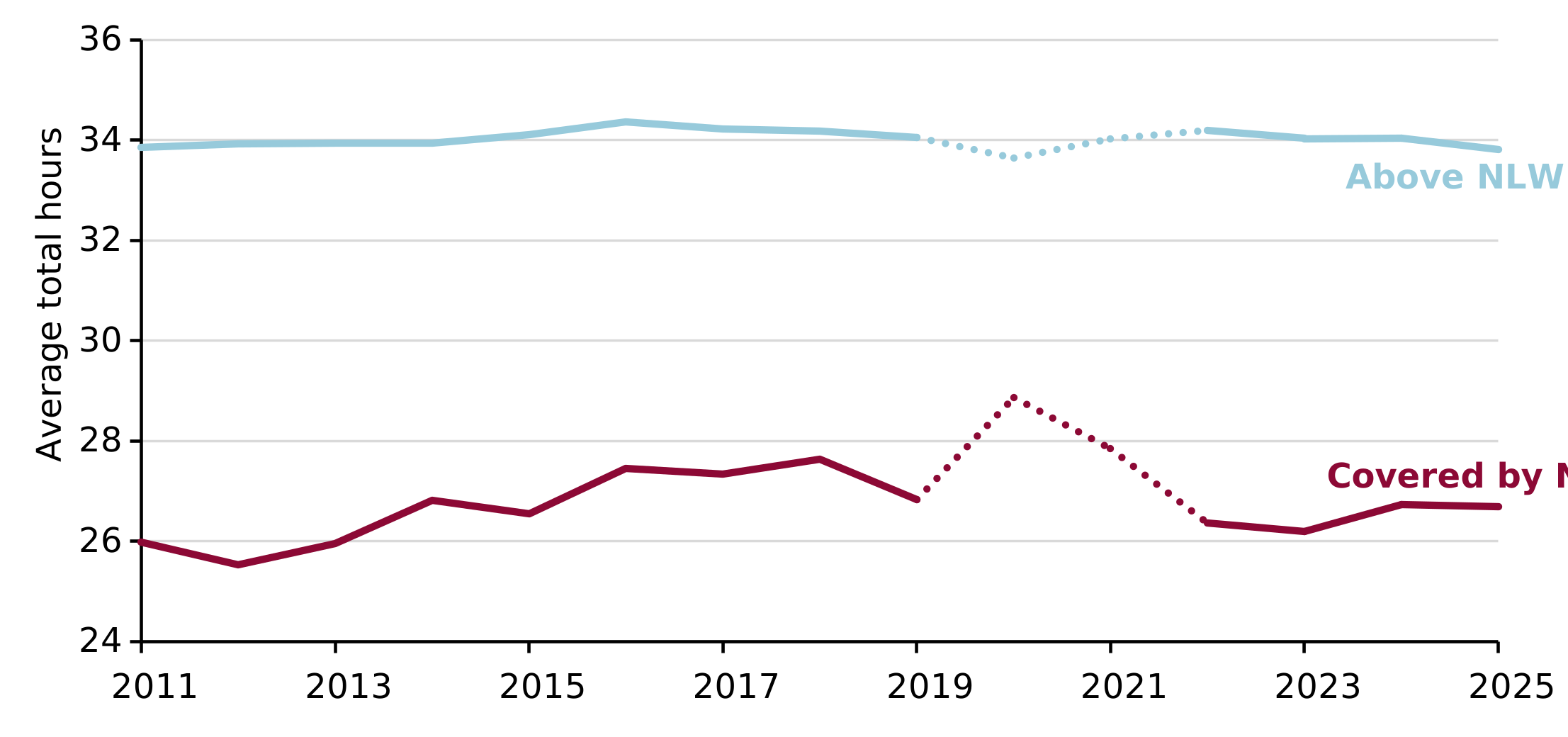
Despite the stability in average hours, a growing share of workers in low-paying occupations are underemployed – that is, they would like to work more hours than they currently do (Figure 5.16). This is consistent with the testimony from workers who say that cost of living pressures make it hard for them to get by on their regular hours. Over the past year, we have also seen an increase in the share of workers in low-paying occupations on zero-hours contracts. In contrast, use of zero-hours contracts across the whole economy is broadly unchanged. We know from stakeholders and past research that employers can look to zero-hours contracts to manage their wage bill in response to NLW increases, and these results are consistent with those messages.
Figure 5.16: Workers in precarious work, UK, 2015-2025
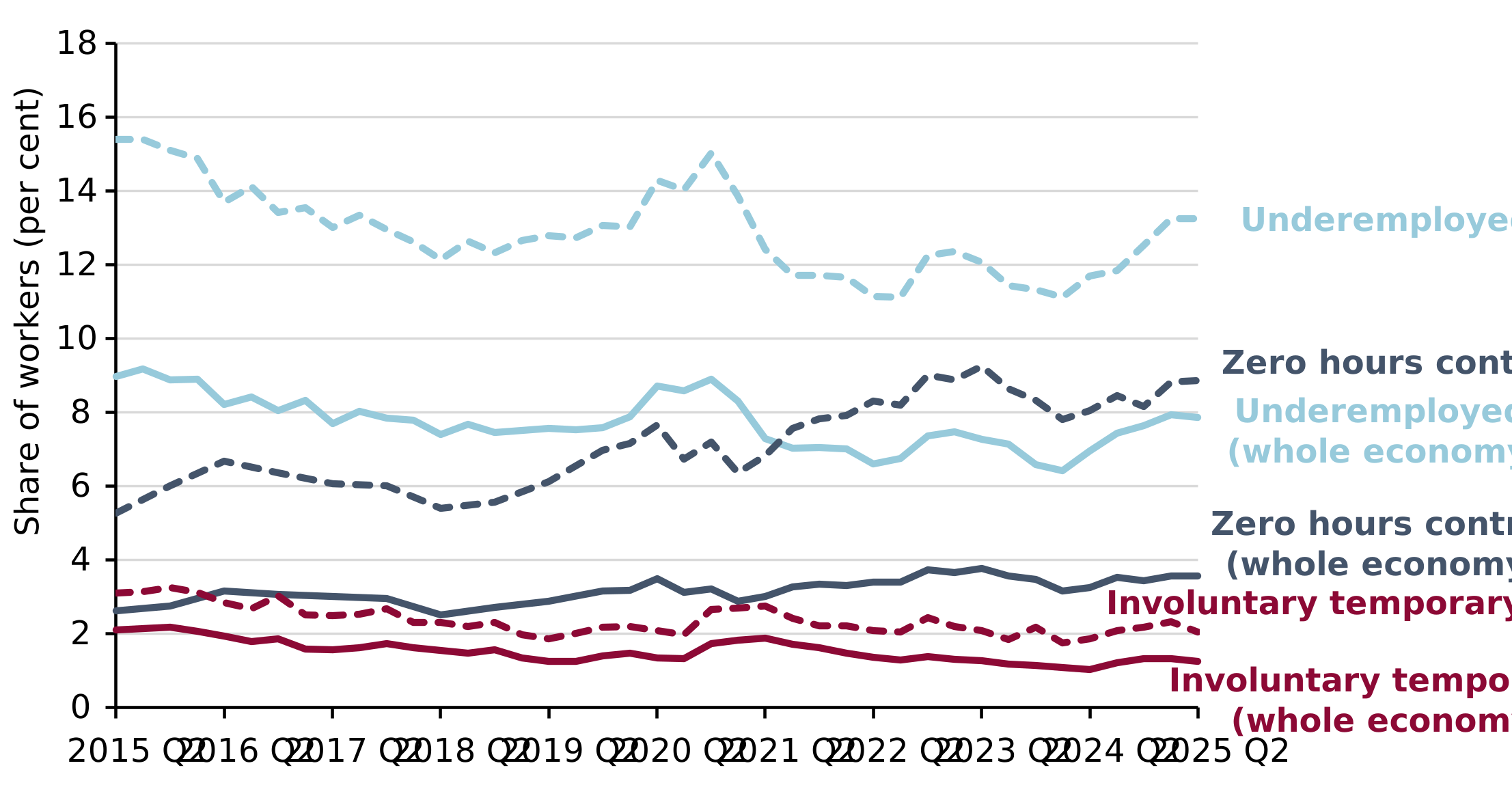
Conclusions
This year’s 6.7 per cent increase in the NLW to £12.21 resulted in significant above-inflation pay increases to NLW workers. And, because of spillovers, it is likely that the pay of other low-paid workers rose more than they otherwise would have as well. However, resilient pay growth saw higher-paid workers also receive meaningful pay increases. While the bite of the NLW was at its highest ever level in April 2025, stronger than forecast pay growth at the median means we now estimate that the NLW was not at two-thirds of median wages in October 2025, as targeted.
Having comprehensively considered the available evidence base, the Commission considers that there is no robust evidence that recent NLW increases have had a significant negative impact on levels of employment. The labour market has weakened and become less dynamic over the past year, and it has been difficult to separate out the impact of the NLW from broader labour market softening. The increase in NICs has also complicated the task of assessing the impact of the NLW. While some low-paying industries have experienced noticeable falls in employment, others have continued to grow. The number of jobs covered by the NLW rate fell slightly, when we had expected it to rise. In addition, parts of the country with higher NLW coverage have tended to see their employment fall by less than other parts of the country. Furthermore, there was an uptick in workers leaving the wage floor for higher-paid work. Overall, outcomes remain comparable to, or better than, pre-pandemic levels, and, on the whole, it appears that the labour market has adjusted to the minimum wage increases of recent years.
Chapter 6: Young people
Key findings:
- For 18-20 year olds, our remit balances the Government’s concern about youth unemployment with its ambition to lower the National Living Wage (NLW) age of entitlement to 18 - For 16-17 year olds, our remit is to push the minimum wage as high as possible without damaging employment. This chapter provides our assessment of the youth labour market. Our considerations for lowering the NLW age to 18 are discussed in Chapter 10. Chapter 11 summarises the overall rationale for our recommendations.
- Youth employment continues to weaken - 16-20 year olds’ employment rates have fallen well below pre-pandemic levels. The share of young people not in employment, education or training (NEET) has been rising, driven by both higher inactivity and unemployment.
- Youth minimum wages have grown by more than pay and prices - Young workers have seen strong median hourly pay growth this year. Large increases to the youth rates mean that the bites of the rates (their percentage share of young people’s median hourly wage) have increased significantly. Although youth minimum wages have increased by more than inflation, young workers tell us they are struggling with the cost of living.
- The share of jobs paid at the youth rates has risen substantially - 22 per cent of 16-17 year olds are covered by (paid up to 5p above) their minimum wage rate – the highest ever level for this group. For 18-20 year olds, coverage rose sharply from 9 to 15 per cent. However, effective coverage (the share of jobs paid below the NLW) has remained stable.
- Demand continues to fall in the low-paying sectors where young people often work - Employment has fallen in hospitality and retail, which account for roughly half of jobs for under-21s. However, it is difficult to separate out the effects of the minimum wage on youth employment from the broader economic pressures facing these sectors, including changes to National Insurance contributions and weak consumer demand.
- The impact of 21-22 year olds becoming entitled to the NLW in April 2024 appears to have been limited - 21-22 year olds’ employment has performed well compared to other young people since the change. However, the risks are greater for bringing 18-20 year olds into the NLW. The 18-20 Year Old Rate is further from the NLW, more 18-20 year olds are paid below the NLW and 18-20 year olds are, on average, less experienced and qualified than 21-22 year olds.
This chapter looks at the youth labour market and use of the youth minimum wage rates. Our remit balances the Government’s ambition to lower the National Living Wage (NLW) age of entitlement to 18 with its concern about current levels of youth unemployment. In taking steps to “narrow the gap” between the 18-20 Year Old Rate and the NLW this year, we are asked to take account of: the effects on employment of younger workers; incentives for them to remain in training or education; and the wider economy. Our proposed approach to lowering the NLW age of entitlement to 18 is discussed in Chapter 10. Our remit for the youngest workers, those aged 16 and 17, is to push the minimum wage as high as possible without damaging employment. The Apprentice Rate – which also affects the youth labour market and has been aligned to the 16-17 Year Old Rate since April 2022 – is discussed in Chapter 7.
We begin with headline employment and pay data for 16-20 year olds. We then focus on the sectors where young people are more often employed. Finally, we analyse the employment outcomes for 21-22 year olds since they became entitled to the NLW in April 2024.
The ongoing issues with the Labour Force Survey (LFS), as discussed in Chapter 2, particularly limit our analysis of young people. Even before these problems, the LFS sample sizes for youth were small and often relied on proxy responses. While sample sizes are improving, we have supplemented LFS data with additional information from HM Revenue and Customs (HMRC). The Pay as You Earn (PAYE) Real Time Information (RTI) data have helped fill some gaps in our understanding of the youth labour market.
Youth employment continues to weaken
Figure 6.1 shows that the employment level for 18-20 year olds continues to underperform compared to those aged 21 and over. Employment for those aged under 18 has fallen rapidly from unusually high levels to below pre-pandemic norms.
Figure 6.1: Employee numbers compared to August 2019, by age, UK, 2018-2025
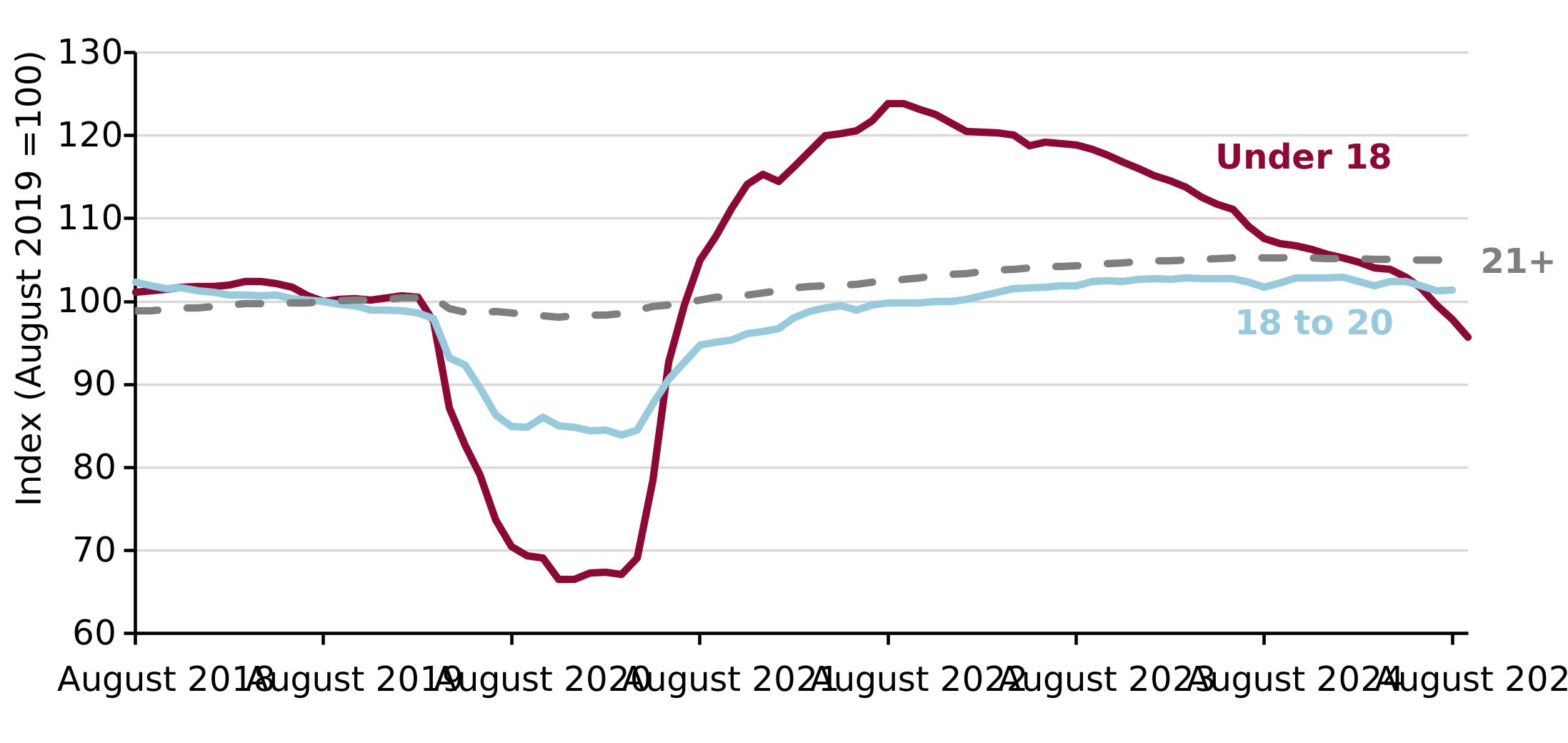
Data for 18-20 and 21+ groups are as provided to LPC on 29th September 2025 and data for under-18s is from data published on 14th October 2025. These may differ from revised figures published later.
Employment levels depend on both labour market strength and population size. So, for a fuller picture of how young people are faring, we usually look at employment rates too. However, we cannot use HMRC PAYE RTI data to calculate employment rates[footnote 16]. So, we supplement HMRC and LFS data on employment with Office for National Statistics (ONS) population estimates up to 2024 and projections for 2025 (see Appendix 3 for further details). However, population projections are annual and based on past population estimates, so are not directly comparable to monthly employee numbers.
Figures 6.2 and 6.3 indicate that youth employment has not kept pace with population growth for both youth age groups since 2019. This means that the employment rate – defined as the employment to population ratio – is now increasingly falling below pre-pandemic levels.
These figures also highlight the divergence between the LFS and RTI. LFS has indicated improvements in youth employment in recent quarters while RTI employment levels have continued to decline. As discussed in Chapters 2 and 5, this discrepancy is likely driven by improvements in LFS sampling rather than reflecting genuine employment increases. Therefore, we place greater weight on the trends shown in the HMRC PAYE RTI data.
A “low fire, low hire” labour market (see Chapter 2) particularly affects youth employment levels because young people have higher job turnover and are more likely to have never worked before. This means that they are more dependent on the falling number of vacancies (“low hire”) for employment. This contrasts with older workers who are more likely to already be in work and so are better protected by the “low fire” component of the labour market.
Figure 6.2: Projected change in population compared to HMRC PAYE RTI employee and LFS employment levels, 16-17 year olds, UK, 2017-2025
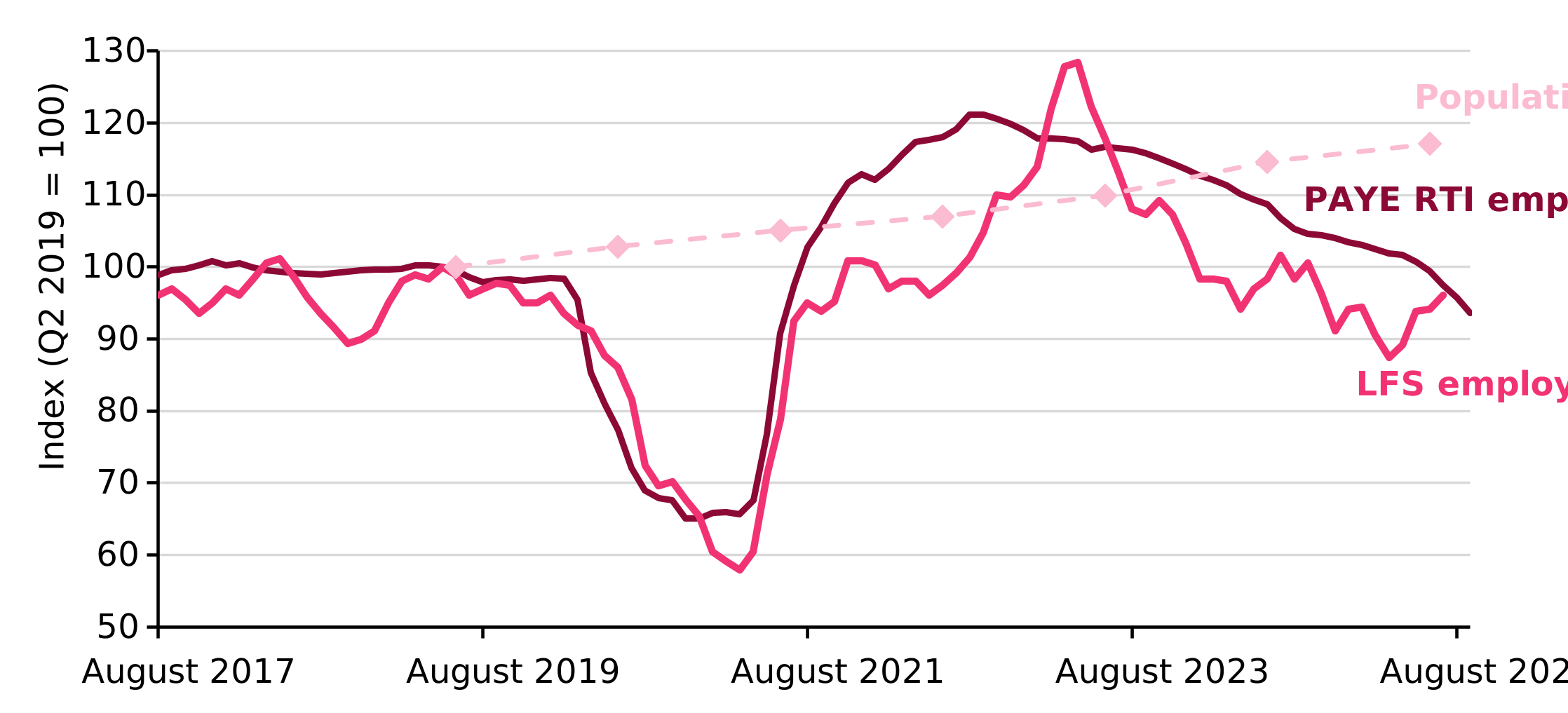
Figure 6.3: Projected change in population compared to HMRC PAYE RTI employee and LFS employment levels, 18-20 year olds, UK, 2017-2025
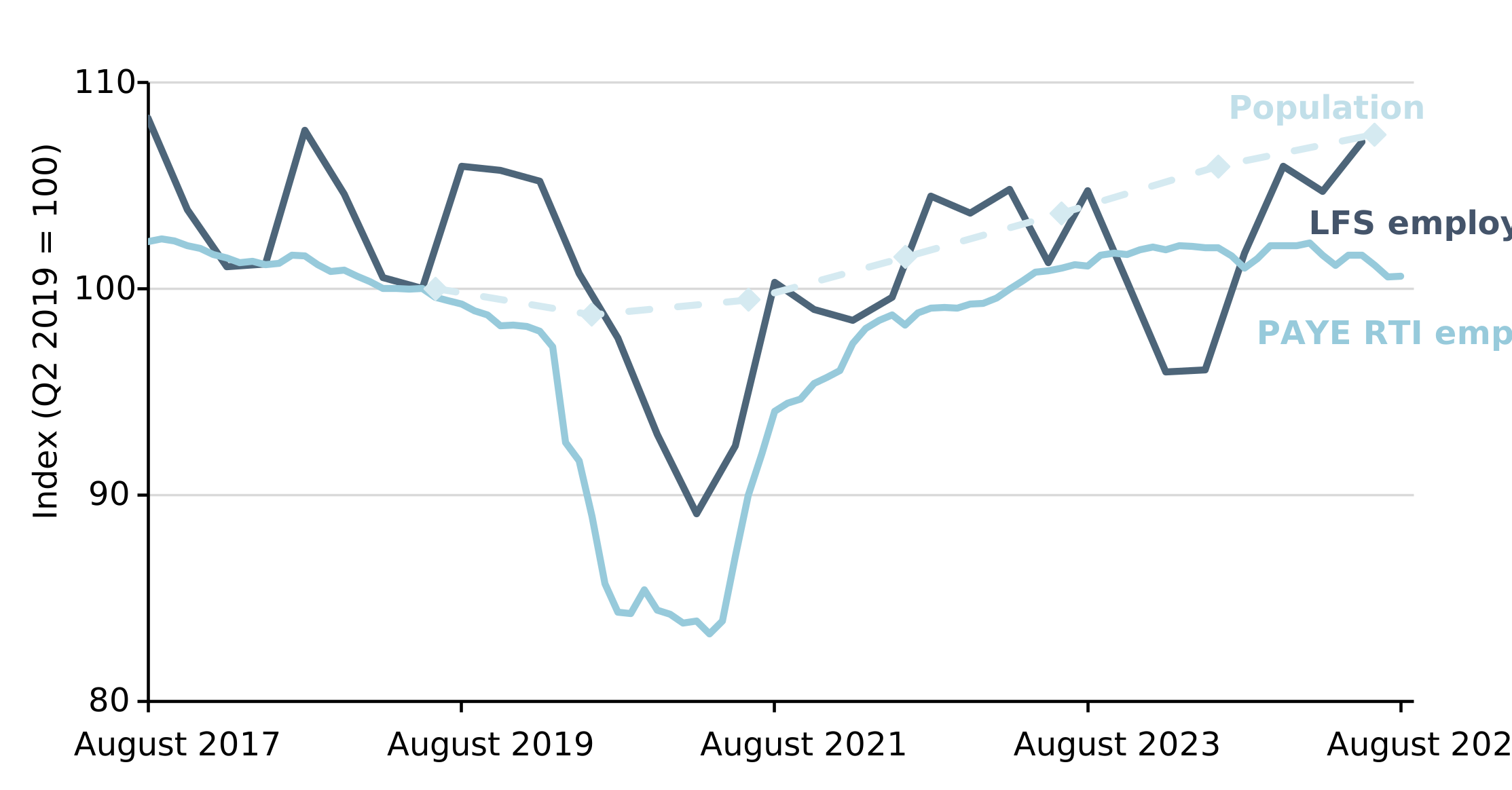
Inactivity and unemployment rates have risen
Another important indicator for the youth labour market is the share of the population not in education, employment, or training (NEET). The NEET rate is often preferred to youth unemployment as a measure of how difficult it is to transition into work. This is because the unemployment rate does not count those who are not looking for work or able to start work soon. This can make the unemployment rate appear higher when more young people stay in education and so become less likely to be economically active. The unemployment rate also does not account for supply side issues like ill health that prevent people from even looking for work.
As NEET data also comes from the LFS, we have concerns about the quality of these estimates for recent years too. However, Diniz and Murphy (2025) have found a similar trend in NEET rates when comparing the LFS to administrative data sources, increasing our confidence in the overall upward trend.
Figure 6.4 shows that the NEET rate for 16-17 year olds is around its 2019 level, although it has been steadily increasing from the lows seen in 2021. For 18-20 year olds, the NEET rate is above pre-pandemic levels. The increase for 18-20 year olds appears to have been driven by both unemployment and inactivity. Figure 6.5 suggests that more young people are detached from the labour market for both supply side reasons, like ill-health, and demand side reasons, such as fewer job vacancies.
Figure 6.4: NEET rates by labour market status, 16-17 year olds (left) and 18-20 year olds (right), UK, 2011-2025
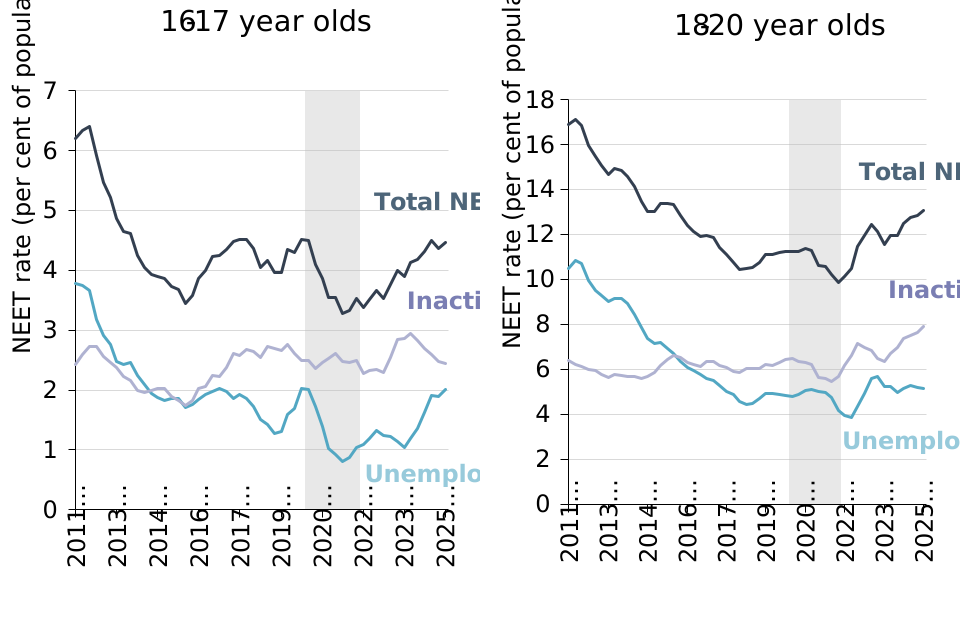
Figure 6.5: Main reasons cited for being NEET, 16-20 year olds, UK, 2011-2025
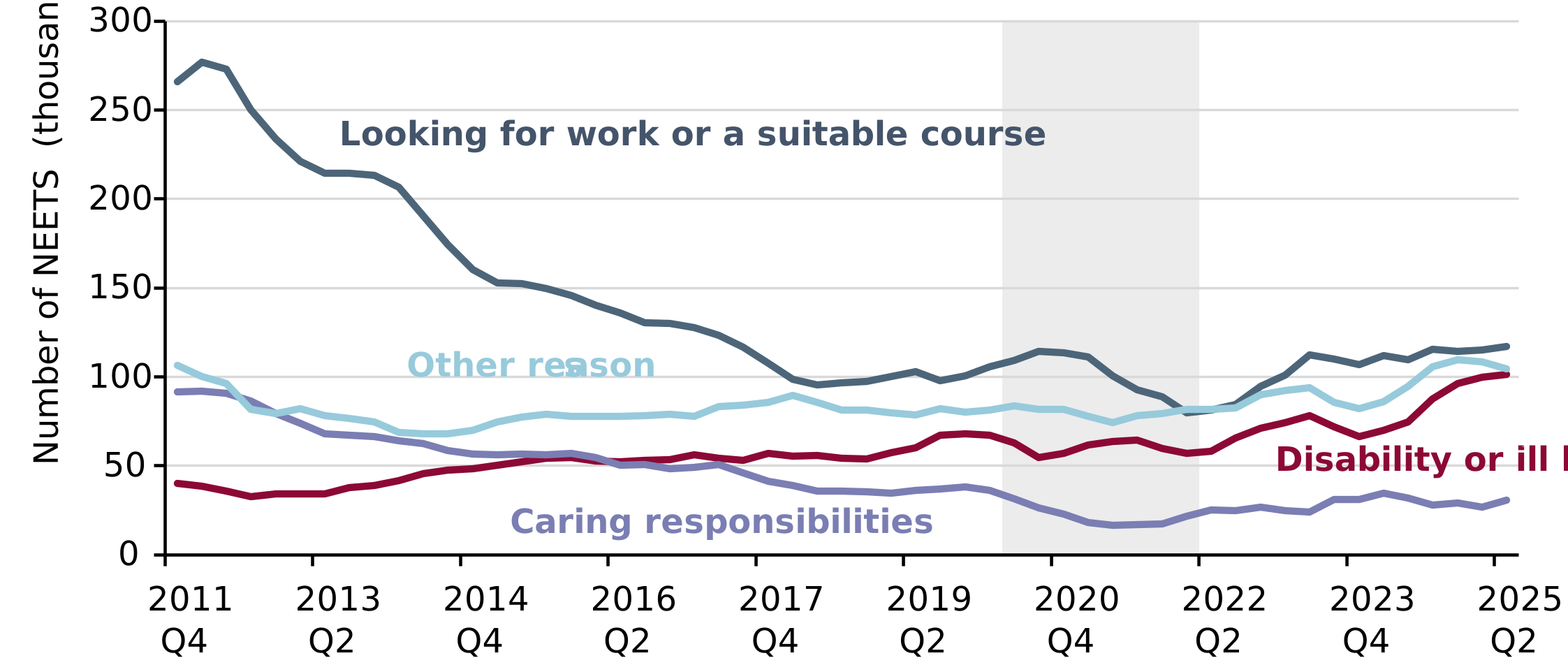
The claimant count is an alternative measure of unemployment that does not rely on the LFS. It counts people claiming benefits whose primary reason is unemployment. Combining the claimant count with ONS population estimates and projections gives us the claimant count rate. Figure 6.6 shows that this rate for 18-21 year olds has steadily ticked upwards from lows of around 4.3 per cent in June 2022 to approximately 5.6 per cent in August 2025. This adds weight to our view that the deterioration in the youth labour market is driven, at least in part, by weakening labour demand for young people.
Figure 6.6: Claimant count as a share of the population, 18-21 year olds, UK, 2013-2025
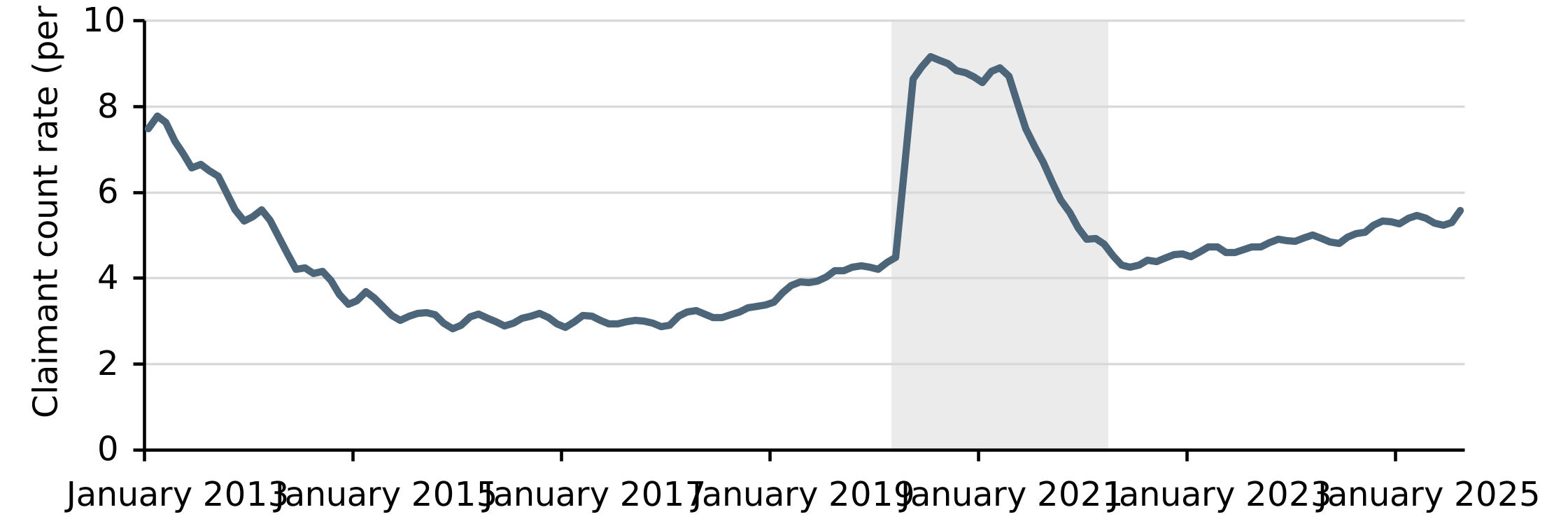
Young workers told us about difficulties finding employment
Young people’s assessment of the jobs market varied significantly by region. A young hospitality worker told us that “Leeds was an absolute horror to get a job… all of the hospitality jobs were completely just non-existent. But the same with Manchester, exactly the same.” This contrasted with workers in London who felt it was easier to find a job. As one hospitality worker told us, “I live in London, so I feel like there’s loads of stadium work to apply for.”
Young workers with less experience felt more pessimistic about the jobs market. One hospitality worker told us that “I think a lot of places, when you go to apply for a job, they say, oh, you need experience. And then it’s like, but how do you get experience without working?” This contrasted with a young leisure worker who told us “I worked since I left school, so since I was 16. So, finding a job, any low minimum wage job, it’s not really that hard to get because I have worked in similar stuff anyway.”
The lasting impact of the pandemic and high transport costs have made it harder for young people to access the labour market
The Trades Union Congress (TUC) argued that “the minimum wage is not the most significant factor in determining employment outcomes for young workers.” They stated that young people struggled with health, education, and access to youth services, and those affected by pandemic-related school disruptions may need extra support. They argued this support should include a youth guarantee expanded to older young people.
One large leisure employer particularly noted the impact of the pandemic on the current cohort of young people. They told us that “The Covid generation … coming out into the workforce, do lack a lot of the basic skills. You’d take it as read that they would have the confidence to go and speak to people, interact with people…. And you’re having to train a lot of the basic people skills that you didn’t have to do before.”
Some young workers told us that it was the cost of employment, especially travel, that made it challenging to work. One retail worker who commuted via train told us that “You have to think about how much [transport]’s going to cost you, how long your shift is going to be. Is it worth it? Like, how much is it dipping into your wage?” Similarly, a hospitality worker noted the cost of taxis when public transport was unavailable: “Late night finishes… You shouldn’t have to spend your last hour’s pay just to get home.”
Youth minimum wages have grown by more than pay and prices
The bite of youth minimum wages has increased
Figure 6.7 shows that younger workers saw slightly stronger growth in median hourly pay compared to older workers this year. In April 2025, 16-17 year olds, 18-20 year olds and workers aged 25 and over saw annual growth of median hourly pay of 6.3, 6.9 and 5.5 per cent respectively.
However, there have been even larger increases to youth minimum wages over the same period. The 16-17 Year Old Rate increased by 18 per cent from £6.40 to £7.55, while the 18-20 Year Old Rate increased by 16 per cent from £8.60 to £10. This means that the bite of the youth rates (their share of median hourly pay) has increased. For 16-17 year olds, the bite increased from 72 to 79 per cent in April 2025 – the highest ever bite for this age group. For 18-20 year olds, the bite rose from 74 to 81 per cent, reaching its highest level in over a decade.
Figure 6.7: Median hourly pay growth (left) and bite (right), by age, UK, 2013-2025
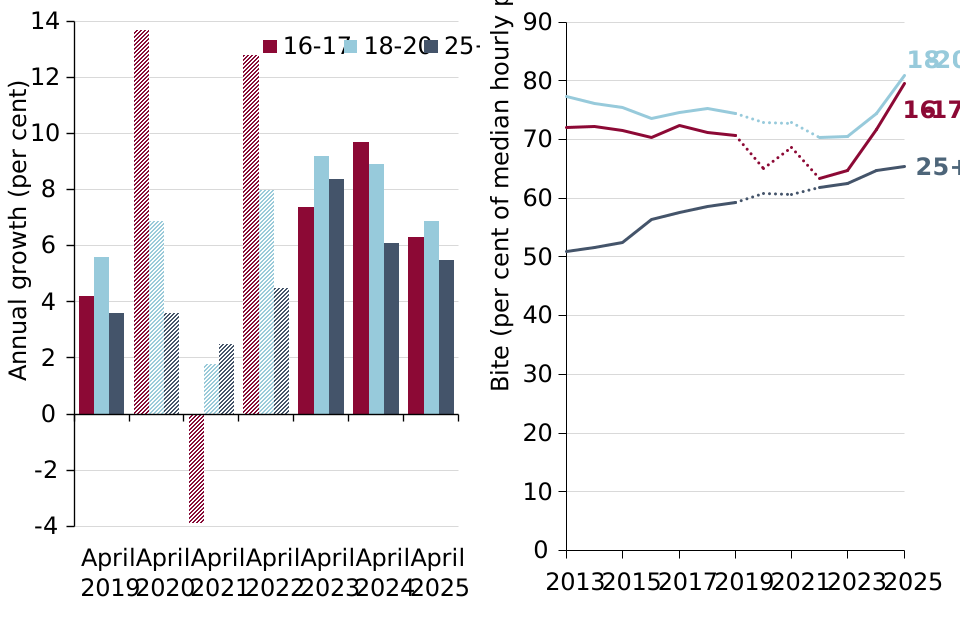
Despite youth minimum wage growth exceeding inflation, young workers report struggling with the cost of living
The large rate increases also mean that youth minimum wages have grown in real terms. Between April 2016 and April 2025, youth rates grew by more than the Consumer Price Index (CPI and CPIH), Household Costs Index (HCI) and Retail Prices Index (RPI). However, some young workers reported struggling with the cost of living at the current youth rates.
One young retail worker told us that “A lot of products that you buy on a regular basis, their price has kind of like sky-rocketed… it’s got more difficult to get by.” Another young worker told us that “Despite the modest increase in my salary, the rising cost of living has eaten into my disposable income… I’ve had to make some lifestyle adjustments and prioritise my spending. I have cut back on all non-essential expenses such as dining out, subscription services and I’ve tried to find ways to save money on everyday expenses.”
One young retail worker emphasised the absolute value of the youth rates over comparisons to their recent growth: “When you’re 20 and you’re getting taxed on it, it’s not really a liveable sort of wage.” On the other hand, some young workers valued the flexibility that their lower-paying jobs provided. One young leisure worker told us that “I think the pay is fair for what I do. The flexibility brings value in itself, which makes me feel like I’ve been treated fairly.”
The cost of living impact varied according to the young person’s living circumstances. One hospitality worker noted that “I still live at home, so I don’t get hit as hard.” This contrasted with those who supported their parents financially or lived independently. One retail worker told us that they were “helping parents out with rent now because it’s got so expensive that you’ve got to contribute as well. And it’s hard to do that… on minimum wage.” Another told us that “I live alone… so the cost of living is not ideal, especially on minimum wage… I’ve had to change where I shop, just cause it got too expensive where I used to shop.”
The share of jobs paid the youth rates has increased
Figure 6.8: Coverage rates of youth minimum wages, UK, 2013-2025
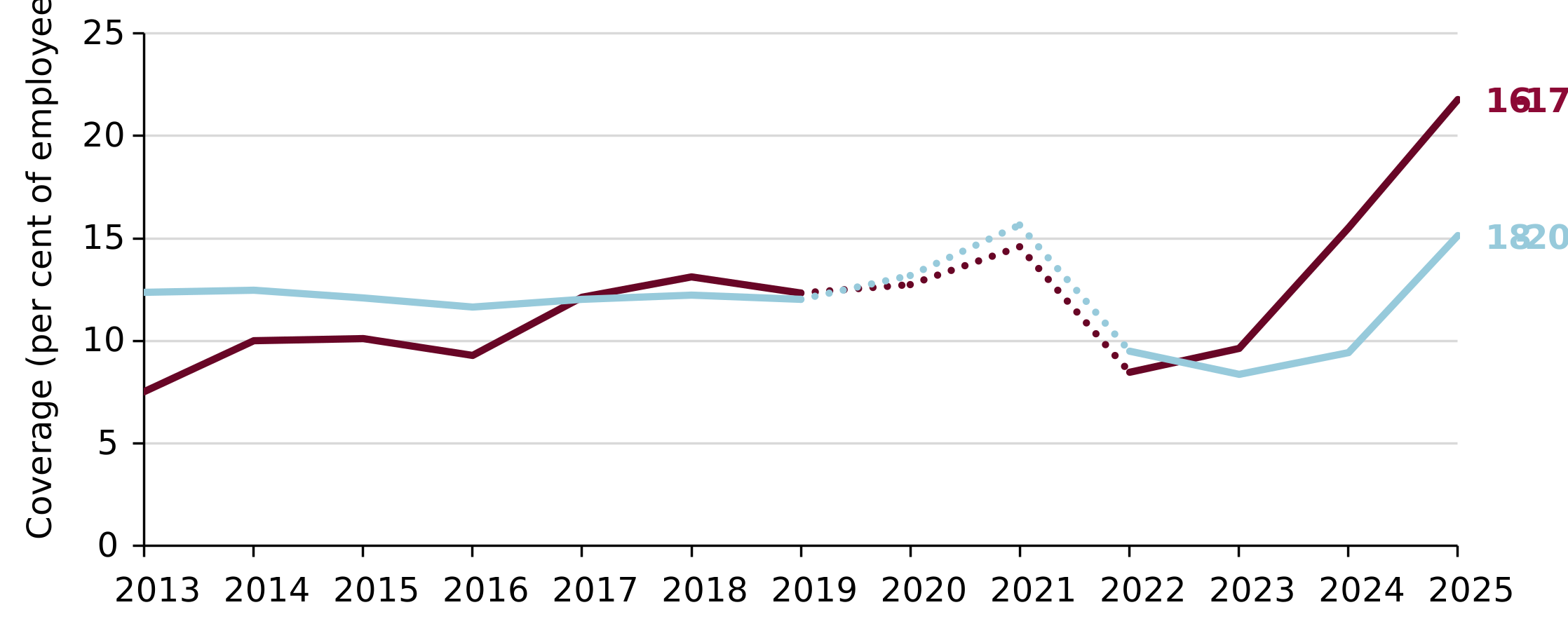
Several of our consultation submissions suggested an increase in use of youth rates over the last year. The Chartered Institute of Personnel and Development (CIPD) stated that “due to the current economic conditions, employers have turned to, rather than turned away from the use of youth rates.” 31 per cent of employers in their survey had increased their use of the rates, compared to 13 per cent who had decreased their use since April 2025. Overall, around four in ten employers surveyed by the CIPD reported some use of sub-NLW pay for 18-20 year olds.
There is some nuance to the use of youth rates. While 15 per cent of 18-20 year olds are paid at their minimum wage rate, 37 per cent are paid less than the NLW. This means that over a third are ‘effectively covered’ by the youth rates, in the sense that the youth rates’ existence allows firms to pay below the NLW rate. The CIPD found that the top three reasons employers cited for paying young workers less than the NLW were to keep overall costs down (32 per cent), to provide job or career opportunities that would otherwise not be viable (30 per cent), and it being a standard practice in their industry (29 per cent).
Figure 6.9 shows that effective coverage has remained stable despite the large increases to the youth rates. The share of 16-17 year olds paid below the NLW was unchanged this year at 75 per cent, while the share of 18-20 year olds paid below the NLW fell by 2 percentage points from 39 to 37 per cent.
This suggests that effective coverage may not be particularly sensitive to changes in the youth rates. Instead, it may be driven by other factors, such as compositional changes to the youth workforce and changes to the NLW rate. For example, low-paying sectors are more likely to pay below the NLW. So, when youth employment in low-paying sectors falls (see Figure 6.11), the effective coverage rate declines. The largest increase to effective coverage for 18-20 year olds was in April 2016 (see Figure 6.13 right). This was after the adult minimum wage increased by 10.8 per cent compared to April 2015, while the 18-20 Year Old Rate had only increased by 3.3 per cent over the same period.
Figure 6.9: Coverage of own minimum wage rates and NLW, 16-20 year olds, UK, 2019, 2024 and 2025
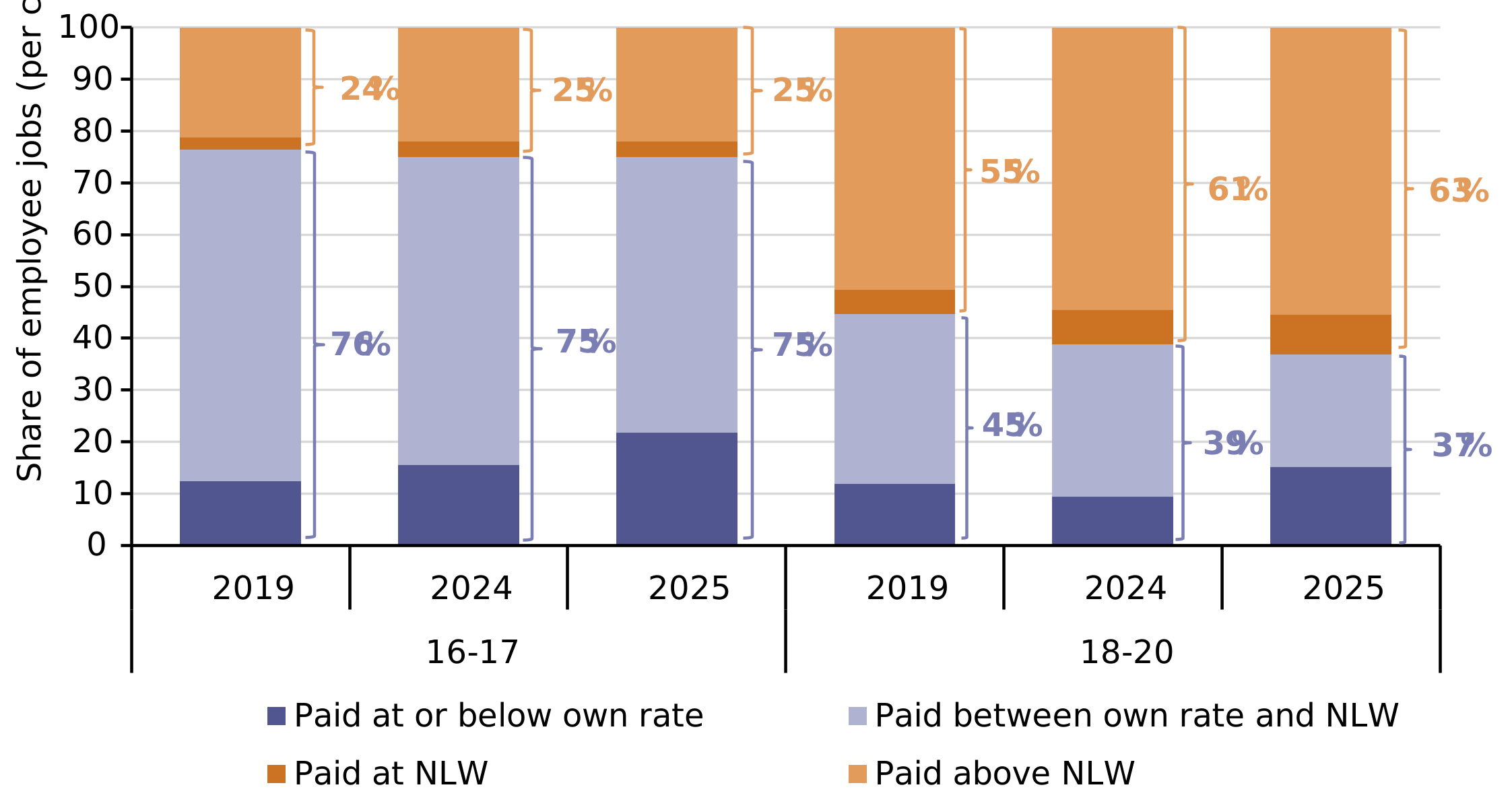
Small and micro businesses saw larger increases in coverage
Following the large increase in youth rates this year, coverage rose by more in small and micro businesses than larger ones (Figure 6.10). Coverage for 16-20 year olds rose from 24 to 33 per cent in businesses with fewer than 50 employees (small and micro). This contrasts with large firms (250+ employees), where youth coverage increased from 4 to 6 per cent, and remains below its pre-pandemic averages.
The Federation of Small Businesses’ (FSB) survey found a similarly large increase in the share of businesses paying only the minimum for young workers. 48 per cent of their members paid at the 18-20 Year Old Rate, up from 29 per cent last year. There was a similar story for 16-17s, with 56 per cent of those employing 16–17 year olds paying the NMW for that group, up from 31 per cent last year. The FSB found that 69 per cent of those employers who use youth rates put this down to young workers’ lack of experience or need for supervision; using youth rates helped offset these training and supervision costs.
Figure 6.10: Coverage by firm size (left) and industry (right), 16-20 year olds, UK, 2013-2025
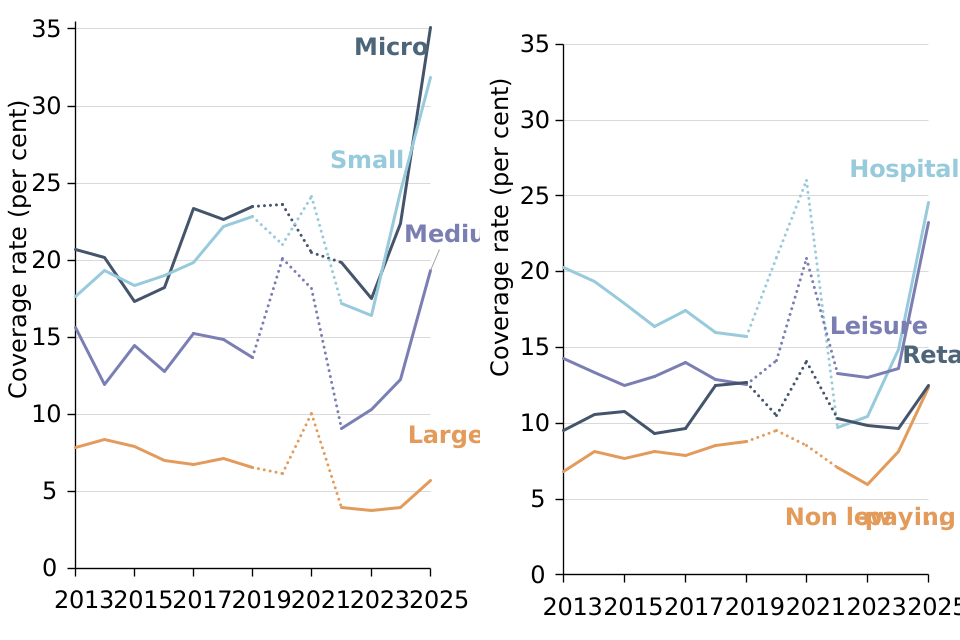
In some sectors, youth rates are rarely used
Figure 6.10 also shows that coverage is lower in retail and non-low paying sectors than hospitality and leisure, although all sectors saw an increase in coverage this year. 12 per cent of 16-20 year olds in retail and non low-paying sectors are covered by their minimum wage rate.
The British Retail Consortium (BRC) told us that the retail sector does not use youth rates very much “on the basis that you’re doing the same work, so it’s hard to justify and maintain a workplace culture if you’re making a differential on that basis [of age]”. However, they noted that “some companies use some of the youth rates for a short period of time during that ‘you’re getting up and running with the role’ [period at the start of employment]”.
Hospitality and leisure are more likely to use youth rates
Other sectors, such as hospitality and leisure, are more likely to use youth rates. A quarter (25 per cent) of 16-20 year olds in hospitality are covered by their minimum wage rate. In the British Beer and Pub Association’s (BBPA) survey, around three-quarters (76 per cent) of 16-20 year-olds employed by members were on NMW youth rates, and just under half (44 per cent) said the proportion of this age group paid their NMW had increased since April.
23 per cent of 16-20 year olds in leisure are covered by their minimum wage rate. Community Leisure UK told us that “most members don’t differentiate pay based on age”, but that some employers do use youth rates to manage overall expenditure: “as the cost increases, decisions have to be taken on how to balance the books and this sometimes results in decisions driven by finance that would not be the preferred option from a moral standpoint.” However, a leisure employer in Swansea told us their choice not to use age-related pay was linked to recruitment: “We did go through a period where we were paying based on age, but we found it quite difficult to recruit and retain people”.
Demand continues to fall in the low-paying sectors where young people work
Low-paying industries make up the bulk of 16-20 year olds’ employment. Hospitality and retail alone account for roughly half of employment for those aged under 21. HMRC PAYE RTI data shows that most of the fall in youth employment since 2022 has been in low-paying industries, where youth employment is now below pre-pandemic levels (Figure 6.11). In non low-paying industries, employment is above pre-pandemic levels, although there is evidence of a slight weakening in the second half of 2025.
Figure 6.11: Employees under 21 by industry relative to August 2019, UK, 2018-2025
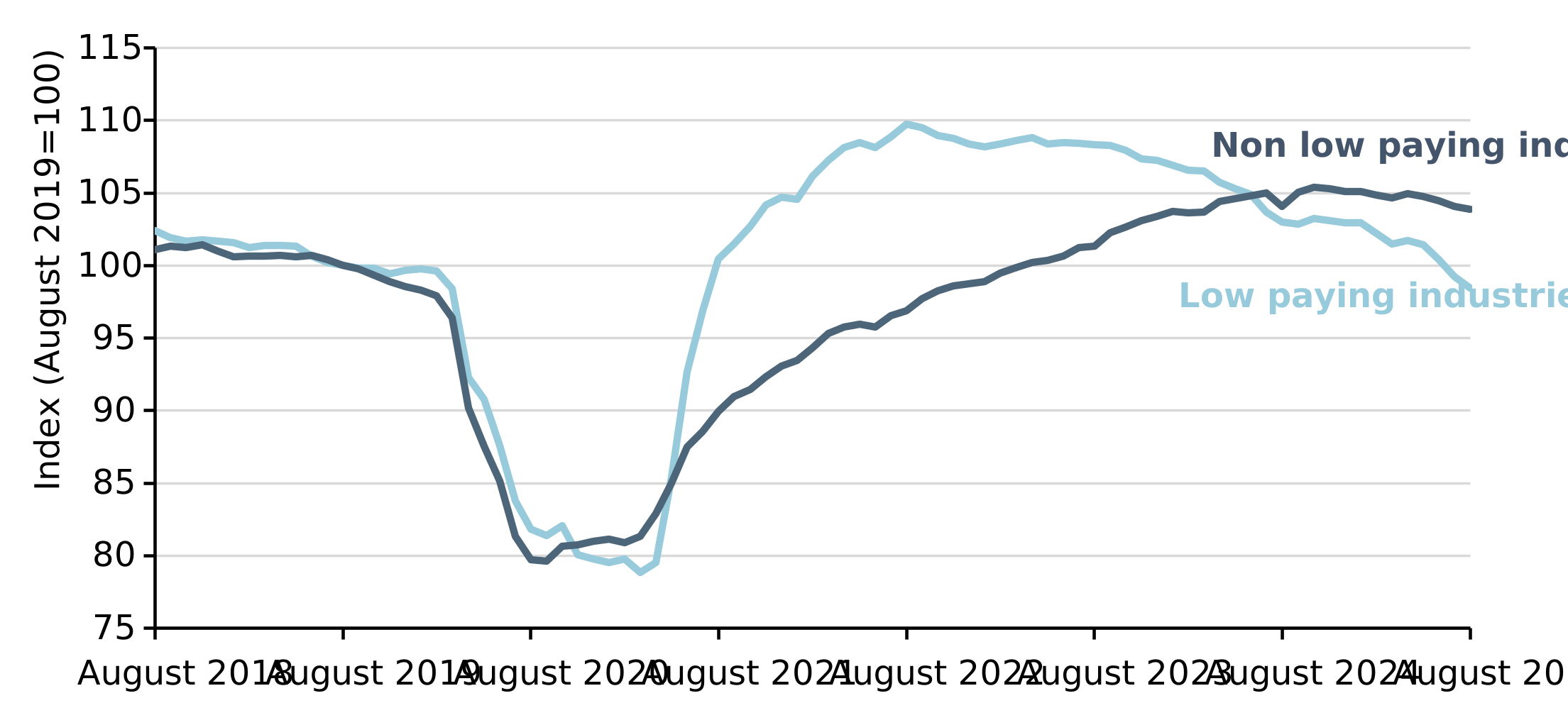
Hospitality and retail employment has fallen for a number of reasons, including weak consumer demand, an increase in online shopping, and government policy changes (see Chapters 1 and 5). In practice, it is difficult to separate out the effects of changes to the youth rates from these wider pressures on the sectors that employ lots of young people.
Hospitality and retail employers saw large cost increases from the changes to employer National Insurance contributions (NICs). This is because they have high shares of low-paid, part-time employees (see Chapter 5). Consistent with this, the CIPD found that NICs changes had a disproportionate impact on firms who already hired young people. 37 per cent of employers who hire young people aged under 21 said the changes had increased their employment costs to a large extent, compared to 23 per cent of employers who did not hire young people. Therefore, the NICs changes may have weakened labour demand for young people, despite most young people being exempt from employer NICs.[footnote 17]
The impact of lowering the NLW age threshold to 21 appears to have been limited so far
In April 2024, 21-22 year olds became eligible for the NLW, increasing their minimum wage from £10.18 to £11.44 (12.4 per cent). Following this, the share of 21-22 year olds covered by their minimum wage rose sharply from 11 per cent in April 2023 to reach 19 per cent in April 2024 and April 2025. While 21-22 year olds’ employment levels have not recovered to pre-pandemic levels (Figure 6.12), they increased after the NLW age threshold was lowered to 21 in April 2024.
Figure 6.12: Projected change in population compared to HMRC PAYE RTI employee and LFS employment levels, 21-22 year olds, UK, 2017-2025
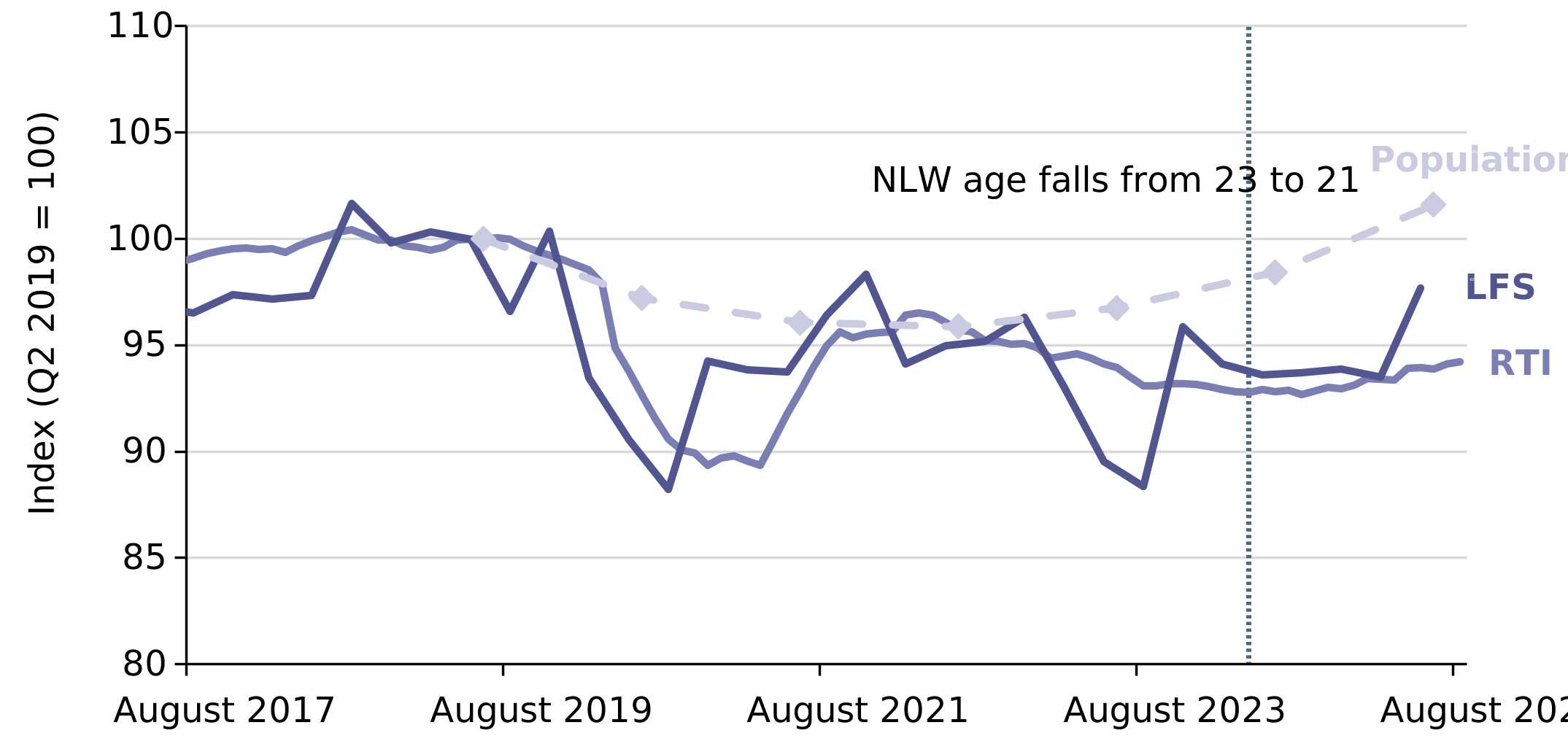
We have replicated the research by London Economics on reducing the NLW age from 25 to 23 (London Economics, 2022) and applied it to 21-22 year olds (using 23-24 year olds as our control group). Using the LFS, we find no evidence of effects on numbers employed. Using the Annual Survey of Hours and Earnings (ASHE), we also find no effect of the change on hours worked. However, issues with the quality of the LFS over this period limit our ability to perform robust econometric analysis (see Chapters 2 and 5). Therefore, these results should be interpreted with caution.
The risks for lowering NLW entitlement to age 18 are greater than they were for lowering to age 21. Figure 6.13 shows that 21-22 Year Old Rate was much closer to the NLW before alignment than the 18-20 Year Old Rate is currently. This meant that the increases required were much smaller than those needed for 18-20 year olds. Further, a much larger share of 18-20 year olds are paid below the NLW than had ever been the case for 21-22 year olds. This means more of them would be affected than was the case for 21-22 year olds. Finally, as Make UK put it, “there is more likely to be a substantial gap in skill level, capability and experience between [18-20 year olds] and those workers aged 21 and over than has previously been the case when lowering the age threshold.”
Figure 6.13: Youth rates as a proportion of the adult rate (left) and share of employee jobs paid below the adult rate (right), by rate population, UK, 2013-2025
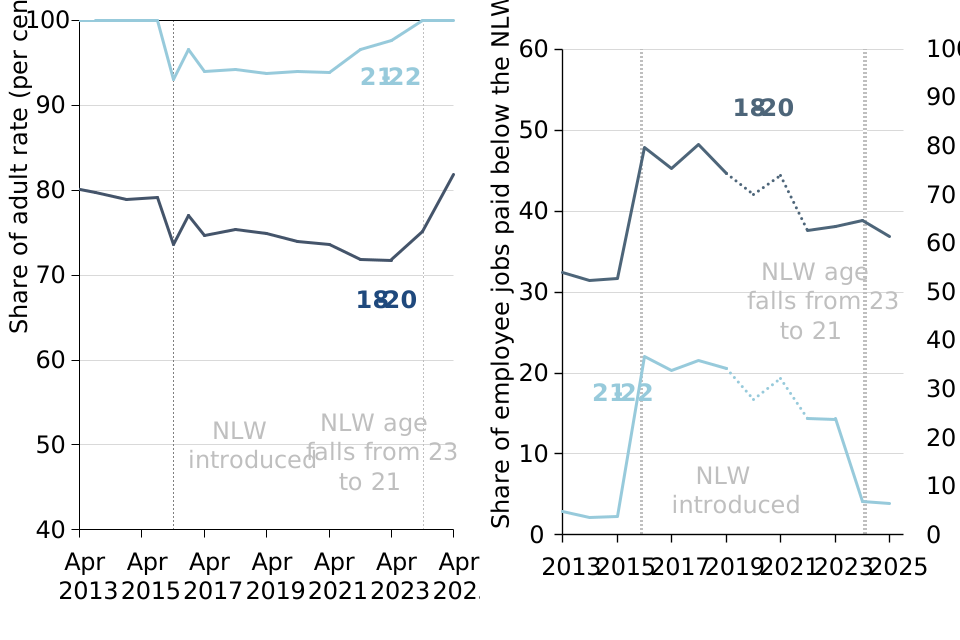
Conclusion
While data issues continue to limit our analysis of the youth labour market, falling youth employment rates and rising NEET rates clearly indicate a weakening youth labour market. However, a number of factors are at work both on the supply side, such as ill health, and the demand side, such as falling vacancies. Young people are more likely to work in the low-paying consumer-facing services hit by weak consumer spending outlined in Chapter 1. These industries were also hit by the NICs increase, even though younger workers themselves do not attract employer NICs. Our youth rate recommendations balance this weak labour market against the Government remit to “narrow the gap” between the 18-20 Year Old Rate and the NLW.
Evidence suggests that moving 21-22 year olds to the NLW has not significantly affected the employment prospects for this group, but the risks are greater for moving 18-20 year olds. We discuss our proposed pathway for closing the gap between the 18-20 Year Old Rate and NLW going forwards in Chapter 10. We also discuss the data on apprenticeships – which have important interactions with the youth labour market – in the next chapter.
Chapter 7: Apprentices
Key findings:
- Apprentice pay growth has been strong, but below the increase in the Apprentice Rate - Median hourly apprentice pay has grown robustly, especially for younger apprentices, but not by as much as the 18 per cent increase in the Apprentice Rate.
- The bite and coverage of the Apprentice Rate both increased in April 2025 - The bite of the rate increased for apprentices of all ages to the highest levels we have seen. Coverage increased notably for 16-18 year old apprentices (for whom coverage is in any case higher than other groups), although it remained level for older age groups.
- There are sectoral differences in use of the Apprentice Rate - The Apprentice Rate is important in sectors like manufacturing, construction, childcare, and hair and beauty, where it is used as a starting point for pay. In contrast, parts of hospitality and retail rarely use the rate for apprentices they employ.
- Stakeholder views are divided on the value of the Apprentice Rate - Some employers value the flexibility and cost control the Apprentice Rate provides, especially for younger or first-year apprentices. Others, including unions, argue the rate is too low, outdated, and can deter participation, particularly among disadvantaged groups. [Unions believe the Apprentice Rate is too low]
- There is weakening demand for apprentices from employers - Across the UK, demand for apprentices is weakening, especially at lower levels and among younger age groups most likely to be paid at or near the Apprentice Rate.
- The minimum wage is not the main driver of this decline - While the minimum wage (including the Apprentice Rate) may influence employer behaviour, the long-term decline in apprenticeship starts is attributed more to funding and qualification reforms, as well as changes to the apprenticeship system.
- We will continue to review the Apprentice Rate - In the context of forthcoming reforms to apprenticeships in England and the Government’s ambitions for youth rates, we continue to believe there is merit in further reform of the Apprentice Rate. We will need to seek views on this and will use next year’s consultation to carry on discussions with stakeholders to explore options for a fairer and more effective apprentice wage structure.
The Apprentice Rate of the National Minimum Wage (NMW) applies to apprentices aged less than 19 for the duration of their course, and to apprentices aged 19 and older for the first year of their course only. This chapter looks at the group affected by this rate. The Apprentice Rate was introduced in 2010; prior to this, apprentices were not eligible for the minimum wage. It was the lowest of the NMW rates until April 2022, when our recommendations aligned it with the 16-17 Year Old Rate. The two rates have remained aligned since then and we have recommended large increases in recent years, averaging 15 per cent per year for apprentices since 2022.
In our advice to the Government on the NMW beyond 2024 (Low Pay Commission 2024b), we looked at the arguments for removing the Apprentice Rate. In that report, we concluded that there were grounds for removing the rate, but doing this at the same time as reducing the gap between the youth and adult rates for non-apprentices would bring considerable risk. We recommended that, in the long term, the Apprentice Rate should be set as a discount against other NMW rates but noted that the details of this would require further consideration. In our advice to the Government last year, we reiterated that this should not happen at the same time as major changes to the youth rates. We will continue to discuss this with stakeholders in more detail in the coming year.
This chapter looks first at apprentices’ pay and the impact of the minimum wage on this; then at the labour market for apprentices, using data on apprenticeship starts, vacancies and evidence from stakeholders.
Apprentices’ pay
We use data from the Annual Survey of Hours and Earnings (ASHE) to look at apprentices’ pay. In previous reports, we have noted ASHE’s shortcomings when it comes to apprentice pay. The principal problem is that it undercounts the number of apprentices in the workforce (Low Pay Commission, 2020). A related issue is that it may have a particular weakness in identifying apprentices on low earnings. Our preferred data sources on apprentice pay are direct surveys of apprentices; in 2021 and 2023, pay questions were included in the Department for Education’s Apprentice Evaluation Survey (AEvS). We do not have access to any new AEvS data this year, although in our analysis of the 2023 survey we found that its estimates of median apprentice pay matched reasonably closely with those observed in ASHE.
Figure 7.1: Apprentice median hourly pay (left) and pay growth (right) by age and year of apprenticeship, UK, 2019-2025
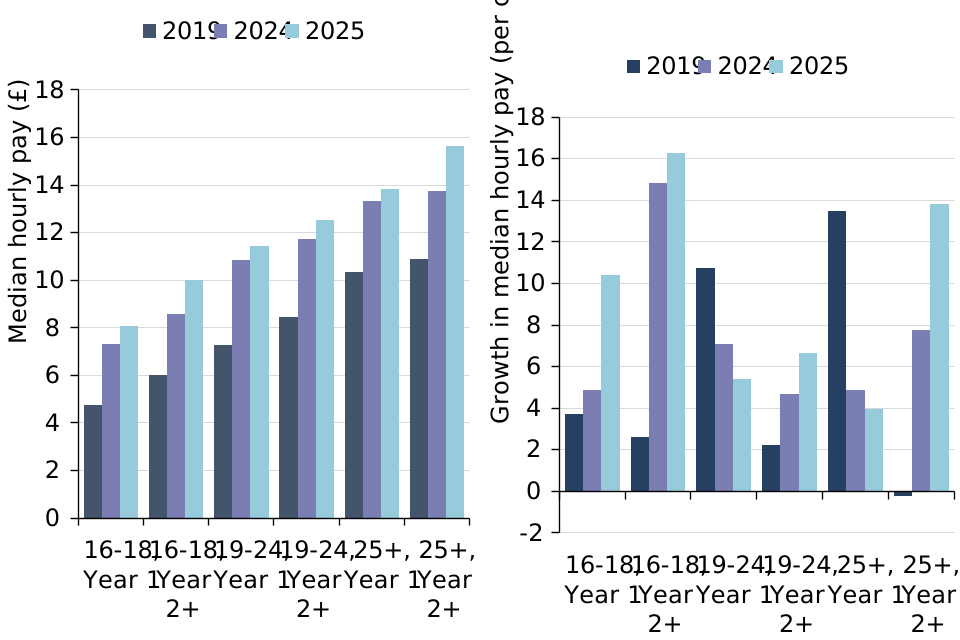
As we have seen in previous years, apprentice pay increases with age and length of time in post. In April 2025, median pay for 16-18 year olds in the first year of their apprenticeship was £8.09, rising to £10 in their second year. According to ASHE, median pay growth has generally been stronger for younger apprentices this year. Among 16-18 year olds, median pay grew by 10.4 per cent for first year apprentices and 16.3 per cent for apprentices in later years.
Despite this relatively strong pay growth, apprentice pay generally rose by less than the 18 per cent increase in the Apprentice Rate minimum wage over this period. This means that the bite of the Apprentice Rate has increased for all age groups, as shown in Figure 7.2.
Figure 7.2: Bite of the Apprentice Rate by age and year of apprenticeship, UK, 2013-2025
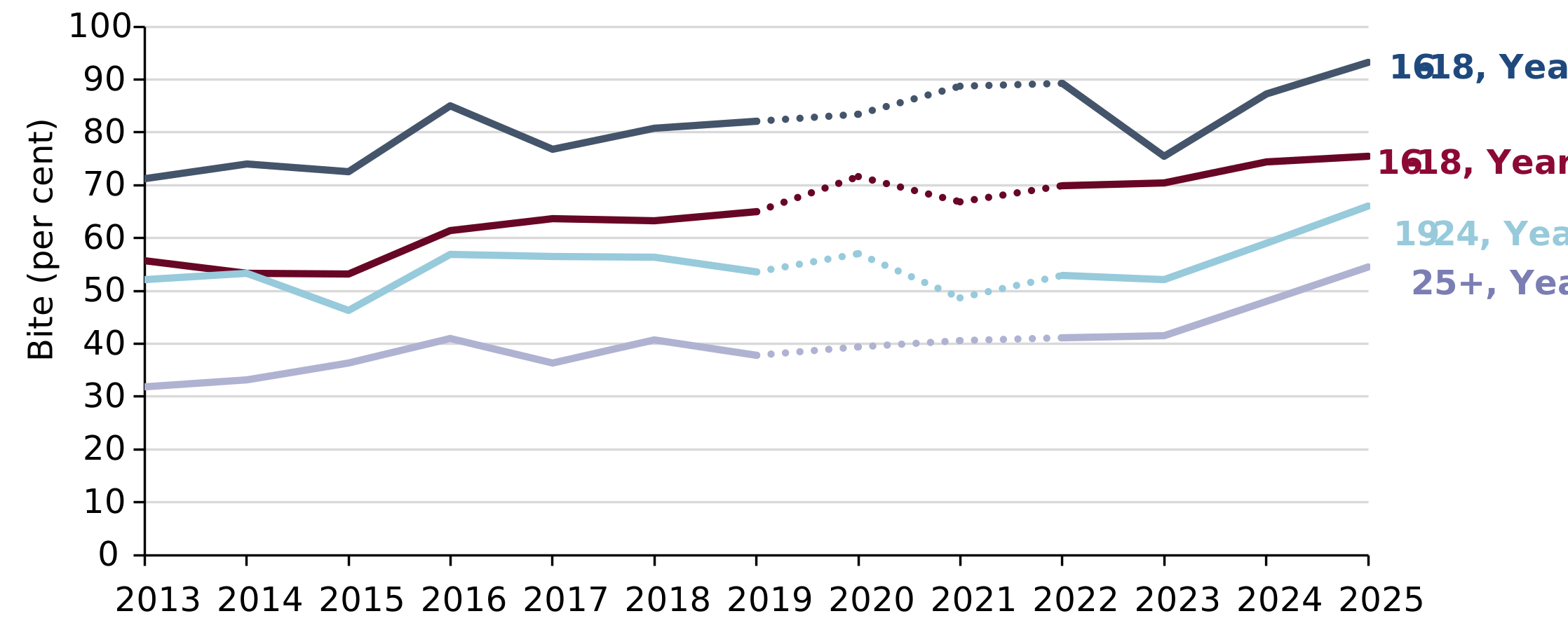
Although median hourly pay for most groups is well above the Apprentice Rate of £7.55, 17 per cent of the eligible apprentice population earn at or below the Apprentice Rate, an increase of 3 percentage points compared to 2024. However, the share earning more than the NLW has also increased slightly, as shown in Figure 7.3.
Figure 7.3: Distribution of hourly pay, Apprentice Rate population, UK, 2019-2025
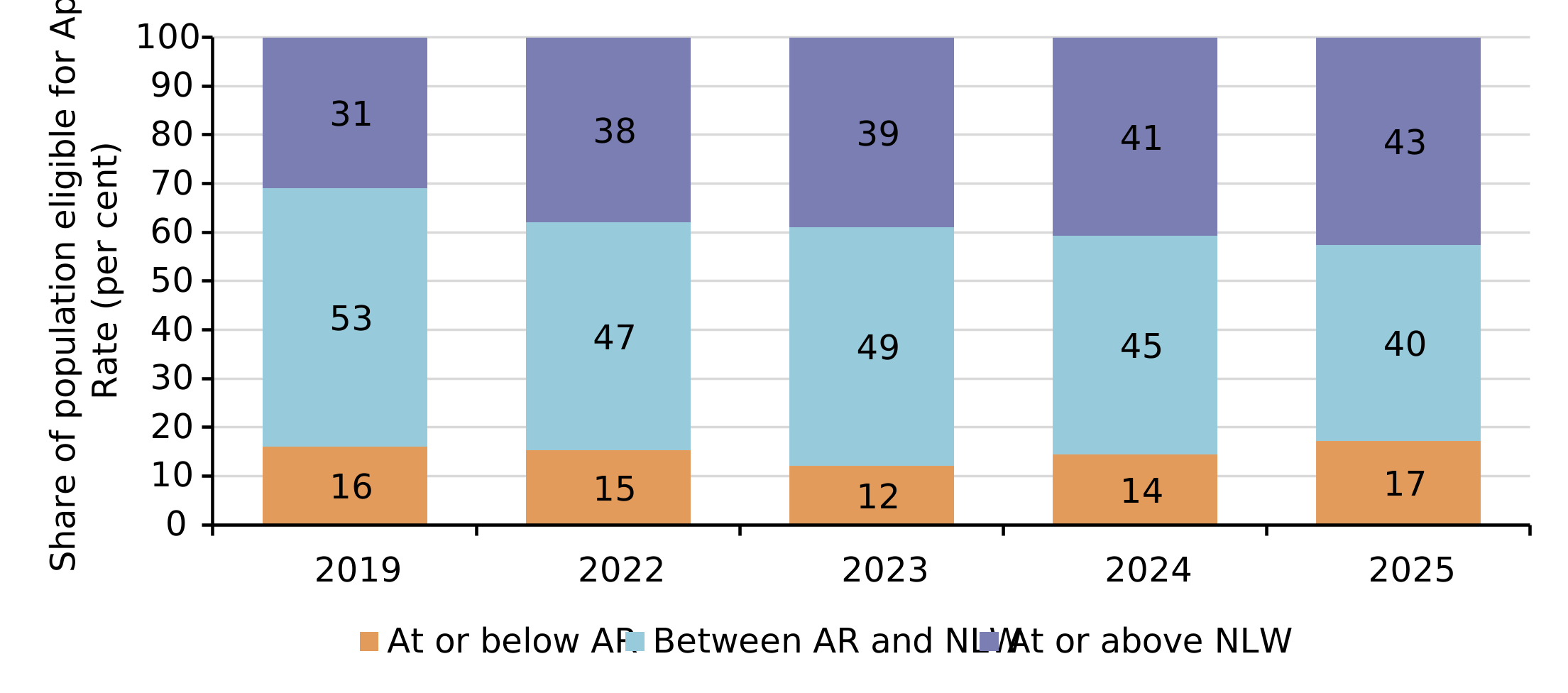
The increase in coverage of the Apprentice Rate is driven by younger apprentices. Following the large increase in the Apprentice Rate in April, coverage for first year apprentices aged under 19 increased from 32 to 39 per cent. This has widened the gap in coverage between younger and older apprentices: nearly two in five under-19s are paid at the Apprentice Rate in their first year, compared to only one in ten in the 19-24 age group.
Figure 7.4: Apprentice Rate coverage by age and year of apprenticeship, UK, 2019-2025
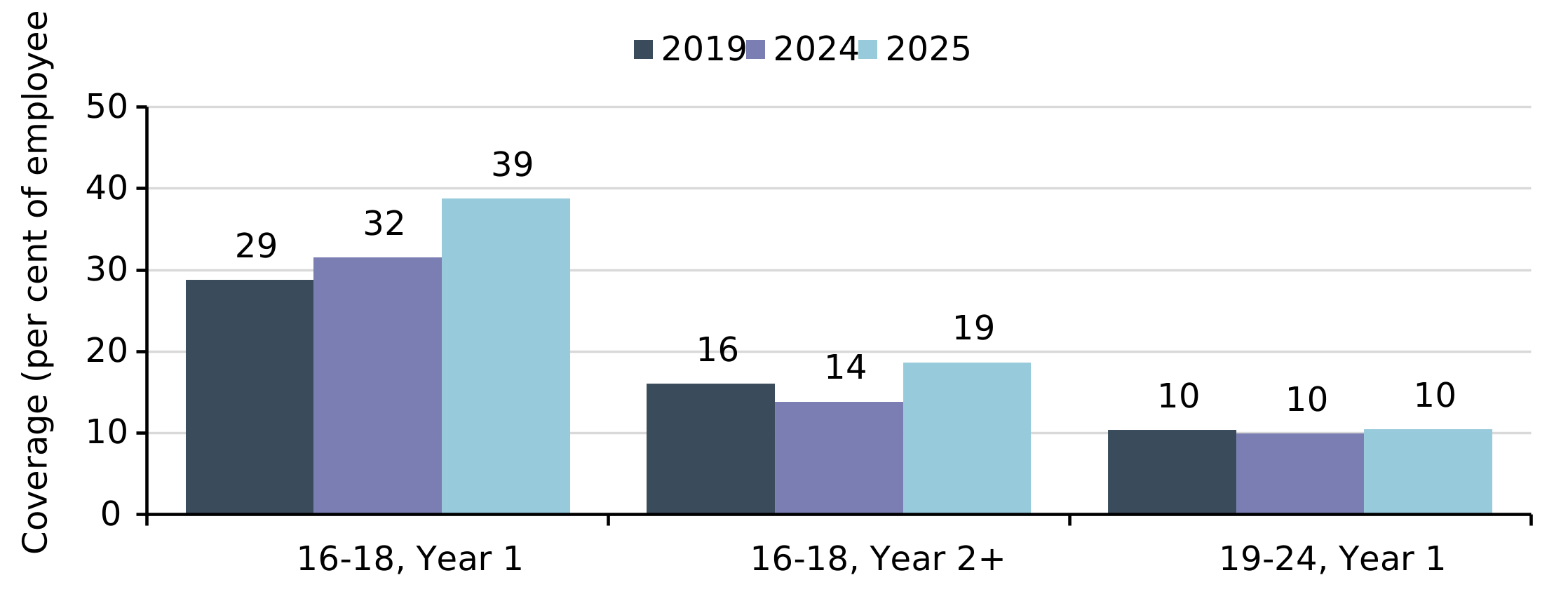
Even if apprentices are not paid at the Apprentice Rate, for those aged 18 or over, employers have the flexibility to pay less than the NMW rate for their age. (This option is not available for 16-17 year old apprentices, given the alignment of the Apprentice Rate with the 16-17 Year Old Rate.) Figure 7.5 shows an increase in “effective coverage” (that is, the number of apprentices paid less than the age-appropriate NMW rate) for 18-20 year olds in the first year of their apprenticeship. This is likely driven by the significant (16.3 per cent) increase in the 18-20 Year Old Rate between 2024 and 2025.
Figure 7.5: Share of apprentices paid below their age-related rate, UK, 2024-2025
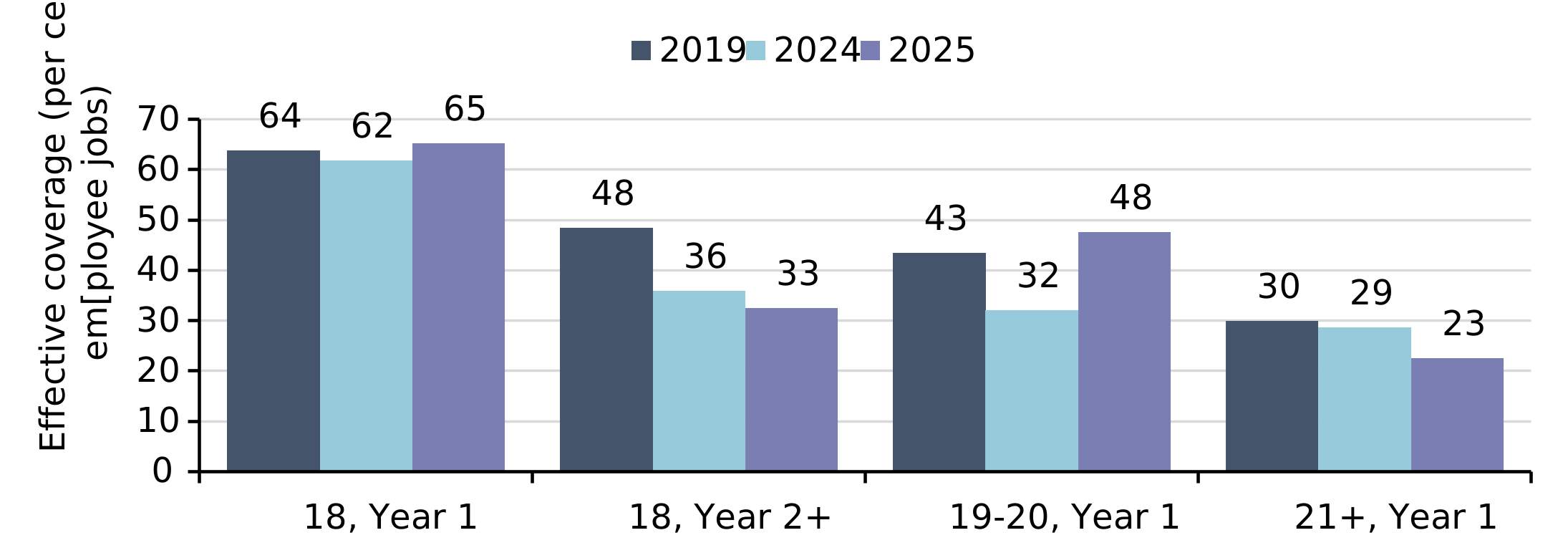
Overall, this year’s ASHE data suggests successive large increases have led to coverage and bite of the Apprentice Rate increasing, particularly for younger (under-19) and first-year apprentices.
Stakeholder views on apprentice pay
There is a divide between those employers who depend on the Apprentice Rate and those who do not use it. Figure 7.6 shows that while some sectors are less likely to pay at exactly the Apprentice Rate, many pay less than the NLW to apprentices at the beginning of their course.
Figure 7.6: Share of apprentice vacancies with hourly pay advertised at the Apprentice Rate and below the NLW, by apprenticeship standard, England, 2024
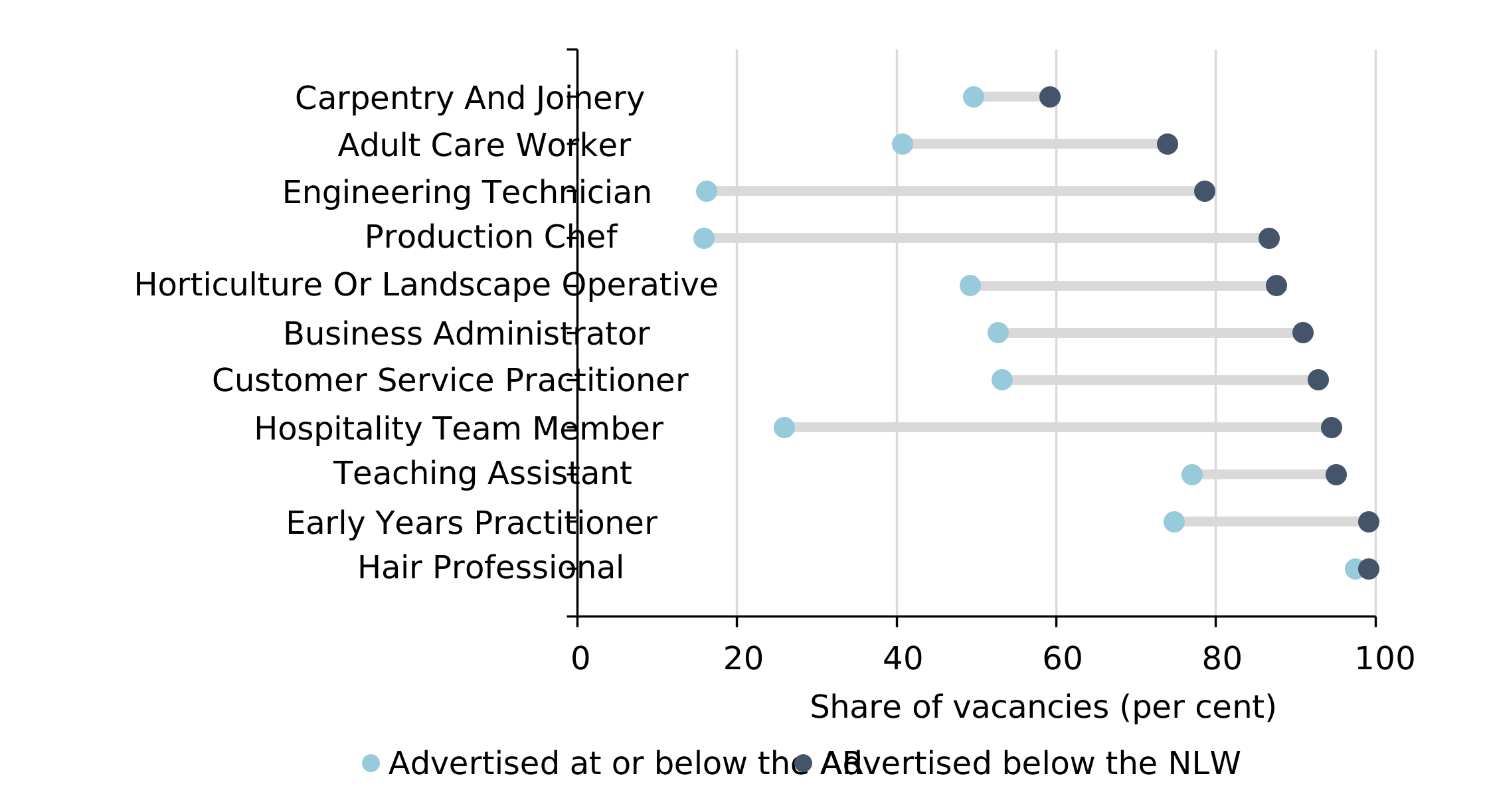
Employers in some sectors use and depend on the Apprentice Rate
Submissions from manufacturers suggested the Apprentice Rate was important for the sector. The Food and Drink Federation (FDF) told us that larger members tended not to use the rate, but small and medium-sized businesses were more likely to – and use may increase if age-related rates were removed. They argued the rate should be gradually increased “in line with the NMW rates”, but changes should not be made too quickly. Make UK’s submission stated that while many apprentices had higher pay, “the Apprentice Rate can be a useful starting point for young apprentices during the first year of their training when they may be spending a greater proportion of their time completing off-the-job training requirements.” The Federation of Small Businesses’ (FSB) submission quoted a manufacturer in Northern Ireland arguing that increases to the rate disincentivised the hiring of apprentices: “Apprentice training is costly, it takes productive time away from our skilled workers. Increasing the minimum wage to a trainee is short sighted [because] it will limit the amount of training we can afford but [which we] badly need to address the skills shortage we are experiencing.”
The National Farmers’ Union (NFU) supported retaining the Apprentice Rate, in recognition of the cost of training new apprentices. Their survey evidence found that 76 per cent of employers paid apprentices above the minimum rate. The Association of Labour Providers (ALP) too supported retaining a distinct Apprentice Rate to provide flexibility. They noted that many employers pay above the minimum.
The National Hair & Beauty Federation’s (NHBF) submission highlighted a 28 per cent fall in the number of 16-24 year olds working in the sector since 2019 and linked this to the “substantial increase” in the Apprentice Rate. They argued that “Rising [apprentice] rates will further impact on the decreasing number of apprenticeships starts” and called for the Government to provide additional incentives for small and medium employers to employ under-19 apprentices. The British Beauty Council (BBCo), too, noted recent falls in enrolments and the possibility that “employers are increasingly unable to bear the cost of hiring and training apprentices”. An NHBF member we met in London said they used to pay apprentices the NLW but now pay just under: “because we’re London-based and because we are so busy, we’ve always been able to commit to the adult minimum wage for the apprentice, right … And this year is the first year that we’ve dropped below that …We’ve gone into maybe 40p off, £11.80 … But that’s very much in anticipation of this rising and rising.” The Hairdressing Council argued that higher apprentice wages, alongside other increased costs, had “all but killed off” apprenticeships and that there would be no new starts by 2027.
One childcare provider we met employed large numbers of apprentices and told us it had become much more expensive to take on a 16 year old. These staff could not be counted towards cover ratios until they were some way through their course (when their employer judged they were competent). “For the first four to six months they literally don’t give any benefits to our business. That’s very expensive. They never used to be. They used to be really cheap.”
We also heard examples this year of employers becoming sensitive to the impact on apprentice pay of increases in other NMW rates. In Swansea, we met a firm of electricians whose business model was reliant on the Apprentice Rate. They took on apprentices annually, training them over four years (to reach level 3) and used the rate during the first year. As well as pressure from the Apprentice Rate, the NLW also played an important role in the company’s pay structures. “Previously, we would take on 17-18 year olds, but obviously with the pay going up it was too expensive … [the National Living Wage] affected us massively because if we took on a 17-18 year old on a four year apprenticeship…..they could be on the [NLW] when they’re in the third year of their apprenticeship but they’re not beneficial to us in any way.”
Some stakeholders would prefer a progressive minimum wage for apprentices
The Chartered Institute of Payroll Professionals (CIPP) said that the fact the Apprentice Rate only applies for one year (for apprentices aged 19 and over) dissuades employers from recruiting apprentices. They argued this was exacerbated if apprentices were aged 21 and over and so eligible for the NLW in their second year. CIPP members thought that a progressive pay structure based on year of study would make apprenticeships more attractive to employers. Make UK stated there “may be merit in” an Apprentice Rate that increases as apprentices progress through their apprenticeship. Although this would be more complex, “it may better reflect the working patterns and contributions of the apprentice.”
In other areas, use of the Apprentice Rate is much rarer
In hospitality and retail, the two largest low-paying sectors, stakeholder evidence suggested the Apprentice Rate was not important to employers. UKHospitality’s (UKH) survey found that 82 per cent of businesses employing apprentices did not use the rate (although, as we have seen in Figure 7.6, a large share of apprenticeship vacancies in hospitality are advertised below the NLW). Almost half of respondents supported removing the rate, 29 per cent favoured a discounted age rate, and 22 per cent supported maintaining the current arrangement. UKH told us they “broadly support” the recommendations in our NMW Beyond 2024 for a discounted age-based rate. The British Beer & Pub Association (BBPA) also stated the “unanimous response from our members was that this increase [to £7.55] would have no effect on their wage bills as they already pay above the apprenticeship rate, typically citing that they pay according to the job rate within their business or the NMW based on age of the apprentice.”
When we met EFI Training in London, they were opposed to using the Apprentice Rate on the grounds that their fashion and retail apprentices are often doing the same job as an entry level employee. EFI Training advised their partners “to pay slightly less than NLW and when they have completed their apprenticeship then they go to exactly the same … I don’t know anybody who pays a lot less than NLW for apprentices.”
Unions believe the Apprentice Rate is too low
The Trades Union Congress (TUC) submission reiterated their position that the Apprentice Rate (AR) is set too low. They referenced Sutton Trust analysis of the 2023 Apprenticeship Evaluation Survey (Field, 2025) which found that “for the poorest families, financial considerations weigh heavily on the decision of individuals to enter apprenticeship. Among level 2 apprentices who dropped out, nearly 40% mentioned financial problems as contributing factors.” Unite agreed, stating that low apprentice wages were a form of exploitation. “Good employers, who rightly invest in apprenticeships and training and pay a fair wage to their apprentices, are being undercut by unscrupulous bosses who are exploiting the apprenticeship system and failing to pay the statutory minimum.”
Unison argued the Apprentice Rate was outdated and widely ignored by employers. They cited an Incomes Data Research (IDR) report from April 2024 which looked at a sample of 88 mainly large firms across the UK. IDR found that median apprentice pay in their sample was the above the Apprentice Rate (£8.72 for level 2 apprentices and £9.23 at level 3). The union stated their support for the removal of the rate. They also argued that low apprentice wages can deter participation, particularly among those from low-income backgrounds, and that higher wages are linked to better completion and retention rates. They called for a clear timetable to abolish the Apprentice Rate once age alignment is achieved.
GMB Union warned against proposals that could create pay disparities among apprentices based on age, arguing instead for a single Apprentice Rate reflecting training requirements rather than age. “A labour market where the youngest entrants are discouraged from enrolling in an apprenticeship until they are over 18 could have a negative impact on education outcomes of those from the poorest backgrounds and those more suited to learning through working. The Commission’s proposal as it is worded does not rule out this possibility.”
The sentiments of apprentices and their coworkers were that the current treatment of apprentices did not feel fair. An apprentice we talked to was paid £12.60 per hour. The rate of pay for her apprenticeship had been an attraction: “I’ll get the qualification while getting fair pay”. Looking at other apprenticeships which paid less than the NLW was “disheartening” – she felt she should be paid at the same level as others to reflect the fact “I’m doing so much work off the clock.” One London-based childcare worker said apprentices “do exactly what we do. No difference. … They’re supposed to [get training], but I’ve never seen them actually getting time off. They do their work at home.” An FE worker who supported young people into employment reflected that “you’re just surviving on that rate; you’re not really living.”
Apprenticeship starts and policy
In England, the long-term picture in apprenticeship starts is one of compositional change. As Figure 7.7 shows, there are fewer starts taking place at levels 2 and 3 and more taking place at level 4 and above. Linked to this, recent years have seen fewer younger people starting apprenticeships, although the declines among the under-19 and 19-24 age groups are less pronounced than those by level.
At the time of our retreat (October 2025), we only had data on apprenticeship starts through the first three quarters of the 2024/25 academic year (i.e. up to April 2025). This only captures one month following the 18 per cent increase in the Apprentice Rate to £7.55 and, crucially, does not include the start of the 2025/26 academic year, which tends to see the highest proportion of annual starts. Figure 7.8 compares quarterly apprenticeship starts in recent years. Overall, these numbers show little year-on-year change, but we can see a slight fall in starts among under-19s and a much more noticeable drop at level 2.
Figure 7.7: Apprenticeship starts, England, by age (left) and level (right), Q3 2014/15-Q3 2024/25
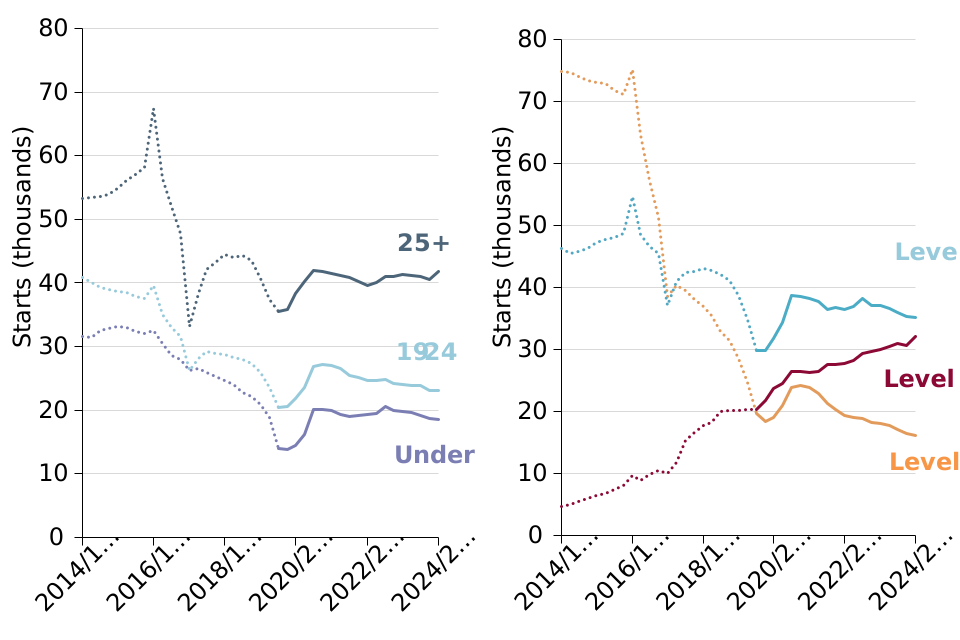
Figure 7.8: Cumulative apprenticeship starts by quarter, England, overall (left), under-19s (centre) and level 2 (right), 2021/22-2024/25
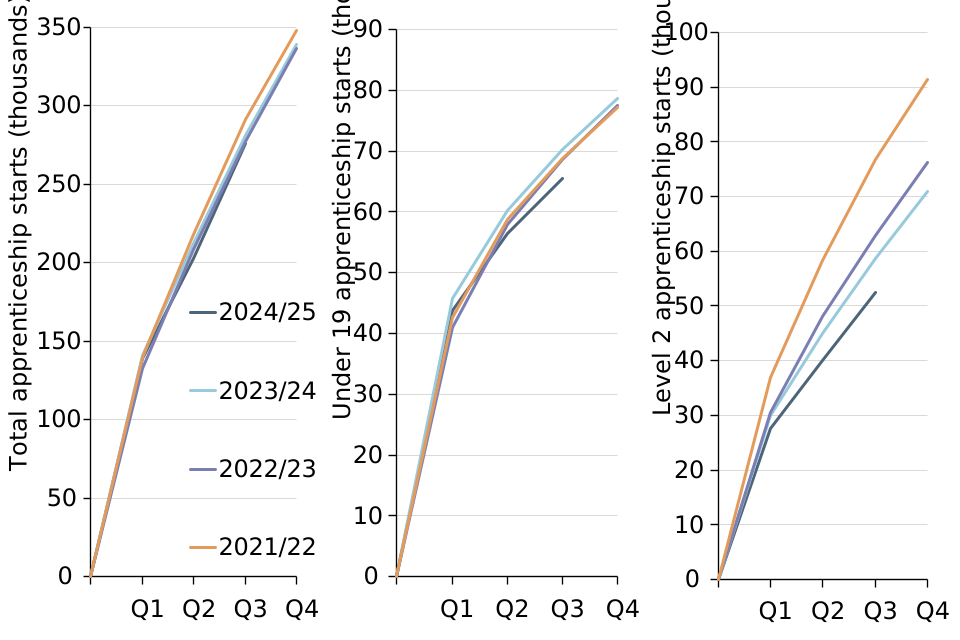
The Government’s Find an Apprenticeship site is another indicator of the strength of the apprentice labour market in England. This does not include all apprentice vacancies – it is unlikely to record workers starting an apprenticeship at their existing employer – but it does offer a large sample, and one which is skewed towards lower-level (and therefore lower-paid) apprenticeships. In line with the rest of the labour market, vacancies increased sharply following the pandemic. Figure 7.9 suggests that the decline in apprenticeship vacancies from their post-pandemic peak has ended, with starts plateauing over the past year or so. Figure 7.10 contrasts this plateauing in apprenticeship vacancies with ongoing falls in job vacancies in the wider UK labour market.
Figure 7.9: Apprenticeship vacancies posted on Find an Apprenticeship site, England, by level, July 2020-June 2025
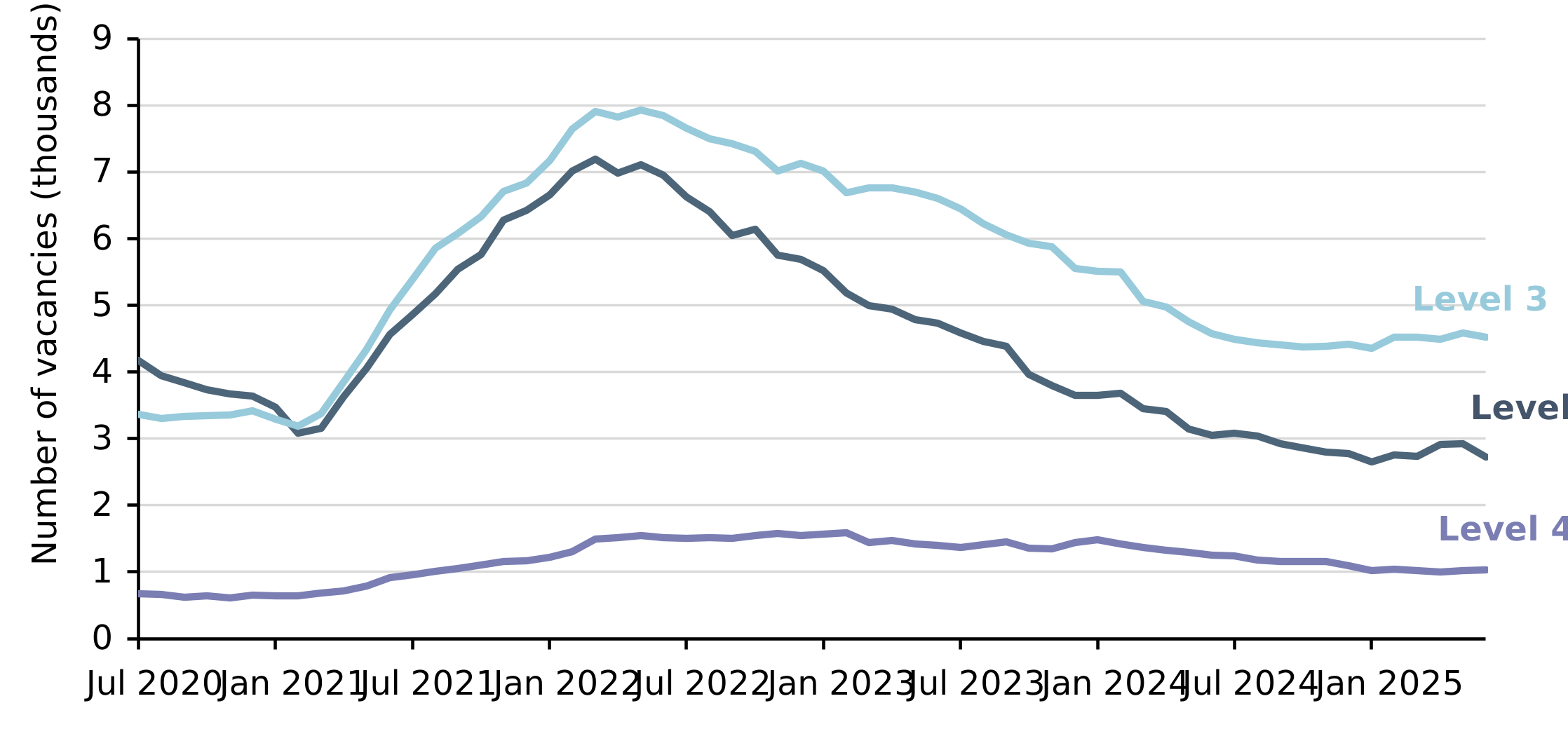
Figure 7.10: Apprenticeship and total vacancies relative to September 2019, June 2019-June 2025
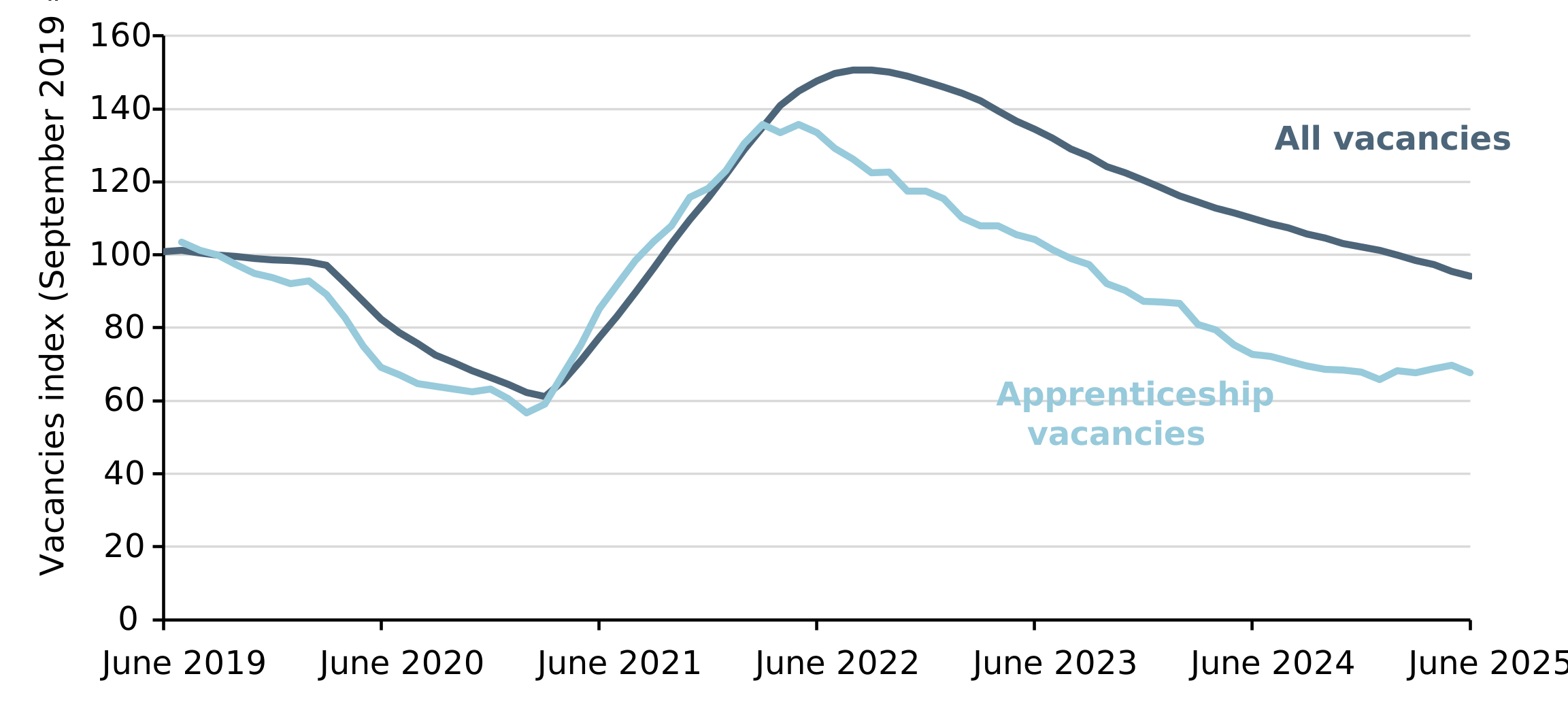
We have also seen weakening demand for apprenticeships over the past year in Scotland and Wales. In Scotland, only the 25+ age group and higher-level courses registered an increase in 2024/25 financial year, while in Wales there have been declines among all demographics. Northern Ireland has bucked this trend, with a sharp increase in starts among the 25+ age group in 2023/24, which can be attributed to a loosening of funding restrictions.
Figure 7.11: Apprenticeship starts, Scotland, by age (left) and level (right), 2015/16-2024/25
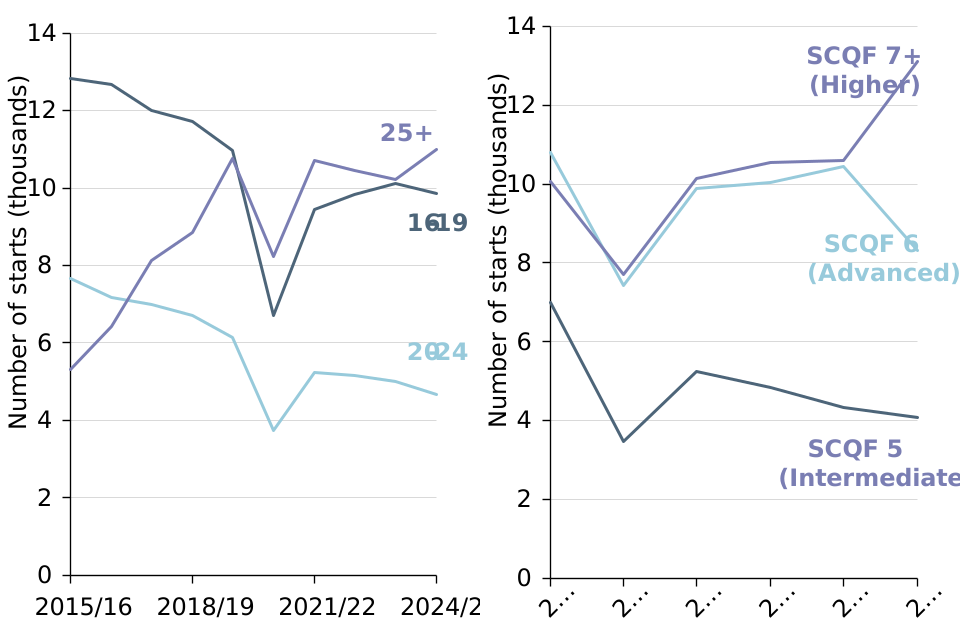
Figure 7.12: Apprenticeship starts, Wales, by age (left) and level (right), 2018/19 Q3 – 2024/25 Q3
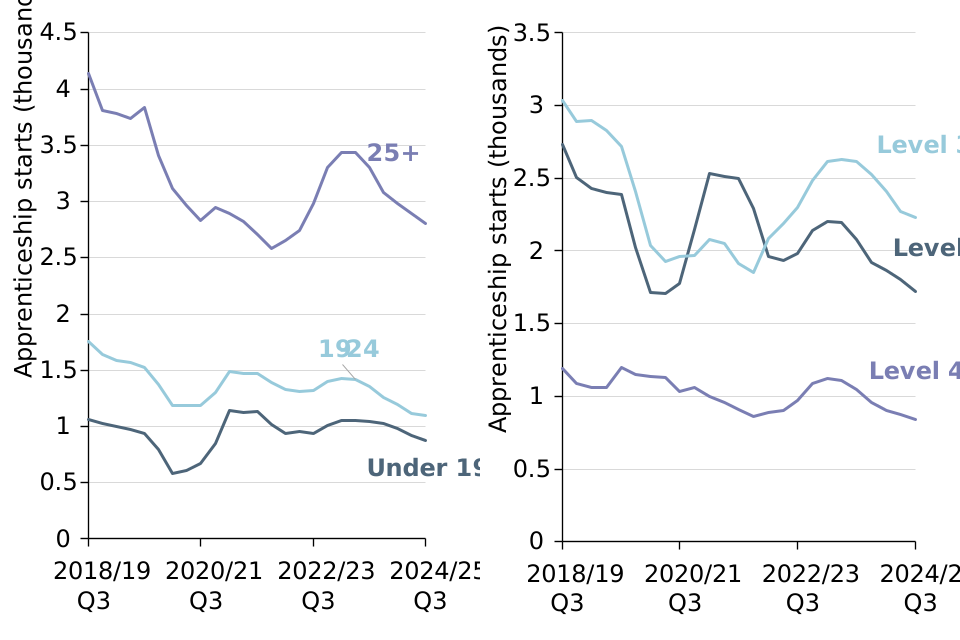
Figure 7.13: Apprenticeship starts, Northern Ireland, by age (left) and level (right), 2014/15 – 2023/24
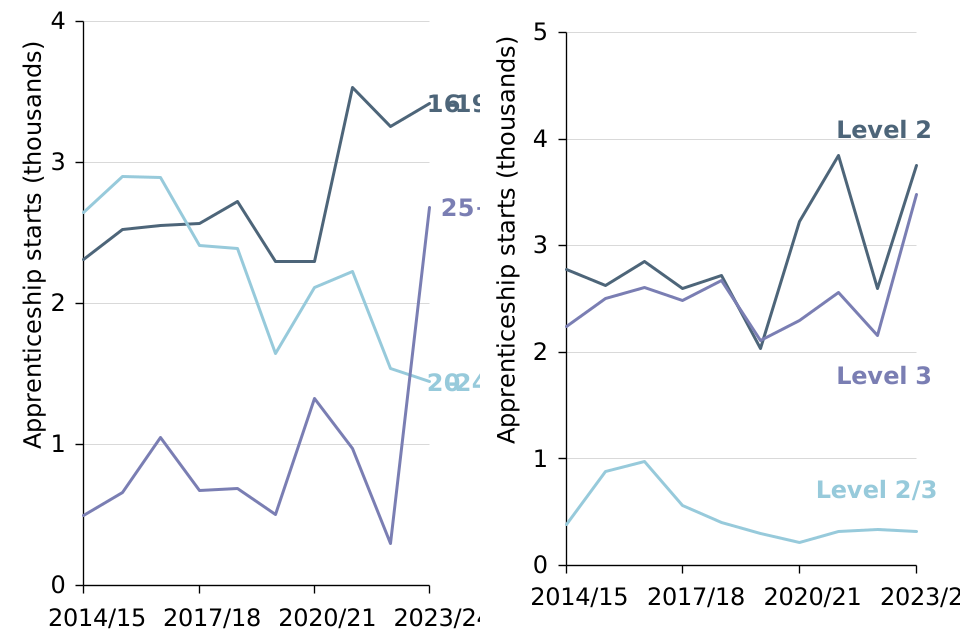
The decline in starts in England has coincided with significant reforms to the apprenticeship system. We have considered these reforms, and their potential effects on starts, in previous reports. They include the introduction of the Apprenticeship Levy for larger employers, and co-funding requirements for smaller ones; the transition from apprenticeship frameworks to standards and the consequent removal of some of the most common Level 2 apprenticeships; and the tightening of off-the-job training requirements.
The FSB attributed the 48 per cent fall in SME apprentice starts since 2016/17 mainly to funding and qualification reforms. While the NMW was “a factor, especially for certain industries … the decline in starts has fundamentally been caused by the reforms to apprenticeship qualifications and funding.“ This opinion was shared by Make UK. In their submission they shared findings from a review of what was driving the decline in manufacturing apprenticeship starts. Key factors included insufficient government funding, poor teacher recruitment and retention in the FE sector and poor career guidance. In this context, increases in the NLW “have made it less appealing for employers to invest in training and employees to take up training, primarily as a result of limiting headroom for consequent promotions and pay rises.” This had contributed to a “more challenging environment” for training and apprenticeships.
In this context, employers were keen to understand the detail of the Government’s planned changes to the system. Employers were largely unhappy with the current design of the Apprenticeship Levy, with large employers finding it difficult to spend their levy funds. The Local Government Association (LGA) complained about the difficulties local authorities faced in spending their levy funds, with over £3.5bn in unspent funds clawed back from the sector since 2017.
But employers were uncertain to what extent the transition to the Growth and Skills Levy would help matters. The Recruitment & Employment Confederation (REC) thought the reform measures announced so far were a step in the right direction but stressed the need for more clarity, particularly over whether shorter-term courses would be included and accessible to all workers: “actual reform of the levy system, especially how it will allow for training of temporary workers is missing.” The FDF said they had heard of members reducing apprenticeships until they receive more clarity on how the reforms to the levy would work: “some food and drink manufacturers have reduced their intake of apprentices while they wait for more clarity on the impact the government reforms will have on their recruitment of apprentices and upskilling of employees.”
Child benefit rules are discouraging apprenticeship starts
On the Dundee visit, workers with Barnardo’s stated some parents didn’t want their children to start an apprenticeship. The youth workers told us that parents were concerned about losing their child benefits if their child did an apprenticeship - and then most of the money from the apprenticeship just goes to making up that shortfall. The British Beauty Council also highlighted that parents lose the child benefit once their children start an apprenticeship, which places a further barrier to low income households accessing apprenticeships for 16-17 year olds. “Parents often bear the financial burden because the earnings of a 16-17 year old are generally insufficient for independent living.”
Conclusions
ASHE data this year show median apprentice pay has grown strongly, albeit slower than the 18 per cent increase in the Apprentice Rate implemented in April. The increase in the rate has seen the bite rise for all age groups, and coverage for 16-18 year old apprentices jump, further widening the gap between them and their older counterparts. Overall, the share of apprentices paid at or above the NLW grew slightly. From stakeholder evidence we know that use of the Apprentice Rate (and, more broadly, the tendency to pay apprentices differently to other workers) follows a strong sectoral pattern. Employers in manufacturing, construction, childcare and hair and beauty all made the case for the rate’s importance. And because of the rate’s structure, changes to the NLW and 18-20 Year Old Rates also affect apprentices’ pay. Against this, there are other significant sectors of the low-paid labour market where the Apprentice Rate is little used. Unions and others continue to argue for a higher apprentice wage floor on the grounds of fairness and potential benefits for increased participation among disadvantaged cohorts.
Across the UK, the labour market data points to weakening demand for apprenticeships, particularly at the levels and age profiles most likely to be paid at or near the Apprentice Rate. Unlike in previous years, this picture holds across Scotland and Wales as well as in England. This is in line with the long-term picture. Although we are confident the minimum wage has not been a significant driver of this over the long term, we cannot rule out that the Apprentice Rate (and other rates) have an effect on employers’ willingness to offer apprenticeships and other forms of training. Forthcoming reforms to apprenticeships are likely to affect employers’ decisions, but the details of these reforms were still limited at the time of our recommendations.
We continue to believe there is merit to reform of the rate, including exploring the idea of an apprentice minimum wage that is a discount against other NMW rates. We will continue to discuss this with stakeholders in more detail in the coming year.
Chapter 8: Employer responses to the minimum wage
Key findings:
- Increasing prices and reducing profits remain the two most common responses reported by employers to the rising minimum wage - However, we are starting to see reducing profits become a less common response. This could potentially mean firms can no longer absorb rising costs at the same rate as before.
- The number of firms affected by National Living Wage (NLW) increases is rising - Employer surveys suggest that the number of firms whose wage bill was affected, directly or indirectly, by the 2025 NLW uprating, was higher than in previous years. As set out in Chapter 3, overall minimum wage coverage rose slightly this year (although the number of eligible workers covered by the NLW fell).
- Firms are becoming less likely to absorb the cost of NLW rises - We are now seeing increases in most responses to NLW rises, from lower business investment, lower headcount, fewer hours for staff, to more work intensification and productivity improvements.
- In 2025, more employers reported reducing employment in response to minimum wage increases, with notable job losses in retail and hospitality - Most reductions occurred through lower recruitment and fewer hours rather than redundancies, and some employers expressed growing concern about the impact on job opportunities for less experienced or skilled workers.
- While the NLW is a significant cost driver in some sectors, our analysis suggests its effect on headline inflation measures across the whole economy is minimal - This is because NLW workers make up a fraction of the UK wide wage bill. We believe that increases in the NLW have had roughly a 0.06 to 0.24 percentage point increase in the inflation rate.
- While some employers respond to minimum wage increases by investing in technology and automation to boost productivity, many—especially smaller firms—reduce or delay investment due to higher labour costs - Overall, there is a modest rise in reported productivity improvements in response to minimum wage increases, often achieved through work intensification and requiring staff to take on additional tasks, rather than through significant new investment.
- Publicly funded sectors are struggling with rising costs - This is due to funding increases not matching NLW rises. This is having a particularly detrimental effect on social care workers and the individuals to whom they provide care.
Previous chapters have discussed how employers have responded to the rising minimum wage in terms of jobs, hours and wages. This chapter sets out other ways in which employers adjust to these increases. We also discuss issues facing publicly funded minimum wage employers, such as social care.
Each year, several employer representative groups survey their members about the impact of the minimum wage changes. These complement our direct meetings with individual employers. Employers typically respond to minimum wage increases by raising prices and accepting lower profits, though responses vary by sector, firm size, and year.
More businesses were affected by the 2025 National Living Wage increase
In the summer Labour Market Outlook survey by the Chartered Institute of Personnel and Development (CIPD), the share of employers reporting they were affected by the National Living Wage (NLW) to any extent rose to 69 per cent, compared with 52 per cent four years ago. In the Federation of Small Businesses’ (FSB) survey, the proportion of small employers affected “to a large extent” by the NLW uprating fell from 38 to 32 per cent. The British Chambers of Commerce’s (BCC) Workforce Survey does not give a comparable measure of the share of respondents affected by the NLW increase, but does capture the share who are not affected. In 2025 this was just 19 per cent of respondents, down from 38 per cent in 2024.
Figure 8.1: Share of respondents affected by NLW increase in CIPD (left) and FSB (right) surveys, 2018-2025
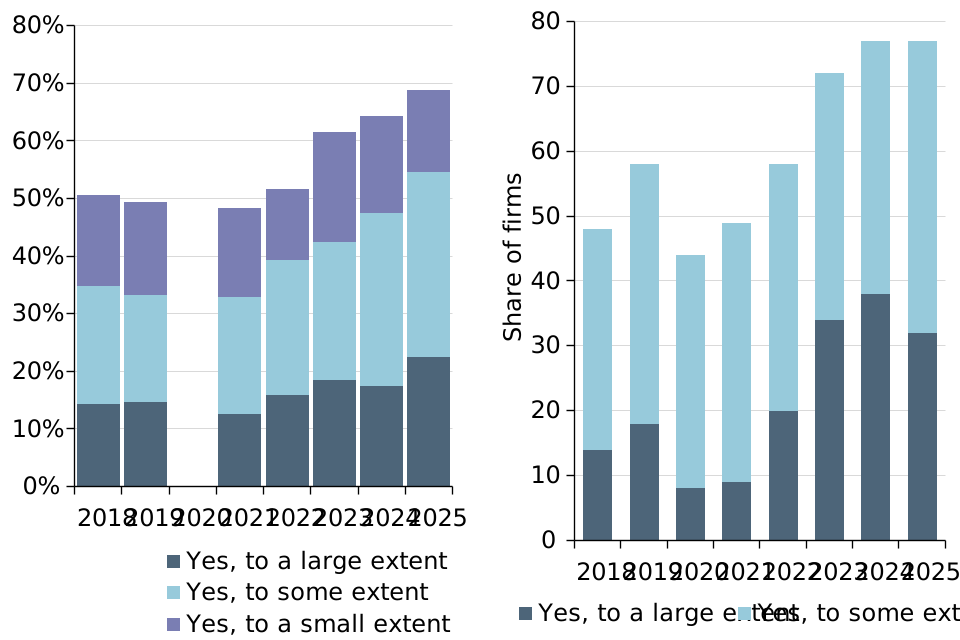
As set out in Chapter 3 (3.2-3.8), the number of eligible workers covered by the NLW fell slightly in 2025 (although overall coverage increased because of large increases in the youth rates). This fall in NLW coverage is not necessarily incompatible with the survey results above. Coverage fell in large firms but rose in micro, small and medium employers, reflecting a compositional shift in where low-paid workers are employed.
The minimum wage’s primary impact was on profits and prices – but the composition of responses is starting to shift
Since the NLW’s introduction, the most common reported responses from employers have been to absorb the extra cost into their bottom line or to pass it on via prices. When inflation surged between 2021 and 2022, the prevalence of price pass-through increased in tandem. Survey results this year follow a similar pattern to previous years, but some sources suggest that employers have less scope to absorb the increase in their profits.
In Chapter 5 (5.32-5.38) we discussed the impact of changes to employer National Insurance contributions (NICs), which were introduced simultaneously with the NLW uprating and further increased labour costs for most employers. Although the survey evidence discussed below asks employers specifically about the NLW, it was difficult in practice for them to separate out their responses to the two policies. Overall, there was little indication that employers responded to NICs differently than to NLW increases.
In the CIPD’s survey of 2,018 employers (Figure 8.2), raising prices was the most common reported response to the NLW increase. 37 per cent of those affected by the increase said they had increased prices, compared with 31 per cent in 2024. For private sector employers, this share was 44 per cent, and was consistent among SMEs and larger employers. 26 per cent of respondents said they had absorbed the cost of the increase in their profits, slightly fewer than those who said they had improved productivity or efficiency (28 per cent). Here there was a clear divergence between SMEs and larger private sector employers, with the former group more likely to take lower profits (36 versus 22 per cent) and less likely to improve productivity (17 versus 38 per cent).
In the FSB’s survey of 892 small business employers (Figure 8.3), 62 per cent of respondents said they had absorbed the cost of the 2025 increase via reduced profits, a slightly lower share than in the preceding years. 55 per cent of respondents reported raising prices. Rather than investing to improve efficiency, 44 per cent of the FSB’s respondents said they had cancelled or scaled down plans for investing in their business because of the rising cost of the minimum wage.
Figure 8.2: Surveyed responses to NLW increases, CIPD Summer Labour Market Outlook surveys, 2018-2025
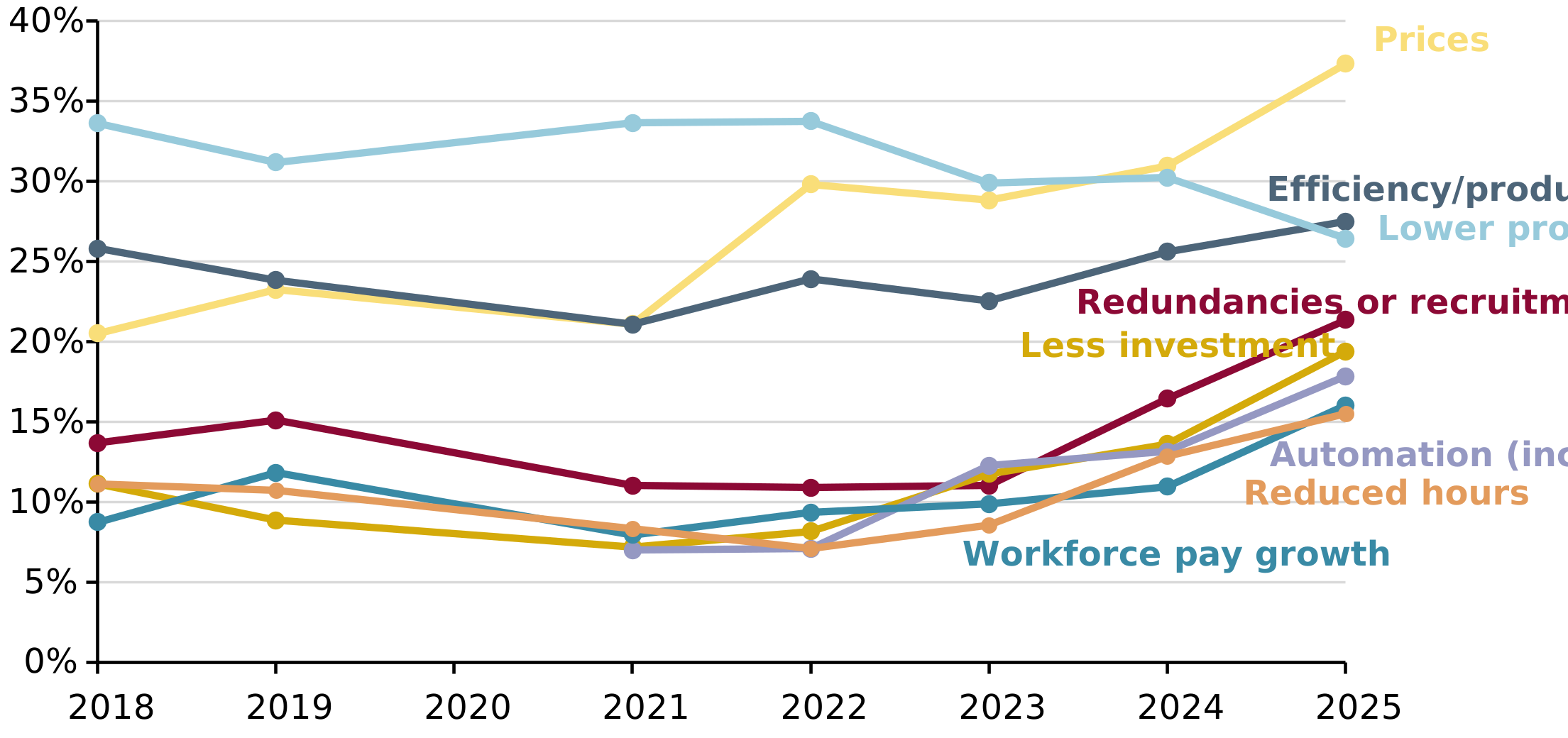
Figure 8.3: Surveyed responses to NLW increases, FSB member surveys, 2016-2025
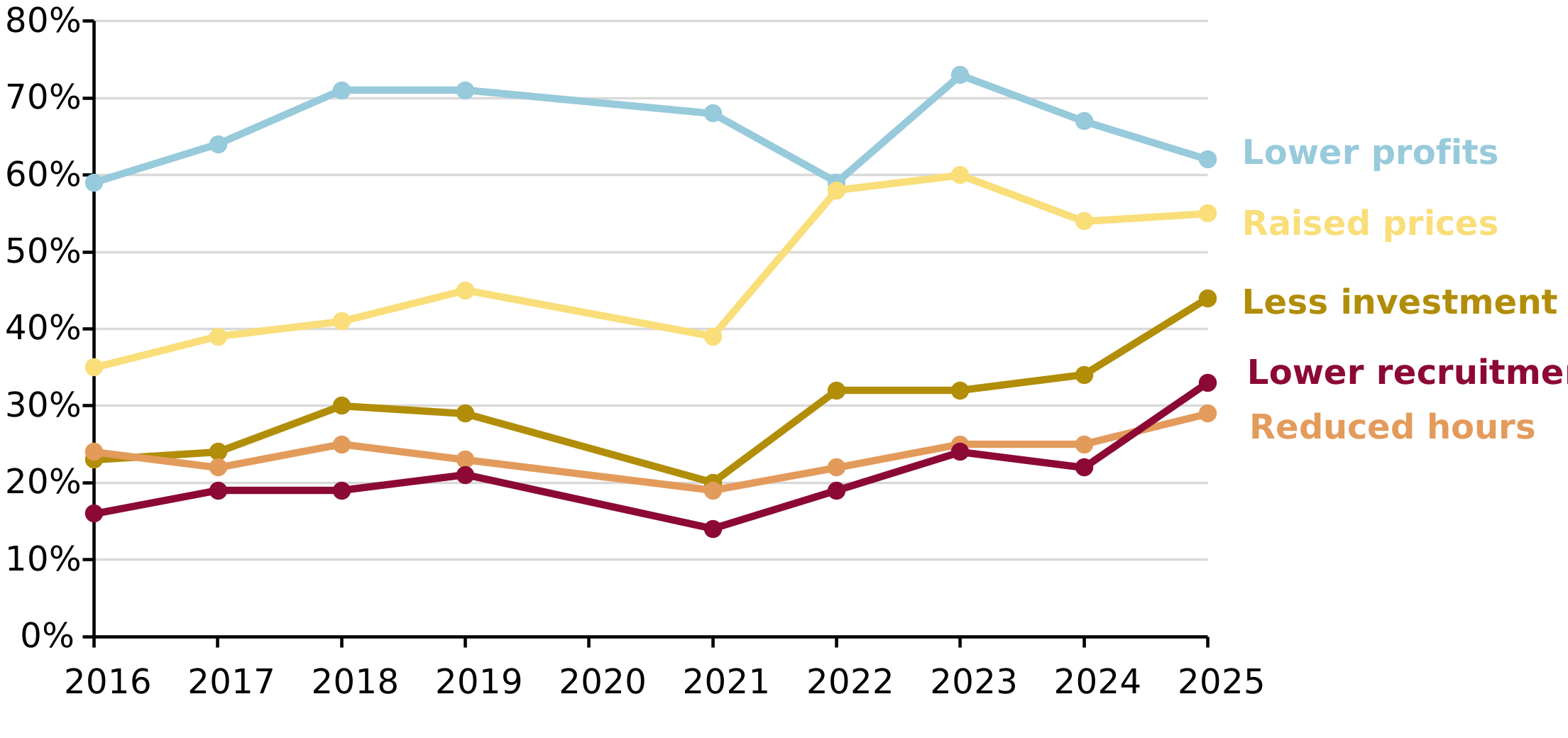
In the Confederation of British Industry’s (CBI) survey of 407 large firms, just over 60 per cent of respondents reported absorbing the cost of NLW increases, whether in whole (32 per cent) or in part (31 per cent). 47 per cent of respondents said they had raised prices. Similarly to the FSB’s survey, the CBI found a picture of declining investment, with 31 per cent of respondents stating they had offset costs by reducing business investment. In contrast, in the British Retail Consortium’s (BRC) survey of retailers over 73 per cent of respondents reported investing in technology to increase automation. More of their members were reducing differentials, reducing head office jobs and hours, reducing management and increasing targets for bonuses. The number of respondents reducing shop floor jobs and hours had fallen since 2024. The Association of Convenience Stores (ACS) found a fall in the share of respondents trying to automate processes (from 50 to 31 per cent). More than half of ACS’s respondents (54 per cent) said they would take lower profits.
Figure 8.4: Surveyed responses to NLW increases, CBI Employment Trends Survey, 2022-2025
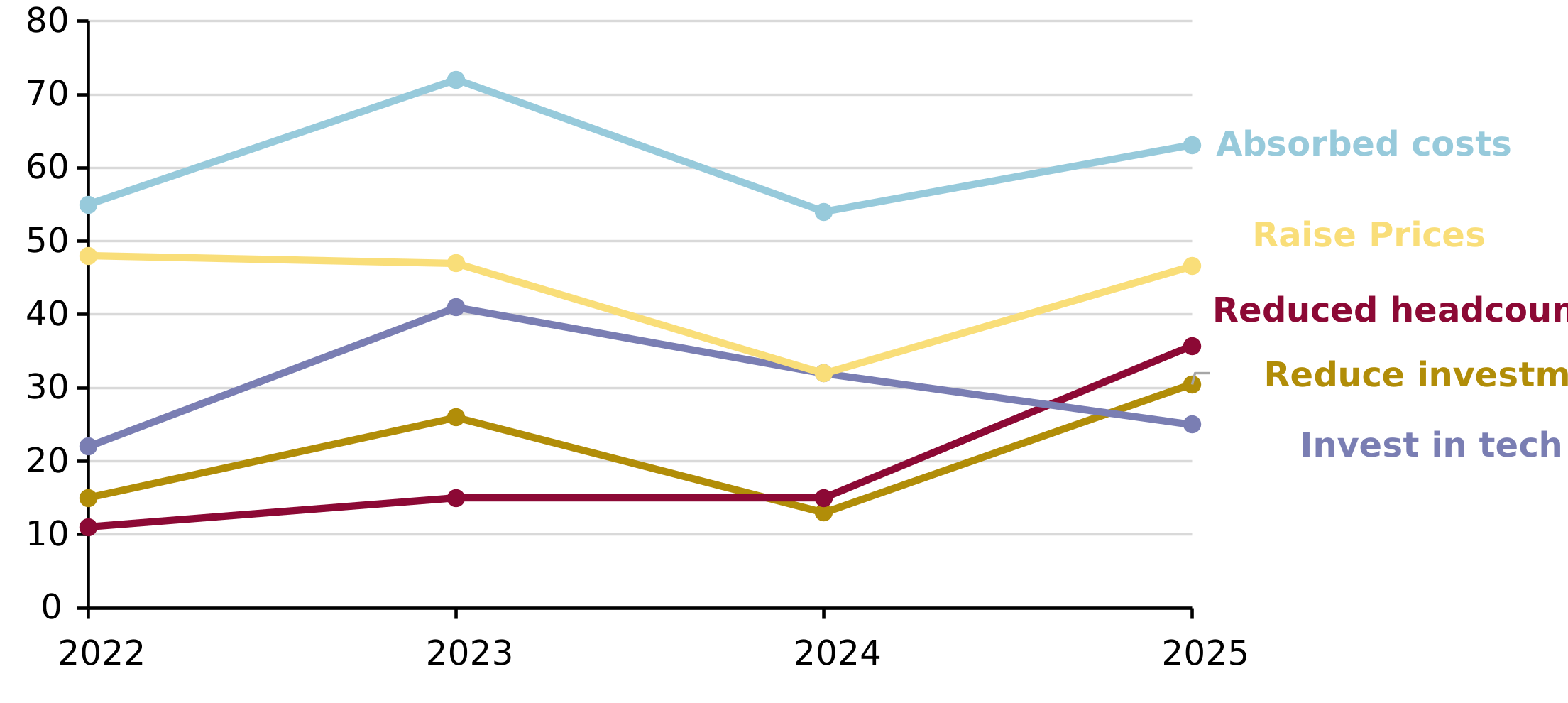
Figure 8.5: Surveyed responses to NLW increases, BRC HR Benchmark Survey, 2022-2025
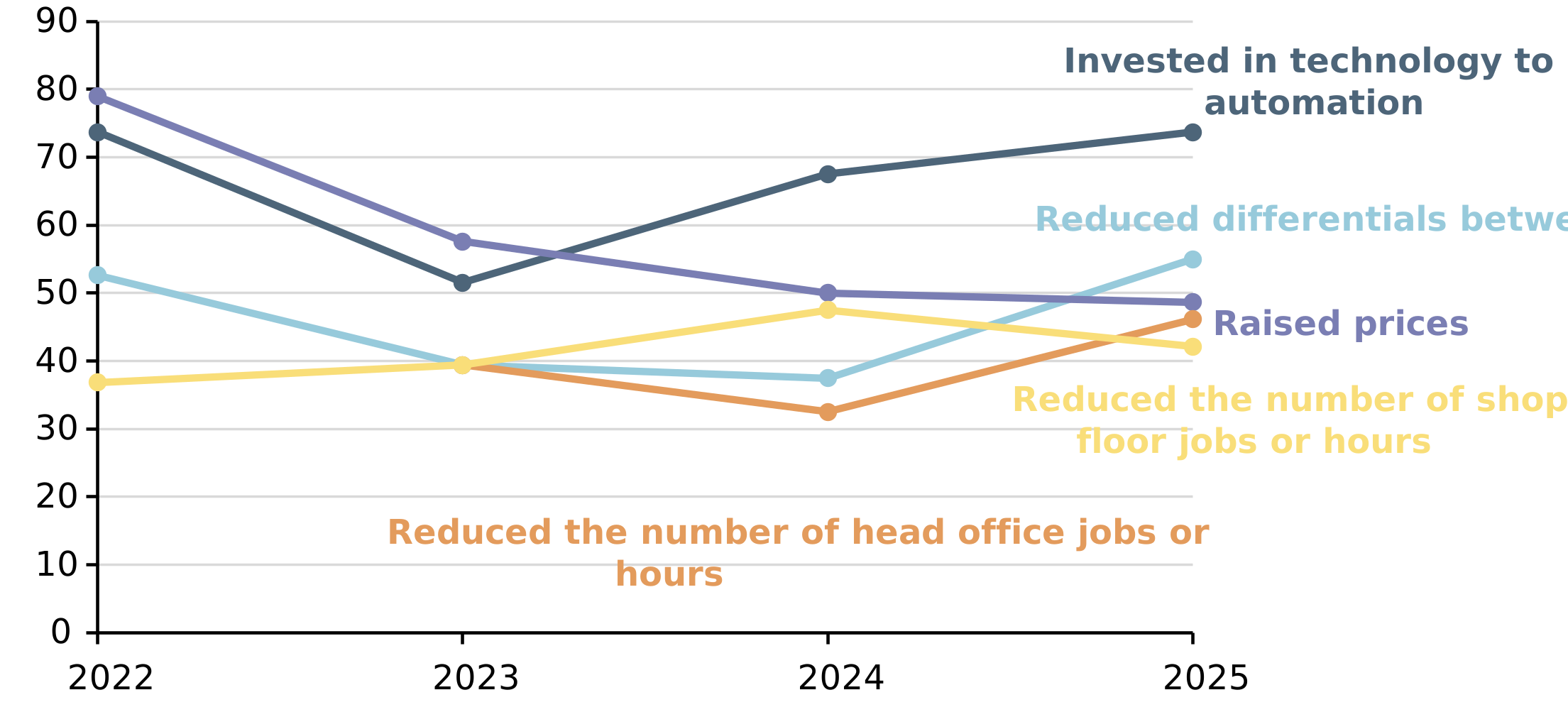
There is no clear trend in employers’ approach to differentials
Differentials, and the challenge of managing competing pressures across the pay scale, remained a central theme in employers’ evidence to us, as discussed in Chapter 5. Survey evidence paints a varied picture. The CIPD’s survey found that the share of businesses reducing pay differentials in response to NMW/NLW increases fell in 2025: 18 per cent of businesses reduced pay differentials, compared with 23 per cent in 2024 (from 2018 to 2023, the proportion was consistently in the range of 15 and 20 per cent). It also found that more employers maintained their differentials than reduced them in 2025: 25 per cent of respondents to the CIPD survey maintained differentials and 9 per cent increased them. This pattern was seen across most sectors, including hospitality where 47 per cent maintained differentials and 19 per cent narrowed them.
The BCC’s survey found the opposite trend: 37 per cent of businesses reduced the pay growth of staff not on the NLW in 2025 compared with 17 per cent in 2024. The FSB found that 29 per cent of employers said pay differentials stayed the same, while 25 per cent reported a decrease, up from 18 per cent last year.
Businesses pass through minimum wage increases into prices where they can – but there are barriers to this
Across most surveys, increasing product prices remains one of the most common responses to NLW increases (albeit in most cases reported by fewer than half of respondents). Many businesses we spoke to this year, worried about reaching the limit of possible price increases. On our London visit, one fast food retailer told us they would continue to increase prices but “at some point the customer will say no”. In Swansea, a small hospitality venue told us they could not pass on the full increase in costs to customers because “no one would come back, so we’ve just got to take a hit on it”. British Beer -& Pub Association (BBPA) members we spoke to felt pubs were “running out of road” when it came to price increases, albeit with some variation between regions; London venues were able to sustain more increases but even here, participants felt they were topping out.
In some low-paying sectors, employers were constrained in what they could pass on to customers. The Food and Drink Federation (FDF) told us: “Price pass-through is likely to remain constrained as retailers aggressively discount in the face of tight consumer budgets.” Businesses in the agriculture and food processing sectors told us that the large supermarkets which buy their products would not accept higher prices. One food processing business told us that “our main customers are your big supermarkets … they are really pushing back now. So no, I think we’re kind of as high as we can go for now.” On the same visit, a large horticulture producer told us how their customers, large retailers, had told them higher costs were “your problem, not mine”.
LPC and external analysis suggests the minimum wage only makes a marginal contribution to inflation
The evidence we’ve shown so far demonstrates that raising prices is one of the main ways firms adjust to NLW increases. While this tells us how common this response is, it doesn’t tell us the extent of those price increases. Our estimates suggest that while the NLW is a major cost driver in some industries, its impact on the economy-wide wage bill and prices is minimal.
Minimum wage workers are the lowest-paid workers in the economy, and because they tend to work part-time, they account for a relatively small share of the economy-wide weekly wage bill. Although around 6 per cent of jobs are paid the NLW, these jobs only account for 2.5 per cent of the total weekly wage bill in 2025. We estimate that the minimum wage has spillover effects up to the 35th percentile of the hourly wage distribution. Even if we include all these workers, we estimate that the NLW influences less than a fifth of the economy-wide wage bill.
These workers (both directly and indirectly affected by the minimum wage), received an average pay rise in 2025 of 6 per cent. This is worth 1.1 per cent of the economy-wide weekly wage bill. However, the NLW is not the sole cause of this increase. Inflation expectations, productivity growth, and the degree of slack in the labour market also drive-up wages.
Making some assumptions about what wage growth would have been in the absence of the NLW increase allows us to estimate the contribution of the NLW. We first assume that pay growth at the bottom of the pay distribution would have been equal to pay growth in the middle of the hourly pay distribution (average pay growth for the 36th-80th percentiles, which was 5.4 per cent in 2025). This assumption is consistent with our estimates of NLW spillovers (see Chapter 5). This assumption gives us an estimate that the NLW was responsible for about a tenth of these workers’ increase in pay. This means that the NLW’s contribution to the 8.1 per cent increase in the total weekly wage bill is around 0.11 percentage points.
An alternative assumption is that, without the NLW increase, low paid workers’ pay would only have increased in line with inflation, which was 3.5 per cent in April 2025. In this case we estimate that the NLW would have been responsible for 42 per cent of affected workers’ pay increase. This would mean the NLW’s contribution to the increase in the total weekly wage bill was 0.47 percentage points (out of 8.1 per cent).
Our range of 0.11 to 0.47 is consistent with the Bank of England estimate that the 2025 NLW increase would add 0.2 percentage points to total wage growth (Bank of England, 2025c).
To translate these wage bill impacts into overall inflation impacts we need to account for all other costs that employers face. This includes things like energy, raw materials and rents – we term these ‘non-labour costs’. We also need to account for imports – because these products are produced abroad, the NLW does not feed into their production costs. Non-labour costs make up a little over 30 per cent of output, and imported products make up around a quarter of products in the Consumer Price Index (CPI) basket. Additionally, assuming full pass through of the NLW into prices (an unlikely and maximalist assumption), we estimate that the NLW contributed at most 0.06-0.24 percentage points to April 2025’s 3.5 per cent inflation.
Research we commissioned this year from Frontier Economics confirmed earlier findings that – even in the most minimum wage exposed sectors – firms only pass on a small share of minimum wage cost increases to prices. This would imply that the NLW’s contribution to inflation is smaller than our estimated range above. Frontier Economics estimate 8 per cent pass-through in recent years: i.e. for each additional 1 per cent increase in costs due to the NLW increase, affected firms will (on average) increase their prices by an additional 0.08 per cent. However, they note that this estimate is uncertain. Importantly, they find that price pass-through depends on the wider inflationary environment: firms pass on more of their cost increases when inflation in general is higher. They also found that increases in the cost of other inputs – such as food and energy – can have more of an impact on firms’ prices than minimum wage increases.
In contrast, preliminary findings from research undertaken by Decision Maker Services suggest higher contributions from the NLW to inflation. Using data from the Decision Maker Panel, they find that firms with higher exposure to the NLW have reported higher price inflation over the past few years. The estimate that larger price increases among more NLW exposed firms may have added between 0.26pp and 0.53pp to the DMP’s measure of aggregate price growth in 2025. However, they caution that these results are preliminary and do not control for other factors, like the NICs increase. Chapter 5 showed why we think the NICs changes differentially affect more NLW-exposed firms and so would need to be accounted for in any estimate of the NLW’s impacts on prices. Full summaries of both of these research projects are included in Appendix 2.
More employers report reducing employment in response to minimum wage increases
Reducing employment remains far from the most common response in employer surveys. However, this year a higher proportion of employers said they have done this. We heard examples from individual employers of the minimum wage affecting employment decisions, most often through reduced hiring, rather than redundancies. As discussed in Chapter 5, we have seen employment fall noticeably in retail and hospitality, sectors which employ large numbers of low-paid workers. We heard particularly strong representations from the hospitality sector in 2025 on falling employment in their sector; in July, UKHospitality estimated that 70,000 jobs had been lost since the Autumn Budget.
The CBI’s submission described the risk to jobs from minimum wage increases as “real and concerning”. FSB, BCC and CIPD surveys all saw an increase in the proportion of organisations reducing employment as a response to increases in the minimum wage. 21 per cent of respondents to the CIPD’s survey had reduced employment, compared with 16 per cent in 2024. Among employers stating the NLW had a large impact, this proportion rose to 35 per cent. 45 per cent of respondents to the BCC’s survey stated they had scaled back recruitment, up from 31 per cent in 2024. In the FSB’s survey, 33 per cent of respondents said they had reduced recruitment (up from 22 per cent last year) and 10 per cent said they had made redundancies (up from 5 per cent last year). In the BRC’s survey, the share of respondents stating they had reduced shop floor staff or hours fell from 47 to 42 per cent. 46 per cent of respondents stated they had cut staff or hours at the head office level.
ACS described a “notable shift” in response patterns, with “more retailers … actively reducing staff hours, and … an increase in the number of businesses looking to reduce overall headcount.” 97 per cent of Scottish Grocers’ Federation (SGF) members surveyed said they were less likely to hire staff. In hospitality, BBPA members reported that one-third of their pubs had reduced staff numbers in response to the NLW. A submission from one large pub operater stated “pubs are being left with no choice but to employ fewer people to remain financially viable.” Two childcare businesses told us in consultation responses that they had stopped hiring and reduced hours.
In some cases, employers told us the rising cost of the minimum wage meant they were less likely to recruit “risky workers”. The FSB said the NLW was making employers more “wary” about recruiting people with a “poor work history”, so the most disadvantaged in the labour market were most impacted. Their submission quoted a manufacturing employer in South West England: “If minimum wage was set at a reasonable level, I’d be more likely to take employment risks. … If we employ anyone now, they have to have a proven track record.”
Some employers say they are cutting working and opening hours in response to the NLW
While aggregate data suggest that minimum wage workers are working similar numbers of hours as they have in recent years (see Chapter 5), surveys in 2025 found that a slightly greater share of employers were reducing working hours in response to NLW increases: 16 per cent of CIPD respondents reduced staff hours (up from 13 per cent in 2024); 29 per cent of FSB respondents did so (up from 25 per cent in 2024); and 21 per cent of BCC respondents (there was no comparable question in 2024). In small retail, 54 per cent of ACS members and 96 per cent of SGF members reported reducing employment hours.
In meetings with employers across various sectors, it was common to hear examples of businesses learning to operate with fewer working hours. On the London visit, EFI Training told us that hours were “very tight and … usually the first area that gets hit if we’re looking for any kind of cost cutting.” On our Swansea visit, a not-for-profit leisure centre operator said they have become more efficient after cutting working hours: “if you’re delivering a programme, you need the coach the whole time but you can be more efficient in terms of your ratios, which we’ve looked at and will continue to.” In a meeting with BBPA members in May, we heard that pubs’ response was focused on reducing hours and slowing recruitment; one participant described this as protecting managers and the “core team” while reducing more casual labour in pubs. Another estimated that hours were down by 10 per cent and overall employment numbers were down by 15 per cent (which equated to 300 people).
For some businesses, particularly in hospitality, cuts to working hours were linked to cuts to opening hours. BBPA members told us about efforts to match hours more closely with demand, closing on quieter days (Mondays and Tuesdays). Similarly, Hospitality Ulster members described dropping from six to four days opening, given the business was not meeting the minimum takings to make it worth staying open. A hospitality business in Dundee described the same situation: “Everything is going up with the restaurant, the food, drink, all your ingredients and that’s all perishable. There’s so much that’s expensive already that the staff on top of it… so it becomes the point now that sometimes to not lose money [due to staff costs] we don’t open.” A large leisure and hospitality business told us that lower working hours means that activities and services with lower demand “such as leisure activities and food and beverage services” closed earlier.
For hoteliers in Newcastle, the key issue was not opening hours, but whether to persist with specific parts of their business, specifically their food and beverage offerings, which were more labour-intensive but decreasingly profitable. Many hoteliers anticipated a shift towards more stripped-back operations, with less emphasis on food and beverage and more focus on room sales and franchise models. Hoteliers’ expectation was that there would be fewer employment opportunities as the industry consolidated.
As outlined in Chapter 3, this makes it more difficult for workers to secure sufficient hours, and workers report increased work intensity.
Employers are taking different directions on investment
In employer surveys and in conversations with employers, we often hear mixed messages about the impact of minimum wage increases on firms’ investment plans and productivity goals. While some firms respond to NLW increases with investment in new technology and automation, others state that higher labour costs reduce their budget for investment.
Some submissions disagreed there had been any aggregate move from low-paying firms to invest and automate. The CBI argued that “the idea that rising labour costs would lead to higher investment has also now been tested to destruction.” Instead, while firms cited interest in “tech and automation improvements, we have routinely seen that investment has not come to fruition.” The CBI’s survey in Q2 2025 found that investment intentions had fallen since the previous year: “Many firms mention that they are in a risk-averse mindset, reflecting higher employment costs and tariff-related uncertainty”. Community Leisure UK told us that among its members (typically not-for-profit trusts), the NLW’s impact on operating surpluses was reducing investment. The National Farmers’ Union’s Confidence Survey found that “across the board investment is contracting … even in typically more resilient categories such as energy efficiency and renewables.” 40 per cent of BBPA survey respondents said they were reducing investment in response to the NLW increase.
There is some evidence that employers are looking harder at productivity
In 2025, 28 per cent of respondents to the CIPD survey reported increasing productivity in response to NMW/NLW increases, up slightly from 26 per cent in 2024. This is the first time that efficiency/productivity has eclipsed the share responding via profits since the NLW’s introduction. Results in other surveys were more ambiguous and showed the continuing split between large and small employers: efficiency and productivity responses were flat year-on-year in the FSB’s survey, and have been hovering at a similar, lower level since 2016.
As set out in Figure 8.6, the most common productivity measures reported by the CIPD’s respondents were requiring staff to take on additional tasks (29 per cent) improving business practices like quality control and supply chain management (27 per cent), increasing the pace of work or raising performance standards (22 per cent), and requiring staff to be flexible with working hours (21 per cent). In the context of workers’ perceptions that their jobs are growing more intense (see Chapter 3), it is worth noting that some of these responses – asking staff to take on additional tasks or work at a faster pace – involve intensification rather than greater efficiency or investment.
Figure 8.6: CIPD survey evidence on productivity responses, 2023-2025
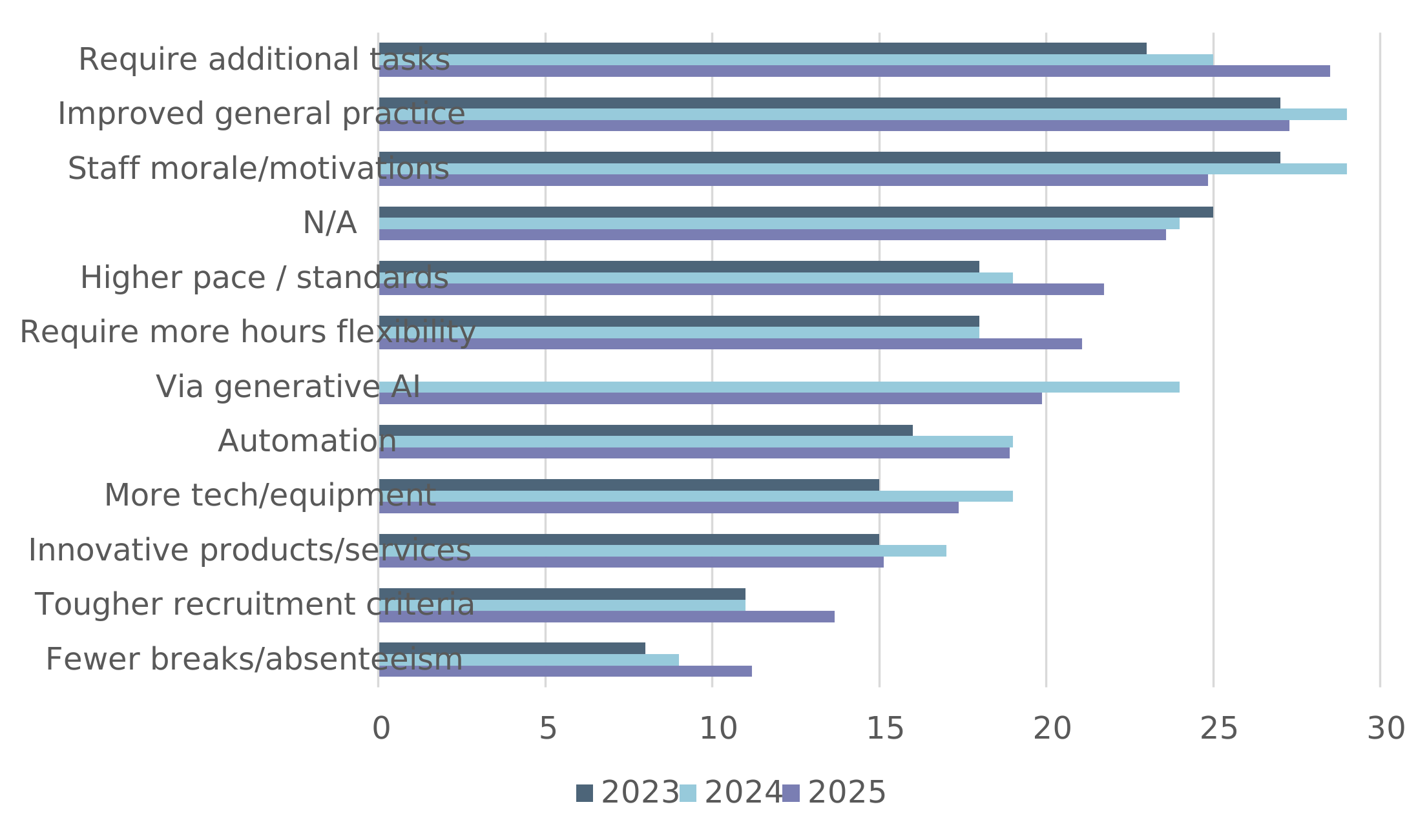
We met with a number of employers on visits who had made – or were planning to make – investments to improve productivity and reduce labour costs. For a Devon-based manufacturer, the upshot of NLW increases was that: “We can’t afford to take untrained adults anymore … we can’t afford to bring somebody in and then train them on minimum wage just a fraction less than what people are getting [who’ve] been here 25 years.” The employer had instead invested heavily to automate an increasing number of processes. One food-processing company told us that rising pay rates had forced them to reduce reliance on unskilled labour and look at changes to their business model: “there are cheaper ways of doing it.” For the wages they were now paying “you need some level of skill … If we’re going to have to pay more, we need them to do a little bit more.” Technology to automate the necessary tasks existed but was expensive; rising wage costs “might just force us to be a little bit more standardised and go with automation.”
In Newcastle we met with a mixed group of employers, in manufacturing and other processing sectors, who discussed the impact of the rising NLW on their decisions over investment and automation. Each member of the group was looking to automate processes to some extent; for some, cutting headcount was their path to survival, while others were focused on maintaining headcount but using automation to deploy staff more productively. For one food-processing employer, “our absolute ambition is to reduce headcount … for us to survive as a business, we have to cut the headcount [and] automate to reduce the cost.” For others, automation had allowed them to reduce hours while retaining staff, or to focus on upskilling existing staff. All participants anticipated significant change in their businesses in the coming years: “It will be drastically different in three years’ time. It takes a long time to automate, but … we’re already on that journey.” For one large manufacturer, AI and automation represented a positive opportunity to better deploy manpower: “We’re trying to steer people towards [the idea that] this piece will actually free you up to do the stuff that you really want to do and the stuff we need to do.”
In other areas (particularly hospitality), it remains hard for employers to automate. A large hospitality company worried that “going automated is a deeply impersonal thing. …. if everything feels like a McDonald’s, go to the kiosk, order it, and then someone passes you a paper bag with some food in it, that doesn’t really fit with our marketing profile.” BBPA members told us automation to reduce costs was not yet viable for many operational needs. One participant described this as “embryonic … We’ve looked in the kitchen and the tech is nowhere near ready at the moment for us to deliver any kitchen automation.” However, Newcastle-based hoteliers expected greater adoption of technology and reduced staffing: “you’ll see a kiosk to get your keys, there’ll be less receptionists because there’s all this technology coming in… that whole element of hospitality will eventually start to dissipate.”
Some low-paying employers are beginning to use AI
The share of CIPD survey respondents investing in and using generative AI in response to the rising minimum wage increase rose from 14 per cent in 2024 to 20 per cent in 2025. 19 per cent of respondents to the BCC’s survey said they planned to increase automation or AI, up from 7 per cent in 2024. 21 per cent of respondents to the Institute of Directors’ (IoD) survey said they were increasing investment in new technologies in response to the NLW increase. However, Figure 8.7 shows that data from ONS’ Business Insights and Conditions Survey (BICS) suggests firms in low-paying industries are less likely to use, or plan to use, AI than firms in other sectors. As use of generative AI becomes more widespread we will continue to monitor any impacts on the low-paid labour market.
Figure 8.7: BICS data on the proportion of firms that do not use AI (left) or plan to use AI in the next 3 months (right), UK, 2024-2025
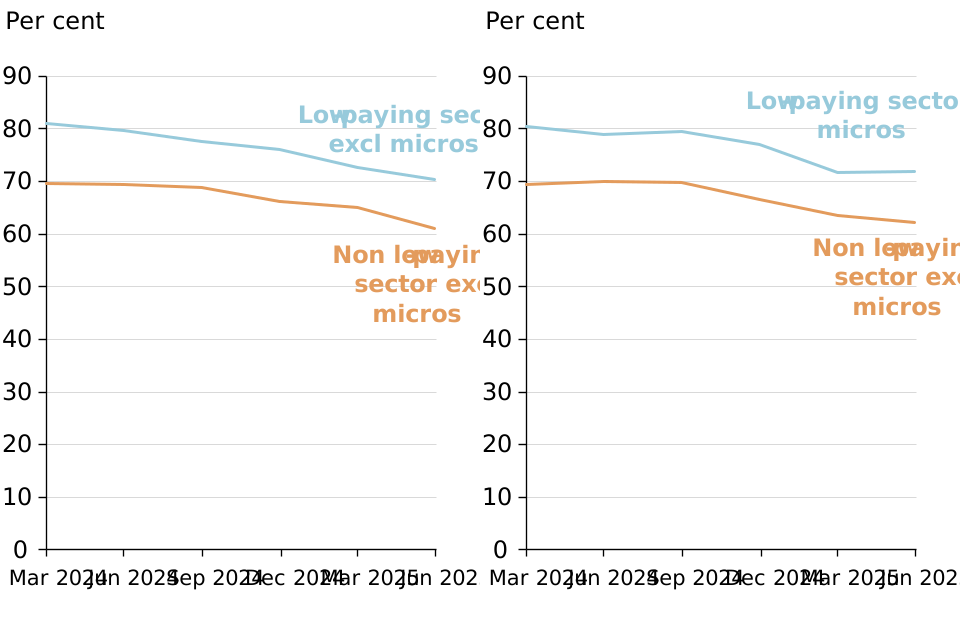
There is some evidence that employers are training their staff less
In the CIPD’s survey, the share of employers saying they had cut back on training expenditure has increased steadily since 2021 from 5 to 15 per cent. Alongside this, fewer employers report investing in training as a means to increase productivity, falling from 13 per cent in 2023 to 8 per cent in 2025. On the visits, we heard several anecdotal examples of employers cutting training. A hospitality employer in Dundee noted the staff development budget was often the first to be cut back, along with other spending used to celebrate team successes. “Development is probably one of the first things that often goes, you know.” Another in London told us that: “We now require two years of minimum experience because we don’t have the funds to train people from a grassroots level up to where we need them.” The theme of unwillingness to take on untrained staff was picked up by a manufacturer we met: “other than advanced apprentices, we are not now prepared to train adult unskilled and inexperienced people.”
Evidence on publicly funded sectors
A number of significant low-paying sectors are dependent on public funding. This includes adult social care, childcare and some leisure activities. Local government, which in many cases funds these activities, is also directly affected by NLW increases. Because of constrained funding and limited ability to pass costs through to prices, the way employers respond to minimum wage increases in these sectors is distinct. This section looks at some of the evidence we heard in 2025 on the main publicly funded sectors.
Funding to local government has not adequately accounted for latest NLW increase
Stakeholders in adult social care argued that the funds granted to local authorities had not adequately accounted for the increase in the NLW and NICs. The Association of Directors of Adult Social Services (ADASS) argued in the submission that “government has not funded local authorities sufficiently to meet rising care costs.” They shared their calculation that in the 2025/6 financial year, their members would face a £2.5bn increase in costs. £517m of this would stem from changes to employer NICs and £1.2bn from the NLW increase. They shared one ADASS member’s summary: “Every penny on the hourly wage costs us £60,000, so if this is not funded, services or other budgets have to reduce.” In consequence, ADASS told us, their members had little confidence that adult social care budgets were sufficient to fully meet their legal duties to promote the efficient and effective operation of the care market.
Unison asked the LPC to “call on the government to ensure that additional financial provision is made to fund the projected increase in the NLW for those working in the public services, particularly given the extra resources needed to fund increases to employer National Insurance contributions from April 2025.” Mencap also argued for a link between NLW recommendations and the spending review and local government settlement.
Constrained funding weakens the position of providers
ADASS’s submission stated that care providers were likely to require fee uplifts of 8-10 per cent to fully account for the impact of NICs changes and NLW increases. They shared unpublished survey results which suggested that the median fee increase would be just over 5 per cent. Care England told us its members expressed “grave concern about the unsustainable impact of the NLW increases”, with profit margins eroding and many providers increasing self-funder fees. Their submission stated that: “Because funding increases have not matched cost increases, some providers are returning care packages that are not viable, and some are considering closure.”
Workers bear the brunt of this…
We continued to hear that care workers were struggling. ADASS cited Department for Health and Social Care (DHSC, 2025) findings that seven in ten staff say they do not have enough, or they do not have any, financial security. They also cited Trade Union Congress (2023) findings that more than one in four children with a social care worker parent are growing up in poverty. The Homecare Association (HCA) quoted a Care Workers’ Charity survey in their consultation which stated that 72 per cent of respondents did not feel financially secure. HCA argued that public bodies were purchasing care at fee rates which did not enable compliance with employment and care regulations: “the state is sponsoring labour market exploitation.” Chapter 9 gives an overview of the evidence we heard in 2025 on underpayment in social care.
Unison provided an overview of evidence looking at low pay in social care. As well as an overview of recent Skills for Care publications to argue that “the poor state of employment conditions is placing severe strain on the sector’s capacity to recruit and retain staff” they cite their own survey data from 2023 showing “the immense strain placed on workers by contracts that can slash hours from week to week”. This was aggravated by a high turnover rate that ADASS estimated cost the sector £3bn each year. They note the contrast between turnover rates in the private and public social care sector, as well as the turnover rates for zero-hours and minimum wage staff, which provide “compelling evidence of the benefits of raising wages and attacking insecure employment.”
We continued to hear evidence that migrant workers in the care sector were in a particularly vulnerable position. We spoke with migrant care workers who, despite not being paid for extended periods, feared speaking out against their employer due to visa restrictions; “we are afraid that if we report that we are not getting paid, Home Office will revoke that company’s licence and then they will give us sixty days to find another company [to sponsor their visa] … There’s no law that protects us.” A submission from the Work Rights Centre shared evidence from their casework that migrant workers were more likely to be in precarious work, without a regular work schedule, a written contract or payslips.
…and service users do so too
GMB stated that the drive for higher productivity in the sector was leading to an over stretched, understaffed workforce that would worsen patient care. They said: “Although business groups are calling for more ‘productivity’ from workers, it falls apart on contact with reality as low-paying sectors like social care workers are already working beyond what they are contracted, trained or expected to do without damage to their own health.”
HCA argued that demand for social care was high, but low fees were suppressing the growth needed to meet it: “Government decisions over funding and workforce policies can significantly improve or significantly worsen conditions for those people drawing on services.” They also argued that local authorities’ purchasing practices reduced productivity, as auctioning care packages to the lowest bidder spread work around multiple providers and leads to inefficiencies. They shared data from one organisation showing the routes of workers in six providers in Bristol over one day, with a “complex tangle” of journeys criss-crossing the city.
Other publicly-funded sectors experience similar strains
Childcare employers also told us their sector was struggling with constrained funding and rising costs, particularly following the expanded entitlement to funded hours. The National Day Nurseries Association (NDNA) noted that most of the extra £1.6bn of funding promised in the spending review would be spent on funded hours for under-2s. This left little room to fund NLW increases or changes to NICs. The NDNA estimated that since 2017, funding for childcare had risen by 33 per cent, against an increase in the NLW of over 60 per cent: “that’s not to say that we disagree with [the NLW] … but it is not recognised in the funding”. Their estimate of the combined impact of the NLW and NICs was £2,600 per employee: “when that comes in overnight and you’ve got no additional income source to cover that, then you can’t make it work.”
Employer bodies told us that constrained funding and higher staff costs was leading businesses to seek cheaper recruitment options. This then posed risks for quality. The NDNA told us the sector was using more young workers and more apprentices. The Early Years Alliance (EYA) argued that continued underfunding, along with the relaxation of rules around ratios of staff to children, had meant that many providers have no choice to hire staff they otherwise wouldn’t in order to accommodate the expansion of funded hours, saying that the current direction of travel “doesn’t feel like recognition of a workforce … like professionalisation” and that existing policy instead encourages an approach of “if you’ve got a pulse, you’ve got a job.”
Two childcare providers told us in our consultation that they responded to the NLW increase by reducing hours and implementing a hiring freeze, reducing the number of carers per child. An Exeter-based childcare provider told us that their wages are determined by competition for workers, rather than NLW increases. They said “We’re all always looking at job adverts and what other people are offering. We do literally just have some people that just move around because there’s that competition.” Another nursery based in Rotherham told us that this competition doesn’t just come from other nurseries but retail. They said, “People take jobs in Aldi and Tesco … because they get paid better for less stress”.
Education is another sector that is affected by NLW rises, with many teaching assistants working close to the minimum wage. Although funding per student has risen, we heard that head teachers were anxious about wage rises for their teaching assistants and in some cases were looking to reduce staff numbers. As a staff member at a further education college summarised, “when the NLW goes up dramatically that’s a couple of students who might not have a learning assistant.”
Conclusions
The most common responses by employers to increases in the NLW continue to be raising prices and reducing profits. In some sources we have seen fewer firms able to absorb costs through lower profits, and more passing costs onto consumers or making operational changes. Surveys from employer groups show a growing proportion of businesses affected by NLW increases, with many reporting reduced investment, lower headcounts, fewer staff hours and increased work intensity.
While price increases are a relatively common response in employer surveys, many employers—especially in sectors like hospitality and retail—report reaching the limits of what customers will tolerate, and some are unable to pass on costs due to market pressures from large buyers or consumer resistance. Our analysis shows that the minimum wage has a minimal impact on the headline rate of inflation.
Larger firms are more likely to invest in technology and automation, while smaller businesses often scale back investment due to higher labour costs. Some employers are intensifying work or requiring more flexibility from staff rather than increasing investment to improve efficiency. The use of generative AI is increasing, but remains less common in low-paying sectors. At the same time, there is some evidence of reduced training and reluctance to hire unskilled workers, with employers preferring experienced staff to minimise costs and risks.
Publicly funded sectors such as social care, local government, childcare and education face acute challenges, as funding increases have not kept pace with NLW rises. This has led to financial strain on providers, reduced service quality, and negative impacts on both workers and service users. Many social care providers report eroding profit margins, increased staff turnover, and difficulties recruiting and retaining staff.
Chapter 9: Non-compliance, enforcement and the Accommodation Offset
Key findings:
- Measured underpayment has increased - Measured underpayment in the Annual Survey of Hours and Earnings (ASHE) rose this year from 382,000 to 445,000 workers affected, the highest level since 2018. This means that around 22 per cent of workers covered by the minimum wage did not receive their due earnings.
- But persistent underpayment has fallen - Despite the rise in underpayment overall, the evidence continues to suggest that persistent underpayment has declined. Only around one in ten workers underpaid in April 2024 remained so in 2025, compared with around one in three in the years preceding the pandemic.
- Workers reported issues with recording working time - Across multiple sectors, workers reported unpaid or incorrectly recorded working time, often linked to poor record-keeping practices. In agriculture especially, payslips were described as confusing and frequently inaccurate, making it difficult for workers to verify hours worked and pay received. These issues contribute to a lack of transparency and trust between workers and employers.
- Social care continues to face specific compliance issues - Stakeholders highlighted persistent issues with underpayment in social care, as well as poor conditions and inadequate sick leave. We also heard concerns about modern slavery, calls for reform in local authority commissioning and a desire for stronger enforcement.
- Employers sought clearer guidance and leniency for technical breaches - Unions criticised what they saw as an approach which prioritised supporting employers to comply rather than enforcing the rules for those who don’t. They highlighted HMRC’s limited resources, calling for tougher enforcement.
- We heard divergent views on the Accommodation Offset, with the rate described as too low for employers yet also poor value for workers - We also heard concerns about the quality of accommodation, lack of regulation and unclear treatment of utility bills.
This chapter looks at the workings of the National Minimum Wage (NMW). First, we consider the evidence on underpayment, compliance and enforcement. We estimate how many workers are underpaid and consider workers’ and employers’ experiences of the enforcement regime. Secondly, we look at the Accommodation Offset. This is the final rate which we recommend, and it sets the maximum daily deduction employers can make for accommodation they provide for minimum wage workers.
As well as covering compliance and enforcement in our annual report, we publish separate reports discussing the evidence on these issues. We did not produce a stand-alone report in 2025, although we did put out an update reiterating our recent recommendations and their relevance for the Fair Work Agency (FWA) (Low Pay Commission 2025c). We will produce a separate report on compliance and enforcement in 2026.
Underpayment
Underpayment of the minimum wage increased in 2025
Table 9.1 shows how many and what proportion of workers were underpaid in in 2019, 2024 and 2025. We call the total number of workers who appear to have been paid less than the minimum hourly rate for their age “total underpayment”. The source for this is the Annual Survey of Hours and Earnings (ASHE), which is completed by employers and therefore unlikely to include serious or deliberate underpayment. Because we can’t be certain from this data alone that pay is non-compliant, we use the term underpayment.
Table 9.1: Number of employee jobs paid belowa the minimum wage, minimum wage coverage and underpayment as a share of coverage, by rate population, UK, 2019, 2024, 2025
| MW rate | Underpayment | Coverage | Underpayment as a share of coverage | ||||||
|---|---|---|---|---|---|---|---|---|---|
| 2019 | 2024 | 2025 | 2019 | 2024 | 2025 | 2019 | 2024 | 2025 | |
| Thousands | Thousands | Per cent | |||||||
| AR | 9 | 8 | 9 | 31 | 27 | 32 | 29.7 | 31.0 | 27.2 |
| 16-17 | 3 | 4 | 8 | 36 | 51 | 68 | 9.4 | 7.8 | 11.9 |
| 18-20 | 19 | 15 | 28 | 116 | 90 | 162 | 16.3 | 16.9 | 17.6 |
| 21-22b | 20 | 33 | 33 | 98 | 149 | 156 | 20.9 | 22.0 | 21.0 |
| 23-24c | 12 | 21 | 25 | 57 | 108 | 112 | 21.6 | 19.8 | 22.4 |
| 25+ | 364 | 301 | 342 | 1,649 | 1,507 | 1,487 | 22.1 | 20.0 | 23.0 |
| Total | 428 | 382 | 445 | 1,987 | 1,932 | 2,019 | 21.6 | 19.8 | 22.0 |
| NLWd | 364 | 355 | 400 | 1,649 | 1,764 | 1,756 | 22.1 | 20.1 | 22.8 |
Total estimated underpayment increased by over 60,000 from 382,000 in April 2024 to 445,000 in April 2025. This is an increase from 19.8 per cent of coverage to 22.0 per cent. This is higher than pre-pandemic levels, both in absolute numbers and as a share of coverage. In absolute numbers, it is the highest level measured using ASHE since the 2018 estimate of 460,000 underpaid workers.
Underpayment as a share of coverage is higher for each age group in 2025 than in 2019 apart from workers eligible for the Apprentice Rate. This is a result of underpayment levels increasing at a higher rate than the corresponding rise in coverage.
It is important to know how much workers are underpaid by. Figure 9.1 shows that in the last couple of years an increasing number of National Living Wage (NLW) jobs have been underpaid by a small amount (up to 10 pence per hour). In 2025, the number increased to around 175,000 from 140,000 in 2024.
But as well as those underpaid by a small amount, there remain many jobs that are underpaid by a larger margin – in 2025 around 150,000 NLW jobs were paid more than 50 pence per hour below the statutory minimum. This is 8.5 per cent of all NLW jobs.
Figure 9.1: Margin of underpayment in the NLW per hour, UK, 2015-2025
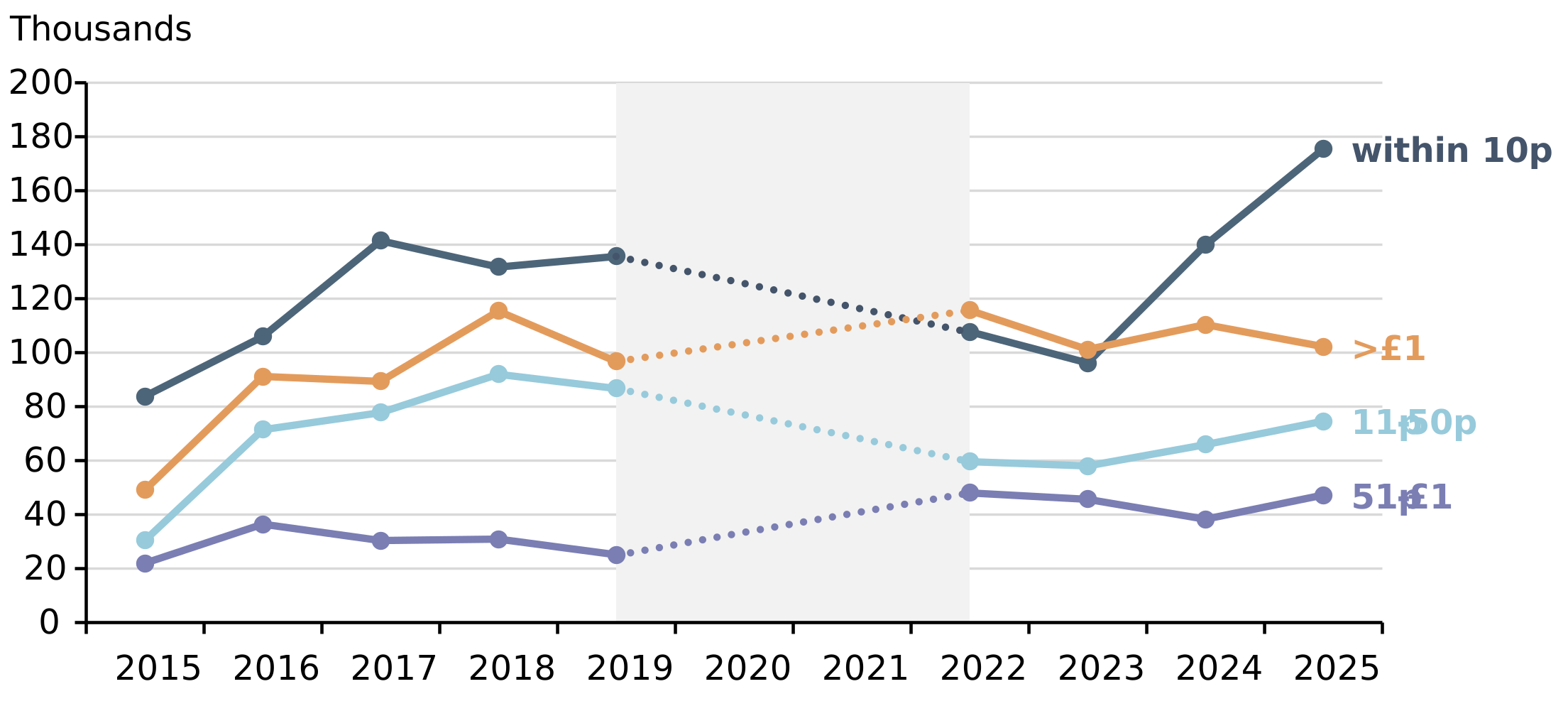
Figure 9.2: NLW underpayment as a share of coverage, by characteristic, UK, 2024-2025
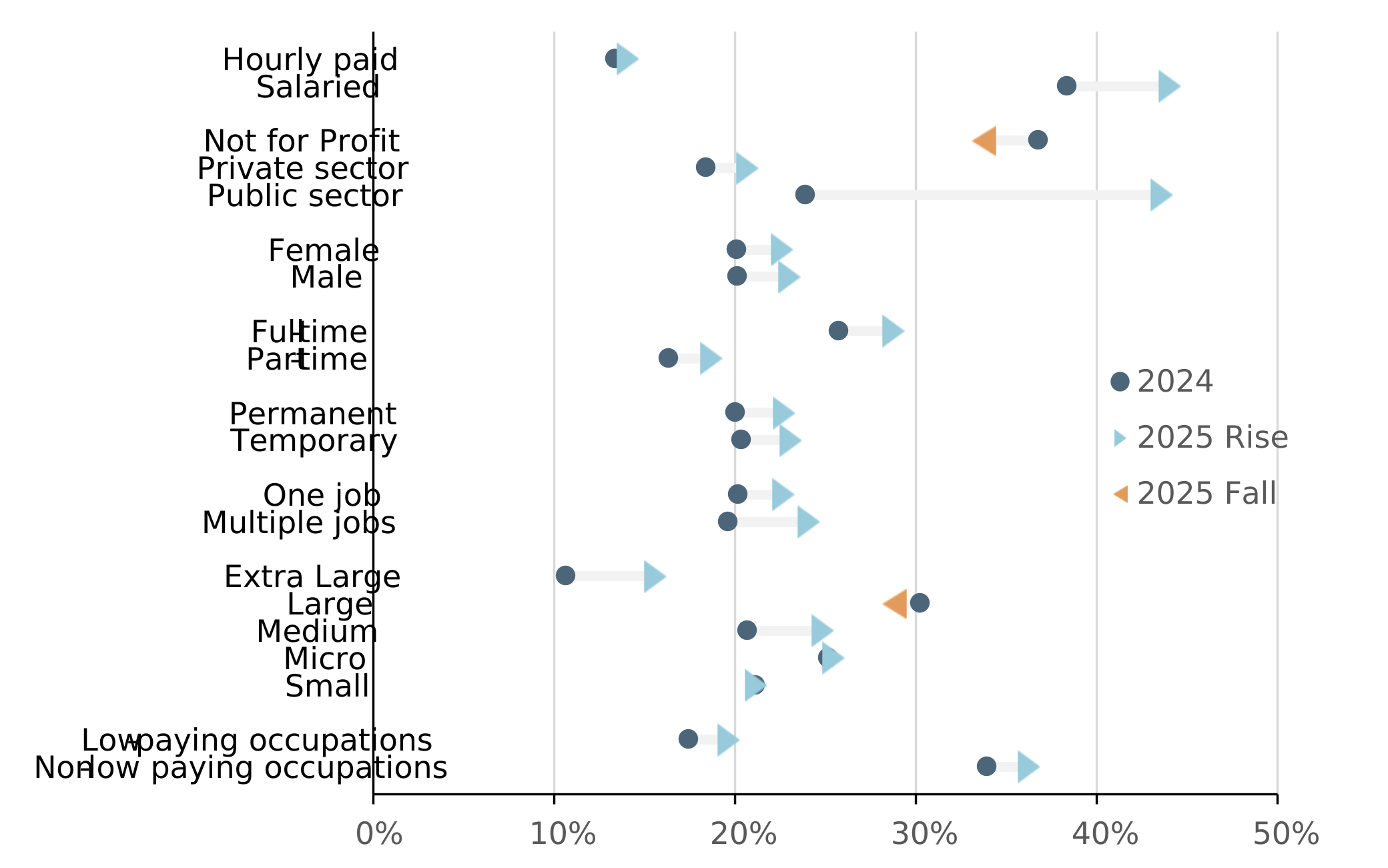
In recent years we have seen increasing numbers of salaried roles become covered by the NLW. We define salaried jobs as those that have no hourly rate and where wages are paid weekly, fortnightly, four-weekly or monthly. In 2025, salaried jobs coverage rose by around 30,000 to over half a million, making up around a quarter of NLW jobs. Underpayment for these jobs increased by a larger amount from around 180,000 in 2024 to over 220,000 in 2025, resulting in 44 per cent of covered salaried roles being underpaid.
The largest annual change is the rise from 24 to 44 per cent in the public sector. However, the number of underpaid jobs stayed the same between 2024 and 2025. Instead, many public sector roles that were included in our coverage figures for 2024 moved ahead of the NLW in 2025. increasing the rate of underpayment as the denominator has declined.
Jobs in non-low paid sectors remain more likely to be underpaid than low-paid sector roles. As mentioned in Chapter 3, they comprise a growing share of minimum wage jobs: in 2025 coverage of jobs in non-low paid sectors increased to 330,000 from 285,000 in 2024. 120,000 or 36 per cent of covered jobs in non-low paying sectors were underpaid in 2025.
Underpayment analysis using linked ASHE data
To understand the persistence of underpayment we track the same workers aged 16 and over from one year to the next within the ASHE. This is a subset of ASHE as around one in three individuals drop out of the data each year. There are several reasons for this: workers may leave employment altogether, become self-employed or their employer may not complete their ASHE return.
The findings in 2025 are very similar to 2024. Only one in ten of all people that were underpaid in 2024 remained so the following year. This share of persistently underpaid workers has fallen sharply from around one in three prior to the pandemic. The vast majority of underpaid workers in 2024 (70 per cent) were paid above the minimum wage in 2025. The remaining 20 per cent moved from being underpaid to receiving the minimum wage.
The right-hand side chart in Figure 9.3 looks at workers underpaid in the second year by their status in Year 1. The proportions are very similar – with around 70 per cent of underpayment in Year 2 coming from workers who were paid above the minimum wage in Year 1. This high share of underpayment derived from workers previously paid higher may be a result of a fast-increasing minimum wage overtaking some jobs not previously considered to be ‘low-paid’.
Workers are much more likely to move out of underpayment if they move job. Figure 9.4 looks at the share of individuals who remain underpaid depending on whether they remain in the same job or they change employer. It shows that around 12 per cent of underpaid workers who remain in the same job continue to be underpaid – a similar share to the previous year. They are much more likely to escape underpayment by changing employer.
Figure 9.3: Transitions of underpaid workers from Year 1 to Year 2 (LHS) and workers underpaid in Year 2 by Year 1 status (RHS), UK, 2012-2025
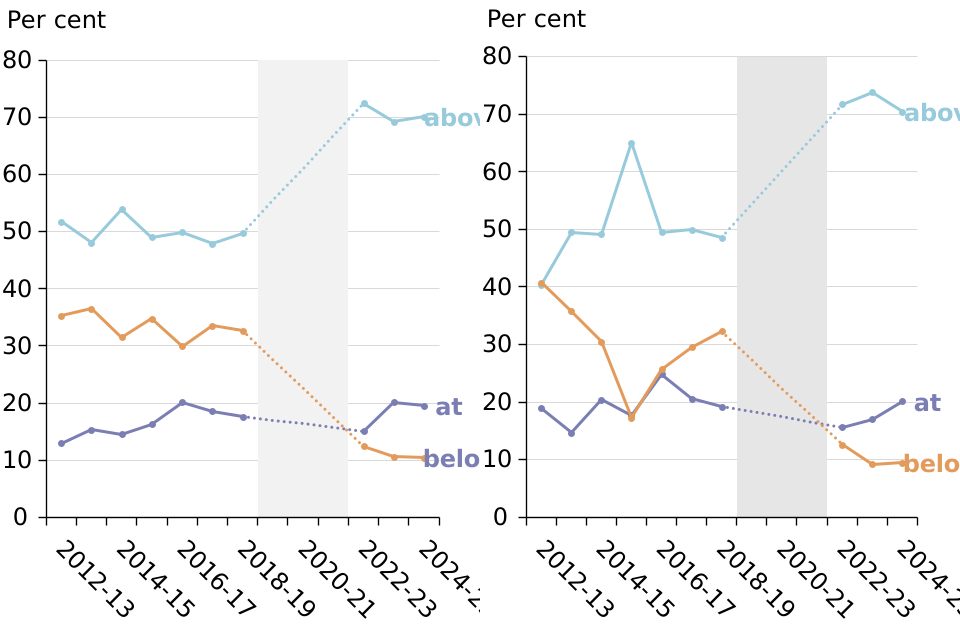
Figure 9.4: Share of workers who remain underpaid in Year 2, by employment transition status, UK, 2012-2025
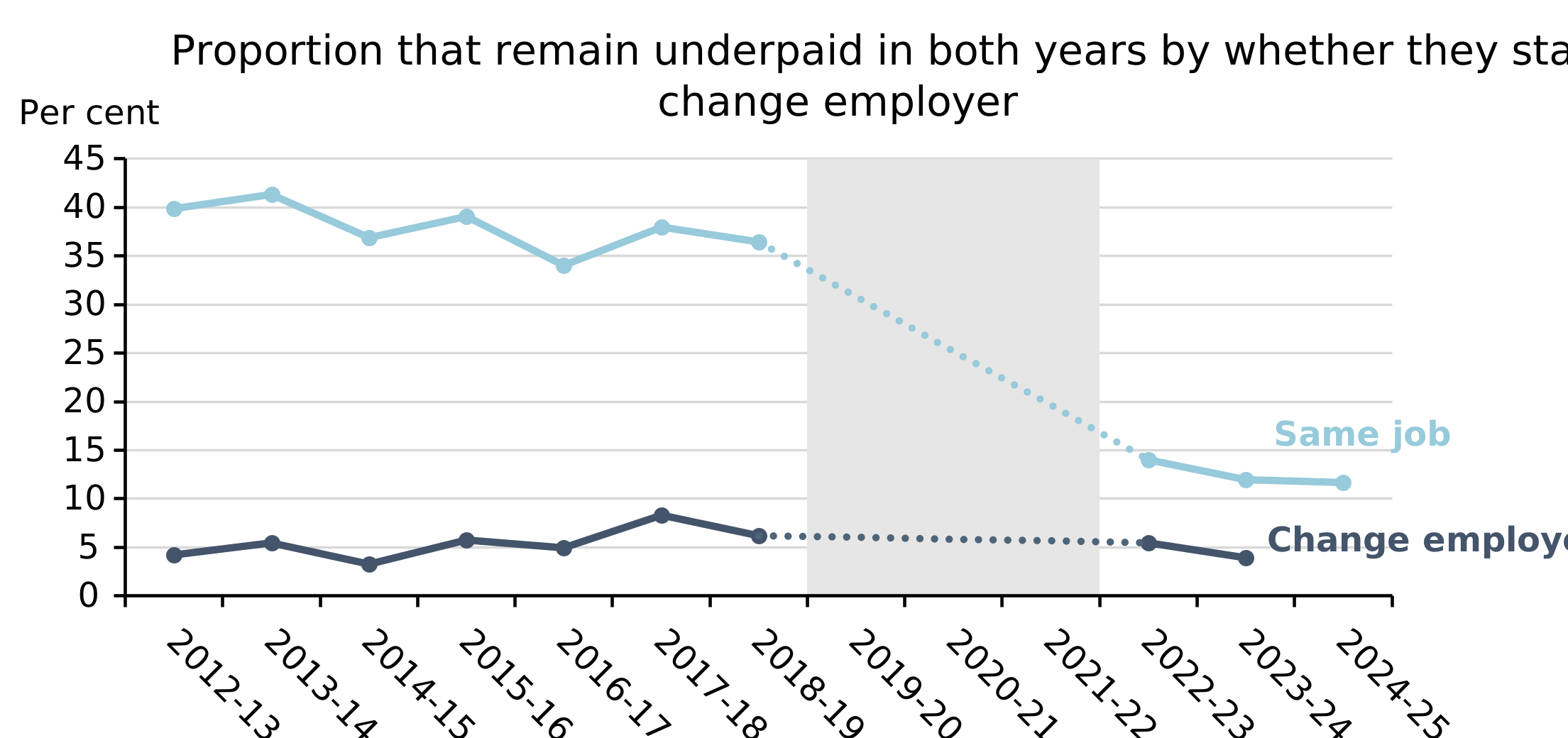
While the chances of remaining underpaid is much lower in 2025 compared with prior to the pandemic there is a degree of variation depending on the size of firm that individuals are employed by. Workers in micro firms tend to have the highest chance of underpayment continuing into the second year while it is lowest in the largest firms. This pattern continued into 2025 although there was a slight increase for the smallest micro (0-9 employees) and small firms (10-49). Medium (50-249), large (250-2499) and extra large (2500+ employees) firms saw reductions in the chance of remaining underpaid.
Figure 9.5: Chance of remaining underpaid by firm size, UK, 2012-2025
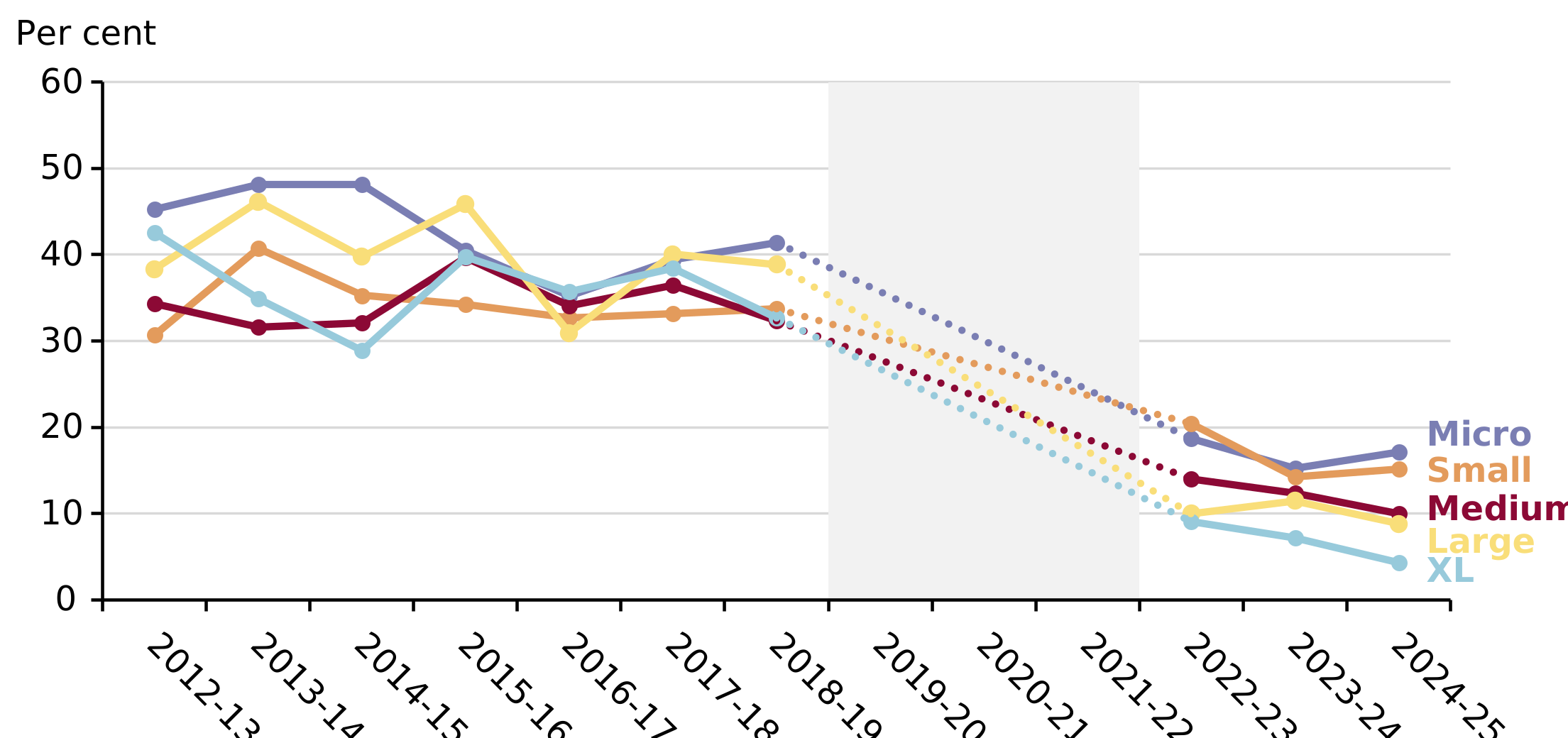
Compliance and enforcement
We now consider the qualitative evidence we heard on enforcement, compliance and underpayment through the course of the year.
We heard several examples of underpayment
Usdaw and their members told us about unpaid working time in the retail sector. Their members worried about salaried workers doing additional hours which take them under the NLW. This particularly affected managers because of the intensification of work and the expectations placed on senior staff. In Exeter, one Usdaw member gave the example of a colleague who was “routinely clocking out at the time he’s meant to and continuing to work in order to get his daily tasks done, not to disappoint the management”.
The issue of unpaid training time came up in several sectors. GMB highlighted persistent low pay and underpayment in the outsourced security sector, with many workers paid only the minimum wage or less and often unpaid for required training. A childcare worker in London told us that their training was on an app, with their employer telling them “we have to do it at home in our own time” without pay.
A submission from an academic research project (L-earning: rethinking young women’s working lives) discussed the prevalence of underpayment for young workers. Many participants reported not being paid, being paid late, or employers paying below NMW rates for their age. A young female worker reported: “My boss didn’t tell me that minimum wage had gone up because I didn’t get told about it at all. I got underpaid massively. I think it was like £70-odd quid that I was not paid because he didn’t tell me.” The researchers also found it was not unusual for students to undertake more than one day of ‘trial shifts’ without pay. We saw another example first-hand in a meeting with a small retailer, where it became apparent that the employer was underpaying a 17 year old worker, having not increased their wage following the April uprating.
We saw examples of workers’ difficulties with payslips
In Dundee, we heard examples of non-compliance in agriculture at a meeting with the Worker Support Centre (WSC). Only time spent picking was counted on payslips, with travel between fields never reflected in pay: “There’s so many actions that are part of the work in the day that are not included in the pay slips.” The WSC’s submission described how a combination of productivity targets and confusing payslips created a risk of underpayment for agriculture workers. Working time, they told us, was often incorrectly measured; much of the time farm workers spend on site (e.g. travelling between fields) should be counted as time work and paid the NLW. But because the dominant mode of payment is based on productivity, it is not clear that this happens.
The Work Rights Centre (WRC) also noted that piece rate methodologies make it hard to determine whether agriculture workers are being paid correctly. They noted confusion around both the 32-hour minimum requirement within the seasonal worker visa, and the interaction of piece rates and hourly pay. “Without resolving underlying issues related to the use of piece rates and the regulation of productivity targets on farms, we are concerned that there could be an increase in grievances related to early dismissals as farms look to recoup costs.” They called on the enforcement body to investigate the sector and produce guidance on “issues around piece rate methodology and how this interacts with workers’ rights under minimum wage legislation.”
For teaching assistants in Swansea, working lives were marred by unclear job descriptions and complex pay and pay slips. Salaries were advertised as full-time for 52 weeks but were actually paid for 39 weeks, with holiday pay calculated and spread across 12 months. Adding to the complexity was the fact that teaching assistants were paid at different levels depending on their responsibilities, and a typical working day could include work at different levels. Pay slips could be complex, with multiple levels listed: “I should have brought my pay slip. It’s two pages long and is at level 2, level 3 and level 4.”
In agriculture, we heard that workers often feared retaliation, and so would not report, or would only do so anonymously. The WSC assisted workers with anonymous reporting; they noted that they only had one case last year that went through to the Agricultural Wages Enforcement Team (out of around 80-90 cases of underpayment that came to them). In the other cases the WSC supported workers to transfer between sites if that was what they wanted. Workers could also be hesitant to bring up issues if they wanted to come back in the future – they wanted to be seen as a worker that doesn’t cause problems. Farms often ask to have certain people back, so this stops some workers from complaining.
There is little sign of resolution of long-standing problems in social care
At oral evidence, Unison told us there continued to be “blatant unpaid travel time” in social care, particularly affecting migrant workers. They recognised it was hard to quantify the scale of this – they described seeing “regular notifications” of the problem but thought that their branches were likely to attempt to negotiate a resolution before official means of enforcement. The WSC stated that care workers were only remunerated for a fraction of the time they spent “tied to work”, quoting one such worker: “From 7 a.m. until 10 p.m., I’m away from home. My so-called ‘breaks’ are spent sitting in a cold car between calls, trying to stay warm. Some days, I get paid for just six hours. If I’m lucky, maybe eight. But I’m still out for fifteen.”
The Homecare Association (HCA) told us their members worried about being undercut by non-compliant care providers. They provided a list of potential areas of non-compliance, including non-payment of travel time, training time and sick leave, and modern slavery concerns.
For both HCA and Unison, any solution had to involve changing the way public bodies buy care. “Zero-hours commissioning for contact time only at low fee rates leads to zero-hours employment for contact time only at low wage rates.” The WSC’s submission outlined how short appointment slots create stress for care workers, with 15 minute slots often insufficient for the needs of clients: “some clients may take up to 15 minutes just to reach the bathroom” HCA called for an adequately funded “National Contract for Care Services with minimum fee rates for homecare”, as well as improved guidance to the sector.
Unison too called for reform of social care commissioning. This would involve: “[allowing] local councils to be granted access to care workers’ pay slips and minimum wage records as a matter of course” (to ascertain compliance with NMW rules) and “detailed and practical guidance for council staff involved in the commissioning process on the steps they can take to review minimum wage records and pay slips”.
Both bodies, too, had suggestions for the improvement of HMRC’s enforcement. HCA argued that HMRC needed to conduct more inspections and focus on the bigger picture around local authority commissioning. They called on HMRC to “highlight systemic issues with NLW non-compliance, such as low local authority fee rates and zero-hour commissioning, rather than focusing on individual employers”. Unison’s recommendations focused on reform of record-keeping and on self-correction. Social care employers, Unison argued, should not be able to “self-correct” and HMRC should regularly publish compliance stats for the care sector.
Employers wanted better guidance and more leniency for ‘technical’ breaches
The difference between deliberate and accidental non-compliance continued to be central in employers’ views on enforcement. The Association of Convenience Stores (ACS) argued that HMRC’s binary approach to enforcement—“you’re either compliant or not, regardless of intent” – penalised well-meaning employers for minor or technical breaches. Retailers, they argued, preferred a more proportionate enforcement model that recognised intent and supported compliance. The British Retail Consortium (BRC) supported this point: “The retail industry would like to see a plan of action that delivers better engagement and works with the sector on how to interpret guidance to mitigate against unintentional technical breaches.” Wickes, too, argued that enforcement “should be more participative with less fines / scrutiny - most breaches are genuine errors.”
For UKHospitality (UKH) members, NMW compliance remained a major concern, and businesses reported confusion over complex regulations and inconsistent enforcement by HMRC. UKH called for clearer guidance and collaboration with enforcement bodies to avoid “miniscule errors” leading to reputational damage. The Association of Labour Providers’ (ALP) submission highlighted widespread underpayment and confusion about NMW rules and called for improved guidance and engagement with trade associations. The National Farmers’ Union (NFU) likewise recommended clearer guidance and sector-specific resources. The Food & Drink Wholesale UK (FWD)’s member survey found that “75% of members who responded to the survey reported no issues with compliance with the minimum wage rates. However, 38% of respondents believe that HMRC’s enforcement of NLW and the guidance they make available to employers does not help to increase compliance, compared to 19% that do, with some members suggesting they would value further guidance on salary sacrifice schemes and their interaction with NLW.”
Against this, in the context of the new Fair Work Agency (FWA), the WRC argued for a greater focus on enforcement rather than compliance. The UK, the WRC argued, “already has a weak labour market enforcement system by international comparators, … a compliance-led approach leads to lenient treatment when violations are uncovered”, as well as being difficult to measure.
The Department for Business and Trade published two NMW naming rounds in 2025, each naming over 500 employers found to have underpaid workers. With these publications, the Government began to make inroads into the backlog of such cases which had built up in recent years and stretch back several years. We have repeatedly stressed the importance of regular and timely naming rounds in our publications, to act as an effective deterrent.
Unions (and others) worry that HMRC lacks the resources to properly enforce
The Trades Union Congress’s (TUC) submission outlined their belief that labour market enforcement is under-resourced, with too few inspectors to investigate and enforce breaches of employment rights. The ALP criticized HMRC’s enforcement performance, noting that only seven cases per staff member were closed in 2022-23.
The WRC argued for amending the Employment Rights Bill to address the problem of phoenixing, where directors close or dissolve a business, which then reappears as a new entity. This leaves workers without the chance of redress for any employment breaches. They advocated an amendment that ensures that where workers cannot obtain remedy from their employer, company officers can be held jointly liable for the payment of associated tribunal awards or settlement amounts.
Unison told us company bankruptcies were a barrier to members enforcing their rights, and that they had seen a number of cases in nurseries where underpaid workers had been left with no recourse. They said “Sometimes employees get TUPE transferred and so then you have to bring a claim against a new employer at substantial cost in an already delayed and low tribunal system. Sometimes they just go away and employees are left with nothing”. They thought this was “a big gap in the law”.
HMRC’s approach to enforcement continues to evolve
The Government published the latest statistics on HMRC’s enforcement and compliance work in November 2025, covering the 2024/25 financial year (Department for Business and Trade, 2025c). These show an apparent shift in HMRC’s ways of working, with more cases closed but fewer underpaid workers identified and fewer arrears recouped. The publication notes that one of the drivers for this decrease has been “improved compliance amongst larger employers. In previous years HMRC’s special enforcement teams (SET) found significant levels of non-compliance in large retail companies, contributing to the high level of workers identified as underpaid.” We will consider the latest evidence on HMRC’s enforcement work, and the prospects for the transition to the FWA, in a stand-alone report later in 2026.
A lot of hopes are being pinned on the Fair Work Agency
Several respondents said the FWA must maintain and build on the best parts of HMRC’s NMW enforcement work. The NFU told us their members appreciated HMRC’s educational approach and supported its continuation under the FWA. The Recruitment and Employment Confederation (REC) argued it was crucial that the merging of the NMW team with other existing bodies did not dilute the skill and expertise of HMRC in enforcing the NMW. The FWA, they stated, needed to be a well-resourced and educated agency able to police NMW rules for all types of businesses; their submission highlighted changes to rules around umbrella companies as requiring particular expertise.
GMB recommended unions “share information on employer non-compliance rates with unions by sector so that unions can help ‘self-regulate’ the labour market.” The TUC argued the LPC should play a role in the FWA by gathering evidence of the wider areas of non-compliance experienced by low paid workers.
The WRC argued the FWA must work in an open and transparent way and shared a series of recommendations for its operation. Among other things, they argued the FWA should publish comprehensive data; should run more sectorally-focused stakeholder groups which allow for two-way conversations; and should explore communication channels which connect it with marginalised groups. They emphasise the importance the new body holding itself separate from immigration enforcement.
Salary sacrifice rules are still a source of discontent for employers
In our 2024 consultation and report (Low Pay Commission, 2025a), we looked in detail at the issue of salary sacrifice. This term refers to an arrangement where a worker agrees to “sacrifice” part of their contractual entitlement to pay in exchange for another, usually non-cash, benefit. Salary sacrifice arrangements result in a reduction in the worker’s contractual pay, and it is this new (lower) amount that is the starting point for NMW calculations. In consequence, we have heard examples of employers limiting low-paid workers’ access to salary sacrifice schemes, for fear of non-compliance with NMW rules. We continued to hear in 2025 from employers affected by the interaction of NMW rules with salary sacrifice schemes. As in recent years, several groups argued for changes to the rules. The BRC told us that “a significant number of retail workers on lower incomes end up being excluded from [salary sacrifice] schemes” and that they “would like to see a review [of] how these schemes operate currently to ensure that more colleagues can benefit from them.” The Food and Drink Federation (FDF), too, told us they would like to see salary sacrifice included in NMW calculations. The Chartered Institute of Payroll Professionals (CIPP) asked for a review of NMW rules “to explore if an exclusion for salary sacrifice pension schemes could be added”.
Seafarers’ employment rights are being strengthened
In our 2024 Report, we recommended the Government look more widely at the entitlement to and enforcement of the NMW for seafarers, including via full implementation of the Seafarers Wages Act 2023. We note the Government’s intention to introduce a Mandatory Seafarers Charter, which will set employment standards for operators of services which call frequently at UK ports. We are keen to see how this complements and augments seafarers’ existing NMW rights.
Domestic workers continue to be paid less than the minimum wage
In our 2021 Report, we reviewed the Family Worker Exemption in the NMW Act, which stated that a worker did not have to be paid the minimum wage, provided they lived in their employer’s home and were treated as a member of the employer’s family. In practice this exemption appeared to be used mainly for live-in domestic workers such as housekeepers or cleaners and for au pairs. We recommended removing the exemption, on the grounds that it facilitated the exploitation of vulnerable workers, overwhelmingly women; this recommendation was eventually implemented by the Government from April 2024.
At our research symposium in September 2025, Laura Berro Yoldi, a PhD researcher at the University of Leeds, told us how the removal of the exemption had affected au pairs. In interviews with au pairs, she found that average salary rates remained considerably below the NLW, even when taking into account accommodation charges. Au pairs described a working life of long hours, vulnerability to exploitation, uncertain rights and no institutional support or protection. There was little evidence of the change in regulation being understood by au pairs and host families or enforced. Indeed, the GOV.UK advice on employing an au pair was not updated to reflect their entitlement to the minimum wage until at least October 2024. In addition, the research had found that some host families continued to hire au pairs on visitor visas, even though this was prohibited under migration rules. Because of their irregular status, this group would not be covered by the NMW regulations. Those au pairs are often even more underpaid and more vulnerable to verbal and sexual violence, coercive control and neglect, with some living in “inhuman conditions”.
There are clear difficulties in empowering domestic workers and au pairs to assert their employment rights and challenges in enforcing these. This evidence suggests, though, that changes to the legislation by themselves have had little effect, and need to be accompanied by a concerted campaign to raise workers’ and households’ awareness if they are to have any impact. This research is also covered in Appendix 2.
Unions continue to ask for changes to the treatment of sleep-in shifts in social care
Unions and workers continued to tell us that the treatment of sleep-in shifts was a point of contention. These are shifts, common in social care, where an employee stays overnight at the workplace and is expected to sleep but remain available to provide assistance if needed. Since a Supreme Court judgement in 2021, the time workers spend asleep on such shifts has not been counted as working time and does not have to be paid at the minimum wage.
Unison stated the LPC should “press the Government to take steps on the sleep-ins issue so that overnight shifts are counted as paid working time”. As in previous years, their submission asked the LPC to take responsibility for this issue because of the use of an early LPC report in the Supreme Court’s 2021 judgement (Supreme Court, 2021). They argued that changes to the sector mean the LPC would not now reach the same judgement: “If the care sector had been facing such a recruitment and retention crisis in 1998, we believe that it is unlikely that the Low Pay Commission would have produced the same recommendations around payment for sleep-ins.” The TUC also argued that the rules for sleep-in shifts should be urgently reformed so that overnight shifts are paid, and so that funding is in place to cover the cost. In last year’s report, we recommended that the Government ensures the question of sleep-in shifts’ entitlement to the minimum wage is addressed in the planned Fair Pay Agreement for the social care sector. This remains our position. On 30 September 2025, the Department for Health and Social Care launched a consultation on the remit for the Fair Pay Agreement; we have put forward our recommendation to this consultation.
Accommodation Offset
The Accommodation Offset dictates the maximum daily among an employer can charge a minimum wage worker for accommodation they provide. It creates a wage floor for workers in employer-provided accommodation which is distinct from, and lower than, that of workers not in such accommodation. We have less access to quantitative data on the offset than for other NMW rates – for example, how many workers are in employer-provided accommodation, and how much they are charged for this. In consequence, we place greater reliance on qualitative evidence from stakeholders. Unlike other NMW rates, our remit from the Government does not set out specific objectives for us to take into account when recommending the offset. Since 2022, our recommendations on the offset have been linked above all to the path of the NLW.
Our review of the Accommodation Offset
We reviewed the Accommodation Offset in our 2022 Report and made several recommendations:
- We stated that the value of the offset as a proportion of the NLW should not significantly increase until there are robust minimum standards for accommodation quality, and these are properly enforced. Our review found that while many employers provided good-quality accommodation, others did not, and workers often had little choice or recourse if accommodation was substandard. We concluded that further increases in the offset should be contingent on the introduction and enforcement of a clear quality standard, to ensure workers were not left paying more for poor conditions.
- We recommended that a minimum hours requirement be introduced before accommodation costs could be deducted from workers’ pay. This was intended to protect workers at risk of very low or no pay as a result of accommodation charges.
- We recommended that seafarers be exempt from the Accommodation Offset while on board ship. This recognised seafarers’ unique position: their only available accommodation is their workplace, and their presence on board is required even when off duty. Deducting accommodation charges in these circumstances was seen as unfair and contrary to the intent of minimum wage protections.
We are yet to receive a response from the Government to these recommendations. The second of these recommendations has arguably been addressed in respect of agriculture workers on the seasonal worker visa, through the imposition of a minimum requirement of 32 hours of weekly work for this group.
Employers told us they would like to see a higher offset
Most employers we spoke to about the offset told us the charge did not cover the cost of providing accommodation; that it did not allow for adequate investment in accommodation; and that they would like to see it set at a higher level. For the NFU, the April 2025 increase in the offset to £10.66 was welcome but insufficient to cover costs.
The NFU submission makes the important point that the change in the offset “had little if any impact on employers’ decisions on the provision of accommodation. In horticulture employers have to provide on-site accommodation for migrant seasonal workers as there is no other option in rural areas where alternative accommodation is just not available.” Their response argues that market forces push employers to provide a good standard of accommodation. They note the high satisfaction levels in Defra’s most recent surveys of seasonal workers (80 per cent satisfied with their on-farm experience in 2023, rising to 93 per cent in 2024).
UKH described the offset as “woefully low” and argued it does not reflect the quality of accommodation provided in their sector, creates distortions in the disposable income available to workers and disincentivises investment in more and better living provisions. On our Exeter visit, we heard the example of an NLW worker in live-in accommodation and a chef earning £45k living independently, who would both have roughly the same disposable income.
One large horticulture producer told us the offset covered about 90 per cent of the cost of housing workers, and at this level it prevented investment in new accommodation. Over time, the cost of providing utilities had increased in line with worker expectations: “we’ve had to invest in making sure that they get Wifi because they’ve just come to expect it.” They also provided laundry facilities but had begun to ask for a “token” payment towards this, having previously found that without this the system was “abused” at substantial cost.
The ALP’s submission reiterated their complaints from 2024 about the lack of clarity over the treatment of utilities under the offset, and the inadequacy of the guidance available on GOV.UK in supporting employers to ensure legal compliance. In our meetings this year, we heard some examples of varying practice on this count. A collective of horticulture producers we met in Dundee told us they made it very clear to growers that they needed to include “absolutely everything” into the offset and not impose separate charges. The WSC, on the other hand, told us utility bills were often taken off workers’ payslips.
For the Equestrian Employers Association (EEA), the level of the offset meant it was not viable for some members to offer accommodation: 15 per cent of survey respondents stated they would offer accommodation if the offset were higher. Their response quoted one employer: “We provide top-class accommodation for all our live-in staff, but despite huge increases in our outgoings, the offset rate for the accommodation has barely risen, whilst the % increase in the NMW has risen dramatically.”
…but others argued the offset represented poor value for workers
The WSC’s submission stressed that workers contribute a considerable proportion of their pay in accommodation deductions, noting that costs for a worker on the mandated 32 hours per week paying for accommodation at the offset rate could reach 19 per cent of income. When we met them in Dundee, they noted the overall charge could add up to “£2000 a month for six workers in a caravan [which] is just mind-blowing when you look at the quality of that accommodation.”
The TUC reiterated their position that where the job is only possible while living in tied accommodation, the offset should not be used at all.
There remains support for LPC recommendations on quality standards
The TUC also reiterated their support for the LPC’s recommendations that a quality standard and suitable enforcement regime should be put in place. “Ultimately, employers should not get away with providing substandard accommodation.”
The producer collective we met in Dundee stressed that the major supermarkets they supplied had strict standards for producers, and to meet accommodation standards, they had had to invest in more and better-quality accommodation. They gave the example of one farm which purchased an additional 35 caravans, at a cost of £7000 each, to ensure no workers had to share a room (unless they were a couple).
Evidence shared by the WSC on the Dundee visit, however, suggested not all seasonal workers were provided with accommodation of this kind. In their experience room-sharing between workers who did not know each other was routine; access to cooking and bathroom facilities was limited; and in some instances women workers had to share mixed-gender accommodation with strangers. They characterised this as “restrictive living conditions with no opportunity for privacy or peace” which created “mental distress” for workers. They gave examples of workers having to share sofas, rather than having their own room; stated they had seen “reams of footage of holes in roofs, mould, flooding”; and that the offset meant accommodation grew more expensive from year to year, even as it became more tired and old. They noted instances of poor quality accommodation: “particularly with beds below standard single sizes, or in very poorly insulated, wet and cold spaces.”
Focusing on official, legal standards rather than private sector-mandated ones, WSC’s submission also argued “there are no standards related to seasonal agricultural worker tied accommodation” – and, WSC noted, no Government body tasked with inspecting accommodation. On a similar note, WRC’s submission noted the vagueness of the Home Office’s guidance to scheme operators: workers are required to be “housed in hygienic and safe accommodation that is in a good state of repair”. As in last year’s evidence, they noted that most local authorities do not make use of powers to regulate seasonal worker accommodation sites, and in the one example where these powers had been used (Angus Council), the standards applied focus solely on site infrastructure rather than the internal state of caravans.
Conclusions
Measured underpayment in the Annual Survey of Hours and Earnings (ASHE) rose to 445,000 workers this year, the highest level recorded. This means around 22 per cent of those covered by the minimum wage did not receive their due earnings. However, persistent underpayment appears to have declined, with only one in ten underpaid in April 2024 remaining so in 2025, compared with one in three before the pandemic.
Reports from multiple sectors highlighted unpaid or incorrectly recorded working time, particularly in agriculture where payslips were often confusing and inaccurate. Social care continues to face widespread underpayment, poor conditions, inadequate sick leave, and concerns about modern slavery, prompting calls for reform in local authority commissioning and stronger enforcement.
Stakeholders expressed contrasting views on enforcement and accommodation. Employers sought clearer guidance and leniency for technical breaches, while unions criticised HMRC’s limited resources and the compliance-led system. Opinions on the Accommodation Offset were divided: employers said the rate was too low, while others argued it offered poor value for workers, raising concerns about quality, lack of regulation, and unclear treatment of utilities.
Chapter 10: Looking forwards
Key findings:
- Future wage and price rises are key to our recommendations - Our remit tasked us with “ensuring that the National Living Wage rate does not drop below two-thirds of UK median earnings for workers in the National Living Wage population”. It also asked us to consider “the cost of living, inflation forecasts between April 2026 and April 2027”. Both of these require us to use forecasts.
- Forecasts have continued to underestimate wage growth - Wage growth in 2025 has again been much higher than forecast. This means we now estimate that it would have required an NLW of £12.35 from April 2025 to meet the two-thirds target in 2025, rather than £12.21.
- We have revised up our projections for median earnings in October 2026 - This is mainly due to stronger than expected wage growth, but also to revisions to wage forecasts in 2025 (but not 2026). [Revisions to the median of forecasts of annual wage growth over time]
- Our current projection is that, allowing for forecast errors, the NLW needs to be in the range £12.66 to £12.84 to achieve the target of two-thirds of median hourly earnings for those aged 21 and over in October 2026 - Our central estimate to meet the target is £12.75, but it is important to remember that the LPC’s recommendations are not purely formulaic. The uncertainties in predicting the target rate means that judgement is required. Commissioners’ recommendations also need to work for the economy and labour market in line with the remit. This too entails the use of judgement. We discuss our rationale for the specific NLW recommendation in Chapter 11.
- An NLW of £12.66-£12.84 should be enough to maintain its real value - An NLW of £12.66 would be sufficient to protect living standards against a range of different inflation forecasts.
- Our remit also asked us to consult on reducing the NLW age of entitlement to 18 - Stakeholder evidence suggests a widespread feeling that age-related pay for 18-20 year olds is unfair. But employers are concerned about costs and the impacts on youth employment and training. Unions called for the change to be made as soon as possible, while employers preferred a more cautious timetable.
- We consulted on two methods for changing the NLW age of entitlement: increasing the 18-20 Year Old Rate until it aligns with the NLW; or gradually reducing the age of entitlement until everyone 18 and over is covered. Stakeholders told us that lowering the age of entitlement incrementally would account for the different characteristics of 20 year olds compared to 18 year olds, provide a smoother path for the NLW bite, and allow the impact on 20 year olds to be assessed before proceeding with younger age groups. However, it may also introduce administrative complexity and compliance risks.
Future wages and prices are key for our National Living Wage recommendations
Our remit tasks us with “ensuring that the National Living Wage rate does not drop below two-thirds of UK median earnings for workers in the National Living Wage population” when recommending our rate for 2026. To fulfil this we need to estimate what wages will be in the future.
We were also asked to consider “the cost of living” and ”inflation forecasts between April 2026 and April 2027”. This requires us to assess price inflation forecasts, which were set out in Chapter 1.
Finally, we were asked to take into account “the impact on the labour market, business and competitiveness, and carefully consider wider macroeconomic conditions.” The broader economic context and outlook was described in Chapter 1 with the labour market in Chapter 2. The impact of the minimum wage on workers and businesses was discussed in detail in Chapters 5-8 and the operational challenges in Chapter 9.
This chapter shows how we have addressed the remit in making our recommendations for the National Living Wage (NLW). It also sets out how we have responded to the remit concerning young people and the ambition of the Government to reduce the age of entitlement to the NLW to 18 year olds.
Ensuring that the National Living Wage rate does not drop below two-thirds of UK median earnings
Since 2016, increases in the NLW have been implemented on 1 April and remain in effect until 31 March the following year. Over the minimum wage year, the bite and real value of the NLW falls as average wages and prices continue to rise while the NLW stays the same. To allow for this, we choose the mid-year point of October as our target date. That means that from April-September, the bite will be higher than at the target month, while from October-March it will be lower.
Therefore, to fulfil the remit we need to project median hourly earnings out to October 2026. This we do in three steps: estimating the baseline; estimating wage growth between the baseline and the latest data we have to proxy the median; and calculating a forecast projection from then to the following October.
We derive the baseline from the Annual Survey of Hours and Earnings (ASHE), which surveys wages paid each April. Each October, the Office for National Statistics (ONS) publishes its preliminary estimates for the current year and final estimates for the previous year. Differences between provisional and final estimates are usually minimal. But last year, the ON made a number of methodological changes (ONS, 2024a and McKeown , 2024). This caused the largest ever difference between provisional and final estimates and added 12 pence to the two-thirds target of the NLW (see LPC (2025a) for full details).
Table 10.1 shows that the changes this year have had a much smaller impact – increasing the estimate for 2024 by only 1 pence, from £17.19 to £17.20. This is in line with the normal revisions of around ±1-2 pence that we have observed since 2014. The provisional median of hourly earnings in April 2025, our baseline, was £18.10. It should be noted that this estimate is derived from a sample. ONS advised us that the co-efficient of variation was around 0.1 per cent, implying that the 95 per cent confidence interval was ±3.5 pence around that central estimate.
Table 10.1: Revisions of estimates of median hourly earnings, 2014-2025
| Annual Survey of Hours and Earnings | Provisional | Final | Difference |
|---|---|---|---|
| Those aged 25 and over | £ | £ | £ |
| 2014 | 12.20 | 12.19 | -0.01 |
| 2015 | 12.38 | 12.39 | 0.01 |
| 2016 | 12.77 | 12.76 | -0.01 |
| 2017 | 13.03 | 13.01 | -0.02 |
| 2018 | 13.37 | 13.35 | -0.02 |
| 2019 | 13.82 | 13.83 | 0.01 |
| Those aged 21 and over | |||
| 2020 | 13.80 | 13.74 | -0.06 |
| 2021 | 14.24 | 14.26 | 0.02 |
| 2022 | 14.90 | 14.92 | 0.02 |
| 2023 | 15.98 | 16.16 | 0.18 |
| 2024 | 17.19 | 17.20 | 0.01 |
| 2025 | 18.10 |
The second step involves estimating wage growth from April 2025 to the latest date for which there is published data (August 2025). We use the ONS’s monthly estimates of average weekly earnings total pay (AWE total pay) as a proxy for hourly wage growth between April and August. Growth in weekly pay has been similar to that in hourly pay (around 45-47 per cent since 2016) as average hours worked generally change little from year to year outside economic shocks.
To adjust for timing of bonuses and Easter, we smooth[footnote 18] the AWE total pay data over twelve months and compare it with the previous twelve months. In August 2025, the latest data available when we made our recommendations, average annual growth in total pay was 5.3 per cent and the projected median was £18.41 an hour (an increase of 31 pence since April).
ASHE and AWE produce very similar estimates of wage growth. In the year to April 2025 median hourly earnings of those aged 21 and over from ASHE grew 5.2 per cent. Our smooth AWE estimate over the same period finds the same growth rate. The two measures have recorded similar growth over the longer term too.[footnote 19]
The third step projects from August 2025 out to October 2026 using published forecasts of annual average wage growth from the HM Treasury panel of independent forecasts and the Bank of England. The HM Treasury panel forecasts wage growth for the current calendar year and the four that follow. The Bank of England publishes quarterly wage forecasts for the current year and the following two years. However, since August 2024 it has only published forecasts for private sector AWE regular pay and not whole economy total pay.
Recently, wage forecasts for a particular year have been revised up as we got closer to the end of the year being forecasted (Figure 10.1). For example, at the beginning of 2024, forecasters expected annual wage growth to be around 3.7 per cent in the fourth quarter of that year. But, by the end of 2024 they expected annual wage growth in the fourth quarter to be closer to 5 per cent.
These revisions were larger in the aftermath of the pandemic, with wages increasing as labour markets were tight and inflation rose sharply. For example, the median of the HM Treasury panel wage forecasts for 2023 were revised up from 3.0 per cent in March 2022 to 6.6 per cent by October 2023.
However, these revisions have been smaller recently. The median of the forecasts for the fourth quarter of 2025 has increased by only 0.3 percentage points over the last year (from 3.6 per cent for forecasts made in October 2024 to 3.9 per cent in October 2025). This has meant that the forecasts have played a smaller role in driving the projection of the median of hourly earnings upwards.
Figure 10.1: Revisions to the median of forecasts of annual wage growth over time, 2021-2026
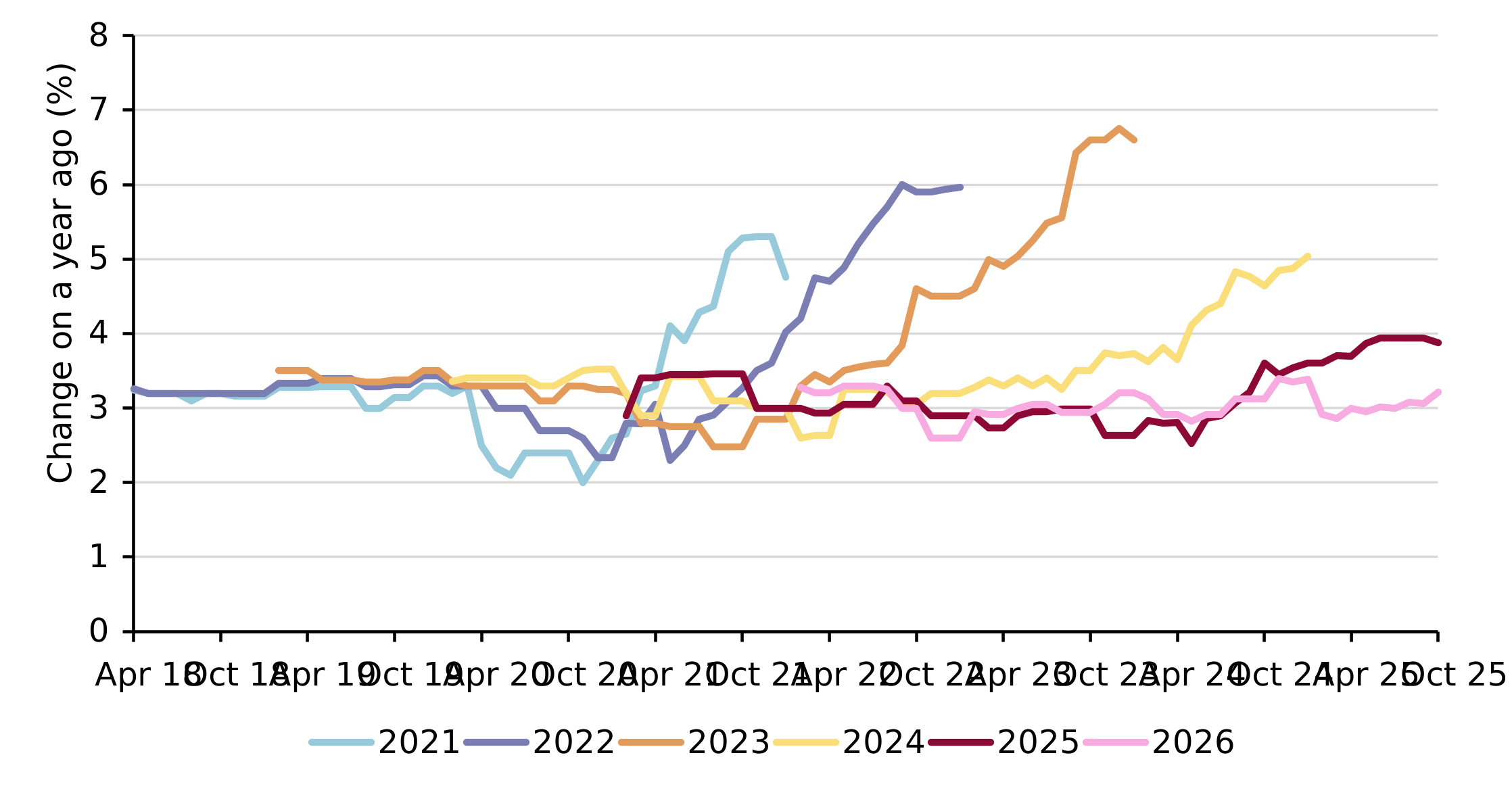
Figure 10.2 shows how our estimate of two-thirds of median hourly earnings for October 2025 has changed over time. The main driver of the upward revisions to our projections of the median has come from forecasts underestimating actual wage growth. We depicted that in Figure 2.15 in Chapter 2, with actual wage growth of around 5 per cent throughout 2025 so far. This compares with forecasts that expected wage growth to slow from around 4.6-5.0 per cent in the fourth quarter of 2024 and to around 3.0-3.6 per cent in the fourth quarter of 2025. The implication of this is that we now estimate that the NLW would have needed to be 14 pence higher from April 2025 – £12.35 an hour and not £12.21 – in order to have met two-thirds of median earnings in October 2025.
We can clearly see from Figure 10.3, that since 2020 wage growth has turned out to be much stronger than the forecasts. That is the principal reason that that our projections of the median of hourly earnings have also been revised upwards in this post-pandemic period. However, as Figure 10.1 shows, there has been far less revision to recent forecasts as they get closer to the period they are forecasting. And the difference between outturn and forecasts also appears to be narrowing in Figure 10.3.
Figure 10.2: Projected two-thirds of median earnings for those aged 21 and over, October 2025, 2023-2025
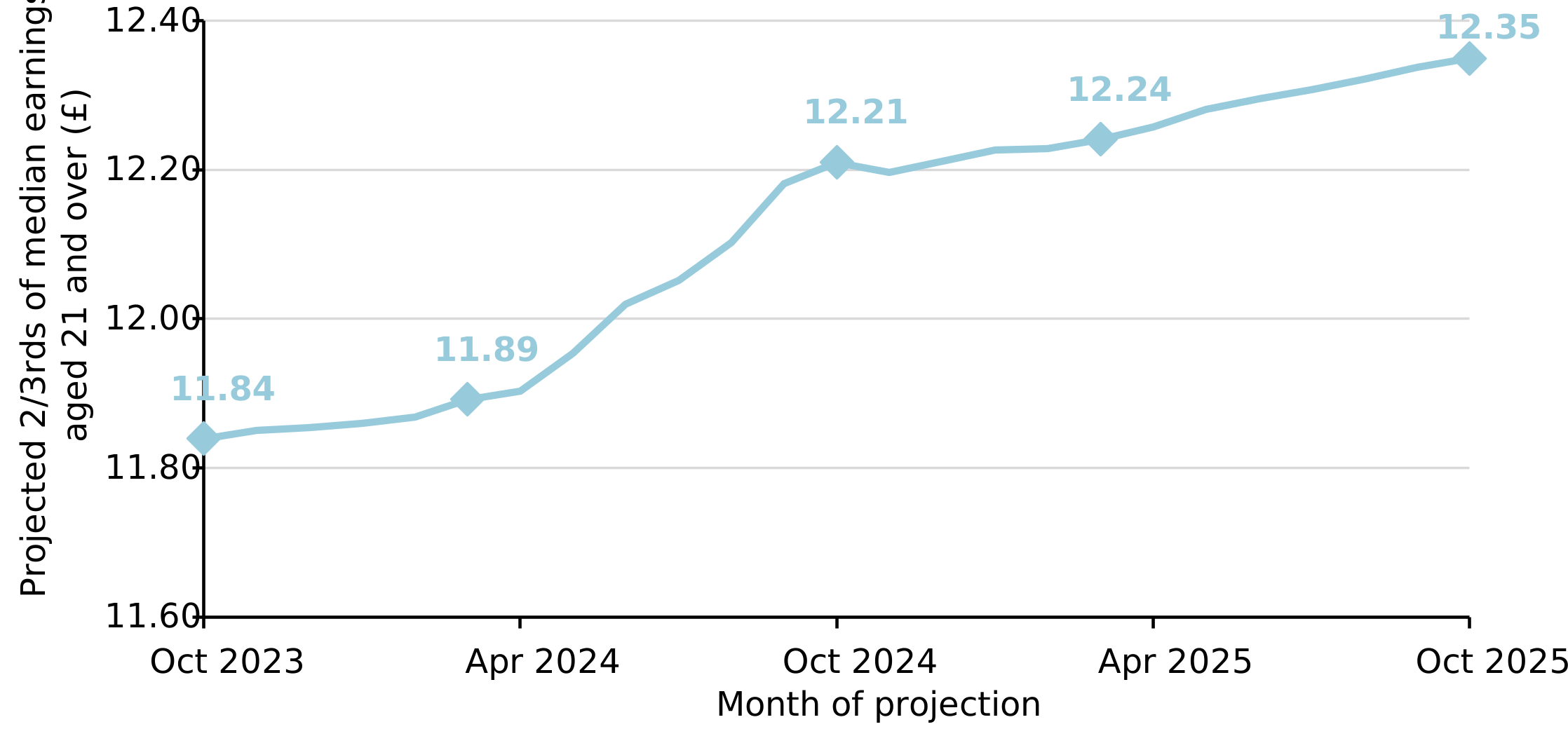
Figure 10.3: Forecast wage growth and actual wage out-turns, 2001-2025
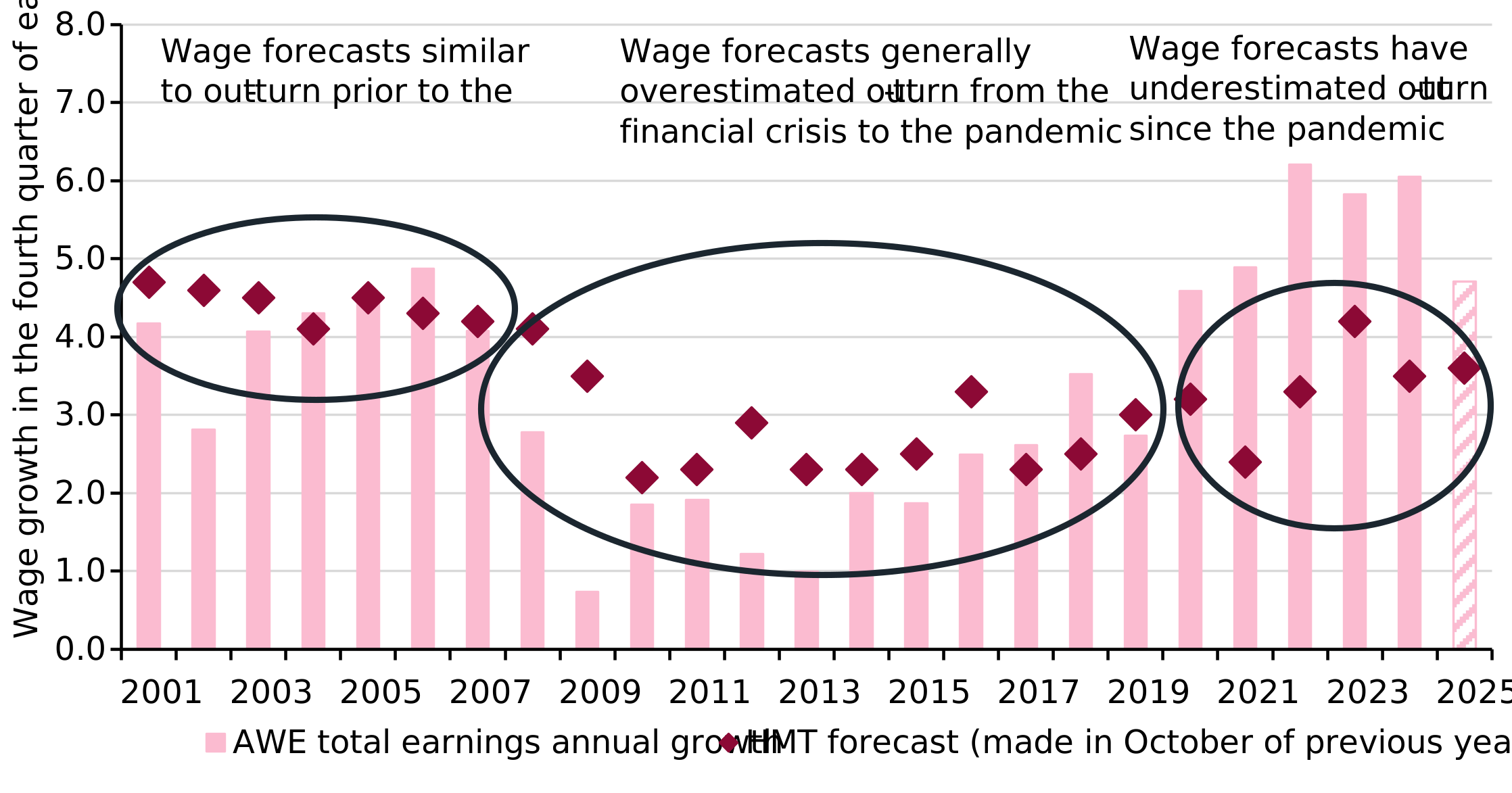
Figure 10.4 shows our three steps together. Step 1 is the baseline from ASHE for median hourly earnings excluding overtime, which in April 2025 was £18.10. Step 2 is our AWE proxy for median wage growth, which then takes us to £18.41 in August 2025. Step 3 then uses wage forecasts to project median hourly earnings for October 2026, which we estimate to be £19.13. It should be emphasised that each of these steps involve estimates or forecasts. There is therefore some uncertainty about our projection for October 2026.
Figure 10.4: Projection of median hourly earnings for those aged 21 and over, 2024-2026
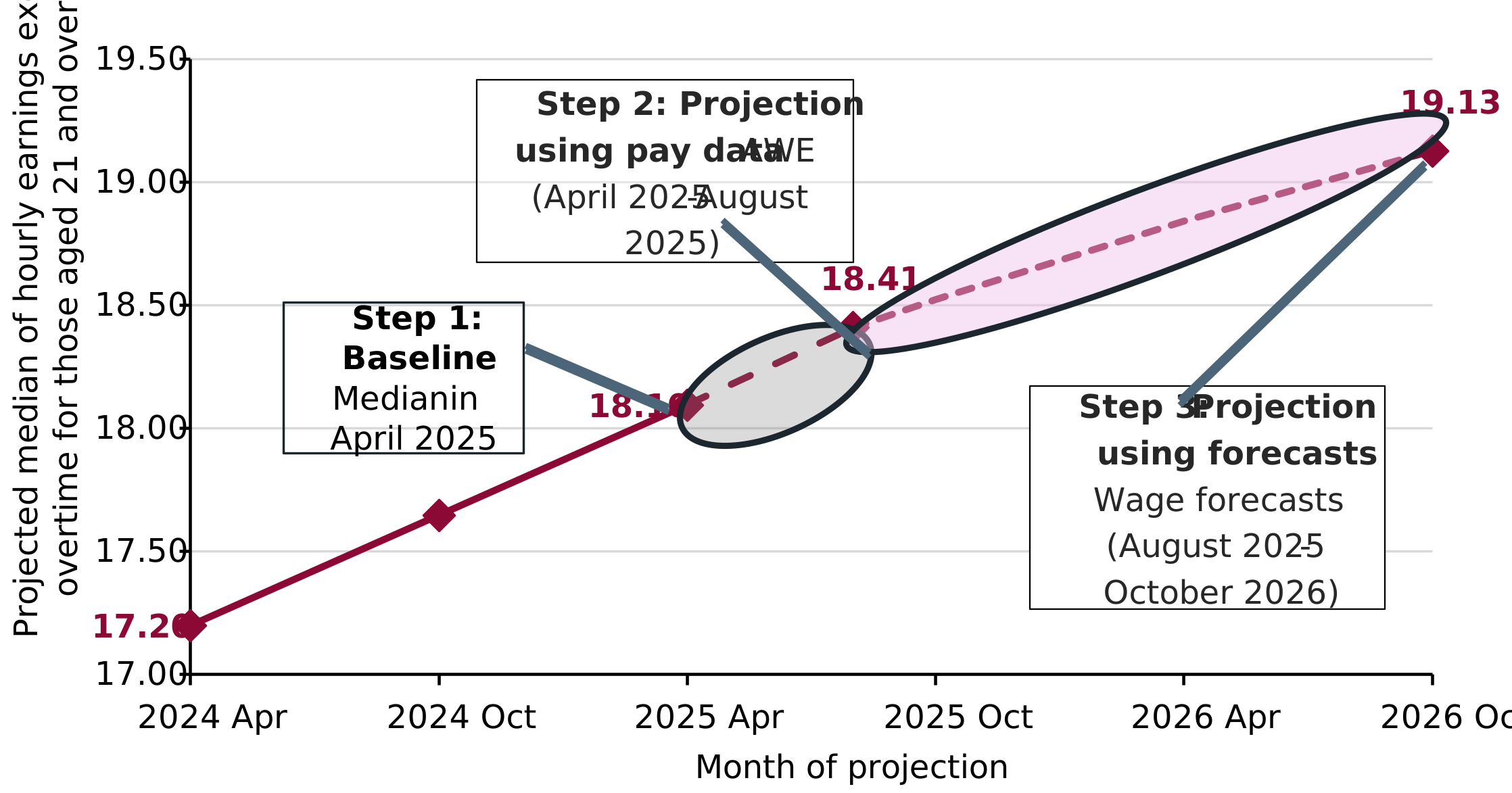
Bearing that in mind, we can determine what would be needed to reach two-thirds of median earnings in October 2026. As we have noted, there is sampling variation around our estimates for the baseline (around ±3.5 pence), and our proxy wage growth using AWE (up to ±0.5 per cent). There is also uncertainty around the forecasts. In the period pre-pandemic, forecasts were on average about ±0.5 percentage points different to the out-turn. Taking these together, there is uncertainty about where two-thirds of median hourly earnings will be in October 2026. Our best judgement is that it will lie between £12.66 and £12.84, with a central estimate of £12.75.
Figure 10.5: Actual NLW and projected two-thirds of median hourly earnings for those aged 21 and over, 2024-2026
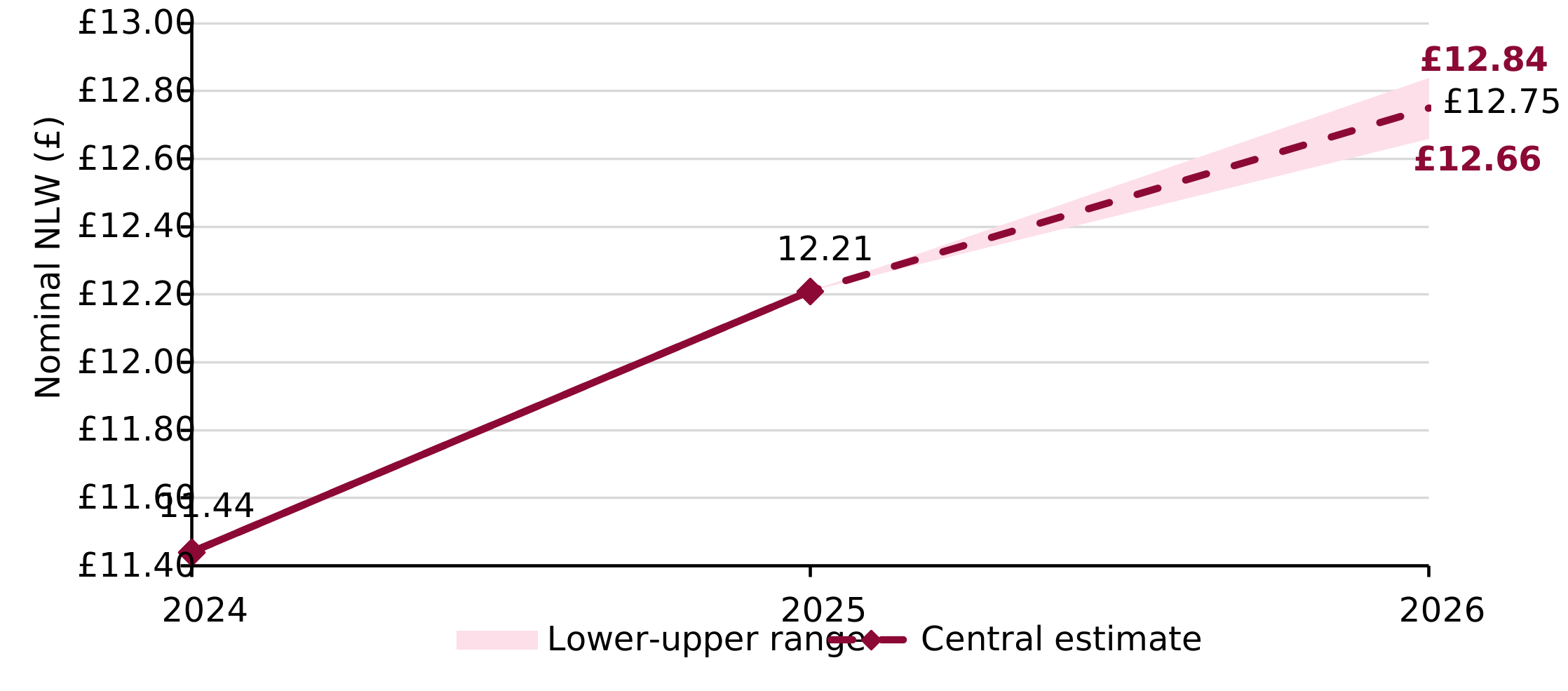
Real value of the National Living Wage
As well as meeting a floor of two-thirds of median earnings, our remit asks us to take account of inflation between April 2026 and April 2027. Figure 10.6 shows projections of the NLW using a range of inflation measures and forecast sources. The projected range of the NLW that meets two-thirds of median hourly earnings for those aged 21 and over is £12.66-£12.84. An NLW increase in 2026 in that range would be greater than the uprating needed to maintain the rate’s March 2026 real value by April 2027.
Figure 10.6: Projected NLW required to maintain its March 2026 real value, 2026-2027
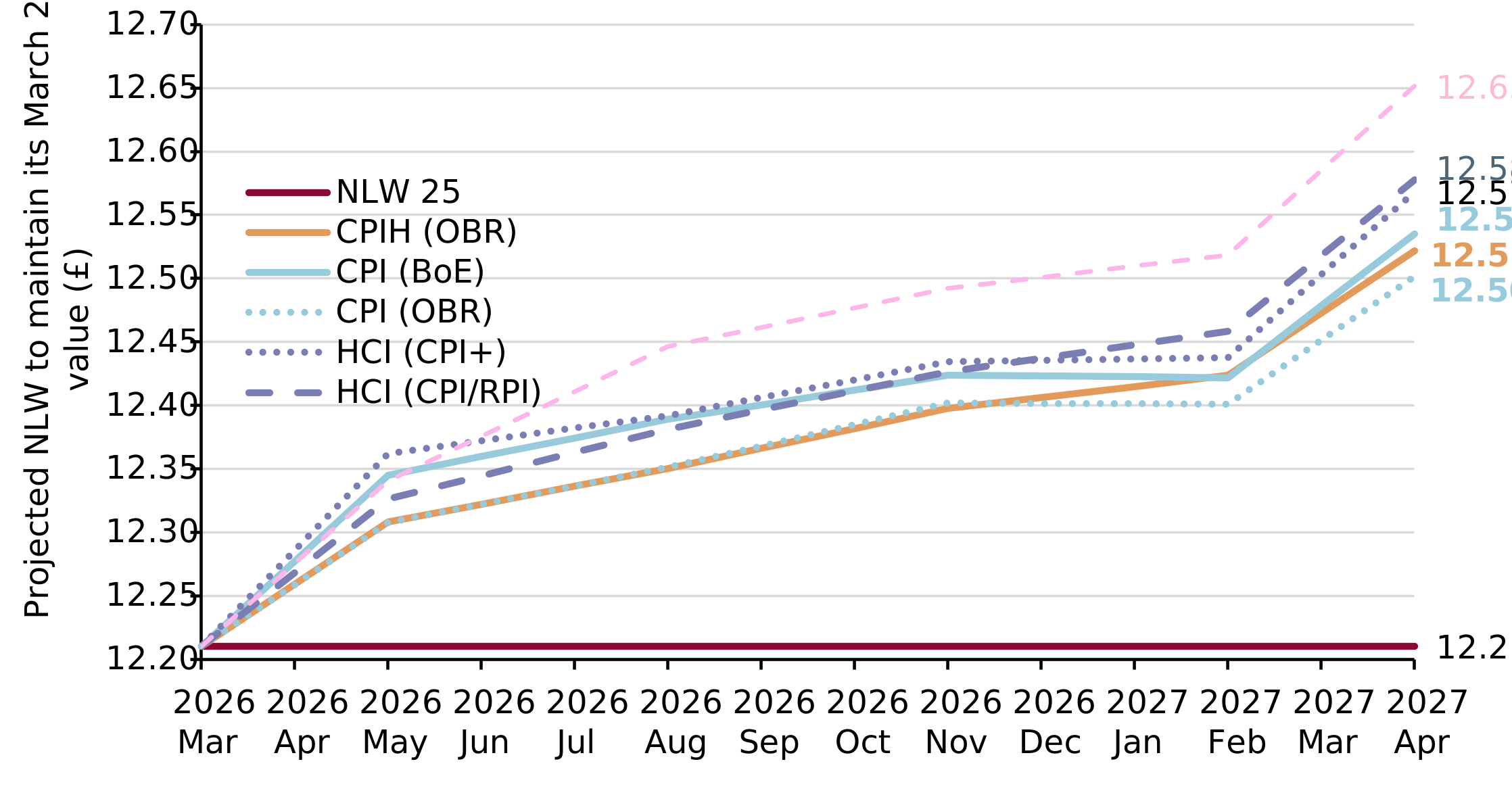
We consulted on reducing the NLW age of entitlement to 18
This year, the Government asked us to carry out our proposed consultation on how to reduce the NLW age of entitlement to 18. As part of the consultation, we presented two options for lowering the NLW age (Low Pay Commission, 2025b):
- Reduce the age of entitlement by one age group at a time. That is, first extend the NLW to 20 year olds, then 19 year olds, then 18 year olds. Rates for the remaining age groups (e.g. 18-19 year olds) could be moved closer to the NLW as they prepare to move over.
- Align the 18-20 Year Old Rate with the NLW over a number of years. This would require the 18-20 Year Old Rate to increase faster than the NLW until the two were equal and the 18-20 Year Old Rate can be abolished.
This section summarises the data and stakeholder evidence we received. First, we outline stakeholder views on the overall impact and pace of the change. Next, we compare the two options for achieving this change. We consider the impact of the options on: 18-20 year olds, the NLW, the compliance risk for employers, and the evaluation of the change.
Impact of reducing the age threshold to 18
There is widespread feeling that age-related pay for 18-20 year olds is unfair…
Young workers we spoke to often perceived the 18-20 Year Old Rate as unfair and supported its removal. As one young leisure worker put it: “If I’m doing the same job as someone else, then why should I be paid less?” A hospitality worker told us of their colleague: “He’s 20 and obviously I’m 21, so I was getting paid four pounds more than him an hour. And yeah, we’re doing the same job. So obviously it’s not fair.” Similarly, an older childcare worker reflected on their younger colleagues: “it does give a little bit of ill feeling amongst the staff because it’s your colleagues at the end of the day, whether they’re eighteen or thirty-five or whatever… they all work hard… if you’re doing the same job, it shouldn’t make any difference really should it?”
The Chartered Institute of Personnel and Development (CIPD) surveyed employers who have decreased the number of employees on youth or apprenticeship rates about their reasons for doing this. The leading reason given is that it is difficult to justify different pay for the same job (30 per cent); the next most common responses relate to the impact on staff morale or perception (18 per cent); simplicity (17 per cent); and fairness (16 per cent).
We met with several employers who supported the change as fair, both those who use the youth rates and those who do not. One childcare employer we spoke to noted that it would have a significant impact on the sector, but thought that it was the right thing to do: “Just make us do it … I’m quite keen to spend money on the staff, but sometimes other directors need a little bit of convincing and it would be quite nice if we have to pay them.” Another leisure employer who reported using the 18-20 Year Old Rate out of financial necessity told us: “I would be very much in favour of an abolition at some point… because I think it’s good and right.” One large leisure employer told us they had always paid all employees above the age of 18 the same rate, based on employee feedback and the company’s belief in fair compensation for equal work. As such, they were “very supportive” of lowering the NLW age to 18 as “it’s the right thing to do”.
…but employers are worried about costs and the impacts on youth employment
Some employers told us that reducing the NLW age threshold to 18 would have a significant impact on employment. In the British Chambers of Commerce’s (BCC) survey, 37 per cent of businesses (and 54 per cent of micro businesses) said the change would reduce hiring of 18–21 year olds. In the Federation of Small Businesses’ (FSB) survey, 25 per cent of respondents said they would recruit fewer workers aged 18–20 if the NLW applied to them.
One small business owner told us that reducing the age threshold “will be a disaster because you know you can’t get out of an 18 year old what you can out of a 22 year old” The Confederation of British Industry (CBI) agreed that employers would be more likely to hire workers with even a small amount of experience over those with none: “There are additional costs that they see for 18 year olds relative to 21 year olds… the extra support you would need to provide to a school leaver.” The Institute of Directors (IoD) also told us that its members were more hesitant to hire younger, less experienced workers, with around one in eight reporting they had reduced employment of 16–20 year olds in response to wage increases. The British Beer & Pub Association (BBPA) noted that as the NLW had risen, so had pubs’ reliance on youth rates: further increasing wages for this group could reduce their attractiveness to employers and potentially lead to increased pressure on training and performance expectations.
For many employers, a key concern was the impact on training for younger workers. As one FSB member in London stated, “As a small business, we haven’t got time to invest in a young person. But if the cost is less then I have enough time.” Another FSB member in Swansea told us that “the reality is…we’ll not train anyone. We’ll leave other people to do the training and poach them. That’s sort of what’s happening already, but it’s accelerating.”
This was particularly noted by employers who hire apprentices. The Apprentice Rate only applies to apprentices in their first year or under the age of 19. Therefore, employers noted that bringing 18-20 year olds into the NLW will also remove the ‘stepping stone’ in the wage floor for 19 and 20 year old apprentices after their first year. The British Beauty Council highlighted that “The introduction of NLW wage rates [for 18-20 year olds] after the completion of the first year of an apprenticeship may lead to a significant number of apprentices failing to complete their apprenticeship, possibly due to businesses simply being unable to bear the cost of taking on a NLW employee who cannot bring in profit in the same way as one who is already fully trained.” Similar issues were highlighted by the manufacturing sector. Make UK told us that “The concerns raised by manufacturers about the interaction between the 16-17 Year Old Rate and the full NLW rate for 18 year olds have again typically related to the impact on young apprentices. Businesses have noted that a significant increase in the cost of employing an apprentice between the ages of 17 and 18 – or someone ready to enter full-time employment at 18 having completed an apprenticeship – may make it harder for employers to make that offer of employment.”
Pace of reducing the age threshold to 18
Employers preferred a more cautious timetable
We received a range of views on how quickly the age threshold should be reduced to 18. Some employer representatives noted the state of the youth labour market and stressed caution. UKHospitality suggested deferring the target date “to when the circumstances are judged not to be damaging to the prospects for youth employment”. The BCC argued the move should be made “cautiously and gradually”, and that 2029 was “too short a timescale for employers to adjust”. They stressed the process should be designed to allow a pause if there were evidence of detrimental effects. The FSB stressed that “the LPC needs to be very careful here. We do not think rushing in the merger of the rates is worthwhile if this comes at the cost of ever-increasing numbers of NEETs.”
Some employer groups, accepting the terms of the remit, argued for implementing the change as late as possible within the current parliament. The IoD argued the transition should be “as gradual as is feasible”, given concurrent employment reforms, and this should mean targeting 2029: “Giving employers more time to plan for, and adjust to, the increased costs would help to alleviate some of the negative impacts of the change.” The CIPD also suggest aligning the rates by 2029: “The wider economic context, of higher inflation, and other areas of government policy suggest that a slower transition … should be applied.” The BBPA told us the broad view of their membership suggested “at least three years” as the necessary time period. The British Retail Consortium (BRC) emphasised the importance of “full visibility of the flight path towards [removing the 18-20 Rate] so people know that that’s coming”.
Unions asked for the change as soon as possible
Among unions, Unison and GMB both urged that 18-20 year olds be brought into the NLW by 2027, the fastest timetable set out in our consultation document. On the basis that national retailers do not tend to use the youth rates, Usdaw “support the full alignment of the NLW as soon as possible, and we do not believe there is a strong business case to delay this.”
Impact of the two options on 18-20 year olds
Reducing the age of entitlement incrementally results in large increases to the wage floor for 20 year olds
Figure 10.7 shows that if 20 year olds are brought into the NLW in 2027, this will require an increase of around 20 per cent to their minimum wage in April 2027. In contrast, the increase for 18-19 year olds can be spread over several years. 18-19 year olds will require increases of around 7 to 11 per cent each year between 2027 and 2029 for the age threshold to be lowered to 18 by 2028 or 2029.
Figure 10.7: Projected annual minimum wage increases to reach the NLW when bringing 20 year olds into the NLW in 2027 and 18-19 year olds in 2028 or 2029
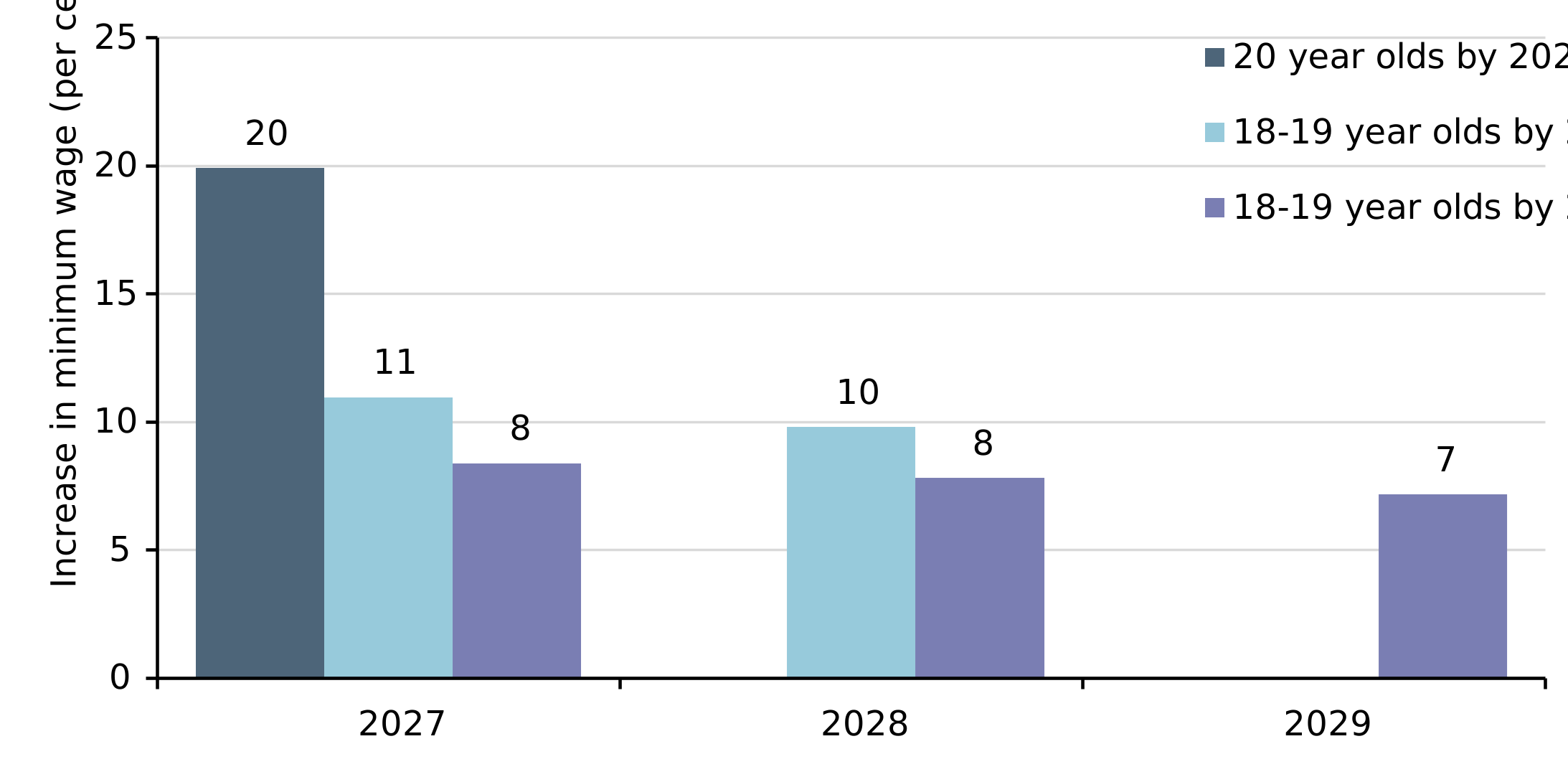
However, 20 year olds are better placed to withstand the risk
Figure 10.8 shows 70 per cent of 20 year olds are already paid at or above the NLW, making them better placed to bear the risk of a larger increase. This compares to just over half (53 per cent) of 18 year olds paid at or above the NLW.
Figure 10.8: Share of employee jobs by hourly pay relative to 18-20 Year Old Rate and NLW, by age, UK, 2025
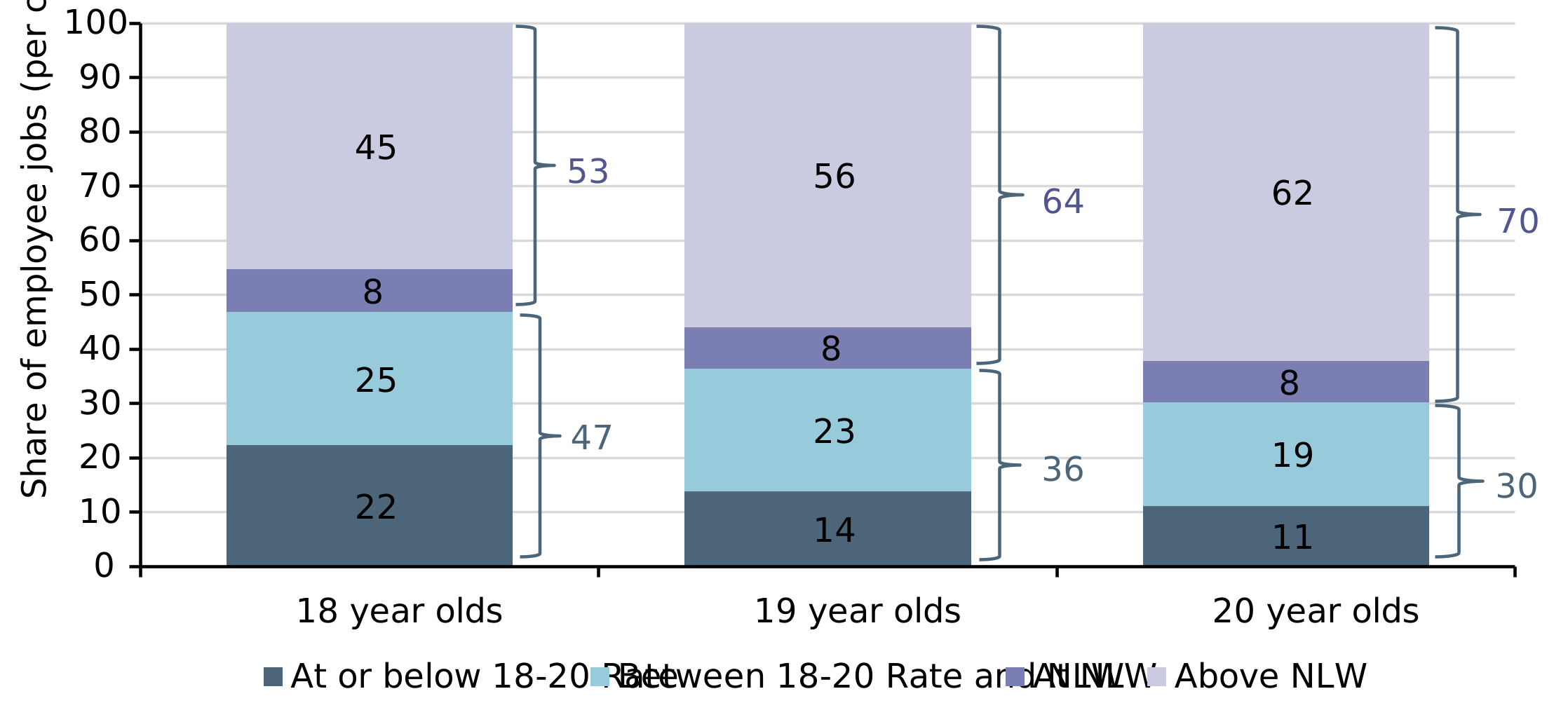
Some employers recognised a difference in work readiness between 18 and 20 year olds. As one BBPA member noted, “those joining the business at 20 years old are more likely to have in-work experience and skills relevant to the role [than 18 year olds].” Figure 10.9 shows that 20 year olds are more likely than 18 or 19 year olds to have work experience, currently be in employment and to have left full-time education. Figure 10.9 also shows that when 20 year olds are employed, they are also more likely to work full-time and earn at or above the NLW than their younger counterparts.
Figure 10.9: Characteristics of population and employees, by age, 2025
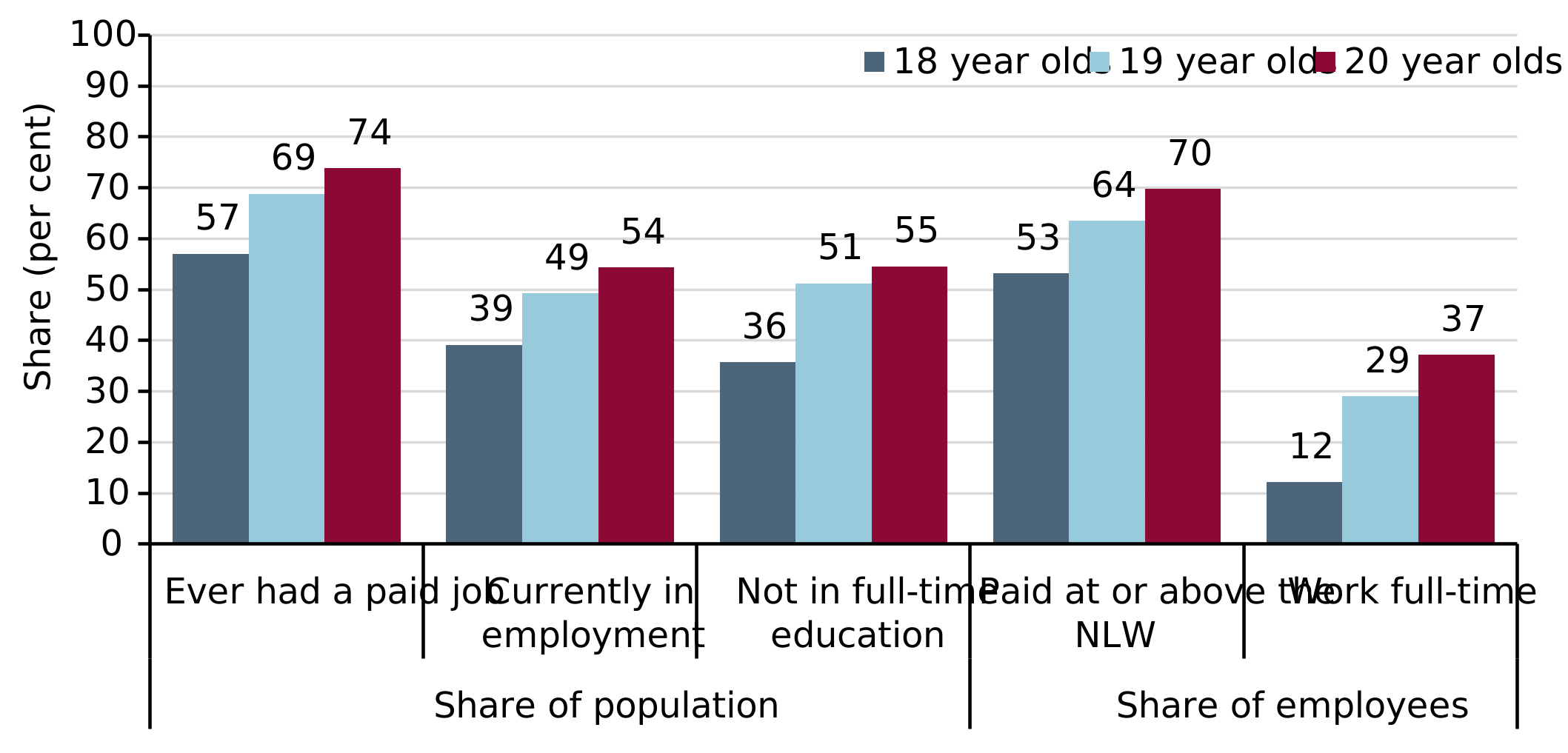
The options have implications for any NLW target based on median pay
When 18-20 year olds are brought into the NLW, any earnings target based on median pay would also be lowered. This is because young people have lower hourly earnings, and so including them in the NLW population lowers the median pay level. If 18-20 year olds are brought in one age at a time, the impact on median pay (and therefore bite) is spread out over several years. But if the 18-20 Rate is aligned over a number of years, the impact takes place in the single year when the NLW age of entitlement drops from 21 and over to 18 and over.
Unison favoured moving one age group at a time for this reason: “it appears to result in the path of the adult minimum wage following a smoother path, and avoids the dip in the path when seeking to align all age groups.” Unison noted that this effect could be mitigated by a higher NLW bite target. Indeed, if a higher bite target is set or future NLW upratings are not determined by the bite, then there is less of an immediate, noticeable effect on the NLW rate. Nevertheless, bringing in younger – and therefore lower-paid and less experienced – groups into the NLW increases the risk associated with larger NLW upratings. Therefore, the two options continue to offer differing approaches to incorporating this risk, even in the absence of a two-thirds bite target.
Lowering the age one year at a time may create compliance risks
Some stakeholders favoured aligning the 18-20 Year Old Rate due to concerns around payroll management and compliance risk. UKHospitality noted that bringing in one age at a time “risks causing administrative burden and creates greater risk of non-compliance”. Similarly, the BCC thought that aligning the rate is “the simplest for businesses to understand and administer, as it maintains consistency with existing age bands.” Concerns around complexity were not limited to employer representatives: Union of Shop, Distributive and Allied Workers (Usdaw) noted that “lowering the threshold one age at a time would create a number of complexities for employers in terms of payroll system as well as for employees”.
There is some evidence that changes to the NLW age threshold increase the risk of non-compliance. When 21-22 year olds were brought into the NLW in April 2024, underpayment increased from 3 to 4 per cent, which was the highest level seen for that age group outside of the pandemic. The increase required to bring 21-22 year olds into the NLW was smaller (£1.26, 12.4 per cent), and so it is possible that there would be more non-compliance for the 20 per cent minimum wage increase required for 20 year olds under the single age at a time option.
Small populations affected make it challenging to evaluate
The Trades Union Congress (TUC) noted in their submission that “In previous years progress has been made by lowering the threshold by one year at a time. This has proven successful and has allowed the LPC to evaluate the impact on each year cohort before moving on to the next. TUC believes this shows LPC to be a successful model of a evidence based social partnership.” As the TUC highlight, moving one age group at a time could allow an econometric evaluation of the impact on 20 year olds. Implementing a large increase for 20 year olds, while leaving 18 and 19 year olds as an unaffected control group, could allow us to detect any effects from the change before moving onto the younger ages.
However, in the absence of any improved access to HMRC microdata, the ability to detect effects from the change would likely rely heavily on the quality of the Labour Force Survey (LFS) and ASHE. Whilst the LFS sample is improving, reliance on small samples of largely proxy responses and interpreting trends over the current period would remain a challenge. If an evaluation found no employment effects on 20 year olds, this would also not guarantee the same to be true for 18 and 19 year olds, given their differing characteristics shown in Figure 10.9. Full evaluation would also require us to wait two years after bringing 20 year olds in, given the lags in the data.
Robustly identifying the effects of aligning the 18-20 Year Old Rate remains a challenge due to the data quality issues and difficulties identifying a plausible comparison group. As with any increase to the youth rates, we would still be able to monitor the labour market outcomes for 18-20 year olds after making the increases. We will also continue to pursue new methods and data sources for evaluating the increases to the youth rates.
Conclusions
This chapter has considered the implications of the remit for the real and relative values of the NLW. Stronger wage growth and subsequent upwards revisions to the 2025 wage forecasts led us to revise up our estimate of the NLW rate needed to hit two-thirds of median earnings for those aged 21 and over in 2026. Our current projection is that the NLW needs to be in a range from £12.66 to £12.84 with a central estimate of £12.75. These projections are subject to the sampling variability of the components as well as the uncertainty around the wage forecasts.
Our remit also asked us to take into account the cost of living, including inflation up to April 2027. Using the available forecasts, we judge that an NLW within the range of £12.66-£12.84 would be more than sufficient to maintain its real value by April 2027.
On young people, this chapter has considered the implications of lowering the NLW age of entitlement to 18. There is a widespread feeling that age-related pay for 18-20 year olds is unfair, but employers are concerned about costs and the impacts on youth employment and training. Unions called for the change to be made as soon as possible, while employers preferred a more cautious timetable.
This year we consulted on two approaches to changing the NLW age of entitlement. Stakeholders told us that lowering the age of entitlement incrementally could help account for the different characteristics of 20 year olds compared to 18 year olds, create a smoother path for the NLW bite, and provide the potential to first evaluate the impact on 20 year olds. However, it may also introduce administrative complexity and compliance risks.
The next chapter discusses our recommendations and their implications for the real value, bite, coverage, household incomes, and the NLW age of entitlement change.
Chapter 11: Recommendations
Key findings:
- We recommend a National Living Wage (NLW) of £12.71 to apply from April 2026 - This increase meets the Government’s target of two-thirds of median earnings for those aged 21 and over in 2026, reflects prevailing economic and business conditions, and exceeds expected inflation between April 2026 and April 2027, giving workers a real-terms pay rise.
- We recommend keeping 18-20 year olds together for another year - Meeting the Government’s ambition to lower the NLW age threshold to 18 means large increases in the wage floor for 18-20 year olds. Moving 20 year olds next year would mean an increase of over 25 per cent in their wage floor. Given the state of the youth labour market and stakeholder feedback, we think this is too risky and have decided against making this change this year.
- We recommend a rate of £10.85 per hour for the 18-20 Year Old Rate, a rise of 8.5 per cent (85 pence) - This is lower than the double-digit increases we have recommended in recent years and the increase of over 25 per cent that 20 year olds would have needed if they were to become eligible for the NLW in 2026. It does, however, continue to close the gap with the NLW.
- For 16-17 year olds we recommend an increase of 6 per cent (45 pence) to £8.00 per hour - This recommendation balances the weaker labour market for this age group with the need to ensure their rate does not become unmoored from the adult rate, particularly as Government policy is to remove the 18-20 Year Old Rate entirely, thus potentially creating a larger gap with this rate.
- We recommend keeping the Apprentice Rate aligned with the 16-17 Year Old Rate, meaning a rate of £8.00 per hour - We continue to see apprenticeship starts among the youngest age groups perform weakly; this is a long-term, complex trend where we do not believe the minimum wage to be a driving factor. We note the Government’s policy intention to refocus the apprenticeship regime on this younger cohort. We await further details on the Growth and Skills Levy and Youth Guarantee. In the longer term, we continue to believe there is merit to reform of the Apprentice Rate.
- We recommend increasing the Accommodation Offset in line with the NLW to £11.10 (an increase of 44 pence or 4.1 per cent) - This is in line with the conclusion of our review of the offset in 2022, where we stated that until there is an improvement to quality standards in accommodation we will continue to uprate the offset in line with the NLW.
- We expect little change to NLW coverage, but youth rate coverage may rise – As the bite of the NLW will change little in 2026, we expect coverage to be stable. However, while it is difficult to predict, the increases in the youth rates in 2026 are likely to increase coverage for younger workers
- The rise in the minimum wage will boost take-home pay for low-paid workers, but the actual increase varies based on tax and benefits - This year’s above-inflation uplift to Universal Credit means claimants will see a bigger rise in income than the headline National Living Wage increase, while those paying tax but not receiving benefits will see a smaller gain. The impact differs by household type however.
The Low Pay Commission’s remit in 2025
Our remit this year asked us to take slightly different approaches for different rates of the minimum wage. For the National Living Wage (NLW), there were three aspects:
- Ensure that the rate does not drop below two-thirds of median earnings for workers in the National Living Wage population.
- Take account of the cost of living, including inflation forecasts between April 2026 and April 2027.
- Take account of the impact on business, competitiveness, the labour market and the wider economy.
The remit sets out the Government’s desire to balance its ambition to lower the NLW age of entitlement to 18 with its concern about current levels of youth unemployment. So in seeking to “narrow the gap” for the 18-20 year olds, we’re asked to take account of the effects on employment of younger workers, incentives for them to remain in training or education and the wider economy.
For 16-17 year olds and for apprentices, the remit remains the same as in previous years – to raise rates as high as possible without damaging employment.
In this chapter we set out the rationale for our recommendations and how they’ve taken account of the factors listed in our remit, beginning with the National Living Wage.
Our recommendations
National Living Wage
GDP growth has been mixed over the last 18 months or so, following the downturn at the end of 2023. Forecasts are for GDP growth in 2025 and 2026 (around 1.4 and 1.2 per cent respectively) to improve on what we saw in 2023 and 2024 – but remain below the norms of the 2010s and the 2000s. Productivity growth has remained sluggish. Stakeholders tell us that growth has been constrained by general economic uncertainty, restrictive monetary policy and low consumer demand, particularly in the consumer-facing services where many low-paid workers work.
Workers and their representatives told us of their ongoing struggles with the cost of living. Workers and unions feel that NLW increases have been insufficient to mitigate higher living costs, particularly food, energy and housing, leaving workers struggling with financial insecurity. We also heard about the difficulties caused by the interactions between the NLW and the tax and benefits system. Unions highlighted continued insecurity over hours and limited progression opportunities. Some workers are experiencing work intensification while many are not able to secure the additional hours they want. Others are working very long hours just to make ends meet.
Employers told us they are struggling with higher labour and other input costs as well as subdued household spending. They are also concerned about future policy and geopolitical uncertainties. In addition, they said it is getting harder to absorb rising costs in their profits. More businesses – particularly small ones – said they are reducing investment and adopting a cautious approach to headcount. The pressure on investment budgets is making employers more nervous about future growth and productivity increases.
The labour market has softened since last year. When we made our recommendations last year, HMRC’s Pay As You Earn Real Time Information (PAYE RTI) data showed payroll employment was still growing, albeit at a slower rate. We now know it fell from the end of 2024 to the summer of 2025 – though it appears to have stabilised since then.
However, on other measures the labour market has weakened: unemployment has risen and vacancies have fallen below pre-pandemic norms. While some job vacancy indicators have stabilised or improved slightly in recent weeks, this has yet to translate into improving job numbers or falling unemployment. Lower vacancy rates and weak recruitment but only mild rises in unemployment and redundancies have led to the characterisation of the labour market as “low hire, low fire”.
Some lower-paying industries have weakened to a greater extent. Vacancies in retail and hospitality are well below pre-pandemic levels (in both sheer numbers and as a share of jobs in those industries). Hospitality stakeholders have been clear that the sector is struggling; PAYE RTI data suggest the hospitality sector has lost over 70,000 jobs since the summer of 2024 and GDP data show that it has never recovered pre-pandemic levels of output.
A key challenge this year has been separating out the causes of the changes we have seen in the low-paid labour market, due in part to the continued weaknesses in the evidence base. Greater job losses in low-paying sectors may suggest a minimum wage effect, but there are also other forces at work. In particular, the changes to employer National Insurance contributions (NICs) caught firms off guard, compounding the effects of the NLW increase by raising costs in lower-paying parts of the economy. We heard that while the NLW can be a challenge, it is at least something that is expected and planned for. This was not the case with the NICs changes. Evidence from the Chartered Institute of Personnel and Development (CIPD) suggests that even among firms who say the NLW has a large impact on their wage bill, more thought the NICs increase was the bigger cost.
Having comprehensively considered the available evidence base, our judgement is that the recent NLW increases have not had a significant negative impact on jobs. The number of jobs covered by the NLW rate actually fell slightly, when we had expected it to rise. Also, those parts of the country with higher NLW coverage have tended to see their employment (as measured by PAYE RTI) fall by less than other parts of the country. Furthermore, there was an uptick in workers leaving the wage floor for higher-paid work (though fewer moved employer), suggesting some demand is still there.
We heard that passing on the cost of NLW rises to consumers via price increases was an increasingly common response. However, while the NLW is no doubt an important cost driver in some industries, the CIPD’s summer Labour Market Outlook survey found that NICs and energy cost increases were bigger drivers of costs overall. Our most recent analysis confirms our previous assessment that the NLW has a minimal impact on inflation.
We note the Government’s ambition for a genuine living wage. The remit asks us to take account of the cost of living, including inflation forecasts between April 2026 and April 2027. In response, we have continued to consider a range of cost of living measures. In addition, we have examined the NLW’s impact on poverty.
Balancing all of these factors, we recommend an NLW increase of 4.1 per cent to £12.71 (a 50 pence per hour increase). A purely formulaic approach to setting the NLW would yield a different figure, the calculations for which are set out in Chapter 10. However, the NLW is not set by formula; it relies on the judgement made by the expert, independent LPC. Our judgement takes account of the impacts on the economy and labour market, representations from employers and workers and uncertainty in the statistical data and forecasts. Our view is that this increase meets the Government’s target of two-thirds of median earnings for those aged 21 and over in 2026, reflects prevailing economic and business conditions, and exceeds expected inflation between April 2026 and April 2027, giving workers a real-terms pay rise.
Youth rates of the National Minimum Wage
The remit sets out the Government’s desire to balance its ambition to lower the NLW age of entitlement to 18 with its concern about current levels of youth unemployment.
The youth labour market is of concern to us. A “low hire, low fire” labour market is a challenge for young people as they are more dependent on vacancies. Older workers are more likely to already be in work and so are more protected in a “low fire” labour market. There has also been a concerning rise in the rate of young people not in education, employment or training (NEET).
Young people are also more likely to work in hospitality and retail, which have seen significant falls in vacancies and employee numbers. In practice though, it is difficult to separate out the NMW effects from other pressures on these sectors, such as consumer spending, NICs changes and monetary policy. The last two increases in the 18-20 Year Old Rate were large in both cash and percentage terms. And while coverage has increased, our assessment is that the evidence is not sufficient to say that these increases have affected young people’s employment overall.
Commissioners are mindful though that meeting the Government’s ambition to lower the NLW age threshold to 18 within this parliament necessitates large increases in the wage floor for 18-20 year olds. In our consultation this year, we asked for stakeholders’ views on ways of doing this, including moving 20 year olds onto the NLW in 2026, which would have meant an increase of over 25 per cent in their wage floor. Given the state of the youth labour market and stakeholder feedback, we think this is too risky and have decided against making this change this year. Instead, we recommend keeping the 18-20 year olds together for another year.
We have debated how and when to best deliver the changes needed to meet the Government’s ambition to lower the NLW age to 18. In light of youth labour market conditions, we judge it better to take a cautious approach and backload the increases needed to reach alignment. We therefore recommend a rate of £10.85 per hour for the 18-20 Year Old Rate, a rise of 8.5 per cent (85 pence). This is lower than the double digit increases we have recommended in recent years and the increase of over 25 per cent that 20 year olds would have needed if they were to become eligible for the NLW in 2026.
Our proposed pathway to meeting the Government’s ambition is to reduce the NLW eligibility age to 20 in 2027. The evidence, including our consultation, suggests that the labour market treats 20 year olds differently to 18 and 19 year olds, and that around 70 per cent of 20 year olds are already paid at or above the NLW. Thereafter, we propose that 18 and 19 year olds will move together so that the NLW age will be lowered to 18 in 2028 or 2029. However, all of this will be subject to economic conditions and Government policy towards young people at the time. We will consult further with stakeholders on this approach.
For 16-17 year olds we recommend an increase of 6 per cent (45 pence) to £8.00 per hour. This recommendation balances the weaker labour market for this age group with the need to ensure their rate does not become unmoored from the adult rate, particularly as Government policy is to remove the 18-20 Year Old Rate entirely, thus creating a larger gap with this rate.
Apprentices
We recommend keeping the Apprentice Rate aligned with the 16-17 Year Old Rate, meaning a rate of £8.00 per hour. We continue to see apprenticeship starts among the youngest age groups perform weakly; this is a long-term, complex trend where we do not believe the minimum wage to be a driving factor. We note the Government’s policy intention to refocus the apprenticeship regime on this younger cohort. We await further details on the Growth and Skills Levy and Youth Guarantee. In the longer term, we continue to believe there is merit to reform of the Apprentice Rate, including exploring the idea of an apprentice minimum wage that is a discount against NMW age rates, and we will continue to discuss this with stakeholders in more detail in the coming year.
Accommodation Offset
We recommend increasing the Accommodation Offset in line with the NLW to £11.10 (an increase of 44 pence or 4.1 per cent). This is in line with the conclusion of our review of the offset in 2022, where we stated that: “The value of the offset as a proportion of the NLW will not increase significantly until we have some assurance that there are robust minimum standards in place for accommodation quality and that these are enforced.” We note that stakeholders, including UK Hospitality, have offered their assistance in establishing a solution to the question of how quality is assured in accommodation.
Sleep-in shifts in social care
A year ago we noted that adult social care workers continued to raise the matter of sleep-in shifts, and we recommended that pay arrangements for these shifts should be addressed within the planned Fair Pay Agreement for the sector. As set out in Chapter 9, this remains our position. On 30 September 2025, the Department for Health and Social Care launched a consultation on the remit for the Fair Pay Agreement; we have put forward our recommendation to this consultation
Criteria for increasing the National Living Wage target
Finally, the remit asked for our views on the criteria that would need to be met in order for the baseline target of the NLW rate to increase beyond the current two-thirds of UK median earnings level within this Parliament. We will provide further information in a forthcoming, separate report.
Implications of the rates
The bite of the NLW will remain relatively stable
We estimate that the increase of the NLW to £12.71 will lead to a ‘bite’ (the NLW as a percentage of median hourly earnings) of 67.5 per cent in April 2026 (Table 11.1). However, because pay growth between April and October next year is expected to be slower than it was this year (1.5 per cent in 2026 compared to 2.4 per cent in 2025), we do not expect the bite to fall by as much through 2026 as we estimate it did in 2025. We expect the bite to meet the Government’s target for the NLW to reach two-thirds of median hourly earnings in October 2026.
We expect the bite of the youth rates to rise next year because of the significant increases to those rates. However, the projections in Table 11.1 may overstate these increases. They assume that median pay grows by 4.1 per cent for every rate population. This is a reasonable assumption for the adult population (those aged 21 and over), but based on recent trends, it could underestimate median pay growth for younger workers and apprentices. Since the pandemic, median pay has grown faster for younger workers than older workers and this may continue to be the case. However, we do not produce (or know of any other organisation that produces) an age-specific median wage forecast.
Table 11.1: Median hourly pay and bite projections, UK, 2025-2026
| April 2025 | April 2026 | |||||
|---|---|---|---|---|---|---|
| National Minimum Wage Rate | Rate | Median | Bite | Rate | Median | Bite |
| NLW (21+) | £12.21 | £18.10 | 67.5% | £12.71 | £18.84 | 67.5% |
| 18-20 | £10.00 | £12.36 | 80.9% | £10.85 | £12.87 | 84.3% |
| 16-17 | £7.55 | £9.50 | 79.5% | £8.00 | £9.89 | 80.9% |
| Apprenticeship rate | £7.55 | £10.92 | 69.1% | £8.00 | £11.37 | 70.3% |
We expect NLW coverage to remain stable, but youth coverage is likely to increase
With the NLW bite in April 2026 expected to remain the same as in April 2025, we also expect the share of jobs paid up to 5 pence above the NLW (which we refer to as coverage) to remain stable over the next year. These estimates are in Table 11.2.
Our method of forecasting coverage is based on the historic relationship between bite and coverage. Historically bite and coverage increased together, although since the introduction of the NLW that relationship has not always held. After an initial jump in coverage at the introduction of NLW, coverage remained relatively stable despite ongoing increases in the bite. Following the pandemic, increases in the bite were accompanied by falls in coverage due to the tight labour market. Because we expect no change in the bite of the NLW in April 2026 relative to April 2025, our model expects no change to NLW coverage either.
We expect coverage under the youth rates to increase between April 2025 and April 2026. However, the estimates in Table 11.2 may overestimate coverage for the younger age groups. Like our bite projections, our coverage estimates rely on wages growing at the same rate on average in the younger rate populations as in the NLW population. In the recent past, hourly pay has grown faster among younger workers. We have not found a reasonable alternative way of forecasting coverage for these groups. We therefore use these forecasts as indicative numbers, but caution that they could be overestimates. On the other hand, our projection for 16-17 year olds may underestimate coverage this year because the 16-17 Year Old Rate is increasing to exactly £8. Hourly pay tends to bunch around rounded numbers, even in the absence of a minimum wage rate. This increases coverage and it is not accounted for in our projections. Therefore, we may underestimate coverage for 16-17 year olds, as we did last year for 18-20 year olds when their minimum wage rate increased to exactly £10 (see Chapter 6).
Table 11.2: Outturns and projections for the number and share of jobs covered, UK, 2025-2026
| April 2025 | April 2026 | |||
|---|---|---|---|---|
| Rate | Share of jobs (%) | Number of jobs (‘000s) | Share of jobs (%) | Number of jobs (‘000s) |
| NLW (21+) | 6.1 | 1,756 | 6.1 | 1,754 |
| 18-20 | 15.1 | 162 | 18.5 | 199 |
| 16-17 | 21.8 | 68 | 23.3 | 72 |
| Apprenticeship | 17.2 | 32 | 17.7 | 33 |
| Total | 6.6 | 2,019 | 6.7 | 2,059 |
Implications for household income
Take-home pay is also affected by the tax and benefit system
The increase to the minimum wage will increase take-home pay for minimum wage workers, but the exact increase to any particular worker will depend on the tax they pay and the benefits they receive. As discussed in Chapter 4, interactions between the minimum wage and the tax and benefit system are complex and highly dependent on household circumstances.
This year the Government announced that it would increase the standard Universal Credit allowances by more than usual. Universal Credit payments are usually uprated at the beginning of each financial year in line with the increase in Consumer Price Index (CPI) inflation from the previous September. This year the Government announced that in April 2026 it will increase the standard Universal Credit allowances by 6.2 per cent (Try, 2025) – higher than the 3.8 per cent September CPI reading, and higher than the 4.1 per cent increase in the NLW.
These changes to Universal Credit mean that NLW workers who receive Universal Credit will benefit from a greater increase in their take-home income than the 4.1 per cent increase in the NLW. In contrast, NLW workers who pay tax, but do not receive Universal Credit will receive a smaller increase to their take home income than the headline 4.1 per cent. This is because tax thresholds remain frozen, resulting in an increase to workers’ average tax rates under the new NLW.
Figure 11.1: Increase in take-home pay for NLW workers by hours worked, single person working full-time (left panel) and couple (one full-time worker) with two children, England
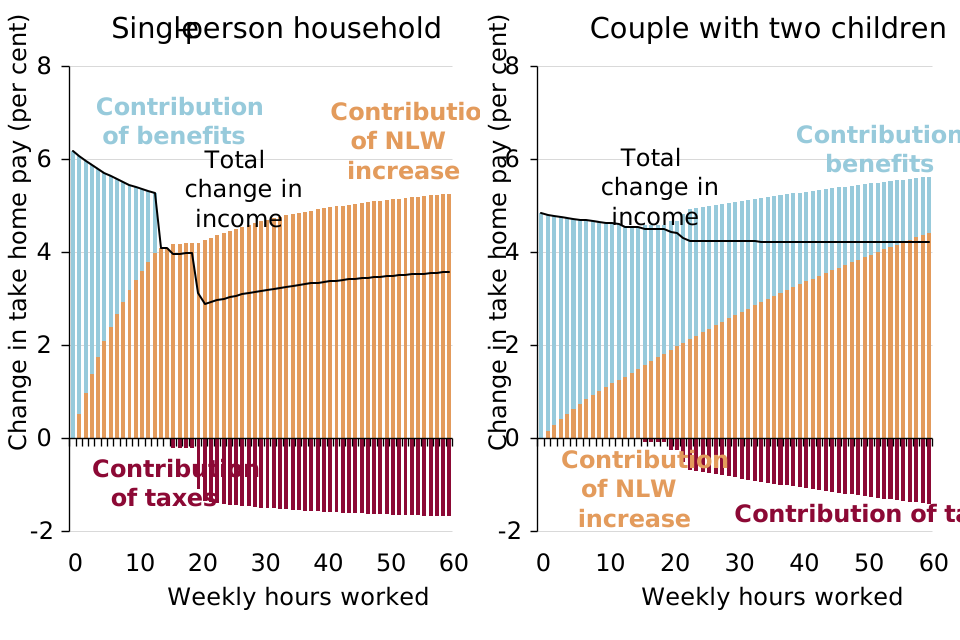
Figure 11.1 shows how take-home income is expected to change for two representative households, depending on how many hours they work. The left panel shows the increase in income for a single person without children. A full-time worker (working 35 hours per week) would receive a 3.3 per cent (or £11.90) increase to their weekly take-home income. In contrast, a worker in this household situation working fewer than 13 hours a week and receiving Universal Credit, would receive a 5.3 per cent increase to their weekly take-home pay.
The right panel shows the changes for a couple household with two school-aged children, where one of the members of the couple works and the other does not. Because this household would still receive Universal Credit regardless of how many hours the worker in the family works, this household’s take-home income increases by at least 4.2 per cent. In previous years, when Universal Credit has increased by less than the NLW, this household received smaller increases to their take-home income than the headline NLW increase. If the worker in this household works 35 hours per week, their take home income would increase by 4.2 per cent, or £24.76. These calculations are further set out in Table 11.3.
Table 11.3: Household incomes for two example households with a NLW worker, 2025/26-2026/27
| 25+ worker, 35 hour week on NLW | Level (£) | Change | ||
|---|---|---|---|---|
| 2025/26 | 2026/27 | £ | Per cent | |
| Pre-tax hourly rate | 12.21 | 12.71 | 0.50 | 4.1 |
| Gross annual pay | 22,283.25 | 23,195.75 | 912.50 | 4.1 |
| Gross weekly pay | 427.35 | 444.85 | 17.50 | 4.1 |
| Single, working on NLW, no children | ||||
| Weekly deductions | ||||
| Auto enrolment contribution | 15.38 | 16.26 | 0.88 | 5.7 |
| National Insurance contribution | 14.83 | 16.23 | 1.40 | 9.4 |
| Income Tax | 34.18 | 37.50 | 3.32 | 9.7 |
| Weekly benefits | 0.00 | 0.00 | 0.00 | na |
| Net weekly income | 362.96 | 374.86 | 11.90 | 3.3 |
| Weekly post-tax/benefit change | -64.39 | -69.99 | -5.60 | 8.7 |
| Hourly rate post-taxes/benefits | 10.37 | 10.71 | 0.34 | 3.3 |
| Couple, one working on NLW, 2 children | ||||
| Weekly deductions | ||||
| Auto enrolment contribution | 15.38 | 16.26 | 0.88 | 5.7 |
| National Insurance contribution | 14.83 | 16.23 | 1.40 | 9.4 |
| Income Tax | 29.35 | 32.67 | 3.32 | 11.3 |
| Weekly benefits | 217.54 | 230.41 | 12.87 | 5.9 |
| Net weekly income | 585.34 | 610.10 | 24.76 | 4.2 |
| Weekly post-tax/benefit change | 157.99 | 165.25 | 7.26 | 4.6 |
| Hourly rate post-taxes/benefits | 16.72 | 17.43 | 0.71 | 4.2 |
Implications in real terms
In Chapter 10, we showed in Figure 10.6 that an NLW of £12.65 or more in 2026 would be sufficient to maintain its real value up to April 2027 against a variety of inflation measures. As we have recommended an increase to the NLW to £12.71, this should actually increase its real terms value.
Another way of looking at this is to consider things in April 2026 prices. The analysis that follows uses CPI as the measure of inflation. Figure 11.2 shows that when the NLW increases to £12.71 in April 2026, it will be at its highest real value since the National Minimum Wage (NMW) was introduced in April 1999. The nominal increase in the NLW in April 2026 of 4.1 per cent or 50 pence is projected to be a real terms increase of around 1.5 per cent. Its real value will then fall over the year to £12.42 by April 2027, but will still be 1.5 per cent higher in real terms than in March 2026 (prior to the uprating).
Figure 11.2 also shows that the NMW increased in real value up to the financial crisis but did not get back to its January 2009 real value until the NLW was introduced in April 2016. It continued increasing in real terms until the pandemic. The NLW lost nearly 9 per cent of its real value between April 2021 and March 2023. It took until the increase in April 2024 to restore its value in real terms. The latest increase in 2025 and the recommended increase in 2026 will take it to its highest ever level in both nominal and real terms.
Figure 11.2: The real value of the National Living Wage and National Minimum Wage, measured against CPI (2026 prices) 1999-2027
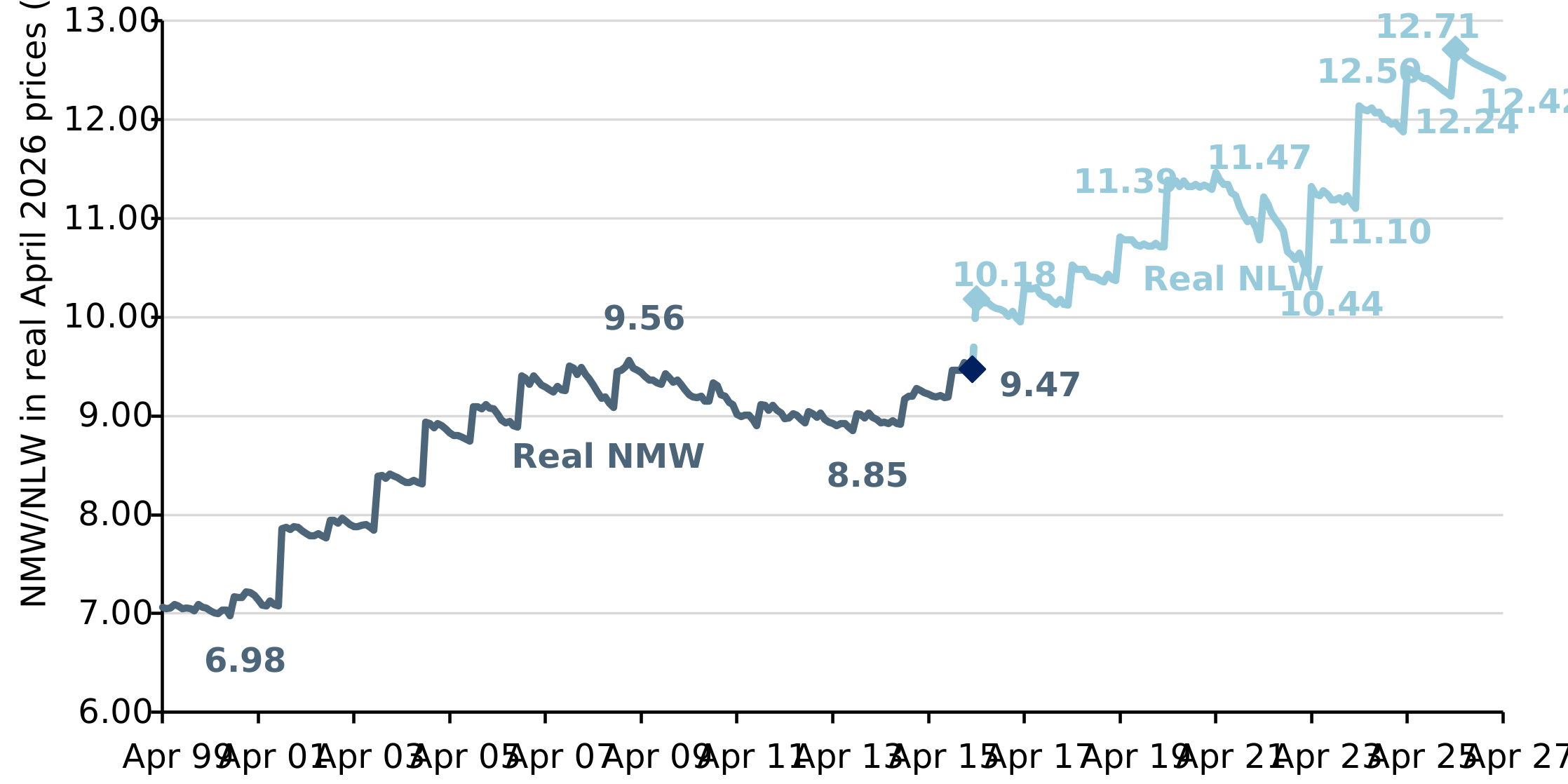
Implications for lowering the NLW age of entitlement to 18
An 18-20 Year Old Rate of £10.85 will increase its share of the NLW from 82 to 85 per cent in April 2026. This means that meeting the Government’s ambition to lower the NLW age threshold to 18 within this parliament will require further large increases to the wage floor for 18-20 year olds. Figure 11.3 illustrates our proposed pathway for achieving this. Our proposal is to reduce the NLW eligibility age to 20 in 2027 and then 18 in 2028 or 2029. This will continue to be subject to economic conditions and Government policy towards young people at the time. We will consult further with stakeholders on this approach.
Figure 11.3: Illustrative pathways to reduce NLW eligibility to 18, 2025-2029
Conclusions
In summary, the proposed increase in the NLW to £12.71 in April 2026 not only maintains but improves its real value, marking a significant milestone since the introduction of the NMW in 1999. This uplift ensures that the NLW reaches its highest ever level in both nominal and real terms, reflecting the commitment to safeguarding workers’ purchasing power against inflation. The gradual recovery and subsequent growth of the real value of the NLW since the challenges of the pandemic and the cost-of-living crisis further highlight the resilience and adaptability of the minimum wage framework.
Looking ahead, the ambition to lower the NLW age of entitlement to 18 presents both opportunities and challenges. Achieving this will require substantial and carefully planned increases to the 18-20 Year Old Rate, balanced against prevailing economic conditions and the interests of young people. Ongoing consultation with stakeholders will be crucial to ensure that the transition is both fair and sustainable. Overall, the recommendations set out in this document aim to support low-paid workers while considering the broader economic impacts and our continued engagement with all affected parties.
Appendix 1: Consultation respondents
We are grateful to all those people and organisations that contributed to the preparation of this report. We would like to thank, in particular those who provided evidence, either written or oral, and those who organised or participated in Low Pay Commission visits and meetings. All such individuals and organisations are listed below, unless they expressed a wish to remain unacknowledged.
This year, we invited respondents to submit their responses via our online consultation platform as well written evidence by e-mail. We would like to thank all those who provided responses and have listed individuals and organisations below, unless they expressed a wish to remain unacknowledged.
| Alexander Money |
| Association of Convenience Stores |
| Association of Directors of Adult Social Services |
| Association of Labour Providers |
| Bar Nova Limited |
| Bayes Business School, City St Georges, University of London |
| The Belt Makers |
| Booksellers Association |
| British Beauty Council |
| British Beer & Pub Association |
| British Chambers of Commerce |
| British Printing Industries Federation |
| British Retail Consortium |
| Card Factory plc |
| Care England |
| CBI |
| Ceilidh Smith |
| Center Parcs UK |
| The Chartered Institute of Payroll Professionals (CIPP) |
| Chartered Institute of Personnel and Development (CIPD) |
| The Chartwell Practice Ltd |
| Christians Against Poverty |
| Citizens Advice Swansea Neath Port Talbot |
| CR Electrics (SW) Ltd |
| Community Leisure UK |
| Community trade union |
| Dundee & Angus Chamber of Commerce |
| Dundee & Angus College |
| Early Years Alliance |
| Education For Industry Group |
| Equestrian Employers Association |
| Eurilait Ltd |
| Exeter College |
| Evan |
| Family Business UK |
| Federation of Small Businesses |
| Food and Drink Federation |
| Food and Drink Wholesale UK |
| Freelancer & Contractor Services Association (FCSA) |
| Fusion Lifestyle |
| The Gallery Cafe |
| GMB Union |
| Greggs Plc |
| Hair & Barber Council |
| Halo Leisure Services Limited |
| Henry Scrope |
| HM Government |
| Homecare Association |
| Horticultural Trades Association |
| Hospitality Ulster |
| Hydraulic Projects Ltd |
| Incomes Data Research |
| Institute of Directors |
| Institute for Fiscal Studies |
| Intergenerational Foundation |
| Johnsons Nurseries Limited |
| Joseph Rowntree Foundation |
| Kay Martin, Café 25, Bath |
| Labour Research Department |
| Living Wage Foundation |
| Local Government Association |
| Low Incomes Tax Reform Group |
| Make UK |
| McDonald’s UK |
| Michael Nisbet |
| Millswood Nurseries Limited |
| M J Rebeiro & E C Seabourn-Wren t/a The Carlton Hotel |
| National Day Nurseries Association |
| National Farmers’ Union |
| National Federation of SubPostmasters |
| National Hair & Beauty Federation |
| National Institute of Economic and Social Research |
| Newry Chamber of Commerce |
| NFU Scotland |
| Newry & Mourne Enterprise Agency |
| NE Chamber of Commerce |
| Nicola Alison |
| Organise |
| Papworth Trust |
| Penylan Country Lodge Kennels & Cattery |
| Phoenix Education Day Nursery |
| Procleanse Ltd |
| Professor Deirdre McCann, Durham Law School, Durham University |
| Puffins of Exeter Ltd |
| Recruitment & Employment Confederation |
| Resolution Foundation |
| Road Haulage Association |
| Royal Mencap Society |
| Scottish Grocers’ Federation |
| Scottish Women’s Convention |
| Skills for Care |
| Society of London Theatre & UK Theatre |
| Sophie Peach |
| Stephen Mika |
| Superdrug Stores Plc |
| Susanna Glenister |
| Swansea BID |
| Swansea Council |
| Taking Care |
| Tenby Stores and Post Office |
| Tesco Plc |
| Tracy Hayden |
| Trades Union Congress |
| UK Cinema Association |
| UKHospitality |
| Union of Shop, Distributive and Allied Workers |
| UNISON |
| Unite the Union |
| University of Leeds, University of Manchester, and City St. Georges, University of London |
| Voluntary Organisations Disability Group (VODG) |
| White Horse Child Care Ltd |
| Wm Morrison Supermarkets |
| Worker Support Centre |
| Work Rights Centre |
| XpertHR |
| Youth Futures Foundation |
Appendix 2: Research evidence
Commissioned research
For this report, we commissioned six external research projects. Two focused on the impact of the minimum wage on household incomes. Landman Economics (Reed, 2026) analysed the Family Resources Survey (FRS) to investigate this issue using a static microsimulation approach, while the National Institute of Economic and Social Research (NIESR) (Bhattacharjee, Gomes, Marioni, Pabst and Szendrei, 2026) used a dynamic microsimulation model for its research. We commissioned a scoping project from London Economics (Dohler, Noor, Knuth, Patrignani, Lee and Conlon, 2025) to look at the impact of the introduction of the NLW in 2016 on young people’s work and education choices and to assess the viability of the Longitudinal Education Outcomes (LEO) data for future research on the impacts of the minimum wage. Frontier Economics (Frontier Economics, 2025) built on previous work to investigate the impact of the minimum wage on prices. The last two commissioned projects were longer term with final findings expected in the summer of 2026. Decision Maker Services use a firm survey (the Decision Maker Panel) to estimate the impacts of the National Living Wage on various firm-level outcomes. Its interim analysis (Bunn, Mizen and Yotzov, 2025) reports on the impact on earnings, employment and prices. The London School of Economics investigates monopsony to look at whether the effect of a minimum wage increase differs depending on the labour market power of the firm. The findings of these longer-term projects will be published alongside our 2026 Report. The data sources, methodology and key findings of these projects are summarised in Table A2.1.
The impact of the NLW on household incomes
We commissioned Landman Economics to produce a microsimulation model looking at the impact of changes in the minimum wage on household incomes and poverty. Reed (2026) looked at how much different types of households gained from minimum wage increases, after accounting for tax and benefits. Results are split by household income decile and a range of other characteristics. It also evaluated the impact of NLW increases on a range of poverty rates.
The project used data from the 2023/24 UK Family Resources Survey (FRS) running on the Landman Economics Tax-Transfer Model (a microsimulation model of the UK tax and benefit system). As the FRS data tends to underestimate hourly earnings, an adjustment was applied to align the wage distribution with that in the Annual Survey of Hours and Earnings (ASHE). The report also looked at impacts of minimum wage increases both with and without spillovers (wage increases for those paid just above the minimum wage as a result of minimum wage increases). The analysis looked at the impact of increases in the minimum wage of between 0 and 20 per cent.
In line with LPC analysis of household incomes, Reed (2026) found that households with a minimum wage worker were most likely to be found in the middle of the all-household income distribution, but were more skewed towards the bottom of the working household distribution. This was reflected in the gains from minimum wage increases: cash gains were highest in the bands with most NLW workers, that is middle income households overall, but lower income working households. However, gains as a percentage of income were consistently highest for those in lower deciles.
Increases in the NLW were found to have only a very small impact on poverty (with results varying depending on the poverty measure). This is largely because only a small share of households in poverty have a minimum wage worker in them. The research also found that minimum wage increases had only a small impact on measures of household inequality.
We also commissioned the National Institute of Economic and Social Research (NIESR) to look at similar questions using a dynamic simulation model. Specifically, they looked at how various NLW/NMW scenarios would affect household income and consumption, by evaluating household labour supply and consumption decisions. By integrating their household-level analysis within a regional macro-econometric model, the researchers were able to capture dynamic effects and develop household level projections that were aligned with macroeconomic models.
Bhattacharjee, Gomes, Marioni, Pabst and Szendrei (2026) considered nine scenarios in total – each a combination of one of three NLW scenarios and one of three scenarios for the 18-20 year-old rate. The three NLW scenarios were: a) a low scenario which maintained the real value of the NLW; b) a continuation of current policy scenario which maintained the bite of the NLW at two-third median earnings; and c) a high scenario in which the bite increased to 70 per cent of median earnings by 2029. The three youth scenarios were: a) gradual alignment of the 18-20 rate with the NLW by 2029; b) reducing the age of eligibility for the NLW one year at a time between 2027 and 2029; and c) immediately reducing the age of eligibility for the NLW in 2026.
Consistent with the findings from Reed (2026) and internal LPC work, they found that minimum wage households are located right across the household income distribution. This means that different households respond to minimum wage increases in different ways. Generally speaking, the study finds only small reductions in labour supply as a result of the increase in the minimum wage, which they attribute to the income effects of a minimum wage increase, although it could also be a result of constraints on labour demand imposed by the macroeconomic model.
For lower income minimum wage households an increase to the minimum wage provides a relatively larger increase to their total household income. This translates to larger increases in consumption. However, their analysis finds that low-income households are more likely to engage in precautionary savings, so the increase in consumption is not as large as the increase in income for low-income households. In contrast, NLW households in the middle of the household income distribution see similar increases to consumption as income.
Bhattacharjee, Gomes, Marioni, Pabst and Szendrei (2026) are also able to show the differential response of different household types. Couple households generally see a smaller effect on their overall income, which is likely due to the fact that one member of the couple may be a minimum wage worker while the other is not. However, the increase to their income brought about by the minimum wage is reflected in a similar increase in the household’s consumption. In contrast, single-adult households, while benefitting from larger increases to their household income, are more likely to engage in precautionary savings – their consumption does not increase by as much as their income.
Lastly, the researchers evaluate the various policy paths specified in each scenario. They find that maintaining a bite of two-thirds median hourly earnings results in noticeably higher income and consumption for minimum wage households than an alternative policy that only maintains the real value of the NLW. However, their results suggest the difference between maintaining a bite of two-thirds median hourly earnings and increasing the bite to 70 per cent is minimal. Of the youth path scenarios, immediately reducing the age of eligibility for the NLW to 18 produces the largest increase in income and consumption for NLW households, although the benefits of this scenario are likely concentrated in households with 18-20 year-olds.
Although they find that minimum wage increases produce noticeable increases in income and consumption for the minimum wage households, the impacts are much smaller from an overall macroeconomic perspective. This is because minimum wage increases affect a minority of households, and the macroeconomic environment limits the transmission of minimum wage increases across the wider distribution.
The impact of the minimum wage on young people
We commissioned London Economics to assess the impact of the introduction of the NLW in April 2016 on young people’s educational participation and employment. The impact of the minimum wage on youth educational participation is important for both long-term labour market outcomes and short-term labour supply effects.
As far as we are aware, this is the first study to use the Longitudinal Education Outcomes (LEO) dataset to estimate the impact of the minimum wage on education and employment. LEO is an administrative dataset captures every individual born after 1985/86 who has been in the English school system at some point. LEO contains detailed information on their educational history, personal characteristics, and labour market outcomes. However, it is not possible to estimate hourly pay using LEO. We were therefore keen to understand whether LEO was a viable data source for minimum wage research.
Dohler, Noor, Knuth, Patrignani, Lee and Conlon (2025) estimated the impact of the introduction of the NLW in April 2016 by comparing the outcomes of those just eligible for the NLW (aged 25) with those just ineligible (aged 24). There were no statistically significant effects of the NLW introduction on educational participation or labour market outcomes, such as earnings and stability of employment. Several factors may be driving the lack of significant impact, including the small share of 24- and 25-year-olds enrolled in education and the inability to precisely identify the individuals most impacted by changes to the minimum wage without hourly pay data.
This research demonstrated that LEO data can be used in principle for econometric modelling comparing close cohorts affected and not affected by minimum wage changes. There is a wealth of detailed information available on educational participation and the large sample allows researchers to calculate more precise estimates than is possible using the LFS or ASHE. This means that LEO may be particularly useful for studying smaller groups of young people, such as apprentices. However, there are also serious limitations. The long lag in LEO data becoming available is a key issue, while the lack of hourly pay data makes it difficult for research to focus on those most affected by minimum wage changes. When more recent LEO data becomes available, further research could assess the impact of minimum wage changes on younger cohorts that are more likely to be in education. This includes the reduction of the age of entitlement from age 25 to 23 in April 2021 and from age 23 to 21 in April 2024.
The impact of the minimum wage on prices
We commissioned Frontier Economics to investigate the impact of increases in the NLW on prices. Frontier Economics (2025) compared price increases in sectors more and less exposed to the minimum wage in the months when the minimum wage was increased, looking at the period from 2005 to 2024.
As part of this work, it produced a sector-level measure of exposure to minimum wage increases. This combined data on share of workers below the incoming minimum wage in a sector from ASHE with data on labour costs as a share of total costs from the Annual Business Survey (ABS). The researchers then mapped items from the consumer price index basket of goods to sectors to determine which goods and services were most exposed to minimum wage increases.
Its work followed the methodology of previous research on the minimum wage and prices (such as Lemos, 2008, Wadsworth, 2010; and Frontier Economics, 2020), with this project providing a valuable additional contribution by bringing this work up to date and adding in extra controls for other price increases in the economy that may increase costs for firms.
When comparing highly exposed sectors to less exposed sectors, it found that highly exposed sectors saw modestly higher price rises in minimum wage uplift months. This effect varied over time and was not always statistically significant. For example, the largest estimates of the effect came from the 2022-2024 period, when general inflation was high. However, these estimates were not statistically significant. The study did not find any effect in the pre-2016 period.
The researchers also noted that the 2016 shift from implementing new minimum wage rates in April, rather than October, may have a confounding effect. Even before the minimum wage was uprated in April, minimum wage exposed items saw higher price rises (on average) in this month. That suggests that these sectors may also be more exposed to other cost increases occurring in April and makes it more difficult to pick out the minimum wage effect.
Frontier Economics (2025) concluded that its findings suggested that prices were broadly inelastic with respect to the minimum wage – that is, employers did not (on average) pass on the full cost of changes in the minimum wage through the prices of their products. This is consistent with other evidence gathered by the LPC and the findings of Bunn, Mizen and Yotzov (2025) – discussed below – which indicate that price increases are just one of a range of measures employers take in response to minimum wage increases.
The impact of the minimum wage on businesses
We commissioned Decision Maker Services (DMS) to evaluate the impact on businesses of recent increases in the NLW using data taken from the Decision Maker Panel (DMP), a longitudinal database of monthly firm-level survey data. The DMP is a monthly survey of between 2,000 and 2,500 firms with more than 10 employees and is representative across all sectors and regions of the UK.
In the first year of this two-year project, Bunn, Mizen and Yotzov (2025) compared trends in wage growth, employment growth and own-price growth over time across firms with varying degrees of exposure to the NLW. They find: a) firms more exposed to the NLW have experienced higher wage growth over recent years up to 2025; b) employment growth has been weaker for firms more exposed to the NLW; and c) firms with higher NLW exposure have reported higher own-price inflation over the past few years.
Regression-based findings were produced to estimate the contribution of the NLW to aggregate wage growth, employment growth and own-price growth. This involved comparing actual growth against a regression-based counterfactual where the growth of all firms is assumed to behave like that of firms with no exposure to the NLW. The strongest statistical findings showed that firms more exposed to the NLW contributed to higher aggregate wage growth, ranging from 0.2 percentage points to 1.0 percentage points in 2025 depending on the measure of NLW exposure.
Weaker employment growth among more NLW exposed firms were estimated to have lowered aggregate employment growth by -0.3 to -0.8 percentage points in 2025 though these were not consistently significant across all specifications. Larger price increases among NLW exposed firms may have added 0.3 to 0.5 percentage points to aggregate own-price inflation in 2025 although these estimates are smaller and less precisely estimated than the wage effects observed. Some of these estimates for employment and own-price growth could reflect other factors such as higher employer NICs.
In the second year of the project, this research will aim to additionally look at the impacts of the NLW on investment and profits.
Market power and minimum wages
We commissioned the London School of Economics to conduct a longer-term research project looking at the relationship between minimum wages, local labour market monopsony (the concentration of employer market power within a given location) and a range of economic outcomes. It is a longer-term project than usually commissioned with findings expected in the spring and autumn of 2026. The project started in March 2025 and the researchers have been building the database they will use in their analysis. This uses the Annual Survey of Hours and Earnings (ASHE) alongside the Business Structural Database (BSD), covering the period from 2004 to 2024.
Building on a structural model developed by Datta (2024), Costa, Datta, and Urria calculate labour supply elasticities for industries (at the two digit Standard Industrial Classification (SIC)) at each Lower Layer Super Output Area (LSOA) – areas which typically contain around 1,000-3,000 people. The elasticity calculation incorporates all workers within a 75 minute commute within the same industry. They use the Herfindahl-Hirschman Index (HHI) to calculate labour market concentration for these industry geography cells.
In line with previous research using similar data, they investigate three different measures of minimum wage exposure: the bite (the ratio of the minimum wage to the median); incoming coverage (share of workers paid at or below the minimum wage of the next period); and the gap (the implied wage growth of workers below the upcoming minimum wage if all of them would move exactly to that rate combined with how many workers are below the upcoming rate).
The research will determine whether the effect of a minimum wage increase differs depending on the labour market power of the firm. They will adopt a difference-in-difference econometric approach to look at earnings, employment, productivity, prices, profits, and business survival. We look forward to seeing the results of their analysis over the coming months. The findings will inform our future deliberations.
Annual Research Workshop and the Twelfth Annual Research Symposium 2024
As part of our research programme, we hold two research events a year. The first, usually in April, is a half-day workshop that generally focuses on the data sources and methodology to be used by the researchers in newly commissioned research. The second, in September, is a research symposium that showcases the findings of that research alongside relevant recent external research.
April research workshop
On April 2025, the six commission research projects were presented. The first session was chaired by Baroness Philippa Stroud (chair of the Low Pay Commission) with two presentations on the impact of minimum wages on household incomes.
Howard Reed (Landman Economics) outlined how he would use the Family Resources Survey (FRS) to assess how minimum wage changes affect household net incomes, after accounting for taxes and benefits. Mike Brewer (Resolution Foundation) was the discussant. He noted previous research highlighting that there was not a straightforward relationship between individual pay and household incomes. Recently, Cominetti and Murphy (2024) showed that there was a wide variation in individual hourly and weekly pay at any given point in the household income distribution. The discussant flagged that both the fraction of household incomes coming from minimum wage jobs and marginal effective tax rates tend to be higher at the lower end of the distribution. That had implications for where any gain might occur in the distribution. As did the composition of households and whether they contained young minimum wage workers or older ones. He noted that analysis using benefit units rather than households may give different results. He concluded by emphasising the measurement issues with hourly wages in the FRS. He highlighted that in a previous paper (Brewer and de Agostini, 2017) he had used a different approach to correct this, using a model to predict who was a minimum wage worker based on LFS data. While this approach wasn’t necessarily better than the approach proposed by Landman Economics, he noted that they would give different results.
Arnab Bhattacharjee (National Institute for Economic and Social Research) then gave an overview of his research project employing a dynamic microsimulation approach to assess the impacts of minimum wage changes on household incomes. David Zentler-Munro (University of Essex) was the discussant. He thought that the proposed model provided a good structural complement to the empirical work that had been outlined in the first presentation. Commenting on the initial results, he noted that the high effective marginal tax rates (EMTRs) were limiting the benefits of minimum wage increases for households in the bottom decile. He asked whether there might be gains for tax revenue and low-income households if the taper rate were reduced. He attributed higher consumption in the bottom decile to higher marginal propensity to consume, but suggested it may also be due to fewer precautionary savings. He asked for greater transparency to see how the choices between labour and leisure, and consumption and savings fed through the model. He wanted to see how the different channels drove the results for the different deciles. The discussant concluded with suggestions for improvement, including: exploring whether there was a U-shaped relationship between unemployment and the minimum wage; incorporating minimum wage spillovers into higher wage jobs; disaggregating the labour market channel to look at changes along the extensive (employment) and intensive (hours) margins; and whether other sources, such as the UK Household Longitudinal Study (Understanding Society), would give similar results to the 2018 Wealth and Assets Survey.
The second session focussed on the impact on businesses and was chaired by Matthew Fell (Low Pay Commissioner). There were three presentations from our commissioned research. Paul Mizen (Decision Maker Services and King’s College London) began the session by giving some background on the Decision Maker Panel (DMP) and how it could be used to identify impacts of the National Living Wage. Xiaowei Xu (Institute for Fiscal Studies, IFS) was the discussant. She noted that the DMP was highly valued for its detailed data on multiple margins of adjustment and firm-level uncertainty. She added that it was ideally suited for this analysis. The ability to compare firms’ forecasts with outturns was particularly useful for informing future policies. It would be useful to compare the subjective exposure measure with an objective coverage measure, such as the Annual Survey of Hours and Earnings (ASHE). She also thought that the research could explore expectation and anticipatory effects. She flagged that it would be hard to separate out the effects of the employer National Insurance contribution (NICs) changes which coincided with the increase in the NLW in April 2025. She highlighted the need to identify firms/workers that were affected by one of those but not the other. She suggested looking at firms with more part-time workers, who might be less affected by NICs, or firms that were covered by the Employment Allowance. She noted that lagged responses would be difficult to identify and that there were reasons why the parallel trends assumptions required for the econometric analysis were unlikely to hold (especially during Covid).
The second presentation in the session was given by Nikhil Datta (University of Warwick) and Rui Costa (London School of Economics). They outlined their proposed research that sets out to measure the extent of market power in UK low-paying labour markets and then to analyse how market power shapes firm responses to minimum wage changes. Jakob Schneebacher (Competition and Markets Authority) was the discussant. He flagged some potential issues with the proposed research but made some suggestions that might address these. The issues were practical (combining different data sets may lead to some sample selection bias with different outcomes for different subsets of firms); statistical (multiple outcomes and measures could lead to a large number of regressions, raising concerns about multiple hypothesis testing); and theoretical (need to ensure that local average treatment effects fit together coherently). The suggestions were: to provide a clear motivation for the outcome measures using theory or previous literature (for example, he cited Iaria and Wang (2020) and Wang, 2021); pre-register analysis plans to ensure transparency and to help understand the hypotheses tested (for example, Fetzer, Palmou and Schneebacher (2024) and Schneebacher, Jabber and Kariel (2025); and greater transparency about sample selection, showing balance tests to check if different sub-samples (typically treatment and control groups) are comparable on pre-treatment characteristics.
The third and final presentation in this session was given by Dan Popov (Frontier Economics). He outlined Frontier’s research investigating the impact of minimum wages on prices in the UK. Rebecca Riley (King’s College London) was the discussant. She agreed that it was definitely worth updating this work, particularly given the recent inflationary period. However, she noted that part of the reason for the small body of literature on this topic was because it was difficult. The key difficulty is the regional dimension: Previous attempts to create regional inflation indices have found that they’re very noisy. Mapping of items (goods or services) from the CPI basket to sector makes sense, although it’s difficult, but it might not then make sense to link those items to region. This might be less of an issue for labour-intensive exposed items, but could be more of an issue for controls. Both of these are reasons to test the analysis without the regional dimension and see how much that changes. To control for other input costs, she suggested trying to create a set of controls with similar input profiles. She concluded by proposing that the period of the pandemic should be excluded from the analysis.
The final session focussing on young people was chaired by Simon Sapper (Low Pay Commissioner). Su-Min Lee and Katharina Knuth (London Economics) presented their proposed approach to assessing the impact of the minimum wage on young people using Longitudinal Education Outcomes (LEO) data.
Paul Martin (Institute of Education, University College London) was the discussant. He noted that this was very timely research given that the decline in the quality of the Labour Force Survey data has coincided with an improvement in the education admin data. The timeframe here seems ideal. Starting in 2013, when the quality of the LEO earnings data improved. Prior to this, employers did not have to report earnings data to HMRC in cases where individual employees did not earn enough to pay tax. And finishing in 2019-20, just before Covid. Covid produced data issues with many outcomes not published by the Department of Education (DfE). There were also other issues with Covid and education participation decisions. He noted that LEO offers a great opportunity to look at the relationship between the minimum wage and education participation. If the research can demonstrate a link between the minimum wage, graduate earnings and the opportunity cost of undertaking full time education, the research can be repeated in future years as more data are released. Paul suggested estimating hours of work in LEO by imputing data from the Labour Force Survey (LFS). This could also involve estimating hourly rates of pay for different sectors, regions, personal characteristics. Paul noted that there were some limitations in using the administrative data. Many employers did not report in the way requested. Cash in hand work, self-employment, etc meant there might be an underestimate of incomes. There was a problem of people still being kept “on the books” even when not really working (particularly those on zero hours contracts). Self-employment was becoming more common among some younger low paid workers, e.g. through the gig economy. Paul concluded by making suggestions about measuring education participation for the older age group, those aged 21 to 28. He proposed using Individual Learner Records (ILR) and Higher Education Statistics Agency (HESA) data, which recorded different types of education people could undertake at this stage, such as apprenticeships, vocational qualifications, mature undergraduate study, resits of school qualifications. He concluded by noting that you might get different results using continuous measures to binary ones.
Research symposium: 5 September 2024
The Thirteenth Annual Research Symposium was held on 4 September 2025. As well as presentations on the six research projects that we had commissioned, we also had presentations from three external researchers. Two of those looked at the development of new data sources for minimum wage research while the other looked at the impact of the recent changes to the regulations governing the payment of the minimum wage to au pairs.
The first session on the development of new data sources was chaired by Nigel Cotgrove (Low Pay Commissioner). The first presentation gave an update on the Wages and Employment Dynamics (WED) project, in which the Low Pay Commission is a participant. John Forth (City University) explained how his team were developing a linked dataset of households and businesses with the Annual Survey of Hours and Earnings (ASHE) at its core. This would ideally include information from the Census, HMRC tax data, Department for Work and Pensions (DWP) benefits data, Higher Education Statistics Agency (HESA), Department for Education (DfE) data and ONS business data. The research had developed the core ASHE data and had linked that to the 2011 Census, HMRC pay-as-you-earn (PAYE) real time information (RTI) and self-assessment (SA) tax data, and the Migrant Worker Scan (MWS). They have also developed alternative weights for ASHE, including weights that adjust for firm size and longitudinal weights adjusting for panel attrition. The team were currently adding the 2021 Census to the linking. These new data should be available to project participants to conduct analysis by the end of 2025, with the data becoming accessible to the wider research community in spring 2026.
John highlighted several examples of research using WED data with findings relevant to the minimum wage. From this analysis, John showed how the distribution of firm size across the ASHE sample differed to that of the Business Structural Database (BSD). Its alternative ASHE weights adjusted for firm size suggest that median hourly earnings in Great Britain may be lower than estimated using standard ASHE weights and the current bite of the National Living Wage higher. WED have also developed longitudinal weights to address panel attrition in ASHE. Research using these longitudinal weights found NLW increases between 2015 and 2018 led to a reduction in job switching (mobility across firms). Research using WED’s linked datasets had found that a substantial minority of workers not only hold several jobs in a year but also experience many weeks without a job, especially among those on relatively low rates of pay. Pay volatility from month to month was also greater for low-paid workers.
John concluded by setting out a roadmap for developing a linked employer-employee dataset (LEED) and noted that the ONS Economic Microdata Transformation Team were linking PAYE RTI data to the Longitudinal Business Database to form a spine for LEED. That led on neatly to the next presentation, which covered a project that used HMRC data to link businesses to workers.
In the second presentation on new data, Arun Advani (University of Warwick) explained how he had worked with Arnaud Dyevre (Massachusetts Institute of Technology) to create a universal register of UK businesses and employers (including corporations, partnerships, sole proprietors, non-profits and government) with their workers (including employees, partners, and directors) spanning two decades (from 2002 to 2022). The dataset covered 7 million unique businesses and 32.7 million unique workers. Its universal coverage of businesses sets it apart from similar linked data sources across the world. Data used to link individuals comes from the National Insurance number (NINOs) and the Unique Tax Reference (UTR) codes, while those for businesses comes from Corporation ID, partnership ID, UTR for self-employment, Company Registraion Number (CRN) or PAYE ID. These are linked using Value Added Tax (VAT), PAYE and Corporation Tax from Company Tax Return (CT600) records, and Financial Analysis Made Easy (FAME). The latter is a database of detailed company accounts information.
Having built this comprehensive data source, they have started to explore its potential. They found that the share of migrants in a business increases with firm size. For firms with fewer than 20 employees, migrants are more likely to be paid below median income than above. However, that reverses for larger firms with migrants more likely to be paid above than below median income. Arun concluded that the data source could be valuable for minimum wage research and can be used to complement and enhance official statistics. There were many potential applications including firm distribution, firm dynamics, disaggregating components of GDP growth, impacts of migrants across firms, policy evaluation and analysis of various spillovers. They were working with HMRC and other data owners to enable this source to be available more widely.
Jonathan Wadsworth (Low Pay Commissioner) welcomed the development of these datasets, particular in the era since the pandemic when official sources of labour market data have been less reliable than in the past. He explored the potential for using these data to analyse the impact of the minimum wage and concluded that he looked forward to seeing the results of such analysis.
The second session focussed on the impact of the minimum wage and was chaired by Simon Sapper (Low Pay Commissioner). Howard Reed (Landman Economics) presented the findings of his research that investigated the impact of the minimum wage on household incomes using the Family Resources Survey (FRS). Hannah Randolph (University of Strathclyde) was the discussant. She highlighted four important findings: the distribution of workers earning minimum wage across the income distribution was broader than might be thought; the cash gains to households of minimum wage increases was highest in the middle of the distribution; the impact on poverty was small (although she added that it was comparable to the impacts on child poverty from expanding free school meals or reinstating the Universal Credit family premium); and that the minimum wage can reduce inequality between groups by boosting the earnings of those from disadvantaged groups.
After noting where the greatest cash gains occurred, she wondered what was driving that finding – did these households have two or more minimum wage workers or did they work more hours at the minimum wage? Given the impact on poverty appeared greater for children, she was interested to see a breakdown of how many children live in minimum wage households. She would also have liked more transparency about the calibration methodology. She suggested: pooling data over several years to better identify effects on groups of workers and by geography; looking at different measures of inequality and how they change as the minimum wage changes; and taking account of behavioural responses. That last comment fed neatly into the next presentation that considered some behavioural responses to the minimum wage in its impact on household incomes.
Arnab Bhattacharjee (National Institute for Economic and Social Research) gave an overview of the findings of that research. Xiaowei Xu (Institute for Fiscal Studies) was the discussant. She welcomed the research that built on her previous minimum wage research (Guipponi, Joyce, Lindner, Waters, Wernham, and Xu, 2024), extending it to cover other mechanisms, such as the labour supply of second earners and general equilibrium effects, and other outcomes, such as consumption and savings. She drew attention to the ‘black box’ nature of the models used and asked for more transparency to understand the mechanisms and test their plausibility. More detail was required, for example, to understand why the rise in consumption was concentrated in the bottom decile. There was also little information on the derivation of the key parameters, such as minimum wage elasticities, assumptions about firm behaviour, heterogeneity in individual and household behaviour and in the minimum wage effects, and the role of the spatial model. She also noted some limitations of the primary data source – the Wealth and Assets Survey 2018. It was not primarily an income survey and there were concerns about the reporting of incomes and hours as well as its representativeness of minimum wage workers. There had also been considerable demographic and industrial composition changes since the pandemic. She concluded by suggesting that the research use ASHE to impute wages and check the basic simulations against an alternative data source, such as the Family Resource Survey. The latter could also be used to compute wealth. It would be interesting to identify the differences that this made.
The third session on new topics was chaired by Louise Fisher (Low Pay Commissioner). Laura Berro Yoldi (University of Leeds) presented her research on au pairs in the UK after Brexit. This was independent research that had not been commissioned by the Low Pay Commission. The amendments to the National Minimum Wage Regulations 2015 implemented in April 2024 marked a significant shift by recognising ‘family workers’, including au pairs, as workers entitled to receive at least the NMW. The removal of the relevant exemption offered a promising legal foundation for a group of workers whose labour rights had long been overlooked. Her research examined the lived experiences and working conditions of au pairs in the UK from January 2021 onwards, following the end of the Brexit transition period. Historically, the primary source of au pair labour has been the European Union, alongside individuals from other regions, including Latin America and Commonwealth countries.
However, changes to the UK migration regime and the end of free movement for EU citizens stripped young EU migrants of the legal right to live and work in the UK as au pairs. Despite this, strong demand from host families led many to be employed without legal authorisation, often under visitor visas. During the data collection phase, she conducted interviews with 30 au pairs, who collectively described their experiences with 44 host families, as well as with 10 key informants. These included UK- and internationally based experts in au pairing, leaders of au pair organisations, and specialists in domestic work. The au pair participants represented both EU and non-EU nationals, including individuals with and without the legal right to work in the UK.
The analysis reveals troubling preliminary findings regarding au pairs’ working conditions in this context. The 2024 changes to the NMW regulations, together with the new UK au pair framework, appear to exclude those working with no legal work authorisation from entitlement to the NMW. Nevertheless, all participants – including those legally entitled to work – reported wage theft, excessive working hours, and being treated as “badly paid nannies”, effectively substituting for formal childcare arrangements. Furthermore, half of the participants reported experiencing various forms of abuse, including verbal and sexual abuse, neglect (such as being evicted without notice or forced to live in unsuitable accommodation, including sheds) and excessive control by host families.
The research linked these outcomes to several structural factors. Notably, the UK government failed to adequately disseminate information about the new rules governing au pair employment, as illustrated by the delayed update of the relevant government webpage in October 2024. In addition, the persistent “cultural exchange” narrative—widely circulated in online forums, social media groups, matching platforms, and some au pair agencies—continues to frame au pairs as merely “helping” host families, while minimising the value and intensity of their labour. The exclusion of au pairs without legal work authorisation from the NMW protections, combined with weak enforcement mechanisms and a lack of prosecution for employer malpractice, has further entrenched the vulnerability of these workers.
In light of these findings, the research argued that urgent primary policy reforms are required to ensure the protection of au pairs in the UK. These should include the introduction of a government-administered Au Pair visa open to all nationalities; robust enforcement of existing regulations among host families; legal protections for irregularly employed au pairs that enable the safe reporting of exploitation and abuse; a comprehensive public information campaign on the new au pair scheme and NMW reforms; and stricter regulation of matching websites and agencies. Secondary policy measures should include extending health and safety and working-time protections to domestic workers; expanding accessible, universal childcare provision in the Early Years; and addressing the housing crisis—particularly in London—as well as the broader cost-of-living crisis, both of which significantly contribute to migrant women’s entry into au pair work.
Madeleine Sumption (Migration Observatory) was the discussant. She welcomed the research and noted that it illustrated the challenge of non-compliant employers and the workings of the immigration system. Specific issues had exacerbated that challenge. Before Brexit, there were issues of non-compliance but at least EU workers had outside options and could change employers freely. The immigration system usually only lets companies rather than individuals sponsor visa applicants. There were debates about whether to have a specific visa for au pairs but this was not taken forward. There are significant issues of exploitation and underpayment and there was a concern that visas would tie workers to an employer, exacerbating the power imbalance. There was limited information about the new rules which had ended the family worker exemption. Many parents were unaware. She suggested better publication of the new rules but was sceptical about how effective enforcement could be in private homes. Au pair agencies was probably the place to start, although other models, such as umbrella sponsorship (use for seasonal agricultural workers) could be considered.
The fourth session was dedicated to the impact on businesses and was chaired by Andrew Goodacre (Low Pay Commissioner). Phil Bunn (Bank of England) gave an overview of the Decision Maker Panel (DMP) and summarised the interim findings of the Decision Maker Services research that uses the DMP to investigate impacts on businesses. The interim findings are detailed later in this appendix. This commissioned research project is longer-term with full findings not due until the summer of 2026. John Forth (City University) was the discussant. He emphasised the importance of firm-level survey data and noted two important advantages over other sources of data: identifying and quantifying firm exposure to the minimum wage; along with measuring other business outcomes. He added that the exposure measure was in line with other sources but the coverage of minimum wage workers appeared high (around 15 per cent compared with around half of that in the Annual Survey of Hours and Earnings). The findings focused on wages, employment and prices. He noted that these were generally not statistically significant when using fixed effects. It was not clear whether controls other than time dummies had been used in the without fixed effects models. Thus, the results could reflect differences across industries. Using fixed effects, he noted that variation in exposure may change over time and may affect survival in the panel. He concluded by suggesting some extensions: looking at other measures, such as unit costs and investment; comparing expectations and outcomes by minimum wage exposure; and linking to a company accounts database, such as FAME, to measure the impact on employment, capital:labour ratios; productivity and profits. These suggestions were welcomed by the researchers.
The second presentation in this session was given by Thomas Baily (Frontier Economics). He gave a summary the findings of research that investigated the impact of the minimum wage on profits. Attila Lindner (University College London) was the discussant. He cited his recent paper, Dube and Lindner (2024), that reviewed the international evidence on price increases and the minimum wage and found that most evidence suggests full pass-through or more. He suggested that Frontier estimate a pass-through percentage. He added that it was worth considering the welfare effects of price changes as there can be distributional consequences from price increases (effects can vary between rich or poor households). He noted that business surveys in UK tended to list prices among top three responses to minimum wage increases, but there is relatively little concrete evidence, so this paper is an important contribution. The central estimates are line with the literature but he noted the lack of precision in some specifications. He suggested the researchers identify their preferred specification and explain differences compared with that benchmark. He also suggested that they could look at the anticipation effects following announcements rather than implementation. He proposed lagging the inflation variable as there were likely to be different seasonal patterns between treated and non-treated sectors. A placebo exercise for months other than April could also give additional insights. He concluded that the region-level analysis looked very promising and suggested including region-item fixed effects.
The final presentation in this session looked at measuring the extent of market power in UK low-pay labour markets and analysing how market power shapes firm responses to minimum wage changes. Nikhil Datta (London School of Economics and University of Warwick) outlined the progress of his research project. It was also a longer-term one with interim findings expected in spring 2026 and final findings in the summer of 2026. Further details are given below. Greg Thwaites (Resolution Foundation) was the discussant. He summarised the work as measuring the wage elasticity of labour supply to firms (a measure of market power) in very granular geographies using two ingredients: worker-firm matched data from the Annual Survey of Hours and Earnings (ASHE); and a model of why workers stay at firms paying different wages (commuting time preferences and job externalities). They take these elasticities, map them and then estimate correlations with coverage, bite and wages. He thought this research would be very useful for policymakers and noted three important findings: elasticity is lower (market power is higher) where coverage and bite are higher and wages are lower; there is lower disemployment (i.e. reductions in employment levels relative to the counterfactual) where the minimum wage bites the most; and that means that simple average bite and coverage measures overstate the amount of disemployment.
He noted that, overall, the work looked very promising and welcomed the ambition in combining various microdata sets. But he cautioned that the research relies heavily on the job switching model. There needed to be either: an assessment of the goodness of fit of the model estimating elasticities; or show the sensitivities to reasonable alternatives about the parameters, the functional form, and the industry/occupation mobility assumptions. He concluded by suggesting that the researchers should produce a scatter of bite and coverage against the elasticities by regional labour market. He noted that elasticity is lowest where coverage is highest but that outliers should be identified. He wondered whether that was also where disemployment effects would be greatest.
The final session considered the impact of the minimum wage on young people and was chaired by Janet Williamson (Low Pay Commissioner). Greta Dohler (London Economics) gave a summary of the findings of the London Economics research that considered whether the Longitudinal Education Outcomes (LEO) research could be used to identify impacts of the minimum wage on young people. These are detailed below. There were two discussants. The first, Andy Dickerson (University of Sheffield), began by welcoming the research and noting that it addressed a gap in the literature on the effects of minimum wages on education participation. The advantages of LEO, which links education records with data on labour market earnings, employment and benefits, were that: it was large enough to identify sub-populations; individuals could be tracked over time; and it could capture additional educational qualifications. Its disadvantages were that: there was no measure of hourly pay, so it was not possible to precisely identify minimum wage workers; there was no information on occupation; and the matching between education years (September-August) and tax tears (April to March) was imperfect.
Preliminary analysis suggested that the parallel trends assumption, before the policy intervention, may not be met. Educational participation trends for the 24 and 25 year old cohorts were already diverging before the NLW was introduced. The researchers needed to identify why that was the case in order to understand how it may be corrected. Andy suggested adding personal characteristics in the first instance (although that may not resolve the issue as the cohorts looked similar) before using an alternative methodology such as creating a synthetic control group or varying the width of the treatment and control groups. He recommended that they consider the bounding and sensitivity analysis (also called Honest Difference-in Difference) proposed by Rambachan and Roth (2023). He also encouraged the researchers to explore alternative strategies to identify minimum wage workers. He concluded that LEO has potential to be a valuable additional tool for MW research but its lack of hourly wage presents a fundamental challenge for a precise minimum wage impact assessment.
The second discussant was Stefan Speckesser (University of Brighton). He picked up on the parallel trends assumption highlighted by the other discussant. He noted that there had been institutional changes prior to 2016 that may have affected age cohorts differently. He cited Further Education funding changes in 2010/11 and the increase in Higher Education tuition fees in 2012/2013. The former had affected the treatment group (those then aged 19 and over) but not the younger control group (those then aged 18). The tripling of fees from the latter may have had a greater impact on the younger control group’s decisions regarding education participation. On further analysis and refinement, he suggested consideration of the synthetic control approach but highlighted the risk of extrapolation bias. He concluded, in a similar vein to the other discussant, by recommending that the researchers adopt a random growth model (also known as a random trend or random co-efficient model). It’s a type of mixed-effects model that allows for heterogeneity in both the starting point (intercept) and the rate of change (slope) for each individual. This framework can directly account for violations of the parallel trends assumption, isolating the treatment effect from pre-existing differential trends.
The event concluded with a thank you to all the presenters, researchers, chairs and discussants. Discussants at both of our annual research events have played an important role over the years in helping develop the research, making it more robust in its methods, and giving greater consideration to what the findings mean for future minimum wage policy.
Conclusion
The LPC’s commissioned research programme and engagement with external researchers continues to provide valuable insights into the workings and impact of the minimum wage. This year it has helped to demonstrate the value of minimum wage increases to the households of minimum wage workers and to shed additional light on how firms respond to minimum wage increases in practice. A theme across much of the research has been the heterogeneity of impacts of the minimum wage: the impact for households that depend most on the minimum wage or firms that are most exposed is distinct from the average impact. And in fact – whether it be on prices, poverty or consumption – macro-level or average impacts of the minimum wage are often very small. This highlights the importance of considering the impacts on different groups of workers and firms.
Another important theme has been the development and use of new data sources – including established data sources that are ‘new’ to minimum wage research. This is essential work given the current issues with some of our usual datasets, but it also reflects the increasing possibilities opened up by data linking. The work of Administrative Data Research (ADR) UK and the ONS, as well as data holders such as DWP, DfE, HMRC and others has been vital in this regard and we look forward to seeing this work progress. Finally, we would like to thank all the researchers we have worked with or who have inputted into our events and evidence-gathering this year.
Table A2.1: Research for the 2024 Report
Project title and researchers
The Impact of the minimum wage on household incomes
Howard Reed (Landman Economics)
Aims and methodology
The aim of this research was to evaluate the impact of increases in the minimum wage, including National Living Wage (NLW) on household incomes and poverty in the UK.
The project used data from the 2023/24 UK Family Resources Survey (FRS) running on the Landman Economics Tax-Transfer Model (a microsimulation model of the UK tax and benefit system).
As the FRS data tends to understate hourly earnings, the project first recalibrated FRS wage data to the Annual Survey of Hours and Earnings (ASHE). Wage data was then projected forward to the 2025/26 financial year.
Key findings
The main findings were:
- NLW households are concentrated in the middle of the all-household income distribution, but the lower end of the working household distribution.
- Employees are particularly likely to be paid at minimum wage levels if aged under 21, female, and/or if they are secondary earners within their family (benefit unit). Sole earners (i.e. workers in households with only one earner) are also more likely to be minimum wage workers than those in households with multiple earners.
- The majority of minimum wage workers face a marginal deduction rate of 28 per cent on additional income earned (basic rate income tax and NICs) or 0 per cent (they are below the threshold for paying tax and either don’t claim Universal Credit (UC) or are within their work allowance). 15 per cent of minimum wage workers are on the UC taper rate and therefore face marginal deduction rates of 55 per cent or above.
- Average cash gains from minimum wage increases are highest in the middle of the all-household income distribution, but look more progressive if we limit the analysis to working households. Gains from the minimum wage as a percentage of household income are consistently higher for those in lower income deciles.
- Assumptions about spillovers are key to the projected increase in coverage following a minimum wage increase. Without accounting for spillovers, coverage increases are projected to be very large. Spillover assumptions also influence the estimated cash gain from the minimum wage – but they do not significantly change the distribution of these gains.
- Minimum wage increases have only a small effect on the poverty rate and inequality. This is because only a small share of households in poverty have a minimum wage worker in them, while many of the lowest-income households have no one in work at all.
Project title and researchers
The impact of the minimum wage on household incomes: a dynamic microsimulation
Arnab Bhattacharjee, Adrian Pabst, Tibor Szendrei, and Larissa Marioni (National Institute of Economic and Social Research)
Aims and methodology
The aim of this report was to examine the impact of further increases in the NMW and NLW on household incomes and consumption in the UK.
The project embedded a dynamic microsimulation model within a spatial-regional macroeconomic model. Doing so allowed household decisions to be grounded within the macroeconomic context.
There were three steps to the modelling process:
- Identifying minimum wage workers and their households within the income distribution based on the UK Wealth and Assets survey and the Family Resources Survey.
- Simulating households over time to assess the counterfactual effects of alternative policy trajectories.
- Integrating regional and behavioural heterogeneity using NIESR’s regional-level model NiReMS and household-level model LINDA.
This process allows the report to differentiate outcomes between different household types and capture heterogeneous responses of households at different points of the income distribution.
Key findings
The main findings were:
- Minimum wage households are located right across the household income distribution, reaching as far up as the 8th household income decile. This is because minimum wage earners often inhabit dual-income households.
- Income and consumption increases differ by household type. Minimum wage increases bring about larger increases to income and consumption in single-adult households. These households are more likely to be at the lower end of the income distribution. Although consumption increases are larger for single-adult households than couple households, they are proportionally smaller than income gains, suggesting that that such households engage in precautionary savings behaviour.
- The impacts on dual-earner households are more limited, reflecting their positioning in the middle deciles of the income distribution. However, consumption increases for these households are roughly in line with increases in household income.
- Labour supply effects are minimal across households – amounting to less that one hour per week on average across households.
- Maintaining the current policy position of two-thirds bite results in noticeably greater income and consumption for minimum wage households than an alternative in which the NLW’s real value is maintained. However, increasing the bite target to 70 per cent results in little additional income or consumption gain for households.
- Of the youth scenarios, lowering the age of eligibility for the NLW to 18 in 2027 produces the largest benefit for minimum wage households.
- While minimum wage increases produce large benefits for minimum wage households, the overall impact on households is more muted. This is because labour demand limits the transmission of minimum wage increases across the wider distribution.
Project title and researchers
The impact of the introduction of the National Living Wage (NLW) on young people
Greta Dohler, Abdul Noor, Katharina Knuth, Pietro Patrignani, Su-Min Lee, and Gavan Conlon (London Economics)
Aims and methodology
The aim of this research was to assess the impact of the introduction of the NLW in 2016 on young people’s educational participation and employment outcomes.
The project uses the Longitudinal Education Outcomes (LEO) data. LEO is an administrative dataset that captures every individual born after 1985/86 who has engaged with the English school system. It contains detailed information on individuals’ education history, personal characteristics, and employment outcomes.
The impact of the NLW introduction is estimated by comparing the outcomes of those just eligible for the NLW in April 2016 (those aged 25) and comparing them to those just ineligible in April 2016 (those aged 24).
Key findings
The main findings were:
- There were no statistically significant effects of the NLW introduction on educational participation or labour market outcomes, such as earnings and stability of employment.
- Several factors may be driving the lack of significant impact, including the small share of 24- and 25-year-olds enrolled in education and the inability to precisely identify the individuals most impacted by changes to the minimum wage without hourly pay data.
- When more recent LEO data becomes available, further research could assess the impact of minimum wage changes on younger cohorts that are more likely to be in education. This includes the reduction of the age of entitlement from age 25 to 23 in April 2021 and from age 23 to 21 in April 2024.
Project title and researchers
The impact of the National Living Wage (NLW) on prices
Thomas Baily, Carlos Lopez, and Danail Popov (Frontier Economics)
Aims and methodology
The aim of this research was to estimate the impact of recent increases in the National Living Wage on consumer prices.
The research looked at price changes in the months that the minimum wage was increased and how these differed between sectors that are more or less exposed to the minimum wage.
The researchers identified the sectors and sector-region cells whose cost base was most exposed to changes in the minimum wage using data on the share of minimum wage workers in a sector from ASHE and labour costs as a share of total costs from the Annual Business Survey (ABS).
The research covered the period 2005 to 2024.
Key findings
The main findings were:
- The sectors most exposed to minimum wage increases saw somewhat higher price increases in minimum wage uplift months than less exposed sectors, with researchers describing the scale of the effect as ‘modest’.
- The strength and significance of the effect varied over time. No effect was found in the pre-2016 period. While the effect appeared largest in the 2022-2024 period when general inflation was high, this result was not statistically significant.
- The move from uprating the minimum wage in October to April in 2016 may confound the results, as minimum wage exposed sectors have typically seen higher April inflation even when the minimum wage was not uplifted in that month.
- Even the largest estimates suggest that – on average – firms pass on only a small share of the cost of minimum wage increases into final consumer prices (around 10 per cent, although this estimate is subject to some uncertainty).
Project title and researchers
The impact of the National Living Wage (NLW) on businesses
Philip Bunn, Paul Mizen, and Ivan Yotzov (Decision Maker Services, King’s College London and the Bank of England)
Aims and methodology
The aim of this research was to evaluate the impact on businesses of recent increases in the NLW.
The project uses the Decision Maker Panel, a longitudinal database of monthly firm-level data produced by academics at King’s College London, the Universities of Nottingham and Stanford, and the Bank of England. Data is gathered monthly from a panel of 10,000 CEOs and CFOs (excluding micro firms) drawn from all sectors and geographies of the UK.
In the first year of this two-year project trends in wage growth, employment growth and own-price growth are compared over time across firms with varying degrees of exposure to the NLW. Regression analysis also estimates the contribution of the NLW to aggregate wage growth, employment growth and own-price growth.
Key findings
The main findings were:
- Firms more exposed to the National Living Wage have experienced higher wage growth, lower employment growth and higher own-price inflation in recent years.
- Firms with more workers close to the NLW also saw higher recent wage growth, suggesting spillover effects.
- Regression analysis showed statistically significant higher wage growth in recent years for firms with greater NLW exposure across a range of specifications.
- There were small negative statistically significant employment effects in 2025. Results became less robust in some specifications.
- For own-price inflation the results showed small, positive statistically significant effects for more NLW exposed firms.
Project title and researchers
Market power and minimum wages
Rui Costa, Nikhil Datta and Joaquin Urria Yanez (London School of Economics)
There are two main aims of this research project:
- to document the extent of market power that firms operating in low-pay labour market in the UK.
- to establish how these differences in market power affect their adjustments to the National Minimum Wage (NMW) and the National Living Wage (NLW)
The use the Annual Survey of Hours and Earnings (ASHE) and the Business Structural Database (BSD) from 2004 to 2024 to construct their measures of minimum wage exposure, labour supply elasticities and labour market concentration.
They adopt a difference-in-difference econometric approach to determine whether the effect of a minimum wage increase differs depending on the labour market power of the firm.
They will investigate earnings, employment, productivity, prices, profits, and business survival.
Key findings
This is work in progress with interim findings expected before our April 2026 workshop and final findings by the time of our September 2026 research symposium.
The work to date has focused on establishing the database using the Annual Survey of Hours and Earnings (ASHE) to determine minimum wage exposure and the Business Structural Database (BSD) to determine the labour supply elasticities and labour market concentration.
They have estimated these measures for each year from 2004 to 2023. It will be extended to 2024 when the data becomes available.
The next step will be to conduct econometric analysis to look at the impact on earnings and employment.
Future steps will cover looking at productivity, prices, profits, and business survival.
Appendix 3: Data sources and methods
In this appendix, we outline the main data sources that we have used in our analyses, including any major changes that have occurred since our 2024 Report. We also provide further detail on some of our methodology and definitions. Table A3.3 provides a list of low-paying occupations and industries as defined by the LPC.
Data Sources
We use four main sources of data to measure earnings in this report: the Annual Survey of Hours and Earnings (ASHE), Average Weekly Earnings (AWE), HMRC Pay As You Earn (PAYE) administrative data and the Labour Force Survey (LFS). Our headline measure of hourly earnings comes from ASHE.
We use three main sources to understand employment: the LFS, HMRC PAYE data and the ONS Workforce Jobs series (WJ). The LFS captures information about all employment; the PAYE series measures the number of employees (registered on the PAYE tax system) in the UK, and WJ gives an estimate of the total number of jobs. There are some significant differences between these definitions, most notably that the PAYE series excludes the self-employed.
All of the data sources mentioned above are published by the Office for National Statistics (ONS), although the PAYE series is collected by HMRC. The ONS provides detailed quality and methodology information for each dataset on its website, as well as a comparison between different sources of data for earnings and employment (ONS, 2022b).
In addition to employment and earnings data, we also look at a wide range of macroeconomic data and statistics. This appendix outlines the main macroeconomic series on inflation and gross domestic product (GDP) used in our analyses, as well as summarising any revisions over the last year that ONS has made to its GDP estimates.
In 2020 and 2021 there were significant limitations across several of the datasets we use due to the impact of the pandemic. Data from 2022 onwards are largely free from the direct impact of pandemic restrictions, although some impacts on data collection have persisted and our estimates of annual changes in 2022 are affected by using data collected during the pandemic as a base. For this reason, throughout the report we also compare the latest data with 2019 or pre-pandemic averages where relevant.
Annual Survey of Hours and Earnings (ASHE)
The Annual Survey of Hours and Earnings (ASHE) is regarded by the ONS as the most comprehensive source on the structure and distribution of employee earnings and hours worked. It provides information on the level, distribution, and composition of earnings, as well as information on hours worked, gender, age, geography, occupation and industry. It is a survey of employees completed by employers and conducted in April each year. The reference date for the 2025 survey was the pay period that included 30 April 2025. This was much later than usual. The sampling frame consists of a one per cent sample of employee jobs in PAYE income tax schemes obtained from HM Revenue & Customs (HMRC). It is weighted to be representative of the population of employees in the UK by gender, broad age group, region and occupation.
As ASHE surveys only employee jobs paid through PAYE, some workers are excluded: it will not capture the self-employed or workers who are not paid through PAYE. This latter group could include workers in the ‘gig economy’ who retain the rights of workers – including to the minimum wage – but are not classed as employees and may not appear on a company payroll. It could also include a small number of employees who earn less than the limit at which their employers are required to pay them through PAYE (currently £123 a week) – although in most cases, employees are paid through PAYE regardless of their earnings.
In our analysis of the earnings effects of the minimum wage, our main measure of hourly pay using ASHE excludes overtime pay and shift premiums. We do this to make our measure of pay as close as possible to the legal definition used in minimum wage legislation.
ASHE data for the latest year used in our report is always provisional and therefore subject to revision. Final data are received a year later and used in subsequent reports: thus, for this report we received 2024 final data at the same time as receiving provisional data for 2025. We are grateful to ONS for allowing us pre-release access to enable us to give timely statistical advice to Commissioners.
Changes to ASHE methodology in 2024
As we have noted in previous reports, the distribution of earnings growth since 2019 is different between ASHE and other sources, such as the HMRC PAYE administrative data. The ASHE data tend to show stronger pay growth at the bottom of the distribution relative to the PAYE data and weaker growth at the top. There are a number of factors which could be driving this difference, some of which are inherent to the different data sources, while others indicate issues with the representativeness of ASHE data. For example, Phan, Stokes, Forth, Bryson, Singleton, Ritchie and Whittard (2022) found that the ASHE weights – which use worker, not firm characteristics – underweight certain types of businesses.
The ONS has been investigating the differences between ASHE and other sources of earnings data. In 2024, it made some changes to the processing of ASHE returns, resulting in more high earners being included in the final data. This methodology change affected the 2023 and 2024 (final) and 2025 (provisional) data and resulted in a break in the series between 2022 and 2023. This means that estimates of changes between 2022 and 2023 should be treated with caution.
Changes to the Standard Occupational Classification used in ASHE
ASHE data are weighted based on classes defined by occupation, region, age and sex. In occupation, it follows the UK’s Standard Occupational Classification (SOC), which is periodically updated to reflect changes in the labour market.
Since 2021 (final data), ASHE has coded occupations using SOC 2020 (see ONS, 2021b). This leads to a break in the ASHE series, where 2021 final data are not comparable with those of previous years. This affects all estimates using ASHE via the change in weighting. It also leads directly to a break in the series by occupation, including our analysis of low-paying occupations (see Table A3.3). A similar break occurs in 2011 with the shift to SOC 2010, and with further methodological breaks (for other reasons) in 2006 and 2004. For each break, ONS provides two datasets for the year of the change, one using the old methodology and one the new.
To adjust for these breaks in the series, we ‘chain link’ certain estimates. That is, we estimate the impact of the methodology change in the year it is made (by comparing the same dataset before and after the change), and adjust all previous estimates by the same factor as follows:
Chain linking can mean that estimates published in previous reports are later adjusted for consistency with the most recent data.
Where pre-2011 data are used, we chain link all estimates to adjust for the changes in 2004, 2006 and 2011. In 2021, there were significant data limitations due to the pandemic. Sample sizes – particularly for young people – were low compared with the pre-pandemic average. The labour market was also different to its pre-pandemic state. This means that there are some disadvantages to using 2021 as a link year (and assuming that the impact of the change is the same in 2021 as it would have been in previous years). Therefore, while we consistently chain link estimates of the median for all groups in 2021, we retain non-chain-linked estimates in other areas, particularly when looking at the youth and apprentice rate populations. The notes accompanying each chart or table specify whether estimates are chain linked in 2021. Our 2022 Report (Low Pay Commission, 2023a) provides a detailed explanation of our use of chain linking, along with tables comparing chain-linked and non-chain-linked estimates of median hourly pay, coverage and underpayment. The differences between chain-linked and non-chain-linked values are small.
Other issues relating to ASHE
In 2025, there were 174,000 responses to ASHE. This is the highest achieved sample size since 2019, although remains slightly lower than the pre-pandemic average, which was around 180,000. However, the employee population has also grown over this period, without commensurate growth in the ASHE sample size. This means that we continue to have concerns about potential non-response bias compared to the pre-pandemic period despite the sample improvements.
This year the late reference date for the survey meant there was less time for employers to respond. As a result there has been a higher than usual number of late responses, which will be included in the final version of the 2025 data next year. Depending on the composition of the late responses this could result in larger-than-usual changes to our estimate of median earnings.
While the reduction in sample size was less severe than for household surveys such as the Labour Force Survey, it does cause two issues for our analysis, particularly for estimates for 2020 to 2022. First, the reduced sample sizes mean that there is more uncertainty over our results, especially for smaller subgroups (such as groups within the younger rate populations). Second, if the employers who no longer respond are not representative of the wider employer population, the reduction in sample size might bias the results from the survey. For instance, if the ONS stopped receiving as many responses from high-paying firms, this could bias the estimates of average pay down. ONS weight the survey to population totals from the Labour Force Survey in order to make it representative of the workforce. This should help to mitigate this risk, but it is possible that the changing pattern of non-response has affected pay estimates. However, there are also concerns about the population weights used in the LFS. We discuss the recent issues with the LFS later in this appendix.
In 2020 and 2021, estimates of pay from ASHE data were affected by furlough. Where we refer to the 2020 and 2021 ASHE data in this report, we use our central estimate of workers’ pay unless otherwise stated. This is adjusted to remove the effect of reduced payments due to furlough. We use additional questions asked in ASHE 2021 to determine the ratio between measured pay and normal pay for each job and adjust upwards accordingly. In cases where these questions were not answered, we use the median ratio to adjust their pay, and we limit the ratio to a range between 80 and 100 per cent. This is discussed in detail in Appendix 3 of our 2021 Report (Low Pay Commission, 2021). Figures in this report may vary from central estimates reported in Low Pay Commission (2021) due to the SOC update, although the methodology used is the same. By the ASHE reference date in 2022, no workers were on furlough and questions relating to furlough were removed from the survey. However, growth comparisons will be affected by furlough effects and how they were measured in 2020 and 2021.
The introduction of the National Living Wage (NLW) in 2016 had important implications for our analysis and interpretation of ASHE data. A key change is that the NLW was introduced in April, coinciding with the ASHE data collection period. Previously, new minimum wage rates were introduced in October, with measurement of earnings, the bite and underpayment occurring six months after implementation of the new rates. Both the bite of the minimum wage, and measured underpayment, are at their highest upon introduction and correspondingly lower when measured six months after implementation. All the other minimum wage rates were uprated in April 2017 to ensure alignment with the NLW uprating date. This introduced a break in the time series, with a step change in estimates of both the bite and underpayment.
ASHE is not our preferred source of pay data for workers eligible for the Apprentice Rate. Estimates of the total number of apprentices are lower in ASHE than in administrative data, suggesting that some apprentices are not identified as such by employers responding to the survey. Previous research commissioned by the LPC (Drew, Ritchie and Veliziotis, 2016) has suggested that lower-level apprenticeships in small firms are likely to be underrepresented. Recently, we have also seen indications that apprenticeships done by older workers – often at the higher end of the pay distribution – are underrepresented. The impact of these issues is reduced when we look at individual age groups, however this does leave us with small samples where indicators are often volatile.
Average Weekly Earnings
Average Weekly Earnings (AWE) is the lead monthly measure of the level of mean weekly earnings per employee in Great Britain. It is based on data from the Monthly Wages and Salaries Survey, which samples around 9,000 employers (excluding small businesses employing fewer than 20 people) covering 12.8 million employees. AWE provides a monthly measure of regular pay, bonus pay and total pay. It replaced the previous measure of short-term changes in earnings, the Average Earnings Index (AEI) in January 2010. AWE uses current industry weights that are updated each month to take account of the distribution of jobs across sectors. The ONS also produces a decomposition of the growth rates to show how much growth is due to wage growth, and how much growth results from changes in employment across sectors. The AWE estimates do not just measure pay, but also reflect industry-based compositional changes within the workforce (but not job-type or occupation-based changes within industries).
The ONS publishes three AWE historic time series, all of which are monthly in frequency and include bonus payments: the whole economy series runs from January 1963 to December 1999, while public and private sector series are available from January 1990 to December 1999. The method used to compile these time series takes into account the observed relationship between AEI and AWE, in particular that AWE increased faster than AEI for most of the period between January 2000 and July 2010 (when both measures were available). The difference between the AEI and AWE wage growth should not be over-interpreted, as there is considerable uncertainty introduced by the estimation process. As these historic time series are now only available up to 1999, even though the AEI was not discontinued until 2010, there is no fully consistent complete ONS time series for these data sets up to the present time. We have produced our own series from January 1963 to August 2025 using the available information.
AWE revisions were carried out in 2017 and 2019 following regular reviews of the methodology used to calculate estimates of earnings of employees in small businesses. Businesses with fewer than 20 employees are excluded from the Monthly Wages and Salaries Survey, which is largely used for the calculation of the AWE. To compensate for this omission, pay is estimated using a factor derived from ASHE, which does cover small businesses. Changes were announced that aim to better reflect earnings of employees in small businesses as well as reflecting improvements to the coverage of small businesses on the main sampling frame, the Inter-Departmental Business Register. Details of the findings of the most recent review and revisions made as a result can be found in Office for National Statistics (2019).
In April 2020, lockdown measures and furloughing led to significant changes in employee pay, making it necessary to change the way that AWE data were processed. Normally, when companies do not respond their employee and pay information is imputed based on their most recent previous response. But in a period where there had been substantial pay changes, this imputation may not always be accurate. The ONS therefore increased the level of data validation over this period. Response rates were 84 per cent by August 2023, close to pre-pandemic levels. As a result, AWE validation is back to normal.
Average earnings forecasts and projection of the path of the minimum wage
We project the path for the minimum wage using three data sources. First, we calculate a baseline estimate of median hourly earnings. We do this using the ASHE data. This estimate is based on the eligible population for the NLW. It excludes overtime and shift premia and excludes workers with less pay than normal due to sickness or absence (based on the “lop” loss of pay variable in the ASHE dataset). We also exclude workers where their hourly pay estimate is zero or the low-pay weight is missing.
Second, we use the 12-month smoothed growth rate of AWE total pay (ONS Code: KAB9) to project the growth rate of median hourly earnings in each month between the latest ASHE data and the latest available AWE data.
If there are more than 6 months of AWE data since the latest ASHE publication, we calculate the smoothed AWE growth rate for the relevant 6 month period and use it in our projections. We then use the latest AWE data for any remaining months of available AWE data. For instance, if the latest AWE data relates to December and the latest ASHE data relates to April, we would apply the 12-month smoothed October AWE growth rate to the six months between April and October and then the 12-month smoothed December AWE growth rate for the remaining months between October and December.
Finally, we use forecasts for average earnings to project the growth of median hourly earnings for periods where no AWE or ASHE data are available. We take these forecasts from the HM Treasury panel of independent forecasts (Table 2 and Table 5) from HM Treasury (2025b and 2025c). The Bank of England (2025c) conditioning assumptions on average wage growth are added to the panel and included in those medians. Since August 2024, the Bank of England has only published these for private sector AWE growth. Previously it published average wage growth for the whole economy.
We assume that pay grows at the same rate each month within the year in our projection. For instance, if the forecast growth rate for pay in a given year is 5 per cent (and we only have forecast data for that year), we would assume that each month pay grows by 0.4 per cent month-on-month as growth at this rate compounds over 12 months to equal 5 per cent.
Projections for median pay in the future are inherently uncertain. Moreover, since the pandemic pay forecasts have become a less reliable guide to future pay. To reflect these uncertainties, we project a range around our central estimate for the on-course rate. This lower end of the range assumes pay grows 0.5 percentage points a year slower than in our central projection and the higher end of the range assumes pay grows 0.5 percentage points a year faster than in our central projection. During the pandemic and its immediate aftermath, we assumed a wider range of ±1 percentage point. This is not a formal confidence interval, it is based on judgement and an assessment of previous forecast errors.
Labour Force Survey
The Labour Force Survey (LFS) is the official data source used to measure employment and unemployment. It is a quarterly survey of around 60,000 UK households conducted on a rolling monthly basis and provides information on: employment, unemployment, earnings, and personal and socio-economic characteristics, including gender, ethnicity and disability.
Analyses of aggregate employment, unemployment and hours worked use seasonally adjusted monthly and quarterly LFS data published by ONS using the latest population weights. For detailed analyses of the labour market by age, ethnicity, disability and other personal characteristics, we conduct analyses using the non-seasonally adjusted quarterly LFS microdata. We generally use the four-quarter moving average of these outputs to take some account of seasonality, which is different to the seasonal adjustment method used by ONS.
The pandemic introduced a number of issues for surveys. Lockdown meant a move to telephone-only interviewing but a side effect of this was the introduction of additional non-response bias to the survey. ONS (2020) introduced a number of temporary measures to address this: for example, housing tenure-based weights were used to produce revised datasets in October 2020. In July 2021, ONS (2021a) also introduced the use of HMRC RTI data to improve the population weights used to produce labour market estimates.
This report uses the LFS microdata published in August 2025, and aggregate data published in October 2025. These have been reweighted based on the 2022 mid-year population estimates. Revised data using the latest weights are only available back to the January-March 2019 data, introducing a break in the series. ONS (2024d) assessed the impact of the reweighting.
As with the ASHE data, the LFS has transitioned from coding occupations on a SOC 2010 basis to a SOC 2020 basis but SOC codes for both systems continue to be provided. ONS (2021b) provides more detailed information on SOC 2020.
Falling LFS response rates
A major concern in recent years has been the reduction in survey response rates. While they had been steadily decreasing since 2015, the issue was accelerated by the pandemic. In July 2020, ONS responded by doubling the issued sample but this was then reduced back to 160 per cent in May 2021, when ONS rolled out a Knock to Nudge programme to improve response rates. The issued sample was reduced further to 150 per cent of pre-pandemic levels in November 2021, before rising slightly to 155 per cent in January 2022.
In March 2022 ONS (2022a) announced plans to move to the Transformed Labour Force Survey (TLFS). The online-first successor to the LFS would deliver increased coverage and make the survey more representative of the population as a whole. ONS also planned to make more use of administrative data. As part of the complex transformation of the TLFS a period of dual running alongside the LFS was proposed to identify differences in findings.
Response rates for the LFS continued to fall, however. Smaller samples mean there is a greater chance the data are not representative and is less likely to accurately reflect the true number of people who are employed, unemployed, or economically inactive. There is also greater variability from quarter to quarter, making the data less reliable. In July 2023, the LFS sample was reduced back to pre-pandemic levels – the result was a reduction in the overall response rate to just 15 per cent. Several organisations, including the Resolution Foundation, the Financial Times and the Institute for Employment Studies voiced concerns over the reliability of the LFS data. The ONS (2023b) paused publication of LFS estimates in October 2023 and ONS (2023c) set out planned improvements.
Since then, the ONS has introduced several measures to increase the achieved sample and, in February 2024, it resumed publication of LFS estimates (see, for example, ONS (2025b, 2025h, 2025j and 2025m). There were over 74,000 responses to the LFS in the second quarter of 2025, representing an increase of nearly 30,000 from the third quarter of 2023. However, responses remain nearly 10,000 below those seen in the fourth quarter of 2019. LFS estimates continue to be labelled as ‘official statistics in development’ and changes over time should be interpreted with particular caution. The move to using the TLFS as the main source of labour market data has also been delayed (see ONS, 2025c).
PAYE Real Time Information
An additional data source that allows us to understand trends in the number of employees and their earnings is from HMRC’s Real Time Information (RTI) administrative data derived from Pay As You Earn (PAYE) records. We refer to these data as the PAYE or RTI data. Rather than using a sample, as with the other data sources discussed above, PAYE data covers the whole population of employees paid through PAYE. Monthly statistics are produced on the number of employees and the distribution of pay for the population of nearly all employees in the UK. The data are available by age, industry and region, but they are not available by gender. The data do not include the number of hours worked, and so cannot be used to estimate hourly pay, but the data provide information on median and mean monthly pay and the median of pay growth.
Where we use PAYE data, this provides information on the number of employees, not the employment rate. This means that rises and falls can also be related to changes in the total population, due, for example, to shifts in migration patterns or the changing age profile of the population. Although these changes usually occur over an extended period, the pandemic precipitated dramatic changes in migration. This is most likely to affect workers in their mid-20s and 30s. Demographic changes will also be more pronounced for the under 18 and 18-24 age groups as they are smaller age groups.
Differences between PAYE and other data sources
Administrative data sources cannot be directly compared with estimates from surveys where the administrative system is measuring a different concept to the survey, or where the population coverage is different. Statistics derived from PAYE administrative data are not directly comparable with statistics from AWE, ASHE and LFS because of differences in measurement and coverage.
The number of people receiving pay from PAYE employment is higher than in the LFS employee series. This is likely to be because RTI covers a different population to the LFS. PAYE administrative data includes all individuals who are employed in a PAYE scheme and who were paid in the reference period, while the LFS sample has no coverage of those aged under 16 or temporary residents in the UK, but has a stronger coverage of people who are in work but not being paid. A further difference arises because PAYE administrative data classifies any person receiving pay through a company payroll as being an employee, while the LFS only classifies a person as an employee if the interviewee describes themselves as an employee in their main job.
Statistics on pay are also not directly comparable with AWE or ASHE. As well as published administrative PAYE pay measures being on a monthly basis, PAYE estimates include earnings of employees whose pay was reduced for any reason and do not distinguish between full- and part-time work. PAYE estimates are calculated on a person basis, including all jobs for which an individual is paid through the Pay as you Earn tax system, while AWE and ASHE estimates are calculated on a job basis. This difference causes RTI estimates to be higher than AWE estimates. PAYE estimates also include redundancy payments paid through payroll.
Inflation and price data
We discuss the range of consumer inflation data available in Chapters 1 and 4. We also use a range of inflation measures that reflect price changes for business, including the Services Producer Price Index (SPPI), Producer Price Indices (PPI), as well as the broad GDP deflator.
Of the ONS’ consumer price statistics, each measure uses the same basic price data, but there are differences in the basket of good and services used to calculate overall inflation, the way spending is weighted across different parts of the population, and some of the calculations used to aggregate the prices. The CPI (which follows international definitions) excludes Council Tax and a number of housing costs faced by homeowners that are included in the RPI and CPIH. The RPI is never revised and the CPI, although revisable in theory, has never been revised. CPIH includes costs associated with owning, maintaining and living in one’s own home (known as owner occupiers housing costs) along with Council Tax, which are excluded from CPI. It has been revised twice when a new method was introduced. The first revision was on 24 March 2015, which incorporated improvements to the measurement of owner occupiers’ housing costs. The second was on 21 March 2017, incorporating council tax and revised weights for owner occupiers’ housing costs. In both cases, the full back series was revised. ONS does not intend to make any further revisions.
We also make use of the Household Cost Indices (HCI). These measure the inflation experienced by different types of households. Different indices are constructed for households that have children and those that do not; retiree and non-retiree households; by home ownership status; and for each household income decile. In addition to the headline HCI measure we focus on the indices constructed for low income households as these are likely to better reflect the experience of minimum wage workers.
There are some important differences between the CPI and HCI. Whereas CPI weights reflect total expenditure shares by households in the economy, HCI weights are based on the average household’s expenditure shares. Because of this, HCI is better able to capture the experience of a typical household. Further, HCI attempts to capture the change in prices of goods and services as households pay for them, rather than at the time they were acquired (the approach used to construct CPI and CPIH). This includes changes in the cost of repaying interest on debt, as well as payments that households make to own and live in their own home, such as mortgage interest payments, stamp duty, and the costs of major repairs and maintenance.
The Services Producer Price Index (SPPI), Producer Price Indices (PPI) and the GDP deflator focus more on the costs for businesses. Producer price inflation, derived from the PPIs, measures changes in the prices of goods bought and sold by UK manufacturers, including price indices of materials and fuels purchased (input prices) and factory gate prices (output prices). The input price measures the price of materials and fuels bought by UK manufacturers for processing. It includes materials and fuels that are both imported or sourced within the domestic market. It is not limited to materials used in the final product but includes what is required by businesses in their normal day-to-day running, such as fuels. The factory gate price (output price) is the amount received by UK producers for the goods that they sell to the domestic market. It includes the margin that businesses make on goods, in addition to costs such as labour, raw materials and energy, as well as interest on loans, site or building maintenance, or rent. The input and output producer prices are published monthly.
In July 2022, ONS extended the back series by making historical data readily available and revising the index to 2015=100. The headline PPI output series (GB7S) now goes back to January 1957. The headline input series (GHIP) now includes a back series to January 1984. Unlike the headline output index, the input headline was first introduced in the early 1990s. The addition of these back series does not affect the methodology used to calculate the previous ONS data to 1973. For the periods January 1957 to December 1972, ONS rescaled data from a number of historical rebased series to make these comparable with previously published data.
The SPPI provides quarterly estimates of inflation in services bought and sold by UK businesses. There had been no change to the methodology since January 2021, when the SPPI was produced with an annual weight update using the annual chain-linking method recommended by Eurostat. Previous SPPIs had their weights updated every five years using the rebasing method.
On 21 March 2025, ONS announced a pause to the release of both the PPI and the SPPI, because of an error identified with the chain-linking methods used to calculate these indices. ONS also requested that the Office for Statistics Regulation (OSR) accreditation of the PPI statistics be temporarily removed from all releases dating back to November 2020, when this annual chain-linking was first introduced. The error was a failure to introduce new base prices to align with the annual update of weights as part of chain-linking, meaning that the former base period (2010=100) continued to be used for all periods, despite weight changes being implemented.
ONS applied a correction to the annual chain-linking methodology used in PPI and SPPI which affects data from December 2013; it also made additional minor revisions to the data between December 2008 and December 2013 because of improvements in processing historic data. In addition, it also applied a corresponding correction to the historic weights for PPI.
On 22 October 2025, ONS recommenced the publication of PPI and SPPI data following a period of reviewing, correcting and quality assuring the index weights and chain-linking methodology. ONS (2025s) gives more detail of the changes.
The GDP deflator represents the broadest measure of inflation in the domestic economy, reflecting changes in the price of all goods and services that comprise GDP. It is important to note that the GDP deflator covers the whole of the economy, not just consumer spending. Movements in the implied GDP deflator in 2020, 2021 and 2022 were largely affected by the Government consumption deflator, which is the expenditure that is incurred by the Government in producing non-market goods and services, such as health and education. The volume of government activity fell while at the same time government expenditure increased in nominal terms, reflecting how ONS record volume estimates of education and health.
Gross Domestic Product
GDP provides a measure of total economic activity. It is often referred to as one of the main ‘summary indicators’ of economic activity and is used to measure growth in the economy. In 2018, the ONS introduced a new publication model for GDP, reducing the number of published estimates of quarterly GDP from three to two. It sought to balance timeliness with accuracy of GDP estimates, with the aim of reducing the likelihood and frequency of revisions. It also enabled the publication of monthly estimates of GDP.
Quarterly GDP: The first quarterly estimate of GDP is published 40 days after the quarter to which it refers. This is two weeks after the previous model’s preliminary estimate (but in line with other G7 release schedules) and so will contain higher quality output data. It also contains information from the income and expenditure approaches two weeks earlier than in the previous model although the data content will be less than in the previous second estimate. A comprehensive (second) estimate of GDP continues to be released as part of the Quarterly National Accounts, available 85 days after the end of the reference quarter as previous.
Monthly GDP: the ONS brought forward the Index of Services release by two weeks, which, alongside the Index of Production and the Index of Construction allow production of a combined monthly estimate of GDP using the output measure, the timeliest of the three GDP measures, and the only one available on a monthly basis.
Blue Book 2025 changes
The Blue Book, published annually by ONS, presents a full set of economic accounts for the UK. It outlines any methodological changes made to the National Accounts in addition to the normal quarterly process of incorporating new information into its estimates of economic activity. The 2025 annual UK National Accounts, also known as Blue Book 2025, will incorporate more recent survey and administrative information, together with methodological improvements to the full data time series. It was published on 31 October 2025, after we made our recommendations. However, the changes from the Blue Book 2025 were introduced into the GDP data on 30 September 2025.
Changes mainly arise from improvements to our measurement of globalisation and multinational enterprises (MNEs), trade in goods and services, and deflator updates. These affect both current price and volume series. The changes include: a redevelopment of the systems used to estimate gross fixed capital formation and inventories; corrected Producer Price Indices (PPIs), and Services Producer Price Indices (SPPIs); improved research and development (R&D) data (including a new source for calculating the higher education estimates of research and development); updates to the measurement of the activities of large multinational pharmaceutical companies; improvements to non-market education volumes and deflators, and healthcare output; improvements to the local government subsector; improved estimates for expenditure on audio-visual streaming services, and smuggled alcohol; and increased coverage of money market and non-money market funds.
ONS (2025k) gave an overview of the annual and quarterly impacts that result from these changes. Data for 2023 have been estimated for the first time using the supply and use tables (SUTs) framework, and ONS estimates of 2021 and 2022 have been improved with updated data and sources. Overall, the changes in Blue Book 2025 raise the level of nominal GDP over the time period, with the level now estimated to be 1.5 per cent higher in 2023, where changes have fed through gradually before 2019.
The changes do not materially affect the estimates of aggregate GDP growth. Average annual volume growth over the period 1998 to 2023 remains at 1.8 per cent and average quarterly growth remains at 0.5 per cent.
Business Insights and Conditions Survey
In March 2020, ONS introduced a new fortnightly business survey to understand how firms have been affected by the pandemic and lockdown measures. It captures firm-level data on how their turnover, workforce, prices, trade and business resilience have been affected in the two-week reference period. Each two-week period is referred to as a “Wave”. Prior to Wave 7, results were unweighted but apportioned by responding business employment size. From Wave 7 onwards results were weighted by employment for industries sampled in the survey.
In November 2020, the Business Impact of Coronavirus (Covid-19) Survey was superseded by the Business Insights and Conditions Survey (BICS). At this time (Wave 17) the survey increased its representative sample to 39,000 businesses with a response rate around 25 per cent. The published data continue to provide weighted estimates from businesses on financial performance, workforce, prices, trade and business resilience. The latest data available were from Wave 141 (Wave 140 for microdata), covering the reference period from 1-31 August 2025.
Over time ONS has dropped survey questions that are no longer applicable, replacing them with more relevant questions. These are documented in their published spreadsheets each Wave. To reduce the burden on firms the frequency of some questions has also extended from every survey to every other or even every four surveys. In February 2024 (Wave 102) following stakeholder engagement BICS moved to two publications a month as opposed to every two weeks.
We have continued to make greater use of this firm level resource by analysing the BICS microdata through the ONS’ Secure Research Service. As part of this analysis we combined the data with our definition of low-paying sectors (see Table A3.2) to allow us to compare responses from firms operating in low-paying sectors with those in non-low paying sectors.
This analysis uses statistical data from ONS which is subject to Crown Copyright. The use of the ONS statistical data in this work does not imply the endorsement of the ONS in relation to the interpretation or analysis of the statistical data. This work uses research datasets which may not exactly reproduce National Statistics aggregates. The analysis was carried out in the Secure Research Service, part of the Office for National Statistics.
Family Resources Survey and Households Below Average Income
The Family Resources Survey (FRS) is a continuous household survey published by the Department for Work and Pensions. It collects detailed information on the financial situation of private households, along with information on their living circumstances, such as housing tenure. Data are collected throughout the relevant financial year. We use FRS data to look at households with one or more NLW workers, and to understand the different roles NLW workers play within their households.
We define NLW jobs in the FRS broadly as we do within ASHE: any job with hourly pay less than the prevailing rate of the NLW plus 5 pence. We calculate this using stated hourly pay where available and a derived measure using usual weekly pay and hours if not. Note that this can include overtime, which differs from the definition used in ASHE (as does the use of stated hourly pay). An NLW worker is defined as any worker with an NLW job (regardless of whether they have other, non-NLW jobs or income sources) and an NLW household is defined as any household with at least one NLW worker.
As we would expect from survey data collected directly from households, estimates of hourly pay tend to be lower than ASHE (where data are collected from employers) and by extension estimates of coverage are higher. This means that the number and share of ‘NLW households’ is not directly comparable with our headline estimate of job-level coverage from ASHE.
Where using FRS data, we generally report estimates for all workers covered by (or paid less than) the NLW, regardless of age. We do this to reflect the full range of households where a member’s income is likely to be affected by changes in the NLW, as well as for simplicity. The relevant population is reported in the notes below each figure or table.
It is not possible to perfectly separate the different roles that an NLW worker can take within their household. There is often overlap between them (particularly between ‘living with parents’ and ‘highest earner’), and judgment is needed to decide how to deal with the range of income sources individuals and households may have. We typically focus on the role of members’ earnings from work within the household where income is relevant. The definitions (and hierarchy of assignment) that we use are detailed in Table A3.1.
The DWP also publish the microdata they use to produce the Households Below Average Income (HBAI) publication. These data are derived from the FRS, but excludes cases where data are missing for the spouse of the household head. It is reweighted to the population after excluding these cases, leading to small variations from the original FRS data. We use indicators from the HBAI dataset (joined to the FRS) to analyse poverty and net income. Definitions of the poverty and material deprivation indicators used in Chapter 4 are given in Table A3.2. Unless otherwise specified, income for assessing poverty measures is net equivalised household income (i.e. household income after taxes and benefits, adjusted for household size), following DWP methodology for calculating this. For further information about these data, please refer to the quality and methodology guidance published by DWP (DWP, 2025c).
Table A3.1: Definition of NLW worker roles within the household
| Role | Definition |
|---|---|
| Living with parents | Child (including step- or adopted children) or grandchild of the Household Reference Person (HRP). |
| This category is assigned fist, and regardless of earnings, so takes precedent over ‘highest earner’. | |
| Highest earner | The individual with the highest total weekly earnings from work in the household, excluding those who (a) are not related to the HRP; (b) reported that they live in a shared household, or (c) are already assigned to ‘living with parents’. It is possible to have two highest earners in a household if they both earn exactly the same amount. For NLW workers, it is possible that their total earnings include both NLW and non-NLW jobs. Other household members may have higher incomes if these come from non-work sources. |
| This category is assigned second and so takes precedent over those below. | |
| Secondary earner | This includes spouses, cohabitees or civil partners of the highest earner or HRP; parents or grandparents of the HRP and others who don’t fall under the other definitions. |
| Shared household or lodger | This includes (a) all members of households that report they are ‘shared households’; (b) individuals not related to the household reference person; (c) the household includes one or more groups of unrelated individuals, no dependent children and the individual is not the spouse, parent or child of the HRP. |
Table A3.2: Definition of poverty and material deprivation indicators
| Indicator | Definition |
|---|---|
| Relative poverty | Relative poverty thresholds are defined as a share of median household income in the reference year. Our standard measure of relative poverty is 60 per cent of median earnings. In recent DWP publications, this is referred to as ‘relative low income’. |
| Absolute poverty | Absolute poverty thresholds are defined as a share of median household income in the 2010-2011 financial year, adjusted for inflation to bring them up to the current year. Our standard absolute poverty threshold is the current-price equivalent of 60 per cent of 2010-11 median household income. |
| Deep poverty | Deep poverty is defined as income below 50 per cent of median household income. This can be measured in relative or absolute (based on 2010-2011 median) terms. |
| Poverty excluding income from disability benefits | The above measures of poverty can also be measured using net household income excluding any disability benefits received. This measure can be used to reflect the fact that disability benefits are intended to offset the higher costs of having a disability (in a similar way that we adjust for household size to reflect that bigger households have higher costs). |
| Child material deprivation | Children are considered to be in material deprivation if their families (a) lack (and could not afford) four or more items from a list, and (b) have household income below 70 per cent of the median. Child material deprivation is measured as the share of children. The list of items and broader methodology used to assess material deprivation was updated in 2023-24 and is not comparable with previous years. |
| Working age material deprivation | Working-age adults are considered to be in material deprivation if (a) they lack five or more items from a list, and (b) have household income below 70 per cent of the median. Working-age material deprivation is measured as the share of working-age adults. The list of items and broader methodology used to assess material deprivation was updated in 2023-24 and is not comparable with previous years. |
| Food insecurity | Households are asked a series of questions about access to food. From these questions, a 10-point score is derived. Those who score between 3 and 10 are considered ‘food insecure’ (this includes those defined as ‘low food security’ and ‘very low food security’ by DWP definitions). |
Youth population estimates
In Chapter 6, we compare the youth population to the RTI employment level. The youth population is calculated using mid-2024 UK population estimates for 2019 to 2024 (ONS, 2025o) and 2022-based interim UK population projections for 2025 population figures (ONS, 2025a).
These population figures differ from the population estimates used in the Labour Force Survey (LFS). At the time of analysis, the LFS had been reweighted based on the mid-2022 population estimates, 2020-based projections for Scotland and 2021-based projections for England, Wales and Northern Ireland (see previous section on the Labour Force Survey).
Low-paying industries and occupations
The table below sets out which industries and occupations are included within our definitions of low-paying industries and occupations. A detailed discussion of the review and detailed mapping tables are available on our website (Low Pay Commission, 2023b).
Table A3.3: Low-paying industries and occupation definition
| Low-paying industry/occupation | Current industry definition | Current occupation definition |
|---|---|---|
| (SIC 2007) | (SOC 2020) | |
| Retail | 45, 47, 77.2, 95.2 | 3553, 3555, 5443, 7111, 7112, 7114, 7115, 7121, 7123-7132, 7219, 9241, 9249 |
| Hospitality | 55, 56 | 5434-5436, 9261,9263–9266 |
| Social care | 86.102, 87, 88.1 | 6135-6137 |
| Employment agencies | 78.1, 78.2 | - |
| Cleaning and maintenance | 81, 96.01 | 6231,6232, 6240, 9131,9221-9229 |
| Leisure | 59.14,79, 92, 93, 96.09 | 3413, 3431-3433, 6129, 6211, 6212, 6219, 9267, 9269 |
| Food processing | 10.1-10.3, 10.7-10.8 | 5431-5433, 8111, 9132 |
| Wholesale food incl. agents | 46.2, 46.3,52.1 | - |
| Childcare | 85.1, 88.91 | 3232, 6111, 6114, 6117, 9232 |
| Agriculture | 01,03,75, | 5112-5114,9111- 9119 |
| Security and enforcement | 80.1 | 6312, 7122, 9231 |
| Textiles and clothing | 13, 14, 15 | 5411-5413, 5419, 8112, 8146 |
| Hair and Beauty | 96.02, 96.04 | 6221,6222 |
| Office work | - | 4131,4152,4159, 4212,4214, 4216,4217, 7212, 9219 |
| Non-food processing | 20.4, 22.2,23.4,23.7, 27.3, 32.1-32.4, | 5422, 5423, 5442, 8114, 8119, 8131, 8135, 8139, 8141, 8144, 8149, 9129, 9139 |
| Storage | - | 9252-9259 |
| Transport | 49.32,49.39,53.2, | 8145, 8213, 8214, 8219, 8239 |
| Call centres | 82.2 | 7113, 7211 |
| Activities of other membership organisations | 94.9 | - |
| Education | - | 4135, 4213, 6112-6113, 9233 |
| Healthcare | - | 6131, 6133, 9262 |
Appendix 4: International comparisons
International developments in minimum wages
To inform our recommendations on National Minimum Wage (NMW) rates in the UK, we monitor developments in other countries’ minimum wages and maintain relationships with counterpart bodies around the world. We hold a workshop each autumn, where officials from a number of countries share experiences of monitoring and setting minimum wages. At the event we held in September 2025, we were joined by minimum wage commissioners and officials from Germany, Ireland, the Netherlands and Spain as well as researchers from Eurofound.
Recent upratings in other countries
Minimum wage trends in the EU
Inflation slowed across the EU in the 12 months to January 2025, which resulted in more moderate minimum wage increases in most EU countries. Nevertheless, minimum wage rates increased in nominal terms in 21 out of 22 EU countries with national minimum wages. The largest nominal increases to minimum wage rates were in Romania (23 per cent), Croatia and Bulgaria (15 per cent), Lithuania (12 per cent) and Czechia and Poland (10 per cent). Cyprus was the only country with no change: Cyprus’ statutory minimum wage was first uprated in 2024 and readjustment is expected every two years.
In real terms, minimum wages increased in most EU countries, especially those with high nominal increases listed above. However, Germany, Luxembourg and France saw little change in real-terms and Slovenia and Belgium had a negligible real-terms decrease.
The EU Minimum Wage Directive on adequate minimum wages passed in 2022 and has continued to shape policy in EU countries. This directive requires minimum wages which a) are fair in relation to the country’s wage distribution and b) provide a decent standard of living for a full-time worker. Most EU countries had implemented the directive by the end of 2024. Eurofound commented in its 2025 annual review of minimum wages (Eurofound 2025) that the directive is an emerging structural factor influencing minimum wage increases. For example, an increasing number of countries are using the indicative (but not mandatory) targets mentioned in the directive: 60 per cent per cent of the gross median wage or 50 per cent of the gross average wage. Almost all EU countries included references to these values in their laws or regulations, either as a criterion for uprating the minimum wage or in countries’ adequacy assessments. The directive also permits member states to measure the adequacy of minimum wages with reference to basket of goods measures, but very few have taken this approach.
Developments in individual countries
Ireland
In April 2025, the Irish government revised its timeline for an introduction of a living wage, set initially at 60 per cent of the median wage, from 2026 to 2029, partly in response to “the assumed negative impact of volatile global and national economic/trading circumstances”(Irish Low Pay Commission, 2025). In July 2025, the Irish Low Pay Commission recommended an increase of 4.8 per cent in the National Minimum Wage to €14.15 from 1 January 2026, which was accepted by the Irish government.
Germany
Germany increased its minimum wage by 8.4 per cent to €13.90 in January 2026 and will increase it by a further 5.0 per cent to €14 per cent in January 2027. These decisions were reached by consensus under the German Minimum Wage Commission’s social partnership model, under instructions from the German government to take into account the EU directive’s adequacy measure of 60 per cent of the gross median wage (Eurofound, 2025).
Spain
Spain increased its minimum wage by 4.4 per cent to €1,381 per month in 2025. The process for developing the recommendations has varying involvement from social partners, with a temporary committee of experts appointed in most recent years. For the 2026 upratings, the Spanish Ministry of Labour has asked the expert committee to set out increases that would maintain 60 per cent of the median net wage, with consideration given to different tax scenarios.
The Netherlands
The Netherlands uprates its minimum wage every 6 months. The minimum wage was €14.40 as of 1 July 2025, up 2.4 per cent since January 2025 and up 2.8 per cent since July 2024. Minimum wage rates for 15 to 20 year olds in the Netherlands are calculated as a percentage of the adult rate. In April 2025, the Dutch government decided to increase the youth rate percentages by 2027 as follows: the 20 year old rate will increase from 80 per cent of the adult rate to 87.5 per cent by 2027 and similar increases will apply to workers aged 19 ( per cent per cent to 75 per cent), 18 (50 per cent to 62.5 per cent), 17 (39.5 per cent to 50 per cent) and 16 (34.5 per cent to 40 per cent). The rate for 15 year olds will stay at 30 per cent.
Australia
As part of the Annual Wage Review the Australian Fair Work Commission increased the national minimum wage by around 3.5 per cent to A$24.95 per hour on 1 July 2025. While Australia’s minimum wage applies nationally, most employees are covered by an industry-level award or collective agreement, which typically specify higher rates for their lowest band.
New Zealand
In April 2025, the New Zealand national minimum wage increased by only 1.5 per cent from $23.25 to $23.50. The Starting-Out and Training minimum wage rates also increased by 1.5 per cent to $18.80. They are both set at 80 per cent of the adult minimum wage.
Comparing minimum wage upratings between countries
Comparing the values of minimum wages across countries is complicated by differences in eligibility, whether rates are hourly, weekly or monthly, variation in tax and social security systems, exchange rates, and differences in the cost of living in different countries.
Figure A4.1: Increases in monthly minimum wages, by country, H2 2024-H2 2025
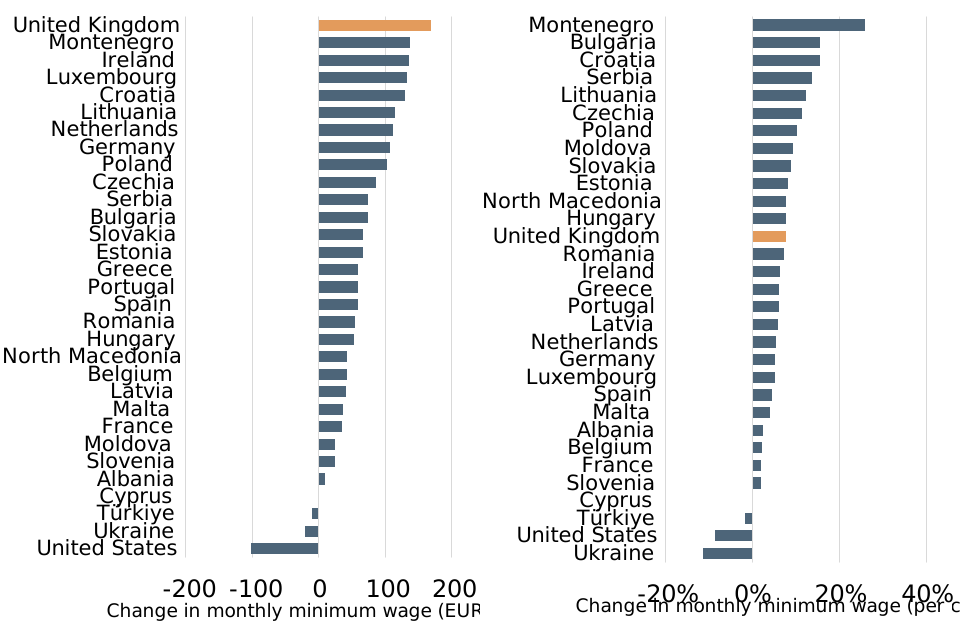
Figure A4.1 provides Eurostat data on increases in monthly minimum wages in European countries and the USA. In € cash terms, the UK saw the largest increase in the minimum wage between 2024 and 2025, followed by Montenegro, Ireland and Luxembourg. In percentage terms, the UK is in the middle of this group, with an increase of 7.7 per cent. This includes a 6.7 per cent increase in £ terms, plus a boost from a more favourable exchange rate.
Comparing minimum wage levels between countries
To compare the value of minimum wages across countries more accurately, we need to adjust for purchasing power parity (PPP). PPP accounts for what a worker earning the minimum wage can purchase in different countries. Figure A4.2 provides Organisation for Economic Cooperation and Development (OECD) data on the value of minimum wages in 2024 (before the uprating of the National Living Wage to £12.21 in the UK), adjusted for PPP. In 2024, the UK had among the highest minimum wages in the OECD, with only Germany, Luxembourg and Australia having higher rates.
Figure A4.2: Comparison of international minimum wages adjusted for purchasing power parity, OECD countries, 2024
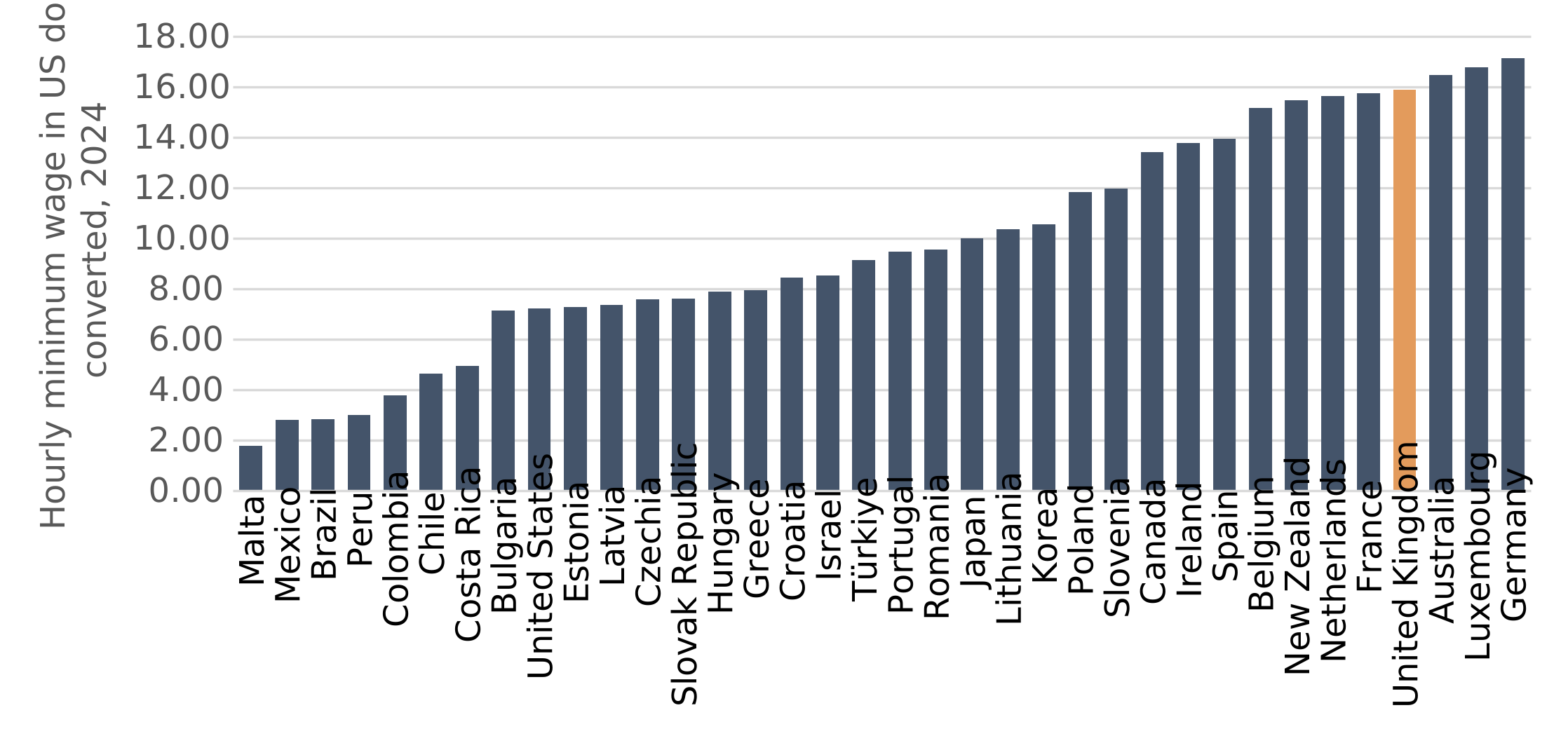
Figure A4.3 shows the real change in the value of minimum wages between 2023 and 2024. Minimum wages in most OECD countries increased in real terms between 2023 and 2024, with almost half seeing real increases of over 6 per cent after sluggish growth due to high inflation in recent years. The UK sits in the top half of OECD countries on this measure, with a real increase of 6.2 per cent between 2023 and 2024 (the nominal increase was 9.8 per cent).
Figure A4.3: Change in the real value of minimum wages, OECD countries, 2023-2024
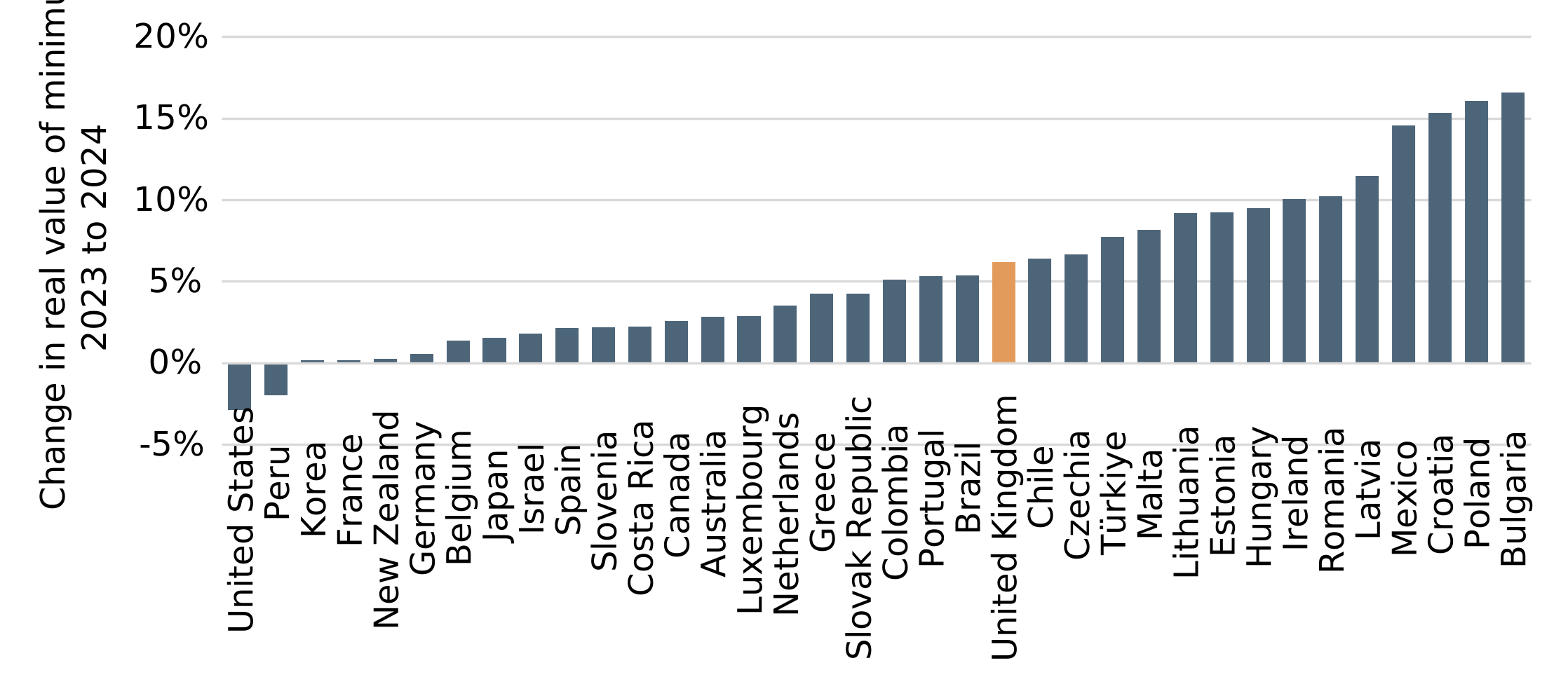
The picture is similar when we compare 2024 with the pre-pandemic period of 2019. Most countries have seen a real increase in the five years to 2024 and the UK is in the top half of OECD countries, with a real increase of 11.8 per cent.
Figure A4.4: Change in the real value of minimum wages, OECD countries, 2019-2024
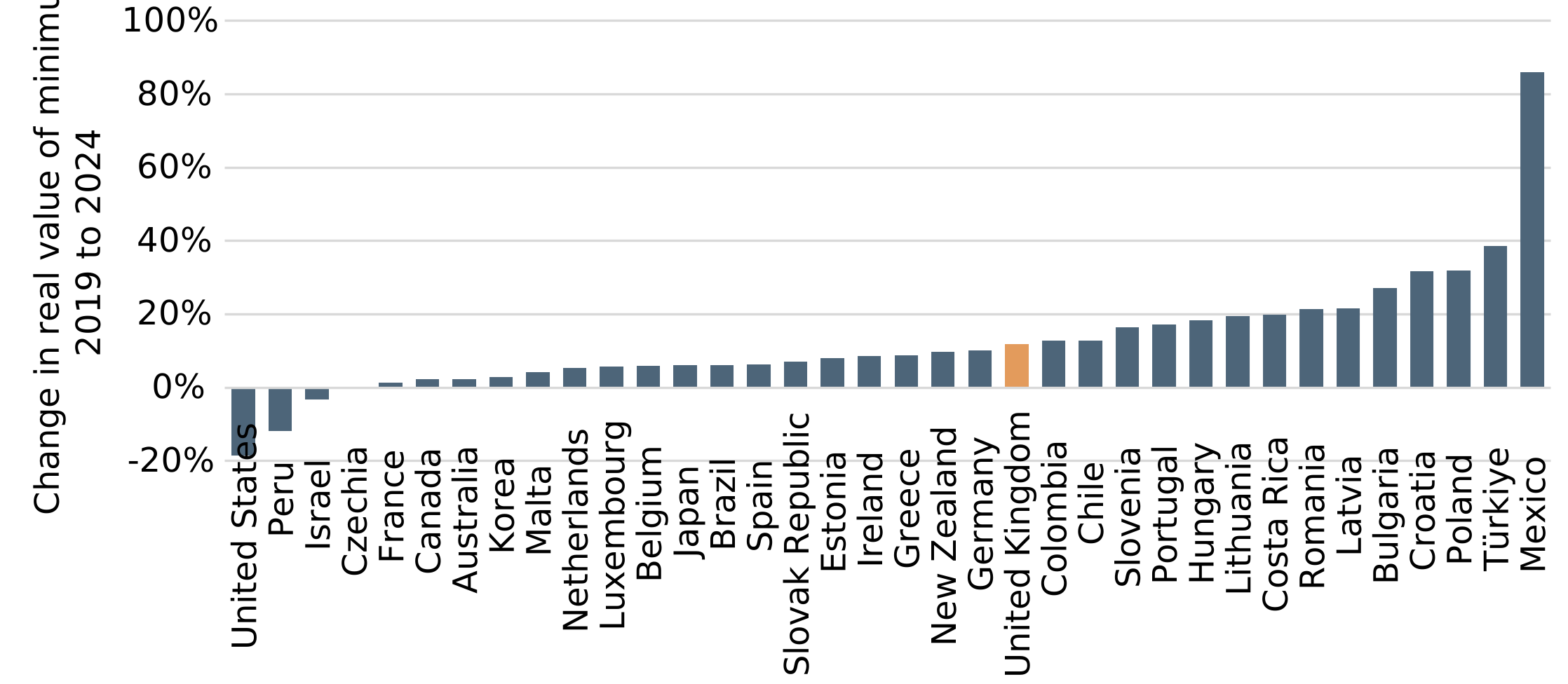
We can also compare the bite of the minimum wage between countries. Figure A4.5 shows the change in the bite of different countries’ minimum wages between 2019 and 2024. The OECD data compares minimum wages with median wages for full-time workers only, so it differs from our calculations of the NLW’s bite. Figure A4.5 shows that the UK had a bite of 61.1 per cent in 2024, the seventh highest of the OECD countries.
Figure A4.5: Comparison of international minimum wages relative to median wages of full-time workers, OECD countries, 2019-2024
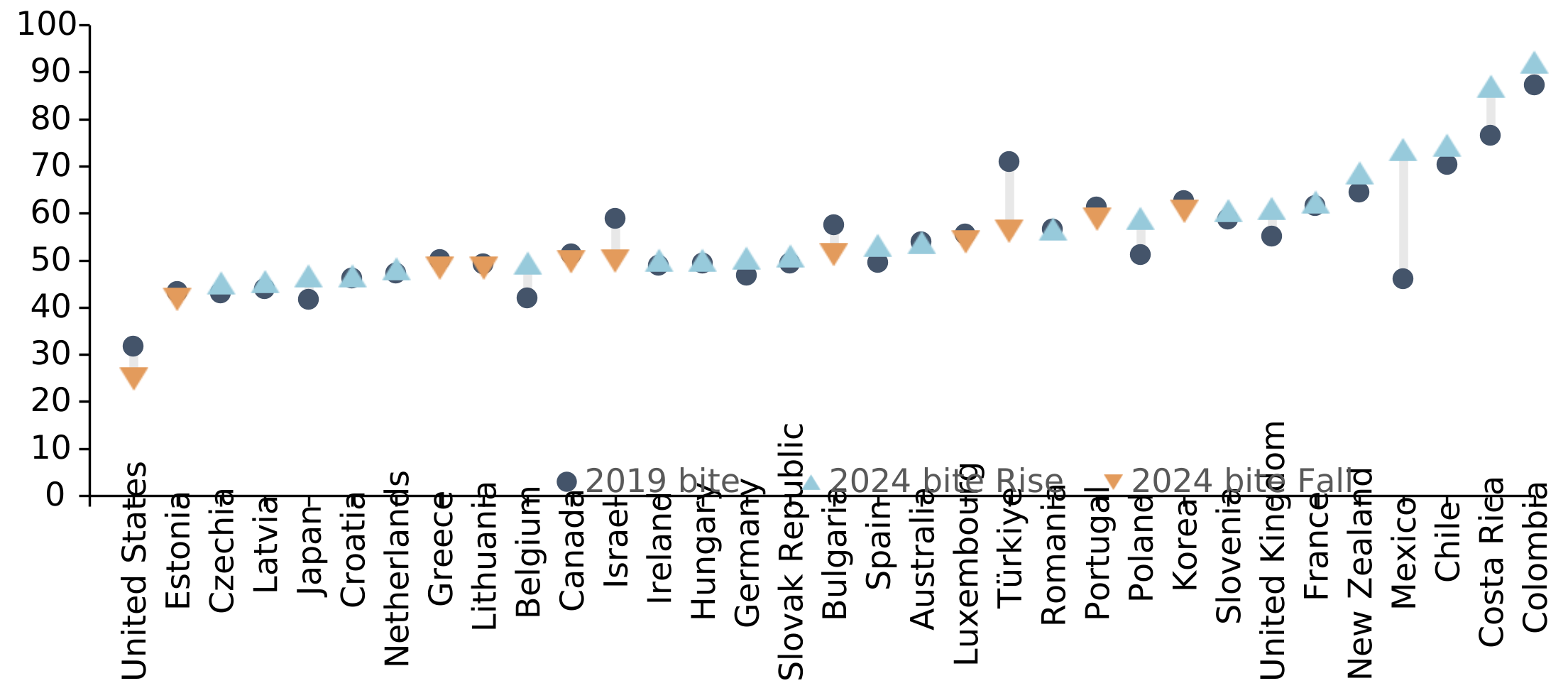
Comparing real wage growth between countries
Figure A4.6 shows the change in real average wages between 2007, just before the financial crisis, and 2024. Real wages in the UK saw very little growth over this period, with real growth of only 1.4 per cent. Other G7 countries have seen much stronger wage growth, including the USA (18 per cent), Canada (14 per cent), Germany (15 per cent) and France (10 per cent).
Figure A4.6: Total change in real average annual full-time wages 2007-2024 (2024 constant prices, USD PPP)
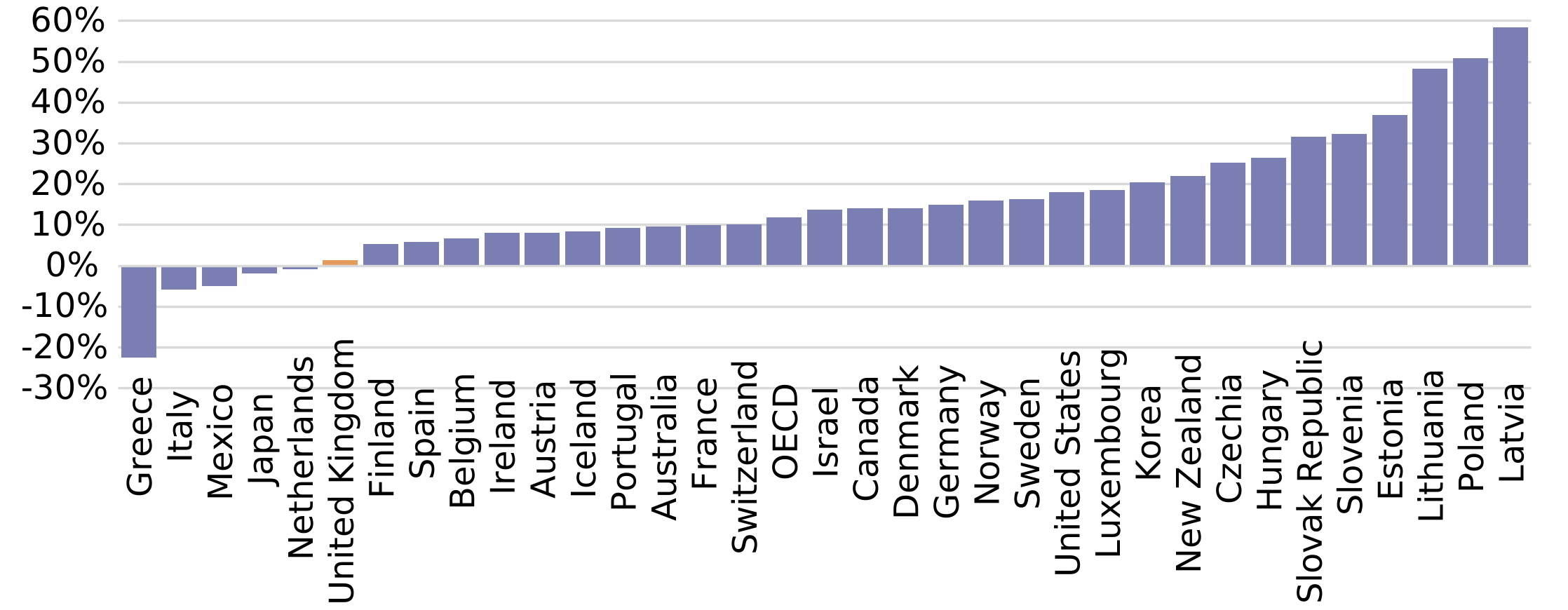
References
Baker, C. (2018). Cities, towns and villages: Trends and inequalities. House of Commons Library Insight. 21 June 2018. (House of Commons Library.)
Balgava, M., T. Tekleselassie, L.Hensel and M.Witte (2025). Wage information and applicant selection. Bank of England Staff Working Paper 1,148. 24 October 2025. (Bank of England.)
Bank of England (2023a). Monetary Policy Report – August 2023. 3 August 2023.
Bank of England (2023b). Monetary Policy Report – November 2023. 2 November 2023.
Bank of England (2024a). Monetary Policy Report – February 2024. 1 February 2024.
Bank of England (2024b). Monetary Policy Report – May 2024. 9 May 2024.
Bank of England (2024c). Monetary Policy Report – August 2024. 1 August 2024.
Bank of England (2024d). Monetary Policy Report – November 2024. 7 November 2024.
Bank of England (2024e). The Decision Maker Panel: a user’s guide. Staff Working Paper 1,096. 15 November 2024. (Bank of England.)
Bank of England (2024f). What can we learn from microdata about household savings in recent years? Bank Overground. 5 December 2024.
Bank of England (2024g). One hundred months of the Decision Maker Panel. Bank Overground. 11 December 2024.
Bank of England (2025a). Monetary Policy Report – February 2025. 6 February 2025.
Bank of England (2025b). Monetary Policy Report – May 2025. 8 May 2025.
Bank of England (2025c). Monetary Policy Report – August 2025. 7 August 2025.
Bank of England (2025d). Inflation Attitudes Survey – August 2025. 12 September 2025.
Bank of England (2025e). Agents’ summary of business conditions – 2025 Q3. 18 September 2025.
Bank of England (2025f). Bank Rate maintained at 4% - September 2025. Monetary Policy Summary and minutes of the Monetary Policy Committee meeting. 18 September 2025.
Bank of England (2025g). Exchange of letters between the Governor and the Chancellor regarding CPI Inflation – September 2025. Letter from the Governor to the Chancellor and Letter from the Chancellor to the Governor. 18 September 2025.
Bank of England (2025h). Latest results from the Decision Maker Panel survey - 2025 Q3. 18 September 2025.
Bank of England (2025i). Monthly Decision Maker Panel data – September 2025. 2 October 2025.
Bank of England (2025j). Credit Conditions Survey 2025 Q3. 16 October 2025.
Bank of England (ongoing). A millennium of macroeconomic data. Version 3.1 up to 2016.
Bank of England (ongoing). Agents’ summary of business conditions. Eight times per year.
Bank of England (ongoing). Credit Conditions Survey. Quarterly.
Bank of England (ongoing). Monetary policy summary and minutes of the Monetary Policy Committee meeting. Eight times per year.
Bank of England (ongoing). Monthly Decision Maker Panel data. Monthly and Quarterly.
Bank of England/Ipsos (ongoing). Inflation Attitudes Survey.
Bhattacharjee, A., E. da Silva Gomes, L. da Silva Marioni, A. Pabst and T. Szendrei (2026). The impacts of changes to the NMW, including NLW, on household incomes. Research Report for the Low Pay Commission. October 2025. (National Institute of Economic and Social Research.)
Bonciani, D., R. Masolo, and S. Sarpietro (2024). How food prices shape inflation expectations and the monetary policy response. Bank of England Staff Working Paper. 1,094. 11 October 2024. (Bank of England.)
Breeden, S. (2025). Bumps in the road? Speech at Cardiff Business School. 30 September 2025. (Bank of England.)
Brewer, M., and P. de Agostini (2017). The National Minimum Wage, the National Living Wage and the tax and benefit system. Research Report for the Low Pay Commission. 15 October 2017. (Institute for Social and Economic Research, University of Essex.)
Brewer, M., T. Crossley, and F. Zilio (2019). What do we really know about the employment effects of the UK’s National Minimum Wage? IFS Working Papers. W19/14. Institute for Fiscal Studies. 13 June 2019.
Brewer, M., Cominetti, N. & S. P. Jenkins (2025). Unstable Pay. New estimates of earnings volatility in the UK. Resolution Foundation. March 2025.
Brightmine (2023a). Forecasts for pay awards in 2023. XpertHR. Sheila Attwood. 23 March 2023.
Brightmine (2023b). Forecasts for pay awards in 2023/2024. Hannah Mason. XpertHR. 19 October 2023.
Brightmine (2024a). Forecasts for pay awards in 2024. Hannah Mason. XpertHR. 21 March 2024.
Brightmine (2024b). Pay trends October 2024: Pay deals flatten in third quarter but are set to fall in 2025. Sheila Attwood. 24 October 2024.
Brightmine (2024c). Forecasts for pay awards in 2024/2025. Amy Bosley. 24 October 2024.
Brightmine (2024d). The impact of the NICs increase on 2025 pay reviews: Stories from HR. Brightmine Editorial Team. 13 December 2024.
Brightmine (2025a). Pay trends January 2025: pay awards likely to decline this year. Hannah Mason. 22 January 2025.
Brightmine (2025b). Forecasts for pay awards in 2025. Amy Bosley. 19 March 2025.
Brightmine (2025c). Pay trends September 2025: Pay awards remain stable with limited change. Vernujaa Nagandiram. 24 September 2025.
Brightmine (2025d). Review of pay awards 2025: Round-up of pay settlements 2025. Hannah Mason. 24 September 2025.
Brightmine (2025e). Review of pay awards 2025: Pay bargaining calendar. Hannah Mason. 24 September 2025.
Brightmine (2025f). Forecasts for pay awards in 2025/2026. Sheila Attwood. 22 October 2025.
Brightmine (2025g). Pay trends October 2025: Stability continues to define pay settlements. Vernujaa Nagandiram. 22 October 2025.
Brightmine (Ongoing). Pay trends. Monthly.
Brightmine (Ongoing). Benchmarking – HR Metrics.
British Chambers of Commerce (2025a). BCC Quarterly Recruitment Outlook Q2: Recruitment static as firms assess NI impact. 15 July 2025.
British Chambers of Commerce (2025b). BCC Quarterly Economic Survey Q3 2025: Business sentiment remains flat ahead of the Budget. 24 October 2025.
British Chambers of Commerce (ongoing). BCC Quarterly Economic Survey. Quarterly.
British Chambers of Commerce (ongoing). BCC Quarterly Recruitment Outlook. Quarterly.
Brochu, P., and D. Green (2013). The impact of minimum wages on labour market transitions. Economic Journal, 123 (573): 1203-1235. December 2013.
Bunn, P., P. Mizen, and I. Yotzov (2025). Impact of NLW upratings on businesses using the Decision Maker Panel. Interim Research Report for the Low Pay Commission. 18 December 2025. (Decision Maker Services, Bank of England and King’s College, London.)
Butcher, T., and R. Dickens (2023). The impact of the National Living Wage on the UK Labour Market using geographic, age and gender wage variation. Low Pay Commission Research Report. 2 October 2023. (Low Pay Commission and University of Sussex.)
CBI (2025a). Retail sales fall for twelfth month in a row – CBI Distributive Trades Survey, September 2025. 25 September 2025.
CBI (2025b). Private sector expects activity to fall through fourth quarter of 2025. CBI Growth Indicator. 29 September 2025.
CBI (2025c). UK manufacturers slam the brakes on investment as demand weakens. CBI Industrial Trends Survey. 23 October 2025.
CBI (ongoing). Distributive Trades Survey. Monthly.
CBI (ongoing). CBI Growth Indicator. Monthly
CBI (ongoing). Industrial Trends Survey. Monthly.
CBI (ongoing). Service Sector Survey. Monthly.
CBI/Pertemps (2024). Collaboration with business key to reassuring employers about impact of reforms on labour flexibility – CBI/Pertemps Employment Trends Survey. 15 September 2024.
CBI/Pertemps (2025). Businesses warn rising costs and ERB threaten jobs and growth - CBI/Pertemps ETS Survey 2025. 14 September 2025.
CBI/Pertemps (ongoing). Employment Trends Survey. Annual.
Cengiz, D., A. Dube, A. Lindner, and B. Zipperer (2019). The effect of minimum wages on low-wage jobs: evidence from the United States using a bunching estimator. The Quarterly Journal of Economics, 134 (3): 1405-1454. August 2019.
Chartered Institute of Personnel and Development (CIPD, 2018). Labour Market Outlook Summer 2018. 13 August 2018.
Chartered Institute of Personnel and Development (CIPD, 2019). Labour Market Outlook Summer 2019. 12 August 2019.
Chartered Institute of Personnel and Development (CIPD, 2020). Labour Market Outlook Summer 2020. 10 August 2020.
Chartered Institute of Personnel and Development (CIPD, 2021). Labour Market Outlook Summer 2021. 16 August 2021.
Chartered Institute of Personnel and Development (CIPD, 2022). Labour Market Outlook Summer 2022. 15 August 2022.
Chartered Institute of Personnel and Development (CIPD, 2023). Labour Market Outlook Summer 2023. 14 August 2023.
Chartered Institute of Personnel and Development (CIPD, 2024). Labour Market Outlook Summer 2024: Views from employers. 15 August 2024.
Chartered Institute of Personnel and Development (CIPD, 2025). Labour Market Outlook Summer 2025: Views from employers. 8 August 2025.
Chartered Institute of Personnel and Development (CIPD, ongoing). Labour Market Outlook. Quarterly.
Christians Against Poverty (2025). The inequality of poverty. 11 April 2025.
Clemens, J. (2021). How do firms respond to minimum wage increases? Understanding the relevant of non-employment margins. The Journal of Economic Perspectives, 35 (1): 51-72. Winter 2021.
Clemens, J., and M. Strain (2021). The heterogeneous effects of large and small minimum wage changes: evidence over the short and medium run using a pre-analysis plan. NBER Working Paper. 29264. September 2021. (National Bureau of Economic Research.)
Cominetti, N., and C. McCurdy (2025). Low Pay Britain 2025. Where next for the Government’s employment reforms? Resolution Foundation Report. 3 July 2025.
Cominetti, N., and L. Murphy (2025). Calculating the Real Living Wage for London and the rest of the UK: 2025. Living Wage Foundation and Resolution Foundation Briefing. 22 October 2025.
Cominetti, N., and G. Thwaites (2025). Minimum wage, maximum pressure? The impact of 2025’s minimum wage and employer NICs increases. Resolution Foundation Briefing. 30 March 2025.
Competition and Market Authority (2024). Competition and market power in UK labour markets. CMA Microeconomics Unit Report. 1. 25 January 2024. (Competition and Markets Authority.)
Corlett, A. (2025). The Living Standards Outlook 2025. Resolution Foundation Report. 26 June 2025.
Cribb, J., G. Giupponi, R. Joyce, A. Lindner, T. Waters, T. Wernham, and X. Xu (2021). The distributional and employment impacts of nationwide minimum wage changes. Research Report for the Low Pay Commission. 9 December 2021. (Institute for Fiscal Studies, Bocconi University and University College London.)
Datta, N. (2024). Local monopsony power. CEP Discussion Paper. CEPDP2012. 25 June 2024. (Centre for Economic Performance, London School of Economics.)
Deloitte (2025). Deloitte Consumer Tracker Q3 2025: Consumer confidence sees a modest improvement but caution remains. 17 October 2025.
Deloitte (ongoing). The Deloitte Consumer Tracker. Quarterly.
Department for Business and Trade (2025a). National Minimum Wage and National Living Wage: Low Pay Commission remit 2025. 5 August 2025.
Department for Business and Trade (2025b). Business population estimates 2025: Annual business population estimates for the UK and regions in 2025. 2 October 2025.
Department for Business and Trade (2025c). National Living Wage and National Minimum Wage: government evidence on enforcement and compliance 2025. 5 November 2025.
Department for Business and Trade (ongoing). Business population estimates. Annual.
Department for the Economy (2025). ApprenticeshipsNI statistics from August 2018 to April 2025. ApprenticeshipsNI Statistical Bulletins Year 2024/25. Northern Ireland Statistics and Research Agency and Northern Ireland Department for the Economy. 26 September 2025.
Department for Education (2024). Apprenticeship evaluation 2023: learner, non-completer and employer surveys. Results from the 2023 surveys into the views and experiences of learners and employers involved in apprenticeships. 27 September 2024.
Department for Education (2025a). Apprenticeships: 2024/25. Underlying data - apprenticeship vacancies. 7 April 2025.
Department for Education (2025b). Apprenticeships: 2024/2025. Monthly apprenticeship starts in England. 17 July 2025.
Department for Education (ongoing). Apprenticeships and traineeships statistics. Retrieved from GOV.UK.
Department for Work and Pensions (2025a). Income dynamics: income movements and the persistence of low income, 2010 to 2023. March 2025.
Department for Work and Pensions (2025b), Unfulfilled eligibility in the benefit system, Financial Year Ending (FYE) 2025, 15 May 2025
Department for Work and Pensions (2025c), Households below average income series: quality and methodology information report FYE 2024, 28 May 2025.
Department for Work and Pensions (ongoing). DWP benefits statistics (on Stat-Xplore). Quarterly.
Department for Work and Pensions (ongoing). Family Resources Survey. Annual.
Department of Health and Social Care (2025). Executive summary: adult social care workforce and work-related quality of life. 26 February 2025.
Dickens, R., and K. Lind (2018). The Impact of the Recent Increases in the Minimum Wage on the UK Labour Market: An Area-based Analysis. Low Pay Commission Research Report. November 2018. (University of Sussex.)
Diniz, J. and L. Murphy (2025). False starts. What the UK’s growing NEETs problem really looks like, and how to fix it. Resolution Foundation Briefing. 21 October 2025.
Dohler, G., A. Noor, K. Knuth, P. Patrignani, S-M. Lee and G. Conlon (2026). Assessing the impact of the minimum wage on young people using Longitudinal Education Outcomes data. Research Report for the Low Pay Commission. December 2025. See also London Economics (2026). (London Economics.)
Draca, M., Machin, S., and J. Van Reenen (2011). Minimum wages and firm profitability. American Economic Journal: Applied Economics, 3 (1): 129-151. January 2011.
Drew, H., F. Ritchie, and M. Veliziotis (2016). Understanding apprentice pay. Research Report for the Low Pay Commission. August 2016. (University of the West of England.)
Dube, A. (2019). Impacts of minimum wages: review of the international evidence. HM Treasury. 5 November 2019.
Dube, A., and A. Lindner (2024). Chapter 4 - Minimum wages in the 21st century. Handbook of Labor Economics (5): 261-383. 4 December 2024.
Dustmann, C., A. Lindner, U. Schönberg, M. Umkehrer, and P. vom Berge (2022). Reallocation effects of the minimum wage. The Quarterly Journal of Economics. 137 (1): 267–328. February 2022.
Eurofound (2023). Minimum wages: Non-compliance and enforcement across EU Member States – Comparative report. 27 November 2023. Updated on 22 March 2024. (Publications Office of the European Union, Luxembourg.)
Eurofound (2025). Minimum wages in 2025: Annual review. 21 July 2025. (Publications Office of the European Union, Luxembourg.)
Eurostat (2025). Minimum wages. 12 August 2025.
Fair Work Commission (2025). The National Minimum Wage Order 2025. Annual Wage Review 2025. C2025/1. 19 June 2025 (Government of Australia.)
Federation of Small Businesses (2025). Small Business Index, Quarter 2, 2025. Confidence stays in firmly negative territory, with a small drop from Q1. 26 August 2025.
Federation of Small Businesses (ongoing). FSB Voice of Small Business Index. Quarterly.
Fetzer, T., C. Palmou and J. Schneebacher (2024). How do firms cope with economic shocks in real time? CAGE Working Paper. 722/2024. 18 September 2024. (Centre for Competitive Advantage in the Global Economy, University of Warwick.)
Field, S. (2025). A World of Difference. International apprenticeship policy and lessons for England. (Sutton Trust.) 17 June 2025.
Forth, J., and M. Jones (2025). The disability pay gap within and across firms. IZA Discussion Paper Series. 17679. February 2025. (IZA – Institute of Labor Economics, Bonn).
Forth, J., A. Bryson, V. Phan, F. Ritchie, C. Singleton, L. Stokes, and D. Whittard (2023a). How common is low pay in Britain and is it declining? New findings from linked data. ADR Data Insights. April 2023. (Wage and Employment Dynamics.)
Forth, J., A. Bryson, V. Phan, F. Ritchie, C. Singleton, L. Stokes, and D. Whittard (2023b). The Impact of Weighting on Estimates of Minimum Wage Employment. Report to the Department for Business and Trade (DBT). May 2023. (Wage and Employment Dynamics.)
Forth, J., V. Phan, L. Stokes, A. Bryson, F. Ritchie, D. Whittard, and C. Singleton (2022). Methodology Paper: Longitudinal Attrition in ASHE. WED Methodology Papers. 13 April 2022. (Wage and Employment Dynamics.)
Frontier Economics (2020). Impact of National Living Wage on businesses. Research Report for the Low Pay Commission. November 2020. (Frontier Economics.)
Frontier Economics (2025). The impact of the National Living Wage on prices. Research Report for the Low Pay Commission. 20 November 2025. (Frontier Economics.)
German Minimum Wage Commission (2025). Translation of the German management summary of the German Minimum Wage Commission’s fifth evaluation report to the Federal Government on the effects of the statutory minimum wage. 8 July 2025. For the full report (in German) see Mindestlohnkommission (2025).
GfK (2025). UK Consumer confidence down two points in September to -19. 19 September 2025.
GfK (ongoing). UK Consumer Confidence Index. Monthly.
Giupponi, G., R. Joyce, A. Lindner, T. Waters, T. Wernham, and X. Xu (2024). The employment and distributional impacts of nationwide minimum wage changes. Journal of Labor Economics. A Special Issue in Honor of David Card. 42(S1): 293-333. April 2024. (University of Chicago Press.)
Gopalan, R., B. Hamilton, A. Kalda, and D. Sovich (2021). State minimum wages, employment, and wage spillovers: evidence from administrative payroll data. Journal of Labor Economics. 39(3): 673–707. July 2021. (University of Chicago Press.)
Harasztosi, P., and A. Lindner (2019). Who pays for the minimum wage? American Economic Review. 109(8): 2693–2727. August 2019. (American Economic Association.)
Henry, A., and R. Joyce (2024). What has happened to earnings since 2019? IFS Report. R316. Institute for Fiscal Studies. 31 May 2024.
HM Government (2024a). Plan for Change: Milestones for mission-led government. The Prime Minister presented the Plan for Change to Parliament on 5 December 2024. CP1210. 5 December 2024.
HM Government (2024b). Kickstarting Economic Growth. 5 December 2024.
HM Revenue & Customs (2024). June 2024 monthly exchange rates. 22 May 2024.
HM Revenue & Customs (2025a). Income Tax rates and allowances for current and previous tax years. 6 April 2025.
HM Revenue & Customs (2025b). Rates and allowances: National Insurance contributions. 6 April 2025.
HM Revenue & Customs (2025c). June 2025 monthly exchange rates. 21 May 2025.
HM Revenue & Customs (2025d). Rates and thresholds for employers 2025 to 2026. 15 October 2025.
HM Treasury (2010). Forecasts for the UK economy. September 1997-March 2010. Archived On 7 Apr 2010.
HM Treasury (2020a). Forecasts for the UK economy: a comparison of independent forecasts August 2021. 19 August 2020.
HM Treasury (2020b). Forecasts for the UK economy: a comparison of independent forecasts October 2021. 21 October 2020.
HM Treasury (2021a). Forecasts for the UK economy: a comparison of independent forecasts August 2021. 25 August 2021.
HM Treasury (2021b). Forecasts for the UK economy: a comparison of independent forecasts October 2021. 20 October 2021.
HM Treasury (2022a). Forecasts for the UK economy: a comparison of independent forecasts August 2022. 25 August 2022.
HM Treasury (2022b). Forecasts for the UK economy: a comparison of independent forecasts October 2022. 19 October 2022.
HM Treasury (2023a). Forecasts for the UK economy: a comparison of independent forecasts August 2023. 24 August 2023.
HM Treasury (2023b). Forecasts for the UK economy: a comparison of independent forecasts October 2023. 18 October 2023.
HM Treasury (2024a). Forecasts for the UK economy: a comparison of independent forecasts August 2024. 21 August 2024.
HM Treasury (2024b). Forecasts for the UK economy: a comparison of independent forecasts October 2024. 16 October 2024.
HM Treasury (2025a). Forecasts for the UK economy: a comparison of independent forecasts August 2025. 22 August 2025.
HM Treasury (2025b). Forecasts for the UK economy: a comparison of independent forecasts October 2025. 15 October 2025.
HM Treasury (2025c). Forecasts for the UK economy. January 2012-October 2025. 15 October 2025.
HM Treasury (ongoing). Forecasts for the UK economy: a comparison of independent forecasts. Monthly.
Home Office (2025a). Restoring control over the immigration system: white paper. 12 May 2025. https://www.gov.uk/government/publications/restoring-control-over-the-immigration-system-white-paper
Home Office (2025b). Immigration system statistics, year ending June 2025. 21 August 2025.
Home Office (2025c). Monthly entry clearance visa applications: data tables, September 2025. 9 October 2025.
Home Office (ongoing). Immigration system statistics. Quarterly.
Home Office (ongoing). Monthly entry clearance visa applications: data tables. Monthly.
House of Commons Library (2018). City & town classification of constituencies & local authorities. Research Briefing. Carl Baker. 21 June 2018.
Iaria, A., and A. Wang (2020). Identification and estimation of demand for bundles. CEPR Discussion Paper. DP14,363. 11 February 2020. (Centre for Economic Policy Research.)
Incomes Data Research (2025). Pay Climate Issue 42, September 2025. 4 September 2025.
Incomes Data Research (ongoing). Pay Benchmarker.
Incomes Data Research (ongoing). Pay Climate. Quarterly.
Insolvency Service (2025). Company Insolvency Statistics, September 2025. 17 October 2025.
Insolvency Service (ongoing). Company Insolvency Statistics. Monthly.
Institute for Fiscal Studies (2025). IFS Green Budget 2025: Full report. Edited by C. Emmerson, K. Ogden and B. Zaranko. 16 October 2025. (Institute for Fiscal Studies; Barclays; and the Nuffield Foundation).
International Monetary Fund (2025a). World Economic Outlook: Global economy in flux, prospects remain dim. 14 October 2025.
International Monetary Fund (2025b). World Economic Outlook Database. 14 October 2025.
Irish Low Pay Commission (2024). Report on Sub-Minimum Rates of the National Minimum Wage. LPC 20 (2024). March 2024.
Irish Low Pay Commission (2025). Low Pay Commission: Recommendations for the National Minimum Wage 2025. Annual Report. July. LPC 21 (2025). 7 October 2025.
Johnson, P. (2015). UK Consumer Price Statistics: A Review. January 2015. (UK Statistics Authority).
Joseph Rowntree Foundation (2025) A minimum income standard for the United Kingdom in 2025. 9 September 2025.
Kariel, J., J. Schneebacher, and M. Walker (2025). Competition policy and labour market power: new evidence and open questions. Oxford Review of Economic Policy. 40 (4): 787-807. Winter 2024. New Directions in Competition Policy. 30 January 2025.
King’s Trust, The (2025). The King’s Trust TK Maxx Youth Index 2025. King’s Trust. 27 February 2025.
KMPG, and Recruitment and Employment Confederation (2025). Report on Jobs: Permanent placements decline at slowest rate in a year. 10 October 2025.
KMPG and Recruitment and Employment Confederation (ongoing). Report on Jobs. Monthly.
Labour Research Department (ongoing). Labour Research. Monthly.
Lemos, S. (2008). ‘A survey of the effects of the minimum wage of prices’. Journal of Economic Surveys. 22 (1): 187-212. February 2008. 31 January 2008.
London Economics (2022). Assessing the impact of the reduction in the age of eligibility to the National Living Wage (NLW) from 25 to 23. Research Report for the Low Pay Commission. December 2022. (London Economics.)
London Economics (2025). Assessing the impact of the minimum wage on young people using Longitudinal Education Outcomes data. Research Report for the Low Pay Commission. December 2025. See also Dohler, Noor, Knuth, Patrignani, Lee and Conlon (2025). (London Economics.)
Low Pay Commission (2020). National Minimum Wage: Low Pay Commission Report 2020. CP327. 11 December 2020.
Low Pay Commission (2021). National Minimum Wage: Low Pay Commission Report 2021. CP565. 9 December 2020.
Low Pay Commission (2022). National Living Wage Review. Low Pay Commission Report. 18 May 2022.
Low Pay Commission (2023a). National Minimum Wage: Low Pay Commission Report 2022. CP758. 19 January 2023.
Low Pay Commission (2023b). Low-paying sectors review. 11 September 2023.
Low Pay Commission (2024a). National Minimum Wage: Low Pay Commission Report 2023. CP1032. 4 March 2024.
Low Pay Commission (2024b). The National Minium Wage beyond 2024. Low Pay Commission report. 27 March 2024
Low Pay Commission (2024c). Compliance and enforcement of the National Minimum Wage in 2024. Published on 19 December 2024.
Low Pay Commission (2025a). National Minimum Wage: Low Pay Commission Report 2024. CP1245. 4 February 2025.
Low Pay Commission (2025b). Options for lowering the age of entitlement to the NLW to 18. 2 May 2025.
Low Pay Commission (2025c). An update on the Low Pay Commission’s work on non-compliance and enforcement. 19 September 2025.
Mann, C. (2025). Explaining the consumption gap. Speech at Resolution Foundation. 9 October 2025. (Bank of England.)
Manning, A. (2021a). Monopsony in labour markets: A review. Industrial and Labour Relations Review. 74(1): 3–26. (Cornell University. First published online 1 June 2020.)
Manning, A. (2021b). The elusive employment effect of the minimum wage. Journal of Economic Perspectives, 35 (1): 3–26. Winter 2021.
Manning, A., and B. Petrongolo (2022). Monopsony in local labour markets. IFS Deaton Review of Inequalities. 15 March 2022. (Institute for Fiscal Studies.)
McKeown, L. (2024). Exploring this year’s earnings figures. ONS Blog. 29 October 2024. (Office for National Statistics.)
Medr (Commission for Tertiary Education and Research), (2025). Apprenticeship learning programmes started: February to April 2025 (provisional). 21 August 2025.
Mindestlohnkommission (2025). Fünfter Bericht zu den Auswirkungen des gesetzlichen Mindestlohns Bericht der Mindestlohnkommission an die Bundesregierung nach § 9 Abs. 4 Mindestlohngesetz. 27 June 2025.
Migration Advisory Committee (2025a). Net migration, May 2025. 13 May 2025.
Migration Advisory Committee (2025b). Family route: Financial requirements review, June 2025. 10 June 2025.
Migration Advisory Committee (2025c). Temporary shortage list: Stage 1 report, October 2025. 9 October 2025.
Miller, R. (2011). The long-run difference between RPI and CPI inflation. Office for Budget Responsibility Working Paper. 2. November 2011. (Office for Budget Responsibility.)
Mrabet, H., and J. Page (2023). How do firms pass energy and food costs through the supply chain. Bank Underground Blog. 24 August 2023. (Bank of England.)
National Institute of Economic and Social Research (2025). National Institute UK Economic Outlook. Summer 2025. Series A (19). 6 August 2025.
National Institute of Economic and Social Research (ongoing). NIESR GDP tracker. Monthly.
National Institute of Economic and Social Research (ongoing). NIESR Monthly CPI tracker. Monthly.
National Institute of Economic and Social Research (ongoing). NIESR Monthly wage tracker. Monthly.
Office for Budget Responsibility (2015). Economic and fiscal outlook: July 2015. Cm 9088. 8 July 2015.
Office for Budget Responsibility (2020). Economic and fiscal outlook: March 2020. CP230.11 March 2020.
Office for Budget Responsibility (2024a). Economic and fiscal outlook: March 2024. CP1027. 6 March 2024.
Office for Budget Responsibility (2024b). Economic and fiscal outlook: October 2024. CP1169. 30 October 2024.
Office for Budget Responsibility (2025). Economic and fiscal outlook: March 2025. CP1289. 26 March 2025.
Office for Budget Responsibility (ongoing). Economic and fiscal outlook. Twice a year.
Office for National Statistics (2018). Shortcomings of the Retail Prices Index as a measure of inflation. 8 March 2018.
Office for National Statistics (2019). Improvements to earnings estimates for small businesses in average weekly earnings. 22 January 2019.
Office for National Statistics (2020). Coronavirus and its impact on the Labour Force Survey: The impact of changes made to the Labour Force Survey in response to the coronavirus (COVID-19) pandemic, and the methods used to adjust the data.
Office for National Statistics (2021a). Labour Force Survey weighting methodology. 17 May 2021.
Office for National Statistics (2021b). SOC 2020 Volume 1: structure and descriptions of unit groups. 2 November 2021.
Office for National Statistics (2022a). Making everybody count: How we’re transforming the Labour Force Survey. ONS Blog. 29 March 2022.
Office for National Statistics (2022b). Comparison of labour market data sources. 27 April 2022.
Office for National Statistics (2023a). Revision of miscoded occupational data in the ONS Labour Force Survey, UK: January 2021 to September 2022. 11 July 2023.
Office for National Statistics (2023b). Partial rescheduling of UK labour market statistics publication. 13 October 2023.
Office for National Statistics (2023c). Labour Force Survey: planned improvements and its reintroduction. 2 November 2023.
Office for National Statistics (2024a). Employee earnings in the UK: 2024. 29 October 2024. Revised version 6 November 2024.
Office for National Statistics (2024b). Business Register and Employment Survey (BRES): provisional results 2023, revised results 2022. 4 November 2024.
Office for National Statistics (2024c). Revisions to workforce jobs, UK: December 2024. 17 December 2024.
Office for National Statistics (2024d). Impact of reweighting on Labour Force Survey key indicators: December 2024. 3 December 2024.
Office for National Statistics (2025a). National population projections: 2022-based. The potential future population size of the UK and its constituent countries. 28 January 2025.
Office for National Statistics (2025b). Labour market transformation – update on progress and plans: April 2025. 10 April 2025.
Office for National Statistics (2025c). Transformed Labour Force Survey TLFS technical design review: April 2025. 10 April 2025.
Office for National Statistics (2025d). Introducing alternative data into consumer price statistics: aggregation and weights. 29 April 2025.
Office for National Statistics (2025e). Introducing grocery scanner data into consumer price statistics. 29 April 2025.
Office for National Statistics (2025f). Research and developments in the transformation of UK consumer price statistics: April 2025. 29 April 2025.
Office for National Statistics (2025g). Transformation of UK consumer price statistics, groceries scanner data analysis, April 2025. 29 April 2025.
Office for National Statistics (2025h). Labour Force Survey performance and quality monitoring report: January to March 2025. 13 May 2025.
Office for National Statistics (2025i). Long-term international migration, provisional: year ending December 2024. 22 May 2025.
Office for National Statistics (2025j). Labour market transformation – update on progress and plans: July 2025. 21 July 2025.
Office for National Statistics (2025k). Blue Book 2025: advanced aggregate estimates. 19 August 2025.
Office for National Statistics (2025l). Household Costs Indices for UK household groups: April to June 2025. Household Costs Indices, 12-month growth rates, expenditure shares and contributions for UK household groups and all-households. 28 August 2025.
Office for National Statistics (2025m). Labour Force Survey quality update: September 2025. 16 September 2025.
Office for National Statistics (2025n). Consumer prices development plan: updated September 2025. 18 September 2025.
Office for National Statistics (2025o). Population estimates for the UK, England, Wales, Scotland and Northern Ireland: mid-2024. 26 September 2025.
Office for National Statistics (2025p). Business insights and impact on the UK economy: 2 October 2025. 2 October 2025.
Office for National Statistics (2025q). Business investment in the UK statistics, progress report: October 2025. 7 October 2025.
Office for National Statistics (2025r). Business Insights and Conditions Survey – UK. Waves 7-140. ONS Secure Research Service Metadata Catalogue. 21 October 2025.
Office for National Statistics (2025s). Impact of correction to chain-linking methodology used in Producer Price Indices and Services Producer Price Indices: October 2025. 22 October 2025.
Office for National Statistics (2025t). Producer price inflation, UK: September 2025 including services, July to September 2025. 22 October 2025.
Office for National Statistics (2025u). Employee earnings in the UK: 2025. Measures of employee earnings, using data from the Annual Survey for Hours and Earnings (ASHE). 23 October 2025.
Office for National Statistics (2025v). Low and high pay in the UK: 2025. The distribution of earnings of high-paid and low-paid employee jobs and employee jobs paid below the UK minimum wage. 23 October 2025.
Office for National Statistics (ongoing). Annual Survey of Hours and Earnings (ASHE). Annual.
Office for National Statistics (ongoing). Average weekly earnings in Great Britain. Monthly.
Office for National Statistics (ongoing). Business demography quarterly, UK. Quarterly.
Office for National Statistics (ongoing). Business Insights and Conditions Survey – UK. Twice monthly.
Office for National Statistics (ongoing). Business Insights and Conditions Survey questions. Twice monthly.
Office for National Statistics (ongoing). Business insights and impact on the UK economy. Fortnightly.
Office for National Statistics (ongoing). Business investment in the UK: Provisional results. Quarterly.
Office for National Statistics (ongoing). Business investment in the UK: Revised results. Quarterly.
Office for National Statistics (ongoing). Consumer price inflation, UK. Monthly.
Office for National Statistics (ongoing). Consumer price inflation detailed briefing note. Monthly.
Office for National Statistics (ongoing). Earnings and employment from Pay As You Earn Real Time Information, UK. Monthly.
Office for National Statistics (ongoing). Employee earnings in the UK: 2025. Annual
Office for National Statistics (ongoing). Employment in the UK. Monthly.
Office for National Statistics (ongoing). GDP first quarterly estimate, UK. Quarterly.
Office for National Statistics (ongoing). GDP monthly estimate, UK. Monthly.
Office for National Statistics (ongoing). GDP quarterly national accounts, UK. Quarterly.
Office for National Statistics (ongoing). Household Costs Indices for UK household groups. Quarterly
Office for National Statistics (ongoing). HR1: Potential redundancies. Nine times a year.
Office for National Statistics (ongoing). Index of production, UK. Monthly.
Office for National Statistics (ongoing). Index of services, UK. Monthly.
Office for National Statistics (ongoing). Labour Force Survey (LFS). Quarterly.
Office for National Statistics (ongoing). Labour market in the regions of the UK. Monthly.
Office for National Statistics (ongoing). Labour market overview. Monthly.
Office for National Statistics (ongoing). Long-term international migration, provisional. Biannual.
Office for National Statistics (ongoing). Private rent and house prices, UK. Monthly.
Office for National Statistics (ongoing). Producer price inflation, UK. Monthly.
Office for National Statistics (ongoing). Productivity flash estimate and overview, UK. Quarterly.
Office for National Statistics (ongoing). Profitability of UK companies. Annual.
Office for National Statistics (ongoing). Retail sales, Great Britain. Monthly.
Office for National Statistics (ongoing). Vacancies and jobs in the UK. Monthly.
Office for National Statistics (ongoing). Working and workless households in the UK. Quarterly.
Office for National Statistics (ongoing). Young people not in education, employment or training (NEET), UK. Quarterly.
Office for Statistical Regulation and the UK Statistics Authority (2025). The Code of Practice for Statistics (Edition 3.0): Ensuring statistics serve the public good. Autumn 2025. 3 November 2025.
Organisation for Economic Cooperation and Development (2025a). OECD Economic Outlook, Interim Report September 2025: Finding the Right Balance in Uncertain Times. 23 September 2025.
Organisation for Economic Cooperation and Development (2025b). Minimum relative to average wages of full-time workers. OECD Data Explorer. Data extracted on 7 October 2025.
Organisation for Economic Cooperation and Development (2025c). Minimum wages at current prices in NCU. OECD Data Explorer. Data extracted on 7 October 2025.
Organisation for Economic Cooperation and Development (2025d). Real minimum wages at constant prices. OECD Data Explorer. Data extracted on 7 October 2025.
Organisation for Economic Cooperation and Development (2025e). Average annual wages at constant prices. OECD Data Explorer. Data extracted on 7 October 2025.
Organisation for Economic Cooperation and Development (ongoing). The Business Confidence Index. OECDStat. Monthly.
Organisation for Economic Cooperation and Development (ongoing). The Consumer Confidence Index. OECDStat. Monthly.
Organisation for Economic Cooperation and Development (ongoing). The Composite Leading Indicator. OECDStat. Monthly.
Padley, M., and J. Stone (2025). A Minimum Income Standard for the United Kingdom in 2025. Joseph Rowntree Foundation. York. 9 September 2025.
Pensions Regulator (2025). Earnings thresholds. Earnings thresholds - The Pensions Regulator.
Phan, V., L. Stokes, J. Forth, A. Bryson, C. Singleton, F. Ritchie and D. Whittard (2022). Interim Report: the incidence of low pay is falling in Britain, but why – and can we trust the figures? WED Policy Paper. 7 October 2022. (Wage and Employment Dynamics.)
Pittaway, S., and L. Try (2025). The bare necessities. Unpacking the rising cost of essentials for low-to-middle income Britain. Resolution Foundation Briefing Note. 30 June 2025. (Resolution Foundation.)
Rambachan, A., and J. Roth (2023). A more credible approach to parallel trends. The Review of Economic Studies. 90 (5): 2,555–2,591. October 2023. 15 February 2023.
Ramsden, D. (2025). Navigating an uncertain outlook: the signals from the labour market. Speech at the Barclays-CEPR Monetary Policy Forum 2025. 24 June 2025. (Bank of England.)
Recruitment and Employment Confederation (2025). JobsOutlook: Chancellor should use the Budget to build momentum in job market as employers’ confidence strengthens, suggests the REC. Press Release. 26 September 2025.
Recruitment and Employment Confederation (ongoing). JobsOutlook. Monthly.
Recruitment and Employment Confederation and Lightcast (2025). Labour Market Tracker: Signs of stability in job ad postings after summer holiday slowdown – REC. Press Release. 20 October 2025.
Recruitment and Employment Confederation and Lightcast (ongoing). Labour Market Tracker. Monthly.
Reed, H. (2026). The impact of the minimum wage on household incomes: an analysis using data from the UK Family Resources Survey. Final report to the Low Pay Commission. Research Report for the Low Pay Commission. 5 January 2026. (Landman Economics.)
Riley, R., and C. Rosazza Bondibene (2017). Raising the standard: Minimum wages and firm productivity. Labour Economics. 44(C): 27-50. January 2017. (Elsevier.)
Sage UK Small Business Tracker (2025). Sage UK Small Business Tracker Q2 2025. A Sage report in partnership with Smart Data Foundry and Cebr. April-June 2025. (Sage UK, Smart Data Foundry and Cebr.) 1 September 2025.
Schneebacher, J., F. Jabbar and J. Kariel (2025). How do commuters adapt to local pollution pricing? Unpublished working paper. (Competiton and Markets Authority.)
Schneebacher, J., F. Toxvaerd, and M. Walker (2025). What are the consequences of market power in supply chains? Trade and Supply Chains. 9 June 2025. (Economics Observatory.)
Skills Development Scotland (2025). Modern Apprenticeship Statistics Quarter 1, 2025/26 (1st April-28th June), quarterly. 5 August 2025.
Skills Development Scotland (ongoing). Modern Apprenticeship Statistics. Quarterly.
Stokes, L., J. Forth, F. Ritchie, C. Singleton, V. Phan, A. Bryson, D. Whittard, and A. McKenzie (2021). Methodology Paper: Weighting for employer non-response in ASHE. (Wages and Employment Dynamics.)
Supreme Court (2021). Royal Mencap Society (Respondent) v Tomlinson-Blake (Appellant), Shannon (Appellant) v Rampersad and another (T/A Clifton House Residential Home) (Respondents), 19 March 2021
Thwaites, G., N. Cominetti, and H. Slaughter (2025). The Resolution Foundation Labour Market Outlook Q3 2025. 26 August 2025.
Trades Union Congress (2023). A strategy for the care workforce. 28 August 2023.
Trades Union Congress (2024a). Artificial Intelligence (Regulation and Employment Rights) Bill. 18 April 2024.
Try, L. (2025). Catching up? Benefits uprating policy for April 2026. Resolution Foundation Spotlight Paper. 22 October 2025. (Resolution Foundation.)
UK Statistics Authority (2020). Response to the joint consultation on reforming the methodology of the Retail Prices Index. 25 November 2020.
Wadsworth, J. (2010). Did the National Minimum Wage affect UK prices? Fiscal Studies. The Journal of Applied Public Economics. 31 (1): 81-120. 8 March 2010.
Wage and Employment Dynamics (2021). Methodology Paper: Weighting for employer non-response in ASHE. (See also Stokes, L., J. Forth, F. Ritchie, C. Singleton, V. Phan, A. Bryson, D. Whittard, and A. McKenzie, 2021)
Wage and Employment Dynamics (2022a). Exploring the workplace location problem in the ASHE Interim Results. (see also Whittard, D., F. Ritchie, V. Phan, J. Forth, A. Bryson, L. Stokes, C. Singleton, and A. McKenzie, 2022).
Wage and Employment Dynamics (2022b). Methodology Paper: Longitudinal Attrition in ASHE Interim Results. 13 April 2022. (see also Forth, J., V. Phan, L. Stokes, A. Bryson, F. Ritchie, D. Whittard, C. Singleton, 2022)
Wage and Employment Dynamics (2022c). Are some types of employers under-represented in the Annual Survey of Hours and Earnings, and what are the implications? Wage and Employment Dynamics Blog. 22 July 2022.
Wage and Employment Dynamics (2022d). ASHE-2011 Census: new linked dataset available to provide insights into earnings and employment in Britain. Wage and Employment Dynamics Blog. 9 September 2022.
Wage and Employment Dynamics (2023a). How common is low pay in Britain and is it declining? New findings from linked data. ADR Data Insights. April 2023. (See also Forth, J., A. Bryson, V. Phan, F. Ritchie, C. Singleton, L. Stokes, and D. Whittard, 2023a)
Wage and Employment Dynamics (2023b). The impact of weighting on estimates of minimum wage employment. Report to the Department for Business and Trade (DBT). May 2023. (See also Forth, J., A. Bryson, V. Phan, F. Ritchie, C. Singleton, L. Stokes, and D. Whittard, 2023b.)
Wage and Employment Dynamics (2025a). The impact of a rising wage floor on labour mobility across firms. (See also Forth, J., C. Singleton, A. Bryson, V. Phan, F. Ritchie, L. Stokes and D. Whittard, 2025). British Journal of Industrial Relations. 63 (4): 746-757. December 2025. 21 July 2025. (See also Forth, J., C. Singleton, A. Bryson, V. Phan, F. Ritchie, L. Stokes and D. Whittard, 2025).
Wage and Employment Dynamics (2025b). The representativeness of the Annual Survey of Hours and Earnings and its implications for UK wage policy. British Journal of Industrial Relations. 25 August 2025. (Forth, J., A. Bryson, V. Phan, F. Ritchie, C. Singleton, L. Stokes, and D. Whittard, 2025)
Wage Indicator (ongoing). Minimum Wages.
Wang, A. (2021). Demand with complementarity: a market-share approach. Available at SSRN. 1 January 2021.
Welsh Government (ongoing). Apprenticeship learning programmes started. Quarterly.
Whittard, D., F. Ritchie, V. Phan, J. Forth, A. Bryson, L. Stokes, C. Singleton, and A. McKenzie (2022). Methodology Paper: Weighting for employer non-response in ASHE. (Wage and Employment Dynamics.)
Wilson, C. (2020). Estimating the impact of minimum wages on prices. Research Report for the Low Pay Commission. 30 September 2020. (Frontier Economics.)
YouGov (2023). Perceived barriers and risks of job mobility and progression of low-paid workers. Research Report for the Low Pay Commission. December 2023. (YouGov.)
-
National Statistic status means an official statistic has demonstrated, through assessment, that it meets the standards of trustworthiness, quality and value, set out in the Code of Practice for Statistics (Office for Statistical Regulation and the UK Statistics Authority, 2025). ↩
-
Due to known problems with the RPI methodology, its National Statistic status was withdrawn in 2013. A review of consumer price indices by Paul Johnson (2015) concluded that RPI should be maintained only as a legacy measure. The UK Statistics Authority and the ONS have advocated strongly against its use and intend to replace it by 2030 (see ONS, 2018, and UK Statistics Authority, 2020). ↩
-
ONS’s Business Insights and Conditions Survey (BICS) is a fortnightly survey of firms that asks about financial performance, workforce, prices, trade, and business resilience. Analysis of this dataset using the Secure Research Service (SRS) allows us to look at the responses of low-paying firms compared with non-low paying firms using our own definition (see Appendix 3 for sector definitions). We exclude micro firms from the analysis. ↩
-
Nationality is endogenous and sub-group totals are subject to change if individuals change their nationality. ↩
-
This analysis uses the Family Resources Survey, where coverage in general is estimated to be significantly higher than ASHE, our main data source for measuring coverage. Coverage rates are therefore not comparable between these two sources. ↩
-
Wage reporting in the FRS is not as reliable as ASHE, particularly for calculating hourly wages. As a result, we believe the FRS considerably overestimates NLW coverage. However, our results using the raw FRS data are broadly in line with estimates we commissioned this year using FRS wage data adjusted to be closer to the ASHE wage distribution. ↩
-
National Statistic status means an official statistic has demonstrated, through assessment, that it meets the standards of trustworthiness, quality and value, set out in the Code of Practice for Statistics. ↩
-
Due to known problems with the RPI methodology, its National Statistic status was withdrawn in 2013. A review of consumer price indices by Paul Johnson (2015) concluded that RPI should be maintained only as a legacy measure. The Statistics Authority and the ONS have advocated strongly against its use and intend to replace it by 2030 UK Statistics Authority - Response to the joint consultation on reforming the methodology of the Retail Prices Index - Nov 2020. ↩
-
NLW main earners are typically the highest earner (from work) in their household, unless the highest earner is an (adult) child living in their parent/s’ home. A breakdown of NLW workers by their role in the household is given in Chapter 3. ↩
-
For a full discussion of the different thresholds used and how they are calculated, please see Appendix 3. ↩
-
For example, whether they have access to the internet at home, whether they are able to afford to eat fresh fruit and vegetables every day and whether they can afford to go out socially at least once per month. Children are considered to be in material deprivation if their families lack (and could not afford) at least four of the items and have income below 70 per cent of the median; working age adults are considered to be in material deprivation if they lack at least five and have household income below 70 per cent of median. The approach to measuring material deprivation was updated in 2023-24 and is not comparable with previous years. ↩
-
Estimate from Family Resources Survey data. As this source tends to overestimate the number of NLW workers, the share directly impacted by increases to the NLW is likely to be lower – although some additional households will be affected by spillovers. ↩
-
We use data from 2023-24 as this is the latest available, however the rollout of Universal Credit will not be complete until March 2026. Some people receiving other income-related benefits would be moved to UC as part of the rollout. Our data source, the Family Resources Survey, is known to undercount benefit claimants, and so the actual share of workers receiving UC is likely to be higher. ↩
-
The OECD equivalisation scale used in the Department for Work and Pensions’ Households Below Average Income publication (DWP, 2025c) and later in this report uses the following weightings: : First adult = 0.67, second adult = 0.33, children aged under 14 = 0.20, children aged 14+ = 0.33. ↩
-
These estimates are sensitive to assumptions about household structure, the age of children in the benefit unit and increases in average incomes between 2023-24 and 2025-26. Our analysis assumes that the example households include only one ‘benefit unit’ (adult or couple and their dependent children under 18) and that one child is aged under 14 and other children are aged 14+. To estimate poverty lines for 2025-6, 2023-4 Family Resources Survey data was uprated by average earnings forecasts. The housing element of Universal Credit is calculated based on rates in Leicester. Families with a mortgage are not entitled to the housing element of Universal Credit. ↩
-
There are differences between the employee population captured by HMRC’s PAYE data and the definition of the employed as used in the LFS and internationally, e.g. the PAYE data does not include the self-employed. See Appendix 3 for further information. ↩
-
Workers aged under 21 do not attract employer NICs until they reach very high earnings levels (over £50,270) ↩
-
The calculation is a rolling 12-month moving average to even out the effects of bonuses, the payment of which is unpredictable. ↩
-
The AWE is derived from the Monthly Wages and Salaries Survey, which is subject to sampling variability. ONS reports that a typical confidence interval for AWE whole economy single month annual growth including bonuses (May to September) is ±0.5 percentage points. It will be lower for the ONS headline that averages over three months and also for our smoothed method. ↩