Local Authority Planning Capacity and Capability Survey 2025
Published 4 December 2025
Applies to England

© Crown copyright 2025
This publication is licensed under the terms of the Open Government Licence v3.0 except where otherwise stated. To view this licence, visit nationalarchives.gov.uk/doc/open-government-licence/version/3 or write to the Information Policy Team, The National Archives, Kew, London TW9 4DU, or email: psi@nationalarchives.gov.uk.
Where we have identified any third party copyright information you will need to obtain permission from the copyright holders concerned.
This publication is available at https://www.gov.uk/government/publications/local-authority-planning-capacity-and-capability-survey-2025/local-authority-planning-capacity-and-capability-survey-2025
Foreword
Local planning authorities are central to delivering the government’s ambitions to build homes and infrastructure and deliver economic growth, and Ministers recognise that a skilled workforce of planners and built environment professionals will be essential to achieving this.
This report presents the findings of the second national survey of local planning authorities undertaken by Verian on behalf of the Ministry of Housing, Communities and Local Government. Building on the 2023 baseline, it provides a refreshed snapshot of capacity in local planning authorities across England. While the survey shows signs of progress, it also highlights continued challenges. Recruitment difficulties remain widespread, with 79% of LPAs affected, and 93% continue to report skills gaps particularly in digital planning, developer contributions, viability and ecology. These issues continue to impact service delivery and readiness for reform.
Retention pressures have eased since 2023, and many councils are investing in their own talent pipelines through graduate and apprenticeship routes. However, senior development management roles remain among the hardest to fill, and with 48% of planning authorities feeling prepared to implement reform there is more to do.
The government has set a clear ambition to deliver 1.5 million homes in this Parliament underpinned by a modernised planning system. The government announced a £46 million package of investment in 2025-2026 to support capacity and capability in local planning authorities. This includes funding for the recruitment and training of 300 graduate and apprentice planners and the development of skills needed to implement reforms and unlock housing delivery. Some of this funding is going to recruitment schemes such as the Local Government Association’s Pathways to Planning, and Public Practice’s Associate Programme. The funding is also supporting sector-led improvement via the Planning Advisory Service (PAS) which provides tailored guidance, peer to peer learning and reviews and training to help councils strengthen planning services.
Practical on the ground support is also being provided. A team of built environment specialists now based in Homes England, are assisting councils unblocking large-scale complex sites, with additional grant funding available for site-specific work. Funding earlier in 2025 linked to the revised National Planning Policy Framework is helping authorities progress Local Plans and carry out Green Belt reviews, and more than £29 million has been provided for these activities.
From 1 April 2025 planning fees for householders increased and fees for certain minor applications were introduced. This is providing local planning authorities with much needed additional resource. The Planning and Infrastructure Bill will also allow councils to set fees locally so they can better recover their costs.
Digital innovation is an important enabler, helping councils save time and improve accuracy. More than 100 authorities are working towards using modern software, data and tools that, for example, can reduce errors by over 20% and cut processing times by more than 30%. Greater digital capability will help free up officer time for strategic tasks and engagement with communities.
This is an important and exciting time for the planning profession. Planners and other built environmental professionals are leading the way in delivering the homes, infrastructure and places that communities need. I am grateful to everyone working in the sector for their commitment and hard work. There is more to do and continued collaboration across central government, local authorities, national parks, and new and emerging tiers of government will be essential if we are to maintain momentum and build a modern resilient planning system
My thanks to all local planning authorities and national park teams who contributed to this survey. I would also like to thank colleagues at Verian and the Ministry of Housing, Communities and Local Government for their guidance and support throughout this work.
Joanna Averley
Chief Planner and Head of the Planning Profession
Ministry of Housing, Communities and Local Government
The following acronyms, abbreviations or terms are used in the research.
| Term | Definition |
|---|---|
| MHCLG | Ministry of Housing Communities and Local Government |
| CRESR | Centre for Regional Economic and Social Research at Sheffield Hallam University |
| C and C | Capacity and Capability programme developed with a vision of delivering a modernised planning system by attracting, developing and advancing new recruits into the profession as well as advancing and retaining those already within the profession |
| LPAs | Local Planning Authorities |
| CIL | Community Infrastructure Levy |
| Section 106 (S106) | A Section 106 agreement is a legal agreement between developers and local planning authorities in the UK, established to mitigate the impact of new developments on the local community and infrastructure. These agreements require developers to contribute towards various services and infrastructure, such as community facilities, public open space, transport improvements, and affordable housing. |
| BNG | Biodiversity Net Gain |
| GIS | Geographic Information System |
| FTE | Full time equivalent |
| DEI | Diversity, equality and inclusion |
| EIA | Environmental Impact Assessment |
| SEA | Strategic Environmental Assessment |
| DEFRA | Department for the Environment, Food and Rural Affairs |
| PPA | Planning performance agreement |
| NPPF | National Planning Policy Framework |
| Doff | Design effect in weighting (see weighting section of methodology) |
1. Executive summary
The 2025 MHCLG planning skills and capacity survey provides a refreshed snapshot of workforce challenges and progress across local planning authorities (LPAs) in England. The results revealed a mixed picture: there was some improvement in recruitment and retention, but persistent and emerging challenges continued to effect planning departments and the services they deliver.
The workforce size in departments remained largely consistent and recruitment pressures have eased slightly. However, senior development management, enforcement, and policy roles remain hard to fill.
Fewer LPAs reported difficulties retaining staff and staff were less likely to leave to move to the private sector or leave because of pay and conditions. However, LPA staff continued to experience the detrimental impact of resourcing issues including difficulties meeting workload demands and having to use agency staff.
Skills gaps remained widespread, and improvements were seen in ecology and biodiversity and master planning. However, these gaps were overall highest in digital planning, Community Infrastructure Levy, Section 106 and viability assessment as well as ecology and biodiversity – despite a reduction compared with 2023. Gaps continued to impact the capacity of LPAs to take enforcement action, their speed in determining planning applications and readiness for Biodiversity Net Gain (BNG).
Since 2023 LPAs have increasingly attempted to address skills gaps through various strategies: including graduate or apprenticeship schemes and are using more flexible work practices to attract or retain staff. Barriers to upskilling, such as fear of staff leaving post-training and lack of external courses, have decreased, but time and budget constraints remain significant.
The findings of this report indicate that progress is being made but more can be done. There are persistent issues in recruiting and retaining staff with the appropriate skills and this continues to have an impact on the ability of planning departments to manage workload and deliver services. Given the scale of planning reform and limited readiness within departments, the right support will be needed to improve capacity and capability.
1.2 Key findings
The key findings from the 2025 Skills Survey are summarised below.
Workforce
The average department workforce size remained consistent (average of 40 staff per department in 2025 vs. 41 in 2023).
The proportion of LPAs sharing services increased (52% in 2025 vs. 39% in 2023).
Average training budgets of circa £11,300 per department per year which equates to circa £282 per employee in 2025 (no comparison available for 2023). Overall, 68% of planning departments indicated that insufficient training budgets was a main barrier to upskilling staff.
Recruitment
Fewer LPAs reported experiencing recruitment difficulties (79% in 2025 vs. 91% in 2023).
As in 2023, senior development management roles had highest levels of vacancies and were the most difficult to recruit for (reported by 52% of departments).
The challenges of hard to fill vacancies were largely the same in 2025: increased workloads (89%), difficulties managing workloads (80%) and issues with low staff morale (61%).
The main recruitment barriers were: a lack of candidates with required skills (89%), lack of candidates generally (76%) and not enough people interested this type of job (69%).
Retention
Retention difficulties declined (44% in 2025 vs. 72% in 2023).
Though retention difficulties remain in these roles, LPAs reported decreases in retaining staff in senior development management (27% in 2025 vs. 43% in 2023), entry or mid-level development management (21% in 2025 vs. 35% in 2023) and senior policy (12% in 2025 vs. 18% in 2023).
Fewer LPAs reported staff moving to the private sector (25% in 2025 vs. 47% in 2023) or leaving because of pay and conditions (34% in 2025 vs. 58% in 2023).
Persistent barriers included attracting appropriately qualified candidates (76%) and not enough people in the labour market with the appropriate qualifications (74%).
Skills gaps
93% of LPAs reported skills gaps (down from 97% in 2023).
The top skills gaps reported in 2025 were ecology and biodiversity, digital planning and Community Infrastructure Levy, Section 106 and viability assessment.
Skills gaps decreased in 2025 for: ecology & biodiversity (53% in 2025 vs. 70% in 2023), masterplanning & design codes (34% in 2025 vs. 61% in 2023), urban design & architecture (31% in 2025 vs. 53% in 2023).
The negative impacts of skills gaps included the capacity to take enforcement action (65% in 2025 vs. 43% in 2023), the speed in determining planning applications (59% in 2025 vs. 70% in 2023) and readiness for BNG (63% in 2025 vs. 73% in 2023).
Positively, more LPAs were taking action to mitigate skills gaps by growing staff internally through graduate or apprenticeship schemes (87% in 2025 vs. 53% in 2023) or using more flexible working practices to attract or retain staff (61% in 2025 vs. 30% in 2023).
LPAs reported decreases in key barriers to upskilling such as the fear staff will leave or move on once upskilled (16% in 2025 vs. 26% in 2023), and lack of suitable external training courses (26% in 2025 vs. 38% in 2023).
Other barriers to upskilling staff remained a challenge such as the lack of time (80% in 2025 vs. 67% in 2023), lack of capacity to attend or deliver training (72% in 2025 and 2023), and lack of training budget (68% in 2025 vs. 60% in 2023).
2. Introduction
2.1 Purpose of the research
In January 2025, the Ministry of Housing Communities and Local Government (MHCLG) conducted a survey to understand planning skills and capacity in local planning authorities (LPAs) across England. This research aims to refresh a survey conducted by MHCLG in 2023 to understand needs and challenges in local planning authorities. The results of this study will inform the capacity and capability programmes (Capacity and Capability) future strategy and deployment of resources to support delivery of government objectives.
The survey is a shortened repeat of the original which included an online survey, and an evidence review. The 2025 survey took place in January and February 2025 and included an updated evidence review of literature across the sector. Where appropriate, 2025 survey findings are compared to 2023 as an indicator of change.
2.2 Purpose of the C&C Programme
Highly skilled planners are essential to delivering proactive, efficient planning services locally, supporting communities and shaping places while also playing a fundamental role in meeting national ambitions for 1.5 million new homes and driving sustainable growth.
The Planning Capacity and Capability Programme is a core part of this, supporting recruitment, training, and improved service delivery across the country.
3. Methodology
3.1 Objectives
The Planning Skills and Capacity Pulse Survey 2025 was designed to address the following key objectives:
- Understanding current capacity and capability challenges in local planning authorities;
- Trends in capacity and capability in local planning authorities;
- How planning departments function in different local authority types;
- The relationship between capacity and capability and local authority types and regions;
- Local planning authority expectations of challenges and opportunities to meet these.
The research was designed as a ‘pulse’ survey – to examine key measures relative to the 2023 survey and to gather further information on topics of interest.
The survey was a census with all 317 local authorities and 10 national parks in England invited to participate including counties and unitary authorities. Development corporations were excluded from this survey. The online survey link was distributed to contacts at each local authority or national park and allowed only one person from each planning department to respond. Fieldwork took place between 15th January and 28th February 2025. In total, 148 respondents completed the survey. After data cleaning and quality checks, all 148 were included in the findings.
Further technical details and research materials are provided in the Appendices.
3.2 Response rates
All 327 planning departments within local authorities in England were invited to take part, with 148 completing the survey – a response rate of 45%. This compares well with the response rate of 36% from the 2023 survey and slightly higher than other comparable workforce studies such as the Local Government Workforce Survey. Of the 148, who responded 55 responded in 2023 and 93 were responding for the first time.
Key requirements for analysis were region and local authority type, and the data was weighted by these variables to improve representativeness.
Response rates by region are shown in Table 3.1.
Table 3.1 Response rates by region
| Region | Number invited | Number completed | Response rate |
|---|---|---|---|
| East Midlands | 40 | 17 | 43% |
| East of England | 51 | 28 | 55% |
| London | 33 | 15 | 45% |
| North East | 13 | 7 | 54% |
| North West | 37 | 19 | 51% |
| South East | 71 | 34 | 48% |
| South West | 32 | 10 | 31% |
| West Midlands | 33 | 11 | 33% |
| Yorkshire and the Humber | 17 | 7 | 41% |
| Total | 327 | 148 | 45% |
Response rates by local authority type are shown in Table 3.2.
Table 3.2: Response rates by type of local authority
| Local authority type | Number invited | Number completed | Response rate |
|---|---|---|---|
| District council | 164 | 74 | 45% |
| County council | 21 | 10 | 48% |
| London borough | 33 | 15 | 45% |
| Metropolitan district | 36 | 15 | 42% |
| Unitary authority | 63 | 27 | 43% |
| National park authority | 10 | 7 | 70% |
| Total | 327 | 148 | 45% |
4. Workforce profile
4.1 Chapter summary
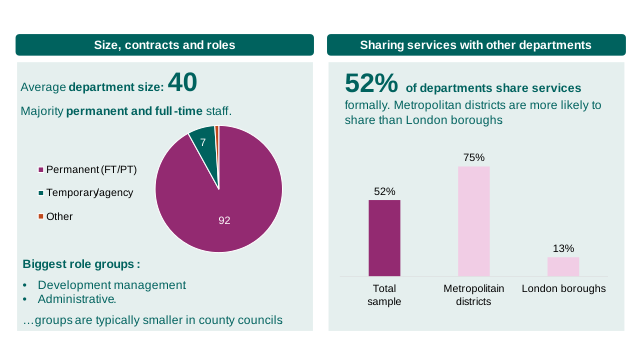
The chapter presents findings on the size, composition, training budgets and sharing of services of local authorities who responded. The size of the workforce remained similar and permanent full-time contracts continued to account for 78% of staff. Over half of planning departments (52%) reported sharing services, an increase from 39% in 2023, and 64% reported sharing expertise in areas like archaeology and ecology. However, low training budgets of around £282 per employee were considered a significant barrier to upskilling staff by 68% of departments.
Figure 4.1 summarises the workforce profile key points with diagrams and bar charts. it looks at average department size, type of staff and sharing services between departments.
Figure 4.1: Workforce profile key points
4.2 Size and nature of workforce
The size of departments and disposition of employees had not changed significantly since 2023 (see Figure 4.2 and Annex table 9.7.1).[footnote 1] Planning departments in England reported an average of 40 staff per department and individual department sizes ranged from a minimum of three to a maximum of 149. In line with 2023 data and as per annex table 9.7.2, 78% of staff in all planning departments were employed on a full-time permanent contract. The proportion of part time permanent employees decreased slightly (14% in 2025 vs. 17% in 2023).
Figure 4.2: Size of planning department workforce (% of all departments able to give an answer: 2023 and 2025)
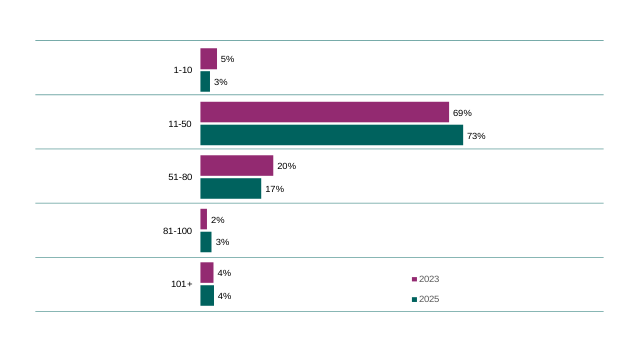
Source: Q21. Thinking about your current workforce, how many members of staff (including full time, part time and fixed term appointment staff) are currently employed within your Planning department on each of the following bases. Calculated as the number of staff by role group. Base (unweighted): Departments able to give an answer: 2023 (108), 2025 (134). Percentages may not sum to 100% due to rounding.
LPA typology and regional analysis for size and nature of workforce
Planning departments in national parks were typically the smaller, averaging 20 staff relative to the 40 national average. Conversely planning departments in London boroughs or unitary authorities were the largest with an average of 52 for London boroughs or unitary authorities. This likely reflects the population, scale and complexity of urban planning demands.
Regional disparities persisted with smaller planning departments in the East Midlands (average of 28 staff) and West Midlands (average of 25 staff). London boroughs reported a higher proportion of agency staff (7% vs. 4% for the national average).
4.3 Types of roles in workforce
The number of staff working across the different job roles remained similar to 2023 (see Figure 4.3, Annex Table 9.7.3).[footnote 2] The largest proportion of roles were in development management (36% across senior and entry mid roles), policy (13% entry to senior level) and admin (15%). Only a small proportion worked in more specialist roles for example minerals and waste (1%), Geographic Information System (GIS) and digital mapping (1%), and digital support (1%).
Figure 4.3: Job roles in planning department (% of all staff: 2023 and 2025)
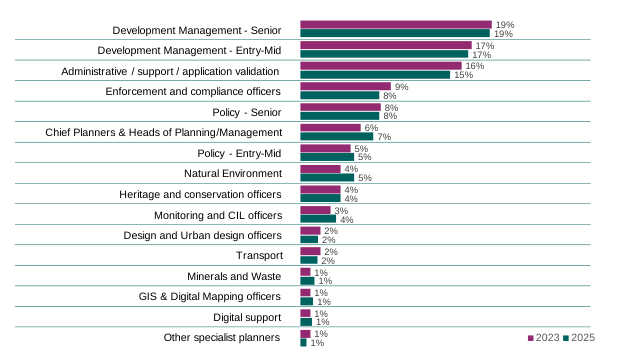
Q22. Approximately how many of your current workforce staff are employed within the following job roles? Please note this should be the number of full-time equivalents (FTE), not the number of employees. NOTE: in 2023 departments were instead instructed as follows: Please note this should be the number of employees, not the number of FTE. This may impact on comparability of data over time. Base (unweighted): All staff: 2023 (4,420), 2025 (5,861). Percentages of all vacancies do not sum to 100% due to multicoding.[footnote 3]
LPA typology and regional analysis by role type
County councils reported higher proportions of staff in minerals and waste roles (15% in 2025 vs. 1% in 2023) and transport (11% in 2025 vs. 2% in 2023).
4.4 Sharing resources
In 2025, over half of all planning departments said that they shared any services with other local authorities through a contract or formal agreement (52% in 2025 vs. 39% in 2023 – see Annex Table 9.7.4 for more details). Overall 64% of departments reported sharing specific planning skills with other local authorities (see Figure 4.4, Annex Table 9.7.5). [footnote 4]
The planning skills most likely to be shared were archaeology (35%), ecology and biodiversity (31%) and conservation and heritage (18%). However, some skills such as regeneration and property development (1%) or legal services and advice (2%) were the least likely to be shared. Whilst this could reflect limited demand for those services, more information would be needed to explore if there is value in sharing these resources and how/if they are applicable cross-boundary?
Figure 4.4: Skills shared with other local authorities (% all departments: 2025)
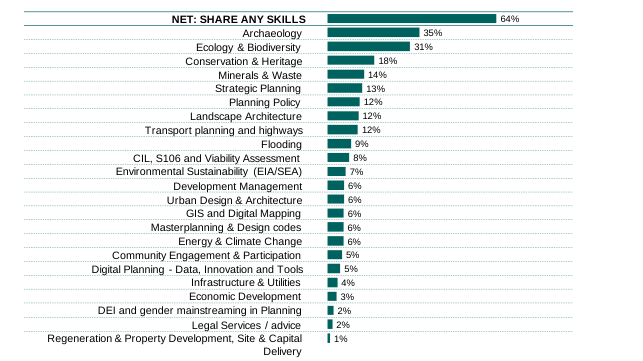
Q20. Do you share any of the following planning skills with other Local Authorities? Base (unweighted): All departments: 2025 (148). Percentages of all skills do not sum to 100% due to multicoding (that is to say respondents may have selected multiple categories when answering). No 2023 comparison data because in 2023 the question was asked differently.
LPA typology and regional analysis for sharing services
Metropolitan districts were more likely than average to have a formal agreement or contract to share services (75% metropolitan district vs. 52% for the national average) or to share any specific planning skills (83% metropolitan districts vs. 64% for the national average).
London boroughs were less likely than average to have a formal agreement or contract to share services (13% vs. 52% nationally) or to share specific planning skills (33% vs. 64% nationally).
4.5 Budgets
In 2025, new questions were introduced asking LPAs to report specific figures (£) for total annual and training budgets. Comparison is therefore unavailable. Knowledge among respondents was limited: 29% of departments did not know their departmental annual budget, and 42% did not know their training budget.[footnote 5] Analysis of budgets is restricted to those departments able to give a definitive response.
Among those who provided an answer, the mean annual budget reported was £1.94 million. Excluding outliers, this ranged from £130,000 to £8.8 million (see Figure 4.5, Annex Table 9.7.6).
On average, departments allocated £11,300 annually – equating to £282 per employee. The overall range of the data varies from 13% of departments reporting no training budget to 6% of departments reporting greater than £40,000 (see Figure 4.6,Table 9.7.6).
Figure 4.5: Annual budget for 2024 to 2025 (% of all departments which provided budget information: 2025)
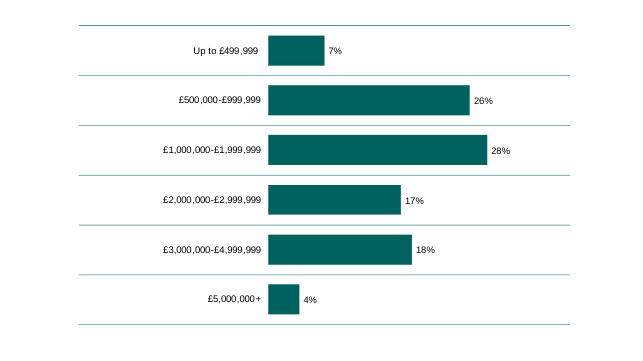
Q16. Please estimate the current size of your total annual budget for your Planning Department, for the financial year 2024/2025. Please enter a figure to the nearest £10,000. Base (unweighted): All departments which provided budget information, excluding outliers: 2025 (94). No 2023 comparison as question was not asked.
Figure 4.6: Training budget for 2024 to 2025 (% of all departments which provided budget information: 2025)
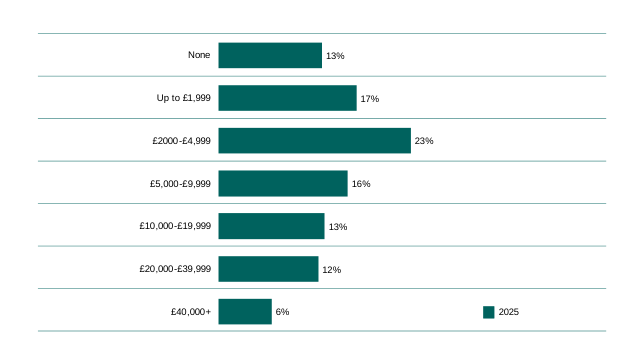
Q17. Of your Planning Department’s annual budget, approximately how much of this is spent on training? Please enter a £ figure. Base: All departments which provided budget information: 2025 (85). Percentages may not sum to 100% due to rounding. No 2023 comparison as question asked for banded responses.
5. Recruitment and vacancies
5.1 Chapter summary
This chapter discusses findings relating to current vacancies and new joiners in the past 12 months (January/February 2024 – January/ February 2025). New joiners’ information was collected for the first time in 2025 and therefore there is no comparative data in that section.
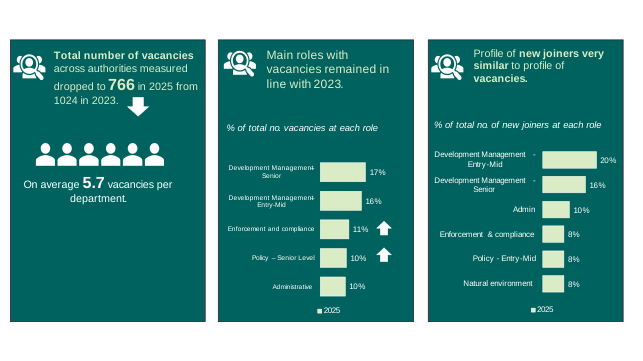
LPAs continued to struggle with recruitment though there were positive signs of improvement since 2023. On average, departments reported 5.7 vacancies down from the previous average of 8.7. Whilst vacancy pressures were easing, vacancy rates remained highest in development management roles. There was also an increase from 2023 in vacancies for enforcement, compliance, and senior policy roles. New joiners primarily filled vacancies in job roles with the highest vacancy rates (entry, mid-level or senior development management roles).
Figure 5.1 summarises the recruitment key points with diagrams and bar charts. It looks at total number of vacancies, roles with vacancies and profile of new joiners.
Figure 5.1: Recruitment key points
5.2 Vacancies
The vacancies by role group are shown in Figure 5.2 and annex table 9.7.7. This reflects the percentage of all vacancies.
The total number of vacancies fell in 2025, with departments reporting 766 vacancies compared to 1026 in 2023.[footnote 6] On average, departments reported 5.7 vacancies (vs. 8.7 vacancies in 2023), ranging from none to 37 per department.
Vacancies were most likely for the roles of entry or mid-level development management (17%) or senior development management (16%). Enforcement and compliance vacancies rose (11% in 2025 vs. 8% in 2023) as did senior policy roles (10% in 2025 vs. 7% in 2023).
Figure 5.2: Vacancies by role group (% of all vacancies)
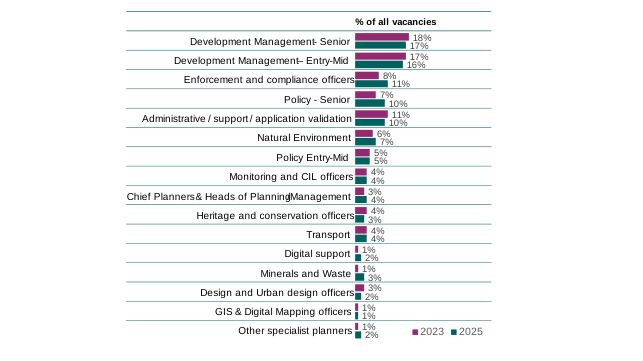
Source: Q1: Approximately how many vacancies do you currently have across the role groups defined below? Please enter a number for each role type. Base (unweighted): All departments: 2023 (118), 2025 (148); All vacancies: 2023 (1,024), 2025 (746). Percentages of departments do not sum to 100% due to multicoding. Percentages of vacancies may not sum to 100% due to rounding.
LPA typology and regional analysis for vacancies
Reported vacancies were highest in London boroughs (average of 8.4 vs. 5.7 for the national average) and lowest in national park authorities (average of 3.5).
5.3 New joiners in last 12 months
Overall, there were more joiners than vacancies. Large numbers joined taking up roles where there were significant numbers of vacancies and difficulties with recruitment. In total, departments responding to the survey reported 921 new joiners. On average departments reported 6.5 new joiners per department. Most departments reported between zero and 21 new joiners, with two outliers reporting 29 and 39 new staff. [footnote 7]
Senior and entry or mid-level development management roles make up 33% of the current workforce and 36% of new joiners suggesting this is where the highest proportion of new joiners are to be expected. This suggests that LPAs are successfully targeting their recruitment efforts.
Figure 5.3 shows that the profile of new joiners mirrored the areas of greatest need: senior development management roles (65%), entry level or mid-level development management (53%) (also see Annex Table 9.7.10).
Figure 5.3: New joiners by role group (% of all new joiners 2025)
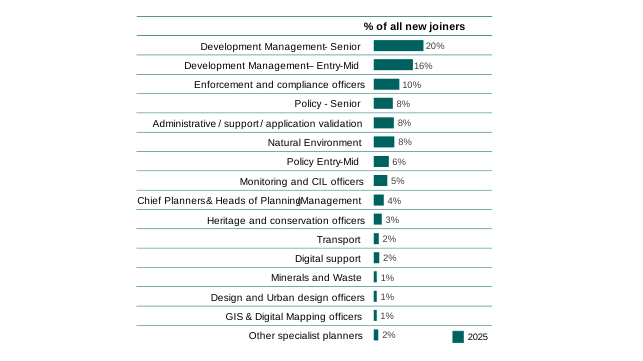
Source: Q2: In the last 12 months, approximately how many planners have joined your Planning department across the role groups defined below? Please enter a number for each role type.
Base (unweighted): All departments: 2025 (148); All new joiners: 2025 (919). Percentages of departments do not sum to 100% due to multicoding. Percentages of all new joiners may not sum to 100% due to rounding. This question was not asked in 2023 therefore there is no comparative data.
LPA typology and regional analysis
The average number of new joiners arriving in the previous 12 months was highest in London boroughs (9.5 new staff per department compared to 6.5 for the 2025 England average) and lowest in national parks (5.0 new staff per department in national parks).
6. Resourcing difficulties
6.1 Chapter summary
This chapter outlines the challenges of recruitment and retention, and their impacts. Fewer LPAs reported recruitment difficulties – 79% compared to 91% in 2023. Notable improvements were found in filling entry and mid-level positions across development management, policy, and administrative roles. Retention also improved and staff were less likely to leave the department for jobs in the private sector or due to pay and conditions. However, planning departments continued to experience difficulties finding candidates with the right skills and enough people interested in applying. Senior development management roles were the most difficult to fill with 52% of departments citing challenges. These hard-to-fill vacancies led to higher workloads, greater workload management challenges, and decreased staff morale.
Figure 6.1 summarises the recruitment difficulties key points with diagrams and bar charts. It looks at overall percentage of departments reporting difficulties, roles with difficulties and the reasons for this.
Figure 6.1: Recruitment difficulties key points
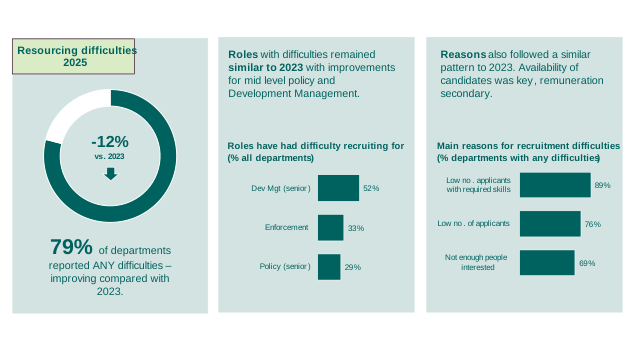
Figure 6.2 summarises the recruitment difficulties key points with diagrams and bar charts. It looks at overall percentage of departments reporting difficulties, roles with difficulties and the reasons for this.
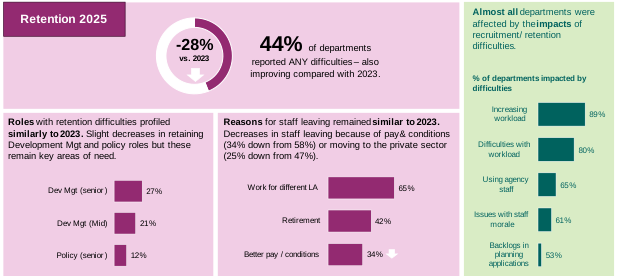
Figure 6.2: Retention difficulties key points
6.2 Recruitment difficulties
2025 data revealed a significant decrease in reported recruitment difficulties down to 79% from 91% in 2023. Departments were most likely to report difficulties recruiting for senior development management (52%), enforcement and compliance (33%), and senior policy roles (29%) – all showing little change in perceived difficulty of recruitment compared with 2023.
There were significant declines in reported recruitment difficulties for certain roles in 2025. For only 23% struggled to fill entry-level development management posts, down from 42% in 2023. Similarly, difficulties in recruiting administrative staff dropped significantly, from 18% to just 7%. Reported difficulty in recruiting to other role groups showed no statistically significant change compared with 2023.
Figure 6.3 and annex table 9.7.13 summarises the difficulties in recruitment by role group in the last 12 months.
Figure 6.3: Difficulty in recruitment by role group in last 12 month (% of all departments)
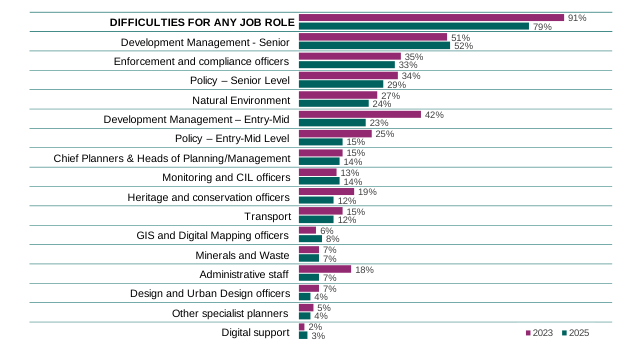
Source: Q3. In the last 12 months, which, if any, of the following role group(s) have you had difficulties in recruiting for? Base (unweighted): All departments: 2023 (118), 2025 (148). Percentages of departments do not sum to 100% due to multicoding.
LPA typology and regional analysis for roles with recruitment difficulties
All national parks reported some difficulties in recruitment (100% vs. 79% for the national average).
London boroughs were more likely than average to report difficulties in recruitment (93% in vs. 79% for the national average). They had specific difficulties recruiting for senior development management roles (80% vs. 52% for the national average).
Departments in unitary authorities were more likely to report recruitment difficulties for heritage and conservation officers (30% vs. 12% for the national average) and design and urban design officers (19% vs. 4% for the national average).
County councils were more likely than average to report difficulty in recruiting for roles in minerals and waste (37% vs. 7% for the national average).
6.3 Reasons for difficulties in recruitment
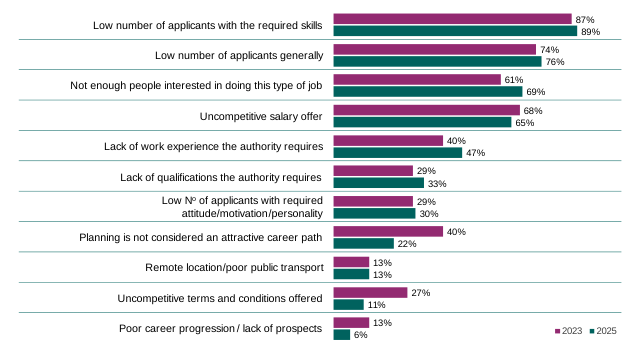
The reasons for which it was hard to fill vacancies remained similar to 2023 – primarily the supply of suitable applicants and the money required to attract these applicants (see Figure 6.4, Annex Table 9.7.14).[footnote 8]
Departments were most likely to report a low number of applicants with the required skills (89%), a low number of applicants generally (76%) or not enough applicants interested in doing this kind of job (69%). Furthermore, uncompetitive salary offers also continued to be an issue (65%).
However, the following reasons were less likely to be considered barriers in 2025 than in 2023: the attractiveness of the profession (22% vs. 40% in 2023) and uncompetitive terms and conditions (11% vs. 27% in 2023).
Figure 6.4: Reasons why it is hard to fill vacancies (% of planning departments with difficulties)
Source: Q4. When thinking about recruitment in general, which, if any, of the following reasons explain why it has been hard to fill these vacancies?
Base (unweighted): Planning departments that have experienced difficulties with recruitment: 2023 (109), 2025 (120). Percentages of departments do not sum to 100% due to multi coding
LPA typology and regional analysis for reasons for recruitment difficulties
London boroughs were more likely to cite low numbers of applicants generally (93% vs. 76% for the national average) as a key reason for finding it difficult to fill posts.
National parks were much more likely to report remote location and poor transport as a reason for recruitment difficulties (63% in national parks vs. 13% for the 2025 average).
6.4 Consequences of difficulty in recruitment
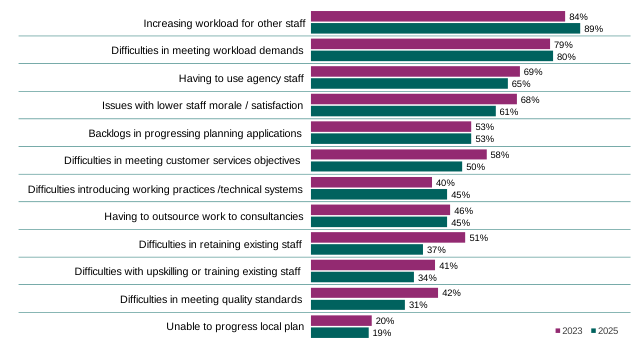
The consequences of recruitment difficulties were largely unchanged in 2025 (see Figure.6.5 Annex Table 9.7.15). Almost all departments reported being impacted by at least one of the factors listed in the questionnaire but those relating to workload and the difficulties of meeting that workload were most frequently cited.
The three most mentioned issues experienced because of hard to fill vacancies were: increasing workload for other staff (89%), difficulties in meeting workload demands (80%) and having to use agency staff (65%).
Figure.6.5: Consequences of hard to fill vacancies (% of planning departments with difficulties)
Source: Q5. Thinking about all the current vacancies that have been hard to fill for you over the last 12 months, which (if any) of the following issues have you experienced as a result of hard to fill vacancies?
Base (unweighted): Planning departments that have experienced difficulties with recruitment: 2023 (109), 2025 (120). Percentages of departments do not sum to 100% due to multicoding.
LPA typology and regional analysis for issues experienced because of hard to fill vacancies
Metropolitan districts were more likely than average to report having issues with lower staff morale because of hard to fill vacancies (91% vs. 61% for the national average).
Unitary authorities were more likely to report having to outsource work to consultancies (68% vs. 45% for the national average).
By region, planning departments in Yorkshire and the Humber reported more difficulties in meeting customer service objectives (80% vs. 50% for the national average). Planning departments in the South West reported outsourcing to consultancies more often (75% vs. 45% for the national average).
6.5 Retention difficulties
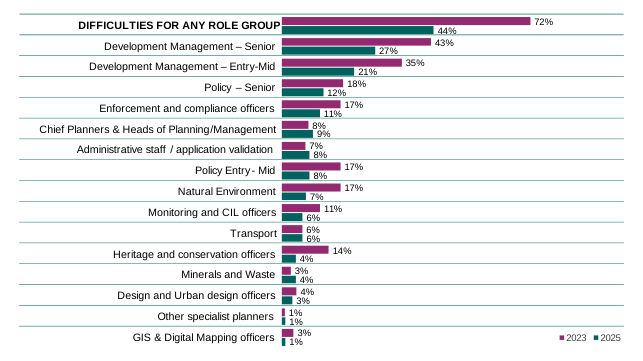
Retention difficulties have improved since 2023 but are still significant. Only 44% of LPAs reported difficulties down from 72%. The most notable improvements were seen in senior development management roles (27% in 2025 vs. 43% in 2023) and entry/mid-level development management roles (21% vs. 35%). These roles also reported high levels of new joiners. There was also a sharp decline in retention problems for entry level or mid-level policy roles (8% in 2025 vs. 17% in 2023), perhaps reflecting the reduced proportion of departments with vacancies in these roles (see Figure 6.6 and annex table 9.7.16). However, these roles still account for most retention issues and staff turnover remains a concern, particularly in county councils.
It is important to note that data suggested strong overlap between recruitment and retention problems: departments reporting problems with recruitment were more likely to report problems with retention (52%) compared with those with no recruitment difficulties (12%).
Figure 6.6: Role groups with current retention problems (% of all planning departments)
Source: Q6. Over the past 12 months, has your planning department experienced any difficulties in retaining staff? Q7. Over the past 12 months*, which, if any, of the following role groups have experienced difficulties in retaining staff? *Timescale clarification added to follow on question in 2025. Q7 asked of those with difficulties and rebased over all respondents in chart.
Base (unweighted): All departments: 2023 (118), 2025 (148). Percentages do not sum to 100% due to multicoding.
LPA typology and 2025 regional analysis for retention difficulties
County councils were more likely than average to report retention problems (82% vs. 44% for the national average). Conversely, district councils were less likely than average to report any problems with retention (34% vs. 44% for the national average).
6.6 Reasons for leaving
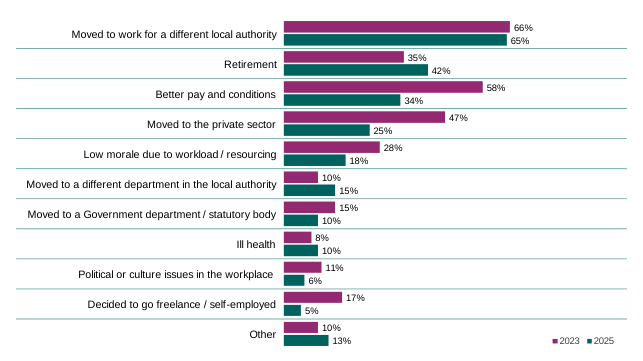
Overall, the reasons LPAs gave for staff leaving planning departments remained largely unchanged from 2023 (see Figure 6.7, Annex Table 9.7.17) but there were positive improvements.[footnote 9]
The most common reasons for staff leaving the department remained consistent with those given in 2023: staff moving to work for a different local authority (65% vs. 66% in 2023), better pay and conditions (34% vs. 58% in 2023) and moving to the private sector (25% vs. 47% in 2023). Significantly fewer planning departments mentioned pay and conditions or moving to the private sector in 2025, though these remained key reasons to leave. Retirement as a reason for leaving increased compared with 2023 (42% in 2025 vs. 35% in 2023).
Figure 6.7: Reasons for staff leaving planning department (% of all departments)
Source: Q8. Over the past 12 months*, which, if any, of the following are reasons for why staff have left your Planning department? *Timescale clarification added to question in 2025. Base (unweighted): All departments: 2023 (118), 2025 (148). Percentages do not sum to 100% due to multicoding.
LPA typology and regional analysis for reasons for why staff have left planning departments
Metropolitan districts were more likely to report staff leaving to retire (74% vs. 42% for the national average) or to go to a different department in the local authority (39% vs. 15% for the national average).
London boroughs were more likely to report people leaving because of low morale due to workload or resourcing issues in the team (47% vs. 18% for the national average) and less likely to report staff retiring (20% vs. 42% for the national average).
District councils were less likely to report staff leaving to go to a different local authority (56% vs. 65% for the national average), for better pay and conditions (23% vs. 34% for the national average) and low morale due to workload/resourcing issues (11% vs. 18% for the national average).
6.7 Barriers to resourcing
The main barriers to meeting resourcing needs remained similar to 2023 for more departments (See Figure 6.8, Annex Table 9.7.18). 98% of departments cited difficulties attracting appropriately qualified candidates, while 95% note a lack of people in the labour market with the right qualifications. Competition for talent – though less than in 2023 – remains a significant issue (92%). Financial reasons also continued to play a role, particularly: a lack of funding for staff (88%) and difficulty in setting appropriate pay scales for the skills required (85% vs. 92% in 2023).
However, there were significant decreases since 2023 for several barriers: difficulties in retaining staff (72% vs. 86% in 2023) and low interest among graduates in starting courses towards qualifications (39% vs. 64% in 2023).
Figure 6.8: Barriers to meeting resourcing needs in 2025 (% of all departments comparison 2023 to 2025)
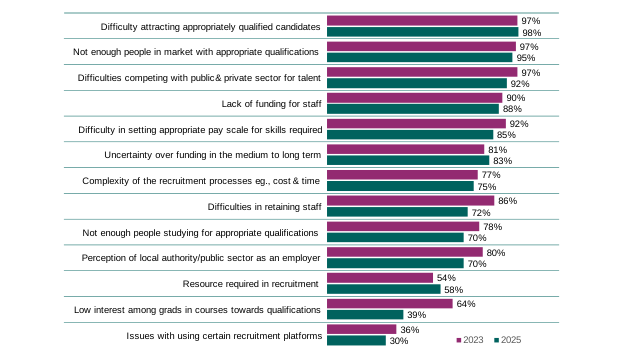
Source: Q9. Thinking about resourcing overall, how much of a barrier, if at all, do you believe each of the following are? Base (unweighted): All departments: 2025 (148).
LPAs were asked to rate how significant these barriers were. Planning departments tended to rank barriers to resourcing in 2025 the same as in 2023 (as seen in Figure 6.8 and annex table 9.7.18). However, in 2025 there were also reductions in how significant planning departments considered some barriers to be (see Figure 6.9 and annex table 9.7.18). For example, fewer planning departments considered difficulties in competing with other organisations both public and private sector for talent as a significant barrier (54% in 2025 vs. 78% in 2023). Additionally, fewer thought staff retention (15% vs. 31% in 2023) or the perception of local authority or public sector as an employer to be a significant barrier (30% vs. 42% in 2023).However more planning departments reported uncertainty over funding in the medium to long term to be a significant barrier to recruitment (56% vs. 39% in 2023).
Figure 6.9: Significance of barriers to meeting resourcing needs (% of all departments)
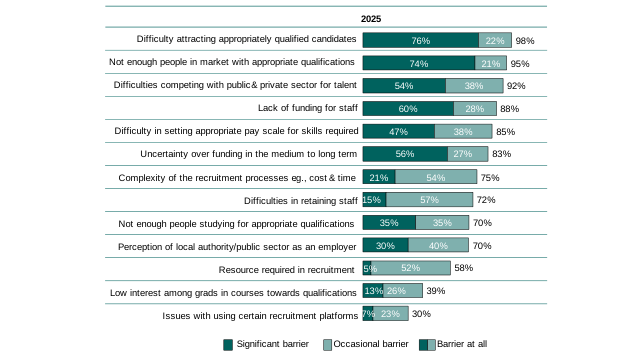
Source: Q9. Thinking about resourcing overall, how much of a barrier, if at all, do you believe each of the following are? Base (unweighted): All departments: 2023 (118), 2025 (148).
LPA typology and regional analysis for barriers to recruitment
London boroughs were more likely to report a lack of funding for staff (80% vs. 60% for the national average) and the complexity of the recruitment process as a significant barrier (47% vs. 21% for the national average).
In unitary authorities, uncertainty over funding was more likely than average to be cited as a significant barrier (74% vs. 56% for the national average).
In district councils, not having enough people in the market with appropriate qualifications was more of a significant barrier (82%) than other types of authority (74%). The same was true for not having enough people studying for the appropriate qualifications (43 vs. 35% for the national average).
6.8 Other barriers to resourcing
A new question was added in 2025 asking LPAs to report in their own words what other issues presented a barrier to recruitment in their organisation. Therefore, there is no comparison data for 2023.
The comments were grouped into themes and quantified for analysis (see Annex Table .10. for tabulated version). Some of the themes reflected the more general barriers to resourcing described in Figure 6.8 and Figure 6.9 with other responses describing additional problems or providing more detail on barriers. The following comments illustrated the themes observed above. Barriers were often viewed as interlinked and centred around finance, availability of candidates and location.
Financial issues were dominant: 18% reported a lack of funding for recruitment, 9% mentioned pay levels, and 9% cited financial and structural uncertainty in local government. The following examples illustrated this:
“Underfunding of local government. Staff increasingly expected to do more with fewer or the same resources.” Unitary authority
“Funding is key barrier, and where government funding is available to recruit to key areas it is limited, short term and given with little notice.” Metropolitan district
“Councils have to carefully manage their budgets and as a whole staffing has to be carefully monitored. In order to meet customer satisfaction and quality standards together it would require a huge increase to the council budget. Devolution and the uncertainty within planning as a whole may make the planning profession unattractive.” District council
“Lack of financial certainty. Authority is grant funded by DEFRA. Funding settlements are reducing, are set for 12 months only, and are confirmed very late (e.g. our 24 to 25 settlement is yet to be confirmed with less than 2 months to go).” National park
The attractiveness of the job and job offer was a further barrier. Problems with the public image of the job were raised by 7% of departments:
“Public perception of Planning as a profession. [It is] generally poorly regarded by politicians and the public, seen as a “problem” rather than an enabling service.” National park
“Poor external narrative around planning and local government in general.” District council
A further 11% of LPAs cited a limited pool of candidates:
“There are far fewer qualified applicants for compared to approximately 5 years ago.” District council
“There is a limited number of high-quality senior planner wanting to stay in the public sector. The most able planners who are skilled at problem solving often are attracted to the private sector.” District council
“It is challenging to recruit mineral and waste planners as the subject is not usually taught at university. This typically means a reliance on home grown talent. Whilst this has benefits, it can mean that recruitment of principal level officers is difficult as applicants have less knowledge than junior post holders that they are working with and a lack of experience at senior level and above.” County council
Location was raised as a problem by 10% of LPAs, along with competition from nearby cities and authorities (2%) and problems with transport (2%).
“House prices and accommodation in remote rural area, commuting costs.” National park
“Location because we are close to London but cannot compete with London salaries.” District council
“Location on a peninsula with limited public transport.” District council
“We are a rural local authority so find it difficult to compete with city neighbours […] It is an employee market so they can pick and choose where they go.” District council
It is important to note that respondents often described a range of issues, working together to create barriers to recruitment, for example:
“House prices and accommodation in remote rural area, commuting costs, recruitment agencies have taken significant number of experienced staff out of the market for permanent employment, low public image of planning or planners. ‘Planning is broken’, ‘planning is a brake on the economy’ rather than planning being the solution.” National park
7. Skills, training and preparedness
7.1 Chapter summary
This chapter discusses skills gaps and training in planning departments and how they have changed over time. Findings consider the impact of skills gaps, how departments are addressing them and barriers to upskilling, as well as preparedness to implement reform.
Planning departments continue to face significant challenges related to skills and training. 93% of departments have skills gap, a slight decrease from 2023. Whilst there are fewer gaps in areas like ecology and master planning, departments continue to highlight how gaps affect departments’ ability to undertake enforcement action, keep up with planning application demands, and prepare for new policy requirements.
Departments are taking more steps to address skills shortages by developing staff internally, offering flexible work options and hiring external consultants. There have also been less reports of staff leaving after training and an increase in availability of suitable training courses. However, department highlighted a lack of time, limited capacity to deliver or attend training, and restricted training budgets as persistent issues.
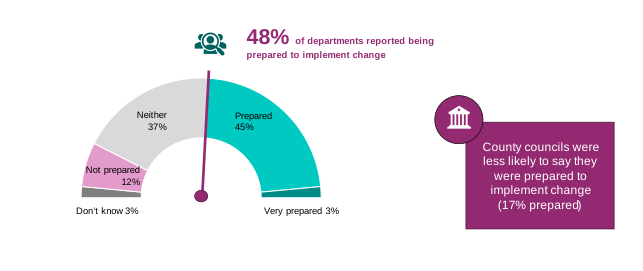
Ultimately, challenges continued to be substantial, and this is leading to delays in planning application and insufficient enforcement expertise. Crucially, only 48% of departments reported being prepared to implement upcoming planning reforms, an important consideration for the Capacity and Capability programme.
Figure 7.1 summarises the skills and training key points with diagrams and bar charts. It looks at overall percentage of departments which have skills gaps and the top departments in which there are skills gaps.
Figure 7.1: Skills and training key points
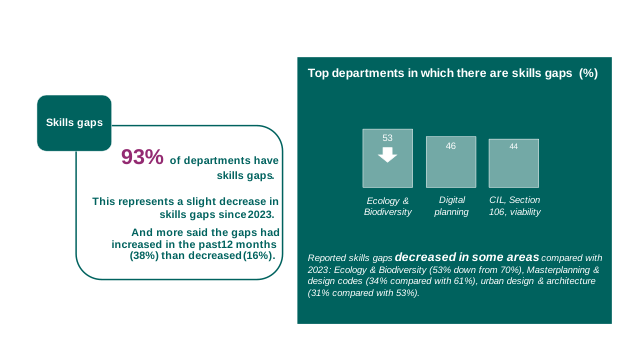
Figure 7.2 summarises the implementing reform key points with diagrams and text. It looks at overall percentage of departments reporting how prepared they are to implement reform, with county councils less likely.
Figure 7.2: Implementing reform key points
7.2 Skills gaps
Almost all planning departments (93%) reported a level of skills gap within their LPA. The level decreased slightly, but not significantly since 2023 (93% vs. 97% in 2025).[footnote 10]
The top skills gaps in 2025 shifted compared with 2023, with digital planning and Community Infrastructure Levy or Section 106 and viability assessment (44%) appearing higher up the list and reported skills gaps in other areas decreasing.
The top skills gaps reported in 2025 were ecology and biodiversity (53% vs. 70% in 2023), digital planning (46% vs. 46% in 2023) and Community Infrastructure Levy, Section 106 and viability assessment (44% vs. 48% in 2023).
In 2025 there were also statistically significant decreases compared with 2023 in departments reporting skill gaps in ecology and biodiversity (53% vs. 70% in 2023), master planning and design codes (34% vs. 61% in 2023), urban design and architecture (31% vs. 53% in 2023), and energy and climate change (26% vs. 43% in 2023).
Figure 7.3 shows all skills for which at least 25% of departments reported a gap in 2025 (see Annex Table 9.7.20 for the full list of skills gaps).
Figure 7.3: Top gaps in planning skills (% of all departments)
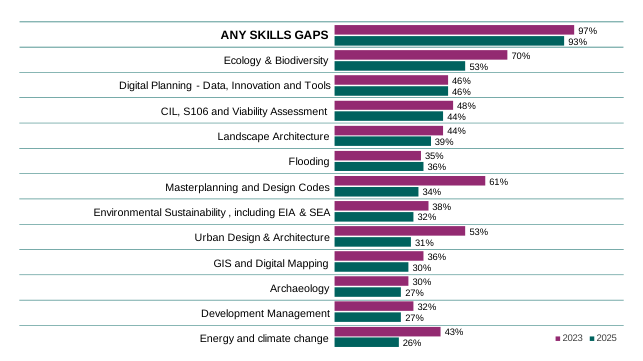
Source: Q10. Which, if any, of the following planning skills does your Planning Department currently have gaps in? Showing answers given by more than 25% of respondents in 2025
Base (unweighted): All departments: 2023 (118), 2025 (148). Percentages do not sum to 100% due to multicoding. Not all response codes are shown due to space constraints. Please see the Appendix for full details.
LPA typology and regional analysis for reported skills gaps in planning departments
In 2025, District councils were more likely to report having at least one skills gap (97% in district councils vs. 93% for the national average).
Specifically, district councils were more likely than the average to select flooding (45% vs. 36% for the national average), urban design and architecture (41% vs. 31% for the national average) and archaeology (36% vs. 27% for the national average).
London boroughs were less likely than average to report a gap in urban design and architecture (13% vs. 31% for the national average).
7.3 Perceived change in the size of the skills gap over the past 12 months
In 2025 all departments were asked to what extent their skills gap had changed in the last 12 months at the point at which the survey took place (see Annex Table 9.7.21). The proportion of departments reporting their skills gap had increased in the last 12 months fell significantly from 51% in 2023 to 38% in 2025.[footnote 11]
7.4 Impact of skills gaps
Overall, 92% of planning departments reported that they had been impacted by a current or past skills gap in some way (Figure 7.4, Annex Table 9.7.22) – a similar level of impact to 2023.
Figure 7.4: Impact of skills gaps (% of all departments)
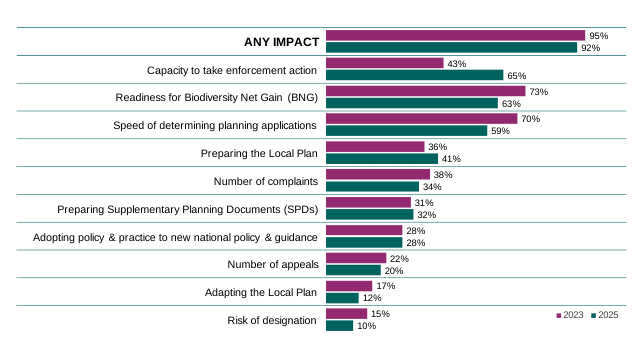
Source: Q11. Overall, how has your Local Authority Planning department been impacted by any current or past skills gap(s)? NOTE – in 2023 asked only about current skills gaps.
Base (unweighted): All departments: 2023 (118), 2025 (148). Percentages do not sum to 100% due to multicoding.
The top impact of skills gaps on planning departments was on departments’ capacity to take enforcement action (65% vs. 43% in 2023) – a significant increase compared with 2023.
The next most frequently mentioned impacts were readiness for BNG (63% vs. 73% in 2023) and the speed of determining planning applications (59% vs. 70% in 2023) – whilst proportions mentioning these were lower, they were not significantly lower.
Impacts did not vary notably by local authority type or region.
7.5 Actions taken to address skills gap
Almost all planning departments reported having taken some action to help address current or past skills gaps (99%). This was in line with the level in 2023 (99%).
Actions taken by planning departments (see Figure 7.5, Annex Table 9.7.23) broadly included actions relating to growing skilled staff internally, outsourcing, general staff development and sharing resources.
These actions showed increases in 2025, growing skilled staff internally through graduate and apprenticeships schemes (87% vs. 53% in 2023), procuring external consultants (64% vs. 50% in 2023) and offering more flexible working practices to attract or retain staff (61% up from 30% in 2023).
There were also significant increases in implementing career frameworks (38% vs. 27% in 2023), market supplements (37% vs. 23% in 2023) and internal redeployment (secondments) from other departments within the local authority (23% vs. 13% in 2023), though these actions were far less frequently taken overall.
Figure 7.5: Actions taken to address skills gaps (% of all departments)
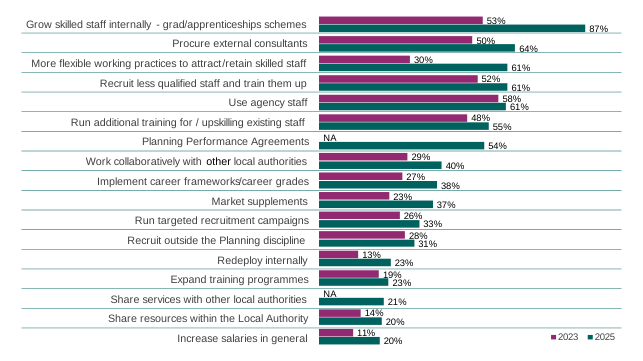
Source: Q12. What actions, if any, have your organisation undertaken to help address any current or past skills gap(s)? NOTE – in 2023 asked only about current skills gaps; Base (unweighted): All departments: 2023 (118), 2025 (148). Percentages do not sum to 100% due to multicoding.
LPA typology and regional analysis for actions taken to address skills gaps
Unitary authorities were more likely than average to report growing skilled staff internally through graduate or apprenticeships schemes (97% vs. 87% for the national average) but were less likely than average to report using market supplements (20% vs. 37% for the national average) or career frameworks (22% vs. 38% for the national average).
County councils were more likely than average to report recruiting and training up less qualified staff (89% vs. 61% for the national average) and recruiting outside of the planning discipline (81% vs. 31% for the national average).
District councils were more likely than average to report using agency staff (69% vs. 61% for the national average) and working collaboratively with other local authorities (49% vs. 40% for the national average).
London boroughs were less likely than average to report working collaboratively with other local authorities (13% vs. 40% for the national average).
Metropolitan districts were less likely than average to report recruiting outside of the planning discipline (14% vs. 31% for the national average).
7.6 Upskilling and training
Showing little change from 2023, almost all departments reported experiencing at least one barrier to upskilling (96% in 2025 vs. 97% in 2023) (see Figure 7.6, Annex Table 9.7.24).
There was a sharp increase in departments reporting lack of time as a key barrier to upskilling staff (80% vs. 67% in 2023) and lack of training budget was also increasingly perceived as a barrier to upskilling staff (68% vs. 60% in 2023).
However, departments were less likely to report a lack of external training courses as a barrier to upskilling in 2025 (26% vs. 38% in 2023) or fear that staff will leave or move on once upskilled also decreased (16% vs. 26% in 2023).
Figure 7.6 summaries the key barriers to upskilling staff, shown as a percentage of all departments.
Figure 7.6: Key barriers to upskilling staff (% of all departments)
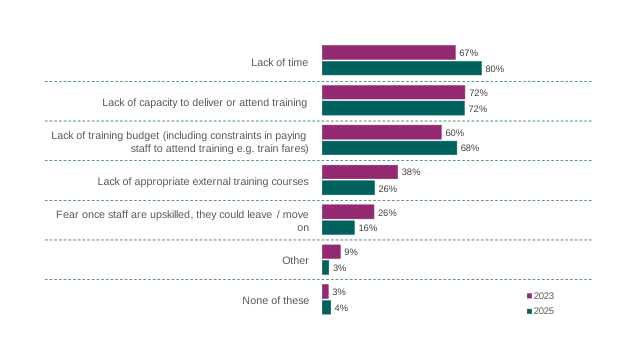
Source: Q14. Which, if any, of the following do you believe are key barriers to upskilling staff? Base (unweighted): All departments: 2023 (118), 2025 (148). Percentages do not sum to 100% due to multicoding.
LPA typology and regional analysis for barriers to upskilling
Reports of a lack of time as a barrier to upskilling staff were higher in metropolitan districts (94% vs. 80% for the national average) and lower in district councils (74% vs. 80% for the national average).
Likewise, reports of a lack of training budget were higher than average in metropolitan districts (86% vs. 68% for the national average) and lower in district councils (56% in vs. 68% for the national average).
7.7 Preparedness for changes to the planning system[footnote 12]
Around half (48%) of departments said they felt prepared or very prepared to implement changes to the planning system, such as those set out in the NPPF, with 12% feeling unprepared and 49% were neither prepared nor unprepared (see Annex Table 9.7.25).
Compared with the average for all planning departments in England, departments in county councils were less likely to report feeling prepared (17% compared with 48% average).
7.8 Mandatory training received by the planning committee
Almost all departments reported members of the planning committee receiving mandatory training within the last 12 months (97% in 2025 vs. 96% in 2023) (see Annex Table 9.7.26). There were no notable significant differences by region or local authority type.
8. Conclusions
The 2025 Skills and Capacity Survey has highlighted a mixed picture: there was some improvement in recruitment and retention, but persistent and emerging challenges continue to effect planning departments and the services they deliver.
At present two rounds of research cannot determine if these will persist. More survey rounds will be needed to monitor how these trends continue and to what extent they can be attributed to the Capacity and Capability programme of work.
Although there were clear signs of improvement in 2025, recruitment and retention do remain challenging for planning departments. The literature review supported this; highlighting how workforce gaps hold the sector back and warning that modernisation is needed.
Recruitment and Retention
Demand for staff continues to follow the same pattern as in 2023, and departments still struggle to fill senior, mid-level or entry level roles in development management whilst further demand has grown for enforcement officers, compliance staff and senior policy roles.
The research suggests there is a need to address the root causes of recruitment difficulties across the planning sector as LPAs are citing many of the same challenges remain as in 2023, with difficulty attracting candidates with the right skills and the low numbers of applicants.
Through future research it might be useful to explore in more detail why candidates are perceived to be unqualified by planning departments and whether there are new solutions to widening access to these roles.
To do this it will be important to support career development across the planning sector, especially with regards to attracting new people into the profession, encouraging people to study relevant qualifications and improving the image and perception of the public sector to increase number of applicants.
Since 2023 LPAs have increasingly attempted to address recruitment issues and skills gaps through various strategies, from growing staff internally through graduate or apprenticeship schemes to more flexible work practices to attract or retain staff.
The literature review also noted that the private sector often provided more varied and stimulating work, meaning that factors such as job content, work-life balance and progression opportunities may carry just as much weight as salary or benefits to staff. Therefore, keeping good staff with attractive options is just as important as attracting new entrants.
Skills gaps
Skills gaps remained widespread with 93% of LPAs reporting difficulties. Improvements were seen in ecology and biodiversity and master planning. However, these gaps were overall highest in digital planning, Community Infrastructure Levy, Section 106 and viability assessment as well as ecology and biodiversity – despite a reduction compared with 2023. Particularly hindering capacity to take enforcement action, preparing for BNG, speed of determining planning applications, and developing local plans.
Overall, 68% of planning departments indicated that insufficient training budgets was a main barrier to upskilling staff, therefore addressing issues related to a lack of funding for training and development would be helpful. This would enhance the skills of current staff, upskill junior staff and recruit less qualified staff to train in-house.
Lack of time and capacity to deliver and attend training remain as barriers to upskilling. And planning departments need further support in this areas.
Sharing skills between authorities has increased since 2023 and could be a practical way to manage skills gaps without growing headcount. This could possibly help with the barriers and difficulties identified above, but needs to be investigated further.
The research did not examine the barriers to wider skills sharing or the perceived effectiveness of current arrangements, which could be useful areas for future investigation. Certainly, departments would benefit from clearer prioritisation of skills gaps and smarter allocation of resources. More evidence is needed on which support measures work best.
New challenges
In 2025 there were new challenges brought up which were specifically related to a noticeable rise in vacancies in enforcement, digital support and senior policy roles and readiness for reform. Given the scale of planning reform and limited readiness within departments, the right support will be needed to improve capacity and capability.
Future research could identify why there is a rise in vacancies and also how to support LPAs through this new transition.
Next steps
Following on from this research, the key messages from this report will be conveyed back to the planning sector. This research also highlighted that planning departments remained open to ongoing dialogue with MHCLG. In that regard, 85% of departments indicated they could be recontacted by MHCLG over the next 12 months. This presents MHCLG with the opportunity going forward to have further and deeper conversations with the planning sector about the challenges faced and solutions required to address these.
{:#appendices}
9. Appendices
9.1 Appendix A – Summary of findings from light touch evidence review by CRESR at Sheffield Hallam University
9.1.1 Evidence of skills gaps and capacity issues in 2023
The original Planning Capacity and Skills Survey was carried out by Verian in 2023. This was accompanied by a review of available evidence, which brought together the findings of an original evidence review undertaken by MHCLG and a search for sources published between 2021 and 2023. That review revealed several critical issues which were impacting on planning skills and capacity in the period up to two years ago and serve to frame our updated assessment. Those issues can be summarised as follows.
Concerns about capacity to implement planning reforms
The 2023 review found evidence that planning authorities held deep misgivings about their ability to implement planning reforms that were being consulted on as part of the 2020 Planning for the Future white paper. This reflected the ‘unanimous’ views of participants of a study at that time of local authority that capacity and skills were insufficient. Evidence also speaks of concerns about the frequency of changes to policy and legislation and difficulties in communicating these changes and their implications to members and officers.
Reliance on outsourcing
The previous evidence reviews reported that many planning authorities were heavily reliant on outsourcing work to consultancies or to temporary agency staff. This appeared to be to free core staff to deliver statutory duties and services but was sometimes at the expense of a range of activities which could improve planning system outcomes, such as community consultation, design assessments and viability negotiations.
Impact of reduced budgets
A range of evidence consistently identified reductions in core funding for planning functions within local authorities. A range of reasons for this were cited, including reduction in specific funding to support planning services in areas of greater development (such as the Planning Delivery Fund) and the introduction of a national planning fees regime which reduces the scope for local variation. Pressure on wider council resources had also reduced the scope for cross subsidy of planning functions from general local government finances. The impact of reduced budgets was found to be mainly on staffing levels, with a disproportionate impact on forward planning policy and a range of ‘unfunded’ planning activities (i.e., those that do not generate fees or have specific grants).
Competition with the private sector for specific skills
Alongside the use of consultancies for outsourced activities, local authorities have also faced increased competition for staff from the private sector. Pay and benefits were widely cited as being more attractive in the private sector, although a wider job scope encompassing more creative and innovative planning activities in the private sector was also found to be a factor.
9.1.2 Current skills gaps and capacity issues
The updated evidence we have reviewed shows that both local authorities planning departments and the development sector more broadly continue to identify capacity issues in key areas such as plan making, infrastructure planning, and environmental assessments to support current and future development targets. The critical nature of these capacity issues is commonly framed by the government’s housing target and its desire to reform the planning system. At least one recent survey undertaken by the sector suggests that vacancies and recruitment difficulties are universal amongst local planning authorities, with other sources corroborating to varying extents the depth of the challenge.
Recruitment and retention of skilled workers remains an issue for the sector, and this is impacting the ability of the private sector and housing associations to meet demand for housebuilding. The current mechanisms for delivering infrastructure projects and affordable housing are seen as inefficient and ineffective, whilst outsourcing of work remains a resource drain on planning departments at a time when local government finance is acutely stretched.
The evidence suggests specific concern about the amount of officer time lost to developer contribution negotiations, whilst private house builders argue that there is a lack of capacity to spend S106 and infrastructure levy contributions effectively.
Digital and data standardisation are seen as critical to improve the efficiency of planning processes but planning departments do not currently have the skills or capacity to deliver these changes, despite promising pilots and some government funding for demonstration projects.
9.1.3 Future skills and capacity challenges
Current evidence discusses the immediate future rather than taking a long-term view, arguing that targets are already in jeopardy without significant investment in and transformation of the planning system. Current and future house building targets are at risk without addressing the lack of capacity within planning departments to produce ambitious strategic plans for housing sites and deliver the infrastructure to support them.
Developers call for more certainty in application outcomes that align with strategic plans, and for more financial support to deliver affordable housing. Direct delivery models, and more ambitious development projects are offered as effective ways forward, but the complexity of such approaches is recognised.
9.2 Appendix B – Methodology
The 2025 ‘pulse’ survey methodology follows the methodology set out in 2023.
The 2025 survey is designed as a ‘check’ on the current situation. This means the 2023 questionnaire was used as a basis, but not all questions were asked in 2025, only those considered key. In addition, the MHCLG research team worked with key stakeholders in the Capability and Capacity team to understand if there were information gaps from the 2023 survey which could be filled and used this information to add questions to the survey. Please see 9. Appendix – Questionnaire Comparability for details of comparability with the 2023 survey on a question-by-question basis.
Once agreed, the questionnaire was programmed into an online survey to match the methodology used in 2023. This was further tested and refined by the research teams before distribution.
Using the sample supplied by MHCLG, the online survey link was distributed to contacts at each local authority or national park planning department in a personally addressed email invitation. Each survey link was unique and allowed the respondent to complete the survey at their convenience and to save any answered questions and come back to complete the survey later through the same link. The final questionnaire length was estimated at 25 minutes. Only one respondent from each planning department could complete the survey.
As the survey questions required respondents to collate a significant amount of information, the invitation to participate also contained a link to a PDF copy of the questionnaire. In addition, access to guidance and instructions (FAQs) were provided which respondents could refer to when completing the survey.
Initially, a ‘soft launch’ of the survey was undertaken on 15th January 2025. A small proportion of invitations were sent out and any returns processed. The data was quality checked to determine if the survey was working properly. The full launch proceeded the following week.
Verian sent regular reminder emails during the fieldwork period to maximise response rates, eight tailored reminders in total. In addition, MHCLG engaged in promotional activity before the fieldwork period opened and published reminders during the fieldwork. Due to low response rates, the fieldwork was extended by two weeks to boost overall returns.
Fieldwork took place between 15th January and 28th February 2025. In total, 148 respondents completed the survey. After data cleaning and quality checks, all 148 were included in the findings.
The distribution of completed surveys by types of local authorities and region are shown in Table 9.2.1.
Table 9.2.1 Number of respondents: local authority type by region
| London Borough | County council | District council | Unitary authority | Metropolitan district | National park | |
|---|---|---|---|---|---|---|
| South and East | 15 | 5 | 51 | 14 | 0 | 2 |
| London | 15 | |||||
| South East | 2 | 25 | 6 | 1 | ||
| South West | 4 | 6 | ||||
| East of England | 3 | 22 | 2 | 1 | ||
| Midlands | 4 | 19 | 3 | 1 | 1 | |
| East Midlands | 2 | 12 | 2 | 1 | 1 | |
| West Midlands | 2 | 7 | 1 | |||
| North | 1 | 4 | 10 | 14 | 4 | |
| Yorkshire and the Humber | 1 | 4 | 2 | |||
| North East | 4 | 2 | 1 | |||
| North West | 1 | 4 | 5 | 8 | 1 | |
| Total responding | 15 | 10 | 74 | 27 | 15 | 7 |
9.3 Appendix C – Questionnaire comparability
The following table sets out each question asked in the 2025 survey and details comparable questions in the 2023 survey and information on how data was compared year on year.
| 2025 Variable | Question text 2025 | 2023 Variable | Comparison |
|---|---|---|---|
| Q1 Vacancy | Approximately how many vacancies do you currently have across the role groups defined below? | Q004 - RGVACANCY: Q1 | Yes, roles match, comparison shown |
| Q2 NewJoiner | In the last 12 months, approximately how many planners have joined your Planning department across the role groups defined below? | Q070 - GRADUATE: Q2 | No comparison, data only available for Graduate planners in 2023 |
| Q3 RecruitDifficult | In the last 12 months, which, if any, of the following role group(s) have you had difficulties in recruiting for? | Q008 - DIFFICULT: Q3 | Comparison shown |
| Q4 RecruitReasons | When thinking about recruitment in general, which, if any, of the following reasons explain why it has been hard to fill these vacancies? | Q012 - REASON: Q5 | Comparison shown |
| Q5. Vacancy Consequences | Thinking about all the current vacancies that have been hard to fill for you over the last 12 months, which (if any) of the following issues have you experienced as a result of hard to fill vacancies? | Q013 - CONSEQUENCE: Q6 | Comparison shown |
| Q6 RetentionDifficult | Over the past 12 months, has your planning department experienced any difficulties in retaining staff? | Q016 - RETENTION: Q8 | Comparison shown. Timescale clarification added |
| Q7 GroupsWith RetentionDifficulties | Over the past 12 months, which, if any, of the following role groups have experienced difficulties in retaining staff? | Q017 - RGRETAIN: Q9 | Comparison shown. Timescale clarification added |
| Q8 ReasonsLeft | Over the past 12 months, which, if any, of the following are reasons for why staff have left your Planning department? | Q021 - WHYLEAVE: Q13 | Comparison shown. Timescale clarification added |
| Q9 | Thinking about resourcing overall, how much of a barrier, if at all, do you believe each of the following are? | Q022 - BARRIER: Q14 | Comparison shown. Timescale clarification added |
| Q9_other | Thinking about resourcing overall, are there any other reasons that you believe present a barrier to recruitment in your organisation? | New – no comparison | |
| Q10 SkillsGaps | Which, if any, of the following planning skills does your Planning Department currently have gaps in? If you have formal arrangements with other planning authorities that use these skills, please include them as a gap. | Q024 - SKILLSHORT: Q15 & Q025 - PLANSK: Q16 | Compare by combining previous data |
| Q11. SkillsGapImpacts | Overall, how has your Local Authority Planning department been impacted by any current or past skills gap(s)? | Q028 - SKIMPACT: Q19 | Comparison given. In 2023 only asked about current skills gaps |
| Q12. SkillsGapActions | What actions, if any, have your organisation undertaken to help address any current or past skills gap(s)? | Q029 - SKACTION: Q20 | Comparison given. In 2023 only asked about current skills gaps |
| Q13. ChangeSkillsGaps | Overall, how has the size of skills gap(s) across your Planning department changed in the past 12 months? | Q030 - GAPCHANGE: Q21 | Comparison given. In 2023 only asked about current skills gaps |
| Q14. UpskillingBarriers | Which, if any, of the following do you believe are key barriers to upskilling staff? | Q031 - UPSKILL: Q22 | Comparison given. |
| Q15. ImplementingReform | Thinking about changes to the planning system, such as those set out in the National Planning Policy Framework (NPPF), how prepared is your Planning Department to implement the changes? | New, no comparison | |
| Q16: Annual Budget | Please estimate the current size of your total annual budget for your Planning Department, for the financial year 2024/2025. Please enter a figure to the nearest £10,000. | New, no comparison | |
| Q17 Training Annual Spend | Of your Planning Department’s annual budget, approximately how much of this is spent on training Please enter a £ figure. | Q037 - BUDGET: Q26 | 2023 is categorised data – no comparison shown |
| Q18 MandatoryTraining | Have members of your planning committee received training in the last 12 months? Please note this refers to planning-specific training, as opposed to other training sessions (e.g. diversity and inclusion). | Q030 - TRAINING: Q29 | Comparison displayed but, time period reduced from 2-3 years in 2023 to 12 months in 2025 |
| Q19. Share Services | Does your Local Authority Planning department share any services with other local authorities through a contract or formal agreement? | Q044 - SERVICES: Q32 | Question excluded county councils and varied wording. No comparison data displayed |
| Q20. Share Skills | Do you share any of the following planning skills with other Local Authorities? | Q047 - SHARESKILL: Q35 | Question excluded county councils and varied wording. No comparison data displayed |
| Q21. Number Staff Hours | Thinking about your current workforce, how many members of staff (including full time, part time and fixed term appointment staff) are currently employed within your Planning department on each of the following bases? | Q050 and Q051 - EMPLOYSTAT: Q37 | Compares the combination of Q050/51 |
| Q22. Roles | Approximately how many of your current workforce staff are employed within the following job roles (FTE)? | Q052 - JOBROLE: Q38 | Compare |
9.4 Appendix D – Weighting
Weighting is a correction technique which involves making statistical adjustments to survey data after they have been collected to improve the accuracy of the survey estimates. Given the relatively small number of respondents, and variations in response rates by different types of authority and in different locations, caution should be used in regarding findings in this survey as indicative of the national picture.
The survey was a census, as all local authorities in England were invited. However, as indicated earlier, there were variations in the response rate between regions, as well as between types of local authorities. The extent to which this differential survey response is associated with the answers to the topic under study can affect the representativeness of the survey estimate.
To mitigate this issue, weighting was needed. Regions and types of local authorities were two variables that were used to create the non-response weight (the categories are in brackets).
- Region where the local authority is located (East Midlands/East of England/London/North East/North West/South East/South West/West Midlands/Yorkshire and the Humber);
- Type of local authority (district council/county council/London borough/metropolitan district/unitary authority/national park).
Compensating for these two factors helps improve the representativeness of the survey findings and, more importantly, allows for analysis to be conducted at those levels (i.e. comparing regions or different types of local authorities).
Raking (sometimes also referred to as iterative proportional fitting) was used to create the non-response weight. This is a standard weighting method that is widely used in social research surveys. Only the population count for the category of each variable (e.g. count of local authorities in North West, count of district counties) is required in the weighting. This is beneficial in practice, as it is not always possible to know the population count of the variables combined.
The design effect of the non-response weight is 1.04, and the effective sample size is 142. The precision of survey estimates can be affected by different aspects of study design. For this survey, the precision of estimates is reduced because of the weighting, which was required to compensate for systematic non-response. This loss in precision can be summarised by the design effect (Deff).
The Deff is the ratio of the achieved sample size for the survey to the sample size of a simple random sample (with no systematic non-response) that would offer estimates of the same level of precision. A Deff of 1 means that the survey offers the same precision as the simple random sample. A Deff greater than 1 means that the survey weighting leads to some loss in the precision of the estimates.
In this survey, the Deff after weighting is close to 1 (1.04 to be specific). This means that the weighting has little impact on the precision of the estimates.
9.5 Appendix E – Interpretation of findings and significance
9.5.1 Interpretation
The following information is a short guide to interpreting the data tables.
Sub-group analysis was performed to explore differences among groups within the sample: for example, across region. The following points should be considered when reading this report:
Percentages for single-response questions do not always add up to 100%, due to rounding.
Percentages for multi-response questions do not always add up to 100%, because respondents can give more than one answer.
The sum of two or more percentages does not always equal the sum of the whole numbers themselves, due to rounding.
Unless otherwise stated, differences between percentages for different subgroups reported as statistically significant are significant to the 95% confidence level. This means that we can be 95% confident that the differences observed are genuine differences and have not just occurred by chance. Therefore, based on a population of 327 and a response of 148 for an observed statistic of 50% there is a 95% chance that the real value is within ±5.97% of the measured/surveyed value, so 44.03% and 55.97% in this example.
0% is indicated in tables in this report using “-”, and figures above 0% but below 0.5% are indicated using “*”.
Base sizes for each result reported are shown with the charts and any base sizes smaller than 50 should be interpreted with caution and the findings viewed as indicative. In particular, care should be taken when reviewing subgroup data based on LPA typologies or regions.
In some charts, not all answers have been shown due to space constraints. All responses are included in the tables in the Appendix of this report.
To maximise comparability, some data from 2023 have been re-based over all respondents (relating to comparisons to questions Q10 – Q14).
Financial figures such as budget and training budget have been rounded to the nearest £100.
9.5.2 Significant differences
Significant differences are identified where relevant throughout the report, as described above.
As set out above, the achieved sample size (n=148) and the response rate (45%) limit the scope for identifying statistically significant differences between subgroups such as regions or local authority types. Where differences are statistically significant, this is explicitly stated. Where there are suggestive patterns of difference that are not significant at the 95% level, these are described in the report if relevant.
Significance testing has also been conducted for local authority types and regions, as compared with all respondents.
While indicative differences are included in the report, it is important to note that they may not reflect findings for the whole region or type of local authority, given the relatively low numbers overall. Caution should be exercised when attempting to generalise these findings beyond the research sample.
Fuller results are included in the data tables available separately to this report.
9.6 Appendix F – LPA and Regional Typologies
Survey findings were examined at a regional level and at the level of the different local authority types: county councils, district councils, London boroughs etc. The findings by question are documented below.
Please note that any data based on regional or local authority type data should be treated with caution given the low base sizes responding in each category.
9.6.1 County councils
County councils typically had smaller than average department sizes, with relatively low budgets and lower than average levels of skills/services sharing leaving such departments feeling less prepared than average to implement upcoming changes. Levels of difficulties with retention were often higher, something which they attributed to difficulties in finding candidates.
Workforce
County councils typically had smaller than average department sizes (average of 28 in county councils vs. 40 for the 2025 average), with average training budgets of £10,700 compared with £11,300 for the 2025 average.
There was some variation in how staff in county council planning departments were distributed across role types. County councils reported a lower proportion of FTE staff in development management roles than average (10% senior, 5% entry level or mid-level in 2025 vs. 19% senior and 17% entry level or mid-level in 2023) or in administrative roles (7% vs. 15%).
County councils reported higher proportions of staff in minerals and waste (15% in 2025 vs. 1% in 2023) and transport (11% in 2025 vs. 2% in 2023) roles.
Fewer county councils reported sharing services by contract or formal agreement (27% in county councils vs. 52% for the 2025 average).
Vacancies and new joiners
County councils typically had higher than average numbers of vacancies (7.9 vacancies per county council planning department vs. 5.7 for the 2025 average).
Compared with all planning departments, county council planning departments were less likely to report vacancies in entry level or mid-level development management (18% in county councils vs. 45% for the 2025 average), and more likely to report vacancies in entry level or mid-level policy (51% in county councils vs. 20% for the 2025 average) and in minerals and waste (68% in county councils vs. 7% for the 2025 average).
Overall, county councils reported lower than average numbers of new joiners (5.3 new joiners per county council planning department vs. 6.5 for the 2025 average) but were more likely than average to report new joiners in minerals & waste (10% in county council vs. 1% for the 2025 average).
Recruitment and retention
Reported recruitment difficulties were in line with the average (82% in county councils vs. 79% for the 2025 average). More likely than average to have difficulties for roles in minerals & waste (37% vs. average of 7%).
Lack of interest in roles (90% in county councils vs. 69% for the 2025 average) was more likely than average to be an issue.
Reported retention difficulties were higher than the average (82% in county councils vs. 44% for the 2025 average) with minerals and waste roles a particular problem (45% in county councils vs. 4% for the 2025 average).
Skills, training, and preparedness
County councils were less likely than average to report skills gaps (69% in county councils vs. 93% for the 2025 average).
To mitigate skills gaps, county councils were more likely than average to recruit less qualified staff and train them up (89% in county councils vs. 61% for the 2025 average) or to recruit outside the planning discipline (81% in county councils vs. 31% for the 2025 average).
Lack of time was more likely than average to be mentioned as a barrier to upskilling (100% in county councils vs. 80% for the 2025 average).
County council departments felt less prepared than average to implement upcoming reform (17% in county councils vs. 48% for the 2025 average).
9.6.2 District councils
District councils accounted for around half of all responses to the survey (74 district council responses out of 148 responses in 2025). Departments tended to be slightly smaller with lower average numbers of vacancies and fewer retention difficulties than average.
Despite this, District councils were more likely than average to say they had skills gaps which they were working to overcome by working collaboratively, sharing skills and using agency staff.
Workforce
Planning departments in district councils showed a wider variety of sizes but were typically smaller than the average for all departments (average 35 staff per department in district councils vs. 40 for the 2025 average).
District councils reported lower than average training budgets (£9,700 in district councils vs. £11,300 for the 2025 average).
District councils were slightly more likely to share services, specifically sharing skills in ecology and biodiversity (40% district councils vs. 31% for the 2025 average), strategic planning (21% district councils vs. 13% for the 2025 average), transport planning and highways (18% district councils vs. 12% for the 2025 average) and flooding (15% district councils vs. 9% for the 2025 average).
Vacancies and new joiners
District councils reported lower than average numbers of vacancies (average of 4.4 per department in district councils vs. 5.7 for the 2025 average) in areas like enforcement and compliance (32% in district councils vs. 40% for the 2025 average) and heritage and conservation (4% in district councils vs. 13% for the 2025 average).
Compared with the average for all departments in England, the proportion of new joiners was higher in district councils for senior development management roles (18% in district councils vs. 16% for the 2025 average), admin (12% in district councils vs. 10% for the 2025 average), senior policy roles (8% in district councils vs. 6% for the 2025 average) and chief planners (7% in district councils vs. 5% for the 2025 average).
Recruitment and retention difficulties
Recruitment difficulties were in line with the average, but district councils were more likely than average to struggle when recruiting with finding people with the required qualifications (42% in district councils vs. 33% for the 2025 average) and more likely to cite this as a barrier to recruitment (82% in district councils vs. 74% for the 2025 average), along with not enough people studying for qualifications (43% in district councils vs. 35% for the 2025 average).
However, district councils were less likely than average to report any problems with retention (34% vs. 44% average).
District councils were less likely to report staff leaving to go to a different local authority (56% in district councils vs. 65% for the 2025 average), for better pay and conditions (23% in district councils vs. 34% for the 2025 average) and low morale through workload (11% in district councils vs. 18% for the 2025 average) as a consequence of recruitment difficulties.
Skills, training and preparedness
District councils were more likely to report having at least one skills gap (97% in district councils vs. 93% for the 2025 average) specifically in areas like flooding (45% in district councils vs. 36% for the 2025 average), urban design and architecture (41% in district councils vs. 31% for the 2025 average) and archaeology (36% in district councils vs. 27% for the 2025 average).
To overcome skills gaps district councils were more likely than average to report using agency staff (69% in district councils vs. 61% for the 2025 average) and working collaboratively with other local authorities (49% in district councils vs. 40% for the 2025 average).
9.6.3 Unitary Authorities
Unitary authorities often had larger than average departments with bigger than average training budgets. Despite this departments often had higher than average numbers of vacancies which they were more likely than average to mitigate through outsourcing and growing staff internally.
Workforce
Unitary authorities reported a wide spread of sizes but tended to be larger than average (average 52 staff in unitary authorities vs. 40 for the 2025 average).
Overall budgets were average, but training budgets were typically higher than average (£16,400 in unitary authorities vs. £11,300 for the 2025 average).
Vacancies and new joiners
Unitary authorities often had higher than average numbers of vacancies (average of 7.7 vacancies per department vs. 5.7 for the 2025 average) with more vacancies in transport (27% in unitary authorities vs. 11% for the 2025 average).
Overall, the number of new joiners was in line with the average but was higher than average for roles in the natural environment (15% in unitary authorities vs. 8% for the 2025 average).
Recruitment and retention difficulties
Departments in unitary authorities were slightly less likely to report recruitment difficulties overall (67% in unitary authorities vs. 79% for the 2025 average) but were more likely than average to be experienced for heritage & conservation officers (30% in unitary authorities vs. 12% for the 2025 average) and design and urban design officers (19% in unitary authorities vs. 4% for the 2025 average).
As a result of recruitment difficulties, unitary authorities were more likely to report having to outsource work to consultancies (68% in unitary authorities vs. 45% for the 2025 average).
In unitary authorities, uncertainty over funding was more likely than average to be regarded as a significant barrier to recruitment (74% in unitary authorities vs. 56% for the 2025 average).
Skills, training and preparedness
94% of unitary authorities reported skills gaps – in line with the average (94% in unitary authorities vs. 93% for the 2025 average) with equality and diversity roles more likely than average to be a gap (35% in unitary authorities vs. 18% for the 2025 average).
Unitary authorities were more likely than average to report growing skilled staff internally through graduate and apprenticeships schemes as a way to combat skills gaps (97% in unitary authorities vs. 87% for the 2025 average).
9.6.4 London boroughs
London boroughs were also typically larger than average in size. Department figures indicated lots of staff movement with high levels of vacancies and new joiners and more use of agency staff. London boroughs were more likely than average to report recruitment and retention difficulties which they worked to overcome in a similar manner to other local authorities.
Workforce
London boroughs were also typically larger than average in size (average of 52 staff per department in London boroughs vs. 40 for the 2025 average).
London boroughs reported a higher proportion of agency staff (7% in London boroughs vs. 4% for the 2025 average).
Training budgets per department were £13,500 on average compared with £11,300 for the 2025 average.
Compared with the average, agreements to share services through a contract or formal agreement were likely in London boroughs (17% London boroughs vs. 52% for the 2025 average).
Vacancies and new joiners
Reported vacancies were highest in London boroughs (average of 8.4 in London boroughs vs. 5.7 for the 2025 average) with boroughs more likely than average to report vacancies in design and urban design (33% in London boroughs vs. 6% for the 2025 average).
The average number of new joiners was higher than average in London boroughs (average of 9.6 new staff per department vs. 6.5 for the 2025 average) specifically within monitoring & Community Infrastructure Levy roles (6% in London boroughs vs. 3% for the 2025 average) and digital support (4% in London boroughs vs. 1% for the 2025 average) there.
Recruitment and retention difficulties
Compared with all planning departments, those in London boroughs were more likely to report difficulty in recruitment for any role group (93% in London boroughs vs. 79% for the 2025 average), and more specifically, difficulty recruiting senior development managers (80% in London boroughs vs. 52% for the 2025 average).
Compared with the average for all planning departments, those in London boroughs were more likely to attribute recruitment difficulties to low numbers of applicants generally (93% in London boroughs vs. 76% for the 2025 average)
Planning departments in London boroughs were more likely to report a lack of funding for staff as a significant barrier (80% in London boroughs vs. 60% for the 2025 average) along with the complexity of the recruitment process (47% for London boroughs vs. 21% for the 2025 average).
Departments in London boroughs were more likely than average to report retention difficulties (60% in London boroughs vs. 44% for the 2025 average), specifically with senior policy roles (67% in London boroughs vs. 28% for the 2025 average).
London boroughs were more likely to report people leaving because of low morale due to workload and resourcing (47% in London boroughs vs. 18% for the 2025 average) and less likely to report staff retiring (20% in London boroughs vs. 42% for the 2025 average).
London boroughs were less likely than average to report working collaboratively with other local authorities (13% in London boroughs vs. 40% for the 2025 average).
9.6.5 Metropolitan districts
This type of authority was typically above average in size but only reported average levels of recruitment or retention difficulties and levels of vacancies or new joiners. These authorities were more likely than average to share skills or services.
Issues specific to this type of authority were the above average levels of staff retiring or moving to other departments within the local authority.
Workforce
Departments in metropolitan districts averaged 47 staff (47 staff on average in metropolitan districts vs. 40 for the 2025 average).
Metropolitan districts reported lower than average levels of agency staff (1% in metropolitan districts vs. 4% for the 2025 average).These departments reported higher proportions of GIS and digital mapping officers than average (3% in metropolitan districts vs. 1% for the 2025 average).
Training budgets were also reported to be lower than average (£5,700 in metropolitan districts vs. £11,300 for the 2025 average).
Compared with the average, agreements to share services through a contract or formal agreement were more likely in metropolitan districts (75% metropolitan district vs. 52% average).
Compared with the average, departments in metropolitan districts were more likely to report sharing any specific planning skills (83% metropolitan districts vs. 64% for the 2025 average).
Metropolitan districts were more likely than average to share the following skills: archaeology (69% metropolitan districts vs. 35% for the 2025 average), minerals and waste (43% metropolitan districts vs. 14% for the 2025 average).
Vacancies and new joiners
Looking at vacancies, metropolitan districts were more likely to report vacancies in administrative roles (57% in metropolitan districts vs. 33% for the 2025 average) and less likely to do so for the natural environment (8% in metropolitan districts vs. 22% for the 2025 average).
Compared with the average for all planning departments, metropolitan districts were more likely to report new joiners in heritage & conservation (43%).
Recruitment and retention difficulties
Issues with staff morale caused by recruitment difficulties were more likely to be selected by departments in metropolitan districts than average (91% vs. 61% average).
Metropolitan districts were more likely to report retention difficulties such as staff leaving to retire (74% in metropolitan districts vs. 42% for the 2025 average) or to go to a different department in the local authority (39% in metropolitan districts vs. 15% for the 2025 average).
Skills, training and preparedness
Metropolitan districts were less likely than the average to report an increase in their skills gap overall (14% in metropolitan districts vs. 38% for the 2025 average).
Metropolitan districts were less likely than average to report recruiting outside of the planning discipline to mitigate skills gaps (14% in metropolitan districts vs. 31% for the 2025 average).
Metropolitan districts were more likely to report that a lack of time was a barrier to upskilling staff (94% in metropolitan districts vs. 80% for the 2025 average) or a lack of training budget were higher than average in metropolitan districts (86% in metropolitan districts vs. 68% for the 2025 average).
9.6.6 National parks
Typically, the smallest type of authority and often rural. These authorities were less likely than average to have vacancies but also less likely than average to have new joiners. Location was more likely than average to be reported as a barrier here.
National parks were also more likely than average to report skills gaps and that they were unprepared to implement upcoming reform.
Workforce
Planning departments in national parks were the smallest in terms of numbers of staff (average 20 vs. total average of 40) and often located in rural areas.
Compared with the total for all planning departments, those in national park authorities reported a higher proportion of part-time permanent staff (33% in national parks vs. 14% for the 2025 average).
Training budgets were also reported to be higher than average (£17,200 in national parks vs. £11,300 for the 2025 average).
Vacancies and new joiners
Reported vacancies were lowest in national parks (average of 3.5 vs. 5.7 for the 2025 average).
Reported new joiners were also low in national parks (average of 5.0 vs. 6.5 for the 2025 average).
Recruitment and retention difficulties
All five departments in national park authorities reported some difficulty in recruitment. Reported retention difficulties were higher than average but not significantly so (61% in national parks vs. 44% for the 2025 average).
National parks were more likely to report recruitment difficulties stemming from a small number of applicants with the required skills (100% in national parks vs. 89% for the 2025 average) or location/transport (63% in national parks vs. 13% for the 2025 average).
Workload issues were more likely to be an issue as a result (100% in national parks vs. 80% for the 2025 average)
Skills, training, and preparedness
All national parks participating reported skills gaps.
Regional analysis
9.6.7 West Midlands
By region, departments were smaller than the average for all planning departments in the West Midlands (25 staff per department on average in the West Midlands vs. 40 for the 2025 average).
These departments often had a relatively higher proportion of agency staff (7% in the West Midlands vs. 4% for the 2025 average).
Departments in the West Midlands were less likely than average to report sharing any specific skills (36% in the West Midlands vs. 64% for the 2025 average).
Departments were more likely than average to report staff leaving due to political or culture issues (37% in the West Midlands vs. 6% for the 2025 average).
Difficulties in recruitment were more likely than average to be attributed to an uncompetitive salary offer (89% in the West Midlands vs. 65% for the 2025 average).
9.6.8 East Midlands
Departments in the East Midlands were typically smaller than average (28 staff per department in the East Midlands vs. 40 for the 2025 average).
Staff were more likely than average to be reported as working as chief planners and heads of planning or management (10% in the East Midlands vs. 7% for the 2025 average).
East Midlands based planning departments were more likely than average to report a contract or formal agreement to share services (78% in the East Midlands vs. 52% for the 2025 average).
They were also more likely to report sharing any specific planning skills overall (90% in the East Midlands vs. 64% for the 2025 average), and specifically, the skill of strategic planning (36% in the East Midlands vs. 13% for the 2025 average).
Those in the East Midlands were more likely to report a skills gap in infrastructure and utilities (48% in the East Midlands vs. 25% for the 2025 average).
To address these skills gaps those in the region were more likely to say they worked collaboratively with other local authorities (66% in the East Midlands vs. 40% for the 2025 average).
9.6.9 South West
There was a relatively higher proportion of part-time permanent staff in the South West (21% in the South West vs. 14% for the 2025 average).
In the South West the proportion of new joiners in natural environment roles was higher than average (18% in the South West vs. 8% for the 2025 average).
To mitigate recruitment difficulties departments in the South West were more likely to report outsourcing to consultancies (75% in the South West vs. 45% for the 2025 average)
In terms of barriers to recruitment, uncertainty over funding was more likely than the average to be a significant barrier (90% in the South West vs. 56% for the 2025 average).
Departments in the South West weren’t more likely to report skills gaps but were more likely than the average for all departments to report a skills gap specifically in the area landscape architecture (70% in the South West vs. 39% for the 2025 average).
Departments were more likely than average to cite speed of determining planning applications (90% in the South West vs. 59% for the 2025 average) as an impact of any skills gaps.
To help with skills gaps departments in the South West were more likely than average to report using Planning Performance Agreements (PPAs) (80% in the South West vs. 54% for the 2025 average) to help with skills gaps.
Departments in the South West were more likely than average to report a lack of capacity to deliver or attend training as a key barrier to upskilling (90% in the South West vs. 72% for the 2025 average).
9.6.10 East of England
Those in the East of England were more likely than average to report sharing landscape architecture skills (31% in the East of England vs. 12% for the 2025 average).
Those in East of England were more likely than average to report a skills gap in development management (47% in the East of England vs. 27% for the 2025 average).
9.6.11 North West
Departments in the North West were more likely than average to share skills in archaeology (61% in the North West vs. 35% for the 2025 average), ecology and biodiversity (59% in the North West vs. 31% for the 2025 average) or minerals and waste (43% in the North West vs. 14% for the 2025 average).
Departments in the North West were more likely to say the overall size of any skills gap(s) had stayed the same over the past 12 months (70% in the North West vs. 46% for the 2025 average).
Those in the North West were more likely than average to report enforcement capacity as an impact of any skills gap(s) (83% in the North West vs. 65% for the 2025 average).
9.6.12 South East
Departments in this region were more likely than all planning departments to report vacancies in senior level policy (50% in the South East vs. 34% for the 2025 average).
In the South East new joiners were higher than average for senior policy roles (10% in the South East vs. 7% for the 2025 average).
Departments in the South East were more likely than average report recruiting outside of the planning discipline as a way to address current or previous skills gaps (46% in the South East vs. 31% for the 2025 average).
9.6.13 Yorkshire and the Humber
Departments in Yorkshire and the Humber were more likely to report having any vacancies in heritage and conservation (57% in Yorkshire and the Humber vs. 13% for the 2025 average), and enforcement and compliance (74% in Yorkshire and the Humber vs. 40% for the 2025 average).
In Yorkshire and the Humber levels of new joiners were higher for the natural environment (14% in Yorkshire and the Humber vs. 8% for the 2025 average), enforcement & compliance (12% in Yorkshire and the Humber vs. 8% for the 2025 average), and heritage & conservation (9% in Yorkshire and the Humber vs. 4% for the 2025 average).
Departments in the region reported were more likely than average to report difficulties meeting customer service objectives (80% vs. 50%) because of hard to fill vacancies.
Departments in Yorkshire and the Humber were more likely to report staff retiring as a reason for staff leaving the department (83% in Yorkshire and the Humber vs. 42% for the 2025 average).
In Yorkshire and the Humber, departments were more likely than average to consider difficulty in setting appropriate pay scales to be a significant barrier to recruitment (83% in Yorkshire and the Humber vs. 47% for the 2025 average).
9.6.14 North East
In the North East the proportion of new joiners was higher than average for administrative roles (18% in the North East vs. 10% for the 2025 average) and digital support (10% in the North East vs. 1% for the 2025 average).
Those in the North East were more likely than average to report a lack of applicants with the right attitude, motivation or personality as a reason for it being hard to fill vacancies (83% in the North East vs. 30% for the 2025 average).
9.6.15 Urban/rural
Planning departments in urban areas were more likely to report difficulty in recruiting for entry and mid level policy roles (18% in urban areas vs. 4% in rural areas).
Rural areas were more likely than those in urban areas to report gaps in master planning and design codes (50% in rural areas vs. 28% in urban areas), and urban design and architecture (45% in rural areas vs.27% in urban areas). Those in urban areas were more likely to report a gap in conservation and heritage (27% in urban areas vs. 8% in rural areas).
Departments in urban areas were more likely than those in rural areas to report a lack of time (86% in urban areas vs. 62% in rural areas) and lack of training budget (74% in urban areas vs. 50% in rural areas) as barriers to recruitment.
9.7 Appendix G – Data tables
NOTE: Percentages in the tables in bold are significantly different from those recorded in 2023
Tables supporting Chapter 4
Table 9.7.1: Size of planning department workforce (see Figure 4.2)
| Type of Department | Minimum | Mean | Max |
|---|---|---|---|
| All | 3 | 40 | 149 |
| National park authority | 5 | 20 | 38 |
| County council | 9 | 28 | 44 |
| District council | 10 | 35 | 147 |
| Metropolitan district | 23 | 47 | 78 |
| London borough | 22 | 52 | 96 |
| Unitary authority | 3 | 52 | 149 |
Q21. Thinking about your current workforce, how many members of staff (including full time, part time and fixed term appointment staff) are currently employed within your Planning department on each of the following bases?
Base: Departments able to give an answer (134), National park (6), County (10), District (70), London (12), Metropolitan (14), Unitary (22).
Table 9.7.2: Size and contract status of planning department workforce (% of all staff in departments able to give an answer) (see Figure 4.2)
| Number of staff | 2023 | 2025 |
|---|---|---|
| 1-10 | 5% | 3% |
| 11-50 | 69% | 73% |
| 51-80 | 20% | 17% |
| 81-100 | 2% | 3% |
| 101+ | 4% | 4% |
| Contract status of staff | 2023 | 2025 |
|---|---|---|
| ALL permanent | 93% | 92% |
| Full-time permanent | 76% | 78% |
| Part-time permanent | 17% | 14% |
| Temporary/fixed term contract | 2% | 3% |
| Agency | 4% | 4% |
| Other type of role | 0% | 1% |
Q21. Thinking about your current workforce, how many members of staff (including full time, part time and fixed term appointment staff) are currently employed within your Planning department on each of the following bases?
Base: Departments able to give an answer: 2023 (108), 2025 (134), All staff reported: 2023 (3,647), 2025 (5,286).
figure in bold – significant increase or decrease from 2023
Table 9.7.3: Job roles in planning department (% all staff) (see Figure 4.3)
| Number of staff | 2023 | 2025 |
|---|---|---|
| Development Management - Senior Level | 19% | 19% |
| Development Management - Entry-Mid level | 17% | 17% |
| Administrative / support staff / application validation | 16% | 15% |
| Enforcement and compliance officers | 9% | 8% |
| Policy - Senior Level | 8% | 8% |
| Chief Planners and Heads of Planning and management level | 6% | 7% |
| Policy Entry-Mid level | 5% | 5% |
| Natural Environment | 4% | 5% |
| Heritage and conservation officers | 4% | 4% |
| Monitoring and Community Infrastructure Levy officers | 3% | 4% |
| Design and Urban design officers | 2% | 2% |
| Transport | 2% | 2% |
| Minerals and Waste | 1% | 1% |
| Geographic information system (GIS) and Digital Mapping officers | 1% | 1% |
| Digital support | 1% | 1% |
| Other specialist planners | 1% | 1% |
| Other | 1% | 0% |
Q22. Approximately how many of your current workforce staff are employed within the following job roles? Please note this should be the number of full-time equivalents (FTE), not the number of employees. NOTE: in 2023 departments were instead instructed as follows: Please note this should be the number of employees, not the number of FTE. This may impact on comparability of data over time.
Base: All staff reported: 2023 (4,420), 2025 (5,861).
figure in bold – significant increase or decrease from 2023
Table 9.7.4: Whether Local Authority Planning department shares any services with other local authorities through a contract or formal agreement (% all departments 2025) (see Figure 4.4)
| Skills shared with other local authorities | 2025 |
|---|---|
| Yes | 52% |
| No | 48% |
| Don’t know | 1% |
Q19. Does your Local Authority Planning department share any services with other local authorities through a contract or formal agreement?
Base: All departments: 2025 (148).
Table 9.7.5: Skills shared with other local authorities (% all departments 2025) (see Figure 4.4)
| Skills shared with other local authorities | 2025 |
|---|---|
| NET: ANY SKILLS SHARED | 64% |
| Archaeology | 35% |
| Ecology and Biodiversity | 31% |
| Conservation and Heritage | 18% |
| Minerals and Waste | 14% |
| Strategic Planning | 13% |
| Planning Policy | 12% |
| Landscape Architecture | 12% |
| Transport planning and highways | 12% |
| Flooding | 9% |
| Community Infrastructure Levy, S106 and Viability Assessment | 8% |
| Environmental Sustainability, including Environmental Impact Assessment (EIA) and Strategic Environmental Assessment (SEA) | 7% |
| Development Management | 6% |
| Urban Design and Architecture | 6% |
| Geospatial Information Systems (GIS) and Digital Mapping | 6% |
| Masterplanning and Design codes | 6% |
| Energy and Climate Change | 6% |
| Community Engagement and Participation | 5% |
| Digital Planning - Data, Innovation and Tools | 5% |
| Infrastructure and Utilities | 4% |
| Economic Development | 3% |
| Equality, diversity, inclusion, and gender mainstreaming in Planning | 2% |
| Legal Services / advice | 2% |
| Regeneration and Property Development, Site Delivery and Capital Delivery | 1% |
| Other | 4% |
Q20. Do you share any of the following planning skills with other Local Authorities?
Base: All departments: 2025 (148).
Table 9.7.6: Annual budget, and training budget for 2024/2025 (% all departments which provided budget information: 2025) (see Figure 4.5)
| Annual budget | Minimum | Mean | Max |
|---|---|---|---|
| All | £130,000 | £1.94 million | £8.8 million |
| National park Authority | £130,000 | £1.2 million | £3.5 million |
| District council | £140,000 | £1.7 million | £7.3 million |
| County council | £690,000 | £1.2 million | £2.2 million |
| Unitary authority | £137,000 | £2.2million | £5.6 million |
| Metropolitan district | £600,000 | £2.4 million | £3.1 million |
| London Borough | £250,000 | £3.4million | £8.8 million |
| Annual budget (ranges) | 2025 |
|---|---|
| Up to £499,999 | 7% |
| £500,000-£999,999 | 26% |
| £1,000,000-£1,999,999 | 28% |
| £2,000,000-£2,999,999 | 17% |
| £3,000,000-£4,999,999 | 18% |
| £5,000,000+ | 4% |
Q16. Please estimate the current size of your total annual budget for your Planning Department, for the financial year 2024/2025. Please enter a figure to the nearest £10,000.
Base (unweighted): All departments which provided budget information, excluding outliers: 2025: all (94), Base: National park (6), County (8), District (45), London (8), Metropolitan (7), Unitary (20).
| Training budget (ranges) | 2025 |
|---|---|
| None | 13% |
| Up to £1,999 | 17% |
| £2000-£4,999 | 23% |
| £5,000-£9,999 | 16% |
| £10,000-£19,999 | 13% |
| £20,000-£29,999 | 12% |
| £40,000+ | 6% |
Q17. Of your Planning Department’s annual budget, approximately how much of this is spent on training? Please enter a £ figure.
Base: All departments which provided budget information, excluding outliers: 2025 (85).
Tables supporting Chapter 5
Table 9.7.7: Vacancies by role group (% all departments / % all vacancies) (see Figure 5.2)
| % of departments with any vacancies in each job role | 2023 | 2025 |
|---|---|---|
| Development Management - Senior Level | 57% | 51% |
| Development Management – Entry-Mid level | 49% | 45% |
| Enforcement and compliance officers | 39% | 40% |
| Policy - Senior Level | 40% | 34% |
| Administrative / support staff / application validation | 43% | 33% |
| Natural Environment | 34% | 22% |
| Policy Entry-Mid level | 34% | 20% |
| Monitoring and Community Infrastructure Levy officers | 23% | 17% |
| Chief Planners and Heads of Planning and management level | 18% | 17% |
| Heritage and conservation officers | 25% | 13% |
| Transport | 14% | 11% |
| Digital support | 4% | 8% |
| Minerals and Waste | 5% | 7% |
| Design and Urban design officers | 15% | 6% |
| Geographic information system (GIS) and Digital Mapping officers | 10% | 4% |
| Other specialist planners | 4% | 7% |
| Other | 13% | 1% |
| % of all reported vacancies in each job role | 2023 | 2025 |
|---|---|---|
| Development Management - Senior Level | 18% | 17% |
| Development Management – Entry-Mid level | 17% | 16% |
| Enforcement and compliance officers | 8% | 11% |
| Policy - Senior Level | 7% | 10% |
| Administrative / support staff / application validation | 11% | 10% |
| Natural Environment | 6% | 7% |
| Policy Entry-Mid level | 5% | 5% |
| Monitoring and Community Infrastructure Levy officers | 4% | 4% |
| Chief Planners and Heads of Planning and management level | 3% | 4% |
| Heritage and conservation officers | 4% | 3% |
| Transport | 4% | 4% |
| Digital support | 1% | 2% |
| Minerals and Waste | 1% | 3% |
| Design and Urban design officers | 3% | 2% |
| Geographic information system (GIS) and Digital Mapping officers | 1% | 1% |
| Other specialist planners | 1% | 2% |
Source: Q1: Approximately how many vacancies do you currently have across the role groups defined below? Please enter a number for each role type.
Base: All departments: 2023 (118), 2025 (148); All vacancies: 2023 (1,024), 2025 (746). % figure in bold – significant increase or decrease from 2023
Table 9.7.8: Single / multiple vacancies by role group (% all departments)
| % with single vacancies in each role group | 2023 | 2025 |
|---|---|---|
| Development Management - Senior Level | 19% | 28% |
| Development Management – Entry-Mid level | 12% | 28% |
| Enforcement and compliance officers | 25% | 28% |
| Policy - Senior Level | 24% | 21% |
| Administrative / support staff / application validation | 19% | 23% |
| Natural Environment | 22% | 16% |
| Policy Entry-Mid level | 28% | 13% |
| Monitoring and Community Infrastructure Levy officers | 15% | 15% |
| Chief Planners and Heads of Planning and management level | 12% | 16% |
| Heritage and conservation officers | 20% | 11% |
| Transport | 7% | 5% |
| Digital support | 3% | 6% |
| Minerals and Waste | 2% | 3% |
| Design and Urban design officers | 11% | 4% |
| GIS and Digital Mapping officers | 9% | 4% |
| Other specialist planners | 3% | 4% |
| % with 2+ vacancies in each role group | 2023 | 2025 |
|---|---|---|
| Development Management - Senior Level | 39% | 23% |
| Development Management – Entry-Mid level | 37% | 17% |
| Enforcement and compliance officers | 13% | 12% |
| Policy - Senior Level | 16% | 13% |
| Administrative / support staff / application validation | 24% | 10% |
| Natural Environment | 12% | 6% |
| Policy Entry-Mid level | 6% | 6% |
| Monitoring and Community Infrastructure Levy officers | 8% | 3% |
| Chief Planners and Heads of Planning and management level | 6% | 1% |
| Heritage and conservation officers | 5% | 2% |
| Transport | 7% | 6% |
| Digital support | 1% | 3% |
| Minerals and Waste | 3% | 3% |
| Design and Urban design officers | 4% | 2% |
| GIS and Digital Mapping officers | 2% | 1% |
| Other specialist planners | 2% | 3% |
Source: Q1: Approximately how many vacancies do you currently have across the role groups defined below? Please enter a number for each role type.
Base: All departments: 2023 (118), 2025 (148).
figure in bold – significant increase or decrease from 2023
Table 9.7.9: Percentage of posts that are currently vacant by role group (2025)
| Role level (% posts vacant) | 2023 | 2025 |
|---|---|---|
| Transport | 30% | 21% |
| Digital support | 12% | 18% |
| Minerals and Waste | 19% | 18% |
| Enforcement and compliance officers | 18% | 14% |
| Policy - Senior Level | 17% | 13% |
| Natural Environment | 27% | 11% |
| Policy Entry-Mid level | 19% | 11% |
| Development Management - Entry-Mid | 18% | 10% |
| Development Management - Senior | 18% | 10% |
| Monitoring and Community Infrastructure Levy officers | 20% | 10% |
| Design and Urban design officers | 26% | 9% |
| GIS and Digital Mapping officers | 18% | 8% |
| Administrative / support staff | 14% | 7% |
| Heritage and conservation officers | 19% | 7% |
| Chief Planners and Heads of Planning | 11% | 6% |
Source: Q1: Approximately how many vacancies do you currently have across the role groups defined below? Q22. Approximately how many of your current workforce staff are employed within the following job roles? Please enter a number for each role type.
Base 2023: all giving response for role group at either question: All current staff plus vacancies (5596)
Base 2025: For each role group based only on departments who provided both number of current staff and number of vacancies: All current staff plus vacancies (6607)
figure in bold – significant increase or decrease from 2023
Table 9.7.10: New joiners by role group (% all departments / % all new joiners 2025)
| New joiners by role group | % departments with new joiners | % all new joiners |
|---|---|---|
| Development Management – Entry-Mid | 65% | 20% |
| Development Management - Senior | 53% | 16% |
| Administrative staff | 42% | 10% |
| Enforcement and compliance | 36% | 8% |
| Policy Entry-Mid | 36% | 8% |
| Natural Environment | 27% | 8% |
| Policy - Senior | 27% | 6% |
| Chief Planners | 25% | 5% |
| Heritage and conservation | 19% | 4% |
| Monitoring and Community Infrastructure Levy | 17% | 3% |
| Design / Urban design | 10% | 2% |
| Transport | 8% | 2% |
| GIS and Digital Mapping | 8% | 1% |
| Digital support | 5% | 1% |
| Minerals and Waste | 4% | 1% |
| Other specialist planners | 5% | 2% |
| Other role group | 2% | 1% |
Source: Q2: In the last 12 months, approximately how many planners have joined your Planning department across the role groups defined below? Please enter a number for each role type.
Base: All departments: 2025 (148); All new joiners: 2025 (919).
Table 9.7.11: Single / multiple new joiners by role group (% all departments 2025)
| % of departments with single/multiple new joiners by job role | % 1 new joiner | % 2+ new joiners |
|---|---|---|
| Development Management – Entry-Mid | 33% | 32% |
| Development Management - Senior | 28% | 25% |
| Administrative staff | 26% | 16% |
| Enforcement and compliance | 29% | 7% |
| Policy Entry-Mid | 25% | 11% |
| Natural Environment | 14% | 14% |
| Policy - Senior | 20% | 7% |
| Chief Planners | 19% | 7% |
| Heritage and conservation | 13% | 6% |
| Monitoring and Community Infrastructure Levy | 14% | 3% |
| Design / Urban design | 8% | 2% |
| Transport | 6% | 2% |
| GIS and Digital Mapping | 8% | 0% |
| Digital support | 4% | 2% |
| Minerals and Waste | 2% | 2% |
| Other specialist planners | 2% | 3% |
| Other role group | 1% | 1% |
Source: Q2: In the last 12 months, approximately how many planners have joined your Planning department across the role groups defined below? Please enter a number for each role type.
Base: All departments: 2025 (148),
Table 9.7.12: Proportions of vacant roles and of new joiners by role group out of maximum workforce (2025)
| Role level | % of roles vacant 2025 | % staff who are new joiners 2025 |
|---|---|---|
| Natural Environment | 11% | 23% |
| Policy Entry-Mid level | 11% | 22% |
| Development Management - Entry-Mid | 10% | 18% |
| Design and Urban design officers | 9% | 17% |
| Digital support | 18% | 16% |
| Enforcement and compliance officers | 14% | 15% |
| Heritage and conservation officers | 7% | 15% |
| GIS and Digital Mapping officers | 8% | 14% |
| Development Management - Senior Level | 10% | 13% |
| Transport | 21% | 13% |
| Chief Planners and Heads of Planning | 6% | 12% |
| Admin / support / application validation | 7% | 11% |
| Minerals and Waste | 18% | 11% |
| Monitoring and Community Infrastructure Levy officers | 10% | 11% |
| Policy - Senior Level | 13% | 11% |
Source: Q1: Approximately how many vacancies do you currently have across the role groups defined below? Q22. Approximately how many of your current workforce staff are employed within the following job roles? Please enter a number for each role type.
Base 2025: For each role group based only on departments who provided both number of current staff and number of vacancies: All current staff plus vacancies (6607)
Source: Q2: In the last 12 months, approximately how many planners have joined your Planning department across the role groups defined below? Please enter a number for each role type.
Base: All departments: 2025: All current staff: (5867), All reported new joiners (860)
Tables supporting Chapter 6
Table 9.7.13: Difficulty in recruitment by role group in last 12 month (% of all departments) (data from Figure 6.3)
| % of departments experiencing difficulties | 2023 | 2025 |
|---|---|---|
| NET: ANY DIFFICULTY | 91% | 79% |
| Development Management – Senior Level | 51% | 52% |
| Enforcement and compliance officers | 35% | 33% |
| Policy – Senior Level | 34% | 29% |
| Natural Environment | 27% | 24% |
| Development Management – Entry-Mid level | 42% | 23% |
| Policy Entry-Mid level | 25% | 15% |
| Chief Planners and Heads of Planning and management level | 15% | 14% |
| Monitoring and Community Infrastructure Levy officers | 13% | 14% |
| Heritage and conservation officers | 19% | 12% |
| Transport | 15% | 12% |
| GIS and Digital Mapping officers | 6% | 8% |
| Minerals and Waste | 7% | 7% |
| Administrative / support staff / application validation | 18% | 7% |
| Design and Urban design officers | 7% | 4% |
| Other specialist planners | 5% | 4% |
| Digital support | 2% | 3% |
Source: Q3. In the last 12 months, which, if any, of the following role group(s) have you had difficulties in recruiting for?
Base All departments: 2023 (118), 2025 (148).
figure in bold – significant increase or decrease from 2023
Table 9.7.14: Reasons why it is hard to fill vacancies (% of planning departments with difficulties) (see Figure 6.4)
| Reasons why it is hard to fill vacancies | 2023 | 2025 |
|---|---|---|
| Low number of applicants with the required skills | 87% | 89% |
| Low number of applicants generally | 74% | 76% |
| Not enough people interested in doing this type of job | 61% | 69% |
| Uncompetitive salary offer | 68% | 65% |
| Lack of work experience the authority requires | 40% | 47% |
| Lack of qualifications the authority requires | 29% | 33% |
| Low No of applicants with required attitude/motivation/ personality | 29% | 30% |
| Planning is not considered an attractive career path | 40% | 22% |
| Remote location/poor public transport | 13% | 13% |
| Uncompetitive terms and conditions offered | 27% | 11% |
| Poor career progression / lack of prospects | 13% | 6% |
| Uncompetitive hybrid or flexible working conditions | 3% | 4% |
| Uncertain future / changing landscape | NA | 4% |
| Budget constraints | NA | 2% |
| Job entails long/unsociable hours work | 2% | 1% |
| Other | 6% | 4% |
Source: Q4. When thinking about recruitment in general, which, if any, of the following reasons explain why it has been hard to fill these vacancies?
Base (unweighted): Planning departments that have experienced difficulties with recruitment: 2023 (109), 2025 (120).
figure in bold – significant increase or decrease from 2023
Table 9.7.15: Consequences of hard-to-fill vacancies (% of planning departments with difficulties) (see Figure.6.5)
| Consequences of hard to fill vacancies | 2023 | 2025 |
|---|---|---|
| Increasing workload for other staff | 84% | 89% |
| Difficulties in meeting workload demands | 79% | 80% |
| Have to use agency staff | 69% | 65% |
| Issues with lower staff morale / satisfaction | 68% | 61% |
| Backlogs in progressing planning applications | 53% | 53% |
| Difficulties in meeting customer services objectives | 58% | 50% |
| Difficulties in introducing new working practices or technical systems | 40% | 45% |
| Having to outsource work to consultancies | 46% | 45% |
| Difficulties in retaining existing staff | 51% | 37% |
| Difficulties with upskilling or training existing staff | 41% | 34% |
| Difficulties in meeting quality standards | 42% | 31% |
| Unable to progress local plan | 20% | 19% |
| Other | 3% | 4% |
Source: Q5. Thinking about all the current vacancies that have been hard to fill for you over the last 12 months, which (if any) of the following issues have you experienced as a result of hard to fill vacancies?
Base (unweighted): Planning departments that have experienced difficulties with recruitment: 2023 (109), 2025 (120).
figure in bold – significant increase or decrease from 2023
Table 9.7.16: Role groups with current retention problems (% of all planning departments) (data from Figure 6.6)
| Role groups with retention difficulties | 2023 | 2025 |
|---|---|---|
| DIFFICULTIES IN ANY ROLE | 72% | 44% |
| Development Management – Senior Level | 43% | 27% |
| Development Management – Entry-Mid level | 35% | 21% |
| Policy – Senior Level | 18% | 12% |
| Enforcement and compliance officers | 17% | 11% |
| Chief Planners and Heads of Planning and management | 8% | 9% |
| Administrative / support staff / application validation | 7% | 8% |
| Policy Entry-Mid level | 17% | 8% |
| Natural Environment | 17% | 7% |
| Monitoring and Community Infrastructure Levy officers | 11% | 6% |
| Transport | 6% | 6% |
| Heritage and conservation officers | 14% | 4% |
| Minerals and Waste | 3% | 4% |
| Design and Urban design officers | 4% | 3% |
| Other specialist planners | 1% | 1% |
| GIS and Digital Mapping officers | 3% | 1% |
| Digital support | 1% | 0% |
| Other | 4% | 1% |
Source: Q6. Over the past 12 months, has your planning department experienced any difficulties in retaining staff? Q7. Over the past 12 months*, which, if any, of the following role groups have experienced difficulties in retaining staff? *timescale clarification added to follow on question in 2025. Q7 asked of those with difficulties and rebased over all respondents in chart.
Base (unweighted): All departments: 2023 (118), 2025 (148). Percentages may not sum to 100% due to multicoding.
figure in bold – significant increase or decrease from 2023
Table 9.7.17: Reasons for staff leaving planning department (% of all departments) (see Figure 6.7)
| Reasons selected for leaving | 2023 | 2025 |
|---|---|---|
| Moved to work for a different local authority | 66% | 65% |
| Retirement | 35% | 42% |
| Better pay and conditions | 58% | 34% |
| Moved to the private sector | 47% | 25% |
| Low morale due to workload / resourcing issues in the team | 28% | 18% |
| Moved to a different department in the local authority | 10% | 15% |
| Moved to a Government department or a statutory body | 15% | 10% |
| Ill health | 8% | 10% |
| Political or culture issues in the workplace | 11% | 6% |
| Decided to go freelance / self-employed | 17% | 5% |
| Other | 10% | 13% |
Source: Q8. Over the past 12 months*, which, if any, of the following are reasons for why staff have left your Planning department? *timescale clarification added to question in 2025.
Base (unweighted): All departments: 2023 (118), 2025 (148). Percentages may not sum to 100% due to multicoding
figure in bold – significant increase or decrease from 2023
Table 9.7.18: Barriers to meeting resourcing needs (% of all departments) (see Figure 6.8 and Figure 6.9)
| Barriers to resourcing: 2023 | Significant | Occasional | At all |
|---|---|---|---|
| Difficulty in attracting appropriately qualified/skilled candidates | 77% | 20% | 97% |
| Not enough people in market with appropriate qualifications | 77% | 20% | 97% |
| Difficulties competing with other organisations for talent | 78% | 19% | 97% |
| Lack of funding for staff | 66% | 24% | 90% |
| Difficulty in setting appropriate pay scale for the skills required | 56% | 35% | 92% |
| Uncertainty over funding in the medium to long term | 39% | 41% | 81% |
| Complexity of the recruitment processes | 24% | 53% | 77% |
| Difficulties in retaining staff | 31% | 55% | 86% |
| Not enough people studying to obtain appropriate qualifications | 41% | 37% | 78% |
| Image and perception of local authority/public sector as employer | 42% | 38% | 80% |
| Resource required in recruitment | 8% | 46% | 54% |
| Low interest among graduates in taking up courses | 20% | 45% | 64% |
| Issues with using certain recruitment platforms | 7% | 29% | 36% |
| Barriers to resourcing: 2025 | Significant | Occasional | At all |
|---|---|---|---|
| Difficulty in attracting appropriately qualified/skilled candidates | 76% | 22% | 98% |
| Not enough people in market with appropriate qualifications | 74% | 21% | 95% |
| Difficulties competing with other organisations for talent | 54% | 38% | 92% |
| Lack of funding for staff | 60% | 28% | 88% |
| Difficulty in setting appropriate pay scale for the skills required | 47% | 38% | 85% |
| Uncertainty over funding in the medium to long term | 56% | 27% | 83% |
| Complexity of the recruitment processes | 21% | 54% | 75% |
| Difficulties in retaining staff | 15% | 57% | 72% |
| Not enough people studying to obtain appropriate qualifications | 35% | 35% | 70% |
| Image and perception of local authority/public sector as employer | 30% | 40% | 70% |
| Resource required in recruitment | 5% | 52% | 58% |
| Low interest among graduates in taking up courses | 13% | 26% | 39% |
| Issues with using certain recruitment platforms | 7% | 23% | 30% |
Source: Q9. Thinking about resourcing overall, how much of a barrier, if at all, do you believe each of the following are?
Base: All departments: 2023 (118), 2025 (148).
figure in bold – significant increase or decrease from 2023
Table 9.7.19: Other barriers to resourcing (spontaneous) (% of all departments) (data from Section 6.8 Other barriers to resourcing)
| Spontaneous barriers to resourcing | 2025 |
|---|---|
| Lack of funds for recruitment | 18% |
| Limited pool of candidates | 11% |
| Location of workplace/authority | 10% |
| Local government financial/structural uncertainty | 9% |
| Wages | 9% |
| Public image of the job | 7% |
| Competition from the private sector | 4% |
| Unattractive benefits / position | 3% |
| Lack of career progression | 3% |
| Convoluted internal recruitment processes | 3% |
| Competition from nearby cities/authorities | 2% |
| Cost / lack of transport | 2% |
| Only limited term contracts available | 2% |
| Recruitment freeze | 2% |
| Some departments not income based (not generating money) | 2% |
| Lack of government support | 2% |
| Other | 12% |
| Don’t know | 36% |
| None | 4% |
Source: Q9_other. Thinking about resourcing overall, are there any other reasons that are barriers that you believe present a barrier to recruitment in your organisation?
Base: All departments: 2025 (148).
Tables supporting Chapter 7
Table 9.7.20: Gaps in planning skills (% of all departments) (see Figure 7.3)
| Gaps in planning skills | 2023 | 2025 |
|---|---|---|
| ANY SKILLS GAPS | 97% | 93% |
| Ecology and Biodiversity | 70% | 53% |
| Digital Planning - Data, Innovation and Tools | 46% | 46% |
| Community Infrastructure Levy, S106 and Viability Assessment | 48% | 44% |
| Landscape Architecture | 44% | 39% |
| Flooding | 35% | 36% |
| Masterplanning and Design Codes | 61% | 34% |
| Environmental Sustainability, including EIA and SEA | 38% | 32% |
| Urban Design and Architecture | 53% | 31% |
| Geospatial Information Systems (GIS) and Digital Mapping | 36% | 30% |
| Archaeology | 30% | 27% |
| Development management | 32% | 27% |
| Energy and Climate Change | 43% | 26% |
| Infrastructure and Utilities | 36% | 25% |
| Transport planning and highways | 30% | 25% |
| Minerals and Waste | 25% | 24% |
| Regeneration and Property Development, Site Delivery and Capital Delivery | 22% | 23% |
| Conservation and Heritage | 29% | 22% |
| Planning policy | 23% | 22% |
| Equality, diversity, inclusion, and gender mainstreaming in Planning | 29% | 18% |
| Community Engagement and Participation | 22% | 16% |
| Strategic planning | 17% | 14% |
| Economic Development | 19% | 13% |
| Other | 5% | 6% |
Source: Q10. Which, if any, of the following planning skills does your Planning Department currently have gaps in? Showing answers given by more than 20% of respondents in 2025
Base: All departments: 2023 (118), 2025 (148).
figure in bold – significant increase or decrease from 2023
Table 9.7.21: Change in skills gap in last 12 months (% all departments/all with skills gap)
| Change in skills gap in last 12 months | 2023 (with skills gap) | 2025 (with skills gap) | 2025 (all) |
|---|---|---|---|
| Significantly decreased | 0% | 1% | 2% |
| Somewhat decreased | 5% | 14% | 15% |
| Stayed the same | 43% | 45% | 46% |
| Somewhat increased | 43% | 30% | 29% |
| Significantly increased | 10% | 9% | 9% |
| NET: Increased | 53% | 40% | 38% |
| NET Decreased | 5% | 15% | 16% |
Source: Q13 Overall, how has the size of skills gap(s) across your Planning department changed in the past 12 months?
Base: Departments with skills gaps: 2023 (114), 2025 (137); All departments: 2025 (148)
figure in bold – significant increase or decrease from 2023
Table 9.7.22: Impact of skills gaps (% of all departments) (see Figure 7.4)
| Impact of skills gaps | 2023 | 2025 |
|---|---|---|
| NET: ANY IMPACT | 95% | 92% |
| Capacity to take enforcement action | 43% | 65% |
| Readiness for Biodiversity Net Gain (BNG) | 73% | 63% |
| Speed of determining planning applications | 70% | 59% |
| Preparing the Local Plan | 36% | 41% |
| Number of complaints | 38% | 34% |
| Preparing Supplementary Planning Documents (SPDs) | 31% | 32% |
| Adopting policy and practice to new national policy and guidance | 28% | 28% |
| Number of appeals | 22% | 20% |
| Adapting the Local Plan | 17% | 12% |
| Risk of designation | 15% | 10% |
| Pressure on staff | NA | 2% |
| Quality of decisions | NA | 2% |
| Time delays in process | NA | 2% |
| Other | 3% | 7% |
Source: Q11. Overall, how has your Local Authority Planning department been impacted by any current or past skills gap(s)?
NOTE - 2023: asked only about current skills gaps.
Base: All departments: 2023 (118 – rebased to compare with 2025), 2025 (148).
figure in bold – significant increase or decrease from 2023
Table 9.7.23: Actions taken to address skills gaps (% of all departments) (see Figure 7.5)
| Actions taken to address skills gaps | 2023 | 2025 |
|---|---|---|
| Grow skilled staff internally - graduate/apprenticeships schemes | 53% | 87% |
| Procure external consultants | 50% | 64% |
| Offer more flexible working practices to attract/retain skilled staff | 30% | 61% |
| Recruit less qualified staff and train them up | 52% | 61% |
| Use agency staff | 58% | 61% |
| Run additional training for / upskilling existing staff | 48% | 55% |
| Planning Performance Agreements | NA | 54% |
| Work collaboratively with other local authorities | 29% | 40% |
| Implement career frameworks/career grades | 27% | 38% |
| Market supplements | 23% | 37% |
| Run targeted recruitment campaigns | 26% | 33% |
| Recruit outside the Planning discipline | 28% | 31% |
| Redeploy internally | 13% | 23% |
| Expand training programmes | 19% | 23% |
| Share services with other local authorities | NA | 21% |
| Share resources within the Local Authority | 14% | 20% |
| Increase salaries in general | 11% | 20% |
| Outsource services | 22% | 13% |
| Organise internal secondments from other Departments within LA | 7% | 7% |
| Find external secondments from outside the authority | 5% | 2% |
| Other | 3% | 1% |
Source: Q12. What actions, if any, have your organisation undertaken to help address any current or past skills gap(s)?
NOTE – in 2023 asked only about current skills gaps.
Base: All departments: 2023 (118 – rebased to compare with 2025), 2025 (148).
figure in bold – significant increase or decrease from 2023
Table 9.7.24: Barriers to upskilling (% of all departments) (see Figure 7.6)
| Barriers to upskilling | 2023 | 2025 |
|---|---|---|
| NET: ANY BARRIERS | 97% | 96% |
| Lack of time | 67% | 80% |
| Lack of capacity to deliver or attend training | 72% | 72% |
| Lack of training budget (incl. constraints in paying staff to attend) | 60% | 68% |
| Lack of appropriate external training courses | 38% | 26% |
| Fear once staff are upskilled, they could leave / move on | 26% | 16% |
| Other | 9% | 3% |
Source: Q14. Which, if any, of the following do you believe are key barriers to upskilling staff?
Base (unweighted): All departments: 2023 (118), 2025 (148).
figure in bold – significant increase or decrease from 2023
Table 9.7.25: Preparedness to implement reforms (% of all departments)
| Preparedness level | 2025 |
|---|---|
| Net: Prepared | 48% |
| Very prepared | 3% |
| Prepared | 45% |
| Neither prepared nor unprepared | 37% |
| Unprepared | 12% |
| Not prepared at all | <0.5% |
| Don’t know | 3% |
Source: Q15. Thinking about changes to the planning system, such as those set out in the National Planning Policy Framework (NPPF), how prepared is your Planning Department to implement the changes?
Base: All departments: 2025 (148)
Table 9.7.26: Whether members of the planning committee received training in the past 12 months (% of all departments)
| Whether received training | 2023 | 2025 |
|---|---|---|
| Yes | 96% | 97% |
| No | 3% | 3% |
| Don’t know | - | - |
Source: Q18. Have members of your planning committee received training in the last 12 months? Please note this refers to planning-specific training, as opposed to other training sessions (e.g. diversity and inclusion). Base (unweighted): All departments: 2023 (118), 2025 (148). NOTE: In 2023 this question asked about training in the past 2-3 years.
figure in bold – significant increase or decrease from 2023
09.8 Appendix H - Summary of 2023 research findings
The 2023 study addressed a wide range of capacity and capability topics using an online survey sent to all local planning authorities. 118 local authorities or National parks responded giving a response rate of 36%.
What does capacity and capability look like in 2023?
Planning departments reported widespread problems with recruitment, retention and skills gaps. These issues were reported to have a negative impact on service delivery and departments’ capacity to prepare for future planning process changes set out in the Levelling Up and Regeneration Act.
Of the planning departments that responded, 9 out of 10 reported some difficulty with recruitment (91%), and 7 in 10 (72%) reported some difficulty with retaining staff in the last 12 months. Almost all (97%) reported some planning skills gaps and almost 9 in 10 (87%) reported gaps in broader skills.
As a result of these difficulties and skills gaps, planning departments reported that they experienced increased workload (84%), difficulty in meeting workload demands (79%), and reduced staff morale (68%). Some also reported difficulties in introducing new working practices or technical systems (40%).
The survey results show that over a third of planning departments reported a decrease in the workforce (38%) in the year before the survey, while skills gaps within the workforce had increased. Planning departments will continue to struggle if there is no clear strategy beyond 2023 to retain experienced staff, fill vacancies and address growing skills gaps.
Planning departments were more than twice as likely to report that their workforce was decreasing (38%) than increasing (17%) in the past year. Furthermore, around 1 in 6 planning departments (17%) reported that the number of staff leaving had increased over the past year. Planning departments blamed decreases in the overall size of the workforce to staff not being replaced, through a combination of vacancies not being filled, restructuring and budget cuts. However, 66% expected staff numbers to stabilise in the next financial year, while just 2% of planning departments expected them to decrease further.
Where are the gaps in capacity and capability in 2023?
Survey data showed that senior and mid-level development management roles experienced the highest levels of vacancies and were the most difficult to recruit for.
Development management vacancies were most reported, with 57% of all planning departments having at least one vacancy at senior level, and 49% having at least one vacancy at entry or mid-level.
Planning departments were most likely to report difficulty recruiting for and retaining development management roles in the past year, particularly at a senior level, with 51% finding these vacancies difficult to fill. Development management was also the second highest priority for planning skills for the next 12 months, cited by 40% of respondents. Senior-level policy vacancies were reported to be the next most difficult to fill (34%).
Development management was cited as one of the biggest calls on resources, with some planning departments saying it diverted senior policy staff from other tasks more suited to their level. This included preparing for changes to planning policy set out in the Levelling Up and Regeneration Act. Planning departments reported that this redeployment also led to less efficient delivery of other tasks.
The need for staff with skills related to ecology and biodiversity was a particular priority for planning departments. This was specifically in relation to readiness for the Biodiversity Net Gain (BNG) requirements in the Levelling Up and Regeneration Act. Overall, 72% of planning departments indicated that they currently had skills gaps on ecology and biodiversity. This was also the top skill planning departments were looking to prioritise over the next 12 months, cited by 64% of departments.
Among planning departments with any skills gaps, 75% said these had impacted on their readiness for Biodiversity Net Gain. In addition, 84% of all planning departments indicated that Biodiversity Net Gain was by far the most challenging to implement of the different changes set out in the Levelling Up and Regeneration Act.
This was followed by Local Plans, the next greatest challenge (57%) arising from the Act, also felt to pose capability challenges. Local Plans were often mentioned as a major call on resources. 41% of planning departments reported that skills gaps had an impact on preparing or adapting the Local Plan, through a lack of investment in areas such as design codes.
Master planning and design codes were seen as a major planning skills gap (62%) and identified as a top three priority for planning skills in the coming year by 29% of planning departments. Design codes were also seen as a key challenge of the Levelling Up and Regeneration Act (53%), along with the Community Infrastructure Levy (Community Infrastructure Levy) (42%).
Besides the key challenges above, 1 in 4 planning departments reported vacancies in the following specialisms: heritage and conservation, monitoring, and the Community Infrastructure Levy. Around half of planning departments reported skills gaps in urban design and architecture, as well as Community Infrastructure Levy, Section 106 and viability assessments. It is worth noting that gaps in planning specialisms varied to some extent across the country, by region and type of planning department. For example, planning departments in the East of England were more likely than average to say there were gaps in the broader skills of project management and access to lawyers, whereas planning departments in the South were more likely than average to report a gap in project commissioning.
Planning departments also reported that digital skills were a major skills gap, both in terms of digital planning and broader digital skills, including skills for the use of technology, software and data. Few planning departments thought that their staff were competent in sourcing (15%) or using (28%) planning-specific digital skills. Digital planning was seen as a skills gap for 47% of those with any skills gaps but was only a priority for the next 12 months for 22% of planning departments.
Digital skills were also reported to be the largest gap in broader non-planning skills (for 51% of planning departments) and were the top-ranked priority for such skills (54%). This is likely to be related to the relatively high levels of use of external resources for IT skills.
What is causing problems with capacity and capability in 2023?
Recruitment and retention problems and skills gaps are underpinned by two key issues. There is competition from other local authorities and the private sector for a small pool of skilled applicants. Meanwhile, large numbers are retiring out of the labour market. Over a third of planning departments said staff had retired (35%).
Around 3 in 4 planning departments reported significant barriers to resourcing due to the following: competing for talent (78%), attracting appropriately qualified candidates (77%) and a lack of qualified candidates (77%). These were all reported to be more of a barrier than funding issues (66%).
While both the public and the private sectors present competition, 66% of planning departments reported that staff had left to work for a different local authority, compared with almost half (47%) reporting staff going to the private sector. The reason most given for staff leaving was to obtain better pay and conditions (58%).
How are 2023 challenges being addressed in the short and longer term?
Planning departments’ short-term strategies to address capacity and skills-gap issues relied heavily on outsourcing, with flexible working used to aid recruitment and retention.
In the short term, they reported being most likely to address problems with skills gaps by using agency staff (60%), with half (51%) saying they procured external consultants.
Most planning departments (84%) reported relying on some external resources. These were particularly used to supplement broader skills, such as legal advice, IT and finance. They were also used for help with planning specialisms, particularly ecology and biodiversity.
Flexible working was most reported as successful for retention (49% of those facing retention difficulties), as well as an incentive to fill vacancies (29%).
A longer-term strategy of developing in-house expertise through training was being used successfully, but this is likely to be limited by training budgets.
For unfilled vacancies, the most widely reported successful actions were longer-term tactics of developing planners in-house, through graduate and apprenticeship schemes (67%), and recruiting and training less qualified staff (66%). Both were reported ahead of using agency staff (52%).
Low training budgets present a barrier to the longer-term solution of developing staff in-house, with 22% of planning departments reporting having no training budget at all. Other barriers identified were a lack of capacity or time to deliver or attend training.
Differences by region and local authority type in 2023
Issues of capacity and capability were more prominent in certain regions, although this data should be treated with caution given the small number of planning departments that responded within each region. For example, in the East of England planning departments were more likely than average to report that not enough people were interested in this type of job, and that planning is not an attractive career path, whereas those in the North West were more likely to say recruitment difficulties were due to low numbers of applicants generally.
For most types of local authorities, the problems and challenges reported were broadly the same, although each had some specific challenges. For example, planning departments in District councils were generally less likely than average to report outsourcing for a range of support, including ecology and biodiversity, environmental and public health, highways, and transport. In Unitary Authorities, design codes were more likely to be seen as a challenge from the Levelling Up and Regeneration Act.
-
Only 91% of respondents were able to provide figures for numbers of staff. Analysis of the size of the workforce is restricted to those departments able to give a response (see Figure 4.2 and Annex Table 9.7.2). ↩
-
Note that in 2025 numbers of full time equivalent (FTE) staff were collected, compared with total number of employees in 2023. This may impact on comparability of data over time. ↩
-
Multicoding is where respondents can select multiple answers from a list rather than only one. Where multicoding is used and respondents select many answers, the % may total more than 100%. ↩
-
This section of report only includes limited comparison with 2023 data. ↩
-
Nine respondents reported a training budget of £1. Since there was no option to report a zero budget in the 2025 question, it was assumed that £1 was used to report having no training budget. While a similar question was asked about training budgets in 2023, departments were asked to select a range within with their budget fell. Over 9 in 10 of those able to give a response reported a training budget of under £30,000 (88%), with no significant change in this level in 2025 (94%). It is possible that the range-based answers were not as accurate than the data collected in 2025. Furthermore, the limited data means no LPA typology or regional analysis has been provided due to low base sizes. ↩
-
The actual number of vacancies in England is likely to be considerably higher than this, since no data was collected from over half of English planning departments (i.e., those not responding to the survey). Furthermore, there were no data collected for recruitment freezes, cut posts, etc. However, given the increased response rate in 2025 it is likely that the scale of change in the numbers of planning vacancies is greater than that reported in the survey. ↩
-
Question asked respondents about new joiners ‘in the last 12 months’ that is to say 12 months preceding completion of the survey which ran between mid-January and end of February 2025. This was a new question in 2025 and has no comparison data for 2023. ↩
-
It is not possible to judge whether any of these reasons for recruitment problems are related in particular to different role groups, as the question was asked at a general level, and respondents had vacancies across a range of roles, so could have been thinking about any or all of these in relation to each outcome. ↩
-
All departments were asked to select the reasons, from a list, why staff had left over the last 12 months in 2025. In 2023 no timescale had been applied to this question, although it had immediately followed questions on problems with retention, which had referred to the past 12 months. ↩
-
In 2025 the decision was taken to ask questions about skills to all respondents and including an option to say that none of the responses applied if the department was, for example, reporting that there were no skills gaps. Furthermore, these questions asked about any ‘current or past skills gaps’ giving respondents they opportunity to consider the historical perspective. In 2023 the series of questions around skills was asked differently by first asking if the department reported any gaps at all and then asking only those that did report gaps more detailed questions about these. These facts could impact on comparability of this sequence of questions between the two surveys. To maximise comparability, 2023 data has been rebased to show the perspective relative to all departments rather than just those acknowledging a gap. ↩
-
In 2025 the decision was taken to ask questions about skills to all respondents and including an option to say that none of the responses applied if the department was, for example, reporting that there were no skills gaps. Furthermore, these questions asked about any ‘current or past skills gaps’ giving respondents they opportunity to consider the historical perspective. In 2023 the series of questions around skills was asked differently by first asking if the department reported any gaps at all and then asking only those that did report gaps more detailed questions about these. These facts could impact on comparability of this sequence of questions between the two surveys. To maximise comparability, 2023 data has been rebased to show the perspective relative to all departments rather than just those acknowledging a gap. ↩
-
This section of the report contains no comparative data for 2023 as the question was new in 2025. ↩