Local authority homelessness workforce report
Published 11 December 2025
Applies to England

© Crown copyright 2025
This publication is licensed under the terms of the Open Government Licence v3.0 except where otherwise stated. To view this licence, visit nationalarchives.gov.uk/doc/open-government-licence/version/3 or write to the Information Policy Team, The National Archives, Kew, London TW9 4DU, or email: psi@nationalarchives.gov.uk.
Where we have identified any third party copyright information you will need to obtain permission from the copyright holders concerned.
This publication is available at https://www.gov.uk/government/publications/local-authority-homelessness-workforce-report/local-authority-homelessness-workforce-report
Executive summary
Introduction
In the 2018 Rough Sleeping Strategy, the Ministry of Housing, Communities and Local Government (MHCLG) committed to exploring the challenges and opportunities facing the homelessness and rough sleeping workforce. The introduction of the Homelessness Reduction Act (HRA) in 2018 has also created a new operating context for the workforce.
This report provides the findings from two phases of research to meet the 2018 commitment – the first conducted in house by MHCLG (Rapid Evidence Assessment) and the second by ICF (Primary research with local authorities and stakeholders). The phase two primary research centred on 14 case studies with local authorities undertaken from August to November 2020. Interviews were conducted with 4-9 local authority staff within each case study area (93 staff across the case studies). Alongside the local authority case study research, the representatives of eight stakeholder organisations were interviewed to gather a broader perspective on workforce challenges and opportunities.
Workforce structure and job roles
The structure of local authority provision
There were a number of identifiable post-HRA organisational models across the 14 case study local authorities. There were also further examples in which job or team structures had been changed partly or wholly in response to the HRA. All of the case study local authorities had similar senior management structures overseeing homelessness and rough sleeper services and a central Housing Options team where most staff sat. Beyond this, the case study local authorities could be classified as either having a conventional ‘all in one’ or modified ‘split’ model of provision.
Under the conventional ‘all in one’ model, the central Housing Options team (also known as Housing Needs or Housing Solutions team) is responsible for dispensing all of the housing duties under the HRA – from undertaking the initial assessments through to administering support under the prevention, relief and main duties. There were perceived advantages for the model in terms of the in-principle continuity of service provided across the entirety of the HRA client journey. It is also arguably more straightforward from an organisational resource management perspective, especially in terms of managing fluctuating caseloads. The conventional model also arguably simplifies recruitment and training because the service is based around a core Housing Options role. However, in the context of the HRA extended scope and responsibilities of Housing Options teams, it implicitly places greater demands on each team member because they are required to deploy the full skill mix associated with meeting the HRA duties,
Under the ‘split’ model of provision, the role of the Housing Options team is confined to dispensing the local authorities’ relief and main duties, and there is a separate team - or teams - responsible for undertaking initial assessments and administering support under the prevention duty. This modified structure had been implemented by the local authorities partly or wholly as a response to the HRA. In some cases, this had been done well in advance of the introduction of the Act in 2018. The main reasons reported for the adoption of a ‘split’ structure were:
- to provide more effective preventative support – by having teams and staff who are dedicated to doing this under the prevention duty
- to increase efficiency – by transferring responsibility for some tasks from experienced housing officers to staff who command a lower salary
Local authority job roles
Senior management roles: Interviewees did not think senior management responsibilities had fundamentally changed in the era of the HRA. Nevertheless, there are ways in which the Act was thought to have placed a different or more intensive emphasis on these roles. Senior managers not only had a hand in reshaping provision to respond to the Act, but also in leading and supporting other staff through any associated changes. This role was reported to include, implicitly or explicitly, setting the tone for how fully frontline staff embrace the more open and supportive ethos of the HRA. If was typically senior managers who had taken the lead in reaching out to other public bodies to discuss and promote the Duty to Refer around the time it was introduced and who were in a position to promote partnership work more broadly at a strategic level – for example, by negotiating dedicated referral pathways and new staff roles that bridge housing and non-housing teams.
The ‘housing officer’ role: The bedrock of the homelessness workforce has been, and still largely is, housing officers. Housing officers reported typically investing more time and undertaking more tasks with clients (such as mediation, property searches, landlord liaison etc.) than previously, due to the new 56-day prevention duty, and to a lesser extent also the 56-day relief duty. Equally, other parts of the Housing Officer role were seen to have continued largely as they were before the Act. These included assessing the truthfulness and accuracy of the information clients provided about their circumstances and making decisions about their eligibility for support.
New triage and prevention roles: New triage and prevention job roles were created in local authorities that had adopted a split model of provision. In local authorities that had split things three ways (triage, prevention, and relief/main duty), triage officers were responsible for conducting initial assessments, and carrying out some preventative activities with the clients. In some cases, these roles both afforded the opportunity for local authorities to introduce a different skill mix to the process and stimulated thinking about the overall competencies required for effective housing support. This has helped to hone the emphasis on customer service-type competences for early-stage prevention work.
New link/liaison/partner roles: A few of the larger local authorities in the case study sample said they had created new roles to build closer links between housing teams and other public bodies (specific examples were adult social care, probation, and local hospitals) in scope of the new Duty to Refer. There was, though, a common challenge for the majority of local authorities who did not have capacity for a specific partner function in terms of being able to develop a sufficiently close relationship with key public bodies to support effective referral. Some had been able to adapt to this through provision of one-off training/information sessions delivered by key partners, but for others it was still ‘work in progress’.
Rough sleeping roles: Rough sleeping job roles were not perceived to have changed substantially as a consequence of the HRA. The basic role is still that of an outreach worker, responsible for engaging with rough sleepers on the street, providing support, and helping them to access and maintain accommodation. The recent ‘Everyone In” campaign during the COVID-19 pandemic was reported to have put an even greater emphasis on the last of these.
Workforce profile, working practices and careers
Most of the staff interviewed in the case study research said they had not had a housing-related qualification when they first entered the workforce. This was fairly consistent across the different local authorities, at different levels of seniority, and in terms of staff who had entered the workforce 10-20 years ago or recently following the introduction of the HRA.
Several of the frontline staff interviewed in case study local authorities were currently employed on temporary or fixed-term contracts. Senior managers said this was primarily because of the time limited nature of the central government funding[footnote 1] they currently use to meet the costs of employing some staff – particularly newer additional staff they had taken on as part of their response to the HRA. The evolving employment model in the context of the HRA expansion of services appears to have had consequences across a number of different facets of workforce development. It can mean teams are a mix of a core of staff, often with very long service or well-established experience in their role, alongside a more transitory or certainly much newer cohort of staff.
Housing options teams have relatively flat structures, which frames the potential for career and role progression to some degree (although numerous interviewees saw the potential of the HRA in creating new potential to specialise). In terms of the skills and experience that underpins career progression, there was also a mixed picture. Some interviewees were of the opinion that housing-related qualifications are important if ‘you want to get on’ and progress into more senior roles within the local authority homelessness and rough sleeping workforce. Some of the senior staff interviewed also had a previous housing qualification before they entered the workforce or had acquired one (e.g. a part time degree or Chartered Institute of Housing qualification) subsequently. Equally, there were senior managers who said they had progressed into their current role wholly on the strength of their on-the-job experience, gained over several years in previous housing roles.
Workforce skills and attributes
The HRA has affected the skills and attributes needed by the workforce, particularly amongst frontline housing staff. They are now perceived to require, to a greater extent than previously, the ability to work empathetically, openly and supportively with clients. The Act has opened up more support to single people, and this is reported to have contributed to frontline housing staff working with larger caseloads with more complex needs. Previous research also reported that local authority staff in rough sleeping roles, irrespective of the Act, were already working with clients with some of the most complex and entrenched needs. The case studies provide more evidence on the required skills and attributes by job role, with the priority areas summarised in the table below and discussed in turn in Chapter 3.
Table ES1.1 Priority skill/knowledge areas in the context of the HRA by job role
| Senior managers | Housing officers | New prevention / triage roles | Link / liaison roles | Rough sleeping roles | |
|---|---|---|---|---|---|
| Leadership and strategic thinking | ✔✔ | ||||
| Understanding of housing legislation | ✔✔ | ✔✔ | ✔ | ✔ | ✔ |
| Knowledge of non-housing services | ✔✔ | ✔ | ✔ | ✔✔ | ✔ |
| Partnership working | ✔✔ | ✔ | ✔ | ✔✔ | ✔ |
| People skills | ✔ | ✔✔ | ✔✔ | ✔ | ✔✔ |
| Critical judgement | ✔✔ | ✔✔ | ✔ | ✔ | |
| Understanding of complex needs | ✔ | ✔✔ | ✔✔ | ✔ | ✔✔ |
| Time and caseload management | ✔✔ | ✔✔ | ✔ | ✔ | |
| Mediation and negotiation skills | ✔✔ | ✔ | ✔✔ | ✔✔ | |
| Personal resilience | ✔✔ | ✔ | ✔✔ | ✔✔ |
Challenges and opportunities
Recruitment and retention
The introduction of the HRA has undoubtedly impacted on recruitment and retention across many different types of local authority. The actual impact here varies considerably by local authority, mainly reflective of three different dimensions to the recruitment process:
- The local authority strategy for tackling increasing capacity needs in the context of the HRA (especially in terms of whether there has been an increase in permanent roles, temporary roles potentially filled by agency staff, or some hybrid of the two).
- The extent to which the workforce needs associated with the HRA have caused the local authority to actively rethink its approach to recruitment at the level of job roles and person specifications, as well as the recruitment channels used.
- The local labour market in which each local authority is operating and how this interacts with labour supply and competition for staff.
There is a general sense that staff turnover has increased since the introduction of the HRA. In part, this is a function of increased demand being met by having a larger number of temporary or fixed-term staff in place than was historically the case. In some local authorities there is a clear pathway from temporary to permanent roles, while in other cases there is not. High caseloads were seen a key factor that could push people away from the role. Related issues in terms of stress and day-to-day challenges associated with stressful customer interactions were also recognised as a factor.
There were examples of how these challenges are tackled/mitigated through the support provided to staff (coaching, mentoring, listening to officers’ needs, ‘supporting them after a bad day’). Much of this appears to depend on the approach and skills of individual managers rather than being an organisation-wide approach, which signals the importance of the manager skillset for supporting staff retention.
Training and development
Every interviewee in the 14 case studies said they had received training to inform how they do their jobs. Equally, all highlighted areas where they and/or their colleagues would benefit from more training. The types of training that staff said they had received (broadly in order of how frequently these were cited) were:
- Induction: Every member one interviewed in the case study local authorities said they received some form of induction when they joined their current employer. However, there was variation in the breadth and depth of induction training reported in different case study local authorities.
- Shadowing and mentoring. This was widely reported by staff in frontline roles and was seen, much more than induction training, as central to giving new staff the understanding and skills needed.
- Previous national HRA training. Interviewees who were in post around the time of the introduction of the Act all said they had attended the training funded and promoted by MHCLG to support this. They were positive about both the usefulness of this training and the fact MHCLG had required local authorities to ensure all their staff participated in it.
- Locally tailored training in relation to the HRA. Senior managers in several of the case study local authorities said they had commissioned additional training around the time of the introduction of the HRA or since.
- Training around complex needs. This is where the training that interviewees reported receiving becomes much more mixed. Staff who had received training in trauma-informed approaches were especially positive about the value of this to their ability to communicate and work effectively with clients with different complex needs.
- Other job role-related training. A small number of frontline staff said they had received in-house training from their local authority in other aspects of their job, such as time management and dealing with stressful situations, but these were in the minority.
- Formally accredited courses. Some of the senior managers in the case study local authorities said they were undertaking (or had completed) one of the accredited qualifications that CIH deliver or a part-time degree course delivered by a local university, but this was the exception rather than the rule.
Conclusions and recommendations
This research further evidences the view that the introduction of the HRA has had a substantial impact on the homelessness and rough sleeping workforce. This impact is still, for a local authority perspective, ‘work in progress’ – but that is a positive aspect of the state of play. It reflects that certain aspects, such as adjusting an underlying culture or re-thinking ideas about professional development, are longer-term in nature.
While all local authorities are dealing with common challenges associated with the HRA, there is no single solution or ‘best practice’ model for work organisation and workforce development – although it may be that certain key principles are beginning to crystalise. Splitting up the HRA client journey may make it is easier for staff to specialise in aspects of the process (e.g. developing local knowledge for prevention support), or it may add flexibilities in terms of recruiting staff with strong customer service-type skills. The key point, though, is to consider the entire homelessness and rough sleeping workforce as encompassing a blend of skills. It is having this blend that probably determines, as much as anything, the effectiveness of the service. This more holistic workforce view may be one of the key long-term impacts of the HRA on those who manage and deliver local authority homelessness and rough sleeping services.
The skill requirements to deliver HRA duties are best described in relation to skill areas of increased prominence and new combinations of skills that are being used in different ways. The increased primacy of mediation and negotiation skills associated with the prevention duty, the central importance of resilience in the context of an expanded client group, and new demands in terms of time/caseload management are all characteristics of the ‘new’ model of delivery – are all areas that local authorities are actively looking to develop, although, at the moment, perhaps more so in relation to recruitment activities than development of the current team. However, perhaps the workforce-related shift that will prove to be most significant in the longer term relates to the skills and knowledge required to work with an expanded cohort of clients with complex needs.
Over-arching all of this is the pivotal role played by senior managers, given their responsibility to set the parameters for role definitions/team structure, capacity building, team development and team culture.
Recommendations for local authorities:
- Think strategically about the blend of staff expertise as well as how provision is structured.
- Protect and, where needed, strengthen structured on-the-job elements of induction.
- Prioritise external training in areas that will add the most cross-cutting value.
- Invest in staff resilience.
- Make the most of H-CLIC data.
- Consider how the evolution of roles and increased potential for specialisation might translate into more structured career pathways.
- Ring-fence internal time and budget for staff development.
Recommendations for MHCLG:
- Facilitate/support the introduction of an accredited qualification for the workforce.
- Provide refresher HRA training.
- Assist local authorities in making the most of H-CLIC data.
- Provide as much certainty as possible about future funding.
1. Introduction
In the 2018 Rough Sleeping Strategy, the Ministry of Housing, Communities and Local Government (MHCLG) committed to exploring the challenges and opportunities facing the homelessness and rough sleeping workforce. This report provides the findings from research undertaken to meet this commitment from the perspective of the homelessness and rough sleeping workforce within local authorities. Homeless Link has also recently undertaken a separate study for MHCLG exploring similar questions from the perspective of third sector workforce.
A skilled and resilient workforce is critical to delivering effective services and, ultimately, to meeting the government’s commitment to reducing homelessness and eliminating rough sleeping. A desk-based review of recently published research carried out by MHCLG analysts found that there have only been a small number of research projects exploring challenges facing the workforce from the perspective of the workforce itself.
The introduction of the Homelessness Reduction Act (HRA) in 2018 has also created a new operating context for the workforce, both expanding the cohort of people that the homelessness and rough sleeping workforce are working with, and the ways in which clients are supported.
Overview of the Homelessness Reduction Act
The Homelessness Reduction Act has been described as the most ambitious reform to homelessness legislation in decades. It represents a profound shift in approach towards earlier prevention and the opening up of support to more people who need it. It also aims to promote an accessible and supportive culture across all local authority housing staff.
The main changes implemented through the Act were:
- A requirement on local authorities to conduct assessments and develop personalised housing plans (PHPs) with all eligible applicants.
- An extended prevention duty requiring local authorities to take reasonable steps to prevent homelessness for applicants threatened with homelessness within 56 days regardless of intentionality, priority need and local connection.
- A relief duty requiring local authorities to take reasonable steps to help homeless applicants secure suitable accommodation over a period of 56 days regardless of intentionality and priority need.
- A requirement for local authorities to report more detailed case-level data, using a new Homelessness Case Level Information Classification (H-CLIC).
- The Act also introduced a new duty to refer requiring public authorities to refer people at risk of homelessness to their local authority.
The workforce research reported here has been undertaken to help to understand the capacity and capability requirements of local authorities in this new context, identify gaps that need plugging, and future opportunities to strengthen the workforce. The findings will be used to inform future strategy and policy development in MHCLG and local authorities.
1.1 Aims and objectives
The aim of this research has been to address the following questions:
- What are the skills required to deliver HRA duties as intended (e.g. providing personalised and customer focused services, not just statutory assessments)?
- What knowledge and skills are required to help meet the needs of homeless people with complex needs?
- What factors enable the development of local authority knowledge and skills to prevent and reduce rough sleeping?
- What factors support the recruitment and retention of high-quality motivated staff?
- What factors are required to support day-to-day functions in the homelessness system following the HRA legislation?
- What factors support building leadership and management capacity to improve homelessness services?
- What factors support the role of partners in preventing and relieving homelessness, and in delivering the new duty to refer?
1.2 Methodology
ICF was commissioned by MHCLG to conduct case study research with a representative sample of local authorities and interviews with key stakeholders.
Case studies were conducted with 14 local authorities from August to November 2020. These were purposively selected to reflect different local authority types, regions, and levels of homelessness and rough sleeping based on published MHCLG statistics. Table 1.1 sets out the characteristics of the case study local authorities.
Table 1. Case study local authorities
| Local authority | Type | Region | Households owed a prevention or relief duty[footnote 2] | Annual single night rough sleeping snapshot[footnote 3] | Individuals accommodated in response to pandemic[footnote 4] |
|---|---|---|---|---|---|
| Bath & North East Somerset | Unitary | South West | 136 | 17 | 32 |
| Calderdale | Metropolitan | Yorkshire & Humber | 245 | 5 | 20 |
| Kirklees | Metropolitan | Yorkshire & Humber | 570 | 16 | 15 |
| Luton | Unitary | East of England | 498 | 43 | 34 |
| Mansfield | District | East Midlands | 90 | 22 | 0 |
| Merton | London borough | London | 195 | 15 | 39 |
| Newham | London borough | London | 401 | 64 | 148 |
| Reading | Unitary | South East | 261 | 28 | 68 |
| South Hams | District | South West | 107 | 1 | 4 |
| South Tyneside | Metropolitan | North East | 295 | 1 | 0 |
| Sunderland | Metropolitan | North East | 372 | 1 | 15 |
| Swindon | Unitary | South West | 334 | 15 | 15 |
| Westminster | London borough | London | 585 | 333 | 24 |
| Wolverhampton | Metropolitan | West Midlands | 662 | 14 | 1 |
Interviews were conducted with 4-9 local authority staff within each case study area. These included senior management staff, frontline housing and rough sleeping officers, and other staff in less standardised roles (including tenancy support officers, outreach workers, and staff who worked across housing and other local authority services and public bodies). In total, 93 staff were interviewed across the case studies.
The timing of the case study research in late 2020 coincided with the COVID-19 pandemic and the implementation of two national policy measures introduced in response to it:
- The suspension of evictions from social or private rented accommodation[footnote 5].
- The ‘Everyone In’ initiative to provide accommodation to all people sleeping rough or at risk of sleeping rough[footnote 6].
At the same time, local authorities were also adapting how they delivered their homelessness and rough sleeping support, with most engagement with service users being conducted by telephone and online.
Although it was not in the original scope of the study to explore the impact of the pandemic on the workforce, some valuable insights into this were provided by staff in the interviews. These are reported at the end of Chapter 4 of this report.
Alongside the local authority case study research, the representatives of eight stakeholder organisations were interviewed to gather a broader perspective on workforce challenges and opportunities. These were:
- Crisis
- the Chartered Institute of Housing
- London Councils
- the Local Government Association
- MHCLG
- the National Homelessness Advice Service
- the Centre for Homelessness Impact
- Homeless Link
1.3 Report structure
Findings from the research are presented in the following chapters of the report:
- Chapter 2 provides findings on the characteristics of the local authority homelessness and rough sleeping workforce, including the critical topics of organisational structures, job roles and work organisation.
- Chapter 3 provides findings on local authority homelessness and rough sleeping workforce skills, setting out the priority knowledge, skills and competences specifically in the context of the demands of the HRA.
- Chapter 4 provides findings on challenges and opportunities for the local authority homelessness and rough sleeping workforce. This chapter looks at the key processes associated with workforce development – namely, recruitment, retention, training and development.
- Chapter 5 sets out the study conclusions and recommendations for local authorities and MHCLG.
2. Workforce structures and job roles
2.1 Introduction
This chapter presents findings on the characteristics of the current homelessness and rough sleeping workforce in local authorities. This includes the structure of local authority provision (i.e. how teams and roles are organised), as well as the backgrounds of the staff who perform these roles. It compares these workforce structures in different types of local authority and how, in some cases, workforce structures have evolved (or are evolving) in response to the introduction of the HRA.
2.2 The structure of local authority provision
The evaluation of the implementation of the HRA undertaken by ICF reported that one of the responses to the Act from local authorities was to re-think or re-configure existing service structures[footnote 7].
Across the 14 case study local authorities featured in this research, there were a number of identifiable organisational models that describe different approaches in a post-HRA context. There were also further examples in which job or team structures had been changed partly or wholly in response to the HRA, including cases in which re-structuring was on-going at the time of the research (even to create a second HRA-linked reconfiguration process in one case). The organisational and team structures within which the homelessness and rough sleeping workforce operates are therefore rather dynamic in nature.
All of the case study local authorities had similar senior management structures overseeing homelessness and rough sleeper services and a central Housing Options team where most staff sat. Beyond this, differences and areas of recent change were reported. Very broadly, the 14 case study local authorities could be classified as either having a conventional ‘all in one’ or modified ‘split’ model of provision. These models are described below.
2.2.1 Conventional ‘all in one’ model of provision
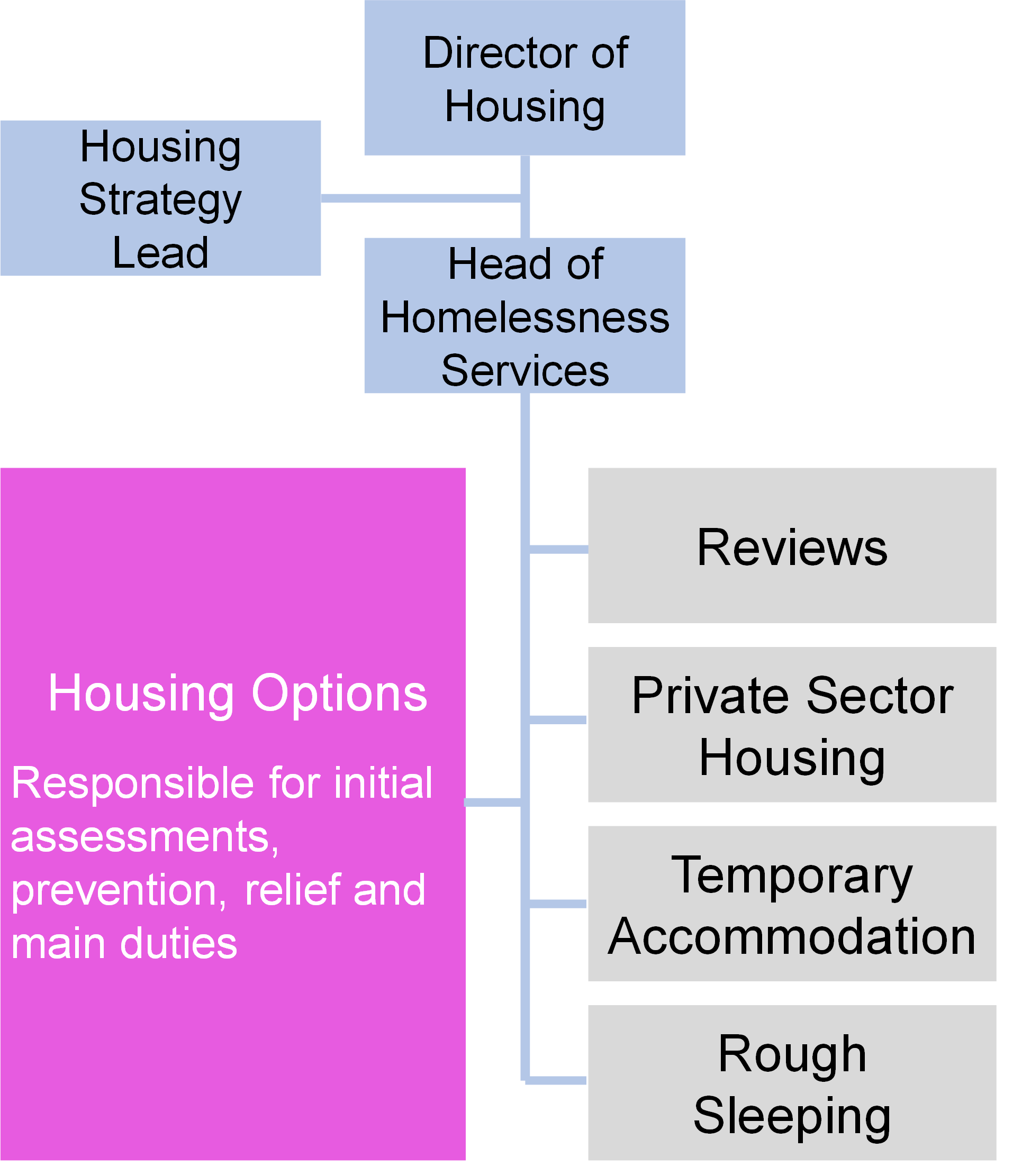
Under the conventional ‘all in one’ model, the central Housing Options team (also known as Housing Needs or Housing Solutions team) is responsible for dispensing all of the housing duties under the HRA – from undertaking the initial assessments through to administering support under the prevention, relief and main duties. In several of the case study local authorities, there were also additional teams with more specific functions working alongside the Housing Options team, as illustrated in Figure 2.1.
One variation on this model related to smaller local authorities that just had a Housing Options team, but which had members of staff within the team responsible for specific functions, such as Rough Sleeping or Temporary Accommodation. This appears to mirror the conventional structure but on a micro scale.
Several local authorities had operated this ‘all in one’ model of provision prior to the lead up to the HRA and had continued with it since. Exceptionally, one local authority had moved away from this structure in response to the HRA but was now in the process of transitioning back to a conventional ‘all in one’ model of provision after having undertaken a review of services in the context of high caseloads.
There were perceived advantages for the model in terms of the in-principle continuity of service provided across the entirety of the HRA client journey.
We own the case from the second we meet someone, right to the end.
It is also arguably more straightforward from an organisational resource management perspective, especially in terms of managing fluctuating caseloads. This has been significant for some in the immediate context of challenges associated with COVID-19.
From a workforce development perspective, the conventional model also arguably simplifies recruitment and training because the service is based around a core Housing Options role unlike the split models that contain a greater functional division of labour (below). However, the ‘all in one model’ creates potential challenges from a skills perspective. In the context of the HRA extended scope and responsibilities of Housing Options teams, the conventional model implicitly places greater demands on each team member because they are required to deploy the full skill mix associated with meeting the HRA duties.
As shown in Chapter 3, this need encompasses a more advanced, demanding and higher-order profile of skills and competencies than was previously the case. There was some debate among case study interviewees about how significant this change was in practice:
- Some recognised it as being important; and there is anecdotal evidence of it having an impact; for example, in terms of some long-serving staff struggling to meet the new demands placed on the role (which might be about core skills or appetite for change).
- Others saw the breadth of the role as being fairly similar in a post-HRA world, perhaps reflecting that local authorities were starting from different places in terms of work areas that might be expected to evolve in the context of the HRA (e.g. upstream prevention activities).
Figure 2.1 Conventional ‘all in one’ structure
2.2.2 Modified ‘split’ models of provision
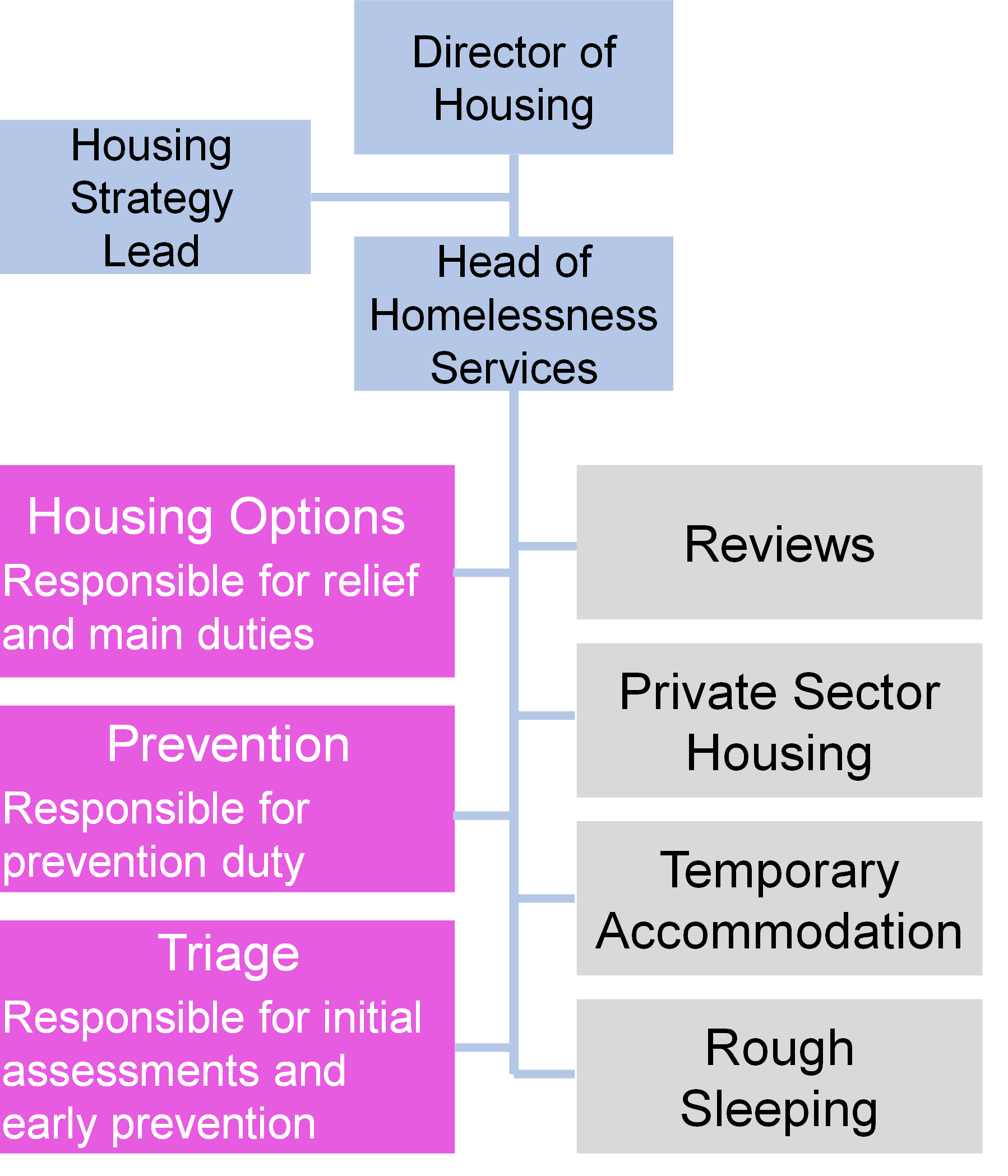
Under the ‘split’ model of provision, the role of the Housing Options team is confined to dispensing the local authorities’ relief and main duties, and there is a separate team - or teams - responsible for undertaking initial assessments and administering support under the prevention duty. Figures 2.2 and 2.3 illustrate two variants of this modified structure that were in place in some of the case study local authorities.
Figure 2.2 Modified ‘split’ model of provision (i)
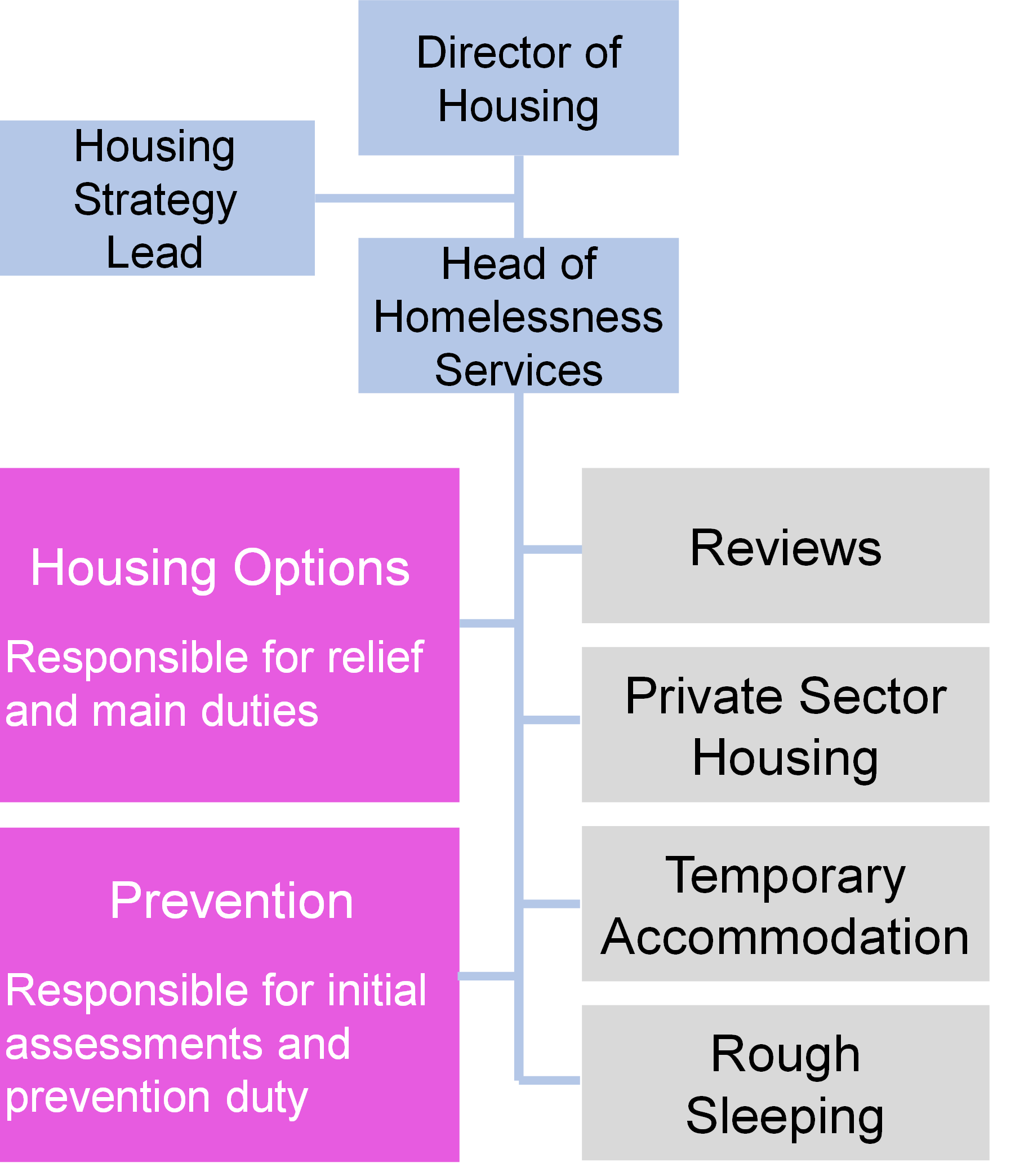
Figure 2.3 Modified ‘split’ model of provision (ii)
Again, there were smaller local authorities that had adopted this kind of model on a micro scale – i.e. with individual staff in the Housing Options team designated to either undertake initial assessments and administer support under the prevention duty or dispense the local authorities’ relief and main duties.
This modified structure had been implemented by the local authorities partly or wholly as a response to the HRA. In some cases, this had been done well in advance of the introduction of the Act in 2018. For example, one local authority had reorganised its structure in 2016 using funding through MHCLG’s Homelessness Prevention Trailblazers programme. Others had done so shortly before the introduction of the Act on the advice of an external consultant or as the result of an internal review process.
The main reasons reported for the adoption of a ‘split’ structure were:
- To provide more effective preventative support – by having teams and staff who are dedicated to doing this under the prevention duty.
- To increase efficiency – by transferring responsibility for some tasks from experienced housing officers to more junior staff.
The logic of dedicated support for prevention being equated with more effective support was generally linked to it being seen as having a different rhythm and requiring different skills to core Housing Options work. Having a discrete team may make it easier for some local authorities to develop this aspect of the service.
Another new model of provision adopted by one case study local authority was to split its Housing Options team into a ‘singles’ team and a ‘families’ team. The HRA is known to have increased the number of single people to whom local authorities now owe a housing duty; indeed, this was one of the Act’s main intentions[footnote 8]. The rationale for this local authority was that housing officers in a dedicated ‘singles’ team would be better able to respond to the particular circumstance and needs of this group.
2.3 Local authority job roles
This section provides an overview of the different types of job roles undertaken by the local authority homelessness and rough sleeping workforce and how, if at all, these have evolved with the introduction of the HRA. It also flags some ‘new’ job roles that local authorities have created as part of their response to the HRA.
2.3.1 Senior management roles
The case study local authorities all reported having a similar senior management structure, flowing down from the director of the relevant directorate in which housing sits, to a lead for housing services, and then a Housing Options manager, and generally less senior managers of rough sleeping and/or other associated teams within the local authority organisational structure.
Interviewees did not think senior management responsibilities had fundamentally changed in the era of the HRA. Nevertheless, there are ways in which the Act was thought to have placed a different or more intensive emphasis on these roles.
Senior managers, both in the lead up to the HRA and subsequently, had been responsible for reviewing and potentially making significant changes to the structure and staffing of their provision in light of the new duties and increases in caseloads – including the creation of whole new teams and the changing of longstanding staff job roles.
As per previous research into the responses to the HRA[footnote 9], all 14 case study local authorities had recruited additional staff. It was reported that senior managers were primarily responsible for writing job descriptions, advertising posts, conducting interviews, and selecting new staff.
Senior managers not only had a hand in reshaping provision to respond to the Act, but also in leading and supporting other staff through any associated changes. This role was reported to include, implicitly or explicitly, setting the tone for how fully frontline staff embrace the more open and supportive ethos of the HRA.
It was typically senior managers who had taken the lead in reaching out to other public bodies to discuss and promote the Duty to Refer around the time it was introduced and who were in a position to promote partnership work more broadly at a strategic level – for example, by negotiating dedicated referral pathways and new staff roles that bridge housing and non-housing teams.
All of this indicates the pivotal role sitting with senior managers in terms of how effectively the post-HRA services operate, given their responsibility to set the parameters for role definitions/team structure, capability building, team development and team culture. These are all workforce areas in which some local authorities have experienced greater challenges than others, which is partly explained by different leadership strategies. It is worth noting, though, that in terms of important areas, such as culture, while senior managers have an influential role, they are operating within the wider local authority context (i.e. it would be wrong to suggest that they have an entirely ‘free hand’ to act).
Previous research found that the new Homelessness Case Level Classification (H-CLIC) data requirements were a sore point for local authorities in the first 12 months of the introduction of the HRA[footnote 10]. Additional frontline staff time was perceived to be taken up by collected the required data and senior staff time with checking and collating the data. From the case study evidence, senior staff said these challenges had considerably eased over time as new IT systems introduced to meet H-CLIC requirements bedded in and the number of errors fell. Equally, there was still limited evidence of H-CLIC data being used as a source of insight to inform provision (attributed to a lack of senior staff time and/or unfamiliarity with interrogating the H-CLIC data), even though there was growing recognition of the potential value of using it for this purpose.
2.3.2 The ‘housing officer’[footnote 11] role
The foundation of the homelessness workforce has been, and still largely is, housing officers who sit within a local authority’s Housing Options team. In the case study local authorities, these still generally represented the largest single group of staff. However, the HRA was also reported to have impacted on the traditional housing officer role substantially (albeit this was mediated by the model of provision different local authorities had adopted).
In local authorities with a conventional ‘all-in-one’ model of provision, housing officers were now responsible for taking new applications conducting initial assessments, collecting H-CLIC data, developing Personalised Housing Plans (PHPs), and working with all clients where a prevention, relief or main duty was accepted.
In local authorities where a split model of provision had been adopted, housing officers in the central Housing Options team were responsible for several of the same things, but not for taking new applications, conducting initial assessments or working with clients under the prevention duty.
In both cases, the introduction of PHPs, the associated H-CLIC data collection requirements, and need to issue letters to clients at regular designated points were perceived to have added additional administrative tasks to the housing officer role.
Housing officers reported typically investing more time and undertaking more tasks with clients (such as mediation, property searches, landlord liaison etc.) than previously, due to the new 56-day prevention duty, and to a lesser extent also the 56-day relief duty.
Equally, other parts of the Housing Officer role were seen to have continued largely as they were before the Act. These included assessing the truthfulness and accuracy of the information clients provided about their circumstances and making decisions about their eligibility for support. The latter applies particularly under the relief and main duty stages. Some thought the Act had even placed an increased emphasis on this because of the additional grounds for clients to challenge decisions by a local authority.
2.3.3 New triage and prevention roles
New triage and prevention job roles were created in local authorities that had adopted a split model of provision. In local authorities that had split things three ways (triage, prevention, and relief/main duty), triage officers were responsible for being the first point of contact for clients, conducting initial assessments, and carrying out some preventative activities. Cases not immediately resolvable by the triage officers were then passed on to a prevention team or the central Housing Options team to progress under the relief duty.
In local authorities that had a simpler split between prevention and relief/main duty, there were prevention officers (also known as early intervention officers) responsible for being the first point of contact for clients, conducting initial assessments, and working with clients through the prevention duty stage.
In some cases, these roles both afforded the opportunity for local authorities to introduce a different skill mix to the process and stimulated thinking about the overall competencies required for effective housing support. This has helped to hone the emphasis on customer service-type competences for early stage prevention work, although that has been a wider trend across all types of local authority. It has also brought to the fore seemingly important knowledge requirements for effective prevention, not least a deeper understanding of local authority and partner services and the availability of targeted support. This might be characterised as ‘local knowhow’ and appears to be developed experientially or on-the-job (and, as such, has wider implications for recruitment and induction).
2.3.4 New link/liaison/partner roles
A few of the larger local authorities in the case study sample said they had created new roles to build closer links between housing teams and other public bodies (specific examples were adult social care, probation, and local hospitals) in scope of the new Duty to Refer. Staff in these roles were responsible for working closely with the relevant public bodies to increase mutual understanding, promote timely referrals, and undertake joint casework where appropriate.
These staff would often spend part of their working week on-site at the public body. They were also generally responsible for working with the clients referred by the public authority after the point of referral through the prevention and/or relief stages.
In local authorities that had not introduced this type of dedicated role, it generally fell to triage, prevention or housing officers to pick up referrals as-and-when these were made by different public bodies under the Duty to Refer. There were different models for how this is managed in practice linked to the wider organisational structure.
There was, though, a common challenge for the majority of local authorities who did not have capacity for a specific partner function in terms of being able to develop a sufficiently close relationship with key public bodies to support effective referral. Some had been able to adapt to this through provision of one-off training/information sessions delivered by key partners, but for others it was still ‘work in progress’.
2.3.5 Rough sleeping roles
Rough sleeping job roles were not perceived to have changed substantially as a consequence of the HRA. They have been, and continue to be, funded primarily through central government programmes such as the Rough Sleepers Initiative. The basic role is still that of an outreach worker, responsible for engaging with rough sleepers on the street, providing support, and helping them to access and maintain accommodation. The recent ‘Everyone In” campaign during the COVID-19 pandemic was reported to have put an even greater emphasis on the last of these. The case study local authorities reported that large numbers of rough sleepers, those at risk of sleeping rough or in shared sleeping sites were successfully found accommodation under the campaign and outreach workers were now increasingly focused on helping them to maintain this in the longer term.
2.3.6 Other housing and homelessness roles
Larger local authorities typically have one or more other teams within their housing and homelessness provision with specific responsibility for areas such as Temporary Accommodation (TA), reviews, and private sector housing/landlord liaison. In smaller local authorities, some of these functions were the responsibility of an individual member of staff rather than a whole team:
- Temporary accommodation job roles entail a combination of managing TA providers, liaising with housing officers about places for specific clients, and often extends to supporting clients once they have been placed.
- Review roles are narrowly focused on processing and addressing legal challenges to the local authority concerning how a client has been dealt with under the prevention, relief or main duties.
- Private sector housing/landlord liaison roles were more diverse. Some local authorities had created new rent guarantee schemes to increase the supply of private sector housing, partly as a response to the Act and the increasing local demand they had for affordable housing. Others had maintained or increased roles where the emphasis was on liaison and mediation between clients and private landlords to maintain existing tenancies under the prevention duty.
2.4 Workforce profile, working practices and careers
Local authority staff interviewed for the case studies were not asked to give an exhaustive account of their career history. There is also a lack of national quantitative data on the composition of the local authority homelessness and rough sleeping workforce. Nonetheless, from the case study evidence it is possible to discern some common characteristics of the workforce and areas of evolution in the context of the HRA. The overall picture is of a very diverse workforce, with no standardised routes into it, different terms of employment, and various pathways for progression upwards into more senior roles.
2.4.1 Workforce profile at entry
Most of the staff interviewed in the case study research said they had not had a housing-related qualification when they first entered the workforce. This was fairly consistent across the different local authorities, at different levels of seniority, and in terms of staff who had entered the workforce 10-20 years ago or quite recently following the introduction of the HRA.
Several interviewees remarked on the fact that there are no standard entry-level qualifications for homelessness and rough sleeping roles, in contrast to other professions, such as social work. Amongst the minority of staff who had entered the workforce with a housing-related qualification, these included BTECs and degrees in Housing Management, Housing Studies, and Housing Practice. Others had entered the workforce with qualifications in subjects such as a sociology, psychology and law – so not explicitly housing-related but with some practical relevance.
However, in the main, staff had entered the workforce without such qualifications but with some broadly relevant experience from other jobs. These prior jobs included admin, IT, customer services, social work, health, welfare rights, and other public services. There were also some staff who had moved from a directly relevant role in a homelessness charity or housing association into the local authority workforce.
2.4.2 Types of contract and workforce composition
Several of the frontline staff interviewed in case study local authorities were currently employed on temporary or fixed-term contracts. Senior managers said this was primarily because of the time limited nature of the central government funding[footnote 12] they currently use to meet the costs of employing some staff – particularly newer additional staff they had taken on as part of their response to the HRA.
Some of these posts had subsequently been converted into permanent ones, once the local authority had established that additional staff resource was required on a long-term basis as a result of the Act and the member of staff had demonstrated their competency for the role. However, the reliance on time limited funding was still cited as an ongoing barrier to local authorities giving more staff in homelessness and rough sleeping roles the security of a permanent contract.
The RSI is really good, and it has made a hell of a difference, but we need longer term funding for our staffing.”
In some cases, the evolving employment model in the context of the HRA expansion of services appears to have had consequences across a number of different facets of workforce development – notably in terms of staff retention and team development. This is discussed further in Chapter 4, but it is worth noting upfront the particular workforce composition that is created in some areas. It can mean teams are a mix of a core of staff, often with very long service or well-established experience in their role, alongside a more transitory or certainly much newer cohort of staff. The professional development needs of these two groups are quite different; which can create a challenge (or potentially a tension) for local authorities.
2.4.3 Career progression
A further important dimension to understanding how the profile of in-role experience affects workforce development is in terms of career progression. Evidence was mixed on this question in the case study research. Housing options teams have relatively flat structures, which frames the potential for career and role progression to some degree (although numerous interviewees saw the potential of the HRA in creating new potential to specialise). This contributes to the situation noted above in terms of staff members with vastly different experience profiles sitting in quite similar roles – with all the associated challenges for training and development, as well the opportunities for providing support to less experienced staff on a peer-to-peer basis.
In terms of the skills and experience that underpins career progression, there was also a mixed picture. Some interviewees were of the opinion that housing-related qualifications are important if staff want to progress into more senior roles within the local authority homelessness and rough sleeping workforce. Some of the senior staff interviewed also had a previous housing qualification before they entered the workforce or had acquired one (e.g. a part time degree or Chartered Institute of Housing qualification) subsequently.
Equally, there were senior managers who said they had progressed into their current role wholly on the strength of their on-the-job experience, gained over several years in previous housing roles. Overall, there does appear to be a high premium placed on experience in the local authority workforce.
3. Workforce skills and attributes
3.1 Introduction
This chapter presents findings on the skills and attributes perceived to be needed to work in the local authority homelessness and rough sleeping workforce since the introduction of the HRA, and the extent to which local authorities currently have staff matching these requirements. It should be noted that these findings are based on the perspectives of staff within the workforce themselves. This research did not include interviews with individuals who access the local authority homelessness and rough sleeping support that staff deliver.
3.2 Overview of priority skills and knowledge
Previous research highlights that the HRA has affected the skills and attributes needed by the workforce, particularly amongst frontline housing staff.[footnote 13] They are now perceived to require, to a greater extent than previously, the ability to work empathetically, openly and supportively with clients. The Act has opened up more support to single people, and this is reported to have contributed to frontline housing staff working with larger caseloads with more complex needs.
The local authority case studies provide more evidence on the required skills and attributes across these and the other job roles in the local authority workforce. Table 3.1 provides an overview of key skills and knowledge by job role – with the number of ticks reflecting the perceived importance of these. The remainder of the chapter explores each priority skill/knowledge area in turn.
Table 3.1 Overview of skills and attributes perceived to be required in homelessness and rough sleeping job roles
| Senior managers | Housing officers | New prevention / triage roles | Link / liaison roles | Rough sleeping roles | |
|---|---|---|---|---|---|
| Leadership and strategic thinking | ✔✔ | ||||
| Understanding of housing legislation | ✔✔ | ✔✔ | ✔ | ✔ | ✔ |
| Knowledge of non-housing services | ✔✔ | ✔ | ✔ | ✔✔ | ✔ |
| Partnership working | ✔✔ | ✔ | ✔ | ✔✔ | ✔ |
| People skills | ✔ | ✔✔ | ✔✔ | ✔ | ✔✔ |
| Critical judgement | ✔✔ | ✔✔ | ✔ | ✔ | |
| Understanding of complex needs | ✔ | ✔✔ | ✔✔ | ✔ | ✔✔ |
| Time and caseload management | ✔✔ | ✔✔ | ✔ | ✔ | |
| Mediation and negotiation skills | ✔✔ | ✔ | ✔✔ | ✔✔ | |
| Personal resilience | ✔✔ | ✔ | ✔✔ | ✔✔ |
3.3 Leadership and strategic thinking
Interviewees emphasised the importance of senior managers having the necessary skills to motivate and lead other staff, particularly in local authorities that have implemented significant structural changes to their provision in response to the HRA. The Act is also seen to have placed additional pressures on frontline staff, creating an increased need for ‘softer’ leadership skills to listen to the concerns and support the well-being of staff. For example, regular debriefs had been established to facilitate this in one of the case study local authorities.
Senior managers, especially in the context of responding to the HRA, are expected to think strategically in planning, budgeting and staffing the local authority’s homelessness and rough sleeping provision. This requires them to be able to interpret the available data on the number and needs of people who need their services locally, and information/feedback on the effectiveness of their provision.
Interviewees did not highlight leadership skills as a critical gap or shortfall in the current local authority workforce. To an extent, those skills have always been important and continue to be so, deployed similarly in the context of the introduction of the HRA to another other legislation.
Equally, not all frontline staff in every case study local authority interviewed said they felt they were being fully listened to and supported by their senior colleagues. For example, some frontline staff did not agree with the way their senior management had decided to structure their provision. While they could accept that senior managers probably had additional budgetary or political considerations to bear in mind, they would have felt more valued and motivated if they had been consulted about such matters.
In addition, there was little evidence across the 14 case study local authorities of senior managers making use of the detailed data now being collected for H-CLIC reporting purposes to inform their strategic decision-making, although this may be a lag effect associated with the time taken in many areas to get the new reporting systems operational.
3.4 Understanding of the current housing legislation
Housing legislation, for example the rules around intentionality, local connection and other factors affecting clients’ eligibility, is complex. The HRA has also introduced several changes and, interviewees perceived, some further complexity. This includes the new requirement to develop and update a PHP with every client where a prevention or relief duty is accepted, collect and record data for H-CLIC reporting, and update clients in writing at several defined points in the process.
Senior managers are expected to “know their stuff” and be fully versed in these legislative requirements. They need this understanding in order to inform decisions about how the local authority’s provision is structured and who they recruit. They were also reported to have a role in upskilling more junior staff to inform their understanding and application of the legislation on live cases.
Linked to this, the HRA has made more provision for clients to legally challenge their treatment and ask for their case to be reviewed. The case study local authorities generally had a reviews team and/or review officers but senior managers were reported to be closely involved too, given the potential resource and reputational implications of reviews.
Frontline local authority staff, especially housing officers responsible for cases across the full range of the prevention, relief and main duties, were seen to need a thoroughgoing understanding of the legislation as it applies under each duty. It was also reported that, in some local authorities, more experienced and longstanding housing officers in the central Housing Options Team played an important role as a sounding board and source of advice for newer staff in prevention and triage roles on the finer points of the legislation.
Arguably, a critical difference between local authorities from a workforce development perspective was whether this day-to-day advice and support was provided ad hoc or if there were structures to facilitate this kind of knowledge sharing (even if just the acknowledgement that it was important part of the experienced team member role). In any event, some interviewees noted that this kind of internal support on the legislation was more difficult to provide in the context of remote COVID-19 working. Slightly less emphasis was placed by interviewees on the breadth and depth of knowledge of the legislation that staff in newer prevention and triage roles need. They are working with clients exclusively in the prevention stage and, to some extent, there is just less legislation for them to know. Equally, several of the current legislative requirements are applicable under the prevention duty. Understanding these was therefore considered very important for such staff to have from the outset or develop quickly on the job.
The Act is complex. You have to be able to get your own head around it and put this into terms the clients understand.
The evidence from the case study local authorities indicates the workforce capability in this respect is currently good, but not universal. None of the senior managers interviewed claimed that every one of their staff understood every single aspect of the current legislation. Newer recruits have increasingly been recruited from non-housing backgrounds and had to learn the ‘ins and outs’ of the legislation from scratch. However, this was not necessarily flagged as a key concern, especially in local authorities who thought they had effective structures in place for more experienced staff to support newer recruits.
3.5 People skills
The local authority case studies reinforce the findings of previous research on the increased importance of people skills for frontline staff working under the HRA.
You can know all the legislation in the world but if you can’t deal with people, it’s not much good is it?
You can sit there and quote housing law from the book, which is great but can they do it, can that person work with the public with their feet on the ground…
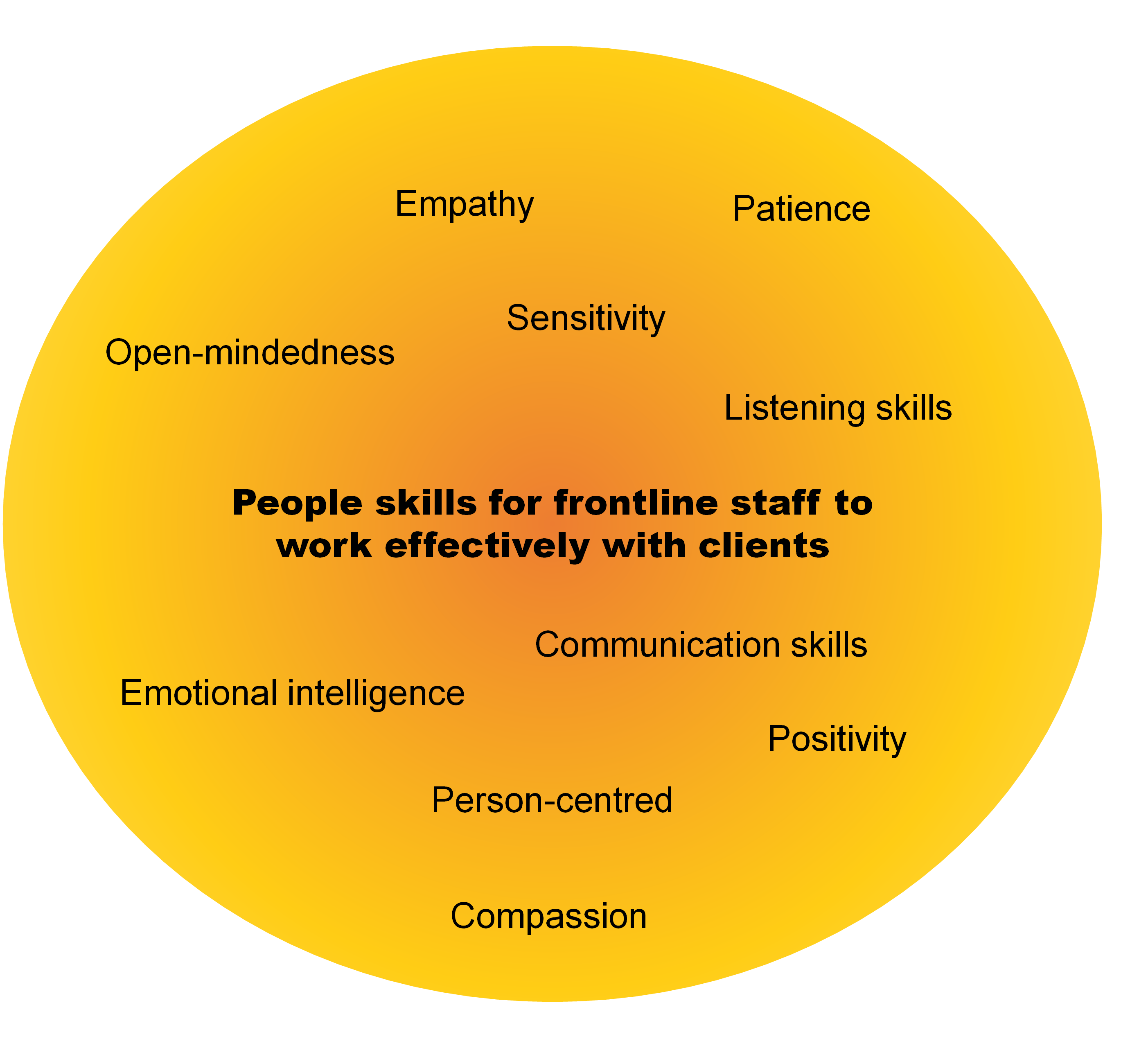
People skills encompasses a number of related competences, attributes, behaviours, and even personality traits that interviewees highlighted as important to work effectively with clients for a positive outcome during the extended 56-day prevention and relief duty stages. The various aspects/articulations of this mentioned by interviewees in the case studies are illustrated in Figure 3.1.
Figure 3.1 People skills for frontline local authority staff under the HRA
The importance of these people skills was not just perceived by one or two interviewees, but across all the 14 case study local authorities. This positively reflects the ethos of the HRA and also partly the fact that frontline staff are generally now working with more clients with more complex needs, where these skills really come to the fore.
It was reported that most frontline staff across the case study local authorities either had or had developed these people skills to be able to support clients as effectively as might be reasonably expected. This partly reflects that the prevention mindset was pre-attuned in some cases before the Act was introduced, while others had prioritised recruitment activities to strengthen this skillset. The only cited exceptions in a small number of local authorities were longstanding housing officers, who it was felt had not moved on from a narrow conception of themselves as solely gatekeepers (rather than givers) of help and support.
3.6 Understanding of complex needs
Local authority staff working in rough sleeping staff were recognised as working with some of the most complex cases, involving family breakdown, drug and alcohol issues, domestic violence, mental health, debts, criminal records, and histories as a victim and/or perpetrator of abuse:
Almost every weekend there’s a crisis – an eviction or a fight, or someone is sectioned with a mental health issue.
Senior managers in the case study local authorities said their housing officers and staff in triage and prevention were also increasingly seeing these kinds of issues since the opening up of support to single clients under the HRA. For example, the Housing Options manager in one local authority estimated that 30% of their total caseload had complex needs, and that, among the single clients on their caseload, this was 80%.
But what skills and attributes do staff need exactly to work with clients with more complex needs? A lot of this was thought to come down to an open-minded and non-judgemental ability to listen as part of the wider people skills discussed already. Beyond this, there was recognised value in staff having an appreciation of the particular challenges associated with different complex needs – gained either through lived experience, training or previous on-the-job experience.
These are higher-order areas of expertise in terms of day-to-day knowledge and skills. The greater intensity of the requirement in the context of the HRA is something that may still be under-appreciated both within and outside of housing teams. This is partly because it is not a ‘new’ skill area per se. It may be, though, that the incremental increase in the volume and nature of complex cases is seen to transform the specification of the core role in the long-term, creating closer alignment with aspects of some roles in social work, health and social care.
This touches on wider points, noted elsewhere, about the perceived professional status and complexity of certain housing officer roles. It is something that potentially has implications across job design, recruitment and training/development.
Some of the case study local authorities had individual members of staff who were recognised specialists in certain areas such as domestic violence, and who could lead or advise on particularly challenging cases where these were issue and/or there was a need for more in-depth understanding of the local landscape of support services. However, the range of different complex needs is such that no local authority team is likely to be able to have a specialist in every area of potential complex need. As such, there is a recognised need for all frontline staff to have the basic people skills to work with clients with more complex needs.
3.7 Critical judgement
Despite some fundamental changes in the perceived skills that frontline homelessness staff need, there was still a continuing acknowledged need for them to be able to critically assess the genuineness of each new housing application, and the accuracy of the information clients provide about their circumstances.
This was not highlighted by interviewees as a significant current concern or skills gap in the local authority workforce. The consequences for a local authority of accepting a housing duty in cases where this may not be merited are ultimately less potentially damaging than doing the opposite, i.e. failing to accept a duty where is it.
3.8 Time and caseload management
Previous research into the HRA in 2019 found that most local authorities reported a significant increase in the size of their caseloads, and that staff were spending more time on each case that previously due to the additional H-CLIC, PHP and administrative requirements under the Act.
The case studies indicate that this was not just an early implementation phenomenon but a long-term impact, and that while local authorities have extensively used New Burdens and other funding to recruit additional posts, the HRA has generally still resulted in larger and more time-consuming caseloads for frontline staff. For example, in some of the case study local authorities, it was reported that average caseload sizes had increased from around 30 to up to 80.
The implication of this is that frontline homelessness staff need support to manage their caseloads effectively – primarily for the benefit of their clients and operational efficiency, but also for their own well-being.
“You’ve got to be a very organised person. Those who are reactive, tend to struggle with the workload. To be successful, staff need to be proactive and prioritise work when required.” This was flagged as an ongoing concern by frontline and some senior staff in most of the case study local authorities. Frontline homelessness and rough sleeping staff who are dealing with larger caseloads, multiplied by an increased number of case milestones in the context of the HRA, are having to deploy a mix of planning, organisation and time management skills that are of a different scale to those reported pre-HRA. There are other debatably more important skills they need in the context of the Act concerning the clients they work with.
However, in terms of the day-to-day reality for frontline staff themselves and the overall efficiency of local authority homelessness and rough sleeping services, this does appear to be an area for further development. The extent to which this is a skills development issue as opposed to a team organisation issue is a point of debate. What is apparent, though, is that time and caseload management challenges can percolate through to other aspects of service provision in the context of the HRA, potentially impacting the scope to provide the most effective holistic support to clients.
3.9 Mediation and negotiation skills
These skills include mediating and negotiating between clients and family members, landlords or accommodation providers to help them maintain an existing place to live or find a new one.
If you want to prevent homelessness need to speak to a lot of people, to be able to mediate, ask different questions, for example if a tenant is being evicted you need to speak to the landlord.
There are several potential ways in which frontline homelessness staff can help clients retain or resurrect a place to live under the prevention duty. However, the ability to mediate and negotiate on their behalf with a landlord or family member came through in this research as the most common (and potentially impactful, for the client’s circumstances) out of all of these. It was also considered important for staff in rough sleeping roles, in term of interceding for clients with hostel managers.
Some of the case study local authorities had created a dedicated team or individual staff roles to take on this mediation and negotiation role with private landlords. However, not every local authority had, and mediation and negotiation skills are relevant across more than just private landlords. Having such skills has therefore become part of the desired/expected skillset for all frontline staff working with clients under the prevention duty and in rough sleeper roles.
3.10 Knowledge of non-housing services
More complex cases, the increased emphasis on prevention, and the holistic ethos of the HRA, were perceived to mean that frontline staff could be most effective if they had wider ‘non-housing’ knowledge. In particular, a lot of clients under the prevention and relief duties were reported to have some issue with benefits they were receiving from Jobcentre Plus. Other potentially important ‘non-housing’ knowledge was more localised, such as knowing what other services within and outside the local authority clients could potentially access for help:
Officers need to be experts in welfare benefits, the local mental health services, drug treatment centres…there are a lot of things to grasp.
Senior managers and staff in dedicated link/liaison roles were also seen to benefit from having some more in-depth knowledge beyond this too – not just in terms of what local services are out there, but also who the key decision-makers are within their organisational structures, and what funding and legislative frameworks they operate in. As one interviewee explained, what is legally defined as ‘priority need’ under adult social care legislation is not the same as the definition of priority need in housing legislation.
Having an appreciation of such nuances and the constraints that other services operate in was perceived to be a valuable component in building positive relationships and partnerships with such services. This is important in terms of developing relationships with other public bodies to facilitate timely and appropriate referrals under the Duty to Refer, and to open the door for local authority frontline homelessness and rough sleeping staff to draw on these non-housing services for ongoing prevention and relief casework.
Interviewees in the case study local authorities were very positive about the knowledge and added value of staff who were employed to fulfil explicit link/liaison roles in this respect, but by the same token recognised that not all other staff could or did all have this.
3.11 Personal resilience
Larger, and more time-consuming, caseloads with an increasingly complex client base are seen to require frontline staff to be mentally tough and have the resilience to “roll with the punches”. Frontline staff were reported to need to be able to work in a time and resource pressured environment, particularly in the larger and most urban local authorities that have experienced the greatest increase in caseload numbers following the introduction of the HRA due to single clients increased eligibility for support.[footnote 14] Staff in all the case studies local authorities were also reported to need to be able to listen to distressing personal stories, and sometimes work with potentially aggressive individuals:
You have to try not to take things personally when someone is rude and be able to recover quickly when it happens.
Resilience is an attribute that most interviewees felt was increasingly important since the introduction of the HRA and, where possible, it was area in which more attention is needed in relation to the local authority homelessness and rough sleeping workforce. One Housing Options manager went so far as to say the primary attribute she now looked for in new recruits was personal resilience, ahead of even candidates’ understanding of the current housing legislation or people skills. Managers in other local authorities said they had staff who had been “burnt out” by demands of the job since the introduction of the HRA and moved on to other jobs. Some had introduced more regular debriefs and/or training to support the resilience of the staff to mitigate against this, recognising that staff need the tools, space and strategies to process sometimes distressing cases.
4. Challenges and opportunities
4.1 Introduction
This chapter draws together evidence on the challenges and opportunities for the local authority homelessness workforce – i.e. what is ultimately helping and hindering them to deliver their duties effectively under the HRA and rough sleeping policy goals. This is framed in terms of the key elements of workforce development as characterised by the levers available to local authorities, namely:
- recruitment and retention
- training and development
The last section in this chapter also provides findings on workforce challenges and opportunities specifically associated with the COVID-19 pandemic.
4.2 Recruitment and retention
The introduction of the HRA has undoubtedly impacted on recruitment and retention across many different types of local authority. The actual impact here varies considerably by local authority, mainly reflective of three different dimensions to the recruitment process:
- The local authority strategy for tackling increasing capacity needs in the context of the HRA (especially in terms of whether there has been an increase in permanent roles, temporary roles potentially filled by agency staff, or some hybrid of the two).
- The extent to which the workforce needs associated with the HRA have caused the local authority to actively rethink its approach to recruitment at the level of job roles and person specifications, as well as the recruitment channels used.
- The local labour market in which each local authority is operating and how this interacts with labour supply and competition for staff.
It is notable that the various approaches here are inter-related in terms of perceived success or the extent that recruitment is seen as a difficult area. For example, there are cases where different parts of the same local authority report quite different experiences in terms of being able to source appropriate candidates, which in part reflects differences in how person specifications are framed in terms of necessary skills and experience.
4.2.1 Recruitment strategies
There is a notable variety in terms of what recruiters are looking for and prioritising in terms of new recruits. In most cases, recruitment processes to Housing Officer roles do not require candidates to have a particular qualification. The emphasis put on the level of relevant experience required also varies (e.g. basic knowledge of HRA legislation).
Previous research has highlighted that local authorities were increasingly looking to recruit new staff from non-housing backgrounds in response to the HRA.[footnote 15] This is on the basis that softer people skills are increasingly important under the ethos of the Act, and that the more procedural and legislative aspects of housing roles can be taught to new starters once they are in the job. Several of the case study local authorities also reported doing this and pro-actively seeking to take on new staff from an even wider spectrum of experience including, for example, people who had previously worked in a commercial customer services role or in the police and probation services.
We have found people from other backgrounds make good officers – we find if they have experience in the homeless sector they could be too stuck in the old ways of working.
It is worth reiterating here that people were already entering the local authority homelessness and rough sleeping workforce from diverse backgrounds, without necessarily having housing-related qualifications or experience, long before the HRA. While the Act may have increased this further, it is more a case of evolution than revolution. New recruits from the non-housing backgrounds were also generally being put into triage, prevention and other ‘front-end’ roles, rather than as housing officers with responsibility for relief and main duty cases.
Furthermore, some of the newer prevention-focused roles in some local authorities place increased emphasis, not just on customer service skills but also on knowledge of the landscape of local available support. This meant that there was felt to be value in recruits who transitioned from other local authority functions or from local partner organisations.
4.2.2 The HRA impact on recruitment practices
In terms of the recruitment process itself, this has not necessarily changed substantially since the introduction of the HRA. New posts generally involve the production of a business case or request to the finance team/HR/director, followed by creation of a person specification, advertising, shortlisting and then interview/tests. The element in which there has been greatest shift has been in terms of the person specification and, related to this, the broader expectations of what managers are looking to prioritise in their selection decisions.
In a small number of cases, the test element of the process has evolved. One local authority had introduced psychometric testing to identify whether candidates had a profile likely to thrive in terms of the communications/interaction aspects of the job – while not used to exclude candidates. This approach helped to target follow up questions at interview.
There are subtle differences in how practical tests are used as part of the recruitment process. It is not unusual for candidates to be given a relief and prevention scenario to work through. However, one case study local authority uses this to test knowledge of the differences between prevention and relief, while another gave information on the HRA before asking candidates to work through a scenario because “we want people who can learn quickly….have a common sense approach”. This signals the same recruitment technique being used variously to test existing knowledge or as an applied test of competence.
Some local authorities that have maintained narrow job requirements have found it very difficult – and increasingly difficult – to identify suitable candidates on these terms. Part of this relates to there being an increased volume of recruitment activity; in some cases, as a direct consequence of the HRA, but in other cases because ineffective recruitment rounds have to be repeated. In some parts of the country, there is perceived to be increased competition for skilled, experienced staff:
The HRA drew good people into local authorities who could pay”.
Most fundamentally, though, there is a striking commonality of view across different local authorities that the contract terms offered have the most significant impact on the calibre of the applicant pool. Where fixed-term or temporary jobs are offered, it is much more difficult for local authorities to find the right recruits. This issue directly relates recruitment to resourcing. It was common for expansion in the staff base to be driven by one-off funding (e.g. New Burdens funding) and there are examples of local authorities, in effect, being able to then convert fixed term into permanent roles over time (3 months; 12 months). This may be a pragmatic and sensible approach given the realities of funding constraints. The challenge with this model over time is that, for many, it can affect the upfront supply of candidates. One case study local authority explicitly moved from advertising fixed term to permanent roles for this reason.
Others have had more success because they are prioritising a broader skills mix as part of their requirement – typically as a direct consequence of the acknowledged shifts associated with the HRA.
4.2.3 Staff retention
There is a general sense that staff turnover has increased since the introduction of the HRA. In part, this is a function of increased demand being met by having a larger number of temporary or fixed-term staff in place than was historically the case. As noted above, in some local authorities there is a clear pathway from temporary to permanent roles, while in other cases there is not.
None of the case study local authorities described retention strategies per se, although there was a wide acknowledgement of the dynamics that underpinned staff turnover in the context of the HRA. Much of this evidence is anecdotal, but plausible in nature. For example, a number of interviewees across different local authorities perceived that increased demands in the role since the HRA had the effect of encouraging some long-serving staff to leave – this was not necessarily viewed negatively, as some of these individuals were felt to be resistant to new ways of working.
More broadly, though, high caseloads were seen a key factor that could push people away from the role. Related issues in terms of stress and day-to-day challenges associated with stressful customer interactions were also recognised as a factor.
There were examples of how these challenges are tackled/mitigated through the support provided to staff (coaching, mentoring, listening to officers’ needs, ‘supporting them after a bad day’). Much of this appears to depend on the approach and skills of individual managers rather than being an organisation-wide approach, which signals the importance of the manager skillset for supporting staff retention.
Wider, more long-standing points about sector reputation were also noted as a factor in retaining staff. The sense of feeling ‘under-valued’ in comparison with other similar, roles could be a push factor. The counterpoint to this, though, from many interviewees was to emphasise the importance of individual motivations and purpose as being crucial to staff retention – sometimes crystallised in the notion of work in this area being a ‘vocation’. From a practical perspective, it is linked to an increased focus during recruitment on resilience as a key competence to enable new staff manage day-to-day pressures.
4.3 Training and development
Every interviewee in the 14 case studies said they had received training to inform how they do their jobs. Equally, all highlighted areas where they and/or their colleagues would benefit from more training. This reflects the increasingly wide-ranging skillsets needed to work in local authority homelessness and rough sleeping roles since the introduction of the HRA and also different current approaches, barriers and facilitators to staff receiving effective training across different local authorities.
4.3.1 The training that staff currently receive
As highlighted already, local authority homelessness and rough sleeping staff do not necessarily come to their role with a formal housing qualification, and there is a strong emphasis on gaining experience, knowledge and training on the job. The types of training that staff said they had received (broadly in order of how frequently these were cited) were:
-
Induction. Every one interviewed in the case study local authorities said they received some form of induction when they joined their current employer. This generally covered the current homelessness and/or rough sleeping legislation, the processes the local authority had to meet the requirements therein and, at least in outline, guidance on how to work with clients in doing this. However, there was variation in the breadth and depth of induction training reported in different case study local authorities. New recruits in some described quite an intensive and wide-ranging process that even incorporated elements such as trauma-informed approaches to working with clients with more complex needs. Others indicated their induction training had been more modest and focused on the basics of what they needed to process-wise.
-
Shadowing and mentoring. This was widely reported by staff in frontline roles and was seen, much more than induction training, as central to giving new staff the understanding and skills needed. It typically compromised observing an experienced member of staff talking to a client, as well as having their own initial casework with clients observed and advised upon by them. Reflecting the “on the job” ethos of the sector, this was perceived by interviewees across the case study local authorities as very important and valuable in helping new staff get to grips with the realities of doing the job.
-
Previous national HRA training. Interviewees who were in post around the time of the introduction of the Act all said they had attended the training funded and promoted by MHCLG to support this. They were positive about both the usefulness of this training and the fact MHCLG had required local authorities to ensure all their staff participated in it. However, newer recruits to the workforce had not all been in post at the time this training had been delivered, and, even amongst staff who had, there was an appetite for refresher training on the HRA.
-
Locally tailored training in relation to the HRA. Senior managers in several of the case study local authorities said they had commissioned additional training around the time of the introduction of the HRA or since. This was in order to gain more detailed practical guidance on how to deliver the new requirements and duties under Act in their local context, and sometimes to inform strategic decisions by local authorities about how they structured their provision.
-
Training around complex needs. The majority of staff in rough sleeping roles said they had received some form of training of this type – either in specific areas such as drug addiction or in a broader strength-based and psychologically-informed approach to working with clients with complex needs, such as trauma-informed practice. Staff who had received training in trauma-informed approaches were especially positive about the value of this to their ability to communicate and work effectively with clients with different complex needs. However, this was still much less common amongst frontline staff in other local authority housing roles. Both the frontline staff themselves and their managers thought more training of this type would be beneficial.
-
Other job role-related training. A small number of frontline staff said they had received in-house training from their local authority in other aspects of their job, such as time management and dealing with stressful situations, but these were in the minority. Given the increasing size and complexity of caseloads there was a widespread view across the case studies interviews that more training in caseload management and building personal resilience would help frontline staff – partly with operational efficiency and effectiveness in mind, but also in terms of supporting their well-being and retention in the workforce.
-
Formally accredited courses. Some of the senior managers in the case study local authorities said they were undertaking (or had completed) one of the accredited qualifications that CIH deliver or a part-time degree course delivered by a local university. In one of the 14 case study local authorities, the senior management team (partly with retention in mind) had encouraged their frontline staff to undertake an accredited level 4 CIH qualification but this was the exception rather than the rule. Accredited courses of this type were reported to focus primarily on the legislative and legal elements of housing.
4.3.2 Barriers and facilitators to staff receiving the training they need
The main barriers and facilitator cited in the research were:
-
The availability and quality of training provision. The findings from this research do not highlight a lack of good quality train as a barrier to staff being able to access the training they need. There was a general view that “there is enough out there” in terms of training relevant to the skills needs of the local authority homelessness and rough sleeping workforce, including around complex needs. The quality of training (whether delivered in-house, by Homeless Link, NHAS, CIH, homelessness charities, an independent consultant, or a university) was also generally praised. Different provider types were perceived to have strengths and weaknesses, and “put their own slant on things” but few, if any, concerns were actually voiced about the relevance and usefulness of the training provided.
-
Time. This emerges from the case study research as possibly the most important mediator of the training that members of the local authority workforce currently receive. Specifically, and even more so since the introduction of the HRA, the issue is with staff being able to spend time away from their immediate job responsibilities to undertake training.
The day-to-day gets in the way of training.
This is a common challenge to professional development and the situation faced by the local authority homelessness and rough sleeping workforce chimes with that of many other professions in many other sectors. Training provision relevant to the workforce is already generally designed and structured with this partly in mind – i.e. as short one or half-day courses or discrete modules, increasingly accessible online and through webinars, that participants can undertake at their own pace and, in theory, alongside their day job. However, especially since the advent of the HRA and increased caseloads, even this investment of time was seen as problematic. The high proportion of staff employed on temporary contracts and high rates of turnover in some local authorities were also contributory factors which evidently made staff themselves reluctant to take time away from their immediate work duties and managers possibly less active in encouraging this.
This was primarily said to apply to frontline staff, but some more senior staff also indicated there was a tacit assumption in their local authority that if they choose to study for a formal housing qualification, they will do this partly or wholly “in their own time”.
- Cost. Much of the training available is free for local authorities to access, due to in part to funding from MHCLG and the charitable basis of the providers. Several of the case study local authorities also said they had used some of their New Burdens funding to access further tailored training to help them prepare for the introduction of the HRA. Some of the case study local authorities said they had been proactive in using other MHCLG grant funding (e.g. RSI, the Innovation Fund, Rogue Landlords programme) they have been awarded to further upskill their staff. This has been partly to meet the immediate purpose the funding has been awarded for, but was also seen to have wider benefits in terms of giving staff additional knowledge and skills they can subsequently apply to all areas of their work.
Beyond this, the cost of most training was generally perceived by interviews to be reasonable and not an overriding barrier in and of itself. Senior managers also generally reported that a proportion of the budget for their local authority’s homelessness and rough sleeping provision can notionally be used for staff training. However, it was reported that a business case has to made if senior managers want to meet the costs of external training for their staff out of the local authority’s own budget. This means a time and administrative burden for senior staff in making this case internally and getting it signed-off.
One of the case study local authorities said that it had arranged to jointly commission training with some of their neighbouring local authorities. This was thought to have been effective in reducing the unit cost of the training to the local authority and made it easier to gain internal approval.
4.4 Challenges and opportunities associated with the COVID-19 pandemic
The main challenges and opportunities associated with the COVID-19 pandemic cited by interviewees in the research were:
- Constraints to on-the-job learning. As highlighted already in this chapter, on-the-job shadowing and learning is seen as a very important form of training in the workforce - especially for new recruits. With all staff working from home during the pandemic, it was widely perceived that there have not been the same opportunities for the natural exchange of knowledge and expertise that takes place when staff are working together in an office:
The biggest issue at the moment is that people can’t sit together and almost learn by osmosis. This is one of the biggest tools in homelessness training: learning from the experience of people in the team and listening to colleagues”.
Some managers talked about having scheduled additional team calls and teleconferences to help address this, but none yet felt this could fully replicate face-to-face, on-the-job training.
Staff engagement with service users. Most of the contact that frontline staff have with service users is usually face-to-face. Transitioning to telephone and/or online engagement during the pandemic was perceived to pose challenges. Many services users were reported to have a preference for being able to talk face-to-face, and frontline staff thought building trust and maintaining contact was generally felt to be harder just through telephone calls and emails. Frontline staff also thought there were often useful insights that they could pick up from physically sitting opposite a service user or doing a home visit, which had been somewhat lost:
Sometimes when you meet people it is apparent they need support and you can see that – you just can’t see that on the phone.
- Staff morale and motivation. Working from home during the pandemic was perceived to have posed some challenges in terms of maintaining staff morale and motivation:
If someone is having a bad day, there was always someone around, you could discuss different solutions, and it was easy to keep morale up. Right now the team are working at home. And the motivation is lower - sitting at the kitchen table is difficult. We rely on our colleagues to get us to a place to feel motivated.
While the homelessness and rough sleeping workforce is not unique in experiencing such challenges, the particular demands of frontline job roles and the potentially draining nature of personal service user stories was thought to add to their importance.
Again, there were positive examples given in the research of managers having introduced additional team and one-to-one discussions between staff and line managers to protect morale and motivation as the pandemic had continued.
- Increased online training opportunities. The main positive that was identified by interviewees was that there were now increasingly wide-ranging and accessible online training opportunities for staff to access. This signals that training providers have been active in responding to the pandemic and evolving their training offer to the homelessness and rough sleeping workforce.
5. Conclusions and recommendations
This chapter provides conclusions on findings presented in previous chapters and recommendations for what could potentially be done to further strengthen local authority homelessness and rough sleeping workforce. It also provides suggestions for further research in this area.
5.1 Conclusions
This research further evidences the view that the introduction of the HRA has had a substantial impact on the homelessness and rough sleeping workforce. That impact is still being felt, and services, structures and approaches to workforce development continue to evolve in response to identified needs. This evolution is important because it signals that all local authorities are actively engaged in considering the workforce implications of the new duties and the extended scope of requirements under the HRA, and the extant challenges associated with rough sleeping.
Much of the thinking behind this, from a local authority perspective, is still work in progress – but that is a positive rather than a negative facet of the state of play. It reflects that aspects of the reform that may prove challenging, such as adjusting an underlying culture or re-thinking ideas about professional development, are longer-term in nature.
Similarly, the local authority workforce has not yet reached a settled state post-HRA, but the case study evidence indicates that there is a common recognition of the needs, priorities and objectives for ensuring effective workforce capacity/capability to fulfil the ambitions of the HRA. There is marked similarity in the overall direction of travel. For some, this is an evolution of the preceding approach – almost a codification of existing practices and approaches – while for others there has been a more substantial change.
The conclusion that can be drawn from looking across different local authority contexts is that, while all local authorities are dealing with common challenges associated with the HRA, there is no single solution or ‘best practice’ model for work organisation and workforce development – although it may be that certain key principles are beginning to crystalise.
Many of the specific needs within local authorities stem from the structure of the service that is chosen to best meet the needs of clients: a conventional ‘all in one’ model, a ‘split’ service, or some variant of the two. There are many further nuances at individual local authority level in terms of organisational structure, especially in terms of how the homelessness service interacts with other housing-related functions. Ultimately, however, the different organisational models can each make sense in the local context (especially given that they are, in part, a function of team size).
Looking beyond the specific structures, there are important themes that emerge in relation to job roles and workforce composition. Splitting up the HRA client journey may make it is easier for staff to specialise in aspects of the process (e.g. developing local knowledge for prevention support), or it may add flexibilities in terms of recruiting staff with strong customer service-type skills. The key point, though, is to consider the entire homelessness and rough sleeping workforce as encompassing a blend of skills. It is having this blend that probably determines, as much as anything, the effectiveness of the service.
This more holistic workforce view may be one of the key long-term impacts of the HRA on those who manage and deliver local authority homelessness and rough sleeping services. For some, this does not in itself constitute a major change, but the HRA appears to have been something of a catalyst for local authorities across the piece to think much more in these terms.
In terms of skill requirements to deliver HRA duties, this is best described in relation to skill areas of increased prominence and new combinations of skills that are being used in different ways. The increased primacy of mediation and negotiation skills associated with the prevention duty, the central importance of resilience in the context of an expanded client group, and new demands in terms of time/caseload management are all characteristics of the ‘new’ model of delivery – and all areas that local authorities are actively looking to develop (although, at the moment, perhaps more so in relation to recruitment activities than development of the current team).
The well-established shift towards customer service-type competences for certain roles and how this is providing new recruitment opportunities for some local authorities (widening the net and expanding the potential labour pool) is a theme reiterated by the research.
However, perhaps the workforce-related shift that will prove to be most significant in the longer term relates to the skills and knowledge required to work with an expanded cohort of clients with complex needs. There are good examples of local authorities developing semi-formal or ad hoc approaches to developing and sharing more specialist expertise to support client groups with specific complex needs – including having different team members develop their knowledge on specific topics, as well as investing in training of more cross-cutting relevance, such as trauma-informed approaches.
The wider point, though, is that the increased need to manage a higher volume of more complex cases perhaps suggests a more general upskilling of the housing officer role over the longer term (i.e. the job role itself is becoming even more skilled). This further connects with debates about the status of the homelessness and rough sleeping workforce, as well as notions of career and professional development. The relatively ‘open access’ approach to career entry (housing qualifications are generally not required) probably acts as an enabler for overall workforce capacity building. Yet it goes hand-in-hand with there being less of a structured approach to individual career development – in terms of common standards and common pathways for professional development.
This is less about progression in roles, as most housing teams lend themselves to having fairly flat structures, but more about creating pathways for housing officers to develop their expertise and/or specialise – and get recognition for it. What the HRA creates is both the need to deploy a more complex, higher-order mix of skills across the team and, through the demands this places on day-to-day delivery, a possible catalyst for local authorities to create structures and training strategies to accommodate career development.
This then becomes a tool for creating more of a professional identity across the workforce as a whole– and, in doing so, increases the status of the role to reflect the reality of the complex mix of demands placed on effective practitioners. This is underscored by the notion voiced by a number of interviewees of the role being something of a ‘vocation’.
The day-to-day barriers to training and development, which are well-rehearsed and probably amplified by the disruption caused by Covd-19, mean that none of these changes are easy to facilitate or short-term in nature; but the evidence suggests something an over-arching direction of the travel that might be significant to the longer-term view. It may be something that comes about incrementally as a consequence of how some local authorities, at least, are already adapting their thinking and approaches to meet the objectives of the HRA.
Over-arching all of this is the pivotal role played by senior managers, given their responsibility to set the parameters for role definitions/team structure, capacity building, team development and team culture. They may or may not have the wider internal support to deal with the first order issues that support effective workforce development – such as being able to: recruit to permanent rather than fixed term roles; invest the necessary time in partner engagement to establish workable Duty to Refer processes; and solve immediate challenges associated with case administration and IT/reporting. The over-arching story is one of progress over time on most of these thorny issues, but they do impinge on the pace of development in practice and each local authority is different in this regard.
More practically, there are numerous positive examples of how local authorities are working to support team development and share knowledge. This is likely to remain a substantial route to meeting day-to-day skill needs, especially in the context of teams that increasingly comprise a mix of highly-experienced staff, especially on core technical elements of the job such as housing legislation, and a newer cohort arriving as a consequence of the general HRA expansion in capacity. However, structured approaches to professional development (for example, the work on the London Training Academy providing three tiers of training accessible to staff in different local authorities) also fit within this context and may provide food for thought in terms of future models of national or cross-local authority support.
5.2 Recommendations
This section provides recommendations regarding actions and priorities that local authorities and MHCLG can potentially focus on to strengthen the homelessness and rough sleeping workforce. The recommendations are based directly on the findings of this research, but it is recognised that there are financial and other structural factors that make some of these more challenging to enact than others.
Recommendations for local authorities:
1. Think strategically about the blend of staff expertise as well as how provision is structured. Local authorities have adopted different approaches to structuring their provision in response to the HRA, but there is little evidence from this research that one structure is, a priori, more effective or efficient than another. Partly this just comes down to what fits best in different locals and organisational contexts. However, a cross-cutting success factor is the blend of expertise local authorities have within the team(s). For example, newer recruits from a non-housing background can bring significant plus points to new triage and prevention roles, but there is a crucial role for experienced staff in helping to upskill these new recruits and pass on their knowledge. It is also unrealistic to expect every member of a local authority’s homelessness and rough sleeping workforce to be a specialist in all of the complex needs they increasingly encounter. Some of the most effective models across the case study local authorities were where decisions about recruitment and/or training had been made to arrive at a blend of expertise in different areas within their workforce.
2. Protect and, where needed, strengthen structured on-the-job elements of induction. All local authority staff placed significant value on practical on-the-job shadowing, mentoring and learning. This is overwhelmingly how new entrants learn about the realities of how to do their job – something no other form of training can directly do. More formalised training in some areas is undoubtedly needed, but this should not be seen to take the place of the bedrock of on-the-job training and knowledge-transfer that new recruits currently benefit from.
3. Prioritise external training in areas that will add the most cross-cutting value. Interviewees suggested various areas in which more training would be beneficial. Priorities for investment will ultimately vary by area and local authority. However, the perceived need for additional training to support staff in working with clients with more complex needs was near universal. Potentially all members of the local authority homelessness and rough sleeping workforce will benefit from training to give them a grounding in basic trauma-informed approaches (alongside more targeted training for individual staff to address specific priority complex needs).
4. Invest in staff resilience. Senior managers in local authorities with a high rate of turnover among frontline staff did, possibly with some justification, highlight external reasons for this, associated with more demanding caseloads under the HRA. Some of the case study local authorities had taken extra steps since the introduction of the Act to protect the resilience of their frontline staff (and, in so doing, improve retention rates) through regular debriefs and/or training, and there appears to be scope or other local authorities to consider this. The focus here, from a well-being perspective, is about providing staff with the tools, techniques and coping strategies to process and deal with high-stress cases and about recognising that resilience should be nurtured as a process (i.e. by providing space and scope for staff to actually talk about the day-to-day challenges they experience).
5. Make the most of H-CLIC data. The evidence from this research is that a lot of the initial difficulties and frustrations for local authorities associated with the new H-CLIC data reporting requirements have eased over time. Equally, senior managers did not generally report using the detailed H-CLIC data (e.g. on the types of complex needs most prevalent among the clients they see) as a tool in informing decisions about how they structure, recruit and train their workforce.
6. Consider how the evolution of roles and increased potential for specialisation might translate into more structured career pathways. This is a longer-term consideration, but perhaps one that meets a growing implicit need associated with the increasing volume of more complex cases and the more diverse skillset required in the HRA context. This provides an opportunity for local authorities to consider training and development, not just in terms of topic areas, but in the context a structured path of increased professional expertise (formalising what is already beginning to happen in some areas). This may help ensure the quality of service provision, but also contribute to wider spin-offs benefits over time in terms of the reputation, identity and attractiveness of housing as a ‘vocation’. In the long- term, this may be an area of cross-local authority collaboration.
7. Ring-fence internal time and budget for staff development. This is potentially challenging given the pressures within local authorities. However, there was a sense from the research that staff development is too often being viewed as ‘nice to have’ and overlooked or sacrificed in favour of immediate casework and firefighting. Having to make an internal business-case for every piece of training which is not free to access is also a disincentive that is reduced if, for example, local authorities have a pre-approved budget for staff training each year.
Recommendations for MHCLG:
8. Facilitate/support the introduction of an accredited qualification for the workforce. There was a consensus in the research that the introduction of a degree or other accredited qualification as a workforce entry requirement would not be beneficial. Much of the current dynamism across the workforce (especially in the context of the HRA) comes from the fact that new recruits join from different educational and professional backgrounds. Equally, there was thought to be potential value in an MHCLG-endorsed and accredited qualification that all professionals working in a local authority homelessness or rough sleeping role could be expected to undertake once they have entered the workforce. This would mesh with the existing ‘on the job’ ethos of the workforce and ensure all frontline staff in every local authority has a common knowledge-base and understanding of the legislation. This could be considered in tandem with local authority-led work to develop more structured career pathways (see Recommendation 6).
9. Provide refresher HRA training. Local authority staff who were in post at the time of the HRA’s introduction were overwhelmingly positive about the MHCLG-supported training that was run to support the transition, as well as the positive stance the Ministry had taken in requiring local authorities to ensure all their staff accessed it. Nearly two years on, and there was a perceived need among many interviewees for this training to be refreshed and repeated. Since the introduction of the Act, new staff have entered the workforce, elements of the Code of Guidance have been updated, and even longstanding staff could see a need for refresher training to ensure all staff in every local authority are applying the legislation in the same way.
10. Assist local authorities in making the most of H-CLIC data. The ability to analyse and interpret data is an established part of the job role for senior managers. This research does not suggest any significant lack of skills in this area. However, there was still very little evidence of the rich and detailed data that local authorities are required to collect for H-CLIC reporting purposes being actively used to inform strategic decision-making. Further guidance and training by MHCLG to support and facilitate this would help.
11. Provide as much certainty as possible about future funding. Current challenges in the local authority homelessness and rough sleeping workforce are not just down to the time-limited nature of MHCLG funding. It does, though, play a role, particularly in the prevalence of staff employed on temporary contracts in local authority frontline roles. Being employed on a temporary contract does not necessarily inspire staff to pursue and develop a long-term career in homelessness and rough sleeping. It also potentially places limits on local authority investment in developing knowledge and skills if they do not know if they will have the budget to continue to employ these staff in the following year.
5.3 Suggestions for further research
This research has provided detailed qualitative insights into challenges and opportunities in local authority homelessness and rough sleeping workforce, based on the perspectives of a range of staff across a sample of 14 local authorities.
However, as a qualitative piece of research it does not provide findings that can be assumed to be representative of every local authority. It also doesn’t address the current lack of basic quantitative data about the workforce nationally – for example in terms of how big it is (overall and across different local authority types and at different grades of seniority/salary), current rates of recruitment and retention, and levels of training and educational attainment. There would be value in new quantitative survey research (of all or a larger sample of) local authorities to provide this evidence. This would help better inform, for example, future national policy by MHCLG and provide all local authorities with a baseline, or baselines, to compare their workforce against.
In addition, this research was restricted to exploring the perspectives of staff within the local authority homelessness and rough sleeping workforce. Previous research has also suggested that most local authorities have not invested significantly in understanding what the people who access their support about their experiences and views on the staff they engage with since the introduction of the HRA.[footnote 16] New research to further understand the experiences and views of the individuals that local authorities are ultimately trying to help would be of value in testing, triangulating and adding to the findings from this research.
Annex 1: Topic guide used in case study research
This is a topic guide for use in interviews with case study respondents.
The key areas for exploration in the interviews are:
- What are the skills required to deliver HRA duties as intended (e.g. providing personalised and customer focused services, not just statutory assessments)?
- What knowledge and skills are required to help meet the needs of homeless people with complex needs?
- What factors enable the development of local authority knowledge and skills to prevent and reduce rough sleeping?
- What factors support the role of partners in preventing and relieving homelessness, and in delivering the new duty to refer?
- What factors support the recruitment and retention of high-quality motivated staff?
- What factors are required to support day to day functions in the homelessness system following the HRA legislation?
- What factors support building leadership and management capacity to improve homelessness services?
The topic guide is not a set script. It will be used flexibly in each interview to reflect the respondent’s role, the language they use, and the flow of the discussion.
1. Introduction
Introduce yourself.
Thank the respondent for giving their time and gain consent for participation.
Remind the respondent of the confidential nature of the discussion. Nothing they say will be shared with anyone else in their local authority and findings will be completely anonymised in our report for MHCLG.
Explain that you have a set of topics that you’d like talk through with them and that the discussion will take 45 minutes – 1 hour.
2. Background
Aim: To confirm who the respondent is, what they do, and their background
Ask respondent to start off by saying a little about:
- What their role and responsibilities are
- How long they’ve been in this role
- How long they’ve been at this local authority
- Previous job history/professional background
3. Workforce characteristics
Aim: To establish the basics about the size and shape of their local authority’s homelessness and rough sleeping workforce
- Roughly how many staff in your local authority are working on homelessness and rough sleeping provision?
- How are they organised / structured?
- What are the main job roles?
- Who does what? How do different parts of the local authority interact in terms of homelessness and rough sleeping provision?
- What are the expected skills / requirements of the different staff roles? How, if at all, are these changing over time and what is driving those changes?
- What rate of staff turnover do you generally have for these job roles?
4. Workforce needs in the HRA context
Aim: To explore workforce needs in the context of the new duties, ethos, and caseload characteristics under the HRA
Meeting duties under the Act
- In general, what do you think are the skills that staff need to deliver the duties under the Act? Are there any gaps or challenges here in the context of current team capacity and experience (if so, please elaborate)?
- What kind of mindset/approach/ethos do staff need? Has the Act changed requirements here? If so, please explain.
- And thinking more specifically about the different element of the Act, what skills and mindset do you think staff need to effectively deliver:
- The new duty to provide information and advice to all residents
- Conducting initial assessments
- Creating and updating Personalised Housing Plans (PHPs)
- The extended 56-day prevention duty
- The new relief duty
- Meeting new H-CLIC data reporting requirements
- How similar or different are these skills and mindset to what staff needed under the previous legislation? Why? In what ways?
- How effectively do you think staff are able to deliver these duties? Why?
- What are the challenges and opportunities for staff in doing this?
Working with clients with complex needs
- Roughly what proportion of people you are seeing now have more complex needs (e.g. related to drug/alcohol use, ex-offending, domestic abuse)?
- How does this compare before and after the introduction of the Act?
- What skills and mindset do you think staff need to work with this client group?
- How effectively do you think staff are able to deliver the duties required under the Act with these clients?
- What are the challenges and opportunities for staff in doing this?
Partnership working and the Duty to Refer
- What, if anything, is your role in working with other local public bodies and facilitating referrals under the new Duty to Refer?
- What is your local authority doing more broadly to promote this?
- How does this compare before and after the introduction of the Act?
- What skills and mindset do you think staff need to make this work?
- How effectively do you think staff are able to deliver the duties required under the Act with these clients? Why?
- What are the challenges and opportunities for staff in doing this?
5. Staffing, development and management in the HRA context
Aim: To explore the more strategic workforce considerations and implications of the HRA, in terms of staffing, support and development, and management and leadership
Staffing
- How, if at all, has the number of staff, job roles, team structures etc. been changed in your local authority in response to the Act? Have there been recent changes to roles and structures driven by factors other than the Act?
- Why have / haven’t these things changed?
- Has the local authority sought to recruit any additional staff in response to the Act?
- How has it done this? (e.g. a conventional HR recruitment process, through an agency, or using alternative approaches such as roadshows etc.)
- On what basis have new recruits been employed? (e.g. on a temp v long term contract, or as an apprentice/trainee)
- How similar or different is this to previous recruitment for homeless and rough sleeping roles? Why?
- What job roles has this been for? What qualification, skills and personal attributes have you been looking for in candidates for these roles?
- How easy or difficult has it been to fill these job roles?
- In general, how have pre-existing and new staff found delivering the duties and wider job requirements under the Act?
- More specifically, how does staff motivation, satisfaction and retention compare in the local authority before and after the Act came in? What changes explained by the Act in the context of other factors that inform motivation, satisfaction and retention?
- What have been key challenges and opportunities in motivating and retaining high quality staff?
Support and development
- What training have staff received in preparation for the HRA being introduced and since?
- What was the purpose / focus of this training?
- How did you meet the costs of the training? (e.g. using MHLCG funding or paid for out of internal budgets)
- Who delivered it?
- How effective was it in equipping staff to deliver the new duties and requirements under the Act?
- How effective was it in other terms, e.g. in equipping staff to work with people with more complex needs, and in facilitating partnership working and the duty to refer?
- What, if anything, has been missing from the training staff have so far been able to access in these areas?
- What ongoing support (e.g. from colleagues, a team leader or manager) do staff receive?
- What is the nature / format / frequency of this support?
- How effective is it in supporting staff to deliver under the Act? Where different types of training and development are used, what is the relative effectiveness of different formats / types of training and why?
Management and leadership
If not already explored in discussion of staffing:
- Has the management and leadership structure in your local authority been changed at all in response to the HRA? How? Why?
- Have any new staff been recruited to fill new management and leadership roles?
- Why have these roles been created?
- What qualification, skills and personal attributes have you been looking for in candidates for these roles?
- How easy or difficult has it been to fill these job roles?
6. Look forward
Aim: to draw out key learning, future plans and suggestions
- Thinking about all we’ve discussed, what do you think the main challenges and opportunities have been for you/your colleagues since the HRA came in?
- What had been your learning, in terms of what has worked well or less well in responding to these challenges and opportunities?
- As far as you are aware, is your local authority planning to make any further workforce changes? Why? What? When?
- Are there any ways that MHCLG or other bodies could further support local authorities to maintain and develop their homelessness and rough sleeping workforce?
Thanks and close
-
This was principally New Burdens funding, the Flexible Homelessness Support Grant, and Rough Sleepers Initiative (RSI) funding. ↩
-
Number of households owed a prevention or relief duty in January-March 2020. ↩
-
Number of rough sleepers in Autumn 2019 Rough Sleeping Snapshot. ↩
-
Number of people sleeping rough or at risk of sleeping rough being provided emergency accommodation in response to COVID-19 pandemic in November 2020. ↩
-
Complete ban on evictions and additional protection for renters. ↩
-
Coronavirus (COVID-19): letter from Minister Hall to local authorities on plans to protect rough sleepers. ↩
-
ICF, 2020, Evaluation of the Implementation of the Homelessness Reduction Act, published by MHCLG. ↩
-
ICF, 2020, Evaluation of the Implementation of the Homelessness Reduction Act, published by MHCLG. ↩
-
ICF, 2020, Evaluation of the Implementation of the Homelessness Reduction Act, published by MHCLG. ↩
-
Ibid. ↩
-
Across the case study local authorities different job titles were being used for staff who were reported to be undertaking the same, or very similar, job role. These job titles included housing solutions officer, housing choices officer, housing options officer, and homelessness reduction officer. ‘Housing officer’ is used here as a catch-up term to represent staff with these different job titles. ↩
-
This was principally New Burdens funding, the Flexible Homelessness Support Grant, and Rough Sleepers Initiative (RSI) funding. ↩
-
ICF, 2020, Evaluation of the Implementation of the Homelessness Reduction Act, published by MHCLG. ↩
-
ICF, 2020, Evaluation of the Implementation of the Homelessness Reduction Act, published by MHCLG. ↩
-
ICF, 2020, Evaluation of the Implementation of the Homelessness Reduction Act, published by MHCLG. ↩
-
ICF, 2020, Evaluation of the Implementation of the Homelessness Reduction Act, published by MHCLG. ↩