Annual Report and Accounts 2025-26: Performance Report (HTML)
Published 17 November 2026
Applies to England and Wales

© Crown copyright 2026
This publication is licensed under the terms of the Open Government Licence v3.0 except where otherwise stated. To view this licence, visit nationalarchives.gov.uk/doc/open-government-licence/version/3 or write to the Information Policy Team, The National Archives, Kew, London TW9 4DU, or email: psi@nationalarchives.gov.uk.
Where we have identified any third party copyright information you will need to obtain permission from the copyright holders concerned.
This publication is available at https://www.gov.uk/government/publications/legal-aid-agency-annual-report-and-accounts-2025-to-2026/annual-report-and-accounts-2025-26-performance-report-html
Legal Aid Agency Annual Report and Accounts 2025 to 2026
For the period 1 April 2025 to 31 March 2026
Accounts presented to the House of Commons pursuant to section 7 of the Government Resources and Accounts Act 2000
Report presented to the House of Commons by Command of His Majesty
Ordered by the House of Commons to be printed on 17 November 2026
ISBN 978-1-5286-6741-8
E03629564 11/26
HC 692
© Crown copyright 2026
Performance Report
Statement from the Interim Chief Executive
I am pleased to introduce the Legal Aid Agency’s Annual Report and Accounts for 2025 to 2026.
The Legal Aid Agency (LAA) plays a vital role at the heart of the justice system. We administer legal aid in England and Wales so that people, including some of the most vulnerable in society, can obtain the advice, support and representation they need. This purpose guided us throughout an exceptionally challenging year and remained central to every decision we took.
The cyber-attack identified in April 2025 had a profound impact on the Agency and the people who depend on our services. Criminals gained unauthorised access to LAA systems and took personal information relating to people who had applied for legal aid and others whose information was held within those systems. We took affected systems offline to protect users and prevent further unauthorised access, causing significant disruption to the digital services through which legal aid is administered, and required colleagues to introduce contingency arrangements and manual workarounds so that legal aid could continue to be provided. A detailed overview of the attack and our response is given on pages 16-18.
Throughout the disruption, our priority was to maintain access to justice. Colleagues across the LAA worked as one Agency to introduce contingency arrangements, sustain essential services and support providers to continue delivering legal aid. Applications continued to be considered, claims and payments were processed through alternative arrangements, and providers received the support needed to maintain services for clients. This depended on close coordination between operational, contracting, finance, digital, commercial, legal and corporate teams, alongside the commitment of colleagues across the Ministry of Justice (MOJ) and the legal aid sector.
I am immensely proud of the professionalism, resilience and determination shown by colleagues throughout the year. They adapted quickly to new ways of working, made careful decisions in difficult circumstances and remained focused on the people and providers who rely on us. Our providers and representative bodies also played a vital role in maintaining access to justice during sustained disruption, and I am grateful for their flexibility, constructive engagement and shared commitment to public service.
While the cyber-attack inevitably shaped the year, it did not define the full breadth of our work. We implemented the 2025 Standard Crime Contract and developed more flexible contracting arrangements to support providers and strengthen the availability of legal aid services. We also worked closely with MOJ colleagues to prepare for the legal aid provisions within the Public Office (Accountability) Bill, developing the operational, contractual and digital arrangements needed to support implementation, subject to Parliamentary approval.
As services were restored, we began the longer-term work of recovery and transformation. This has included strengthening security and resilience, improving governance and assurance, and investing in the people, systems and capabilities needed to deliver a more modern legal aid service. We restored core services in a phased and controlled way, introduced new digital capabilities and secured significant investment to support recovery and move away from vulnerable legacy technology. These are important foundations for an accessible, trusted and sustainable service that delivers for clients, providers and taxpayers.
This progress reflects the contribution of the whole Agency. The delivery of legal aid is not the work of any one team or profession. It depends on people across the LAA bringing together operational expertise, professional judgement and a shared commitment to our purpose. The collaboration and innovation demonstrated during the year give me confidence that we can build on what we have learned, address the challenges that remain and emerge as a stronger and more resilient organisation.
Since July 2026, I have served as Interim Chief Executive. Having spent a number of years in senior roles across the Agency, I have seen first-hand the professionalism, expertise and commitment of our people and providers. That continuity proved particularly important during a year of significant disruption, helping us maintain focus on what matters most: ensuring that legal aid remained available to those who needed it.
I am pleased to welcome Helen Measures as the incoming Chief Executive. As I hand over to Helen, I do so with confidence. The Agency is moving forward with a clear sense of purpose, stronger partnerships and a shared commitment to building a more resilient and sustainable future for legal aid. While leadership changes, our mission remains constant. I know Helen will build on that strong foundation as the Agency enters its next chapter.
Finally, I want to thank colleagues across the LAA, the MOJ, wider government and the legal aid sector for everything they have done during this exceptional year. Their collective effort maintained an essential public service in the most difficult circumstances. It is through that same shared endeavour that we will continue to strengthen legal aid, creating an accessible and sustainable system that allows us to support swift access to justice and be a beacon for justice and the rule of law.
Lucy Jones
Interim Chief Executive and Accounting Officer
Legal Aid Agency
10 November 2026
Addendum to Interim Chief Executive’s Introduction
Having taken up the position of Chief Executive on 26 October 2026, I want to acknowledge the dedication and hard work demonstrated by all staff across the LAA during another demanding year. I am also grateful for Lucy Jones’ leadership as Interim CEO and the many years of leadership of the former CEO Jane Harbottle CBE. They are both tough acts to follow.
I look forward to working closely and collaboratively with colleagues at every level, and with the Board, Non-Executive Board Members (NEBM) and executive leadership team as we build on the progress achieved to date. Together, we will shape the next phase of the Agency’s development and continue strengthening the impact we have and the services we deliver.
Helen Measures
Chief Executive and Accounting Officer
Legal Aid Agency
10 November 2026
Statement from the Non-Executive Board Chair
The role of the LAA Board is to challenge and support our Executive Leadership Team. The Board’s focus during the period of this report has been on overseeing management of the operational and financial risks arising from the cyber-attack the Agency experienced in April 2025, and supporting development of the multi-year programme of investment which will modernise our systems, simplify our processes, and improve our ability to respond to future cyber threats. I wrote last year that the provision of legal aid relies upon the commitment and professionalism of everyone at the Agency and the thousands of barristers and solicitors who work tirelessly to support the needs of their often vulnerable clients. That has never been more true than this year, during which the Agency and providers needed to design and adopt contingency procedures to ensure that the legal aid system continued to operate, despite the loss of almost all digital capability. This would not have been possible without such a dedicated workforce and the agility and resilience of providers, who collaborated in testing circumstances to ensure that the legal aid system continued to function.
The only silver lining of the cyber-attack has been that the case for substantial investment in the Agency’s digital systems and capabilities has been put beyond doubt. We have secured a substantial capital investment sum to be deployed over several years, on the back of which we have designed a programme for the replacement or material upgrade of all of our legacy systems. We will take this opportunity not just to replace old with new, but to simplify our processes, become more efficient, and make interacting with us easier for legal aid providers.
The year has been dominated by recovery from the cyber-attack, but we have been able to advance in other areas, too. My highlights from the year include:
- Working with providers, representative bodies and MOJ Policy colleagues to support the expansion of legal aid funding for inquests;
- Simplifying the terms and requirements of the civil legal aid contract, which will be renewed in 2028, by incorporating the changes made to the criminal contract last year;
- The Agency’s contribution to securing an additional £92 million per year for criminal legal aid, and an £18 million increase for civil legal aid fees.
The Board met formally six times this year. Our focus has largely been as described above, but we have also discussed market capacity and sustainability, data security policies and how best to measure operational performance, among other corporate issues. My Non-Executive Board colleagues, Professor Suzanne Rab and Kenneth Gill, have stood down from their positions at the end of their terms, in December 2025 and July 2026, respectively. I thank both Suzanne and Ken for their insight and guidance both during and beyond formal Board meetings. We have welcomed to the Board two new Non-Executive members, Lisa Haythorne MBE and José Luis Carrizo, who bring legal and digital expertise, respectively. I look forward to working with the new Non-Executive team.
After stewarding the Agency through a very difficult year, our CEO, Jane Harbottle, left in July 2026 for a much-deserved Director-General level position at the Cabinet Office. Jane served the LAA, and its predecessor, the Legal Services Commission, for 26 years in total, of which seven years were as CEO. The Board is grateful to Jane for her dedication and outstanding leadership, not least during the challenging twelve months of the cyber-attack, and wish her every success in the future. Our incoming CEO, Helen Measures, has worked at HMCTS for eight years, rising to the position of National Services Director. Helen was previously Head of Performance, Risk and Compliance at the National Crime Agency, and a senior policy adviser at the Ministry of Justice. The Non-Executive directors look forward to supporting Helen’s leadership of the Agency in the exciting years ahead of us.
This has not been the year we hoped for, and much of what we had hoped to achieve was deprioritised in face of the extraordinary circumstances of the cyber-attack. On behalf of the Board, I thank our management, staff, and legal aid providers for the determination and flexibility they showed in responding to that challenge. We now have the funding to greatly improve our systems and our service, in a secure and customer-centric way, and for that reason we can look to the years to come with optimism.
Nick Campsie
Lead Non-Executive Board Member
10 November 2026
Performance Overview
The performance overview summarises information about the LAA. It includes our purpose and Strategic Objectives (SO) and a summary of how we have performed during the year. You can find more detailed information on our performance on pages 21-29. Our services and performance measures were significantly disrupted throughout the year by a criminal cyber-attack, more detail can be read on pages 16-18.
Legal aid applications
- We processed more than 340,000[footnote 1] applications for legal aid (more than 380,000 in 2024 to 2025). For the periods where performance data was available, 71.68%[footnote 1] of civil legal aid applications were processed within 20 working days except in the most complex cases (95% in 2024 to 2025). 99.77%[footnote 1] of criminal legal aid applications processed within two working days (100% in 2024 to 2025)
Processing / Delivery
- 1.4 million bills[footnote 2] (over 1.45 million in 2024 to 2025) For the periods where performance data was available, 94.65%[footnote 3] of complete, accurate Civil bills were paid within 20 working days, just below the 95% target[footnote 2]. For Crime, 98.46%[footnote 2] of complete, accurate bills were paid within 20 working days, exceeding the 95% target[footnote 2]
Our people
- Our average working days lost stands at 6.9 for the 12 months to March 2026 compared with 6.5 for the same rolling period to March 2025. Over 51% of our people had no sickness absence during the 12 months to March 2026 (52% in 2024 to 2025)
- Our staff engagement score decreased by one percentage point to 70% in the annual People Survey. With an 83% response rate (84% in 2024 to 2025) we are confident this represents the experience of most of our people
Reputation
- We answered over 115,000 phone calls to our call centres (over 123,000 in 2024 to 2025) and exceeded all our customer service and correspondence key performance indicator targets
About the Legal Aid Agency
Our purpose: Working with others to achieve excellence in the delivery of legal aid
Our work to administer legal aid is essential to the fair, efficient and effective operation of the civil (including family) and criminal justice systems and we have worked closely with legal providers and the wider MOJ to achieve this. Our purpose has been at the heart of all our day-to-day decision-making and our work to improve legal aid services. The engagement and commitment of our staff is crucial to achieving this.
LAA Vision
To support swift access to justice, through working with others to achieve excellence in the delivery of legal aid.
LAA Mission
Work with providers of our services to ensure fair, prompt and effective access to civil and criminal legal aid and advice in England and Wales. We work across the whole of the justice system to make sure our services meet the needs of everyone who uses them, including the most vulnerable in our society.
Our work is underpinned by our three Strategic Objectives:
Strategic Objective 1: Deliver access to justice through legal aid services that meet the needs of our users
Strategic Objective 2: Modernise our services, delivering value for money for taxpayers
Strategic Objective 3: Become a truly diverse and inclusive employer of choice
Further detail on our Strategic Objectives can be found on pages 21-29 of the Performance Analysis section.
These Strategic Objectives support the wider work of MOJ, linking to the department’s strategic outcome of providing swift access to justice.
This provides the direction that supports our work to improve and modernise the LAA, securing value for money for the taxpayer and ensuring that our people have the right skills and tools to carry out their roles.
Our organisational structure
The LAA is an executive agency of MOJ. The LAA’s role is to commission and administer legal aid services in England and Wales, taking account of the relevant provisions of the Legal Aid, Sentencing and Punishment of Offenders (LASPO) Act 2012 and the policy and strategy set by ministers and MOJ. The LAA Chief Executive and Accounting Officer is supported by the LAA Board and LAA Executive Committee (LExCo).
We have around 1,243 members of staff, you can find details on the composition of our workforce on page 75. Details of our governance and management structure are in the governance statement on pages 44-64. The principal risks are given on page 30 and pages 55-59.
Our people
The success of the LAA is centred around the skill and commitment of our people. They are central to everything we deliver. We want to ensure our people are engaged in their work and feel included at every level, to enable them to perform to the best of their ability.
A focus on leadership, wellbeing, learning and development and inclusion were significant aspects of our People Plan during 2025 to 2026.
The LAA People Plan 2025 to 2026 sets out the approach for:
- Enhancing leadership and change capability: to ensure leaders at all levels are equipped and confident to lead through and deliver change effectively.
- Strengthening workplace relations: to maintain engagement, productivity and retention through improved employee relations and wellbeing.
- Embedding talent management: to enhance professional development, capability and performance.
- Streamlining recruitment: to have a faster and more efficient process.
- Increasing satisfaction with workplace benefits: to improve staff satisfaction, retention and wellbeing.
We also continued to support our people through:
- A centralised recruitment process that is compliant with the Civil Service and MOJ recruitment principles. We are committed to continually improving the recruitment process for both applicants and recruiting managers.
- A learning and development offer tailored to meet the needs of our staff. Alongside a diverse range of development programmes, this ensured our people had access to the right learning when they needed it.
- A zero-tolerance approach to bullying, harassment and discrimination, supported by our tackling unacceptable behaviour and active bystander training.
- Regular updates on the work of the LAA and future change through all-staff calls. We also celebrated the achievements of our people through our annual staff awards and monthly Chief Executive awards.
- Support for line managers and their teams through training sessions, including line manager wellbeing training and our Line Manager Fundamentals Programme, which supports new line managers in role by giving them the foundational skills and knowledge to grow and succeed as line managers.
We continue to strive to make the LAA a great place to work, recruiting and retaining the best people, increasing diversity at higher grades and delivering against our People Plan.
The People Survey results for 2025 continue to show excellent levels of engagement. This demonstrates that the LAA continues to provide a positive working environment and has supported its people throughout the response to the cyber-attack. This is an important element of our plans to attract, develop and retain diverse and talented staff and build a high-performance culture that delivers for citizens.
Our partners
As a critical part of the justice system in England and Wales, we work with a wide range of providers of legal services covering many different business models. These include sole practitioners, barristers, large multi-office businesses and not-for-profit organisations. Some provide advice and specialise in a specific area of law, while others deliver work in many different categories of law. We recognise that delivery, evaluation and collaboration are enablers for achieving MOJ’s strategic outcome.
We work with stakeholders across the justice system. These include the Law Society and Bar Council, both the Family and Criminal Justice Boards, the Solicitors Regulation Authority and the Legal Aid Practitioners Group. We also work with other government departments and arm’s length bodies including His Majesty’s Courts and Tribunals Service (HMCTS), the Crown Prosecution Service (CPS) and the Home Office. Our relationships with our providers are central to the work of the LAA and have been vital in our shared response to the cyber-attack. The LAA is grateful for their support this year.
Through meetings such as the Crime and Civil Contract Consultative Groups and the Provider Engagement Team, we ensure we have regular engagement on significant operational issues and opportunities with the main representative bodies. Our contract managers and case management staff work closely with our provider-base on a daily basis to ensure the smooth running of our contracts and the processing of applications and bills.
We communicate with our partners across a number of channels, including our GOV.UK page, the LAA bulletin, which goes to almost 9,000 subscribers, our regular provider emails and via social media. These channels work effectively to ensure providers are kept up to date on time-critical changes, system or policy updates and ensuring good responses to tenders.
Engagement in Wales
The LAA, through strategic working groups, maintains links with the Welsh Government, in recognition of the devolved administration.
We work directly with stakeholder groups, for example, the Criminal and Family Justice Boards for Wales, as well as specific Welsh stakeholders including Children and Family Court Advisory and Support Service – CAFCASS Cymru.
Director of Legal Aid Casework
The LASPO Act 2012 ensured that the decision-making process for legal aid applications remained independent from ministers. The role of Director of Legal Aid Casework (DLAC), which was created by the LASPO Act 2012, has responsibility for making decisions on individual applications for legal aid. The LAA’s Chief Executive undertakes this role, in practice delegating decision-making to LAA caseworkers and providers. The LAA Board supports the DLAC to make sure that robust practices are in place to maintain the independence of the decision-making process. The DLAC publishes a separate annual report setting out how the functions have been carried out over the financial year.
The Public Defender Service
The Public Defender Service (PDS) is the Legal Aid Agency’s in-house criminal defence practice, providing high quality representation in the most serious, complex and sensitive cases across England and Wales. The PDS operates as a national criminal defence organisation delivering specialist advice, representation and advocacy from the police station through to the Crown Court and appellate jurisdictions. Our practitioners uphold the highest professional standards, ensuring that individuals, particularly those who are vulnerable or otherwise disadvantaged, receive fair, robust and expert defence services irrespective of their circumstances.
During 2025 to 2026 PDS Advocates received over 1,000 new instructions with an average of 188 case hearings per month. The total number of new cases opened by PDS Solicitors was 3,628 and 99.2% of duty solicitor calls were accepted by PDS Solicitors.
The PDS has four solicitor offices. The PDS also has an advocacy team, who conduct cases throughout England and Wales and can be instructed by any solicitor firm, as well as undertaking court appointee work. Our advocates are based nationwide meaning we are able to step in to prevent unnecessary adjournments, support unrepresented defendants and safeguard the rights of vulnerable individuals across England and Wales. By enabling cases to proceed without avoidable delay, and by delivering experienced litigation and advocacy, we contribute directly to the effective, efficient and fair operation of the criminal justice system.
Alongside this work, PDS lawyers share their experience of the criminal justice system to inform policy and change initiatives. Through the depth of our legal expertise, our commitment to continuous professional development and our role in supporting the wider defence community, the PDS contributes to the effective functioning of the criminal justice system and the promotion of access to justice.
Cyber Incident
Background
In April 2025, the LAA identified suspicious activity within our online systems. Subsequent investigation established that unauthorised access to systems had occurred over a period of time prior to detection, with evidence indicating that compromise began in late December 2024.
Following identification of the incident on 23 April 2025, the LAA activated its incident response arrangements, and worked in conjunction with the MOJ, the National Crime Agency (NCA) and the National Cyber Security Centre (NCSC). Structured major incident management governance arrangements were established, providing oversight and bringing together operational, digital, security, legal and data expertise to inform decisions.
As the scale and criminal nature of the attack became clearer, including the discovery on 16 May 2025 that the attack was more extensive than originally understood and that the group behind it had accessed a large amount of information relating to legal aid applicants, the decision was taken to take affected systems offline. This resulted in significant disruption to digital services that underpin the administration of legal aid.
The response to the cyber-attack relied on the commitment and resilience of legal aid providers, who continued to deliver services through a period of significant disruption. To maintain service delivery so that legal aid remained available and access to justice was preserved while systems were recovered and restored, contingency arrangements were introduced, ensuring providers continued to be paid for their work.
Contingency measures
These measures included:
- accepting urgent civil applications via email and prioritising cases based on urgency
- enabling providers to make determinations, supported by temporary changes to legislation
- introducing an average payment scheme to provide financial stability to providers, which paid over £394 million during the period of disruption
- maintaining criminal legal aid payments and introducing manual processes where required to ensure continuity
Contingency arrangements were developed and implemented with careful consideration of fraud, error and value for money risks, including the use of fraud risk assessments and Accounting Officer oversight. Where appropriate, LAA engaged extensively with HM Treasury. The contingency arrangements were kept under continuous review and adapted as the duration and impact of the incident became clearer.
Data impacts and restoration of services
The cyber-attack involved the exfiltration of a significant volume of data spanning a wide time period. This reflects the nature of legal aid records and retention requirements.
Understanding what data was stolen, and the individuals affected, has been time-consuming and complex. The LAA tracks cases, and identifies an individual in a case, but the LAA does not require individual records to be joined together. The LAA’s digital estate comprises multiple systems and datasets, with no single, consolidated record for each individual. The exfiltrated data was predominantly incomplete, fragmented and unstructured and in some cases, contained limited identifying information. As a result:
- analysis has required specialist technical expertise and the development of new data tools
- the process of identifying affected individuals is iterative and subject to refinement
- it may not be possible to identify all individuals with complete certainty
The incident was reported to the Information Commission’s Office (ICO) in April 2025, and the NCA is undertaking a criminal investigation into the cyber-attack. Monitoring arrangements remain in place to identify any potential dissemination of the data. To the best of our knowledge, none of the exfiltrated data has been published online, or on the dark web. We secured an interim injunction in May 2025 prohibiting the attackers from publishing, disclosing and sharing the data they stole.
Restoration and recovery
Restoration of services has been undertaken in a phased and controlled manner, supported by technical, security and risk assurance experts. This has required balancing the need to restore services quickly with the need to manage ongoing cyber risk, data integrity and service resilience.
Key stages in restoration included:
- restoration of internal access to critical crime systems from June 2025 to enable priority processing of legal aid applications, to maintain access to justice
- assessment of the cyber-attack to make informed decisions on which systems could be restored with added control measures; and which systems could not be restored, and therefore required replacements.
- introduction of a new identity and access management service for legal aid providers, Sign in to Legal Aid Services (SiLAS), in August 2025
- restoration of criminal application and billing services for providers, from September 2025
- restoration of civil systems for providers by December 2025
- launch of Submit a Bulk Claim (SaBC) in February 2026, providing a new digital route for providers to submit monthly Civil Legal Help, Crime Lower and Mediation claims, reducing reliance on contingency processes
By the end of the reporting period, all core digital legal aid services had been restored or replaced, and the majority of contingency measures impacting providers had been withdrawn.
At 31 March 2026, legal aid services were operating through restored or replacement digital services with strengthened security controls and enhanced monitoring compared with the pre-incident position. Residual risk remained, particularly across parts of the legacy estate, and further remediation, assurance and modernisation is required. The LAA continues to make progress in operational recovery, focusing on reducing the remaining contingency arrangements, restoring sustainable, digital capability for management information and returning all services to sustainable digital platforms. While critical services remain operational, several areas still rely on manual workarounds and interim solutions, meaning recovery remains an active organisational priority. Work is ongoing to identify options for areas not yet mapped for delivery to enable full recovery.
Looking ahead
Since the end of the financial year, the LAA has continued to move from restoration into recovery and transformation. Recovery activity is focused on reducing reliance on manual workarounds, clearing remaining operational impacts, improving resilience and strengthening the security posture of legal aid digital systems. This work is being taken forward alongside the wider transformation programme, which is moving the LAA away from legacy technology towards more secure, user-centred and sustainable services.
Learning from the cyber-attack has been incorporated into updated incident response arrangements, cyber-attack simulation exercises and future strategic planning. The cyber-attack has reinforced the importance of continued investment in resilience, security and modernisation, and these will remain central priorities as the LAA continues its recovery and transformation work in 2026 to 2027.
The LAA also continues to manage longer-term legal and financial implications arising from the cyber-attack, including litigation being pursued by individuals who believe their personal data may have been compromised. The LAA is taking a considered and evidence-based approach to these claims, informed by ongoing work to verify whether individual claimants’ personal data was affected and, if so, how.
For more information on our governance see pages 44-64 and for the risk appetite see pages 55-59.
Spending Review
The work of the LAA has directly supported the priorities of the government through 2025 to 2026, ensuring that all funding and activity has been in line with the requirements of ministers of the previous and current administrations. The LAA’s performance against those priorities is set out in the Performance Analysis section of this report on pages 21-29.
Since the General Election, the LAA has fully engaged in the Spending Review (SR) process. To ensure that this approach has fully considered government priorities and the strategic challenges of delivering legal aid, the LAA has worked in partnership with MOJ across Strategy, Policy and Digital to agree a shared approach to investment, transformation and efficiency. This resulted in a clear case for urgent action to address the chronic underinvestment in technology, combined with multiple policy changes over many years, that led to a digital architecture of over 100 system components that are low value for money and high risk.
The risk from digital systems, which had been captured in corporate risk reporting since 2018, materialised with the cyber-attack that was detected in April 2025, with investigations determining that systems were breached from December 2024 and the impact of this will inform our approach to allocations as part of phase 2 of the SR. We expect to accelerate the delivery of a more secure, adaptable and efficient service for legal aid that will support the government to achieve its goals for the justice system and provide an improved service for both those in need of legal aid and those providing legal aid services.
The cyber-attack realised the risk of a major digital incident due to the fragility of the legacy legal aid technology estate and reinforced the need to accelerate transformation alongside recovery. Justice Digital secured an initial investment to begin stabilisation of the most at-risk systems and for transformation to introduce new systems prior to the discovery of the cyber-attack. Over the SR we have secured funding of over £200 million for transformation, recovery from the cyber-attack and for moving our legacy systems to a modern and safe technology platform. This investment has been essential to establish the foundations for transforming legal aid services and systems.
The total operational and digital spend on the incident was £18.8 million in the 2025 to 2026 financial year. There are also constructive losses of £1.9 million for the impairment of digital assets that were made obsolete following the cyber-attack as reported in the losses and special payments disclosure. Digital expenditure on system security, restoring impacted systems and implementing new services such as Sign in to Legal Aid Services make up the majority of these costs. A further £26 million has been allocated to 2026 to 2027 budgets for continued digital spend in this area and £3.6 million is also allocated for each of the next two years for Operational Recovery within the LAA.
Transformation and change
A single transformation portfolio oversees the delivery of all MOJ change and improvement activity that relates to legal aid. That includes policy change, service improvement and digital change.
Following the cyber-attack, the LAA maintained access to justice by implementing contingency and business continuity measures, while simultaneously focusing on restoring our digital services. Change activity was carefully managed to balance the need to restore and stabilise critical services with longer-term improvements, recognising the importance of service continuity for legal aid clients and providers, operational resilience, confidence in LAA systems and staff wellbeing. Working with providers and representative bodies, we prioritised:
- SiLAS as the sole sign on service for legal aid providers to access online services, with over 21,000 active user accounts as of 31 March 2026, which improves reliability and strengthens data quality, security and auditing controls.
- Bringing all our services back online, including the Client and Cost Management System (CCMS), so providers can submit applications and bills for processing. Where services were restored, they were restored using secure browsers to enable access while isolating users from vulnerabilities.
- Developing the SaBC payment system to support accurate provider payments for controlled work. All providers are onboarded; and as of 31 March 2026, SaBC has processed 99% of claims accrued while systems were offline.
- Securing an additional £92 million for criminal legal aid, in response to the Proposals for Solicitor Fee Scheme Reform consultation, meaning solicitors have received an overall funding uplift of 24% since the Criminal Legal Aid Independent Review (CLAIR).
- Increasing Civil legal aid fees for housing and immigration controlled work, an £18 million annual increase, alongside higher overnight accommodation rates for both crime and civil legal aid providers and experts.
During 2025 to 2026, the LAA worked with MOJ colleagues to prepare for implementation of the legal aid provisions within the Public Office (Accountability) Bill, commonly known as the Hillsborough law. These changes are intended to strengthen access to justice by helping bereaved families secure early legal advice and representation at inquests, thus supporting more effective participation and promoting equality of arms where public bodies are represented. Our preparatory work to ensure operational readiness included developing operational, contractual and digital plans to support delivery of the reforms, subject to Parliamentary approval. We continue to work closely with providers, representative bodies and MOJ Policy to support the expansion of legal aid funding for inquests.
We remain committed to modernising legal aid services through an ambitious transformation programme to deliver an accessible and trusted system that works for the people who need it and the providers who deliver it.
Dedicated funding underpins delivery of the transformation programme, building the confidence and capability to move decisively from legacy systems, to secure, user-centred services. Over the SR period we have secured additional funding of over £200 million for transformation, recovery from the cyber-attack and for moving our legacy systems to a modern and safe technology platform. The 2025 to 2026 financial year lays the groundwork for future acceleration of transformation by delivering improved data management (data stewardship), secure, reusable data stores and application programme interfaces; and strengthened authentication and authorisation. These foundations will enable services to be delivered more quickly, operated more safely and scaled more easily across categories of law.
To support an increasingly complex portfolio of transformation, policy and operational change, the LAA refreshed its governance arrangements. The previous Transformation and Change Committee (TCC) was replaced by a Design Authority and Portfolio Delivery Board, with the intention of improving visibility of portfolio-wide change, strengthening cross-organisational oversight and creating clearer accountability for design and delivery decisions. While these arrangements provided the framework for a more integrated approach to change governance, progress in embedding them and realising the anticipated improvements was significantly affected by the cyber-attack and the extensive organisational response that followed.
Our commitment to iterating services based on user feedback and ongoing investment in transformation is already being reflected in Apply for Criminal Legal Aid, where usability has been improved and Welsh language functionality has been expanded. Additionally, Apply for Civil Legal Aid has increased functionality to enable more case types to be submitted, facilitated greater transparency of means assessment calculations and outcomes and improved delegated function processes. This increased capability, in conjunction with changes to auto-enrol providers to the service means there are 6,479 users now using Apply for Civil Legal Aid and 60,758 applications were submitted between 1 April 2025 and 31 March 2026.
Performance Analysis
This section provides a detailed view of how we performed against our business plan priorities and main performance indicators this reporting year as well as our risk position and sustainability report.
Our year in focus
In our twelfth year as an executive agency, we have continued to deliver service and process improvements, positively impacting on timeliness and accuracy of decisions and payments. This was achieved while continuing to deliver strong performance against our Strategic Objectives and operational targets.
Performance against our Strategic Objectives in 2025 to 2026
The commitments associated with our Strategic Objectives have been monitored through the LAA’s performance management framework, which includes Key Performance Indicators (KPI) that measure significant elements of our day-to-day work.
We published an updated LAA Strategy in February 2023 supporting delivery of our strategic enablers:
- user-centred
- right decisions, first time
- simplified and sustainable
- a responsive, diverse, learning organisation
Throughout the year the results were reported to, and scrutinised by LExCo, the LAA Board and MOJ Executive Committee.
While recovery from the cyber-attack will continue into 2026 to 2027, operational performance has recovered more quickly than initially anticipated. The LAA will continue to prioritise resources to clear work accumulated during the disruption while maintaining delivery of new applications and bills. Based on current performance trends, we expect operational performance to continue improving and remain broadly stable towards target levels during 2026 to 2027.
Strategic Objective 1: Deliver access to justice through legal aid services that meet the needs of our users. KPI: Service Delivery
Strategic Objective 2: Modernise our services, delivering value for money for taxpayers. KPI: Accuracy and accountability
Strategic Objective 3: Become a truly diverse and inclusive employer of choice. KPI: A responsive, diverse, learning organisation
Normal LAA KPI reporting was suspended following the cyber-attack, which disrupted many of the operational processes underpinning the KPI protocol and access to the data required to assess performance. Reporting resumed once the relevant processes and underlying data were sufficiently restored.
KPI performance for 2025 to 2026 was calculated in a way that reflected the impact of system outages and provided transparency over data quality and coverage. Where systems and intake processes were unaffected, year-end performance was calculated on a consistent basis with previous years, with any periods relying on manual data clearly disclosed. Where system data was unavailable, year-end performance was based only on the months for which reliable system data exists. For each KPI, we have stated the period covered and highlighted any resulting limitations on comparability.
The focus for the LAA was to:
- Maintain access to justice and ongoing operation of legal aid, this was prioritised throughout the incident to support the continued operation of the legal aid system.
- Implement robust contingency measures to maintain services while protecting public money. Within days of systems being taken offline, measures were in place to enable providers to continue delivering legal aid and to ensure that payments could continue to be made.
These measures included:
- accepting urgent civil applications via email and prioritising cases based on urgency
- enabling providers to make determinations in civil and criminal lower-risk cases, supported by temporary changes to legislation
- introducing a civil average payment scheme to provide financial stability to providers, which paid over £394 million during the period of disruption
- maintaining criminal legal aid payments and introducing manual processes where required to ensure continuity
- implementing the temporary waiver of civil income and capital contributions for new and existing cases following changes to legal aid regulations
These contingency arrangements were developed and implemented with careful consideration of fraud, error and value for money risks, including the use of fraud risk assessments and Accounting Officer oversight.
Alongside these contingency arrangements, the LAA implemented secure IT changes to recover and replace digital services safely and at pace, minimising disruption to case processing and payments. Services were brought back in a phased and controlled manner, balancing the need to restore access quickly with the need to manage the ongoing cyber risk. Significant stages in restoration included:
- restoration of internal access to critical crime systems from June 2025 to enable processing of criminal legal aid applications and payments
- introduction of SiLAS, in August 2025, a new secure identity and access management service, replacing the LAA Portal and enabling providers to access online services
- restoration of external access to criminal application and billing services from September 2025
- restoration of internal access to civil systems by September 2025
- full restoration of civil systems for providers by December 2025
In parallel, the LAA, together with MOJ, also assessed the impact of the data breach on affected individuals, following the exfiltration of a significant volume of data during the cyber-attack.
The data impacts and restoration of services is covered in more detail on pages 16-18. In addition, the following points have impacted restoration this year:
- Accelerated transformation and securing investment through the SR. Dedicated funding underpins delivery of the transformation programme, building the confidence and capability to move decisively from legacy systems, to secure, user-centred services.
- Uplifts to immigration and housing controlled work, generally early legal advice and some legal representation, came into effect in December 2025, injecting an additional £18 million into the civil legal aid sector each year. Licensed work fee uplifts have not yet been implemented. LAA system changes are required and we are working to introduce these as soon as possible following the LAA cyber-attack.
By the end of the reporting period all core legal aid services had been restored or replaced and the majority of contingency measures had been withdrawn. The LAA has transitioned from restoration into recovery, with a focus on clearing non-urgent casework backlogs arising from the period of disruption, unwinding remaining contingency processes and strengthening the security and resilience of its systems.
Strategic Objective 1: Deliver access to justice through legal aid services that meet the needs of our users
KPI: for applications from our clients. Of our five performance measures, one met and exceeded its target
- Processing 85% of applications for civil legal aid (end-to-end) within 20 working days. Not achieved, 71.68% this year. Performance based on five months of available system data. Prior year comparators are based on twelve months. During outage civil applications intakes were lower than usual. With the return of systems, intake levels increased significantly as ‘missing’ applications that were not seen during the outage began to materialise. This created additional pressure on performance targets and contributed to the recovery timeline. Performance could not be recovered to KPI target for year end. 95% in 2024 to 2025 (93% in 2023 to 2024).
- Processing 90% of applications for criminal legal aid within 2 working days. Achieved, 99.77% this year. Performance based on seven months of available system data. Prior year comparators are based on twelve months. 100% in 2024 to 2025 (100% in 2023 to 2024).
- Processing 80% of applications for civil amendments (excluding exceptional and complex cases) (end-to-end) in 20 working days. Not achieved, 57.11% this year. Performance based on five months of available system data. Prior year comparators are based on twelve months.89% in 2024 to 2025 (88% in 2023 to 2024).
- Processing 80% of exceptional and complex cases applications in 25 working days. Not achieved, 70.84% this year. Performance based on five months of available system data. Prior year comparators are based on twelve months. 82% in 2024 to 2025 (79% in 2023 to 2024).
- Processing 85% of applications for exceptional case funding in 25 working days. Not achieved, 76.3% this year. Performance based on twelve months of manual data only. Prior year comparators are based on twelve months of a combination of manual and some system data. 88% in 2024 to 2025 (81% in 2023 to 2024).
KPI: for payments to our providers. We met and exceeded the target for one of our two performance measures
- 95% of complete, accurate, eligible civil bills paid within 20 working days (monies received in account by provider). Not achieved, 94.65% civil bills this year. Performance based on four months of available system data. Prior-year comparison is unavailable, as the Bills KPI was split into Civil and Crime categories.
- 95% of complete, accurate, eligible crime bills paid within 20 working days (monies received in account by provider). Civil billing was suspended following the cyber-attack and replaced with an average civil billing process. Achieved, 98.46% crime bills this year. Performance based on ten months of available system data. Prior-year comparison is unavailable, as the Bills KPI was split into Civil and Crime categories. Prior year comparators are based on twelve months.99% combined in 2024 to 2025 (99% combined in 2023 to 2024).
KPI: for telephone services. Both measures were met and exceeded
- 75% of crime calls to our customer services unit answered within five minutes. Achieved, 81.82% based on 12 months of system data. System was not impacted by outage. 82% in 2024 to 2025 (87% 2023 to 2024).
- 75% of civil calls to our customer services unit answered within five minutes. Achieved, 89.25% based on 12 months of system data. System was not impacted by outage. 84% in 2024 to 2025 (85% in 2023 to 2024).
KPI: for correspondence. We met and exceeded the target for five of our seven performance measures
- 90% of first tier (initial) complaints within 20 working days. Achieved, 98% based on twelve months of data from LAA in-house complaints management tool. Record keeping was not impacted by system outage apart from 50 Tier 1 complaints that were responded to by additional resources brought in during the system outage. While responses were issued, these complaints were not tracked on the complaints spreadsheet, so we do not have visibility of response times or other details we normally capture. 100% in 2024 to 2025 (100% 2023 to 2024).
- 90% of second tier (unresolved at first tier) complaints within 20 working days. Achieved, 95% based on twelve months of data from LAA in-house complaints management tool. Record keeping was not affected by system outage. 100% in 2024 to 2025 (99% 2023 to 2024).
- 90% of MP correspondence within 20 working days. Achieved, 99% based on twelve months of data from LAA in-house complaints management tool. Record keeping was not affected by system outage. 100% in 2024 to 2025 (100% 2023 to 2024).
- 100% of Freedom of Information Act requests within 20 working days. Not achieved, 99% based on twelve months of data from LAA in-house monitoring and MOJ based tracking system. Record keeping was not affected by system outage. 100% in 2024 to 2025 (100% 2023 to 2024).
- 100% of Internal Review requests within 20 working days. Achieved, 100% based on twelve months of data from LAA in-house monitoring and MOJ based tracking system. Record keeping was not affected by system outage. 100% in 2024 to 2025 (100% 2023 to 2024).
- 100% of Data Protection Act 2018 requests within 30 calendar days. Not achieved, 95% based on twelve months of data from LAA in-house monitoring and MOJ based tracking system. Record keeping was not affected by system outage. 100% in 2024 to 2025 (99% 2023 to 2024).
- 90% of Parliamentary Questions (PQ) responded to within 48 hours (named day PQs within 24 hours). Achieved, 100% based on twelve months of data from LAA in-house monitoring and MOJ based tracking system. Record keeping was not affected by system outage. 100% in 2024 to 2025 (100% 2023 to 2024).
Strategic Objective 2: Modernise our services, delivering value for money for taxpayers
KPI: accuracy and accountability.
- Minimise our net error rate, ensuring it remains below 1%. Achieved, 0.66% this year. A decrease compared to 0.82% in 2024 to 2025 (0.68% in 2023 to 2024).
KPI: financial management
- Deliver our services within our agreed legal aid Operations spend. Achieved, LAA Operations 1.34% underspend at year end.
- Monitor our legal aid Fund spend to inform future planning and engagement with HM Treasury. Not achieved, Legal aid Fund 2.96% overspend at year end.
Strategic Objective 3: Become a truly diverse and inclusive employer of choice
KPI: supporting our people to be productive and engaged
- Maintain our average working days lost through sickness at 7.0 working days per year or less. Achieved, 6.9 working days for the rolling 12-month period to March 2026, compared with 6.5 in 2024 to 2025 (5.2 for 2023 to 2024). For more detail on staff sickness, including comparison to the Civil Service benchmark, please see Figure 7 on page 76.
- Increase the percentage of people who are able to access the right learning and development opportunities when they need to. Achieved, 83% of responses were positive in the 2025 People Survey, an increase of one percentage point on 2024.
- Increase the percentage of people who consider that learning and development activities they have completed in their organisation are helping them develop their career. Not achieved, 58% of responses were positive, a decrease of two percentage points on 2024.
KPI: zero tolerance to bullying and harassment
- Increase the number of people who report bullying and harassment having said they have experienced it in the People Survey. Achieved, 56% of people who responded to this question in the 2025 People Survey, because they had experienced bullying and harassment, confirmed they had reported it, an increase of two percentage points on 2024.
- Decrease the amount of our people who feel the culture in their area allows this behaviour to continue. Achieved, 50% of people who responded agreed they felt the culture in their area allowed this behaviour to continue in the 2025 People Survey, a decrease of three percentage points on 2024.
- Decrease the percentage of people who declare they have experienced bullying and harassment. Achieved, 3% of respondents in the 2025 People Survey said they had experienced bullying and harassment, a decrease of one percentage point compared to 4% in 2024.
KPI: representative of the people we serve
- Reduce percentage of staff with no declaration of their ethnicity. Achieved, 15.6% of our staff chose not to declare their ethnicity compared to 18% in 2024 to 2025.
- Reduce percentage of staff with no declaration of their disability. Achieved, 16.9% of staff chose not to declare their disability characteristics compared to 18% in 2024 to 2025.
- Increase percentage of staff who declare they are from a diverse ethnic minority. Achieved, 18.7% of our staff declared as being from a diverse ethnic minority compared to 17.7% in 2024 to 2025.
- Increase percentage of staff who declare they have a disability. Achieved, 22.4% of our staff have declared as having a disability compared to 21.4% in 2024 to 2025.
Risk position
Risk position at the end of quarter four of 2025 to 2026 and as we look to the future.
Further insight into our risk profile can be found in our governance section, pages 55-59.
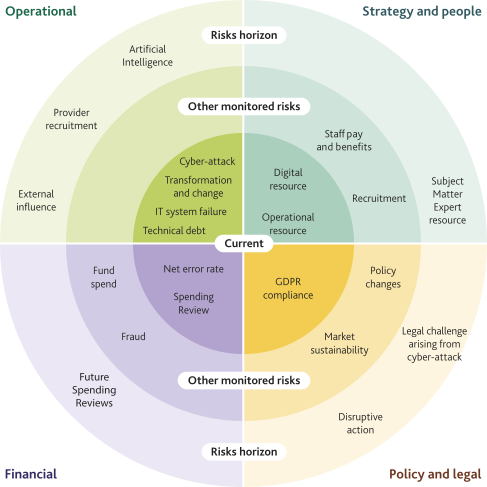
Figure 1. Risk position for 2025 to 2026
Bullseye graphic showing risks broken down into four areas: operation, strategy and people, policy and legal and financial. Each area lists risks in three categories: Current risks (centre of the bullseye), Other monitored risks (middle ring), Risk horizon (outer ring, representing emerging risks).
Operational. Current risks: technical debt; IT system failure; transformation and change; cyber-attack. Other monitored risks: none. Risk horizon: external influence; provider recruitment; artificial intelligence.
Strategy and people. Current risks: digital resource; operational resource. Other monitored risks: staff pay and benefits; recruitment. Risk horizon: Subject Matter Expert resource
Policy and legal. Current risks: GDPR compliance. Other monitored risks: policy changes; market sustainability. Risk horizon: legal challenge arising from cyber-attack, disruptive action.
Financial. Current risks: Spending Review; net error rate. Other monitored risks: fraud; fund spend. Risk horizon: future Spending Reviews.
Financial management commentary
This section provides commentary on our performance during the past year and supports the financial statements. The financial statements are set out from pages 86-135. Note 2 to the financial statements on page 105 details the net operating costs for each of the segments below and notes 3-5 on pages 106-110 set out expenditure and income in detail. Figure 2 shows the largest movements, comparing 2025 to 2026 with 2024 to 2025, in legal aid spend by scheme.
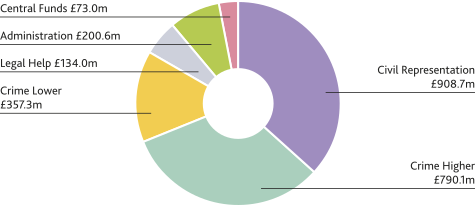
Figure 2. Legal Aid Agency net expenditure, £2.5 billion. An increase of £63.3 million compared to the previous year
Civil Representation £908.7 million (£861.7 million in 2024 to 2025). Increased by 5.5% driven by increased provider activity paid out through the Average Payment Scheme[footnote 4] and through billing on the restored systems.
Crime Higher £790.1 million (£934.1 million in 2024 to 2025). Decreased by 15.4% caused by the long term increase in the work in progress levelling out and seeing a small decrease, driven by data suggesting lower costs per case offsetting a rising caseload.
Crime Lower £357.3 million (£303.4 million in 2024 to 2025). Increased by 17.8% driven by the introduction of a fee increase in December 2025, as well as a continued ramp up from the phasing in of previous fee increases and an upturn in police station work.
Legal Help £134.0 million (£129.0 million in 2024 to 2025). Increased by 3.9%. Data remains limited following system restoration, however, continued growth in immigration over the year was expected and is believed to be driving this increase.
Administration: £200.6 million (£104.4 million in 2024 to 2025). Increased by 92.1%. This mostly reflects an increase in legal provisions for ongoing litigation, along with 21.0% of the increase being for higher MOJ recharges for digital staff and technology costs due to the extra work undertaken in connection with the cyber-attack.
Central Funds £73.0 million (£67.7 million in 2024 to 2025). Increased by 8.0% due to a rise in Civil Cross Examination activity and the introduction of a new translation and interpreters contract which applied inflationary pressures.
Significant items in the LAA’s Statement of Financial Position
Provision for liabilities and other charges
The provisions for work in progress on funded cases are for work that has been completed by solicitors, barristers and advice agencies but has not yet been billed. Where starts data is available, the value of this work in progress is estimated by taking the number of cases that have been reported as started and estimating the activity that has taken place using historical profiles of case costs and durations for each individual scheme of legal aid. In areas where starts data is not recorded, the value of this work is estimated through historic case durations and expected spend in coming months. Where data is unavailable following the system outage (due to the cyber-attack), additional assumptions are introduced to account for the missing period.
The downward movement in this provision compared to the prior year is mostly driven by the Crime Higher scheme, due to data suggesting lower costs per case than previously assumed, offsetting the higher case volumes.
The increase in the provision for legal claims primarily relates to an estimate for ongoing litigation relating to the cyber-attack, although liability has not been established and is not accepted. There is also a related unquantified contingent liability disclosed for future potential claimants. There is significant estimation uncertainty given the early stage of this litigation. Further detail is provided in notes 1, 14 and 16 of the financial statements.
Trade and other payables
The majority of the remaining liabilities of the LAA are for bills received but not yet processed, which are treated as trade payables, and any unpaid work reported in payment on account claims, which are treated as accruals.
The increase in trade and other payables is linked to higher levels of invoicing and payments on account following system restoration.
Trade and other receivables
This includes money due from legal aid providers and clients who have received legal aid, with the majority being due under a statutory charge. Statutory charges arise when legally aided clients successfully gain or retain an asset as a result of the legal assistance they receive. In these circumstances the client must repay the cost of their legal aid. If the client has insufficient disposable assets to repay the legal aid, the LAA gains security over the debt by registering a formal charge over the relevant asset. The Lord Chancellor is entitled to defer enforcement of this charge and to accrue interest against this debt at 8% simple interest until such time that the claimant is able to repay the debt. The debt will either be recovered when the asset is sold, or before if the client has the means to repay it sooner. Clients are encouraged to repay the debt as soon as they are able to minimise interest charges.
The LAA provides for impairment of receivables based on historical cash collection experience and management assessment of likely recoveries, for each category of debt. The increase in Trade and other receivables was primarily driven by prepayments in connection with Civil contingency arrangements, explained in the next section.
Prepayments and accruals under Civil contingency arrangements
The cyber-attack on LAA’s systems resulted in the LAA’s Client and Cost Management System (CCMS) being unavailable to legal aid providers from mid-May to November 2025. During the system outage, LAA implemented contingency arrangements to ensure providers received payment for the civil legal aid work they continued to do.
Since CCMS was brought back online, some providers have been able to provide their backlog of bills at a faster rate than expected, while others have not achieved that level. Where the combination of contingency payments, provider billing and standard payments on account claimed during 2025 to 2026 has taken a provider ahead of their normal billing point, the excess in contingency payments is accounted for as a contingency prepayment. Conversely, where providers are behind their normal billing point, the deficit in billing is accounted for as a contingency accrual. For further details on the civil representation contingency scheme and the contingency prepayment and accrual, see note 1c in the Notes to the Financial Statements.
Functional services model
Corporate and professional functions are provided to the LAA by MOJ and include: commercial, digital, finance, people, project delivery, property and security. These costs are referred to as ‘notional recharge from MOJ’ in the financial statements.
Government functions have been working together to set and embed the use of functional standards. Functional standards exist to create a coherent, effective and mutually understood way of doing business within central government organisations. These standards are mandated for use across central government and provide a stable basis for assurance, risk management and capability improvement. Throughout 2025 to 2026, the functions’ understanding of the requirements of their cross government functional standards has matured. All functions are currently participating in an ongoing programme of continuous improvement and engagement.
There was an increase in the recharge from MOJ for 2025 to 2026 due to the additional digital work undertaken as a result of the cyber-attack.
In addition to notional recharges, under the functional services model the MOJ develops the LAA’s digital assets and transfers them to the LAA through intra-departmental adjustments to the General Reserve. In 2025 to 2026, almost 30% of the £26.4 million of intangible assets transferred related to new systems developed following the cyber-attack. The remainder related to other system developments such as Apply for Legal Aid and Civil Apply.
Sustainability report
We are committed to creating a sustainable, effective and efficient estate that provides value for money for the taxpayer, reduces our environmental impact and allows transformation of the way civil servants work. We recognise that sustainability is a key enabler for MOJ to contribute to the Greening Government Commitments (GGCs).
Our strategy for sustainability
MOJ’s Climate Change and Sustainability Strategy[footnote 5] sets out the department’s aims and objectives for improving the sustainability of its estate and operations, in line with the GGCs.
It links to various other strategies covering carbon, water, waste (circular economy), nature and biodiversity, single-use plastics and sustainable procurement.
In addition to the MOJ’s Climate Change and Sustainability Strategy, the LAA also has a Location Strategy, which is expected to transform the way the government estate supports public service delivery by:
- improving the experience of the workplace for civil servants
- enabling increased working across departmental boundaries within the public sector
- supporting moves from London to the nations and regions of the UK
- taking a locality planning approach to optimise the government estate and working with local authorities to embed our contribution to place-making
- responding to the changes in ways of working as a result of reduced office capacity
- improving the sustainability and condition of the estate
Our strategic objective for the year ahead is to continue to work with the Government Property Agency and MOJ Property Directorate to deliver access to cost-effective, high-quality office accommodation that meets the necessary compliance standards, supports hybrid working and improves sustainability.
Environmental awareness
MOJ continues to engage with arm’s length bodies in a structured manner on greening government, through the arm’s length body Centre of Excellence Communications Forum. In addition, MOJ’s Climate Change and Sustainability Unit (CCSU) also offers support by way of technical subject matter experts in all areas covered by the GGCs (such as waste, water, net zero carbon) and associated strategies and policies.
Waste minimisation and recycling are well-practised within our day-to-day operations. We also promote responsible procurement and waste management practices. The Department for Environment, Food and Rural Affairs (Defra) provides details of Government Buying Standards for a range of products. As part of all tendering activity where they apply, the requirements of the Government Buying Standards are mandated by us.
Digitisation
The vast majority of our data, files and case evidence are already handled digitally. We are continuing to further reduce our reliance on paper by offering improved collaboration tools for staff to allow more efficient working. In addition, we are looking at long-term requirements around the need for physical letters and court documents that will soon become more detailed and reportable.
Environmental sustainability reporting
Our progress against the 2025 GGCs is outlined in the following tables. The 2024 to 2025 non-financial indicators have been restated to reflect the full financial year up to March 2025. The data below shows our present position for 2025 to 2026 against a 2017 to 2018 baseline, using calendar year data available January 2025 to December 2025.
Greenhouse gas emissions
Table 1. Financial and non-financial indicators of greenhouse gas emissions against Scopes 1-3 for each year 2022-23 to 2025-26 against the 2017-18 baseline
|
Greenhouse gas emissions from buildings and travel[footnote 6] |
2025-26 | 2024-25 restated | 2023-24 | 2022-23 | 2017-18 baseline | |
| Non financial indicators (tCO2e) | Gas – Scope 1 non‑renewable energy | 60 | 63 | 70 | 79 | 95 |
| Electricity – Scope 2 non‑renewable energy | 114 | 117 | 173 | 175 | 531 | |
| Official business travel emissions – Scope 3 | 38 | 59 | 44 | 15 | 281 | |
| Total emissions | 212 | 239 | 287 | 269 | 907 | |
| Non financial indicators (MWh) | Gas – Scope 1 non‑renewable energy | 326 | 342 | 381 | 434 | 514 |
| Electricity – Scope 2 non‑renewable energy | 569 | 519 | 835 | 830 | 1,382 | |
| Total energy | 895 | 861 | 1,216 | 1,264 | 1,896 | |
| Financial indicators (£000) | Gross expenditure on energy[footnote 7] | - | 401 | 307 | 238 | 210 |
| Expenditure on official business travel (UK only) | 430 | 526 | 472 | 429 | 662 | |
| Total | 430 | 927 | 779 | 667 | 872 | |
Gas usage decreased compared with last year, along with tCO2e electricity usage, which decreased. Emissions are calculated using the Defra conversion factors for the relevant period.
Travel
Table 2. Travel output information for each year 2022-23 to 2025-26 against the 2017-18 baseline
| Travel | 2025-26 | 2024-25 restated | 2023-24 | 2022-23 | 2017-18 baseline | |
| Distance travelled (km 000) | Motor vehicle | 203 | 280 | 286 | 314 | 464 |
| Rail | 83 | 336 | 11 | 315 | 3,934 | |
| Flight | - | 1 | 3 | 23 | 111 | |
| Total distance | 286 | 617 | 300 | 652 | 4,509 | |
| Emissions (tCO2e) | Motor vehicle | 34 | 47 | 43.63 | 54 | 85 |
| Rail | 3 | 12 | 0.37 | 11 | 184 | |
| Flight | - | 0.07 | 0.49 | 3 | 13 | |
| Total emissions | 37 | 59.07 | 44.49 | 68 | 282 | |
Overall travel emissions are lower than 2024 to 2025 with a reported decrease of 37% from the previous year.
Finite resource consumption
Table 3. Water consumption and supply costs for each year 2022-23 to 2025-26 against the 2017-18 baseline
| Water[footnote 8], [footnote 9] | 2025-26 | 2024-25 | 2023-24 restated | 2022-23 | 2017-18 baseline | ||
|---|---|---|---|---|---|---|---|
| Non financial information (m3) | Water consumption | 1,754[footnote 10] | 948 | 1,743 | 811 | 14,897 | |
| Financial information (£000) | Water supply costs[footnote 11] | - | 5 | 14 | 24 | 21 |
Water usage during 2025 to 2026 is higher than 2024 to 2025 with a reported increase of 85% from the previous year.
Paper
Table 4. Quantity of paper purchased for each year 2022-23 to 2025-26 against the 2017-18 baseline
| Paper | 2025-26 | 2024-25 restated | 2023-24 | 2022-23 | 2017-18 baseline | |
|---|---|---|---|---|---|---|
| Non financial information (A4 reams) | Paper purchased | 535 | 645 | 676 | 756 | 3,849 |
Our paper consumption has continued to decrease, achieving an 86% reduction from the 2017 to 2018 baseline.
Waste minimisation and management
Table 5. Waste disposal for each year 2022-23 to 2025-26 against the 2017-18 baseline
| Waste | 2025-26 | 2024-25 restated | 2023-24 | 2022-23 | 2017-18 baseline | |
| Non financial information (tonnes) | Waste sent to landfill | - | - | - | 6 | 148 |
| Waste incinerated for energy recovery | 5 | 5 | 5 | 8 | - | |
| Waste incinerated without energy recovery | - | - | 7 | - | - | |
| Recycled/reused | 12 | 15 | 162 | 233 | 840 | |
| Waste composted / food waste | 1 | 1 | 1 | 1 | - | |
| Total waste | 18 | 21 | 175 | 248 | 988 | |
| Financial information (£000) | Total[footnote 12] | - | 8 | 14 | 24 | 27 |
We continue to divert our waste from landfill. Further progress in digital working and paper reduction has continued to support reductions in total waste.
In the future
Our sustainability strategy is to continue operating with MOJ’s CCSU towards the GGCs. Together, we will continue to:
- reduce greenhouse gas emissions
- improve our waste management
- further reduce water consumption
- buy more sustainable and efficient products and services with the aim of achieving the best long term minimum environmental impact
Our sustainability team and facilities management continue to find ways for us to reduce our carbon footprint through facilities upgrades.
We continue to explore opportunities offered by improved ways of working, through digital working and the better use of technology.
We will explore further estates improvements within the LAA location strategy and explore further opportunities to share space with other government departments. This will further reduce our accommodation energy needs.
We are committed to creating a sustainable, effective and efficient estate that provides value for money for the taxpayer, reduces our environmental impact and enables transformation.
Task Force on Climate-related Financial Disclosures
LAA has reported on climate-related financial disclosures consistent with HM Treasury’s Task Force on Climate-related Financial Disclosures (TCFD) aligned disclosure application guidance, which interprets and adapts the framework for the UK public sector. LAA does not consider climate to be a principal risk and has therefore complied with the TCFD recommendations and recommended disclosures around:
- Governance: The paper templates for each of the LAA’s formal, senior governance forums include a mandatory section relating to sustainability, which requests confirmation that the GGCs and sustainability have been considered, ensuring that this has fed into the development of proposals and the senior decision-making process. In addition, the LAA Board have oversight of the climate related emissions declared within this report.
- Risk Management: LAA Risk Management considers risks in an internal and external context, using a systematic approach which considers environmental and sustainability factors as part of the risk management process. Climate is not a principal risk within the LAA.
- Strategy: Climate is not a principal risk within the LAA because environmental risks are not expected to critically impact our ability to deliver our business operations or strategic objectives. The LAA organisational strategy was developed with consideration of environmental factors and risks. The organisation’s approach to modernising services is resilient to potential climate change scenarios.
- Methodology: Sustainability reporting methodology and emissions calculations are undertaken in accordance with the relevant Sustainability Reporting Guidance, using the government-published greenhouse gas conversion factors for the relevant reporting year. The figures provided therefore align with the applicable government sustainability reporting requirements.
- Metrics and Targets: Environmental and sustainability data has been disclosed in tables 1 to 5 on pages 35-37.
The LAA plans to provide recommended disclosures for Strategy in future reporting periods in line with the central government implementation timetable.
Signed for and on behalf of the Legal Aid Agency
Helen Measures
Chief Executive and Accounting Officer
Legal Aid Agency
10 November 2026
Footnotes
-
Application volumes are based on published Legal Aid Statistics covering the full financial year. Processing performance is based on internal operational management information and is only available for April 2025 and December 2025 to March 2026 for Civil; April 2025 and October to March 2026 for Crime because of the cyber-attack. Consequently, the reported performance percentages relate only to those available reporting periods and should not be interpreted as full-year performance. ↩
-
Billing volumes are based on published Legal Aid Statistics covering the full financial year. Processing performance is based on internal operational management information and is only available for December 2025 to March 2026 for Civil; June 2025 to March 2026 for Crime because of the cyber-attack. Consequently, the reported performance percentages relate only to those available reporting periods and should not be interpreted as full-year performance. ↩
-
Prior-year comparison is unavailable, as the Bills KPI was split into Civil and Crime categories in 2025 to 2026. ↩
-
The average payment scheme was the contingency arrangement to ensure providers received payment for the civil legal aid work they continued to do during the system outage that followed the cyber-attack. ↩
-
For more information see: www.gov.uk/government/publications/climate-change-and-sustainability-strategy-moj ↩
-
Emissions from buildings for 2025 to 2026 reporting year includes information from the following sites only: Brighton, Cardiff, Leeds, Liverpool, London (102 Petty France) and Swansea.↩
-
Energy consumption is no longer invoiced separately and therefore no financial information can be provided for 2025 to 2026. ↩
-
Water data for 2025 to 2026 reporting year includes information from London (102 Petty France) only.↩
-
Previous reports stated that water data included London (102 Petty France) and Jarrow for the 2024 to 2025 reporting year, this has been corrected as the reporting period data only included London (102 Petty France).↩
-
This figure includes 85m3 to empty and refill sprinkler tank that needed relining in May 2025. ↩
-
Water consumption is no longer invoiced separately and therefore no financial information can be provided for 2025 to 2026. ↩
-
Waste consumption is no longer invoiced separately and therefore no financial information can be provided for 2025 to 2026. ↩