Labour Market Evidence Programme user consultation and scoping report (technical report)
Updated 8 July 2026

© Crown copyright 2026
This publication is licensed under the terms of the Open Government Licence v3.0 except where otherwise stated. To view this licence, visit nationalarchives.gov.uk/doc/open-government-licence/version/3 or write to the Information Policy Team, The National Archives, Kew, London TW9 4DU, or email: psi@nationalarchives.gov.uk.
Where we have identified any third party copyright information you will need to obtain permission from the copyright holders concerned.
This publication is available at https://www.gov.uk/government/publications/labour-market-evidence-programme-user-consultation-and-scoping-report/labour-market-evidence-programme-user-consultation-and-scoping-report-technical-report
1. Theory of Change
This section details the full narrative for the Labour Market Evidence Programme Theory of Change.
Figure 1: Labour Market Evidence Programme Theory of Change
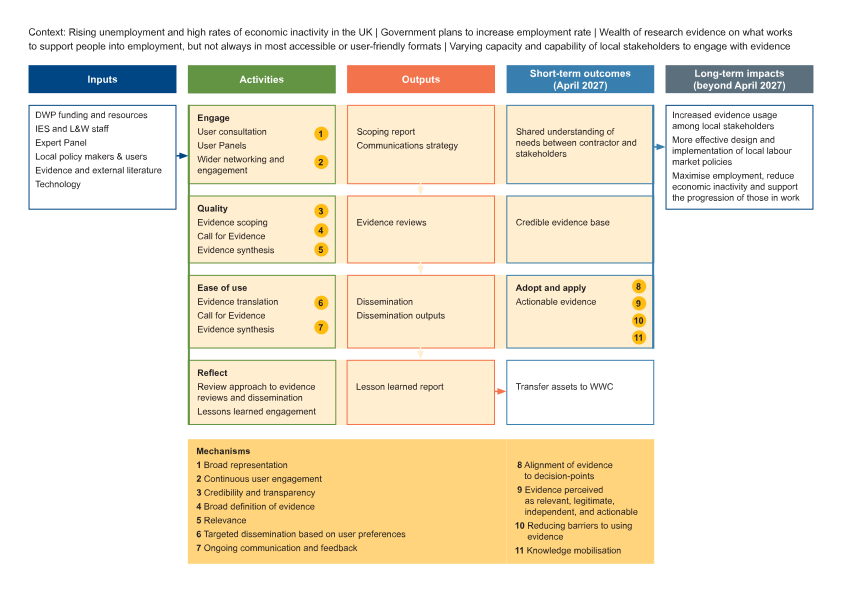
Source: IES and L&W, 2026.
Context:
- rising unemployment and high rates of economic inactivity in the UK Government plans to increase employment rate
- wealth of research evidence on what works to support people into employment, but not always in most accessible or user-friendly formats
- varying capacity and capability of local stakeholders to engage with evidence
Inputs
- DWP funding and resources
- IES and L&W staff
- Expert Panel
- local policy makers and users
- evidence and external literature
- technology
Activities
Engage
- user consultation (1)
- user panels (1)
- wider networking and engagement (2)
Quality (3)
- evidence scoping
- call for evidence (4)
- evidence synthesis (5)
Ease of use
- evidence translation (6)
- call for evidence
- evidence synthesis (7)
Reflect
- review approach to evidence reviews and dissemination
- Lessons Learned engagement
Outputs
Scoping report Communications strategy
Evidence reviews
Dissemination Dissemination outputs
Lesson learned report
Short-term outcomes (April 2027)
Shared understanding of needs between contractor and stakeholders
Credible evidence base
Adopt and apply (8)
Actionable evidence (9) (10) (11)
Transfer assets to WWC
Long-term impacts (beyond April 2027)
Increased evidence usage among local stakeholders
More effective design and implementation of local labour market policies
Maximise employment, reduce economic inactivity and support the progression of those in work
Mechanisms
- Broad representation
- Continuous user engagement
- Credibility and transparency
- Broad definition of evidence
- Relevance
- Targeted dissemination based on user preferences
- Ongoing communication and feedback
- Alignment of evidence to decision-points
- Evidence perceived as relevant, legitimate, independent, and actionable
- Reducing barriers to using evidence
- Knowledge mobilisation
2. Context and rationale
In November 2025 to January 2026, the UK unemployment rate rose to 5.2% and the economic inactivity rate remained at 21%. In the Get Britain Working White Paper, the Government set out their ambition and plans to reach an 80% employment rate, which included devolving budgets and local plans, providing local stakeholders with more spending or commissioning power with regards to active labour market policies (ALMPs) and forging stronger links between work, health and skills provision.
The labour market evidence programme (LMEP) has been commissioned by DWP to understand how evidence can be made more accessible for target audiences, identified as:
- local policymakers and practitioners within Connect to Work areas
- integrated care boards (ICBs)
- mayoral strategic authorities (MSAs)
The programme has been commissioned on the assumption that these organisations often lack access to reliable, timely and relevant evidence, and consequently investment decisions and implementation may be undertaken that are not sufficiently evidence informed. While DWP acknowledge the existence of a wealth of research on ALMPs, it is felt that this is fragmented, inaccessible or not available in the most user-friendly formats. Improving the availability and accessibility of evidence would therefore support stakeholders to work towards the 80% employment ambition.
The longer-term goal is for an independent What Works Centre for Local Employment Support to be established to provide ongoing reliable evidence to local policymakers and commissioners. This is currently being commissioned and will start running from January 2027.
3. Inputs
To deliver the LMEP, the following inputs have been identified:
- funding and resources from DWP – IES and L&W as contractors
- expertise and networks – direction from a DWP steering group, guidance from the What Works Centre for Local Economic Growth and Youth Futures Foundation, Expert Panel, user panel
- local policy makers and potential users
- evidence and external literature
- technology: solutions to disseminate
4. Activities
Four pathways have been identified.
Pathway 1: Engage
The engagement pathway contains activities to engage with varied user groups and wider stakeholders:
- user consultation: 20 interviews and five workshops with around 50 representatives from Mayoral Strategic Authorities (MSAs), Integrated Care Boards (ICBs), and Local Authorities (LAs) across England
- user panels: user panels, aligned to each review, will bring together stakeholders from key user groups to provide ongoing feedback, helping shape evidence review priorities, outputs and dissemination so they meet user needs. Members of the panel will review and comment on developing findings, ensuring the evidence is relevant, credible and practical for local policymakers and practitioners
- wider networking and engagement: connecting with leaders of ongoing evaluation and capacity building activity, and emerging evidence programmes
Pathway 2: Quality
The quality pathway contains activities that will support evidence synthesis:
- evidence scoping: to assess the availability of evidence for review, identify knowledge gaps, and ensure evidence reviews completed as part of this work do not duplicate existing research, existing evidence within the areas of interest will be scoped. This exercise will be used to inform discussions with DWP and relevant panels to determine the topics selected for review, and the review method
- call for evidence: to gather unpublished and grey literature from LAs, the NHS, housing associations and employment support organisations to supplement evidence reviews
- evidence reviews: up to eight evidence reviews, including a mix of systematic reviews and rapid evidence assessments (REAs) as appropriate
Pathway 3: Ease of use
The ease of use pathway contains activities that will support evidence translation and dissemination.
Evidence translation and dissemination: Dissemination strategies will be informed by the user consultation and understanding of evidence needs, and priorities.
Dissemination activities could include:
- publication of evidence reviews
- development of a toolkit
- conducting workshops or webinars on specific topics
- ‘how to’ guides
- synthesis papers
- top tips and crib sheets
- case studies of best practice findings
- visual summaries for frontline staff
- briefs for commissioners
- REA-based findings videos, for example, with an author plus members of the user panel commenting on the findings
Pathway 4: Reflect: Informing the future WWCLES
To inform the future WWCLES, a Lessons Learned review will be undertaken.
Lessons Learned review: A total of 40 interviews and 5 workshops will be completed. These will explore the extent to which outputs produced by the work are meeting the needs of end users.
5. Outputs
From the activities outlined above, the following outputs will be produced:
- scoping report clearly setting out the programmes aims, activities, and planned evidence reviews based on findings from the user consultation
- communications strategy: outlining the primary and secondary audiences, their needs and motivations for engaging, core messages, communications channels (for example newsletters, events, lunch and learn)
- scoping notes for up to eight evidence reviews setting out the research questions, search terms, method (including REA or systematic), parameters, type of output, intended user group (if not all), and planned dissemination activities
- evidence outputs: high quality rapid evidence assessments and systematic reviews outputs, on themes aligned to users’ priority needs, in formats aligned to users’ requirements, such as briefing papers, guidelines and case studies
- dissemination activities such workshops and webinars on specific themes or tailored to the needs of a specific area. Promotion in newsletters and social media
- Lessons Learned report setting out the extent to which the programme of work achieved it aims and objectives
Short-term outcomes (during programme period, pre-April 2027)
The following short-term outcomes are identified to take place during the LMEP delivery:
- stronger collaboration between researchers, local policy, delivery, data and evaluation, and senior decision-makers
- evidence synthesis aligned to stated users’ priorities
- creation of credible, actionable evidence base
- active engagement with evidence by LAs, MSAs or ICBs, measured through website statistics, requests for further information, and attendance at workshops and webinars
- share assets with the What Works Centre for Local Employment Support, including this scoping report, Lessons Learned report, findings from user consultation and panels, communications strategy, outputs from evidence reviews (including Covidence files to form the basis of living reviews)
Long-term impact (April 2027 onwards)
The following longer-term outcomes have been identified for after LMEP delivery:
- increased use of evidence in local policymaking
- increased effectiveness of labour market policies at local levels
- maximise employment, reduce economic inactivity and support the progression of those in work
6. Mechanisms
Given the rationale for investment and recognition that the evidence exists, but is not sufficiently accessible, the mechanisms for creating this intended change are critical to the success of the LMEP.
Pathway 1: Engage: User consultation
The mechanisms that build awareness and motivation to engage among users are taking an integrated and participatory approach to user consultation, evidence review development and dissemination, and consultation on Lessons Learned:
1. Broad representation: Actively involving policy, delivery, data and evaluation, and senior decision-makers across all intended user groups throughout the design phase to build legitimacy, trust and a sense of ownership, increasing the likelihood they later use the outputs.
2. Continuous user engagement: Feedback gathered at multiple stages through user panels aligned to evidence reviews, and during the Lessons Learned stage to ensure stakeholders are regularly exposed to the evidence as it develops. Users help shape evidence synthesis agendas, priorities and outputs, increasing their motivation to apply the findings.
Pathway 2: Quality: Evidence synthesis
Key mechanisms that build a sense of quality in the evidence synthesis are:
3. Credibility and transparency: Clear methods build trust in findings, including application of evidence standards, clear protocols, and quality assurance via a peer review process. Stakeholders are more likely to act on evidence they view as credible.
4. Broad definition of evidence means relevant information in how to deliver is included and synthesised, such as implementation insights, and qualitative evidence to ensure that outputs align with the real-world complexities local actors face.
5. Relevance: Tailoring synthesis to policy priorities makes uptake more likely, increasing the likelihood of application.
Pathway 3: Ease of use: Transition and dissemination
Key mechanisms that lead to ease of use, encouraging application and adoption are:
6. Target dissemination based on user preferences: Accessible user-driven choice of formats (for example briefings, webinars, maps, visual summaries) will mean evidence is delivered in ways that that fit users’ workflows. Clear translation to current issues and challenges, in the current phase of the delivery or policy cycle, supports application.
7. Ongoing user communication and feedback: Mechanisms such as newsletters, web analytics, and feedback loops support iterative improvement in the programme’s activities and sustained user engagement with the programme of work.
Apply and Adopt
These mechanisms reflect the behavioural conditions (capability, opportunity, motivation) required for adoption.
8. Aligning evidence to decision points: Targeting dissemination at key commissioning or planning cycles enhances uptake because evidence is received when decisions are made.
9. Evidence perceived as relevant, legitimate, independent and actionable: Local policy makers see the evidence as trustworthy, relevant and usable.
10. Reducing barriers to using evidence (time, capacity, capability): Outputs repackaged or simplified to increase usability.
11. Knowledge mobilisation via events and shared learning: Webinars, workshops, and peer exchange sessions help normalise the use of evidence in decision-making.
Table 1: Summary of assumptions underpinning the Theory of Change and how these will be tested
| Assumption | Description | Appraisal method | Adaptation if assumption is incorrect |
|---|---|---|---|
| Pathway 1: Engage – 1. Identified local policymakers and other evidence users will lead to the contractor understanding local evidence needs. | Appropriate local policymakers are identified to participate in the user consultation. Local stakeholders will have the capacity to engage in user consultation activities and share insights that reflect genuine evidence needs. Local stakeholders will have the capacity and motivation to engage with this project over an extended period. | IES and L&W will reflect on the composition and quantity of interview and workshop participants and saturation of insights. This will help give confidence that insights are representative of ICBs, MSAs and Connect to Work clusters overall. Responses outside of contract requirements and scope will be reported to DWP for information but not necessarily acted upon within this contract. | Additional fieldwork, or an extension to the fieldwork timeline will be considered in discussion with DWP if participation is too low or too unrepresentative of the target user groups for this programme of work. Adapt the research questions to gain participant insights from a different angle. |
| Pathway 2: Quality evidence synthesis – 2. There is no major gap between evidence available and the individual or localised contexts of local policy needs. | There is sufficient quality research to synthesise on relevant topics. Evidence scoping and searching accesses all relevant studies. The synthesised evidence, report and reviews are rigorous, credible and implementable. Policymakers will value systematic reviews and will use them in decision-making. | Gap between evidence and local policy needs to be identified during user consultation, user panels and scoping activities. | IES and L&W to ensure synthesis activities reflect those that users requested during the user consultation. Acknowledge evidence gaps to inform future evidence generation. |
| Pathway 3: Ease of use (Dissemination and translation) – 3. Contractor engaging with identified users to design dissemination strategies will lead to dissemination strategies aligned to the needs of evidence users. | Engagement with identified users will provide sufficient material to design dissemination strategies. The needs of policymakers and practitioners are sufficiently similar to be informed by related evidence synthesis, meaning that dissemination can be effective across different stakeholders and programmes. The needs of policymakers and practitioners will not change significantly over the programme’s lifetime, ensuring the dissemination strategy remains relevant. | IES and L&W will analyse user consultation data to identify preferred dissemination strategies for all types of users and their current priorities and engagement with policy design, delivery or reflection. Short, medium and long-term dissemination strategies will be set where possible, based on user consultation data. | If there is no consensus regarding dissemination strategy, judgements will be made in discussion with DWP to ensure there is a balance of desired outputs across all user groups. Dissemination plans and user preferences will be clearly presented in the scoping report. |
| Pathway 3: Ease of use (Dissemination and translation) – 4. The LMEP website will disseminate evidence to stakeholders. | Stakeholders will engage with the website or online content. The online evidence will be relevant, easy to understand and engage with by stakeholders. Stakeholders will have the capacity (logistical and organisational) to engage with the website. | Website access will be monitored to record views of the page hosting each output, downloads of each output (if applicable), views of associated blogs (if applicable). User panel members and Lessons Learned activities to inform team on barriers to engagement and impact case-studies. | Promotional activities for each output will be agreed with DWP and additional activities agreed (budgets permitting) where engagement is deemed too low. |
| Pathway 3: Ease of use (Dissemination and translation) – 5. A dissemination strategy aligned to needs will generate a clear focus for the contractor on well-targeted dissemination. | This strategy will be sufficiently aligned to individual stakeholder needs. The strategy correctly identifies user needs leading to effective targeting of dissemination output. Contractors have the resources and skills to implement the strategy effectively. Policymakers and practitioners are receptive to targeted dissemination efforts. Local policymakers have the capacity and willingness to align their priorities based on the evidence output in the dissemination strategy. | The dissemination strategy will be set out in the scoping report for review by DWP and the Steering Group. Website engagement will be used to test if the dissemination strategy overall and for individual evidence reviews was effective (see assumption 3). | IES and L&W to ensure outputs produced reflect those that users requested during the user consultation, when agreeing dissemination plans with DWP. Dissemination plans and user preferences will be clearly presented in the scoping report. |
| Adopt and apply – 6. LMEP content will lead to engaged external policymakers actively using evidence synthesised. | Policymakers will engage with the website and its outputs are viewed as valuable and implementable. Evidence will be trusted and used if presented clearly. Evidence is seen as independent. | Website access will be monitored to record views of the page hosting any toolkits that are produced. User panel members and Lessons Learned activities to inform team on reasons for low engagement and issues accessing the website or toolkit. | If engagement is low, or issues are identified with accessing the website and outputs, remedial plans, such as additional communications from wider partners, will be made in agreement with DWP that ensure that the contractor fulfils obligations to the best of their abilities within the time and budget available. |
| Adopt and apply – 7. Online and in-person events will lead to increased use of evidence in local policymaking | Stakeholders attend these events and find them useful. Events lead to behaviour change and implementation, not just heightened awareness of problems and solutions. The attendance to these events, and engagement in online webinars and newsletters will be sustained over time. Adoption of the evidence will be sustained and not drop off over time (for instance the first project uses the evidence, then next project doesn’t once this evidence has been considered ’done/used’) | Attendance at online and in person events will be monitored and compared against targets set prior to each event (in agreement with DWP). Feedback will be sought after each event, analysed and used to inform the extent to which the events are seen as useful to policy makers. | Recommendations will be made in the Lessons Learned stage for ongoing promotion of the Labour Market Evidence Programme’s outputs, and future assessment of the extent to which it is used in local policymaking. Adapt through more targeted communications of events towards unresponsive local areas and ensure that strong communication methods are in place to maintain awareness of online and in-person events. |
| Adopt and apply – 8. Local stakeholders’ barrier to evidence-informed policy is lack of accessible evidence rather than capacity or capability. | Evidence is seen as legitimate and relevant by decision-makers. Local authorities and other stakeholders want evidence (reviews) to inform their work. Stakeholders have the time and incentives to engage with evidence. There is the appropriate capability, capacity and organisational skillset and support for integrating evidence into policy decisions. Having evidence will help policymakers to deliver labour market outcomes. Overall, we are assuming that all the short-term outcomes will lead to the increased effectiveness of labour market policies at local level. | The user consultation and user panels will be used to test this assumption. For example, it will check to see if policy makers have the evidence but not the time or capacity to utilise them. | A lack of time or capacity to use existing evidence may indicate the need to ‘repackage’ existing evidence into more ‘user-friendly’ and easily accessible formats. Should this be found IES and L&W will work with DWP to agree whether this is a useful task within this programme of work or better situated under a future WWCLES. Acknowledge capacity or capability gaps in Lessons Learned report to raise awareness and inform long-term work. |
User Consultation Methodology
The user consultation took a participatory approach, to ensure that the development of outputs from the evidence reviews aligned with the needs of local policymakers involved in Trailblazers, WorkWell and Connect to Work. This included in-depth semi-structured interviews and a series of online workshops.
7. Interviews
The interviews aimed to find out about the evidence needs of individuals and their organisations, their capacity to use evidence effectively, key barriers to using evidence, the key outcomes that they hope to achieve by using evidence and where they currently find evidence and in what format. Each interview was conducted via video call and lasted for up to an hour. Interview discussion was supported by a topic guide.
We purposively sampled across three key stakeholder groups: Mayoral Strategic Authorities (MSAs), Connect to Work clusters, and Integrated Care Boards (ICBs). Interview participants included senior staff across employment and skills, health, communities, economic inclusion, including research, evaluation, data, and programme leads. The interviews took place online from December 2025 until mid-February 2026.
We used the following selection criteria to draw up the sample:
Table 2: Sampling criteria for user consultation interviews
| Group | Criteria |
|---|---|
| MSAs | Intended sample: 12 interviews across four MSAs. The maturity of an MSA was a key factor. We wanted representation from well-established areas, both with and without integrated settlement. We also wanted to speak to a newer MSA (established within the last two years). |
| ICBs | Intended sample: 14 interviews across four ICBs. Variation in population size served, geographical variation (rural, urban and coastal) and representation from boards located in MSAs with varying degrees of maturity. At least one WorkWell delivery area. At least one NHS Health and Growth Accelerator area. |
| Connect to Work clusters | Intended sample: 14 interviews across four ICBs. Variation in population size and geographical variation (rural, urban, coastal) with representation from Youth Guarantee and Economic Inactivity trailblazers. We wanted to speak to at least one cluster who is not within an MSA. |
The intention was to conduct 40 interviews across these three groups, however ultimately 20 interviews were conducted. Ten with MSAs, three with ICBs and seven with LA Connect to Work clusters. While we were able to achieve good representation across England from MSAs and Connect to Work clusters, we could not secure any interviews with Connect to Work clusters in Wales. We were also not able to interview as many ICB representatives as originally anticipated. The timing of interview recruitment (just before and after the Christmas holiday period) made it challenging to recruit to the sample, as well as not being able to recruit directly. The reorganisation of ICBs into clusters had an impact on their response to an invitation for interview. While we heard consistency in patterns of evidence needs and usage among those interviewed, as target numbers for interviews were not reached, it is possible that there are some views that have not been fully represented.
8. Workshops
The purpose of the online workshops was to agree the programme’s evidence priorities. This included discussion about the potential themes for the evidence reviews, what outcomes people are most interested in achieving when using evidence and preferred formats of the outputs of the evidence reviews. Each workshop lasted for 90 minutes, making use of breakout rooms to allow participants to rotate discussion groups to maximise the breadth of discussion. We used an interactive polling tool to allow participants to rank their preferences in all discussions. Workshop discussion was supported by a topic guide. A short pre-read slide deck was shared with participants prior to the workshops, with the slides being presented during the sessions. The topic guide and slide deck are included in the annex.
To build on the insights gained from the interviews, rather than hearing from a sample of areas in the workshops, we wanted to include a broad range of regions in the workshops. There were five workshops in total – two for Connect to Work clusters and ICBs, and one for MSAs. We invited research and evaluation, delivery and policy leads from all MSAs, Welsh Corporate Joint Committees, Connect to Work clusters and ICBs. All workshops took place in February 2025. In total, 43 people took part across the five workshops. Nine MSAs, eight ICBs and 19 Connect to Work Local Authority clusters were represented.
Branding
All work produced by the Labour Market Evidence Programme will be clearly labelled and branded with the programme’s logo.
Figure 2: Labour Market Evidence Programme logo

Quality assurance
High quality methods and outputs are essential for the LMEP to meet the core purpose of providing credible, actionable and trustworthy evidence that local policymakers and practitioners can trust. The user consultation confirmed that trust, rigour, transparency, and methodological robustness are non-negotiable for stakeholders.
Quality is also fundamental to the programme’s ToC. Strong quality mechanisms underpin:
- stakeholder confidence in the findings
- uptake and use of evidence in decision making
- alignment with What Works principles, which will feed into the future WWCLES
- transparency and replicability, ensuring methods are open to scrutiny
The LMEP embeds quality at every stage, using a combination of clear standards, rigorous review processes enhanced by AI where appropriate, expert oversight, and human led quality assurance. All stages of evidence reviews will be human-led and AI assisted. Researchers will manually quality assure (QA) tasks which have been supported by AI. This will build in opportunities to identify errors caused by AI hallucinations or omissions, instilling confidence in findings that will inform outputs.
For all outputs, the IES Project Manager will conduct initial Quality Assurance followed by the IES Project Director for an additional QA. L&W’s outputs will be subject to QA procedures led by Elizabeth Gerard, before subsequently being subject to the same IES QA as all other outputs. Once content is drafted, AI may be used to aid a human-led quality assurance process, and ensure the output is adequately responding to the research questions. Once completed, AI may be used to support to development of summaries, short standalone outputs, and slide decks.
Quality is strengthened by engagement with the Expert Panel guiding methodological decisions, reviewing approaches and advising on evidence standards. Following confirmation of the topics selected for evidence reviews, panel members will be aligned to review and their area of expertise. They will peer review evidence outputs.
User panels will help ensure the findings and recommendations generated through this programme of work are relevant and practical, and ensure findings are disseminated in accessible and engaging ways. User panels will provide a space for networking with other panel members, enabling collaboration and peer learning opportunities. Engagement will also offer early insight into the research findings, informing their ongoing work.
The LMEP will convene user panels for each evidence review conducted. Engagement with members of the user panel will be through a combination of online user panel workshops and email correspondence. Members will be invited to review summaries and outputs to guide the clarity of messages presented. We anticipate a commitment of around 3.5 hours between April and December 2026.
Appendix 1: Final user consultation topic guide
User consultation depth interviews topic guide
Introduction (5 minutes)
Thank you for agreeing to speak to me today.
The DWP is considering establishing an independent Labour Market What Works Centre (LMWWC) which would champion and promote evidence usage and generation to produce improved labour market outcomes, especially at the local level. This is in response to the government’s commitment to supporting individuals into employment with the recognition that there is a strategic gap in the evidence available to local policymakers.
The research is being conducted by the Institute of Employment Studies (IES) and Learning and Work Institute (L&W). Our research is focused on developing evidence reviews and practical resources, designed to support policymakers within local government to better understand what works in supporting improved labour market outcomes for out-of-work and in-work individuals. This evidence base would feed into a future LMWWC.
Your interview today is part of the user consultation stage and will help us to understand where there is the greatest need for evidence; the type of evidence policymakers currently use; and your future evidence priorities.
Throughout the interview we will be referring to evidence that you use or would like to be able to access. When we talk about evidence we mean something that is reliable, valid and relevant. An evidence source could be data, or material such as research and evaluation reports, academic research publications, systematic reviews, data sets and local Labour Market Information.
We will be asking about where you search for evidence (for example via peers or existing What Works Centres) as well the ways that evidence is presented (for example toolkits, case studies, webinars).
This research is focused on improving labour market outcomes for in-work and out of work individuals, so we are keen to hear your thoughts on your evidence needs that focus on these outcomes. In scope for this project are active labour market policies across employment, housing, health, education, skills, and transport, focused on improving labour market outcomes and deliverable locally. Also in scope is evidence on systems change including design, integration and coordination. Social security is out of scope.
Please feel free to answer the questions as openly and honestly as possible. We want the research to provide valuable insights that will shape the LMWWC’s tools and outputs.
Before we begin, I want to run through some general information with you:
- This interview will take around 45 minutes. Participation is voluntary, and you can stop at any time. If you do not want to answer a question, let me know, and we can move on.
- The findings from these interviews will be published. Any information you provide will be held in the strictest confidence and we will take steps to prevent the research findings and published outputs (including briefings and reports) identifying you or your organisation without your permission. IES and L&W are independent researchers and no confidential or identifying information will be shared with DWP.
- With your permission, I would like to record and transcribe the interview. The transcript and recording will be stored securely and will only be accessible to the project team. It will be deleted three months after the end of the project.
Do you have any questions? Are you happy to take part and for me to record the interview? Start recording and ask participant to confirm that they understand the research, how their data will be used and that they are happy to take part.
Section A: Background (10 minutes)
This section will focus on gaining understanding of the role of the individual, strategic priorities for the organisation and how their organisation uses evidence.
1. To begin with, could you tell me a little about your organisation and your role?
2. What do you think are the key strategies or priorities and challenges in your local area?
3. How, if at all, does your organisation currently draw on research evidence to inform policy development, guide investment decisions and decision-making in relation to labour market policies?
4. Can you share some examples where evidence has influenced a policy, programme, or strategy for your organisation?
Section B: Use of evidence (5 minutes)
This section focuses on the individual’s use of evidence – it will be important in the interview to make this distinction so that we gain an understanding of their own use of evidence in their work.
5. How do you currently use evidence in policy design (for example problem identification, options appraisal, decisions about eligibility, priorities for funding, implementation design, systems integration)?
6. How do you currently use evidence for delivery insight? (for example commissioning, designing pathways, successful implementation, performance monitoring, equity analysis)
Section C: Evidence barriers or capacity (5 to 10 minutes)
This section aims to explore the ability that the organisation and individual have to effectively use evidence and to unpick challenges in effective use.
7. What does effective use of evidence mean to your organisation? What does it mean to you as an individual?
8. To what extent does your organisation have the skills, structures, and resources needed for effective evidence use?
9. What are your current barriers for making the most effective use of evidence?Prompts – lack of time, lack of expertise, lack of high-quality evidence sources, the policy and funding cycle, competing priorities, politics, accessibility of evidence, how to translate evidence into practice, organisational culture and leadership attitudes
10. Have you experienced situations where evidence was available but not used? If so, why wasn’t it used?
11. Have you experienced situations where evidence was used ineffectively or did not lead to the intended outcome?
Section D: Evidence needs (5 to 10 minutes)
This section will explore who or what the organisation needs evidence about in order to support decision making. It also aims to establish evidence gaps, as well as finding out if the organisation has access to all the evidence it needs about particular people or programmes.
12. Over the last 3 months, which people or programmes have most needed better evidence to support effective action or decision making?
13. Thinking about the coming year, which people or programmes will most need better evidence to support effective action or decision making? Probe: Are there particular barriers to work, intervention types, systems design and delivery questions that are important to you to find evidence about?
14. What evidence do you already have about these groups and interventions? Is there anything that you are able to share? (Probe: Is there evidence you have developed that could contribute to this project’s evidence reviews?)
Flag at this point that there will be/is a call for evidence which also gives them the opportunity to share evidence with us. When this is live, we can share a link with them – either in the chat during the interview, or in a follow-up email.
15. Are there any areas where you feel you already have enough evidence?
Section E: Preferred evidence sources and dissemination modes (10 minutes).
This section aims to find out what types of evidence are most important to the individual and where this evidence is found. It will also explore preferred evidence sources and formats.
1. What are your current favoured types of evidence? For example, academic research, systematic reviews, datasets, your own research and evaluation, participatory evidence, international comparisons, external research and evaluation reports.
Probe: Why are these your favoured evidence types? Quality? Trustworthiness? Accessibility? Relevance?
2. Where do you tend to look for evidence? (For example, via peers in your networks, existing WWCs, general internet search)
Probe: Why are these your favoured sources? Quality? Trustworthiness? Accessibility? Relevance?
3. What evidence outputs do you prefer using? For example, toolkits, case studies, webinars)
Probe: Why are these your preferred evidence outputs? Quality? Trustworthiness? Accessibility? Relevance?
4. How could our research programme best meet your needs and help translate research into practical delivery insight?
Do you have anything else to add that we haven’t had the opportunity to cover today?
As outlined in the information sheet for your interview today, the interviews we’re doing currently are one part of our programme of work. We will also be engaging with policymakers through workshops and user panels. Are you happy to be contacted by our research team about taking part in these activities?
Stop recording, thank and close.
Appendix 2: Workshop materials
User consultation workshop plan and topic guide
The purpose of the workshops is to agree the evidence priorities for the Labour Market Evidence Programme. This will include consideration and prioritisation of the themes of the evidence reviews and consideration of users’ preferred evidence sources and dissemination modes, specifically:
- What are potential users’ evidence priorities for this programme and why?
- What outcomes are potential users most interested in achieving (in relation to participants, employers and systems) using the evidence from this programme?
- What are potential users’ preferred evidence outputs (for example case studies, evidence gap maps, or workshops)? How does this vary by theme, intervention and user group?
Each workshop will last for 90 minutes, with approximately 20 attendees (allowing around three breakout groups of 6 to 8 attendees). The workshops will be co-facilitated by L&W and IES.
Due to limited time (potentially only 20 to 25 minutes per research question) resources will be shared with attendees in advance of the workshop.
Workshop agenda
| Length | Activity | Involved |
|---|---|---|
| 5 minutes | Welcome and Introductions | IES and L&W leads |
| 25 minutes | Session 1: Evidence priorities | All |
| 5 minutes | Sharing evidence priorities | IES and L&W leads |
| 15 minutes | Discussion | All in rotated breakout groups |
| 5 minutes | Feedback and prioritisation | IES and L&W leads |
| 25 minutes | Session 2: Priority outcomes | All |
| 5 minutes | Sharing priority outcomes | IES and L&W leads |
| 15 minutes | Discussion | All in rotated breakout groups |
| 5 minutes | Feedback and prioritisation | IES and L&W leads |
| 25 minutes | Session 3: How to disseminate | All |
| 5 minutes | Sharing example outputs | IES and L&W leads |
| 15 minutes | Discussion | All in rotated breakout groups |
| 5 minutes | Feedback and prioritisation | IES and L&W leads |
| 10 minutes | Next steps and close | IES and L&W leads |
Pre-workshop handout
The handout will include a summary of:
- evidence priorities
- priority outcomes
- examples of evidence outputs
Introduction (5 minutes)
Welcome and thank you for agreeing to take part today.
The research is being conducted by the Institute for Employment Studies (IES) and Learning and Work Institute (L&W) on behalf of the Department for Work and Pensions (DWP).
Our research is focused on developing evidence reviews and practical resources, designed to support local policymakers to better understand what works in supporting improved labour market outcomes for out-of-work and in-work individuals.
This evidence base may feed into a future independent Labour Market What Works Centre (LMWWC), which the DWP is considering establishing. This What Works Centre would champion and promote evidence usage and generation to produce improved labour market outcomes, especially at the local level. This is in response to the government’s commitment to supporting individuals into employment and the recognition that there is a strategic gap in the evidence available to local policymakers.
This workshop is part of the user consultation stage and will help us to understand where there is the greatest need for evidence; the type of evidence policymakers currently use; and future evidence priorities.
Throughout the workshop we will be referring to ‘evidence’. When we talk about evidence, we mean something that is reliable, valid and relevant. An evidence source could be data, local labour market Information, research and evaluation reports.
This research is focused on improving labour market outcomes for in-work and out of work individuals, so we are keen to hear your thoughts on your evidence needs that focus on these outcomes. In scope for this project are active labour market policies (government funded programmes designed to help people into employment) that include improving health, education, skills, housing and transport.
Also in scope is evidence on systems change including design, integration and coordination. Social security (for example, benefits administered by Jobcentre Plus) is out of scope.
We would like today’s session to run as openly and honestly as possible so we can provide valuable insights that will shape the programme’s outputs.
Before we begin, I want to run through some general information with you:
- Participation is voluntary, and you can withdraw from the discussion at any time. If you do not want to answer a question, let the moderators know, and we can move on.
- We will be going into three breakout groups during the session, mixing people each time so you get the chance to hear a variety of views.
- If you have queries or comments to add while someone else is contributing, feel free to use the hand raise function, or you can add wider comments or reflections in the group chat.
- Findings from the workshop will be published. Any information you provide will be held in the strictest confidence and we will take steps to prevent the research findings and published outputs (including briefings and reports) identifying you or your organisation without your permission.
- IES and L&W are independent research organisations and no confidential or identifying information will be shared with DWP.
- With your permission, we would like to record and transcribe the discussions. The transcript and recording will be stored securely and will only be accessible to the project team. It will be deleted three months after the end of the project (July 2027).
- We will use OBS software to record these sessions. This records audio only, no video or screen shots will be taken, and we kindly ask you not to take ‘screen shots’ either.
Do you have any questions?
Session discussion questions
Key questions are in bold and must be asked.
Other questions are a guide for the interviewer and may be adapted, expanded or skipped as appropriate.
Session 1: Evidence priorities discussion (15 mins)
Interviewer note: The discussion will aim to understand attendees evidence priorities, whether the suggested list of themes reflects these priorities and where further information or emphasis is required.
Show evidence priorities slide
- To what extent do these themes reflect your priorities?
- What else would you like us to review the evidence on? This could be groups of people, or programmes, or types of support. To help answer this you may like to think about your, and colleagues, biggest challenges when thinking about how to help more people move into and sustain work in your area.
- What evidence do you already use to support your priority themes?
- Are there any priorities where you think there is already enough evidence?
Session 1: Plenary (5 mins)
L&W and IES facilitators to feedback one key finding from each breakout room.
Share Teams Poll. Attendees to use Teams Poll to rank the evidence priorities from most important to least important (including the opportunity to add their own priorities).
Session 2: Priority outcomes discussion (15 mins)
Interviewer note: The discussion will aim to understand the outcomes that are most important to attendees in relation to employers, participants and systems, and whether the suggested priorities meet their needs.
Show evidence outcomes slide – employers, participants, system.
- To what extent do these reflect your priorities for change?
- What participant outcomes are most important for you?
- What employer outcomes are most important for you?
- What systems outcomes are most important for you?
Session 2: Plenary (5 mins)
L&W and IES facilitators to feedback one key finding from each breakout room.
Share Teams Poll. Attendees to use Teams Poll to rank the evidence outcomes from most important to least important.
Session 3: How to disseminate (15 mins)
Interviewer note: The discussion will aim to understand how attendees would like information from the evidence reviews to be presented (for example as case studies or briefing notes. It will also aim to find out where this may vary by context and evidence user.
Show example outputs slide
-
Do you think these examples are useful ways of presenting the information from the evidence reviews?
- Are there any other ways that you would like to see the information presented?
- Thinking about the examples, in what ways would presenting the information in this way meet you or your organisation’s needs?
- How do or would you use evidence presented in this way? Are there particular situations where presenting information in this way is particularly beneficial?
Session 2: Plenary (5 mins)
L&W and IES facilitators to feedback one key finding from each breakout room.
Share Teams Poll. Attendees to use Teams Poll to rank the example outputs from most useful to least useful.
Thank and close
Conclude the workshop and thank everyone for their time and contributions.
Remind attendees that that while the findings from the workshop will be included in a published report, no confidential or identifying information will be shared with DWP.
Next steps: Explain to attendees that we will be setting up user panels to help us to develop the individual reviews and to review outputs.
If you would like to be consulted on the development of specific themes and give further input into the way we present the evidence review outputs (reports, top tips etc) please either add a comment in the chat or email us on labourmarketevidence@learningandwork.org.uk
Appendix 3: Labour Market Evidence programme user consultation workshop slides
Figure 3a: First slide

Figure 3b: Introduction slide
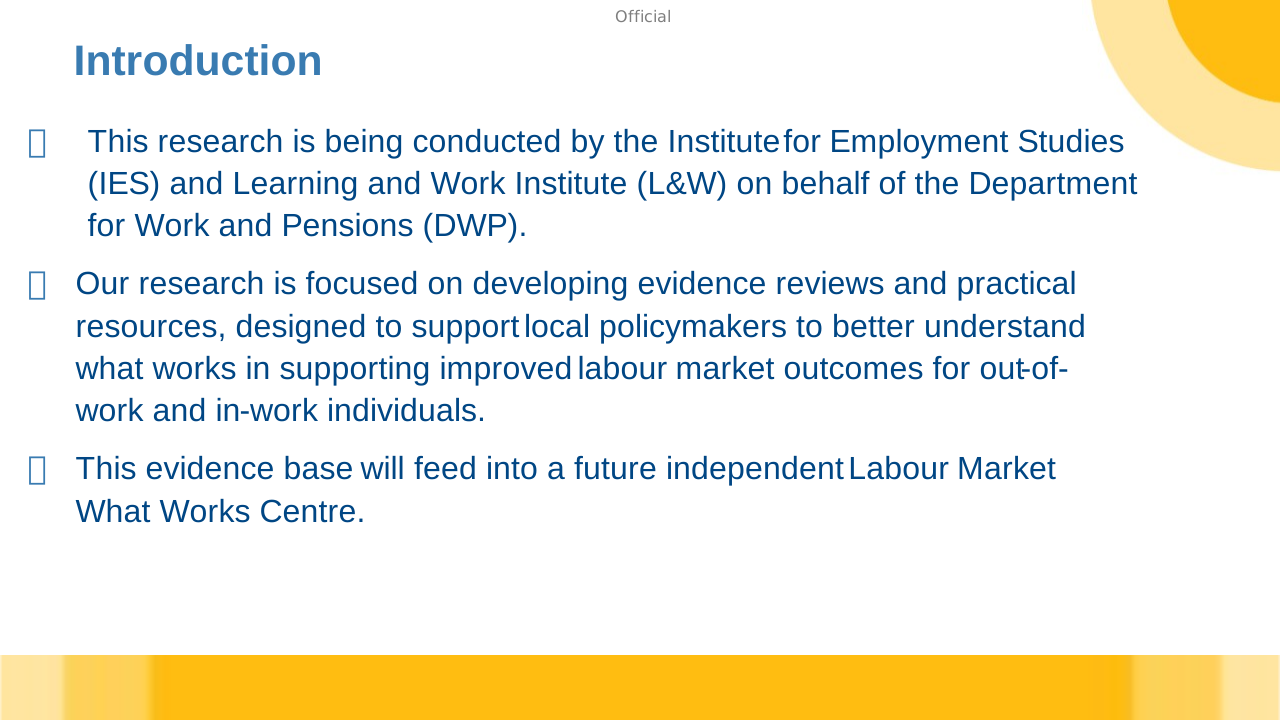
This research is being conducted by the Institute for Employment Studies (IES) and Learning and Work Institute (L&W) on behalf of the Department for Work and Pensions (DWP).
Our research is focused on developing evidence reviews and practical resources, designed to support local policymakers to better understand what works in supporting improved labour market outcomes for out-of-work and in-work individuals.
This evidence base will feed into a future independent Labour Market What Works Centre.
Figure 3c: Next steps slide
If you would like to be consulted on the development of specific themes, and give further input into the way we present the evidence review outputs, please email us: labourmarketevidenceprogramme@learningandwork.org.uk
Figure 3d: Evidence examples slide
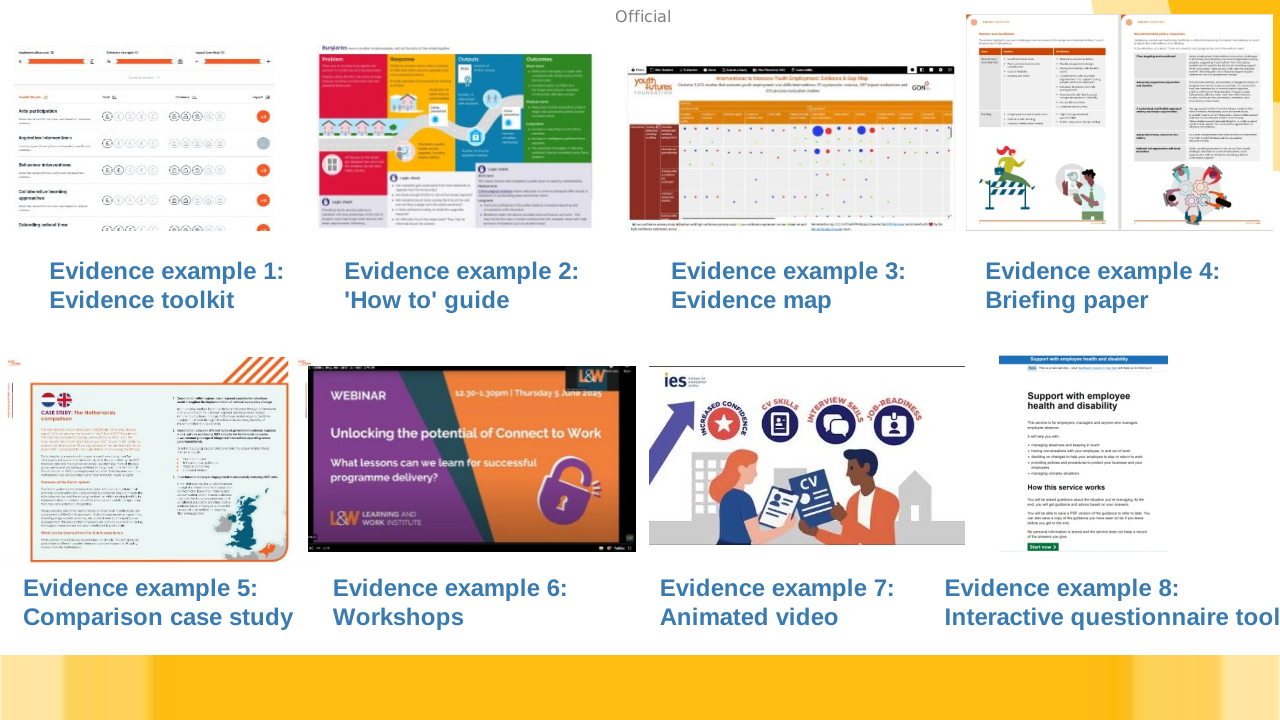
Images of 8 evidence examples including: Evidence toolkit, ‘How to’ guide, Evidence map, Briefing paper, Comparison case study, Workshops, Animated video and Interactive questionnaire tool.
Figure 3e: Evidence example 1 slide
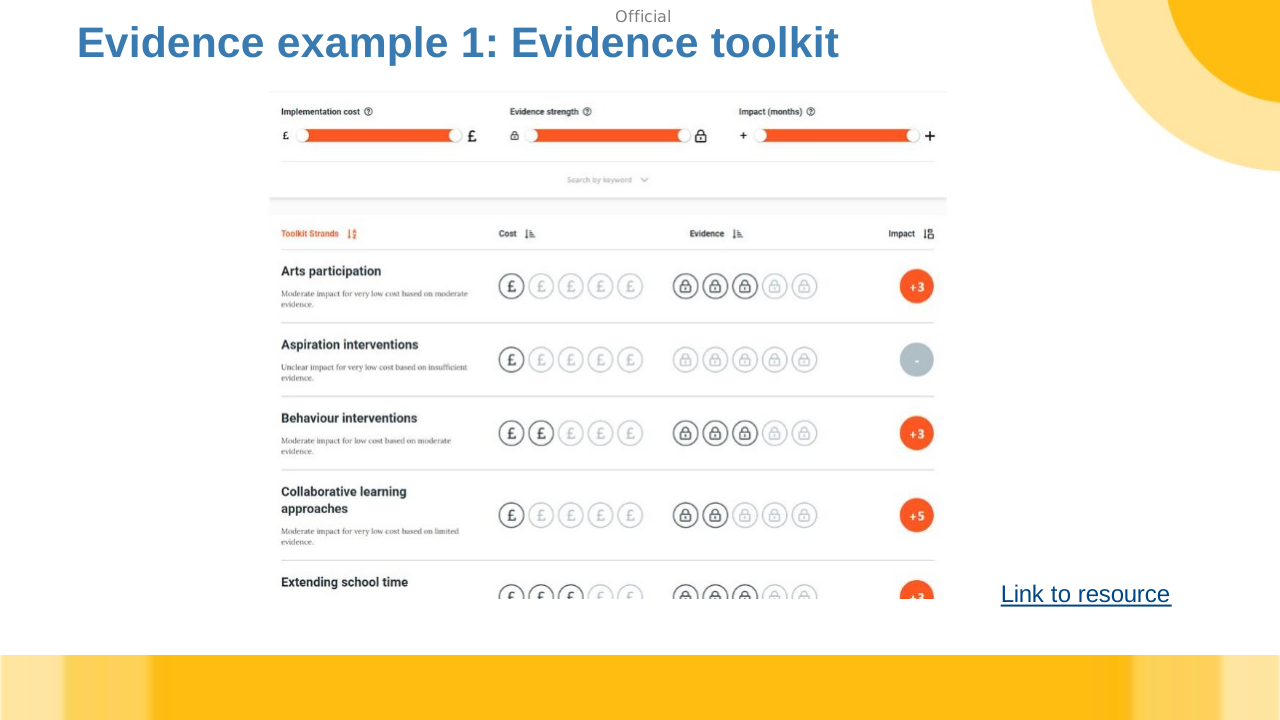
Image of evidence toolkit showing types of evidence ranked by cost efficiency and evidence strength.
Figure 3f: Evidence example 2 slide
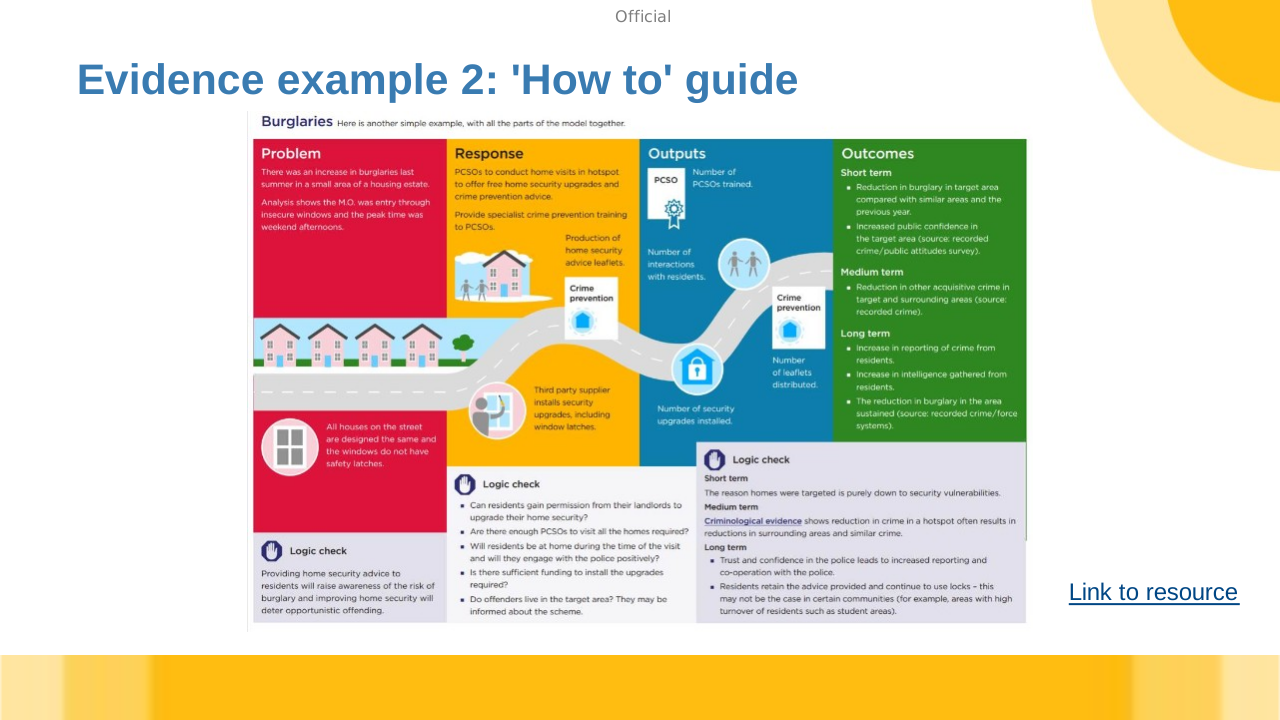
Image of ‘How to’ guide showing the different evidence-based steps that lead to positive outcomes.
Figure 3g: Evidence example 3 slide
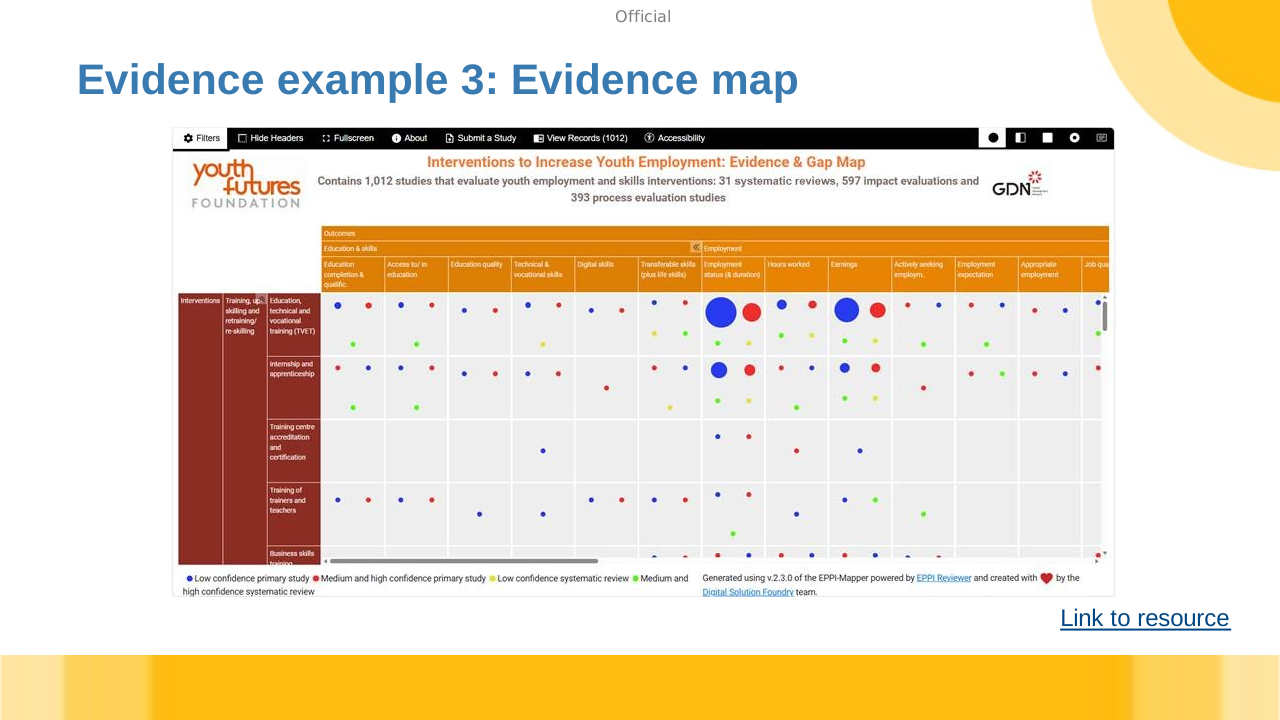
Image of another What Works Centre website showing types of evidence ranked by different factors, including cost efficiency and evidence strength.
Figure 3h: Evidence example 4 slide
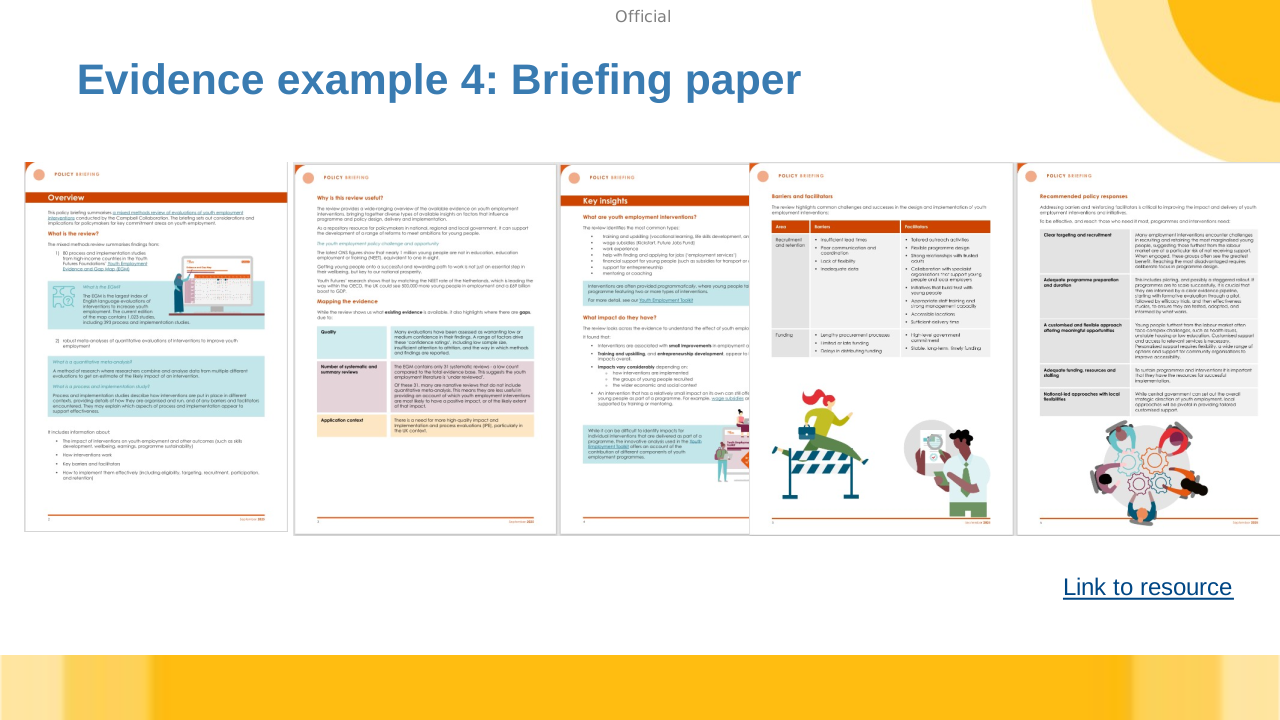
Image of a briefing paper visualising evidence in tables.
Figure 3i: Evidence example 5 slide
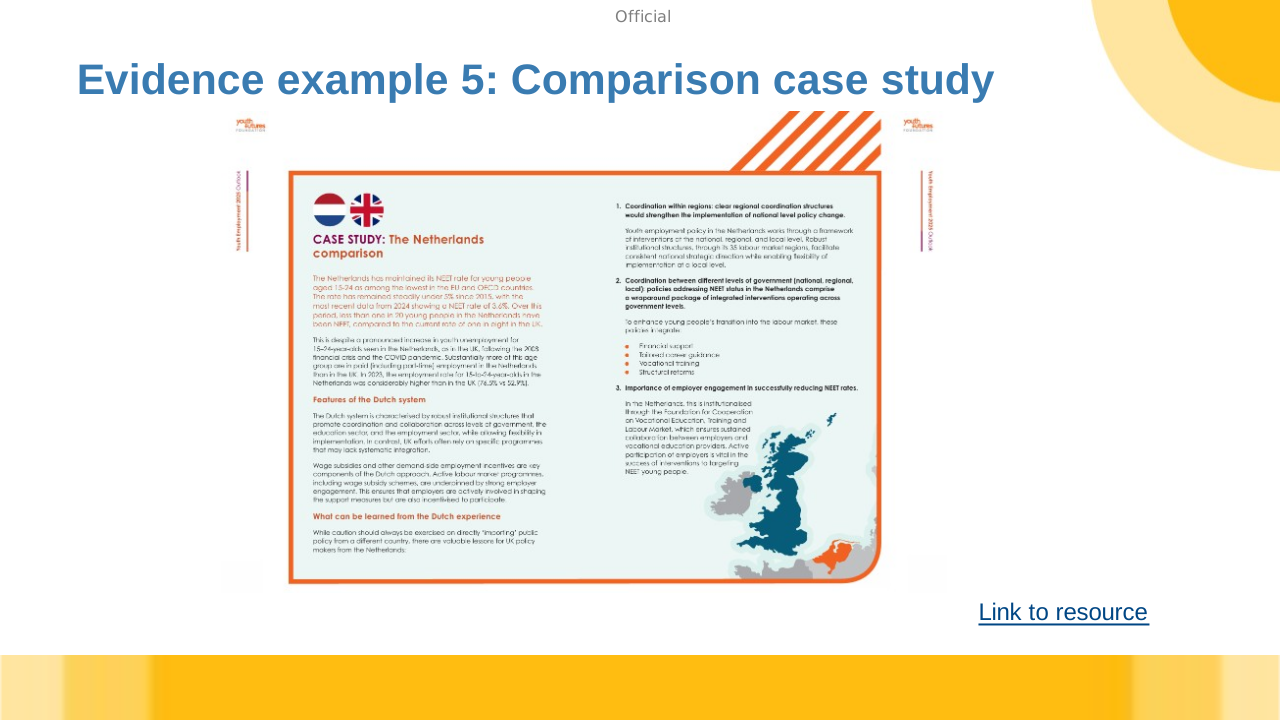
Case study comparing an intervention in the Netherlands and the UK.
Figure 3j: Evidence example 6 slide
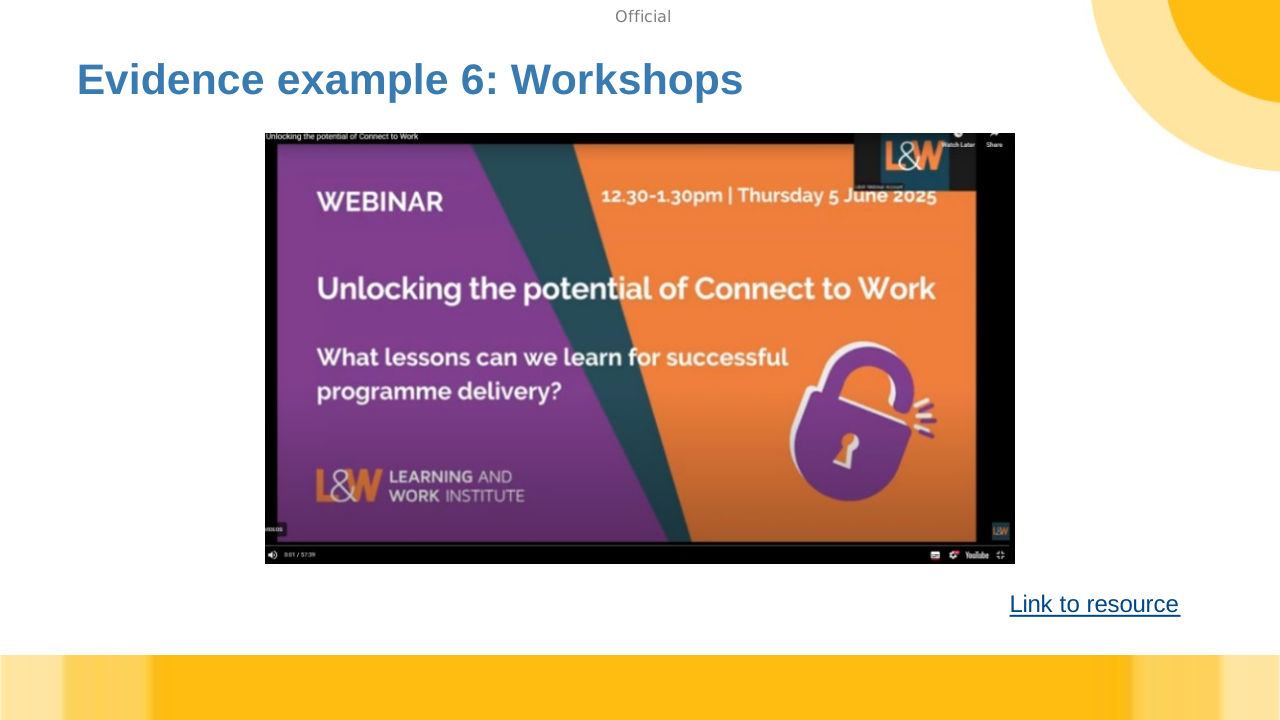
Screenshot from a webinar workshop about unlocking the potential of Connect to Work.
Figure 3k: Evidence example 7 slide
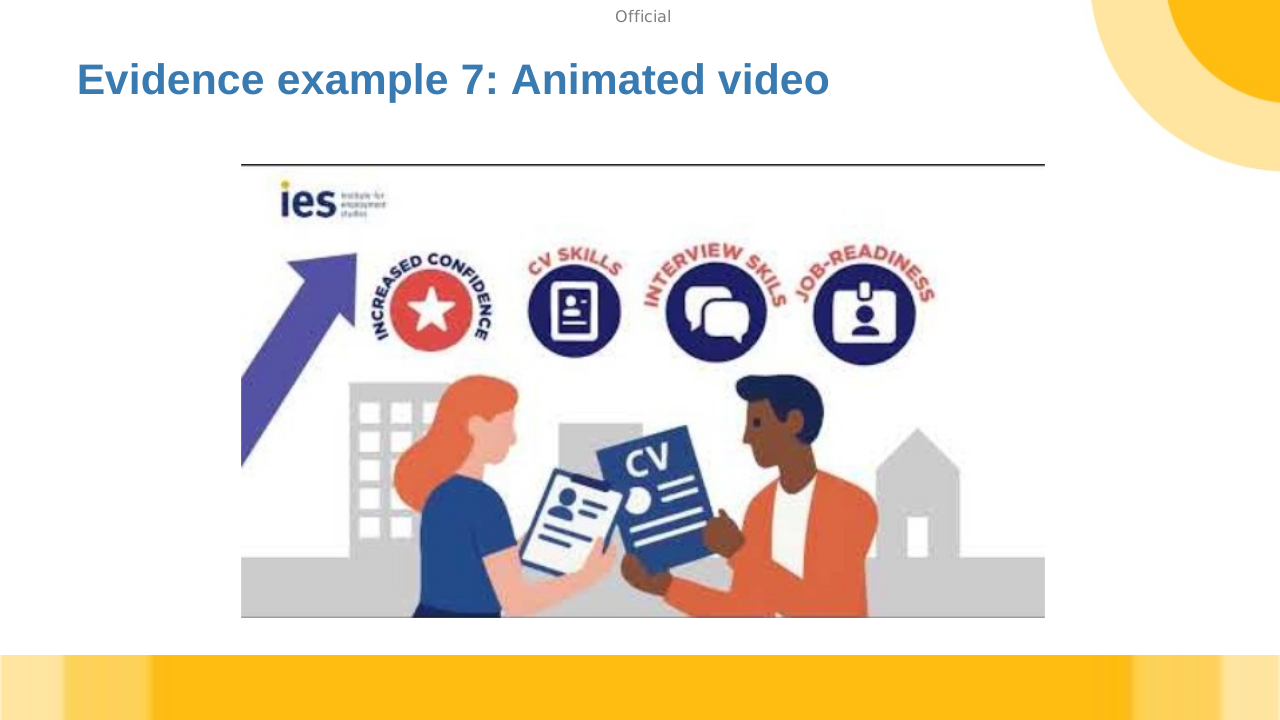
Image from an animated video about employment support.
Figure 3l: Evidence example 8 slide
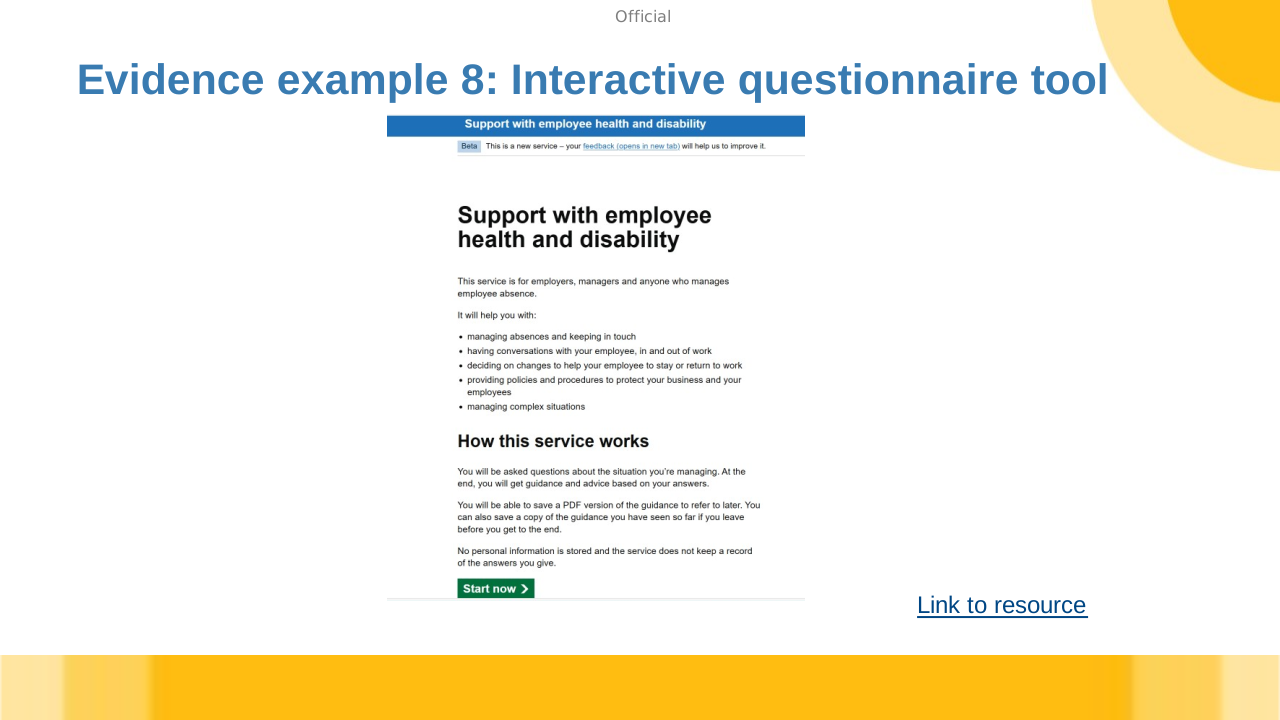
Image of gov.uk interactive questionnaire on how to support with employee health and disability.
Figure 3m: Evidence outcomes slide
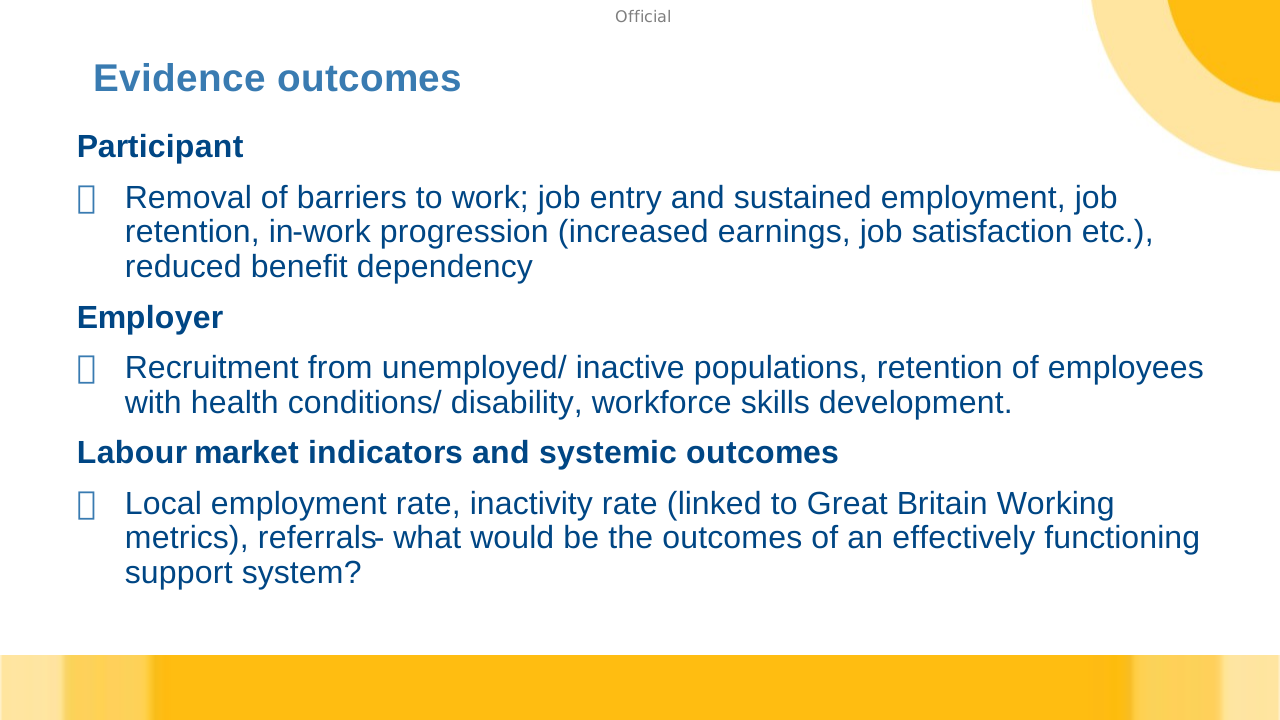
Participant
Removal of barriers to work, job entry and sustained employment, job retention, in-work progression (such as increased earnings, job satisfaction), reduced benefit dependency
Employer
Recruitment from unemployed or inactive populations, retention of employees with health conditions or disabled people, workforce skills development
Labour market indicators and systemic outcomes
Local employment rate, inactivity rate (linked to Great Britain Working metrics), referrals – what would be the outcomes of an effectively functioning support system?
Figure 3n: Prospective priority themes for evidence reviews slide
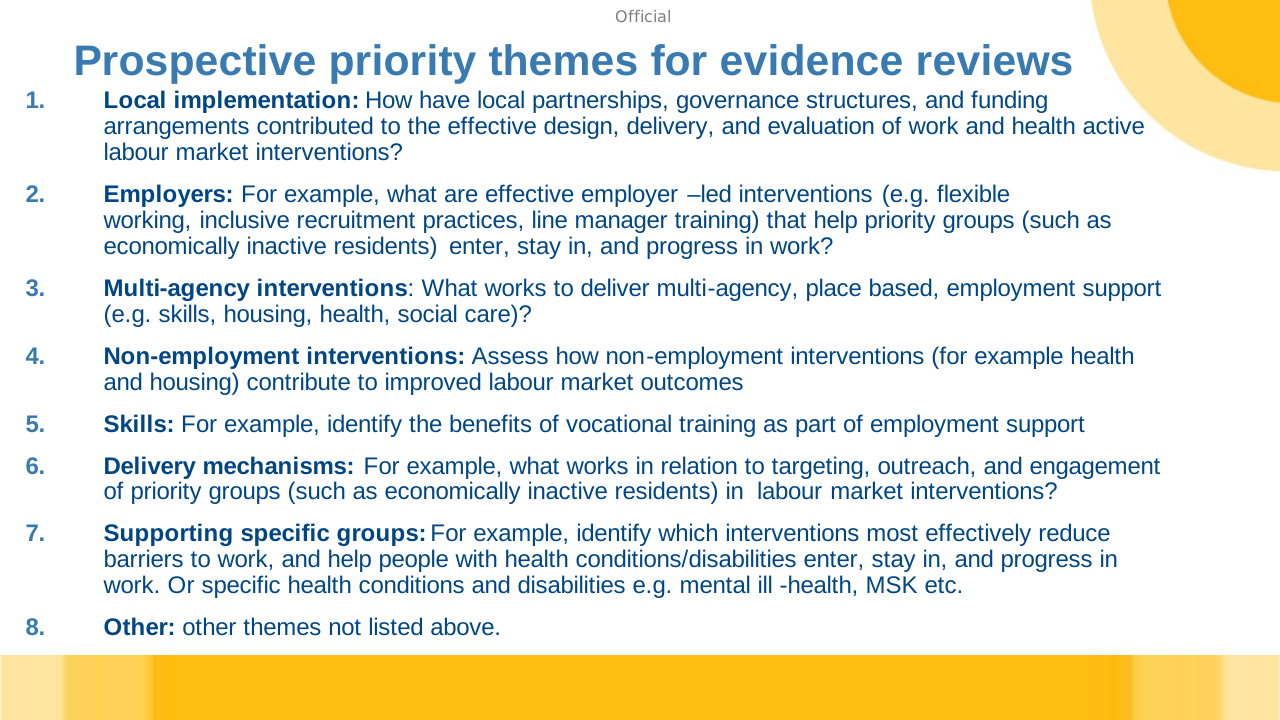
Local implementation: How have local partnerships, governance structures, and funding arrangements contributed to the effective design, delivery, and evaluation of work and health active labour market interventions?
Employers: For example, what are effective employer–led interventions (for example flexible working, inclusive recruitment practices, line manager training) that help priority groups (such as economically inactive residents) enter, stay in, and progress in work?
Multi-agency interventions: What works to deliver multi-agency, place based, employment support (for example skills, housing, health, social care)?
Non-employment interventions: Assess how non-employment interventions (for example health and housing) contribute to improved labour market outcomes
Skills: For example, identify the benefits of vocational training as part of employment support
Delivery mechanisms: For example, what works in relation to targeting, outreach, and engagement of priority groups (such as economically inactive residents) in labour market interventions?
Supporting specific groups: For example, identify which interventions most effectively reduce barriers to work, and help people with health conditions or disabled people enter, stay in, and progress in work. Or specific health conditions and disabilities, such as mental health conditions or MSK for example.
Other: other themes not listed above.