Intra-UK migration of individuals: movements in numbers and income between 2010 to 2011 and 2022 to 2023
Published 17 March 2026

© Crown copyright 2026
This publication is licensed under the terms of the Open Government Licence v3.0 except where otherwise stated. To view this licence, visit nationalarchives.gov.uk/doc/open-government-licence/version/3 or write to the Information Policy Team, The National Archives, Kew, London TW9 4DU, or email: psi@nationalarchives.gov.uk.
Where we have identified any third party copyright information you will need to obtain permission from the copyright holders concerned.
This publication is available at https://www.gov.uk/government/publications/intra-uk-migration-of-taxpayers/intra-uk-migration-of-individuals-movements-in-numbers-and-income-between-2010-to-2011-and-2022-to-2023
Executive summary
Background
In April 2024, HM Revenue and Customs (HMRC) published analysis using a new longitudinal dataset covering the incomes and location of UK taxpayers over a 12-year period from the 2009 to 2010 and 2021 to 2022 tax years.
This dataset was built on the request of the Scottish Government and Welsh Government to help better understand potential behavioural responses, in particular with regard to cross border mobility, with a view to improve the evidence base and inform Income Tax policy in Scotland and Wales.
HMRC have now added the 2022 to 2023 tax year to the dataset and examined the trends in the number of individuals moving between Scotland, Wales, and the rest of the UK (rUK) over the period. We look at this in both directions of movements, as well as net movements.
Throughout this paper, we refer to the number of ‘individuals’ migrating across borders. Note that only people who had taxable income (including those with income below the Personal Allowance who therefore did not have any Income Tax liability) in both consecutive tax years are included in the estimates for migration between those 2 tax years. For example, an individual must have taxable income in both the 2014 to 2015 tax year and the 2015 to 2016 tax year for a migration to be counted in the 2015 to 2016 tax year. This ensures HMRC holds up to date residency data of the individual in both tax years.
As such, these statistics do not aim to show the level of total migration between Scotland, Wales and rUK. They only tell us about a subset of total migration.
The analysis also looks at the amount of taxable income migrating individuals earned in the year of migration.
This analysis aims to enhance understanding of historical migration patterns among individuals within the UK and how this varied with age and income levels.
Migration between Scotland and rUK
There were high levels of migration between Scotland and rUK (between 21,000 and 37,000 moving in each direction every year), with minimal levels of net migration to Scotland (between -1,600 and +1,400) from rUK between tax years ending 2010 to 2011 and 2016 to 2017.
Beyond year ending 2017, the first year where Income Tax was (partially) devolved, net migration to Scotland increased on a yearly basis, to around 6,500 individuals in 2022 to 2023 (with a peak of approximately 8,500 in 2021 to 2022).
This shift from the previously stable trend reflects a growing number of taxpayers migrating from rUK to Scotland compared to earlier years, for example in the tax year ending 2012 around 22,000 individuals migrated to Scotland, and 23,000 migrated to rUK, whilst in the tax year ending 2023 the respective figures migrating to Scotland and rUK, were approximately 36,500 and 29,500.
Indeed, the percentage change in the number of taxpayers migrating to Scotland was 73% between 2010 to 2011 and 2022 to 2023, the percentage change for the number of taxpayers migrating to rUK from Scotland over the same period was 44%.
Overall, net migration to Scotland was positive in 10 out of the 13 years covered in the dataset (with 2015 to 2016 only having very minor negative net migration).
The net income movement (the amount of taxable income earned by individuals migrating from rUK to Scotland minus the amount of income earned by individuals migrating from Scotland to rUK) was at a deficit between tax year ending 2011 and year ending 2019, averaging around -£60 million, and increased thereafter towards a surplus of approximately £220 million in tax year ending 2022 and around £160 million in year ending 2023, respectively.
Migration between Wales and rUK
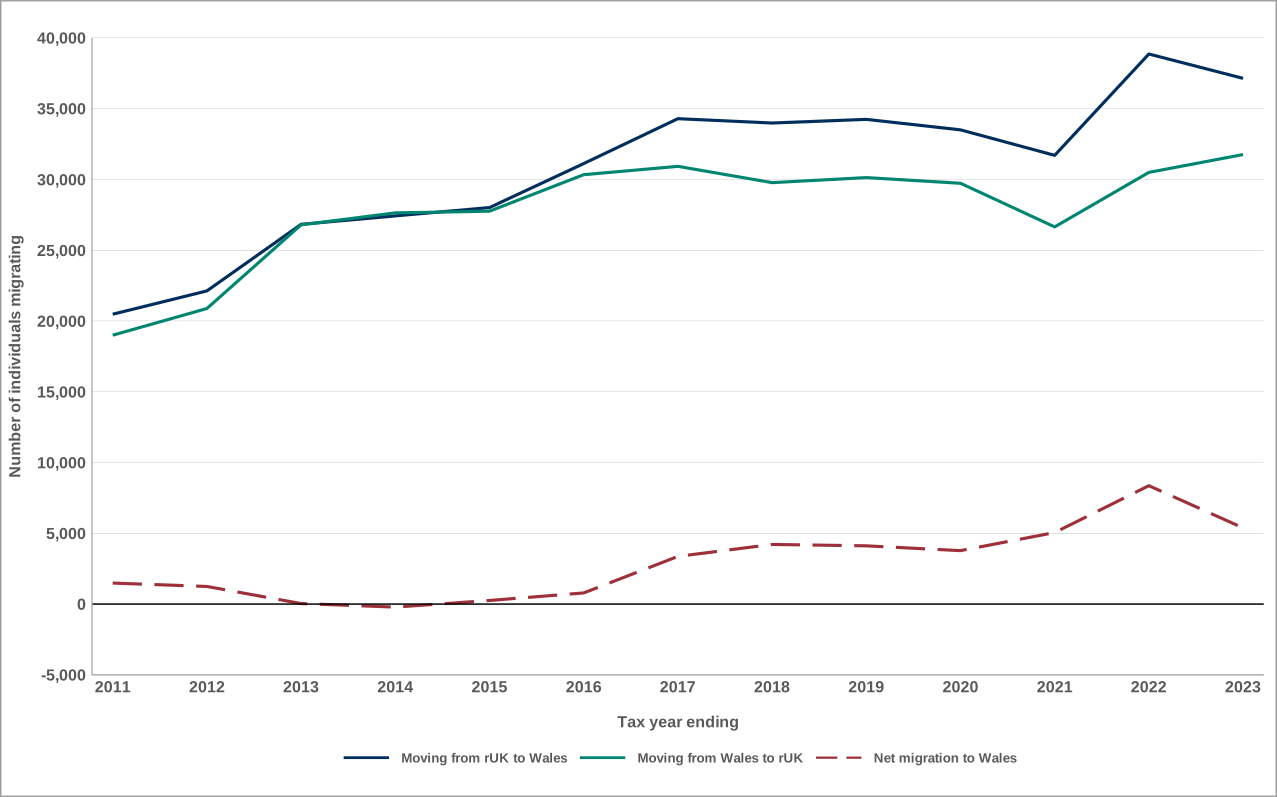
Both the net migration and net income movements in Wales are similar in magnitude to Scotland, despite having a much smaller population. The migration rate from Wales to rUK is, on average, 79% higher than the migration rate from Scotland to rUK. The migration rate from rUK to Wales is similar to the rate from rUK to Scotland.
Overall, Wales exhibited a similar trend in net migration, with numbers fluctuating between around -200 and +1,500 up to tax year ending 2016.
Beyond year ending 2016, net migration to Wales increased on a yearly basis, to around 5,500 individuals in tax year ending 2023 (with a peak of around 8,500 in tax year ending 2022).
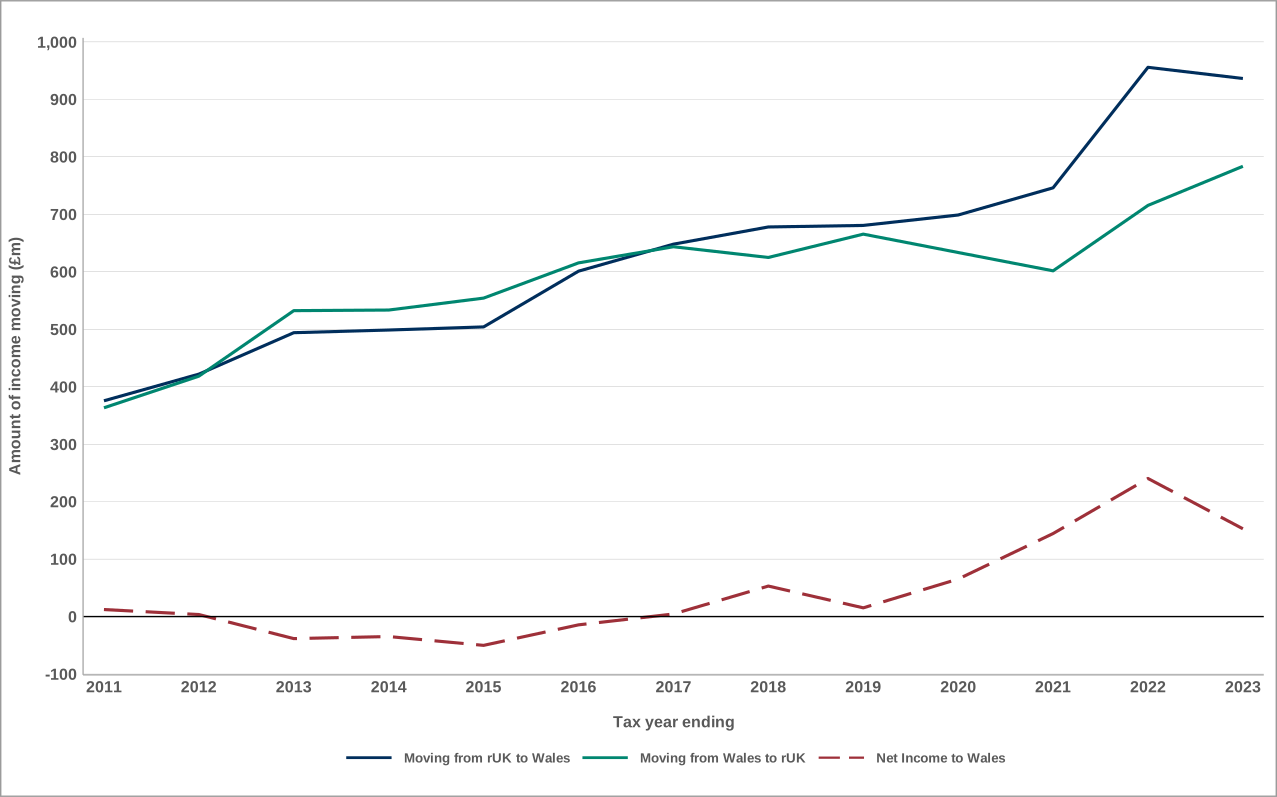
This limited net migration resulted in the net income flowing to and from Wales prior to tax year ending 2019 being small. After the 2018 to 2019 tax year, the increases in net migration led to an uptick in net income flowing to Wales, moving towards around £240 million by the 2021 to 2022 tax year and dipping to approximately £150 million in 2022 to 2023.
Understanding trends in migration and drawing conclusions
From this analysis, we wanted to understand if there were any obvious factors impacting the trend of migration between Scotland, Wales and rUK.
There were substantial increases in net migration to Scotland and Wales during the COVID-19 Pandemic, specifically in tax years 2020 to 2021 and 2021 to 2022.
From this initial analysis, there has been no negative trend in net migration to Scotland in the years following the introduction of the 5 band Scottish Income Tax system in 2018 to 2019.
However, from this analysis alone we cannot draw definitive conclusions about whether migration trends were affected by tax because we do not know the counterfactual – so, we do not know what the level of migration would have been in a theoretical scenario where Income Tax had not been devolved, or where the 5-band system had not been introduced. There may have been factors that increased migration to Scotland unrelated to tax. In 2024 HMRC conducted further work to isolate and understand any behavioural effects from this policy change.
Comparison to other publications and future work
This data in this publication is similar to migration publications produced by the Office for National Statistics (ONS) and the National Records of Scotland (NRS). However, while these statistics only measure migration of individuals with taxable income, the statistics produced by the ONS and NRS measure total migration of all individuals. See section 6 (comparison to other statistics) for more details.
HMRC is currently exploring further research topics using this dataset. We welcome the views of users on this paper and any suggestions for further analysis.
Background
The Scottish Parliament has devolved powers to set the rates and thresholds of non-savings non-dividends (NSND) income. The Welsh Parliament has the power to change the rates of Income Tax on NSND income.
Scotland
Relevant legislation
The Scotland Act 2012 gave the Scottish Parliament the responsibility to set Scottish Rates of Income Tax (SRIT) starting from the 2016 to 2017 tax year.
The Scotland Act 2016 provided the Scottish Government with full powers to control Income Tax rates and thresholds (excluding the Personal Allowance) on NSND income.
Income Tax Systems
Scottish Rates of Income Tax: SRIT replaced 10 percentage points of each of the main UK rates of Income Tax for the tax year commencing 6 April 2016. In that year the UK basic, higher and additional rates for NSND income were reduced by 10 pence in the pound for Scottish taxpayers.
This reduction was replaced by a Scottish rate set at 10 percentage points, so the overall rates paid by Scottish taxpayers remained the same as elsewhere in the UK. However, in Scotland, 10 pence in the pound went to the Scottish Government and 10 pence, 30 pence and 35 pence went to the UK Government for the basic, higher, and additional rate tax bands respectively.
Scottish Income Tax: Following the Scotland Act 2016, the Scottish Government introduced Scottish Income Tax (SIT). This applies to all NSND income of Scottish taxpayers and took effect from 6 April 2017.
For the first tax year, 2017 to 2018, the Scottish Government chose to align the Scottish Income Tax rates to the UK Government rates in the rUK. However, it set the threshold at which a taxpayer starts to pay the higher rate at £43,000 compared to the UK Government threshold of £45,000. The 2 systems were otherwise identical.
For the tax year 2018 to 2019 the Scottish Government exercised its powers to introduce a new 5-band policy which is different to the UK Government regime. These tax rates incorporated 2 new Income Tax bands: the starter and intermediate rate.
Table 1: Income Tax bands and Income Tax thresholds in Scotland and rUK/Wales in the 2018 to 2019 tax year
| Tax Band | Threshold SIT | Tax Rate SIT | Threshold rUK/Wales | Tax Rate rUK/Wales |
|---|---|---|---|---|
| Starter rate | £11,850 to £13,850 | 19% | N/A | N/A |
| Basic rate | £13,851 to £24,000 | 20% | £11,850 to £46,350 | 20% |
| Intermediate rate | £24,001 to £43,430 | 21% | N/A | N/A |
| Higher rate | £43,431 to £150,000 | 41% | £46,351 to £150,000 | 40% |
| Top/additional rate | Over £150,000 | 46% | Over £150,000 | 45% |
In 2024 to 2025 the Scottish Government introduced a new advanced rate tax band. The advanced rate tax band covered income earned between £75,001 and £125,140 and was taxed at a rate of 45%. In addition to this, the Scottish Government increased the marginal tax rate of the top/additional rate tax band from 47% to 48%.
Table 2: Income Tax bands and Income Tax thresholds in Scotland and rUK/Wales in the 2025 to 2026 tax year
| Tax Band | Threshold SIT | Tax Rate SIT | Threshold rUK/Wales | Tax Rate rUK/Wales |
|---|---|---|---|---|
| Starter Rate | £12,571 to £15,397 | 19% | N/A | N/A |
| Basic Rate | £15,398 to £27,491 | 20% | £12,571 to £50,270 | 20% |
| Intermediate Rate | £27,492 to £43,662 | 21% | N/A | N/A |
| Higher Rate | £43,663 to £75,000 | 42% | £50,271 to £125,140 | 40% |
| Advanced Rate | £75,001 to £125,140 | 45% | N/A | N/A |
| Top/Additional Rate | Over £125,140 | 48% | Over £125,140 | 45% |
The introduction of SIT means that Scottish taxpayers pay different amounts of Income Tax on their NSND income than rUK taxpayers. Some Scottish taxpayers pay less Income Tax than equivalent taxpayers in rUK whilst others will pay more Income Tax than in rUK.
Wales
Relevant legislation
The Wales Act 2014 gave the Welsh Parliament the responsibility for setting the Welsh Rates of Income Tax (WRIT) starting from tax year 2019 to 2020.
Income Tax systems
Welsh Rates of Income Tax: following the Wales Act 2014, the Welsh Parliament introduced Welsh Rates of Income Tax in 2019 to 2020. The Welsh Parliament has not made any changes to WRIT. WRIT Income Tax bands are therefore identical to UK Income Tax bands, but with 10 percentage points of each Income Tax band paid to the Welsh Government.
Both SIT and WRIT are administered by HMRC.
Data sources
We created a new longitudinal dataset for this analysis. This dataset covers 13 tax years, starting at the 2009 to 2010 tax year and ending at the 2022 to 2023 tax year. Each row in the dataset relates to 1 individual. The dataset is built from HMRC’s Pay-As-You-Earn (PAYE) and Self Assessment data. The current version of the dataset was created in July 2025. New versions of this dataset will be created in the future. All data in the current version of the dataset is correct at the time of creation but may change due to data revisions in future versions of the dataset.
PAYE data sources
We extracted PAYE data from HMRC’s Frameworks database. Frameworks data contains information on employees and recipients of occupational pensions. We extracted the amount of taxable income received from employments and occupational pensions for each tax year between 2009 to 2010 and 2022 to 2023. The PAYE income variable does not include income that is handled by HMRC via a change in tax codes such as the state pension.
Prior to the introduction of Real Time Information (RTI) in the 2014 to 2015 tax year, this income information was obtained from end of year P14 submissions. Since the 2014 to 2015 tax year, the income is obtained from Full Payment Submissions (FPS).
Note that P14 forms were not required for employees who earned below the Lower Earnings Limit (LEL). However, in their FPS returns employers must include earnings from all employees on their payroll if at least one of their employees earns above the LEL.
The data relating to those under the LEL will be less complete for tax years prior to the introduction of RTI. This has a negligible effect on the overall trends in the data.
We also extracted residential postcode information for every individual in the Frameworks data for each tax year. The postcodes relate to the location of each individual at the end of the tax year, for example, the postcode extracted for the 2015 to 2016 tax year will be the postcode held by HMRC systems for April 2016. This postcode information can come from multiple sources but will largely be reported by employers in their FPS returns.
Self Assessment data sources
An individual is required to file a Self Assessment return if they meet certain criteria. This is necessary even for individuals who are also present in PAYE if a requirement for filing in Self Assessment is met. Self Assessment returns are generally submitted in the year after the taxable activity has taken place.
To build the longitudinal dataset, we extracted income and postcode data from our Self Assessment systems. The income values extracted for each tax year will cover all taxable income — both non-savings non-dividends and savings and dividends income. The dataset therefore contains 2 income variables for individuals in Self Assessment and with an employment or occupational pension, one variable relating to PAYE income only (derived from Frameworks data), and one relating to total income (derived from the Self Assessment return).
Historic Self Assessment data is only available for certain points of time. While the vast majority of postcodes extracted from Self Assessment will refer to the value held in April of each tax year, a small proportion will refer to the June after the end of each tax year due to individuals filing their returns late.
Creating the longitudinal dataset
We combined the data extracted from these 2 data sources to create the final longitudinal dataset. As most Self Assessment filers will also appear in the Frameworks data, when assigning a final postcode to every individual for each tax year, we prioritise using the Frameworks data over the Self Assessment data for consistency.
We then joined our data to the latest available (May 2025) National Statistics Postcode Lookup (NSPL) table to convert the postcode into a country code for each tax year. There was a small number of records with missing or invalid postcodes which we were not able to convert to a country code. For these records, we tried to impute country codes in 2 ways. Firstly, by using the start of the postcode (for example, all postcodes starting with ‘SW’ are based in England). And secondly, by using the country code from the year before and after if it is the same.
For every individual and for each tax year, the final dataset contains variables showing their PAYE income, their Self Assessment income, their postcode, and their country.
Methodology
Once the dataset was built, we carried out analysis to show for each tax year:
- The number of individuals migrating between Scotland and rUK and between Wales and rUK.
- The amount of income moving between Scotland and rUK and between Wales and rUK.
Only people who had taxable income (including those with income below the Personal Allowance which is not taxable in most cases) in both consecutive tax years are included in the estimates for migration between those 2 tax years. For example, an individual must have income in both the 2014 to 2015 tax year and the 2015 to 2016 tax year for a migration to be counted in the 2015 to 2016 tax year. This ensures HMRC holds up to date residency data of the individual in both tax years.
As such, these statistics do not aim to show the level of total migration between Scotland/Wales and rUK. They only tell us about a subset of total migration.
This output was extracted on a yearly basis and then aggregated to cover the study period. The number of individuals migrating and the amount of income moving is based on the year of migration. For example, the figures for the 2015 to 2016 tax year show:
- The number of people who live in a different country at the end of the 2014 to 2015 tax year compared to the end of the 2015 to 2016 tax year.
- The amount of income those people earned in the 2015 to 2016 tax year.
Results
Key parameters
The key parameters of this analysis are that:
- an individual is only included within the final results of this analysis if they earned an income during the year before migration and the year of migration
- individuals are grouped into age bands according to their age in the year prior to migration
- individuals are grouped into income bands according to their taxable income prior to the year of migration. In order for comparisons to be made for migration between Scotland and rUK, we have grouped the starter rate, basic rate, and intermediate rate together and labelled these individuals as ‘basic rate’ for Scottish taxpayers. The lower higher rate thresholds in Scotland from the 2017 to 2018 tax year is still used
- only people who had a valid UK residence (England, Wales, Scotland or Northern Ireland) in both consecutive tax years are included in the estimates
- in the Scottish analysis rUK includes England, Northern Ireland and Wales. In the Welsh analysis, rUK includes England, Northern Ireland and Scotland
Overall intra-UK movement of individuals
Between the 2010 to 2011 and 2016 to 2017 tax years, net migration to Scotland from the rest of the UK (England, Northern Ireland, and Wales) remained relatively balanced, with minor fluctuations. On average, net migration during this period was slightly positive, as shown in Figure 1.
From the 2017 to 2018 tax year, there was comparatively rapid growth in net migration to Scotland from around 2,000 in 2017 to 2018 to around 8,500 in 2021 to 2022 (and around 6,500 in 2022 to 2023). This was notably strong between 2020 to 2021 and 2021 to 2022 (an increase of 95%).
Figure 2 shows net migration from rUK (Scotland, England and Northern Ireland) to Wales to be stable, with an average of around 600 individuals moving annually between the 2010 to 2011 tax year and the 2015 to 2016 tax year. However, in 2016 to 2017, Wales experienced an uptick in net migration, due to an increase in rUK to Wales migration (+10.2%).
Between the 2016 to 2017 and the 2020 to 2021 tax years, this rate of net migration was maintained. A further increase occurred in 2021 to 2022, resulting in net migration to Wales of around 8,500 individuals (an increase of around 65.5% on 2020 to 2021), decreasing slightly to approximately 5,500 individuals in 2022 to 2023.
Both Scotland and Wales exhibited higher than usual net migration during the COVID-19 Pandemic, specifically in 2020 to 2021 and 2021 to 2022 (see Figures 1 and 2).
There is no negative trend in net migration to Scotland in the years following the introduction of the 5-band Tax system in 2018 to 2019; in fact net migration to Scotland has increased on the basis of these figures. It is actually somewhat higher in this period than was previously estimated in the 2024 report, when using the updated dataset with improved address matching and updated data.
However, from this analysis alone we cannot draw definitive conclusions about whether migration trends were affected by tax because we do not know the counterfactual — that is what the level of migration would have been in a theoretical scenario where Income Tax had not been devolved, or where the 5-band system had not been introduced. There may have been factors that increased migration to Scotland unrelated to tax. In 2024 HMRC conducted further work to isolate and understand any behavioural effects from this policy change.
Figure 1: Number of individuals moving to/from Scotland and rUK (England, NI and Wales)
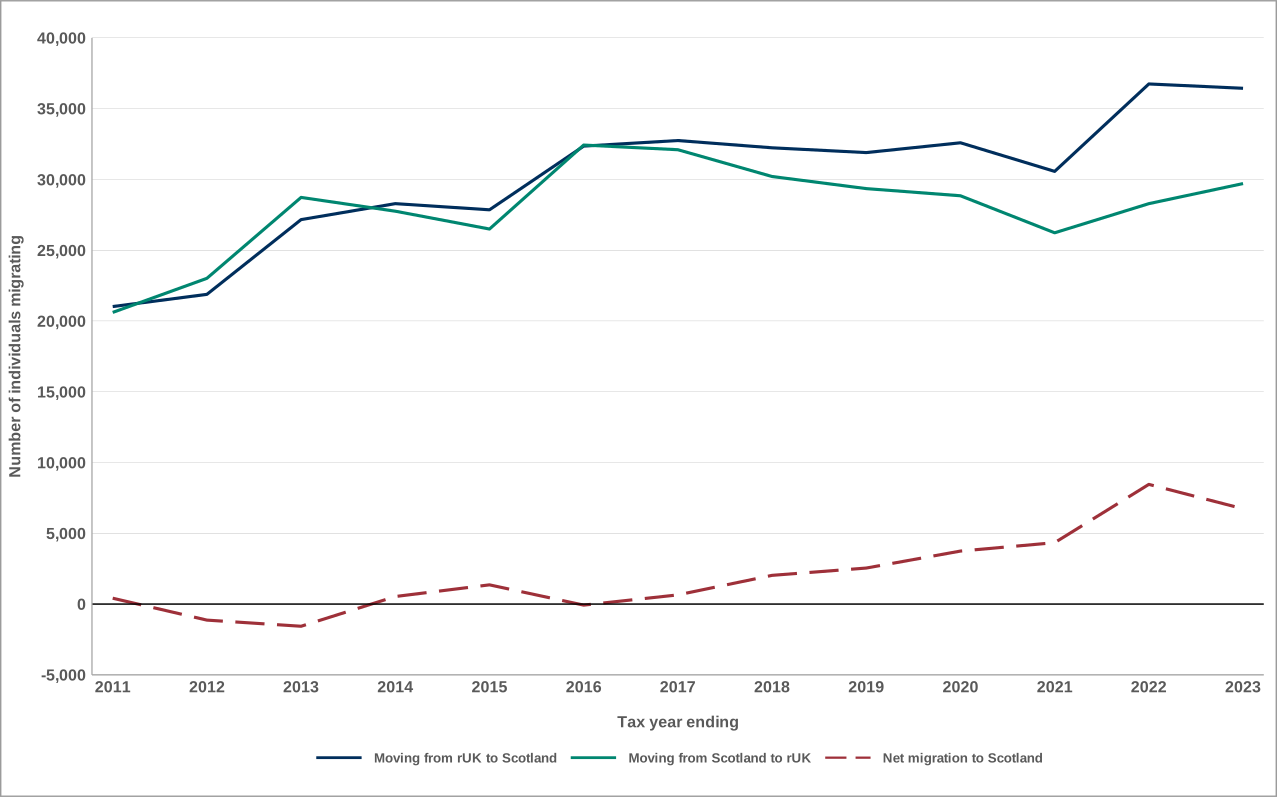
Figure 2: Number of individuals moving to/from Wales and rUK (England, NI and Scotland)
Overall intra-UK movement of income
We also looked at the amount of taxable income that migrators earned in the year they migrated. In these descriptions, ‘income movements’ refer to the income of migrating individuals in the year of migration. For example, as seen in Figure 3, overall, Scotland showed a negative net income movement for the 2011 to 2012 tax year. This means that the amount of taxable income earned by individuals moving from Scotland to rUK in 2011 to 2012 was greater than the income earned by individuals moving from rUK to Scotland in 2011 to 2012.
Figures 3 and 4 show these income movements between rUK and Wales/Scotland. Scotland and Wales maintained a net negative movement of income up to tax year ending 2020 and year ending 2017, respectively. However, Wales did exhibit small net positive amounts for the 2010 to 2011 and 2011 to 2012 tax years.
After the 2018 to 2019 tax year, there were large increases in income moving from rUK to Scotland and Wales. There is an increase of 37% to Wales and 27% to Scotland between 2019 to 2020 and 2021 to 2022. This results in increasing amounts of overall net positive income movements to Scotland and Wales.
As with the increase in the number of individuals migrating to Scotland and Wales in recent years, this could be an indirect result of the COVID-19 pandemic. Although net income moving to Scotland and Wales remains positive in 2022 to 2023, Scotland experiences a 29% reduction in net income when comparing with the 2021 to 2022 tax year and Wales experiences a 36% reduction in net income over the same period.
For some tax years, the direction of net migration and net income movements is different. For example, in tax years ending 2014 and 2015 in Scotland and tax year ending 2013 in Wales. Our data indicates that this is due to the individuals migrating from rUK to Scotland or Wales having lower average incomes in the year of migration compared to the average incomes for individuals migrating in the other direction.
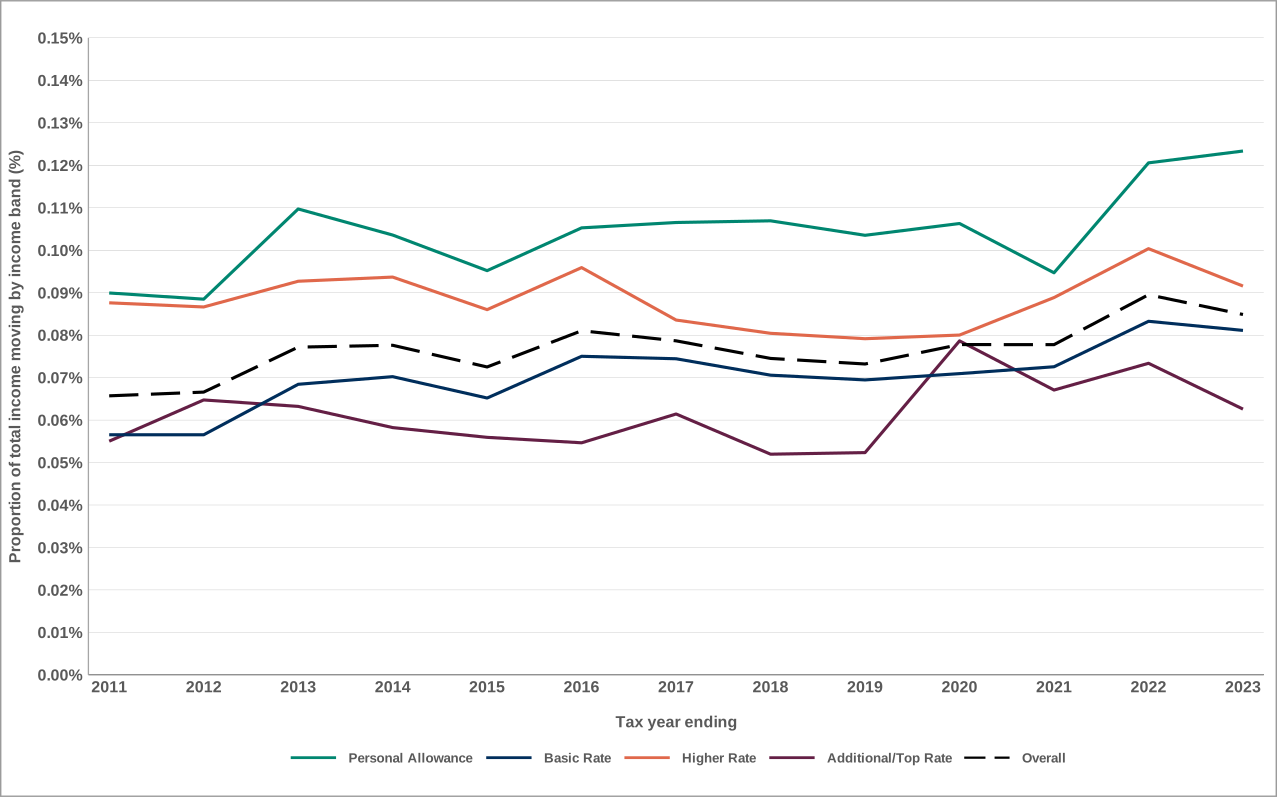
Our updated analysis shows an increase in net income migrating to Scotland following the introduction of the 5-band system in 2018 to 2019, with net income from intra-UK migration transitioning to a net positive from 2019 to 2020 onwards. The proportion of income moving from Scotland to rUK has remained relatively stable at around 0.8% to 1.1% during the study period, as is illustrated in Figure 24. Figure 25 shows that the same figure for rUK to Scotland flows is around 0.07% to 0.09%.
However, from this analysis alone we cannot draw definitive conclusions about whether migration trends were affected by tax because we do not know the counterfactual — that is what the level of migration (and therefore income movement) would have been in a theoretical scenario where Income Tax had not been devolved, or where the 5-band system had not been introduced.
There may have been factors that increased migration to Scotland unrelated to tax. HMRC conducted further work to isolate and understand any behavioural effects from this policy change in 2024.
Figure 3: Amount of income moving to/from Scotland and rUK (England, NI and Wales)
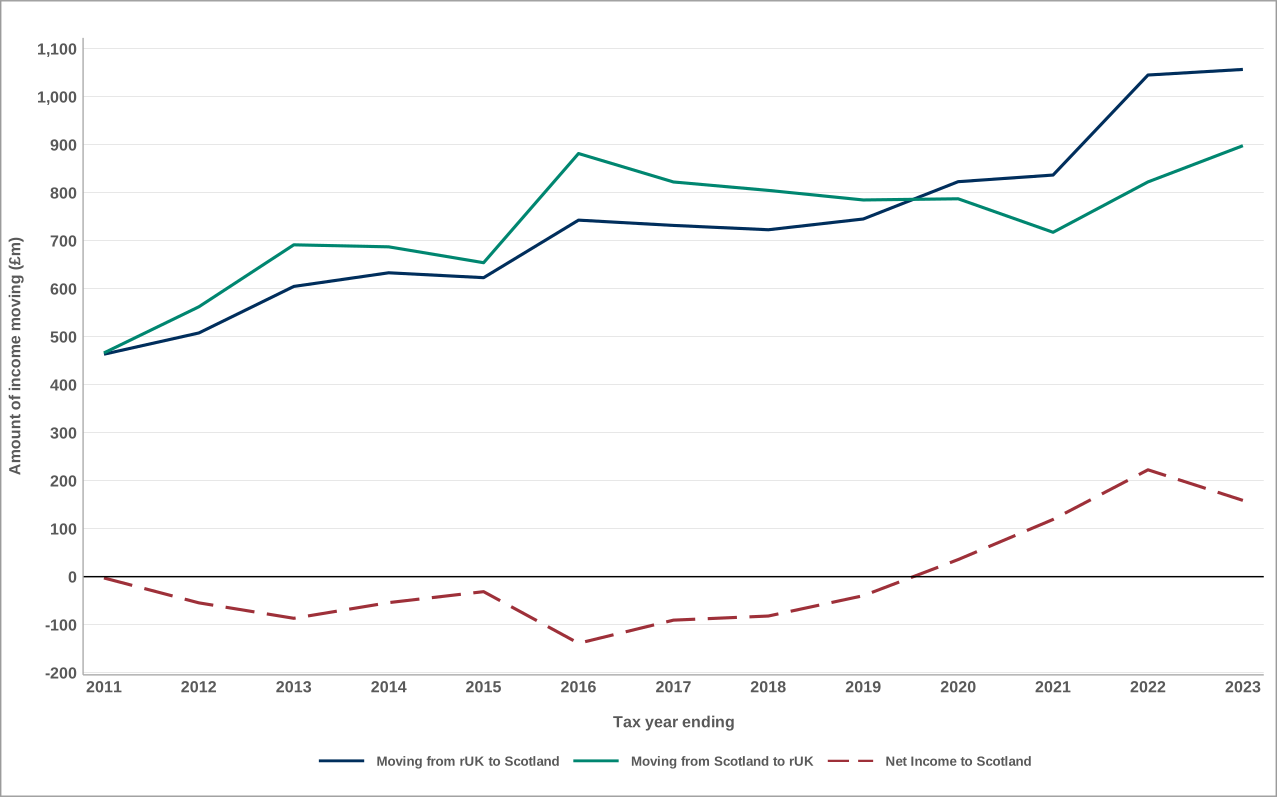
Figure 4: Amount of income moving to/from Wales and rUK (England, NI and Scotland)
Migration of individuals by age group
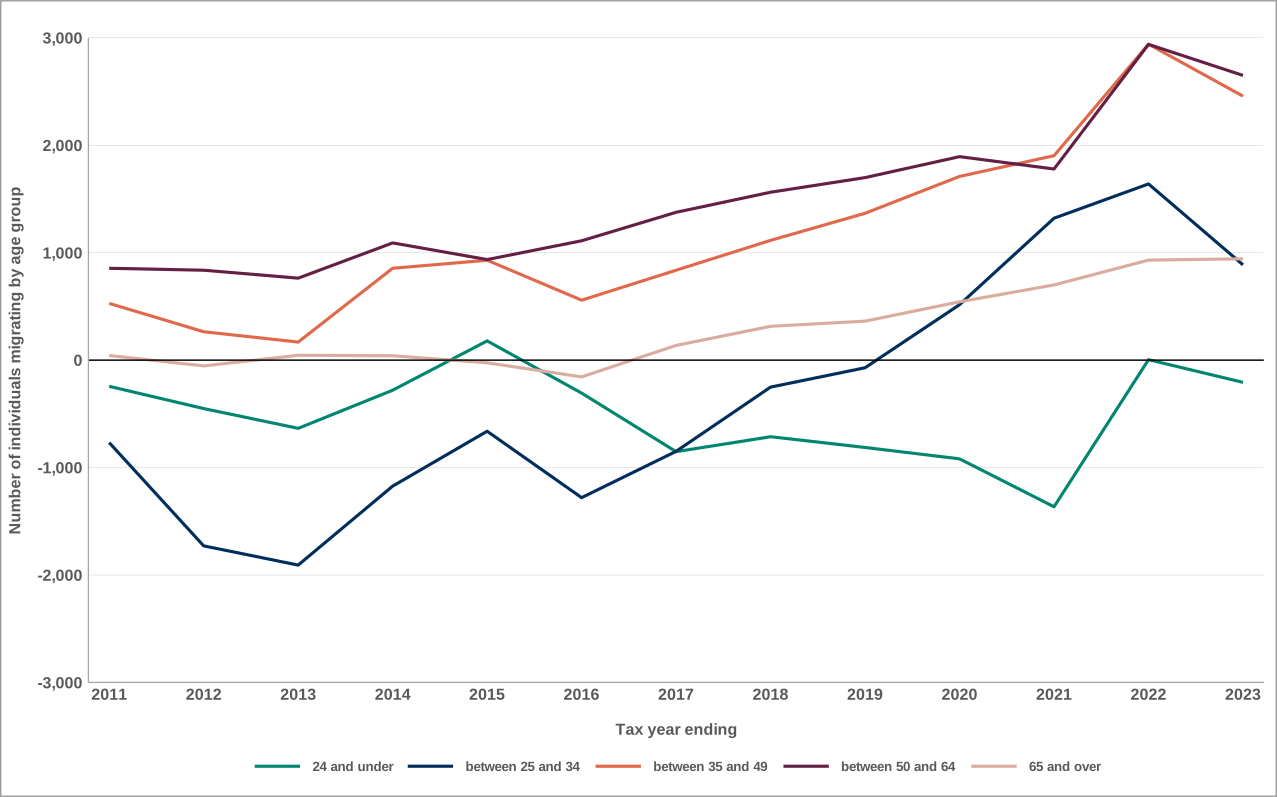
Overall, net migration to Scotland increased for most age groups (aside from the under 25 age band) in recent years, particularly for those aged between 25 and 64.
The lower average net migration of taxpayers to Scotland prior to 2016 to 2017 was due to a comparatively high number of those aged 34 and under migrating to rUK; all other age groups showed net positive migration to Scotland during almost all tax years. However, this was not enough to counter the outflow of those aged 34 and under in some years, as shown in Figure 5.
Figure 5: Net migration of individuals to Scotland from rUK (England, NI and Wales), by age group
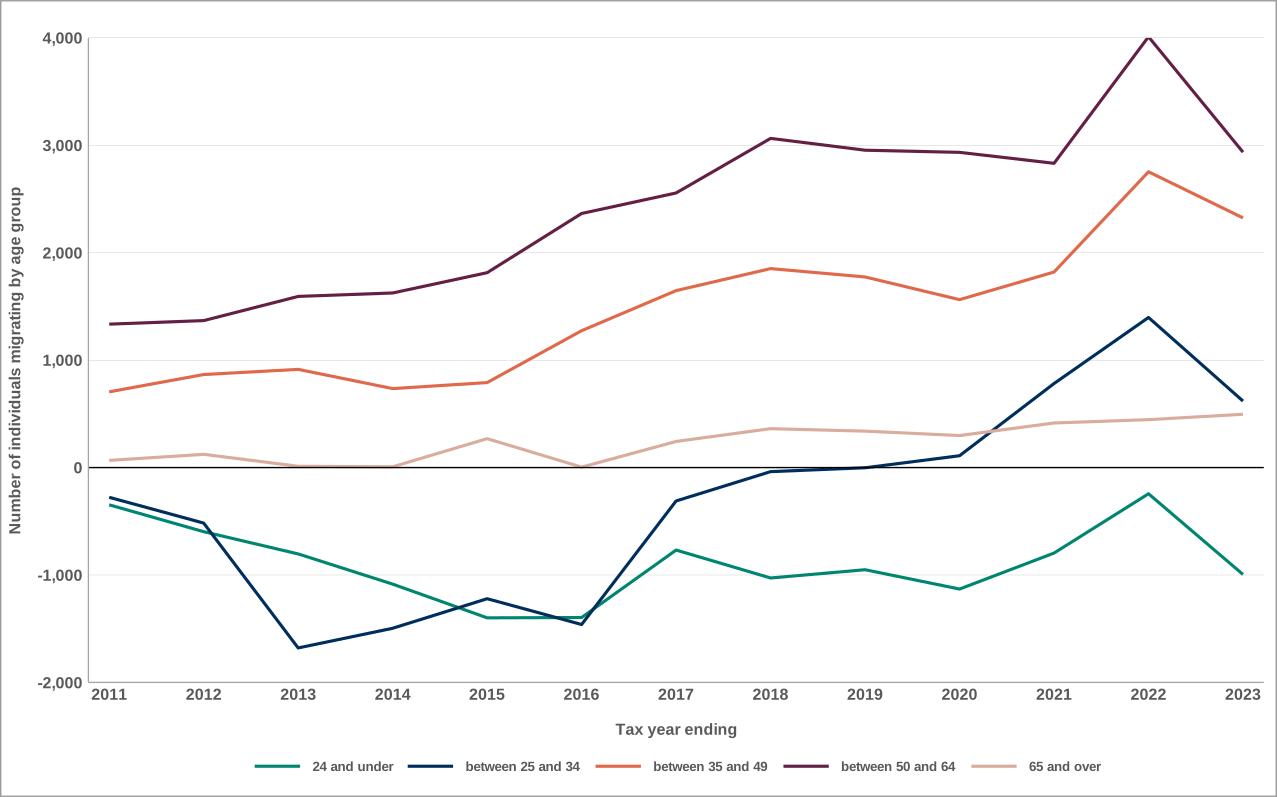
For Wales, aside from the 24 and under age group (which continues to have negative net migration), all age bands have transitioned to positive net migration by tax year ending 2020, as shown in Figure 6. This contrasts with earlier years in this study where the 25 to 34 age band also had negative net migration, and some age bands such as those aged over 65 had negligible year on year net migration.
Indeed, the over 65 age band experienced the greatest percentage change (+640%) between 2010 to 2011 and 2022 to 2023 of all age bands. With the lowest being the 50 to 64 age band at 120%.
Figure 6: Net migration of individuals to Wales from rUK (England, NI and Scotland), by age group
Movement of income by age group
The net deficit in movement of income, for Scotland, is primarily attributed to those aged 34 and under, with the majority of this from the 25 to 34 age group in recent years, as seen in Figure 7.
For most age bands, Scotland experienced net positive income movement after the 2020 to 2021 tax year, aside from the 24 and under age group which had a net deficit for all tax years in this analysis. In fact, Figure 7 shows that this age group had a larger net deficit in the tax years following 2014 to 2015 compared to 2010 to 2011.
Figure7: Net income moving to Scotland from rUK (England, NI and Wales), by age group
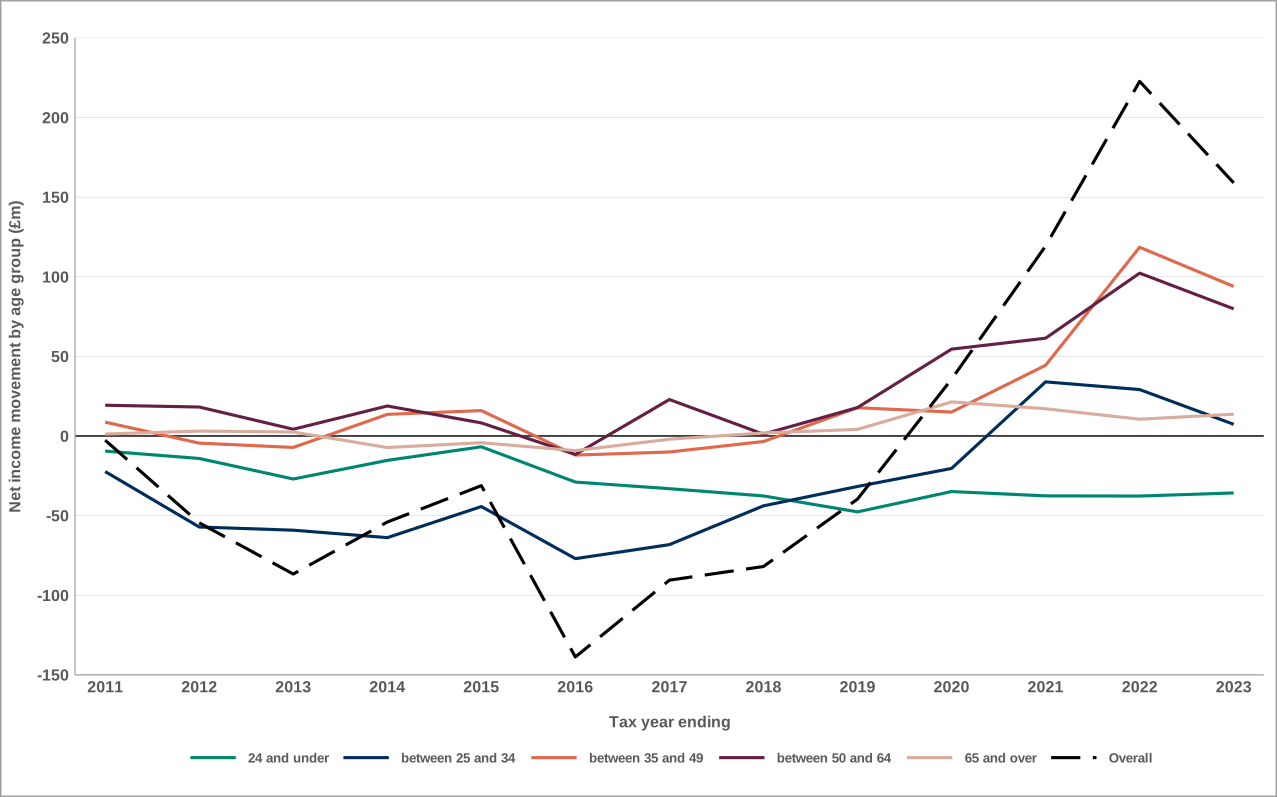
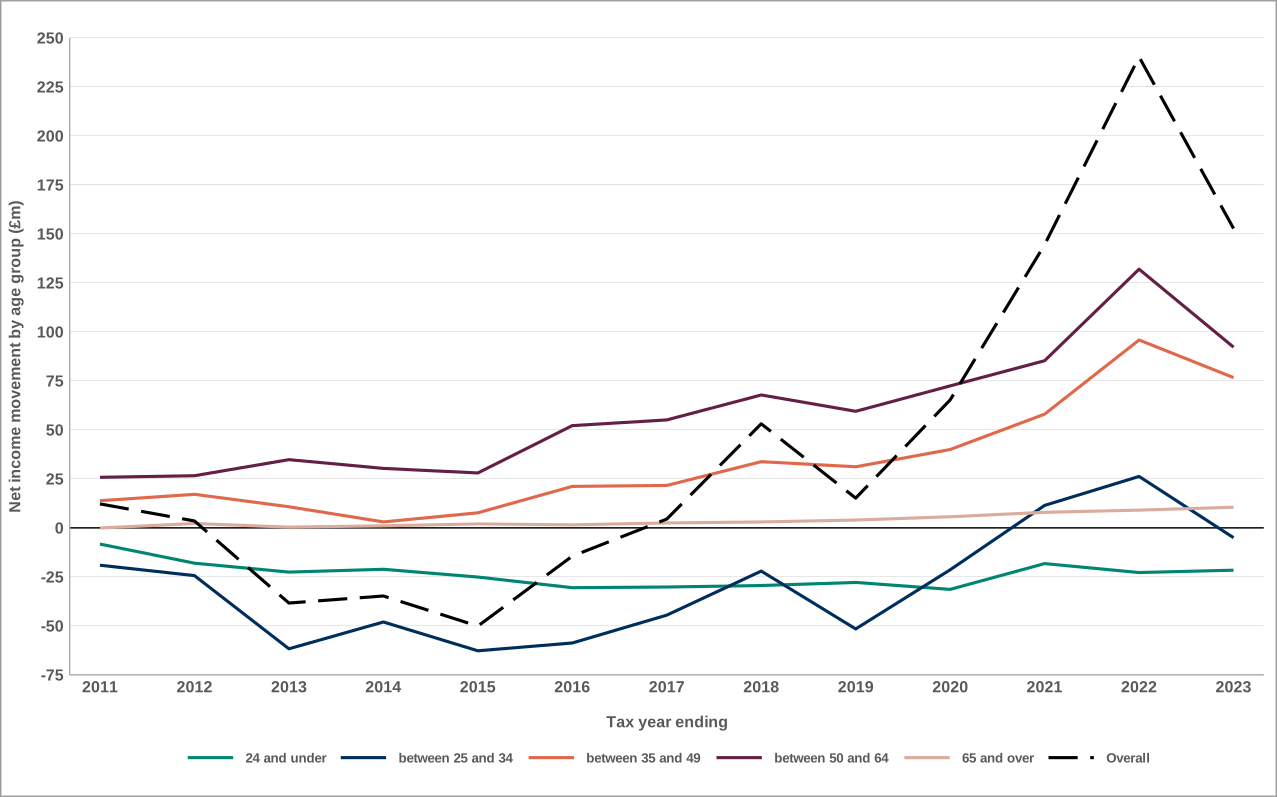
Figure 8 illustrates that the overall negative net income movement away from Wales between the 2012 to 2013 and 2016 to 2017 tax years was due to migration of individuals in the 24 and under and 25 to 34 age groups. Despite this negative net movement overall, the remaining age bands had a net positive movement throughout (aside from 65 and over in 2010 to 2011).
The overall picture transitioned to a positive net movement beyond the 2016 to 2017 tax year across most age groups. The 24 and under age group had a negative net position throughout.
There was strong growth in the overall net income movement to Wales beyond the 2018 to 2019 tax year, due to growth in the net income in the 24 and under, 25 to 34, 35 to 49 and 50 to 64 age groups. However, having become net positive in tax year ending 2021, net income movements transitioned back to negative for the 25 to 34 age band in tax year ending 2023.
The 65 and over age group experienced limited growth in its net position until the 2019 to 2020 tax year, where this age group had a 42.1% increase in net income. Then between the 2019 to 2020 and 2022 to 2023 tax years, the 65 and over age group had an 86.1% increase in its net position, this contrasts with the remaining age groups which primarily had a greater percentage change between 2019 to 2020 and 2021 to 2022, as seen in Figure 6.
Figure 8: Net income moving to Wales from rUK (England, NI and Scotland), by age group
Migration of individuals by income band
We have also grouped individuals by their income band. Note that in order for comparisons to be made for migration between Scotland and rUK, we have grouped the starter rate, basic rate, and intermediate rate together and labelled these individuals as ‘basic rate’ for Scottish taxpayers.
Figure 9 shows most income bands fluctuated around 0 net migration to Scotland until the 2015 to 2016 tax year. From the 2016 to 2017 tax year onwards, we saw higher migration to Scotland for basic rate taxpayers and additional/top rate taxpayers. For individuals with income under the Personal Allowance threshold the rate of migration increased from 2017 to 2018 (though the increases for those under the Personal Allowance are more volatile).
Figure 9: Net migration of individuals to Scotland from rUK (England, NI and Wales), by income band
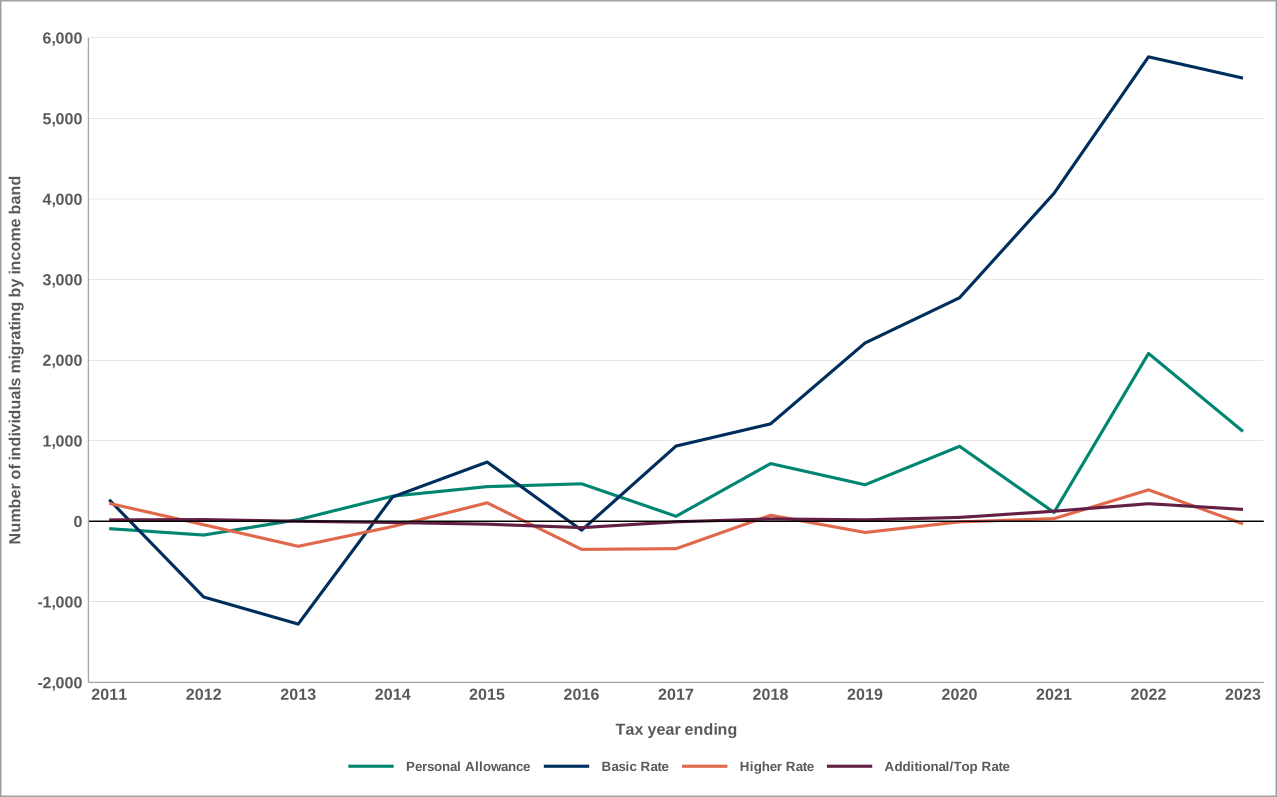
In particular, the migration of basic rate taxpayers is driving the overall increase in net migration to Scotland from the 2016 to 2017 tax year, with net migration increasing from under 1,000 in the 2016 to 2017 tax year to around 6,000 in the 2021 to 2022 tax year, dipping to 5,500 in 2022 to 2023. Indeed, on average 79.5% of the positive net migration between the 2019 to 2020 and the 2022 to 2023 tax years can be attributed to basic rate taxpayers.
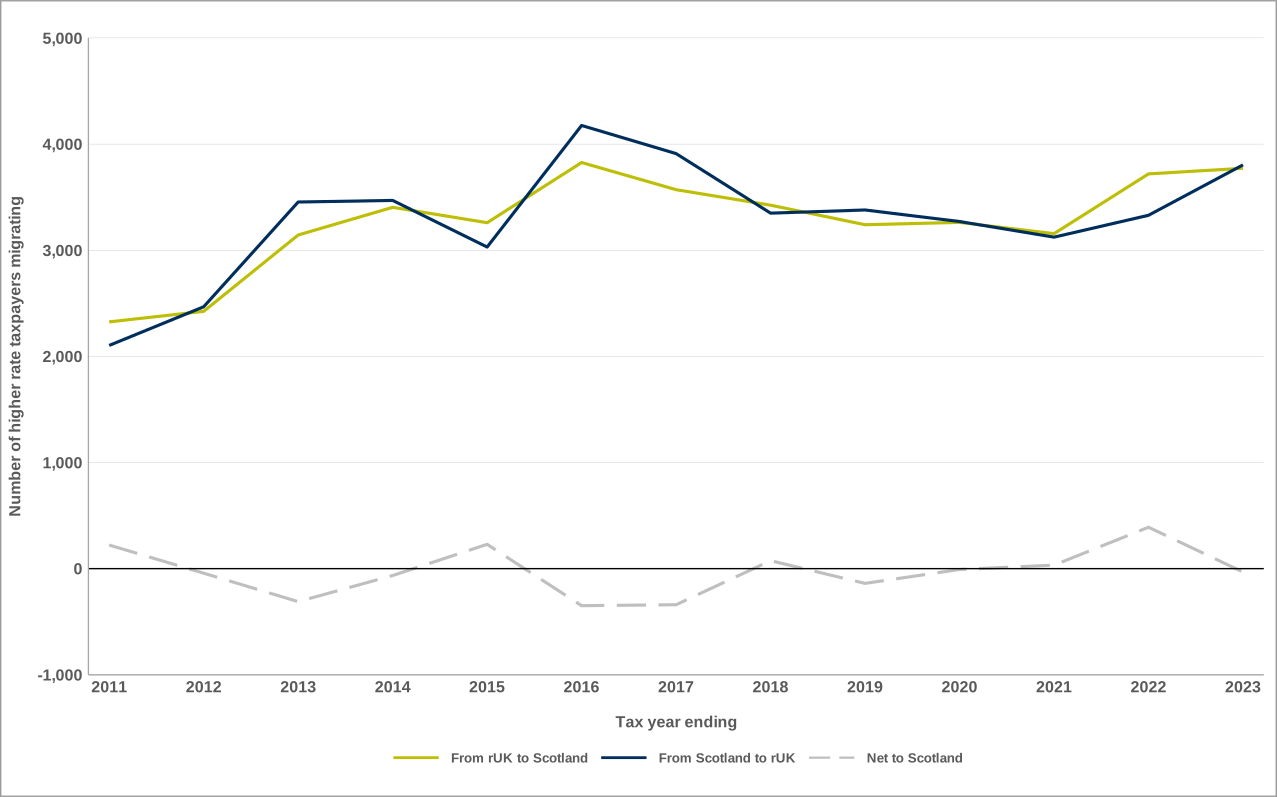
The migration of higher rate taxpayers between Scotland and rUK was relatively equal in most years, with the general trend being upwards in both directions, as can be seen in Figure 10.
It is worth noting that the higher rate tax band in rUK has a higher threshold than in Scotland, for example, in the 2022 to 2023 tax year, the Scottish higher rate begins at £43,663, whilst the rUK higher rate begins at £50,271. So, an individual earning £46,000 in rUK would be classed as a basic rate taxpayer, but a higher rate taxpayer in Scotland.
Figure 10: Number of higher taxpayers moving to/from Scotland and rUK (England, NI and Wales)
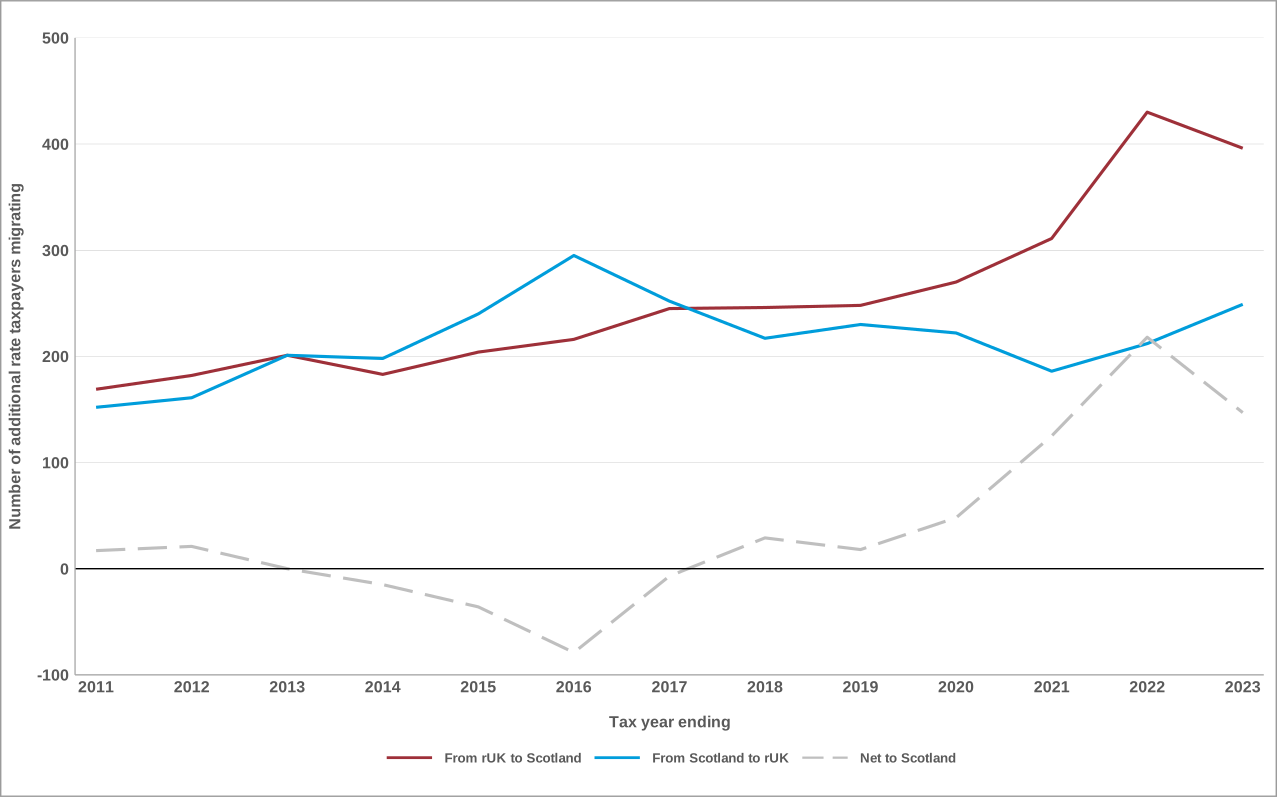
Although the absolute numbers remained small, there were nonetheless large percentage increases in the number of additional/top rate taxpayers migrating from rUK to Scotland, particularly between 2019 to 2020 and 2022 to 2023 (up around 47% between 2019 to 2020 and 2022 to 2023).
This is evident in Figure 11, which shows that after the 2016 to 2017 tax year the number of Scottish additional/top rate taxpayers moving to rUK each year was less than the number of rUK additional/top rate taxpayers migrating to Scotland.
Overall, these figures show no negative effect in net migration of higher earners following the changes to the Scottish Income Tax system in the 2018 to 2019 tax year. However, as previously mentioned, as we cannot observe the counterfactual situation where tax divergence did not occur, we cannot conclude the policy change had no effect.
Figure 11: Number of additional/top rate taxpayers moving to/from Scotland and rUK (England, NI and Wales)
Net migration to Wales increased for most income bands compared to the 2010 to 2011 tax year (aside from the Personal Allowance which saw a small reduction in 2022 to 2023), as illustrated in Figure 12. The greatest increases were in the basic rate income band.
Figure 12: Net migration of individuals to Wales from rUK (England, NI and Scotland), by income band
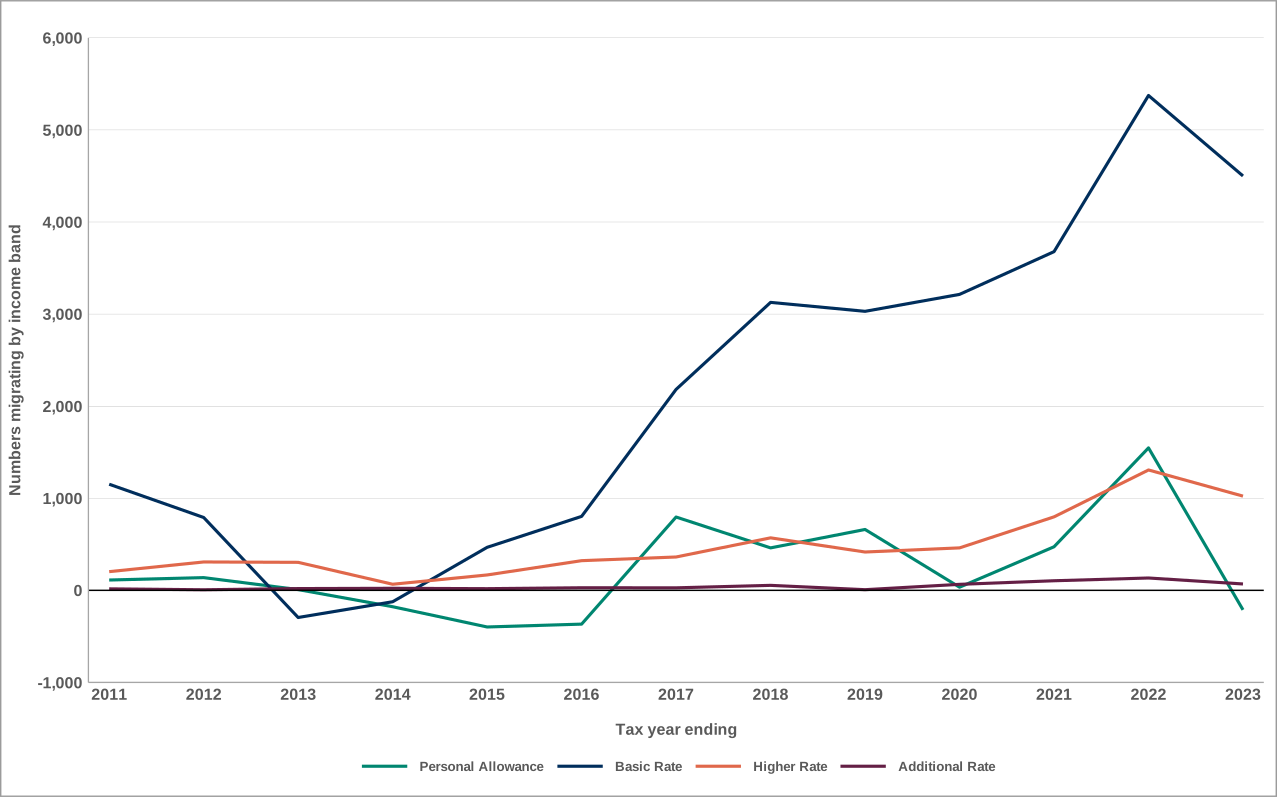
Figure 13 shows that the number of higher rate taxpayers migrating from rUK to Wales was consistently higher than the number of higher rate taxpayers migrating from Wales to rUK. This gap increased in recent years.
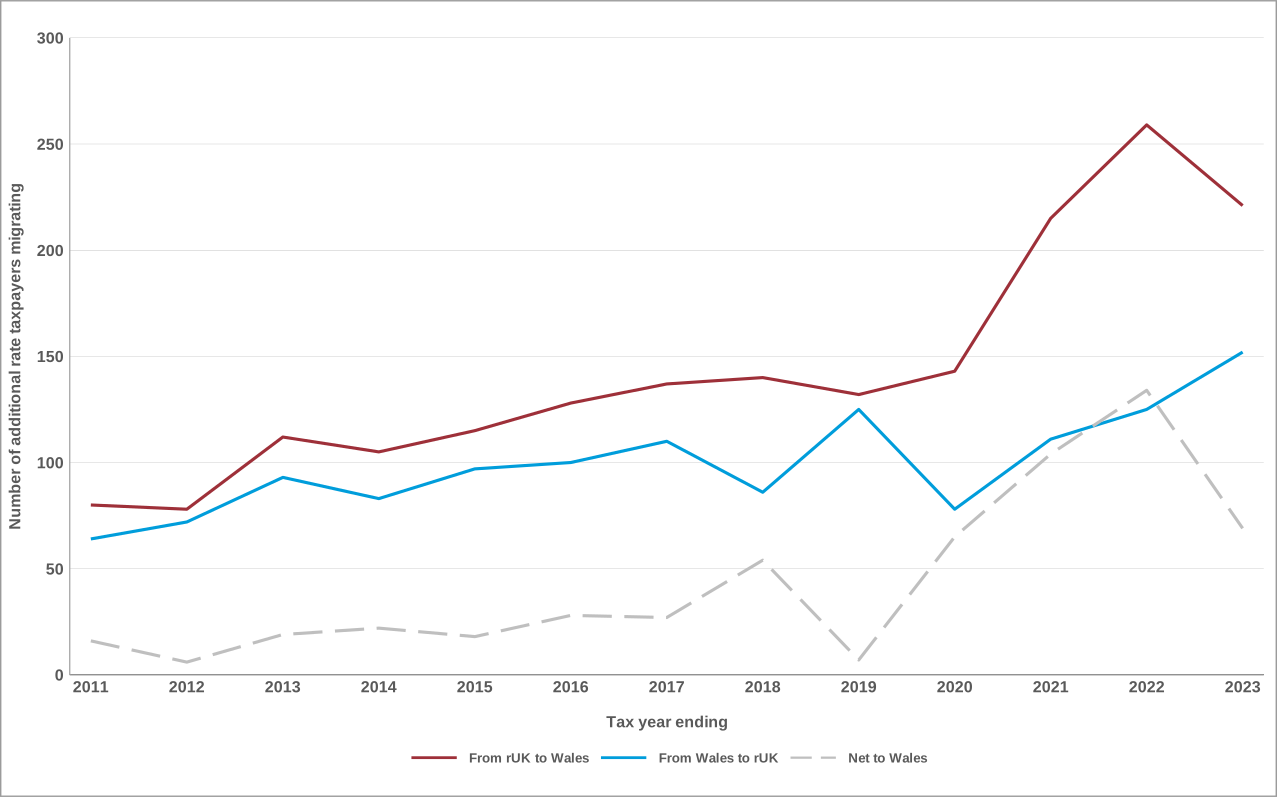
Compared to the 2019 to 2020 tax year, the number of additional rate taxpayers migrating from rUK to Wales increased by 81% in the 2021 to 2022 tax year. The number of additional rate taxpayers migrating from Wales to rUK also increased by 60%, so the net effect has been slightly dampened, as seen in Figure 14.
Figure 13: Number of higher rate taxpayers moving to/from Wales and rUK (England, NI and Scotland)
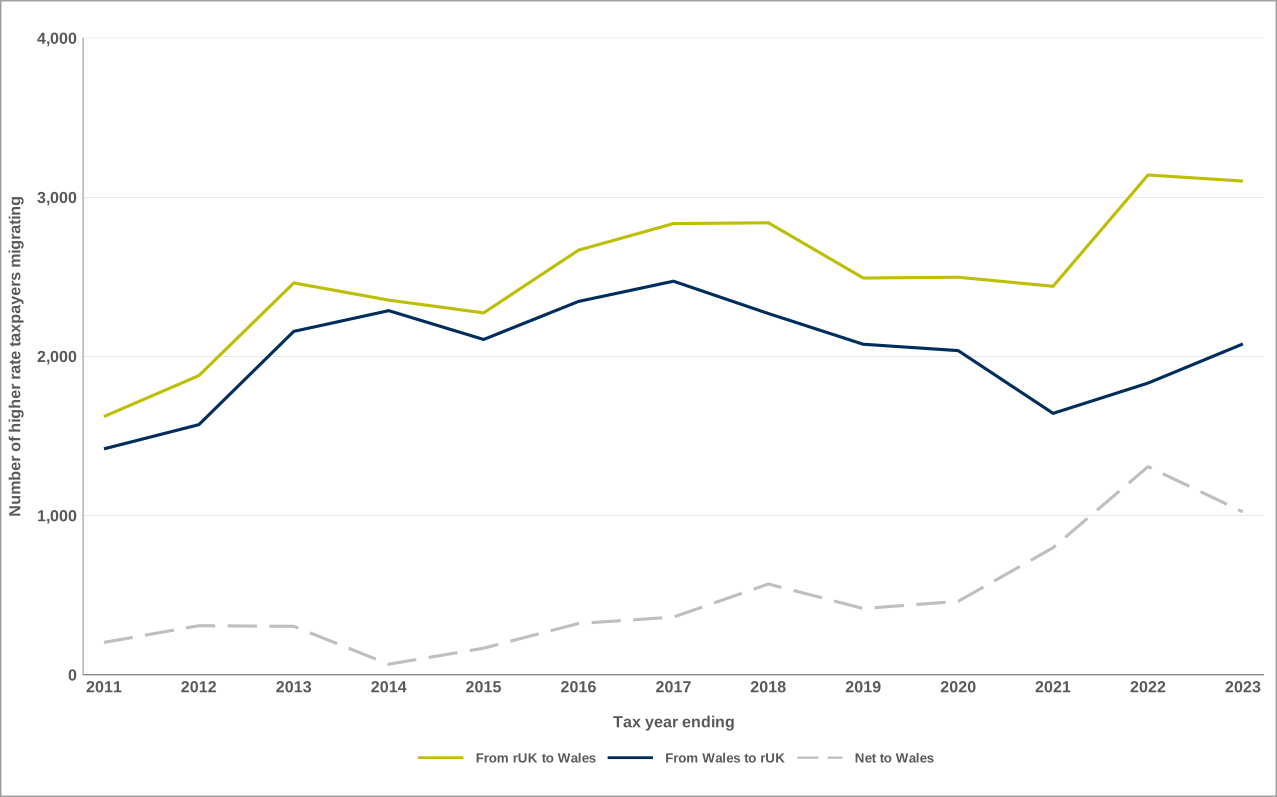
Figure 14: Number of additional/top rate taxpayers moving to/from Wales and rUK (England, NI and Scotland)
Migration of individuals by income band (proportions)
It is also important to look at the proportions of taxpayers migrating each year. Firstly, the size of the taxpayer populations in each band changes over time. This is often due to fiscal drag where the freezing of Income Tax thresholds results in more individuals paying tax at higher rates. Second, the number of individuals in the additional/top rate band can be very small so while these individuals are the most mobile the absolute number migrating each year is small.
This higher level of mobility is evident in Figure 15 where we see the proportion of additional/top rate taxpayers migrating each year was relatively volatile compared to other bands and fluctuated by as much as 0.3 percentage points between years as relatively small changes in the number of individuals migrating translates to a large percentage change. In 2015 to 2016 we saw the peak proportion of additional/top rate taxpayers migrating from Scotland to rUK at 1.7%.
Migrations at the basic rate and those below the Personal Allowance maintained quite a stable pattern, only fluctuating by 0.1 percentage points at most between 2 successive tax years and not differing from the initial proportion by more than 0.2 percentage points. Within this, the basic rate averaged 0.7% and the those below the Personal Allowance averaged 0.9%.
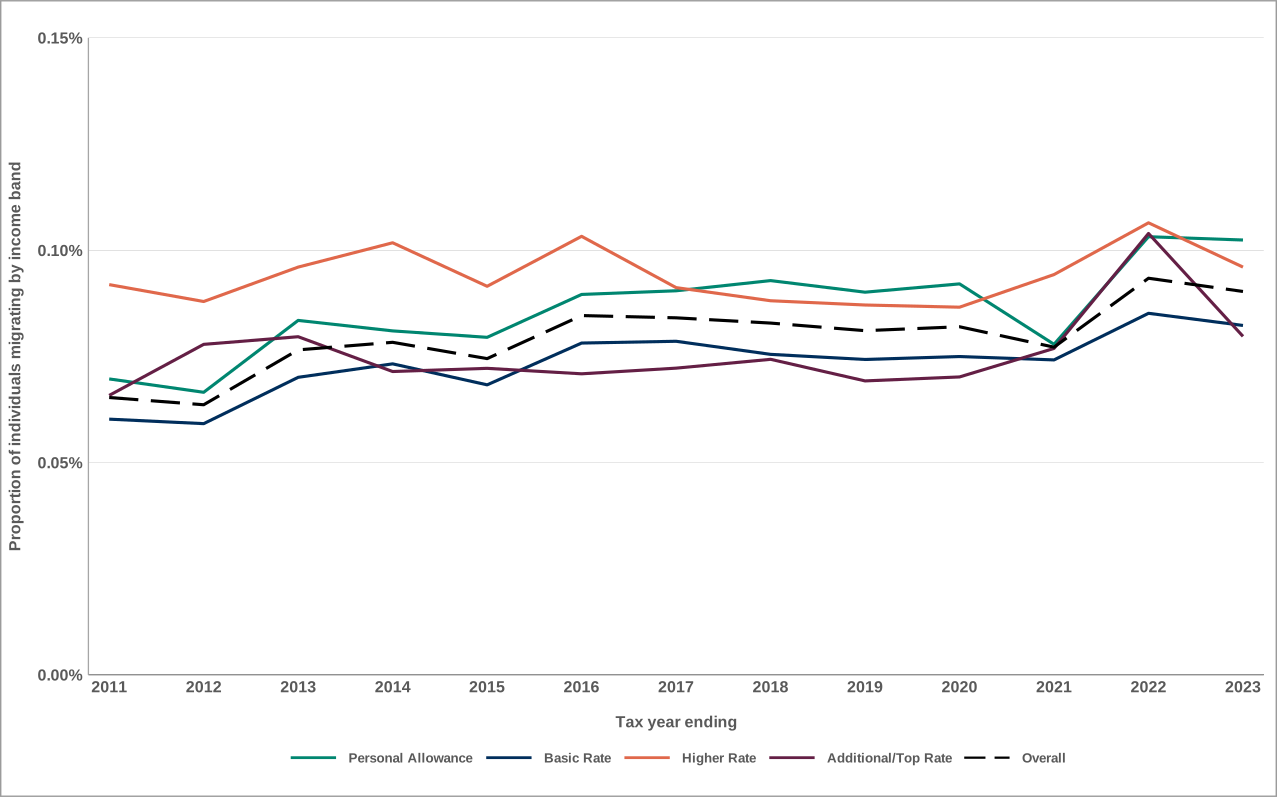
For rUK to Scotland migrations, the proportion of individuals migrating was relatively stable until the 2019 to 2020 tax year, as seen in Figure 16. From the 2019 to 2020 tax year onwards, we saw an increase in the proportion of additional/top rate and higher rate taxpayers migrating to Scotland.
Figure 15: Proportion of individuals moving from Scotland to rUK (England, NI and Wales), by income band
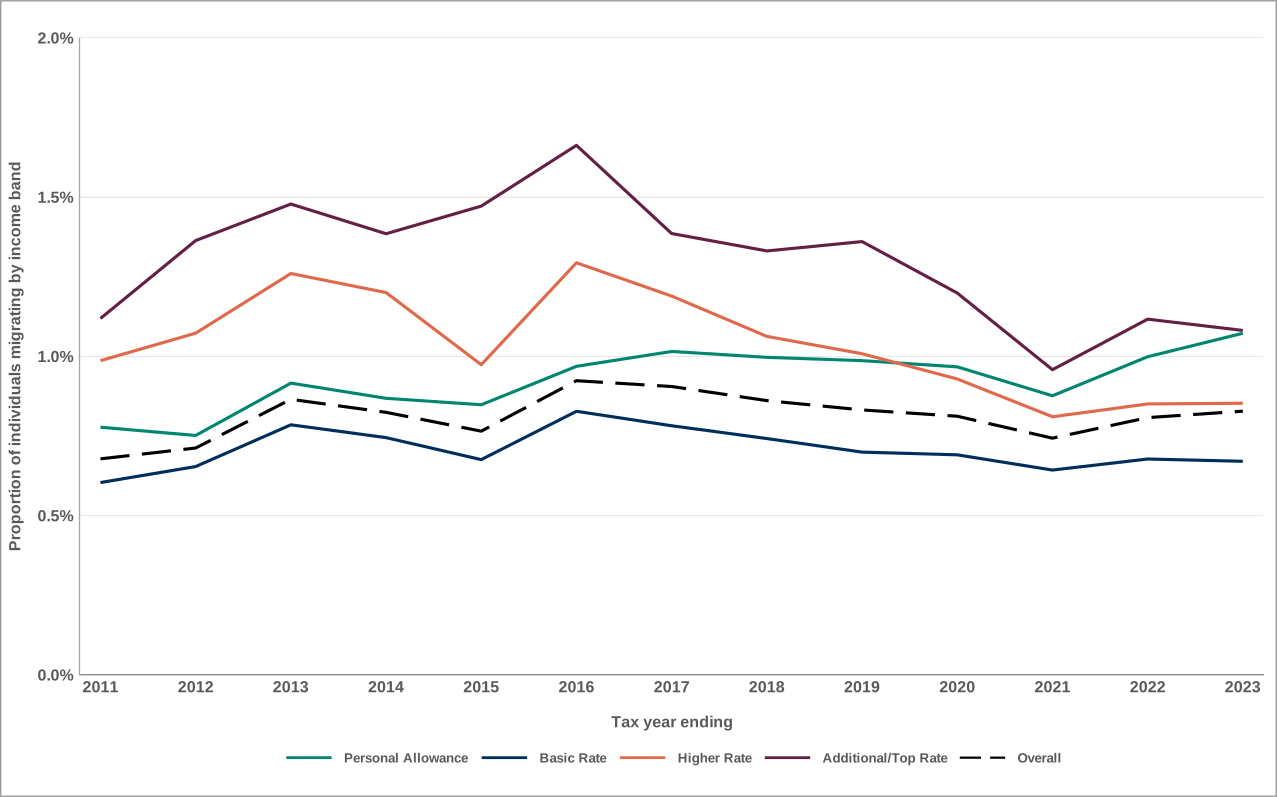
Figure 16: Proportion of individuals moving from rUK (England, NI and Wales) to Scotland, by income band
The average proportion of individuals migrating from Wales to rUK was noticeably higher than the equivalent proportions for Scotland, around 1.5% compared to around 0.8%.
Figure 17 shows that, like Scotland, individuals in the additional rate tax cohort were the most mobile and had the most volatility year to year in respect of migration from Wales to rUK, with variations of as much as 1ppt between 2 successive tax years (2.5% in the 2018 to 2019 tax year and 1.5% in the 2019 to 2020 tax year).
The proportion of basic rate and higher rate individuals migrating to rUK remained relatively stable across the time series, at around 1.3% and around 1.8%, respectively.
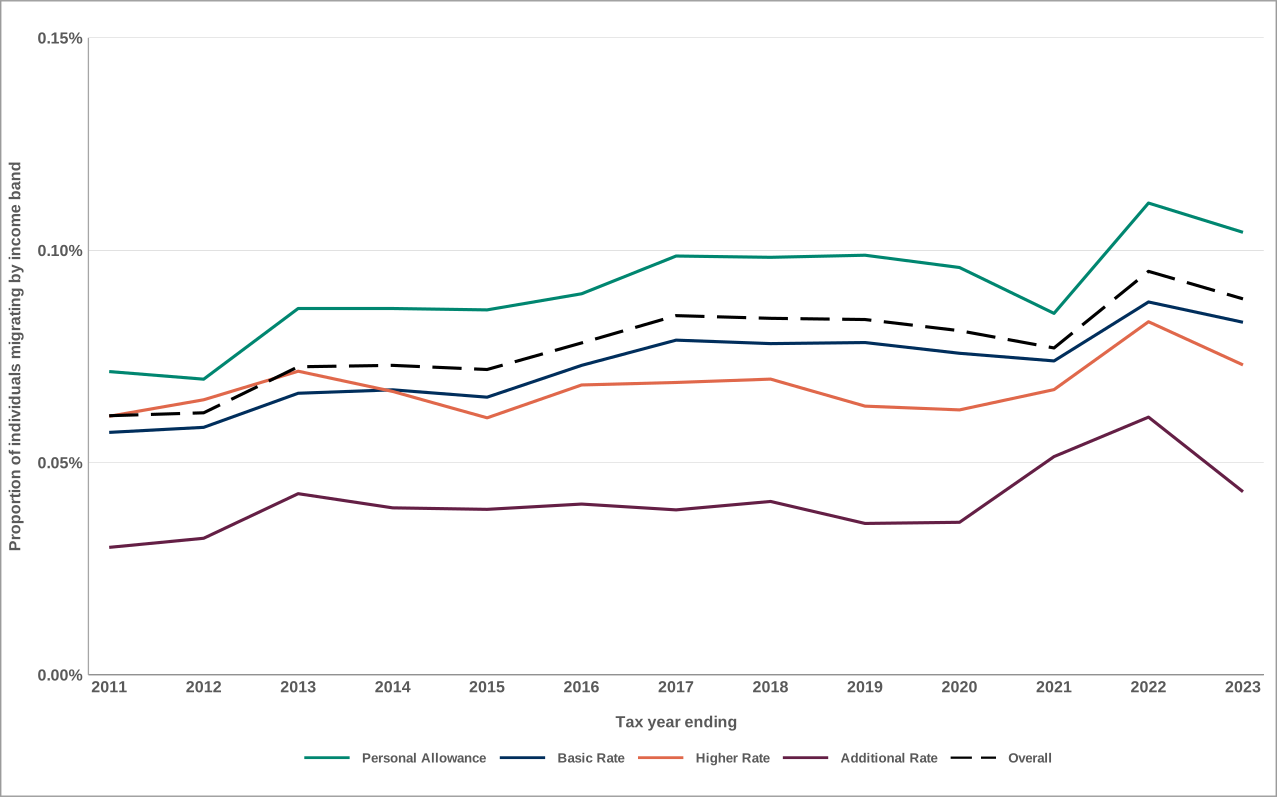
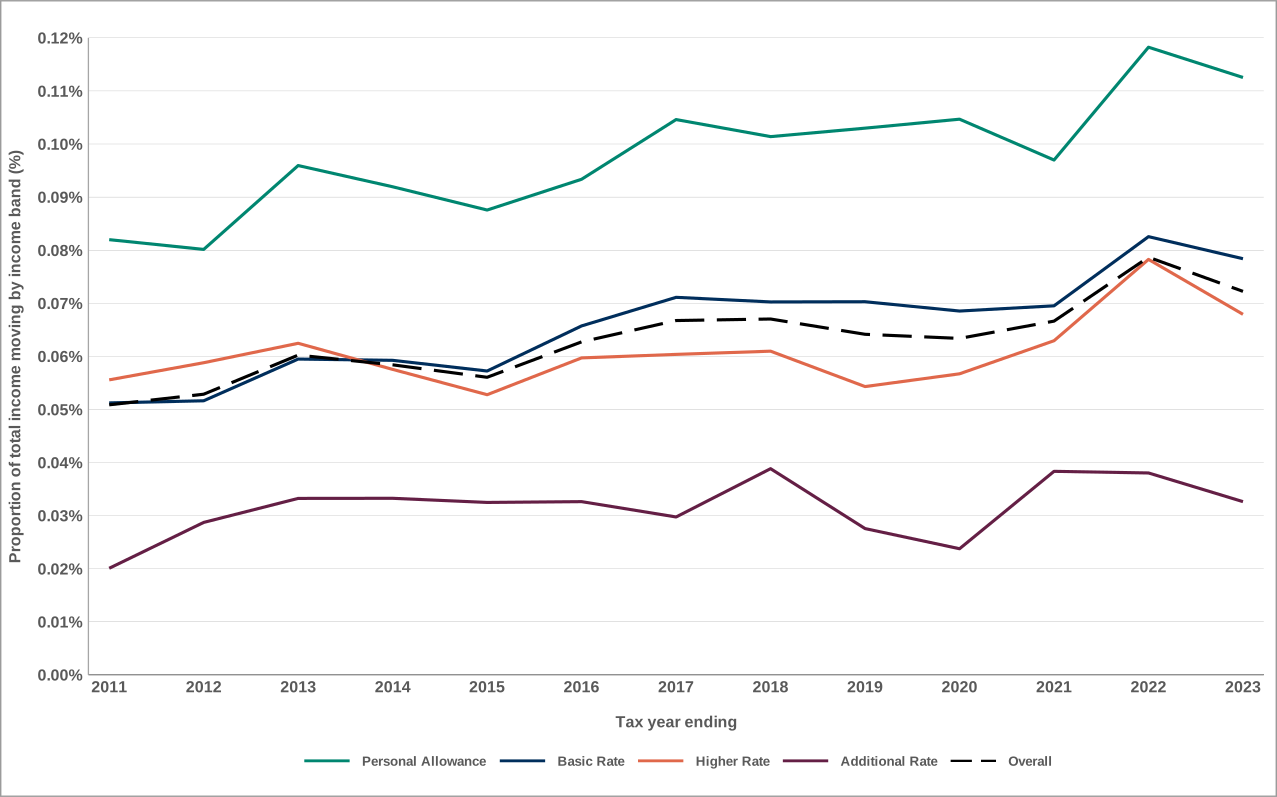
Similarly to migrations from rUK to Scotland the proportion of individuals migrating from rUK to Wales was relatively stable until the 2020 to 2021 tax year, at around 0.08% (see Figure 18).
Notable increases in the proportion of taxpayers migrating from rUK to Wales were observed across all Income Tax bands, between the 2020 to 2021 and 2021 to 2022 tax years. There was a slight dip in the 2022 to 2023 tax year, however, the proportion of taxpayers migrating remained above the 2020 to 2021 proportions, aside from in the Additional rate band.
Figure 17: Proportion of individuals moving from Wales to rUK (England, NI and Scotland), by income band
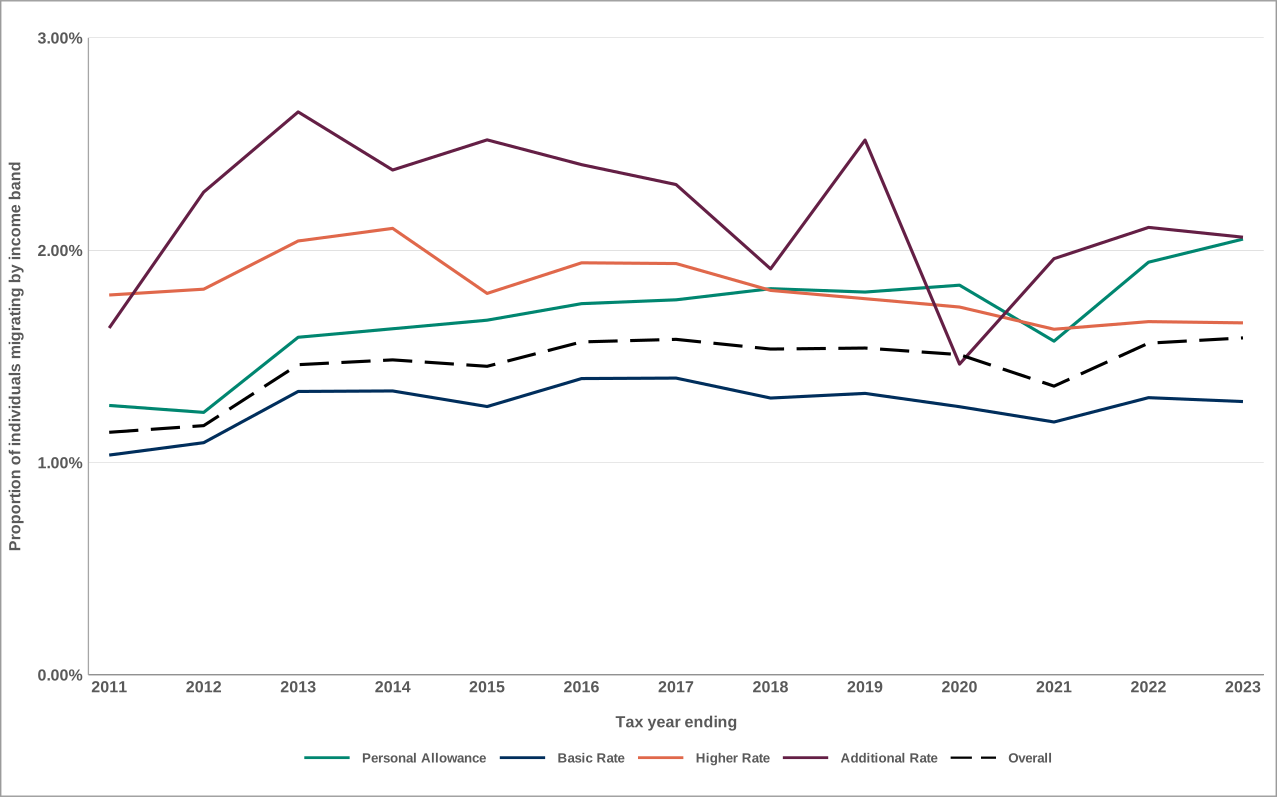
Figure 18: Proportion of individuals moving from rUK (England, NI and Scotland) to Wales, by income band
Migration of individuals by income band (average earnings)
Average earnings in this context refers to the average income movement during the year of migration and is grouped by marginal income tax band.
The average earnings of individuals migrating from Scotland to rUK who earned an income liable to basic rate tax shows a small, gradual increase from around £20,000 to around £29,000, from 2010 to 2011 to 2022 to 2023 tax year, as shown in Figure 19.
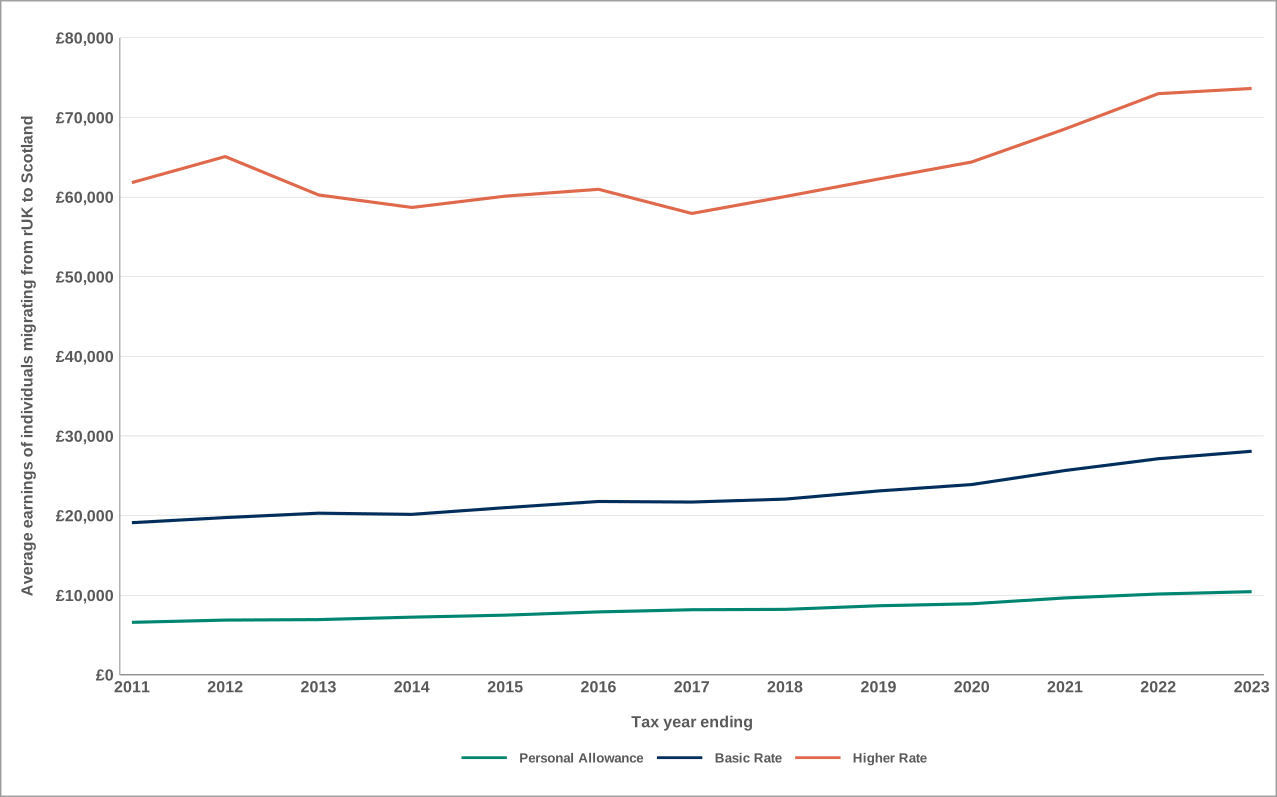
The trend in the other direction (from rUK to Scotland) is much the same, with the basic rate average increasing from approximately £19,000 to £28,000, Figure 20.
The Personal Allowance cohort had a relatively gradual increase from the 2010 to 2011 tax year to the 2022 to 2023 tax year, in both directions.
However, it should be made clear some of the increase in average earnings for individuals grouped under the Personal Allowance threshold may reflect a methodological nuance in the data. Income is attributed based on the migration year, while tax bands are assigned using thresholds from the previous tax year. This can result in individuals being classified under the Personal Allowance group despite having earnings above the threshold in the year of migrating.
In both directions, the higher rate experiences more volatility, with reductions and increases occurring over the time series. For example, the average earnings of higher rate individuals migrating from Scotland to rUK decreased in 2012 to 2013, 2013 to 2014 and 2016 to 2017. However, by 2022 to 2023 the average earnings exceeded the average earnings in 2010 to 2011, in both directions.
The additional rate cohort showed an even greater volatility compared to the higher rate group, with large fluctuations from year to year. The additional rate band also had on average, greater average income when moving from Scotland to rUK. That said, it is important to note this is linked to a small cohort of around 200 to 400 individuals meaning the time-series is unpredictable and can easily change from year to year.
Figure 19: Average earnings for individuals moving from Scotland to rUK (England, NI and Wales), by income band
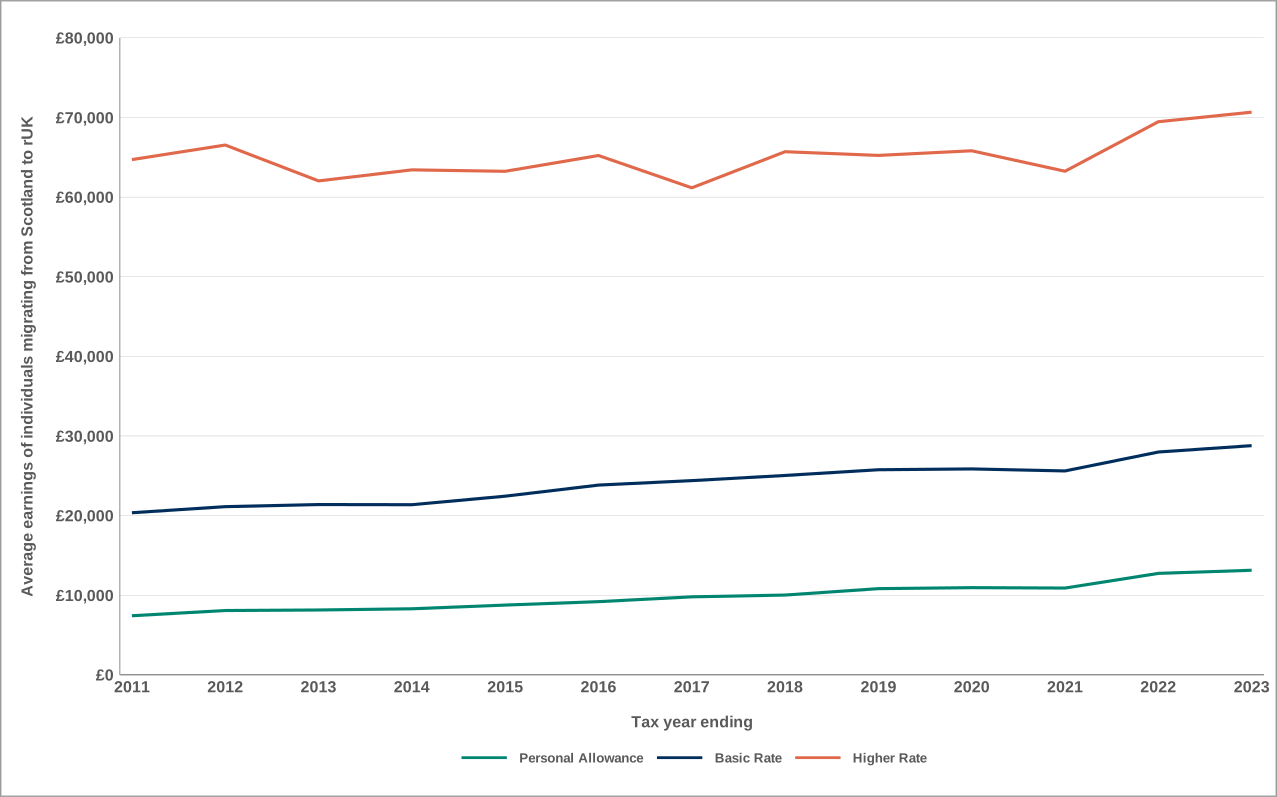
Figure 20: Average earnings for individuals moving from rUK (England, NI and Wales) to Scotland, by income band
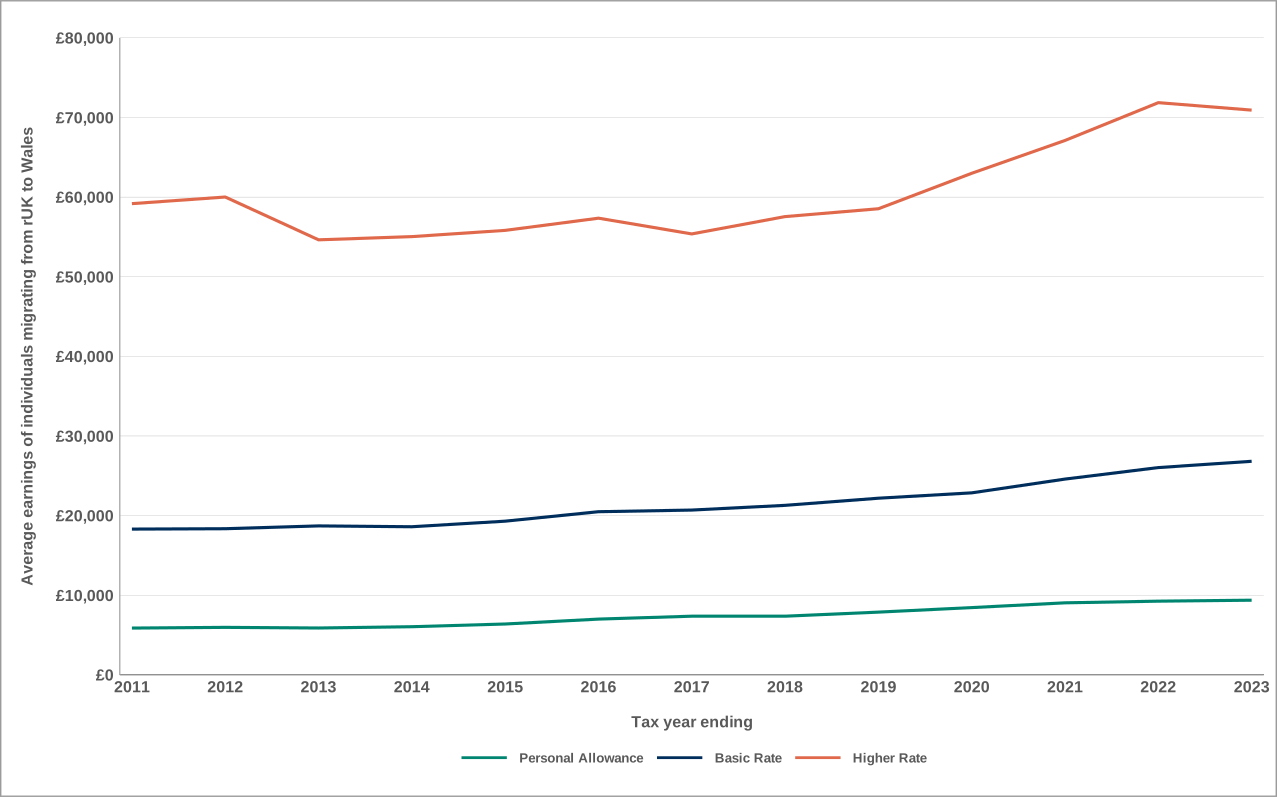
The average earnings of individuals migrating from Wales to rUK who earned an income liable to basic rate tax exhibits a gradual increase from £19,000 to around £28,000, from 2010 to 2011 to 2022 to 2023 tax year as shown in Figure 21. The trend in the other direction is similar, with the basic rate average increasing from approximately £18,000 to £27,000, as shown in Figure 22.
In both directions, the Personal Allowance group had a gradual increase in average earnings from the 2010 to 2011 tax year to the 2022 to 2023 tax year. As noted above, part of the increase can be caused by individuals being classified under the Personal Allowance group, from previous year, despite having earnings above the £12,570 threshold in the current year.
There is more volatility (in both directions) for individuals in the higher rate band. For example, the average earnings of higher rate individuals migrating from rUK to Wales decreased in 2012 to 2013, 2016 to 2017 and 2022 to 2023. However, by 2022 to 2023 the average earnings exceeded the average earnings in 2010 to 2011, both to and from Wales.
Like in Scotland, on average the additional rate band had greater average income when moving from Wales to rUK, with the average being around £330,000 compared to £270,000 for individuals moving to Wales. The high volatility is linked to a small cohort of an even smaller number of individuals from of around 60 to around 260.
Figure 21: Average earnings for individuals moving from Wales to rUK (England, NI and Scotland), by income band
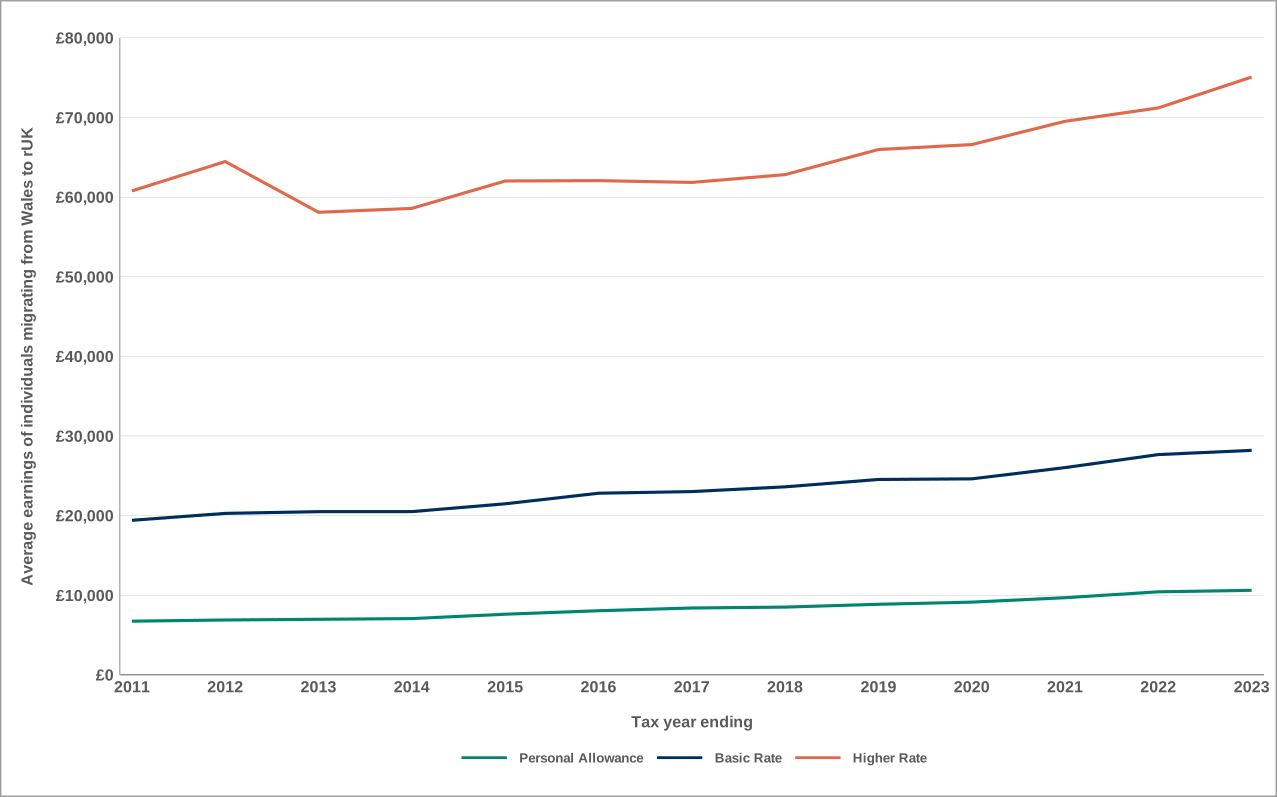
Figure 22: Average earnings for individuals moving from rUK (England, NI and Scotland) to Wales, by income band
Movement of income by income band
As previously stated, the net deficit in income movement was maintained for Scotland through to 2018 to 2019, inclusive. The magnitude of the net deficit fluctuated substantially each year, from between around -£139 million to around -£3 million.
In years where a deficit occurs, Figure 23 shows there was significant variability in how much individuals with different levels of income contribute. For example, from 2010 to 2011 to 2012 to 2013 basic rate taxpayers contributed the majority of the deficit whilst in 2013 to 2014 and 2016 to 2017 higher rate taxpayers were the largest contributor to the deficit, while additional/top rate taxpayers contributed the majority of the deficit in 2014 to 2015 and 2015 to 2016.
However, after the 2019 to 2020 tax year, basic rate taxpayers contributed the majority of the surplus in net income.
Most tax bands exhibited growth in net income movements after the 2019 to 2020 tax year, with the greatest growth in the basic rate at around £106 million between 2019 to 2020 and 2021 to 2022.
However, the band for those earning less than the Personal Allowance remained at a net deficit throughout. As no Income Tax is due for income under the Personal Allowance, this would not necessarily translate to a loss of tax revenue.
The movement of higher rate taxpayers’ income increased for both Scotland to rUK movements and rUK to Scotland movements throughout the study period. However, the net position for Scotland fluctuated between a deficit and surplus on multiple occasions between tax years ending 2011 and 2023. In recent years the position remained as a surplus, with the most recent figure (2022 to 2023 tax year) being around £9 million.
Figure 23: Net income moving to Scotland from rUK (England, NI and Wales), by income band
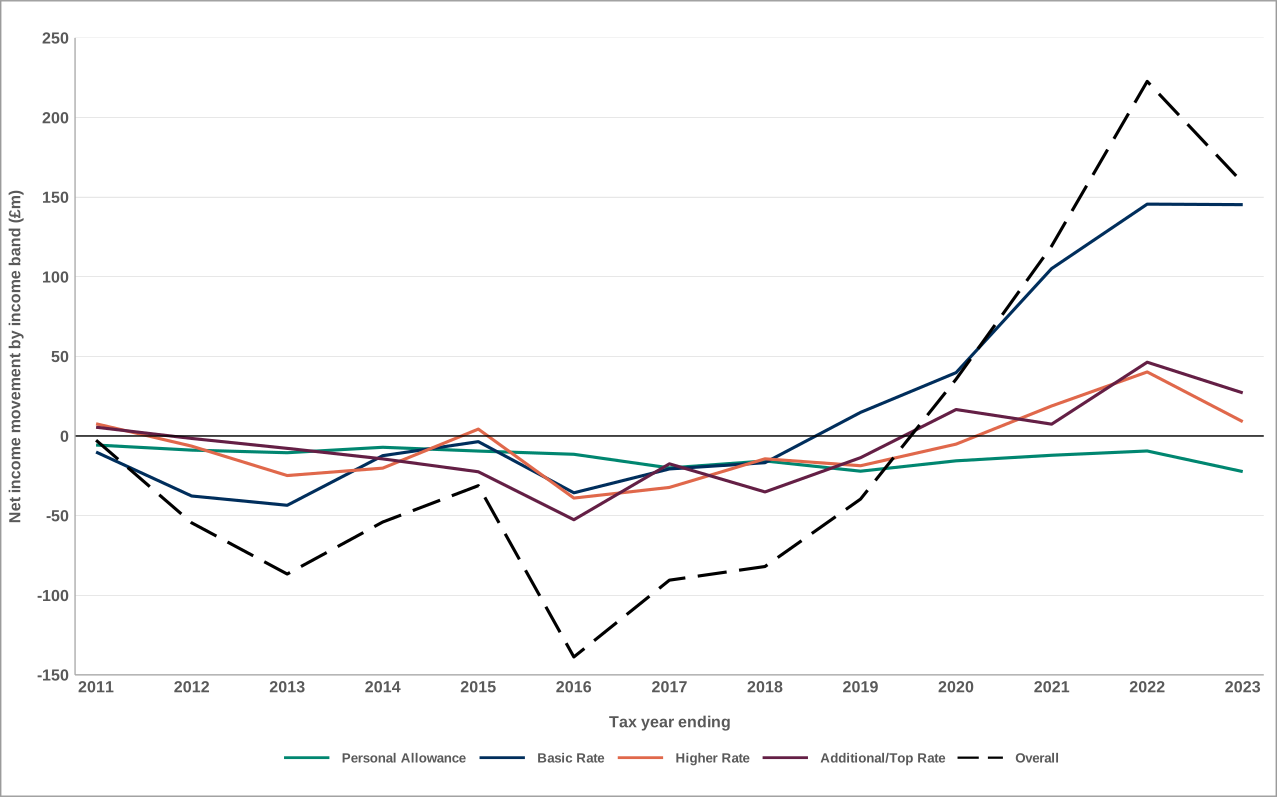
Figure 24: Proportion of total income moving from Scotland to rUK (England, NI and Wales), by income band
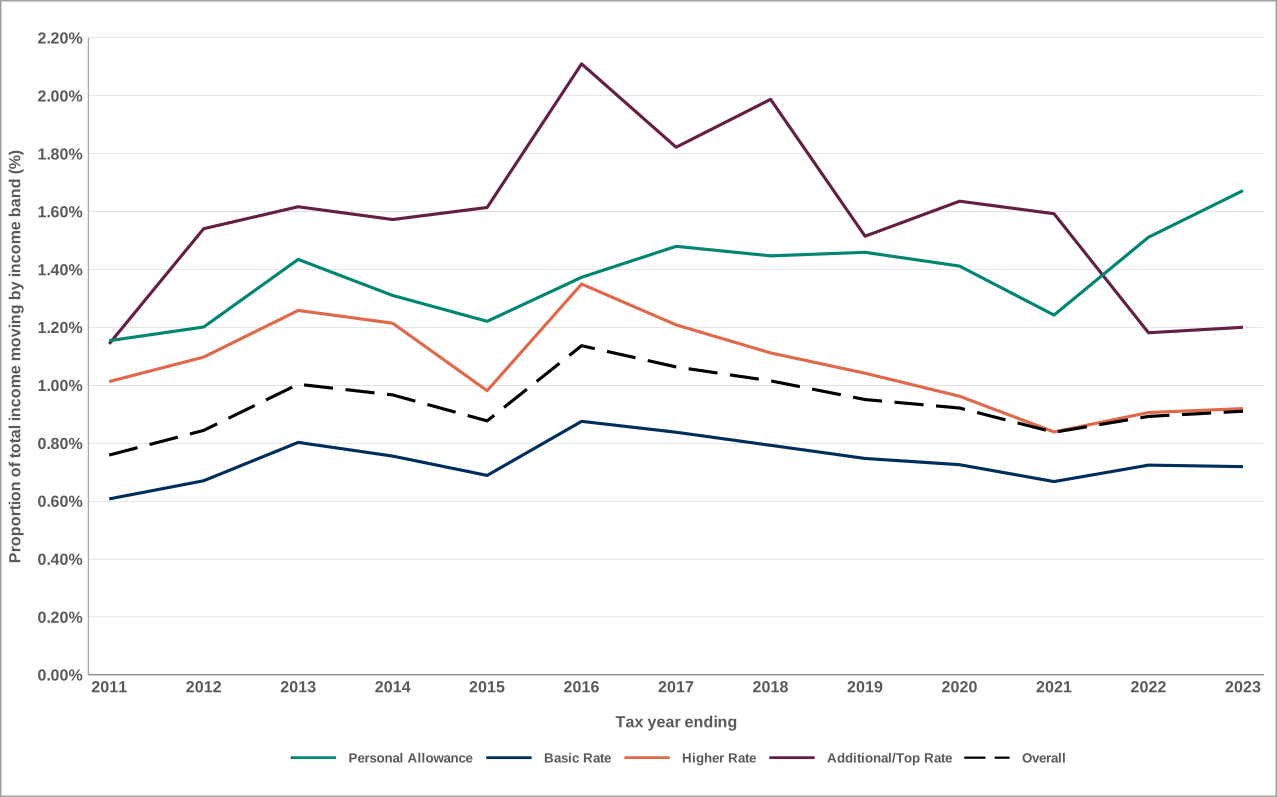
Figure 25: Proportion of total income moving from rUK (England, NI and Wales) to Scotland, by income band
Unlike the net positive migration of individuals, Wales exhibited net negative income movements up to the 2016 to 2017 tax year, in most years aside from 2010 to 2011 and 2011 to 2012. Figure 26 shows that this can largely be attributed to the basic rate income band and those earning below the Personal Allowance threshold.
This disparity in net positions with respect to individuals and income may be explained by differences in earnings of individuals migrating to rUK and individuals migrating to Wales. For example, the average higher rate individual migrating to Wales may earn less than the average higher rate individual moving to rUK (given disparities in average incomes in each source country).
The transition towards a strong net positive position from the 2017 to 2018 tax year was largely due to increases in net income movements in the basic and higher rate income bands.
Figure 26: Net income moving to Wales from rUK (England, NI and Scotland), by income band
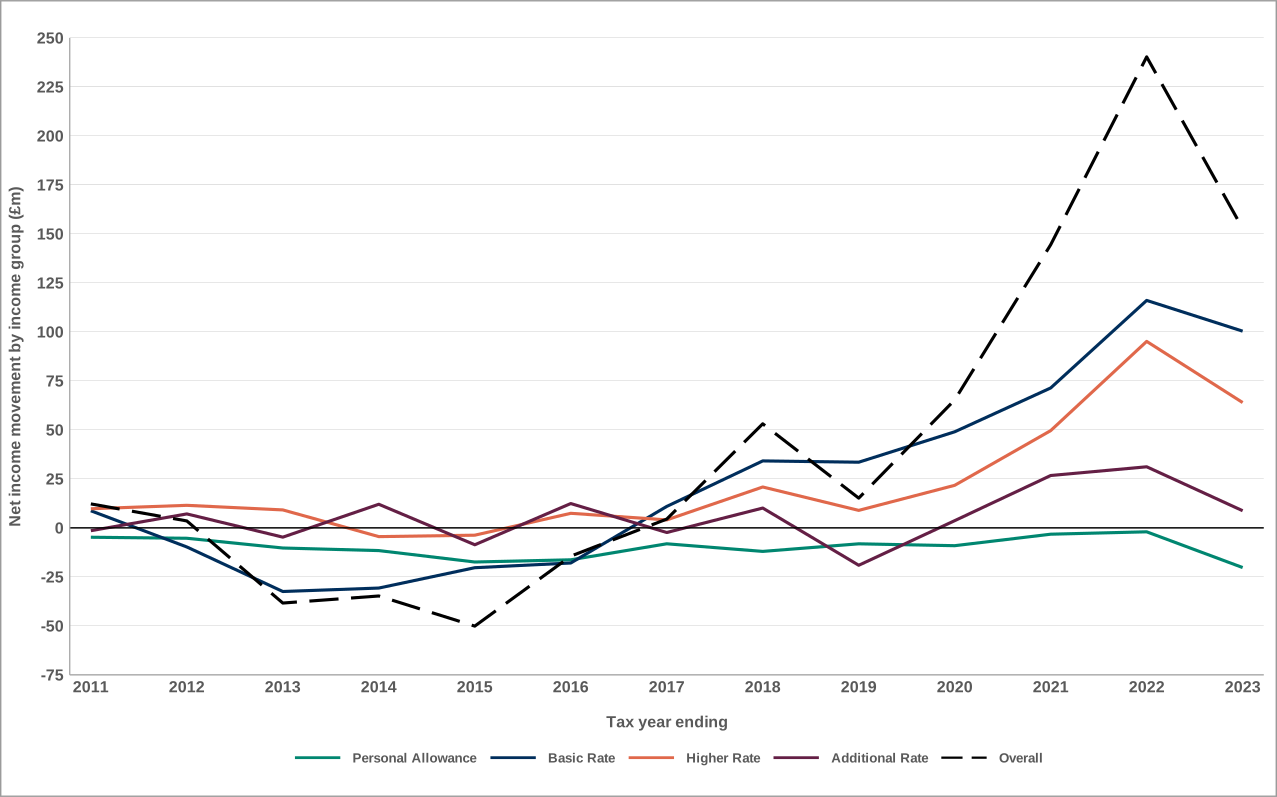
Figure 27: Proportion of total income migrating from Wales to rUK (England, NI and Scotland), by income band
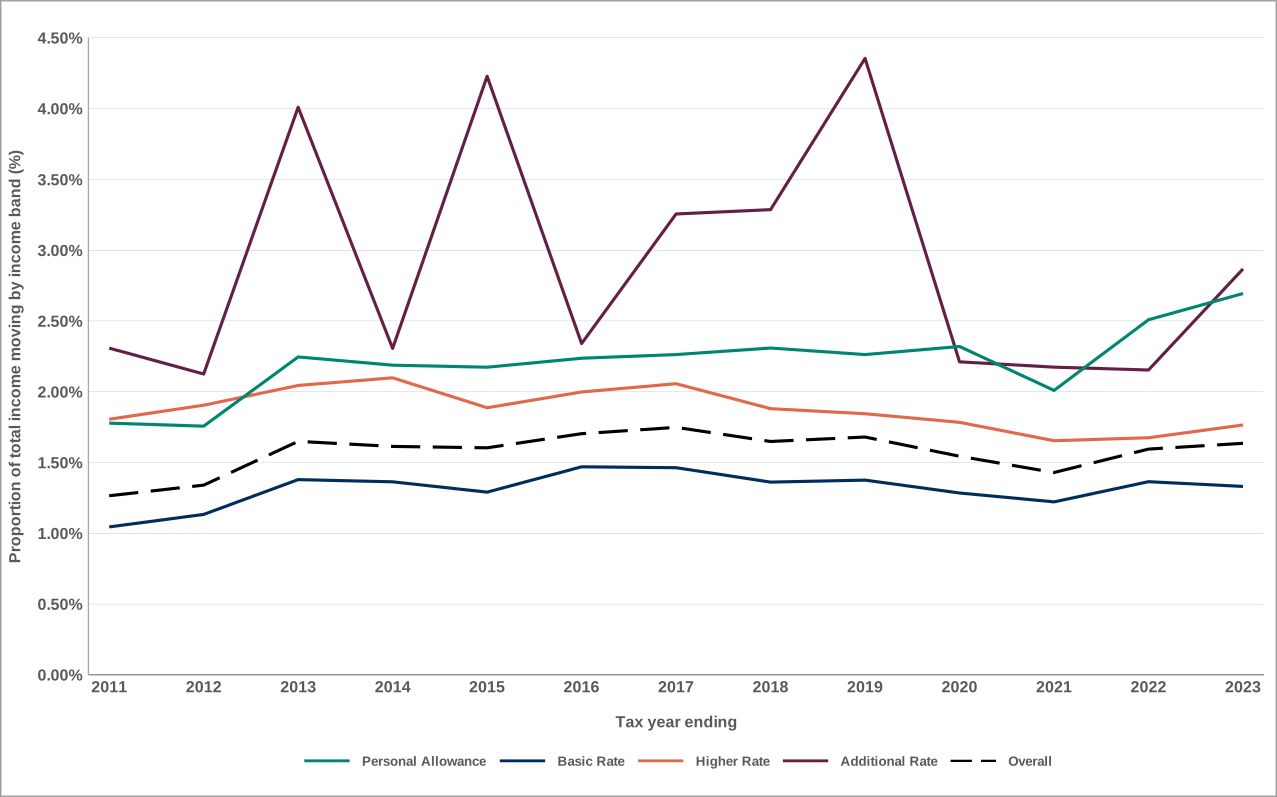
Figure 28: Proportion of total income moving from rUK (England, NI and Scotland) to Wales, by income band
Comparison to other statistics
There are other publications which show similar statistics to this publication. It is important to understand how these other statistics relate to what is being released here and highlight differences in coverage or data used to compile each set of statistics.
Both the National Records of Scotland and the Office for National Statistics publish statistics on migration between Scotland and the rest of the UK.
The NRS and ONS collaborate when producing these statistics so that the overall figures of migration match. The ONS also publishes statistics on migration between Wales and the rest of the UK. These statistics are not directly comparable to the figures published in this paper for a few reasons:
- The statistics are measuring different things. The ONS and NRS statistics aim to measure total migration while our figures only include individuals with taxable income (see section 4 for more details).
- The statistics are based on different data sources. The ONS and NRS statistics are primarily based on data relating to NHS GP registrations while our figures are based on HMRC tax administrative data.
This means that some migrations that are recorded in the ONS and NRS statistics will not be recorded in these statistics. For example, an individual moving from Scotland to England who did not receive an income before moving.
Future work
HMRC intends to perform further statistical analysis to develop a sounder knowledge base of underlying trends within the Scottish and Welsh taxpaying population.
This should provide accurate and up to date data to assist policy makers across the devolved administrations and the UK government in making make effective policy decisions.
We welcome user feedback on this analysis and possible relevant topics for further research on the Scottish and Welsh taxpaying population.
You can contact us at personaltax.statistics@hmrc.gov.uk.
Acknowledgements
The analysis presented in this report would not have been possible without the input of colleagues both within and outside of HMRC. In particular we are grateful for the input from officials in the Scottish Government, the Welsh Government, and the Scottish Fiscal Commission.
Authors: O. McWilliams-Cummins; L. Green; N. Duncan.