Research Report: Impacts of public services being delivered by civil society organisations
Published 28 May 2026

© Crown copyright 2026
This publication is licensed under the terms of the Open Government Licence v3.0 except where otherwise stated. To view this licence, visit nationalarchives.gov.uk/doc/open-government-licence/version/3 or write to the Information Policy Team, The National Archives, Kew, London TW9 4DU, or email: psi@nationalarchives.gov.uk.
Where we have identified any third party copyright information you will need to obtain permission from the copyright holders concerned.
This publication is available at https://www.gov.uk/government/publications/impacts-of-public-services-being-delivered-by-civil-society-organisations/research-report-impacts-of-public-services-being-delivered-by-civil-society-organisations
1. Executive summary
Civil society organisations have long played a vital role in delivering public services in the UK, bringing distinctive qualities such as local knowledge, community trust, and flexible, person-centred approaches. The Department for Culture, Media and Sport (DCMS) commissioned this research to develop a Theory of Change articulating how and why civil society involvement in public service delivery generates value—supporting the implementation of the Civil Society Covenant and informing future policy.
This report provides an articulation of the pathways through which civil society creates impact. It identifies five key inputs (funding, enabling policy environment, infrastructure, human capital, and trusted partnerships) that support civil society activities, operating through three core mechanisms:
- Holistic, person-centred approaches that address root causes and multiple needs simultaneously
- Trusted early interventions enabled by deep community embeddedness
- Safe, supportive environments that foster belonging and enable earlier engagement with support
These mechanisms are theorised to generate outcomes at individual/household, community, and organisational levels - ultimately contributing to stronger communities, improved life chances, and more effective local systems.
While robust comparative evidence remains limited, the available research consistently demonstrates positive outcomes from civil society-led interventions, providing a foundation for the theoretical model presented here. The targeted evidence scan revealed that most available studies score at Level 2 or below on the Maryland Scientific Methods Scale (SMS), meaning they show associations and trends but cannot prove causation. Critically, there is limited comparative research examining whether civil society delivery of public services produces better outcomes than equivalent public or private sector provision. This makes it difficult to definitively demonstrate civil society’s “comparative advantage” beyond theoretical arguments.
To address this evidence gap, the report recommends prioritising comparative cross-sector research, convening a multi-stakeholder evidence working group, developing simplified messaging to communicate civil society’s role, and exploring opportunities for greater data linkage across government departments. Without this investment in evidence, policy decisions will continue to rely on indicative rather than conclusive data about civil society’s impact on public services.
2. Introduction
2.1 Background to the research
To support the implementation of the Civil Society Covenant - the Government’s commitment to resetting the relationship between the state and civil society – the Department for Culture, Media and Sport (DCMS) commissioned Ipsos UK to help develop a Theory of Change articulating their vision of the impact of civil society delivering public services. The purpose of the research is to improve cross-government understanding of whether, how, and to what extent there is additional value generated when public services are delivered by civil society organisations. This will be used to inform future DCMS policy interventions.
2.2 Wider context
A longstanding feature of public services in the UK and internationally has been a partnership relationship between the state and civil society. It can take a wide variety of forms over time and in different services and localities. For example, it can involve civil society organisations shaping services through strategic influence and co-design, delivering contracted services, extending existing statutory services through volunteering, and advocating for individual service users. Academic literature sometimes refers to the interdependence of the state and civil society, and the “comparative advantage” afforded by civil society organisations in terms of their local knowledge, trustworthiness, reach and the added social value they can bring to communities (Billis & Glennerster, 1998; Salamon, 1995).
A consistent theme across nearly four decades of public policy towards civil society in England has been a concerted effort to enhance the sector’s role in public service delivery. This has moved through the “quasi-markets” of the 1990s, followed by support for capacity building and innovative finance mechanisms from the 2000s, alongside work to consider social value in procurement and to open commissioning processes in the 2010s. These initiatives have been accompanied by extensive research and commentary, debating the principles of involvement in public service delivery, the experiences and consequences of civil society organisations in commissioning and procurement, and - to a lesser evidenced extent - the value and difference made by civil society in public services.
In a context of growing pressure on public services, and the acknowledgement that the public sector’s capacity to meet complex needs remains constrained, these concerns will continue. Given this backdrop, this research responds to a need for a clearer articulation of the impact of civil society in the delivery of public services.
2.3 Scope, methodology and assumptions
To address the aims of the research, we developed a Theory of Change based on:
- Two workshops with DCMS colleagues to develop and refine the Theory of Change
- A targeted evidence scan of 25 documents to inform the development of the Theory of Change and assess the strength of evidence around the key outcomes.
This report provides a narrative description of the model, running through the inputs and activities, mechanisms and outcomes, and the impacts. These are set out visually in the diagram below. Where relevant, we have also drawn on the wider literature to provide an assessment of the evidence for each outcome and examples of the impact of civil society in delivering public services.
It is important to note that this evidence scan was purposive rather than systematic. Documents were selected to inform the development of the Theory of Change rather than to provide a comprehensive assessment of the existing literature. As such, the findings should be treated as indicative of potential trends and illustrative of the types of evidence available, rather than as a definitive synthesis of all relevant research in this field.
We have provided a list of the relevant evidence reviewed against each outcome in the annex along with a rating against the Maryland Scientific Methods Scale (SMS). This ranks studies from 1 to 5 based on their design and ability to establish relationships between interventions and outcomes. Higher SMS levels provide greater evidence of causation as studies use more rigorous designs such as controlling for confounding variables, using comparable control groups or randomising participants. SMS level 2 articles or below do not necessarily prove causation but have been included here given the limited evidence directly linking civil society delivery with public service outcomes. The literature rarely provides a comparison between services delivered by civil society and those delivered by public or private providers. As such, the evidence assessment is based on whether the programme resulted in the outcomes included in the Theory of Change, rather than an assessment of whether civil society delivery specifically caused positive outcomes in comparison with other providers.
The Theory of Change does not attempt to exhaustively map the contextual factors or wider conditions that may influence the impact of civil society on public service delivery. Instead, the Theory of Change focuses on the core components and pathways of change present when civil society supports the delivery of public services. It explores the activities that are intended to drive positive outcomes for individuals and households, communities and organisations.
This is a simplified theoretical model that may or may not hold true in practice when services are delivered against a backdrop of wider contextual factors. In this way, civil society does not operate in isolation and the effectiveness of public service delivery to achieve key outcomes will be influenced by, for example, the socio-political environment, economic forces and resilience to external shocks. In this context:
- The model assumes the availability of resources and capacity of civil society organisations to deliver against the model. This includes the availability of funding such as access to public service contracts that civil society organisations can bid for, and the organisational and human capacity such as sufficient staff and volunteers to deliver (and expand) services.
- There is also an assumption that civil society organisations are willing to engage in public service delivery, when in practice many choose not to do so.
- Civil society involvement in public service delivery should be supported by a statutory sector that is sufficiently facilitative, engaging and enabling for organisations, with limited instability in the policy and legislative environment to support continuity in delivery.
- Finally, the model assumes an ethos of taking an asset-based approach to service delivery,[footnote 1] recognising the value of key workers who provide holistic, person-centred support that may not align with delivery of service-specific Key Performance Indicators (KPIs).
Figure 1: Visual Theory of Change
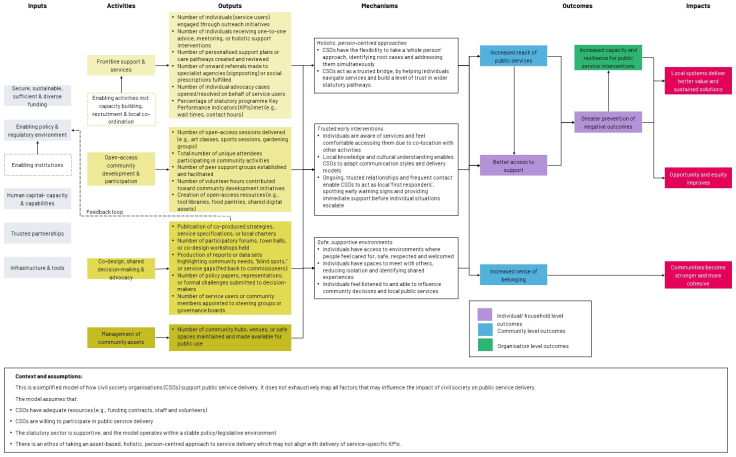
The Theory of Change chart illustrates how the identified Inputs and Activities discussed on page 9 result in three outcome pathways. In theory, pursued effectively, these would lead to outcomes including local systems delivering better value & sustained solutions, improvements to opportunity and equity, and stronger, more cohesive communities.
3. Inputs and activities
3.1 Inputs
This section provides an overview of the resources, assets, and conditions available to civil society organisations to enable them to deliver public services. These inputs are interdependent and often reinforce one another. An absence or weakness in any of these core inputs can inhibit a civil society organisation’s ability to effectively deliver public services and progress through the Theory of Change.
This research identified five key inputs that support the delivery of civil society activities in public services, which are described below.
Secure, sustainable, sufficient and diverse funding
Funding provides a foundation for civil society organisations to operate. These financial resources include traditional grants and contracts, as well as social investment (e.g., loan finance) which enables organisations to invest for delivery. A resilient funding mix relies on funding from multiple, complex sources (e.g., government, private sector, trusts and foundations, investors, philanthropists), and appropriate and balanced funding mechanisms.
Enabling policy and regulatory environment
The policy and regulatory environment shapes how effectively civil society organisations can operate. This includes primary and secondary legislation, regulations and guidance, and supportive policy contexts and narratives promoting the value of civil society’s role in public services. For example, the Civil Society Covenant is a formal expression of the aim to reset the relationship between the state and civil society. An enabling policy and regulatory environment may also include the presence of diverse convened fora, alignment between institutions and agendas, and proportionate and accessible commissioning frameworks.
This environment is supported by key enabling institutions, including:
- National government setting the overall policy direction, language and tone surrounding interactions between the state and civil society
- National government, public bodies and local authorities acting as convenors, enablers, and purchasers of third-sector services
- Public bodies and local commissioners providing strategic buy-in
- The Charity Commission for England and Wales acting as a regulatory enabler.
Infrastructure and tools
Infrastructure and tools can also facilitate public service delivery and community engagement through shared physical spaces (e.g., community hubs) and venue assets which can act as foundations for reaching communities, delivering place-based services and generating income for the sector through venue hire. This is strongly linked to activities related to community assets that civil society organisations undertake, for example, managing and operating estates and venues.
This input encompasses digital infrastructure and tools (e.g., data systems and platforms) which optimise delivery and administration. Dedicated capacity building resources (e.g., expert advice, guidance and support) can also ensure that civil society organisations have the operational capabilities and maturity to manage complex public contracts. Capacity building can be delivered by civil society organisations themselves – through civil society infrastructure - acting as an enabling activity to the wider work of the sector. However, support may also be delivered by public and private providers acting as an input to wider civil society activities.
Human capital – capacity and capabilities
Intangible assets are often critical to the strength of organisations, and civil society organisations rely heavily upon staff and volunteer commitment to deliver their activities, leveraging their skills, specialist (often local) knowledge, lived experience, and relationships with and within communities.
Furthermore, civil society organisations require time – specifically, time required for iteration, delivery and building deep-rooted relationships in and within communities.
Trusted partnerships
The relational infrastructure civil society organisations hold is a fundamental input for effective delivery. This includes trusted relationships in and within communities of place and/or identity, as well as access to partners and collaborative networks, enabling cross-sector coordination and multi-agency approaches to entrenched local problems. This trust relies on the sector’s respected and valued institutional independence, which allows them to act without the institutional “baggage” frequently ascribed to statutory authorities.
3.2 Activities
The inputs described above lead to a diverse range of activities delivered by civil society organisations in support of public service delivery. We have grouped these into five categories below.
Activities related to frontline support and services, including:
- Reaching and engaging service users
- Programme and project development and delivery
- Providing one-to-one advice, mentoring and holistic support
- Signposting, referrals and link-working (e.g., social prescribing)
- Advocating for service users e.g., attending appointments, helping individuals understand their rights or challenge decisions
- Delivering commissioned statutory programmes
Activities related to open-access community development and participation, including:
- Local activities (e.g., art, sport, music, gardening)
- Peer support models
- Broader community development initiatives (e.g., establishing new community groups, organising neighbourhood-wide events like local markets, cultural festivals, or coordinating community-led responses to local issues such as food bank donations)
It is important to note that the relationship between community development and participation and frontline support and services is complex and reciprocal. Community development as a purposeful approach often involves bringing groups of people together to develop new frontline activities and services to meet locally identified needs. At the same time, new frontline activities and services established independently of an intentional community development process may serve to develop a community, by building new, trusted relationships, nurturing collaboration and creating a greater sense of community connectedness.
Activities related to co-design, shared decision-making and advocacy, including:
- Shared strategy development and co-design
- Participatory decision-making
- Citizen input (e.g., providing data for research on unmet community needs)
- Challenging local policy
As well as influencing the outcomes of public service delivery, these activities may also shape the wider enabling policy and regulatory environment, an input to the model.
Activities related to community assets, including:
- Estate/venue management and operation
Enabling activities to build the capacity and capability of the sector
These groups of activities are supported by wider enabling activities delivered by civil society organisations, focused on building the capacity and capability of the sector. These activities are often (but not exclusively) delivered by infrastructure organisations, such as Councils for Voluntary Service (CVS), helping to support the local sector to build resilience and sustainability. Wider research has identified five activities of local civil society infrastructure organisations (Ipsos UK et al., 2025). Enabling activities include:
- Recruiting, training (e.g., adapting to new service delivery models, enhancing diversity and inclusion) and engaging committed volunteers and staff
- Collaborating and coordinating across the sector (e.g., convening networks, building cross-sector partnerships, sharing intelligence and best practice)
- Improving financial management and confidence in assessing financial risk, contract readiness and governance
- Developing an organisational culture equipped for public service delivery (e.g., contract compliance and monitoring, learning and evaluation)
4. Mechanisms and outcomes
4.1 Mechanisms
Mechanisms are the underlying processes within a Theory of Change, triggered by the inputs and activities, that explain how and why civil society activities delivering public services translate into outcomes. This research has identified three overlapping mechanisms, which are described below. These mechanisms work together to result in positive outcomes for individuals and households, communities and organisations.
Holistic, person-centred approaches
By delivering activities related to frontline support and services including signposting and support in navigating services, civil society organisations offer holistic, person-centred approaches. This acts as a mechanism to realise key outcomes by drawing on the flexibility of civil society organisations to:
- Take a “whole person” approach, identifying root cases and addressing them simultaneously.
- Act as a trusted bridge, by helping individuals navigate services and build a level of trust in wider statutory pathways.
Dayson, Baker & Rees (2018) found that many small- and medium- sized charities are more likely to look beyond an initial presenting issue and focus on general wellbeing, rather than fitting individuals into rigid service delivery models when they may have multiple needs which require flexible, bespoke support. Additionally, through their systematic evaluation of social prescribing, Bickerdike et al. (2017, p1-4), note that the voluntary and community sector commonly provides a range of services, including practical information and advice, exercise and other physical activities, community activities such as lunch clubs or art, and befriending and enabling services. In practice, this support included signposting to housing, welfare and debt advice, alongside counselling, adult education and self-help support groups. This can help increase the reach of public services and give individuals improved access to a wider range of support better tailored to their needs, leading to greater prevention of negative outcomes.
Systematic review of the effectiveness of interventions to reduce homelessness
A Campbell systematic review (Munthe-Kaas, Berg & Blaasvær, 2018) of 43 randomised controlled trials of interventions for individuals experiencing or at risk of homelessness found that high intensity Housing First models (often delivered by civil society) improved housing stability in comparison with usual services. This included evidence of the benefits of case management, where clients are assigned case managers who assess, plan and facilitate access to services necessary for the individual. The review found this approach reduced the number of individuals who are homeless after 12-18 months by almost half and may increase the number of people living in stable housing after 12-18 months.
Trusted early interventions
By delivering activities related to community development and participation (including local activities and peer support models), and frontline support and services (such as reaching and engaging service users, providing one-to-one advice, signposting, mentoring and holistic support, designing and delivering programmes), civil society organisations help to establish trusted early interventions in local places. This acts as a mechanism to realise key outcomes by supporting individuals to:
- Become aware of services and feel comfortable accessing them due to co-location with other activities.
- Receive support that is tailored to their needs, as local knowledge and cultural understanding enable civil society organisations to adapt communication styles and delivery models.
- Develop ongoing, trusted relationships and frequent contact, which enables civil society organisations to act as local “first responders” who spot early warning signs and provide immediate support before individual situations escalate.
Evidence linking these activities to long-term outcomes is largely qualitative and case-study based. The literature suggests that civil society organisations build this trust partly because of their independence from formal government structures and lack of “institutional baggage”, which allows them to be seen as safe, welcoming spaces that are non-judgemental and non-directive (HM Treasury, 2002, p.16). For example, one qualitative study (El-Hoss et al., 2023) found that a greater emphasis on informality and relationships supported them to build trust. Staff and volunteers across civil society organisations explained how parents could fear opening up about financial, mental health, addiction or other concerns out of worry this might expose them to professional judgement or potentially allegations of neglectful parenting. Another paper suggests it is the deep embeddedness within local communities that allows small- and medium-sized charities to act as “first responders” (Dayson, Baker & Rees, 2018, p.14) helping individuals to access support and reaching wider parts of the community including more marginalised groups.
Safe, supportive environments
By providing access to community assets through estate and venue management and operation, delivering activities related to co-design and shared decision making, and community development and participation (including local activities and peer support models), civil society organisations help to create safe and supportive environments in local places. This acts as a mechanism to realise key outcomes by supporting individuals to:
- Access environments where people feel cared for, safe, respected and welcomed.
- Have spaces to meet with others, reducing isolation and identifying shared experiences.
- Feel listened to and empowered, which may make them feel able and motivated to influence local decisions in the future.
There is a feedback link between this mechanism and the input “enabling policy and regulatory environment”. The creation of safe, supportive environments enables civil society organisations to share citizen input with enabling institutions. Civil society can represent the views of the local people for decision-makers and act as an equal partner in conversations with national government, local authorities, public bodies and local commissioners. The insights generated from these safe spaces help ensure that future policies, guidance and commissioning frameworks are grounded in the needs of the community.
Participation in co-production initiatives can also support increased trust. For example, the evaluation of the 1997-2010 Labour government’s New Deal for Communities (NDC) programme involving resident participation in shaping interventions found that those involved in activities experienced improved trust in local agencies when compared to those not involved (Crisp et al., 2023, p.18).
There is some evidence that creating welcoming, open environments including community hubs can foster an increased sense of belonging and help individuals access support. For example, in the Big Local programme, residents mentioned the importance of these convening environments and the role of community hubs in providing spaces for signposting and advice services (Popay et al., 2023, p.72). This is seen as a key distinguishing factor of civil society provision, with one study identifying this as especially relevant to smaller charities in comparison with larger charities or public services (Dayson, Baker & Rees, 2018, p.16).
Creating safe spaces: the Youth Investment Fund
Through the Social and Emotional Learning Program Quality Assessment (SEL PQA), the Youth Investment Fund (YIF) found that, when assessing the quality of youth provision settings, civil society grant holders self-rated having a “safe space” as their highest quality domain (Scanlon et al., 2021). It achieved a mean rating of 4.3 out of 5 among the following categories: engagement (3.1), interaction (3.5), and supportive environment (3.8). The “safe space” domain was comprised of the following scales:
- Emotional safety – psychological and emotional safety is promoted
- Interaction with adults – staff engage with young people in positive ways
- Warm welcome – staff provide a welcoming atmosphere
This indicates that youth organisations view themselves as being particularly strong at providing this foundational environment of safety. Anonymous feedback from young people within the wider qualitative evaluation reinforced this, with participants rating provision highly in terms of experiencing a safe and supportive environment.
4.2 Outcomes
Individual or household level outcomes
Better access to support (short-term)
As they are deeply embedded within local areas and known to community members, civil society organisations can intervene quickly, providing responsive support that mirrors the needs of individuals, households and wider communities. Adopting a person-centred approach may enable frontline staff to adapt to the complex needs of users. This “family feel”, that the literature suggests is unique to small- and medium-sized charities, creates the foundation for greater long-term engagement in services, ensuring individuals remain connected to support (Dayson, Baker & Rees, 2018).
Survey evidence consistently demonstrates widespread public use of charitable services, though estimates vary depending on how “using charitable services” is defined. One survey (Glennie & Whillans-Welldrake, 2014, p.13) found that nine of every ten households (93%) have used at least one charitable service at some time in the past. This broad definition encompassed everything from purchasing something from a charity shop and visiting a charitably-run museum through to receiving direct support. When focusing on more direct forms of support, the same survey found that in the previous twelve months, 10% of respondents had attended counselling, a support group or received mental health support, 7% had received medical support, and 4% had received other forms of ongoing assistance such as meals on wheels or help with food and bills (Glennie & Whillans-Welldrake, 2014, p.15).
More recent data suggests that reliance on charitable services for essential support has grown significantly. Research from the Charity Commission for England and Wales found that charities are now supporting three times as many people with essential aid compared to five years ago (BMG Research, 2025), noting a rise from 3% of people receiving food, medical or financial support from charitable organisations in 2020 compared to 9% in 2025. ONS data indicates that 2% of adults used support from charities including foodbanks because of the increased cost of living at the start of 2026 (ONS, 2026). This growth in use of charity services has occurred alongside increased financial pressures on the sector itself, highlighting both a sector under pressure, as well as the expanding role civil society plays in meeting public need.
As described above, there is some evidence that person-centred approaches may result in improved outcomes for individuals and households. One study of social prescribing (Wilding et al., 2025, p.881) found that the rollout of link workers was associated with small improvements in patient experience and slightly better outcomes for population groups. At a community level, they suggest an additional full-time equivalent (FTE) social prescribing link worker per 50,000 patients in all Primary Care Networks (PCNs) would be associated with an increase nationally in approximately 47,000 people reporting confidence in managing long-term conditions and 132,000 people reporting having a good GP experience (Wilding et al., 2025, p.887).
However, often evidence focuses on the prevention of negative outcomes (set out below) rather than exploring the increased access to support that results from civil society delivery of public services.
Greater prevention of negative outcomes (long-term)
By acting as local first responders, civil society organisations can be uniquely positioned to engage individuals before their situations escalate (or revert) into crisis, for example being admitted to A&E or having children removed from a family’s care by social services. This preventative role may operate through two distinct but complementary pathways: 1) addressing root causes to prevent escalation, and 2) providing alternative pathways to redirect individual trajectories.
Through trusted, ongoing relationships and early interventions, civil society may help address the root causes of issues such as substance misuse, housing insecurity, or mental health challenges. This preventative approach can reduce the likelihood of negative outcomes that may require urgent, critical care pathways. Research from the Early Intervention Foundation (Chowdry & Fitzsimons, 2016, p.8) estimated that reactive spending on acute services - intervening only once problems have escalated and an individual’s foundational needs (e.g., sustenance, shelter, hygiene, health, safety) have worsened over time - costs approximately £17 billion annually in England and Wales, underscoring the potential value of earlier civil society-led intervention. This is spread across different areas of the public sector, with the largest shares borne by local authorities (£6.4bn), the NHS (£3.7bn) and the Department for Work and Pensions (£2.7bn). In this way, acting first can reduce pressure on statutory services later down the line.
Reduction in use of A&E services
The Cornwall Frequent Attenders project, a civil society-led intervention, worked with residents of Cornwall aged 18+ who were experiencing issues related to substance misuse and had made 8+ visits to A&E or 2+ hospital admissions within a year. The intervention used intensive, trusted outreach and support (e.g., key worker outreach, home visits, drop-in sessions, and crisis management) to reduce the use of A&E services by individuals with alcohol and drug dependencies (Outes Velarde et al., 2026). The target of the model over the lifetime of the project (2018–2023) was for 233 service users to achieve a sustained reduction of use of A&E services after 18 months. As of September 2024, the intervention saw 271 service users achieve a sustained reduction in use of A&E services after 18 months. This was a 106% achievement of their target.
Beyond preventing negative outcomes, civil society organisations also create positive alternative pathways. This is especially evident in youth provision, where civil society organisations offer opportunities for different forms of education, training, and relationship-building that can fundamentally redirect life trajectories. An evaluation of St Giles Trust’s work in Wales (JH Consulting, 2023, p.8) found that of 140 highly vulnerable children receiving in-depth specialist support, 74% successfully exited county lines exploitation, and a further 22 moved into legitimate employment. The evaluation cites the caseworkers’ lived experience, ability to connect with young people, tenacity and dedication as the central mechanism for this success.
Similarly, an evaluation of the Youth Investment Fund (Scanlon et al., 2021, p.2) also found a link between open access youth provision and increases in outcomes including self-confidence, leadership, social skills, communication, social connectedness, and wellbeing. By gathering baseline and follow-up data across the funded organisations, the evaluation demonstrated that young people receiving this open access youth provision made greater improvements in social and emotional learning, social connectedness, and wellbeing than a comparison group of young people who did not access this provision.
Community level outcomes
Increased sense of belonging (short-term)
At the community level, the activities of civil society organisations may foster improved community cohesion and a greater sense of belonging. By bringing people together and creating shared civic spaces, civil society can help to increase social capital and local networks.
For individuals, engaging with civil society organisations’ activities creates a sense of personal belonging and connection - whether through open-access youth provision, peer support groups, or community hubs. By participating in activities and forming relationships based on shared experiences, individuals may develop increased social capital and community trust. This sense of belonging is particularly important for marginalised groups who may experience difficulties mixing with their local communities.
Fostering community connectedness and social-emotional skills through Uniformed Youth Organisations
The Uniformed Youth Fund (2022–2025) was a government-backed initiative that provided £18.3 million to expand the capacity of Uniformed Youth Organisations (UYOs) such as the Scouts, Girlguiding, and Volunteer Police Cadets. The fund specifically targeted areas of deprivation to provide young people with structured activities, adventures away from home, and volunteering opportunities designed to build life skills and relationships.
Through a quasi-experimental design evaluation (Dartington Service Design Lab & Ipsos UK, 2025) comparing UYO members with a matched comparison group, participation was found to have a statistically significant positive impact on young people’s social and emotional development, which are key drivers of community connectedness. This was evidenced by:
- Greater sense of responsibility: Participants scored 8 percentage points higher in responsibility (78% vs 70%). Notably, this impact was even stronger for young people from deprived areas, who scored 11 percentage points higher than their non-member peers.
- Enhanced empathy and initiative: UYO members consistently self-reported higher levels of empathy, problem-solving, and initiative compared to non-members.
The programme achieved these outcomes by placing young people in supportive environments where they spend time with peers in team-building exercises. This enhanced cooperation skills, communication, and confidence, ultimately fostering greater community connections and wellbeing.
Increased reach of public services (short-term)
As they are deeply embedded within specific geographies and communities of identity, civil society organisations can tailor their communication styles and service delivery to meet localised and culturally specific needs. Using local knowledge, cultural understanding, and ongoing relationships with individuals, organisations can help to target and engage communities in safe spaces without stigma. This may mean more service users can access support both from civil society organisations themselves and wider public services, including underserved and marginalised groups.
For example, the evaluation of Housing First pilots in England (Pleace & Culhane, 2024, p.35) found a statistically significant increase in the number of Housing First clients registered with a GP after twelve months. This was supported by the provision of stable housing as well as the role of Housing First support workers actively helping clients to navigate and engage with public services including registering for and attending healthcare appointments. However, it is worth noting the study found no other statistically significant differences in the levels of use of healthcare services between 6 months and 12 months.
There is limited evidence on the extent to which the delivery of public services by civil society organisations results in greater reach into communities. While there is some descriptive evidence of the cohorts participating in specific programmes delivered by civil society, there is little comparative data with other types of provision or an assessment of causation based on the delivery model.
Reaching a broad range of young people: the Youth Investment Fund
Through a mixed-methods evaluation (Scanlon et al., 2021) involving the collection of beneficiary data for over 56,000 young people, this study found that open-access youth provision successfully engaged a broad range of young people from deprived and minority backgrounds. The YIF process evaluation suggested that offering universal provision played a crucial role in reaching and engaging young people locally. It was seen as playing a “funnelling” role, in which provision could identify and connect with individuals who might need a more targeted offer.
This was evidenced by:
- Reaching deprived youth: A collective 80% of the young people reached by YIF-funded provision lived across the five most deprived deciles in the country, with the highest proportions based in the two most deprived deciles (1–2).
- Engaging minority groups: YIF data shows that grant holders were successful at engaging young people from Black, Asian and Minority Ethnic backgrounds, specifically young Black people and young people from mixed or multiple ethnic groups.
Organisation level outcomes
Increased capacity and resilience for public service intervention (medium-term)
By acting as first responders and providing earlier interventions, civil society can reduce the likelihood of outcomes that may require either urgent, statutory, judicial, or formal responses and services. This could allow public service organisations to focus on supporting those where statutory solutions are still the most appropriate response pathway.
Civil society organisations can also – at a cost – expand capacity by leveraging additional resources, such as support provided by volunteers. A sizeable proportion of the adult population in England freely gives their time to formally volunteer through an organisation or club. 17% of adults in England participate in formal volunteering at least once a month. 28% of adults formally volunteer less frequently, at least once over the course of a year (Community Life Survey, 2024/25).
As seen during the response to the Covid-19 pandemic, there is also a public willingness to lend a hand within and alongside public services to help alleviate acute pressures. 750,000 people signed up to volunteer through the NHS Volunteer Responders scheme in its first week, as a strong signal of the public outpouring of support for both the health service and their neighbours. The rise of mutual aid groups similarly saw a surge of support in hyperlocal contexts, with communities taking the lead on the local response when local statutory services were less able to do so (Tiratelli and Kaye, 2020).
There are wider economic benefits to leveraging volunteer support. One study (Cannings et al., 2025) estimates the total economic impact of formal volunteering (including wellbeing benefits) in England for 2021/22 at £24.69 billion. This represents an average economic impact of £2,012 per volunteer. Crucially, the cost of replacing volunteers with paid staff in England in 2021/22 (the replacement cost) was estimated at £16.43 billion, demonstrating the high value of such volunteer support. However, leveraging such resources still comes at a cost. Volunteers need to be trained and managed well to deliver high quality services, which requires funding that is sometimes not accounted for in the overall value of a contract.
5. Impacts
By achieving the outcomes described above, we would expect to see the realisation of three long-term impacts resulting from civil society delivering public services.
5.1 Communities become stronger and more cohesive
This includes increasing horizontal trust, such as between peers and neighbours, as well as vertical trust in local services and institutions. There is some data on public perceptions (Glennie & Whillans-Welldrake, 2014, p.19) indicating that charities and civil society organisations are seen to “encourage people from different backgrounds, ages and cultural groups to come together” and “help to create a more vibrant community life” whilst generating “a sense of community pride.” These views are held more strongly by those who have used a charity the most recently.
Communities may also see greater inclusion and mixing across groups. An evaluation of the Hull UK City of Culture 2017 (University of Hull, 2021, p.18) found over 2,400 volunteers collectively contributed 337,000 hours to support the city’s cultural events over the course of the year. Furthermore, over nine in ten residents participated in at least one cultural activity during 2017 (University of Hull, 2021, p.29). Longitudinal evaluations and focus groups highlighted that participating significantly boosted volunteers’ personal wellbeing, their pride and perceptions of the city, and their overall sense of community. There is additionally some evidence of enhanced place attachment and civic pride from the Big Local programme (Popay et al., 2023). This demonstrates that community-led initiatives can increase residents’ pride in their area, with communities actively challenging negative place-based stigma.
5.2 Opportunity and equity improves
This includes individuals and households experiencing enhanced wellbeing and rights, improved access to opportunities and social mobility, as well as reductions in inequality and poverty across communities. Improved life chances and social mobility are more strongly evidenced in relation to the delivery of specific programmes led by civil society, with evidence of the economic value generated through improved outcomes and reduced pressure on statutory services. Examples include:
- An evaluation of the WeMindTheGap programme (Hatch Regeneris, 2020), which supports young people in North Wales and the North West who are struggling with traditional education, estimated that the programme generated £7.9 million in social value from £1.7 million in costs.
- Economic analysis of The Clink (Pro Bono Economics, 2020), a charity working with ex-offenders, demonstrated that each reoffence avoided saves society at least £111,224, generating £4.80 in social and economic benefits for every £1 of cost.
- The evaluation of Housing First pilots (Pleace & Culhane, 2024) found the provision of stable, unconditional housing as a platform combined with intensive, person-centred support resulted in an increased average mental wellbeing score (using the Warwick-Edinburgh Mental Wellbeing Scale) after twelve months of support. This improvement was valued at £6,246 per person.
5.3 Local systems deliver better value and sustained solutions
This includes a greater emphasis on whole-system solutions to entrenched problems through multi-agency approaches. Qualitative evidence from the Big Local programme (Popay et al., 2023) shows that community partnerships built alliances with local government, police, and other agencies, shifting power dynamics and creating more collaborative local systems. Similarly, insights from qualitative case studies (Dayson, Baker & Rees, 2018, p.15) exploring the role of small and medium-sized charities described how they act as the “glue” that holds communities and services together, providing stability and continuity. The authors suggest their embeddedness in local networks enhances the overall ability of public services to understand and respond to local needs, more effectively joining up local systems.
Value for money and cost-saving efficiencies can also result from greater prevention and early help to reduce downstream costs, as described above.
6. Unintended consequences and risks
There are several challenges and potential negative outcomes relating to civil society involvement in public service delivery, particularly through government contracting. This includes:
- Increasing marketisation of public services that may evolve from civil society delivery in a context of greater competitive contracting (Rees and Mullins, 2016). This could result in greater competition in public services, that enables the private sector to bid for, win and deliver contracts that were once the domain of the third sector (Damm, 2014; Rees et al, 2024).
- Even when services remain within civil society, the nature of government funding can create issues (Milbourne, 2009). If organisations are paid based on narrow KPIs, such as the “number of activities delivered,” it could undermine their ability to provide the holistic, person-centred approaches embedded in the Theory of Change.
- Public sector contracting processes typically require organisations to demonstrate impact using standardised metrics, reporting frameworks, and language aligned with government priorities. While demonstrating proof of concept is important, these requirements may constrain civil society organisations’ ability to articulate their distinctive value in ways that reflect how they work. The holistic, relationship-based approaches that characterise civil society delivery may be difficult to capture through narrow, quantitative KPIs.
- Participating in public sector contracting requires significant investment in bidding processes, contract compliance, and monitoring and evaluation activities. The bureaucratic requirements of these processes can place disproportionate strain on civil society organisations, particularly smaller organisations with limited capacity or those that are volunteer-led. This may require retraining or recruiting staff, diverting time away from frontline delivery towards administrative functions, and investing in new systems or software. For smaller organisations, these demands may prove prohibitive, potentially excluding them from public service delivery or undermining the flexibility and responsiveness that enables their distinctive contribution.
There may also be negative impacts on the civil society sector itself including:
- Reduced collaboration between civil society organisations and attendant fragmentation of services within a contracting and wider funding environment that incentivises local competition between service providers (Buckingham, 2009; 2012; Milbourne and Cushman, 2015).
- Pressures on the workforce and charitable finances, with the potential for staff and volunteer burnout as well as risks around contracts not covering the full cost of providing public services (Cunningham et al, 2013; 2014; NCVO, 2024). An NCVO survey (2024) found that 40% of charities responding stated that grants and contracts never covered the true costs, and this had been exacerbated by inflation increases.
7. Conclusions and recommendations
7.1 Conclusions
This research has developed a Theory of Change articulating how civil society organisations contribute to public service delivery, identifying five key inputs (funding, enabling policy environment, infrastructure and tools, human capital, and trusted partnerships) that support a diverse range of activities. These activities operate through three core mechanisms: holistic person-centred approaches, trusted early interventions, and safe supportive environments. These generate outcomes at individual, household, community, and organisational levels.
The evidence reviewed suggests that civil society organisations bring distinctive qualities to public service delivery that differentiate them from public and private sector provision:
- Deep community embeddedness: Civil society organisations leverage local knowledge, cultural understanding, and established relationships to reach marginalised and underserved populations who may not engage with statutory services directly.
- Flexibility and responsiveness: The ability to adopt “whole person” approaches, addressing root causes and multiple needs simultaneously rather than fitting individuals into rigid service delivery models.
- Trust and independence: Operating without the “institutional baggage” often associated with statutory authorities, civil society organisations can create safe, non-judgemental spaces that encourage earlier engagement with support.
- Bridging function: Acting as intermediaries between individuals and statutory services, civil society organisations help build trust in wider public systems while providing navigation support through complex service landscapes.
The evidence reveals significant strengths but also notable gaps. There is reasonably robust evidence, including quasi-experimental studies, demonstrating that specific civil society-led interventions can achieve positive outcomes in areas such as housing stability, reduced A&E attendance, and improved wellbeing. Qualitative evidence consistently highlights the mechanisms through which civil society creates value, particularly around trust-building, early intervention, and holistic support. Economic analyses of individual programmes also demonstrate favourable cost-benefit ratios.
However, there is a fundamental lack of comparative research examining outcomes across public, private, and civil society delivery of equivalent services. Most studies evaluate civil society programmes in isolation rather than comparing delivery models. Most evidence reviewed scored at Level 2 or below on the Maryland Scientific Methods Scale, limiting the ability to establish causal relationships between civil society delivery and improved outcomes. There are also attributions challenges as disentangling the specific contribution of civil society delivery from other factors (funding levels, programme design, target population characteristics) remains methodologically difficult. Finally, evidence on the sustained impacts and system-level change is largely descriptive or based on case studies rather than rigorous longitudinal evaluation. Although we have not conducted a systematic literature review as part of this study, this highlights the limitations in assessing the current evidence base to draw meaningful conclusions about the impact of civil society delivery of public services.
Nevertheless, there is openness amongst the public to charitable involvement in public service delivery, with greater support for charities compared to businesses delivering specific services. One survey (Ipsos, 2024, p.17) found the greatest support for charities delivering employment and skill support for adults followed by mental health services and social care. This points to the importance of understanding the impact of civil society delivery models on key outcomes to avoid potential unintended consequences and support positive long-term impacts for individuals, communities and the system overall.
Figure 2: Attitudes towards charities delivering public services
| Charities should be allowed to deliver public services to meet demand | 48% |
| Public services should only be provided by public organisations like government departments and local councils | 37% |
| Neither/Nor | 15% |
| – | Support | Neither/Nor | Don’t know | Oppose | – |
|---|---|---|---|---|---|
| Employment and skills support for adults | 66% | 16% | 4% | 14% | |
| Mental Health Services | 60% | 14% | 4% | 22% | |
| Social care services | 57% | 16% | 5% | 22% | |
| Education (schools, colleges, universities, adult education) | 45% | 18% | 5% | 32% | |
| Healthcare (GP, hospitals) | 43% | 17% | 4% | 36% | |
| Utilities (electricity, gas, water supply and telecommunications ) | 33% | 21% | 6% | 40% |
Question asked: Below is a list of priorities the government could have when planning and delivering public services. For each pair, which comes closest to your opinion?
Base: 5,875 UK adults, age 16+, interviewed via the Ipsos UK Knowledge Panel, Fieldwork dates: 25th April - 1st May 2024.
7.2 Recommendations
Filling priority evidence gaps
The light touch evidence review for this project has re-emphasised a longstanding and significant gap in research and evaluation, namely that which compares the outcomes and impact of public service provision across public, private and civil society sectors. Research tends to be sector (or programme) specific, and at best seeks to compare control and treatment groups for specific approaches or interventions. Comparative cross-sector research could more persuasively highlight the distinctive contribution, value and impact of civil society provision. It has often been thwarted by complex programme design, such as services involving close cross-sector partnership working or multi-tiered, cross-sectoral supply chains. However, conducting more comparative cross-sector research is unlikely to be a quick or low-cost fix as it is methodologically demanding and resource-intensive.
Comparability would need to be built into the research design. For example, by focusing on provision in single fields (e.g., criminal justice, mental health), or across limited programmes or interventions, and with an agreed and commonly used assessment framework and outcome indicators. There are a number of significant challenges to this work, for example, establishing sufficient control to enable meaningful comparison, in circumstances where service users are often segmented by levels of need and different sectors work with different cohorts. Another key challenge is the need to plan the evaluation design early (before intervention delivery) to align factors like eligibility criteria or data standards and establish a programme design that enables like-for-like comparison.
A civil society and public services evidence working group
DCMS, and government more broadly, is unlikely to have the capacity to solve the evidence problem on the impact of civil society in public services alone. There is merit in drawing on wider expertise by convening a working group of relevant stakeholders across civil society, government departments and evaluation and data organisations. It could have a time-limited remit to (a) assess and agree strengths, weaknesses and gaps in the current landscape of evidence and extant data infrastructure; (b) identify priorities for action; (c) support efforts to fill the gaps in the evidence base.
Explore opportunities for greater data linkage with other government department datasets
Data linkage may also help to fill current evidence gaps. Civil society delivery of public services spans a wide range of policy areas cutting across government departments. This makes it more difficult to build a comprehensive picture of the impact of civil society involvement as datasets are siloed.
DCMS may be able to help facilitate greater join-up between different sources, helping to build a fuller assessment of the impact civil society has on key outcomes described in the Theory of Change. For example, this could include exploring opportunities to access NHS datasets (A&E attendances for ambulatory care sensitive conditions; emergency admissions and non-elective bed days (HES); GP Did Not Attend (DNA) rate and avoidable appointments), data related to crime and criminal justice (police incidents (ASB, neighbourhood crime, domestic violence, reoffending rates), housing (homelessness prevention duty success and repeat homelessness (H-CLIC)) and social care (re-referrals)).
Options for supporting open data approaches across sectors could also help enable more comparative analysis of public, private and civil society approaches to service delivery. This could be explored as part of an evidence group.
Simplified messaging on civil society and public services
Following the creation of a detailed Theory of Change as part of this project, there is some scope to articulate a set of clear and simplified messages about the rationale for and expected impacts of civil society in public services. The messages could follow the outcome and impact pathways detailed in the Theory of Change, which could be reviewed and refined with wider sector stakeholders.
This would enable DCMS to engage with stakeholders based on a clearer, more confident and realistic articulation of rationales, without having to present and explain the model as a whole. It may create the circumstances for a shared understanding of civil society’s role in public services, shared ownership of the evidence gaps, and a keener sense of the bounds of responsibility between sectors.
8. Annex 1: Strength of evidence assessment
As part of this research, we conducted a targeted evidence scan of key documents related to the delivery of public services by civil society organisations. This was largely a purposive look at the existing evidence based on an initial review of documents generated by the research team and DCMS supported by targeted searches to inform and further develop the Theory of Change. The initial inclusion/exclusion criteria focused on:
- Geographic scope: The scan prioritised UK-based literature to ensure direct relevance. However, high-quality, non-UK based literature was to be included in cases where the findings were deemed transferable to the UK context.
- Time frame: The scan was kept broad to include foundational evidence dating back to the previous Labour Government (1997–2010).
- Quality and type of evidence: The scan focused on empirical research and formal evaluation evidence (such as impact evaluations, quasi-experimental studies and longitudinal mixed-methods research). General commentary, opinion pieces and theoretical literature were excluded unless used for context. While these studies are referenced in the narrative Theory of Change, they have largely been excluded from the evidence assessment below.
- Sector focus: The scan targeted literature across three primary public service sectors: health and care, community and place, youth services and education. However, sectors were expanded beyond this as part of more targeted searches as the scan evolved.
Below, we have provided a list of the relevant evidence reviewed against each outcome. This reviews each paper on whether it includes supporting evidence for the relevant outcome and provides an assessment of the strength of evidence. This is based on three categories:
- Wider evidence: including studies which do not meet the Maryland Scientific Methods Scale (SMS) level 2 or above but do include qualitative or quantitative evidence suggesting some achievement of outcomes. This category also includes economic analysis of the cost benefits generated by outcomes achievement.
- L2 SMS or below: Studies at this level include simple before-and-after measurements without control groups, single case studies, descriptive programme accounts, and comparisons where the groups are not demonstrated to be equivalent. These studies can show associations and trends but cannot prove that the intervention caused the observed outcomes.
- L3 SMS or above: Studies at this level compare two or more groups—one receiving the intervention and one not—where there is evidence the groups are comparable. This includes quasi-experimental designs with matched comparison groups and statistical techniques to control for confounding variables. These studies provide stronger evidence of causation by demonstrating that outcomes differ between similar groups based on whether they received the intervention.
8.1 Greater prevention of negative outcomes
Greater prevention of negative outcomes
| Paper | Wider evidence | L2 SMS or below | L3 SMS or above |
|---|---|---|---|
| Bach-Mortensen, A., Goodair, B., Degli Esposti, M., Corlet Walker, C., & Barlow, J. (2024). Evidencing the outsourcing of social care provision in England. Nuffield Foundation. | X | ||
| Dayson, C., Baker, L., & Rees, J. (2018). The value of small: In-depth research into the distinctive contribution, value and experiences of small and medium-sized charities in England and Wales. Centre for Regional Economic and Social Research (CRESR), Sheffield Hallam University. | X | ||
| Glennie, A., & Whillans-Welldrake, A. (2014). Charity Street: The value of charity to British households. IPPR (Institute for Public Policy Research). | X | ||
| Outes Velarde, J., Grennan, E., Airoldi, M., Carter, E., & Reedy, J. (2026). GOVERNMENT OUTCOMES LAB ACHIEVING OUTCOMES: LIFE CHANCES FUND FINAL REPORT. Data, outcomes achievement and insights from the Life Chances Fund projects. FINAL REPORT. Government Outcomes Lab (GO Lab), Blavatnik School of Government, University of Oxford. | X | ||
| Pleace, N., & Culhane, D. P. (2024). Housing First: A cost-benefit analysis. Department for Levelling Up, Housing and Communities. | X | ||
| Burgess, G., & Durrant, D. (2019). Reciprocity in the Co-Production of Public Services: The Role of Volunteering through Community Time Exchange? Cambridge Centre for Housing and Planning Research, University of Cambridge and Bartlett School of Planning, University College London. | X | ||
| RBB Economics. (2020). The Clink Charity: An Economic Impact Analysis. | X | ||
| Popay, J., Halliday, E., Mead, R., Townsend, A., Akhter, N., Bambra, C., Barr, B., Anderson de Cuevas, R., Daras, K., Egan, M., Gravenhorst, K., Janke, K., Kasim, A. S., McGowan, V., Ponsford, R., Reynolds, J., & Whitehead, M. (2023). Investigating health and social outcomes of the Big Local community empowerment initiative in England: a mixed method evaluation. | X | ||
| Kantar & London Economics. (2021). National Citizen Service 2019 Summer Evaluation Main report. | X | ||
| Scanlon, K., Bradshaw-Walsh, K., McNeil, B., Bryson, C., Purdon, S., Fischer, J., Piazza, R., & Fowler, B. (2021). The Youth Investment Fund: Learning and Insight Paper Seven. Findings from a shared evaluation of open access youth provision. New Philanthropy Capital (NPC). | X | ||
| Total: | 3 | 4 | 3 |
8.2 Increased sense of belonging
Increased sense of belonging
| Paper | Wider evidence | L2 SMS or below | L3 SMS or above |
|---|---|---|---|
| Dayson, C., Baker, L., & Rees, J. (2018). The value of small: In-depth research into the distinctive contribution, value and experiences of small and medium-sized charities in England and Wales. Centre for Regional Economic and Social Research (CRESR), Sheffield Hallam University. | X | ||
| Fitzpatrick, A., & Williams, J. (2015). Community Organisers. TNS BMRB / Cabinet Office. | X | ||
| Glennie, A., & Whillans-Welldrake, A. (2014). Charity Street: The value of charity to British households. IPPR (Institute for Public Policy Research). | X | ||
| Outes Velarde, J., Grennan, E., Airoldi, M., Carter, E., & Reedy, J. (2026). GOVERNMENT OUTCOMES LAB ACHIEVING OUTCOMES: LIFE CHANCES FUND FINAL REPORT. Data, outcomes achievement and insights from the Life Chances Fund projects. FINAL REPORT. Government Outcomes Lab (GO Lab), Blavatnik School of Government, University of Oxford. | X | ||
| Pleace, N., & Culhane, D. P. (2024). Housing First: A cost-benefit analysis. Department for Levelling Up, Housing and Communities. | X | ||
| Popay, J., Halliday, E., Mead, R., Townsend, A., Akhter, N., Bambra, C., Barr, B., Anderson de Cuevas, R., Daras, K., Egan, M., Gravenhorst, K., Janke, K., Kasim, A. S., McGowan, V., Ponsford, R., Reynolds, J., & Whitehead, M. (2023). Investigating health and social outcomes of the Big Local community empowerment initiative in England: a mixed method evaluation. | X | ||
| Burgess, G., & Durrant, D. (2019). Reciprocity in the Co-Production of Public Services: The Role of Volunteering through Community Time Exchange? Cambridge Centre for Housing and Planning Research, University of Cambridge and Bartlett School of Planning, University College London. | X | ||
| Kantar & London Economics. (2021). National Citizen Service 2019 Summer Evaluation Main report. | X | ||
| Scanlon, K., Bradshaw-Walsh, K., McNeil, B., Bryson, C., Purdon, S., Fischer, J., Piazza, R., & Fowler, B. (2021). The Youth Investment Fund: Learning and Insight Paper Seven. Findings from a shared evaluation of open access youth provision. New Philanthropy Capital (NPC). | X | ||
| Total: | 1 | 6 | 2 |
8.3 Better access to support
Better access to support
| Paper | Wider evidence | L2 SMS or below | L3 SMS or above |
|---|---|---|---|
| Bach-Mortensen, A., Goodair, B., Degli Esposti, M., Corlet Walker, C., & Barlow, J. (2024). Evidencing the outsourcing of social care provision in England. Nuffield Foundation. | X | ||
| Dayson, C., Baker, L., & Rees, J. (2018). The value of small: In-depth research into the distinctive contribution, value and experiences of small and medium-sized charities in England and Wales. Centre for Regional Economic and Social Research (CRESR), Sheffield Hallam University. | X | ||
| Glennie, A., & Whillans-Welldrake, A. (2014). Charity Street: The value of charity to British households. IPPR (Institute for Public Policy Research). | X | ||
| Popay, J., Halliday, E., Mead, R., Townsend, A., Akhter, N., Bambra, C., Barr, B., Anderson de Cuevas, R., Daras, K., Egan, M., Gravenhorst, K., Janke, K., Kasim, A. S., McGowan, V., Ponsford, R., Reynolds, J., & Whitehead, M. (2023). Investigating health and social outcomes of the Big Local community empowerment initiative in England: a mixed method evaluation. | X | ||
| FitzGerald, C., Hameed, T., Rosenbach, F., Macdonald, J. R., & Dixon, R. (2021). Resilience in public service partnerships: evidence from the UK Life Chances Fund. | X | ||
| RBB Economics. (2020). The Clink Charity: An Economic Impact Analysis. | X | ||
| Scanlon, K., Bradshaw-Walsh, K., McNeil, B., Bryson, C., Purdon, S., Fischer, J., Piazza, R., & Fowler, B. (2021). The Youth Investment Fund: Learning and Insight Paper Seven. Findings from a shared evaluation of open access youth provision. New Philanthropy Capital (NPC). | X | ||
| Total: | 2 | 5 | 0 |
8.4 Increased reach of public services
Increased reach of public services
| Paper | Wider evidence | L2 SMS or below | L3 SMS or above |
|---|---|---|---|
| Dayson, C., Baker, L., & Rees, J. (2018). The value of small: In-depth research into the distinctive contribution, value and experiences of small and medium-sized charities in England and Wales. Centre for Regional Economic and Social Research (CRESR), Sheffield Hallam University. | X | ||
| Glennie, A., & Whillans-Welldrake, A. (2014). Charity Street: The value of charity to British households. IPPR (Institute for Public Policy Research). | X | ||
| Pleace, N., & Culhane, D. P. (2024). Housing First: A cost-benefit analysis. Department for Levelling Up, Housing and Communities. | X | ||
| Total: | 1 | 2 | 0 |
8.5 Improved trust in public services
Improved trust in public services
| Paper | Wider evidence | L2 SMS or below | L3 SMS or above |
|---|---|---|---|
| Burgess, G., & Durrant, D. (2019). Reciprocity in the Co-Production of Public Services: The Role of Volunteering through Community Time Exchange? Cambridge Centre for Housing and Planning Research, University of Cambridge and Bartlett School of Planning, University College London. | X | ||
| Kantar & London Economics. (2021). National Citizen Service 2019 Summer Evaluation Main report. | X | ||
| Total: | 0 | 1 | 1 |
8.6 Increased capacity of public services
Increased capacity of public services
| Paper | Wider evidence | L2 SMS or below | L3 SMS or above |
|---|---|---|---|
| Burgess, G., & Durrant, D. (2019). Reciprocity in the Co-Production of Public Services: The Role of Volunteering through Community Time Exchange? Cambridge Centre for Housing and Planning Research, University of Cambridge and Bartlett School of Planning, University College London. | X | ||
| RBB Economics. (2020). The Clink Charity: An Economic Impact Analysis. | X | ||
| Total: | 1 | 1 | 0 |
9. Bibliography
Anastasiu, A., Carter, E., & Airoldi, M. (Eds.). (2026). TRANSFORMING PUBLIC SERVICES: KEY FINDINGS FROM THE EVALUATION OF THE LIFE CHANCES FUND. Evaluation Synthesis Report. Government Outcomes Lab, Blavatnik School of Government, University of Oxford.
Bach-Mortensen, A., Goodair, B., Degli Esposti, M., Corlet Walker, C., & Barlow, J. (2024). Evidencing the outsourcing of social care provision in England. Nuffield Foundation.
Bickerdike, L., Booth, A., Wilson, P. M., Farley, K., & Wright, K. (2017). Social prescribing: less rhetoric and more reality. A systematic review of the evidence. BMJ Open 7:e013384.
Billis, D. and Glennerster, H. (1998) “Human services and the voluntary sector: towards a theory of comparative advantage”, Journal of Social Policy, 27(1), 79–98.
BMG Research. (2025). Public trust in charities 2025. Charity Commission.
Buckingham, H. (2009) “Competition and contracts in the voluntary sector: Exploring the implications for homeless service providers in Southampton”, Policy & Politics, 37(2), 235–254.
Buckingham, H. (2012) “Capturing Diversity: A Typology of Third Sector Organisations’ Responses to Contracting Based on Empirical Evidence from Homelessness Services”, Journal of Social Policy, 41(3), 569–589.
Burgess, G. & Durrant, D. (2019). Reciprocity in the Co-Production of Public Services: The Role of Volunteering through Community Time Exchange? Cambridge Centre for Housing and Planning Research, University of Cambridge and Bartlett School of Planning, University College London.
Chowdry, H. & Fitzsimons, P. (2016). The Cost of Late Intervention: EIF Analysis 2016. Early Intervention Foundation.
Crisp, R., Leather, D., McMullan, J., Pearson, S., & Wilson, I. (2023). “A return to neighbourhood regeneration? Reassessing the benefits of a national strategy for neighbourhood renewal.” Centre for Regional Economic and Social Research (CRESR) at Sheffield Hallam University.
Cunningham, I., Baines, D. and Charlesworth, S. (2014) “Government Funding, Employment Conditions, and Work Organization in Non-Profit Community Services: A Comparative Study”, Public Administration, 92, 582–598.
Cunningham, I., Hearne, G. and James, P. (2013) “Voluntary organisations and employment degradation”, Industrial Relations Journal, 44, 171–188.
Damm, C. (2014) “A mid-term review of third sector involvement in the Work Programme”, Voluntary Sector Review, 5(1), 97–116.
Dartington Service Design Lab & Ipsos UK. (2025). Uniformed Youth Fund evaluation reports: Impact evaluation. Department for Culture, Media and Sport.
Dayson, C., Baker, L., & Rees, J. (2018). The value of small: In-depth research into the distinctive contribution, value and experiences of small and medium-sized charities in England and Wales. Centre for Regional Economic and Social Research (CRESR), Sheffield Hallam University.
El-Hoss, T., Thomas, F., Gradinger, F. & Hughes, S. (2023). The role of the voluntary, community and social enterprise sector in Early Help: Critical reflections from embedded social care research. Child & Family Social Work, 28(4), 1150–1162.
FitzGerald, C., Hameed, T., Rosenbach, F., Macdonald, J. R., & Dixon, R. (2021). Resilience in public service partnerships: evidence from the UK Life Chances Fund.
Fitzpatrick, A., & Williams, J. (2015). Community Organisers. TNS BMRB / Cabinet Office.
Glennie, A., & Whillans-Welldrake, A. (2014). Charity Street: The value of charity to British households. IPPR (Institute for Public Policy Research).
HM Treasury. (2002). The Role of the Voluntary and Community Sector in Service Delivery: A Cross Cutting Review. Her Majesty’s Stationery Office.
Ipsos UK, Centre for Regional Economic and Social Research (at Sheffield Hallam University), Pro Bono Economics, University of the West of Scotland. (2025). Local Civil Society Infrastructure (LCSI) R&D Programme – final research report. Department for Culture, Media and Sport.
JH Consulting. (2023). Evaluating the Impact of the Country Lines in Cymru (CLiC) Project.
Kantar & London Economics. (2021). National Citizen Service 2019 Summer Evaluation Main report.
Kay, J., & Marlow, S. (2020). The Work Programme: A quantitative impact assessment. Department for Work and Pensions.
London Economics, The Social Agency, & New Philanthropy Capital. (2025). Estimating the economic and social value of volunteering. Department for Culture, Media and Sport.
Milbourne, L. (2009) “Remodelling the third sector: advancing collaboration or competition in community-based initiatives?”, Journal of Social Policy, 38(2), 277–297.
Milbourne, L. and Cushman, M. (2015) “Complying, transforming or resisting the new austerity? Realigning social welfare and independent action among English voluntary sector organisations”, Journal of Social Policy, 44(3), 463–485.
Mohan, J., & Clifford, D. (2021). Time Well Spent: A focus on volunteering in public services. NCVO (The National Council for Voluntary Organisations).
Munthe-Kaas, H. M., Berg, R. C., & Blaasvær, N. (2018). Effectiveness of interventions to reduce homelessness: a systematic review and meta-analysis. Campbell Systematic Reviews 14(1):1–281.
NCVO. (2024). The True Cost of Delivering Public Services: A survey of UK charities. London, NCVO.
ONS. (2026). Public opinions and social trends, Great Britain: household finances. Table 2: 4 February to 1 March 2026.
Outes Velarde, J., Grennan, E., Airoldi, M., Carter, E., & Reedy, J. (2026). GOVERNMENT OUTCOMES LAB ACHIEVING OUTCOMES: LIFE CHANCES FUND FINAL REPORT. Data, outcomes achievement and insights from the Life Chances Fund projects. FINAL REPORT. Government Outcomes Lab (GO Lab), Blavatnik School of Government, University of Oxford.
Pleace, N., & Culhane, D. P. (2024). Housing First: A cost-benefit analysis. Department for Levelling Up, Housing and Communities.
Popay, J., Halliday, E., Mead, R., Townsend, A., Akhter, N., Bambra, C., Barr, B., Anderson de Cuevas, R., Daras, K., Egan, M., Gravenhorst, K., Janke, K., Kasim, A. S., McGowan, V., Ponsford, R., Reynolds, J., & Whitehead, M. (2023). Investigating health and social outcomes of the Big Local community empowerment initiative in England: a mixed method evaluation.
Pro Bono Economics. (2020). The Clink Charity: An Economic Impact Analysis.
Rees, J. and Mullins, D. (eds). (2016). The Third Sector Delivering Public Services: Developments, innovations and challenges. Bristol: Policy Press.
Rees, J., Taylor, R. and Damm, C. (2024) “Opening the ‘black box’: Organisational Adaptation and Resistance to institutional isomorphism in a prime-led employment services programme”, Public Policy and Administration, 39(1), 106–124.
Salamon, L. M. (1995). Partners in Public Service: Government-Nonprofit Relations in the Modern Welfare State. Baltimore, MD: Johns Hopkins University Press.
Scanlon, K., Bradshaw-Walsh, K., McNeil, B., Bryson, C., Purdon, S., Fischer, J., Piazza, R., & Fowler, B. (2021). The Youth Investment Fund: Learning and Insight Paper Seven. Findings from a shared evaluation of open access youth provision. New Philanthropy Capital (NPC).
Tiratelli, L. & Kaye, S. (2020). Communities vs. Coronavirus: The rise of Mutual Aid. New Local.
UK Centre for the Measurement of Government Activity (UKCeMGA) at the Office for National Statistics (ONS), National Council for Voluntary Organisations (NCVO), Personal Social Services Research Unit (PSSRU) at the University of Kent, & National Institute of Economic and Social Research (NIESR). (2010). Final report of the Measuring Outcomes for Public Service Users (MOPSU) project.
University of Hull. (2021). Cultural Transformations: The Impacts of Hull UK City of Culture 2017 – Main Evaluation Findings and Reflections.
Wells, P., Chadwick-Coule, T., Dayson, C., & Morgan, G. (2010). Futurebuilders Evaluation: Final Report. Centre for Regional Economic and Social Research, Sheffield Hallam University.
Wilding, A., Agboraw, E., Munford, L., Sutton, M., Mercer, S. W., Salisbury, C., Beeson, M., Wildman, J. and Wilson, P. (2025). British Journal of General Practice 75 (761): e880–e888.
10. Our standards and accreditations
Ipsos’ standards and accreditations provide our clients with the peace of mind that they can always depend on us to deliver reliable, sustainable findings. Our focus on quality and continuous improvement means we have embedded a “right first time” approach throughout our organisation.
ISO 20252
This is the international specific standard for market, opinion and social research, including insights and data analytics. Ipsos UK was the first company in the world to gain this accreditation.
Market Research Society (MRS) Company Partnership
By being an MRS Company Partner, Ipsos UK endorse and support the core MRS brand values of professionalism, research excellence and business effectiveness, and commit to comply with the MRS Code of Conduct throughout the organisation & we were the first company to sign our organisation up to the requirements & self-regulation of the MRS Code; more than 350 companies have followed our lead.
ISO 9001
International general company standard with a focus on continual improvement through quality management systems. In 1994 we became one of the early adopters of the ISO 9001 business standard.
ISO 27001
International standard for information security designed to ensure the selection of adequate and proportionate security controls. Ipsos UK was the first research company in the UK to be awarded this in August 2008.
The UK General Data Protection Regulation (UK GDPR) and the UK Data Protection Act 2018 (DPA)
Ipsos UK is required to comply with the UK General Data Protection Regulation (GDPR) and the UK Data Protection Act (DPA). These cover the processing of personal data and the protection of privacy.
HMG Cyber Essentials
Cyber Essentials defines a set of controls which, when properly implemented, provide organisations with basic protection from the most prevalent forms of threat coming from the internet. This is a government-backed, key deliverable of the UK’s National Cyber Security Programme. Ipsos UK was assessed and validated for certification in 2016.
Fair Data
Ipsos UK is signed up as a “Fair Data” company by agreeing to adhere to twelve core principles. The principles support and complement other standards such as ISOs, and the requirements of data protection legislation.
11. For more information
3 Thomas More Square
London
E1W 1YW
t: +44 (0)20 3059 5000
www.ipsos.com/en-uk
http://twitter.com/IpsosUK
11.1 About Ipsos Public Affairs
Ipsos Public Affairs works closely with national governments, local public services and the not-for-profit sector. Its c.200 research staff focus on public service and policy issues. Each has expertise in a particular part of the public sector, ensuring we have a detailed understanding of specific sectors and policy challenges. Combined with our methods and communications expertise, this helps ensure that our research makes a difference for decision makers and communities.
-
An asset-based approach to service delivery is a way of designing and delivering services. It focuses on identifying and building upon the existing strengths, capabilities and resources of individuals and communities, rather than first looking at their needs, deficits or problems. It aims to mobilise these assets and actively involve individuals and communities to co-produce support for long-term positive outcomes. ↩