Non-technical summary of the protocol for the identification of sepsis cases in administrative datasets: a validation study
Updated 5 February 2026

© Crown copyright 2026
This publication is licensed under the terms of the Open Government Licence v3.0 except where otherwise stated. To view this licence, visit nationalarchives.gov.uk/doc/open-government-licence/version/3 or write to the Information Policy Team, The National Archives, Kew, London TW9 4DU, or email: psi@nationalarchives.gov.uk.
Where we have identified any third party copyright information you will need to obtain permission from the copyright holders concerned.
This publication is available at https://www.gov.uk/government/publications/identifying-sepsis-cases-in-administrative-data-a-validation-study/non-technical-summary-of-the-protocol-for-the-identification-of-sepsis-cases-in-administrative-datasets-a-validation-study
Definitions of important terms
Administrative data
Administrative data is data collected as part of running public services, in this situation this is clinical data used for payment for management or the treatment of patients.
Diagnosis code
Diagnosis code is a code (for instance, A419 for unspecified sepsis) representing an infection or condition that requires treatment.
Estimate
An estimate is a best “guess” based on available scientific or clinical information.
Surveillance
Surveillance means monitoring of numbers of cases of a particular disease or condition in different populations (for instance, different patient groups such as critical care or emergency patients) and over time.
Background
Sepsis is the body’s over reaction to an infection where the immune response damages its own organs and tissues (1). It is a complex syndrome with a high mortality rate and does not have a single gold-standard test to diagnose it. Instead, clinicians rely on a combination of tests and clinical signs and symptoms to screen for, and diagnose, sepsis, making estimating the number of cases of sepsis particularly challenging (1, 2).
Surveillance is the act of monitoring the number of cases of a particular disease or condition in different populations and over time. It is important for accurate surveillance to have a single agreed-upon (standardised) definition of a case of disease. This is to ensure that changes in the numbers of cases over time or between locations are not artificially due to changes in the definition of a “case”. With a standardised definition of a case, we can derive our best guess (estimate) of how many cases there are using different data sources. For instance, we could count the number of patients with a sepsis diagnosis in their notes. However, this is costly and reallocates NHS staff time away from clinical duties or managing patient care. Other sources of this data exist which are used for patient administration and payment for treatment, so-called administrative data, and these are a summary of the patient’s record, limited to information that can be used to calculate payment. This summary record contains information on clinical diagnoses recorded as “diagnosis codes” so for instance, instead of a diagnosis of “unspecified, sepsis”, a patient will have the code A419 listed as their diagnostic code.
Estimates of the number of sepsis cases are typically drawn from these “diagnosis codes” in administrative healthcare datasets; these codes translate clinical diagnoses recorded in patient records upon discharge from the hospital, into data used for administration and payment. As such, these diagnosis codes and the administrative datasets that they sit within, do not have information on repeated physiological measurements, like temperature or blood pressure, which are found in the full patient record.
Previous studies suggest the number of cases of sepsis could be between 39,544 and 147,000 (3, 7). The variation in these estimates likely reflects the different definitions of sepsis, use of different codes, as well as estimates in different patient groups. Changes in the agreed definitions of sepsis over time and variation in the way in which sepsis is recorded in patient notes, as well as the translation into these diagnosis codes, can artificially alter the number of sepsis cases recorded over time when using discharge diagnosis codes (2, 5, 6). For instance, between 2017 and 2018 there was a 300% increase in coded sepsis hospital admissions that coincided with financial incentives to improve detection of sepsis and the implementation of new NHS Digital Coding Guidance in April 2017. This means that we do not currently have a robust or reliable estimate of the number of sepsis cases in England and this is an important reason why there is not an English surveillance programme focussing on sepsis at this time.
It is possible to check the accuracy of these diagnosis codes for sepsis, by comparing against the complete hospital patient record; the accuracy determined would provide us with evidence on how reliable the sepsis diagnosis codes are and whether we are able to use these data to establish a routine public-facing surveillance programme for sepsis in England using pre-existing data.
Surveillance is important for many reasons, but most importantly it should provide an accurate number of cases of a condition, how that changes over time and which populations – such as age groups – have the most cases. These data can then be used for priority setting, resource allocation, design or development of interventions to help prevent, identify or treat the condition and to then monitor how well those interventions may be working by monitoring how interventions may change the number of cases over time. Surveillance using pre-existing data is the least expensive option for estimating and reporting on the number of cases of a condition. In contrast, bespoke surveillance programmes collecting real-time patient data requires the creation of platforms for data entry, in addition to needing NHS staff time to enter patient details onto the systems. Re-using existing datasets collected for other purposes means NHS clinicians, nurses or administrators do not need to take time away from clinical duties to retrieve and enter new data, and saves the costly creation of new data storage systems.
This study aims to assess the accuracy of existing datasets in estimating numbers of sepsis cases. It will do this by confirming whether diagnosis codes along with other available data, such as ICU admissions and prescribing, can accurately and robustly identify clinician-confirmed sepsis cases.
Impact of the study
UKHSA currently regularly use NHS data in several of its surveillance systems. The development of surveillance of the burden of all infections is currently ongoing and is expected to be launched later this financial year. Should this methodological research study establish that robust and reliable estimates of the number of sepsis cases in England over time, and between trusts, can be delivered using NHS administrative data, there will be minimal additional work to implement surveillance of sepsis after the conclusion of this study.
While the results from this study will not affect direct patient care immediately, by identifying the necessary data to produce a standardised sepsis surveillance definition, UKHSA can then robustly and confidently monitor the number of current, historical and prospective sepsis cases in England and characterise health inequalities in the burden of sepsis and in patient outcomes. In turn, this can be used to evaluation the economic burden of sepsis to the NHS. Having this reliable data on the incidence of sepsis over time, who is most affected by sepsis and the economic costs, will help drive innovations in developing interventions and diagnostics to reduce unfavourable outcomes by enabling appropriate treatment, for example, and will also allow the monitoring of the success and cost-effectiveness of any interventions.
If, however, the study suggests that the number of sepsis cases cannot be reliably or robustly estimated using existing data, then this study will lay the foundation for a business case for either a bespoke sepsis surveillance system or sepsis registry with additional resourcing implications in terms of frontline staff time, set-up and maintenance computing and infrastructure costs, as well as, additional time required for the system to be established before reliable estimates are produced.
In either scenario, this methodological research study will help identify the future requirements for sepsis surveillance and will directly input into the Sepsis Modern Services Framework (MSF). While this study, and its ultimate goal of initiating sepsis surveillance, does not directly benefit the care of current patients, sepsis surveillance data, alongside the Sepsis MSF, will highlight the economic and societal costs of sepsis driving future innovations which will benefit future patients care and management.
Aims and objectives
The aim of this validation study is to determine the accuracy of a surveillance tool which will identify true sepsis and true non-sepsis cases using pre-existing administrative data.
There are 2 primary objectives:
- the development of a gold-standard sepsis identification algorithm to identify “true sepsis” and “true non-sepsis” patients using clinical chart review
- the development of a surveillance sepsis identification tool and validation of the tool against the gold-standard clinical sepsis algorithm
And a secondary objective: the study will also assess the number of cases and risk of death in the true sepsis and non-sepsis patients and in predicted sepsis and non-sepsis patients. This will act as an additional check that the gold-standard sepsis definition and the surveillance tool can identify those patients who have infections with the most severe outcomes.
Methods: Lay summary
The following sections provide information on which patients will be included in the study, how the study will be done, what data will be used and the security of the data transfer and storage. There is an extended methods section in the technical appendix at the end of this document. The technical appendix uses specialised terms and includes all of the scientific details behind the lay summary. The technical appendix has been provided for transparency and should you want more detailed information.
Patients to be included
A randomly sample of approximately 4,000 adults (16 years or older) who had an overnight stay at one of seven NHS hospital trusts between April 2023 and March 2025 will be selected. Children and babies have been excluded for this study as the clinical signs and symptoms for these age groups are quite different to adults, this means that entirely different surveillance tools would need to be developed. If this project shows that we can accurately identify adult sepsis patients using administrative data, the work could then be expanded to include children and babies in the future.
Developing the gold-standard sepsis case definition
A group of clinical experts, including infectious disease doctors and doctors from the Intensive Care and Emergency Department settings, from the 7 different NHS trusts, will together decide on a set of rules for how to identify sepsis from data included in the hospital electronic patient notes. This set of rules together is called the sepsis case definition. The data included in the definition needs to be available in all of the NHS trust’s datasets; electronic patient record systems in separate trusts may have different data within them.
Doctors will learn how to use this sepsis case definition using fake “patient” data. This way, all doctors working on this project will be able to learn how to identify sepsis using these rules on the same set of fake patients without sharing real patient data between different trusts. Training will be completed when the doctors all apply the definition in the same way on the same fake patients. After this point, will they be ready to apply the definition in the clinical notes review on real patients from their own trust only.
Across all participating NHS trusts, approximately 3,700 patient notes will be reviewed by doctors. However, it is important to note that doctors will only review patients notes from their own NHS trust. For example, patients selected from trust A will be reviewed by doctors who work at trust A, and doctors from other trusts will not see these patients’ data.
Doctors will apply the sepsis definition to the patient notes they review and decide if each patient has sepsis or does not have sepsis. This will then be shared with UKHSA alongside patient identifiers (that is, NHS Number, date of birth). These patient identifiers will be checked against the identifiers that UKHSA supplied to the trust. These will be matched with the trust’s record so that UKHSA can assess the accuracy of the linkages. UKHSA can also gain some information about the doctor who performed the notes review for each patient. This information includes the doctor’s unique study ID and a notification of whether the reviewing doctor had treated the patient when they were in hospital.
While the clinical notes review is meant to determine the “true” cases of sepsis (the reference data) for UKHSA to compare their sepsis predictions on, doctors (like people) have different experiences leading to different points of view. To make sure that who reviewed the clinical notes has not had an impact on the reference data we will use statistical methods to compare the percentage of sepsis cases of all patients with the percentages of sepsis cases in patients reviewed by specific doctor sub-groups, such as only those reviewed by Critical Care doctors or only Infectious Disease doctors.
Of note, nothing from the patient’s notes will be sent to UKHSA, for example, doctors will not share a patient’s blood pressure or weight or blood test results.
No information created as a part of this study will be transposed into the trust system. This research is not intended to replace clinical decision making at the point of care but to support the quantitative assessment of the burden of disease in the population. Patients will not be excluded from care as a result of this study. In addition, patients included in this study will not be contacted by UKHSA with the result of the application of the sepsis algorithm to their patient notes.
Development and validation of the surveillance sepsis identification tools
We will develop surveillance sepsis tools which will predict, make a “best guess”, whether a patient does or does not have sepsis.
We will use data from pre-existing healthcare datasets to develop 3 groups of surveillance sepsis tools comprising:
- The diagnosis codes specifically for sepsis
- The diagnosis codes covering all infection, including sepsis codes
- A combination of infection diagnosis codes and other data available through administrative data sources including patient history (for example, diagnosis codes for organ disfunction codes, prior ICU admission, treatments prescribed)
Other datasets which UKHSA will use for tool 3 include:
- microbiology data – what organism has been identified and what type of sample this was from, for example, blood, saliva, urine
- data from the emergency department (specifically the NEWS2 score which describes how seriously ill the patient is at admission to the emergency department)
- prescribing of treatments in the hospital
- information included in the hospital stay administrative dataset, such as whether they have been in the intensive care unit or were admitted via the emergency department or had a planned admission
As the number of sepsis cases within different populations in the hospital are also different, tool 3 will be developed for the whole patient population but also for specific patient groups. For example, for patients in the ICU there is data available on organ support needed while a patient was in the ICU, this is possibly important in identifying patients with sepsis as various organs can be damaged during sepsis and so additional support for those organs may be needed in treatment. There is no data on organ support for patients outside of the ICU setting. This means that we may be better able to identify patients with sepsis in the ICU than we can in the wider hospital population and we will look at tool 3 in these different settings to help us work out if this is the case.
Using these tools, we will be able to predict whether a patient has sepsis or not, using the different administrative data sources.
Accuracy of the surveillance tools
We will compare the sepsis prediction with the data from the clinician’s clinical notes review definition of sepsis. This will allow us to calculate how many patients have both predicted sepsis and “true” sepsis (from the clinical patient notes), how many patients have both predicted non-sepsis and also the clinical review showed “true” not sepsis, and how many patients had different values for predictions and clinical notes review definition of sepsis or not sepsis. A tool is considered accurate if its prediction of sepsis and non-sepsis matches the doctor’s decision of “true” sepsis or non-sepsis in the large majority of cases.
This will tell us how well the tools producing these predictions are working and if any of them are working well enough for UKHSA to be able to start a surveillance programme of sepsis using one of these tools.
Study period
Data collection will start 35 days once the Local Information Pack has been shared as long as HRA approval has been received. Individual Trust participation in the study ends once study data has been sent to UKHSA and quality checks and linkages have been performed. The study will end once the analytical data have been anonymised in line with ISB1523.
Transfer of patient data between UKHSA and NHS trusts
Some patient data will need to transfer between UKHSA and NHS trusts. This is so that doctors only review the clinical notes of the patients randomly selected by UKHSA in their trust. The data required in this transfer is:
- NHS Number
- hospital number
- date of birth
- sex
- NHS trust admission date
This data, in combination, will allow for the accurate identification of the same patients in the different datasets for the relevant hospital stay.
The transfer of this data from UKHSA to the individual NHS trusts will be secure. This information will be encrypted and stored in a password protected document. They will be sent via Egress secure mail. This means that only the person they were sent to can open the mail. The passwords to open the protected documents will be sent separately.
Along with the patient identifiers, UKHSA will create and send a unique patient ID for each patient (for example, TrustA_1, TrustA_2 and so on). The patient ID on its own does not have information within it which could identify a patient. UKHSA will have a securely stored “key” between the patient identifiers and the patient ID. This means that when the NHS trusts need to return the sepsis data (sepsis or not sepsis) to UKHSA, they can return only the patient ID and the sepsis data. The NHS trusts do not need to return the original patient identifiers such as NHS number back to UKHSA, as UKHSA can then use this patient ID to link the sepsis data to the other administrative data using the “key”. The data that the NHS trusts return to UKHSA will still be returned using password protected documents and encryption via the Egress secure mail system.
UKHSA will never have access to the detailed hospital’s medical record for a patient and the NHS trust doctors will not have access to the administrative data that UKHSA holds, nor the patient data for other trusts. This way we build in privacy in the design of the study but that all parts of the research team can access and produce their part of the research project without seeing patient data that they are not authorised to see.
In addition, patient-level data will not be shared outside of the research team. Furthermore, the dissolution of NHS England – the body who currently manages England’s health services – and its merger with the Department of Health and Social Care, along with other unforeseen organisational changes will not affect this study; all data will be controlled and safely stored in a centralised location at UKHSA.
Patient consent, confidentiality and data minimisation
Collecting data prospectively for patients, that is, in real time as a patient is in hospital, with sepsis would be both insensitive and difficult, as many patients would be too ill to provide consent for a research study. Excluding them, however, would mean that the study would likely have less severely ill patients only, which would mean the study would be unable to learn from more severely ill patients even if they otherwise have wished to participate.
As such, this validation study is retrospective in its design, this means that we use historic patient records – patients who have already received their hospital care. This makes the results more timely as we do not need to wait one to two years while we collect data in real time.
However, by using retrospective data, we are unable to ask for patients’ consent to take part in the research study. This is not possible for many reasons, firstly, it takes a lot of time and money to be able to find patients after they have left the hospital. Secondly, sadly, sepsis has a high mortality rate, between one quarter to one third of patients with sepsis die within 3 months.
Amongst those that survive they can be greatly impacted or remain very ill for a long time or for the rest of their lives; contacting patients or their families after a hospital stay would be both insensitive and inappropriate, with many unreachable. As above, this may mean that even if we did contact patients or their family to get consent, it is likely that it would be the least severely ill and recovering well who would be able to consent, meaning that we may then not be able to produce a surveillance tool which captured the most ill patients, which undermines the work.
Therefore, we are applying through for NHS Research Ethnics Committee (REC) and Confidentiality Advisory Group (CAG) approval, through the Integrated Research Application System, to obtain permission to process patient data without explicit consent from patients.
However, we will follow the wishes of patients who have recorded that they do not wish to take part in any research study (not just specifically this research study). We will take the following actions
- the randomly selected patients will be run through the National Data Opt-Out database to remove anyone who has explicitly asked for their data to not be included in research studies
- we will display posters describing the project, in the participating NHS trusts, with contact details within the trust should anyone wish to specifically opt-out of their potential participation in this research study – posters will also include links to the UKHSA privacy notice and a study-specific webpage hosted on GOV.UK
- the project will have a specific Data Protection Impact Assessment reviewed and agreed by UKHSA’s Data Protection Officer (DPO), who will confirm that the proposed processing is compliant with data protection legislation and that appropriate safeguards are in place to protect individuals’ rights and freedoms
We recognise that there are patients who have recorded a wish to not have their data used in research, this is approximately 7% of the patient population. We also know that there will likely be some issues with the data linkage, as many datasets are being linked together for this project. To account for patients opting out of this study or for data linkage issues, we will initially select more patients than we need to complete this study, so that when we remove some through the national data opt-out, the local opt-out via the posters displayed in trusts and the data linkage steps, we will still have the required 3,700 patients for this study.
Data storage and retention
Data linkage of multiple administrative datasets require patient identifiers such as NHS Number, date of birth, sex and hospital number. Data linkages of these data at UKHSA will be done while the clinicians are doing their patient notes review to identify “true” sepsis patients.
Once all of the data linkages are complete, UKHSA will remove NHS number, date of birth and hospital number. but the patient ID will remain in the dataset. The “key” – the link between the patient ID and patient identifiers (NHS Number, date of birth and hospital number) will also still exist, stored securely at UKHSA – this is called pseudonymisation.
The data will be retained in its pseudonymised form for one year after study results have been publicly shared. This allows UKHSA to answer any freedom of information requests, subject access requests, and post-publication queries. After this time point, the data will be anonymised – this means the “key” will be securely destroyed and individual patients cannot be identified from the data. Data retention reviews will be done annually at UKHSA to identify and justify the retention of patient identifiable data for processing. Anonymised data will also be subject to periodic data retention review.
All data storage and analysis will take place on an NHS-approved secure digital data storage and analytics platform. This means that data are never stored on computers, laptops or on removable media such as USB sticks. In addition, only authorised UKHSA staff from the research team will be able to access this data. These staff will have completed all mandatory training of information governance and data protection.
All data will be processed within the UK and no data will be transferred out of the UK.
Technical appendix
Methods
Study design and population
This is a validation study using a random selection of adult (up to 16 years old) inpatient records from 7 NHS trusts (Hampshire Hospitals NHS Foundation trust, Guy’s and St Thomas’ NHS Foundation trust, Royal Devon University Healthcare NHS Foundation trust, University College London Hospitals NHS Foundation trust, Royal Free London NHS Foundation trust, Oxford University Hospitals NHS Foundation trust and Manchester University NHS Foundation trust) across England. Children are excluded at this stage due to the lack of a NICE-approved case definition for paediatric sepsis, NHS-approved national standardised early warning score such as NEWS2 for paediatric patients and the complicated age-differentiated presentation among children which would require separate clinical algorithm development and review. Should the adult validation study yield positive results and a robust paediatric case definition be available, the work could be expanded to include paediatric sepsis in the future.
Development of the gold-standard sepsis definition
A committee of clinical infectious disease, acute medicine, critical care, infectious disease and medical microbiology consultants will develop a standardised definition for a sepsis case in secondary care by consensus, expanding on, and refining, existing definitions (for instance the Academy of Medical Royal Colleges framework), which will be used to determine a “sepsis flag” for “true” sepsis and non-sepsis cases.
The clinical committee will test and refine the algorithm by reviewing a minimum of 10 synthetic patients, with and without infection or sepsis, to check agreement. The group of doctors in participating NHS Trusts who will apply this algorithm to real patient data, will use the same synthetic patients’ data for their training on algorithm application. This will allow for comparison across NHS Trusts without the sharing of real patient data outside of responsible clinical care teams, but will allow for the comparison and reduction of inter-observer variability. A comparison of clinician identified sepsis cases will be performed and the definition or data extraction form will be refined until inter-observer variability is minimised (using a statistical test such as Cohen’s kappa), with additional synthetic patient notes used for review. The expert clinical panel will also deliberate on whether part of the clinical notes review can be automated.
Development and validation of the surveillance algorithms
Three groups of surveillance sepsis detection algorithms are in development/will be developed:
- ICD-10 coded sepsis cases
- ICD-10 coded “suspicion of sepsis” cases
- ICD-10 coded “suspicion of sepsis” cases with a combination of other data available through administrative data sources including patient history (for example, organ disfunction ICD-10 codes, prior ICU admission, prescribing – to be developed)
UKHSA analysts will select a stratified random sample of 4,157 patients, with oversampling from certain patient groups to ensure the sample size will provide sufficient precision for each group being considered (see Sample size calculation). Sampling will be across participating NHS Trusts from the finalised annual HES datasets for financial years 2023/2024 to 2024/2025, with a mix of patients noted as having an infection or sepsis ICD-10 discharge diagnosis code during their hospital stay and those without an infection or sepsis ICD-10 discharge diagnosis code. UKHSA will share these patient details with the treating NHS Trusts only, alongside a patient-specific ID (patient ID) which can be used for all further communications. Data will be encrypted and shared securely (see Data protection and security measures).
Doctors within the Trusts will assess Electronic or paper notes and use the gold-standard sepsis definition to identify the “true sepsis status” of the sample of patients that is, “true sepsis” cases and “true negatives”, creating a sepsis flag variable.
Data sources
Data provided by the Trusts to UKHSA is limited to the patient ID, sepsis flag, reviewer pseudo ID, whether or not the reviewer treated the patient during the listed admission, and linkage quality assurance variables.
In addition, UKHSA will be processing a number of confidential data items from the:
- NHS Hospital Episode Statistics (HES) Admitted Patient Care record and Critical Care record
- Emergency Care Dataset (ECDS)
- Electronic Prescribing and Medicines Administration (EPMA)
It also processes confidential data from UKHSA’s Second Generation Surveillance System (SGSS) including:
- NHS number
- date of birth
- hospital number
- sex
- age
- ethnicity
- index of multiple deprivation (IMD)
- post code
Some of this data will be used in the deterministic linkage of the various datasets (that is, NHS number, date of birth, hospital number and sex). Postcode will be used for the linkage to IMD data. Vitality status, and date of death if applicable, will be provided from linkage to ONS cause of death database and will be used to ascertain all-cause mortality. Age, sex, IMD, ethnicity and other non-identifying administrative clinical data will be used in the development of the sepsis prediction models.
Statistical analysis
The surveillance tools 1 and 2 (see Development and validation of the surveillance algorithms) represent ICD-10 codes for certain diagnoses. These will be tested for their accuracy in identifying “true” sepsis status using a binary indicator variable, where “1” denotes a sepsis positive patient if the record has any of the ICD-10 codes in the code list (ICD-10 codes for explicit sepsis in 1 and ICD-10 codes for all infections in 2) or “0” denotes a sepsis negative patient if the record has none of the relevant ICD-10 codes in the code list.
Algorithm group 3 will be generated using a generalised linear model to regress true sepsis status, as determined by the clinical notes review, against a number of fixed independent variables such as the binary indicator derived from ICD-10 codes in tools 1 and 2, patient characteristics including age, sex, ethnicity, Charlson comorbidity index (measure of comorbidity), index of multiple deprivation (IMD), as well as combinations of clinical characteristics such as prior healthcare encounter (for instance as an encounter within 12 months of current hospitalisation), current and prior ICU admission (for example, within 12 months) and type of organ support (where appropriate, see model development), prior and current positive microbiology. Use of electronic prescribing data and NEWS2 scores from ECDS will be explored but will depend on availability of the data. The model coefficients from model 3 will be used to estimate the odds of sepsis status with confidence intervals calculated from standard methods (for example, Wald). Secondarily, the case-fatality rates for each of the different algorithms will be estimated and compared.
Model development
Model development will be performed in a training-validation-testing process with randomly selected training and testing samples (approximately 70% and 30%, respectively). The sepsis detection tools will be modelled using the training dataset with the clinician-derived sepsis flag as the outcome variable. The remaining randomly selected testing sample (approximately 30%) will have the sepsis flag removed (but linkable using patient ID) so that sepsis prediction will be agnostic to the clinician-derived sepsis flag.
Data availability differs according to the data source. For example, respiratory support information is only available in the critical care dataset but not in the wider admitted patient care dataset – which means that certain data are structurally only available for specific patient subgroups with implications for model development for algorithm group 3.
Therefore, 2 types of model development are proposed:
- a model will be developed for the entire patient sample, or on a specific subgroup, with generalised data available to all subgroups and will then be tested in all patients subgroups to explore external validity with indicator variables for patient type to identify the modelled sepsis and non-sepsis prediction accuracy
- models will be developed for each subgroup thereby maximising available data sources with consequent potential improvements in internal validity albeit with potential loses in external validity
Models will incorporate data from the following subsets of patients:
- the entire patient population (all admissions)
- patients admitted to the hospital as emergencies (that is, not elective admissions)
- patients in ICU during the hospitalisation
- patients with confirmed microbiology during current hospitalisation
- patients in ICU with confirmed microbiology during current hospitalisation
Diagnostic accuracy
Diagnostic accuracy of the 3 surveillance sepsis detection tools will be assessed against the clinician-derived sepsis flag (denoting true sepsis cases and non-cases) by calculating the sensitivity, specificity, positive predictive value and negative predictive value of these 3 algorithms to ascertain whether these administrative data sources can reliably be used to identify sepsis patients in the different patient subgroups.
Sensitivity analyses
The development of a gold-standard clinical algorithm to identify sepsis and non-sepsis cases is intended to be as objective as possible, with refinement to reduce variability between observers. However, despite these best efforts, it is not possible to entirely eliminate subjectivity during clinical review, therefore we will conduct sensitivity analyses to assess reviewer bias such as the level of experience of the reviewer (for example, FY2, ST1-ST3, Consultant), reviewer clinical specialty (for example, microbiology, infectious diseases, ICU) and whether or not they treated the patient. To do this, reviewers will be given a reviewer pseudo ID when they enter study training, which will enable us to identify unique reviewers of each patient and a variable indicating whether or not the patient was treated by the reviewer at any point during the listed admission will be provided in the trust data returns. Reviewer information on the level of experience and specialty will also be collected during training in a short questionnaire.
Administrative data linkage across healthcare datasets for sepsis surveillance detection algorithm 3
Linkage of patients across datasets (see data sources) will be deterministic using patient identifiers NHS number, date of birth, hospital number and sex in combination and applied in a stepwise hierarchical process with priority given to NHS number and date of birth.
Sample size calculations
Published estimates of the prevalence of sepsis (various definitions) in secondary care can be found in Table 1. These vary substantially depending on the sepsis definition from explicit sepsis ICD-10 codes to meeting specified early warning scores or Sepsis-3 criteria. The sensitivity used in the sample size calculations are derived from Jolley et al who found wide variability of sensitivity of sepsis ICD-10 codes depending on the patient population (Table 2).
Table 1. Published estimates of sepsis
| Data source | Sepsis definition | Infection admissions | Total admissions | Proportion |
|---|---|---|---|---|
| All patients | ||||
| HES all admissions | Explicit sepsis codes from (4) | 440,037 | 17,560,052 | 0.025 |
| General wards, Wales (8) | Suspected sepsis plus SIRS or severe sepsis | 213 | 5,317 | 0.040 |
| Emergency department (ED) | ||||
| HES emergency admissions | Explicit sepsis codes (4) | 409,688 | 6,529,779 | 0.063 |
| Royal Devon NHS Foundation trust emergency department admissions, 2024 (personal communication) | NEWS2 ≥5 in patients >18 years old | 994 | 46,742 | 0.021 |
| ICU patients | ||||
| National ICU (7) | Sepsis-3 (1) | 44,115 | 148,502 | 0.297 |
| Microbiology positive | ||||
| Sepsis patients with positive microbiology (9) | Sepsis-3 | 0.33 to 0.36 | ||
| ICU sepsis patients with positive microbiology (10, 11, 12) | Various (sepsis-2, sepsis-1) | 0.50 to 0.71 | ||
| Bacteraemia patients developing sepsis | Variable: i) organ dysfunction in paediatric patients (13) ii) SIRS/septic shock (14) |
i) 0.39 ii) 0.22 |
The availability and variation in prevalence of sepsis poses challenges for sample size estimation as the size of the sample is affected by the assumed prevalence for a given sensitivity. A point prevalence study in Wales identified over 200 sepsis cases in general ward patients out of 5,317 inpatients randomly screened in a 24-hour period for a prevalence of 4%. Meanwhile, just 2% of admissions to the emergency department (ED) in 2024 in Royal Devon NHS Foundation Trust had a NEWS2 score of 5 or more (potential sepsis). Given the severity of sepsis, it would be prudent for sample size calculations to expect that prevalence in general ward patients would be lower than in emergency admissions. Therefore, we are assuming a prevalence of 1% for general ward, non-ICU-non-emergency admissions.
Table 2. Estimates for sensitivity from Jolley and others (4)
| Population | Sepsis definition | Sensitivity | Lower 96% CI | Upper 95% CI |
|---|---|---|---|---|
| ICU | Explicit sepsis codes | 71.9 | 68.1 | 75.4 |
| ICU | Severe sepsis - explicit codes plus implicit codes and procedure codes | 65.1 | 60.9 | 69.2 |
| non-ICU | Explicit sepsis codes | 60.0 | 32.2 | 83.7 |
| non-ICU | Severe sepsis - explicit codes plus implicit codes and procedure codes | 25.0 | 0.60 | 80.6 |
To understand the implications of varying prevalence for estimates of sepsis, we crudely estimated the number of sepsis cases in each patient group by multiplying the size of the patient group and the prevalence of sepsis from published or available data for that group, for the following groups of patients:
- ICU and emergency admissions patients
- ICU patients that were not emergency admissions
- emergency admissions and not ICU patients
- non-ICU-non-emergency admissions
- all admissions (Figure 1)
We used HES 2023/2024 admitted patient care data linked to critical care data to estimate the number of expected sepsis cases in different patient groups (Figure 1, Table 3).
Figure 1. Percentage of patients in different patient subgroups, HES 2023/2024
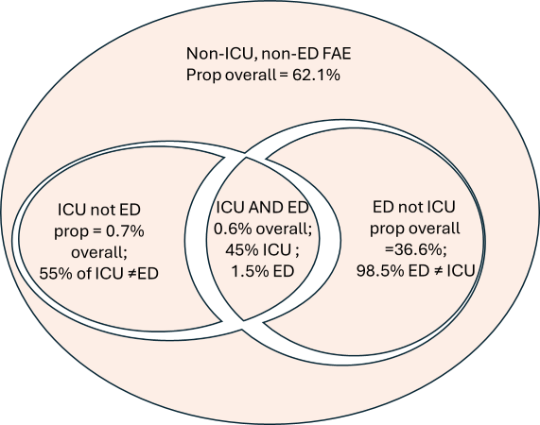
In Figure 1:
- ED means emergency department
- ICU means intensive care unit
- FAE means finished admission episode
- prop means proportion
Figure 1 is a Venn diagram of sepsis cases. It shows that:
- 62.1% of cases are non-ICU and non-ED
- ICU cases that are not ED make up 0.7% of the total; of all ICU cases, 55% are not ED
- ICU and ED cases make up 0.6% of the total; 45% of all ICU cases are ED; 1.5% of all ED cases are ICU
- ED cases that are not ICU make up 36.6% of the total; 98.5% of ED cases are not ICU
Of approximately 17 million admission episodes (FAE), 1.3% were linked to a critical care record. Of these ICU admissions, 45% were also an emergency admission. Over 6 million admissions were emergencies (37% of FAE). Approximately, 62% of all FAE were not an emergency admission and not linked to an ICU episode. Considering varying estimates of sepsis prevalence in the emergency department of between 2% to 6%, this would translate to accounting for between 42% and 69% of all sepsis cases, non-emergency and non-ICU admissions would account for between 19% to 36% of sepsis cases and all ICU cases would represent between 12% to 22% of sepsis cases (Table 3).
Table 3. Distribution of number of finished admission episodes (FAE) across different patient subgroups and expected number of sepsis cases using literature-based sepsis prevalence estimates and Hospital Episode Statistics 2023/2024
| Patient admissions subgroup | Number of FAE | Percentage of patient population | Sepsis prevalence | n of sepsis cases: 2% sepsis in non-ICU ED patients | n of sepsis cases: 6% sepsis in non-ICU ED patients | percentage of sepsis cases: 2% sepsis in non-ICU ED patients | percentage of sepsis cases: 6% sepsis in non-ICU ED patients |
|---|---|---|---|---|---|---|---|
| Non-ICU Emergency | 6,426,354 | 36.6% | 2% to 6% | 128,527 | 385,581 | 42.1% | 68.5% |
| Emergency and ICU | 103,497 | 0.6% | 30% | 30,746 | 30,746 | 10.0% | 5.5% |
| ICU NOT emergency | 125,158 | 0.7% | 30% | 37,180 | 37,180 | 12.1% | 6.6% |
| All admissions NOT (emergency OR cc) | 10,908,979 | 62.1% | 1% | 109,090 | 109,090 | 35.7% | 19.4% |
| Total | 17,560,128 | 100% | Unknown | 305,543 | 562,597 | 100% | 100% |
Note 1. Patient groups are mutually exclusive
Note 2. Percentages are of column total
Note 3. Separate estimates assuming 2% or 6% sepsis prevalence in non-ICU ED patients
Note 4. Emergency and ICU are assumed to have the same prevalence as the ICU population (that is, 30%)
Note 5. Total numbers is a sub-population outside of the ED are unaffected by the ED prevalence and so the figures remain the same.
Note 6. Estimate of sepsis prevalence in non-ICU, non-ED patients is unknown but assumed to be lower than emergency and ICU patients.
When calculating sample size, it is important to consider precision in diagnostic accuracy. Sample size calculations were based on Buderer methodology for sample size calculation for sensitivity and specificity (15) and implemented in Arifin sample size calculator (wnarifin.github.io, sample size calculator) and assumed 10% precision and 95% confidence level. Table 4 provides the sample size calculations for each patient group (all patients, ICU patients, emergency admissions and those with positive microbiology) based on a range of estimated sensitivities of explicit sepsis codes in ICU and non-ICU populations (4) (Table 2). Overall, based on a conservative estimate of prevalence of sepsis in emergency secondary care admissions of 2% the sample size required for a diagnostic sensitivity of 30%, 60%, or 80% would be 4,610, 4,034, 3,074, respectively (Table 4); but with a slightly lower precision of 12% would be powered at 2,802, 3,202, 2,135, respectively. With an ICU prevalence of sepsis (1) (Sepsis-3 criteria) of 30%, the study would be powered with 205 to 308 patients across the 30% to 80% range of sensitivity (Table 4).
The overall patient population comprises ICU, emergency non-ICU and non-ICU-non-emergency patients. However, sepsis prevalence estimates are unknown in some of these groups. We therefore propose to represent all population groups with sufficient power to achieve an overall prevalence of either:
- 2.5% with 10% precision and 95% confidence
or
- an overall prevalence of 2% with 12% precision and 95% confidence with sensitivity of 60%
Based on the different patient populations and sepsis criteria applied alongside uncertainties around sepsis-specific ICD-10 codes, we propose to select 4,157 patients in total. This would mean the study would be sufficiently powered to detect either:
- 60% of sepsis cases with an overall prevalence of 2.5% with 10% precision and 95% confidence
or
- 60% of sepsis cases at a prevalence of 2% with 12% precision and 95% confidence, and allow for an estimated 11% loss of patients
The 11% loss of patients is comprised of: 7% loss after applying National Data opt-out, 1% loss from linkage errors and a further 3% loss due to opt-out post transfer to the trust and data linkage issues. See Patient consent and data minimisation for more detail on this issue.
To represent all population groups we propose to select 360 ICU patients, 1,798 emergency non-ICU (estimated total 1,960 emergency patients) and 1,999 non-ICU-non-emergency patients for a total of 320, 1,600 (1,744 emergency in total) and 1,780, respectively, after 11% losses.
Table 4. Sample size calculations based on sepsis prevalence and study sensitivity
| Population | Prevalence | Sensitivity | Estimated sample size (10% precision) | Total, with additional patients allowing for 11% drop-out |
|---|---|---|---|---|
| Conservative prevalence of general ward | 0.01 | 0.3 | 8,068 | 8,965 |
| - | - | 0.6 | 9,220 | 10,245 |
| - | - | 0.8 | 6,147 | 6,830 |
| Conservative prevalence from emergency department (personal communication) | 0.02 | 0.3 | 4,034 | 4,533 |
| - | - | 0.6 | 4,610 | 5,180 |
| - | - | 0.8 | 3,074 | 3,454 |
| HES all admissions – explicit sepsis codes (4) | 0.025 | 0.3 | 3,227 | 3,626 |
| - | - | 0.6 | 3,688 | 4,144 |
| - | - | 0.8 | 2,459 | 2763 |
| HES emergency admissions – explicit ICD-10 sepsis codes (4) | 0.06 | 0.3 | 1,345 | 1,447 |
| - | - | 0.6 | 1,537 | 1,653 |
| - | - | 0.8 | 1,025 | 1,152 |
| ICU/Microbiology | 0.3 | 0.3 | 269 | 303 |
| - | - | 0.6 | 308 | 347 |
| - | - | 0.8 | 205 | 231 |
Sampling and data collection
We propose to represent all population groups to ensure that we can estimate the number of sepsis cases across the entire patient population rather than just specific subgroups. However, the current funding for this study means that clinical review will need to be completed by 31 March 2026. As such, we will make sampling choices of various sub-populations based on the time and financial resources available. We propose to sample to represent all patient groups in proportions that minimise the variance in the estimates of sepsis in the overall population (option A on appendix 1).
Although the anticipated prevalence in the non-ICU-non-ED population is 1%, because this represents the majority of the patient population (Figure 1), they contribute substantially to the overall standard error. Therefore, precision gains in ICU and ED patient groups (decrease in the standard error in these groups individually) by boosting numbers in these groups, to 400 and 2,000, respectively, for instance, and decreasing non-ICU, non-ED group from 1,780 to 1,300, translates to an increase in the standard error of the sepsis estimates in the overall population.
However, the precision overall and within subgroups varies substantially depending on the prevalence of sepsis in the subgroups where it is largely unknown (ED and non-ICU-non-ED). Should prevalence in the non-ICU-non-ED population be lower than 1%, then all estimates will be imprecise. Should the prevalence in the ED population be 2% or lower, then priority will be placed on improving precision in:
- ICU population
- the ED population
This is excluding the non-ICU-non-ED population from remaining samples. This will be determined using a wave-based sampling approach (see Wave-based data collection approach).
Therefore, we propose to sample according to option A in the appendix and randomly select 320 ICU patients first (after 11% loss). Those ICU patients who are also an emergency case will be removed from the quota of emergency patients (estimated 144). The remainder of the quota of emergency patients will be randomly selected to give a total of 1,744 emergency patients overall, after 11% loss (Table 5). Once ICU and emergency patients have been randomly selected, the remaining 1,780 patients will be randomly selected from non-ICU-non-ED patients to achieve the desired sample size after 11% loss (3,700).
Wave-based data collection approach
To facilitate a pragmatic approach to data collection to achieve good precision in sepsis estimates within a limited budget and timeframe, the data collection will proceed in waves with ICU and emergency patient quotas prioritised in earlier waves. Wave 1 will give an estimate of the prevalence in the different populations. Each subsequent wave will be determined based on the updated expected prevalence in the population but below is an illustrative example of how we will pragmatically sample.
- wave 1: 320 ICU, 680 ED, 0 non-ICU-non-ED
- wave 2: 0 ICU, 920 ED, 200 non-ICU-non-ED
- wave 3: 0 ICU, 0 ED, 1000 non-ICU-non-ED
- wave 4: any samples beyond 3,120 collected in waves 1 to 3 in non-ICU-non-ED
Within, and at the end of each wave, the prevalence of sepsis will be ascertained in each patient sub-group (that is, ICU, ED, non-ICU-non-ED). This is so that substantial differences between the expected and observed prevalence would allow adjustment of the sample sizes accordingly. For instance, if the observed sepsis prevalence in the non-ICU ED patient population is 2% rather than 6% then the desired sample size for the non-ICU ED population is 4,610 for 10% precision (Table 4) rather than 1,600.
However, given the maximum sample size (due to time and financial restrictions) is 3,700 overall, and to allow for 200 non-ICU-non-ED patients to estimate sepsis prevalence in this group of patients, the sample size for the non-ICU ED population will be adjusted accordingly. This will be 3,700-320 (ICU)-200 (non-ICU- non-ED) patients. This way, if the prevalence in the ED or ICU populations is lower than expected, then the non-ICU-non-ED population will be excluded from subsequent waves. Therefore, they would not contribute to the estimate of the number of sepsis cases in the English hospital population.
This would then be limited to ICU and ED populations, owing to the inability to test the diagnostic accuracy of the surveillance tool in the non-ICU- non-ED population. However, it is estimated that with 200 patients, we will be able to derive a novel estimate of sepsis prevalence in this population to inform future studies. The table in appendix 1 provides a summary of the standard errors in the subgroups and overall under different sepsis prevalence assumptions and different sample size approaches.
Study period
Data collection will start 35 days once the Local Information Pack has been shared as long as HRA approval has been received. Individual Trust participation in the study ends once study data has been sent to UKHSA and quality checks and linkages have been performed. The study will end once the analytical data have been anonymised in line with ISB1523.
Data protection, confidentiality and security
Data transfer
UKHSA will share:
- the NHS number
- date of birth
- sex
- hospital number (patient identifiable information, PII)
- admission date
UKHSA will also share patient ID via secure email (for example, NHSmail or Egress, which is the NHS-approved secure 256-bit encryption method of communication for non-NHSmail users (16). This will be in a password-protected document with named NHS trust collaborators within the participating trusts so that they can identify the patients in their electronic health record (EHR). The patient ID will be a random code assigned to each inpatient spell, comprising a randomly generated patient number (unique to each patient) and then an integer for the spell number. For example, a single patient who had 2 separate inpatient spells during the study period (1 April 2023 to 31 March 2025) would receive 2 separate patient IDs to differentiate the unique spells in hospital: 3681_01 and 3681_02. The unique patient number will be the same but the spell number will be different to differentiate separate inpatient spells.
NHS collaborators do not need to return patient identifiers to UKHSA. They will simply return the patient ID with the clinician-derived sepsis flag and other study variables (see pseudonymised data shared with UKHSA). It will also be returned through Egress in a password protected document. This way UKHSA analysts will not have access to the detailed electronic health record of patients included in the study.
To test the surveillance tools developed on multiple pre-existing administrative datasets UKHSA require PII to link between these datasets. The trust cannot select their patients and send anonymised risk factor data, alongside the clinician-derived sepsis flag to UKHSA analysts, because there would be no way to link this with the pre-existing administrative data without PII.
Limiting PII transfer from UKHSA to NHS trusts, with NHS trusts returning only pseudonymised data (see pseudonymised data shared with UKHSA). This builds in privacy by design and is the only way that the validation project team can use both detailed clinical patient notes from NHS trust Electronic Medical Records (NHS clinicians) and pre-existing administrative and microbiological datasets (UKHSA analysts).
Pseudonymised data shared with UKHSA
The only data shared with UKHSA will be (see data collection instrument, appendix 2):
- the unique patient ID (to permit linkage to the administrative data, “analytical dataset”)
- the sepsis flag (sepsis/no sepsis)
- the clinical team reviewer’s pseudonymised ID, “reviewer pseudo ID”
- a direct treatment flag, i.e. whether or not the clinical team reviewer was involved in treating the patient during the listed admission (yes /no)
- linkage quality assurance information (linked to NHS number – y/n; linked to date of birth – y/n; linked to hospital number – y/n; linked to sex – y/n)
Accuracy
As part of the pre-processing of NHS England data, such as the Hospital Episode Statistics, datasets are run through the Patient Demographic Service (PDS). This is through a batch process, prior to the loading into UKHSA’S Enterprise and Data Analytics Platform (EDAP). EDAP is an NHS-approved secure digital data storage and analytics platform. This is done under Regulation 3 as part of UKHSA’s standard processing of the Hospital Episode Statistics data, in order to ensure that the patient data is as up to date and accurate as possible. The National Data Opt-Out will be applied to the data upon completion of the random selection of patients for study inclusion, before sending the file containing patient identifiers to the trusts for linkage with their patient records. Linkages will be confirmed through a quality assurance process (for example, the type and number of PII linked on).
Patient consent, confidentiality and data minimisation
Collecting data prospectively for patients with sepsis would be both insensitive and difficult, as many patients would be too ill to provide consent for a research study. However, excluding them would bias the study towards less severely ill patients, which would undermine the scientific integrity and equity of the findings.
As such, this validation study is retrospective in its design, making the results timelier as no prospective data collection is needed, especially as it would not provide increased benefit of explicit patient consent with respect to not being able to include the sickest patients. Therefore, we are applying through for NHS Research Ethnics Committee (REC) and Confidentiality Advisory Group (CAG) approval, via the Integrated Research Application System, to process patient data without explicit consent from patients.
Obtaining explicit consent for retrospective studies requires huge resources, both technical and administrative. As sepsis mortality is high (24% to 32% within 3 months) (17), as well as post-sepsis morbidity, contacting patients or families of patients to gain consent would be inappropriate, with many unreachable. In addition, as above, obtaining explicit consent would risk creating a substantial selection bias for the least severe cases.
We will take the following measures to ensure data is processed in accordance with the rights of data subject:
- the selected patients will be run through the National Data Opt-Out database to remove anyone who has explicitly asked for their data to not be included in research studies. This will occur upon the initial stratified random sampling, but a second time prior to pseudonymisation of the data after all data linkages are complete (creation of the analytical dataset and merging with the trust-derived data such as sepsis flag)
- we will display posters describing the project in the NHS trusts with contact details within the trust should anyone wish to specifically opt-out of their potential participation in this methodological research study; posters will also include links to the UKHSA privacy notice and a study-specific webpage hosted on GOV.UK
- the project will have a specific Data Protection Impact Assessment reviewed and agreed by UKHSA’s Data Protection Officer (DPO), who will confirm that the proposed processing is compliant with data protection legislation and that appropriate safeguards are in place to protect individuals’ rights and freedoms
To account for patients opting out of this study, we will oversample by 11% more than the required number to power the study. This will also account for any data linkage issues (see Sample size calculations for further details; numbers are provided in Table 4).
In order to reduce the usage of patient identifiable data, patient data will only be shared by UKHSA with the treating NHS trust, that is patient information for patients treated at the Royal Free Hospital NHS Foundation Trust will only be sent to the clinical team at the Royal Free Hospital NHS Foundation Trust and not with clinical teams at the other participating sites and vice versa. In addition, no patient-level data, identifiable in nature or otherwise, will be shared outside of the research project team. Furthermore, the dissolution of NHS England – the administrative body which manages England’s health services – and merger with the Department of Health and Social Care, along with other unforeseen organisational changes will not affect this study; all data will be controlled and safely stored in a centralised point on the UKHSA Enterprise and Data Analytics Platform (EDAP, see Data security).
The organisation-specific NHS trust code will be used to identify all potentially eligible patients attending the participating NHS trusts, from which a stratified random sample will be taken. To make sure that the NHS trust codes are accurate, and reflect any trust mergers, acquisitions or de-mergers which may have occurred, the list of these will be extracted from NHS Organisation Data Service (ODS) portal and integrated into the data used to sample the patients.
In addition, only pseudonymised data (the sepsis flag, patient ID, reviewer pseudo ID, linkage quality assurance, and whether or not the reviewer treated the patient during the admission (direct treatment flag)) will be returned to UKHSA from the trust; UKHSA will not have access to the patient record.
Data linkage between HES and other administrative datasets is done iteratively and most are intended to be completed during data collection. Once all linkages are completed and quality assured, UKHSA will pseudonymise the data set, by removing the NHS number, date of birth, and hospital number from the analytical dataset. A pseudo key will be kept separate from the pseudonymised analytical data to enable reverse pseudonymisation should patients need to be reidentified for further linkages identified during peer review. UKHSA will retain the pseudo key for a year post-publication to allow for post-publication queries, freedom of information requests and subject access requests and then a review process will determine whether records can be anonymised in line with ISB1523 (ISB1523: Anonymisation Standard for Publishing Health and Social Care Data - NHS England Digital) with review and assurance of successful anonymisation by UKHSA data governance team. Data retention review at UKHSA will be done annually to identify and justify the retention of patient identifiable data for processing, prior to pseudonymisation (at the point when all linkages have been completed and quality assured) and prior to anonymisation. Anonymised data will also be subject to periodic data retention review.
UKHSA will follow its central Information Rights process in full. Any data subject access requests (DSARS) received from individuals in relation to their data rights, including access, rectification, or objection. All DSARS will be promptly forwarded to the UKHSA Information Rights Team, who will provide guidance and ensure appropriate action is taken in line with data protection legislation and the appropriate statutory timeline.
Data security
Data will be ingested into the UKHSA’s EDAP. Data and analysis on EDAP are documented, monitored and must take place within the managed and secure Amazon Web Services (AWS) workspace (a secure virtual desktop). No PII can be removed from EDAP to be stored on computer hard drives. All data will be processed within the UK and no data will be transferred outside of the UK or EEA. Access to data within EDAP is limited to authorised staff only and subject to legal basis for access, provided for a fixed term and reviewed. All staff engaged in the project will have completed mandatory information governance and data protection training.
UKHSA have existing agreements in place with NHS England to process and analyse HES, ECDS, EPMA for the purposes of surveillance. For this methodological research study we are requesting approval to process these data already available to UKHSA for the specific purposes of this research study. We will be using the existing digital storage and analytics infrastructure (EDAP) for the research.
Appendices
To see the appendices, go to the landing page and click ‘appendices’.
References
- Singer M and others. ‘The Third International Consensus Definitions for Sepsis and Septic Shock (Sepsis-3)’ JAMA 2016: volume 315, issue 8, pages 801 to 810
- Singer M, Inada-Kim M and Shankar-Hari M. ‘Sepsis hysteria: excess hype and unrealistic expectations’ The Lancet 2019: volume 394, issue 10208, pages 1,513 to 1,514
- Inada-Kim M and others. ‘Defining and measuring suspicion of sepsis: an analysis of routine data’ BMJ Open 2017: volume 7, issue 6, page e014885
- Jolley RJ and others. ‘Validation and optimisation of an ICD-10-coded case definition for sepsis using administrative health data’ BMJ Open 2015: volume 5, issue 12, page e009487
- Rhee C and others. ‘Comparison of trends in sepsis incidence and coding using administrative claims versus objective clinical data’ Clinical Infectious Diseases 2015: volume 60, issue 1, pages 88 to 95
- Jolley RJ and others. ‘Validity of administrative data in recording sepsis: a systematic review’ Critical Care 2015: volume 19, page 139
- Shankar-Hari M and others. ‘Epidemiology of sepsis and septic shock in critical care units: comparison between sepsis-2 and sepsis-3 populations using a national critical care database’ British Journal of Anaesthesia 2017: volume 119, issue 4, pages 626 to 636
- Szakmany T and others. ‘Sepsis Prevalence and Outcome on the General Wards and Emergency Departments in Wales: Results of a Multi-Centre, Observational, Point Prevalence Study’ PLOS ONE 2016: volume 11, issue 12, page e0167230
- Yu D and others. ‘Correlation of clinical sepsis definitions with microbiological characteristics in patients admitted through a sepsis alert system; a prospective cohort study’ Annals of Clinical Microbiology and Antimicrobials 2022: volume 21, issue 1, page 7
- Brun-Buisson C and others. ‘Incidence, Risk Factors, and Outcome of Severe Sepsis and Septic Shock in Adults: A Multicenter Prospective Study in Intensive Care Units’ JAMA 1995: volume 274, issue 12, pages 968 to 974
- Komori A and others. ‘Characteristics and outcomes of bacteremia among ICU-admitted patients with severe sepsis’ Scientific Reports 2020: volume 10, issue 1, page 2,983
- Fay K and others. ‘Assessment of Health Care Exposures and Outcomes in Adult Patients With Sepsis and Septic Shock’ JAMA Network Open 2020: volume 3, issue 7, page e206004
- Agyeman PKA and others. ‘Epidemiology of blood culture-proven bacterial sepsis in children in Switzerland: a population-based cohort study’ The Lancet Child and Adolescent Health 2017: volume 1, issue 2, pages 124 to 133
- Kang C-I and others. ‘Risk factors and pathogenic significance of severe sepsis and septic shock in 2286 patients with gram-negative bacteremia’ Journal of Infection 2011: volume 62, issue 1, pages 26 to 33
- Buderer NMF. ‘Statistical methodology: I. Incorporating the prevalence of disease into the sample size calculation for sensitivity and specificity’ Academic Emergency Medicine 1996: volume 3, page 5
- NHS. ‘Accessing Encrypted Emails Guide for non-NHSmail users’ 2020
- Bauer M and others. ‘Mortality in sepsis and septic shock in Europe, North America and Australia between 2009 and 2019 - results from a systematic review and meta-analysis’ Critical Care 2020: volume 24, issue 1, page 239