2025 Gender Pay Gap Report
Published 16 December 2025

© Crown copyright 2025
This publication is licensed under the terms of the Open Government Licence v3.0 except where otherwise stated. To view this licence, visit nationalarchives.gov.uk/doc/open-government-licence/version/3 or write to the Information Policy Team, The National Archives, Kew, London TW9 4DU, or email: psi@nationalarchives.gov.uk.
Where we have identified any third party copyright information you will need to obtain permission from the copyright holders concerned.
This publication is available at https://www.gov.uk/government/publications/hm-treasurys-gender-pay-gap-report-2024-to-2025/2025-gender-pay-gap-report
Executive Summary
Organisations with 250 or more employees are required to report annually on their gender pay gap. Government departments are covered by the Equality Act 2010 (Specific Duties and Public Authorities) Regulations 2017. These regulations underpin the Public-Sector Equality Duty and require relevant organisations to publish their gender pay gap annually.
As a department, we have published our Gender Pay Gap Report annually since the introduction of the legislation in 2017. These reports are an important tool to demonstrate our commitment to become a fully inclusive and diverse workforce. We recognise that greater transparency and accountability is key to enable us to demonstrate our commitment to equality, attracting talent and boosting staff engagement. We regularly publish information on the diversity of our workforce, including in HM Treasury’s Annual Report and Accounts which can be found here.
The gender pay gap measures the difference in pay between men and women. This report explains that our HM Treasury Group median gender pay gap has fallen by 4.5 percentage points from last year and within HM Treasury Core, the median pay gap has decreased by 3.8 percentage points. The median is used as the standard measure for benchmarking our progress as the mean is susceptible to the impact of outliers.
The report also highlights that there is greater than 50% representation of women across HM Treasury Core, including the Senior Civil Service (SCS). In addition, HM Treasury Core and Group median bonus gaps remain in favour of women.
We remain committed in our ambition to reduce the gender pay gaps and following further analysis, we will refine our approach and act on the main contributors of the gap.
1. Introduction
This report sets out HM Treasury’s Gender Pay Gap data for the reporting period 1 April 2024 to 31 March 2025, in line with statutory requirements. We remain committed to transparency and continuous improvement in our efforts to close the gender pay gap and foster a fair, inclusive workplace.
The report presents Gender Pay Gap information for ‘HM Treasury Group’, which includes the core departments alongside four executive agencies: Government Internal Audit Agency (GIAA); the National Infrastructure Commission (NIC); Debt Management Office (DMO); and the Office for Budget Responsibility (OBR). The report also presents information for ‘HM Treasury Core’, which reflects the position of just the core department.
We are pleased to report that the ‘HM Treasury Core’ gender pay gap has narrowed significantly since last year, reflecting the impact of our sustained focus and targeted interventions. This progress reinforces our confidence that we are addressing the right areas and that our long-term strategy is delivering meaningful change.
Building on this momentum, we continue to develop our Gender Pay Gap Action Plan by analysing our pay gap data to identify the key drivers contributing of our pay disparities. As a result, our plan is targeted to areas which actively contribute to our pay gap, with our action plan aimed at:
- Redressing imbalances in gender representation at junior grades, while continuing to improve the gender balance at higher grades.
- Reviewing the use of allowances across the department to ensure fair and consistent application.
- Improving pathways to promotion for employees in lower grades, enabling career progression regardless of starting point.
- Ensuring equal opportunities for part-time employees, and those on career breaks or parental/maternity leave, to pursue career advancement.
- Increasing the monitoring and transparency of pay negotiations and supporting hiring managers to avoid gender bias in recruitment and reward decisions.
We recognise that closing the gender pay gap is a long-term endeavour requiring sustained commitment. Through continued delivery of our action plan, we aim to build a more balanced and inclusive organisation where everyone has the opportunity to thrive.
HM Treasury Group
The following table shows the proportion of men and women in each of the organisations that make up the HM Treasury Group. The analysis of the HM Treasury Group includes the core department and four executive agencies: Government Internal Audit Agency (GIAA); the National Infrastructure Commission (NIC); Debt Management Office (DMO); and the Office for Budget Responsibility (OBR).
In this report we detail figures for the whole group, in line with the legislation, but we also detail the figures for the core department separately. The reporting period covers the time before the National Infrastructure Commission was replaced by the National Infrastructure and Service Transformation Authority, therefore NIC has been included as a separate agency in this year’s report.
Table 1: % of men and women staff in the Treasury Group
| Organisation | % Men | % Women |
|---|---|---|
| HMT (excl. agencies | 49.1% | 50.9% |
| GIAA | 46.0% | 54.0% |
| NIC | 55.2% | 44.8% |
| OBR | 53.4% | 46.6% |
| DMO | 72.6% | 27.4 |
HM Treasury Core
The HM Treasury Core is made up of 50.9% women (1,025 employees) and 49.1% men. This sees a slight increase in female representation since 2024 where women made up 50.3% (997 employees) of HM Treasury Core.
We previously reported an increase in the representation of women at SCS level, and in 2025 where we have achieved 51.1% representation. Furthermore, our executive management board has 53.9% female representation. Whilst there is broadly equal gender representation across the department overall, there continues to be a higher proportion of women in junior grades, with representation closer to parity at middle management levels. The table below shows the distribution of men and women across the grades as of 31 March 2025.
Table 2: Headcount % of men and women by grade in core Treasury
| Grade (increasing seniority) | Men | Women | % of grade who are female |
|---|---|---|---|
| AO | 9 | 21 | 70% |
| EO | 66 | 141 | 68.1% |
| HEO/SEO | 361 | 365 | 50.3% |
| Grade 7/Grade 6 | 484 | 426 | 46.8% |
| SCS | 69 | 72 | 51.1% |
| Total (including those with unknown grades) | 989 | 1,025 | 50.9% |
2. Gender Pay Gap - Findings
The gender pay gap shows the difference in the average pay between all men and women in a workforce and is different to equal pay. Equal pay deals with the pay differences between men and women who carry out the same jobs, similar jobs, or work of equal value. It is unlawful to pay people unequally because they are a man or a woman. A gender pay gap does not equate to the existence of an equal pay problem but may be the trigger for investigating why the gap exists.
In line with the Annual Civil Service Engagement Survey (ACSES) and regulations, hourly pay is calculated as March pay divided by March hours. Pay includes gross salary, allowances and non-consolidated performance related pay for March, less any salary sacrifice benefits.
To note - Figures detailed within the report are shown as positives and negatives. Negative figures illustrate that the gender pay gap is in favour of women, while positive figures highlight that a gap exists. Figures are presented as percentages, with the variance on the previous year’s figure shown in the adjacent column.
Treasury Group Pay Gap 2025
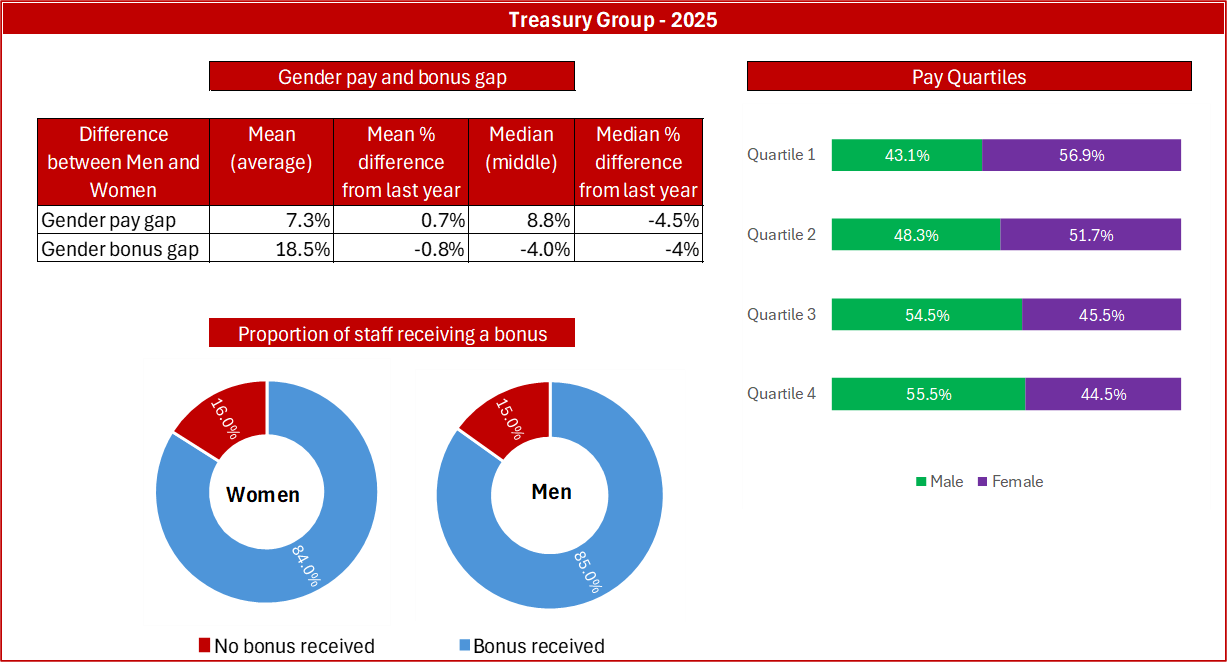
The 2025 HM Treasury Group figures include the core department and 4 of its executive agencies: Government Internal Audit Agency; Debt Management Office; the National Infrastructure Commission; and the Office for Budget Responsibility.
Analysis of the HM Treasury Group Pay Gap
In 2025, the HM Treasury Group mean gender pay gap is 7.3% which has increased by 0.7 percentage points from last year (previously 6.6%). The median gender pay gap has decreased by 4.5 percentage points in 2025 to 8.8% (previously 13.3%). There has been a reduction in the proportion of women in the lowest paid quartile, with women now representing 56.9% in quartile 1 compared to 58% in 2024. There has also been a decline in the higher paid quartiles, with women making up 45.5% of quartile 3 and 44.5% of quartile 4, compared to 46% and 45% respectively in 2024.
Analysis of the HM Treasury Group Bonus Gap
The HM Treasury Group mean gender bonus gap is 18.5% reflecting a decrease of 0.8 percentage points from 2024 (previously 19.3%). The median gender bonus gap is -4.0%. Despite the large mean gender bonus gap, there has been a decrease in the median gender bonus gap by 4 percentage points from 2024 where there was no median gender bonus gap.
Treasury Core Gender Pay Gap 2025
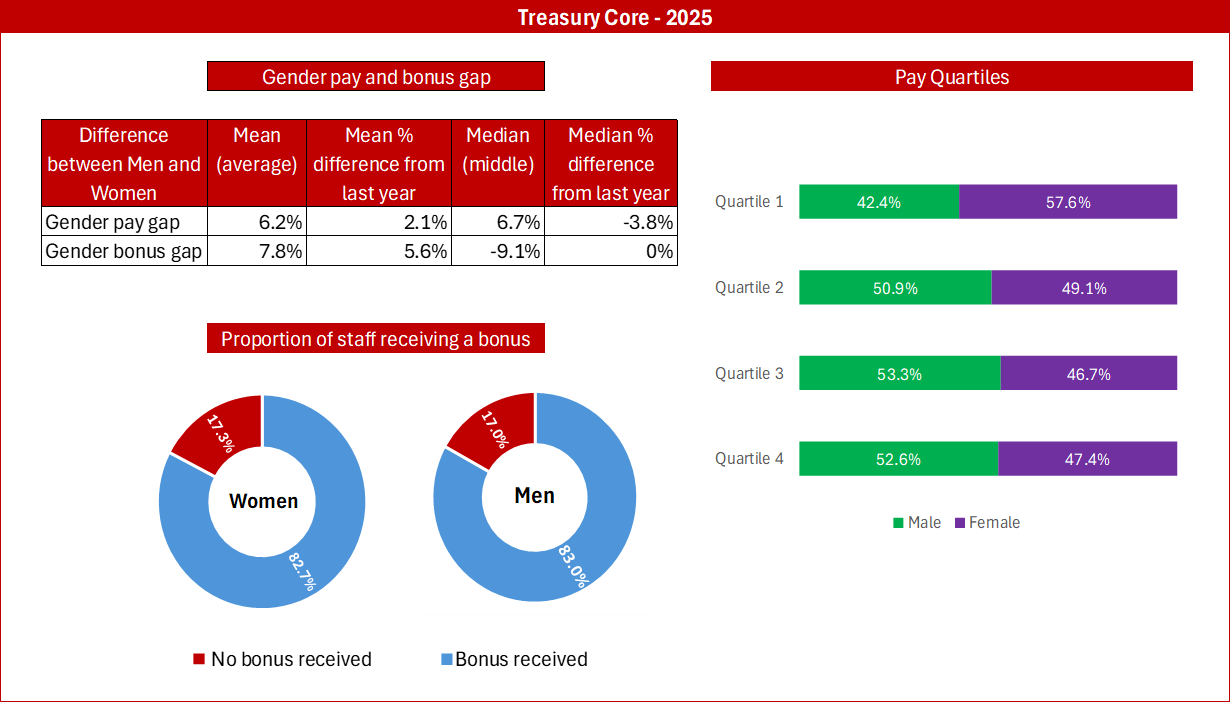
The 2025 HM Treasury Core refers only to the department, excluding its 4 executive agencies.
Analysis of the HM Treasury Core Pay Gap
The HM Treasury Core has a mean gender pay gap of 6.2%, an increase of 2.1 percentage points from 2024 (previously 4.1%). There has been a 3.8 percentage point decrease in the median pay gap to 6.7% (previously 10.5%). Whilst this indicates that, on average, men continue to earn more than women, there is progress toward pay parity.
The percentage of women in the lowest paid quartiles has decreased from 2024, with 57.6% in quartile 1 (previously 59.2%). Similarly, there has also been a reduction in the percentage of women in quartiles 3 and 4, with women making up 46.7% and 47.4%, compared to 46.9% and 49.1% in 2024 respectively. Quartile 2 has seen a modest increase in female representation, now 49.1% compared to last year’s 45.7%.
Analysis of the HM Treasury Bonus Gap
The HM Treasury Core mean bonus gap has increased to 7.8%, up from 2.2% in 2024, whilst the median bonus gap remains unchanged year-on-year, and still in favour of women (at -9.1%). The increase to the mean bonus gap shows widening disparity in average bonus payments between men and women. As the median gender bonus gap has remained consistent, the widening of the mean suggests this is being influenced by outliers in the data, rather than a trend.
Over the last four years, HM Treasury has provided small end-year performance bonuses for staff rated as ‘Exceeding’ and ‘Achieving’ across delegated grades. This was initially to extend financial support more widely across staff, while recognising our top performers. At SCS, we continue to see a broadly positive split of awards across the cadre.
3. Closing the Gender Pay Gap
At HM Treasury Core, we have implemented a long-term Gender Pay Gap Action Plan, designed to address the key drivers identified through previous analysis. Progress against this plan is regularly reported to HM Treasury’s People Committee.
We have embedded a range of good practices to support closing the gender pay gap, including:
- Transparent recruitment processes, such as advertising pay scales in job adverts, offering drop-in sessions for all external campaigns and diverse selection panels. These measures help to address gender imbalances and ensure clarity for candidates.
- Actively tracking recruitment outcomes to assess inclusivity for women at different stages of the recruitment process. This enables us to measure progress and remain aligned with our diversity ambitions across all grades.
- Regular reviews of recruitment training with a focus on improving line manager engagement by making the content more accessible. Hiring managers can access the training material on demand, including features such as scoring practice to support fair and consistent candidate assessment.
- Transparent HR policies, publishing policies that support women in the workplace such as for IVF/fertility and miscarriage, as well as providing a toolkit for supporting staff wellbeing and those with caring responsibilities. Over the past few years, we have also updated policies on maternity/parental leave and flexible working/job sharing.
- Publishing a range of toolkits to help raise awareness of menopause and to support both employees and line managers in having informed, supportive conversations. In addition, workplace adjustments are available through HMT’s Workplace Adjustment Process, Occupational Health services, and the Employee Assistance Programme, ensuring that individuals can access the support they need.
- Diversity panel discussions take place during end of year performance moderation to ensure a fair and consistent approach is followed for awarding performance bonuses.
- Reviewing diversity and equality outcomes throughout the pay award process and undertaking further analysis of our gender pay gap. We work closely with staff networks to understand the drivers behind the data.
- Regular engagement with staff networks to hear directly from their members, using their insights into staff experiences alongside our data.
Over the past year, the actions embedded within our Gender Pay Gap Action Plan have contributed positively to narrowing HM Treasury Core’s median gender pay gap. Our progress has been:
Recruitment and Progression
- Our most recent graduate recruitment campaign had a strong percentage of female applications, with women making up more than 50% of those that passed each stage of the assessment process. We are reviewing our programme and making improvements for 2026 and will ensure that gender parity for future cohorts remains a priority.
- We have a strong representation of women on our talent programmes, with over 50% female participants on our Accelerate, Beyond Boundaries, Future Leadership Scheme and Senior Leadership Schemes. Over 60% of those awarded funding for specialist qualifications, such as MSc Economics, were women.
- We have launched our Inspire Programme designed to address the barriers that underrepresented groups, including women, experience at HEO level to encourage progression and confidence to apply for SEO roles.
- Women make up over 61% of participants in our Leadership and Management Apprenticeships, demonstrating strong female engagement in professional development and leadership pathways.
Pay and Retention
- We have completed a department-wide review of allowances to ensure fair and equitable access for eligible staff, and we continue to review and improve our allowance policy.
- Our Pay on Appointments policy launched to provide greater transparency in the salary negotiation process. We monitor several diversity metrics to ensure fair and unbiased practices.
- Our 2024/25 performance management outcomes for gender showed that 32% of women received a top box rating compared to 28% of men.
Culture
- We have refreshed our HR policies and guidance that support women in the workplace, including our Code of Conduct, Neonatal Leave and Pay policy, and Sexual Harassment guidance following the implementation of the Worker Protection Act 2023 and Neonatal Care (Leave and Pay) Act 2023.
- We are a signatory of the Women in Finance Charter where we publish our progress every year, holding publicly accountable targets to have our Seniors in 50% parity roles.
- We are members of the “Employer’s Initiative of Domestic Abuse” (EIDA) which offer resources for those who have experienced Domestic abuse.
- Our Women In The Treasury (WITT) Network aims to create a supportive community where they celebrate a range of experiences and tackle issues impacting women. They organise events and carry out work to support WITT members. The network also aims to promote best practices and family-related policies to support parents in the workplace. The network continues to support returners, and in particular women coming back from maternity leave, so that they can have a positive and smooth experience upon return and be in the best conditions to continue developing their career within the department.
Over the next 12 months we will continue to monitor and evaluate the impact of our long-standing initiatives aimed at improving representation, progression, and gender pay parity. Each of the executive agencies within HM Treasury Group has its own tailored action plan to address its specific gender pay gap challenges.
4. Declaration
HM Treasury confirms that our data has been calculated by the Cabinet Office, according to the requirements and methodology set out in the Equality Act 2010 (Specific Duties and Public Authorities) Regulations 2017.
Rebecca Coady, Director of People & Operations, Corporate Centre Group