
HM Land Registry Business Plan 2026+
Published 31 March 2026
Applies to England and Wales

© Crown copyright 2026
This publication is licensed under the terms of the Open Government Licence v3.0 except where otherwise stated. To view this licence, visit nationalarchives.gov.uk/doc/open-government-licence/version/3 or write to the Information Policy Team, The National Archives, Kew, London TW9 4DU, or email: psi@nationalarchives.gov.uk.
Where we have identified any third party copyright information you will need to obtain permission from the copyright holders concerned.
This publication is available at https://www.gov.uk/government/publications/hm-land-registry-business-plan-2026/hm-land-registry-business-plan-2026
Foreword
Iain Banfield, Interim Chief Executive and Chief Land Registrar

In this Business Plan, we set out how 2026/27 will be a pivotal year for HM Land Registry, and how it will reaffirm our bold vision. At a time when efficient land registration and faster home buying and selling have never mattered more, we are setting out an ambitious plan to modernise our services and to continue to work with our sponsor department the Ministry of Housing, Communities and Local Government (MHCLG) to strengthen the foundations of the property market which remains central to the UK’s economic growth.
Guided by the vision in Strategy 2025+ for a property market that is better, faster and less stressful, over the next year we will return our services to a more consistent and reliable steady state through targeted recruitment, strengthened training for colleagues and leaders, and deploying our highly expert colleagues where demand is highest to improve the outcomes we provide for our customers by further reducing outstanding applications. We will automate some of the highest volume and most frequent applications we process, starting with residential mortgages, helping homeowners and lenders complete key transactions more quickly. We will also simplify customer communications, improve our complaints journey, and introduce new online services so citizens and small businesses can request Official Copies and Title Plans digitally rather than by post.
We will modernise our systems and data so we can build better, faster digital solutions, enabling more resilient services for our customers. This includes switching off legacy platforms like electronic Document Registration Services (eDRS) to move toward our enhanced Digital Registration Service system, building a new Integration and Developer Hub so customers and partners can connect through modern Application Programming Interfaces (APIs), and strengthening cyber security. We will also accelerate migration of Local Land Charges data, continue laying the foundations for a geospatial land register, expand use of responsible AI, digitise historic documents, and support innovation through initiatives such as the PropTech accelerator programmes within Geovation[footnote 1].
We will continue to play a critical role in supporting the Government’s ambition to deliver 1.5 million homes. By expanding the services we offer, improving the accessibility and quality of our datasets, and increasing the information available about controlling interests over land we will ensure developers, planners and local authorities can access the information they need to build homes more efficiently and with greater certainty. Through close partnership with MHCLG, we will support and enable the delivery of leasehold and commonhold reform as a flagship programme of industry change and a key government deliverable.
The investments set out in this Plan in our services, people, technology and data, will start to deliver real and measurable benefits: more efficient operational delivery, improved customer experience and a modern property registration service fit for the next generation. This is an ambitious agenda, shaped by the needs of our customers and driven by the expertise and dedication of our people. Together, we will continue to build a public service that is trusted, innovative and ready for the future.
Strategy 2025+
A vision of the future: HM Land Registry’s Strategy 2025+ vision in summary
Property ownership and protection
What we will provide: Easy services for everyone
We put our customers at the heart of everything we do. Our tech-powered services are easy to get hold of, easy to understand, easy to use and great value for money. Our expert people are on hand to help. We fix things quickly if they don’t work.
How you will benefit: You get support and guidance from us, no matter your knowledge and circumstances. Whether you’re buying your first home, managing a business or dealing with multiple, complex property issues, we are professional, supportive and clear in how we help.
Buying and selling property
What we will provide: Better protected property rights
Property rights and information is even more secure because we use digital systems and security measures that work hard behind the scenes. Our registers are digital, accurate and up to date so reliable information can be shared quickly, safely and easily.
How you will benefit: You continue to benefit from protected property rights and the ability to buy, sell or borrow against your property confidently and safely – but it’s all now significantly quicker and simpler. And you have more control over how you access our services. Our services are fast, and our information is up to date, even when demand for our services is high.
Wider property market and land use planning
What we will provide: Supporting the property market with our data
We have unlocked more of our data. This, combined with our expertise, is making it easier for people who need to know about, use or build on land to be better informed, and interconnect with each other and with us.
How you will benefit: Everyone has a better understanding of land availability and what’s there. You can more easily work with us and other people to make better decisions collectively about how we all best use land for the public and for nature. We are all putting the right things in the right places.
Wider economy
What we will provide: Our data is used for wider public good
Our data is easily and safely accessed by verified users, to support innovation. Our services are helping wider society and economic growth.
How you will benefit: We give you a fair and flexible service that allows secure, easy and seamless access to our data, enabling you to use our data for your personal, business or research needs.
| Our customers | Who are they? |
|---|---|
| Property owners: Ultimate beneficiaries of HM Land Registry’s services. Most work through legal specialists, but some work with us directly. | People: Use our services for moving home, updating the register following death or change of name |
| Commercial property owners: Organisations who manage their own property/ assets. Includes: farmers, large landowners, private landlords, utility and energy companies, housing associations, local authorities, retail | |
| Developers: Organisations who acquire land or properties to build or renovate | |
| People and businesses who help others to buy, sell and develop property: Those who are providing services to property owners and other organisations | Conveyancers: Legal specialists who work on behalf of property owners. Includes firms that deal with large volumes of similar transactions and complex commercial transactions |
| Professional service providers: Other organisations that support property owners. Includes: surveyors, will writers, estate agents, construction firms, architects, asset managers | |
| Lenders: Banks and building societies providing mortgages and remortgages for property | |
| Other financial institutions: Other financial institutions including: accountancy and tax firms, credit referencing agencies, debt recovery and insolvency organisations | |
| People and businesses who need property information: Those who want property information themselves or to help others buy, sell, research, market and manage a property | People and commercial property owners: Use our services to understand more about their own property, or who owns nearby land and property |
| Digital service providers: Use our services to create digital property services for clients. Includes: platform providers, search providers, apps providers and case management system providers | |
| Other PropTech: Use our data to create services that optimise all areas of the property market, including research and analytics, modelling, extracting key data from legal documents | |
| Government organisations: Organisations who use our data to help with providing or managing their own services or properties, including government departments plus public sector bodies and their agencies, such as local authorities, police forces and other regulators |
Great public services
We provide great public services and are easy to do business with for everyone
HM Land Registry is committed to delivering consistently reliable services that are accessible, secure, and easy to use for everyone. Our ambition is to make every interaction with us clear, trusted, and seamless for the needs of our diverse customers. We will continue work to simplify access to property information, streamline and modernise our fees and charging structure, and invest in our public services to deliver more efficient and transparent outcomes for all. Through ongoing innovation, automation, and continued investment in our people’s capability, skills and expertise alongside continuous improvement, we will provide timely and high-quality services for our customers. Over the next 12 months, these steps will help us accelerate further reductions in outstanding applications, improve overall customer experience, and build greater organisational resilience.
Our commitments that will enable us to deliver on this strategic outcome in 2026/27 are set out below:
Deliver an improved high quality and timely service that cuts processing times and reflects customers’ needs:
We are committed to delivering a faster, more reliable service that supports a thriving property market and economic growth. In 2026/27, we will take another step forward in reducing the age of outstanding applications, ensuring customers experience fewer delays. At the same time, we will continue to reduce the number of outstanding applications to return performance to a much-improved operational steady state and keep transactions moving smoothly across England and Wales. These improvements will be underpinned by our continued focus on the quality of new entries, ensuring applications are completed accurately and consistently so that the property rights the market depends on remain secure and trusted.
In addition, we will improve the functionality of our Validating Customer Application Data (VCAD) service. Our VCAD system introduces a validation process that identifies errors, such as missing or incomplete information in an application. During 2026/27 we will put in place a new tool that can read and check additional information, further reducing the number of applications that contain errors, reducing delays in correspondence with customers to provide a higher quality and timely service for our customers.
During 2026/27 citizens and small businesses will benefit from new online services, such as the ability to submit and pay for Official Copies and Title Plans digitally. Currently, citizen customers who need an official copy of their property information need to apply by sending paper forms and cheques in the post, which is slow, inconvenient, and out of step with modern services. The digital service will allow citizens to apply and pay online, making the process quicker, easier, and more reliable for customers, while reducing our administrative burden and costs.
Partner with customers to establish a fast-track proposition and a managed service to better reflect customers’ needs as a pathway to a service model approach:
A service model will allow customers to choose the level of the service that suits their needs, including getting access to extra support on particularly complex applications – for example, property owners who might need multiple changes to multiple properties at the same time. During 2026/27 we will introduce a tailored fast-track and application managed service giving customers greater choice and a more responsive service for transactions that require additional support. This new approach will enable us to scale services in the future, demonstrating an important step towards a service model approach that is modern, flexible and aligned with the needs of our customers and the market.
We will also simplify all customer communications, making correspondence easier to understand and improving the transparency of application progress. During 2026/27 we will introduce clear, consistent guidelines, updating our most-used customer letters and emails, and equipping colleagues with practical training so they can apply the new approach confidently in every interaction. Our centralised complaints team will ensure faster, more consistent resolution of issues, supported by an online journey that puts customer satisfaction first.

We will also enhance our Customer Relationship Management system (which is used to handle customer enquiries and complaints) and digital complaints pathways, introduce a new quality assurance framework, and use improved data and insights to drive consistent, timely resolutions. These improvements will be underpinned by a new Future Contact Solution that simplifies and modernises how customers access our services, delivering a seamless communication experience across multiple channels.
Simplify our fees and charging structure, and how and what customers pay for our services:
We are designing a new, simpler fees and charging model to replace the current complex system and support our plans to make property data more accessible. By streamlining how fees are calculated and paid, we will reduce errors and administrative effort for customers and our people, while enabling a future digital and service model.
We will design the new model with stakeholders, grounded in economic analysis and aligned with wider MHCLG reforms to improve land ownership transparency. It will generate sufficient income to remain cost‑neutral over the Spending Review period, while taking account of cost‑of‑living pressures to ensure changes are proportionate. In 2026/27 we will consult publicly and prepare the legislation needed for implementation the following year.
Protecting property rights
Property rights are protected through accurate and up to date registers, digital systems and resilient infrastructure
We want a future where HM Land Registry’s services are fast, and our information is up to date, even when demand for our services is high. Our long-term aim is to develop better, faster digital solutions that no longer rely on old technology – making our services safer, more secure, resilient and able to respond quickly to housing market fluctuations. To get us there, we are committed to continuously improving our operational delivery and expanding data-driven approaches to reduce errors and enhance efficiency. These efforts will ensure our registers are resilient, accurate, and trusted, underpinning confidence in property rights and supporting economic growth.
Our commitments that will enable us to deliver on this strategic outcome in 2026/27 are set out below:
Deliver the biggest step-change in land registration automation for many years and collaborate with lenders to support the transformation of the remortgage journey:
During 2026/27 we will automate residential mortgage applications, significantly reducing the time between lending decisions and registration. This expansion of our digital services will ensure they can perform under peak demand, enabling our expert caseworkers to focus on complex applications where specialist judgement adds greatest value. This will drive more efficient and reliable operational delivery and help lenders manage risk more effectively, speeding up access to finance for consumers, and contribute to increased confidence and activity in the market.
We are also working with lenders and government partners to explore how refinancing a home could become quicker, simpler and fully digital through developing a digital remortgage proof of concept in 2026/27. This work will test how many of the delays and administrative steps that customers experience today can be removed, paving the way for an easier remortgage process.
Deliver a simpler technology estate to create early impact to enable our modern services and deliver seamless digital service solutions:
To deliver our services in an increasingly efficient, secure and resilient way we will continue to maintain and enhance our systems using digital processes. This includes increasing technology health and decommissioning old systems to ensure we provide a modern experience that meets our customers’ needs. An example of this is electronic Document Registration Services (eDRS) being switched off during 2026/27 as we move towards a more seamless approach through our enhanced Digital Registration Services system.

We will also continue to upgrade the technology and processes around IT security, protecting our registers and customers from cyber-attacks and threats. These changes, alongside our ongoing commitment to continuously improve our internal processes, will ensure a strong foundation for modern, digital and resilient services that perform reliably for our customers.
Our plan to deliver modern digital services will include the development of an Integration and Developer Hub during 2026/27. This will provide customers and partners with secure, reliable access to our digital and data services through modern APIs (application programming interfaces), which are digital interfaces that enable secure data exchange between systems. It will make it easier for professional users and third-party providers to connect their systems, automate processes, and access property information in real time. As a result, customers will benefit from faster, more accurate transactions and reduced manual effort. For the wider property market, the Hub will support more efficient collaboration across the sector and improve access to trusted property information.
Accessible data with support
Our accessible data and expertise supports planning, building and land use decisions
We are clear in Strategy 2025+ that our data is our most valuable asset and the land and property information we hold forms one of the largest property databases in Europe. Making our property data findable, accessible, interoperable and reusable will be central to all that we do. Our organisational strategy for data is designed to fully unlock this value – enabling better services, increasing transparency across the property market, and supporting economic growth.
As first steps to achieve this long-term vision, there is significant data activity that will be delivered in 2026/27 to provide early impact. We will enhance access to our data to make it easier for people who need to know about, use, or build on land to be better informed through the Local Land Charges Programme. By partnering with customers and industry stakeholders, including through our work as a member of the Digital Property Market Steering Group (DPMSG), we will support the modernisation of the home buying and selling process and provide clearer insights into land and property. Working closely with MHCLG, we will support the government’s ambitious housing and infrastructure goals, including on building new homes and towns, the introduction of leasehold and commonhold reforms and increasing transparency of land ownership, controls, and use. These improvements will enable communities and developers to make faster, better-informed decisions about local areas, planning, and property transactions.
Our commitments that will enable us to deliver on this strategic outcome in 2026/27 are set out below:
Migrate a record number of local authorities to the Local Land Charges geospatial register:
During 2026/27, we will accelerate delivery of the national Local Land Charges (LLC) register by working closely with local authorities to migrate a record number of datasets. This builds on the transfer of responsibility for all 331 local land charges registers to HM Land Registry under the Infrastructure Act 2015. By April 2029, we will have completed the migration of all LLC data into a single, modern geospatial register. This national service will provide faster, more reliable searches for homebuyers across England and Wales and make land charge information significantly more accessible - supporting better planning decisions, enabling investment, and delivering a projected net social value of over £4 billion over 20 years through substantial time savings for our customers.
In parallel, the MHCLG Digital Planning Programme (DPP) and LLC Programme are working with local authorities to digitise and standardise similar datasets to support planning and housing processes. To reduce duplication and improve consistency, we are sharing insights and aligning approaches to develop common data standards and guidance that can be applied consistently across government.
We are also working with MHCLG and a small number of pilot local authorities to test how making key local land and property information available earlier, such as building control and highways data, can help address delays in the home buying and selling process. By assessing the benefits of providing this information in a consistent digital format, we will build evidence on how up‑front access to data can help reduce delays, improve data quality and overall efficiency, informing future decisions on wider adoption.
Invest in the foundations of data transformation including a multi-year plan to develop a geospatial land register combining geographic and ownership information:
During 2026/27, we will strengthen our data foundations by advancing our organisational use of AI in a responsible and well‑governed way, embedding it into core processes to support accurate decision‑making and more efficient operational delivery. Our Data Scientists will work with casework teams to modernise how we handle historic, handwritten legal documents by developing automated processes to convert these complex records, known as indentures, into structured digital data. This will improve data quality and support faster, more reliable operational delivery. We will also continue to develop our longer-term commitment to introduce targeted scanning and digitisation of documents required to support a geospatially enabled register.
Alongside this, we will continue our journey towards a fully digital, geospatial land register by increasing the availability of open, machine‑readable data and building on testing completed in 2025/26, including work in a regeneration area in Bristol. By assessing different approaches to digitisation and data transformation, we will identify the most effective ways to scale delivery and establish a geospatial register over the longer term. By 2027, we will complete the migration and transformation of historic maps into a new datastore, ensuring historical register data is accessible in an open and usable format.

We will also continue to support innovation in the property sector through the Geovation Accelerator Programme, jointly funded by HM Land Registry and Ordnance Survey. Through this programme, we will support up to six PropTech entrepreneurs by providing grant funding and access to our data and expertise, helping them to develop and test data‑driven location, land and property solutions and bring well‑validated ideas to market. This work will provide valuable insight into emerging customer needs and the practical use of property data, helping to inform our future service development and wider data transformation activity.
Partner with customers to support delivery of 1.5m homes:
Our expertise in land and property registration will play a valuable role in facilitating delivery of the government’s economic growth mission, which includes delivering 1.5 million new homes and beginning to build the next generation of new towns. We are engaging developers earlier and more proactively, with over half of the top 50 house builders now using our managed service model for more complex commercial transactions, focusing predominantly on new build services. This will deliver a more efficient and responsive service for housebuilders and infrastructure developers, enabling them to easily update their plans and avoid expensive delays later in the conveyancing process.

We have tested this approach on large, multi-builder sites, including a 4-5k home development in West Midlands, where the customer worked directly onsite with caseworkers from our Swansea office. We will continue to build upon our membership of the Home Builders Federation (HBF) and existing engagement with national developers. This direct, ongoing collaboration between developers and caseworkers ensures a sustainable, efficient, and future-ready approach, further supporting our pathway to a service model that best reflects customer need.
Support Government and industry to digitalise and improve the home buying and selling process and increase transparency of land ownership:
The property market is affected by a high number of ‘fall-throughs’ impacting one in three transactions and costing people around £400 million a year. This is alongside four million working days lost across conveyancers and estate agents, which is equivalent to £1 billion. During 2026/27, we will use our data and expertise to support government policy priorities aimed at reducing delays and friction across the home buying and selling process. This includes the exploratory work with lenders and government partners to demonstrate how refinancing a home could become quicker, simpler and fully digital by developing a proof of concept for digital remortgage.
During 2026/27, we will continue to work as a member of the Digital Property Market Steering Group (DPMSG), a partnership of government and industry, to support the delivery of practical improvements across the land and property market. We will use our data and expertise to support proof‑of‑concept activity, including testing new ways for people to access property information, such as through digital property logbooks. Alongside this, we will work with partners to explore how common data standards and trusted data frameworks can support simpler, faster and more secure property transactions. We will also build on our work to enable wider use of Qualified Electronic Signatures by supporting DPMSG activity to accelerate progress towards reusable digital identities becoming standard in property transactions.
During 2026/27, we will undertake initial design work to explore options for more clearly identifying parties recorded on the register. This work will help establish the foundations needed to support future improvements in the transparency and use of land ownership information. In parallel, government reforms are strengthening transparency by ensuring that people can understand not only who owns land, but who controls it. Currently, contractual control agreements (such as option agreements) are not legally required to be disclosed, making it difficult to understand who has influence over land use and development. We will create a new digital record of contractual controls, which will improve transparency and better support planning and development decisions, including enhanced register data to support anti-corruption efforts.
We will expand the use of Unique Property Reference Numbers (UPRNs) across more of our published datasets, making it easier to connect, share, and use property information. A UPRN is a unique identifier assigned to every addressable location in England and Wales that stays with the property or land throughout its lifecycle, regardless of changes in ownership or address. UPRNs act as a universal key, making it easier to connect property records with other datasets (e.g. planning, utilities, local authority data), and reducing errors when matching addresses across systems.
Additionally, we will introduce spatial identifiers (such as INSPIRE IDs) into more of our free datasets. Spatial data is information that tells you where something is. Including spatial identifiers in more of our datasets will allow users to link our spatial data with other location-based datasets, making key location-based information more accessible. Users will be able to map freehold properties and link related information. This will support better land‑use planning, environmental assessments, utilities and infrastructure projects, supporting faster, more confident decision‑making and supporting wider government objectives. Users such as community groups and non‑profits will be able to identify and map land parcels to strengthen local environmental and social projects.
Further to this support for government objectives, and through close work with MHCLG and other government partners, we will update our practice and guidance to support implementation of the reforms set out in the Leasehold and Freehold Reform Act 2024 which aim to modernise and improve residential property tenure in England and Wales, and offer increased fairness, transparency, and protections for homeowners. This includes greater redress for leaseholders, a ban on new long leases of houses, expanded rights to manage their buildings, and a ban of ground rent. The draft Commonhold and Leasehold Reform Bill published in January 2026, sets out proposals to reinvigorate commonhold, a form of property ownership that enables individual properties within a building or larger development to be owned and managed without the need for a third-party landlord or management company. We will continue to analyse the impact of the reforms, including the proposed ban of most new leasehold flats, on our services, systems and customer requirements. During 2026/27 we will work closely with MHCLG to develop plans to implement these changes and support our customers through the transition.
A high performing workforce
We have a high performing, expert and engaged workforce that puts customers first
Every one of our people plays a vital role in delivering the strategic outcomes and supporting commitments set out in this Business Plan. By building on the collective expertise, experience, and knowledge of our workforce, alongside our transformation programmes, we will strengthen operational delivery and support a more reliable service for our customers and the wider property market. Our leaders will play a critical role in guiding our people through change and ensuring delivery remains focused on service performance and customer experience. During 2026/27 we will continue to invest in the development of the skills and capabilities required to lead our organisation into the future. As automation increasingly handles more routine tasks, we will continue to develop our caseworkers so they can focus on more complex applications that require expert judgement, strengthening operational resilience and supporting a more reliable service for our customers.
Our commitments that will enable us to deliver on this strategic outcome in 2026/27 are set out below:
Maximise investment in training to reduce the capability gap in preparation for a digital service model:
While we are reducing both the age and number of outstanding applications, we know we must go even further to deliver consistently reliable and timely services for our customers. To do so, during 2026/27 we will increase our operational capacity through targeted recruitment, development opportunities for existing colleagues, and flexible resourcing where appropriate. This investment will help us accelerate the reduction of outstanding applications, improve service performance, and build long‑term resilience. By continuing to develop casework expertise, leadership capability and customer‑focused skills, our people will be better supported to deliver a simpler, faster and more dependable service.
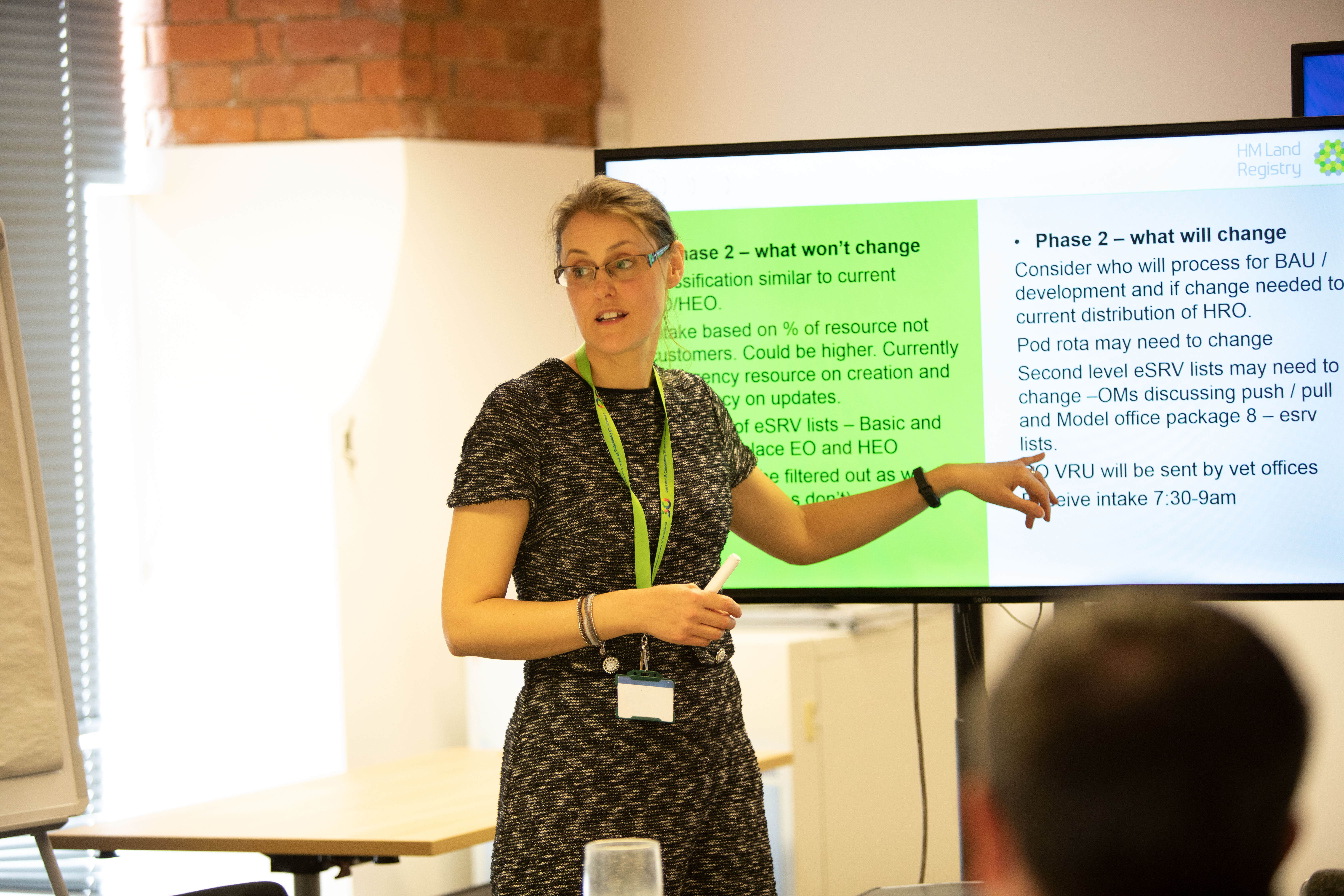
We will see a shift in responsibilities for some of our 5,000 Operational Delivery professionals as we modernise our systems, expand digital services and take advantage of the step-change in further automation of our services, starting with mortgages during 2026/27. This will allow our expert teams to focus on the complex applications that require human judgement and expertise, ultimately improving our overall service performance. Our strategic workforce planning will ensure we have the right capability and capacity in place to respond to changing demand, support service performance, and maintain a resilient operational delivery model.
Build leadership capacity, capability and resilience:
During 2026/27, we will enhance our leadership and line management capabilities through ongoing investment to foster a culture of excellence and drive organisational success. We will introduce targeted training to support our leaders and managers to develop advanced skills that will enable them to confidently support the development, performance, health and wellbeing of our people more effectively. This will create a supportive environment that prioritises each individual and energises our teams.
Having regular, high quality performance conversations to support our people will nurture a positive and engaged environment that puts our customers first. The utilisation of individual performance data will allow everyone to have fair, meaningful, and positive discussions. This will drive a high-performance culture by enabling leadership to make data-driven decisions, while line managers can confidently offer constructive feedback, identify development opportunities, and maintain a strong focus on recognising successes and achievements.
As we continue to strengthen operational delivery and embed digital and data transformation, we will ensure our leaders and managers remain resilient and proficient in change management through targeted interventions. This will ensure our leaders and managers are provided with clarity around expectations and can offer the appropriate support and guidance to our people to maintain engagement and support reliable, high‑quality operational delivery and an outstanding customer experience.
Our Key Performance Indicators
We will measure our performance against this Business Plan through the key performance indicators (KPIs) set out below. Throughout the year we will track and report progress against these indicators to our Executive Team, the HM Land Registry Board, and the minister through MHCLG, as well as publishing performance for our customers and stakeholders through our Annual Report and Accounts.
These KPIs sit within a broader ecosystem of internal performance indicators, supported by our strong governance arrangements, as detailed in our Annual Report and Accounts. Our advisory HM Land Registry Board enables non-executive board members to bring external experience and expertise to constructively challenge, while our committees oversee day-to-day delivery of this Business Plan to ensure we remain on track to achieve our four strategic outcomes.
As we continue to return performance of our services to a much-improved operational steady state, we will also begin developing the next phase of our performance framework for 2027/28, transitioning our KPIs so they become increasingly outcome‑focused and more closely aligned to our strategic outcomes. This will provide a clearer line of sight between what we measure and the value we deliver by supporting customers, strengthening the property market, and contributing to the wider economy. By evolving our KPIs in this way, we will ensure we measure those things that reflect the long‑term impact we aim to achieve.
To demonstrate our progress this year, our key performance indicators are:
-
Customer satisfaction – Demonstrates how well we are leading the way in delivering excellent customer services for the public sector. We measure this by comparing our performance to the UK Customer Satisfaction Index national average for public sector organisations.
-
Speed of statutory guaranteed property information – Demonstrates how quickly we provide timely, dependable information that underpins planning, building and land use decisions that the property market relies on. We measure this by the percentage of guaranteed property information service requests completed within 3 working days.
-
Age of outstanding applications – Demonstrates how effectively we are reducing delays in processing registration applications to provide a reliable service for customers that keeps the property market moving. We measure this by monitoring the age of 95% of the oldest of five major application types waiting to be processed.
-
Number of outstanding applications – Indicates how well we maintain steady state operations internally for informed resource planning. We measure this through the percentage reduction in the number of applications we hold that are waiting to be processed that exceed an average of 30 days’ worth of intake.
-
Fully automated digital services – Demonstrates how well we are delivering the biggest step-change in land registration automation to strengthen the customer experience and ensure we are resilient to market fluctuations. We measure this by the percentage of all register of title applications we have completed automatically, compared to the number of register of title applications we have received during the year.
-
Quality of manual applications completed – Demonstrates how consistently we manually complete accurate applications that required the skill of our expert caseworkers that safeguards property rights that the property market depends on. We measure this through the extent to which material, customer‑facing errors are reduced and maintained within acceptable thresholds.
-
Employee engagement index (EEI) – Demonstrates how our people feel motivated, valued, supported and committed to achieve their best. We measure this through a quarterly survey of our people based on the five core Civil Service People Survey employee engagement questions.
-
Local Land Charges migration – Demonstrates how we are migrating a record number of local authorities to the Local Land Charges geospatial register to improve the consistency of home buying and selling across England and Wales. We measure this by monitoring the number of local authorities migrated to the digital geospatial register.
Our risk profile
Our Principal Risks, set out below, reflect the most significant uncertainties that could affect delivery of our strategic outcomes over the period of this Business Plan.
Our governance and performance arrangements provide clear oversight of these risks throughout the year. They are systematically monitored, reviewed, and escalated through our Executive team, the HM Land Registry Board, and its supporting committees. This ensures that emerging issues affecting our strategic outcomes are identified early, that leaders are equipped with timely insight to take informed decisions at pace, and that proportionate, evidence‑based action is taken where needed to keep delivery on track. These arrangements support our strong governance arrangements, as detailed in our Annual Report and Accounts
Managing risk in this way supports effective prioritisation, protects service delivery and register integrity, and ensures we make best use of our people, funding and capabilities while remaining within our agreed risk appetite.
This year we have enhanced our Risk Profile by pairing each Principal Risk with an opportunity statement, recognising that good risk management supports innovation and improvement as well as protection. We have also introduced a clearer, more differentiated risk appetite, setting out where HM Land Registry can be more permissive to enable transformation and better services, and where tight control remains essential to safeguard register integrity, security and public trust.
Principal Risk 1: Service performance and operational delivery
Risk description
- If demand, application mix or customer behaviour move outside forecast tolerances, and HM Land Registry is unable to optimise capacity, productivity and workflows quickly and effectively, we may be unable to reduce outstanding applications or sustain improvements in service performance. This could lead to further reduced service reliability, customer dissatisfaction and diminished confidence in our delivery.
Opportunity statement
- By designing services and workflows that flex to demand volatility, actively managing productivity and capacity, and responding early to emerging pressures, HM Land Registry can accelerate reductions in outstanding application age and number, improve service performance and strengthen customer confidence.
Principal Risk 2: Register quality, integrity and fitness for purpose
Risk description
- If the quality, integrity or usability of HM Land Registry’s registers are not consistently maintained, register information may cease to be fit for purpose, undermining legal certainty and public trust, and constraining HM Land Registry’s ability to modernise services, operating models and data-enabled capabilities.
Opportunity statement
- By maintaining high-quality, trusted and usable Registers while embedding a learning culture and modernising quality assurance and validation approaches, HM Land Registry can protect legal certainty and trust alongside unlocking service modernisation, improved data use and more efficient delivery models.
Principal Risk 3: Workforce capability, culture and resilience
Risk description
- If HM Land Registry does not develop and sustain the leadership, skills, cultural conditions and workforce resilience required for future demand and digital transformation, our ability to innovate, change at pace and sustain long-term organisational customer focussed performance may be constrained.
Opportunity statement
- By investing in leadership capability, skills development, cultural maturity and workforce resilience, HM Land Registry can build an adaptable, high-performing workforce that leads transformation confidently, embraces innovation and sustains customer focussed performance.
Principal Risk 4: Data quality, use and value realisation
Risk description
- If HM Land Registry does not embed a data-by-design approach and sufficiently improve data literacy, quality and governance, we may fail to realise the expected benefits from data investment – limiting our ability to automate processes, improve decision-making, increase productivity and deliver more efficient, scalable services.
Opportunity statement
- By strengthening data foundations and actively applying data to automation, analytics and AI-enabled services, HM Land Registry can unlock measurable efficiency gains, reduce manual effort, improve service performance and decision quality, and accelerate delivery of modern, scalable services.
Principal Risk 5: Delivering intended change benefits and transformation delivery
Risk description
- If change and transformation activity is not subject to effective end-to-end assurance and does not deliver the expected benefits and whole-life value from investment – due to weaknesses in business design, prioritisation, governance, sequencing or delivery approaches – HM Land Registry may fail to improve efficiency, service performance and technology health at the pace required, limiting delivery of strategic outcomes and value for money.
Opportunity statement
- By strengthening business design, prioritising benefits-led delivery and embedding end-to-end assurance across design, delivery and live operation, alongside agile, iterative approaches with proportionate governance, HM Land Registry can maximise the value and impact of transformation investment – improving efficiency, technology health, customer experience and organisational adaptability.
Principal Risk 6: Cyber resilience and recovery
Risk description
- If cyber threats or systemic technology failures exceed HM Land Registry’s prevention, resilience and recovery capability, critical services may be disrupted, data compromised and recovery at pace hindered, undermining trust and service continuity.
Opportunity statement
- By strengthening cyber resilience, recovery and response capability, HM Land Registry can operate with confidence in a hostile cyber environment and enable secure digital services and modern platforms.
Principal Risk 7: Customer focussed and partnership ways of working
Risk description
- If HM Land Registry does not effectively embed the customer voice and work in partnership with customers to improve existing services and co-design new ones, customer expectations, behaviours and adoption may not align with our evolving service and operating model. This could limit the uptake and impact of service improvements, slow realisation of benefits from change and reduce our ability to respond effectively to future market and customer needs.
Opportunity statement
- By strengthening customer partnerships and systematically embedding customer insight into the improvement of existing services and the design of new ones, HM Land Registry can accelerate adoption, improve efficiency and service outcomes, and ensure future services are shaped around customer needs and behaviours.
Principal Risk 8: Financial sustainability, agility and external uncertainty
Risk description
- If income realisation falls short of plan due to external economic conditions or reduced service performance, HM Land Registry’s ability to fund and sustain planned investment may be materially reduced, requiring in-year reprioritisation, scaling back of change activity and increased risk to delivery of strategic priorities.
Opportunity statement
- By strengthening income responsiveness, scenario-based planning and financial agility – including the ability to redirect operational effort to priority income streams – HM Land Registry can stabilise income realisation and protect investment in the most critical strategic outcomes.
Our finances
We have secured a funding envelope for Resource Departmental Expenditure Limit (RDEL) and Capital Departmental Expenditure Limit (CDEL) from HM Treasury for the Spending Review Period.
This funding will fall under a new financial framework agreement for HMLR from 2026/27 which will move the organisation to a net budget of £1k, with realised income offsetting RDEL Cash expenditure.
To provide flexibility to respond to changes in market conditions, we will be permitted to invest up to an additional 10% of our annual funding envelope provided any additional spend is fully covered by additional realised income.
We will undertake a monthly review of both income and expenditure projections and a quarterly prioritisation exercise alongside longer-term financial planning to ensure we prioritise our investment plans to meet government efficiency targets and maximise value for our customers while retaining a cost-neutral financial position.
The financial breakdown below reflects our SR settlement prior to any additional investment opportunity relating to the 10% flexibility.
| Budget Control Total | 2026/27 | 2027/28 | 2028/29 | 2029/30 |
|---|---|---|---|---|
| RDEL Cash | £1k | £1k | £1k | |
| CDEL | £59m | £59m | £59m | £59m |
| AME* (incl depreciation) | £49m | £55m | £61m |
*estimated
Breakdown of budgets by expenditure type (£m)
| Expenditure type | 2026/27 | 2027/28 | 2028/29 |
|---|---|---|---|
| RDEL Cash | 0 | 0 | 0 |
| Staff Costs | 350 | 353 | 358 |
| IT, Digital & Data | 95 | 109 | 103 |
| Operational Contracts | 21 | 21 | 21 |
| Estates | 14 | 14 | 14 |
| Indemnity | 6 | 6 | 6 |
| Realised Income | (486) | (503) | (502) |
| CDEL | 59 | 59 | 59 |
| IT, Digital & Data | 59 | 59 | 59 |
| AME | 49 | 55 | 61 |
| Provisions | 12 | 12 | 12 |
| Depreciation | 37 | 43 | 49 |
Allocation of RDEL Cash/CDEL budget by Strategic Outcome
| Outcome | % allocation |
|---|---|
| Easy services for everyone | 80% |
| Better protected property rights | 4% |
| Supporting the property market with our data | 15% |
| High performing people who put customers first | 1% |
| Total | 100% |
Footnotes
-
Geovation is an innovation hub led by Ordnance Survey, supported by HM Land Registry, that brings together government, industry and start‑ups to develop new solutions using location, land and property data. ↩