Qualitative assessment of the risk that chikungunya virus presents to the UK population
Updated 26 March 2026

© Crown copyright 2026
This publication is licensed under the terms of the Open Government Licence v3.0 except where otherwise stated. To view this licence, visit nationalarchives.gov.uk/doc/open-government-licence/version/3 or write to the Information Policy Team, The National Archives, Kew, London TW9 4DU, or email: psi@nationalarchives.gov.uk.
Where we have identified any third party copyright information you will need to obtain permission from the copyright holders concerned.
This publication is available at https://www.gov.uk/government/publications/hairs-risk-assessment-chikungunya-virus/qualitative-assessment-of-the-risk-that-chikungunya-virus-presents-to-the-uk-population
About the Human Animal Infections and Risk Surveillance group
This document was prepared by the UK Health Security Agency (UKHSA) on behalf of the joint Human Animal Infections and Risk Surveillance (HAIRS) group.
HAIRS is a multi-agency cross-government horizon scanning and risk assessment group, which acts as a forum to identify and discuss infections with potential for interspecies transfer (particularly zoonotic infections). Its work cuts across several organisations, including:
- UKHSA
- Department for Environment, Food and Rural Affairs (Defra)
- Department for Health and Social Care (DHSC)
- Animal and Plant Health Agency (APHA)
- Food Standards Agency (FSA)
- Food Standards Scotland (FSS)
- Public Health Wales (PHW)
- Public Health Scotland (PHS)
- Department of Agriculture, Environment and Rural Affairs for Northern Ireland (DAERA)
- Welsh Government
- Scottish Government
- Public Health Agency of Northern Ireland
- Department of Agriculture, Food and the Marine, Republic of Ireland
- Health Service Executive, Republic of Ireland
- Infrastructure, Housing and Environment, Government of Jersey
- Isle of Man Government
- States Veterinary Officer, Bailiwick of Guernsey
Information on the risk assessment processes used by the HAIRS group can be found at HAIRS risk assessment process.
Version control
Date of this assessment: March 2026
Version: 5.0
Reason for the assessment: Updated to reflect the latest epidemiological and entomological data.
Completed by: HAIRS scientific secretariat and members.
Non-HAIRS group experts consulted: UKHSA Travel Health Team.
Date of previous risk assessments: March 2006, October 2015, February 2017, April 2018.
Information on the risk assessment processes used by the HAIRS group can be found online.
For queries relating to this document, contact: HAIRS@ukhsa.gov.uk
Summary of risk assessment for chikungunya virus in the UK population
Overview
Since the last chikungunya virus risk assessment in 2018, the global geographical distribution of the virus has continued to expand following its introduction to the Caribbean in late 2013. In Europe, autochthonous transmission of chikungunya virus has been reported in both France and Italy since 2007. Recorded imported cases of chikungunya in infected travellers in the UK have fluctuated in recent years.
Prior to 2016, there were no reports of the predominant vector of chikungunya virus in Europe, Aedes albopictus, in the UK. However, in September 2016 and July 2017 a small number of eggs and larvae were detected in 2 locations in Kent. Detections of Aedes albopictus were since made in 2018, 3 times in 2019 and in both 2024 and 2025. Aedes aegypti were detected in 2023 and 2025. So far, there is no evidence that either species has established in the UK. There continues to be routes of importation for these mosquitoes, for example through seaports and airports, and local climate could support the establishment of Aedes albopictus. The spread of Aedes albopictus elsewhere in Europe (particularly through France) has been rapid, with new regions colonised each year. When environmental conditions are favourable in areas where Aedes albopictus is established, viraemic travel-related cases may generate local transmission of chikungunya virus.
Incidents of local transmission in France and Italy highlight the risk from imported mosquitoes and imported human cases. This assessment was completed to assess the current risk that chikungunya virus presents to the UK.
Assessment of the risk of infection in the UK
The probability of human infection with chikungunya virus in the UK population, as a result of local transmission, is considered Very low.
The impact of chikungunya virus on human health in the UK at present would be considered Very low, given the current absence of established populations of the competent mosquito vectors in the UK.
Level of confidence in assessment of risk
Good
Current evidence gaps
There is uncertainty about:
- other potential mammalian reservoirs (bats, non-human primates, other small mammals) in captive populations which may be imported and act as a source of infection
- although surveillance for competent mosquito species in the UK has increased, it should be further strengthened by expanding trap coverage at points of entry and in climate-suitable areas
Actions and recommendations
For animal health and veterinary professionals
The guidance is to:
- continue to use a One Health approach to surveillance for potential vectors, working closely across veterinary and public health departments
- to recognise the lack of knowledge about the zoonotic transmission cycles and whether captive animals in collections could act as potential sources of infection, depending on their importation source
For public health professionals
The guidance is to:
- early detection and eradication or control of mosquitoes is required – a cross-agency contingency plan is being developed
- in the event that competent mosquito species become established, each imported case in that area would need to be followed up with local mosquito control, as currently occurs in Europe
For both public health and animal health professionals
The guidance is to:
- this remains an evolving situation – the group will continue to monitor and review new evidence as it becomes available
- deliver communication regarding vigilance and proportionate avoidance strategies for all mosquito species
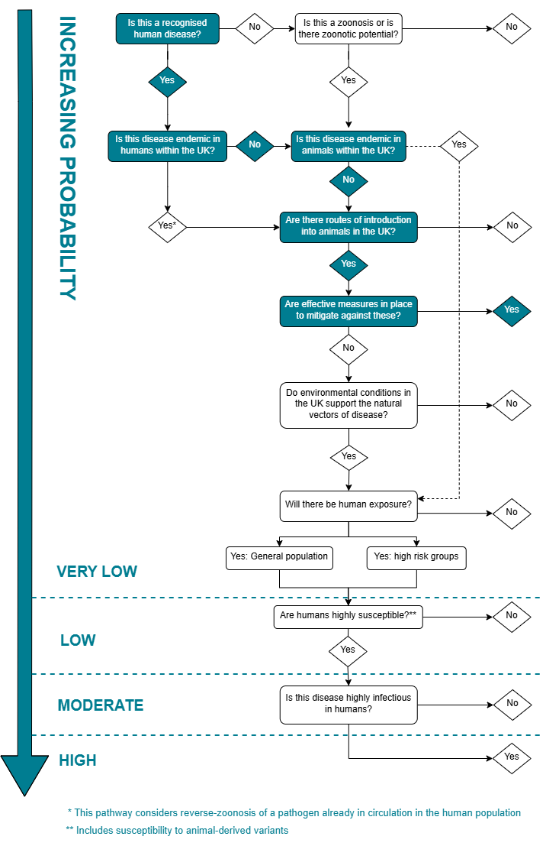
Step 1. Assessment of the probability of infection in the UK human population
This section of the assessment examines the likelihood of an infectious threat causing infection in the UK human population. Where a new agent is identified there may be insufficient information to carry out a risk assessment, and this should be clearly documented. Read in conjunction with the probability algorithm found in Annexe A.
Is this a recognised human disease?
Outcome: Yes
Quality of evidence: Good
Chikungunya is a mosquito-borne viral disease caused by chikungunya virus (CHIKV), a single-strand, positive-sense RNA virus belonging to the Alphavirus genus. CHIKV is transmitted by Aedes mosquitoes between humans in a human-amplified urban lifecycle. Zoonotic transmission cycles in endemic areas may also be observed [1]. For example, enzootic transmission of CHIKV occurs in endemic areas across West and Central Africa where non-human primates behave as natural amplifying hosts, as well as reservoirs for CHIKV [2, 3]. This transmission may also involve bats. Humans also behave as reservoirs, resulting in the maintenance of chikungunya epidemics. Across most of its range, the virus is transmitted between humans by mosquitoes, with no local zoonotic source.
There are 3 genotypes of CHIKV: Asian, Indian Ocean and East/Central/South African (ECSA) genotypes. One amino-acid change in the E1 glycoprotein (E1-A226V mutation) of ECSA CHIKV has been associated with increased vector competence and transmission by Aedes albopictus [4]. This mutation has been found in ECSA CHIKV circulating in Europe (for example [5]).
In recent years there have been several major outbreaks: in 2025 in Réunion Island, Mauritius, and several Indian states; the first autochthonous outbreak in Europe was in Italy in 2007 with more than 200 cases; and an ongoing major outbreak in the Americas since 2013 where over 3.68 million cases have been reported as of June 2023 [6].
Historically, locally acquired chikungunya cases in the European Region had been sporadic. In 2024, only one locally acquired case was reported from France [7]. However, a substantial increase in reported cases has been observed in the European region in 2025. As of 19 November 2025, 780 autochthonous chikungunya cases have been reported across 8 regions in mainland France, with cases detected as far north as Paris, Ile-de-France [8]. This outbreak has been linked to the chikungunya outbreak in the French Department of Réunion Island, where a viral strain well adapted to the Aedes albopictus mosquito vector had been introduced to mainland France through travel-associated cases. During this period, 1,073 travel associated chikungunya cases had been reported in France, of which 757 cases had reported travel from Reunion Island [8]. To compare, in 2024, up to 26 November, only 27 travel associated cases had been reported in France [7]. In Italy, 385 locally acquired cases have been reported nationally as of September 2025 [9].
Chikungunya is characterised by a sudden onset of fever usually accompanied by joint pain (arthralgia) which can range in severity from mild to severe and disabling. Common additional symptoms include muscle pain, headache, nausea, fatigue and rash. Symptom onset typically occurs within 3 to 7 days (range 1 to 12 days) after being bitten by an infected mosquito [4]. Most cases will make a full recovery, although joint pain and arthritis persisting for several months or even years has been reported [10]. Serious complications associated with infection are uncommon, although in older people the disease can contribute to the cause of death [10]. Rare complications associated with CHIKV infection include uveitis, retinitis, myocarditis, hepatitis, nephritis, bullous skin lesions, haemorrhage, meningoencephalitis, myelitis, Guillain-Barré syndrome, and cranial nerve palsies [11].
The symptoms associated with chikungunya infection are indiscriminate from other arboviral infections including dengue and Zika virus. These viruses can circulate in the same area posing challenges for case detection as co-infections in the same patient are possible.
Is the disease endemic in humans within the UK?
Outcome: No
Quality of evidence: Good
There is no current evidence of local transmission of CHIKV in the UK. Where data is available, reported cases in UK have been acquired as a result of travelling to areas with known CHIKV circulation. The majority of these cases had recent travel history to South and South East Asia, West Africa, and East Africa, South America and the Caribbean. However, if an increased number of imported and locally acquired chikungunya cases continue to be observed in Europe, as seen in France during 2025, there will be an increase in infection pressure and travel associated cases into the UK. In 2024, 127 travel-associated chikungunya cases were recorded in the UK, representing the highest annual total since 2014 when cases were primarily linked to travel to the Caribbean [12 to 14]. In 2024, most cases reported a history of travel to India (Table 1). Between January and June 2025, 77 travel associated cases of chikungunya have been reported in the UK, representing an increase in cases when compared to the same period in 2024 [14, 15]. In 2025, most cases reported a history of travel to Sri Lanka.
Table 1. The number of travel-associated chikungunya cases reported in England, Wales and Northern Ireland between 2020 and 2024, by 10 most common country of travel [note 1]
| Country of travel | 2020 | 2021 | 2022 | 2023 | 2024 | Total |
|---|---|---|---|---|---|---|
| India | 7 | 5 | 15 | 28 | 66 | 121 |
| Nigeria | 6 | 3 | 3 | 2 | 14 | |
| Thailand | 7 | 3 | 2 | 12 | ||
| Pakistan | 11 | 11 | ||||
| Somalia | 10 | 1 | 11 | |||
| Brazil | 3 | 7 | 10 | |||
| Philippines | 1 | 2 | 5 | 8 | ||
| Indonesia | 1 | 1 | 6 | 8 | ||
| Maldives | 6 | 6 | ||||
| Ghana | 1 | 3 | 1 | 5 |
Note 1: some cases may have travelled to more than one country, and thus may be included more than once across country counts
Is the disease endemic in animals within the UK?
Outcome: No
Quality of evidence: Good
There is no current evidence of local transmission of CHIKV in the UK. The exotic invasive mosquitoes responsible for transmission of CHIKV in Europe and the Caribbean in recent years are Aedes albopictus and Aedes aegypti. To date, there have been no reports of these species established in the UK despite active surveillance programmes run by UKHSA entomologists in collaboration with Port Health and local authorities [16, 17].
Some studies have shown Aedes vexans, a species native to the UK, to be vector competent for CHIKV (7.7% infected, as compared to Aedes albopictus 75 to90.3% infected) [13]. In July 2017, dozens of host-seeking female Aedes vexans were identified in a residential area in Norwich [18]. Occasionally observed in the past, this is the first notable population of Aedes vexans identified in the UK (Norwich) for 90 years. Furthermore, in 2018 a nuisance population of Aedes vexans was detected in Nottinghamshire on the River Idle. Control efforts involving larviciding and environmental manipulation was implemented at the site. The current rarity of this species in the UK makes transmission of CHIKV by this species unlikely [16]. Vector competence work showed that UK populations of Aedes detritus were not competent vectors of CHIKV [19].
There are no populations of non-human primates or fruit bats outside confined establishments in the UK, and trade rules would mitigate the imports of such species from endemic areas without quarantine periods and veterinary health checks.
Are there routes of introduction into the UK?
Outcome: Yes
Quality of evidence: Good
Transmission of CHIKV in the UK is contingent on 2 factors: the presence of infected humans, and the presence of competent mosquito vectors. Recorded imported cases of chikungunya in England, Wales and Northern Ireland in infected travellers have increased since 2021 (Table 2), which may be attributable to improved awareness, testing and thus case ascertainment, global epidemiology, travel patterns, and the geographical spread of Aedes mosquitoes [12].
Table 2. The number of imported human cases of chikungunya in England, Wales, and Northern Ireland between 2021 and 2024
| Year | Number of cases |
|---|---|
| 2021 | 17 |
| 2022 | 31 |
| 2023 | 45 |
| 2024 | 112 |
In the UK, there is currently no evidence of established competent mosquito vectors (for example Aedes albopictus or Aedes aegypti), nor evidence to suggest that the arrival of competent vectors would immediately increase the chances of autochthonous human cases of CHIKV, as likely endemic transmission areas are limited by climatic variables, the lifespan of an infected vector and the anthropophilic nature of certain vectors above others [20].
Aedes albopictus has now been reported in many European countries and continues to be found in new regions annually, notably in France and the Netherlands (see latest ECDC maps). The main route of importation into Europe has been by the trade in used tyres. However, both Aedes albopictus and Aedes aegypti have been found to colonise new areas by main highway routes, having moved across regions in vehicles. In France, during the summers of 2012 and 2014 the mosquito spread northward from the Côte d’Azur to Lyon and Chalon-sur-Saone with eggs and adults now found in Paris and Strasbourg (2014 and 2015). It was therefore considered likely that within the next decade these species may be found in the UK, introduced by road and rail links with continental Europe [21].
In September 2016, Aedes albopictus was detected in the UK for the first time. A small number of eggs of Aedes albopictus were found in one location in Kent, close to the motorway system [22]. The mosquito has subsequently been detected in 2017, 2018, 2019 (3 incidents), 2024 and 2025. It is likely that these were laid by adult mosquitoes imported from continental Europe in vehicles and aeroplanes. So far there is no evidence that they have established, however surveillance of the area is ongoing.
In addition, one male Aedes aegypti was found in 2014 in Merseyside, however on further investigation, no more specimens were identified [18]. This was the third time that this species has been reported in the UK; having previously been reported in 1865 and 1919. Recently, Aedes aegypti has been detected at Heathrow airport in 2023 and 2025. The mosquito did not establish on either occasion. Overall, there have been 5 detections of Aedes aegypti in the UK between 1865 and 2025.
Are effective control measures in place to mitigate against these routes of introduction?
Outcome: Yes
Quality of evidence: Good
If or when Aedes albopictus or Aedes aegypti are found in the UK, a combination of habitat manipulation (removal of container habitat) and control (adulticides and larvicides) are implemented, with the aim of eradicating the population. Both activities were carried out after each incident in response to the detection of Aedes albopictus eggs and larvae. Deltamethrin adulticide is licenced for use in the UK but is considered a last resort.
A contingency plan for invasive mosquito control, based upon those used in France and the Netherlands, has been developed. The focus of current UKHSA mosquito surveillance has shifted from seaports and airports to also include motorway services stations in southern England to detect Aedes albopictus being imported through ferry ports and Eurotunnel in vehicles. This sampling strategy is being widely used across Europe to monitor for the extension of Aedes albopictus distributions [16, 23, 24].
In the event of established competent mosquitoes, there may be a requirement for local mosquito control in the vicinity of imported human cases of CHIKV. Local mosquito control may involve a combination of public engagement in minimising habitats, insecticidal control of mosquito larvae and adults, active surveillance and coordination between UKHSA and local authorities. This strategy to minimise autochthonous cases is currently instituted in France. However, local UK climate differs from that in European countries that have experienced outbreaks, making local transmission less likely but still possible.
Whilst there are no measures in place to prevent CHIKV infected humans travelling to the UK, the risk of infection in travellers can be reduced through raising awareness on mosquito bite prevention (such as using mosquito repellents, wearing long-sleeved clothing and trousers and sleeping under mosquito nets). Upon clinical suspicion, rapid diagnostic testing and effective treatments are available in the UK for individuals who present with symptoms compatible with CHIKV infection and have recently returned from a country where CHIKV is known to circulate.
Two chikungunya vaccines have been approved for use in the UK [25]. Vimkunya is a single-dose virus-like particle vaccine which can be used to protect individuals aged 12 years and above against chikungunya disease. IXCHIQ is a live attenuated single-dose vaccine used to prevent chikungunya disease in immunocompetent individuals aged between 18 to 59 years old.
Outcome of probability assessment
The probability of human infection with chikungunya virus in the UK population is considered Very low.
Step 2: Assessment of the impact on human health
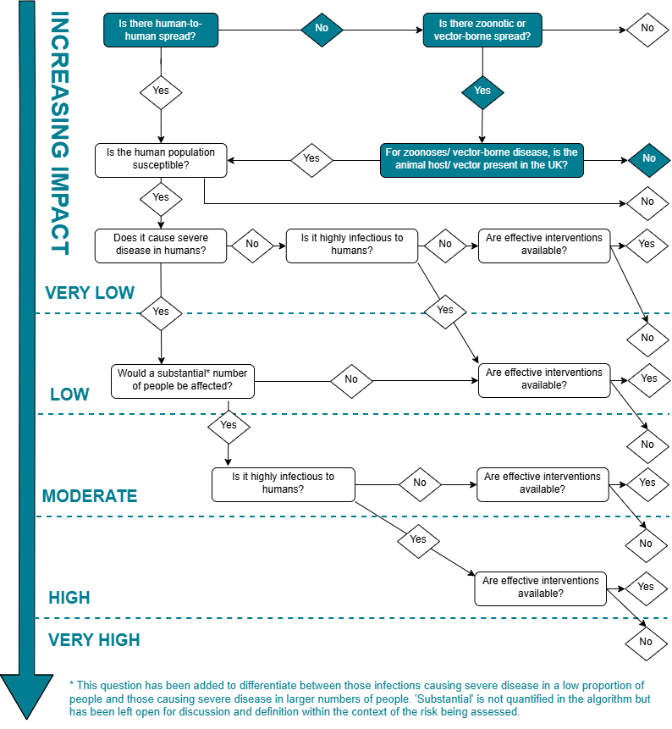
The scale of harm caused by the infectious threat in terms of morbidity and mortality: this depends on spread, severity, availability of interventions and context. Read in conjunction with the impact algorithm found at Annexe C.
Is there human-to-human spread of this pathogen?
Outcome: No
Quality of evidence: Good
The overwhelming majority of CHIKV cases are vector-borne. Although rare, instances of CHIKV transmission through contact with infected blood in laboratory and healthcare settings has been reported, with the risk of transmission through this route being greatest during the first week of illness in viraemic individuals [26]. Transmission of CHIKV from pregnant mothers to their child during the second trimester of pregnancy, or in the week prior to delivery has also been documented [26]. On rare occasions, chikungunya has also been reported to be responsible for spontaneous abortions in pregnant women [4]. There is no transmission of CHIKV through breastmilk. There has been evidence of CHIKV infection in transplant recipients, although literature has shown no serious complications resulting from infection amongst these individuals [27].
Is there zoonotic or vector-borne spread of this pathogen?
Outcome: Yes
Quality of evidence: Good
CHIKV is primarily a vector-borne infection of humans transmitted by Aedes mosquitoes.
In endemic areas, a zoonotic transmission cycle of CHIKV may be observed between non-human primates and competent mosquito vectors with spillover into human populations in whom the virus can be amplified, continuing the cycle [4]. However, it is not considered to be a zoonotic transmission cycle in European areas, where transmission is between humans where there are competent vectors.
For zoonoses or vector-borne disease, is the animal host or vector present in the UK?
Outcome: No
Quality of evidence: Good
Although sporadic introductions of invasive Aedes mosquitoes into the UK have occurred (first in 2016, and on 7 occasions since including in 2024 and 2025), there has been no evidence of establishment of competent Aedes species that vector CHIKV. However, given the proximity of Aedes albopictus mosquitoes in France to the UK and the ability of the species to colonise new regions by road networks, it is likely that during the next decade the vector will continue to be introduced [16, 22, 23]. Aedes albopictus vector establishment is currently possible in parts of southern England based on current climate conditions in the UK [28, 29].
There are no populations of non-human primates or fruit bats outside confined establishments in the UK and trade rules would mitigate the imports of such species from endemic areas without quarantine periods and veterinary health checks.
Outcome of impact assessment
The impact of chikungunya virus on human health in the UK would be considered Very low, given the current absence of established populations of the competent mosquito vectors in the UK. Therefore, the full impact of infection with CHIKV in a human has not been fully assessed through the algorithm. If vectors were to become established in local populations, this will be assessed in more detail.
Annexe A
Figure 1. Assessment of the probability of infection in the UK population algorithm
Annexe B
Accessible text version of Figure 1. Assessment of the probability of infection in the UK population algorithm
Outcomes are specified by a ☑ (tick) beside the appropriate answer. Where the evidence may be insufficient to give a definitive answer to a question, the alternative is also considered with the most likely outcome shown with ☑ ☑ (2 ticks) and/or the alternative outcome(s) with a ☑ (tick).
Question 1: Is this a recognised human disease?
Yes: go to question 3. ☑
No: go to question 2.
Question 2: Is this a zoonosis or is there a zoonotic potential?
Yes: go to question 4.
No: the probability of infection in the UK population is considered very low.
Question 3: Is this disease endemic in humans within the UK?
Yes [note 2]: go to question 5.
No: go to question 4. ☑
Note 2: This pathway considers reverse-zoonosis of a pathogen already in circulation in the human population.
Question 4: Is this disease endemic in animals in the UK?
Yes: go to question 8.
No: go to question 5. ☑
Question 5: Are there routes of introduction into animals in the UK?
Yes: go to question 6. ☑
No: the probability of infection in the UK population is considered very low.
Question 6: Are effective measures in place to mitigate against these?
Yes: the probability of infection in the UK population is considered very low. ☑
No: go to question 7.
Question 7: Do environmental conditions in the UK support the natural vectors of disease?
Yes: go to question 8.
No: the probability of infection in the UK population is considered very low.
Question 8: Will there be human exposure?
Yes: go to question 9.
No: the probability of infection in the general UK population is considered very low.
Question 9: Are humans highly susceptible? [note 3]
Yes: go to question 10.
No: the probability of infection in the UK population is considered low.
Note 3: Includes susceptibility to animal-derived variants
Question 10: Is the disease highly infectious in humans?
Yes: the probability of infection in the UK population is considered high.
No. the probability of infection in the UK population is considered moderate.
Annexe C
Figure 2. Assessment of the impact on human health algorithm
Annexe D
Accessible text version of Figure 2. Assessment of the impact on human health algorithm
Outcomes are specified by a ☑ (tick) beside the appropriate answer.
Question 1: Is there human-to-human spread?
Yes: go to question 4.
No. go to question 2. ☑
Question 2: Is there zoonotic or vector-borne spread?
Yes: go to question 3. ☑
No: the impact of infection in the UK population is considered very low.
Question 3: For zoonoses or vector-borne disease, is the animal host or vector present in the UK?
Yes: go to question 4.
No: the impact of infection in the UK population is considered very low. ☑
Question 4: Is the human population susceptible?
Yes: go to question 5.
No: the impact of infection in the UK population is considered very low.
Question 5: Does it cause severe disease in humans?
Yes, high risk groups: go to question 8.
No: go to question 6.
Question 6: Is it highly infectious to humans?
Yes: go to question 9.
No: Go to question 7.
Question 7: Are effective interventions available?
Yes: the impact of infection in the UK population is considered very low.
No: the impact of infection in the UK population is considered low.
Question 8: Would a substantial [note 4] number of people be affected?
Yes: go to question 10.
No: go to question 9.
Note 4: This question has been added to differentiate between those infections causing severe disease in a handful of people and those causing severe disease in larger numbers of people. ‘Substantial is not quantified in the algorithm but has been left open for discussion and definition within the context of the risk being assessed.
Question 9: Are effective interventions available?
Yes: the impact of infection in the UK population is considered low.
No: the impact of infection in the UK population is considered moderate.
Question 10: Is it highly infectious to humans?
Yes: go to question 12.
No: go to question 11.
Question 11: Are effective interventions available?
Yes: the impact of infection in the UK population is considered moderate.
No: the impact of infection in the UK population is considered high.
Question 12: Are effective interventions available?
Yes: the impact of infection in the UK population is considered high.
No: the impact of infection in the UK population is considered very high.
References
1. de Souza WM, Gaye A, Ndiaye EH, Morgan AL, Sylla EHD, Sy FA and others. ‘Serosurvey of Chikungunya Virus in Old World Fruit Bats, Senegal, 2020-2022’ Emerging Infectious Diseases 2024: volume 30, issue 7, pages 1,490-2
2. Althouse BM, Guerbois M, Cummings DAT, Diop OM, Faye O, Faye A and others. ‘Role of monkeys in the sylvatic cycle of chikungunya virus in Senegal’ Nature Communications 2018: volume 9, issue 1, page 1,046
3. Bettis AA, L’Azou Jackson M, Yoon IK, Breugelmans JG, Goios A, Gubler DJ and others. ‘The global epidemiology of chikungunya from 1999 to 2020: A systematic literature review to inform the development and introduction of vaccines’ PLoS Neglected Tropical Diseases 2022: 16, issue 1, e0010069
4. European Centre for Disease Prevention and Control. Factsheet for health professionals about chikungunya virus disease
5. Calba C, Guerbois-Galla M, Franke F, Jeannin C, Auzet-Caillaud M, Grard G and others. ‘Preliminary report of an autochthonous chikungunya outbreak in France, July to September 2017’ Eurosurveillance 2017: volume 22, issue 39
6. de Souza WM, Ribeiro GS, de Lima STS, de Jesus R, Moreira FRR, Whittaker C and others. ‘Chikungunya: a decade of burden in the Americas’ Lancet Regional Health – Americas 2024: volume 30, page 100,673
7. France SP. Chikungunya, dengue fever and zika – Enhanced surveillance data in mainland France 2024 2024
8. France SP. Chikungunya, dengue, Zika and West Nile in mainland France. Enhanced Surveillance Bulletin of 26 November 2025 2025
9. European Centre for Disease Prevention and Control. Communicable disease threats report, 22-28 November 2025, week 48 2025
10. UKHSA. Guidance Chikungunya 2014
11. World Health Organization. Chikungunya 2025
12. UKHSA. Travel-associated infections in England, Wales and Northern Ireland: 2024 2025
13. Public Health England. Chikungunya: epidemiology in England, Wales and Northern Ireland 2015
14. Public Health Scotland 2025
15. UKHSA. Travel-associated infections in England, Wales and Northern Ireland: January to June 2025 2025
16. Grandadam M, Caro V, Plumet S, Thiberge JM, Souarès Y, Failloux AB and others. ‘Chikungunya virus, southeastern France’ Emerging Infectious Diseases 2011: volume 17, issue 5, pages 910-3
17. Venturi G, Di Luca M, Fortuna C, Remoli ME, Riccardo F, Severini F and others. ‘Detection of a chikungunya outbreak in Central Italy, August to September 2017’ Eurosurveillance 2017: volume 22, issue 39
18. Medlock J, Cull B, Vaux A, Irwin A. ‘The mosquito Aedes vexans in England’ Veterinary Record 2017: volume 181, page 243
19. Vaux AG, Medlock JM. ‘Current status of invasive mosquito surveillance in the UK’ Parasites and Vectors 2015: volume 8, page 351
20. Reiskind MH, Westbrook CJ, Lounibos LP. ‘Exposure to chikungunya virus and adult longevity in Aedes aegypti (L.) and Aedes albopictus (Skuse)’ Journal of Vector Ecolgy 2010: volume 35, issue 1, pages 61-8
21. Alexander G.C. Vaux1 GM, Nick Baskerville, Ged Burden, Niall Convery, Lynnette Crossley, Laurence Dettman, Paul Haden, Laurence Jarrold, Christopher Massey, Kevin Napier, Iain Pocknell, Steve Seddon, Andrea Smith, Shui Tsoi and Jolyon M. Medlock. ‘Monitoring for invasive and endemic mosquitoes at UK ports’ Journal of the European Mosquito Control Association 2011: pages 133-40
22. Talbalaghi A, Moutailler S, Vazeille M, Failloux AB. ‘Are Aedes albopictus or other mosquito species from northern Italy competent to sustain new arboviral outbreaks?’ Medical and Veterinary Entomology 2010: volume 24, issue 1, pages 83-7
23. Medlock JM, Leach SA. ‘Effect of climate change on vector-borne disease risk in the UK’ Lancet Infectious Diseases 2015: volume15, issue 6, pages 721-30
24. Blagrove MS, Sherlock K, Chapman GE, Impoinvil DE, McCall PJ, Medlock JM and others. ‘Evaluation of the vector competence of a native UK mosquito Ochlerotatus detritus (Aedes detritus) for dengue, chikungunya and West Nile viruses’ Parasites and Vectors 2016: volume 9, page 452
25. Department of Health and Social Care. Chikungunya vaccine in UK travellers: JCVI advice 2025
26. Centers for Disease Control and Prevention (CDC). Transmission of Chikungunya Virus 2024
27. Rosso F, Rodríguez S, Cedano JA, Mora BL, Moncada PA, Velez JD. ‘Chikungunya in solid organ transplant recipients, a case series and literature review’ Transplant Infectious Disease 2018: volume 20, issue 6, e12978
28. Caminade C, Medlock JM, Ducheyne E, McIntyre KM, Leach S, Baylis M and others. ‘Suitability of European climate for the Asian tiger mosquito Aedes albopictus: recent trends and future scenarios’ Journal of the Royal Society Interface 2012: volume 9, issue 75, pages 2,708-17
29. Metelmann S, Caminade C, Jones AE, Medlock JM, Baylis M, Morse AP. ‘The UK’s suitability for Aedes albopictus in current and future climates’ Journal of the Royal Society Interface 2019: volume 16, issue 152