Guide to species indicators
Published 28 April 2026
Applies to England

© Crown copyright 2026
This publication is licensed under the terms of the Open Government Licence v3.0 except where otherwise stated. To view this licence, visit nationalarchives.gov.uk/doc/open-government-licence/version/3 or write to the Information Policy Team, The National Archives, Kew, London TW9 4DU, or email: psi@nationalarchives.gov.uk.
Where we have identified any third party copyright information you will need to obtain permission from the copyright holders concerned.
This publication is available at https://www.gov.uk/government/publications/guide-to-species-indicators/guide-to-species-indicators
What are species indicators?
Imagine you are trying to understand how healthy nature is in the UK. To do this, it helps to measure how nature changes over time to see if it is improving or deteriorating. National monitoring schemes that record at local scales record different aspects of biodiversity over time for different purposes. These data can then be used to produce a national scale biodiversity indicator, to give us an indication of how aspects of biodiversity have changed.
Indicators can measure different aspects of biodiversity, such as changes in funding for biodiversity or air pollution over time. One of the most important types of indicators of biodiversity are species indicators, which are a single number or line on a graph that tells us how wildlife populations are changing over time. Species indicators are important as they are clear, easy to understand, and can guide environmental policy. However, they are also high level national estimates, that are used to indicate change, not measure the change in detail.
Species indicators tend to fall into two categories, depending on what they measure:
-
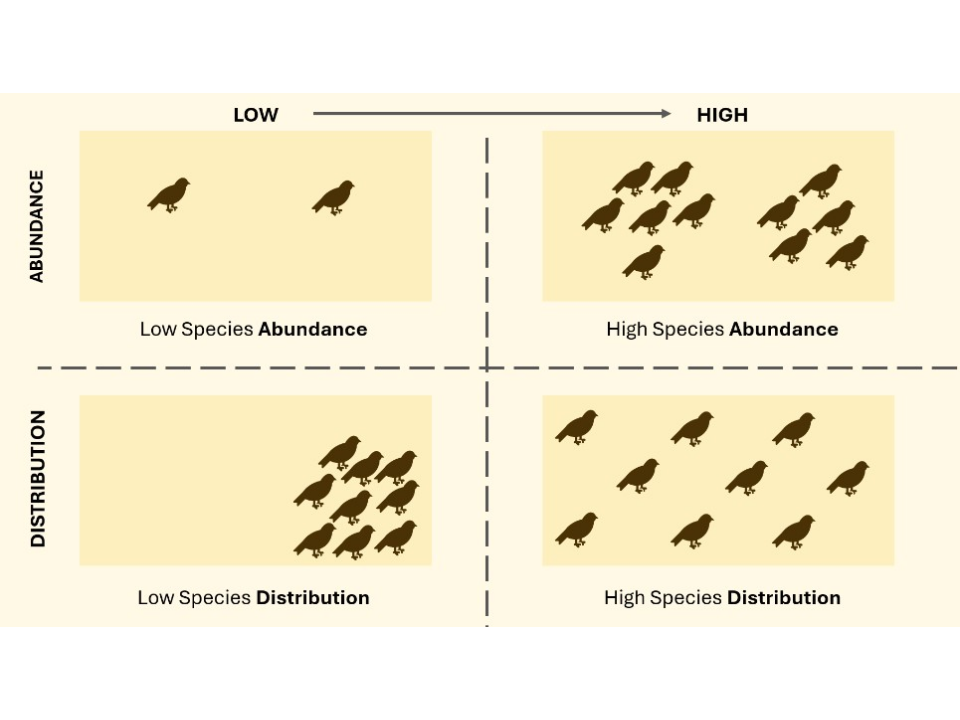
Abundance: Abundance just means how many individuals of a species there are. For example, if there are lots of skylarks counted in a field, skylarks have high abundance. Scientists can’t count every individual animal. Instead, they use surveys and monitoring schemes to estimate changes in abundance over time. Monitoring schemes can look different depending on the characteristics of a particular group of species. For example, bat monitoring schemes rely on volunteers, who count the number of bat passes detected within a specified 1 km grid square twice a year, whereas moth data is gathered by scientists who collect nightly records from light-traps positioned at sites across the country.
-
Distribution and occupancy: Species distribution and occupancy indicators describe how widely a species is found across a landscape and how that changes over time. In practice, distribution and occupancy are used interchangeably as they capture the same core idea: whether a species is being recorded in more places, fewer places, or shifting where it occurs. Distribution refers broadly to the geographic spread of a species, whereas occupancy is more specific to how the data is captured, for example asking: “How many of the sites we looked at were occupied by this species?”.
Single or multiple species?
Species indicators can report on species level trends, for example, how Robin populations in the UK have changed over time, or they can group multiple species, for example, how farmland birds have changed over time. Many publications use a combination of both.
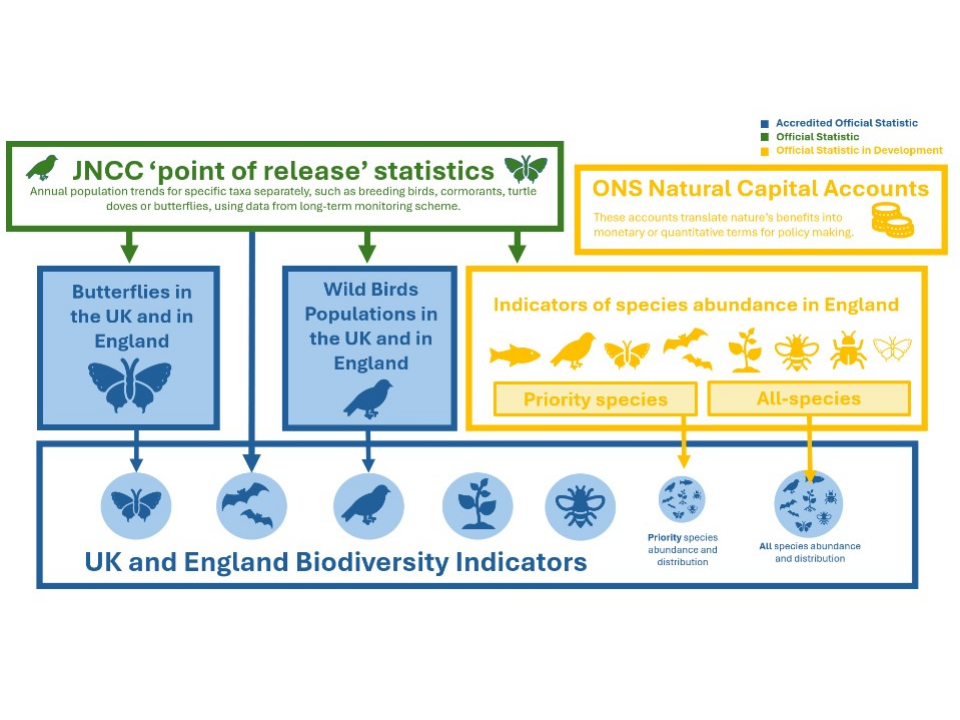
The Joint Nature Conservation Committee’s individual‑species “point of release” publications report annual population trends for specific groups separately, such as breeding birds, cormorants, turtle doves or butterflies, using data from long‑term monitoring schemes like the Breeding Bird Survey and UK Butterfly Monitoring Scheme. These outputs provide species‑level indicators, showing how each species’ population changes year‑to‑year based on survey data.
In contrast, multi species indicators combine trends from many species into a single composite metric, providing a broader picture of biodiversity change rather than focusing on individual species. Looking at one species at a time is important for understanding which species need conservation action, but are less useful for understanding the overall state of biodiversity. For example, a warm year might benefit one species of butterfly but damage another. Looking at changes for every individual species is time consuming and may involve too much detail for use in more wide-ranging policy decisions. By combining many species, an indicator gives a fairer picture of what’s happening overall. These are often called multi‑species indicators.
Species indicators published by UK Government
Multi-species indicators are very useful for policy making, where broader ecological patterns are used to make decisions. Government departments and advisory bodies, such as Natural England, use species indicators to help answer important questions such as: Is wildlife in trouble? Are conservation actions working? Are we meting our nature recovery targets?
The Department for Environment, Food and Rural Affairs (Defra), in collaboration with external organisations and arm’s length bodies, publishes various species indicators within different publications, such as:
-
UK and England Biodiversity Indicators compendiums These are two large groups of indicators that give a snapshot of the current status of biodiversity in the UK or England, and how it’s changing over time. Both publications are produced in collaboration with the Joint Nature Conservation Committee (JNCC) and are made up of 39 UK indicators and 23 England indicators. Multi-species indicators within these compendiums include:
- Mammals of the wider countryside (bats)
- Plants of the wider countryside
- All species abundance
- All species distribution
- Priority species abundance
- Priority species distribution
- Birds of the wider countryside
- Insects of the wider countryside (butterflies)
- Pollinating insects
-
Wild Bird populations in the UK and England This annual release shows the change over time in populations of common birds that are native to, and breed in, the UK. As birds are relatively well monitored compared to other animal groups, this is a large publication, which groups species into an indicator for all breeding bird species, and an indicator for five main habitat groups (farmland, woodland, water, seabird, upland), all for UK and England. Some of the data from this publication is reproduced in the UK and England Biodiversity Indicators above as the Birds of the Wider Countryside publication, including a breakdown of individual species trends.
-
Butterflies in the UK and in England This annual release shows the change over time in populations of butterfly species in England and the UK. Butterflies are an important group of animals to monitor as they respond rapidly to environmental change and habitat management, occur in a wide range of habitats, and are representative of many other insects. For this publication butterflies are grouped into all-species, woodland butterflies, and farmland butterflies. Some of the data from this publication is reproduced in the UK and England Biodiversity Indicators above as the Insects of the Wider Countryside publication, including a breakdown of individual species trends.
-
Indicators of species abundance in England This statistic, to be published annually, will track long‑term change in the relative abundance of over 1000 species using monitoring data from 1970 onwards. Species include birds, moths, butterflies, bumblebees, vascular plants, mammals, fish, and freshwater invertebrates. This statistic is still being developed, but when completed it will be used to track the government’s progress towards meeting the statutory targets to halt the decline in species abundance by 2030 and reverse these declines by 2042 so that they are at least 10% higher than in 2030. Some of the data from this publication is reproduced in the UK and England Biodiversity Indicators above as the Status of all-species:relative abundance and Status of priority species:relative abundance indicators.
Related indicators:
-
The Joint Nature Conservation Committee’s individual‑species “point of release” publications report annual population trends for specific species groups separately. These official statistics are closely linked to Defra’s biodiversity indicators as JNCC co-produce the UK and England Biodiversity Indicators, and many of the JNCC statistics are direct inputs into Defra’s official indicator suite.
-
The Office for National Statistics (ONS) publishes the ONS Natural Capital Accounts, which provide economic estimates of the benefits that nature delivers in the UK over time. These accounts quantify habitat extent (e.g., area of urban greenspace), condition indicators (e.g., indicators of environmental quality and ecological function), ecosystem services (e.g., air pollution removal), and asset values (i.e., long-term economic value of urban ecosystem services). These accounts compliment Defra’s biodiversity indicators by (i) providing ecosystem service context that biodiversity indicators do not capture, (ii) using measures of condition that conceptually overlap with species indicators, and (iii) supporting parallel evidence streams for policy.
What are some of the limitations of multi-species indicators?
It’s important to know the limits of species indicators. They don’t include every species, don’t show where the changes are happening or why, and can hide big changes in individual species inside an average. For example, if some species are increasing while others are falling fast, the indicator might look “stable” even though some wildlife is in serious trouble. The design of the surveys used to collect species data can also present biases in the indicators. For example there are biases in where volunteers go out to collect data, with more surveys being done in south-east England generally. That’s why it’s important to always use these indicators alongside other evidence, not on their own.
How are multi-species indicators made?
Here’s a simplified way to think about it.
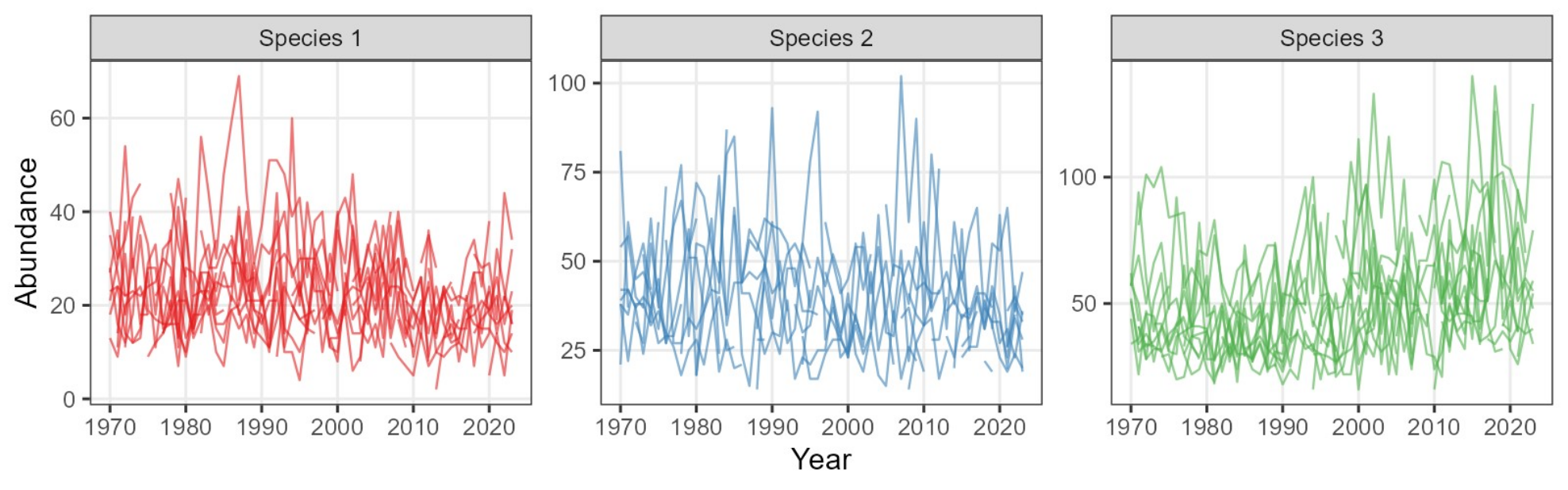
- Scientists collect data, much of which comes from thousands of citizen science volunteers who for example, count birds or record butterflies on walks. Each line in the plots below represent one site where data are collected over time, and each plot/colour represents a single species.
- A national scale trend is calculated for each individual species, which scientists use to estimate whether its population is going up, going down, or staying roughly the same. This trend represents what that species is doing on average at the national scale. Each line in the plot below represents a single species’ national scale trend.
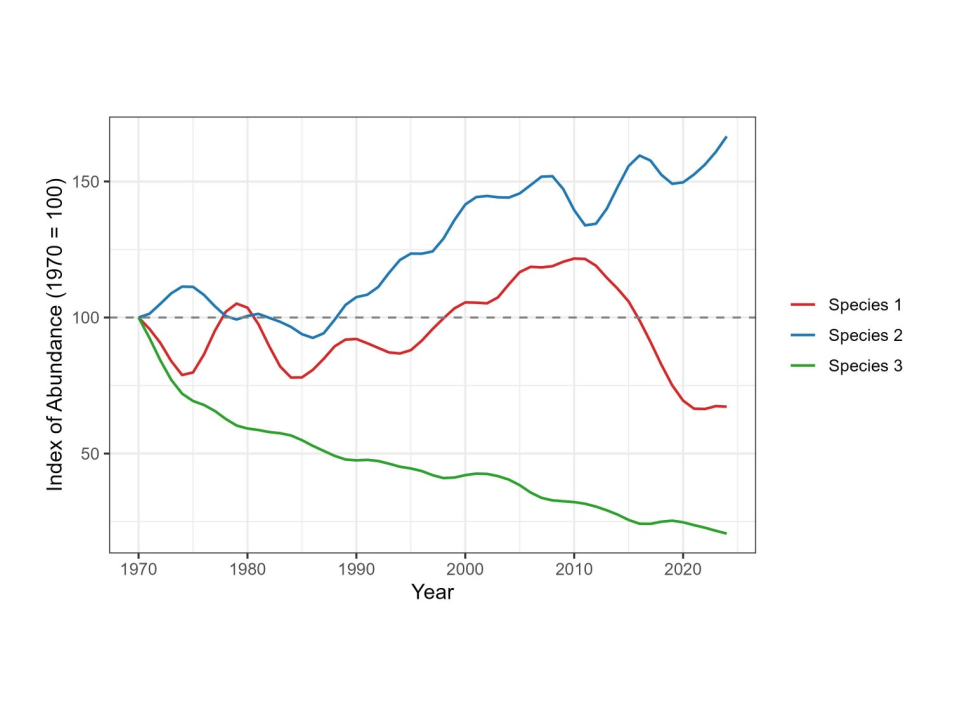
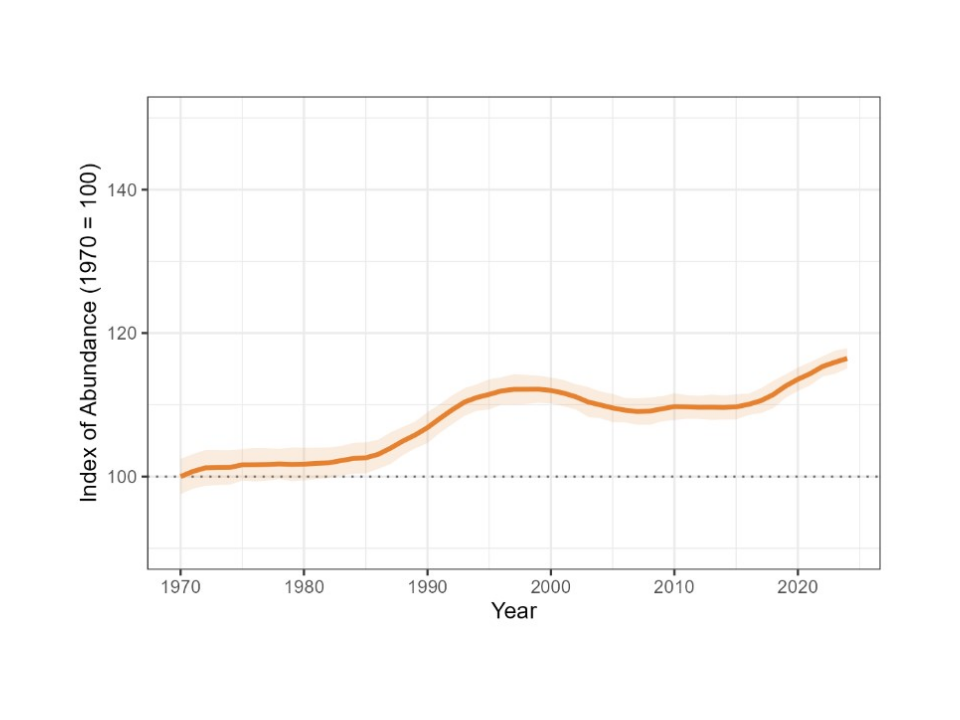
- Trends are combined into a multi-species indicator. The trends from many species are averaged together to make a single, multi-species index. The multi-species index is shown on a graph. The graph usually starts at 100 in a chosen year (for example, 1970). If the line goes below 100, populations have declined on average. If it goes above 100, populations have increased on average. The shaded region around the index line represents uncertainty, such that a narrow shaded area means we are more confident in the trend, whereas a wide shaded region suggests more uncertainty (e.g., perhaps fewer species are included).
Conclusion
Species indicators are powerful tools for understanding broad patterns in how wildlife is changing, but they are not perfect measurements of every species everywhere. They distil large, complex datasets into a single summary trend, helping us identify whether groups of species are generally increasing, decreasing, or staying stable. This makes them valuable for tracking national‑scale change and informing policy.
Some species indicators provide better estimates than others. Indicators that include a larger proportion of the species we know are present in the UK, or draw on long‑running and well‑designed monitoring schemes, tend to give a more reliable picture of change. Likewise, indicators based on taxa that are well‑recorded across many sites, such as birds or butterflies, usually capture trends more accurately than those built from sparse, uneven, or newly emerging datasets. This doesn’t mean that indicators with fewer species are “wrong”; rather, their picture of nature is less complete, and should be interpreted with appropriate caution.
More broadly, indicators cannot tell us everything. They do not include all species, they don’t show where changes are happening, and they don’t explain the reasons behind those changes (e.g., why farmland birds have declined). They also average across species, meaning important declines or recoveries can be hidden within an overall average. For these reasons, species indicators should always be interpreted as signals—useful for highlighting broad patterns—rather than exact measures of biodiversity.
Used alongside other evidence, species indicators provide an essential window into the state of nature, helping policymakers, scientists, and the public understand how wildlife is faring and where action is most needed.