Greater Cambridge: Growth Scenarios
Published 4 November 2025
Applies to England

© Crown copyright 2025
This publication is licensed under the terms of the Open Government Licence v3.0 except where otherwise stated. To view this licence, visit nationalarchives.gov.uk/doc/open-government-licence/version/3 or write to the Information Policy Team, The National Archives, Kew, London TW9 4DU, or email: psi@nationalarchives.gov.uk.
Where we have identified any third party copyright information you will need to obtain permission from the copyright holders concerned.
This publication is available at https://www.gov.uk/government/publications/greater-cambridge-growth-scenarios/greater-cambridge-growth-scenarios
Greater Cambridge: Growth Scenarios
Oxford Economics, April 2025
Disclaimer: this is an independent report produced by Oxford Economics. It does not necessarily reflect the views of MHCLG, nor is it a statement of policy. Oxford Economics’ report has been reformatted to fit the GOV.UK template, which may have impacted the appearance of content and graphics.
Introduction
Oxford Economics has been commissioned by the Ministry of Housing, Communities and Local Government (MHCLG) to explore the growth potential of the Greater Cambridge economy.[footnote 1]
This report is structured as follows:
Chapter One outlines the approach and methodology to derive alternative scenarios for the future of Greater Cambridge. These scenarios are designed to assess the potential scale of growth in Greater Cambridge if interventions, including a significant uplift in housing and commercial space provision, alongside key transport and utilities infrastructure are delivered.
Chapter Two provides an assessment of Oxford Economics’ baseline forecast for Greater Cambridge with future growth in the area consistent with their UK and regional forecasts. These forecasts are policy neutral and do not include any explicit assumptions about future developments or intervention in and around the Greater Cambridge area.
Chapter Three explores Greater Cambridge’s role as a global innovator, particularly in life sciences and tech sectors and their potential to drive growth locally and in the UK.
Chapter Four presents the scenario results of the three growth scenarios.
Technical annex provides context to the baseline forecasts, the economic impact model used to develop the scenarios, summary results for key variables, and an explanatory memorandum.
1. Approach
Overview
Oxford Economics’ approach assesses the growth potential of Greater Cambridge’s knowledge intensive sectors and the wider impact this additional growth could have on local and national economic performance if commercial space and housing is provided to support this scale of growth. Alongside their baseline forecast for Greater Cambridge, Oxford Economics developed three scenarios, for which the definitions and assumptions are set out below.
Defining Greater Cambridge’s knowledge intensive sectors
The definition of Greater Cambridge’s high-tech and knowledge intensive sectors draws on the Organisation for Economic Co-operation and Development (OECD)/Eurostat definition of “Science & Technology”, which categorises this activity into four forms of manufacturing (low-tech, medium-low tech, medium-high tech, and high-tech manufacturing) and four forms of Knowledge-Intensive services (high-tech, financial, market, and other).[footnote 2]
Oxford Economics’ analysis of the sectoral composition of the life sciences sector indicates that this form of activity sits across the high-tech manufacturing and high-tech services definitions.[footnote 3] Oxford Economics isolate the activity of sectors associated with life sciences, excluding the rest of high-tech manufacturing—which on this definition the Greater Cambridge economy is not well represented in—while retaining other high-tech services in a stand-alone category to avoid double-counting. Further analysis of Greater Cambridge’s economic outlook suggests the exclusion of knowledge-intensive financial services.
Oxford Economics’ definition of the high-tech and knowledge intensive sectors therefore comprises:
Life sciences: this include activities that are centred around biological and medical research, including pharmaceutical, medical devices and healthcare innovation. Life sciences typically encompass all the steps of the supply chain, including research & development, manufacturing, and supporting activities.
Knowledge intensive market services: this encompasses a large array of sectors, including legal and financial activities, engineering, marketing, administrative services, real estate, and transport.
Knowledge intensive high-tech services (“tech”): this category includes activities that would commonly be referred to as “tech”, including software publishing, computer programming, wireless telecommunication activities. It also includes research & development activities.
Other knowledge intensive services: this includes a wide range of activities that are not necessarily related, such as education, human health and social work, arts and entertainment.
Establishing the growth opportunity
Oxford Economics’ projection of the future growth potential for each component of the high-tech and knowledge intensive sector definitions draws on their historical employment data which extends back to 1991. They assess the long-run historical growth rate across the period to 2023 for each component and project this forward to 2050. Oxford Economics then apply their sectoral productivity forecasts to assess the impact on gross value added (GVA).
This projection forms the input to Oxford Economics’ Local Economic Forecasting Model, which draws on Oxford Economics’ baseline economic and demographic forecasts alongside published national and other official statistics to assess the likely impact of a future increase in the number of high-tech and knowledge intensive jobs created or sustained across the Greater Cambridge economy. In particular, Oxford Economics capture the indirect or supply chain activity that could be sustained, alongside the economic activity arising as a consequence of the increase in population due to additional housing growth (discussed further below).[footnote 4]
Housing and commercial floorspace delivery
Oxford Economics have developed three scenarios (Table 1) which draw on a range of illustrative, non-spatial housing and commercial floorspace delivery inputs provided by MHCLG.[footnote 5]
New households moving to live and work across Greater Cambridge will stimulate economic activity across the local economy through consumer expenditure of disposable income on goods and services. In order to assess the extent of this impact, Oxford Economics assume that latent demand for housing suggests that not all units delivered will be occupied by new households to the area. In lieu of available data on the extent of this unmet demand, this is assumed to represent 10% of existing housing stock. The proposed housing includes demand for the approximately 40,000 additional dwellings estimated in the baseline forecast to 2050, and as such the scenarios only consider the economic impact of new households over-and-above this forecast. Each scenario converts housing into a new population by applying the future average household size across Greater Cambridge. The scenarios draw on disposable income per capita forecasts, adjusted to take account of the higher spending power of these households owing to the higher-value jobs created or sustained across high-tech and knowledge intensive sectors, the calculations also reflect that only part of the production to facilitate demand arising from these households will occur in Greater Cambridge.
Table 1. Illustrative scenario assumptions
| Scenario | Housing | Commercial floorspace, million sq.ft |
|---|---|---|
| Low scenario | 100,000 | 22 |
| Medium scenario | 125,000 | 27.5 |
| High scenario | 150,000 | 33 |
Oxford Economics’ scenarios then adjust the scale of high-tech and knowledge intensive activity to take account of potential commercial floorspace capacity constraints. Drawing on a range of evidence on the office and lab space requirements of Greater Cambridge’s Knowledge Intensive sector, alongside Oxford Economics’ estimates of the spatial requirements to facilitate growth across non-high tech and knowledge intensive industries, provides an indication of the commercial floorspace required to facilitate this extent of growth. A continuation of historical employment trends across each component, coupled with the illustrative housing supply scenarios developed by MHCLG, would lead to a requirement for commercial space that exceeds that proposed in all three scenarios; an adjustment is therefore made to scale-down the additional high-tech and knowledge intensive activity across each sector to meet the proposed commercial floorspace.
2. Baseline outlook
Introduction
In this section Oxford Economics set out their baseline forecast for the Greater Cambridge economy. They explore headline indicators of economic performance, the sectoral composition of the Greater Cambridge economy, its recent historical performance and the outlook for future economic growth, alongside the outlook for demography and the local labour market. The baseline forecast is consistent with Oxford Economics’ global and UK macroeconomic forecasts. It does not take into account any specific local interventions or policy developments which may alter the outlook.
Headline indicators and sectoral composition
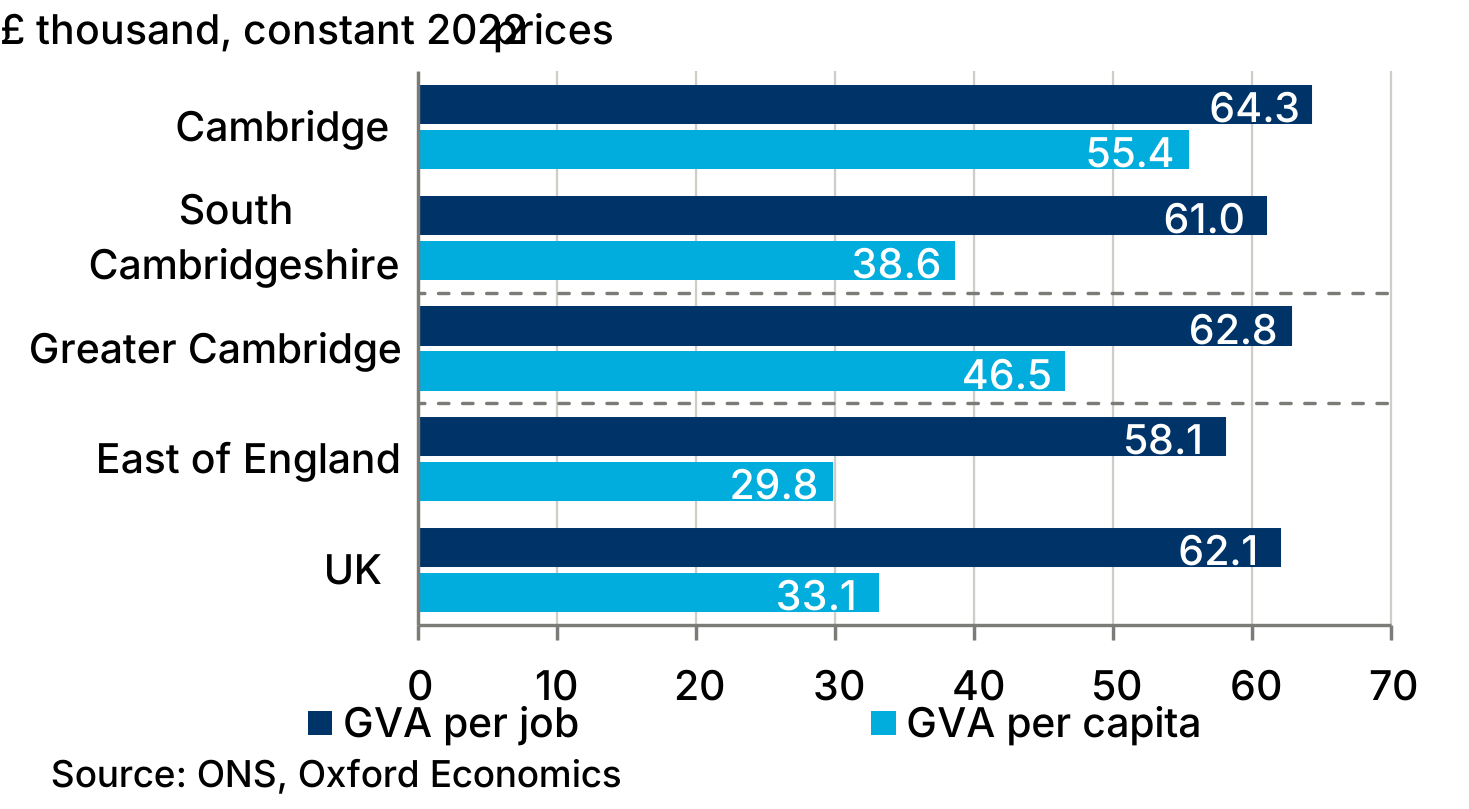
The Greater Cambridge economy benefits from relatively high GVA per capita. At £46,500 per resident in 2023 (Figure 2.1), GVA per capita is around 40% higher than the national average, with Cambridge itself (£55,400 per resident) ranking in the top 95% of the UK’s 361 local authority areas by this measure.
However, Greater Cambridge only slightly outperforms the UK economy in terms of labour productivity (GVA per job). At an estimated £62,800 per job in 2023, GVA per jobs is only marginally above the UK average per job (£62,100). Greater Cambridge benefits from a range of economic advantages, including the University and various leading research facilities, leading to a concentration of knowledge intensive activities. However, these activities form only part of the economy, and Greater Cambridge is home to lower value activities alongside its knowledge intensive sectors. Indeed, the overall distribution of economic activity across all sectors is less advantageous and weighs on overall productivity. That productivity is higher than the national average is therefore due to strong performance within sectors: firms operating across Greater Cambridge tend to be more productive than their counterparts in equivalent industries elsewhere in the UK.
Figure 2.1. Headline indicators, Greater Cambridge and comparator areas, 2023
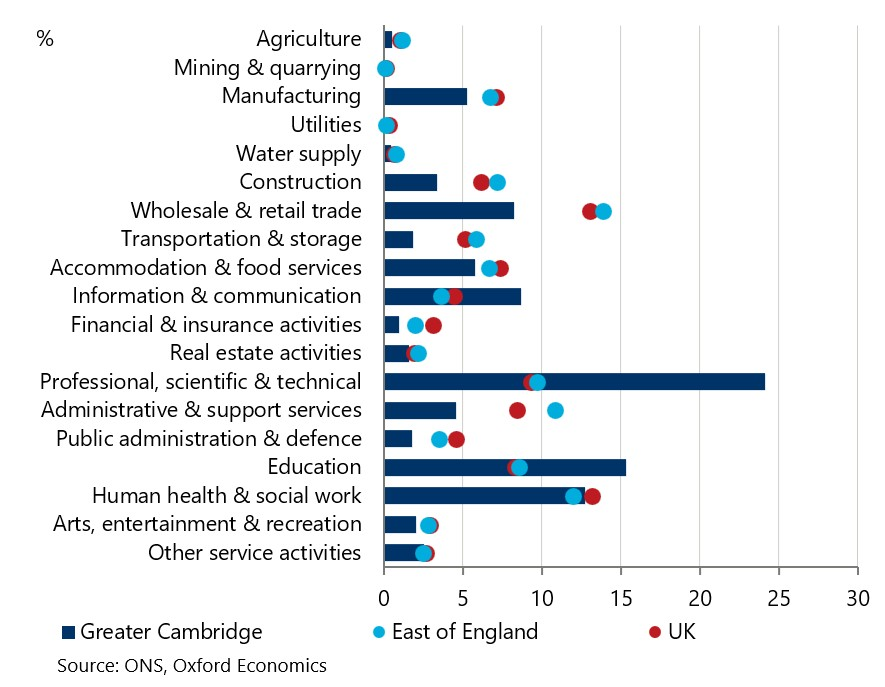
The Greater Cambridge economy has a high concentration of activity in business service sectors (Figure 2.2). Professional, scientific & technical activities alone formed almost a quarter of all employment in 2023, more than twice the equivalent proportions both regionally and nationally. Greater Cambridge also has a high proportion of activity in the education sector, linked to the University, and information & communication.
Figure 2.2. Employment by broad sector, Greater Cambridge and comparator areas, 2023
Growth outlook
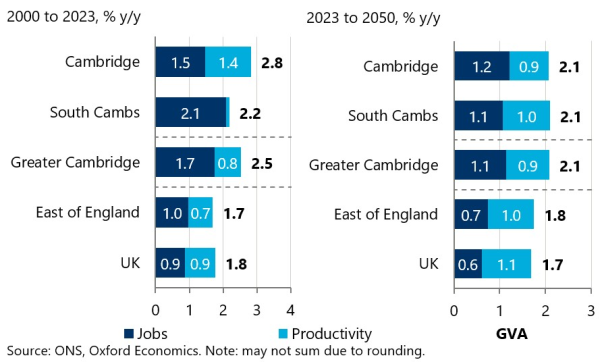
The Greater Cambridge economy has performed well historically. Taking the period since 2000, Greater Cambridge grew by an average of 2.5% per year, outperforming the regional (1.7% per year) and national (1.8% per year) economies (Figure 2.3). Cambridge has been among the fastest growing local authority areas in the UK (2.8% per year), while South Cambridgeshire has seen among the fastest employment growth (2.1% per year). This strong economic performance is partly attributable to industrial composition—Greater Cambridge’s economy is generally well represented among sectors that have experienced faster GVA and employment growth over this period—although Greater Cambridge has outperformed what its industrial composition alone would suggest.
However, the baseline forecast suggests that Greater Cambridge will not continue to grow to the same pace as it has historically. Through the period 2023 to 2050, the Greater Cambridge economy is forecast to grow by 2.1% per year in GVA terms, lagging its historical performance (2.5% per year), and not outperforming the regional and national economies to the same extent as previously. Although employment growth will account for around half of additional GVA, productivity growth (0.9% per year) is expected to slightly lag the UK economy (1.1% per year)—indeed, by 2050 this would lead to average productivity lower than the national average.
Figure 2.3. GVA and jobs, Greater Cambridge and comparator areas, 2000 to 2023 and 2023 to 2050
The National outlook
Oxford Economics’ baseline forecast for the Greater Cambridge economy partly reflects the UK’s macroeconomic outlook. Despite an expectation of tighter fiscal policy for the duration of this parliament, Oxford Economics expect the increased government investment to increase growth in the later part of the decade. Global inflationary pressures from high energy prices have eased and as a result a steady cycle of interest rates cuts is now underway, Oxford Economics expect pay growth to slightly outpace inflation in the medium-term, boosting household spending power and real growth in the economy. Finally, the housing market is recovering, with higher wages and lower interest rates beginning to reduce the scale of the mortgage affordability problem.
Longer term growth in the UK will be driven by continued productivity gains, although these will be low by historic standards, as well as expanding employment—primarily due to continued net migration. The UK economy’s ageing population will endure in the long term, presenting a challenge for future prosperity—however this problem will not be as acute as in other advanced economies.
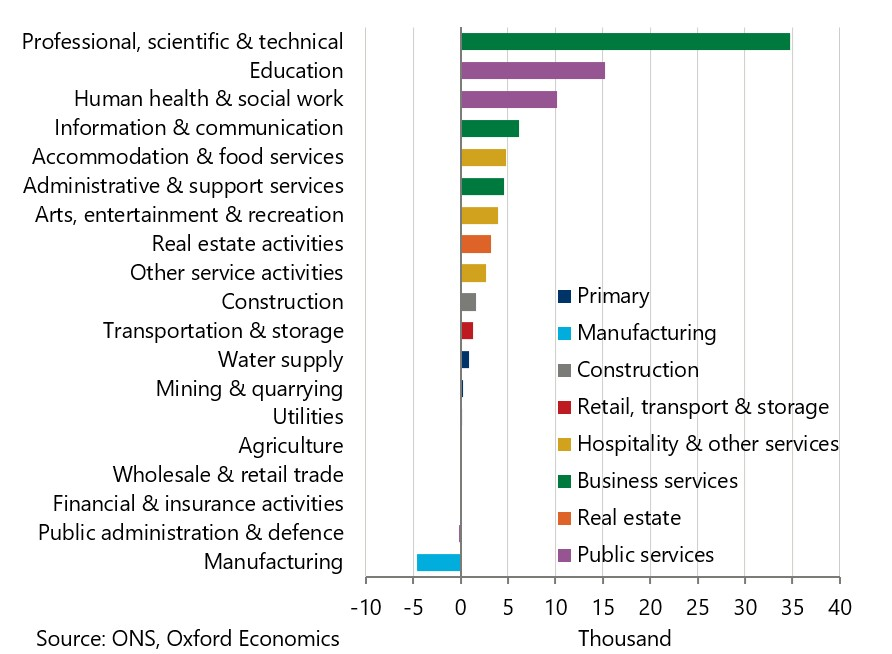
Business services will see the greatest increase in jobs by 2050 in Greater Cambridge in the baseline forecast (Figure 2.4), these jobs will mostly be gained in the professional services sector. More than 15,000 additional jobs will also be supported in the education sector by 2050, due in part to the continued growth of Cambridge University. Human health & social work will also see more than 10,000 additional jobs by 2050, building on the existing strength Greater Cambridge has in this sector. Information & communication is the fastest growing and most productive sector at the national level and will be a large driver of national growth in the period to 2050—it also sees an increase in employment of more than 6,000 jobs by 2050 in the baseline forecast. The sectors in the rest of the economy will add a more modest number of jobs or remain stagnant, with the only sector showing a noticeable decline being manufacturing, in line with the national expectations for this sector in the future.
Figure 2.4. Change in jobs by sector, Greater Cambridge, 2023 to 2050
Demography and the labour market
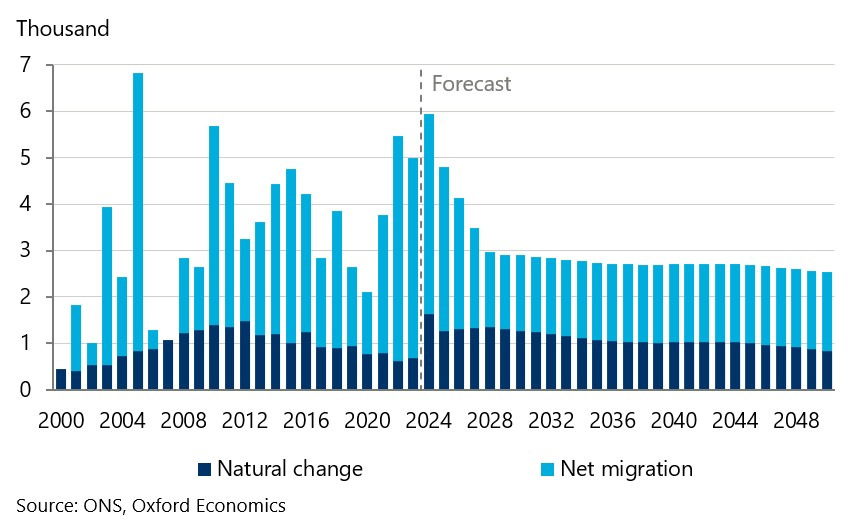
Greater Cambridge is an attractive destination for migrants, both internal and international, to live and work. Over the period since 2000, the Greater Cambridge population grew by 79,900 residents at a rate of 1.3% per year, more than twice the UK average (0.6% per year) (Figure 2.5). Both Cambridge (1.4% per year) and South Cambridge (1.2% per year) rank among the fastest growing local populations across the UK over this period. The composition of population change also somewhat differs to national trends: almost three-quarters of population growth arises from net migration, as opposed to less than two‑thirds across the UK, with the remaining quarter due to natural change (births minus deaths).
Looking forward, Oxford Economics’ baseline forecast indicates a weaker outlook for population growth. Oxford Economics expect weaker net migration than historically, in part due to their UK-wide assumption that net migration will fall to 253,000 per year. While Greater Cambridge’s relatively young population will continue to see positive natural change (i.e., more births than deaths), their baseline forecast indicates that population growth will fall to 0.8% per year over the period to 2050. While the working age population (aged 16-to-64 inclusive) will continue to grow, it will do so at a rate slower than the population as a whole (0.4% per year), and less than a third of the equivalent growth since 2000 (1.2% per year).
Figure 2.5. Components of population change, Greater Cambridge, 1991 to 2050
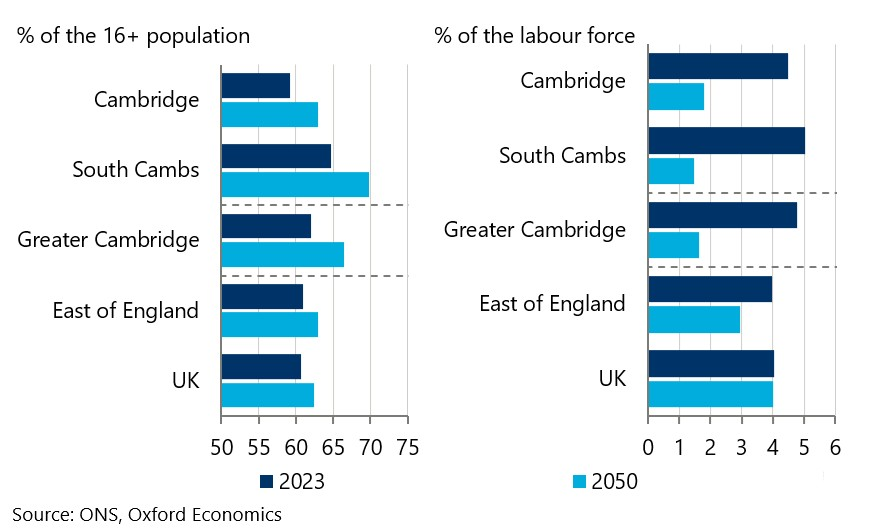
The baseline forecast indicates an increasing tightening of the local labour market (Figure 2.6). Despite continued population growth, particularly among older cohorts, the resident employment rate is expected to increase from 62% of the adult population in 2023—only slightly above the regional and national rates (both 61%)—to 66% by 2050. The unemployment rate is similarly expected to fall from 4.8% of the labour force in 2023—slightly above the regional and national averages (both 4.0%)—to just 1.6% by 2050. At 1.5%, South Cambridgeshire would have the fourth-lowest unemployment rate of all 361 local authority areas in the UK, while Cambridge (1.8%) also ranks among the bottom-10% by this measure.
Figure 2.6. Resident employment (left) and unemployment (right), Greater Cambridge and comparator areas, 2000 to 2023
Knowledge-intensive sectors’ performance and outlook
The four identified knowledge-intensive sectors have had diverging growth patterns in Greater Cambridge, but most are expected to grow at a faster rate than the UK for both GVA and employment (Figure 2.7).
Life sciences’ output declined on average between 2009 and 2018, driven by a fall in productivity performance. But the sector started to pick up in 2018. The Covid-19 pandemic facilitated a strong bounce back, as key pharmaceutical companies such as AstraZeneca reinforced their position in Cambridge. In 2023, Greater Cambridge accounted for 1.4% of the UK’s life sciences output, and 7.5% of the workforce. Oxford Economics forecast baseline GVA growth of 1.8% per year on average between 2023 and 2050, slightly below the UK average of 2.0%. Employment is expected to grow at an average 1.3% per year, above the UK average of 0.9%.
Figure 2.7. Knowledge-intensive sectors historical and baseline forecast GVA growth, Greater Cambridge
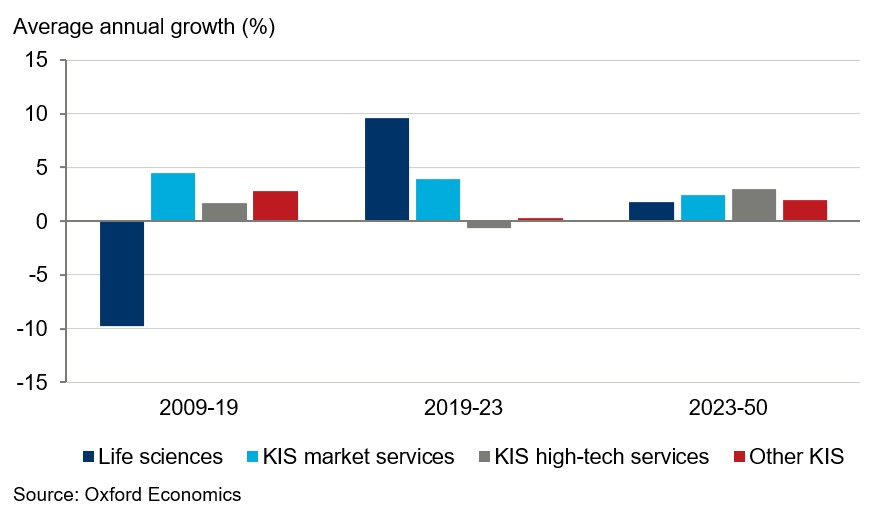
Knowledge-intensive market services have been growing particularly rapidly in Cambridge during the pre-pandemic period, with average output growth of 4.5% per year between 2009 and 2019, and average employment growth of 5.1% over the same period (Figure 2.8). The sector also showed significant resilience during the pandemic. It remains small in scale though, accounting for 0.8% of the UK’s sector in output terms, and 0.7% in employment terms.
Figure 2.8. Baseline forecast growth in GVA (left) and employment (right) for knowledge-intensive sectors, 2023-2050, Greater Cambridge and UK
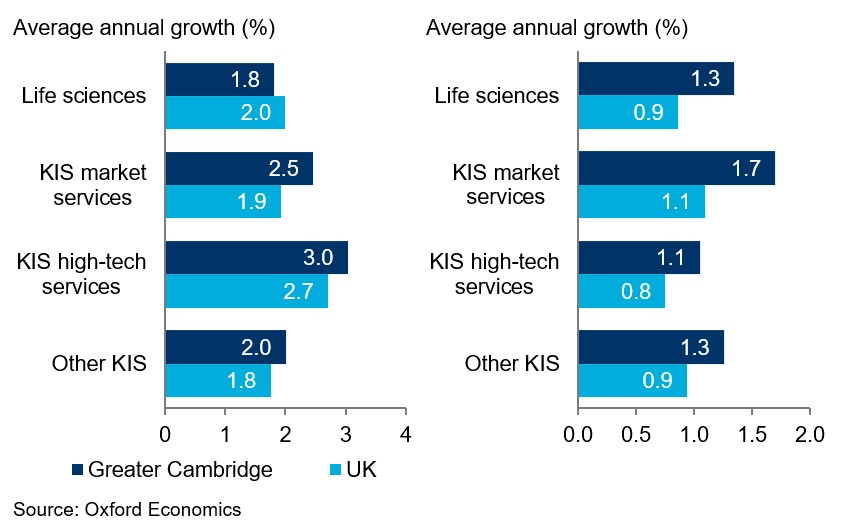
Knowledge intensive high-tech services had enjoyed particularly rapid growth in the UK before the pandemic, expanding by an average annual rate of 4.5%, although growth in Greater Cambridge was somewhat slower at 1.7%. In 2023, Greater Cambridge accounted for 0.9% of the UK’s high-tech services output, and 1.1% of jobs. Oxford Economics expect high-tech services to be the fastest growing of the four identified groups in Greater Cambridge, with GVA growing at an average rate of 3.0% per year between 2023 and 2050, above the UK average of 2.7%. Employment is expected to grow by 1.1% per year across the period, also faster than the national average of 0.8%.
Other knowledge intensive services are largely composed of publicly-funded occupations, specifically health and education related activities, and as a result growth has historically been relatively steady. Due to the large education sector in Cambridge, other knowledge intensive services were the largest of the four identified groups in terms of employment in 2023, with other 70,000 workers. Cambridge accounts for 0.8% of the UK’s employment in this group, and 1.0% in GVA. GVA is expected to grow at an average 2.0% per year across the 2023-2050 period, and employment by 1.3% per year.
3. Cambridge as a global innovator
In this section, Oxford Economics analyse the position of Cambridge as an innovator on the global stage and its global supply chain linkages in relation to the presence of knowledge-intensive industries. They also assess the potential contribution of these sectors to the UK economy and competitiveness.
The role of high tech and knowledge intensive sectors as global innovators
As explained in section 1, Oxford Economics have defined high tech and knowledge intensive activities under four sectors. Although these four groups are all expected to grow rapidly in the future, they have fundamentally different functions, linkages, and growth patterns. Indeed, life sciences and tech are R&D intensive, meaning that they rely on innovation to be successful and competitive. For these businesses, success depends on the quality of the staff they recruit, the linkages that they establish with universities and other research organisations, the technology that they are able to use or gain access to, and the local and global networks that they are part of to make the most of the knowledge economy. These activities tend to be very local and also very global: for these businesses to succeed in a highly competitive market, the local environment (research institutions, access to finance, specialised workforce) is critical; at the same time, these businesses tend to rely heavily on global supply chains and exports. Very few places in the world can provide this combination of factors, and this explains why life sciences and tech businesses are willing to pay more to locate in R&D intensive ecosystems—such as the Silicon Valley, Route 128, the Research Triangle, Bangalore, Shenzhen, or the Oxford-Cambridge Arc.
On the other hand, market services and other knowledge intensive services provide supporting functions, that enable businesses and residents to operate efficiently. In contrast to the first group, they rely more on established processes than on breakthrough innovation. These sectors are also knowledge-intensive and they rely on an educated workforce, meaning that where they locate is important, but as they rely less on innovation and knowledge ecosystems, they have more flexibility on location. As they are supporting services, their clients tend to be local or national, and they are under less international competition. Market services and other knowledge intensive services typically account for the bulk of employment and output within knowledge intensive sectors.
Oxford Economics focus specifically on the growth potential of life sciences and tech sectors because of their links to global supply chains, export and FDI growth potential, and large contributors to global growth are key to driving long-term economic growth in Greater Cambridge. R&D intensive sectors also have larger multiplier effects, generating more value in supporting knowledge intensive activities.
Measuring innovation in Cambridge
Innovation is hard to measure because it involves intangible factors such as idea generation and creativity. However, metrics such as R&D expenditure and patent application are useful proxies.
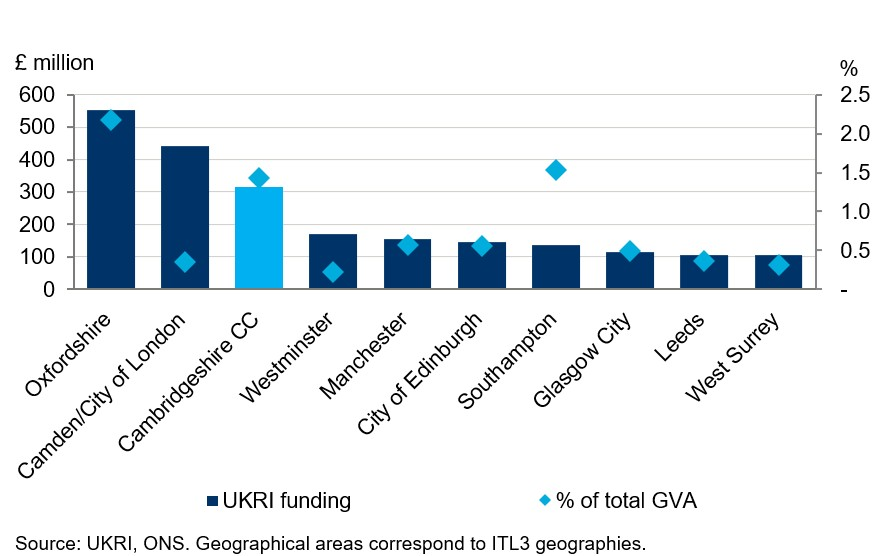
The Cambridge ecosystem is historically centred around the University and various research centres, and public research remains an important part of Cambridge innovation output. Data from UK Research and Innovation (UKRI), which allocates government’s funding for research and innovation, shows that Cambridgeshire was the third largest recipient of funding in 2020-21 (the latest available data), with £315 million received, behind Oxfordshire and Camden & the City of London (Figure 3.1).[footnote 6] This is equivalent to 1.4% of the area’s total GVA, one of the highest shares in the country.
Figure 3.1. Largest receivers of UKRI spending, total and as a share of GVA, 2020-21
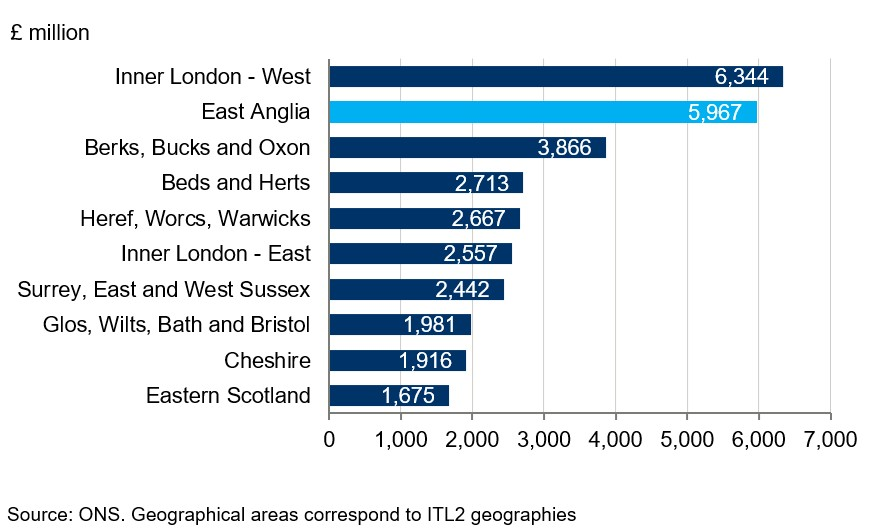
Public R&D spending often supports private sector R&D expenditure, and Cambridge businesses unsurprisingly are among the largest spenders on R&D in the UK (Figure 3.2). In 2023, businesses in East Anglia spent close to £6 billion on R&D, accounting for 12% of private R&D spending in the UK.[footnote 7] Only Inner London West had a higher total R&D spending at £6.3 billion.[footnote 8]
Figure 3.2. Expenditure on R&D performed in UK businesses, 2023
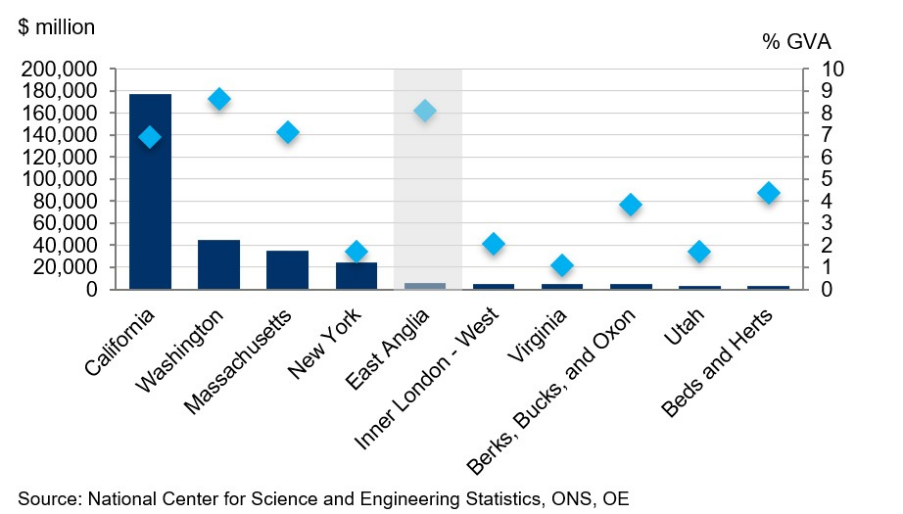
International comparisons can be challenging, but this report looked at how East Anglia compares against a selection of American states (Figure 3.3). Although the data comes from different sources and may not be perfectly aligned, it still provides a useful ballpark estimate for understanding the relative trends. Results show that while the size of R&D expenditure in East Anglia is understandably small compared to US states, it accounts for a significant proportion of its GVA (8.1%), and compares favourably with US states that have highly established R&D ecosystems like Washington (8.7%), Massachusetts (7.1%) and California (6.9%), demonstrating the scale of innovation spending in the area.
Figure 3.3. Business expenditure in R&D, total and share of GVA, selected US States and UK ITL, 2022
Cambridge’s global sectoral linkages
Exports and FDI
Cambridge’s economy is well integrated into global supply chain networks. Trade in services is particularly high in Cambridge. With £8.9 billion worth of services exported in 2022, Cambridgeshire is one of the largest exporter areas in the UK (Table 2).[footnote 9] It also has one of the highest volumes and shares of export going to markets outside the EU. Exports of goods was more modest, amounting to £5.1 billion.
Table 2. Top 10 largest export areas, 2022
| ITL3 | Total Service Exports | EU | Non-EU | EU (%) |
|---|---|---|---|---|
| Camden and City of London | 56,347 | 19,162 | 37,185 | 34 |
| Westminster | 52,239 | 15,468 | 36,771 | 30 |
| Tower Hamlets | 17,047 | 5,465 | 11,582 | 32 |
| Haringey and Islington | 12,395 | 3,707 | 8,688 | 30 |
| Berkshire | 11,406 | 5,094 | 6,312 | 45 |
| Hounslow & Richmond upon Thames | 10,528 | 6,513 | 4,015 | 62 |
| Cambridgeshire CC | 8,927 | 2,015 | 6,912 | 23 |
| City of Edinburgh | 8,554 | 2,462 | 6,092 | 29 |
| Manchester | 8,225 | 2,896 | 5,329 | 35 |
| Hackney and Newham | 7,699 | 4,550 | 3,149 | 59 |
Source: International trade in UK nations, regions and cities, 2022
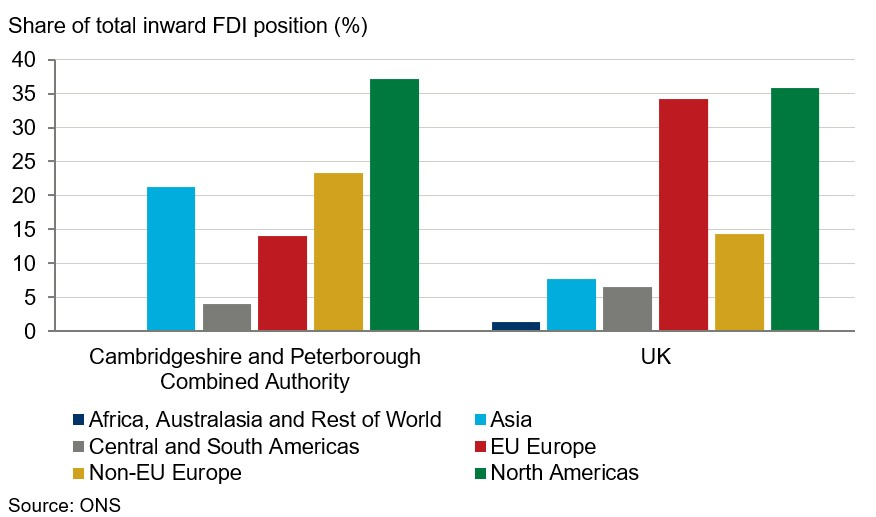
In 2023, the stock of inward investment in Cambridgeshire & Peterborough was valued at £19.6 billion, equivalent to over 60% of its GVA. The relatively small size of the Cambridge economy however means that, in volume, inward investment only represented about 1% of the UK total. However, the origin of inward investment suggests that Cambridge FDI profile is more global, in line with its specialisation in life sciences and tech. As shown in Figure 3.4, Cambridge receives a higher share of FDI from Asia and from non-EU Europe than the rest of the UK, which is significantly more reliant on the EU. Although the data is partly undisclosed, it is suspected that non-EU Europe mainly covers Switzerland, which aligns with investment in pharmaceutical, a key industry in the country.
Figure 3.4. FDI stock by region of origin, 2021
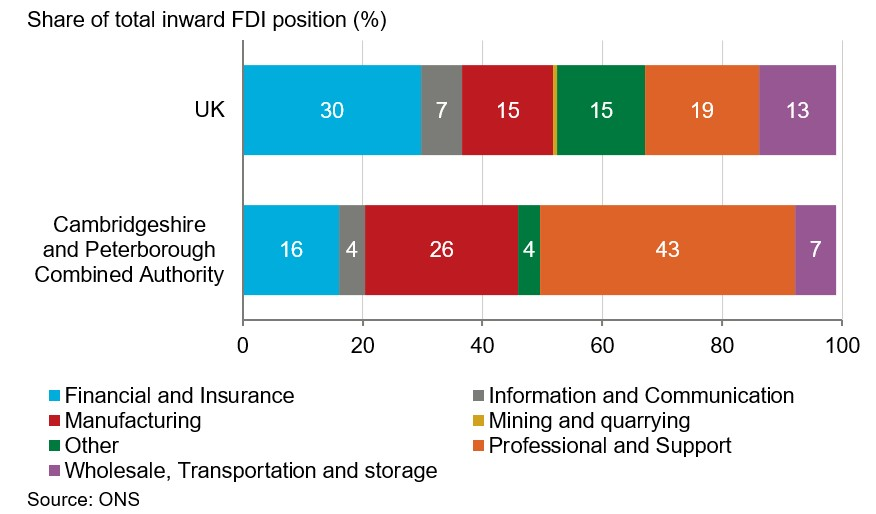
This profile is confirmed by the industries targeted by investment. Professional & support services and manufacturing represent the vast majority of FDI (Figure 3.5), at odds with the rest of the country, and likely to reflect investment in scientific research and in pharmaceutical manufacturing—which are covered under these two categories.
Figure 3.5. FDI stock by sector, 2021
Life sciences
Life sciences is a major driver of the UK economy. Although estimates vary, the Office for Life Sciences suggests that the sector generated turnover of £108.1 billion in 2021-22 and employed over 300,000 people.[footnote 10]
The sector is highly globally integrated and the UK compares well internationally on various metrics. Spending for health research & development is high as a share of GDP, second only to the US. Four of the world’s top 20 universities for life sciences are based in the country, with the University of Cambridge ranking second.[footnote 11] The UK also has the third-largest share of academic citations in medical sciences, trailing only the USA and China. In terms of access to skills, 8.7% of UK graduates were specialised in natural sciences, mathematics, and statistics—a higher share than most comparator countries.
Yet the sector remains small compared to some other key players. Although pharmaceutical manufacturing has been growing since 2017, output levels were almost half the size of Germany’s, and more than a third the size of Switzerland’s in 2021.
Exports also remain limited. In 2023, the value of pharmaceutical exports (£25.6 billion) was three times smaller than Ireland and four times smaller than Germany. Medical technology exports were also small compared to the US, China, and Germany.
Recent statistics may also suggest a deterioration of the UK life sciences investment environment, amid increasing global competition. Inward foreign direct investments (FDI) were on the decline in 2023 for the second consecutive year, although this is also observed in other countries such as Ireland and the US.
Cambridge is an important contributor to the UK life sciences sector, but most specifically on its R&D component. Overall, the sector is estimated to employ over 23,000 people in Greater Cambridge, for an estimated turnover of over £4 billion. This accounts for about 5% of the UK life sciences employment and turnover. But as shown on Figure 3.6, over 40% of life sciences sites in Greater Cambridge are conducting R&D, and they alone account for 10% of all R&D sites in the UK.
Figure 3.6. Life sciences sites by activity, 2020-21
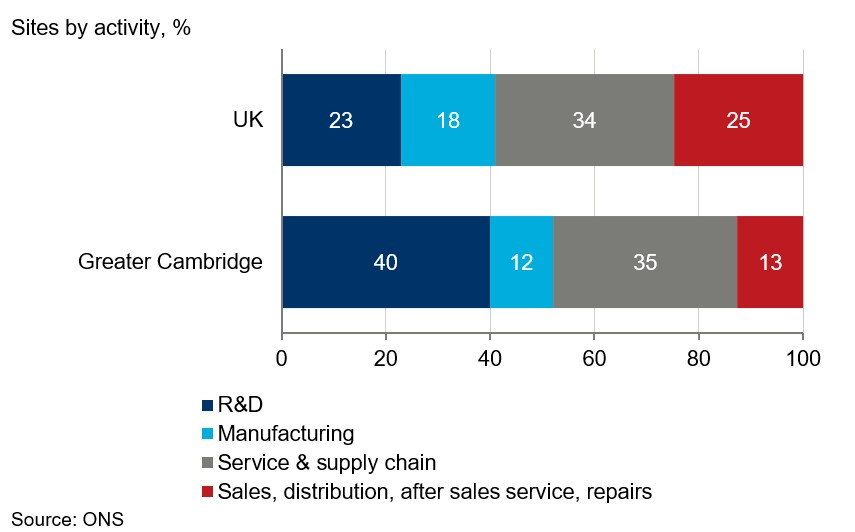
The clear focus on R&D in Cambridge is due to its highly developed life sciences ecosystem, described in The global life sciences ecosystem in Cambridge which makes it a particularly rare and valued place to successfully innovate. As the life sciences sector is particularly global and competitive at the international level, local knowledge assets found in Cambridge are particularly sought after by life sciences businesses.
Table 3. The global life sciences ecosystem in Cambridge
| Type of asset | Example in Cambridge | International relevance | |
|---|---|---|---|
| Research institutions | University of Cambridge, Wellcome Sanger Institute, MRC Laboratory of Molecular Biology | The University of Cambridge is the 2nd best university for life sciences in the world. MRC Lab is home to 12 Nobel Prizes winners. | |
| Science Parks | Babraham Research Campus, Cambridge Science Park, Cambridge Biomedical Campus | Cambridge named most intensive science and technological cluster in the world (Global Innovation Index). The Babraham Research Campus hosts over 60 companies. | |
| Key pharmaceutical and Biotech companies | AstraZeneca, GSK, Sanofi | Leading global biopharmaceutical companies, with AstraZeneca’s global R&D centre located in Cambridge. | |
| Incubators | IdeaSpace, Accelerate@Babraham | Incubators have nurtured startups that have secured global funding. | |
| Networks | One Nucleus, Cambridge Network, Cambridge Enterprise, | Facilitating local and global networks. One Nucleus is Europe’s largest life sciences and healthcare network. |
Knowledge intensive high-tech services (“tech”)
The UK is a large tech powerhouse. The sector is estimated to employ over 1.7 million people and contribute over £150 billion to the economy. Key specialisations include digital activities, artificial intelligence (AI), telecommunications, cyber security and semiconductors. According to the UK government, the tech sector is valued at over $11 trillion, only behind the US and China.[footnote 12]
Along with skills and research, tech firms in the UK benefit from access to financial investors: London attracts more fintech investment than the next 13 European cities combined, and UK tech startups were able to raise $21.3 billion in venture capital investment in 2023, more than France and Germany combined and only behind the US and China. In 2023, the digital sector was the main driver of FDI growth in the UK: the country secured over a quarter of all European tech projects that year.[footnote 13]
AI is a particularly fast-growing subsector in which the UK is already well positioned. It has the third highest number of AI companies in the world after the US and China, estimated to contribute £1.7 billion in GVA and employ more than 50,000 people.
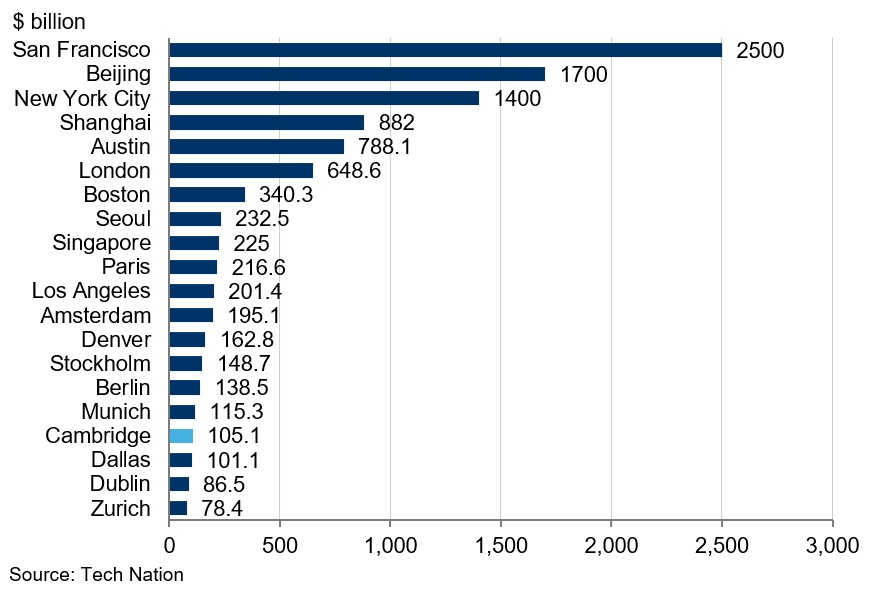
Cambridge is an important global hub for tech and digital innovation (Figure 3.7). In 2024, it was estimated to be in the world’s top 20 most valuable tech cities, with a combined market valuation of $105 billion. Cambridge has more than 3,000 information technology and communication companies and over 810 high-tech manufacturing companies. Prominent companies include Amazon, Apple, Huawei, Microsoft Research and Samsung.
Figure 3.7. Combined market valuations of tech companies headquartered in each city in 2023
AI presents significant opportunities for Cambridge, not just because it is a fast-growing market that is particularly well developed in the UK, but also because of its potential linkages and applications within the life sciences and medtech sectors. The recently created Cambridge Centre for AI in Medicine (CCAIM), a partnership between the University of Cambridge, AstraZeneca and GSK highlights the opportunities for innovation between the two sectors. More generally, Cambridge is well positioned to lead in AI ethics, leveraging expertise from the Leverhulme Centre for Future Intelligence, which addresses challenges and opportunities posed by AI. TechUK estimates that there are 110 AI startups in Cambridge, making it the third largest cluster in the UK. London dominates the AI ecosystem with over 12,000 AI startups, while Oxford is close to Cambridge with a count of 153 startups.
Strengthening Cambridge’s position as a global innovator
Life sciences and the tech sector are both expected to grow rapidly. The UK’s economic specialisation and strengths suggest that innovation and R&D are likely to represent an important proportion of the growth in the sectors. The current position of Cambridge within the UK life sciences and tech sectors suggest that important gains could be realised there. As a baseline, it is estimated that the life science sector in Cambridge could grow by 2.0% per year between 2023 and 2050, accounting for 1.3% of the national GVA by 2050, compared to 1.0% in 2023, and the tech sector in Cambridge could grow by 3.0% per year, accounting for 0.9% of the national GVA by 2050, a similar share to 2023.
Crucially, although growth is expected to be significant, the scale of Cambridge remains relatively limited, which could hinder possible expansion. Targeted intervention could help increase the size of Cambridge as a knowledge hub, but also its depth. Indeed, research shows that collaboration with higher education institutions contributes 16.3% to productivity growth, while import and exports are responsible for an additional 11.7%.[footnote 14] This means that facilitating knowledge exchange, spillovers, and networking in Cambridge could further enhance innovation gains.
While Cambridge’s strong position as a global innovator is clear, one of its main challenges will be to remain attractive amid international competition. Some of the main factors that determine the location of an innovative firm in a specific area include:
Infrastructure and research capacity: Cambridge is one of the most desirable places for both tech and life sciences alike, making competition for space particularly intense. Research estimates that the expected future supply of wet lab and office space appears healthy, although demand will continue to be high.[footnote 15] However, chronic shortages of space are threatening the expansion of the sectors, and business groups have suggested to create a new “innovation” use class for planning purposes.[footnote 16] Supporting this growth in work spaces, there is an equally challenging need to provide housing, along with supporting infrastructure (public services, transport, etc.), in a context of constrained land availability.
Transport and connectivity: efficient local transport links allow for a better match of workers to jobs, improving productivity while facilitating recruitment, flexible working patterns and improving workers quality of life. Connections to other large clusters such as London and Oxford are also important to facilitate partnerships, while international links support trade, investment and global competitiveness.
Attracting and retaining skills: one of Cambridge core’s strength is its access to a highly specialised pool of graduates and workers, thanks to the presence of the University of Cambridge. However, global competition for talent is likely to continue to increase. In addition, Brexit has created new barriers with respect to attracting students and workers from the European Union, which could have an impact on the available workforce.
Supporting emerging opportunities: emerging sectors like AI and green tech offer important growth potentials, and Cambridge must ensure it remains competitive.
Support commercialisation of research: the University of Cambridge ranks second in the number of spinouts created by universities in the UK, behind the University of Oxford.[footnote 17] Policies and incentives have been suggested to help businesses, including the introduction of a growth and skills levy to fund training in R&D-intensive industries.[footnote 18]
Public and private R&D expenditure: as previously mentioned, the UK has one of the highest shares of public health R&D expenditure as a percentage of GDP in the world, and Cambridge receives a significant share of this. Private R&D expenditures in East Anglia account for over 8% of the area’s GVA, which is similar to California and Massachusetts. This is encouraging, because it suggests that R&D expenditure is high considering the size of Cambridge’s economy, and that interventions aimed at expanding Cambridge could have a large impact on the regional and national economies.
Access to capital and company ownership: Data from Dealroom estimates the total value of VC funding in Cambridge at $2.3 billion in 2024. It is not easy to compare cities on this metric considering differences in city size, ecosystems and business maturity. For instance, the Bay Area raised $86.4 billion in 2024, whereas other large hubs such as London and Boston raised over $10 billion. In the Netherlands, Eindhoven—which has a similar population and economy than Cambridge—raised significantly less capital with $263.1 million in 2024. A significant challenge for Cambridge’s outlook is that a large proportion of funding is raised outside the UK—often in US markets. This poses a strategic threat on businesses, with a risk that knowledge and capabilities will be delocalised.
Regulations: as the life sciences and tech sectors grow and evolve, challenges around regulation are becoming more pressing. For instance, the technological advances made by AI are raising questions of ethics, safety and transparency. The government estimates that the stability and predictability of the business environment has driven more than £450 billion in investment over the last 30 years. However, the regulatory system should show agility to respond to changes and new technological challenges. While global regulations could help to level the playing field, it could equally hinder innovation prospects. As countries such as the US, China, and the UK are willing to position themselves as leaders in the field, incentives for regulation are slim. TechUK advocates for delivering a pro-growth regulatory system, in a context where the UK can establish its own framework outside of the EU.
4. Scenario results
Overview
This chapter presents the results from the three scenarios alongside Oxford Economics’ baseline, providing estimates of the potential scale of growth for both Greater Cambridge and the UK economy if sufficient commercial space and housing is provided to enable knowledge-intensive sectors to realise their full potential.
Greater Cambridge
Employment, productivity, and GVA
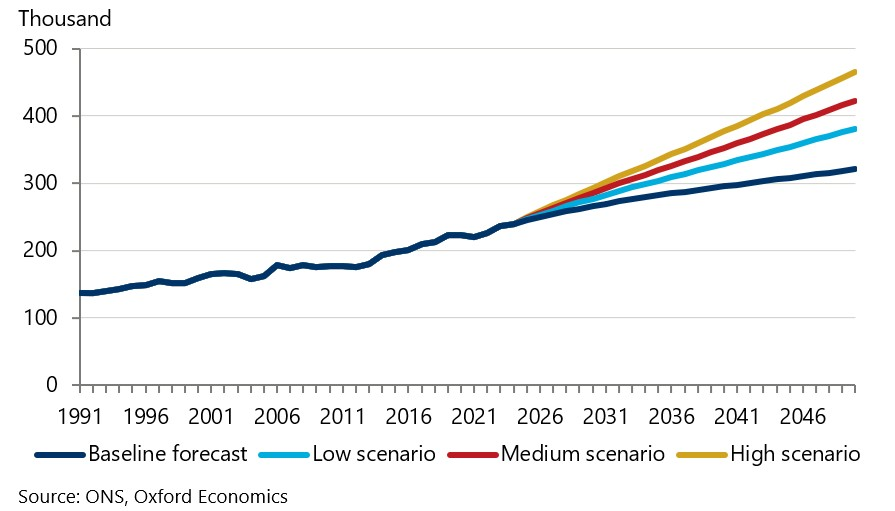
Additional activity in knowledge intensive sectors and housing delivery could enable a substantial increase in employment. According to the growth scenarios, Greater Cambridge could support 380,000 to 465,000 jobs by 2050 (Figure 4.1). This represents a 60% to almost doubling of the size of the existing Greater Cambridge workforce (236,000 jobs) and would see employment around 20% to 45% higher than in the baseline forecast (321,000 jobs). The growth scenarios represent faster employment growth (1.8% to 2.5% per year) than observed historically (1.7% per year). The increase in employment would be primarily driven by knowledge intensive sectors, which would form around two-thirds of additional employment across the three growth scenarios.
Figure 4.1. Jobs by scenario, Greater Cambridge, 1991 to 2050
The growth scenarios would enable the Greater Cambridge economy to become more productive. While productivity across Greater Cambridge would grow by 0.9% per year to 2050 under the baseline forecast, falling narrowly behind the UK average by 2050, the growth scenarios would result in faster productivity growth, ranging from 1.1% to 1.4% per year (Figure 4.2). This also outperforms historical productivity growth through the period 1991 to 2023 (0.8% per year). The growth scenarios represent a 35% to 44% increase in average productivity across Greater Cambridge in 2023 (£62,800 per job), and a £4,000 to £10,000 uplift on the baseline forecast by 2050 (£80,700 per job). Higher productivity results from the changing sectoral composition of the Greater Cambridge economy towards its knowledge intensive sectors to a greater degree than in the baseline forecast.[footnote 19]
Figure 4.2. Productivity by scenario, Greater Cambridge, 1991 to 2050
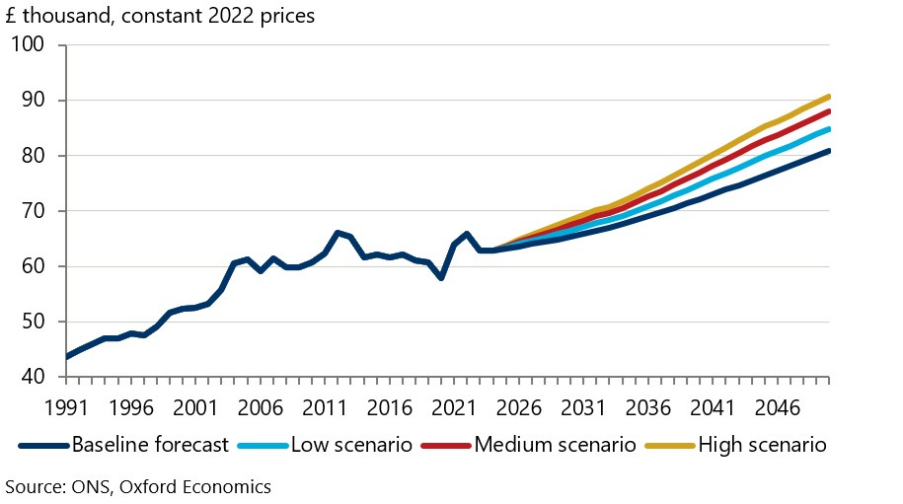
A larger and more productive workforce would see a substantial increase in Gross Value Added (GVA) (Figure 4.3). The Greater Cambridge economy would grow by an average of 2.9% to 4.0% per year to 2050, compared to 2.1% per year in the baseline forecast, and 2.5% per year historically. Growth of this magnitude would make the Greater Cambridge economy two-to-three times larger than currently and 25% to 60% larger than in Oxford Economics’ baseline forecast in 2050—equivalent to a £6 billion to £16 billion increase in Greater Cambridge’s GVA.
Figure 4.3. Gross Value Added (GVA) by scenario, Greater Cambridge, 1991 to 2050
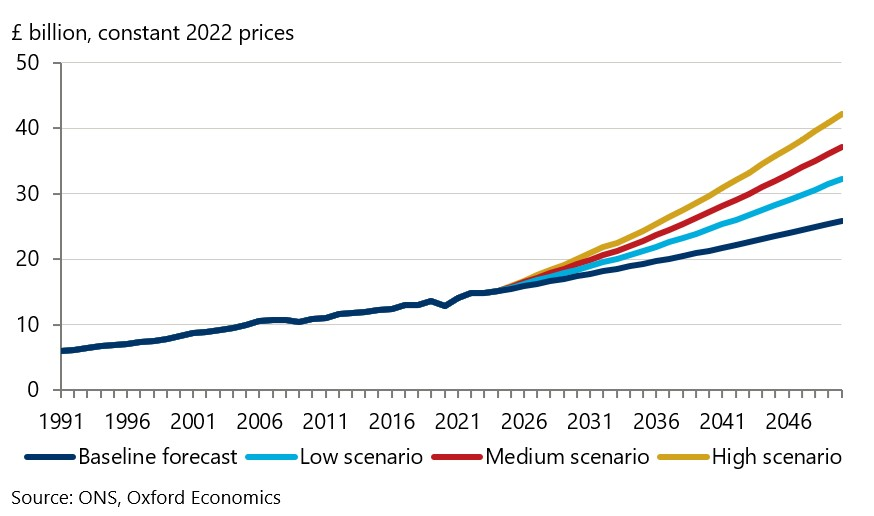
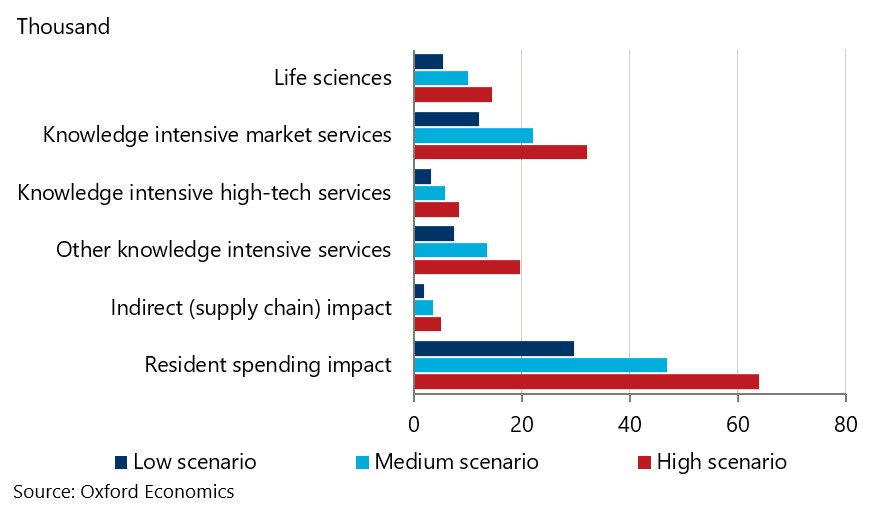
A disaggregation of the additional employment sustained across the scenarios demonstrates the broad mix of activities that would be created or sustained across Greater Cambridge. The growth scenarios would sustain additional employment across a range of sectors (Figure 4.4). The resident spending impact is the largest source of additional employment across all scenarios, ranging from half of employment above the baseline forecast in the low scenario (30,000 jobs) to 44% in the high scenario (64,000 jobs). However, these activities are generally less productive than Greater Cambridge’s knowledge intensive sectors, and amount to around a third of additional GVA. Knowledge intensive activities amount to around half of additional employment, ranging from 28,000 additional jobs in the low scenario to 75,000 additional jobs in the high scenario, over and above the baseline forecast.
Figure 4.4. Net additional jobs by scenario, Greater Cambridge, 2050
Occupations and skills
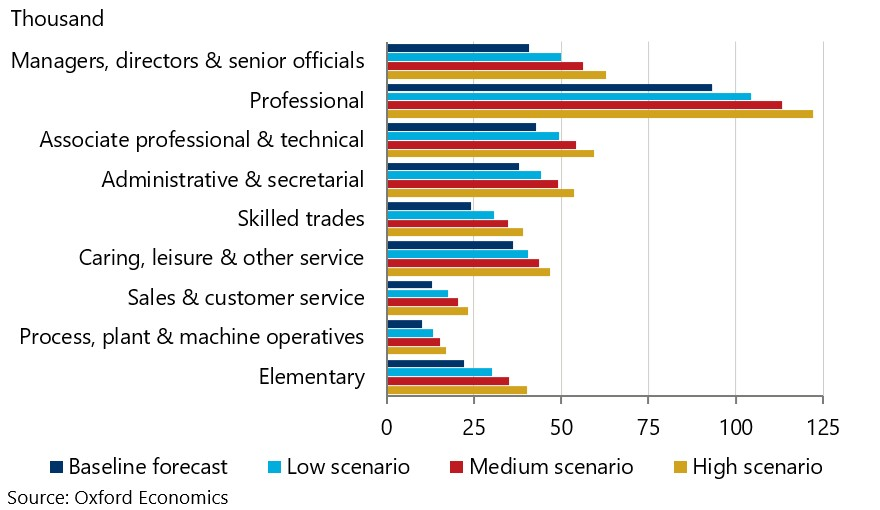
The growth scenarios would enable a broader range of employment opportunities across the Greater Cambridge economy. Facilitating faster growth in knowledge-intensive sectors will result in larger increases in occupations that form larger shares of employment in these activities, most notably professional occupations (Figure 4.5). But that is not to say that only high-skilled employment would be created: all scenarios would see an increase in demand for generally lower skill-level occupations, facilitating increased employment opportunities for new and existing residents of various skill-levels alike.
Figure 4.5. Jobs by occupation and scenario, Greater Cambridge, 2050
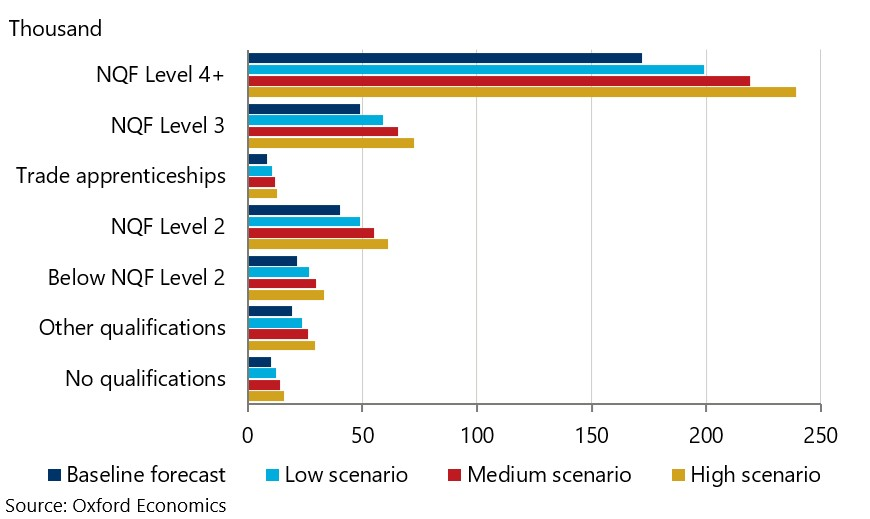
The growth scenarios would result in increasing demand for employment across all qualification levels. Owing to the creation of employment within knowledge intensive industries, which by their nature typically require a more highly-qualified workforce, the requirement for workers qualified to National Qualifications Framework (NQF) Level 4+—i.e., university degree level or above—is higher in each of the three scenarios relative to the baseline forecast. However, the growth scenarios would increase the proportion of employment among lower qualification levels to a greater degree: through enabling growth of various other sectors across the Greater Cambridge economy, and the requirement for NQF Level 4+ workers would fall as a proportion of total demand (52%) relative to the baseline forecast (54%) under each scenario (Figure 4.6).
Figure 4.6. Jobs by qualification level and scenario, Greater Cambridge, 2050
Population
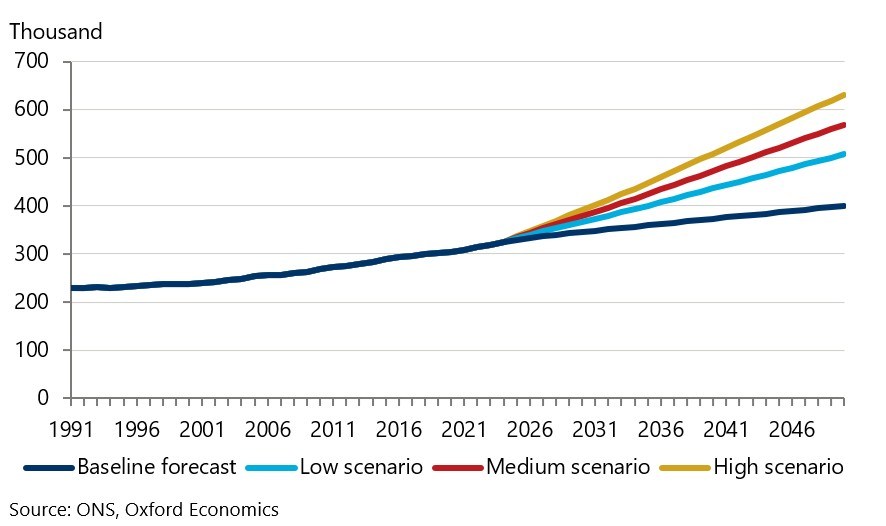
The creation of highly productive employment opportunities and delivery of new housing would boost the Greater Cambridge population. The growth scenarios would see the population grow by an average of 1.7% to 2.6% per year, exceeding the 0.8% per year growth in the baseline forecast (Figure 4.7). The Greater Cambridge population would increase to 507,000 to 630,000 by 2050, between 60% and more than double the current population (319,000 in 2023), and 27% to 58% higher than the baseline forecast (400,000). This would result in slightly higher growth in GVA per capita in the medium scenario (1.3% per year) and high scenario (1.4% per year) relative to the baseline forecast (1.2% per year).
The growth scenarios would attract both internal and international migrants to Greater Cambridge. While Oxford Economics’ economic impact model does not estimate the composition of migration flows, analysis of historical population flow data shows that approximately 22% of new residents moving to Greater Cambridge were international migrants over the period 2002 to 2023 for which data are available, compared to a UK-average of 17%.[footnote 20] Applying this rate to the growth scenario would imply 41,000 to 68,000 new international migrants moving to Greater Cambridge, with approximately 148,000 to 244,000 new residents moving domestically.
There is reason to believe that this inflow of international migrants could be somewhat higher, due to the highly productive and well remunerated employment created across Greater Cambridge’s knowledge intensive sectors attracting workers from abroad, and there is reason to expect that some of the domestic migration represented the subsequent movement of international migrations after they had moved to the UK. Indeed, the Census 2021 showed that 26% of Greater Cambridge’s population was born outside of the UK, rising to 38% for Cambridge, compared to just 15% in the East of England region. Strikingly, almost half (47%) of Cambridge’s economically active population in employment in 2021 was born outside the UK, and around a third (34%) in Greater Cambridge.
Figure 4.7. Population by scenario, Greater Cambridge, 1991 to 2050
Additional growth across the UK economy
Greater Cambridge is an attractive place for businesses to invest and workers to live, and the additional activity arising through the growth scenarios would in part materialise through the displacement of activity that would otherwise occur elsewhere in the UK. While measuring the extent of displacement is challenging, this report provides a range of estimates for each growth scenario based on the following assumptions:
Life sciences & high tech services: as explored in chapter 4, Cambridge supports a globally competitive R&D intensive ecosystem and there is reason to believe that much of the investment it attracts in the life sciences and high‑tech services industries might otherwise occur among its international competitor ecosystems. It is assumed that displacement associated with additional growth in these sectors ranges from 25% to 50%.[footnote 21]
Market and other knowledge-intensive services: these services often perform supporting functions that enable businesses and residents to operate efficiently, and as such are less reliant on innovation. There is reason to believe that displacement effects may be higher for these services; displacement is assumed to range from 50% to 75%.[footnote 22]
Indirect (supply chain) impacts: the growth scenarios account for demand created or sustained among other non-knowledge intensive industries in order to facilitate the growth scenarios. However, this additional demand would compete for goods and services with existing demand that would otherwise arise through the baseline forecast, and while the magnitude of additional housing and commercial floorspace growth is substantial across Greater Cambridge, it would have only a small effect on boosting the supply capacity of the economy nationally. It is therefore reasonable to expect a high degree of displacement for the indirect (supply chain) impacts, which is assumed to range from 90% to 100%.
Resident spending impacts: the extent of displacement among resident spending impacts is related to the degree to which employment would be taken up by new residents to the UK (i.e., via international migration) as opposed to those who would otherwise live in the UK, whose spending would not be additional to the UK economy. As presented in the Technical Annex, historical data suggest that 22% of those moving to Greater Cambridge have been from abroad (not including foreign nationals moving from other parts of the UK), while 34% of residents in employment were foreign-born according to the 2021 Census. It is therefore assumed that displacement could range from 66% to 78% (Table 4).[footnote 23]
Table 4. Displacement assumptions
| Low displacement | High displacement | |
|---|---|---|
| Knowledge intensive sectors: | ||
| Life sciences | 25% | 50% |
| High-tech services | 25% | 50% |
| Market services | 50% | 75% |
| Other knowledge intensive services | 50% | 75% |
| Indirect (supply chain) impact | 90% | 100% |
| Resident spending impact | 66% | 78% |
Applying these assumptions to each of the growth scenarios yields the following results (Table 5):
The low scenario could generate an additional £1.95 billion to £3.43 billion of GVA across the UK economy by 2050, and 23,000 to 39,000 additional jobs, equivalent to a 0.1% uplift on the baseline forecast. This additional activity could generate a further £330 million to £560 million in tax revenues.
The medium scenario could generate an additional £3.34 billion to £5.93 billion of GVA across the UK economy by 2050, and 38,000 to 65,000 additional jobs, equivalent to a 0.1% to 0.2% uplift on the baseline forecast. This additional activity could generate a further £550 million to £950 million in tax revenues.
The high scenario could generate an additional £4.74 billion to £8.44 billion of GVA across the UK economy, and 53,000 to 92,000 additional jobs, equivalent to a 0.1% to 0.2% uplift on the baseline forecast. This additional activity could generate a further £780 million to £1.34 billion in tax revenues.
Table 5. Additional GVA, jobs, and taxes by scenario, UK, 2050
| GVA, £ billion, constant 2022 prices | Jobs, thousand | Taxes, £ billion, constant 2022 prices | |
|---|---|---|---|
| Low scenario | 1.95 to 3.43 | 23 to 39 | 0.33 to 0.56 |
| Medium scenario | 3.34 to 5.93 | 38 to 65 | 0.55 to 0.95 |
| High scenario | 4.74 to 8.44 | 53 to 92 | 0.78 to 1.34 |
Source: Oxford Economics
Technical annex
Method
The baseline forecasts are drawn from Oxford Economics’ Local Authority District Forecasting Model, which sits within Oxford Economics’ suite of global and national macroeconomic and industry forecasting models. This structure ensures that global and national factors (such as developments in the Eurozone and UK Government fiscal policy) have an appropriate impact on the forecasts at a local authority level. This empirical framework (or set of ‘controls’) is critical in ensuring that the forecasts are much more than just an extrapolation of historical trends. Rather, the trends in Oxford Economics’ global, national and sectoral forecasts have an impact on the local area forecasts.
The Local Authority District Forecasting Model produces baseline forecasts, which can be compared with other published forecasts (though care should be taken over data definition issues), and as a guide to aid commentary or analysis of local authority economies. These forecasts can in one sense be considered to provide baseline ‘policy-off’ projections with which the actual outturn under policy initiatives could be compared. However, there are inherent difficulties in using the forecasts as a ‘policy-off’ baseline. In particular the base projections are ‘unconstrained’ in the sense that they make no allowance for constraints on development which may be greater than in the past.
The local forecasting model depends essentially upon three factors:
National/regional outlooks: all the forecasting models operated are fully consistent with the broader global and national forecasts which are updated on a monthly basis.
Historical trends in an area which implicitly factor in supply side factors impinging on demand), augmented where appropriate by local knowledge and understanding of patterns of economic development built up over decades of expertise, and
Fundamental economic relationships which interlink the various elements of the outlook.
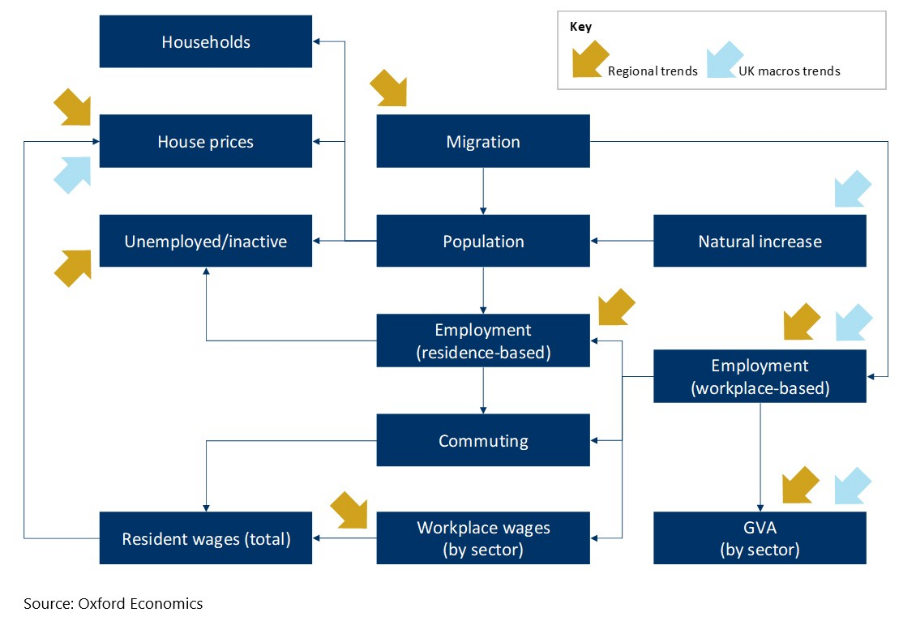
The main internal relationships between variables are summarised in the figure below.
Each variable is related to others within the models. Key variables are also related to variables in the other Oxford Economics models.
The growth scenarios are derived using Oxford Economics’ local economic impact model. This model draws on an input-output framework which provides a snapshot of an economy at any point in time. The model shows the major spending flows from: final demand (i.e. consumer spending, government spending, investment, and exports to the rest of the world); intermediate spending patterns (i.e. what each sector buys from every other sector—the supply chain in other words); how much of that spending stays within the economy; and the distribution of income between employment and other forms such as corporate profits.
In building the impact model Oxford Economics have adopted the latest UK input-output tables published by the Office for National Statistics (ONS).[footnote 24] However, the application of this national framework without further adjustment would risk overstating the magnitude of economic activity across subnational geographies. To account for this Oxford Economics reflect the approach set out in papers such as Flegg & Tohmo (2013) to adjust for the size and characteristics of subnational economies to assess the scale of economic impacts and ‘leakage’ to other parts of the UK economy and abroad. The model also considers the geographical location and proximity between different local areas and regions, reflecting a greater likelihood that firms will prefer to source inputs locally, while accounting for the leakage of economic impacts outside of the local area.
Figure 0.1. Main relationships between variables in the (Local Authority District) LAD Forecasting Model
- Additional economic activity arising from both the construction and operations of the proposed development will also generate additional taxes, which are estimated through:
Labour taxes: wages earned by workers are subject to income tax and national insurance contributions (NICs). In modelling the labour tax revenues that could be collected by the Treasury, this report uses the latest income tax and NIC rates, thresholds, and personal allowance information, and apply these to the expected sectoral earnings by decile.
Taxes on profits: Corporation Tax is estimated through combining data published by HMRC on actual Corporation Tax receipts and liabilities relative to the GVA contributions to GDP made by each sector of the economy.
Taxes on production: include certain types of business tax that do not vary with production volume, such as Business Rates and the Apprenticeship Levy (where applicable), sourced from national accounts.
Taxes on products: consist of duties and taxes that businesses pay on their inputs, including VAT, excise duties and import taxes, where applicable.
Summary tables
All figures presented in the summary tables are figures specific to Cambridge and do not include displacement from other parts of the UK.
Table 6. Gross value added (GVA) by scenario, Greater Cambridge, 2023 to 2050
| £ million, constant 2022 prices | 2023 | 2050 | Change | % y/y |
|---|---|---|---|---|
| Baseline forecast | 14,795 | 25,892 | 11,097 | 2.1 |
| Low scenario | 14,795 | 32,243 | 17,448 | 2.9 |
| Medium scenario | 14,795 | 37,167 | 22,373 | 3.5 |
| High scenario | 14,795 | 42,114 | 27,319 | 4.0 |
Source: Oxford Economics. Note: may not sum due to rounding.
Table 7. Jobs by scenario, Greater Cambridge, 2023 to 2050
| Thousand | 2023 | 2050 | Change | % y/y |
|---|---|---|---|---|
| Baseline forecast | 236 | 321 | 85 | 1.1 |
| Low scenario | 236 | 380 | 145 | 1.8 |
| Medium scenario | 236 | 422 | 187 | 2.2 |
| High scenario | 236 | 465 | 229 | 2.5 |
Source: Oxford Economics. Note: may not sum due to rounding.
Table 8. Productivity by scenario, Greater Cambridge, 2023 to 2050
| £ thousand, constant 2022 prices | 2023 | 2050 | Change | % y/y |
|---|---|---|---|---|
| Baseline forecast | 62.8 | 80.7 | 18.0 | 0.9 |
| Low scenario | 62.8 | 84.8 | 22.0 | 1.1 |
| Medium scenario | 62.8 | 88.0 | 25.2 | 1.3 |
| High scenario | 62.8 | 90.6 | 27.9 | 1.4 |
Source: Oxford Economics. Note: may not sum due to rounding.
Table 9. Population by scenario, Greater Cambridge, 2023 to 2050
| Thousand | 2023 | 2050 | Change | % y/y |
|---|---|---|---|---|
| Baseline forecast | 319 | 400 | 81 | 0.8 |
| Low scenario | 319 | 507 | 188 | 1.7 |
| Medium scenario | 319 | 569 | 250 | 2.2 |
| High scenario | 319 | 630 | 312 | 2.6 |
Source: Oxford Economics. Note: may not sum due to rounding.
Table 10. GVA per capita by scenario, Greater Cambridge, 2023 to 2050
| £ thousand, constant 2022 prices | 2023 | 2050 | Change | % y/y |
|---|---|---|---|---|
| Baseline forecast | 46.5 | 64.8 | 18.3 | 1.2 |
| Low scenario | 46.5 | 63.6 | 17.2 | 1.2 |
| Medium scenario | 46.5 | 65.4 | 18.9 | 1.3 |
| High scenario | 46.5 | 66.8 | 20.3 | 1.4 |
Source: Oxford Economics. Note: may not sum due to rounding.
Explanatory memorandum
[Provided by MHCLG – not part of original report]
This report was commissioned by MHCLG to assess the economic potential of Greater Cambridge. It builds on the illustrative scenarios of delivery in The Case for Cambridge (published by the previous government in March 2024) by considering delivery scenarios of 150,000, 125,000 and 100,000 homes and 33m, 27.5m and 22m sqft of commercial space in Greater Cambridge.
Housing and commercial space delivery scenarios are illustrative and non-spatial. High scenario figures are based on the supply required to support demand generated by projected employment growth rates based on historic trends in Greater Cambridge. Low and medium scenarios have been included as comparative illustrative examples.
-
Greater Cambridge is defined as Cambridge and South Cambridgeshire. ↩
-
The full definitions are drawn from: Office for National Statistics (ONS), Science and Technology Classification, 2015. ↩
-
Office for Life Sciences (OLS), Life sciences sector data, 2025. ↩
-
Oxford Economics’ Local Economic Forecasting Model takes account of the size and sectoral characteristics of the Greater Cambridge economy to determine the extent of local ‘multiplier’ effects. ↩
-
Please see Explanatory Memorandum [MHCLG] for more detail. ↩
-
The data is based on International Territorial Level 3 (ITL 3), which covers counties, unitary authorities, or grouped districts. ↩
-
The data is based on International Territorial Level 2 (ITL2), which covers grouped counties or districts. East Anglia includes Cambridge and Cambridgeshire, Peterborough, Suffolk, Norwich, East Norfolk, North Norfolk, West Norfolk, Breckland and South Norfolk. ↩
-
Inner London West includes the London Boroughs of Camden, Westminster, Hammersmith and Fulham, Kensington and Chelsea, Wandsworth, and the City of London. ↩
-
The data is based on International Territorial Level 3 (ITL 3), which covers counties, unitary authorities, or grouped districts. ↩
-
Estimates of the size of the life sciences sector are inconsistent. Datacity estimates a total turnover of £276 billion and over 1 million employees. PwC estimates the sector contributes £36.9 billion to the UK GDP and 584,000 jobs through direct, indirect and induced effects. The UK government exporting and investment website estimates the sector is worth £94 billion. These figures are likely to use different definitions which are not always clearly explained. As a result data and definitions were used from the Office for Life Sciences (OLS) which provides comparable statistics across the country. ↩
-
Times Higher Education World University Ranking, 2024. ↩
-
E. Bascavusoglu-Moreau, Q. Cher Li (2013) Knowledge spillovers and sources of knowledge in the manufacturing sector: literature review and empirical evidence for the UK. ↩
-
Greater Cambridge Growth Sectors Study: Life science and ICT locational, land and accommodation needs. ↩
-
The FT (July 2024), Revive Oxford-Cambridge high-tech growth plan, urge business and university leaders. ↩
-
Revive Oxford-Cambridge high-tech growth plan, urge business and university leaders. ↩
-
Note that the growth scenarios do not adjust forecasts for productivity within sectors of the Greater Cambridge economy, which could for instance arise through agglomeration effects or be enabled by improved infrastructure. ↩
-
Office for National Statistics (ONS), Estimates of the population for England and Wales, 2024. ↩
-
These values correspond to the ‘low’ and ‘medium’ ready reckoners for displacement set out in the HCA Additionality Guide, albeit at the national rather than local level. Homes & Communities Agency (HCA), Additionality Guide Fourth Edition, 2014. ↩
-
Corresponding to ‘medium’ to ‘high’ ready reckoners. ↩
-
There is reason to believe that displacement could be lower than this range suggests. For instance, the growth scenarios create more activity in higher-value sectors which could be more attractive to international migrants than historical patterns. Similarly, while domestic migrants may move to Greater Cambridge to avail of employment opportunities, the unmet demand for the roles they may have otherwise occupied could be met in part by international migrants to other parts of the UK. The higher remuneration associated with jobs in the growth scenarios could also see greater household disposable income by domestically-based households moving to Greater Cambridge, who may otherwise earn and spend less money. ↩
-
ONS, UK input-output analytical tables—industry by industry, 2024. ↩