Forthcoming change: new method to uprate the freight value of travel time
Updated 5 November 2026

© Crown copyright 2026
This publication is licensed under the terms of the Open Government Licence v3.0 except where otherwise stated. To view this licence, visit nationalarchives.gov.uk/doc/open-government-licence/version/3 or write to the Information Policy Team, The National Archives, Kew, London TW9 4DU, or email: psi@nationalarchives.gov.uk.
Where we have identified any third party copyright information you will need to obtain permission from the copyright holders concerned.
This publication is available at https://www.gov.uk/government/publications/forthcoming-changes-and-previous-versions-of-tag/forthcoming-change-new-method-to-uprate-the-freight-value-of-travel-time
Description: new method to uprate the freight value of travel time
Unit: TAG data book (tables annual parameters and A1.3.6), TAG unit A1.3 (user and provider impacts)
Change announced: November 2026
Expected release date: December 2026
Description
We are proposing that the value of travel time (VTT) for light goods vehicles (LGV) (freight) and other goods vehicles (OGVs) should be uprated at GDP per capita growth rate (yearly) with an income elasticity of 0.82 for modelling and appraisal purposes.
Detail
The VTTs for vehicles moving freight (cargo) are presented in TAG data book table A1.3.1. We refer to these values as the freight values of travel time (FVTT) and they concern LGVs and OGVs.
The FVTT were updated, and became definitive guidance in May 2026, following research commissioned by DfT.
At the time of the update, we recommended that the values for LGV freight and OGV should grow over time (be uprated) at a rate that blends real wage growth for the wage-related component of VTT, with the GDP deflator for the residual component. We recommended this as a temporary approach to uprating pending further research.
Since then, Significance and Arup have carried out research on behalf of the Department for Transport (DfT), which we published online in August 2026.
Based on the recommendations of this research, we are introducing a new method to uprate the FVTT for the LGV (freight) and OGV vehicle categories in the TAG data book. VTTs should be uprated at GDP per capita growth rate (yearly) with an income elasticity of 0.82 for modelling and appraisal purposes. This approach is also in line with the way other VTTs are uprated over time – although with an income elasticity of 1.
LGVs
Chart 1 shows the comparison between the existing and the proposed LGV (freight) VTT series.
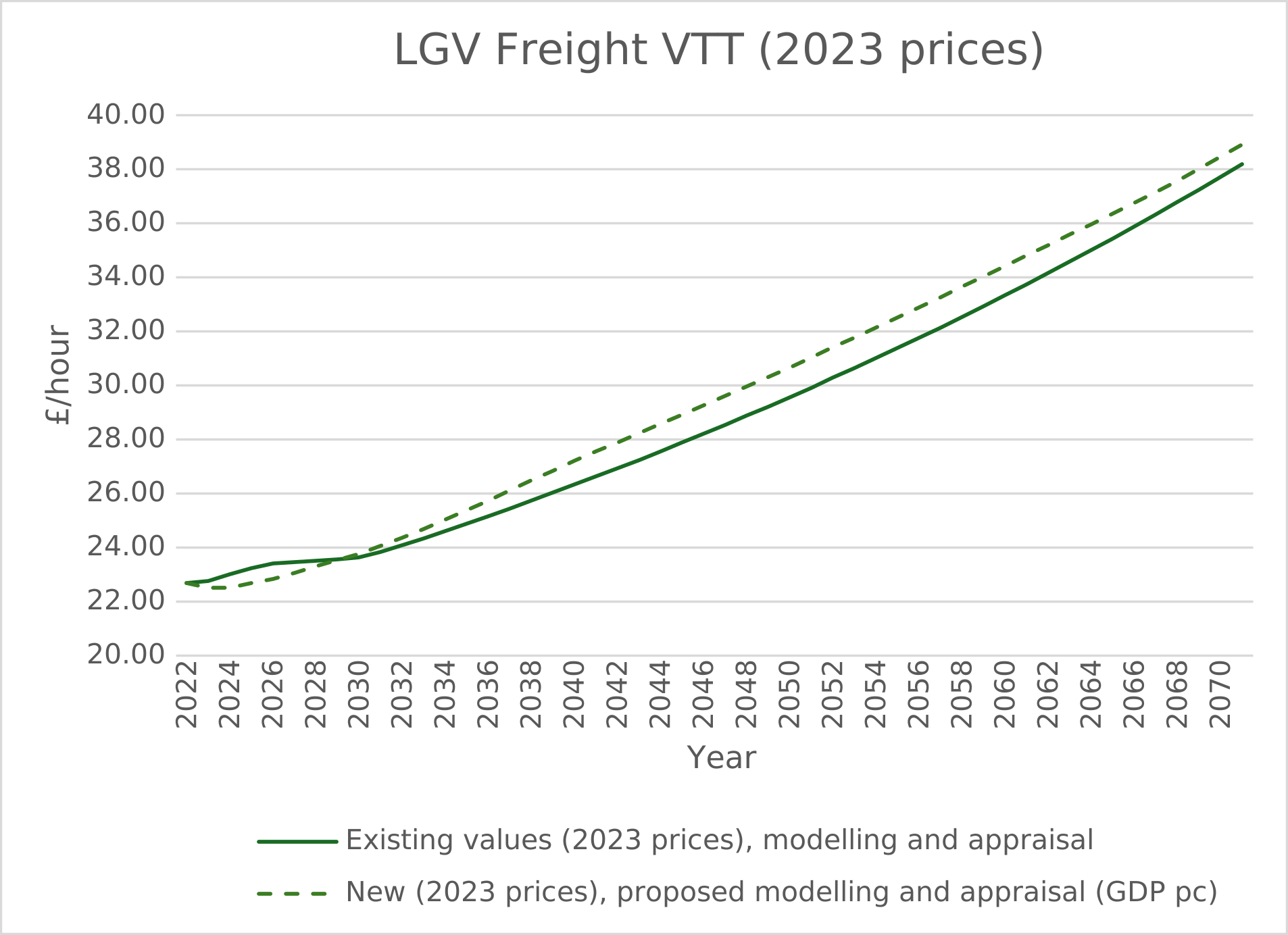
Chart 1: light goods vehicles freight value of travel time (2023 prices)
In terms of the differences between the existing and the proposed new ‘modelling and appraisal series’, these range between -2.51% and 3.75%. Table 1 gives the VTT for selected years to provide a better sense of how the values would change.
Table 1: value of travel time for freight LGVs, 2026 to 2070
| All 2023 prices, £/hour, for modelling and appraisal | Existing series | New series |
|---|---|---|
| 2026 | 23.42 | 22.83 |
| 2030 | 23.65 | 23.76 |
| 2040 | 26.33 | 27.21 |
| 2050 | 29.58 | 30.68 |
| 2060 | 33.34 | 34.43 |
| 2070 | 37.72 | 38.47 |
OGVs
Chart 2 shows the comparison between the existing and the proposed OGV VTT series.
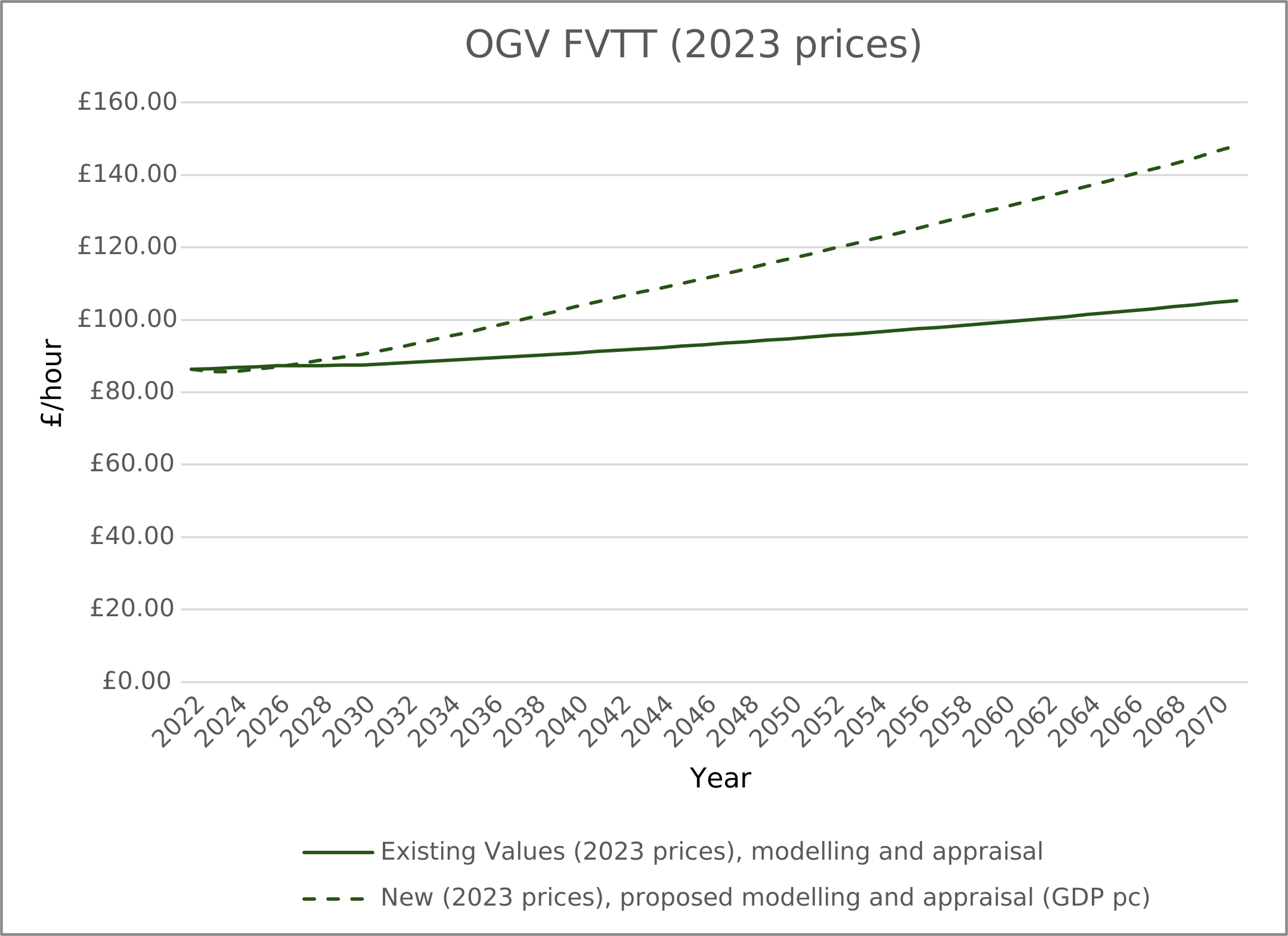
Chart 2: other goods vehicles freight value of travel time (2023 prices)
Notably, there is a significant gap between the OGV VTT currently in the TAG Data Book and the one we are proposing (see table 2). The difference between the existing and the new series is between -1.29% and 40.71%.
Table 2: value of travel time for OGVs, 2026 to 2070
| All 2023 prices, £/hour, for modelling and appraisal | Existing series | New series |
|---|---|---|
| 2026 | 87.29 | 86.93 |
| 2030 | 87.56 | 90.46 |
| 2040 | 90.83 | 103.57 |
| 2050 | 94.79 | 116.79 |
| 2060 | 99.39 | 131.06 |
| 2070 | 104.73 | 146.44 |
The factor driving the difference between the existing and proposed series is the same for both LGV (freight) and OGV, but its effect is more marked for the latter.
As mentioned earlier, LGV freight and OGV are currently uprated at a rate that blends real wage growth for the wage-related component of VTT, with the GDP deflator for the residual component.
As the non-wage component is a lot larger for OGV, and this only grows in line with the GDP deflator in the existing series, the impact of changing to the elasticity approach (for all components) is much more pronounced than for LGVs.
We will update TAG unit A1.3 (user and provider impacts) to reflect the new methodology. Paragraph 4.5.2 will read:
‘As a result of research carried out in 2026 on uprating freight values of travel time, freight LGV VTTS and OGV VTTS are assumed to grow over time in line with income, with an elasticity of 0.82.’
The new wording will replace the following wording:
‘As a result of the research into road freight values of travel time, LGV and OGV VTTS are subject to different assumptions on growth over time. Namely, freight VTTS is assumed to grow at a rate that blends real wage growth for the wage-related component of VTTS, with the GDP deflator for the residual component.’
Contact
For further information on this guidance update, please contact:
Transport Appraisal and Strategic Modelling (TASM) Division
Department for Transport
First floor, Great Minster House
33 Horseferry Road
London
SW1P 4DR