Fires in e-bikes and e-scooters - 2025
Updated 30 September 2026

© Crown copyright 2026
This publication is licensed under the terms of the Open Government Licence v3.0 except where otherwise stated. To view this licence, visit nationalarchives.gov.uk/doc/open-government-licence/version/3 or write to the Information Policy Team, The National Archives, Kew, London TW9 4DU, or email: psi@nationalarchives.gov.uk.
Where we have identified any third party copyright information you will need to obtain permission from the copyright holders concerned.
This publication is available at https://www.gov.uk/government/publications/fires-in-e-bikes-and-e-scooters/fires-in-e-bikes-and-e-scooters-2025
1. Introduction and methodology
E-bikes and e-scooters are part of the transition to more sustainable transport. However, there are product safety risks associated with these products, primarily related to the fire and explosion risks from the lithium-ion batteries they use. As the national product regulator, the Office for Product Safety and Standards (OPSS) has worked with others across government to understand the root cause of these fires and is taking action to reduce harm.
Fire and rescue services across the UK notify OPSS of fires where a consumer product was the most probable cause. This helps with the early identification of potential product safety issues. This is done voluntarily using a product-related fire notification procedure available on GOV.UK, when fire investigators identify consumer products as the most probable cause of fires and incidents.
In February 2023, OPSS re-launched the procedure, engaging with fire and rescue services and publishing guidance to support fire investigation teams in reporting product-related fires. This has led to a steadily increasing number of fire and rescue services submitting product-related fire notifications.
The guidance page includes a template which can be used to report information on the product involved in the fire, including:
- model and serial numbers
- product age and place of purchase
- severity of the fire
Not all the fields are completed consistently across notifications, so this report focuses on those deemed to be sufficiently accurate and reliable for inclusion. More information is available at product related fire incident notifications.
The London Fire Brigade and other fire and rescue services provide further information directly to OPSS. Additionally, while some use the product-related fire notification form available on GOV.UK, others prefer to use their own templates.
The statistics presented in this report cover incidents that occurred from January to December 2025. The data is limited to consumer products including e‑bikes, e‑scooters, mobility scooters and e‑unicycles.
Figures across multiple years have been revised to reflect revisions to previously submitted data, and corrections identified through data cleaning to address reporting errors and other data quality issues[footnote 1]. Revised figures are available in the accompanying data tables, which contain data back to 2017. 8% of data points (58 of 768) have been revised since the 2024 publication. These revisions affect the years 2021 to 2024. Three revisions resulted in changes of more than three incidents, with the largest change being seven incidents.
For the previous publication, see the Fires in e-bikes and e-scooters – 2024 report.
How the data can be used:
- To provide insights into the types of fires involving e-bikes and e-scooters notified to OPSS.
How the data cannot be used:
- Since the procedure is voluntary, not all fire and rescue services notify OPSS of fires involving consumer products. This means that the data cannot be used to estimate incidents at a national level or be used to compare performance of fire and rescue services. OPSS continues to work with fire and rescue services to increase the number of notifications submitted.
- The notification procedure is still being expanded, and was relaunched only in February 2023, so data for more recent years is likely to be more complete than data for earlier years. Comparisons between years should be made with caution.
Please note that the statistics in this report focus specifically on incidents notified to OPSS by fire and rescue services. The Ministry of Housing, Communities and Local Government provide a comprehensive overview of all fire and rescue incidents in England, as seen in the Fire and Rescue Incident Statistics. The Fire and Rescue Incidents Statistics are derived from the online Fire and Rescue Data Platform used by fire and rescue services across England, covering a broader range of incidents. These two sets of statistics are separate and should not be combined.
This publication is classified as Management Information and summarises raw operational data collected through routine reporting. The information, submitted voluntarily by fire and rescue services, supports operational management and decision-making processes within OPSS.
2. Fires in e-bikes and e-scooters, 2025
OPSS received information on 267 fires involving e-bikes or e-scooters that occurred in 2025. The majority of these reports (214) were from London Fire Brigade.
Access the e-bike and e-scooter fire data tables 2017 to 2025.
Fires by type of product
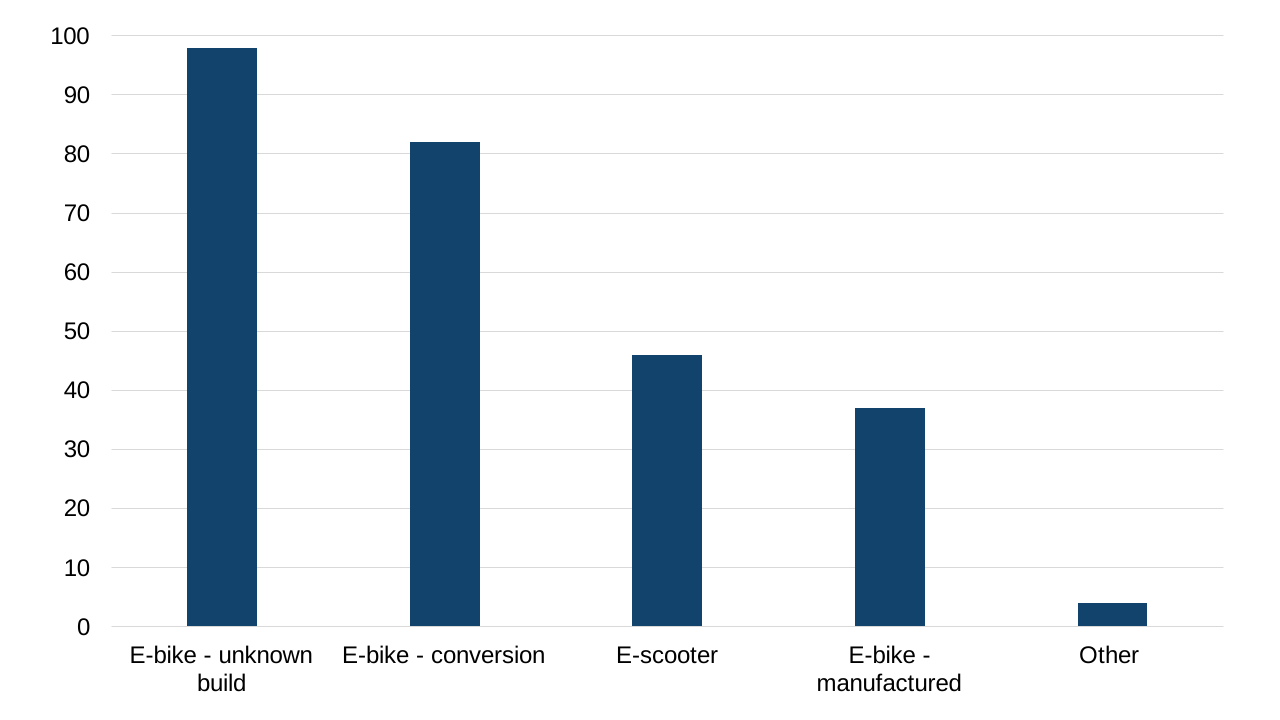
In 2025, OPSS received reports of 217 e-bike fires, with 38% (82) reported as converted e-bikes. Additionally, OPSS was notified of 46 fires involving e-scooters, 3 involving a mobility scooter, and 1 involving an e-unicycle[footnote 2].
Figure 1: Fires involving e-bikes and e-scooters, by product type, reported to OPSS, 2025
Source: Notifications from fire and rescue services.
Table 1: Fires involving e-bikes and e-scooters, by product type, reported to OPSS, 2025
| Product type | Number of fires |
|---|---|
| E-bike - unknown build | 98 |
| E-bike - conversion | 82 |
| E-scooter | 46 |
| E-bike - manufactured | 37 |
| Other | 4 |
| Total | 267 |
Source: Notifications from fire and rescue services.
Fires by property type
The term “property type” refers to the classification of the location where the notified fires involving e-bikes and e-scooters primarily occurred. This provides insight into the environments most affected by such incidents. For detailed descriptions of each property type, see the Annex: Property Type Groupings Explanation.
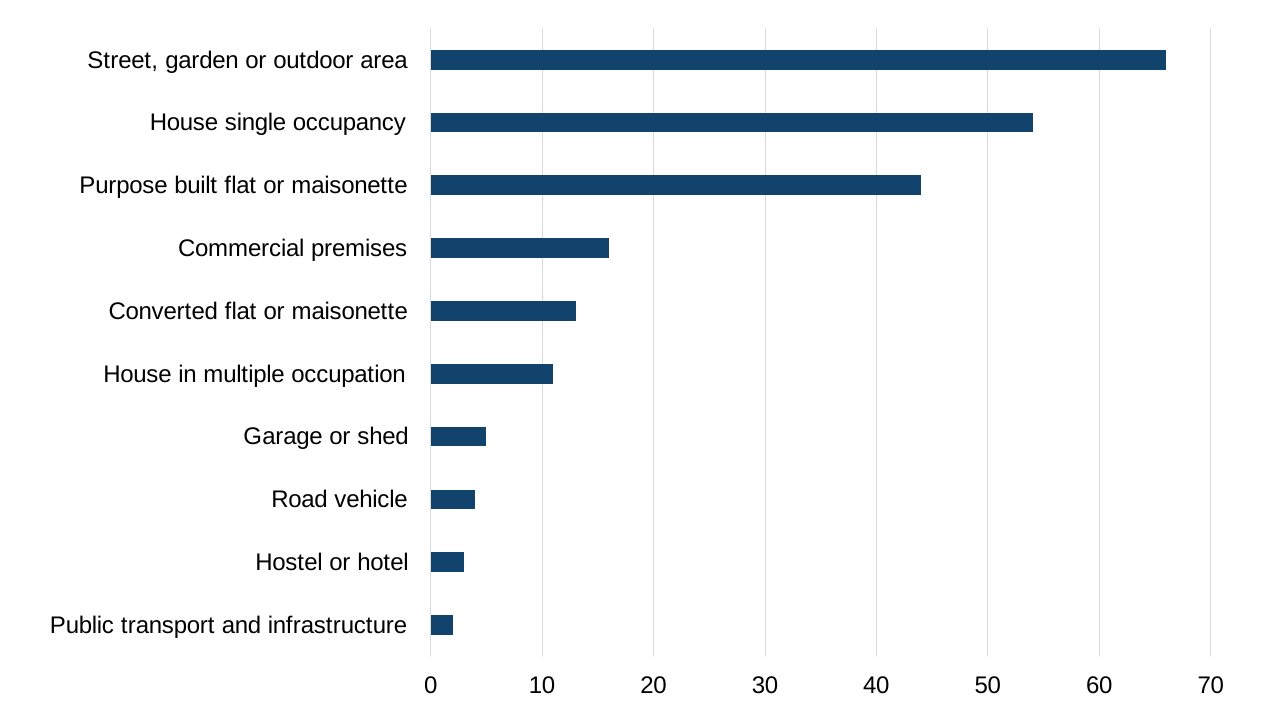
When grouped by broader setting, the top three property types where the notified fires occurred were indoor or residential environments[footnote 3], accounting for 55% (147 incidents), followed by outdoor spaces[footnote 4] at 25% (66 incidents). A further 2% (5 incidents) were reported in transport settings[footnote 5], and 18% (49) were classified as unknown.
Figure 2: Fires involving e-bikes and e-scooters, by property type[footnote 6], reported to OPSS, 2025
Source: Notifications from fire and rescue services.
Table 2: Fires involving e-bikes and e-scooters, by property type, reported to OPSS, 2025
| Property type | Number of fires |
|---|---|
| Street, garden or outdoor area | 66 |
| House single occupancy | 54 |
| Purpose built flat or maisonette | 44 |
| Commercial premises | 16 |
| Converted flat or maisonette | 13 |
| House in multiple occupation | 11 |
| Garage or shed | 5 |
| Hostel or hotel | 4 |
| Road vehicle | 3 |
| Public transport and infrastructure | 2 |
| Unknown | 49 |
| Total | 267 |
Source: Notifications from fire and rescue services.
Fires by location fire started
The term “location fire started” refers to the initial point where the notified fires involving e-bikes and e-scooters were reported to have originated.
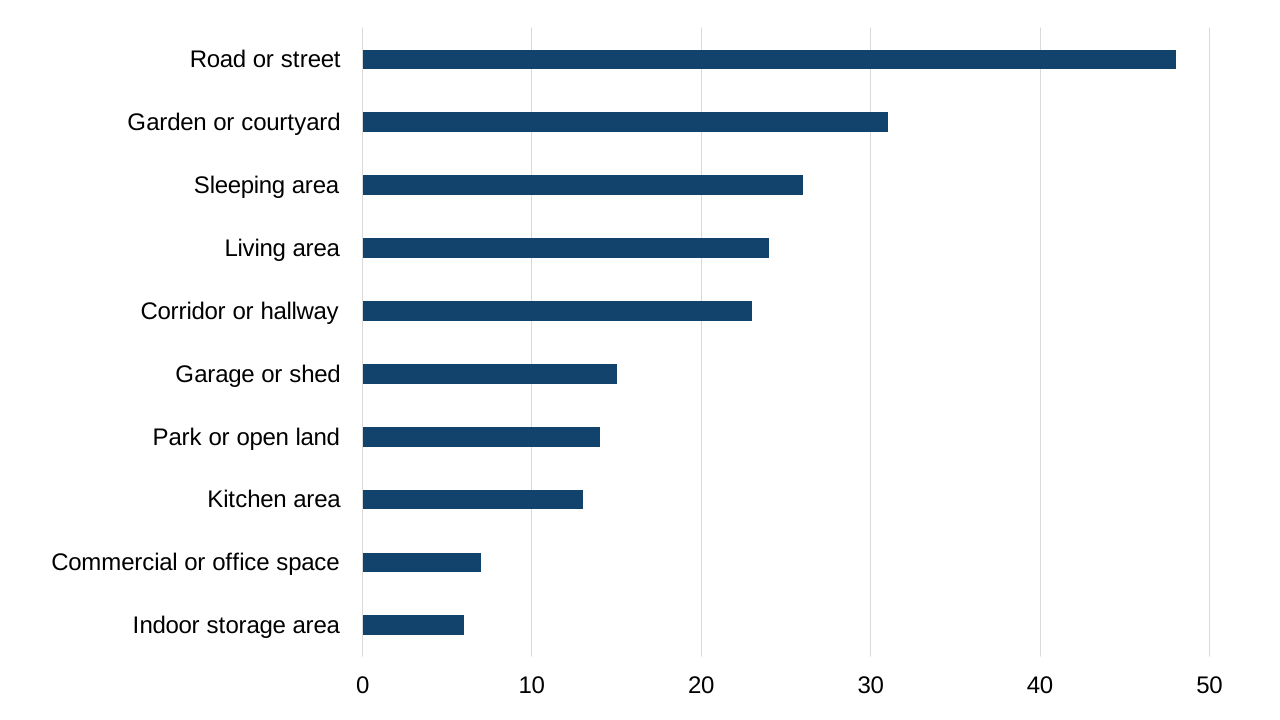
Of the 267 fires reported in 2025, 45% (119 incidents) were recorded as having started in indoor environments, including areas such as bedrooms, living rooms, kitchens, corridors, and indoor storage spaces. In comparison, 37% (100 incidents) occurred in outdoor locations, with further breakdowns showing fires beginning in streets, gardens, parks, balconies, and external structures. An additional 1% (3 incidents) were reported in transport-related settings, and 17% (45 incidents) were classified as unknown.
Figure 3: Top 10 locations[footnote 7] where fires involving e-bikes and e-scooters started, reported to OPSS, 2025
Source: Notifications from fire and rescue services.
Table 3: Fires involving e-bikes and e-scooters, by location fire started, reported to OPSS, 2025
| Property type | Number of fires |
|---|---|
| Road or street | 47 |
| Garden or courtyard | 31 |
| Sleeping area | 26 |
| Living area | 24 |
| Corridor or hallway | 23 |
| Garage or shed | 15 |
| Park or open land | 14 |
| Kitchen area | 13 |
| Commercial or office space | 7 |
| Indoor storage area | 6 |
| Balcony or walkway | 4 |
| External structure | 4 |
| Industrial space | 3 |
| Stair or roof space | 2 |
| Road vehicle | 2 |
| Railway or transport area | 1 |
| Unknown | 45 |
| Total | 267 |
Source: Notifications from fire and rescue services.
Source of ignition and charging status
In 2025, 88% (235 incidents) of fires involving e-bikes or e-scooters notified to OPSS were recorded with batteries or generators as the source of ignition. Of the remaining incidents, 6 were attributed to electrical distribution sources. The source of ignition was unknown in 26 cases.
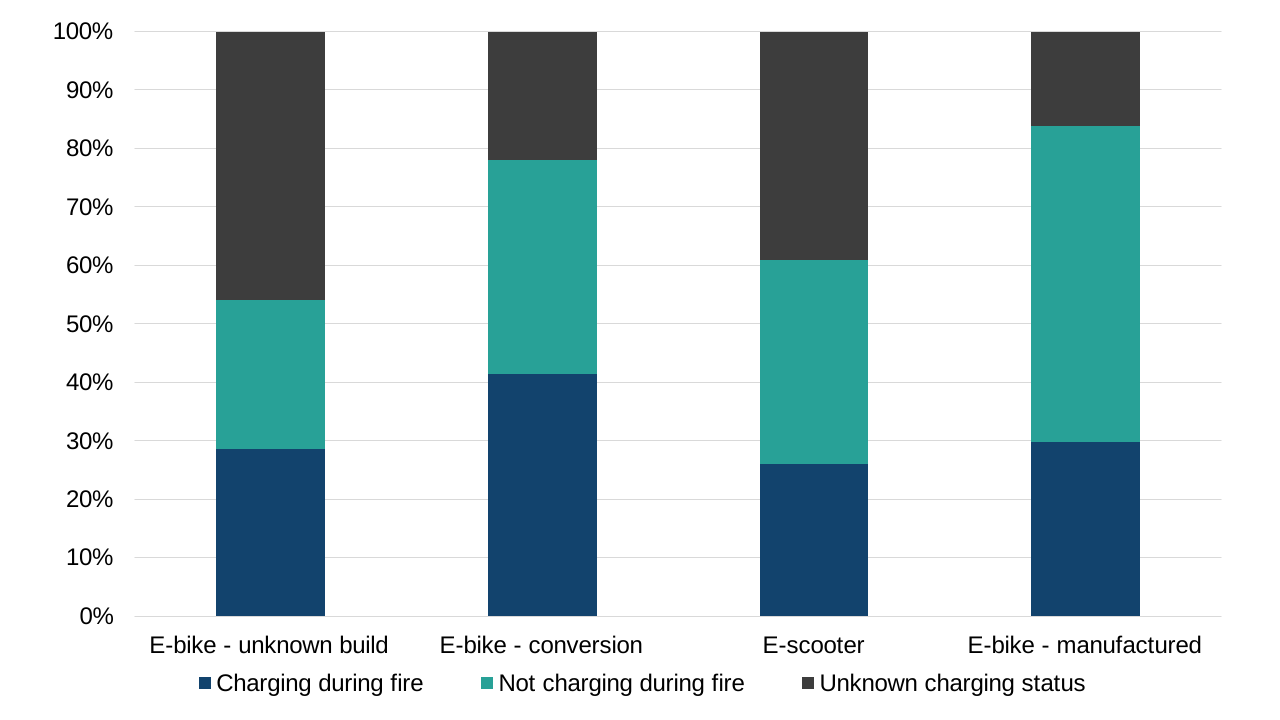
Charging status was known for 178 (66%) out of 267 incidents. Of all 267 fires, 32% (86 incidents) were confirmed to have occurred while the product was on charge, and 34% (92 incidents) were not charging at the time of fire. The remaining 33% (89 incidents) had an unknown charging status.
The proportion of charging-related fires varied by product type: 41% of fires involving e-bike conversions occurred when the product was on charge (34 of 82), followed by 30% for manufactured e-bikes (11 of 37), 29% for e-bikes of unknown build (28 of 98) and 26% for e-scooters (12 of 46). These figures should be interpreted in light of the number of incidents with missing charging data, which may affect comparability across categories.
Figure 4: Fires involving e-bikes and e-scooters, by product type and charging status, reported to OPSS, 2025
Source: Notifications from fire and rescue services.
Table 4: Fires involving e-bikes and e-scooters, by product type and charging status, reported to OPSS, 2025
| Product type | Charging during fire | Not charging during fire | Unknown charging status | Total |
|---|---|---|---|---|
| E-bike - unknown build | 28 | 25 | 45 | 98 |
| E-bike - conversion | 34 | 30 | 18 | 82 |
| E-scooter | 12 | 16 | 18 | 46 |
| E-bike - manufactured | 11 | 20 | 6 | 37 |
| Other | 1 | 2 | 1 | 4 |
Source: Notifications from fire and rescue services.
Casualties and fatalities
In 2025, there were 2 fires involving e-bikes and e-scooters notified to OPSS that resulted in fatalities. These incidents led to a total of 2 fatalities. 47 fires involved non-fatal casualties (98 casualties in total). It is important to note that the number of fatalities and casualties only includes instances where this information was specifically reported to OPSS, so the actual numbers may be higher.
3. Revision note
As data is provided on a voluntary basis, figures are subject to revision following publication. Revisions may arise due to late submissions, the identification of reporting errors, or the resolution of other data quality issues. Updated totals are therefore incorporated into subsequent publications as necessary.
A recent data cleansing exercise identified a small number of minor misclassifications and inconsistencies, which have now been corrected.
The Department for Business, Innovation, Science and Trade will continue to review and update the data where required. Any significant revisions or identified errors will be addressed promptly, with accompanying explanations provided.
4. Annex – Property type groupings explanations
Commercial premises: this category includes businesses and other non-residential buildings. Examples include police stations, restaurants, single shops, vehicle repair workshops, warehouses, community centres, and shopping centres.
Converted flat or maisonette: this category includes residential units adapted from previously non-residential spaces. Examples include converted flats or maisonettes with varying stories, such as those converted from office buildings or warehouses.
Garage or shed: this category includes storage spaces for vehicles and other items. Examples include private garages and garden sheds.
Hostel or hotel: this category includes accommodations such as hostels and hotels. Examples include boarding houses, bed and breakfasts, and asylum seekers’ accommodation.
House in multiple occupation: these fires occurred in residential buildings where multiple households share common areas, such as kitchens or bathrooms. Examples include licensed and unlicensed houses in multiple occupation with varying stories, student halls of residence, and self-contained sheltered housing.
House single occupancy: fires in this category occurred in single-occupancy houses. Examples include detached houses, bungalows, mid-terraced houses, and semi-detached houses.
Public transport and infrastructure: this category includes fires that started in public transport and infrastructure areas. Examples include railway buildings, train station platforms, and other transport-related structures.
Purpose built flat or maisonette: this category includes residential buildings specifically designed as flats or maisonettes. Examples include purpose-built flats or maisonettes with varying stories, high-rise buildings, and low-rise flats.
Road vehicle: this category includes fires that start in road vehicles. Examples include lorries, cars and vans.
Street, garden or outdoor area: this category includes open spaces where e-bikes and e-scooters might be parked or used, such as streets, gardens, and other outdoor areas. Examples include private gardens, balconies, open land, parks, playgrounds, and public spaces.
Unknown: this category includes incidents where the property type was not specified. Examples include other dwellings and unspecified buildings.
Footnotes
-
Further information can be found in the revision note. ↩
-
The commentary, charts, and tables include the e-unicycle and mobility scooter, but for simplicity, they are collectively referred to as e-bikes and e-scooters. ↩
-
Indoor or residential environments include: house single occupancy, purpose built flat or maisonette, house in multiple occupation, converted flat or maisonette, commercial premises, garage or shed, and hostel or hotel. ↩
-
Outdoor spaces include: streets, gardens and outdoor areas. ↩
-
Transport settings include: road vehicles and public transport and infrastructure. ↩
-
There were 49 fires where the property type was unknown, and these incidents were not included in the chart. ↩
-
Incidents with unknown fire starting locations were not included in the chart. There were 45 such incidents. ↩