Evaluation of UK participation in H2020
Published 29 December 2025

© Crown copyright 2025
This publication is licensed under the terms of the Open Government Licence v3.0 except where otherwise stated. To view this licence, visit nationalarchives.gov.uk/doc/open-government-licence/version/3 or write to the Information Policy Team, The National Archives, Kew, London TW9 4DU, or email: psi@nationalarchives.gov.uk.
Where we have identified any third party copyright information you will need to obtain permission from the copyright holders concerned.
This publication is available at https://www.gov.uk/government/publications/evaluation-of-uk-participation-in-horizon-2020/evaluation-of-uk-participation-in-h2020
Executive summary
This study
This report presents results of the “Evaluation of UK participation in Horizon 2020 (H2020)”, commissioned to Technopolis by the Department of Science, Innovation and Technology (DSIT). The study had the following objectives:
- To audit UK participation in H2020 (by participant, programme, over time) to understand the profile of participation and funding (including hot/cold spots)
- To develop and test a Theory of Change / pathways through which UK involvement generates socio-economic impacts, evaluating the full range of outcomes and impacts that have resulted, and understanding in what ways / to what extent the UK has benefited
- To assess the role of various barriers and facilitators to participation and benefit realisation, including applicant motivations / preferences, interactions with national strategies, programmes, support services and resources, and external factors, including the effects of the EU referendum.
The study was conducted in 2 Phases between November 2024 and September 2025. The first phase focused on reviewing and analysing pre-existing evidence, while the second took the analysis further, with additional evidence collected through surveys, interviews and case studies, and additional analysis undertaken of linked secondary data.
The methodology
The study has been guided by a Theory of Change that sets out the intended rationale and aims for UK participation in H2020, through to the intended outputs, outcomes and impacts that are expected to emerge. It has followed a mixed methods approach combining a variety of primary and secondary data sources and evidence, including:
- A Rapid Evidence Assessment (REA) to identify, compile and analyse recently published reports and impact evaluations of the European Research, Technology and Development (RTD) framework programmes.
- A detailed analysis of UK participation in H2020, based on European Commission’s eCorda data on H2020 proposals / applicants and funded projects / participants, covering all countries including the UK.
- Primary data collection to address gaps in the existing evidence base, particularly in relation to some of the longer-term and more intangible benefits of participation, as well to collect views and experiences on barriers and facilitators. This included surveys of UK applicants to H2020 (570 responses from successful applicants, 555 from unsuccessful ones); and a programme of in-depth stakeholder interviews with 14 representatives from different government departments, R&I funding bodies, academies, and societies.
- 4 in-depth case studies that explore a selection of H2020 projects with UK involvement in more depth, including their emerging outputs and outcomes and the H2020 added value.
- Bibliometric analysis of UK H2020 publications and comparison with comparator groups, plus synthetic control group analysis to explore whether the marked drop in UK H2020 participation had a significant effect on output production across different fields.
Throughout the study, we have sought to consider the counterfactual where possible. We have explored 3 counterfactual scenario(s) for UK participation in H2020, each addressing a different research question, using survey data, interviews, and quasi-experimental design approaches (synthetic control groups and difference-in-difference).
Key findings
There are 6 key areas of conclusions that have emerged from the evaluation.
Strong player despite declining participation. The UK remained an active and prominent player in H2020, despite challenges associated with the EU referendum.
Overall UK participation in both H2020 proposals and projects (as participant or lead) declined after 2016. However, success rates remained above average, and the proportion of UK proposals where UK organisations took the lead remained stable. Additionally, the UK was still amongst the most active countries in submitting proposals to H2020 (based on number participations in proposals), ranking 4th overall (but falling from 1st place in 2014 to 5th in 2020).
Additionally, there is no evidence that UK participation in proposals undermined the chances of success (despite stakeholder perceptions to the contrary due to the uncertainty created by the EU referendum). Indeed, we find via regression analysis that UK involvement increased the probability of a proposal’s success by 2.4 percentage points on average (from an average success rate of 11.1% to 13.5%).
UK participation in H2020 projects was particularly strong in research-focused instruments and programmes, with European Research Council (ERC) and Marie Skłodowska-Curie Actions representing 45% of EC contributions to the UK.
Notably, one-third of UK projects focused on critical technologies, with artificial intelligence, engineering biology, and future telecommunications being priority areas (based on an exploratory analysis using GenAI classification).
Strong research outcomes. Strong citation impact and global scientific contributions demonstrate clear added value beyond national funding capabilities.
The vast majority of UK participants report high to medium impact from H2020 on themselves and their unit / group across all areas related to research impact, including improving understanding of a subject area and scientific capacity, the ability to collaborate and manage research projects, and the ability to retain staff.
A total of 40,136 peer-reviewed publications emerged from H2020 projects with UK participants and where there is at least one UK-based author. These numbers are comparable to nationally funded international R&I programmes (based on volume per £ spent). We also find, via synthetic control group analysis, that reduced UK participation in H2020 does not appear to have had a significant effect on the overall volume of UK publications across most fields (except Biochemistry, Chemistry and Earth & Planetary Sciences) (although results need to be taken with some caution). However, H2020 does support publications in specific areas of strategic interest to the UK (above what is produced outside the programme), including for example in fields relating to life sciences and health (e.g. neuroscience and pharmaceuticals).
Furthermore, we find that the reach (citation impact) of UK H2020 publications (i.e. publications emerging from H2020 with at least one UK author) outperforms all other comparator groups, including publications from the same researchers outside of H2020 and from other researchers that collaborate internationally. This analysis indicates that there is a positive effect on the quality of publications emerging from H2020 (as measured by citation impact). This is in line with the perception of wider stakeholders, who in interviews agreed that scientific outputs from international collaboration (and including EU Framework Programme(s) funding) significantly exceed the quality achieved through national funding alone due to access to research and knowledge assets (people, expertise, infrastructure) that would not be fully available nationally.
Limited commercialisation outcomes. So far, only a small percentage of UK H2020 projects and participants have generated commercialisation outputs and, with modest productivity gains, reflecting the challenges of translating research excellence into economic returns.
At this point in time, evidence of the positive impact of H2020 on innovation and commercialisation (as reported via survey) is more mixed in comparison with the more positive results on ‘research and knowledge’.
Survey analysis shows that 36% of responding companies (UK H2020 participants) report a high or medium impact on productivity so far, while around 45% report increases in employment and turnover. A higher proportion report that participating in H2020 has had a medium or high impact on their further investment in R&I (60%), and on their product portfolio (67%). The higher investment may lead to innovation and commercialisation benefits in the future.
As part of our survey, we also asked all successful participants to declare several potential quantitative commercialisation benefits derived from their participation in H2020. Only a small number (13-40, 3-6% all survey respondents) provided information in each case. Additionally, only 3% of UK H2020 projects report a patent applications, based on EU monitoring data (and it is not possible to fully determine if they are linked to UK organisations).
The sample of companies responding to the survey (100 respondents) represents a small proportion of overall UK company participation in H2020 (circa 5-10%), and their answers may not be representative of the full population. Patent reporting in Horizon 2020 also has limitations.
The quantitative survey results (and monitoring data) are however consistent with our econometric analysis, where we did not find a statistically significant effect so far on turnover and employment amongst UK companies participating in H2020 (compared with a matched sample of non-participants as a control, and accounting for a 3 year lag after project completion), noting that the analysis is based on a small sample of companies for which it was possible to create a longitudinal dataset.
There is therefore limited evidence to suggest that participation in H2020 has yet delivered these specific commercial outcomes to participant organisations. Whilst some companies have benefited – and we have identified several strong examples through the participant survey and case studies of UK spinoffs already generating income and securing multi-million pound investments - others have not benefited at all (or experienced opportunity costs).
There may be several reasons for these results. Firstly, they may in part reflect the fact that achieving innovation outcomes (from R&I projects) has a high degree of uncertainty (i.e. a high probability of not materialising), and that final results (including commercialisation, productivity and competitiveness) require further investment and resources over a longer period of time (i.e. beyond the timeframe of this study), plus favourable market conditions.
Second, they may signal the strong research focus of the FP and the focus of UK participation in the programme. In fact, many H2020 projects include industry partners where they are not central to the research and innovation projects, or where commercialisation outcomes are not the key expected results (e.g. programmes under the Societal Challenges pillar). H2020 instruments such as the SME Instrument (now evolved into the EIC Accelerator), Public-Private Partnerships, and European Innovation Council (EIC) Pilot do have more of an industrial focus, but they only represent a relatively small part of the UK’s participation in H2020 (for example, just 3% of all UK participations related to the SME instrument).
Finally, the relatively small sample sizes for the survey and econometric analysis mean that we may have an incomplete picture of the outputs and outcomes generated from participation.
It is also worth noting that the FP is constantly evolving, and there has been a stronger emphasis in supporting industrial participation and benefits in Horizon Europe, including through the European Partnerships, the European Institute of Innovation and Technology, and European Industry Council Accelerator. There are also plans to further increase industrial participation in the next FP iteration (Horizon Europe/ FP10), which will be tightly connected to a new Competitiveness Fund to enhance the link between research and commercialisation.
Evidence of emerging societal benefits. Societal benefits emerging from research and innovation activities are difficult to track and may materialise over time, but evidence so far suggests contributions to addressing societal challenges.
Insights from survey and case studies show evidence of societal benefits realised through H2020 projects. However, some respondents acknowledged (via survey), challenges in realising societal impacts, particularly for projects still in progress or focused on fundamental research.
The case studies also showcase that societal benefits emerge over time, often as a result of multiple projects and initiatives (involving H2020/FP funding and other sources). However, at least in these examples, the H2020 projects have made considerable contributions to these longer-term endeavours, which have then enabled the next steps to be taken. Examples provided via surveys and case studies include impacts in the following areas:
- Healthcare: with H2020 projects contributing to advancements in diagnostics, therapies, and patient care in relation to different cancers, rare diseases and chronic conditions.
- Environmental and climate-related impacts: with H2020 projects contributing to various policy developments, such as the inclusion of climate change evidence in marine protected area (MPA) site selection by DEFRA, the promotion of sustainable farming practices in the UK and abroad, and improvements in the UK’s carbon dioxide emissions monitoring and the attribution of these emissions to specific processes or sectors.
- Cultural and educational impacts: with H2020 projects contributing to fostering public engagement with cultural heritage, a stronger evidence base for improvements in maternity care, and educational initiatives to improve STEM education in schools.
There is also strong evidence of policy interest in Horizon 2020 research, with over 20,000 policy related documents (from e.g. government organisations, think-tanks and international organisations) already found to be citing UK H2020 publications. This demonstrates contributions in providing evidence that is expected to then deliver further societal benefits.
Strategic value: Evidence collected in this study showcases the role of H2020 in positioning the UK as a global research leader and building soft power through international partnerships in a way that only a pan-European / global programme like the FP can.
Survey respondents and interviewees unanimously emphasised the critical importance of international collaboration for advancing science and innovation, including in key priority areas (e.g. one third of projects with UK participation had a focus on one or more of the UK’s critical technologies, including Artificial Intelligence, Future telecommunications and Engineering Biology). They also report strong reputational benefits from their participation in H2020, with 73% of respondents reporting high impact in their ability to access EU networks and 68% on their international reputation.
This is connected to the advantages (value added) H2020 provides in terms of funding, in comparison to what could be accessed at national level, with a strong argument in terms of economies of scale, as well as overall scale and ambition:
- Scale and Scope: With H2020 (the FP) providing significantly larger budgets (overall and for individual projects) than any UK domestic programme can offer, this enables larger and more ambitious projects than would otherwise be feasible in the UK. The R&I community also stated via survey and interviews that H2020 allowed for “more risky and ambitious projects” and “high-risk, high-reward research”, which can be constrained in the UK system.
- Stability and Predictability: H2020 (the FP) provides funding across 7-year timeframes, which stakeholders suggested allows researchers adequate time and space to develop high-quality proposals, contrasting sharply with UK funding that is subject to funding disruption from government changes, spending reviews, and shifting political priorities.
- Collaborative Models: H2020 (the FP) provides opportunities for large-scale, multidisciplinary and international collaborations that are not easily achievable through UK funding alone or through a national programme, as these would require excessive coordination, including individual collaboration agreements with each participating country. As a case in point, through H2020, UK participants have collaborated with stakeholders from 158 countries.
- Infrastructure and Data Access: H2020 (the FP) provides access to facilities and pooled datasets for specialised research, that do not exist at national level (or would be too costly to reproduce at national level).
This is exemplified in the case studies developed in the study, which all make clear that the scale and / or internationally collaborative nature of H2020 funding, as well as the access to external expertise and infrastructure, was important, if not critical for the projects concerned. These examples include multi-stakeholder, international collaborations aimed at improving interventions and public understanding of how to manage Type 1 Diabetes (T1D); improving the monitoring of anthropogenic carbon dioxide (CO2) emissions, for scientific and policy use; and the coordination of thirteen research infrastructures to provide an open and collaborative space, databases and tools to support long-term data sharing and reuse in the life sciences.
Furthermore, over half of unsuccessful applicants (54%) stated via survey that their project idea had been abandoned without H2020 support (while 73% of UK H2020 participants believed that would also have been the case for their project without H2020 funding). This suggests that a great proportion of the outputs and benefits emerging from H2020 are ‘additional’ or would not have happened in the absence of funding.
EU referendum lessons: The decision to leave the EU revealed the importance of stability and continuity for realising benefits, and maximising returns on international research investments
The EU referendum and its result created significant uncertainty that affected UK participation in H2020, with effects extending beyond the programme itself.
Survey data showed 55% of successful applicants experienced a significantly reduced ability to coordinate applications, while 47% found it harder to join consortia due to perceived risks by EU partners. Large numbers of open responses reflected further on the situation, with regular sentiments being that “EU partners considered UK consortium members a risk” and that “UK participation was seen as problematic” due to fears of jeopardising proposals.
This is then reflected in the participation data, where we see declining UK involvement in proposals and projects over the course of H2020, both in absolute terms and relative to other countries. This was seen across all types of organisation and across the programme.
Stakeholders emphasised both the perceived and the practical barriers that emerged even when UK participation remained technically possible. They noted the widespread perception that UK partners represented a risk to project success, with consortia actively avoiding including UK partners to prevent potential project rejection by evaluators. They also highlighted that this risk-averse behaviour continued for an extended period, not helped by communications both domestically and across the EU, or by the phased approach to announcing UK government guarantees for Horizon 2020 funding.
This uncertainty also had knock on effects, as it seems to have led to the dismantling of UK research management and support services to apply to the FPs, and knowledge gaps among young researchers unfamiliar with EU funding opportunities. The period of uncertainty also highlighted that stability and predictability are essential prerequisites for effective international research collaboration.
Interviewees stressed that continued association must be value for money to be sustainable and highlighted significant concerns about future EU policy directions which could undermine that value. Despite these challenges, there remains overwhelming support within the UK research and innovation community for continued EU Framework Programme association.
1. Introduction
1.1 This study
DSIT commissioned Technopolis to conduct the “Evaluation of UK participation H2020”. The study had the following objectives:
- To audit UK participation in H2020 (by participant, programme, over time) to understand the profile of participation and funding (including hot/cold spots)
- To develop and test a Theory of Change (ToC) / pathways through which UK involvement generates socio-economic impacts (directly/indirectly, short/long-term), evaluating the full range of outcomes and impacts that have resulted, and understanding in what ways / to what extent the UK has benefited
- To assess the role of various barriers and facilitators to participation and benefit realisation, including applicant motivations / preferences, the effects of the EU referendum, and interactions with national strategies, programmes, support services and resources
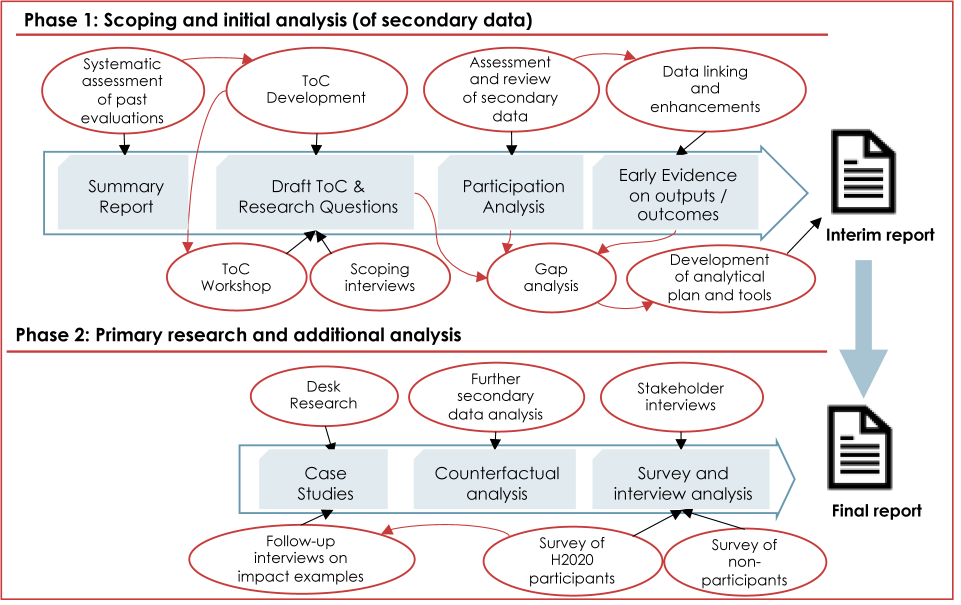
The study was conducted in 2 Phases (as shown in the diagram below) between November 2024 and August 2025. The first phase focused on reviewing pre-existing evidence, while the second phase took the analysis further, with additional evidence collected through surveys, interviews and case studies, and additional analysis undertaken of secondary data.
Figure 1 - Overview of study approach
Source: Technopolis
1.2 Methodology in a nutshell
The study has incorporated the following main methods, approaches and data sources (with further detail contained within the accompanying appendices):
- A Rapid Evidence Assessment (REA) to identify, compile and analyse recently published reports and impact evaluations of the European RTD framework programmes. The analysis is presented in Appendix B, and this then informed the development of a Theory of Change (ToC) for UK participation in H2020 (see below), as well as our approach to the study.
- A Theory of Change workshop to further explore the theory of UK participation in H2020. The workshop involved a series of guided discussions to explore different elements of the ToC, with this input then used to finalise the ToC diagram and narrative, which is presented in Section 2.2. The ToC sets out the rationale and aims for UK participation in H2020, through to the intended outputs, outcomes and impacts that are expected to emerge.
- A detailed analysis of UK participation in H2020, based on eCorda data on H2020 proposals and applicants, as well as funded H2020 projects and their participants, covering all countries including the UK. The results, which are summarised in Section 3, include analysis of the UK’s participation in proposals, as well as UK success rates across H2020, and then UK involvement in projects. Additional analysis is also presented on the alignment of UK projects with the 5 critical technologies, and on UK participation by organisation type and region.
- Primary data collection to address gaps in the existing evidence, particularly in relation to some of the longer-term and more intangible benefits of participation, as well to collect views and experiences on barriers and facilitators. We ran online surveys of UK applicants to H2020, with over 1,000 responses (571 successful and 575 unsuccessful applicants).[footnote 1] The distribution of responses across organisation types reflected closely the distribution of Horizon 2020 participations.[footnote 2] We also undertook a programme of in-depth stakeholder interviews with 14 representatives from UK government departments, R&I funding bodies, academies, and societies. Evidence from these has fed into the analysis throughout the report. Further methodological details on data collection can be found in Appendix A.
- In-depth case studies that explore a selection of H2020 projects with UK involvement in more depth, including their emerging outputs and outcomes and the H2020 added value. These were developed based on desk research and interviews (a further 10 interviews in total). The cases are presented in full in Appendix F, with further details of the approach taken, while extracts from the case studies are then presented in the main report.
- Bibliometric analysis of UK H2020 publications (papers from H2020 projects that include UK participants and where there is at least one UK-based author on the paper) and their uptake (citation) in further academic publications, including benchmarking with other groups of publications (publications by the same authors but outside of H2020, publications by other UK authors with and without international collaborators), and synthetic control group analysis to explore whether the marked drop in UK H2020 participation had a significant effect on output production across different fields. See Appendix A and E.
Throughout the study, we have sought to consider the counterfactual where possible. There are 3 main ways to think about counterfactual scenario(s) (CS) for UK participation in H2020, with each exploring a different research question (RQ).
RQ1. What is the (overall) effect of UK participation in H2020?
CS1: ‘No association’. In this scenario, the UK has no access to the Framework Programme.
This scenario cannot be directly explored or measured, as we cannot observe the UK – and the outputs that emerge from FPs – with and without access. We can, however, exploit the UK’s exit from the EU as a ‘natural shock’ that led to lower UK participation, using a synthetic control group analysis. This has been done for one of the key outputs: the volume of publications across 30 different Fields of Research (see Appendix A for further methodological detail). The results were inconclusive and are presented in Appendix E.
RQ2. What is the EU added value? (i.e. which benefits emerge from association that cannot be delivered via national funding.
CS2: H2020 versus alternative sources of national funding.
This scenario requires investigating the extent to which benefits from H2020 participation are additional to what could be delivered nationally. This is explored in section 3 in 3 ways:
- Case studies that focus on areas and projects where international collaboration was key
- Interviews with funders and wider stakeholders to explore what actual benefits are derived from H2020 (beyond R&I outputs) that cannot be reproduced nationally
- Survey questions for successful applicants on what H2020 covered that was not available through national funding (and comparison with unsuccessful applicants)
RQ3. What is the effect of UK participation in H2020 on project participants?
CS3: Specific participants do not get access to H2020 funding.
This RQ and CS focus on effects specific to project participants (understanding that other projects have gone ahead and produced benefits for the UK). This is explored in 3 ways:
- Counterfactual analysis of the effects on turnover and employment of UK firms participating in H2020 (in comparison with a control group of non-participants) (see Section 4.5).
- Comparative analysis of researchers involved and not involved in H2020 (measured by citation impact, which is one way to measure quality of publications) (see Section 4.3.2).
- Survey questions for successful UK applicants on what would have happened in the absence of H2020 funding (and comparison with unsuccessful applicants) (see Section 4.1).
It is important to note that the study has not explored the potential loss to H2020 outputs of not including UK participants in projects. We have shown (via regression analysis) that UK participation does lead to higher proposal success rates (Section 3.2), but H2020 monitoring data does not allow us to test whether it also leads to higher project success (e.g. more R&I outputs per £m invested).
Across all scenarios, it is important to note that, R&I outputs would continue to emerge from H2020 (with or without UK participation). Some of those outputs may generate benefits for the UK in the medium and long term (e.g. via open access or commercialisation), although there may be practical constraints associated with accessing the benefits (including absorptive capacity[footnote 3] or tacit knowledge barriers).[footnote 4] According to the literature, there are clear economic and strategic benefits from countries directly investing to produce R&I outputs (including competitiveness and growth;[footnote 5][footnote 6][footnote 7] but also, economic independence; supporting tailored solutions;[footnote 8] and exercising influence and soft power).[footnote 9]
1.3 This report
The remainder of this report is organised as follows:
- Section 2 provides a brief introduction to Horizon 2020 and presents the Theory of Change for UK participation (the rationale and intended benefits)
- Section 3 presents analysis of UK participation in H2020, starting with involvement in proposals, then looking at success rates, and finally project participation and collaboration
- Section 4 explores the evidence on the benefits of UK participation, including the added value of Horizon 2020, and benefits relating to reputation / networks, research, innovation, economic growth, and policy and society
- Section 5 examines the effects of the UK’s EU referendum on FP participation and international collaboration, both during Horizon 2020 and beyond
- Section 6 draws out the main conclusions that have emerged across the study
Separate Appendices contain the following supporting information:
- A – Further details on the approach and methodology employed
- B – Findings from a rapid evidence assessment of the literature on FP impacts
- C – The full Theory of Change narrative for UK participation in H2020
- D – Additional data relating to H2020 participation (summarised in the main report)
- E - Additional bibliometrics analysis
- F – Case studies of Horizon 2020 projects and their benefits (summarised in the main report)
2. The Horizon 2020 programme and Theory of Change
2.1 Overview
Horizon 2020 (the eighth EU Framework Programme for Research and Innovation) ran from 2014 to 2020, although many projects only concluded 2 or 3 years later. It had a budget of ~€80 billion, making it the largest Framework Programme at that point (i.e. before Horizon Europe, €95 billion). As a programme of programmes, it had a complex structure with different pillars, multiple thematic priorities and a plethora of instruments and target audiences.
The programme had 3 main pillars:
Excellent Science: aimed at reinforcing and extending the excellence of the EU’s science base. It included funding for European Research Council grants, Marie Sktodowska-Curie Actions for research training and career development, Future and emerging technologies, and Research infrastructures.
Industrial Leadership: Aimed at speeding up the development of technologies that would support innovation across various industries. It focused on Leadership in enabling industrial technologies (LEITs), access to risk finance and innovation in SMEs.
Societal Challenges: Aimed at addressing major concerns shared by citizens in Europe and elsewhere, covering 7 key areas from health to climate actions, and secure societies.
H2020 included 6 principal instruments from Research and Innovation Actions for projects addressing clearly defined challenges; to Innovation Actions for closer-to-market activities like prototyping and testing and the SME instrument; and Coordination and Support Actions (CSA) for coordination and networking of research and innovation projects. The programme also committed a substantial budget to Public-Private Partnerships (e.g., the Innovative Medicines Initiative) which were reframed as European Partnerships and Missions under Horizon Europe, with a strong focus on EU priorities, stronger political governance and lower levels of EU funding.
The UK triggered the process to leave the EU in March 2017, but continued participating in EU programmes during the transition period, up to December 2020. The UK government made several announcements guaranteeing Horizon 2020 funding for UK participants,[footnote 10] although this was never actually operationalised, as the UK continued to receive EU funding for the entirety of the H2020 programme period. UK organisations could also continue to bid for H2020 awards (as leads or partners) throughout this period.
2.2 Participation in Horizon 2020 Theory of Change
A Theory of Change (ToC) is a programme theory that explains how an intervention (in this case Horizon 2020 participation) is intended to produce results. These expectations, and the extent to which they are actually realised, are then tested (where possible) through the evaluation.
Figure 2 presents a high-level summary, capturing the main intentions and expectations for participation, in a structured way within a single diagram. This was developed for the study, based on a review of the literature, scoping interviews and a workshop with DSIT. After the diagram, we provide further detail on the rationale for H2020 participation. The remainder of the ToC narrative (further detail on intended benefits) is then presented in Appendix C.
Figure 2: Theory of Change for UK Participation in Horizon 2020
Rationale
Rationale for international R&I collaboration:
- International collaboration enables access to best, and complementary expertise/facilities (including. research infrastructure)
- There is a pressing need to solve global challenges that are too big/expensive for the UK to address alone
- Impactful research that supports government’s social and economic mission might be missed otherwise
Rationale for collaboration in the context of FPs/H2020:
- FP/H2020 facilities collaboration with high performing R&I nations, with a long-standing history of collaboration with the UK
- FP/H2020 provides an opportunity for efficiencies, in particular, through access to facilities and research assets (including. data) that would be costly to reproduce nationally
- Participation in FP/H2020 provides the opportunity to influence policy, standards, agendas, etc.
Inputs
- Funding: Horizon 2020 plus national/international (public & private) co-funding
- Prior knowledge, skills and expertise of researchers and innovators (in the UK and internationally)
- Existing agreements and partnerships within and beyond the UK
- Prior Programmes and Initiatives, including former Framework Programmes
Activities
- ERC Grants
- Marie Skłodowska-Curie Actions (MSCA)
- Research and innovation actions (TRL 2-6)
- Innovation actions EIT / KICs (TRL 6-8)
- SME Instrument - Future Emerging Technologies (FET) actions (EIC Pilot)
- Access to risk finance
- Pre-contractual procurement and Public procurement of innovation solutions
- Coordination and Support Actions
- ERA-NET Cofund (Partnerships)
- Prizes
- Research Infrastructures
Outputs
Research
- Publications (including high-quality academic publications, policy briefs, working documents, reports)
- Dissemination of research
- New datasets, software, models and standards
Collaboration and partnerships
- New/strengthened partnerships (with researchers, organisations, networks)
- Joint areas of research identified (between UK and international partners)
- Improved international visibility of UK researchers and organisations
- Access to geographically specific research subjects, data or talent
Skills and knowledge
- New or improved research skills and capabilities (including in new areas)
- Maintained or improved understanding of user needs, markets, research subjects, methods, project management
- New/improved understanding of conducting international R&D (across big projects, with other teams and collaborators)
- New and improved training opportunities (for doctoral researchers and early career professionals)
- Improved understanding and awareness of cutting-edge science and innovation
- New/improved understanding of available research capacity, capabilities and infrastructure across domestic and international partners
Innovation and the economy
- New/improved products, prototypes, services and processes
- New and improved technologies/increased TRL
- New IP/patents
- Spin-offs/start-ups
Outcomes (Change in comparison with benchmarks or counterfactual)
- Further funding leveraged (from partners) and from new and diversified sources (including National, international, public and private funding)
- Increased/sustained quality and competitiveness of UK R&I
- Increased or sustained influence on standards, research agendas and research cultures (to align with UK priorities)
- Increased or sustained reputation of UK researchers and organisations as an R&D partner of choice and a destination for international talent
- Increased ability of UK and EU countries to collaborate on R&I (including access to new infrastructure)
- Strengthened and sustainable partnerships (with national and international researchers, organisations, industry)
- Increased research capabilities of UK researchers, organisations and businesses (including on expanded scope of research)
- Improved ability to tackle global challenges via use/uptake/application of solutions developed under Horizon 2020
- Improved/increased employability and competitiveness of UK researchers (including early career researchers)
- Improved coordination of R&D (across the UK and between the UK and partner countries)
- Increased ability to commercialise and diffuse research and innovation products (including across new European markets)
- Increased income from commercialisation, including from new markets and new sectors
Impacts
- Enhanced capacity to address challenging, societal issues (health and wellbeing, climate) to the benefit of the wider population
- Improved global competitiveness of UK industry and research (which could in turn translate into better economic conditions and jobs)
- New or strengthened partnerships advancing UK strategic areas through R&I
- Strengthened quality of UK R&D leading to strategic and socioeconomic advantage
- Wider R&D ecosystems influenced to better align with UK needs and ambitions
- Improved international perceptions and reputation of the UK R&I
Assumptions
- Horizon 2020 priorities align sufficiently with UK R\&I / strategic objectives.
- Stable political relationships and agreements (e.g., association to Horizon Europe) ensure ongoing UK participation
Risks and challenges
- Barriers to international mobility (e.g. visas) and working (norms, language, culture, data sharing)
- Most of funding goes to activities/instruments that have the highest EU added values
2.2.1 Rationale for international R&I collaboration
Investment in science, research, technology and innovation (SRTI) is widely regarded as a catalyst for economic growth.[footnote 11] In addition to delivering direct outcomes including high-level skills for researchers and innovators and opportunities for knowledge transfer, research can often contribute to wider benefits (e.g. in relation to environment, energy and health). The UK’s future as a strong, influential country, where all citizens enjoy prosperity, security and wellbeing, will depend in large part on its ability to build on existing SRTI strengths. International collaboration is thought to be critical to ensuring a strong and growing UK SRTI sector, and in turn, delivering the benefits which flow to citizens.[footnote 12] Citation impact is measurably higher for internationally co-authored papers, relative to national-only ones, while collaborating internationally produces outputs that are 1.1-1.8x more cited than UK-only collaboration.[footnote 13]
Access to the best, and complementary expertise and facilities (including research infrastructure) is beneficial for UK SRTI. With more than 95% of R&I conducted outside the UK and 17% of global R&I conducted within the EU, much existing knowledge, expertise and infrastructure are located elsewhere.[footnote 14] Increasing access to those global R&I opportunities and talent should help to ensure that the UK remains a leader of global SRTI. European collaboration is particularly valuable in some fields, for example medicine and rare diseases, as it provides access to large and diverse patient groups for medical research and clinical trials.[footnote 15]
Another increasing driver of international collaboration is the need to solve global challenges that are either too big or too expensive for the UK to address alone. Key issues such as climate change and extreme weather, global pandemics, or new and emerging technologies do not recognise borders. Increasingly, these issues emerge at a global scale and therefore require a global response. As such, it is important to ensure that UK scientists, researchers and innovators can access global networks and partnerships. By establishing, and in many cases deepening these international (and EU) partnerships, we can avoid duplicating efforts and can instead act in a systematic and coordinated fashion. The knowledge and expertise generated through these shared ventures can then, in turn, be used to better solve challenge at home.
There is also a risk that impactful research that supports the government’s social and economic mission might be missed otherwise (in the absence of participation in EU FPs) due to a lack of similar available national budgets, in terms of size or scope.
2.2.2 Rationale for international collaboration in the context of the FPs / Horizon 2020
The UK has a strong history of collaborating with European partners on SRTI through the FP, as well as multilateral / bilateral initiatives.[footnote 16] Participation has facilitated collaboration with high performing R&I nations, with a long-standing history of collaboration with the UK. UK universities have a long and successful record of collaborating with EU counterparts, as well as industrial partners, SMEs and businesses. Pre-existing relationships (between researchers, institutions, funders) are an enabler to strengthening partnerships, as partnerships take time to materialise and develop. Participation in the FP offers a valuable opportunity to grow and deepen these partnerships and carry out research across new or existing areas of strategic importance.
Partnerships between the UK and EU Member States have also been shown to significantly increase the impact and influence of science research activity. For example, in the field of medical and health research, co-authored publications between the UK and the EU appear more in the top 10% highly cited publications than those produced without collaboration.[footnote 17] The EU is ranked second (behind the United States, but ahead of the UK) in university rankings, with 19 universities in the top 100 of the global rankings.[footnote 18] Since 2017, the EU’s innovation performance has increased by 10% points (according to the European Innovation Scoreboard) and access to growing EU talent should help the UK to remain at the forefront of cutting-edge SRTI.[footnote 19][footnote 20]
UK participation in the FPs should also provide opportunities for efficiencies. Compared to bi-lateral and multi-lateral programmes, the FP provides researchers with the opportunity to simultaneously collaborate with multiple academics and industries, increasing the efficiency and the attractiveness of these opportunities. The FP is unique, as other international research programmes are orders of magnitude smaller and are often more narrowly based geographically and / or thematically. By pooling resources, the UK can do bigger, better science than it can alone; by sharing knowledge we avoid reinventing the wheel and have access to more expertise; and by working collectively, we take more diverse approaches to problems and deliver more creative solutions.
Critical mass and strategic coordination of research efforts, particularly in access to shared infrastructure, datasets and facilities that could not be provided nationally, is critical to ensuring a strong and growing UK R&I sector. There are significant cost-savings from the collaborative development and usage of expensive facilities and infrastructure, such as the European Open Science Cloud (EOSC), CERN and the European Synchrotron Radiation Facility (ESRF), and this avoids the duplication of efforts and the need to reproduce these nationally in the UK.[footnote 21]
The use, uptake and application of solutions developed through UK participation in the FP provides the opportunity to influence policy, standards and agendas. Influence may happen directly within the activities of a project, where a specific stakeholder type (e.g. regulators) is engaged directly, or where this is a particular focus of specific programmes / projects.
By working closely with international organisations, civil society and others to advance a shared agenda (e.g. on data protection, IP, open science, privacy, the ethics and regulation of AI), the UK can grow in influence. The increased proximity and interaction of the UK with these stakeholders is expected to exert some influence in terms of e.g. ways of working. In turn, this may lead to a wider influence on wider SRTI ecosystems, including through the development of standards, policies, research agendas and research cultures.
3. UK participation in H2020
Key findings
- UK involvement in Horizon 2020 was substantial overall, but did decline significantly over the course of the programme period.
- The UK participated in 68,686 proposals worth EUR 55 billion (based on EC contributions requested by UK participants in proposals), and involving 13,276 unique organisations. However, UK involvement steadily fell from 12% of all participations in proposals in 2014 to just 6% in 2020, with the country dropping from 1st to 5th place among participating nations. The number of unique UK organisations involved each year also decreased, from 3,642 (2014) to 2,415 (2020).
- Despite this decline, the UK maintained strong success rates where it was involved in proposals, consistently outperforming the H2020 average. Furthermore, UK participation in proposals seems to have a positive effect on success rates (increasing the probability of success from 11.1% to 13.5%, based on regression analysis).
- Horizon 2020 funded 10,896 projects with UK participation, delivering EUR 7.8 billion in EC contributions (to UK participants).
- The European Research Council (ERC) and Marie Skłodowska-Curie Actions (MSCA) emerged as particular strengths, representing key “hot spots” of UK activity, and representing 45% of all UK participation (based on EC contributions).
- Notably, one-third of UK projects focused on critical technologies, with artificial intelligence, engineering biology, and future telecommunications being priority areas (based on an exploratory analysis using GenAI classification).
- Higher education institutions dominated participation, receiving 68% of total funding, although a diverse range of organisations across all UK regions were involved.
3.1 UK participation in H2020 proposals
- 68,686 proposals with UK involvement
- EUR 55 billion
- 13,276 unique UK organisations involved in proposals
3.1.1 Total participation in proposals
The UK was involved in 68,686 H2020 proposals in total. However, its involvement decreased over the course of H2020, both in absolute terms (number of participations in proposals) and in proportional terms (relative to all country activity) (see Figure 3).[footnote 22] Specifically, the number of UK participations in proposals as a proportion of all participations in proposals fell from 12% in the early years of H2020 to 6% in 2020. This was also reflected in a decreased budget requested by UK participants in proposals, from 13% of all EC contributions to 7% (see Appendix D.1)
The UK’s role as coordinator / host in proposals remained stable in ‘within-UK’ proportional terms over time (i.e. representing ~37% of all UK participations in H2020 proposals (Figure 4). However, the absolute number of UK proposal coordinators / hosts decreased, as did the UK’s share of all coordinators / hosts (from 15% to 10%), mirroring the overall decline in participation.
Figure 3 - UK participations in H2020 proposals, per year (based on proposal submission date)
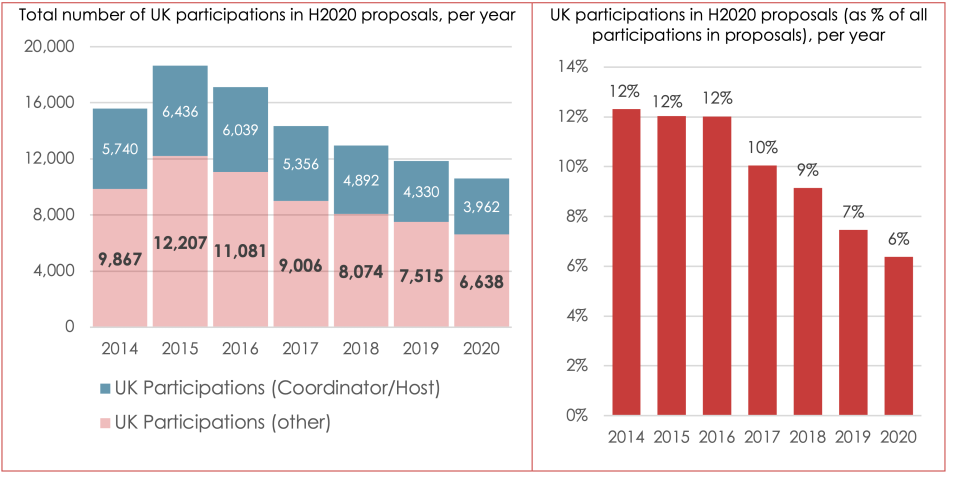
Source: Technopolis (2025) based on EU CORDA Applicants data. UK proposal coordinator/host numbers are a subset of the total participations in proposals. Annual figures exclude proposals marked as submitted in 2013 or 2021 as they are a minor percentage and distort presentation of trends.
Figure 4 - UK participations as coordinators / hosts (as a % of all UK proposal participations), per year
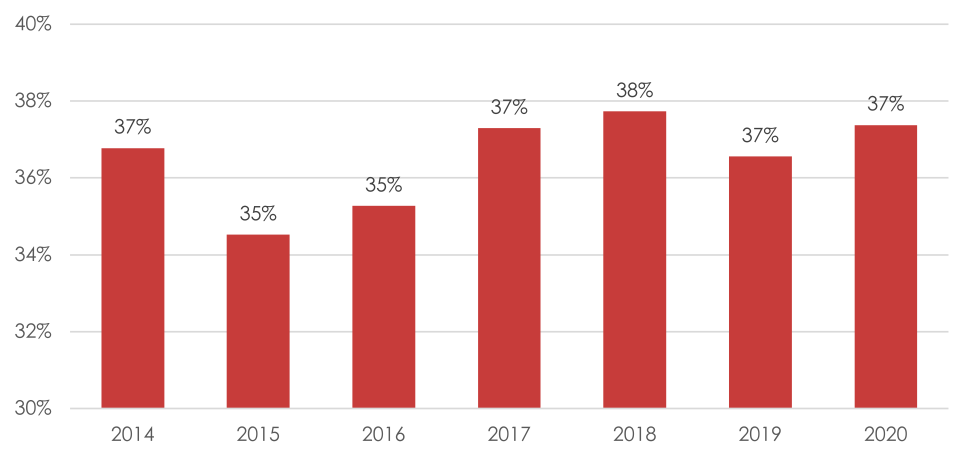
Source: Technopolis (2025) based on EU CORDA Applicants data. Annual figures exclude proposals marked as submitted in 2013 or 2021 as they are a minor percentage and distort presentation of trends.
3.1.2 Comparison with other countries
The UK was amongst the most active countries in submitting proposals to H2020 (based on participations in proposals), ranking 4th for the period as a whole. However, analysis also shows that the UK went from first place in 2014 to 5th place in 2020 (see Table 1).
The UK also had the highest participation in proposals as a coordinator / host overall in H2020. However, its position on this measure also fell during H2020, from first in 2014 to third by 2020 (see Appendix D.1).
Table 1 - Country rankings – by participations in H2020 proposals
| 2014 Rank | 2014 Country |
2014 Participations |
2020 Rank | 2020 Country |
2020 Participations |
Overall rank (2014-2020) | Country |
|---|---|---|---|---|---|---|---|
| 1 | UK | 15,607 | 1 | Spain (ES) | 18,808 | 1 | ES |
| 2 | Germany (DE) | 14,722 | 2 | Italy (IT) | 18,268 | 2 | IT |
| 3 | Italy (IT) | 13,614 | 3 | Germany (DE) | 16,868 | 3 | DE |
| 4 | Spain (ES) | 13,440 | 4 | France (FR) | 12,342 | 4 | UK |
| 5 | France (FR) | 9,643 | 5 | UK | 10,600 | 5 | FR |
| 6 | Netherlands (NL) | 7,296 | 6 | Netherlands (NL) | 8,686 | 6 | NL |
| 7 | Belgium (BE) | 4,522 | 7 | Belgium (BE) | 7,105 | 7 | BE |
| 8 | Greece (EL) | 4,042 | 8 | Greece (EL) | 6,681 | 8 | EL |
| 9 | Sweden (SE) | 3,684 | 9 | Switzerland (CH) | 4,947 | 9 | SE |
| 10 | Austria (AT) | 3,162 | 10 | Sweden (SE) | 4,653 | 10 | PT |
Source: Technopolis (2025) based on EU CORDA Applicants data
3.1.3 UK organisations participating in proposals
There were 13,276 unique UK organisations involved in H2020. However, the number of unique UK organisations involved each year decreased over time (from 3,642 in 2014 to 2,415 in 2020), reflecting the drop in total proposal participations (Figure 5).
There was a decrease in the number of proposal participations over time across all types of organisations,[footnote 23] but this was most pronounced among UK Public Organisations, and organisations listed as “Other”, where participation in proposals decreased by 50% between 2014 and 2020. UK SMEs, Research Organisations and Higher Education Establishments saw slightly smaller decreases (of 39%, 39% and 31% respectively).
The decrease in proposal participations from non-SME UK Private organisations (i.e. larger companies) was less pronounced than the other groups (a decrease of 21%).
Figure 5 - Number of UK participations in proposals, by organisation type (including SME), per year
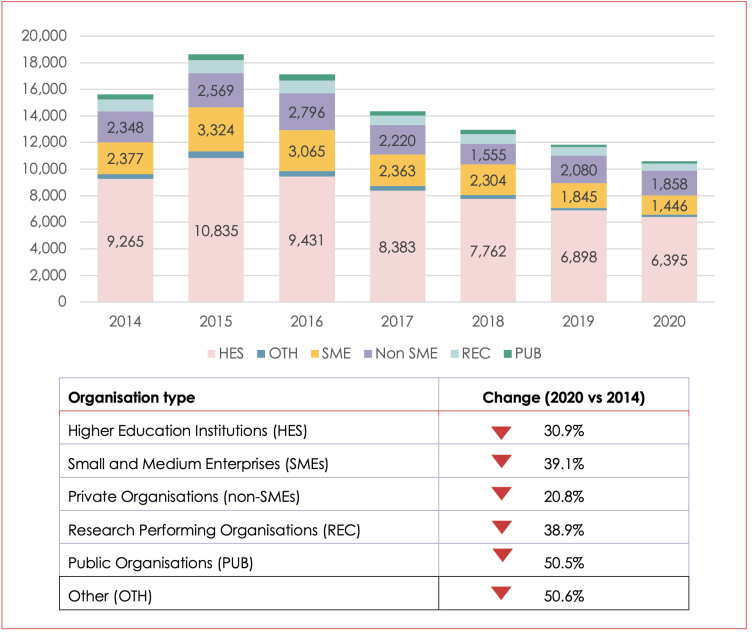
Source: Technopolis (2025) based on EU CORDA data. Only Private organisations (PRC) are included within the SME / non-SME split.
3.1.4 The effect of the EU referendum
The UK triggered the process to leave the EU in March 2017, but continued participating in EU programmes during the transition period, up to December 2020 (able to receive funding for ongoing projects and also to continue to bid for H2020 awards). However, as has been shown above, the UK was less active in proposal participation over the course of H2020.
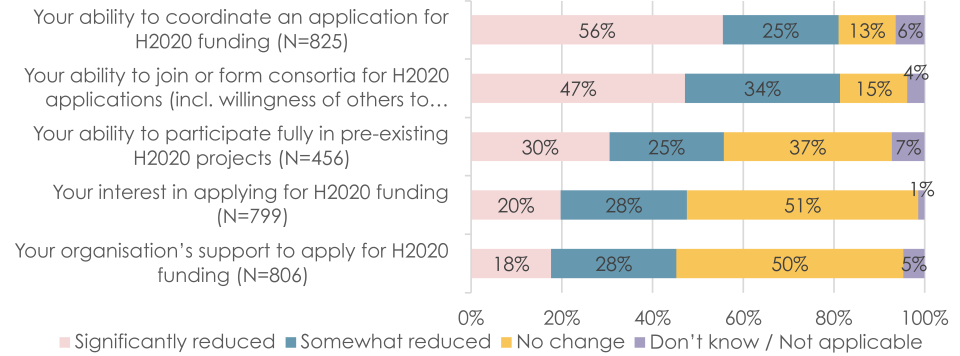
Evidence provided via survey and wider stakeholder interviews provides further insight into the experiences of the R&I community after the EU referendum, and uncertainty around continued involvement in H2020. For instance, over half (55%) of respondents to the survey of H2020 successful applicants reported a significant reduction in their ability to coordinate a H2020 application, with a further 25% stating their ability was somewhat reduced (see Figure 6).
Furthermore, a similar proportion (47%) of respondents said their ability to join or form consortia was significantly reduced, while 20% reported a major drop in their interest in applying for H2020 funding. Respondents also reported that their organisation’s support to apply was also affected, with 18% citing a significant reduction, and nearly half (46%) citing some degree of reduction.
Figure 6 - Changes due to UK’s EU referendum
Source: Technopolis (2025). Survey respondents, H2020 successful applicants. N=456-830
When offered the opportunity to reflect further (through open text) on the changes resulting from the EU referendum vote, nearly half of respondents (successful and unsuccessful applicants) provided a response. Many noted sentiments like “EU partners considered UK consortium members a risk” and that “UK participation was seen as problematic” due to fears of jeopardising proposals. This perception was compounded by misinformation and a lack of clarity about the UK’s eligibility, with some respondents stating, for example, that “European partners stopped contacting us about potential proposals” and that “UK partners were viewed as too much trouble to include in consortia.” There was a perception that UK partners were de facto excluded from leading bids to H2020, with some believing that this had effectively become an official rule (despite the EU position that the UK’s status in the programme was unchanged while still a Member State).
Similar language and perceptions were conveyed by stakeholders consulted via interview. They emphasised both the perceived and the practical barriers that emerged even when UK participation remained technically possible. They noted, for instance, the widespread perception that UK partners represented a risk to project success, leading to what they described as ‘anticipatory self-regulation’ where consortia actively avoided including UK partners to prevent potential project rejection by evaluators.
Interviewees highlighted that this risk-averse behaviour continued for an extended period and criticised the communications approach to address this, both domestically and across the EU. They noted that while the UK government provided funding assurances for Horizon 2020 (to UK researchers and international partners), the phased approach to announcing extensions to this commitment created additional uncertainty rather than confidence, which interviewees described as a policy mistake.
Survey respondents also highlighted concerns over potential additional administrative and logistical challenges that could make collaboration more cumbersome. The impact on morale was also evident, with respondents from companies describing e.g. a “loss of confidence as a technology leader” and a “general reluctance to include UK businesses in proposals”.
Despite these challenges, some acknowledged that the situation had improved since the UK re-associated to Horizon Europe, though the “reputational damage is longer lasting”. The disruption to UK-EU collaboration was also seen as a setback for scientific progress generally.
Further effects and reflections on future participation are presented in Section 5.
3.2 UK success rate in H2020
3.2.1 Overall UK success rates
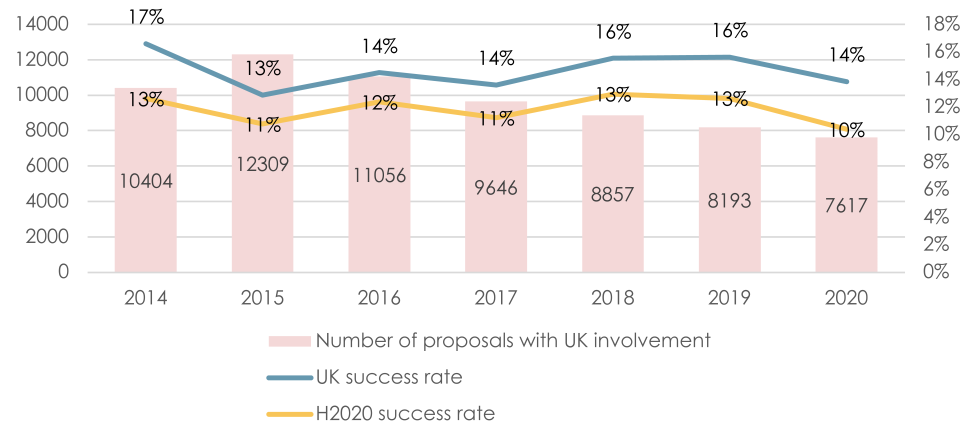
The UK proposal success rate (proportion of proposals with at least one UK participant that were turned into projects, with grants signed) remained between 13% and17% throughout H2020. This was consistently higher than the overall proposal success rate for H2020 (10% to 13%), demonstrating the high quality of proposals that included UK participation (see Figure 7).
Figure 7 - Success rate based on successful proposals, UK and overall, per year
Source: Technopolis (2025) based on EU CORDA data
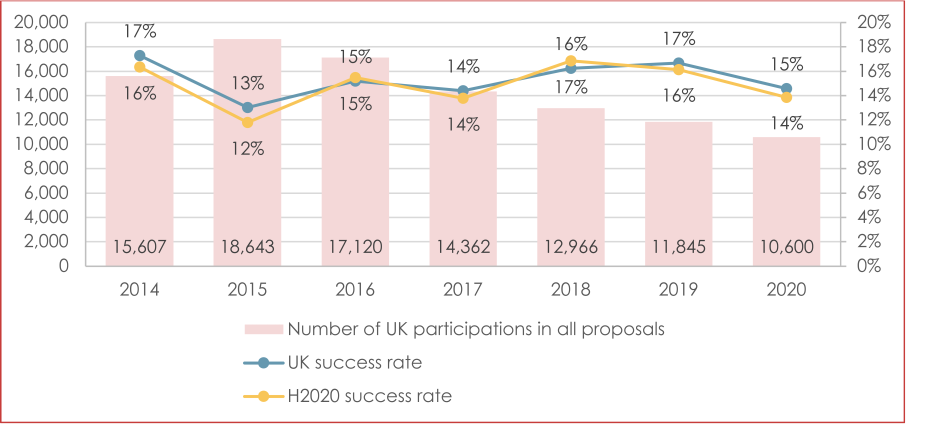
When looking at success rates based on participations (proportion of proposal participations that are turned into project participations), the UK followed more closely the overall success rate – and maintained this similar position through H2020 (see Figure 8).
The closer to average results here (based on proposal participations), compared with the results above (based on proposals), may be because the UK tends to be highly successful in programmes that include single participation (e.g. ERC, MSCA) (see Appendix D.2).
Figure 8 - Success rate based on participations in successful proposals, UK and overall, per year
Source: Technopolis (2025) based on EU CORDA data.
Despite these strong results in terms of UK success rates (and their maintenance over the life of H2020), there is an evident perception among the community that success rates took a hit as a consequence of the UK’s EU referendum. Nearly half (48%) of respondents to the survey of H2020 successful applicants reported a significant reduction, and 34% reported it was somewhat reduced. This does not tally with the actual results in terms of UK proposals submitted, but may reflect what at that point were perceived difficulties in accessing EU funding.
Further analysis of participation success shows that the UK was in fact still amongst the most successful countries in H2020, with an overall success rate of 15%, just behind France and Germany (17%), and ahead of Spain and Italy (14% and 13% respectively; see Appendix D.2)
In fact, regression analysis reveals that UK participation has a statistically significant effect on the probability of a proposal’s success (see Table 2 and Table 3).[footnote 24] The (probabilistic) models control for year, programme type, and the size of the (requested) budget (i.e. they are used as control variables). Specifically, we find that:
- UK participation increased the probability of a proposal’s success by 2.4 percentage points (from a 11.1% to a 13.5% success rate).
- The probability of a proposal’s success also increased with the number of UK participations, with (around) a 1.5 percentage point increase for each additional UK participation.[footnote 25]
Table 2 - Predicted probability of success due to UK participation | Model 1: UK Participations in proposals
| Model 1: UK Participations in proposals | Predicted probability of success | St error | P>|z| | [95% conf. interval] |
|---|---|---|---|---|
| No | 11.10% | 0.0007 | 0.000 | 11.00% - 11.20% |
| Yes | 13.50% | 0.0012 | 0.000 | 13.30% - 13.70% |
Source: Technopolis (2025) based on EU CORDA data
Table 3 - Predicted probability of success due to UK participation | Model 2: Number of participations in proposals
| Model 2: Number of participations in proposals | Predicted probability of success | St error | P>|z| | [95% conf. interval] |
|---|---|---|---|---|
| 0 | 11.30% | 0.0006 | 0.000 | 11.20% - 11.40% |
| 1 | 12.70% | 0.0008 | 0.000 | 12.50% - 12.80% |
| 2 | 14.20% | 0.0014 | 0.000 | 13.90% - 14.50% |
Source: Technopolis (2025) based on EU CORDA data
3.2.2 Success rates by H2020 pillars and action types
The UK had a higher success rate (than the overall H2020 figure) across multiple programmes (see Appendix D.2). Most notably, the UK had a higher success rate (based on participations in proposals) across all programmes in the Excellence Science pillar, showcasing the strength of its research community. The UK also had a success rate that was 1-3 percentage points higher (than the overall H2020 figure) in 12 programmes and 5 percentage points higher in 2 programmes of the Industrial Leadership and Societal Challenge pillars. Slightly lower success rates (UK vs H2020 overall) were seen in the Food and bioeconomy, Transport, and Science with and for Society programmes.
In terms of different H2020 action types, the UK was particularly successful in the areas where it was more active, with a success rate (based on participations in proposals) that was 1-2 percentage points higher than the overall H2020 rate (see Appendix D.2). This includes: Research and Innovation Actions (RIA); Marie Skłodowska-Curie Actions (MSCA); Innovation Actions (IA); European Research Council (ERC); and SME instrument. A relatively high UK success rate was also seen in Pre-Commercial-Procurement (PCP).
3.3 UK participation in H2020 projects
- 10,896 proposals with UK participation
- EUR 7.8 billion value (EC contribution to UK)
- 445,000 average size of projects (with UK participation)
3.3.1 Overall UK participation in projects
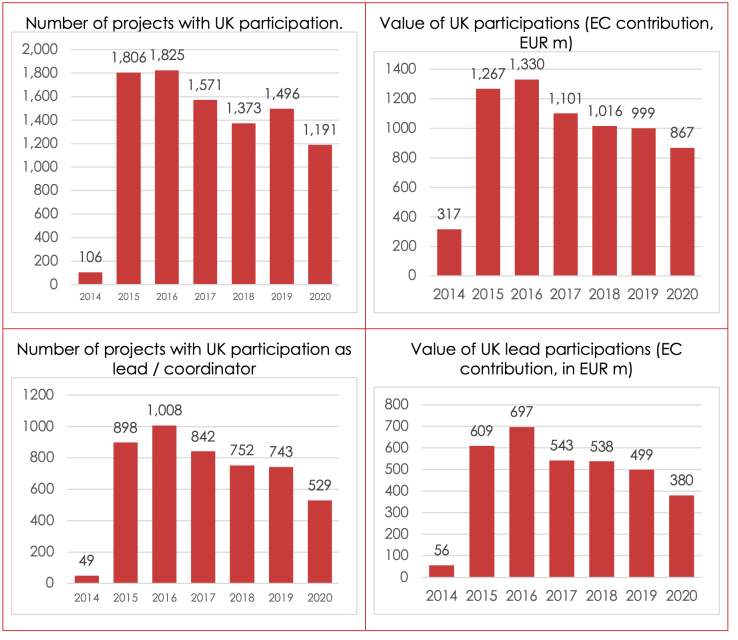
The UK was involved in nearly 11,000 H2020 projects in total. A substantial amount of funding was secured via these for UK based organisations, with approximately EUR 1.1bn awarded annually. To provide some context, UKRI’s expenditure was £7.9bn in the year 2019/20.
In line with the findings on UK participations in proposals, UK participations in projects also declined over the course of H2020. After a peak in 2016, both the number of UK projects and the value of EU contributions each year saw a decline, with the decrease amounting to 35% from 2016 to 2020. Similarly, the number of UK-led projects dropped by 47.4% and EU contributions to the UK and UK-led projects both fell by 51.2%, from 2016 to 2020.
Figure 9 - Number and value of UK participations (overall, as lead/coordinator), 2014-2020
Source: Technopolis (2025) based on EU CORDA data. Annual figures exclude projects marked as signed in 2021.
3.3.2 Hot and cold spots for UK participation
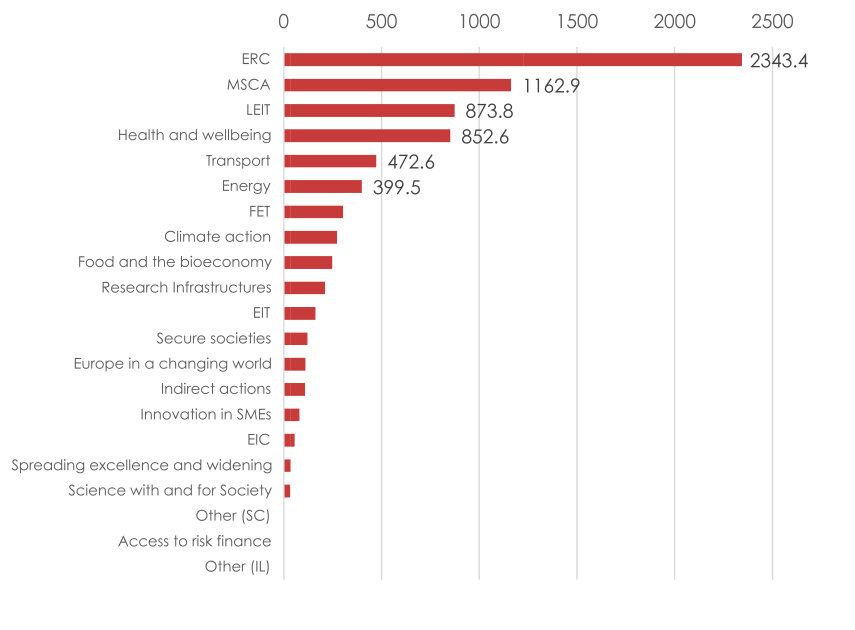
There were 2 clear important areas / programmes for UK participation in H2020: ERC and MSCA. A third of UK participations in H2020 programmes were in MSCA, which also represented 15% of the total value of projects (based on EC contributions to UK participants) (EUR 1.2bn). Additionally, ERC represented 10% of the total UK participations, and 30% of the total value of projects (based on EC contributions to UK participants) (EUR 2.3bn).
Figure 10 - UK participation (in EUR m), by programme
Source: Technopolis (2025) based on EU CORDA data
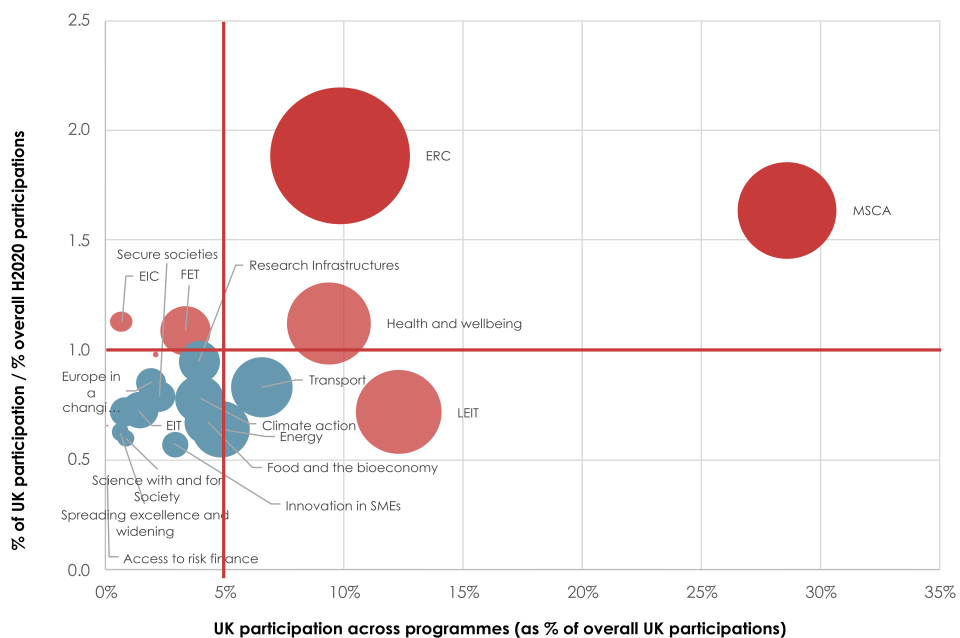
Additional in-depth analysis of ‘hot and cold spots’ (presented in Figure 11) further substantiates these results. This analysis considers 3 dimensions:
- The proportion of all UK participations that are accounted for by a programme (X-axis). For example, more than one-quarter of all UK participations in Horizon 2020 are accounted for by MSCA.
- The relative UK participation in a programme compared to the overall distribution of H2020 participations in the programmes (Y-axis). A value higher than 1 indicates that the UK’s focus of participation is relatively high in the area, compared with the all-country average.
- The total value of UK participation (EC contributions to UK participants) (bubble size).
A hot spot is a programme where the proportion of UK participations was high (overall and relative to the overall distribution of H2020 participations), and where the total value of projects was also high. ERC and MSCA are 2 clear examples.
Additionally, the Health & Wellbeing programme (part of the Societal Challenges pillar) was also a hot spot, even if the overall value of UK projects (EUR 0.85bn) was much lower in comparison with ERC and MSCA. To provide some context, the total value of Medical Research Council (MRC) research grants that started in the period 2014-2020 is £2.1bn (average size £822.7k) (based on publicly available information in Gateway to Research).
Similarly, the Leaders in Emerging Technology (LEIT) programme was an important part of H2020 for UK organisations, with 12% of participations and EUR 0.87bn in EC contributions to UK participants. LEIT appears lower in the graph because UK participation was low in comparison with the overall distribution of H2020 (in which LEIT accounts for 17% of participations).
The UK was also relatively strong in Future Emerging Technologies (Industrial leadership pillar) and the European Innovation Council, but they represent a relatively small part of the portfolio.
All other areas could be considered as cold spots, in particular other areas of the Industrial leadership pillar (Access to Finance and Innovation in SMEs), but also Science with and for Society and Spreading Excellence and wider participation.
Figure 11 - Hot and cold spots of participation
Source: Technopolis (2025) based on EU CORDA data
Examples of the largest projects (based on EC contributions to UK participants) across the main 4 pillars of the programme are presented below. Together, they account for around £65m of EC contributions to the UK through Horizon 2020 (out of the EUR7.8bn total EC contribution to UK organisations).
Table 4 - Example of UK led project – Excellence Science
| Project Title | Strengthening International Research Capacity in Wales |
|---|---|
| Pillar/Programme | Excellent Science/MSCA |
| Total EU Contribution / Value of UK participation | EUR 9.558m / EUR 9.558m |
| Short description | The Sêr Cymru II Programme aimed at boosting Wales’ scientific capacity by funding 140 new fellowships in strategic areas like clinical science, engineering, and social sciences, integrating Marie Skłodowska-Curie COFUND, EU Structural Funds, and Welsh Government support. This initiative focused on fostering innovation, collaboration, and early-career researchers through merit-based selection, training, and cross-sector opportunities. |
Table 5 - Example of UK led project – Industrial leadership
| Project Title | Open Data Incubator for Europe |
|---|---|
| Pillar/Programme | Industrial Leadership/LEIT |
| Total EU Contribution / Value of UK participation | EUR 7.85m / EUR 6.16m |
| Short description | The ODINE project supported SMEs and start-ups in creating value from open data through a network of incubators, investment, mentoring, and access to infrastructure. It aimed at boosting Europe’s innovation, data ethics, and competitiveness by fostering open data companies. |
Table 6 - Example of UK led project – Societal Challenges
| Project Title | Development of a Prophylactic Ebola Vaccine Using a Heterologous Prime-Boost Regimen |
|---|---|
| Pillar/Programme | Societal Challenges/ Health and Well-being |
| Total EU Contribution / Value of UK participation | EUR 58.3m / EUR 47.2m |
| Short description | The EBOVAC programme aimed at assessing the safety and efficacy of a novel Ebola vaccine through Phase I, II, and III trials in the EU and Africa. EBOVAC1 focused on initial safety and immunogenicity, while EBOVAC2 focused on providing extensive data on the vaccine’s efficacy and safety in larger trials. |
Table 7 - Example of UK led project – Science with and for Society
| Project Title | Doing It Together science (DITOs) |
|---|---|
| Pillar/Programme | Science with and for Society |
| Total EU Contribution / Value of UK participation | EUR 3.49m / EUR 0.09m |
| Short description | The DITOs project aimed at transforming public engagement in science by shifting from passive participation to active involvement in research and innovation. It supported grassroots and DIY science efforts, to foster local capacity building and influence research policies across Europe. |
3.4 Participation per critical technology
H2020 has funded a substantial amount of research and innovation activities related to one or more of the UK’s 5 critical technologies.
One third of all projects that include UK participation had a focus on one or more of the UK’s critical technologies (3,756 out of 10,744 projects).[footnote 26] Furthermore, these UK projects classified to at least one critical technology have total EC contributions of € 2,790 m (see Table 8).
The highest number of UK projects focus on Artificial Intelligence, followed by Future telecommunications and Engineering Biology.
Nearly 50% of UK projects that focus on one or more critical technologies come from MSCA and LEIT programmes, meaning that those projects have not only focused on R&I activities, but are also supporting the next generation of researchers working in these areas.
The classification has been done using Generative AI and is further explained in Appendix A.1. At the time of analysis, it was the first attempt to map FP participation against critical technologies and as such it remains exploratory.
Table 8 - Projects – critical technologies
| Technology areas | UK projects | Value of UK participations (EUR m) |
|---|---|---|
| At least one critical technology | 3,756 | 2,790 |
| Artificial Intelligence | 1,300 | 997 |
| Engineering biology | 908 | 705 |
| Future telecommunications | 831 | 580 |
| Quantum technologies | 457 | 362 |
| Semiconductors | 431 | 262 |
| None / Is not related to critical technology | 6,988 | 4,891 |
| Total | 10,744 | 7,681 |
Source: Technopolis (2025) based on CORDA data and Open Alex. Classifications have been made using generative AI. About 153 projects were missing abstracts and are excluded from the counts.
3.5 Participation across regions
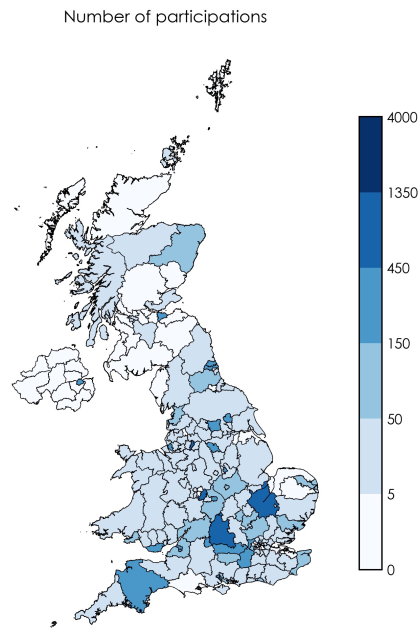
There is a good spread of H2020 participation from organisations across the UK. Indeed, there is participation from organisations based in 89% of all NUTS level 3 areas (160 UK regions with one or more participations, out of a total of 179). See Figure 12.
There is a particularly high level of participation in 10 regions, which account for 56% of all participations (with information on NUTS 3) (see Figure 12). These are shown below and reflect in part the high volume of participation in H2020 by higher education institutions, which is discussed in the sub-section below.
- Camden and City of London
- Cambridgeshire
- Oxfordshire
- Birmingham
- Manchester
- City of Edinburgh
- City of Bristol
- Sheffield
- Leeds
- Coventry
Figure 12 - Regional distribution of UK participations
Source: Technopolis (2025) based on CORDA data
We also drew a comparison with UKRI grants that started in the period 2014-2020, at NUTS level 1 (since this is how data in UKRI is recorded). A figure higher than 1 means that there is greater concentration of H2020 funding in an region relative to UKRI funding.
We found that the distribution is similar (based on the value of UKRI grants and EC contribution) across regions, but that EC contributions from H2020 are slightly more concentrated (than are UKRI grants) in London (1.36), Northern Ireland (1.32), the South West (1.25) and the South East (1.17) – where the figures in brackets represent the relative proportion of resources across the regions (e.g. 28% of the total value of EC
Contributions in H2020 went to organisations based in London, while this was 22% in the case of UKRI (28%/21%=1.36) (see Table 9).
Table 9 - Comparison between UKRI and H2020 per region
| Region | Award value in GBP - UKRI | Distribution (UKRI) | Award value in GBP - H2020 | Distribution (H2020) | Distribution (H2020)/ Distribution (UKRI) |
|---|---|---|---|---|---|
| London | £5,886,034,701 | 21% | £1,783,350,034 | 28% | 1.36 |
| South East | £4,424,474,332 | 15% | £1,153,290,138 | 18% | 1.17 |
| Scotland | £2,434,731,063 | 9% | £331,441,675 | 5% | 0.61 |
| East of England | £2,734,986,595 | 10% | £745,274,241 | 12% | 1.22 |
| North West | £2,059,527,321 | 7% | £415,762,375 | 7% | 0.91 |
| Yorkshire and The Humber | £1,762,856,343 | 6% | £421,766,718 | 7% | 1.07 |
| South West | £1,900,353,742 | 7% | £530,178,317 | 8% | 1.25 |
| West Midlands | £3,007,089,422 | 11% | £369,487,359 | 6% | 0.55 |
| East Midlands | £1,083,615,783 | 4% | £214,926,076 | 3% | 0.89 |
| North East | £1,023,016,361 | 4% | £195,848,636 | 3% | 0.86 |
| Unknown | £1,292,951,080 | 5% | £19,120 | 0% | 0.00 |
| Wales | £718,169,304 | 3% | £136,650,084 | 2% | 0.85 |
| Northern Ireland | £244,351,000 | 1% | £71,911,796 | 1% | 1.32 |
| Total | £28,572,157,047 | 100% | £6,369,906,568 | 100% | 1.00 |
Source: Technopolis (2025) based on CORDA data
3.6 Participation across types of stakeholder
Unsurprisingly, there is a strong participation from the UK academic community in H2020, in terms of numbers of projects and volume of funding (see Figure 13), with a total of EUR4.6bn of EC contributions flowing to higher education organisations (HES), equivalent to 68% of EC contributions to all UK participations (=EUR5,374m/7,846m). Furthermore, the top 10 UK participants (based on EC contribution) are all HES, located across the country (see Table 10).
There is also a high participation from Private Organisations in terms of projects, but they hold a relatively lower percentage of the EC contributions. This is mostly driven by the fact that the resources available to companies (with lower reimbursement for indirect costs) and the average size of grants or programmes with a strong company focus is more limited in comparison with those available to researchers. (For example, the average EC contribution per participant in the Excellent Science pillar was €442k, while for the Industrial Leadership pillar the average was €354k).
Figure 13 - UK participation (per type of organisation)
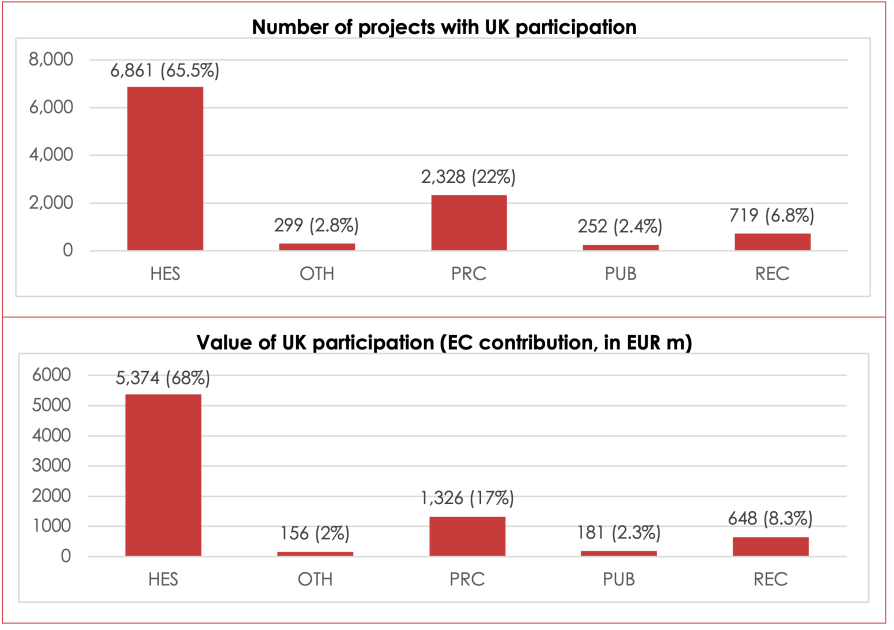
Source: Technopolis (2025) based on EU CORDA data. HES- Higher Education Institution, REC – Research organisations, PRC – Private organisations, PUB - Public organisations, OTH- Others. Note: the percentages don’t add up to a 100 because there is data missing on type of organisation on some participants.
Table 10 - Top 10 UK organisations (based on value of their participation)
| Name | Type of organisation | Total number of projects | Total value of their participation (EUR m) |
|---|---|---|---|
| The University Of Oxford | HES | 720 | 523 |
| The University Of Cambridge | HES | 751 | 484 |
| University College London | HES | 678 | 418 |
| Imperial College Of Science Technology And Medicine | HES | 558 | 355 |
| The University Of Edinburgh | HES | 417 | 277 |
| The University Of Manchester | HES | 362 | 215 |
| King’s College London | HES | 260 | 170 |
| University Of Bristol | HES | 285 | 165 |
| The University Of Birmingham | HES | 326 | 142 |
| University Of Leeds | HES | 291 | 135 |
Source: Technopolis (2025) based on CORDA data
Despite HES predominance, a diversity of organisations took part in H2020. Appendix D.3 shows the top ten organisations in each group, ranked by the total value of participations (EUR m).
3.7 Collaborators
Through H2020, UK participants have collaborated with participants from 158 countries. Figure 14 shows the spread of collaboration, with a focus on just those countries where there have been 50 or more international participations in H2020 UK projects (46 countries).
Germany, France, Spain, Italy and the Netherlands were the top 5 collaborating countries on UK H2020 projects, and they account for 53% of collaborations (based on total number of participations) (See Appendix D.3.). This ranking is still the same for projects where the UK is the lead / host (See Appendix D.3.). This reflects the long-standing history of collaboration, and the fact that these countries were major participants in H2020.
There were also relatively high levels of collaboration between the UK and Belgium, Greece, Sweden, Switzerland and Austria.
Analysis of changes to the UK’s collaborations over time show a couple of significant shifts. Most notably, Germany was the UK’s top collaborator country in the first half of H2020 (2014-17) but ranked 10th in latter period (2018-2020). In contrast, Malta went from 30th to 15th across the same period. There are no other significant rises and falls among the other top 30 collaborators group.
Figure 14 - Collaborating countries on UK projects (collaborations based on participations)
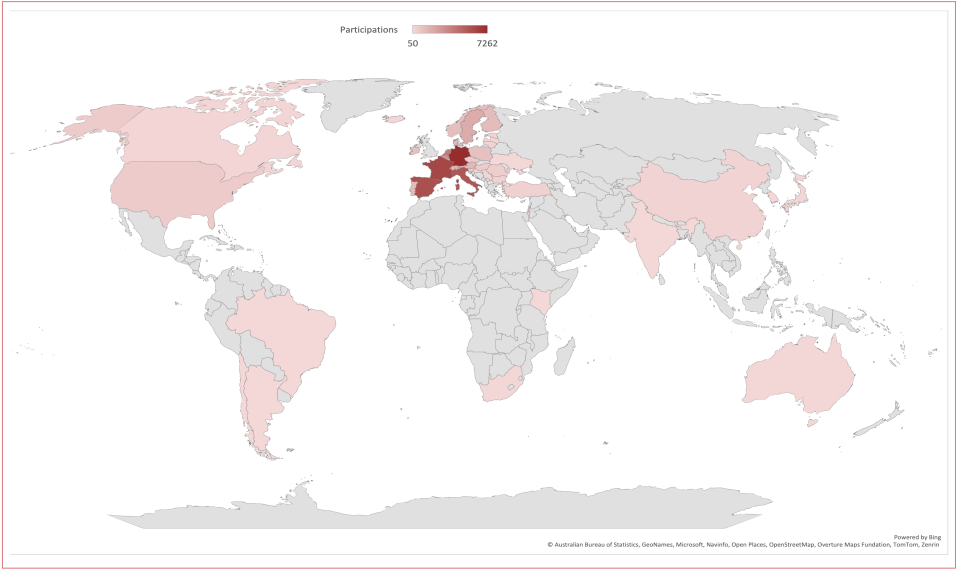
Source: Technopolis (2025) based on CORDA data
4. Benefits of UK participation in H2020
Key findings
- UK participation in H2020 generated research and innovation benefits that would not have materialised through national funding alone. Survey evidence reveals that 54% of unsuccessful UK projects have been abandoned without H2020 support, indicating that significant activity would not have taken place in the absence of the funding.
- Research: The programme produced 40,136 peer-reviewed publications with UK authors, achieving higher citation impact compared to other UK research, including publications by the same authors outside H2020. This may reflect H2020’s role in enabling larger-scale, international collaborations with access to complementary expertise and facilities, which is then more likely to deliver high quality research.
- The majority of respondents to the successful applicant survey indicated that participation in H2020 has had a high to medium impact on them and their unit / group across all 10 dimensions of ‘research and knowledge’ asked about, including improving understanding of a subject area and scientific capacity, the ability to collaborate and manage research projects, and the ability to retain staff.
- Networks: H2020 also delivered substantial reputational and networking benefits, with 73% of respondents reporting high impact in terms of their access to EU networks, due to participation in H2020 and 68% noting their improved international reputation.
- H2020’s unique characteristics - funding scale, flexibility, access to diverse international partnerships - provided capabilities that national funding systems could not replicate, particularly in supporting high-risk, long-term research addressing global challenges.
- Innovation and commercialisation: At this point in time, evidence of the positive impact of H2020 on innovation and commercialisation is more mixed in comparison with the more positive results on ‘research and knowledge’.
- Survey analysis (of H2020 participants) shows that 36% of responding companies report a high or medium impact on productivity so far, while around 45% report increases in employment and turnover. A higher proportion of companies (60%) report that participating in H2020 has had a medium or high impact on their further investment in R&I, and on their product portfolio (67%). This higher investment may materialise in innovation and commercialisation benefits in the future.
- We did not find a statistically significant effect so far on turnover and employment amongst UK companies participating in H2020 (compared to a matched sample of non-participants, and accounting for a 3 year lag after project completion), noting that the analysis is based on a small sample for which it was possible to create a longitudinal dataset.
- There is therefore limited evidence to suggest that participation in H2020 has yet delivered these specific commercial outcomes to participant organisations. Whilst some companies have benefited – and we have identified several strong examples through the participant survey and case studies of UK spinoffs already generating income and investments - others have not benefited at all (or even experiencing opportunity costs).
- Socio-economic benefits: Through our participants survey, we collected first-hand accounts from researchers and industry partners of various societal benefits derived from H2020 projects, although for many it was too early for such impacts to have been fully realised. Healthcare emerged as a prominent area of societal impact, with UK H2020 projects contributing to advancements in diagnostics, therapies, and patient care. Contributions to environment and climate change policy were also common.
4.1 H2020/EU added value
Before examining the outputs and outcomes from Horizon 2020 projects and collaborations, this first sub-section explores the added value of Horizon 2020 within the wider UK funding landscape, drawing on evidence collected via survey, interviews and case studies.
4.1.1 Continuation of project ideas in the absence of funding
Evidence shows that without H2020 funding, projects would have had to be abandoned or changed substantially in terms of scope timeline and/or location.
The survey of UK H2020 applicants found that 73% of participant respondents believe that their project would have been abandoned without H2020 funding. This is broadly corroborated by the unsuccessful applicant respondents, the majority of whom (54%) stated that their project idea was actually abandoned after their application was unsuccessful, while a further 36% reported that it proceeded in a different form. (See Figure 15).
Figure 15 - Counterfactual scenarios for projects (with and without H2020 funding)
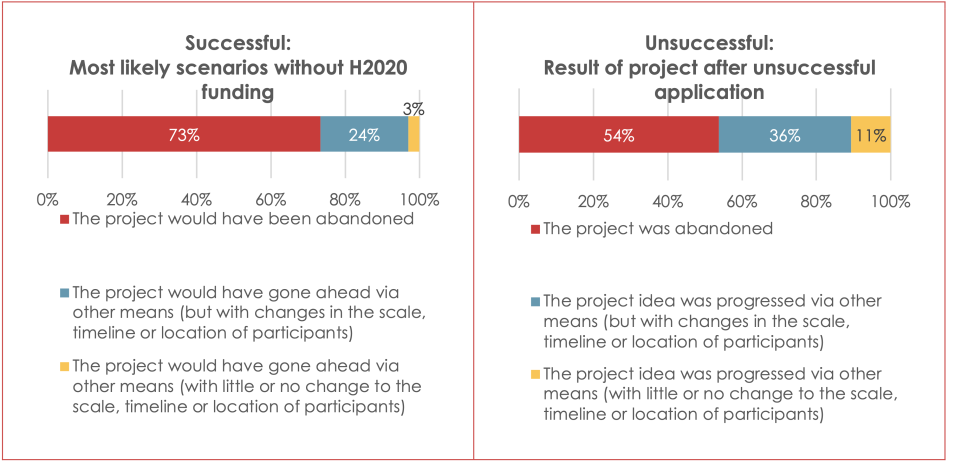
Source: Technopolis (2025). H2020 successful applicants. N=428, Unsuccessful applicants. N=385.
Specifically, of the 136 unsuccessful applicants whose project idea proceeded without H2020 funding, 78 stated that the project had a reduced scale, 89 stated the project was delayed, and 31 stated the project went ahead without their involvement (See Figure 16).
Figure 16 - Anticipated and actual projects changes without H2020
Source: Technopolis (2025). H2020 successful (N=100) and unsuccessful applicants (N=136). Respondents were able to choose multiple project changes, so percentages are the share of all responses.
These results imply that a great proportion of the outputs emerging from H2020 are ‘additional’ or would not have happened in the absence of the funding. Inevitably though, researchers and innovators would have occupied their time with other activities without H2020 funding, and we present in the sections below further attempts to estimate what would have been achieved in the absence of FP funding.
4.1.2 The place of H2020 within the funding landscape
The inability to continue with project ideas in the absence of H2020 funding is linked to many factors, including the place that the FP occupies within the R&I funding landscape.
Survey respondents identified several points of difference between H2020 and national funding schemes. They most frequently noted that H2020 supported larger-scale projects in terms of funding (78% of respondents) and in terms of size of partnerships (76% of respondents). There was also a strong recognition of H2020’s ability to nurture more varied partnerships, both in terms of location of partners (74%) and the types of organisations involved (68%) compared to national schemes. In addition, 54% respondents indicated that H2020 enabled research topics not typically supported at the national level. Fewer respondents cited their ability to access research infrastructure (RI) with H2020 projects that they couldn’t access with national funding (28%), which in part reflects the fact that not all projects require such resources.
Evidence collected via survey,[footnote 27] wider stakeholder in-depth interviews (which included e.g. national contact points and policy makers), and secondary data, all point towards 5 main positive characteristics of H2020 funding:
-
Scale of funding. Most interviewees pointed towards the scale advantages of H2020 compared to domestic opportunities. They emphasised that EU-level funding provides significantly larger budgets and individual project funding than any UK domestic programme can offer, enabling larger and more ambitious projects than would be feasible via national funding alone. Survey respondents agreed. For them the scale and scope of EU funding is critical for maintaining the UK’s competitiveness, with one respondent stating, “The FP can supply ten times more funding, enough to make a difference to project success.”
A high level comparison between H2020 and national funding confirms this. The average size of a UKRI grant starting 2014-2020 was very similar to the average size of EC contributions to the UK through H2020 projects (€700k-€750k), but in the latter, the UK is often part of a much wider consortia (with the average size of overall H2020 projects being around €3.3m). -
Stability of funding. Interviewees also suggested that the funding structure itself offers significant advantages in terms of predictability and stability compared to UK programmes. The FP provides funding across ~7-year timeframes, which stakeholders suggested allows researchers adequate time and space to develop high-quality proposals, contrasting sharply with UK funding is subject to frequent funding disruption from government changes, spending reviews, and shifting priorities. One interviewee suggested that this meant that if a UK applicant wasn’t sure their application was going to be strong in a given year, they could wait for another knowing that there would be other relevant calls.
Stakeholders also highlighted that at times the UK instability in funding forces projects to meet particular deadlines (e.g. end of financial year commitments) or risk losing funding entirely, which they noted creates pressure for researchers to submit lower-quality applications within compressed timeframes. -
Flexibility of funding, and scope. Interviewees noted H2020 funding was seen as more flexible, with more responsive and adaptive approaches compared to the rigid structures often found in national funding schemes. Similarly, survey respondents noted the generally broader scope of H2020 funding compared to UK R&D funding schemes. Many emphasised that H2020 allowed for “more risky and ambitious projects” and “high-risk, high-reward research”, which can be constrained in the UK system. The Marie Curie fellowships and ERC grants were frequently mentioned as unique opportunities that filled gaps in the UK system, particularly in supporting early-careers, international mobility, and interdisciplinary research.
Often respondents described UK funding as more focused on shorter-term, applied research, whereas H2020 was seen as enabling longer-term, fundamental, and exploratory projects. One respondent observed that “UK funding is short term and favours incremental science rather than high-risk projects”, whereas H2020 “provides a broader landscape of funding opportunities, scale and partnerships.” The UK’s strengths in research excellence and innovation were seen as assets that enhanced H2020 projects, with one respondent stating “UK institutions bring substantial capacity in interdisciplinary collaboration, project management, and translation research.” -
Modes of collaboration. In addition to the scale and focus of the funding, interviewees also highlighted the types and models for collaboration under H2020. Many noted that the consortium model under the Societal Challenges pillar is not and could not be replicated via national funding; they suggested it would require excessive coordination, including individual collaboration agreements with each participating country.[footnote 28] In fact, CORDA data shows that projects with UK participation have on average 14 participants, from 7 different countries (once we exclude the “Excellence Science” pillar which tends to include individual projects).
Via open text, survey respondents also indicated that H2020 provides opportunities for large-scale, multidisciplinary, and international collaborations that are not easily achievable through UK funding alone. Respondents frequently noted that “large questions can only be answered by large consortia with global reach”, and that H2020 enabled “collaborations with EU partners with complementary expertise or facilities”.
Additionally, stakeholders emphasised that the collaborative approach under the Societal Challenges pillar is enhanced by shared IP frameworks that benefit all participants, including spillover effects that return value to UK researchers from broader European work (that would be unavailable through national funding). -
Access to large research infrastructures and data. Several stakeholders also noted that H2020 provided access to large research infrastructure (e.g. CERN, ESS) that the UK cannot develop independently, although many also noted that this did not specifically require H2020 participation, reflecting the fact that researchers access RIs through a number of routes. Survey respondents also noted that the UK lacks the “critical mass” or “specialised facilities” in certain areas, making collaboration with European partners indispensable.
Some interviewees also highlighted the critical importance of data access through H2020 participation, particularly for specialised research areas. They noted that the programmes provide access to essential datasets that would be difficult or impossible to obtain through domestic funding alone, such as clinical trial data for rare disease research where patient populations are naturally distributed across multiple countries (see box below). They emphasised that EU Framework Programme collaboration enables researchers to pool data across multiple European countries, creating datasets of sufficient size and diversity to support robust clinical research and drug development for conditions that would otherwise remain understudied due to small national patient populations.
The case studies developed for this study all make clear that scale and / or internationally collaborative nature of H2020 funding was important, if not critical for the projects concerned. Extracts are presented for each below to illustrate (the full cases are presented in Appendix F).
Box 1 Case study – Innovative Medicines Initiative (IMI2)
Few countries have the individual capacity to recruit enough participants for clinical studies. These challenges are increased in the study of rare diseases, for which population sizes are significantly smaller, while for paediatric diseases, child physiology changes rapidly in just a short number of years, meaning that drug developers need to run trials over short durations and across a wide variety of age groups. International collaboration is therefore important to enable rapid recruitment of large patient cohorts for a wide range of diseases.
In response, the H2020 Innovative Medicines Initiative (IMI2) brought together scientific expertise, infrastructure and clinical data, including 1,148 organisations (companies, academic institutions, patient groups, regulators) from 48 different countries, working on 123 different projects in areas such as cancer, neurodegeneration, respiratory and immunological diseases. 29 universities and 32 companies from the UK participated in IMI2 projects. The UK also had the highest number of project co-ordinators of any country.
The case study focuses on a selection of these projects where there is central UK involvement. For example:
- The C4C project (aiming to accelerate the clinical trials process for paediatric diseases) enabled countries to combine patient data by increasing interoperability and re-use. This was crucial to understanding enough about previous understudied paediatric conditions, and enabled clinicians to effectively plan clinical trials and identify biomarkers of successful outcomes. For many of the diseases addressed, the multinational collaboration multiplied the number of study participants by 10x.
- The INNODIA project (aiming to advance understanding of the basic mechanisms of type 1 diabetes (T1D) and how improve prediction and prevention) recruited large participant cohorts recently diagnosed with T1D across a wide age range (1 to 45). This provided a unique opportunity to perform a large-scale, longitudinal study into age-related differences across European countries, and meant the study could capture the geographic, ethnic, socioeconomic variation across populations. Performing the same experiments just in the UK would have limited the results because disease variants would be missed, making any findings less conclusive.
Box 2 Case study – Prototype system for a Copernicus CO2 Service (CoCO2)
CoCO2 was a climate technology project to develop a pre-operational prototype system to monitor anthropogenic (human-caused) carbon dioxide (CO2) emissions. The project included 25 partners from 15 different countries, coordinated by the European Centre for Medium-Range Weather Forecasts (ECMWF) — an independent intergovernmental organisation based in the UK — and also involving the University of Edinburgh.
The H2020 project enabled the bringing together of a large and diverse group of experts and institutions around a common goal, enabling collaboration between entities that would otherwise compete with each other. No single European country would have had sufficient expertise, data and the research infrastructure to have met the project’s objectives alone.
The project provided an opportunity to strengthen pan-European research networks, including helping to maintain UK involvement in a longer-term research process. For example, the University of Edinburgh, together with the University of Bristol, are now partners in the CO2MVS Research on Supplementary Observations (CORSO) project – one of 3 ongoing Horizon projects that build on the work of CoCO2.
Box 3 Case study – MicroQC
MicroQC was a €2.3m H2020 project focused on advancing microwave-based trapped-ion quantum computing as a scalable, fault-tolerant alternative to more conventional laser-controlled systems. It brought together partners from 4 countries (UK, Germany, Israel and a coordinator from Bulgaria), combining world-leading expertise in quantum engineering, theoretical modelling, and microchip development.
At the time MicroQC began in 2018, microwave-based trapped-ion quantum computing was still an emerging and highly specialised field, and the UK on its own lacked the breadth of expertise needed to support a project of this scale. Horizon 2020 enabled the University of Sussex to collaborate with “some of the most important research groups in the world”, bringing together essential capabilities that were critical to the project’s success. Without the European collaboration, microwave-based trapped-ion computing might not have advanced to the point of commercial viability it is today
Box 4 Case study – European Open Science Cloud (EOSC) – Life
The European Open Science Cloud (EOSC) is a digital platform that provides researchers and innovators in Europe (and beyond) with a trusted environment for sharing, finding and reusing research data and services. The EOSC-Life project was part of that wider initiative and emerged in response to the growing challenge of the volume of data that is generated from life sciences research. It brought together 50 organisations from 16 countries (including 3 universities and Historic England from the UK), with the ultimate goal of developing an open and collaborative space to support life sciences research. The project represented a novel and important approach to addressing long-term structural challenges in research infrastructure. Importantly, it operated within a funding environment that traditionally prioritises projects with immediate, tangible outcomes and individual achievement over collaborative infrastructure investments.
The scale of the H2020 project was an important feature. Large digital data spaces (such as that delivered through EOSC-Life) are generally more valuable because they attract more users, who in turn contribute more data, tools and workflows. This creates a self-reinforcing cycle where increased participation builds a deeper pool of knowledge, benefiting all users.
The breadth of expertise available through the EU collaboration was an important success factor. The combination of 13 different life science research infrastructures enabled the project to draw upon diverse international specialisms and experiences that would have been impossible to replicate at a national level. Some objectives, such as cloud deployment of digital data spaces, can be achieved nationally, but others (e.g. establishing standardised practices for sharing sensitive patient data) are inherently international activities.
The international approach also delivered significant cost advantages. EOSC-Life built on existing ESFRI (European Strategy Forum on Research Infrastructures) life science research infrastructure (rather than building new systems from scratch), meaning that the project could make use of existing, proven and known infrastructure.
4.2 Evidence of reputation and networking benefits
Our survey of H2020 participants indicated that H2020 provided substantial reputational and networking benefits to participating organisations, as shown in Figure 17.
A large majority of 73% of respondents reported that H2020 participation had a high impact in terms of improving their EU networks, with an additional 20% indicating it had a medium impact. Additionally, 68% of participants said H2020 significantly improved their international reputation, while 25% noted a medium impact in this area, which highlights the programme’s value in enhancing visibility and credibility for UK researchers within the EU. The perceived benefits for international networks beyond the EU were less widespread: 45% of respondents reported that H2020 participation had a high impact in terms of their international networks, with 25% reported a medium impact. Only a small minority across 3 categories covered in this question indicated little or no impact from H2020 in these areas.
Figure 17 - H2020 benefits: Reputation and networks
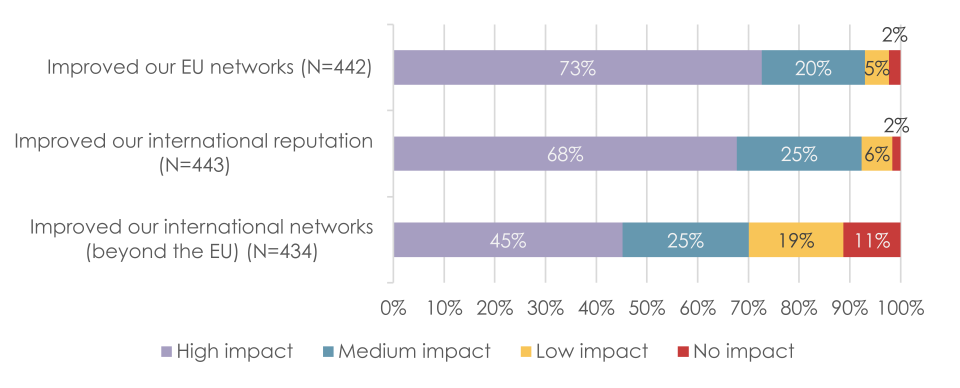
Source: Technopolis (2025). Survey respondents, H2020 successful applicants. N=434-443
These survey results are in line with evidence from wider stakeholder interviews. In addition to the role that H2020 plays in the context of the wider funding landscape, interviewees also highlighted additional strategic advantages of H2020 (and the FPs more broadly), noting that the UK has significant research and development capabilities and that international collaboration through Horizon 2020 serves as a mechanism to promote these strengths globally. Interviewees explained that through Horizon 2020 participation, UK researchers and institutions can showcase their expertise to international partners, demonstrate their capabilities in cutting-edge research areas, and position themselves as leaders in global research networks. They pointed out that H2020, which included the majority of other leading R&I countries, provided an ideal platform for UK strengths on the international stage, allowing UK research excellence to gain recognition and influence within the world’s most competitive research environment.
Interviewees further emphasised the broader diplomatic and relationship-building benefits of H2020. They noted that international R&I collaboration provides valuable opportunities for the UK to build soft power and establish itself as a trusted partner beyond just research and innovation activities. Participants highlighted that instability in FP participation damages this reputation-building potential, while consistent engagement demonstrates UK commitment to international collaboration. They particularly emphasised that FP participation is important not just for European collaborations and relationships, but can have significant knock-on effects with other countries and enhance the UK’s position in other international programmes (through the relationships it has developed through the FP, which can lead to collaborations elsewhere).
4.3 Evidence of benefits to Research
4.3.1 Volume of publications
A total of 40,136 peer-reviewed publications have emerged from H2020 projects that include UK participants and where there is at least one UK-based author on the paper (henceforth we refer to these as UK H2020 publications).[footnote 29] These publications have emerged over time, even after H2020 has officially ended. Some projects will have concluded after 2020, but academic production may also have taken place beyond project completion dates, but based on the evidence conducted within the scope of the H2020 projects.
As a comparison, the Fund for International Collaboration (2019-2024), implemented by UKRI to support international R&I collaboration (among researchers and innovators) with non-ODA countries produced 990 publications (to August 2024) with a budget of EUR 192m (£160m). That equates to 5.15 publications per EURm invested, which is a very similar ratio for H2020 (5.11=40,136/EUR 7,846 m). However, the ratio for H2020 is somewhat underestimated, as a proportion of its funding will have gone to coordination activities (not research or innovation).
Overall, it is difficult to assess and benchmark volume of publications emerging from programmes of different scale and scope, but we have attempted to show the effect on volume via a synthetic control group analysis (see Appendix A for further methodological detail). The results were inconclusive and are presented in Appendix E.
UK H2020 publications cover a variety of Fields of Research (FoRs); 26 in total (with individual publications being assigned to one or more FoR). A substantial proportion of these publications relate (primarily) to the fields of Physics & astronomy (18%), Engineering (14%), Medicine (11%), and Biochemistry (9%) (as shown in the first 3 columns of Figure 18). (FoR classification has been obtained from OpenAlex).[footnote 30]
The final 3 columns in the table compare the distribution of UK papers emerging from H2020 (across FoRs) with the distribution of all UK publications (and sub-sets of these with and without international co-authors). A relative index of around 1 indicates that a similar proportion of both H2020 and all UK publications are accounted for by a given field (e.g. computer science). A relative index higher than 1 (shaded dark green) indicates a greater proportion of H2020 publications in a field, compared with all UK publications. As such, relative to the distribution of papers emerging from UK authors more generally (with or without international co-authors), H2020 has particularly high concentrations in several areas of basic science (e.g. physics, maths, and earth sciences), as well as in fields relating to the life sciences and health (e.g. neuroscience and pharmaceuticals).
Figure 18 - UK H2020 publications by fields of research and relative distribution
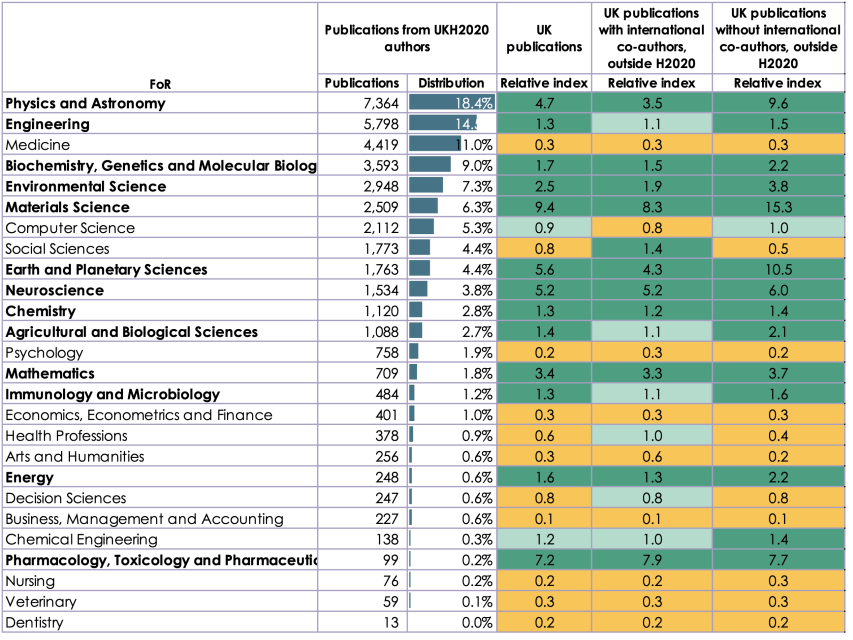
Source: Technopolis (2025) based on CORDA data and OpenAlex
UK H2020 publications have a high degree of multi-disciplinarity. Figure 19 shows all publications that are tagged against 2 or more FoRs and plots the connections between the 2 primary fields in each case. It demonstrates the variety of linkages across disciplines in UK H2020 projects. For instance, it shows that Engineering is one of the main fields covered by UK H2020 publications (as also shown Figure 18), but that those publications also include multiple other fields, including Physics and Astronomy, Computer Science and Materials Science.
For instance, Physics & Astronomy publications regularly also have elements of Engineering, Computer Science, and Material Science (among others) i.e. they expand beyond fundamental Physics & Astronomy. Note that calculations of multi-disciplinarity of potential comparators groups have not been possible in the context of this study.
Figure 19 - Fields of research
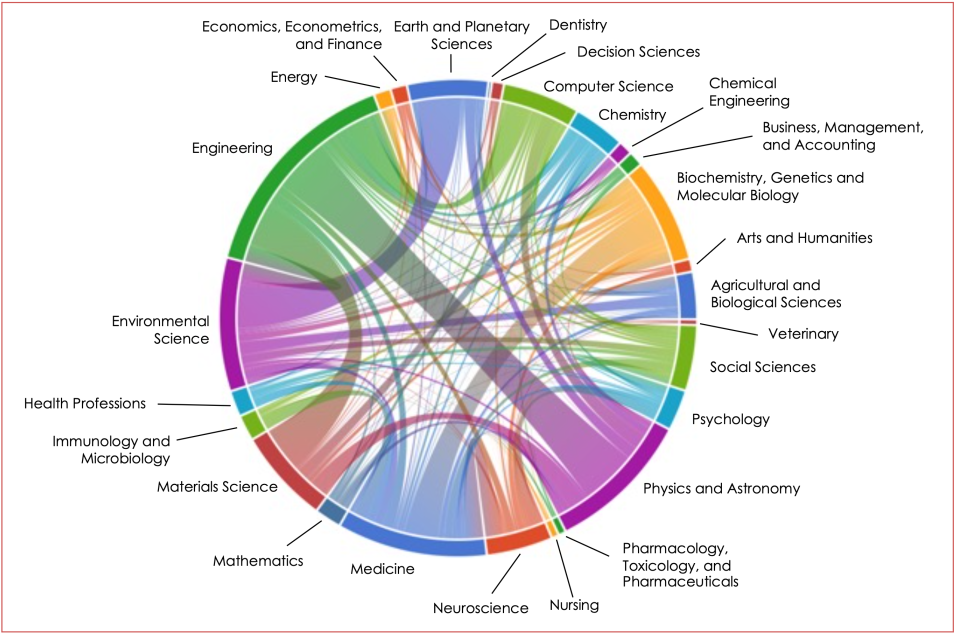
Source: Technopolis (2025) based on CORDA data and OpenAlex
4.3.2 Uptake of H2020 publications in further academic publications
The knowledge and research funded under H2020 and published by UK authors (UK H2020 publications) has underpinned further academic research, in the UK and beyond. This is true across nearly all publications, with 97% (39,045) of UK H2020 publications having at least one citation in a different publication (although this will include some self-citation).
As of March 2025, there were over 1.8 million citations for these UK H2020 publications. The average (mean) number of citations per publication is 45 and the median is 1.9. This illustrates the strong impact that UK H2020 publications have had (and are continuing to have).
We explored the extent to which this ‘reach’ (citation impact) compares with other UK publications, and the extent to which there is a higher citation impact associated with participation in H2020. This comparative analysis includes 4 groups:
- H2020 Publications that include UK-based authors
- Publications of the same UK-based authors, but outside H2020 – to use UK researchers in H2020 as their own control group, as they are likely to have different characteristics to other researchers due to the highly competitive nature of the programme. This includes all publications (including those done without international collaboration)
- Publications of UK-based authors with international co-authors, but outside H2020 – as a control / benchmark for other types of international collaboration/ funding source (not H2020) since it is well documented that papers that include (any) international collaboration tend to achieve a higher citation impact[footnote 31][footnote 32]
- Publications of UK-based authors without international co-authors – as an additional benchmark with the rest of the UK base
Citation impact is measured as Field Weighted Citation Impact (FWCI) to account for different citation patterns across disciplines (see Appendix A.2).
We find that UK H2020 publications outperform all of the other comparator groups, including publications from the same researchers but outside H2020, as well as other UK publications with international co-authors (see Figure 20). This analysis indicates that there is a positive effect on the quality of publications emerging from H2020 (as measured by citation impact).
This is in line with the perception of wider stakeholders. Through interviews, they agreed that scientific outputs from international collaboration (and including FP funding) significantly exceed the quality achieved through national funding alone due to access to research and knowledge assets (people, expertise, infrastructure) that would not be fully available nationally.
Note that there are marked increases in FWCI in the years 2016 and 2024, but this needs to be taken with caution as this group included a relatively small population. In fact, results in those years are picking up publications that have had a very high outreach (see examples below).[footnote 33]
Figure 20 - FWCI – comparative analysis
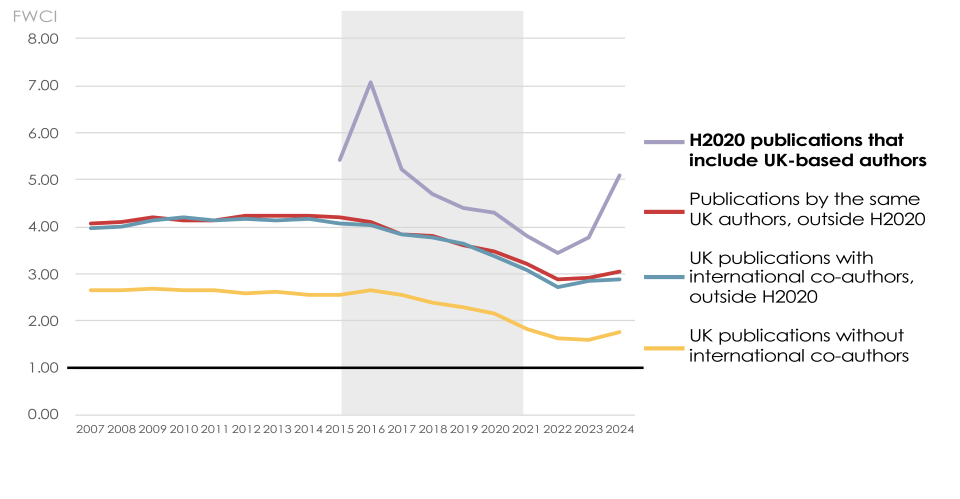
Source: Technopolis (2025) based on CORDA data and Open Alex. The shadow region marks 1 year after H2020 started and ended to account for the lag in publications to emerge. Years in the X-axis correspond to year of publication of the publications in scope.
Box 5 - Example of highly cited publication (1)
Overall, the UK H2020 publication with the highest number of citations is titled “The FAIR Guiding Principles for scientific data management and stewardship”, which has accumulated over 13,000 citations since it was published in 2016. The document sets the principles for open access of research, including guidelines in terms of findability, accessibility, interoperability, and reusability of data for both humans and machine.
Since this paper was published, the FAIR principles have been adopted by major research institutions and funding bodies, including UK Research and Innovation (UKRI), which has since:
- Issued comprehensive guidelines mandating FAIR data principles across research councils
- Developed funding policies that require researchers to demonstrate FAIR data management
- Funded grants to further support FAIR data infrastructure
We explored the impact and influence of H2020 in support of a European Open Science Cloud via one of the case studies (see Appendix F)
Box 6 - Example of highly cited publication (2)
The paper “Observation of Gravitational Waves from a Binary Black Hole Merger” also published in 2016, also have over 10,000 citations. This has been an influential paper since:
- It directly confirmed a major prediction of Einstein’s general relativity that had remained unproven for a century.
- It opened an entirely new way of observing the universe - through gravitational waves rather than electromagnetic radiation.
- It was extraordinary technical achievement, detecting incredibly minute distortions in spacetime that were theoretically predicted but until then practically impossible.
The research behind the paper has been a true international endeavour, with 133 individuals with affiliations across 19 countries named as authors. Authors from the UK include researchers from: University of Southampton, University of Glasgow, University of Birmingham, University of the West of Scotland, University of Cambridge, University of Sheffield, Cardiff University, University of Edinburgh, Rutherford Appleton Laboratory, and University of Strathclyde.
It is important to note that the publication acknowledges several funding sources, including the European Commission (the associated H2020 project is “Mapping gravitational waves from collisions of black holes”, Project Number: 647839), demonstrating that such large-scale research endeavours are built upon years of collaboration with multiple sources of funding.
Box 7 - Example of highly cited publication (3)
The “Generalized biomolecular modelling and design with RoseTTAFold All-Atom” was published in 2024, and has had a FWCI of 153.4.
The paper has become highly influential due to several groundbreaking advances that address fundamental limitations in computational structural biology.
The paper describes RoseTTA Fold All-Atom (RFAA), a deep learning model designed for generalised biomolecular modelling and design, capable of handling diverse biomolecular systems including proteins, nucleic acids, small molecules, metals, and covalent modifications. These could have many applications, including facilitating the design of more effective and specific drugs with potentially fewer side effects (due to the more precise predictions at the atomic level).
Unlike some competing efforts, RoseTTAFold All-Atom is available on GitHub with full code and weights, enabling widespread adoption and further development by the community.
The paper includes researchers from the University of Sheffield, as well as David Baker (from University of Washington) who went to win the 2024 Nobel Prize of Chemistry for his work in this area. Many different funders and grants are acknowledged in the paper, including the European Research Council (ERC) Synergy Grants.
4.3.3 Contributions beyond publications
The majority of respondents to the H2020 successful applicants survey indicated that participation in the EU programme has had a high to medium impact on them and their unit / group across all the 10 dimensions of ‘research and knowledge’ covered in survey. This included:
- Improved understanding of a subject in the project (93% of respondents indicated that participation in H2020 had had a high to medium impact on them, in terms of understanding); and scientific capacity (89%)
- Ability to collaborate on R&D, and manage research projects (85% and 61% respectively)
- Ability to participate in higher risk R&D (71%), increased awareness of technological trajectories (73%), and increased technological capacity (77%)
- Ability to retain national and international staff (64% and 70% respectively)
Figure 21 - H2020 benefits: Research and knowledge
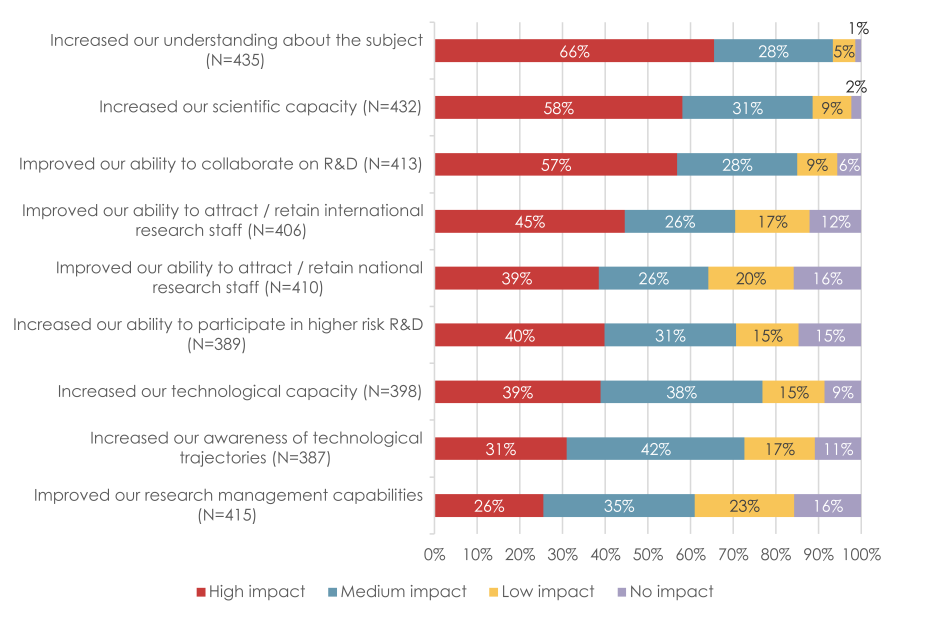
Source: Technopolis (2025). Survey respondents, H2020 successful applicants. N=387-436. The percentages are based on those that selected those categories.
4.4 Evidence of benefits to Innovation
4.4.1 Overview
We investigated the main impacts of H2020 on innovation and commercialisation via survey, with a focus on UK industry participants in H2020. Full results are shown in Figure 22 below.
Note that while the distribution of survey responses by organisation type reflected well the distribution of participation, the small number of available contact details has limited the number of responses that could be achieved, particularly for some groups. While there were ~100 responses from participating companies, this only equates to 5-10% of all UK companies that participated, and their answers may not be representative of the full population. This should be borne in mind when viewing the findings.
A higher proportion of respondents report medium to high impact when it comes to further investment in R&I (in comparison with final economic results). This includes (with figures in brackets indicating the proportion reporting medium or high impact) participation having the following effects on the firm:
- Increased their investment in R&D (60%), and in innovation (60%)
- Improved their product (services) portfolio (67%)
- Increased their access to international markets or supply chains (51%), and improved commercial opportunities (64%)
- Increased their employment (46%) and turnover (45%)
Only 36% reported a high or medium impact on productivity. However, a higher proportion reported an improved competitive position nationally (49%) and internationally (57%), which may be linked to access to commercial markets rather than increase productivity.
Figure 22 - H2020: Innovation and commercialisation
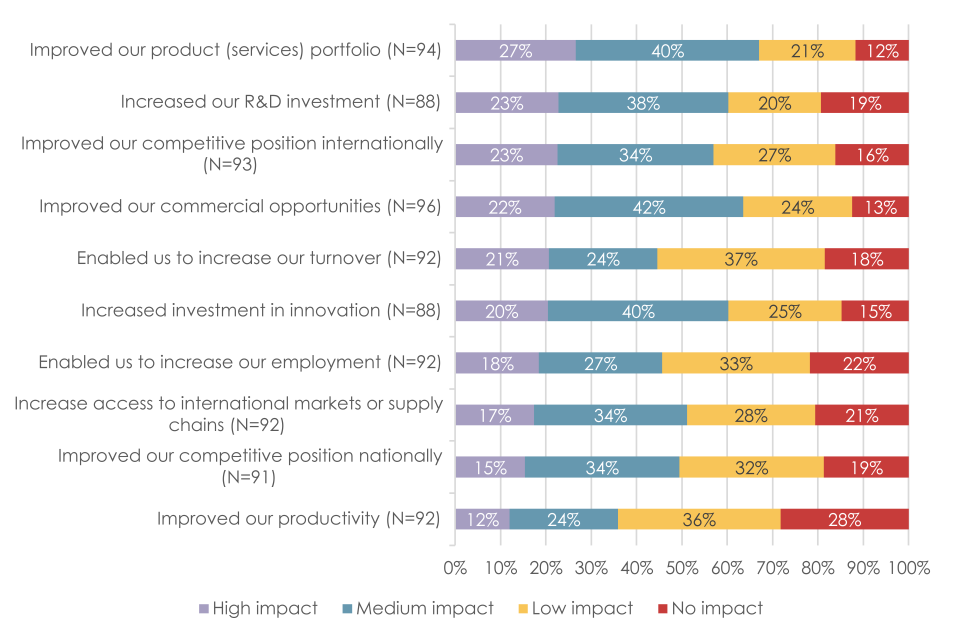
Source: Technopolis (2025). Survey respondents, H2020 successful applicants. N=88-96
These results are more mixed in comparison with the more positive results on ‘research and knowledge’. In part this may reflect the fact that achieving innovation outcomes is more uncertain, and that final results (including commercialisation, productivity, and competitiveness) require further investment and resources, plus favourable market conditions and longer timeframes.
It is also important to note that many H2020 projects will include industry partners where they are not central to the research and innovation projects, or where commercialisation outcomes are not the key expected results (e.g. programmes under the Societal Challenges impact).
H2020 instruments such as the SME Instrument (now evolved into the EIC Accelerator), Public-Private Partnerships, and European Innovation Council (EIC) Pilot have more of an industrial focus, but they only represent a small part of the UK’s participation in H2020 (e.g. just 3% of UK participations to H2020 related to the SME instrument). Future studies of FP could consider targeting participants in specific instruments to collected data on their activities and results.
Limited commercialisation results are also reflected in our econometric analysis (Section 4.5).
4.4.2 Patents
A total of 308 H2020 projects that include UK participation (out of 10,896 UK H2020 projects, i.e., 3%) have generated patent applications, with 1,349 applications made to different national and international authorities. (Note these results are based on registered outputs in the EC monitoring systems, which has some limitations). [footnote 34]
At least 393 of the patent applications (29%) can be traced back directly to UK organisations, based on the name of the applicants. That means an average of 0.04 patents per H2020 project with UK involvement (=393/10,896). To give a sense of scale, all UKRI grants that started in 2014-2020 (44,403), have produced 2,932 IP items (including patents), which translates to 0.07 IP per project (as reported in Researchfish).[footnote 35] These figures can only be taken as an approximation, but they do signal that patent production through H2020 is in line with (or slightly lower than) domestically funded R&I. Also, to further provide a sense of scale, just in 2023, organisations in the UK filed 48,227 patent applications, according to WIPO, which indicates that publicly funded R&I programmes may tend to produce a relatively low number of patents (although there may be an issue with under-reporting of results from grant holders).
A substantial proportion of the patent applications have emerged from the Societal Challenge pillar, of H2020, specifically the Climate action and the Energy programme.
- On energy, the patents (from UK organisations) show a diverse but interconnected focus on intelligent systems, energy management, industrial monitoring, autonomous technologies, and advanced environmental control solutions.
- On climate, the number of submissions is dominated by one company, AM Technology Limited (a manufacturer of paints, varnishes and similar coatings), which patented a photocatalytic composition for the production of water-based paints.
There is also a good number of patent applications emerging from the LEIT programme. These demonstrate a strong intersection of advanced materials science, telecommunications, machine learning, and specialised sensing technologies. There’s a particular emphasis on next-generation networking, materials production, and innovative sensing methodologies.
Similarly, FET has also produced a relatively high amount of patent applications. The UK patents emerging from this programme showcase a remarkably diverse range of cutting-edge technologies, with significant overlap between materials science, sensing technologies, medical innovations, and quantum computing. There’s a strong emphasis on advanced materials, precise sensing, and novel electronic architectures.
Table 11 - Patent applications – UK organisations ([z] = not applicable)
| Pillar | Programme | Number of patent applications | % |
|---|---|---|---|
| Excellent Science | ERC | 49 | 12% |
| Excellent Science | FET | 51 | 13% |
| Excellent Science | MSCA | 30 | 8% |
| Excellent Science | Research Infrastructures | 1 | 0% |
| Industrial Leadership | LEIT | 68 | 17% |
| Industrial Leadership | Innovation in SMEs | 21 | 5% |
| Societal Challenges | Health and wellbeing | 17 | 4% |
| Societal Challenges | Food and the bioeconomy | 8 | 2% |
| Societal Challenges | Energy | 22 | 6% |
| Societal Challenges | Transport | 8 | 2% |
| Societal Challenges | Climate action | 95 | 24% |
| Societal Challenges | Other | 3 | 1% |
| [z] | EIT | 8 | 2% |
| [z] | Euratom | 5 | 1% |
| [z] | Other | 7 | 2% |
| [z] | Total | 393 | 100% |
Source: Technopolis (2025) based on CORDA data
4.4.3 Other quantitative commercialisation outcomes
As part of our survey, we also asked successful participants to declare several quantitative commercialisation benefits derived from their participation in H2020.
Only a small percentage provided information, which suggests that commercialisation outcomes have only been relevant and materialised for a small percentage of UK participants. Respondents reported a total of 50 licence agreements linked to programme-enabled IP. These generated €11.25m in income, with a median of €0.45m per respondent (see Table 12).
H2020 also supported commercial activity: 58 spinout companies were reported from 40 respondents, with a combined estimated value of €58.55 million by 2025. These spinouts had a combined turnover of €10.64 million in 2024, employed 172.5 people (with an average of 8.2 FTE per respondent), and secured €56.43 million in external investment (an average of €4.34 per respondent), including from VC, IPOs, and other funding sources.
| Survey question | Sum | Mean | Median | Number of Reponses | % of respondents |
|---|---|---|---|---|---|
| Number of licence agreements made linked with FP-enabled patents or other IP | 50 | 2 | 1 | 25 | 6% |
| Value of licence income linked to H2020 IP (in 2024) | €11.25m | €0.56m | €0.45m | 20 | 5% |
| Combined value of external investments (e.g. angel, VC, IPO, etc.) secured following H2020 | €56.43m | €4.34m | €2.31m | 13 | 3% |
| Number of spinout companies** launched as a result of participation in H2020 | 58 | 1.5 | 1 | 40 | 9% |
| Combined employment at those spinouts (at the end of 2024) | 172.5 | 8.2 | 5 | 21 | 5% |
| Combined turnover of those spinouts (in 2024) | €10.64m | €0.76m | €0.31m | 14 | 3% |
| Estimated combined value of those spinouts (in 2025) | €58.55m | €4.50m | €2.00m | 13 | 3% |
Source: Technopolis (2025). Survey respondents, H2020 successful applicants. A response is defined as an entry from a respondent that is greater than 0. Mean and median statistics are taken of those >0 entries.
It is challenging to put these results in context, because for methodological reasons, we did not collect data at project level.[footnote 36] However, we can use Researchfish to provide a sense of scale for one indicator: spin outs.
- If we assume proportionality, then based on survey results we can infer that 9% of projects produced 1.5 spin outs on average. That means that 981 UK H2020 projects (=10,896x9%) may have produced a total of 1,471 spin outs. That is 0.14 spin outs per project (=1,471/10,896).
- In contrast, all the UKRI grants that started in 2014-2020 (44,403), have produced 1,167 spin outs (as reported in Researchfish), which is equivalent to 0.03 per project.
Again, these figures need to be taken with caution, and are only presented to provide a sense of scale. They do however offer a positive view of H2020 outcomes for the UK when it comes to spin outs.
The surveys and case studies have also revealed individual examples of spin outs from Horizon 2020 (see boxes below).
Box 8 - Notable example of commercialisation
Seprify: A Bio-Inspired Alternative to Titanium Dioxide Originally founded in the UK and now headquartered in Switzerland, Seprify is commercializing cutting-edge technology developed at the University of Cambridge’s Department of Chemistry. The company has created a sustainable, nature-inspired white pigment Microcrystalline Cellulose that serves as a viable alternative to titanium dioxide (TiO₂). Titanium dioxide (TiO₂) remains the dominant white pigment globally due to its unmatched brightness and robustness. However, increasing regulatory scrutiny and sustainability concerns are creating a clear market need for safer, renewable alternatives. The company has secured commercial validation in food, personal care and paint coating applications with partners confirming the material’s superior whiteness and surface coverage. With validated performance, regulatory approval, and strong commercial traction Seprify is soon to secure series A investment.
Value of licence income: €2.5m
Value of external investments: €6.64m
Source: Technopolis (2025). Response provided via survey, H2020 successful applicants.
Box 9 - Notable example of commercialisation
Granza Bio is a biotech startup working on a novel approach to delivering immunotherapy and other “attack particles” to various parts of the body. It has recently raised USD7m from investment companies Felicis and YC to advance deliver of cancer treatment.
Value of licence income: €0.5m
Value of external investments: USD7m
Source: Technopolis (2025). Response provided via survey, H2020 successful applicants.
Box 10 - Case Study – MicroQC
Quantum computing promises to solve complex problems beyond the reach of today’s supercomputers, from modelling new drugs and materials to optimising logistics, climate modelling, and energy use. However, building scalable, fault-tolerant quantum computers remains an incredibly demanding technical challenge. Among the various hardware platforms being explored, trapped-ion-based quantum computing is a relatively mature architecture.
Traditionally, these systems have relied on lasers to manipulate qubits, a method that becomes increasingly complex as the number of qubits grows. In response, a promising alternative has emerged: microwave-based ion trap quantum computing. Instead of directing hundreds or thousands of laser beams, the approach can control an arbitrary number of qubits with only a handful of microwave fields which are easier to generate and control.
MicroQC was an H2020 project that focused on advancing this technology. It involved the University of Sussex, along with partners in Germany, Israel and Bulgaria. The Sussex team had already published a ‘blueprint’ for building utility-scale quantum computers using microwave-controlled trapped ions, in an FP7 project. A key objective of MicroQC was to build on this and create a roadmap for advancing microwave quantum computation to high TRLs.
Since the project’s inception, microwave-controlled trapped-ion quantum computing has moved towards a viable and competitive platform for industrial adoption. In fact, the project directly supported the early development of Universal Quantum, a spinout from Sussex that has since raised over £100 million and grown to more than 100 employees. The blueprint (FP7) and the roadmap (H2020) towards utility-scale quantum computers developed by Sussex, as well as the greater credibility in the technology from the H2020 project were pivotal to the growth of Universal Quantum, and also essential in securing early venture capital, by demonstrating to investors that it promised a “tangible” plan that could translate into an industrial product.
Recently, the University of Sussex has been at the heart of an initiative to create a ‘Quantum Silicon Valley’ in Greater Brighton, positioning the south coast region as a key player in the UK’s quantum ecosystem, and a global hub for quantum research.
Source: Technopolis (2025)
4.4.4 Further influence on innovation
The knowledge and research funded under H2020 and published by UK authors has also underpinned further innovation activity. This is measured by the uptake (citation) of H2020 publications in patent applications.
There are a total of 221 patent applications citing UK H2020 publications. These tend to lie in 6 categories (based on the International Patent Classification).[footnote 37] Chemistry & Metallurgy stands out as the top field, with 86 patents citing UK H2020 publications. Applications in the field of Physics, follow next (62), showing another major area where UK authors are contributing to scientific and technological advancements. Human Necessities (medicines, food, agriculture etc.) with 42 patent applications, demonstrates that UK authors are also active in influencing inventions that address basic human needs, such as food production and health.
4.5 Evidence of direct economic benefits to participants
4.5.1 Approach
This sub-section explores one aspect of the counterfactual analysis (What is the effect of UK participation in H2020 on project participants?) with a focus on participant companies, using a quasi-experimental design approach. The treatment group is all UK companies that participated in H2020 (2,341 companies), while the control group is provided by all UK companies that were unsuccessful in applying to H2020 (13,392 companies).
The outcomes of focus are employment and turnover. From a Theory of Change perspective we would expect to detect some effects of H2020 participation at this point in time, since our analysis focuses on companies that finished a project 3 years ago or before. Employment effects are likely to materialise sooner since the grant funding itself could support the retention (in financial terms) or hiring of staff. Further employment effects could then be derived in the long-term as a result of the growth supported by the R&D and innovation activities.
Effects on turnover could take longer, since they require that the developments supported under H2020 have already been converted into additional commercial opportunities or revenue streams.
4.5.2 Data and sample
To conduct the analysis, we attempted to build a longitudinal data set, to cover a long period (as long as possible) before and after H2020 started. The main objective was to maximise the use of historical data to implement a difference-in-difference approach. One key assumption of the difference-in-difference approach is the parallel trends assumption, which posits that, without the treatment, the control and treatment groups would have followed similar trends in the outcome variable over time. In other words, the difference between the 2 groups would have remained constant in the absence of the treatment. To put it differently, if the groups have different pre-existing trends, the DiD estimate may be capturing these pre-existing differences rather than the causal effect of the treatment.
With that in mind, we attempted to capture as much information as possible on H2020 UK company H2020 applicants (both successful and unsuccessful) for the period 2006 to 2025, as contained in FAME (a proprietary data source that presents financial data in a structured way, using information provided in Companies House).
Our starting point are UK H2020 successful companies. Some companies’ names do not match exactly those presented in FAME, but overall, 1,875 out of 2,341 companies were found. The majority of these do not have complete records on all years, which leads to attrition in the sample (also, in FAME many companies are missing figures for financial year 2023-24 and 2024-25 for many companies). Out of all UK H2020
successful companies that were found in FAME, we preserved those that have at least 3 years of data pre and post H2020 (project end date). We excluded outliers defined as 3 standard deviations above and below the mean for each outcome (e.g. turnover). Once those adjustments were done, we ended with a sample of 321 UK H2020 successful companies (with complete records).
4.5.3 Matching
We then proceed to match a treated company (successful applicant) to a control company (unsuccessful applicant, counterfactual) using Propensity Score Matching. [footnote 38] The matching process reduced the sample further with a total of 70 companies matched to a control group. That means that the overall analysis is based on a sample of 140 companies.
4.5.4 Regression and Results
We implemented a staggered difference-in-difference regression controlling for individual and year fixed effects. The staggered difference-in-difference allows us to reflect the fact that different companies received the treatment (participation in H2020) at different points in time. Our treatment event uses project end dates. The estimation plots below show no significant pre-trends exist, meaning that the parallel trends assumption holds.[footnote 39] Overall, we found that:
- On average, there is so far no statistically significant effect of H2020 participation on growth in revenue and employment for UK companies in the post treatment period (see Figure 23). This means that the net effect of the programme (i.e. the effect after accounting for the counterfactual scenario) is not statistically different from zero. And in the cases where that difference is higher than zero, the results are not statistically significant. This is shown in the figures below, where the net effect is the dotted line, and the confidence interval is shaded blue).[footnote 40]
- These results do not exclude the fact that some participant companies benefited from the programme, but companies in the control group exhibit similar growth in the period post-treatment, cancelling out the effects.
- Similar results are obtained with looking only at sub-samples for SMEs and non-SMEs (see Figure 24 and Figure 25). The results need to be taken with caution as they are derived from smaller samples (46 and 106 respectively).
Figure 23 - Effect of H2020 on turnover and employment
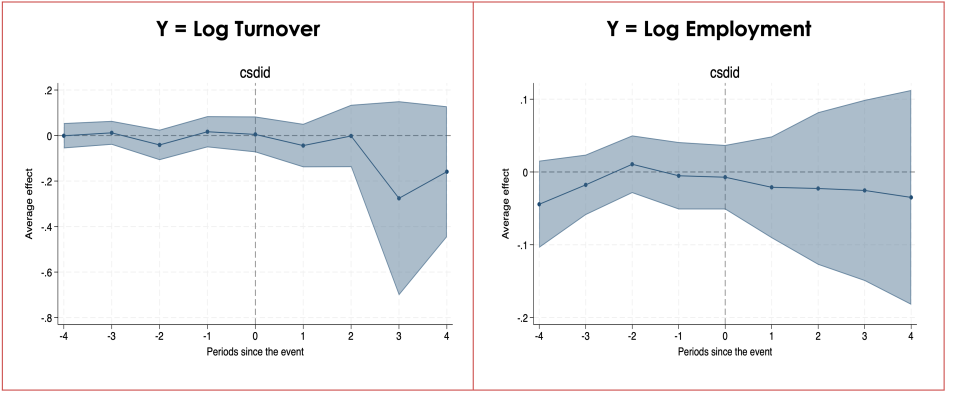
Source: Technopolis (2025). N=140
Figure 24 - Effect of H2002 on turnover and employment – SMEs only
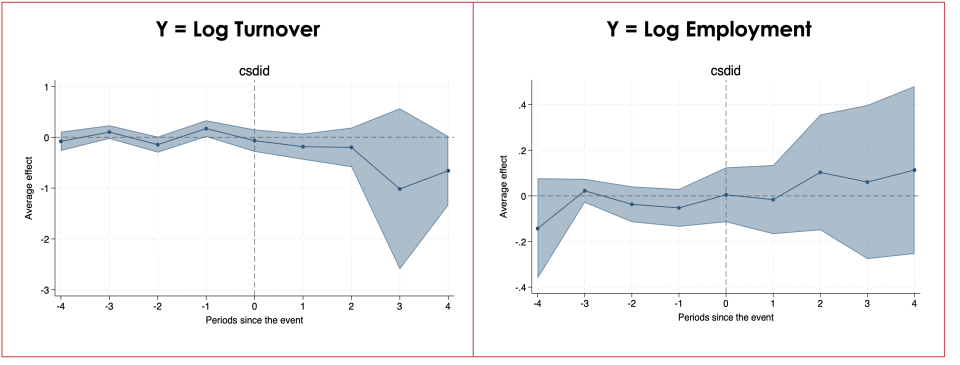
Source: Technopolis (2025). N=46
Figure 25 - Effect of H2020 on turnover and employment – non-SMEs only
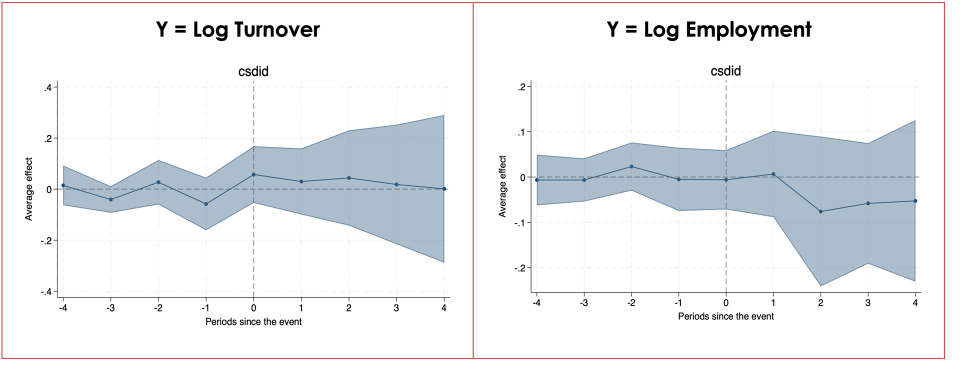
Source: Technopolis (2025). N=106
4.5.5 Limitations and caveats
There are several considerations that need to be taken into account when reading the results:
- It is important to note that this analysis relates only to H2020 participation rather than to international collaboration more generally.
- Analysis is based on a relatively small sample of companies that participated in H2020. Given the longitudinal nature of the analysis, the size of the sample is not an issue per se (since in the case of panels both the number units of analysis and time period drive the number of observations). One could argue that the sample size with complete information is systematically different from the sample size without complete information. However, those potential differences are likely to apply to both control and treatment groups (i.e. there is no reason to believe that in restricting the sample we are biasing towards high performers in the control group and low performers in the treatment group).
- As stated before, results above do not mean that some participant companies did not benefit from the programme, but companies in the control group exhibit similar growth in the period post-treatment, cancelling out the effects.
- As also stated above, it is also important to note that many H2020 projects will include industry partners where they are not central to the research and innovation projects, or where commercialisation outcomes are not the key expected results (e.g. programmes under the Societal Challenges pillar). We cannot however restrict the analysis to specific H2020 instruments more geared towards supporting commercialisation (e.g. SME instrument) since that would reduce the sample size further.
4.6 Evidence of benefits for policy and society
4.6.1 Knowledge flow (uptake in policy documents)
There is evidence of the uptake of H2020 publications from UK authors (UK H2020 publications) in policy related literature (PRL). This analysis uses Overton[footnote 41] which allows the tracing of academic publications cited in policy documents and grey literature.
It shows that 5,040 UK H2020 publications (13% of the total UK H2020 publications) are cited in 20,184 policy related literature / documents (with a mean average citation number of 5.2 and median of 2). This equates to 1 policy citation for every 2 UK H2020 publications produced overall.
The outreach of those publications is global, with UK H2020 publications being cited in documents originating from 86 countries, and also by inter-governmental organisations. Most publications are cited by governmental organisations (8,494 PRLs), think thanks (5,350 PRLs), international organisations (5,106 PRLs), and NGOs (603 PRLs).
Furthermore, this analysis also shows the contribution of UK H2020 publications to advancing Sustainable Development Goals (SDGs). Using the Overton off the shelf classification, we find that H2020 publications from UK authors are contributing to PRL focused on all SDGs, but in particular: Climate Action (SDG 13) and Good Health & Well-being (SGD3) (see Table 13).
This demonstrates the contribution of H2020 research, including with UK participation, in providing evidence for policy makers, which is expected to deliver further societal benefits.
Table 13 - Contribution of UK H2020 publications to policy related literature and SDGs
| SDG | Number of PRLs/ docs |
|---|---|
| 13: Climate action | 4,112 |
| 3: Good health and well-being | 4,086 |
| 8: Decent work and economic growth | 1,976 |
| 10: Reduced inequality | 1,276 |
| 15: Life on land | 1,252 |
| 9: Industry, Innovation and Infrastructure | 1,078 |
| 14: Life below water | 888 |
| 16: Peace, justice and strong institutions | 865 |
| 5: Gender equality | 854 |
| 7: Affordable and clean energy | 747 |
| 2: Zero hunger | 716 |
| 4: Quality education | 695 |
| 11: Sustainable cities and communities | 526 |
| 12: Responsible consumption and production | 520 |
| 1: No Poverty | 470 |
| 6: Clean water and sanitation | 427 |
Source: Technopolis (2025) based on CORDA data and Overton. PRLs can be classified in one or more SDGs. 4,129 PRLs are not linked to any SDG.
4.6.2 Societal benefits
Through our survey of H2020 participants, we collected first-hand accounts from researchers and industry partners of societal benefits derived from their H2020 projects. The 256 responses to the survey question on the societal impact reveal a wide range of outcomes across various sectors. Many respondents emphasised the tangible societal benefits realised through their projects, while others noted ongoing or anticipated impacts.
Some respondents acknowledged challenges in realising societal impacts, particularly for projects still in progress or focused on fundamental research. For instance, one respondent stated that “the societal impacts remain expected and indirect from the research conducted, primarily in healthcare,” while another noted that their project was “too early for realisation.” However, even in these cases, the potential for future impact was often highlighted.
The case studies also showcase that societal benefits emerge over time, often as a result of multiple projects and initiatives (involving H2020/FP funding and other sources). However, at least in these examples, the H2020 projects have made considerable contributions to these longer-term endeavours, which have then enabled the next steps to be taken.
Healthcare: Healthcare emerged as a prominent area of societal impact. Projects contributed to advancements in diagnostics, therapies, and patient care. For example, the development of the BOADICEA tool, an output from the B-CAST project, was described as “empowering women, doctors, and genetic counsellors” in making life-altering decisions about cancer prevention. Similarly, the WID-easy test from the FORECEE project was noted for its potential to “reduce the false positive rate > 90%” in detecting endometrial cancer, significantly minimising the need for invasive procedures. Other healthcare-related impacts included improved understanding of rare diseases, as seen in the Solve-RD project, and the development of new outcome measures for patients with chronic conditions.
Another example is provided by the case studies (see box below).
Box 11 Case study – IMI2 and the INNODIA project
IMI2 represents an early but crucial step that will lead to improved quality of life for millions living with disease, through access to safer and more effective treatments. IMI2 projects included many activities aimed at enhancing the efficiency of clinical trials and accelerating the implementation of innovative healthcare treatments. Funded projects addressed both common conditions (e.g. diabetes) and areas of unmet medical needs, such as rare and paediatric diseases, as well as Europe’s capacity to respond to global health threats.
For example, the INNODIA project has laid the groundwork for improved interventions and public understanding of how to manage Type 1 Diabetes (T1D), a condition that effects over 450,000 people in the UK and creates an economic burden of billions of pounds each year.
- The project established a master protocol to help clinicians evaluate the use of medicinal products for cases of newly formed T1D. This has standardised the way clinical trials are performed, from recruiting patient cohorts through to sample collection and data analysis.
- The project integrated omics data collected from T1D patients across multiple sites in Europe to characterise age-dependent differences in treatment response over time. This led to the discovery of new age-related biomarkers associated with rate of T1D progression shortly after diagnosis. (A follow-on project, INNODIA HARVEST is currently using the new biomarkers to run 4 clinical trials for people with newly diagnosed T1D)
- The project also highlighted the importance of considering systems within the target tissue. Researchers identified gene activity changes in the beta cells of the pancreas of T1D patients and found similar changes in affected tissue of arthritis and multiple sclerosis patients. These findings have influenced how research into autoimmune disease is conducted more generally
Environmental and climate-related impacts: Several projects contributed to policy developments, such as the inclusion of climate change evidence in marine protected area (MPA) site selection by DEFRA, and the promotion of sustainable farming practices in the UK and abroad. One respondent highlighted their project’s role in “increased ocean-climate literacy and resilience in the UK policy community,” while another noted their contribution to “reducing the impact of shipping emissions” as part of the EMERGE project. The development of self-healing concrete systems (SMARTINCS), which could “dramatically reduce CO2 emissions,” exemplifies the programme’s focus on sustainable innovation.
Another example is provided by the case studies (see box below).
Box 12 Case study – Prototype system for a Copernicus CO2 Service (CoCO2)
Climate change presents a pressing global threat and reducing (man-made) greenhouse gas emissions is essential to mitigating its impacts. To support this, countries need accurate data on their emissions to track progress and implement effective mitigation strategies.
The Prototype System for a Copernicus CO2 Service (CoCO2) was a climate technology project funded by H2020 to develop a prototype system to monitor anthropogenic carbon dioxide (CO2) emissions. The project, led by ECMWF in the UK, involved assessing the current state of in-situ observation sites, integrating existing emissions knowledge and observational data, creating new methods to validate data quality for emissions that are not directly observable, and developing a user interface tailored to both policy and scientific needs.
The project advanced data assimilation capacity to establish a system that can distinguish anthropogenic CO₂ emissions from natural carbon fluxes and improve attribution to specific processes or sectors. It also supported the design and implementation of an ‘Evaluation and Quality Control’ tool to ensure data reliability, while identifying current capability gaps.
These advancements represent significant progress toward developing a fully-operational CO2 monitoring and verification support (CO2MVS) capacity. The work is now being continued through further EU funding via projects such as CORSO (also with UK involvement) to refine and operationalise key components of the system. It is then expected to become fully operational by 2026 and be used by scientists and policymakers to inform mitigation strategies and collectively assess progress towards goals set under the Paris Agreement.
The project has also helped to enable an ESA/EUMETSTAT satellite constellation mission for monitoring CO2 emissions and formed the informational basis for a UK-led initiative known as GEMMA to develop a national emissions dashboard of total UK emissions.
Cultural and educational impacts: Cultural and educational impacts were another significant area. Projects like SPICE fostered public engagement with cultural heritage, using innovative technologies to “foster participation and inclusion in cultural heritage.” Similarly, the Babies Born Better survey generated data on women’s childbirth experiences, leading to activism for change in maternity care. Educational initiatives included STEM engagement with schools, as well as the development of resources like the “Our Space Our Future” toolkit, which explored international cultural differences in teaching STEM.
5. Effects and uncertainty on past and future association
5.1 Effect of the EU referendum on FP participation and international collaboration
Evidence collected via interviews suggests that the UK’s EU Referendum may have had a knock-on effect on wider international collaborative work (although, it is important to point out that based on publication data, the UK continued to collaborate internationally, so the effect may have been temporary).
- Loss of institutional support. Interviewees noted the dismantling of UK research management and support services that had been designed to help UK institutions participate effectively in EU FPs, a loss that has continued into the Horizon Europe era. Interviewees explained that this institutional knowledge gap has created a cohort of young researchers who are either unaware of EU funding opportunities or lack the practical skills to engage with them effectively. They emphasised that given the lengthy nature of research projects (lasting up to 7 years) and the extended consortium coordination periods required (up to 2 years), even following UK reassociation to Horizon Europe, it will take a considerable time for the UK to regain meaningful participation in major consortia and collaborative projects.
- Instability. Interviewees provided important reflections on what the EU exit experience means for the broader value and viability of international research collaboration. They emphasised that while there remains strong demand for international R&D partnerships, the UK’s exit from the EU highlighted that certainty and stability are essential prerequisites that must be in place to facilitate effective collaboration. Participants noted that without these foundational elements of trust and predictability, even well-intentioned collaborative frameworks can quickly unravel when subjected to broader political pressures, undermining years of relationship-building and institutional knowledge.
- Change in status. Interviewees also reflected on the practical implications of reduced status within collaborative frameworks. They noted that the UK’s transition from Member State to Associated Country status has resulted in diminished opportunities for influence and a decreased ability to shape work packages according to UK researcher needs and priorities. While participants acknowledged that important avenues for influence do still exist, they highlighted an increasing risk that the types of research funded, and their strategic focus may no longer align as closely with UK research priorities and national interests. This suggests that the value proposition of international collaboration becomes more complex when countries move from leadership positions to more peripheral roles, potentially requiring careful evaluation of whether the benefits from participation justify the reduced strategic influence over programme direction and resource allocation.
5.2 Reflections on future participation in EU FPs
There is a clear desire within the R&I community to maintain association with EU FPs. The 770 responses to our survey of UK H2020 applicants overwhelmingly emphasised the importance of the UK continuing its participation in EU Framework programmes. Stakeholder interviewees also provided unanimous support for continued EU FP association.
In the case of H2020 applicants, a recurring theme is the critical role of international collaboration in advancing science and innovation. Respondents frequently highlighted that “science relies on international collaboration” and that the EU Framework programmes provide unparalleled opportunities to work with leading researchers, institutions, and industries across Europe. There is a strong belief among respondents that this collaboration fosters access to expertise, techniques, and infrastructure that are not available within the UK alone. As one respondent put it, “The importance for scientific research of being part of an international network cannot be overstated.” Respondents also frequently mentioned that participation in EC programmes enhances the UK’s international visibility, helps to attract top talent, and fosters innovation. As one participant stated “If the UK wishes to retain its global research status, it is imperative that it continues to participate in EU framework programmes.”
However, many interviewees also reflected on the value for money considerations that they believe will determine the sustainability of future association. They stressed that continued association must demonstrate good value for money, explaining that the UK pays substantial fees for association status, and if participation levels in Horizon Europe remain low or UK researchers are unsuccessful in securing funding, this would be viewed as a poor return on investment for the significant financial commitment required. Interviewees noted that UK participation rates and funding success serve as important indicators of whether the association is delivering sufficient benefits to justify its costs, with the performance in Horizon Europe serving as a crucial test case for whether future association arrangements represent worthwhile investments of public funds.
Beyond considerations about the UK’s decision to associate, interviewees highlighted significant concerns about evolving EU policy directions that could undermine the value of future association. They noted that the continued push for European sovereignty and proposals for an increased connection between a European Competitiveness Fund and the FPs creates substantial uncertainty about whether the UK will be included within the EU’s sovereignty framework or increasingly viewed as a competitor, raising serious concerns about future collaboration access. Participants explained that if the EU prioritises supporting research within its member states and views the UK as an external competitor rather than a collaborative partner, this could limit the types of projects and funding opportunities available to the UK (e.g. in quantum, space). They highlighted particular fears that dual-use technology considerations (relating to technologies that can be used for both civilian and military purposes) will result in the UK being excluded from funding programmes in sensitive areas like defence, security, and advanced technologies, significantly decreasing the value of association and causing the loss of valuable R&D funding opportunities. However, some reassurance was provided in April 2025, when the UK (and Switzerland) were granted access to “strategic” Horizon Europe calls (e.g. relating to quantum and space), which were previously closed to non-member states.
Finally, interviewees also identified critical structural and timing challenges that must be resolved for effective future participation:
- They highlighted that the loss of professional support infrastructure (mentioned above) creates particular urgency around FP10 participation decisions, noting that the current ad-hoc support provided by Academies and other organisations is unsustainable and inefficient at the required pace and scale needed to support widespread UK participation.
- Participants emphasised the need for clear and consistent communication strategies to avoid repeating the uncertainties and mixed signals that characterised previous Framework Programme transitions, suggesting that lessons learned from recent disruptions must inform more strategic approaches to managing future participation decisions and stakeholder engagement.
6. Conclusions
There are 6 key areas of conclusions that have emerged from the evaluation of UK participation in H2020.
Strong player despite declining participation. The UK remained an active and prominent player in H2020, despite challenges associated with the EU referendum.
Participation in proposals (and consequently in projects) declined after 2016. However, success rates remained above the programme average, and the proportion of UK proposals where it took the lead remained stable.
The UK was amongst the most active countries in submitting proposals to H2020 (based on participations in proposals), ranking 4th for the period as a whole (but with a decline from 1st place in 2014 to 5th place in 2020).
There is no evidence that UK participation in proposals undermined the chances of success at any point (despite stakeholder perceptions to the contrary, due to the uncertainty created by the EU referendum). Indeed, based on regression analysis, we find that UK participation actually increased the probability of a proposal’s success by 2.4 percentage points (from 11.1% to 13.5%). The probability of proposal success also increased with the number of UK participations, with a ~1.5 percentage point increase for each additional UK participation.
Participation in H2020 was particularly strong in research focused instruments/programmes, with European Research Council (ERC) and Marie Skłodowska-Curie Actions representing 45% of UK participation (based on EC contributions).
Strong research outcomes: Strong citation impact and global scientific contributions demonstrate clear added value beyond national funding capabilities.
The vast majority of UK participants report high to medium impact of H2020 on them and their unit / group across all areas related to research impact, including improving understanding of a subject covered in the project (93%); and scientific capacity (89%); ability to collaborate on R&D, and manage research projects (85% and 61% respectively); ability to participate in higher risk R&D (71%), increased awareness of technological capacity (73%), increased technological capacity (77%), and ability to retain national and international staff (64% and 70% respectively).
A total of 40,136 peer-reviewed publications emerged from H2020 projects that include UK participants and where there is at least one UK-based author on the paper. These numbers are comparable to nationally funded international R&I programmes (based on volume per £m spent), and synthetic control group analysis does not show significant effects from (reduced UK participation in) H2020 on the volume of UK publications across most Fields of Research (with the exceptions of Biochemistry, Chemistry, and Earth & Planetary Sciences). However, H2020 supports publications in specific areas of potential strategic interest to the UK (above what is produced outside the programme), including for example fields relating to the life sciences and health (e.g. neuroscience and pharmaceuticals).
Furthermore, we find that the reach (citation impact) of UK H2020 publications outperforms all other comparator groups, including publications from the same researchers outside of H2020 and from other researchers that collaborate internationally. This analysis indicates that there is a positive effect on the quality of publications emerging from H2020 (as measured by citation impact). This is in line with the perception of wider stakeholders, who in interviews agreed that scientific outputs from international collaboration (and including EU Framework Programme funding) significantly exceed the quality achieved through national funding alone due to access to research and knowledge assets (people, expertise, infrastructure) that would not be fully available nationally.
Limited commercialisation outcomes: A small percentage of UK H2020 projects and participants have so far generated commercialisation outputs and with modest productivity gains (36% high/medium impact), reflecting the challenge of translating research excellence into economic returns
At this point in time, evidence of the positive impact of H2020 on innovation and commercialisation are more mixed in comparison with the more positive results on ‘research and knowledge’ (as reported via survey).
Survey analysis (UK H2020 participants) indicates that 36% of responding companies report a high or medium impact on productivity so far, while around 45% report increases in employment and turnover. A higher proportion of companies (60%) report that participating in H2020 has had a medium or high impact on their further investment in R&I, and on their product portfolio (67%). This higher investment may materialise in innovation and commercialisation benefits in the future.
As part of our survey, we also asked all successful participants to declare several potential quantitative commercialisation benefits derived from their participation in H2020. Only a small number (13-40, 3-6% all survey respondents) provided information in each case. Additionally, only 3% of UK H2020 projects report a patent applications, based on EU monitoring data (and it is not possible to fully determine if they are linked to UK organisations).
The sample of companies responding to the survey (100) represents a small proportion of overall UK company participation in H2020 (circa 5-10%), and their answers may not be representative of the full population.
The quantitative survey results (and monitoring data) are however consistent with our econometric analysis, where we did not find a statistically significant effect so far on turnover and employment amongst UK companies that participated in H2020 (compared with a matched sample of non-participants as a control, and accounting for a 3 year lag after project completion), noting that the analysis is based on a small sample of companies for which it was possible to create a longitudinal dataset.
There is therefore limited evidence to suggest that participation in H2020 has yet delivered these specific commercial outcomes to participant organisations. Whilst some companies have benefited – and we have identified several strong examples through the participant survey and case studies of UK spinoffs already generating income and securing multi-million pound investments - others have not benefited at all (or even experiencing opportunity costs).
There may be several reasons for these results. Firstly, they may in part reflect the fact that achieving innovation outcomes (from R&I projects) has a high degree of uncertainty (i.e. a high probability of not materialising), and that final results (including commercialisation, productivity and competitiveness) require further investment and resources over a longer period of time (i.e. beyond the timeframe of this study), plus favourable market conditions.
Second, they may signal the strong research focus of the FP and the focus of UK participation in the programme. In fact, many H2020 projects include industry partners where they are not central to the research and innovation projects, or where commercialisation outcomes are not the key expected results (e.g. programmes under the Societal Challenges pillar). H2020 instruments such as the SME Instrument (now evolved into the EIC Accelerator), Public-Private Partnerships, and European Innovation Council (EIC) Pilot do have more of an industrial focus, but they only represent a relatively small part of the UK’s participation in H2020 (for example, just 3% of all UK participations related to the SME instrument).
Finally, the relatively small sample sizes for the survey and econometric analysis mean that we may have an incomplete picture of the outputs and outcomes generated from participation.
It is also worth noting that the FP is constantly evolving, and there has been a stronger emphasis in supporting industrial participation and benefits in Horizon Europe, including through the European Partnerships, the European Institute of Innovation and Technology, and European Industry Council Accelerator. There are also plans to further increase industrial participation in the next FP iteration (Horizon Europe/ FP10), which will be tightly connected to a new Competitiveness Fund to enhance the link between research and commercialisation.
Evidence of emerging societal benefits. Societal benefits emerging from research and innovation activities are difficult to track and may materialise over time, but evidence so far suggest contributions to addressing societal challenges.
Insights from survey and case studies show evidence of societal benefits realised through H2020 projects. However, some respondents acknowledged (via survey), challenges in realising societal impacts, particularly for projects still in progress or focused on fundamental research.
The case studies also showcase that societal benefits emerge over time, often as a result of multiple projects and initiatives (involving H2020/FP funding and other sources). However, at least in these examples, the H2020 projects have made considerable contributions to these longer-term endeavours, which have then enabled the next steps to be taken.
Examples provided surveys and case studies include impacts in the following areas
- Healthcare: with H2020 projects contributing to advancements in diagnostics, therapies, and patient care for cancers, rare diseases and chronic conditions.
- Environmental and climate-related impacts: with H2020 projects contributing to various policy developments, such as the inclusion of climate change evidence in marine protected area (MPA) site selection by DEFRA, the promotion of sustainable farming practices in the UK and abroad, and improvements in the UK’s carbon dioxide emissions monitoring and the attribution of these emissions to specific processes or sectors.
- Cultural and educational impacts: with H2020 projects contributing to fostering public engagement with cultural heritage, changes in maternity care, and educational initiatives to improve STEM education in schools.
There is also strong evidence of policy interest in Horizon 2020 research, with over 20,000 policy related documents (from e.g. government organisations, think-tanks and international organisations) already found to be citing UK H2020 publications. This demonstrates contributions in providing evidence that is expected to then deliver further societal benefits.
Strategic value: Evidence collected in this study showcases the role of H2020 in positioning the UK as a global research leader and building soft power through international partnerships in a way that only a pan-European / global programme like the Framework Programmes can.
Survey respondents and interviewees unanimously emphasised the critical importance of international collaboration for advancing science and innovation, including in key priority areas (e.g. one third of projects with UK participation had a focus on one or more of the UK’s critical technologies, including Artificial Intelligence, Future telecommunications and Engineering Biology). They also report strong reputational benefits, with 73% of participants reporting high impact on EU networks and 68% on their international reputation.
This is connected to the advantages (value added) H2020 provides in terms of funding, in comparison to what could be accessed at national level, with a strong argument in terms of economies of scale, as well as overall scale and ambition:
- Scale and Scope: With H2020 (the FP) providing significantly larger budgets (overall and for individual projects) than any UK domestic programme can offer, this enables larger and more ambitious projects than would otherwise be feasible in the UK. The R&I community also stated via survey and interviews that H2020 allowed for “more risky and ambitious projects” and “high-risk, high-reward research”, which can be constrained in the UK system.
- Stability and Predictability: H2020 (the FP) provides funding across 7-year timeframes, which stakeholders suggested allows researchers adequate time and space to develop high-quality proposals, contrasting sharply with UK funding that is subject to funding disruption from government changes, spending reviews, and shifting political priorities.
- Collaborative Models: H2020 (the FP) provides opportunities for large-scale, multidisciplinary and international collaborations that are not easily achievable through UK funding alone or through a national programme, as these would require excessive coordination, including individual collaboration agreements with each participating country. As a case in point, through H2020, UK participants have collaborated with participants from 158 countries.
- Infrastructure and Data Access: H2020 (the FP) provides access to facilities and pooled datasets for specialised research, that do not exist at national level (or would be too costly to reproduce at national level).
This is exemplified in the case studies developed in the study, which all make clear that the scale and / or internationally collaborative nature of H2020 funding, as well as the access to external expertise and infrastructure, was important, if not critical for the projects concerned.
Furthermore, the survey of UK H2020 successful applicants showed that 73% of participants believed that their project would have been abandoned without H2020 funding, while over half of unsuccessful applicants (54%) confirmed that their project idea had been abandoned without H2020 support. This suggests that a great proportion of the outputs and benefits emerging from H2020 are ‘additional’ or would not have happened in the absence of funding.
EU referendum lessons: The decision to leave the EU revealed the importance of stability and continuity for realising benefits, and maximising returns on international research investments
The EU referendum and its results created significant uncertainty that affected UK participation in H2020, with effects extending beyond the programme itself.
Survey data showed 55% of successful applicants experienced a significantly reduced ability to coordinate applications, while 47% found it harder to join consortia due to perceived risks by EU partners. Large numbers of open responses reflected further on the situation, with regular sentiments being that “EU partners considered UK consortium members a risk” and that “UK participation was seen as problematic” due to fears of jeopardising proposals.
This is then reflected in the participation data, where we see declining UK involvement in proposals and projects over the course of H2020, both in absolute terms and relative to other countries. This was seen across all types of organisation and across the programme.
Stakeholders emphasised both the perceived and the practical barriers that emerged even when UK participation remained technically possible. They noted the widespread perception that UK partners represented a risk to project success, with consortia actively avoiding including UK partners to prevent potential project rejection by evaluators. They also highlighted that this risk-averse behaviour continued for an extended period, not helped by communications both domestically and across the EU, or by the phased approach to announcing H2020 guarantees.
The uncertainty also appears to have had knock on effects, with a dismantling of research management and support to apply to the FPs, and knowledge gaps among young researchers unfamiliar with EU funding opportunities. The period of uncertainty also highlighted that stability and predictability are essential prerequisites for effective international collaboration.
Interviewees stressed that continued association must be value for money to be sustainable and highlighted significant concerns about future EU policy directions which could undermine that value. Despite these challenges, there remains overwhelming support within the UK research and innovation community for continued EU Framework Programme association.
-
There were significant gaps in the participant contact information available, meaning it is not possible to calculate response rates for the 2 surveys (as we do not have a complete understanding of the total number of individuals that were successful or only unsuccessful). We approached all 486 individuals that could be identified against at least one UK project (inviting them to participate in the successful applicant survey), as well as all 9,837 individuals that could be identified against at least one UK proposal participation, but not a project (inviting them to the unsuccessful applicant survey). However, the latter group were first asked if they had in fact participated in a successful proposal, and if so, were redirected to the successful survey. Over 500 were redirected in this way. ↩
-
The gaps in contact details have however limited the number of survey responses that could be achieved, particularly for some groups. While there were ~100 responses from participating companies, this only equates to 5-10% of all UK companies that participated, and this should be borne in mind when viewing the findings from the survey on innovation, commercialisation and direct economic benefit. ↩
-
Cohen, W.M. and Levinthal, D.A. (1989). “Innovation and Learning: The 2 Faces of R&D.” The Economic Journal, 99(397): 569-596 ↩
-
Tsai, W. (2001). “Knowledge Transfer in Intraorganizational Networks: Effects of Network Position and Absorptive Capacity on Business Unit Innovation and Performance.” Academy of Management Journal, 44(5): 996-1004 ↩
-
Jones, R.A.L. (2023). “Productivity, Innovation and R&D.” Productivity Insights Paper No. 021, The Productivity Institute, The University of Manchester. ↩
-
National Centre for Universities and Business (2024). Unlocking growth: The impact of public R&D spending on private sector investment in the UK ↩
-
Giovanna Ciaffi, Matteo Deleidi, Mariana Mazzucato, Measuring the macroeconomic responses to public investment in innovation: evidence from OECD countries, Industrial and Corporate Change, Volume 33, Issue 2, April 2024, Pages 363–382 ↩
-
Peter Kolarz, Cristina Rosemberg, Anete Vingre, et all. (2023). Impact evaluation of UKRI’s R&I funding response to COVID-19. A report by Technopolis. ↩
-
Neil Brown, Paul Simmonds, Cristina Rosemberg et all. (2020). Impact assessment of the UK participation in CERN. ↩
-
Extending the guarantee to: the Autumn statement 2016 (announced August 2016); to the point at which the UK departs the EU (announced October 2016); and to the end of 2020 (announced July 2018). ↩
-
Institute of Fiscal Studies (2000). How important is business R&D for economic growth and should government subsidise it? ↩
-
Technopolis (2025). International Science Partnerships Fund (ISPF): evaluation framework ↩
-
HMG (2022). International comparison of the UK research base ↩
-
European Commission: Directorate-General for Research and Innovation, Collaboration – A key to unlock the challenges of rare diseases research – February 2025, Publications Office of the European Union, 2025 ↩
-
Alessandro Muscio, 2006. The European Added Value Of Framework Programmes: Evidence From The UK, Economia, Societa’, e Istituzioni, Dipartimento di Economia e Finanza, LUISS Guido Carli, vol. 0(3). ↩
-
HMG (2017), Collaboration on science and innovation – a future partnership paper ↩
-
European Commission (2021), University Rankings ↩
-
European Commission: Directorate-General for Research and Innovation, European Innovation Scoreboard 2025, Publications Office of the European Union, 2025 ↩
-
HMG (2025), The UK’s Modern Industrial Strategy ↩
-
Technopolis (2023), Impact evaluations of ESRF and European XFEL ↩
-
Note that each proposal to Horizon 2020 involved one or more organisations (participants), often from different countries. The total number of participations in H2020 proposals (i.e. the sum of all participants across all proposals) is therefore much greater than the total number of proposals. ↩
-
Organisation types are: Higher or secondary education establishment (HES), Research organisations (REC), Private for profit (excluding education) organisations (PRC) – where SMEs must employ fewer than 250 people and have an annual turnover not exceeding €50m and / or an annual balance sheet total not exceeding €43m, Public body (excluding research and education) (PUB), Other (OTH). ↩
-
Models 1 and 2 are different in so far as Model 1 uses a binary variable to control for UK participation, while Model 2 uses a numerical variable (to capture number of participations). As such the predicted probability for ‘No’ participation and “0” participations is slightly different (as the variance in the model is captured in a different way by design). The estimates are however highly consistent. P>|z| indicates the statistical significance of the variables with 0.000 indicates a very strong statistical significance, meaning it’s highly unlikely that the observed result is due to random chance, and suggesting that the effect (or difference) being tested is likely real. ↩
-
This is not likely to be driven by a ‘size’ effect. There is a positive correlation between success rate and number of participations, but this is small (a 0.06 correlation coefficient). [NB. This is the correlation not the predicted probability]. We also tested a probabilistic model using number of participations as an additional exploratory variable, but the model did not arrive at convergence (i.e. a prediction) since the number of participations includes a large number of rare and infrequent events, which tends to affect these models. ↩
-
Some projects do not include abstracts and cannot be included in this analysis. ↩
-
It is worth noting that this open question received a substantial amount of responses, n=444. ↩
-
Evidence on national level funds that support multilateral and bilateral partnerships, such as the Fund for International Collaboration (FIC) and the International Science Partnerships Fund (ISPF) highlight the challenges around coordinating with different organisations / institutions, including the alignment of funding cycles. Technopolis (2025). Evaluation of the International Science Partnerships Fund (ISPF) – baseline report ↩
-
Note that it has not been possible to verify if the UK based author listed has participated or not in the H2020 project, but since these are publications that have emerged from H2020 it is safe to assume that name authors have had a degree of involvement in the project. Note also that not all researchers involved in a H2020 will be named on the H2020 participation database (which only includes one contact point per organisation). ↩
-
Open Alex is an open access platform that provides bibliometric data. As of January 2025, Open Alex indexed 262,900,000 scientific documents. In comparison, Scopus indexes 99,620,708, Web of Science core collection indexes 89,921,557 and Dimensions indexes 151,321,263. ↩
-
BEIS, International comparison of the UK research base, 2022. ↩
-
Velez-Estevez, A., García-Sánchez, P., Moral-Munoz, J.A. et al. Why do papers from international collaborations get more citations? A bibliometric analysis of Library and Information Science papers. Scientometrics 127, 7517–7555 (2022). ↩
-
Given the number of H2020 publications we are not providing breakdowns of FWCI per Fields of Research. ↩
-
The reporting of Patent applications was entirely dependent on beneficiaries’ own reporting through project reporting obligations. As such, not all patent applications submitted during or after the project lifetime may have been reported, either due to oversight, strategic considerations, or lack of incentive to disclose. Unlike Horizon Europe, Horizon 2020 did not provide the Commission with a systematic instrument to follow up on project results (including patents) for up to 4 years after project closure. This reduced the ability to capture delayed patent applications and granted patents arising after the official end of a project. ↩
-
The value of those grants is £28.5bn. This includes all UKRI grants, excluding studentships (for which value of grants is not provided). ↩
-
Many participants and participant organisations have been part of multiple (connect or interconnect) projects. We balanced the need to collect data, with the burden on respondents by asking them to report results across all their H2020 projects instead of individual ones. ↩
-
These categories are based on taxonomy set out in WIPO. ↩
-
We used a probit regression to predict propensity of treatment based on age, sector, region, lagged revenue, and lagged employment. The process involved dynamic matching, whereby, a company treated in 2016 was matched to a never treated company based on their pre-treated characteristics. We identified a common support sample, with up to 2 nearest neighbours and strict caliper (0.02). We applied tests on 2 separate samples (SMEs and non-SMEs) that showed that balanced samples were achieved, with no statistically significant differences between treatment and control after the matching (Appendix A.4). ↩
-
i.e., that the trend in performance of control and treatment group on the outcomes of interest (turnover and employment) were similar before the intervention. ↩
-
We present in the figure results for up to 4 years after the end of the H2020 project. A couple of years toward the end (7 to 9 years post project end date) the results are statistically significant driven by very few companies (<5) and therefore have little influence on the across-group averages. ↩
-
Overton is the world’s largest searchable database of policy documents and grey literature, encompassing over 16 million documents from more than 30,000 organisations across 190 countries. It aggregates materials such as government guidance, parliamentary transcripts, and think tank research, automatically identifying references to scholarly works within these documents. ↩