Evaluation of the Flexible AI Upskilling Fund
Published 28 January 2026

© Crown copyright 2026
This publication is licensed under the terms of the Open Government Licence v3.0 except where otherwise stated. To view this licence, visit nationalarchives.gov.uk/doc/open-government-licence/version/3 or write to the Information Policy Team, The National Archives, Kew, London TW9 4DU, or email: psi@nationalarchives.gov.uk.
Where we have identified any third party copyright information you will need to obtain permission from the copyright holders concerned.
This publication is available at https://www.gov.uk/government/publications/evaluation-of-the-flexible-ai-upskilling-fund/evaluation-of-the-flexible-ai-upskilling-fund
Executive summary
Introduction
The Department for Science, Innovation and Technology (DSIT) has appointed Ipsos to undertake a process and impact evaluation of the Flexible AI Upskilling Fund (FAIUF). The FAIUF offered match-funded grants to Small-Medium Enterprises (SMEs) in the Professional Business Service (PBS) sector to upskill their staff in AI related skills, removing barriers to AI adoption and addressing firm-level productivity challenges.
The aims of the evaluation are to assess the effectiveness of the approaches taken to the design, development and delivery of FAIUF and its impact on SMEs in the PBS sector and their employees. This document summarises findings from the process and baseline phase of the evaluation, which was undertaken between November 2024 and June 2025.
Overview of the Flexible AI Upskilling Fund
In March 2024, DSIT announced government investment of £7.4 million in the Flexible AI Upskilling Fund (FAIUF). The FAIUF was based on a market-led approach whereby businesses applying to the Fund were responsible for identifying and sourcing training to meet their needs and making this available to their employees. The FAIUF sought to provide eligible SMEs in the PBS sector with matched grant funding of up to 50% of the cost of their chosen AI training. It aimed to address the growing AI skills gap in UK SMEs within the PBS sector and to boost productivity and growth by encouraging investment in AI training and promoting the use of AI technologies.
The FAIUF launched in April 2024 and initially intended to fund training of 4,300 employees within 2,000 eligible businesses. However, demand was lower than anticipated resulting in a decision to extend the application window by six weeks to August 2024. Despite the extension, demand remained lower than expected and the Fund closed with a total of 553 applicants, of which 327 were successful. All training was required to be completed and grant claims submitted by the end of March 2025. Of the 327 businesses who were successful in their application, 181 submit a funding claim (55%). A total of £381,096 grant funding was awarded, substantially lower than the original funding allocation of £7.4 million .
Evaluation methodology
The baseline and process stage of the evaluation has been designed to assess delivery of the FAIUF and capture early evidence of outcomes and impacts for SME’s and their employees. It incorporates quantitative and qualitative primary data collection through online surveys of employers and employees, alongside in-depth interviews with Fund participants (those who submitted an EOI, as well as successful and unsuccessful applicants) and wider stakeholders involved in the design and delivery of the Fund. It also incorporates analysis of programme application and monitoring data, which over time will be linked to national administrative datasets to enable assessment of the longer-term impact of the programme on SME performance, including Gross Value Added (GVA) and productivity.
The Fund was initially intended to be delivered as a Randomised Controlled Trial (RCT), but this was deemed unfeasible due to the lower-than-expected volume of applications, which was insufficient to power an RCT.
Engagement and application
DSIT actively engaged with trade bodies and hosted roundtables and webinars to promote the Fund during the four months prior to its launch in April 2024. Professional bodies and newsletters were found to be effective channels for initial engagement and raising awareness amongst eligible businesses, whilst social media platforms and the gov.uk website were effective in generating applications.
The Government Grants Managed Service (GGMS), with oversight from DSIT and HM Treasury, managed the application process, which was designed to be straightforward and accessible. Applicants were required to provide detailed information regarding their eligibility, proposed training, and intended applications of AI technologies within their business. Feedback on the application process was generally positive, although some businesses found it to be overly burdensome given the scale of funding available, particularly smaller firms. There was also some feedback that queries submitted during the application period were not responded to in a timely manner and some were left unanswered. Unsuccessful applicants said they would have welcomed feedback on the reasons why their application was rejected to inform future grant applications.
Micro-businesses accounted for the largest share of both expressions of interest and successful applications to the Fund, indicating high levels of demand for AI upskilling amongst these types of businesses. Firms based in London and the South East accounted for the largest share of applications, reflecting the high concentrations of PBS firms in these areas.
The majority of applicants to the Fund said that the employees selected to receive the training were either novice or beginners in AI, defined as those with a basic understanding of AI who do not use it very much. The training that businesses applied to receive funding for was typically between 1-7 days long, indicating a preference for short, entry-level / beginner courses. There was a focus on training aimed at developing understanding of AI and its potential uses including generative AI, Large Language Models, and machine learning. There were also examples of training in tailored AI tools, such as for use in graphic design, image generation and engineering. Feedback from businesses suggested that the funding available through the FAIUF was not enough to cover substantial AI courses targeted at more advanced and expert users.
Fund delivery
The GGMS managed the day-to-day operations of the FAIUF, including claim assessment and payment processing, with oversight from DSIT, HM Treasury, and the ETF. Stakeholders reported positive communication and responsiveness from the various teams involved.
Most successful applicants who responded to the survey in Jan/Feb 2025 had either completed the training for which they had received funding through the FAIUF or expected to complete this by the end of March 2025. Around one in ten had decided not to undertake the training after all, with reasons including constrained timelines or the training no longer being available.
A total of 181 businesses submitted a claim for funding by the end of March 2025, accounting for just over half (55%) of successful applicants. The remaining 45% of successful applicants either did not complete the training or completed the training and decided not to submit a funding claim.
Employees selected to receive training through the FAIUF and who responded to the survey were evenly split between male and female. The majority (77%) were white British, whilst 10% were from a different white background and the remaining 13% were from a non-white ethnic background. More than half (55%) were aged between 35 and 54, with relatively few over the age of 55. Around half had been in their current role for less than three years.
Most employees that responded to the survey had already received AI training in the last 12 months outside of the FAIUF training. The majority worked outside of data and AI but expected that AI could be used in daily tasks, including in HR, social media and accountancy roles. Most were aware of how to use AI in their current role, although less than half believed they could quality assure AI outputs. Around half were already used AI at least once a day, one third were using it multiple times per day and one fifth did not use AI in their current role.
Most employees said they understood the opportunities that AI presented as well as the associated risks. There was also a good understanding of the use of open-source AI (e.g. ChatGPT) compared with closed AI.
Expected outcomes
Businesses expected a range of benefits for their employees from the training including increased confidence and understanding of AI, how it can be used, best practice and how it can improve productivity. Anticipated business benefits included a workforce that was upskilled in AI, including through knowledge dissemination from those that had been trained, and an increased understanding across the business of how AI could be used and the benefits it could bring. Some businesses who had completed the training reported having improved their understanding of AI, but their processes and systems had not yet changed as a result. Others had already changed the way they work, with AI use now widespread across their business and being used to speed up day to day processes.
The most common barrier faced by businesses to realising the benefits of the funding related to the cost of AI adoption, followed by uncertainty around where to access relevant AI solutions. There were also concerns that training would not address identified skills gaps or that it would not result in knowledge dissemination or positive change.
Lessons learned
The findings from the baseline and process phase of the evaluation highlight some learnings that could be useful for informing the design and delivery of future programmes.
- Testing assumptions – more could have been done during the design phase to fully test the assumptions underpinning the FAIUF, particularly in relation to likely levels of interest and demand from SMEs in the PBS sector.
- Sectoral focus – the decision to focus the FAIUF on SMEs within the PBS sector limited the potential pool of eligible businesses. Broadening the eligibility to other sectors, potentially adjacent sectors such as legal or financial services, could have helped increase the overall volume of applications received and enabled more businesses to be reached through the Fund.
- Converting EOIs to full applications – a relatively high number of businesses who expressed an interest in the FAIUF did not go on to apply. Additional work to understand the reasons why, including any barriers faced and additional support requirements, could have increased the conversion rate and boosted the overall number of applications received.
- SMEs’ ability to identify and source relevant training to meet their AI skills needs – the fund aimed to generate insights on the emerging needs of businesses regarding AI. However, the requirement for businesses to source their own training was found to be a barrier for some to applying and / or sourcing relevant training once approved for funding. Future programmes might consider offering a list of pre-approved courses, or access to support to identify AI skills needs and source relevant training to meet these.
- Administering the funding in waves – those who applied to the FAIUF within the original timescales had to wait a long time to receive confirmation of the outcome of their application, compressing the time available for them to identify and source suitable training. This also resulted in some training no longer being required or available. This could have been mitigated by assessing the first wave of applications earlier rather than waiting until after the extended deadline.
- The reach of the Fund – the FAIUF was found to have reached a lot of firms who were already committed to investing in AI upskilling for their employees. Greater efforts to engage those businesses who were further behind in their AI upskilling or adoption journey could have had generated greater impact and additionality from the investment.
1. Introduction
Chapter summary
The Department for Science, Innovation and Technology (DSIT) has commissioned Ipsos to undertake an independent evaluation of the Flexible AI Upskilling Fund (FAIUF). The Fund aimed to provide match-funded grants to Small-Medium Enterprises (SMEs) in the Professional Business Service (PBS) sector to upskill their staff in AI related skills, removing barriers to AI adoption and addressing firm-level productivity challenges.
1.1 Overview of FAIUF
In March 2024, DSIT announced government investment of £7.4 million in the Flexible AI Upskilling Fund (FAIUF) with an additional £150,000 funding available to evaluate this. The FAIUF was funded through the Labour Market Evaluations and Pilots (LMEP) programme, which was announced by the Chancellor in the Spring Budget 2023. LMEP was set up to fund interventions aimed at building the evidence base on the effectiveness of policies aimed at improving labour market outcomes.
The FAIUF aimed to address three identified market failures regarding AI adoption amongst SME’s:
1) the risk of positive externalities from investment in training, whereby other firms ‘poach’ trained staff, discouraging smaller businesses from investing in training,
2) information gaps leading to underinvestment in AI skills and
3) disparity in funding and capacity for AI upskilling between SMEs and larger corporations.
The FAIUF was based on a market-led approach whereby businesses applying to the Fund were responsible for identifying and sourcing training to meet their needs and making this available to their employees. This gave businesses the freedom to choose the training best suited to their needs and was also intended to generate insights for DSIT on the emerging needs of businesses regarding AI.
The FAIUF sought to provide eligible SMEs in the PBS sector with matched grant funding of up to 50% of the cost of their chosen AI training. This would be used to support employees to develop their technical skills and understanding of AI to better develop, deploy or use AI in their role. This support aimed to increase the number of skilled AI professionals, encourage wider AI adoption among UK SMEs, and ultimately boost productivity for both employees and businesses, as detailed in the Theory of Change (ToC) in Annex A.
The FAIUF launched in April 2024 and initially intended to fund training of ~4,300 employees within 2,000 eligible businesses. However, demand for the Fund was lower than anticipated resulting in a decision to extend the application window by six weeks to August 2024, which had the further advantage of taking the closing date to after the general election. Despite the extension, demand remained lower than expected and the Fund closed with a total of 553 applicants, of which 327 were successful. All training was required to be completed and grant claims submitted by the end of March 2025. Of the 327 businesses who were successful in their application, 181 went on to submit a claim (55%). A total of £381,096 grant funding was awarded, significantly lower than the original funding allocation of £7.4 million.
1.2 Evaluation aims and objectives
The aims of the evaluation are to assess the effectiveness of the approaches taken to the design, development and delivery of FAIUF and its impact on SMEs in the PBS sector and their employees. The key objectives of the evaluation are to:
- Understand how the programme design and delivery worked in practice and how it might be improved.
- Measure the early impacts of the programme on individuals (e.g. improved understanding of how to use AI, increased confidence in using AI) and businesses (e.g., increased AI adoption, increase in AI skills training).
- Generate evidence to inform future programme design and funding for AI business support policy.
- Provide an early indication of the programme’s impact on business level outcomes (e.g., productivity) using administrative data.
The objectives are incorporated within seven high-level questions to be addressed through the evaluation (Table 1.1). This document reports the findings from the process and baseline phase of the evaluation, which has focussed on questions 2-5 (highlighted). The next phase of the evaluation will focus on assessing impact to address questions 1 and 6-7.
Table 1.1: Flexible AI Upskilling Fund (FAIUF) high level evaluation questions
| Evaluation question | Evaluation phase |
|---|---|
| 1. How far does investment in AI related upskilling increase the productivity of firms in Professional Business Services (PBS) sector? | Impact |
| 2. How effective was the scheme’s design in generating interest and applications from eligible businesses in the PBS sector? | Process and baseline |
| 3. To what extent were SMEs able to identify and source relevant training through the scheme to upskill their employees? | Process and baseline |
| 4. To what extent has the programme design successfully facilitated increased investment in AI upskilling amongst SMEs in the PBS sector? | Process and baseline |
| 5. How effective were the scheme’s processes at supporting SMEs to upskill their employees in AI? | Process and baseline |
| 6. Does government funding for AI skills training increase the level of AI related training opportunities provided to employees by firms in the PBS sector? How far does this funding help address skills-related barriers to AI adoption? | Impact |
| 7. Do employees receiving AI skills training supported through the Fund experience positive outcomes as a result of the scheme (e.g., accelerated pay progression, improved wellbeing, increased confidence)? | Impact |
Source: DSIT/Ipsos
1.3 Report structure
- Section 2 outlines the methodology used in this phase of the evaluation, detailing the data sources drawn on and the approach taken to data collection and analysis.
- Section 3 explores the rationale, aims, and objectives of the FAIUF, providing context for the evaluation findings. It also covers implementation of the Fund, including key decisions and processes leading up to its launch.
- Section 4 examines the engagement and application process, analysing the effectiveness of the scheme’s design in generating interest and applications from eligible businesses. This section profiles those businesses that expressed an interest and those that applied, providing insights into their characteristics and motivations.
- Section 5 focuses on the delivery of the FAIUF, including the day-to-day running of the scheme, the training undertaken by businesses, and the grant claims and payment processes.
- Section 6 presents the anticipated benefits participating businesses and employees had for the Fund at the time of application.
- Section 7 concludes by summarising the key findings of the process and baseline phase of the evaluation, highlighting aspects that have worked well as well as where delivery has not been in line with expectations.
2. Methodology
Chapter summary
The baseline and process stage of the evaluation has been designed to assess delivery of the FAIUF and capture early evidence of outcomes and impacts for SME’s and their employees. It incorporates quantitative and qualitative primary data collection through online surveys of employers and employees, alongside in-depth interviews with Fund participants (those who submitted an EOI, as well as successful and unsuccessful applicants) and wider stakeholders involved in the design and delivery of the Fund. It also incorporates analysis of programme application and monitoring data, which over time will be linked to national administrative datasets to enable assessment of the longer-term impact of the programme on SME performance, including Gross Value Added (GVA) and productivity.
2.1 Overall evaluation approach
The findings in this baseline and process evaluation report are based on evidence collected through:
- Analysis of programme application data (November 2024 – December 2024) including data collected on businesses that expressed an interest in the Fund and those that applied, both successful and unsuccessful.
-
Two online surveys (January – February 2025):
- Administered directly to all SME’s that were successful in their application to the FAIUF to gather feedback on the programme design and delivery, alongside understanding businesses use and understanding of AI prior to applying to the Fund. A total of 73 responses were received representing a response rate of 22%.
- Administered indirectly (via employers) to all employees within businesses that were successful in their application to the Fund, irrespective of whether these employees undertook training supported through the Fund. This enabled an understanding of employee experience and skills using AI in the workplace before the training was completed, alongside employee characteristics. A total of 106 responses were received.
-
A series of in-depth interviews with those involved in the design and implementation of the FAIUF (January 2025) and businesses that interacted with the Fund (February – June 2025) incorporating:
- Six in-depth interviews with stakeholders involved in the design and implementation of the Fund. This comprised delivery staff who were interviewed at the scoping stage, alongside trade bodies that were engaged at the promotional stage of the Fund. These interviews explored understanding of the rationale for the Fund and how delivery worked in practice.
- Ten in-depth interviews with businesses that expressed an interest (EOI) in the Fund but did not go on to apply. The interviews explored the avenues through which businesses became aware of the Fund and their reasons for engaging but not applying.
- Ten in-depth interviews with successful applicants who had accessed training for their employees (or planned to) as a result of the Fund. The interviews picked up on themes covered in the surveys to explore in more detail businesses’ experiences of the Fund, current use of AI and perceived current and potential future benefits to them.
- Ten in-depth interviews with unsuccessful applicants to the Fund. These discussions explored their motivations and experience of the Fund, alongside their appetite for AI training.
2.2 Challenges and limitations
This report draws heavily on data gathered through the business and employee surveys. Whilst the responses to these surveys were slightly higher than anticipated based on expected response rates to online surveys of this nature, they do not allow for detailed subgroup or cross tabulated analysis.
The target was to interview 20 applicants to the Fund (both successful and unsuccessful), 10 businesses that expressed interest but did not go on to apply and five wider stakeholders. The aim was to gather a comprehensive view of Fund design and delivery alongside an understanding of current AI use and future expectations. Participation in the interviews was voluntary, and uptake was initially lower than expected, particularly amongst businesses that expressed an interest or applied to the Fund. To address issues around initial low levels of engagement, the fieldwork window was extended and additional sample drawn to ensure the targets could be met.
Table 2.1 Interview recruitment and delivery
| Target | Contacted | Interviewed | |
|---|---|---|---|
| Stakeholders | 5 | 8 | 6 |
| Submitted an EOI | 10 | 95 | 10 |
| Applicants - Successful | 10 | 55 | 10 |
| Applicants - Unsuccessful | 10 | 80 | 10 |
As evaluation activities were voluntary, there is likely to be a degree of self-selection bias whereby those who have participated are more engaged with and / or had strong views the Fund.
3. Fund Rationale and Implementation
Chapter summary
The FAIUF aimed to address the growing AI skills gap in UK SMEs within the Professional and Business Services (PBS) sector and to boost productivity and growth by encouraging investment in AI training and promoting the use of AI technologies. The Fund was managed through the Government Grants Managed Service (GGMS) pilot. To be eligible, businesses had to be UK-based SMEs in the PBS sector who were looking to access government-accredited training. The Fund was initially intended to be run as a Randomised Controlled Trial (RCT), but this was deemed unfeasible due to the lower than expected volume of applications, which was insufficient to power an RCT.
3.1 Rationale
The FAIUF was established to address the growing AI skills gap in the UK and its potential impact on business productivity for SMEs[footnote 1]. A report from Multiverse found that 68% of business leaders anticipated gaps in key technology and data by 2023, and 49% believed that business performance metrics such as profitability, employee retention and customer satisfaction would be negatively impacted by these gaps[footnote 2]. Further to this, DSIT identified three key market failures for SME’s regarding upskilling and AI, which made the case for government intervention:
1. The risk of positive externalities from investment in training, whereby other firms ‘poach’ trained staff, discouraging smaller businesses from investing in training.
2. Information gaps leading to underinvestment in AI skills.
3. The disparity in funding and capacity for AI upskilling between SMEs and larger corporations.
The Fund aimed to increase rates of employer investment and uptake in AI skills training, which was in turn expected to lead to increased adoption of AI technologies, and a subsequent increase in the productivity and growth potential of UK businesses. The Fund was also expected to contribute to reducing unemployment by facilitating reskilling and stimulating demand for AI training. Recognising that SMEs face the most significant cost barriers to such investments, the Fund targeted support to these businesses specifically. The PBS sector was selected due to its vulnerability to automation, its potential for significant productivity gains from AI adoption given its strong presence in the UK, and the applicability of the findings to other sectors.
The 50% match funding was intended to stimulate increased investment in AI upskilling amongst SMEs in the PBS sector, which was in turn expected to influence the supply of AI training provision as the sector responded to this demand. Those designing the Fund acknowledged that there were limitations as to how far they could accurately predict what training was needed, providing the justification to enabling SMEs to determine this. They also wanted to understand more about what the market required, which could be used to inform future investment decisions. The target number of 4,000 applications (of which 2,000 would be funded in an RCT design) was based on an estimate that 1% of UK SMEs in the PBS sector would apply.
3.2 Implementation
Funding
The timing of the FAIUF ideation meant that it required a funding source outside the usual spending review cycle. The team sought funding from the Treasury’s £37.5 million Labour Market Evaluations and Pilots (LMEP) fund, which was announced in the 2023 spring budget and administered by the Treasury and Evaluation Task Force (ETF). The LMEP prioritised projects offering robust, scalable evidence of labour market impacts[footnote 3].
The DSIT bid for funding through the LMEP was accepted in January 2024. Treasury’s decision to award funding was driven by cross-government interest in AI’s role in labour market productivity. The FAIUF was perceived as offering the potential to address evidence gaps relating to the impact of AI upskilling on labour market composition and productivity.
The FAIUF was awarded £7.4 million funding through the LMEP for delivery in the 2024/25 financial year. DSIT made an additional £150,000 funding available to support evaluation activities through to 2027. The funding supported an initial delivery team of four, which was later reduced to three following the reduction in the scale of funding. The team had to mobilise quickly to launch the Fund in Spring 2024 to enable maximum time for delivery.
Grant administration
A grants administration team was required to enable effective delivery of the Fund. The Government Grants Managed Service (GGMS) pilot had recently been launched and was considered a good fit for the requirements of FAIUF. The GGMS was set up by Government to streamline the process for grant administration and trial an ‘in-house’ solution that could eventually become profitable. The appointment of GGMS mitigated the need to go through a competitive tender process, which created time efficiencies that were welcome given the time constraints of the Fund, alongside cost efficiencies.
Eligibility criteria
The eligibility criteria for the Fund incorporated the following:
- That the business is registered and operates in the UK
- That the business employs between 1-249 employees in the UK
- That the business operates in the Professional and Business Services sector as defined by the SIC codes: 69, 70, 71, 72, 73, 74, 77, 78, 82
- Training selected had to be given by a government accredited provider
Evaluation
A total of 4,000 businesses were expected to apply to the Fund with 2,000 being awarded funding. This scale of demand would have enabled implementation of a Randomised Controlled Trial (RCT) to robustly measure the causal impact of the Fund on key outcomes of interest, which was a requirement of the LMEP funding. However, the much lower than anticipated volume of applications (553 in total; 327 of which were awarded funding and 181 went on to submit a claim) meant that an RCT design was no longer feasible as it would have been insufficiently powered to detect an effect.
4. Engagement and application
Chapter summary
This chapter draws on insights from fund application data, surveys and interviews to report on the engagement strategy used by DSIT to promote the Fund to eligible businesses, the application process, profile of applicants and the types of AI training supported through the Fund.
DSIT actively engaged with trade bodies and hosted roundtables and webinars to promote the Fund. Professional bodies and newsletters were found to be effective channels for initial engagement and raising awareness amongst eligible businesses, whilst social media platforms and the gov.uk website were effective in generating applications.
Demand for the Fund was lower than anticipated resulting in a decision to extend the application window by six weeks to August 2024, which had the further advantage of taking the closing date to after the general election. However, this extension resulted in some training opportunities becoming less relevant as the needs and availability of courses evolved over time.
The GGMS, with oversight from DSIT and HM Treasury, managed the application process, which was designed to be straightforward and accessible. Applicants were required to provide detailed information regarding their eligibility, proposed training, and intended applications of AI technologies within their business. Feedback on the application process was generally positive, although some businesses found it to be overly burdensome given the scale of funding available, particularly smaller firms. There was also some feedback that queries submitted during the application period were not responded to in a timely manner and some were left unanswered. Unsuccessful applicants said they would have welcomed feedback on the reasons why their application was rejected to help inform future submissions.
Micro-businesses accounted for the largest share of both expressions of interest and successful applications to the Fund, suggesting high levels of demand amongst these types of businesses. London-based firms accounted for the highest number of applications and requested the highest average level of funding. Most of the training that businesses applied for funding for was 1-7 days long, indicating a preference for shorter, more focused training programmes.
4.1 Engagement
From January to April 2024, DSIT engaged with trade bodies to promote the Fund to their respective networks and hosted a roundtable and webinar that businesses could attend to understand more about the Fund. Whilst this engagement activity was primarily led by DSIT with the help of a commercial grants specialist, GGMS provided input to ensure that all adverts and forms were in appropriate formats.
DSIT contacted approximately 30 trade bodies including the Federation of Small Businesses (FSB), Law Society, Association of Chartered Certified Accountants and the Confederation of British Industry (CBI) to actively promote the Fund. This included promotion on their websites and during talks and conferences and sharing information about the Fund to members in newsletters and emails. In May 2024, the FSB hosted a roundtable with the Secretary of State for Science, DSIT employees and FSB members. This event marked the launch of the Fund and facilitated discussion amongst stakeholders on gaps in and adoption of AI skills.
A roundtable was also hosted by DSIT with TechUK’s SME Working Group in March 2024 to gather feedback from SMEs on the principles of the Fund. DSIT also hosted a pre-launch online Q&A session with interested businesses which had approximately 300 attendees.
DSIT reflected that more time to test the assumptions underpinning the Fund more thoroughly during the design phase could have helped maximise uptake. For example, it was assumed that businesses would need a full year to procure and complete the training, which is why the initial application window was short to maximise the time available for this. However, most businesses knew the training they wanted to procure at the application stage and this was mainly shorter courses (typically up to one week). It may therefore have been more beneficial to extend the engagement window to allow more time to raise awareness of the fund.
The Fund was open to Expressions of Interest from April 2024 and a total of 241 businesses submitted an EOI. Some had attended pre-engagement webinars or watched a recording of these and found them to be informative. However, there was some feedback that whilst the webinars were informative regarding the benefits of AI, they did not detail the Fund sufficiently. Most businesses interviewed were not aware of these engagement events and had found out about the Fund through trade bodies, LinkedIn or their professional networks.
Figure 4.1 shows how businesses who interacted with the fund first heard about it. The most effective pre-engagement channel for those submitting EOIs and / or full applications were professional bodies or associations. Newsletters/emails were the second most common channel for generating EOIs, whilst social media, word-of-mouth, gov.uk and the news were more effective in generating applications than EOIs.
Figure 4.1: Where did you first hear about the Fund?
| - | Applied | EOI |
|---|---|---|
| Professional Body or Association | 139 | 94 |
| Social Media | 74 | 24 |
| Colleague | 71 | 19 |
| Gov.uk | 58 | 30 |
| Newsletter/Email | 57 | 51 |
| News | 45 | 1 |
| Friends/Family | 26 | 7 |
| Find A Grant | 25 | 21 |
| Search Engine | 10 | 5 |
Source: Data from EOIs (n=241) and applications (n=553) submitted for the FAIUF. Note: 16 businesses submitted both an EOI and an application.
Over half of businesses that submitted an EOI were micro-firms (57%), who also accounted for the highest share of applications (49%). Reasons given by micro business owners who submitted an EOI but did not go on to apply include that they had insufficient time to complete the application or the money for the match funding. Whilst only 8% of EOIs came from medium sized businesses, they accounted for 19% of total applicants. Medium sized businesses were found to be more engaged with professional bodies or associations, which was a popular engagement channel for the Fund. Some successful applicants from medium sized businesses who were interviewed said that their application had been supported by an external organisation or that the training course was made available to them from a trade body who had also recommended the Fund.
Figure 4.2: Size of businesses that expressed interest in and applied to the Fund
| - | Applied | EOI |
|---|---|---|
| 1-9 (Micro) | 57% | 49% |
| 10-49 (Small) | 29% | 32% |
| 50-249 (Medium) | 8% | 19% |
| Not provided | 6% | 0% |
Source: Data from EOIs (n=241) and applications (n=553) submitted for the FAIUF. Note: 16 businesses submitted both an EOI and an application.
London businesses accounted for the highest share of both EOIs (29%) and applications (31%). The South East accounted for the second highest share of EOI submissions (16%) and third highest share of applications (11%). This reflects the higher concentrations of PBS sector firms in these regions. Notably, businesses from the North East accounted for 18% of applicants, but just 2% of EOI submissions
Whilst Figure 4.3 shows the location of the businesses that applied, it should be noted that some applicants indicated an intention to spend the funding in more than one region, or a region different to that of their business address.
Figure 4.3 Regions of businesses that expressed interest in and applied to the Fund
| - | Applied | EOI |
|---|---|---|
| London | 31 % | 29% |
| North East | 18% | 2% |
| South East | 11% | 16% |
| North West | 10% | 8% |
| East of England | 6% | 4% |
| South West | 5% | 8% |
| West Midlands | 5% | 7% |
| Yorkshire and the Humber | 4% | 7% |
| East Midlands | 4% | 6% |
| Scotland | 3% | 5% |
| Northern Ireland | 1% | 2% |
Source: Data from EOIs (n=241) and applications (n=553) submitted for the FAIUF. Note: 16 businesses submitted both an EOI and an application.
4.2 Profile of applicants
Of the 553 applications made to the FAIUF, 59% were successful totalling 327 businesses. The largest proportion of successful businesses were micro (43%), followed by small (36%) and then medium (21%).
Of successful applicants, 62% applied for training which was less than four weeks long, with the largest proportion of these applying for training lasting between 1-7 days (44%). The remaining 38% of successful applicants applied for training that was longer than four weeks.
4.3 Application process
The application process was primarily handled by GGMS, with involvement from DSIT and HM Treasury. GGMS also worked with DSIT to ensure the wording in the application questions was clear and concise. DSIT wanted the applications to be as easy as possible for businesses, acknowledging the administrative burden to smaller companies.
Feedback from businesses indicated that the application process was reflective of typical government grants, though some businesses interviewed did not think that the time involved in the application process was worth the value of the grant. Generally, the offer of 50% match funding was considered fair, and businesses recognised that this provided them with a suitable level of investment to source training that would be relevant and beneficial to their business. It also encouraged businesses to complete the training as intended due to the financial commitment made on their part. Though as mentioned above, some smaller businesses found the requirement to provide match funding to be a barrier to applying for the Fund. Businesses had to detail in their application how they met the eligibility criteria, how long they had been operating and their location. Alongside this they had to provide details on the training they were looking to procure and why covering:
- The type of training to be procured, including accreditation
- The role of individuals undertaking training
- The level of funding requested
- The length of training
- Plans for use of AI adoption following training
- Ability to deliver the training and spend their grant within the given timelines
Applications were marked by GGMS using a scoring framework that was developed collaboratively with DSIT to ensure an agreed standard of applications and efficient process. Whilst GGMS administered, marked and made recommendations on each of the applications, the final decisions on awarding grants were the responsibility of DSIT. However, due to a misunderstanding, DSIT completed an entire review of all applications rather than just GGMS’s recommendations. This resulted in duplication and additional work for the DSIT team, who were already resource constrained. As GGMS is a pilot, this was considered valuable learning. Stakeholders reflected that greater clarity regarding the respective roles of GGMS and DSIT would have been beneficial.
4.4 Applicants
Of those businesses that expressed an interest in the Fund (241), only 7% went on to apply meaning that most of those who submitted an application had not previously expressed an interest. The value of grants applied for ranged from £43 to £350,000 (substantially larger than the second highest amount which was £85,000), with the average amount being £5,975 and median being £3,097.
The 553 applications came from businesses operating across a range of subsectors of the PBS sector. Applications from businesses in head office functions and management consultancy activities accounted for the highest share, followed by those in legal and accounting services. There were higher proportions of applications from SMEs in legal and accounting and advertising and market research relative to the PBS sector as a whole. A smaller proportion of Fund applicants were in office administration, and architectural and engineering activities, when compared to all SMEs in the PBS sector.
Figure 4.4: Profile of FAIUF applicants relative to all SMEs in the Professional and Business Services sector (by subsector)
| - | Total SMEs in PBS Sector | Applicants |
|---|---|---|
| Activities of head offices; management consultancy activities | 28% | 27% |
| Legal and accounting services | 13% | 20% |
| Other professional, scientific and technical activities | 13% | 14% |
| Advertising and market research | 4% | 12% |
| Office administrative, office support and other business support activities | 18% | 9% |
| Architectural and engineering activities; technical and analysis | 14% | 9% |
| Employment activities | 6% | 3% |
| Scientific research and development | 1% | 3% |
| Rental and leasing activities | 3% | 1% |
Source: Applications submitted for the FAIUF (n=553), NOMIS Business Counts (n=568,000)
Most applicants to the Fund (79%) were looking to source training that would enable them to solve problems using AI systems (Figure 4.5). More than half were looking to source training on how to share and use AI outputs (60%) or understand the risks and threats associated with AI systems (57%). Other purposes of the training related to communicating with AI systems, judging the accuracy of AI outputs and keeping information safe and private whilst using AI.
Other reasons ranged from understanding how AI can be used to improve both day-to-day and long-term running of their business and how to adopt AI in an informed and conscientious way. Whilst some businesses were looking to implement AI to improve efficiency of day-to-day tasks, others wanted to understand the theoretical underpinning of AI and how to use it safely. Several businesses wanted to improve their knowledge and understanding to enable them to inform and train their clients on the use of AI. One unsuccessful applicant said that the training they applied for would have helped build their knowledge of multiple types of AI and their potential uses, which would have informed decision making about what types of further training and systems to invest in.
Figure 4.5: At a high level, what is the purpose for the training?
| - | Purpose for the training |
|---|---|
| Solve problems using AI systems | 79% |
| Share and use the outputs of AI systems | 60% |
| Understand the risks and threats associated with using AI systems | 57% |
| Communicate with AI systems | 47% |
| Judge the accuracy and reliability of information provided by AI systems | 36 % |
| Keep my information safe and private while using AI | 31% |
| Register and apply for AI services or training | 20% |
Source: Application data for the FAIUF (n=553). Applicants could select more than one option.
The Fund attracted applications from businesses with varying levels of AI skills amongst their workforce, as shown in Figure 4.6. Around half (53%) of applicants described their employees as beginners in AI; those with a basic understanding of AI who do not use it very much. Around a third (34%) considered their employees to be at intermediate level or above, whilst a lower proportion (12%) described their employees as novices in relation to AI. This suggests that the fund has predominantly engaged those at beginner and intermediate level, rather than more advanced users of AI.
One interviewee who submitted an EOI but did not go on to apply to the Fund said they did not think the value of funding available through the FAIUF would be enough to cover substantial AI courses targeted at more advanced and expert users. This gave them the impression that the Fund was targeted at less experienced users.
Figure 4.6 What is the skill level of the employee(s) that will undertake training funded by this scheme?
| - | Skill level of the employee(s) |
|---|---|
| Novice: They have limited or no experience with the technology | 12% |
| Beginner: They have a basic understanding of AI but don’t use it very much | 53% |
| Intermediate: They are comfortable using AI for routine tasks | 27% |
| Advanced: They are proficient and able to handle complex scenarios with AI | 5% |
| Expert: They have a deep knowledge and can design and implement AI solutions | 2% |
Source: Application data for the FAIUF (n=553).
4.5 Applicants’ experience of AI at business level
Of the businesses that applied to the Fund, a minority (12%) did not have AI as part of their business planning and strategy, highlighting the perceived importance of AI amongst applicants for driving future growth and success. This was substantiated by interviews with fund applicants, all of whom stated their increasing interest in AI and the need to begin embedding AI into their businesses, if it was not already.
Most successful applicants who responded to the survey (84%) said that AI was part of their business planning and strategy, of which half (42%) said that it was essential. Over two fifths (44%) had undertaken or invested in AI training for their employees within the previous 12 months. Applicant interviews revealed a range of previous experience from those that were aware they needed to begin to use and understand AI to those who were already using AI extensively and wanted to ensure they were using it correctly and keeping up to speed with the latest developments in the technology, including new models and applications of AI.
The most common type of AI product used by successful applicants to the Fund were tools such as ChatGPT (74%), which are publicly available and easily accessible. This aligns with the level at which most employees were said to be operating in relation to AI (i.e. beginner or intermediate). Around one in four (27%) were using it to reduce repetitive tasks or for personalised marketing and retail.
Successful applicants to the fund were typically looking to improve their productivity and / or increase sales. Around half (52%) planned to use AI to reduce repetitive tasks and improve business efficiency, whilst just over a third (36%) planned to use it for sales and business forecasting and a quarter (25%) for personalised marketing and retail. A smaller proportion (15%) of successful applicants planned to use AI for fraud detection and prevention.
Figure 4.7: For each of the following AI-driven products or services, please can you tell us whether your business is using them, planning to use them, or would consider using them?
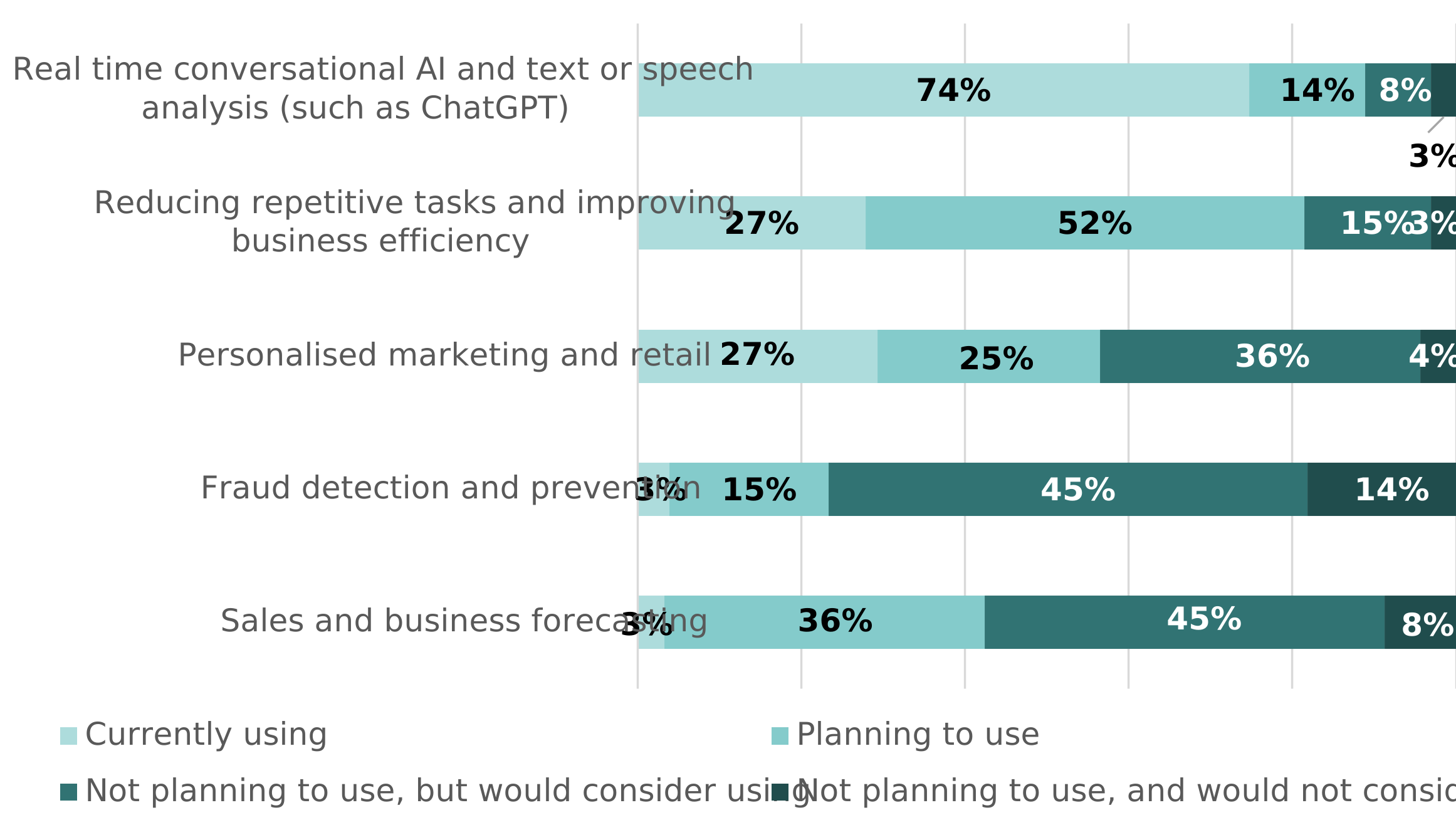
Source: Surveyed respondents – businesses that were successful in their application (n=73)
Figure 4.8 shows the top 10 barriers faced by successful applicants to the take up of AI. The most common barrier related to gaps in AI skills, expertise and knowledge, reported by 63% of applicants. Almost half (49%) said they did not have a defined use case for AI and the same proportion did not have a holistic AI strategy in place. There was also concern amongst some successful applicants with regulation relating to AI, particularly amongst legal and accounting businesses. Other barriers related to ethical concerns, lack of end user research, costs and governance.
Unsuccessful applicants who were interviewed said they did not fully understand how to use AI and would welcome guidance from Government on this as they understood its importance. Businesses who expressed an interest but did not go on to apply highlighted a lack of internal resource or understanding of how best to use AI as factors preventing them progressing with AI adoption in their business. One interviewee was cautious about adopting AI for basic processes as this would prevent learning and understanding of these tasks by junior staff.
Figure 4.8 What barriers, if any, does your business currently face to AI adoption and/or more extensive use of AI?
| - | Barriers |
|---|---|
| We have limited AI skills, expertise or knowledge | 63% |
| We do not have the use cases defined | 49% |
| We do not have a holistic AI strategy in place | 49% |
| Regulation, trust and safety barriers | 47% |
| The regulatory environment is uncertain | 44% |
| We have a lack of tools/platforms for developing AI models | 42% |
| We have ethical concerns | 30% |
| We do not have the end user research needed to get started | 26% |
| The yearly cost is too high | 25% |
| We do not have the ability to properly govern our AI models | 25% |
Source: Surveyed respondents – businesses that were successful in their application (n=73). Applicants could select more than one option. Note: Top 10 responses displayed.
4.6 Motivations for applying
The main reason that businesses applied to the FAIUF was to improve access to AI upskilling for their employees, which aligns with the intentions of the Fund (see Figure 4.9). Around three quarters of successful applicants wanted to improve confidence within their businesses regarding AI use and adoption alongside addressing a skills gap in relation to this. Around half (55%) wanted to use AI to improve efficiencies within their business.
Less than half of successful applicants who responded to the survey said they required additional funding for training (41%) or that AI upskilling needed to be made more affordable (48%). This aligns with interview feedback from successful applicants, who said that money was not their primary concern or barrier to adoption of AI; they were more concerned with improved access to suitable AI training and increased skills and confidence to use AI.
All of those interviewed agreed that AI training was important to upskill their employees. Successful and unsuccessful applicants referenced a need to keep up with developments in AI in order to remain competitive in their markets, with all interviewees acknowledging the pace of AI development.
Several unsuccessful applicants and those who submitted EOIs remained motivated to pursue AI training despite not receiving funding through the FAIUF. Interviews with unsuccessful applicants also found that some businesses had decided to upskill internally by investing time in independently researching and learning to apply AI within their business.
Figure 4.9: What were your motivations for applying to the FAIUF?
| - | Motivations for applying to the FAIUF |
|---|---|
| Improved access to AI upskilling for employees | 89% |
| To improve in the business regarding AI use and adoption | 74% |
| Address kills gap within the workforce | 73% |
| Improve efficiencies within the business and services provided | 55% |
| To make AI upskilling more affordable | 48% |
| To increase trust in the business regarding AI use and adoption | 48% |
| To support firm level ambitions regarding AI adoption | 42% |
| Access to additional funding for training | 41% |
Source: Surveyed respondents – businesses that were successful in their application (n=73). Applicants could select more than one option.
Figure 4.10 shows that successful applicants were seeking funding for a range of different types of AI training. More than half (60%) sought training focused on automating repetitive tasks and boosting overall efficiency, whilst two fifths were looking for AI consultancy and training services (41%) or to enhance their research and development (40%). AI training also looked to cover more creative elements including personalised marketing (27%) and image generation (23%). Some businesses required training for more technical services and products, including optimising supply chains and dynamic price optimisation.
Figure 4.10 Will the training cover any particular AI-driven product or service?
| - | What will the training cover |
|---|---|
| Reducing repetitive tasks and improving business efficiency | 60% |
| AI consultancy and training services | 41% |
| Enhancing research and development | 40% |
| Real time conversational AI and text or speech analysis | 38% |
| Personalised marketing and retail | 27% |
| AI image generation | 23 % |
| Sales and business forecasting | 19% |
| Customer segmentation and predictive customer service | 18% |
Source: Surveyed respondents – businesses that were successful in their application (n=73). Applicants could select more than one option. This graph only shows the top 8 answers.
Figure 4.11 confirms that the focus of most successful applicants was on training to upskill employees in foundational AI concepts (75%), which include AI and Machine Learning. More than half (53%) of respondents intended to fund training relating to AI ethics and governance, particularly micro businesses, highlighting concerns regarding the potential risks associated with AI. Over one fifth (22%) were interested in cognitive and knowledge-based systems which can be used to build AI agents capable of human-level intelligence, which requires a more detailed existing knowledge of AI and its uses across the business. Interview evidence suggested that many businesses sought training to enable them to make better use of OpenAI tools such as ChatGPT.
Figure 4.11: Which, if any, of the following skills is the AI training you intend to procure focused on?
| - | What is the focus of the AI training |
|---|---|
| Foundational AI concepts (e.g. Artificial Intelligence, Machine Learning | 75% |
| AI modelling techniques and methods (e.g. Generative models, Logistic regression, supervised learning) | 56% |
| AI Ethics and governance (e.g. AI governance, AI risk, AI safety) | 53% |
| AI related fields and applications (e.g. Natural language processing, Robotics, Programming) | 38% |
| Cognitive and knowledge-based systems (e.g. Computational Intelligence, Cognitive computing | 22% |
Source: Surveyed respondents – businesses that were successful in their application (n=73). Applicants could select more than one option.
4.7 Application Experience
The application window opened at the end of April 2024 and was initially due to close in May 2024 with agreements issued in June 2024. However, demand for the Fund was lower than anticipated resulting in a decision to extend the application window by six weeks to August 2024, which had the further advantage of taking the closing date to after the general election. However, some stakeholders thought that this was too long of an extension. Some businesses who interacted with the Fund but either chose not to submit an application, or who were successful but did not go on to submit a funding claim, noted that the extension to the funding window resulted in the training being no longer relevant or available.
The majority (81%) of successful applicants who completed the survey believed the Fund was aimed at businesses like theirs (Figure 4.12), which suggested clear eligibility criteria. More than half (56%) said that applying to the Fund was simple, which was a conscious intention at the design stage, and the majority (77%) considered the application process to be clear and aligned to the intended purpose of the Fund. Despite this, interview feedback suggested that for smaller businesses, the application process felt administratively burdensome, particularly given the value of the grants available. Several unsuccessful companies that were interviewed were uncertain as to why their application has been unsuccessful as they believed they met the criteria.
Communication from DSIT was said to have been variable during the application process. Whilst most interviewees felt it had been sufficient and that they had received updates when required, some businesses who tried to engage DSIT with questions about their application found that communication had been slow, with some queries left unanswered. Unsuccessful applicants who were interviewed expressed frustration at the time wasted on their application, which they viewed as profit loss to their business. They also expressed frustration at the lack of feedback on their applications, which meant there was no learning for future grant applications. Some businesses who submitted an EOI were under the impression they had submitted a complete application, and when they realised there was another stage decided not to proceed.
Figure 4.12 Thinking about your experience of applying to the FAIUF, to what extent to do you agree or disagree with the following statements?
| - | Agree | Disagree |
|---|---|---|
| I thought the programme was aimed a businesses like mine | 81% | 4% |
| It was clear what I needed to submit for my application | 77% | 11% |
| I understood how grants would be awarded amongst eligible applications | 67% | 19% |
| I knew where to go if I had any questions about my application | 66% | 14% |
| Applying to the programme was a simple process | 56% | 25% |
Source: Surveyed respondents – businesses that were successful in their application (n=73). Agree comprises those that responded with ‘agree’ and ‘strongly agree’, whilst disagree comprises those that responded with ‘disagree’ and ‘strongly disagree’. Totals may not equal 100% as ‘don’t know’, ‘prefer not to say’ and ‘neither agree nor disagree’ response options are not presented.
Figure 4.13 shows that two fifths (42%) of businesses already knew the training they wanted to undertake at the time of their application and were confident in their ability to source training of sufficient quality (41%). Some of those interviewed had been approached by trade bodies promoting training delivered by them and signposted to the Fund for financial support to access this. Feedback from interviewees suggested that businesses with a greater understanding of AI were generally more confident and able to identify training that was relevant to their business.
However, almost one in five (18%) businesses surveyed said they struggled to find training that met their needs and one in ten (9%) struggled to find affordable training. Interviews suggested that micro businesses found it time consuming to source their own training, were uncertain of the best training for them or were unaware they needed to source their own training.
Feedback from interviewees highlighted some misunderstanding around the government accreditation requirement of training providers. The application guidance indicated that businesses could make a case for a training provider that was not on DSIT’s accredited list. However, some businesses had identified training that they considered to be highly relevant for their business, but as the providers were not accredited they did not submit an application following their EOI as they understood that the training was not eligible. One applicant said that the training they were looking to access was not accredited, which they raised with the provider who was able to apply and gain accreditation. Another was told that their original application did not meet the criteria and were signposted to a government accredited provider and encouraged to apply for a different course.
More generally, the government accreditation requirement was considered by some businesses to have limited access to new, relevant and up to date courses, recognising the pace at which understanding of AI is developing and that the newest courses may not yet be accredited.
Figure 4.13 Which of the following best describes your experience of identifying relevant training for your FAIUF application?
| - | Description of your experience of identifying relevant training |
|---|---|
| I already had training in mind before applying to FAIUF | 42% |
| I was confident in my ability to identify quality training | 41% |
| There was training available that met my needs within the timelines required | 34% |
| I was able to make a judgement on the quality of training on offer | 29% |
| I was able to find relevant training in my local area | 19% |
| I struggled to find training that met my needs | 18% |
| I struggled to find training that was affordable | 7% |
Source: Surveyed respondents – businesses that were successful in their application (n=73). Applicants could select more than one option.
4.8 Communicating decisions and establishing grant agreements
As mentioned, DSIT made the final decision on which businesses were successful in their application following GGMS’ scoring. Once this decision had been made, GGMS issued notification letters informing businesses of their application outcome. Grant agreements were initially intended to be sent in June, but as a result of the extended application window and delays, some agreements were not issued until early October. One applicant who was interviewed said the decision took around two weeks to be communicated, which felt reasonable. However, another said that the decision took months which they felt was too long and impacted their ability to access training within the available timescales of the Fund.
Successful applicants considered the grant agreement to be lengthy and complicated. It was suggested that a single signature on an overlay page would have made it easier to manage, rather than having to sign in multiple places. Others noted that the formatting of the document caused problems, requiring printing and downloading additional software, which was seen as an additional time cost.
Decision emails were issued by GGMS and some applicants said they did not know who they were or how they related to the Fund, resulting in some being unsure if the email was legitimate. Some applicants missed the decision email from GGMS as they were expecting a communication from the Cabinet Office or DSIT.
5. Fund delivery
Chapter summary
GGMS managed the day-to-day operations of the FAIUF, including claim assessment and payment processing, with oversight from DSIT, HM Treasury, and the ETF. Stakeholders reported positive communication and responsiveness from the various teams involved.
Most successful applicants who responded to the survey in Jan/Feb 2025 had either completed the training for which they had received funding through the FAIUF or expected to complete this by the end of March 2025. Around one in ten had decided not to undertake the training after all, with reasons including constrained timelines or the training no longer being eligible.
A total of 181 businesses submitted a claim for funding by the end of March 2025, representing just over half (55%) of successful applicants. The remaining 45% of successful applicants either did not complete the training or completed the training and decided not to submit a funding claim.
Employees selected to receive training through the FAIUF and who responded to the survey were equally split between male and female (50% each). The majority (77%) were white British, whilst 10% were from a different white background and the remaining 13% were from a non-white ethnic background. Most were aged between 35 and 54, with relatively few over the age of 55. Around half had been in their current role for less than three years.
Most employees that responded to the survey had already received AI training in the last 12 months outside of the FAIUF training. The majority worked outside of data and AI but expected that AI could be used in daily tasks, including in HR, social media and accountancy roles. Most were aware of how to use AI in their current role, although less than half believed they could quality assure AI outputs. Around half were already used AI at least once a day, one third were using AI multiple times per day and one fifth did not use AI at all in their current role.
Most employees said they understood the opportunities that AI presented as well as the associated risks. There was also a good understanding of the use of opensource AI (e.g. ChatGPT) compared with closed AI.
5.1 Day to day running of the programme
Following the initial set up and application award stage, the Fund was run primarily by GGMS with minimal involvement from other stakeholders. GGMS was responsible for the day-to-day implementation of the Fund, including assessing claims and ensuring payment cycles ran smoothly. GGMS were also the key contact for businesses and handling correspondence and queries.
DSIT, GGMS, HM Treasury, ETF and other stakeholders met regularly to discuss progress and issues arising. All stakeholders were positive about the engagement and communication across the various teams involved and responsiveness to issues as and when they arose.
5.2 Training
Most successful applicants who responded to the survey in Jan/Feb 2025 had either completed the training for which they had received funding through the FAIUF or expected to complete this by the end of March 2025 (Figure 5.1). Around one in ten (11%) successful applicants who completed the survey had decided not to undertake the training at all, with reasons including constrained timelines or the training no longer being eligible.
A total of 181 businesses submitted a claim for funding by the end of March 2025, representing 55% of successful applicants. This suggests that more than two fifths (45%) of successful applicants either did not complete the training or completed the training and decided not to submit a funding claim.
Figure 5.1 Have you undertaken the AI upskilling training that you applied for?
Table view: Have you undertaken the AI upskilling training that you applied for?
| Have you undertaken the AI upskilling training that you applied for | Responses % |
|---|---|
| Yes the training has already been completed | 37% |
| No | 11% |
| Not yet, though the training has been booked in to take place before the end of March 2025 | 51% |
Source: Surveyed respondents – businesses that were successful in their application (n=73).
Interviews with successful applicants revealed that in some instances businesses had applied for training specific to a project. However, due to delays with receiving a response from the FAIUF, the project had progressed and the training had either been self-funded or was no longer needed. In these instances, businesses chose not to submit a claim for the funding they had been awarded.
Employees that were selected for training
Businesses who were successful in their application for funding were sent an additional survey to share with employees who had been selected to receive training using the FAIUF grant, including those who did and did not proceed with the training. This section presents information on the demographic profile and responses of those employees who took part in the survey. The data presented is based on 105 responses received by 24th February 2025.
5.3 Profile of employees selected for training
Employees who responded to the survey were equally split between male and female (50% each). The majority (77%) were British, whilst 10% were from a different white background and the remaining 13% were African, Indian, Chinese, Caribbean or Asian. Over half of those who responded to the survey were aged between 35 and 54 (55%), whilst 17% were aged 55+ suggesting a focus of AI upskilling amongst younger employees (Figure 5.2).
Figure 5.2 How old are you?
| - | Age range |
|---|---|
| 16-24 | 4% |
| 25-34 | 23% |
| 35-44 | 24% |
| 45-54 | 31% |
| 55-64 | 15% |
| 65+ | 2% |
Source: Surveyed employees – employees that were selected for training funded by the FAIUF (n=105)
Figure 5.3 shows the length of time that employees selected for training had been in their roles, with around half (46%) having been in their current role for less than three years.
Figure 5.3 How long have you been in your current role?
| - | How long have you been in your current role |
|---|---|
| Less than 6 months | 5% |
| More than 6 months but less than a year | 11% |
| 1 year to less than 3 years | 30% |
| 3 years to less than 5 years | 18% |
| 5 years to less than 10 years | 15% |
| 10 years to less than 15 years | 10% |
| 15 years to less than 20 years | 8% |
| 20 or more years | 3% |
Source: Surveyed employees - employees that were selected for training funded by the FAIUF (n=105)
The majority of employees who responded to the survey (64%) worked outside of data and AI but expected that AI could be used in their daily tasks. This aligns with the finding that businesses were motivated to use AI to reduce repetitive tasks (see Figure 4.10). Only 11% of those who responded to the survey said that AI was a core responsibility within their job, and 14% said that they play a significant role in strategic decision-making related to AI.
Businesses who participated in interviews acknowledged the potential of AI to enhance productivity. However, some noted that their companies were not primarily focused on AI and that those employees selected for the training worked in roles such as HR, social media marketing, and accountancy. Others said that they had worked within AI, engineering and computer science for many years with degrees in the subject and considered themselves early adopters of AI, but this was less common.
Figure 5.4 shows varying levels of confidence amongst employees that were selected for training in the use of AI in their current role. A response of 1 indicated having no confidence at all whilst 10 indicated being very confident. Around one in five (22%) were confident in their ability to use AI in their current role (7 and above on the scale), whilst 12% were not confident (3 and below on the scale). Over a quarter (26%) placed themselves around the middle of the confidence scale (4-6).
Figure 5.4 How confident, if at all, are you at using / would you be if you were required to use AI in your current role?* (n=105)
| How confident, if at all, are you at using / would you be if you were required to use AI in your current role? | |
|---|---|
| 1 - not at all confident | 0% |
| 2 | 1% |
| 3 | 3% |
| 4 | 9% |
| 5 | 10% |
| 6 | 7% |
| 7 | 10% |
| 8 | 9% |
| 9 | 1% |
| 10 - very confident | 2% |
Source: Surveyed employees – employees that were selected for training funded by the FAIUF (n=105). *The scale runs from 1-10 with 1 being not at all confident and 10 being very confident.
5.4 Trained employee AI use
Of the employees that responded to the survey, 64% had already received AI training in the last 12 months outside of the FAIUF training. This was mostly delivered by an external provider (93%) and focussing on foundational AI concepts (81%), AI modelling techniques (46%) or AI ethics and governance (49%). Further to this, around half (52%) already used AI at least once a day and around one third said they used AI multiple times per day. One in five (18%) did not use AI at all in their current role.
Figure 5.5 How regularly, if at all, do you use AI in your current role?
| - | How regularly, if at all, do you use AI in your current role? |
|---|---|
| I don’t use AI in my current role | 18% |
| Quarterly or annually | 6% |
| Monthly | 8% |
| Weekly | 16% |
| Once a day | 21% |
| Multiple times a day | 31% |
Source: Surveyed employees – employees that were selected for training funded by the FAIUF (n=105)
Figure 5.6 shows the reasons given by employees who said they did not use AI multiple times per day. The most common reasons were that they didn’t have time to research how to use AI in their role or they didn’t know how to use AI in their role. Around one fifth (21%) said they didn’t have the skills and capabilities to use AI.
Interview feedback revealed that a small number of businesses (typically those in legal and accounting) preferred their employees not to adopt AI until they were certain on the risks and ethics associated with it.
Figure 5.6: What are the main reasons you don’t use AI more frequently in your current role?
| - | What are the main reasons you don’t use AI more frequently in your current role? |
|---|---|
| I don’t have the time to research how I could use AI in my role | 28% |
| I don’t know how I could use AI in my role | 26% |
| I don’t have the skills and capabilities to use AI | 21 % |
| AI is not appropriate for my role | 17% |
| My employer would prefer I don’t use AI for my role | 8% |
Source: Surveyed employees – employees that were selected for training funded by the FAIUF who reported not using AI multiple times a day (n=53).
5.5 Motivations and concerns regarding AI amongst those selected for training
The majority (89%) of employees surveyed said they were motivated to improve their AI skills and capabilities, with 44% saying that they were highly motivated. A minority (10%) said they were not motivated but carried out the training under their manager’s jurisdiction.
Figure 5.7 shows the potential benefits that employees who responded to the survey expected to gain from using AI in their role. Employees most commonly expected to improve task efficiency (84%) and around half (53%) expected the quality of their outputs to improve. AI was also viewed as important to increasing competitiveness both with competitors and amongst peers, a potential benefit that was also frequently mentioned in interviews. Over one quarter of employees (28%) expected AI to improve their work life balance.
Figure 5.7 What are the potential benefits to you of using AI in your current role?
| - | Potential benefits to you of using AI in your current role? |
|---|---|
| Efficiencies in completion of tasks | 84% |
| Improved quality of outputs | 53% |
| To keep up with competitors | 48% |
| Improved consistency of outputs | 44% |
| Quality assurance of tasks | 34% |
| To keep up with peers | 30% |
| Improved work life balance | 28% |
| Increased opportunities for pay increases | 16% |
| Increased opportunities for promotion | 15% |
Source: Surveyed employees – employees that were selected for training funded by the FAIUF (n=105).
Applicants could select more than one option.
Despite the potential benefits, respondents also expressed concerns regarding the risks of using AI in their current role (see Figure 5.8). These largely related to potential errors such as mishandling of sensitive or personal data (67%), biases in AI leading to output biases (54%) and security risks (47%). There were also concerns about how it might impact them individually; loss of critical thinking skills (53%) or loss of creativity (33%). A minority of respondents (15%) expressed concern that their jobs might become redundant, while a similar proportion were worried about redundancies of other people in their company (13%).
Figure 5.8 What are the potential risks of using AI in your current role?
| - | Potential risks of using AI in your current role? |
|---|---|
| Mishandling of sensitive or personal data | 67% |
| Biases in the AI system leading to biases in outputs | 54% |
| Loss of critical thinking skills | 53% |
| Security risks | 47% |
| Loss of creativity | 33% |
| AI used to make decisions requiring moral or ethical judgement | 25% |
| Lack of transparency | 20% |
| Risk of my job no longer being required | 15% |
| Redundancies of other people in my company | 13% |
Source: Surveyed employees – employees that were selected for training funded by the FAIUF (n=105). Applicants could select more than one option.
5.6 Understanding and skills regarding AI amongst employees selected for training
Of those employees that responded to the survey, most said they understood the opportunities that AI presented (81%) as well as the associated risks (84%). There was also a good understanding of the use of opensource AI (e.g. ChatGPT) compared with closed AI, as shown in Figure 5.9.
Figure 5.9 Thinking about how you feel today, to what extent do you agree with the following statements?
| - | To what extent do you agree with the following statements |
|---|---|
| I understand the potential risks of AI | 84% |
| I understand the potential opportunities of AI | 81% |
| I understand when opensource AI tools are appropriate | 81% |
| I understand when closed AI tools are required | 69% |
Source: Surveyed employees – employees that were selected for training funded by the FAIUF (n=105) and selected agree or strongly agree in response to statements./sup>
Figure 5.10 shows that 82% of employees who responded to the survey thought that AI could be used for tasks in their current role, whilst 66% suggested there were new areas in their current roles that AI could be used, creating efficiencies. Most respondents (66%) agreed that they were aware of how to use AI in their current role, although less than half (46%) believed they could quality assure AI outputs.
Figure 5.10: Thinking about how you feel today, to what extent do you agree with the following statements?
| - | To what extent do you agree with the following statements |
|---|---|
| I can make use of AI-based tools to perform tasks as part of my role | 82% |
| I can identify new areas in my role where AI could improve efficiency, accuracy or productivity | 66% |
| I am aware of how AI can be used in my role | 66% |
| I can quality assure the outputs of AI systems | 46% |
Source: Surveyed employees – employees that were selected for training funded by the FAIUF (n=105) and selected agree or strongly agree in response to statements.
5.7 Grant claims and payment
Following completion of the training for employees, businesses were able to submit a request to GGMS to receive their FAIUF grant. This had to be submitted by the end of March 2025.
The majority (95%) of businesses who responded to the survey said that when the training was completed, they intended to submit a grant request. However, only 55% of all businesses who were successful in their funding application went on to submit a claim by the end of March 2025. This could suggest that the sample of businesses that completed the survey differed from the wider population of businesses, with those completing the survey being more likely to submit a claim.
DSIT transferred funds to GGMS to enable them to distribute grants to applicants in a timely manner. The first of two grant payment cycles (January and March) were delayed due to a two-week delay in DSIT transferring funds to GGMS. The final March payment cycle was on time.
6. Expected outcomes
Chapter summary
Surveyed businesses expected a range of benefits for their employees from the training including increased confidence and understanding of AI, how it can be used, best practice and how it can improve productivity.
Anticipated business benefits included a workforce that was upskilled in AI, including through knowledge dissemination from those that had been trained, and an increased understanding across the business of how AI could be used and the benefits it could bring. Some businesses who had completed the training had improved their understanding of AI, but their processes and systems had not yet changed as a result. Others had already changed the way they work, with all employees now using AI to speed up day to day processes.
The biggest potential barrier to benefit realisation referenced by businesses related to the cost of AI adoption, followed by uncertainty around where to access relevant AI solutions. There were also concerns that the training would not address identified skills gaps or that it would not result in knowledge dissemination or positive change.
6.1 Expected benefits
Fund applicants were asked what benefits they expected from the FAIUF for their employees as well as for their business. Most businesses (89%) expected that trained employees would feel more confident using AI (Figure 6.1). Ultimately, businesses hoped that employees would develop a better understanding of AI, how it can be used, best practice with AI and how it can improve productivity.
Interview feedback suggested that employees did feel they had a better understanding of AI and how it could be used as a result of the training undertaken through the FAIUF, but expressed concern that AI is fast-moving and knowledge and training is quickly becoming outdated.
A minority of businesses (15%) who responded to the survey expected an improvement in employee wellbeing and / or potential changes in roles and responsibilities as a result of the training.
Figure 6.1: Which, if any, of the following benefits did you expect for your employees who will be trained using the FAIUF grant at the time of your application?
| - | Benefits expected from your employees |
|---|---|
| Increased confidence in working with AI | 89% |
| Increased understanding of how AI could be used in your firm | 78% |
| Increased awareness of the risks and ethics of AI | 73% |
| Increased technical skills to use AI | 70% |
| Increased awareness of the link between AI and improved productivity | 68% |
| Increased awareness of areas for personal development | 68% |
| Increased efficiency in role | 64% |
| Increased and mor effective use of AI solutions | 62% |
| Increased technical skills to develop AI | 32% |
| Changes in job role and responsibilities | 15% |
| Improved wellbeing | 15% |
Source: Surveyed respondents – businesses that were successful in their application (n=73). Applicants could select more than one option.
At the business level, the expected benefits were similarly wide ranging, as shown in Figure 6.2. Around three quarters (77%) of business expected to have a workforce that was upskilled in AI, in line with the intention of the Fund. Further to this, 70% of businesses said they hoped for knowledge dissemination from those that had been trained. Interview feedback revealed that it was common for businesses to use the funding to train a small number of members of their team, with the expectation that they would deliver feedback sessions to disseminate the learning more widely across the businesses.
Three quarters of businesses expected to achieve an increased understanding across the business of how AI could be used and the benefits it could bring. Whilst half (51%) of businesses expected to develop an increased understanding of how AI was linked to productivity, a lower proportion (33%) expected an increase in productivity. These findings were also reflected in interviews with successful businesses following completion of the training. Most businesses reported that their understanding of AI had increased, often within the context of their sector specifically, however some reported that processes and systems had not yet changed as a result of the AI training.
One business said that the training had changed the way they work, with all employees now having access to chat GPT and that this was being used to speed up day to day processes. Another shared that all employees within their business were able to use AI prompts with more confidence to speed up tasks such as report writing. The training in both cases had been developed and delivered with the trade associations that had introduced the Fund to the business.
Another business, where the managing director was already a confident user of AI, accessed training which led to the development and implementation of a Code of Practice for AI use. A further example was provided of a business that accessed a day-long training for their team, which has led to wider use of AI to produce designs and marketing materials and to assist with spelling and articulation for employees who do not have English as their first language and support analysis of datasets.
Figure 6.2: Which, if any, of the following benefits did you expect for your business as a result of the FAIUF grant at the time of your application?
| - | Benefits expected for your business |
|---|---|
| An upskilled workforce in AI | 77% |
| Increased understanding of how AI could be used in your firm | 75% |
| Increased organisational understanding of the benefits of AI | 75% |
| Trained employees share knowledge of their new AI skills with other employees | 70% |
| More effective use of existing AI solutions | 63% |
| Improved efficiency in trained employees | 62% |
| Increased awareness of the link between AI and improved productivity | 51% |
| Incorporation of AI into business plans and strategy | 48% |
| Improved business resilience and survival | 37% |
| Improved firm level productivity | 33% |
| Adoption of open-source AI solutions | 33% |
| Increased investment in new AI solutions | 32% |
| Creation of new AI roles and responsibilities | 14% |
Source: Surveyed respondents – businesses that were successful in their application (n=73). Applicants could select more than one option.
6.2 Expected barriers
Some businesses identified potential barriers to benefit realisation (see Figure 6.3). The biggest concern related to the cost of AI adoption (identified by 30% of survey respondents) followed by uncertainty around where to access relevant AI solutions (29%). There were also concerns that the training would not address identified skills gaps or that it would not result in knowledge dissemination or positive change.
Figure 6.3: What barriers, if any, might prevent your businesses and employees from realising these benefits?
| - | Barriers |
|---|---|
| The costs associated with adopting AI are too high | 30% |
| Uncertainty regarding where to access relevant AI solutions | 29% |
| Training does not address skills gaps | 19% |
| Trained employees leave the firm without sharing their new skills and knowledge | 14% |
| There is insufficient trust in employees | 10% |
| There is insufficient trust in AI amongst senior leaders | 10% |
| Senior leaders and decision makers do not understand the potential of AI | 7% |
Source: Surveyed respondents – businesses that were successful in their application (n=73). Applicants could select more than one option.
7. Conclusions
The document has reported the findings from the baseline and process phase of the evaluation of the Flexible AI Upskilling Fund (FAIUF). This final chapter provides summary conclusions in relation to the key questions that this phase of the evaluation sought to address. It highlights lessons in relation to each, which could be useful for informing the design and delivery of similar interventions in future.
How effective was the scheme’s design in generating interest and applications from eligible businesses in the PBS sector?
The level of demand for the Fund was much lower than anticipated. The final number of applications was approximately 15% of the original target of 4,000 despite an extension of six weeks to the application window. This suggests that many eligible SMEs in the PBS sector either did not know about the Fund or were not motivated to apply.
Professional bodies and newsletters were found to be effective channels for initial engagement and raising awareness and interest, whilst social media platforms and the gov.uk website were effective in generating applications. Participating businesses thought that more could have been done to promote the FAIUF and some were unaware of the engagement activities that had been undertaken, such as roundtables and webinars. The reliance on professional bodies to generate interest resulted in a concentration of applications from medium-sized businesses who were more likely to be engaged with these networks than small and micro-firms.
There was a disconnect between the Expression of Interest (EOI) and application stages of the process, with relatively few firms who expressed an interest going on to submit a full application. Factors that were found to have contributed to the low application rate included the administrative burden, particularly for micro-businesses, and the match-funding requirement, which posed a financial barrier for some. The requirement for businesses to source their own training was also identified as a barrier by some who were unsure of their AI skills needs and where to source relevant training.
These findings point to potential lessons relating to:
- Testing assumptions – more work could have been done during the design phase to test the assumptions underpinning the FAIUF, particularly in relation to likely levels of interest and demand from SMEs in the PBS sector.
- Sectoral focus – the decision to focus the FAIUF on SMEs within the PBS sector limited the potential pool of eligible businesses. Broadening the eligibility to other sectors, potentially adjacent sectors such as legal or financial services, could have helped increase the overall volume of applications received and enabled more businesses to be reached through the Fund.
- Converting EOIs to full applications – a relatively high number of businesses who expressed an interest in the FAIUF did not go on to apply. Additional work to understand the reasons why, including any barriers faced and additional support requirements, could have increased the conversion rate and boosted the overall number of applications received.
To what extent were SMEs able to identify and source relevant training through the scheme to upskill their employees?
The requirement for businesses to identify their own training ensured that they could select provision that was relevant to their specific needs and enabled them to leverage existing relationships with training providers. However, it also posed challenges for some who were unsure of what their training needs were and how to source this. Micro-businesses in particular found sourcing training to be time-consuming and were sometimes uncertain about the most appropriate options. As noted, they were also less likely to be engaged with trade bodies and professional associations, who were a key source of information on training options and in some cases delivered this themselves.
Two fifths of businesses who applied to the Fund had identified training at the time of their application. However, more than half had not, highlighting a potential challenge for some SMEs in navigating the training landscape. One in five successful applicants said they struggled to find training that met their needs, whist one in ten struggled with affordability. This suggests that funding was less of a barrier to AI upskilling than accessibility of suitable training.
More than half of SMEs who were successful in their application to the FAIUF went on to source AI upskilling training and submit a claim for match-funding. Of those that had sourced training at the time of the survey, most were satisfied with this. However, two fifths of those who were successful did not go on to submit a funding claim, suggesting that some faced barriers to identifying and sourcing relevant training. The extension to the application window meant that some training opportunities sought by businesses that applied early, and then had to wait a long a long time to receive confirmation of their grant award, became less relevant due to changing business needs and course availability.
The requirement for training providers to be government-accredited provided a quality assurance framework. However, it also limited access to newer, potentially more relevant courses that had not yet received accreditation, which was noted as important in a fast-moving landscape.
These findings point to potential lessons relating to:
- SMEs’ ability to identify and source relevant training to meet their AI skills needs – the fund aimed to generate insights on the emerging needs of businesses regarding AI. However, the requirement for businesses to source their own training was found to be a barrier for some to applying and / or sourcing relevant training once approved for funding. Future programmes might consider offering a list of pre-approved courses, or access to support to identify AI skills needs and source relevant training to meet these.
- Administering the funding in waves – those who applied to the FAIUF within the original timescales had to wait a long time to receive confirmation of the outcome of their application, compressing the time available for them to identify and source suitable training. This also resulted in some training no longer being required or available. This could have been mitigated by assessing the first wave of applications earlier rather than waiting until after the extended deadline.
To what extent has the programme design successfully facilitated increased investment in AI upskilling amongst SMEs in the PBS sector?
The Fund facilitated co-investment in AI skills training from 181 businesses, which falls some way short of the initial target of 2,000 businesses. The matched funding model for FAIUF facilitated co-investment and a sense of accountability among participating businesses to invest in training to meet their AI skills needs. It was also found to have been a catalyst for some businesses to make plans for future investment, acknowledging the rapid evolution of AI training needs. However, the model also presented a financial barrier, particularly for micro-enterprises, some of whom struggled to meet the match funding requirements. Conversely, some larger businesses felt that the funding available was insufficient to justify the application process.
A high proportion of employees who completed the survey had already received some form of AI training in the preceding 12 months, suggesting that participating firms were already motivated to invest in AI upskilling for their staff. Some successful applicants said they had planned to make the investment regardless of the Fund. In addition, some of those who submitted EOIs but did not go on to apply, or who were unsuccessful in their applications, went on to self-fund the relevant training anyway.
A key lesson from these findings relates to:
- The reach of the Fund – the FAIUF was found to have reached a lot of firms who were already committed to investing in AI upskilling for their employees. Greater efforts to engage those businesses who were further behind in their AI upskilling or adoption journey could have had generated greater impact and additionality from the investment.
How effective were the scheme’s processes at supporting SMEs to upskill their employees in AI?
Whilst the FAIUF did support some SMEs in upskilling their employees, challenges relating to the lower than anticipated volume of applicants and compressed timelines for delivery detracted from the programme’s overall effectiveness and reach. A key finding was that the AI landscape is rapidly changing and whilst the FAIUF proved useful to those who carried out the training, many noted that more training was needed and in some instances the training carried out as part of the Fund was already outdated.
The delay in awarding grants and issuing agreements impacted some businesses’ training plans, with some opportunities becoming less relevant or no longer available due to the extended timeframe. The requirement for training to be government-accredited, while intended to ensure quality, may have inadvertently limited access to some relevant courses. Additionally, some businesses, particularly micro-firms, found the application process administratively burdensome. Communication issues also arose, with some unsuccessful applicants expressing confusion about the role of GGMS and requesting more feedback on the reasons for their application being declined.
Annex A: Theory of Change
Inputs
- £381,095.67 for 50% match funding up to £10,000. Other costs for delivery and evaluation
- Staff time and expertise from within DSIT, Evaluation Taskforce, HMT, DfE, DBT
- SME contribution via match funding for AI upskilling training
Activities
-
DSIT
- Marketing, promotion and pre-engagement activities.
- Design of eligibility criteria, application forms and scoring system.
- Moderation of GGMS assessed applications
- Monitoring and due diligence
- Coordinating Governance measures
-
GGMS
- Managing grant application process and assessing eligibility
- Administration, monitoring and management of awarded grants
- Ensuring fund compliance with GFS
-
ETF
- Submitting applications
- Identifying suitable AI training
- Identifying employees and releasing them for training
- Submitting required monitoring
- Participating in the evaluation
Outputs
- Number and profile of SME’s applying
- Number of eligible grant applications received
-
Number of grants awarded to SMEs 181
-
Types, levels and duration of AI training courses requested
- Number of SME’s that complete, or do not complete, AI training
- Amount of funding requested and disbursed
- Number of employees trained, and number of SMEs supported (by type of training, sector, size, demographics of trainee)
Outcomes
Employee level outcomes
Personal development
- Increased confidence in working with AI
- Increased awareness of areas for personal development
Skills, knowledge and understanding of AI
- Increased awareness of benefits, risks and ethics of AI
- Increased awareness of the link between AI and improved productivity
- Increased understanding of how to use AI in their role
- Increased technical skills to develop, deploy and use AI
Business level outcomes
Upskilled workforce
- SME workforce is upskilled in AI
- Knowledge spill over
Increased investments in AI upskilling
- Increased understanding of the benefits of AI training
- Increased investment in AI training (internal and external)
- Creation of new AI roles and responsibilities
Adoption/more effective use of AI
- Increased investment in new AI solutions
- Adoption of open-source AI solutions
- More effective use of existing AI solutions
Improved AI-related business planning
- Incorporation of AI into business plans and strategy
Impacts
Direct effects
- Positive wage effects for trained employees
- Increased institutional knowledge relating to AI
- Improved business resilience and survival
- Firm expansion (turnover, GVA, employment)
- Improved firm level productivity
Indirect effects
- Improved supply and demand for AI skills
- Increased supply of AI training by the private sector
- Improved evidence base of what works with AI skills investment
- Improved trust in AI amongst the public