ESPAUR report 2025 to 2026: Lay summary
Published 12 November 2026

© Crown copyright 2026
This publication is licensed under the terms of the Open Government Licence v3.0 except where otherwise stated. To view this licence, visit nationalarchives.gov.uk/doc/open-government-licence/version/3 or write to the Information Policy Team, The National Archives, Kew, London TW9 4DU, or email: psi@nationalarchives.gov.uk.
Where we have identified any third party copyright information you will need to obtain permission from the copyright holders concerned.
This publication is available at https://www.gov.uk/government/publications/english-surveillance-programme-for-antimicrobial-utilisation-and-resistance-espaur/espaur-report-2025-to-2026-lay-summary
All ESPAUR report documents can be accessed at: English surveillance programme for antimicrobial utilisation and resistance (ESPAUR) report.
Chapter 1. Introduction: Why surveillance is important for tackling antimicrobial resistance
ESPAUR is an acronym for the English Surveillance Programme for Antimicrobial Utilisation and Resistance.
It aims to collect data on the use of, and resistance to, antimicrobial medicines which are designed to treat infections that are caused by germs (microorganisms) such as:
- bacteria
- viruses
- fungi
- parasites
Those antimicrobial medicine types include antibacterials or antibiotics, antivirals, antifungals and antiparasitics (Figure 1). The most widely recognised type of antimicrobial medicine is antibiotics, which are used to treat bacterial infections.
Bacteria, or other microorganisms, can become resistant to treatment by developing mechanisms to evade and survive these medicines. If this happens, it means that these antimicrobial medicines no longer work effectively against these infections. This is called antimicrobial resistance (AMR). By collecting data about these microorganisms, ESPAUR supports the aim of reducing AMR, as well as inappropriate antimicrobial use, which is one of the main drivers of resistant infections. It is important to know that AMR can result in harder to treat or even untreatable infections, which is why it has been recognised as an urgent global threat. Importantly, this work also highlights disparities in the burden of AMR across different population groups, particularly among ethnic minority communities and those experiencing greater social deprivation.
Figure 1. An overview of different types of antimicrobial medicines and the type of microorganisms they are used to treat
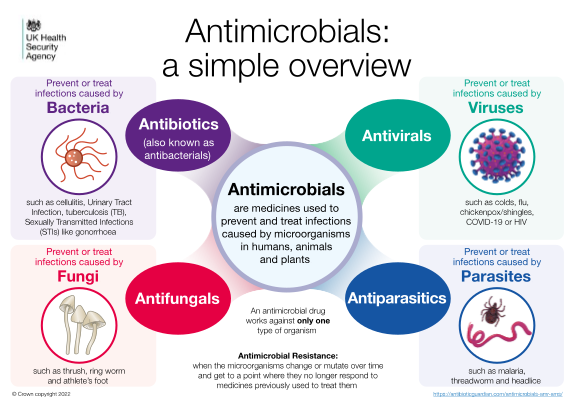
Figure 1 shows various types of antimicrobial medicines used to prevent and treat infections caused by microorganisms in humans, animals and plants. Antibiotics (antibacterials) prevent and treat bacterial infections such as respiratory or urinary tract infections, cellulitis and sexually transmitted infections such as gonorrhoea. Antivirals can prevent and treat viral infections such as colds, flu, chickenpox, COVID-19 and HIV. Antiparasitics prevent and treat infections caused by parasites such as malaria, threadworm and headlice. Antifungals prevent and treat fungal infections such as thrush, ringworm, athlete’s foot and fungal respiratory infections including aspergillosis.
The ESPAUR report covers antimicrobial resistance, antimicrobial use, and antimicrobial stewardship (that is, coordinated approaches for promoting and monitoring the appropriate use of antimicrobials to keep them working in the future). It also describes NHS England improvement programmes, current research, and activities being carried out by ESPAUR partners to help tackle AMR.
Chapter 2. The rise of antimicrobial resistance
The UK Health Security Agency (UKHSA) collects, analyses and disseminates information about infections in England that are resistant to antimicrobials, focusing on bacteria found in blood samples (bacteraemia). This includes information on how many infections there are, where they are happening and who is affected. This chapter presents findings from this work and looks at how different factors affect the distribution of infections.
Antibiotic resistance
In 2025, the total number of bacteraemia (the presence of bacteria in the bloodstream) caused by all bacterial species in England increased by 1.6% compared with 2024, from 184,281 to 187,254. However, nearly half of this increase was due coagulase-negative staphylococci (CoNS). These bacteria commonly contaminate blood culture samples, meaning the increase may reflect changes in clinical or laboratory practice, rather than a real increase in bacteraemia. Increases in other bacterial species each accounted for less than 7% of the rise. These increases follow a substantial decline during the COVID-19 pandemic, with the overall incidence rate in 2025 now higher than in 2019.
Following a decline during the COVID-19 pandemic, the number of antibiotic-resistant bacteraemia (the presence of bacteria in the bloodstream that are resistant to one or more antibiotics) caused by bacterial species of public health importance has increased year on year.
Between 2019 and 2025, the number of antibiotic-resistant bacteraemia increased by 16.8%, from 18,086 in 2019 to 21,129 in 2025. In 2025, this was equivalent to an average of 406 patient episodes each week in 2025. The most common bacteria were Escherichia coli (E. coli), Klebsiella pneumoniae and Klebsiella oxytoca, which together accounted for 85.5% of all patient episodes in 2025. E. coli was responsible for the largest proportion, accounting for 70% of all patient episodes of antibiotic-resistant bacteraemia recorded over the past 7 years.
The number of bacteraemia and antibiotic-resistant bacteraemia decreased during the COVID-19 pandemic. This is probably because people had less contact with other people, practised better hygiene and changed how they used healthcare services. Some infections may also have been missed or diagnosed less often during this period. An increase in bacteraemia following the end of pandemic restrictions was expected as people resumed normal social contact. However, the increase in the last 4 years has been substantial. There are now more episodes of antibiotic-resistant bacteraemia in England than at any other time on record.
This chapter also looks at carbapenemase-producing organisms (CPOs), a group of antibiotic-resistant microorganisms that are of particular concern and have been included as part of mandatory surveillance since 2020. Reports of CPOs more than doubled between 2021 and 2024. This increase was partly due to more screening and reporting. However, reported rates fell in 2025.
As in recent years, the report also takes a closer look at health inequalities in the context of resistant bacteraemia, including factors such as ethnicity and deprivation. We also looked at whether differences between ethnic groups could be explained by factors such as age and sex.
The highest number and rate of patient episodes of bacteraemia were observed among individuals of the White ethnic group. This group accounted for 87.7% of total bacteraemia, of which 20.7% were resistant to at least one or more of the critically important antibiotics. Although the White ethnic group accounted for the highest number of resistant bacteraemia, the proportion of resistant bacteraemia was higher in several other ethnic groups. In particular, 42.4% of bacteraemia in the Asian and Asian British ethnic group were resistant, followed by 32.8% in the Black, African, Caribbean or Black British ethnic group.
Additionally, deprivation levels were looked at using Indices of Multiple Deprivation (IMD). This measure combines factors including income, employment, health, and education within different geographical areas. This helps us understand differences in deprivation levels across different communities in the UK. In 2025, areas with higher levels of deprivation had a greater burden of antibiotic-resistant bacteraemia. There was a 44.2% higher rate of resistant bacteraemia in the most deprived group compared to the least deprived (44.4 versus 30.8 cases per 100,000 people). The gap between the rate among the most and least deprived group has increased since 2019 when the rate in the most deprived group was 29% higher.
The report also presents infection data by age group and sex. Adults aged 45 years and over accounted for most cases of bacteraemia and resistant bacteraemia, comprising 88.2% and 89.3% respectively. The highest rate was seen in those over 74 years, among both males and females. Males had more patient episodes of resistant bacteraemia than females across all ages except the 1 to 4 year olds.
In 2025, around 15% of people with certain serious bacteraemia died within 30 days of the infection being identified. With the exception of infants, the mortality rate increased with age, being highest for adults aged 85 years and older (21.5%), and lowest in the 1 to 14 years age group (2.6%). However, in the less than one year age group the mortality rate was 10.1%. Additionally, patients infected with a strain that was resistant to one or more of the critically important antibiotics had a higher mortality rate (16.0%) compared to those infected with susceptible strains which could be treated with the selected antibiotics (14.4%).
The incidence of fungal bloodstream infections was 4.1 cases per 100,000 people in 2025, increasing from the 3.1 cases per 100,000 people reported in 2019. This increase is thought to be in part due to improved detection and reporting.
Calculating the total burden of AMR helps us measure whether efforts to reduce resistant infections are working. It also allows us to track progress against national targets. For example, the UK government’s 5-year action plan for antimicrobial resistance 2024 to 2029 aims to ensure that levels of resistant infections in 2029 do not exceed those seen in 2019. In England, a 25.7% increase in a selected set of antibiotic-resistant infections was reported, increasing from 9,922 infections in financial year 2019 to 2020 to 12,470 infections in financial year 2025 to 2026. This shows that AMR remains a problem and that we have work to do in terms of using antibiotics and other antimicrobial medicines more responsibly. The next chapter on antimicrobial consumption provides additional information.
Chapter 3. Curbing the consumption of antimicrobials
Antimicrobial medicines are necessary for many health conditions, as well as medical procedures such as C-sections, hip replacements and cancer treatment. However, every time an antimicrobial is prescribed, there is a risk that AMR could develop or worsen. This is why it is so important that antimicrobial medicines like antibiotics are used appropriately. In short, they should be prescribed at the right times and for the right reasons.
The National Action Plan aims to reduce the overall use of antimicrobial medicines in people by 5% by 2029 compared with 2019 levels. These targets should help keep prescribers working hard to reduce the amount of inappropriate antimicrobial medicines being used. UKHSA supports work towards NAP targets by publishing data on the amount of antimicrobial use and the infections they are being used for. In 2025, total antibiotic use in England decreased compared with 2024, indicating early progress towards the new NAP ambition.
Antimicrobial use in 2025 was 10.7% lower than in 2019. However, the COVID-19 pandemic had a major impact on prescribing patterns, making long-term trends difficult to interpret. Most antibiotics in England are prescribed in GP settings, accounting for 65.4% of all prescriptions in 2025. Because of this, understanding trends in this setting is important to ensure that antibiotics are being prescribed appropriately.
Antibiotic use in 2025 was lower than in 2019 across most treatment settings, for example in GPs and dental prescribing. However, there was a 5.4% increase in antibiotic prescribing in hospitals from 2019 to 2025.
Antibiotic prescribing varied across England. Rates were highest in the North East and lowest in the South East. These differences are due to multiple factors, including age and access to healthcare. For example, the North East has lower GP provision, a greater number of older people than the national average (65 years and over), and greater healthcare needs, which may contribute to higher antibiotic use.
Penicillins were the most used antibiotic class in both primary and secondary care in 2025, which is consistent with previous years. Consumption across antibiotic classes remained lower than 2019 levels, with several exceptions, such as anti-C. difficile drugs, sulfonamides and trimethoprim, and cephalosporins. The increased consumption of anti-C. difficile drugs was likely due to previous increases in C. difficile infections.
Antibiotic prescribing was higher in more deprived communities, likely reflecting a greater burden of infection. As antibiotic use can increase the risk of antibiotic-resistant infections, this is consistent with the findings in Chapter 2, which showed that more deprived communities experience a greater burden of AMR.
Total antifungal consumption was 11% higher in 2025 compared to 2019. There was a large decrease in 2020 due to the COVID-19 pandemic, but there has since been a steady increase every year since. In 2025, 87% of antifungals were prescribed in community settings, such as GPs and pharmacies. This is a likely underestimate because several antifungal medicines that are available in pharmacies over-the-counter are not included in this report.
During the 2024 to 2025 flu season, the use of the antiviral medication oseltamivir in primary care reached its highest level in January 2025, increasing by 39% compared with the previous peak seen in the 2022 to 2023 season.
There are 4 antiviral medicines currently being used in England to treat COVID-19. Use of these antivirals reduced by 59.2% in 2025 compared to 2024, reflecting the reduction in COVID-19 cases and changes in testing and guidance.
Among antiparasitics, the use of quinine, used mainly to treat malaria (a mosquito-borne disease), has been steadily decreasing since 2019. Mebendazole consumption levels, used for threadworm infections, were stable from 2022 to 2025, after declining year-on-year from 2019 to 2022. Use of albendazole, which is used to treat parasitic worm infections, has increased steadily from 2019 to 2025.
Chapter 4. Antimicrobial resistance and antimicrobial use spotlights
This new chapter presents several spotlight sections on new insights on AMR and antibiotic use in England. They highlight that improved surveillance and better healthcare data are helping to identify who is most at risk, the impact of resistant infections, and how they can be prevented. The spotlights focus on the growing burden of resistant infections, emerging threats – such as drug-resistant fungal infections – outbreaks, and the importance of infection prevention and control, and appropriate antibiotic use.
Estimating the cost of antimicrobial resistance
Understanding the cost of AMR helps the NHS decide where to invest resources and target efforts to prevent infections. Around 53,400 hospital admissions linked to serious Gram-negative bloodstream infections cost the NHS an estimated £800 million in 2023 to 2024. This highlights the large financial impact of these infections and the importance of preventing them.
However, these figures reflect the total cost of hospital stays and do not show how much is directly caused by drug resistant infections. Further work is underway to estimate the costs specifically attributable to AMR and to assess its wider impact on patients and the healthcare system, helping to identify the most cost-effective interventions.
Emerging drug-resistant fungal skin infection
Trichophyton indotineae infection is an emerging fungal skin infection that is often resistant to standard treatments and is spreading in the UK. Although the number of cases per year are relatively low, they have increased rapidly since 2023. Infections can be difficult to treat, causing long-lasting skin problems that may affect patient wellbeing. Improved awareness, testing and surveillance are needed to identify cases early, monitor spread and help prevent further resistance.
Recent trends in Staphylococcus aureus (S. aureus)
S. aureus is a common bacterium that can cause a range of infections, from mild skin infections to serious bloodstream infections. S. aureus bloodstream infections represent only a small proportion of all S. aureus infections, but they are among the most serious cases and can cause severe illness and death. Rates of MSSA (methicillin-susceptible S. aureus) bloodstream infections have continued to rise over time, while MRSA (methicillin-resistant S. aureus) bloodstream infections, which had previously remained low and stable, have also increased in recent years.
The recent increase in MRSA bloodstream infections has been most noticeable in infants under one year of age and has also been seen in some other younger age groups. Cases in recent years have been more likely to occur in people with underlying health conditions and among some ethnic minority groups. Genetic analysis suggests that the increase is not being driven by a single new strain, but by changes across several existing strains of S. aureus. These findings highlight the need for continued surveillance and prevention efforts, particularly as MRSA, although less common than MSSA, is resistant to some antibiotics and can be more difficult to treat.
Methenamine and nitrofurantoin antibiotic consumption, 2019 to 2025: Is there evidence of an antibiotic-sparing effect in England?
Methenamine hippurate is a non-antibiotic treatment used to help prevent recurrent urinary tract infections (UTIs). As concerns about AMR grow, there is increasing interest in treatments that can reduce the need for long-term antibiotic use. Between 2019 and 2025, methenamine use increased substantially across England, particularly in primary care.
Over the same period, prescribing of nitrofurantoin, a commonly used antibiotic for UTIs, gradually declined. The decrease was most noticeable in areas where methenamine use increased the most, suggesting that methenamine may be replacing some antibiotic use for UTI prevention. While further analysis is needed to confirm this relationship, the findings indicate that greater use of methenamine could help reduce reliance on antibiotics and support efforts to tackle antimicrobial resistance.
Point-of-care testing improves antibiotic targeting for sore throat in community pharmacy
Sore throat is one of the most common reasons people seek healthcare, but most sore throats are caused by viruses and do not need antibiotics. It can be difficult for healthcare professionals to tell whether a sore throat is caused by bacteria or a virus based on symptoms alone, which can lead to antibiotics being prescribed when they are not needed or withheld when they may be beneficial.
A large evaluation of the Welsh community pharmacy Sore Throat Test and Treat service included 73,617 consultations across 577 pharmacies between 2018 and 2024. The evaluation found that rapid tests helped identify which patients were most likely to have a bacterial throat infection and benefit from antibiotics. The findings suggest that pharmacy-based testing could help reduce unnecessary antibiotic use while ensuring that people with bacterial infections receive appropriate treatment, supporting efforts to tackle antimicrobial resistance.
Chapter 5. Antimicrobial stewardship (AMS)
Tackling AMR requires action across the healthcare system to keep antimicrobials effective and prevent resistant infections. A key component of this approach is antimicrobial stewardship (AMS), which supports healthcare professionals in selecting the most appropriate antimicrobial, dose and duration of treatment. These activities contribute to the UK National Action Plan ambition to reduce antimicrobial use in humans and preserve the effectiveness of existing treatments. This chapter summarises key AMS interventions and research led by the UKHSA conducted in the past year.
A range of national AMS tools, resources and interventions have been developed to support healthcare professionals across primary and secondary care settings. One example is the TARGET (Treat Antibiotics Responsibly, Guidance, Education and Tools) Antibiotics Toolkit, which continues to provide practical resources, education and guidance to improve antimicrobial prescribing and embed AMS principles in primary care. Over the last year, the TARGET Toolkit received more than 274,000 views, demonstrating sustained engagement from healthcare professionals. New and updated resources have addressed identified unmet needs, including tools supporting the urinary tract infection (UTI) care pathway across care settings, decision aid to support discussions with parents of children presenting with acute cough, and materials to support cellulitis management.
Recent evaluations have provided more evidence about which stewardship programmes work best. Using a mixed-methods approach that combined a scoping review and survey of AMS specialists, evidence of positive impact was identified for most national AMS tools, particularly the Start Smart Then Focus (SSTF) programme and the Antibiotic Guardian campaign. Findings suggested that awareness and adoption of AMS tools are associated with greater perceived impact and demonstrated the value of mixed-method evaluation approaches for informing future stewardship activities.
To ensure national resources remain current and evidence-based, several key AMS tools are undergoing review. These include the national antimicrobial intravenous-to-oral switch (IVOS) criteria, the antimicrobial prescribing and stewardship competency framework, and the SSTF toolkit. Feedback from multidisciplinary stakeholders and subject-matter experts is currently being collated and will inform updates planned for publication in 2027.
Addressing health inequalities is an increasingly important component of AMS. In support of Commitment 8.2 of the AMR National Action Plan, UKHSA has collaborated with partners across all 4 UK nations to co-develop a toolkit designed to help public health teams identify and address inequalities in infection incidence, antimicrobial exposure, vaccine uptake, access to healthcare and clinical outcomes. The toolkit draws on evidence identified through published and grey literature reviews and has been refined through stakeholder engagement.
Pharmacy professionals also play an important role in addressing health inequalities in AMR, through their roles in prescribing, AMS and patient education. A rapid scoping review was conducted to explore this area found that pharmacy professionals have the potential to address inequalities in the prevention and treatment of infection (infection management), antibiotic use and AMR. However, the evidence remains limited, particularly regarding whether pharmacy-led interventions lead to reductions in disparities in health outcomes.
Research exploring behavioural interventions for AMR has identified education, persuasion, training and enablement as the most commonly used intervention functions, suggesting these approaches may be particularly acceptable and practical for supporting behaviour change related to antibiotic use.
Research and evaluation activities continue to improve understanding of how stewardship programmes work in practice. For example, understanding the use of repeat antibiotic prescribing in community and outpatient care, how antibiotics are accessed outside the NHS in private primary care services, and how information about antibiotics is shared online, including false information.
By following the AMS guidelines, we can preserve the effectiveness of antimicrobial medicines like antibiotics, ultimately benefiting patient-centred care and public health.
Chapter 6. NHS England: improvement and assurance schemes
NHS England uses improvement and assurance schemes to promote good practice and monitor national priorities for diagnosing and treating infections. This chapter summarises performance against these schemes and the guidance, tools and resources developed to support safer use of antimicrobials. This helps patients receive the right treatment while reducing antimicrobial resistance, which occurs when medicines become less effective against infections. The schemes include:
- NHS Oversight Framework
- National Medicines Optimisation Opportunities
- Pharmacy First for community pharmacies
- Pharmacy Quality Scheme
- NHS Standard Contract for acute hospitals
The NHS Oversight Framework aims to provide alignment of priorities across NHS and wider healthcare partners. It works to establish a consistent and transparent method for assessing performance on a range of priority areas across integrated care boards (ICBs) and NHS trusts and foundation trusts. Over the last year, one of the key priority areas was antibiotic prescribing in children aged 0 to 9 years. Data from the financial year 2025 to 2026 indicates fewer children aged 0 to 9 in England received antibiotics than in the previous year. The number fell from 32% to 28%. The target was 27%. Twenty of the 41 ICBs (49%) achieved the established national target.
The National Medicines Optimisation Opportunities programme helps healthcare services identify ways to improve medicine use, including reducing course length for antimicrobial prescribing. One of the key measures of this is increasing the proportion of amoxicillin prescriptions for 5-day courses, rather than longer ones. More people who were given amoxicillin received a shorter, 5-day course (from 69% to 74% in March 2026 compared with March 2025). There were also 26,118 fewer amoxicillin prescriptions.
The Pharmacy First scheme allows people with some common infections to receive treatment through their local pharmacy. This can provide faster care and help free up GP appointments for those who need them most. During the 2025 to 2026 financial year, there were over 3 million consultations delivered in English community pharmacies, an increase of 42% from the previous year. Overall, there were also 1 to 5% percent fewer antibiotics supplied across the 7 infection pathways.
The Pharmacy Quality Scheme supports quality improvement in community pharmacies. In 2025 to 2026, almost 8,800 pharmacies took part in a national audit of sore throat consultations. A review of over 92,000 sore throat appointments found that pharmacies met the care standards in 73% to almost 99% of cases.
The NHS Standard Contract provides a framework across the NHS to ensure transparency, comparability and oversight. It includes a requirement for hospitals to reduce inappropriate use of antibiotics and minimise Clostridioides difficile infection, which relates to an infection from bacteria that can cause diarrhoea and stomach pain. It usually affects people who have recently taken antibiotics but not all people who take antibiotics will develop this infection. In 2025 to 2026, 65% of NHS trusts reduced their use of higher-risk antibiotics, known as ‘Watch’ and ‘Reserve’ antibiotics, compared to baseline levels in 2019 to 2020. Reports of testing and positive results for C. difficile fell. However, fewer hospitals submitted data later in the year, which may have affected the results.
A new Dental Antimicrobial Dashboard now supports monitoring of antibiotic prescribing in NHS dental services. During 2025 to 2026, antibiotics accounted for around 61% of dental prescriptions, with amoxicillin and metronidazole being the most commonly prescribed antibiotics.
NHSE also supports a range of national initiatives to improve antimicrobial stewardship. These include new prescribing information dashboards, support for paediatric antimicrobial stewardship programmes, improvements to blood culture testing, better digital tools and education programmes for healthcare professionals.
Together, these schemes and initiatives help ensure patients receive the right treatment when they need it, while reducing unnecessary antibiotic use and helping to tackle antimicrobial resistance.
Chapter 7. Professional education, training and public engagement
Education and public engagement are important parts of antimicrobial stewardship. Across the UK, healthcare professionals are actively working to educate and empower patients and the public, as well as other stakeholders about the responsible use of antibiotics.
Healthcare professional education continues to play an important role in improving antibiotic prescribing. The long-standing collaboration between UKHSA and the Royal College of General Practitioners (RCGP) via the TARGET programme, which aims to promote awareness of AMR and engage prescribers in general practice, continues successfully. TARGET training has successfully reached more than 3,000 primary care professionals across England and is estimated to have reduced antibiotic prescribing and increased savings. In 2026, 2 workshops focusing on knowledge and confidence gaps in antimicrobial stewardship were held to support pharmacy technicians. The workshops were developed in partnership with the Association of Pharmacy Technicians UK and NHS England. Although knowledge levels improved, the findings showed that further support is needed to help pharmacy technicians feel confident taking an active role in stewardship activities.
Public engagement work has continued to improve the understanding of AMR. Research with 16- to 18-year-olds found that young people have a good understanding of AMR, infection prevention and control, and vaccination. However, there was some misunderstanding about proper antibiotic disposal. The findings support the inclusion of AMR-related topics in education to help build good health behaviours from an early age.
The e-Bug education programme continues to achieve high engagement, providing resources on infection prevention and antibiotic awareness for teachers and community educators to teach children and young people. New projects focusing on vector-borne diseases, out-of-school settings and infection prevention training are being tested, while opportunities have been identified to include AMR and infection prevention more widely within the national curriculum.
Surveys involving more than 1,000 parents explored knowledge of childhood infections and antibiotic use. While parents generally understood the importance of infection prevention, some misconceptions about antibiotics remained, and awareness of potential side effects was limited. The findings highlight the need for clearer and more consistent communication to support parents. This has led to the development of a new resource that support parental decision-making for coughs and webinars for clinicians on managing common infections in children.
UKHSA continued to lead national awareness campaigns. The second phase of the Andi Biotic campaign, aimed mainly at younger adults, promoted messages about antibiotic use and AMR. The campaign reached more than 10 million people, representing a substantial increase compared with the previous phase.
World AMR Awareness Week and European Antibiotic Awareness Day continued to provide opportunities to promote responsible antibiotic use. Resources developed for these campaigns were widely accessed by healthcare professionals and organisations across the UK.
The Antibiotic Guardian campaign also remained an important part of public and professional engagement. In 2025, more than 5,000 new pledges were made to use antibiotics responsibly, bringing the total number of pledges since the campaign began in 2014 to almost 196,000. To support wider participation, Antibiotic Guardian pledges were translated into several commonly spoken languages, including Urdu, Punjabi, Mandarin, Polish and Romanian. Feedback showed that these translated resources helped improve awareness and understanding of AMR.
Together, these education, training and engagement activities help increase awareness of antimicrobial resistance, encourage responsible antibiotic use and support the collective effort to tackle AMR.
Chapter 8. Recent research initiatives
While progress has been made in recent years to tackle AMR in the UK, it is important that this continues so we can make sure the best outcomes are provided for patients in future. Progress depends on applying what we already know about infections and AMR. It also depends on continued research to improve our understanding. The publication of the UK National Action Plan (NAP) for 2024 to 2029 identified key research priorities, with all of the research projects highlighted in the chapter aligning with at least one of the NAP commitments.
Healthcare-associated infections and AMR have been the subject of many important UK research projects over the last year and have resulted in over 100 scientific papers from UKHSA, each one reviewed and approved by experts in the field. The number of publications published by NAP outcome are listed below:
- IPC and infection management (15)
- public engagement and education (12)
- strengthened surveillance (30)
- antimicrobial stewardship and disposal (6)
- AMR workforce (3)
- innovation and influence (17)
- using information for action (21)
- health disparities and health inequalities (9)
- AMR diplomacy (2)
The research projects conducted from April 2025 to March 2026 were also highlighted in the chapter, covering:
- health disparities and inequalities
- surveillance and epidemiology
- optimising genomic and molecular characterisation
- antimicrobial stewardship, prescribing and primary care
- public engagement, behaviour and communication
- modelling, health economics and policy evaluation
- therapeutics, diagnostics and translational research
This commitment to improving scientific knowledge is reflected in the continued work with research units called Health Protection Research Units (HPRUs), dedicated to studying healthcare-associated infections and AMR. The new HPRU is being led by the University of Oxford in partnership with UKHSA and will run from April 2025 to March 2030. The research conducted at the unit aims to generate evidence that improves patient outcomes, reduces health inequalities, and strengthens our responses to AMR.
Chapter 9. Support from stakeholders
The production of the ESPAUR report benefits greatly from the input of experts from various organisations, each bringing diverse perspectives to the table. In total, 13 different stakeholders contributed to this year’s report:
- British Dental Association (BDA)
- British Infection Association (BIA)
- British Society for Antimicrobial Chemotherapy (BSAC)
- College of General Dentistry (CGD)
- Microbiology Society
- Royal College of General Practitioners (RCGP)
- Royal College of Nursing (RCN)
- Royal Pharmaceutical Society (RPS)
- UKCPA Pharmacy Infection Network (PIN)
- Veterinary Medicines Directorate (VMD)
- NHS England
- Public Health Agency (Northern Ireland)
- Antimicrobial Resistance and Healthcare Associated Infection (ARHAI) Scotland
As well as contributing information to the report, these stakeholders are part of the ESPAUR Oversight Group, which consists of over 30 stakeholder members. They engage in various activities that support the national effort to tackle healthcare-associated infections and AMR. These activities include:
- promoting the appropriate use of antimicrobials
- attending international AMR conferences to ensure partnership in tackling AMR
- delivering workshops and professional educational programmes on infection prevention
- producing guidelines and educational resources
- delivering webinars to increase knowledge of developing antimicrobial treatments and stewardship practices
Writing the ESPAUR report with the input of stakeholders from various organisations with their own unique experiences of performing activities aiming to tackle AMR is helping us all to build a more strategic agenda and plan to improve outcomes in future.
Chapter 10. Feedback from stakeholders and report users
Over the past 10 years, the ESPAUR report has broadened and diversified its content to extend beyond AMR. To accompany the report, UKHSA hosts a webinar to present key insights to stakeholders, and feedback surveys are used to gather information on the report’s usage.
Feedback received from users of the 2024 to 2025 report has been positive, with 85% (out of 325 respondents) endorsing the ESPAUR report to other stakeholders. Some of the key findings included:
- the most common job role of respondents was reported as pharmacist, accounting for 31% of responses, followed by doctors (16% of 533) and public health professionals (10% of 533)
- infographics, which were used to highlight key messages and statistics in the report, were reported to be useful by most respondents (85% of 360)
- the most used chapters of the report were AMR (85% of 326 respondents), AMS (69%), and antimicrobial consumption (56%) chapters
- many respondents (56%) said they accessed 3 or more chapters
- the most common reasons for accessing the report were gathering information (41% of 335 respondents), sharing information with others (32%), and informing policy (15%)
What can we do to tackle AMR together?
As we have seen in this latest ESPAUR report, levels of infections and antimicrobial resistance have been increasing in England in recent years.
We all have a role to play in tackling these increases. The public can play as important a part as anyone in keeping the level of infections low.
Some actions you can take to help reduce infection levels are:
- regular personal hygiene such as handwashing with soap and water, dental and oral care, and practising good respiratory hygiene (for example, covering your mouth and nose with a tissue or elbow when coughing or sneezing)
- understanding and practising good environmental hygiene, such as proper food preparation and damp control
- only taking antibiotics when prescribed by a qualified healthcare professional and completing the full course exactly as directed as well as never sharing them with others
- being aware of One Health – an approach that recognises how closely connected the health of humans, animals (including pets), plants, food and the environment are – as it relates to you
- staying hydrated as an effective way of preventing infections such as urinary tract infections
You can find out more about how to protect these vital medicines at Antibiotic Guardian.
Authors
Hanna Squire, Aishwarya Krishna, Tehreem Mohiyuddin, Karina Micah, Ellie Tang, Diane Ashiru-Oredope
Acknowledgements
Vanessa Carter and Eranda Wickramasinghe – lay reviewers
Glossary
Acinetobacter spp. – A group of bacteria that can cause infections, particularly in healthcare settings.
Albendazole – A medicine used to treat infections caused by parasitic worms.
Antibacterial – A medicine used to treat infections caused by bacteria.
Antibiotic – A type of antibacterial medicine used to prevent or treat bacterial infections.
Antibiotic Guardian – A UK campaign encouraging people and healthcare professionals to use antibiotics responsibly.
Antifungal – A medicine used to prevent or treat infections caused by fungi.
Antimicrobial – A medicine used to prevent or treat infections caused by microorganisms such as bacteria, viruses, fungi or parasites.
Antimicrobial resistance (AMR) – When microorganisms develop the ability to survive treatment with medicines that were previously effective against them.
Antimicrobial stewardship (AMS) – Coordinated activities that promote the appropriate use of antimicrobial medicines to preserve their effectiveness.
Antiparasitic – A medicine used to prevent or treat infections caused by parasites.
Antiviral – A medicine used to prevent or treat infections caused by viruses.
Aspergillosis – An infection caused by Aspergillus fungi, usually affecting the lungs.
Bacteria – Microscopic organisms found in many environments; some cause infections while others are harmless or beneficial.
Bacteraemia – The presence of bacteria in the bloodstream, detected from a blood sample.
Blood culture – A laboratory test used to identify bacteria or fungi in the blood.
Carbapenemase-producing organisms (CPOs) – Bacteria that produce enzymes that can make important antibiotics ineffective.
Cellulitis – A bacterial infection of the skin and underlying tissues.
Cephalosporins – A group of antibiotics used to treat a range of bacterial infections.
Clostridioides difficile (C. difficile) – A bacterium that can cause diarrhoea and bowel infections, particularly after antibiotic use.
Coagulase-negative staphylococci (CoNS) – Bacteria commonly found on the skin that can sometimes contaminate blood samples.
COVID-19 – An infectious disease caused by the SARS-CoV-2 virus.
Drug-resistant infection – An infection caused by microorganisms that can no longer be effectively treated by one or more medicines.
Epidemiology – The study of how diseases affect populations and how they spread.
Escherichia coli (E. coli) – A type of bacteria commonly found in the gut; some strains can cause infections.
Gram-negative bacteria – A group of bacteria with a cell structure that often makes infections more difficult to treat.
Grey literature – Research and reports that are not published in academic journals.
Healthcare-associated infection (HCAI) – An infection acquired while receiving healthcare.
Health inequalities – Differences in health outcomes between population groups.
Health Protection Research Unit (HPRU) – A research partnership between UKHSA and universities that studies public health issues.
Incidence rate – The number of new cases of a condition in a population over a specific period.
Infection prevention and control (IPC) – Measures designed to prevent the spread of infections.
Integrated Care Board (ICB) – An NHS organisation responsible for planning and coordinating healthcare services in a local area.
Intravenous-to-oral switch (IVOS) – Changing treatment from medicines given into a vein to medicines taken by mouth when appropriate.
Klebsiella oxytoca – A type of bacteria that can cause infections and may be resistant to antibiotics.
Klebsiella pneumoniae – A type of bacteria that can cause serious infections, especially in hospitals.
Malaria – A disease caused by parasites and spread by mosquitoes.
Mandatory surveillance – Required collection and reporting of specific health data.
Mebendazole – A medicine used to treat threadworm infections.
Methenamine hippurate – A non-antibiotic medicine used to help prevent recurrent urinary tract infections.
Metronidazole – A medicine used to treat certain bacterial and parasitic infections.
Microorganism – A microscopic living organism such as a bacterium, virus, fungus or parasite.
Mortality rate – The proportion of people who die within a specified group or period.
Methicillin-resistant Staphylococcus aureus (MRSA) – A strain of Staphylococcus aureus that is resistant to several antibiotics.
Methicillin-susceptible Staphylococcus aureus (MSSA) – A strain of Staphylococcus aureus that can still be treated with methicillin-related antibiotics.
National Action Plan (NAP) – The UK government’s strategy for tackling antimicrobial resistance.
Nitrofurantoin – An antibiotic commonly used to treat urinary tract infections.
One Health – An approach recognising that the health of people, animals, plants and the environment are closely connected.
Oseltamivir – An antiviral medicine used to treat influenza (flu).
Parasite – An organism that lives on or inside another organism and can cause disease.
Patient episode – A recorded occurrence of a healthcare event or infection in a patient.
Penicillins – A widely used group of antibiotics.
Point-of-care test – A diagnostic test carried out where the patient receives care, providing rapid results.
Prevalence – The total number of people with a condition at a particular time.
Resistance – The ability of microorganisms to survive treatments designed to kill or control them.
Secondary care – Specialist healthcare usually provided in hospitals.
Sexually transmitted infection (STI) – An infection that is mainly spread through sexual contact.
Social deprivation – A lack of resources and opportunities associated with poorer health outcomes.
Staphylococcus aureus (S. aureus) – A common bacterium that can cause skin infections, bloodstream infections and other illnesses.
Sulfonamides – A class of antibiotics used to treat bacterial infections.
Surveillance – The ongoing collection, analysis and reporting of health data to monitor disease trends.
TARGET Antibiotics Toolkit – A national resource that supports healthcare professionals to prescribe antibiotics appropriately.
Threadworm – A small parasitic worm that commonly infects children.
Trichophyton indotineae – An emerging fungus that causes skin infections and is often resistant to standard treatments.
Trimethoprim – An antibiotic commonly used to treat urinary tract infections.
Urinary tract infection (UTI) – An infection affecting the bladder, kidneys or other parts of the urinary system.
Vector-borne disease – A disease spread by insects or other animals, such as mosquitoes.
Virus – A microscopic infectious agent that can only reproduce inside living cells.