ESPAUR report 2025 to 2026: Chapter 6. NHS England – improvement and assurance schemes
Published 12 November 2026

© Crown copyright 2026
This publication is licensed under the terms of the Open Government Licence v3.0 except where otherwise stated. To view this licence, visit nationalarchives.gov.uk/doc/open-government-licence/version/3 or write to the Information Policy Team, The National Archives, Kew, London TW9 4DU, or email: psi@nationalarchives.gov.uk.
Where we have identified any third party copyright information you will need to obtain permission from the copyright holders concerned.
This publication is available at https://www.gov.uk/government/publications/english-surveillance-programme-for-antimicrobial-utilisation-and-resistance-espaur/espaur-report-2025-to-2026-chapter-6-nhs-england-improvement-and-assurance-schemes
Main messages
NHS England (NHSE) designs and administers improvement and assurance schemes to incentivise timely use of diagnostics and prudent use of antimicrobials across the Integrated Care Systems (ICSs), to optimise patient outcomes, minimise avoidable exposure to antimicrobials and reduce selection pressure for antimicrobial resistance (AMR). Key areas of focus for the financial year (FY) 2025 to 2026 are shown in Figure 6.1 and include:
NHS Oversight Framework
In England, 4% fewer children aged 0 to 9 years received one or more antibiotics (from 32% in FY 2024 to 2025 to 28% in FY 2025 to 2026), against a target of 27%. The number of integrated care boards (ICBs) meeting the national target was 20 out of 41 (49%).
National Medicines Optimisation Opportunities
There was an absolute increase of 5% in the proportion of 5-day prescriptions for amoxicillin 500mg capsules between March 2025 (69%) and March 2026 (74%), demonstrating ongoing improvement in the use of shortest effective course duration. This was achieved alongside a reduction of 26,118 total number of amoxicillin 500mg capsules items.
Pharmacy First
Between April 2025 and March 2026, there were 3,328,445 infection consultations in England, an increase of 42% from 2,339,908 in 2024 to 2025. The percentage of consultations resulting in antimicrobial supply was lower across all seven infection pathways, ranging from 1% to 5% lower by pathway, compared to the previous year (for the greatest monthly rate). An antimicrobial was supplied in 43% to 84% of consultations (including urinary tract infection (UTI). An antibiotic-sparing medicine was supplied in 22% to 32% of consultations in 3 relevant infection pathways.
Pharmacy Quality Scheme
A total of 8,789 community pharmacy contractors submitted clinical audit data for 92,320 Pharmacy First acute sore throat consultations. Overall compliance across the 5 audit standards ranged from 73% to 98.6%. The former was for provision of a neck exam for patients attending a face-to-face consultation with a FeverPAIN score of 2 to 3 (62,716 cases). The latter was for provision of advice on when to re-consult.
NHS Standard Contract
For the 12 months to March 2026, 84 trusts (65%) achieved a reduction in their ‘Watch’ and ‘Reserve’ antibiotic consumption from their 2019 to 2020 baseline. Consumption of antibiotics from the ‘Watch’ and ‘Reserve’ categories across hospitals in England at FY end was 2,136 DDD per 1,000 admissions, equivalent to −4.2% below the 2019 to 2020 baseline. Reported C. difficile testing activity and positivity decreased during the financial year 2025 to 2026 compared with the previous year. However, these findings should be interpreted cautiously as fewer trusts submitted stool specimen data in the latter 2 quarters.
Dental Prescribing Dashboard
The new Dental Prescribing Dashboard provides monthly national to ICB surveillance of NHS primary care dental prescribing from January 2022 onwards, using treatment courses as a denominator. For the 12 months to March 2026, 61% of all dental prescribing in England were for antibiotics, accounting for 10.7% of prescribing costs. The majority of antibiotic courses prescribed were amoxicillin (67%) followed by metronidazole (28%).
National initiatives to support system improvement
NHSE also provides system leadership and support through engagement with stakeholders, co-producing and co-ordinating implementation of a number of initiatives, designed as enablers, for health care commissioners and providers to enhance prudent antimicrobial use. These include expansion of the optimising antimicrobial duration and paediatric antimicrobial stewardship (AMS) dashboards, expansion of funded paediatric AMS networks national funding to strengthen AMR leadership and governance within ICBs, national funding to develop digital system-specific user manuals to implement AMS functionality, publication of an AMS capability framework and a set of national prescribing quality improvement scheme templates for local adaptation, advancing the blood culture pathway audit through Pathology Quality Assurance Dashboard, strengthening education through curriculum review and BSAC collaboration, driving the Moving Forward in Diagnostics programme with industry partners, and delivering service evaluations to inform implementation.
Figure 6.1. Overview of NHS England improvement and assurance schemes and antibiotic prescribing performance for FY 2025 to 2026
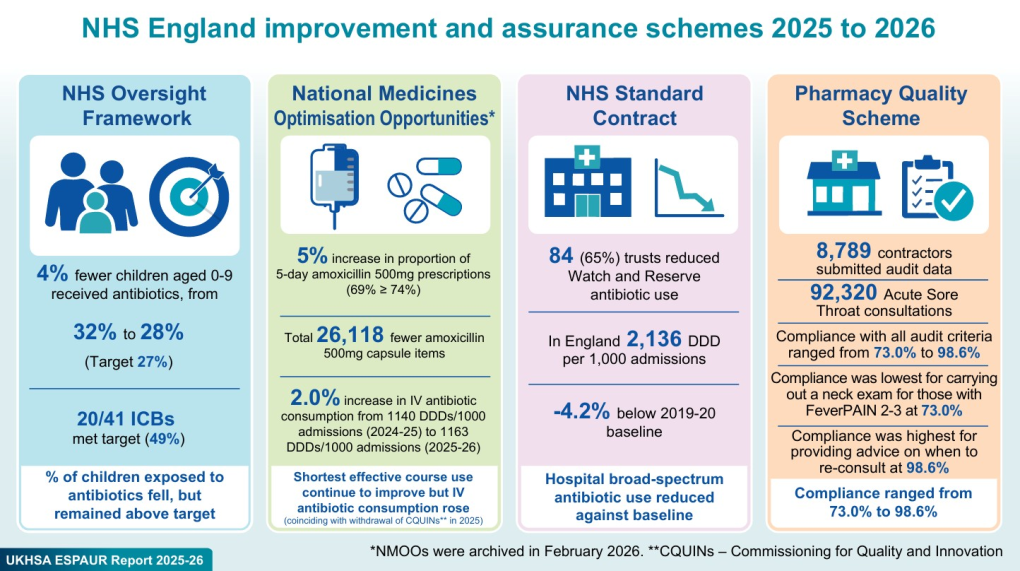
Accessible text for Figure 6.1
Infographic arranged in 4 columns:
NHS Oversight Framework: Antibiotic exposure among children aged 0 to 9 fell from 32% to 28%, remaining above the 27% target. Twenty of 41 integrated care boards (49%) met the target.
National Medicines Optimisation Opportunities: The proportion of 5-day amoxicillin 500mg prescriptions increased from 69% to 74%, with 26,118 fewer capsule items. Intravenous antibiotic consumption increased by 2%. The summary highlights improving use of the shortest effective course alongside rising intravenous antibiotic consumption.
NHS Standard Contract: Eighty-four trusts (65%) reduced Watch and Reserve antibiotic use. Consumption in England was 2,136 defined daily doses per 1,000 admissions, 4.2% below the 2019-to-2020 baseline.
Pharmacy Quality Scheme: A total of 8,789 contractors submitted audit data covering 92,320 acute sore throat consultations. Compliance ranged from 73% for neck examinations in people with FeverPAIN scores of 2 to 3, to 98.6% for advice on when to re-consult.
National policies and commissioning
This section covers policies and initiatives for achieving the 2 human health antimicrobial stewardship targets in the UK National Action Plan – Confronting antimicrobial resistance 2024 to 2029:
- target 4a – by 2029, we aim to reduce total antibiotic use in human populations by 5% from the 2019 baseline
- target 4b – by 2029, we aim to achieve 70% of total use of antibiotics from the Access category (new UK category) across the human healthcare system
NHS Oversight Framework
The NHS Oversight Framework (NOF) aims to ensure the alignment of priorities across the NHS with wider healthcare system partners. It provides clarity to ICBs and NHS providers on how NHSE will work with and through ICBs to monitor performance, based on objective measures of system performance and quality of care outcomes, and supports the ICBs’ and NHS providers’ goals.
The NOF continues to provide a consistent national approach to monitoring system performance. FY 2025 to 2026 represented the first full year of implementation of the NOF patient safety metric measuring the percentage of children prescribed antibiotics in primary care, Table 6.1. This metric was introduced to support prioritisation of antimicrobial stewardship in children, a population group with relatively high exposure to antibiotics. NOF data for FY 2025 to 2026 continued to exclude antimicrobials supplied via the Pharmacy First service, which are reported separately through dedicated national dashboards.
Table 6.1. NHS oversight framework antibiotic prescribing in children metric and ICB performance
| Metric description | Target | England value at March 2026 | Number of ICBs meeting target |
|---|---|---|---|
| Patient Safety: Percentage of children (aged 0 to 9) prescribed antibiotics in the last 12 months | At or below 27% | 28% | 20 out of 41 (49%) |
For England as a whole, there was a 4% reduction in the proportion of children prescribed an antibiotic for the 12 months to 31 March 2026 to 28%, down from 31.7% for the preceding 12-month period to 31 March 2025. In March 2025, the absolute variation between the highest and lowest prescribing ICBs was 24%; by March 2026 this variation had reduced slightly to 21.5%. The number of ICBs meeting the target was 20 out of 41 (49%) for the 12 months to 31 March 2026. In addition, there was also a reduction in the amount of antibiotic prescribed to children, with 17% fewer children receiving 2 or more antibiotics in the 12 months to 31 March 2026 (352,297 children) down from 412,522 children in the preceding 12-month period. These reductions were evident despite a similar incidence of children presenting in-hours to general practice with upper RTI between 2024 to 2025 and 2025 to 2026.
The data is available in the NHS Oversight Framework 2025 to 2026 – ICB performance dashboard that is published on the PrescQIPP Antimicrobial Stewardship hub. These are produced by PrescQIPP in collaboration with NHSE using data from the NHS BSA and show performance at region, ICB, sub-ICB, PCN and GP practice level to monitor antibiotic prescribing in primary care and report ICB progress towards the NOF targets.
During the FY 2025 to 2026, a number of national initiatives were implemented across systems to reduce antibiotic exposure and improve outcomes. These are summarised in the National guidance, engagement initiatives and implementation resources section of this chapter.
National Medicines Optimisation Opportunities
The third year of the National Medicines Optimisation Opportunities continued to provide guidance on 16 optimisation opportunities for ICBs, with signposting to resources to help with their implementation. For 2025 to 2026, there continued to be 2 AMR-related opportunities which were:
- reducing course length of antimicrobial prescribing by increasing the proportion of amoxicillin 500 mg capsule courses prescribed as 5-day courses
- switching intravenous antibiotics to oral – as monitored by the count of IV antibiotic treatment days per admission
Reducing course length of antimicrobial prescribing
In March 2026, there was an increase of 5% in the proportion of amoxicillin 500 mg capsule 5-day prescriptions in England, from 69% in March 2025 to 74% in March 2026. This was seen alongside a reduction of 897,180 in the total number of amoxicillin 500 mg capsules items (from 5,502,905 items in the 12-months to March 2025 to 4,605,725 items) in the 12-months to March 2026. Data is available via the PrescQIPP Optimising Antimicrobial Use dashboard.
During FY 2025 to 2026, optimisation of antimicrobial duration dashboards expanded beyond amoxicillin to include additional commonly prescribed agents (clarithromycin, doxycycline, flucloxacillin, lymecycline and phenoxymethylpenicillin) in alignment with delivery of the UK AMR NAP 2024 to 2029.
The proportion of shorter 5-day courses of doxycycline 100 mg capsules prescribed increased by 8% when comparing March 2026 with March 2025, from 36% of all doxycycline 100mg capsule items prescribed to 44%, respectively. Similarly, the proportion of 5-day courses of flucloxacillin 500 mg capsules increased by 6%, from 20% in March 2025 to 26% in March 2026, while the proportion of 5-day durations of clarithromycin increased from 32% to 37%. The proportion of 5-day courses of phenoxymethylpenicillin 250 mg tablets increased from 36% of all courses to 40% in the same time period.
Switching intravenous antibiotics to oral
Prompt switching of intravenous antimicrobial treatment to the oral route of administration as soon as patients meet switch criteria was a nationally incentivised scheme in the NHS Commissioning for Quality and Innovation (CQUIN) for the financial year 2023 to 2024, and continued as an optional non-funded scheme in 2024 to 2025. It was reinforced as a priority for ICBs by its inclusion as a National Medicines Optimisation Opportunity since 2023 which was archived in 2026. Performance data based on the CQUIN audits can be found in previous ESPAUR annual reports.
Analysis of national IV antibiotic prescribing since 2022 indicate there were annual reductions in IV DDDs per 1000 hospital admissions which was reversed in 2025 to 2026 coinciding with the withdrawal of national policy drivers, Table 6.2. Monthly data extractions for IV antibiotic prescribing DDDs per 1,000 admissions are available on the NHS BSA ePACT2 National Medicines Optimisation Opportunities dashboard which is based on the data published by UKHSA on the Fingertips AMR local indicators. In addition, trusts are able to access their live data using Rx-info’s Define platform to support internal assessment and quality improvement.
Table 6.2. Intravenous antibiotic consumption in England
| Year | IV DDDs per 1,000 hospital admissions | % change in IV DDDs per 1000 hospital admissions compared to previous year | IV DDDs | % change in IV DDDs, compared to previous year |
|---|---|---|---|---|
| 2022-23 | 1,187 | 18,566,688 | ||
| 2023-24 | 1,150 | −3.1% | 19,141,872 | 3.10% |
| 2024-25 | 1,140 | −0.9% | 19,910,346 | 4.00% |
| 2025-26 | 1,163 | 2.0% | 20,224,635 | 1.60% |
Pharmacy First – antimicrobial stewardship
As part of the Delivery Plan for Recovering Access to Primary Care, NHSE launched the Pharmacy First service on 31 January 2024, building on the NHS Community Pharmacist Consultation Service introduced in October 2019. The service aims to release GP appointments and provide faster, convenient access to safe and high-quality care.
Pharmacy First consists of 3 elements:
- minor illness management
- urgent repeat medicine(s) supply
- clinical assessment using national protocols for 7 common infection pathways, where patients may receive one or more of –
- self-management advice
- over-the-counter medicine
- supply of antimicrobials (antibiotics and antivirals) via a patient group direction (PGD)
- supply of antimicrobial-sparing medicines
- non-urgent onward referral to general practice or other provider
- urgent same-day referral
This report is focused on the Pharmacy First AMS associated with the 7 common infection pathways. Early findings from the National Institute of Health Research (NIHR) funded evaluation of Pharmacy First indicate several challenges affecting the full potential of the service to be achieved. The researchers identified further workforce support, integration of information infrastructure, sustainable funding and enhanced inter-professional communication as key enablers to deliver a more effective service. The full mixed methods evaluation is due to complete early 2027.
During FY 2025 to 2026, national reporting through the NHS Business Services Authority (NHSBSA) ePACT2 Antimicrobial Stewardship – Pharmacy First dashboard continued to provide information on consultation activity, population access rates and medicine supply by infection pathway. Only consultations that have met the national gateway criteria for inclusion are captured. The data therefore represents activity related to the Pharmacy First service for selected patient populations only and excludes consultations for the same infections in other patient populations such as those who are outside the relevant age groups or consulting general practice. The dashboard reports consultation activity by ICB based on where the person is registered with an NHS General Practice, providing ICBs with insight into their population use of the Pharmacy First service. The dashboard supports clinicians and NHS integrated care systems to monitor patient access to infection pathways and exposure to medicines including antimicrobials for defined populations.
For the 12 months from April 2025 to March 2026:
- patient access to all 7 infection pathways increased by an average of 42.2% with a total of 3,328,445 consultations delivered in English community pharmacies compared to 2,339,908 in the previous year (Table 6.3)
- the percentage of consultations resulting in antimicrobial supply was lower across all seven infection pathways, ranging from 1% to 5% lower by pathway, compared to the previous year (for the greatest monthly rate) (Table 6.3)
- children aged 0 to 14 years had 658,489 consultations, accounting for 19.8% of all consultations, with little variation by gender
- acute otitis media accounted for 49% of consultations for children and of these, 32% were supplied antibiotic-sparing analgesic anaesthetic ear drops
- face-to-face consultations continued to account for 97% or greater for all infection pathways, with all acute otitis media consultations required to occur face-to-face
- females continued to account for 64% of consultations for the 5 infection pathways that adults of both genders were able to access, signalling potential ongoing gender differences in incidence of infection or health-seeking behaviour
Each infection pathway has a defined population eligible to access care, and the population rate of access (number of people consulting out of the population within scope for the infection pathway) remains greatest for uncomplicated UTI, followed by acute otitis media and then acute sore throat, Table 6.3. This are no equivalent data available for general practice to enable comparisons to be made. From a service level perspective, the largest number of consultations was for acute sore throat (n = 1,171,879), and the smallest number of consultations was for shingles (n = 84,489). The largest rate of urgent referrals was for shingles (5.3% of consultations, up from 3.7% in 2024 to 2025), followed by uncomplicated urinary tract infection (4.5%, up from 4.1%) and acute otitis media (2.4%, down from 2.5%). Figure 6.2 shows an overview of the Pharmacy First service in England for 12 months from April 2025 to March 2026.
The contribution of antimicrobial use from the NHS Pharmacy First service compared with traditional dispensing (mainly general practice) is 5% in terms of antibiotic items (1.53 million out of 30.48 million) whilst contributing 3.2% of overall DDDs (6.7 million out of 213.8 million). Antimicrobial consumption analysis in Chapter 3 show total consumption in primary care has reduced compared to the previous year.
Table 6.3. Population insights from the Antimicrobial Stewardship – Pharmacy First dashboard – updating for 2025 to 2026
| Pharmacy First Infection Pathway | Number of consultations FY 2025 to 2026 (% change compared to FY 2024 to 2025) Total = 3,328,445 | Number of unique people consulting per 100,000 population (greatest monthly rate) | Percentage of consultations with advice only provided [note 1] | Percentage of consultations with an antimicrobial supplied [note 1] | Percentage of consultations with an antimicrobial-sparing medicine supplied [note 1] |
|---|---|---|---|---|---|
| Acute otitis media (for children aged one to 17 years) | 355,396 (up 32.0%) |
341 (December) | 20% (up 1%) |
43% (down 2%) |
32% (up 2%) |
| Acute sinusitis (for adults and children aged 12 years and over) | 428,404 (up 53.7%) |
88 (December) | 18% (up 5%) |
45% (down 2%) |
32% (down 4%) |
| Acute sore throat (for adults and children aged 5 years and over) | 1,171,879 (up 45.3%) |
218 (March) | 31% (down 2%) |
62% (down 3%) |
Not available |
| Impetigo (non-bullous impetigo for adults and children aged one year and over) | 128,414 (up 29.4%) |
19 (November) | 6% (up 2%) |
69% (down 1%) |
22% (down 3%) |
| Infected insect bites (for adults and children aged one year and over) | 311,052 (up 55.5%) |
136 (July) | 18% (up 5%) |
78% (down 5%) |
Not available |
| Shingles (for adults aged 18 years and over) | 84,489 (up 41.6%) |
15 (no seasonal variation – 15 in March lowest = 12 in Sept) | 11% (up 1%) |
77% (down 5%) |
Not available |
| Uncomplicated urinary tract infection (for women aged 16 to 64 years with suspected lower UTI) | 848,811 (up 35.5%) |
375 (December) | 6% (down 1%) |
84% (down 1%) |
Not available |
Note 1: Percentage of consultations with are aligned to the greatest monthly rate with % change compared to the financial year 2024 to 2025 in brackets
Figure 6.2. Overview of the Pharmacy First service for all 7 common infection pathways during the period April 2025 to March 2026
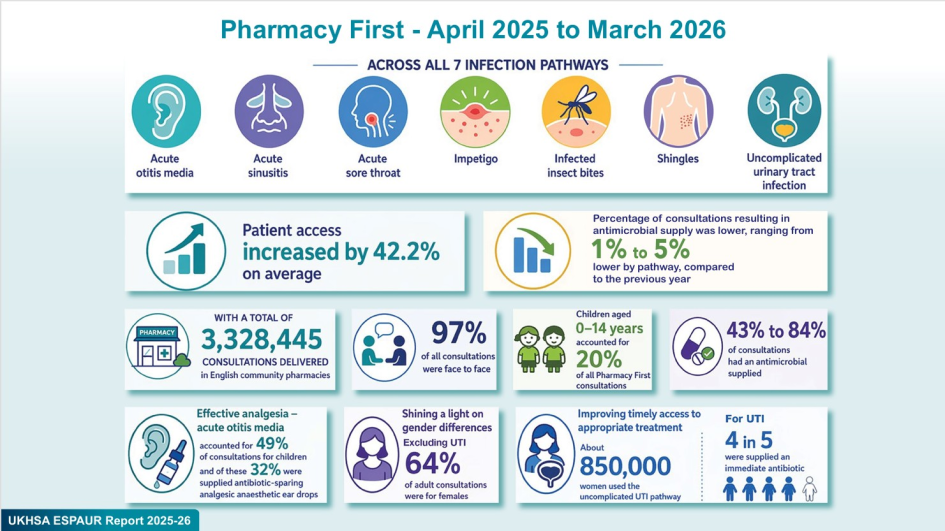
Accessible text for Figure 6.2
The image is a visual representation of the key findings from the Pharmacy First service for 7 common infections. It covers the period from April 2025 to March 2026 as described in the main body of the report.
Pharmacy Quality Scheme
The NHSE Pharmacy Quality Scheme (PQS) forms part of the Community Pharmacy Contractual Framework (CPCF). It supports delivery of the NHS Long Term Plan and rewards community pharmacy contractors that deliver quality criteria in 3 quality dimensions: clinical effectiveness, patient safety and patient experience.
In 2025 to 2026, community pharmacy contractors were required to complete a clinical audit against 5 standards, for consultations provided to patients with a FeverPAIN score between 0 and 3 on the Pharmacy First Acute Sore Throat clinical pathway. The audit required contractors to collect data from a minimum of 10 patients over 4 weeks, or over an 8-week period if 10 patients are not achieved for the period, between 1 September 2025 and 31 March 2026. Any patients who were previously seen for the same episode of acute sore throat who re-present to the pharmacy were only included once during the data collection period. The pharmacy must have completed the audit, shared their anonymised data with NHSE, and incorporated learnings from the audit into practice by the end of 31 March 2026.
For the PQS 2025 to 2026, 8,789 community pharmacy contractors submitted data for 92,320 consultations. The number of submissions per pharmacy ranged from 1 to 50, with 7,810 (88.9%) of contractors meeting the requirement of at least 10 patients. The majority, 67,182 patients (72.8%) presented as self-referrals or ‘walk-ins’, while 25,138 (27.2%) were referred. The vast majority of consultations were conducted face-to-face (88,757; 96.1%), with a smaller proportion carried out remotely (3,563; 3.9%). In terms of age distribution, 67,837 patients (73.5%) were adults, and 24,483 (26.5%) were children under 18 years of age.
Patients most frequently presented with a FeverPAIN score of 2 (35,412; 38.4%), followed by a score of 3 (29,280; 31.7%), a score of 1 (21,277; 23.0%) and a score of zero (6,351; 6.9%). Those that scored 2 and above on the FeverPAIN score required a face to face examination and were assessed against Standard 5.
No standard met the 100% target – see Table 6.4. Standard S3 – Advice on when to re-consult: 98.6% (highest), followed by S2 – Advice on illness duration: 97.8% and S4 – Antibiotic resistance/AMS advice: 92.5%. This data indicates that community pharmacies are consistently providing key self-care and safety-netting advice. S1 – the supply and use of the TARGET RTI leaflet was 88.1%, which is lower than the verbal advice provided. The clinical examination score was the lowest out of all the standards. These apply only to patients with FeverPAIN scores of 2 to 3 seen face-to-face (62,716 cases). Throat exam had a very high adherence at 96.2%, whilst the neck exam was markedly lower at 73%. Collectively both throat and neck at a composite standard was met at 72.6%.
Table 6.4. Adherence to Pharmacy First Acute Sore Throat Clinical Audit Standards
| Standard | Met (n) | Applicable (n) | Adherence | Notes |
|---|---|---|---|---|
| S1 - TARGET RTI leaflet used and given/sent | 81,320 | 92,320 | 88.1% | |
| S2 - advice on natural history/duration | 90,314 | 92,320 | 97.8% | |
| S3 - advice on when to re-consult | 91,030 | 92,320 | 98.6% | |
| S4 - general AMS/antibiotic resistance info | 85,433 | 92,320 | 92.5% | |
| S5 - throat exam (FeverPAIN 2-3, face-to-face) | 60,358 | 62,716 | 96.2% | Applicable = FeverPAIN 2/3 in-pharmacy |
| S5 - neck exam (FeverPAIN 2-3, face-to-face) | 45,763 | 62,716 | 73.0% | |
| S5 - both throat and neck (standard ‘Met’) | 45,562 | 62,716 | 72.6% |
Note: All Audit standard required 100% compliance
NHS Standard Contract
Antimicrobial stewardship
The NHS Standard Contract 2025 to 2026 continued to include requirements for acute provider trusts (NHS trusts and NHS foundation trusts) to use reasonable endeavours, consistent with good practice, to minimise inappropriate use of broad‑spectrum antibiotics in accordance with the UK AMR National Action Plan 2024 to 2029. Trusts were required to have regard to NICE guideline NG15: Antimicrobial stewardship: systems and processes for effective antimicrobial medicine use, and to the AMS Toolkit for English hospitals. As in the previous year, no specific numerical reduction target was set. NHS Standard Contact final performance data by trust is available on the NHSE AMR Programme FutureNHS workspace.
For the FY 2025 to 2026, the number of trusts that achieved any reduction in their ‘Watch’ and ‘Reserve’ antibiotic consumption against the 2019 baseline was 84 (65%) (Table 6.5). Averaged across all acute provider trusts for England, ‘Watch’ and ‘Reserve’ antibiotic consumption reduced to 4.2% below the FY 2019 to 2020 baseline of 2,229 DDDs per 1,000 admissions.
Table 6.5. Trust-level antibiotic consumption since the new National Action Plan 2024 to 2029
| NHS Standard Contract | Number of trusts that achieved a reduction in ‘Watch’ and ‘Reserve’ antibiotic DDDs per 1,000 admissions with 2019 to 2020 as baseline | Antibiotic consumption value at year end – ‘Watch’ and ‘Reserve’ categories DDD per 1,000 admissions |
|---|---|---|
| 2024 to 2025 | 66 of 132 (50%) | 2,275 |
| 2025 to 2026 | 84 of 130 [note] (65%) | 2,136 |
Note: adjusted for additional trust merger and excludes 4 trusts with substantial missing data
Clostridioides difficile testing compliance and data quality
The NHS Standard Contract 2025 to 2026 included a quality requirement for NHS acute trust providers to minimise Clostridioides difficile to organisation specific threshold levels. Trusts are already required to submit quarterly CDI testing data to the UKHSA through the Quarterly Mandatory Laboratory Returns (QMLR) dataset and were asked to improve the completeness and quality of CDI testing data submitted. Current indicators include:
- total number of stool specimens examined, expressed per 100,000 bed days
- total number of stool specimens tested for CDI, expressed per 100,000 bed days
Nationally, for the 12 months to March 2026, the number of overall stool specimens examined has declined each quarter and then increased in Q4 (Table 6.6). The number of stool specimens examined for CDI diagnosis increased between Q1 and Q2, declined in Q3, and increased in Q4. The median positivity of stool specimens examined for CDI diagnosis have been predominantly stable, with a positivity of 1.9% in Q4. This is in the context of a reduction in the number of trusts submitting data on stool specimen sampling in the 2 most recent financial quarters, 2025 Q3 and 2025 Q4. Data is available from the UKHSA MRSA, MSSA, Gram-negative bacteraemia and CDI: quarterly report.
Table 6.6. Quarterly epidemiological data on Clostridioides difficile testing
| Period | Total number of stools examined for CDI diagnosis | C. difficile diagnosis stool sampling rate per 1,000 population | Total number of stool specimens examined | Overall stool sampling rate per 1,000 population | Population estimate |
|---|---|---|---|---|---|
| FY2024-25 Q1 | 185,788 | 12.7 | 495,725 | 34.0 | 14,574,943 |
| FY2024-25 Q2 | 192,853 | 13.1 | 512,880 | 34.8 | 14,735,107 |
| FY2024-25 Q3 | 195,899 | 13.3 | 522,347 | 35.4 | 14,735,107 |
| FY2024-25 Q4 | 196,532 | 13.6 | 549,051 | 38.0 | 14,454,272 |
| FY2025-26 Q1 | 189,875 | 13.0 | 527,834 | 36.1 | 14,614,875 |
| FY2025-26 Q2 | 193,221 | 13.1 | 510,692 | 34.6 | 14,775,478 |
| FY2025-26 Q3 | 156,574 | 10.6 | 402,931 | 27.3 | 14,775,478 |
| FY2025-26 Q4 | 170,011 | 11.8 | 464,429 | 32.0 | 14,454,271 |
Dental prescribing dashboard
The Dental prescribing dashboard within ePACT has been developed to strengthen surveillance of NHS primary dental care prescribing across England. It is designed to enable ICBs and local dental networks to explore variation in prescribing, benchmark activity across ICBs, regions, and nationally, and support improvements in prescribing practice locally. Covering NHS data from January 2022 onwards, the dashboard is updated monthly and provides insight into overall prescribing, antibacterial prescribing and fluoride prescribing, based on prescriptions submitted by pharmacy contractors, dispensing doctors, and dental treatment forms. This will enable benchmarking by ICBs and interpretation of variation in antimicrobial and fluoride prescribing and support stewardship by highlighting trends, identifying outlier ICBs and informing local improvement work.
A key feature of the dashboard is the use of treatment courses (FP17 dental treatment forms) as a denominator, enabling comparison of prescribing rates across areas regardless of population size. The tool also enables users to assess trends over time at national, regional, and ICB level, helping to identify emerging patterns and outliers in dental antimicrobial use.
The development of the dashboard was led by the Dental ESPAUR Subgroup and the NHSE Antimicrobial Prescribing and Medicines Optimisation (APMO) team to ensure alignment with national antimicrobial stewardship priorities. This collaborative approach will continue as the dashboard evolves, supporting ongoing refinement and ensuring it remains a valuable resource for monitoring trends, identifying variation and promoting optimal antibiotic use in NHS dentistry. A key challenge is the lack of data at the dental contractor and prescriber level, which applies to both NHS and private dental consultations.
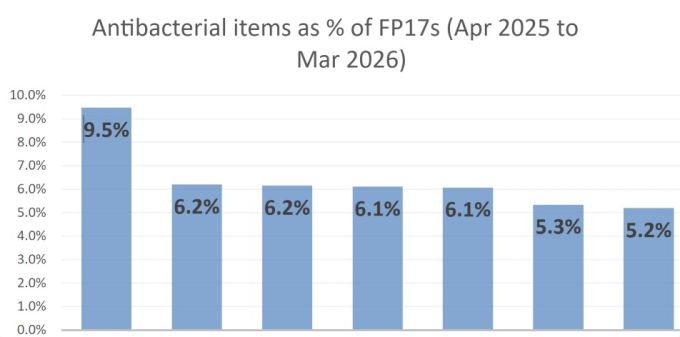
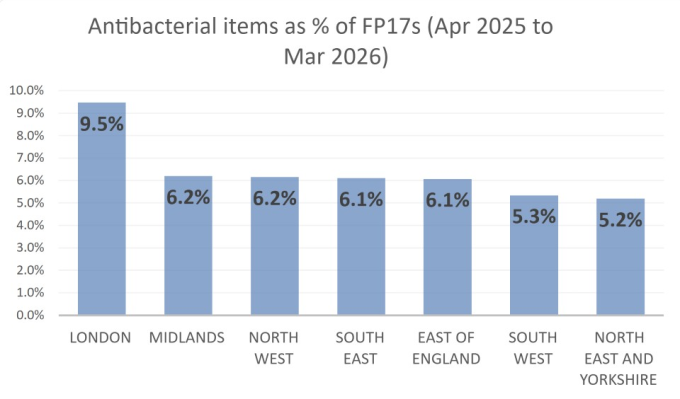
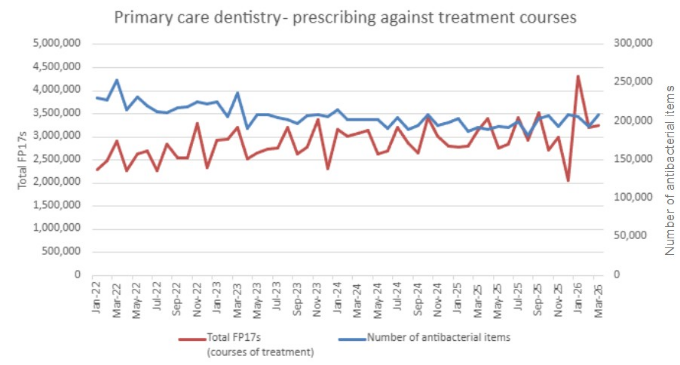
Antibacterials account for 61.4% of all dental prescribing in 2025 to 2026, but only 10.7% of all dental prescribing costs. This equates to £4,032,964. Sixty-seven percent of all antibacterials prescribed were amoxicillin, with metronidazole next at 27.7% Figure 6.4. The dashboard also revealed a number of non-routine antibacterials being prescribed by dentists and are not included in national clinical guidance. Regional variation is notable with London having the highest prescribing rate at 9.5% against FP17s with North East and Yorkshire lowest with 5.2% Figure 6.3. Rate of prescribing is trending downwards, from 10.1% of treatment courses having antimicrobials at the start of 2022 to 6.4% in March 2026, while dental activity, expressed as number of treatment courses, is trending upwards Figure 6.4.
Figure 6.3. Antimicrobial stewardship data available from the dental prescribing dashboard by type of antibacterial
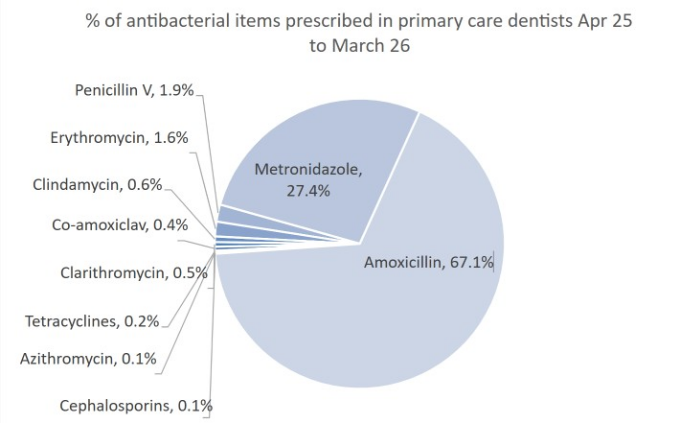
Accessible text for Figure 6.3
The pie chart shows antibacterial prescribing by dentists, April 2025 to March 2026. Amoxicillin accounted for 67.1% of prescriptions and metronidazole 27.4%, with all other antibacterial agents each contributing less than 2%.
Figure 6.4. Data visualisation from the dental prescribing dashboard showing antibacterial items by region
Accessible text for Figure 6.4
The bar chart shows antibacterial items as a percentage of FP17s in primary care dentistry, April 2025 to March 2026. London was highest at 9.5%, while all other regions ranged from 5.2% to 6.2%.
Figure 6.5. Data visualisation from the dental prescribing dashboard showing monthly trend in total FP17s and number of antibacterial items supplied
Accessible text for Figure 6.5
Line chart showing monthly trends in total dental prescriptions FP17s and number of antibacterial items supplied over time.
National guidance, engagement initiatives and implementation resources
This section highlights selected NHSE resources and enablers, developed during FY 2025 to 2026, to support healthcare commissioners and providers with achieving the ambitions of the UK National Action Plan – Confronting antimicrobial resistance 2024 to 2029.
AMR leadership and governance
NHS deliverable 5.3a states that:
All NHS bodies will have senior identified leads for AMR, and for IPC and AMS, who have overall responsibility for co-ordinating the organisation’s approaches to these issues, and who reports to the organisation’s board on progress.
In support of the above, the AMR Programme was able to provide national funding support to strengthen AMR leadership and governance within ICBs to drive improvements locally thus building local, regional, and national resilience to the ongoing threat of infection and AMR. For Cohort 1 (2025 to 2026), 14 ICBs were selected with proposals focusing on localised data driven priority areas of improvement, the health inequalities within that and the necessary whole system, multi-disciplinary leadership, oversight and accountability required to deliver improvements on such a cross-cutting complex issue.
In 2026 to 2027, additional funding will be available to support a second cohort of the remaining ICBs, subject to successful applications, with ambition that every part of the country has local AMR leadership strengthened to address issues, break down barriers and drive forward improvement in their area.
Paediatric antimicrobial stewardship
Paediatric antimicrobial stewardship has become an increasing priority in England following a marked rise in post pandemic antibiotic exposure among children. Box 6.1 summarises national initiatives to reduce antibiotic exposure and improve outcomes for children.
Box 6.1. Paediatric antimicrobial stewardship – national initiatives to reduce antibiotic exposure and improve outcomes
Context
National ePACT2 data show that the proportion of children under 10 receiving at least one antibiotic annually in primary care increased from around 27% in March 2020 to 39.2% in March 2023, with significant regional variation. The national healthcare associated infection and antimicrobial use point prevalence survey in NHS secondary care organisations in November 2023 demonstrated that 31.4% of children in acute secondary care were receiving antibiotics.
In addition to driving AMR, there is growing evidence associating early life antibiotic exposure with long term adverse outcomes, demonstrating an important public health challenge that needs to be addressed. The volume of antibiotic prescribing in primary care has declined since the peak in prescribing in March 2023 and stands at 28% in March 2026. Some of this reduction will, in part, be due to a range of quality improvement interventions launched by NHSE regions in collaboration with stakeholders to deliver both improved quality of care and substantial financial savings. These include enhanced surveillance and identification of variation using new prescribing metrics, clinician education, decision support tools, shared decision-making resources and quality improvement initiatives.
Data and surveillance
To utilise data to identify variation and drive improvement, a new open-access PrescQIPP prescribing dashboard for children in primary care aged 0 to 9 years has been developed to enable granular benchmarking of prescribing rates to individual general practice level, supporting identification of unwarranted variation and providing the ability to monitor progress against improvement plans. Its development showcases a population health approach to data and serves as a model for future dashboards to provide population level insight. Accessibility and visibility has been promoted by inclusion of the data highlighting variation in monthly AMR data packs developed for each integrated care board and hosted on FutureNHS, which has supported wider engagement with stewardship data across primary care teams.
In contrast to primary care, routine access to relevant paediatric antimicrobial prescribing metrics remains limited in secondary care. This restricts benchmarking, hampers identification of unwarranted variation and limits the ability to evaluate stewardship interventions at scale.
Primary care initiatives
The introduction of a national metric on the proportion of children aged 0 to 9 receiving antibiotics into the NHS Oversight Framework (NOF) represents a major shift in accountability for paediatric prescribing. By making antibiotic exposure in children visible at system level, it has helped drive reductions in prescribing variation and supported the reduction in antibiotic exposure seen nationally. This will remain as a scoring metric in the NOF in 2026 to 2027.
Paediatric antimicrobial stewardship networks
NHSE’s AMR Programme has funded the establishment of 4 regional paediatric antimicrobial stewardship (pAMS) networks, based on the results of a successful network model in South Yorkshire in 2023. This work empowered staff in 4 district general hospitals to lead meaningful behaviour change in antimicrobial prescribing through education, benchmarking and shared learning. Following evaluation, the model has expanded across the Yorkshire footprint (13 hospitals) and 3 additional regional networks: Wessex (11 hospitals), South West (13 hospitals), and South-East London, Kent and East Sussex (12 hospitals) from September 2025. Secondary care paediatric and neonatal services from all participating hospitals are engaged. Each regional network is led by a paediatric infectious diseases consultant and an AMS pharmacist based within a tertiary referral centre. The intention for these networks is for every district general hospital within them to deliver an effective, locally led pAMS programme supported by tertiary paediatric infection specialists within a collaborative regional network.
Resources for antimicrobial resistance (AMR) prevention
Containing, controlling and mitigating AMR is a core enabler of the 10 Year Health Plan for England. To support improvement in AMR prevention, a number of resources were published to support healthcare systems to confront AMR.
Roles and responsibilities for delivery of the UK antimicrobial resistance national action plan
This set of principles outlines the roles and responsibilities of DHSC and NHS structures in delivering AMR prevention, drawing upon the Model Region and Model ICB blueprints and work to-date on the Target Operating Model for the integrated Department of Health and Social Care. These principles are relevant to the national AMR programme, regional leadership teams, ICB commissioners and trust AMR leadership teams.
Guidance on delivery of the antimicrobial prescribing targets of the UK AMR national action plan
This guidance includes pragmatic strategies for delivering improvement and hyperlinks to supporting resources. The guidance is intended for implementation by specialist antimicrobial stewardship teams and as a reference source for ICB commissioners and NHSE or DHSC regional teams.
Planning the antimicrobial stewardship workforce: a practical guide for trusts and ICBs
This guidance is relevant for directors of infection prevention and control (DIPCs), clinical leads for medical microbiology and infectious diseases and directors of pharmacy. It outlines the capacity and skill mix needed for antimicrobial stewardship (AMS) teams in different healthcare settings to deliver high- and medium-priority AMS activities.
Capability framework for antimicrobial stewardship specialists
This resource was developed by the British Society for Antimicrobial Chemotherapy in collaboration with NHSE. The framework sets out the capabilities health professionals need when working in a specialist AMS role and is designed for use by NHS staff (in specialist AMS roles), their line managers and education providers. This work is awaiting internal NHSE publication, but an overview has been published Development of a capability framework for antimicrobial stewardship specialist health professionals working in the NHS in England: utilizing Delphi methodology.
Reducing Watch and Reserve antibiotic consumption in hospitals – lessons learned from real-world practice
The guidance provides best-practice recommendations derived from a thematic analysis of interviews with NHS staff in hospitals that have successfully reduced prescribing of antibiotics from the WHO Watch and Reserve categories. Designed for implementation by directors of IPC and AMS teams in acute hospital trusts but can also be used as a reference source for ICB commissioners and NHSE and DHSC regional teams.
https://future.nhs.uk/A_M_R/view?objectID=58106128
Prescribing improvement scheme for local adaptation: accuracy of Penicillin Allergy Documentation and De-labelling (PADL)
This is a quality improvement project blueprint co-created with ICB and primary care network (PCN) staff and was developed to support PCNs to meet the AMR NAP human health target: 4b) to achieve 70% of total use of antibiotics from the World Health Organization (WHO) Access category. Template available to download from FutureNHS/AMR.
Digital optimisation of antimicrobial stewardship – ENhancing AMS Capability Through Enhanced Digital support (ENACTED) project
Following publication of NHSE’s Digital Vision for antimicrobial stewardship which outlined the digital capabilities needed across care settings for optimal antimicrobial stewardship, the APMO team launched a call for providers and ICBs to produce system-specific instruction and training manuals for antimicrobial stewardship functionality in electronic health records and major prescribing systems.
Following a competitive application process, funding was awarded to 5 teams to develop digital system-specific instruction and training manuals which will support antimicrobial stewardship activities in either primary or secondary care settings. Priorities for the instruction manuals will be supporting the implementation of Start Smart Then Focus: antimicrobial stewardship toolkit for inpatient care settings in secondary care settings and supporting the implementation of NICE guidelines and TARGET toolkit for primary care settings. Work is currently underway to develop the resources, which will then be shared with stakeholders in primary and secondary care in 2026 to 2027.
Moving Forward in Diagnostics (MFID) – stakeholder engagement event series
Moving Forward in Diagnostics (MFID) series is a key milestone in advancing infection diagnostics for antimicrobial resistance (AMR) within the NHS. This stakeholder engagement series of 6 events has brought together patients, clinicians, academics, scientists, industry partners, funding bodies, Health Innovation Networks, NHS procurement teams, and regulators. The aim has been to understand clinical needs and generate practical insights to support the evaluation, adoption, and spread of innovative diagnostics. The output from the events will inform future diagnostic strategies and ensure alignment with the ambitions set out in the 10 Year Health Plan.
Point of Care Testing (PoCT) and diagnostic service evaluations
In addition to work in other areas of NHS England that support pathology transformation and connecting neighbourhood pathology, quality management, PoCT, automation and digital integration of diagnostics and the use of diagnostics in different settings, NHS England has commissioned service evaluations for infection diagnostics, including PoCT to support providers in different settings.
2025 to 2026 diagnostic service evaluation insights
Service evaluations for respiratory tract infections (RTIs) were prioritised with key aim to support providers in use of diagnostics in care pathways for respiratory winter pressures and to impact conveyancing. Evaluations were supported in 6 regions for RTI and sore throat, conducted across various settings, including acute respiratory infection (ARI) hubs, community pharmacies. Findings are being collated from regions.
2026 to 2027 planned diagnostic service evaluation
Evaluations are aimed to understand how adoption can be progressed in care pathways in differing settings and to drive adoption, supporting system transformation The service evaluation programme to commissioning a single large scale evaluation with focus on implementation of diagnostics, with emphasis on PoCT, to improve care pathways to address infection diagnostic needs at multiple sites, in multiple organisations. This will drive increased evidence-based insight and informed implementation. Two smaller scale evaluations are planned with an outcome focus to identify the levers to drive successful service implementation of infection PoCT within care pathways. The scope has been expanded to include other infection pathways such as urinary tract infection, sepsis, surgical site infections (SSIs), in addition to RTIs. Applicants are requested to work in partnership with pathology networks and research collaboratives to evaluate the effectiveness of innovations in settings and enable adoption of innovation at pace and scale; to improve health outcomes.
Strengthening AMR, AMS and Infection diagnostics in curricula
Scoping has been undertaken to synthesise policy developments, teaching innovations, implementation challenges, and future directions in AMS, AMR and infection or AMR diagnostic education across selected professional disciplines and includes a summary of undergraduate curricular review undertaken in 2025. This will inform future action planning to influence health education institutions to improve antimicrobial stewardship for the future NHS workforce.
AMR programme FutureNHS workspace
The AMR Collaborative Platform on FutureNHS continues to be used and evidenced by visits and data downloads. This workspace is aimed at NHS staff with an interest in AMR and AMS and provides local, regional and national colleagues with access to a wide range of resources including national improvement and quality assurance performance data, AMS toolkits for specific infections, antibiotic prescribing improvement schemes for local adaption by ICBs, digital assets for promoting AMS, the AMS Monthly Research Round up and links to other AMR programmes of work. The site also hosts a repository for webinar recordings and slides, summaries of key research as identified by the AMS Evidence Observatory and provides updates on antimicrobial issues and management such as raising awareness of the recent penicillamine allergy mislabelling alert. At the end of March 2026, there were approximately 1,430 registered members with 98% actively engaging with the site. Further analysis shows there were over 6,100 visits over the last 12 months which represents an increase of 6% compared to the previous 12 months.
Interactive data dashboards
PrescQIPP publishes the Optimising Antimicrobial Use Dashboard which reports metrics that demonstrate variation and support optimisation of duration of antibiotic prescriptions in primary care. Optimising antimicrobial duration metrics are now available for amoxicillin 500mg capsules, doxycycline 100mg capsules, flucloxacillin 500mg capsules, lymecycline 408mg capsules and phenoxymethylpenicillin 250mg tablets to support delivery of the second UK AMR national action plan. Additional resources to support optimisation of antibiotic durations include evidence bundle, infographics and case studies available on the FutureNHS AMR workspace.
NHS Model Health System
The NHS Model Health System antimicrobial dashboard reports multiple population metrics at ICB-level, relating to infection by pathway, and the dashboard now includes additional metrics supporting the 2024 to 2029 AMR NAP ambitions including acute trust antibiotic utilisation metrics that are also reported on Fingertips.
Intravenous to oral switch (IVOS)
A short 5-minute animated video on IVOS for nurses was developed by a group of AMS nurses and pharmacists in collaboration with SciTube and funded by NHSE’s AMR programme board. The video utilises a micro-learning approach to communicate key concepts and benefits of nurse involvement in IVOS. Created under a creative commons licence, the video is freely available to download and use in local communications campaigns. To date, the video has 4.6k views.
Building on from the video, a 30-minute ward-based training pack, facilitator notes and feedback survey was developed to support non-specialist ward-based nursing staff to increase knowledge of and confidence in promoting IVOS. These resources are available on the FutureNHS AMR workspace.
National AMR data symposium
In November 2025, the AMR programme delivered a national infection and AMR data symposium and offered ICSs and providers the opportunity to showcase how infection, prescribing and AMR data has been used to help drive local improvements for patients. Over 270 colleagues from across all 7 NHSE regions attended the event. NHSE and UKHSA also shared a tool on FutureNHS that can help professionals interested in infection and AMR data find what they need when not sure where to look.
World AMR Awareness Week 2025
NHSE’s annual letter was once again jointly issued with UKHSA. Aligned to the WAAW 2025 theme of ‘Act Now: protect our present, secure our future’, it set a clear call to action for chairs and chief executives of trusts and ICBs to work with their prescribers and clinical leads to make the changes required to meet the targets in the national action plan for AMR.
Over 1,000 people registered for 3 webinars, one of which included an address by Professor Dame Sally Davies, UK Special Envoy on Antimicrobial Resistance (AMR). A dedicated ‘Campaign Toolkit’ highlighting multiple resources, examples of good practice and links to digital assets was hosted on FutureNHS and attracted over 900 views or downloads. An editorial feature was included in the Primary Care Bulletin which has a circulation of 24,000. Social media content performed well and largely exceeded benchmarks. The NHSUK Facebook carousel gained the most engagements and the UKHSA collaboration campaign video gained the most views. In total there were 178,928 impressions and 5,821 engagements.
Adoption and spread of TARGET training across ICBs
TARGET training directly supports the UK AMR NAP and has been shown to impact positively on the optimisation of antimicrobial prescribing. The training equips primary care clinicians to reduce inappropriate prescribing, optimising care and outcomes for patients. As in previous years, NHSE funded further training co-ordinated by regional AMS leads for specific ICBs to support inequalities in prescribing. TARGET materials also support ICBs to achieve goals set out in national incentive and assurance schemes.
AMS pharmacy technician – workforce development
During 2025 to 2026, the East of England developed AMS handbooks for pharmacy technicians in primary and secondary care settings to support role clarity, strengthen capability and improve standardisation of AMS practice across healthcare settings. Co-produced through multidisciplinary working groups, these resources provide practical guidance to enable pharmacy technicians to contribute effectively to AMS activities in a range of care environments.
Through a rapid evaluation survey and by reviewing views and downloads from FutureNHS, there was strong engagement with these handbooks, with uptake across a wide range of organisations, positive user feedback highlighting improved knowledge of AMS/AMR principles, clarity of role expectations and increased confidence in undertaking AMS-related tasks. These resources and the associated findings address a gap for targeted investment in AMS-specific education and training, alongside the development of structured AMS career pathways. Strengthening integration of pharmacy technicians within multidisciplinary AMS teams will be critical to optimising their contribution to antimicrobial stewardship and supporting system-wide workforce sustainability.
Community health services and mental health services
NHSE continues to engage and work with community health services and mental health services sectors via quarterly workshops. These ensure staff are made aware of national AMS activities and how they impact on the sector, enable networking, peer discussion and learning and collaborative development of sector-specific AMS tools. Several working groups have been established to develop resources and support improvement. In October 2025, the data and benchmarking group organised a sector-wide audit of antibiotic prescribing over a 2-week period using an audit tool developed by the group. Twenty-eight organisations participated in the audit and returned data. The majority of responses (15, 54%) were from organisations that provide both community and mental health services, followed by Health and Justice settings (6, 21%), mental health organisations (5, 18%) and community health organisations (2, 7%). 1,453 antibiotic prescriptions were audited, 83% of which (1,211) came from community and mental health organisations.
Of all prescriptions audited, 92% (1,453) were compliant with NICE or local guidelines, or were based on microbiology advice. 88% (1,453) of prescriptions were for the recommended course length and 15% (225) of all antibiotics were broad-spectrum. Across all organisation types, flucloxacillin was the most commonly prescribed antibiotic (n=227), followed by nitrofurantoin (n=202) and doxycycline (n=198). In terms of recommended course length, only 68% of co-amoxiclav prescriptions (100/147) matched the recommended duration. Mental health organisations had the lowest proportion of guideline compliant antibiotic choice (82%), while Health and Justice organisations had the highest proportion (99%). The results of the audit are available on the FutureNHS workspace for the group, while the audit tool has been improved and is available for organisations who might want to benchmark against the results or repeat the audit.
AMS health inequalities – health and justice
NHSE commissions healthcare services in 147 health and justice settings (HJS), aiming to provide equitable care for detained populations who experience significant health inequalities. Previous data for this sector showed discrepancies with primary care benchmarks, such as higher proportions of broad-spectrum antibiotic use and significantly higher lymecycline and metronidazole prescribing. Prescribing durations often diverged from NICE guidelines, with significantly fewer 5-day courses prescribed in HJS. Activity this year has been focused on improving identified targets.
Reductions have been seen in overall antibiotic use per 100 patients from 0.09 prescriptions per 100 head of population in October 23 to 0.086 (October 25) and in prescribing of antibiotics used primarily for acne, for example lymecycline, from 829 prescriptions in October 23 to 693 prescriptions in October 25. Broad spectrum antibiotic use has increased, from 10% in October 23 to 12% in October 25, driven by co-amoxiclav use.
Five-day course lengths of amoxicillin 500mg have improved from 28% (December to February 2023 to 2024) to 44% (January to March 2026). Five-day course lengths of doxycycline 100mg have improved from 7.3% to 12.7%. Three-day course length prescribing for nitrofurantoin 100mg M/R in women has improved from 44 to 65%. Five key performance indicators for AMS have been developed as part of the medicines optimisation performance programme: co-amoxiclav use as a percentage of all antibiotics, lymecycline use as a percentage of all antibiotics, amoxicillin, doxycycline and clarithromycin % 5-day duration supply as a proportion of all quantities supplied. Use of the Behaviour Change Toolkit for Optimising Course Lengths in Primary Care – Antimicrobial Resistance Programme – Futures will support improvement. Next steps for HJS include development of an AMS Tableau KPI dashboard with direct user interface and monthly summary reports.
Future actions
This section outlines the 2026 to 2027 plans for the confirmed national policies and commissioning associated with antimicrobial use. The NHS 10 Year Health Plan was published in 2025 and a review of NHSE priorities for AMR will be undertaken with appropriate actions that continue to align with the commitments of the UK AMR NAP.
NHS Oversight Framework
The NOF for 2026 to 2027 includes ‘percentage of children prescribed antibiotics in primary care’ as a key patient safety metric for ICBs and will be included as a scoring metric, for the first time, towards determining their overall delivery performance. The metric was developed by the AMR Programme in order to signal and support ICBs to prioritise AMS in this important cohort who are relatively high users of antimicrobials with consequent high risk of adverse outcomes. Following improvement by all ICBs and a reduction in the degree of variation in the volume of antibiotic prescribing to children between ICBs, the target will be reduced to 25%.
NHS Standard Contract
The NHS Standard Contract 2026 to 2027 continues to emphasise the importance of AMR and Providers (NHS trust or an NHS Foundation trust) are required to use all reasonable endeavours, consistent with good practice, to minimise its broad-spectrum antibiotic usage in accordance with the requirements of the NAP for AMR. Providers must develop an action plan to safely reduce overall antibiotic use and increase the proportion of antibiotic use from the Access category.
The Service Development and Improvement Plan (SDIP) arrangements for 2026 to 2027 under the NHS Standard Contract focus on locally agreed targets and trajectories that increase compliance with national testing guidance and improve consistency in CDI ascertainment.
For Clostridioides difficile infection (CDI), the relevant national standard is set out in the UK Standards for Microbiology Investigations (SMI) B 10 – Investigation of faecal specimens for Clostridioides difficile. This guidance defines compliant clinical and laboratory practice, including which patients presenting with diarrhoea should have stool specimens submitted for testing and the recommended diagnostic testing pathway for CDI. Improved and standardised ascertainment of CDI is expected to:
- improve patient management and clinical outcomes
- reduce the risk of onward transmission and healthcare-associated infection
- support more meaningful comparison of CDI rates between providers through greater consistency in testing and reporting practices
The resulting data will complement mandatory CDI surveillance reporting and support comparative analysis of testing and ascertainment practices across acute providers. This will enable a more detailed understanding of variation in CDI detection and reporting, supporting both local quality improvement initiatives and national surveillance objectives.
Pharmacy First – Antimicrobial Stewardship
The Pharmacy First service as part of the Community Pharmacy Contractual Framework 2026 to 2027 is expected to have up to 5 new prescribing-only clinical pathways to be confirmed and introduced in the autumn of 2026.
Pharmacy Quality Scheme
The Pharmacy Quality Scheme for 2026 to 2027 requires community pharmacies to complete a clinical audit to assess the quality of Pharmacy First clinical pathway consultations and develop an action plan for improving practice.
Blood Culture Pathway Optimisation
The AMR Infection Diagnostics Programme is driving a coordinated national approach to improve blood culture pathway (BCP) practice across the NHS. This includes establishing baseline performance, embedding BCP key performance indicators (KPI) within national contracts and accreditation, strengthening data collection through Pathology Quality Assurance Dashboard (PQAD), and supporting implementation through training, partnerships, and evidence-informed planning.
The AMR Infection Diagnostics Programme undertook an audit of key performance indicators (KPIs) at NHS trust level, establishing a national baseline for BCP performance. BCP KPIs have now been incorporated into the 2026 to 2027 NHS Standard Contract. A monthly national audit of blood culture pathway practice has been agreed and will be delivered through PQAD, with a planned launch in 2026. Work is also underway with industry partners to strengthen digital and software capability, enabling more automated and consistent data collection for the blood culture pathway.
A bespoke BCP training package is being developed in collaboration with the British Society for Antimicrobial Chemotherapy (BSAC), alongside a 3-year campaign to support wider dissemination of the existing BCP e-learning package. In parallel, the programme is working collaboratively with the Care Quality Commission (CQC) and the United Kingdom Accreditation Service (UKAS) to incorporate BCP KPIs into laboratory accreditation standards.
A paediatric blood culture pathway evidence synthesis has been completed to understand both national and international practice. This identified key evidence gaps, and work is now in progress to develop an implementation plan to address these findings.