ESPAUR report 2025 to 2026: Chapter 5. Antimicrobial stewardship
Published 12 November 2026

© Crown copyright 2026
This publication is licensed under the terms of the Open Government Licence v3.0 except where otherwise stated. To view this licence, visit nationalarchives.gov.uk/doc/open-government-licence/version/3 or write to the Information Policy Team, The National Archives, Kew, London TW9 4DU, or email: psi@nationalarchives.gov.uk.
Where we have identified any third party copyright information you will need to obtain permission from the copyright holders concerned.
This publication is available at https://www.gov.uk/government/publications/english-surveillance-programme-for-antimicrobial-utilisation-and-resistance-espaur/espaur-report-2025-to-2026-chapter-5-antimicrobial-stewardship
Main messages
TARGET (Treat Antibiotics Responsibly, Guidance, Education and Tools) antibiotics toolkit
The TARGET Toolkit, which received 274,339 views over the last year, continues to support clinicians with the development of new materials to address identified unmet needs, alongside the updates to existing resources that support management of infections. This includes resources that support the urinary tract infection (UTI) care pathway from diagnosis to patient communication across different care settings, as well as tools that aid decision-making for parents of children with acute cough, and resources for cellulitis management. Continued high website traffic demonstrates strong and sustained engagement with the toolkit.
Evaluation and impact assessment of national secondary care (hospitals) antimicrobial stewardship tools
Using a mixed-methods approach combining a scoping review and survey of antimicrobial stewardship (AMS) specialists, the study found evidence of impact for the majority of national AMS tools in the UK, particularly the Start Smart Then Focus (SSTF) tool and the Antibiotic Guardian (AG) campaign. The survey identified patterns suggesting a relationship between awareness, uptake, deployment and perceived impact.
Overall, this mixed-method approach can potentially provide a comprehensive and practical framework for evaluating AMS resources and will inform ongoing updates to national AMS tools for use in secondary care.
Update of national AMS tools
The national antimicrobial intravenous-to-oral switch (IVOS) criteria for prompt switch for adults, antimicrobial prescribing and stewardship competency framework and the SSTF toolkit are currently under planned review to ensure these tools remain current, evidence-based and fit for purpose. Feedback was received from multidisciplinary team stakeholders and subject-matter experts, with 13 responses for IVOS, 51 for the competency framework, and 16 for SSTF. Responses are now being collated with publication of the updated tools planned for 2027.
Health inequalities
In line with Commitment 8.2 in the AMR National Action Plan, a toolkit has been co-developed by UKHSA through collaboration across all 4 UK nations that contains resources to support regional UKHSA, NHS colleagues and public health teams in identifying and addressing health inequalities in access, infection incidence, clinical outcomes, vaccine uptake, and antimicrobial exposure. Resources have been identified through a series of published and grey literature scoping reviews with feedback on draft toolkits sought from a range of stakeholders.
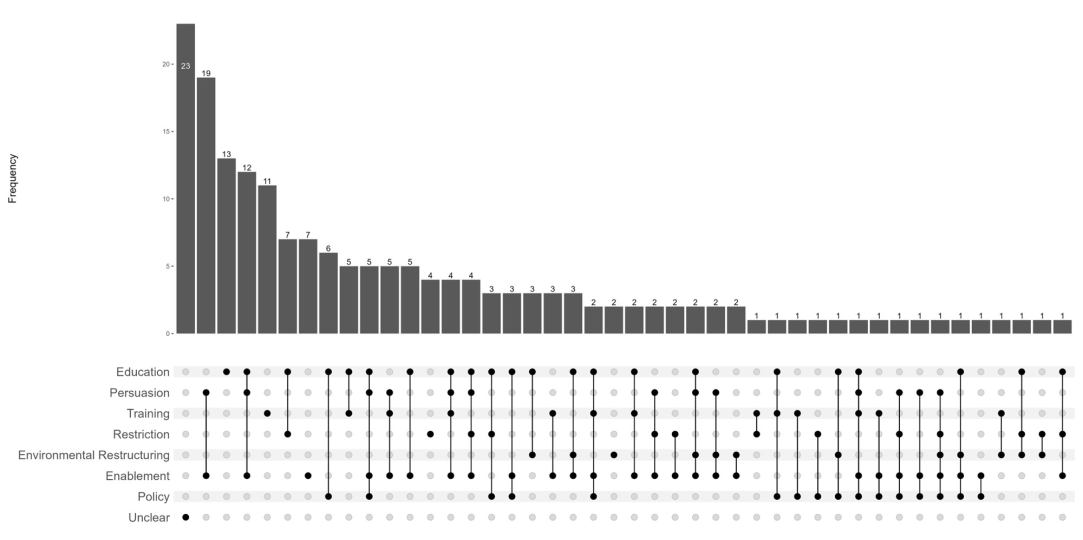
Umbrella review of behavioural interventions for AMR screened 8,164 records with 40 review articles included. For clinical outcomes related to infection and bacteria prevalence, 44 unique combinations of intervention functions were identified. The high prevalence of interventions incorporating education, persuasion, training and enablement components may suggest that interventions based on these functions are the most acceptable or practical to implement. ####
Pharmacy professionals are well placed to address inequalities in AMR through their role in antibiotic prescribing, patient education, and stewardship across healthcare settings. However, the extent of their contribution remains unclear. Therefore, a rapid scoping review was conducted to develop an understanding of how pharmacy professionals contribute to reducing inequalities in the incidence of resistant infections and antibiotic use and exposure. Pharmacy-led interventions were associated with reductions in inappropriate and broad-spectrum antibiotic use, increased guideline-concordant prescribing, and greater antibiotic de-escalation. Studies also reported improved access to healthcare services, enhanced AMR knowledge, and increased uptake of care among underserved populations. This suggests that pharmacy professionals have the potential to address inequalities related to infection management, antibiotic use and AMR. However, evidence remains limited regarding whether interventions reduce disparities in outcomes.
Insights into antimicrobial stewardship research
Several research projects are currently ongoing to improve understanding of the implementation and effectiveness of national AMS initiatives, repeat antibiotic prescribing in community and outpatient care, access to antibiotics from private (non-NHS) primary care services, as well as our understanding of the availability of information, including false information, related to AMR and appropriate antibiotic usage on social media.
Introduction to Chapter 5
Tackling antimicrobial resistance (AMR) requires action on multiple fronts to optimise antimicrobial use (AMU) and reduce the emergence and transmission of resistance. An important element of this approach is the implementation of antimicrobial stewardship (AMS) interventions. AMS enables healthcare workers to choose the most appropriate drug, dosage and duration of treatment, whilst limiting the microbe’s ability to develop or acquire resistance. Optimising prescribing in this way is a focus of the UK’s 5-year National Action Plan (NAP) on tackling AMR (1) which includes a target to reduce total antibiotic use in human populations by 5% from the 2019 baseline and to achieve 70% of total use of antibiotics from the Access category (new UK category) across the human healthcare system.
In this chapter we provide short summaries of national primary and secondary care AMS interventions led by the UKHSA between April 2025 and March 2026, as well as an overview of key research activities related to AMS. In addition, we also outline ongoing work to tackle health inequalities associated with AMR and antimicrobial prescribing.
Professional and public education and training is an important part of AMS. Further information about World AMR Awareness Week (WAAW) AMS resources, such as the Antibiotic awareness toolkit for healthcare professionals in England, is available in the Professional and Public Education and Training (PPET) in [Chapter 7] (https://www.gov.uk/government/publications/english-surveillance-programme-for-antimicrobial-utilisation-and-resistance-espaur-2025-to-2026-report).
Primary care AMS
TARGET antibiotics toolkit
The primary care workforce plays a is pivotal role in AMS with 65.4% of antibiotics being prescribed in this setting (Chapter 3). The TARGET (Treat Antibiotics Responsibly, Guidance, Education and Tools) Antibiotics Toolkit has been used since 2012 to support an evidence-based practice-wide approach to AMS. The toolkit, developed by UKHSA and hosted on the Royal College of General Practitioners (RCGP) website, is freely available to all staff across the primary care pathway. By providing information and resources to healthcare staff, TARGET aims to facilitate appropriate antibiotic use and shared decision-making for common infections. It also supports the 2024 to 2029 AMR NAP by prioritising a well-resourced workforce to address AMR. See Chapter 7 for details on specific training and engagement associated with the TARGET toolkit.
TARGET resources
Urinary tract infections (UTIs) and paediatric care represent high-demand areas where AMS is needed. Management of UTIs accounts for around 22.7% of antibiotic prescriptions linked to a system or clinical condition in primary care (2). UTIs are also linked to about half of E. coli blood stream infections presenting in hospitals (2). Antibiotic use among children increased substantially from 2019 to 2024, rising by 17% for those aged 0 to 4 years and 25% in those aged 5 to 14 (3). This rise is concerning as early exposure to antibiotics has been linked to adverse health outcomes (4). Underpinned by behavioural theory, the evidence-based TARGET resources are designed in collaboration with primary care staff and patients, to support responsible antibiotic use. The toolkit aims to improve management of infections with high indication of antibiotic prescribing in primary care. Over the past year, UKHSA has led on the development of several resources to support different areas of UTI management across the patient pathway, management of acute cough in children, and management of cellulitis.
Urinary tract infections
Diagnosis in primary care
Recent literature highlights about 50% of Gram-negative blood stream infections are related to UTIs (5). The UTI diagnostic quick reference tool was updated following a formal consultation in summer 2024, alongside a comprehensive review of the latest evidence and user feedback. The quick reference tool was updated based on the findings of this review and the updated tool was published in May 2025 (6). Key updates include a revised format, changes to the diagnostic criteria to reflect more recent evidence, and strengthened guidance on referral and assessment. People with urinary catheters have a higher risk of UTI and Gram-negative blood stream infection (7). To respond to the need, UKHSA developed a separate flowchart to support diagnosis and management of UTI for patients with suspected catheter-associated UTI (CAUTI). Data up to March 2026 indicated that the tool was accessed 14,848 times, predominantly within the UK, with a small number of international users. Overall, the tool has been streamlined to support faster, more accessible decision-making in primary care.
The quick reference tool continues to play a key role within AMS resources specific to UTI, including those within the TARGET Antibiotics Toolkit. It summarises national UTI policy and guidance in a format tailored for general practice, supporting clinicians to apply consistent, evidence-based approaches to diagnosis and management. It also provides an evidence base for related resources, such as the UTI management pathway for Pharmacy First, and underpins tools designed to improve communication and management of UTIs between care home and primary care staff (see below on UTI care home communications tool).
By clearly defining when to suspect a UTI across key patient groups and linking to TARGET resources that support the collection and quality of urine samples (Figure 5.1), the tool promotes appropriate use of diagnostic tests and helps optimise prescribing. In doing so, it supports national efforts to tackle AMR while ensuring safe, high-quality care for patients with suspected UTI.
UTI care home communications tool
To ensure care home staff can easily access information outlined in the UTI diagnostic quick reference tools for older adults (see above on Diagnosis in primary care), the TARGET toolkit team worked with stakeholders to develop a co-designed, simplified, communication tool to support recognition and communication of suspected UTIs in care homes. In 2025, this tool was integrated into an electronic care record (ECR) system (Quality Compliance Systems) and piloted across 10 care homes in England. Quantitative analysis assessed the tool usage and a review of antibiotic use and outcomes, while qualitative feedback from care staff (n=8) and a general practitioner provided experiences of usability in practice. Digital integration was associated with improved uptake and more consistent use compared with the paper version, with more comprehensive information recorded in handover notes. Staff reported improved confidence in identifying and communicating suspected UTIs, reduced reliance on urine dipsticks, and more structured decision-making. Overall, integration of the tool into ECR systems was feasible and acceptable, with potential to improve UTI management and support more appropriate antimicrobial use in care home settings.
Patient-facing urine sampling leaflets
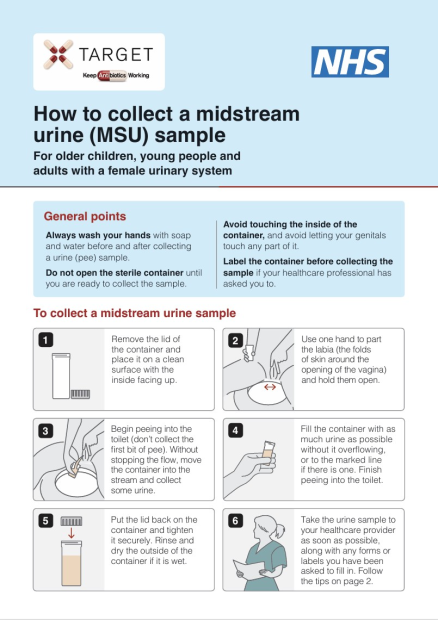
Urine sample collection is often necessary for the diagnosis and management of UTIs, however patients often receive limited guidance on correct collection, and sample contamination is common as a result. To address this, the TARGET toolkit team worked with stakeholders to co-develop patient-facing materials to support urine self-collection and improve sample quality. A scoping review informed draft leaflets, which were iteratively refined through two rounds of feedback from patient (n=12) and clinician (n=8) focus groups, a multidisciplinary steering group, and wider expert consultation. Four leaflets were produced, covering midstream urine (MSU) collection for males and females, clean-catch collection for babies and young children, and collection in babies and young children using bags and pads (Figure 5.1). Each leaflet, co-branded with NHS England (NHSE), was accompanied by a short, animated video to support patients with limited literacy skills. These co-produced resources aim to improve patient understanding and confidence in urine sample collection, with potential to reduce contamination and support more accurate UTI diagnosis. The leaflets are published on the TARGET Toolkit and can be accessed through Urine Sample Collection Leaflets.
Figure 5.1. Screenshot of TARGET leaflet for midstream urine collection in females
Text version of Figure 5.1
Image showing the first page of the new TARGET leaflet for midstream urine sample collection in females titled ‘How to collect a midstream urine sample: For older children, young people and adults with a female urinary system’.
Underneath the title in the panel on the left, there is a box of text with the title: ‘General Points’ and the following text:
- always wash your hand with soap and water before and after collecting a urine (pee) sample
- do not open the sterile container until you are ready to collect the sample
- avoid touching the inside of the container and avoid letting your genitals touch any part of it
- label the container before collecting the sample if your healthcare professional has asked you to
Underneath this is a second title: ‘To collection a midstream urine sample’ with a series of steps:
1. Remove the lid of the container and place it on a clean surface with the inside facing up. 2. Use one hand to part the labia (the folds of the skin around the opening of the vagina) and hold them open. 3. Begin peeing into the toilet (don’t collect the first bit of pee). Without stopping the flow, move the container into the stream and collect some urine 4. Fill the container with as much urine as possible without it overflowing or to the marked line if there is one. Finish peeing into the toilet. 5. Put the lid back on the container and tighten it securely. Rinse and dry the outside of the container if it is wet. 6. Take the urine sample to your healthcare provider as soon as possible, along with any forms or labels you have been asked to fill in. Follow the tips on Page 2.
End of accessible text version
Skin infections – cellulitis clinical scenario
Skin infections are commonly managed in primary care settings. In response to the Group A Streptococcus (GAS) outbreak in 2022 (8) and reports of invasive GAS infection, the TARGET Cellulitis Clinical Scenario underwent a review with support from infectious diseases and microbiology experts and scientists specialising in skin infection guidance. The updated clinical scenario includes a section on interpreting laboratory results for a swab, information on invasive GAS infection, and prophylaxis prescribing for close contacts. The clinical scenario was presented at the NHS East of England webinar on GAS and included in the TARGET RCGP webinar on skin infections.
Paediatrics – patient decision aid for management of acute cough in children
TARGET resources are designed to support primary care healthcare professionals in appropriate antibiotic prescribing. In 2024 to 2025, 31.7% of children aged 0 to 9 years were prescribed antibiotics in primary care, exceeding England’s target of 27%. Perceptions of children as inherently vulnerable influences parental and clinician beliefs about when intervention is necessary and decision making around common respiratory tract infections.
To empower informed decision-making on the management of common respiratory tract infections (RTIs) in line with NICE guidelines and improve parent-clinician communication, TARGET, in collaboration with NHSE, set out to develop a patient decision aid for acute cough. Three rounds of focus groups were conducted, involving 36 parents and 21 healthcare professionals. Participants represented parents of children under 10 years of age from varying socio-economic backgrounds and primary care professionals in a range of roles.
Focus group discussions revealed that parents engage in self-care measures when caring for their child’s cough with increasing confidence as the child grows. Engagement with healthcare professionals is prompted by worsening symptoms that disrupt usual behaviour. Views on shared decision-making were mixed with some parents of younger children appreciating it more than others. Healthcare professionals discussed that managing parents’ expectations were a challenge for consultations of acute cough in children. Other than the use of information leaflets, healthcare professionals opined that they do not use any tools to support decision making during acute cough consultation. Following these insights, a patient decision aid for acute cough was produced, with the current version in draft awaiting finalisation.
TARGET website and resource usage
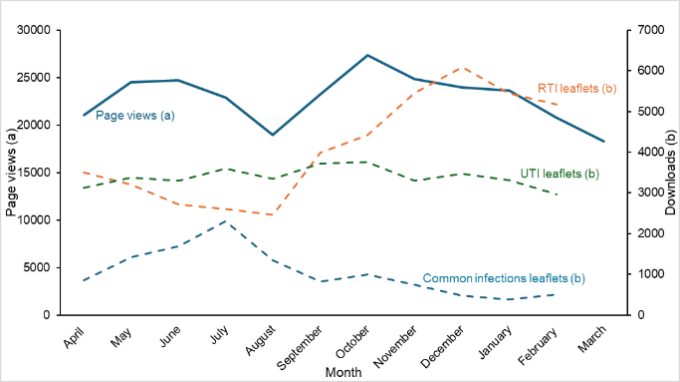
The TARGET Antibiotics Toolkit Hub continues to be highly visited, with 274,339 views logged in the past year. Engagement peaked in October 2025 with 27,328 recorded views, which coincided with high uptake of TARGET training roll out in September and October (training impact detailed in Chapter 7) and a highly attended TARGET RCGP webinar Managing RTIs in children – what is the evidence? The lowest monthly views (18,280) were recorded in March 2026. These numbers are similar to previous years, despite a small gap in the March data due to a temporary Google Analytics issue (Figure 5.2). From April to September 2025, the most accessed page was ‘Summary of antimicrobial resistance’, with 81,523 views across the year, while from October to March 2026 ‘Leaflets to discuss with patients’ was accessed more frequently, with an annual total of 80,523 views.
TARGET resources remained in strong demand where the RTI leaflet was the most downloaded resource, accounting for 30,251 (32%) of leaflet downloads. Furthermore, the 5 TARGET patient leaflets for common infections have been integrated into AccuRx, a predominant patient communication software used in GP practices in England, as text message templates for use in digital communication between patients and healthcare professionals. Between April 2025 and March 2026, 8,547 leaflets were distributed to patients with the ‘UTI – all adults’ leaflet issued most frequently (2,698, 32%), demonstrating that patient-facing resources are reaching the intended audience and are being utilised.
Figure 5.2. Monthly page views of the TARGET antibiotics toolkit (a) and downloads of the TARGET patient information leaflets (b) between April 2024 and March 2025
Secondary care AMS
Evaluation and impact assessment of national secondary care (hospitals) antimicrobial stewardship (AMS) tools
Since 2011, UKHSA and its predecessor organisations have developed national tools to support AMS through various research-focused methods. These include secondary care-specific tools, for example the Start Smart Then Focus (SSTF) toolkit, as well as tools that support AMS across multiple sectors, such as the ESPAUR report.
The purpose of this study was to use a mixed methods approach to evaluate the impact of these tools and to gain user insights regarding the barriers and facilitators to their implementation. The evaluation consisted of an initial scoping review followed by an anonymous online survey of AMS specialists, allowing triangulation of documentary evidence with frontline perspectives.
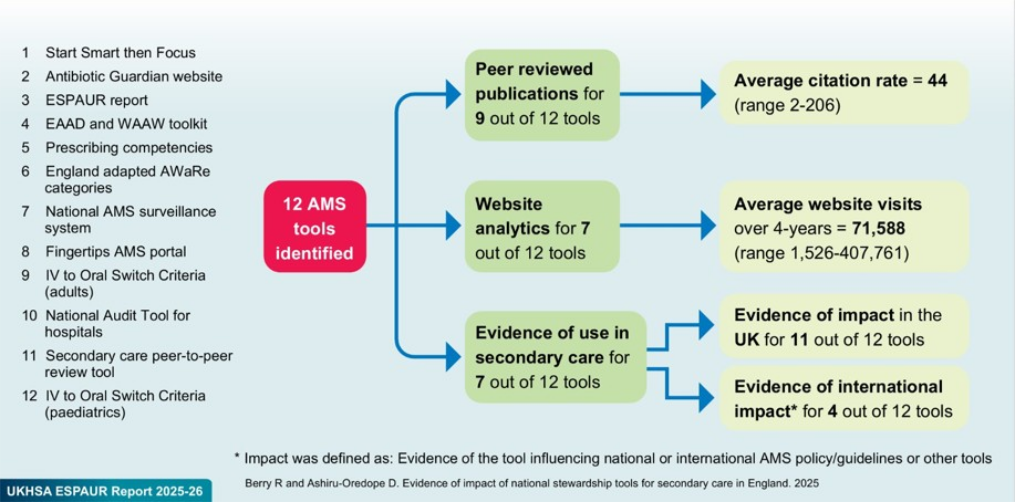
Out of the 12 tools identified, the scoping review found evidence of impact in the UK for 11 tools and internationally for 4 tools. The scoping review showed that some tools have more evidence of impact than others, particularly those that are available on websites, with SSTF toolkit and the Antibiotic Guardian (AG) campaign showing most evidence of impact (Figure 5.3).
Figure 5.3. Findings from scoping review and impact assessment
Accessible text for Figure 5.3
Flow diagram outlining findings from an evaluation of UKHSA AMS tools to support secondary care in England.
A box on the far left contains the text 12 AMS tools identified. To the left of this box, the 12 AMS tools are listed:
- Start Smart Then Focus
- Antibiotic Guardian website
- ESPAUR report
- EAAD and WAAW toolkit
- prescribing competencies
- England adapted AWaRe categories
- national AMS surveillance system
- Fingertips AMS portal
- IV to Oral Switch criteria (adults)
- National Audit Tool for hospitals
- secondary care peer-to-peer review tool
- IV to Oral Switch Criteria (paediatrics)
Three arrows extend from this box linking to a second column of 3 boxes. The top arrow links to a box containing the text ‘Peer reviewed publications for 9 out of 12 tools’. An arrow links this to a box in the top right of the image containing the text ‘Average citation rate equals 44 (range 2 to 206)’. The middle arrow that extends from the far left box links to a box containing the text ‘Website analytics for 7 out of 12 tools’. This links to another box with the text ‘Average website visits over 4 years = 71,588 (range 1,526 to 407,761)’. The third arrow extending from the initial far left box links to a box with the text ‘Evidence of use in secondary care for 7 out of 12 tools’. This links to 2 final boxes containing the text ‘Evidence of impact in the UK for 11 out of 12 tools’ and ‘Evidence of international impact for 4 out of 12 tools’.
A footnote is included defining impact as evidence of the tool influencing national or international AMS policy and guidelines or other tools.
The review authors are listed at the bottom of the image: Berry R and Ashiru-Oredope D – Evidence of impact of national stewardship tools for secondary care in England 2025.
End of accessible text
A total of 90 responses were received in the anonymous survey. Most respondents were from acute trusts (n=61, 68%), and among these respondents most were pharmacists. (n=39, 64%)
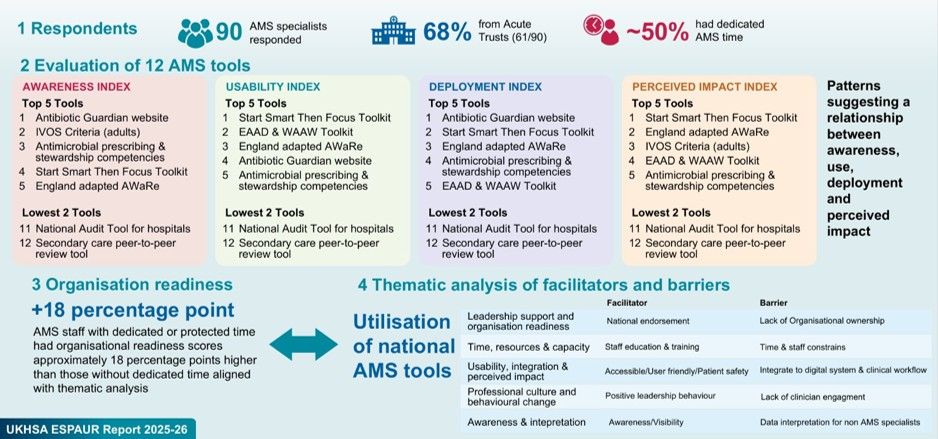
The survey identified patterns suggesting a relationship between awareness, uptake, deployment and perceived impact. The SSTF which demonstrated the strongest evidence of impact in the scoping review, also performed consistently well across the Tool Awareness, Tool Usability, Tool Deployment, and Tool Perceived Impact indices. Conversely, the National Audit Tool and the Peer-to-Peer Review Tool have the lowest levels of awareness, usability, and perceived impact among respondents. These findings mirrored the scoping review, in which both tools showed the least evidence of impact and were also the only two tools not available on the government website, showing a lack of obvious government endorsement.
The survey also identified that AMS staff with dedicated time had organisational readiness scores 18 percentage points higher than those without dedicated time. This finding aligned with the thematic analysis of general facilitators and barriers to the use of the national AMS tools which identified 5 overarching themes which were:
- leadership support and organisational readiness
- time, resources and staff capacity
- tool usability, integration and perceived impact
- professional culture and behavioural change
- awareness and interpretation (Figure 5.4)
Figure 5.4. Summary of findings from an online survey regarding the use of secondary care AMS tools
Accessible text for Figure 5.4
The infographic outlines the key findings from an online survey of secondary care AMS tools. The top section of the infographic shows that 90 AMS specialists responded to the questionnaire, of which 68% were from acute trusts (61 out of 90) and 50% (45 out of 90) reported having dedicated AMS time.
The next section of the infographic shows the findings from the evaluation of 12 AMS tools. For Awareness index the top 5 tools were:
- Antibiotic Guardian website
- IVOS criteria (adults)
- antimicrobial prescribing and stewardship competencies
- SSTF
- England adapted AWaRe
For the usability index the top 5 tools were:
- SSTF toolkit
- European Antibiotic Awareness Day (EAAD) and WAAW toolkit
- England-adapted AWaRe categories
- AG website
- antimicrobial prescribing and stewardship competencies
For the Deployment index the top 5 tools were:
- AG website
- SSTF toolkit
- England adapted AWaRe categories
- antimicrobial prescribing and stewardship competencies
- EAAD and WAAW toolkit
For the Perceived Impact index the top 5 tools were:
- SSTF toolkit
- England adapted AWaRe categories
- IVOS criteria (adults)
- EAAD and WAAW toolkits
- antimicrobial prescribing and stewardship competencies
Across all 4 assessment categories the lowest 2 tools were the national audit tool for hospitals and the secondary care peer-to-peer review tool.
Text next to this section highlights that patterns suggest a relationship between awareness, use, deployment and perceived impact.
Section 3 highlights organisation readiness. AMS staff with dedicated or protected time for AMS had organisational readiness scores approximately 18 percentage points higher than those without dedicated time aligned with thematic analysis.
Section 4 highlights findings from the thematic analysis of facilitators and barriers to use of national AMS tool. Leadership support and organisational readiness facilitators included national endorsement, while barriers included lack or organisational ownership. Time, resource and capacity facilitators included staff education and training, while barriers included time and staff constraints. Usability, integration and perceived impact facilitators included accessible, user-friendly resources and patient safety, while barriers included integration to digital system and clinical workflow. Professional, cultural and behavioural change facilitators included positive leadership behaviour, while barriers included lack of clinician engagement. Awareness and interpretation facilitators included awareness and visibility, while barriers included data interpretation for non-AMS specialists.
End of accessible text
Overall, this mixed-method approach can potentially provide a comprehensive and practical framework for evaluating AMS resources and will inform ongoing updates to national AMS tools for use in secondary care.
Update of national antimicrobial stewardship tools
The national antimicrobial IVOS criteria for prompt switch for adults, antimicrobial prescribing and stewardship competency framework and the SSTF toolkit are currently under planned review to ensure these tools remain current, evidence-based and fit for purpose.
Multidisciplinary team key stakeholders and subject-matter experts were invited to review and comments. A total of 80 responses were received from healthcare professionals and those involved in educating prescribers among other groups on the IVOS criteria, the antimicrobial prescribing and stewardship competency framework and the SSTF.
Feedback is currently being collated and incorporated into updated versions of the documents with publication anticipated in 2027.
Stewardship of antifungals
Paediatric survey
Research, including an antifungal stewardship (AFS) survey conducted by UKHSA in 2024, has highlighted important gaps in paediatric AFS. A national survey will be conducted to further map and clarify these gaps across hospitals in England. The objective is to better understand current practices, identify areas for improvement, and explore key priorities for paediatric AFS. The findings will be used to inform future recommendations and guide targeted actions to strengthen AFS in the paediatric setting.
Health inequalities associated with AMR infections and prescribing
The impact of resistant infections may be particularly significant for those in vulnerable populations who often experience barriers to healthcare access and disparities in health outcomes. Inclusion health groups include people who experience homelessness, drug and alcohol dependence, vulnerable migrants, Gypsy, Roma and Traveller communities, sex workers, people in contact with the justice system, and victims of modern slavery.
Toolkit for addressing health inequalities in antimicrobial resistance
The toolkit for addressing health inequalities in AMR has been developed as a deliverable under the NAP for AMR 2024 to 2029, specifically aligned with Outcome 8 (Health disparities and health inequalities) and Commitment 8.2 (Toolkit for addressing health inequalities). It is intended to support organisations in identifying and addressing health inequalities in AMR by collating and curating existing resources.
Scoping review
A scoping review was undertaken in summer 2024 in collaboration with the University of Warwick to identify existing resources addressing health inequalities in AMR. The review identified 2 relevant resources from the peer-reviewed literature, highlighting a significant gap in formally published materials, with a further 8 resources identified from grey literature. Findings from this work were presented as a poster at the UKHSA conference. The review concluded that although relevant resources likely exist, the strict inclusion criteria limited identification, and many practical tools (for example diagnostic flowcharts and toolkits) are not typically published in peer-reviewed journals. As a result, it was recommended that an additional grey literature search be conducted to capture a broader range of materials.
Grey literature search
Following this recommendation, a grey literature search was conducted in autumn 2025 using wider inclusion criteria. This approach aligned with both the scoping review findings and the adaptable wording within the NAP deliverable stating that the toolkit should be adaptable to local needs. Forty-six relevant resources were identified through this process. Data extraction was undertaken, and a structured resource bank was developed, including descriptor columns to support the organisation of the toolkit data and the future development of the toolkit.
Toolkit development
Initial development of the toolkit focused on practical and accessible formats for storing and presenting the resource bank. An Excel workbook was created to house the resources and associated metadata. While a Power BI dashboard was initially developed to enable interactive exploration of the toolkit contents, alternative formats, including a Word document, PDF, and HTML webpage, were also considered and drafts created. A collection page on GOV.UK was subsequently chosen as the format and publication location.
Working group, feedback and call for evidence
A working group was established to support the development process, with multiple meetings held to gather input, suggestions, and address key questions. Feedback from this group was iteratively incorporated into the toolkit, including the addition of a dedicated section highlighting data sources that demonstrate health inequalities in AMR and AMU. Broader stakeholder engagement was also undertaken through the distribution of surveys to partners, allowing for wider review and refinement of the toolkit content and structure.
In addition, a call for evidence was issued to ensure the toolkit reflects a comprehensive and inclusive range of materials from across the system. This identified a further 5 resources and examples of good practice for inclusion in the toolkit.
Publication
Publication of the toolkit is planned for before autumn 2026 via a dedicated collection page on GOV.UK, with the resource bank included as a supporting asset.
Pharmacy’s role in tackling inequalities in antibiotic resistance and antibiotic use: a rapid scoping review
AMR is a growing global threat that disproportionately impacts people with limited healthcare access, lower socioeconomic status, and marginalized communities, driven by social, economic, and systemic factors. Pharmacy professionals are well placed to address these inequalities through their role in antibiotic prescribing, patient education, and stewardship across healthcare settings. However, the extent of their contribution to reducing AMR‑related inequalities remains unclear.
This review aims to develop an understanding of how pharmacy professionals contribute to reducing inequalities in the incidence of resistant infections and antibiotic use and exposure.
MEDLINE and EMBASE were searched alongside grey literature sources for studies published in January 2026. Eligible studies involved pharmacists or pharmacy technicians and examined interventions addressing inequalities related to AMR, infection incidence or antibiotic use and exposure. Data was extracted and synthesised narratively.
Of 1,751 records identified, 6 studies met the inclusion criteria. Studies addressed inequalities affecting rural and underserved communities, Indigenous populations, socio-economically disadvantaged groups, sexual and gender minority populations, older adults, people with multimorbidity and racial and ethnic minority groups. Pharmacy-led interventions included AMS services, diagnostic and prescribing services, educational initiatives, and preventative services. Interventions were associated with improved stewardship, including reductions in inappropriate and broad-spectrum antibiotic use, increased guideline-concordant prescribing and greater antibiotic de-escalation. Studies also reported improved access to healthcare services, enhanced AMR knowledge, and increased uptake of care among underserved populations. However, few studies directly evaluated impacts on health inequalities or AMR outcomes across population groups.
Pharmacy professionals have considerable potential to address inequalities related to infection management, antibiotic use, and AMR. However, evidence remains limited regarding whether these interventions reduce disparities in outcomes. Future research should explicitly evaluate the health equity impacts of pharmacy-led AMS and AMR interventions.
Behavioural interventions for AMR: an umbrella review
AMR poses a severe threat to public health, with natural changes in pathogens and the misuse and overuse of antimicrobials contributing to its global acceleration. There is evidence to suggest that this risk is not proportionate across the globe, with specific groups more likely to experience increased burden from AMR. Behavioural interventions present an important opportunity to change the behaviours that underlie AMR. However, the substantial variability in intervention design, target populations and outcomes across the literature makes it difficult to evaluate the overall evidence base.
The aim of this umbrella review was to describe and summarise behavioural interventions for AMR to identify effective intervention strategies and to identify where health inequalities may exist.
A total of 8,164 records were screened, with 40 review articles included (Figure 5.5). For clinical outcomes related to infection and bacteria prevalence, 44 unique combinations of intervention functions were identified. There were high levels of heterogeneity in relation to intervention content, target populations, outcome populations and outcome measurement, and mixed conclusions in relation to effectiveness within and between intervention functions. Only limited information was provided regarding the populations in which outcomes were measured, with high level outcome population characteristics inconsistently reported. The high prevalence of interventions incorporating education, persuasion, training and enablement components may suggest that interventions based on these functions are the most acceptable or practical to implement.
However, efforts are needed to improve study quality and standardise reporting to ensure sufficient information is provided to support the development, design, and evaluation of future interventions. Further work is also needed to ensure that AMR interventions are designed and evaluated across diverse contexts, particularly given the disparate risk experienced by specific population groups in relation to AMR outcomes.
Figure 5.5. An UpSet plot displaying frequencies of intervention functions and combinations of functions across reviews
Key populations included in NICE sepsis guidance
A previous study conducted in collaboration with the University of Manchester which used OpenSAFELY data to assess key populations at higher risk of developing sepsis (9) was included as part of the evidence review for NICE’s update to the Sepsis guidance (10). Following this review, the key populations included within the guidance were amended. One of the main changes was the inclusion of people with conditions such as learning difficulties, dementia and severe mental health conditions as a key population. This aligns with the OpenSAFELY study findings that these populations experience a significantly higher risk of developing sepsis (adjusted OR 3.53 [3.35-3.73]).
Addressing health inequalities in resistant bloodstream infections
Through an NIHR Senior Clinical and Practitioner Research Award (SCPRA; 2024 to 2028) funded programme (NIHR304553), a project has been developed to address health inequalities in AMR, with a particular focus on antibiotic-resistant bloodstream infections (BSIs) and inequities in antibiotic exposure and use. The project aims to address identified inequalities reported in ESPAUR report and to support the development of potential future policy levers including through the national action plan on AMR. The project comprises 2 interconnected workstreams: (1) identifying modifiable risk factors and effective interventions to reduce inequalities in resistant bloodstream infections, and (2) evaluating the contribution of Pharmaceutical Public Health (PPH) to reducing inequalities in AMR and antibiotic use.
The principal scientific component includes 2 workstreams: the ARISE (Assessing Risk Factors and Inequalities for Antimicrobial-Resistant Bloodstream Infections) systematic review and the IDIARE-BSI (Identifying and Addressing Inequalities and Risk Factors for Resistant Bloodstream Infections in England) OpenSAFELY study. Together, these projects seek to generate evidence on the social, clinical, and healthcare factors that drive inequalities in resistant infections and inform the development of targeted interventions and policy recommendations.
ARISE (Assessing Risk Factors and Inequalities for Antimicrobial-Resistant Bloodstream Infections) systematic review
The aim of this review is to ascertain the drivers and risk factors contributing to disparities in the incidence and burden of AMR BSI among socioeconomically disadvantaged populations (defined by income status, education level or other deprivation categories) in high-income countries. The protocol was developed according to PRISMA-P, PRISMA-Equity, and Cochrane methodological guidance and prospectively registered with PROSPERO (CRD42024601049).
A comprehensive literature search undertaken across MEDLINE, Embase, CINAHL, Scopus, Cochrane Central Register of Controlled Trials, grey literature sources, and international surveillance reports yielded more than 16,000 records. Following title and abstract screening, over 7,000 studies progressed to full-text review. At the time of reporting, full-text screening and data extraction were ongoing.
Preliminary findings indicate that relatively few studies are specifically designed to examine socioeconomic drivers of AMR BSIs and fail to report socioeconomic measures. Where such variables are included, potential risk factors associated with disadvantaged populations include differential antibiotic prescribing practices according to ethnicity and healthcare access indicators.
An associated rapid umbrella review identified substantial geographic variation in AMR profiles and outcomes. The highest resistance rates for several major pathogens were reported in Asia, including methicillin-resistant Staphylococcus aureus (MRSA; 86.2%), third-generation cephalosporin-resistant Enterobacterales (59.5%), carbapenem-resistant Enterobacterales (35.7%), heterogeneous vancomycin-intermediate S. aureus (hVISA; 6.81%), and vancomycin-intermediate S. aureus (VISA; 3.42%). North America demonstrated the highest prevalence of vancomycin-resistant enterococci (VRE; 77.7%). Southern Africa reported high rates of extended-spectrum beta-lactamase (ESBL)-producing Klebsiella pneumoniae (49% in South Africa and 60% in Botswana).
Risk factors associated with inequalities in antibiotic-resistant bloodstream infections: a rapid umbrella review
A rapid umbrella review using findings from the IDIARE search strategy highlighted disparities in outcomes with both modifiable and non-modifiable risk factors identified as influencers of bloodstream infection outcomes. In-hospital mortality associated with resistant bloodstream infections was higher in middle-income countries (32.4%) than in high-income countries (22.3%). Female sex and inappropriate empirical antimicrobial therapy were repeatedly associated with increased mortality risk and poorer outcomes.
IDIARE-BSI (Identifying and Addressing Inequalities and Risk Factors for Resistant Bloodstream Infections in England) OpenSAFELY study
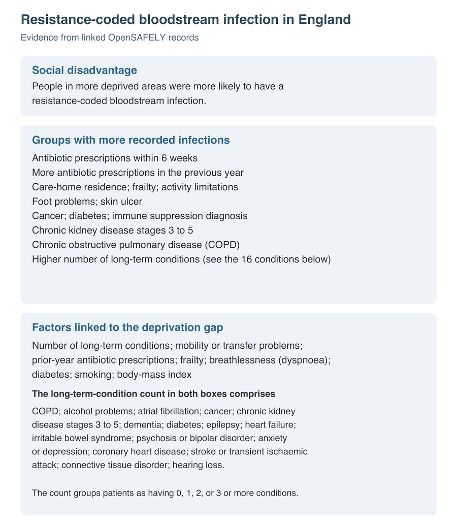
Researchers from the Universities of Manchester and Oxford and UKHSA have completed a national study of socioeconomic inequalities and patient factors associated with antibiotic-resistance-coded bloodstream infections in England. Using linked primary care, hospital admission, death-registration, and COVID-19 testing records in OpenSAFELY-TPP, the study compared people with resistance-coded bloodstream infection with matched people who had no recorded bloodstream infection and examined temporal patterns and short-term mortality. Deprivation showed a graded association with becoming a resistance-coded bloodstream infection case. Recent and repeated antibiotic prescribing, peri-index COVID-19, frailty, care-home residence, multimorbidity, functional limitations, skin ulcers, and several chronic conditions were also prominent markers. Descriptive model comparisons suggested that multimorbidity, mobility and function, antibiotic exposure, smoking, and body-mass index were among measured factors linked to the deprivation gap. Full methods, numerical results and interpretation will be published in the peer-reviewed manuscript.
Figure 5.6. Summary of findings from the IDIARE-BSI OpenSAFELY study
Accessible text for Figure 5.8
People living in more deprived areas had higher odds of resistance-coded bloodstream infection. Higher odds were also observed among people with antibiotic prescriptions within 6 weeks, more antibiotic prescriptions in the previous year, care-home residence, frailty, activity limitations, foot problems, skin ulcer, cancer, diabetes, immune suppression, chronic kidney disease stages 3 to 5, chronic obstructive pulmonary disease, or a higher number of long-term conditions. Comparisons of models adding each factor highlighted number of long-term conditions, mobility or transfer problems, prior-year antibiotic prescriptions, frailty, breathlessness (dyspnoea), diabetes, smoking, and body-mass index in relation to the deprivation gap. The long-term-condition count covered 16 conditions: chronic obstructive pulmonary disease, alcohol problems, atrial fibrillation, cancer, chronic kidney disease stages 3 to 5, dementia, diabetes, epilepsy, heart failure, irritable bowel syndrome, psychosis or bipolar disorder, anxiety or depression, coronary heart disease, stroke or transient ischaemic attack, connective tissue disorder, and hearing loss. Patients were grouped as having 0, 1, 2, or 3 or more of these conditions. Full factor definitions and results are provided in the supplementary appendix.
Insights into antimicrobial stewardship research
This section provides examples of PhD, DPhil and DrPH research projects focused on AMR which are being co-supervised by the AMS team at UKHSA.
Evaluating and optimising national antimicrobial stewardship initiatives in NHS hospitals in England – NIHR Health Protection Research Unit in Evaluation and Behavioural Science, University of Bristol
This PhD project uses a mixed-methods design to evaluate how national AMS initiatives have been implemented across NHS acute hospitals in England and how their impact can be measured and strengthened.
The programme comprises 3 linked workstreams. The first is a systematic review of hospital-based AMS interventions across high-income countries, synthesising evidence on which approaches improve antibiotic prescribing and patient outcomes. The second is a quantitative analysis of national surveillance data (drawn from ESPAUR and the UKHSA AMR Profile) covering around 130 acute trusts, using an interrupted time series approach to examine how initiatives such as the AMS CQUIN, the AWaRe classification and successive NAPs have influenced antibiotic use over time. The third is a qualitative interview study exploring how AMS pharmacists, prescribers and microbiologists experience and enact these initiatives in practice.
To date, the systematic review is registered with PROSPERO and title and abstract screening is underway. Early quantitative work has produced a trust-level performance picture against the 70% Access antibiotic target set out in the 2024 to 2029 NAP. Current analysis indicates that only 4 of around 130 acute trusts have so far met this target, and a substantial, persistent gap separates trusts’ performance, pointing to considerable scope for improvement and to the value of understanding what distinguishes trusts’ performance category.
Over the next stage, the review will be completed, the quantitative analysis refined and ethics approval for the qualitative study finalised, the sample for which will be informed by trust performance. Together the workstreams aim to generate practical, evidence-based recommendations to optimise national AMS policy and support more consistent, sustainable stewardship across NHS hospital
Understanding repeat antibiotic prescribing in community and outpatient care: laying the evidence base for antimicrobial stewardship – University of Nottingham
The global rise of AMR necessitates a clear understanding of antibiotic consumption in ambulatory and outpatient settings. Primary care accounts for most outpatient encounters, with global antibiotic prescribing prevalence remaining at 42% over the past 2 decades. Furthermore, about one‑third of all prescriptions in hospital-based outpatient clinics, worldwide, are antibiotics (11 to 13).
AMS and NAPs, as primary policy tools, have contributed to significant improvements in tackling AMR and safeguarding antimicrobial agents to remain effective (12, 14 to 16). In the UK, a mature AMS infrastructure was established with the introduction of the 2013 5-year strategy and ESPAUR, followed by the 20-year strategy and 2019 to 2024 NAP, supporting surveillance, public campaigns, and development of national prescribing tools (17 to 21).
Repeat antibiotic prescribing remains an important but poorly defined issue. A clinical practice research datalink (CPRD) analysis found that 13.1% to 34.3% of antibiotic courses were repeated within 30 days across 466 English general practices (22). An OpenSAFELY-TPP analysis of over 19 million English primary care patients reported monthly repeat prescribing rates of 0.93% to 1.18% (23).
While sometimes clinically appropriate, repeat prescribing can also reflect unresolved infections, diagnostic uncertainty, recurrent consultations, patient expectations, or prescribing variation (22, 24 to 28). A clearer understanding of how repeat prescribing is defined, measured and reported is needed to support future stewardship initiatives.
This PhD project aims to build on initial work in England and globally to identify opportunities for more targeted, evidence-informed approaches to antimicrobial stewardship by improving understanding of when, why and for whom repeat antibiotic prescribing occurs in community and outpatient care. The first phase of the research is a systematic review entitled ‘Extent, associated factors, and clinical patterns of repeat antibiotic prescribing in community and outpatient settings’.
The review will:
- synthesise definitions of repeat antibiotic prescribing
- describe its extent and patterns
- identify associated clinical indications and antibiotic classes
- examine associated patient-, prescriber- and health system-factors
By bringing together the available evidence, the findings will provide an overview of the current practice, highlight areas where reporting differs, and identify important evidence gaps. This will help inform priorities for future research and contribute to the development of more targeted AMS approaches.
The systematic review will provide the foundation for the subsequent phases of the PhD study, which will investigate repeat antibiotic prescribing behaviours through epidemiological analyses (29) using available prescribing databases, complemented by qualitative research to gain a deeper understanding of prescribing practices and to explore how the evidence can be translated into interventions that support responsible antibiotic prescribing.
DPhil project on antibiotic use in private (non-publicly funded) primary care settings in England – Nuffield Department of Primary Care Health Sciences, University of Oxford
In the UK, 70.4% of antibiotics were prescribed by general practitioners, and 4.5% of these were issued by private prescribers (3) – the number could be larger if including purely online pharmacies.
More people are using private consultations in the UK. The Department of Health and Social Care (DHSC) called for evidence on private prescribing in 2025 (29), but research evidence remains limited.
This DPhil project, a collaboration between the University of Oxford and UKHSA as part of the NIHR Health Protection Research Unit in Healthcare-Associated Infections and Antimicrobial Resistance, aims to understand how and why people are accessing antibiotics from the private (non-NHS) primary care services and how the private sector can be better integrated into antimicrobial stewardship (AMS) strategies.
A public and patient involvement (PPI) panel has been established and will be involved throughout the 3-year DPhil project, which includes:
- a mixed-method systematic review on the global prevalence and experiences of antibiotic access from private primary care services – we retrieved 2,677 records from database searches, and 521 were included for full-text screening, which is ongoing
- a mystery shopper study on antibiotic access through online routes – online questionnaire-based consultations serve as easy pathways to antibiotic prescription in the UK (the researcher will use different patient vignettes to engage with these services to assess the safety and stewardship elements of these different patient journeys)
- qualitative study – we will interview patients and clinicians to understand their experiences of seeking and prescribing antibiotics in private primary care and how private HCWs and patients could be supported to use antibiotics prudently
In addition, preliminary findings reported by IQVIA suggest that private antibiotic use is highest in London integrated care systems (ICSs). We will explore opportunities to undertake quantitative analyses of antibiotic use in the private sector in England, subject to data availability and feasibility.
The findings will contribute to evidence-based policy and help inform national antimicrobial resistance strategies in England.
Improving primary care antibiotic prescribing for childhood acute otitis media in England: from parental expectations to evidence driven stewardship – UKHSA Affiliated Research Centre with the Open University
Reducing unnecessary antibiotic use for respiratory tract infections is a key component of AMS strategies. Acute otitis media (AOM) is a common childhood infection managed in primary care and although often self-limiting, continues to be a significant reason for antibiotic use in children (30, 31). Paediatric antibiotic prescribing in primary care can be influenced by a range of clinical, behavioural and contextual factors, including parental concerns and expectations(32). This PhD programme aims to explore insights into these influences, as well as provide updated evidence on prescribing rates, and review existing AMS approaches for AOM through the following studies:
An online survey of parental health-seeking behaviour, knowledge, and expectations around ear infection symptoms in children. Published in the British Journal of General Practice Open in 2026.
Secondary analysis of consultation and prescribing data from the Clinical Practice Research Datalink (CPRD) to explore patterns of antibiotic use and factors associated with prescribing for AOM.
A systematic review to synthesise existing AMS interventions and strategies to improve primary care management of AOM, including a behavioural analysis of how existing strategies target behaviours.
The first phase of the PhD identified that parents frequently seek healthcare early for ear infection symptoms in their children, and are influenced by concerns about illness severity, treatment needs and disruption to daily life, while misconceptions about the role of antibiotics remain common (33). This suggests the need for interventions that support informed decision-making and self-management for parents. By bringing together evidence from multiple sources, the studies aim to identify recommendations for intervention needs and opportunities to improve antibiotic use for AOM in English primary care, for example through supporting clinicians and families when discussing treatment options for AOM. The findings will contribute to improving patient-centred care while supporting the AMR national action plan to optimise antibiotic use.
Optimising the blood culture pathway – designing interventions using the COM-B model and Behaviour Change Wheel – Amy Read, Doctor of Clinical Science (DClinSci) project, University of Manchester
Blood cultures (BCs) are central to the diagnosis of bloodstream infection and support targeted antimicrobial treatment (34). Optimisation of antimicrobial treatment improves patient outcomes and supports antimicrobial stewardship. Delayed or inappropriate antimicrobial treatment can result in increased mortality, prolonged hospital stays, increased risk of adverse events and contributes to the threat of antimicrobial resistance (35 to 37). BC diagnostic value depends on appropriate collection, adequate blood volume and sets, contamination prevention, and timely transport and incubation. UK Standards for Microbiology Investigations define these requirements, including incubation within four hours of collection, fill volume of 8 to 10mL and 2 sets being collected (34). NHS England recommends local monitoring to identify variation and inform improvement (38).
The availability of national standards does not ensure their consistent implementation in practice. Recent national survey data demonstrate substantial non-compliance with the recommended fill volume of 8 to 10mL (3) and TTI standards (39). Developing practical and sustainable improvements requires an understanding of the clinical, behavioural and contextual factors influencing blood culture collection.
This DClinSci project, forming part of the Higher Specialist Scientific Training Programme (HSST), examines the pre-analytical blood culture pathway at an acute NHS trust. It uses an explanatory sequential mixed methods design to combine quantitative assessment of local practice with qualitative exploration of staff perspectives on barriers and facilitators to optimal blood culture practice. Quantitative findings inform the qualitative enquiry, which helps explain observed variation and identify barriers and facilitators to optimal practice. These findings are then considered through the Capability, Opportunity and Motivation–Behaviour (COM-B) model and Behaviour Change Wheel to inform intervention development.
This project aims to establish an evidence base for locally appropriate interventions that address influences on blood culture practice across professional groups and settings. The proposed interventions are hoped to improve local adherence to recommended standards, a more reliable pre-analytical BC pathway and subsequent strengthened antimicrobial stewardship. Its wider research contribution will be to advance understanding of how local context shapes blood culture practice and inform context-sensitive approaches to pathway improvement.
A mixed-methods study to determine the prevalence of false information on antimicrobial resistance and appropriate antibiotic usage on social media, and its impact on public knowledge, attitudes, and behaviours towards antimicrobial resistance and appropriate antibiotic use – Teesside University
Inappropriate prescribing and antibiotic use, especially for viral infections such as colds or flu, are some of the main driving factors for increasing levels of AMR (40). As most antibiotics are prescribed in primary care a setting with significant levels of patient interaction, the public have an important contribution to appropriate prescriptions of antibiotics.
One method of disseminating public health messages to the public is via social media. The use of social media to share information on a variety of health-related topics has increased greatly in recent years (41 to 43). However, this has occurred alongside an increase in the availability of misinformation. The increase in the quantity of health misinformation available online has become a concern with the WHO taking action to combat this, for example through its work with social media policy departments to update policy and guidelines to reduce the spread of misinformation on social media platforms (44). It is currently unclear what AMR related information is available on social media, the quality of this information and its effectiveness at improving public knowledge, attitudes and behaviours towards AMR and appropriate antibiotic use.
Therefore, this Doctorate of Public Health (DrPH) project aims to determine the prevalence of information, including false information, related to antimicrobial resistance and appropriate antibiotic usage on social media, and its impact on public knowledge, attitudes and behaviours towards antimicrobial resistance and appropriate antibiotic use.
To date a systematic review outlining the availability of social media-based information aimed at the public that is related to AMR and antibiotic use was published in 2025 (45). Abstracts of this and an additional review that aims to identify different methodologies used and their strengths and limitations to inform future research into AMR misinformation are included within the Research chapter.
Future work
TARGET
In 2026 to 2027 the TARGET antibiotics toolkit will focus on reviewing existing resources, including the audit toolkits and clinical slide decks and focus on exploring implementation of newly developed resources. To further ongoing projects, the team is planning to publish the UTI care home communications tool and explore integrations of the tool into other electronic care planning systems with the intention of conducting impact evaluations. An evaluation of the patient-facing UTI sampling leaflet is in the pipeline. The paediatric acute cough patient decision aid and the urine sampling leaflets will be finalised, with a plan for a service evaluation.
Evaluation and impact assessment of the national secondary care AMS tools
The mixed-methods approach developed in the study provide a practical framework for the ongoing evaluation of national secondary care AMS tools, integrating evidence of impact with insights from end-user. The findings will inform the knowledge mobilisation of the existing and future AMS tools, with feedback from respondents already contributing to the planned review of the national antimicrobial intravenous-to-oral switch (IVOS) criteria for prompt switch for adults, antimicrobial prescribing and stewardship competency framework and the start smart then focus toolkit. Future work includes development of a single government webpage to host all secondary care AMS tools and build on the findings of this evaluation to support the continuous improvement and implementation of AMS tools in secondary care.
Antifungal stewardship (AFS) paediatric survey
Based on the findings of the 2024 AFS survey conducted by UKHSA, which highlighted several gaps and areas of variation in paediatric antifungal stewardship practices, a pilot follow-up survey will be undertaken by ESPAUR in collaboration with the UK Paediatric Antimicrobial Stewardship (UK-PAS) Network. The survey will seek to gain a more detailed understanding of current AFS activities within paediatric secondary care settings across the UK, including stewardship programmes, antifungal prescribing practices, diagnostic approaches, therapeutic drug monitoring, and governance arrangements. It will also aim to identify barriers and enablers to effective AFS and explore priorities for future support and improvement. The findings will be used to further characterise gaps identified through previous work, provide insight into current organisational practices, and inform the development of future recommendations, resources, and targeted interventions to strengthen antifungal stewardship in paediatric healthcare settings.
Paediatric antimicrobial stewardship
The progress achieved in both primary and secondary care demonstrates that targeted investment in paediatric AMS can deliver measurable reductions in antibiotic exposure, substantial financial savings and improved quality of care. However, important gaps remain, particularly in secondary-care surveillance and prescribing visibility. Sustained investment in data infrastructure, stewardship networks, workforce development and quality improvement will be essential to consolidate gains and support equitable care across England. Future work should prioritise the development of routine paediatric antimicrobial prescribing metrics in secondary care, including benchmarking, as well as indication-based data and outcome measurement across all sectors. Embedding paediatric AMS in ICB improvement plans alongside AMR governance and workforce development will be important to sustain progress and reduce unwarranted variation.
Health inequalities associated with AMR infections and prescribing
The toolkit will be published by autumn 2026 via a dedicated collection page on GOV.UK, with the resource bank included as a supporting asset. A knowledge mobilisation strategy will also be implemented to promote uptake and awareness, including dissemination of the toolkit through the working group, partner organisations, ESPAUR networks, and inclusion within the WAAW toolkit. Opportunities for further dissemination and knowledge mobilisation, such as a Health Protection Report article, are also being explored.
References
1. Department of Health and Social Care. ‘Confronting antimicrobial resistance 2024 to 2029’ 2024
2. Dolk FCK and others. ‘Antibiotics in primary care in England: which antibiotics are prescribed and for which conditions?’ Journal of Antimicrobial Chemotherapy 2018: volume 73, issue suppl_2, pages ii2 to ii10
3. UKHSA. ‘English Surveillance Programme for Antimicrobial Utilisation and Resistance (ESPAUR) Report: 2024 to 2025’ 2025
4. Aversa Z and others. ‘Association of Infant Antibiotic Exposure With Childhood Health Outcomes’ Mayo Clinic Proceedings 2021: volume 96, issue 1, pages 66 to 77
5. UKHSA. ‘Annual epidemiological commentary: Gram-negative, MRSA, MSSA bacteraemia and C. difficile infections, up to and including financial year 2024 to 2025’ 2026
6. UKHSA. ‘Diagnosis of urinary tract infections: quick reference tools for primary care’ 2025
7. Nsonwu O and others. ‘Incidence, case-fatality rates and risk factors of bloodstream infections caused by Escherichia coli, Klebsiella species and Pseudomonas aeruginosa, England, April 2017 to March 2022’ Eurosurveillance 2025: volume 30, issue 17
8. UKHSA. ‘Group A streptococcal infections: ninth update on seasonal activity in England’ 2023
9. Zhong X and others. ‘Clinical and health inequality risk factors for non-COVID-related sepsis during the global COVID-19 pandemic: a national case-control and cohort study’ EClinicalMedicine 2023: volume 66, page 102,321
10. NICE. ‘Suspected sepsis in people aged 16 or over: recognition, assessment and early management’ 2025
11. Auta A and others. ‘Global access to antibiotics without prescription in community pharmacies: A systematic review and meta-analysis’ Journal of Infection 2019: volume 78, issue 1, pages 8 to 18
12. Chen R and others. ‘Global antibiotic prescription practices in hospitals and associated factors: a systematic review and meta-analysis’ Journal of Global Health 2025: volume 15, page 04023
13. Song Q and others. ‘Worldwide antibiotic prescription practices in primary care and associated factors: A systematic review and meta-analysis’ American Journal of Infection Control 2025: volume 53, issue 11, pages 1,137 to 1,143
14. Autore G and others. ‘Antibiotic Prophylaxis for the Prevention of Urinary Tract Infections in Children: Guideline and Recommendations from the Emilia-Romagna Pediatric Urinary Tract Infections (UTI-Ped-ER) Study Group’ Antibiotics (Basel) 2023: volume 12, issue 6
15. Charani E and others. ‘An analysis of existing national action plans for antimicrobial resistance-gaps and opportunities in strategies optimising antibiotic use in human populations’ Lancet Global Health 2023: volume 11, issue 3, pages e466 to e474
16. Munkholm L and others. ‘The global governance of antimicrobial resistance: a cross-country study of alignment between the global action plan and national action plans’ Global Health 2020: volume 16, issue 1, pages 109
17. Johnson AP and others. ‘Antibiotic Stewardship Initiatives as Part of the UK 5-Year Antimicrobial Resistance Strategy’ Antibiotics (Basel) 2015: volume 4, issue 4, pages 467 to 479
18. Neale D and others. ‘Evaluating the National Action Plan (NAP) on antimicrobial resistance, and recommendations for the next 5-year NAP: a roundtable discussion’ Sustainable Microbiology 2024: volume 1, issue 1
19. Tipper HJ and others. ‘Stakeholder views on the implementation of the UK’s Antimicrobial Resistance (AMR) National Action Plan (2019-2024) in relation to AMR in the environment’ Global Health Action 2025: volume 18, issue 1, page 2,543,101
20. Ashiru-Oredope D and others. ‘Reporting England’s progress towards the ambitions in the UK action plan for antimicrobial resistance: the English surveillance programme for antimicrobial utilisation and resistance (ESPAUR)’ Journal of Antimicrobial Chemotherapy 2023: volume 78, issue 10, pages 2,387 to 2,391
21. Berry R and others. ‘P21 Evidence of impact of national stewardship tools for secondary care in England’ JAC-Antimicrobial Resistance 2025: volume 7, issue Supplement_1, pages dlae217. 025
22. Van Staa T and others. ‘Comparing antibiotic prescribing between clinicians in UK primary care: an analysis in a cohort study of eight different measures of antibiotic prescribing’ British Medical Journal Quality and Safety 2022: volume 31, issue 11, pages 831 to 838
23. Orlek A, Harvey E, Fisher L, Mehrkar A, Bacon S, Goldacre B, MacKenna B, Ashiru-Oredope D. ‘Patient Characteristics Associated with Repeat Antibiotic Prescribing Pre- and during the COVID-19 Pandemic: A Retrospective Nationwide Cohort Study of >19 Million Primary Care Records Using the OpenSAFELY Platform’ Pharmacoepidemiology 2023: volume 2, pages 168 to 187
24. Kasse GE and others. ‘Factors contributing to the variation in antibiotic prescribing among primary health care physicians: a systematic review’ BMC Primary Care 2024: volume 25, issue 1, pages 8
25. Krockow EM and others. ‘Addressing long-term and repeat antibiotic prescriptions in primary care: considerations for a behavioural approach’ British Medical Journal Quality and Safety 2022: volume 31, issue 11, pages 782 to 786
26. Stivers T and others. ‘Arriving at no: Patient pressure to prescribe antibiotics and physicians’ responses’ Social Science and Medicine 2021: volume 290, page 114,007
27. Charton L and others. ‘Factors influencing inappropriate antibiotic prescription in respiratory tract infections in general practice’ Scientific Reports 2025: volume 15, issue 1, page 33,365
28. Lalmohamed A and others. ‘Within-episode repeat antibiotic prescriptions in patients with respiratory tract infections: A population-based cohort study’ Journal of Infection 2024: volume 88, issue 4, page 106,135
29. DHSC. Private (non-NHS) prescribing: call for evidence document 2025
30. ‘Global, regional, and national burden of upper respiratory infections and otitis media, 1990-2021: a systematic analysis from the Global Burden of Disease Study 2021’ Lancet Infectious Diseases 2025: volume 25, issue 1, pages 36 to 51
31. Pouwels KB and others. ‘Actual versus ‘ideal’ antibiotic prescribing for common conditions in English primary care’ Journal of Antimicrobial Chemotherapy 2018: volume 73, issue supplement 2, pages 19 to 26
32. Lucas PJ and others. ‘A systematic review of parent and clinician views and perceptions that influence prescribing decisions in relation to acute childhood infections in primary care’ Scandinavian Journal of Primary Health Care 2015: volume 33, issue 1, pages 11 to 20
33. Hayes CV and others. ‘A survey of parental health-seeking behaviour, knowledge, and expectations around ear infection symptoms in children’ British Journal of General Practice Open 2026: volume 10, issue 1
34. UKHSA. ‘Sepsis and systemic or disseminated infections’ 2025
35. Kadri SS and others. ‘Inappropriate empirical antibiotic therapy for bloodstream infections based on discordant in-vitro susceptibilities: a retrospective cohort analysis of prevalence, predictors, and mortality risk in US hospitals’ Lancet Infectious Diseases 2021: volume 21, issue 2, pages 241 to 251
36. Weinbren MJ and others. ‘Optimization of the blood culture pathway: a template for improved sepsis management and diagnostic antimicrobial stewardship’ Journal of Hospital Infections 2018: volume 98, issue 3, pages 232 to 235
37. Berild D and others. ‘Adjustment of antibiotic treatment according to the results of blood cultures leads to decreased antibiotic use and costs’ Journal of Antimicrobial Chemotherapy 2006: volume 57, issue 2, pages 326 to 330
38. NHS England. ‘A national review of blood culture pathway processes to support better antimicrobial stewardship and improved patient safety’ 2023
39. Drury K and others. ‘Blood culture pathways in UK hospitals: an exploratory survey’ Journal of Hospital Infections 2026: volume 172, pages 210 to 221
40. Costelloe C and others. ‘Effect of antibiotic prescribing in primary care on antimicrobial resistance in individual patients: systematic review and meta-analysis’ British Medical Journal 2010: volume 340, page c2096
41. Tang L and others. ‘Social media and outbreaks of emerging infectious diseases: A systematic review of literature’ American Journal of Infection Control 2018: volume 46, issue 9, pages 962 to 972
42. Pellino G and others. ‘Social media and colorectal cancer: A systematic review of available resources’ PLoS One 2017: volume 12, issue 8, page e0183031
43. Kucharczuk AJ and others. ‘Social media’s influence on adolescents’ food choices: A mixed studies systematic literature review’ Appetite 2022: volume 168, page 105,765
44. WHO. ‘Combatting misinformation online’ {:#ref44}
45. Tang EL and others. ‘Social media as a means of sharing information on antimicrobial resistance and appropriate antibiotic use: a systematic review’ JAC-Antimicrobial Resistance 2025: volume 7, issue 6