Main report - English Private Landlord Survey: Segmenting the business models of private landlords
Published 4 December 2025
Applies to England

© Crown copyright 2025
This publication is licensed under the terms of the Open Government Licence v3.0 except where otherwise stated. To view this licence, visit nationalarchives.gov.uk/doc/open-government-licence/version/3 or write to the Information Policy Team, The National Archives, Kew, London TW9 4DU, or email: psi@nationalarchives.gov.uk.
Where we have identified any third party copyright information you will need to obtain permission from the copyright holders concerned.
This publication is available at https://www.gov.uk/government/publications/english-private-landlord-survey-segmenting-the-business-models-of-private-landlords/main-report-english-private-landlord-survey-segmenting-the-business-models-of-private-landlords
Executive summary
This report presents a detailed analysis of key landlord characteristics, behaviours, and perceptions, drawing on data from the 2024 English Private Landlord Survey (EPLS). Commissioned by the Ministry of Housing, Communities and Local Government (MHCLG) and conducted by the National Centre for Social Research (NatCen), this report provides insights into the practices, portfolios and interests of private rented sector landlords in England.
The report introduces a segmentation of private landlords based on their business models. It divides the broad market of property owners who let to private renters into distinct groups based on specific criteria including portfolio size, rental income, type of tenants, or investment strategy, to better understand and target their varying needs and behaviours. The findings identify distinct differences between larger, commercially driven landlords and small-scale landlords.
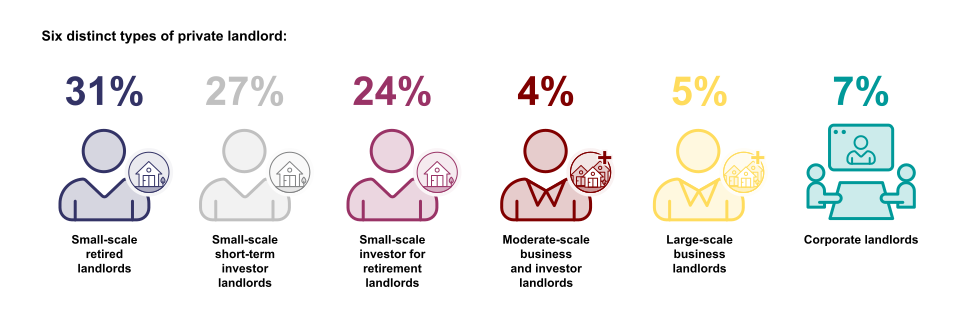
Six distinct types of private landlord
The landlord population of the private rented sector is known to be dominated by landlords with only a small number of properties, with around 45% of landlords in the EPLS sample owning only one property (representing 21% of tenancies), and only 17% owning five or more properties (representing 49% of tenancies).
This research identified six distinct types of landlords within the EPLS sample and assessed how common each landlord profile was.
Small landlords (83%):
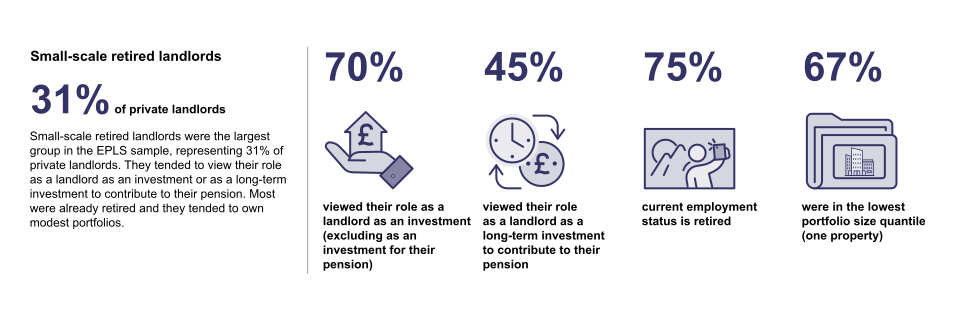
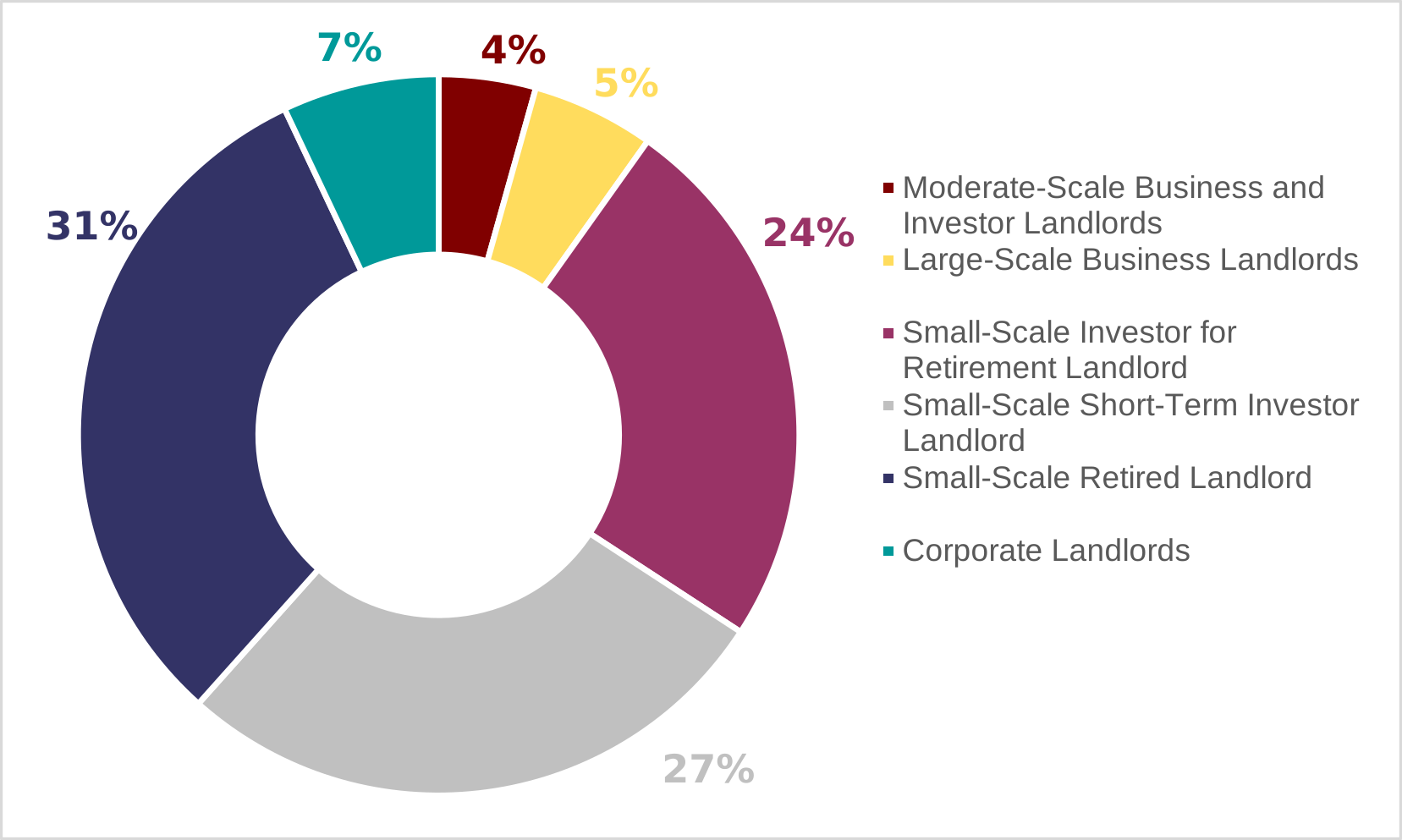
The largest group, comprising 31% of private landlords in the EPLS sample, were small-scale retired landlords who typically owned modest portfolios (e.g. 1-2 properties) with low loan value to property value ratios. These landlords were generally retired and viewed their portfolio as an investment to supplement retirement funds.
Small-scale short-term investor landlords made up 27% of the sample, treated property as an investment for either rental income or capital growth, and to a lesser degree, as an investment as a contribution to their pension. These landlords often had Buy-to-Let mortgages.
Small-scale investor for retirement landlords accounted for 24% of the sample. They were similar to small-scale short-term investor landlords in terms of portfolio size and use of Buy-to-Let mortgages. However, they didn’t see their role as investment for rental income or capital growth, but primarily as an investment for retirement.
Moderate to large landlords (10%):
Moderate-scale business and investor landlords, representing 4% of the sample, viewed their role as both an investment and as a business. They derived a significant proportion of their income from rent and were likely to hold membership in property organisations.
Large-scale business landlords, constituting 5% of the sample were similar to moderate-scale business and investor landlords, though tended to have larger portfolio sizes. However, they saw their role as a business but not as an investment. These landlords were the most likely group to say they would let to people on housing support.
Corporate landlords (7%):
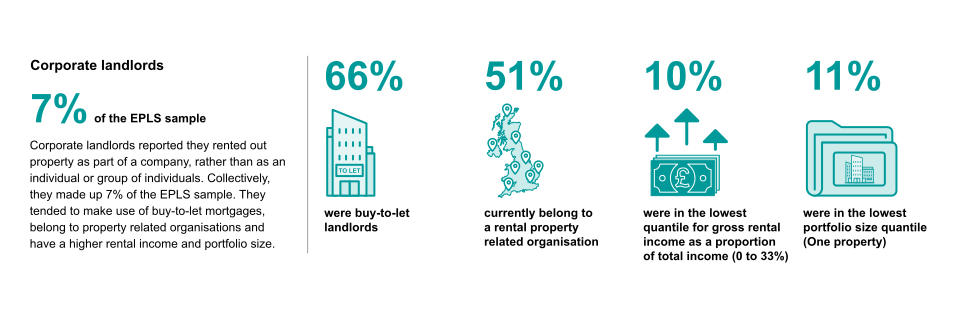
Finally, corporate landlords, who made up 7% of private landlords in the sample, reported they rented out property as part of a company, rather than as an individual or group of individuals.
Together, these segments illustrate the diversity of landlord types within the rental market. The segmentations are a representation of the EPLS responding sample, rather than the overall landlord landscape. The EPLS landlord sample is made up of landlords who are registered with one of the three government-backed Tenancy Deposit Protection (TDP) schemes.
It is not known exactly what proportion of the private rented sector is covered by the TDP schemes. Based on data from the English Housing Survey (EHS) in 2022-23, between 65% and 73% of households in the private rented sector are covered by a TDP scheme. Full details of the survey sampling can be found in the main EPLS Technical Report.
Main findings
When compared to other groups, rent setting was generally more likely to be driven by cost recovery or to align with market rent for landlords with larger portfolios.
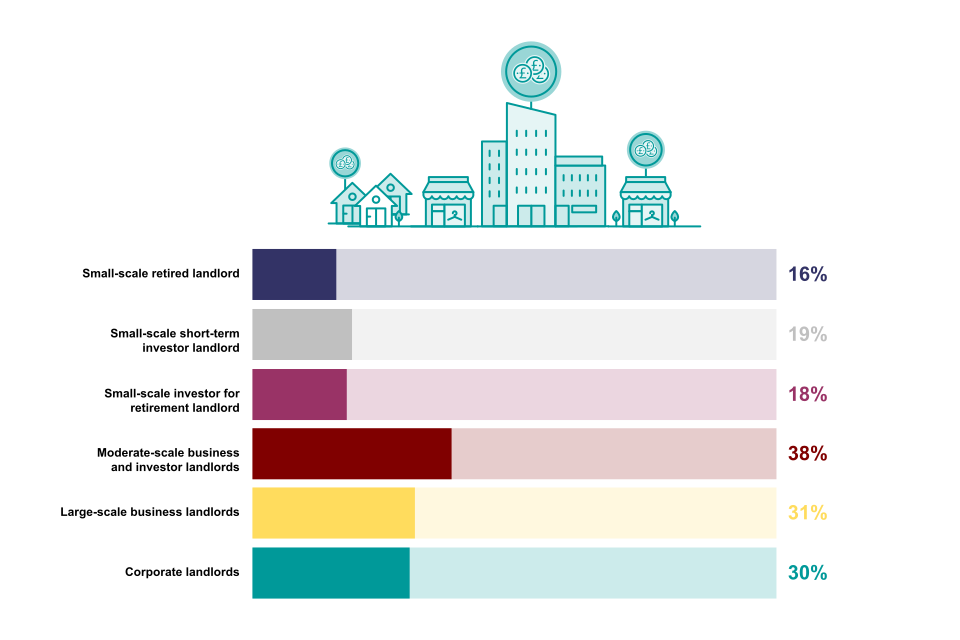
- Moderate-scale business and investor landlords were more likely to have set their most recent rent in order to recover costs (e.g. from renovation, licencing or making energy improvements to the home) at 38%, than other groups. Smaller landlords, including small-scale retired landlords (16%) and small-scale investor for retirement landlords (18%), were less likely to have considered cost recovery when setting rent.
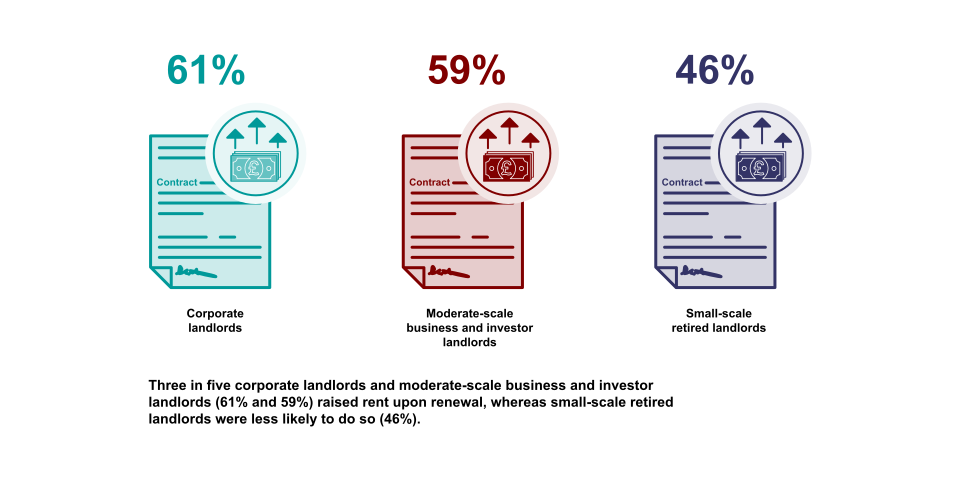
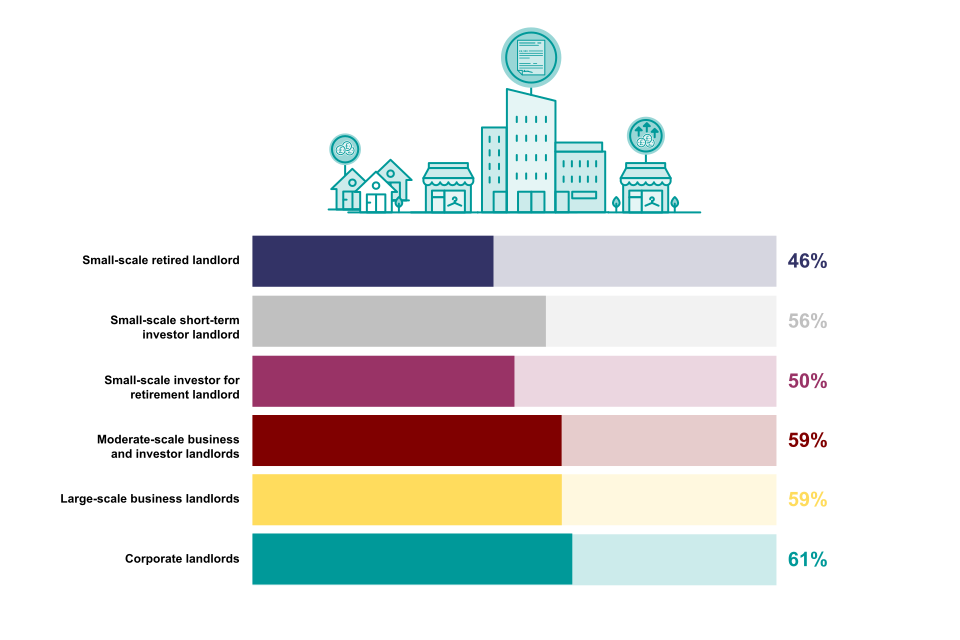
- Three in five corporate landlords and moderate-scale business and investor landlords (61% and 59%, respectively) raised the rent in their most recent tenancy renewal, compared to only 46% of small-scale retired landlords.
- Corporate landlords (82%) and moderate-scale business and investor landlords (81%) reported aligning the rent in their most recent tenancy with market rates more often than some of the smaller landlords (small-scale retired 67%, small-scale investor for retirement 69%).

Landlords with larger portfolio sizes were most likely to have reported identifying damp in their properties, though part of this will be due to their larger portfolio size.
- If damp had been identified in at least one property in the past 12 months, landlords were asked what action they had taken to fix the problem. Regardless of landlord type, fixing the source of the damp was the most common action taken.
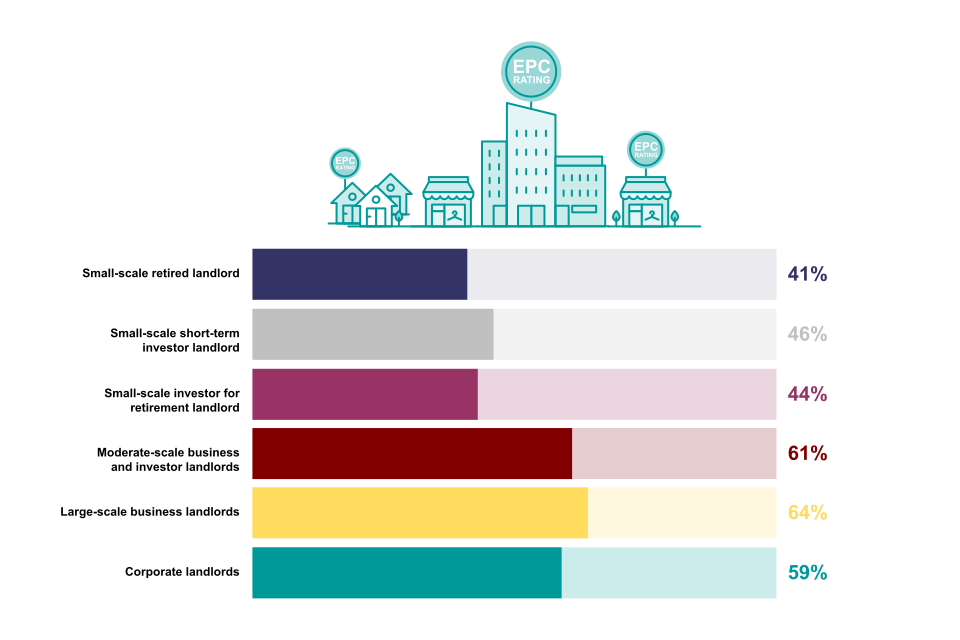
- Following a similar trend, it was more common for large scale business landlords (64%), moderate-scale business and investor landlords (61%) and corporate landlords (59%) to have at least one property with an EPC rating below band C, though this similarly reflects the larger portfolio sizes of these landlords.

There was variation between landlord groups in the use of financial securities other than a deposit, and willingness to let to tenants due to financial concerns.
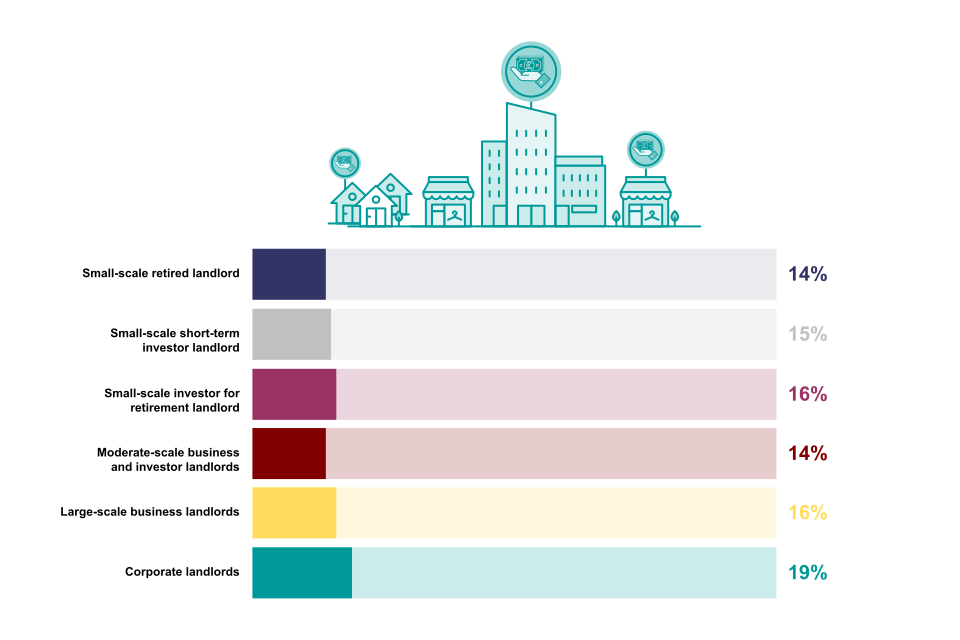
- The use of deposit replacement schemes was relatively low (this is expected, given the EPLS samples from landlords who use a TDP scheme), although there was variation across landlord types. Just under a fifth (19%) of corporate landlords had used a deposit replacement scheme, higher than other groups (14% to 16%).
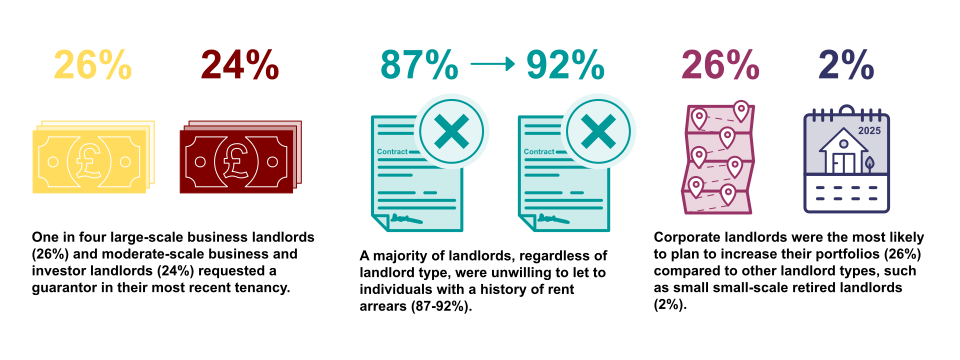
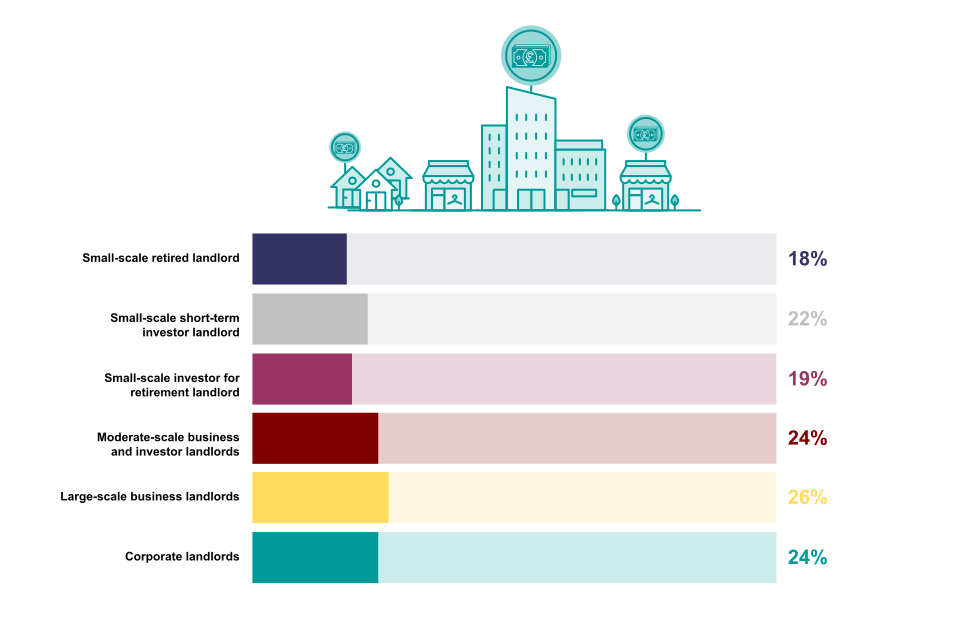
- One in four large-scale business landlords (26%) and moderate-scale business and investor landlords (24%) had requested a guarantor for their last tenancy. Conversely, small-scale retired landlords (47%) were most likely to have requested rent in advance compared to other landlord groups.
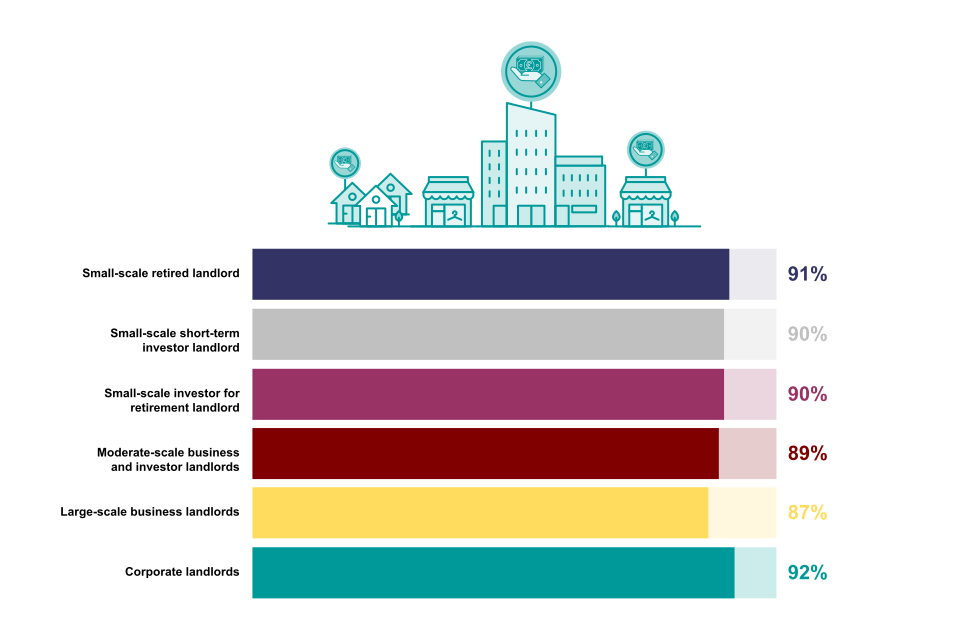
- Similar proportions of all landlord types were unwilling to let to individuals with a history of rent arrears (ranging from 87% to 92%). The proportion of landlord types who were unwilling to let to tenants in receipt of housing support because of a greater perceived risk of late or unpaid rent varied from 80% of moderate-scale business and investor landlords to 69% of small-scale retired landlords.

Future plans for portfolio sizes differed depending on landlord type, with planned increases to portfolios most common among corporate landlords (26%). Half (50%) of large-scale business landlords planned to either decrease or sell all of their rental properties, higher than other groups (25% to 41%).
- Corporate landlords were the most likely to report planning to increase the number of properties they let out (26%) compared to other segments where plans to increase property portfolios were generally rare (between 2% and 10%).
- For landlords who planned to decrease the number of properties they let or leave the sector completely, recent tax and legislative changes were cited as a reason for this by 81% of moderate-scale business and investor landlords and 78% of large-scale business landlords. Small-scale retired landlords who planned to decrease the number of properties they let or to leave the sector were less likely to cite this reason (46%).

Acknowledgements and further queries
The authors would like to thank the landlords and agents who gave up their time to complete the survey. We are indebted to colleagues from the three government-backed TDP schemes, without whom the survey would not have been possible. We are grateful to our colleagues at The Building Research Establishment (BRE) who provided valuable advice and insight at both the questionnaire development and reporting stages of the project.
The research was conducted by the National Centre for Social Research in partnership with The Building Research Establishment (BRE) in close collaboration with MHCLG.
This report and analysis was produced by Sarah Butt, Charlie Ridley-Johnson, Olivia Cottis Black, Sam Beardsworth, Ekaterina Khriakova, Sinead Palmer, Lovisa Moller Vallgarda, Rob Wray, David Hussey and Fritz Anker at the National Centre for Social Research, in collaboration with Caitlin Bailey and Alistair Rice at MHCLG.
This report analyses data collected from the English Private Landlord Survey (EPLS). The EPLS has the status of ‘Official Statistics’. This designation means that the statistics were produced in accordance with the governance and operational arrangements set out in statistical legislation, and in compliance with the standards of best practice set out in the Code of Practice for Statistics. The methodology used to produce the statistics has not changed substantially from the 2018 and 2021 EPLS.
If you have any queries about this report or would like any further information, please contact epls@communities.gov.uk.
The responsible analyst for this report is Caitlin Bailey. Contact via epls@communities.gov.uk.
Introduction
The private rented sector plays a crucial role in England’s housing market, providing homes for millions of households. According to the English Housing Survey (EHS) 2023-24, there were 4.7 million households renting privately, representing 19% of all households in England.
The 2024 English Private Landlord Survey is a national survey of landlords in England, and is uniquely valuable in providing a large scale, broadly representative picture of private landlords. It was commissioned by the Ministry of Housing, Communities and Local Government (MHCLG). Please note the data were collected in April/May 2024 and policies mentioned within the questionnaire reflect the policy priorities of the government at the time. For further details about the EPLS, see the main EPLS report.
This new segmentation analysis is particularly timely given the evolving legislative landscape surrounding the private rented sector. The Renters’ Rights Act, which received Royal Assent in October 2025, involves significant reforms, including the abolition of ‘no-fault’ Section 21 evictions and strengthening tenants’ rights. The data presented in this report were collected prior to the passage of the Renters’ Rights Bill through parliament and references instead the earlier Renters’ Reform Bill.
Methodology
This report employed a segmentation analyses approach to explore distinct landlord typologies and their associated behaviours and characteristics. The segmentation was conducted using k-Medoids clustering, an analytical technique that groups landlords with similar characteristics together based on their survey responses.
The clustering process involved extensive testing to identify the optimal groupings. Multiple models were run with different numbers of segments (5 to 7) and various combinations of survey variables to ensure meaningful and interpretable results. Corporate landlords were treated as a separate segment based on their survey responses, while the clustering algorithm was applied to individual landlords to identify natural groupings in the data.
The selection of variables was balanced to represent multiple factors that influence landlord behaviour, while avoiding overlap that could distort results. Model quality was assessed using statistical measures alongside manual review to ensure the segments were interpretable and meaningful.
Following the identification of landlord segments, the analyses examined whether different types of landlords behave distinctly from one another and from the overall population of landlords in the EPLS. For instance, we tested whether landlords from specific segments were more likely to increase rent or hold particular views about their rental activities compared to other landlords. This approach allowed us to understand the varied behaviours and perspectives across different landlord types.
Full details of the methodology, and preparation of survey variables for the analyses, are set out in the technical note on k-Medoids Clustering.
Landlord analysis segments
Analysis of landlord characteristics revealed six primary segments, ranging from small-scale investors who own a single property as supplementary income, to large corporate landlords operating extensive portfolios as their core business. These segments differ significantly in their scale of operation, financial leverage, income dependency on rental returns, and whether they viewed property as an investment opportunity or an active business venture.
The variables used to create landlord clusters in the selected model incorporated property portfolio metrics, landlord role perceptions, employment characteristics, financial indicators, operational practices, tenant targeting and professional engagement. Corporate landlords were identified as those who reported they rented out property as part of a company, rather than as an individual or group of individuals.
The variables used to define segments represent the landlord’s current business practises, rather than the initial reason, or lack of reason, for choosing to become a landlord and obtaining their first property. For example, just over half (52%) of landlords in the 2024 English Private Landlord Survey said they bought their first property with the intention of renting it out, and these landlords were represented in all segments (excluding corporate landlords, who were not asked about why they acquired their first property) – Annex Table 1.4.
For further details of variable selection, please see the technical note on k-Medoids Clustering.
The segments identified by the analysis were as follows:
Small-scale retired landlord (31%)
These are typically older property owners who have retired and view their rental properties as a steady investment rather than as an active business. They typically own modest property portfolios (1-2 households) without buy-to-let mortgages. With very low loan-to-value ratios, they represent a financially secure segment that relies on rental income to supplement their retirement funds, though property investment may not be their primary focus, Annex Table 1.1, 1.2, 1.3 and 1.4.
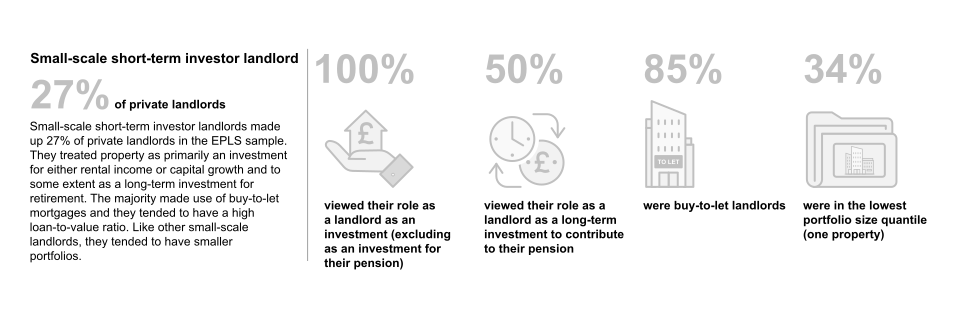
Small-scale short-term investor landlord (27%)
This group treats property as a strategic investment opportunity rather than as a core business venture. They maintain smaller portfolios with lower gross rental income as a proportion of total income and are distinguished by higher loan-to-value ratios. These landlords are likely newer to the market or using property investment as part of a broader financial strategy rather than as their main income source.
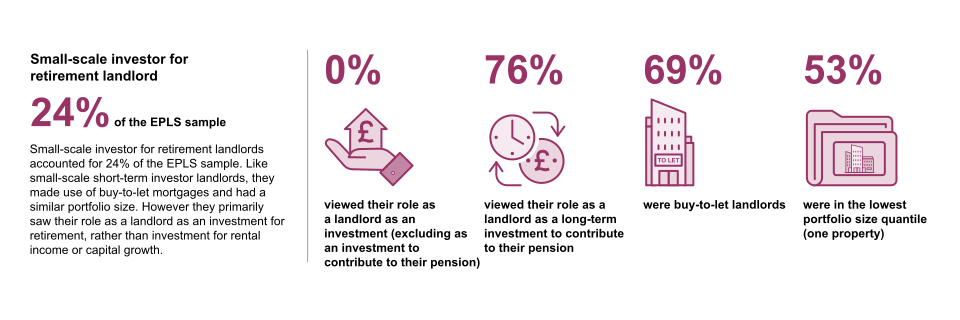
Small-scale investor for retirement landlord (24%)
The most modest segment in terms of property ownership and rental income as a proportion of total income, these landlords typically own just a few properties and generate a relatively small proportion of their gross total income from rent. They are distinct from other small-scale investor landlords in that they do not see their role as a landlord as being an investment for capital growth, rental income or as a temporary investment. The majority do however see their role as a landlord as an investment to contribute to their pension.
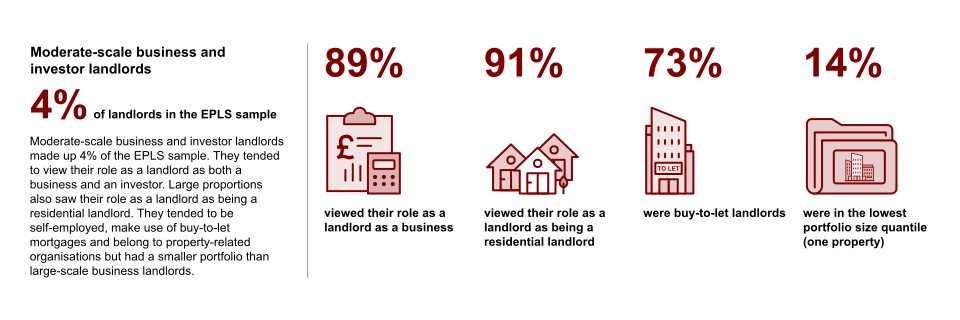
Moderate-scale business and investor landlords (4%)
This is a dual-focused group that bridges the gap between investment and business approaches to property and rent. In addition to viewing their role as a landlord as both an investment and a business, they also tend to view their role as a landlord as being a residential landlord – more so than the other landlord types. More likely to be self-employed, they actively engage with the rental property sector through professional organizations and treat their portfolio as both a business venture and investment opportunity.
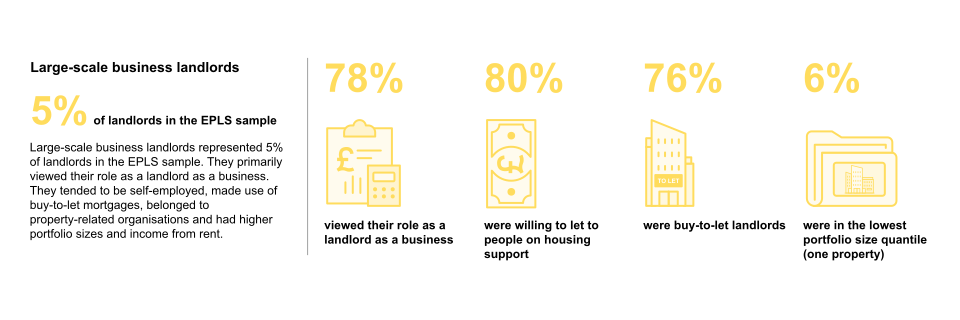
Large-scale business landlords (5%)
This group is made up of business-oriented individual landlords who treat property rental as their primary enterprise. As a group, they tended not to see their role as a landlord as an investment. Often self-employed, they managed larger portfolios, tended to derive a large proportion of their income from rent, and were more likely to house tenants on benefits. Their membership in property organizations and higher rental income proportions indicate a professional, business-first approach to property investment.
Corporate landlords (7%)
This group is made up of organisational entities rather than individuals and represents the institutional side of the rental market. These corporate landlords manage extensive property portfolios and derive substantial proportions of their revenue from rental income, operating at a scale and with resources that individual landlords cannot match. They represent the professionalised, large-scale end of the private rental sector.
The relative representation of these groups in the analysis population is shown below:
1. Rental practises
Rent adjustments at renewal
The EPLS (2024) asked landlords how they set the rent for their most recent renewal or extension of a tenancy. Around half of landlords (52%) said they increased the rent the last time they renewed or extended a tenancy with 39% saying they kept the rent the same and 1% saying they decreased the rent.
In line with this general pattern, all landlord types most commonly reported increasing the rent when renewing their most recent tenancy, with corporate landlords (61%) large-scale business landlords (59%) and moderate-scale business and investor landlords (59%) showing the highest proportions. Small-scale retired landlords were less likely than other landlord types to have increased the rent (46%) and were also more likely than other landlord types to have kept it the same (44%), Annex Table 1.5, Figure 1.1.
Figure 1.1 Changing the rent at the most recent tenancy renewal or extension – increased the rent
Landlord decision to set rent based on recovered costs
The EPLS (2024) asked what factors influenced the decisions on setting rent within a landlord’s most recent tenancy. Overall, it found that 36% of landlords said that they set the rent to recover costs from renovation or redecoration, licencing, meeting minimum energy efficiency standards or from making other energy improvements to the home.
Looking across the different business practises of landlords, moderate-scale business and investor landlords (38%) were the most likely to set rent based on recovered cost options, followed by large-scale business landlords (31%) and corporate landlords (30%). Small-scale retired landlords (16%), small-scale investor for retirement landlords (18%) and small-scale short-term investor landlord (19%) were less likely to factor in recovered costs when setting rent, Annex Table 1.6, Figure 1.2.
Figure 1.2 Landlord decision to set rent based on recovered costs
Rent setting in line with market rates
The EPLS (2024) asked landlords for the reasons why they set the rent the way they did. Regardless of whether landlords increased the rent, kept it the same or decreased it, the most common rationale for rent levels was that it was in line with the market rate in their area (72%).
Corporate landlords (82%) and moderate-scale business and investor landlords (81%) were most likely to have set rent in line with market rates. In contrast, small-scale retired landlords (67%) and small-scale investor for retirement landlords (69%) were less likely to have done so. Large-scale business landlords and small-scale short-term investor landlords were positioned in the middle, with 75% setting rents in line with market rents, Annex Table 1.7.
2. Property conditions and maintenance approaches
Identification of damp issues
The EPLS (2024) showed that just over a quarter (26%) of landlords reported they identified damp or mould in any of their properties in the last year. Nearly half (46%) of landlords with five or more properties reported identifying damp or mould.
When examining different landlord types, identification of damp in the last 12 months varied by landlord type, along similar lines to previous analysis that looks at portfolio size.
Some 44% of corporate landlords, 44% of large-scale business landlords and 42% of moderate-scale business and investor landlords had identified damp in at least one of their properties, compared to 25% of small-scale short-term investor landlords, 22% of small-scale investor for retirement landlords and 19% of small-scale retired landlords, Annex Table 1.8, Figure 2.1.
The higher rates of identification for larger landlords are likely reflective of their bigger portfolios, and so there is a higher likelihood that they would have identified damp in at least one property over the last 12 months.
Figure 2.1 Identified damp or mould in any of the properties in the last year

Actions taken on damp issues
Where damp was identified, landlords of all types took the same actions at similar rates. There was no association between landlord type and action taken. A majority across all landlord types reported fixing the source of the damp. The proportions who advised the tenant on how to prevent the issue occurring were also similar. Apparent differences in the proportion of different landlord types taking action were not significant, Annex Table 1.9.
Properties with an EPC rating below band C
The EPLS (2024) asked landlords about the EPC ratings of their whole portfolio. Overall, 41% of landlords reported that all their properties were in band C or above.
Larger, more commercially focused landlords were more likely to hold properties with EPC ratings below band C, with 64% of large-scale business landlords, 61% of moderate-scale business and investor landlords and 59% of corporate landlords doing so. Small-scale retired landlords (41%) and small-scale investor for retirement landlords (44%) were less likely to have a property with an EPC rating below C. Although larger landlords show a higher proportion, due to larger portfolio sizes, it is more likely that they would have at least one property below band C, Annex Table 1.10.
Figure 2.2 Have at least one property with EPC band below C
3. Starting and ending tenancies
Use of a deposit replacement schemes
The EPLS (2024) showed that across all landlords a minority (15%) had at least one tenancy using a deposit replacement scheme, while 2% said their last tenancy had used one.
In line with these previously reported findings for all landlords, the use of deposit replacement schemes was relatively low (under 20%) across all landlord types (this is expected, given the EPLS samples from landlords who use a TDP scheme). Nevertheless, there was some variation across landlord types, with 19% of corporate landlords using a deposit replacement scheme in their current tenancies, higher than 14% of small-scale retired landlords and 14% of moderate-scale business and investor landlords. Small-scale investor for retirement and small-scale retired landlords reported a higher proportion of ‘don’t know’ responses (13% and 14% respectively), suggesting less familiarity or engagement with these options compared to other landlord groups, Annex Table 1.11.
Figure 3.1: Use of deposit replacement schemes in current tenancies
Proportion of landlord-initiated tenancy endings
In relation to their most recently ended tenancy, the EPLS (2024) found that fewer than one in 10 landlords said they asked the tenant to leave (8%), 6% had evicted the tenant and 4% had decided not to renew at the end of a tenancy.
The proportion of landlord-initiated tenancy endings was similar across all landlord types, ranging from 15% for small-scale short-term investor landlords to 22% for large-scale business landlords. The level of landlord-initiated ends to tenancies did not significantly differ across landlord typologies. This suggests the factors that lead landlords to end tenancies were relatively consistent regardless of the landlord’s scale or investment strategy, Annex Table 1.12.
4. Tenant requirements
Requesting a guarantor
Landlords were asked whether they requested that tenants provide a guarantor in their most recent letting. The EPLS (2024) showed that across all landlords, 14% said they asked for a guarantor.
Looking at this specifically by landlord types, larger and more commercially oriented landlords were more likely to have requested a guarantor in their most recent letting, with 26% of large-scale business landlords asking for a guarantor. Small-scale retired landlords (18%) and small-scale investor for retirement landlords (19%) were less likely to have requested a guarantor, Annex Table 1.13, Figure 4.1.
Figure 4.1 Requesting a guarantor in the most recent letting
Requesting rent in advance
Landlords were also asked if they had requested rent in advance in addition to a deposit for their most recent letting. The EPLS (2024) shows that, of all landlords, 36% asked for rent in advance.
Small-scale retired landlords were more likely to have asked for rent in advance in addition to a deposit (47%) in their most recent tenancy. Moderate-scale business and investor landlords and corporate landlords were less likely to have done so (both 39%), while large-scale business landlords, small-scale investor for retirement and small-scale short-term investor landlords were in the middle (44%, 42% and 41% respectively), Annex Table 1.14.
5. Landlords’ attitudes and awareness
Unwillingness to let to tenants with rent arrears
The EPLS (2024) asked landlords to choose from a list of tenant characteristics that they would be unwilling to let to. Nine in ten (90%) landlords were unwilling to let to tenants with a history of rent arrears.
In line with this overall finding, the majority of all landlord types were unwilling to let to people with a history of rent arrears, with proportions ranging from 87% to 92%. Apparent differences between groups were not statistically significant, Annex Table 1.15, Figure 5.1.
Figure 5.1 Unwilling to let to tenants with rent arrears
Perceived risk of late or unpaid rent from letting to housing support tenants
Landlords who were unwilling to let to those in receipt of housing support were asked their reasons for this. The EPLS (2024) found that the most common reason for not being willing to let to this group was due to the perceived greater risk of delays in payment or unpaid rent, mentioned by 73% of landlords.
In line with this general finding, the majority of landlords in each segment who had reported unwillingness to let to tenants in receipt of housing support cited the perceived greater risk of late or unpaid rent. However, there was variation between landlord types in how likely they were to report this concern. Four-fifths (80%) of moderate-scale business and investor landlords cited unpaid or late rent as a reason they would not let to people in receipt of housing support, whereas small-scale retired landlords were less likely to report this concern at 69%, Annex Table 1.16.
It is important to note that this data presents the reasons why landlords would not be willing to let to those in receipt of housing support. By definition, this excludes the landlords in each segment who were willing to let to those in receipt of housing support, which ranged from 80% of large-scale business landlords to 16% of small-scale retired landlords. Whether a landlord was currently letting to someone in receipt of housing support or Universal Credit was used as an input variable for defining the segments, with Large-scale business landlords the most likely to do so (80%), Annex Table 1.2.
6. Future of the private rented sector
Future property plans
The EPLS 2024 asked what, if any, investment plans landlords had for their rental properties over the coming two years. Overall, the most common response, given by 42% of all landlords, was that they planned to keep their number of rental properties the same. Of the landlords asked, 31% said they planned to decrease the number of properties they let (this includes 16% who planned to sell all their properties and leave the sector), while 7% said they planned to increase their number of properties.
Corporate landlords were the only group where the intention to increase the number of properties let (26%) exceeded the intention to decrease it (21%). Overall, 26% of corporate landlords said they planned to increase the number of properties they let out, the highest proportion planning an increase of any landlord type, higher than other landlord groups (2% to 10%). Only 2% of small-scale retired landlords planned to increase their portfolio (Annex Table 1.17).
Small-scale retired landlords (48%), small-scale investors planning for retirement (43%), and small-scale short-term investors (41%) were the most likely landlord types to say they planned to keep the number of properties they let out the same. These landlord types were also more likely to plan to keep the number of properties let the same than they were to plan an increase to their portfolio.
Around 30% of corporate landlords planned to keep the number of properties they let the same. This was similar to moderate-scale business and investor landlords and large-scale business landlords (33% and 31% respectively).
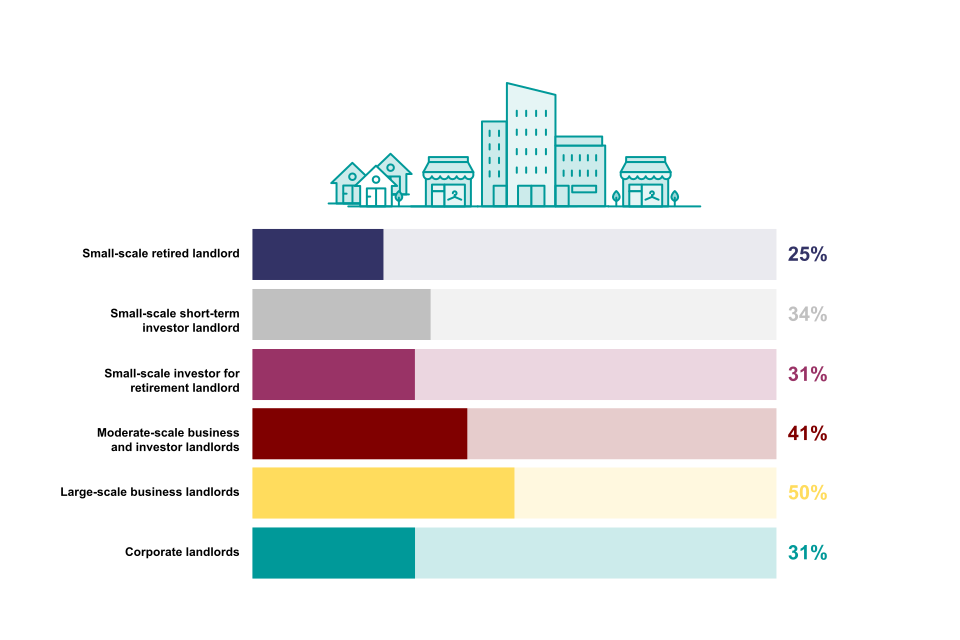
Half (50%) of large-scale business landlords planned to decrease the number of properties they let, or to sell all their rental properties and leave the business altogether. This was higher than other landlord groups (25% to 41%).
Looking specifically at leaving the sector entirely, a small proportion of each landlord type planned to sell all their rental properties and leave the business altogether, ranging from 10% of corporate landlords to 17% of large-scale landlords.
Additionally, a further portion of landlords of all types were yet to make concrete plans, ranging from 12% of corporate landlords to 25% of small-scale retired landlords. Annex Table 1.17, Figure 6.1.
Figure 6.1 Future property plans – decrease the number or sell all rental properties
Impact of recent tax and legislative changes on property portfolios
Fieldwork for the EPLS took place between 3 April and 19th May 2024. Tax and legislative changes therefore refer to those that landlords were aware of at this time.
Recent tax and legislative changes, such as those affecting benefits, tax relief, and stamp duty, may influence landlords’ plans for their property portfolios, and whether they plan to increase or maintain, or decrease or leave the sector completely.
For landlords who planned to increase or keep the number of properties they let the same, these tax and legislative changes were cited as a reason to do so by 13% of corporate landlords, 19% of moderate-scale business and investor landlords, and 13% of large-scale business landlords. This reason was less frequently cited by small-scale retired landlords (5%), Annex Table 1.18.
Meanwhile for landlords who planned to decrease the number of properties let or leave the sector completely, recent tax and legislative changes were cited as a reason for this by 81% of moderate-scale business and investor landlords and 78% of large-scale business landlords. Small-scale retired landlords who planned to decrease the number of properties they let or to leave the sector were less likely to cite this reason, with less than half (46%) choosing it, Annex Table 1.19.
These findings suggest that recent tax and legislative changes may have had a greater impact on the future property plans of larger, more business-oriented landlords, potentially influencing their decisions to expand, maintain, contract or sell completely their portfolios in response to the evolving regulatory landscape.
Impact of forthcoming legislative changes on property portfolios
The Renters (Reform) Bill was referenced in the 2024 EPLS as forthcoming legislation that might influence landlords’ decisions for their property portfolios and was reflective of the legislation proposed at the time. Since fieldwork (which took place between 3 April and 19 May 2024) completed on EPLS 2024, there have been changes to this forthcoming legislation. As such, the analysis presented here, while helpful for understanding landlord’s intentions at the time, cannot provide a completely clear picture of what impact current legislation (the Renters’ Rights Act) will have on landlord plans for the future.
For landlords who planned to increase or keep the same size portfolio, forthcoming legislative changes such as the Renters (Reform) Bill were cited as a reason to do so by 16% of corporate landlords, 14% of moderate-scale business and investor landlords, and 11% of large-scale business landlords. This reason was less frequently cited by small-scale retired landlords (5%) and small-scale investor for retirement landlords (8%), Annex Table 1.20.
Larger landlords who planned to decrease their portfolio or leave the sector completely were generally more likely to cite forthcoming legislative changes as a reason to do so, with over half of moderate-scale business and investor landlords (58%), corporate landlords (56%) and large-scale business landlords (53%) selecting this answer. Smaller-scale landlords were generally less likely to cite future legislative change as the reason for their planned decrease or exit from the sector, with 45% of small-scale retired landlords, 40% of small-scale short-term investor landlords and 38% of small-scale investor for retirement landlords selecting this, Annex Table 1.21.
These legislative changes exert more influence on the decisions of larger, more business-focused landlords regarding their property portfolios. It’s worth noting that data were collected in April/May 2024 and that policies and government priorities have changed since then.