Energy Efficiency Scheme: Final Evaluation Report
Published 28 May 2026

© Crown copyright 2026
This publication is licensed under the terms of the Open Government Licence v3.0 except where otherwise stated. To view this licence, visit nationalarchives.gov.uk/doc/open-government-licence/version/3 or write to the Information Policy Team, The National Archives, Kew, London TW9 4DU, or email: psi@nationalarchives.gov.uk.
Where we have identified any third party copyright information you will need to obtain permission from the copyright holders concerned.
This publication is available at https://www.gov.uk/government/publications/energy-efficiency-scheme-final-evaluation-report/energy-efficiency-scheme-final-evaluation-report
Executive summary
The Energy Efficiency Scheme (EES) was delivered as part of the Voluntary, Community and Social Enterprise (VCSE) Cost of Living Programme, providing £25.53m of support to improve the energy efficiency of VCSE buildings. The scheme comprised two linked elements: (1) an Independent Energy Assessment (IEA) to support organisations in identifying behavioural and capital energy efficiency measures, and (2) a capital grant (ranging from £2,000 to £150,000) to fund installation of recommended measures. Delivery was overseen by DCMS, with Groundwork UK acting as the lead Independent Grant Maker (IGM) in partnership with a consortium of technical delivery organisations.
Process evaluation
Overall, the process evaluation found that, while the EES was delivered at pace under challenging conditions, it achieved broad reach across the VCSE sector. Governance, application templates, monitoring systems and assurance processes were generally effective despite the accelerated set‑up period. The consortium delivery model proved critical, combining grant management expertise with technical knowledge of energy efficiency, which enabled rapid problem-solving during delivery. Flexibility in grant management, including variations, extensions and budget adjustments, helped funded organisations adapt to unforeseen circumstances and supported delivery in sometimes complex building and planning contexts.
Capital grant application volumes were high, driven by significant demand across the sector for solutions to minimise energy costs. The scheme was primarily marketed through established VCSE networks, which may have led to increased demand for the available grants. Groundwork UK’s support, including guidance during the application process and the later introduction of the EnergySharp helpline[footnote 1], was widely valued and contributed to improvements in application quality over time. Decision‑making processes were robust, multidisciplinary and consistent, though resource‑intensive. A surge of capital grant applications in the final week placed pressure on assessors, thus unavoidably delaying decisions for some applicants.
The profile of funded organisations broadly aligned with scheme objectives. Most capital grants were awarded to small and medium‑sized VCSEs, with funding distributed evenly across regions. Organisations leasing buildings were as likely to be funded as owner‑occupiers, despite the potential challenges associated with landlord permissions. Capital funding was concentrated on a core set of measures, most notably solar photovoltaic systems, insulation, lighting upgrades and building fabric improvements. This reflected both IEA recommendations and practical deliverability.
However, several constraints limited effectiveness for some organisations. Compressed timelines for design, application and delivery were a recurring challenge. Some smaller, usually volunteer‑led, organisations found application requirements disproportionate to grant size, particularly where technical detail was required. Delivery was more complex for older, listed, or heritage buildings, as well as for technically demanding measures such as heat pumps. The absence of a dedicated revenue funding stream to cover surveys, project management or preparatory works placed additional burdens on some VCSEs and contributed to delays or, in a small number of cases, project withdrawal.
Short‑term outcomes
The evaluation found strong evidence that the EES achieved its intended short‑term outcomes, particularly in terms of improved knowledge, behaviour change, and early energy and bill savings on the part of VCSEs benefitting from support.
Participation in the IEA process significantly strengthened VCSEs’ understanding of energy efficiency. Bayesian Process Tracing (BPT)[footnote 2] analysis indicated a high likelihood that IEAs improved organisations’ knowledge of energy‑efficient practices. This translated into behavioural and operational changes, including adjustments to heating and lighting use, equipment management, and staff or volunteer training. Notably, learning benefits extended beyond funded organisations: a substantial proportion of unsuccessful applicants also reported increased energy efficiency knowledge as a result of engaging with the application process.
Early signals of reduced energy consumption and energy bill savings were also evident. Over half of capital implementers reported a fall in energy usage following installation of measures, with many organisations also reporting more stable and predictable energy demand. Similarly, around three in five capital implementers reported lower energy bills, with a significant share experiencing reductions of more than 10%. While it remains too early to definitively attribute all observed changes to the EES, survey and case study evidence indicate that capital installations, particularly solar panels, LED lighting, and insulation, are already delivering tangible benefits.
Solar photovoltaic installations played a particularly prominent role. In addition to reducing electricity costs, several organisations reported potential for future revenue generation through exporting surplus electricity or integrating battery storage to store excess electricity. In many cases, IEAs and subsequent engagement through the EES also enabled VCSEs to identify additional funding opportunities or strengthen future funding applications, amplifying the short‑term benefits of the scheme.
Medium‑ to longer‑term outcomes
While many medium‑ to longer‑term outcomes are still emerging, the evaluation identified strong and credible early signals of the positive contribution of the EES to financial resilience, maintaining service delivery and working conditions amongst VCSEs supported.
Lower energy costs have begun to translate into improved financial positions for capital implementers. BPT analysis indicates a high likelihood that the EES contributed to improved financial resilience by reducing energy bills and energy usage. Survey and case study evidence suggest that, in the short term, many organisations prioritised using savings to maintain service delivery rather than rebuild reserves. Nevertheless, reduced reliance on reserves to cover energy costs has eased immediate financial pressure and marginally extended financial runway[footnote 3] for several organisations. Several VCSE representatives interviewed noted that full reserve rebuilding was expected to occur over a longer time horizon as savings stabilise.
The evidence on service delivery is particularly strong. Process tracing results indicate a very high likelihood that the EES contributed to organisations maintaining or increasing service delivery. Energy bill savings were frequently redirected to frontline activities, such as food provision, community events, equipment for volunteers and maintaining affordable access for beneficiaries. In some cases, EES funding helped avert service reductions or closures that would otherwise have occurred in response to rising energy costs.
Improvements in building warmth, comfort and quality were widely reported and had important indirect effects. Warmer, brighter and safer buildings improved working conditions for staff and volunteers, supporting morale, retention and wellbeing. Reduced reliance on temporary heating improved safety and reduced operational disruption. While beneficiaries did not always explicitly attribute changes to energy efficiency measures, case study evidence shows that more comfortable buildings encouraged longer dwell times, re‑engagement from previously lapsed service users and greater social interaction.
A range of wider and unexpected outcomes was also observed. Visible upgrades strengthened organisations’ sustainability profiles, supporting access to small “green” or health‑related grants and educational opportunities. In a minority of cases, improved facilities were reported to have contributed to increased community trust, reduced vandalism and greater civic engagement. These effects, while not universal, point to additional social value generated by capital investment in community assets.
The emerging evidence suggests that the EES is already making a meaningful contribution to organisational resilience and service continuity, with benefits expected to consolidate and strengthen as installations become fully operational and savings accrue over time.
Economic evaluation
The economic evaluation assessed the value for money (VfM) of the EES using the National Audit Office (NAO) 4E’s framework (economy, efficiency, effectiveness and equity). Overall, the EES was assessed as representing good value for money.
Programme costs were broadly in line with forecasts set out in the Full Business Case (FBC) prepared to secure funding for the scheme. Total direct costs are expected to reach around £24.0m, with lower‑than‑anticipated capital expenditure reflecting underspends, contingencies not drawn down and timing effects rather than cost overruns. Design adaptations, including phased application deadlines, competitive procurement requirements and the EnergySharp helpline, helped manage delivery pressures and minimise costs. While additional costs were incurred by a minority of VCSEs during installation, most notably for structural or preparatory works, these were limited in scale and scope.
Outputs were largely maximised given the constraints of time and market conditions. Although the weighted-average capital grant value (£63k) was higher than initially modelled, this reflected uncertainty in initial FBC estimation. Importantly, grant allocations remained aligned with scheme objectives, and delivery adaptations improved application quality and reduced the risk of underspend.
Over a 10‑year appraisal period, the scheme is estimated to generate a positive Social Net Present Value (SNPV) of between £8.7m and £25.2m (2025 prices), with benefit‑cost ratios (BCRs) ranging from 1.38 to 2.06. Over a 30‑year horizon, benefits increase substantially (SNPV £32.7m–£74.6m; BCR 2.41–4.14), reflecting the largely upfront nature of costs and the long lifespan of energy efficiency measures. Benefits are expected to outweigh costs within 7–8 years of the start of the funding period. Monetised benefits include energy bill savings, avoided reserve depletion, maintained service delivery for staff, volunteer-staff, and service users, and environmental carbon abatement. Costs include full programme stakeholder costs – capital grant funding, IEA delivery, staff salaries, assurance, and evaluation. Indirect costs to organisations during installation were also estimated, such as structural preparatory works.
From an equity perspective, the distribution of funding across regions, alongside the spread of organisational sizes and service types, was broadly even. While smaller, volunteer‑led VCSEs faced proportionally higher burdens in applying for and delivering projects, the scheme nevertheless reached a wide and diverse range of organisations.
Recommendations
Overall, the benefits of implementing the EES provide strong evidence for future investment in energy efficiency within the VCSE sector. It also offered some transferable lessons for the design and delivery of similar schemes. Reflecting this, the following recommendations emerged that can usefully be considered in developing such schemes in the future:
- Retain two‑stage funding models for complex or novel funding areas, combining diagnostic support with capital investment
- Provide enhanced pre‑application and delivery support, particularly for small or volunteer‑led VCSEs, including funding for surveys, project management and technical advice
- Allow longer and more flexible delivery timescales, especially for heritage buildings and areas with limited contractor availability
- Introduce a modest revenue funding element alongside capital grants to cover preparatory and enabling works
- Embed follow‑on support and monitoring to ensure installations operate effectively and deliver sustained benefits over their lifespan
- Strengthen outreach beyond established networks to improve accessibility for less‑connected or minority‑led VCSEs
1.0 Introduction
This introductory chapter provides an overview of the background and context of the Energy Efficiency Scheme (EES), before providing details on the evaluation aims and objectives, methodology, and limitations. It then sets out the structure of the rest of the report.
1.1 Background and context
In 2023, the UK Government announced the Voluntary, Community and Social Enterprise (VCSE) Cost of Living (CoL) Programme, a £101.5m support package provided by the Department of Culture, Media and Sport (DCMS) to help frontline delivery organisations with cost of living challenges. Part of the support package was the Energy Efficiency Scheme (EES), a £25.53m scheme to support VCSE organisations with their energy efficiency.[footnote 4] There were two elements to the scheme:
- An independent energy assessment (IEA): organisations could apply for an IEA to help them understand what behavioural energy efficiency changes could be implemented and which capital measures they could install
- Organisations with an energy assessment could apply for a capital grant (of between £2,000 and £150,000) to install the recommended energy efficiency measures. The IEAs could have been undertaken via the EES, or through other routes in the 2 years prior to organisations’ EES application, subject to meeting the scheme’s quality criteria. Those who successfully applied for a grant were offered the opportunity to have a ‘capital enabler’ – a specialist from the IGM who would provide technical support, help to source suppliers to install recommended measures, and review quotes from potential suppliers
The first element (IEA) was launched in early December 2023, with applications open until 20th June 2024. The second element (capital grants) was launched in mid-January 2024; applications closed on 14th August 2024[footnote 5]. Originally, all capital measures were to be completed by mid-February 2025, with all grant payments processed by the end of March 2025. However, the scheme was extended for projects that faced unforeseen delays. Most capital installations had been completed by the end of May 2025, with all projects expected to be completed by the end of March 2026.
Groundwork UK acted as the lead ‘independent grant maker’ (IGM) organisation, overseeing delivery of the grants, working in a consortium alongside Groundwork Trusts, Energy Saving Trust, Centre for Sustainable Energy, Locality, and Social Investment Business.
1.2 Overview of the evaluation
The overarching objectives of the evaluation were to understand:
-
How both elements of the EES funding were delivered
-
What the outcomes and impacts were for IEA recipients and capital grant holders; and
-
What the expected economic costs and benefits of the EES are
In addition, the evaluation sought to support wider DCMS and government objectives by building the evidence base in key areas of interest, alongside improving understanding of organisational resilience and VCSE finances, the wider sector ecosystem, and the sector’s approach to energy efficiency.
At the outset of the evaluation, a programme Theory of Change (ToC) and detailed evaluation plan were developed and agreed with DCMS. The evaluation framework developed to guide the study is included in Annex 1 for reference, alongside the ToC in Annex 2. The ToC provides a basis for assessing the EES’s implementation and outcomes.
An interim evaluation[footnote 6] was conducted to examine the design and early outcomes of the EES’s first element (IEA) and initial capital grant applications. This final report includes additional work to further explore the implementation, impact and value for money of the scheme, with a particular focus on the implementation of the capital grants (which were just starting to be implemented at the interim evaluation point).
1.3 Methodology
1.3.1 Interim evaluation
Methods used to inform the interim evaluation activities included:
Interviews with:
- Programme partners at two time points - May-June 2024 and January-February 2025. At the first time point, 7 DCMS staff and 18 representatives from the IGM were interviewed. At the second time point, interviewees included 8 DCMS staff, 14 IGM representatives and one member of the Advisory Board[footnote 7]
- 12 independent energy assessors involved in delivering IEAs through the scheme
- 50 VCSE representatives who had been awarded IEAs and/or capital grants
Two online surveys, administered between November and December 2024 - one targeted at organisations that were successful in their IEA application, and one targeted at those that had applied for an IEA but had been unsuccessful.[footnote 8] Respondents to each survey were entered into a prize draw to win one of 5 £100 donations to their organisation, to help encourage participation.
- The successful applicant survey achieved 432 responses (a 40% response rate)
- The unsuccessful applicant survey achieved 183 responses (32% response rate)
Analysis of management information (MI) to help understand the characteristics of grant-recipient organisations, including what services, activities and capital measures the funding sought to enable (e.g. application form data for IEA and capital grant applicants, IEA report findings, use of EnergySharp, capital grants approved and capital grant budgets (original and final))
1.3.2 Final evaluation
The final evaluation activities comprised several methods, outlined in further detail below. These included: interviews with programme partners,[footnote 9] VCSE case studies (involving interviews with strategic and delivery staff, alongside interviews with beneficiaries of the services VCSEs provide, as well as observations – e.g. of installations funded by the capital grants during visits), surveys of capital implementers and unsuccessful capital grant applicants, and analysis of programme management information (MI) data. Data collected informed an assessment of the EES’ implementation (process evaluation), economic analysis of the costs and benefits of the intervention, as well as an impact evaluation using a theory-based approach Bayesian Process Tracing (BPT)[footnote 10]. Figure 1 below summarises activity across the evaluation as a whole, encompassing both the interim and final evaluation stages.
Figure 1: Overview of approach
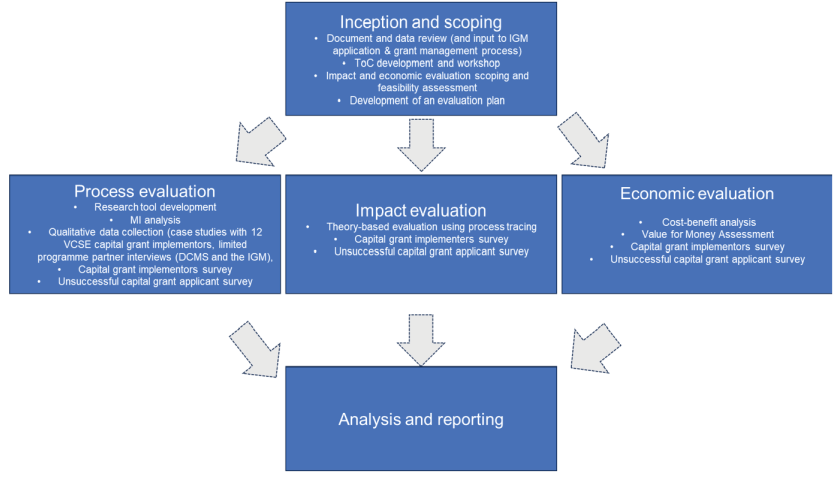
Figure 1: Overview of approach
Case studies
A total of 12 case studies were conducted between October 2025 and February 2026. VCSEs were sampled to provide a broadly representative selection of organisations receiving capital grants. The sampling criteria used were geographical location, service theme[footnote 11], organisation size, and capital measures installed. It was challenging to encourage participation, due to limited capacity in VCSE organisations to engage at the time of the research. In these instances, the organisation concerned was replaced with an alternative with similar characteristics based on matching criteria.
Across all case studies:
-
A total of 22 strategic staff (VCSE organisational representatives) were interviewed
-
A total of 19 delivery staff/volunteers were interviewed
-
A total of 7 volunteers, who were also beneficiaries, were interviewed
-
A total of 35 beneficiaries were interviewed
Interviews
A mix of group and individual interviews were conducted across “programme stakeholders” (DCMS and IGM consortium) during October 2025:
- DCMS: interviews with DCMS were conducted to reflect on design, implementation, delivery, IGM management and outcomes across the entirety of the EES, with a greater focus on the capital grant element. Two group interviews were conducted with five DCMS colleagues in total
- Groundwork UK and consortium members: Interviews with Groundwork UK were conducted to reflect on design, implementation, delivery and outcomes across the entirety of the EES, with a greater focus on the capital grant element. One group interview was conducted with key members of the Groundwork UK delivery team, and one individual interview was conducted with a member of a consortium organisation who had been involved with the EES from its inception. Staff turnover limited the number of individuals who would have had knowledge of the early stages of the EES
Surveys
Two online surveys were administered between October and November 2025. One targeted organisations that had installed their capital measures funded through successfully securing the EES capital grant[footnote 12], and one targeted at those that had been unsuccessful in applying for a capital grant (for reasons other than ineligibility). The surveys focused on the effectiveness of the EES capital grant application processes; applicants’ experiences of the EES and, for capital grant recipients, understanding the impact, if any, of accessing EES capital grant funding. The survey of successful applicants also sought to identify any unexpected costs of installations, while the survey of unsuccessful applicants also gathered data on what happened in the absence of receiving an EES capital grant, exploring whether they had been able to access alternative sources of funding for energy efficiency support. Respondents to each survey were entered into a prize draw to win one of 5 £200 donations to their organisation, to help encourage participation. The survey of successful applicants achieved 142 complete responses (a 45% response rate), and the unsuccessful applicant survey achieved 128 complete responses (a 30% response rate).
Drawing on the survey data, this report includes descriptive statistics, cross-tabulations, and comparisons between capital measure implementors and unsuccessful applicants (where appropriate). In addition, survey evidence was used in the impact evaluation through BPT[footnote 13] analysis, a statistical technique that provides a systematic and transparent method for evaluating impact. Using the survey results, the process-tracing methodology was employed to assess the overall contribution of EES across two contribution claims[footnote 14]. More information on this approach can be found in Annex 3.
The survey data were combined with management information data to explore different themes and compare trends across different organisation characteristics.
Analysis of management information data[footnote 15]
MI data collected for the EES programme were analysed to help understand the characteristics of capital measure implementor organisations, including the services, activities, and capital measures for which funding was used. Data analysed included:
- Application form data for IEA and capital grant applicants
- IEA report findings (including energy efficiency recommendations made)
- Capital grants approved
- Capital grants budgets (original and final versions)
1.3.3 Limitations
Every effort has been made to ensure that the evaluation methodology is robust and the findings accurate. However, there are a small number of limitations and contextual factors which are important to acknowledge:
- Of the initial organisations contacted to participate in the case studies, many reported not having the capacity to take part at that point in time. A wide range of reasons were given, including being short-staffed, facing a busier-than-usual period, or having only a small team. The lack of organisational capacity likely impacted the final case studies selected and survey response rate
- The evaluation was conducted in parallel with ongoing scheme delivery, and the evaluation timescales ended before the EES delivery finished. This means a full assessment of the capital installations and the outcomes and impacts of these activities is not possible at the time of reporting
- MI data from the Flexigrant database that Groundwork UK used to collate application data, IEA reports, and capital grant awards was designed and captured for administrative, rather than research, purposes. Several variables required data cleaning, such as manually entering the number of hours the VCSE buildings were in operation per week. Other errors occurred within the capital application reference numbers used to merge datasets; these were minimised through a data-cleaning process
- The data on capital measures also provided only a partial view (313 out of 316 VCSEs) of the full population of capital grantees, as not all measures had been installed at the time of the data share
1.4 Report structure
The report is structured as follows:
- Chapter 2 focuses on findings from the process evaluation relating to the EES’s design and implementation, discussing the design and delivery phase, the application and decision-making processes involved in disbursing the grants and the experiences of capital measure installations. A brief summary of the findings from the interim evaluation has also been included
- Chapter 3 examines the short-term outcomes of the EES for VCSE organisations, focusing on energy use, energy cost savings, and service delivery. A brief summary of the results from the interim evaluation has also been included
- Chapter 4 focuses on the medium-to longer-term outcomes of the EES for VCSE organisations and beneficiaries, with a particular focus on financial resilience and maintaining service delivery. Wider and unexpected outcomes have also been assessed, including a brief summary of the results from the interim evaluation
- Chapter 5 focuses on the findings from the economic evaluation, with an indicative assessment of value for money comparing the scheme’s costs and the benefits identified to date, and an overall assessment of the EES’s equitable considerations
- Chapter 6 provides final conclusions and reflections on learning to date. Several recommendations also follow on from the concluding remarks
2.0 Process evaluation
This chapter first reflects on the scheme’s design and implementation before exploring the effectiveness of the EES’s implementation of the capital grant element. It also discusses views on the EES design phase and VCSE engagement, as well as the application and decision-making processes involved in distributing the grant funding.
Key findings
Design and set‑up of the EES capital grant: Governance, templates and monitoring systems worked well despite an accelerated set‑up. Strong, complementary IGM consortium partnerships supported technical delivery. Flexibility (variations, extensions, budget shifts) helped VCSEs adapt to circumstances.
Application processes: High application volumes achieved through established VCSE networks. Groundwork UK’s support eased the navigation of complex capital applications. Smaller and less‑connected VCSEs found processes burdensome and harder to access.
Decision‑making: Panels were rigorous, well‑trained and multidisciplinary. Assessment was time‑intensive, especially due to surges on the final day of applications. High workload supported consistency but strained assessor capacity.
Capital grant reach and characteristics: 316 VCSEs were funded (circa £19.7m awarded, £18.4m paid out by the end of the scheme), with broadly even regional distribution. Most grants were awarded to medium‑sized VCSEs delivering frontline services. Organisations that rented their premises were as likely to be funded as those that owned their buildings, despite the potential additional barrier of having to gain landlord approval.
EES and the Community Cost of Living Fund (CCLF) organisation comparison: Organisations accessing both CCLF and EES were largely similar to single‑grant recipients (predominantly Company Limited by Guarantee (CLG)s with medium turnover), but the 112 organisations (9%) receiving both grants tended to be smaller in scale, were mainly based in London and the South East, and most commonly were medium-sized, defined by having annual incomes between £100,000 and £1 million.
Capital measures funded and project delivery: Funding concentrated on core measures: solar, insulation, lighting and fabric upgrades. Delivery was generally smooth, with organisations broadly satisfied with the installing contractors and the capital-enabler support. Older and listed buildings, complex technologies and lack of revenue funding caused delays.
Overall effectiveness of grant management: Overall, programmebudget flexibility (e.g. EnergySharp) improved application quality and delivery. The partnership model enabled rapid problem‑solving under tight timelines. However, application burden was often perceived as disproportionate for smaller grants and volunteer‑led VCSEs.
2.1 Summary of previous EES process evaluation
This section summarises the findings from the previous process evaluation[footnote 16] of the EES, which focused principally on the IEA element of the scheme. The previous interim evaluation also briefly explored the capital grant element of the scheme, as this was starting to be delivered at the time of reporting. The previous evaluation report was published in August 2025.
2.1.1 Design and early implementation
The EES design was broadly viewed as positive, with stakeholders agreeing that the two‑stage structure (IEA followed by capital grant) appropriately supported VCSEs with limited energy‑efficiency knowledge. The EnergySharp[footnote 17] post‑IEA support line was also considered effective. However, partners highlighted constraints, including short delivery timescales for capital spending and inconsistencies across IEA reports due to the wide range of assessor backgrounds. Despite tight setup timelines, only two months before launch, the IGM was widely seen across stakeholders interviewed as having delivered flexibly and collaboratively, drawing on learning from the CCLF. Challenges included DCMS’s limited prior experience with energy efficiency and the complexities of determining priority measures, particularly where trade-offs existed between payback periods and longer-term efficiency gains.
Assessor recruitment was successful overall, with 76 assessors (individuals and companies) engaged, though it took longer than expected and required tailored messaging due to varied methodologies and terminology across assessors. VCSE outreach mainly reached organisations already in established networks, leaving scope for less‑connected organisations to miss out; additional late‑stage webinars aimed at underrepresented sectors were seen as having limited additional impact. Application processes for IEAs received high satisfaction ratings for clarity and the guidance provided by organisations applying, though applications were considered long.
While EnergySharp support was well‑regarded by programme stakeholders and VCSE representatives, accessing support and being seen as supporting applicants in preparing for the capital grant application process received mixed feedback. Delays in decision‑making and high information requirements were identified as challenges by both VCSE representatives and programme stakeholders. Decision‑making panels functioned well overall, supported by good training, weekly assessment schedules, and multidisciplinary expertise – though early capital grant applications were judged to be of poor quality.
2.1.2 Delivery
The scheme received fewer IEA applications than expected but remained oversubscribed on the capital grant side. Of 1,782 IEA applications, 1,147 were approved (64%), and, of the 770 capital grant applications, 316 capital grants were awarded (41%). Successful VCSEs tended to be small- or medium-sized organisations delivering frontline services, often based in older buildings with average energy-efficiency ratings. Energy usage and expenditure varied widely, though around 30% of VCSEs used more than 100,000 kWh annually, with energy making up 12.3% of annual costs among IEA recipients.
IEA delivery was generally experienced positively; VCSEs valued the professionalism, timeliness, and clarity of the assessor’s recommendations. However, stakeholders expressed concern about variation in report quality, with some requiring revision. Across 1,147 IEAs, 5,375 measures were recommended – commonly solar PV, LED lighting, insulation, and heating upgrades – with heat pumps the most expensive. Early capital grant delivery was affected by late IEA reports, supplier sourcing issues, planning permission delays, capacity constraints, weather conditions, and unexpected structural issues, including asbestos. Despite this, 1,216 capital measures were funded, with most grant value flowing to solar, insulation, lighting, heat pumps, and building fabric upgrades.
2.1 Design and set-up of the EES capital grant
A limited number of interviews with programme stakeholders and VCSE representatives (through the case studies) highlighted several key themes concerning the EES’s design relating to the capital grant element and subsequent set-up phase. These have been split into what has worked well and what has worked less well below.
2.2.1 What worked well
Programme partners reflected on a number of key aspects of the EES design and set-up phase that they felt worked well, including:
- EES governance structure was well thought out: Despite the accelerated timeline for the scheme launch, stakeholders felt the approach to the design of templates, application review processes, internal monitoring systems and the two-staged framework (having an initial IEA phase to inform the capital grant application phase – allowing for an iterative approach to applications, building on learnings before grant monies were distributed) for the EES worked well. It helped ensure VCSEs, which were often mainly volunteer-led with limited technical expertise in capital measures, were guided to some extent through the different energy efficiency options available for their buildings. Delivery stakeholders built on learnings from the IEA application process and initial capital grant applications by building in the “EnergySharp[footnote 18]” helpline to minimise application quality issues
… it was a two-part scheme, and I think that was a strength and a challenge, I suppose, because it allowed us to be reactive and make changes
– DCMS policy advisor
- Collaborative partnership approach: Partnerships within the IGM consortium were viewed as complementary and essential for delivery, with technical partners within the consortium seen as complementing Groundwork UK’s grant management role. Partners such as CSE, for example, helped to provide the technical knowledge and supported capital grant applications through EnergySharp. Energy Saving Trust (EST) supported organisations by providing contacts within the building assessment market across the country to deliver IEAs, while also providing technical expertise
- Design flexibility supported adjustments for specific VCSE contexts: Both programme stakeholders and several VCSE representatives noted how the flexibility in the design of the capital grant element helped make the set-up phase run smoothly. Groundwork UK explained that variations, extensions and budget adjustments were crucial to supporting VCSEs. This view was echoed by a VCSE representative, who noted that the design’s flexibility enabled decisions to repurpose grant funding towards measures better suited to their changing circumstances
Groundwork UK allowed the underspend to be used for LED bulbs and a fire door
– VCSE representative
2.2.2 What worked less well
- Timescales were compressed: As in the previous evaluation, stakeholders noted that timings were tight, leading to an accelerated design phase for both parts of the EES. However, the two-stage application process (IEA then capital grant) enabled the capital grant application phase to draw on learnings from the IEA application design, particularly around timing and application support.
- Limited experience among the team in similar energy efficiency schemes: Stakeholders agreed that the scheme represented a novel and new approach to energy efficiency in the VCSE context. This was coupled with the sector also being at an early stage of energy-efficient technology adoption; overall, there was limited existing knowledge across both DCMS and prospective grant recipients. The key reflection from DCMS stakeholders was that earlier consultation with other government departments with energy efficiency knowledge and expertise would have supported the design of the EES capital grant. This could have supported the familiarisation of energy efficiency and guided the policy design direction at an earlier stage, potentially saving some time in the initial policy design phase.
We didn’t have any expertise around capital… had we consulted other departments, they may have offered advice
– DCMS Policy Advisor
- Initial differences in expectations between DCMS and the IGM hindered design efficiency: It was noted by several stakeholders that once relationships were established between Groundwork UK and DCMS, weekly communication became a critical part of the set-up phase. Interviewees stressed that proactive information sharing enabled issues to be resolved early rather than reactively. However, initial discussions around the design, roles and responsibilities identified early differences in expectations amongst both sets of stakeholders
… in the early days, there was maybe a difference of expectation between ourselves and [the IGM] about how much they would be designing the programme. It took a while for us both to get the balance right between how much you see in the high-level vision of the programme versus asking [the IGM] and their various partners.
– DCMS representative
2.3 Application processes
This section highlights evidence from stakeholder interviews and strategic/delivery VCSE stakeholders (case study evidence). Findings have been split into what has worked well and what has worked less well below.
2.3.1 What worked well
- Strong reach of VCSEs noted by programme stakeholders: Across interviews, stakeholders agreed that the programme achieved strong reach, generating a high volume of applications with broad geographic coverage. Groundwork attributed this mainly to outreach through established VCSE networks. As one DCMS lead noted:
The majority of applicants heard about the scheme via Groundwork; they did a lot of the outreach for us
– DCMS Policy Advisor
- Positive views on Groundwork UK support for capital grant applications: VCSE representatives, who were generally familiar with grant funding applications, noted the significant amount of detail required for the grant application; however, they appreciated that this was necessary to facilitate effective application assessments. The grant design was noted as being accessible, with Groundwork UK support acknowledged as making the process smoother
- Capital grant application quality improvement due to rolling deadline: Learning from the IEA application process was, to an extent, recognised, leading to an adapted capital grant application rolling deadline. Groundwork UK introduced a phased application deadline, which helped reduce the number of applications requiring sifting. The first phase saw approximately 20 applications submitted before Groundwork UK and DCMS closed the application window. The redesigned application process reopened for a longer period with a notable improvement in application quality. The introduction of the EnergySharp[footnote 19] helpline service helped guide VCSEs with their applications, and the IGM noted that it led to a significant improvement in the quality of those applications
…originally when we started out, we were going to have three rounds of capital deadlines and then we changed it to have that first round, and then we opened rolling until August 2025 so that people could put things in their own time, not rush to get an application in, but submit it when they felt it was complete
– IGM representative
2.3.2 What worked less well
- Some smaller-sized VCSEs found the application process cumbersome: Some representatives highlighted that, despite the structured approach to the grant application process, it was either too intensive for volunteer-led VCSEs or was viewed as disproportionate to the size of grant being awarded. While some larger VCSEs found it manageable, many smaller organisations struggled with the technical requirements. A member from the IGM consortium reported that organisations often required support simply to interpret their IEA
Groups [organisations] didn’t really understand the technical stuff… we basically acted as a Q&A service.
– IGM consortium representative
- IEA assessment quality: The poor quality of some of the IEAs led to a small number[footnote 20] of VCSEs requiring a rework of the assessment before they were able to complete a capital grant application. Some VCSE representatives highlighted the need for extensive cost verification due to IEA errors, significantly delaying progress. Others disagreed with the assessments provided, noting that some assessors did not adapt their assessments to their building context. For example, one VCSE case study interviewee mentioned
The survey didn’t reflect the reality of a Grade II listed building…Some of the data required I should have lifted from the survey, but I couldn’t — it was nonsense
- VCSE representative
- Capital grant final deadline day application influx: A large influx of applications for assessment on the final day of grant applications created a significant burden on assessors, which, in some VCSE cases, delayed the release of application results and subsequently the time to implement the measures before the end of March 2025. The complex nature of energy efficiency measures required significant input from several panel member experts for each application
We thought each one [capital grant assessment] on average was maybe about 5 hours to do an assessment… they were detailed assessments, assessors went back and forth with groups to clarify application queries
– IGM representative
- The EES capital grant was oversubscribed, with 770 applications submitted, 329 initially successful, and 316 capital projects implemented. 13 organisations withdrew for reasons including landlords not providing permission to progress with measures, lack of capacity, inability to afford additional costs associated with capital measures, additional costs not being funded through the scheme (survey costs, etc.), and/or insufficient time to complete installations. Despite recognising lessons from the IEA applications process, a large number of applications were submitted on the final day, perhaps unavoidably
- Smaller organisations were more difficult to reach: There was widespread recognition across VCSE stakeholders that smaller organisations were less likely to engage. DCMS and Groundwork UK both described difficulties reaching groups outside formal networks. Attempts to widen outreach mid‑programme produced limited returns
2.3.3 Capital grant applicant characteristics
Analysis of the MI data provided by Groundwork UK on the capital grant applicants (successful, unsuccessful, and those that withdrew) shows the characteristics of applicants across various sub-categories. These broadly align with the successful capital grantees. A total of 770 grant applications were received, with a subset proceeding to a full panel assessment by the Groundwork UK assessment team.
- Grant value applied for: The total grant value requested was £54.2m, with an average value of £70,437 per application
- Regional spread of applicants: Of the 770 applications, 16% came from the South East. 13% VCSEs applied from the North West, and 13% from the South West. The fewest applications (8%) came from the East of England
- Organisational size of applicants: Over 50% of applications came from VCSEs identifying as “medium-sized[footnote 21]”, with small[footnote 22] (22%) and large[footnote 23] (21%) making up a majority of the remaining applicants
- Ownership structure: 50% of capital grant applicants owned their buildings, with 37% being leaseholders[footnote 24]. Of the 37% that stated a lease ownership structure, the average number of years remaining on the lease was 42, within a range of 2[footnote 25] to 992
- Staff and volunteers: The number of staff across applicant organisations was lower than the number of volunteers; some organisations were purely volunteer-led. On average, applicant organisations employed 36 (median = 6) members of staff compared to 64 (median = 25) volunteers. Over 60% of the VCSEs operated over 40 hours per week (based on a typical Monday to Friday 9am to 5pm opening hours) and only 8% operated over full week (24/7)
- Cost profile: The average expenditure for applicants was just over £1.4m, with the median at £0.24m, highlighting that larger VCSE applicants pushed up the average. The range was between £66[footnote 26] to £180m. In terms of the percentage of total expenditure on energy-related costs, the average was 11% (median 7%), with a range between 0.4% to 94%
Applications withdrawn
13[footnote 27] VCSE organisations were awarded grants but subsequently withdrew from the scheme. Withdrawn grants amounted to £1.0m, and it is understood that these funds were reallocated where possible to other beneficiaries through grant variations. Types of measure most likely to form part of withdrawn grants involved the installation of Ductless Mini-Split Systems (53%) and, cooling system upgrades (13%). Temperature controls, insulation improvements and LED lighting installations were the least likely types of measure to be part of withdrawn grants. The main reasons for withdrawal included a lack of capacity to deliver capital measures and challenges with landlord agreements for installation.
Measures receiving grant funding
The chart below shows the success rates for different types of energy efficiency measures. Applications for solar panels represented similar proportions of successful and unsuccessful grants. However, other common measures (insulation, windows and doors, and lighting) were more likely to be funded than more bespoke or niche measures (such as battery storage solutions or other renewable, for example, captured within the ‘other’ category).
Figure 2: Capital grant success rate by type of measure applied for
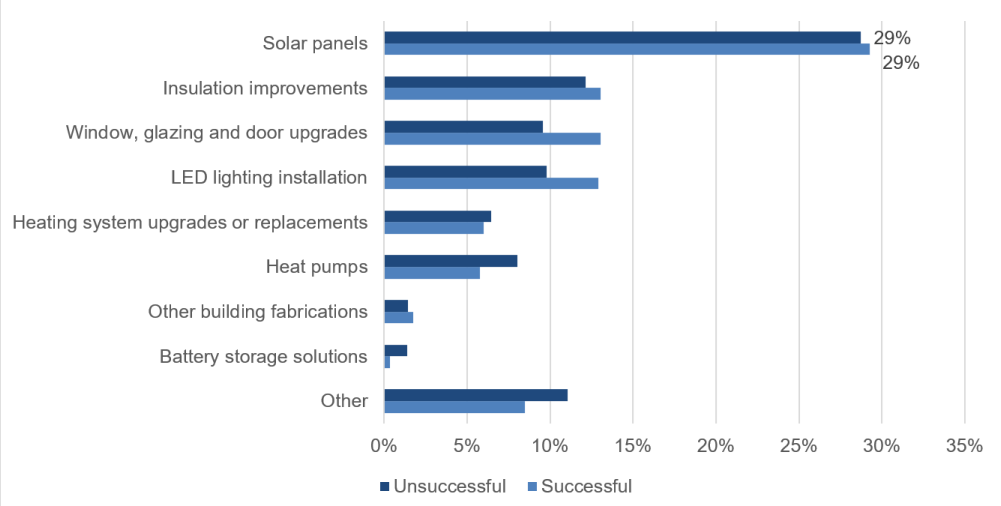
Figure 2: Capital grant success rate by type of measure applied for
Sources: Management Information data from Groundwork UK for Capital grant applicants, Ecorys.
2.4 CCLF and EES organisation comparison
Based on application monitoring data[footnote 28], there were many similarities across the profile of organisations accessing EES and CCLF grants in terms of organisational structure and turnover. The majority of organisations accessing both were classified as companies limited by guarantee (CLGs). One point of difference, however, was that VCSEs accessing both CCLF and EES grant funding consistently had lower average beneficiary, volunteer, and staff numbers than those that accessed only one grant source.
A total 112 organisations received both CCLF and EES grants, or 9% of the total number of organisations that accessed either EES, CCLF or both grants. The most common regions where grantees were based were London and the Southeast, accounting for almost a third of grant recipients that accessed both grants. This was followed by the East and West Midlands, with 17% of grant recipients. A majority of grant recipients (61%) had a turnover described as ‘Medium’, defined as £100,000 –£1million income per year. Large organisations – defined as having £1million – £10million income per year – made up more than a quarter of recipients at 26%.
2.5 Decision-making
In general, programme stakeholders felt that EES application and decision-making processes worked well. Decision-making processes were described as detailed and rigorous, but also time-consuming. Assessment panels relied heavily on comprehensive documentation, with Groundwork UK interviewees explaining that each application required almost a full day’s worth of assessment work. While this ensured fairness and consistency, the sheer volume of applications arriving on the deadline day placed enormous pressure on assessors and decision-makers. However, the time spent assessing the applications was widely acknowledged as having contributed to high‑quality panel decisions.
2.6 Capital grant reach[footnote 29]
316 VCSEs (41%) were awarded grant funding, valued at just over £20m. The largest grant was £159,943[footnote 30], and the smallest was £2,449. The average grant award was £63,321. Of the £20m awarded, £0.8m was allocated as contingency funding, and £1.1m was for VAT payments.
2.6.1 Characteristics
Regional distribution:
Figure 3 below shows the amount of grant funding distributed, classified by the 9 International Territorial Levels (ITL1) regions of England. With a small range of £1.5m (London, low) to £2.9m (South East, Yorkshire & Humber, High), the distribution appears equal, with no particular region favoured in England.
Figure 3: Capital grant awards per region
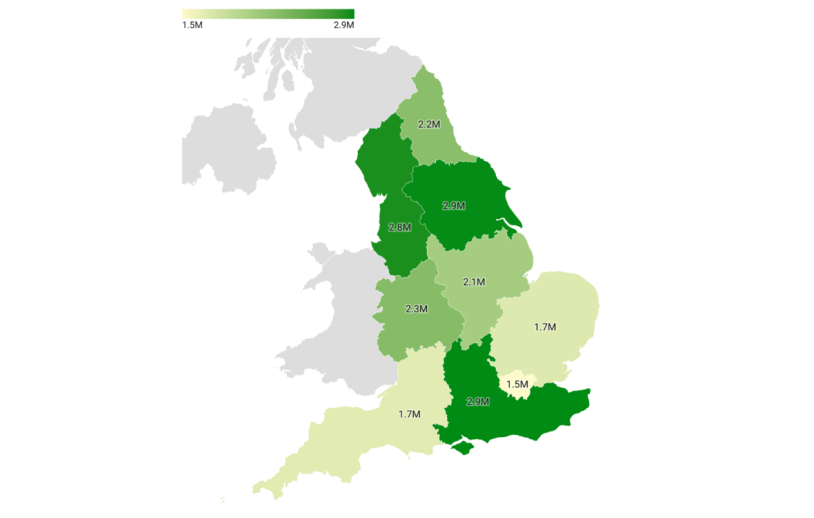
Figure 3: Capital grant awards per region
Sources: Management Information data from Groundwork UK for Capital grant applicants, Ecorys. N.B. This chart was created using Datawrapper.
The chart below compares the successful grantees and unsuccessful grant applicants by region. As a proportion of those applying, VCSEs from the North East, North West and East Midlands were most likely to be successful, while those in the South West and London were least likely to be funded. The distribution of capital between applicants and successful recipients was generally equal. No region received a disproportionate amount of grant funding compared to others.
Figure 4: Grant award comparison by region (Grant recipients vs Unsuccessful grant applicants)
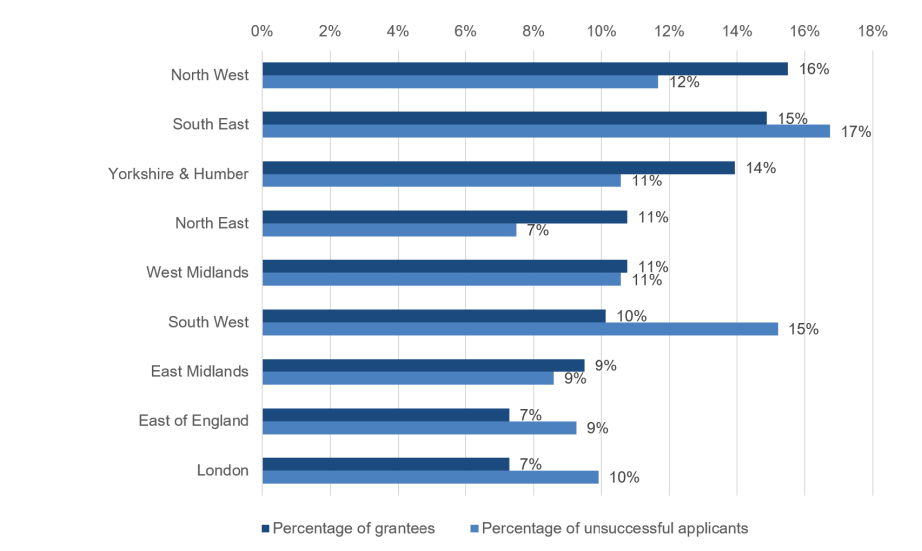
Figure 4: Grant award comparison by region (Grant recipients vs Unsuccessful grant applicants)
Source: Management Information data from Groundwork UK for Capital grant applicants, Ecorys.
Organisational size:
The majority (75%) of grants were awarded to medium-sized VCSEs, defined as having an annual income between £0.1m to £0.999m. Larger VCSEs were less likely to be successful with their grant applications, as shown by the number of unsuccessful applicants that identified as large or above (38%) compared to successful grantees (3%).
Figure 5: Capital grantee and unsuccessful capital applicant split by organisational size[footnote 31] (size of turnover measure)
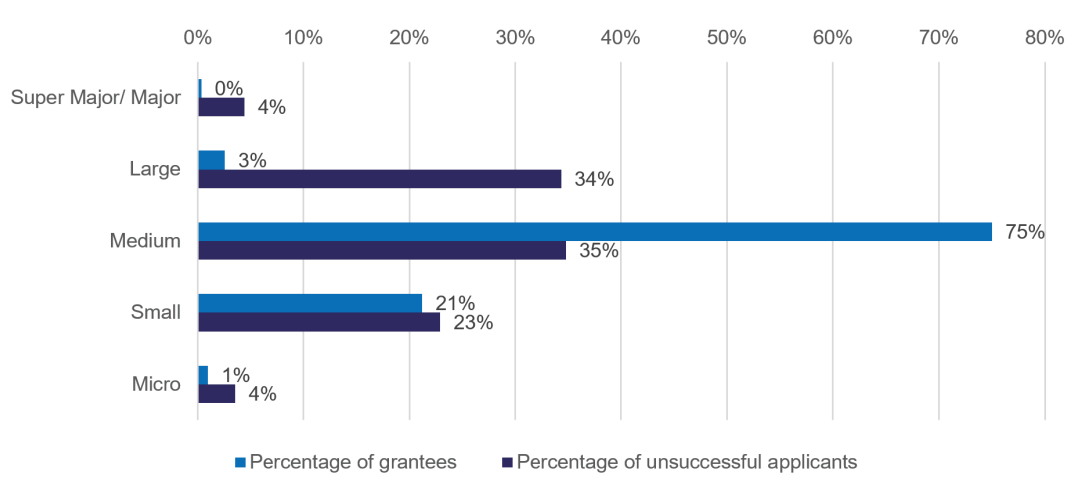
Figure 5: Capital grantee and unsuccessful capital applicant split by organisational size (size of turnover measure)
Source: Management Information data from Groundwork UK for Capital grant applicants, Ecorys. N.B. Percentages may not sum to 100 due to rounding.
Figure 6 below compares tenure type with grant outcome. A commonly discussed barrier to implementing energy efficiency measures is tenants’ limited ability to upgrade their premises. This is often attributed to a lack of incentive to pay for upgrades that could increase the property’s rentable value, as well as practical challenges with permissions. The chart shows that, overall, owner-occupied properties were most often funded, but VCSEs renting their properties were more likely to be awarded a grant relative to the proportion of applications from this group.
Figure 6: VCSEs by ownership status
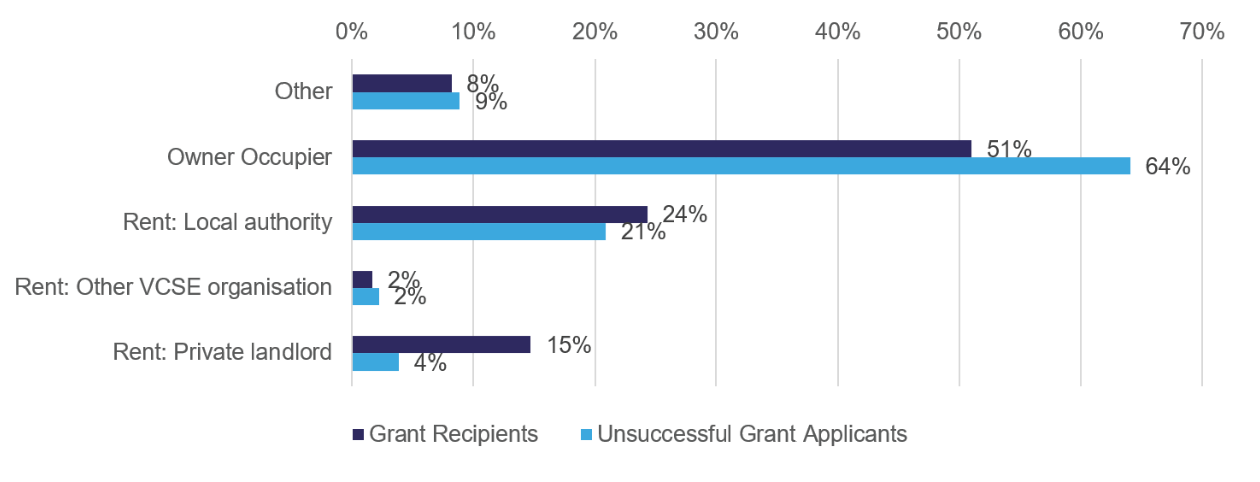
Figure 6: VCSEs by ownership status
Source: Management Information data from Groundwork UK for Capital grant applicants, Ecorys. N.B. Percentages may not sum to 100 due to rounding.
Capital grantee beneficiary types:
Table 1 highlights the capital grantee split by target groups and delivery type. A majority of the VCSEs (66%) awarded funding provided services to all individuals in need, whereas 28% targeted specific groups, such as services aimed at rehabilitation or specific vulnerable groups. Under the scheme’s eligibility criteria, all organisations had some form of frontline service capability. Table 2 highlights the split between organisations that operate from a building they own/lease (28%), and those that manage a building that provides facilities to other organisations for frontline service delivery (8%). A majority (59%) of organisations that received a grant both managed and operated from their building that delivered frontline services. This included potentially other organisations renting part of their building for additional frontline service provision.
Table 1: Grants awarded by VCSE target groups
| VCSE target group | Percentage of VCSEs awarded a grant |
|---|---|
| My organisation is aimed at a specific group of people | 28% |
| My organisation is open to everyone | 66% |
| Not specified | 6% |
Source: Management Information data from Groundwork UK for Capital grant applicants, Ecorys. N.B. Percentages may not sum to 100 due to rounding.
Table 2: Grant recipients by type of service delivery
| Service delivery type | Percentage of VCSEs awarded a grant |
|---|---|
| Directly deliver frontline services to people from a building | 28% |
| Manage a building that operates as a hub for frontline delivery by other organisations | 8% |
| Both of the above | 59% |
| Not Specified | 5% |
Source: Management Information data from Groundwork UK for Capital grant applicants, Ecorys. N.B. Percentages may not sum to 100 due to rounding.
2.6.2 Capital measures funded
A total of 1276 separate measures were funded from the EES capital grant. MI on the type of measures for which grants were awarded was captured in free-text responses. We matched these to the 33 categories of energy-efficiency measures used in the IEAs. Not all grant items could be matched to IEA categories, as some descriptions lacked information about the funding purpose. Therefore, a ‘Miscellaneous Costs’ category is included, accounting for a small amount (0.2%) of expenditure (this was added to the ‘other’ category). Figure 7 shows the breakdown of grants awarded by category, based on value.
Overall, as shown in Figure 7, the majority (80%) of funding (£20.0 million) was awarded across 6 categories of measure: just under a third (29%) of funding was awarded for solar panels, 13% each for insulation improvements, LED lighting installation, and window, glazing and door upgrades respectively, and 6% each for heat pumps, and heating systems upgrades respectively.
Figure 7: Total grant value by type of capital measure
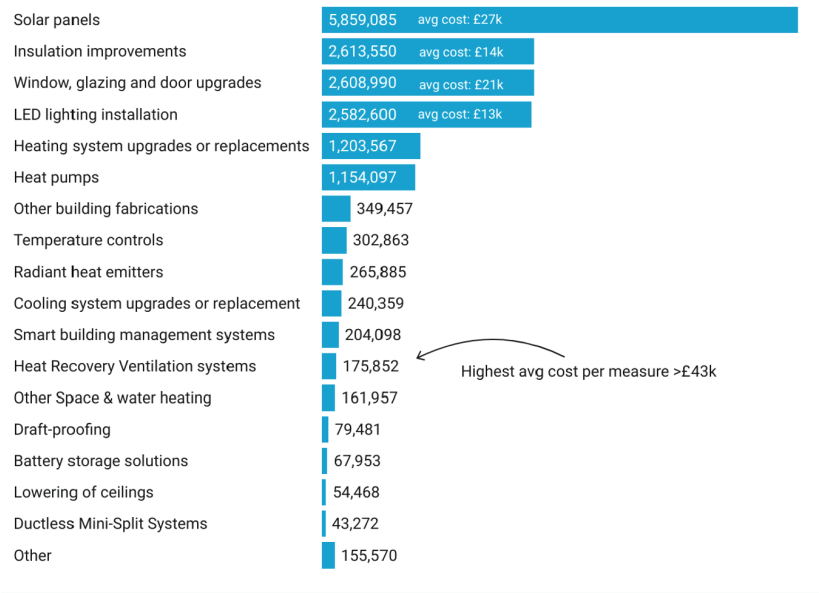
Figure 7: Total grant value by type of capital measure
Source: Management Information data from Groundwork UK for Capital grant applicants, Ecorys. N.B. This chart was created using Datawrapper.
The chart below compares the IEA recommendations and grant awards by measure category. ‘Other’ includes categories which each represent less than 1% of grants awarded. There is a clear correlation between recommendations and grant awards. The most common recommendations are also the ones that were most often funded. However, lighting, insulation improvements, window, glazing and door upgrades, and temperature controls represent a larger proportion of grant measures than IEA recommendations. Measures such as heating system upgrades, heat pumps, battery storage solutions, mini-split HVAC systems, and point-of-use water heaters saw lower uptake among VCSE grant applicants than expected, based on IEA recommendations.
Figure 8: Comparison of IEA recommendations and capital grants awarded
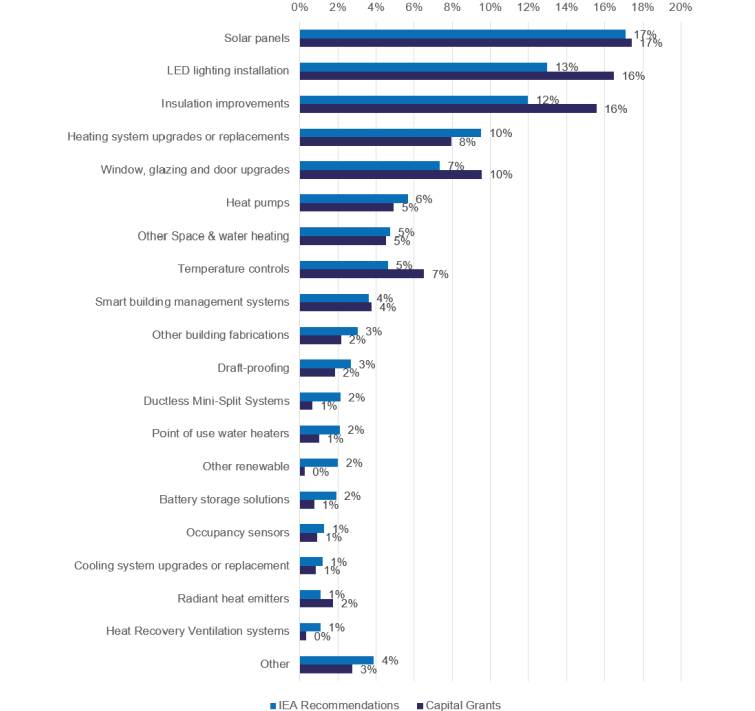
Figure 8: Comparison of IEA recommendations and capital grants awarded
Source: Management Information data from Groundwork UK for Capital grant applicants, Ecorys. N.B. Percentages may not sum to 100 due to rounding.
- Flexibility in grant distribution: Distributing grant awards in several increments helped to manage VCSE’s cash flow and payments to contractors. The IGM were understanding of the need to potentially stagger payments, and despite the significant financial account management required, were happy for VCSEs to claim in as many increments as suited their grant management situation
I’d say on average, every group claimed about five times… I think the highest someone claimed was 19 times.
– IGM representative
2.7 Capital grants project delivery
At the time of the survey (October to November 2025), three VCSEs were yet to install their capital measures (99.1% of capital grantees had installed their measures). Therefore, at the time of reporting, the following section provides a close to complete snapshot of how delivery has gone so far, rather than a full analysis.
2.7.1 Experiences of delivering capital grant projects
VCSE representatives, interviewed as part of the case studies, and programme stakeholders provided details on how the implementation of projects had progressed, once organisations had been notified of their success. Themes emerging can be broadly divided into what worked well or less well, as outlined below.
2.7.2 What worked well
- Good contractors and building types were key to delivery efficiency: There was strong agreement across all stakeholders that project delivery was heavily shaped by the availability and reliability of contractors andthe condition of VCSE buildings. IGM consortium representatives emphasised that successful delivery depended largely on whether VCSEs could find a good contractor, while Groundwork interviewees noted that many VCSE buildings faced heritage or structural constraints. In a minority of cases, stakeholders reported that sourcing reliable contractors for VCSEs was challenging for those based in rural areas, for VCSEs with heritage constraints, and for those with unexpected building conditions (e.g., bats, asbestos). These required continuous troubleshooting and flexibility. Areas with weaker supply chains (predominantly in rural regions) saw more delays or dropped measures
- Capital enabler support: DCMS interviewees acknowledged, reflecting on anecdotal evidence such as discussions with VCSEs, that Groundwork UK provided responsive support via phone, email, and capital enablers. DCMS maintained an inbox for additional queries, ensuring applicants had access to assistance throughout the process. Programme stakeholders recalled a case in which a London-based VCSE found their capital enabler particularly helpful for understanding installation timelines and available flexibility, which facilitated a successful application and project delivery
- the majority of VCSE respondents to the capital implementers survey did not experience any negative impact on service delivery during the installation of capital measures. Figure 9 below highlights that almost 70% of VCSEs surveyed did not experience an impact. It is likely these organisations were not in constant use (e.g., a homeless shelter) where work could be completed during off-peak hours. It may also be possible that areas where building work was underway did not affect service delivery. Of the VCSEs surveyed that experienced an impact, almost 75% noted the impact of any such works lasted less than a month
Figure 9: To what extent did the installation impact/has the installation impacted your organisation’s ability to maintain its service delivery during the period that works were underway?
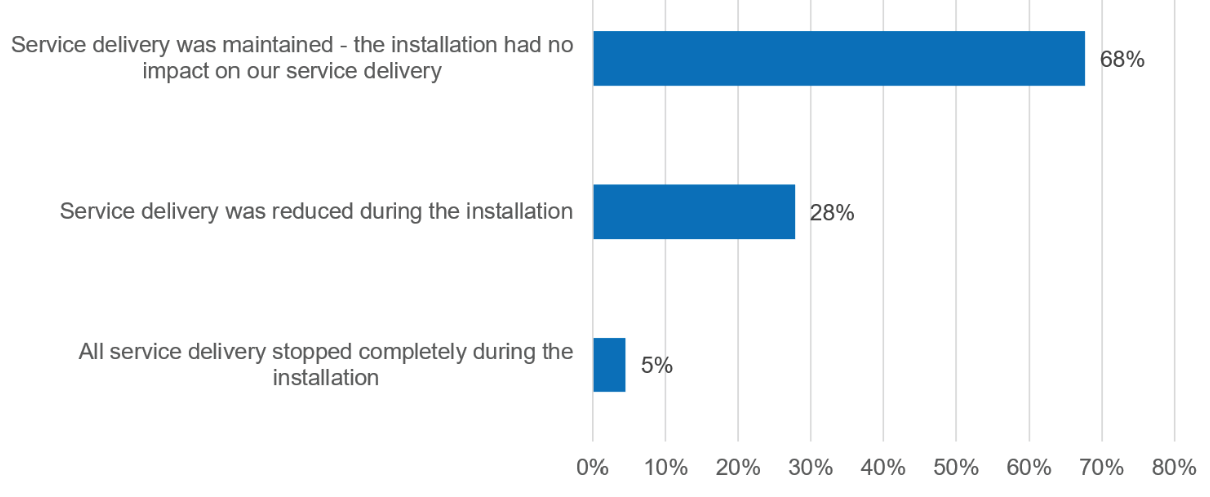
Figure 9: To what extent did the installation impact/has the installation impacted your organisation’s ability to maintain its service delivery during the period that works were underway?
Source: Ecorys Capital Implementers Survey, Q6 (n = 133). N.B. Percentages may not sum to 100 due to rounding.
- Timeline[footnote 32], experience[footnote 33], communication[footnote 34] and quality[footnote 35]: Most survey respondents reported high levels of satisfaction in relation to the timelines for delivery, as well as in terms of their general experience of dealing with contractors and builders, the communication between contractors and their organisations, and the quality of the final installation
Figure 10: Thinking about all installations through the EES you have had, how satisfied were you overall with the following (timeline, experience, communication and quality)?
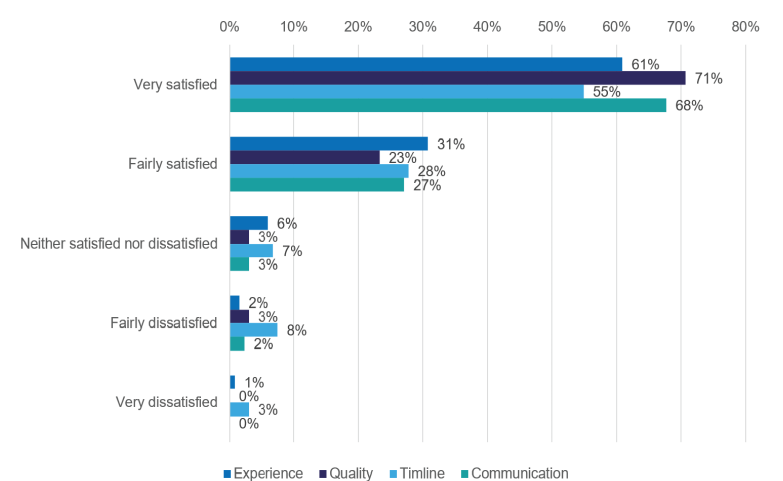
Figure 10: Thinking about all installations through the EES you have had, how satisfied were you overall with the following (timeline, experience, communication and quality)?
Source: Ecorys Capital Implementers Survey, Q9 (n = 133). N.B. Percentages may not sum to 100 due to rounding
2.7.3 What worked less well
- Listed and old buildings: Programme stakeholders highlighted howlisted building status and the condition of older buildings often led to unforeseen complications, requiring changes to planned measures, such as substituting secondary glazing for new windows to meet conservation requirements. This added an additional layer of complexity to capital grant delivery, adding costs and delays to capital installations
- Installation difficulties: This correlates to some extent with reports of difficulties, faults, and other challenges associated with the installation of energy efficiency measures noted by some programme stakeholders in a minority of cases. 35 VCSEs (25%) responding to the survey reported having experienced these. The chart below shows a high instance of difficulties associated with ‘Other space and water heating’ installations (75%), as well as heat pumps (56%) and heating system upgrades (41%). However, although VCSEs installing ‘Other building fabrication systems’ were the least likely to be satisfied overall, reports of difficulties (25%) associated with these installations were in line with the average for all measures
- Building ownership and landlord support: Programme stakeholders highlighted that groups that owned their buildings or had supportive landlords were more successful in delivering capital measures, while unsupportive landlords or those who withdrew permission created significant barriers
Figure 11: Proportion of VCSEs reporting difficulties, faults or challenges
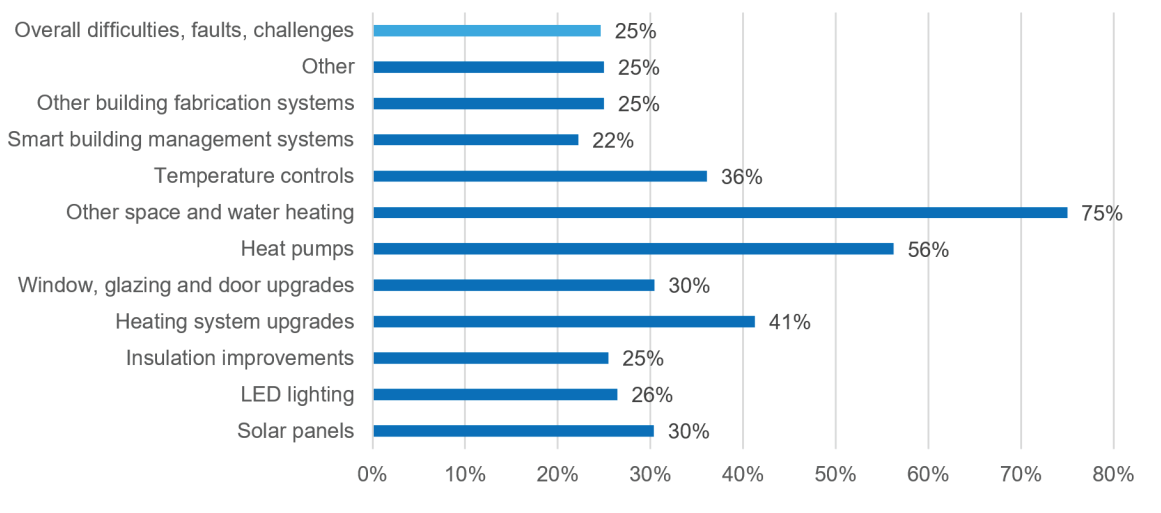
Figure 11: Proportion of VCSEs reporting difficulties, faults or challenges
Source: Ecorys Capital Implementers Survey, (n = 35). N.B. Percentages may not sum to 100 due to rounding and VCSEs having applied for multiple measures
Unsurprisingly, VCSEs who had multiple measures installed were more likely to report difficulties (see below).
Figure 12: Difficulties reported by the number of measures installed
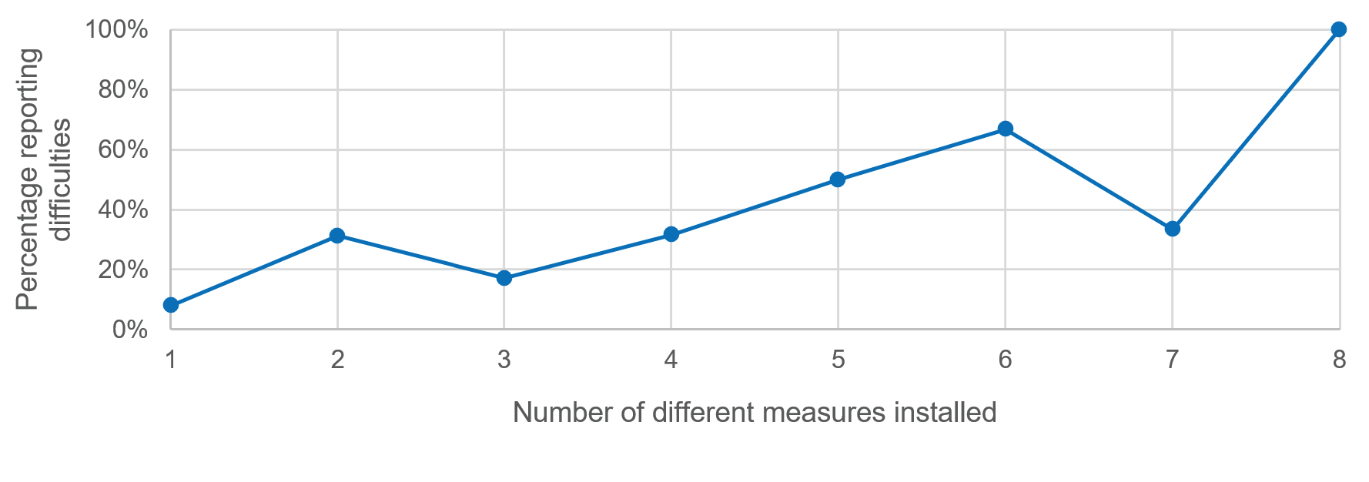
Figure 12: Difficulties reported by the number of measures installed
Source: Ecorys Capital Implementers Survey, (n = 35).
- Factors further delaying activity: Across all programme stakeholder interviews, there was recognition that the scheme lacked a complementary revenue funding stream to support essential pre‑installation tasks. Groundwork UK explained
Groups [organisations] needed surveys, staff time… we wished we could have had a revenue budget alongside the capital
– Groundwork UK representative
Many VCSEs had to self‑fund planning applications or structural assessments, creating an inequitable burden on smaller organisations and adding to the timescales for the delivery of their capital-measure installations.
2.8 Overall effectiveness of grant management
Feedback from programme stakeholders indicated that grant management processes generally worked well
- Budgetary flexibility: DCMS stakeholders reflected on how the reprofiling of budget lines supported changing demands from the IGM and, by extension, the VCSEs. For example, reprofiling some budgetary spend (e.g., funds redirected to EnergySharp[footnote 36] was seen as beneficial in minimising input costs and supporting the quality of capital grant applications. Being able to adapt the use of funds, amid tight timelines for design and delivery, was reported as being positive
- Partnership model to grant delivery was vital: Roles and expertise were disseminated effectively amongst programme stakeholders. The wider consortium members had expertise in energy efficiency measures and industry contacts, which enabled delivery under tight timelines. Communication was clear and quick amongst the various programme stakeholders, which helped answer technical queries accurately and supported VCSEs in making their optimal choice of capital measures
- Design credibility despite some VCSE completion difficulties: Most VCSE stakeholders agreed that they understood the necessity behind extensive application detail; however, some felt it was far too time-intensive for smaller teams. In cases where grant applications were towards the lower end of the range (£2,000), some VCSEs felt that too much information was required
“It took a lot of my time… I did a lot in my own time because it ended up being overtime.” – VCSE representative
“We’ve worked on bids for low millions that had fewer steps than this.” – VCSE representative
3.0 Impact evaluation: short-term outcomes
This chapter assesses achievement against the short-term outcomes specified in the ToC[footnote 37] for the EES. During the evaluation extension period, stronger evidence has emerged, relative to that available at the previous interim evaluation reporting point, suggesting that VCSEs have largely achieved or are expected to achieve these outcomes. The chapter draws on evidence gathered through the VCSE case studies (interviews with strategic and delivery VCSE stakeholders and beneficiaries), the EES capital implementers survey, the unsuccessful capital grant applicant survey, and MI data analysis as of the end of November 2025. These sources have been triangulated to inform the insights in this chapter.
Key Findings
Overall, there are strong signals that the EES is on track to achieve its intended short-term outcomes (as reflected in the scheme ToC).
Improved knowledge of energy‑efficient practices: IEAs increased energy‑efficiency knowledge (68% likelihood). Capital grantees were more likely to adopt behavioural and staff‑led changes. Even unsuccessful applicants reported knowledge gains from engagement.
Energy‑efficient consumption: No definitive evidence yet, but there are early signals of reduced energy use. 55% of capital implementers reported an initial fall in energy usage. VCSE representatives interviewed during case study visits point to reduced and more stable demand post‑installation.
Energy bill savings: There is now emerging evidence of bill reductions. 58% of capital implementers reported lower bills; many experienced reductions of over 10%. Initial savings have often been redirected to maintaining frontline service delivery.
Solar panels and future revenue potential: Solar PV was linked to both bill savings and potential income generation. Some VCSEs explored exporting surplus energy, and some added additional battery storage capabilities to support electricity demand during periods of low sunlight.
3.1 Short-term outcomes
Early findings from the interim evaluation[footnote 38] (published in August 2025) showed that the EES had begun to contribute to short‑term outcomes, particularly increases in VCSEs’ knowledge of their buildings’ energy needs and awareness of energy‑efficient practices. At this point, the analysis indicated a strong likelihood that IEAs improved organisations’ understanding of energy efficient practices. However, at the time of reporting, it was too early to assess measurable changes in energy usage or bill reductions. Where measures had been installed, especially solar panels, organisations anticipated future benefits, including potential revenue from exporting surplus electricity, but evidence of realised savings remained inconclusive.
Building on the interim evaluation, this section reviews additional evidence collected through the surveys and VCSE case studies, which aimed to track any further progress toward achieving the short-term outcomes. At this final evaluation point, evidence indicates that funded organisations, on average, have stronger knowledge of energy-efficient practices than they did before participating in the EES. Other short-term outcomes, such as energy-efficient consumption and energy bill savings, have fed through to medium-to longer-term outcomes (the latter are covered in detail in Chapter 4).
3.1.1 Improved knowledge of energy-efficient practices
The interim evaluation impact analysis indicated a 68% likelihood that IEAs improved organisations’ understanding of measures and behaviours to enhance energy efficiency. Behavioural changes included switching off lighting and equipment when leaving a room, setting temperature control limits, and providing staff and volunteer training. Additional survey results informing the final evaluation found that 75% of capital measure implementers introduced operational changes (such as adjusting heating, lighting, or equipment use) to improve energy efficiency. This compares to 64% of organisations that were unsuccessful at the capital grant stage.
Figure 13: What other actions has your organisation taken to improve energy efficiency or reduce energy costs?
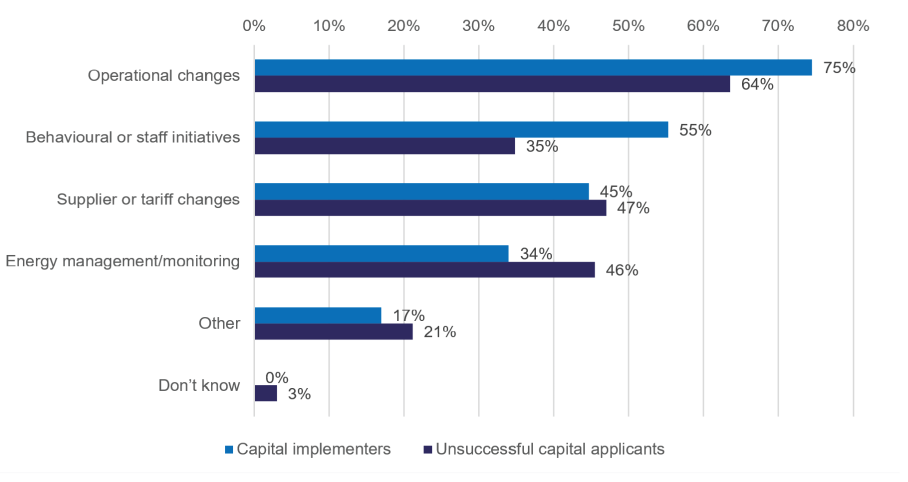
Figure 13: What other actions has your organisation taken to improve energy efficiency or reduce energy costs?
Source: Ecorys Capital Implementers Survey, (n = 47), Unsuccessful Capital Grant Applicant Survey, (n = 66). N.B. Percentages do not sum to 100 as respondents could select multiple options.
The largest differential between the two surveys was in facilitating behavioural/staff initiatives (such as training, awareness campaigns, or energy-saving policies): 55% of capital measure implementers had taken this action, compared to 35% of unsuccessful grantees. This is likely due in part to staff being trained on the use of new measures being installed (such as new heating systems, thermostat controls, or health and safety updates – such as fire door replacements, improving heat retention).
Interestingly, and in line with previous evaluation results, participation in the EES application processes also increased the energy efficiency knowledge of unsuccessful applicants. Figure 14 below highlights that 69% of unsuccessful applicants who completed the survey had increased their knowledge of such measures as a result of engaging with the application process. This result does not account for external factors that may have contributed to improvements in knowledge; however, the EES application process and the IEA are likely to have played a role.
Figure 14: Do you feel you have more knowledge on energy efficiency practices as a result of engaging with the application process?
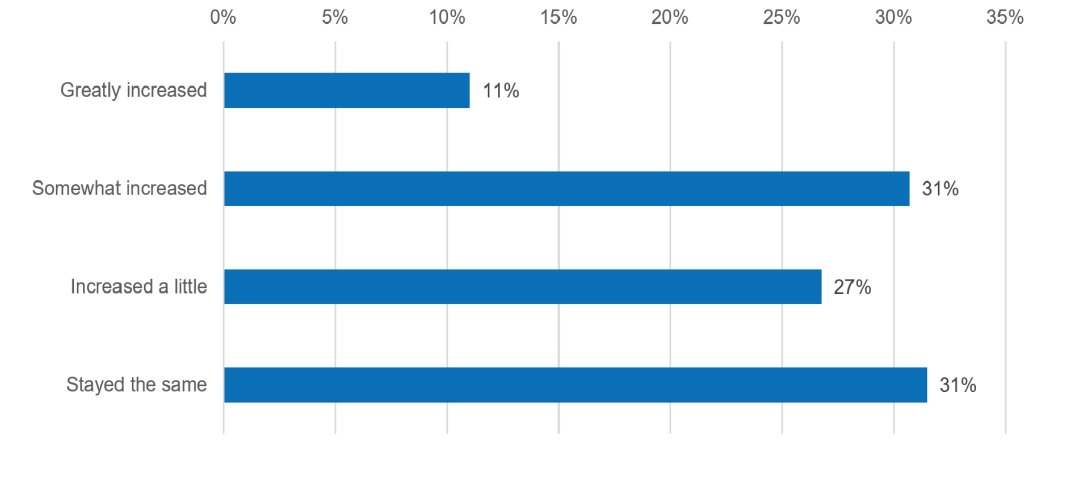
Figure 14: Do you feel you have more knowledge on energy efficiency practices as a result of engaging with the application process?
Source: Ecorys, Unsuccessful capital grant applicant Survey, (n = 127). N.B. Percentages may not sum to 100 due to rounding.
Findings from one of the VCSE case studies highlighted how knowledge creation led to additional community-wide engagement and learning, as illustrated in Box 1 below.
Box 1: Improved knowledge creation and subsequent community-wide dissemination
This organisation is an inclusive, walk-in hub serving a highly diverse community (including families, older people, asylum seekers and refugees, disabled and LGBT+ residents). The centre operates from an ageing Victorian school in a historically flood-prone area.
There is strong engagement with service users through newsletters, and the website helps maintain a close-knit, environmentally conscious community. Delivery staff and beneficiaries emphasised the centre’s unique value in bringing multiple service offerings together in one accessible place - from warm, safe spaces and affordable food to free computer and internet access, volunteering opportunities and social groups. Despite financial pressures and the loss of their café, the centre remains committed to attracting more users and modelling greener behaviours locally.
Strategic stakeholders noted that the EES project catalysed local climate action and raised the centre’s profile, including hosting a “Green Feast event”, receiving visible support from the local MP and councillors, and strengthening community visibility. Volunteer engagement around sustainability increased, with professional volunteers contributing to partnership work.
It has increased the momentum in climate action volunteering.
– VCSE representative
A beneficiary who visited the centre with their child noted the child-friendly activities around smart radiator controls (TRVs), and having a sustainability lead on site nudged day-to-day behaviours such as switching off lights, shutting windows, and improving recycling, which strengthened building management beyond the original capital scope.
Programme stakeholders also referenced a knock-on effect of capital measures being installed and learnings from the IEA process leading to a behavioural shift amongst funded organisations, based on conversations with the IGM. This reflects the narrative in the case study example above, where building this awareness within the sector could have had the additional benefit of improved energy efficiency behaviours.
…we’ve heard from [IGM] colleagues that some of the groups are just thinking about behaviours around energy efficiency, which was a kind of unintended consequence… I’ve definitely heard that a few times that groups are thinking a bit more about which spaces they use, switching lights on and off…
– DCMS Policy Advisor
3.1.2 Energy efficient consumption
The interim evaluation found no clear evidence that the EES had, at that point, led to more energy efficient consumption. This is because not enough time had elapsed at the previous reporting point to observe a change. BPT impact analysis found the evidence to be equally likely to support or not support the hypothesis that the EES helped reduce energy usage, as echoed in the other primary data collection activities.
Research informing this final report indicates that energy demand across capital implementers has begun to fall in many cases, given improvements in the quality of heat retention, lighting, draft-proofing and energy generation. Figure 15 below, for example, highlights that over half (55%) of capital implementers who responded to the survey experienced an initial fall in their energy usage. The survey was conducted ahead of the winter period, which may explain some of this fall. However, the data show positive signals that the EES capital installations likely contributed to more efficient energy consumption. All respondent organisations’ IEAs had been completed, and most of their capital works had begun. However, not all organisations had fully implemented their measures at the time of the survey, and more time is required to observe these impacts. This is evident with a high percentage (31%) of respondents indicating that it was still too early to assess the impact of measure installation on energy use and efficiency.
Figure 15: Has your organisation experienced any changes in its energy usage since the EES capital measure installation(s)?
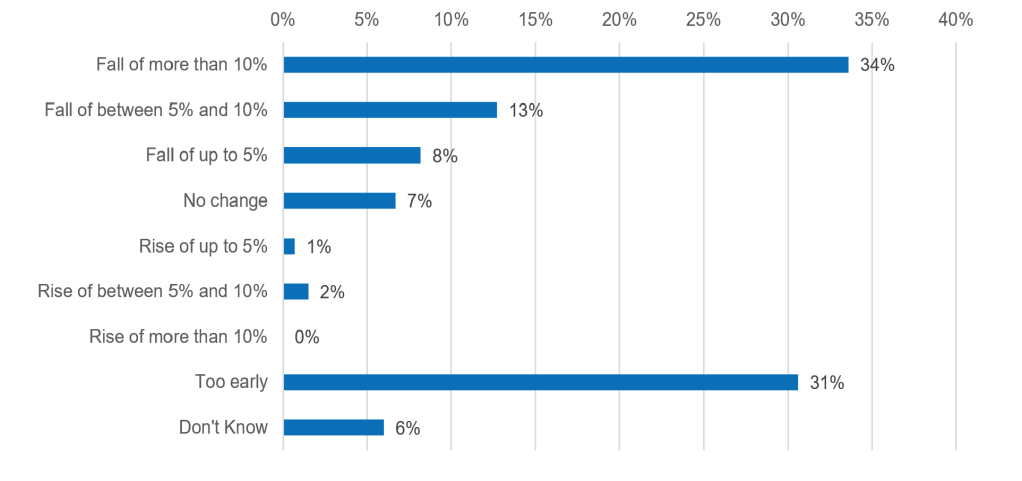
Figure 15: Has your organisation experienced any changes in its energy usage since the EES capital measure installation(s)?
Source: Ecorys Capital Implementers Survey, Q18 (n = 134). N.B. Percentage may not sum to 100 due to rounding.
Reduction in energy demand
Across all VCSE case studies, strategic and delivery stakeholders noted an overall reduction in gas and electricity usage. This was often facilitated by the “fabric first” retrofit principle, which starts with basic upgrades to mitigate heat loss. The main measures highlighted by stakeholders included LED lighting, thermostat settings, improved insulation in ceilings, flooring, and wall cavities, and window glazing/ draft-proofing upgrades. These measures signal a baseline level of energy-efficient adoption in VCSE buildings. Fabric-first approaches are a precursor to starting to think about adopting the latest technologies to improve overall energy efficiency and support the sector’s subsequent upgrading in line with broader government net-zero targets.
There’s no doubt we are using less heat in terms of gas and electricity… and there’s no question we’re using less to get what is no doubt, again, a slightly improved background heat anyway. It’s not costing us as much, definitely.
– VCSE representative
Stabilisation of changing energy demand
An additional contributing factor, building on the overall reduction in energy consumption noted by case study respondents, was a more stable and predictable energy demand from their buildings. Some VCSE strategic and delivery leads commented on the reduced reliance on supplementary heating systems, which stabilised electricity and gas usage, contributing to a more stable weekly consumption. LED and solar panel installations were noted to have a positive impact on reducing electricity demand during daylight hours and within specific high-energy building zones (relatively higher-use building spaces). This has had a knock-on impact on forecasting energy bill expenditures, helping the organisation produce financial plans to manage energy costs, particularly amid uncertainty about future energy bill changes.
Overall, most VCSE representatives reported an early reduction in consumption patterns and reduced variability across cold and milder days. Seasonal trends are likely to influence net consumption, however, particularly during the winter period, after the completion of fieldwork.
3.1.3 Energy bill savings
The interim evaluation found no clear evidence that the EES had led to energy bill savings: again, this is likely due to insufficient time having elapsed to observe a change. BPT impact analysis signalled similar uncertainty around energy bills, indicating no change in the likelihood (compared to prior beliefs) that the EES IEA process contributed to a reduction in their energy bills post-IEA. VCSE interviewees, however, indicated they expected savings to be generated, particularly through solar panel installations and heat pumps. The evidence presented below adds weight to these initial expectations, with survey analysis and VCSE case studies providing strong evidence of immediate energy bill savings, and further future expected savings yet to be experienced.
Stronger signals of expected energy bill savings
Programme stakeholders were confident that VCSEs that had implemented capital measures through the EES would achieve potential energy bill savings. The IGM cited examples where, in the pre-winter period, capital implementers had already reported energy bill savings of “around 30 to 40%”. These early savings could have been driven by external factors, such as renegotiating energy supplier contracts, but this in itself may have resulted from participation in the EES: for example, by building contacts with energy experts through the IGM and through advisory services that helped identify better supplier options.
Survey evidence corroborated these perceptions of energy bill savings: nearly 3 in 5 (58%) capital implementers reported lower energy bills since their energy efficiency installations, with a further 38% saying it was too early to say or that they didn’t know. Figure 16 below shows that more than a third of grant beneficiaries (37%) reported saving more than 10% on their energy bills. Small (42%) and medium-sized (40%) VCSEs were more likely to report savings of at least 10% compared to larger VCSE respondents.
Case study participants reported using the immediate savings from energy bill reductions to support frontline service delivery. A few VCSE representatives also commented that reduced energy bills helped maintain affordable rental prices, thereby reducing the need for price increases for beneficiaries accessing support services.
Figure 16: Has your organisation experienced any changes in its energy bills since the EES capital measure installation(s)?
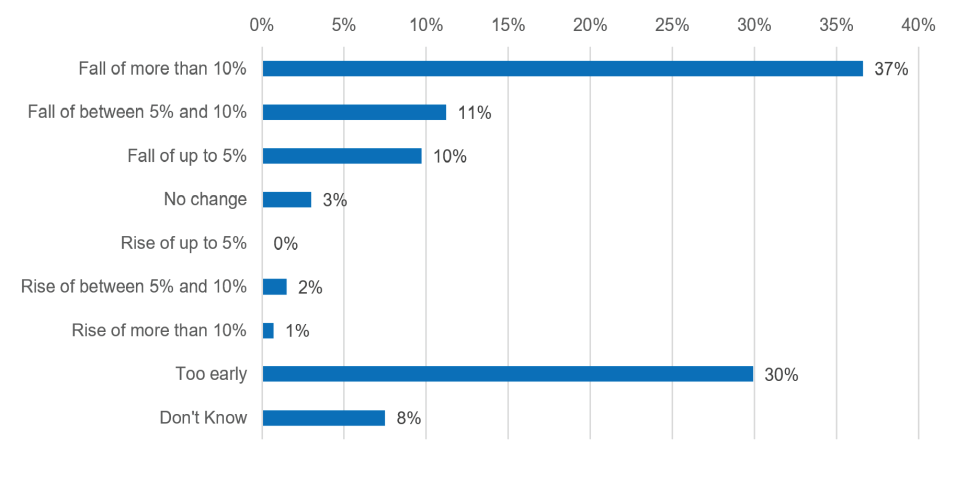
Figure 16: Has your organisation experienced any changes in its energy bills since the EES capital measure installation(s)?
Source: Ecorys Capital Implementers Survey, Q19 (n = 134). N.B. Percentage may not sum to 100 due to rounding
Figure 17 below displays the proportion of VCSEs reporting bill savings, broken down by the type of measure installed. Across all measures, more capital implementers surveyed were more likely to report energy bill savings than not. Those installing the most common measures, solar panels and LED lighting, were slightly more likely to report bill savings, and less likely to say it was too early to tell or they did not know.
Figure 17: Proportion of VCSEs reporting bill savings, by measure
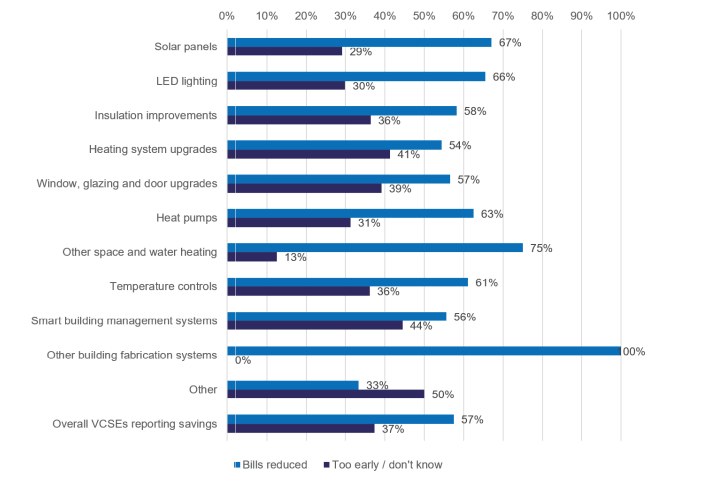
Figure 17: Proportion of VCSEs reporting bill savings, by measure
Source: Ecorys Capital Implementers Survey, (n = 134). N.B. Percentage may not sum to 100 due to rounding.
Solar panels: potential for an additional revenue stream
Solar panels, in particular, were widely cited as a potential source of additional revenue streams for VCSEs that had them installed through the EES. Some VCSE representatives highlighted during case study visits (and anecdotally to programme stakeholders) that, if the panels produce more energy than their building demands, they could either store surplus energy or sell additional units to the national grid. An example of this is provided in Box 2 below.
Box 2: Solar panel energy bill savings and revenue generation possibilities
The organisation visited is a community-based charity operating from an older warehouse building. They support people experiencing poverty, financial crises, and housing instability by providing free or low-cost furniture, emergency food parcels, household essentials, digital inclusion support (IT equipment), and advice services, including money and debt support. They rely heavily on volunteers, including unemployed people seeking to build skills to return to work. The warehouse environment was described as outdated, with poor lighting and cold conditions, reflecting the building’s age. They face ongoing financial constraints and rely on external funding to sustain their services. The organisation sought to create a warmer, more welcoming space, particularly given wider cost-of-living pressures affecting the community.
The organisation lead explained that the grant was needed to address a clear financial gap in terms of affording solar panels, which they described as not easily fundable or sourced elsewhere. They also reported finding the EES process valuable in helping the organisation understand which measures would generate the greatest benefit, with the energy efficiency report seen as a practical tool to support further funding applications.
We applied for the funding because the biggest one was to get the solar panels, because there’s no other way we could afford to put those on, and there’s not much funding out there.
– VCSE representative
All the volunteers, who were also beneficiaries, noted that the solar panel installation produced electricity quickly after being switched on and understood that it could potentially lead to the sale of surplus electricity generated back to the national grid. This was seen as a positive step for the organisation, where savings, and potentially additional revenue, could be redirected to service delivery.
And you should be able to sell it back to the National Grid… and then when you told me how many we had, I thought, wow, that was even more amazing… I thought, crikey, that’s nice.
– VCSE volunteer/beneficiary
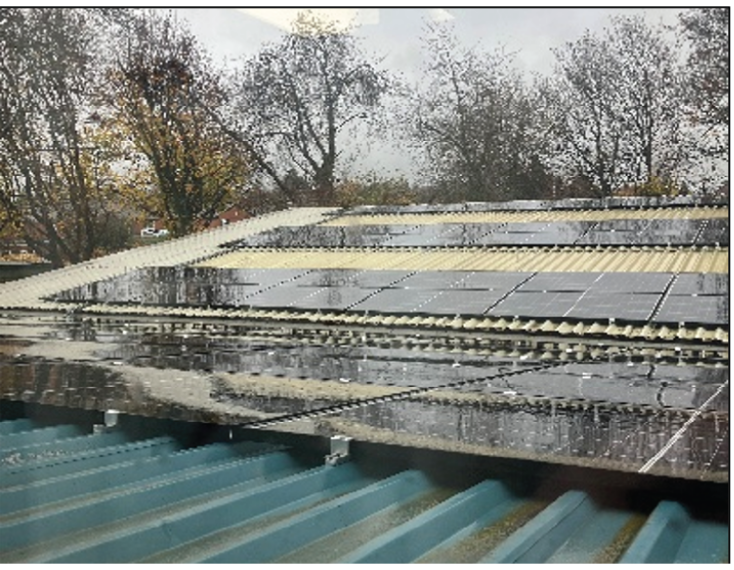
Photo provided to Ecorys with permission from the organisation.
Representatives from another organisation also highlighted that due to the volume of solar panels producing surplus electricity, battery storage or local community energy options could better harness this to power electricity-intensive services such as the centre’s PCs, strengthen resilience and create clearer savings for reinvestment. Upgraded technology enabled the organisation to monitor electricity production through an app 24/7, providing additional control over solar panel performance throughout its lifespan. This can feed into financial planning, building additional financial resilience (see section 4.2 below for details) through smoother, more predictable funding streams to support ongoing service delivery and cover for overheads.
Figure 18: An example of an app-based dashboard used to track solar panel electricity generation
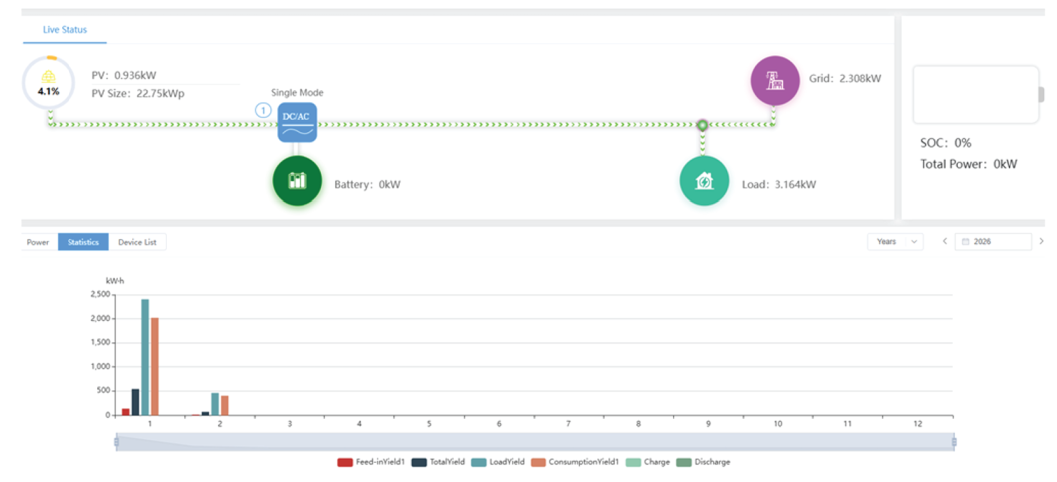
Figure 18: An example of an app-based dashboard used to track solar panel electricity generation
A screenshot was provided with the organisation’s permission to demonstrate solar electricity generation performance tracking.
As shown in the above screenshot, the application provides data on solar panel performance “live” with historical data trends to highlight peak periods of electricity generation.
4.0 Impact evaluation: medium-to longer-term outcomes
This chapter assesses achievement against the medium- to longer-term outcomes specified in the ToC for the EES. At this stage, early evidence is emerging that signals the potential achievement of these outcomes. The chapter draws on evidence gathered through the case studies (interviews with strategic and delivery VCSE stakeholders and beneficiaries), the EES capital implementers survey, the unsuccessful capital grant applicant survey, and MI data analysis as of the end of November 2025, alongside an impact analysis using Bayesian Process Tracing[footnote 39] (BPT). These sources have been triangulated to inform the insights in this chapter. It should be noted that, at the time of reporting, the majority of these outcomes were still being realised and/or were expected to be realised beyond the funding period.
Key Findings
Overall, some positive indications have emerged that the EES is on track to achieve some of its intended outcomes (as reflected in the scheme ToC) across the medium-to longer-term horizon.
Financial resilience:
There are strong early signals of financial strengthening, driven by lower energy costs, though it is too early for definitive evidence of long‑term resilience outcomes.
Reserves: There is moderate evidence that the EES has reduced reliance on reserves for energy costs. Capital implementers are more likely to maintain or stabilise reserves than non‑grantees. There are indications that short‑term savings are being prioritised for service delivery over reserve rebuilding, although capital measure installations are expected to support both reserve rebuilding and services beyond the funding period, as noted by several organisational representatives across the case studies.
Financial runway[footnote 40]: Case study evidence suggests the EES has helped organisations improve their cashflow positions and subsequently avoid reductions in service delivery.
Maintaining service delivery:
Analysis indicated a very high likelihood that the EES supported, maintained, or increased service delivery based on the BPT impact results. These BPT results were driven by stronger evidence of energy bill savings compared to estimates derived at the interim evaluation stage. Evidence shows that savings have been redirected to frontline activities. In particular, there is good evidence that improved financial flexibility has enabled sustained access for vulnerable users.
Building/working conditions: There is strong evidence that EES installations have led to warmer, brighter, and more comfortable buildings, alongside indications of improved staff and volunteer wellbeing, morale, and retention. Capital implementers also noted that reduced reliance on temporary heating has helped to improve safety and working environments.
Aesthetics: Some VCSE representatives reported that buildings felt more welcoming and better maintained. In a few cases, visual upgrades lifted morale and organisational pride. Minor negative aesthetic impacts were noted for some technologies, but this was relatively rare.
Wider/unexpected outcomes: Visible upgrades were sometimes reported as encouraging beneficiaries to re-engage with services, while VCSE representatives observed beneficiaries spending longer at the premises, leading to increased social interaction and informal peer support. The capital measures implemented also helped some VCSEs build a sustainability profile (adopting greener technologies), helping to unlock green funding and education opportunities.
At the time of the interim evaluation, medium- to longer-term outcomes were still emerging. Capital grantholders commonly expected future financial resilience gains, with lower energy bills helping to stabilise or build reserves. Many also anticipated improved service delivery, such as keeping premises open for longer, as efficiency upgrades reduced operational constraints. Although evidence of broader workplace or environmental impacts was limited, some organisations reported early improvements in thermal comfort following installations. Overall, while the causal contribution of the EES to energy usage and bill reductions could not be confirmed, early signals suggested the scheme was on track to achieve its intended impacts as installations became fully operational.
4.1 Context for the analysis
The EES is expected to lead to improvements in VCSEs’ financial resilience (reducing reliance on financial reserves to fund energy costs), staff and volunteer working conditions, and ability to maintain service delivery, as outlined in the EES Theory of Change (see Annex 2 for details). Most VCSE representatives interviewed offered a positive outlook on the likelihood of achieving such outcomes. It is expected, however, that they will be achieved beyond the funding period; therefore, evidence of actual outcome achievement remains indicative at this point. In this context, a combination of programme stakeholder interviews (DCMS and the IGM), VCSE case studies, survey analysis, and subsequent BPT impact modelling has been undertaken to assess the EES’s likely impact on achieving medium- to longer-term outcomes. The full set of capital grantees had not yet implemented their measures at the time of data collection, so data from 313 of 316 capital grantholders were used to assess impacts.
4.1.1 High-level Impact methodology
An impact analysis of outcomes was conducted using a BPT approach. A high-level step-by-step explanation of the process undertaken is presented below (see Annex 3 for the full technical detail and a worked example).
Figure 19: Bayesian Process Tracing method and example
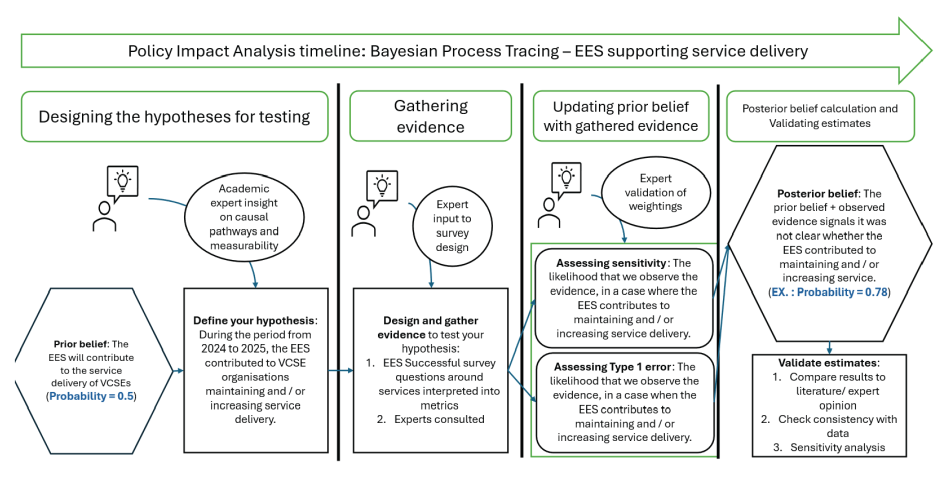
Figure 19: Bayesian Process Tracing method and example
BPT is a statistical technique that provides a systematic and transparent method for evaluating impact[footnote 41]. Drawing on survey data, BPT assesses the plausibility of different explanations for an event by evaluating evidence and updating beliefs using probabilistic reasoning. The approach combines qualitative analysis with Bayesian probability to assess how new evidence strengthens or weakens competing hypotheses, ensuring a transparent and rigorous approach to causal inference. Using the survey results, the process-tracing methodology was employed to assess the overall contribution of EES across two contribution claims[footnote 42]. VCSE survey data were also used to derive key metrics, such as cost-to-income ratios and gross profit, that help codify the impact of EES. As the survey data focused on unique organisations, each organisation can be assigned a likelihood value, which can then be aggregated to present findings as relative proportions across different likelihood ranges (see Box 3 for a summary of how to interpret BPT results).
While BPT provides a structured way to demonstrate the probability of a hypothesis, the results detailed here should not be treated as definitive. Results rely heavily on assumptions about context and on subjective interpretations of evidence. Small changes to these factors can lead to substantially different probability estimates. BPT should therefore be viewed primarily as a method for structuring reasoning, since real-world socio-political phenomena are often too complex to be fully captured by the simplified models it requires. The results presented here should be interpreted in the context of the wider underlying data and evidence.
Box 3: Interpreting Bayesian Process Tracing Results
In this analysis, BPT assigns probabilities to two hypotheses for each organisation based on available evidence. The results are then aggregated to show the proportion of organisations where each hypothesis falls within specific probability ranges (in 10% increments).
- High confidence (≥70%): A hypothesis strongly supported by the evidence, indicating a clear explanation for the majority of organisations in this range
- Moderate confidence (30–69%): Some support for a hypothesis, but alternative explanations remain plausible
- Minimal support (<30%): The hypothesis is unlikely given the evidence, and alternative explanations should be prioritised
By examining the distribution of organisations across these probability ranges, we can assess which hypotheses are most supported across cases and where uncertainty remains. In the case of EES, this would translate to a strong contribution of the EES where there is high confidence, and to a weak contribution where there is minimal support.
Process tracing of survey results also found that the EES contributed to organisations maintaining or increasing their service delivery. Details of the process tracing results can be seen in Box 10 in Annex 3.
4.2 Financial resilience
Financial resilience for non-profit organisations (VCSEs) differs slightly from that of for-profit organisations. The aim of VCSEs is generally to cover operational costs, deliver critical services, and build reserves for long-term sustainability. Common goals include diversifying income streams (grants, donations, earned income), increasing donor retention, launching campaigns, and achieving specific fundraising targets to support community impact. Financial resilience for VCSEs, therefore, focuses on building unrestricted cash reserves to support the organisation during periods of lower-than-expected revenue. This section reviews the evidence collected on current and expected reserve strengthening for capital implementers, resulting from reduced energy costs via the EES measures. Overall, the evidence is mixed in terms of longer-term sustainability of finances; however, strong evidence points towards short-term financial strengthening, and this provides a good signal for future financial prospects.
Programme stakeholders were broadly in agreement that it was likely too early for capital implementers to have fully experienced improved financial resilience outcomes. Future gains were expected, but the evidence remained incomplete at the time of interviews. Interviewees anticipated stronger cash flow positions post the winter period, with more significant savings being expected to emerge given the higher energy demand over this period. They also anticipated, in some cases, that this reduced energy spending would enable re-direction of resources to services in the relatively near-term.
4.2.1 Financial resilience: BPT Impact analysis
A high likelihood of financial resilience, driven by short-term energy bill savings
Alongside overall positive financial trends observed with EES funding, primarily from survey data, the process tracing presents strong evidence that EES has contributed to the financial resilience of VCSEs.
Box 4:Process tracing results for the likelihood of EES contributing to organisations lowering organisations energy bills and energy usage.[footnote 43]
When examining the impact on financial resilience, for the majority of the EES capital grantees there is evidence that EES made a strong contribution to their financial resilience by reducing energy bills and energy usage:
- 72 VCSE organisations (71%) had a greater than 60% chance that EES contributed to maintaining financial resilience by lowering organisations’ energy bills and energy usage
- 77 VCSE organisations (76%) had a greater than 40% chance that EES contributed to maintaining financial resilience by lowering organisations’ energy bills and energy usage
- 83 VCSE organisations (82%) had a greater than 20% chance that EES contributed to maintaining financial resilience by lowering organisations’ energy bills and energy usage
A full breakdown of these results can be seen in Annex 3
Source: EES capital grant recipient survey, Q12 – Q31; interpreted using Bayesian Process Tracing
4.2.2 Avoided use of reserves for energy costs
There is moderate evidence on the role the EES has played in safeguarding against further reserve depletion across the EES capital implementers. Case study evidence indicates that several implementers prioritised immediate service provision as the primary use of any energy bill savings, over rebuilding depleted reserves. However, several VCSE representatives noted that they had been less reliant on reserves to cover service delivery costs which, in the short term likely supported a more resilient financial position. Several interviewees also noted that rebuilding reserves was a longer-term objective as costs begin to stabilise, particularly after the recent rapid increase in energy prices.
The below example, drawn from one of the VCSE case studies, highlights the easing of financial pressure due to EES capital measure installations. This included a combination of solar panels and LED lighting, significantly reducing energy demand and costs and, subsequently, reducing reliance on reserves to cover monthly energy bills.
Box 5 : Energy bill savings eased pressure on depleting reserves
This organisation provides a food bank for the local community, as well as other activities including advice agency drop-ins, sports, community events, health-related support and holistic therapy, gardening, and IT provision. These programmes are specifically designed to strengthen community bonds and provide valuable resources for personal growth and development. They also provide a warm space through the “Warm Space” initiative.
The sustained increase in energy costs over the past couple of years has squeezed the organisation’s current budget and forced them to draw on their reserves for day-to-day service delivery, compromising their future financial resilience. This increased the organisation’s exposure to potential future economic uncertainties and headwinds. A complementary challenge they faced was upgrading the centre to more energy-efficient technologies, improving its sustainability and helping address these issues. VCSE representatives commented that they would not have been able to afford all the measures to be installed at once without the EES grant.
The capital measures (solar panels and LED lights) have made a ‘huge difference’ to monthly electricity costs, with an average monthly reduction of 35%. Staff reflected on how they now felt more financially comfortable to give volunteers the equipment they needed, as they had more savings and were less reliant on their reserves, e.g., if the gardener needed any gardening equipment.
Beneficiaries had not noticed any major difference in service delivery; however, delivery staff and strategic staff noted that cost savings would help to support the food bank by balancing the rising cost of food, support the delivery of activities, and save their reserves. It is expected that further cost savings will be made in the longer term, especially as they can also sell surplus energy back to the national grid.
Box 5 : Energy bill savings eased pressure on depleting reserves
Photo provided with permission from the organisation.
Survey evidence highlights differences between capital implementers and unsuccessful capital grantee respondents regarding reserves. Figure 20 below compares the reported use of reserves by capital implementers and unsuccessful capital grant applicants: 53% of capital implementers reported that their reserves had either stayed the same (maintained) or increased, compared to 45% for unsuccessful grant applicants. Around one in 5 (21%) of unsuccessful capital grant applicants reported a significant fall in reserves compared to capital implementers (11%). While the reasons for this are unclear, it suggests that the EES may have limited the number of implementers who needed to use reserves to cover energy costs, although other factors can also influence reserve levels beyond energy costs.
Figure 20: Thinking about October 2025 in comparison to October 2024, would you say that your organisation’s reserves…
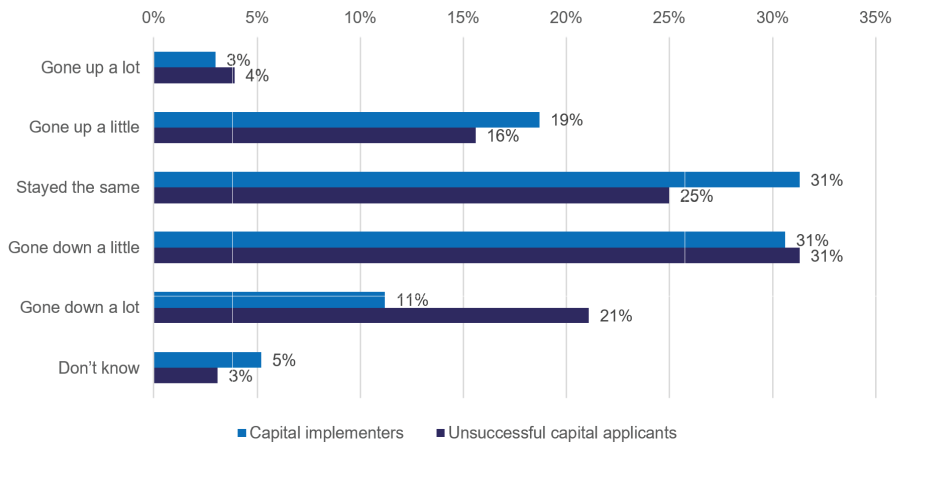
Figure 20: Thinking about October 2025 in comparison to October 2024, would you say that your organisation’s reserves
Source: Ecorys Capital Implementers Survey,Q21(c), (n = 134), Unsuccessful Capital Grant Applicant Survey, Q9(c), (n = 128). Percentages may not sum to 100 due to rounding.
4.2.3 Financial runway
Financial runway is an estimate of the amount of time, usually measured in months, that an organisation can continue operating before exhausting its cash reserves, assuming current income and expenses. Findings from one case study highlighted that the EES directly contributed to an improved financial runway, helping the organisation concerned avoid potential closure of their service, as illustrated below.
Box 6: The EES is supporting additional financial runway and avoided reduction/closure of services
The organisation in this example provides warm-water therapy for people with a wide range of disabilities and health conditions. The site operates for around 70 hours per week and includes a main pool building, dating from 1979, with extensions added in the 1980s and in 2000. The pool is run by a small VCSE organisation operating in a challenging financial environment, reliant on user fees, charitable grants, and support from local VCSE infrastructure bodies. Prior to energy efficiency upgrades, the building’s outdated insulation and high heat loss left the organisation financially unsustainable. This threatened the continuity of a service for which there are no comparable alternatives.
The EES capital grant significantly strengthened the pool’s financial resilience by reducing high energy costs and enabling the organisation to stabilise and rebuild its reserves. Although the funding did not expand services, it allowed the charity to maintain current provision, avoid further price increases for vulnerable users and redirect savings toward essential equipment and planned future upgrades. Reserves increased from around £60,000 to roughly £90,000, moving the organisation closer to its six‑month target and supporting long‑term sustainability. Interviewees agreed that without the EES grant, the pool would likely have faced severe cutbacks or closure, as they could not have absorbed escalating costs or funded replacement equipment from reserves alone.
Before it all happened, our reserves were running at about £60,000… the pool costs about £20,000 a month to run, so £60,000 is about three months… We’re up to about £90,000 at the moment, and what I hope will happen is that once we get to about six months’ reserves, we can start buying new bits of kit
– VCSE representative
4.3 Maintaining service delivery
Maintaining service delivery covers benefits accruing to VCSE staff and volunteers as well as beneficiaries accessing service provision. This section explores how the EES capital measures have benefited staff and volunteers through improved working conditions and whether energy bill savings have been redirected to support improvements, alongside maintaining the quantity and quality of service provision for beneficiaries. There is a strong likelihood that the EES-supported VCSEs implemented capital measures to maintain service delivery. This is through a combination of staff, volunteers and service users experiencing warmer buildings, improved working conditions and, in some cases, a more aesthetically pleasing building.
The process tracing confirmed that for many organisations, it was likely that EES contributed to them being able to maintain or increase service delivery. As shown below, most organisations had a very high likelihood that this was true.
Box 7 : Process tracing results for the likelihood of maintaining and/or increasing service delivery of VCSEs[footnote 44]
-
The results of the process tracing analysis indicate that it is very likely, for most VCSE organisations, that the EES contributed to their maintaining and/or increasing service delivery. Specifically:
-
68 grant holders (80%) had a greater than 90% chance that EES contributed to them maintaining and/or increasing service delivery.
-
85 grant holders (100%) had a greater than 80% chance that EES contributed to them maintaining and/or increasing service delivery.
A full breakdown of these results can be seen in Annex 3
Source: EES capital grant recipient survey, Q12 – Q31; interpreted using Bayesian Process Tracing
The above findings show, across nearly all organisations, a strong likelihood that the EES played a meaningful role in maintaining or increasing service delivery. The BPT analysis shows that service delivery was aided by the EES. The confidence implied by these probabilities aligns with the qualitative evidence from VCSE representatives, who described how the financial flexibility from EES-funded improvements enabled them to redirect resources into frontline activities. Taken together, statistical evidence and case study insights reinforce the conclusion that EES materially supported the maintenance of service delivery across the organisations benefitting from grants.
VCSE representatives across several case studies highlighted that early cost savings were redeployed towards frontline activities such as food provision, community events, purchasing equipment for volunteers (e.g., gardening tools), and enabling their organisations to maintain subsidised meal services, protecting access for low-income residents, for example. One case study interviewee also mentioned that ‘micro-budgets’ were freed up to support additional communications and subsequent volunteer appreciation, boosting morale and supporting volunteer retention.
4.3.1 Building and working conditions: warmth and comfort
Building/working condition improvements are among the expected outcomes for VCSEs that installed EES energy efficiency measures, improving the quality of their buildings for frontline service delivery. This subsection is split into key themes emerging from the evaluation, including building warmth and comfort and the building’s overall aesthetic appeal.
Staff and volunteer potential health and wellbeing gains
Several VCSE strategic and delivery staff and volunteers highlighted that the capital installations that supported improvements in heat retention (such as insulation or window glazing) subsequently led to physical and mental health benefits. Warmer buildings supported a more comfortable environment for staff and volunteers. In some specific cases, capital implementer representatives reported that measures helped reduce sickness rates among staff and volunteers, as a reduction in cold conditions marginally improved rota reliability, with the workforce more willing to work from the buildings. Comfort gains were likewise cited as having improved volunteer retention and punctuality for early/late shifts in some cases. One VCSE representative commented that there had been fewer temperature complaints from participants, reducing interpersonal stress on front-of-house roles and improving overall morale within the centre.
An indirect health impact reported by some VCSE representatives related to a reduced need for portable heaters; this was noted as leading to less heavy lifting – lowering minor injury risk and fatigue – and less noise pollution from noisy heaters, helping to improve the environment for sensitive conversations. Programme stakeholders had heard from capital implementers that improvements in comfortable environments had a positive effect on wellbeing and service delivery. Warmer, brighter buildings improved morale and created better working conditions.
LED lighting was noted across several VCSEs as brightening indoor spaces, reducing eye strain, and improving evening safety during setup and close-down. Brighter rooms were cited as improving staff mood and ‘task focus’, especially in the winter months.
Survey evidence found improved building comfort for EES capital implementers. Figure 21 below shows that 95% of respondents from implementing organisations felt that the EES capital measures had at least a little positive impact on improving the building’s comfort. A majority (70%) said the measures had a very positive impact on the comfort of the working environment.
Figure 21: In your opinion, how would you rate the impact that the EES energy efficiency measure has had on these aspects of your organisation’s working environment (comfort)
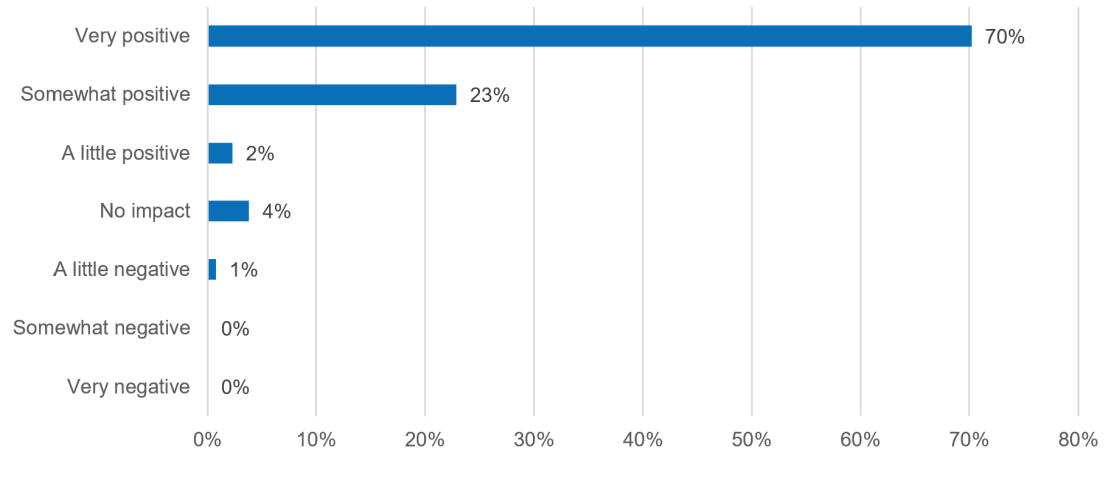
Figure 21: In your opinion, how would you rate the impact that the EES energy efficiency measure has had on these aspects of your organisation’s working environment (comfort)
Source: Ecorys Capital Implementers Survey, Q21(c), (n = 131). Percentages may not sum to 100 due to rounding.
Building comfort supported volunteer retention/uptake
Across programme stakeholder interviews and VCSE case studies, several cases showed that improved working conditions were directly correlated with volunteer retention or increased participation. Across some VCSEs, representatives explained that improved building comfort helped retain experienced support workers, reducing retraining burden. Staff reported greater workplace pride, which aided recruitment messaging. One VCSE representative additionally noted that reduced condensation and damp lowered routine cleaning and mitigation requirements, freeing up more time for service-user support. The improved building condition became a positive factor in the overall messaging for staff and volunteer recruitment in this case.
A specific case in which building comfort and warmth supported staff, volunteers, and beneficiaries is presented below in Box 8. The warmer building encouraged volunteers to stay longer on shift, and they did so voluntarily, given the improved conditions.
Box 8: EES supported additional financial runway and avoided reduction of services
The organisation in this example is a long‑established housing provider that serves residents by providing a wide range of social, health and wellbeing activities (such as youth engagement activities or weekly community meal provision). Prior to the EES capital grant, the centre faced severe operational risks: its heating system was failing, and the building was cold, damp, and increasingly unsafe. Services, particularly for more vulnerable members of the community (children and older people), were being cut back during the winter.
… people were just sitting in jumpers and coats and things like that…So it’s not necessarily a welcoming environment.
– VCSE representative
The new heating system was seen as having had a ‘transformative impact’. It stabilised the building, eliminated damp and mould, and created a warm, welcoming environment that allowed the organisation to restore previously dropped services, extend opening hours from 9 am until late, and support significantly higher numbers of users in winter. Service users now stay longer, and activities such as chair yoga, youth work and exercise classes have expanded due to improved temperature control. The comfortable environment was recognised as improving staff and volunteer wellbeing, increasing volunteer retention and attracting new partner services to deliver from the centre.
We’re getting a lot more engagement, numbers have gone up … I think in winter now, people aren’t staying away because they know they’ve got somewhere warm to come to.
– VCSE representative
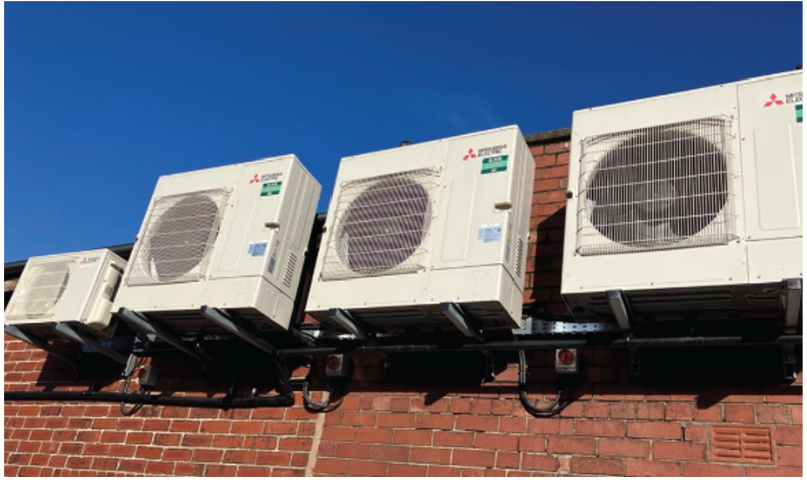
Box 8: EES supported additional financial runway and avoided reduction of services
Photo taken by Ecorys with the organisation’s permission.
Beneficiaries, in the main, did not notice changes in building comfort
Beneficiaries, in the main, did not often mention improved experiences relating to changes in building conditions, although some observed that services remained open for longer or provided enhanced provision. In the small number of cases where beneficiaries reported noticing changes in building comfort, improved temperature and climate control were the main changes cited. These changes in building warmth and comfort encouraged beneficiaries to use the building for more than just short periods, including over winter, when buildings were previously unsuitable for use due to health concerns. Beneficiaries were able to make better use of spaces for socialising, helping foster a community environment and a hub for social activity.
There was a big risk, if they’re coming here, because if they’ve got warmth at home and they’re coming here to a freezing cold place and they spend hours here, they’ll spend a good like 4, 5, 6 hours sometimes a day … it can affect their health … In the worst-case scenario, they could have got pneumonia.
– VCSE representative
because it was uncomfortable to be in … people would come to the class, they wouldn’t linger around, whereas now you’ve got people sitting in the café all day… we’ve had a lot of increased engagement, and we’ve also just had people wanting to just be in the building more, whereas they wouldn’t want to.
– VCSE representative
An example of where the benefits of a warmer, more comfortable building, sustained beyond the funding period, is presented in Box 9 below:
Box 9: A village hall’s improved warmth and comfort experienced beyond the funding period
The organisation in this example is the only public building in a small former mining community in the rural northeast, serving a population of around 300–400 residents. As the village transitions from an ageing mining population to younger, commuting families, the hall remains the core community hub. It provides weekly low-cost meals through Warm Spaces, monthly breakfasts and evening socials, and acts as a base for Autism North East, alongside classes, charity activities, and wider community events.
Through the EES capital grant, the hall implemented essential energy-efficiency measures – most notably underfloor insulation and destratification fans – to address escalating energy costs that had previously threatened their ability to remain open all week. These works complemented solar panels secured from another fund, forming part of a broader effort to stabilise running costs and keep the building warm, safe, and functional for community use.
The energy‑efficiency improvements have supported this by helping keep the hall warmer and more comfortable, enabling continued delivery of food services, gatherings, and regular classes. Beneficiaries described the hall as a vital social hub in a village with no pub or alternative meeting space, and some individuals, such as one disabled resident, depend on it to get out of the house and stay connected. While the hall is in better condition than it was 15 years ago, the organisation still faces high energy costs, and has had to increase meal prices several times, making access harder for those who need it most.
Capital implementers surveyed were also expecting that the EES would support and facilitate existing beneficiary retention. As Figure 22 below shows, over half (51%) were very positive that they would maintain beneficiary numbers, and a majority (86%) expected the EES capital measures to have at least a little positive impact on maintaining beneficiary numbers. No respondent claimed that the measures would have any negative impact on maintaining beneficiary numbers.
Figure 22: In your opinion, how would you rate the impact that the EES energy efficiency measure(s) have had on your organisation’s service delivery in maintaining the number of beneficiaries supported?
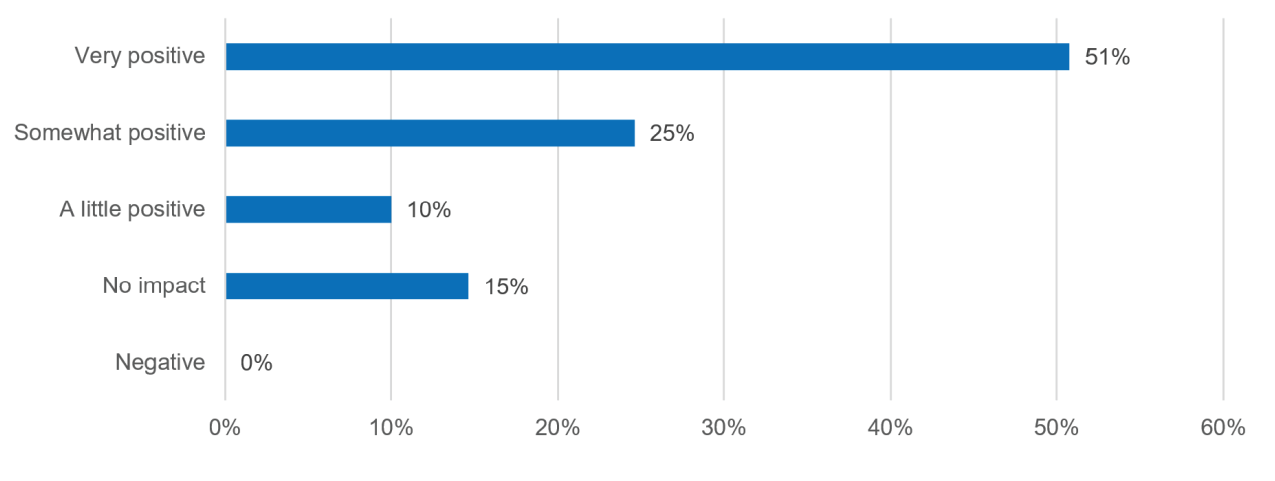
Figure 22: In your opinion, how would you rate the impact that the EES energy efficiency measure(s) have had on your organisation’s service delivery in maintaining the number of beneficiaries supported?
Source: Ecorys Capital Implementers Survey, Q23, (n = 130). Percentages may not sum to 100 due to rounding.
4.3.2 Building aesthetics
The IGM reported anecdotal observations from capital implementers that there are some early signs that buildings feel more welcoming and pleasant for community use. Some case study participants likewise noted that some measures had helped lift staff morale, as visible upgrades reinforced a sense of organisational care and investment. More broadly, one VCSE representative noted that graffiti and vandalism had fallen as the building became better maintained and more respected locally. The centre’s improved look and feel encouraged partner co-location on specific days, and an enhanced civic presence led to invitations to local strategy forums. However, these discussions were about only a limited number of cases where measures have added to aesthetic appeal in this sense.
Capital implementer survey respondents provided a stronger sense that the capital measure aesthetic appeal has supported an improved working environment. 81% of respondents noted at least a little positive impact on the aesthetics of their working environment from implemented measures. Interestingly, 2% of respondents noted a slight negative impact on the working environment aesthetic. This may be unsurprising given that, to some, capital installations such as destratification fans, heat pumps or solar panels may be considered aesthetically unpleasing.
Figure 23: In your opinion, how would you rate the impact that the EES energy efficiency measure has had on these aspects of your organisation’s working environment (aesthetic)
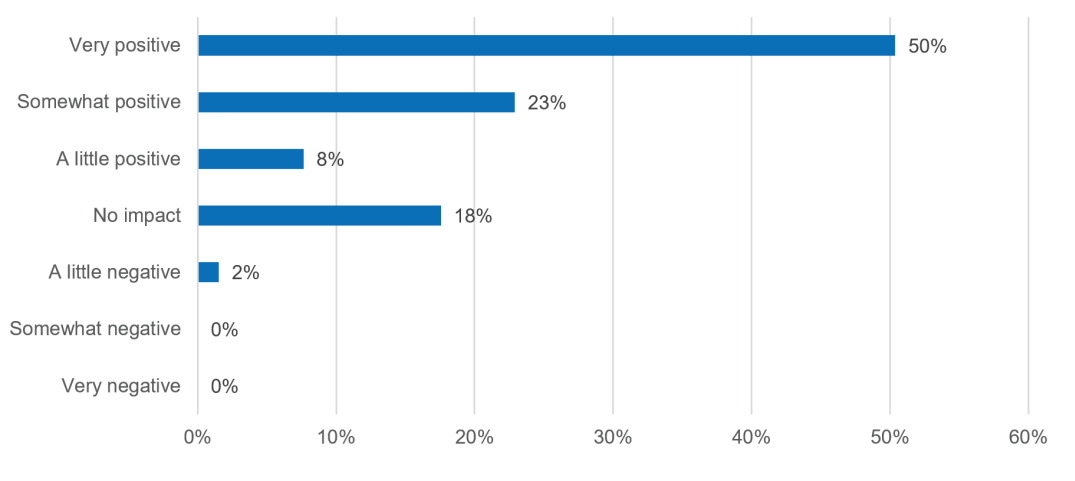
Figure 23: In your opinion, how would you rate the impact that the EES energy efficiency measure has had on these aspects of your organisation’s working environment (aesthetic)
Source: Ecorys Capital Implementers Survey, Q26 (n = 131). Percentages may not sum to 100 due to rounding.
Linked to the working environment aesthetic is also the quality (such as cleanliness, facilities, and overall condition) of the building, following installation. Figure 24 below shows a strong positive sentiment towards the impact of the EES on overall working environment, with 84% of respondents feeling that the EES capital measures had a positive impact. No survey respondent felt that the measures had a negative impact on the working environment.
Figure 24: In your opinion, how would you rate the impact that the EES energy efficiency measure has had on these aspects of your organisation’s working environment (quality)
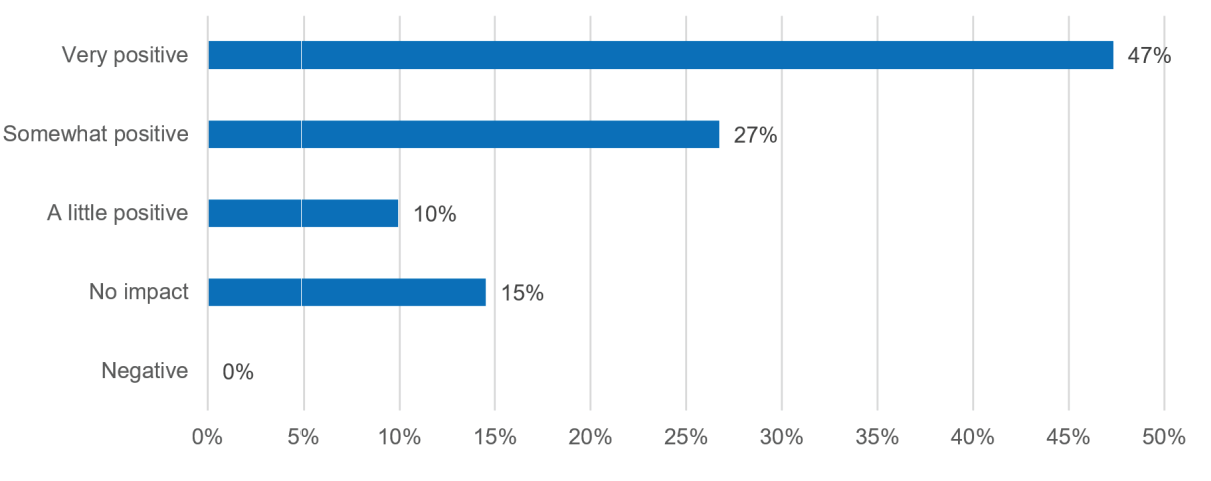
Figure 24: In your opinion, how would you rate the impact that the EES energy efficiency measure has had on these aspects of your organisation’s working environment (quality)
Source: Ecorys Capital Implementers Survey,Q26, (n = 129), Percentages may not sum to 100 due to rounding.
4.4 Wider/unexpected outcomes
Across the VCSE case studies, broader outcomes were observed as a result of EES capital grant measures. Some of the outcomes noted below existed only in a minority of cases, such as:
- Returning beneficiaries: Visible upgrades increased the local community trust, bringing lapsed beneficiaries back to regular sessions
- Increased socialising: Longer dwell time after community meals fostered informal peer support networks. One organisation noted a small uptick in intergenerational activities as families stayed in the building longer to socialise
- Green or health-related grant funding opportunities: The sustainability profile helped unlock small local grants and donations earmarked for “green” initiatives and health-related funding opportunities. Volunteers with technical interests engaged in simple energy monitoring, building internal capability
- Environmental education opportunity: Energy messaging created educational opportunities with youth programmes on climate and costs
5.0 Economic evaluation
This chapter presents the economic evaluation of the EES, assessing overall value for money (VfM) using the National Audit Office (NAO) 4E’s framework. At the time of reporting, the full impact of capital installations had not yet been realised, with three VCSEs yet to install measures. The monetised benefits were projected based on high-level secondary and primary data collection, which introduces some uncertainty in the cost-benefit analysis results.
Key Findings
Overall Value for Money: The overall assessment concluded that the EES is likely to have generated good value for money.
Economy: Costs were largely minimised despite tight delivery timelines, variable application quality, and limited energy‑efficiency expertise among DCMS and the sector more broadly. Total direct costs are expected to reach £24.0m, broadly in line with the Full Business Case forecast, with lower‑than‑expected capital expenditure reflecting underspend, contingencies not drawn down, and timing effects rather than cost overruns. Mitigating actions, such as competitive procurement, phased and rolling application deadlines, flexible grant drawdowns, and the introduction of the EnergySharp helpline, helped manage delivery pressures and protect value for money.
Efficiency: Outputs were largely maximised, with delivery broadly aligning with expectations set out in the Full Business Case, albeit with some shifts in capital grant allocations. While IEAs were delivered towards the lower end of expectations, a small number (16 out of 1147 energy audits) of lower quality audits led to some reassessment costs. Capital grants were larger on average than anticipated (£63k versus £46k), driven by higher-than-expected installation costs, contingencies, and inflationary pressures. Overall, these variations reflect adaptive delivery responses rather than inefficiencies, with grant allocations remaining broadly consistent with programme objectives.
Effectiveness: The scheme demonstrated consistently positive net economic benefits across all scenarios, with 10‑year Social Net Present Value (SNPV) of between £8.7m–£25.2m and Benefit Cost Ratio (BCR)s of between 1.38–2.06, confirming benefits exceed costs even under conservative assumptions. Over a 30‑year horizon, benefits strengthen substantially (SNPV £32.7m–£74.6m; BCR 2.41–4.14), reflecting the cumulative nature of impacts from largely upfront costs. Overall, the appraisal demonstrates good value for money and a strong economic rationale for investment.
Equity: The distribution of capital grants across regions, service types, organisational sizes, and other factors was broadly equal, indicating equitable distribution of grant funding.
Unexpected costs: Additional installation‑stage costs incurred by VCSEs were estimated at between £0.6m and £1.2m when weighted and projected to the full cohort of capital implementers. Structural works accounted for the largest proportion of additional installation costs. Unforeseen building‑related requirements were found to be a key cost pressure affecting a minority of organisations during delivery.
5.1 Overall value for money
Overall, the EES provided strong signals that it represented good value-for-money.
A full value-for-money assessment of the EES was not possible as it is too early for medium- to longer-term benefits to have fed through to VCSEs. At the time of reporting, most VCSEs had only recently (within the last few months) completed their capital measure installations, and capital measures at three organisations were still being implemented. Cost-benefit analysis drew on expectations through survey responses, MI data, VCSE case studies and programme stakeholder views. The assessment below provides an indicative view of the evidence collated to date, adopting the NAO 4E’s approach.[footnote 45]
5.1.1 Introduction: economic evaluation
- The overarching assessment follows the NAO 4E’s methodology. This approach holistically assesses the evidence collected across various stages of the ToC, from inputs (“Economy”) through to outputs (“Efficiency”) and outcomes (“Effectiveness”) and provides a wider view of how “Equitable” the scheme has been, producing overall reflections on value for money. Costs include direct costs (grant funding, resource expenditure and evaluation) and indirect costs (capital implementer installation costs). These have been compared to monetised benefits (financial resilience, maintaining service delivery, and environmental)
5.2 The EES 4E’s VfM assessment
5.2.1 Economy
In line with the interim evaluation, the “Economy” assessment finds that costs were minimised, despite tight timelines and a lack of energy-efficiency expertise among the DCMS programme delivery team. The insights from the previous evaluation still hold and are briefly outlined below:
- Changes in budgetary lines were needed to ensure the efficient delivery of the EES
- DCMS support required for the design and implementation of the EES was greater than initially anticipated
- The mixed quality of IEA and capital grant applications required additional reviews and resources
- Applications were being assessed alongside ongoing EES delivery, resulting in a large overall volume of work for the IGM consortium
- Repurposed underspend (to develop and deliver the “EnergySharp” helpline) helped to improve the quality of capital applications
- Including the requirement for applicants to provide supplier quotes[footnote 46] helped to ensure a competitive price
- In addition to the key findings described above, capital grant-specific inputs have also been minimised to a sufficient extent, given the time and expertise constraints for programme stakeholders and VCSEs
At the time of current reporting, the total direct costs are very likely to reach £24.0m, which includes (DCMS staff, capital (grant funding), resource spending (e.g., IGM salaries, supplies, marketing, etc.), administrative and evaluation costs). As Table 3 below indicates, programme-level costs were broadly in line with the budget forecast from the EES Full Business Case (FBC). The key differential in the cost profile is the less-than-expected capital expenditure (i.e., £18.4m compared to £20.0m budgeted). DCMS have distributed a total of £18.8m to Groundwork UK for capital grants. The £0.5m underspend will be returned to HM Treasury. The total approved grant application value was £20.9m. The total grant award fell to £19.7m according to the MI data. These discrepancies are due to several reasons:
-
VCSEs’ unused 5% contingency budget line included by Groundwork UK. In response to experiences early on in the capital programme, where contractor quotes for some beneficiaries significantly increased in the time between submitting their application and having their funding confirmed, Groundwork UK implemented a 5% contingency budget line for all future grants. Across all capital grants, the total contingency budget award was approximately 4% (£0.8m); however, the total contingency budget spend was around 2% (£0.5m).
-
The discrepancy between the final award amount total £18.4m and £19.7m arises from not accounting for returned budgets (e.g., unused contingency funding) for specific budget lines on the grant management system.
Table 3[footnote 47]: Cost comparison of the proposed budget[footnote 48] and actual direct costs in £m
| Category | Spend Type | FY23/24 | FY24/25 | FY25/26 | TOTAL | |
|---|---|---|---|---|---|---|
| EES FBC proposed budget outlines | Energy Efficiency Scheme | CDEL RDEL[footnote 49] Admin[footnote 50] |
£0 £1.1 £0.6 |
£20.0 £2.3 £1.1 |
£0 £0 £0 |
£20.0 £3.4 £1.7 |
| Evaluation & Assurance | RDEL | £0.1 | £0.3 | £0 | £0.4 | |
| Total | £1.8 | £23.7 | £0 | £25.5 | ||
| EES actual spend | Energy Efficiency Scheme | CDEL RDEL Admin |
£0 £0.8 £0.4 |
£18.4 £2.2 £1.1 |
£0 £0.3 £0.3 |
£18.4 £3.3 £1.7 |
| Evaluation | RDEL | £0.05 | £0.4 | £0.1 | £0.6 | |
| Total | £1.2 | £22.1 | £0.7 | £24.0 |
Sources: DCMS cost data share and EES Full Business Case, Management Information Groundwork UK, Ecorys, N.B. Totals may not sum due to rounding
Despite the programme’s direct costs extending into FY25/26, costs have been minimised, with budgets closely monitored to keep funding allocations on track – in line with the constantly changing, fast-paced grant distribution requirements. The shift of spending across financial years was necessary for capital grantees to complete capital installations and ensure works were not left incomplete, thereby avoiding the disbenefit of buildings being rendered “out of service”. This would have negatively impacted social value creation by reducing or making frontline service delivery inaccessible.
Process evaluation insights in chapter 2 above also provide additional insights informing the “Economy” assessment, these are:
- capital grant final deadline day application influx – Despite the large influx of applications, the multi-disciplinary skills across the IGM managed to effectively assess all applications that went to the panel
- capital grant application quality improvement due to implementing a rolling deadline
- flexibility in grant distribution – allowed the IGM to adapt to a fast-changing VCSE demands for capital measures under tight timelines for delivery
5.2.2 Efficiency
In line with the previous evaluation, the “Efficiency” assessment finds that outputs were very likely maximised from the EES. The main additional insight in this assessment is the focus on capital grant allocations, which have been compared to the expected spread outlined in the EES Full Business Case (FBC). The insights from the interim evaluation still hold and are briefly outlined below:
- IEAs delivered within expectations, although closer to the lower end of FBC expectations
- Reassessments of a small number of low-quality energy audits suggest potential minor inefficiencies
Slightly larger capital grant allocations than expected
Table 4 below compares the grant allocation across grant value ‘brackets’ as presented in the DCMS FBC. It is noted that at the time of the FBC’s development, the distribution of grant allocations was subject to a high degree of uncertainty in its estimation. This was calculated to provide an indicative profile of grant sizes and distribution of grant funding. The actual weighted-average grant value was £63,000 (to the nearest thousand), compared with the expected weighted-average value of £46,000. This difference was driven by the significant number of actual grant awards in the largest bracket. A combination of greater-than-expected costs for capital measures and unexpected additional costs associated with capital installations (minor improvement works, structural costs, etc.) – as well as additional 5% contingency allocations – contributed to a larger-than-expected capital grant allocation per VCSE.
The number of grants in the largest bracket, “£100k to £150k”, was over double expectations (73 actual vs 35 expected), and the average grant value in that bracket was also higher than expectations (£133k vs £125k). Overall, despite the larger-than-expected grant allocations, awards were broadly in line with expectations, taking into account the changes in delivery dynamics (contingency funding, supplier quote adjustments, additional unaccounted costs, inflationary impact on capital measure costs, etc.). Relatively, the grant allocations within the middle bandings aligned with expectations; the main differences were at the tail ends (the smallest and largest grant sizes).
Table 4: Grant award value split by grant brackets – comparison of FBC and actual
| Grant value bracket | £2-10K | £10-25K | £25-50K | £50-100K | £100-150K | Total | |
|---|---|---|---|---|---|---|---|
| Estimated grant distribution (FBC) | Average grant size in bracket £(‘000s) | £6 | £18 | £38 | £75 | £125 | £46 |
| Estimated number of awards | 70 | 91 | 121 | 121 | 35 | 438 | |
| Estimated Total Value (£m) | £0.4 | £1.6 | £4.5 | £9.1 | £4.4 | £20.0 | |
| Actual grant award distribution | Average grant size in bracket £(‘000s) | £6 | £17 | £37 | £73 | £133 | £63 |
| Actual number of awards | 22 | 66 | 65 | 87 | 73 | 313 | |
| Total Value (£m) | £0.1 | £1.1 | £2.4 | £6.3 | £9.7 | £19.7 |
Sources: DCMS EES Full Business Case, Management Information Groundwork UK, Ecorys
5.2.3 Effectiveness
This section presents the results from the cost-benefit analysis. Table 6 below shows the 10-year and 30-year Social Net Present Value[footnote 51] (SNPV) and Benefit Cost Ratios[footnote 52] (BCRs) in both the low and high scenarios. The approach to assessing benefits and costs is briefly outlined below:
- Benefits: In the absence of a quantitative counterfactual impact assessment (CIE) (due to data lags in secondary sources making a CIE unfeasible at the time of reporting), a high-level assessment of monetised expected benefits (energy bill savings, staff/ volunteer-staff and service user wellbeing valuation, avoided reserve depletion, and environmental benefits) has been compared to straight-line baseline projections derived from MI, secondary and survey data. Table 5 below presents the sum of the monetised outcomes. For details on the methodology, see Annex 5 below
Table 5: Monetised benefits per outcome, £m
| Low | High | |||
|---|---|---|---|---|
| Outcome monetised | 10-year | 30-year | 10-year | 30-year |
| Energy bill savings | £22.2 | £47.0 | £24.3 | £58.1 |
| Avoided reserve depletion | £10.8 | £18.0 | £10.8 | £19.5 |
| Maintained service delivery: staff | £1.9 | £2.9 | £9.7 | £16.0 |
| Maintained service delivery: service users | £0.9 | £3.0 | £3.8 | £15.1 |
| Environmental | £3.3 | £10.9 | £7.4 | £23.4 |
| Total | £39.1 | £81.9 | £56.0 | £132.1 |
Sources: Ecorys Capital implementers survey, Unsuccessful grant applicant survey, Management Information Groundwork UK, Dr Sam Hampton: Energy Efficiency measure life-span, OBR macroeconomic projections, HMT Green Book and Wellbeing Valuation supplementary guidance.
- Costs: The total direct costs (including grant funding, administrative costs, staffing, assurance, and evaluation costs) have been realised (pending a small amount forecast to the end of FY25/26) at the time of reporting and are included in the estimation. Additional costs from the capital measure installations (structural, contractor, and loss of service delivery – in the main) have been estimated from the survey data responses
- Best practice HMT Green Book methodology: Present values were compared by applying the standard GDP deflators[footnote 53] (to account for inflation) and a discount rate of 3.5%,[footnote 54] as described in the HMT Green Book to total direct costs and monetised expected benefits. Where wellbeing benefits have been monetised, best practice HMT Green Book guidance dictates the application of the health-related discount factor (1.5%)
The intervention demonstrated consistently positive net economic benefits under all assessment horizons and scenarios. Over a 10‑year period, the scheme generates an SNPV ranging from £8.7m to £25.2m (2025 prices), demonstrating that benefits exceed costs even under conservative assumptions. Correspondingly, the 10‑year BCR lies between 1.38 and 2.06, confirming the intervention represents a sound investment, returning between £1.38 and £2.06 for every £1 spent.
When extending the appraisal period to 30 years, the long‑term benefits strengthen substantially – albeit over a more uncertain appraisal period. The 30‑year SNPV is estimated between £32.7m and £74.6m, reflecting the sustained and cumulative nature of the programme’s impacts. The 30‑year BCR, ranging from 2.41 to 4.14, indicates the intervention provides high value for money, with returns rising to £4.14 per £1 invested in the optimistic scenario. The stronger long‑term BCR arises because programme costs are largely upfront, while benefits continue to accrue and scale over time.
Overall, the appraisal provides a clear and compelling economic rationale for investment, with robust returns across all scenarios considered and demonstrates good value for money and cost-effectiveness.
Table 6: Cost-benefit analysis results
| Metric | Low | High |
|---|---|---|
| 10-year SNPV (£m), 2025 prices | £8.7 | £25.2 |
| BCR (10-year) | 1.38 | 2.06 |
| 30-year SNPV (£m), 2025 prices | £32.7 | £74.6 |
| BCR (30-year) | 2.41 | 4.14 |
Sources: Ecorys Capital implementers survey, Unsuccessful grant applicant survey, Management Information Groundwork UK, Dr Sam Hampton: Energy Efficiency measure life-span, OBR macroeconomic projections, HMT Green Book and Wellbeing Valuation supplementary guidance.
Figure 25 charts the SNPV over time, highlighting the breakeven points in both the low (December 2031) and high (January 2030) scenarios. The earliest point at which the costs and benefits EES break-even is within 7 years of the start of the funding period in FY2022/23, whereas in the low scenario, projections indicate break-even within 8 years.
Figure 25: Cumulative SNPV plot £m, 2025 prices
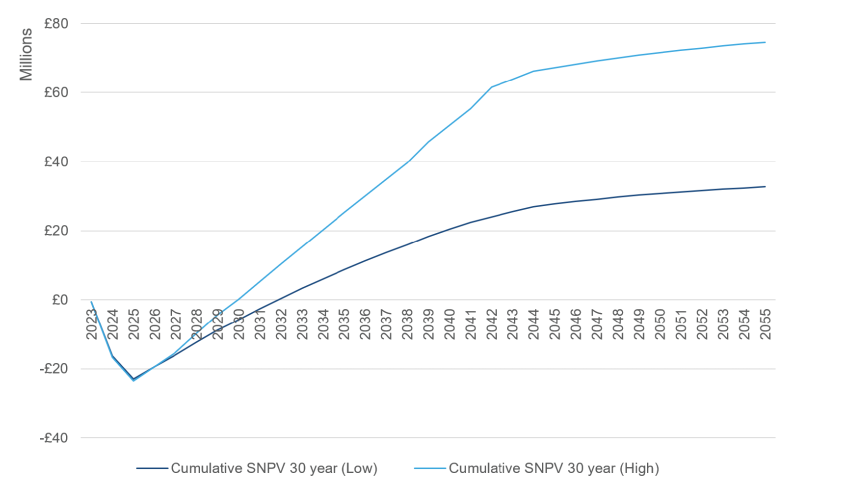
Figure 25: Cumulative SNPV plot £m, 2025 prices
Sources: Ecorys Capital implementers survey, Unsuccessful grant applicant survey, Management Information Groundwork UK, Dr Sam Hampton: Energy Efficiency measure life-span, OBR macroeconomic projections, HMT Green Book and Wellbeing Valuation supplementary guidance.
5.2.4 Equity
In line with the previous evaluation, the “Equity” assessment finds that the distribution of capital grant funding from the EES was equitable. The programme delivered a relatively even distribution of capital grants across regions, service types, organisational sizes, and other factors (as discussed in section 2.5).
5.2.5 Indirect and unexpected costs
Additional costs were estimated through the capital implementers survey, in which VCSEs were asked about costs incurred during the installation of measures. These estimates have been presented in Table 7 below:
Table 7: VCSE costs during installation estimates, £m
| Cost category | Low | High |
|---|---|---|
| Pre-installation remedial works | £0.04 | £0.09 |
| Planning permissions | £0.02 | £0.04 |
| Costs incurred due to reduced productivity | £0.05 | £0.10 |
| Costs incurred due to the disruption of normal activities | £0.06 | £0.14 |
| Cost incurred due to preparatory/supporting work | £0.06 | £0.13 |
| Structural costs | £0.17 | £0.37 |
| Don’t know | £0.01 | £0.02 |
| Other | £0.16 | £0.34 |
| Total | £0.57 | £1.21 |
Source: Ecorys Capital implementers survey, n = 39
- The most notable additional capital installation cost, not covered by the EES, was structural costs. This is unsurprising, given that most of the buildings VCSEs operate from are older than other commercial buildings, or have specific listed or heritage status; additional structural considerations are often therefore needed before capital measures can be installed. Table 7 highlights the low (£0.17m) and high (£0.37m) estimates, which account for about 30% of the additional capital installation costs
- These costs were weighted based on survey responses and projected to the total population. Given that 39 respondents incurred additional costs, out of 134 total respondents to the survey, a 29% initial weighting was applied to the costs. Of the 29%, 7% was due to pre-installation works, for example. This was then projected up to the 316 VCSEs that implemented capital measures. The largest cost category (outside of the ‘other’ category) was structural costs. This was mentioned by several VCSE interview respondents as a significant additional cost across the interim and final evaluations
6.0 Conclusion and recommendations
This section presents the overall conclusions from the evaluation of the EES and provides recommendations for the delivery of future, similar schemes.
6.1 Conclusion
Overall, despite very challenging timescales for implementing and delivering the EES capital grant, and considering the constraints on when funding could be used, the EES has broadly delivered the outputs it set out to achieve.
Process Evaluation: The EES was delivered at pace and, despite compressed timescales and limited initial in‑house expertise within DCMS, achieved broad reach and largely effective outcomes for participating VCSEs. The two‑stage design, combining IEAs and capital grants, was widely regarded as appropriate for organisations with limited technical capacity, while the IGM model, led by Groundwork UK, proved critical to successful delivery. Strong governance, collaborative partnerships within the consortium, flexible grant management, and responsive support mechanisms, such as EnergySharp and capital enablers, underpinned generally positive experiences for VCSEs, high satisfaction with installations, and an equitable geographic distribution of funding. Capital funding aligned closely with IEA recommendations, with most funds directed toward established, scalable measures such as solar PV systems, insulation, lighting, and fabric upgrades – adopting the “fabric first” approach.
However, the evaluation also highlights structural and operational constraints that limited effectiveness for some organisations. Tight design and delivery timelines, inconsistent IEA quality, and the absence of a revenue funding stream created additional burdens, particularly for smaller, volunteer‑led VCSEs and those operating from older, listed, or leased buildings. Application processes, while robust and fair, were often perceived as disproportionate to smaller grant values, while reliance on established networks constrained engagement with less‑connected or minority‑led organisations. Delivery challenges, most notably contractor availability, planning and heritage constraints, and complex installations such as heat pumps, led to delays, rework, and some project withdrawals.
Impact evaluation (Short-term outcomes): The impact evidence indicates that the EES has already delivered clear short‑term benefits, particularly by strengthening VCSEs’ knowledge of energy‑efficient practices and catalysing behavioural change, even among unsuccessful applicants. Survey and case‑study evidence provide credible early signals of falling and more stable energy use, alongside emerging energy bill savings for many organisations, especially those installing solar panels and LED lighting. Although attribution remains cautious and longer‑term impacts are still unfolding, the direction of travel suggests the scheme is on track to deliver its intended short-term outcomes, with early efficiency gains, improved financial predictability, and the potential for future revenue generation increasingly supporting VCSE resilience and service delivery as installations become fully operational.
Impact evaluation (Medium- to longer-term outcomes): The emerging evidence indicates that while most medium‑ to longer‑term outcomes of the EES are still unfolding beyond the funding period, there are strong and credible early signals that the scheme is contributing positively to VCSE financial resilience, maintained service delivery, and improved working conditions. BPT and survey evidence suggest a high likelihood that reductions in energy usage and bills have helped organisations stabilise finances, avoid further depletion of reserves, extend financial runway, and redirect savings toward frontline services, even if full reserve rebuilding remains a longer‑term goal. At the same time, improved building warmth, comfort, and quality have delivered tangible benefits for staff, volunteers and (indirectly) beneficiaries, supporting morale, retention and engagement, while enabling many organisations to sustain or restore services that were previously at risk. The findings suggest that although definitive long‑term impacts cannot yet be confirmed, the EES is already playing a meaningful role in strengthening organisational resilience and safeguarding service delivery. Benefits are expected to consolidate further as all capital measures become fully operational.
Economic evaluation: The economic evidence to date indicates that the EES represents good value for money, with a strong and credible economic case that is expected to strengthen over time. Cost‑benefit analysis shows that the scheme delivers positive net economic benefits across all scenarios, with monetised benefits expected to outweigh programme costs within 7–8 years and to increase (at a decreasing rate) over a 30‑year horizon. Programme costs were broadly in line with forecasts and well managed, despite tight timelines and delivery complexities, while design adaptations, such as EnergySharp and flexible grant management, improved efficiency. Importantly, the appraisal excludes some non‑monetised benefits and reflects conservative assumptions, suggesting that the overall economic return may ultimately be stronger as benefits continue to accrue beyond the scheme period.
6.2 Recommendations
The scheme implementation, delivery and early outcome indications have generated learnings that can be applied to future, similar schemes:
6.2.1 Previous evaluation recommendations
- Using two-stage application/funding processes for newer funding areas
- Pre-application support is likely to be similarly useful for newer funding areas
- Increasing timescales for applications and delivery
- Consortium partnerships for complex projects
- Ringfencing more funding for communications and outreach may be beneficial in future related schemes
6.2.2 Capital grant scheme recommendations
-
Some additional recommendations, specifically for the capital grant element of the scheme, have been identified below:
-
Additional revenue funding to support volunteer-led organisations: Programme stakeholders highlighted that VCSEs with only a few part-time staff, or that are volunteer-led, often lack the capacity and expertise to complete technical capital applications. The repurposed capital budget for the EnergySharp helpline highlighted the importance of additional resource or revenue-related funding to support applicants throughout the entire process (application through to delivery). This could also have supported costs for surveys, professional project management, and similar forms of expenditure.
-
Capital measure interaction synergies: Any application assessment of energy efficiency measures should consider the interactions of capital measures, rather than individual measures and their subsequent benefits. For example, heating upgrades and fabric insulation installations are likely to have additional synergistic impacts on building warmth relative to either measure in isolation. This could then help build a business case for implementing multiple measures targeting specific challenges within individual VCSEs. Individually, these measures may not have appeared as cost-effective
-
Additional time for quote gathering and installations: VCSE representatives noted that the time taken to gather three supplier quotes (a requirement that was later relaxed to two) was quite significant, and future schemes should build in contingencies for these occurrences. A VCSE representative reflected that quote gathering in rural areas with limited contractor availability added additional burden and challenges within tight timelines, a factor that should be considered and mitigated – where possible – in future schemes. The need for additional time for installations was also noted by several VCSE representatives, as building works, once started, can pose additional challenges that weren’t scoped, highlighting considerations relating to implementation timelines and building contingency into these
-
Follow-on support: Most VCSE representatives also noted the need for ongoing monitoring of capital installations or maintenance support to help ensure the maximised benefit of measure installations over the longer term. Regular monitoring of capital installations to ensure they are operating as efficiently as possible should be considered
Annexes
Annex 1: Evaluation framework
Table 8 presents the Evaluation Framework for the study, which operationalises the analytical approach taken by setting out the core evaluation questions, sub-questions and data sources used to answer these. The Evaluation Framework builds on the questions outlined in the Invitation to Tender (ITT). The evaluation team added further questions following discussions with DCMS and Groundwork UK during the scoping phase, to ensure that the EES’s intervention logic could be fully assessed. Through a process of synthesis and triangulation, bringing together evidence and insights from the different sources, the evaluation was able to weigh the evidence and make evaluative judgements against each evaluation question.
Table 8: Evaluation framework (covering the interim and final evaluations)
Process evaluation
| Evaluation question | Sub-question | Data source(s) |
|---|---|---|
| How was the application process implemented? | What was the overall experience with the IEA application process (applicants; IGM; DCMS)? How effective was the IEA application process and why/why not? What support, if any, was received by applicants during the IEA application process? What benefits/ improvements could be made to the IEA application process? How do EES stakeholders describe the experience working alongside each other (applicants; IGM; DCMS)? What was the overall experience of the grant application process (applicants; IGM; DCMS)? How effective was the capital grant application process and why/why not? (including for those that already had a non-EES funded IEA) What support, if any, was received by applicants during the grant application process? What benefits/ improvements could be made to the IEA application process? |
Interviews with DCMS Interviews with Groundwork UK/ consortium (as IGM) VCSE Interviews VCSE case studies Surveys |
| How was the independent energy assessment process implemented? | How well did the process of assigning an independent energy assessor to successful VCSEs work? To what extent were IEAs carried out virtually or in-person? How effective were the IEAs in terms of the quality of the reports, their timeliness, and whether they recommended cost-effective measures? What was the learning from the process of implementing the IEAs? |
Interviews with DCMS Interviews with Groundwork UK/ consortium (as IGM) VCSE Interviews VCSE case studies Surveys |
| How was the capital grant process implemented? | What was VCSEs’ experiences of identifying and securing a provider to install measures? What worked well or less well? (as relevant) How well did the ‘capital enabler’ role work? What was the learning from the process of implementing the capital grants? |
Interviews with Groundwork UK/ consortium (as IGM) VCSE interviews VCSE case studies Surveys |
| What were the characteristics of energy efficiency works recommended by IEAs? | What types of energy efficiency measures were recommended by IEAs? How, if at all, did these vary across different VCSEs? (in terms of service delivery area, building types etc) To what extent were behavioural measures recommended to VCSE organisations? How many measures were recommended? In the absence of the funding for an IEA, how likely is it that VCSEs would have pursued internal or external energy audits or sought energy advice? Would any of the recommended measures have been implemented? |
Interviews with Groundwork UK/ consortium (as IGM) VCSE interviews VCSE case studies Surveys MI data: IEA reports |
| What were the characteristics of energy efficiency works undertaken via this fund? | What types of energy efficiency measures were the capital grants used for or planned to be used for? (e.g. by technology groups (as defined by BEIS Energy Technology list), cost of measures, projected energy savings) How many capital measures were installed or planned to be installed? Was there a ranking system applied to evaluate the most cost-effective measures? To what extent were recommended energy efficiency measures installed or were planned to be installed? What worked well in installing the measures? What worked less well (e.g. delays)? |
Interviews with Groundwork UK/ consortium (as IGM) VCSE interviews Surveys MI data: IEA reports, Capital Applications data, Capital budget data |
| What were the characteristics of grant recipients? (For example, what sub-sectors, sizes and types of organisations received grants?) What were the characteristics of organisations who received an energy assessment only, or a capital grant only? | What were the sub-sectors of grant recipients? What size organisations received grants? What types of organisations received grants? (e.g. legal form/structure) |
Surveys MI data: IEA reports, Capital Applications data, Capital budget data |
| What was the experience of grant applicants (both successful and unsuccessful)? | What did successful grant applicants think worked well or less well with the fund? To what extent did unsuccessful grant applicants receive feedback and signposting? What worked well and less well? |
Interviews with Groundwork UK/ consortium (as IGM) VCSE interviews Surveys |
| What have we learned about energy usage and energy bills, and their relationship to financial resilience, in the VCSE sector? | To what extent is there demand for energy efficiency assessments, and capital works installations, across the VCSE sector? How effective is a scheme such as the EES, in addressing the energy needs of VCSEs? What types of energy efficiency intervention are most useful to VCSEs? |
Interviews with DCMS Interviews with Groundwork UK / consortium (as IGM) VCSE Interviews VCSE case studies |
| What are the transferable lessons for other government funds? | - | Interviews with DCMS Interviews with Groundwork UK / consortium (as IGM) VCSE case studies |
Impact evaluation
| Evaluation question | Sub-question | Data source(s) |
|---|---|---|
| What impact did the fund have on grant holders’ energy usage? | To what extent did VCSEs’ energy consumption reduce? What energy efficiency measures contributed to this most? In the absence of the funding, to what extent would VCSE organisations be able to reduce energy consumption and/or bills? How did VCSEs’ energy bills change, if at all? Where energy usage was maintained, to what extent did energy efficiency interventions lead to better outcomes for VCSEs? (e.g. VCSEs using energy rather than being budget-constrained below the optimum level) To what extent do VCSEs have improved knowledge of energy efficient practices? What impact did the fund have on the energy usage and/or bills of those grant holder organisations that received an independent energy assessment only? |
Interviews with Groundwork UK / consortium (as IGM) VCSE Interviews VCSE case studies Surveys MI data: IEA reports, Capital Applications data, Capital budget data |
| To what extent can reducing grant holders’ energy bills be attributed to the fund? | What impact, if any, did reduced energy bills have on grant holders’ service delivery or productivity? What impact, if any, did reduced energy bills have on grant holders’ financial resilience, including their use of reserves? To what extent were cash reserves used post-energy efficiency adjustments? In the absence of the funding, would changes to energy bills have occurred? If so, what would grant recipients expect to have happened? |
Interviews with Groundwork UK / consortium (as IGM) VCSE Interviews VCSE case studies MI data: IEA reports, Capital Applications data, Capital budget data Surveys |
| What energy efficiency interventions took place as a result of the fund? | What assessment can we make of the likely impact of these interventions, in the aggregate, over a future time period? To what extent would these interventions have been implemented in the absence of the EES? Did EES VCSEs fund any energy efficiency interventions themselves? How and why? How, if at all, did this differ for VCSEs that (1) only had an EES-funded IEA, (2) only had a capital grant, and (3) had both an IEA and a capital works grant funded through the scheme. |
VCSE Interviews VCSE case studies MI data: IEA reports, Capital Applications data, Capital budget data |
| What was the impact of the fund on VCSEs’ ability to maintain service delivery (including core costs and salaries)? | To what extent have VCSEs been able to maintain service delivery to service users? Have any VCSEs been able to expand services? How and why? To what extent have any energy cost savings been used to cover core costs and salaries? |
VCSE Interviews VCSE case studies Surveys |
| Were there any cumulative impacts for VCSEs that received funding from CCLF and EES? | - | Surveys MI data: IEA reports, Capital Applications data, Capital budget data, CCLF monitoring information |
| What was the impact of the fund on VCSEs’ ability to provide improved working conditions? | What was the impact for staff, volunteers and service users? | VCSE Interviews VCSE case studies Surveys |
| What would have happened in the absence of funding? | What proportion of works undertaken, and of energy usage/bill impacts, would have happened in the absence of this funding? | VCSE Interviews VCSE case studies Surveys |
| What, if anything, were the unintended or unanticipated outcomes or impacts, and why did they occur? | - | Interviews with DCMS Interviews with Groundwork UK / consortium (as IGM) VCSE Interviews VCSE case studies Surveys |
Economic evaluation**
| Evaluation question | Sub-question | Data source(s) |
|---|---|---|
| What are the costs and benefits of the fund, and to whom? |
What were the costs of the fund, including: Set-up costs Grant management costs Programme management costs Indirect costs Who incurred these costs? What were the benefits of the fund? What is the value of monetisable benefits? What other benefits were there? Who experienced these benefits? What benefits are expected to accrue in the future (beyond the evaluation period), and what, as far as possible, is the value of these benefits? |
Interviews with DCMS Interviews with Groundwork UK / consortium (as IGM) Financial data provided by DCMS MI data: IEA reports, Capital Applications data, Capital budget data VCSE Interviews VCSE case studies Surveys Wider literature |
| Has the fund been cost-effective? | To what extent were the outcomes achieved at the lowest possible cost? | Interviews with DCMS Interviews with Groundwork UK /consortium (as IGM) VCSE Interviews VCSE case studies Surveys MI data: IEA reports, Capital Applications data, Capital budget data Financial data provided by DCMS |
Annex 2: Theory of change (updates)
Figure 26: EES Theory of Change (Updated)
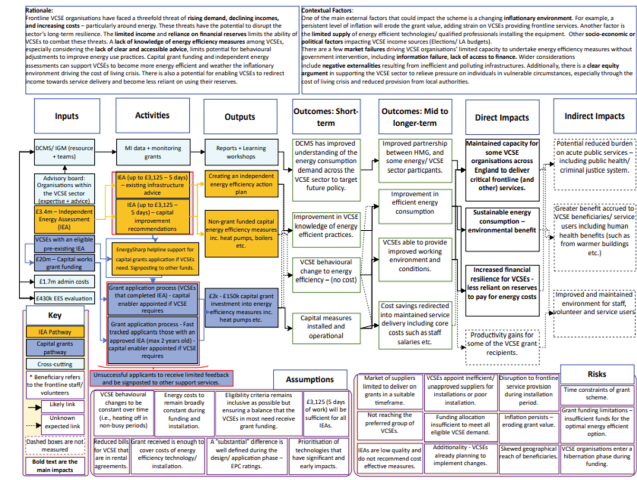
Figure 26: EES Theory of Change (Updated)
EES Theory of change update
Since the development of the initial Evaluation Plan to guide the study, a few minor adjustments to the EES ToC have been made. These were:
- The introduction of the EnergySharp helpline support service, an in-flight iteration to Scheme delivery
- An update to the logic chain to better describe the pathways through which VCSEs were expected to realise the intended outcomes
EnergySharp helpline support service
In May 2024 of the funding period, DCMS decided to include pre-capital grant application helpline support for VCSEs. This helpline support, known as “EnergySharp”, had been built into the scheme design based on feedback from the IEA applications. There were 208 calls completed as of the end of January 2025. The objectives of the EnergySharp support service included: 1. Improving the quality of applications, 2. Building the capacity of the sector, 3. Reducing the risk of underspends and 4. To be cost effective. The support line was available to pre-capital grant applicants between 9am-5pm Monday to Friday, and 9am-12pm on Saturday, including occasional evening sessions. This service was promoted and made available to all capital grant applicants who had been approved and had an energy assessment completed for their building. On completion of an IEA, applicant organisations were signposted to the capital grant application process and to the EnergySharp helpline. The EnergySharp helpline was an independent advisory service that had a pool of around 10-20 EnergySharp ‘supporters’, recruited through partners and from the list of Energy Advisors working on the programme, ensuring a broad range of expertise.
The primary purpose of the EnergySharp support service was to:
-
Help organisations understand their IEA assessment and identify which, if any, measures align with scheme priorities, offer optimal value for money and were achievable within the designated timeframe
-
Help organisations understand the scheme’s eligibility criteria
-
Explain the capital grant programme priorities and identify the key considerations for organisations that wanted to apply
-
Provide advice to applicants on how to generate a robust delivery plan in support of their capital grant application
-
Provide information about other grant/finance programmes for capital measures and any programmes available to progress other measures identified
Figure 27: Outcomes chain (Adjunct: mid-to longer-term detail)
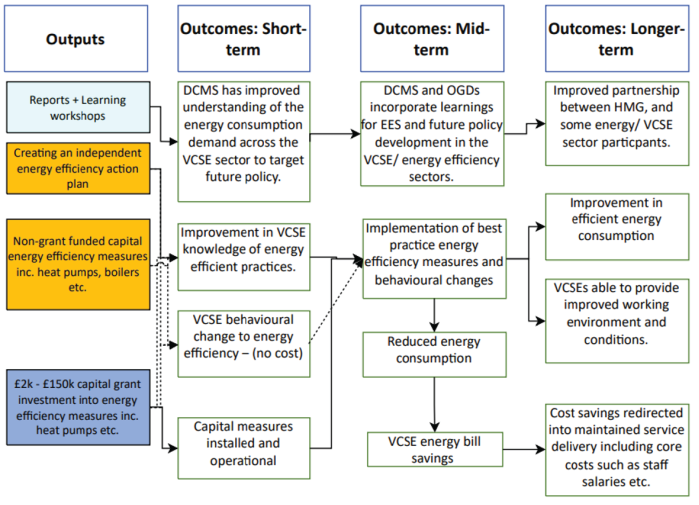
Figure 27: Outcomes chain (Adjunct: mid-to longer-term detail)
As Figure 27 above shows, the mid-term outcomes were slightly nuanced in terms of the sequence of events for the VCSE energy bill savings. The pathway for VCSEs accessing funding through the capital grant had an additional step of requiring the capital measures to be installed and fully operational before experiencing any energy bill savings. Once any energy efficiency measures had been installed, the best practice or energy efficient technologies were in use, such as solar panels providing electricity to the VCSEs’ sites. This would either reduce the energy consumption requirement or, if demand for services rose, lead to improved efficiency while consuming the same unit of energy. Through the reduced consumption demand, it is expected this will reduce the VCSEs energy bill compared to the baseline of “no change”. In the longer-term it is expected any resource saved through lower utility bills can be redirected to supporting service delivery.
Annex 3: Bayesian Process Tracing methodology
Summary steps
The evaluation required an assessment of the impact of the EES programme. Due to the lack of secondary data on some of the key outcomes (i.e., service delivery, staff outcomes, and financial outcomes) as well as uncertainties in retrieving data on financial measures for treatment and control groups using primary data collection (i.e., the survey) a full QED methodology assessing the full set of alternative impacts from EES was considered unfeasible. A process tracing approach provides an alternative that is a systematic and transparent approach to assessing the impact of the funding. The use of process tracing is increasingly accepted as a robust alternative to experimental approaches in evaluation where the use of comparator or control groups is not feasible.[footnote 55]
This approach enabled us to arrive at an overall assessment (in terms of a percentage probability) of the impact of EES across the four areas detailed in the hypotheses we set out (see Table 9 below). In terms of the overall analysis of impact, this approach allowed us to arrive at a conclusion on the proportion of VCSE organisations in different probability ranges relating to how likely it is that those hypotheses would be true in their case. The recommended steps by Befani (2020)[footnote 56], a leading academic in the methodology, were followed, and are set out below.
Box 10. Summary of steps in applying Bayesian updating to process tracing
The evidence pieces to test the claims around VCSEs were chosen based on the literature, and discussions within the evaluation team including input and review from experts. In total, 12 pieces of evidence were selected across the two hypotheses, derived from questions in the survey of VCSE organisations
Probability values were then assigned to each piece of evidence – relating to the relevant hypothesis - (using scales), indicating:
-
Sensitivity: The likelihood the evidence would be observed if the contribution claim (CC) was true
-
Type 1 error: The likelihood the evidence would be observed if CC is false
A prior probability had to be chosen, representing our existing belief about whether the claim was true. As is recommended in the literature, this was chosen to be 50% indicating there was no prior information to suggest whether the claim was likely or unlikely to be true
Using the Sensitivity and Type 1 error values, Bayesian formula was applied for each piece of evidence and VCSE organisation, giving a single posterior value that represents an updated belief, or probability, that CC is true for each hypothesis.
- Develop the hypothesis: A hypothesis, and its complement (the null hypothesis), had to be chosen that were mutually exclusive and allowed causality in the theory of change to be concluded. The theory of change set out short-term outcomes - largely related to during and immediately after the funding period – and medium to longer term outcomes helping to determine expected precedence in causality
Based on the research questions, the ToC and consultations with the expert on the project, we produced the following hypotheses:
Table 9: Process Tracing Hypotheses 1 – 4
| Hypotheses | Null Hypotheses |
|---|---|
| H1: During the period from October 2024 to October 2025, the EES contributed to VCSE organisations service delivery. | Null Hypothesis (H0): During the period from September 2024 to September 2025, the EES did not contribute to VCSE organisations service delivery. |
| H2: During the period from October 2024 to October 2025, the EES contributed to VCSE organisations financial resilience. | Null Hypothesis (H0): During the period from September 2024 to September 2025, the EES did not contribute to VCSE organisations financial resilience. |
These hypotheses are mutually exclusive and testable, i.e., it should be possible to find evidence that proves or disproves the hypothesis claim.
Designing the data collection: We considered the probative value of responses to specific questions and prioritised responses with a higher probative value (i.e., evidence that is likely to be present if H is true, or evidence that is very likely to be seen if the H is false). It is suggested in the literature that evidence can be described by the different process tests and a variety should be considered; with a particular focus on hoop evidence and smoking gun (see Table 10). With this in mind, the main data collection for process tracing in EES is the survey of grant holders, i.e., successful applicants. Key questions on outcomes were informed by the specified hypotheses, to tailor data collection to the outcomes of interest.
Assigning the probabilities: Based on evidence from the literature, discussions within the team and input from our experts, ‘sensitivity’ and ‘type 1 error’ values were determined for specific pieces of evidence, as follows:
-
Sensitivity: The probability of finding evidence if H is true. The ‘sensitivity’ value can be quantified, as a subjective probability between 0 and 1.
-
Type 1 error: The probability of finding evidence if H is false.
The probability values associated with finding particular evidence (regarding whether H is true or false) are based on the following scales:
- Very likely – 90%
- Likely – 70%
- Uncertain – 50%
- Unlikely – 30%
- Very unlikely – 10%
The value of the process tracing approach rests on the validity of the subjective probability estimates for the sensitivity and type 1 errors assigned to each piece of evidence. We used a combination of survey responses (and derived metrics) providing mainly ‘hoop’ evidence as it was difficult to identify ‘smoking gun’ and ‘doubly decisive’ evidence based on any one piece of evidence that we had. The probability estimates were agreed after extensive and constructive conversations amongst the members of the evaluation team and after a thorough review of case study evidence. This allowed the evaluation team to reach consensus on the probative value of evidence. While Bayesian inference itself is mathematical in nature, the application of Bayesian reasoning in process tracing relies on qualitative judgments that are confirmed through a collaborative process of validation and layered with other evidence to present a contextual interpretation of evidence. Bayesian process tracing should be understood as a systematic approach to qualitative inference rather than a purely quantitative method.
The list of probative values assigned can be found in Table 11 below.
Table 10: Process tracing test
| Test | Interpretation | Sensitivity | Type 1 error |
|---|---|---|---|
| Expect to see/ hoop evidence | If the hypothesis is true, we would see it; the absence of it does not mean the hypothesis is not true. | Likely | Likely |
| Smoking gun | If observed it means the hypothesis is almost certainly true, however in its absence the hypothesis could still be true. | Very Likely/ Likely | Uncertain/ Likely |
| Doubly Decisive | If observed it means the hypothesis is almost certainly true, the absence of observing it suggests the hypothesis is almost certainly not true. | Very Likely | Very Unlikely/ Unlikely |
| Straw in the Wind | If observed it does not increase the likelihood of the hypothesis being true significantly, the absence of observing does not increase the likelihood of the hypothesis not being true significantly. | Uncertain/ Unlikely/ Likely | Uncertain/ Unlikely/ Likely |
- Conduct Data Collection and Update Confidence About the Claim: After collecting the results from the survey, the sensitivity and type 1 error values were inputted for each evidence piece from each organisation. So, for example below if we have a VCSE organisation that had an increase in gross profit but the organisation had a previously implemented capital measure, using the thresholds in Table 11 we would assign a sensitivity value of 0.75 (70%) and a type 1 error of 0.3 (30%).
Table 11: Example evidence of assigning Sensitivity and Type 1 error probabilities
| Evidence Number | Variable | Question number(s) | Variable description | Rationale | Thresholds | Sensitivity | Type-1 |
|---|---|---|---|---|---|---|---|
| E2 | Change in gross profit margin | Context: Q12 – Previous capital measures undertaken Q22ai Q22aii Q22bi Q22bii |
Change in gross profit in 2024 and 2025 | Indication of financial resilience, by comparing the gross profit margin before and after the EES, taking into account the presence of previous capital improvements. | Increase in gross profit & No previous capital measure Increase in gross profit & previous capital measure Decrease in gross profit & No previous capital measure |
65% 75% 55% |
20% 30% 45% |
After assigning these values, the Bayes’ formula (see below) is applied to the evidence, in order to calculate the posterior probability of H being true.
Table 12: Process tracing example evidence piece
| Evidence | Unit | Variable | Sensitivity (P(E/H) | Type 1 error (P(E/~H) |
|---|---|---|---|---|
| E2 | % Change in gross profit | Increase in gross profit Previous capital measure |
0.75 | 0.3 |
Process tracing example evidence piece
Choosing the prior probability: A prior had to be chosen for the likelihood that a hypothesis is true without any of our new observed evidence. As this was an unprecedented situation and no evidence was available on what an appropriate starting point should be, a 50% prior was chosen, indicating it was uncertain.
Continuing with the example above, if we find evidence E2 and apply Bayes’ formula this results in a posterior probability of 0.71 (71%)– in other words, this has increased our confidence that H is true. This formula is described below[footnote 57]:
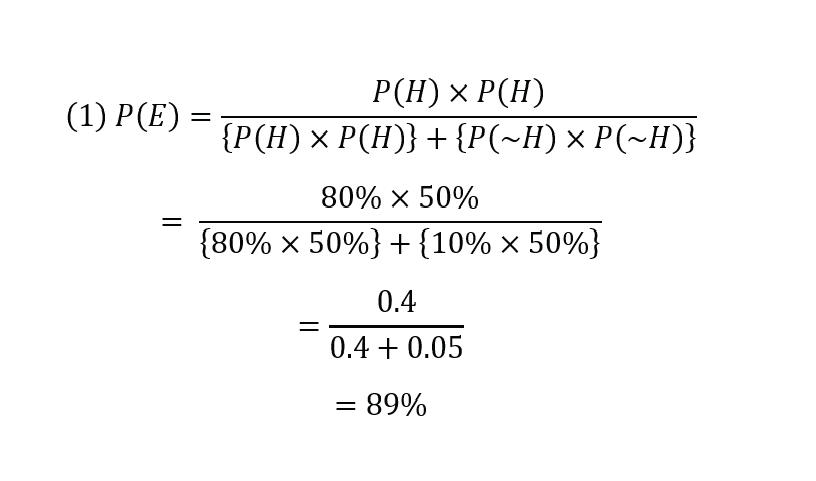
However, as we need to apply multiple pieces of evidence, not just one, we used the formulas 2 and 3 to get a posterior probability based on all the pieces of evidence. The % value would go up or down and robustness increases with the number of pieces of evidence.
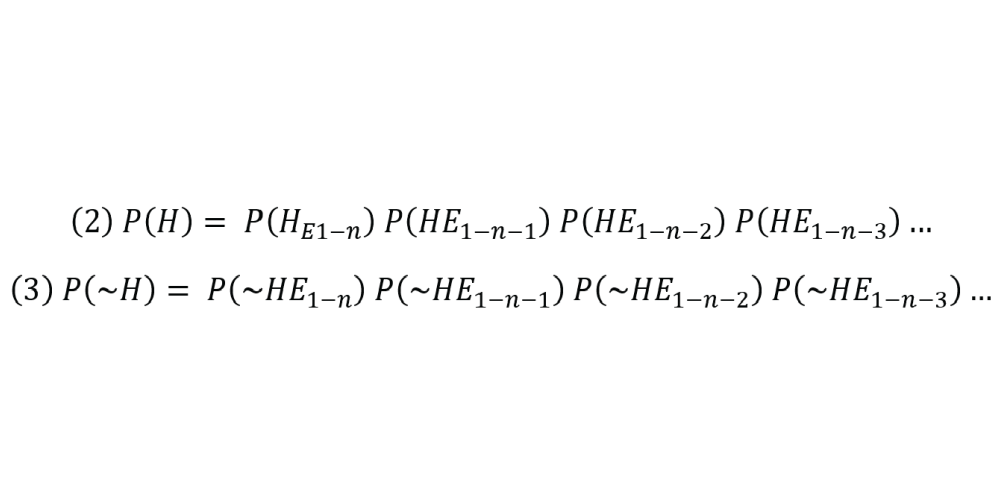
So, to continue the example above, if there were the following sensitivities and type 1 errors for additional evidence:
Table 13. Example allocating sensitivities and Type 1 errors
| Evidence | Sensitivities | Type 1 error |
|---|---|---|
| E1 | 0.8 | 0.5 |
| E2 | 0.75 | 0.3 |
| E3 | 0.5 | 0.3 |
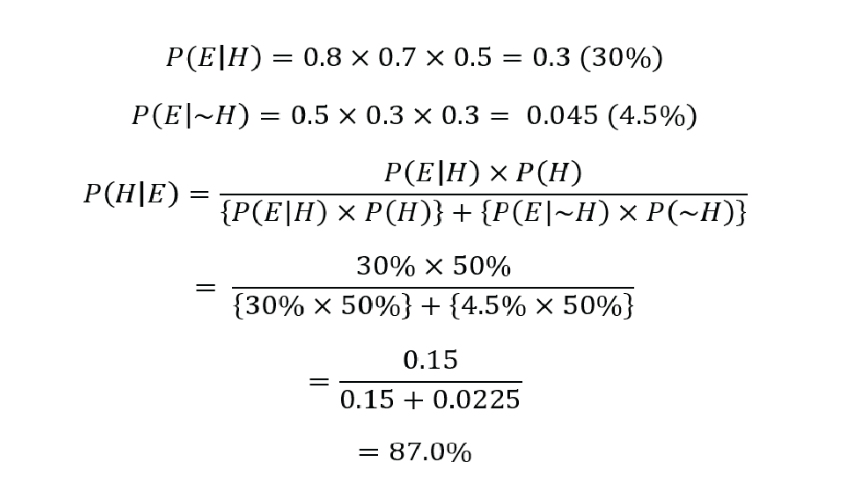
After including additional evidence, it has increased the likelihood of H being true; however the calculation needs to be rerun with all pieces of evidence to arrive at a final probability value. This approach was applied to every organisation that answered the survey. This then allowed us to make the statements based on groupings of organisation made in the main report e.g. x% of VCSE organisations had more than an 80% likelihood that EES contributed to maintaining and / or supporting service delivery.
Any organisation with no evidence – and therefore a 50:50 chance of a true hypothesis – was excluded from our analysis.
Limitations
The process tracing method does have several limitations, including assumptions of independence that may not hold, complexities in aggregating data across diverse organisations, and challenges in handling confounding factors. As a result, while the method provides valuable insights, its estimates of EES’s impact should be interpreted cautiously and supplemented with other methodologies. These limitations include:
- Assumption of independence – The method assumes that the individual pieces of evidence are independent. However, evidence from VCSE organisations – especially when comparing very large charities with much smaller ones – may be correlated, which could distort the aggregated likelihood estimates
- Complexity in Aggregation Across Diverse Organisations - Variability in organisational characteristics can complicate the aggregation process, potentially underestimating the role of other factors in measured impact. An organisation’s sector or geographical location may affect impact in ways that the survey does not capture, and process tracing does not measure
- Limited Handling of Confounding Factors – While process tracing is adept at tracing causal mechanisms, it may not fully account for alternative explanations or confounding variables, especially in heterogeneous contexts
These limitations suggest that while the aggregated evidence provides useful insights, the estimated contribution of EES should be interpreted with insight from other methodologies to complement. The influence of EES may therefore be more ambiguous than is presented here.
Evidence pieces
Table 14 below identifies the pieces of evidence (E1, E2, etc.) which will be based on analysis of the ‘impact’ questions from the survey and the hypotheses to which they relate:
Table 14: Hypotheses and evidence pieces used in impact assessment
| Hypothesis | Evidence Piece | Questions | Metric | Rationale |
|---|---|---|---|---|
| H1: Financial resilience | E1 | Q12 Q22ai Q22aii Q22bi Q22bii |
Change in cost to income ratio in 2024 and 2025 (operating expenses / operating income) | This measure would allow us to compare how the cost to income ratio changed before and after the EES, taking into account other significant sources of improvements to income ratio. |
| E2 | Q12 Q22ai Q22aii Q22bi Q22bii |
Change in gross profit margin [(income - expenses)/income] in 2024 and 2025 | Indicates financial resilience by comparing the gross profit margin before and after the EES, taking into account other significant improvements to income/expenditure. | |
| E3 | Q22aiii Q22biii Q25 |
Change in levels of reserves in 2024 and 2025 | Acts as a comparison of whether the EES had any effects on levels of reserves before and after, taking into account any cost cutting decisions (particularly around reserves). | |
| E4 | Q12 Q22ai Q22aii Q22aiii Q22bi Q22bii Q22biii |
Change in runway financial measure expressing a change in years to insolvency (2024 in comparison to 2025) | This measure is the change in years to insolvency before and after the EES. It will provide context to what was the risk of insolvency before the EES and what is the risk afterwards. Also here we include the questions on other sources of improvements to isolate EES. | |
| E5 | Q12 Q22ai Q22aii Q22bi Q22bii |
Change in yearly burn rate | The change in yearly burn rate indicates the difference in yearly burn rate before and after the EES was implemented. | |
| E6 | Q22ai Q22aii Q22bi Q22bii Q25 |
Change in yearly burn rate | The change in yearly burn rate indicates the difference in yearly burn rate before and after the EES was implemented. | |
| E7 | Q30i Q30ii Q31i Q31ii |
Long-term sustainability of EES impact | Indicates the time frame of the effect of the measures and whether the impact will be short-lived or long-lasting. | |
| E8 | Q12 Q16 Q18 |
Increase/decrease in energy usage | Indicates the subjective impact of EES on energy usage and therefore on financial sustainability | |
| E9 | Q12 Q16 Q19 |
Increase/decrease in energy bills | Indicates the subjective impact of EES on energy bills and therefore on financial sustainability | |
| H1: Maintaining and / or increasing service delivery | E10 | Q23iii Q30iii Q31iii |
Increase / decrease of beneficiaries | Maintaining / increasing number of service beneficiaries as a result of EES and whether impact on service delivery is sustained |
| E11 | Q23ii Q30iii Q31iii |
Increase / decrease in range of services | Maintaining / increasing range of services as a result of EES | |
| E12 | Q23i Q30iii Q31iii |
Increase / decrease in number of services | Maintaining / increasing range of services as a result of EES |
The box below provides a worked example of the BPT approach.
Box 11: Bayesian Process Tracing method and example
BPT is the application of a mathematical theorem knows as the “Bayes Theorem” which is a mathematical formula for determining the conditional probability of an event. In the context of the EES, we are testing whether the “events” in our case “short-term outcomes” were conditional on whether a VCSE organisation participated in the EES.
- Defining hypotheses[footnote 58]: The hypothesis (or hypotheses, if multiple are being tested), need to be defined which for the EES relate to our expectations around the short-term outcomes. This step can include expert judgement and is usually based around outcomes identified in the ToC. To ensure the evidence is as accurate as possible, include specifics such as a time period to isolate the policy specific contribution
Example: Hypothesis: During the period from December 2023 to August 2024, the EES IEA contributed to reducing VCSEs’ energy usage through no cost (behavioural changes).
- The hypothesis is assigned a “prior probability”[footnote 59], which is the probability that the hypothesis is true before any evidence is considered
Example: For the hypothesis above, this was 0.5 as no other evidence was available prior to collecting evidence through the EES IEA applicant* successful *survey. This says that the probability of the hypothesis being true is equally as likely as being false.
Gather background information and data:
- Expert knowledge: Consult experts in the relevant field to understand the typical relationships between the hypothesis and the evidence
- Empirical data: Consult empirical studies (where relevant), statistics or historical data that provide information on how often the evidence occurs when the hypothesis is true or false
Example: Data was collected through responses to specifically designed questions in the EES grantee survey and translated into the evidence pieces for updating prior probabilities.
Assess “Sensitivity”[footnote 60] P(E H)
- Assessment: Determine how likely it is to observe the evidence if the hypothesis is correct. This is done by looking at the logical connections between the hypothesis and the evidence. The assessment can also be influenced by empirical studies that have measured the frequency of the evidence when the hypothesis is known to be true and experts’ estimation of likelihood based on their experience and knowledge can be used assess sensitivity
Example: Expert opinions were reviewed and discussed before decisions were made per scenario. For example, if a VCSE noted a decrease in usage greater than 10%, this was deemed more likely that the hypothesis was true than a VCSE answering a decrease in usage of less than 5%, therefore were assigned a higher probability weight, say 0.8 compared to 0.7 in the latter scenario.
Assess Type 1 error[footnote 61] P(E∣¬H)
- Assessment: Determine how likely it is to observe the evidence if the hypothesis is incorrect. By thinking logically about scenarios where the evidence might occur for reasons unrelated to the hypothesis. The assessment can also be influenced by empirical studies that have measured the frequency of the evidence when the hypothesis is known to be false and experts’ estimation of likelihood based on their experience and knowledge can be used to assess sensitivity
*Example: Expert opinions were reviewed and discussed before decisions were made per scenario. For example, if a VCSE noted a decrease in usage greater than 10%, this was deemed less likely that the hypothesis was false than a VCSE answering a decrease in usage of less than 5%, therefore were assigned a lower probability weight, say 0.3 compared to 0.4 in the latter scenario.
Validate estimates
- Cross-check: compare estimates with multiple sources to ensure they are reasonable. For example, compare estimates from experts with estimates from the literature, or with own estimates
- Consistency: probabilities should be consistent with the known data (where relevant) and with logical reasoning
- Sensitivity analysis: see how changes in probabilities affect the posterior probability [footnote 62]
Example: Prior probability weight assignments were discussed with experts and reviewed. The final set of posterior probabilities were calculated for each VCSE and averaged. See the formula above for calculating posterior probabilities.
Supporting tables and figures
Table 15: Likelihood EES contributed to financial resilience[footnote 63]
| Percentage likelihood EES contributed to VCSE organisations’ financial resilience | VCSE organisations | Percentage of VCSE respondents |
|---|---|---|
| 0% up to 20% | 18 | 18% |
| 21% up to 40% | 6 | 6% |
| 41% up to 60% | 5 | 5% |
| 61% up to 80% | 15 | 15% |
| 81% up to 100% | 57 | 57% |
Table 16: Likelihood EES contributed to service delivery[footnote 64]
| Percentage likelihood EES contributed to VCSE organisations maintaining or increasing service delivery | VCSE organisations | Percentage of VCSE respondents |
|---|---|---|
| 0% up to 10% | 0 | 0% |
| 11% up to 20% | 0 | 0% |
| 21% up to 30% | 0 | 0% |
| 31% up to 40% | 0 | 0% |
| 41% up to 50% | 0 | 0% |
| 51% up to 60% | 0 | 0% |
| 61% up to 70% | 0 | 0% |
| 71% up to 80% | 0 | 0% |
| 81% up to 90% | 17 | 20% |
| 91% to 100% | 68 | 80% |
Figure 28: Proportion of VCSE, by likelihood, of presenting evidence for each hypothesis
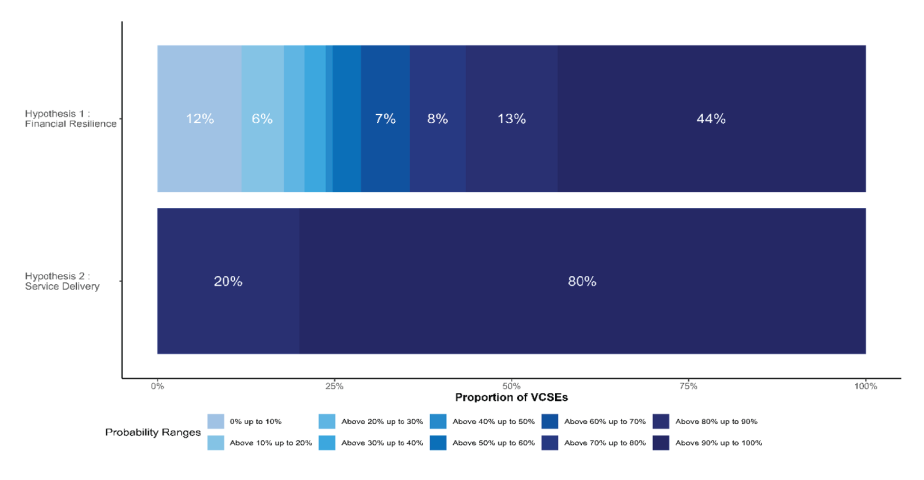
Figure 28: Proportion of VCSE, by likelihood, of presenting evidence for each hypothesis
Annex 4: VCSE case study selection process
This section explains the process undertaken for selecting the participants for the VCSE case studies. The intention was to capture as many VCSEs as possible that had implemented their fully funded capital measures through the EES.
Using the capital grant application MI data provided by Groundwork UK a list of organisations that had implemented capital measures (using a variable filter on application status) was used as the contact list.
Capital implementer VCSEs were then selected at random to provide a random sample to interview. These organisations were reviewed in terms of their key characteristics: region, organisational size (by turnover), main service theme to ensure a representative sample was selected.
An initial list of 14 VCSEs was drawn and contacted via email. Where VCSEs had not initially responded, reminder emails were sent, up to three in total. If no response, researchers called directly (if telephone numbers were available). In cases of no response, or where VCSE representatives were unable or unwilling to act as case studies, these VCSEs were resampled like for like as far as possible using the remaining sample. Six re-sampling rounds were required before close, leading to a final sample of 12 VCSE case studies.
Across the 12 case studies, the final number of individuals interviewed was:
- 22 strategic staff (VCSE organisational representatives)
- 19 delivery staff/volunteers
- 7 volunteers (who were also beneficiaries)
- 35 beneficiaries
Annex 5: monetised economic benefits methodology
This section outlines the evaluation approach to the benefits estimation based on the feasibility of assessing selected outcomes from the impact evaluation. Monetised outcomes are presented in the Economic evaluation, Table 5 above. Each subsection will explore each benefit category, which falls within financial resilience, service delivery and wider (environmental) benefits.
Financial resilience
Financial runway is an estimate of the amount of time, usually measured in months, that an organisation can continue operating before exhausting its cash reserves, assuming current income and expenses. The basic formula is:
Figure 29: Equation 1: Financial runway for VCSEi
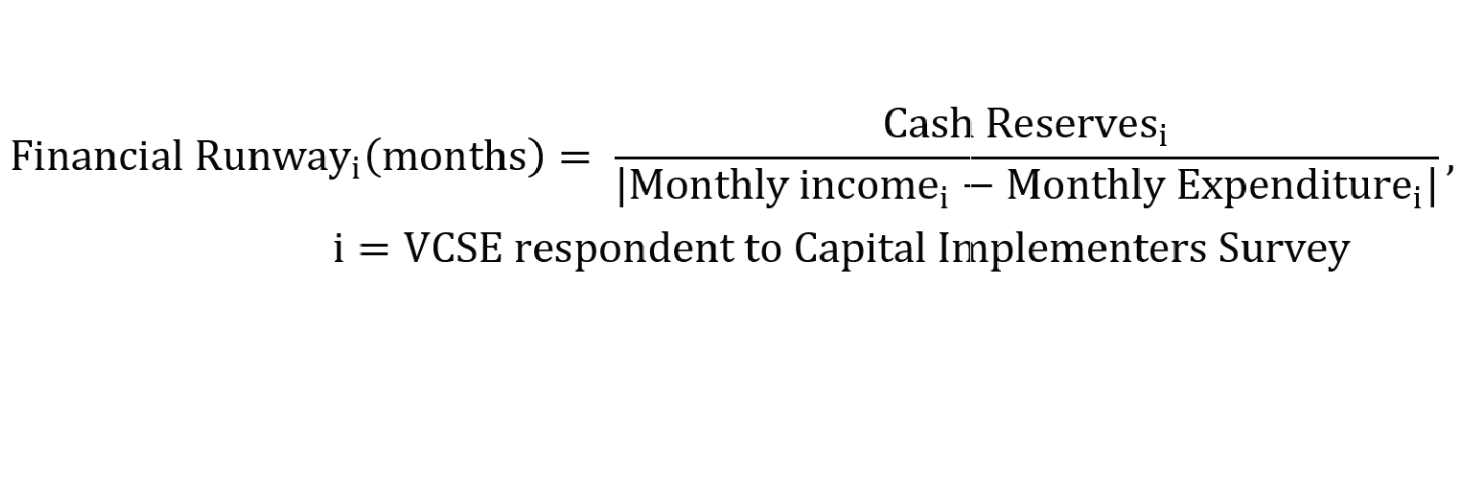
Using the capital implementer survey responses for each VCSE (i), we have calculated the runway for VCSEs that implemented measures through the EES. Descriptive statistics, split by organisational size, are provided in Table 17 below (there was a small number of large firms; hence, these are excluded from the analysis due to the potential to give a misleading impression).
Table 17: Financial runway descriptive statistics (months)
| Medium | Small | |
|---|---|---|
| Median | 25 | 37 |
| Average | 72 | 69 |
| Minimum | 0 | 1 |
| Maximum | 373 | 378 |
| N | 37 | 12 |
Source: Ecorys Capital Implementers Survey, Q21
After removing outliers, it is worth noting that medium-sized VCSEs had a median estimate of 25 months, compared to 37 months for Smaller-sized VCSEs. It is possible that the smaller VCSEs have proportionally lower cash burn rate[footnote 65], meaning financial reserves can support these organisations for a longer period than those of medium-sized VCSEs. Care must be taken with this assessment due to the low numbers involved, making the results more susceptible to outlier estimates.
The two benefits monetised for financial resilience at the time of reporting were energy bill savings and avoided reserve depletion. A financial runway metric was also calculated; see Equation 1 above. For a more conservative estimate, and to isolate changes in reserves only, income was removed. The edit to Equation 1, as presented above, simply sets the monthly income to 0.
Energy bill savings: As Table 5 in the Economic evaluation section above shows, the range for the 10-year forecast period is £22.2m to £24.3m, and for the 30-year period, £47.0m to £58.1m. These estimates have not been discounted. Compared to the total costs of between £25.0m and £25.6m (low and high, not discounted) just after the 10-year mark, energy bill savings alone are forecast to breakeven in the low scenario.
The focus of this evaluation is on the implementation of the capital measures and energy bill savings. In the previous evaluation, we captured both IEA knowledge creation and expected energy bill savings from capital measures. The previous estimate of capital measures did not include depreciation, as the final, unknown measures implemented for each VCSE were not yet available. The monetised energy bill savings are derived solely from capital measures installed per VCSE, aggregated to an overall energy bill savings estimate, and are therefore more accurate in terms of the actual measures installed, allowing a fairer application of depreciation rates. Compared to other benefit categories, energy bill savings accounted for the largest share of the overall monetised benefits.
Method and assumptions: Estimates of energy bill savings were provided by Groundwork UK within the management information: capital applications data. Each VCSE had an estimate of the total annual energy bill savings associated with the measures they have applied for. A limitation is that actual measures implemented may have differed slightly. These were projected forward, applying the Office for Budget Responsibility (OBR) energy fuel price projections. Energy bill savings were then reduced each year based on average annual depreciation rates (for VCSEs with multiple measures, the average annual depreciation rate for all measures was applied to energy bill savings).
Avoided reserve depletion: Many VCSEs, prior to the EES, had noted an increase in the use of their reserves to cover rising energy costs due to inflationary pressures from late 2021 through 2022, driven by energy price hikes. The introduction of energy efficiency measures for the sector was aimed at helping build energy bill savings, redirecting them to service delivery, and also at easing pressure on the use of depleting reserves. In the estimation of avoided reserve depletion, over the 10-year horizon, £10.8m of reserves were not depleted across the VCSE cohort (high and low scenarios). Over the 30-year horizon, this accumulated to between £18.0m (low) and £19.5m (high) – all in 2025 prices. Over the longer term, the net reserves that were not depleted diminish as the installed measures depreciate.
Method and assumptions: Estimates of avoided reserve depletion were calculated from the reserve estimates provided by VCSEs in the capital implementers survey (treatment group, n = 50). Survey data on the likely change in reserves post-EES (capital implementers) and post-EES capital grant application (Unsuccessful capital applicants) were netted to identify the change in reserves relative to the baseline (see Table 18 for the net impact estimation).
Table 18: Change in reserves
| Treated | Counterfactual | Net EES impact on reserves | |
|---|---|---|---|
| Large | 0.0% | 0.9% | -0.9% |
| Medium | -2.4% | -4.1% | 1.8% |
| Small | -2.1% | -3.8% | 1.7% |
Sources: Ecorys Capital implementers survey, Unsuccessful grant applicant survey.
The average change was then applied to all 316 VCSEs (classified by turnover size: small, medium, or large) over the average measures’ lifespan, accounting for depreciation (as outlined in energy bill savings above).
Financial runway: The results presented in Figure 30 below show the additional number of months, on average, per year, capital implementers could gain in terms of financial runway. At the 10-year mark, the financial runway for medium-sized VCSEs peaks at 5.8 months, compared to the counterfactual. Small organisations have a shorter financial runway relative to the counterfactual at -0.6 months. This was due to smaller VCSE capital implementers having lower average reserves than similar counterfactual organisations. However, as can be seen over the longer-term 30-year horizon, VCSEs of all sizes that implemented capital measures through the EES will have a higher additional financial runway than the counterfactual.
Figure 30: Additional average financial runway projected over a 30-year horizon (months)
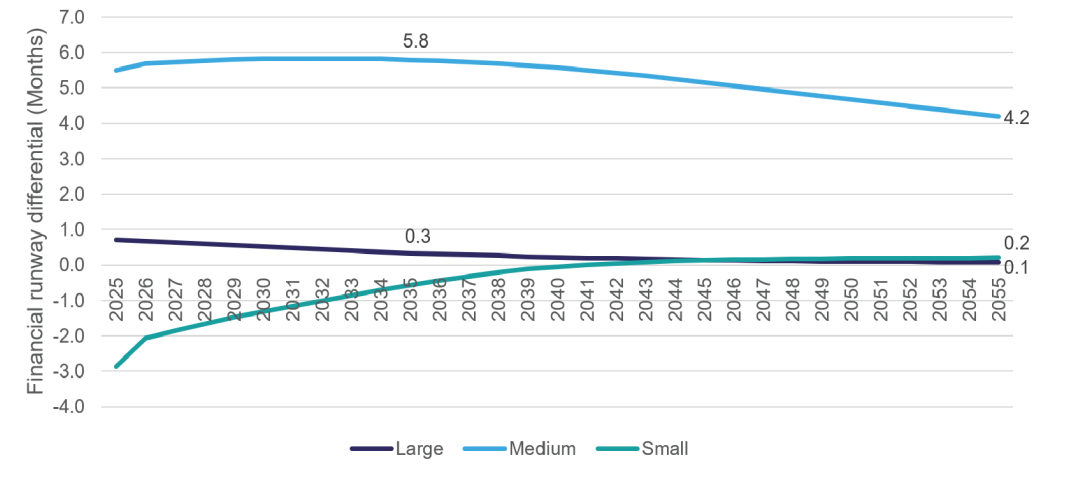
Figure 30: Additional average financial runway projected over a 30-year horizon (months)
Sources: Ecorys Capital implementers survey, Unsuccessful grant applicant survey, Management Information Groundwork UK, Dr Sam Hampton: Energy Efficiency measure life-span, OBR macroeconomic projections.
Method and assumptions: Estimates of financial runway were calculated from the reserve and expenditure estimates provided by VCSEs in the capital implementers (treatment group, reserve n = 50, expenditure n = 54). The reserve estimates described above were used. To project expenditure estimates, GDP deflators were applied to account for inflationary effects.
Maintaining service delivery
The two benefits, monetised at the time of reporting, for maintaining service delivery were wellbeing impacts for service users and staff/volunteers, who were likely to be members of staff. Data for volunteers specifically were incomplete. Volunteer-staff refers to situations in which the Full-Time-Equivalent (FTE) for a VCSE was set to 0, but volunteer numbers were provided.
Staff/volunteer-staff: Table 5 in the Economic evaluation section above highlights a benefits estimate of between £1.9m and £9.7m, in 2025 prices, for improved staff wellbeing based on improved working conditions. The main drivers, as noted in the impact evaluation above, were health impacts from warmer buildings/ more comfortable internal environments, and improved mental health from brighter premises (also helping reduce eyestrain from poorer lighting). Building aesthetic improvements also, to some extent, created a sense of pride while working at the VCSE. Over the longer term, the low and high benefit estimates are expected to range from £2.9m to £16.0m in 2025 prices.
Method and assumptions: Estimates of staff numbers were provided by Groundwork UK within the management information: capital applications data. Each VCSE had an estimate of the total number of FTE and/or Volunteers in 2025. Staff numbers were projected based on OBR employment projections. Staff salaries were projected using CharityJob Salary Summary Report 2025 to provide an estimate for 1 FTE per year. A percentage of energy bill savings redirected to staff salaries (between 30% and 100%) was used as a low and high estimate as a proportion of an FTE salary for that year. For example, if energy bill savings are £1000 for the year, and the average charity salary was £35,000, that would equal an additional 0.03 FTE for that year. We then assigned changes in life satisfaction based on the survey question and in line with the HMT Green Book Wellbeing valuation supplementary guidance. For each additional FTE per year, we multiplied the adjusted WELLBY estimates by the subsequent GDP deflator and GDP per capita estimates.
Service users: Table 5 in the Economic evaluation section above highlights a benefits estimate of between £0.9m and £3.8m, in 2025 prices, for improved service user wellbeing based on improved building conditions. The main drivers, as noted in the impact evaluation above, were more comfortable internal environments and improved mental health from brighter premises and places to socialise. Over the longer term, the low and high benefit estimates are expected to range from £3.0m to £15.1m in 2025 prices.
Method and assumptions: Estimates of service user numbers were provided by Groundwork UK within the management information: capital applications data. Each VCSE had an estimate of the total number of service users in 2025. Service user numbers were projected based on population growth projections. The VCSE Barometer Survey (Service demand trends) was used to project forward the number of service users expected through to 2055. The expected decline in service demand served as the baseline projection. To ensure a conservative estimate of service user demand, the options “stay the same” and “increase” were assigned a 0 change in service users. As service users would not be using the facilities for a greater period than the allotted opening times, each VCSE service user projection was weighted by the weekly opening hours (e.g., a VCSE open for 84 hours in a week would have a 50% weighting applied to the number of service users). Median estimates were calculated for the treatment and counterfactual groups, and the net difference in the number of additional service users was calculated. The wellbeing valuation method was applied, based on the capital implementers’ survey responses on building comfort, to life satisfaction changes.
Environmental outcome
Carbon equivalent abatement: Table 5 in the Economic evaluation section above highlights a benefits estimate of between £3.3m and £7.4m, in 2025 prices, for CO2e abatement resulting from more energy-efficient and greener capital measures. The estimates of CO2e were derived from the capital application data and are limited, as they reflect capital measures applied rather than final measures installed. Over the longer term, the low and high benefit estimates are expected to range from £10.9m to £23.4m in 2025 prices.
Method and assumptions: Estimates of carbon-emissions abatement potential were provided by Groundwork UK in the management information: capital applications data. Each VCSE had an estimate of the total amount of CO2e the suite of measures applied for would abate per year. Applying the HMT Green Book-approved low and high estimates of carbon values, the total monetised carbon abatement was estimated.
Annex 6: Survey questionnaires
Survey 1: capital implementers survey questions
QINTRO Are you happy to proceed with the survey?
YesPN: PROCEED.
No PN: END SURVEY. PN: GO TO ECORYS HOMEPAGE
PN: IF QINTRO ‘No’ Selected Display DYNAMICALLY ‘To be able to complete the survey and be entered into the prize draw, we need you to confirm you are happy to take part, are you sure you do not wish to proceed with the survey?’
I do not wish to proceed PN GO TO ECORYS HOMEPAGE
I wish to complete the survey PN: IF YES SELECTED GO TO Q1
PN: DO NOT DISPLAY QUESTION NUMBERS OR HEADINGS THROUGHOUT.
PN: DISPLAY ON NEXT PAGE
PN: DO NOT DISPLAY HEADING Basic Information
Q1. How would you describe your organisation? PN: SINGLE CODE
1. Registered charity
2. Community group / voluntary organisation
3. Social enterprise / community interest company (CIC)
4. Co-operative / mutual
5. Faith-based organisation
6. Company limited by guarantee
7. Other (please specify) [PN: OPEN TEXT]
PN: DO NOT DISPLAY HEADING Applying to the EES
PN: DISPLAY ON NEXT PAGE
Q2. What were your organisation’s main reasons for being interested in the VCSE Energy Efficiency Scheme? [PN: MULTI CODE]
1. To lower energy bills and reduce costs
2. To reduce carbon footprint and emissions
3. To make improvements to the working environment (e.g., better lighting and temperature control)
4. To adapt to future energy price rises
5. Other (please specify) [PN: OPEN TEXT]
PN: DO NOT DISPLAY HEADING Application and installation costs
PN: DISPLAY ON NEXT PAGE
We’d now like to ask you some questions about your experience of applying for the EES Capital Grant.
Q3. Thinking about the process of applying for the capital grant, what were the main costs (financial or resource-wise) associated with this? [PN: MULTI CODE]
1. Time spent completing the application e.g., administrative costs
2. Extra/follow-up surveys needed after the IEA assessments
3. Support or help required to complete the application e.g., hiring of consultants or technical experts to help with application writing
4. Having to apply for planning permission or other permits
5. Getting quotes from builders/installers
6. No costs associated with the application
7. Other (please specify) [PN: OPEN TEXT]
8. Don’t know [PN: MUTUALLY EXCLUSIVE]
PN: DISPLAY ON NEXT PAGE
Q4. Did your organisation install an energy efficiency measure or measures through the EES? [PN: SINGLE CODE]
1.Yes
2. No
3. Don’t know
4. Prefer not to say
PN: DISPLAY ON NEXT PAGE
PN: ASK Q5 ONLY IF Q4 CODE 2 ‘No’ SELECTED AT Q4
Q5. Which of the following reasons best explain why the recommended energy efficiency measure or measures have not been installed? [PN: MULTI CODE]
1. Lack of funding / too expensive
2. Lack of staff capacity or time
3. Awaiting further advice, guidance, or approval
4. Disruption to services / operations would be too great
5. Not a priority at this time
6. Technical difficulties or building-related constraints
7. Lack of awareness / understanding of the measure
8. Other (please specify) [PN: OPEN TEXT]
PN: IF Q4 CODE 2, 3, OR 4 SELECTED ROUTE TO Q32
PN: DISPLAY ON NEXT PAGE
Q6. To what extent did the installation impact / has the installation impacted your organisation’s ability to maintain its service delivery during the period that works were underway? [PN: SINGLE CODE]
1. All service delivery stopped completely during the installation
2. Service delivery was reduced during the installation
3. Service delivery was maintained - the installation had no impact on our service delivery
4. Don’t know
PN: DISPLAY ON NEXT PAGE
PN: ASK Q7 ONLY IF Q6 CODE 1 or 2 SELECTED AT Q6
Q7. Thinking about the impact on your services, for how long did this impact last? [PN: SINGLE CODE]
1. Less than a day
2. Between one day and seven days
3. More than a week but less than a month
4. More than a month
5. Don’t know
PN: DISPLAY ON NEXT PAGE
PN: DO NOT DISPLAY HEADING Experience of capital grant measure installation module
Q8. Which of the following type(s) of energy efficiency measures were installed using the capital grant funding provided by the EES scheme? Select all that apply. [PN: MULTI CODE]
1. Solar panels
2. LED lighting installation
3. Insulation improvements
4. Heating system upgrades
5. Window, glazing and door upgrades
6. Heat pumps
7. Other space and water heating
8. Temperature controls
9. Smart building management systems
10. Other building fabrication systems
11. Other (please specify) [PN: OPEN TEXT]
12. Don’t know [PN: MUTUALLY EXCLUSIVE]
PN: DISPLAY ON NEXT PAGE
Q9. Thinking about all installations through the EES you have had, how satisfied were you overall with the following? [PN: GRID, MULTI CODE]
- Very satisfied 2. Fairly satisfied 3. Neither satisfied nor dissatisfied 4. Fairly dissatisfied 5. Very dissatisfied 6. Don’t know
2. Communications (i.e. providing information and updates)
3. Timeline (i.e. scheduling, agreed dates, duration)
4. Effectiveness / Quality (i.e. performance, safety, fit for purpose)
5. Experience (i.e. disruption, cleanliness of contractors)
PN: DISPLAY ON NEXT PAGE
Q10. Since the installation have you experienced any difficulties, faults or other challenges with the installation(s)? [PN: SINGLE CODE]
1. Yes
2. No
3. Don’t know
4. Prefer not to say
PN: DISPLAY ON NEXT PAGE
PN: ASK Q11 ONLY IF Q10 CODE 1 ‘Yes’ SELECTED AT Q10
Q11. Which of the following difficulties or challenges did you have with the installation(s)? [PN: MULTI CODE]
1. Unexpected costs (e.g. maintenance)
2. Technical issues with the building(s)
3. Technical issues with equipment
4. Disruption to services or staff
5. Limited guidance or information
6. Difficulty engaging contractors / suppliers
7. Other (please specify) [PN: OPEN TEXT]
PN: DISPLAY ON NEXT PAGE
Q12. Other than the measures installed through the EES capital grant, has your org installed any other energy efficiency capital measures to the building in the last 3 years? [PN: SINGLE CODE]
1. Yes
2. No
3. Don’t know
4. Prefer not to say
PN: ASK Q13 ONLY IF Q10 CODE 1 ‘YES’ SELECTED AT Q10
PN: DISPLAY ON NEXT PAGE
Q13. Thinking about these other installations, what other energy efficiency measures have you installed? [PN: MULTI-CODE]
1. Solar panels
2. LED lighting installation
3. Insulation improvements
4. Heating system upgrades
5. Window, glazing and door upgrades
6. Heat pumps
7. Other space and water heating
8. Temperature controls
9. Smart building management systems
10. Other building fabrication systems
11. Other (please specify) [PN: OPEN TEXT]
12. Don’t know [PN: MUTUALLY EXCLUSIVE]
PN: DISPLAY ON NEXT PAGE
Q14. How did your organisation fund this/these installation(s)? [PN: MULTI CODE]
1. Paid for it ourselves from our income or reserves
2. Accessed a commercial loan to pay for it
3. Accessed it via another scheme [PN: ADD OPEN TEXT OPTION IF SELECTED, WITH FOLLOWING INSTRUCTIONS:] Please specify which scheme this was [PN: DO NOT FORCE]
4. Other (please specify) [PN: OPEN TEXT]
5. Don’t know [PN: MUTUALLY EXCLUSIVE]
PN: DISPLAY ON NEXT PAGE
Q15. What was the total cost of these additional installations? [PN: SINGLE CODE] Note: If you are unsure, please provide your best estimate.
1. £0 - £499
2. £500 - £999
3. £1000 - £1,999
4. £2,000 - £4,999
5. £5,000 - £9,999
6. £10,000 - £24,999
7. £25,000 - £49,999
8. £50,000 - £99,999
9. £100,000+
10. Don’t know
11. Prefer not to say
PN: DISPLAY ON NEXT PAGE
Q16. Have you taken any other actions or done anything else to improve your energy efficiency or reduce energy costs following your capital measure installation(s) funded through the EES? [PN: SINGLE CODE]
1. Yes
2. No
3. Don’t know
PN: ASK Q17 ONLY IF Q16 CODE 1 ‘Yes’ SELECTED AT Q16
PN: DISPLAY ON NEXT PAGE
Q17. What other actions has your organisation taken to improve energy efficiency or reduce energy costs? [PN: MULTI CODE]
1. Operational changes (e.g., adjusting heating, lighting, or equipment use)
2. Behavioural or staff initiatives (e.g., training, awareness campaigns, energy-saving policies)
3. Energy management / monitoring (e.g., installing meters, tracking energy use)
4. Supplier or tariff changes (e.g., switching to a greener or cheaper energy plan)
5. Other (please specify) [PN: OPEN TEXT]
6. Don’t know [PN: MUTUALLY EXCLUSIVE]
PN: DO NOT DISPLAY HEADING Energy Usage and Financial Resilience
PN: DISPLAY ON NEXT PAGE
Q18. H as your organisation experienced any changes in its energy usage since the EES capital measure installation(s)? Note: Energy bills/ expenditure will be covered separately in another question.
PN: SINGLE CODE
1. Yes, it has gone down by more than 10%
2. Yes, it has gone down by between 5 and 10%
3. Yes, it has gone down by up to 5%
4. No, there have been no changes
5. Yes, it has gone up by up to 5%
6. Yes, it has gone up by between 5 and 10%
7. Yes, it has gone up more than 10%
8. Too early to say / no post-measure installation bills received
9. Don’t know
PN: DISPLAY ON NEXT PAGE
Q19. H as your organisation experienced any changes in its energy bills since the EES capital measure installation(s)? [PN: SINGLE CODE]
1. Yes, they have gone down by more than 10%
2. Yes, they have gone down by between 5 and 10%
3. Yes, they have gone down by up to 5%
4. No, there have been no changes
5. Yes, they have gone up by up to 5%
6. Yes, they have gone up by between 5 and 10%
7. Yes, they have gone up more than 10%
8. Too early to say / no post-measure installation bills received
9. Don’t know
PN: DISPLAY ON NEXT PAGE
Q21. Thinking about October 2025 in comparison to October 2024 or just before the installation of the EES energy efficiency measure(s) (whichever was earliest chronologically), would you say that your organisation’s… has PN: SINGLE CODE
PN: DISPLAY ANSWER OPTIONS 1-3 AS A CAROUSEL USING THE FOLLOWING ANSWER OPTIONS
Gone up a lot; Gone up a little; Stayed the same; Gone down a little; Gone down a lot; Don’t know.
1. Expenditure
2. Income
3. Reserves (including unrestricted reserves and any funds used to cover unplanned costs (e.g. cash in the bank))
PN: DISPLAY ON NEXT PAGE
Q22. PN: DISPLAY ANSWER OPTIONS 1-3 AS A CAROUSEL USING THE FOLLOWING ANSWER OPTIONS
Guidance note: your answers should cover the financial year ending in March 2024 and March 2025. If no figures are available for this period, then please provide details for financial years that end between April 2023 and March 2024 (for financial year option 1), and April 2024 and March 2025 (for financial year option 2).
What was the value of your organisation’s…
1. Expenditure [PN: NUMERIC OPEN TEXT OR PN; MUTUALLY EXCLUSIVE: Don’t know; Prefer not to say];
2. Income [PN: NUMERIC OPEN TEXT OR MUTUALLY EXCLUSIVE: Don’t know; Prefer not to say];
3. Reserves (including unrestricted reserves and any funds used to cover unplanned costs e.g. cash in the bank) [PN: NUMERIC OPEN TEXT OR PN: MUTUALLY EXCLUSIVE:** Don’t know; Prefer not to say.];
During…
1. Financial year ending March 2024 2. Financial year ending March 2025
PN: DISPLAY ON NEXT PAGE
PN: DO NOT DISPLAY HEADING Service Delivery and Working Environment
PN: DISPLAY ON NEXT PAGE
Q23. In your opinion, how would you rate the impact that the EES energy efficiency measure(s) have had on your organisation’s service delivery in the following areas … [PN: GRID, SINGLE CODE]
Very negative, Somewhat negative, A little negative, No impact, A little positive, Somewhat positive, Very positive.
1. Maintaining the number of services you provide
2. Maintaining the range of services you provide
3. Maintaining the number of beneficiaries supported
4. Meeting the demand for your service(s)
5. Don’t know PN: MUTUALLY EXCLUSIVE
6. Prefer not to say PN: MUTUALLY EXCLUSIVE
PN: DISPLAY ON NEXT PAGE
Q24. Are there any other aspects of service delivery that have changed following the installation of the EES measure(s)? Please describe these and how they have been impacted by the EES measure(s). [PN: OPEN TEXT]
PN: DISPLAY ON NEXT PAGE
Q25. Between applying for the EES Capital Grant and October 2025, which of the following cost-management decisions, if any, did your organisation have to take? [PN: MULTI CODE]
1. Reduced staff hours
2. Made staff redundancies
3. Asked staff to take a pay cut
4. Increase the number of volunteers
5. Unplanned use of reserves
6. Increased the price of services
7. Taken on debt
8. Sold assets
9. Renegotiated grants/ commissioned contracts
10. Cancelled existing grants/commissions contracts
11. Other [please specify] [PN: OPEN TEXT]
12. Don’t know [PN: MUTUALLY EXCLUSIVE]
13. Our organisation did not have to take any cost-management decisions PN: MUTUALLY EXCLUSIVE
PN: DISPLAY ON NEXT PAGE
Q26. In your opinion, how would you rate the impact that the EES energy efficiency measure has had on these aspects of your organisation’s working environment… [PN: GRID, SINGLE CODE]
Very negative, Somewhat negative, A little negative, No impact, A little positive, Somewhat positive, Very positive.
1. Comfort (e.g., temperature, ventilation, lighting)
2. Appearance / Aesthetics of the workplace
3. Quality of the working environment (e.g., cleanliness, facilities, overall condition)
4. Other (please specify) [PN: OPEN TEXT]
5. Don’t know [PN: MUTUALLY EXCLUSIVE]
6. Prefer not to say [PN: MUTUALLY EXCLUSIVE]
PN: DO NOT DISPLAY HEADING Unexpected Costs
PN: DISPLAY ON NEXT PAGE
Q27. Have you incurred any unexpected costs not accounted for by the capital grant? [PN: SINGLE CODE]
1. Yes
2. No
3. Don’t know
4. Prefer not to say
PN: DISPLAY ON NEXT PAGE
PN: ASK Q28 ONLY IF Q27 CODE 1 ‘YES SELECTED AT Q28
Q28 Have you incurred any additional unexpected costs not accounted for by the capital grant in the following areas? Select all that apply. [PN: MULTI CODE]
1. Pre-installation remedial works
2. Planning permissions
3. Costs incurred due to reduced productivity
4. Costs incurred due to disruption to normal activities
5. Cost incurred due to preparatory/supporting work
6. Structural costs – i.e. costs incurred that were required for the installation of capital measures e.g. additional work required to facilitate the implementation of funded measures)
7. Don’t know [PN: MUTUALLY EXCLUSIVE]
8. Other (please specify) [PN: OPEN TEXT]
9. We have not experienced any other unexpected costs
PN: DISPLAY ON NEXT PAGE
PN: ASK Q29 ONLY IF Q27 CODE 1 ‘YES SELECTED AT Q27
Q29. In total, what has been the monetary value of these additional costs? [PN: SINGLE CODE]
1. Less than £100
2. £100 - £249
3. £250 - £499
4. £500 - £999
5. £1000 - £1,999
6. £2,000 - £4,999
7. £5,000 - £9,999
8. £10,000 - £24,999
9. £25,000 - £49,999
10. £50,000 - £99,999
11. £100,000+
12. Don’t know
13. Prefer not to say
PN: DO NOT DISPLAY HEADING Expectations
PN: DISPLAY ON NEXT PAGE
Q30. Over this upcoming winter period, what impact do you expect the EES measure(s) to have on the following? [PN: GRID, SINGLE CODE]
- Very positive 2. Positive 3. Neither positive nor negative 4. Negative 5. Very negative 6. Don’t know
1.Energy usage
2.Energy bills
3.Service delivery
4.Working environment
PN: DISPLAY ON NEXT PAGE
Q31. After the winter period, what impact do you expect the EES measure(s) to have on the following? [PN:GRID, SINGLE CODE]
- Very positive 2. Positive 3. Neither positive nor negative 4. Negative 5. Very negative 6. Don’t know
1. Energy usage
2. Energy bills
3. Service delivery
4. Working environment
PN: DISPLAY ON NEXT PAGE
Q32. Does your organisation have any plans beyond the EES capital installation to take further actions in the future to improve energy efficiency or reduce energy costs? [PN: MULTI CODE]
1. Yes – we plan to install capital energy efficiency measures
2. Yes – we plan to take other non-capital actions
3. No – we have no plans at the moment [PN: MUTUALLY EXCLUSIVE]
4. Don’t know [PN: MUTUALLY EXCLUSIVE]
5. Prefer not to say [PN: MUTUALLY EXCLUSIVE]
PN: ASK Q33 ONLY IF Q32 CODE 1 ‘Yes – we plan to install capital energy efficiency measures’ SELECTED AT Q32
PN: DISPLAY ON NEXT PAGE
Q33. Which of the following type(s) of energy efficiency measure(s) does your organisation plan on installing? Select all that apply. [PN: MULTI CODE]
1. Solar panels
2. LED lighting installation
3. Insulation improvements
4. Heating system upgrades
5. Window, glazing and door upgrades
6. Heat pumps
7. Other space and water heating
8. Temperature controls
9. Smart building management systems
10. Other building fabrication systems
11. Other (please specify) [PN: OPEN TEXT]
12. Don’t know [PN: MUTUALLY EXCLUSIVE]
PN: ASK Q34 ONLY IF Q32 CODE 2 ‘Yes – we plan to take other non-capital actions’ SELECTED AT Q32
PN: DISPLAY ON NEXT PAGE
Q34. What other actions does your organisation plan to take to improve energy efficiency or reduce energy costs? [PN: MULTI CODE]
1. Operational changes (e.g., adjusting heating, lighting, or equipment use)
2. Behavioural or staff initiatives (e.g., training, awareness campaigns, energy-saving policies)
3. Energy management / monitoring (e.g., installing meters, tracking energy use)
4. Supplier or tariff changes (e.g., switching to a greener or cheaper energy plan)
5. Other (please specify) [PN: OPEN TEXT]
6. Don’t know [PN: MUTUALLY EXCLUSIVE]
PN: DO NOT DISPLAY THIS HEADER: Finishing up module
PN: DISPLAY ON NEXT PAGE
Q35. Taking all your experiences into account, overall, how satisfied or dissatisfied are you with the Energy Efficiency Scheme? [PN: SINGLE CODE]
1. Very satisfied
2. Fairly satisfied
3. Neither satisfied nor dissatisfied
4. Fairly dissatisfied
5. Very dissatisfied
6. Don’t know
PN: DISPLAY ON NEXT PAGE
Q36. Overall, following on from your experiences of applying to the EES capital grant, would you say your organisation is more or less likely to consider seeking funding for implementing energy efficiency improvements in the future? [PN: SINGLE CODE]
1. A lot more likely
2. A little more likely
3. No difference
4. A little less likely
5. A lot less likely
6. Don’t know
PN: DISPLAY ON NEXT PAGE
Q37. PN: ASK ALL Thinking about your experience with the EES capital grant, what are your overall reflections or feedback? [PN: OPEN TEXT]
PN: DISPLAY ON NEXT PAGE
Q26. PN: ASK ALL Would you be open to being re-contacted in the future for further research? [PN: MULTI-CODE]
1. Yes
2. No
Survey 2: unsuccessful capital grant applicants survey questions
QINTRO Are you happy to proceed with the survey?
PN: SINGLE CODE
Yes[PN: PROCEED TO Q1]
No [PN: END SURVEY. PN: GO TO ECORYS HOMEPAGE*]
PN: IF QINTRO ‘No’ Selected Display DYNAMICALLY ‘To be able to complete the survey and be entered into the prize draw, we need you to confirm you are happy to take part, are you sure you do not wish to proceed with the survey?’
I do not wish to proceed [PN GO TO ECORYS HOMEPAGE]
I do not wish to proceed – my organisation was successful with its capital grant application [PN: IF QINTRO ‘I DO NOT WISH TO PROCEED – MY ORGANISATION WAS SUCCESSFUL WITH ITS capital grant APPLICATION’ SELECTED DISPLAY DYNAMICALLY] Thank you for letting us know. In due course we will send you another invitation to a survey about your experience of the EES capital grant.
I wish to complete the survey [PN: IF YES SELECTED GO TO Q1]
PN: DO NOT DISPLAY QUESTION NUMBERS OR HEADINGS THROUGHOUT.
PN: DO NOT DISPLAY HEADING Basic Information
Q1. How would you describe your organisation? [PN: SINGLE CODE]
1. Registered charity
2. Community group / voluntary organisation
3. Social enterprise / community interest company (CIC)
4. Co-operative / mutual
5. Faith-based organisation
6. Company limited by guarantee
7. Other (please specify) [PN: OPEN TEXT]
PN: DO NOT DISPLAY HEADING Applying to the EES
PN: DISPLAY ON NEXT PAGE
We’d first like to learn a bit more about your experience of applying to the EES and your views on the process.
Q2. What were your organisation’s main reasons for being interested in the VCSE Energy Efficiency Scheme? [PN: MULTI CODE]
1. To lower energy bills and reduce costs
2. To reduce carbon footprint and emissions
3. To make improvements to the working environment (e.g., better lighting and temperature control)
4. To adapt to future energy price rises
5. Other (please specify) [PN: OPEN TEXT]
PN: DO NOT DISPLAY HEADING Application process
PN: DISPLAY ON NEXT PAGE
We’d now like to ask you some questions about your experience of applying for the EES Capital Grant.
Q3. Thinking about the process of applying for the capital grant, what were the main costs (financial or resource-wise) associated with this? [PN: MULTI CODE]
1. Time spent completing the application e.g., administrative costs
2. Extra/follow-up surveys needed after the IEA assessments
3. Support or help required to complete the application e.g., hiring of consultants or technical experts to help with application writing
4. Having to apply for planning permission or other permits
5. Getting quotes from builders/installers
6. No costs associated with application
7. Other (please specify) [PN: OPEN TEXT]
8. Don’t know [PN: MUTUALLY EXCLUSIVE]
Q4. Was the amount of time spent on applying to the VCSE Energy Efficiency Scheme capital works grant as you would have expected, for the amount of funding your organisation applied for? [PN: SINGLE CODE]
1. Yes
2. No – we spent less time on the application than expected for the amount of funding we were applying for
3. No – we spent more time on the application than expected for the amount of funding we were applying for
4. Don’t know
PN: DISPLAY ON NEXT PAGE
Q5. What was the reason your organisation was unsuccessful in its application for the capital grant according to the EES panel? [PN: MULTI CODE]
1. Not directly supporting individuals and communities with critical needs, particularly those related to the rising cost of living.
2. The application was felt not to represent the best value for money, in terms of capital measures not being likely to significantly impact on your organisation and its delivery of services.
3. Other (please specify) [PN: OPEN TEXT]
4. Don’t Know [PN: MUTUALLY EXCLUSIVE]
PN: DISPLAY ON NEXT PAGE
Q6. How useful was the feedback you received on your application? [PN: SINGLE CODE]
1. Very useful
2. Quite useful
3. Not useful at all
4. Don’t know / Prefer not to say
5. Not applicable (we did not receive any feedback)
PN: DISPLAY ON NEXT PAGE
Q7. Do you feel you have more knowledge on energy efficiency practices as a result of engaging with the application process? [PN: SINGLE CODE]
1. Yes – My knowledge has greatly increased
2. Yes – My knowledge has somewhat increased
3. Yes – My knowledge has increased a little
4. No - My knowledge has stayed the same
5. Don’t know
6. Prefer not to say / not applicable
PN: DISPLAY ON NEXT PAGE
Q8. How, if at all, could the application process for the EES Capital Grant have been improved? [PN: OPEN TEXT]
PN: DO NOT DISPLAY HEADING Energy usage, costs etc.
PN: DISPLAY ON NEXT PAGE
Q9. Thinking about October 2025 in comparison to October 2024 or just before your organisation’s application to the EES Capital Grant, (whichever was earliest), would you say that your organisation’s… has [PN: SINGLE CODE]
PN: DISPLAY ANSWER OPTIONS 1-3 AS A CAROUSEL USING THE FOLLOWING ANSWER OPTIONS
Gone up a lot; Gone up a little; Stayed the same; Gone down a little; Gone down a lot; Don’t know.
1. Expenditure 2. Income 3. Reserves (including unrestricted reserves and any funds used to cover unplanned costs (e.g. cash in the bank))
PN: DISPLAY ON NEXT PAGE
PN: DO NOT DISPLAY HEADING Service Delivery and Working Environment
Q10. Compared with prior to your application to the EES Capital Grant, has your organisation experienced any changes in the following areas of service delivery? [PN: GRID, MULTI CODE]
- Greatly improved 2. Somewhat improved 3. No change 4. Somewhat worsened 5. Greatly worsened 6. Don’t know / Not applicable
1. The number of services you provide
2. The range of services you provide
3. The number of beneficiaries supported
4. Ability to meet the demand for your service(s)
5. Don’t know [PN: MUTUALLY EXCLUSIVE]
6. Prefer not to say [PN: MUTUALLY EXCLUSIVE]
PN: DISPLAY ON NEXT PAGE
Q11. Thinking about the time between applying to the EES Capital Grant and now, have there been any changes to the services that your organisation delivers? [PN: SINGLE CODE]
1. No, there have been no changes
2. Yes, we have increased the volume and/or frequency of services that we deliver
3. Yes, we have decreased the volume and/or frequency of services that we deliver
4. Don’t know
PN: DISPLAY ON NEXT PAGE
Q12. PN: IF AT Q11 RESPONDENT SELECTED OPTION 3 ‘Yes, we have decreased the volume and/or frequency of services that we deliver’. Please describe why your organisation has decreased the volume and/or frequency of services it delivers. [PN: OPEN TEXT. PN: CHARACTER LIMIT 500]
PN: DO NOT DISPLAY HEADING Other energy support / advice accessed
PN: DISPLAY ON NEXT PAGE
Q13. Has your org installed any clean energy of energy efficiency capital measures to the building in the last 3 years? [PN: SINGLE CODE]
1. Yes [PN: GO TO Q14]
2. No [PN: GO TO Q18]
3. Don’t know [PN: GO TO Q18]
PN: DISPLAY ON NEXT PAGE
Q14. Which of the following type(s) of energy efficiency and clean energy measure(s) has your organisation installed? Select all that apply. [PN: MULTI CODE]
1. Solar panels
2. LED lighting installation
3. Insulation improvements
4. Heating system upgrades
5. Window, glazing and door upgrades
6. Heat pumps
7. Other space and water heating
8. Temperature controls
9. Smart building management systems
10. Other building fabrication systems
11. Other (please specify) [PN: OPEN TEXT]
12. Don’t know [PN: MUTUALLY EXCLUSIVE]
PN: DISPLAY ON NEXT PAGE
Q15. How did your organisation fund this/ these installation(s)? [PN: MULTI CODE]
1. Paid for it ourselves from our income or reserves
2. Accessed a commercial loan to pay for it
3. Accessed it via another scheme [PN: ADD OPEN TEXT OPTION IF SELECTED, WITH FOLLOWING INSTRUCTIONS:] Please specify which scheme this was [PN: DO NOT FORCE]
4. Other (please specify) [PN: OPEN TEXT]
5. Don’t know [PN: MUTUALLY EXCLUSIVE]
PN: DISPLAY ON NEXT PAGE
Q16. What was the cost of this / these installation(s)? [PN: SINGLE CODE]
1. £0 - £499
2. £500 - £999
3. £1000 - £1,999
4. £2,000 - £4,999
5. £5,000 - £9,999
6. £10,000 - £24,999
7. £25,000 - £49,999
8. £50,000 - £99,999
9. £100,000+
10. Don’t know
11. Prefer not to say
PN: DISPLAY ON NEXT PAGE
Q17. Thinking about the measure(s) installation process, what type of additional costs, if any, were incurred (or do you anticipate will be incurred, if they are still in progress) by your organisation? Please select all options that apply. [PN: MULTI CODE]
1. Costs incurred due to reduced productivity
2. Costs incurred due to disruption to normal activities
3. Cost incurred due to preparatory/supporting work
4. The organisation did not incur any costs from the installation [PN: MUTUALLY EXCLUSIVE]
5. Other (please specify) [PN: OPEN TEXT]
6.Don’t know [PN: MUTUALLY EXCLUSIVE]
PN: DISPLAY ON NEXT PAGE
PN: DO NOT DISPLAY HEADING Other plans and expectations
Q18. Have you taken any other actions or done anything else to improve your energy efficiency or reduce energy costs following your engagement with the EES? [PN: SINGLE CODE]
1. Yes
2. No
3. Don’t know
PN: ASK Q19 ONLY IF Q18 CODE 1 ‘Yes’ SELECTED AT Q18
PN: DISPLAY ON NEXT PAGE
Q19. What other actions has your organisation taken to improve energy efficiency or reduce energy costs? [PN: MULTI CODE]
1. Operational changes (e.g., adjusting heating, lighting, or equipment use)
2. Behavioural or staff initiatives (e.g., training, awareness campaigns, energy-saving policies)
3. Energy management / monitoring (e.g., installing meters, tracking energy use)
4. Supplier or tariff changes (e.g., switching to a greener or cheaper energy plan)
5. Other (please specify) [PN: OPEN TEXT]
6. Don’t know [PN: MUTUALLY EXCLUSIVE]
PN: DISPLAY ON NEXT PAGE
Q20. Does your organisation have any plans to take further actions in the future to improve energy efficiency or reduce energy costs? [PN: MULTI CODE]
1. Yes – we plan to install capital energy efficiency measures
2. Yes – we plan to take other non-capital actions
3. No – we have no plans at the moment [PN: MUTUALLY EXCLUSIVE]
4. Don’t know [PN: MUTUALLY EXCLUSIVE]
5. Prefer not to say [PN: MUTUALLY EXCLUSIVE]
PN: ASK Q21 ONLY IF Q20 CODE 1 ‘Yes – we plan to install capital energy efficiency measures’ SELECTED AT Q20
PN: DISPLAY ON NEXT PAGE
Q21. Which of the following type(s) of energy efficiency measure(s) does your organisation plan on installing? Select all that apply. [PN: MULTI CODE]
1. Solar panels
2. LED lighting installation
3. Insulation improvements
4. Heating system upgrades
5. Window, glazing and door upgrades
6. Heat pumps
7. Other space and water heating
8. Temperature controls
9. Smart building management systems
10. Other building fabrication systems
11. Other (please specify) [PN: OPEN TEXT]
12. Don’t know [PN: MUTUALLY EXCLUSIVE]
PN: ASK Q22 ONLY IF Q20 CODE 2 ‘Yes – we plan to take other non-capital actions’ SELECTED AT Q20
PN: DISPLAY ON NEXT PAGE
Q22. What other actions does your organisation plan to take to improve energy efficiency or reduce energy costs? [PN: MULTI CODE]
1. Operational changes (e.g., adjusting heating, lighting, or equipment use)
2. Behavioural or staff initiatives (e.g., training, awareness campaigns, energy-saving policies)
3. Energy management / monitoring (e.g., installing meters, tracking energy use)
4. Supplier or tariff changes (e.g., switching to a greener or cheaper energy plan)
5. Other (please specify) [PN: OPEN TEXT]
6. Don’t know [PN: MUTUALLY EXCLUSIVE]
PN: DISPLAY ON NEXT PAGE
PN: DO NOT DISPLAY THIS HEADER: Finishing up module
Q23. Taking all your experiences into account, overall, how satisfied or dissatisfied are you with the Energy Efficiency Scheme? [PN: SINGLE CODE]
1. Very satisfied
2. Fairly satisfied
3. Neither satisfied nor dissatisfied
4. Fairly dissatisfied
5. Very dissatisfied
6. Don’t know
PN: DISPLAY ON NEXT PAGE
Q24. PN: ASK ALL Overall, following on from your experiences of applying to the EES capital grant, would you say your organisation is more or less likely to consider seeking funding for implementing energy efficiency improvements in the future? [PN: SINGLE CODE]
1. A lot more likely
2. A little more likely
3. No difference
4. A little less likely
5. A lot less likely
6. Don’t know
PN: DISPLAY ON NEXT PAGE
Q25. PN: ASK ALL Thinking about your experience with the application process for the EES capital grant, what are your overall reflections or feedback? [PN: OPEN TEXT]
PN: DISPLAY ON NEXT PAGE
Q26. PN: ASK ALL Would you be open to being re-contacted in the future for further research? [PN: MULTI-CODE]
1. Yes
2. No
Annex 7: Topic guides – case studies
Topic guide 1: interviews with VCSE organisation strategic staff or volunteers
Researcher note
Instructions for the researcher
This topic guide is for interviews with strategic staff or volunteers. By ‘strategic’ we refer to any individuals who are responsible for running the organisation and its governance, and, in the context of EES, individuals that were responsible for applying for and/or managing/overseeing the IEA and capital grant. These stakeholders may be paid members of staff (e.g. Chief Executives, finance directors, heads of service) or volunteers (e.g. trustees).
This topic guide is designed to be used flexibly depending on the role and knowledge of the participant. Prior to the interview, please consider any existing knowledge of the interviewee and their role, and highlight any sections which may be relevant. You can also adapt this as you go based on their responses to the initial few questions. Please focus the discussion on services that were provided funding through the EES capital grant (as opposed to wider any energy efficiency changes completed outside the EES support).
Information and details about the case study organisation can be found here:
- Link to MI data
It is expected that researchers review these documents and use them to fill in any details (e.g. organisation name and use of funding) and tailor the discussion guide as appropriate. This is important as a number of questions will require participants to think about the winter periods, pre/ post capital measure installations (you may want to also note when the measures were installed and how long they have been functioning for).
Questions with an asterisk (*) are those that should be prioritised, if you find that you are running out of time in the interview.
Introduction
-
Introduce yourself
-
Recap on the evaluation (please emphasise that Ecorys is an independent evaluator):
Today’s interview is focused on understanding more about the services provided by [insert name of organisation] and your experiences delivering those services, before and after any work was done on the building. At [name of organisation], this funding was used for [insert summary of what the funding was used for].
As part of the evaluation, Ecorys is undertaking case studies with 14 organisations that received the capital grant funding through the Energy Efficiency Scheme. As part of these case studies, we are speaking to staff, volunteers, and end beneficiaries. These case studies are part of wider research activities including interviews with other stakeholders and surveys.
Treatment and use of data
Can I check you have received and read the information sheet?
To confirm:
-
Our discussions today are confidential. We will not repeat what you have personally said to anyone beyond this call
-
It’s also voluntary, so if there is anything you do not want to cover, please say and we can move on. You are also welcome to leave at any time
-
All of our reporting is anonymised, and we won’t share any personal information in our reporting
-
EE will ask to record the interview just before we start, but it is your choice. The recording is just to help with writing up our notes, and will be kept and deleted securely in line with our evaluation contract requirements
-
All data is stored securely by the evaluation team
The privacy notice for this evaluation with further detail has been shared before this call and you can request it again at any point.
Length of interview
This discussion will last around an hour to 90 minutes. Do you have any questions or comments before we continue?
(RN: Gain informed consent to begin the interview. Where recording the interview, ask permission to begin the recording and ensure spoken consent is captured at the beginning of the recording.)
Introduction questions (c. 5 mins)
Before we make a start on the main set of questions, it would be great to just hear a bit more about your role and your level of involvement with the EES IEA/ capital applications and award.
1. Please could you tell me a little bit about yourself, your role and responsibilities?
2. Please could you tell me more about your organisation?
a. What type of services do you deliver?
b. Who accesses your services? What are their characteristics and needs?
3. To what extent were you involved in the applications/ installations for EES?
a. If very involved, how would you describe your experience of the application process? Are there any ways the application process could have been improved?
Use of capital funding and service delivery (c.10-20 mins)
(RN: You should have some of this information from the initial application form, so use this to tailor this section, clarifying anything and getting specific details as needed.)
This section has questions relating to service delivery, and how services that your organisation delivered were affected by the EES support.
4. Before we begin, can we confirm that your organisation had [capital measures that the funding was spent on] installed and that this was funded through the EES? (RN: The items might include insulation, LED lighting, solar panels, small-scale refurbishment etc.)
a. Why did your organisation apply for funding for these measures?
Prompts:
- i. To support with reducing energy costs / as a result of IEA recommendations
- ii. Lack of availability of other sources of funding at that time, given the need to install energy saving measures.
- iii. Opportunity to access additional funding for energy saving measures.
5. (RN: Use if not covered already.) Did you need to agree any changes with Groundwork on how the grant was used?
a. Explore what these changes were and why they were needed.
b. Did you need to make any additional changes to what you planned to do with the funding, during the course of the funding period? If so, why and in what ways?
6. Was there anything you felt was needed that you were not able to fund through the EES capital grant? (for example, other types of capital measures, additional structural repairs)
a. Explore what this was, and what difference they think it would have made if it could have been funded via the EES capital grant.
7. Can you tell me more about the measures which were funded through the EES?
a. What did they aim to achieve?
b. What was your experience of identifying and securing contractors for the measures installed?
- i. What worked well?
- ii. Were there any challenges?
- iii. Is there anything that could have been improved about the process?
c. What was your experience of working with the contractors to complete the installations?
- i. What worked well?
- ii. Were there any challenges?
- iii. Is there anything that could have been improved about the process?
8. What difference has the EES capital grant made to your organisation?
9. (RN: if not covered) Has the EES capital grant had any impact on service delivery - for example, has your organisation been able to maintain or increase service delivery as a result of the EES capital installations?
a. How and in what ways? Prompt(s): Open for longer, increased demand, warmer premises, supporting more beneficiaries, providing more support to existing beneficiaries etc.
b. Do you think the energy efficiency support will make a difference to your organisation’s service delivery in the longer term?
- i. How and in what ways?
10. Were there any disruptions during the installation period?
a. If so, what were these?
b. How did they impact delivery?
c. What steps, if any, did you take to work around these disruptions?
11. In the absence of the capital installations, what would have happened to the frontline services your organisation provides?
Outcomes – financial resilience, resourcing and capacity (c. 10-20 mins)
12. What were the main outcomes/ are the expected outcomes from the capital measure installation? [RN: Ask as open question and then use the following questions to explore specific outcomes as needed. Important to make the distinction with 7a – where this is a follow up query to that]
13. What difference (if any) have the capital installations made to your organisation’s overall financial situation?
a. Explore specific examples of how the installations have affected their financial situation, and what has led to this – examples of what this could include are:
- i. Income/ expenditure (e.g. selling solar energy back to the national grid? Have the capital installations helped the VCSE to reduce energy costs? e.g., ability to reduce rising energy bills)
- ii. Assets (have the measures maintained or increased the value of the VCSE’s assets (e.g. via refurbishment or upgrading of spaces)?)
- iii. Debt (have the measures reduced the need for VCSEs to take on debt financing (e.g. loans) to cover energy costs?)
- iv. Use of reserves [Prompt: Have the measures reduced unplanned spend of reserves?]
- v. Freed up resource (e.g. to allow staff time to focus on other income-raising activities such as grant applications, fundraising, etc.)
14. How would you describe your organisation’s current financial situation?
a. Do you see any immediate financial risks for your organisation?
b. Do you see any potential financial risks for your organisation in this or upcoming financial years?
c. How will the capital measures, if at all, have an impact on your organisation’s longer-term financial sustainability?
d. If savings do occur, what might you use the additional money for?
15. What would your organisation’s financial situation be like now if you hadn’t received EES support (IEA and/or capital grant)?
a. Explore reasons why.
16. What effect did the funding have on resourcing and capacity in your organisation? (can include both positive and negative effects).
Prompt around:
- i. Staff (ability to maintain staff salary costs, increase staffing levels, retain staff or volunteers)
- ii. Volunteers (including management of existing volunteers, ability to recruit and onboard new volunteers)
- iii. Service efficiencies (e.g. Equipment allowing them to deliver the service more efficiently than before)
Outcomes - staff and volunteers (c. 10 mins)
17. What (if any) difference has the EES capital grant made to staff and volunteers at your organisation?
a. How and in what ways?
Prompts:
- i. Changes in productivity
- ii. Changes in working conditions
- iii. Changes in mental and/ or physical health
Outcomes - service users (c.10 mins)
18. What outcomes have there been as a result of EES support for beneficiaries of your organisation’s support, if any?
a. Explore medium and longer-term outcomes around:
- i. Warmer premises
- ii. RN: Only probe if wider outcomes have already been noted by the interviewee: Improved mental and physical health
- iii. RN: Only probe if wider outcomes have already been noted by the interviewee: Any educational or employment outcomes
Wider outcomes and impacts (c.5 mins)
19. Have you observed any unexpected outcomes from the EES support? (RN: These can be positive or negative.)
a. Explore unexpected outcomes for:
- i. Your organisation (e.g. developing new partnerships, new ways of working)
- ii. Beneficiaries (e.g. helping to build awareness of energy efficient practices)
- iii. Wider community and local area; e.g. community comes together, positive relationships with neighbours, less antisocial behaviour
- iv. Statutory services (e.g. noticed fewer interventions from social services, beneficiaries less reliant on from support GP/NHS)
b. Why do you think these outcomes or impacts have occurred?
Learnings and future delivery (c. 5 mins)
20. What learning have you or your organisation taken from being involved with the EES (IEA and/ or capital measures)?
21. Is there any learning from EES that you think should be applied to other similar schemes in the future?
Thank you for your time. Do you have anything else to add?
Topic guide 2: interviews with VCSE delivery staff/volunteers
Researcher note
Instructions for the researcher
This topic guide is for interviews with delivery staff or volunteers at the VCSE organisation who have worked at the premises where capital measures have been installed. By ‘delivery’ we refer to any individuals that provide frontline support to beneficiaries of an organisation. They may be paid members or staff or volunteers.
Prior to the visit you will have information about what the funding was used for at this organisation. Please use this and any other background information to tailor the discussion guide as required in advance. Please focus the discussion on energy efficiency measures that were provided through IEAs and/ or capital funding through the EES (as opposed to other measures that may have been installed by means other than the EES support).
Information and details about the case study organisation can be found here:
- Link to MI data
It is expected that researchers review these documents and use them to fill in any details (e.g. organisation name and use of funding) and tailor the discussion guide as appropriate. This is important as a number of questions will require participants to think about the winter periods, pre/ post capital measure installations (you may want to also note when the measures were installed and how long they have been functioning for).
Questions with an asterisk (*) are those that should be prioritised, if you find that you are running out of time in the interview.
Introduction
-
Introduce yourself
-
Recap on the evaluation (please emphasise that Ecorys is an independent evaluator):
Today’s interview is focused on understanding more about the services provided by [insert name of organisation] and your experiences delivering those services, before and after any work was done on the building. At [name of organisation], this funding was used for [insert summary of what the funding was used for].
As part of the evaluation, Ecorys is undertaking case studies with 14 organisations that received capital grant funding through the Energy Efficiency Scheme. As part of these case studies, we are speaking to staff, volunteers, and end beneficiaries. These case studies are part of wider research activities including interviews with other stakeholders and surveys.
Treatment and use of data
Can I check you have received and read the information sheet?
To confirm:
-
Our discussions today are confidential. We will not repeat what you have personally said to anyone beyond this call
-
It’s also voluntary, so if there is anything you do not want to cover, please say and we can move on. You are also welcome to leave at any time
-
All of our reporting is anonymised, and we won’t share any personal information in our reporting
-
We will ask to record the interview just before we start, but it is your choice. The recording is just to help with writing up our notes, and will be kept and deleted securely in line with our evaluation contract requirements
-
All data is stored securely by the evaluation team
-
The privacy notice for this evaluation with further detail has been shared before this call and you can request it again at any point
Length of interview
This discussion will last around 30-45 minutes. Do you have any questions or comments before we continue?
(RN: Gain informed consent to begin the interview. Where recording the interview, ask permission to begin the recording and ensure spoken consent is captured at the beginning of the recording.)
Introduction questions (c.5 mins)
Before we make a start on the main set of questions, it would be great to just hear a bit more about your role.
1. Please could you tell me a little bit about your role and responsibilities?
a. (RN: Use for volunteers) How often do you volunteer?
b. What kinds of tasks do you do?
c. How long have you been [volunteering/working] with [insert name of organisation]?
Capital measures and service delivery (c.10 mins)
2. [RN: Please explain to the interviewee what we mean by capital measures (i.e., changes made to the building to improve energy efficiency, or similar)] Are you aware of the capital measures that have been installed at [insert name of organisation]
3. Have you noticed any differences to the organisation’s premises since the measure(s) were installed? What were these differences and what effect have they had?
4. Aside from the capital measures mentioned, have you noticed an increased adoption of energy efficiency actions within the building you volunteer/ work in post capital installations?
a. If so, what are these?
b. Are there any further actions that could be taken to promote energy efficiency amongst staff, volunteers and/or those attending the organisation to access services/support?
Outcomes - service delivery (c.10 mins)
5. (RN: If not aware of installations.) Did you notice any changes to the services delivered here post capital measure installations? (RN: For example, any increase in services, or services running more frequently.)
6. (RN: If aware of installations.) To what extent did the capital installations affect your organisation’s service delivery?
a. How so?
b. Do you think the energy efficiency support accessed will help the organisation to continue providing support in the longer term?
- i. How and in what ways?
7. (RN: If aware of installations.) In what ways did the capital measures enable your organisation to do anything differently to what it had been doing before, or implement any changes?
a. How did these differ from those services and activities that your organisation was already delivering? (RN: This could be changes in number of services offered, type of services, or breadth/depth of services.)
8. (RN: if not covered) So far, have these changes been sustained since the installation?
a. For how long do you expect these to persist?
b. To what extent has your organisation been able to continue supporting more beneficiaries, or provide more support to existing beneficiaries after the installation of energy efficiency measures?
9. What do you think would have happened to these services if your organisation hadn’t received the funding?
a. Explore reason for response.
10. (RN: Use if appropriate based on your knowledge of the organisation) Are there any seasonal changes in your service delivery – for example services able to be open for longer or extended times across the year?
a. How would you describe delivery over the winter months?
b. How does it impact your role and your services?
Outcomes – energy usage and costs (c. 5 mins)
11. [RN: Some staff and volunteers may not know this so just see what they can answer] Did you notice any changes to your organisation’s energy use and/ or energy costs following the installation of capital measures?
a. If so, in what ways did this change?
12. Was there any noticeable change on any of the following, post capital measure installations:
a. Less pressure on organisational finances
b. Longer opening hours
c. Warmer premises
d. Increased demand for services
e. Change in size of staff team or in volunteers
f. Anything else?
13. (RN: Use, if any change reported.) How did these things change?
Staff/volunteer experience (c.10 mins)
14. How would you describe your experience volunteering/working at [insert name of organisation]?
a. What do you enjoy?
b. Is there anything more challenging?
c. Does this change at different times of the year at all?
15. Did you experience any change in terms of your working environment/ building conditions, if any, following the installation of capital measures?
a. Prompt around caseload/people they support; hours worked; ability to deliver services as usual; availability of other members of staff / volunteers.
b. To what extent do you think other staff and volunteers have had similar experiences?
16. Did you notice any changes in the retention or recruitment of staff and/ or volunteers following the installation of capital measures?
a. If so, what were these and how impactful were the changes?
b. To what extent would these have happened anyway without EES support?
Wider outcomes and learnings (c.5 mins)
17. Have you observed any unexpected outcomes or impacts of the energy efficiency support that [insert organisation] received? (RN: These can be positive or negative.)
a. Explore unintended outcomes for:
- i. Your organisation (e.g. developing new partnerships, new ways of working)
- ii. Beneficiaries (e.g. helping to build awareness of energy efficient practices)
- iii. Wider community and local area (e.g. community energy efficiency knowledge dissemination, positive relationships with neighbours/ other VCSEs in the building, less antisocial behaviour from longer opening times)
b. Why do you think these outcomes or impacts have occurred?
18. What learning, if any, have you or your organisation taken away from the IEA and/ or capital measures installed?
Thank you for your time. Do you have anything else to add?
Topic guide 3: interviews with VCSE organisation beneficiaries
Researcher note
Instructions for the researcher
Prior to the visit, please review details about the organisation and services, alongside what the capital funding was used for. Information about the relevant case study organisation can be found here:
- Link to MI data
Please use this and any other background information to tailor the discussion guide as required in advance. Where possible, try to focus the discussion on capital installations and how beneficiaries view the measures that were funded through EES capital funding.
Some beneficiaries might not have used the service during the winter period last year, whilst others who used the services might struggle to remember details. Please adjust the questions accordingly and where needed use available project information to remind beneficiaries of the EES capital installations.
Questions with an asterisk (*) are those that should be prioritised if you find that you are running out of time in the interview.
Introduction
-
Introduce yourself
-
Context for today’s interview (please emphasise that Ecorys is an independent evaluator):
Thank you for agreeing to be interviewed today. Ecorys is an independent research organisation evaluating the Energy Efficiency Scheme for the UK Government. The Energy Efficiency Scheme supported [insert organisation] by providing them with capital grant funding to pay for [insert summary of what the funding was used for]. Today’s interview is focused on understanding more about the services provided by [insert name of organisation] and your experiences accessing those services, before and after any work was done on the building.
Treatment and use of data
Can I check you have received and read the information sheet?
To confirm:
-
Today’s conversation is voluntary, so if there is anything you do not want to cover, please say and we can move on. You are also welcome to take a break if you want, and leave at any time
-
Our discussion today is confidential. We will not repeat what you have personally said to anyone beyond this conversation, and it will stay between us. However, if you say anything that suggests you or someone else is at risk of harm, then it would be my duty to report it
-
As part of our research, we will be writing reports for the UK Government. All of our reporting is anonymised, and we won’t share any personal information in our reporting
-
I will ask to record the interview just before we start, but it is your choice. The recording is just to help with writing up our notes and will be kept and deleted securely in line with our evaluation contract requirements
Length of interview and voucher
Just as a reminder, as a thank you for your time today, we will give you a £20 shopping voucher following the interview. This can be a paper voucher, or we can send it by email. (RN: If email voucher id preferred) Please can I check we have the right email address for you?
The conversation will take about 20-30 minutes today.
Are you still happy to speak to me today? Do you have any questions before we start?
(RN: Gain informed consent to begin the interview. Where recording the interview, ask permission to begin the recording and ensure spoken consent is captured at the beginning of the recording.)
Introduction (c.5 mins)
Before we make a start on the main set of questions, it would be great to just hear a bit more about you and [insert name of organisation].
1. I would like to start just by getting to know you a little bit. Could you tell me a bit more about yourself and how you first heard about [insert name of organisation]?
2. How long have you been coming to [insert name of organisation]?
3. What are the main reasons you come to [insert name of organisation]?
4. How would you describe the organisation? What’s it like coming here?
5. Which specific services or activities, if any, do you attend at [insert name of organisation]?
a. (RN: Ask if the beneficiary used service last winter.) Which specific services or activities did you access over the winter period in 2024?
6. Is there anyone you have been working with more closely here (i.e. staff or volunteers)? How often do you see them?
7. (RN: If not worked with anyone closely, ask generally about staff.) What are the [staff or volunteers] like here? How would you describe how they work with people?
Accessing support (c. 15 mins)
8. Can you tell me more about the support you have received?
a. What kinds of advice or support have you had?** (RN: Discuss the different activities and type of support they have had (e.g. accessing food and other emergency supplies, shelter/accommodation, warm space, financial advice, housing advice, safe space))
b. Which parts of this advice or support were most helpful? Why?
c. Was there anything that was less helpful? Why?
9. Has gaining support from [insert name of organisation] led to you accessing any other support or services from elsewhere, or might you do so in future? For example, if you’ve been signposted or referred to another organisation?
a. If yes, please could you tell me more about this? What support have you accessed or might you access in future?
- i. Prompt if needed: for example, been provided with information through a leaflet or poster about another service
- ii. Also probe around what information was received and in what format
b. [If accessed support] How helpful has this [other support] been and why?
10. What impact has ‘accessing the service’ had on you personally?
(RN: Where possible, prompt around the specific support offered through the funded service, rather than the wider organisation)
11. How has the support you received at [name of the organisation] benefited you longer term in your life?
a. (RN: Please amend to prompts below based on type of services delivered by the VCSE.) Explore medium and longer-term outcomes around:
- i. Less worried about money and bills
- ii. Feeling more in control rather than relying on others
- iii. Feeling better/happier in yourself
- iv. Improved health (including eating healthier)
- v. Help with starting new course/training
- vi. Help with finding a new job/ improving in existing job
12. (RN: Based on response to Q8 and Q9.) How have [other support/services] you’ve accessed contributed to those benefits?
13/. **What would have happened without this support?
a. Was there anywhere else you could have gone? Where was this?
Capital measures implemented by the organisation (c.10 mins)
(RN: Below are some suggested questions, but based on your understanding of how the capital funding has been used please add to these as you see appropriate.)
14. (RN: Use if the beneficiary was using services post capital installations) The capital funding paid for [insert measures] which happened at [insert date]. Have you noticed any changes to the building or service delivery in the time since then?
(RN: Please amend the prompts below based on the available project information) For example:
a. Any changes to the building (e.g., posters, structural changes, energy efficiency, feeling warmer, etc).
b. Any changes in staff or volunteers? (e.g. in terms of numbers of staff/volunteers; rate of staff/volunteers leaving/joining, general attitude and enthusiasm in their role)
c. Changes to services offered?
d. Changes to the availability of support (i.e. more or less support available)?
e. (RN: Use if they have been accessing the service since before the funding was received.) What was it like before these measures were in place?
15. (RN: Use if the beneficiary noticed changes in the service) Could you tell me more about these changes?
a. What was your experience of these?
b. Have these changes made your experience of [organisation] any better? Why?
16. **Have staff and/ or volunteers prompted you around being more energy efficient?
For example:
a. Recycling
b. Turning off taps, lights, equipment etc. when not in use
c. Closing windows and doors to avoid a draft
d. Thermostat adjustments
e. Any training or discussion on being more energy efficient
f. Any other prompts?
Close
17. Do you have any other comments or thoughts about [organisation’s] approach to energy efficiency?
18. Were there any other reflections you would like to add that we haven’t covered today?
Thank you for your time.
-
A post-IEA telephone support service (introduced in mid-2024) was developed in response to concerns about the quality of the capital grant applications that were submitted early on, and following feedback ↩
-
BPT is a statistical technique that provides a systematic and transparent method for evaluating impact. In this evaluation, survey data were used as the evidence source to assess the plausibility of different explanations for an event by evaluating evidence and updating beliefs using probabilistic reasoning. See Annex 3 for technical detail. Rothgang, M., & Lageman, B. (2021). The unused potential of process tracing as evaluation approach: The case of cluster policy evaluation. Evaluation, 27(4), 527–543. https://doi.org/10.1177/13563890211041676https://doi.org/10.1177/13563890211041676; Wadeson, A., Monzani, B. and Aston, T. (2020) Process Tracing as a Practical Evaluation Method: Comparative Learning from Six Evaluations, Befani, B., 2020. Diagnostic evaluation and Bayesian Updating: Practical solutions to common problems. Evaluation, 26(4), pp.499-515. ↩
-
This is a financial metric that estimates of the amount of time, usually measured in months, that an organisation can continue operating before exhausting its cash reserves, assuming current income and expenses. ↩
-
The Community Organisations Cost of Living Fund (CCLF) was the other part of the package. The CCLF was a £76 million package of funding for frontline VCSE sector organisations in England facing increased demand for their services and increased delivery costs. ↩
-
Except for organisations whose IEAs were delivered late; these organisations subsequently received a two-week extension. ↩
-
Evaluation of the Energy Efficiency Scheme: Full Report: https://www.gov.uk/government/publications/energy-efficiency-scheme-evaluation-202425/evaluation-of-the-energy-efficiency-scheme-full-report–3(Accessed on 16/02/2026) ↩
-
The VCSE Cost of Living Advisory Board was comprised of experts from different VCSE organisations / membership bodies, and was set up to advise on the design of the VCSE Cost of Living scheme, and support its implementation, by advertising the programme through its networks. The Board was updated on a monthly basis on the progress of EES delivery. ↩
-
Due to timings for needing the sample to contact for the survey, it was not possible to invite all capital grant applicants (as data was not yet available). ↩
-
‘Programme partners’ refers to stakeholders from DCMS and from the IGM consortium. ↩
-
BPT is a statistical technique that provides a systematic and transparent method for evaluating impact. In this evaluation, survey data were used as the evidence source to assess the plausibility of different explanations for an event by evaluating evidence and updating beliefs using probabilistic reasoning. Rothgang, M., & Lageman, B. (2021). The unused potential of process tracing as evaluation approach: The case of cluster policy evaluation. Evaluation, 27(4), 527–543. https://doi.org/10.1177/13563890211041676https://doi.org/10.1177/13563890211041676; Wadeson, A., Monzani, B. and Aston, T. (2020) Process Tracing as a Practical Evaluation Method: Comparative Learning from Six Evaluations, Befani, B., 2020. Diagnostic evaluation and Bayesian Updating: Practical solutions to common problems. Evaluation, 26(4), pp.499-515. ↩
-
Service theme refers to the type of service user the VCSE targets in the main. (e.g., “Services that address specific physical and mental health issues” etc.) ↩
-
Due to timings for needing the sample to contact for the survey, it was not possible to invite all VCSEs that had a capital grant and installed their measures (as data was not yet available). 3 VCSEs had yet to complete the capital measure installations. ↩
-
This is a qualitative causal inference method that uses Bayesian updating to assess how strongly pieces of evidence support or weaken competing hypotheses about the steps of a causal mechanism within a specific case. For example: Rothgang, M., & Lageman, B. (2021). The unused potential of process tracing as evaluation approach: The case of cluster policy evaluation. Evaluation, 27(4), 527–543. https://journals.sagepub.com/doi/full/10.1177/13563890211041676; Wadeson, A., Monzani, B. and Aston, T. (2020) Process Tracing as a Practical Evaluation Method: Comparative Learning from Six Evaluations, Befani, B., 2020. Diagnostic evaluation and Bayesian Updating: Practical solutions to common problems. Evaluation, 26(4), pp.499-515. ↩
-
The full detail of how this methodology was carried out and further detail on outputs is given in Annex 5. ↩
-
The MI data on final capital budgets has a limitation in that the data collected was not always edited if the variation was minor, and it doesn’t account for any monies that were returned, post-installation. ↩
-
Evaluation of the Energy Efficiency Scheme: Full Report: https://www.gov.uk/government/publications/energy-efficiency-scheme-evaluation-202425/evaluation-of-the-energy-efficiency-scheme-full-report–3(Accessed on 16/02/2026) ↩
-
EnergySharp was a pre-capital application support helpline service run by a IGM consortium member organisation. They provided advice and guidance with capital applications, answering technical queries and guiding VCSE representatives completing the application where needed. ↩
-
A post-IEA telephone support service (introduced in mid-2024) was developed in response to concerns about the quality of the capital grant applications that were submitted early on, and following feedback ↩
-
This was a helpline support service which was introduced post-IEA, to help VCSE representatives understand and interpret their IEA, and decide whether or not to go on to apply for a capital grant. ↩
-
16 out of 1147 energy audits required reassessment. ↩
-
Medium’ is defined as £100,000–£999,999 income per year ↩
-
Small’ is defined as £10,000–£99,999 income per year ↩
-
Large’ is defined as £1million–£9,999,999 income per year ↩
-
The remaining applicants have been classified as “other”; many of these were churches with very complicated ownership structures. ↩
-
Two VCSEs quoted < 2 years left on their leases, one was an error in the application form and the other withdrew their application; these were removed as a minimum of 2 years was required in the eligibility criteria. ↩
-
One VCSE added claimed a £0 expenditure on energy-related costs. However, in written descriptions, this was not the case as they paid for heaters to heat their building ↩
-
The MI data, as of end November 2025, highlighted 19 organisations that withdrew applications. The analysis in this section is based on 19 organisations, of which 6 had withdrawn their applications before awards were made. The final number of organisations that withdrew after being awarded a capital grant was 13. ↩
-
Data is sourced from EES and CCLF application data matched on company’s house reference numbers and charity registration numbers to show organisations that accessed both grant schemes. According to the method 112 organisations accessed both grant schemes. ↩
-
A data limitation in this assessment is that the capital budget data shared for capital grant funding (Actual value) was £19.7m. The final disbursement is expected to be closer to £18.3m. This is due to capital budget data being updated at the point of award agreement and doesn’t incorporate underspends (contingency, cheaper quotes, etc.) or any measures removed/ included post award. ↩
-
There was only 1 grant that went above the maximum of £150k due to exceptional delivery issues; this was approved through a rigorous grant variation process. ↩
-
‘Super major’ is defined as over £100 million income per year, ‘Major’ is defined as £10million–£99,999,999 income per year, ‘Large’ is defined as £1million–£9,999,999 income per year, ‘Medium’ is defined as £100,000–£999,999 income per year, ‘Small’ is defined as £10,000–£99,999 income per year, ‘Micro’ is defined as less than £10,000 income per year ↩
-
Timeline (i.e., scheduling, agreed dates, duration) ↩
-
Experience (i.e., disruption, cleanliness of contractors) ↩
-
Communications (i.e., providing information and updates) ↩
-
Effectiveness/Quality (i.e., performance, safety, fit for purpose) ↩
-
A post-IEA support line to help VCSE representatives understand and interpret their IEA and decide whether to apply for a capital grant. ↩
-
See Annex 2 for the full Theory of Change ↩
-
Evaluation of the Energy Efficiency Scheme: Full Report: https://www.gov.uk/government/publications/energy-efficiency-scheme-evaluation-202425/evaluation-of-the-energy-efficiency-scheme-full-report–3(Accessed on 16/02/2026) ↩
-
BPT is a statistical technique that provides a systematic and transparent method for evaluating impact. In this evaluation, survey data were used as the evidence source to assess the plausibility of different explanations for an event by evaluating evidence and updating beliefs using probabilistic reasoning. See Annex 3 for technical detail. Rothgang, M., & Lageman, B. (2021). The unused potential of process tracing as evaluation approach: The case of cluster policy evaluation. Evaluation, 27(4), 527–543. https://doi.org/10.1177/13563890211041676https://doi.org/10.1177/13563890211041676; Wadeson, A., Monzani, B. and Aston, T. (2020) Process Tracing as a Practical Evaluation Method: Comparative Learning from Six Evaluations, Befani, B., 2020. Diagnostic evaluation and Bayesian Updating: Practical solutions to common problems. Evaluation, 26(4), pp.499-515. ↩
-
Financial runway is a measure of financial resilience that indicates how long an organisation can continue to operate and cover its ongoing costs using its available cash reserves and expected income, assuming current cost and income patterns remain unchanged. ↩
-
For example: Rothgang, M., & Lageman, B. (2021). The unused potential of process tracing as evaluation approach: The case of cluster policy evaluation. Evaluation, 27(4), 527–543. https://journals.sagepub.com/doi/full/10.1177/13563890211041676; Wadeson, A., Monzani, B. and Aston, T. (2020) Process Tracing as a Practical Evaluation Method: Comparative Learning from Six Evaluations, Befani, B., 2020. Diagnostic evaluation and Bayesian Updating: Practical solutions to common problems. Evaluation, 26(4), pp.499-515. ↩
-
The full detail of how this methodology was carried out and further detail on outputs is given in Annex 3 with a visualisation of results as a stacked bar chart. ↩
-
For 41 organisations non-responses to some survey questions meant the evidence feeding into BPT for hypothesis 1 was not available. As there was insufficient evidence to draw conclusions around likelihoods for H1 for these organisations, they have been excluded from the analysis. ↩
-
For 57 organisations non-responses to some survey questions meant the evidence feeding into BPT for hypothesis 2 was not available. As there was insufficient evidence to draw conclusions around likelihoods for H2 for these organisations, they have been excluded from the analysis. ↩
-
The National Audit Office’s 4Es approach helps assess whether government policies deliver good value for money by looking at Economy, Efficiency, Effectiveness, and Equity. It checks whether public money is spent wisely, services are delivered well, goals are achieved, and everyone is treated fairly. See section 4.2 in opm-value-money-vfm-approach-v2-1.pdf for detail. ↩
-
The requirement for a minimum of three supplier quotes was relaxed to two quotes in October 2024. One supplier quote was accepted in very specific circumstances where it was not possible to have more than one quote (e.g., organisations based in remote areas that had limited supplies of contractors with technical expertise for their funded capital measure.) ↩
-
Due to rounding, sum columns rows may not sum accurately. ↩
-
The proposed budget was taken from the EES FBC ↩
-
The RDEL profile at the time needed to be negotiated with HMT as part of Supplementary Estimates ↩
-
£100k of this is for internal DCMS admin costs in 23/24; £1.6m will be going to the IGM ↩
-
This is the total present value of all social, environmental, and economic benefits of a project minus the present value of all costs, calculated over its lifetime. ↩
-
This is a financial metric that compares the total discounted benefits of a project or proposal to its total discounted costs. A BCR > 1 indicates benefits outweigh costs, signalling a potentially profitable or worthwhile investment. ↩
-
The GDP price deflator measures the reduction in the value of all of the goods and services produced in an economy when inflation is taken into account. GDP price deflator = (Nominal GDP/Real GDP) ×100 ↩
-
There are a few elements that make up the discount rate: The long-term consumption growth rate, changes in consumption as income grows, and the social time preference. ↩
-
For example: Rothgang, M., & Lageman, B. (2021). The unused potential of process tracing as evaluation approach: The case of cluster policy evaluation. Evaluation, 27(4), 527–543. https://doi.org/10.1177/13563890211041676https://doi.org/10.1177/13563890211041676; Wadeson, A., Monzani, B. and Aston, T. (2020) Process Tracing as a Practical Evaluation Method: Comparative Learning from Six Evaluations, Befani, B., 2020. Diagnostic evaluation and Bayesian Updating: Practical solutions to common problems. Evaluation, 26(4), pp.499-515. ↩
-
Befani (2020) UKES / CECAN Online Masterclass Bayesian Updating (Diagnostic Theory-Based Evaluation) ↩
-
Key terms described in this formula are as follows:Posterior probability – P(H E): probability the hypothesis is true given the observed evidence. Sensitivity (likelihood)** – P(E H): probability of observing the evidence given the hypotheses is true. Type 1 error (inverse likelihood) – P(E ~H): the probability of observing the evidence given the hypothesis is false. Prior probability – P(H) / P(~H): probability of the hypothesis being true / false based on background information. ↩
-
A hypothesis is a statement about a causal relationship that is formulated and clearly defined. ↩
-
This is the likelihood of the outcome, discussed with experts and based on current knowledge, and assigned before evidence is collected. ↩
-
Sensitivity is the probability of observing the evidence given that the hypothesis is true. ↩
-
Type 1 error is the probability of observing the evidence given that the hypothesis is false. ↩
-
The statistical probability that a hypothesis is true calculated in the light of relevant observations. ↩
-
For 41 organisations non-responses to some survey questions meant the evidence feeding into BPT for hypothesis 1 was not available. As there was insufficient evidence to draw conclusions around likelihoods for H1 for these organisations, they have been excluded from the analysis. ↩
-
For 57 organisations non-responses to some survey questions meant the evidence feeding into BPT for hypothesis 2 was not available. As there was insufficient evidence to draw conclusions around likelihoods for H2 for these organisations, they have been excluded from the analysis. ↩
-
Cash burn rate is the monthly income minus the monthly expenditure for a VCSE organisation. ↩