Energy digitalisation framework: a vision for a coordinated and connected energy system (accessible webpage)
Published 23 March 2026
Applies to England, Scotland and Wales

© Crown copyright 2026
This publication is licensed under the terms of the Open Government Licence v3.0 except where otherwise stated. To view this licence, visit nationalarchives.gov.uk/doc/open-government-licence/version/3 or write to the Information Policy Team, The National Archives, Kew, London TW9 4DU, or email: psi@nationalarchives.gov.uk.
Where we have identified any third party copyright information you will need to obtain permission from the copyright holders concerned.
This publication is available at https://www.gov.uk/government/publications/energy-digitalisation-framework-a-vision-for-a-coordinated-and-connected-energy-system/energy-digitalisation-framework-a-vision-for-a-coordinated-and-connected-energy-system-accessible-webpage
Executive summary
Digitalisation is about improving data use to efficiently manage an increasingly complex, and decentralised energy system. It is fundamental to delivering a decarbonised, affordable, flexible and secure energy system. As the energy system becomes more complex and data rich, digital tools and high quality data are essential to integrating clean technologies, enabling flexibility, supporting consumer participation, and ensuring efficient system design and operation.
Significant progress has already been made across the energy sector, laying strong foundations for a smarter, more connected system. However, the current landscape that has developed over several years is characterised by high activity and complexity, with fragmented initiatives, leading to some inconsistent standards and unclear responsibilities. Without further coordinated action, these issues risk embedding long term inefficiencies, continued lack of clarity, and higher costs for both consumers and the system.
The Clean Flexibility Roadmap outlined the need for a more coherent, interoperable and consumer-centric data driven energy system to unlock flexibility, and broader system and consumer benefits at scale. It committed the government and Ofgem to several actions to strengthen data governance, improve access to asset and operational data, and drive the development of shared digital infrastructure to support flexible markets. It also included a commitment to publish this document.[footnote 1]
Since publication of the roadmap, we have begun delivering its actions. We have progressed work on improving asset visibility through publishing the response to last year’s call for evidence and advanced policy development for an energy smart data scheme, ahead of a consultation later this year.[footnote 2],[footnote 3]
The next step in the delivery of the roadmap is this Energy Digitalisation Framework. Recognising the system’s current challenges, this document sets out a clear and coordinated approach to digitalisation. It defines what a digitalised energy system should look and feel like, the outcomes it must deliver, and the principles that must guide its development. Our desired destination is an energy system built on secure, interoperable and informed sharing of data, driving efficient system planning, real-time responsiveness, and innovation in new and improved services for consumers.
To address the current challenges and move closer to our end destination - over the short to medium term without disrupting current progress - we introduce a new data domain model, to reorientate digitalisation from a complex, initiative-led landscape to a simplified organisation-led one. Each domain will be overseen by a domain coordinator responsible for setting data standards, ensuring interoperability and simplifying data access - closing the key gaps identified in the current system.
Alongside this, we set clear expectations for the alignment of the data sharing infrastructure (DSI) and consumer consent service (CCS): the infrastructure underpinning digitalisation in the energy sector. This will ensure a seamless user experience and consistent security and identity assurance across the system.
The new framework also includes an independent digitalisation coordination function as the long term mechanism for ensuring sector-wide architectural coherence, common standards, interoperability and clear technical direction. We will achieve this through a phased development of the new governance framework.
Through this coordinated, interoperable and user-centred approach, digitalisation can scale effectively across the energy system, unlocking greater benefits for consumers, accelerating the transition to clean power, and catalysing innovation and investment across the wider economy.
This framework marks the start of a new, whole-system approach to digitalisation that provides clarity today for in-flight initiatives while building the necessary structures for long-term success.
1. Introduction
The government’s Clean Energy Superpower Mission
The government’s Clean Power 2030 Action Plan sets out a clear commitment to decarbonise the power sector. As renewable generation grows, the energy system is becoming more distributed and complex, with energy flowing in multiple directions, and between more actors, devices, homes and generation sites than ever before.
To manage this, we need a smarter, more flexible electricity system that can balance supply and demand when the sun doesn’t shine or wind doesn’t blow. Digitalisation underpins this transition by enabling the system to be planned and operated more efficiently and adjusted in real time.
The Clean Flexibility Roadmap set out that digitalisation is fundamental to delivering our Clean Power Mission. Since its publication, we have progressed its digitalisation commitments, with work focused on specific technical developments, including improving asset visibility, smart data and tariff interoperability.
The next phase is to step back and set a clear, system-wide strategic direction. This Energy Digitalisation Framework sets out our vision for a coordinated and connected energy system. It is one of the roadmap’s key commitments, providing the strategic coherence, transparency and coordination required to support delivery across the energy system.
Defining digitalisation
Digitalisation is ultimately about building an energy system that quietly works better for everyone. By using smarter technologies and richer data, we can optimise how the whole system runs so consumers feel the benefits without having to manage the complexity themselves.
Digitalisation is the process of transforming how the energy system operates - for consumers, industry and networks - by using technologies and data to efficiently manage an increasingly complex, flexible and decentralised system. It improves how consumers and system users make decisions and interact with every part of the energy system - from power generation to consumer devices.
As the system evolves, digitalisation provides the tools and rules needed to manage it effectively. It is not about standalone technologies, but about shared digital foundations, secure access to high‑quality data, common standards, and interoperable approaches, that allow new services, markets and innovations to scale.
Why the system is changing
The energy system is changing rapidly, as we move towards a far more decentralised, decarbonised system with dispersed storage and flexible generation and demand across the country - from offshore and onshore wind, solar and batteries, to EVs and smart technologies in homes and businesses.
As a result, energy and information now flows in multiple directions, across a wider range of actors, as homes and businesses both consume and provide flexibility and generation. This increasing decentralisation and dynamism makes the system more complex to plan and operate, and requires far greater visibility of what is happening across networks, devices and markets.
Why digitalisation is essential
This system complexity increases the need for accurate, real-time and standardised data to understand where assets are, predict capacity and forecast system needs. Interoperable digital tools and applications are needed to enable this, from automated EV charging and flexible demand, to planning network connections and managing variability in renewable generation.
Digitalisation is therefore not about adopting isolated technologies, but about building shared digital rules and secure, timely access to data across the sector. It helps lower system costs by improving visibility, reducing duplication, enabling automation and deferring costly reinforcement, and therefore is fundamental to a decarbonised, affordable, flexible and secure energy system.
Digitalisation also provides the foundations for emerging technologies such as AI, which rely on high quality, interoperable data and common standards to operate reliably and transparently. Without this digital foundation, AI risks becoming fragmented, opaque and difficult to oversee. Strong digital rules and data architectures allow AI to enhance energy system efficiency, forecasting and decision‑making while maintaining security, resilience and human oversight.
Our goal is to deliver a framework for digitalisation that enables this transformation - giving consumers more choice, supporting decarbonisation through system efficiency, security and resilience, and creating the right environment for innovation and economic growth.
Progress so far
Over recent years, key delivery organisations across the energy system have advanced a wide range of digitalisation policy and technical projects at pace. These projects have focused on improving data practices, enhancing access to energy data and developing digitalised infrastructure. Below is an illustrative summary of key developments that are driving us towards our goals, while ensuring consumers are protected and supply is secured.
Government
The Smart Secure Electricity Systems (SSES) Programme is ensuring that domestic flexible assets are smart and interoperable through introducing device regulations, establishing a load control license, and introducing requirements for suppliers to share tariff data in a standardised way.
The government is also progressing a coordinated approach to improve asset visibility for all key parties, including introducing enforceable obligations for installers to register distributed assets with DNOs.[footnote 4]
Following the call for evidence last year, the government is developing detailed proposals on energy smart data, ahead of consultation in 2026. This will make it easier for consumers to share energy data with chosen third parties to access new services.[footnote 5]
Ofgem
Ofgem’s Data Best Practice Guidance has driven the culture of data sharing among licensees. Its aim is to increase the volume of accessible data and drive common behaviours.[footnote 6]
Ofgem has also been implementing policy changes that support the Market-wide Half-Hourly Settlement programme, which is providing more accurate consumer data and contributes to unlocking energy flexibility.[footnote 7] Ofgem has been working to reform the Long-Term Development Statement (LTDS) process, which provides standardised data to organisations connecting to the electricity networks.[footnote 8]
Ofgem has also appointed several delivery bodies to deliver cross sector programmes, as described below.
Programme delivery bodies and wider industry
The National Energy System Operator (NESO) has been appointed as the interim data sharing infrastructure (DSI) coordinator. DSI will make it easier for the energy sector to share data and models in a scalable, secure, and resilient way. It will reduce duplication, improve visibility and unlock innovation.[footnote 9]
The Retail Energy Code Company (RECCo) was appointed to deliver the consumer consent service (CCS), a digital framework that will enable consumers to safely grant, manage, and revoke access to their energy data, putting consumers in control of their data. RECCo is also supporting the SSES programme to deliver tariff interoperability arrangements.
Elexon, as market facilitator, has been appointed as the operator and delivery body for the Flexibility Market Asset Register (FMAR), which will provide a single, standardised system for registering flexibility assets across national and local markets.
Other activities
In September 2025, NESO published the Energy Sector Digitalisation Plan, setting out 16 actions to accelerate digitalisation across the energy sector.[footnote 10]
Not for profit organisations like Open Energy are progressing work aimed at opening the energy data market. It has developed a trust framework to support enhanced data discovery and sharing for commercial energy data.[footnote 11] It is currently leading Project Perseus which automates emissions reporting for SMEs to unlock green finance.[footnote 12]
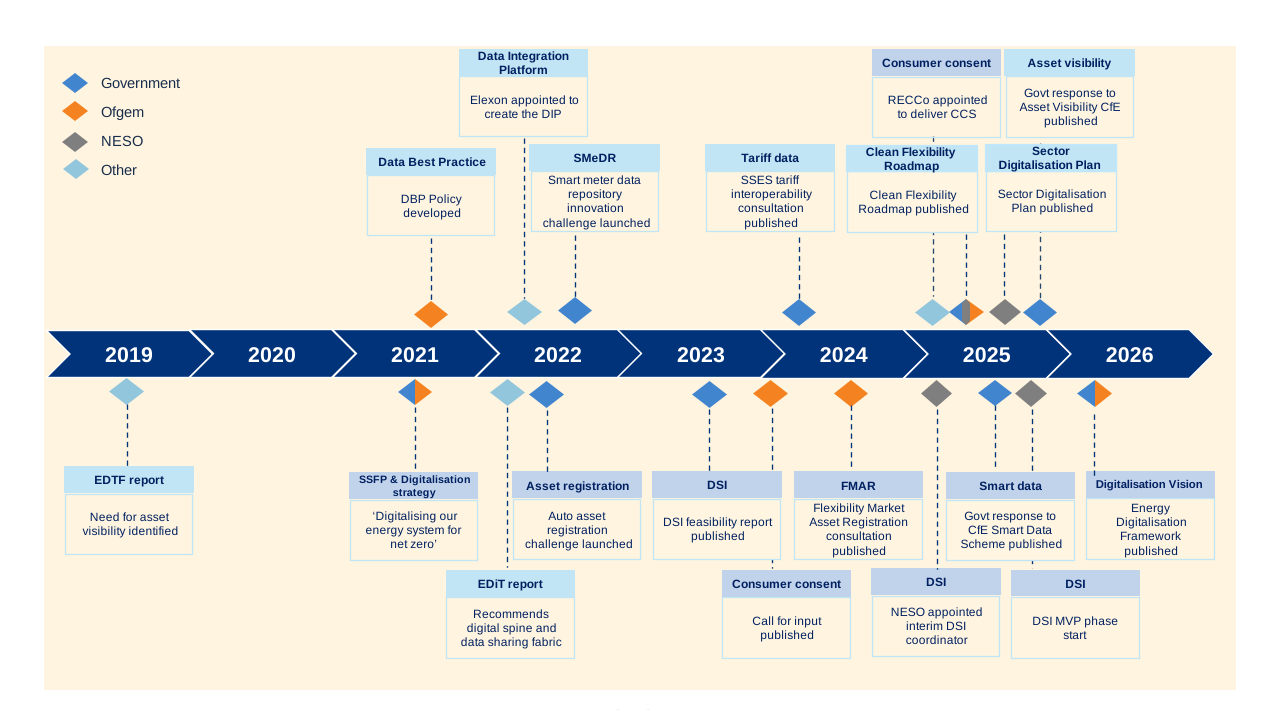
Many of the key digitalisation policy activities, projects and programmes are illustrated in Figure 1 below, which shows the level of activity undertaken in this space since 2019. Chapter 5 sets out the current digitalisation landscape in further detail.
Figure 1: Timeline of digitalisation policy and programmes
Existing benefits of digitalisation
Progress so far has established the building blocks for success. It has built momentum and is beginning to unlock early benefits for households, businesses, the energy system and the economy.
Consumer benefits
For consumers, digitalisation is offering the potential for greater control over their energy use and creating new opportunities for material savings. As better digital tools and improved access to data continue to develop, households and businesses will increasingly be able to monitor their consumption, understand their costs, and make more informed decisions about when and how they use energy. Increasingly, this responsibility is delegated to trusted third parties, who can optimise energy usage in real time, using AI and other tools, acting on behalf of consumers with their consent.
These capabilities are creating growing opportunities for consumer-led flexibility (CLF), where consumers can shift electricity use away from peak times to periods when supply is more abundant and affordable.
Advances in data availability and digital processes, through tools like smart meters, are making participation in CLF increasingly simple, automated, and accessible. Higher quality data and more efficient communication systems have been fundamental to the initial rollout of innovative tariff structures that support CLF, such as time-of-use tariffs. These tariffs help consumers identify when energy is cheapest, enabling them to optimise their usage, often without needing to actively manage it themselves. For example, an EV driver with a time-of-use tariff could potentially save £330 annually by smart charging overnight when electricity is more abundant.[footnote 13]
Along with government action to mandate smart capability in EV chargers, this is driving an innovative and rapidly expanding market for EV charging tariffs. Many of these tariffs manage charging on behalf of customers, using real-time energy data to optimise to the lowest price through automation.
The following case study demonstrates how enabling CLF allows consumers to increase the consumption they can shift, and the benefits this delivers.
Case study: Unlocking consumer-led flexibility
CrowdFlex is an innovation project that uses high quality data to empower households to shift their consumption patterns and be rewarded for doing so. CrowdFlex is led by NESO, funded by Ofgem’s Strategic Innovation Fund (SIF) and is the largest trial of CLF in GB, involving over 100,000 households. NESO has delivered CrowdFlex in partnership with the energy industry, network operators, technology providers and researchers.
CrowdFlex’s primary purpose is to unlock CLF by providing data that will help underpin NESO’s real-time forecasting models, helping to better predict how consumers respond to different types of events, enabling greater use of CLF in its markets.
CrowdFlex has also created an unprecedented opportunity to learn about domestic consumers’ experiences, responses, and attitudes towards flexibility.
Over three trial periods since 2024, CrowdFlex tested various methods to encourage domestic consumers to flex their electricity use, including financial and non-financial incentives, and both manual and automated participation. Results from these trials showed that financial incentives are effective in stimulating CLF, with automation helping participants shift 30% more electricity, suggesting that it presents an opportunity to support and enhance participation.
Habit formation also plays an important role and increases over time, with 73% of the availability trial survey respondents saying that the trials had become part of their regular habits.
Without digitalisation, these benefits will not be realised: consumers would have little real‑time insight or control over their energy use. Smarter tariffs and flexibility services would be out of reach, limiting chances to save money or benefit from cheaper, greener power.
Energy system benefits
Digitalisation is transforming the day‑to‑day operation of the energy system. Over the past decade, processes that were once manual, fragmented and slow - for example, in control rooms where routine actions required manual coordination - have become increasingly automated and data‑driven.
This ongoing shift has steadily improved both the quality of system data, such as asset locations and available capacity, and the speed at which that data can be shared and acted upon, improving forecasting accuracy and decision-making across the network. The RIIO price controls are facilitating investment in digital technologies, with Ofgem requiring increased digital capabilities from network and system operators.
Digital transformation is also enabling the use of artificial intelligence in system operations, with AI‑enabled tools able to analyse large volumes of operational and network data to detect patterns and anomalies to support decision-making in control rooms.
These capabilities have been critical to progress towards achieving our clean power mission. From early planning and connection to real‑time operation, growth in renewable capacity has relied on digital tools such as smart meters, flexibility platforms and open data portals that show network capacity and demand, manage complexity, improve system visibility and support accurate forecasting.
As renewable capacity has expanded, digitalisation has also facilitated the increase in flexible capacity, including batteries and small‑scale assets like heat pumps and domestic solar. By improving the visibility, controllability and market-readiness of these assets, digitalisation has made it easier for them to participate effectively in the system - for example, enabling domestic batteries to respond automatically to price or flexibility signals.
This flexibility supports growing renewable generation by balancing variability and keeping supply secure without relying on fossil-fuel-intensive generation. As digital capabilities advance, they can reduce the requirement for costly new infrastructure to meet peak demand, as well as the network reinforcement required to connect it.
Digitalisation helps manage overall system costs by enabling more efficient, data-driven operations - such as automating routine dispatch and constraint management - and reducing cost pressures that ultimately fall down to consumers. Strengthening digital capabilities now avoids the need for costly upgrades to legacy processes and systems.
Without digitalisation, day‑to‑day system operation would become increasingly strained as older tools fail to keep pace with rising complexity - leaving operators reliant on manual workarounds. The system would struggle to integrate growing renewable and flexible capacity, driving up costs and slowing progress toward a secure, decarbonised grid.
The following case study illustrates how improved visibility of real network conditions can address these challenges and reduce the costs caused by poor grid data.
Case study: Using real-time grid data to cut connection delays and costs
Yottar is an energy-tech startup building a digital twin of the electricity grid to improve visibility of grid capacity for asset developers. It works with a wide range of electricity network data aggregated across distribution and transmission networks.
By structuring information into a consistent digital model and applying automated power flow, Yottar provides repeatable and transparent assessments of where spare capacity is likely to exist on the network, where constraints are likely to arise, and how these conditions may change over time.
The platform is used by organisations including EV charging developers, large multi-site estates, and data centre developers to inform early-stage connection and siting decisions.
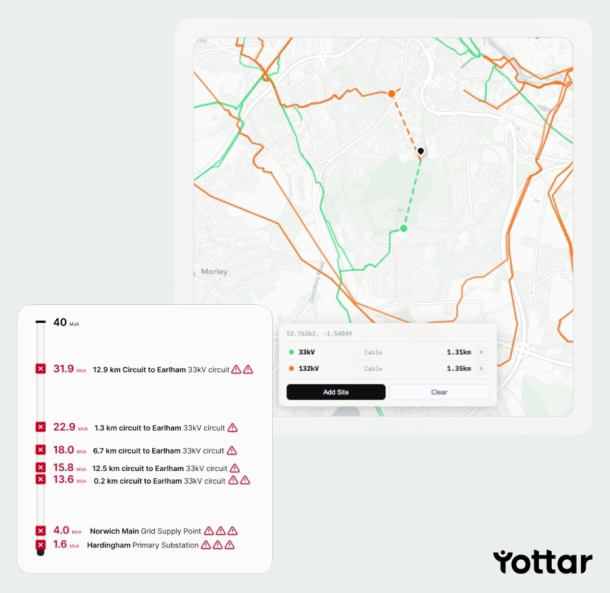
Yottar platform
Estimates suggest that poor visibility of grid capacity currently results in up to £4.7 billion per year of avoidable costs, driven by delayed or deterred investment, avoidable reinforcement, balancing costs, and wasted developer effort on non-viable projects.
Yottar’s approach aims to reduce these costs by giving developers clearer early-stage signals on how much capacity may be available, the timeframe, and the likely cost. This helps developers prioritise viable sites, reduces speculative applications to networks, and supports a connections process that is better aligned with actual network conditions.
Over time, the digital foundations created by Yottar’s model will support more optimised and coordinated siting and sequencing of demand, generation, and storage assets based on grid capacity.
Economic growth and innovation
Digitalisation is shaping the UK economy, driving innovation, productivity and investment across different sectors. New ways of using data can accelerate innovation, investment and productivity - creating new jobs, business models and services. The OECD estimates the data economy drives investments worth 3.0-6.7% of UK economic activity,[footnote 14] and it is estimated that wider data mobility across the economy could increase GDP by £27.8 billion.[footnote 15]
These opportunities are emerging in the energy sector, and there is strong long-term growth potential: by 2050, the domestic market for smart systems and flexibility could be worth up to £1.3 billion to the economy and create around 10,000 jobs.[footnote 16] Better access to high quality data is enabling new digital tools, services and business models, supporting a wider range of innovative propositions and greater market dynamism.
Additionally, innovations such as improved forecasting of system features - like generation and demand - and advanced energy management systems driven forward by AI optimisations are creating new commercial opportunities, and helping businesses operate more efficiently, contributing to a more diverse and competitive energy market.
However, challenges in accessing and using data risk slowing this growth potential. Data gaps and inconsistent interfaces - where key information is missing or provided through systems that do not speak to each other - create friction for innovators and new market entrants. Without accessible, reliable and interoperable data, these opportunities will remain only partially realised, limiting the development and scaling of new products and services and reducing benefits to consumers.
The following case study illustrates how digital tools and AI are already creating economic value by reducing operational costs and enabling new, scalable services.
Case study: Using AI and digitalisation to improve asset monitoring and reduce operational costs
Keen AI is a technology company that uses machine learning techniques to help asset owners monitor critical energy infrastructure, more accurately and efficiently than using traditional inspection methods. Network operators have historically relied on fieldwork to perform visual assessments, which is time-consuming, costly and can be risky for inspectors.
Remote imaging from satellites, drones and other sensors can help reduce the amount of site visits needed, but manually analysing large volumes of images is not feasible at scale. Keen AI has created AI systems which can process these images rapidly, consistently and at much greater scale.
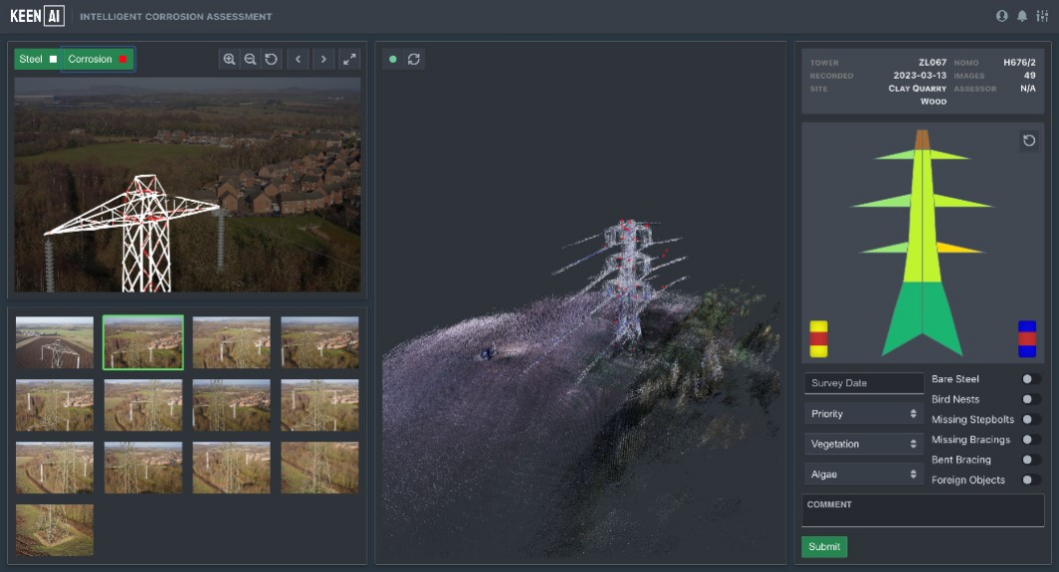
One of Keen AI’s systems showing tower condition grading.
Example applications of this technology include mapping utility infrastructure, remotely monitoring the roof condition of DNO-owned buildings, detecting high risk distribution poles or corroded pylons, and generating high resolution asset inventories. This helps asset owners generate a more accurate picture of the location and state of their assets, supporting more informed decision-making while reducing operational costs, improving safety and enabling proactive maintenance.
To fully realise the benefits of these kinds of innovations across industry, the outputs from systems such as Keen AI need to be standardised and interoperable. Consistent data formats would make it easier for asset owners, network operators and service providers to integrate analyses from different digital tools, scale their use across systems, and capture the wider benefits of digitalisation.
What’s missing today
Despite the significant progress towards digitalising the energy system, and the promising potential benefits of that, much of this activity has developed through standalone projects operating largely in silos. This has created a complex picture of high activity but low coherence - for example, the development of overlapping consumption data repositories. Initiatives are being developed and governed at scale, but without a coherent overarching framework to guide how they fit together.
This difficult to navigate landscape means there are increasing risks of inefficiency, duplicated effort and spend, and inconsistent approaches and standards. Stakeholders have highlighted that this siloed and fragmented development has contributed to unclear boundaries of responsibility between organisations operating across the sector, with limited clarity on how initiatives interconnect or who is responsible for what.
Significantly, these gaps, overlaps and uncertainties limit our ability to fully unlock and deliver the benefits of digitalisation. They also limit the potential to utilise innovative technologies like AI-enabled tools to optimise system operation and, most significantly, risk creating a system that is more costly, more complex, and less efficient.
We are now at a crossroads: without action, the progress made so far risks being undermined. To protect that progress and unlock the full benefits of digitalisation, we need a coordinated, interoperable approach underpinned by common standards. This work must begin now, as delaying action will only make misalignment more costly and difficult to resolve. Chapter 5 sets out the challenges and risks in the current landscape.
Purpose of the framework
This Energy Digitalisation Framework, referred to as ‘the vision’ throughout this document, marks a new phase in delivering a coordinated and connected energy system. The government and Ofgem are taking focused action to set a clear trajectory for sector-wide alignment, building on industry’s progress to date.
We are setting out a clear plan and governance framework bringing together the core components of a digitalised energy system and ensuring they operate seamlessly to deliver a smooth user experience. In doing so, this document provides clarity for all stakeholders, setting out their roles in digitalisation and how they contribute to our end goal.
The vision is the start of this journey: setting direction and outlining the key steps ahead, while recognising that sustained effort will be needed to embed its principles and ensure its intent endures over the long term.
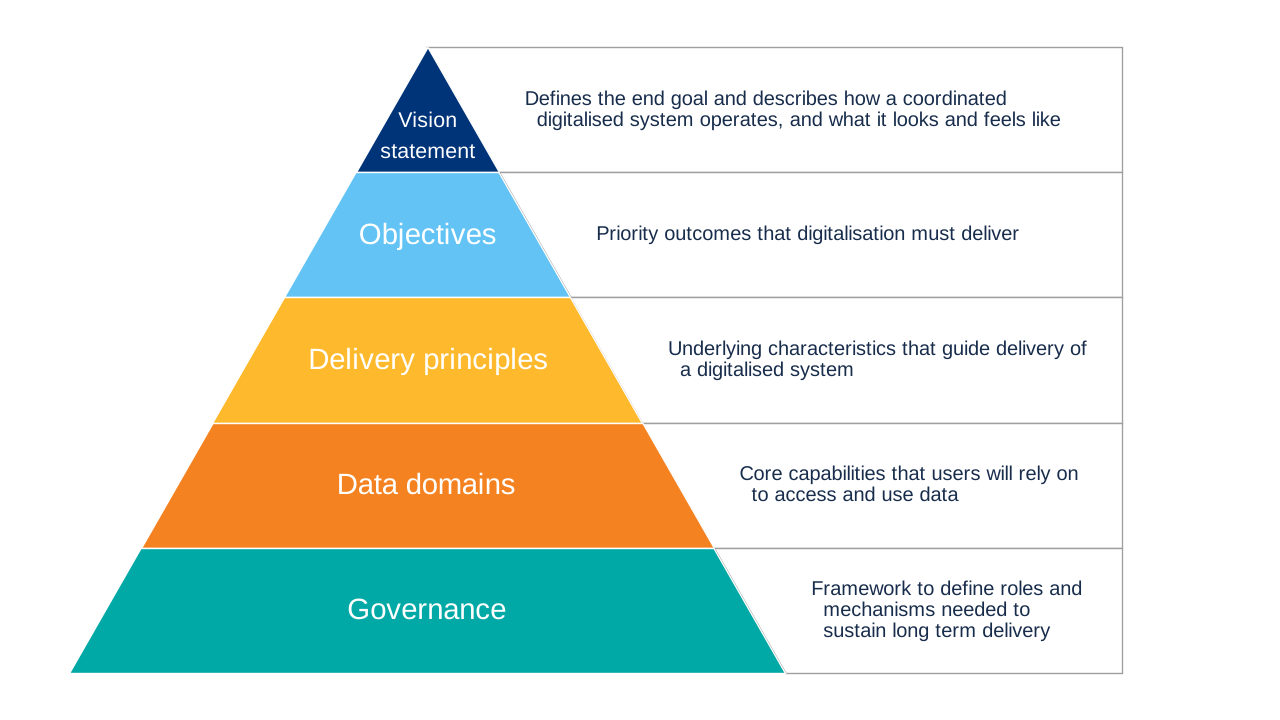
To support delivery, the framework contains a clear set of components to provide clarity, alignment and actionable delivery. This structure makes clear the end goal, the route to get there, and the rules, roles and responsibilities needed to support effective delivery. This structure is outlined in Figure 2 below.
- Vision statement: Defines the end goal and describes how a coordinated digitalised system operates, and what it looks and feels like.
- Objectives: The three priority outcomes that digitalisation must deliver.
- Delivery principles: The underlying characteristics that will guide delivery of a digitalised system.
- Data domains: The core capabilities that users will rely on to access and use data.
- Governance: The framework that defines roles, decision-making responsibilities and the mechanisms needed to sustain delivery over the long term.
Figure 2: Energy Digitalisation Framework: Scope and structure
2. Vision statement
In this section, we set out our vision for a digitalised energy system. Having established the importance of digitalising the energy system, along with the current challenges created by today’s fragmented landscape, there is a clear need for strategic direction and leadership from the government and Ofgem.
To provide this direction, we have developed a vision statement. The vision statement is designed to be a standalone reference point for the energy sector, providing a consistent basis for delivery. Its purpose is to clearly set out what the future energy system must look like from a digital perspective, how it should operate, and how it should feel to users and consumers.
Our vision
An energy system built on secure, interoperable and informed sharing of data, driving efficient system planning, real-time responsiveness, and innovation in new and improved services for consumers.
Why digitalisation matters
Digitalisation is essential for a more efficient and secure energy system and is a foundational driver for achieving clean power by 2030 and net zero by 2050.
We are already rapidly shifting away from fossil fuels, with consumers increasingly opting for clean technologies such as heat pumps, EVs, and solar panels. As the energy system becomes increasingly complex, digitalisation is the critical enabler that helps all energy system actors, including consumers, access the data and services they need to successfully navigate and manage it at the least cost.
Digitalisation helps lower system costs by:
- Making it easier to shift energy usage to cheaper off-peak times, reducing the need for network upgrades and additional generation capacity.
- Improving visibility and control: real-time data and automation helps optimise system operations and processes.
- Reduced infrastructure costs: better visibility of the network and its assets reduces the risk of underutilisation and overinvestment.
Delivering a coordinated digitalisation programme
As set out in the Clean Flexibility Roadmap, industry has already made excellent progress on digitalisation over the last five years, with a range of initiatives underway that will deliver significant benefits for consumers, as well as the wider system. However, the landscape is fragmented and complex, with duplication, gaps, and systems that are not interoperable. This has created confusion, with barriers to participation and innovation.
The government and Ofgem will lead a coordinated approach to digitalisation. We will define the roles and responsibilities between government, Ofgem and the key delivery organisations, while providing the policy and technical framework for a coherent, coordinated and connected digitalised system.
3. Objectives
In our vision statement above, we define the end goal for digitalisation of the energy system. To translate that ambition into focused progress, we need to be clear about the specific outcomes that digitalisation must deliver for consumers, the energy system and wider economy.
In this section, we define three objectives that reflect core organisational outcomes and the role of digitalisation in delivering those outcomes. Together, these objectives provide a clear bridge between our overarching strategy direction and the detailed delivery approach that follows in later sections of this document.
Objective 1: Giving consumers greater control and choice in how they engage with the energy system
Digitalisation must:
- Give consumers greater control and simplify consent to share their energy data - enabling access to personalised products, high quality services and clearer routes to find the best deals and save money.
- Support consumers to make informed choices.
- Facilitate consumer trust and confidence through strong security and transparent use of data across the energy system.
Objective 2: Delivering the UK’s decarbonisation goals cost-effectively while ensuring the system is secure and resilient during the transition
Digitalisation must:
- Drive the delivery of the 51-66GW of flexible capacity required to enable clean power and net zero.
- Secure supply by enabling the deployment of low carbon technologies and flexible capacity. This reduces reliance on fossil fuel generation, limiting the impact of price spikes, and strengthening system reliability and resilience.
- Improve the quality, transparency and communication of energy data, enhancing the efficiency of network planning, government policy-making, and ensuring the security and stability of day-to-day and second-by-second system operations.
- Improve visibility of supply chain risks and constraints to support secure and timely delivery of low carbon technologies.
- Have security and resilience embedded in its design to safeguard critical infrastructure, protect against cyber and physical threats, and ensure that digital systems continue to operate reliably as the system becomes more decentralised, data‑driven, and automated.
Objective 3: Driving economic growth and accelerating innovation and investment in the energy sector and beyond
Digitalisation must:
- Stimulate increased market competition by unlocking more innovative propositions and business models from increased data access.
- Remove barriers to entry for innovative firms to use data in innovative ways to deliver system-wide value, ultimately benefitting consumers.
- Accelerate investment into the sector by unlocking the growth potential of the wider data economy.
- Increase availability and interoperability of energy data to support cross-sector use cases and wider value across the whole economy.
- Create the foundations for the widespread adoption of AI in the energy system and beyond, enabling further transformational benefits.
- Enable new job opportunities across the energy sector and wider economy by creating demand for digital skills.
4. Delivery principles
The objectives set out in the previous chapter describe the outcomes that will guide progress towards our vision. This section sets out the delivery principles that must shape the design and implementation of all digitalisation programmes. These principles complement the objectives by defining the core characteristics the system must embody - and that all organisations must champion - as they deliver our expectations for digitalisation.
These principles are essential for ensuring that our vision is delivered in a way that maximises benefits for consumers, the economy and the energy system. We recognise that applying them may sometimes require organisations to balance different considerations, but all principles must remain integral to how digitalisation is delivered.
Principles
A coordinated and coherent digitalised energy system must be:
- Trusted and secure: Prioritise the security and protection of consumer and system data to protect our national infrastructure and generate high levels of consumer trust.
- Interoperable: Interoperable by design, using common, open and recognised data standards and protocols across the energy system and beyond, aligning with wider UK economy and international data sharing frameworks where relevant.
- Simple, accessible and user friendly: Simple processes for both energy consumers and other system users, enabling easy understanding, access and use.
- Responsive and future proof: Responsive to planned system transformation, while adapting and evolving dynamically to support future applications and use cases.
- Efficient and cost effective: Delivery that maximises efficiency and minimises cost, with interventions that drive maximum value for energy consumers, avoiding duplication and commercial capture, and leveraging existing assets where possible.
- Innovative and competition driven: Enabling new and existing firms to develop new products, services and business models in the energy sector and the wider economy.
- Deliverable: Programmes must be practical, achievable and delivered in a timely manner, ensuring that consumer and system benefits are realised without unnecessary delays or costs.
5. The current digitalisation landscape
The landscape today
Before setting out our approach to deliver our aims and objectives, it is important to establish a clear picture of the current system, the challenges within it, and the risks that could emerge if these challenges remain unaddressed.
Today, the operational model is largely initiative‑led, with numerous digitalisation projects being developed independently, led by different delivery organisations and progressing in parallel to each other. These initiatives have been successful in beginning to unlock early benefits, including improved data access and exchange, and are laying critical foundations for smarter system operation and increased consumer participation in digitalised products and services.
However, as this progress has developed rapidly across multiple fronts, the overall landscape has become increasingly complex. The system now reflects high levels of activity but low coherence, with limited clarity around how different programmes and systems interconnect or where specific roles and responsibilities sit.
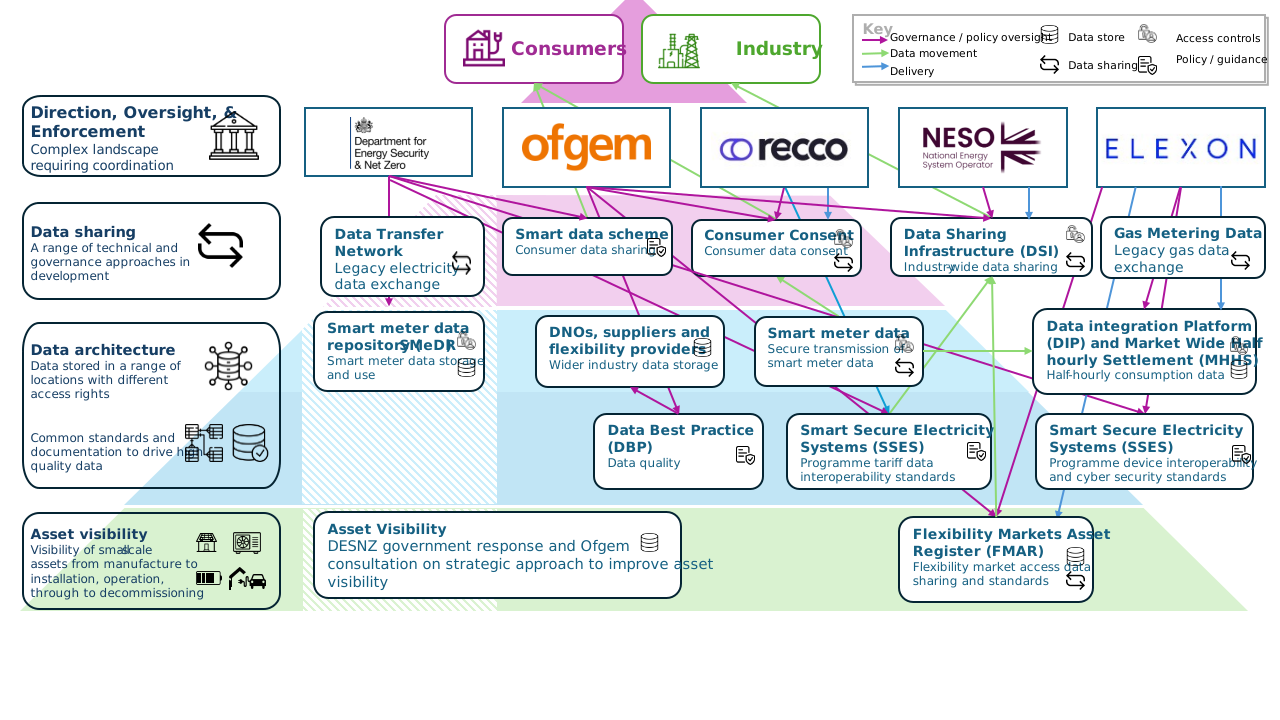
Figure 3 illustrates this complexity, mapping the current key digitalisation projects across the energy system. It shows overlapping initiatives across themes such as metering data, data sharing and governance, and shows many actors operating across multiple areas simultaneously.
Figure 3: The current GB digitalisation landscape
Challenges
The complexity of the current GB digitalisation landscape (illustrated in Figure 3 above) is already creating challenges that reduce the efficiency and effectiveness of our digitalisation efforts across the energy system. This includes:
Fragmentation and silos: Many initiatives are being designed and delivered as standalone projects. Stakeholders report uncertainty about how components relate to one another, and critically, who is doing what. This creates duplication, gaps and inefficiency across policy, standards and delivery, and makes the system harder for users to engage with.
Interoperability gaps: The absence of a common technical architecture, defining the system components and how they interact, and a shared standard setting approach with clear responsibilities across data domains, means emerging platforms risk not working effectively together. For example, DSI and CCS are currently progressing on different technical and trust framework paths.[footnote 17] Without coordinated action, this divergence may lock in incompatibilities and increase near‑term complexity and costs for system users.
Data standard gaps and data quality issues: There are notable gaps and inconsistent interfaces across initiatives, where key information is either missing or shared through systems that do not communicate with each other. Unless addressed, as data access widens, poor or inconsistent data quality will propagate more widely.
Ambiguous governance and informal coordination: Today’s landscape largely relies on ad-hoc mechanisms rather than a formal, enduring governance model. This limits the system’s ability to align standards, orchestrate delivery across domains and resolve crosscutting issues.
Risks
Without action the challenges above could materialise into sustained risks to delivery and to the benefits that digitalisation can provide. The potential emergent risks are detailed below.
Rising duplication and cost: Without stronger coordination, overlapping capabilities and duplicative processes could grow, increasing total system cost and confusion for system users. Fragmented accreditation, parallel data catalogues and multiple gateways to access data and systems risk embedding operational inefficiency for years to come.
Security and resilience exposure: As data access widens across a patchwork of platforms and standards, inconsistent security and assurance practices elevate privacy and cyber risks. Rebuilding consumer trust after an incident would be slow, difficult and costly. Prevention requires baseline alignment of security requirements and accreditation across the ecosystem.
Locked in non-interoperability: If current divergence persists, technologies and standards between foundational components (e.g. DSI and CCS) could become entrenched. Early decisions made in isolation may foreclose future options as volumes of data, use cases and participants scale. Once embedded, later attempts to converge these systems would be expensive, disruptive and potentially infeasible.
Poorer experiences and lower participation: A multi-gateway, multi-standard ecosystem makes it harder for consumers, industry users and innovators to engage with a digitalised system. This will reduce the range of products and services available, constrain uptake of consumer-led flexibility, slow the emergence of new business models and weaken trust in data governance and protections.
Slower progress toward energy system transition: Fragmented data, inconsistent standards and uneven access impede whole‑system planning, flexibility markets and operational efficiency. Left unaddressed, these frictions risk delaying or diluting the contribution digitalisation must make to a secure, flexible, lower‑cost system.
Summary
Reflecting on the current landscape, the energy sector has moved decisively and at pace to digitalise core functions, and that momentum has created real value. However, the current approach of high activity has significant gaps and challenges. The system is already complex and without action we now risk exacerbating that complexity.
To protect the progress already made and unlock the full benefits for consumers, the economy and the system, we must act now. A coordinated, interoperable approach underpinned by common standards is essential.
6. Data domains
So far, we have established the strategic direction of where we need to get to, how this aligns with our key objectives and what the future system should look like. We have also highlighted the significant work already underway across digitalisation projects and programmes around core thematic areas of the energy system and its data.
In this chapter, we shift from high-level narrative to the tangible changes required for delivery. We are establishing a data domain model for the energy system. This sets out streamlined, user-facing functions designed to tackle current system challenges directly, and prevent them from becoming long term risks to delivering consumer, system and economic benefits.
What needs to change
As set out in the previous chapter, the current landscape of siloed initiative-led progression has created significant challenges, such as fragmentation and ambiguous governance, and gaps including interoperability, standards and data quality.
These challenges and gaps mean that system users often have to navigate multiple data sources, governance layers and onboarding processes simply to access standard datasets - only to receive information that is inconsistent and not aligned to common standards.
To deliver the vision in line with its principles, and prevent today’s challenges becoming long-term embedded problems, we need a shift away from an initiative-led approach and towards a more coordinated, domain-led model. This shift must begin now, so we shape direction proactively, rather than undertake costly and inefficient realignment later.
Reflecting this shift in perspective requires greater coordination on a technical level, for both the delivery bodies on the ground, and the infrastructure that will facilitate data exchange.
The data domain model
To ensure effective technical coordination between delivery bodies, we are establishing domain coordinators.
A data domain is a defined category of related energy data, based on logical groupings of similar activities in the current landscape such as asset data. Each data domain will have a designated domain coordinator responsible for setting consistent data standards within their allocated domain, for driving coherence (alignment and compatibility) both within their domain and cross system (by coordinating with the other domain coordinators), ensuring data quality, operational reporting, and for simplifying access to that domain data.
As illustrated in Figure 4, we have established four initial data domains and assigned a coordinator for each, with the agreement of the relevant body. These cover the core areas of activity already underway, supporting a broad range of use cases and spanning the end-to-end energy value chain.
Figure 4: Domain coordinators and bodies leading digital infrastructure
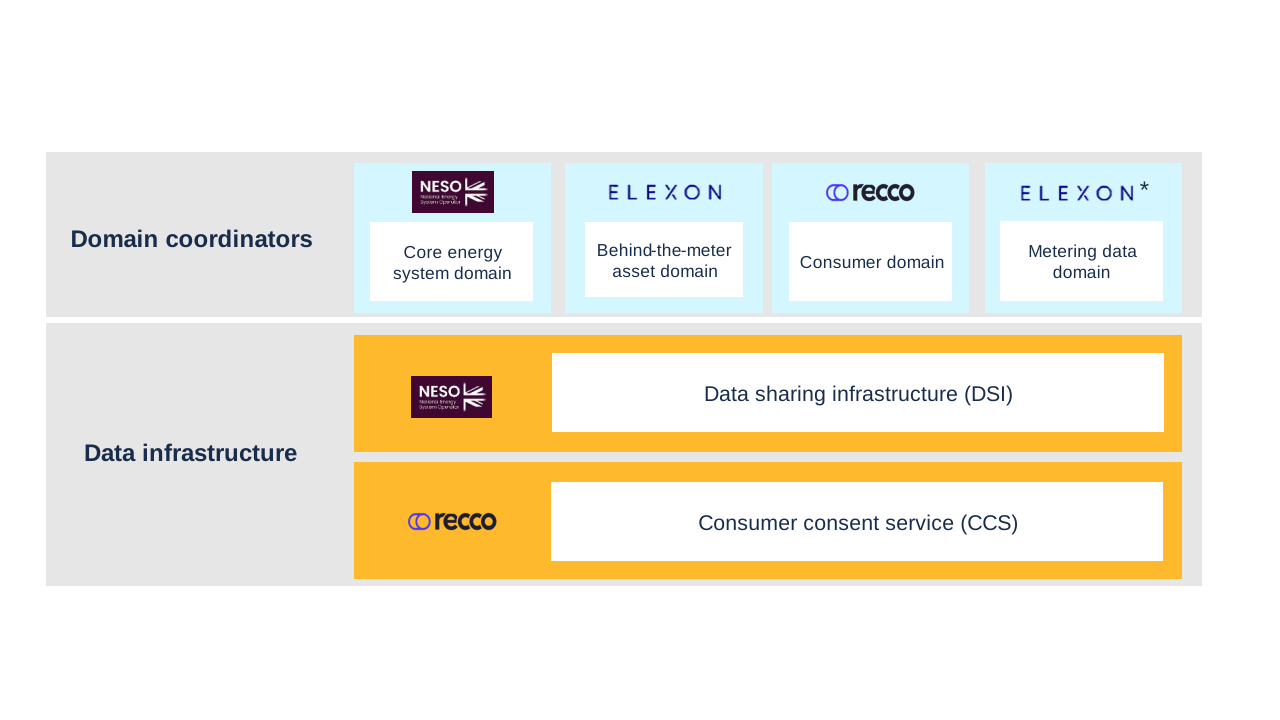
*Appointment of Elexon as Metering data domain coordinator is provisional
We have assigned domain coordinators based on the role of the relevant industry body in current digitalisation activity, its ability to deliver regulatory code changes, and the ability for government or Ofgem to embed these roles as required.
1. Core energy system service domain
Types of data
- Operational and systems data including network operational data, systems conditions, grid status and data used to support balancing and contingency planning.
- Asset, technical, and infrastructure data including technical asset characteristics, locational and capacity data, and infrastructure metadata.
- Planning and forecasting data including long term strategic planning data, system forecasting data, electricity and gas modelling data, and outage planning data.
Responsible organisation
We are assigning this domain to NESO, given its access to most of this data through day-to-day operational and planning responsibilities across electricity and gas. NESO is developing DSI, which will already coordinate sharing of much of this data. NESO is a regulated, not-for-profit body at the centre of the energy sector that is well placed to undertake this task.
However, NESO will need to work closely with Distribution Network and System Operators to manage distribution-level datasets and build the expertise required to coordinate data at that level. Its current Regional Energy System Planning (RESP) responsibilities already align with this role.
2. Behind-the-meter asset domain
Types of data
- Core static asset data including asset type (e.g. heat pump, EV chargepoint), technical specifications (e.g. capacity, rated power), connection characteristics (e.g. phase connection).
- Locational data, including premise level location and network level location.
- Ownership and registration data including asset owner, installer identity and certification, date of installation, standards compliance, market registration (such as FMAR).
- Operational data including, usage profiles and demand response capability, state of charge (where relevant) charging patterns, availability for flexibility markets, and response characteristics.
Responsible organisation
We are assigning this domain to Elexon, given its key role in flexibility markets, the development of the FMAR programme and SSES programme governance relating to energy smart appliances. However, this does not mean that we expect Elexon to hold additional asset data directly.
We maintain the crucial role of DNOs in improving asset visibility. The operational design of this domain will be heavily influenced by government’s overall approach, and Ofgem’s current consultation on enhanced asset visibility that is exploring how DNOs hold and share asset data.[footnote 18] Depending on consultation outcomes, it is possible that Elexon’s role as the domain coordinator may need to be revisited.
3. Consumer domain
Types of data
- Consumer consent information.
- Tariff data including core tariff price data, tariff ID, supplier ID, consumer cost information such as standing charges, and eligibility information like meter type requirements.
- Switching data from the Central Switching Service (CSS) and account information.
All of this data is highly sensitive and so will need to be protected by robust consumer consent protections.
Responsible organisation
We are assigning this domain to RECCo, given its central role in the retail energy market, its ownership of the consumer consent service (CCS), its appointed role in tariff interoperability, and its oversight and assurance of the central switching service (CSS).
The consumer domain coordinator must ensure that a digitalised energy system enables simple and accessible consumer journeys that also support high levels of consumer trust. Provision and management of consent at the point of engagement for the consumer is key to balancing trust with convenience.
4. Metering data domain
Types of data
- Metering data, including meter reads and consumption for electricity and gas meters (domestic and non-domestic) and subsidiary supporting metering data.
Responsible organisation
We are provisionally assigning this domain to Elexon, given its access to core datasets via the Data Integration Platform (DIP) and its development of the Smart Data Repository (SDR). Elexon will need to work with other parties to ensure that gas metering data is made available as part of the metering domain.
We are aware of overlaps between the SDR programme and the Smart Meter Data Repository (SMeDR) work undertaken previously by the Data Communications Company (DCC). Our provisional appointment of Elexon does not presuppose a decision of the interaction and future of those technology programmes, which will be subject to the governance arrangements outlined in the next chapter. Pending the outcome of that decision, it may be required to revisit the responsible organisation for the metering data domain coordinator role.
Responsibilities for all domain coordinators
In addition to the above, domain coordinators must collaborate with relevant stakeholders and build on existing standards and guidance.
While some domain coordinators may have or be developing data repositories, this new role does not imply a decision for greater centralisation of data. The domain coordinator role is not to hold data directly, but to coordinate across stakeholders, many of which will hold data directly in decentralised systems.
To ensure system‑wide standardisation, domain coordinators must apply agreed standards within their own domain and collaborate to maintain interoperability and coherent system-wide delivery. This ensures a more streamlined system that operates in a coordinated and formalised way.
Summary
The domain coordinator function will allow industry bodies to continue delivering their existing functions, while taking on additional responsibilities to address gaps in the current system, particularly on data standards and interoperability. The government and Ofgem will continue working with these bodies to further define the function.
Infrastructure coordination
While the domain coordinators provide technical coordination across delivery bodies and data holders, we also need clear coordination of the digital infrastructure that will enable data exchange. Standardisation must be driven consistently through the bodies delivering this infrastructure - primarily NESO through DSI, and RECCo through CCS. Both programmes have made significant progress, but further action is required to ensure they operate as a coherent system that reflects and upholds our principles.
Both DSI and CCS require a trust framework to ensure that processes and participants meet security and identity requirements. A trust framework is the agreed set of rules, standards, processes and assurance mechanisms that governs how organisations securely access, share and use data within digital infrastructure. At present, NESO and RECCo are developing separate trust frameworks and are in the early stages of understanding how to make their solutions interoperable, working through existing governance structures.
There remains a risk of a lack of interoperability that would undermine our ability to deliver government’s objectives. It creates uncertainty for the sector and increases the risk of fragmented user journeys, duplicative governance and unnecessary system complexity. Alignment is essential to create a single, seamless user experience and a consistent set of rules for data access across the system.
DSI and CCS each play critical and complementary roles, but the value they provide will only be realised when they operate as a coordinated, interoperable system. For this reason, the government and Ofgem are setting the expectation that the two frameworks must achieve full interoperability in the short term. This is not optional - it is a requirement for delivering our vision and ensuring the system develops in line with our principles.
We expect full interoperability across three layers: technical interoperability, common accreditation, and common standards and processes. In the longer term, options for further infrastructure integration will be assessed at a later stage.
Figure 5 shows the expected high-level relationship between DSI, CCS, and the data available in each domain. We expect all data made available as part of digitalisation programmes currently underway, and those yet to be commissioned, to be made available via DSI.
Consumer data requiring consent (or permission) must interact with CCS to ensure common approaches and a single, consistent view of consent and permissions for all consumers (both domestic and non-domestic).
Figure 5: The relationship between infrastructure for data sharing and domain coordinators
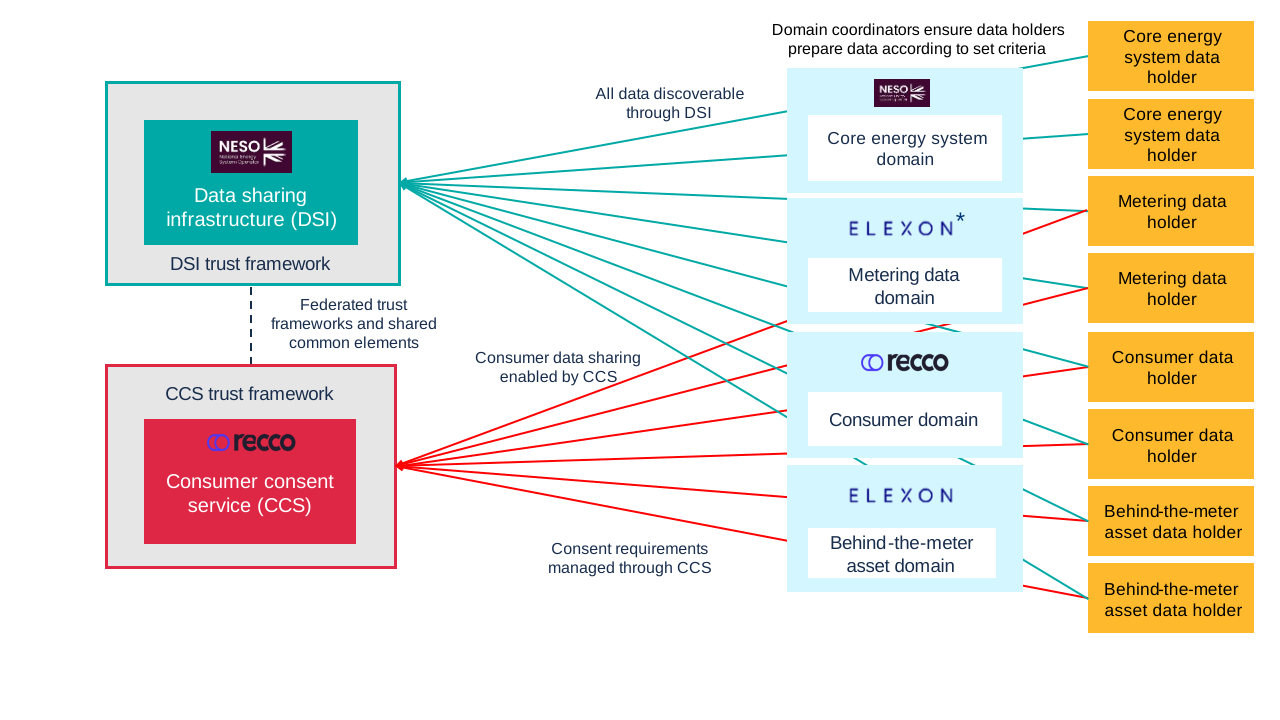
*Appointment of Elexon as Metering data domain coordinator is provisional
Delivering interoperability
We recognise that delivering full interoperability will take some time to plan and implement, and we do not expect immediate delivery. RECCo and NESO should work together to define how their systems interoperate while mitigating impacts on delivery. However, interoperability between the frameworks must be treated as an essential design requirement going forward, and the government and Ofgem expect alignment work to begin without delay.
While undertaking this work, NESO and RECCo should be cognisant of the three layers of interoperability (in order of priority):
- Interoperability within the GB energy sector: This is our first priority, to be delivered as soon as reasonably possible.
- Interoperability between the GB energy sector and other sectors of the economy: This is expected to deliver significant additional value to consumers and the economy, and should inform design decisions.
- International interoperability: We should consider adopting relevant international standards to support cross-border data sharing and lower barriers for innovators developing products and services for export.
Figure 6: Types of interoperability
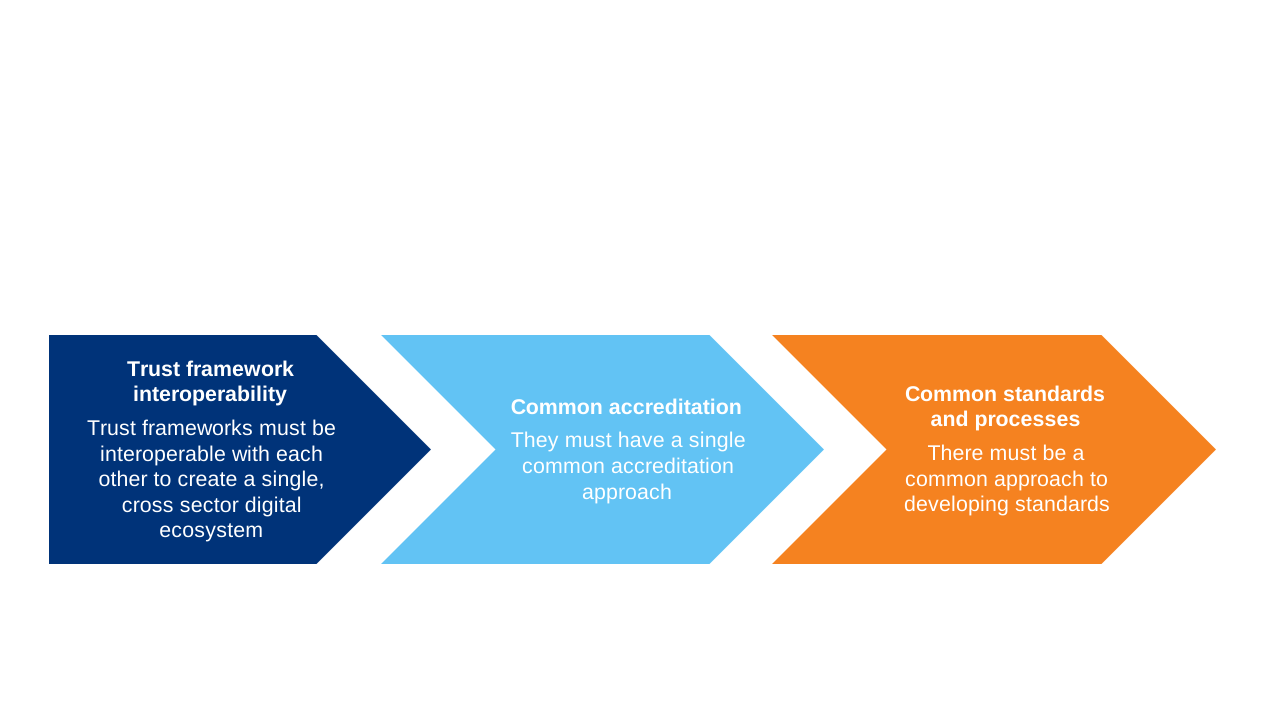
Interoperability is not only the technical ability for systems to interface, but the full alignment of common processes and standards. Figure 6 shows the three areas of interoperability and the standardised approaches that industry must consider individually and collectively. These are: trust framework interoperability (as discussed in the section above), common accreditation processes, and consistent approaches to data standards, technical standards, and core technical components.
7. Roles and responsibilities
Having defined data domains and the role of domain coordinators, this chapter considers the wider set of actors required to deliver the vision. It provides further detail on the roles of domain coordinators, introduces the digitalisation coordination function, and defines the roles of government and Ofgem. Together, these roles will create the stable, sector‑wide enduring framework that will support delivery and embed long‑term adherence to our vision.
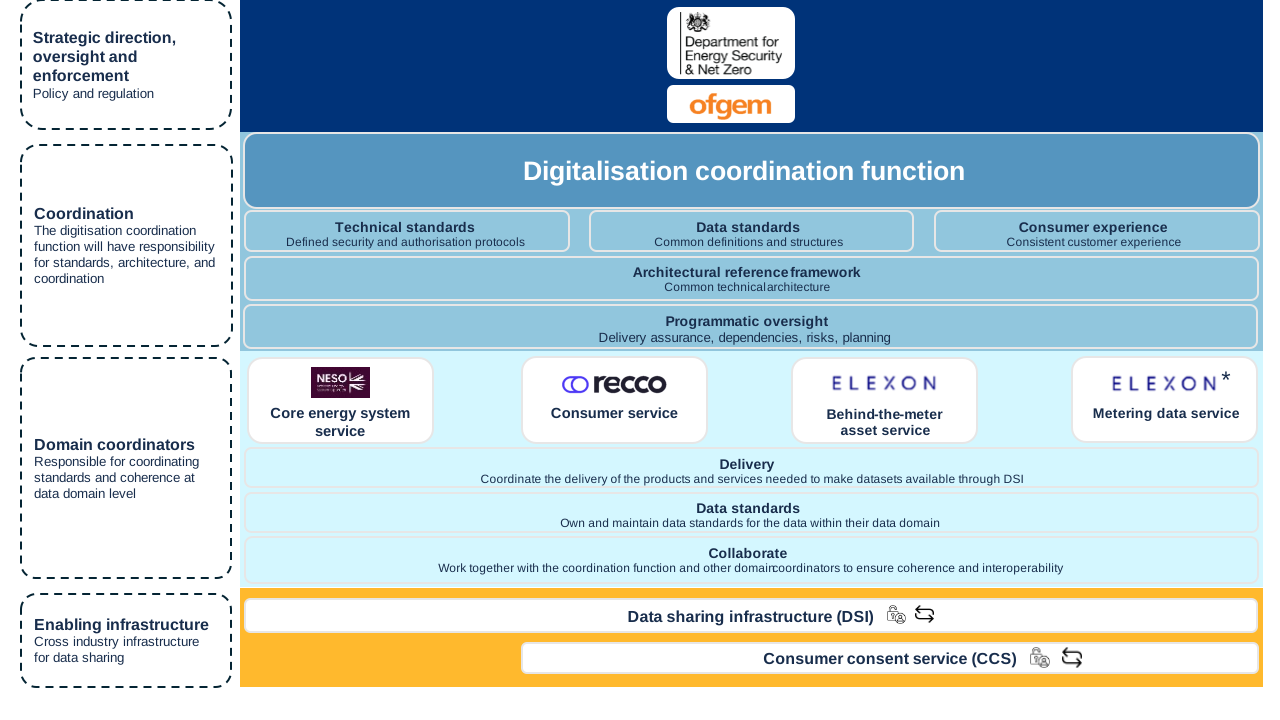
Figure 7 illustrates this enduring framework. At its core are two new organisational roles: the digitalisation coordination function and domain coordinators. In the following sections, we discuss the purpose, roles and responsibilities related to the different layers shown in Figure 7.
Figure 7: Enduring digitalisation governance framework
The respective roles of government and Ofgem
The government and Ofgem provide the policy and regulatory landscape for a digitalised energy sector. To provide clarity and avoid overlap between the government and Ofgem’s roles, we set out a summary of these roles below.
Alongside delivering government’s key digitalisation programmes such as the SSES Programme and smart data policy development, DESNZ is the strategic policy owner for the Energy Digitalisation Framework. DESNZ sets the overall direction for energy system digitalisation, providing the mandate for action where necessary, and aligning energy digitalisation with wider government objectives.
Ofgem’s role is focused on implementation and regulatory delivery, ensuring that digitalisation progresses in line with regulatory requirements, overseeing compliance and enforcement, and managing any regulatory changes needed to progress digitalisation initiatives. Ofgem also helps inform government’s long-term strategic development.
To ensure cohesion between these two distinct digitalisation roles, DESNZ and Ofgem will continue to communicate and collaborate through the governance mechanisms detailed in chapter 8. Further detail on DESNZ and Ofgem’s roles and responsibilities can be found in Annex A.
Digitalisation coordination function
At the centre of this enduring framework is the digitalisation coordination function (see Figure 7 above). This is a technically competent, independent entity responsible for shaping and maintaining the sector’s overarching digital architecture. It fills the current governance gap by acting as the link between government’s strategic oversight and the work of the technical delivery bodies.
The digitalisation coordination function will offer authoritative guidance on an overarching architecture, technical standards, data models, interoperability requirements and the sequencing and interdependencies of digitalisation initiatives. We see this as the fundamental role for the coordination function now, but given there are parallel developments elsewhere in the sector, the coordination role may need to develop and expand in scope.
DESNZ will consult on the form, roles and responsibilities of the digitalisation coordination function by the end of 2026. Further detail on the function’s expected responsibilities is provided in Annex A. The digitalisation coordination function will require an appropriate mandate to carry out these responsibilities successfully. However, the form of this mandate will be subject to consultation, as it depends on whether a new or existing body takes on this role.
Domain coordinators
In the enduring framework, domain coordinators have clearly defined remits to work together within a common architectural framework coordinated by the digitalisation coordination function. Their role is to deliver standards and coherence in line with the common approaches determined by the coordination function in their domains, and ensure that system users experience a consistent, streamlined pathway for accessing and sharing data.
In addition to the current domain coordinators - NESO, RECCo and Elexon - we expect that there will be a need to identify and mobilise additional domains as our digitalised energy system expands into new areas and unlocks new use cases. The decision to assign new data domains or domain coordinators will be made by DESNZ using the governance structures outlined in the next chapter.
8. Governance framework
With the core actors and their roles now defined, this chapter sets out the governance required to enable effective, whole system coordination. While the roles and responsibilities above describe the fundamental features needed to deliver the vision, this chapter takes a whole‑system view of how they fit together in practice.
First, we define the core components of the enduring governance framework required to deliver the vision, followed by the immediate steps (Phase 1) required to achieve coordination in the short term.
Enduring framework: Phased approach
While the enduring framework shown in Figure 7 above resolves today’s challenges and delivers our vision’s aims, achieving this state will take time. Establishing the digitalisation coordination function will require sector-wide engagement through consultation and related regulatory change to appoint the function and define its scope and activities. Once completed, a period of mobilisation will be required before the function becomes fully operational. We expect this process to take 2-3 years, though this will depend on whether a new body is created or an existing body is appointed.
During this period of design, consultation and mobilisation, the sector must continue to develop the foundational elements of the digitalisation landscape, many of which are scheduled to go live in the next 1-2 years. These initiatives are critical to enabling our broader objectives and cannot be delayed. However, in the absence of a coordination function, we want to ensure these components are developed in a coordinated way to avoid embedding incompatibilities, duplication and long-term cost.
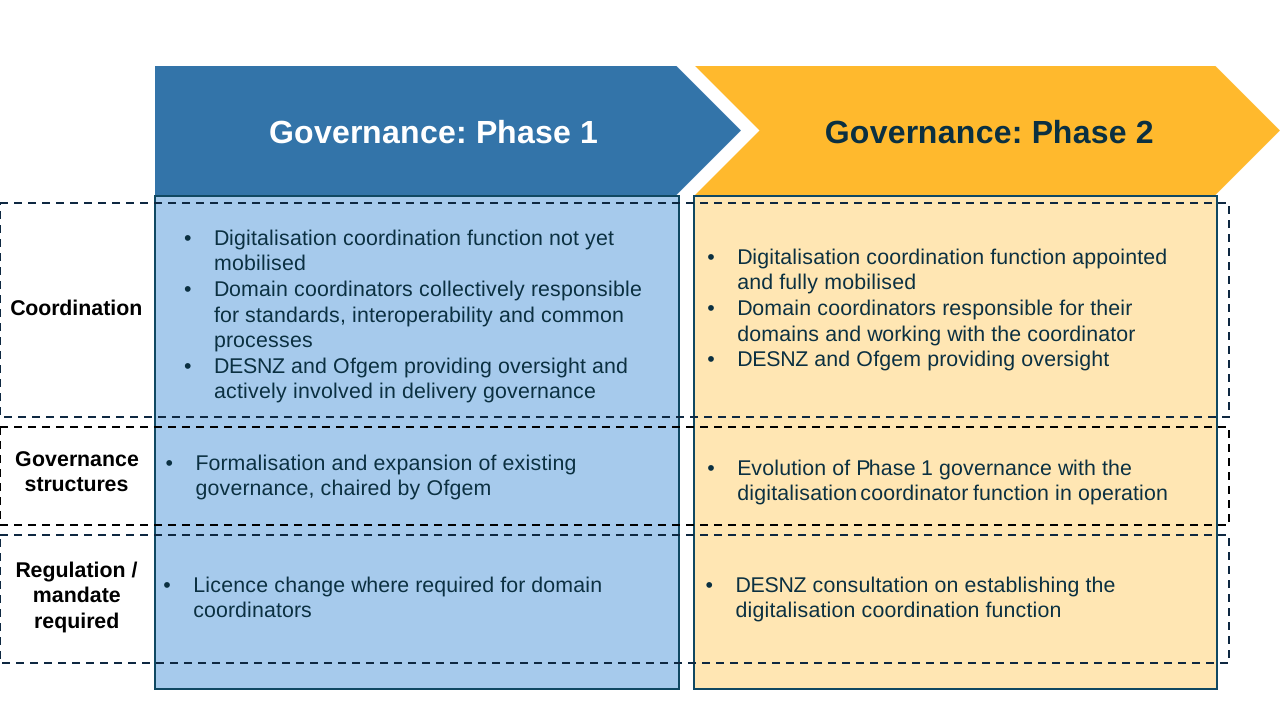
We are therefore taking a phased approach to provide clarity now, guide near-term decisions, and ensure that short-term actions do not undermine the enduring framework we are working towards. This phased approach is outlined in Figure 8 below.
Phase 1 (near-term): Introduces a more organised and coherent system built on the bodies already delivering digitalisation today. During this phase, the sector transitions from an initiative-led landscape and adopts a coordinated, domain-based structure, supported by clearer responsibilities and stronger alignment between delivery bodies.
Phase 2 (long-term): Establishes the enduring governance framework and embeds a stable, coordinated system. During this phase, responsibilities stabilise as overarching architecture, standards and coordination roles shift to the fully mobilised digitalisation coordination function, establishing a coherent, organisation-led system for long term delivery.
The following section explains the detailed components of each phase.
Figure 8: Phased approach to governance
Phase 1: Interim governance framework
Phase 1 fills the governance gap while the digitalisation coordination function is established. Domain coordinators will step up to cover responsibilities that will ultimately transfer to the coordination function. DESNZ and Ofgem will play an active role in delivery governance to ensure adherence to the vision in the short term. As outlined in chapter 6, DESNZ will act as strategic policy owner, while Ofgem will focus on implementation and regulatory delivery. See Annex A for further detail on DESNZ and Ofgem’s responsibilities.
Domain coordinators
In Phase 1, domain coordinators are responsible for establishing common approaches to setting standards and ensuring interoperability. They will do this in their own domains and work collectively to ensure coherence across the system. To streamline engagement within data domains, domain coordinators should directly engage with organisations through existing groups where possible such as code panels, code working groups, or advisory committees.
Governance forums and working groups
Until the coordination function is in place, a robust structure of forums and working groups are required to allow domain coordinators to collaborate effectively. This structure will also allow DESNZ and Ofgem to maintain delivery oversight and provide direction as required. These forums are described below.
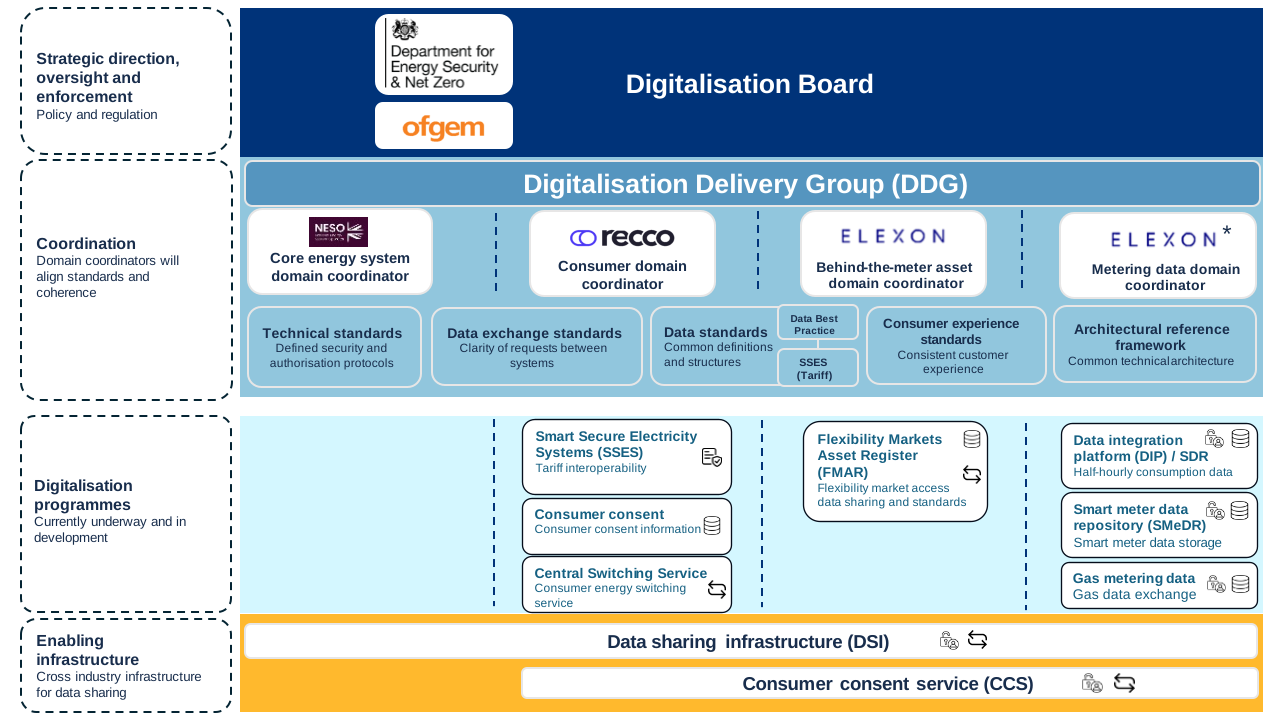
Digitalisation Delivery Group (DDG)
DESNZ, Ofgem, NESO, RECCo and Elexon currently meet quarterly to coordinate delivery of core digitalisation elements: DSI, CCS, FMAR and SDR. These meetings are currently chaired by Ofgem and will form the basis of Phase 1 collaboration.
To ensure they are fit for purpose, we will formalise and expand the scope to include assurance of digitalisation delivery, coordination of initiatives and continuous monitoring of progress towards delivering this vision. This will be formalised into the interim Digitalisation Delivery Group (DDG).
Additional organisations alongside DESNZ, Ofgem and domain coordinators may be included in future, if their participation would be useful or additional data domains and domain coordinators are created.
Ofgem will continue to chair DDG and provide the secretariat function to support agenda setting, paper preparation, action and decision logging, and record-keeping. Responsibility for hosting and organising DDG meetings will rotate equally between NESO, RECCo and Elexon.
The purpose of DDG meetings will be to address:
- Progress of current digitalisation infrastructure and initiatives.
- Opportunities for alignment and coordination.
- Issues or challenges within or across data domains or relating to core data infrastructure.
- Updates to digitalisation initiatives or strategic direction, and any related actions required.
- Adherence to delivery objectives and principles.
- Interdependencies between programmes and common design elements.
- Preparation for and delivery of Phase 2.
DDG subgroups
To ensure that collaboration drives change on the ground, additional subgroups will report into DDG. These subgroups will cover technical areas requiring alignment between domain coordinators and delivery bodies. Many will operate at a technical level and therefore require technical representation.
In Phase 1, these subgroups will be established by domain coordinators and attended by relevant organisations both within and outside data domains. For example, a subgroup on consumer data may include consumer groups, alongside domain coordinators and delivery bodies. DESNZ and Ofgem may attend subgroups during Phase 1 to provide oversight.
Priority topics may include:
- Trust frameworks and interoperability.
- Technical standards and security.
- Common accreditation.
- Relevant technological developments.
Figure 9 shows the Phase 1 structure with domain coordinators responsible for standards and working with DESNZ and Ofgem through DDG.
Figure 9: Phase 1 interim governance framework
Digitalisation Board
The Digitalisation Board sits above DDG, facilitating alignment between relevant DESNZ policy teams, Ofgem and domain coordinators as they fulfil the oversight role until coordination function mobilisation. The board will define strategic direction and set DDG priorities. Its purpose is to provide clear leadership, accountability and effective decision making where necessary.
The board will be chaired by DESNZ. It will contain DESNZ and Ofgem representatives, alongside senior representatives from NESO, RECCo and Elexon. We expect the majority of decisions, such as technical decisions, will be made by domain coordinators outside this forum, but the board allows DESNZ to have oversight of decisions that have a wider strategic impact.
With advice and input from Ofgem and domain coordinators, DESNZ will be the final decision-maker for these strategic decisions, such as those relating to funding, direction-setting, and changes to data domains or domain coordinators.
Infrastructure for data sharing
These organisational roles are underpinned by DSI and CCS. While full federation of trust frameworks is not expected immediately, we expect RECCo and NESO to develop a substantive plan and begin building the required technical capabilities as they move into the next delivery phases. DESNZ and Ofgem will monitor progress through DDG and escalate issues to the Digitalisation Board as required.
Architectural reference framework
Developed in Phase 1 and carried forward in Phase 2, the architectural reference framework will set out the technical foundations for aligning digitalisation activity across the system.
This vision sets out a new structured approach to digitalisation of the energy system, but it does not go into technical detail about the connectivity or design of the future energy system. We believe, based on responses to Ofgem’s open letter on digitalisation coordination, that this technical detail is best presented to the sector through an architectural reference framework.[footnote 19]
This architecture will need to set out how we create sector-wide interoperability, seamless data exchange in the sector, and reduced duplication of digital solutions. It will act as a reference point for organisations in the sector when building products and services, helping them understand the location of key data and the systems needed to access and utilise that data.
Ofgem has instructed NESO to develop the first draft architectural reference framework, reflecting DSI’s central role in the future digitalised system. NESO will work closely with the other domain coordinators, RECCo and Elexon, and we expect development to be carried out through a DDG subgroup. The draft framework will clarify the target technical landscape and guide progression of digitalisation across the sector. NESO will deliver this first iteration by the end of August 2026, after which Ofgem will consult to ensure the framework meets wider system requirements.
This will not be the final product. The architectural reference framework is intended to evolve as digitalisation progresses, with future iterations potentially led by domain coordinators or other bodies until the digitalisation coordination function is established.
Once in place, the coordination function will take over responsibility for the framework’s ongoing development, using it as the technical foundation for ensuring a coherent, interoperable, whole-system approach to digitalisation.
Phase 1: Limitations
Phase 1 provides clarity and addresses many of the pressing issues in the current system, particularly common standards and interoperability. However, Phase 1 still involves overlap between delivery and oversight, with DESNZ and Ofgem retaining a significant day-to-day role.
As initiatives develop over the next few years, digitalisation will deepen and expand across the sector, increasing complexity. This reinforces the need for a dedicated digitalisation coordination function with the expertise and capacity to convene the sector and drive sustained progress, allowing DESNZ and Ofgem to move primarily to our respective strategic oversight and regulatory roles.
Phase 2: Enduring framework
Phase 2 marks the point at which the enduring governance framework comes into effect, following mobilisation of the digitalisation coordination function.
Digitalisation coordination function (Phase 2)
As outlined above, the digitalisation coordination function fills the governance gap by linking the government’s strategic oversight with technical delivery. It will hold authoritative responsibility for the overarching architecture, technical standards, data standards, interoperability requirements, and the sequencing of digitalisation initiatives.
Responsibility for technical interoperability, overall architectural direction, and the approach for setting standards will shift from the domain coordinators to the coordination function. DESNZ and Ofgem will continue their respective strategic oversight and regulatory roles once the coordination function is established. We expect the coordination function to take ownership of the draft architectural reference framework being developed by NESO and lead its further development.
Domain coordinators (Phase 2)
Domain coordinators will retain operational responsibilities for their domains. However, approaches to managing standards, ownership of the technical architecture, and responsibility for coordination across domains will move to the digitalisation coordination function.
Domain coordinators will maintain responsibility to implement data standards in their domain, while the coordination function, working in close collaboration with the domain coordinators, will be responsible for coordinating approaches and management of standards across domains.
When consulting on the coordination function later this year, DESNZ will consider how to ensure the coordination function has the appropriate mandate to successfully carry out this responsibility.
Governance forums and working groups (Phase 2)
The Digitalisation Board and subgroups will continue to operate in the enduring framework. We will decide whether DDG will continue to be required once the digitalisation coordination function is established. If DDG is still required, the coordination function will chair the group and establish progress review and reporting mechanisms with individual domain coordinators to track delivery on a granular level. The cadence and format of these mechanisms will be set by the coordination function.
For subgroups, the structure may evolve in Phase 2 to reflect system needs. Additional or re-scoped subgroups may be created by the coordination function.
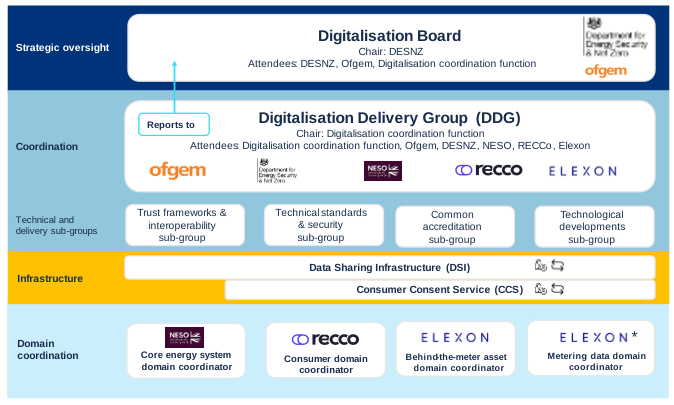
For the Digitalisation Board, the coordination function joins as a standing member. The board continues to be chaired by DESNZ. The coordination function reports to and advises DESNZ, Ofgem and other members on key decisions, required policy and regulatory changes, and escalations.
We expect that day-to-day decisions related to coordination and operation of digital infrastructure and standards will be made by the coordination function without needing input from the board. However, wider strategic decisions (as specified in Phase 1) must be brought to the Digitalisation Board.
Figure 10 shows the proposed governance structure for the enduring framework. This mirrors Phase 1, but DDG will be chaired by the digitalisation coordination function. The Digitalisation Board will convene DESNZ, Ofgem, the coordination function and senior representatives from NESO, RECCo and Elexon.
Figure 10: Enduring governance structure
Escalation
Domain-level challenges will be escalated by domain coordinators to the coordination function. The coordination function will require domain coordinators to propose and implement mitigating actions, with follow-up through regular progress-monitoring mechanisms.
Examples include:
- Diverging standards.
- Problems accessing or using digitalised systems and services.
- Failure to provide necessary data or meet required data quality standards.
- Lower-level security concerns.
Cross-domain challenges with system-wide implications must be escalated to the Digitalisation Board. The coordination function will submit a formal report which summarises problems, options and implications, for review by the Digitalisation Board, which will then determine any necessary policy or regulatory interventions.
Examples include:
- Misaligned or conflicting requirements between delivery bodies.
- System-wide or significant security concerns.
- Divergence from the Energy Digitalisation Framework or other strategic documents.
- Failure to address stakeholder concerns.
Wider stakeholder engagement
In Phase 1, stakeholder engagement will be conducted separately by each domain coordinator. The coordination function will establish structured feedback loops to inform and coordinate digitalisation progress. Engagement routes will be provided for industry, consumer groups, innovators, technology providers and cross-sector digitalisation initiatives.
Infrastructure and architecture
In the enduring framework, digitalisation systems no longer evolve independently. They operate as parts of a single federated architecture, with common accreditation, interoperable trust frameworks, and aligned technical and data standards.
Users should experience a single gateway for data discovery and access, supported by common data catalogues and security arrangements. This will ensure a seamless journey for innovators, market participants and consumers, and embed security, resilience and quality consistently across the ecosystem.
Phase 2: Summary
Together, this configuration delivers a digitalisation programme through clear, stable and coordinated governance. This is the end goal this framework will deliver: an energy system where digitalisation is coherent by design, coordinated across actors, interoperable across technologies, and able to evolve to meet both the immediate demands of the clean power transition and the long-term needs of a dynamic, data driven energy economy.
9. Next steps and implementation
We have set out our expectations to deliver the enduring governance framework: roles and responsibilities, and how decisions will be made to ensure our vision is both realised and sustained. We have also outlined how we will begin addressing challenges and gaps in Phase 1. Together, this will provide clarity to stakeholders and enable early action to address the challenges and risks in the current system.
However, while this framework document represents a significant step forward, it is not the only action required to deliver a more coordinated and connected approach to digitalisation. Further action is needed to embed the enduring framework with certainty.
Digitalisation coordination function
DESNZ will consult on options and responsibilities for a digitalisation coordination function by the end of 2026, including whether it should be delivered by an existing organisation or a new independent body. It will also set out the detailed roles, responsibilities and governance processes for the coordination function, for stakeholder feedback.
Domain coordinators
To mobilise domain coordinators, DESNZ and Ofgem will need to take specific actions. We will work closely with each domain coordinator to clearly define their role and expectations. Progress will be monitored through the forums described in chapter 6.
RECCo and Elexon
For RECCo and Elexon, Ofgem will insert a condition into the relevant Code Manager licenses requiring them to carry out defined activities within their data domains as domain coordinators.
Elexon’s role as domain coordinator for both behind-the-meter asset data and metering data will be clarified by the outcome of Ofgem’s enhancing asset visibility consultation and through a digitalisation governance-led decision on the SDR and SMeDR programmes of work respectively.
NESO
NESO’s NESO1 final business plan has been reviewed by Ofgem and is out for consultation in draft determinations. NESO’s plan includes the performance objective to ‘enable a digitally connected energy system through open data, smart standards, AI and interoperable tools’. Ofgem considers that the role of domain coordinator falls within this performance objective.
Ofgem’s draft determinations propose including an outcome for NESO to act as a digital leader in the industry by progressing its own and sector digitalisation as an Ofgem Expectation. We consider that NESO acting as domain coordinator would be captured by that Ofgem Expectation. Ofgem will use existing NESO regulation processes to oversee NESO’s actions in this role. This vision document should be seen as providing clarity to NESO on what is required to fulfil this performance objective.
Architectural reference framework
NESO will develop the first draft of the architectural reference framework, working closely with RECCo and Elexon, to deliver this by the end of August 2026. Ofgem will then consult on this framework to ensure it meets requirements of the overall system.
Governance
DESNZ and Ofgem will take forward the detailed work needed to support effective collaboration between the key delivery bodies covered in this vision. This will include working closely with the domain coordinators to set clear expectations for how they operate within and across their domains, and how they interface with the wider digitalisation landscape.
In parallel, we will formalise the Digitalisation Delivery Group (DDG) by setting clear terms of reference, roles and responsibilities, and robust secretariat arrangements for agendas, papers, and action and decision tracking, ahead of establishing the formal Digitalisation Board in the coming months.
Related actions
DESNZ’s forthcoming energy smart data consultation later this year will take forward several of the reforms set out in this vision, helping to move from high-level direction to practical implementation. This includes exploring approaches to accreditation and data access rules, with proportionate assurance requirements to support a trusted and coordinated data sharing ecosystem. The consultation will act as a key step in operationalising elements of the vision and shaping the framework needed for delivery.
DESNZ will also publish an AI for Clean Energy Strategy in autumn 2026. The strategy will set out the government’s approach to the use of artificial intelligence across the energy system, including how AI could support decarbonisation, system security and economic growth, alongside considerations around governance and safe deployment.
Annex A: Roles and responsibilities
Strategic oversight of energy system digitalisation will be provided by DESNZ and Ofgem. This includes setting direction and ensuring alignment with policy objectives, regulatory needs and system requirements. Specific responsibilities for DESNZ and Ofgem are outlined below.
DESNZ
- Owns and manages the strategic and policy direction of energy system digitalisation, including to Ofgem and the digitalisation coordination function, as set out in this and other relevant documents such as the Strategy and Policy Statement, with final decision-making.
- Leadership and ownership of digitalisation roles and governance, including the domain coordinator and data infrastructure roles, and the interim and enduring governance structures.
- Point of escalation for risks, issues and disagreements between key organisations.
- Sets and manages the cyber security risk appetite.
- Delivers government’s key programmes such as SSES and smart data.
Ofgem
- Regulates delivery of digitalisation, including compliance and enforcement action where necessary.
- Manages price control and funding for projects delivered by regulated parties.
- Manages the regulatory landscape, directly and through code bodies.
- Ensures appropriate levels of consumer protection.
- Point of escalation for risks, issues and disagreements between key organisations.
- Advises government on the strategic direction of digitalisation.
Digitalisation coordination function
DESNZ will consult on the form, roles and responsibilities of a digitalisation coordination function by the end of 2026. Once established, we will require the coordination function to coordinate whole-system architecture, manage system‑wide standards, and ensure long-term interoperability while avoiding duplication and fragmentation. Our initial view of responsibilities for the coordination function is below.
- Owns and coordinates the digitalisation architecture.
- Assures digitalisation delivery and sector‑wide architecture against relevant strategic documents set by DESNZ and the Sector Digitalisation Plan created by NESO.
- Defines frameworks, approaches and recommendations for common standards to industry.
- Manages governance processes for industry coordination.
- Provides strategic recommendations to government.
- Ensures interoperability and alignment with other sectors.
- Coordinates and aligns the direction of data domains through delivery bodies.
- Identifies, manages and mitigates risks associated with energy system digitalisation.
Infrastructure delivery
Infrastructure delivery bodies will be responsible for creating, maintaining and governing the fundamental digital infrastructure required for a modern energy system. These currently include NESO (delivering DSI) and RECCo (delivering CCS). Programme-specific roles are set out in relevant policy documents,[footnote 20],[footnote 21] but all delivery bodies share the responsibilities below.
- Deliver, operate and maintain digitalised systems, including DSI, CCS.
- Ensure systems function in line with objectives and principles set by DESNZ and Ofgem.
- Operate governance processes for data sharing systems.
- Collaborate with the coordination function to ensure full system interoperability.
Domain coordination
Domain coordinators will own their respective data domains, including setting data standards and simplifying access to data. Data holders are organisations that hold or process customer or business data.
Domain coordinators:
- Deliver products and services needed to make datasets available through DSI and/or CCS.
- Set requirements for data quality within their domain.
- Own and maintain data standards for their domain.
- Ensure participants can connect to relevant data-sharing systems.
- Recommend new requirements to data infrastructure delivery bodies where required for use cases.
Escalate challenges within their domain to the coordination function.
-
Improving the visibility of distributed energy assets - GOV.UK ↩
-
Improving the visibility of distributed energy assets - GOV.UK ↩
-
Directions to Market-wide Half-Hourly Settlement (MHHS) Participants: decision ↩
-
Data Sharing Infrastructure (DSI) - National Energy System Operator ↩
-
Sector Digitalisation Plan - National Energy System Operator ↩
-
Perseus: unlocking sustainable finance with assurable smart data – Icebreaker One ↩
-
DESNZ analysis: based on Octopus’ Cosy tariff compared to the electricity price cap unit rates between July 2023 - July 2024. For flexibility behaviour the heat pump is assumed not to operate at peak times. ↩
-
As measured by Gross Value Added: ‘What is the role of data in jobs in the United Kingdom, Canada, and the United States?’ OECD (2023) ↩
-
Data mobility: The personal data portability growth opportunity for the UK economy, Ctrl-Shift (2018) ↩
-
Gross Value Added estimates per year: Energy Innovation Needs Assessment: smart systems ↩
-
A trust framework describes the set of rules, standards and agreements that govern how data is protected, shared and used between system users. It specifies the operational processes and technical standards to establish trust between users. It is the foundational layer for data sharing, and can be shared or federated across multiple digitalisation initiatives (e.g. between DSI and CCS). ↩
-
Enhancing asset visibility: Distribution Network Operator options - Ofgem ↩
-
Energy digitalisation governance: architectural coordination - Ofgem ↩