
Dry weather and drought in England: 4 to 18 December 2025
Updated 26 June 2026
Applies to England

© Crown copyright 2026
This publication is licensed under the terms of the Open Government Licence v3.0 except where otherwise stated. To view this licence, visit nationalarchives.gov.uk/doc/open-government-licence/version/3 or write to the Information Policy Team, The National Archives, Kew, London TW9 4DU, or email: psi@nationalarchives.gov.uk.
Where we have identified any third party copyright information you will need to obtain permission from the copyright holders concerned.
This publication is available at https://www.gov.uk/government/publications/dry-weather-and-drought-in-england-july-2025-to-march-2026-summary-reports/dry-weather-and-drought-in-england-4-to-18-december-2025
1. Summary
The first half of December has seen unsettled conditions continue with improvements in the overall water resources situation. In the first 16 days of December, England has already received 80% of the long term average (LTA) rainfall for December.
River flows are now normal or higher across the vast majority of the country with 4 indicator sites across the east and far south-east measuring below normal flows for the time of year. Soils are now wetter than we would normally expect in mid-December.
Currently only those parts of Sussex in the South East Water supply area are classified as drought. The improving situation over the past couple of weeks has meant several areas have moved status, with 6 areas moving into recovery and 2 moving from recovery to normal status. The upper Hampshire Avon catchment of Wessex is remaining in prolonged dry weather as groundwater levels in the chalk aquifer in this catchment remain lower than normal.
The area teams continue to regularly meet to review the drought indicators, and it is likely there will be further status changes in the new year.
Reservoir storage for England is now above average at 85.4%, however this masks some regional differences. Storage across east England remains much lower than average at 67%. Storage is also below average in the south-east and south-west but above average elsewhere. Four reservoirs remain at 60% full or lower including:
- Bewl in the south-east
- Hanningfield and Abberton in the east
- the Dove group in central England
Yorkshire water has moved from drought level 3 to business as usual due to the improved situation.
The wet weather during autumn has improved conditions for the agricultural sector, with the opportunity being taken to refill their winter storage reservoirs in preparation for next year. However below normal flows in part of East Anglia and southeast England mean there are still 156 hands off flow restrictions in force.
Navigations and canals that were closed for drought purposes over the summer have now reopened. Some canal supply reservoirs remain low as engineering work is taking place which presents a small risk if there is a dry winter. The Canal & River Trust will monitor the situation during the winter.
2. Area drought status
There have been 8 changes in area drought status since the last report:
- Greater Manchester, Mersey and Chesire area has moved to normal
- Cumbria and Lancashire has moved to normal
- Yorkshire has moved to recovery
- East Midlands has moved to recovery
- West Midlands has moved to recovery
- Thames has moved to recovery
- Wessex has moved to recovery (except for the Upper Hampshire Avon catchment)
- North East has moved to recovery
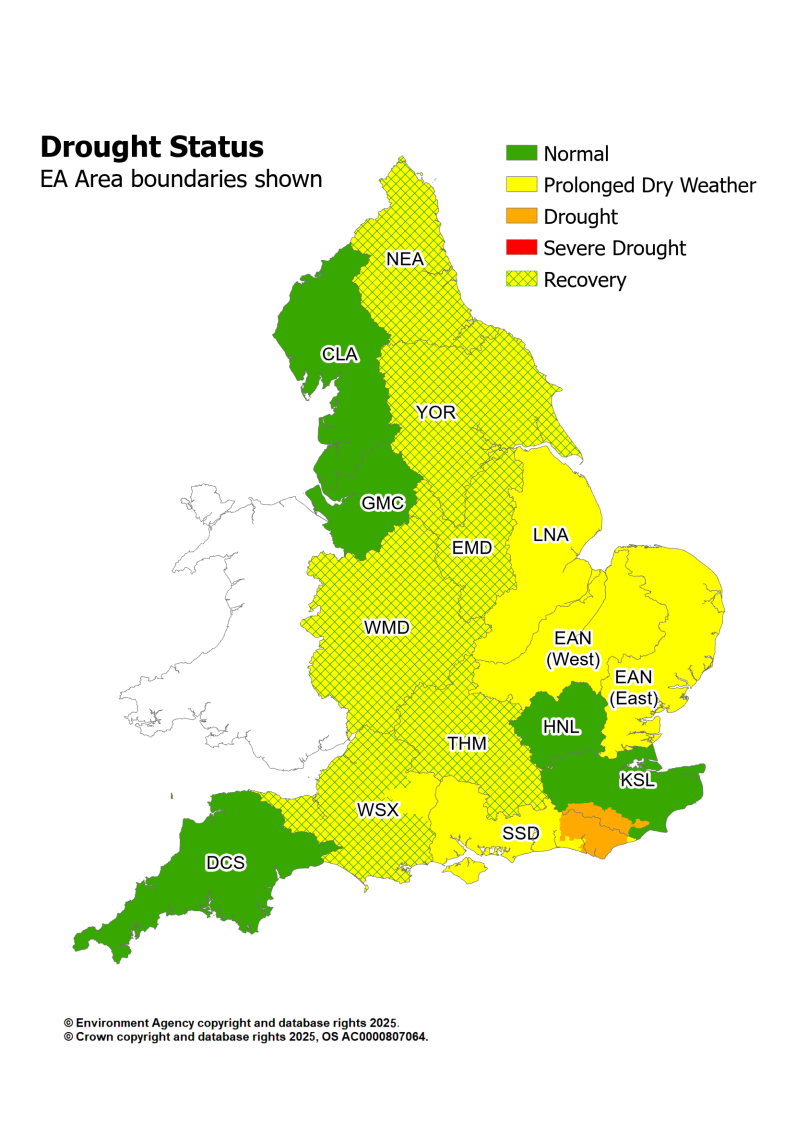
2.1 Areas in drought
- Parts of Sussex aligning with South East Water supply areas
2.2 Areas in prolonged dry weather
- Lincolnshire and Northamptonshire (LNA)
- East Anglia (EAN)
- Wessex – the upper Hampshire Avon catchment only
- Solent and South Downs (SSD) – remaining parts of Area not in drought status
2.3 How the stages of drought response work
Each area is reviewing its status depending on the triggers they have outlined in their drought plan.
More detail of how we manage drought, including our 4 stages of drought response, is available in Drought: how it is managed in England.
3. Current water situation
In the first 16 days of December, England has received 80% of the LTA rainfall, ranging from 92% LTA in the south-west to 64% in the east. Conditions are expected to remain unsettled up until Christmas, after which conditions are expected to become drier as high pressure over Scandinavia exerts an increasing influence over the country.
River flows are generally normal or higher across most of the country, with just over half of indicator sites now classed as above normal or higher for the time of year. Four sites across east and south-east England were classed as below normal.
Groundwater levels have begun to rise at most indicator boreholes across England, with a number in the North Downs and Chilterns continuing to recede. Recharge in limestone aquifers has been significant, with levels in the Cotswolds now above normal for the time of year. Chalk aquifers are generally now in the normal range and aquifers in the north-east are now above normal or higher. In the Upper Hampshire Avon, levels are below normal as they are in parts of the east and far south-east, one site remains exceptionally low for the time of year in the North Downs.
Soil moisture deficits have reduced across England and soils are wetter than would be expected across most of the country and close to average in the south-east.
Reservoir stocks across England for the period ending 16 December 2025 were 85.4%, having increased by 5.6% in the last two weeks. Reservoir storage rose at the majority of reported reservoirs, with levels lowered at others for flood storage. Four reservoirs remain at 60% full or lower including:
- Bewl in the south-east
- Hanningfield and Abberton in the east
- the Dove Group in central England
More details are available in our water situation reports for England.
4. Public water supply
Water companies in drought continue to follow their drought plans. Several water companies have seen their water resource situation improve over recent weeks following recent rainfall. Many water companies remain concerned about recovery of water resources over winter if conditions result in below average rainfall.
Water companies report their drought response using operational drought levels, from drought level 1 escalating to level 4.
4.1 Anglian Water
Anglian Water remains at drought level 1 in the following supply areas: Fenland, Norfolk Norwich and the Broads, Ruthamford Central, North, South, and West.
Reservoir levels have seen an increase following recent significant rainfall.
4.2 Cambridge Water
Cambridge Water remains at drought level 1.
4.3 Essex and Suffolk Water
Essex and Suffolk Water remains at drought level 1 in its Essex, Northern Central, Blyth, and Hartismere supply areas.
4.4 Northumbrian Water
Northumbrian Water remains at drought level 1.
4.5 Southern Water
Southern Water is in drought level 2 in its Kent Medway and Sussex Hastings areas. Its Sussex Worthing and Sussex Brighton areas remain in drought level 1.
4.6 South East Water
South East Water has moved from drought level 2 into drought level 1 in its water resource zones (WRZ) 1, 2, 3, 6, 7, and 8 from 5 December 2025. South East Water remains in drought level 1 in WRZ 4 (Bracknell) and WRZ 5 (Farnham).
As of 15 December, Ardingly reservoir was at 61.57% total capacity. SEW was granted its Ardingly winter drought permit on 22 September and was granted its River Ouse drought order on 3 December. The company implemented a temporary use ban (TUB) for customers in Kent and Sussex areas from 18 July 2025 and removed exemptions from this ban on 17 October. SEW applied for a non-essential use drought order to restrict some uses of water by businesses on 24 October and has now withdrawn this application. More detail is available on South East Water website.
4.7 Thames Water
Thames Water remains in business as usual in its Swindon and Oxfordshire supply area (SWOX) and removed its TUB on 27 November. Thames Water’s London and other zones remain at drought level 1.
4.8 Veolia Water
Veolia Water Projects Limited remains at drought level 1
4.9 Wessex Water
Wessex Water has moved from drought level 1a into business as usual.
Reservoirs and groundwater levels have improved.
4.10 Yorkshire Water
Yorkshire Water has moved from drought level 3 into business as usual.
Supply reservoir storage has increased to 93%. The company lifted its TUB on 10 December 2025. All drought permits and orders have been revoked and compensation flows returned to normal. More detail is available on the Yorkshire Water website.
5. Agriculture
It has been a wet autumn which has improved conditions for the agriculture sector especially for the establishment of winter crops and refilling of farm irrigation reservoirs ahead of next spring.
Abstractors are taking opportunities to refill irrigation reservoirs especially as these were at minimum levels, following the dry conditions this year. Most river flows are currently normal or higher for the time of year with some parts for the country experiencing flooding. However, some river flows are below normal for the time of year particularly across East Anglia and parts of southeast England. As a result, there are currently 156 hands off flow restrictions in force on abstraction licences which will impact the ability for some abstractors to refill irrigation reservoirs.
Abstractors are being advised to refill irrigation reservoirs as soon as possible if licence conditions allow. This is to maximise opportunities during the current wet conditions to replenish supplies and improve resilience for next year irrigation season.
Livestock farmers continue to suffer a shortage of forage due to poor grass growth this year. Dry weather emergency grants are available to help the most in need livestock farmers struggling with forage and feed supplies ahead of this coming winter. Arable farmers in the UK are facing an estimated reduction in revenues of over £828 million following one of the worst harvests due to the dry weather this year.
Uncertainty around water resilience remains in the sector especially if the winter period is dry and farm irrigation reservoirs are not refilled, which will likely impact on the next year’s planting of crops. The agriculture sector continues to plan for a dry winter and taking actions to mitigate the impacts from drought continuing through to next spring. We continue to support abstractors with short term flexible abstraction requests to help improve water resources resilience for next year and beyond.
The Environment Agency dry weather farming blog is available to help farmers prepare for the winter and details support available to help improve access to water, following the dry conditions this year.
6. Energy
There are no known issues with the energy sector.
7. Environment
The number of incidents caused by drought and dry weather in 2025 were at 310 as of 16 December. The number of new drought and dry weather incidents has significantly reduced with the cooler wetter weather.
8. Navigation
The navigation situation across the Canal & River Trust network has seen a significant improvement following the wet autumn. Canals that were closed for drought purposes over the summer have now reopened. There has been a good recovery of canal supply reservoirs groups and only a minority or reservoirs have shown a poor response to the autumn rainfall.
Some canal supply reservoirs remain low as engineering work is taking place, and this requires reservoirs to maintained at less than full capacity. This may result in some water supply issues in 2026 should there be a dry winter, but the Trust will monitor the situation over the winter.
There are no issues on other parts of the navigation sector.
9. Weather forecast
Friday will be largely dry and bright particularly in central and eastern England. The weekend will see a mix of showers and spells of sunshine for most, and south-west England will see some heavier showers at times. The unsettled pattern is set to continue on Monday and Tuesday. Conditions are expected to remain unsettled up until Christmas after which conditions are expected to become drier as high pressure over Scandinavia exerts an increasing influence over the country.
10. Drought readiness actions
In response to the drought and dry weather, the Environment Agency continues to act by:
- operating our Gold command structure for our national incident response
- planning for potential continuation of dry weather into winter and spring using the latest drought prospects information from water companies and other sectors
- coordinating closely with water companies to implement actions in statutory drought plans, taking necessary action to safeguard public water supplies
- activating drought plans for those Environment Agency areas in drought and prolonged dry weather status
- enhancing abstraction licence compliance checks and issuing hands off flow or level restrictions and warnings to some abstractors in areas experiencing low flows
- monitoring, preparing and responding to incidents caused by low river flows, particularly in those Environment Agency Areas in drought status
- providing dry weather advice to fishery operators to help protect their waters
- hosting regular national drought meetings
The next National Drought Group meeting is scheduled for 15 January.
The next briefing is due on 8 January as we have moved to fortnightly reporting.
11. Contact us
Contact drought.national@environment-agency.gov.uk if you have questions about this report.