Debt Management Composition and Perceptions Research (Final Report)
Published 11 June 2026

© Crown copyright 2026
This publication is licensed under the terms of the Open Government Licence v3.0 except where otherwise stated. To view this licence, visit nationalarchives.gov.uk/doc/open-government-licence/version/3 or write to the Information Policy Team, The National Archives, Kew, London TW9 4DU, or email: psi@nationalarchives.gov.uk.
Where we have identified any third party copyright information you will need to obtain permission from the copyright holders concerned.
This publication is available at https://www.gov.uk/government/publications/debt-management-composition-and-perceptions-research/debt-management-composition-and-perceptions-research-final-report
A report of research carried out by IFF Research on behalf of the Department for Work and Pensions.
DWP research report no. 1137
Crown copyright 2026.
You may re-use this information (not including logos) free of charge in any format or medium, under the terms of the Open Government Licence. To view this licence, visit www.nationalarchives.gov.uk or write to:
Information Policy Team
The National Archives
Kew
London
TW9 4DU
or email: psi@nationalarchives.gov.uk.
This document/publication is also available on our website
If you would like to know more about DWP research, email: socialresearch@dwp.gov.uk
First published June 2026.
ISBN 978-1-80786-001-1
Views expressed in this report are not necessarily those of the Department for Work and Pensions or any other government department.
Executive summary
This report presents findings from the Debt Management Composition and Perceptions Research, commissioned by the Department for Work and Pensions (DWP). The research aimed to understand the experience of people with an outstanding debt to DWP as a result of a benefit overpayment. More specifically, the research aimed to gather data on three key areas:
- demographic and financial features
- perceptions and understanding of debt owed to DWP
- experiences accessing DWP’s debt support and communication preferences
The research used a mixed methods approach; the two main elements of which were a large-scale survey and qualitative interviews with DWP Debt Management service users living in Great Britain who owed a benefit overpayment to DWP.
Three key debtor groups were identified: those who were on-benefit with their debt in-recovery (generally via deductions from their benefit payments), those who were off-benefit with their debt in-recovery, and those who were off-benefit with their debt not-in-recovery.
The research found that debtors had a range of living situations, but renting was the most common living arrangement. 68% lived in rented accommodation, which was substantially higher than the average across the GB population (37%). More than half of debtors were living with a physical or mental health condition (54%), which was much higher than the prevalence in the wider GB adult population (18%).
A major theme in the research was that the on-benefit group were much more likely to be in precarious financial situations than the off-benefit groups, with lower levels of financial confidence, satisfaction with their finances and higher levels of debt. The research also highlighted subgroups with particular challenges that may require more considered support, such as those with health conditions and those with caring responsibilities, or those out of work.
Debtors had a limited understanding of how the debt to DWP occurred and were often surprised or shocked when they were notified about the overpayment. Just over a quarter (27%) were unaware that they had an outstanding debt. This lack of understanding contributed to perceptions of unfairness. Debtors tended to see the debt as inherently unfair, as they believed they had played no causal role in creating the debt and were being penalised for what they believed was a DWP administrative error.
Two thirds (66%) of those who were aware of their debt recalled receiving some communication from DWP about their overpayment. However, less than half (45%) of those who were aware of their debt said they both received a communication and understood it. Ratings of DWP’s debt support was 5.74 out of 10, indicating some room for improvement.
Recommendations
Three of the key recommendations are shown below. A full list of recommendations can be found in the key findings summary and conclusion chapters of the report.
- communicate more proactively with debtors to ensure that more are aware of their debt; not everyone is engaging with current forms of communication used to notify debtors of their debt
- use straightforward and jargon-free language when communicating with debtors about their repayment
- signpost debtors to financial advice organisations. Only a minority had every sought advice with their finances, however most indicated an openness to doing so
Acknowledgements
This report was commissioned by the Department for Work and Pensions (DWP).
We would like to thank Daniel Azaz, David Howdon, James Hudson, and the wider team at DWP for their invaluable support, guidance and contributions throughout the project.
We would like to thank all participants that gave up their time to take part in the study. Without them, of course, the research would not have been possible.
Author details
A large team of research partners worked on the study and contributed to the report.
Christabel Downing is a Director at IFF, where she has worked for over 12 years. She specialised in the research with Department for Work and Pensions (DWP) customers and wider on work, welfare and wellbeing studies.
Lorna Adams is Head of Work, Welfare & Wellbeing, with 20-years history leading the delivery of high quality, policy relevant mixed-method research for DWP, with expertise in designing, overseeing and analysing claimant research.
Tom Sealy is a Senior Research Manager at IFF, where he has managed several large, mixed-method evaluations during his time at the company, all focused on work, welfare and wellbeing.
Other IFF researchers that contributed to the project include Alix Moussy, Lola Yuille-Clough, Severine Guex and Tofunmi Kayode.
Glossary
Table 1.0.1. Glossary
| Term | Definition |
|---|---|
| Debtors | Current and former claimants that owe money to the DWP as a result of benefit overpayments. |
| DWP Debt Management | The DWP team responsible for recovering overpaid benefits on behalf of DWP. |
| Financial advice | Guidance or recommendations regarding financial matters and managing money. This can be provided by qualified professionals or through informal channels such as family and friends. |
| Off-benefit in-recovery | Debtor group by benefit and repayment status. This group consists of former benefit claimants that have a repayment plan set up with DWP. |
| Off-benefit not-in-recovery | Debtor group by benefit and repayment status. This group consists of former benefit claimants that do not have a repayment plan set up with DWP. |
| On-benefit | Debtor group by benefit and repayment status. This group consists of claimants that are currently claiming a DWP-administered benefit and are in the process of repaying their overpayment, generally via deductions from their benefit payments. |
| Relief powers | The power authorities/organisations have to reduce, suspend, or waive debt recovery. |
| Key debtor group | Classification of three types of debtor groups by benefit and repayment status. On-benefit, off-benefit in-recovery and off-benefit not-in-recovery. |
Abbreviations
Table 1.0.2. Abbreviations used in the report
| CATI | Computer Assisted Telephone Interviews |
|---|---|
| GB | Great Britain |
| DWP | Department for Work and Pensions |
| ON IR | On-benefit, debt-in-recovery |
| OFF NIR | Off-benefit not-in-recovery |
| OFF IR | Off-benefit in-recovery |
| UC | Universal Credit |
| PIP | Personal Independence Payment |
| CA | Carer’s Allowance |
| IVA | Individual Voluntary Arrangement |
Key research questions
The aim of the research was to gather information on individuals who owe money to the Department for Work and Pensions (DWP) as a result of benefit overpayments. Data was gathered concerning three key areas:
1. Demographic and financial features
2. Perceptions and understanding of debt owed to DWP
3. Available support for debt and communication preferences
The research aimed to provide a comprehensive understanding of the composition of Debt Management service user population and how they interact with services offered by DWP. The research also aimed to consider the wider financial context of this group and how this can impact the interaction between service users and DWP.
The following are key research questions framed to guide the research:
1. How satisfied are debtors with Debt Management’s service user provision and support?
2. What communication, if any, have debtors had with the DWP Debt Management team?
3. Do debtors know how their debt was generated? How do debtors feel about the debt owed to DWP?
4. How do debtors prioritise their debts? How important are DWP debts compared to other debts they may have?
5. What are the key demographic characteristics of debtors, including their household composition?
6. What is the financial wellbeing of debtors, and what is their experience of seeking financial advice or support?
Summary
Overview
The Department for Work and Pensions (DWP) commissioned IFF Research to deliver a mixed-methods study exploring the experiences of individuals who owe money to DWP as a result of benefit overpayments (DWP debtors).
The study was developed to address a need for clearer insights into the characteristics and circumstances of people with outstanding DWP debt, particularly those who were no longer in receipt of benefits and were not repaying their debt. By combining demographic, financial and behavioural data with in-depth qualitative findings, the research aimed to generate a fuller picture of how different groups interact with Debt Management processes and the wider support available to them. The research also examined how individuals understood the origins and perceived the legitimacy of their debt to the Department, their understanding of communications from DWP and insights into communication preferences, and the factors that shape repayment behaviour. This included the role of other financial pressures, varying levels of financial security, and attitudes toward government-related debt more broadly.
The research project involved a large-scale quantitative survey and a set of qualitative interviews to build a detailed evidence base on who this population is, and how they understand, manage and engage with debt owed to DWP. This research considered the demographic and financial aspects of this population and how non-government debts interact with government debts.
It should be noted that debtors’ perceptions of their own debt may not reflect reality. As such, care is taken in the report to clarify that these findings are based on debtor perceptions, rather than established fact. Overpayments of benefit occur for any number of reasons including error by the claimant and/or officials, mistakes to material facts, misrepresentation and fraud. More information about this caveat is available in the “About this report” sub-section of the “1. Background and methodology” chapter.
Research context
This is the first major piece of research that DWP has commissioned with DWP debtors, and as such there is no previous relevant research in this area. Although DWP has conducted partially similar research with Universal Credit (UC) claimants with non-government debts, no previous research has been conducted with DWP debtors. As a result of this, the research aimed to create a clearer picture of the lives, financial circumstances, perceptions of debt, and views on support of the DWP debtor population, which could be used as a baseline of evidence for future research to build on and develop.
An important piece of context for the research was the Public Authorities (Fraud, Error and Recovery) Act, which received Royal Assent on 2nd December 2025. The research aimed to support the implementation of this bill by informing service user journey tailoring through segmentation techniques and identifying critical areas of improvement in customer service provision. Another key reason for commissioning the research was to improve understanding of debtors who were off-benefit with their debt not-in-recovery, who do not engage with the Department to repay money owed, to inform the new Debt Enforcement function.
Main findings
The key findings that emerged through the research are as follows:
- DWP debtors were more likely to live in rented accommodation than the wider GB population (68% rented their homes, compared to 37% nationally), 54% reported a physical or mental health condition (compared to 18% in the wider GB population), and 47% were out of work (compared to 25% in the wider GB population). Of the three key debtor groups, those who were on-benefit were more likely to report living with a health condition, report lower levels of financial confidence and be out of work
- understanding of DWP debt was limited – around half (49%) said they were currently repaying an overpayment, while 27% reported being unaware of their debt.
- many perceived the debt as unfair and described the experience of being notified about the debt as anxiety-inducing
- most debtors (64%) said had not sought financial advice, though only 18% said they would never consider it. Charities (66%) and family/friends (52%) were the most trusted sources
- two-thirds (66%) of those who were aware of their debt recalled receiving communication about their debt, but less than half (45%) said they understood it.
- satisfaction with support received via DWP Debt Management was moderate (average 5.74/10), with phone (34%) the preferred channel
There was substantial variation in the characteristics between the three key debtor groups. On-benefit debtors were more likely to experience multiple life challenges - such as poor health, caring responsibilities, and financial insecurity - while off-benefit in-recovery debtors demonstrated higher levels of self-reported financial wellbeing and confidence. Off-benefit not-in-recovery debtors occupied a middle ground, with moderate financial pressure and less engagement with support services.
These differences underline the importance of tailored approaches to communication and support, recognising that a one-size-fits-all solution will not meet the diverse needs of the debtor population.
Methodology
The research adopted a mixed-methods approach to provide robust, up-to-date evidence on DWP debtors living in Great Britain. The study combined a large-scale quantitative survey with qualitative interviews to generate a comprehensive understanding of the debtor population, their experience with DWP debt, and preferences for communication and support.
Quantitative survey
A total of 4,184 DWP debtors completed the survey, with fieldwork taking place between 28th July – 3rd September 2025.
A total of 45,750 sample records were drawn, with invitations sent via email for online participation where available, or via telephone for Computer Assisted Telephone Interviews (CATI). Postal opt-out letters were also issued to ensure inclusivity for individuals without email access. This approach supported representativeness and mitigated potential bias in the population invited to participate.
The survey questionnaire covered areas such as demographic and financial characteristics, attitudes towards debt and perceptions of fairness, as well as experiences and preferences for communicating with DWP. The survey data was weighted to be representative of the gender and age of profile of the pre-exclusion target population within each of the three key debtor groups.
Qualitative interviews
Following the survey, 24 in-depth qualitative interviews were conducted between 11th September – 14th October 2025. The interviews explored some of the themes from the survey in greater depth.
Interviews lasted approximately 45 minutes and were conducted via video or telephone. Only survey respondents who consented to recontact were included, and participants who were recorded as owing an overpayment generated due to fraud were excluded. Incentives were provided for those in-recovery. A flexible topic guide ensured interviews captured participants’ experiences in their own terms while adhering to ethical guidelines and safeguarding protocols.
Demographic and financial characteristics
Housing and household composition
Most debtors were renting (68%), while a much smaller share (13%) owned their own home. For context, the proportion of DWP debtors that lived in rented accommodation was much higher than the average in the wider GB adult population (68% compared to 37%). The on-benefit group were much more likely to live in rented accommodation than the two other key debtor groups, while the off-benefit in-recovery group were much more likely to own their home. Although many were renting, very few lived in highly insecure living environments, such as temporary accommodation or experiencing homelessness (around 3%). One third (33%) lived with a spouse or partner, while there was an equal divide between those who were responsible for children (50%) and those who were not (49%).
Demographic characteristics
Just over half of debtors (54%) were in the 35-54 age group. One quarter (24%) were aged 18-34, while one in five (20%) were aged 55-74.
There was a nearly even gender split, with 47% identifying as male and 53% identifying as female[footnote 1].
Nearly three in four (73%) of debtors were from a White ethnic background. After this, Black African/Caribbean (8%) and Asian/Asian British (7%) were the next most common ethnic backgrounds. Compared to the wider GB population, debtors were more likely to be from an ethnic minority background (23% compared to 18%).
Around three in ten debtors (28%) had caring responsibilities. Those who were on-benefit were more likely to have caring responsibilities (33% compared to 28% average).
More than half of debtors (54%) reported living with a physical or mental health condition, which was much higher than the wider GB population (18%). Within this, there was a reasonably equal spread of physical and mental health conditions - 16% had only a physical health condition, 16% had only a mental health condition, while 22% had both physical and mental health conditions. Nearly two thirds of the on-benefit group were living with a physical or mental health condition (63%), compared to just 35% of the off-benefit in-recovery group and 44% of the off-benefit not-in-recovery group benefit populations.
Types and amount of income
Half of all debtors were in employment (51%), which was lower than the proportion that are in employment in the wider GB adult population (75%). The most common explanation for not being in work was permanent sickness or disability (37%). Of those who were employed, the vast majority (91%) reported only having one job.
In terms of income, around a third of debtors (32%) had an annual gross household income from all sources of £9,500 to £24,599. The next most common annual gross household income was £25,000 - £39,999 (15%), followed by under £9,499 (8%). A significant minority of debtors (36%) declined to disclose their income.
Those who were on-benefit tended to have lower incomes than those who were off-benefit. The off-benefit in-recovery group had the highest income, with 12% reporting an annual income of over £50,000 (compared to 5% average).
Debt owed to other creditors
Two thirds of debtors (65%) said they were behind on other bills and repayments (not including their DWP debt). The most common bills and repayments that debtors were behind on were utility bills like gas / electric (26%) and council tax (25%).
The largest share of debtors (41%) reported that their total debt was between £500 and £4,999. Those who were on-benefit were more likely to have a larger total debt value than the two off-benefit groups.
Financial wellbeing and advice
Satisfaction with financial situation
As may be expected, most debtors were not satisfied with their financial situation; the mean score was 4.99 out of 10. Those who were off-benefit in-recovery were more likely to say they were satisfied with their financial situation than the other two key debtor groups (39% rating it a 6-10 out of 10, compared to 31% of the on-benefit group and 32% of the off-benefit not-in-recovery group).
How often debtors go without essential items
Around two thirds (65%) of debtors said they had gone without essential items due to lack of money. Groups that were more likely to have gone without essential items included those who were on-benefit (72%), those who had health conditions (75%) and those who had caring responsibilities (71%). The off-benefit in-recovery group were more likely than the on-benefit and off-benefit not-in-recovery groups to say they had hardly ever or never gone without essential items due to lack of money (54%, compared to 24% of those on-benefit and 38% of those off-benefit not-in-recovery), which underlines the theme running through the research that the off-benefit in-recovery group were generally in much more comfortable financial situations than the other two key debtor groups.
How often debtors save money
Around seven in ten (71%) debtors said they rarely or never save money. This was more common for the on-benefit group, where three quarters (75%) of debtors said they never save money. Only a small fraction (7%) said they saved money every month. The off-benefit in-recovery group were more likely to save money every month compared to those who were on-benefit and off-benefit not-in-recovery.
Payment of an unexpected bill
Most debtors (70%) would not have been able to pay an unexpected bill of £300 within seven days. Around two-fifths of debtors (21%) said they would have been able to pay an unexpected bill of this value within seven days. In line with other findings around financial wellbeing, off-benefit in-recovery debtors were more likely than the other two key debtor groups to say they would have been able to pay an unexpected bill of £300. Debtors with health conditions or caring responsibilities were less likely to be able to pay an unexpected bill: 79% of those with a health condition and 73% of those with caring responsibilities said they would not have been able to pay an unexpected bill of £300 within seven days.
Confidence in prioritising which bills or financial commitments
Confidence in prioritising which bills to pay was high, with around three quarters (74%) of all debtors saying they felt confident in deciding which bills were most important to pay. A large majority (86%) of the off-benefit in-recovery group said they were confident they knew which bills or financial commitments were most important to pay, which was higher than both the other key debtor groups. Just under a quarter (22%) of respondents did not feel confident about prioritising bills and financial commitments.
Experience of seeking debt or financial advice and support
Most debtors (64%) had not previously and were not currently seeking advice or support with managing their finances. Just one in five (21%) had previously sought advice or support with managing their finances. However, there was an openness to seeking support in the future – only a small minority (18%) said they would never consider seeking advice or support with managing their finances in the future. Debt advice charities and family and friends were the two most popular forms of support.
Perceptions and understanding of DWP debt
Knowledge of how debt was generated
Debtors reported that they were generally unclear about how their debt to DWP was generated. Around a quarter (27%) stated that they were unaware they were repaying a benefit overpayment, while some of those who were already aware said they were surprised and shocked when they found out about their overpayment. Some debtors, particularly those with lower levels of financial literacy, said that they found it difficult to understand the letter from DWP that explained how the overpayment occurred from DWP. However, it should be noted that there were some debtors, especially those who were off-benefit in-recovery, who did understand how their overpayment occurred.
Feelings about debt owed to DWP
Feelings about the debt owed to DWP were largely negative, with many debtors viewing the debt as inherently unfair. This was primarily because debtors believed that they were being penalised for a DWP error. Unlike other debts they owed, some debtors felt they played no causal role in generating the DWP debt, which heightened the sense of unfairness. There was also a link between those reporting a lack of understanding of how the debt was generated and feelings of unfairness; those who did not understand how the overpayment occurred appeared more likely to feel that debt was unfair. The DWP debt took an emotional toll on some debtors, who reported feelings of anxiety, shame and regret when they found about the overpayment.
Repayment plans
Those who had set up repayment plans believed their reasons for doing so were largely self-explanatory; they wanted to clear the debt because they saw debt in itself as undesirable, without necessarily needing to give further specific reasons. For those who had not set up a repayment plan, affordability was the key barrier (53%), rather than not knowing how to (19%).
Prioritisation of debts
Most debtors repaid their DWP debt in automatic monthly payments, so they did not need to prioritise it as such. However, when asked where DWP debt sat as a priority, the fact it was a government debt meant that it was seen as a high priority compared to other debts. In general, larger debts tended to be viewed as a higher priority to repay than smaller ones, as well as debts with higher levels of interest that could affect credit scores, such as credit card debt.
Understanding of DWP enforcement and relief powers
Debtors were generally uncertain of DWP’s enforcement and relief powers, with a large proportion saying they did not know whether statements on DWP’s powers were true or false. In addition to being uncertain of DWP’s powers, many debtors also held incorrect beliefs about them, either believing that DWP held powers that it did not hold in reality or believing that DWP did not hold certain powers that it did hold in reality.
Support and communication
Perception of DWP Debt Management communications
Most debtors who were aware of their debt recalled receiving some form of communication from DWP about their debt (66%), however less than half (45%) of those who were aware of their debt both received a communication and understood it. This further reinforces the point raised earlier on in this summary that debtors are having challenges understanding communications about their DWP debt.
Ease of contacting DWP Debt Management
Half (51%) of those who had contacted DWP Debt Management in the past six months found it easy to do so, indicating some room for improvement. Just over a quarter (28%) of those who had contacted DWP Debt Management in the last 6 months found it difficult to do so. Aside from emotional barriers like anxiety, a couple of debtors in qualitative interviews found they were unable to get through to an adviser when they got in touch by phone.
Preferred communication channels
Phone was the preferred communication channel, with around a third (34%) of debtors saying they would prefer to manage communications around their overpayment by phone. However, there were still a sizeable proportion who preferred email (26%) and online portal (21%). The online portal in particular was more popular with debtors who found direct, person-to-person contact channels more difficult to use because of conditions like anxiety.
Satisfaction with DWP Debt Management support
Of those who had some form of communication with DWP, the average rating of the support was 5.74 out of 10. Half (50%) of debtors rated the support between 6-10 out of 10, while a smaller share (22%) rated it a 9 or 10 out of 10. Although these results show that debtors are not wholly dissatisfied with the support, they do show there is room for improvement.
Rating of different elements of DWP Debt Management support
When shown a series of agree/disagree statements about DWP support, the statement with the highest levels of agreement was ‘I was treated fairly and with respect’ (70%). Conversely, the statement with the lowest levels of agreement was ‘I was told where I could find further information’ (44%), indicating that more can be done to signpost debtors to other useful resources. The on-benefit group were less likely to agree with nearly all the statements than the off-benefit in-recovery group. From qualitative interviews, it appeared that those who were negatively impacted most by the debt were more likely to go on to have negative experiences with DWP support than those who less impacted by the repayment.
Recommendations
-
Communicate more proactively with debtors to ensure that more are aware of their debt; not everyone is engaging with current forms of communication used to notify debtors of their debt
-
Sensitivity is crucial when communicating with people about their debt. DWP debtors are more likely to be living with a mental health condition than the rest of the population, meaning it is especially important to communicate sensitively with them
-
Use straightforward and jargon-free language when communicating with debtors about their repayment
-
Signpost debtors to financial advice organisations. Only a minority had ever sought advice with their finances, however most indicated an openness to doing so
-
Consider a review of the channels used to communicate with debtors. Phone was debtors’ preferred communication channel, and conversations with helpful advisers often turned a negative customer experience into a positive one, however there could be more of a role for email to play as a communication channel
-
Ensure that systems identify overpayments as quickly as possible. Several debtors said that they wished their overpayment had been identified earlier, as it would have reduced the overall amount that they needed to repay
1. Background and methodology
Background
The Department for Work and Pensions (DWP) commissioned IFF Research to deliver a mixed-methods study exploring the experiences of individuals who owe money to DWP as a result of benefit overpayments (referred to as DWP debtors or debtors). The research project involved a large-scale quantitative survey and a set of qualitative interviews to build a detailed evidence base on who this population is, and how they understand, manage and engage with debt owed to DWP.
The study was developed to address a need for clearer insights into the characteristics and circumstances of people with outstanding DWP debt, particularly those who are no longer in receipt of benefits and who may be harder to contact or engage. By combining demographic, financial and behavioural data with in-depth qualitative findings, the research aimed to generate a fuller picture of how different groups interact with Debt Management processes and the wider support available to them. The research also examined how individuals perceive the origins and legitimacy of their debt to the Department, their understanding of communications from DWP, and insights into communication preferences, and the factors that shape repayment behaviour. This included the role of other financial pressures, varying levels of financial security, and attitudes toward government-related debt more broadly.
The research was designed to capture a representative spread of debtors with a sampling strategy structured around benefit and recovery status to reflect differences in engagement and repayment mechanisms. This included three key groups: individuals currently on benefits, those no longer receiving benefits but in recovery, and those no longer receiving benefits and with no active recovery in place.
Overall, the research sought to provide DWP with robust, actionable evidence to inform the development of communication, support and engagement approaches within debt management. The findings will help the Department improve its understanding of the debtor population, strengthen the effectiveness of recovery strategies, refine its communication approaches, and ensure that services are appropriately tailored to the diverse needs and circumstances of individuals who owe money to DWP.
Methodology
Overview of research design
The research project adopted a mixed-methods approach to provide robust, up-to-date evidence on individuals living in Great Britain who owed money to the Department for Work and Pensions (DWP) as a result of benefit overpayments. The study combined a large-scale quantitative survey with in-depth qualitative interviews. The quantitative survey included 4,184 respondents across the three stratification groups, using both online and telephone modes to ensure broad coverage and representativeness. The qualitative component involved 24 in-depth interviews conducted via video call or telephone, covering participants on-benefit, off-benefit in-recovery, and off-benefit not-in-recovery, to capture a range of experiences. Table 1.1 summarises the main stages of data collection, including fieldwork dates, methodological approach, and sample sizes.
Data collection overview
The Table 1.1 summarises key stages of the study, including the target sample, fieldwork dates, and methods used.
Table 1.1. Stages of the research
| Stage | Fieldwork dates | Approach | Methodology |
|---|---|---|---|
| Quantitative survey | 28 July to 3 September 2025 | Quantitative | Mixed-mode survey (online and telephone), 4,184 across the three key debtor groups. |
| Qualitative interviews | 11 September to 14 October 2025 | Qualitative | 24 in-depth interviews via video or phone, covering a mix of on-benefit, off-benefit in-recovery, and off-benefit not-in-recovery participants |
Sampling
The sampling frame for the survey was drawn directly from DWP Debt Management administrative records, ensuring full coverage of individuals with relevant debts. To reflect differences in repayment circumstances, the sample was stratified across three groups:
1. On-benefit, debt-in-recovery (ON IR)
2. Off-benefit, debt-in-recovery (OFF IR)
3. Off-benefit, debt-not-in-recovery (OFF NIR)
A total of 45,750 sample records were drawn, with invitations sent via email for online participation where available, or via telephone for Computer Assisted Telephone Interviews (CATI). Postal opt-out letters were also issued to ensure inclusivity for individuals without email access. This approach supported representativeness and mitigated potential bias in the population invited to participate. Status classifications correspond to each participant’s condition at the time of sample draw, acknowledging that individual status may have changed later in the study.
The final achieved target was 4,184 survey completions, exceeding the planned 4,000, with distribution across strata as follows:
Table 1.2. Targets and achieved completes for the survey
| Key debtor group | Target | Achieved | % of target |
|---|---|---|---|
| OFF NIR | 1,000 | 1,049 | 104% |
| OFF IR | 500 | 523 | 100% |
| ON IR | 2,500 | 2,612 | 105% |
| Total | 4,000 | 4,184 | 103% |
Quantitative survey
The survey questionnaire was designed collaboratively by IFF Research and DWP to capture:
- demographic and financial characteristics
- understanding of overpayments and debt repayment processes
- attitudes toward debt, including perceived fairness and priority
- experiences and preferences for communicating with DWP
- awareness and use of available support
- emotional and practical impacts of debt
The questionnaire underwent cognitive testing with 15 participants (May – July 2025) to ensure clarity, accessibility, and sensitivity, particularly on topics of stress, financial hardship, and stigma. Feedback informed refinements to question wording, routing logic, and presentation. A pilot survey of 50 telephone interviews was then conducted in July 2025 to test fieldwork logistics, survey length, and interviewer instructions, informing minor amendments before mainstage fieldwork.
Mainstage fieldwork ran from 28th July to 3rd September 2025. The survey used a sequential mixed-mode design: respondents with valid email addresses were first invited to complete the survey online, while those without email addresses were initially contacted by letter containing a URL and QR code to access the survey online. Non-responders in both groups were then followed up by CATI. A soft launch and opt-out period ensured technical accuracy and participant consent. Two email reminders and SMS follow-ups supported response rates (and using two reminder methods reduced non-response bias), achieving a weighted overall response rate of 9.69% across all groups.
Average survey completion times are shown in Table 1.3 below.
Table 1.3. Average survey completion times
| Key debtor group | Overall | Online | CATI |
|---|---|---|---|
| ON IR | 14 min 7 sec | 10 min 37 sec | 20 min 21 sec |
| OFF IR | 17 min 58 sec | 10 min 24 sec | 20 min 10 sec |
| ON NIR | 14 min 13 sec | 9 min 14 sec | 19 min 22 sec |
| Total | 14 min 59 sec | 10 min 25 sec | 19 min 59 sec |
Qualitative interviews
Following the survey, 24 in-depth qualitative interviews were conducted with a selected mix of participants from each stratum, focusing on:
- current work, household, and financial circumstances
- experiences and prioritisation of DWP debt
- interactions with DWP and other debt support services
- emotional responses and attitudes towards repayment
- experiences of communication with DWP and preferences for channel
Interviews lasted approximately 45 minutes and were conducted via video or telephone. Only survey respondents who consented to recontact were included, and participants who had previously committed benefit fraud were excluded. Incentives were provided for those in-recovery. A flexible topic guide ensured interviews captured participants’ experiences in their own terms while adhering to ethical guidelines and safeguarding protocols.
Data processing, coding, and weighting
Quantitative data was processed into Excel tables and an SPSS dataset, with thorough checks on accuracy, labelling, and coding. Open-ended responses were coded where relevant. The data was weighted by age, gender, and benefit/repayment status to ensure representativeness of the pre-exclusion target population. Weighting did not account for email availability due to high variability across groups.
Qualitative data was transcribed and entered into an analysis framework, allowing systematic comparison of themes across subgroups. Findings were analysed progressively and reviewed in group analysis sessions to identify recurring patterns, differences by benefit/debt status, and implications for policy and communications.
Ethical considerations
The study adhered to the Market Research Society’s Code of Conduct. All participants provided informed consent, and data were stored in line with GDPR regulations. Participants were provided with information on sources of support if needed, and the research team followed protocols for safeguarding and participant welfare. A £25 voucher was provided to participants in the qualitative research whose debt was in recovery as a thank you for their time.
About this report
The findings presented in this report are based on a large-scale quantitative survey (n=4,184) and qualitative interviews (n=24) with individuals who owed money to the Department for Work and Pensions (DWP) due to benefit overpayments. All quantitative data has been weighted by age, gender, and benefit/repayment status to ensure representativeness of the target population.
Differences highlighted in the report are statistically significant at the 95% confidence level unless otherwise stated. However, readers should note the following caveats:
-
status at sample draw: The participants were assigned to one of three groups based on their status at the time of data collection. This approach was taken because sample-draw status is more consistent and reliable than self-reported status collected later. However, it is important to note that participant’s circumstances may have changed between the time the sample was drawn and the time they completed the survey. As a result, group classifications do not necessarily represent participants status throughout the entire study period
-
self-reported data: Some findings, such as health conditions or caring responsibilities, rely on self-reported information that may be subject to reporting bias
-
how debt was generated: It should be noted that debtors’ perceptions of how their own debt was generated may not reflect reality. For example, when it is reported that debtors tend to believe their debt was generated as a result of DWP error, it is not possible to say in individual instances where this was true in reality. Care is taken in the report to clarify that these findings are based on debtor perceptions, rather than established fact. Overpayments of benefit occur for any number of reasons including error by the claimant and/or officials, mistakes to material facts, misrepresentation and fraud. If an overpayment does arise, it is not meant by implication or otherwise that a person had deliberate intent to mislead or defraud the Department. All benefit claimants are encouraged to notify changes to their circumstances so that overpayments can be avoided. The Secretary of State has an obligation to protect public funds and to ensure that, wherever possible, and consistent with legislation, overpayments and other recoverable monies owed to DWP are repaid
-
pseudonymisation in case studies: Within the report, case studies are embedded to highlight individual stories. Pseudonyms are used instead of individual’s real names to protect their identity
- qualitative insights: Themes and experiences identified through qualitative analysis offer valuable insight but are not statistically representative.
- Non-response bias: While steps were taken to minimise bias (e.g. mixed-method approach), those who chose to participate may differ in notable ways from those who did not
Table 1.4 below shows the meaning of different symbols used to denote different types of statistical significance in the report.
Table 1.4. Meaning of symbols used to denote different types of statistical significance in the report
| Symbol | Meaning |
|---|---|
| * | Used in tables and charts to indicate a statistically significant difference compared to the other key debtor groups. |
| > | Used in tables and charts to indicate that a particular figure is statistically significantly higher than the average across all other respondents. |
| < | Used in tables and charts to indicate that a particular figure is statistically significantly lower than the average across all other respondents. |
| † | Used in one chart to indicate a caveat for readers to bear in mind when interpreting the data. |
2. Demographic and financial characteristics
This chapter provides an overview of debtors’ living and employment situations, as well as mapping their key demographic characteristics and financial situations. The findings provide a detailed understanding of the Department for Work and Pensions (DWP) debtor population.
Overall, DWP debtors had a range of living situations, but renting was the most common living arrangement. Around half had responsibility for children, and just under a third had caring responsibilities. More than half of debtors reported that they had a physical or mental health condition, which was made worse by and sometimes causally related to their debt situation.
Most debtors said they were behind on other bills and repayments (not including their DWP debt), showing that, for most debtors, DWP debt sat in a wider ecosystem of other debts, although for most these debts were manageable with monthly repayment plans. Debtors had a wide range of financial situations – some were in relatively small amounts of debt, others paid a manageable amount to a few different creditors while some had larger total debt values and struggled or were unable to keep up with monthly repayments.
Housing and household composition
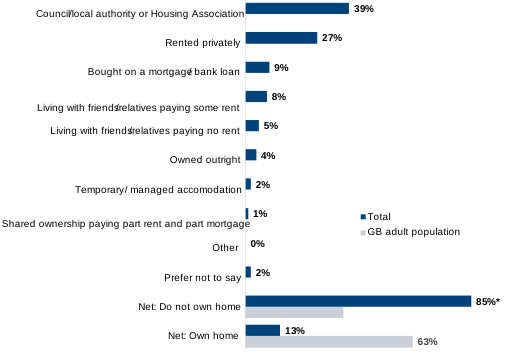
As shown in Figure 2.1, most DWP debtors did not own their home (85%). Most rented (68%), while 13% owned their own home. The proportion of DWP debtors that rented is substantially higher than the proportion within the GB population (37%). Of those who rented, the most common arrangement was renting from a council/local authority/housing association (39%). The next most common was renting privately (27%). Those who were on-benefit were more likely to be renting than average (76% compared to 68%). Additionally, the likelihood of renting increased with age from 59% among younger debtors (18-34) to 72% among 35-54 aged debtors.
Very few debtors were living in highly insecure living environments, such as temporary accommodation or experiencing homelessness (around 3%). Those who were off-benefit not-in-recovery were more likely to be experiencing homelessness than average (2% compared to 1%).
Figure 2.1 Debtors’ living situation
Source: Debt management survey. A1. Which of these applies to your home? Base: All (4,184) “Other” response <1%. Housing, England and Wales: Census 2021 and Scotland’s Census 2022 – Housing. *Asterisks denote significant difference compared to the GB adult population.
Figure 2.1 shows DWP debtors’ living situation. Most debtors rent their home through the council or a housing association (39%), and over a quarter rent privately (27%). Only a small minority own their home outright or through a mortgage (13% combined). Overall, 85% of debtors do not own their home, compared with 63% of the GB adult population.
Overall, one third (33%) of debtors lived with a spouse or partner (including unmarried partners). Those off-benefit in-recovery were more likely to be living with a spouse or partner than the other groups (43% compared to 33% average)[footnote 2].
There was a split in terms of whether debtors were responsible for children – half (50%) were responsible for children, and around half (49%) were not. Those who were on-benefit were more likely to be responsible for children (58% compared to 50% average) and were also more likely to have at least three children under 19 (18% compared to 6% for off-benefit in-recovery, 9% for off-benefit not-in-recovery). Overall, 19% of debtors had one child, 18% had two children while 14% had three or more.
Table 2.1 Number of children under the age of 19 in household
| No. of children in household | Total | On-benefit | Off-benefit in-recovery | Off-benefit not-in-recovery |
|---|---|---|---|---|
| 1 | 19% | 20% > | 18% | 16% > |
| 2 | 18% | 20% > | 16% | 13% < |
| 3 or more | 14% | 18% > | 6% < | 9% < |
| Net: One or more | 50% | 58% > | 39% < | 38% < |
| None | 49% | 41% < | 60% > | 61% > |
| Prefer not to say | 1% | 1% | 1% | 1% |
Source: Debt management survey. A3. How many children under the age of 19 are you responsible for in your household? Base: All (4,184), On-benefit (2,612), Off-benefit in-recovery (523), Off-benefit not-in-recovery (1,049). Arrows > (larger than) and < (less than) denote significant differences compared to average of all other respondents.
Of those who were responsible for children, there was also a split in terms of the ages of the children. Just under a quarter (23%) were under 5, 33% were aged 5-10, 28% were aged 11-15 and 14% were aged 16-18. The off-benefit not-in-recovery group were more likely to have children aged under 5 (31% compared to 23% average)[footnote 3].
Around three in ten debtors (28%) had caring responsibilities. Those who were on-benefit were more likely to have caring responsibilities (33% compared to 28% average).
Figure 2.2 Whether debtors have caring responsibilities
| Responsibility Response | Total | On-Benefit | Off-benefit in-recovery | Off-benefit not-in-recovery |
|---|---|---|---|---|
| Yes, full time (35+ hours per week) | 19% | 24%* | 10% | 11% |
| Yes, part-time (less than 35 hours per week) | 10% | 8% | 13% | 11% |
| Net: Yes | 28% | 33%* | 22% | 22% |
| No | 69% | 64% | 76% | 76% |
| Prefer not to say | 3% | 3% | 2% | 2% |
Source: Debt management survey. A5. Do you look after, or give any help or support to, anyone because they have any long-term physical or mental health conditions or illnesses, or problems related to old age? Base: All (4,184), On-benefit (2,612), Off-benefit in-recovery (523), Off-benefit not-in-recovery (1,049). *Asterisks denote significant difference compared to the other key debtor groups.
Demographic characteristics
One quarter (24%) of debtors were aged 18-34, just over half (54%) were in the 35-54 age group and one in five (20%) were aged between 55-74. Less than 1% were aged over 75[footnote 4]. The on-benefit group were more likely than average to be in the 35-54 age group (57% compared to 54%).
Table 2.2 Debtors by age
| Age | Totals | GB adult population | On-benefit | Off-benefit in-recovery | Off-benefit not-in-recovery |
|---|---|---|---|---|---|
| 18-34 years old | 24% | 28% | 20% < | 28% > | 32% > |
| 35-54 years old | 54%> | 32% | 57% > | 51% | 48% < |
| 55-74 years old | 20% | 28% | 20% | 19% | 18% |
| 75+ years old | 0%< | 12% | 1% > | 0% | 0% |
| Prefer not to say | 2% | 0% | 2% | 3% | 3% |
Source: Debt management survey. E1. What is your age? Base: All (4,184), On-benefit (2,612), Off-benefit in-recovery (523), Off-benefit not-in-recovery (1,049). Population estimates – Office for National Statistics. Arrows > (larger than) and < (less than) denote significant differences compared to average of all other respondents or GB adult population.
In terms of ethnicity, nearly three quarters (73%) of debtors were from a White ethnic background. After this, Black African/Caribbean (8%) and Asian/Asian British (7%) were the next most commonly cited ethnic backgrounds. 5% were from a Mixed ethnic, 3% cited ‘other’, with 4% answering ‘prefer not to say’. Compared to the wider GB adult population, debtors were more likely to be from an ethnic minority background (23% compared to 18%)[footnote 5].
Just under half (47%) of debtors were male, while slightly more than half (53%) were female[footnote 6]. There were some pronounced differences in by sex between key debtor groups. For example, two thirds of those who were off-benefit not-in-recovery were male (67%), whereas 62% of the on-benefit group were female. The off-benefit in-recovery group had a near equal 50/50 split by sex.
Table 2.3 Debtors by sex
| Sex | Total | GB population | On-benefit | Off-benefit in-recovery | Off-benefit not-in-recovery |
|---|---|---|---|---|---|
| Male | 47% | 49% | 38% < | 49% | 67% > |
| Female | 53% | 51% | 62% > | 51% | 33% < |
Source: Debt management survey. E3. What sex were you registered at birth? Base: All (4,184), On-benefit (2,612), Off-benefit in-recovery (523), Off-benefit not-in-recovery (1,049). Population of the UK by sex – Office for National Statistics. Arrows > (larger than) and < (less than) denote significant differences compared to average of all other respondents.
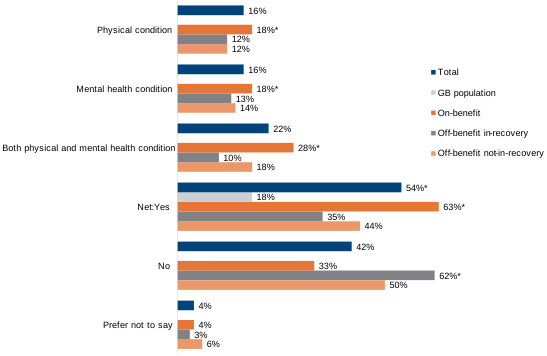
As shown in Figure 2.3, more than half (54%) of debtors reported having a physical or mental health condition, while 42% had none. This is substantially higher than the proportion of the GB population as a whole that live with a long-term physical or mental health condition (18%).
Within this, there was a mix of type of health conditions - 16% had only a physical health condition, 16% had only a mental health condition, and 22% had both physical and mental health conditions.
Those on-benefit were more likely than average to have a physical or mental health condition (63% compared to 54% average). This is likely because they are entitled to benefits linked to their health condition.
Figure 2.3 Whether debtors have a physical or mental health condition
Source: Debt management survey. E6. Do you have any physical or mental health conditions or illnesses lasting or expected to last 12 months or more? Base: All (4,184), On-benefit (2,612), Off-benefit in-recovery (523), Off-benefit not-in-recovery (1,049). Disability, England and Wales: Census 2021 – Office for National Statistics and Scotland’s Census 2022: Health, disability and unpaid care. Only Net: Yes displayed for GB population. *Asterisks denote significant difference compared to the other key debtor groups or GB population.
Figure 2.3 shows the proportion of DWP debtors reporting a physical or mental health condition. Just over half reported at least one condition, with on‑benefit debtors most likely to do so. Compared with the GB population, debtors were far more likely to report a physical condition, a mental health condition, or both.
Just over two fifths (43%) of DWP debtors stated that they were eligible for free school meals when at school. A similar share (41%) were not entitled to free school meals, while 14% were unsure. The on-benefit group were more likely to say they were eligible for free school meals than the other key debtor groups.
Figure 2.4 Whether debtors were eligible for free school meals
| Eligibility for free school meals | Total | On-Benefit | Off-benefit in-recovery | Off-benefit not-in-recovery |
|---|---|---|---|---|
| Yes | 43% | 46%* | 37% | 40% |
| No | 41% | 36% | 52%* | 45% |
| Don’t know | 14% | 15% | 11% | 12% |
| Prefer not to say | 2% | 3% | 1% | 3% |
Source: Debt management survey E8. When you were in school, were you eligible for free school meals? Base: All (4,184), On-benefit (2,612), Off-benefit in-recovery (523), Off-benefit not-in-recovery (1,049). *Asterisks denote significant difference compared to the other key debtor groups. Those who went to school outside the UK have been excluded as the free school meals policy does not apply to them.
Types and amount of income
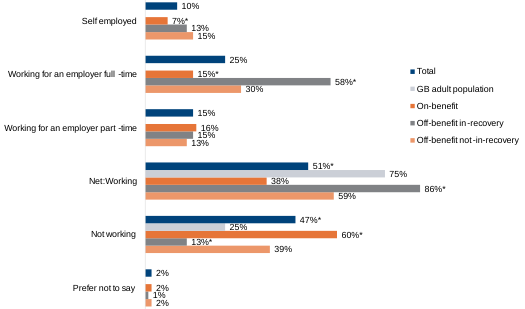
As shown in Figure 2.5, half of respondents reported that they were in employment (51%), lower than the wider GB adult population (75%). A similar proportion were not in work (47%). Of those who were in employment, one quarter (25%) were working full time, while 15% were working part time. One in ten (10%) were self-employed.
The off-benefit in-recovery group were more likely to be in employment than average (86% compared to 51%). This was largely driven by a much higher proportion working for an employer full-time (58% compared to 25% average), as opposed to self-employment or part-time employment. Those who were on-benefit were significantly less likely to be working (38% compared to 51% average).
Figure 2.5 Employment status of debtors
Source: Debt management survey. A7. Which of the following best describes your current employment status? Base: All (4,184), On-benefit (2,612), Off-benefit in-recovery (523), Off-benefit not-in-recovery (1,049). Employment in the UK: October 2025 – Office for National Statistics. Only Net: Working and Not working displayed for UK adult population. *Asterisks denote significant difference compared to the other key debtor groups or GB adult population.
Figure 2.5 shows the employment status of DWP debtors. Just over half were in work, with off‑benefit in‑recovery debtors the most likely to be employed, especially full‑time, while on‑benefit debtors were least likely to be working. Compared with the GB adult population, debtors were far less likely to be in full‑time employment and more likely to not be working.
As displayed in Figure 2.6, the main explanation given by those who were not working was that permanent sickness or disability prevented them from working (37%). One in five (20%) were unemployed and looking for work, while one in ten (10%) were unemployed and not looking for work. Those on-benefit were more likely to say they were not in work due to permanent sickness or disability (42% compared to 37% average).
Figure 2.6 Further detail on employment status of those who were not working
| Employment status | Total | On-benefit | Off-benefit in-recovery | Off-benefit not-in-recovery |
|---|---|---|---|---|
| Unemployed and looking for work | 20% | 14%* | 44% | 37% |
| Unemployed and not looking for work | 10% | 11% | 7% | 9% |
| Permanently sick/disabled | 37% | 42%* | 13% | 23% |
| Temporarily sick | 10% | 9% | 18% | 12% |
| Prefer not to say | 2% | 2% | 1% | 2% |
Source: Debt management survey. A7a. Which of the following best describes your current employment status in more detail? Base: All (1,747), On-benefit (1,302), Off-benefit in-recovery (64), Off-benefit not-in-recovery (381). Responses lower than 10% not shown for all debtors. *Asterisks denote significant difference compared to the other key debtor groups.
Respondents that were working had been in their job for a varied length of time. One quarter (25%) had been in their job for less than a year, 40% had been in it for 1-5 years and a third (34%) had been in it for 5 years or longer.
Those who were off-benefit not-in-recovery were more likely to have been in their job for less time – 31% had been in their job for less than a year (compared to 25% average). Those who were on-benefit were more likely to have been in their job for more time (38% have been in more than 5 years, compared to 34% average)[footnote 7].
The vast majority (91%) reported only having one job. Just 8% said they had two jobs or more. This did not differ significantly between groups[footnote 8].
For respondents that were on-benefit, Universal Credit was the most common with over four in five (84%) saying the claimed it. After this, Personal Independence Payment was next with 31% of respondents saying they claimed it while 17% said they claimed Carer’s Allowance.
Figure 2.7 Types of benefits debtors received
| Benefit type | Total | On-benefit | Off-benefit in-recovery | Off-benefit not-in-recovery |
|---|---|---|---|---|
| Universal Credit (UC) | 63% | 84%* | 12%* | 40% |
| Personal Independence Payment (PIP) | 23% | 31%* | 5%* | 14% |
| Carer’s Allowance | 12% | 17%* | 2%* | 5% |
| Other benefits | 18% | 21%* | 13% | 14% |
| Net: Currently receiving benefits | 73% | 92%* | 27%* | 50% |
| Not currently receiving benefits | 26% | 7%* | 72%* | 48% |
| Prefer not to say | 1% | 1% | 1% | 1% |
Source: Debt management survey. A11. Which of the following benefits, if any, are you currently receiving? Base: All claiming some type of benefit (3,980), On-benefit (2,612), Off-benefit in-recovery (460), Off-benefit not-in-recovery (908). Debtors’ benefit status may have changed between the time the sample was drawn and the survey was taken – for example, those who were listed as ‘off-benefit in-recovery’ or ‘off-benefit not-in-recovery’ may have been receiving benefits before completing the survey. It should be noted that benefit claims was self-reported and debtors could claim multiple benefits. *Asterisks denote significant difference compared to the other key debtor groups.
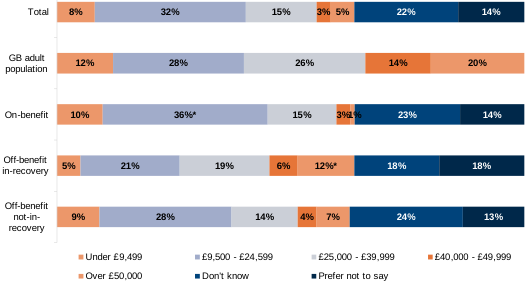
There was an overall skew towards lower incomes among DWP debtors. Around one in three debtors (32%) had an annual gross income from all sources of £9,500 to £24,599. The next most common annual gross income was £25,000 - £39,999 (15%), followed by under £9,499 (8%). A significant minority (36%) declined to disclose their income. The on-benefit group (36%) tended to have lower household total gross incomes of £9,500 - £24,599, while those off-benefit in-recovery were more likely to have an income over £50,000 (12% compared to 5% average). Additionally, respondents that lived with a spouse or partner were more likely to have an annual gross income of over £50,000 (7%).
Figure 2.8 Household income of debtors
Source: Debt management survey. B4. Approximately what is your household’s total gross income per year from all sources? Base: All (4,184), On-benefit (2,612), Off-benefit in-recovery (523), Off-benefit not-in-recovery (1,049). Households below average income (HBAI) statistics 1995 to 2024 *Asterisks denote significant difference compared to the other key debtor groups. It should be noted that the GB adult population comparison data does not have ‘don’t know’ and ‘prefer not to say’ categories, meaning that caution should be taken when making direct comparisons.
Figure 2.8 shows the household income of debtors. The largest proportion of debtors have an annual household income between £9,500 and £24,599 (32%). Smaller groups fall into higher income bands such as £25,000 to £39,999 (15%), and a small proportion earn under £9,499 (8%). A large proportion of debtors did not disclose household income.
Debt owed to other creditors
For most debtors, money owed to DWP was not the only money they owed. As shown in Figure 2.9, two thirds (65%) said they were behind on other bills and repayments (not including their DWP debt). Three in ten (30%) said they were not behind on any bills or repayments.
The most common bills and repayments that debtors were behind on were utility bills like gas / electric (26%) and council tax (25%). This was followed by water bills (21%), credit/store cards (21%), loan from friend/relative (20%). Debtors in the on-benefit group were more likely to be behind on other bills and repayments compared to the average (70% and 65% respectively).
In relation to health, those living with a mental health condition were more likely to be behind on bills (78%), evidencing the link between the two. Carers were also more likely to be behind on bills than average (71% compared to 65% average).
Debtors aged 35-44 and those from a Black British ethnic background were more likely than average to be behind on bills (68% and 75% respectively).
Figure 2.9 Whether debtors are behind on other bills and repayments
| Bill/Repayment debtors are behind on | All | On-benefit | Off-benefit in-recovery | Off-benefit not-in-recovery |
|---|---|---|---|---|
| Utility bills (gas/electric) | 26% | 31%* | 13%* | 21% |
| Council tax/Council rates | 25% | 29%* | 14%* | 23% |
| Water bills | 21% | 26%* | 10%* | 19% |
| Credit/store cards | 21% | 21% | 18% | 21% |
| A loan from a friend or relative | 20% | 22% | 12%* | 21% |
| Net: Yes | 65% | 70%* | 50%* | 62% |
| No | 30% | 24%* | 46%* | 34% |
Source: Debt management survey. B5. Are you currently behind with any of the following bills or repayments? Base: All (4,184), On-benefit (2,612), Off-benefit in-recovery (523), Off-benefit not-in-recovery (1,049). Response options with <20% not shown for All debtors. *Asterisks denote significant difference compared to the other key debtor groups.
Debt values varied widely, demonstrating that debtors found themselves in a range of different financial circumstances. Two in five (41%) owed £500 - £4,999 while around one in five (22%) owed £5,000 to £19,999. Nearly one in five (18%) said they didn’t know or preferred not to answer. There were no significant differences between the key sample groups in terms of debt value[footnote 9].
Qualitative interviews also showed that debtors had a mix of different financial situations and debt value. Some had larger amounts of debt (e.g. one person owed between £35,000 to £40,000 in total), whereas others owed money to a few different creditors but had manageable monthly payments set up. A few also owed very little or nothing outside of their DWP debt. Personal situations and challenges (e.g. mental or physical health conditions) fed into difficulties with debt and strongly impacted their ability to manage their debts.
When I go to shopping, I buy everything which is at reduced prices. You know, when I go to Tesco, if I can’t buy anything reduced prices, I avoid buying it. So that’s my existence, you know, everything… the cheapest thing…
(On-benefit)
Below shows a summary of the main differences between the key debtor groups in this chapter.
Summary of differences in demographics and financial characteristics between key debtor groups
On-benefit:
- a middle-aged, predominantly White female group, often caring for others while managing health and financial pressures, and struggling to keep up financially despite long-term ties to work or community
- typically female, aged 45-54, and white, often living in council housing, with children and caring responsibilities
- commonly face health challenges, including mental and physical conditions
- least likely to be in work; when employed, tend to stay in the same job for several years.
- come from lower-income backgrounds
- most financially stretched, with many behind on essential bills
- only a small proportion are fully up to date on all payments; arrears are common
Off-benefit in recovery:
- a working-age, stable, and relatively healthy group, often privately renting or buying, financially balanced but with moderate exposure to consumer debt, and less likely to have health issues than other groups
- a mix of men and women, generally aged 35-54 and predominantly White; most do not have children or caregiving responsibilities
- generally healthy, with few reporting medical conditions
- most likely to rent privately, though some are buying with a mortgage or bank loan
- most are in work, typically in their current job for a few years. Among those not working, many are actively looking for work
- financially mixed, with some carrying debt while others have none
Off-benefit not-in-recovery:
- a predominantly male, mid-30s to mid-40s group, split between council and private renting, modestly employed, and carrying moderate levels of debt, financially under pressure but more active in the labour market than those on-benefit
- predominantly male, White, and aged 35-44
- health is mixed, with some reporting medical conditions while others are generally healthy
- households are often without children, and few have caregiving responsibilities
- housing is split between council renting and private renting
- moderate employment levels, with most in their current job for a few years; some of those not working are actively seeking employment
- debt levels are relatively high, covering a range of obligations, though a portion have no debts
Case study: Laura’s journey (on-benefit)
Laura[footnote 10] is a single mother who lives in council housing with her two children. Both have disabilities. Laura has a lung condition and endometriosis preventing her from working, although these health conditions do not grant her eligibility for disability benefits or other types of support.
She does not receive PIP, and Universal Credit is her main source of income. She owes money for basic bills (electricity, gas, water, council tax) as well as her DWP debt.
I think when I’ve done a, like, a workout sheet of what my incomings and my outgoings are, I’m about £600 over each month on outgoings.(…) I’ve cut my bills down, I’ve given up some of my stuff, and the kids are not doing after-school clubs now, because I can’t afford it.
Case study: James’ journey (off-benefit in-recovery)
James[footnote 11] lives with his wife and daughter in accommodation rented from the council. He works full time as an assembler in a factory, and his wife also works full time. He has no health conditions.
His incomings and outgoings are tight, and he works overtime to save money, but is comfortable with his situation. He has a low amount of credit card debt on top of his DWP debt.
I’m pretty comfortable living the way I live, but other people wouldn’t like it; it’s just like I said I never grew up with anything, so the fact that I have a small amount now is something to me.
Case study: Andrew’s journey (on-benefit)
Andrew[footnote 12] is 67 years old and lives in his own property with his sister, who works full time. He describes himself as self-employed and partly retired, working 30 hours a week publishing greeting cards.
The only current debt he has is to DWP, but his financial situation is tight.
[My financial situation] is not brilliant at all. Not brilliant. I don’t think I’ve made a good success of my business, so it’s been difficult.
3. Financial wellbeing and advice
This chapter provides an overview of debtors’ financial wellbeing and their views and experiences of seeking financial advice/support. Debtors generally had low financial resilience, were often unable to cover unexpected costs and rarely saved money, with those on-benefit most affected. Few had sought financial advice, though many were open to doing so in future, with charities and family or friends seen as the most accessible sources.
Many debtors were dissatisfied with their financial situation and had gone without essential items due to lack of money in the past six months, especially those on-benefit. A majority of debtors rarely or never saved money, with only a small fraction saying they saved money each month. Moreover, most debtors could not pay an unexpected £300 bill within seven days. Across these different angles of financial wellbeing and stability, on-benefit debtors often showed lower financial resilience. Findings highlighted a group of debtors with more acute challenges: there was a correlation between more severe financial difficulties and debtors having health conditions, caring responsibilities and being unemployed. Off-benefit in-recovery debtors stood out as reporting higher levels of financial resilience and confidence in managing payment priorities.
Most debtors had never sought financial advice. The most common sources of financial advice which debtors had turned to, or would turn to in the future, were charities or family and friends, according to the survey. This was broadly reflected in qualitative interviews, where charities were seen as non-judgemental. Barriers to seeking financial advice included fear of judgement and limited awareness of available resources.
Satisfaction with financial situation
Debtors were asked to rate how satisfied they were with their financial situation on a scale of one to ten. Overall, satisfaction was fairly low: the mean score across debtors was 4.99 out of 10. As shown in Figure 3.1, nearly half of debtors (44%) stated they were not satisfied (rated 1-4 out of 10) with their overall financial circumstances. Just under a third (32%) of debtors stated they were satisfied with their financial situation (rating it 6-10 out of 10). A further 18% were neither satisfied nor unsatisfied (a score of 5).
Satisfaction (6-10) was more common in the off-benefit in-recovery group (39%) compared to the off-benefit not-in-recovery group (32%) and the on-benefit group (31%). This is in line with findings in Chapter 2, where off-benefit in-recovery debtors tended to have more stable financial situations relative to the other two key debtor groups. For instance, the off-benefit in-recovery group were more likely to be in employment than average (86% compared to 51%, see Figure 2.5) and more likely to have an income over £50,000 (11% compared to 5% average, see Figure 2.8).
Figure 3.1 Levels of satisfaction with overall financial circumstances
| Satisfaction level | All | On-benefit | Off-benefit in-recovery | Off-benefit not-in-recovery |
|---|---|---|---|---|
| Satisfied (6-10) | 32% | 31% | 39%* | 32% |
| Neither satisfied nor unsatisfied (5) | 18% | 18% | 21% | 16% |
| Unsatisfied (1-4) | 44% | 44% | 37% | 47% |
| Don’t know / Prefer not to say | 6% | 7%* | 3% | 5% |
Source: Debt management survey. B1 How satisfied are you with your overall financial circumstances? Base: All (4,184), On-benefit (2,612), Off-benefit in-recovery (523), Off-benefit not-in-recovery (1,049). *Asterisk denotes significant difference vs the other key debtor groups.
In interviews, many off-benefit in-recovery debtors described their financial situation as neither good nor bad. When probed further, this often meant they had no money to spare but could cover essential bills and rent.
I try my best to do everything in my ability to be sort of clever with money and stuff like that. Could it be better? Of course, it can always be better, but I can live with what I got.
(Off-benefit in-recovery)
Some debtor groups were more likely to be dissatisfied with their financial situation. Around half of debtors with a health condition (49%) or caring responsibilities (48%) reported being unsatisfied with their finances (compared to a 44% average). This proportion increased to 61% among those with low confidence in managing payment priorities, and 64% for those unemployed and looking for work[footnote 13].
Conversely, debtors aged 18-24 (42%), in employment (34%), and with smaller DWP debt values (£10- £100: 42% and £101 - £250: 38%) were more likely to be satisfied than average (32%)[footnote 14].
How often debtors go without essential items
Just under two in three (65%) of debtors went without essentials due to lack of money, and this was more common for on-benefit debtors (72%) (see Figure 3.2). More specifically, around three in ten debtors (28%) had always or most of the time gone without essential items due to a lack of money.
Figure 3.2 shows that on-benefit debtors were the most likely to always go without essential items (11%), compared to 8% of off-benefit not-in-recovery debtors and 4% of those in-recovery. Similarly, nearly a quarter (22%) of on-benefit debtors went without essential items most of the time, compared to 17% of off-benefit not-in-recovery debtors and just 10% of those in-recovery. This highlights that on-benefit debtors face the greatest financial strain among the three groups.
Around one in six (18%) debtors had never gone without essential items due to a lack of money. This was more likely for the off-benefit in-recovery group (33%) compared to on-benefit debtors and off-benefit not-in-recovery debtors, further strengthening the evidence that this group has higher financial wellbeing than other key debtor groups.
Figure 3.2 How often debtors went without essential due to lack of money
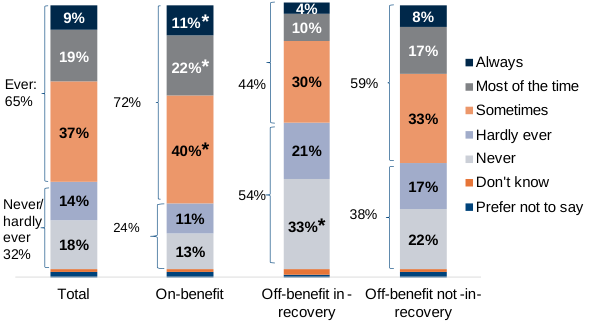
Source: Debt Management survey. B3. Over the past 6 months, how often, if at all, have you and your household gone without essential items due to a lack of money? Base: All (4,184), On-benefit (2,612), Off-benefit in-recovery (523), Off-benefit not-in-recovery (1,049). *Asterisk denotes significant difference vs the other key debtor groups.
Figure 3.2 shows how often DWP debtors went without essential items due to lack of money. Around two‑thirds of all debtors had gone without essentials at least sometimes, with on‑benefit debtors the most likely to do so. Off‑benefit in‑recovery debtors were the least likely to go without essentials, with over half saying they never or hardly ever did.
This aligns with findings from qualitative interviews, where on-benefit debtors more often described their financial situation as poor.
It’s pretty dire at the moment … I’ve also applied for that thing where you get £56 and you can do it 3 times a year? Can’t remember what it’s called … we are on a minimal diet, minimal everything to be honest.
(On-benefit)
As financial constraints are likely to have a strong association with financial satisfaction, it is not surprising that similar subgroups stand out: those who were unemployed (35%), had health conditions (35%) or had caring responsibilities (32%) were more likely than average to go without essential items always or most of the time[footnote 15].
Qualitative interviews further highlighted the connection between health, employment, and finances: those who had poor financial situations were more likely to mention a mental or physical disability, and unemployment.
I had a mental breakdown about 3 or 4 years ago. So no, I’m not working at the moment, no. […] with the living situation, my daughter does her best, and sorts it out, and does Meals on Wheels, or she orders takeaways or something. She helps me like that.
(On-benefit)
How often debtors save money
Saving money was relatively rare among debtors. Around seven in ten (71%) debtors said they rarely or never save money. This was more common for the on-benefit group, where three quarters (75%) of debtors said they never saved money (see Figure 3.3). Around one in twenty debtors (7%) saved money every month, and this was more likely amongst off-benefit in-recovery debtors (13%) compared to on-benefit (5%) and off-benefit not-in-recovery (7%) debtors (as shown in Figure 3.3). This evidence indicates that off-benefit in-recovery debtors had more stable financial situations than the other key debtor groups.
Figure 3.3 How often debtors save money
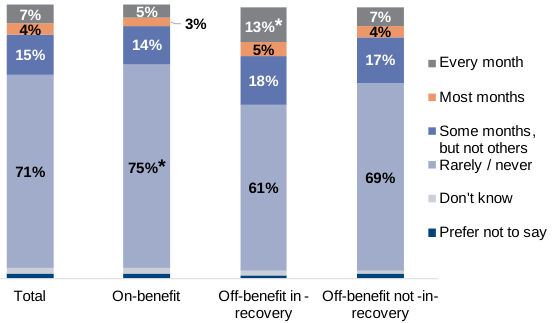
Source: Debt Management customer survey. B8. Which of these best describes how often you save money? Base: All (4,184), On-benefit (2,612), Off-benefit in-recovery (523), Off-benefit not-in-recovery (1,049). *Asterisk denotes significant difference vs the other key debtor groups.
Figure 3.3 shows how often debtors save money. Overall, a large proportion of debtors rarely or never save money. Debtors on-benefit were more likely to rarely or never save money compared to other key debtor groups.
Again, debtors with a health condition (79%) and unemployed debtors (79%) were more likely to say they never saved money. Unsurprisingly, a vast majority of those with higher DWP debt values (83% for £5001-10,000) never saved money[footnote 16]. Conversely, those without a health condition (10%) and in employment (10%) were more likely than average to save every month[footnote 17].
Amongst debtors whose only debt was to DWP[footnote 18], 13% saved money every month, nearly twice the proportion amongst all debtors (7%). A further 24% of debtors who only owed money to DWP said they saved money some months, but not others: significantly more than 15% of all debtors. This suggests that debtors who only owe money to DWP may be more in control of their financial situation than individuals who have multiple sources of debt. Within this group, off-benefit in-recovery debtors remain the most likely group to save every month, with 21% of off-benefit in-recovery doing so, compared to 10% of on-benefit and 11% of off-benefit in-recovery debtors.
Payment of an unexpected bill
Most debtors (70%) reported that they would not have been able to pay an unexpected bill of £300 within seven days (Figure 3.4). Around one-fifth of all debtors (21%) said they would have been able to pay an unexpected bill of this value within seven days. In line with other findings around financial wellbeing, off-benefit in-recovery debtors were more likely (36%) than the other key debtor groups to say they would have been able to pay an unexpected bill of £300. On-benefit debtors, on the other hand, were less likely to say they were able to pay (76% said ‘No’) (see Figure 3.4). This group was also more likely to select ‘Don’t know’ than off-benefit in-recovery and off-benefit not-in-recovery debtors, indicating a possible reluctance to disclose this information.
Figure 3.4 Debtor ability to pay an unexpected bill of £300 within seven days
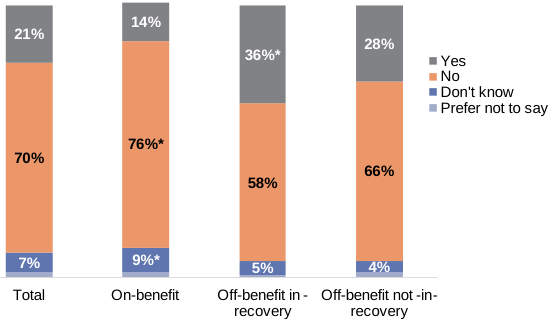
Source: Debt Management customer survey. B9. If you had an unexpected bill of £300 that you had to pay within seven days from today, would you be able to pay it? Base: All (4,184), On-benefit (2,612), Off-benefit in-recovery (523), Off-benefit not-in-recovery (1,049). *Asterisk denotes significant difference vs the other key debtor groups.
Figure 3.4 shows whether DWP debtors could pay an unexpected £300 bill within seven days. Around seven in ten debtors said they would not be able to pay it, with on‑benefit debtors the least likely to manage it. Off‑benefit in‑recovery debtors were the most likely to say they could pay the bill
In addition to off-benefit in-recovery debtors, those who did not have health issues, caring responsibilities, who were in employment and had lower DWP debt values were also more likely to be able to pay, as shown in Table 3.1. Debtors with low DWP debt amounts (between £10 and £100) were more likely than average, and more likely than any other DWP debt group, to say they could pay off an unexpected bill of £300 within seven days.
Table 3.1 Debtors more likely to pay an unexpected bill of £300 within seven days
| Demographic | Yes | No | Don’t know | Prefer not to say |
|---|---|---|---|---|
| No health condition | 31% > | 60% < | 7% | 2% |
| No caring responsibilities | 23% > | 69% < | 6% < | 2% |
| Employed | 30% > | 61% < | 7% | 2% |
| DWP debt value (£10 – 100) | 35%* > | 50% < | 12% > | 3% |
| DWP debt value (£101 - £250) | 27% > | 64% < | 7% | 2% |
| DWP debt value (£251 - £500) | 27% < | 66% < | 6% | 2% |
Source: Debt Management customer survey. B9. If you had an unexpected bill of £300 that you had to pay within seven days from today, would you be able to pay it? Base: All (4,184), No health condition (2,328), No caring responsibilities (2,840), Employed (2,036), DWP debt value £10 – 100 (248), DWP debt value £101 - £250 (418), DWP debt value £251 - £500 (595). Arrows > (larger than) and < (smaller than) denote significant differences compared to the average of all other respondents. Asterisks denote significant differences compared to the other key debtor groups.
Methods of paying an unexpected bill of £300 within 7 days
The most common method of paying an unexpected bill of £300 within seven days would be to dip into savings (27% of all debtors said this, as shown in Figure 3.5). Around a quarter (24%) of respondents said they would pay it with their own money, without dipping into savings or cutting back on essentials. The next most common method would be to cut back on essentials (food, paying bills) to pay the bill, without spending money from their savings (16%). Around one in seven (15%) of respondents would pay the bill by getting money from friends and family. Selling personal or household items, and going overdrawn without authorisation, were selected by 2% or less of all debtors.
On-benefit debtors (19%) were less likely to pay back the unexpected bill with their own money, compared to off-benefit debtors both in-recovery (29%) and not-in-recovery (26%), suggesting lower financial resilience amongst those on-benefit. In contrast, off-benefit in-recovery debtors (8%) were less likely than both on-benefit (20%) and off-benefit not-in-recovery (15%) debtors to rely on their friends and family in this situation.
Figure 3.5 Methods of paying an unexpected bill of £300
| Methods of paying an unexpected bill of £300 | Total | On-benefit | Off-benefit in-recovery | Off-benefit not-in-recovery |
|---|---|---|---|---|
| I would have to dip into savings | 27% | 26% | 30% | 26% |
| I would pay it with my own money, without dipping into savings or cutting back on essentials (e.g. buying food or paying bills) | 24% | 19%* | 29% | 26% |
| I would pay it with my own money, without dipping into savings but I would have to cut back on essentials (e.g. buying food or paying bills) | 16% | 15% | 17% | 16% |
| I would get the money from friends or family as a gift or loan | 15% | 20% | 8%* | 15% |
| I would use a form of credit (e.g. credit card, take out a loan or make use of an authorised overdraft facility) | 14% | 14% | 15% | 11% |
| I would have to sell personal/household item(s) to get the money | 1% | 2% | 1% | 0 |
| I would go overdrawn without authorisation | 1% | 0 | 0 | 2% |
Source: Debt Management customer survey B10. How would you pay this unexpected bill of £300 that you had to pay within seven days from today? Base: If able to pay an unexpected bill of £300. All (883), On-benefit (353), Off-benefit in-recovery (187), Off-benefit not-in-recovery (276). *Asterisk denotes significant difference compared to the other key debtor groups.
Debtors’ confidence in deciding which bills or financial commitments are the most important to pay
Confidence in prioritising which bills to pay was high, with around three quarters (74%) of all debtors feeling confident; this proportion increased to 86% for the off-benefit in-recovery group, higher than both other key debtor groups (on-benefit: 70% and off-benefit not-in-recovery: 76%, as shown in Figure 3.6. Conversely, just under a quarter (22%) of respondents did not feel confident about prioritising bills and financial commitments, and on-benefit debtors were more likely to report feeling ‘Not very confident’ (16%) than the other two key debtor groups.
Figure 3.6 Debtor confidence in prioritising bills or financial commitments
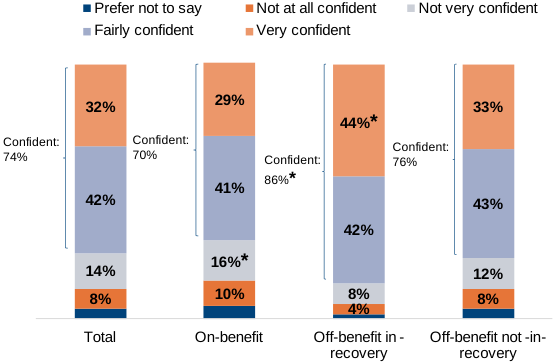
Source: Debtor survey. B11. How confident, if at all, do you feel about which bills or financial commitments are the most important to pay? Base: All (4,184), On-benefit (2,612), Off-benefit in-recovery (523), Off-benefit not-in-recovery (1,049). *Asterisk denotes significant difference vs the other key debtor groups.
Figure 3.6 how confident DWP debtors felt about prioritising bills or financial commitments. Around three‑quarters felt confident overall, with off‑benefit in‑recovery debtors the most confident and on‑benefit debtors the least confident.
Debtors with no health conditions (40%) and in employment (38%) were more likely to say they were ‘Very confident’ with which bills and financial payments to prioritise than average (32%)[footnote 19]. Health and employment status have a connection not just to financial wellbeing, but also to financial literacy, suggesting that some debtors experience additional barriers to managing their finances.
It is worth noting that in qualitative interviews, debtors often mentioned that they were repaying their debt to DWP via a monthly repayment plan or directly out of their benefits (as explored in more depth in Chapter 4). Therefore, many did not have to decide monthly whether to pay their DWP debts before other debts.
There were a few cases where debtors had to prioritise which debts to pay as they could not pay them all. Debtors (often on-benefit) who could not afford to pay all their bills said they prioritise gas, electricity and food bills on a monthly basis, and could not always afford to cover everything. For on-benefit debtors, repayments to DWP were automatically deducted from their benefits, so they do not actively prioritise these payments. However, some said that if they had a choice, they would use that money for essential living costs instead.
It’s not that I manage, I would say, as much. It is literally just scrimp and scrape and try and pay back people little by little. […] there’ll be a week I might have 20 quid, and I’ll put that on one of my bills. That’s how I manage it.
(On-benefit)
Some debtors who could cover essential bills like gas, electricity and food, but had taken out loans for larger expenses (such as car repairs), said they continued to pay both their DWP debt and credit card bills. However, they prioritised repaying higher credit card balances to protect their credit rating.
Experience of seeking debt or financial advice and support
Findings from both the survey and qualitative interviews indicate that debtors made limited use of formal financial advice services. Nearly two thirds (64%) had not previously and were not currently seeking advice or support with managing their finances, as shown in Figure 3.7. Around a fifth (21%) of all debtors had previously sought advice or support with managing their finances, and around one in ten of all debtors (11%) were currently seeking advice or support.
On-benefit debtors were more likely to have sought some form of financial advice: 62% said they had never sought financial advice, which is lower than for off-benefit debtors (both in-recovery: 70% and not-in-recovery: 65, Figure 3.7). This corresponds with wider findings showing that on-benefit debtors experience lower financial resilience compared to off-benefit debtors.
Of the debtors who took part in qualitative interviews, those who had not previously and were not currently seeking debt or financial advice were mostly off-benefit in-recovery debtors. The main reason for this was debtors feeling their debt was not significant enough and feeling able to manage it themselves.
No [I haven’t sought financial advice], my debt is at a level where I think I could manage it myself. If I was to get into any difficulty I would maybe look at going down one of those avenues.
(Off-benefit in-recovery)
Figure 3.7 Whether have ever sought financial advice
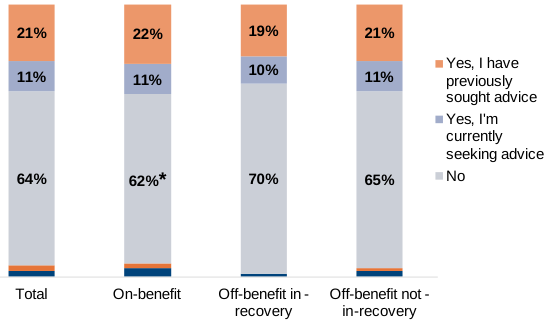
Source: Debtor survey. B12. Have you previously or are you currently seeking any advice or support with managing your finances? All (4,184), On-benefit (2,612), Off-benefit in-recovery (523), Off-benefit not-in-recovery (1,049). *Asterisk denotes significant difference vs the other key debtor groups.
Figure 3.7 shows whether DWP debtors had ever sought financial advice. Around two‑thirds had never sought advice, while just over one‑fifth had sought advice previously and a smaller proportion were currently seeking advice.
Debtors who were employed (68%), had no caring responsibilities (66%) and with lower DWP debt values (£10 - £100: 68%, £101 - £250: 72% and £251 - £500: 70%) were more likely to say they had never sought advice than average (64%)[footnote 20]. This may reflect fewer financial constraints and reduced pressures on household spending.
Conversely, debtors with caring responsibilities (24%), those with a health condition (26%), and with a DWP debt value between £2,501 and £5,000 (on the higher end of the scale) were more likely to have previously sought advice or support with managing their finances.
Similarly, debtors more likely than average to currently be seeking financial advice included those with health conditions (13%) and unemployed debtors (12%)[footnote 21]. These findings suggest that financial vulnerability and higher repayments correlate with a higher likelihood of accessing advice services.
Additionally, debtors on lower - middle income (£13,500 - £19,900) were more likely to say they were currently seeking advice or support with their finances (20%) than those earning between £20,000 and £34,999 (12%), those earning between £35,000 and £49,999 (11%), those earning between £50,000 and £64,999 (10%) and those earning above £65,000 (9%).
Amongst debtors who had never sought financial advice, over a third (36%) stated they would consider seeking advice if their situation got worse, whilst just under one in five (18%) said they would never consider seeking advice (see Figure 3.8).
Figure 3.8 Whether debtors would consider seeking advice in the future
| Future advice options | Total |
|---|---|
| You are planning to do soon | 8% |
| You are thinking about doing in the future | 11% |
| You don’t have any plans to do so but you might consider it | 12% |
| You would consider if your situation got worse | 36% |
| You would never consider | 18% |
| Don’t know | 10% |
| Prefer not to say | 4% |
Source: Debtor survey. B13. Is seeking advice or support with managing your finances something…? Base: If had not already indicated they are seeking advice: All (3,728).
In qualitative interviews many of those that had not previously and were not currently seeking debt or financial advice stated that they would consider it in the future, this was mostly off-benefit in-recovery debtors. Reasons behind turning to support included if their financial situation got worse in the future, for example if they lost their job; if they had money to invest; or if they found support that was anonymous. This last point is particularly important as it highlights that some debtors may be more likely to get in touch with DWP Debt Management if they are reassured that doing so will not impact their reputation.
I’m a very prideful person…I think a lot of people will find it embarrassing to open up this much…and talk about mistakes they’ve made in the past…over the phone would be cool…
(Off-benefit in-recovery)
Sources of debt or financial support and advice
Amongst debtors who had previously sought debt advice, the most common sources were charities and family or friends. 66% of all respondents who had previously sought advice had done so from debt advice charities, and 52% from family or friends (as shown in Figure 3.9). The third most common form of advice was through foodbanks; just under a third (30%) of debtors selected this option. Other sources of advice, like DWP and Local support agencies, as well as local authorities and social media sites, were mentioned by a quarter of respondents or less.
Figure 3.9 Sources of debt or financial support and advice
| Support and advice source | Have previously sought advice from | Would consider seeking advice from in the future |
|---|---|---|
| Debt advice charities | 66% | 55% |
| Family or friends | 52% | 55% |
| Food banks | 30% | 33% |
| DWP | 24% | 39% |
| Local support agencies | 24% | 30% |
| A local authority | 19% | 30% |
| Social media sites | 16% | 18% |
| Bank or building society | 13% | 24% |
| Other | 2% | 1% |
Source: Debtor survey. B14. Which of the following sources, if any, have you sought advice or support with managing your finances from? Base: If currently or have previously received advice or support (1,370). B15. If you were to seek advice or support with managing your finances in the future, which of the following sources, if any, would you turn to? Base: If would consider seeking advice or support in the future (2,573). Response options with fewer than 10% have been removed.
In qualitative interviews, many debtors mentioned having sought debt or financial advice previously, for example through charities like Citizens Advice or StepChange. Almost none reported using food banks for advice. Some debtors reported that uncertainty about who to contact, limited awareness of available resources, and fear of judgment prevented them from seeking financial advice. This may explain why charities, which may come across as less judgemental or daunting than other sources, and family and friends were the most common sources of advice in the survey. Participants in interviews may also have been less likely to report using food banks due to fear of judgement.
I found it really daunting at first, because I had to admit I had a problem … I know these people are trained to not be judgemental, and they weren’t … they gave me options including an IVA and bankruptcy … I researched and found a company for an IVA.
(Off-benefit in-recovery)
Preferred sources for future advice were debt advice charities and family and friends (both 55%), followed by DWP (37%) and local support agencies (30%). Food banks and local authorities were also mentioned, but less frequently (see Figure 3.9).
Over half (55%) of those who would consider seeking debt advice would turn to debt advice charities and family or friends, showing that these sources of advice are most widely perceived as accessible even amongst those who have never used them (see Figure 3.9). However, not all debtors felt they could turn to family and friends for support, as shown by one participant’s account.
I don’t know, a lot of my family aren’t very financially literate, so…it would be like the blind leading the blind.
(Off-benefit in-recovery)
Moreover, although nearly two in five (39%) of those who would consider seeking debt advice in the future said they might approach DWP (see Figure 3.9), qualitative interviews revealed that some debtors held negative perceptions of DWP. One participant, for example, expressed trust in Age UK to act in their interest, but doubted DWP’s ability to do the same. This provides valuable insight into some of the existing barriers to debtors getting in contact DWP Debt Management.
I wouldn’t talk to them, because I don’t think they would act in my interest. I think Age UK would act in my interest, because they know the law. I think DWP actually will act in their own interest, rather than my interest. […] If I owe £10, they would demand it back, kind of instantly…
(On-benefit)
Usefulness and impact of seeking advice
In qualitative interviews, many debtors who had sought debt or financial advice described their experience as positive, often attributing this to the supportive and helpful nature of the service. These comments were most frequently made by on-benefit debtors. A couple of on-benefit debtors specifically commented on finding Citizens Advice services easy to access.
Beyond perceptions of usefulness, debtors were asked to reflect on the impact this support had on their lives. For some, receiving debt or financial advice and support directly helped resolve their financial situation at the time, for example through setting up lower repayment rates on loans.
They helped me with the bank loan – it was about £8k initially, but when we didn’t [make repayments] for some months, the amount we owed kept going up and up… [StepChange] helped reduce my payments.
(On-benefit)
A few commented that receiving the advice or support caused a change in their attitude and made them want to keep on top of bills and payment priorities more. Debtors with large or unmanageable debts also mentioned that getting debt advice helped them ease their anxiety, although in one unique case, a service user mentioned feeling ashamed for having had to seek out financial advice. This finding around anxiety and shame related to debt appears in other sections of the report, for example in how debtors perceived their debt and their reactions to initial communication about their debt. It is an important factor to consider when engaging with debtors, both in terms of how helpful debt advice can be to relieve this anxiety, and the difficulty for some to seek out advice in spite of feeling ashamed.
They’re just there - it’s nice just to have people to speak to about it … my debt has been impacting my mental health a lot, so it’s just to have someone to talk to.
(On-benefit)
Gaps in debt or financial support and advice
Some felt that there were no gaps in financial advice or support available, but that awareness around what support is available could be improved.
Some knowledge is powerful; if you know what is available, then you can make an informed decision as to whether you want to take it or not.
(Off-benefit in-recovery)
This was illustrated by one respondent proposing that the government should provide debt advice alongside charities, whilst simultaneously not being aware whether the government already did this. This relates to earlier points about the more widely known sources of advice being charities, rather than various government bodies.
I feel the government should offer support [alongside charities] - maybe they do, and they just don’t advertise it? I don’t know.
(On-benefit)
A further gap was identified for individuals at later stages of debt, such as those entering an Individual Voluntary Arrangement (IVA). The respondent placed responsibility on government bodies, specifically DWP, to provide advice at this stage, indicating an appetite for greater engagement from government.
I think there should be more [advice] available for people before getting to the IVA stage … the DWP should have people to help you if you’re struggling … help you make a plan, especially if you’re young, just moved out of your parents’ home and then you’re on your own. It’s hard.
(On-benefit)
Other gaps mentioned included educating children about financial planning, gaps in the availability of services after working hours and gaps in financial advice of good quality that doesn’t cost money.
Below shows a summary of the main differences between the key debtor groups in this chapter.
Summary of differences in financial wellbeing and advice between key debtor groups
On-Benefit:
- this group often struggled to cover essential needs but generally understood which financial commitments were most important. While engagement with financial advice was low, debt advice charities and personal networks remained the preferred and most considered sources for guidance
- many – about three quarters – regularly went without essential items due to lack of money
- about seven-in-ten were confident about which bills or financial commitments are most important to pay
- the majority weren’t currently seeking financial advice, though some have sought it in the past or are doing so now. Few were actively planning to seek advice soon
- debt charities were the most popular advice source, followed by family or friends, food banks, and the DWP. Those were also front of mind for future advice
Off-benefit in-recovery:
- this group was generally confident in managing finances and less likely to go without essentials. While only a third had sought advice, most were open to seeking support in the future
- fewer than half reported going without essentials due to financial constraints
- almost all were confident about which bills or financial commitments are most important to pay
- a third have sought financial advice in the past or were currently doing so
- two thirds were planning, considering, or would consider seeking financial advice, while about a third were closed to it or had no view
- debt advice charities were the top choice for those currently seeking or who had previously sought advice, followed by family and friends
- for those planning to seek advice in the future, family and friends, debt advice charities and DWP were top of mind
Off-benefit not-in-recovery:
- a financially constrained group who were often forced to go without basics yet remained confident in managing priorities. Though many had not sought financial advice before, they showed an openness to support, particularly from charities and personal networks
- over half regularly went without essentials due to financial constraints
- three quarters felt confident prioritising bills and financial commitments, suggesting practical awareness despite hardship
- two thirds had not sought financial advice, either recently or in the past. However, most were planning to – or open to – seeking advice in the future
- when considering advice sources, debt charities were most trusted followed by family and friends
- for those planning to seek advice, friends and family were slightly ahead
4. Perceptions and understanding of DWP debt
This chapter presents findings related to debtors’ understanding of the debt owed to the Department for Work and Pensions (DWP), as well as their feelings towards the debt.
Understanding of DWP debt was generally low. Many debtors stated that they were unaware of how their debt had been generated and felt surprised or confused when notified.
Feelings about debt were mixed but often negative. Most viewed their DWP debt as unfair, as they believed it resulted from an error by DWP[footnote 22]. Repayment impacted finances to varying degrees, with the on-benefit group more likely to report struggling to afford essentials, while the off-benefit in-recovery group reported the smallest impact on their financial situation.
Most debtors wanted to repay their DWP debt because they saw the debt in itself as inherently undesirable and so naturally wanted to pay off what they owed. Inability to afford the repayments was the main reason why some debtors had not set up a repayment plan.
Automatic monthly repayment plans meant that active prioritisation was not needed for most of those repaying their DWP debt, which reduced stress for some, while others with lower incomes found their various debts unmanageable. DWP debts were generally seen as higher priority because of their government status.
Debtors were generally uncertain of DWP’s enforcement and relief powers, with a large proportion saying they did not know whether statements on DWP’s powers were true or false.
Knowledge of how debt was generated
Debtors’ understanding of how their debt to DWP was generated was generally low. As shown in Figure 4.1, around half (49%) believed they were currently repaying a benefit overpayment, while just over a quarter (27%) reported being unaware that they had an outstanding debt.
Figure 4.1 Whether currently repaying a benefit overpayment to DWP
| Type of repayment | Total | On-benefit | Off-benefit in-recovery | Off-benefit not-in-recovery |
|---|---|---|---|---|
| Yes, I have a deduction from my benefit or earnings | 37% | 49%* | 20% | 20% |
| Yes, I have an active plan set up with DWP | 12% | 5% | 42%* | 10% |
| No, but I have a debt outstanding | 5% | 4% | 3% | 9%* |
| No, and I do not believe I have a debt outstanding | 27% | 22% | 18% | 43%* |
| No, but I have finished paying off a debt recently | 8% | 7% | 11% | 9% |
| Don’t know/ prefer not to say | 11% | 13%* | 6% | 10% |
| Net: Currently repaying | 49% | 54% | 62%* | 30% |
| Net: Not Currently Repaying | 40% | 33% | 32% | 61%* |
Source: Debtor survey. C1. Are you currently repaying a benefit overpayment to DWP? Base: All (4,184), On-benefit (2,612), Off-benefit in-recovery (523), Off-benefit not-in-recovery (1,049). *Asterisk denotes significant difference vs the other key debtor groups.
The fact that just over a quarter of debtors said they were unaware of their debt to DWP indicates that further work is needed to increase awareness of overpayments among debtors.
Benefit claimants who were overpaid should have received a notification informing them about the overpayment and that it would be recovered via deductions. If the claimant was then to stop receiving benefits before they had paid off the debt, they should have received a letter from DWP Debt Management informing of their debt and how to repay it. However, if they remained on-benefit, no letter should have been sent, and the debt would simply be recovered via deductions.
From qualitative interviews, it appeared that most debtors found out about their overpayment through their UC journal. Ensuring that all debtors receive a corresponding notification via email or SMS could be an effective way to increase awareness of the overpayment, especially among those who do not always closely engage with their UC journal or postal letters.
There were marked differences between key debtor groups. As may be expected, the on-benefit group were the most likely to say that they had a deduction from their benefit or earnings (49%), while the off-benefit in-recovery group were more likely than other key debtor groups to say they had an active plan set up with DWP (42%). The off-benefit not-in-recovery group were the most likely to say that they did not believe they had a debt outstanding (43%)[footnote 23].
As mentioned above, in qualitative interviews most debtors said they found out about the overpayment through a letter in their UC journal. This generally came as an unwelcome surprise and left many feeling blindsided and upset. For some, finding out about the debt triggered powerful negative emotions such as anxiety and shame. This highlights the importance in taking special care in the way that the debtors are notified about the overpayment, especially since the audience are more likely than the general population to live with mental health conditions or be in a vulnerable mental state.
You know, I’ve got no idea. I submitted my accounts, which were done by my accountants. and yeah, for whatever reason, all of a sudden, I’ve got an overpayment.
(Off-benefit in-recovery)
Most debtors said they were given an explanation of how the debt was generated, but some did not understand it. For some, the language was too technical, particularly for those with lower levels of financial literacy.
Completely and utterly baffled. Still don’t know how they work it out, so they give you a paper with all the so-called, workings on, but I got no idea how they arrived at that.
(Off-benefit in-recovery)
Some were aware that they had been overpaid as soon as the money came into their bank account but had to wait a while for DWP to formally acknowledge the overpayment, meaning that they were unable to set up repayment plans straight away. For a few of those who were initially unaware of the overpayment, the long gap between the overpayment occurring and DWP notifying them about it meant that they had already spent the money before they knew about the overpayment. These people expressed frustration that were not informed of the overpayment earlier, as it would have stopped them spending the money.
We’d see it [the overpayment] before it hit our banks, so we’d get in contact, and apparently nothing could be done.
(Off-benefit in-recovery)
Feelings about debt owed to DWP
In qualitative interviews, most debtors said that they thought that the debt they owed to DWP was inherently unfair, as they felt they were being punished for what they believed was DWP’s mistake. Most debtors felt that they were bearing the cost of DWP’s error and felt unfairly penalised. In their opinion, DWP could have played more of a role in covering the cost of its error. Debtors generally believed that they had played no causal role in creating the debt, which meant that they saw it as more unfair than other debts they owed. It should be noted that it was not possible to confirm in individual cases whether overpayments were the result of an official error or not.
I’m annoyed that someone could make such a mistake, especially if we’re penalised afterwards and we have to pay it back, because it’s not our mistake. So, yes, I’m angry and annoyed, I would say.
(On-benefit)
A few also noted that earlier intervention could have reduced the amount they owed and that stronger DWP controls were needed to prevent overpayment occurring in the first place (where possible).
They shouldn’t have the put the money in my bank…and now I’ve got to pay it back. They should look at what they’re doing.
(On-benefit)
Some felt embarrassed or too stigmatised to discuss the debt with others. Qualitative interviews revealed a complex interplay of debt and mental health conditions; for some, mental health conditions pre-dated their problems with debt, but for others mental health conditions were linked to their problems with debt and exacerbated by them. A knock-on impact of this was that those who felt stigmatised or embarrassed were much less likely to seek support or advice with managing their debt.
A lack of understanding of the how the overpayment occurred seemed to heighten perceptions of unfairness for some debtors. There was a sense that if debtors fully understood how the overpayment had occurred, they would have had fewer unanswered questions about their situation and so therefore would have been less likely to view the debt as unfair.
It should also be noted that not all debtors saw the debt as unfair. Some, especially those in the off-benefit in-recovery group with a smaller amount to repay, accepted that while they would have preferred the overpayment never occurred, DWP was entitled to reclaim it. This group were less likely to have other outstanding debts and were more likely to have taken the repayment in their stride, without a major impact on their financial situation.
I don’t know how I feel about it. It’s a debt and I have to pay it.
(Off-benefit in-recovery)
As shown in Figure 4.2, the impact of the repayment on debtors’ financial situations varied widely. The most common level of impact was ‘a small adverse impact on my finances, without major cutbacks on essentials’ (38%), but there was a spread across different levels of impact, with around 35% saying that they were only able to afford the repayment after cutting back on essentials or that they were struggling to meet the repayments and afford essentials.
The off-benefit in-recovery group were much more likely than the other key debtor groups to say there was no adverse impact on their finances and the repayment was affordable (37%), while the on-benefit group were more likely to report a major adverse impact on their finances (23%).
Figure 4.2 Impact of benefit repayment or deduction on financial situation
| Impact on financial situation | Total | On-benefit | Off-benefit in-recovery | Off-benefit not-in-recovery |
|---|---|---|---|---|
| No adverse impact on my finances, repayment is affordable | 23% | 19% | 37%* | 26% |
| A small adverse impact on my finances, but able to afford without major cutbacks on essentials or other priorities | 38% | 39% | 39% | 35% |
| A major adverse impact on my finances, and only able to afford after cutting back on essentials and other priorities to pay it | 21% | 23%* | 14% | 18% |
| I’m struggling to meet the repayments and afford essentials | 14% | 16% | 7% | 18% |
| Prefer not to say | 3% | 4% | 3% | 3% |
Source: Debtor survey. C2. What is, or was, the impact of this repayment or deduction on your financial situation? Base: All repaying debt to DWP (2,370), On-benefit (1,594), Off-benefit in-recovery (374), Off-benefit not-in-recovery (402). *Asterisk denotes significant difference vs the other key debtor groups.
The responses in Figure 4.2 were reinforced by the qualitative findings, which indicated that the on-benefit group were more likely to be struggling with their debt than the off-benefit in-recovery group. Indeed, data throughout this report shows that that the off-benefit in-recovery group tended to be in more comfortable financial circumstances than those who were on-benefit. The qualitative interviews also echoed the finding that debtors had a wide range of financial circumstances and stressors. DWP debt often sat in a wider ecosystem of other debts, although for most these debts were manageable with monthly repayment plans.
Repayment plans
The top motivator for setting up a repayment plan was a desire to repay the debt (64%). After this, the second and third top motivators were feeling like it was the right thing to do (53%) and not wanting the debt to be passed to enforcement (51%).
Further light was shed on this finding in qualitative interviews. Those who had set up repayment plans tended to view debt in itself as undesirable and naturally wanted to clear it, without feeling the need to explain further, and believed their reasons for wanting to repay it were largely self-explanatory.
It’s a debt isn’t it? I don’t want to get caught out and end up owing more because I’m not paying.
(Off-benefit in-recovery)
However, some in the off-benefit in-recovery group did give more specific reasons for wanting to repay the debt in qualitative interviews. Some wanted to stop receiving what they described as “scary letters” and to get the issue off their backs. Others were concerned about owing even more money if they delay repayment. For some, repayment was linked to future goals, such as buying a house.
Structured repayment plans helped to provide control and reduce stress of debtors. Several participants described setting up repayment plans as an important way of managing their debt. Once a clear plan was in place, the predictability of fixed monthly payments made budgeting easier and reduced anxiety. One participant noted that after tracking income and spending carefully at first, managing the plan became straightforward and less stressful.
For those who had not set up a repayment plan, the main reason was inability to afford it (53%). This was the top factor by some distance, with lack of knowledge (19%) the second most listed explanation. Based on this, offering affordable, flexible repayment plans could be an effective way for DWP to recoup money from the off-benefit not-in-recovery group.
Case study: Jane’s journey
Jane discovered she owed nearly £7,000 in benefit overpayments after switching to in-person study, something she hadn’t realised made her ineligible for Universal Credit. The news came as a shock and triggered intense anxiety.
After a few months of struggling, Jane contacted DWP and spoke to a supportive adviser who helped her set up a £20/month repayment plan. The empathetic response reassured her and made the process feel less daunting.
While the debt remains a source of stress, Jane now manages repayments and feels more in control. She wishes clearer guidance had been available earlier and would prefer online options to make future engagement easier.
Case study: Patrick’s experience
Patrick was unexpectedly notified of a Universal Credit overpayment while studying at university. Despite contacting DWP to report the issue, he found the response unhelpful and the communication unclear.
He later arranged a repayment plan via direct debit, paying around £19 per month. The setup was straightforward and handled in a single phone call. Patrick appreciated the simplicity and has had no issues since.
The repayment hasn’t impacted his finances significantly. He manages his money carefully, using separate accounts and tracking expenses in a notebook. While he feels in control, he wishes DWP provided clearer updates on repayment progress. Patrick hasn’t needed financial advice recently but would consider it in future for savings or investments.
Prioritisation of debts
When asked how they prioritise repayment of different debts, most debtors said that their DWP repayments were repaid automatically each month, so there was no need to actively prioritise DWP repayments as such. For those who were on-benefit this was deducted from their benefit payments, while for those who had set up repayment plans the money was automatically paid each month.
The [DWP] debt is important because it relates to housing and keeping a roof over my head, but the way it is automatically deducted from my UC means it’s not an additional thing to worry about.
(On-benefit)
However, for those who were not able to afford all their monthly repayments to different creditors, there was a need to prioritise.
Larger debts tended to be viewed as higher priority than smaller ones. Debt size, whether interest was building up, and any potential impact on credit scores were key factors in determining importance. A few debtors said that their DWP debt was smaller than other debts they owed, which made it feel less burdensome.
My DWP debt is a fraction of my other bills, but in its entirety it’s still a significant amount.
(Off-benefit in-recovery)
Linked to this, credit card debt was also seen as a higher priority due to higher interest rates and its greater impact on credit scores. Debtors also appeared to have accumulated larger sums of credit card debt compared to other types of debt.
The fact that DWP debt was a government debt meant that it was generally seen as important to repay, even if the overall amount owed was not as large as other debts. This meant that DWP debt was often seen as more serious or non-negotiable compared with other debts. Some participants checked carefully that deductions were being made, viewing these repayments as essential.
I know the DWP debt is a government one and that is priority.
(Off-benefit in-recovery)
Understanding of DWP enforcement and relief powers
As shown in Figure 4.3, debtors were generally uncertain of DWP’s enforcement and relief powers, with a large proportion saying they did not know whether statements on DWP’s powers were true or false.
Figure 4.3 Whether believe statements about DWP’s enforcement and relief powers are true or false
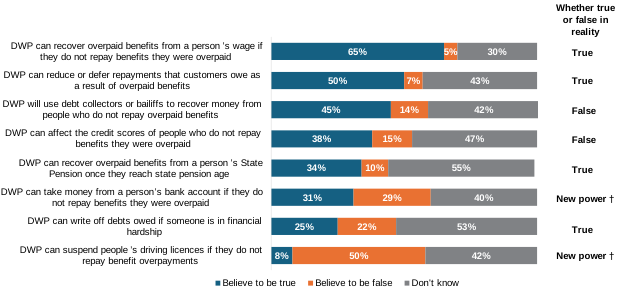
Source: Debtor survey. C6. To the best of your knowledge, which of these statements do you think are true and which do you think are false? If you’re unsure whether the statement is true or false, please feel free to select ‘Don’t know’. Base: All (4,184). † Although DWP did not have this power at the time of this research, legislation (now enacted) to create such a power was passing through Parliament.
Figure 4.3 shows whether DWP debtors believed statements about DWP’s enforcement and relief powers to be true or false. Debtors were often unsure, with many selecting “don’t know.” The statement most commonly believed to be true was that DWP can recover overpaid benefits from wages, while uncertainty was highest around whether DWP can recover overpayments from State Pension or write off debts in cases of financial hardship.
The statement which debtors were most certain about was ‘DWP can recover overpaid benefits from a person’s wage if they do not repay benefits they were overpaid’, with around two thirds (65%) correctly believing it to be true. In contrast, the statements that debtors were least certain about were ‘DWP can recover overpaid benefits from a person’s State Pension once they reach State Pension age’ (55% answering ‘Don’t know’) and ‘DWP can write off debts owed if someone is in financial hardship’ (53% answering ‘Don’t know’).
As mentioned above, there were high levels of uncertainty about DWP’s ability to write off debts owed in cases of severe financial hardship. If more of those who were struggling to repay their debt were aware of this, it could help to alleviate some of their financial problems and the associated distress that comes along with this.
In addition to being uncertain of whether many of the statements were true or false, debtors were often incorrect when they did believe they knew whether a statement was true or false. This was most true with the statement ‘DWP can suspend people’s driving licences if they do not repay benefit overpayments’, with just 8% believing it to be true, although this was a new power so it may be expected that awareness of it is low.
Interestingly, those who were on-benefit tended to have the lowest levels of certainty about DWP enforcement powers, while those were who were off-benefit (either in-recovery or not-in-recovery) were more likely to believe the statements were true.
Below shows a summary of the main differences between the key debtor groups in this chapter.
Summary of differences in perception and understanding of DWP debt between key debtor groups
On-benefit:
- most were repaying benefit overpayments, often through deductions, and reported financial impact. Motivation to repay was driven by duty and avoiding enforcement, while inability to afford repayment was the main barrier. Certainty about DWP enforcement powers was low
- over half reported that they were repaying a debt to DWP, while nearly half reported having a benefit deduction. Around one in four believed they owed nothing, while one in ten were unsure
- most reported that repayments had impacted their financial situation, with more than a third citing a major impact
- top motivations for setting up repayment plans were willingness to repay the debt, a sense that it was the right thing to do, while inability to afford it was the main barrier
Generally, less certain about DWP’s enforcement powers, frequently responding don’t know when asked whether statements were true or false
Off-benefit in-recovery:
- most were repaying benefit overpayments, usually via active plans, and reported limited financial impact. Motivation to repay focused on duty and avoiding enforcement, while inability to afford repayment was the main barrier. This group perceived DWP as highly capable of enforcing debt recovery
- nearly two thirds believed they were repaying a benefit overpayment to DWP, mostly through an active repayment plan. Around one third did not believe they were currently repaying an overpayment
- three quarters reported that repayment had little or no impact on their financial situation
- key motivators for setting up a repayment plan were willingness to repay the debt and avoiding the debt being passed to enforcement, while inability to afford it was the main barrier
- this group had higher belief in DWP’s ability to enforce debt recovery, and were most likely to view statements about credit score impacts or the use of debt collectors as true.
Off-benefit Not-in-recovery:
- just under half had no debt, while others were repaying or had recently finished. Repayments often had a major financial impact, and affordability was the main barrier. The group generally saw DWP as able to enforce repayments
- just under half reported no outstanding debt, while slightly more than one in ten were repaying through benefit deductions, and a similar share had recently finished repaying.
- around two thirds reported a major impact from repayments and struggled to meet payments and afford essentials
- two thirds wanted to repay the debt and cited inability to afford repayment as a reason for not setting up a plan. Close to a quarter were disputing the debt, and a similar proportion did not know how to set up a plan
Similar views to those in-recovery, with moderately strong belief in DWP’s enforcement powers.
5. Support and communication
This chapter presents findings related to debtor’s experiences of support to manage their debt and understanding of communication from DWP Debt Management. Debtors were moderately satisfied with the support, and while many had some contact with DWP Debt Management, many did not understand the communication they received. This highlights the need for simple, empathetic messaging and a flexible use of channels.
Understanding of communication from DWP Debt Management was mixed, with some debtors understanding the communication they received, and others saying that they did not understand, or felt it was unclear. Off-benefit in-recovery debtors were more likely to understand the communication they received. Debtors preferred to receive this communication by phone (most common), email, and through an online portal, although offering a wide range of contact methods, including face to face, may benefit individuals experiencing barriers to getting in touch.
Half of debtors rated the support they received from Debt Management 6 out of 10 or above. This suggests that although satisfaction levels were broadly positive, there remains scope for improvement. In particular, those with health conditions were more likely to be dissatisfied with the support and say they did not understand communications from DWP than those with no health conditions. Focusing on aspects of DWP Debt Management communication, the on-benefit group were less likely to be satisfied than the other key debtor groups. This could be influenced by their ability to pay back the debt and how much their finances were impacted by repayments.
Perception of DWP Debt Management communications
Overall, two thirds (66%) of debtors recalled receiving communication from DWP about their debt with them (as shown in Figure 5.1). However, less than half (45%) of those who were aware of their debt said they both received a communication and understood it, suggesting that the way debtors are currently notified of their debt is not clear enough. A fifth of debtors (21%) received communication from DWP but did not understand it.
Off-benefit in-recovery debtors were the most likely to recall receiving communication from DWP about their debt (84%). They were also the most likely group to understand the communication they received: nearly two-thirds (64%) of off-benefit in-recovery debtors received some communication from DWP and understood it, which is higher than on-benefit (39%) and off-benefit not-in-recovery (46%) debtors (see Figure 5.1).
Figure 5.1 DWP Debt Management service users’ communication with DWP by key debtor group
| Communication with DWP | Total | On-benefit | Off-benefit in-recovery | Off-benefit not-in-recovery |
|---|---|---|---|---|
| I have received some communication from DWP and I understood it/it was clear. | 45% | 39% | 64%* | 46% |
| I have not received any communication from DWP about my debt | 23% | 26% | 10%* | 24% |
| I have received some communication from DWP but I did not understand it/it was not clear | 21% | 21% | 20% | 21% |
| Don’t know | 10% | 12% | 5% | 8% |
| Prefer not to say | 2% | 2% | 1% | 1% |
Source: Debtor Survey. D1. What communication, if any, did you have/have you had from DWP about your debt with them? Base: If aware they have a debt with DWP or recently paid off a debt with DWP All (2,569), On-benefit (1,692), Off-benefit in-recovery (389), Off-benefit not-in-recovery (488). *Asterisk denotes significant difference vs the other key debtor groups.
Those with a health condition were more likely (23%) to say they received communication from DWP and did not understand it, compared to debtors with no health condition[footnote 24]. This highlights that debtors with multiple, co-existing challenges (e.g. health conditions, on-benefits) may be less likely to understand the communication they receive from DWP.
Qualitative interviews highlighted that common ways debtors received notice of their debt were via letter, or for some, through their Universal Credit (UC) account. Many debtors felt surprised or confused when receiving communication about their debt. Some also felt panicked, or ashamed, suggesting that DWP should take care when notifying debtors of their overpayment.
They should write to people and explain what the debt’s for before taking the money out of people’s Universal Credit. Instead of just taking it, it should be written and explained properly why they’re taking it and what for.
(On-benefit)
Ease of contacting DWP Debt Management
Half (51%) of those who had contacted DWP Debt Management in the past six months found it easy to do so, while just over a quarter (28%) found it difficult. The on-benefit group were less likely to have made contact (20%) than those off-benefit in-recovery (26%) and off-benefit not-in-recovery[footnote 25].
Figure 5.2 Ease of contacting DWP Debt Management
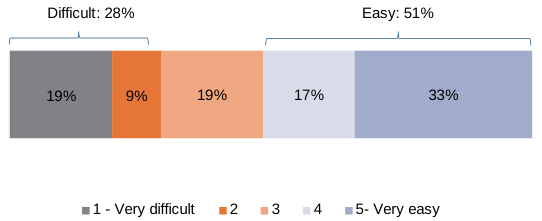
Source: D3. How easy or difficult did you find it to get in touch with DWP Debt Management? Base: If had contacted DWP Debt Management in the last 6 months (589).
Figure 5.2 shows easy of contacting DWP Debt Management for debtors. Just over half debtors found contact DWP Debt Management easy, and just under a third found it difficult.
Qualitative research showed that many participants who wanted to get in touch with Debt Management after receiving a letter informing them of their debt found the contact number for Debt Management and got through to an adviser.
Interestingly, younger debtors, aged 25-34, (63%) found it easier than all other age groups to get in touch with DWP Debt Management. Those with no health conditions were also more likely to find it easy to get in touch with Debt Management (62%) than their counterparts. This was reflected in qualitative research: one participant described how anxiety prevented them from calling to adjust a repayment plan they felt was too high. This suggests that better signposting and more proactive contact could help support individuals facing these barriers.
I just couldn’t… I didn’t know how to make that call, like, I couldn’t… I couldn’t do it. […] Part of the health condition I’ve got is just, like, this raging anxiety.
(Off-benefit in-recovery)
Aside from mental health conditions like anxiety, as mentioned above, a couple of debtors in qualitative interviews found the absence of phone assistance to be a difficulty. They found the contact number on their DWP letters and called, but mentioned waiting on hold for a while, not speaking to the right person, or spending a long time on the phone waiting for an adviser.
The hardest thing is getting to the right people, you know what I mean?
(Off-benefit not-in-recovery)
Some debtors did not think to get in touch with DWP to query the information they received about their debt and receive support in managing it, even though the deduction from their benefits worsened their financial situation, to the point of cutting back on essential bills. They did not think to question the information due to the perceived authority of DWP. This is another barrier preventing debtors who may need it from organising with DWP Debt Management to reduce the amount they pay back each month. Proactive outreach to debtors with low or no income could help those facing barriers understand what options exist to reduce repayment amounts.
I didn’t question, I didn’t… I just took it for granted, that was their mandate. It was an enormous amount at that time, but I didn’t question, I just take it, because of authority.
(On-benefit)
Preferred communication channels
Debtors preferred managing their benefit overpayment balance with DWP Debt Management by phone (34%), email (26%), and via an online portal (21%). Other methods, like face-to-face (7%) and using webchat (4%) were less popular. Off-benefit in-recovery debtors (40%) were more likely than on-benefit debtors (31%) to say they preferred using the phone to manage their benefit overpayment[footnote 26].
Preference for phone is an important insight, as it emerges throughout this section as a key channel. Phone calls with supportive advisers were often crucial to positive experiences of contact with DWP Debt Management, while negative experiences were reported when debtors could not get through to an adviser.
In qualitative interviews, debtors often mentioned using phone as a follow-up method after receiving an initial letter from DWP Debt Management. Some participants found this easy and a few found it difficult to use. A couple of debtors mentioned that an online page, or an email address to contact so they could understand how much they owed, would be beneficial.
Others seemed to have used an online portal to set up their repayment plan once they received an initial letter, and did not need support to access it, showing that communication needs differed between individuals.
I didn’t call them up. I knew what my outgoings were and what I could afford to pay, so I set up a direct debit for what I could afford.
(Off-benefit in-recovery)
Age and confidence with managing payment priorities played a role in the communication methods debtors preferred. Those aged between 65 and 74 years old were more likely than all younger age groups to prefer phone (48% compared to 34% of all respondents), for example. Debtors confident with managing payment priorities were more likely to prefer phone (35%) than those who were not confident (30%). This was also the case for an online portal (22% compared to 18%). Conversely, those who were not confident managing payment priorities were more likely than average to select face to face (9%) or ‘Don’t know’ (11%)[footnote 27].
Satisfaction with DWP Debt Management support
Of those that had contacted DWP Debt Management in the last 6 months, half (50%) rated the support they received from DWP Debt Management a 6 or above, where 1 is ‘Very poor’ and 10 is ‘Excellent’, as shown in Figure 5.3. Just under a quarter (22%) gave a rating of 9 or 10 out of 10, indicating that while satisfaction levels were generally positive, there was room for improvement. The off-benefit in-recovery group were more likely to give a mid-range score of 5 (23%) compared to off-benefit not-in-recovery (9%) and on-benefit (11%) debtors. They were also less likely than the other key debtor groups to give low scores (1–4), suggesting that this group tended to be more satisfied overall.
Figure 5.3 Satisfaction with DWP Debt Management support
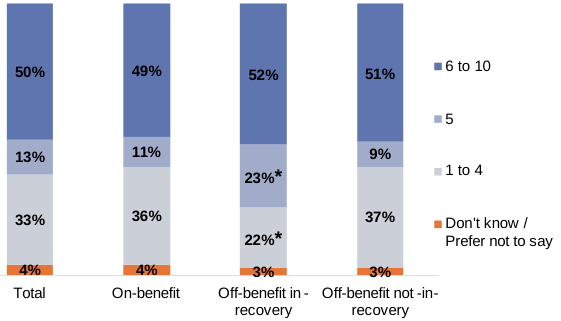
Source: Debtor Survey. D6. Overall, how would you rate the support you received from DWP Debt Management? Base: If have contacted DWP Debt Management in the last 6 months: All (589), On-benefit (343), Off-benefit in-recovery (102), Off-benefit not-in-recovery (144). *Asterisk denotes significant difference vs the other key debtor groups.
Figure 5.3 shows debtors’ satisfaction with DWP Debt Management support. Around half of debtors rated the support 6 to 10 out of 10, with similar levels across groups (50% overall). Mid‑range scores (5 out of 10) were less common, and around a third gave lower ratings of 1 to 4.
In qualitative interviews, debtors who got in touch with Debt Management to seek further support in dealing with their debt and if needed, to set up a repayment plan, spoke positively of instances where the staff they spoke to on the phone was understanding, and explained the situation clearly.
I think it was fairly calm. It wasn’t like you’re under investigation or anything. So they called […] and he asked me some questions. I was very open and honest, and just told them everything.
(Off-benefit in-recovery)
Many participants did not feel strongly about the communication with Debt Management, if the support went smoothly and they felt they understood the letter they had received.
It was ages ago, and from what I remember he was really nice, but he said he could only take a tenner (£10) off a month and that was it.
(On-benefit)
In addition, satisfaction with the support provided by Debt Management was often linked to how much the debt impacted the debtor’s finances. Those struggling financially were more inclined to seek support, and to be negatively impacted if they did not know what options were available to them or were not able to reduce the amount they were paying each month.
It’s had a heck of an impact on my life, just hanging over me all that time … they want me to pay back more than £45 a month like I used to, but about 5 years my son came back into my life and I told them I couldn’t afford to support him and pay them back, that’s when they reduced it to £45.
(On-benefit)
Unsurprisingly, two subgroups identified as less financially resilient in Section 3 were also less satisfied with the support than their counterparts. Debtors with caring responsibilities (19%) were more likely than those without caring responsibilities (12%) to rate as support as ‘1 – Very poor’. Similarly, those with health conditions (19%) were more likely to rate the support as ‘1 – Very poor’ than those without any health conditions (9%)[footnote 28]. This highlights the importance of tailoring support to the needs of more financially vulnerable groups.
Debtors also mentioned feeling disappointed and frustrated when they were not signposted to any additional support about their debt outside of what was in the letter they had received. This was especially true when respondents felt anxious about the money they owed and were not aware how they had incurred the debt.
I did ask them, and they said, well, we’ve sent you a letter saying how we’ve come to those figures, and that was it…. I had phoned them up because I panicked, because I thought, oh what is this and they just said we’ve sent it all in a letter…
(Off-benefit in-recovery)
Some debtors also felt the information was inconsistent across different channels: a participant found that the repayment plans available to her on the phone were a higher amount each month than the options available online (to her husband).
The telephone side of things. I think it needed to be a little bit more in sync with the online. So, yeah, rather than trying to get you to pay lots off at once, saying actually, there’s these options, or maybe even pointing me in the direction of the website…
(Off-benefit in-recovery)
These examples underscore the need for clear signposting to information and support on the phone, a key channel for contacting DWP after receiving the initial letter or notification of debt.
Rating of different elements of DWP Debt Management support
When rating elements of DWP Debt Management communication, most debtors (70%) agreed they were treated fairly and with respect. Just over half (55%) said they felt confident talking about money-related matters with Debt Management staff, and agreed that the information given to them was accurate and complete (Figure 5.4). This indicates that close to half of debtors were not satisfied with these aspects.
On-benefit debtors who had contacted Debt Management in the last 6 months were less likely to be satisfied with various aspects of communication than the two other key debtor groups. Fewer than two thirds (63%) of on-benefit debtors ‘strongly agreed’ or ‘agreed’ they were treated fairly and with respect, much less than both other subgroups (as shown in Figure 5.4). This may reflect their perception of DWP, or the impact their debt has on their financial situation, for example. Similarly, on-benefit debtors were less likely to agree that the information given to them was accurate and complete, and more likely to strongly disagree (18%) that they were told where to find further information. They were also more likely than average to strongly disagree that the information given to them was easy to understand (14%)[footnote 29].
Figure 5.4 Satisfaction with aspects of DWP Debt Management communication (‘Strongly agree’ and ‘Agree’)
| Aspect of DWP Debt Management communication | Total | On-benefit | Off-benefit in-recovery | Off-benefit not-in-recovery |
|---|---|---|---|---|
| I was treated fairly and with respect | 70% | 63% | 77% | 78% |
| I felt confident talking about money-related matters with debt management staff | 55% | 51% | 57% | 61% |
| The information given to me was accurate and complete | 55% | 49% | 61% | 64% |
| The information given to me was easy to understand | 58% | 55% | 61% | 63% |
| My issue was resolved satisfactorily | 51% | 46% | 58% | 55% |
| My call was answered promptly | 47% | 46% | 41% | 55% |
| I was told where I could find relevant information | 44% | 41% | 45% | 51% |
Source: Debtor survey. D4.1 - 7 Thinking about the communication you had with DWP Debt Management, to what extent do you agree or disagree with the following statements. Those who ‘Strongly agree’ or ‘agree’ to the statements are shown on the chart. Base: If have contacted DWP Debt Management in the last 6 months: All (589), On-benefit (343), Off-benefit in-recovery (102), Off-benefit not-in-recovery (144). *Asterisk denotes significant difference vs the other key debtor groups.
This was reflected in qualitative findings, where experiences of seeking support were mixed. On-benefit debtors interviewed often mentioned that repayments had a pronounced impact on their day-to-day spending, and their satisfaction with Debt Management support was linked to how they experienced their debt. For example, some debtors expressed anger and frustration, feeling the debt was unfair, unaffordable, and poorly explained. This impacted how they felt about seeking support: one person tried to get in touch with DWP via letters and phone calls to complain but did not hear back. Their experience of support was negative as they felt they were not treated fairly and with respect, nor told where they could find further information.
I also told them that I am willing to pay… I will pay for any overcharging that you have caused …. once this complaint has been dealt with to my satisfaction. And they didn’t even bother to answer.
(On-benefit)
In contrast, off-benefit debtors were likely to have additional sources of income and therefore often felt less affected by their debt to DWP. Some individuals simply set up a repayment plan either online or through one phone call and did not need further support from DWP Debt Management.
I was in the mindset of I’m working now, I’ve got a salary coming in, I’ll just pay it[‘ll] save the hassle, I’ll just set up a payment plan.
(Off-benefit in-recovery)
Case study: Confidence to act after a positive first call
Penelope was contacted about a benefit overpayment and initially felt anxious about how she would manage the debt. When she spoke to a DWP Debt Management adviser, she immediately felt listened to and supported. The adviser explained what the overpayment meant, outlined her options clearly, and helped her agree to an affordable repayment plan that suited her situation.
Feeling reassured after that first positive conversation, Penelope felt more confident about taking control of her finances and setting up regular payments.
The experience had a significant impact on her wellbeing, reducing stress and helping her feel more hopeful about managing her money again. The supportive communication encouraged her to stay engaged and keep up with her repayments.
Below shows a summary of the main differences between the key debtor groups in this chapter.
Summary of differences in views and experiences of support and communication between key debtor groups
On-benefit:
- this group is less likely to have received or understood communication about their debt, found it harder to contact DWP, and reported lower satisfaction with information clarity, staff fairness, and issue resolution than other groups
- they were more likely than others to report not having received any communication about their debt and less likely to have understood it
- the least likely of the three groups to report having contacted DWP in the past 6 months, and the more likely to report having found it difficult: this group was more likely to strongly disagree that information was easy to understand
- there was less agreement on staff treating them fairly, resolving issues, or answering calls promptly compared to other groups
Off-benefit in-recovery:
- this group is more likely than others to have received and understood communication. Around a quarter contacted DWP recently, and over half found communication easy. They report moderate satisfaction with most feeling information was accurate and staff respectful
- more likely than others to have received communication and to have understood it
- close to a quarter report having contacted DWP in the past 6 months and slightly more than half found communicating with DWP easy
- moderate satisfaction overall, generally higher than the on-benefit group
- most felt information was accurate and staff treated them with respect
- less likely than off-benefit not-in-recovery to strongly disagree about understanding information or accessing further information
Off-benefit Not-in-recovery:
- this group is more likely than others to have received and understood communication. Around a quarter contacted DWP recently, and over half found communication easy. They report moderate satisfaction with most feeling information was accurate and staff respectful
- more likely than others to have received communication and to have understood it
- close to a quarter report having contacted DWP in the past 6 months and slightly more than half found communicating with DWP easy
- moderate satisfaction overall, generally higher than the on-benefit group
- most felt information was accurate and staff treated them with respect
- less likely than off-benefit not-in-recovery to strongly disagree about understanding information or accessing further information
6. Conclusion and recommendations
Conclusions
This research provides a comprehensive and up-to-date understanding of the composition and experiences of DWP debtors.
Across the research questions, several overarching conclusions can be drawn:
- Demographic and financial challenges: DWP debtors are more likely to be living in rented accommodation (68% compared to 37% in the wider GB population), to report a physical or mental health condition (54% compared to 18%), and to be out of work (47% compared to 25%). These vulnerabilities are most pronounced among those currently on-benefit, who also report the lowest levels of financial confidence and wellbeing
- Understanding and perceptions of debt: Knowledge of how DWP debt is generated remains low. Around half (49%) of debtors are aware they are repaying a benefit overpayment, while just over a quarter (27%) are unaware of their outstanding debt. Qualitative interviews showed that most saw the debt itself as unfair, because they felt that they were being penalised for what they believed was a DWP error. A lack of understanding of how the debt to DWP was generated contributed to perceptions of unfairness. Qualitative interviews also highlighted that debtors often felt surprised or shocked when notified of their debt, and many described the experience as anxiety-inducing
- Financial wellbeing and advice-seeking: Most debtors (64%) have not sought advice or support with managing their finances, though there is openness to doing so in future - only 18% said they would never consider seeking advice. Debt advice charities (66%) and family or friends (52%) are the most trusted sources, but stigma and lack of awareness remain barriers
- Support and communication: Two-thirds (66%) of those who were aware of their debt recalled receiving some form of communication about their debt, but less than half (45%) understood it. Satisfaction with DWP Debt Management support is moderate, with the average rating at 5.74 out of 10. Phone was the preferred channel for communication (34%), but preferences are reasonably spread across phone, email (26%), and online portal (21%), indicating that a mixed offering is best. There is clear scope for improvement in clarity, empathy, and accessibility
Variation Between the Three Key Debtor Groups
There was substantial variation in the characteristics between the three key debtor groups. The evidence points to distinct profiles and experiences for each group:
- On-benefit debtors have the most acute financial difficulties. This group is more likely to be female (62%), middle-aged (57% aged 35–54), living in social housing, and to have caring responsibilities (33%) and a disability / health condition (63%). They report the highest rates of going without essentials (72%), being behind on bills (70%), and experiencing major adverse impacts from debt repayments (23% reporting a major impact). Their financial confidence and satisfaction are lowest (mean satisfaction score 4.99 out of 10), and they are least likely to understand communications from DWP (39% understood communications)
- Off-benefit in-recovery debtors are generally the most financially resilient. They are more likely to be in stable employment (86%), own their own homes, and less likely to have a disability / health condition (35%) or caring responsibilities (19%). This group reports higher satisfaction with their financial situation (39% satisfied), greater confidence in managing finances (86% confident), and is more likely to understand DWP communications (64%). They experience less financial stress from repayments, with 37% reporting no adverse impact
- Off-benefit not-in-recovery debtors are predominantly male (67%), modestly employed, and split between living in social housing and privately rented accommodation. They carry moderate levels of debt and are more active in the labour market than those on-benefit, but still face financial pressure. This group is least likely to have children (61%) or caring responsibilities (18%), and their experiences of debt and support are more mixed. Less than half (46%) understood DWP communications, and 29% had contacted DWP in the last six months
Recommendations for service delivery
- Communicate more proactively with debtors to ensure that more are aware of their debt. Around a quarter were unaware of their DWP debt at the time of the survey, indicating that not everyone is engaging with current forms of communication used to notify debtors of their debt
- Sensitivity is crucial when communicating with people about their debt. DWP debtors often have multiple challenges in their day-to-day lives and are more likely to be living with a mental health condition than the rest of the population. The way that debtors are currently notified about their overpayment (often through their UC journal) triggered anxiety for some, so having trained advisers on hand to talk through debtors’ concerns could help to reduce stress and anxiety
- Use straightforward and jargon-free language when communicating with debtors about their repayment. Many did not fully understand how their overpayment occurred, and lower levels of financial literacy meant some found it difficult to understand explanations that used technical language or assumed a detailed understanding of how the benefit systems worked
- Signpost debtors to financial advice organisations. Most had not ever sought advice with their finances, however a majority indicated an openness to doing so in the future. Including contact details for support organisations in communications with debtors could make them more likely to reach out for support, which would ultimately help them to feel more in control of their finances. When doing so, providing examples of other individuals in similar situations who sought advice and had a positive experience and outcomes could help reduce stigma-relates barriers
- Consider a review of the channels used to communicate with debtors. Phone was debtors’ preferred communication channel, and conversations with helpful advisers often turned a negative customer experience into a positive one, however there could be more of a role for email to play as a communication channel. Along with the online portal, email is a valuable channel for those who are less comfortable with direct, person-to-person contact
- Ensure that systems identify overpayments as quickly as possible. Several debtors said that they wished their overpayment had been identified earlier, and that they had been notified about it earlier, as it would have reduced the overall amount that they needed to repay. In general, lower levels of debt corresponded with lower levels of stress and worry and meant that the money was more likely to be repaid
Recommendations for future research
- Understanding the relationship between debt and mental health conditions. Further research could be done with debtors to understand more detail about the relationship between their debts and mental health conditions, with the aim of identifying ways that support could be tailored to better support those with different mental health conditions (e.g. creating links with mental health support services)
- Communications testing. Further research could test the comprehensibility of different type of communications with debtors, with a specific focus on the types of language and explanations that debtors are able to understand, with the aim of ensuring that more debtors feel that they fully understand how their overpayment occurred, how much of it they have paid off and how much longer they will be repaying it for
- Reducing barriers to and improving impact of support. Qualitative work could dive deeper into the support needs of the certain groups (such as those with overlapping health, caring, and employment challenges) and what their support needs are. It could explore the role of stigma and barriers to seeking financial advice, and test interventions (such as peer case studies) that might encourage greater engagement with support services
- Off-benefit not-in-recovery group. We were not able to carry out a meaningful number of qualitative interviews with the off-benefit not-in-recovery group in this research, meaning that our understanding of the nuances and details of their financial situations was not as developed as the other two key debtor groups. Further qualitative research could be carried out to understand more about this group (ideally with some form of incentive offered to boost engagement)
Segmentation could support the design of all the above research – it would enable tailored support, targeted interventions, and efficient resource allocation by identifying distinct debtor groups, improving communication, policy design, and outcomes for those most in need.
7. Appendices
Appendix A: Technical report
The technical report 1138 is published separately under ISBN 978-1-80786-009-7.
Appendix B: Additional data
This part of the appendix contains charts and tables displaying data from the debtor survey that, for reasons of brevity, was not shown in full in the main part of the report.
Figure B.2.1 Whether debtors lived with a spouse or partner
| Spouse/partner living situation | Total | On-benefit | Off-benefit in-recovery | Off-benefit not-in-recovery |
|---|---|---|---|---|
| Yes, I live with a spouse/civil partner | 24% | 28%* | 21% | 21% |
| Yes, I live with a partner (not married/civil partnership) | 7% | 15%* | 15% | 10% |
| Net: Yes | 32% | 43%* | 30% | 30% |
| No | 65% | 57% | 68%* | 68% |
| Prefer not to say | 1% | 1% | 1% | 2% |
Source: Debt management survey. A2. Do you currently live with a spouse or partner? Base: All (4,184), On-benefit (2,612), Off-benefit in-recovery (523), Off-benefit not-in-recovery (1,049). *Asterisks denote significant difference compared to the other key debtor groups.
Figure B.2.2. Total debt value
| Total debt value | Total |
|---|---|
| Less than £499 | 13% |
| £500 - £4,999 | 41% |
| £5,000 - £19,999 | 22% |
| £20,000 or more | 6% |
| Don’t know | 11% |
| Prefer not to say | 7% |
Source: Debt management survey. B6. If you added up all the balances on bills or financial commitments you are currently behind on, approximately how much would the total be? Base: If behind on bills or repayments from B5 (2,936).
Table B.2.3. Age of youngest child in household
| Age of youngest child | Total | On-benefit | Off-benefit in-recovery | Off-benefit not-in-recovery |
|---|---|---|---|---|
| Under 5 | 23% | 22% | 18% | 31%> |
| 5-10 years old | 33% | 33% | 32% | 31% |
| 11-15 years old | 28% | 29% | 34% | 22%< |
| 16-18 years old | 14% | 14% | 12% | 15% |
| 19+ | 1% | 1% | 3%> | 1% |
| Prefer not to say | 1% | 1% | 1% | 1% |
Source: Debt management survey. A4. How old is the youngest child that you are responsible for in your household? Base: If responsible for child/children under the age of 19 in their household (2,079) On-benefit (1,468), Off-benefit in-recovery (197), Off-benefit not-in-recovery (414). Arrows > (larger than) and < (less than) denote significant differences compared to average of all other respondents.
Table B.2.4. Debtors by ethnicity
| Ethnicity | Totals | GB population | On-benefit | Off-benefit in-recovery | Off-benefit not-in-recovery |
|---|---|---|---|---|---|
| White | 73%< | 83% | 73% | 76% | 71% |
| Black / African / Caribbean / Black British | 8% | 4% | 8% | 8% | 8% |
| Asian / Asian British | 7% | 9% | 7% | 5% | 7% |
| Mixed / Multiple ethnic groups | 5% | 3% | 5% | 5% | 5% |
| Other ethnic group | 3% | 2% | 3% | 2% | 3% |
| Prefer not to say | 4% | 1% | 4% | 4% | 5% |
Source: Debt management survey. E2. What is your ethnic group? Base: All (4,184), On-benefit (2,612), Off-benefit in-recovery (523), Off-benefit not-in-recovery (1,049). Ethnic group England and Wales: Census 2021 – Office for National Statistics and Scotland’s Census 2022 – ethnic group, national identity, language and religion. Arrows < (less than) denote significant differences compared to GB adult population.
Table B.2.5. Job duration of debtors
| Duration | Total | On-benefit | Off-benefit in-recovery | Off-benefit not-in-recovery |
|---|---|---|---|---|
| Less than 1 year | 25% | 23% | 20%< | 31%> |
| 1 to less than 5 years | 40% | 37%< | 47%> | 39% |
| 5 years or longer | 34% | 38%> | 33% | 30%< |
Source: Debt management survey. A9. Thinking about your main job, how long have you been doing this job? Base: All employed (1,192), On-benefit (956), Off-benefit in-recovery (439), Off-benefit not-in-recovery (597). Arrows > (larger than) and < (less than) denote significant differences compared to average of all other respondents.
Table B.2.6. Number of jobs debtors had
| No. of jobs | Total | On-benefit | Off-benefit in-recovery | Off-benefit not-in-recovery |
|---|---|---|---|---|
| One job | 91% | 92% | 90% | 91% |
| Two jobs or more | 8% | 7% | 9% | 8% |
| Prefer not to say | 1% | 1% | 1% | 1% |
Source: Debt management survey. A9. Thinking about your main job, how long have you been doing this job? Base: All employed (1,192), On-benefit (956), Off-benefit in-recovery (439), Off-benefit not-in-recovery (597).
Figure B.3.1. Groups more likely to be dissatisfied with their financial circumstances
| Demographic | Satisfied (6-10) | Neither satisfied nor unsatisfied (5) | Unsatisfied (1-4) | Don’t know / Prefer not to say |
|---|---|---|---|---|
| With a health condition | 28%< | 18% | 49%> | 6% |
| Caring responsibilities | 27%< | 19% | 48%> | 6% |
| Unemployed and looking for work | 18%< | 13% | 64%> | 5% |
| Not confident in managing payment priorities | 18%< | 15% | 61%> | 7% |
Source: Debt management survey. B1 How satisfied are you with your overall financial circumstances? Base: All (4,184), With a health condition (2,328), Caring responsibilities (1,207), Unemployed and looking for work (320), Not confident in managing payment priorities (926). Arrows > (larger than) and < (smaller than) denote significant differences compared to the average of all other respondents.
Figure B.3.2. Groups more likely to be satisfied with their overall financial situation
| Demographic | Satisfied (6-10) | Neither satisfied nor unsatisfied (5) | Unsatisfied (1-4) | Don’t know / Prefer not to say |
|---|---|---|---|---|
| 18-24 year olds | 42%> | 18% | 37% | 3% |
| Employed | 34%> | 18% | 43% | 5%< |
| DWP debt value £10 - £100 | 42%> | 16% | 36%< | 6% |
| DWP debt value £101 - £250 | 38%> | 17% | 40% | 4% |
Source: Debt management survey. B1 How satisfied are you with your overall financial circumstances? Base: All (4,184), 18-24 year olds (188), Employed (2,036), DWP debt value £10 – £100 (248), DWP debt value £101 - £250 (418). Arrows > (larger than) and < (smaller than) denote significant differences compared to the average of all other respondents.
Figure B.3.3. Debtors more likely to go without essential items due to lack of money
| Demographic | Always / most of the time | Sometimes | Hardly ever / never | Don’t know / Prefer not to say |
|---|---|---|---|---|
| Unemployed | 35%> | 39%> | 23%< | 3% |
| With a health condition | 35%> | 40%> | 23%< | 2%< |
| Caring responsibilities | 32%> | 38% | 27%< | 2%< |
Source: Debt management survey. B3. Over the past 6 months, how often, if at all, have you and your household gone without essential items due to a lack of money? Base: All (4,184), Unemployed (1,956), With a health condition (2,328), Caring responsibilities (1,207). Arrows > (larger than) and < (smaller than) denote significant differences compared to the average of all other respondents.
Figure B.3.4. Debtors less likely to save money
| Demographic | Every month | Most months | Some months, but not others | Rarely / never | Don’t know | Prefer not to say |
|---|---|---|---|---|---|---|
| Unemployed | 4%< | 2%< | 12%< | 79%> | 2% | 2% |
| With a health condition | 4%< | 3% | 12%< | 79%> | 1% | 1% |
| Higher DWP debt value (£5,001-£10,000) | 3%< | 1%< | 9%< | 83%> | 2% | 2% |
Source: Debt Management customer survey. B8. Which of these best describes how often you save money? Base: All (4,184), Unemployed (1,956), With a health condition (2,328), DWP debt value £5,001 - £10,000 (330). Arrows > (larger than) and < (smaller than) denote significant differences compared to the average of all other respondents.
Figure B.3.5. Debtors more likely to save money
| Demographic | Every month | Most months | Some months, but not others | Rarely / never | Don’t know | Prefer not to say |
|---|---|---|---|---|---|---|
| No health condition | 10%> | 4%> | 21%> | 61%< | 2% | 2% |
| Employed | 10%> | 4%> | 19%> | 64%< | 2% | 1%< |
Source: Debt Management customer survey. B8. Which of these best describes how often you save money? Base: All (4,184), No health condition (1,626 ), Employed (2,036). Arrows > (larger than) and < (smaller than) denote significant differences compared to the average of all other respondents.
Figure B.3.5.a How often DWP only debtors save money
| How often they save money | On-benefit | Off-benefit in-recovery | Off-benefit not-in-recovery | Total |
|---|---|---|---|---|
| Every month | 10% | 21%* | 11% | 13% |
| Most months | 5% | 9% | 7% | 7% |
| Some months, but not others | 25% | 26% | 23% | 24% |
| Rarely / Never | 56% | 43%* | 55% | 53% |
| Don’t know | 2% | 1% | 1% | 1% |
| Prefer not to say | 2% | 1% | 2% | 2% |
Source: Debt Management customer survey. B8. Which of these best describes how often you save money? Base: All who selected ‘None of the above’ at B5: Are you currently behind on any of the following bills or repayments? All (1,266), On-benefit (609), Off-benefit in-recovery (299), Off-benefit not-in-recovery (359). Please note that the definition of ‘DWP only debtors’ is all those selected ‘None of the above’ at B5: “Are you currently behind on any of the following bills or repayments?”. *Asterisks denote significant difference vs the other key debtor groups.
Figure B.3.6. Debtors more likely to be confident in prioritising bills and financial payments
| Demographic | Very confident | Fairly confident | Not very confident | Not at all confident | Prefer not to say |
|---|---|---|---|---|---|
| No health condition | 40%> | 42% | 10%< | 5%< | 3%< |
| Employed | 38%> | 43% | 10%< | 5%< | 3%< |
Source: Debtor survey. B11. How confident, if at all, do you feel about which bills or financial commitments are the most important to pay? Base: All (4,184) No health condition (1,626), Employed (2,036). Arrows > (larger than) and < (smaller than) denote significant differences compared to the average of all other respondents.
Figure B.3.7. Debtors less likely to have sought financial advice
| Demographic | Yes, I have previously sought advice | Yes, I’m currently seeking advice | No | Don’t know | Prefer not to say |
|---|---|---|---|---|---|
| Employed | 20%< | 9%< | 68%> | 1%< | 2%< |
| Without caring responsibilities | 20%< | 10% | 66%> | 1% | 2% |
| DWP debt value £10 - £100 | 22% | 6%< | 68%> | 1% | 3% |
| DWP debt value £101 - £250 | 16%< | 9% | 72> | 2% | 2% |
| DWP debt value £251 - £500 | 18%< | 10% | 70%> | 1% | 1% |
Source: Debtor survey. B12. Have you previously or are you currently seeking any advice or support with managing your finances? Base: All (4,184), Employed (2,036), Without caring responsibilities (2,840), DWP debt value £10 – £100 (248), DWP debt value £101 - £250 (418), DWP debt value £251 - £500 (595). Arrows > (larger than) and < (smaller than) denote significant differences compared to the average of all other respondents.
Figure B.3.8. Debtors more likely to have sought or currently be seeking financial advice
| Demographic | Yes, I have previously sought advice | Yes, I’m currently seeking advice | No | Don’t know | Prefer not to say |
|---|---|---|---|---|---|
| Caring responsibilities | 24%> | 12% | 59%< | 2%< | 3%< |
| Health condition | 26%> | 13%> | 57%< | 2% | 2%< |
| DWP debt value £2,501 - £5,000 | 25%> | 11% | 60%< | 1% | 3% |
| Unemployed | 23%> | 13%> | 60%< | 2% | 2%< |
Source: Debtor survey. B12. Have you previously or are you currently seeking any advice or support with managing your finances? Base: All (4,184), Caring responsibilities (1,207), With a health condition (2,328), DWP debt value £2,501 - £5,000 (522), Unemployed (1,956). Arrows > (larger than) and < (smaller than) denote significant differences compared to the average of all other respondents.
Figure B.3.9. Debtors less likely to have understood communication from DWP Debt Management
| Demographic | I have not received any communication from DWP about my debt | I have received some communication from DWP but I did not understand it/it was not clear | I have received some communication from DWP and I understood it/it was clear | Don’t know | Prefer not to say |
|---|---|---|---|---|---|
| Health condition | 25%> | 23%> | 40%< | 11%> | 2% |
| No health condition | 19%< | 18%< | 53%> | 7%< | 2% |
Source: Debtor survey. D1. What communication, if any, did you have/have you had from DWP about your debt with them? Base: If aware they have a debt with DWP or recently paid it off. All (2,569), With a health condition (1,523), No health condition (947). Arrows > (larger than) and < (smaller than) denote significant differences compared to the average of all other respondents.
Figure B.3.10. Whether debtors have made contact with DWP Debt Management in the last 6 months - Key debtor groups
| Debtor group | Yes | No | Don’t know | Prefer not to say |
|---|---|---|---|---|
| On-benefit | 20%* | 74%* | 4% | 1% |
| Off-benefit in-recovery | 26% | 68% | 6% | 1% |
| Off-benefit not-in-recovery | 29% | 65% | 4% | 1% |
Source: Debtor survey. D2. Have you contacted the DWP Debt Management team in the last 6 months? Base: If aware they have a debt with DWP or recently paid it off. On-benefit (1,692), Off-benefit in-recovery (389), Off-benefit not-in-recovery (488). *Asterisks denote significant difference vs the other key debtor groups.
Figure B.5.1. Preferred methods of managing benefit overpayment balance with DWP Debt Management
| Preferred Method | Total | On-benefit | Off-benefit in-recovery | Off-benefit not-in-recovery |
|---|---|---|---|---|
| By phone | 34% | 31% | 40% | 36% |
| By email | 26% | 27% | 24% | 24% |
| Online portal | 21% | 20% | 22% | 20% |
| Face-to-face | 7% | 7% | 5% | 9% |
| Using webchat | 4% | 4% | 2% | 4% |
| Don’t know | 8% | 9% | 6% | 7% |
| Prefer not to say | 2% | 2% | 1% | 1% |
D5. How would you prefer / have you preferred to manage your benefit overpayment balance with DWP Debt Management? Base: If aware they have a debt with DWP or have recently paid it off (2,569), On-benefit (1,692), Off-benefit in-recovery (389), Off-benefit not-in-recovery (488). *Asterisks denote significant difference vs the other key debtor groups. The difference between On-benefit’s preference for phone (31%) and Off-benefit in-recovery (40%) is significant, and mentioned in the body text, but is not shown on the chart as the difference is only significant compared to one of the debtor groups, not both debtor groups.
Figure B.5.2. Preferred communication method by subgroup
| Demographic | Phone | Face-to-face | Online portal | Webchat | Don’t know | Prefer not to say | |
|---|---|---|---|---|---|---|---|
| 65-74 years old | 48%>* | 27% | 13%> | 3%< | 0%< | 6% | 4% |
| Not confident managing payment priorities | 30%< | 26% | 9%> | 18% | 3% | 11%> | 2% |
| Confident managing payment priorities | 35%> | 25% | 6%< | 22%>* | 4% | 7%< | 2% |
D5. How would you prefer / have you preferred to manage your benefit overpayment balance with DWP Debt Management? Base: If aware they have a debt with DWP or have recently paid it off (2,569), 65-74 years old (125), Not confident managing payment priorities (589), Confident managing payment priorities (1,905). *Asterisks denote significant difference vs the other key debtor groups. Arrows > (larger than) and < (smaller than) denote significant differences compared to the average of all other respondents.
Figure B.5.3. Debtors more likely to be dissatisfied with DWP Debt Management support
| Demographic | 1 - Very poor | 2 | 3 | 4 | 5 | Don’t know/Prefer not to say |
|---|---|---|---|---|---|---|
| Caring responsibilities | 19%* | 3% | 8% | 8% | 11% | 5% |
| No caring responsibilities | 12% | 6% | 8% | 5% | 14% | 3% |
| Health conditions | 19%* | 6% | 9% | 6% | 13% | 4% |
| No health conditions | 9% | 4% | 7% | 6% | 12% | 3% |
Source: Debtor Survey. D6. Overall, how would you rate the support you received from DWP Debt Management? Base: If have contacted DWP Debt Management in the last 6 months: All (589), Has caring responsibilities (198), No caring responsibilities (378), Health condition (332), No health condition (240). *Asterisk denotes significant difference vs the other key debtor groups.
Figure B.5.4. Key debtor groups satisfaction on being told where to find further information (Disagree and Strongly disagree)
| Debtor group | Disagree | Strongly disagree |
|---|---|---|
| On-benefit | 18% | 18%* |
| Off-benefit in-recovery | 28%* | 7% |
| Off-benefit not-in-recovery | 18% | 9% |
Source: Debtor survey. D4.7 Thinking about the communication you had with DWP Debt Management, to what extent do you agree or disagree? “I was told where I could find further relevant information”. Those who ‘Disagree’ or ‘Strongly disagree’ to the statements are shown. Base: If have contacted DWP Debt Management in the last 6 months: All (589), On-benefit (343), Off-benefit in-recovery (102), Off-benefit not-in-recovery (144). *Asterisk denotes significant difference vs the other key debtor groups (none present on this table).
Figure B.5.5. Key debtor groups satisfaction on the information given being easy to understand (Disagree and Strongly disagree)
| Debtor group | Disagree | Strongly disagree |
|---|---|---|
| On-benefit | 13% | 14%> |
| Off-benefit in-recovery | 18% | 7% |
| Off-benefit not-in-recovery | 13% | 10% |
Source: Debtor survey. D4.3 Thinking about the communication you had with DWP Debt Management, to what extent do you agree or disagree? “The information given to me was easy to understand”. Those who ‘Disagree’ or ‘Strongly disagree’ to the statements are shown. Base: If have contacted DWP Debt Management in the last 6 months: All (589), On-benefit (343), Off-benefit in-recovery (102), Off-benefit not-in-recovery (144). *Asterisk denotes significant difference vs the other key debtor groups (none present on this table). Arrows > (larger than) and < (smaller than) denote significant differences compared to the average of all other respondents.
-
It should be noted that the age and sex composition of the survey population was weighted to reflect the profile of the pre-exclusion target population, and reflects the age and sex profile of the population within each of the three main sample groups (on-benefit, off-benefit in-recovery, off-benefit not-in-recovery). ↩
-
A full breakdown of data for this question can be in Appendix: Additional data, Figure B.2.1. ↩
-
A full breakdown of data for this question can be found in Appendix Additional data, Table B.2.3. ↩
-
Note that the age profile of the survey population was weighted to the pre-exclusion target population and so reflects the age profile of the population within each of the three main sample groups (on-benefit, off-benefit in-recovery, off-benefit not-in-recovery). ↩
-
A full breakdown of data for this question can be found in Appendix Additional data, Table B.2.4. ↩
-
Please note that the sex composition of the survey population was weighted to the pre-exclusion target population and so reflects the sex profile of the population within each of the three main sample groups (on-benefit, off-benefit in-recovery, off-benefit not-in-recovery). ↩
-
A full breakdown of data for this question can be found in Appendix Additional data, Table B.2.5. ↩
-
A full breakdown of data for this question can be found in Appendix Additional data, Table B.2.6. ↩
-
A full breakdown of data for this question can be found in Appendix Additional data, Figure B.2.2. ↩
-
The name used in this case study is not the real name of individual. ↩
-
The name used in this case study is not the real name of individual. ↩
-
The name used in this case study is not the real name of individual. ↩
-
A full breakdown of data for this question among these subgroups can be found in ‘Appendix: Additional data’, Figure B.3.1. ↩
-
A full breakdown of data for this question among these subgroups can be found in ‘Appendix: Additional data’, Figure B.3.2. ↩
-
A full breakdown of data for this question among these subgroups can be found in ‘Appendix: Additional data’, Figure B.3.3. ↩
-
A full breakdown of data for this question among these subgroups can be found in ‘Appendix: Additional data’, Figure B.3.4. ↩
-
A full breakdown of data for this question among these subgroups can be found in ‘Appendix: Additional data’, Figure B.3.5. ↩
-
A full breakdown of data for this question among these subgroups can be found in ‘Appendix: Additional data’, Figure B.3.5.a. Please note the definition for ‘only’ owing money to DWP is approximative. ↩
-
A full breakdown of data for this question among these subgroups can be found in ‘Appendix: Additional data’, Figure B.3.6. ↩
-
A full breakdown of data for this question among these subgroups can be found in ‘Appendix: Additional data’, Figure B.3.7. ↩
-
A full breakdown of data for this question among these subgroups can be found in ‘Appendix: Additional data’, Figure B.3.8. ↩
-
It should be noted that debtors’ perceptions of how their own debt was generated may not reflect reality. For example, when it is reported that debtors tend to believe their debt was generated as a result of DWP error, it is not possible to say in individual instances where this was true in reality. Care is taken in the report to clarify that these findings are based on debtor perceptions, rather than established fact. ↩
-
It should be noted here that debtors’ repayment status may have changed between the time the sample was drawn and the survey was taken – for example, those who were listed as ‘off-benefit in-recovery’ may have paid off their debt or those who were listed as ‘off-benefit not-in-recovery’ may have since set up a repayment plan. ↩
-
A full breakdown of data for this question among these subgroups can be found in ‘Appendix: Additional data’, Figure B.3.9. ↩
-
A full breakdown of data for this question among these subgroups can be found in ‘Appendix: Additional data’, Figure B.3.10. ↩
-
A full breakdown of data for this question among these subgroups can be found in ‘Appendix: Additional data’, Figure B.5.1. ↩
-
A full breakdown of data for this question among these subgroups can be found in ‘Appendix: Additional data’, Figure B.5.2. ↩
-
A full breakdown of data for this question among these subgroups can be found in ‘Appendix: Additional data’, Figure B.5.3. ↩
-
A full breakdown of data for this question among these subgroups can be found in ‘Appendix: Additional data’, Figure B.5.4 and Figure B.5.5. ↩