Cultural Property Crime data research
Published 25 June 2026

© Crown copyright 2026
This publication is licensed under the terms of the Open Government Licence v3.0 except where otherwise stated. To view this licence, visit nationalarchives.gov.uk/doc/open-government-licence/version/3 or write to the Information Policy Team, The National Archives, Kew, London TW9 4DU, or email: psi@nationalarchives.gov.uk.
Where we have identified any third party copyright information you will need to obtain permission from the copyright holders concerned.
This publication is available at https://www.gov.uk/government/publications/cultural-property-crime-data-research/cultural-property-crime-data-research
Executive summary
The Department for Culture, Media and Sport (DCMS) commissioned Fortia Insight to conduct research on how police forces in England record, identify, extract and share data relating to Cultural Property Crime (CPC).
DCMS’s working definition of CPC is any offence that harms or involves movable cultural heritage, including but not limited to: theft, looting and illicit trafficking of cultural objects; damage and destruction both to objects, and to immovable heritage assets such as archaeological sites or historic buildings caused in the process of obtaining objects; unlicensed excavation and exploration; dealing in unlawfully obtained cultural objects; falsifying documents and dealing in fakes and forgeries; money laundering, terrorist financing and sanctions breaches using cultural objects; and also attempting, aiding or abetting in any relevant crimes.
To deal with CPC, each police force should have a designated Heritage Crime Liaison Officer (HCLO), who acts as a point of contact for both heritage crime and CPC within their force.
Methodology
The study used the following methods:
Rapid Evidence Review (RER)
A RER was conducted to establish the current knowledge base on CPC in England. Using a targeted search strategy, the RER examined 24 sources, including legislation, policing guidance and sector-specific frameworks. Evidence was extracted thematically using a structured template aligned to the research questions, enabling consistent comparison across materials. These insights informed the interview design, ensuring they focused on operational issues not already covered in existing literature.
Interviews
24 online interviews (with 26 interviewees) with police forces and heritage-sector stakeholders. A purposive and snowball sampling approach ensured broad geographic and operational representation. Online interviews combined structured close-ended and open‑ended questions to explore systems, experiences, challenges and local practices. Findings were triangulated with the RER to distinguish force‑specific variation from wider systemic constraints.
Key findings
Definition and understanding of Cultural Property Crime
There is no single, universally accepted definition of CPC among police forces. Most officers frame CPC through the broader concept of heritage crime, which includes both movable cultural objects and immovable heritage sites. Only a small number of interviewees interpreted CPC exactly in line with the DCMS definition. The lack of shared terminology results in wide variations of understanding and processes across forces, frequent conflation of heritage site offences with crimes involving cultural objects, and inconsistent identification at first point of contact. As a result, whether an offence is recognised as culturally significant depends more on individual officer knowledge than on formal guidance or standardised processes.
Recording Practices
How CPC is captured. All forces record CPC-related incidents within their existing Records Management Systems (RMS), such as Athena, Niche, Storm. No force uses a CPC-specific category or tag. Cultural significance is instead captured, if at all, in free-text narrative fields; optional heritage markers (where they exist); intelligence reports; or case attachments. As a result, cultural significance rarely appears in structured fields, heritage markers are inconsistently applied, and relevant information is difficult to search or extract.
Identifying CPC within systems. Because CPC is not recorded systematically, forces rely on indirect indicators to identify possible CPC cases, such as location (e.g., churches, museums, listed buildings); offence type (e.g., theft, criminal damage) and retrospective manual review by HCLOs. The primary mechanism for identifying CPC is retrospective manual searching, though this approach is resource-intensive, inconsistent, and reliant on specialist staff.
Length of records. There is no consistent historical dataset. The extent of CPC records varies by the age of each force’s current system, or how long local heritage tracking spreadsheets have been maintained. Long-term analysis of CPC trends is therefore not possible.
Data Extraction and Use
Extractability. Forces consistently report that they cannot extract a reliable dataset of CPC incidents using current systems. Challenges include reliance on unstructured free text, inconsistent tag application, large volumes of manual screening, and contradictory or incomplete results from keyword searches. Any output would be indicative only, not accurate or comprehensive.
Past extraction attempts. Previous attempts to respond to Freedom of Information (FOI) requests, government enquiries or partner requests have exposed gaps between police systems and heritage-sector records, data protection barriers to systems-wide downloads, and significant time demands for manual review.
Feasibility of a national dataset. Across all interviews, forces agreed that a credible national CPC dataset is not feasible under current practices. Delivering this would require a nationally agreed definition, a mandatory CPC/heritage marker, improved system functionality (e.g., prompts or mapping tools), enhanced analytical capacity, and clear strategic leadership to embed changes consistently.
Partnership Working
Police-to-police collaboration. Collaboration is strongest where forces share the same RMS platform. Elsewhere, information sharing is slower and generally case-specific. There is generally no formalised CPC data-sharing mechanism between forces.
National policing bodies
Engagement with national bodies is mixed. The loss of national analytical capacity (e.g., OPAL’s dedicated heritage analyst) has weakened national visibility of CPC.
Heritage-sector partnerships. Historic England is the most consistently engaged and valued partner, providing training, legislation guidance, site significance expertise, and sentencing support. Partnerships with other organisations (e.g., English Heritage, National Trust, dioceses, museums, maritime agencies) are generally positive but incident-driven rather than systematic.
International partners. International information-sharing occurs infrequently. When used (e.g., with INTERPOL), processes are complex and slow, especially as it is delivered directly by individual forces (vs a centralised system for this), limiting operational value.
Challenges
Across the evidence, several systemic challenges were identified that collectively contribute to a reinforcing cycle where CPC remains under-identified, under-recorded, and under-prioritised:
- no standard definition or terminology, creating ambiguity and inconsistent practice
- CPC not recognised at first point of contact, meaning cases are not flagged early
- recording systems not designed for CPC, leading to dispersed and unsearchable data
- extraction relies on manual effort, making datasets partial and unreliable
- limited specialist capacity and reliance on individual officers
- reactive partnership structures that depend on personal networks
- low organisational prioritisation, driven by CPC’s low visibility in data
Priority improvements identified by interviewees
- national definition and terminology: a shared definition would provide clarity and consistency across forces
- mandatory CPC or heritage tag: Introduced through national guidance and embedded within RMS workflows
- training / awareness raising for call handlers and frontline officers: Essential to improve recognition at first point of contact
- system enhancements: Integration of mapping tools, site-based prompts, and structured fields to reduce reliance on free text
- analytical capacity and national coordination: Dedicated analytical support or a central intelligence hub to replace lost capacity
- strengthened HCLO network: Formalising information-sharing and practice exchange between heritage leads
- improved cross-sector data pathways: Including automated links to external registers (e.g., Art Loss Register)
Conclusions
CPC in England is under-recognised, under-recorded, and poorly understood within current policing structures. CPC visibility depends largely on individual officers rather than system design, leading to significant undercounting and an incomplete national picture. The absence of a shared definition, mandatory markers, system prompts, standardised recording practices and national analytical capability means CPC cannot currently be measured reliably, either locally or nationally. Despite these weaknesses, forces expressed strong willingness to improve practice, provided there is clear national direction, standardisation and resourcing.
Recommended improvements:
Establish a nationally agreed definition and terminology: A clear, concise, mandated definition of CPC, aligned across DCMS, NPCC, the Home Office and policing guidance, is essential. This shared definition must be consistently embedded in training, reporting processes and crime-recording systems to ensure consistent identification and classification.
Implement a mandatory CPC or heritage marker in crime-recording systems: A simple, standardised national marker within RMS platforms and the HOCR/NCRS would enable reliable identification, extraction and comparison of CPC across forces. This marker must be easy to use and supported by clear guidance to ensure consistent application.
Strengthen first-contact recognition through targeted training: Training for call handlers, frontline officers and neighbourhood policing teams is vital to improving early recognition of CPC. Regular awareness refreshers are important given staff turnover in control rooms and the need for consistent understanding of cultural significance.
Improve system design through structured fields and technical enhancements: Updating RMS platforms to incorporate structured fields, automated heritage designation prompts, and integrated mapping of protected sites would reduce free text and manual search reliance. Standardising features across forces would significantly enhance data quality and comparability.
Enhance analytical capability through specialist support: Dedicated analytical resource (either locally or nationally) is needed to extract, interpret and monitor CPC data. Improved analytical tools would help identify patterns, emerging threats and links to organised crime.
Establish a centralised national intelligence or coordination function: Reinstating or replacing previous national capability (e.g., the OPAL heritage analyst role) would strengthen oversight, improve cross-force intelligence sharing and support forces with limited expertise. This function would provide the strategic coordination currently missing.
Strengthen data-sharing pathways and cross-sector collaboration: Automated, secure links with heritage-sector organisations (e.g., the Art Loss Register, museums, dioceses, Historic England) would improve early risk identification, help track stolen objects and support investigations. Formalised partnerships would reduce reliance on ad hoc arrangements.
Support and expand the HCLO network: Structured national coordination, shared tools, and formal communication channels would strengthen consistency, reduce reliance on individual officers and facilitate cross-force learning. This would embed CPC knowledge more sustainably within policing.
Considerations for future research:
Expand cross-sector data collection and mapping: Future research should identify what CPC-related data is held by museums, insurers, heritage bodies, local authorities, religious institutions and the art market. Mapping these datasets and exploring safe ways to share them would help build a fuller national picture and reveal incidents that never reach police systems.
Conduct international comparisons of CPC recording and enforcement models: Research should examine how other countries define, record and investigate CPC. Learning from nations with specialist art-crime units or different recording processes may highlight practical approaches that could be adapted to the UK context.
Analyse recording practices for similar crime types: Comparing CPC with offences like metal theft, acquisitive crime or trafficking could show where systems work well and where barriers are shared. These insights could guide proportionate improvements to CPC recording.
Assess feasibility of a centralised CPC intelligence function: A focused study should examine the resource requirements, governance options and likely benefits of a dedicated national CPC intelligence capability. This would support future decision-making on introducing a central coordination model.
List of acronyms
| ARCH | Alliance to Reduce Crime against Heritage |
|---|---|
| CID | Criminal Investigation Department |
| CPC | Cultural property crime |
| FOI | Freedom of Information |
| HCLO | Heritage Crime Liaison Officer |
| HOCR | Home Office Counting Rules |
| INTERPOL | International Criminal Police Organisation |
| MPAUU | Metropolitan Police Art and Antiques Unit |
| NCA | National Crime Agency |
| NCRS | National Crime Recording Standard |
| NPCC | National Police Chiefs Council |
| NRCU | National Rural Crime Unit |
| OSCE | Organisation for Security and Co-operation in Europe |
| PAS | Portable Antiquities Scheme |
| RER | Rapid Evidence Review |
| RMS | Records Management Systems |
| ROCU | Regional Organised Crime Units |
| SOAC | Serious Organised Acquisitive Crime |
1. Introduction
1.1 Background
Cultural Property Crime (CPC) in the UK often overlaps with the broader concept of heritage crime, which includes offences affecting the historic environment and cultural assets. However, not all heritage crime constitutes CPC. Heritage crime may include offences such as criminal damage (e.g., arson, vandalism), antisocial behaviour, or unauthorised works affecting heritage sites (Historic England, 2023a). Although heritage crime is believed to be widespread nationally, the lack of robust national data makes it difficult to determine its full scale. Nonetheless, a 2024 survey found that 92% of heritage organisations experienced heritage crime incidents in the previous year, with some sites even forced to close temporarily (Atkinson, 2024).
CPC focuses specifically on offences involving movable cultural objects, including their illicit trade and removal. CPC includes several offence types involving cultural objects and associated activities. These offences include:
- dealing in ‘tainted’ cultural property (tainted is the term used in the Dealing in Cultural Property (Offences) Act 2003)
- nighthawking (illegal metal detecting) and illegal excavation from sites
- theft and other forms of unlawful appropriation of movable cultural property from heritage institutions (museums/galleries), religious buildings, commercial galleries, and wrecks, military sites and archaeological sites
- theft that causes criminal damage to the site as part of the theft
- damage to movable cultural property
- fraud and counterfeiting cultural objects, and fraud of associated documentation
- money laundering using art or artefacts
- terrorist financing or sanctions breaching involving art or artefacts
- aiding, attempting or abetting any of the above
A wide range of offences affect heritage assets and cultural property across the UK. These include theft of cultural objects, architectural materials, and metal from historic sites, alongside criminal damage and illicit trade in artefacts (Historic England, 2023a). High-value burglaries involving artworks and artefacts from museums, galleries, and historic houses, also occur. The estimated value of cultural property stolen through such burglaries reached approximately £3.2 million in 2021–22 (Historic England, 2024). Other forms of heritage-related crime include unlawful metal detecting, the removal of archaeological artefacts from protected sites and nighthawking activities.
The association between CPC and wider organised criminal activities is also acknowledged within academic literature. Illicit trafficking of cultural objects has been associated with money laundering, organised crime networks, and terrorist financing within international art markets (Foreign, Commonwealth and Development Office and Emma, 2024). Organised criminal groups operating in the UK have engaged in thefts from museums and heritage institutions alongside other acquisitive crimes (NPCC, 2017). For example, the heritage insurer Ecclesiastical reported that £500,000 worth of silver was stolen from religious buildings in 2024 (Ecclesiastical, 2025). However, comprehensive national data on the scale and prevalence of CPC remain limited.
In the UK, responsibility for addressing heritage crime and CPC primarily sits with local police forces. Each police force has a designated Heritage Crime Liaison Officer (HCLO), who acts as a point of contact for heritage crime within the force (Historic England, 2023a). HCLOs operate within a wider national policing framework that includes the NPCC Heritage and Cultural Property Crime Working Group. Specialist investigative capabilities also exist within the Metropolitan Police Art and Antiques Unit (MPAAU) and national agencies such as the National Crime Agency (NCA) and Border Force (Kerr, 2018; NPCC, 2017). In practice, CPC is investigated within the framework of existing criminal offences rather than as a distinct legal category. Consequently, the heritage dimension of an offence may be considered an aggravating factor within broader criminal offences such as theft or criminal damage (Hertfordshire Constabulary, 2016).
Heritage crime is rarely treated as a distinct offence and is typically prosecuted through broader criminal laws, contributing to fragmented regulation and enforcement. Key primary legislation is included in the table below, some of which covers relevant secondary legislation (e.g., orders, regulations or rules).
Table 1. Key legal frameworks
| Type of heritage | Legislation |
|---|---|
| Immovable heritage | ● Ancient Monuments and Archaeological Areas Act 1979, which criminalises damage to scheduled monuments, unauthorised excavation or metal detecting and removal of architectural heritage |
| ● Planning (Listed Building and Conservation Areas) Act 1990, which criminalises unauthorised alterations and damage to or demolishing of listed buildings without consent | |
| ● Marine and Coastal Access Act 2009, which protects marine heritage sites and marine archaeology. This is in addition to the Protection of Wrecks Act 1973, the Protection of Military Remains Act 1986 and the Merchant Shipping Act 1995 | |
| Movable heritage | ● Treasure Act 1996, which makes it a criminal offence when failing to report treasure within a specific timeframe |
| ● Dealing in Cultural Objects (Offences) Act 2003, which criminalises dishonest dealing in ‘tainted’ cultural objects, including those illegally excavated or removed from other jurisdictions | |
| ● Cultural Property (Armed Conflicts) Act 2017, which criminalises dealing in unlawfully exported cultural property from occupied territory |
In short, most heritage crime is prosecuted under mainstream criminal offences, whilst the heritage dimension may be treated as aggravating factor:
- Theft Act 1968 criminalises theft of artefacts, architectural materials and cultural objects
- Criminal Damage Act 1971 criminalises vandalism, graffiti, arson and damage in the course of theft and illegal excavation affecting immovable heritage
- Fraud Act 2006 criminalises fraud involving provenance or counterfeit of cultural objects, as well as treasure claims
- Bribery Act 2010 criminalises corruption linked to cultural property transactions
- Sanctions and Anti-Money Laundering Act 2018 provides the framework for imposing sanctions and anti-money laundering measures, including sanctions relating to the trade of cultural property
- Marine and Coastal Access Act 2009 outlines the requirement for a License when diving in areas, including those of heritage and cultural significance
- Proceeds of Crime Act 2002 allows for the confiscation of profits from heritage crime
Other legal frameworks govern trade, export, and border control that encompasses the trafficking of cultural property. These include the Export of Objects of Cultural Interest (Control) Order 2003 and the Customs and Excise Management Act 1979.
Prevention and response to heritage crime and CPC involve a wide range of actors across policing, government, and the heritage sector. However, there is no single strategic structure providing clear oversight of responsibilities and accountability. Key stakeholders for heritage crime in England are presented in the table below. Please note, this list is not exhaustive and other key stakeholders may exist that are not captured here.
Table 2. Key stakeholders
| Type of stakeholder | Stakeholders |
|---|---|
| Core stakeholders | UK Government (primarily Department for Culture, Media and Sport; Foreign, Commonwealth & Development Office; Home Office; Ministry of Defence; Ministry of Justice; His Majesty’s Revenue & Customs; His Majesty’s Treasury and Department for Business & Trade), Crown Prosecution Service & Magistrates, Sentencing Council, UK Police (incl. Metropolitan Police Art and Antiques Unit and Heritage Crime Liaison Officers), National Crime Agency, Maritime and Coastguard Agency, UK Armed Forces (incl. Cultural Property Protection Unit (CPPU)), Border Force, and Portable Antiquities Scheme. |
| Advisory stakeholders | Organisation for Security and Co-operation in Europe (incl. Heritage Crime Taskforce), Historic England, Arts Council England, Heritage Watch, Alliance to Reduce Crime against Heritage (ARCH), National Police Chiefs’ Council (NPCC), OPAL (national intelligence unit focused on serious organised acquisitive crime (SOAC) responsible to the NPCC), Center of Excellence for Stability Police Units, UNESCO, INTERPOL, National Rural Crime Network. |
| Additional stakeholders | Museums, dealers, galleries and auction houses, Church of England, Chartered Institute for Archaeologists (CIfA), UK Blue Shield, National Trust, Marna Scientific Diving Services (MSDS), insurance companies (e.g., Ecclesiastical Insurance), Art Loss Register, Financial Conduct Authority, National Council for Metal Detecting, private owners and guardians of heritage assets, National Museums Security Group. |
NPCC and ARCH provide strategic national oversight, whilst local partnerships in England and Wales bring together relevant stakeholders to define responsibility and coordinate crime responses. These additional coordination layers can link stakeholders to improve intelligence sharing, whilst also ensuring strategic oversight for heritage crime responses. However, roles and responsibilities are not always clearly defined. Without clear leadership, accountability, and operational authority, these coordination mechanisms may have limited impact.
Situational prevention measures are commonly used to reduce risks to heritage assets and cultural objects. These measures include surveillance systems, improved lighting, perimeter security, and the use of inventories and photographic records of cultural objects (Historic England, 2023a). Partnership approaches such as Heritage Watch schemes also involve local communities and volunteers in monitoring heritage assets (Historic England, 2023a). Although these initiatives contribute to prevention and response, many measures remain reactive rather than proactive.
1.2 Purpose and scope of the research
The Department for Culture, Media and Sport (DCMS) has commissioned the Social Policy evaluation team at Fortia Insight to undertake research aimed at improving understanding of how police forces:
- record data relating to cultural property crime
- experience challenges when recording or accessing this data
- manage data protection, legal or operational constraints that may affect data sharing
- share both data, and similarities or differences in experiences, across police forces
This included identifying existing gaps and contributing to the evidence base necessary for future research focused on enhancing the monitoring and analysis of CPC in England. The study was delivered through qualitative interviews with a representative sample of police forces and selected national stakeholders, alongside a review of relevant policies and literature (see Section 2).
Out of scope for this study is the direct review of police force or third‑party datasets or IT systems, as well as interviews with wider heritage or cultural‑property sector organisations about the data they hold.
1.3 Research questions
This study examines the following research questions, with corresponding sections of the report indicated in brackets:
1. How does the police force currently understand cultural property crime, and how does this understanding differ from DCMS’s definition? [3.1]
2. How does the police force collect cultural property crime data (i.e., using what systems and processes)? [3.2]
3. What type(s) of data related to cultural property crime do police forces collect, and in what format(s)? [3.2]
4. How far back do available police force records go, and what have been the impacts, if any, of changes to the systems or methods of recording cultural property crime? [3.2]
5. What are the most significant data gaps within current collection methods? [3.5]
6. What challenges do police forces face in recording cultural property crime? [3.5]
7. What previous attempts have there been to collect police force data on cultural property crime? [3.3]
8. How easy is it to access police data relevant to cultural property crime, and in what format is this data available? [3.2, 3.3]
9. What data might police forces not be able to provide, and why? [3.3]
10. What other units/stakeholders do police forces routinely work with relating to cultural property crime and what information sharing practices currently exist between groups? [3.4]
11. To what extent are the findings of this research consistent across all police forces sampled? [3.1-3.5]
2. Methodology
This research used a mixed methods design to address the research questions. It combined a Rapid Evidence Review (RER) with qualitative interviews across police forces and national stakeholders. The methods were designed to provide a proportionate yet comprehensive understanding of how CPC is defined, recorded and analysed in practice. The following sections outline each of these methods, including their sampling and recruitment strategy, data collection processes, and analytical approach.
2.1 Rapid evidence review (RER)
2.1.1 Purpose and scope
A RER was carried out to build an understanding of how CPC is defined, recorded, and addressed in the UK. This review provided the foundation for the primary research, ensuring interviews focused on the operational issues not already covered in existing evidence. The review was led by Dr Emiline Smith from the University of Glasgow. Dr Smith ensured specialist coverage of legal frameworks, recording practices and sector-specific guidance. The review covered the following 6 areas: (1) definitions of heritage crime; (2) types and patterns of offending; (3) prevention measures and stakeholder responsibilities; (4) recording guidance across policing, customs and specialist units; (5) known limitations in current data and recording practices; and (6) existing recommendations for strengthening data collection. The RER insights informed the development of the interview topic guide, helped refine the research questions, and informed the synthesis framework.
2.1.2 Search strategy
A targeted search strategy was developed to ensure the review remained proportionate to the project timeline, whilst covering the full range of relevant material. The search included terms relating to CPC, heritage crime, illicit trade, crime recording practices, data quality and criminal justice processes.
Clear inclusion and exclusion criteria (see the table below) were applied to ensure consistency and transparency in the selection of sources. The search was carried out using Google and Google Scholar to ensure coverage of peer-reviewed academic literature and grey literature (incl. public sector reports, legislation and guidance).
Table 3. RER inclusion and exclusion criteria
| Domain | Include | Exclude |
|---|---|---|
| Country | UK | Other countries |
| Language | English | Non-English |
| Year of publication | 2009 onwards | Pre-2009 (unless foundational, e.g., legislation or guidance) |
| Sector | Crime and justice | Outside crime and justice or not directly related to CPC recording in England |
| Content | Direct relevance to recording, reporting or classification of CPC | Material unrelated to recording, reporting or classification of CPC |
The search strategy was shared with DCMS prior to commencing the review, and both the scope and source types were subsequently approved.
2.1.3 Sources reviewed (including list in annex)
The review covered 24 sources spanning legislation; policing and prosecutorial guidance; national datasets; heritage-sector frameworks; and academic/grey literature. Statutory frameworks covered immovable and movable heritage (e.g., Ancient Monuments and Archaeological Areas Act 1979, Treasure Act 1996, Dealing in Cultural Objects (Offences) Act 2003) and broader criminal law relevant to CPC (e.g., Theft Act 1968, Criminal Damage Act 1971, Fraud Act 2006). We examined strategic assessments and the national Memorandum of Understanding on heritage crime, and drew on Historic England guidance (prevention, risk assessment, sentencing). We also reviewed evidence from police recording systems and specialist databases (e.g., MPAAU, INTERPOL Works of Art Database, Border Force/HMRC, PAS, Historic England incident/risk records). A full list of sources appears in Annex A.
2.1.4 Approach to thematic extraction and analysis
Information was extracted using a structured template aligned to the research questions. This supported a thematic analysis of the evidence, allowing us to summarise each source consistently and making it easier to compare evidence across legislation, guidance, and published literature. Evidence was synthesised to identify areas of consistency, variation and gaps requiring further exploration through interviews. The review highlighted recurring issues, including the absence of a unified CPC classification, fragmented recording across agencies and reliance on manual or specialist identification to recognise heritage-related offences in general crime recording systems. These findings informed the topic guide design, ensuring the primary data collection focused on the operational challenges and system limitations identified within the existing evidence.
2.2 Primary data collection
2.2.1 Sampling strategy
A purposive, opportunity and snowball sampling strategy was employed to achieve broad geographical and operational coverage within a short fieldwork window. This approach enabled the inclusion of forces with different recording systems, operational contexts and levels of CPC experience. DCMS provided an initial list of priority contacts, including Heritage Crime Liaison Officers (HCLOs), officers involved in CPC-related investigations and relevant national units. All HCLOs in England were invited to attend an interview and asked participants to identify colleagues with relevant responsibilities, increasing the likelihood of including forces that encounter CPC even without formal heritage portfolios.
2.2.2 Recruitment process and coverage
Email invitations were issued to all contacts identified by DCMS, the wider HCLO network, and individuals identified through purposive snowballing. Each invitation included an information sheet outlining the purpose of the research, expectations for participation, privacy protections, data handling arrangements and rights under UK GDPR. Recruitment was monitored throughout fieldwork to maintain diversity across roles, force types and regions. Where response rates were low or forces declined, we sought substitutes to preserve national coverage.
2.2.3 Overview of participants (by roles, force types, regions)
The table below outlines the profile of 26 individuals engaged through online interviews.
Table 4. Overview of participants
| Category | Sub-Category | Count |
|---|---|---|
| Role | (N=26) | |
| HCLOs | 17 | |
| Non-HCLOs | 9 | |
| — Non-Officer Staff or Volunteer | 2 | |
| — Non-HCLO Officer | 2 | |
| — Other heritage stakeholders (e.g., heritage bodies and national crime units) | 5 | |
| Force Type | (N=26) | |
| Territorial Police Forces | 21 | |
| National Policing Unit | 2 | |
| PCC / Governance Network Body | 1 | |
| Other External Advisory Stakeholder | 2 | |
| Region Type | (N=26) | |
| North East | 1 | |
| North West | 3 | |
| East of England | 3 | |
| London | 2 | |
| South East | 5 | |
| East Midlands | 4 | |
| South West | 1 | |
| Yorkshire and the Humber | 2 | |
| West Midlands | 1 | |
| National Police Force | 2 | |
| National External Advisory Stakeholder | 2 |
2.2.4 Interview approach (structured & semi-structured)
In-depth interviews (n=26) were conducted, lasting up to 60 minutes, via Microsoft Teams or by phone. Interviews combined structured questions, which provided a consistent picture of recording systems, data formats and processes, with semi-structured questions exploring operational experiences, challenges and contextual factors. This approach enabled comparability across interviews while allowing participants to describe force-specific practices in detail. Interviews focused on organisational systems and processes rather than operationally sensitive case details.
We developed the topic guide after the inception meeting and refined it using insights from the RER. The guide mapped directly to the research questions and included questions on definitions, recording processes, data accessibility, governance, inter-agency working and feasibility considerations for future data collection. A draft was shared with DCMS for review and signoff before fieldwork began.
2.3. Analysis approach
2.3.1 Qualitative analysis approach
Interview data was analysed using a combination of descriptive analysis for the structured questions and thematic analysis for the open responses. An Excel-based approach was utilised, using a coding framework developed directly from the research and topic guide questions, refining it as the analysis progressed. Each interview was coded in full by the interviewer with the support of Microsoft Copilot to produce short analytical summaries for each relevant code and identify illustrative verbatim quotes. The use of AI was in line with UK government principles for safe and responsible use of AI in research. All automated analysis was thoroughly quality assured against the original transcript for accuracy by the interviewer who conducted the interview. This approach enabled efficient progress within the short timeframe while ensuring interpretation and analysis remained firmly researcher led. Coding outputs were reviewed across the team to ensure consistency before we moved into triangulation.
2.3.2 RER integration
Findings from the RER provided the analytical context for reviewing force-level experiences. The RER helped frame the themes we expected to see, such as variation in definitions, differences in recording practice, and known limitations within national systems, and supported interpretation of interview data by showing where police experiences aligned with, or diverged from, national guidance and existing literature.
2.3.3 Triangulation across primary and secondary sources
Interview findings were triangulated with RER findings. This involved checking where findings aligned, reviewing inconsistencies between the findings and revisiting transcripts when forces reported different experiences. Triangulation helped distinguish local practice from wider system constraints and differences in recording environments.
2.3.4 Weighting of evidence and handling inconsistent perspectives
Interview data formed the primary evidence on current practice, while the RER provided the broader context through legislation, guidance and national assessments. Where forces offered differing perspectives, we reported the range of views and placed greater weight on themes raised across multiple interviews or force types.
To support clarity when describing how commonly views were expressed, qualitative strength-of-view descriptors were used (e.g. >a few/a small number” for 0-9%; “some/several” for 10-24%; “many” for between 25%-49%; “majority” for 50-74%; “most” for 75-99%; and “all” for 100% of those responding to a question) to indicate how often a theme was raised, not to quantify opinion. These descriptors reflect the overall balance of evidence across the interviews rather than numerical measurement. They help illustrate how commonly views appeared without implying statistical precision, and we included minority perspectives where they offered important insights or highlighted risks.
2.4 Limitations
The study was subject to a few methodological limitations, as follows.
Participation was voluntary, which introduced participant self‑selection bias: police officers from forces already engaged in heritage‑related work were more likely to respond. To reduce the impact of this, recruitment was monitored throughout fieldwork to maintain variation across regions, roles and force types, and purposive snowball sampling was used to reach staff beyond the initial HCLO network.
Some forces did not have a HCLO or equivalent heritage lead in post at the time of the study. This limited the depth of insight available from those areas, as knowledge of CPC tended to be more dispersed. We addressed this by interviewing the most relevant available officer in each force and using the RER to help contextualise gaps in local knowledge.
The RER drew on a moderate number of sources (24), identified collaboratively with DCMS and guided by subject-matter expertise from Dr Smith. While this ensured coverage of the most relevant and influential literature within the scope and timeframe of the project, the review was not intended to be exhaustive. As with any proportionate evidence review, some materials (particularly niche, grey literature or emerging research) may not have been captured.
3. Findings
This chapter presents findings from the RER and qualitative interviews, showing how CPC is understood, recorded, extracted and analysed across police forces. It examines how CPC is defined in literature and how it is understood by police forces; how CPC data is recorded, extracted and analysed; how organisations work in partnership and share information; and the challenges and improvements identified by participants. The evidence highlights substantial variation in definitions, recording practices and data visibility, shaped by system design, operational constraints and differing levels of specialist awareness.
3.1 Defining Cultural Property Crime
This section examines how CPC is defined in existing literature and how police forces currently understand the term in practice.
For reference, DCMS’s working definition of CPC is any offence that harms or involves movable cultural heritage, including but not limited to: theft, looting and illicit trafficking of cultural objects; damage and destruction both to objects, and to immovable heritage assets such as archaeological sites or historic buildings caused in the process of obtaining objects; unlicensed excavation and exploration; dealing in unlawfully obtained cultural objects; falsifying documents and dealing in fakes and forgeries; money laundering, terrorist financing and sanctions breaches using cultural objects; and also attempting, aiding or abetting in any relevant crimes.
Key finding: Findings show a divergence in interpretation between policy frameworks and policing practices. At a broader level, literature distinguishes CPC from heritage crimes. In contrast, policing practice typically situates CPC within the heritage crime category.
3.1.1 Definitions from literature
Existing literature generally conceptualises CPC within the wider category of heritage crime. Policy and guidance documents (e.g., Heritage Crime: A Guide for Law Enforcement Officers by Hertfordshire Constabulary, 2016; Heritage Crime Prevention: Advice for those who care for heritage assets by Historic England, 2023a) commonly define heritage crime as offences involving damage or loss to the historic environment, while also stating that this includes offences involving cultural property (Hertfordshire Constabulary, 2016; Historic England, 2023a; Historic England, 2023b; NPCC, 2017). The historic environment is defined broadly and includes buildings, monuments, archaeological sites, landscapes, and submerged remains created through human activity over time (Historic England, 2015a). Heritage assets within this category include listed buildings, scheduled monuments, protected wreck sites, conservation areas, and World Heritage Sites (Historic England, 2015a; NPCC et al., n.d.).
Within this broader category, cultural property is typically defined more narrowly as movable property of significant cultural, historical, archaeological, or scientific importance (Hertfordshire Constabulary, 2016). Examples include works of art, manuscripts, jewellery, sculpture, ceramics, pottery, and archaeological artefacts. Offences affecting movable cultural property (i.e., CPC) commonly include theft, illicit excavation, trafficking, unlawful dealing, fraud, and fraudulent acquisition (Hertfordshire Constabulary, 2016; Legislation.gov.uk, 2003). Nighthawking is explicitly defined as the illegal search for and removal of cultural property specifically via illegal metal detecting and is framed as a form of theft (Oxford Archaeology, 2009; Hertfordshire Constabulary, 2016). Offences affecting immovable heritage assets (i.e., heritage crime) include vandalism, arson, unlawful alterations, environmental harm, and damage to archaeological sites or historic buildings (Historic England, 2015a; Historic England, 2019; Historic England, 2023b).
At the same time, literature shows that many incidents affecting heritage are prosecuted using general criminal offences rather than heritage-specific legislation. Common examples include theft, burglary, criminal damage, arson, anti-social behaviour, and public order offences (Historic England, 2015a; Historic England, 2019; Historic England, 2024). Guidance also identifies theft of lead, stone, and architectural features, unlawful metal detecting, interference with protected wrecks, fly-tipping, off-road driving, and nuisance behaviour near heritage sites as relevant threats (Historic England, 2023b; Historic England, 2024; Horner, 2025). Some guidance also includes cybercrime, financial crime, and online offending linked to heritage, and specifically cultural property (Historic England, 2023b; Horner, 2025).
Overall, literature categorises CPC as part of a wider heritage crime, while still preserving a distinction between movable cultural property and immovable heritage assets. This means the literature is broader than the definition used by DCMS, because it places cultural property within the wider heritage crime landscape. Nevertheless, it tends to be somewhat more specific than many policing interpretations, as it explicitly differentiates movable cultural objects from wider site-based heritage harm.
3.1.2 Interviewees’ definitions of cultural property crime
Key finding: Most interviewees understood CPC through the broader definition of heritage crime rather than as a distinct category, with interpretations varying across forces and often shaped by Historic England guidance.
Most interviewees described CPC using the operational terminology of heritage crime rather than as a distinct policing category. Within forces, the term “heritage crime” was generally recognised, whereas the term “cultural property crime” was reported to be rarely used in everyday policing language and was instead subsumed under heritage crime.
I think [CPC] is more referred to as heritage crime.
(HCLO)
Some interviewees described their understanding of CPC using definitions drawn from Historic England guidance or similar heritage crime categories. These definitions focused on offences harming heritage assets or their settings. One interviewee noted that despite being aware of Historic England guidance, officers tend not to routinely apply those definitions in operational work.
The definition and I think this comes from Historic England is any offence which harms the value of England and Wales’ heritage assets and their settings to this and future generations and includes all offences involving cultural property. So we do use the term cultural property.
(HCLO)
Some interviewees described cultural property through broad concepts such as historical importance, community value, or collective ownership. These descriptions emphasised the cultural significance of objects and sites but were often informal rather than based on a formal operational definition. Compared with the DCMS definition, these interpretations were broader and less precise. They tended to focus on heritage importance rather than the narrower category of movable cultural property.
I would say assets that have a historical or importance to communities that cannot be replaced. Irreplaceable historic artefacts that belong to everybody. Old stuff that is important.
(HCLO)
Only a few interviewees described CPC in terms closely aligned with the DCMS definition. These interviewees typically worked in specialist investigative roles, particularly those involving art crime or antiquities trafficking - for example, organised criminal activity involving cultural objects and illicit markets. This perspective aligned more closely with the DCMS emphasis on movable cultural property.
It is a really broad category and unless you define it well, it is kind of meaningless… how I define it for the purpose of my role, is organised crime, which uses cultural property…antiquities…money laundering offences.
(HCLO)
Key finding: In the absence of a clear and consistent definition across forces, operational understandings of CPC were often derived from specialist training, individual knowledge, and operational policing.
A few interviewees reported that their force does not have a clear or consistent definition of CPC or heritage crime. In these cases, understanding depended largely on individual knowledge or professional experience. Some interviewees noted that specialist training had broadened awareness among colleagues. However, training had not produced a consistent operational definition across forces.
There is no force-wide definition of heritage crime. There is no force-wide recognition of it…until you get that single definition coming down from the top, you are going to struggle with any of that sort of bits and pieces.
(HCLO)
I have not really heard of cultural property crime…we got involved in as much of the heritage crime as we could.
(HCLO)
Most interviewees described CPC primarily through practical examples drawn from operational policing. Common examples included theft of objects or materials from museums or churches, illegal metal detecting, vandalism of historic buildings, criminal damage, and arson affecting heritage assets. These examples demonstrate that policing interpretations often combine offences involving movable cultural objects with offences affecting immovable heritage assets.
My understanding is, [heritage crime] is a crime associated with our heritage, our history…it is not necessarily [an] acquisitive crime. It can be graffiti. It can be any targeting about cultural and heritage assets across the UK.
(Non-HCLO stakeholder)
Some interviewees also identified offences such as anti-social behaviour, criminal damage, arson, illegal off-road driving, and nuisance behaviour at heritage locations as relevant. This reflects a broad operational view in which CPC overlaps with heritage crime, rural crime, and neighbourhood policing issues. In these accounts, the concept extends well beyond offences involving movable cultural objects or illicit trade.
From my perspective, we have got criminal damage, antisocial behaviour, illegal off-road driving, theft, arson…it covers the whole gambit.
(HCLO)
Key finding: The absence of a consistent definition created challenges for recognition, classification, and recording, with incidents often captured under general offences or other crime categories instead of CPC.
A few interviewees highlighted uncertainty about whether offences should be classified as CPC when they occur at heritage sites but do not directly target heritage assets. This distinction was considered important because the location of an offence does not always mean the heritage asset has been harmed. Such ambiguity complicates operational classification and recording.
That is not a heritage crime. That is a crime that’s happened on a heritage site that doesn’t adversely affect the heritage site.
(HCLO)
Some interviewees noted that incidents specifically affecting cultural property are usually recorded under general offence categories such as theft or criminal damage. This means the cultural significance of affected property is often not captured in crime recording systems unless a specialist officer identifies it. In addition, one interviewee highlighted further recording challenges related to cases where culturally significant incidents affecting minority communities may instead be recorded under other categories such as hate crime. As a consequence, forces may recognise the concept but still lack a distinct recording category.
Ultimately it is not getting the label…nothing is really being labelled in that way. A museum burglary…would be very clearly a crime targeting cultural property. But there is no way to pick that out from all the other burglaries.
(HCLO)
If there was an incident involving property belonging to a minority group… that will fall into cultural [crime], but it has been categorised as a hate crime.
(HCLO)
The lack of a consistent definition has posed challenges for recognition, classification, and recording, which will be examined in greater detail in the following section.
3.2 Recording Cultural Property Crime
3.2.1 What CPC data is recorded and how
Across interviewed forces, CPC was reported to be recorded within existing crime and incident reporting systems in standard fields (e.g., offense type, location) rather than through any CPC‑specific category or data structure. As a result, CPC‑relevant details may be captured but are rarely stored in structured, searchable formats and are instead dispersed across fragmented storage locations. This fragmentation also means that the historical traceability of CPC varied widely: in most forces, data only went back as far as the current Records Management Systems (RMS) or the point at which heritage tags or local tracking methods were introduced, resulting in no consistent or reliable long‑term dataset for CPC across forces.
3.2.1.1 Systems used to record data
Key finding: CPC has been recorded within existing RMS; some interviewees reported using additional ad-hoc local tools to supplement the lack of CPC-specific data capture, but these were not universal and relied on individual officer interest and bandwidth.
All interviewees recorded incidents involving cultural property within their general RMS. Interviewees most frequently referred to Niche, Storm / SmartStorm, and Athena. Some also noted additional systems such as SAAB, ECNS (for anti‑social behaviour), and ControlWorks, as well as locally developed tools including spreadsheets, internal >business organisation” folders, local dockets, intelligence portals, or Teams‑based logs. These local tools did not replace the force RMS but were typically developed by specialist officers to compensate for the absence of CPC‑specific data capture or logging. See Figure 1 below for a summary of systems used across forces.
Figure 1. Systems used by interviewees to record data
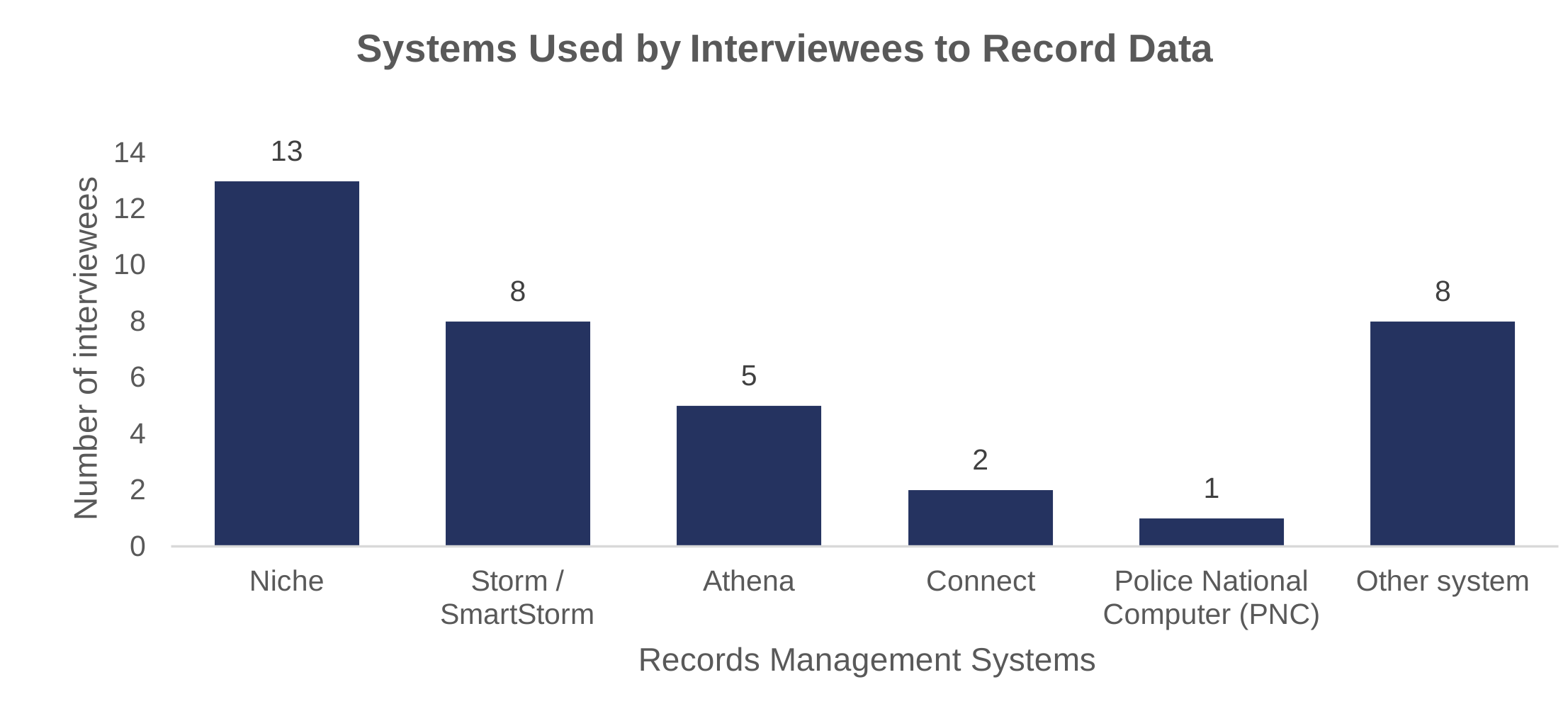
*Source: Fortia Insight police force interviews. Counts reflect the number of interviewees that reported using each crime recording system. Forces could report more than one feature.
3.2.1.2 Identifiability of CPC within systems and formats/types
Key finding: Interviewees reported they cannot consistently identify CPC within their own systems. Relevant information is dispersed across multiple formats, and its identification depends heavily on manual effort, individual officer knowledge, and inconsistent tagging. As a result, forces lacked a complete or accurate view of CPC.
Less than half of the interviewees said that they could readily identify CPC within their systems. In most cases, they reported their force identifies CPC through a combination of system features, officer knowledge, and retrospective review rather than through a standardised recording field. Each route to identification offered some value, but each also had important limitations which are discussed in the following section. As a result, forces often lacked a complete view of CPC within their own systems.
Data is our nemesis on police systems. And that’s for a multitude of reasons. It might be hiding, lurking in the system as something completely unrelated, recorded as an innocuous antisocial behaviour incident when actually there’s been damage to a scheduled monument, for instance…I’m quite convinced that we only see the tip of the iceberg of it.
(HCLO)
Figure 2 below illustrates the main ways in which interviewees said CPC could be identified within police systems.
Figure 2. Routes through which CPC could be identified within police systems
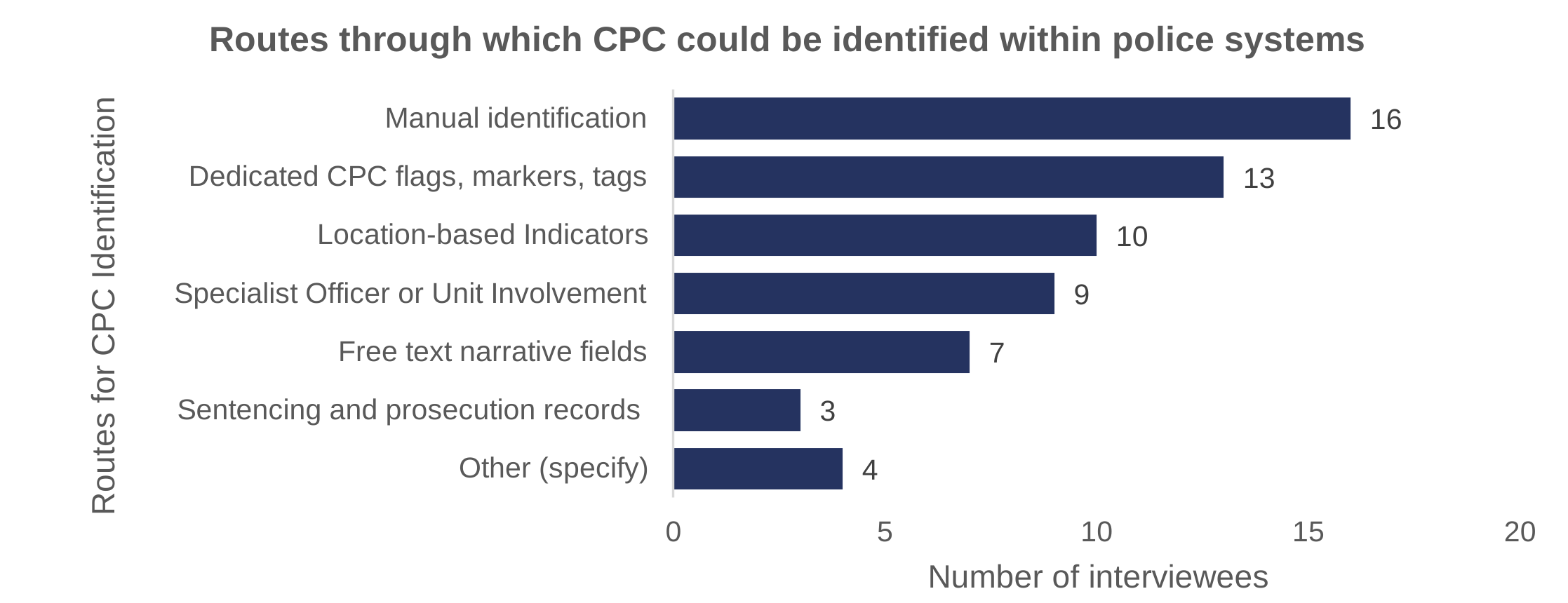
*Source: Fortia Insight police force interviews. Counts reflect the number of interviewees that reported each feature in response to the question >Is cultural property crime identifiable within this system? If yes, how?”. Note that interviewees were provided this list in the Chat function of the virtual meeting. Forces could report more than one feature.
Manual identification
Manual identification by a specialist officer or team was the most frequently reported route through which CPC could be identified in existing force data. In practice, this involved individuals manually searching systems (e.g., case by case or with keywords), reviewing incident summaries, checking known heritage sites or locations, and using their judgement to decide whether a case involved cultural property or had heritage significance. Most importantly, these searches occurred retrospectively, often as a means to keep heritage crimes from slipping through the cracks when the cultural or heritage significance was not identified at the initial point of data entry into the police systems.
Interviewees described the manual identification process as resource-intensive, time-consuming, and difficult to scale as it falls solely on the specialist officers or their team.
If I’m not on duty, it doesn’t get done…I will do those daily searches…There are thousands of jobs every day, so I don’t pick, I can’t pick up all of them. I’ve tried to pick out the keywords that would mean the more important ones are picked out… [to] try and pick them all out is virtually impossible.
(HCLO)
Dedicated CPC flags, markers, tags
Dedicated flags, markers, or tags were the second most frequently reported way in which interviewees could identify CPC in their systems. In practice, however, these indicators were not specific to CPC (i.e., they were often labelled more broadly as heritage crime) and their use was inconsistent across and within forces. Several forces reported that they did not have any heritage or CPC tag available within their systems. For forces who did have dedicated indicators, interviewees identified several barriers to their effective and consistent use.
First, accurate use depends on staff across the police force (i.e., not just those involved directly in CPC) recognising the cultural or heritage dimension of the incident at the point of recording. CPC can enter police systems in a variety of ways, including online forms, emergency and non-emergency calls, direct contact with an HCLO, or partner referral. In each case, the person entering the data needs to recognise the significance of the incident and apply the appropriate indicator. If they do not, it is virtually impossible to identify the crime as having cultural or heritage significance unless through manual retrospective identification.
A few years ago, we developed a heritage tag. We’ve got rural tags, we’ve got heritage tags. So as the crimes come into the call handler, in theory, they will tag it…but what we find is some of these slip through, especially with how they’re described, it’s not hitting the right keywords. So [redacted]’s team go through the crimes and they make sure the relevant tags, which as you can imagine, is quite time consuming.
(HCLO)
We don’t ask officers to put in cultural property because we don’t want to overcomplicate. We just say, If this is heritage, put in heritage crime. That’s it. Those 2 words, heritage [crime], and we’ll work out whether it’s cultural property or whatever it is. So we are using that, but [with] limited success, because it’s only those officers that A, have been told and B, remember to do it. So it has its limitations.
(HCLO)
Second, interviewees noted that call handlers and other staff responsible for inputting data already work with many existing system tags, which reduces the likelihood that they apply a heritage marker consistently.
There is a tag…but it’s not being used…crime recording team say they haven’t got time to put all the tags on…Storm also had a heritage tag but incidents were flagged just because they occurred on Heritage Road or Heritage Street…so that wasn’t working.
(HCLO)
Interviewees therefore viewed these markers as useful in principle but limited in practice. They increased the likelihood that interviewees could find CPC-related incidents later, but they did not provide a complete or dependable basis for extraction.
Location based indicators
Location-based indicators included searching by postcode, known heritage site, mapped area, or designated location such as a listed building, church, scheduled monument, museum, or National Trust property. Some interviewees described this as one of the more practical available approaches, especially where forces held strong local knowledge of significant sites. However, location-based identification works only as a proxy. It can identify crimes that occurred at or near a heritage location, but it cannot confirm on its own whether an offence involves a cultural asset. Searching by location can therefore return unrelated offences that happened on the same site, such as anti-social behaviour, vehicle crime, or general theft. It can also miss offences involving movable cultural property that occurred away from obvious heritage locations.
So there’ll be reconnaissance on, for example, a museum. That would be something that would be, we might well find out about. And it might be that actually they’re trying to steal plant equipment for a building site or something like that. It doesn’t necessarily mean it was targeting the cultural property.
(HCLO)
A small number of interviewees described emerging and somewhat more sophisticated approaches in the use of location-based indicators to identify CPC. For example, one interviewee described introducing the use of drones to capture aerial images of known heritage sites at regular intervals to identify thefts or suspicious activity.
We will be utilising drones that we will teach them how to fly and they will be attending heritage sites in [redacted] to take imagery of them and do like a mapping exercise for Historic England. And they’ll go take some images of the site, fly the little drone around, upload it over the Historic England website so they can get some more up-to-date photos of it…then put those in place and then review it in a month’s time…, whatever it might be. And if there are any changes or any damage, then that crime gets reported and they update the imagery.
(HCLO)
Another interviewee described ongoing efforts to link incidents to mapped heritage sites (e.g., scheduled monuments, listed buildings, churches or museums) so that potential CPC cases can be identified more easily. At present, this capability is limited: the system can only be used retrospectively and requires manual review to analyse whether incidents occurred on, or within a short distance of, designated heritage sites. The force aims to develop this into a real‑time tool within the control room so that dispatchers can immediately see when an incident falls within a protected area and adjust the response accordingly.
These examples suggest that location-based approaches may offer one of the more promising routes for future improvement, particularly if forces could link crime data more systematically to known heritage assets. However, the interviews also showed that these approaches remained local, incomplete, and dependent on staff knowledge and system capability.
Specialist officer or unit involvement
In many forces, HCLOs, rural crime teams, or other specialist officers (such as the MPAAU) play an important role in manually searching and surfacing cases that might otherwise have remained recorded under more general crime categories.
Many interviewees said that specialist officer or unit involvement could be used to identify CPC in their force data. However, interviewees usually meant that HCLOs and their teams were the people who searched for and identified CPC, rather than that specialist involvement itself functioning as a searchable data point.
In the few instances where interviewees reported that specialist officer or unit involvement was a potentially searchable data point for identifying CPC, limitations existed. Specifically, HCLOs or specialist officers often work on small teams and have other primary duties in addition to handling cases involving CPC. Capacity constraints mean that not all CPC cases are handled directly by these specialist officers; they may only serve in an advisory role and not be clearly linked to the case in a searchable way.
We can go on specialist officer or unit involvement. So I can pull out all crimes or incidents that are dealt with by my unit or my department. The caveat on that is that…we are a small team and there are incidents that are dealt with by our response teams or our neighbour policing teams. Which we wouldn’t have a, you know, have involvement on. We’d probably have involvement on from the perspective of oversight, but not from the perspective of actually being able to search against it.
(HCLO)
Free text narrative fields
Many interviewees said that they could identify CPC through free text narrative fields, however, extracting information from free text fields was often reported to be very labour-intensive, and difficult to search.
The free text narratives are not good because they’re not searchable.
(HCLO)
Interviewees explained that free text boxes were sometimes where staff manually recorded the cultural property or heritage relevance of an incident, especially where no tag or marker was used. At the same time, interviewees consistently described free text as a weak basis for systematic identification. For example, keyword searches often return many irrelevant results, depend on precise wording, and miss cases where officers use different terms or inconsistent spelling.
The free text can be quite tricky because every officer will write the same thing, three different, four different ways. So, [it] depends on who’s inputted it, on how it’s written and what information they’d include in there.
(HCLO)
Free text has the potential to contain rich contextual information, but interviews said they could not search it cleanly or consistently without substantial effort, making it unreliable for extraction.
Sentencing and prosecution records
Some interviewees identified sentencing or prosecution records as a way in which CPC could be identified in force data. Examples included cases where damage to a heritage asset had been treated as an aggravating factor in sentencing or where staff had sought a heritage-related impact statement.
However, interviewees noted that most CPC they encountered was unlikely to make it to court or would be time-delayed such that relying on sentencing and prosecution records would provide an outdated picture of CPC in their jurisdiction.
I think a lot of what we’ve had reported have been maybe slightly lower-level issues that we’ve been able to manage outside of the court process…It’s still documented and there is the possibility of court action if they don’t see through the actions that they are provided to do. So it would… definitely be a consideration if it was heritage related.
(HCLO)
This route therefore appeared to be more relevant to the later stages of case development than to routine crime recording. It also depended on a case progressing far enough through investigation and prosecution for the cultural or heritage significance to be formally recognised.
Other (specify)
Some interviewees described other ways in which CPC could be identified within their existing data. These included:
- text-search tools, such as Kabana
- Power BI tools using heritage-related references
- local rural or heritage crime spreadsheets (encompassing CPC incidents) maintained by specialist staff
These responses showed that some forces had developed local workarounds to improve visibility of heritage and CPC in the absence of a more coordinated national approach.
3.2.2 What types of routinely captured crime data may indicate CPC
Key finding: Routinely captured police data can offer useful clues about potential CPC, but no single data field reliably identifies CPC on its own. Instead, officers must triangulate multiple imperfect indicators, which contributes to the difficulty in gathering an accurate picture of CPC within forces.
Interviewees noted several routinely collected data fields that could provide clues to CPC, though none operated as standalone identifiers. Interviewees reported that they typically rely on triangulating several indicators to determine whether a recorded offence was likely to involve cultural property or have heritage relevance. The routinely captured features which interviewees highlighted as potentially useful for identifying CPC are summarised in Figure 3 (below).
Figure 3. Types of routinely captured crime data that could indicate CPC
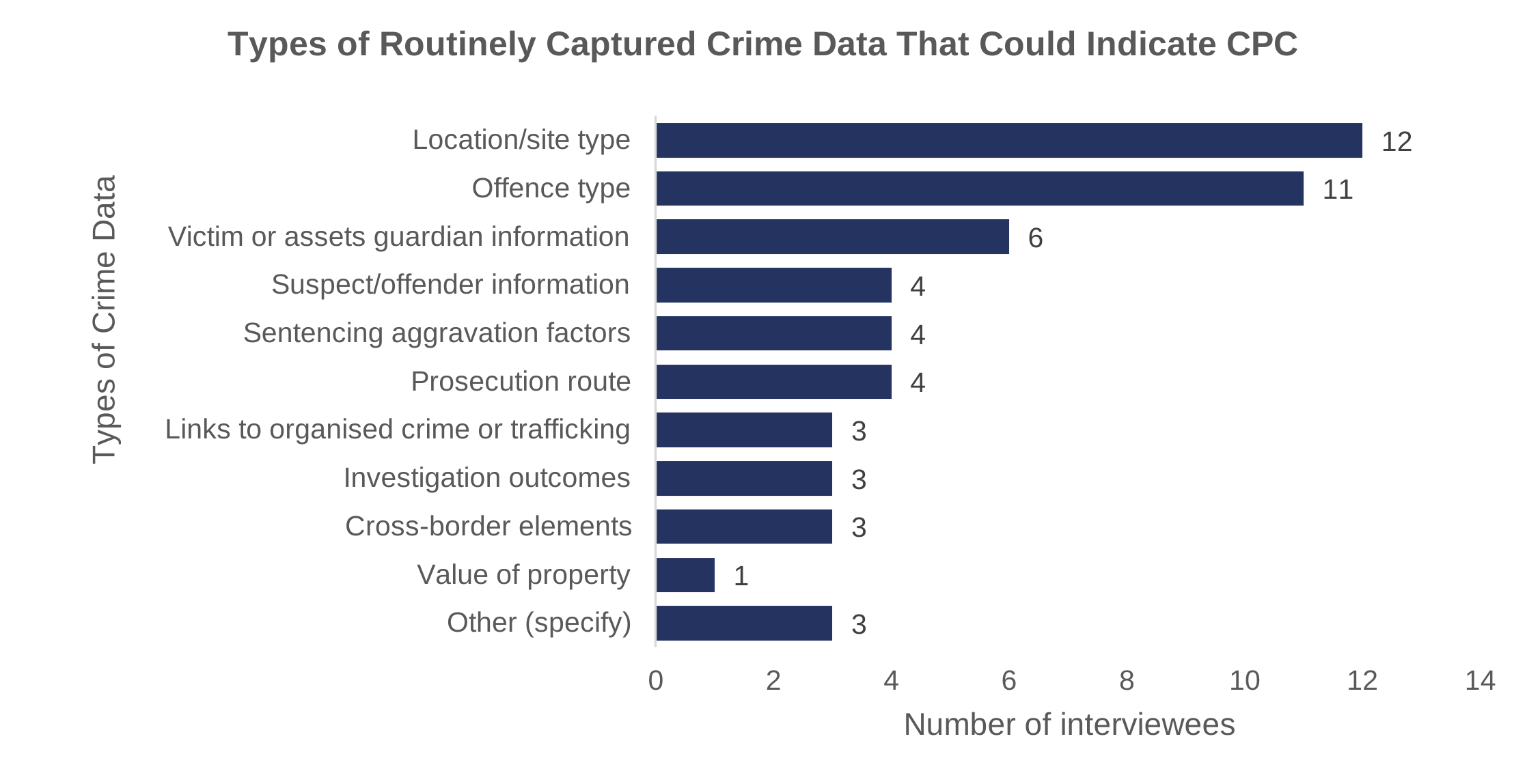
*Source: Fortia Insight police force interviews. Counts reflect the number of participating police forces that agreed with each feature in response to the question ‘What types of crime data that is routinely collected can identify cultural property crime in your force?’ Note that interviewees were provided this list in the Chat function of the virtual meeting. Forces could report more than one feature.
Location or site type
Location or site type was one of the strongest indicators in regularly captured crime data for identifying CPC. As described above in the section on “Location-based indicators”, interviewees often referred to churches, museums, galleries, listed buildings, scheduled monuments, National Trust properties, archaeological sites, and other known heritage locations as important starting points for identifying relevant CPC incidents.
Where interviewees could search by location, site type often provided a practical way to identify likely relevant cases (e.g., where a theft took place). This was especially useful for incidents that occurred at well-known sites.
We do have a mapping system where we can overlay scheduled monuments or listed buildings or things like that.
(HCLO)
However, in addition to searches retrieving non-CPC related incidents that occurred at the same location, protected building status was also not always visible in force systems. Some interviewees said that they could identify listed buildings, scheduled monuments, or other designated sites through local knowledge or specialist review, but this was not always included in the recorded data due to lack of awareness at the point of data capture.
It’s only as good as the data being inputted…if you’re recording a crime at [redacted] Cathedral, it does not flag up to the person in the control room ‘This is a heritage site, therefore, it requires a heritage tag’. It just pings up as a location in the same way as ‘123 High Street’ does or Co-op. Like …there’s almost a missing link there.
(HCLO)
Offence type
Many interviewees stated that offence type was another potential starting point for identifying CPC in force data, although this too had its drawbacks. Interviewees said that incidents involving cultural property were usually recorded under mainstream offence categories such as theft, burglary, criminal damage, anti-social behaviour, fraud, or trespass, which provided the first basis for identifying potentially relevant records.
However, offence type alone was not sufficient to identify CPC. The same offence code could apply to a wide range of incidents, only some of which involved cultural property. A theft of a cultural property from a museum and a theft of other property from a private home might sit under the same broad offence category, even though only one would fall within the scope of this study. Interviewees also noted that some cultural property offences were especially difficult to classify consistently. For example, one interviewee explained that illegal metal detecting or nighthawking might not be recorded as theft at all, but as a suspicious incident, depending on how the reporting officer understood the incident at the time.
The offence type system doesn’t work for me because nighthawking, although it’s a theft, just goes down on our system because a lot of people don’t understand what it is. They’ll just put it down as a suspicious incident. So, I will look at that and that will come up on my searches because ‘bronze’ is within it or ‘arrow’.
(HCLO)
Victim, owner, or asset guardian information
Some interviewees said that victim, owner, or asset guardian information could sometimes help indicate CPC. For example, incidents where the National Trust appeared as the owner or asset guardian were more likely to involve cultural property or heritage assets compared to incidents involving other victim types.
However, this information did not always capture cultural significance clearly. A site might have a private owner but still contain culturally significant objects or protected features. Equally, as described previously, not all incidents involving a heritage institution would necessarily affect cultural property directly.
Suspect or offender information
A few interviewees identified suspect or offender information as useful in identifying CPC, but only in cases where the suspect had been linked previously to similar crimes.
I would be able to look at that particular offender…by checking our Niche system and also by going on to the police national computer, which would tell me any convictions they have.
(HCLO)
In most cases, offender information was not reported to be helpful in identifying CPC.
Sentencing aggravation factors
A few interviewees identified sentencing aggravation factors as a useful way to indicate CPC within routinely captured crime data. Where interviewees referred to this, they usually did so in relation to cases where the cultural or heritage significance of an asset had been recognised later in the criminal justice process, for example where the cultural property was treated as an aggravating factor.
However, many interviewees did not view this as a practical route for identifying CPC in police-held data, with a few specifically stating that they were uncertain whether this information was recorded in a way that could be searched or extracted reliably.
Being a cultural property object is an aggravating factor… I just don’t know where you’d see that data.
(HCLO)
Prosecution route
A few interviewees referred to prosecution routes as a potential indicator of CPC in police force data. However, this field would only be relevant where the case progressed sufficiently through the criminal justice system, which, as verified in the RER, happens very rarely. Therefore, this data offers a limited view of CPC and was deemed by most interviewees as not useful as a general indicator of CPC.
Links to organised crime or trafficking
A small number of interviewees identified links to organised crime or trafficking as useful indicators of CPC. One interviewee also noted that references to organised crime could also help raise the priority of a case internally which could help gather momentum for a case involving CPC.
I’m always highlighting links to organised crime gangs, because that’s one of the buttons that if you push it in the right way, you can get the right people to sit up and take notice and sometimes get some top-level support. OCGs kind of gets things done. So that usually happens with church burglaries.
(HCLO)
At the same time, interviewees generally treated this as a limited and underdeveloped area of force-held data, with a few suggesting that organised crime links were not usually visible at the point of routine recording.
Organised crime, that generally wouldn’t be linked at this stage.
(HCLO)
This finding aligns with the RER, which found that there is very little empirical evidence for linking organised criminality to heritage crimes in the UK, and there is often limited resourcing for officers to identify trends or involvement of organised crime groups.
Investigation outcomes
A few interviewees reported that investigation outcomes could sometimes help indicate CPC. However, investigation outcomes usually functioned as a later-stage indicator rather than a routine route to identification.
Cross-border elements
A small number of interviewees referred to cross-border elements as potentially relevant, particularly in relation to trafficking, online dealing, or offences involving movement of objects across police force or national boundaries. However, interviewees did not generally describe it as something that routine crime systems captured clearly or consistently, nor as something that would clearly identify CPC.
Property value
Most interviewees found property value unhelpful for identifying CPC. While value formed part of standard crime recording, interviewees stressed that cultural significance did not map neatly onto monetary value because it is not quantifiable. A culturally important item could have modest financial value, while a high-value luxury item or antique might not fall within the study’s definition of CPC. This is consistent with broader academic literature, which calls for a more nuanced understanding of value in the context of cultural property.
As a result, value could support interpretation in some cases but did not work well as an indicator of CPC on its own. Relying on monetary value as an indicator risks overlooking incidents involving culturally meaningful objects and overemphasising crimes that, while financially significant, lack cultural relevance.
Other indicators
A few interviewees identified other types of routinely captured information that could sometimes help indicate CPC. These did not form a common pattern across forces, but they illustrated the range of local and specialist workarounds currently used to identify relevant incidents.
These workarounds included:
-
dedicated local markers or qualifiers, including references linked to specific operations
-
asset type information, particularly where this captured the nature of the object involved more clearly than the main offence classification
-
information held in other specialist systems, such as the Suspicious Activity Reports (SARs) system, which one participant suggested could be relevant in cases involving money laundering, trafficking, or forgery linked to cultural property
-
the source of information or referral pathway, particularly where intelligence came directly from a specialist partner such as Historic England
3.2.3 Format of data storage
Key finding: CPC data is highly fragmented across police systems, with no single format for how CPC is stored. Instead, relevant details are dispersed across multiple formats with varied usability. Forces cannot retrieve CPC data easily or systematically, making CPC largely invisible within routine police data systems.
Interviewees reported that CPC‑relevant information is not stored in a single location or data layer. Instead, CPC‑related material is spread across multiple formats, including structured fields, free‑text narratives, intelligence systems, attachments, spatial mapping tools and locally maintained spreadsheets or logs. This distribution reflects the fact that police systems are designed around standard crime recording requirements rather than CPC‑specific needs. As a result, even when relevant information is captured, it is rarely stored in a way that enables easy, consistent or automated retrieval. Figure 4 provides an overview of the formats referenced by interviewees.
Figure 4. Formats in which CPC-relevant data is stored
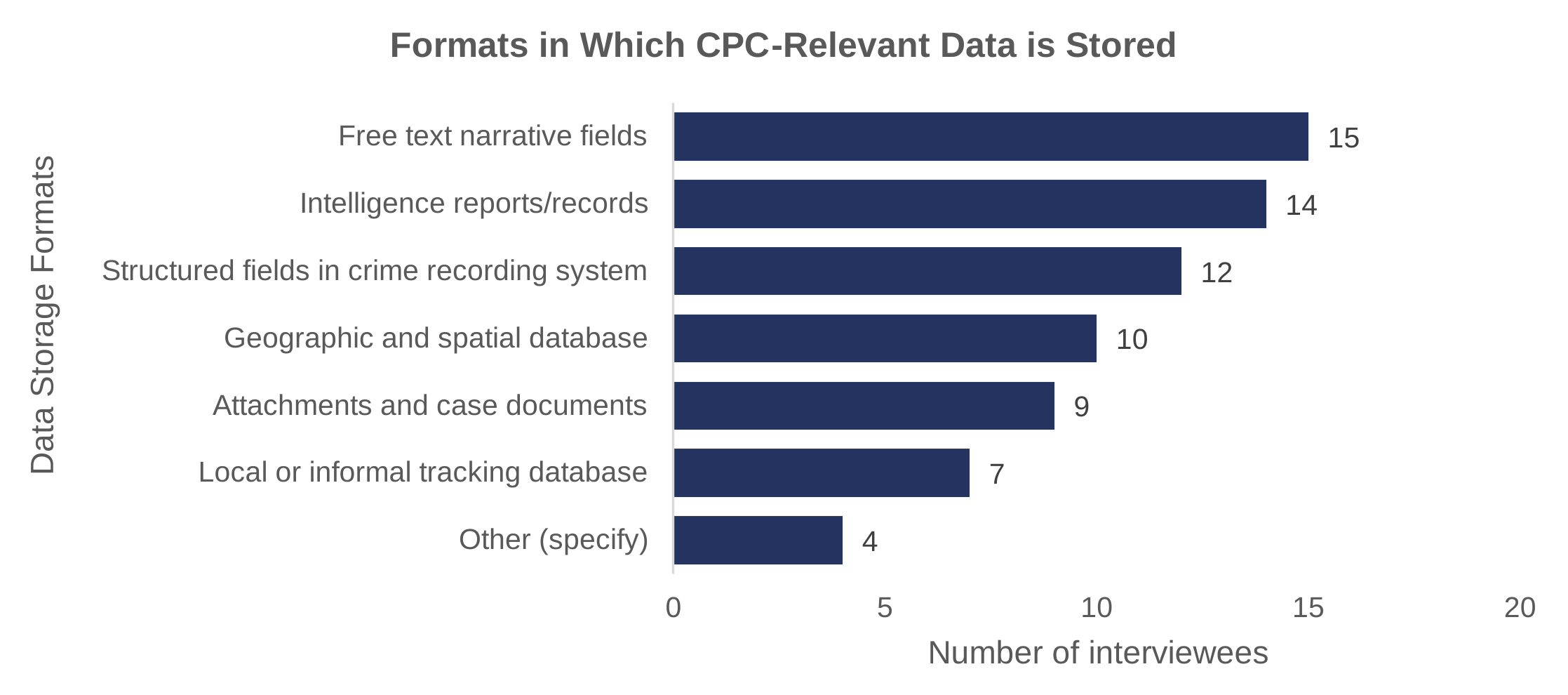
*Source: Fortia Insight police force interviews. Counts reflect the number of participating police forces that agreed with each feature in response to the question >In what format is this data stored?” Note that interviewees were provided this list in the Chat function of the virtual meeting. Forces could report more than one feature.
Free-text narrative fields
Free‑text narratives were one of the most frequently cited storage formats for CPC‑relevant information. Interviewees described how heritage significance appears most often in narrative descriptions of incidents rather than in structured fields.
It’s definitely in the free text narrative within the summary of how the offence has happened.
(HCLO)
There is a lot of free text… you do have to kind of wade through that.
(HCLO)
However, interviewees consistently described free text as a weak basis for systematic identification. Its usefulness depends heavily on the quality and precision of what was entered in the first place.
Free-text narrative fields… if someone’s got no interest in heritage, they’ll put like half a sentence on, which is completely pointless. And then we have to manually go and look at what’s happened.
(HCLO)
Intelligence reports and records
More than half of interviewees indicated that CPC‑relevant information can appear in intelligence reports or intelligence systems, though these systems are not designed to identify or store CPC systematically. In several forces, intelligence products sit entirely outside the main crime record and must be accessed or interpreted separately.
Some interviewees described intelligence systems as storing information that might become relevant to CPC, but only when identified manually or with specialist support.
Intelligence… we have used analysts before to try and search for things.
(HCLO)
Others highlighted the separation between intelligence and crime recording systems, explaining that intelligence entries do not automatically link into CPC‑related datasets. For example, an interviewee who maintains a local heritage‑tracking record described the manual process required to integrate intelligence items.
Intelligence reports are marked up separately. Although they’re under the same auspices, they’re not shown as similar. So if it comes through as an intelligence report, that will get flagged up as just an intelligence report that’s linked to a person or an object or a field, or a location…I would then see those and then I would then add those into [our heritage crime online page], if it’s relevant to something we’re doing at that time, if it’s something we can progress, if not, it stays on the system as the information that we can utilise at a later date should we need to. But if it’s immediately prevalent, then intelligence reports and records are then added into that business org as well.
(HCLO)
Intelligence records therefore serve as an important but dispersed and unstructured repository for CPC‑relevant information. Interviewees did not describe any consistent or systematic way to extract CPC information from intelligence systems.
Structured fields in crime recording systems
Almost half of the interviewees indicated that information on CPC could be stored in structured fields within mainstream crime recording systems. This included standard crime recording fields and, in some forces, specific heritage markers or qualifiers. Where forces had a specific marker, this improved the visibility of relevant incidents within the system.
So it’s probably structured fields and crime recording systems, so that’s where the tag would sit.
(HCLO)
The data will have their own kind of fields. So you’ve got your address location, person fields, and then you’ve got a free text and the MO fields for your stats classifications.
(HCLO)
However, interviewees stressed that heritage markers are not mandatory, rarely applied consistently, and therefore do not generate a reliable dataset. Structured fields can support identification, but they do not provide a reliable or complete basis for storing data on CPC.
Geographic and spatial databases
Many interviewees referred to geographic or spatial databases as an additional place where CPC-relevant information could be found. These systems do not store CPC as a separate category. Instead, they allow individuals to view crime locations against mapped heritage designations or other site-based information.
In these cases, CPC relevance can sometimes be inferred by comparing crime locations with known heritage sites. A small number of interviewees also described work to link crime records more directly to mapped heritage designations. However, participants generally presented these approaches as developing capabilities rather than mature or routinely used databases.
Attachments and case documents
Many interviewees noted that CPC‑related data may appear in attachments linked to crime reports, including images, PDFs, court documents or expert statements. In some cases, these materials added important context that did not emerge clearly from the crime record itself. However, interviewees did not describe attachments and case documents as a routine or efficient format for identifying CPC at scale and noted they are difficult to systematically search. Their value lay more in supporting case understanding than in enabling systematic extraction.
Yes, we have attachment and case documents… what comes back from the CPS and the court is generally a PDF.
(HCLO)
Local or informal tracking tools
Because CPC is not consistently identifiable within formal crime recording systems, several interviewees described maintaining local tracking tools, often created by specialist officers. These included spreadsheets, local logs, internal databases, or >business organisation” folders within crime recording systems. Interviewees reported using these tools to record incidents of local concern, track repeat problems, or build a working picture of CPC activity in their area.
I’m trying to keep a spreadsheet of all the crimes and instances we’re getting at the minute.
(HCLO)
We have a local tracking database. So we have a system called Desk… within that, it’s got community messaging as well as crime reporting and intelligence reporting.
(HCLO)
We’ve set up our own little business organisation [within Niche]…anything I see, I will add to that.
(HCLO)
However, local tools also have clear limitations. They depend on continued staff input, local ownership, and specialist capacity. They did not usually form part of the official force reporting structure, and they were not reported to be standardised across forces. They were also not regularly shared between forces.
Other data storage formats
Some interviewees also described additional formats where CPC‑relevant information may be stored before or alongside the main crime recording system. For example, one interviewee mentioned data may be stored in email, where partners or members of the public contact a heritage lead directly with incident information. These emails can contain the first or only reference to the cultural significance of an event and temporarily store CPC‑relevant content until an officer manually enters it into police systems. Another interviewee referred to online reporting platforms and legacy command-and-control systems that sit alongside the main crime recording systems. These systems capture incident reports submitted by members of the public or partner organisations, and could therefore contain early information about possible CPC incidents before they are formally recorded as crimes.
3.2.4 Length data records go back on CPC data
Key finding: CPC records vary widely in how far back they can be traced because data retention depends on each force’s current system, the presence of heritage tags, or recent local logging practices. As a result, there is no consistent historical dataset, and long‑term CPC patterns cannot be reconstructed reliably.
Interviewees described a highly inconsistent picture of how far back CPC data can be traced within force systems. In many cases, interviewees reported that they had no clear indication of how old CPC‑relevant data might be, often because there was no heritage marker in their systems or because identification depended on recently adopted practices such as local logging.
Where forces could estimate record length, the timeframe was almost always tied to the age of the current records management system or the introduction of a heritage tag.
Niche stored basically forever almost. Everything is on there from when it was first brought in… the last 10, 15 years, I would have thought. That’s how far the system goes back.
(HCLO)
2017, 2018 [when Athena came into effect]. I know from that point onwards there was definitely a heritage tag on that system. Prior to that I don’t know… there was a programme called CIS before Athena, which was a very old school type system… in your free text, you could write it with a heritage site, but… there was no way of reviewing that data on a wider scale to go, there’s been X amount this month.
(HCLO)
In other areas, the relevant dataset was shaped not by system architecture but by local recordkeeping, particularly where specialist officers had created their own tracking mechanisms.
That spreadsheet [of heritage incidents] is probably about a year old now. There’s no local tracking system that’s older than that. Athena, we’ve had in place for… 9, 10 years.
(HCLO)
The RER confirms this picture, emphasising that heritage and cultural property crime data is spread across police databases, heritage bodies, customs records and private art databases, with no centralised or consistent retention framework. There is no national heritage crime category, and these data systems often do not communicate with each other, which significantly challenges measuring the scale of heritage crime, coordinating enforcement responses, or understanding patterns in the data over time.
3.2.5 CPC data recording process, responsibility, and existing guidance
Interview and RER evidence show that police forces record CPC through routine crime recording processes. This means incidents are only recognised as involving cultural property when an officer identifies this manually, with most CPC visibility arising later through retrospective checks rather than at initial entry. Because neither the HOCR nor the NCRS define CPC as a separate category, cases are allocated according to the underlying offence type, and heritage significance rarely determines ownership. Training and guidance on CPC are limited and inconsistent, leaving most call handlers and frontline officers without the awareness needed to reliably identify CPC, which contributes to missed cases and varied practice across forces.
3.2.5.1 How CPC is recorded in practice
Key finding: Across forces, the recording of CPC is non‑standardised, discretionary, and highly dependent on individual awareness. CPC enters police systems through routine crime recording processes, often with no dedicated pathway or mandatory marker.
Interviewees described a broadly similar workflow for how incidents involving cultural property enter police systems. CPC does not follow a distinct recording pathway; instead, incidents are recorded through the same processes used for any other crime or incident. However, interviewees emphasised that this workflow does not reliably surface CPC.
Initial reporting and incident logging
Most CPC‑related incidents first enter police systems through standard reporting channels: 999, 101, online forms, or direct reports to officers. Call handlers or frontline staff then log these into command‑and‑control systems such as Storm or ControlWorks. At this stage, staff record the primary offence type and other standard fields such as location, victim details and free‑text narrative.
In a small number of cases, incidents are reported directly to HCLOs or rural crime specialists, particularly where partners such as Historic England or local heritage contacts know of the officer’s role. Some interviewees described intentionally building community relationships so that heritage cases would be brought directly to them.
We need to get call handlers appraised of what heritage cultural property crime is. They may not recognise it and I have seen it where call handlers are gone, ‘this isn’t a police matter, you need to speak to your local authority’, when it clearly is a heritage crime. Now we are trying to turn that around through training and inputs and education and online SharePoint guidance and all this sort of stuff, but we’re not there yet.
(HCLO)
However, most incidents enter through mainstream channels, where recognition of heritage relevance is often overlooked. Interviewees emphasised that identification at this stage depends on the call handler and their awareness of CPC which varies significantly due to training gaps, high turnover in these rolls, and lack of standardised definitions.
In terms of ‘how is it recorded’, it varies from force to force. I think in terms of the busier forces, metropolitan forces, not a chance. There’ll be so much stuff coming through, the call takers are used to taking so much stuff, it’ll be lost as we discussed at the very beginning in a criminal damage or a theft or whatever.
(Non-HCLO stakeholder)
We’ve tried training with our call handlers, but… we’ve got such a turnaround in call handlers that no sooner if you train one lot than you need the next lot trained because they’re just leaving the system.
(HCLO)
This is echoed in the RER, which noted that limited knowledge of relevant legislation, declining resources, and few training opportunities for staff reduces the likelihood of CPC being recognised at the point of recording. When heritage relevance is missed at this initial stage, the opportunity to apply tags or route cases to specialists is lost.
Crime recording and allocation
If a notifiable crime is identified at the initial point of reporting and logging, a crime record is created in RMS such as Niche or Athena.
[For the example of theft of cultural property from a private residence] Assuming it’s been reported by the phone or online, then, and I’m not confident it would get identified as heritage crime, but what should happen is it should be recorded by the person who receives the report. The person will record it, confirm it is that crime, should then tag it on Athena, so our record management system. Then it gets sent to a different department for QAing… If there aren’t any reasonable lines of inquiry, even though it’s a heritage crime, then that person at that point, when they’re QAing the reports and making an allocation decision, may resolve the crime at that point and say, well, there aren’t any inquiries that can be done.
(HCLO)
Where heritage is recognised at this stage (which interviewees stressed does not happen consistently), staff may apply an optional heritage marker or refer the case to a specialist. More often, however, the CPC element is not identified at the time of recording and is only discovered later through retrospective identification.
Retrospective identification
Interviewees consistently noted that CPC is most frequently recognised only later in the workflow, often during daily or weekly retrospective reviews by HCLOs, rural crime teams or analysts. These individuals manually review new incidents that have come into their force’s system, run saved searches, or screen free‑text summaries to identify heritage‑relevant cases that were not flagged earlier. This retrospective approach provides an important safety net, but it is fragile. It depends entirely on specialist time, availability and capacity, and does not guarantee consistent coverage.
The RER also highlights this structural dependency on specialist officers, noting that most forces rely on volunteer HCLOs and that heritage crime is more likely to be correctly recognised when flagged externally by partners (e.g., Historic England, museums, church authorities) than through routine internal processes.
3.2.6 Responsibility of investigations and variations by CPC type
Key finding: Responsibility for investigating CPC follows the underlying offence type rather than the heritage or cultural significance. HCLOs sometimes provide advisory input rather than having full case ownership, and limited specialist capacity and missed identification means many CPC cases are investigated without heritage‑specific expertise.
Interviewees reported that responsibility for investigating CPC does not sit with a single specialist unit in most forces. Instead, investigative ownership typically follows the underlying offence type, rather than the cultural or heritage significance of the asset involved. As a result, CPC cases are commonly allocated to the teams that would ordinarily investigate the offence in question, such as neighbourhood teams for lower‑level acquisitive crime, response officers for criminal damage, CID for more serious or complex matters, or financial investigation teams where fraud, handling or provenance issues are evident.
Interviewees were clear that CPC is not treated as a standalone investigative category within force structures. The heritage dimension seldom determined where a case is allocated. In some instances, if the heritage or cultural property element was identified and the HCLO or their team (often the Rural Crime Team) had capacity, the case may be handled by them. However, missed identification or resource constraints meant that CPC cases are often handled by other, non-specialised units.
Generally speaking, it will be a uniformed officer or neighbourhood officer, but if I pick it up as a heritage crime, and it’s not always the case, but generally speaking, I will allocate it to a rural crime officer to investigate.
(HCLO)
In this force, it’s us on the rural crime team. I pick up most of them. However, obviously, like I said, some do get missed and go out to the LPUs and response officers or the beat officers pick them up and deal with them as best they can.
(HCLO)
Several interviewees explained that HCLOs usually played an advisory or coordinating role rather than leading investigations directly. This was especially the case where HCLOs held wider portfolios beyond heritage crime. Their role typically involved providing specialist knowledge, supporting investigations led by other teams, liaising with partner organisations, and helping interpret the cultural or heritage significance of sites and objects where relevant.
Depends on our workload because we’re quite a small team, but we would usually oversee [the neighbourhood crime time] to kind of make sure that everything’s been done on them rather than take on every investigation ourselves.
(HCLO)
If there’s any specialist help that we can then provide, specialist contacts and bits and pieces, we would then take that job and take it off the system. If there’s nothing, or it’s antisocial behaviour at a heritage site, we would tend to leave that with the local neighbourhoods. Having marked it up, we would leave it with the local neighbourhood’s team, but we would have [an] overview.
(HCLO)
3.3 Cultural property crime data extraction and analysis
Interviewees described a complex, fragmented, and resource‑intensive landscape for extracting and analysing CPC data. As earlier sections have described, CPC‑relevant information is distributed across free‑text narratives, optional tags, intelligence logs, attachments, geospatial tools, and locally maintained spreadsheets, with no unified field or system designed to capture CPC directly. This dispersed storage has significant implications for extractability: while structured fields can be queried more easily, these rarely contain CPC indicators. In addition, formats that do contain the richest heritage‑relevant detail (e.g., free text, intelligence systems, PDFs and case documents) are difficult or virtually impossible to search systematically.
Within this environment, forces varied markedly in their ability to extract CPC‑relevant information. A small number of interviewees described partial or localised processes capable of producing approximate datasets, but most interviewees characterised extraction as difficult, incomplete, labour‑intensive, and often not feasible. The following sections summarise the ease and difficulty of extracting CPC data, previous attempts to do so, and the feasibility of creating a reliable CPC dataset in future.
3.3.1 CPC-relevant data extraction
Key finding: Only a small minority of interviewees described extraction as relatively straightforward, and this generally depended on local systems or workarounds. Most interviewees described extraction as highly manual, incomplete, or effectively unfeasible. Interviewees drew a clear distinction between producing something indicative and producing something sufficiently accurate and complete for reporting.
Only a small minority of interviewees described CPC data extraction as straightforward, and even these accounts were contingent on the officer having built and maintained local systems that compensated for gaps in force‑wide recording practices.
Pretty easy, yeah. We use Power BI to pull information from our crime and incident systems and it’s quite good at it if you are confident in the data that’s contained within it.
(HCLO)
For the majority of interviewees, however, extraction was described as extremely difficult, highly manual, or impossible. Interviewees drew a clear distinction between producing something indicative (e.g., a rough list of incidents at heritage sites) and producing something accurate and complete, which many viewed as unattainable with current systems.
It would be very, very difficult. So what I would say is… If it was a Freedom of Information request, I would probably send it back and say it would be too time consuming.
(Non-HCLO stakeholder)
I think whatever product we would provide, we couldn’t hand on heart say this is a great representation of what’s been going on.
(Non-HCLO stakeholder)
Interviewees repeatedly highlighted the inaccuracy of keyword‑based extraction, the most commonly referenced technique used to manually search and identify potential CPC cases. Keyword searches generated large numbers of irrelevant incidents, missed relevant ones, and required officers to test multiple spelling and wording variations.
It’s very resource intensive… I have to think about every possible variation to find it. If you put in ‘church’, you won’t find ‘churches’, so you have to put in plural and singular. Structured searches don’t work well… it’s easier to just put in the keywords and variations. Otherwise I’ll be buried with information.
(HCLO)
Taken together, these accounts show that while some forces have informal workarounds, extraction remains dependent on individual expertise, local spreadsheets, repeated manual searches, and case‑by‑case judgement.
3.3.2 Previous attempts to extract and analyse CPC data
Key finding: Previous efforts to extract or analyse CPC data are rare. Searches are highly manual, time‑consuming, and often reveal large gaps or inconsistencies. Even when forces undertake detailed retrospective work, results remain incomplete, highlighting the structural limitations of current recording systems.
Only some interviewees described previous attempts to extract CPC‑relevant information for internal use, partnerships (e.g. requests from INTERPOL), or responses to Freedom of Information (FOI) requests. Where attempts had been made, interviewees consistently characterised them as time‑consuming, difficult, or only partially successful. One interviewee described the difficulty of responding to previous FOI requests without the underlying data, while others noted that intelligence‑related requests often required specialist support.
We endlessly get Freedom of Information requests and they’re very, very difficult to comply with because we don’t have the data…the data that we hold is not consistent and it’s not complete.
(HCLO)
One interviewee also flagged data protection and data sharing agreements as an additional barrier to responding to a previous request.
A previous request for a raw systems download was refused due to data protection.
(HCLO)
A particularly illustrative example came from an interviewee who undertook their own comparative analysis between force data and information provided by English Heritage. They reported that their search was entirely manual involving searching via postcode, and they ultimately discovered substantial gaps in their force data. This example highlights the systemic gaps in CPC identification and the degree to which force data underestimate the volume of heritage‑related incidents. Even when forces are willing and able to put in the work required for manual searches, the results are inaccurate.
I took it by myself just to do a bit of analytical work upon reporting the heritage crime. And I obtained the data from English Heritage. And I compared the instance that they had reported over [a] six month period to and compared it to what we had on our system. So I checked with using postcodes effectively if you can site and it quickly then became apparent that there was a massive difference in the number.
(HCLO)
3.3.3 Feasibility of a future CPC dataset
Key finding: Interviewees reported that a reliable national CPC dataset is not feasible under current recording practices. While forces are willing to share data, producing a robust dataset would require significant system changes.
When prompted, the vast majority of interviewees stated that, under current recording practices, police systems could not produce a reliable or comprehensive dataset of cultural property crime. Barriers include inconsistent recording, lack of markers, varied local practices, and high reliance on free‑text.
Being able to extract the same type of data from every single force is going to be impossible because everyone has their own way of doing things.
(HCLO)
Despite these challenges, many forces expressed willingness to share data in the future and did not express any concern around sharing data with the government, provided improvements were made.
The only challenge would be the fact that there’s no existing data. So it would be a new product that we’d be asking the analysts to create for us, but they’re more than capable… And there’s probably nothing that we can’t share with the government in terms of sensitive information.
(HCLO)
Interviewees identified several requirements needed to make a future CPC dataset feasible. These included: a standardised CPC or heritage marker with force-wide training on their use; clear national definitions and strategic direction; adequate resourcing and analytical capability; and senior leadership buy-in.
Without those markers, being able to extract the same type of data from every single force is going to be impossible… until you get that single definition coming down from the top, you’re going to struggle.
(HCLO)
It starts at the top, right? So you’d need a strategic overview and somebody managing it from a strategic level.
(HCLO)
If you’re going to start asking police forces to supply data down the line, obviously that will take an analyst time. So I think you have to allow money and time. DCMS need to supply a route for that to be done, that they need to pay for an analyst time in each force, perhaps, you know, you can’t just be expected to wear another hat and for somebody to just to supply that.
(Non-HCLO stakeholder)
3.4 Partnership working and information-sharing
Most interviewees highlighted systems of partnership working and information-sharing on CPC that are reactive and relationship-driven rather than systematic (e.g., via formal processes) and embedded. Forces typically did not have formal information-sharing agreements and structures set up to regularly engage with different stakeholders; instead, these were informal agreements to collaborate on a case-by-case basis. Several interviewees suggested that informal networks and relationships somewhat filled this formal structure gap, but the strength of or access to these networks were neither universal nor consistent across forces.
3.4.1 Force-to-force partnerships
Key finding: Where forces used the same RMS platforms such as Niche or Athena, cross-force information-sharing was seen to be easier, as they could access their data easily in a similar format.
Some interviewees described strong but informal collaboration with neighbouring forces, particularly where rural crime or heritage teams responsible for CPC are active and engaged. Examples of stronger collaboration with neighbouring forces include regular meetings between HCLOs in neighbouring forces outside of specific investigations and biannual meetings with regional forces and external organisations to circulate updates. These meetings were seen to help create shared awareness but were not widespread across forces and often driven by individuals.
[We have] really good information sharing. We don’t have [information sharing agreements] with organisations in the region [but] they come to our… Heritage Crime Group meetings, twice a year [where we give] round robin updates.
(HCLO)
This compares with incompatible IT systems, where formal information sharing requests were required, adding significant delays. A few interviewees also highlighted the role of Microsoft Teams to collaborate with other forces. Whilst it provided a platform to which local forces can contact each other directly, a national-focused interviewee highlighted how it has been transformative for coordinating and rapidly disseminating intelligence and information. Despite this, overall force-to-force information sharing was mostly on a case-by-case basis, with no examples identified of CPC-specific formalised data integration.
A lot of policing systems use Niche. If that’s the case, it’s very easy because we can just go on the system. If they don’t use Niche, it can be more troublesome because we have to then make a request for whatever information we might want.
(HCLO)
3.4.2 National-level policing partners
Key finding: Several interviewees highlighted the loss of the OPAL heritage crime analyst role as a significant recent challenge because of its impact on national coordination capacity.
Engagement with national policing bodies appears irregular and case-driven. The National Rural Crime Unit (NRCU) possesses country-wide connections and helps link forces requiring specialist support, but only a small number of interviewees noted collaborating with them previously. Some forces also described previous involvement with other agencies such as Regional Organised Crime Units (ROCUs), the National Crime Agency (NCA) and Border Force, however these tend to only occur in complex, high-profile cases where specialist involvement is required.
Whilst issues remained, engagement with national bodies gave forces the clearest national picture on CPC trends, supporting forces to coordinate joint responses:
There was a very, very good person who did that full time for Operation OPAL, which is the national property crime strand. And [they were] heritage crime specific. [They were] excellent because [they] would then sift this data and then tell you when your force had a problem. [The end of that role] was a huge loss. I think that really was the only time… for a period of like 3 years, that… I knew that we had a national picture where we actually got meaningful data.
(HCLO)
3.4.3 Heritage and cultural sector partnerships
The RER identifies a clear national shift toward third-party-led intelligence, strategic advice, training and reporting in heritage crime. The evidence notes that policing increasingly relies on specialist actors such as Historic England, English Heritage, ARCH and the Scottish Heritage Crime Group to identify, interpret and escalate incidents. This reliance has fostered a move toward specialised, intelligence-led recording, but has also meant that heritage crime is only systematically recorded when specialist HCLOs or external partners flag it.
The RER also emphasises that increasing dependence on intelligence-sharing networks within the heritage sector, combined with third-party reporting, has effectively outsourced elements of heritage crime detection and prevention to non-police organisations. Efforts are underway to explore integration of partner-held data with the Police National Database, but this remains emergent rather than routine.
These findings somewhat align with the interview findings, with Historic England acting as a key conduit nationally for police forces in managing heritage crime and CPC.
Key finding: All interviewees consistently reported Historic England as their most important external partner within the heritage sector, with the heritage crime lead responsive, knowledgeable and supportive, providing expertise, context, investigative advice and impact statements for sentencing.
These relationships were characterised as productive, even though they rarely involved the exchange of sensitive intelligence. Historic England’s heritage crime training was frequently highlighted as especially valuable, giving officers practical instruction on identifying protected sites, understanding relevant legislation such as the Ancient Monuments and Archaeological Areas Act 1979, recognising indicators of offences like nighthawking, and preserving archaeological or cultural material during investigations. In one area, they were jointly delivering a local programme alongside Historic England using drones to better understand damage to heritage sites:
We are setting up [in] spring summer this year a programme with… our police cadets whereby they will be utilising drones that we will teach them how to fly, and they will be attending heritage sites in [force area] to take imagery of them and do like a mapping exercise for Historic England.
(HCLO)
Key finding: Partnerships with other organisations, such as English Heritage, National Trust, museums, dioceses, local councils, archaeological bodies, and maritime agencies (such as Receiver of Wreck, Maritime & Coastguard Agency), were generally positive but generally reactive.
These collaborations tend to occur when specific incidents arise, such as illegal metal detecting, protected wreck interference, or heritage asset theft. Connections with local community groups, volunteers, and landowner networks such as Heritage Watch, were also identified, though this varied between forces.
A few interviewees stressed that while these partnerships can be effective, they face capacity constraints on both sides. Smaller heritage organisations often work with limited staffing or rely on volunteers, meaning they cannot provide continuous engagement. Without active cases to maintain contact, relationships can atrophy over time, creating gaps in preventative work and weakening information sharing. Several interviewees also described challenges engaging international cultural heritage bodies, often due to slow response times, differing legal frameworks or uncertainty about process, which is particularly problematic for illicit-trade-related investigations.
3.4.4 International information-sharing
Key finding: Interviewee collaboration with international partner engagement was to be generally limited, but when it did happen it was time consuming to set up due to the lack of clear processes.
Only a few interviewees reported experiences with INTERPOL, the Organisation for Security and Co-operation in Europe (OSCE) Heritage Crime Task Force, or foreign law-enforcement agencies (e.g., FBI). Despite several offences encompassed within CPC being inherently transnational (e.g., illicit import, export and trafficking of cultural objects), the interviewees involved in these investigations identified they had to rely on one-off contacts and brokering communications via national bodies to engage international partners, adding bureaucracy and delays. Where information sharing did happen, experiences were mixed, with one force noted that uploading cases to INTERPOL’s Works of Art Database can take up to a year, making it of limited operational use, whilst others were highly positive.
We trained with the FBI [and] they have been equally invaluable [to our investigation,] helping us with communications for international matters.
(Non-HCLO stakeholder)
3.5 Challenges and improvements
The evidence collected from the police force interviews and RER highlights the key challenges faced regarding the reporting and analysis of CPC data, alongside identified improvements. It highlights the chronology and knock-on effect of challenges starting at the point of terminology and identification, contributing to reinforcing cycles that negatively impact CPC recording and analysis. Below, we outline the key challenges and potential improvements identified in the data.
3.5.1 Terminology and identification
Key challenges
Building on Sections 3.1 and 3.2, terminology and identification emerged as the most fundamental challenge, shaping every subsequent stage of the data process. The most prominent challenges identified include:
- the lack of a clear, shared definition of CPC both within and between forces leads to confusion among call handlers, frontline officers, investigators and external partners
- ‘heritage crime’ was a more familiar term used by interviewees, though was often used inconsistently, sometimes referring broadly to any crime involving heritage assets, crimes involving moveable cultural objects or when specialist legislation applied
- CPC remains poorly understood outside specialist roles/units, such as HCLOs and rural crime teams; whilst terminology barriers between policing and those used to describe heritage and cultural assets and value contributes to misinterpretations
- low awareness of CPC and heritage crime significantly affects first-contact identification, leading to generic offence types (e.g., theft, burglary) being applied during incident reporting
- underreporting and reluctance to report offences by custodians, owners and community groups further obscure CPC identification
- even when cultural relevance is identified, most force systems lack CPC or heritage crime tags to enable consistent identification, leading to key information being included within free-text fields where it is harder to extract. Even in forces where CPC tags exist, usage is inconsistent
Suggested improvements to terminology and identification
The evidence highlighted several interdependent improvements that would fundamentally improve identification of CPC:
Nationally agreed definition and terminology on CPC and heritage crime. Most interviewees called for a clear, shared definition to reduce ambiguity, align practices and understanding, and facilitate improved consistency in recording, description and reporting. This was identified as a foundational change necessary to implementing other improvements and strongly supported by the RER.
A nationally mandated CPC/heritage marker across all reporting systems. Supported by clear definitions and standardisation, the RER and many interviewees suggested that making CPC a mandated reportable offence via the Home Office Crime Reporting Rules alongside standardised recording guidelines would be the catalyst to improvements across CPC. However, it was identified that any specific marker would need to be simple to use and interpret, to avoid adding additional confusion.
[A nationally mandated marker] would be the silver bullet. Everything else falls in behind. [It would lead to] guidance and the training and that… would become driven from the top.
(HCLO)
Training and awareness for call-handlers and frontline officers. Many interviewees across forces stressed that without training, flags will not be used because staff cannot reliably recognise CPC relevance. Ongoing awareness raising training for call handlers and officers was identified as particularly key in the interviews and RER, as this is the first point where misidentification occurs, and staff turnover necessitates refreshers.
[CPC] flags [are] only as good [if] somebody actually recognises [an incident] as a historic cultural property crime. So we probably need a bit of training about what that actually means to people so they can flag it effectively.
(Non-HCLO stakeholder)
Awareness raising for heritage organisations and the public. The RER and the majority of interviewees suggested that improvements in awareness of heritage crime and CPC (such as through strengthening Heritage Watch schemes and national campaigns) more broadly would lead to better identification and reporting of offences at the first instance. This includes knowing the exact terminology to use when reporting incidents, leading to greater likelihood of the offence being correctly identified at the first instance.
3.5.2 Data recording systems
Key challenges
Building on Sections 3.2, force data recording systems were generally not set up to effectively record or analyse CPC data, leading to reactive, individual-driven approaches to identify relevant cases after they were initially recorded. The most prominent challenges identified include:
- identification of CPC relied heavily on resource-intensive manual review of free text, often conducted retrospectively by specialists and using local tools/approaches (e.g., key-word searches), in the absence of systematic identification through their data recording systems
- without CPC tags or single data fields to reliably identify CPC, officers have to analyse and triangulate proxy or imperfect indicators to detect relevant offences
- the lack of standardised national recording criteria and processes for CPC meant local practices varied significantly, preventing consistent categorisation
Suggested improvements to data recording systems
Automation and AI-enabled triage. A few interviewees argued that automation, including using AI to review case narratives, locations and keywords, would more reliably identify cases vs large-scale staff training programmes and at lower cost. Automated solutions could flag incidents for specialist review and reduce missed cases.
Automation is the only realistic way [to comprehensively identify all CPC instances]. Let a system flag the jobs, then let specialists decide what’s actually CPC.
(Non-HCLO stakeholder)
System updates and structured fields. Several interviewees suggested the addition of integrated mapping functions, heritage site identifiers, and property level markers into RMS platforms would improve the flagging of cultural significance in offences automatically, minimising missed cases. However, the RER highlights these improvements need to be widespread and standardised across forces, otherwise issues with inconsistency and incomparability of data will remain.
3.5.3 Extraction and Reporting
Key challenges
Building on Sections 3.3, challenges with identification and data systems generally meant that the extraction, analysis and reporting of CPC was limited in forces. The consequence of this was that forces did not have a reliable picture of CPC within their area. The most prominent challenges identified include:
-
interviewees reported limited ability to extract reliable incident data. Without markers, extraction requires manual review of large volumes of incidents, making datasets incomplete and unsuitable for analysis
-
the limited capabilities to extract and analyse CPC data were seen to have a self-reinforcing cycle. Because policing prioritises areas based on data-driven demand, CPC and heritage crime are deprioritised, reinforcing its lower prioritisation and strategic attention
-
at national level, inconsistent tagging and divergent systems make aggregation impossible. Several interviewees described measurability as the core barrier: without mandatory tagging CPC will remain invisible in both local and national intelligence
Suggested improvements to extraction and reporting
Specialist analytical support. Either at force or national-level, specialist analytical support is needed to establish analytical tools that can identify trends and support investigations. At theforce-level, this would require sustained funding and prioritisation to enable this.
Improved centralised intelligence gathering and analysis capability. As identified by the RER, a centralised body leading intelligence sharing between forces and national bodies and analyses would support identification of trends, patterns, convergence, organised crime involvement, and trafficking networks, and ensure law enforcement keeps up to date with these risks. This would replace the OPAL support identified as key by several interviewees.
3.5.4 Organisational factors
Key challenges
Organisational constraints also reduced forces’ abilities to respond effectively to CPC, even if not specific to data systems and recording. The most prominent challenges identified include:
-
many forces rely on one specialist or very small teams to cover extensive geographic areas and a wide thematic scope, including archaeological, rural and marine heritage. This severely limited capacity for training, proactive coordination and prevention, and was suggested to enable offenders, especially travelling nighthawkers, to exploit gaps between force boundaries.
-
heritage crime and CPC tend to be viewed within crime as lower-volume, lower risk and lower harm when compared to high demand areas such as serious violence, safeguarding, or acquisitive crime. As a result, CPC rarely features prominently within strategic planning or force-level performance networks. This operational prioritisation leads to CPC responsibility falling to individual, dedicated officers, who work to raise awareness, promote good practice and identify relevant cases bottom-up without top-down support, limiting the sustainability and reach of improvements across their wider organisation.
-
generalist officers receive limited to no training on heritage crime and CPC, meaning most officers cannot recognise heritage or cultural significance, leading to misclassification and generic incident responses. A few interviewees noted either leading local training activities or recommending external training to other officers, but a few identified resistance due to its perceived low need.
Suggested improvements for organisational factors
Centralised advisory function for forces with low CPC experience. A few interviewees suggested this body should offer rapid guidance, recording support and expert consultation when cases arise:
[A key improvement would be] a more central kind of area for forces that don’t have to deal with this as much to come for advice on how to do it properly and record it properly.
(Non-HCLO stakeholder)
National prioritisation. National prioritisation, such as through a mandatory tag or notifiable offence status, would prompt organisational attention, legitimise this as an area requiring resourcing, and help break the current cycle of lower visibility.
3.5.5 External factors and partnerships
Key challenges
Building on Section 3.4, external factors and forces’ partnership also led to challenges associated with CPC. The most prominent challenges identified include:
- heritage sites, especially rural or coastal locations, often lack practical security measures and/or are difficult to access. This means incidents can be difficult to detect or are discovered late, delaying and/or stopping reporting and opportunities for evidence gathering.
- partnerships with heritage organisations, museums, maritime agencies and community groups were typically constructive but reactive, with limited engagement regarding preventing CPC.
- multi agency intelligence sharing (including locally, nationally and internationally) remains challenging, with limited standardisation, mixed system compatibility, and databases that are difficult for multiple partners to consult.
Suggested improvements to external factors and partnerships
Automated and strengthened data-sharing links. Automated and strengthened data-sharing links (e.g., with the Art Loss Register) was suggested by interviewees to help maintain a national record of stolen cultural property without relying on manual updates, and to address a current intelligence gap. This corresponds with the INTERPOL recommendation that each country maintains a domestic register of stolen cultural property (building on their Works of Art database), enabling clearer sight of what types of materials are being stolen and therefore enhancing opportunities for recovery.
An automated link into something like the Art Loss Register would help keep a proper national log […] it shouldn’t rely on us manually updating things.
(HCLO)
Formalising the network of heritage leads. Several interviewees suggested centralised support to embed and improve the growing network of heritage leads across forces. This would lead to improvements in communication, consistency, peer support and information sharing across this bottom-up network. One HCLO was currently taking a lead on this, though centralised support was suggested to be beneficial:
[A HCLO] is in the process of setting up [a] forum [for HCLOs] to communicate and share, which would be amazing. And I think the more people in forces who wear the heritage hat, talk to each other, [share] best practice [the better, but] having a bit of support from on high to support those kind of initiatives would actually, again, go a really long way.
(Non-HCLO stakeholder)
Creation of a designated national heritage crime officer. Interviewees suggested creating a a designated national heritage crime officer to provide a single point of coordination similar to national wildlife or rural crime officers.
We have national leads for wildlife and livestock crime… I don’t understand why we don’t have the same for heritage. A national heritage crime officer would give proper direction.
(HCLO)
Awareness raising amongst external partners. Awareness raising amongst external partners on what constitutes heritage crime and CPC, and effective reporting procedures, was suggested by interviewees to ensure the incident is dealt with correctly, including by the correct specialist teams.
4. Conclusions
This research examined how CPC is understood, identified and recorded across police forces in England. Evidence from the RER and interviews with 24 forces shows a clear and consistent picture: CPC is not reliably recognised at first contact, not consistently recorded, and is therefore generally opaque within current police data systems. These challenges arise from structural and operational constraints rather than from any lack of interest or effort among officers.
CPC currently enters police systems through standard crime recording pathways, without a dedicated category, mandatory marker or nationally agreed definition. As a result, incidents affecting cultural property are routinely absorbed into generic offence types such as theft, burglary, criminal damage or fraud. Whether cultural relevance is captured depends almost entirely on individual awareness at the point of reporting, typically by call handlers or frontline officers working under significant time and information-processing pressures. When this recognition is missed, opportunities to apply heritage markers (where they exist) or involve specialist officers are lost.
Once recorded, heritage-relevant information is frequently stored in locations not designed for structured retrieval, such as free-text fields or attachments. Even in forces using heritage tags, interviewees described inconsistent application and uncertainty about terminology. Forces therefore rely heavily on retrospective, manual approaches, such as keyword searches or specialist-led incident reviews, to identify cases that should have been surfaced earlier. These methods differ across forces, which inevitably leads to unreliable datasets and missed incidents.
As a result, forces consistently reported difficulty generating accurate or complete CPC data reports. Producing even an indicative dataset is labour-intensive, and existing analytical tools cannot fully compensate for the absence of structured fields or consistent tagging. Overall, the study shows that CPC remains a low-visibility crime type whose identification relies more on individual knowledge than system design, creating persistent issues of under-recording and missed heritage harm. Nonetheless, forces expressed a strong willingness to improve how CPC is recognised and recorded, and a readiness to work with DCMS and heritage partners to strengthen practice.
4.1 Recommended improvements
While current systems do not support consistent or reliable CPC recording, the evidence highlights several interconnected areas where targeted improvements would significantly strengthen identification and data quality. Together, these changes would also lay essential foundations should more coherent cross-force insight be explored in future.
Early identification and recognition
To ensure cultural significance is recognised when incidents first enter police systems, clearer and more consistent terminology is needed. A nationally agreed definition, supported by targeted training for call handlers and frontline officers, would reduce ambiguity and improve early recognition. Improved public and custodial awareness, through clearer reporting guidance and strengthened community schemes, would further support accurate classification at the outset.
Systemic and recording improvements
Interviewees emphasised that system-level adjustments are critical to improving CPC visibility. A simple, mandatory CPC or heritage marker, supported by concise guidance, would provide a consistent mechanism for identifying relevant incidents. Structured fields and heritage-linked prompts within RMS platforms would reduce reliance on free text, while greater standardisation across forces would help ensure information is recorded in a comparable way.
Analytical capability and national coordination
Strengthening analytical capacity is fundamental to understanding patterns of CPC. Dedicated analytical support, either locally or centrally, would enable more effective extraction, interpretation and monitoring of CPC-related data. A central intelligence function would complement this by maintaining cross-force situational awareness and helping identify emerging trends or pattern changes.
4.2 Considerations for future research
The study identifies several areas where further research would meaningfully complement this report and support longer-term system development. These would help address current evidence gaps, build readiness for future improvements, and deepen understanding of CPC across policing and the wider heritage sector.
Cross-sector data collection and mapping
Further research could explore what relevant information is held by museums, insurers, heritage custodians, religious institutions, local authorities and the art market, and how these datasets might complement police records. Mapping systematically where data currently sits, how it is structured, and how it could be safely and lawfully shared across the UK would help build a fuller picture of CPC and reveal incidents that never reach, or are unidentifiable within, police systems.
International comparisons of CPC recording and art-crime policing models
Examining how other jurisdictions classify, record and investigate CPC would help identify transferable approaches, particularly from countries with dedicated art-crime units or more mature recording systems. Such comparisons could offer practical insights into governance structures, data standards, and enforcement models that may be adaptable to the UK context.
Comparative analysis of recording practices for analogous crime types
Further research could examine how CPC recording and data quality compare with other crime types involving similar offenders, behaviours or victim contexts, such as acquisitive crimes targeting non-cultural items, metal theft, or trafficking offences. Understanding how these overlapping crime types are identified, recorded and analysed could highlight transferable practices, expose systemic barriers common across categories, and provide useful benchmarks for strengthening CPC recording in a proportionate and evidence-based way.
Feasibility of a centralised CPC intelligence function
A feasibility study could examine potential models for a central intelligence role focused on CPC, including resource requirements, governance options and possible pathways for phased implementation. This would support informed decision-making about whether, and how, a coordinated national capability could enhance cross-force insight, support investigations and improve understanding of emerging trends.
4.3 Wider considerations
Beyond improvements to CPC recording and data processes, the study highlights several broader opportunities to support the wider CPC and heritage crime landscape.
Strengthen and support the HCLO network
Interviews highlighted the commitment and expertise of HCLOs and other heritage-aware officers, many of whom lead local initiatives with limited formal support. Providing light-touch national coordination through structured knowledge-sharing forums, access to specialist advice or clearer points of contact would help amplify good practice across forces and reduce reliance on informal networks.
Building heritage-focused capacity
Interviewees repeatedly highlighted that HCLOs and other heritage-aware officers are often spread thin, balancing CPC activity alongside wider responsibilities. Consideration could be given to how specialist capacity could be strengthened. This could include increasing protected time for existing HCLO roles, additional CPC-focused posts, or targeted support for areas with significant heritage assets and/or demand. This may lead to more consistent coverage and reduce dependency on individual officer goodwill.
Enhance communication and reporting channels for heritage stakeholders and the public
Many interviewees reported persistent under-reporting by landowners, custodians and volunteers, often due to uncertainty about what constitutes heritage crime or whom to contact. Improving public guidance, reporting routes and awareness campaigns could encourage earlier reporting and help forces identify culturally significant incidents more quickly and accurately.
Explore opportunities for cross-sector intelligence sharing
While heritage-sector organisations expressed strong willingness to collaborate, routine mechanisms for sharing information were limited outside specific investigations. Developing and supporting clearer and more practical data-sharing pathways, with museums, dioceses, local authorities or maritime bodies, could support earlier identification of patterns, repeat targeting or cross-border offending.
Taken together, these wider considerations highlight the importance of coordinated, multi-agency approaches to protecting cultural property, complementing improvements to police data systems and strengthening the overall response to heritage-related harm.
Appendix A: references and RER sources
1. Atkinson, R. (2024). Heritage sites report increase in crime and anti-social behaviour - Museums Association. Available at: https://www.museumsassociation.org/museums-journal/news/2024/08/heritage-sites-report-increase-in-crime-and-anti-social-behaviour/.
2. BBC Scotland (2019). Fresh bid to tackle growing ‘heritage crime’. Available at: https://www.bbc.co.uk/news/uk-scotland-47976094.
3. Dealing in Cultural Objects (Offences) Act 2003. Available at: https://www.legislation.gov.uk/ukpga/2003/27.
4. Department for Culture, Media & Sport (2025). Research report: export licensing and provenance. Available at: https://www.gov.uk/government/publications/research-report-export-licensing-and-provenance/research-report-export-licensing-and-provenance.
5. Foreign, Commonwealth & Development Office and Emma, L. (2024). Trafficking of cultural property: UK statement to the OSCE. Available at: https://www.gov.uk/government/speeches/trafficking-of-cultural-property-uk-statement-to-the-osce.
6. Ecclesiastical (2025)*. Over half a million pounds of silver stolen from churches in the last year. Available at: https://www.ecclesiastical.com/media-centre/half-million-of-silver/ *[Source not part of the RER].
7. Hertfordshire Constabulary (2016). Heritage Crime A Guide for Law Enforcement Officers. Available at: https://historicengland.org.uk/images-books/publications/heritage-crime-guide-for-law-enforcement-officers/heritage-crime-guide-law-enforcement-officers/.
8. Historic England (2015a). Guidance for Sentencers - Heritage Crime. Available at: https://historicengland.org.uk/images-books/publications/heritage-crime-guidance-sentencers/heag054a-guidance-for-sentencers/.
9. Historic England (2015b). New Guidelines Target Heritage Thieves. Available at: https://historicengland.org.uk/whats-new/news/new-guidelines-target-heritage-thieves/.
10. Historic England (2019). New Sentencing Guidelines For Offenders Who Cause Damage to Heritage and Cultural Assets. Available at: https://historicengland.org.uk/whats-new/news/new-sentencing-guidelines-damage-heritage-cultural-assets/.
11. Historic England (2023a). Heritage Crime Prevention. Available at: https://historicengland.org.uk/images-books/publications/heritage-crime-prevention-guide/heag319-heritage-crime-prevention/.
12. Historic England (2023b). Heritage Crime Risk Assessment. Available at: https://historicengland.org.uk/images-books/publications/heritage-crime-risk-assessment/heag308-heritage-crime-risk-assessment/.
13. Historic England (2024). Extent of Heritage and Cultural Property Crime in England Revealed. Available at: https://historicengland.org.uk/whats-new/news/heritage-crime-research-findings-revealed/.
14. Historic Environment Scotland Act 2014. Available at: https://www.legislation.gov.uk/asp/2014/19/contents.
15. Horner, S. (2025). Spotlight on: Heritage Crime - UK Heritage Pulse. Available at: https://heritagepulse.insights-alliance.com/updates/heritage-crime/.
16. Jović, M. (2025). The UK’s Performative Approach to Trafficking of Illicit Antiquities. doi:https://doi.org/10.36862/6MR3-EE1Q.
17. Kerr, J. (2018). The state of heritage and cultural property policing in England & Wales, France and Italy. European Journal of Criminology, 17(4), pp.441–460. doi:https://doi.org/10.1177/1477370818803047.
18. Lowther, J., Williams, M. and Austin, B. (2025). Common Enforcement Manual for Heritage Crime at Sea - Project Report and Supporting Information. Available at: https://historicengland.org.uk/images-books/publications/common-enforcement-manual-heritage-crime-sea/.
19. National Police Chiefs’ Council (NPCC) (2017). Heritage and Cultural Property Crime National Strategic Assessment 2017. Available at: https://historicengland.org.uk/content/docs/legal/heritage-cultural-property-crime-national-strategic-assessment-2017/.
20. Oxford Archaeology (2009). Nighthawks & Nighthawking: Damage to Archaeological Sites in the UK & Crown Dependencies caused by Illegal Searching & Removal of Antiquities - Strategic Study Final Report. Available at: https://historicengland.org.uk/images-books/publications/nighthawks-nighthawking/nighthawks2/.
21. Proceeds of Crime Act 2002. Available at: https://www.legislation.gov.uk/ukpga/2002/29/contents.
22. The Money Laundering, Terrorist Financing and Transfer of Funds (Information on the Payer) Regulations 2017. Available at: https://www.legislation.gov.uk/uksi/2017/692/contents.
23. The National Police Chiefs’ Council, The Crown Prosecution Service, Historic England and Cadw, Welsh Government (n.d.). A Memorandum of Understanding on the Prevention, Investigation, Enforcement and Prosecution of Heritage and Cultural Property Crime and Anti-Social Behaviour. Available at: https://historicengland.org.uk/content/docs/legal/memorandum-understanding-eng-pdf/.
24. Treasure Act 1996. Available at: https://www.legislation.gov.uk/ukpga/1996/24/contents.
25. Tudor, K. (n.d.). Illicit Entrepreneurialism in the Countryside. Available at: https://express.adobe.com/page/D05wu8UHmuCdf/
Acknowledgements
This research was conducted by the Social Policy evaluation team at Fortia Insight. The main authors of this report were Emilio Torrini, Ellis Akhurst, Lily Marty, Bijun Qin, Georgie Pinchard. We thank Dr Emiline Smith (University of Glasgow) for her inputs and advice.
We thank the many police officers and wider stakeholders who generously shared their time and perspectives during the study, and the Cultural Property team at the Department for Culture, Media and Sport for commissioning this study. This research would not be possible without their contribution.