Capturing engagement numbers - strand 2 - Participation Survey data analysis
Published 13 March 2026

© Crown copyright 2026
This publication is licensed under the terms of the Open Government Licence v3.0 except where otherwise stated. To view this licence, visit nationalarchives.gov.uk/doc/open-government-licence/version/3 or write to the Information Policy Team, The National Archives, Kew, London TW9 4DU, or email: psi@nationalarchives.gov.uk.
Where we have identified any third party copyright information you will need to obtain permission from the copyright holders concerned.
This publication is available at https://www.gov.uk/government/publications/capturing-engagement-numbers-strand-2-survey-data-analysis/capturing-engagement-numbers-strand-2-participation-survey-data-analysis
This report was authored by Jack Medlock, Hannah M. P. Stock, Andrew Knight, Donna Phillips, Adam L. Ozer, and Joseph Stordy at Verian, Dr Michael Sinclair, Dr Craig Macdonald, and Prof Iadh Ounis at The University of Glasgow, and Faculty.
This research was supported by the R&D Science and Analysis Programme at the Department for Culture, Media & Sport (DCMS). It was developed and produced according to the research team’s hypotheses and methods between October 2023 and June 2025. Any primary research, subsequent findings or recommendations do not represent UK Government views or policy.
This report includes analysis of anonymous data from the DCMS Participation Survey. It provides additional context for the main Strand 2 findings and should be read in conjunction with the other reports. It should not be confused with the official statistics produced using the Participation Survey data.
1. Overview and Introduction
Aims of doing Analysis on the Participation Survey Data
Goal
To provide contextual analyses that help us understand the broader implications of the main Strand 2 findings. These survey methods are particularly useful where novel data are not available, for example, in identifying demographic or behavioural trends and insights. One of the key strengths of survey research is its ability to break down trends based on demographics. This approach is useful for identifying potential drivers and heterogeneous trends within the data. It helps in pinpointing demographic groups that might be underrepresented in specific types of data.
Note: survey data and non-survey data are not directly comparable units of analysis and should not be used as direct statistical validation of each other.
Summary of Key Findings
Participation Survey analysis highlights points for awareness when adopting novel techniques:
Finding: Individuals from ethnic minority groups are less likely to own a smartwatch
Implication:
-
Technology and sociodemographic factors can influence each other in ways that affect attendance. For example, access to technology like smartwatches might vary among different sociodemographic groups, which in turn could impact how often individuals attend certain events or activities.
-
Smartwatch data could be prone to selection biases, which analysts or evaluators should be aware of when adopting novel techniques utilising this data. These biases might suggest findings are skewed or not applicable to all demographic groups.
-
This initial analysis requires a more thorough exploration overall, as survey data is not directly comparable to smartwatch data. Survey data typically involves self-reported information, whilst smartwatch data is collected passively and continuously, providing a different type of insight.
Finding: Older respondents are far more likely to visit historical places or sites
Implication:
-
Adopters of techniques capturing engagement numbers using mobile app data should be aware of the potential impact this behaviour may have on the representativeness of the mobile app dataset. For example, if certain groups of people are more likely to use mobile apps than others, the data collected might not accurately reflect the behaviours and preferences of those who use mobile apps less frequently.
-
While initial work in this area by Sinclar et al suggests this data can be representative, analysis of the Participation Survey data suggests further work is required for full assurance.
Finding: Younger respondents are significantly more likely to attend live sport events
Implication:
- This has potential implications for analysts and evaluators seeking to adopt social media methodologies to capture engagement. They should be aware of possible implications for the representativeness of the social media data from these events. For example, certain demographic groups might be more active on social media than others, which could skew the data and lead to inaccurate conclusions about overall engagement.
How the Participation Survey data will be used
We analysed the data from the Participation Survey to provide context to the engagement estimates produced using novel approaches:
-
The Participation Survey asked respondents about awareness, attendance and engagement at 4 major events every year, such as Bradford 2025 UK City of Culture.
-
The Participation survey also asked respondents about device possession (e.g. ownership of a smartwatch) and therefore, there was potential to do some analysis of this in comparison to Huq mobile app data and Strava data.
-
We also used the Participation survey to investigate how event engagement varies by demographics. The 2023/24 Participation survey has a larger sample size that allowed us to use region level data to provide context to the estimates produced from Large Language Models (LLMs).
2. Approach to Analysis
An Example: Smartwatch Ownership
Key Question: Are certain demographic groups overrepresented or underrepresented in our activity data? We use weighted logistic regression analysis to measure the likelihood that a respondent owns a smartwatch. This method allows us to isolate the specific impact of demographic groups on the likelihood of owning a smartwatch relative to a selected baseline. For example, we can measure how much more or less likely male respondents are to own a smartwatch compared to female respondents, while controlling for variables such as age, ethnicity and location.
We use weighted logistic regression analysis (see below) to measure the likelihood that a respondent owns a smartwatch:
Multivariate logit regression model-
Ysmartwatch ~ βage + βsex + βethnicity + βdisability + βsocioeconomic + βrural + βregion
Regression coefficients are later transformed to odds ratios, which represent the change in likelihood of smartwatch ownership between groups. While the main findings focus on questions of “how many participants?”, these survey analyses focus more on understanding “why might participation fluctuate or change between demographic groups?”.
3. Results
How to Interpret the Results
When looking at the regression plots, a few elements need to be taken into consideration:
-
Regression coefficients are measured relative to a baseline group: For example, if male respondents are being compared to female respondents, the graph will show an odds ratio for the male respondents relative to the baseline (female respondents) at 1.
-
Coefficients have been transformed into odds ratios: An odds ratio of 1 indicates there is no difference in likelihood of smartwatch ownership between groups. For example, an odds ratio of 0.93 for male respondents means they are 7% less likely to do the variable when compared to female respondents.
-
Dots represent the mean change in likelihood. Error bands represent the 95% confidence interval.
Findings -
Likelihood of Smartwatch ownership based on sex and ethnicity
Women & White people are more likely to own smartwatches
Figure 1: Likelihood of Smartwatch ownership based on sex and ethnicity

Male respondents are being compared to female respondents. All other ethnic groups combined are being compared to White respondents. Male respondents are 8% less likely to own a smartwatch than female respondents. All other ethnic groups combined are all less likely than White respondents to own a smartwatch.
Likelihood of Smartwatch ownership based on age
Older respondents are much less likely to own a smartwatch
Figure 2: Likelihood of Smartwatch ownership based on age
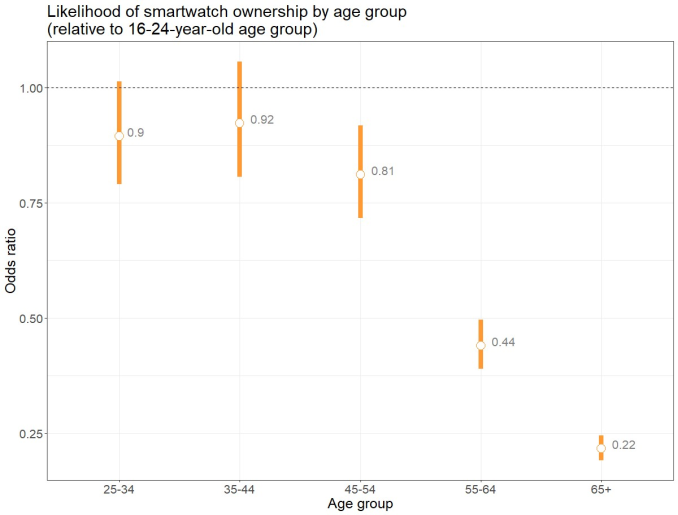
All age groups are being compared to 16-24 age group. The 55-64 age group are 56% less likely to own a smartwatch than those aged 16-24. Those aged 65 and over are 78% less likely to own a smartwatch than 16–24-year-olds.
Likelihood of Smartwatch ownership based on employment status
Managerial professions more likely to own a smartwatch
Figure 3: Likelihood of Smartwatch ownership based on employment status
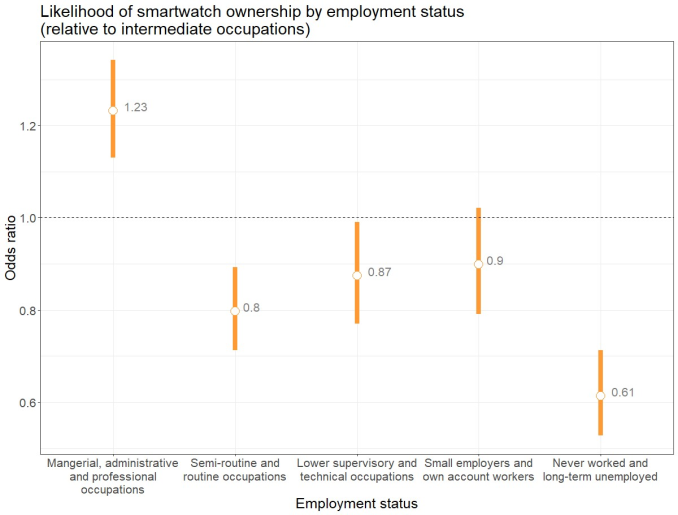
All groups are being compared to intermediate occupations. Those in a managerial, administrative or professional occupation are 23% more likely to own a smartwatch in comparison to intermediate occupations.
Key Findings - Trends in Smartwatch Ownership
The likelihood of smartwatch ownership is disproportionately high among specific demographic groups:
-
Smartwatch ownership is disproportionately high among white respondents, female respondents, and younger respondents.
-
Smartwatch ownership is disproportionately high among respondents with managerial and administrative professions, relative to all other professions.
Results give a clearer picture of who is being measured when using smartwatch data in the main analyses.
-
Implies that while smartwatch data is highly useful, improper usage could lead to potential selection biases that may lead to under/overestimation of key groups.
-
Provides useful context that informs us about the complex and context-dependent role that technology plays in public participation in events or activities.
Likelihood of visiting a museum based on sex and ethnicity
Black ethnic group respondents as a whole are less likely to visit museums/galleries
Figure 4: Likelihood of visiting a museum based on sex and ethnicity
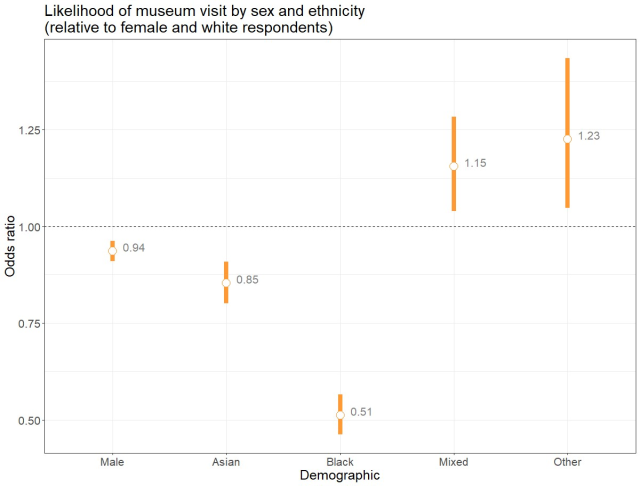
Male respondents are being compared to female respondents. All other ethnic groups combined are being compared to White respondents. Black ethnic group respondents as a whole are 49% less likely to visit a museum or gallery in comparison to white respondents.
Likelihood of visiting a museum based on region
Londoners are much more likely to visit museums/galleries
Figure 5: Likelihood of visiting a museum based on region

London is being drawn as Greater London, as it is on ONS’ list of the 9 regions of England (GOR). All groups are being compared to South-East England. Londoners are 75% more likely to visit museums or galleries in comparison to the South-East (and significantly more likely than all other regions).
Likelihood of visiting a museum based on employment status
Managerial professions are more likely to visit museums/galleries
Figure 6: Likelihood of visiting a museum based on employment status
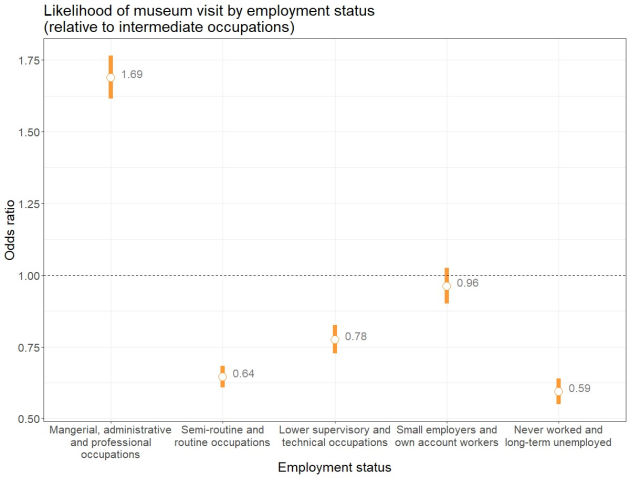
All groups are being compared to intermediate occupations. Managerial, administrative and professional occupations are 69% more likely to visit museums and galleries than intermediate occupations (as well as being significantly more likely than all other occupations).
Key Findings - Trends in Museum Visits
Results reveal substantial differences in museum visitation among various demographic groups.
-
Respondents in London and respondents with managerial or administrative occupations are disproportionately likely to have reported visiting a museum recently.
-
Black ethnic group respondents as a whole are 49% less likely to report visiting a museum relative to white respondents.
Results imply that museum-visitors are disproportionately white, in specialised occupations, and London-based.
Number of types of arts activities based on sex and ethnicity
Black ethnic group respondents as a whole were less likely to participate in arts activities
Figure 7: Number of types of arts activities based on sex and ethnicity
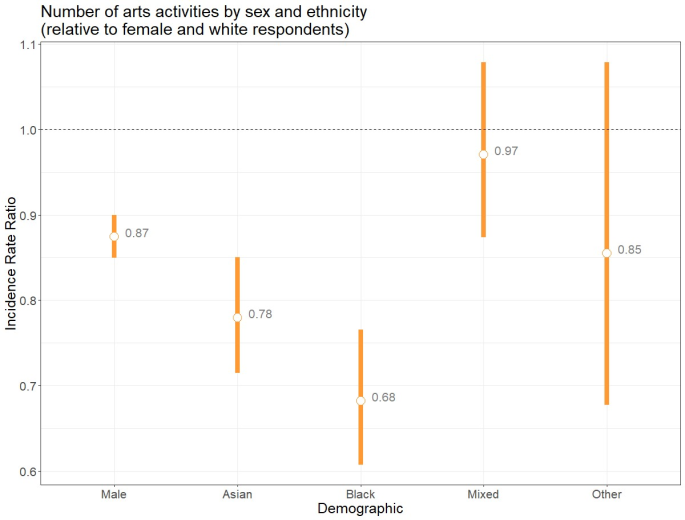
Male respondents are being compared to female respondents. All other ethnic groups combined are being compared to White respondents. Men participate in 13% fewer of arts activities relative to women. Black ethnic group respondents as a whole participate in 32% fewer types of arts activities than white respondents.
Number of types of arts activities based on region
Londoners are more likely to participate in arts activities
Figure 8: Number of types of arts activities based on region
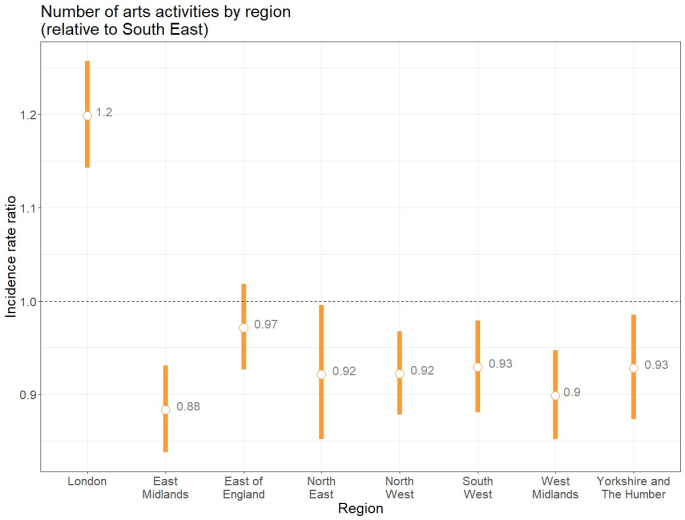
All groups are being compared to South-East England. Respondents from London participated in 20% more types of arts activities in comparison to those from the South-East (as well as being more likely than respondents from all other regions).
Number of types of arts activities based on employment status
Managerial professions are more likely to participate in arts activities
Figure 9: Number of types of arts activities based on employment status
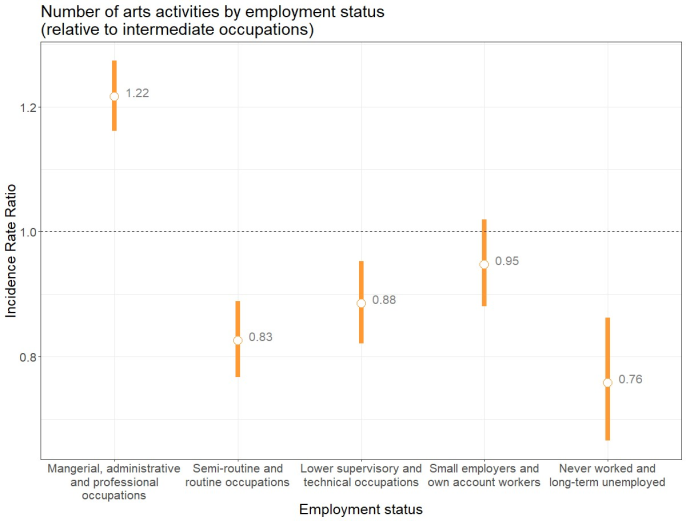
All groups are being compared to intermediate occupations. Managerial, administrative and professional occupations participated in 22% more types of arts activities in comparison to intermediate occupations.
Key Findings - Trends in Number of Art Activities
Results reveal similar demographic trends to those discussed previously.
-
Female and white respondents are likely to participate in a wider variety of arts activities.
-
Respondents in London and respondents with managerial or administrative occupations also participate in a wider variety of arts activities relative to their respective baselines.
Results imply that arts patrons are disproportionately white, in specialised occupations, and London-based.
Number of types of historical activities based on sex and ethnicity
Black ethnic group respondents as a whole are less likely to visit historic sites
Figure 10: Number of types of historical activities based on sex and ethnicity
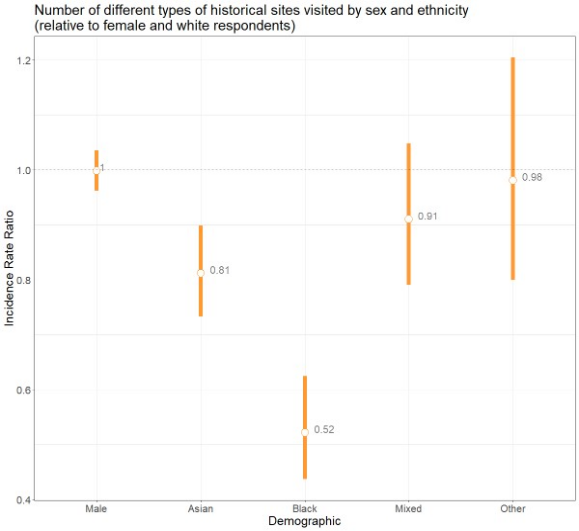
Male respondents are being compared to female respondents. All other ethnic groups combined are being compared to White respondents. Men and women are likely to visit an equal number of historic places. Black ethnic group respondents as a whole are likely to visit 48% fewer historic places than white respondents.
Number of types of historical activities based on age group
Older respondents are more likely to visit historic sites
Figure 11: Number of types of historical activities based on age group
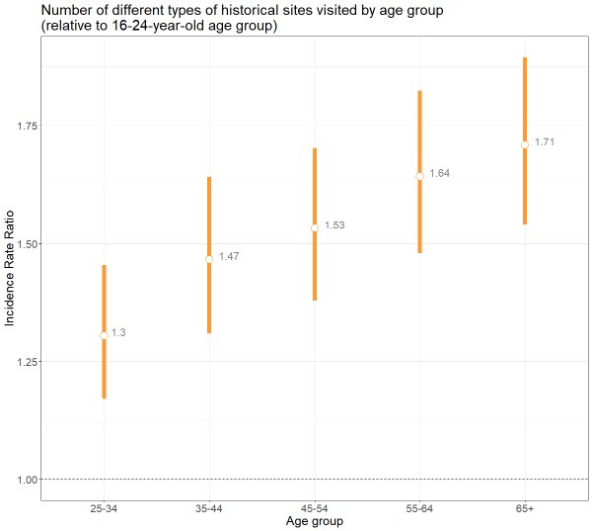
All age groups are being compared to 16-24 age group. Respondents aged 16-24 visit substantially fewer historic places relative to all other age groups. Those aged 65+ were likely to visit 71% more historic places when compared to respondents aged 16-24.
Key Findings - Trends in Number of Visits to Historic Sites
Results reveal slightly different demographic trends to those discussed previously.
-
Those aged between 16-24 and black ethnic group respondents as a whole are likely to visit fewer types of historic places.
-
Male and female respondents are likely to visit an equally diverse array of visiting historic places.
Results imply that people who have an interest in visiting historical sites are disproportionately older than 25 and white.
Likelihood of attending a live sporting event based on age
Older respondents are less likely to attend live sport
Figure 12: Likelihood of attending a live sporting event based on age
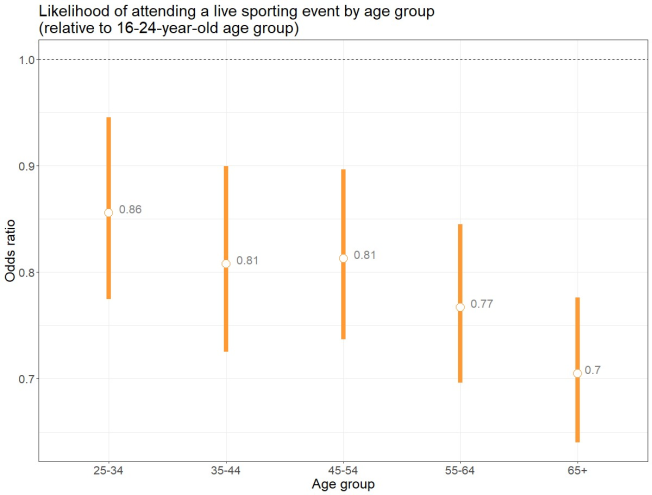
All age groups are being compared to 16-24 age group. The 25-34 age group are 14% less likely to attend a live sporting event than those aged 16-24. Those aged 65+ and over are 30% less likely to attend a live sporting even than 16–24-year-olds. The data showed no significant results when analysed by gender, ethnicity, region and employment status.
Bradford 2025 UK City of Culture
The Participation Survey covers Bradford 2025 UK City of Culture
The Participation Survey collects data on whether people are aware of Bradford 2025 UK City of Culture and if so, how they intend to participate, for example; attended locally, following on social media, took part in a voluntary capacity, or took part in a professional capacity.
We can explore deeper trends in future work using context modelling.
-
Relatively small sample size requires a more thorough modelling approach.
-
Patterns likely driven by granular data, such as the distance between the respondents’ home and the event.
4. Applications
How can the Participation Survey Data be used?
Survey data and main analyses data are not directly comparable. They cannot be used to check statistical robustness or as a validation check for one another. However, they can be used in tandem to create a fuller narrative from the data available.
Participation Survey data offers: insights on key demographic patterns and relevant heterogenous trends, useful for identifying under-engaged demographic groups that can be later targeted, help to identify potential selection biases in certain datasets.
Potential for Future Analysis
Verian is also able to provide additional in-depth analysis. Advanced econometrics models and machine learning to provide enhanced precision of demographic analyses. Extensions beyond demographic measures, including psychological measurements and context modelling with outside infrastructure/events data.
5. Appendix
Genderi – Gender Identity variable
This variable was included in the analysis completed on the 23/24 data.
This genderi variable was asked in Participation 23/24 survey as follows:
Is the gender you identify with the same as your sex registered at birth?
Yes
No, (type in gender identity)
Prefer not to say
It is likely that this variable will be changed or removed in future iterations of the Participation Survey. However, the decision was taken to include this variable ‘as is’ in the analysis of the 23/24 Participation Survey data for consistency with survey as well as to ensure the analysis is representative of all respondents.
It should also be noted when viewing the appendix tables that survey data that has a base =< 30 or 3 or less respondents has been supressed