Campylobacter data 2016 to 2025
Updated 8 July 2026

© Crown copyright 2026
This publication is licensed under the terms of the Open Government Licence v3.0 except where otherwise stated. To view this licence, visit nationalarchives.gov.uk/doc/open-government-licence/version/3 or write to the Information Policy Team, The National Archives, Kew, London TW9 4DU, or email: psi@nationalarchives.gov.uk.
Where we have identified any third party copyright information you will need to obtain permission from the copyright holders concerned.
This publication is available at https://www.gov.uk/government/publications/campylobacter-infection-annual-data/campylobacter-data-2016-to-2025--2
Main points for 2025
The main messages of the 2025 report are:
- the number of reported Campylobacter cases in England was comparable to 2024 (down 1.4%) with 70,392 cases reported in 2024 and 69,394 cases in 2025, and rates per 100,000 population 120.1 and 118.4, respectively
- regional reporting rates for 2025 were comparable to 2024 for 5 of 9 regions, however, rates increased in the North West, and East Midlands regions. The highest reporting rate was in the North East at 143.5 reports per 100,000 population
- the overall age and sex distribution was consistent with 2024, 55% were male and the highest number of laboratory reports remained in the cases aged 50 to 79 years, accounting for 43.0% of the total number of reports
- in 2025 Campylobacter reporting peaked in July a month later than the previous 5-year median of June
- for 23.9% of laboratory reports species were identified by diagnostic laboratories, the majority of which were Campylobacter jejuni (88.3% of all speciated samples)
- 756 Campylobacter isolates underwent whole genome sequencing (WGS) analysis at the National Campylobacter Reference Laboratory; of those typed 82.8% were Campylobacter jejuni and the most prevalent clonal complexes identified were ST-21, ST-464 and ST-353
- of the 7 foodborne outbreaks reported to national surveillance, 3 were likely associated with consumption of chicken or chicken products
Background
Campylobacteriosis is the most common type of bacterial food poisoning. The most common symptoms of campylobacteriosis are diarrhoea (often bloody stools), fever and stomach cramps but can also include nausea and vomiting. Most people recover after about 1 week, however some people may suffer severe or prolonged symptoms and need antibiotic treatment (1). Certain groups of people, including the very young (children less than 5 years of age), the elderly (adults aged 65 years and older) or the immunocompromised (people receiving chemotherapy for cancer, transplant patients, and so on), are at higher risk of developing more severe illness which can be life-threatening (bacteraemia, sepsis) or cause long-term complications such as reactive arthritis (2), irritable bowel syndrome (3) and Guillain-Barre syndrome (4).
Information about treating food poisoning caused by Campylobacter infection is available on the NHS website.
Campylobacter lives in the gastrointestinal tract of many animals including livestock such as poultry, sheep and cows, as well as pets such as dogs and cats. These animals can carry Campylobacter without any symptoms and can infect humans. However, the main route of transmission of Campylobacter to humans is foodborne, by the consumption of contaminated food, in addition to drinking untreated water, close contact with an infected person, and also through environmental exposure. Raw or undercooked meat, especially poultry, unpasteurised milk and untreated water (5, 6, 7) are recognised sources of campylobacteriosis. Therefore, it is important when handling or preparing these foods, such as raw meat or poultry, to take care avoiding cross-contamination and ensuring food is cooked and stored at appropriate temperatures. More information on food safety in relation to Campylobacter is available on the Food Standards Agency website.
Previous studies have also estimated around 18.1% of Campylobacter infections are associated with foreign travel and not acquired in the UK (8). More information on ‘traveller’s diarrhoea’, and how to avoid and treat it while abroad is available on the National Travel Health Network and Centre website.
Campylobacter species are the most frequently reported bacterial pathogens in England with over 50,000 laboratory confirmed reports per year. However, many infections are not laboratory confirmed and go unreported; it has been estimated that the true burden of campylobacteriosis may be 9.3 times higher in the wider community (9). This equates to almost half a million cases a year in England. In humans, the majority of Campylobacter infections are caused by the 2 species, C. jejuni and C. coli, with a higher number reported in summer than in winter (10).
This report summarises the trends in reporting of Campylobacter cases in England in 2025 with a comparison to reporting in previous years.
COVID-19 pandemic
During 2020 it is likely that the emergence of the novel severe acute respiratory syndrome coronavirus 2 (SARS-CoV-2), the causative agent of coronavirus disease (COVID-19), with subsequent non-pharmaceutical interventions (NPIs) implemented to control COVID-19 transmission affected notifications of Campylobacter infections to national surveillance in several ways. These include, but are not limited to, changes which may have impacted ascertainment (for examples changes in healthcare seeking behaviour, access to health care, availability, or capacity of testing and so on) as well as changes which likely impacted incidence (for example limited foreign travel, closure of hospitality venues and attractions or behavioural changes around food consumption and so on) which will have also varied over time. Therefore, trends presented in this report should be interpreted with caution, and 2020 data (the year a notable impact on Campylobacter reporting to national surveillance was observed (11) are excluded when 5-year medians are calculated.
The magnitude and duration of the impacts on reporting differed by gastrointestinal pathogen due to differences in severity, transmission routes and risk factors (12, 13). Therefore, the number of years impacted and consequentially excluded from the calculation of 5-year medians also differs by pathogen, for example only 2020 for Campylobacter but 2020 and 2021 for Salmonella.
Methods
All data presented in this report are correct as of 16 February 2026. This report covers all Campylobacter species in England. As a live laboratory reporting system was used for extraction, the data are subject to change and historical totals may differ slightly. The laboratory report date was used for all data analyses in this report and records with an age of 105 years or over are recoded to unknown as likely an improbable age.
Population data was sourced from the Office for National Statistics (ONS) for England. Mid-year population estimates for the relevant year were used to provide denominators for the calculation of rates. 2024 mid-year estimates were used as a proxy for 2025 populations as 2025 mid-year estimates were not available at the time of analysis. All rates are calculated as per 100,000 population.
Geographical classification was based on ONS regional boundaries using patient residence postcode where available. Where patient residence or GP postcodes were not available or invalid, the referring laboratory postcode was used as a proxy. Previous reports used Nomenclature of Territorial Units for regional boundaries, level (NUTS1) codes, therefore historical geographical totals in previous publications may differ slightly. Updated regional totals were calculated for 2024 for accurate comparison with 2025 data. This change was made to ensure the same regional assignment methodology is used across all Campylobacter surveillance outputs.
The deprivation level of an area (Index of Multiple Deprivation decile) was mapped to each case using patient residence postcode, ONS LSOA 2021 boundaries and 2025 IMD version. The deprivation level of an area was recorded as unknown for cases where patient residence postcode could not be mapped to a deprivation score.
When calculating the median of the previous 5 years, 2020 was excluded due to the impacts of the COVID-19 pandemic, therefore the 5-year median was calculated from the same period in 2019 and 2021 to 2024.
For comparison to previous years, if the differences were estimated to be plus or minus 5%, the change has been referred to as ‘comparable to’ throughout this report.
Isolates of Campylobacter species received by the National Campylobacter Reference Laboratory on Amies charcoal swabs were cultured at 37 to 42°C for 24 to 48 hours under microaerophilic conditions. Genomic DNA was recovered using a QIAGEN QIAsymphony SP and DSP Viral/Pathogen Midi Kit, fragmented and tagged for multiplexing with Nextera XT DNA Sample Preparation Kits, followed by rapid run, paired-end sequencing on an Illumina NextSeq 1000 platform. The 7-loci multi-locus sequencing type (MLST) was determined using MOST (14), within the UKHSA WGS pipeline. The MLST typing scheme for C. jejuni and C. coli assigns an allelic profile to each isolate based on 7 chromosomal housekeeping loci (15), known as the sequence type (ST). Closely genetically related STs are then grouped into a clonal complex (CC). Some STs will not fall within a CC and novel Campylobacter strains may not yet have a defined ST in the typing database, these are referred to as ‘unassigned’ in this report.
Campylobacter laboratory data for 2016 to 2025
Annual data 2016 to 2025
Figure 1 and Table 1 show the trend in the number of Campylobacter laboratory reports and the rate of reporting in England from 2016 to 2025. Since 2022, the rate of Campylobacter reporting has increased and has remained above pre COVID-19 pandemic levels in 2025. The number of Campylobacter laboratory reports in 2025 was comparable to the number in 2024, at 69,394 and 70,392 respectively (down 1.4%). The reporting rate has also remained stable at 118.4 per 100,000 population in 2025 compared to 120.1 per 100,000 population in 2024 (down 1.4%).
Figure 1. Annual laboratory reports of Campylobacter in England from 2016 to 2025
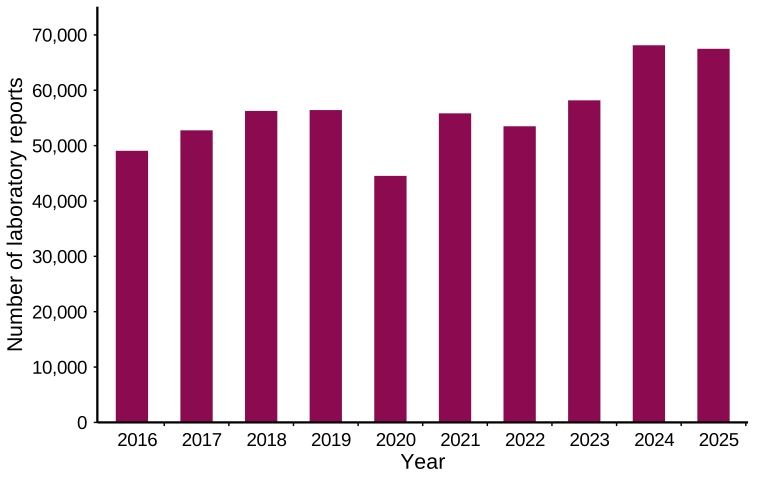
Table 1. Annual laboratory reports of Campylobacter in England from 2016 to 2025
| Year | Number of laboratory reports | Laboratory reports per 100,000 population |
|---|---|---|
| 2016 | 49,079 | 88.8 |
| 2017 | 52,818 | 95.0 |
| 2018 | 56,287 | 100.6 |
| 2019 | 56,441 | 100.4 |
| 2020 | 44,728 | 79.4 |
| 2021 | 56,232 | 99.4 |
| 2022 | 54,880 | 96.0 |
| 2023 | 60,055 | 103.7 |
| 2024 | 70,392 | 120.1 |
| 2025 | 69,394 | 118.4 |
Regional data in 2025
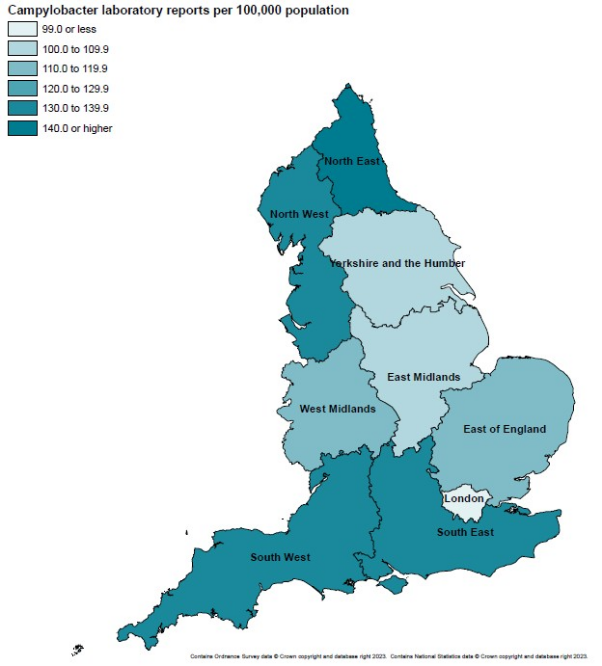
Table 2 displays the number of Campylobacter laboratory reports per region in 2025 as well as the rate per 100,000 population and Figure 2 shows the regional rates on a map. Compared to 2024, the rate of Campylobacter laboratory reports per 100,000 population in 2025 was comparable in 5 of 9 regions: West Midlands (up 0.1%), East of England (down 0.5%), London (down 0.6%), North East (down 2.6%) and South West (down 3.7%).
In 2025, the North East region had the highest rate of reporting at 143.5 laboratory reports per 100,000 population and the lowest rate was in London, with 99.8 laboratory reports per 100,000 population. The largest rate increases compared to 2024 were in the North West and East Midlands regions, where reporting rates rose from 118.6 to 130.7 per 100,000 population (up 10.2%), and 96.0 to 104.7 per 100,000 population (up 9.1%) respectively. The largest rate decrease compared to 2024 was in Yorkshire and the Humber, from 118.1 to 100.2 per 100,000 population (down 15.2%).
Table 2. Regional distribution of laboratory reports of Campylobacter in England 2025 (n = 69,394)
| Region | Laboratory reports | Laboratory reports per 100,000 population |
|---|---|---|
| East Midlands | 5,303 | 104.7 |
| East of England | 7,270 | 110.5 |
| London | 9,075 | 99.8 |
| North East | 3,961 | 143.5 |
| North West | 10,110 | 130.7 |
| South East | 12,668 | 131.4 |
| South West | 7,925 | 134.6 |
| West Midlands | 7,400 | 119.6 |
| Yorkshire and the Humber | 5,682 | 100.2 |
Figure 2. Map of regional rates of Campylobacter laboratory reports per 100,000 population in England, 2025
Age and sex distribution in 2025
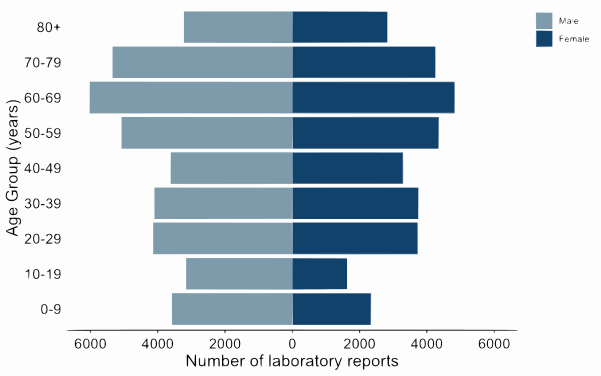
Figure 3 shows the age and sex distribution of Campylobacter laboratory reports in England during 2025; 94 laboratory reports were excluded where case age or sex was unknown. Overall, the 2025 distribution was consistent with the 2024 distribution; 55% of reported cases were male and the most affected cases were aged 50 to 79 years, accounting for 43.0% of the total number of laboratory reports.
Figure 3. Age and sex distribution of laboratory reports of Campylobacter in England, 2025 (n=69,300)
Index of Multiple Deprivation (IMD) in 2025
Table 3 displays the number of Campylobacter cases resident in postcodes of each Index of Multiple Deprivation (IMD) decile. Valid postcodes were unavailable for 484 cases so could not be matched to IMD decile. There were no notable changes in IMD of Campylobacter cases compared to 2024, the median IMD decile of Campylobacter cases was 5 (inter quartile range: 3 to 8).
Table 3. Number of Campylobacter cases per Index of Multiple Deprivation (IMD) decile in England during 2025 (n=68,910)
| Index of Multiple Deprivation (IMD) deciles | Total number of cases (%) |
|---|---|
| 1 (Most deprived) | 5,503 (8.0) |
| 2 | 5,972 (8.7) |
| 3 | 6,470 (9.4) |
| 4 | 6,971 (10.1) |
| 5 | 7,069 (10.3) |
| 6 | 7,350 (10.7) |
| 7 | 7,577 (11.0) |
| 8 | 7,319 (10.6) |
| 9 | 7,422 (10.8) |
| 10 (Least Deprived) | 7,257 (10.5) |
Seasonal variation in 2025
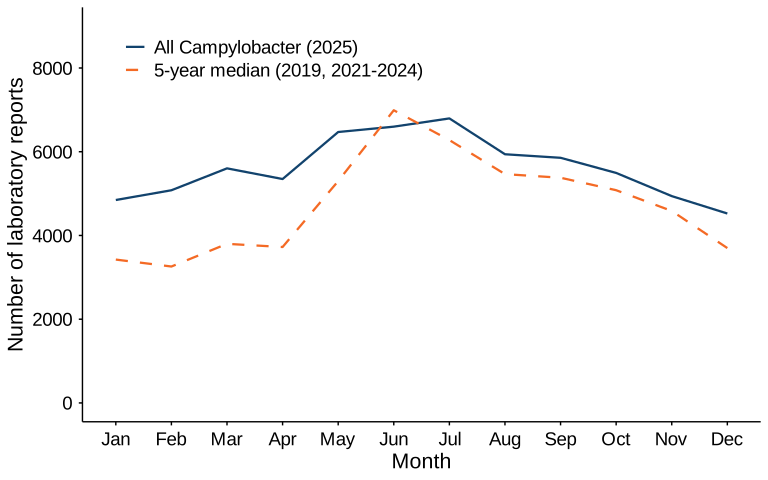
In 2025 there was less variation in the number of Campylobacter laboratory reports per month compared to previous years, due an increase in reporting at the beginning of the year (Figure 4). Monthly counts of Campylobacter laboratory reports between January and April 2025 were between 42.8% and 55.4% higher than median of the previous 5 years, 2019 and 2021 to 2024 (excluding 2020). Reporting also peaked in July rather than June for the first time since 2019.
Figure 4. Seasonality of laboratory reports of all Campylobacter species in England, 2025
Campylobacter typing in 2025
Diagnostic laboratories
In 2025 in England, 23.9% of Campylobacter samples (n=16,576) were speciated by diagnostic laboratories. Of the speciated isolates, the majority were C. jejuni, 88.3% (n=14,643) followed by C. coli, 10.2% (n=1,699) (Table 4).
Table 4. Identification of Campylobacter isolates in England, 2025 (n=16,576)
| Campylobacter species | Total number of laboratory reports (%) |
|---|---|
| C. jejuni | 14,643 (88.3) |
| C. coli | 1,699 (10.2) |
| Campylobacter other named | 106 (0.6) |
| C. ureolyticus | 45 (0.3) |
| C. upsaliensis | 42 (0.3) |
| C. fetus | 17 (0.1) |
| C. lari | 9 (0.1) |
| C. rectus | 6 (0.1) |
| C. curvus | 3 (0.1) |
| C. concisus | 2 (0.1) |
| C. gracilis | 2 (0.1) |
| C. hyointestinalis | 1 (0.1) |
| C. showae | 1 (0.1) |
National Campylobacter Reference Laboratory
In 2025, 756 Campylobacter isolates were sequenced and passed quality assurance checks for analysis. Table 5 summarises the isolates by species; 82.8% were C. jejuni (n=626), 11.8% were C. coli (n=89) and less than 1.0% of isolates were identified as C. ureolyticus, C. lari, C. concisus or C. fetus, and 4.0% (n=30) of isolates contained multiple Campylobacter species.
Table 5. Summary of species identified by whole genome sequencing analysis
| Result | Number of isolates | Percentage of isolates |
|---|---|---|
| C. jejuni | 626 | 82.8% |
| C. coli | 89 | 11.8% |
| C. ureolyticus | 6 | 0.8% |
| C. lari | 3 | 0.4% |
| C. concisus | 1 | 0.1% |
| C. fetus | 1 | 0.1% |
| Mixed Campylobacter species | 30 | 4.0% |
| Total | 756 | - |
Across the 715 C. jejuni and C. coli isolates typed, 29 CCs and 128 STs were identified (Table 6). In total there were 47 isolates in 30 STs which did not have an assigned CC, of which 16 isolates were also unassigned to a ST.
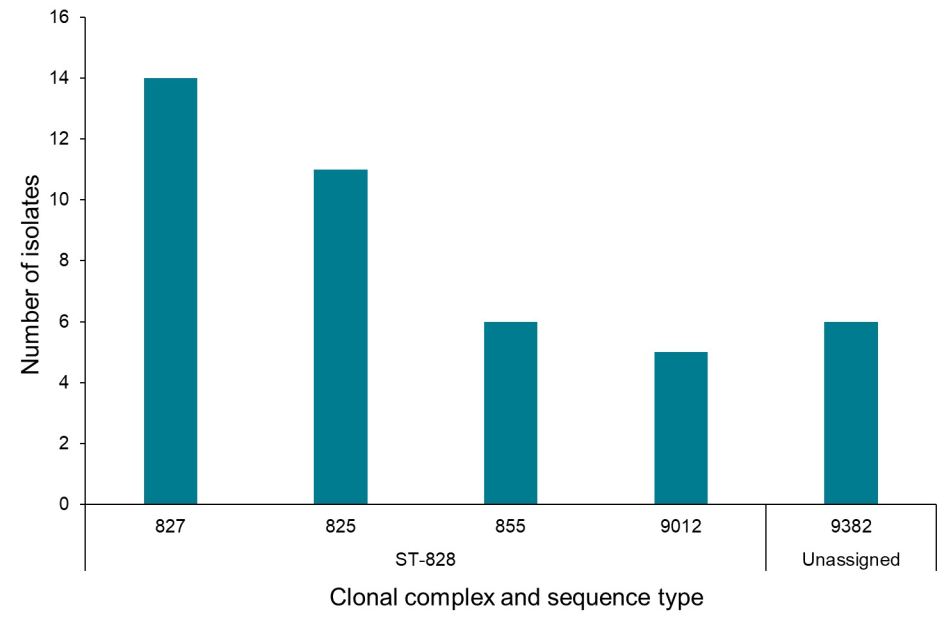
In 2025 the most prevalent C. jejuni clonal complexes were ST-21 (25.6%), ST-464 (16.8%) and ST-353 (10.2%). Figure 5 shows the frequency C. jejuni isolates by ST for those with 15 or more isolates. Figure 6 shows the same but for C. coli by ST with 5 or more isolates and the most prevalent C. coli clonal complex in 2025 was ST-828 (9.4%).
Table 6. Summary of C. jejuni and C. coli isolates by clonal complex and sequence type, for sequence types with 5 or more isolates
| Species | Clonal complex | Sequence type | Number of isolates | Percentage of isolates |
|---|---|---|---|---|
| C. jejuni | ST-206 | 122 | 9 | 1.3% |
| C. jejuni | ST-206 | 206 | 5 | 0.7% |
| C. jejuni | ST-206 | 3335 | 5 | 0.7% |
| C. jejuni | ST-21 | 6175 | 63 | 8.8% |
| C. jejuni | ST-21 | 21 | 46 | 6.4% |
| C. jejuni | ST-21 | 50 | 31 | 4.3% |
| C. jejuni | ST-21 | 19 | 17 | 2.4% |
| C. jejuni | ST-21 | 53 | 16 | 2.2% |
| C. jejuni | ST-22 | 22 | 7 | 1.0% |
| C. jejuni | ST-257 | 257 | 8 | 1.1% |
| C. jejuni | ST-353 | 10846 | 52 | 7.3% |
| C. jejuni | ST-353 | 6461 | 5 | 0.7% |
| C. jejuni | ST-42 | 42 | 6 | 0.8% |
| C. jejuni | ST-441 | 441 | 7 | 1.0% |
| C. jejuni | ST-443 | 51 | 8 | 1.1% |
| C. jejuni | ST-45 | 45 | 8 | 1.1% |
| C. jejuni | ST-464 | 5136 | 78 | 10.9% |
| C. jejuni | ST-464 | 464 | 42 | 5.9% |
| C. jejuni | ST-48 | 48 | 53 | 7.4% |
| C. jejuni | ST-52 | 2066 | 5 | 0.7% |
| C. jejuni | ST-61 | 61 | 7 | 1.0% |
| C. jejuni | ST-9897 | 9897 | 13 | 1.8% |
| C. coli | ST-828 | 827 | 14 | 2.0% |
| C. coli | ST-828 | 825 | 11 | 1.5% |
| C. coli | ST-828 | 855 | 6 | 0.8% |
| C. coli | ST-828 | 9012 | 5 | 0.7% |
| C. coli | Unassigned | 9382 | 6 | 0.8% |
| ST with less than 5 isolates [note 1] | 182 | 25.5% | ||
| Total | 715 | 100.0% |
Note 1: 125 isolates assigned CC and ST, 47 isolates with ST but unassigned CC and 16 isolates with CC and ST unassigned.
Figure 5. C. jejuni isolates summarised by clonal complex and sequence type, for sequence types with 15 or more isolates
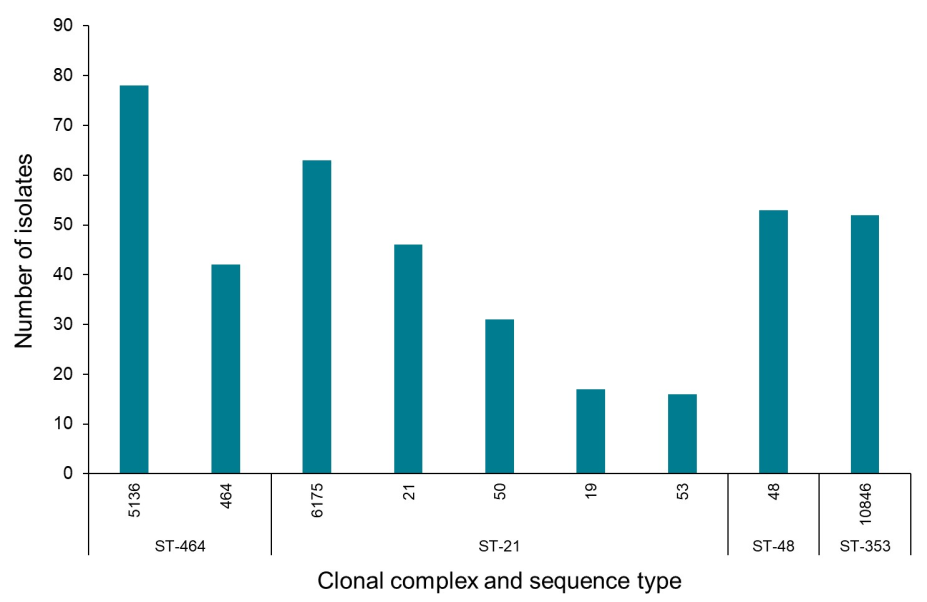
Figure 6. C. coli isolates summarised by clonal complex and sequence type, for sequence types with 5 or more isolates
Foodborne outbreak data in 2025
In 2025, there were 7 Campylobacter outbreaks reported to UKHSA, 4 were caused by C. jejuni and the remaining 3 were unspeciated (Table 7). Overall, the total number of people affected was 30 with 20 laboratory confirmed cases (66.7%). Eight cases were admitted to hospital (26.7%) of which 5 cases were a part of a nosocomial outbreak. There were no reported deaths.
Two of the 7 outbreaks were associated with the consumption of chicken and one with the consumption of lamb liver; however, it was not possible to identify the source of the other 4 outbreaks. Two outbreaks were reported in a hospital and health and social care settings and another 3 outbreaks were linked to eating outside of the home at pubs, restaurants or events.
Table 7. Foodborne outbreaks of Campylobacter reported in England in 2025 [note 2]
| Agent | Total affected | Laboratory confirmed | Hospital admissions [note 3] | Deaths [note 3] | Setting | Food description |
|---|---|---|---|---|---|---|
| Campylobacter species | 5 | 2 | 2 | Unknown | Pub | Lamb liver |
| Campylobacter species | 4 | 2 | 0 | Unknown | Restaurant | Chicken |
| C. jejuni | 3 | 3 | 0 | 0 | Self-catered event | Unknown |
| C. jejuni | 5 | 5 | 5 | 0 | Hospital | Unknown |
| C. jejuni | 4 | 4 | 1 | Unknown | Other | Unknown |
| Campylobacter species | 6 | 1 | Unknown | Unknown | Care home | Unknown |
| C. jejuni | 3 | 3 | Unknown | Unknown | National | Chicken |
Note 2: number of cases affected, and number laboratory confirmed is for cases resident in England.
Note 3: clinical outcome is not known for all cases and the data reported represents cases who have hospital admissions or deaths reported to national surveillance.
Conclusions
Campylobacteriosis remains the most common cause of bacterial gastroenteritis in England. Following a notable increase in reporting in 2024 during which the highest number of reports in a decade was recorded at 70,392, the number of reports in 2025 was comparable at 69,349. The national rate of reporting in 2025 therefore remained stable at 118.4 reports per 100,000 population. After accounting for under-reporting it is likely there were close to 650,000 cases in the wider community, representing a substantial burden on the population. When considering the trends in Campylobacter cases over time, data from 2020 should be interpreted with caution given the multi-factorial impacts of the COVID-19 pandemic on reporting (11) and for this reason 2020 is not included in the calculation of the 5-year median.
The seasonal trend of Campylobacter reporting was different in 2025, with less variation observed between the months compared to previous years. This is attributable to an elevated reporting rate during the first 4 months of 2025 at a time when reporting is usually at its lowest. The peak of reporting also shifted to 1 month later, occurring in July rather than June, likely due to climate factors.
Similar to 2024, while the highest number of laboratory confirmed cases in 2025 were in the South East, after accounting for the underlying population, the highest rate of reporting was in the North East. Overall, the age and sex distribution was consistent with previous years, with more male cases (55.0%) reported than female cases and those aged 50 to 79 years (50 to 59, 60 to 69 and 70 to 79 year age groups) accounted for over 40% of cases.
As noted in the 2024 Campylobacter annual report it is likely that multiple factors have likely contributed to higher numbers of Campylobacter laboratory reports in recent years including, but not limited to:
- increased ascertainment due to the introduction of more sensitive molecular diagnostic testing in some laboratories
- climate factors
- changes in international travel or food supply chains
- behavioural changes in food handling and preparation
Further analysis and research are underway to understand the relative contributions of each factor to the observed rise.
During 2025 a subset of samples tested were speciated (23.9%) at diagnostic laboratories and only 1.1% underwent WGS analysis at the National Campylobacter Reference Laboratory, with the majority classified as C. jejuni. The most prevalent clonal complexes identified were ST-21 CC, ST-464 CC and ST-353 CC, collectively accounting for 62.8% of isolates typed using WGS. Despite representing only a small proportion of the overall burden, the WGS data continues to provide a unique insight into the molecular epidemiology of Campylobacter in England.
All 7 Campylobacter outbreaks reported in 2025 were small with 6 or less cases, however the percentage of laboratory confirmed cases and percentage admitted to hospital were notably higher in 2025. Prior to the COVID-19 pandemic, Campylobacter outbreaks were not frequently reported in health and social care settings (nursing home, care home or hospital) but since 2023 outbreaks in these settings have been reported each year. Further work is required to investigate these differences and determine whether they represent changes in ascertainment or a true trend. While the source of the outbreak was unknown for half of the Campylobacter outbreaks reported in 2025, the other half were associated with consumption of chicken and liver. This finding is consistent with outbreak data from 2024, again highlighting these foods as higher risk for Campylobacter infection and the need to follow food safety advice when handling, cooking or storing them.
Data sources
This report was produced using data derived from 3 data sources; the Second Generation Surveillance System (SGSS), GastroData Warehouse (GDW) and the electronic Foodborne and non-foodborne Outbreak Surveillance System (eFOSS) operated by the UK Health Security Agency (UKHSA, formerly Public Health England (PHE)). All 3 are live reporting systems, therefore numbers are subject to change.
The population data used for England were sourced from the Office for National Statistics, mid-year 2016 to 2024 estimates.
The 2025 IMD version data was sourced from the Ministry of Housing, Communities and Local Government, English Indices of Deprivation 2025.
Data caveats
This report was produced using laboratory data for England only, therefore the number of Campylobacter laboratory reports published in previous reports which include data from other UK countries may differ to those included in this report.
Acknowledgements
We are grateful to:
- the NHS and private sector diagnostic laboratories, microbiologists and local authorities, health protection and environmental health specialists who have contributed data and reports to national surveillance systems, including those who have investigated and reported outbreaks to the electronic foodborne and non-foodborne gastrointestinal outbreak surveillance system (eFOSS)
- the epidemiologists and information officers who have worked on the national surveillance of intestinal infectious diseases
- colleagues in the Gastrointestinal Bacteria Reference Unit (GBRU) for providing the Reference Laboratory Services and laboratory surveillance functions and expertise
- UKHSA (formerly PHE) Information Management Department for maintenance and quality assurance of UKHSA national surveillance databases used for gastrointestinal infections (GI) pathogen surveillance at the national level
- UKHSA (formerly PHE) Local Public Health Laboratories and Food Water and Environmental Microbiology Services for providing a surveillance function for GI pathogens and testing of food and environmental samples routinely and during outbreak investigations
Prepared by
Gastrointestinal Infections, Food Safety and One Health Division, UKHSA.
For queries relating to this document, please contact EEDD@ukhsa.gov.uk
References
1. Khairullah AR, Yanestria SM, Effendi MH, Moses IB, Jati Kusala MK, Fauzia KA, Ayuti SR, Fauziah I, Martua Silaen OS, Priscilia Riwu KH, Aryaloka S, Eka Puji Dameanti FNA, Raissa R, Hasib A, Furqoni AH. ‘Campylobacteriosis: A rising threat in foodborne illnesses’ Open Vet Journal 2021: volume 14, issue 8, pages 1,733 to 1,750
2. Pope JE, Krizova A, Garg AX, Thiessen-Philbrook H, Ouimet JM. ‘Campylobacter reactive arthritis: a systematic review’ Seminars in Arthritis and Rheumatism 2007: volume 37, issue 1, pages 48 to 55
3. Peters S, Pascoe B, Wu Z, Bayliss SC, Zeng X, Edwinson A, Veerabadhran-Gurunathan S, Jawahir S, Calland JK, Mourkas E, Patel R, Wiens T, Decuir M, Boxrud D, Smith K, Parker CT, Farrugia G, Zhang Q, Sheppard SK, Grover M. ‘Campylobacter jejuni genotypes are associated with post-infection irritable bowel syndrome in humans’ Communications Biology 2021: volume 4, issue 1, page 1,015
4. Nachamkin I, Allos BM, Ho T. ‘Campylobacter species and Guillain-Barré syndrome’ Clinical Microbiology Reviews 1998: volume 11, issue 3, pages 555 to 567
5. Cody AJ, Maiden MC, Strachan NJ, McCarthy ND. ‘A systematic review of source attribution of human campylobacteriosis using multilocus sequence typing’ Eurosurveillance 2019: volume 24, issue 43, 1800696
6. Adams N, Byrne L, Edge J, Hoban A, Jenkins C, Larkin L. ‘Gastrointestinal infections caused by consumption of raw drinking milk in England and Wales, 1992-2017’ Epidemiology and Infection 2019: volume 147, article e281
7. Emberland KE, Wensaas KA, Litleskare S, Iversen A, Hanevik K, Langeland N, Rortveit G. ‘Clinical features of gastroenteritis during a large waterborne Campylobacter outbreak in Askøy, Norway’ Infection 2022: volume 50, issue 2, 343 to 354. Erratum in Infection 2022, volume 50, issue 2, pages 355 to 357
8. University of Warwick, University of Oxford, Public Health England. ‘Enhanced molecular-based surveillance and source attribution of campylobacter infections in the UK’ Online Food Standards Agency research reports, 2021
9. Tam CC, Rodrigues LC, Viviani L, Dodds JP, Evans MR, Hunter PR, Gray JJ, Letley LH, Rait G, Tompkins DS, O’Brien SJ; IID2 Study Executive Committee ‘Longitudinal study of infectious intestinal disease in the UK (IID2 study): incidence in the community and presenting to general practice’ Gut 2012: volume 61, issue 1, pages 69 to 77
10. Costa D, Iraola G. ‘Pathogenomics of Emerging Campylobacter Species’ Clinical Microbiology Reviews 2019: volume 32, issue 4, pages e00072 to e00018
11. Ondrikova N, Clough HE, Douglas A, Iturriza-Gomara M, Larkin L, Vivancos R, Harris JP, Cunliffe NA. ‘Differential impact of the COVID-19 pandemic on laboratory reporting of norovirus and Campylobacter in England: A modelling approach’ PLoS One 2021: volume 16, issue 8, e0256638
12. Love NK, Douglas A, Gharbia S, Hughes H, Morbey R, Oliver I, Smith GE, Elliot AJ. ‘Understanding the impact of the COVID-19 pandemic response on GI infection surveillance trends in England, January 2020-April 2022’ Epidemiology and Infection 2023: volume 151, article e147
13. Love NK, Elliot AJ, Chalmers RM, Douglas A, Gharbia S, McCormick J, Hughes H, Morbey R, Oliver I, Vivancos R, Smith G. ‘Impact of the COVID-19 pandemic on gastrointestinal infection trends in England, February-July 2020’ British Medical Journal Open 2022: volume 12, issue 3, article e050469
14. Tewolde R, Dallman T, Schaefer U, Sheppard CL, Ashton P, Pichon B, Ellington M, Swift C, Green J, Underwood A. ‘MOST: a modified MLST typing tool based on short read sequencing’ Peer J 2016: volume 4, article e2308
15. Dingle KE, Colles FM, Wareing DR, Ure R, Fox AJ, Bolton FE, Bootsma HJ, Willems RJ, Urwin R, Maiden MC. ‘Multilocus sequence typing system for Campylobacter jejuni’ Journal of Clinical Microbiology 2001: volume 39, issue 1, pages 14 to 23