Biometrics and Forensics Ethics Group: annual report 2024 to 2025 (accessible)
Published 13 October 2026

© Crown copyright 2026
This publication is licensed under the terms of the Open Government Licence v3.0 except where otherwise stated. To view this licence, visit nationalarchives.gov.uk/doc/open-government-licence/version/3 or write to the Information Policy Team, The National Archives, Kew, London TW9 4DU, or email: psi@nationalarchives.gov.uk.
Where we have identified any third party copyright information you will need to obtain permission from the copyright holders concerned.
This publication is available at https://www.gov.uk/government/publications/biometrics-and-forensics-ethics-group-annual-report-2024-to-2025/biometrics-and-forensics-ethics-group-annual-report-2024-to-2025-accessible
This is my last annual report as Chair of the Biometrics and Forensics Ethics Group (BFEG).
As ever, I first must thank the members of the BFEG for their continued elevated levels of engagement and for continuing to share their expert knowledge and deliver high quality advice and our brilliant Secretariat for their support and professionalism.
This year I have had the pleasure of welcoming six new members to the BFEG. I have been excited to work alongside them and BFEG has already benefitted from the wealth of experience and insight they have brought to the work of BFEG.
Once again, the reach of BFEG’s work has extended. This year has seen the BFEG provide advice to a broad range of Home Office policy areas, providing independent advice as a critical friend in some 28 different projects for no less than 11 different Home Office stakeholders. Our work has involved areas as diverse as the use of facial recognition in policing, the use of AI (artificial intelligence) in the Home Office to biometric voice recognition technology. This expansion of the working relationships of the BFEG, within our remit, is welcomed. As we look forward to next year, I am sure the Group will continue to build a presence within the Home Office and develop on our strong engagement and expansion of its working relationships.
Whilst this is my last report, it will also be the last “BFEG” annual report. As the group has increasingly been asked, at the request of the Home Office, to consider and advise on projects which involve the use of large and complex data sets, including providing ethical advice on the use of AI and machine learning, it was recognised that the extent of the group’s remit is no longer reflected in the name the ‘Biometrics and Forensics Ethics Group’. I am therefore pleased that a formal name change of the Biometrics and Forensics Ethics Group to the “Science and Technology Ethics Advisory Committee” was announced in Parliament in September 2025.
Professor Mark Watson-Gandy O.B.E
A year in review
This report covers the period from April 2024, at the conclusion of the last annual report, through to August 2025 – which marks the end of the Biometric and Forensics Ethics Groups (BFEG’s) current Chairmanship, and the start of a new beginning for the group.
Over the course of this period, BFEG was called upon to provide ethical guidance on a total of 28 distinct projects, reflecting the growing recognition of the committee’s expertise and value. These requests came from 11 different Home Office stakeholders (figure 1) supporting initiatives across each of the different Home Office missions, three of these requests supported the wider interests of the Home Office – with advice given directly to the National Police Chiefs’ Council (NPCC) as part of BFEG’s function to provide ethical advice on scientific services to the Police. This breadth of engagement underscores BFEG’s role in embedding ethical design into some of the department’s complex and challenging work programmes.
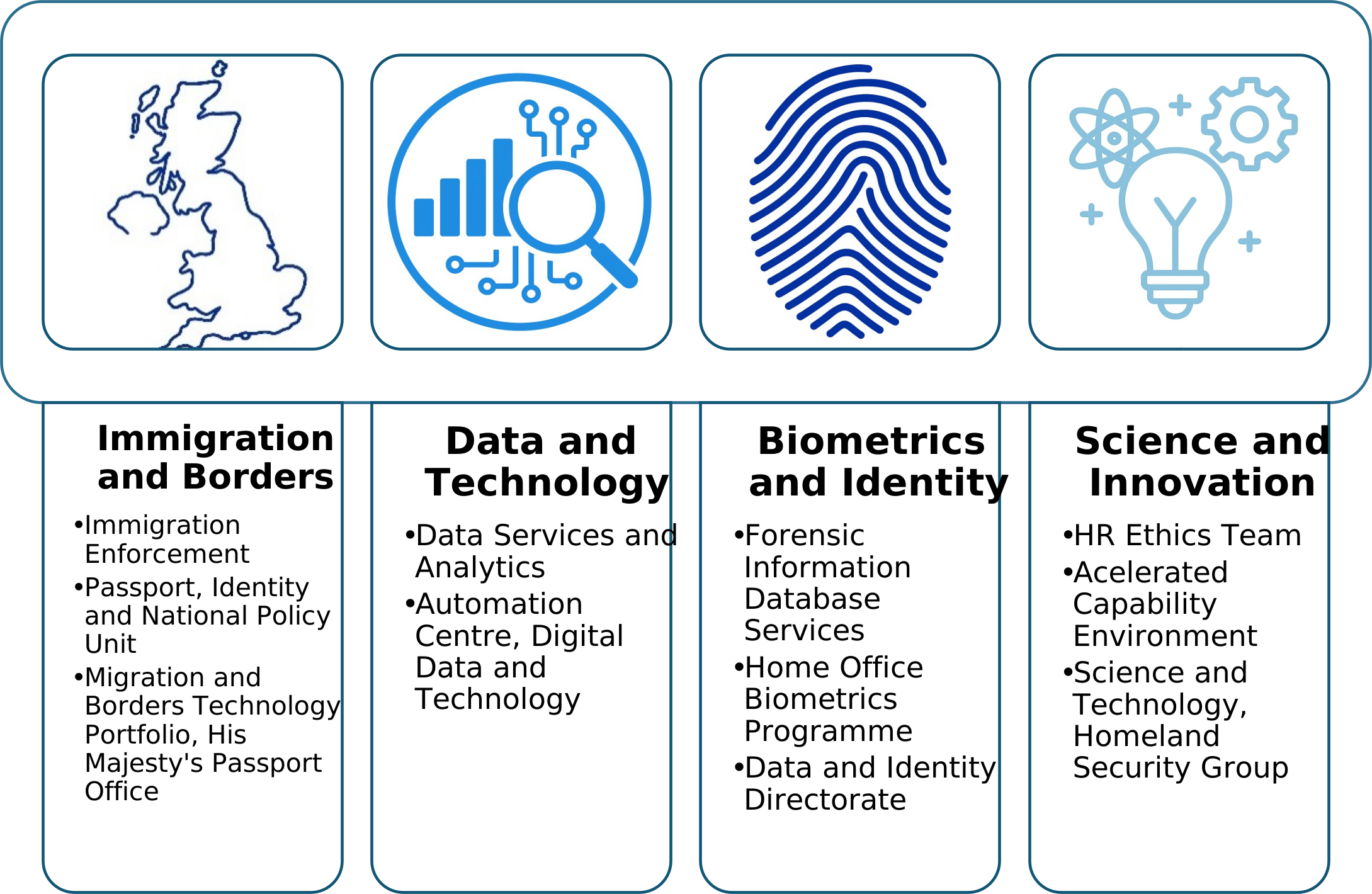
Notably, over one-third of BFEG’s advisory activity between April 2024 and August 2025 was related to provision of advice on matters relating to biometric data and biometric systems. BFEG provided its services to the Home Office, and its wider stakeholders in Policing, on challenges in the field of biometrics which are both emerging (such as advising on the implementation of new biometric technologies at the border or deepfake technologies) as well as on enduring ethical challenges (such as the development of guidance on the retention of biometric data).
The remaining two-thirds of activity were split across BFEG’s broader remit, with a noted focus on novel technologies, especially AI which was the second-most frequent area where requests were made for BFEG’s services. Other areas included Forensic Information Database Services, Data Ethics, and Scientific Services to Policing.
As part of BFEG’s commitment to providing efficient advisory services to the Home Office, BFEG has restructured its Working Groups and working practice, publishing the terms of reference for its new four Working Groups on its dedicated website. In addition, BFEG has made itself available to the Home Office through delivering ethics webinars to officials, such as a presentation by Professor Marion Oswald during Policy week on BFEG’s Ethical Principles and responsible AI, which had a reach to employees across the Home Office.
BFEG has played a role in supporting the Home Office’s evolving ethical governance landscape, proactively fostering a positive working relationship with the Home Office Ethics Adviser, a visible champion of ethical behaviour in the Home Office and of Home Office policy on ethics and systems. BFEG has been a strong advocate for the integration of ethical thinking across the department by continually promoting and encouraging officials to champion ethics in their own projects, which can be supported by use of the BFEGs ethical principles. Where a programme is complex and requires additional consideration, BFEG exists as an independent and expert critical friend with the deep and longstanding knowledge in methods to mitigate the most challenging of ethical questions.
The 2024 to 2025 commission
In April 2024, BFEG received a commission, as directed by the last Government, to consider and provide ethical advice to the department on:
- The use of facial recognition for policing;
- Departmental guidance on AI;
- The development and evaluation of new technology (such as AI) trial programmes; and
- Requests from the Forensic Information Databases (FINDS) Strategy Board.
This section details the activities conducted by BFEG, over the last 18 months to advise the Home Office and its ministers on the ethical implications and considerations in each of these areas.
The use of facial recognition for policing
BFEG has welcomed each opportunity to provide the department with independent ethical advice on the use of facial recognition technology. BFEG has a long-term commitment to advising the Home Office on the use of such technologies, proactively identifying opportunities to shape the ethical landscape surrounding the use of facial recognition technology in policing by providing advisory reports, with ambition to inform departmental thinking. BFEG first published a report into the ethical issues arising from the police use of live facial recognition technology in 2019 and made a subsequent publication on the ethical issues arising from public-private collaboration in the use of live facial recognition technology to ministers in 2021.
BFEG has a significant volume of expertise, deep understanding of the historical context, and the capacity to continue advising on the ethical implications of facial recognition technologies. While not all previous recommendations have been adopted, BFEG’s continued engagement has ensured that ethical concerns around facial recognition technologies remain visible and are central to departmental discussions. BFEG regularly raises concerns at quarterly meetings, the minutes for which are publicly accessible. In its July 2024 quarterly meeting, BFEG formally noted that engagement with Policy could be strengthened, reinforcing BFEG’s availability to provide free expertise and insight which may not have been considered by a policy official, holding a role as a critical friend for policy oversight.
To address its commission, BFEG established a new “Facial Recognition and Biometrics Working Group.” The intention behind establishing this working group was to provide dedicated capacity, with the relevant experts, to provide advice to the department on matters related to facial recognition and wider biometrics. This group was officially invited by its Home Office Policy Sponsor, the Data, and Identity Directorate, to provide advice on the design, development and evaluation of a public opinion survey and subsequent public consultation into the use of live facial recognition. BFEG ensured the relevant questionnaires were reflective of best ethical practice and that there was meaningful consideration of ethics in the survey design.
As a result of its growing exposure, and in recognition of the potential of facial recognition technologies (when used appropriately), BFEG have gone beyond the remit of policing and have provided their expertise to wider Home Office teams on the use of facial recognition technologies (and more broadly on the use of biometrics). Examples include providing advice to the NPCC on consent and necessary ethical and legal measures required for a use-case for facial recognition to protect vulnerable individuals, as well as on the proportionate consideration of ethics in a trial use of facial recognition technology by Immigration Enforcement for the prevention of crime.
Departmental guidance on AI
BFEG’s Policy Sponsor commissioned a review of products supporting the Home Office’s safe and responsible adoption of AI and other advanced algorithms. In October 2024 the combined membership of BFEG provided a comprehensive set of 65 comments spanning administrative suggestions, acknowledgements of strong additions, or suggestions for clarity, to more detailed and significant recommendations. BFEG’s feedback highlighted where alignment with established industry standards could be strengthened, where ethical considerations could have greater emphasis, and how these could be integrated more effectively.
Policy provided their response to BFEG’s contributions in July 2025, confirming which had been adopted and explaining the rationale where they had not. The majority of recommendations were accepted or noted by the policy team, underscoring BFEG’s constructive role in helping to shape the department’s approach to AI adoption. BFEG remains available to advise on further strengthening of this work as needed.
Separate from the direct ask within BFEGs annual commission, BFEG were commissioned by the Data Services and Analytics (DSA) team to review 5 documents which if adopted would formulate an internal set of data ethics guidance. These were designed to steer internal project teams in DSA to consider ethics individually and to direct individuals to appropriate resources. DSA expressed appreciation for BFEGs constructive contributions to ensure the guidance, which would be used to steer ethical practice in DSA, was adequately and comprehensively considered.
The development and evaluation of new technology (such as AI) trial programmes
Early in the year, recognising the opportunity AI was rapidly presenting to automate processes and create efficiencies within Government Services, BFEG was invited to share its experience with such technologies and provided guidance on how to utilise AI responsibly.
This took place through the provision of advice on three separate AI trial programmes. Two of these trials, one focused on the use of AI to summarise asylum interview transcripts and another focused on the use of AI to summarise country policy information, have been publicly acknowledged. In consideration of each trial, BFEG engaged with programme managers and technical experts in a series of detailed conversations. BFEG directly provided guidance in an iterative manner, with the opportunity for the programme team to respond and/or ask further questions. This iterative approach allowed for thoughtful consideration of ethics in a manner that is both specific and tailored to the programme. BFEG supported teams through the thoughtful consideration of trial design (providing recommendations on sample size, analysis, and on evaluation). BFEG’s recommendations focused on four key areas, ensuring that:
- Technologies were robust, reliable, and accurate
- Processes were in place to ensure the technology, and its use, was fully auditable and transparent while also ensuring there was not an over-reliance on AI tools
- Staff wellbeing, as well as public trust and perception were proactively considered
- An appropriate level of training was available for staff
This collaborative, hands-on approach supports the upskilling of staff to consider ethics within their own programmes of work, allows expert advisory services to focus on the most complex ethical challenges, and fosters a culture of responsible innovation within the department. This furthers the work and promotion of BFEG’s Ethical Principles.
Proactive engagement
BFEG has also been proactive in its engagement with the Home Office on the use of Generative AI, acting to engage with relevant teams following publication of a news article [footnote 1] on a separate AI tool (claimed to be AI) that was being used to streamline asylum services. BFEG offered to engage the programme team and provide guidance on how to mitigate possible ethical challenges and advice on how to ensure potential harm or miscarriages of justice to the public are proactively prevented.
BFEG was informed that the article did not accurately convey the work being done as it is not considered AI within the Home Office (a note was later added to the article which reads “the Home Office does not consider its IPIC system to be artificial intelligence because the tool does not learn from the data it receives”). As a result of BFEG’s engagements and advisory work, members identified a gap in that there was no universally understood and operational definition of AI in the Home Office. BFEG recommended to Policy officials at the Home Office that this was addressed in a timely way, to prevent possible misinterpretations and reduce possible associated risks.
Requests from the Forensic Information Databases Service (FINDS) Strategy Board.
A delegated member of BFEG holds a seat on the FINDS Strategy Board, attending a meeting each quarter and adding value by ensuring ethical factors are considered in the highest of decision-making forums. BFEG’s longstanding and sustained collaboration with FINDS reinforces the ethical accountability and continued ethical assessment in the management of the Forensic Information Databases.
During the period covered by this report (April 2024 – August 2025) FINDS continued to regularly seek the valued advice and input from BFEG members, supporting the development and operationalisation of policy.
Notably, a letter of support from BFEG regarding the continued efforts by FINDS to engage BFEG in the ethical consideration of the development of a Y-Chromosome Reference Database, unlocked previously inaccessible avenues to gain academic approval in pursuit of publication of this work. FINDS informed BFEG that the letter provided assurance to academic institutions that FINDS was seeking appropriate ethical rigour throughout the project life cycle as they were unable to access academic research ethics groups.
Self commissioning
Briefing note on the ethical issues arising from the public sector use of biometric voice recognition technology
As outlined within the terms of reference, and restated within the commissioning letter, BFEG can dedicate roughly 30% of its working time to self-commissioned projects.
In the past this capacity has been used to draft briefing notes or reports on matters of importance, such as the ethical use of live facial recognition.
In the period between April 2024 and August 2025, BFEG completed a report into the ethical use of voice recognition as a novel biometric technology. The report is titled “Briefing note on the ethical issues arising from the public sector use of biometric voice recognition technology”. the report examines the use of voice recognition as rapidly expanding technology, whose growth is expected to accelerate further, with ongoing advancements in the development of AI and machine learning algorithms.
BFEG notes that voice recognition technology has potential applications across the Home Office. This includes areas such as law enforcement, safer streets, fraud, and counterterrorism. BFEG’s report supports a proactive governance approach towards emerging technologies, which have the potential to deliver meaningful benefits to the public. It also outlines a real use-case of this technology, by Government, as case studies to outline the risks associated with implementing this technology if a robust ethical framework is not considered from the outset.
The report identified a set of principal ethical concerns associated with this technology, namely poor accuracy, inherent bias, lack of informed consent in data collection and inability to detect spoofing. The report went on to introduce a series of recommendations (summarised below) that should be strongly considered if an organisation is planning to implement voice recognition technology with a strong ethical framework.
- Recommendation 1: Voice recognition models must be free of biases and there should be disclosure of the demographics details of datasets used to train models.
- Recommendation 2: All audio recordings that have the potential to be used by voice recognition technology should be treated as containing biometric data and handled accordingly. Clear and informed consent should be gathered from all users.
- Recommendation 3: A clear role must be established for humans to oversee the voice recognition system in its entirety.
- Recommendation 4: Voice recognition use-cases must be underpinned by a clear and effective approach for spotting and excluding any voice samples that are not genuine, i.e. have been generated through spoofing or deepfake technology.
- Recommendation 5: An independent ethics group should be established to govern the use of voice recognition technology by the operating organisation.
- Recommendation 6: An independent regulator should be empowered to govern the use of voice recognition technology in all settings.
The report was ratified by members of the committee in May 2024 and was subsequently put to BFEG’s sponsoring minister, Lord Hanson, and policy officials in the Data and Identity Directorate. The report was published in September 2025.
BFEG would like to formally acknowledge and thank the individuals and organisations who contributed to the evidence gathering in production of this report and its recommendations.
Contribution to public consultations
BFEG are advisory non-departmental public body formed of an expert panel, who have been made public appointments. As such, BFEG contributed to the collective development of policy in the wider landscape, by both proactively identifying and being invited to provide a collective response to public consultations.
Over the period covered by this annual report, BFEG provided a response to the College of Policing’s consultation into the draft Authorised Professional Practice (APP) documentation on both data ethics and on data-driven technologies. BFEG also contributed to the Scottish Biometrics Commissioner’s consultation on Biometrics retention review.
Corporate activity
Membership and Expertise
New members
Following the conclusion of a large recruitment campaign in September 2023, six new appointments were agreed by ministers in early 2024 and officially onboarded onto the committee in July 2024 at an in-person quarterly meeting.
These new members bring a wealth of experience to BFEG, across a range of disciplines. These members are briefly introduced below, with full biographies accessible in annex A.
- Mr Giles Herdale, Director of Herdale Digital Consulting Ltd
- Areas of expertise: Policing, digital intelligence and investigation techniques, technology, data ethics, partnership)
- Dr Matt James, Associate Professor of Bioethics and Medical Law
- Areas of expertise: bioethics, ethics of new and emerging technologies, ethical decision making in health and technology research, application of ethical guidelines in policy and practice
- Professor Penney Lewis
- Areas of expertise: law reform, criminal law (evidence and procedure), medical law, medical ethics (including donation ethics, criminal ethics, genomics ethics), research ethics
- Ms Elisabeth Mackay
- Areas of expertise: AI governance and risk management, data ethics, privacy, cyber security, technology innovation
- Dr Malcolm Oswald, Director Citizens Juries c.i.c.
- Areas of expertise: bioethics, data governance, public engagement
- Professor Marion Oswald, MBE, Professor in Law, Northumbria University and Senior Research Associate, the Alan Turing Institute
- Areas of expertise: law, technology, data, ethics, policing
In recognition of a substantial change in membership, BFEG undertook an exercise in 2024 to demonstrate and document the range of expertise held on the panel and the large network of affiliations (professional contacts and bodies of membership) and thus the spheres of influence of BFEGs membership. This information is available internally via the BFEG Secretariat. Externally, the website was updated for improved accessibility to the biographies and expertise of members.
Demissions
Within the same reporting period Dr Malcolm Oswald demitted from the committee bringing standing membership to 15 members and the Chair.
The profiles of BFEG members are continually updated on our website and full biographies for the individuals who held membership during the period of this report, April 2024 to August 2025, is provided at annex A.
Recruitment and appointment for a new Chair
After six years, having guided BFEG through a period of significant change and establishing a brand identity for BFEG, Professor Mark Watson-Gandy’s valued leadership of BFEG will be formally concluding in September 2025.
Recruitment for a new Chair commenced in early 2025, concluding with an appointment being offered in the summer of 2025. A transition period is expected through September, with the new Chair to be formally announced on the date at which they take up the post.
Mark Watson-Gandy said, “Looking back to where we were when I started and reflecting on where BFEG is now, I am so proud of all our amazing team and of all we have been able to build together.”
Expenses
BFEG does not have a dedicated budget, and its members are not paid for their work however, members do receive reasonable travel and overnight expenses which are paid for by the sponsoring department, the Home Office. These expenses are for any activity conducted as a representative of BFEG, such as to attend quarterly meetings.
During the 16-month reporting period of April 2024 to August 2025, BFEG held two in-person quarterly meetings, the expenses for which are documented in table 1 and table 2.
BFEG holds a single in-person quarterly meeting per year. This is a cornerstone for collaboration and provides members with an opportunity to gather and workshop solutions to the most pressing developments or challenges that have emerged within the last year, while simultaneously reducing the committee’s costs. In 2024, this meeting was used to re-envisage the structure and internal workings of the committee and the in-person meeting in 2025 was used as an opportunity to explore how the changes had been working and consider BFEG’s strategic priorities ahead of a period of planned change.
Crucially, these meetings facilitate direct engagement with key stakeholders and reinforce the visibility and value of the panel’s collective expertise, reminding decision-makers of the high-calibre, freely available insight at their disposal.
To reflect the diverse composition of the panel, including geographical representation, these meetings are intentionally held in various locations to ensure inclusivity and accessibility for all members.
The figures are indicative of expenses for up to 17 individuals (16 substantive members and 1 who demitted part way through the reporting period), and values are inclusive of value added tax (VAT) where applicable.
Table 1: BFEG expenditure April 2024 to Table 2: BFEG expenditure April 2025 to March 2024 August 2025
| Expense | Cost (inc. tax) | Expense | Cost (inc. tax) | |
|---|---|---|---|---|
| Members recruitment | 0.00 | Chair Recruitment | 0.00 | |
| External Venue Hire | 3,926.90 | External Venue Hire | 3,202.00 | |
| Hospitality Expenses | 1,512.00 | Hospitality Expenses | 1,859.20 | |
| Secretariat expenses (e.g. report printing) | 0.00 | Secretariat expenses (e.g. report printing) | 0.00 | |
| Travel Cost | 2,462.50 | Travel Costs | 993.25 | |
| Total | 7,901.40 | Total | 6,054.45 |
Freedom of Information (FOI) Requests
BFEG is committed to transparency and is subject to requests under the Freedom of Information Act. In the period April 2024 – August 2025 BFEG received 5 requests for information which were all responded to within the dedicated time frame.
Forward look
Establishing a BFEG Strategy
BFEG is ambitious in ensuring the free expertise it provides is recognised, valued, and directed towards the most critical and impactful areas for the Home Office. BFEG is committed to acting as a trusted critical friend, guiding the Home Office in ethical decision making that safeguards the public and strengthens public trust.
A core focus of BFEG in this reporting period has been to look ahead and consider how the committee can be optimally positioned to advise the Home Office, and importantly its Ministers. This began in July 2024 and culminated with an internal workshop a year later in July 2025. During this workshop, it was agreed by members that BFEG needed to consider its own understanding of both its remit and future direction.
As BFEG looks forward, to deliver effectively on its commitments to the Home Office and against its commissioning brief, BFEG will internally be focused on the following strategic priorities which resulted from discussions at the aforementioned workshop held in July 2025.
Strategic Priority 1: Publicity and Perception
BFEG will work to ensure officials and wider stakeholders understand the function of the committee, reinforcing the independence of BFEG from the Home Office, and undertaking – with necessary officials – a review of the committee’s remit.
Strategic Priority 2: Identity and Internal Structure
Ensuring member expertise is being fully leveraged. This will involve streamlining processes and the Working Groups, establishing the relevant connections, and building strong relationships with stakeholders across the Home Office (particularly in the Migration and Borders mission, as biometric technologies and innovations are of great interest to this group).
Strategic Priority 3: Increasing Efficiency
BFEG seeks to ensure the systems it has in place to facilitate the provision of advice are optimised to improve turnaround times and access to critical information. Part of increasing efficiency will be creating an environment within the committee where members are motivated to contribute to projects, and feel that their suggestions are valued, actioned, and championed.
BFEG has already begun implementing these priorities, including publishing an overview of its new Working Groups (working groups summary and working practice). Additionally, BFEG has established systems to track the recommendations it is making and has established surveys to obtain qualitative data on the impact of these recommendations. This work is being coordinated with the wider science advice community in the Home Office, to ensure effectiveness is maximised and outputs are measured against key performance indicators set by senior government officials.
BFEG will also be welcoming a new Chair and anticipates a period of renewed thinking and focus moving into the next annual report.
Rebranding
In alignment with its renewed strategic priorities, BFEG recognised the need for its external identity to reflect its scope (since the expansion of its remit in 2019 to include consideration of the ethical use of data) and influence (with reach across each of the Home Office’s priorities). As such, a formal rebranding process was initiated and following approval by Home Office ministers in early 2025, BFEG will be undergoing a change in name, transitioning from ‘Biometrics and Forensics Ethics Group’ to the ‘Science and Technology Ethics Advisory Committee’[footnote 2]. A formal announcement is anticipated in late 2025.
Engagement with the Home Office Science Advisory Council (HOSAC)
HOSAC is the overarching scientific advisory council for the Home Office. HOSAC reports directly to the Chief Scientific Advisor, strengthening their capacity to strategically advise the Home Office on the full extent of its scientific remit.
The Chair of BFEG, and Chairs of the other scientific advisory committees sponsored by the Home Office, hold a seat on HOSAC as an associate member. In the next reporting year, there is ambition to strengthen the reporting mechanisms between different committees and maximise the utility of the science advice function through increased collaboration to better leverage the wealth of expertise across the department’s committees. This improved collaboration has already commenced, and as an example, towards the end of the reporting period, HOSAC invited members of BFEG to join HOSAC’s AI and Emerging Technology Working Group. This is a positive step towards addressing the needs and priorities of the Home Office, and towards ensuring the advice which is sought by officials meets the highest standards and is appropriately considered, providing the best possible scientific advisory service to the Home Office.
While the structures of HOSAC and BFEG differ, BFEG looks forward to exploring the possibilities of a closer relationship with HOSAC and how this may shape the approach to the delivery of independent scientific advice to the Home Office in the future.
Annex A: Member Biographies
A full list of member biographies is published and kept up to date on the BFEG website. This annex provides a complete list of member biographies accurate at the time of publication and is reflective of the membership covered by this report (April 2024 to August 2025).
Professor Mark Watson-Gandy, OBE, (Chair)
Barrister Three Stone Chambers
Professor Mark Watson-Gandy OBE is Chair of the Biometrics and Forensics Ethics Committee.
He is a barrister at Three Stone Chambers, a leading commercial chancery chamber. A former junior counsel to the Crown, he was called to the English Bar in 1990. He is also a member of the Eastern Caribbean Bar and the DIFC (Dubai) Bar. He is one of the legal services champions for the UK government’s “GREAT” campaign.
He is a Visiting Professor at the University of Westminster and at the Université de Lorraine.
Mark was the founder of Kids MBA whose course teaches core business skills to 12- to 15-year-old children which is presently provided, through its partnership with the awarding body, ABE Global. Forbes Magazine recently singled it out as one of the “five leading global programmes supporting the next generation of entrepreneurs.”
Until September 2020, he was chair of Mental Health First Aid England, a spin out from the Department of Health charged with raising the nation’s mental health literacy. As at his departure, MHFA was rated by the Financial Times as one of the top 1000 fastest growing SMEs in Europe with 1 in 68 of this country’s adult population having undertaken mental health first aid training.
He is Chancellor of the British Association of the Order of Malta. He is a past Master of the Scriveners Company. Since 2022, the Catholic Herald has included him on their list of the UK’s top 100 Catholic leaders.
Professor Anne-Maree Farrell
Chair of Medical Jurisprudence, Edinburgh Law School
Areas of expertise:
- health law
- ethical decision making and evaluation
- law and ethics of (emerging) technologies
- law and ethics of human tissue / forensics
Professor Anne-Maree Farrell is Chair of Medical Jurisprudence at Edinburgh Law School.
Her academic research expertise lies generally in health law, policy, and ethics, with a specific focus on the law and ethics of human tissue, public health, online safety and redress, and mental health. Professor Farrell is also Director of the Mason Institute, an interdisciplinary research centre based at the University of Edinburgh, which focuses on ethics and law at the interface between health, medicine, and the life sciences at a national and global scale.
She has recently undertaken work for the UK Infected Blood Inquiry and the Scottish Covid-19 Inquiry, as well as providing expert advice on health policy and law reform issues for the UK, Scottish and Northern Ireland Departments of Health.
Prior to entering academia, she was a lawyer in private practice and is admitted to legal practice as a solicitor in England and Wales, Ireland, and Australia.
Professor Richard Guest
Professor of Biometric Technologies, School of Electronics and Computer Science, University of Southampton
Areas of expertise:
- biometric systems technical implementation
- standardisation and testing
- ethics and data
Richard Guest is Professor of Biometric Technologies in the School of Electronics and Computer Science at the University of Southampton.
He has an internationally recognised and sustained research record in applied artificial intelligence, biometric systems, security, image processing, and feature pattern recognition, securing over £5 million of external funding over the past 25 years. He has had active involvement with ISO / IEC standardisation processes in the area of biometric data interchange, used in worldwide deployments.
He also has a sustained management record. Before joining Southampton, he held numerous senior leadership posts at the University of Kent including deputy divisional director, head of school, deputy head of school and faculty director of internationalisation. He has significant research leadership as principal investigator of several large national and international projects including EU Marie Słodowska-Curie ITNs, EU, and UKRI projects.
Giles Herdale (member from July 2024)
Director, Herdale Digital Consulting Ltd
Areas of expertise:
- policing (including knowledge of national policing policy and structures)
- digital intelligence and investigation techniques
- technology
- data ethics
- partnership
Giles Herdale has been involved in intelligence and digital investigation for many years, working at the National Policing Improvement Agency, College of Policing and National Police Chiefs’ Council, where he set up and ran the Digital Investigation and Intelligence Programme (2014 to 2017) to transform policing capabilities to address the growing threat of online crime.
Since 2022 he has supported the work of the national violence against women and girl’s taskforce with developing a strategic response to online and tech-enabled VAWG. This includes the first strategic assessment of police understanding of the challenge, and building partnerships with civil society, academia, and industry, leading to creation of a joint policing and TechUK VAWG steering group.
Giles has a long interest in ethical use of intelligence and data that dates back to his work developing the Management of Police Information Code of Practice following the Bichard Inquiry into the Soham murders. This led to his involvement in setting up the Independent Digital Ethics Panel for Policing (IDEPP) in 2014, a panel of experts drawn from a range of disciplines looking at ethical frameworks for using data in investigations. He was co-chair of IDEPP from 2018 to 2020 and has retained a close interest in data ethics in policing, advising NPCC, the College of Policing, NCA and the Centre for Data Ethics and Innovation on development of ethical frameworks.
Matt James (member from July 2024)
Associate Professor Bioethics and Medical Law
Areas of expertise:
- bioethics
- ethics of new and emerging technologies
- ethical decision making in health and technology research
- application of ethical guidelines in policy and practice
Matt James is Associate Professor in Bioethics and Medical Law at St Mary’s University, Twickenham, London where he is Director of the Centre for Bioethics and Emerging Technologies (CBET). He is Course Lead for the MA Bioethics and Medical Law programme.
Matt has a background in bioethics and public policy having worked within Westminster and Whitehall for over 15 years. He was previously a Parliamentary researcher for a shadow minister for International Affairs before working as a senior researcher for several Westminster based think tanks focusing on the ethical and social implications of emerging technologies.
This work has included involvement with the EU FP7 funded project ‘Project RISE’ (Rising pan European and International Awareness of Biometrics and Security Ethics). This was a 36-month international initiative addressing the implications of rising use of biometrics and related technologies. The project aimed to develop and ensure continuity to international dialogue already initiated by the international conferences on biometrics and ethics hosted by the EC Directorate-General Research and the US Department of Homeland Security Privacy Office. Engagement in the field of biometrics has continued, with Matt developing research interests in the evolution of smart cities and the related ethical and social implications for humanity.
David Lewis
Former Deputy Chief Constable of Dorset and Devon and Cornwall Police, and previous National Police Chiefs’ Council lead for ethics and national lead for forensics performance and standards.
Areas of expertise:
- law enforcement
- forensics
- ethics
- regulation
- leadership
Dave is a senior leader with a portfolio of interests in ethics, governance, regulation, and leadership. He manages a range of roles across sectors and undertakes freelance work.
He served for 30 years as a police officer, retiring as Deputy Chief Constable of Dorset. During his career he undertook many roles, including Senior Investigating Officer, Area Commander for East Berkshire, Chief of Staff at the Association of Chief Police Officers, and Regional Chief Officer for the Southwest of England.
Dave led the national ethics portfolio and was forensics performance and standards lead for the National Police Chiefs’ Council. In those roles, he oversaw the development of digital ethics in policing and the implementation of accreditation and quality standards across forensic disciplines. He was also a member of the Forensic Science Advisory Council.
Dave currently heads up the Cricket Regulator for England and Wales and is a director of the Human Tissue Authority. He is a member of the Home Office Science and Technology Ethics Advisory Committee, an associate of the College of Policing, and chairs and facilitates leadership programmes for the Windsor Leadership Trust.
Professor Penney Lewis (member from July 2024)
Criminal Law Commissioner
Areas of expertise:
- law reform
- criminal law, evidence, and procedure
- medical law
- medical ethics, including donation ethics, criminal ethics, genomics ethics
- research ethics
Since 2020, she has completed projects on the protection of official data (now in the National Security Act 2023), search warrants, misconduct in public office, hate crime, corporate criminal liability (now in the Economic Crime and Corporate Transparency Act 2023), confiscation of the proceeds of crime, modernising communications offences and intimate image abuse (the latter two now in the Online Safety Act 2023).
Her current projects include criminal appeals, contempt, evidence in sexual offences prosecutions and defences for victims who kill their abusers.
Previously she was Professor of Law and Co-Director of the Centre of Medical Law and Ethics at King’s College London. As an academic, her research was both comparative, covering multiple jurisdictions and different legal systems, and interdisciplinary, intersecting with history, psychology, ethics, medicine, and science.
In the area of criminal evidence and procedure, her work focused on prosecutions for historic childhood sexual abuse and the law governing corroborative and supporting evidence. She has also published widely in the field of medical law, with a particular interest in the relationship between the criminal law and medicine. Professor Lewis also has extensive experience as a member of national and local ethics committees in the fields of organ donation, genomics, research, and clinical ethics.
Elisabeth Mackay (member from July 2024)
Digital trust and cybersecurity consultant
Areas of expertise:
- AI governance and risk management
- data ethics
- privacy
- cyber security
- technology innovation
Elisabeth Mackay is a digital trust and cyber security consultant. She currently works for PA Consulting, assuring governance, risk management and compliance for innovative data analytics and AI projects across the policing, security, defence, and private sectors.
Elisabeth previously worked as a civil servant for the UK government, holding roles relating to cyber policy research, information management and governance, legal compliance, and cyber security engagement.
Elisabeth is certified CISSP by the ISC² and CIPP/E by the IAPP. Elisabeth is Vice-Chair of the ADS Digital, Cyber and Resilience Group for AI.
Professor Sarah Morris
Deputy Head of ECS (Knowledge Exchange and Enterprise), University of Southampton
Areas of expertise:
- artificial intelligence
- open-source intelligence
- contextual analysis of digital artefacts
- data privacy
- digital forensics
- evidence handling
- system security
- digital ethics
Professor Sarah Morris is a leading expert in digital forensics and the Deputy Head of the School of Electronics and Computer Science at the University of Southampton. With over 16 years of academic and investigatory experience, her interests include investigating unusual devices, digital data recovery, data privacy, and document analysis. She has performed digital investigations for a wide range of global clients including law enforcement, civil, corporate, media organisations and celebrities.
An advocate for public engagement, Sarah champions inclusion in computing and electronics. She is also an active volunteer for charities and public initiatives supporting victims of control, bullying, and mental health for digital forensic investigators.
She serves on national and international advisory boards, including the Science and Technology Ethics Advisory Committee and the UK Police Science Council under the Office of the Chief Scientific Advisor for Policing at the National Police Chiefs’ Council. Frequently featured in media outlets such as the BBC and CNN, Sarah is a recognised authority in her field combining academic theory with investigative practice.
Dr Nóra Ni Loideain
Associate Professor in Law (Reader) and Director, Information Law & Policy Centre at the Institute of Advanced Legal Studies, University of London.
Areas of expertise:
- data privacy law
- European human rights law, EU law, public law, and criminal justice
- thought leader on AI and / or technology and science policy matters
Dr Nora Ni Loideain is Associate Professor in Law and Director of the Information Law & Policy Centre at the Institute of Advanced Legal Studies, University of London. Her research focuses on EU law, European human rights law, and technology regulation, particularly within the contexts of privacy and data protection. Nora holds BA, LLB, LLM (Public Law) degrees from the National University of Ireland, Galway, and a PhD in law from the University of Cambridge.
In 2024, Nora was appointed Editor-in-Chief of leading journal International Data Privacy Law (Oxford University Press). Prior to her academic career, Nora was a legal and policy officer for the Office of the Director of Public Prosecutions of Ireland and clerked for the Irish Supreme Court.
She has consulted widely on her areas of research and published on topics including AI digital assistants, health data, facial recognition, smart cities, and cross-border transfers. With her work being cited by leading institutions including the Alan Turing Institute, BBC, Chatham House, the United Nations, and the UK House of Lords.
Professor Niamh Nic Daeid
Professor of Forensic Science and Director of the Leverhulme Research Centre for Forensic Science, University of Dundee
Areas of expertise:
- research ethics, process, and governance
- forensic science practice
- science communication
- leadership in forensic science research
Professor Niamh Nic Daeid is an award-winning chartered chemist and authorised forensic scientist. She is a Professor of Forensic Science and Director of the Leverhulme Research Centre for Forensic Science at the University of Dundee, developing robust scientific methods and science communication for the justice systems.
She has been involved in forensic science education, research, and casework for over 30 years.
She is a past chair of the European working group for fire and explosion investigation and the INTERPOL forensic science managers symposium. She sits on the scientific advisory board of the International Criminal Court, is a strategic partner for the International Forensic Strategic Alliance and acts as an expert forensic advisor to the UN.
She has published over 200 peer reviewed research papers and book chapters, 5 edited books and holds a research grant portfolio in excess of £30 million. She is regularly involved in the public communication and engagement of science making forensic science accessible across a wide range of audiences.
Dr Malcolm Oswald (member from July 2024 to April 2025)
Director, Citizens Juries c.i.c.
Areas of expertise:
- bioethics
- data governance
- public engagement
Malcolm is Director of Citizens Juries c.i.c., a social enterprise running citizens’ juries, a method to enable a cross-section of the public to be informed and make public policy recommendations.
He worked as a specialist in information governance for 18 years, specifying requirements and advising on legal and ethical requirements for national NHS systems using patient data.
Malcolm is a member of several committees, including the NICE Appeals Panel, and of a University of Manchester Research Ethics Committee.
He has a PhD in Bioethics and Jurisprudence, is an Honorary Research Fellow in Law at the University of Manchester and a guest lecturer on bioethics, public engagement, and information governance.
Professor Marion Oswald, MBE (member from July 2024)
Professor in Law, Northumbria University and Senior Research Associate, the Alan Turing Institute
Areas of expertise:
- law
- technology
- data
- ethics
- policing
Professor Marion Oswald, MBE is Professor of Law at Northumbria University, Newcastle, and Senior Research Associate at the Alan Turing Institute.
She researches the interaction between law and digital technology and has a particular interest in the use of AI and innovative technology in policing and national security. She is Principal Investigator of the UKRI-funded 4-year Responsible AI UK Keystone Project ‘PROBabLE Futures – Probabilistic AI Systems in Law Enforcement Futures.’
She is the founding chair of the West Midlands Police and Crime Commissioner and West Midlands Police Data Ethics Committee. Marion was awarded an MBE in The Queen’s Jubilee Birthday Honours list 2022 for services to digital innovation.
Professor Emeritus Charles Raab
Professor Emeritus School of Social and Political Science, University of Edinburgh
Areas of expertise:
- information policy
- governance and regulation (e.g. privacy, data protection, surveillance, identification, FOI, data ethics, accountability)
Charles Raab is Emeritus Professor, University of Edinburgh; formerly Professor of Government.
- visiting positions at academic institutions abroad
- academic background in political science and public policy, within broad social science and humanities frames of reference
- Co-Director of Centre for Research into Information, Surveillance and Privacy (CRISP)
- former Fellow of the Alan Turing Institute (ATI), co-Chair of ATI Data Ethics Group
- member of Police Scotland’s Independent Ethics Advisory Panel, Digital Identity Scotland Expert Group, Europol Data Protection Experts’ Network
- co-chaired Independent Digital Ethics Panel for Policing (IDEPP)
- teaching and funded research on privacy, data protection, surveillance, governance and regulation, data ethics, ‘smart’ environments, AI, identity and identification, trust, accountability, law enforcement, FOI, and democracy
- author of many articles, chapters, and books Charles Raab, School of Social and Political Science (ed.ac.uk)
- general editor of Routledge Studies in Surveillance book series
- advice and reports for many public bodies in the UK, EU and elsewhere
- evidence to UK Parliamentary committees
- specialist adviser to the House of Lords Constitution Committee (2007-2009) for the inquiry, Surveillance: Citizens and the State, HL Paper 18, Session 2008–2009
- Fellow of the Academy of Social Sciences; Fellow of the Royal Society of Arts
- received the outstanding achievement award of the Surveillance Studies Network in 2024
Professor Tom Sorell
Professor of Politics and Philosophy at University of Warwick
Tom trained in philosophy and has decades of experience in public engagement concerning ethics.
Professor Sorell:
- has a particular interest in ethical issues arising from the use of security, including, policing technologies
- is the author of 9 books and editor or co-editor of 13 collections of papers
- is the author of over 150 peer reviewed papers in philosophy, interdisciplinary technology studies, moral theory, and applied ethics
Areas of expertise
- AI ethics
- data ethics
- ethics of counterterrorism
- policing ethics
- research ethics
Other current roles
- Member, West Midlands Police Data Ethics Committee
- Chair, West Midlands Police Ethics Committee
- Member, Information and Governance Committee, NHS Safe Data Environments
- Expert Fellow, SpriteFellow, Sprite Network Plus in Cybersecurity
Previous roles
- John Ferguson Professor of Global Ethics, University of Birmingham
- Co-director, Human Rights Centre, University of Essex
- Faculty Fellow in Ethics, Harvard University
- Tang Chun-I Visiting Professor in Philosophy at the Chinese University of Hong Kong (2013)
Professor Denise Syndercombe -Court
Professor of Forensic Genetics, Kings College London
Areas of expertise:
- full understanding of forensic identification methodologies, historic and developing, including ethical considerations
- forensic scientist with practical casework expertise in new technologies, including DNA sequencing, statistical aspects of DNA mixtures and epigenetic applications as applied to forensics
- expert in kinship and genetic genealogy
Scientist, geneticist, statistician, academic, editor and author of a prize-winning medical textbook and published author of peer reviewed scientific publications.
Trained in systematic reviews and evidence-based approaches of medical and scientific publications. From 1990 was Senior Lecturer in Forensic Haematology at Barts and The London School of Medicine and Dentistry and in 2012 she moved to King’s College London where she is now the Professor of Forensic Genetics.
She has more than 30 years of experience in scientific research, forensic evidence examination and DNA interpretation in relationship and criminal evidence with a sound knowledge of the civil and criminal justice process, including court presentation as an accredited expert witness.
She runs an ISO17025 laboratory that specialises in kinship investigation and is an active researcher in new molecular techniques for human identification. She has an active interest in promoting science to a wider audience via television, radio, and external lectures.
Dr Peter Waggett
Director of Research IBM UK Ltd, Director LBM Ltd
Areas of expertise:
- biometrics
- developing international standards for biometrics
- emerging technology and digital innovation
- research development
Dr Waggett is an image processing expert and Director of Research at IBM UK Ltd.
He was the biometrics and testing lead for the UK Visa Waiver Project delivered to the UK government.
He currently leads the IBM activity associated with the UK’s Hartree National Centre of Digital Innovation (HNCDI). The HNCDI delivers innovative projects and proof of concept systems for UK industry using quantum computing and Artificial Intelligence.
Dr Waggett is editor of the ISO Biometrics Vocabulary project (ISO 2382-37) and Chairs the International Standards Organisation (ISO) SC17 committee responsible for cards and devices for personal identification. SC17 is responsible for the standards governing bank cards, passports and driving licences worldwide.
-
The guardian: AI tool could influence Home Office immigration decisions critics say ↩
-
It is important to state that the name was chosen to reflect the breadth of BFEGs services, but that BFEG do not consider ‘science’ and ‘technology’ to be entirely separate entities. ↩