AI Skills for Life and Work: Job vacancy analysis
Published 28 January 2026

© Crown copyright 2026
This publication is licensed under the terms of the Open Government Licence v3.0 except where otherwise stated. To view this licence, visit nationalarchives.gov.uk/doc/open-government-licence/version/3 or write to the Information Policy Team, The National Archives, Kew, London TW9 4DU, or email: psi@nationalarchives.gov.uk.
Where we have identified any third party copyright information you will need to obtain permission from the copyright holders concerned.
This publication is available at https://www.gov.uk/government/publications/ai-skills-for-life-and-work-job-vacancy-analysis/ai-skills-for-life-and-work-job-vacancy-analysis--2
This report was authored by Sam Donaldson at Perspective Economics.
This research was supported by the Department for Science, Innovation and Technology (DSIT) and the R&D Science and Analysis Programme at the Department for Culture, Media and Sport (DCMS). It was developed and produced according to the research team’s hypotheses and methods between November 2023 and March 2025. Any primary research, subsequent findings or recommendations do not represent UK Government views or policy.
1. Executive summary
This chapter examines the demand for AI skills in the UK labour market from January 2021 to December 2023 using job vacancy data from the Lightcast platform. It explores trends, geographic distribution, job titles, sectors, skills, qualifications, experience, and salaries associated with AI-related roles.
Key Findings
-
An estimated 448,484 job postings (1.7% of all UK postings) were related to AI between 2021-2023. Of these, 118,017 (26%) were for technical “AI Specialists” and 54,805 (12%) for highly technical “AI Experts” (see Figure 1.1 for definitions).
-
Demand for AI professionals grew across all categories from 2021 to mid-2022 but reduced in 2023. In 2023, demand decreased for AI Experts (-47%), AI Specialists (-29%), and AI Implementers (-38%), likely due to broader tech industry layoffs and hiring freezes, and wider macroeconomic conditions.
-
The majority of AI-related vacancies in 2023 were advertised in London and the South East (60% for AI experts). However, this research identifies recruitment activity and potential clusters in areas including the East of England, North West, South West, Scotland, and Yorkshire and the Humber. Clusters of high demand were found in cities like Cambridge, Bristol, Oxford, Manchester, and Reading.
-
Common job titles for AI Experts included Data Scientist, Machine Learning Engineer, Python Developer, and Computer Vision Engineer, often requiring PhDs and focusing on cutting-edge research and development. AI Specialist roles, such as Software Engineers and Data Analysts, that require technical skills to implement AI solutions were also identified.
-
Key sectors demanding AI skills included the wider IT and tech sector (e.g. programming and data science roles), and Education, Finance, and Consulting.
-
Top skills for AI Experts included knowledge of Python (68%), Data Science (64%), Machine Learning (63%), SQL (29%), and cloud platforms like AWS (18%) and Azure (11%).
-
In terms of qualifications, 99% of AI Expert roles required at least a bachelor’s degree, with 37% requesting a PhD and 29% a Master’s, highlighting the highly technical nature of these positions. However, 67% of expert vacancies requested less than 3 years of experience (where known), potentially reflecting a race for new talent in an emerging field.
-
Median advertised salaries were £62,700 for AI Experts (42% premium over wider IT roles), £55,000 for AI Specialists (25% premium), and £50,400 for AI Implementers (14% premium).
-
However, we also note strong salary premiums for AI skills across all regions.
The analysis suggests strong demand for AI skills in the UK, particularly for highly skilled experts. However, the 2023 reduction in vacancies may reflect wider tech sector trends. High education requirements emphasise the importance of advanced degree pathways in AI, although there may also be potential to explore alternative routes like apprenticeships further (not covered by this vacancy analysis). Substantial salary premiums exist for AI professionals across all regions.
2. Introduction and Background
Job vacancy analysis is a useful proxy to help explore historic and real-time demand for professionals with relevant skills and experience to apply within AI related roles. There have been several similar studies conducted in recent years to explore demand for AI skills, and demand for AI professionals across the UK (and wider) economy. This includes:
-
DCMS, Ipsos and Perspective Economics (2021) Understanding the AI Labour Market. This uses Lightcast (formerly BGT) data to identify roles in demand of AI skills, time-series analysis, job titles and occupations, industries and sectors, skills and qualifications, locations, experience and salaries where available.
-
Lightcast (2022) AI in the UK which explores all job postings requesting AI skills across the UK, and finds that the number of UK job postings requesting artificial intelligence skills has more than tripled over the past decade
-
Stanford University (2023) AI Index Report, which explores the share of artificial intelligence jobs among all job postings (a job posting is considered an AI job if it requests one or more AI skills, e.g., “natural language processing”, “neural networks”, “machine learning”, or “robotics”.)
Using vacancy data can support this research to explore a range of key questions, including:
-
How much demand is present in the labour market for AI skills? How has this changed over time?
-
Are there distinct groups of roles or skills that are particularly in demand? How do these vary by skills, experience, education, or remuneration?
-
How does demand vary with respect to different parts of the AI ecosystem e.g.:
-
Highly technical expert roles which require deep understanding of AI technologies and implementation (e.g. ML Engineers, Computer Vision Engineers)
-
Specialist roles which may require some understanding of how to implement AI technologies and techniques, with ability to implement e.g. Data Analysts
-
Broader (implementer) roles that may require some understanding of AI technologies (e.g. use of generative AI or LLM tools)
-
-
How does demand vary by region or Local Authority Area? Are there notable geographic or technical clusters emerging? Are there areas with lower demand or exposure to AI skills?
-
What might the short, medium and long-term trends look like for demand for AI skills within the UK labour market? What implications may this have on skills for life and skills for work?
-
What are the most important AI skills currently being requested by employers?
2.1. Metrics in Scope
The Lightcast platform enables the research team to explore AI related vacancies across a range of metrics. We summarise these below:
-
Number of vacancies and time-series analysis: Each posting is de-duplicated and has a unique posting date. This allows us to review demand over time.
-
Number of employers posting vacancies and competing for AI talent: There are almost 20,000 UK employers potentially recruiting for AI talent according to the initial search (2021-2023).
-
Advertised salary (where available): Approximately one in four postings contain an advertised salary range. Where this is unavailable, this may be due to recruiter or employer discretion. We explore median salaries, and salary range by experience and role, and by location.
-
Location of job postings: by town, city, local authority, and region. We explore the absolute count of vacancies, and identify clusters with Location Quotient analysis (identifying areas of concentration relative to the size of local labour markets).
-
Education requested: Minimum level (and subject) of education requested.
-
Experience requested: Minimum number of years’ experience requested.
-
Employer: name of employer (organisation) or recruitment agency. We segment these by employer/recruitment agency, and by sector classification (SIC or otherwise agreed).
-
Job titles: job titles (raw) and classified in occupations by SOC2020, or by LOT (Lightcast Occupational Taxonomy).
-
Skills in demand: Review of the top specialised, and common skills requested. Review of top languages or technical skills requested.
2.2. Strengths and Limitations of this Approach
The job vacancy analysis can provide significant insight into employer demand, and the emerging trends with respect to AI skills, although there are some limitations associated with this approach.
Strengths:
-
Volume and granularity: This approach allows the team to analyse hundreds of thousands of relevant job postings from 2014 (but focusing on 2021-present) to explore the jobs, skills, and qualifications in demand since 2014. We can also identify the specific coding languages in demand and uncover geographic clustering of high demand and skills shortages for AI and data science professionals down to specific towns and cities.
-
Real-time analysis: Lightcast provides highly up-to-date data, offering insight into the labour market’s current state. In contrast, survey statistics and other secondary data sources can be outdated by years. Given the dynamic nature of AI and data roles, the real-time feature is crucial for capturing evolving skill demands, with a particular focus on 2023 activity.
-
Strong coverage: Lightcast sources data from over 40,000 online platforms, ensuring a comprehensive view. It is estimated that online postings reflect around 85% of jobs posted in the labour market – this is likely higher with respect to AI skills.
Limitations:
-
Selection bias: Lightcast scrapes free-to-use jobsites, which potentially leaves an (unknown) risk of bias if major employers are using closed platforms to post jobs, or other ways of recruiting such as networking and word-of-mouth. However, we believe this is offset by both the high volume and high coverage of the data that is available. This data still gives a strong insight into the trends and patterns in the labour market
-
Classification models and interpretation of job roles: The interpretation of AI roles via Lightcast depends on our working definition and search strategy. While our strategy aims to capture both junior and senior demand, there’s a risk of including roles that might not strictly be AI or Data Science positions. For instance, an entry-level Data Analyst familiar with SQL might be included, even if AI techniques aren’t central to their role. We aim to mitigate this risk by employing several bespoke search strategies with specific inclusion/exclusion criteria and maintain transparency by detailing this full strategy for replication
-
Macro-economic environment: We note that within the wider tech ecosystem, there recently has been an increase in redundancies and broader restructuring activity. As such, the volume of AI demand may be lower in 2023 than 2022 with respect to vacancies; however, this may be reflective of wider macroeconomic trends.
Further, we stress that vacancy data does not capture the incidence of AI skills within existing jobs; but rather captures the demand for AI skills within new postings. This means that the increased demand or use of AI skills in existing roles may be increasing, even if vacancies do not increase in tandem (i.e. employers are upskilling existing staff but may not be recruiting). This will be an important distinction for the research to explore.
2.3. A working definition for AI skills and job postings
Within the UK labour market, there are millions of jobs posted by employers every year. For the purposes of this study, the research team is using the Lightcast platform, a proprietary database of millions of current and historical job postings. Lightcast collects postings from over 45,000 online job sites worldwide, removes duplicates, and extracts data from the text to create a comprehensive, real-time portrait of labour market demand. This includes information on job titles, employers, industries, and regions, as well as required experience, education, and skills. This chapter sets out an overview of the estimated volume of online job vacancies requesting AI and related skills. To build an understanding of AI related roles, demand, and skills requested – we must undertake an in-depth definitional scoping, and also utilise the ability of the platform to explore postings by relevant title, skills, and keywords. There are three potential mechanisms (and combinations) to identify AI-related job postings:
-
Job titles: There are some roles where employers are clearly demanding individuals with technical domain knowledge in AI, such as Machine Learning or Computer Vision engineers. There are also wider roles which some knowledge or use of AI solutions may be expected, such as Software Developers or Data Scientists.
-
Skills: The Lightcast platform has classified a wide range of skills and skills clusters which can be applied to any job posting. This will identify the incidence of terms such as Machine Learning, AI, NLP, or Deep Learning – as well as incidence of technical domain terms such as SciKit-Learn or TensorFlow.
-
Keywords: Finally, a broader search can also be developed using incidence of key terms e.g. where job postings are mentioning use of generative AI, LLMs, or ability to use AI tools.
Further, we explore three distinctive groups:
-
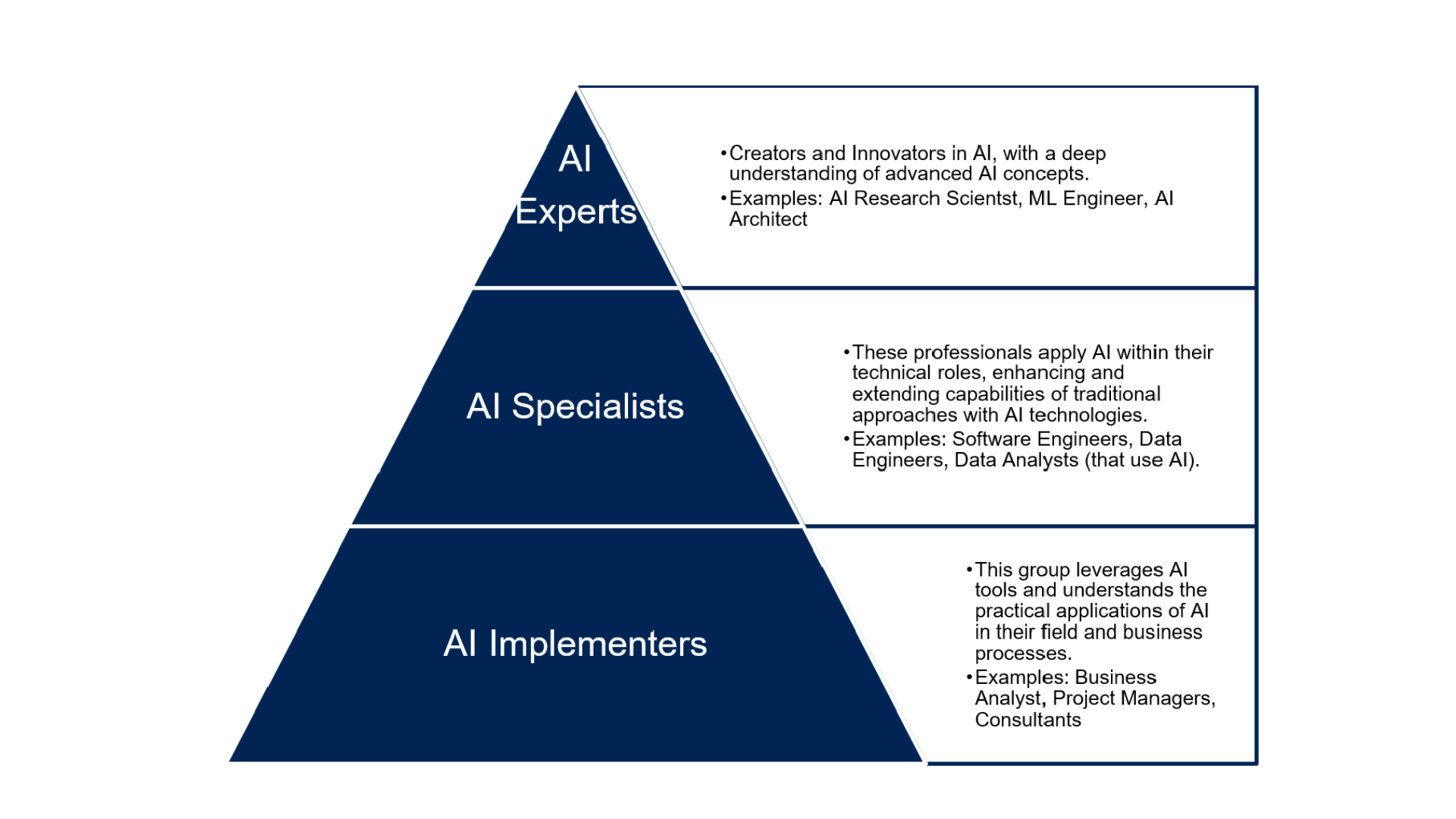
AI Experts: Highly technical roles that necessitate a profound comprehension of AI technologies, algorithms, and their real-world application. This is a highly selective search query, and covers the most technical and advanced postings, where the individual’s role and skills align fully to AI concepts and development. This includes a deep dive into specific AI, ML, and data science skills, where topics like deep learning, neural networks, reinforcement learning, natural language processing, etc. are of highest interest, and may also include prerequisites skills in areas such as languages, frameworks, or tools like TensorFlow, PyTorch, or Keras. Key roles typically include Machine Learning Engineers, AI Research Scientists etc.
-
AI Specialists: A broader, but explicitly technical search query which covers technical postings, where the individual is expected to have some technical experience in deploying AI concepts or solutions e.g. a Software Engineer with understanding of ML libraries within Python, or Data Scientists with understanding of classifiers or regressions. These roles demand an understanding of AI technologies and ability to implement in a technical setting; however, may not always require deep expertise in AI architecture. This would encompass a broader range of technical skills, with more emphasis on including AI within their existing technical roles (e.g. ability to fine-tune or embed an LLM within existing software. This might include roles such as Software Engineers, Data Engineers, and Analysts (using AI). We are interested in exploring the incidence of AI terms within these roles.
-
AI Implementers: The broadest category which covers the previous roles, in addition to roles where the individual is expected to have some understanding or ability to work alongside AI technologies. This might include the ability to use LLMs or basic scripting, or work within teams using AI e.g. ability to support data cleaning, tagging etc. This group leverages AI tools and understands the practical applications of AI in their field and business processes. These roles are more sector agnostic e.g. could include Project Managers, Product Owners, Business Analysts, Consultants, Legal and Policy roles relating to AI regulation etc.
For these three groups, we have undertaken unique search strategies on the Lightcast platform to identify the incidence of job postings. These cover a three-year period from January 2021 to December 2023. Please note that, due to the search strategies used, there may be overlap between the groups e.g. some search results will include Data Scientists which fall into each group. As such, we suggest that there are up to 448,484 postings in scope as part of this analysis (all AI related roles), of which 118,017 (26%) can be considered more technical (“AI Specialists), and 54,805 (12%) are most technical and advanced roles – typically in research or development (“AI experts”). These should therefore be treated as three unique searches and should not be added to avoid double-counting. The Lightcast platform also has a deduplication algorithm to count a vacancy as unique, even if it spans multiple platforms. Figure 1.1 provides a summary of the taxonomy of AI roles explored within this analysis. This is followed by Table 1.1, which sets out a summary of the number of postings in scope (cumulative) in absolute figures, and as the estimated percentage of all UK job postings.
Figure 1.1: Taxonomy of AI roles
Source: Perspective Economics, Ipsos, IER
Table 1.1: estimated number of AI related job postings (2021-23)
| Search Strategy | Total Number of Job Postings | Estimated Percentage of All UK Postings (2021-2023) |
|---|---|---|
| AI Experts | 54,805 | 0.21% |
| AI Specialists | 118,017 | 0.45% |
| AI Implementers | 448,484 | 1.7% |
Estimated percentage of all UK postings is based on a total estimate of 26.2m unique job postings between 2021 to 2023.
Source: Lightcast (2021-2023)
3. Number of job postings
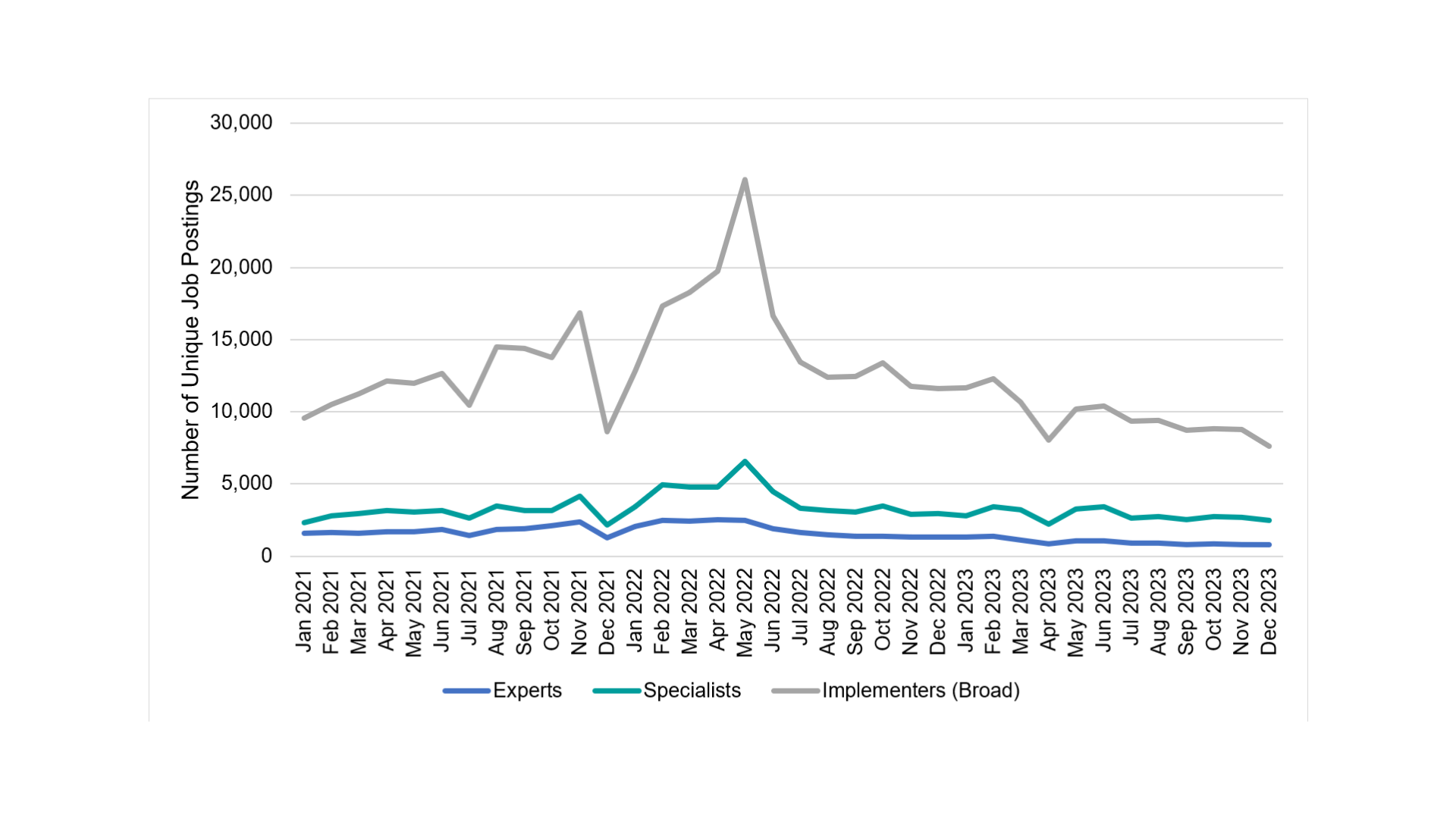
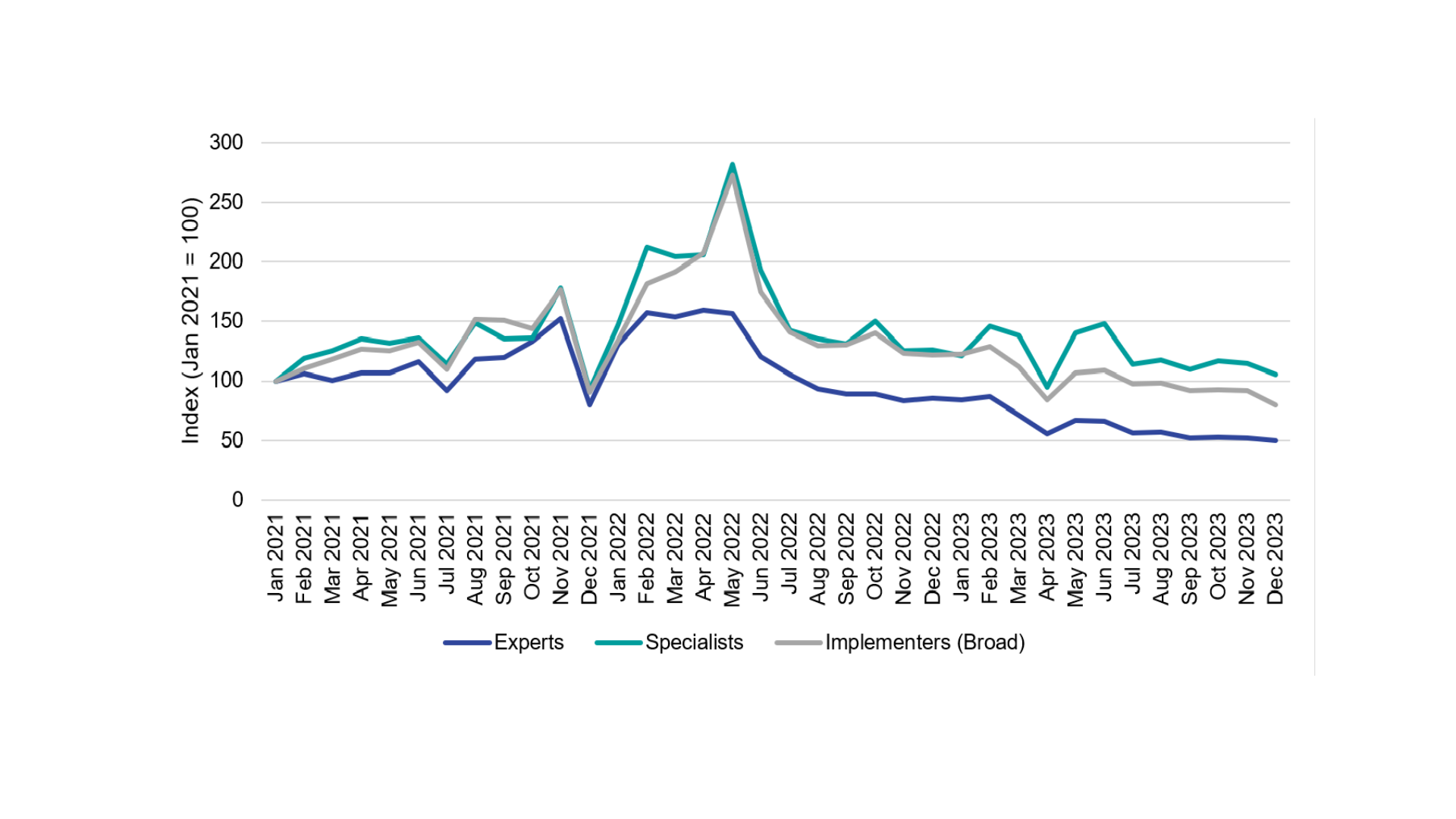
The monthly trend for AI related job postings is set out in Figure 1.2 and 1.3 below. This covers the three-year period from January 2021 to December 2023. The data suggests that demand for AI professionals grew across each category between 2021 and 2022, with demand peaking in mid-2022, followed by a reduction in 2023. This is consistent with similar analysis undertaken in wider tech sectors such as cyber security, where factors such as reduced investment in tech firms, tech lay-offs, and recruitment freezes at a firm level may be affecting overall job vacancy levels.
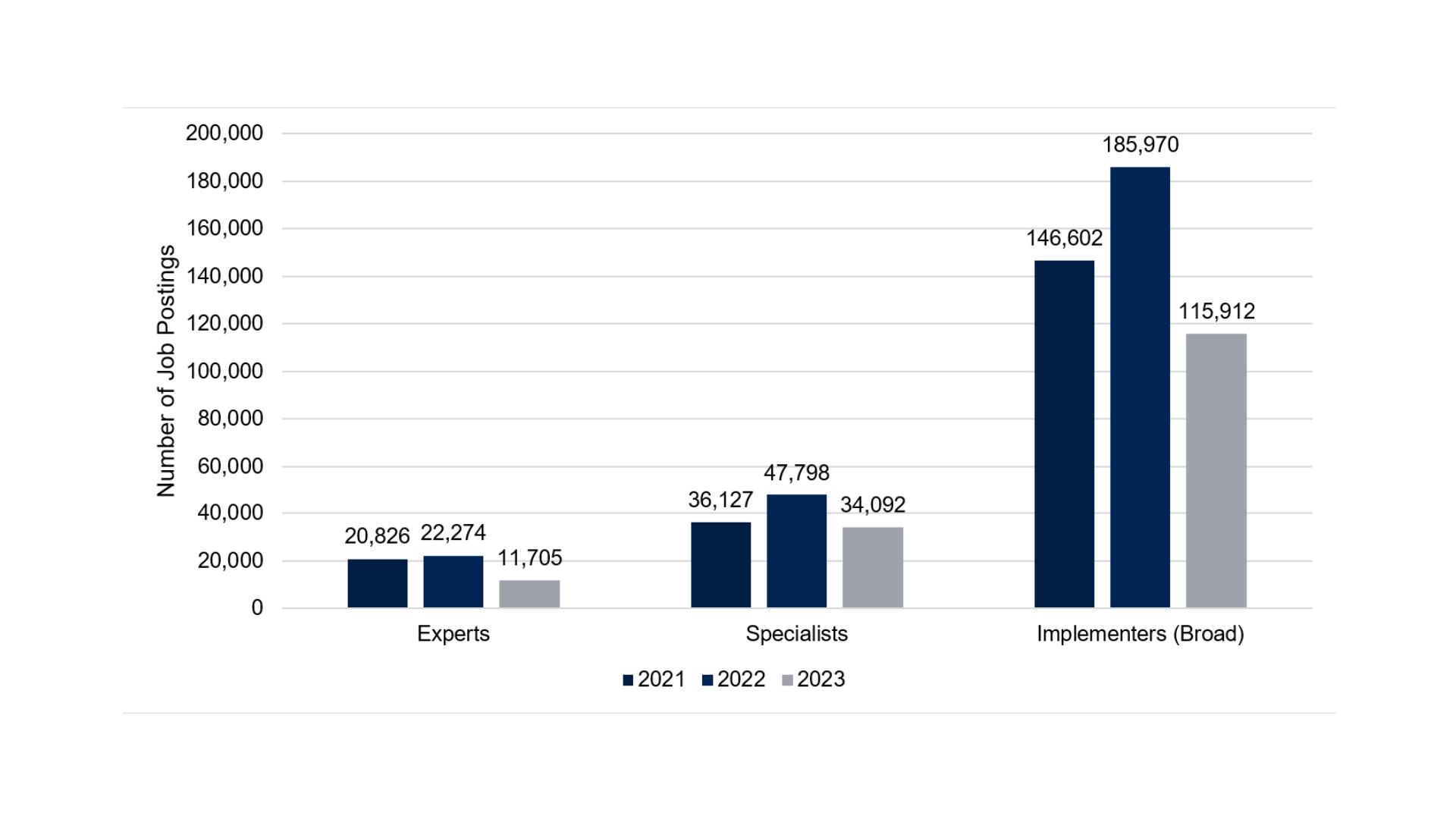
Figure 1.4 also provides an annual estimate of job postings across the three search queries. It suggests that demand increased between 2021 and 2022 for experts (+7%), specialists (+32%), and implementers (+27%), followed by a reduction between 2022 and 2023 for experts (-47%), specialists (-29%), and implementers (-38%) respectively.
Figure 1.2: monthly number of unique AI related job postings from Jan 2021 to Dec 2023
Source: Lightcast, Base: 448,484 job postings between 2021 – 2023.
Figure 1.3 sets out how the volume of AI related job postings has changed since January 2021. The job postings for each subsequent month are indexed to January 2021, which has an index score of 100. The indices highlight some seasonal reductions in demand in both years, however, highlights the growth trend to mid-2022 and the reduction thereafter. This data suggests that monthly demand for AI specialists was 5% higher in December 2023 than January 2021, with more significant reductions among expert and broader roles.
Figure 1.3: monthly number of AI related job postings from Jan 2021 to Dec 2023, showing volume
Source: Lightcast, Base: 448,484 job postings between 2021 – 2023.
Figure 1.4 also shows the annual number of AI related job postings for each of the searches. This suggests that despite being the most selective area, demand for AI experts within the vacancies has fallen more significantly (-47%) than the other categories. However, as these are high-calibre roles, it may be more likely that this is also driven by companies turning to headhunting recruitment (without an online vacancy), or upskilling existing talent.
Figure 1.4: annual comparison of AI related job postings from Jan 2021 to Dec 2023
Source: Lightcast, Base: 448,484 job postings between 2021 – 2023.
4. Location of job postings
Across the UK, demand for AI skills will be varied. This is due to a range of factors including sectoral composition, working population size, and density of larger employers or those that may be more likely to adapt and implement AI in their products and services. We explore the location of AI related job vacancies within this sub-section.
Please note not all online job postings will contain location data. The majority of roles in scope include a town, city, or region – which we can code against Local Authority and UK region; however, some roles may be ‘UK-wide’, particularly if the employer offers the role across a range of locations. Further, some roles may also be marked as ‘Remote’. We find that across all advertised roles over the three-year period, approximately 72% have a known location, with c. 28% ‘UK-wide’ or remote. The data also suggests that in 2021, approximately 30% of roles were advertised as remote. This has fallen to c. 20% in 2023, suggesting some employers are keen to return to office or hybrid working.
Figure 1.5 provides a breakdown of the proportion of AI related vacancies (expert level) by UK region (where known). This highlights that the majority of AI related vacancies (with a known location) in 2023 were advertised in London and the South East (56%); however, this is lower than levels seen in 2021 (63%). There has also been some growth in areas such as the North West (from 6% to 8%), South West (from 6% to 7%), Scotland (4% to 5%), and Yorkshire and the Humber (3% to 5%).
Figure 1.5: percentage of AI related job postings from Jan 2021 to Dec 2023 by UK region
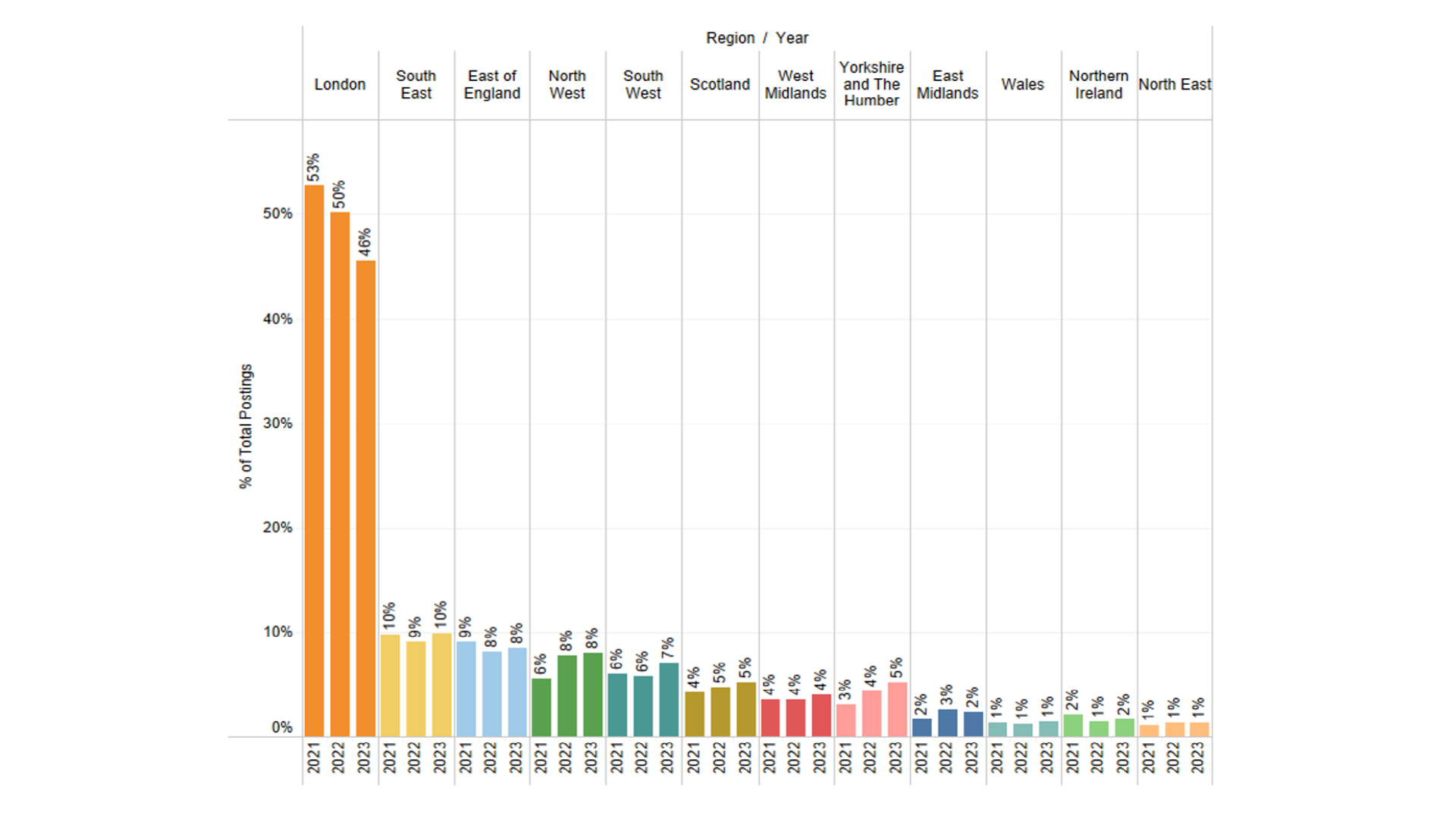
Source: Lightcast, Base: 324,608 job postings between 2021 – 2023 with a known region (72% of postings). Percentage labels are rounded to the nearest integer.
Figure 1.6a: percentage of AI related Expert job postings by UK region (map, 2023 only)
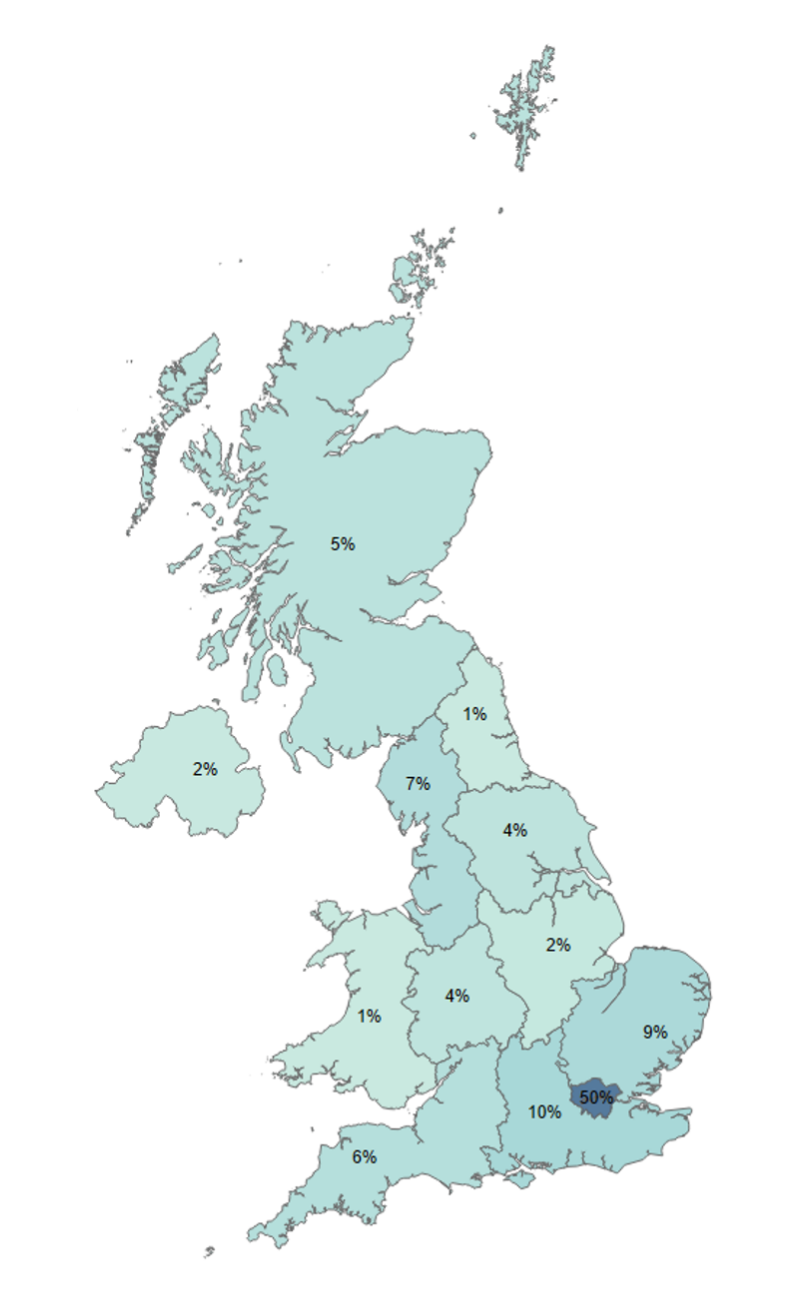
Source: Lightcast, Base: 9,547 expert job postings (London = 50%, South East = 10%, East of England = 9%, North West = 7%, South West = 6%, Scotland = 5%, Yorkshire and the Humber = 4%, West Midlands = 4%, East Midlands = 2%, Northern Ireland = 2%, North East = 1%, Wales = 1% of vacancies).
Figure 1.6b: percentage of AI related Specialist job postings by UK region (map, 2023 only)
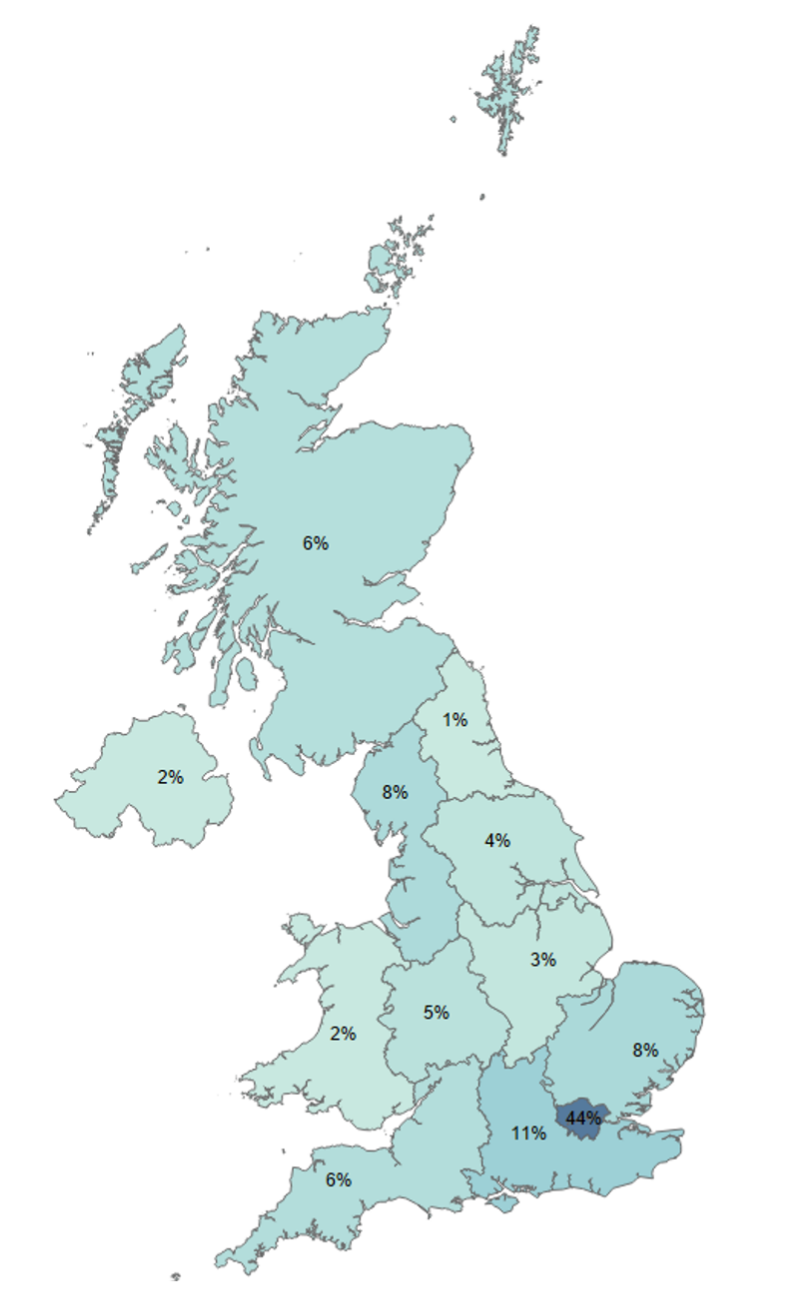
Source: Lightcast, Base: 27,195 specialist job postings (2023). London = 44%, South East = 11%, East of England = 8%, North West = 8%, South West = 6%, Scotland = 6%, West Midlands = 5%, Yorkshire and the Humber = 4%, East Midlands = 3%, Northern Ireland = 2%, Wales = 2%, North East = 1% of vacancies).
Figure 1.6c: percentage of AI related Implementer job postings by UK region (map, 2023 only)
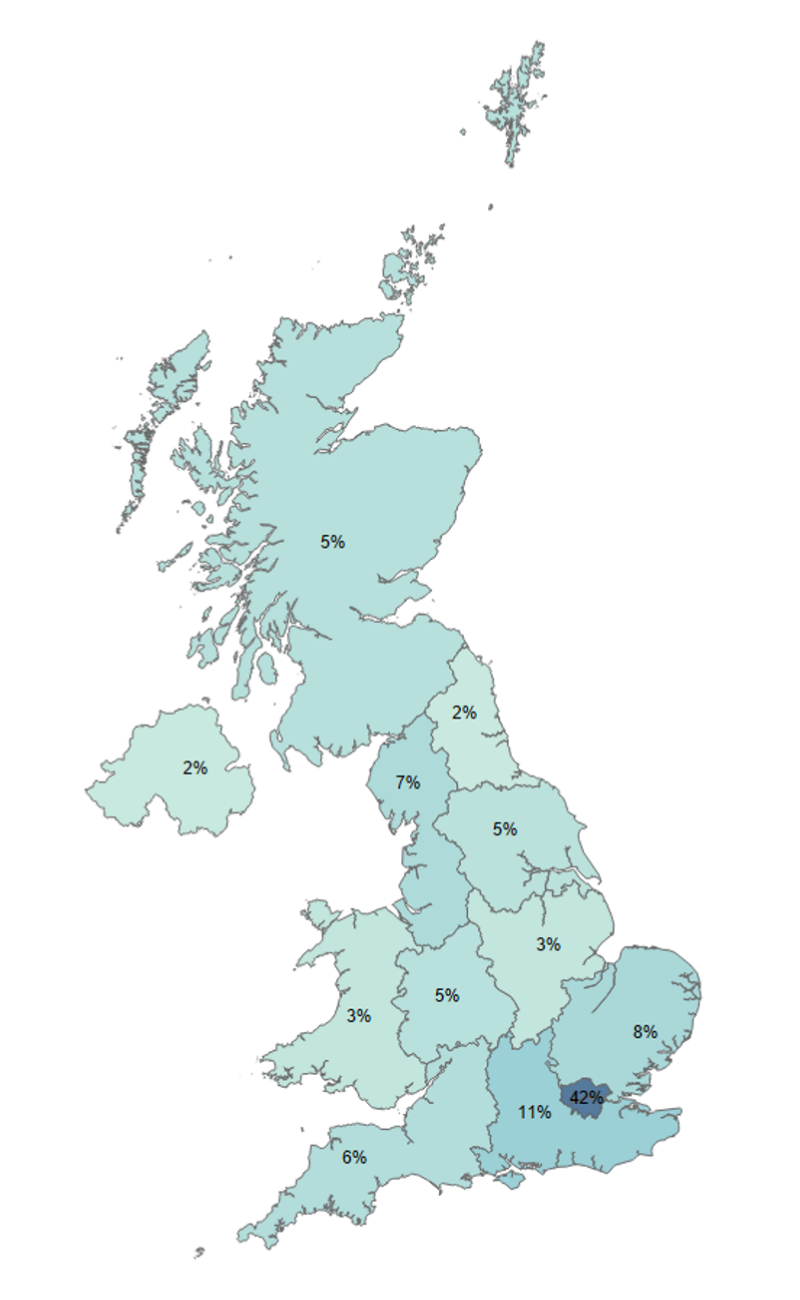
Source: Lightcast, Base: 92,418 implementer job postings (2023). London = 42%, South East = 11%, East of England = 8%, North West = 7%, South West = 6%, Scotland = 5%, West Midlands = 5%, Yorkshire and the Humber = 5%, East Midlands = 3%, Wales = 3%, Northern Ireland = 2%, North East = 2% of vacancies).
Figure 1.6 also highlights the percentage of AI related job postings in 2023 only by UK region across the three searches. This suggests a higher regional concentration of AI expert roles in London and the South East (60%) than for AI specialist (55%) or implementer roles (53%). There is also higher relative demand for AI experts in the East of England (9%), primarily driven by AI cluster in Cambridge, and explored in the subsequent sections.
We also find that the proportion of roles with remote location (or UK-wide) is steadily falling for AI roles (from 32% in 2021 to 18% in 2023 for expert roles), suggesting that employer preference for on-site / location hires is re-emerging.
Figures 1.7 to 1.9 explore the top locations (at a Local Authority level) in terms of the absolute number of job postings, and in terms of Location Quotient rankings[footnote 2]. Location Quotient analysis enables the research to consider regional hotspots relative to the size of the local labour market, and highlights significant relatively strong demand in areas such as Cambridge, Bristol, Oxford, Manchester, and Reading in particular. We highlight the top locations and set out a colour-density map (based on Location Quotient score) for each of the searches below.
Figure 1.7: AI experts: percentage of AI related job postings by UK region (2023)
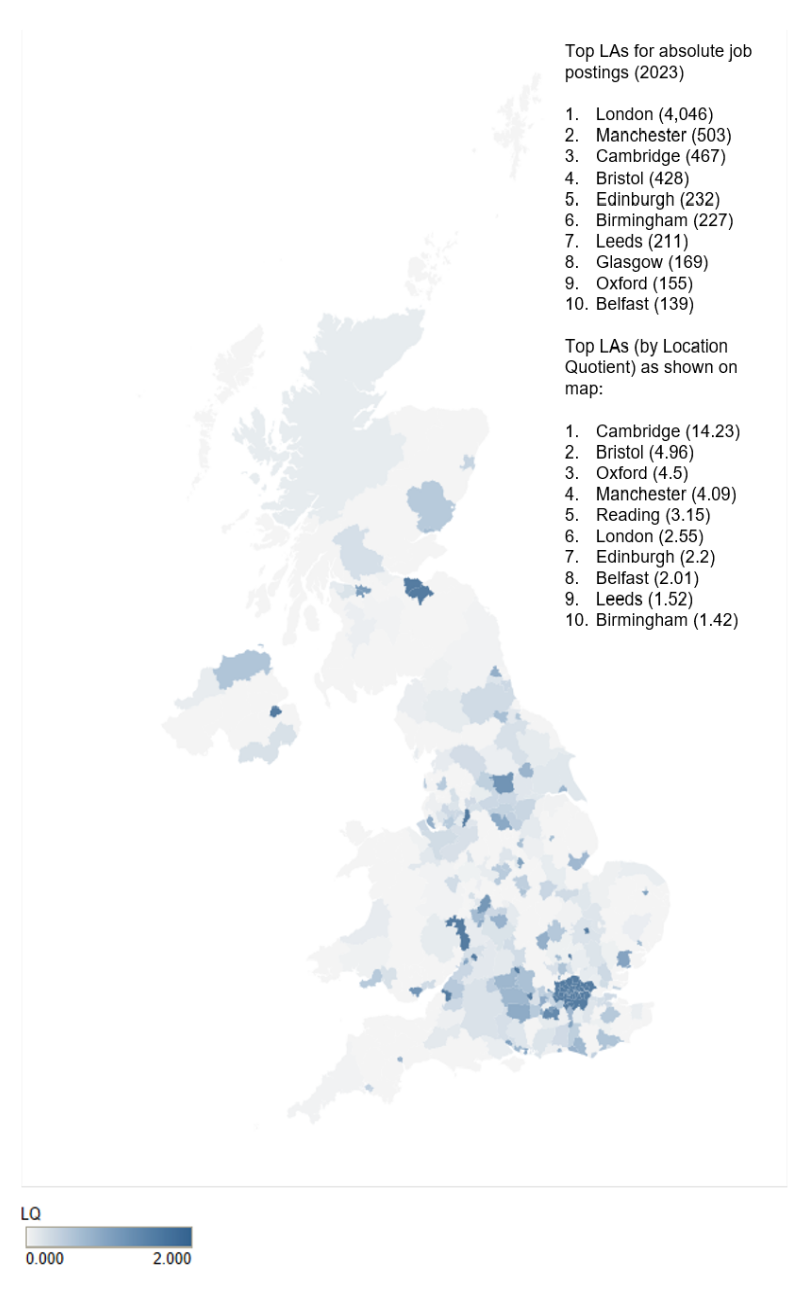
Source: Lightcast, Base: 9,244 expert job postings with local authority location data (2023)
Figure 1.8: AI specialists: percentage of AI related job postings by UK region (2023)
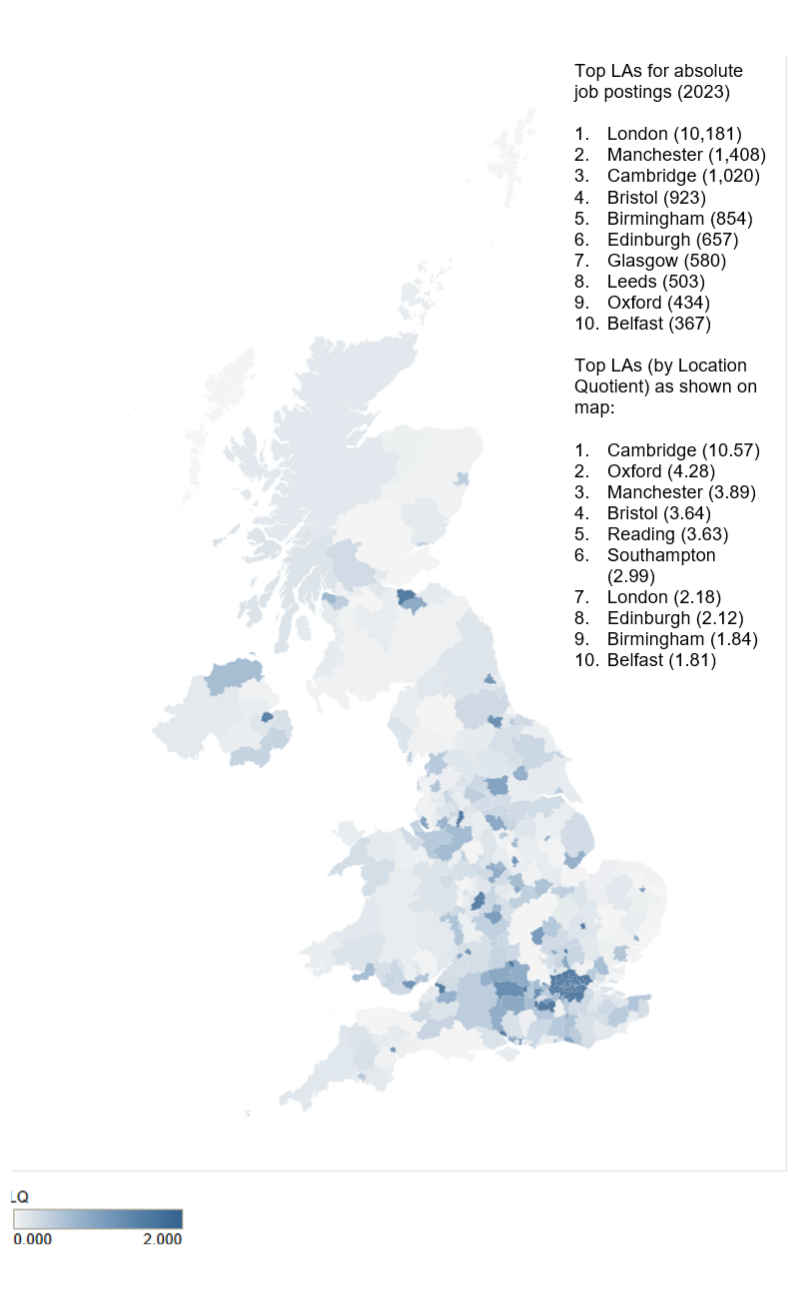
Source: Lightcast, Base: 27,195 specialist job postings with local authority location data (2023).
Figure 1.9: AI Implementers: percentage of AI related job postings by UK region (2023)
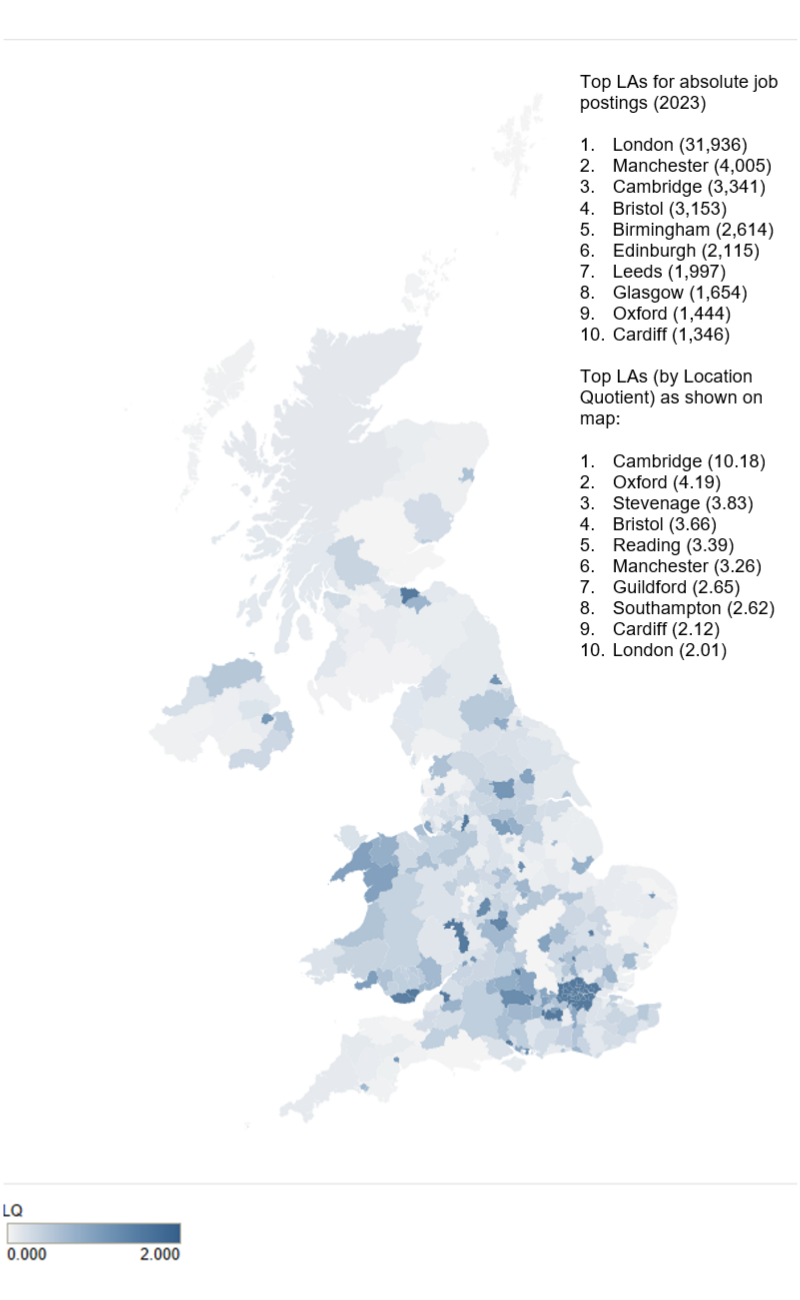
Source: Lightcast, Base: 92,418 implementer job postings with local authority location data (2023).
5. Job titles and occupations
This sub-section sets out the top identified job titles by each of the searches. Vacancy data can contain several variations of similar titles, and as such, minor variations of roles are combined by the Lightcast platform (e.g. an ‘Associate in Data Science’ and ‘Lead Data Scientist’ would both be classified as ‘Data Scientist’ for analysis).
Within the job titles identified for AI experts, the top job titles include ‘Data Scientist’, ML Engineer, Python Developer, Python Software Engineer, Algorithm Engineer, Computer Vision Engineer, and AI Engineer. The job titles are coded against Lightcast Occupational Codes below, which highlights how almost nine in ten roles advertised for AI experts are positioned at ‘Data Scientist’ or ‘Software Engineering’ roles, with some additional coverage by occupations such as researchers, data analysts, and statisticians.
Figure 1.10: AI experts: top occupations among advertised roles
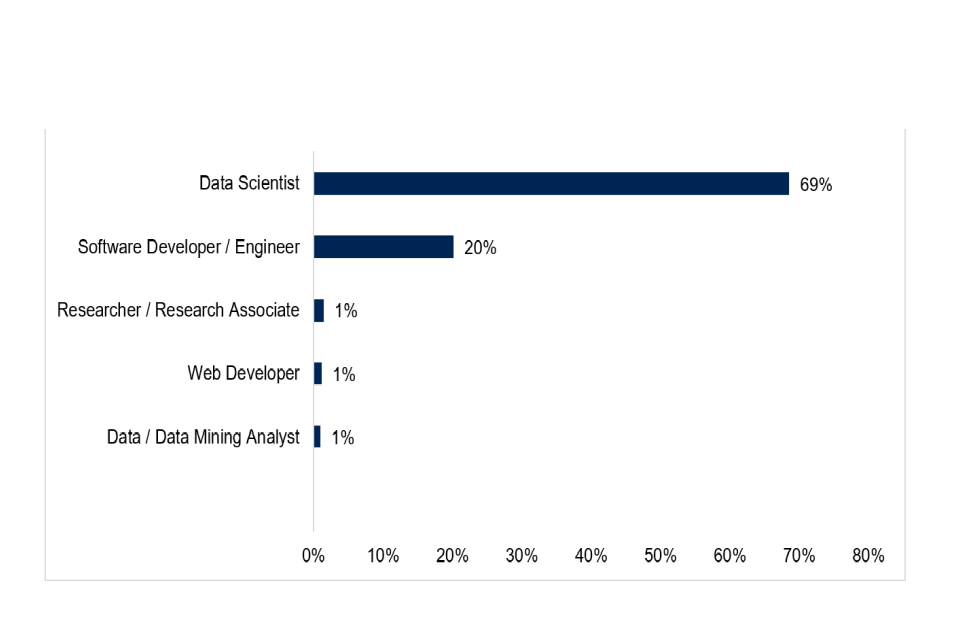
Source: Lightcast, Base: 54,013 expert job postings from January 2021 to December 2023, featuring one of the top 50 occupation classifications (across all expert postings).
Further, Figure 1.11 highlights the top occupations for AI specialist roles. This highlights how AI skills are frequently requested among Software Developers and wider roles, including Systems Architects, Analysts, and Product Managers.
Figure 1.11: AI specialists: top occupations among advertised roles
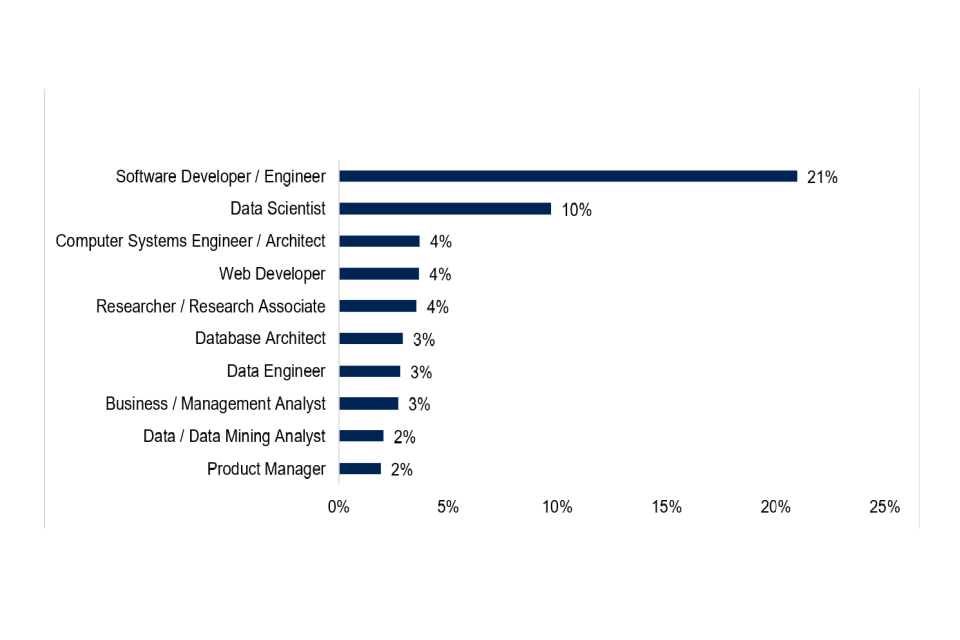
Source: Lightcast, Base: 95,866 specialist job postings from January 2021 to December 2023, featuring one of the top 50 occupation classifications (across all specialist postings).
For all roles (implementers), we find several further occupations requesting AI skills. Given the variance, we set these out in a word-cloud below, which highlights that whilst Data Scientist, and Software Developers are among the most common occupations requesting AI skills, there are also other roles demanding AI skills such as Market Research Analysts, Consultants, Lecturers, and those working in DevOps roles.
Figure 1.12: AI implementers: top occupations among advertised roles
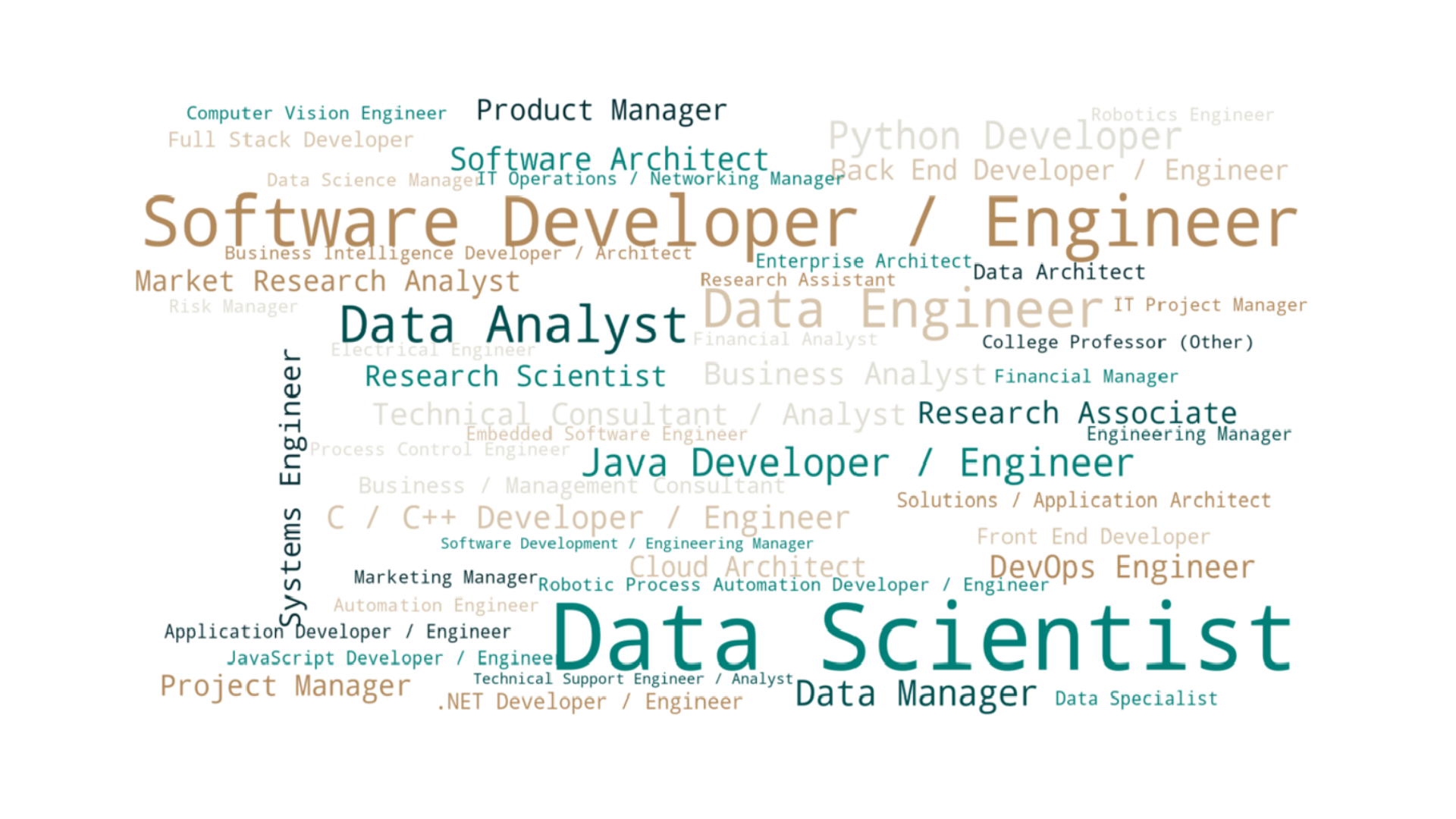
Source: PE word-cloud analysis of Lightcast, Base: 264,030 specialist job postings from January 2021 to December 2023, featuring one of the top 50 occupation classifications (across all specialist postings).
6. Sectors, industries and key employers
Job postings within the dataset are commonly advertised through a recruitment agency. For example, between 2021-23, 51% of AI expert postings were advertised through a recruitment agency. However, for those roles with a named employer, the data suggests the following sectoral breakdown. This is not necessarily a comprehensive breakdown, particularly as web data / the Lightcast dataset may be liable to omit some key large employers that do not post job adverts directly. The following sets out the sectors with the highest demand for roles between 2021 – 2023. It is important to note that over 22,000 expert AI roles were posted by recruitment agencies in this time, suggesting a demand among employers to use recruiters, particularly for those with most expertise and experience (51% of identified expert postings used a recruitment agency, compared to 38% for specialist and implementer roles). Consequently, the following explores the top sectors for AI related postings, excluding recruiters (“employment activities”).
Table 1.2: percentage of job adverts from sectors (where employer is known)
| AI Experts | % | AI Specialists | % | AI Implementers | % |
|---|---|---|---|---|---|
| Computer Programming, Consultancy and Related | 20% | Computer Programming, Consultancy and Related | 21% | Computer Programming, Consultancy and Related | 16% |
| Education | 8% | Education | 12% | Education | 13% |
| Head Offices; Management Consultancy | 8% | Financial Service Activities | 7% | Financial Service Activities | 8% |
| Financial Service Activities, | 7% | Head Offices; Management Consultancy | 6% | Head Offices; Management Consultancy | 7% |
| Office Administrative, and Other Business Support | 5% | Legal and Accounting Activities | 6% | Office Administrative, and Other Business Support | 5% |
| Other Professional, Scientific and Technical Activities | 4% | Office Administrative, and Other Business Support | 4% | Legal and Accounting Activities | 4% |
| Retail Trade | 3% | Telecommunications | 4% | Public Administration and Defence; Social Security | 4% |
| Legal and Accounting Activities | 3% | Other Professional, Scientific and Technical Activities | 3% | Human Health Activities | 4% |
Source: Lightcast, Base: 21,130 expert, 57,726 specialist, and 213,568 unique job postings that can be matched to an employer / sector (SIC classification) excluding recruitment agencies between January 2021 – December 2023
7. Skills, qualifications and experience
The Lightcast platform extracts key technical and wider skills requested by employers as ‘essential or desirable’ within job postings. This provides insight into the key skills being requested by employers in relation to AI-related postings. As the search strategies are refined to focus upon AI and related skills, we focus on skills requested in AI expert roles below.
Exploration of skills mentioned in postings suggests, among experts, there is highest demand for technical knowledge of Python (68%), followed by ‘broader’ terms Data Science (64%) and Machine Learning (63%). These are the most prominent, followed by technical skills in SQL (29%) and R (21%), and knowledge of cloud infrastructure (e.g. AWS (18%) and Azure (11%)).
The Lightcast platform also contains some coverage of skills within online work profiles. This suggests some notable skills shortages in the UK areas such as Python, Computer Science, Azure, Kubernetes, and continuous integration and continuous delivery among the existing workforce.
Figure 1.13: top skills requested for expert AI roles
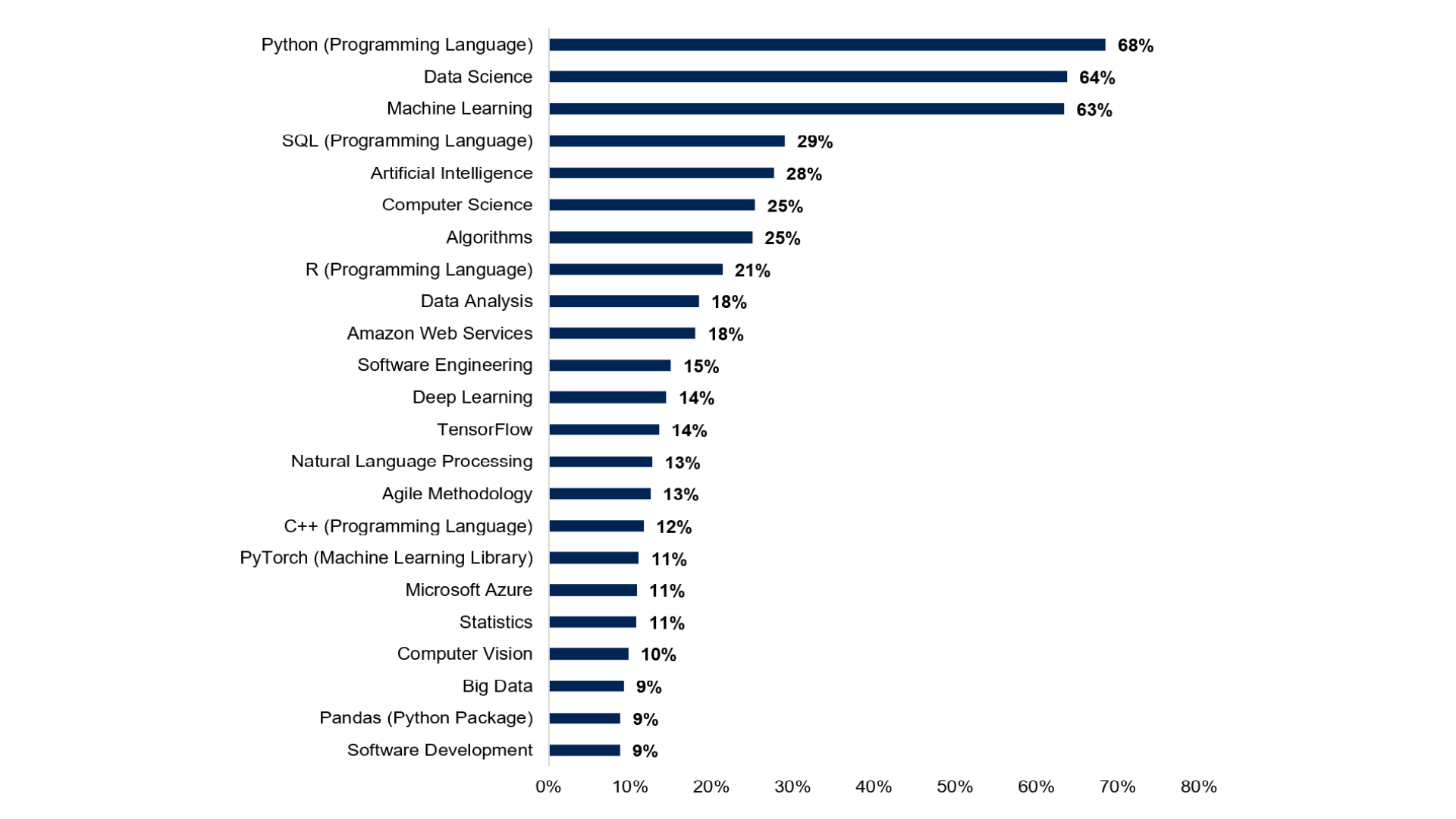
Source: Lightcast, Base: 54,805 expert postings that have at least one skill requested (January 2021 to December 2023)
The Lightcast platform also tracks the education and experience levels requested by employers within vacancies. Figure 1.14 highlights that AI expert roles all typically require degree level education by employers, and have a particularly high threshold with 37% of roles requesting a minimum of PhD level education, and 29% at least Master’s or above. This is also the case for specialist (27% PhD and 23% Master’s) and broader (24% and 22% respectively) roles. The high proportion of roles requesting at least a bachelor’s degree or above (99% for experts, 93% specialists, and 91% for implementer roles) suggests that employers view degree-level pathways as the main entry route into AI roles. However, many employers may consider the role of degree-level apprenticeships or alternative routes, which should be explored within qualitative research.
Figure 1.14: minimum education level requested by employers
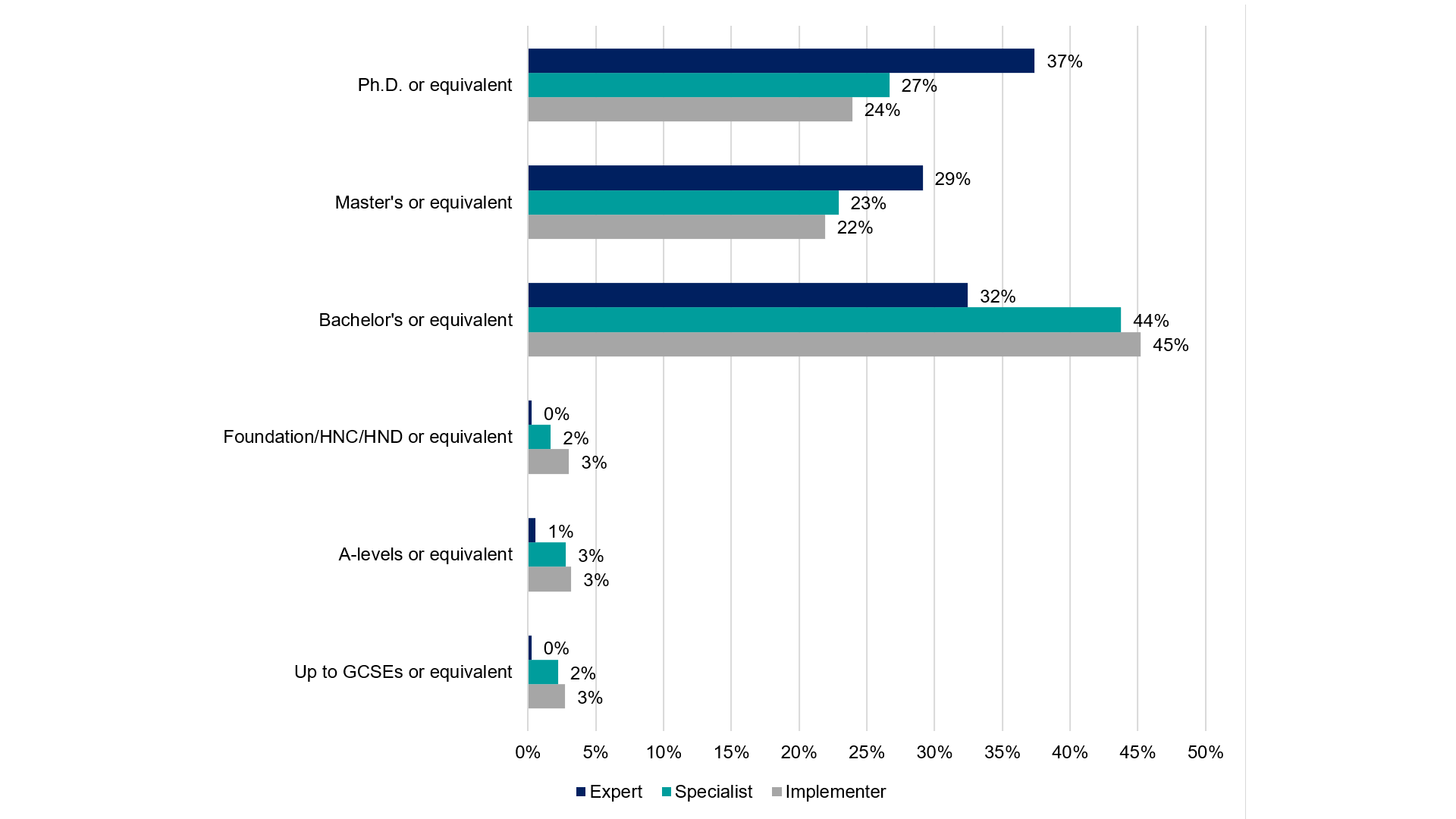
Source: Lightcast, Base: 31,250 expert postings with minimum education level, 57,861 specialists, 229,268 implementers (January 2021 to December 2023)
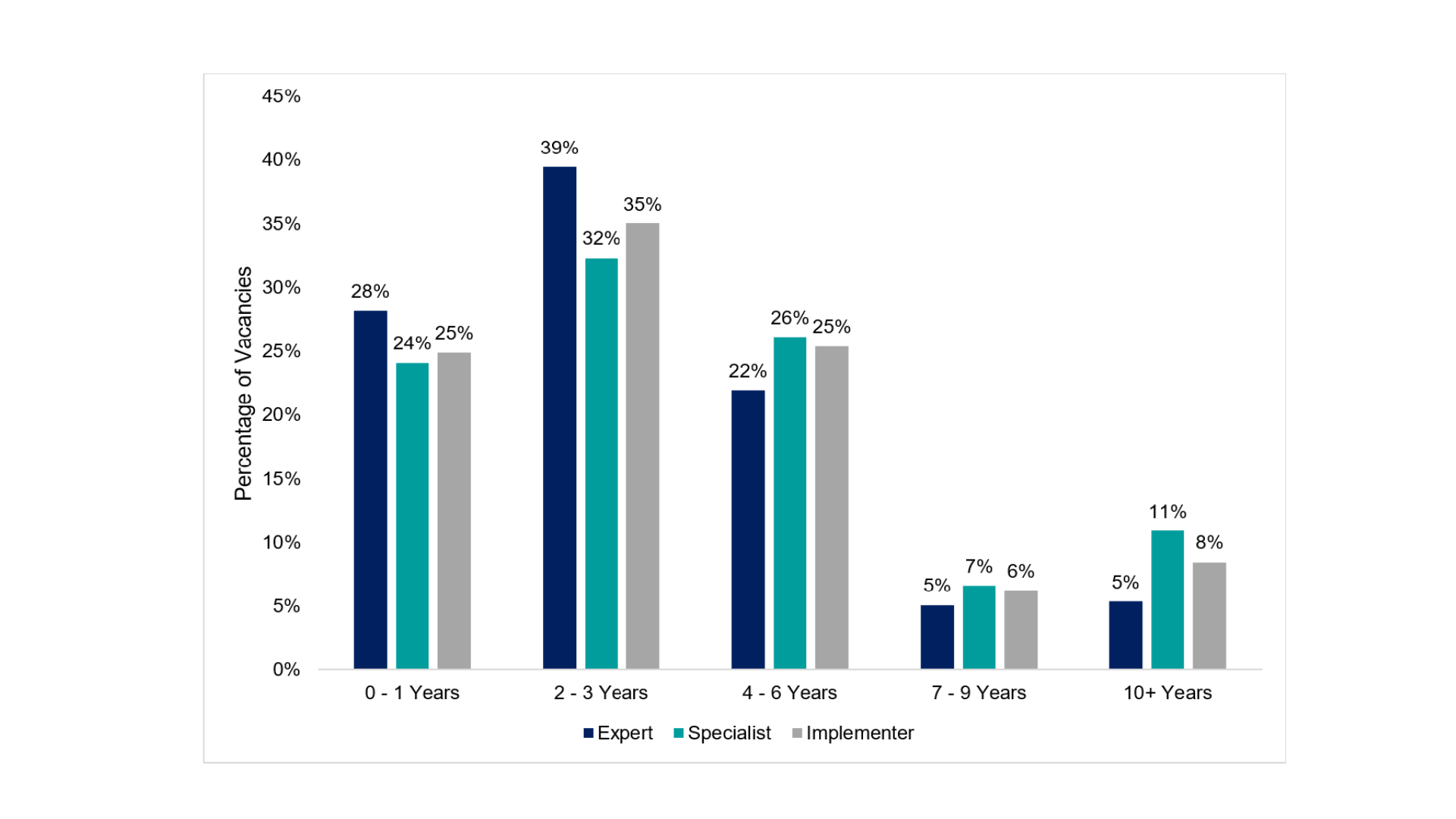
Figure 1.15 also highlights the minimum experience requested by employers for AI related roles. Typically, 75% of roles do not have a level of experience (in years) mentioned or identified by the Lightcast platform. However, for the roles that request a certain number of years of experience, we explore these by expert, specialist, and implementer roles.
This suggests that expert roles are more likely to request fewer years’ experience in relation to candidates: 67% of expert vacancies with a known minimum experience level request less than three years’ experience, of which 28% are for up to a year’s experience and 39% for two to three years. This may be shaped by the novel nature of AI expertise; for example, particularly for researcher roles, or where an area is relatively new in terms of research or design (e.g. AI assurance). It may also suggest that expert roles are clearer about the expectations for the role and candidate.
AI specialist roles typically have a higher requirement for more experienced candidates, with 26% requesting four to six years, 7% seven to nine years, and 11% requesting more than ten years’ experience. This may include firms seeking to build AI teams, and recruit site leads or key engineers to help build AI projects.
Figure 1.15: minimum experience requested by employers
Source: Lightcast, Base 11,709 expert postings with minimum experience level, 29,938 specialists, 113,033 implementers (January 2021 to December 2023)
8. Advertised salaries
Using the Lightcast Analyst platform, we estimate the mean salaries and the salary ranges advertised within job postings. Over the three-year period, we find that:
-
AI Expert roles have a median advertised salary of £62,700 (2021-2023). 30% of vacancies include a salary or salary range. 70% of vacancies do not provide any salary data.
-
AI Specialist roles have a median advertised salary of £55,000. 27% of vacancies include a salary or salary range, and 73% of vacancies do not provide any salary data.
-
AI Implementer roles have a median advertised salary of £50,400. 28% of vacancies include a salary or salary range, and 72% of vacancies do not provide any salary data.
Please note that we do not find significant variation in salary data across each year within this data, and as such, do not provide a time-series analysis. Further, it is possible that salary data could vary where employers are searching for different levels of experience, or where employers use a salary range, or use a recruitment agency.
Typically, when agencies are used, salary data may be kept private or at a broad range and would be subject to candidate experience. As a comparison, for all employee jobs within Standard Industry Classification (SIC) 2007 code 62, which is the computer programming, consultancy and related activities industry code, the mean annual pay in 2023 was £51,300, and the median was £44,100[footnote 3].
Using this value as a proxy for IT jobs in the UK suggests there is a wage premium of approximately 42% for AI expert roles compared to IT jobs (when comparing median salaries).[footnote 4] It also suggests a wage premium of 25% for specialist roles, and 14% for AI implementer roles.
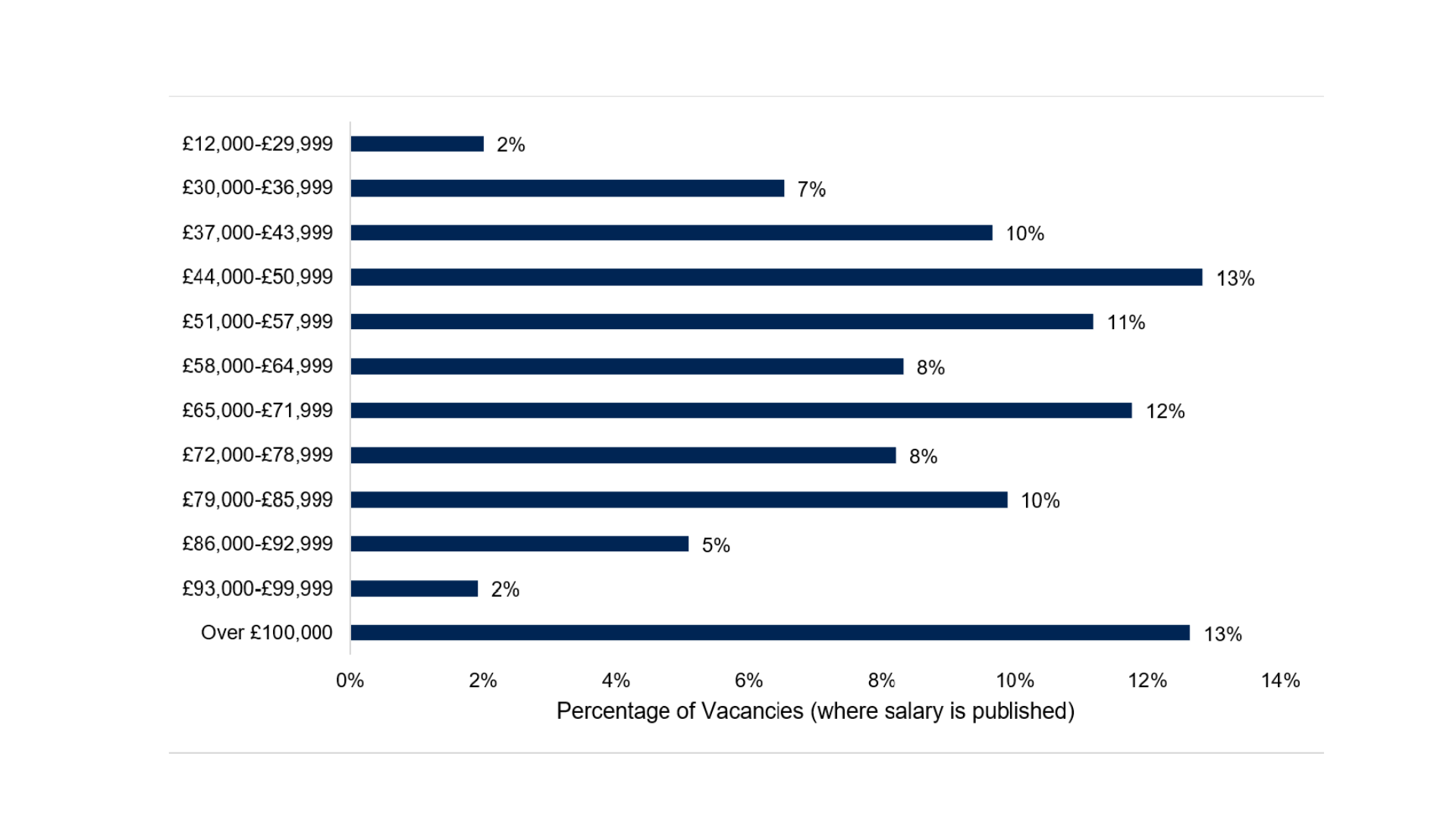
Figure 1.16 sets out the percentage of AI expert roles offering salaries within the following ranges, where the salary is advertised. It suggests that most roles (81%) for AI experts exceed the median pay for wider IT roles. It also highlights that whilst the AI expert median advertised salary of £62,700 is high compared to wider UK roles, it is not uncommon for vacancies to exceed this rate significantly. For example, 30% of advertised roles with a salary exceed £79,000 per annum, and 13% exceed £100,000 per annum.
Figure 1.16: percentage of AI expert job postings offering the following salaries (where salary or salary range is advertised)
Source: Lightcast, Base 16,511 expert postings with a salary observation (January 2021 to December 2023)
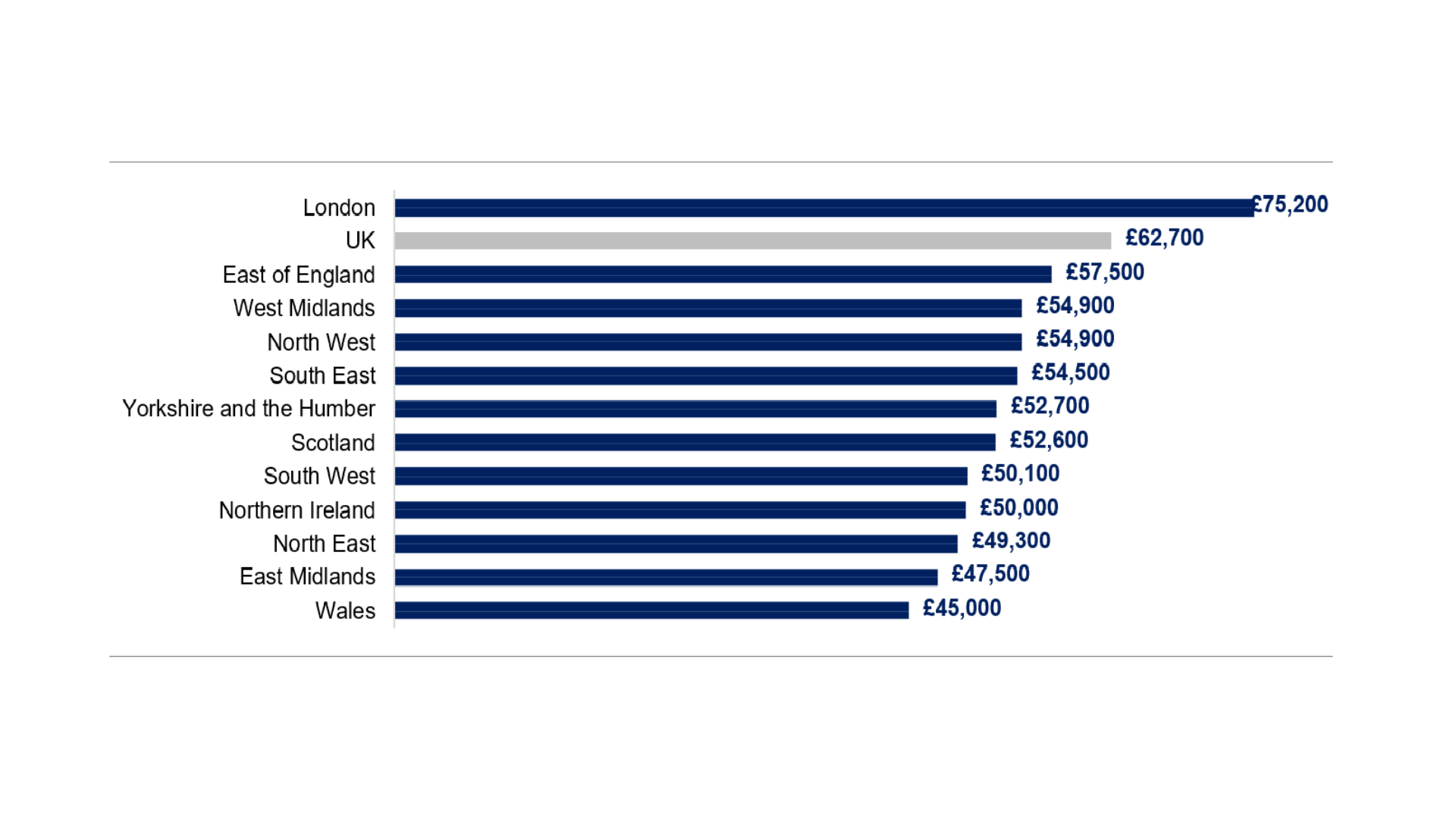
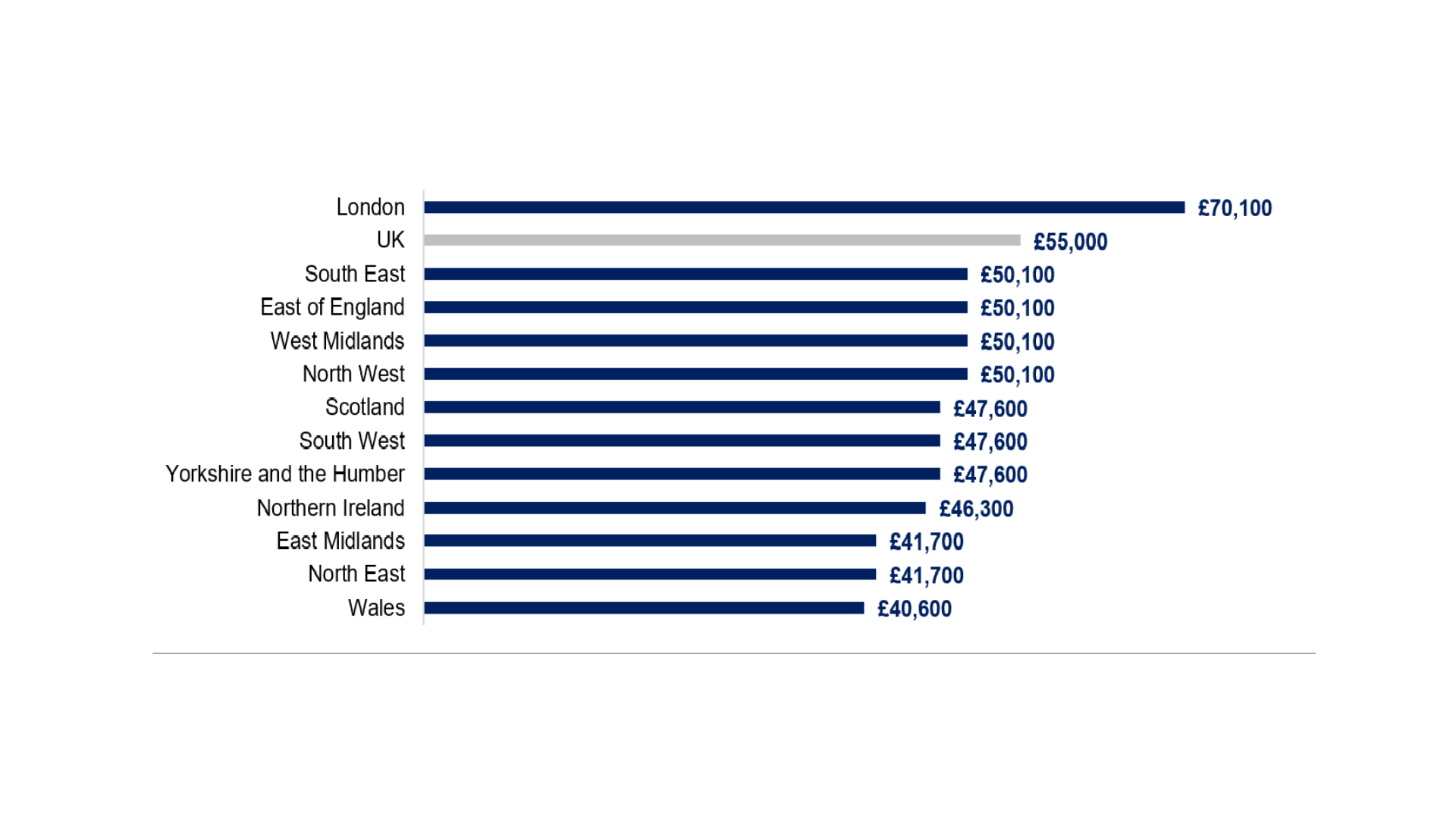
Figures 1.17 to 1.19 also highlight the median salary for each UK region for each search. This highlights the advertised salary premium in London across each; however, proportionately, AI expert roles in London are 20% higher than the UK median, compared to 27% higher for specialists, and 34% for implementers. Whilst this may be due to sectoral composition (e.g. AI roles in industries such as finance), this does suggest that AI expert roles can command high proportionate salaries across each UK region. The regional data also suggests strong salaries in areas such as East of England, West Midlands, North West, and South East – and proportionately, all regions have strong salaries for AI professionals compared to regional median salaries in wider sectors.
Figure 1.17: median salary offers for AI expert job postings, by region
Source: Lightcast, Base 16,511 expert postings with a salary observation (January 2021 to December 2023)
Figure 1.18: median salary offers for AI specialist job postings, by region
Source: Lightcast, Base 32,070 specialist postings with a salary observation (January 2021 to December 2023)
Figure 1.19: median salary offers for AI implementer job postings
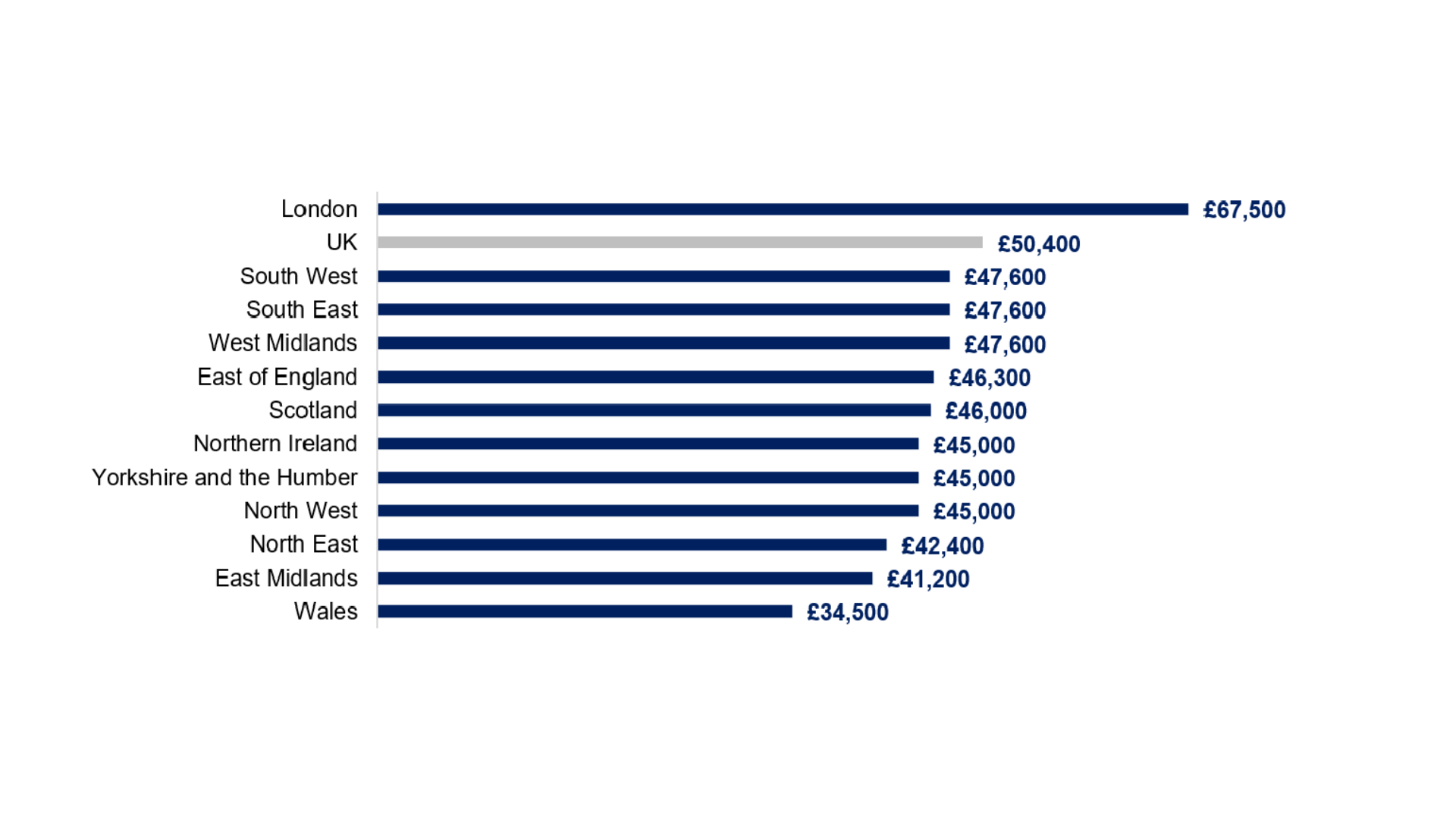
Source: Lightcast, Base 125,269 implementer postings with a salary observation (January 2021 to December 2023)
The Lightcast platform also estimates the number of employers competing for AI talent, based on the number of employers with an active vacancy in that period. It also highlights the total number of employers recruiting across all roles at that time.
This enables an estimate of the proportion of employers (actively hiring) that are searching for AI talent by search strategy, and by region. At a UK level, the Lightcast data suggests that there were 394,702 unique employers between 2021-2023.
Of these, an estimated 4,275 (1.1%) were advertising vacancies for AI experts, followed by 10,145 for AI specialists (2.6%) and 19,973 overall (5.1%). As Table 1.3 highlights, this is a useful proxy indicator to explore AI adoption (by recruitment) across the UK, and suggests highest levels of AI related recruitment in London among employers, followed by strong demand for implementers in the North West, South East, and Northern Ireland in particular. Areas such as Wales, East of England, and Yorkshire and the Humber have lower levels of employers requesting AI skills; however, this could also suggest concentration among a smaller number of large employers in core city or town clusters.
Table 1.3: proportion of employers with at least one job posting seeking AI skills
| Region | Experts | Specialists | Implementers |
|---|---|---|---|
| London | 2.6% | 5.4% | 12.1% |
| North West | 1.0% | 2.2% | 5.6% |
| South East | 1.1% | 2.6% | 5.5% |
| UK | 1.1% | 2.6% | 5.1% |
| Northern Ireland | 1.1% | 1.7% | 5.0% |
| East Midlands | 0.7% | 1.5% | 4.6% |
| South West | 1.0% | 1.9% | 4.3% |
| West Midlands | 0.8% | 1.5% | 4.3% |
| North East | 0.7% | 1.5% | 4.2% |
| Scotland | 1.0% | 1.7% | 4.1% |
| Wales | 0.6% | 1.3% | 4.0% |
| East of England | 0.8% | 1.7% | 3.9% |
| Yorkshire and the Humber | 0.8% | 1.4% | 3.8% |
Source: Lightcast, Base: 394,702 employers (all industries, all roles), 2021-23
Annex
Search strategies
This annex sets out the searches used within the Lightcast platform. As stated in the methodology, please note that, due to the search strategies used, there may be overlap between the groups e.g. some search results will include Data Scientists which fall into each group. As such, we suggest that there are up to 448,484 postings in scope as part of this analysis (all AI related roles), of which 118,017 (26%) can be considered more technical (“AI Specialists), and 54,805 (12%) are most technical and advanced roles – typically in research or development (“AI experts”). These should therefore be treated as three unique searches and should not be added to avoid double-counting.
Table 1.4: searches used for AI experts
| Timeframe: | Jan 2021 - Dec 2023 |
|---|---|
| Job Title | Results should include Description Deep Learning Engineers Natural Language Processing Scientists “machine learning “ Job Titles with 18 matches “data scientist” Job Titles with 25 matches “computer vision” Job Titles with 8 matches “algorithm” Job Titles with 5 matches “artificial intelligence” Job Titles with 8 matches “neural” Job Title with 1 matches “python” Job Titles with 20 matches |
| Occupations | Results should exclude: Code Description 4 Administrative and Secretarial Occupations 7 Sales and Customer Service Occupations 9 Elementary Occupations |
| Skills (any) | Skills (Has Any): Cognitive Computing Computational Intelligence Data Science Logistic Regression Support Vector Machine Feature Engineering Expert Systems Fuzzy Logic Generative Adversarial Networks Knowledge-Based Systems Machine Vision Computer Vision Predictive Analytics Reasoning Systems Reinforcement Learning Sentiment Analysis Smart Systems Supervised Learning Semi-Supervised Learning Unsupervised Learning Text Mining Variational Autoencoders Image Recognition Complex Adaptive Systems Data Intelligence Natural Language Processing Chatbot Word2Vec Models “algorithm” Skills and Qualifications with 30 matches “artificial intelligence” Skills and Qualifications with 8 matches “autonomous” Skills and Qualifications with 8 matches “agent” Skills and Qualifications with 26 matches “data mining” Skills and Qualifications with 7 matches “deep learning” Skills and Qualifications with 3 matches “neural networks” Skills and Qualifications with 5 matches “generative models” Skills and Qualifications with 5 matches “machine learning” Skills and Qualifications with 16 matches “neural network” Skills and Qualifications with 5 matches “robotics” Skills and Qualifications with 23 matches |
Table 1.5: searches used for AI specialists
| Timeframe: | Jan 2021 - Dec 2023 |
|---|---|
| Job Title | Results should exclude Description “account” Job Titles with 1032 matches “administrator” Job Titles with 1196 matches “nurse” Job Titles with 1476 matches “healthcare” Job Titles with 149 matches “sales” Job Titles with 3363 matches “marketing” Job Titles with 1470 matches “brand” Job Titles with 168 matches “business development” Job Titles with 247 matches “maintenance” Job Titles with 455 matches “recruiter” Job Titles with 266 matches |
| Occupations | Results should exclude: Code Description 22 Health Professionals 23 Teaching and Other Educational Professionals 32 Health and Social Care Associate Professionals 41 Administrative Occupations 42 Secretarial and Related Occupations 71 Sales Occupations 72 Customer Service Occupations 91 Elementary Trades and Related Occupations 92 Elementary Administration and Service Occupations |
| Skills (any) | Skills (Has Any): Cognitive Computing Computational Intelligence Data Science Logistic Regression Support Vector Machine Feature Engineering Expert Systems Fuzzy Logic Generative Adversarial Networks Knowledge-Based Systems Machine Vision Computer Vision Predictive Analytics Reasoning Systems Reinforcement Learning Sentiment Analysis Smart Systems Supervised Learning Unsupervised Learning Text Mining Variational Autoencoders Image Recognition Complex Adaptive Systems Algorithms Treatment Algorithms Algorithm Analysis BGFS Algorithms Genetic Algorithm Greedy Algorithm Sorting Algorithm Simplex Algorithm Algorithmic Trading Algorithm Design Evolutionary Algorithm Graph Algorithms Search Algorithms Nagle’s Algorithm ALGOL (ALGOrithmic Language) Expectation Maximization Algorithm Machine Learning Algorithms Floating Point Algorithm Binary Search Algorithms Nearest Neighbour Algorithm Secure Hash Algorithm Random Forest Algorithm TCP Congestion-Avoidance Algorithm K-Nearest Neighbors Algorithm Elliptic Curve Digital Signature Algorithm Push Relabel Maximum Flow Algorithm Fast Fourier TransForms (FFT Algorithms) SLAM Algorithms (Simultaneous Localization And Mapping) Generalized Simplified Marker And Cell Algorithm (GSMAC) Surface Energy Balance Algorithm For Land (SEBAL) Artificial Intelligence Generative Artificial Intelligence Artificial General Intelligence Artificial Intelligence Development Applications Of Artificial Intelligence Artificial Intelligence Systems AIOps (Artificial Intelligence For IT Operations) Artificial Intelligence Markup Language (AIML) Autonomation Autonomous System Autonomous Vehicles Autonomic Computing Autonomous Underwater Vehicle Oracle Autonomous Database Autonomous Cruise Control Systems Oracle Autonomous Database Cloud Certification Antiarrhythmic Agent Descaling Agent Intelligent Agent Oxidizing Agent Backup Agent User Agent Blowing Agent Mobile Agent Enrolled Agent (EA) Agent Extensibility Protocols Certified Leasing Agent Open Policy Agent Notary Signing Agent Agent-Based Model Multi-Agent Systems Drag Reducing Agent Message Transfer Agent SQL Server Agent Stock Transfer Agent Java Agent Development Framework Reversed Compound Agent Theorem Distributed Multi-Agent Reasoning Systems Large Scale Multi-Agent Systems DARPA Agent Markup Language (DAML) Uniform Securities Agent State Law Exam FINRA Series 63 (Uniform Securities Agent State Law) Data Intelligence Intelligence Data Handling Business Intelligence Data Modeling Data Warehousing And Business Intelligence (DWBI) Variable Data Intelligent Postscript Printware IBM Intelligent Printer Data Stream (Computer Printing) Data Mining Data Mining Methods Educational Data Mining Java Data Mining Relational Data Mining Data Mining Query Language (DMQL) Cross-Industry Standard Process for Data Mining (CRISP-DM) Deep Learning Deep Learning Methods Chainer (Deep Learning Framework) Convolutional Neural Networks Artificial Neural Networks Recurrent Neural Network (RNN) Keras (Neural Network Library) Open Neural Network Exchange (ONNX) General Circulation Models Generalized Linear Model Traffic Generation Models General Linear Models General Algebraic Modeling Systems Machine Learning Model Monitoring And Evaluation Machine Learning Adversarial Machine Learning Torch (Machine Learning) Automated Machine Learning Machine Learning Methods Azure Machine Learning Transformer (Machine Learning Model) Machine Learning Model Training PyTorch (Machine Learning Library) MLOps (Machine Learning Operations) CatBoost (Machine Learning Library) SAS Certified Specialist: Machine Learning AWS Certified Machine Learning Specialty SAS Certified Professional: AI and Machine Learning Natural Language Processing Natural Language Processing Systems SAS Certified Specialist: Natural Language Processing And Computer Vision Robotics Robotic Systems Robot Welding Robotic Surgery SCARA Robot Robotic Programming Rational Robot Advanced Robotics Industrial Robotics Cognitive Robotics Paint Robot Robot Framework Robotic Machines Pega Robotics Software Robotic Process Automation Robot End Effector Robotic Automation Software Mobile Robot Navigation Robot Operating Systems Robotic Liquid Handling Systems Microsoft Robotics Developer Studio Mobile Robot Programming Toolkit SACA Certified Industry 4.0 Associate Robot System Operations Chatbot Word2Vec Models Results should Include all of the selected skills: Artificial Intelligence |
Table 1.6: searches used for AI implementers
| Timeframe: | Jan 2021 - Dec 2023 |
|---|---|
| Job Title | Results should exclude Description “account” Job Titles with 1032 matches “administrator” Job Titles with 1196 matches “nurse” Job Titles with 1476 matches “healthcare” Job Titles with 149 matches “sales” Job Titles with 3363 matches “marketing” Job Titles with 1470 matches “brand” Job Titles with 168 matches “business development” Job Titles with 247 matches “maintenance” Job Titles with 455 matches “recruiter” Job Titles with 266 matches |
| Occupations | Results should exclude Code Description 41 Administrative Occupations 42 Secretarial and Related Occupations 71 Sales Occupations 72 Customer Service Occupations 91 Elementary Trades and Related Occupations 92 Elementary Administration and Service Occupations |
| Skills (any) | Skills (Has Any): Cognitive Computing Computational Intelligence Data Science Logistic Regression Support Vector Machine Feature Engineering Expert Systems Fuzzy Logic Generative Adversarial Networks Knowledge-Based Systems Machine Vision Computer Vision Predictive Analytics Reasoning Systems Reinforcement Learning Sentiment Analysis Smart Systems Supervised Learning Unsupervised Learning Text Mining Variational Autoencoders Image Recognition “Complex Adaptive Systems” Skill or Qualification with 1 matches “algorithm” Skills and Qualifications with 30 matches “artificial intelligence” Skills and Qualifications with 8 matches “autonomous” Skills and Qualifications with 8 matches “agent” Skills and Qualifications with 26 matches “data intelligence” Skills and Qualifications with 6 matches “data mining” Skills and Qualifications with 7 matches “deep learning” Skills and Qualifications with 3 matches “Neural Networks” Skills and Qualifications with 5 matches “generative models “ Skills and Qualifications with 5 matches “machine learning” Skills and Qualifications with 16 matches “natural language processing” Skills and Qualifications with 3 matches “neural network” Skills and Qualifications with 5 matches “robotics” Skills and Qualifications with 23 matches “chatbot” Skill or Qualification with 1 matches “word2vec” Skill or Qualification with 1 matches |
-
The Location Quotients are calculated using the total workforce jobs for a local authority region. The average demand is set at ↩
-
This is sourced from the Office for National Statistics (ONS, 2023 provisional data) Annual Survey of Hours and Earnings. ↩
-
Comparing the 2023 median for AI expert job postings (£62,700) with the 2023 median for all IT postings (defined as SIC 62, getting a provisional median of £44,100) ↩