AI Skills for Life and Work: General Public Survey Findings
Published 28 January 2026

© Crown copyright 2026
This publication is licensed under the terms of the Open Government Licence v3.0 except where otherwise stated. To view this licence, visit nationalarchives.gov.uk/doc/open-government-licence/version/3 or write to the Information Policy Team, The National Archives, Kew, London TW9 4DU, or email: psi@nationalarchives.gov.uk.
Where we have identified any third party copyright information you will need to obtain permission from the copyright holders concerned.
This publication is available at https://www.gov.uk/government/publications/ai-skills-for-life-and-work-general-public-survey-findings/ai-skills-for-life-and-work-general-public-survey-findings
This report was authored by Oliver Fenton, Jacob Bellamy, and Eva Radukic at Ipsos.
This research was supported by the Department for Science, Innovation and Technology (DSIT) and the R\&D Science and Analysis Programme at the Department for Culture, Media and Sport (DCMS). It was developed and produced according to the research team’s hypotheses and methods between November 2023 and March 2025. Any primary research, subsequent findings or recommendations do not represent UK Government views or policy.
This report has been converted from a slide deck report.
1. Background and methodology
Objectives
-
Understand how AI is used in day-to-day life, which tools and use cases
-
Understand what AI skills are viewed as most important
-
Understand the level of confidence in skills
-
Understand future usage frequency and potential impact of AI
Methodology
-
Random probability sampling using the Ipsos KnowledgePanel UK survey
-
Fieldwork dates: 29 February to 7 March 2024
-
Sample size: 1,189 adults aged 18+, 1,155 had heard of AI
2. Key findings
-
17% of the public have heard of AI and could explain what it is in detail.
-
73% of the public have used AI in their day-to-day life in the past month.
-
28% of the public feel confident in their ability to use AI tools in their daily life.
-
62% of the public felt keeping their information safe and private while using AI was important.
-
36% have used AI in their workplace in the past month.
-
21% of the public say that AI has increased their productivity at work.
3. AI in day-to-day life: knowledge and usage
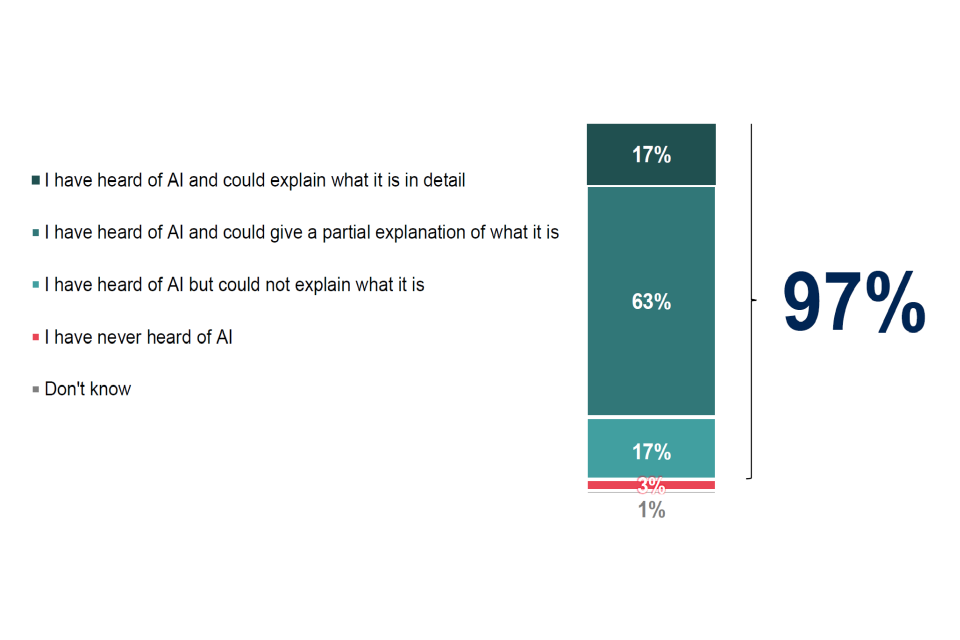
Almost all of the public (97%) have heard of AI before. Figure 3.1 shows that 97% of the public have heard of Artificial Intelligence (AI). The data is broken down as follows: 17% have heard of AI and could explain it in detail; 63% could give a partial explanation; 17% have heard of it but could not explain it; 3% have never heard of AI; and 1% don’t know.
Figure 3.1: “Have you ever heard of the term Artificial Intelligence (AI)?” survey question responses
Base: all UK adults aged 18+ (n=1189)
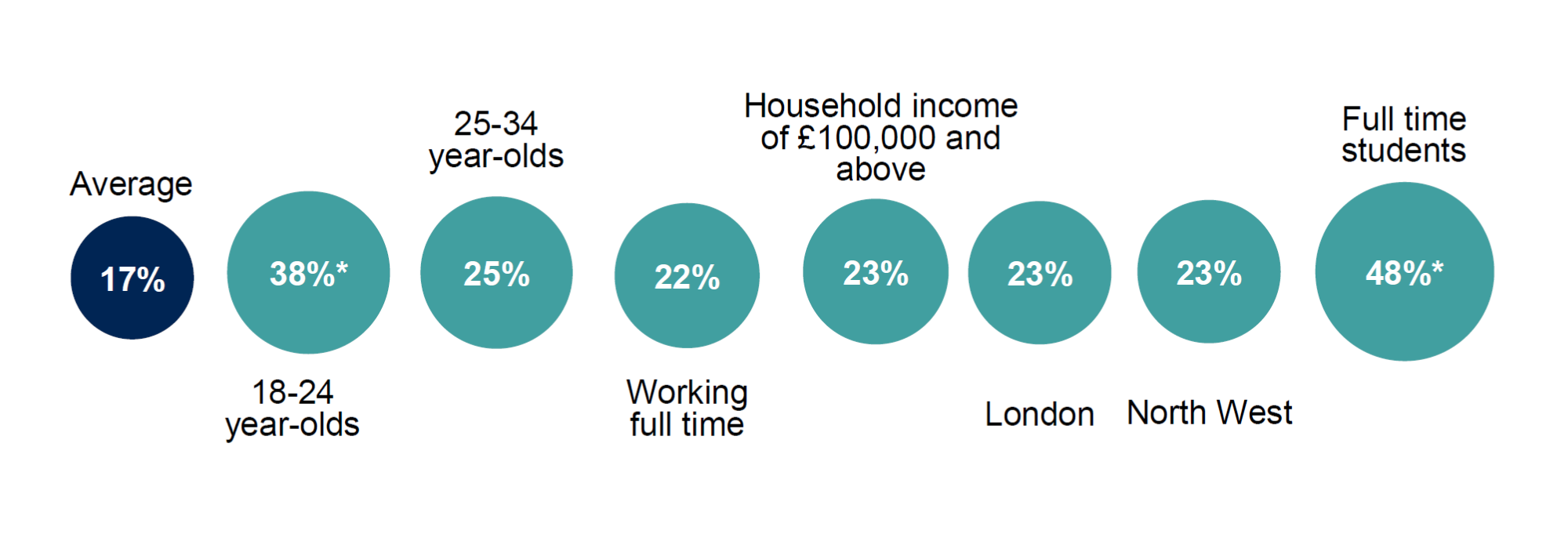
Just under one in five (17%) of the public could explain what AI is in detail. Figure 3.2 shows the breakdown by demographics for those who could explain what AI is in detail, with 48% being full-time students.
Figure 3.2: Key demographics of those who could explain what AI is in detail
Base: all UK adults aged 18+ (n=1189)
*Significance testing at the 95% confidence level
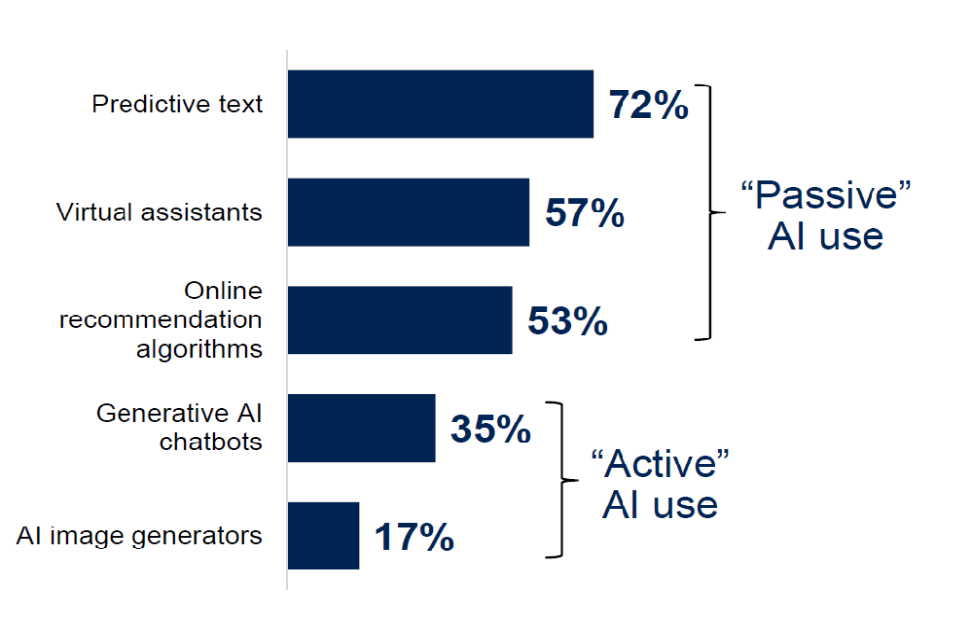
73% of the public have used AI at least once in the past month, but a quarter (24%) have not. 35% of the public have used generative AI in the past month. Use of AI was higher among the more ‘passive’ types of use, with only a minority using gen AI to assist with aspects of their life. Figure 3.3 compares the use of different AI tools in the past month. It categorises them as ‘passive’ or ‘active’. Passive tools are more popular: predictive text was used by 72%, virtual assistants by 57%, and online recommendation algorithms by 53%. Active tools are used less: generative AI chatbots were used by 35% and AI image generators by 17%. Around a quarter of respondents (23%) had not used AI to assist with how they learned and were not aware of how it could help.
Figure 3.3: AI tools used at least once in the past month
Base: all who have heard of AI (n=1155)
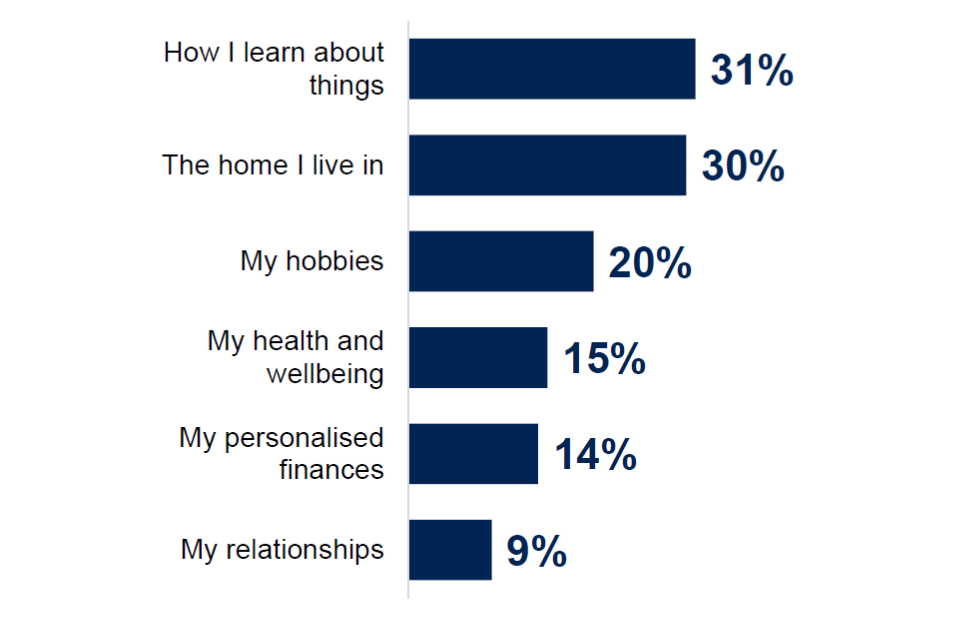
Figure 3.4 shows which aspects of life people used AI to assist with in the past month. Learning about things is the most common at 31%, followed by the home at 30%, hobbies at 20%, health and wellbeing at 15%, personalised finances at 14%, and relationships at 9%. A note adds that 23% of people had not used AI to help them learn and were not aware of how it could help.
Figure 3.4: AI tools used to assist with the following aspects of life at least once in the past month
Base: all who have heard of AI (n=1155)
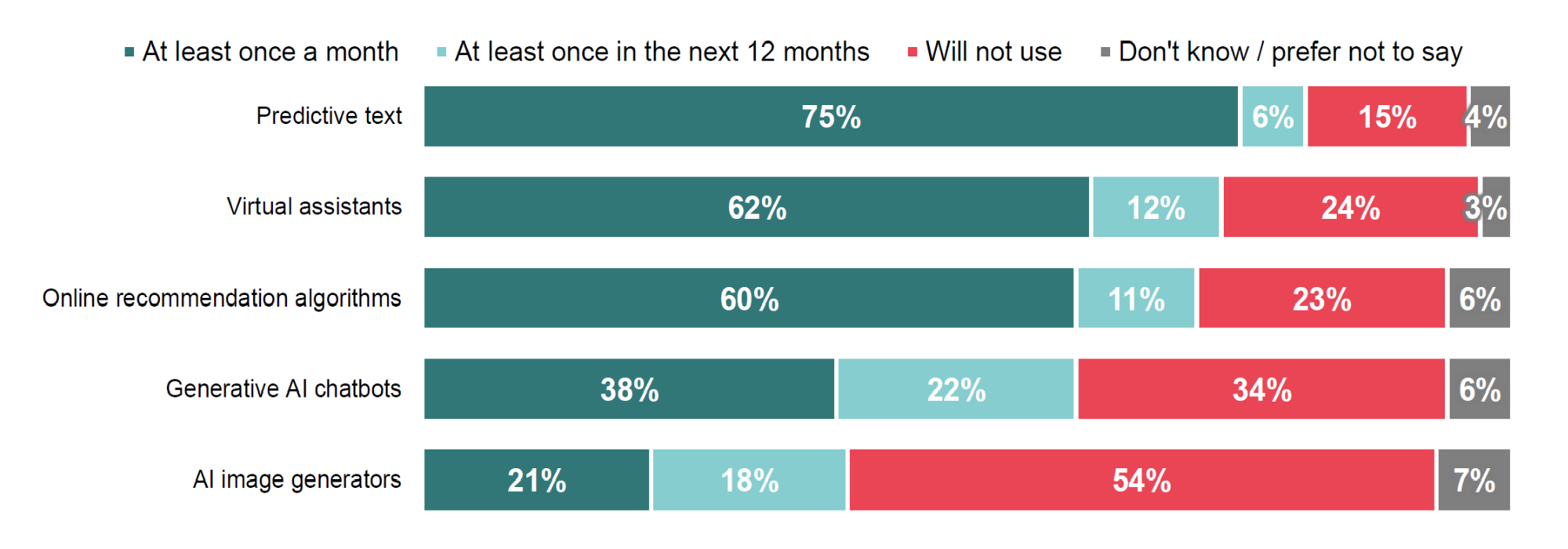
Only a minority expect to use generative AI frequently in the next year – roughly the same proportion who say the currently use it. A horizontal stacked bar chart showing how often people expect to use different AI tools in their day-to-day lives in the next 12 months. For predictive text, 75% expect to use it at least once a month. For virtual assistants, 62% expect to use them at least once a month. For online recommendation algorithms, 60% expect to use them at least once a month. For generative AI chatbots, 38% expect to use them at least once a month, while 34% expect not to use them at all. For AI image generators, 21% expect to use them at least once a month, while 54% expect not to use them at all.
Figure 3.5: “In the next 12 months, how often do you expect to use the following types of Artificial Intelligence (AI) tools in your day-to-day life?” survey question responses
Base: all who have heard of AI (n=1155)
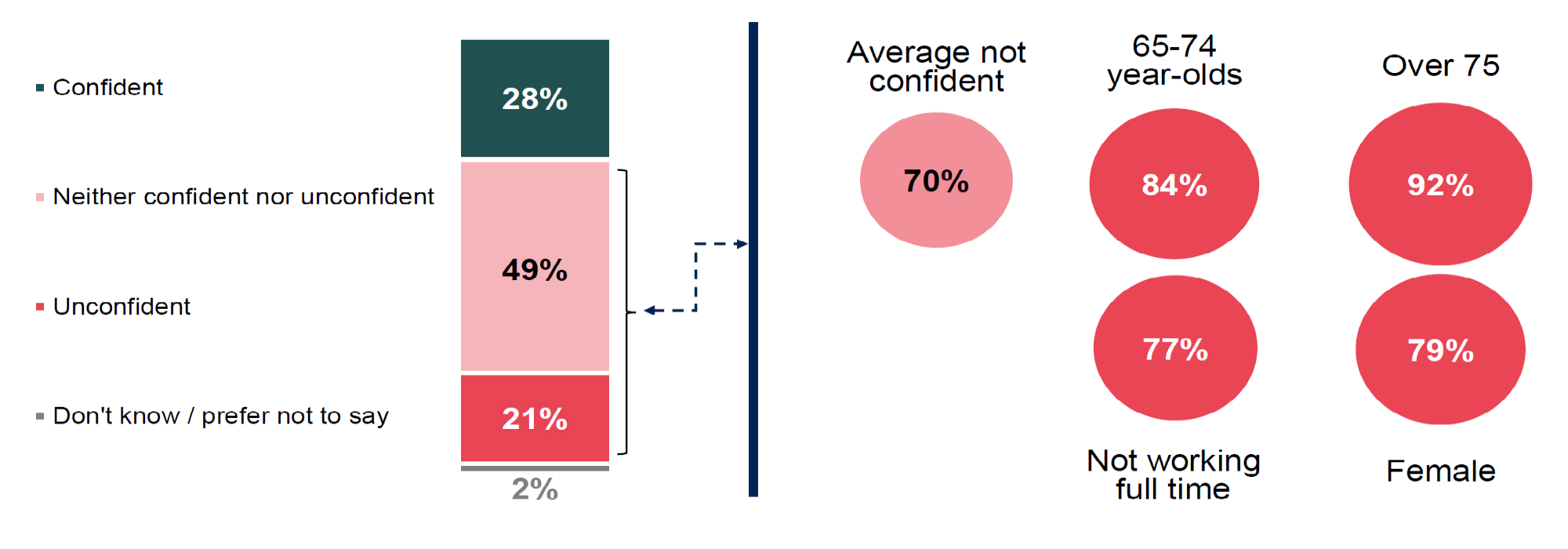
Less than a third (28%) of the public feel confident in ability to use AI tools in daily life. Figure 3.6 shows the public’s confidence in using AI tools. 28% feel confident, 49% feel neither confident nor unconfident, and 21% feel unconfident. The chart also highlights that unconfidence is higher among certain groups, including those aged 65 and over, females, and those not in full-time work.
Figure 3.6: “How confident do you feel in your ability to use Artificial Intelligence (AI) tools?” survey question responses
Base: all who have heard of AI (n=1155): 65-74 year olds (n=265), over 75 year olds (n=139), not working full time (n=733), female (n=580)
4. AI in day-to-day life: deep dive into skills
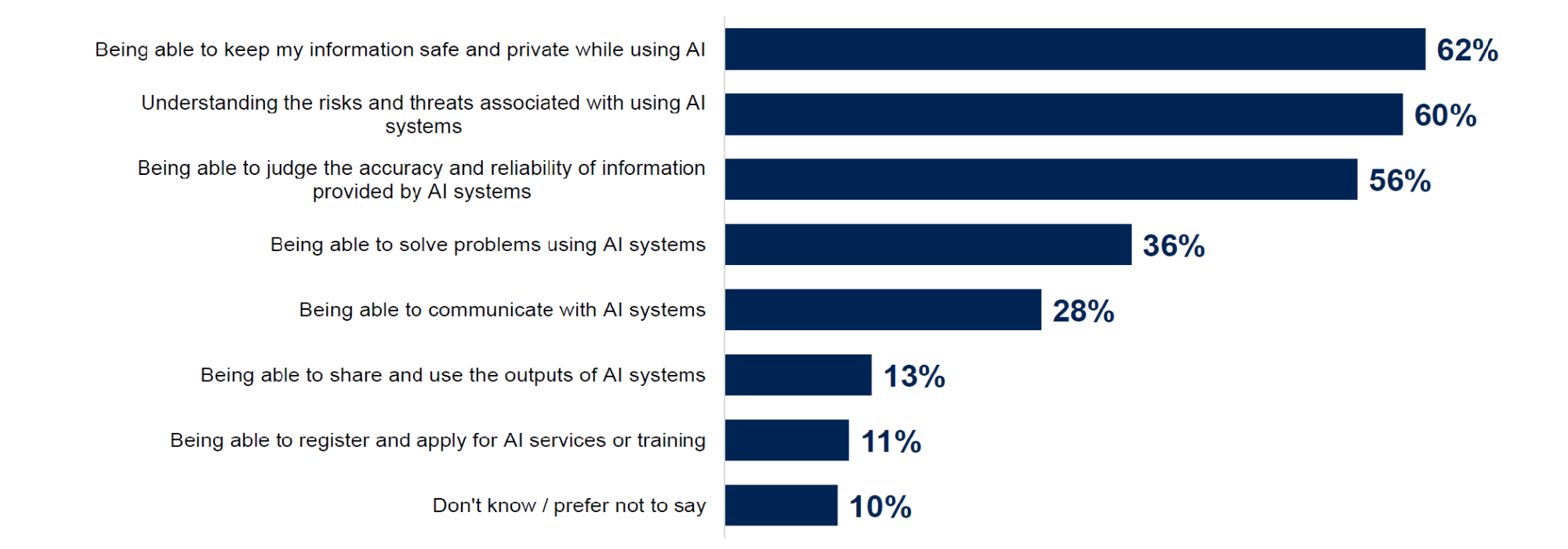
The public identify data privacy and understanding risks and threats as the most important AI skills in day-to-day life. Figure 4.1 shows the ranking of the AI skills the public thinks are most important in day-to-day life. The top three most important skills are: keeping information safe and private (62%), understanding the risks and threats of AI (60%), and judging the accuracy of information from AI (56%). Skills considered less important are: solving problems with AI (36%), communicating with AI (28%), sharing outputs from AI (13%), and registering for AI services or training (11%).
Figure 4.1: percentage who think that skill is important when using AI in day-to-day life
Base: all who have heard of AI (n=1155)
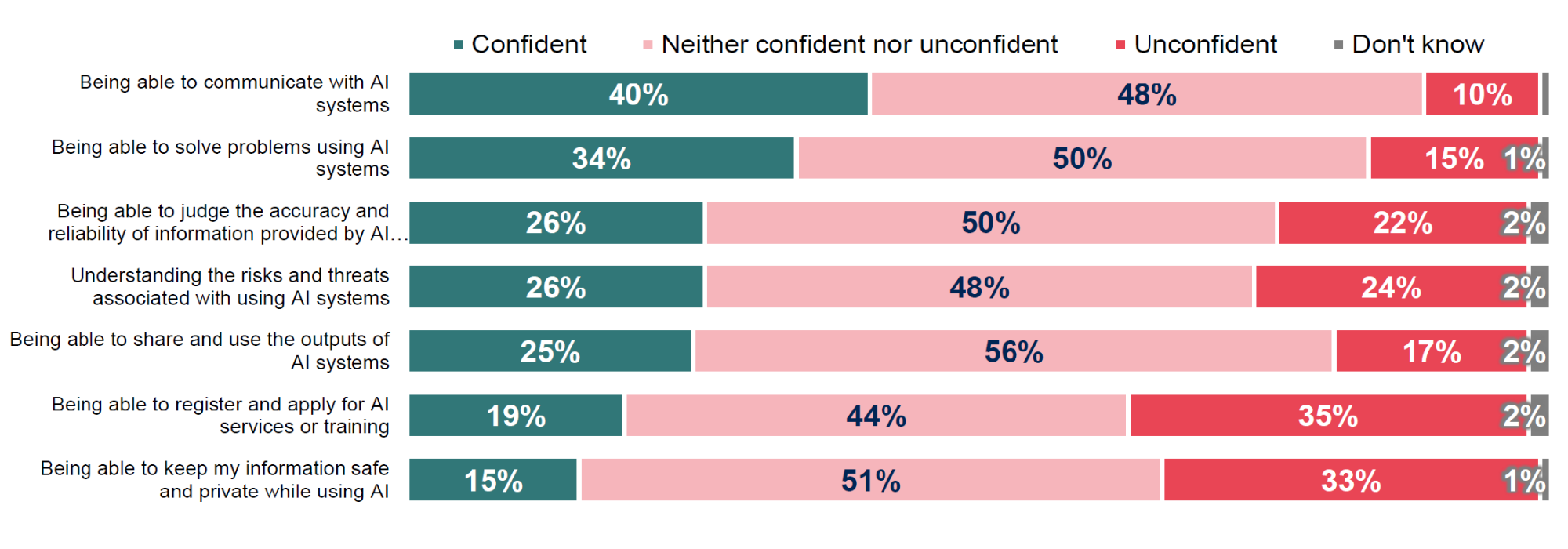
Confidence levels are low across AI skills. Figure 4.2 shows public confidence levels for various AI skills. Confidence is highest for ‘being able to communicate with AI systems’, with 40% feeling confident. Confidence is lowest for ‘being able to keep my information safe and private while using AI’, with only 15% feeling confident. For all listed skills, the proportion of people feeling ‘neither confident nor unconfident’ is the largest, ranging from 44% to 56%.
Figure 4.2: How confident do you feel in your ability to use these AI skills in your day-to-day life?
Base: all who thought ‘skill’ was important (n=1155)
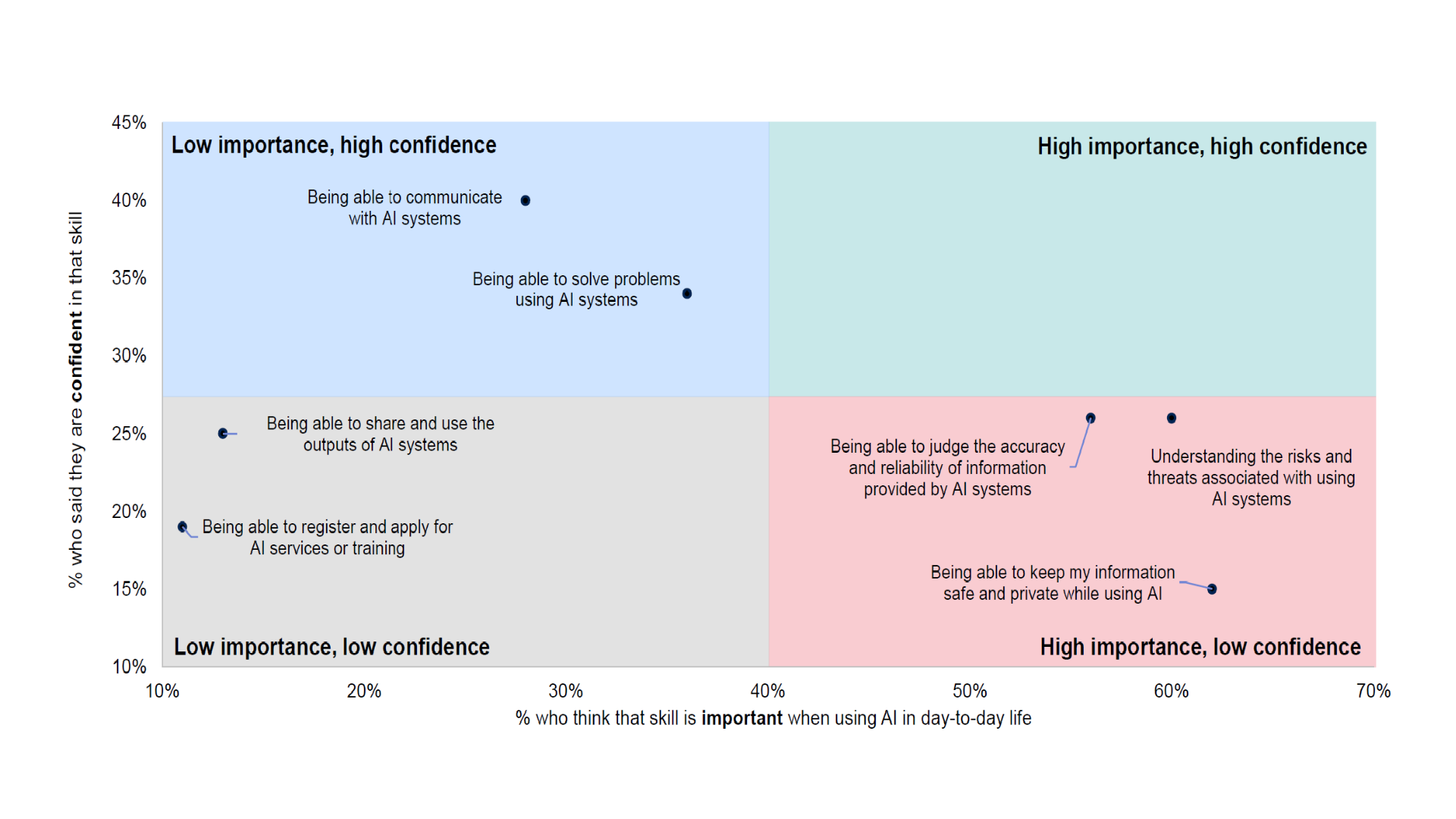
Plotting importance of skills against how confident the public are in them enables us to prioritise skill area. Figure 4.3 maps AI skills based on their perceived importance (x-axis) and the public’s confidence in using them (y-axis). The plot is divided into four sections. The ‘high importance, low confidence’ section contains skills like keeping information safe, understanding risks, and judging accuracy. The ‘low importance, high confidence’ section includes communicating with AI and solving problems with AI. The ‘low importance, low confidence’ section includes registering for AI services or training and sharing AI outputs. The ‘high importance, high confidence’ section is empty, showing that no skill is viewed as both highly important and one the public is confident in.
Figure 4.3: Skills importance mapped to public confidence in those skills
Base: all who have heard of AI (n=1155)
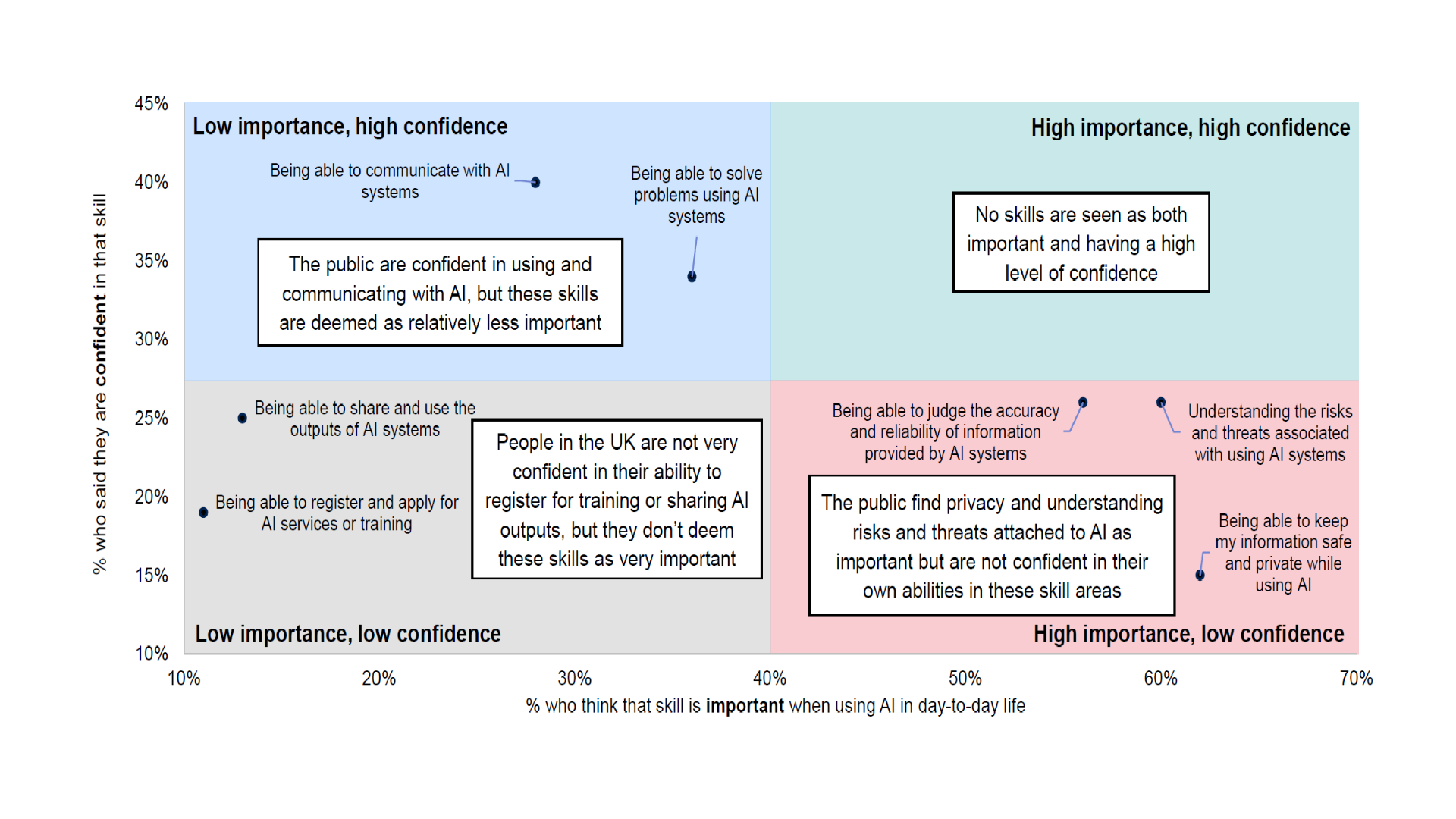
AI skills vary in terms of the importance attributed to them and the level of confidence members of the public have in them. Figure 4.4 maps AI skills by perceived importance versus public confidence. An annotation for the ‘high importance, low confidence’ area states that the public finds privacy and understanding risks important but are not confident in their abilities in these areas. An annotation for the ‘high importance, high confidence’ area notes that no skills fall into this category. An annotation for the ‘low importance, high confidence’ area explains that the public is confident in communicating with AI, but this skill is seen as less important. An annotation for the ‘low importance, low confidence’ area says people are not confident in registering for AI training or sharing AI outputs, but they do not see these skills as very important.
Figure 4.4: Where skills fall on the importance vs confidence mapping
5. AI in the workplace
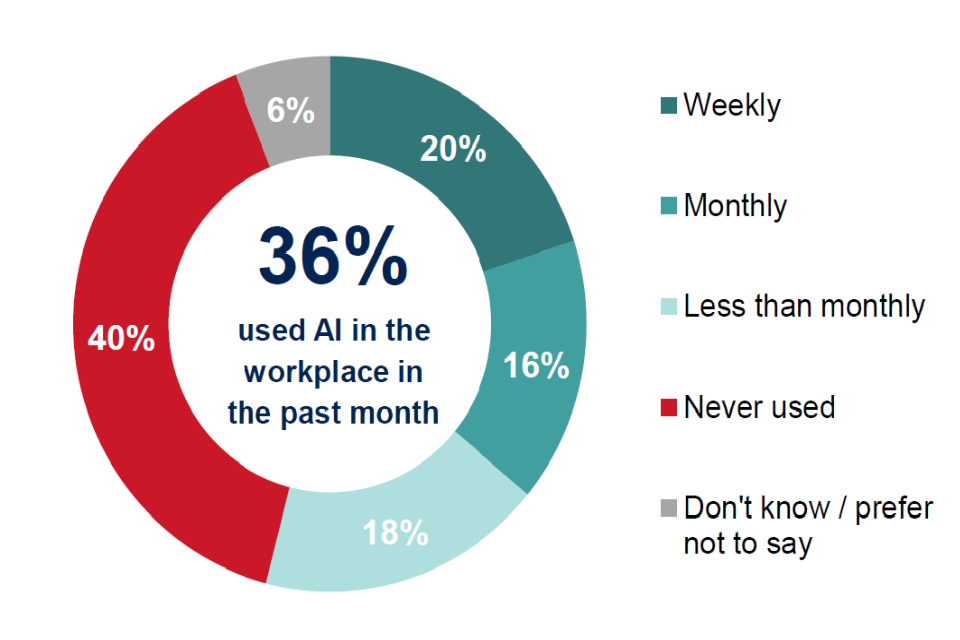
One in three have used AI in their workplace in the past month, with conversational AI tools used most. Two charts about AI use in the workplace. Figure 5.1 shows the frequency of AI use in the past month among those in work: 6% used it weekly, 20% monthly, and 16% less than monthly. 40% have never used it.
Figure 5.1: “In the past month, how often have you chosen to use Artificial Intelligence (AI) in your workplace?” survey question responses
Base: All in work (n=591).
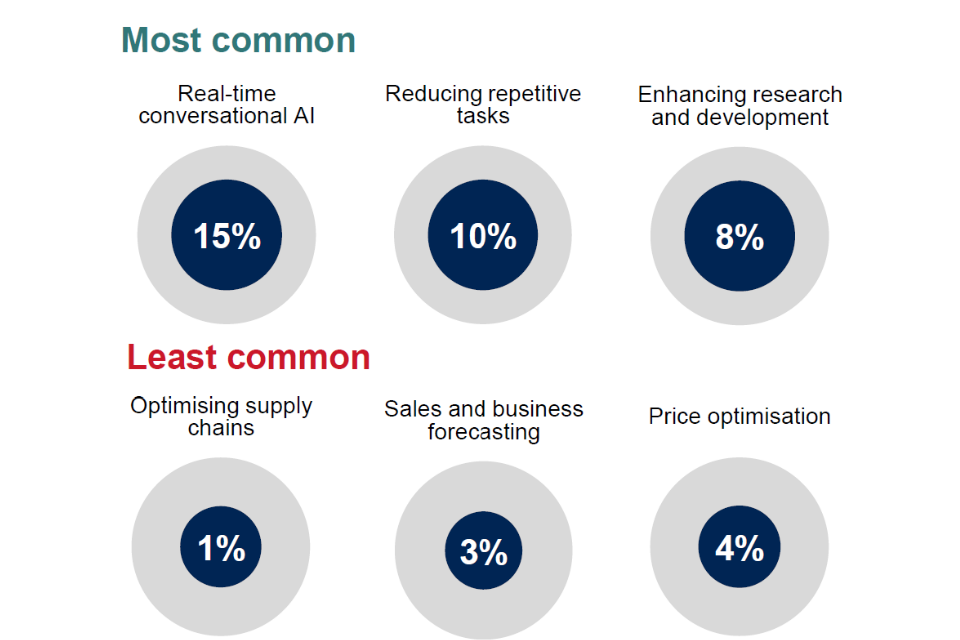
Figure 5.2 shows the most and least common uses of AI at work in the past month. The most common use is real-time conversational AI at 15%. The least common use is optimising supply chains, at 1%.
Figure 5.2: “Are you aware of, or have you ever used, Artificial Intelligence (AI) in the following ways in your workplace?” survey responses by percentage who said they had used this tool in the past month
Base: All in work (n=591).
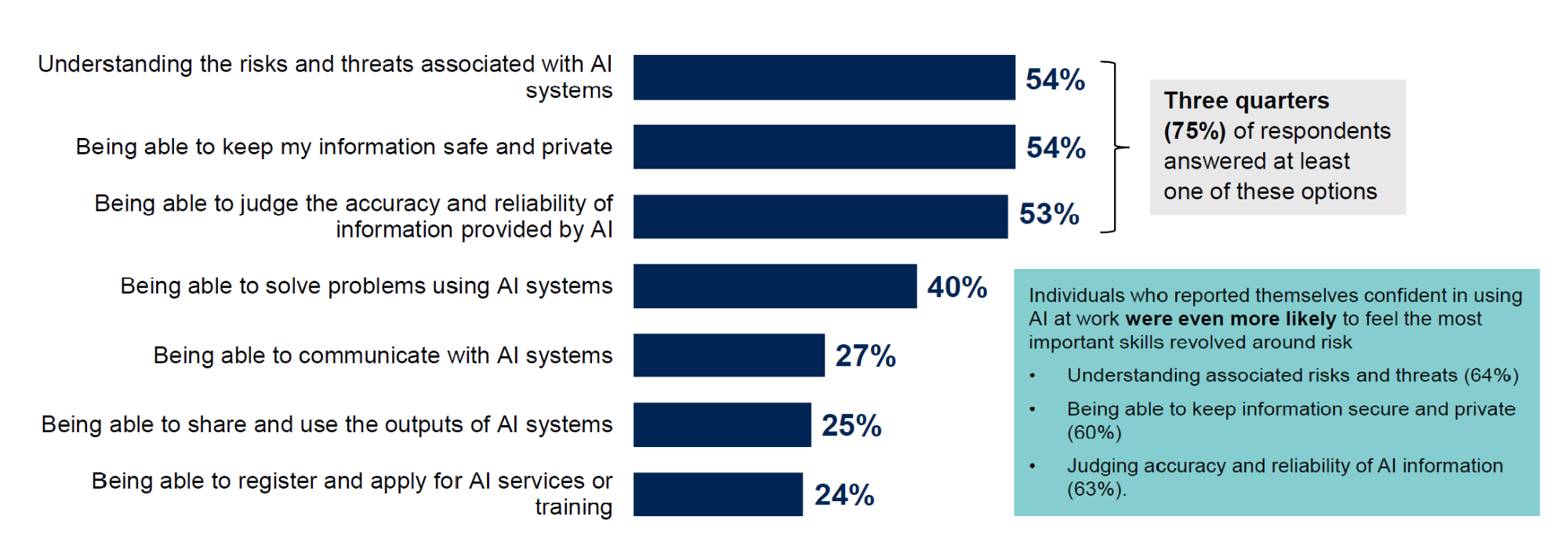
Similarly to the use of AI in life, the skills felt to be most important for using AI in the workplace revolved around the risks of AI. Figure 5.3 shows the skills considered most important for using AI in the workplace among those in work. The top three skills are: understanding risks and threats (54%), keeping information safe and private (54%), and judging the accuracy of information from AI (53%). 75% of respondents answered at least one of these top 3 options. A note adds that people who are already confident with AI are even more likely to see these risk-related skills as important.
Figure 5.3: “Which of the following skills do you think are most important for using AI in your workplace?” survey question responses
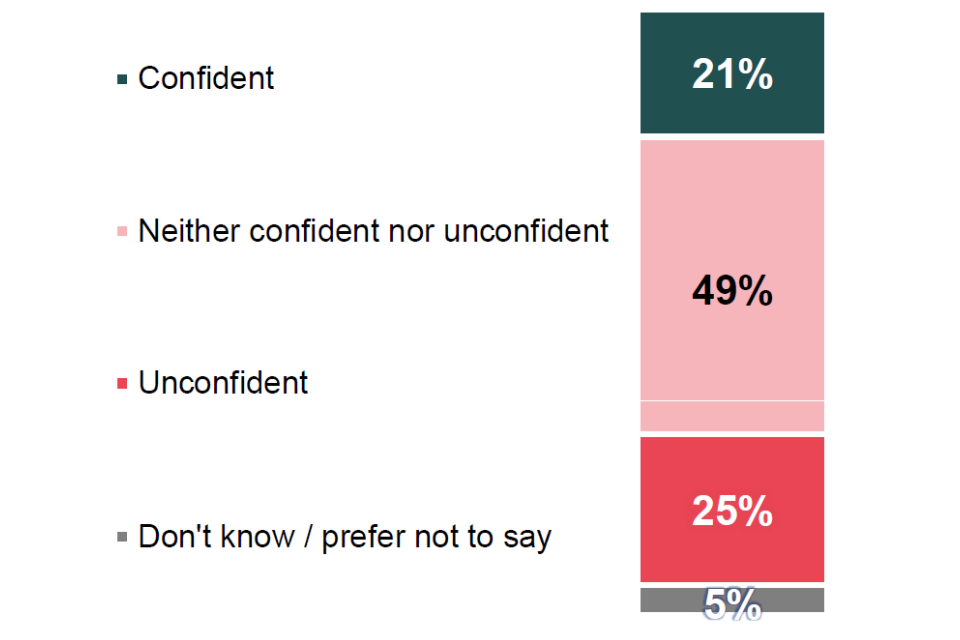
Confidence with using AI in the workplace is even lower (at 21%) than it is in day-to-day life (28%). Figure 5.4 shows that 21% of people in work feel confident using AI tools in the workplace, while 49% are neither confident nor unconfident, and 25% are unconfident.
Figure 5.4: “Overall, how confident do you feel in your ability to use Artificial Intelligence (AI) tools in your workplace?” survey question responses
Base: All in work (n=591)
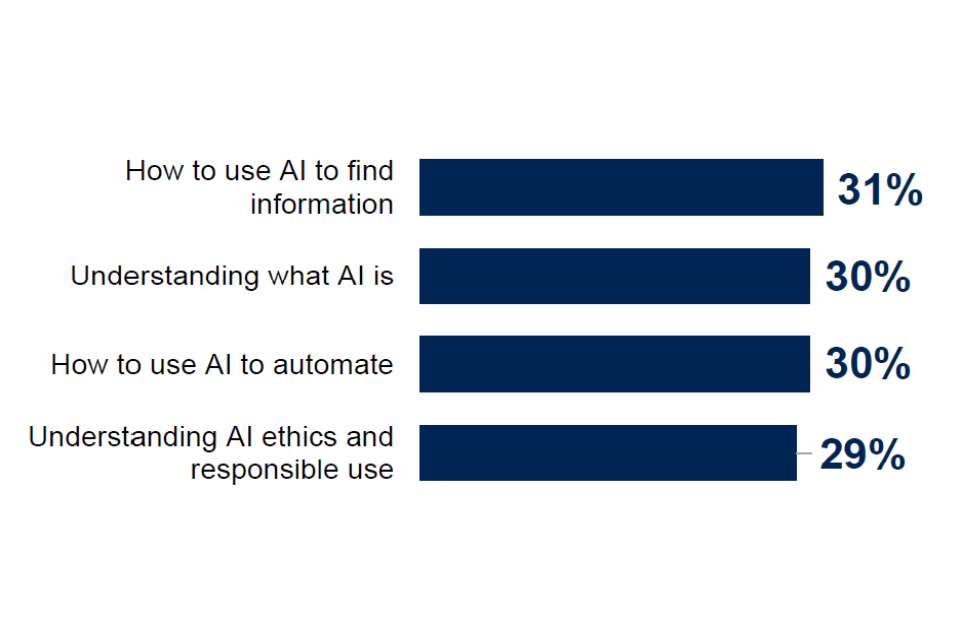
84% of people in work have not undertaken any AI-related training in the past 12 months. Figure 5.5 shows what AI training the public would be most interested in. The top choices are: how to use AI to find information (31%), understanding what AI is (30%), how to use AI to automate (30%) and understanding AI ethics (29%).
Figure 5.5: Which training the public would be most interested in
Base: All who have heard of AI (n=1155)
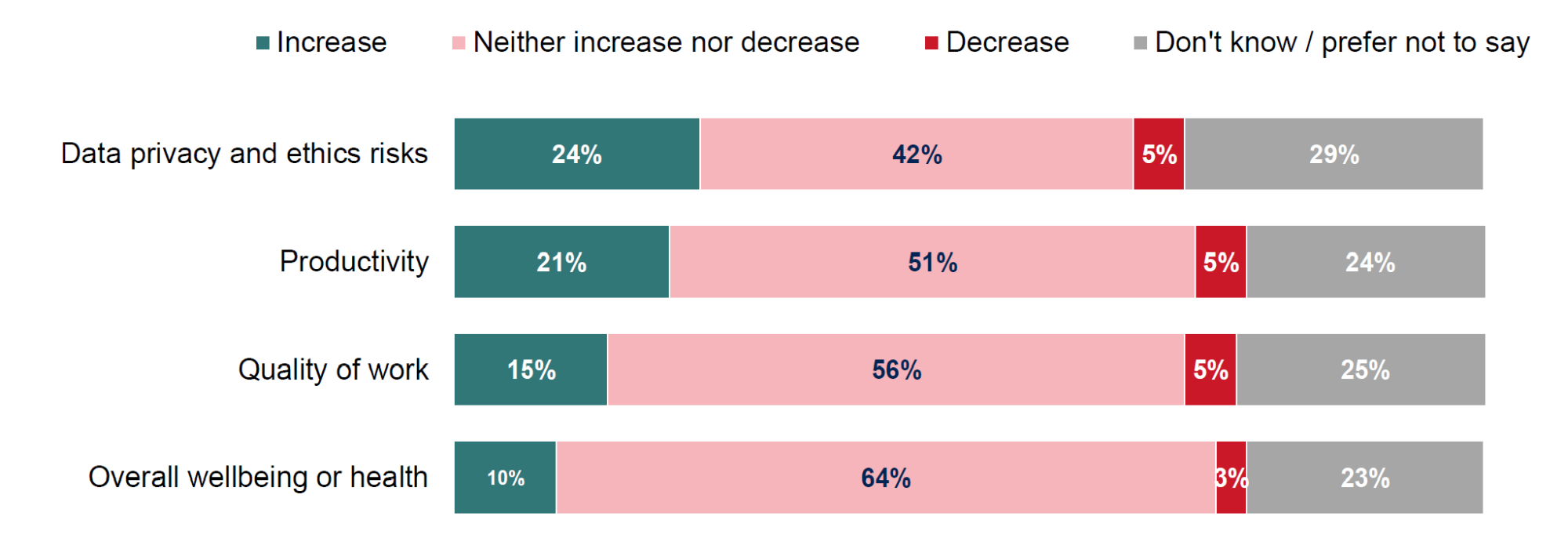
The majority of those in work do not feel that AI has made a significant impact on their productivity or quality of work. Figure 5.6 shows the perceived impact of AI on different aspects of work. For productivity, 21% report an increase, while 51% report neither an increase nor decrease. For quality of work, 15% report an increase, while 56% report neither an increase not decrease. For data privacy and ethics risks, 24% report an increase in risk. For overall wellbeing, 10% report an increase, while 64% report neither an increase nor decrease.
Figure 5.6: perceived impact of AI on different aspects of work
All in work (n=591)
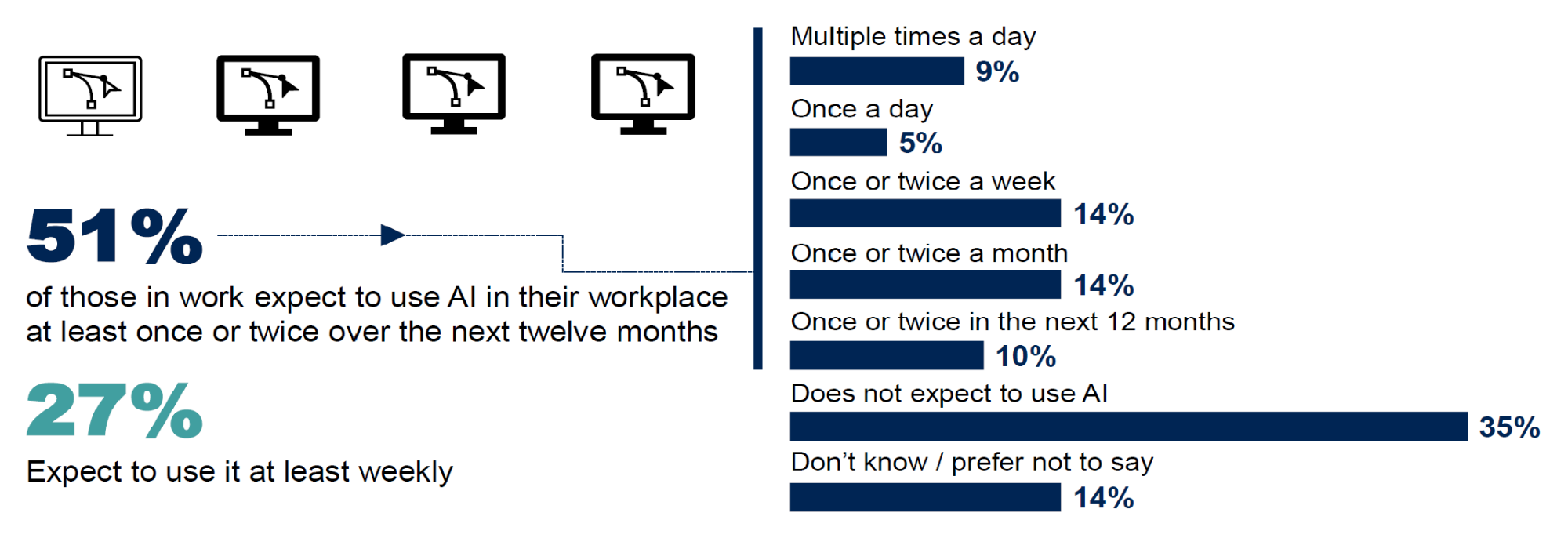
Over half of those in work (51%) expect to use AI in the workplace in the next 12 months. Figure 5.7 shows how often people in work expect to use AI in the next 12 months. In total, 51% expect to use it at least once or twice. This includes 9% who expect to use it multiple times a day and 14% who expect to use it once or twice a week. 35% do not expect to use AI at all.
Figure 5.7: “In the next 12 months, how often do you expect to use Artificial Intelligence (AI) in your workplace?” survey question responses
Base: All in work (n=591)
6. Future impact of AI
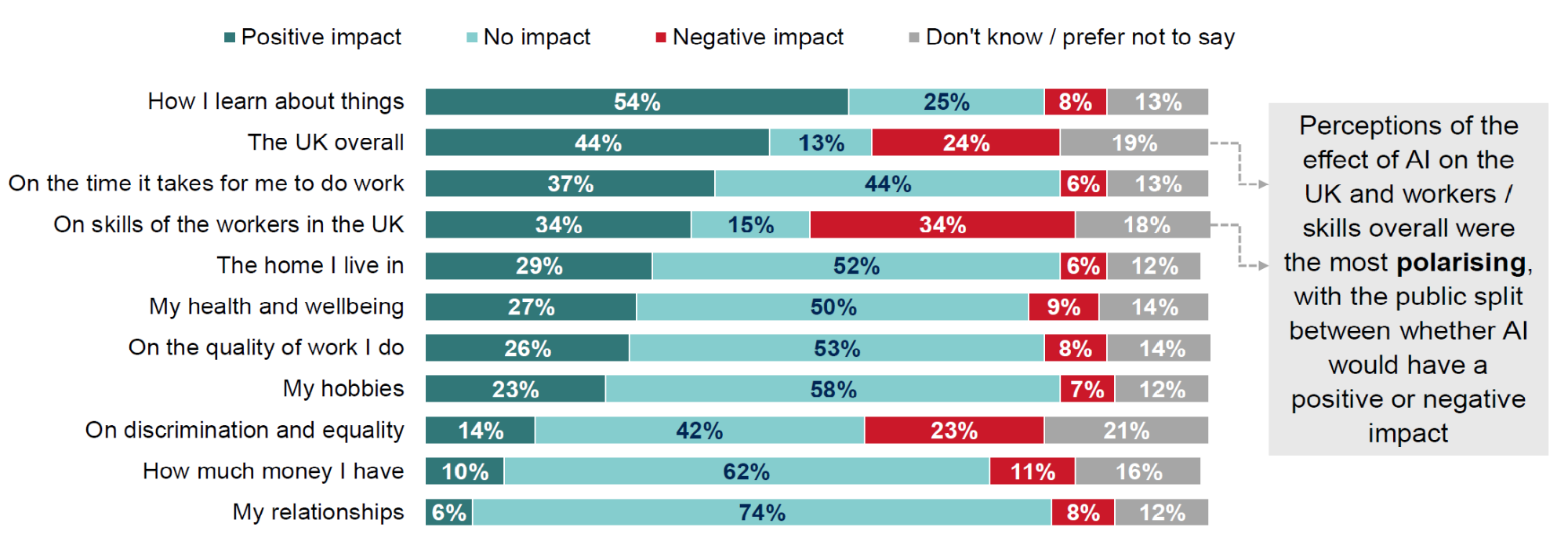
More than half of the public thinks that AI will have a positive impact on how they learn. Figure 6.1 shows the perceived future impact of AI. 54% of the public think AI will have a positive impact on how they learn about things. Views are divided on AI’s impact on UK workers’ skills, with 34% expecting a positive impact and 34% expecting a negative one. For most personal aspects, like health, hobbies, and finances, the majority expect AI to have no impact. For example, 74% believe AI will have no impact on their relationships. Perceptions of the effect of AI on the UK and workers/skills overall were the most polarising, with the public split between whether AI would have a positive or negative impact.
Figure 6.1: “What impact, if any, do you think Artificial Intelligence (AI) will have on the following?” survey question responses
Base: All who have heard of AI (n=1155)
7. Conclusions
Almost all UK adults have heard of AI and three in four have used AI in the last month, so it is evident that AI has entered the mass market. This is partly down to the growth in generative AI with one in three adults saying they have used this tool in the past month but predominantly led by passive AI tools.
AI literacy levels are low as only one in five could explain what AI is in detail, and one in four of UK adults had not used AI to help them learn and were not aware of how it could help. Only four in 10 think they will use generative AI at least once a month in the next year.
Skills relating to privacy and understanding risks and threats associated with AI appear to be most important and the public are not confident in their ability in these areas. On the other hand, they are more confident in their ability to communicative with and solve problems with AI.
Confidence around AI usage in the workplace is low and, similarly to daily life, improving skills around the understanding of threats and data privacy would be most valued. The public are split between whether they think AI will have a net positive or negative impact on the UK and workers overall.