AI Skills for Life and Work: Employer survey findings
Published 28 January 2026

© Crown copyright 2026
This publication is licensed under the terms of the Open Government Licence v3.0 except where otherwise stated. To view this licence, visit nationalarchives.gov.uk/doc/open-government-licence/version/3 or write to the Information Policy Team, The National Archives, Kew, London TW9 4DU, or email: psi@nationalarchives.gov.uk.
Where we have identified any third party copyright information you will need to obtain permission from the copyright holders concerned.
This publication is available at https://www.gov.uk/government/publications/ai-skills-for-life-and-work-employer-survey-findings/ai-skills-for-life-and-work-employer-survey-findings--2
This report was authored by Oliver Fenton, Jamie Douglas, and Eva Radukic at Ipsos.
This research was supported by the Department for Science, Innovation and Technology (DSIT) and the R&D Science and Analysis Programme at the Department for Culture, Media and Sport (DCMS). It was developed and produced according to the research team’s hypotheses and methods between November 2023 and March 2025. Any primary research, subsequent findings or recommendations do not represent UK Government views or policy.
This report has been converted from a slide deck report.
1. Background and methodology
1.1 Objectives
Assess AI skills in work related to
- Current AI usage and skills levels
- How AI-relevant skills might transform as tech develops
- Whether the UK is supporting AI skill development
- What government / employers / educators should focus on to address gaps in provision
1.2 Methodology
- CATI and online survey
- Fieldwork dates: 19 March – 7 June 2024
- Audience: UK employers (i.e. excluding sole traders)
- Sample size: 801 (755 CATI and 46 online)
- Representative of UK employers across all business sectors apart from the public sector
2. Key findings
-
31% of employers currently use AI.
- 39% of AI-using employers currently use real-time conversational AI, such as ChatGPT.
- 61% of employers have no current staff working with AI.
- 4% of employers have tried to recruit someone to work with AI in the last 3 years.
- 21% of employers think demand for AI skills is likely to increase over the next 12 months.
- 11% of employers have had staff undertake training on AI in the last 12 months.
3. Usage of AI among businesses
31% of employers currently use AI. 1 in 3 employers are currently using AI. However, 6 in 10 employers are not using AI and do not plan to. Figure 3.1 shows AI usage by sector. Information and communications has the highest current usage at 55%. Other business services follow at 49%, and professional, scientific and technical at 43%. Overall, 31% of employers currently use AI, 9% are planning to, and 60% are not planning on using AI at all.
Figure 3.1: “Do you use or plan to use AI in your business?” survey question responses
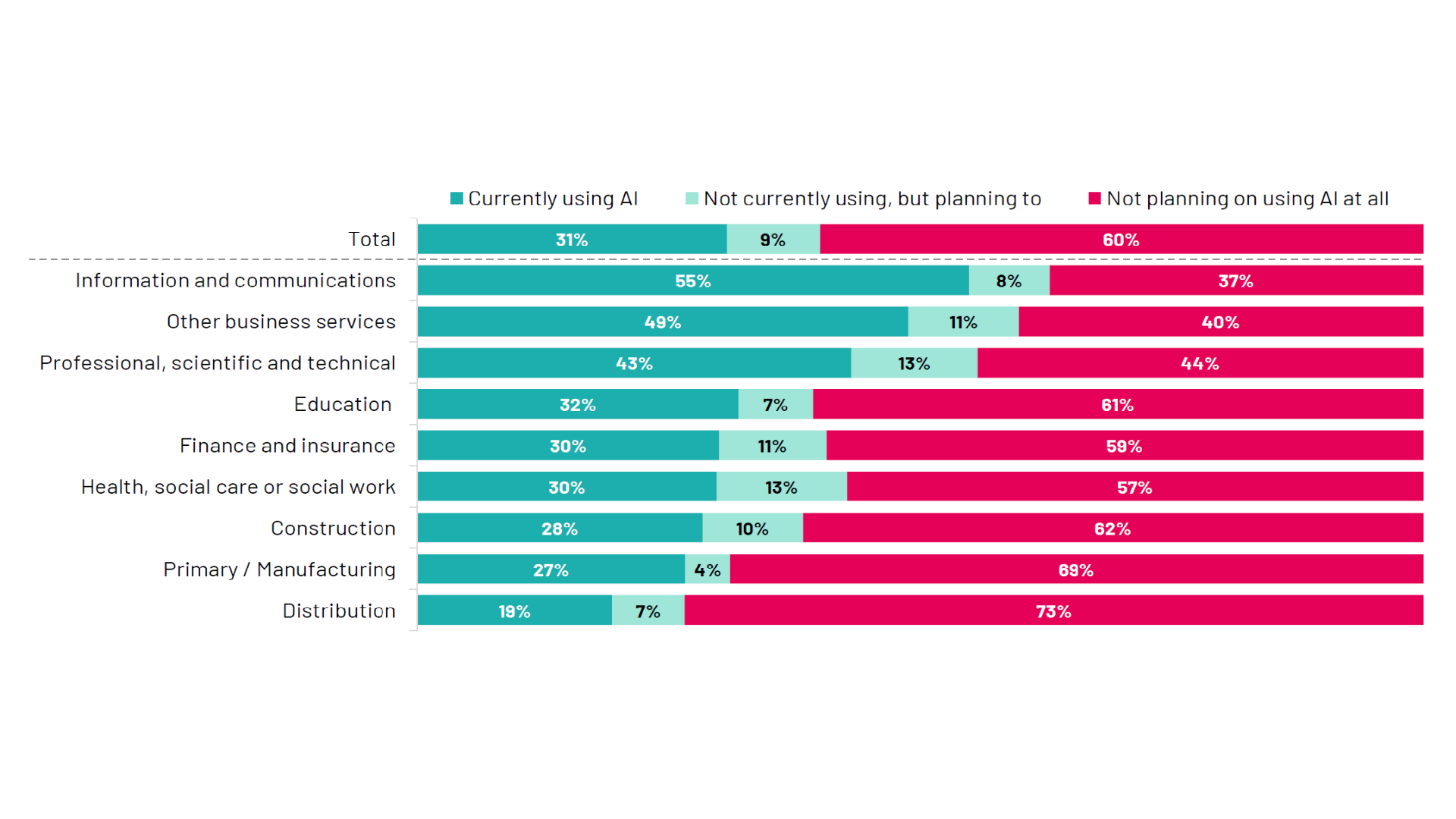
Base: All UK employers (n=801); Primary/Manufacturing (n=59); Construction (n=39); Distribution (n=109); Information and communications (n=103); Finance and Insurance (n=128); Professional, scientific and technical (n=92*); Other business services (n=47); Education (n=72); Health, social care or social work (n=125). * small base (sectors with base below 30 are not shown)
Knowledge levels are mixed – only a quarter of employers in finance and insurance rate their knowledge of AI as intermediate or above. Figure 3.2 shows AI knowledge levels. The stacked bar chart on the left shows that among employers who use or plan to use AI, 43% rate their business’ knowledge as intermediate or above, while 56% rate it as beginner or novice. A horizontal bar chart on the right shows that the information and communications sector reports the highest knowledge, with 70% describing the level of knowledge of AI in their business as intermediate or above, while finance and insurance reports the lowest, at 24%.
Figure 3.2: “How would you describe the level of knowledge of AI in your business overall?” survey question responses
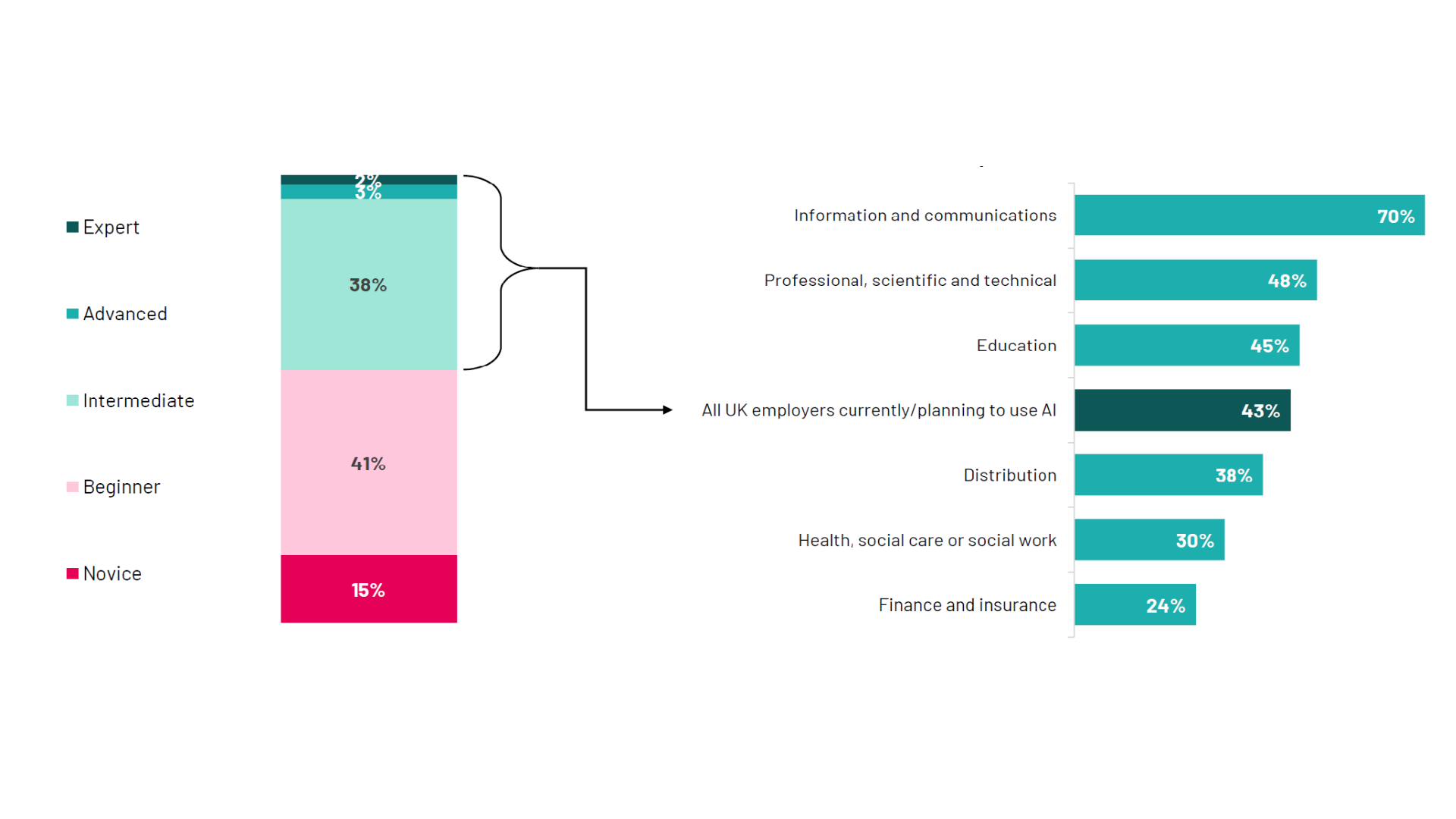
Base: All UK employers who use or plan to use AI (n=373); Distribution (n=34); Information and communications (n=65); Finance and Insurance (n=55*); Professional, scientific and technical (n=53); Education (n=34); Health, social care or social work (n=66). * small base (sectors with base below 30 are not shown)
The vast majority of AI-using employers say AI is only partially integrated into the business. Figure 3.3 shows the level of AI integration. 87% of employers using AI say it is partially integrated into the business. 12% say it is fully integrated into some aspects, and only 1% say it is fully integrated into all aspects of the business.
Figure 3.3: “Which of the following best describes the current/planned level of AI implementation in your business overall?” survey question responses
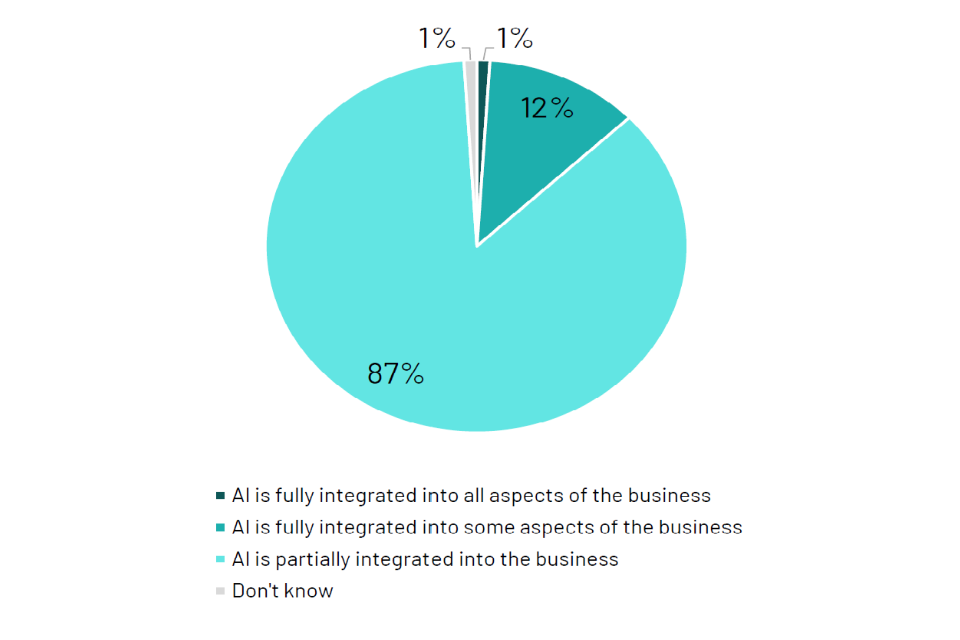
Base: All UK employers who are currently using AI (n=277)
AI does have a range of use cases among employers who use or plan to use it, with IT and marketing and sales being the most common. On average, employers using or planning to use AI do so for 1.39 business functions, demonstrating that most only use it for one singular purpose. Figure 3.4. shows AI use in business functions. IT is the most common function, with 39% currently using AI for this. This is followed by marketing and sales at 32%. Strategy and corporate finance and HR are the least common functions for AI use, both at 7%.
Figure 3.4: “For each of the following business functions, can you tell us whether your business is currently using AI, planning to use AI, or would consider using AI?” survey question responses
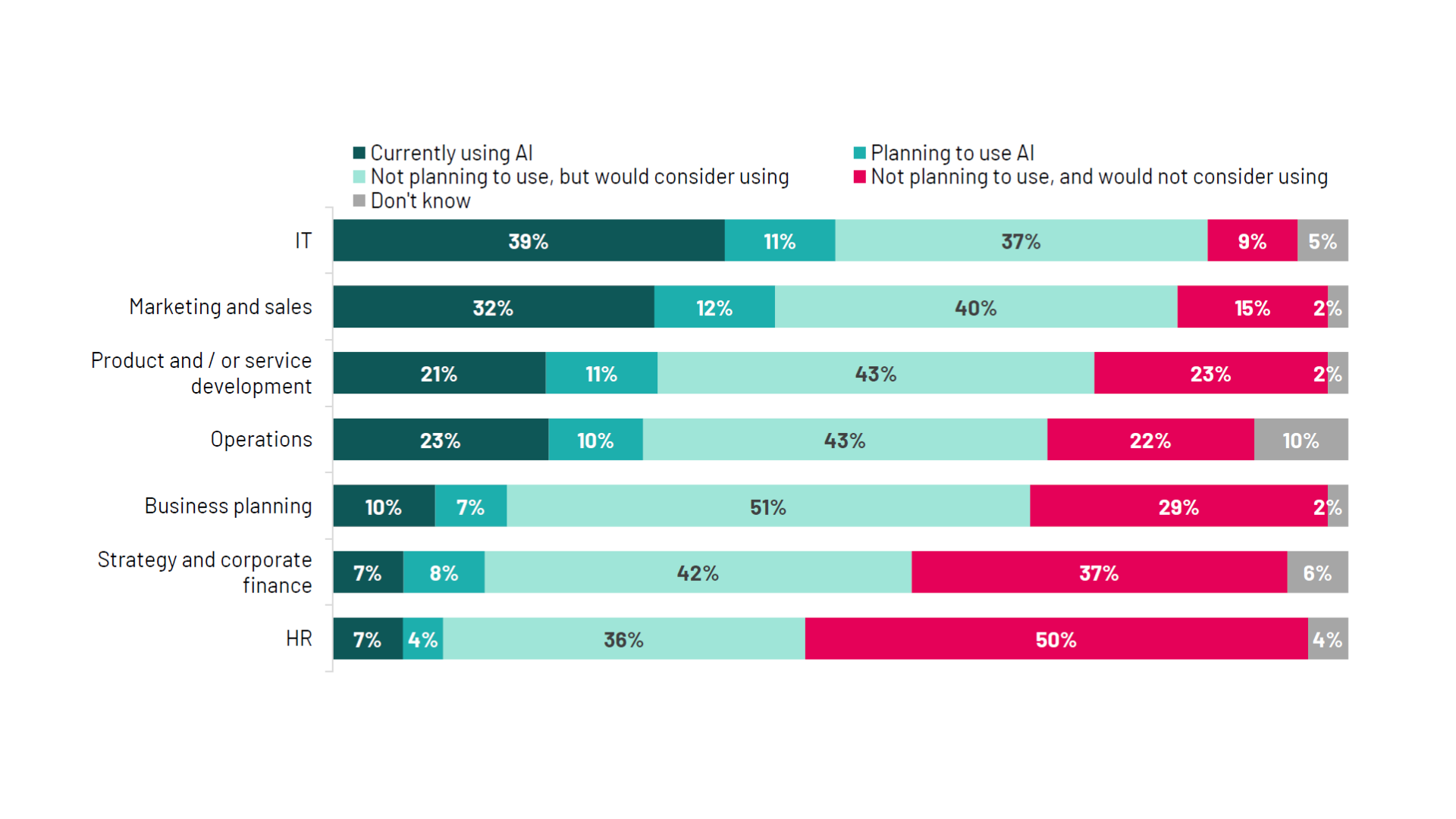
Base: All UK employers who use or plan to use AI (n=373)
Real-time conversational AI such as ChatGPT is used most widely of all AI products or services, albeit one in four employers do not consider it. Figure 3.5 shows AI-driven product or service usage among employers who use or plan to use AI. Real-time conversational AI like ChatGPT is the most widely used product, with 39% of employers currently using it. Reducing repetitive tasks is next at 23%. Sales and business forecasting is the least used at 7%.
Figure 3.5: “For each of the following AI-driven products or services, can you tell us whether your business is currently using AI, planning to use AI, or would consider using AI?” survey question responses
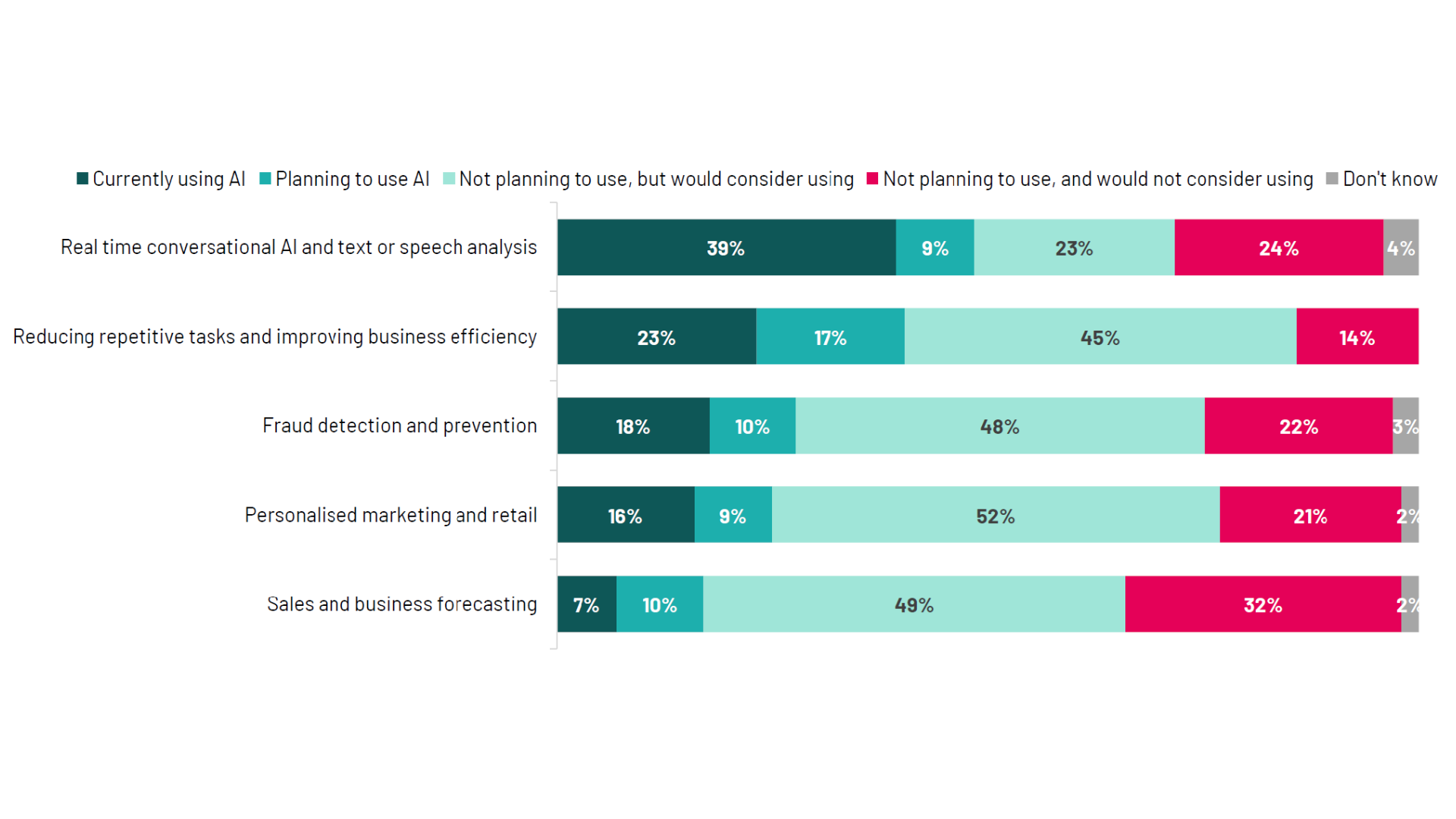
Base: All UK employers who use or plan to use AI (n=373)
Image generation is the most commonly used AI product or service. 18% of employers have a self-reported AI skill level of intermediate or above. Figure 3.6 shows that among businesses with intermediate or higher AI knowledge, AI image generation is the most commonly used service at 37%. Enhancing research and development is second at 19%. Optimising supply chains is the least common at 3%.
Figure 3.6: “For each of the following AI-driven products or services, can you tell us whether your business is currently using AI, planning to use AI, or would consider using AI?” survey question responses
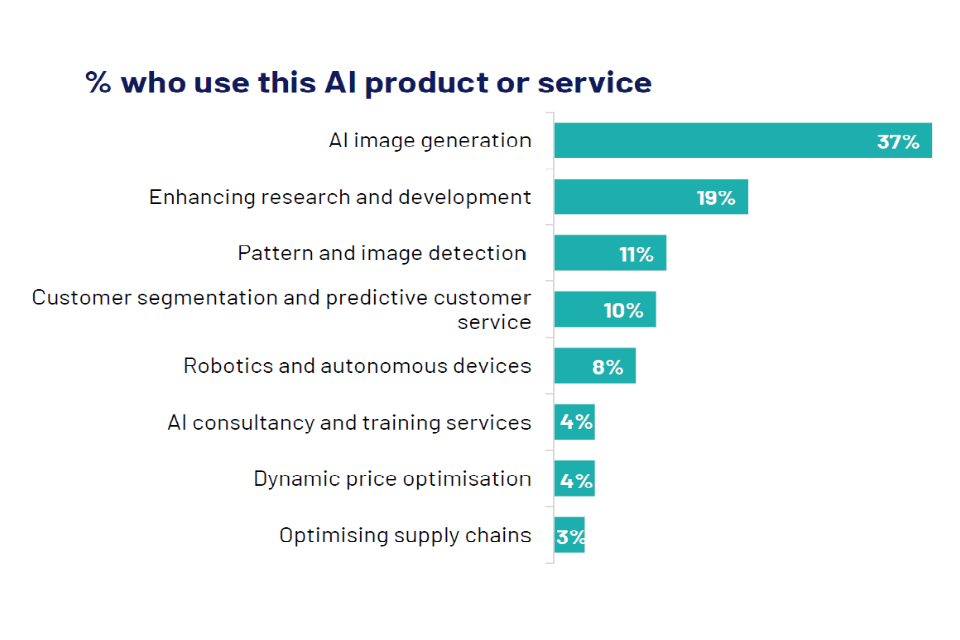
Base: All UK employers whose business has intermediate AI knowledge or above, overall or anywhere in the business (n=193)
5% of employers currently using AI say they rely on it, while 94% say they use it but do not rely on it. Two thirds of employers who use AI are using freely available tech. One in four develop AI models internally. Figure 3.7 compares AI activities by knowledge level. 76% of employers with intermediate or higher AI knowledge have used freely available AI tools, compared to 46% of those with novice or beginner knowledge. Similarly, 21% of the more knowledgeable group have developed AI tools internally, compared to just 3% of the novice group.
Figure 3.7: “Which of the following has your business done within the last 3 years?” survey question responses
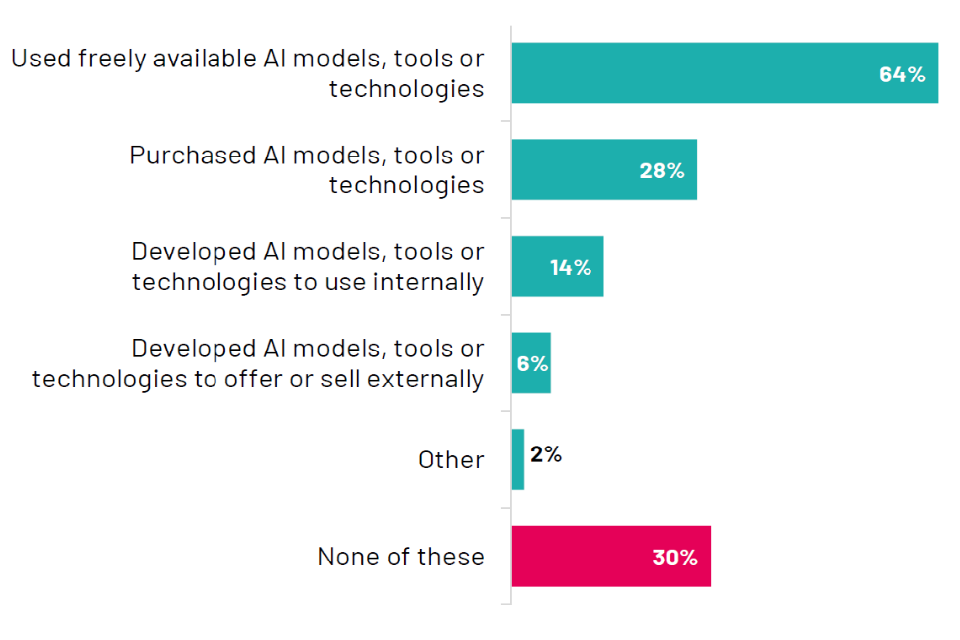
Base: All UK employers who use or plan to use AI (n=292)
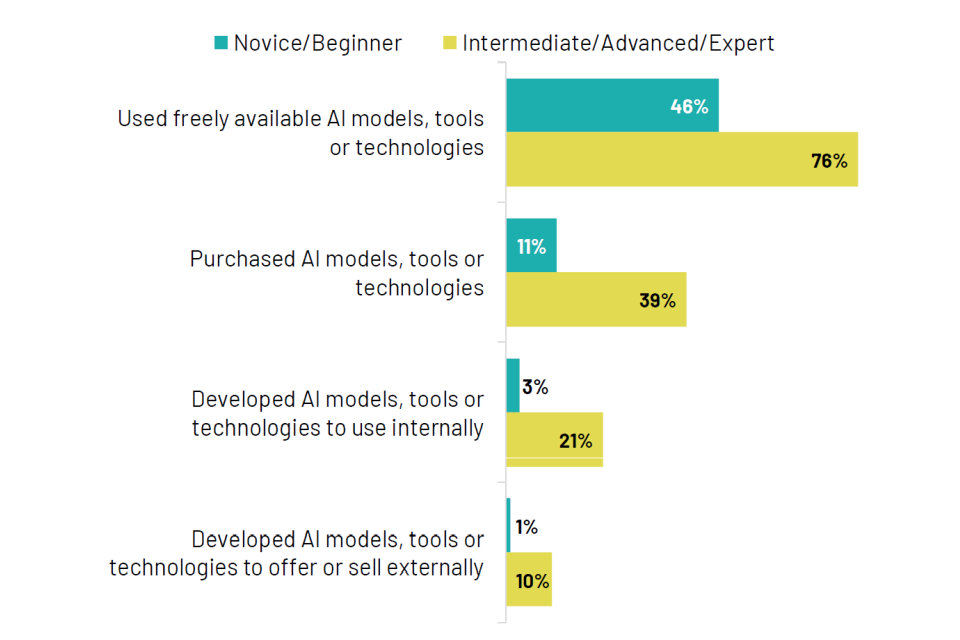
Employers with intermediate AI knowledge or above are more likely than those with novice/beginner knowledge levels to develop AI models to use internally or offer or sell externally, as well as use freely available tech. Figure 3.8 compares AI activities by knowledge level. 76% of employers with intermediate or higher AI knowledge have used freely available AI tools, compared to 46% of those with novice or beginner knowledge. Similarly, 21% of the more knowledgeable group have developed AI tools internally, compared to just 3% of the novice group.
Figure 3.8: “Which of the following has your business done within the last 3 years?” survey question responses by knowledge level
4. Current AI skills levels in UK businesses
3 in 10 employers have staff with skills to work with existing AI, and only a minority have technically skilled AI staff. Figure 4.1 illustrates AI skill levels in the workforce. At the bottom, 61% of employers have no staff working with AI (AI non-users). Above that, 28% have staff who use existing AI tools (AI users). The next level shows 5% have staff who can apply AI models (AI implementers). At the top, 5% have staff who can develop AI models (AI specialists).
Figure 4.1: “Does your business currently have…?”* survey question responses
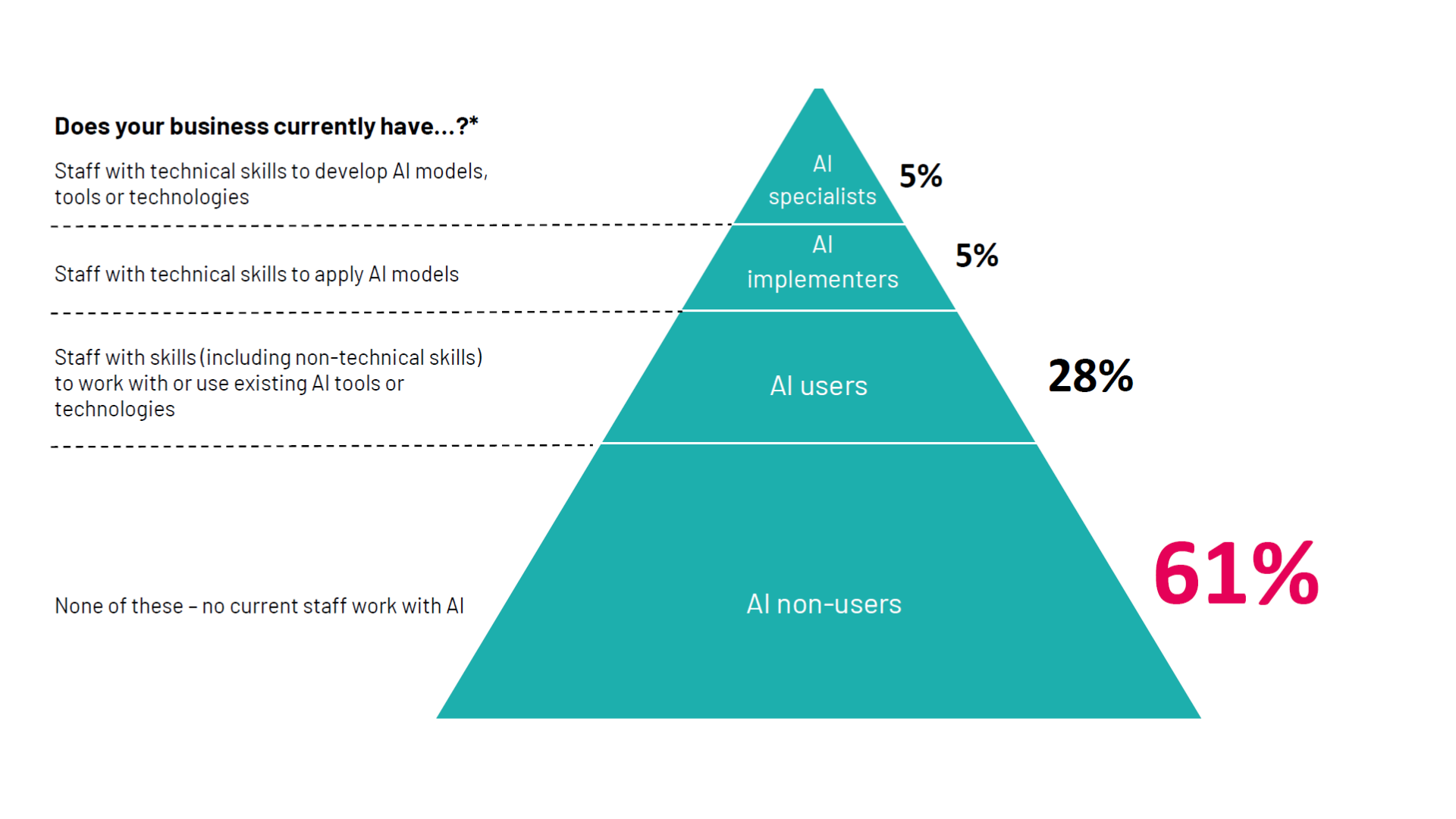
*Some businesses have more than one type of staff working with AI i.e. both AI specialists and AI implementers. For the purposes of this pyramid, businesses were only counted once, in the category designated for the highest skill level of their staff. Base: All UK employers (n=801)
Education, professional, finance and insurance and other business services have a relatively high proportion of AI users amongst their staff. Figure 4.2 shows the proportion of AI skill levels across different sectors. The information and communications sector has a high proportion of AI specialists at 20%, compared to the 5% average. The other business services sector has a high proportion of AI users at 39%. Distribution has the highest proportion of AI non-users at 74%.
Figure 4.2: Proportion of employers with staff who are AI specialists, AI implementers, AI users or AI non-users, overall and by sector*
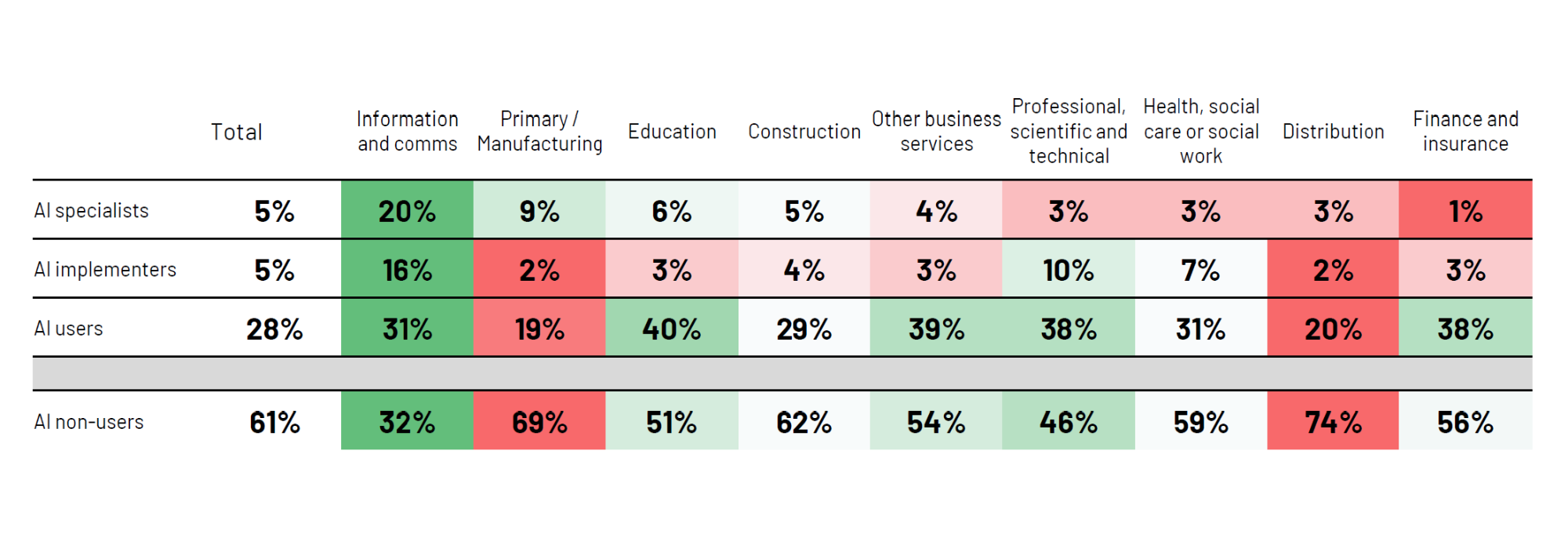
*Shading indicates a higher or lower proportion of staff than average for that role in that sector, with green denoting a higher proportion than average, and red denoting a lower proportion than average, aside from non-users, where the colours represent the reverse
Base: All UK employers (n=801); Primary/Manufacturing (n=59); Construction (n=39); Distribution (n=109); Information and communications (n=103); Finance and Insurance (n=128); Professional, scientific and technical (n=92*); Other business services (n=47); Education (n=72); Health, social care or social work (n=125). * small base (sectors with base below 30 are not shown)
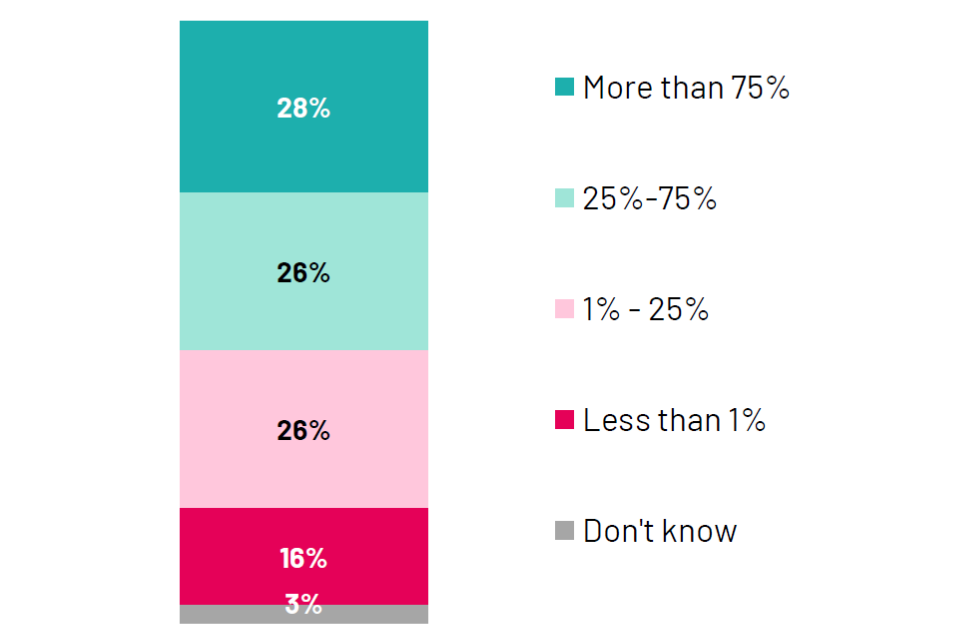
28% of employers with staff that work with AI say that at least three quarters of their workforce have used AI in the past 3 years. 37% of employers have staff that work with AI (either specialists, implementers, or users). Figure 4.3 shows that amongst employers with staff that work with AI, 28% say that more than three-quarters of their workforce have used AI in the past 3 years. 26% say between 25% and 75% of their workforce have used it.
Figure 4.3: Proportion of employees who have used AI tech in the past 3 years
Base: All UK employers with technical or non-technical staff working with AI (n=360)
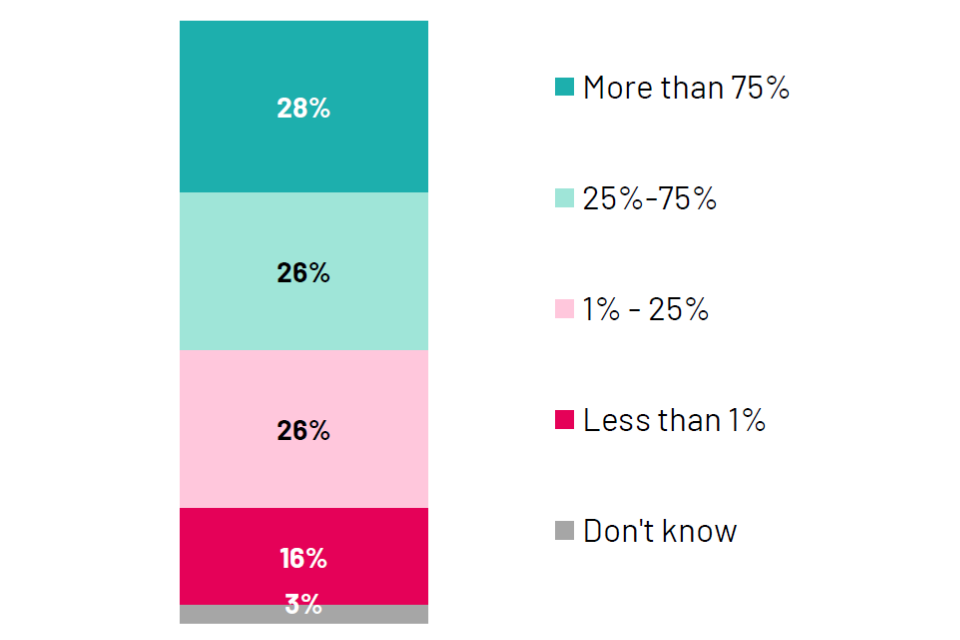
51% of employers with technical staff working with AI rate their business’ technical AI capacity as fairly or very good. 10% of employers have staff who are AI specialists or implementers. Figure 4.4 shows that 51% of employers with technical AI staff rate their business’s technical capacity to develop or maintain AI systems as either ‘fairly good’ (35%) or ‘very good’ (16%).
Figure 4.4: Rating of business’ technical capacity to develop or maintain AI systems
Base: All UK employers with technical staff working with AI (n=113)
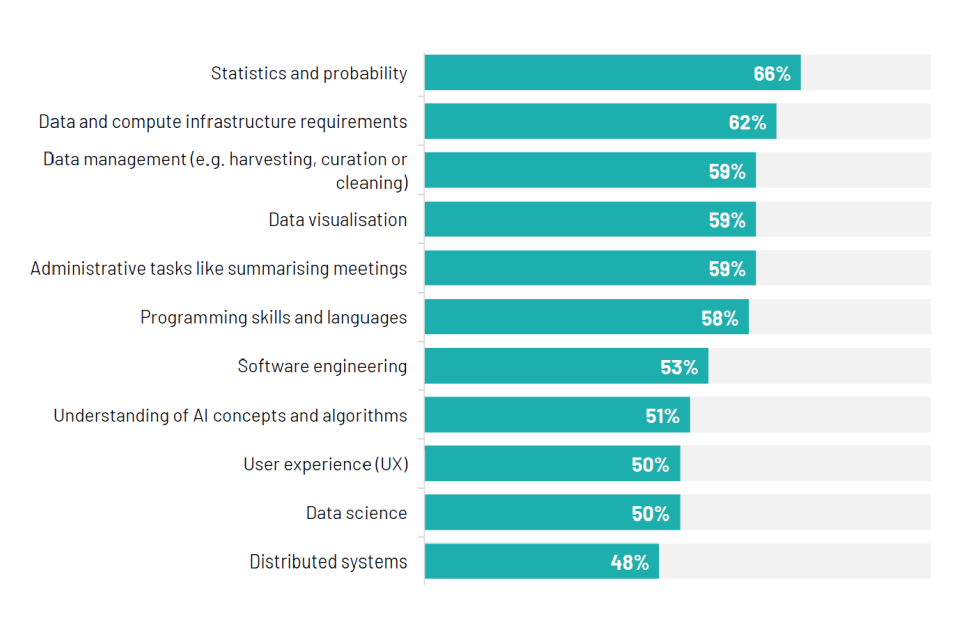
Among employers with technical AI staff, statistics and data infrastructure skills are the most highly rated technical staff skills. Figure 4.5 shows ratings of technical AI staff skills. Statistics and probability is the most highly rated skill, with 66% of employers rating their staff as ‘good’ at this. Data and compute infrastructure requirements are rated as ‘good’ by 62%. Distributed systems is the lowest-rated skill at 48%.
Figure 4.5: Rating of staff’s technical AI skills - % good
Base: All UK employers with technical staff working with AI (n=113)
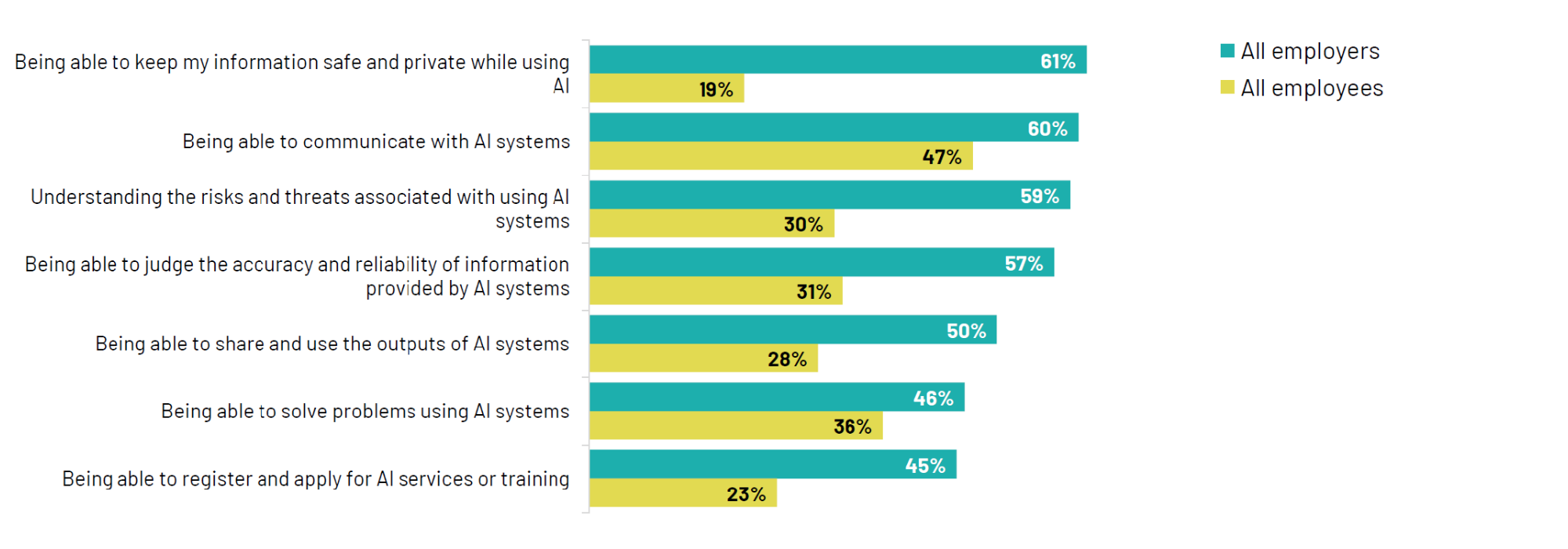
61% of employers with staff that use AI are satisfied with their staff’s’ ability to keep their information safe and private when using AI. Figure 4.6 is a horizontal bar chart rating non-technical AI skills. 61% of employers with AI-using staff rate their staff’s ability to keep information safe and private as ‘good’. 60% rate their ability to communicate with AI systems as ‘good’, followed by understanding the risks and threats associated with using AI systems (59%) and being able to judge the accuracy and reliability of information provided by AI systems (57%). The ability to write clear prompts for generative AI is rated ‘good’ by 45%.
Figure 4.6: “How would you rate the staff with technical or non-technical AI skills across the following areas? % good” survey question responses

Base: All UK employers with technical or non-technical staff working with AI (n=348)
However, it is evident that employers think their staff are much better at understanding privacy than the workers themselves think they are. Note that the general public survey was a different study undertaken as part of the wider project, so the results should be understood as indicative of trends or differences between employers and workers, rather than being directly comparable. Figure 4.7 compares employer ratings of staff skills with employee self-reported confidence. Employers rate staff skills much higher than employees rate their own confidence. For example, 61% of employers rate staff as ‘good’ at keeping information safe, while only 19% of employees feel confident in this skill.
Figure 4.7: “How would you rate the staff with technical or non-technical AI skills across the following areas? % good” compared with “How confident do you feel in your ability to use these skills in your day-to-day life? % confident” survey question responses
Base for employers survey: All UK employers with technical or non-technical staff working with AI (n=348). Base for general public survey: All who have heard of AI who work full time (n=417)
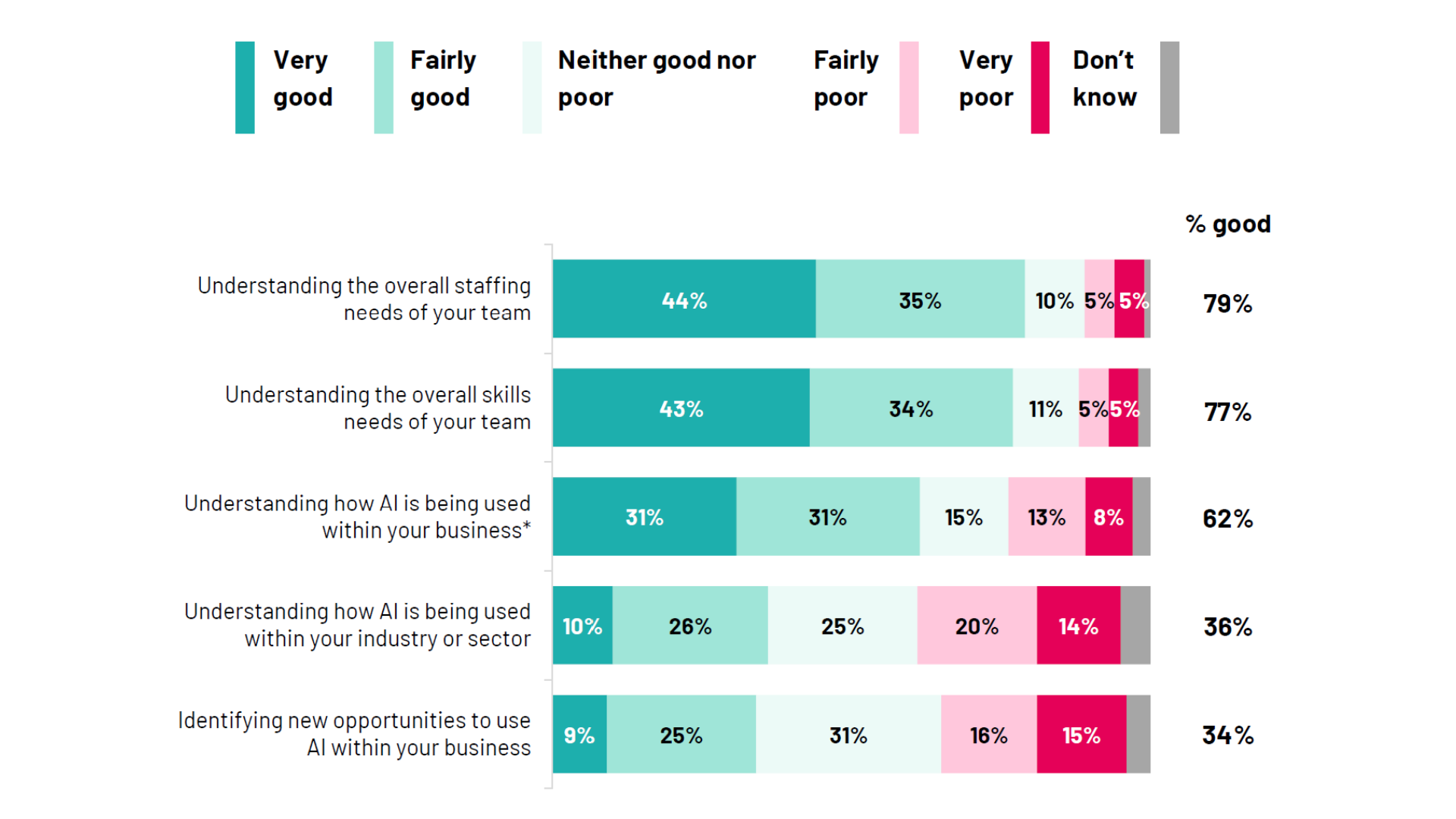
According to employers, senior leadership teams have a good understanding of overall skills and staffing, but not of new opportunities for AI in their sector. Figure 4.8 shows employer ratings of their senior leadership’s understanding of AI. 79% rate their understanding of overall staffing needs as ‘good’. However, only 36% rate their understanding of how AI is used in their industry as ‘good’, and only 34% rate their ability to identify new opportunities for AI as ‘good’.
Figure 4.8: “How would you rate your business’ technical capacity to develop or maintain AI systems?” survey question responses
Base: All UK employers (n=801). * Only asked to UK employers who are currently using AI (n=277)
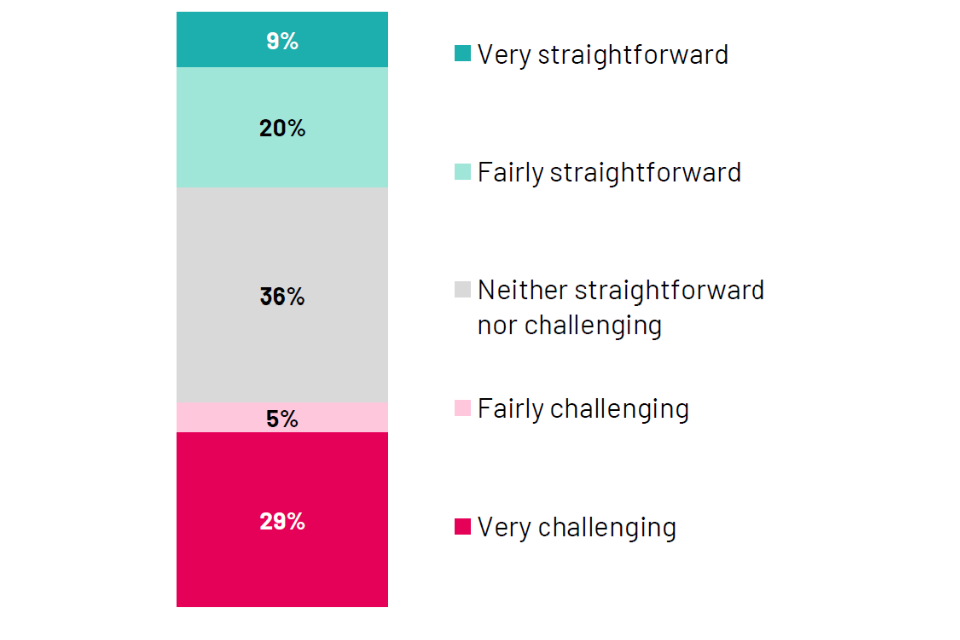
4% have tried to recruit at least one person to work with AI models, tools or technologies in the last 3 years. Of the 4% who have recruited AI users, 1 in 3 of them found it challenging because of the lack of suitable candidates. Figure 4.9 shows that of the 4% who have recruited, 34% found it challenging. The horizontal bar chart on the right shows that for those who found recruitment challenging, 91% cited a lack of suitable candidates and a lack of technical skills as the main reasons. However, this should be treated with caution due to the very small base.
Figure 4.9: “How did you find the recruitment methods for finding candidates for such roles?” survey question responses
Base: All UK employers who tried to recruit in last 3 years (n=38*). * small base
5. Future AI skills for UK businesses
Almost half of employers expect their business model will rely on, or at least use, AI in the next 3 to 5 years. Figure 5.1 shows that in the next 3 to 5 years, 45% of employers expect to use or rely on AI. This expectation is highest in ‘Other business services’ (68%) and ‘Information and communications’ (67%), and lowest in ‘Distribution’ (31%).
Figure 5.1: “And thinking about your business model 3 to 5 years from now, which of the following statements is most accurate?” survey question responses
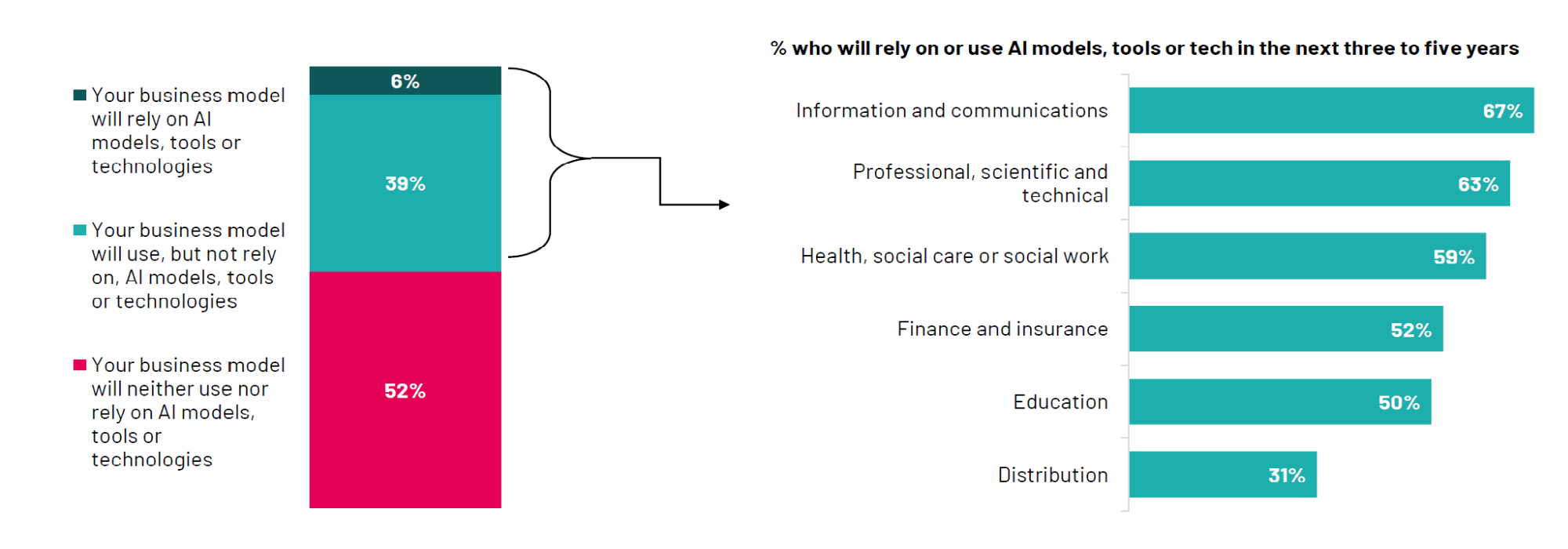
Base: All UK employers who use or plan to use AI (n=373); Distribution (n=34); Information and communications (n=65); Finance and Insurance (n=55*); Professional, scientific and technical (n=53); Education (n=34); Health, social care or social work (n=66). * small base (sectors with base below 30 are not shown)
Employers plan to use AI to reduce repetitive tasks and improve business efficiency, across a variety of business functions. Figure 5.2 shows IT and marketing are the top functions for actual or planned AI use.
Figure 5.2: “Can you tell us whether your business is currently using AI, planning to use AI, or would consider using AI for the following…” survey question responses
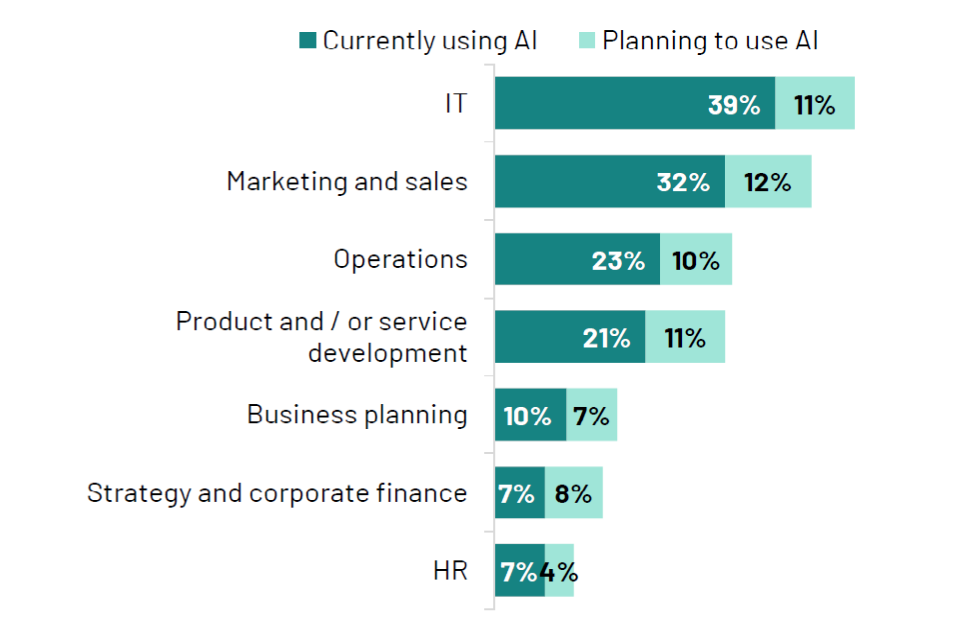
Base: All UK employers who use or plan to use AI (n=373)
Figure 5.3 shows that reducing repetitive tasks and using conversational AI are the top current or planned applications for AI.
Figure 5.3: “Can you tell us whether your business is currently using AI, planning to use AI, or would consider using AI for the following…” survey question responses
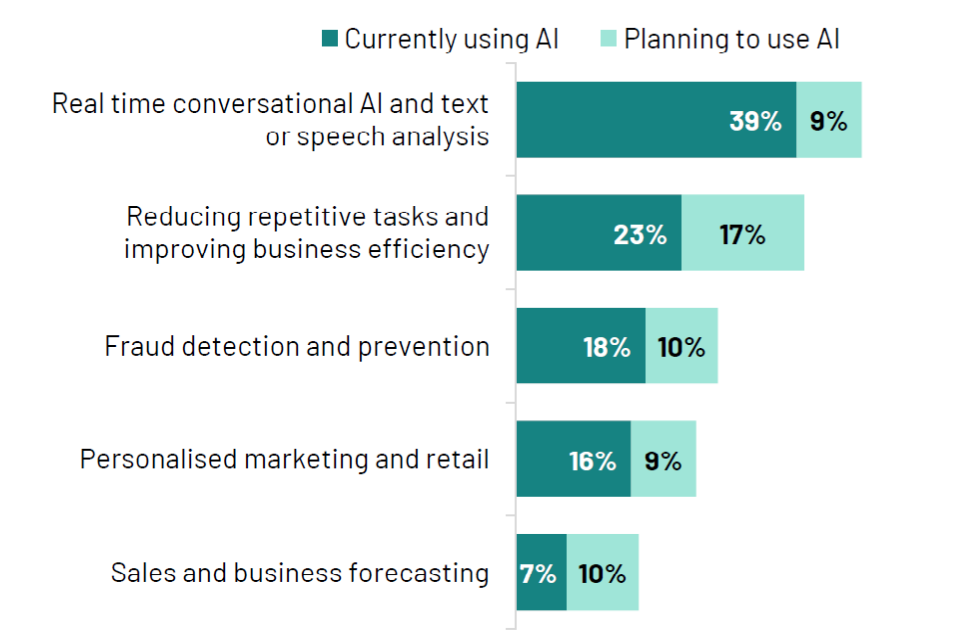
Base: All UK employers who use or plan to use AI (n=373)
21% say their demand for AI skills is likely to increase over the next 12 months. A quarter of employers believe that a lack of AI staff affected their businesses’ ability to meet business goals across the last 3 years. Figure 5.4 shows that 25% of employers believe a lack of AI specialists among current staff has affected their ability to meet business goals to some or a great extent. 27% say the same for a lack of AI implementers and AI users. When speaking about candidates, the corresponding figures are lower.
Figure 5.4: “To what extent, if at all, have any of the following issues affected your ability to meet your business goals across the last 3 years?” % To some or a great extent
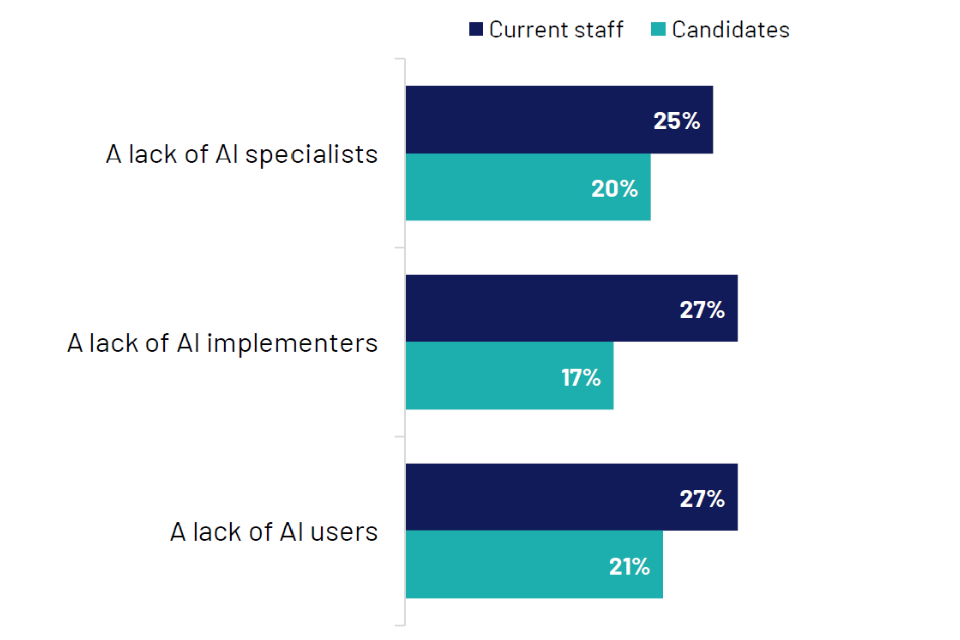
Base: All UK employers who use or plan to use AI, excluding those who say ‘not applicable’ (n=314 to 354)
Around 3 in 10 find retention of technically skilled AI staff challenging, primarily due to competition from other employers. Figure 5.5 shows that 28% of employers find retaining technically skilled AI staff challenging and that the primary reason for this challenge is competition from other employers, cited by 51%.
Figure 5.5: “How straightforward or challenging do you think it is for your business to retain staff with the technical skills to develop or apply AI models?” mapped to “And why do you think that?”
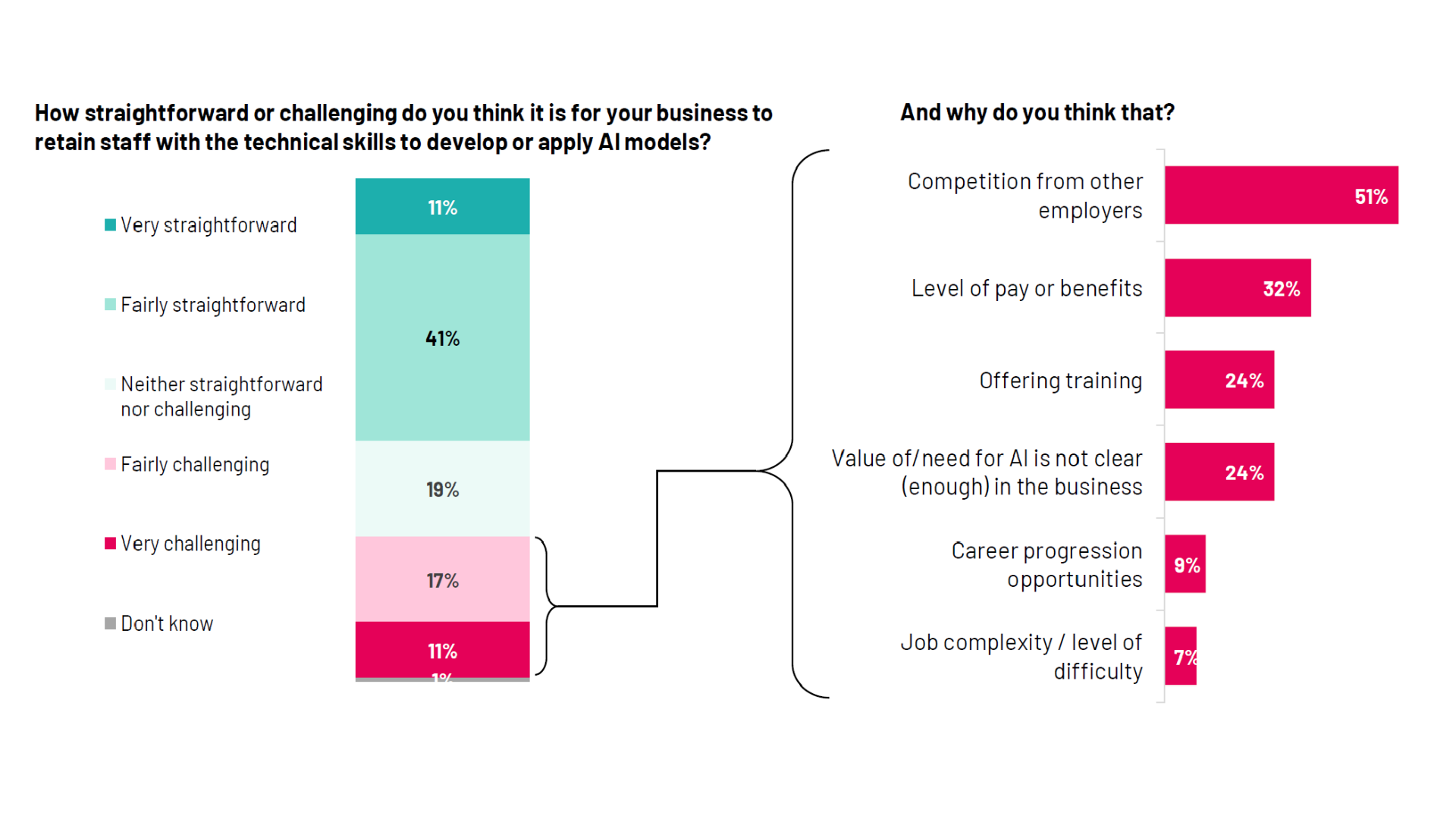
Base: All UK employers who have tried to recruit in last 3 years or have technical staff working with AI (n=118) for Part 1. Base: All UK employers who had retention challenges (n=40*) for Part 2. * small base
11% of employers have undertaken some form of AI training in the last 12 months, but this is much higher among employers with AI specialist staff. Figure 5.6 shows that 11% of all employers have undertaken AI training in the last 12 months. This figure rises to 48% for businesses that have AI specialists or implementers.
Figure 5.6: “In the last 12 months, have you or your employees undertaken any training to improve AI knowledge or skills?” Percentage that answered “yes”
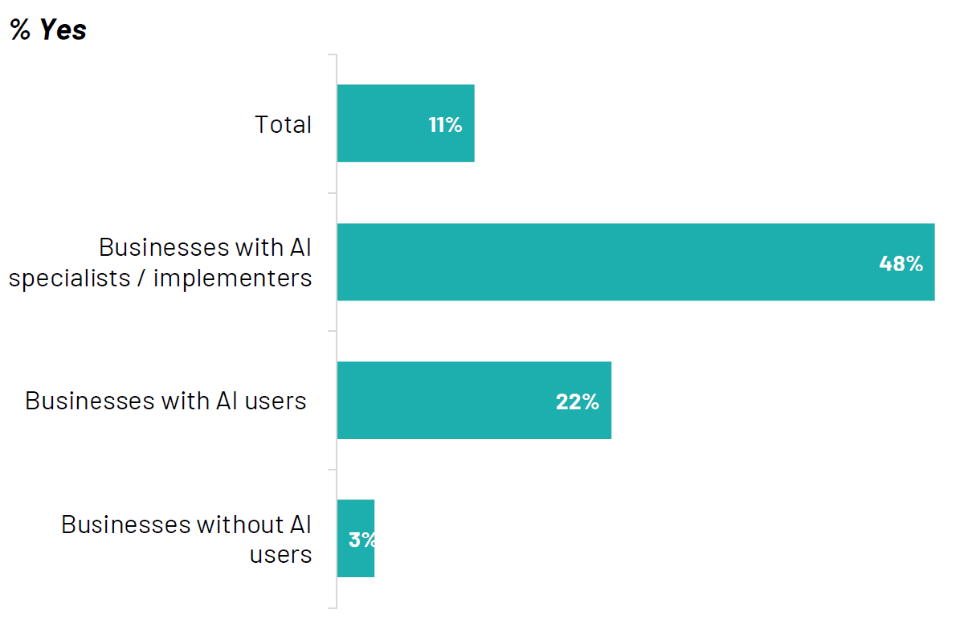
Base: All UK employers (n=801); All UK employers with staff with technical AI skills (n=113); All UK employers with staff with skills to work with or use AI (n=334); All UK employers with no current staff working with AI (n=428)
36% are interested in undertaking AI training in the future. Interest in AI training in the future is mixed, but highest in IT and professional, scientific and technical sectors. Figure 5.7 shows interest in future AI training by sector. Interest is highest in ‘Information and communications’, where 58% are very or quite interested. Interest is lowest in ‘Distribution’, where only 26% are very or quite interested.
Figure 5.7: “How interested, if at all, would your business be in undertaking training in AI in future?” survey question responses
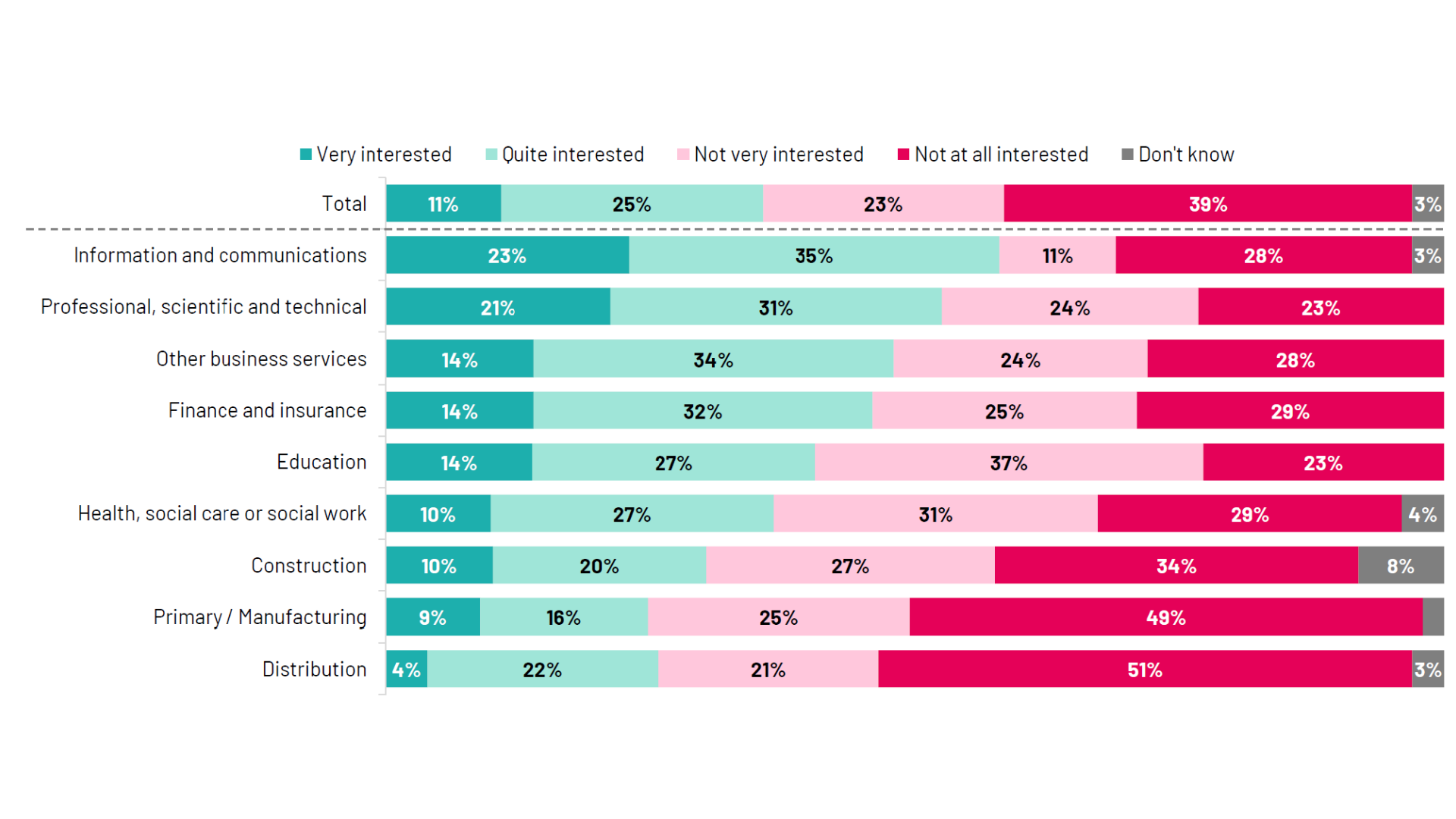
Base: All UK employers (n=801); Primary/Manufacturing (n=59); Construction (n=39); Distribution (n=109); Information and communications (n=103); Finance and Insurance (n=128); Professional, scientific and technical (n=92*); Other business services (n=47); Education (n=72); Health, social care or social work (n=125). * small base (sectors with base below 30 are not shown)
Interest is strong for most areas of AI training, including understanding how to keep information safe and private while using AI. Figure 5.8 shows desired AI training topics. 87% of interested employers want training on keeping information safe and private. 86% want training on communicating with AI systems and solving problems with AI.
Figure 5.8: “What would your business like this training to consist of…?” survey question responses
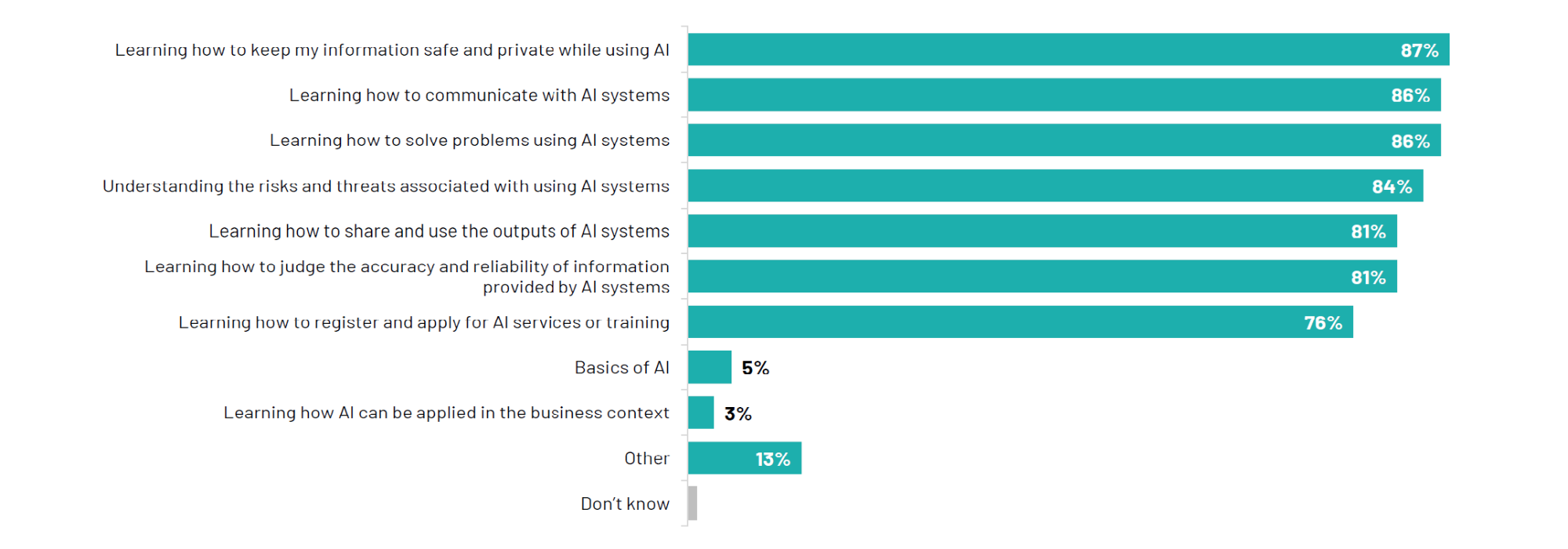
Base: All UK employers who are interested in undertaking AI training in future (n=344)
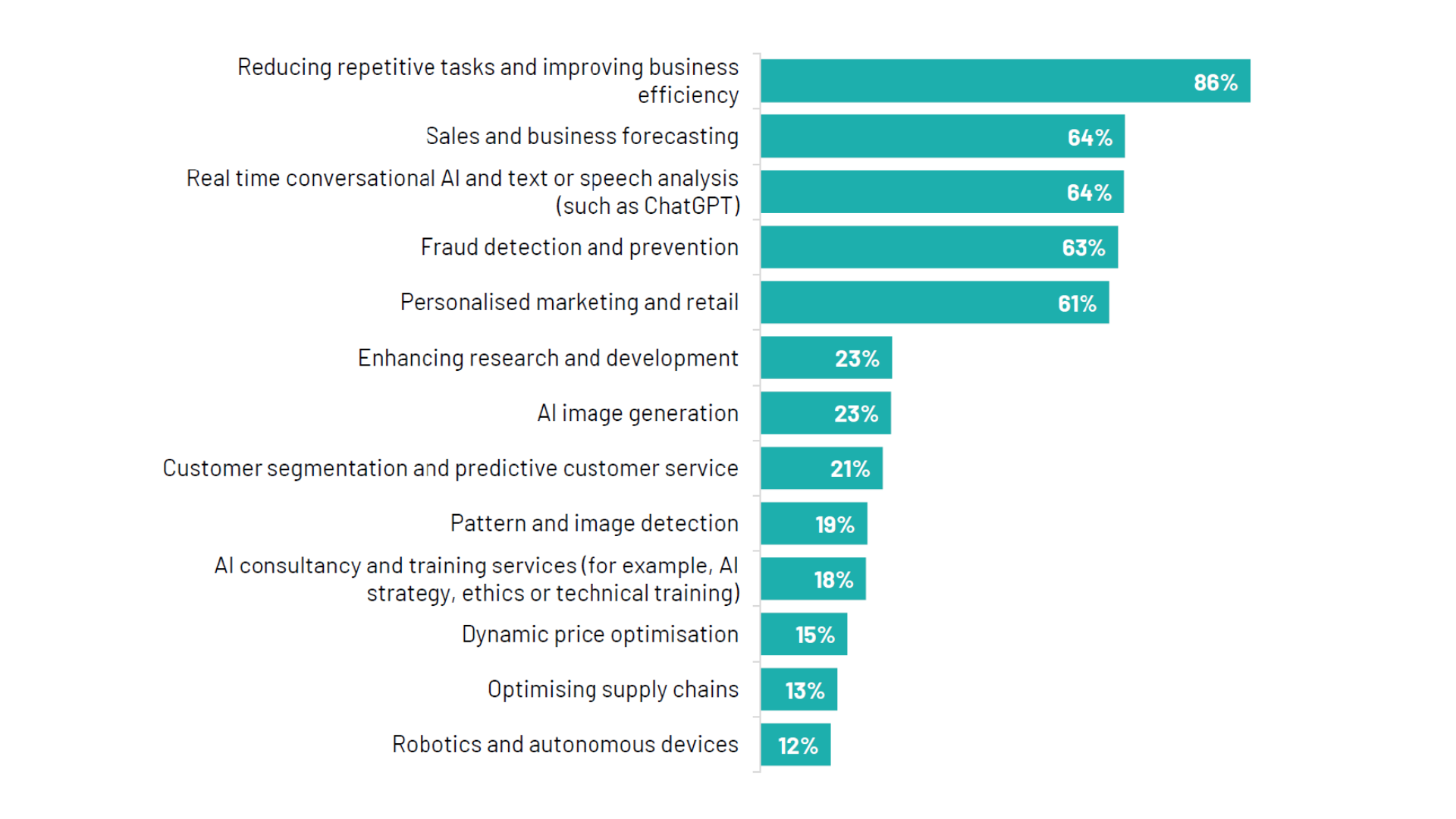
Using AI to reduce repetitive tasks is the most popular area that employers want their business to be trained in. Figure 5.9 shows that, amongst employers interested in training, 86% want training on using AI to reduce repetitive tasks and improve efficiency. Training on sales forecasting and conversational AI are both desired by 64%.
Figure 5.9: “Which particular AI-driven products or services, if any, would your business want AI training in?” survey question responses from employers who are interested in undertaking AI training in the future
Base: All UK employers who are interested in undertaking AI training in future (n=344)
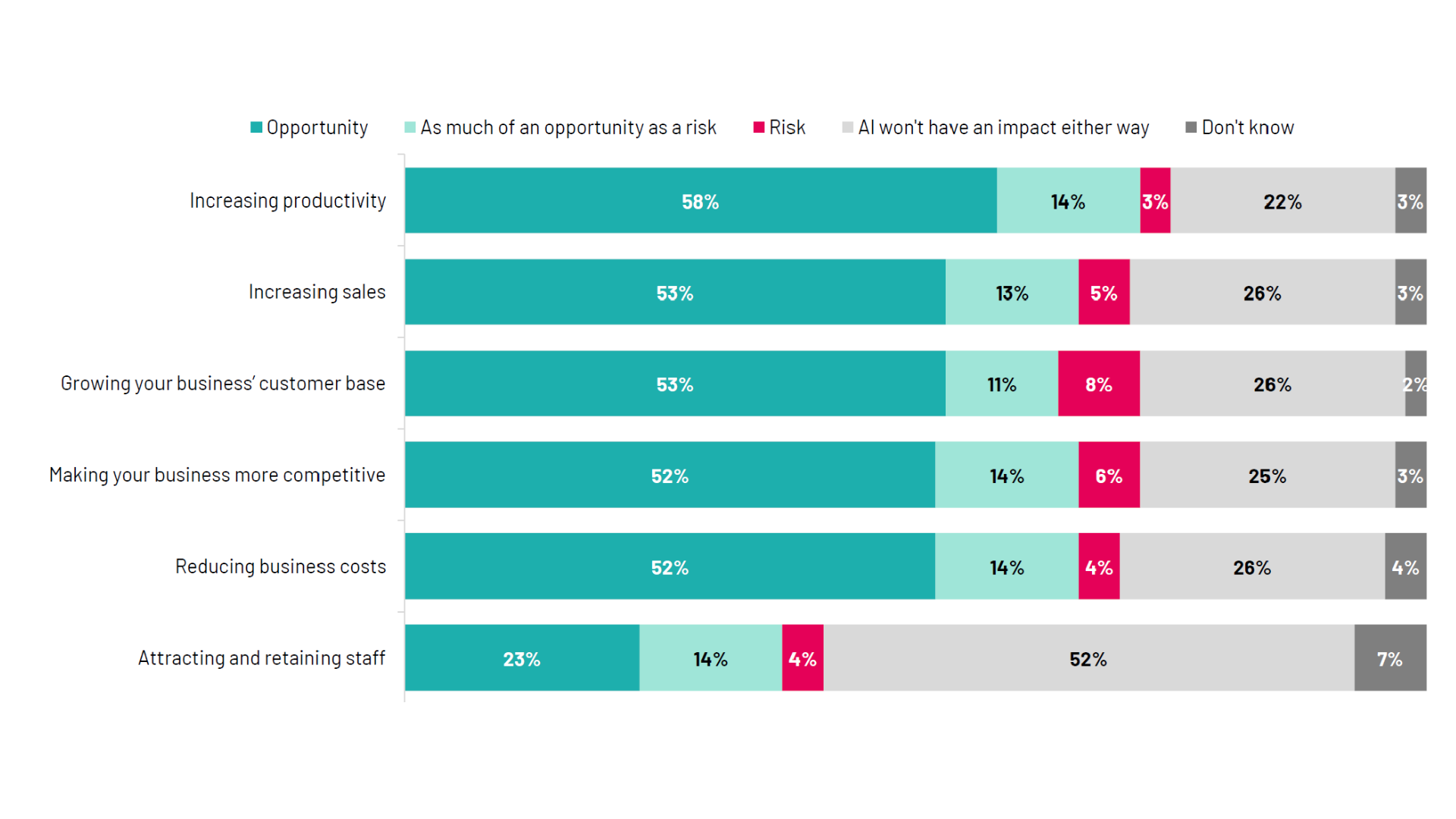
Productivity improvements are seen as the biggest opportunity for further integration of AI into business plans, followed by increased sales. Figure 5.10 shows that senior leadership views AI as an opportunity. 58% see it as an opportunity for increasing productivity, and 53% see it as an opportunity for increasing sales and growing their customer base.
Figure 5.10: “On balance, does the senior leadership of your business consider AI as more of an opportunity or a risk to your business with respect to …?” survey question responses
Base: All UK employers whose business model 3 to 5 years from now will rely on or use AI (n=428)
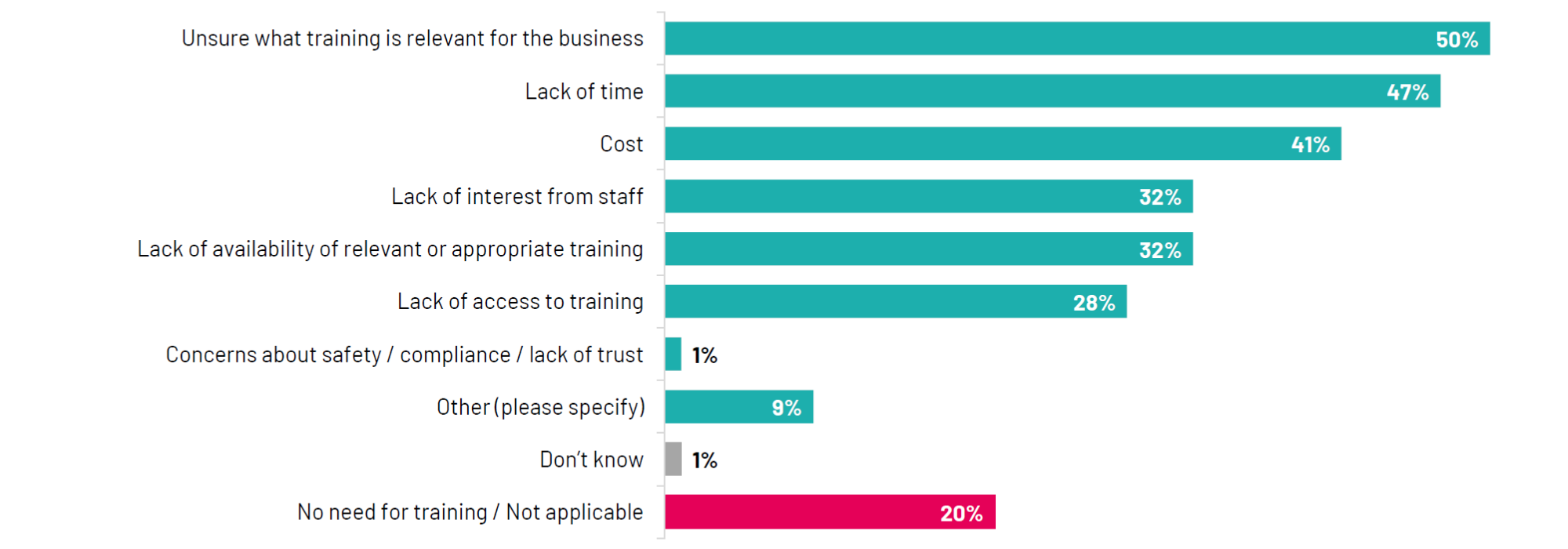
Uncertainty around what training is relevant for the business and lack of time are employers’ main barriers to engaging with AI upskilling. Figure 5.11 shows barriers to AI upskilling. The main barrier is being unsure what training is relevant for the business, cited by 50% of employers. Lack of time is the second-biggest barrier at 47%, followed by cost at 41%.
Figure 5.11: “What barriers does your business face, if any, to engaging with training or upskilling related to AI?” survey question responses
Base: All UK employers (n=801)
6. Summary
6.1 Conclusions
The employer survey highlighted that only 1 in 3 of UK employers say they currently use AI (as of June 2024). Furthermore, this usage is predominantly focused among specialist businesses in, for example, the IT sector. The majority (6 in 10) of UK employers do not use AI and do not have any plans to incorporate it.
These issues with AI adoption appear to stem from the top of the businesses as only 34% of employers say that their senior leadership team can identify new opportunities to use AI in the business. AI usage is seen as a ‘nice-to-have’. Among those who use it, 94% say they use but do not rely on the technology. In addition, only 1 in 10 UK employers have undertaken any AI training and only 4% of UK employers have actively tried to recruit someone with AI skills in the last 3 years.
Skill levels overall are also quite low. 56% of employers whose businesses are currently using or planning to use AI rate the level of knowledge in their business overall as ‘beginner’ or ‘novice’, and 61% of all employers have no staff currently working with AI.
Nevertheless, the impact of generative AI is clear to see. 39% of UK employers using AI say that real-time conversational AI is currently being used in their business. There is also recognition that AI may represent an opportunity to increase productivity.
1 in 3 UK employers would be interested in undertaking AI-related training in their business in future. It is clear that more needs to be done to educate workers at all levels of a business on how to use AI if a majority of UK employers are to take this technology up.
6.2 There is potential for tailoring skills policy to different types of employers
AI Specialists and Implementers There is less of a need to upskill technical AI businesses as they are already at the forefront of the innovation and therefore know how to keep up with developments. The problem for this type of business with be labour shortages for further recruitment of AI skilled workers (rather than any particular requirement to upskill their current workforce).
AI Users 1 in 3 businesses are AI users, but only 1 in 10 businesses have accessed training and the vast majority (94%) say that AI is a nice to have rather than something they rely on. So further training for this business type may be required. Results suggest that any training that highlight how AI will improve productivity and reduce time taken on repetitive tasks could be most useful.
AI Non-Users 6 in 10 UK businesses do not have any staff that use AI and do not plan to use the technology in the next five years either. Efforts could focus on the senior leadership team at these businesses as they will be able to adjust business plans to make fundamental changes, but currently two in three businesses say the leadership team do not understand the opportunities for AI within their sector. Being typically C-suite, they will find AI use cases that increase sales and attract new customers as the most compelling and are not particularly interested in how the technology works.
7. Appendix
Table 7.1: Business profile – sector
| Sector | Target | Achieved | % (out of 100%) | Weighted* % |
|---|---|---|---|---|
| ABCDE Primary / manufacturing | 56 | 59 | 7% | 10% |
| F Construction | 43 | 39 | 5% | 14% |
| GHI Distribution | 129 | 109 | 14% | 31% |
| J Information and Communications | 100 | 103 | 33% | 5% |
| K Finance and Insurance | 130 | 128 | 16% | 2% |
| M Professional, scientific and technical | 86 | 92 | 11% | 13% |
| LN Other business services | 55 | 47 | 6% | 2% |
| P Education | 60 | 72 | 9% | 4% |
| Q Health, social care or social work | 118 | 125 | 16% | 7% |
| RS Other services | 23 | 27 | 4% | 23% |
| Total | 800 | 801 | 100% | 100% |
Table 7.2: Business profile – size
| Size band | Target | Achieved | % (out of 100%) | Weighted* % |
|---|---|---|---|---|
| Micro (1-9) | 380 | 418 | 52% | 64% |
| Small (10-49) | 150 | 196 | 24% | 32% |
| Medium (50-249) | 150 | 140 | 17% | 2% |
| Large (250+) | 120 | 41 | 5% | 1% |
*Based on the October 2023 business population estimates. Note that some participants did not give size of business
Table 7.3: Business profile – region
| Region | Target | Achieved | % (out of 100%) | Weighted* % |
|---|---|---|---|---|
| East | 50 | 52 | 6% | 6% |
| East Midlands | 70 | 77 | 10% | 13% |
| London | 125 | 104 | 13% | 15% |
| North East | 21 | 20 | 2% | 3% |
| North West | 72 | 69 | 9% | 10% |
| South East (excl. London) | 104 | 114 | 12% | 18% |
| South West | 64 | 70 | 9% | 9% |
| West Midlands | 60 | 54 | 7% | 5% |
| Yorkshire and Humberside | 60 | 52 | 6% | 7% |
| Scotland | 60 | 66 | 8% | 7% |
| Wales | 60 | 61 | 8% | 4% |
| Northern Ireland | 60 | 62 | 8% | 3% |
| Total | 800 | 801 | 100% | 100% |
*Based on the October 2023 business population estimates