Additional Jobcentre Support pilot: qualitative research
Published 29 January 2026
Applies to England, Scotland and Wales

© Crown copyright 2026
This publication is licensed under the terms of the Open Government Licence v3.0 except where otherwise stated. To view this licence, visit nationalarchives.gov.uk/doc/open-government-licence/version/3 or write to the Information Policy Team, The National Archives, Kew, London TW9 4DU, or email: psi@nationalarchives.gov.uk.
Where we have identified any third party copyright information you will need to obtain permission from the copyright holders concerned.
This publication is available at https://www.gov.uk/government/publications/additional-jobcentre-support-pilot-qualitative-research/additional-jobcentre-support-pilot-qualitative-research
DWP ad hoc research report no. 118
You may re-use this information (not including logos) free of charge in any format or medium, under the terms of the Open Government Licence, or write to:
Information Policy Team
The National Archives
Kew London
TW9 4DU
Or email: psi@nationalarchives.gov.uk.
This document/publication is also available on our website at: DWP ad hoc research - GOV.UK.
If you would like to know more about DWP research, email socialresearch@dwp.gov.uk.
ISBN - 978-1-78659-937-7
Views expressed in this report are not necessarily those of the Department for Work and Pensions or any other government department.
Executive summary
Policy background
The Additional Jobcentre Support (AJS) pilot focused on providing enhanced engagement with Universal Credit (UC) claimants in the Intensive Work Search regime (IWS).
DWP launched the first phase of the pilot (referred to throughout as AJS1) in early 2023 to test how intensive, daily support at specific points in a UC claimant’s journey can help support them into employment or achieve higher earnings.
Based on evaluation evidence and work coach (WC) feedback, the second pilot phase (referred to throughout as AJS2) introduced an additional structured week of daily employment support, at Week 7 of IWS. AJS2 began in September 2023. This week involved daily appointments, including three one-to-one sessions with a WC and two group sessions, focused on employability. The week aimed to ensure each claimant was equipped with the skills to search for and secure work at an earlier point in the claim.
This report incorporates research findings from both phases of the AJS pilot. Where findings are relevant to a specific phase, they will be referred to as AJS1 or AJS2 as appropriate. Where the phase is not specified, the findings are relevant across AJS as a whole.
Research context
This qualitative research was carried out between November 2023 and February 2024 by professional social researchers in DWP. It aimed to deliver insights into the delivery and effectiveness of AJS2 and to suggest policy implications arising from this and earlier research on AJS1.
60 jobcentres that had participated in AJS1 took part in AJS2, along with an additional 30 jobcentres[footnote 1].
Our research initially focused on the additional week of support at Week 7, before looking at later weeks in the pilot. Fieldwork took place across all participating Jobcentre Plus (JCP) districts involving 26 claimant interviews, 4 interviews at different time points with each of 5 work coaches (20 in total), and observations of 30 AJS2 one-to-one sessions and 6 AJS2 group sessions.
Key findings
In general, WCs were positive about the AJS2 Week 7 daily employability support, feeling that this helped to get claimants job-ready earlier in their claim. Claimants tended to agree, and valued the support on CVs, job searching, applications and interview skills. The week 7 intervention identified barriers to employment and enabled support and training, which was viewed positively by claimants. However, there was variation in the length of notice given to claimants that they would need to attend daily, which impacted on claimant experience and their initial engagement. One claimant said they were only told on a Monday that they needed to attend the rest of the week (which is less than the 48 hours required).
AJS1 and AJS2 have been administratively challenging to deliver and there have been resourcing issues. Eligibility checks were laborious in AJS2, and the frequency of appointments impacted on diary capacity, particularly for WCs who were also delivering other programmes. Facilities were sometimes unsuitable, including noisy, open-plan spaces used for group sessions. WCs felt that AJS2 was better suited to larger jobcentres, due to its demand on resources, with a dedicated team delivering the support.
While daily attendance on AJS2 allowed WCs to build rapport and understand claimant needs, it did not always allow enough time between appointments for actions to be progressed.
Daily attendance could also cause claimants financial strain. There was variability in whether travel expenses were paid by jobcentres, suggesting that the guidance is not always followed. Attendance was said to be good, and this was partly due to the deterrent effect of sanctions for non-attendance. However, WCs interpreted the guidance on failure to attend (FTA) inconsistently, and some showed a reluctance to refer claimants for a sanction decision.
WCs reported that they tailored one-to-one appointments to claimant needs, but different levels of support and tailoring took place. There was variation in how actively facilitators expected claimants to participate in group sessions. Group activities were not suitable for all, including, for example, neurodivergent claimants. In these cases, neurodivergent claimants were sometimes, but not always, provided with group content in a one-to-one appointment.
Claimants felt that the support in AJS2 suited those with little work or job search experience. Most of those aged over 50 also said that AJS2 motivated them and helped to broaden their job search. However, claimants and WCs viewed AJS2 as generic, and claimants with substantial work experience and those in work wanted more targeted support. AJS2 may also be less suited to claimants with complex needs, such as refugees or the homeless, or those with low levels of English.
Overall, AJS2 was generally viewed positively by both claimants and Work Coaches, particularly for those with limited work experience. However, delivery challenges, inconsistent tailoring, and suitability concerns for specific claimant groups suggest that there are concerns around whether the model was equitable, targeted, and sustainable at scale
Acknowledgements
This research was commissioned by the Labour Market Analysis Division (LMAD) in DWP. We are extremely grateful for the guidance and supported offered throughout by LMAD colleagues, as well as colleagues in the Labour Market Delivery Team.
We’d specifically like to thank Nicholas Campbell, Nikola Bakalov, Anna Silk, Stuart Brown, Neil Davies, Jon Lander, Ryan Brammer, Alison Cousley, Andrea Kirkpatrick, Tom Younger, Mike Jones, and Shelley Smith for their input.
We are very grateful to colleagues who provided their time and knowledge to ensure fieldwork for this research was possible, as well as colleagues who facilitated and/or took notes in the interviews.
Finally, we would like to acknowledge and thank all claimants and DWP colleagues who participated in this research, for giving up their time to take part in the interviews, allowing us to carry out observations in AJS delivery sites, and for sharing valuable information on their views and experiences.
The authors
This report was written by Mark Turner, Claire Wardman, Tanya Saunders, Afrika Anfruns, Poppy Heppell and Alexia Morrison, who are all professional social researchers in DWP.
Glossary
| Abbreviation | Meaning |
|---|---|
| AJS | Additional Jobcentre Support |
| AJS1 | Additional Jobcentre Support Phase 1 |
| AJS2 | Additional Jobcentre Support Phase 2 |
| CCR | Claimant Commitment Review |
| CSC | Construction Skills Certificate |
| DART | Data for Analysis and Research Team |
| DM | Decision Maker |
| EA | Employment Advisor |
| ESOL | English for speakers of other languages |
| FCCR | First Claimant Commitment Review |
| FSF | Flexible Support Fund |
| FTA | Failure to Attend |
| FTC | Failure to Comply |
| FTP | Failure to Participate |
| IWS | Intensive Work Search |
| JIP | Jobcentre Innovation Pilot |
| LMAD | Labour Market Analysis Division |
| REEP site | Rapid Estate Expansion Programme site |
| SWAP | Sector-Based Work Academy Programme |
| ToC | Theory of Change |
| UC | Universal Credit |
| WC | Work Coach |
| WCA | Work Capability Assessment |
| WCTL | Work Coach Team Leader |
| WFI | Work-Focused Interview |
| WSR | Work Search Review |
1. Introduction
This report presents the findings of qualitative research conducted into Phase 2 of the Additional Jobcentre Support (AJS2) pilot. Fieldwork for the research was conducted by professional social researchers. Fieldwork took place from November 2023 to February 2024 and consisted of 3 strands:
- Four longitudinal interviews with five work coaches (WCs) (20 in total);
- Two phases of interviews with claimants (26 interviews in total);
- Week-long observations of 2 pilot jobcentres.
1.1. Policy background
The Additional Jobcentre Support (AJS) pilot was launched in early 2023 to test how intensive daily support at specific points in a Universal Credit (UC) claimant’s journey could help support them into employment or to secure higher earnings. AJS focused on providing enhanced engagement with UC claimants in the Intensive Work Search regime (IWS).
AJS phases
AJS was developed in 3 stages:
- Proof of Concept (PoC) – ran in 4 jobcentres across 4 districts, from January to February 2023.
- Phase 1 – expanded to run in 60 jobcentres in the 4 PoC districts.
- Phase 2 – Phase 1 jobcentres plus an additional 30, to total 90 jobcentres across 8 districts, beginning in September 2023. The pilot was discontinued from May 2024 following the calling of the general election.
AJS Phase 1
The first phase of AJS provided enhanced mandatory engagement with claimants when they reached the 13th and 26th week of their claim. Intensive activity at these points then took place over a 2-week period. This included using the Claimant Commitment to set and review realistic and achievable expectations about the work search activity that the claimant should undertake. Appendix E sets out how engagement was structured in Phase 1.
AJS Phase 2
Based on evaluation evidence and work coach feedback from the first phase, the second phase introduced a structured week of employment support in Week 7 of the UC claim. The aim of this additional week was to ensure each claimant was equipped with the skills required to search for and secure work at an earlier point in the claim. Claimants were then required to attend two weeks of daily intensive activity in the jobcentre focused on work search activity at weeks 14 and 15, which repeated at weeks 27 and 28 if the claimant was still eligible for AJS. As with Phase 1, activity was mandatory and comprised a mix of group sessions, Work-Focused Interviews and Work Search Reviews. Figure 1 sets out how engagement was structured in AJS Phase 2 and provides further detail.
AJS eligibility and suitability
AJS excluded those in the IWS who were Gainfully Self Employed (GSE), awaiting a Work Capability Assessment (WCA), or required to work search for less than 20 hours per week due to their personal circumstances. Delayed entry to AJS also applied to certain groups, including young people and claimants aged 50 plus. In addition, the standard AJS journey (as outlined in Figure 1) could be tailored where appropriate for some eligible claimants, for example, claimants in part-time employment, those with ESOL (English for speakers of other languages) needs, childcare responsibilities, health conditions or other relevant circumstances. This could include, for example, attending some appointments via telephone or video, or not attending group sessions. Further details of eligibility and suitability for AJS can be found in Appendix D.
Figure 1. Intensive Work Search Regime (IWS) and Additional Jobcentre Support Phase 2 (AJS2) standard* claimant journey.
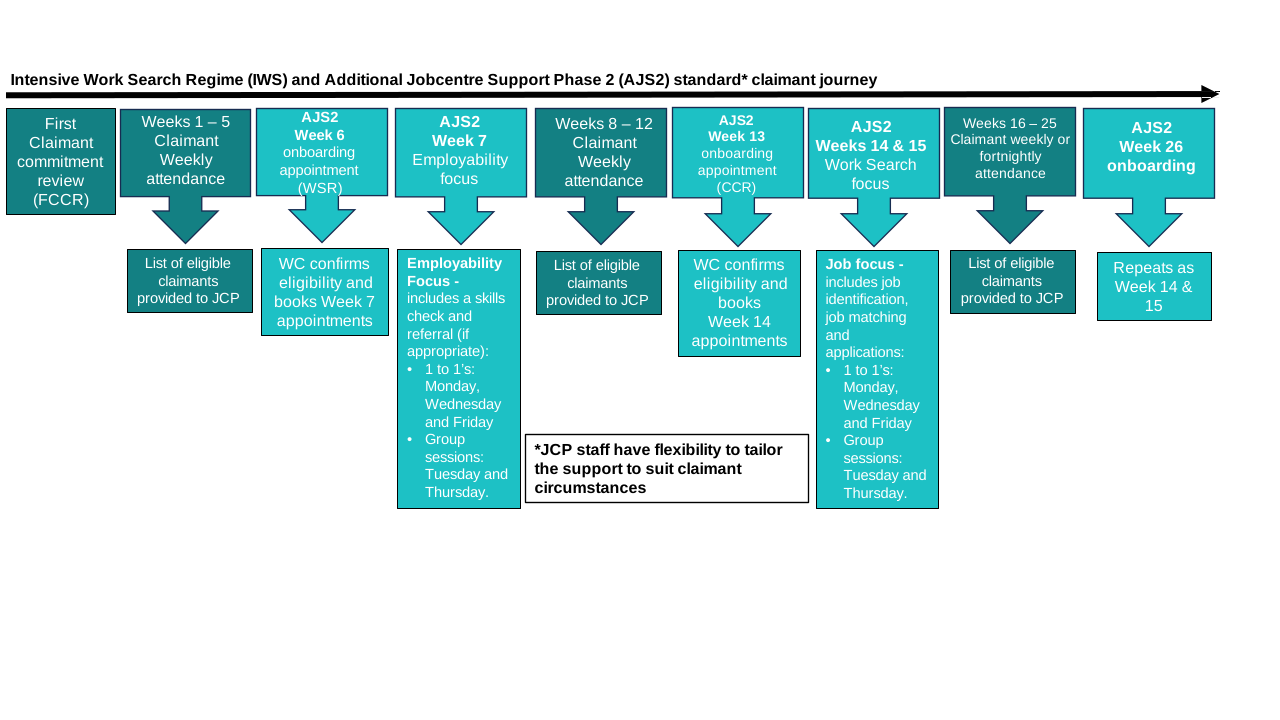
This image shows a horizontal flowchart showing claimant engagement steps over 26 weeks. The chart is divided into coloured boxes, with blue showing attendance periods where lists of eligible claimants are provided to JCP, and orange representing focus weeks within AJS2.
Sequence:
- First claimant commitment review (FCCR).
- Weeks 1 to 5: Weekly attendance; list of eligible claimants provided to JCP.
- AJS2 Week 6 onboarding appointment (WSR); WC confirms eligibility and books Week 7 appointments.
- AJS2 Week 7 Employability focus: includes skills check and referral if appropriate; 1-to-1 sessions Monday, Wednesday, Friday; group sessions Tuesday and Thursday.
- Weeks 8 to 12: Weekly attendance; list of eligible claimants provided to JCP.
- AJS2 Week 13 onboarding appointment (CCR); WC confirms eligibility and books Week 14 appointments.
- AJS2 Weeks 14 and 15 Work Search focus: includes job identification, job matching, and applications; 1-to-1 sessions Monday, Wednesday, Friday; group sessions Tuesday and Thursday.
- Weeks 16 to 25: Weekly or fortnightly attendance; list of eligible claimants provided to JCP.
- AJS2 Week 26 onboarding; repeats as Week 14 and 15.
- A note at the bottom states: “JCP staff have flexibility to tailor the support to suit claimant circumstances.
1.2. Research context
Evidence from AJS1 research suggested that earlier intervention could have identified barriers such as skills deficits or issues with CVs which, if addressed, could speed up claimants’ job search, or make the intensive support from Week 13 more effective. This led to the introduction of a week of intensive support earlier in the Universal Credit claim, at Week 7, in AJS2.
AJS2 launched in September 2023 in jobcentres across 8 Jobcentre Plus districts. AJS1 jobcentres took part in AJS2, plus 30 additional jobcentres, totalling 90.
Our research on AJS2 took place between November 2023 and February 2024 and included jobcentres and WCs in all 4 pilot districts which took part in the PoC: Central Scotland, West Yorkshire, Surrey and Sussex, and Leicestershire and Northamptonshire. The PoC districts were chosen as research areas because they had had more time to embed the pilot and resolve any initial operational issues. The research initially focused on the additional week of support at Week 7, before looking at later weeks in the pilot. The research gives insights into the delivery and perceived effectiveness of AJS2.
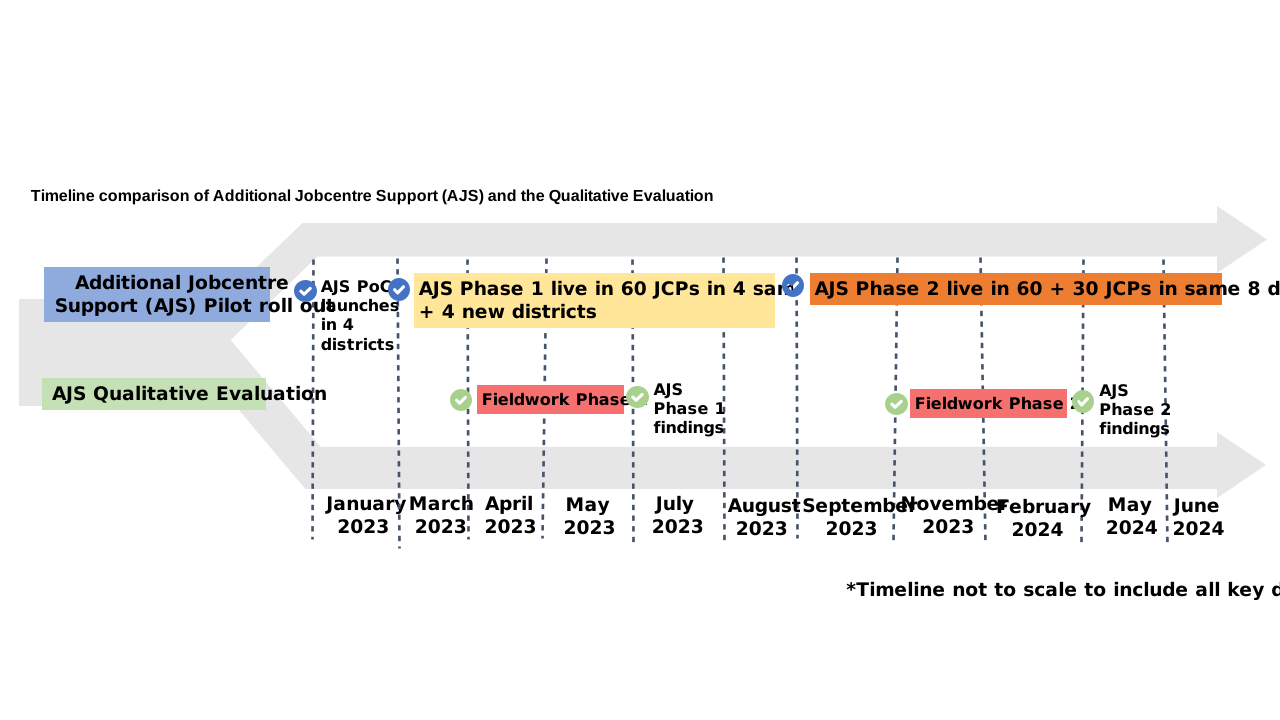
Research into AJS2 built on the findings from our previous research into AJS1 (see section 3.4. Insights from AJS1 and AJS2 for future policy development and service delivery). Fieldwork for AJS1 research took place from April to May 2023, and included a staff strand, claimant strand and observation strand. Figure 2 shows the timeline for AJS and both phases of qualitative research.
Figure 2. Timeline comparison of Additional Jobcentre Support (AJS) and the Qualitative Evaluation
1.3. Aim and research questions
This qualitative research focused on delivery of AJS2, factors influencing its effectiveness, and unintended consequences. The purpose of the research was to inform decisions on wider rollout and provide evidence to support future policy design and operational delivery. The specific research questions were:
- RQ1: How is AJS2 experienced by claimants and staff?
- WC and claimant perceptions and understanding of purpose of AJS2 and reactions to this phase of the pilot
- RQ2: What works well in AJS2?
- Practical delivery of AJS2, including on-boarding, administration and delivery of sessions, daily attendance, sanctions, and use of Work Plan
- RQ3: What are the areas for improvement in AJS2?
- The same topics as above for RQ2
- RQ4: What are claimant and staff perceptions and experiences related to the effectiveness of AJS2?
- How effective AJS2 is in helping claimants to become job-ready and overcome perceived barriers to work
- RQ5: What are the relevant insights from AJS1 and AJS2 for future policy development and service delivery?
- Insights from either phase of AJS and comparisons made by WCs
2. Research methodology
This chapter outlines the research methodology used, and details key considerations of data collection, analysis, and reporting. Further information on the methodology is provided in Appendix A.
2.1. Sampling and recruitment
The fieldwork for this research was split into 3 separate work strands, each designed to address different priority lines of enquiry.
Work Strand 1 – Claimant interviews (Dec 23 to Feb 24)
Claimants were interviewed to gain insight into the experiences of those who participated in AJS2 and the barriers and enablers to participation and engagement.
We interviewed 13 claimants shortly after they had taken part in the Week 7 intervention and a further 12 claimants after they had taken part in Weeks 14 and 15. One claimant was interviewed after Week 7 and again after Weeks 14 and 15.
Work Strand 2 – Jobcentre immersion visits (Nov 23 and Jan 24)
We carried out daily observations of one-to-one interactions between work coaches and claimants and of group sessions, during two week-long jobcentre visits. These delivered real-time, first-hand insight and included seldom-heard claimants (for example with complex needs which makes them less likely to take part in research if invited remotely).
Work Strand 3 – Work coach interviews (Nov 23 and Feb 24)
We conducted 4 semi-structured interviews with 5 work coaches, totalling 20 interviews. These interviews covered what was working well, suggestions for improvement, and perceived effectiveness of AJS2.
2.2. Theory of Change
Before the pilot began, the evaluation team, working collaboratively with the Theory of Change team and with stakeholders, developed a Theory of Change (ToC) for AJS. A ToC outlines how and why the activities of an intervention may lead to the intended outcomes and impacts. Figure 3 shows the high-level ToC for AJS.
Core assumptions and risks of the AJS ToC
The core expectations that surfaced via the AJS ToC were that AJS activities would support claimants to enter employment or increase their working hours. This is because:
- Greater intensity of support and conditionality would improve claimant compliance and engagement.
- Daily attendance would provide a routine similar to work.
- AJS would provide employability skills that claimants can use in future periods of unemployment, or to fill local vacancies.
- Claimants would be more motivated and confident in job searching, applications, and interviews.
The core risks outlined in the ToC were:
- Unsuitable individuals being on-boarded to the programme
- The “hassle” element could reduce engagement
- A potential increase in Flexible Support Fund (FSF) spend
- Claimants moving into temporary employment (for example seasonal work) and requiring on-going jobcentre services.
Appendix B contains more detail on the AJS ToC assumptions and risks.
The core assumptions and risks informed the development of fieldwork materials, including interview topic guides and observation guides.
Figure 3. Additional Jobcentre Support Phase High-level Theory of Change
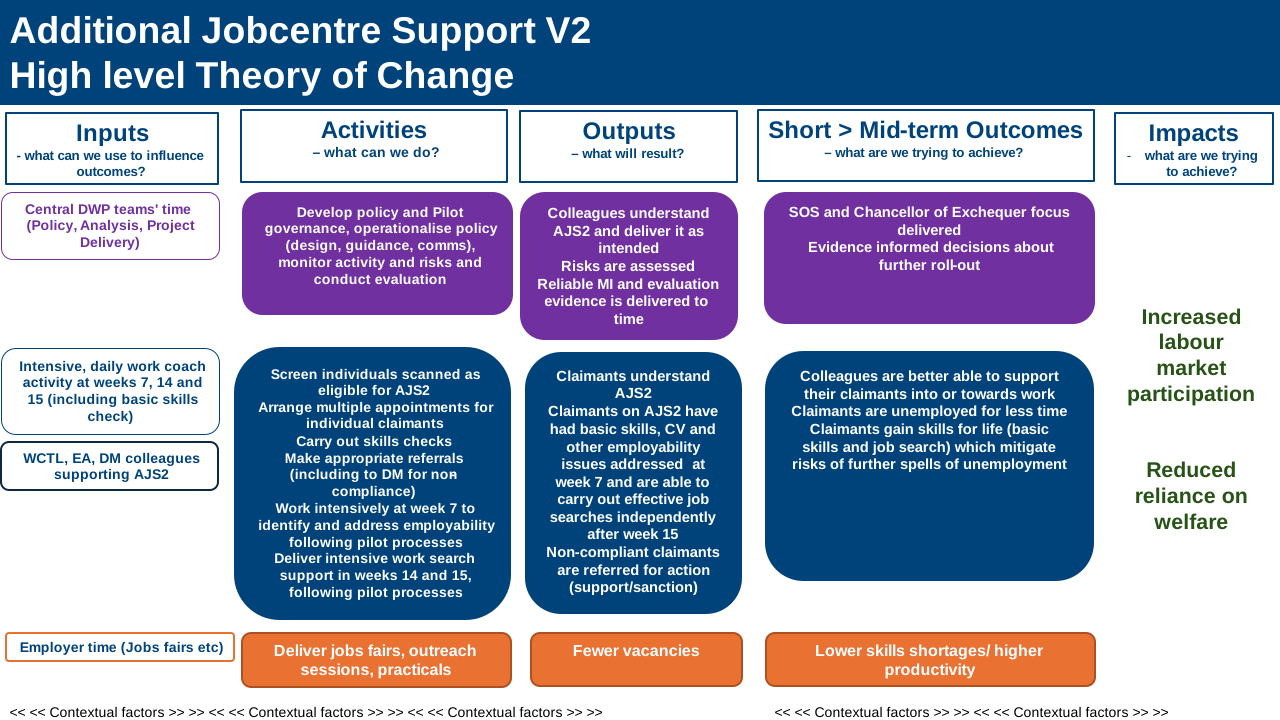
The image shows a structured diagram with five columns labelled:
1. Inputs (what can we use to influence outcomes?):
- Central DWP teams’ time (Policy, Analysis, Project Delivery)
- Intensive daily work coach activity at weeks 7, 14, and 15 (including basic skills check)
- WCTL, EA, DM colleagues supporting AJS2
- Employer time (jobs fairs etc.)
2. Activities (what can we do?)
- Develop policy and pilot governance, operational policy (design, guidance, comms), monitor activity and risks, conduct evaluation
- Screen individuals scanned as eligible for AJS2
- Arrange multiple appointments for individual claimants
- Carry out skills checks
- Make appropriate referrals (including to DM for non-compliance)
- Work intensively at week 7 to identify and address employability issues
- Deliver intensive work search support at weeks 14 and 15, following pilot processes
- Deliver jobs fairs, outreach sessions, practicals
3. Outputs (what will result?)
- Colleagues understand AJS2 and deliver it as intended
- Risks are assessed
- Reliable MI and evaluation evidence is delivered on time
- Claimants understand AJS2
- Claimants on AJS2 have basic skills, CV, and other employability issues addressed
- Claimants are able to undertake job searches independently after week 15
- Non-compliant claimants are referred for action (support/sanction)
- Fewer vacancies
4. Short > Mid-term Outcomes (what are we trying to achieve?)
- SOS and Chancellor of Exchequer focus delivered
- Evidence informs decisions about further roll-out
- Colleagues are better able to support their claimants into work
- Claimants are unemployed for less time
- Claimants gain skills for life (basic skills and job search) which mitigate risks of further spells of unemployment
- Lower skills shortages / higher productivity
5. Impacts (what are we trying to achieve?):
- Increased labour market participation
- Reduced reliance on welfare
- Bottom row shows contextual factors arrows under each column.
2.3. Fieldwork and analysis
Interviews took place remotely with claimants (via telephone or MS Teams) and work coaches (via MS Teams). This approach enabled researchers to cover all four key location areas, as these were geographically dispersed.
Observations were conducted over the course of a week in two jobcentres. These visits gave a deeper understanding of how the policy is being delivered. Observers engaged in daily reflective meetings and shared emerging themes and new lines of enquiry.
Topic and observation guides were developed for each strand of data collection covering experiences of delivery and reflections on AJS2 effectiveness.
A thematic analysis approach was used to analyse the data. The coding framework was developed using the topic guides and refined after reviewing a selection of interview transcripts. The interview analysis was conducted in NVivo 12. Each member of the project team was allocated interview transcripts to code, a selection of which were then quality assured by the work strand leads. Feedback from this quality assurance was provided to the coders to inform their coding of subsequent transcripts. All coders met weekly to discuss coding queries, and to further refine the framework. Using this approach enabled the analysis to be conducted by multiple members of the project team in a consistent way.
2.4. Considerations and limitations
Information sheets and interview scripts made it clear to claimants and staff that participation in the research was entirely voluntary. Staff and claimant participants were informed that they could ask the researchers to stop observing or interviewing at any time during the fieldwork. Claimants invited for interview could also email the dedicated research email address to let the research team know if they no longer wanted to take part. All participants were asked at the start of their interview if they were still happy to participate.
Participants were informed that all data collected would remain confidential and used for research purposes only. Participants were also told that they would not be identifiable in the findings of the study. Claimants were assured that their participation and any feedback that they provided would not influence their benefit claim or their dealings with the Department for Work and Pensions.
Claimant interviews were conducted by telephone and did not require digital access, such as access to a laptop or smartphone. If a participant requested a reasonable adjustment, the project manager would contact the participant to discuss this further. In the event, reasonable adjustments were not needed during the project.
This qualitative study delivers rich understanding of a range of claimant and WC views and experiences of AJS. However, there are some limitations:
- Although a diverse claimant sample was achieved (by sex, age, district), only 3 claimants in our sample were already in work. Albeit difficult to recruit, it would have been insightful to further explore the perceptions of in-work claimants.
- As we conducted 4 interviews per WC over time, to track attitudinal and behavioural changes, the trade-off was that our sample was small (5 WCs).
- In interviews, participants were asked retrospectively about their experiences, so it is likely that there is some recall bias, although this was not a risk for observations.
- Opt-in approaches for both claimant and WC strands will have resulted in some selection bias, with those who chose to participate potentially having strong views (positive or negative) about the intervention, using the research as an opportunity to raise those opinions.
- Gathering observational data came with challenges, such as obtaining active agreement to participate (rather than passive compliance), lacking information about participant characteristics, and the impact of the presence of the researcher.
2.5. Presentation of reporting
The findings in this report aim to show a range of experiences and views related to AJS. Quotes have only been included where we consider there to be no risk of identifying individuals and are shown in quotation marks. Where quotation marks are used, we are confident of accuracy, due to the following measures taken when interviewing:
- For all interviews conducted with claimants and work coaches, an interviewer and note-taker were present
- Staff interviews and the second wave of claimant interviews were transcribed using MS Teams, to supplement the note-taker’s notes
These measures were taken due to the available equipment and data processing approvals in place at the time of research.
When considering these findings, it is important to note that a qualitative approach explores the range of attitudes and opinions of participants in detail. It provides an insight into the key reasons underlying participants’ views. Findings are descriptive and illustrative and are not statistically representative.
3. Findings
3.1. How AJS was experienced by claimants and work coaches
Work coach and claimant perceptions and understanding of the purpose of AJS
Generally, WCs demonstrated a good understanding of the stated policy intent of the support and were aware of it being a priority, an assumption made in the ToC. However, while communications were felt to have improved since AJS1, some WCs said better communications would have smoothed the transition from AJS1 to AJS2.
WC use of guidance
WCs stated that guidance was provided by managers or Customer Service Leads (CSLs). This guidance typically included locally developed materials, such as summaries of leaders’ briefs or process overviews. During immersion visits, researchers observed examples of these materials displayed in workspaces (for example pinned to desk dividers). WCs also learned through talking to or shadowing colleagues. Not all WCs were aware of the intranet guidance. When prompted, those who did know about the guidance said that this was sufficient, easy to find, and clear, but in practice it appeared to be rarely used. In addition, newer staff found it hard to find time to review AJS2 guidance, as assumed in the ToC, on top of their induction material. Not referring to the ‘official guidance’, and relying on local products or conversations with colleagues, is likely to have impacted on the delivery of AJS2 (for example inconsistent use of the Work Plan or not mandating activities).
General views on AJS2
Initially, some WCs expressed concerns about delivering AJS2, due to not being familiar with processes, fears they would be overwhelmed by the administrative tasks involved, and concerns about delivering group sessions. WCs also initially had doubts about the effectiveness of the programme. However, in the same interview WCs went on to say that the more they delivered this pilot phase, the more confident they became. Generally, WCs shared positive views about AJS2 and believed in the benefits of the programme.
WCs generally thought that the timing of intense intervention at Week 7 and the gap between this and Weeks 14 and 15 were appropriate. However, some WCs and claimants felt that Week 7 could be brought forward, to provide support even earlier in the claim and guard against loss of motivation.
WCs and claimants said that Week 7 was a good introduction to the support provided by AJS2. This meant claimants had a better idea what to expect in Weeks 14 and 15.
Purpose of the AJS2 weeks according to WCs
WCs’ understanding of the purpose of the AJS2 weeks matches the official guidance provided. Employability support in Week 7 was seen by WCs as an opportunity to better understand the claimants’ circumstances and address barriers to employment, enabling claimants to become job-ready earlier in their claim.
Intensive Job Search Weeks 14 and 15 were understood by WCs as the time for claimants to broaden their fields of job search, review the quality of their applications, increase job search activity, and job-match claimants as much as possible.
Reactions of claimants
WCs reported initial pushback from claimants when the idea of daily attendance was introduced to them. One reason WCs offered for this was a lack of clarity on how the programme could benefit claimants. This was echoed by claimants themselves, who said they were initially surprised when they were told about mandatory daily attendance. However, once claimants started to attend the daily sessions, they understood their purpose.
I had an inkling of what it was because my work coach told me a little about it. I was going on expecting that, but at the same time I was a bit shocked […] but then once I started attending, I knew what it was about and what would be discussed.
(Claimant, Male, Unemployed, 25-49, Surrey and Sussex)
Notice given to claimants
There was variability in the notice claimants said they had been given to attend daily appointments, and in the way they were on-boarded. Timewise, this varied from having been informed at the beginning of their claim, to being informed on a Monday in Week 7 or 14 that they were meant to attend the rest of that week.
Those who had been given more notice to attend were more prepared, whereas those who had been given less (even one week in advance as per the guidance) raised concerns, especially around travelling to the jobcentre. This was echoed by WCs, who reported that AJS2 was better received when the WC told the claimant as soon as possible, giving claimants time to understand their responsibilities and prepare for the support. Some claimants also appeared unaware of the potential need to attend more daily support in Weeks 14/15 and 27/28.
With regard to on-boarding, claimants mentioned that receiving several emails or text messages about appointments, delivered by a different WC to their usual WC, without previous advice or explanation of their purpose, had caused confusion and, in some cases, anxiety.
Claimant awareness of session content
A common theme was claimants having only a vague awareness of what the sessions would involve. This meant some claimants expected to be provided with job leads and were then disappointed when they were not. In addition, this lack of awareness led some to feel anxious about what would be required from them at group sessions. During site visits, we observed both differing expectations about group formats and apprehension about participating in groups. However, claimants understood – and were fearful about – the consequences of not attending and about the possibility of being referred for a sanction.
3.2. What worked well and areas for improvement in AJS2
Practical delivery of AJS2, including on-boarding, administration and delivery of sessions, daily attendance, sanctions, and use of Work Plan
Administration, on-boarding and appointment booking
WCs believed that AJS2 was better suited to larger jobcentres, due to its intensity and demand on resources. WCs reported that having a dedicated AJS2 team worked well, but this was not possible in smaller jobcentres. Those who worked exclusively on AJS2 said this allowed them to focus their attention solely on the programme and organise themselves better.
WCs noted that receiving consistent communication on their on-boarding targets and jobcentre performance was helpful and motivating when delivering AJS2. Some WCs said they had no difficulties reaching these targets. However, in some jobcentres there was no pressure to reach targets, and a lack of awareness that they were not performing well.
WCs did not think eligibility checks were carried out consistently or accurately, leading to some unsuitable claimants being on-boarded. A risk identified in the ToC was that the intended participants of AJS2 might not be identified and would not receive the support.
Only some that we felt, as a work coach, shouldn’t even be booked on to on-boarding appointments because they’ve had personal issues to deal with […] because this is an intense journey […], they’ve got other things going like they’re homeless for example, they’ve got language disadvantage, they cannot speak English, they’ve only moved in this country as a refugee.
(WC, JCP 3)
We observed that WCs sometimes used their discretion and decided not to on-board claimants who had work lined up and who were waiting for a start date. However, other WCs told claimants in this situation that they needed to attend, because they were not yet in employment.
WCs said that the eligibility checking process was laborious and challenging, and that auto-screening would be welcome.
Although WCs generally felt the timing of weeks in AJS2 was suitable, some questioned whether the period between Weeks 7 and 14 allowed claimants to make meaningful progress, especially if delays in on-boarding meant less time between these weeks[footnote 2]. One WC mentioned that in such cases they used their discretion to postpone on-boarding and found this helpful, which aligned with a ToC assumption that staff could use AJS2 flexibly.
The one-diary system used when booking appointments was beneficial for WCs, as it provided a more streamlined approach which was easy to navigate. However, the frequency of one-to-one appointments impacted on diary capacity: AJS added more pressure on diaries and WCs, particularly for WCs delivering other programmes on top of AJS2, regardless of jobcentre size.
I think the idea of it is good but the putting it into practice is impractical just because of the amount we’ve got, it isn’t just AJS but we’ve got AWCT [Additional Work Coach Time], 50 plus […] there’s only so many hours a day, members of staff and slots in a diary, the daily ones put a lot of pressure on work coaches’ time.
(WC, JCP 5).
Diary management was an issue regardless of whether it was organised centrally or individually. In one jobcentre we visited, this was managed centrally, and the WCs relied on the team leader to create booking slots in calendars. However, there was an occasion when the team leader was on leave and WCs could not free up diary space.
Facilities
WCs generally felt that larger jobcentres were better suited to delivering AJS2 due to their access to more resources, and space for group sessions. A lack of space and resource impacted on the delivery of AJS2. There could be a lack of privacy during one-to-one appointments, and some claimants felt that the open-plan layout of their jobcentre meant that sensitive conversations could be overheard. For some this was not a concern but for others this had a negative impact on their experience.
There’s no privacy because there is an open plan room so other people can hear you – so I didn’t think that was great.
(Claimant, Female, Employed, 50-65, Surrey and Sussex)
Some claimants felt that the facilities used for the group sessions were suitable. However, in observations it was seen that a lack of appropriate equipment or space can be a barrier to delivering group sessions effectively. Security in one site meant that group sessions could only be held on the main floor of the jobcentre, in a noisy, open-plan area near the entrance, while other sites could not run group sessions due to a lack of space or low numbers of AJS2 claimants.
…personally I would much rather have a separate room away where you could sit people down and it was away from the main hub of the jobcentre. But we don’t have that because [although] we [have] got plenty of room upstairs, we haven’t got the security guards to cater for that. So that would be something I would like to see change, but I can’t.
(WC, JCP 4)
In some sites, there was not enough IT to facilitate group sessions, with claimants being asked to use their mobiles or personal laptops to job search as an alternative. In other sites, there were issues with access to functioning projectors, and we observed a group session which did not start on time as the projector could not be found. One site held group sessions at a nearby venue, which tended to work well. However, the sessions were held on the first floor, and the venue had no lift, making it inaccessible to some claimants.
Thoughts on daily attendance
Claimants consistently reported that daily attendance on AJS2 was motivating and supported them in getting into a routine, an assumption made in the ToC.
It built the confidence I needed”, [which everyone in my family was trying to get me to do] – “it felt more like going to see a friend than going to do a chore.
(Claimant, Female, Unemployed, Surrey and Sussex, 25-49)
I was quite happy, it gets me out of the house, I was happy to be there. I didn’t have anything against it. Apart from looking for jobs I wasn’t doing anything with my time so it was good to see people. It was refreshing.
(Claimant, Male, Unemployed, Leicestershire and Northamptonshire, 25-49)
In our visits to jobcentres, WCs said that daily attendance helped build and improve rapport with claimants: see Case Study A.
Case study A: a success story
Lauren[footnote 3], 25-49, Unemployed
Lauren began her journey with AJS struggling with severe social anxiety. This affected her ability to leave the house. Lauren explained that her social anxiety began years before, following the birth of her two children, and that the demands of childcare, paired with her social anxiety, were limiting factors to her attaining employment. Lauren reported that the supportive nature of the WCs running AJS helped her feel more confident in her job search journey, even remarking that attending appointments felt more like seeing friends than completing a programme. Lauren said the daily aspect of AJS helped her to build a routine where she was able to challenge herself every day to leave the house, use public transport and speak to members of the AJS team. During her research interview, Lauren reported that, thanks to the support received from AJS, she finally has the confidence to apply for a job working with animals.
On the other hand, daily attendance meant that the time between appointments could be too short for actions taken to have updates or outcomes. Claimants said that they found themselves repeating what they had discussed in previous appointments, and we observed a claimant who updated, in each appointment of Week 7, that he was waiting for a call back from an employer the following week. One WC felt AJS2 was a hard sell for this reason. Suggestions for improvement included having two rather than three one-to-one appointments in Week 7, having a clear plan of what would be covered during each appointment, and using appointments to practise interview techniques.
Before that we had weekly meetings […] but at least you had more to talk about because there was a longer timeframe between appointments. I mean not much can happen in the space of a day or two. You know I could and did apply for one or two jobs, but I wouldn’t have heard much back or anything. So, the appointments didn’t really last long – only about 5 to 10 minutes.
(Claimant, Male, Unemployed, 18-24, Central Scotland)
Not all claimants saw the same WC for each of their one-to-one appointments. Claimants typically felt that having different WCs negatively impacted rapport and led to repetition. However, some claimants who had seen the same WC throughout AJS2 felt that having a different WC for each one-to-one appointment may broaden discussions by allowing claimants to hear a range of views.
A whole-office approach was the original goal of AJS. However, jobcentres have moved away from this delivery approach. One WC thought that WCs who were not delivering AJS should be informed about the aims and activities involved, so that they better understood the programme. This could help these WCs support claimants when they return to their usual appointments, so that momentum in their job search is not lost.
Attendance and sanctions
Attendance on AJS2 was not reported as an issue, which according to WCs may be due to improved communications and awareness of the pilot. As noted, however, not all claimants received reasonable notice of the need to attend daily, to enable them to prepare, adjust their schedules and make new arrangements. This suggests a possible impact on attendance levels.
Daily attendance could result in financial strain for claimants paying for frequent travel. Claimants reported that receiving travel expenses alleviated anxiety around attendance, and WCs said that this helped claimants avoid being referred for a sanction for non-attendance. WCs said they authorised payments for taxis where they felt this was needed, in rural areas for example, potentially resulting in an increased spend on FSF, an unintended consequence mentioned in the ToC.
Some claimants reported that they had been offered and had received reimbursement for travel expenses. However, there were also claimants who reported either not receiving the financial support they had been promised, or who had not been made aware that such support was available.
It was my previous work coach who said I could reclaim all this […] it’s now been a month and I’ve got no money back. Extremely frustrating.
(Claimant, Male, Unemployed, 25-49, Leicestershire and Northamptonshire)
One WC thought that it should be clearer that travel support needed to be discussed in appointments. However, another felt it was not possible to discuss FSF and travel costs within a standard 10-minute appointment. During our visits to jobcentres, we saw that not all WCs had the same approach to covering travel costs and booking convenient appointments, including within the same jobcentre. For example, one WC looked at when train times reduced to off-peak to support their claimant and checked they had a valid rail discount card, then booked appointments to be at the cheapest travel time, whereas a neighbouring WC did not consider costs when arranging appointment times. On one day of observations, only one claimant was proactively offered support with travel costs.
Claimants could also face additional costs if they needed to buy refreshments or food during daily attendance. Having longer sessions over fewer days and offering virtual/phone appointments could reduce financial strain, according to research participants.
Although not in the AJS2 guidance, some jobcentres may have been offering up to two virtual appointments for claimants who said they were unable to attend all the one-to-one sessions. WCs felt it was beneficial to have the option of conducting appointments virtually, saying that this flexibility allowed claimants with caring responsibilities or illness to engage with AJS2. This was echoed by claimants, with one reporting that they liked the privacy afforded to them by attending virtually, rather than in an open-plan office. One claimant had their face-to-face appointment cancelled while on the way to it, as the WC had run out of diary time. However, the claimant was accepting of this as he was walking in and so had not incurred any expense. The claimant had a brief call with the WC, and this was counted as having attended.
As seen in observations, the timing of group sessions did not suit all claimants, for example those with childcare responsibilities when groups coincided with school pick-up. Running sessions at 11:30am or 1:30pm could be an effective alternative. For claimants working part time, booking appointments around their working patterns was appreciated if they knew their shift times. While observing appointments we saw how difficult it could be for WCs to make appointments for those on zero-hours contracts, who don’t want to lose a shift and potentially aggravate their employer, to attend an AJS appointment. One WC took the time to help a claimant compose a text to their employer to explain that they would not be able to work when the group sessions were scheduled, as the claimant was upset that they could lose all future shifts.
WCs reported that attendance for AJS2 would improve as the weeks went on, saying this was because claimants became more aware of the consequences of non-attendance. However, at the time of the research group sessions were only recorded in work plans and claimants did not receive a text notification to attend, which some WCs felt had a negative impact on attendance. One WC said that sending text reminders would reduce the burden of making referrals to the decision maker (DM). A new ‘Group Session’ function was introduced on the UC system which sent a notification to the claimant’s UC account.
WCs generally understood and followed the guidance to refer decisions to DMs through the Failure to Attend (FTA) (for mandatory appointments) or Failure to Participate/Comply (for group sessions) process, and cancelled appointments to reduce multiple sanctioning. However, while some WCs mentioned lower FTA numbers, the FTA process was seen as laborious in AJS2. There may therefore be reluctance to cancel appointments and variability in use of sanction referrals for FTA: observations suggested that how the FTA process is handled can differ from WC to WC. One WC felt that there was a disconnect between the WCs delivering AJS and those responsible for actioning FTA and said that simplifying the process may help with this. The FTA process could be confusing for claimants, and another WC said it needed to be made clearer to claimants that they will be on-boarded back onto Week 7 despite Failure to Attend (FTA).
I mean the FTA process, can that not be simplified a little bit […] it causes so much confusion for the people seeing the coaches because we don’t know what’s happening, there’s not many notes left by the people that cancel the appointments left, right and centre and claimants get confused as well. And then FSFs being wasted for no reason.
(WC, JCP 3).
One-to-one support
Claimants were positive about the one-to-one support they received from their WC. They typically said that the jobcentre staff were knowledgeable and supportive, with one claimant stating, “they encouraged me without pushing me” and another saying that they felt it was more positive than punitive. However, we observed that when WCs used jargon, this could have an alienating effect on claimants.
Generally, WCs and claimants felt that frequent one-to-one support enabled them to develop their working relationship.
I would definitely agree with that, that we got to know each other a bit better and he got to kind of understand […] what I’m looking for in this way.
(Claimant, Male, Unemployed, Central Scotland, 25-49)
WCs also said it allowed an in-depth look at claimants’ circumstances, showing potential barriers not uncovered by standard jobcentre appointments. This meant that the WC could tailor the support to better suit claimants’ needs and signpost to further support. For example, we observed that WCs took childcare and health considerations into account and identified and suggested relevant practical activities or courses for claimants to attend, mandating these via the Work Plan. The frequent support also allowed more time to focus on the claimant and answer their questions.
WCs said that providing tailored support also helped improve engagement in one-to-one appointments. They could then encourage claimants to extend their job search to sectors they may not have considered.
WCs also noted that working collaboratively with Employment Advisors (EAs) to deliver AJS provided a smoother referral process and allowed claimants to receive a broader array of support from additional services, such as the National Careers Service (NCS) or Sector-based Work Academy Programme (SWAP). A ToC assumption was that working collaboratively in one area feeds into other areas within a jobcentre.
Case study B: a story of hope
Dom, Age 25-49, Unemployed
Dom had extensive experience working in a physically demanding role before worsening epilepsy forced him to change career. Unfortunately, due to circumstances outside his control, this did not work out.
Dom then started to claim UC and found the jump from working long hours to unemployment frustrating. As a result, he felt his mental health deteriorating, and was keen to secure work.
Dom was sceptical that he would gain anything from participating in AJS, due to his previous employment experience, which included recruitment of professionals.
He was particularly unhappy at being advised he had to give up his job volunteering 3 days a week, as taking part in AJS was mandated.
However, Dom enjoyed taking part in AJS, reporting it lent purpose and routine to his day. Week 7 inspired him to broaden his job search, and although he had not secured work by weeks 14 and 15, he felt the groundwork laid in Week 7 had led to him securing freelance work in the week after we spoke to him (Week 16) in a role he was enthused by.
I thought it was going to be really un-useful and really dry and just […] especially this one [Weeks 14 and 15]. I thought it was going to be repeating things that were in the original one [Week 7], which I already thought was going to be things I knew. But, actually it was really good. Again, it was good to go to the jobcentre every couple of days […] The tone, it was… very friendly and it was very casual. And this kind of, I think, can lower your barriers to being nervous about applying for jobs; it kind of reinvigorated and got me excited about it, excited about applying for jobs again.
One-to-one appointment length and content
There was permissible variability in the length of one-to-one appointments: some jobcentres scheduled 10-minute appointments, while others scheduled 15 or 20 minutes, for example. Some had different appointment lengths for Work Search Review appointments compared with Work Focused Interviews, and some scheduled all appointments for the same duration, regardless of type (including in one small jobcentre where ‘group sessions’ were actually one-to-ones). For a given scheduled time, actual face-to-face time with the claimant also varied in one-to-one appointments, including within the same jobcentre. Some we observed lasted under five minutes and felt rushed and one-sided. In one case, in a 5-minute appointment that had been scheduled for 15 minutes, the claimant said very few words after ID verification (‘Retail’, ‘yes’, ‘indeed’, ‘don’t know’).
Some WCs said that 10-minute one-to-one appointments were too short, with most of this time on Fridays used to complete administrative tasks or book upcoming appointments rather than discussing CVs or applications. One WC felt longer appointments could be useful, but that diary capacity would not allow for this. WCs suggested appointments should be tailored to the claimant: while some may need more than 10 minutes with their WC, others may need less.
Even where 20-minute appointments are scheduled, this may not be long enough for all claimants: a WC pointed out that short appointments may limit their ability to provide additional support to certain claimant groups, like ESOL claimants, who may require a translator and longer appointments in order to participate effectively. We observed an ESOL claimant who said they had no internet and did not understand UC: the WC spent time sharing their screen and explaining the claimant’s commitments and actions they needed to take.
Another WC suggested providing additional appointments to claimants who were making progress but who would need more support to maintain this.
Claimants valued the one-to-one CV support, and also appreciated when these appointments were tailored to suit their needs, for example, if they were disabled.
…updating the CV was good, also talking to me about the “’Shaw Trust”, so finding work for someone who is disabled but temporarily […] thinking about how I would cope with adjustment of hours, things like that were discussed in the one-to-one sessions, and that was useful because it is something I had not thought about […] before.
(Claimant, Male, Unemployed, Leicestershire and Northamptonshire, 50-65)
Some WCs would welcome having more support and guidance on what should or should not be covered in AJS2. Claimants said they would also like to discuss specific careers or different benefits they may be entitled to and, where relevant, receive information which may be useful to those new to the UK jobs market. They would also value receiving an email summarising the session.
Skills checkers
The Skills Checker is a tool that WCs are advised to use in Week 7, and it is mandated for claimants with no or low qualifications. Although WCs did not ask more highly qualified claimants to complete the skills checker, some WCs were also reluctant to mandate the Skills Checker to other claimants, because they thought claimants would feel it was criticising their skills level. Newer staff were also unaware that the Skills Checker is a mandatory activity during Week 7 for less qualified claimants: the ToC assumes compliance with AJS2 processes.
So if we do the skills checks, it depends on the claimant’s level that we’ve got. So if they’re like PhD, you know degree level, then we really won’t focus on them too much. But sometimes it is kind of a bit tricky I think. And sometimes they don’t take it well when you bring it across, you know because you think that you’re judging them and something like that.
(WC, JCP 1)
Work Plan use and activity-related sanctions
Work Plans can mandate activity and should be updated in each one-to-one appointment. Some WCs were knowledgeable about the purpose of the Work Plan and were confident in using it across the three weeks of support (Weeks 7, 14, and 15), updating it regularly with activities tailored to claimant needs and circumstances and adding specific deadlines. However, other WCs did not appear to update Work Plans regularly or use them to mandate activity throughout the daily support.
Less experienced WCs were unaware that a function of the Work Plan is to mandate activity. They also had less understanding of the sanctioning process around activity, including the involvement of DMs, cancelling appointments, and when to exit claimants from AJS2. This meant they did not understand why DMs did not sanction claimants, including when these WCs felt that claimants were making “silly excuses”.
Claimant Commitments can also mandate activity. However, in our observations only one WC referred to the Claimant Commitment, and we did not see Claimant Commitments revisited.
Group sessions
While the one-to-one sessions could provide more tailored support, it was largely felt that the group sessions were more generic. The guidance for the two Week 7 group sessions includes content for facilitators and states that these sessions should cover reasons for working, barriers to working, what employers expect, and where to find work. However, one WC said that group sessions could lack direction and mentioned having no content to deliver in Week 7. This WC used these group sessions for additional job searching.
So when there is nothing [meaning SWAPs] then the group session just turns into a job search activity […] discussing about personal experiences because work coaches don’t have anything, any presentation, any SWAPs to talk about.
(WC, JCP 3)
Where delivered, the content of the Week 7 group sessions covered a wide range of topics, and we observed that breadth rather than depth was therefore prioritised, given that these sessions last for around an hour. However, claimants and WCs largely felt that the length of time for the group sessions was appropriate, as it allowed for detailed content to be delivered, while also leaving time for further discussion.
Some claimants saw group session activities as a ‘tick box exercise’ and would have appreciated discussing other content. For example, a claimant felt it would have been good if the WC had discussed what support could be offered to claimants to help them get into work. The claimant also mentioned that the WC seemed to be there to cover their agenda rather than divert from this to support claimants.
Adapting group session content to reflect local labour markets and geographies made content more accessible and meaningful, though some WCs were not aware this was allowed. We observed a case where the expected travel zone had been left in for a city in a different region.
One idea from claimants was to have groups for different types of job sought. Others said they would have preferred additional one-to-one sessions in place of the groups or having fewer group sessions. Some group sessions consisted of jobs fairs, which were valued by claimants: see Case Study C.
Case study C: a story with a twist
Abi, 25-49, Unemployed to Employed
Abi began claiming UC after becoming a victim of a crime and had been undergoing a very stressful court process, rendering her temporarily unable to work.
Abi felt the content of AJS was not helpful to her, referring to a lot of it as “common sense”. She saw AJS as a waste of time as she didn’t learn anything new. She did acknowledge, however, that for some people the content may have been useful, but that it should have been the WC’s job to know whether or not the AJS programme would be beneficial for individuals.
Despite her negative views about AJS, Abi told us that she really valued the jobs fair, which allowed her to meet potential employers. Through this, Abi secured a job that she was starting the following month.
Smaller groups were preferred by many claimants and were thought to facilitate more effective, tailored, and diverse discussions. A claimant mentioned their first group session contained between 12 and 15 people but their second was smaller, which they preferred. Group sizes appeared to range from 4 to around 20 participants.
Several claimants would like to have had the same WC as for their one-to-one appointments, for continuity, but one claimant valued having different WCs for groups, saying that it was good to talk to someone different. We observed that one-to-one appointments and group sessions were sometimes run in isolation from one another, increasing the risk of repetition or contradiction and causing confusion for claimants. For example, a group session covered easy-to-use job sites, but the following day a WC conducting a one-to-one advised that the top job site recommended in the group was difficult to use.
Group sessions were considered by some to be ‘embarrassing’, ‘degrading’ and ‘condescending’ (see Case study D), and one claimant felt that WCs could be uninterested in, or dismissive of, their feedback on group sessions. Effective delivery of group sessions can be dependent on WC experience and skill. WCs we observed liked delivering groups, but admitted it was daunting at the beginning.
Case study D: a story of systems failure?
Demi, 50-65, Unemployed to Employed
Demi holds professional qualifications and a long track record of employment. She thought she was on-boarded to AJS after attending the jobcentre for around 2 to 3 weeks. On probing, this was because she had missed initial appointments.
Demi did not feel AJS support was appropriate for her and brought this to her WC’s attention but was told that there was no reason for her to be exempted. She felt that this was an example of system failure, as it did not take account of her long employment record. When Demi asked how AJS would benefit her, she was told to “look at the chart”. She felt that she was not listened to and was caught in a process.
When Demi participated in AJS, she felt that the support offered was condescending, and unnecessary for someone with her level of education and experience.
Demi proceeded to gain employment but felt that this was not related to AJS.
Group sessions could simply be presentations, especially in Week 7, while others were more interactive, allowing for discussions. While claimants sometimes said that they found the content useful and appreciated having visual information, in general claimants valued group sessions more when they were interactive. We observed that creating opportunities for interaction during group sessions could have a positive impact on participation: WCs asking claimants questions, such as “Does anyone know why we advise you don’t you put your full address on CVs?”, helped to promote engagement and encouraged claimants to participate and ask questions.
Claimants also said that they valued group sessions when they were interactive because they were able to discuss and share ideas with other claimants.
… you get ideas from other people in the group sessions and they are a sounding board for ideas. You can learn off them.
(Claimant, Male, Employed, Leicestershire and Northamptonshire, 50-65)
The sharing of real-life experience by claimants appeared to be useful and it helped with engagement and understanding of content. For example, in an observed group session, one claimant advised others not to hand out a CV to the front of house staff on building sites as it would be disposed of.
It was not clear whether having claimants with similar or different work experience improved participation and engagement: any discussion appeared to be helpful. For example, two claimants realised that they were looking for the same line of work but had different experiences of doing this. They were then able to share relevant information and suggestions for how to improve their work searching.
In one jobcentre visited, job boards were incorporated into the areas where sessions took place and these gave claimants something to read before and after sessions. These could spark interesting discussions, such as one male claimant asking why he could not be a disabled teenage girl’s personal assistant. Providing handouts on arrival to group sessions was also seen to help with engagement, giving claimants something to focus on and refer to later.
Some claimants said that they found group sessions more useful than one-to-one appointments, because attendees were able to support each other and they felt less pressure than in a one-to-one context. In addition, we observed that group sessions can act as an insurance against lower quality conversations in one-to-one appointments. This was most apparent where claimants had been mandated to attend group sessions held by different jobcentres to their own, where their experience of AJS was less than ideal: one small rural jobcentre was only conducting telephone appointments, for example, and the claimants did not understand the purpose of the group, thinking they were attending a job interview.
Some claimants said that attending groups exacerbated preexisting anxiety disorders. Neurodivergent claimants (including those with autism), or claimants with social anxiety, felt that group sessions were not suitable for them. In one case, a claimant asked if her aunt could accompany her, but was told she could not, causing the claimant considerable upset.
However, WCs and claimants tended to report that AJS allowed for reasonable adjustments to be made. In one example, an autistic claimant told their WC that they were unable to engage with the group sessions. The WC tailored the content so that the claimant could attend a one-to-one appointment, where the content of the group sessions was covered. Similarly, a WC we observed doing one-to-one appointments was happy to offer these in place of groups to an anxious claimant. Despite these reasonable adjustments, a WC suggested that group sessions needed to be more flexible to accommodate claimants with additional needs.
3.3. Claimant and work coach perceptions and experiences of the effectiveness of AJS2
How effective AJS2 was in helping claimants to become job-ready and overcome perceived barriers to work
Generally, claimants and WCs felt that AJS2 was well thought out, well structured, and addressed the issues claimants were facing in returning to work. WCs thought that spending more time with claimants through AJS2 and having the chance to tailor the support to their needs would naturally translate into better chances of them moving back into employment.
Claimants reported that AJS2 identified weaknesses in their job applications, including issues with their CVs, or job interview technique, and said that the CV support in Week 7 and the job fairs in Weeks 14 and 15 were particularly useful.
The effectiveness of different AJS2 weeks
Employability Week 7 provided claimants with a fit-for-purpose CV, which was seen by WCs and claimants as essential. However, some WCs and claimants suggested this CV support should be provided even earlier than Week 7 in the claim.
I think earlier would have been better, yeah. If I had got the support and help with the CV and things like that earlier, then I’m sure I would have gotten a job by now.
(Claimant, Female, Unemployed, 50-65, Leicestershire and Northamptonshire).
Claimants valued being shown how to navigate the Civil Service Jobs website and the support available from the jobcentre (for example training, certificates, childcare, and funds to attend interviews). WCs believed that attending training courses after completing the skills checker boosted claimants’ confidence in applying for jobs and attending interviews. This was because the claimants would have more skills, certificates to prove this, and awareness of what they could bring to an employer. However, this depended on relevant training, such as ESOL or CSC, being available.
WCs also used Week 7 to give claimants an induction on the UC system, take time to explain things like the Claimant Commitment and demonstrate use of the journal, as we saw at immersion visits, and the purpose and use of the Work Plan. Some mentioned that using the Work Plan to mandate activities had increased job applications.
That’s been educational for them because they initially did not know what a Work Plan was, or what a Commitment was… Instead, now I’m giving them in-depth guidance about what the Work Plan looks like, the activities that you agreed, the group session appointments…
(WC, JCP 3)
WCs thought Week 7 broke down barriers to work and made claimants more job-ready. WCs felt that Week 7 filtered out people who only needed a refresher in job applications, as they would engage with the support and often be employed by Week 13, which then allowed the WCs to provide more intense support for those who needed it in Weeks 14 and 15. Attending Week 7 also meant that claimants were generally more receptive to receiving support again in Weeks 14 and 15. Daily support in Weeks 14 and 15 then gave claimants two weeks to focus on transferable skills, doing job searches, exploring other industries, reviewing interview techniques, and completing job applications, potentially resulting in more job referrals and movement into employment. WCs felt that Weeks 27 and 28 were also vital, noting that attaining employment becomes harder the longer you are on UC.
One-to-one and group sessions
Claimant perceptions of the usefulness of one-to-one and group sessions could depend on their delivery and claimants’ individual preferences. Claimants who preferred one-to-ones said this was because they felt able to ask questions and get more personalised support, but some perceived one-to-ones to be too short (for example 5 to 10 minutes), and undifferentiated from ordinary appointments outside AJS2. Sometimes claimants said they were just asked how they were getting on, with little mandation of activities or meaningful engagement. Not being paired with a WC knowledgeable about their industry of interest also influenced views.
I think if there was a job fair or a fair for like CVs and stuff […] it’s just kind of pointless…not substantial. If there was a plan of this is what we will cover in one-to-one meeting 1, this in 2, etc., OK, but just having [a] standard meeting is a bit pointless.
(Claimant, Male, Unemployed, 25-49, Central Scotland)
Some claimants preferred group sessions because they were longer and provided useful information. However, several claimants suggested that more job leads, specific training, or better targeted support, would have been more beneficial.
General effectiveness of AJS2
Overall, as assumed in the ToC, WCs felt AJS2 was effective in moving claimants more quickly into employment because of the intensive support combined with the threat of conditionality which encouraged claimants to engage and increased attendance. Where claimants found the support useful, this was because it had provided the following:
- Practical UC information and awareness of JCP support available: learning how to navigate the claim and understand the UC online system (for example how to use the Work Plan, journal or commitments) and knowledge of the JCP support available (training, CV check service, FSF to cover costs to return to work/transport/clothes, referrals to job fairs and recruitment events).
- CV, application and interview tips: new ideas to broaden industry options and try new pathways, transferable skills, advice on applications (for example tailoring CVs for each application), interview techniques (for example the STAR method), and new job sites, such as Civil Service Jobs and Totaljobs.
- Daily ‘coaching’ support to motivate claimants: following up on applications, giving encouragement, improving well-being and self-esteem, providing hope and positivity to increase job search and applications.
More confidence. Well… the desire of getting off benefits as well. I have a few more tools in my box now. I do believe that possibly this has given me the encouragement…the week session I learned about the civil service job channel, that was very, very good and useful…So what you have given me is encouragement.
(Claimant, Female, Employed, 50-65, West Yorkshire)
The support also helped claimants to broaden the types of jobs they were looking for when they may previously have felt confined to a specific area.
They are jobs I may not have applied for otherwise – I’ve come out of my zone, I feel I’m able to do more in a claimant service role, which is not just shop work: anything which is a claimant role – I feel there’s more jobs, more opportunities out, because I’m not restricting myself to that one industry […] I think that’s where I struggled because I just stuck with retail in the past – I can branch out.
(Claimant, Male, Unemployed, Surrey and Sussex, 25-49)
Both claimants and WCs shared success stories of claimants moving into employment due to the support, after attending a jobs fair for example. However, this was sometimes only temporary employment, a risk highlighted in the ToC. Nevertheless, WCs noted that numbers eligible for Weeks 14 and 15 dropped and attributed this to the success of Week 7 in helping claimants to find employment. WCs also raised that mandatory daily attendance meant some claimants would change their circumstances by declaring employment, closing their claim, or getting a fit note, to avoid going through the support, particularly at Week 27. This risk of disengagement was stated in the ToC, due to the potential ‘hassle’ element of AJS.
Claimant circumstances
Effectiveness of the support also depended on claimants’ individual circumstances, and this was raised by claimants and WCs. One WC felt that while the support was flexible enough to be tailored to different claimant needs, it was most beneficial for younger and older age brackets (up to 25 and over 50). This was echoed by claimants, who felt that the content of the support was targeted at younger people or claimants with less work experience, while older claimants appreciated the support for broadening their job search, giving them hope, and reducing their concerns around ‘age stigma’.
This course gives you ideas of where to look, gives you a starting point, because there are so many traumas with being unemployed, being in your 50s and unemployed, all the stigma…but these people help you where to look, and tell you are not too old…Definitely made me feel more positive about work.
(Claimant, Male, Unemployed, 50-65, Leicestershire and Northamptonshire)
Some WCs felt that AJS2 benefitted claimants who already had work experience, since they only required minor additional support with job applications, which they gained from Week 7. However, highly qualified claimants, claimants in work, claimants with substantial work experience, or claimants with a job already lined up, said they found the support less useful, specifically the sessions that covered CVs, cover letters and interview techniques. In these cases, claimants thought the support not worthwhile and questioned the length of it, particularly during weeks 14 and 15, which they found repetitive. Claimants in these groups mostly complied because of the risk of sanctions, and their attitudes or approach to work search were rarely modified as a result of the support. They did not expect to move into employment through the jobcentre services, but through their own leads and networking.
Not very useful and not matched to my needs, seem to be mainly focused to people not working, like interview techniques and CVs, but I got all of that.
(Claimant, Female, Employed, 25-49, Leicestershire and Northamptonshire)
Several claimants were observed who either had posts lined up or zero-hours contracts, and these did not engage with AJS2 despite being present.
WCs said they needed to make reasonable adjustments for ESOL, homeless, and refugee claimants, focusing more on providers and support available rather than job matching, and some WCs felt that AJS2 did not benefit these claimants. It was also raised that the self-employed were difficult to engage and it was challenging for WCs to ‘sell’ them the benefits of the support.
Barriers for claimants
As for AJS1, external factors were also considered to limit the effectiveness of the support. These included seasonality (for example Christmas period), no jobs available in their field of interest, no vacancies suitable for their circumstances (for example part or full-time jobs), needing to validate non-UK qualifications, waiting for a Home Office outcome (on Leave to Remain), caring responsibilities, transport issues or no opportunities to increase hours. Claimants said that such barriers limited the possibility to move into employment or increase their hours.
3.4. Insights from AJS1 and AJS2 for future policy development and service delivery
Insights from either phase of AJS and comparisons made by WCs
This section of the report draws on the findings from AJS1 together with the research for AJS2 detailed in this report, giving insights across the two phases.
Administration, on-boarding, and appointment booking
AJS1 and AJS2 have been administratively challenging according to WCs, with resourcing issues throughout. However, AJS1 helped jobcentres transition to, and embed, AJS2, meaning AJS2 was considered more streamlined and organised than AJS1.
I think we’re more streamlined now [compared with AJS1], we’ve got appointments in right places, we know how many to have. Trackers are more streamlined. You know, as I said earlier, it’s a learning curve, and it’s just the more you do it the better the whole process is.
(WC, JCP 4)
According to some WCs, communication to claimants has improved as a result, and some jobcentres may now inform claimants about the intensive support earlier, at First Commitment. This means claimants anticipate daily appointments and find on-boarding less of a shock.
…it really does make our job a lot easier, because they know what’s coming up. It’s not a shock to them. It’s not like a big overload of information on them, you know. Kind of getting their heads around it before it’s even started. And that for us helps a lot. Like that’s what we didn’t do in the AJS1.
(WC, JCP 1)
Individual jobcentres were sent ‘scans’, which consisted of a list of their claimants on IWS who may be eligible for AJS. In AJS2, WCs said that scans contained more information than in AJS1, including useful information such as IWS week number. However, jobcentres would like to have had scans earlier, ideally flagging eligible claimants. Dedicated teams were introduced in some jobcentres, for AJS2. Although these teams were said to have improved the quality of on-boarding, WCs still questioned why some claimants were on-boarded to the pilot, illustrating the challenges involved. Another issue was that scans did not pick up all claimants who may be eligible, meaning that trackers were still used. These were saved locally and did not reflect real-time data. Appointment booking was also laborious and challenging in both versions of the pilot, due to staff capacity and a lack of diary space.
Colleagues felt that AJS1 was rushed out and guidance needed to be updated soon after it had been provided. As mentioned, WCs sometimes use locally produced ‘at a glance’ guidance on AJS2, but this could become quickly out-of-date or perpetuate misinterpretations.
Delivery of sessions
As for AJS1, in AJS2 some jobcentres did not have ideal spaces for either one-to-one meetings or group sessions. The AJS1 research found that some group sessions needed to be held off-site, resulting in issues with resourcing, accessibility, and logistics. AJS2 found that small jobcentres in particular lacked space and staff resource, as well as the footfall to make groups viable. One large jobcentre ran groups for their own and other jobcentres across the district, meaning these were also held off-site.
The AJS1 research suggested refining session content and providing more support with materials, to help WCs deliver sessions. In AJS2, WCs also wanted more support with session content, and this may address some of the variability found in AJS2 delivery. WC skills and experience were found to vary in AJS1 and AJS2, and upskilling may be required. Having experience of AJS1 has helped WCs deliver AJS2, which suggests a need for more support for those without this experience. Indeed, a WC said their jobcentre’s experience of AJS1 showed the importance of updating the Work Plan:
The lessons learned are that we should be more active on regularly updating the Work Plan for Week 7 employability. We weren’t inputting these well, not as much as we could have done in the Work Plan, because, if they failed to deliver what they promised in front of us, we couldn’t apply sanctions as it wasn’t part of the Work Plan. That’s when everybody started realising how important it is to leave a clear note about what’s been agreed.
(WC, JCP 3)
One of the jobcentres visited said that while delivering AJS1 they had adapted the slides they were given so that these looked more professional and were tailored to their needs. They learned from this experience and adapted slides they were given for AJS2. However, they wanted more professional-looking materials and templates and recognised the importance of having the skills to tailor these materials. They also said that it was important to offer training to WCs who are required to run group sessions.
Attendance and sanctions
Work coaches said that, in AJS2, better communication from jobcentres to claimants had increased claimants’ awareness of the daily support and the need to attend daily to avoid sanctions. This was said to have improved attendance in AJS2, compared with AJS1. Some jobcentres used a dedicated team or gatekeeper to decide when to escalate FTA to decision makers (DM) in AJS2.
The AJS1 research suggested flexible attendance requirements for those with barriers. Similarly, in AJS2, being accommodating of claimant needs was said to help participation, and there was evidence of some tailoring of approaches based on learning from AJS1:
We’ve had to tailor some appointment types based on location of the claimant. If they’re struggling in an area that didn’t have transport, then we would be sending a PowerPoint presentation or using videos to support going through those with claimants…
(WC, JCP 2, on learning from AJS1).
Effectiveness
The AJS2 research identified ‘soft outcomes’ also found in the AJS1 research: improved CVs and a better job-search approach, and WCs appreciated the extra time with claimants at Week 7. The AJS1 research found that claimants sometimes reached Week 13 without an adequate CV, but WCs were confident AJS2 Week 7 got claimants job-ready earlier on, a ToC assumption.
…we’ve learnt through AJS that at Week 6, they’re so unprepared. Some people that we left it until week 14-15 […] it’s such a long period of time before you start.
(WC, JCP 4)
I think it’s going to be more successful [AJS2 compared with AJS1]… people are going to be better equipped to get a job with the appropriate skills.
(WC, JCP 2)
In addition, claimants who are job-ready by Week 7 could be encouraged to broaden their job search earlier on, instead of limiting themselves to looking for similar work until the later weeks. Interestingly, according to a WC, claimants have suggested their own ideas for what they would like to work on in AJS2, due to their increased awareness of the rationale for the additional support compared with AJS1.
People are coming in with a sense of what’s happening… [they say] ‘can we focus on this, this week […] because I really want to focus on that,’ and that’s great to see.
(WC, JCP 1)
However, WCs see AJS1 and AJS2 as generic support, which does not cater to everyone on IWS.
Conclusions
This qualitative research investigated the second phase of the Additional Jobcentre Support pilot (AJS2). It explored what worked well in the delivery of AJS2, areas for improvement, and perceptions of the effectiveness of the additional support, from claimant and work coach (WC) perspectives.
Three work strands were involved in the research into AJS2:
- Virtual interviews with claimants after the Week 7 employability support and after the two work search weeks (Weeks 14 and 15)
- Virtual interviews with work coaches at four time points in the AJS2 journey
- Observations of AJS2 one-to-one and group sessions at two jobcentres.
The research asked WCs about any involvement they had with AJS1, and how this experience impacted on their delivery of AJS2. Findings from previous research on AJS1 were also compared with those from this AJS2 research.
Understanding of AJS2
WCs generally felt they had a good understanding of the purpose of AJS2 but tended to rely on locally produced guidance, which may have impacted on delivery. Despite some initial scepticism, WCs viewed AJS2 positively, particularly Week 7.
There was typically initial pushback from claimants when they were asked to attend daily. However, this may not have been helped by a limited awareness of what AJS2 sessions and support would involve. Once they were clearer on this, claimants tended to be positive and engaged with the support, feeling that it was aimed at helping them. Exceptions included when claimants already had work lined up, had zero-hour contracts, or felt they were not in a position to work due to caring responsibilities.
Administration, resources, and facilities
AJS2 was administratively challenging and resourcing issues meant that it may be more suitable for larger jobcentres that can stand up a dedicated AJS2 team, according to WCs. Eligibility checks were laborious, with WCs sometimes questioning why some claimants have been on-boarded. An auto-screening system would have been welcomed, so that this is less time-consuming or prone to potential error.
AJS2 impacted on WC diary capacity, because there were competing jobcentre programmes and limited slots available for the large number of one-to-one appointments. Booking appointments was time consuming as a result.
Facilities were often not ideal: claimants sometimes wanted more privacy than afforded by open-plan jobcentres and group sessions sometimes took place in noisy open-plan spaces. IT resources and other equipment were also reported to be inadequate.
Daily support and sessions
Daily attendance allowed WCs a deeper look at claimant circumstances and perceived barriers to work, enabling them to provide better support, and improving rapport with claimants. Claimants tended to agree, and they were generally positive, particularly about the one-to-one support they received.
That said, daily attendance meant that there could be insufficient time for claimants to progress actions in the time between appointments, resulting in one-to-one appointments which seemed pointless. In addition, there was variability in one-to-one appointment length, the amount of support given in these, and the use of Work Plans to mandate activity. This meant that claimants will have had different experiences of the support offered on AJS2.
Group sessions varied in how they were run: they were sometimes generic presentations which led some claimants to see them as a box-ticking exercise. However, they could also be more interactive, encouraging claimants to discuss their experiences of job searching, and covering local issues of relevance (transport, large employers, partners), and claimants felt they benefited more from these, sometimes preferring them to one-to-one sessions.
Group sessions did not suit all claimants. At least one neurodivergent claimant said that they were unable to engage in these sessions, and we observed one claimant with anxiety who broke down when they were informed about the group sessions. In some such cases, WCs felt able to adapt the support offered, presenting group content in a one-to-one setting, or introducing the WC who would be running the session. However, there were instances where claimant needs or preferences were not accommodated.
Attendance and sanctions
Attendance on AJS2 was viewed as being good by WCs, who partly attributed this to claimants’ awareness of sanctions. However, AJS2 could cause claimants financial strain. Travel expenses were a barrier for some, and claimants appreciated when these were reimbursed. However, there was variability in whether these were offered and paid. WCs wanted more flexibility to offer virtual appointments, particularly for claimants who would have trouble attending, in rural areas, for example.
WCs appeared to understand the guidance on Failure to Attend (FTA), but there was variability in following the process. In addition, WCs said that the FTA process was confusing for claimants. We observed that there was also variation in how and when WCs explained FTA and sanctions to claimants.
Effectiveness of AJS2
WCs felt that Week 7 intervention was able to get claimants job-ready earlier on in their claim and helped them to overcome perceived barriers to employment. Claimants tended to agree and said they valued this early support on CVs, job searching, applications, and tips for attending interviews. Claimants also valued the wider support, such as training, which WCs identified and put in place in Week 7.
WCs and claimants typically viewed AJS2 support as generic, and some claimants wanted more targeted support. Claimants typically felt it was more valuable for younger people in need of basic support. However, those aged 50 plus said it helped to motivate them and broaden their job search, perhaps after many years spent in the same line of work.
Generally, highly qualified and experienced claimants, or those in work, found AJS2 less useful, and WCs said that engaging self-employed workers was challenging. WCs also said AJS2 was not useful or appropriate for claimants with insecure housing, or refugee claimants, and ESOL claimants with very limited language skills.
Considerations for future policy and delivery
Jobs and Careers Service
Although AJS has been discontinued, some of the findings in this report highlight lessons that could inform future delivery of the Jobs and Careers Service. The following areas may be particularly relevant for consideration:
Work coach (WC) communications and guidance
Provide clearer communications regarding future Pilot delivery plans, because staff felt communications in the transition from AJS1 to AJS2 had not been clear enough, with little time to prepare, ensure diary capacity, or produce materials.
Increase awareness and use of centrally provided guidance, because staff rarely referred to the official intranet guidance, were unaware of further resources and relied on local products or on shadowing colleagues, which could influence delivery and effectiveness of the support.
Allow time for JCP staff to access the guidance and engage fully, because newer staff struggled to find time to absorb intervention guidance on top of induction materials, and this affected compliance with intervention processes.
Provide further guidance/communications to DWP staff regarding eligibility and suitability, to increase on-boarding consistency and ensure that those referred to the support are the claimants the programme is designed to support.
Communicate JCP performance achievements, and consider providing in-work figures, as these could act as a motivator for staff running the intervention.
Communication to claimants
Clearly communicate what the support involves. At the on-boarding meeting, ensure WCs provide a plan and make the structure of the support and what will be covered in sessions clear to the claimant, to improve engagement.
Emphasise the benefits of the support, because there was initial push-back from claimants before they understood how the support could help them.
Check staff understand the purpose of the Work Plan, including in relation to the Claimant Commitment, and use it appropriately, because updated Work Plans avoided claimants having to repeat themselves when seeing different WCs and poorly completed Work Plans meant DMs had less context to make decisions, leading to sanctions not being applied consistently across JCPs.
Explore how to tailor the support so it is perceived as effective for employed claimants, those highly qualified, or claimants with work experience. This could mean ensuring WCs follow the claimants’ in-work guidance, providing WCs with specific content for these groups (for example more focus on the STAR technique), shortening or spacing out the one-to-ones, exempting claimants from attending group sessions, or improving the quality of appointments and reducing the quantity.
Delivery of group sessions
Increase WC awareness of group session exemptions/alternatives and share good practice on delivering alternative formats, to ensure claimants unable to engage (for example neurodivergent or with a language barrier) are exempt from group sessions but still benefit from the information delivered (for example by sending the PowerPoint presentation, translated if necessary, and allowing time in one-to-ones to go through any queries).
Review and further develop available facilities and resources for group sessions, including consideration of:
- Site facilities – attempt to create an environment within a jobcentre which is appropriate for delivery of group sessions, with suitable rooms, and lifts for accessibility.
- Access to the tools needed to deliver group sessions, including sufficient availability of working projectors for all sites.
- Staffing – offer training to develop the confidence and skills to deliver group sessions, and recruit staff who enjoy and are skilled in delivery.
- Supporting materials – ensure staff are aware they can tailor materials to local needs. Work with communications and Human-Centred Design colleagues to develop group session slides. Focus on accessible fonts, Plain English and reduce use of jargon.
Claimant attendance Consider more use of alternative channels, such as digital, phone, or video, where appropriate, to increase attendance of those in rural areas and those who have childcare or work commitments.
Potential relevance for future interventions
Other findings in the report relate more specifically to AJS. However, despite the discontinuation of the programme, these findings may be useful for future interventions which include similar mandatory components or frequent attendance. These findings are as follows.
Communication to claimants
Communicate attendance requirements consistently. Consider informing claimants about the intervention at the start of their claim at First Claimant Commitment Review (FCCR) because this could act as a motivator to find work beforehand and would give them advance warning of the requirements. Avoid booking claimants into appointments without a previous introduction to the programme. Claimants should be told about attendance weeks and potential repetition of the intervention as soon as possible, to allow for preparation and arranging travel to the JCP and potentially act as a motivator to move into employment beforehand.
Design and delivery of additional support
Consider introducing the range of JCP support and a CV check in the first few weeks in the claimant journey, because claimants valued getting feedback on their CV and receiving information on available funds and support to return to work, suggesting that having these earlier would have helped them into employment.
Consider building a digital solution that makes booking and cancelling the appointments (including group sessions) less labour-intensive and make eligibility checking more streamlined and less administratively demanding.
Consider how to ensure WC compliance with the intervention and ensure diary capacity to deliver the required activities in one-to-one appointments. Ensure that WCs mandate the required activities and deliver 15 to 20 minutes of one-to-one support, where suitable. This would increase effectiveness of the support, because appointments lasting less than ten minutes and only going through updates were perceived as not worthwhile, repetitive and no different from non-intervention support.
Consider ways to effectively link one-to-ones and group sessions, to create a thread of action and progress through the programme, including ensuring that:
- group session attendees are well placed to retain and use the information provided, for example via handouts, provision of pens and paper.
- all intervention WCs attend the different group sessions at some point, so they know what is covered and can ask appropriate questions to claimants.
- non-intervention staff understand the programme so they can follow up on it once the week is complete.
Inform non-intervention WCs about the programme and encourage them to progress actions started during the intervention, because intervention appointments provided structure and improved WC compliance in non-intervention appointments (for example better use of the Work Plan). Well-informed non-intervention WCs can more effectively continue the progress made during the intervention.
Delivery of group sessions
Review how the programme works for smaller Jobcentres and provide guidance and alternative content for those that don’t have the facilities to deliver group sessions.
Claimant attendance and sanction referrals
Consider reviewing the intervention’s FTA process to avoid multiple sanctioning, because the cancelling of all appointments added administrative burden to WCs, caused confusion to claimants and meant flexible support could be wasted.
Consider financial support available to claimants for travel is consistently offered to intervention participants, to minimise the financial burden, which is a barrier to participation.
Appendix A. Further Detail on Methodology
Work Strand 1 – Claimant interviews (Dec 23 to Feb 24)
The initial intent was to conduct two longitudinal interviews with 12 claimants following engagement with Week 7, and again after Weeks 14 and 15, to deliver insight about the AJS journey. However, most of the initial participants were no longer eligible for AJS in the later weeks. Reasons included being deemed to have limited capability for work and related activity, having a medical procedure, moving into employment, or increasing working hours. Therefore, only one longitudinal case was completed, with the remainder being cross-sectional, i.e. claimants interviewed only once, after Weeks 14 and 15.
Participants were purposively selected from a sample of UC claimants on AJS2: this meant that participants included a mix of age, sex, and district, as well as employment status.
Potential participants were identified using specific text inputted into the UC system. These were then sampled according to the stage in their AJS2 journey, determined by their start date.
Participant characteristics and eligibility to take part in the research were verified via a screening questionnaire.
As is standard practice in qualitative research, participants were given a voucher following participation, to thank them for contributing to this study.
In total we interviewed 25 claimants, plus one longitudinal participant who took part in 2 interviews, making the total number of claimant interviews 26.
Work Strand 2 – Jobcentre immersion visits (Nov 23 and Jan 24)
Two jobcentres were selected purposively, contrasting in labour market district and classification size (large and extra-large), with both having AJS2 claimants in suitably high numbers to permit observations.
Observations of claimant / work coach interactions were conducted on an opportunistic basis.
Six AJS2 group sessions and over 30 one-to-ones were observed during the immersion visits.
Work Strand 3 – Work coach interviews (Nov 23 and Feb 24)
Work coaches were actively involved in the daily delivery of AJS2, and our sample covered all 4 pilot districts, and different jobcentre classification size: one extra-large; one large; one medium, and 2 small jobcentres. Access to relevant staff was facilitated through district leads and participation in the research was voluntary.
All 5 work coaches took part in 4 interviews, which took place at key points in AJS2 activity, i.e. around on-boarding, after Week 7, in the run up to Weeks 14 and 15 and after Week 15, to elicit whether and how implementation and attitudes developed.
Appendix B. Theory of Change assumptions and risks
Full log of assumptions and risks.
Inputs
Assumptions
-
JCPs have the time to implement
-
Employers are willing to work with JCP.
Activities
Assumptions
-
That the digital systems and building infrastructure allow for completing AJS2 activities.
-
That the scans for eligibility are identifying the intended cohorts.
-
There is no extra cost for AJS2.
-
JCP staff have the time to access the training and engage fully.
-
JCP staff will be able to and then use AJS2 flexibility and derogation.
Risks
-
That the intended participants for AJS2 are not identified so do not receive the support.
-
Individuals who are not suitable for this support start AJS2.
Outputs
Assumptions
-
AJS2 activities are prioritised by customers and staff.
-
AJS2 activities earlier in the claim will be beneficial for work search outcomes.
-
Customers and staff will be compliant with AJS2 processes.
-
That training can overcome barriers to the delivery of AJS2.
-
The goals are reasonable/achievable and “owned by customers”.
-
That AJS2 activities come under conditionality.
Outcomes
Assumptions
-
The AJS2 activities do make people more able to enter/increase employment.
-
That the increased intensity will lead to better customer compliance (mechanism could be support or hassle).
-
That intensive job searching provides a routine similar to work.
-
That working collaboratively in one area feeds into other areas within a JCP.
-
That upskilling for AJS2 will lead to skills that work coaches will apply in all areas.
-
Customers will see the activities as relevant and are able to apply them again during future periods of unemployment.
-
Customers are motivated to do job search.
-
Making AJS2 activities a conditional activity increases engagement or completion.
-
Customers are confident and able to work.
-
That customers have the skills to fit local skills gaps.
-
Staff feel comfortable applying conditionality.
-
Job search leads to knowledge of LM.
Risks
-
The “hassle” element of AJS2 could reduce engagement from customers.
-
Some individuals may become dependent on JCP for future job searches (rather than AJS2 teaching skills that can be reused).
-
No guarantee that the searches will lead to sustained long term employment (for example seasonal work) although the hope is that this is counterbalanced with lifelong skills.
Impacts
Unintended consequences
-
Increased spend in flexible support.
-
Some individuals who are unsuitable for this support complete all/part of AJS2.
Appendix C. Sample characteristics
The sample characteristics reported are to give a sense of the spread of demographic characteristics across the research sample. It included participants with different educational qualifications (from secondary education to PhD level), UK and non-UK born, those with and without childcare responsibilities, a variety of time claiming UC (from 1 month to more than a year) and from different fields of experience and interests, such as construction, arts, IT, finance, or research field. While the research aimed to recruit across a range of participant characteristics, it did not aim for a representative sample.
Table 1. Total claimant sample composition
| Claimant sex | Number of participants |
|---|---|
| Female | 13 |
| Male | 13 |
| Total | 26 |
| Claimant age group | Number of participants |
|---|---|
| 24-49 | 14 |
| 50-65 | 12 |
| Total | 26 |
| Claimant district | Number of participants |
|---|---|
| Surrey and Sussex | 8 |
| West Yorkshire | 6 |
| Leicestershire and Northamptonshire | 6 |
| Central Scotland | 6 |
| Total | 26 |
| Claimant employment status | Number of participants |
|---|---|
| Employed | 3 |
| Unemployed | 23 |
| Total | 26 |
Similarly, a range of sites were selected to represent the views of staff delivering AJS2 support in different settings, such as big cities with plenty of offers available (for example SWAPs, job fairs, training, etc.) or small towns potentially with fewer offers and increased transport issues for claimants to attend the jobcentre or work. Table 2 details the number of sites selected, by jobcentre classification.
Table 2. Site selection for observations and WC interviews
| Jobcentre classification | Number of jobcentres |
|---|---|
| Extra large | 2 |
| Large | 2 |
| Medium | 1 |
| Small | 2 |
| Total | 7 |
Appendix D. AJS eligibility and suitability
Eligibility
AJS focuses on providing enhanced engagement with Universal Credit (UC) claimants in the Intensive Work Search (IWS) group. Claimants reaching the 7, 14 and 27-week point after entering the IWS group are eligible, excluding those that are:
- gainfully Self Employed, or
- awaiting a Work Capability Assessment (WCA), or
- not required to work search for at least 20 hours a week (reduced due to personal circumstances).
Some IWS claimants are delayed entry until their circumstances change, including:
- young people currently on the Youth Offer (from AJS Phase 2 young people on the Youth Offer are delayed entry until week 14),
- claimants aged 50 plus complete Week 7 of AJS, but those who have Additional Work Coach Time at Weeks 13 and 26 enter AJS from Week 14 and 27,
- those currently disengaged (through Failure to Attend or with a current open-ended sanction),
- those currently on full-time provision/training (that is over 15 hours a week of contracted provision), or
- those currently subject to a Mandatory or Discretionary easement.
Suitability
Some eligible claimants may not be immediately suitable for Additional Jobcentre Support, whether fully or in part:
- English as a Second Language (ESOL) is not a barrier to a claimant undertaking AJS, but alternative activities to the group sessions should be undertaken where the claimant’s language skills would result in the content not being understood.
- Depending on the impact of their condition, those with health conditions may be excluded from AJS, attend appointments via telephone or video, or be given alternative activities in place of group sessions.
- Main carers of children aged 5 and over should attend appointments and group sessions during school hours or when childcare arrangements are in place. If this is not possible, childcare should be paid for by the jobcentre. During school holidays video or telephone appointments would be considered if childcare is not available, as well as alternatives in place of group sessions.
- Work coaches may decide that other claimants are not able to attend the jobcentre on a daily basis, for example, where claimants are homeless.
Appendix E. AJS Phase 1 journey
Week 0 (Week 12 in Intensive Work Search (IWS))
Identification of eligible claimants
Week 1 (week 13 in IWS)
Required to attend a 30-minute Commitment Review appointment. Claimant informed about pilot and initial mandating of activities for Week 2 of the pilot.
Week 2 (week 14 in IWS)
Intensive support with additional interventions. Claimants will be required to undertake daily activity including:
- 2 Work Search Reviews
- 2 Employability Group Sessions
- 1 Work Focused Interview
Week 3 (week 15 in IWS)
Intensive support with additional interventions. Claimants will be required to undertake daily activity including:
- 2 Work Search Reviews
- 2 Work Search Group Sessions
- 1 Work Focused Interview
Week 4 (week 16 in IWS)
Return to DWP Core Offer
Process repeated at Week 26 in IWS claim (two weeks of activity in weeks 27 and 28 of the claim).
Appendix F. AJS Phase 2 journey
First appointment
Outline first commitments
Week 5 (week 17 in IWS)
Scan identification
Week 6 (week 18 in IWS)
Work search review, suitability check and referral to AJS employability week if applicable.
Week 7 (week 19 in IWS)
Day 1: work focused interview
- Mandate skills check completion
- Review referral to NCS and utilise online service – mandate bringing CV to Day 3
Day 2: Employability group session, 1 hour
Day 3: Work focused interview
- Day 3 skills Check
- If skills lack, refer to DfE skills services
- If job ready, review CV
Day 4: Employability group session, 1 hour
- Add job help content
Day 5: Work search review, claimant attends as for interview
- No FSF for interview clothes for mock interview
- Completes work details with work search coach and is shown Job Help
Week 12 (week 24 in IWS)
Scan identification
Week 12 (week 25 in IWS)
Commitment review, 30 minutes
- Suitability check
- Mandate to provide a list of suitable roles
Week 14/15 (weeks 27 and 28 of IWS)
Day 1: Work search review
- Mandate to apply for specific roles
Day 2: Job club/jobs fair
Day 3: Work search review
- Review previous mandated applications
- Mandate to apply for specific roles
Day 4: Job club/jobs fair
Day 5: Work search review
- Review previous mandated applications
- Mandate to apply for specific roles
- Repeat for Week 15
-
There have been a small number of withdrawals over the course of the pilot for external reasons, such as estate changes, but these have been replaced by similar sites. ↩
-
Although the intervention was designed to be delivered in Weeks 7 and Weeks 14 and 15, in practice some claimants were not on-boarded to Week 7 until later in their journey, but their progression to Weeks 14 and 15 intensive support was not amended commensurately, compressing the time between intensive periods of daily support. ↩
-
All names in case studies are fictitious. ↩